
 The Home BuildersVarsha BajajA cozy natural world book for young children shows a variety of animals moving through the seasons. Terrific word choice in the rhyming text follows beavers, bees, deer, eagles, foxes, owls, and turtles as they construct their homes (“shovel and plow / Construct and flit, / Rummage and roam, / Gather and knit”), shelter from storms, and care for young, who make their first ventures out into the world (“Hatchlings go forth / fox cubs nuzzle, / Beaver kits swim, / Owlets huddle.”). The final nighttime scene echoes the comforting sense conveyed throughout the mixed-media illustrations, which feature a soft palette and circular shapes.Science, Technology, and the Natural WorldLexile Text Measure 660LATOS Book Level 4.3View book details
CCBC Choices 2020
The 2020 edition contains 237 selections published by the Cooperative Children's Book Center, University of Wisconsin-Madison. The source uses 14 audience or subject sections, including Science, Technology, and the Natural World, Historical People, Places, and Events, Biography, Autobiography, and Memoir, and Contemporary People, Places, and Events. It is one annual edition of CCBC Choices, the librarians' bibliography of recommended books.
CCBC Choices 2020See the original list
Selections237
Published byCooperative Children's Book Center, University of Wisconsin–Madison
Sections14 sections
Browse sections14 sections
Science, Technology, and the Natural World
18 selections
The Home BuildersVarsha BajajA cozy natural world book for young children shows a variety of animals moving through the seasons. Terrific word choice in the rhyming text follows beavers, bees, deer, eagles, foxes, owls, and turtles as they construct their homes (“shovel and plow / Construct and flit, / Rummage and roam, / Gather and knit”), shelter from storms, and care for young, who make their first ventures out into the world (“Hatchlings go forth / fox cubs nuzzle, / Beaver kits swim, / Owlets huddle.”). The final nighttime scene echoes the comforting sense conveyed throughout the mixed-media illustrations, which feature a soft palette and circular shapes.Science, Technology, and the Natural WorldLexile Text Measure 660LATOS Book Level 4.3View book details Titanosaur: Discovering the World’s Largest DinosaurJosé Luis Carballido, Diego Pol, illustrated by Florencia GigenaA fascinating narrative reveals the painstaking process of uncovering and preserving the bones of a titanosaur in Patagonia, Argentina—the largest dinosaur fossil ever found. Authors Diego and José, both paleontologists, spent ten days digging up a colossal femur discovered by a gaucho on his land. After gathering a team, they returned to the site to continue digging, quickly identifying the bones as those of a plant-eating titanosaur. All in all, they uncovered more than 180 bones from seven dinosaurs. The largest, when alive, would have measured 122 feet in length and weighed a whopping 70 tons. Sidebars enrich the narrative with additional information about the tools used by paleontologists; the calculation of a dinosaur’s body mass; titanosaur bones, teeth, and behavior; the process of plaster-casting and transporting fragile fossils; and camp life for paleontologists on digs. Illustrations are accompanied by photographs of the dig and fossils, including a double-page spread of the assembled skeleton in a museum.Science, Technology, and the Natural WorldView book details
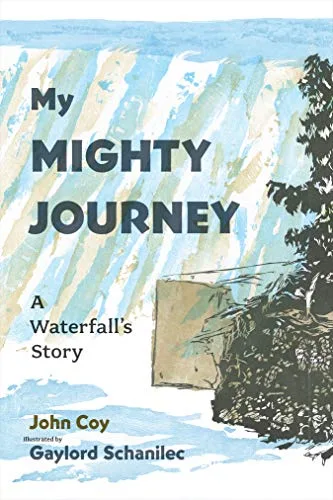 My Mighty Journey: A Waterfall’s StoryJohn Coy, illustrated by Gaylord SchanilecA waterfall recounts its history up to the present day in an arresting work that blends the unique personification of the falls with striking letterpress illustrations created from and inspired by elements of nature gathered on the Mississippi River. Today the falls are dammed and quieted at the Stone Arch bridge in Minneapolis (they moved 15 miles upriver across their history) but remember here thousands of years of geologic change, and the impact of nature and humans upon them over time. They are known by the Dakota as Owamniyomni, non-Natives as St. Anthony Falls. The author and illustrator CCBC Choices 2020 Science, Technology, and the Natural World 11 collaborated with each other and consulted with many experts on the falls and surrounding area, including geologists, historians, and members of the Dakota Nation, whose history with the river and falls goes back generations and continues today. The author and illustrator’s note is comprised of a photo essay describing how the book and its artwork were created.Science, Technology, and the Natural WorldView book details
 HummingbirdNicola Davies, illustrated by Jane RayThis picture-book introduction to ruby-throated hummingbirds emphasizes their biannual migration between Mexico/Central America and the United States/Canada. The details of their behavior are framed inside the story of a Latinx grandmother and her visiting New York City granddaughter, who view the tiny birds together before the girl heads back to the United States. In their distant homes a shared appreciation of the hummingbirds is one strand of the love that connects them. A thoughtfully diverse (by race, age, ability, and gender) human cast also welcomes the migrating birds, highlighting the connecting force of nature, while snippets of information in a distinct font supplement the primary storyline on many pages. Sumptuous illustrations glow with jewel-toned watercolor paints and pencil with gold ink highlights.Science, Technology, and the Natural WorldLexile Text Measure AD750LATOS Book Level 4.6View book details
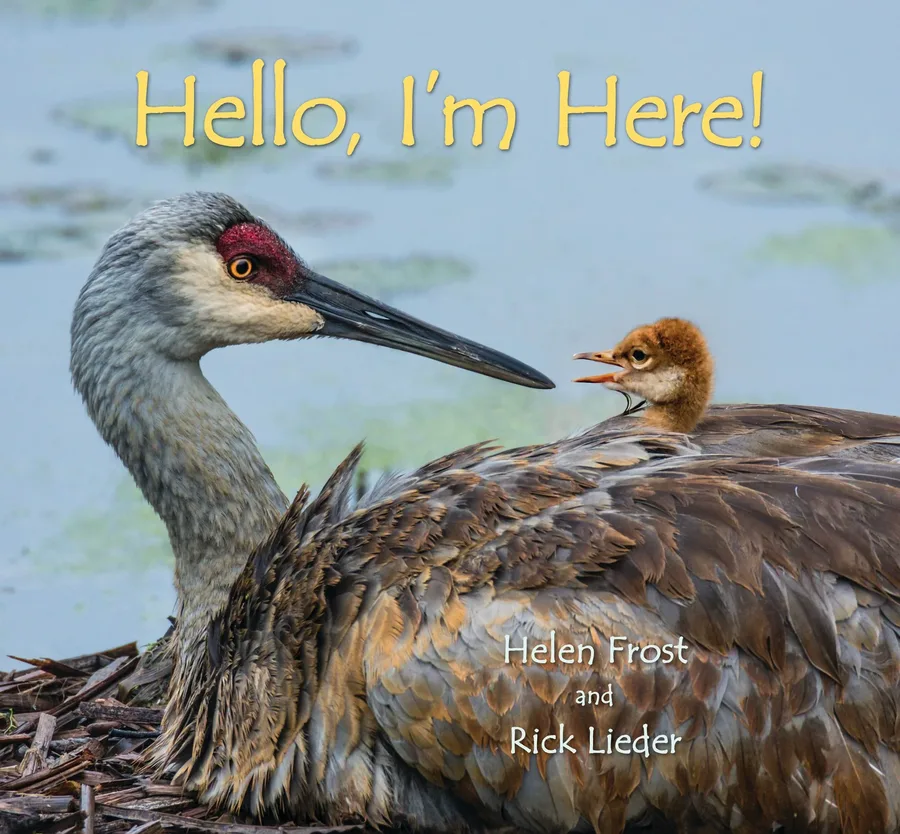 Hello, I’m Here!Helen Frost, photographed by Rick LiederA brief rhyming text and crystal-clear color photographs document the first day of a sandhill crane chick. “It’s getting crowded inside this egg” signals the chick’s imminent hatching, while “Will my legs hold me? What if I fall?” heralds its inaugural shaky steps. The busy day continues with water exploration, insect and snail snacks, and watching adult cranes fly overhead, until the exhausted chick rests atop its mother’s wing. A final full-page note provides additional details about the development of juvenile sandhill cranes.Science, Technology, and the Natural WorldView book details
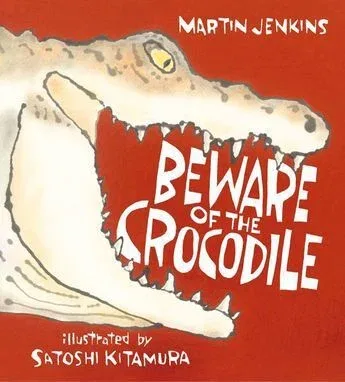 Beware of the CrocodileMartin JenkinsLurking beneath the water, a crocodile waits for an animal to come down for a drink at the shore. “And then? Oh, dear … Let’s just say there’s a lot of twirling and thrashing, and then things go a bit quiet.” That’s just the start of this lively informational picture book which also reveals another side to these fearsome creatures. After laying and caring for their eggs, female crocodiles carry their newborns down to the water in their mouths. A mother watches over its young for months to protect them from predators (including male crocodiles). Many young don’t survive, but those that do grow up to eventually lurk beneath the water, waiting for something to come down for a drink … An engaging, energetic primary text punctuated by droll moments of humor is accompanied by additional facts on various pages (e.g., crocodiles can go for weeks between meals, they typically lay 40 to 60 eggs which take 80–90 days to hatch), as well as information about different types of crocodiles, and related species, at book’s end. Mixed-media illustrations give a wonderful sense of size and drama. Highly Commended, 2020 Charlotte Zolotow AwardScience, Technology, and the Natural WorldLexile Text Measure AD790LATOS Book Level 4.2View book details
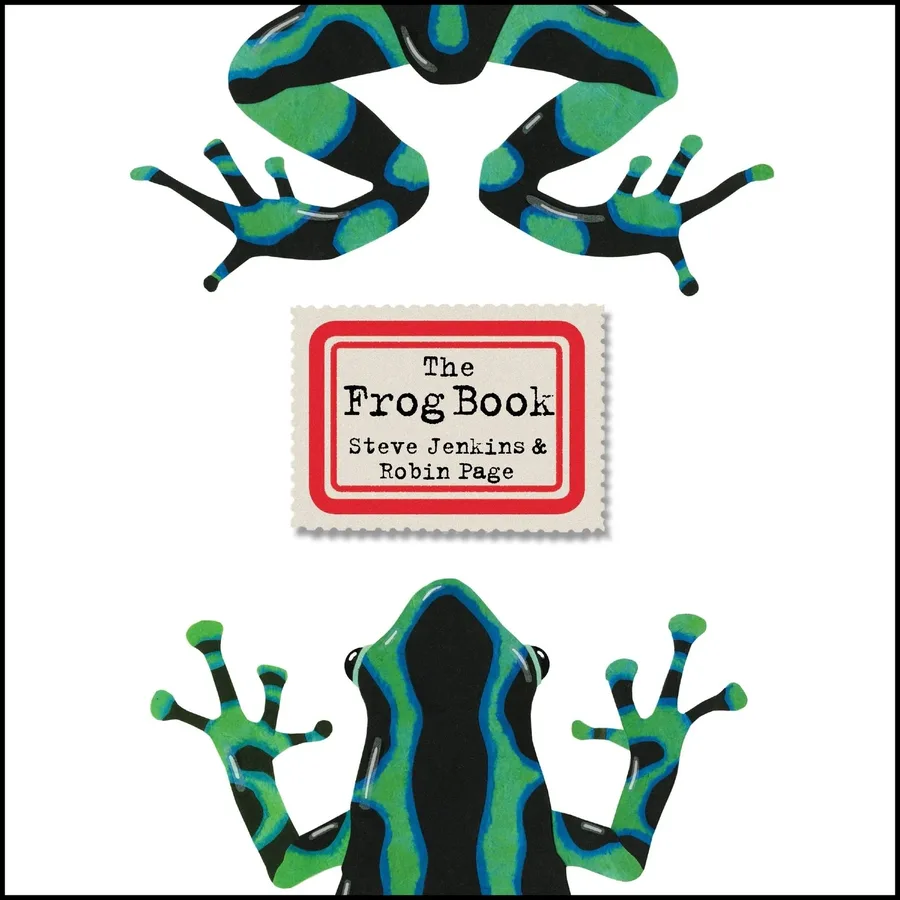 The Frog BookSteve Jenkins, Robin PageHave you heard of a cave squeaker frog? A mustache toad? How about a Pinocchio frog? An introduction informs the reader that there are thousands of species of frogs inhabiting every continent except Antarctica. To illustrate the variety, the book opens with a selection of species pictured at one-half life size, ranging from the meowing night frog (about the size of a human thumbnail) to the ornate horned frog (roughly the size of an adult human hand). A diagram of defining frog characteristics follows, including differences between toads, which are a type of frog, and other frogs. From there, the guidebook moves through a broad exploration of this animal, using different species as examples: Mating behavior, life cycle, habitat, diet, defenses, and threats against the species’ survival. Colorful cut- and torn-paper illustrations show several unique frogs on each white page, with snippets of fascinating information accompanying each specimen.Science, Technology, and the Natural WorldView book details
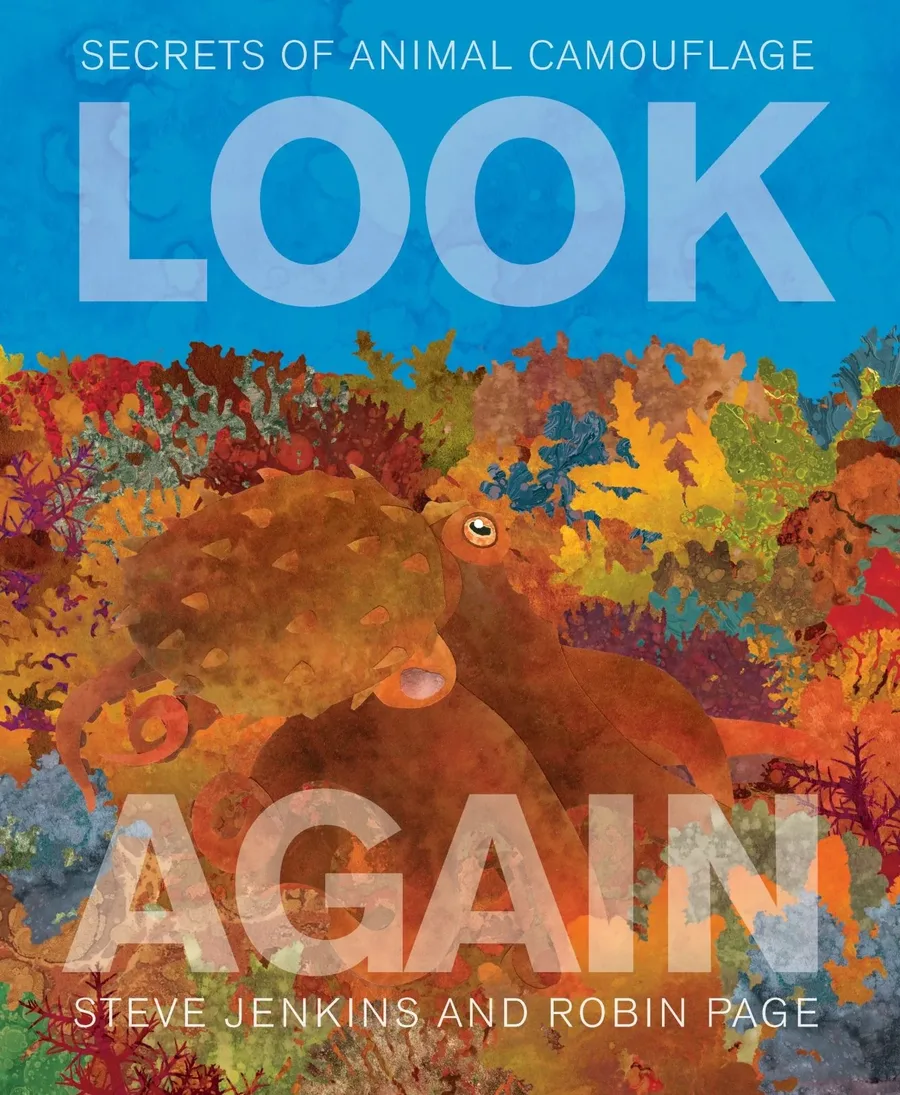 Look Again: Secrets of Animal CamouflageSteve Jenkins, Robin Page, illustrated by Steve Jenkins, Robin PageCoral reefs, kelp forests, flower blossoms, rocks, and snow are some of the habitats where camouflage helps animals survive, either by making it harder to be seen as prey or allowing greater success as predators. Each setting is introduced on a double-page spread that includes animals camouflaged within the environment. A page turn shows each creature again, in the same position but now clearly visible against a white background. The element of the habitat each uses for camouflage is shown in tight focus, while a thumbnail of the creature to scale compared to a human hand or body is also included. Pockets of text briefly describe the setting and offer a sentence or two about the purpose of each animal’s camouflage, while a concluding visual index offers more information. This well-organized, accessible volume presents fascinating material on 36 animals in seven habitats, paired with the creators’ consistently stunning cut- and torn-paper collage illustrations.Science, Technology, and the Natural WorldView book details
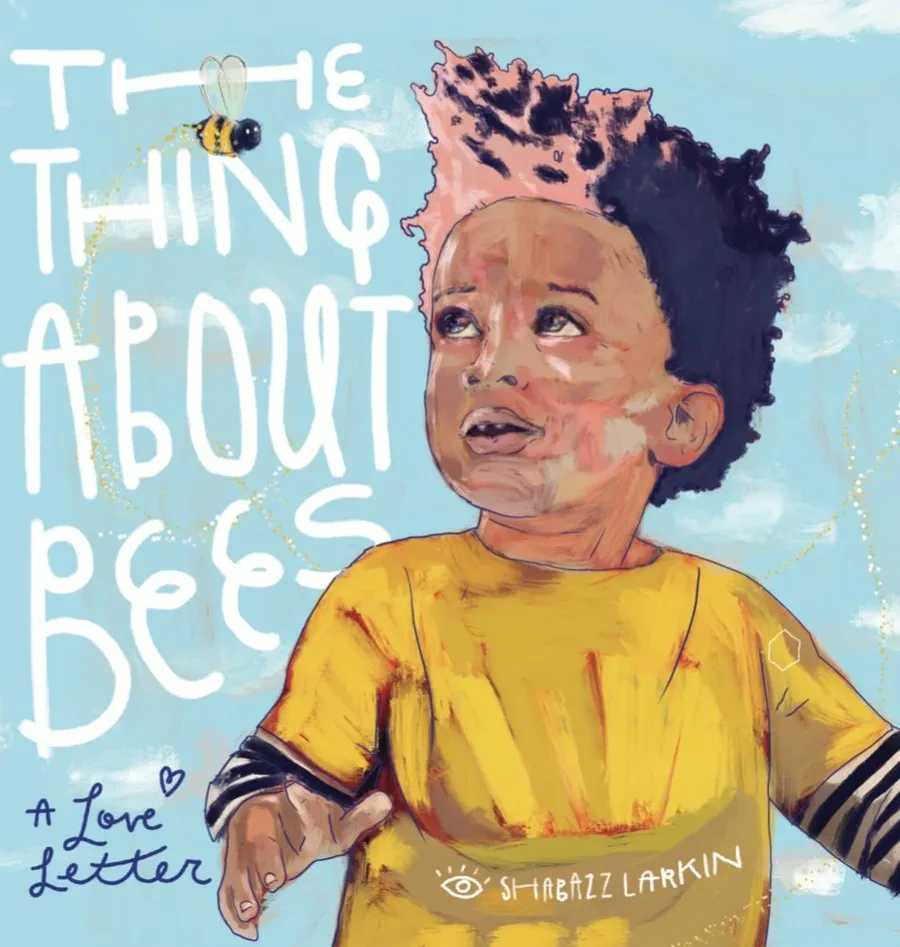 The Thing about Bees: A Love LetterShabazz Larkin, illustrated by Shabazz LarkinBees buzz too close. They land on food. And of course they can sting, an African American dad acknowledges. But worse than their sting would be no bees at all, he explains to his children, reciting a delicious list of reasons why bees are so important. Without them, there would be “no more picnics with watermelon … no more avocados for tacos … no apples, which means no more pie.” In fact, the dad says, “bees are just like you!” Cleverly describing his kids’ behavior in the same bee-like terms of annoyance, he concludes, “But I never stop loving you. You’re … the apple pie of my eye.… my cold watermelon.… the avocados in my tacos. You’re my strawberry heart.” Author/artist Shabazz Larkin was inspired to create this charming, heartfelt, beautifully crafted “love letter” to bees and to his children out of the desire to not pass on his own fear of bees. The warm, lively illustrations are based on photographs he staged with his family. End matter includes a brief guide (with photos) to bees and wasps and “how not to get stung.” Highly Commended, 2020 Charlotte Zolotow AwardScience, Technology, and the Natural WorldView book details
 Eclipse Chaser: Science in the Moon’s ShadowIlima Loomis, illustrated by Andrea Miller, Amanda CowanAstronomer Shadia Habbal’s research focuses on the sun’s corona, which, outside several stationary observatories around the world, can only be observed during a total solar eclipse. Shadia, born and raised in Syria and now based at the University of Hawaii, has pioneered coronal research, and leads global expeditions to capture data during the one to two minutes of totality that comes with total solar eclipses—always a risky gamble because of the cost and chances of failure if there are clouds or other problems that prohibit clear imaging. During the August, 2017, eclipse (aka the Great American Eclipse), Shadia had teams at five western U. S. sites to maximize chances of good viewing and data; even so, there’s tremendous tension leading up to the brief period of totality, and tremendous euphoria when it ends, as recounted here. Photos of Shadia and her team, many of who are older adults (Shadia appear to be in her 60s), at work build to a gorgeous reveal of images of the sun’s corona near volume’s end.Science, Technology, and the Natural WorldLexile Text Measure 980LView book details
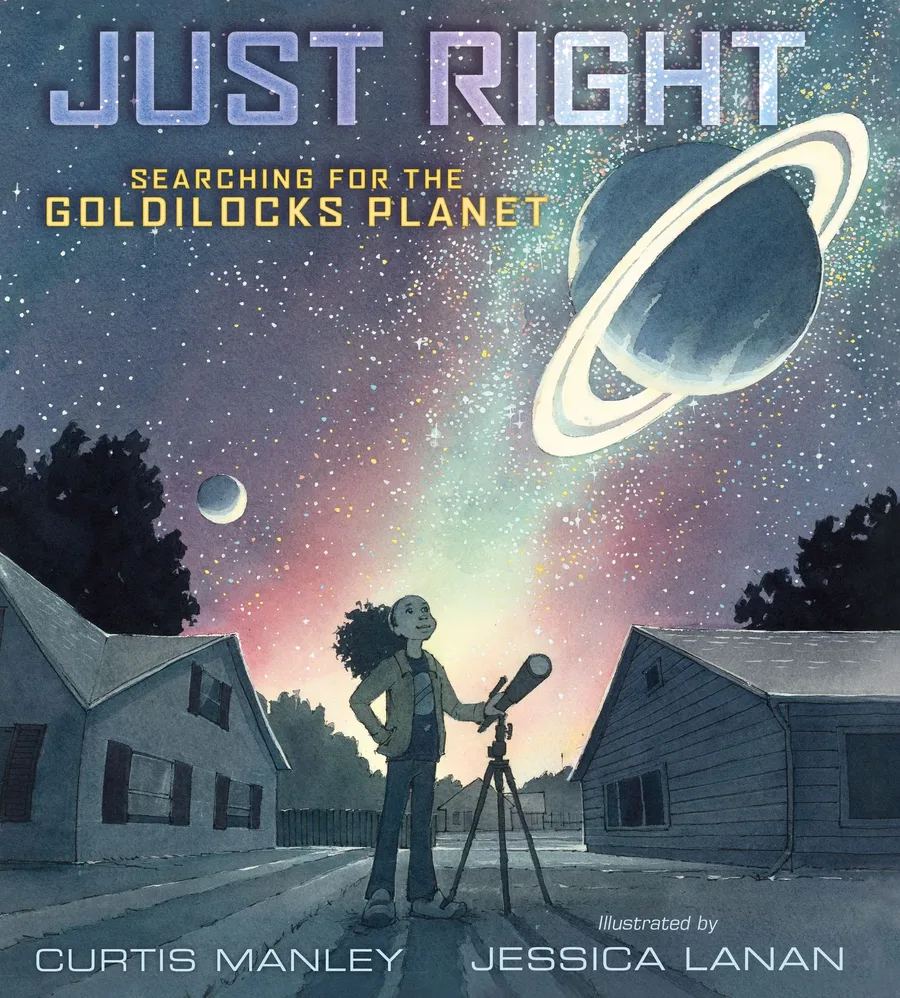 Just Right: Searching for the Goldilocks PlanetCurtis ManleyAn explanation of why Earth is able to sustain life begins this account that goes on to discuss the search for other exoplanets that may also be capable of supporting life. What life on another planet might look like could range from something somewhat familiar to something completely unknown, however. The clear, accessible primary text is supplemented by brief information on exoplanets and powerful telescopes that is further amplified in a note at volume’s end. The illustrations add another dynamic element as they follow a fictional African American girl and her family on a trip to a science museum. The girl, clearly fascinated by space, imagines herself as part of each exhibit. On returning home, a copy of Goldilocks and the Three Bears lies on the floor beneath her bed, and a telescope awaits.Science, Technology, and the Natural WorldView book details
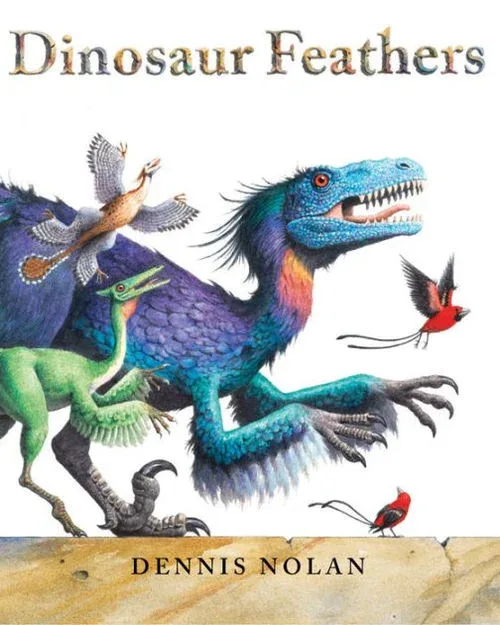 Dinosaur FeathersDennis NolanA parade of colorful dinosaurs realistically rendered (although the colors are conjecture) and a clever rhyming text star in this breezy look at the creatures’ evolution from historic land beasts to contemporary birds. Along that journey, a long list of specific dinosaur names (with pronunciation), eventually giving way to bird species, offer a surprisingly catchy refrain. “They roamed the land / And in the sand / They left behind their tracks. Apatosaurus (uh-PAT-uh- sore-us), / Stegosaurus (STEH-guh-sore-us), Saurophaganax (sore-uh-FAY-guh- nax).” While the main narrative is short on scientific explanation, a complete index of all species with thumbnail pictures and an evolutionary tree of life paired with a brief explanatory text are included in the closing pages.Science, Technology, and the Natural WorldView book details
 Saving the Tasmanian Devil: How Science Is Helping the World’s Largest Marsupial Carnivore SurviveDorothy Hinshaw PatentOn a research trip to Tasmania and Australia, author Patent met scientists and others responding to a threat to Tasmanian Devils called Devil Facial Tumor Disease. The often fatal disease has had a significant impact on the population of Tasmanian Devils in the wild. The multifaceted response to save the Devils includes capturing and breeding healthy Devils with the hope of eventually reintroducing them into the wild, research into the disease itself, and the development of experimental treatments. There is also ample information here about these often misunderstood creatures, which are far more social, and less fierce, than typically believed. A font a bit larger than typical “Scientists in the Field” books makes this volume more accessible to a slightly younger audience than most others in the series. In addition to lively photographs, the enthusiastic narrative includes the author’s “What I Learned” summary at the end of each chapter, which makes key points memorable while also modeling this learning technique.Science, Technology, and the Natural WorldLexile Text Measure 1170LView book details
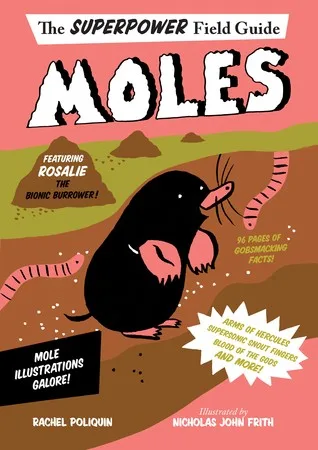 MolesRachel Poliquin, illustrated by Nicholas John FrithIn a follow-up to last year’s Beavers, the mole (Rosalie, in this case) takes center stage in this irreverent but informative guide. For an animal roughly the size and shape of a potato that spends most of its life in dark, underground tunnels, the mole is a remarkably exciting and impressive species. Interesting facts are laid out here as nine “superpowers,” including “super-squidgibility” (ability to turn around in a tight tunnel), “headless hoarding” (the collection of decapitated, live worms in a special room for later snacking), and “arms of Hercules” (Rosalie’s ability to push thirty times her weight uphill). Humorous illustrations and occasional quizzes round out a guide that covers the behavior, physiology, and habitat of this fascinating animal.Science, Technology, and the Natural WorldView book details
 The Bluest of Blues: Anna Atkins and the First Book of PhotographsFiona RobinsonGrowing up in early 19th-century England, Anna Atkins was fascinated by seashells, plants, and insects. Anna drew what she saw, making precise images she labeled with their Latin names. She grew up to become a botanist, following her passion in the world of science dominated by men. She was already experimenting with photography when she learned about cyanotypes—images created from chemicals and sunlight on paper. Excited by the possibility of perfectly capturing nature, she created cyanotypes of her entire seaweed collection, more than 10,000 images. Their publication in three volumes beginning in 1843 became the first book of photographs. Cyanotypes are always blue because of the chemical compounds used, and the mixed-media illustrations, all in hues of blue, incorporate some of Anna’s cyanotype images as well as some the author/illustrator created in this inspired, inspiring tribute CCBC Choices 2020 Science, Technology, and the Natural World 15 that includes an informative note on Anna’s life, as well as “how to make cyanotypes.”Science, Technology, and the Natural WorldView book details
 Beyond Words: What Elephants and Whales Think and FeelCarl Safina“I’d somehow assumed that my quest was to let the animals show how much they are like us. My task …. is to see who animals are —like us or not.” This skillful adaptation of the author’s adult book, Beyond Words: What Animals Think and Feel, focuses solely on elephants and killer whales (orcas). Safina describes his time with researchers in the field learning about the two animals’ behavior, social relationships, and threats to survival (for elephants, ivory hunters followed by disappearing habitat; for whales, reduced populations of fish and other food sources, and pollution, including sonar sound pollution from the military). Balancing scientific information with ample and compelling anecdotes, Safina has written an account that is always fascinating, sometimes astounding, and often deeply moving.Science, Technology, and the Natural WorldView book details
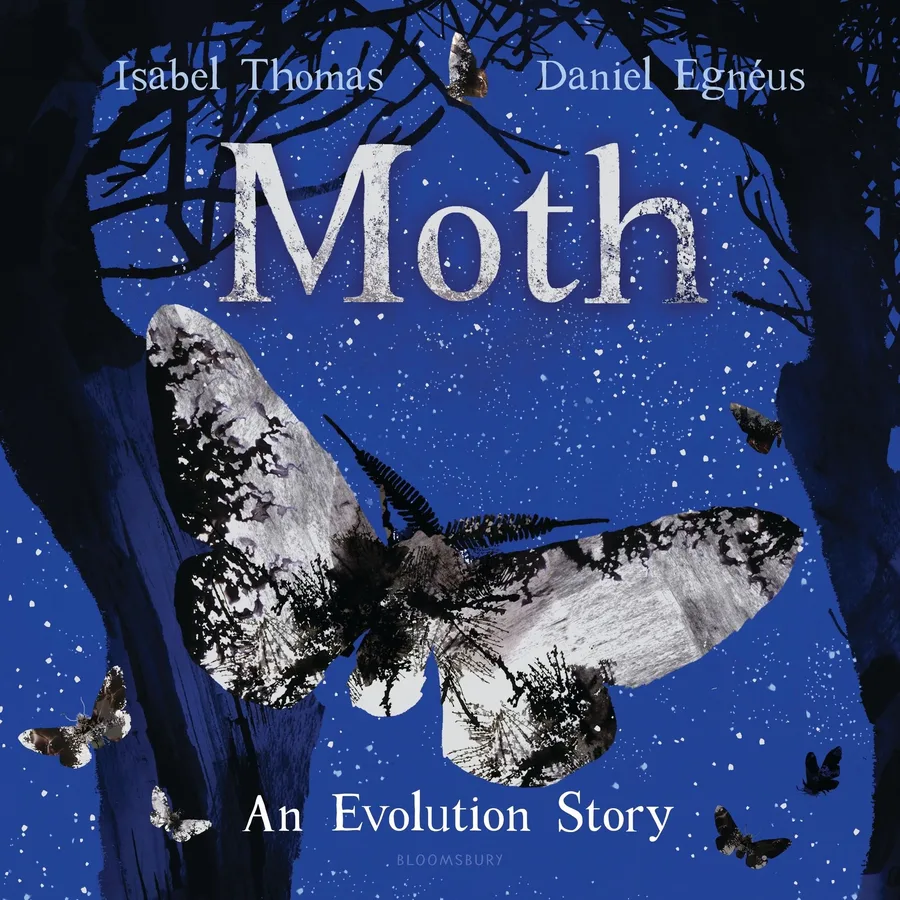 Moth: An Evolution StoryIsabel Thomas, illustrated by Daniel Egnéus“This is a story of light and dark. Of change and adaptation, of survival and hope.” Once, most peppered moths had “speckled, freckled” wings—black on white. Occasionally they were born with charcoal wings—easily spotted by predators. It was the speckled ones that survived to breed. Then came the Industrial Revolution. Coal blackened everything, and the speckled moths were more easily spotted and eaten. More charcoal moths survived to breed, passing down their traits. Fifty years passed, and the majority of peppered moths were the color of charcoal. Then, efforts to clean the environment slowly brightened the world. Today, peppered moths are a mix—some speckled (light form), some charcoal (dark form) as their story continues. This lyrical accounting of one of the most famous and accessible examples of evolution in action through adaptation and natural selection is set against striking illustrations and accompanied by an informative end note.Science, Technology, and the Natural WorldLexile Text Measure 511LATOS Book Level 3.4View book details
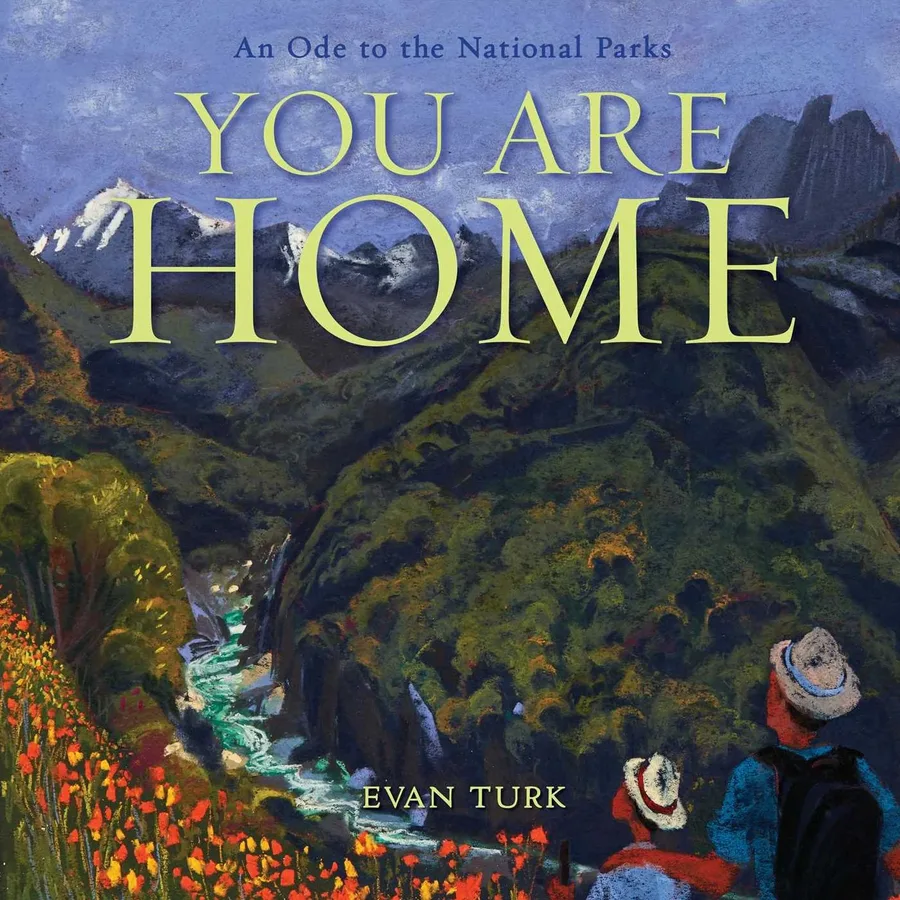 You Are Home: An Ode to the National ParksEvan TurkSometimes sweeping, sometimes intimate images from 27 U. S. national parks showcase their beauty and majesty, while the accompanying narrative ode emphasizes the parks as being a legacy for all. “You are home” is the repeated refrain of a text that describes the park’s natural features (“soaring doorways of stone, and peaks that pierce the ceiling of clouds”) and inhabitants (wildflowers, pronghorn, fireflies, “resilient bison … prowling bobcat”). The diverse visitors who are shown at “home” in the parks include urban and rural, a child “whose family has just left its first footprints on new shores” and one “whose ancestors lived on these lands before the stars and stripes took them as their own: You are still home.” An author’s note tells more about his long history visiting national parks, and how he created the striking pastel-on-black paper illustrations, many of which were done on location.Science, Technology, and the Natural WorldView book details
Historical People, Places, and Events
26 selections
 Viral: The Fight against AIDS in AmericaAnn BausumAfter the Stonewall uprising of 1969, the LGBTQ community enjoyed a sense of newfound visibility and freedom and entered a period of sexual liberation. When an unknown disease made its way to the United States, thousands of gay men contracted it, and the death toll rose alarmingly quickly. Originally dubbed gay-related immune deficiency (GRID), HIV/AIDS was scorned as a punishment for what conservatives saw as “deviant” behavior, and little federal funding was allocated to fight it. LGBTQ communities—especially gay men—took education, advocacy, and care into their own hands. They formed organizations, worked with the NIH to accelerate drug trials, and organized highly visible protests. This compassionate account starts in 1969 and continues to present day, covering not only the physical but also the emotional and financial impact of HIV/AIDS and its disproportionate impact on people of color and poor communities. It debunks myths, discusses past and current methods of prevention and treatment, and looks back on what has been learned about this devastating disease, which killed nearly half a million people between 1981 and 2001. But a country mired in anger and grief nonetheless finds some hope and comfort in community and love.Historical People, Places, and EventsView book details
 This Promise of Change: One Girl’s Story in the Fight for School EqualityJo Ann Allen Boyce, Debbie LevyA compelling, present-tense narrative combines poems in teenage Jo Ann Allen’s voice with clippings from news stories and other contemporaneous documents from the 1956–57 school year, when she was one of the Clinton 12 who integrated the high school in Clinton, Tennessee. Clinton’s white leaders didn’t necessarily agree with integration but believed in upholding the law. The early days for Jo Ann and her classmates were tense but quiet, until outsiders arrived, fomenting protests and violence that racist whites in the community latched onto. The 12 Black students soon faced daily harassment; threats spilled over to the Black community in general. Soldiers arrived to keep the peace, but Jo Ann’s family and others faced difficult decisions as they weighed safety against the fight for equal education. Jo Ann’s voice in the poems is magnetic in its honesty. An afterword briefly documents what happened to each of the 12 students, and theorizes why the story of Clinton, the first school in the south to integrate, is not as famous as what happened in Little Rock the following year. A scrapbook of photographs, source information, notes on poetic forms, and authors’ notes round out this accessible, affecting work.Historical People, Places, and EventsView book details
 Liberty Arrives! How America’s Grandest Statue Found Her HomeRobert ByrdA lively text and detailed ink-and-watercolor illustrations provide a chronological history of the Statue of Liberty, from its conception to the reaction once the CCBC Choices 2020 Historical People, Places, and Events 17 Statue was finally installed on Bedloe Island. Impressed by U. S. democracy, French judge Édouard de Laboulaye hired sculptor Frédéric–Auguste Bartholdi to create a statue of the Roman goddess Liberty. The narrative outlines the process: The creation of clay models followed by larger versions that he continued to scale up until the measurements of the large, copper statue were figured. Disassembled, the copper statue remained boxed while people in the United States struggled to raise enough money for the pedestal. A promise from Joseph Pultizer to print the name of every donor in the New York World led to schoolchildren saving the day with their penny contributions. A timely history illuminates the ideals, cooperation, and community effort behind this iconic work of art.Historical People, Places, and EventsView book details
 Sport: Ship Dog of the Great LakesPamela Cameron, illustrated by Renée GraefA puppy rescued from the Milwaukee River by crew of the lighthouse tender Hyacinth in 1914 became more than a mascot: He was a friend to the men on the boat. Named Sport, the dog spent 12 years attached to the Hyacinth as it traveled up and down Lake Michigan, marking channels and bringing supplies to lighthouses. Sport became well known at every port and lighthouse on the Hyacinth’s route, sometimes playing with lighthouse keepers’ children, sometimes exploring on his own. Sport was so well known that when he was mistaken for a stray after wandering too far, a crew member from another ship recognized him and helped him hitch a ride on another boat back to the Hyacinth. This captivating account is fictionalized, but based on fact. More about the real Sport follows the story.Historical People, Places, and EventsView book details
 An Indigenous Peoples’ History of the United States for Young PeopleRoxanne Dunbar-OrtizThis history of the place, people, and politics of this land from an Indigenous perspective rather than through a lens of American exceptionalism will offer a provocative shift for the majority of young readers. It emphasizes Indigenous agency, resistance, and resilience to colonialism across centuries of racist, rationalized violence against Native peoples, whose cultures and identities are numerous and complex. This adaption by Mendoza and Reese of Dunbar- Ortiz’s adult book strikes a tone remarkable for its invitation to consider rather than desire to lecture, even as it definitively challenges the way middle and high schoolers are typically taught to understand the conquest of this land. A final chapter looks at the 21st-century Standing Rock resistance to the Dakota Access Pipeline, which underscores that this history is still playing out today. End matter includes a recommended reading list of Native-authored books for children and teens. Source notes and index are included in this exceptional challenge to the dominant narrative of U. S. history.Historical People, Places, and EventsView book details
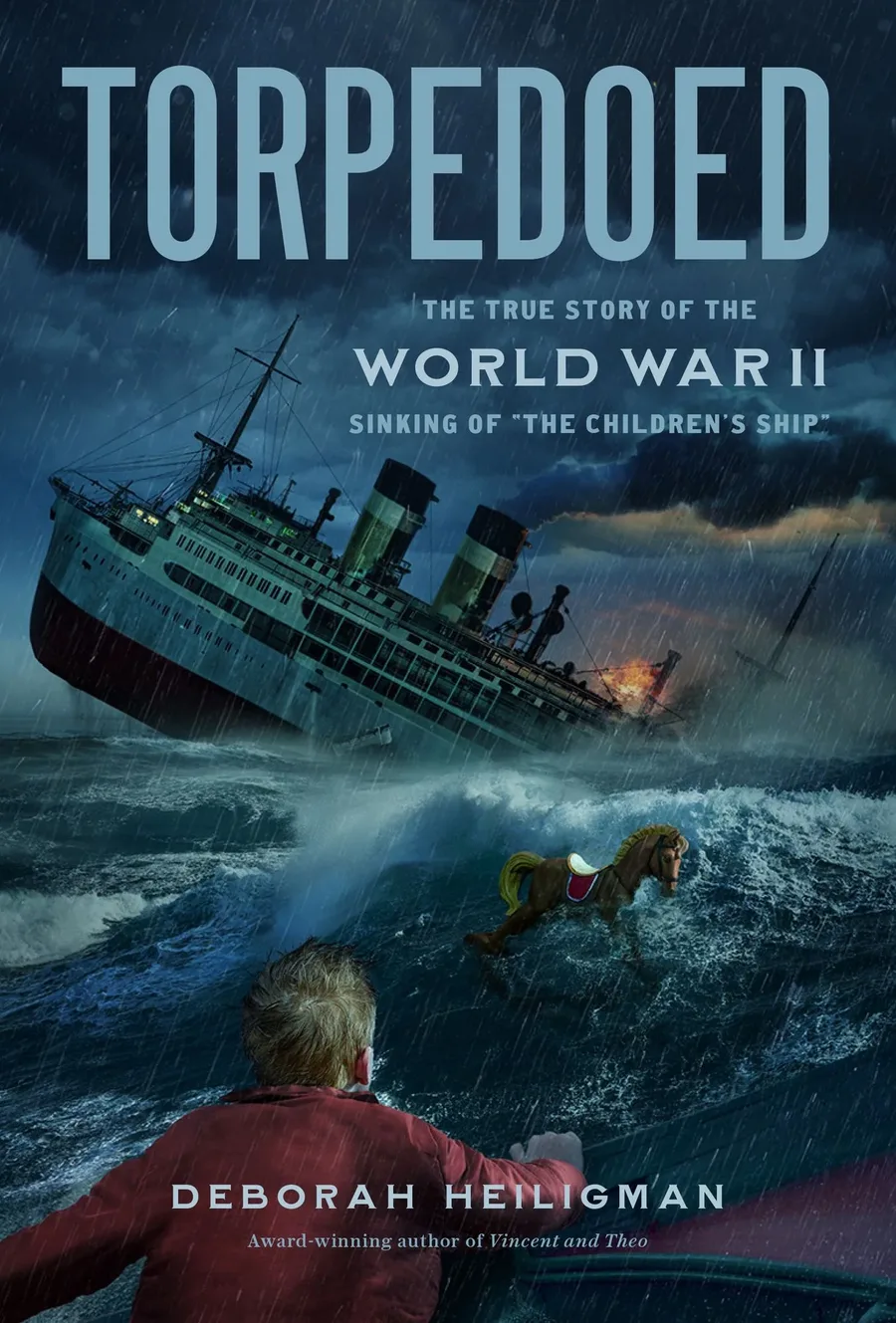 Torpedoed: The True Story of the World War II Sinking of “The Children’s Ship.”Deborah HeiligmanIn 1940, 90 British children ranging in age from 5 to 15 were traveling on an ocean liner called The City of Beneres, bound for Canada, as part of a program to evacuate children from England during the Blitz. There were dozens of other passengers on the ship as well, and well over a hundred crew members; 407 people in all. A few days into the voyage, the ship was torpedoed by a German U-boat. Survivors who made it onto lifeboats and rafts endured treacherous storms, freezing cold, hunger, and thirst. They had to hold on for two days before help arrived, and the passengers in one lifeboat weren’t rescued for eight days. Heiligman’s meticulously documented account of this harrowing event that killed 260 uses multiple points of view and perspectives from survivors. The author gives an insider’s view, making readers feel as though they are there before, during, and after the disaster by drawing on first- hand accounts from interviews (mostly from the Imperial War Museum, but some the author conducted) with survivors and their relatives. The narrative skillfully creates a strong sense of tension, and the compelling, poignant, hard to put down volume is illustrated with historic photographs and line drawings.Historical People, Places, and EventsView book details
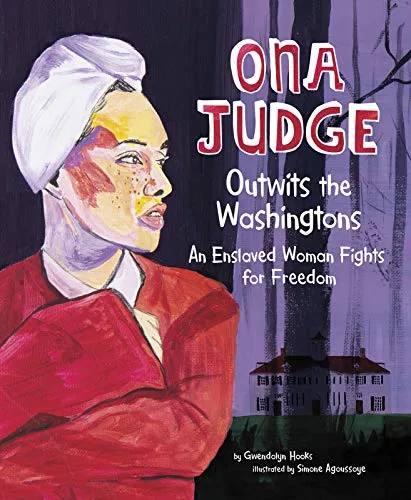 Ona Judge Outwits the Washingtons: An Enslaved Woman Fights for FreedomGwendolyn Hooks, illustrated by Simone AgoussoyeEnslaved by George and Martha Washington from childhood, Ona Judge fed chickens and fetched water from a treacherous well before she began working inside the house when she was ten. She was taken by the Washingtons when they moved to New York City and, later, Philadelphia, where she saw free Blacks and recognized that the Washingtons would never release her from their ownership. Ona made the decision to run for freedom when she learned she was to be given as a wedding gift to a family member. Her liberty was threatened several times by those who recognized her and wanted to return her to the Washingtons, but Ona was able to avoid each trap with intelligence and courage. This substantial picture book narrative grounds readers in Ona’s life and perspective, clearly stating the inhumane realities of slavery demonstrated by her personal story.Historical People, Places, and EventsView book details
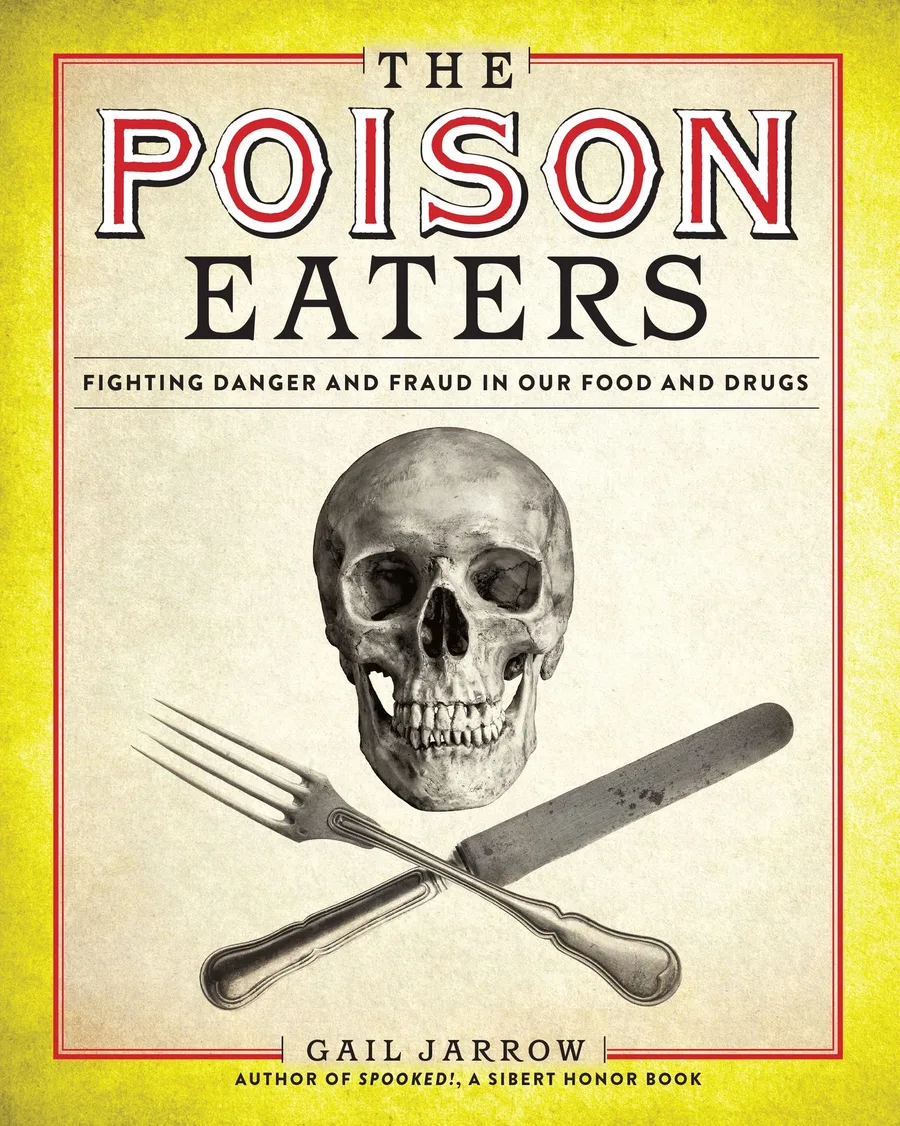 The Poison Eaters: Fighting Danger and Fraud in Our Food and DrugsGail JarrowBefore Harvey Washington Wiley, there was no regular testing of food products. There was no rigorous examination of product claims for what were often “quack” medications, or questions about the safety of food additives. Jarrow’s look at the life and career of Wiley exposes the hidden dangers of some of the products that people ate regularly in the past, not knowing that they were, in some cases, ingesting poison. Wiley’s work included an ongoing study of volunteers known as the “poison eaters” for their willingness to ingest questionable ingredients, but it went far beyond this, and his passion for and commitment to consumer safety helped lead to the formation of the FDA. CCBC Choices 2020 Historical People, Places, and Events 19 Wiley’s story also gives contemporary readers an introduction to the sorts of corporate lobbying and profiteering we still see today at the expense of the health and safety of ordinary people. Jarrow’s descriptions of tragic, horrifying, misleading or simply gross ingredients that were once commonplace are both fascinating and alarming. A book incorporating generous visual material, including photographs, documents, advertisements, and political cartoons, concludes with a glossary, timeline, detailed source notes, and recommended websites and books.Historical People, Places, and EventsView book details
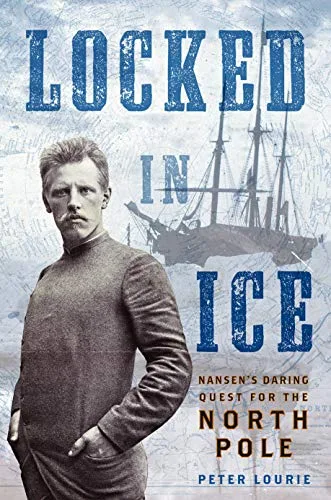 Locked in Ice: Nansen’s Daring Quest for the North PolePeter LourieA riveting account of survival follows Norwegian scientist and explorer Fridtjof Nansen on his attempt to be the first to reach the North Pole. His radical approach was to let his ship freeze into the pack ice and move north with the mass. After meticulous planning and preparation that included commissioning a specially designed ship, he and his crew left in June, 1893, well stocked for a sustained period of isolation. The innovative Nansen even brought a windmill and batteries for light in the arctic winter. When they moved north slower than expected, Nansen decided to leave the ship and travel by sled and dog. He and Johansen, a member of the crew, departed in March, 1895. By April, Nansen realized they’d have to turn south to survive. The formal, reticent Nansen did not easily show his caring side, to the bemusement and frustration of Johansen. But for the next 14 months, they had only each other, and the dogs, who died one by one, to rely on. An epilogue summarizes Nansen’s later international work as a founder of the League of Nations in a book with ample photographs, source notes, and other end matter.Historical People, Places, and EventsView book details
 Sing a Song: How “Lift Every Voice and Sing” Inspired GenerationsKelly Starling Lyons“Before you were born, a girl learned a song.” She sang that song, written by her principal and his brother, as part of a chorus of 500 at a special event in 1900: “Lift ev’ry voice and sing, / Till earth and heaven ring, / Ring with the harmonies of Liberty …” She grew up and taught it to her own child. He passed it on to his daughter, who taught it to her son, who sang it to his daughter, who joins a chorus on the National Mall in 2016 to sing it at the opening of the National Museum of African American History. The fictional generations of one family finding solace and inspiration in “Lift Ev’ry Voice and Sing” across personal milestones and historic events in the 20th century and early 21st century ground this deeply moving account of the song known as the “Black National Anthem,” passed down among generations of African Americans. An author’s note tells more about the song, including personal memories, and its writers— James Weldon Johnson and J. Rosamond Johnson.Historical People, Places, and EventsView book details
 Crossing on Time: Steam Engines, Fast Ships, and a Journey to the New WorldDavid Macaulay, illustrated by David MacaulayIn 1957, ten-year-old David Macaulay crossed from England to the United States with his family on the ocean liner SS United States, which had earned the Blue Riband for fastest transatlantic crossing on its first transatlantic journey in 1952. Here, Macaulay describes the early development of ocean liners powered by steam, and various ships that held the Blue Riband prior to the SS United States, before introducing ship designer William Francis Gibbs, who was determined to build a ship that could take the prize. Gibbs’s efforts were sidetracked by World War II, but after the war he designed and oversaw the building of the United States. The process is chronicled with keen detail culminating in a six-panel foldout showing a cutaway of the completed ship. Macaulay’s experience traveling on the ocean liner with his mother and two younger siblings adds another, vivid layer of human dimension to the story, and he captures a child’s eye view of the ship and its wonders. In addition to detailed drawings, there are black-and-white photos, including of the author’s family on their journey, incorporated into the end matter.Historical People, Places, and EventsView book details
 Games of Deception: The True Story of the First U.S. Olympic Basketball Team at the 1936 Olympics in Hitler’s GermanyAndrew MaranissAn example of nonfiction writing at its finest combines a brief history of basketball and how it became an Olympic sport with the ethical issues surrounding the U. S. team’s decision to participate in the 1936 Olympics in Munich, Germany. There are so many fascinating threads here in a narrative that combines sports action, politics, and ethics: the organization of amateur sports teams and how they competed; how Avery Brundage, the anti-Semitic head of the U. S. Olympic Committee, worked in both in the United States and Germany to help ensure the United States would participate in these games; how the Olympics were, in the title’s term, a “deception”—meant to showcase German power, rather than international sportsmanship and unity, and how activities behind the scenes, as well as the up-front militaristic might on display by the Germans, were warning signs of things to come. Maraniss is not subtle at all—that isn’t his intent—but he never loses sight of the basketball narrative, which included a gold medal game between the United States and Canada, played in pouring rain on a muddy court; the ball was so slippery players could hardly hold on. U. S. player Sam Balter (who was Jewish and had debated whether to go) described the final as a “hilarious travesty.”Historical People, Places, and EventsView book details
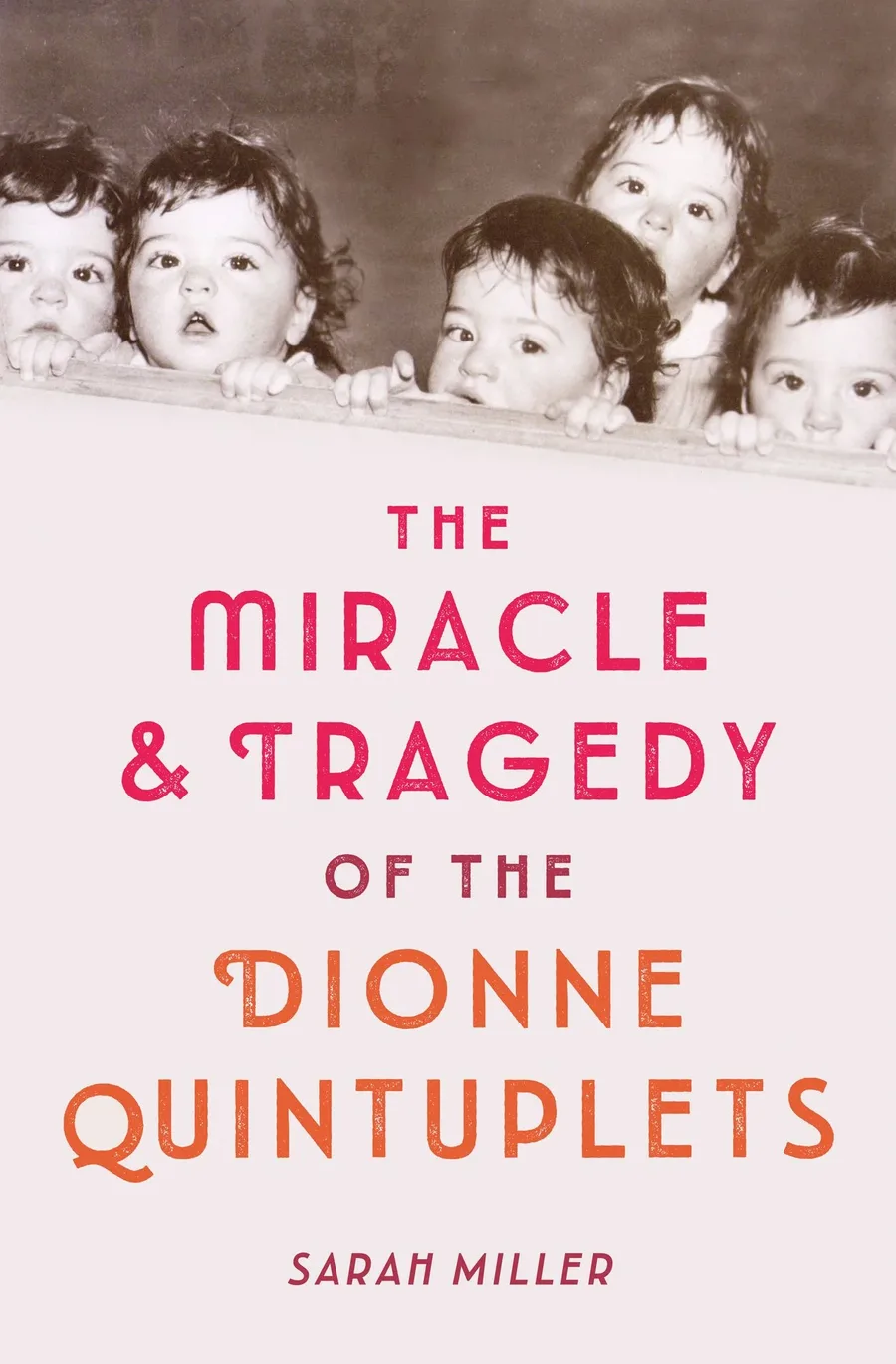 The Miracle & Tragedy of the Dionne QuintupletsSarah MillerThe birth of Yvonne, Annette, Cécile, Émilie, and Marie Dionne on May 28, 1934, in a small Ontario village shocked their unsuspecting parents and quickly captivated the world. With initial focus on the tiny babies’ survival, the village doctor and a rotating schedule of nurses were soon managing their care. Eventually, the government built a compound across the road from their home where the girls lived until age nine, given ample attention but little open CCBC Choices 2020 Historical People, Places, and Events 21 affection from the adults who managed their regimented routine. Put on display daily for tourists who came from across Canada and the United States, visits with their poor, rural, French-speaking parents—offered little sympathy from the government or media-shaped public opinion—were increasingly controlled. There was money to be made through product endorsements, appearances, tourism and souvenirs, and many benefitted from the exploitation. By the time the government returned custody to their parents, they were essentially strangers to their family, as their family was to them. Through continuing challenges and fear, they relied, as always, on one another, still smiling for the camera on demand. Laying out facts, complexities and contradictions, Miller allows readers to draw their own conclusions about the motivations and actions of individuals and institutions that shaped the quintuplets’ lives. Ample black-and- white photographs accompany this meticulously researched, riveting work that follows them into adulthood.Historical People, Places, and EventsView book details
 It Rained Warm Bread: Moishe Moskowitz’s Story of HopeGloria Moskowitz-Sweet, poetry by Hope Anita SmithMoishe Moskowitz, 13, calls the Nazis that invade Poland in 1939 “wolves.” His family tries but fails to avoid the predators’ sharp teeth. Moishe’s experience during the Holocaust—among his immediate family he was the only survivor— is recounted in affecting, emotionally observant first-person poems by Hope Anita Smith, based on Moishe’s story as told by his daughter, Gloria Moskowitz- Sweet. The title comes from an incident that helped Moishe continue to believe in human compassion despite the horror he endured: Near the end of the war local women in Czechoslovakia defied the Germans and raided a bakery to toss still-warm bread to the starving Jews passing through their town crammed into a cattle car. “They fed our bodies, / but their willingness to risk / fed our souls … I saw love. / Not because we were their husbands or sons or fathers / but just because we were. / We mattered.” More about Moishe’s life, including immigrating to the United States after the war, and family photos, is provided in a note from his daughter at volume’s end.Historical People, Places, and EventsView book details
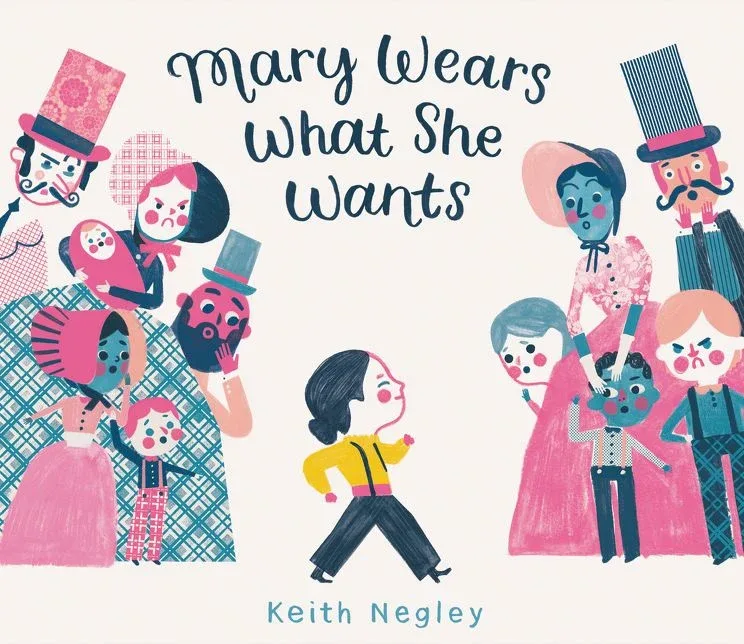 Mary Wears What She WantsKeith NegleyGender norms are broken in this story set in the 1830s and inspired by the life of Mary Edwards Walker, who enjoyed wearing pants before it was common practice for women to do so. Tired of being limited to hot, heavy, constricting dresses, Mary decides to branch out. Pants are much more comfortable, more flexible! She feels liberated—until she ventures into town and, baffled, realizes that others are offended by her outfit. They’re “scared of what they don’t understand,” explains her quietly supportive father. Mary challenges semantics with a smart comeback prepared for those who harass her for wearing boys’ clothes: “I’m wearing my clothes!” Color-pencil and cut-paper illustrations cleverly show confident, spunky Mary dressed in bright yellow, standing out in a crowd of people wearing blues and hot pinks, in a story that stoutly affirms those who choose to go against the grain. A short biography of trailblazing Mary Edwards Walker follows the story.Historical People, Places, and EventsLexile Text Measure 329LATOS Book Level 2.4View book details
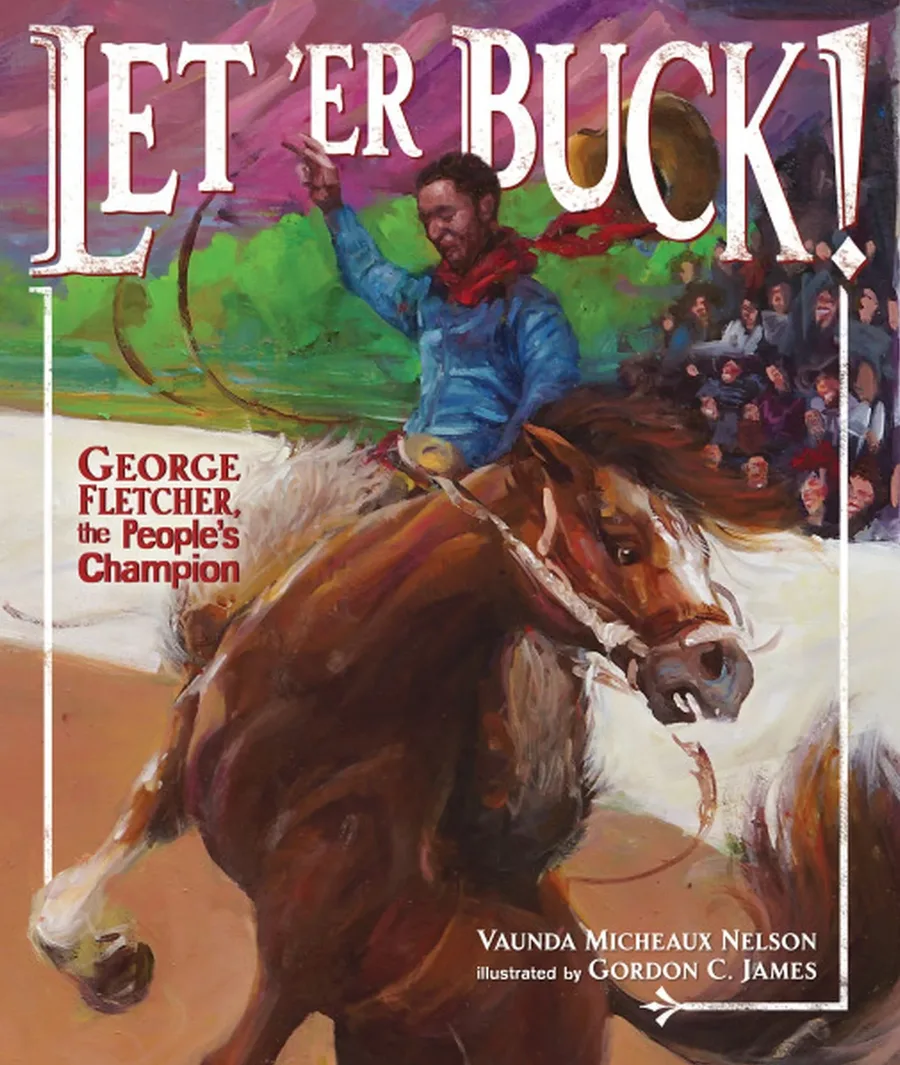 Let ‘er Buck! George Fletcher, the People’s ChampionVaunda Micheaux NelsonGeorge Fletcher got his first taste of rodeo riding as a child on a barrel attached to four ropes, and was hooked. With the guidance of the Walla Walla, Cayuse, and Umatilla horsemen with whom he lived, George learned to tame mustangs gently. He loved to ride anything that bucked, entering any competition that would allow African Americans like him, and his skill earned him a following and a reputation. At the 1911 Pendleton Roundup, George competed against two other men on half-wild horses: Jackson Sundown, a Nez Perce horseman, and John Spain, a white rancher. According to a newspaper’s coverage of the event, George was grace itself on wild Sweeney’s back, holding on as the horse bucked and reared. So when Spain was awarded first prize, the surprised and disappointed audience took matters into their own hands, selling pieces of George’s hat and raising more money for him than Spain’s prize was worth. Wild West lingo and motion-filled oil paintings complement the narrative. Extensive back matter includes information about the author’s challenging research process.Historical People, Places, and EventsView book details
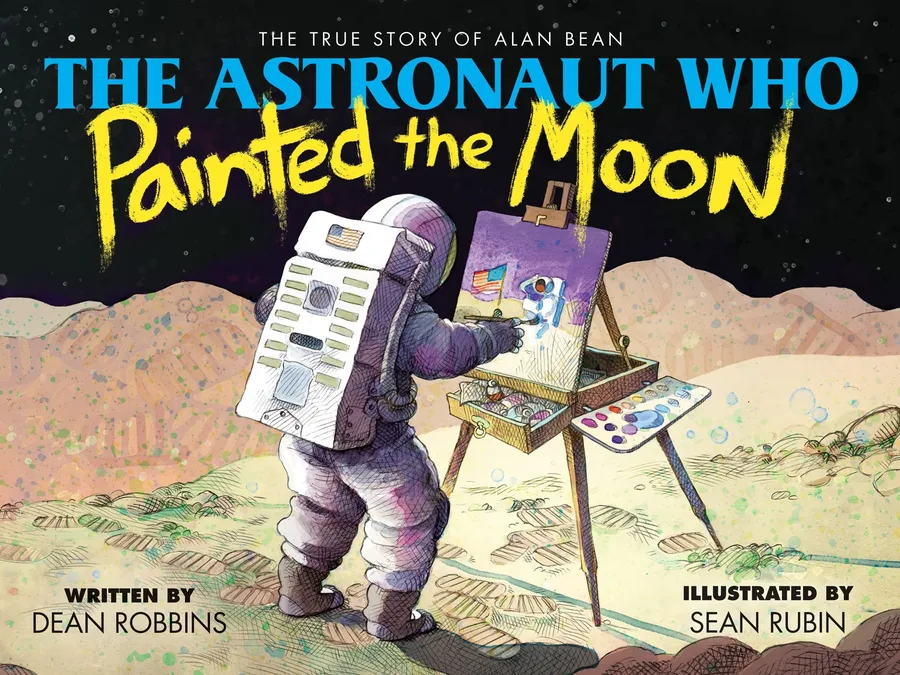 The Astronaut Who Painted the MoonDean RobbinsAstronaut Alan Bean was the fourth person to walk on the moon. He was also an artist. After he returned to Earth, he had trouble describing the experience to friends, and felt photographs didn’t do justice to the moon’s landscape. His first painting of the moon “didn’t look exactly real. But Alan didn’t want it to. The painting showed how stunning outer space looked through his eyes. How it made him feel.” He went on to make many paintings, sometimes stamping them with his astronaut boots, scratching them with the tools he’d used on the moon, or sprinkling them with moon dust. This inspiring picture-book account shows how Bean, whose career as an astronaut was grounded in science and technology, found art essential to expressing and sharing what it meant to him. More about Alan Bean, a timeline, and several of his paintings and photos on which they are based are included at volume’s end.Historical People, Places, and EventsLexile Text Measure AD590LATOS Book Level 3.4View book details
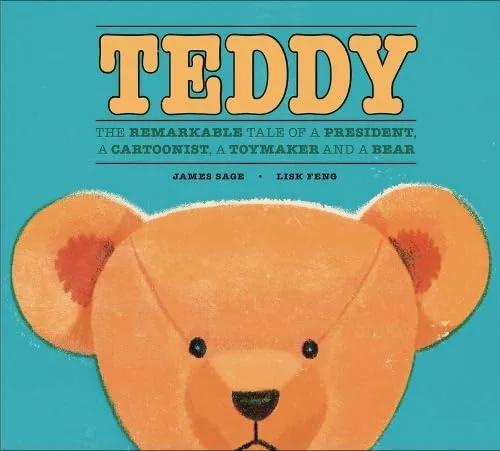 Teddy: The Remarkable Tale of a President, a Cartoonist, a Toymaker and a BearJames Sage, illustrated by Lisk FengWhen President Theodore Roosevelt, an avid hunter, refused to shoot a bear cub on a hunting expedition to Mississippi in 1902, it became the subject of Clifford Berryman’s feel-good editorial cartoon. In Brooklyn, Rosie and Morris Mitchom’s store sold candy and sundries, including Mrs. Mitchom’s handmade toys. The cartoon inspired Mrs. Mitchom to sew a small, stuffed bear, calling it “Teddy’s Bear.” Soon she couldn’t keep up with demand for “teddy bears.” This merry picture-book history takes some liberty with the facts—there is rumor but not proof that the Mitchom’s wrote Roosevelt for permission to use his name, or that he wrote back on White House stationery, for example—but the author’s note clearly delineates conjecture and artistic license from fact, and also includes reproductions of the cartoon and a photo of an original teddy bear. CCBC Choices 2020 Historical People, Places, and Events 23 The lively narrative is paired with stylized illustrations that have just the right touch of whimsy.Historical People, Places, and EventsView book details
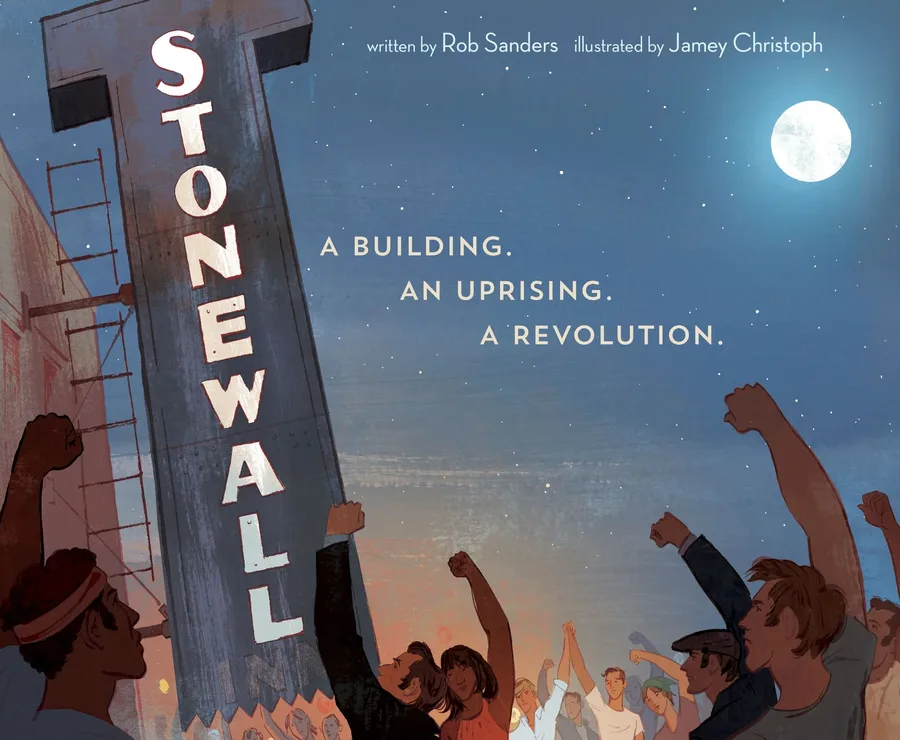 Stonewall: A Building. An Uprising. A RevolutionRob SandersTold from the perspective of the buildings themselves, this account of the Stonewall Inn parallels the history of Greenwich Village and covers the famous riots that took place there in 1969. Built as two stable houses in the 1840s, the side-by-side buildings housed a bakery and a then restaurant before becoming the Stonewall Inn. Greenwich Village was a wealthy neighborhood and then a popular destination for immigrants. It welcomed artists of the Beat Generation, and by the 1960s was home to many “gays and lesbians.” The Stonewall Inn opened in 1967, and although it was a community gathering place, it was not always safe. “Some nights, we heard fists pounding on our doors,” says the building, recalling police raids in which many were arrested simply for “wearing the wrong clothes” or “socializing.” After a raid on June 28, 1969, the people fought back, leading to several days of riots and protests. It was the uprising that sparked the LGBTQ+ rights movement. Although the binary language used is unfortunate (“men and women,” “gays and lesbians”), this is an accessible and affirming account of a momentous event in queer history.Historical People, Places, and EventsView book details
 Survivors of the Holocaust: True Stories of Six Extraordinary ChildrenKath ShackletonThe stories of six children who survived the Holocaust are compellingly presented in graphic-memoir format. Heinz recalls the terror of Kristallnacht and the indignity of escaping to England only to be interned there as an “enemy alien” when war broke out. Trude, who spoke no English, was shuffled from home to home in England while her parents were in concentration camps, where they were killed. Ruth remembers the small moments of luck that allowed her family to journey safely to from Germany to London, and Martin admits the great fear he felt huddled with his foster family in England during the air raids. Suzanne was rescued by a neighbor and hidden in the French countryside, while Arek saved himself by switching lines as new arrivals to Auschwitz were being sorted. Digital illustrations employ sharp angles, exaggerated size, clear facial expressions, and dark colors to emphasize the brutality of the Nazis and the pervasive fear of the Jewish people.Historical People, Places, and EventsView book details
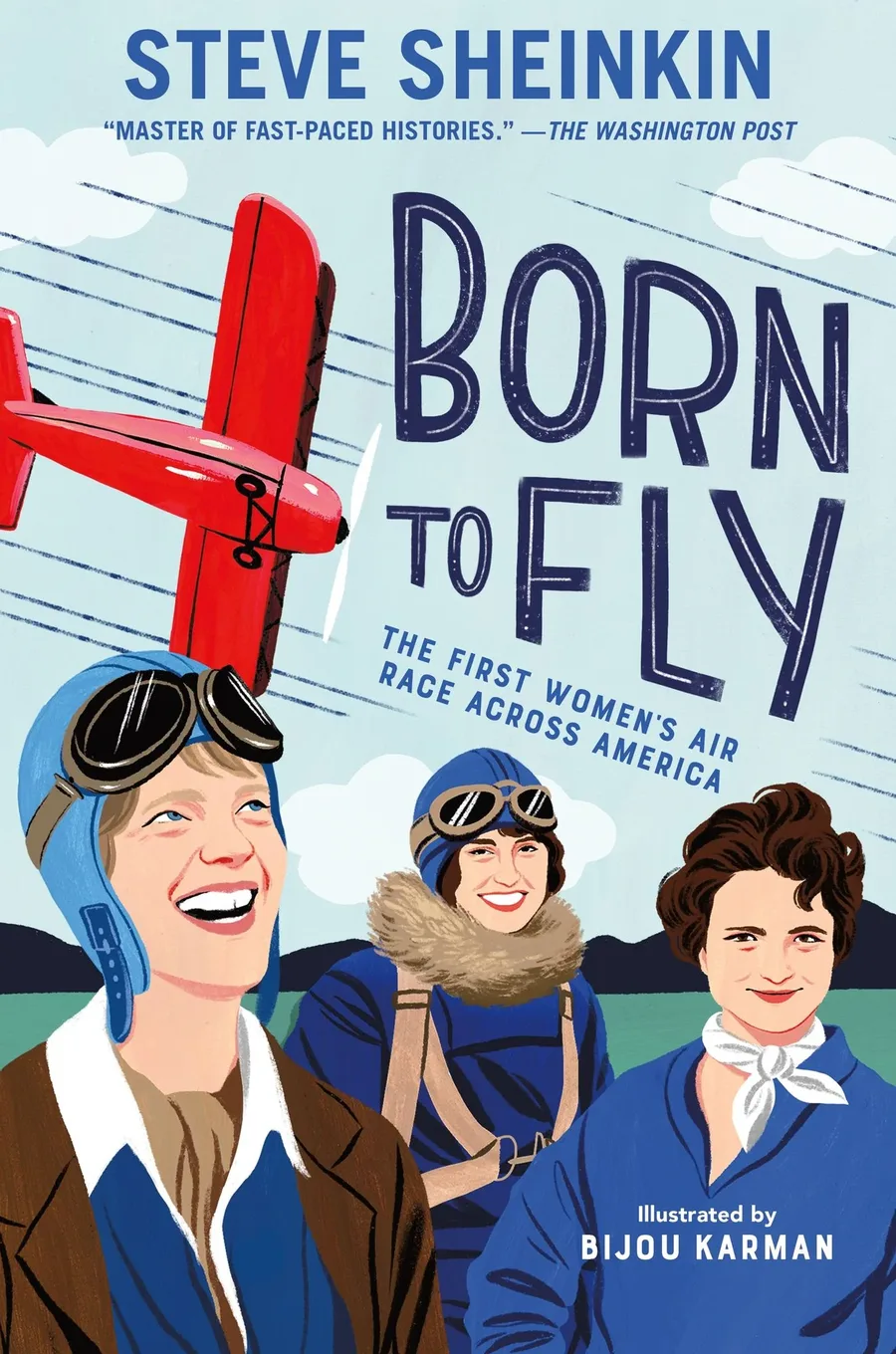 Born to Fly: The First Women’s Air Race across AmericaSteve SheinkinIn 1929, a time when it was uncommon for women to fly, 20 aviators participated in the first all-female cross-county air derby, competing against one another but also working together to prove themselves as pilots. Sheinkin sets the stage with his short biographical sketches of the participants, many of who were daredevils as girls, and all of who found freedom and joy in flying. He writes fluidly as he presents distinctive personalities who were united in their 24 Historical People, Places, and Events CCBC Choices 2020 determination, which comes through in their camaraderie and courage both. He does not shy away from the blatant sexism these women faced (sabotage was likely; ball gowns sometimes required) and had to overcome in order to succeed. Much has been written about the best-known competitor, Amelia Earhart, but the other 19 women have been rarely featured and all are deserving of the spotlight. They get it in this well researched, well documented, engaging volume.Historical People, Places, and EventsView book details
 They Called Us EnemyGeorge Takei, Justin Eisinger, Steven ScottActor/activist George Takei was still a young child, unable to comprehend that nothing about the situation was normal when his family was imprisoned along with other Japanese Americans during World War II. They were sent first to the Santa Anita race track, quartered in a horse stall, then to Camp Rowher in Arkansas, and finally to Tule Lake, back in California. His Japanese father—like all Asian immigrants at the time not allowed to apply for citizenship despite having lived in the U. S. for years—and his Japanese American mother resist where possible (his mother brought a forbidden sewing machine) and strive to help others (his father had leadership roles at both camps) while George and his little brother and sister mostly take it in stride, as children do, but sense their parents’ upset. His father was unusual among many who’d been imprisoned for talking openly with George in later years about what happened. Teenage George was frustrated and angry by what he saw as lack of resistance on the part of his parents’ generation, comprehending their internment as unconscionable but only later fully grasping the impossible position they’d been in, including when his parents and others were asked to sign loyalty oaths to the country that imprisoned them. This nuanced graphic novel memoir also pays tribute to the Japanese Americans who chose to serve in the armed forces.Historical People, Places, and EventsLexile Text Measure GN680LATOS Book Level 4.6View book details
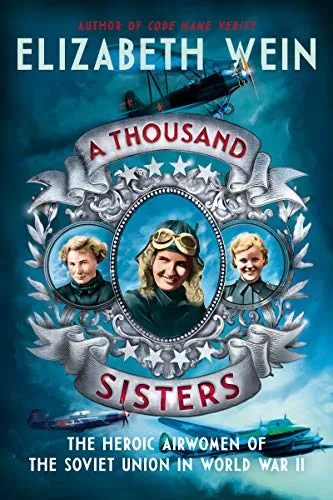 A Thousand Sisters: The Heroic Airwomen of the Soviet Union in World War IIElizabeth WeinA substantial and arresting history of Soviet women flying combat missions during World War II begins with the rise of the Communist party in Russia. Its stated commitment to equal opportunities for men and women was not the reality, but a generation of young women grew up with opportunities to learn how to fly, while all Soviet citizens were expected to prepare for the (inevitable) Future War. When the Germans invaded in 1941, Marina Raskova, the country’s most famous women pilot, successfully lobbied to create a women’s air force combat unit. Eventually 1,000 young women joined this effort to fight in the Soviet Union’s “Great Patriotic War.” Some were pilots, some navigators, some assigned to ground crew in two bombing regiments and one regiment of fighter planes. A lengthy, compelling narrative describes their training, stress and frustrations, frightening missions, bonds formed (as well as some friction), losses endured, skepticism and sexism faced and overcome, and the respect they earned among many male colleagues and commanders. A book that does not glorify war does illuminate the commitment and skill of these women, many of CCBC Choices 2020 Historical People, Places, and Events 25 whose individual stories unfold. Notes, a lengthy bibliography, and index are included.Historical People, Places, and EventsView book details
 The Electric War: Edison, Tesla, Westinghouse, and the Race to Light the WorldMike WinchellAn extensive history of three brilliant inventors reveals the high stakes and drama involved in the development of electricity during the late 19th century. Thomas Edison, already a beloved celebrity by the time he became known for a commercially viable lightbulb, was a staunch advocate for direct current (DC). When Nikola Tesla told Edison his idea for the less expensive and more sustainable alternating current (AC), Edison rejected it and continued his attempt to light Manhattan using DC. George Westinghouse, a keen, competitive, and unusually humane businessman, teamed up with Tesla to develop AC and use it to successfully light multiple cities. Furious, Edison retaliated by starting a rumor campaign asserting that AC was dangerous and convincing the inventor of the electric chair to use AC rather than DC power, thus equating AC with death in the public’s eye. The race between AC and DC continued, with the players competing to light a world’s fair before one form of current finally pulled ahead. Meticulous research and a compelling story make this a fascinating, accessible bit of history.Historical People, Places, and EventsView book details
 A Place to Land: Martin Luther King Jr. and the Speech That Inspired a NationBarry Wittenstein and“It’s terrible circling up there without a place to land.” Martin Luther King, Jr.’s comment about knowing when and where to end when preaching begins this picture-book account of the crafting of his most famous speech. He met with advisors the night before the March on Washington and later wrote from rough drafts and scribbled notes. “Words crossed out three, four times, searching for the perfect meaning and rhythm,” noted Andrew Young. When he finally stepped up to the podium, “Martin’s rich baritone rang out across the ages” as he talked about the history of the nation, its core documents, and African American experience. Then he invoked “the passion of a Sunday morning sermon” to speak words that weren’t on paper but he knew in his heart: “I have a dream …” A narrative offering insight into King’s writing process while providing background for his comments is paired with illustrations offering additional historical context, including images of the day and those who advised and inspired King. An illustrator’s note, brief information about historical figures referenced, and bibliography close out the volume.Historical People, Places, and EventsView book details
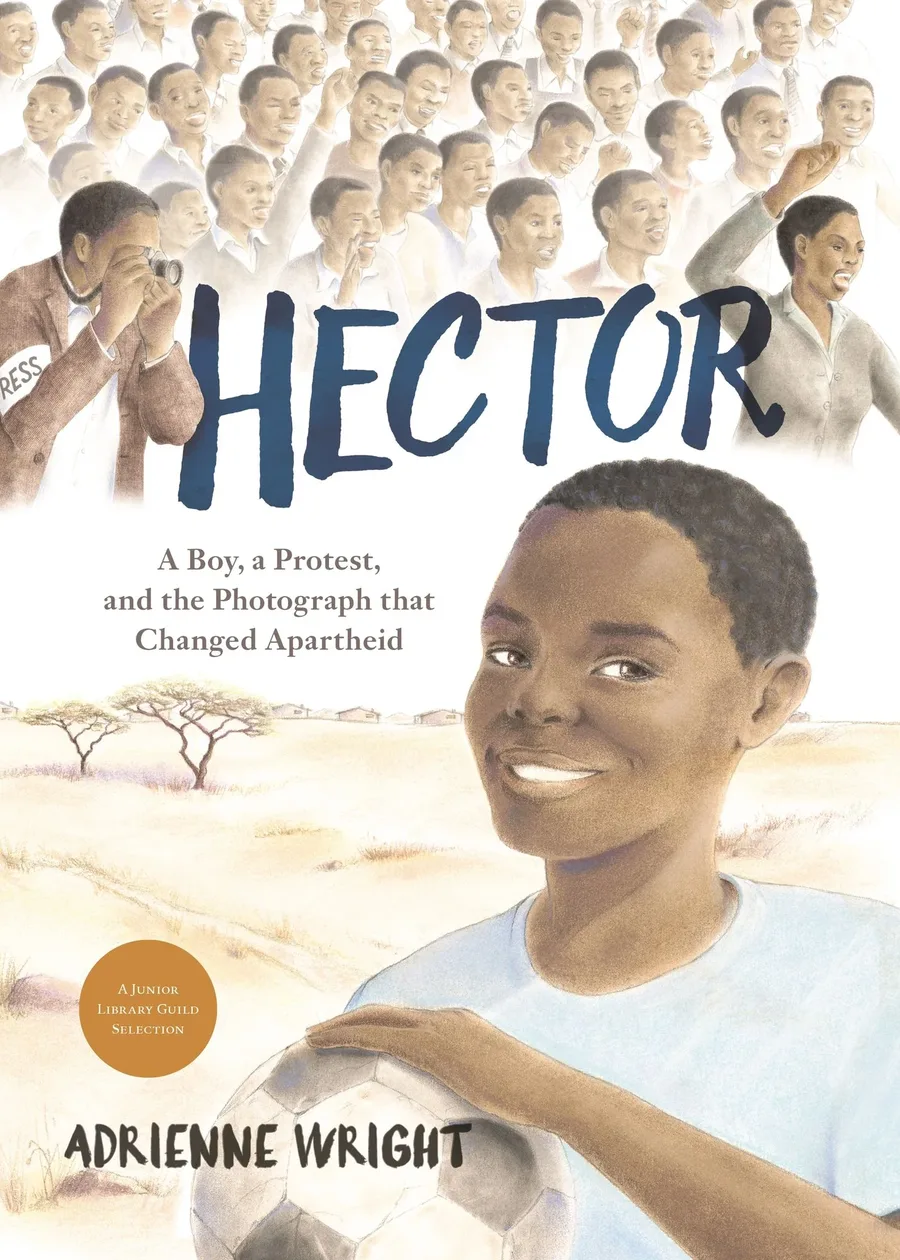 Hector: A Boy, a Protest, and the Photograph that Changed ApartheidAdrienne WrightA short, potent, three-part graphic novel begins with “Hector,” introducing a 12-year-old Black South African Hector Zolile Pieterson, living in Soweto in 1976. Hector likes playing soccer with friends and often runs errands for his mother. The morning of June 16 he heads to school and gets caught between 26 Historical People, Places, and Events CCBC Choices 2020 demonstrating Black high school students and the white police. His older sister, alarmed to see Hector, yells for him to go home. “Bang!” “Antoinette” begins with Hector’s older sister, Antoinette Sithole, that morning. She knows about the planned demonstration to protest government changes to their curriculum that would require more classes be taught in Afrikaans and fewer in their native languages, but doesn’t expect to see Hector there. “Bang! … My brother!” “Sam” introduces Sam Nzima, a Black photographer covering the demonstration. The police confiscate Sam’s film, but one roll remains successfully hidden. On it is a photo of grief and horror, reproduced here in agonizing clarity: Hector’s body cradled in the arms of a teenage boy as Antoinette runs alongside. An afterward from the white South African author, who interviewed Hector’s family and Nzima for this account, notes that Hector was not the only one to die during the historic protest on June 16, 1976, but Sam’s photo became “a powerful symbol, opening the world’s eyes to the racism and violence of apartheid and provoking change in South Africa.”Historical People, Places, and EventsView book details
Biography, Autobiography, and Memoir
8 selections
 Shout: A Poetry MemoirLaurie Halse AndersonThis poetry memoir by the author of Speak follows her from childhood through her adult life as a successful YA author. Part I introduces the reader to Anderson’s parents and family life in the 1970s. Raped at age 13, Anderson’s poems consider the culture of silence surrounding women and their bodies in addition to her experiences during that time. The traumatic event was followed by a downward spiral of drug and alcohol use before Anderson found solace in competitive swimming and, especially, a pivotal year as an exchange student in Denmark. In Part 2, the author reflects on her experience as a National Book Award finalist and her profound encounters with readers, many of them victims of sexual assault with whom Speak resonated. The memoir concludes with part 3, a meditation on Anderson’s name and forebears, and a recounting of her parents’ deaths. Anderson’s voice is personal and powerful, her poetry simultaneously informal and elegant in this singular addition to the body of literature exploring the strength and resilience of survivors of sexual assault.Biography, Autobiography, and MemoirLexile Text Measure 1080LATOS Book Level 7.5View book details
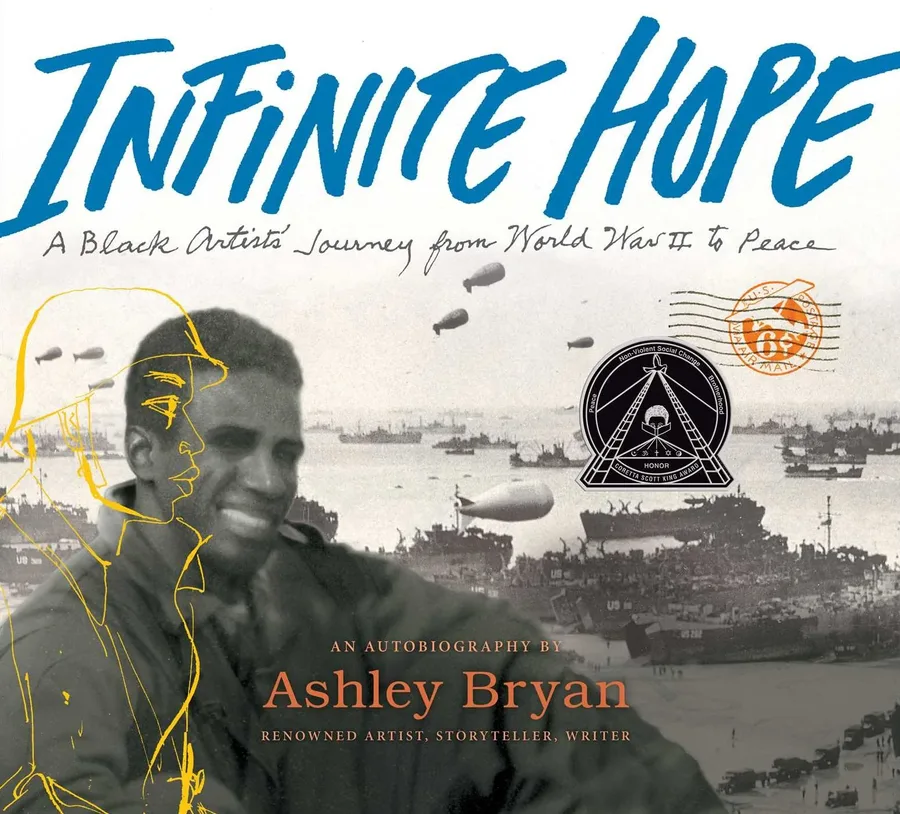 Infinite Hope: A Black Artist’s Journey from World War II to PeaceAshley BryanLike most African American soldiers in the segregated army during World War II, Ashley Bryan was assigned to a service unit. As a stevedore he helped unload shipments in Boston—although he was much more adept drawing others at CCBC Choices 2020 Biography, Autobiography, and Memoir 27 work—before being sent overseas, where he and other Black solders cleared mines on the beach and unloaded supplies during the invasion of Normandy before moving across France. At war’s end, he was in charge of getting his unit home, a task made more challenging by continued segregation rules that saw them repeatedly denied space on transport ships. Bryan survived the violence of war and of racism by creating art—carrying supplies in his gas mask, and sketching whenever he had the chance. A volume beautiful in both sensibility and design describes how art provided an escape and a means of preserving his humanity. His gentle spirit shines through in this first-person account looking back, in excerpts from his handwritten letters home, and in the moving sketches and other art he created before and during the war. Black-and-white photographs are included throughout, while several recent full-color paintings in which he revisits the war close this arresting work.Biography, Autobiography, and MemoirView book details
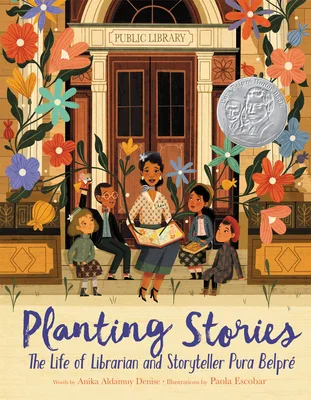 Planting Stories: The Life of Librarian and Storyteller Pura BelpréAnika AldamuyWhen Pura Belpré came from San Juan to Nueva York in 1921, “words traveled with her: stories her abuela taught her. Cuentos folklóricos Pura told in the shade of a tamarind tree in Puerto Rico.” Pura gets a job at the New York Public Library, but there are no stories like the ones her abuela taught her on the shelves. Pura begins telling them herself in bilingual story times, eventually adding puppets, but she knows books are important too, which is why she begins writing the cuentos down. Pérez y Martina is the first of many tales from her homeland written by Pura and published for children everywhere to read and hear, each story a seed she planted that continues to grow and bloom. Illustrations with a vintage mid-20th-century feel in palette and style form the backdrop for a lively narrative perfect for reading aloud, which is just as it should be given Pura Belpré’s storytelling gifts.Biography, Autobiography, and MemoirView book details
 Soaring EarthMargarita EngleA companion to Engle’s Enchanted Air continues the story of Engle’s life, focusing on her high school and college years. Starting high school in 1966, she eventually finds a place among a group of smart, quiet kids. Heading off to UC Berkeley, she struggles with homesickness and the chaos of campus unrest over the Vietnam War. She drops out and hitchhikes across the country, spending time in New York City before finally coming home again to California to work and attend community college. It is there she finds her footing in her love of plants and botany, which becomes her major. Continuing on to earn a 4-year degree, she rediscovers the love of poetry she had as a teenager in a class that introduces her to a work by Tomás Rivera. Along the way, there are boyfriends and lessons learned and, finally, love that she can count on. This memoir in poems will be relatable to many teen readers, as Engle’s life follows a path that was far from clearly defined early on.Biography, Autobiography, and MemoirView book details
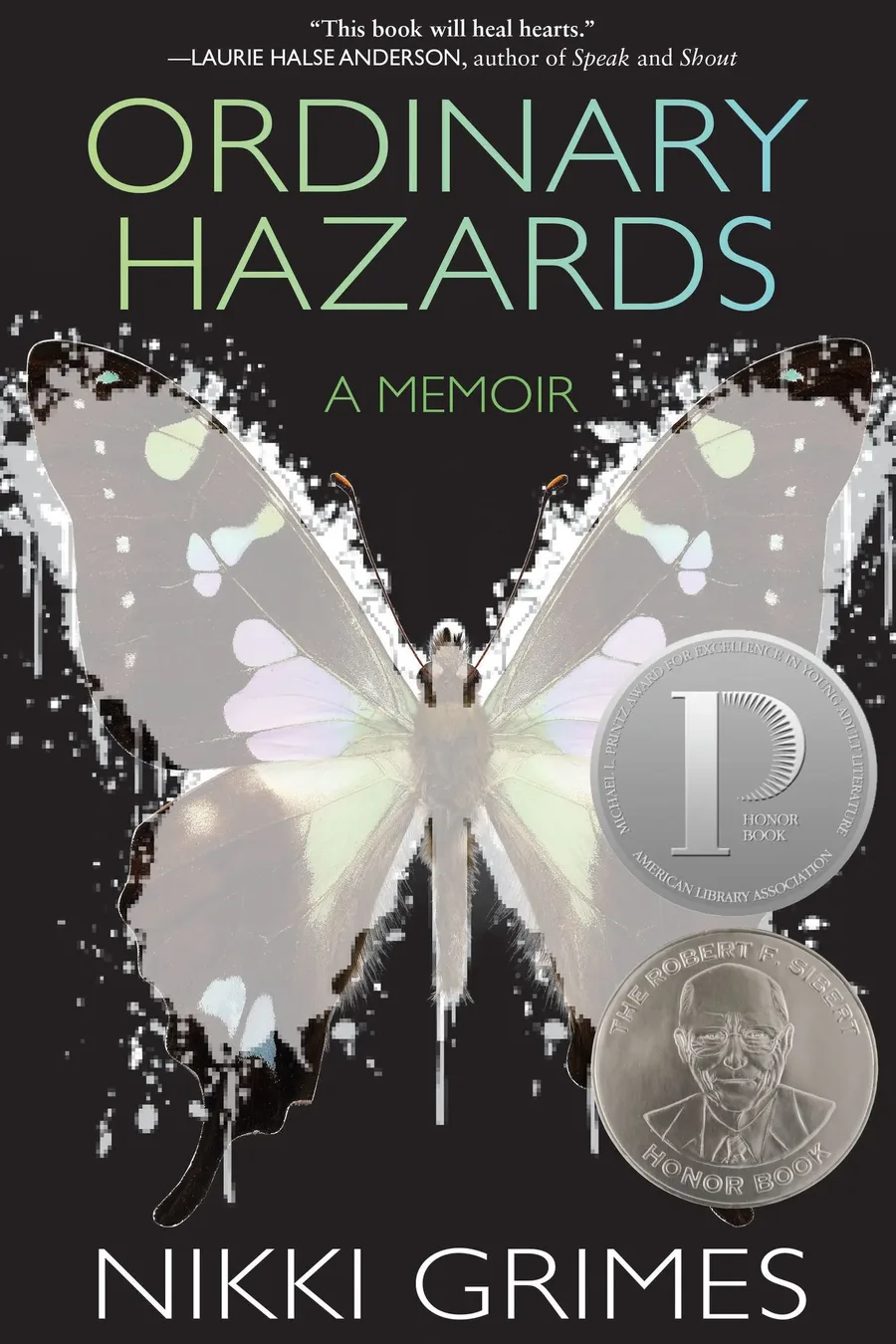 Ordinary Hazards: A MemoirNikki GrimesNikki Grimes’s poetry memoir of her childhood and teenage years recounts the chronic instability of her life while tracing the development of her love of writing. As a child, Grimes entered the foster care system because her mother, who had schizophrenia, could not care for her. Already traumatized by neglect, she was devastated to be separated from her older sister. After a rough start, she found happiness and belonging with her foster family, only to be retrieved a few years later by her mother. As her teen years began, her stepfather began to sexually assault her, and her mother continued to experience schizophrenic episodes. Although her father reappeared in her life as a force of good, offering her support and a place to live and exposure to the richness of Black cultural life, Grimes learned to rely on herself with help from her older sister and an English teacher who pushed her to be the best writer she could be. Throughout these years, Grimes took great comfort in reading and writing, carrying a beloved notebook everywhere and using her journal and poetry as a coping mechanism and a way to work through the chaos of her family life. This poems in this powerful memoir reveal the author’s incredible fortitude and perseverance in the face of extreme circumstances.Biography, Autobiography, and MemoirView book details
 Dreaming in Code: Ada Byron Lovelace, Computer PioneerEmily Arnold McCullyBeginning in infancy, Ada Byron’s life often fell outside societal norms of the time. Her mother left the poet Lord Byron, Ada’s father, when their daughter was one month old, and later manipulated Ada’s perception of her father and their relationship with an iron hand. Lady Byron provided Ada with an atypical education, employing private educators and often overseeing her daughter’s efforts from afar while focusing on her own charitable projects. Only 17 when she first met Charles Babbage, Ada relished their shared interests in algebra and calculus, and her eventual essay notes explaining his early mechanical computer, the Analytical Engine, demonstrated her prescience in recognizing its potential. Challenged in personal life by her controlling mother and a distant relationship with her ineffectual husband, Ada Byron Lovelace also suffered from devastating chronic illness yet continued to contribute to the intellectual achievements of her era until her death at age 36. Extensive source notes, biographical sketches of the primary people in Ada’s life, a summary of her notes in “Sketch of the Analytical Engine Invented by Charles Babbage,” a glossary, and bibliography round out a compelling biography that is short on visual elements but has a fascinating woman as its subject.Biography, Autobiography, and MemoirView book details
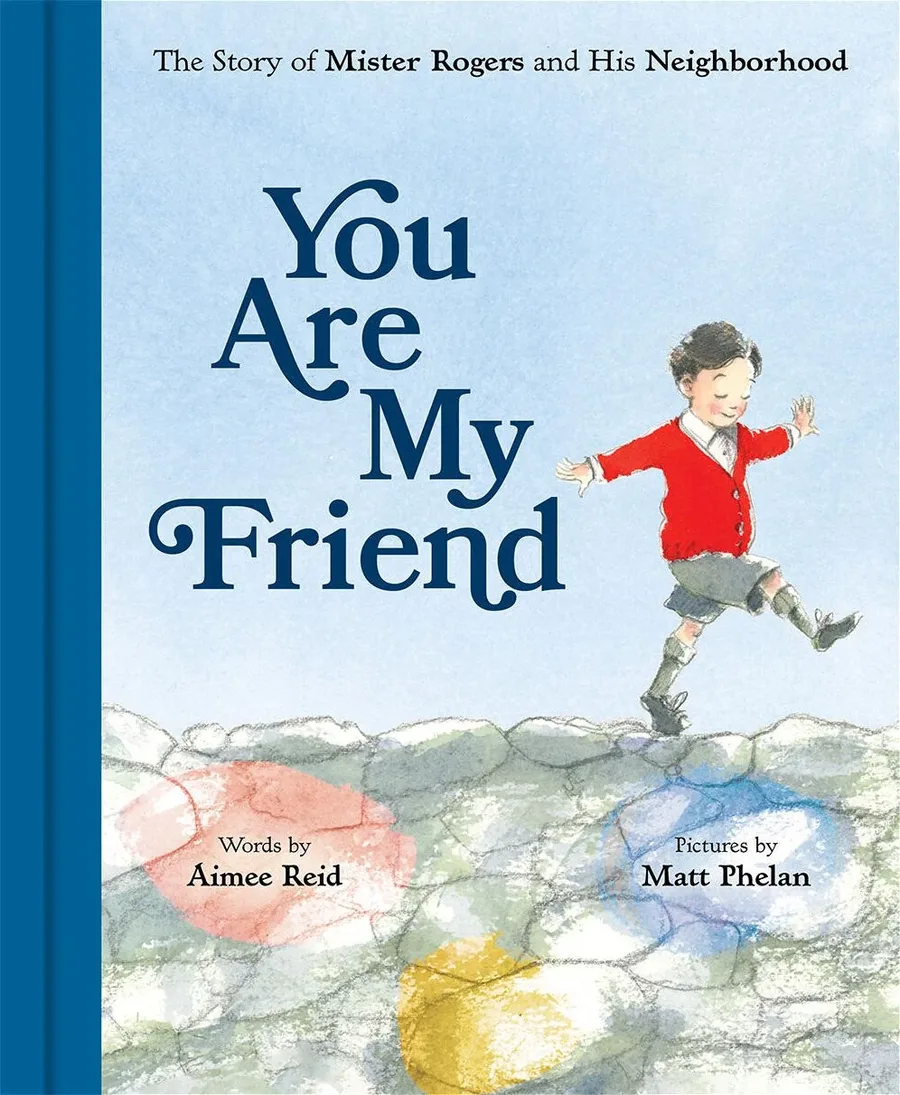 You Are My Friend: The Story of Mister Rogers and His NeighborhoodAimee ReidA picture book about Fred Rogers of Mister Rogers' Neighborhood fame is as gentle and understated as its subject while drawing a direct line between aspects of Rogers’s early life and things he became famous for. During a lonely childhood when he was often sick, and sometimes bullied, when he was sad Unlocked CCBC Choices 2020 Biography, Autobiography, and Memoir 29 or mad or hurt and had no way to express it, Freddie made friends with his puppets, and he found solace in music—he discovered he could make the piano sound the way he felt. His mother told him to “look for the helpers,” his Grandfather McFeely told him he was special, and that he liked Fred “just the way you are.” When he was an adult, Fred started a television program for children that had puppets and music and helpers. Most of all, it had absolute respect for children, with each child watching or listening at its center: “You’ve made this day a special day, by just being you. There’s no person in the whole world like you, and I like you just the way you are.” A brief biography of Mr. Rogers, and personal author’s and illustrator’s notes, along with a bibliography, round out the volume.Biography, Autobiography, and MemoirView book details
 GutsRaina Telgemeier, illustrated by Raina TelgemeierIntestinal issues for young Raina are both the effect of ongoing anxiety, and the cause of further worry as she navigates fifth grade, friendships, and a vivid, visceral fear of throwing up. The doctor proclaims her healthy, so why does her tummy keep having trouble? And why does it sometimes feel like the other girls at school belong to a secret club she knows nothing about? Eventually, she’s given a diagnosis of IBS (Irritable Bowel Syndrome), but for Raina the diagnosis matters less than learning to manage her thoughts, feelings and fears, whatever the physical cause of symptoms that she can’t imagine telling her friends and classmates about. Through sessions with a therapist, she learns coping mechanisms for her anxiety, from deep breathing to ground herself to taking steps toward being able to talk more openly about the things that scare her, in this forthright graphic novel memoir that never loses its sense of humor. No doubt many readers will find its honest look at Raina’s anxiety as comforting as the hopeful, upbeat outcome.Biography, Autobiography, and MemoirView book details
Contemporary People, Places, and Events
5 selections
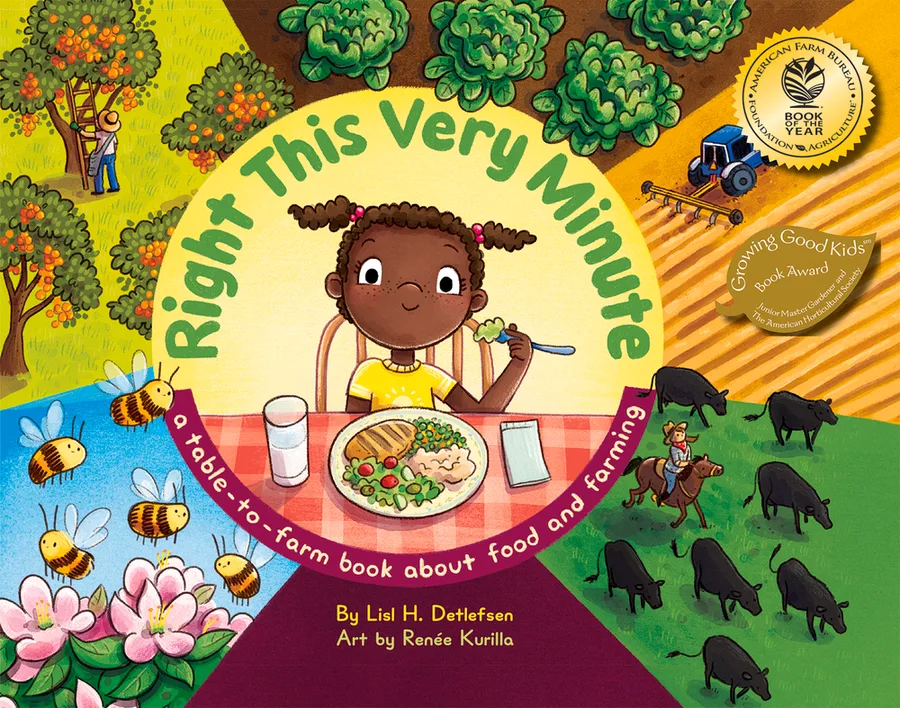 Right This Very Minute: A Table-to-Farm Book about Food and FarmingLisl H. Detlefsen, illustrated by Renée KurillaHungry for breakfast? “Then you need a farmer … Right this very minute …” a grower is testing for ripeness an orange that will become orange juice, a farmer is getting ready to plant wheat that will become flour for pancakes, a sugarmaker is changing out the buckets catching sap that will be turned into maple syrup. A book that judiciously repeats the “right this very minute” refrain explains that the food we eat throughout the day—at snack time and lunch time, dinner time and dessert—is dependent on the knowledge and hard work of the people who grow and tend and process and pack it for consumption. This 30 Contemporary People, Places, and Events CCBC Choices 2020 lively informational picture book showcases a range of food and production, from backyard chicken coops and community gardens to beekeepers and larger- scale family farms, orchards, ranches, and groves (factory farms are noticeably absent). The importance of science in modern farming; the diverse individuals shown as both producers and consumers; and the encouragement for readers to “think like a farmer,” are additional welcome elements of this upbeat volume.Contemporary People, Places, and EventsView book details
 We Are Here to Stay: Voices of Undocumented Young AdultsSusan KuklinNine young adults with undocumented immigrant status in the United States share their individual, complex stories about how and why they came to this country, and their experiences since arriving. Each has made the decision to speak out, courageous activism as they both live in and emerge from “the shadows” to share their stories and dreams. They came originally from Colombia, Ghana, Independent Samoa, Mexico, and South Korea as children or young teens, usually with their parents, in one case because of trafficking. Originally slated for publication in 2017, this book was intentionally delayed after presidential action put the status of DACA (Deferred Action for Childhood Arrivals) in limbo. Changes were made to protect the young people’s identities, which are now indicated only by first initial and a dash (e.g. Y—), while Kuklin’s photographs of her subjects were eliminated—only empty frames remain. Each dash and empty frame is a sobering reminder that visibility is a risk for these young people, who deserve to be seen. End matter includes notes about each interview and resources. Kuklin writes, “These individuals remind me again and again that the American dream is worth fighting for—and that the American dream is worth sharing.”Contemporary People, Places, and EventsView book details
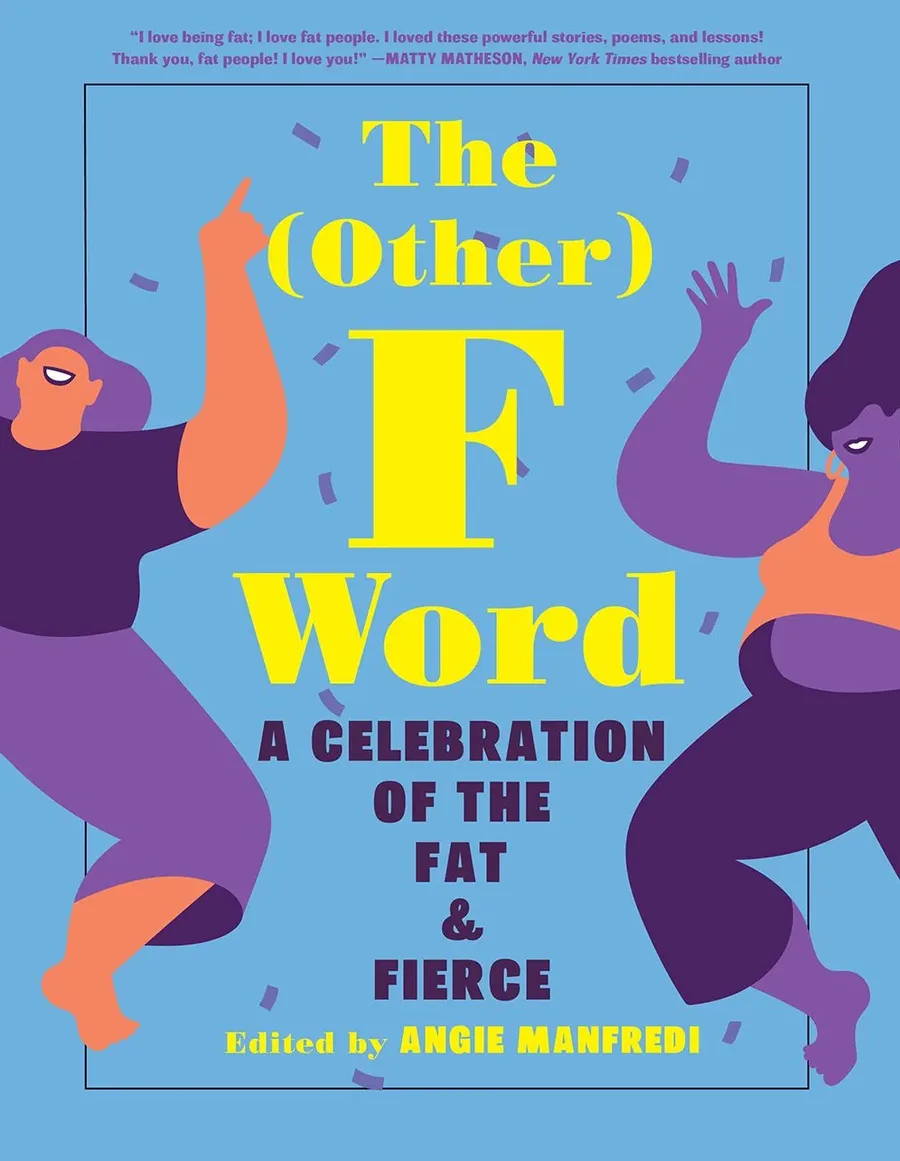 The (Other) F Word: A Celebration of the Fat & FierceAngie ManfrediDiverse voices from individuals across gender and sexuality spectrums, from varied racial and economic backgrounds, who are abled and who are disabled, all identify as fat matter of factly and without apology in 30 body-positive pieces. In the essays, art, letters to their younger selves, and other pieces, some contributors focus on their personal journey to accepting and celebrating their bodies, including often difficult experiences in childhood, adolescence and young adulthood. Others debunk myths, and challenge social norms and stereotypes in popular culture that treat fat people as laughable, and expendable. Many affirm the value and beauty of everybody and every body, an intention that carries through the volume overall. The contributors come from the worlds of literature, art, social criticism, fashion, and other spaces. Poignantly honest or sharply funny, individually and collectively they are multidimensional, multi- faceted, and fierce in their commitment to being themselves and holding up others.Contemporary People, Places, and EventsView book details
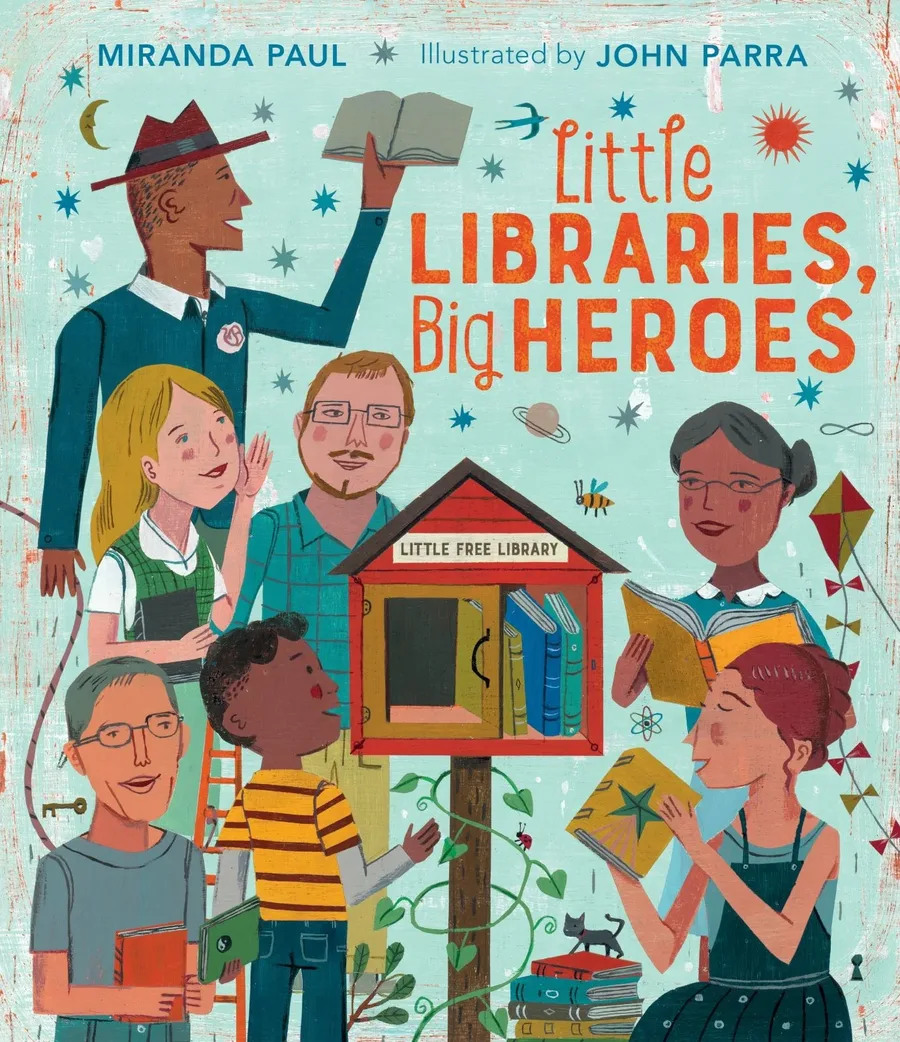 Little Libraries, Big HeroesMiranda PaulLittle Free Libraries can be found from Minneapolis to El Paso, Canada to Brazil, Ireland to Pakistan, western Uganda to South Korea—in short, around the world. This global phenomenon began with one man named Todd in a small Wisconsin town who built a schoolhouse-shaped “library” as a tribute to his late mother, a teacher and lover of books. At first not even his neighbors paid much attention. This engaging informational picture book describes the perseverance of Todd and a friend who worked to garner interest in Little Free Libraries, and how the phenomenon slowly spread—first in Todd’s town, then in Wisconsin, then nationally, and finally around the world. It also shares stories of some of the places where Little Free Libraries have made a difference. The friendly narrative is set against distinctive acrylic illustrations suggesting paint on wood, while end matter includes more information about Little Free Libraries, founder Todd Bol and others along with a bibliography.Contemporary People, Places, and EventsView book details
 The Other Side: Stories of Central American Teen Refugees Who Dream of Crossing the BorderJuan Pablo VillalobosA short but powerful collection illuminates the journeys of eleven young people who immigrated to the United States due to dangerous situations in their home countries. Whether traveling atop trains or by car, foot, or bus; in cramped luggage compartments beneath buses; in cabs or empty semi trailers; across freezing rivers or shuttled from vehicle to vehicle; the children and teens in these stories are all in search of safety and stability. Many stories focus on their effort to get here, but others shed light on their experiences before or after they immigrate, including time spent in the “freezer” or temporary “homes” after crossing the border. Other stories recount the dangers that drove these young people to leave home. The collection is compelling and heartbreaking in its depiction of children who have no choice but to flee their homes for a safer place, even if the journeys may prove fatal.Contemporary People, Places, and EventsView book details
Understanding Oneself and Others
3 selections
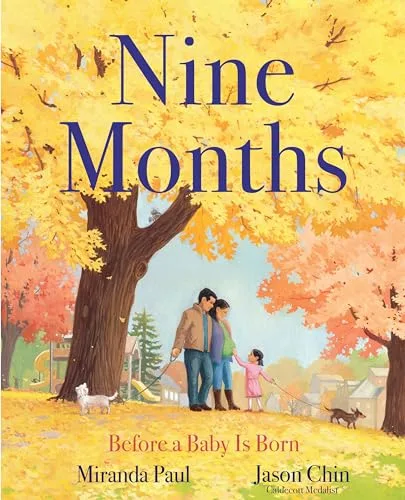 Nine Months: Before a Baby Is BornMiranda Paul, illustrated by Jason Chin“Small. Ball. The point of a pin. Then it divides … Our story begins.” A deft, skillful blending of information and anticipation in a rhyming text documents the gestation of a human baby and a little girl and her family’s preparations for the arrival of a new family member. Each spread features an image showing the development of the fetus on the left hand side—clearly labeled with the trimester, month and weeks of gestation—with the family’s activities on the right. While it would have been helpful to have the actual size of the egg, zygote and embryo in the first three page spreads clearly differentiated visually from the illustrated size (the remaining images are illustrated actual size), the end matter provides helpful additional information about the illustrations, in which the images are based on the 40-week gestation period used in medicine and science. More about babies in general is also provided at the end of a volume that concludes with the young Asian American girl and her family welcoming their newest member.Understanding Oneself and OthersView book details
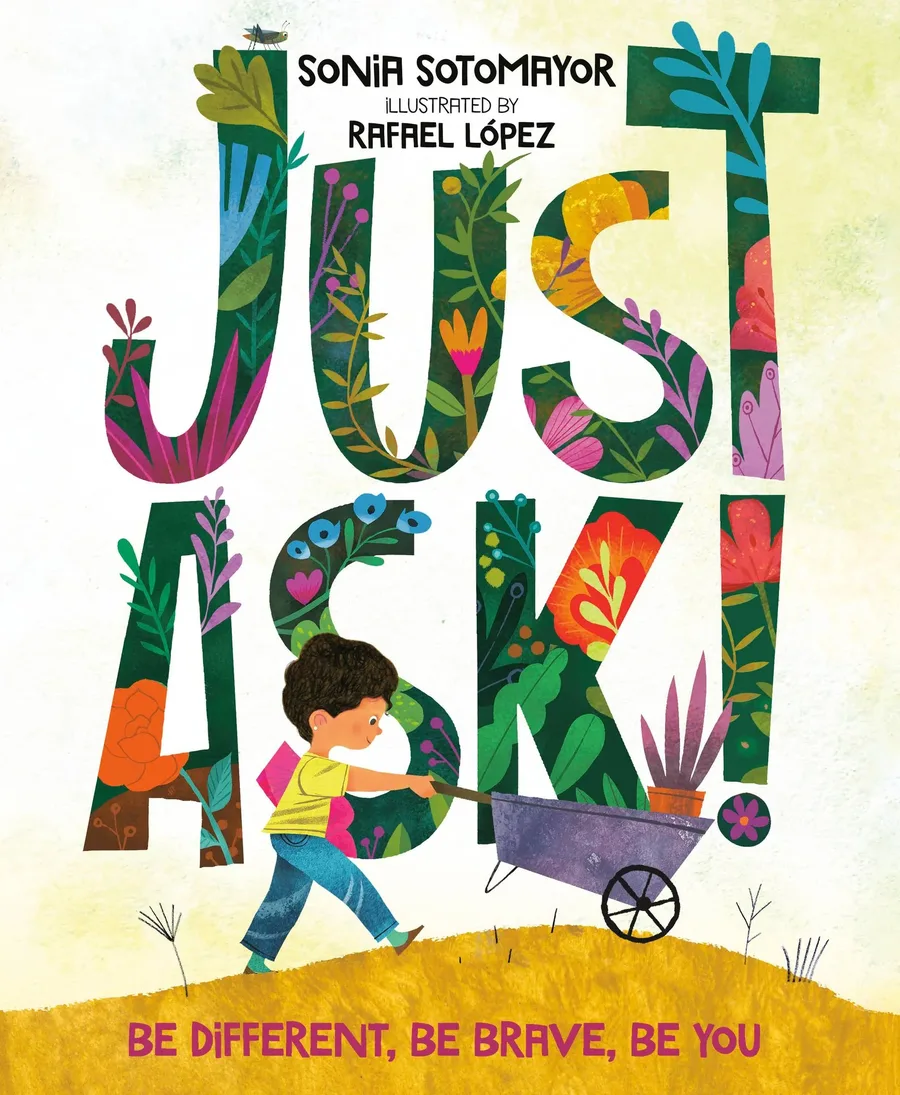 Just Ask! Be Different, Be Brave, Be YouSonia SotomayorYoung Sonia has diabetes and must sometimes give herself shots of insulin. She asks, “Do you ever need to take medicine to be healthy?” Rafael has asthma and sometimes needs an inhaler, which is like a tool to help his body. “Do you use a tool to help your body?” Anthony uses a wheelchair. “How do you get from place to place?” he asks. This question-and-answer chain format is used to introduce 13 diverse fictional children who have physical or cognitive differences. The “Just ask” of the title is referenced by both fictional Sonia and her real-life counterpart, Puerto Rican author Sotomayor, who is diabetic. Sotomayor advises “just ask” when you are curious about someone. The narrative acknowledges that not everyone is comfortable answering such questions, and adults can help when kids aren’t ready to respond, a point for child and adult readers to be aware of—there is no single approach that will be appreciated by everyone. What can be appreciated here is that the differences highlighted are expressed as something matter-of-fact about each child while also affirming what they can do rather than focusing on what they cannot do. Bright, joyful illustrations accompany this affirming look at racially diverse kids with various kinds of disabilities.Understanding Oneself and OthersView book details
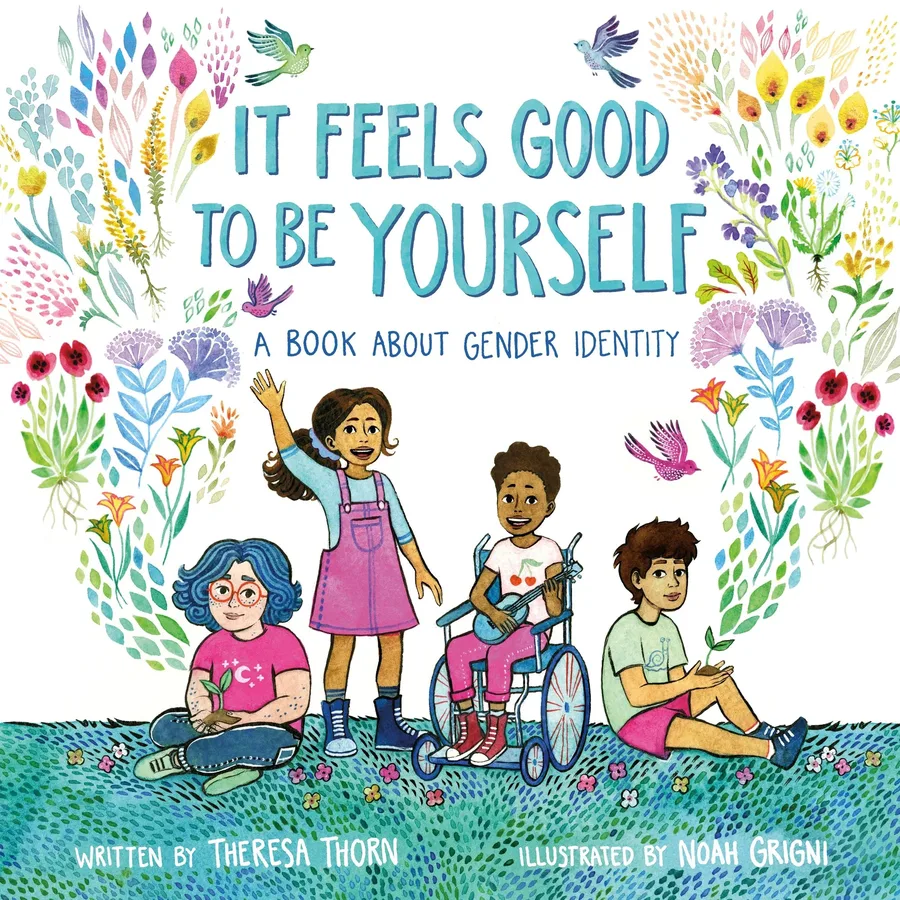 It Feels Good to Be Yourself: A Book about Gender IdentityTheresa ThornAn expansive, affirming look at gender identity explores identities across the spectrum as it introduces various children. Ruthie is a transgender girl; her brother Xavier, a cisgender boy; Alex is both a boy and a girl; and JJ is neither. CCBC Choices 2020 Understanding Oneself and Others 33 Straightforward language explains that when a child is born, people can only guess what their gender is based on how their body looks. Sometimes they are correct, and sometimes they’re not—either way, it’s okay to tell people your gender, and to be proud of who you are. There are many different ways to be a boy, a girl, or non-binary. There may be a word for your gender identity, but there may not be. Your identity may change or stay the same over time, or you might still be figuring it out. But most importantly, “you are okay exactly the way you are.” A list of helpful terms and their definitions, additional resources, and an explanation of pronouns round out a book that embraces children of all genders, no matter where they are on their journeys.Understanding Oneself and OthersView book details
The Arts
7 selections
 Two Brothers, Four HandsJan Greenberg, Sandra JordanEarly on Alberto Giacometti was recognized for his artistic genius while his younger brother Diego initially played a supporting role. But Diego eventually became an artist in his own right, too. This picture-book biography of the two brothers born at the start of the 20th century in Switzerland doesn’t shy away from the hard things in their lives—war, poverty, mental health—which inevitably informed their art. But its primary focus is their journey as artists, and relationship as brothers. Greenberg and Jordan advance the narrative with short, uncomplicated sentences almost poetic in their style and economy. Hadley Hooper’s art is the perfect complement—there is not a wasted stroke, and she uses color to reflect different moods. The two brothers’ distinctive personalities come through in a work that also evokes the times and places in which they lived. In spite of the brevity, it’s well-grounded in impressively documented research, and back matter includes a glossary, detailed timeline, bibliography, and a page devoted to helping children think about a single work of art by Alberto Giacometti.The ArtsView book details
 My Forest Is GreenDarren LebeufAn urban-dwelling, Asian child looks out a high window at a large, forested park. “This is my forest.” The child, who clearly loves making art, has also created a “forest” of nature-inspired drawings. “Well, actually … this is my forest.” These two opening page spreads lead into a series of observational statements, often expressing opposites, as the child explores and describes the park and creates artwork inspired by these explorations. “My forest,” the child notes, is tall (trees) and short (ants), wide and narrow (different sized tree trunks), heavy and light (large rocks and small stones), crispy (fall leaves) and soft (moss and lichens), and so on. The fairly simple declarative statements 34 The Arts CCBC Choices 2020 have terrific, sometimes surprising descriptions (“tiptoe gray … patient white … carefree red”) in a story set against equally vivid mixed-media illustrations.The ArtsLexile Text Measure AD320LATOS Book Level 2.4View book details
 Paper Son: The Inspiring Story of Tyrus Wong, Immigrant and ArtistJulie LeungGeng Yeo came to the United States at age nine, a “paper son” passing, along with his father, as upper class Chinese, having memorized false histories to get around strict, racist U. S. immigration laws. Even as a child he loved making art and he grew up to be an animator at Disney. First limited to drawing the “in between” frames for Disney’s animated films—a lot of work for no recognition—when Bambi was in development, he showed how his spare style could be used to create a lush sense of landscape. Despite designing the visual look for the movie as an inspired sketch artist, he was only credited in the film as a background artist. His final years spent making beautiful kites offer a satisfying conclusion to this little known but important man’s life.The ArtsView book details
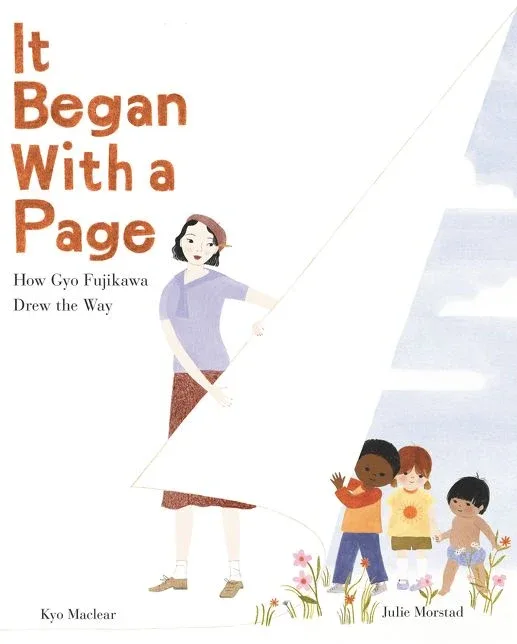 It Began with a Page: How Gyo Fujikawa Drew the WayKyo MaclearAn artful, appealing picture-book biography recounts the life of a Gyo Fujikawa, a trailblazing Japanese American artist committed to creating picture books depicting a multiracial world. Born in 1908, Fujikawa grew up on the west coast. She studied in the United States, and in Japan, where she rebelled against formal art rules and learned independently. She was living on the east coast during World War II and was not imprisoned like Japanese on the west coast, but her family was. Drawing was a comfort, and she wondered if art might comfort others. Her first solo book, Babies, depicted Black and brown and white babies. “But the publisher said no. / No to mixing white babies and black babies …. But Gyo would not budge … she waited for them to rethink their decision.” Babies was published in 1963 to great success. The illustration style here is distinctive from Fujikawa’s and yet there is a pleasing unity between them, so that when Fujikawa’s characters first appear, they look like they are part of the same universe. A timeline with photographs, and an author’s note as child-friendly as it is informative, rounds out this work of exemplary nonfiction for young children.The ArtsView book details
 Out of This World: The Surreal Art of Leonora CarringtonMichelle MarkelBorn in England in 1917, Leonora Carrington rebelled against the strict gender roles expected of a “well-bred” young woman, instead declaring her intent to become an artist. She’d drawn wildly imaginative pictures throughout her childhood, and she found kindred spirits for her artistic vision as an adult among surrealists. Most well-known surrealists were men, but Leonora was one of a number of women determined to bring their own perspectives to this fanciful style. She moved to Mexico during World War II, and there her art CCBC Choices 2020 The Arts 35 grew even bolder and more assured. As years passed, “nothing kept Leonora from painting—not struggling to earn money, not tending to her husband and children … And her women did things they didn’t do in paintings made by men … they were listening to the stars … they were going on magical processions.” This captivating, lushly illustrated work introduces Carrington’s unique vision, sensibility, and spirit to young readers.The ArtsView book details
 16 Words: William Carlos Williams & “The Red Wheelbarrow.”Lisa RogersA gently worded, soft-hued picture book shows how Dr. Williams’s patient, African American Thaddeus Marshall, served as the inspiration for his famous short poem about the red wheelbarrow. Lisa Rogers spins out fascinating information about William Carlos Williams and his medical practice, as she shows him going through his daily work, pausing in spare moments to observe the things and people around him that often inspired his poems. The pacing and the rhythm of her text is perfect, particularly as she describes the doctor at work by contrasting his activities with those of Thaddeus Marshall. The muted illustrations give a sense of both the gentle spirit of the poet and of the rainy day that is such an important backdrop to the poem. Williams’s poems, particularly “The Red Wheelbarrow” and “This Is Just to Say,” are already familiar to many children, whether through other children’s books or poetry units. In addition to giving young readers some biographical information on the poet, the book also introduces them to the process he used to write, especially addressing the common question: “Where do you get your ideas?”The ArtsView book details
 Birds of a Feather: Bowerbirds and MeSusan L. Roth, illustrated by Susan L. RothThe author, a collage artist, compares her work to that of a bowerbird in this unique exploration of the creative process. As defined on the half-title page, male bowerbirds attract a female counterpart by building elaborate, twig-and- grass structures “adorned with bright-colored objects such as feathers, bones, shells, glass, and plastic.” Illustrator Roth collects and uses similar objects in her own work, using (beak-shaped) tweezers to carefully place each small piece, although her purpose is not to attract a mate but “to tell a story.” Both artist and bird are thoughtful, deliberate creators whose “finished works are much greater than the sum of their parts.” Additional facts about bowerbirds and the structures they build, along with greater insight into Roth’s collage making, are included in the back of this book that illuminates the creative processes of two otherwise very different creatures.The ArtsView book details
Poetry
5 selections
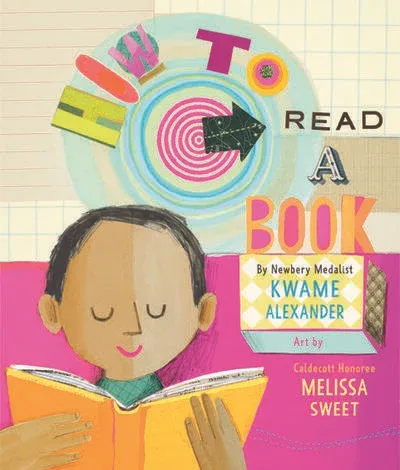 How to Read a BookKwame AlexanderFirst, get comfy. Then, peel back the skin, “like you would a clementine / the color of sunrise.” The metaphor of eating that juicy piece of fruit runs through a poem that speaks to the joy of books as places of refuge and discovery, where every word should be savored. The poem is hand-lettered on pages that encourage readers to slow down to experience the goodness: “Don’t rush through: / Your eyes need / time to taste. / Your soul needs / room to bloom.” In addition to the bounty of words, there is plenty to look at, too, in buoyant mixed-media illustrations that incorporate the words on each page into the design, and that also include snippets of text and covers from old books. Several pages feature inserts, or fold-outs, further underscoring the idea that reading is an act that invites active participation.PoetryLexile Text Measure AD770LATOS Book Level 2.8View book details
 The UndefeatedKwame Alexander“This is for the unforgettable. The swift and sweet ones who hurdle history and opened a world of possible. The ones who survived American by any means necessary.” This is for those with “undeniable” strength, “unforgettable” achievements, “unflappable” courage. This is for “unspeakable” pain that was endured. Kwame Alexander’s powerful ode, a celebration of African American survival, achievement, creativity, and resilience, is brimming with references to historical and contemporary people and cultural touchstones, and incorporates direct quotes that speak to past (“we shall not be moved”) and present (“black lives matter”). Events and individuals are further illuminated in Kadir Nelson’s stirring oil-on-panel artwork that expands the emotional resonance of the arresting poem that is also a celebration of the promise of every Black youth today: “This is for you. And you. And you. This is for us.” An author’s note is followed by brief information about each of the individuals and events referenced in the narrative and artwork.PoetryLexile Text Measure 361LATOS Book Level 2.6View book details
 Predator and Prey: A Conversation in VerseSusannah Buhrman-DeeverShort poems introduce pairs of predators and their prey, showing how they interact in hunts that are sometimes successful and sometimes foiled. There is natural drama in each of these poems, which are sometimes side-by-side and sometimes in two voices, but always clever, engaging, and grounded in real science. The science behind the poems appears in a box on each page, providing fascinating background information about the ways different creatures have evolved in to hunt and to survive the hunt. The poems add another layer of understanding to the delicate dance between each pair. Realistic watercolor and gouache illustrations add to the overall scientific tone, and the extensive bibliography of sources is equally impressive.PoetryView book details
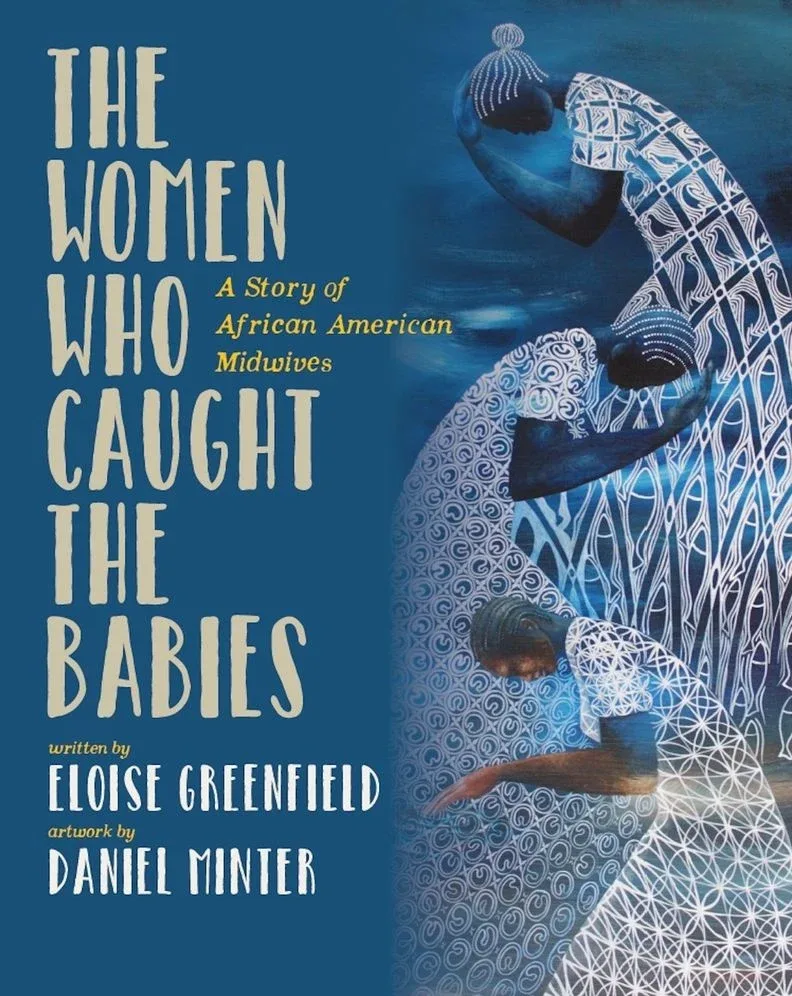 The Women Who Caught the Babies: A Story of African American MidwivesEloise Greenfield“They caught the babies, / and catch them still, / welcome them into the world, / for loving.” (“The Women”) Following an introduction about the role of midwives throughout history, this work pays tribute to the role that African American midwives have played and continued to play in African American experience. Poems titled “Africa to America” (pre-slavery and slavery), “After Emancipation, 1863,” “The Early 1900s,” and “The Early 2000s” chronicle the changing context and changing lives of midwives and their patients (e.g., born into freedom, the midwife being summoned by a husband in horse and buggy, the midwife’s arrival in her own car), with the pain and love that are part of birth a constant. In a final poem, “Miss Rovenia Mayo,” author Greenfield pays tribute to the midwife who caught her when she was born on May 17, 1929. Black-and-white photographs, both archival and from the author’s personal collection, appear in the volume’s introduction and the final poem, while arresting paintings full of pattern and color, heart and hope, illustrate the remainder of this singular volume.PoetryView book details
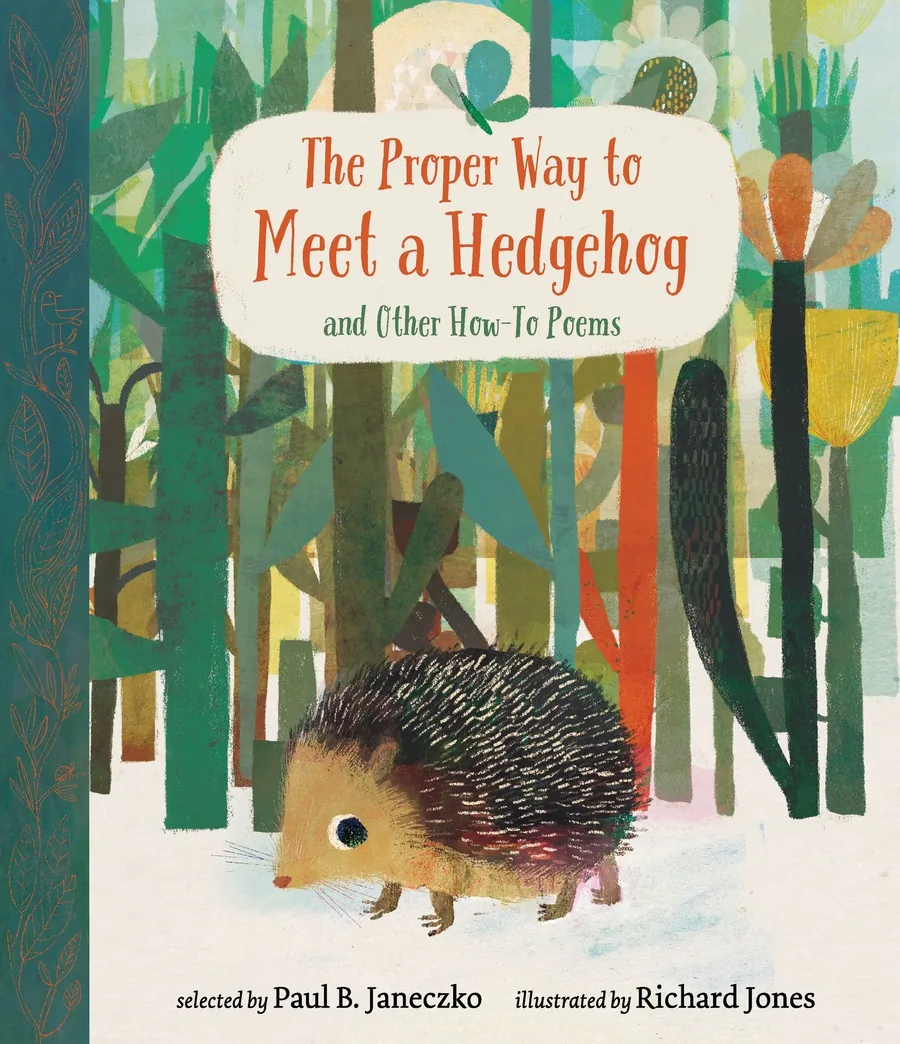 The Proper Way to Meet a Hedgehog and Other How-To PoemsPaul B. Janeczko (selector)Thirty-three poems by various writers offer advice to young readers for doing such things as toasting marshmallows, walking on Mars, and being a snowflake. The range of subjects covered by these short, child–friendly poems is impressive. Some are light and humorous, while others are more thought- provoking. Although we wish the selection of poets was more culturally diverse, the inclusion of two poems related to disabilities is notable, and the illustrations compensate for the lack of poets of color and Native writers by depicting a diverse cast of child characters throughout. The spare illustrations also leave room for the child’s imagination to interpret the meaning of the poems.PoetryView book details
Concept Books
8 selections
 Which One Doesn’t Belong? Playing with ShapesChristopher DanielsonA variety of shapes in different colors, forms (solid, outline only), and configurations (three-sided, four-sided, open and closed, etc.) offer ample opportunities for engagement as readers are repeatedly invited to answer the question “Which one doesn’t belong?” The opening example shows four shapes and is followed by four page spreads articulating the reason for four possible answers. “All of these answers are correct! … The important thing is to have a 38 Concept Books CCBC Choices 2020 reason why.” Ten subsequent spreads show differing series of four shapes and invite children to come up with and explain their own answers for why one doesn’t belong. “You’re thinking in a mathy way when you notice sameness and difference for one property [e.g., straight sides, number of sides, solid, etc.] at a time.” The author adds, “the properties are more important than the words you use … if you use words such as smooshed, stretched, bent, dented, curvy, colored in or cupcake while reading this book, you’re probably doing some great math!”Concept BooksLexile Text Measure 410LATOS Book Level 2.8View book details
 Up Up Up DownKimberly Gee, illustrated by Kimberly GeeA brown-skinned toddler and parent’s day begins with the child eager to get out of the crib (“Up, up up!”) before being lifted out by the parent (“Down!”). A similar pattern, with occasional variations in layout and pacing, takes readers through breakfast (no/yes), dressing (on/off), leaving (hurry/slow down), swimming (can’t/can), playing in the sandbox (make/break), etc. A series of small visual vignettes shows a variety of other activities (Fun fun fun) in which the two are engaged until day’s end, when a woman—presumably mommy— returns home. The adorable, round-bodied toddler isn’t identified by gender, nor is the loving adult caretaker, although the two have matching haircuts— clipped close on the side, longer on top. The uncluttered pencil and digital illustrations are full of warmth, just like the family they depict.Concept BooksLexile Text Measure AD80LATOS Book Level 1.1View book details
 Cerca = CloseJuan Felipe Herrera, illustrated by Blanca Gómez“Las margaritas están cerca del manzano. / The daisies are close to the apple tree.” A bilingual board book explores the concept of “close” as each page spread shows a small, Latinx girl describing the close proximity of things in and near her home. The narrative begins with in her bedroom (which is close to the kitchen) and ends with her at her neighbor’s house. “Mi amigo está cerca de mí. / My friend is close to me.” A muted palette with punctuations of warm colors add to the quiet appeal of this slim little volume.Concept BooksView book details
 My First ABCShirley HughesPreschooler Katie narrates an A to Z journey through elements of her life. “A is for airplane” as it flies high overhead while Katie and her baby brother, Olly, play in the garden. “E is for everyone,” she says, introducing her entire family. “J is for jam and jam jar,” which is perfect for holding water when Katie paints. “O is for Olly of course!” even though he’s “annoying sometimes.” It’s the everyday- ness of these alphabetical details that gives them their charm, as does Hughes’s inimitable, comforting illustrations showing Katie and Olly, who are white, and, occasionally, their diverse neighborhood.Concept BooksView book details
 One Fox: A Counting Book ThrillerKate Read, illustrated by Kate ReadWhen “one famished fox” with “two sly eyes” encounters “three plump hens,” the outcome seems inevitable as the counting continues all the way up to CCBC Choices 2020 Concept Books 39 “ten sharp teeth.” But in a dramatic page turn, the story arc pivots when “one hundred angry hens” prove they rule the roost. Only 40 words from start to finish convey setting, characters, and a plot with satisfying moments of tension and comedy. Vivid collage and paint illustrations on generously sized pages encourage reader interaction, from counting to cheering on the plucky poultry. Highly Commended, 2020 Charlotte Zolotow AwardConcept BooksLexile Text Measure NPView book details
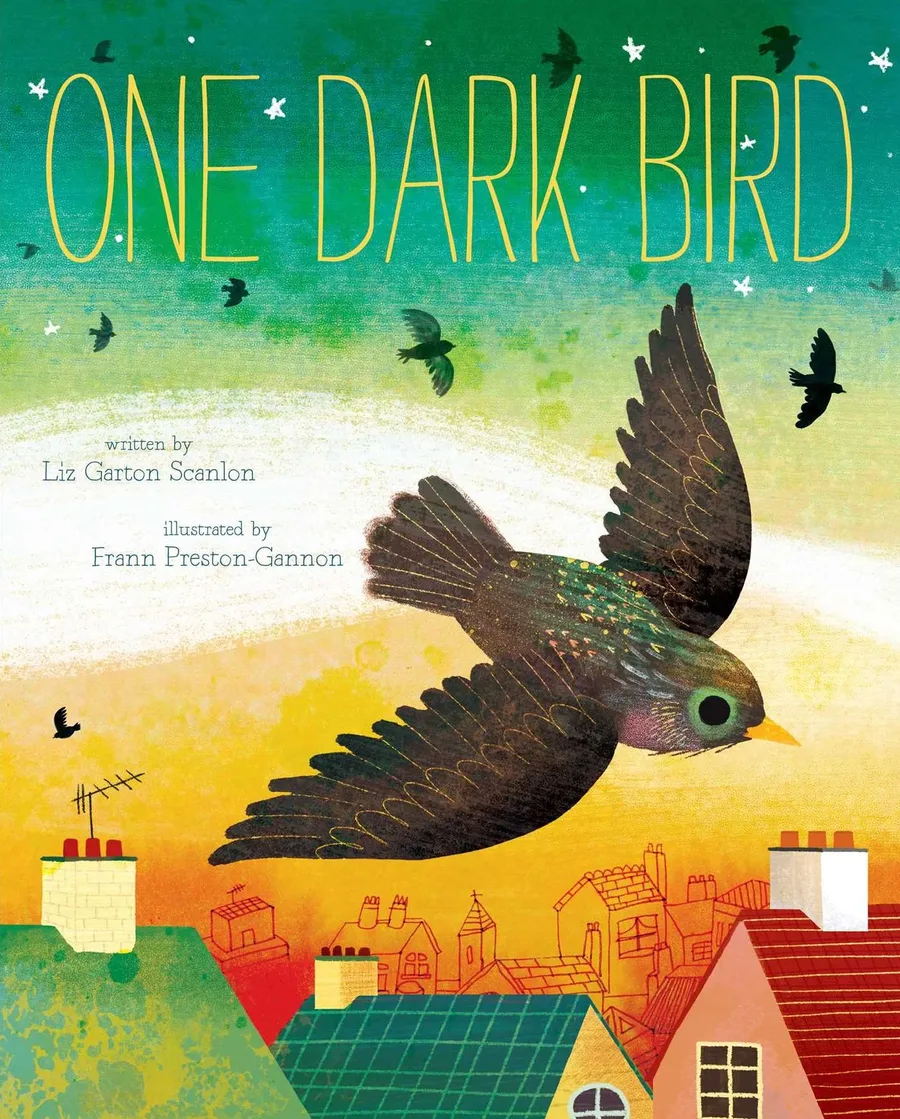 One Dark BirdLiz Garton ScanlonA lyrical counting book begins with a single starling (“1 dark bird / perched way up high / a view of town / a taste of sky”), joined by others one by one in rhyming verse up to ten. The number of birds continues to increase (“a hundred here / and there / and there”), growing into a huge flock. Startled by a hawk, the starlings begin to swoop and soar in unison (“Waves like water / dark then light / from down to up, then left to right”). A brief note on the title page defines this event as a murmuration, stating it is “quite a sight to see …” It is here, too, in deeply hued illustrations that show the dramatic flight against a vibrant, setting–sun sky. As night falls, the birds begin to fly off, or roost, until there are only 10 … then 9 … and, eventually, 1 again.Concept BooksView book details
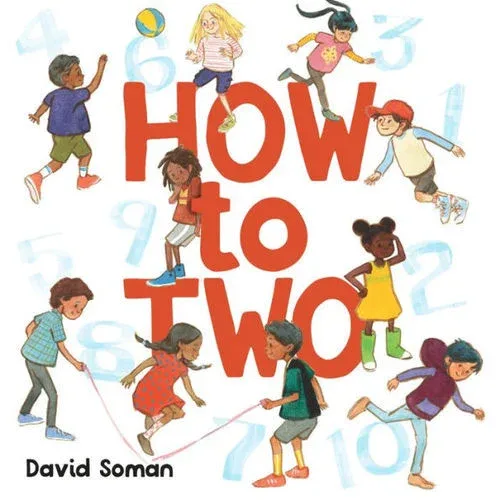 How to TwoDavid Soman“How to one.” A white boy at a playground is going down a slide. “How to two.” A Black girl joins him on the teeter totter. “How to three.” A third child arrives and the trio plays jump rope. As an afternoon of ever-changing play at the park continues (foursquare, sandbox, puddle jumping after the rain), the expanding cast of children eventually numbers ten, with a glimpse of the child about to be added often provided before a turn of the page includes them in the group. As the light angles toward dusk, adults arrive, and the ten children are led away on a countdown page. The original child is shown walking home. “How to one.” And climbing into a grown-up’s lap to read. “How to two.” This original and satisfying counting book offers a compelling visual storyline that depicts diverse children and family structures in the appealing watercolor illustrations.Concept BooksLexile Text Measure 60LATOS Book Level 1View book details
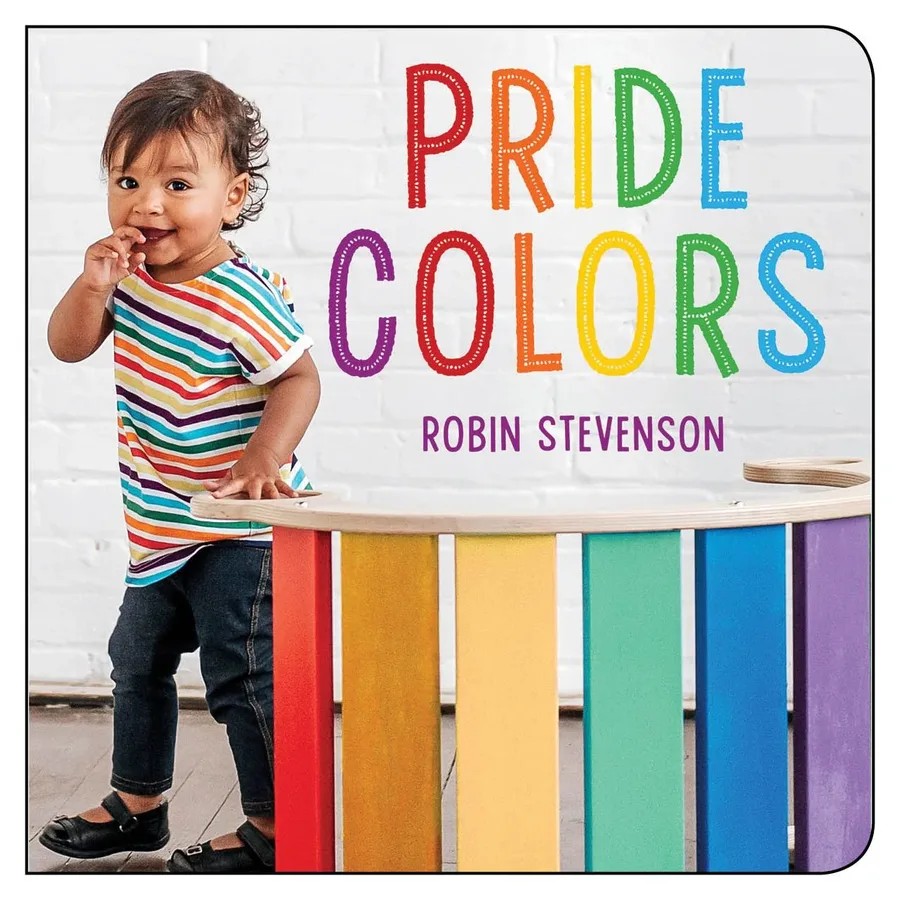 Pride ColorsRobin StevensonA concept board book uses the rainbow Pride flag to teach young children about colors. Rhyming text identifies each color followed by a loving and affirming statement directed at the child audience. (“A bright red heart, a little star. I love you just the way you are.”) Full-page photographs of racially diverse children, either alone or in the arms of their LGBTQ+ parents, accompany the text. The final rhyme mentions Pride Day by name opposite a photograph of a child wearing a rainbow tutu and carrying a tiny Pride flag. More than simply being inclusive, this book celebrates and embraces LGBTQ+ families. A page of back matter offers a brief explanation of Pride Day and lists the meaning of each color of the flag.Concept BooksView book details
Picture Books for Young Children
37 selections
 Little PandaJulie Abery, illustrated by Suzie MasonAbery, Julie. Little Tiger. Illustrated by Suzie Mason. Amicus Ink, 2019. 20 pages (978–1–68152–413–9) “Little Panda winking, blinking, spies a snowy day. Little Panda stumbling, tumbling, bumbles out to play …” In two charming board books following the same format, the baby animal that is the subject engages in a series of well- rhymed activities leading to a predicament. In each case, the trouble is solved when Mama steps in. The terrific word choice features robust rhymes and action verbs. The illustrations depict two slightly precious protagonists against appealing stylized backgrounds showing elements of nature in each animal’s world.Picture Books for Young ChildrenView book details
 Max AttacksKathi Appelt“In a bowl of water brimming / Fishes! / Lots of fishes swimming. / Max’s paws are made for pouncing. / Max’s legs are built for trouncing.” Max the cat is relentless in his determination to catch the fish swimming in their bowl; if only he weren’t distracted by catnip birds and dirty socks and dangling shoelaces and whatever else happens to catch his eye. An energetically fun, rhyming read-aloud is all the more delightful for its paws-on depiction of cat behavior. Colorful but not overly bright mixed-media illustrations against white show Max in blue with black stripes and the fishes, returned to throughout the story, as counterpoint in shades of orange, red, and pink.Picture Books for Young ChildrenLexile Text Measure AD490LATOS Book Level 2.1View book details
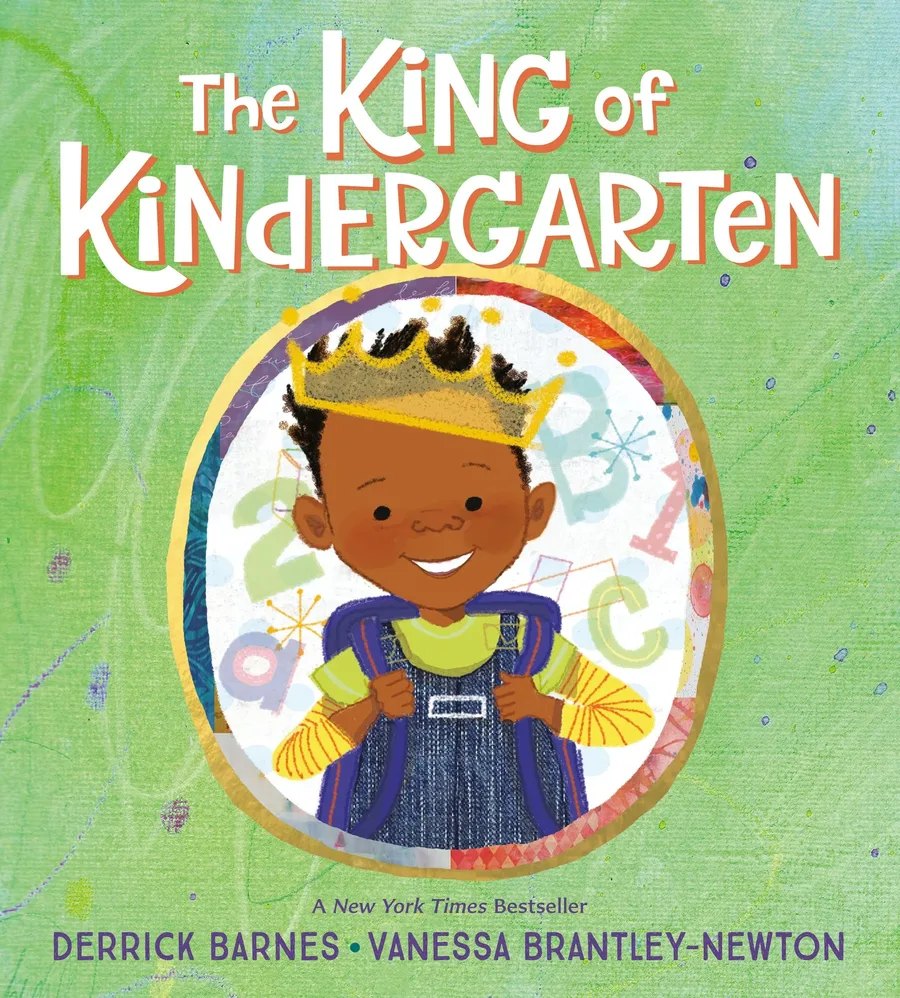 The King of KindergartenDerrick Barnes, illustrated by Vanessa Brantley-NewtonRoyalty is a metaphor used to playfully describe what an African American boy’s experiences will be on his first day of kindergarten. When the boy awakens, the sun “sits and shines behind your head like a crown.” The child is called “King of Kindergarten” by his parents, who don’t emphasize any hierarchy, just affirmation throughout the upbeat narrative. The funny, future-tense voice of his father in the second-person narrative is also full of practical advice: “You will show your bravery at recess when you go up to one of your classmates and ask, ‘Marie, do you wanna play with me?’” Bright, hand-drawn and digital artwork adds to the humor, in addition to showing the boy’s affirming, Afro-centric home and a diverse cast of children and adults in the community and at school.Picture Books for Young ChildrenView book details
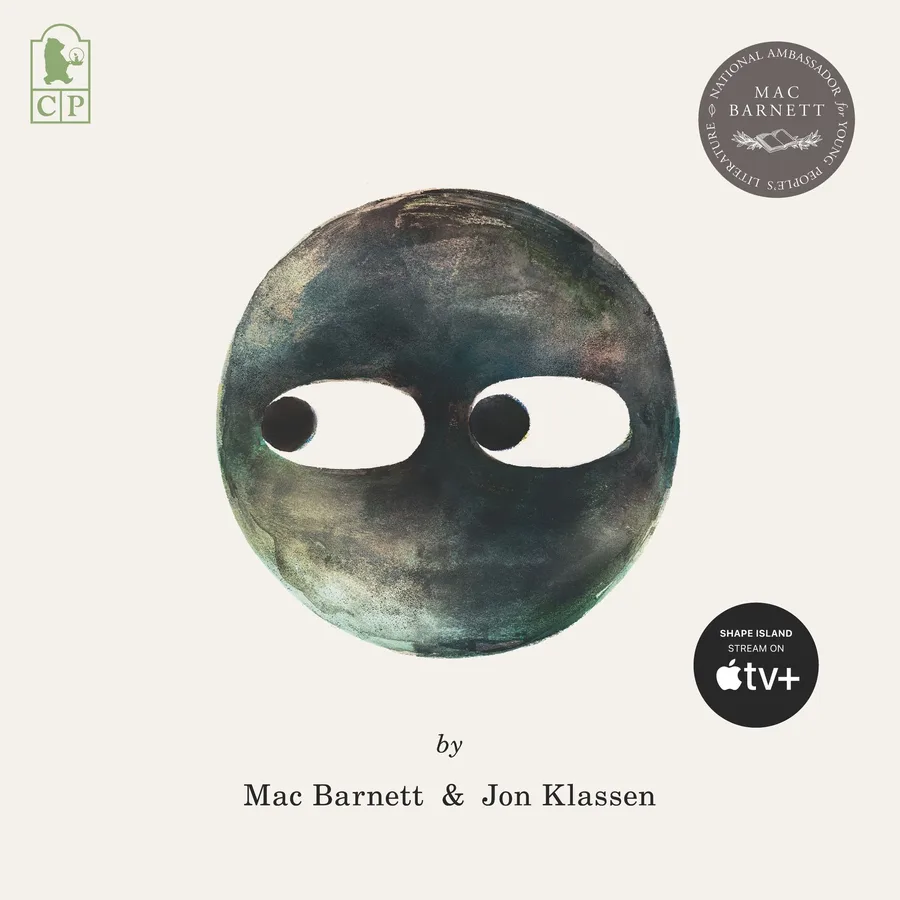 CircleMac BarnettCircle is playing hide and seek with her friends Triangle and Square and insists no one hide in the cave behind the waterfall—she’s afraid of the dark. Still, she goes inside when it’s clear that’s where Triangle must be. The deeper into the cave Circle goes, the darker it gets, until only her eyes are visible. When a second pair of eyes appear in front of her, she voices her frustration at Triangle, then apologizes: “You are a good friend.” A third pair of eyes appear behind her. “Thanks!” says Triangle. In a picture book full of humor, but also a little tenderness and a big surprise, the expressive eyes in the muted digital, graphite, and watercolor illustrations speak volumes. Reunited outside the cave, the three shapes imagine what other shape might be inside the cave; the book’s open ending invites children to do the same in this companion to Triangle and Square.Picture Books for Young ChildrenView book details
 Hair LoveMatthew A. CherryAfrican American Zuri has hair with “a mind of its own. It kinks, coils, and curls every which way.” It’s a special day calling for perfect hair, and Daddy tries hard to create Zuri’s usual styles, but his results aren’t up to her standards. After frustration and some tears, the duo eventually consult an online video tutorial. With the proper tools and close attention to directions, Zuri emerges with flawless puff buns. She’s just in time for the day’s special moment: welcoming Mommy home. Mommy (clearly her daughter’s regular stylist) is impressed with both her daughter’s hair and her husband’s loving persistence. The digital art style illustrations reflect the animated short film on which the book is based.Picture Books for Young ChildrenLexile Text Measure AD480LATOS Book Level 2.1View book details
 This Beach Is Loud!Samantha Cotterill, illustrated by Samantha CotterillToday is beach day, and one brown-skinned boy is packed, dressed, and waking his dad at 4 a.m., ready to go. Brimming with energy and excitement, he chatters the whole way there. His mood takes an abrupt dive, though, when 42 Picture Books for Young Children CCBC Choices 2020 he sees how “busy” and “loud” the beach is. The sand doesn’t feel good in his boots or in his bathing suit. It’s all over his toy shark, and worst of all, it’s hot! Suddenly, he just wants to go home. His dad knows what to do: “Take a deep breath and give Sharkie a squeeze. Now tap your fingers and count to three.” Although the sounds threaten to overwhelm him, the boy and his dad persist, counting and tapping until he feels better. With encouraging words (“You are so brave”) his dad eases the boy into a day of fun activities accompanied by beach sounds—and now, it’s not so overwhelming. An installment in the Little Senses series, this relatable book intended for children on the autism spectrum or with sensory processing disorders will resonate with anyone who has ever experienced the discomfort of sensory overload.Picture Books for Young ChildrenLexile Text Measure 400LATOS Book Level 2.8View book details
 Olive & Pekoe: In Four Short WalksJacky DavisPekoe is young, spry, and bursting with energy and wonder; Olive is old, tired, and content to sit and observe. Although the two dogs enjoy different approaches to life, they accept one another’s personalities and enjoy being together. Four short sections describe four different walks humorously rooted in typical dog behavior and perspective. In one, Pekoe offers Olive a stick, but Olive is not interested. In another the two are confused and dismayed at being caught in a sudden downpour and attempt to shelter themselves beneath a bush. Pekoe shakes the water off, but Olive is ready to go home. Later Olive watches, unimpressed, as Pekoe delightedly chases a scampering chipmunk through the woods. Wry, understated text underscores the dogs’ personalities, their different stages in life, and their vastly different reactions to common situations; while watercolor, ink, and color-pencil illustrations show Pekoe in constant motion as Olive rests.Picture Books for Young ChildrenView book details
 Goodbye, Friend! Hello, Friend!Cori Doerrfeld, illustrated by Cori DoerrfeldBrown-skinned Stella’s teary goodbye to her mom on the first day of school is followed by a cheery hello from white-skinned, long-haired Charlie once she arrives. The two classmates are soon good friends. Their activities throughout the year are described in a series of “goodbye/hello” statements paired with comforting digital ink illustrations full of warmth. Stella and Charlie’s friendship is full of fun, laughter, comfort, and encouragement to try new things (“Goodbye to almost giving up … is hello to one more try”). A story that emphasizes how every ending, even a sad one, is also a beginning is set across changing seasons and changing lives, with possibility always waiting. Highly Commended, 2020 Charlotte Zolotow AwardPicture Books for Young ChildrenLexile Text Measure 290LATOS Book Level 1.8View book details
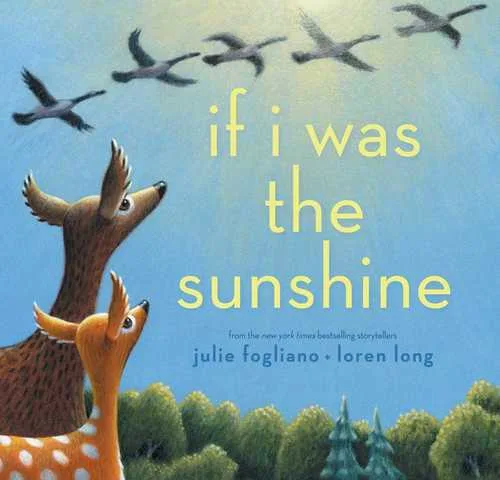 If I Was the SunshineJulie Fogliano, illustrated by Loren LongPoetic pairings of creatures and concepts in the natural world reward readers’ close attention by drawing playful and often thought-provoking connections between each duo. Three lines on the first double page spread set the stage for a page turn followed by the final—and often unexpected—line. “if i was an apple / and you were a worm / you’d call me lunch / and i’d call you squirm” CCBC Choices 2020 Picture Books for Young Children 43 centers on humor, while “if i was the silence / and you were a sound / i’d call you missing / and you’d call me found” is more contemplative, with the words’ interpretation enhanced by an illustration of two adult and a juvenile deer in a still winter landscape on the first spread, followed by an overhead perspective of honking migrating geese while the fawn looks up at their clamorous flight. Lush production elements include slightly oversized pages of heavy paper that showcase the appealingly idealized illustrations.Picture Books for Young ChildrenWord Count 209View book details
 Just in Case You Want to FlyJulie Fogliano“Just in case you want to fly / here’s some wind / and here’s the sky …” Fogliano’s whimsical narrative offers up a range of imaginative ingredients to fulfill various desires. Each begins “Just in case you want to …” (fly, sing, and cry, etc.), and continues by suggesting what one might need: a “la la la” and a “ding ding ding” to sing, or “here’s a tissue and a here’s a sigh” (in case you want to cry). The suggestions go from practical to absurd (e.g., for flying you might need “a fork and a spoon and a cup and a dish”). Robinson’s playful illustrations provide structure as they follow a young child’s day from morning to night (where crying is part of so many preschool bedtime routines), showing a diverse cast of characters, including a child in a wheelchair. As a whole, the book invites young children to invent their own just-in-cases, filling in the things they’d need in an imaginary landscape where there are no wrong answers.Picture Books for Young ChildrenWord Count 178View book details
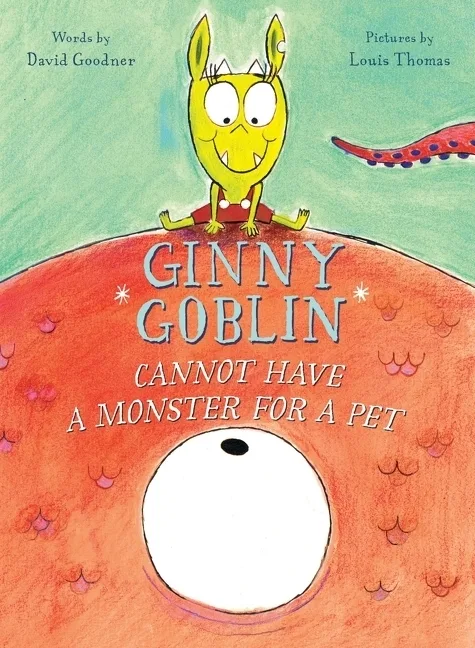 Ginny Goblin Cannot Have a Monster for a PetDavid Goodner, illustrated by Louis ThomasGinny Goblin loves goats and would love to have one for a pet, but Ginny Goblin is not allowed to have goats in the house. This means there’s a need to find a different pet option for Ginny. Ginny’s not allowed to take a submarine to the bottom of the ocean and put a leash on the kraken. She’s not allowed to bait a basilisk trap with a cupcake, or take a rocket into outer space to capture an acid-spitting space alien, but that doesn’t mean she doesn’t try. Who can suggest a good pet for Ginny Goblin—one that isn’t a monster? What’s that you say? A baby goat? Perfect! … Wait. What? A comical picture book pairs an entertainingly straight-faced narrative inviting readers in on the joke with droll gouache and pen-and-ink illustrations depicting Ginny Goblin’s many pet-hunting exploits. The adorable baby goat is a bonus.Picture Books for Young ChildrenLexile Text Measure AD590LATOS Book Level 3.8View book details
 The Last PeachGus GordonThe entire narrative of this unusual story is told as a dialogue between two insects facing a moral dilemma: Should they eat the last perfect peach of the season? And what will happen if they do? Grey and red type is used to delineate the two voices, and the alternating cream and white colored paper is artfully distinctive. The mixed-media illustrations show the insect characters to be as elegant as two insects can be. Few readers will see the wordless visual surprise 44 Picture Books for Young Children CCBC Choices 2020 ending coming, although it is the perfect conclusion for this delightfully quirky little book.Picture Books for Young ChildrenLexile Text Measure 390LATOS Book Level 1.7View book details
 Cyril and PatEmily Gravett, illustrated by Emily GravettCyril is the only squirrel—and a lonely squirrel—in Lake Park until he meets another squirrel, Pat. Pat has a skinny, hairless tail and is great at having fun. They love scaring the pigeons, stealing bread from the ducks, and evading Slim, the dog. Still, it’s a mystery why humans only throw treats to Cyril, not Pat. This lively rhyming tale builds the humor as every attempt by the other animals to inform Cyril that Pat is actually a rat gets disrupted by the two friends, intent on good times. When the truth finally comes out and Pat is banished by the others, Cyril is back to playing alone. But Cyril’s lack of prejudice and Pat’s loyalty ensure this is a friendship meant to endure. Jovial pencil, watercolor, and acrylic ink illustrations are part of the spirited fun.Picture Books for Young ChildrenLexile Text Measure AD550LATOS Book Level 2.3View book details
 How Do You Dance?Thyra Heder, illustrated by Thyra Heder“How do you dance?” asks the title of a playful picture book that celebrates movement in all its zany forms. “Mags beckons. Koyo bops. Gilda flits. Aurora scrunches.” Anyone can dance! But, “I don’t …” says a brown-skinned boy who stands with arms resolutely crossed. The unseen narrator tries to convince him. All you have to do is “move a part, then move another.” You can dance for any reason, anywhere. Maybe you ate a delicious food, or you’re trying to cheer yourself up, or you’re waiting at a bus stop. Plus, you’d be in good company. “Dinos” dance, and so do “horsies.” Even dads! The story—which continues to return to the brown-skinned boy who insists he doesn’t dance—gets sillier, along with the dances, as it progresses. Finally the boy reveals his secret: He doesn’t dance “like that.” No—he likes to dance alone. The final, joyful page shows him in his bedroom, cutting a rug—and a bed, and a chair, and a bookshelf— CCBC Choices 2020 Picture Books for Young Children 45 blissfully uninhibited. Pencil and watercolor illustrations against white pages skillfully depict a large, diverse cast of characters and their individual styles of dance, from grand to goofy.Picture Books for Young ChildrenWord Count 241View book details
 Mr. ScruffSimon James, illustrated by Simon JamesMr. Scruff waits patiently in the pound to be adopted. Every other dog has a human that seems to match it perfectly in name and appearance. Curly-haired poodle Polly belongs to curly-haired Molly. Eric belongs to Derek. Lawrence belongs to Florence. Mr. Scruff has no one—until Jim arrives, that is. But are they really a good match? Jim’s dad points out their size difference. Mr. Scruff is so big, and Jim is so small. Mr. Scruff is so old, whereas Jim is only a child. And of course, their names don’t rhyme! But in the end, rhyming names and having traits in common is not as important as the fact that Mr. Scruff needs a home, and Jim wants to be the one to provide it. Never mind that old Mr. Gruff arrives to choose a dog soon afterward. For him, it’ll have to be the puppy named Tim. Complete with playful ink-and-watercolor illustrations, this story featuring a biracial (Black/white) boy gently encourages readers to look beyond similarities when choosing friends and companions.Picture Books for Young ChildrenLexile Text Measure 440LATOS Book Level 3View book details
 We Are (Not) FriendsAnna Kang, illustrated by Christopher WeyantA sparsely worded picture book succinctly portrays a common social experience. Kang and Weyant’s appealing, now-familiar pair of fuzzy creatures—one tan and one purple—is playing happily when a new, blue creature approaches, asking to join their play. “Yes!” answers Tan, while Purple is not so enthused (“Well …”). Now that the interloper has joined, the game is much less enjoyable for Purple, who has been left out of the others’ duet. But then a new game begins, and Tan is the one feeling left out. An angry outburst leads to greater understanding and reassurances between Purple and Tan: “We are not friends. We are best friends.” “And [Blue] is our new friend?” “Yes.” With that understanding, the three decide on a new game, one in which they’ll take on equal roles. The relatable “three’s a crowd” conflict is resolved with grace as the creatures adjust to their new social dynamic.Picture Books for Young ChildrenLexile Text Measure AD200LATOS Book Level 1.8View book details
 Let’s Scare BearYuko KatakawaJust as Mouse, Fox, Spider, and Snake have settled down to enjoy a pot of tea and a bite of manju cake, they’re disrupted by a great thumping sound. Watching Bear march by with a scowl on his face, the four friends decide to have a bit of fun by scaring him. But nothing seems to work. Bear’s teeth are more frightful than Fox’s. He’s strong enough to break through Spider’s web and Snake’s strong grip. Mouse’s “boo” is only a squeak to Bear’s ears. Before retreating, Bear announces slyly that the only thing he fears is manju cake. Delighted with their luck, the four friends gather some manju and toss it into his cave, but when Bear emerges licking his lips, they know they’ve been tricked. Next time, they decide, they’ll just share their treat with Bear. Based on a classic Japanese rakugo story, this rendition stands out for its good-natured 46 Picture Books for Young Children CCBC Choices 2020 fun, sense of friendly competition, and the many small, humorous details in the illustrations. Don’t miss the words woven into Spider’s web!Picture Books for Young ChildrenView book details
 The Many Colors of Harpreet SinghSupriya KelkarHarpreet Singh has a patka—a type of turban worn by some Sikh boys—to match every mood. When he’s feeling cheerful, he wears a yellow patka. For extra courage, he dons red. Pink reflects a celebratory mood, while blue and gray represent nerves and sadness, respectively. When Indian American Harpreet and his parents move from their warm, sunny home by the beach to a much colder climate, Harpreet wears blue and gray. At his new school, feeling shy and “not wanting to be seen,” he wears only white patkas. Subtle illustrations reveal that Harpreet may be feeling like an outsider: His classmates misspell his name on his valentines; the food he eats at lunch is different from theirs. Things begin to turn around when he finds a classmate’s yellow hat in the snow. The two hit it off, complimenting one another’s headwear. (“Mine’s not a hat, actually. It’s called a patka,” Harpreet tells Abby.) Bolstered by this connection, Harpreet wears red for courage the next day, and soon enough, he’s breaking out his rainbow again. The focus on one Sikh boy’s experience is welcome and refreshing in this simple but resonant story.Picture Books for Young ChildrenLexile Text Measure 530LATOS Book Level 2.6View book details
 WingsCheryl B Klein, illustrated by Tomie dePaolaTwelve rhyming words describe the exploits of a young bird making its first foray out of the nest. The excited bird’s discovery it has “Wings!” is followed by its decision to try them out in a story marked by courage (“Flings”), disappointment (“Dings”), uncertainty, curiosity (“Things?”), generosity, a plan, and, ultimately, triumph. The fledgling is pink and always the focal point of appealing, uncluttered, wonderfully composed mixed-media illustrations, colored with marker, that tell the visual story, adding charming detail to both action and emotion.Picture Books for Young ChildrenLexile Text Measure 361LATOS Book Level 2.6View book details
 You Are NewLucy Knisley“When you’re new … what can you do?” It turns out new babies can do a lot, from sleeping and eating to seeing, tasting, touching, hearing. And that’s just to start in this rhyming picture book that isn’t an exhaustive catalog of baby accomplishments, just an entertaining overview. But then, babies grow: “Look at you, you’ve grown so tall. Soon you won’t be new at all.” It turns out even big kids are new at some things: new things to try, new games to learn, new friends to make, maybe even a new family member to welcome. The bigger you are, the more new things are waiting, “exciting … cool … and fascinating.” The uncluttered digital illustrations use a not-quite real-life palette to suggest diverse babies, toddlers, children, and adults in this homage to the excitement and opportunity inherent in newness.Picture Books for Young ChildrenWord Count 231View book details
 A Big Bed for Little SnowGrace LinIn spite of his mommy’s warnings, Little Snow can’t resist jumping on his big new feather bed. Set against stark white pages, Little Snow’s new feather bed looks like a big, fluffy, light blue storm cloud, while his light-blue-and-white snowflake pajamas also subtly suggest that this character may be a larger-than- life force of nature. But the visual Big Reveal leaves no doubt when the story’s perspective suddenly changes to show Little Snow’s “feathers” falling on city apartments down below his cloud/bed. Like Lin’s companion book, A Big Mooncake for Little Star, there is a folkloric feel to this story, but Little Snow, who appears Asian, looks and acts like a mischievous real-world little boy, albeit one who lives in the sky and has been the cause of snowfalls all winter long. (Little Star is one of the diverse children who appears in the apartment windows.) The text’s simplicity combined with the clean complexity of the illustrations are a pleasing blend that allows young children the pleasure of figuring out the story.Picture Books for Young ChildrenATOS Book Level 2.0AR Interest Level Lower Grades (LG K-3)View book details
 Maya and the Lost CatCaroline MagerlMaya lures a cat on a nearby rooftop down with a can of fish. Maya uses a second can to coax Cat into following her as she goes door to door in search of Cat’s home. When Cat takes the lead, perching in Maya’s bike basket, “Maya followed Cat’s nose. Down through the town and across the park. Along the shore and onto the pier, thunketty thunk on the wooden boards.” They end up at a moored houseboat, where Cat springs “circus lion-style” into the arms of Fritz and Irma. It’s a joyful reunion for everyone except Maya, who is feeling a little sad, but there’s a warm surprise in store, making for an even happier ending. Every word thoughtfully chosen, the beautiful language is set against muted watercolor illustrations with delightful moments of whimsy (the endpapers!), including Cat’s catlike behavior—both regal and silly.Picture Books for Young ChildrenView book details
 Fry Bread: A Native American Family StoryKevin Noble Maillard“Fry bread is food … Fry bread is shape … Fry bread is sound … Fry bread is time … Fry bread is history …” Specific characteristics and cultural importance of fry bread, part of Native American tradition across many tribal nations, is celebrated in a picture book that appeals to the senses while also encompassing complex concepts. Each characteristic of fry bread is expanded on with child– friendly examples described in vivid language. “The skillet clangs / The fire blazes from below … On weekdays and holidays / Supper or dinner / Powwows and festivals … The long walk / the stolen land …” Maillard’s exceptional writing is paired with cozy illustrations by Martinez-Neal that show realistic variety in hair, eye, and skin colors of Indigenous peoples. Her circular shapes exude a sense of home and security, with small children embraced and surrounded by their elders. The end pages echo this diversity with their extensive lists of many Indigenous nations in the United States, both those recognized by the government and those that aren’t, affirming the identities of so many Native 48 Picture Books for Young Children CCBC Choices 2020 children. Maillard’s thorough, fascinating author’s note offers more information and context for each double-page spread in this masterful original picture book. Honor Book, 2020 Charlotte Zolotow AwardPicture Books for Young ChildrenView book details
 Vroom!Barbara McClintock, illustrated by Barbara McClintockAnnie puts on her helmet and gloves and takes off on an imagination-fueled journey in her race car. Past quilted farm fields, over mountains, through a forest, across a river, and into a city, she ends up on a racetrack before turning off “onto a familiar road that led to a familiar house.” She accelerates through the front door, right past her dad and younger sibling, up the stairs, and into her room in a story that ends with Annie, her dad, and the baby, all white, curled up on her bed with its car quilt cover, reading a book about … you guessed it, cars. A spare yet engaging narrative is set against matte paintings of Annie crossing changing landscapes, and punctuated by moments of visual humor.Picture Books for Young ChildrenView book details
 Johnny’s PheasantCheryl Minnema, illustrated by Julie FlettOn their way home from the market, Johnny and his grandma find “a small feathery hump” near the ditch. It’s a pheasant. Grandma guesses it was hit by a car, but Johnny is certain it’s only sleeping. “Hoot! Hoot!” Johnny calls as they put its still, still-warm body in the trunk of their car. “Hoot! Hoot! Hoot!” he calls when they get home. This gorgeous, graceful story about a Native family, written by an Ojibwe author and illustrated by a Cree-Métis artist, is both satisfying and surprising. The drama and wonder unfold in a spare, beautifully crafted text. The perfectly paced narrative is full of humor, warmth, and a deeply child-affirming sensibility. “Hoot Hoot!” Winner, 2020 Charlotte Zolotow AwardPicture Books for Young ChildrenView book details
 SaturdayOge MoraAva’s mother works six days a week, but Saturdays are for the two of them. They go to story time at the library, visit the salon for hairdos, and have a picnic in the park. This Saturday they also have tickets to a puppet show. “The day would be special. The day would be splendid … Ava and her mother could hardly wait …. Zooom!—off they went.” But story time is cancelled, their hairdos are ruined by a car splashing water, and their peaceful picnic is disrupted by a noisy concert. Each time, Ava’s mother helps Ava manage her disappointment, assuring her daughter that the day will still be special and splendid. But when they get to the puppet show and she discovers she left the tickets at home, even Ava’s mother has had enough. This time Ava offers reassurance: Spending the day together is what makes Saturdays so wonderful. Disappointment is met with resilience—and love—in a warm, relatable story. Playful repetition (“Zooom!”) and ebullient mixed media collage illustrations, featuring a Black child and mother, add to the upbeat feel. Honor Book, 2020 Charlotte Zolotow AwardPicture Books for Young ChildrenLexile Text Measure 329LATOS Book Level 2.4View book details
 The Little Green HenAlison MurrayA sideways telling of the “The Little Red Hen” has Little Green Hen sowing seeds from an old apple tree’s fruit and tending the new orchard that begins to grow. Dog, Sparrow, and Squirrel are willing helpers: stick-loving Dog prunes, bug-eating Sparrow protects the leaves and fruit, Squirrel handles the harvest. But Peacock, Fox, and Cat want nothing to do with the project; Peacock would rather preen, Fox would rather eat Little Green Hen, Cat would rather sleep. Then comes days of rain. Peacock, Fox and Cat, flooded out of their homes, find refuge with Little Green Hen and her helpers. When the rain stops and Little Green Hen asks for help cleaning up from the flood, everyone pitches in. The cooperation extends to caring for the orchard, which in turn, as time goes by, takes care of them. There’s an obvious environmental message to this recast classic. The slightly comical characters and digital matte illustrations with a sometimes quirky palette make for a lively offering.Picture Books for Young ChildrenView book details
 Hey, Water!Antoinette Portis“Hey, water! I know you! You’re all around.” Many ways of encountering or experiencing water are cleverly presented in simple illustrations and a few words addressed directly to the subject by a brown-skinned girl. Some consecutive images are linked by a shared feature, such as delivery method (faucet, sprinkler, shower) or body (ocean, lake, pool, puddle). Water in the natural world as rain, snow, fog, dew, and icebergs are included, as is water as tears that “slide down my cheek without a sound.” Final pages offer additional information on the water cycle, water forms, and conserving water.Picture Books for Young ChildrenLexile Text Measure AD410LATOS Book Level 2View book details
 TrumanJean Reidy“Peaceful and pensive” Truman, a tortoise, is also keenly observant. He notices Sarah’s new sweater, big backpack, and her delivery of two extra green beans to his food dish. From the window Truman watches Sarah, who is white, board the number 11 bus and after waiting for “a thousand hours—tortoise hours, 50 Picture Books for Young Children CCBC Choices 2020 that is”—he decides to go after her. The trek from his aquarium across the apartment is a daylong herculean effort, and Sarah returns just as he’s about to squeeze under the door. When she reads her handmade booklet aloud for his bedtime story, Truman learns that he’ll accompany her out the door sometime soon when Sarah takes him for show-and-tell at her new school. An exceptional text and illustrations that extend the humorous and heartfelt narrative successfully combine themes of starting school, adventure, and friendship. Honor Book, 2020 Charlotte Zolotow AwardPicture Books for Young ChildrenLexile Text Measure 560LATOS Book Level 3.4View book details
 In My Anaana’s AmautikNadia Sammurtok, illustrated by Lenny LishchenkoA young child enjoys the comfort and safety of being in their Anaana’s amautik, the pouch in the back of a parka in which Inuit women carry children. The amautik has much in common with the natural world. The material “swaddles” the child like fleecy clouds, and the fabric is as soft as “a bed of cottongrass.” Equally comforting is the child’s mother herself, with her floral scent and skin as warm as sunshine. She laughs like “a glistening stream trickling by” and breathes “like ocean waves gently rolling in and out.” The amautik is a place of safety, where the child feels loved, protected, and at home. The warm, soothing tone of this cozy story will resonate with anyone who knows the comfort of a loving embrace.Picture Books for Young ChildrenView book details
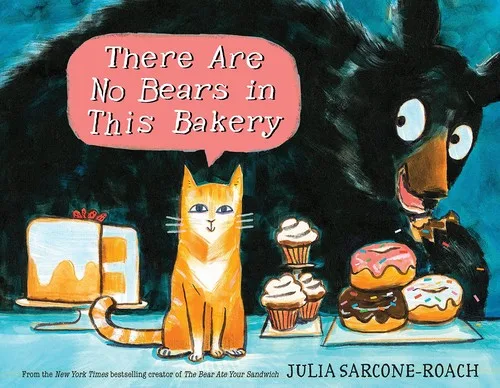 There Are No Bears in This BakeryJulia Sarcone-‐Roach“I’m the whiskers of this neighborhood. And if it flutters, scurries, or scampers here, I know about it. The name is Muffin. And this is my tale.” Muffin takes pride in keeping tabs on the neighborhood at night. On this particular night, strange sounds from the bakery (“grrrrrrrrrrr”) lead to a startling discovery. Muffin is on the case. Or rather in the case … bakery case that is, obliging a small bear cub with a little cat-like assistance, knocking baked goods off the shelf for the cub to reach. It turns out the cub isn’t the only bear in town, and that only adds to the pleasure and surprise of this warm, funny, furry picture book. Muffin’s noir-inspired voice makes for delightful turns of phrase, while illustrations rendered in acrylic, cut paper, and marker marvelously contrast dark blues and blacks (for the night and bears) with warm golds and yellows (for Muffin and the bakery interior), and show the animals with wonderfully expressive eyes and body language.Picture Books for Young ChildrenView book details
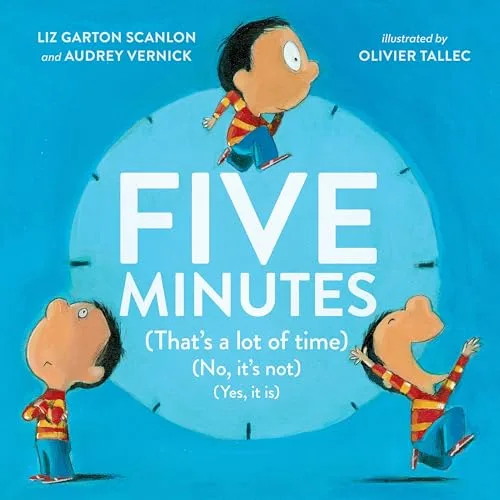 Five Minutes (That’s a Lot of Time) (No, It’s Not) (Yes, It Is)Liz Garton Scanlon, Audrey Vernick, illustrated by Olivier TallecHow long is five minutes? Well, it depends. To a boy waiting in line with his mom at the post office, “five minutes is forever!” Ditto when he’s sitting in traffic, drying the dishes, or waiting for the bathroom. Five minutes during a dental appointment is agonizingly long. It’s an eternity when he’s standing in line for a rollercoaster, but it’s not nearly long enough for the ride itself. Other times, like when he’s taking a bath, it’s just a waste of time. But five minutes is the perfect amount of time for a good story before going to bed. Expressive CCBC Choices 2020 Picture Books for Young Children 51 pencil and acrylic illustrations depict a brown-skinned, multiracial boy in this highly relatable exploration of the subjectivity of time.Picture Books for Young ChildrenView book details
 Why?Laura Vaccaro SeegerA small rabbit has question after question for a large bear, always simply stated as “Why?” Children must infer the specific question from both the accompanying illustration and the bear’s answer in this story that moves across the seasons. Rabbit asks “Why?” as bear waters flowers (“Because flowers need water to grow.”). “Why?” are geese flying in a V? “Why?” isn’t bear joining rabbit in his hole? Rabbit’s questions are full of wonder and curiosity, but also poignancy, tension (as when rabbit is buffeted by the wind and begins to fall), and sadness (“Why?” when rabbit finds a dead bird. “Sometimes I just don’t know why!” Bear replies). Seeger’s story validates so many feelings with so few words. Gorgeous watercolor paintings capture the beauty of the natural world through changing seasons, and the tenderness of rabbit and bear’s relationship.Picture Books for Young ChildrenView book details
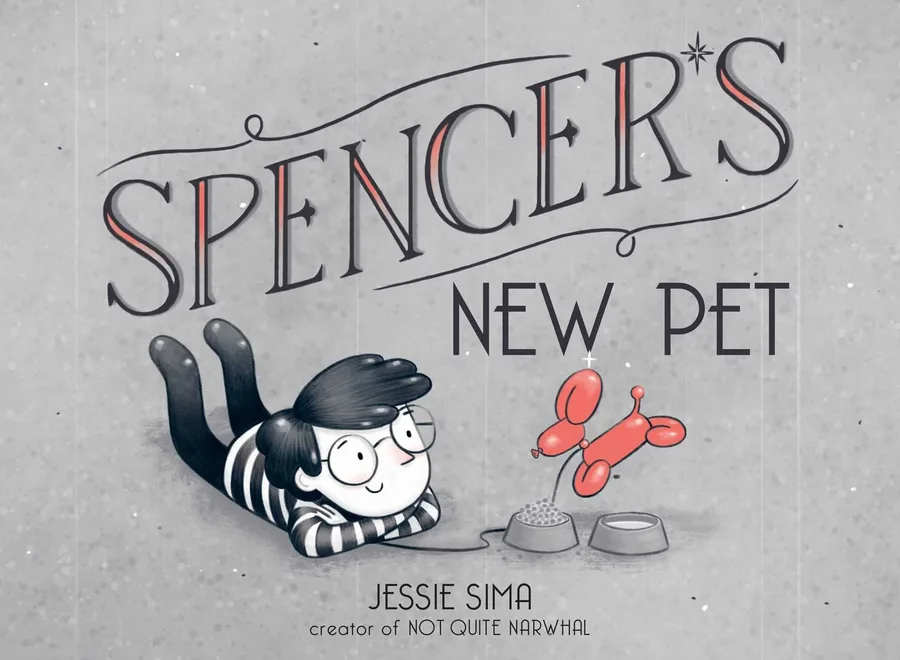 Spencer’s New PetJessie SimaSpencer trains his balloon dog to do tricks, cuddles with it, takes it to the vet, and on an outing to the park. There, Spencer loses hold of the “leash” and the dog floats up and away across the park and into a birthday party. The drama unfolds as a silent movie in three parts: The Pet, The Park, The Party. Everything is in black-and-white with the exception of the balloon dog, which is bright red. As the action mounts, so, too, does the danger—the sharp fang of a real dog, the talons of an eagle, the unicorn horn on the carousel. Each time, a tiny sparkle appears around the threat to the balloon dog. And the birthday party proves to be full of them: the stick for the piñata, the candles on the cake, and of course the pin for pin the tail on the donkey. When Spencer, pale-skinned with dark glasses, finally retrieves the little dog as it descends from the sky, a blindfolded party-goer is approaching. Oh-oh. Oh no! But there’s a big surprise in store in this delightful wordless offering.Picture Books for Young ChildrenView book details
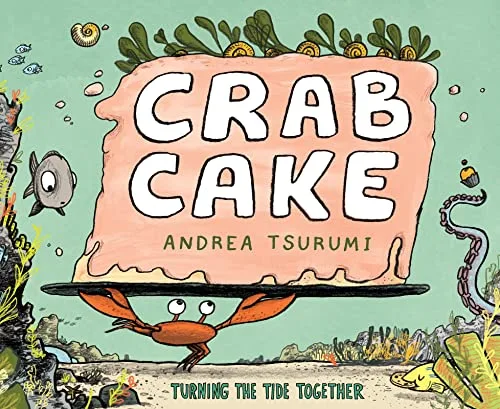 Crab Cake: Turning the Tide TogetherAndrea TsurumiLife is rolling along as usual for the myriad creatures of the ocean. Clownfish hides in an anemone. Sea Turtle holds her breath as she glides along underwater. Pufferfish does what she does best: puffs up. The activities of Seahorse, Moray Eel, Spiny Lobster, Lionfish, Snapper, Dolphin, and others, too, are exactly what one might expect of them. Then there’s Crab. Crab is baking cakes. No one understands why. But after a ship dumps an enormous load of trash into the water, Crab’s fresh-baked cakes draw the stunned animals out of hiding. Bolstered by cake, and support as they check in with one another following the pollution disaster, they make a plan to work together to return the garbage to the humans who dumped it. This thoughtful, quietly humorous story impresses upon young children both the dangers of pollution and the strength of community when working for change.Picture Books for Young ChildrenView book details
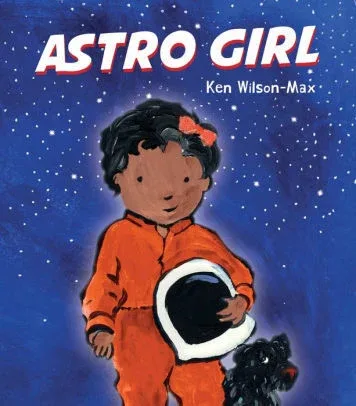 Astro GirlKen Wilson-Max, illustrated by Ken Wilson-MaxYoung Astrid wants to be an astronaut. Can she go round and round the earth? She assures Papa she can as he spins her. Can she eat food from a package? Astrid says she can through bites of a cereal bar. And then there’s zero gravity, Papa points out as he tosses her into the air. Astrid is certain she’s up to every task, whether it’s conducting science experiments in space (making rocket ship cookies with Papa) or sleeping on her own among the stars. “I think that will be very hard … but I’ll do it!” A surprise ending adds another layer of welcome affirmation to this ebullient picture book: Astrid’s mother is an astronaut! Bright acrylic illustrations amplify the warmth of a story featuring a brown-skinned family. Brief information about several pioneering woman astronauts, including women of color, is provided at book’s end.Picture Books for Young ChildrenLexile Text Measure 479LATOS Book Level 3.2View book details
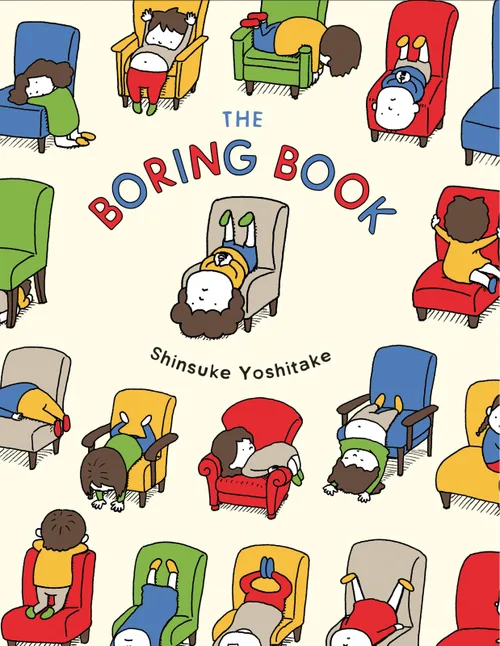 The Boring BookShinsuke Yoshitake“I’m bored!” A refrain and a feeling familiar to many children (and adults in their lives who have to hear it) leads the child at the center of this story to launch into a stream-of-conscious, ever expanding consideration of what causes boredom, what it means to be bored—and not bored—whether other creatures or inanimate objects are ever bored, and so on. In other words, boredom becomes opportunity and impetus for creative thinking that turns out to be pretty entertaining. If not for the child in the story, who’s not willing to admit as much, certainly for the child audience, for whom the Japanese protagonist’s imaginative musings are depicted in illustrations that also make clear how much fun the “bored” kid is having.Picture Books for Young ChildrenLexile Text Measure 520LATOS Book Level 3.4View book details
Picture Books for School-Age Children
34 selections
 Daniel’s Good DayMicha Archer, illustrated by Micha ArcherDaniel is on his way to Grandma’s house when passing neighbors tell him to “have a good day!” But what makes a day a good one? Curious, Daniel pauses along his way to ask everyone he passes. For some, weather makes a good day: clear skies for the housepainter perched on a ladder, a strong wind for kite-flying Emma. For others, it’s friendliness: the bus driver appreciates a “please” and a “thank-you,” while the mail carrier hopes for “wagging tails” at the houses to which he delivers. Success at work makes a good day for some, like the baker (“birthdays”) and the crossing guard (“everybody home safe”). And all Grandma needs is a hug from Daniel to make her day a good one. Brightly colored, highly detailed mixed-media illustrations show a highly diverse neighborhood where brown-skinned, curly haired Daniel enjoys a level of independence CCBC Choices 2020 Picture Books for School-Age Children 53 and close familiarity in a story that exudes warmth and good cheer. Highly Commended, 2020 Charlotte Zolotow AwardPicture Books for School-Age ChildrenLexile Text Measure 480LATOS Book Level 2.1View book details
 Camp TigerSusan ChoiIt’s late summer on Mountain Pond as a boy and his family take their annual camping trip before the start of school. With the comfort and familiarity of kindergarten behind him, the boy is apprehensive about starting first grade. As they set up their campsite, the family is startled to see a tiger—thin, small, and stern. He requests an extra tent and stays with the family all weekend. The boy curls up with him in the tent, follows him along a trail, and rides alone in a canoe with him to look at the stars. The tiger vanishes just before vacation ends. Back home, the boy is doing things now that his mother used to do for him, like making his bed and folding his clothes. The boy, who appears to be biracial (Asian/white), draws the tiger from memory the night before school starts as a gift for his new teacher. Stunning illustrations accompany this imaginative story, a subtle metaphor for a time of growth and transition that invites discussion and provokes thought.Picture Books for School-Age ChildrenLexile Text Measure 560LATOS Book Level 3.4View book details
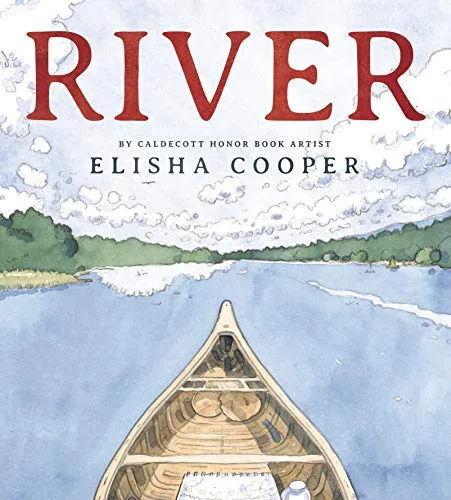 RiverElisha CooperA woman’s 300-mile journey by canoe down the Hudson River, from its source in upstate New York to the Atlantic Ocean just south of New York City, is largely solitary but far from uneventful as chronicled in this slightly oversized yet understated picture book. Even with her map and careful planning, the fictional, contemporary, white woman doesn’t know what to expect around each bend. The first day she encounters a moose. The first night, as she camps, “The moon climbs up among the stars. She is alone, but not. The river stays beside her, mumbling to her and itself all through the night.” The artful prose and elegant watercolor illustrations are full of captivating details, describing moments of tension and moments calm, moments of reflection and moments of whimsy. Ample end matter includes an author’s note (which unfortunately refers to Native peoples from the area in the past-tense only), more about the Hudson River, sources, and a map of her journey marking where events in the story occurred.Picture Books for School-Age ChildrenView book details
 Paws + EdwardEspen DekkoEdward and his large, floppy dog, Paws, enjoy a final walk together in a quiet story about an old, beloved pet’s final days. Paws is tired. “He has run enough.” All he wants to do now is lie in Edward’s cozy bed, dreaming about rabbits. But he gamely accompanies Edward outside, following along at a leisurely pace, resting when Edward stops to talk with friends. Later, at home, Paws does not come when Edward calls and Edward goes to Paws. After offering Edward a final, comforting lick, Paws falls into a “sleep without dreams.” Firmly rooted in Paws’s point of view, this story effortlessly conveys the sense that his life was full and well lived, and that he was devoted to Edward. Edward’s grief is acknowledged even as he continues to spend time with a younger, more 54 Picture Books for School-Age Children CCBC Choices 2020 energetic Paws in his dreams. Illustrations in deep colors reinforcing the overall comforting sensibility show Edward in unrealistic, and shifting, skin tones.Picture Books for School-Age ChildrenView book details
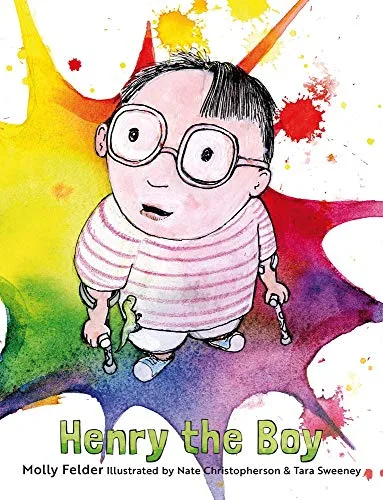 Henry the BoyMolly Felder, illustrated by Nate Christopherson, Tara SweeneyUsing his sticker-covered forearm crutches to get around, Henry feels as elegant as a heron. But at school a classmate likens him to a robot, and even his friend Joel observes that Henry walks “like a chicken.” Retreating to the bathroom, Henry tries to stand up straight, but he falls when his crutch slips out of his grasp. Joel helps him up, offers Henry his toy dinosaur, and plays with him at recess and after school, asking occasional questions and offering gentle encouragement. At the end of the day, Henry tells his new dinosaur a story about himself—not Henry the heron, or the chicken, or robot, but Henry the boy. Accompanied by an imaginary, protective heron, robot, and chicken, Henry, who is white, moves through his day, finding comfort in friendship and confidence in himself. His thoughts and emotions are reflected in splashes of color on the page: dark and swirling when he is taunted by a classmate, and rainbow bright when he stands up on his own after a word of encouragement from African American Joel.Picture Books for School-Age ChildrenView book details
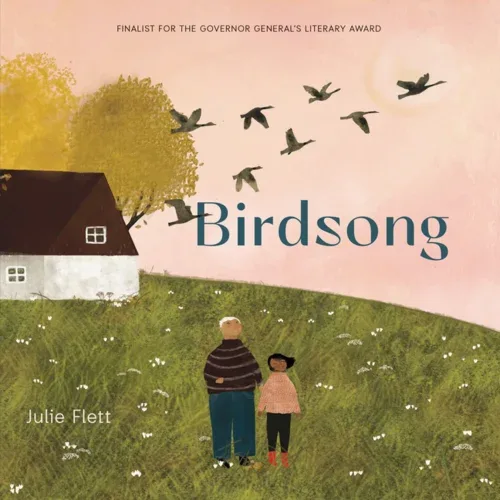 BirdsongJulie Flett. Greystone Kids, illustrated by Julie Flett. Greystone KidsKatherena, a young Cree girl, and her mother move from their home by the sea to the country. Over the course of a year, Katherena adapts to her new home and grows close to Agnes, an older woman who lives nearby. Both are creative: Katherena draws; Agnes works with clay. They also share an appreciation for nature: Agnes shows Katherena how to work in the garden and teaches her about the stages of the moon, Katherena tells Agnes about Cree seasons. When winter comes, Katherena and her mother make salmon stew for Agnes, who needs a bit of extra help in the cold season. Agnes gives her a handful of snowdrop bulbs in return. By the time spring returns, Agnes is too weak to leave her bed, so Katherena hangs all of her bird drawings on the walls of her friend’s bedroom, assembling what Agnes calls “a poem for her heart.” A deep, earth- tone palette accompanies this gentle story of change, love, and loss conveyed through the rhythm of seasons and the undisrupted pattern of life.Picture Books for School-Age ChildrenLexile Text Measure 560LATOS Book Level 2.9View book details
 Pokko and the DrumMatthew Forsythe“The biggest mistake Pokko’s parents ever made was giving her a drum.” The noise Pokko, a frog, makes with her drum is too much for Pokko’s parents, who send her outside. There, tapping on her drum, she’s quickly joined by a raccoon with a banjo, a rabbit with a trumpet, and a wolf, who just likes marching along behind. When the wolf eats the rabbit, Pokko is having none of it: “No more eating band members or you’re out of the band.” The wolf’s apology is genuine, and the band plays on; a raucous, ever-growing gathering as other animals join them marching through the woods. Even Pokko’s parents get swept up—literally—in the exuberance of it all. The CCBC Choices 2020 Picture Books for School-Age Children 55 watercolor, gouache, and colored pencil illustrations are rife with possibilities for inference, while their appearance—a cozy, warm palette and a bit of a stylistic edge—are as distinct as the rest of this hilarious, masterfully paced story. Honor Book, 2020 Charlotte Zolotow AwardPicture Books for School-Age ChildrenLexile Text Measure AD520LATOS Book Level 2.7View book details
 Sam!Dani Gabriel, illustrated by Robert Liu-TrujilloNine-year-old Sam and his older sister, Maggie, don’t always get along. Maggie can be bossy and irritating. But when Sam is crying after school one day, Maggie is quick to comfort him. “Isabel, what’s wrong?” Kids at school were talking about the differences between boys and girls, and Sam worries that he was “born wrong.” Everyone—including Maggie—thinks that Sam is a girl. That night, Sam confides in Maggie, telling her that he’s always been a boy, and his name isn’t Isabel. It’s Sam. With Maggie’s support, Sam comes out to his parents, who are supportive while acknowledging that the family will “have a lot to learn, together.” Sam’s feelings are appropriately centered in this intentional but loving coming-out story in which readers refreshingly meet brown-skinned Sam as Sam before learning that he is transgender.Picture Books for School-Age ChildrenView book details
 Field Trip to the MoonJohn HareThe story begins with the cover of this marvelous wordless picture book as children file onto a rocket painted familiar school bus yellow and black. One of them dawdles, sketchbook and crayons in hand. While most of the class later follows an eager, energetic teacher/chaperone across crevasses and craters, this child finds a quiet place to draw the blue-and-white earth as seen from the gray-scape of the moon. Falling asleep, the child awakens to discover they’ve been left behind. With only a sketchbook for solace, the child draws, unaware of the single eye, and then series of eyes attached to moon-colored bodies, watching. Who can resist a box of bright crayons? Not these creatures, which go from fearful to frolicsome when the child shares them, retreating into hiding only when the school bus spaceship returns with the frantic teacher/ chaperone. A tight-hugged reunion and hilarious misunderstanding follow. Acrylic illustrations masterfully convey emotions through body language—faces are never seen under space helmets—in a story that playfully, poignantly, and profoundly affirms art’s essential role in expression and connection, whatever the future holds.Picture Books for School-Age ChildrenView book details
 My Grandma and MeMina JavaherbinMina Javaherbin describes her close relationship with her grandma growing up in Iran in this autobiographical story imbued with vivid details. Her grandma’s daily bread delivery came via basket on a rope to their third floor apartment. When her grandma did her morning prayers, Mina liked to lay across her back. When her grandma sewed her chadors, Mina “helped” by draping them over the table to make a rocket ship, or wearing one like a cape to pretend she could fly. Mina’s best friend and neighbor, Annette, often came over to play accompanied by her grandmother—Mina’s grandma’s best friend. While the 56 Picture Books for School-Age Children CCBC Choices 2020 two women practice different religions—one Muslim, one Christian—they have much in common, including love for each other and their granddaughters, and compassion for others. A story celebrating Mina’s bond with her grandma and friendship between and across generations is set against light-infused illustrations that add to the sense of warmth.Picture Books for School-Age ChildrenLexile Text Measure 619LATOS Book Level 4View book details
 When Aidan Became a BrotherKyle LukoffFollowing the news that he’s going to become a big brother, Aidan helps his parents choose baby clothing, paint the nursery, and consider names. Aidan doesn’t like when people ask if his mom is having a boy or a girl because when Aidan was born, everyone thought he was a girl. As Aidan got bigger, he knew he wasn’t. “It was hard to tell his parents … but it was harder not to.” When he’s worried about being a good big brother, his mom reminds him that they didn’t know everything when Aidan was born, but he helped them learn. “You taught us how important it is to love someone for exactly who they are.” Aidan is mixed race (his mom looks Black, his dad Asian) in art full of playfulness (the clothing patterns!) and abundant warmth. Buoyant illustrations show Aidan’s clothing choices range from dinosaur t-shirts to bowties, baseball hat to head wrap, shorts to frilly pinafore, in a story beautifully affirming gender identity as a matter of internal understanding and self-knowledge rather than an assignment based on physical appearance, and gender expression as open and expansive rather than culturally proscribed.Picture Books for School-Age ChildrenLexile Text Measure AD570LATOS Book Level 3.3View book details
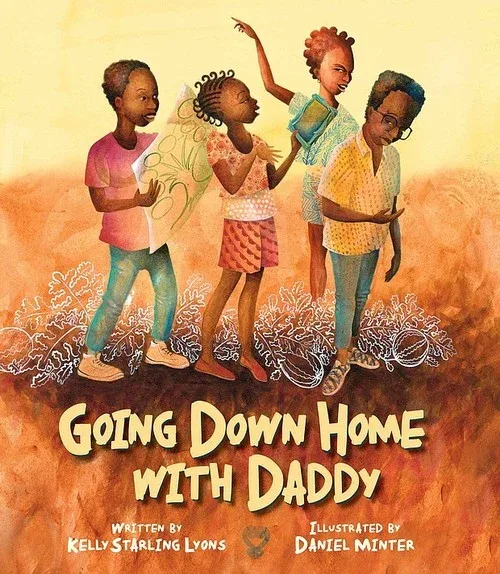 Going Down Home with DaddyKelly Starling LyonsThis year at the reunion, Lil Alan’s family is celebrating 75 years on the land that Granny and Pa, his great-grandparents, bought, and Lil Alan doesn’t know what gift to give Granny. Lil Alan pays attention, not just to what his siblings and cousins plan to do for Granny—sing a hymn, recite a Langston Hughes poem, make a scrapbook—but to conversations and stories about the land and their family history on it. “Think with your heart,” Daddy tells him. When the time comes for Lil Alan to give a gift to Granny, his presentation isn’t polished, but it’s heartfelt: a cloud of cotton from a plant, for all the quilts Granny’s made, a pecan for all the trees Pa planted and the kids still love to climb, and a pinch of dirt for the land that belongs to all of them. “‘That’s alright,’ I hear Granny say.” Striking acrylic wash illustrations, with various patterns incorporated throughout, further ground this fictional African American family’s strong sense of identity and history.Picture Books for School-Age ChildrenLexile Text Measure 660LATOS Book Level 3.5View book details
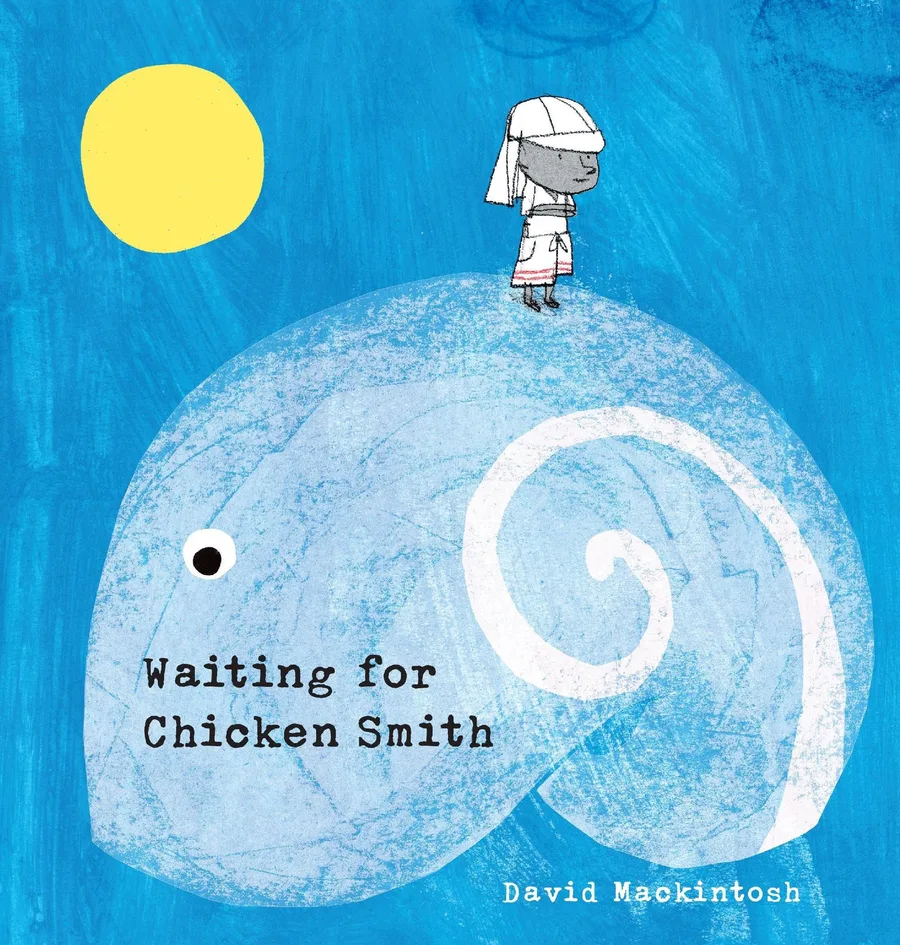 Waiting for Chicken SmithDavid MackintoshStaying on the beach in a cabin his family goes to every year, the young narrator waits for Chicken Smith, who always stays “with his dad and his dog, Jelly” in a cabin nearby. He recounts their traditions and exploits (it’s clear he idolizes Chicken Smith), and expresses frustration that Chicken Smith has yet to arrive. “This year Chicken Smith’s cabin looks different. The windows are shut. The grass is long, and I don’t see his bike.” The narrator’s sister is eager to do things CCBC Choices 2020 Picture Books for School-Age Children 57 with him, but he’s too busy thinking about Chicken Smith to find her anything but an annoyance, until the two of them share an experience that even he and Chicken Smith never had, opening his eyes to the possibilities—and person— right in front of him. Expectation and disappointment are palpable in a picture book that also holds the promise of good times regardless. The quirky, off-kilter art style heightens the emotionally unsettled feel of the young, brown-skinned narrator in a story that offers myriad opportunities for inference.Picture Books for School-Age ChildrenView book details
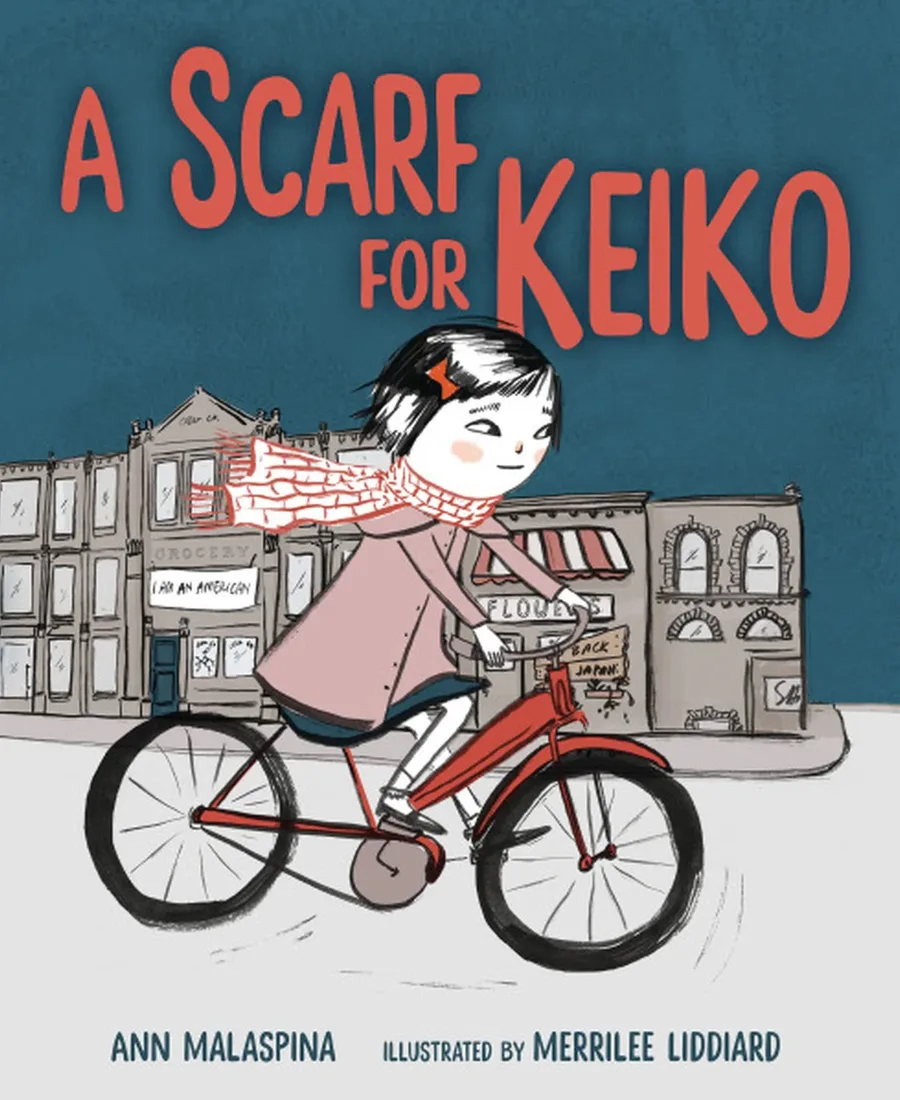 A Scarf for KeikoAnn Malaspina, illustrated by Merrilee LiddiardWith World War II under way, Jewish Sam is struggling to learn how to knit socks for his soldier brother alongside his classmates at school. He’s also learning that attitudes toward people of Japanese heritage are becoming increasingly hostile. Reluctantly following his friends’ lead, Sam ignores his neighbor and friend, Keiko, when she offers to him help with his knitting. Sam’s parents, who understand prejudice and persecution, are appalled at the treatment of their Japanese friends and neighbors. When Keiko and her family are sent to an internment camp, Keiko leaves her bicycle in Sam’s care and gives him a pair of knitted socks for his brother. In response, Sam learns to knit a scarf, which he sends to her at the internment camp. Additional information about the internment of Japanese Americans is included in an author’s note at the end of a story that invites readers to consider how people seen as “other” are treated.Picture Books for School-Age ChildrenView book details
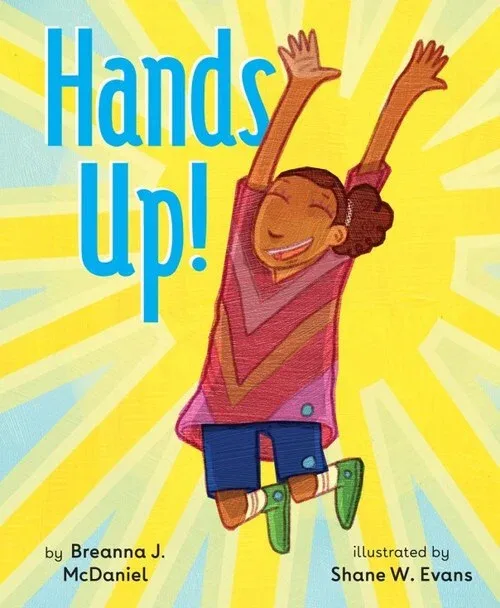 Hands Up!Breanna J. McDanielSometimes the young Black girl at the center of this story raises one or both of her hands as a simple part of moving through the day (stretching them over her head when she wakes in the morning, holding on to her parents’ arms and swinging, raising her hand in class, reaching for a book on the high shelf). Sometimes she raises her hands in moments of exuberance and assertiveness and living out loud (lifting them high in church as she sings, reaching for the basketball in a game, celebrating a victory, holding up a sign at a march). This celebration of selfhood, family, and community has a powerful subtext, intentionally reclaiming and recasting the phrase “hands up,” so frightening for Black and brown lives when it comes to encounters with police, by affirming the girl’s right to move through and occupy the space around her—and the world itself—without question. The bright mixed-media art has an abundance of yellow, amplifying the joyful feel.Picture Books for School-Age ChildrenLexile Text Measure 360LATOS Book Level 1.3View book details
 The New NeighborsSarah McIntyre, illustrated by Sarah McIntyreThere are new neighbors—rats—in the apartment building. The bunnies are initially excited to hear about their new neighbors, but Vern (a sheep) thinks rats are untidy. Walter and Matilda (pigs) confirm: Rats are, indeed, incredibly messy. Smelly, too. And according to Lars and Astrid (polar bears), not only are rats messy and smelly, they also like to steal food. As the animals deliver the news to the rest of the residents, trundling down each flight of stairs in a 58 Picture Books for School-Age Children CCBC Choices 2020 cumulative pattern, their paranoia and prejudice only increase as they feed off one another’s unfounded fears. Of course, when they finally meet Bertram and Natasha, they’re charmed by their hospitality and lovely home and embarrassed to have judged their new neighbors before meeting them in a humorous yet timely story that cautions against forming and spreading negative, preconceived notions of newcomers.Picture Books for School-Age ChildrenLexile Text Measure 540LATOS Book Level 3.6View book details
 What Is Given from the HeartPatricia C. McKissackAfter the death of his father and the loss of their farm, James Otis and Mama are experiencing tough times. But when Reverend Dennis announces that Irene Temple and her daughter, Sarah, have lost their house in a fire, Mama knows that she and James Otis can scrounge up a donation for the Temples’ “love box.” Otis considers his gift carefully. Would Sarah like his blue ribbon from the spelling bee? His special rock? His crayons? His favorite book? Mama sews an apron for Mrs. Temple using her nicest possession, her white tablecloth, which inspires James Otis to put his own creative talents to good use. Mama is proud of James Otis, not only for giving when they have so little but just for being himself. The mutual love of this mother and son warms each page of gorgeous mixed-media illustrations in a story about the care, support, and selflessness of one African American community that, it turns out, has not forgotten James Otis and Mama, either.Picture Books for School-Age ChildrenLexile Text Measure AD660LATOS Book Level 3.3View book details
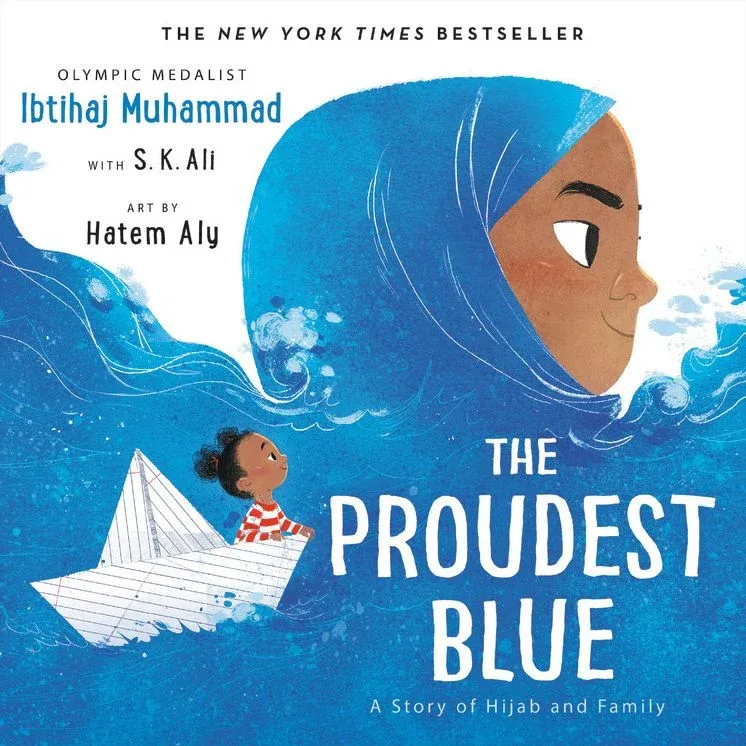 The Proudest Blue: A Story of Hijab and FamilyIbtihaj Muhammad with S. K. AliThe first day of school includes a new backpack and light-up shoes for Faizah, and a new hijab for her sister Asiya, a sixth grader wearing hijab for the first time. Asiya chose blue “the color of the ocean” for her first hijab. Faizah knows someday she’ll choose the same. But at school, when kids ask what Asiya is wearing, Faizah’s voice comes out in a whisper. “Asiya’s hijab isn’t a whisper. Asiya’s hijab is like the sky on a sunny day.” On the playground, a boy laughs at Asiya. “Asiya’s hijab isn’t a laugh. Asiya’s hijab is like the ocean waving to the sky.” Another threatens to “pull that tablecloth off your head.” Each time, Faizah takes comfort in her older sister’s strength and ability to ignore the insults (helped by the presence of friends who are supportive and kind—often conveyed in illustrations), and in remembering their mother’s wise words about wearing hijab. Faizah is such a believable child, honestly articulating uncertainty and pride, her habit of counting, and her adoration of her big sister in this lively, warmhearted story about a Black Muslim girl.Picture Books for School-Age ChildrenView book details
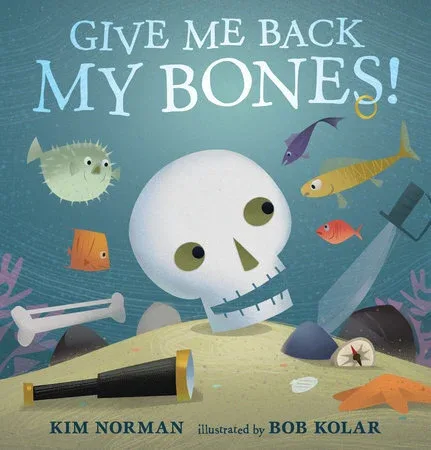 Give Me Back My Bones!Kim Norman, illustrated by Bob Kolar“Now I need my gnaw bone, / my chicken-chomping saw bone. / I’ll starve without my jawbone. / I miss my mandible!” Clever quatrains in the dismembered voice of a pirate skeleton describe its search for its bones at the bottom of the ocean. The improbable premise is delivered in a sprightly tongue- in-cheek tone that belies how much information is packed into each of the CCBC Choices 2020 Picture Books for School-Age Children 59 verses, which always end with the scientific name of the bone(s) being sought. From skull to phalanges, it’s a story guaranteed to tickle the funny bone (er … humerus). Digital illustrations show a stylized, blue-green underwater world with colorful sea creatures and bone-white … bones.Picture Books for School-Age ChildrenLexile Text Measure 549LATOS Book Level 3.6View book details
 Nya’s Long Walk: A Step at a TimeLinda Sue ParkNya is annoyed that her younger sister, Akeer, is dragging her feet as they make the long walk to the water hole. Nya encourages her by singing and then playing the clapping game and they finally arrive and fill the jerry can. But Akeer is even slower on the way back, and Nya realizes the little girl is sick. There’s still a long way to go before they’re home and Nya can’t leave her sister alone, but carrying Akeer and the water is too heavy. She dumps half the water and picks up her sister. By setting one near goal after another (reaching the tamarind tree, then the thorn bushes, next the old stump), Nya perseveres, finally arriving back at the village and her mother. But the journey isn’t done, because now the family must walk to the clinic. Despite her exhaustion, Nya realizes she can go on, “As long as I go a step at a time.” The tension of the story is heightened by swirls of color in sun-baked shades of yellow, ocher, and brown, while concluding lines assure that Akeer is alright, adding that a well installed in the family’s village by Water for South Sudan promises to reduce water-born illness and free girls like Nya and Akeer to go to school.Picture Books for School-Age ChildrenLexile Text Measure AD530LATOS Book Level 2.9View book details
 My FootprintsBao PhiAfter facing school bullies, Thuy sees her footprints in the snow on the way home as those of various animals in a story about the healing power of imaginative play. Once home, Thuy is reluctant to talk about what happened at school when her two moms ask her about the day, but her moms join in on Thuy’s footprint “game,” their questions and interaction gently probing even as they give their daughter space to process and act out her anger and hurt. Bao Phi’s exquisite writing captures Thuy’s rollercoaster of emotions. Basia Tran’s illustrations are tinged in ice blue, giving a sense of cold and snow, and her varying perspectives offer vistas of Thuy’s footprints, as well as what’s happening in her imagination. Together the words and picture tell a singular story, but one that many children will identify with, while leaving room to think about and interpret what is happening. Thuy and one of her moms, Momma Ngoc, are Vietnamese; Momma Arti is South Asian.Picture Books for School-Age ChildrenLexile Text Measure 630LATOS Book Level 3.2View book details
 My Papi Has a MotorcycleIsabel QuinteroAs Daisy rides with Papi on his motorcycle, she describes her neighborhood and city in a delightful, loving ode to present and past, family and community, joyfully evoking place and people and connections. They pass Abuelita’s church; Tortilleria la Estrella, where they “stop for stray cats crossing in front of us”; Joy’s Market; and Abuelito and Abuelita’s old yellow house, “the one with the lemon tree that grew from the seeds of the lemons Abuelito used to pick not far from here.” There is constancy but also change: their favorite 60 Picture Books for School-Age Children CCBC Choices 2020 place to stop for shaved ice has closed; they visit the place where Papi works building houses that are “replacing the last of the citrus groves.” The mixed- media art features a warmly colored palette on matte paper, cartoon-like energy, and singular details mined from a superbly crafted narrative in the voice of a Latinx child that also quietly affirms the important (and often unacknowledged) contributions of immigrants past and present, including Daisy’s father, to their community. This English-language edition (it is also available in Spanish) incorporates Spanish dialogue in speech bubbles that are part of the art. Highly Commended, 2020 Charlotte Zolotow AwardPicture Books for School-Age ChildrenLexile Text Measure AD750LATOS Book Level 3.7View book details
 Inside OutsideAnne-Margot Ramstein, Matthias AréguiEach page spread of this wordless, oversized picture book offers paired perspectives on the same scene. A close-up of a duckling still curled inside an unhatched egg and that egg as part of a larger marsh-scape. An explorer dangling by ropes inside a large cave opposite the scene outside the cave, where the rope is anchored. The view from inside and outside a large cage of brightly colored birds, a castle where there is evidence of a recent escape, a wave-tossed boat, a deep-in-the-depths submarine … Every turn of the page is a surprising pair of compositions that, at first glance, seem to have no relation to any that came before. There is a great deal to notice within each pair, too, from the logical to the nonsensical, and different observers are sure to see different things and ask different questions in a book that isn’t a puzzle to solve, but sparks ideas to contemplate. Sophisticated graphics, with many angles and curves, colors and forms, makes this a book older readers may especially appreciate.Picture Books for School-Age ChildrenLexile Text Measure NP0LATOS Book Level 0.1View book details
 The Bell RangJames E. RansomeA predictable daily routine defines the life of a small girl whose family is enslaved in the American South. Their day begins when the bell is rung each morning, but everything changes when her older brother runs away with two of his friends. Most books about escape from slavery focus on the person running away, but this picture book offers the unusual perspective of the family left behind. The powerful narrative uses just a few words to pack in intense emotions: fear and hope. The oppressive routine of slave labor is structured by the days of the week, with Monday through Wednesday relentlessly predictable, making Thursday, the day of the brother’s escape, all the more dramatic. The large font is laid out on the page like lines of poetry, making it easy to read, and the accompanying illustrations show so much of the young girl’s emotions. The final, arresting page spread shows the girl looking back at the bell, opposite an image of a bird in flight.Picture Books for School-Age ChildrenLexile Text Measure 360LATOS Book Level 1.8View book details
 Bird CountSusan Edwards Richmond, illustrated by Stephanie Fizer Coleman“‘Count every bird you see or hear … Make sure at least two people see or hear it. And don’t count any bird twice. ’” These are the rules of the Christmas Bird Count, a collective action by citizen scientists that takes place from Canada to Antarctica. Brown-skinned Ava, her mother, and team leader Big Al observe the CCBC Choices 2020 Picture Books for School-Age Children 61 birds in their area on this cold winter day, recording the type and number that appear: eight goldfinches, three mallards, one great blue heron, and many more. Ava hopes to see a raven—they’re rare, and last year she was disappointed in her search. They drive from stop to stop, keeping their eyes peeled as they go. At the end of the day, the circle chief combines the counts of all ten teams in Ava’s count circle while the citizen scientists enjoy a bonfire together. Young readers inspired to participate in this annual census may benefit from the additional descriptions of the many species spotted by Ava and her team provided in the back of the book.Picture Books for School-Age ChildrenLexile Text Measure 550LATOS Book Level 3View book details
 AnotherChristian RobinsonA young Black girl is asleep in her bed with her red-collared black cat when a blue-collared black cat appears through a porthole of light. The blue-collared cat absconds with the red-collared cat’s red mouse toy. The red-collared cat follows through the hole, as does the now awake little girl in her red planetary nightgown. She emerges (bottom of page spread) in a bright white space with her beaded hair rising from her head while her upside down cat (top of page spread) disappears through another hole. Her ongoing adventure offers one captivating surprise after another, from an Escher-like staircase to a lively cast of diverse children joyfully engaged in play, with one another and with their doppelgangers, whom they encounter as they move through various holes. The girl, too, discovers her multiverse “twin,” distinguished from her, as are the individual children in the other pairs, by elements of clothing color. What does it all mean? That’s up to readers to decide in this creative wordless outing with much to delight in, discover, and ponder. The mixed-media illustrations use simplified shapes and bright colors against (mostly) white or black backgrounds, with the masterful composition an essential part of how meaning can be made.Picture Books for School-Age ChildrenLexile Text Measure NP0LATOS Book Level 0.1View book details
 The Phone Booth in Mr. Hirota’s GardenHeather SmithEach morning Makio spends time in Mr. Hirota’s garden, looking down to spot his dad and Mr. Hirota’s daughter working in the harbor far below. When a huge ocean tsunami roars in, Makio’s dad and many others are swept away. Furious at the ocean he once loved, Makio misses his father in silence, with no voice to express his pain. At first he’s confused when Mr. Hirota builds a phone booth that holds a disconnected telephone, but villagers use the booth to “talk” to those they lost and eventually Makio finds comfort in the same way. This fictional story is based on a phone booth in Otsuchi, Japan, that many people visited after the 2011 tsunami to feel connected to loved ones who died. Inspired by traditional Japanese techniques, striking illustrations in a subdued palette contribute to the story’s comforting affirmation that beauty exists, even during times of deep sadness.Picture Books for School-Age ChildrenView book details
 Small in the CitySydney SmithA child in a large city describes the chaos of people and cars and big buildings, the overwhelming sense of busyness and sounds, before offering advice on being “small in the city” to an unseen “you.” The child points out an alley too dark to go down, the yard with big dogs best to avoid, and good places to hide, find warmth, a meal, and a friend. In the park, the child puts up a “Lost” poster that confirms the identity of “you” as a cat. The counterpoint between the child’s helpful, positive advice and their obvious worry—underscored on reaching home where their mom waits with a comforting hug—is deeply tender, while the rising snowstorm, which begins as a few flakes but is almost a whiteout on the penultimate page, adds even greater tension. The ink, watercolor, and gouache illustrations featuring a white child masterfully convey the physicality of the city, the unique, muffled gray-green palette of rising dusk as a snowstorm swells, and the emotional landscape of a story in which the snow offers clues to a happy ending: paw prints outside their door. Highly Commended, 2020 Charlotte Zolotow AwardPicture Books for School-Age ChildrenLexile Text Measure AD530LATOS Book Level 3.5View book details
 At the Mountain’s BaseTraci Sorell“At the mountain’s base”… is a hickory tree. Beneath the tree is a cabin. Inside the cabin is a kitchen, with a stove, and simmering pans, and a grandma weaving “and worrying.” Around the grandma is a family “tending and singing” a song in which a battle unfolds. “In that battle soars a plane” piloted by a young woman “protecting and defending” as she prays for peace. The comforting cadence of this picture book featuring a contemporary Cherokee family concludes with an image of the pilot’s arrival home. The grandmother’s weaving serves as visual symbolism throughout a book that depicts how the young pilot is tethered to her family through bonds of love even as she soars, and even as they are motivation for why she has chosen her path. A story that depicts a specific, fictional family will surely resonate with many military families. An author’s note discusses the role women in American Indian and Alaskan Native nations have played in many conflicts, including Ola Mildred Rexroat, an Oglala Lakota WASP pilot in World War II, and many Native women in service today.Picture Books for School-Age ChildrenView book details
 Ojiichan’s GiftChieri UegakiMayumi visits her grandfather in Japan for two months every summer, helping him care for the rock garden he made when she was born. “She learned that moss on a rock was a gift of time … And that clipping shrubs to look like clouds was the best of all reasons to prune.” Back home, her small tin of keepsakes— leaves, pinecones, a stone—helps her remember their time together. Then comes a visit when it seems everything has changed—Ojiichan is in a wheelchair, unable to care for the neglected garden. Mayumi takes her upset and anger out on the garden until an idea blossoms—a way Mayumi can keep herself and Ojiichan connected to the garden and each other. A lyrical narrative of keen detail and emotional grace offers readers and listeners opportunities to relate and reflect as it reveals how Mayumi’s connection to her grandfather and his CCBC Choices 2020 Picture Books for School-Age Children 63 garden are things she carries inside her, in addition to inside her small, tangible box of memories. Mayumi is biracial (Japanese/white) in this story supported with lovely watercolor illustrations.Picture Books for School-Age ChildrenView book details
 A Stone Sat StillBrendan WenzelThe author/illustrator again examines perspective and point of view, this time in a picture book in which the descriptors for a single stone vary depending on the stone’s relationship to another element of nature. In the sun’s shadow, the stone is dark to a mouse; in the moon’s glow, it is light to an owl. It’s rough to a slug with its slime trail, smooth to a prickly looking porcupine. With the changing seasons it shifts from green (surrounded by summer foliage), to red (covered by autumn leaves), to purple (in hazy fog) and blue (in winter light). The concepts vary from concrete to abstract (“And the stone was a blink and the stone was an age.”) in a work that encompasses the passage of time, with the stone eventually covered by a large body of water. Mixed-media illustrations convey a sense of the stone’s solid presence, of playfulness, of moodiness, and of mystery in a work, like the earlier They All Saw a Cat, that invites children to contemplate, conjecture, and discuss.Picture Books for School-Age ChildrenLexile Text Measure NP0LATOS Book Level 0.1View book details
 BecauseMo WillemsThe journey of one girl to becoming a musician and composer as chronicled here started with her hearing a particular piece of music, written by Franz Schubert, at a concert in New York City when she was a child. How she came to be at that concert, and how the members of the orchestra were able to be there, too, even how the music was written, is playfully recounted in the first 3/4 of this picture book, a series of lively cause-and-effect anecdotes that build to a life-changing experience for the girl. (e.g., The musicians were in the orchestra because they practiced and studied for years. The conductor was able to be at the concert because his train stopped at the concert hall. The hall was ready because many workers had prepared it. The girl, who is white, had a ticket because her uncle was sick with a cold and couldn’t go.) The story briefly spans the years following that performance, chronicling the girl’s journey to composer. Warm, lively illustrations complete this thought-provoking work.Picture Books for School-Age ChildrenLexile Text Measure AD820LATOS Book Level 3.4View book details
 I Miss My GrandpaJin Xiaojing, illustrated by Jin Xiaojing“What did Grandpa look like?” a young girl asks. Her grandma describes her grandpa in terms of physical traits of extended family members the girl knows. Her grandpa had a face shaped like her youngest uncle, Mason; eyes like her middle uncle, Chang-Zi; a nose like her eldest uncle, Leo; and so on. Each of those relatives shares a memory of her grandpa—something that is concrete yet grounded in feeling. “When your grandpa looked at the world, he was quiet and patient like a crocodile. When he closed his eyes, his imagination sparked,” says Uncle Leo. Her Aunt Zai-Zi, whose mouth is most like her grandpa’s, describes her grandpa’s voice in the stories he told: “he had a dove’s voice, duck’s voice, lion’s voice, lamb’s voice … and countless other voices.” Even though she 64 Picture Books for School-Age Children CCBC Choices 2020 never met her grandpa, the girl misses him. “You can meet him in your heart,” her grandma says. This unusual, emotionally resonant picture book features a Chinese family and is translated into Mandarin on the end papers, where it also appears in pinyin.Picture Books for School-Age ChildrenView book details
 A Map into the WorldKao Kalia YangA quiet, contemplative story in which a Hmong American girl’s year of simple, joyful discoveries culminates with a gift for her grieving neighbor. Paj Ntaub and her family have just moved into a new house with a garden and a swing. Across the street are elderly white neighbors Bob and Ruth, who often sit on a bench in their driveway. The family’s first year in their new home is a busy one. Paj Ntaub has brand-new twin brothers, and she wants to show them everything: the pretty leaf that she finds in autumn, the snowball that she brings inside in the winter, the worm (named Annette) that she plucks off the sidewalk in spring. From her window, she watches as family arrives to comfort Bob when Ruth passes away. When it’s warm enough, she and her mother venture across the street to visit with Bob, who is sitting alone on his bench. With sidewalk chalk, Paj Ntaub draws an elaborate “map into the world” on his driveway. The route wends its way past her garden, Annette smiling on the sidewalk, and her own home before ending at the street, where the world awaits Bob when he is ready for it. Honor Book, 2020 Charlotte Zolotow AwardPicture Books for School-Age ChildrenLexile Text Measure 561LATOS Book Level 3.7View book details
Books for Beginning Readers
6 selections
 Penny and Her SledKevin HenkesPenny has a new sled, and no snow. She waits and she watches for snow. Sitting on the sled in the living room doesn’t bring snow. Neither does wearing mittens to bed. She finds other ways to play with her sled inside—making it into a bridge, a bed, and a magic carpet. Eventually she sets her sled aside. When the weather begins to get warmer, Mama suggests waiting instead for snowdrops, the first flowers of spring. Penny isn’t sure—what if snowdrops don’t come, either? Mama promises her they will—and they do! This fourth outing for newly independent readers featuring mouse Penny continues to charm with details of Penny’s enterprising personality, and her life with Mama, Papa and her two baby brothers.Books for Beginning ReadersLexile Text Measure 450LATOS Book Level 3.1View book details
 A Gift for GooseTad HillsDuck has put his gift for Goose inside a box, which he paints with red, yellow, and blue stripes before adding a ribbon and a card. Thrilled when he sees it—a box!—Goose is too busy gathering each of his special things to put inside to listen when Duck tries to explain that Goose’s gift isn’t the box itself, it’s inside the box. Goose finally slows down long enough to discover his actual gift: a CCBC Choices 2020 Books for Beginning Readers 65 polka-dotted box “for your special things,” Duck explains. “Thank you, Duck. It is the nicest box I have ever seen.” This droll, charming story is comprised of short, mostly declarative sentences and simple dialogue; bright, friendly illustrations in colored pencils and acrylic; and ample white space.Books for Beginning ReadersLexile Text Measure 370LATOS Book Level 1.3View book details
 The Quiet Boat Ride and Other StoriesSergio Ruzzier, illustrated by Sergio RuzzierAnxious Chick and mellow Fox appear once again in three easy-to-read stories involving a chocolate cake, a sunrise, and a not-so-quiet boat ride. Author/ illustrator Ruzzier is skilled at teasing out perfect short episodic stories through the gentle interactions of these two distinctive characters. Each story builds on Chick’s childlike anxiety about new experiences; his childlike nature is also shown through the mindless chatter and endless questions posed to the patient, long-suffering Fox. Each story ends with a perfectly satisfying resolution. Ruzzier uses sequential art and dialogue bubbles to advance the plot and to make action clear to nascent readers. His subtle use of line and color underscore the gentle humor of the stories.Books for Beginning ReadersLexile Text Measure GN400LView book details
 Harold & Hog Pretend for Real!Dan Santat, illustrated by Dan SantatHarold and Hog aspire to be Elephant and Piggie, of Mo Willems fame, in a game of pretend, with the aid of a Piggie-like nose for Hog and round glasses, like Gerald the elephant’s, for Harold. The only problem? Where Piggie is carefree, Hog is careful; and where Gerald the elephant is careful, Harold is carefree. But if they can’t be Elephant and Piggie, can they still be best friends? With similar speech bubble dialogue and art featuring an elephant and pig (or hog) with slightly sharper edges, the relationship between this playful, raucous parallel and Willems’s original is as funny and warm as the relationship between Harold and Hog—and Elephant and Piggie.Books for Beginning ReadersView book details
 Charlie & Mouse Even BetterLaurel Snyder, illustrated by Emily HughesSiblings Charlie and Mouse are back in this book for advanced beginning readers comprised of four short chapter stories set over the course of a single day. The morning begins with Mom’s breakfast preparations enlivened—and complicated—by requests from Charlie and Mouse to have pancakes in various shapes. Then the duo go shopping with Dad for Mom’s birthday present. Home again, Dad makes a cake while Charlie and Mouse decorate. In the final chapter, Mouse distracts Mom while Charlie comes up with an alternative to the burned cake that brings the story full circle. Droll humor (Mouse’s idea for the perfect birthday gift is tape, which Mom is always looking for) and often recognizable family dynamics make for an entertaining chapter book. Charlie and Mouse appear to be mixed-race, with a brown-skinned dad and white mom. In this outing, they are never identified by gender pronouns, and Mouse continues to express a creative, gender fluid sartorial style.Books for Beginning ReadersView book details
 Follow That Map!Sheri Tan, illustrated by Shirley Ng-BenitezA diverse group of friends—Black, Latinx, South Asian, white—enjoys a long journey together guided by the use of a map in this early reader. As the summer draws to a close, Pablo’s dad agrees to take him and his friends to Coney Island. A lover of maps, Pablo plots their course through their urban community: First they walk to the bus stop, then take a bus to the subway line, and finally, ride the subway to Coney Island. Once they arrive at their destination, Pablo produces a second map of Coney Island itself so that he and his friends can locate the rides they want to go on. An activity in the back instructs readers in how to design maps of their own neighborhood.Books for Beginning ReadersLexile Text Measure AD590LATOS Book Level 3.5View book details
Books for Newly Independent Readers
4 selections
 Putuguq & Kublu and the Qalupalik!Roselynn Akulukjak, Danny ChristopherSiblings Putuguq and Kublu are out on the ice when their grandfather, passing by on his snowmobile after hunting, stops and tells them a story about the Qalupalik, a creature that lives beneath the sea ice waiting for children to steal. “Seriously?” says Kublu. She knows her grandfather is just trying to scare them. “Under the ice?” Putuguq asks nervously. Putuguq has convinced his big sister to let him and his little dog Lulu come along as she heads off to meet her friend Lisa. But what are those strange footprints near the shore? And where is Lisa? A short, easy graphic novel with a sudden surprise and a hint of lingering mystery is set in an Inuit village. The culturally specific details of the characters’ lives and the warm, humorous dynamic among them, especially the two siblings, make for a welcome new series (the first book, published in 2018, is Putuguq & Kublu). A map of the village opens the story, and more about the Qalupalik is found at book’s end.Books for Newly Independent ReadersView book details
 Where Dani Goes, Happy FollowsRose Lagercrantz, illustrated by Eva ErikssonWhen Dani’s father is struggling with feeling sad and decides he needs to visit his family in Italy, he arranges for Dani to stay with her grandparents in Stockholm. Dani is missing her best friend and convinces Grandma to let her surprise Ella for her birthday by going to Northbrook, where Ella now lives. Dani will be Ella’s “best present.” Although Grandma consults by phone with Ella’s mom for the visit, events do not go as planned. Dani’s first solo train trip devolves in a cascade of misadventure that includes a lost cell phone, missed meetings, and a miserable bout of the flu. As in the earlier books in the Dani series featuring this white child and her family, the story highlights a believable slice of life in all CCBC Choices 2020 Books for Newly Independent Readers 67 its complications and messiness, while capturing the complexities of children’s feelings when adult actions leave them uninformed and powerless.Books for Newly Independent ReadersView book details
 Meet YasminSaadia FaruqiFaruqi, Saadia. Yasmin in Charge. Illustrated by Hatem Aly. Picture Window, 2019. 90 pages (pbk 978–1–5158-4272–9) Two chapter books for newly independent readers introduce Pakistani American Yasmin. Each volume is comprised of four stories divided into several chapters each. In Meet Yasmin, Yasmin explores her neighborhood with Baba, Mami, and a map (“Yasmin the Explorer”); agonizes over what to create for an art contest (“Yasmin the Painter”); devises a unique contribution to her class collaborative building project (“Yasmin the Builder”); and turns an accidentally torn kameez into the opportunity for a fashion show with Nani (“Yasmin the Fashionista”). In Yasmin in Charge, she rises to the challenge of keeping her classmates on task (“Yasmin the Teacher”); makes a tasty dish for the family party after a rough start (“Yasmin the Chef”); has a close encounter with the monkeys on a trip to the zoo (“Yasmin the Zookeeper”); and dons a hijab as cape to be a superhero in search of big saves but excelling at small acts of kindness (“Yasmin the Superhero”). Yasmin is irrepressible, even when briefly disappointed or overwhelmed by a challenge, in stories full of energy and humor and grounded in myriad cultural details in both the narrative and the full- color art showing racially and culturally diverse secondary characters, as well as Yasmin’s grandfather, Nana, using a wheelchair. Each of the eight stories across the two volumes have also been released as individual books for advanced beginning readers, and are available in both English and Spanish editions. (Ages 4–8) Medina, Juana. Juana & Lucas: Big Problemas. Candlewick Press, 2019. 88 pages (978–1–5362-0131–4) Juana’s two favorite people are Mami and her dog, Lucas. Mami has a new friend in her life. Luis is a photographer. He teachers Juana to take pictures, has a farm in the country, and asks lots of preguntas. “I like the camera and I like the visits to the farm and I think Luis is a nice person, but sometimes I wish it were just me and Mami and Lucas, like before.” All the time Mami spends with Luis makes Juana feel sad sometimes about the father she can’t remember, who died when she was young. And despite how much time Mami and Luis spend together, Juana is certain that Mami would never get married again. Juana’s lively, pitch-perfect voice captures her enthusiasm for the people and things she loves, and honesty about her shifting feelings as she moves through a period of great change in a story that culminates with Mami and Luis’s wedding. This irresistible chapter book set in Colombia and incorporating Spanish throughout features buoyant full-color ink-and-watercolor illustrations and a charming personal afterword by the author.Books for Newly Independent ReadersWord Count 2146View book details
 The Run-awaysUlf StarkGrandpa is stuck in the hospital after a bad fall, and he’s not happy about it. He swears a lot, makes unreasonable demands of his nurses, and complains about the food. When Gottfried Junior suggests they run away together, Grandpa likes the idea. He wants to make a final trip to the house on the Stockholm archipelago where he and his late wife lived. Gottfried, who is white, plans the escape down to the last detail: He concocts a story about an overnight football team trip (dirtying his uniform convincingly), convinces his mother to make him some meatballs (Grandpa’s favorite), and arranges for the young butcher’s assistant to drive them. At his old home, Grandpa collects the final jar of homemade lingonberry jam from the cellar and takes a moment to reflect on the life he had with his beloved wife. Gottfried Junior is sensitive, patient, and accepting of his grandfather for who and how he is. The two come to terms with the fact that Grandpa is nearing the end of his life in this tender yet humorous story originally published in Sweden.Books for Newly Independent ReadersView book details
Fiction for Children
44 selections
 The Line TenderKate AllenWhen a dead great white shark is brought to the dock of their small Cape Cod town, Lucy, 12, and her best friend, Fred, both white, are inspired to find out more about the work of Lucy’s late mom, a shark researcher who died five years before. Unlike Fred, Lucy is more interested in drawing the natural world than studying it, but she’s mildly intrigued by her mom’s last research proposal to tag and track sharks. The increased number of shark sightings is just one of many changes for Lucy that summer of 1996. She’s also noticing the way her body buzzes sometimes when Fred is near. It’s also clear that the dead shark has brought up a lot of feelings about her mom for both Lucy and her dad. Then a sudden, shocking accident stuns Lucy and the town, and Lucy is navigating new grief on top of the old. In this novel of change and love and loss, small conversations and moments are as vivid and important as big events and decisions. There is no magic antidote to grief, but the days keep coming, and people keep caring, and all of it is part of healing. Science, art, and music are all important in this beautifully realized story and the lives of its tender, true-to-life characters.Fiction for ChildrenLexile Text Measure 710LATOS Book Level 4.6View book details
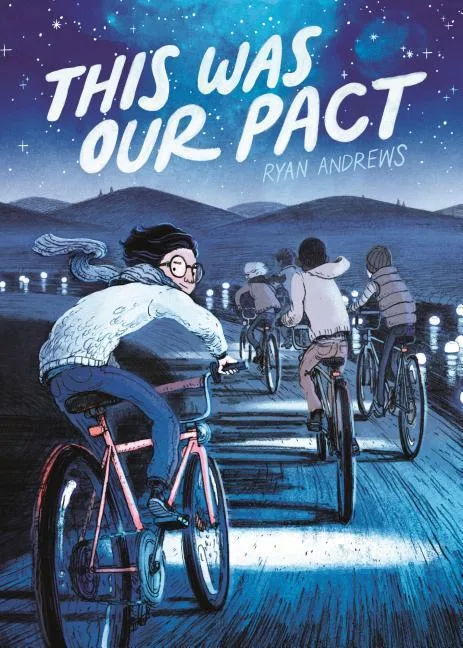 This Was Our PactRyan AndrewsEvery year during the Autumn Equinox Festival, villagers light lanterns and send them down the river, believing they will journey as stars to the Milky Way. This year, Ben and his friends make a pact: They’ll follow the lanterns on their bicycles to see where they actually end up. Soon everyone but Ben and brown-skinned Nathaniel, a straggler who doesn’t quite fit in with the group, CCBC Choices 2020 Fiction for Children 69 has given up and turned back. The two boys cross the bridge into a magical parallel universe, where they meet a talking fisherbear in search of fish—or are they the lanterns?—that appear each equinox. When they become separated from the bear and lose their way, they stumble upon a telephone that connects them to Madam Majestic, who lives in a Cliffside hideaway, concocts potions, and is willing to draw them a map while she awaits the arrival of the mysterious Enlightened Ones, whom she fears may be lost in the fog. Reminiscent of a Miyazaki film, this otherworldly graphic novel evokes the enchantment of nighttime and the tendency of a perilous adventure to strengthen the bonds of friendship.Fiction for ChildrenLexile Text Measure GN350LATOS Book Level 3View book details
 The Next Great Paulie FinkAli BenjamAs the school year begins, Caitlyn enters the seventh grade classroom in her new small town to applause. It turns out her classmates were hoping she was Paulie Fink, whose reputation for flaunting the rules and making every day interesting grows throughout a fall in which he’s a no-show. When the kids decide to hold a reality-TV-inspired competition to decide who will carry on Paulie’s legacy, Caitlyn agrees to judge the search for “The Next Great Paulie Fink,” even though she’s beginning to wonder if any of them really knew Paulie as a friend. Yet the legend of Paulie is no stranger than anything else at the school, which is housed in an old mansion, keeps goats, and gives teachers leave to be creative. Most unusual of all? The kids genuinely like one another, not a clique or bully in sight. This isn’t, Caitlyn tells them, the real world. As someone who made another girl’s life miserable at her old school, she should know. Paulie’s reputation notwithstanding, Caitlyn, who is white, discovers reality is what you chose to make it, and daring to care makes all the difference in a story full of humor and moments of poignancy, featuring characters both entertaining and insightful.Fiction for ChildrenView book details
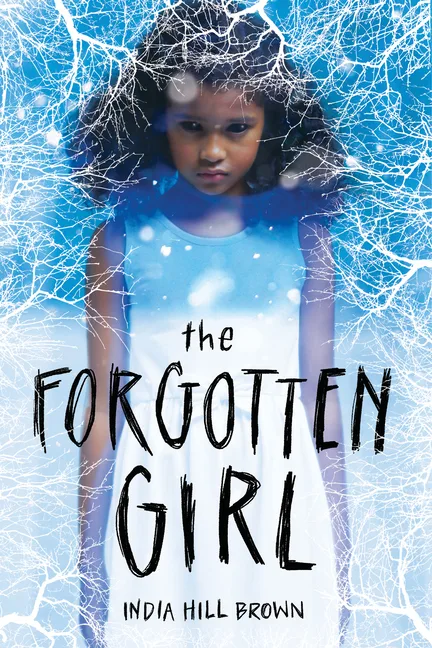 The Forgotten GirlIndia Hill BrownAfter Iris and her best friend, Daniel, find the grave of an 11-year-old girl named Avery Moore in an abandoned cemetery near their homes, Iris begins seeing a Black girl at her second-floor window, calling her to come out and play. As part of a research project for school, Iris and Daniel learn that cemeteries in their community were once segregated, with many African American graveyards abandoned during the Great Migration. They also learn Avery Moore, who died in 1956, was one of 9 students who integrated their middle school in the 1950s, not long before she died. Neither Avery nor any of the other nine Black students are recognized on their school’s wall of fame. For African American Iris, who has just recently dealt with another racist incident at school, it isn’t right, but it also isn’t surprising. But the ghost of Avery is determined that neither she nor Iris will be forgotten, putting Iris’s life at risk. As a ghost Avery is frightening; as a girl she has a poignant, compelling history that Iris and Daniel are piecing together, one with a connection to both of their lives in this scary tale with a satisfying dimension of social history and social justice.Fiction for ChildrenLexile Text Measure 670LATOS Book Level 4.7View book details
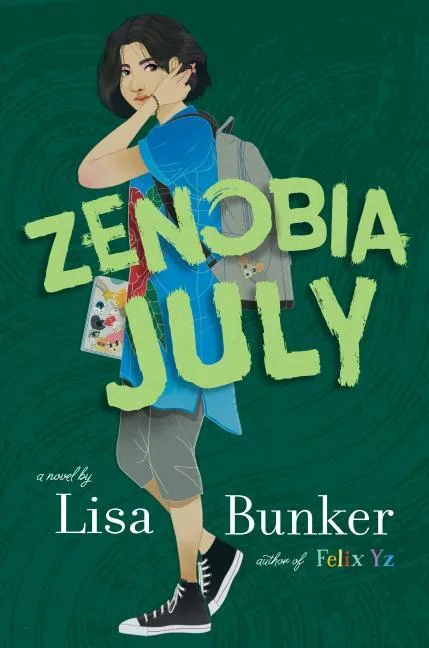 Zenobia JulyLisa BunkerPresenting as her true self—a girl—is both liberating and challenging for Zenobia July. The rules of girl world are baffling, and her transition is not the only change to which she’s adjusting. After her father’s sudden death she moved in with her lesbian aunts, who regularly entertain an eccentric group of friends that includes Uncle Sprink, a drag queen who takes Zen under his wing. Not ready to come out as trans at school, Zen befriends a group of “orphan misfits”—particularly genderqueer Arli—but faces bullying by girls who deride her appearance. Zen’s primary refuge is her computer. With her outstanding tech skills, she investigates an elusive hacker who has begun posting Islamophobic and transphobic memes on the school website. Zen, white, is utterly believable as a middle schooler dealing with complex emotions, growing into herself, and finding her community. Although the story’s tech subplot is less credible, having a sharp, tech-savvy, game-loving heroine is nonetheless refreshing.Fiction for ChildrenLexile Text Measure HL610LATOS Book Level 4.4View book details
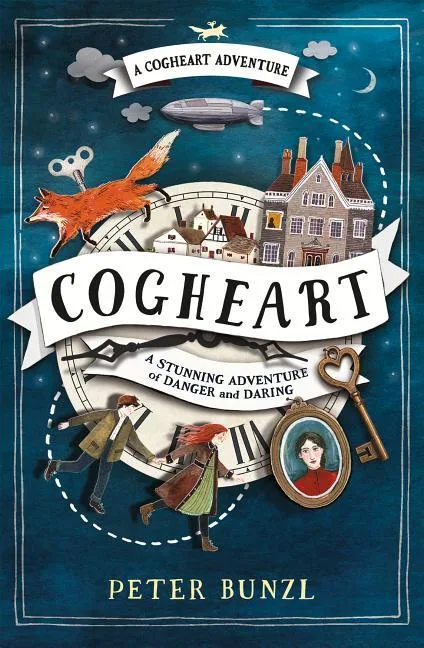 CogheartPeter BunzlLily is the daughter of a famous maker of mechanicals; when her dad’s airship crashes and he’s presumed dead, her father’s housekeeper, Madame Verdigris, takes control of Lily’s life. Robert is son of a clockmaker in the village where Lily lives. When he sees two men pursuing an injured fox, he helps the fox, Malkin, a mechanical with a message for Lily from her father. It quickly becomes clear Madame has no interest in Lily and keen interest in something Lily’s father is rumored to have invented: a perpetual motion machine. The two children, both white, join forces with reporter Anna Quinn, who rescues them in her air ship when they’re escaping the two men who’d been pursuing Malkin. The duo, also mechanicals, were sent by Madame Verdigris. Steampunk meets orphan story in this captivating tale, first in a series, that has hair-raising moments yet an overall cozy feel. From bold Lily to less confident Robert, fearless Anna to surly yet stalwart Malkin, appealing characters abound, as do moral questions about the perception and treatment of mechanicals.Fiction for ChildrenLexile Text Measure 730LATOS Book Level 4.7View book details
 A Drop of HopeKeith CalabreseIn Donnelly, Ohio, the town’s worn welcome sign reads “on ly,” while the town’s nickname, as more and more factories close, is “if only.” Fifth-grader Ernest Wilmette’s family owns one of factories that’s still open. Ernest’s classmate, Ryan, has a dad who’s unemployed. The boys aren’t friends—Ernest doesn’t have any friends—but together they stumble on a cave beneath their town’s legendary wishing well and discover they can listen in on people’s wishes. The wishes are far from frivolous—e.g., an older sibling who’s been getting in trouble; a parent who’s out of work. Ernest’s grandfather recently died, but his final request of Ernest was to clean out the attic of his home. Ernest, white, becomes convinced that items he finds in the attic have the power to make people’s wishes come true. He also discovers a long ago mystery that’s never been solved—one he’s sure his grandfather wanted him to pursue. Soon Ryan, and Lizzy, the smartest CCBC Choices 2020 Fiction for Children 71 kid in their class, are working with Ernest to investigate events of the past while hoping to help change lives in their town. Whether it’s fate and magic or a coincidence behind events taking place, one thing is certain: Kindness is the most powerful force of all in this satisfying tale.Fiction for ChildrenLexile Text Measure 810LATOS Book Level 5.2View book details
 Each Tiny SparkPablo CartayaSmart, creative Emilia Torres, 12, is hyper-focused when engaged, but organization is a challenge. Her app developer mom, on a work trip, stays connected by video chat, while her dad, just home from a tour of duty overseas, is sometimes funny and affectionate and sometimes moody and withdrawn, making it hard for Emilia to reconnect with him. He opens up when teaching Emilia to weld, but she often feels the weight of his silence, along with the weight of expectations from her mom and Abuela. A social studies project researching the history of Latinx emigration to the Atlanta area, and ongoing discussions about redrawing school boundaries in her town, which would bring more Black and Latinx students to Emilia’s school, has Emilia thinking about justice, and fairness. Anti-immigration sentiment puts people she knows at risk, while many are quick with opinions about the proposed school boundaries, but no one is asking what kids and families who would be forced to change schools think. For Emilia, the importance of being seen, heard, and valued extends from her personal life, where she feels loved but not always listened to, to her community. Cuban American Emilia and her family are the believable, compelling center of an ambitious story that naturally integrates Spanish throughout.Fiction for ChildrenLexile Text Measure 680LATOS Book Level 4.4View book details
 New KidJerry CraftIn his early weeks at Riverdale Academy Day School (RAD), seventh grader Jordan Banks is so happy when he sees another African American student that small cupids appear around his head. It’s emblematic of the keen social commentary rooted in much of this graphic novel’s humor. Black students (and the few Black faculty) at RAD are often confused for one another; it’s assumed that students of color need financial aid, just as it’s assumed Black kids are athletic. Conversely, one teacher is so worried about saying something racist that he constantly asks for reassurance. The racism and absurdities at RAD aren’t the sum of Jordan’s experiences. He makes two good friends who share his love of gaming: Drew, another new, Black student, who also shares Jordan’s frustrations, and Liam, a white student embarrassed by his family’s wealth. And he appreciates academic challenges like the art class that pushes him to try something new. Black-and-white pages from Jordan’s sketchbook interspersed throughout illuminate his feelings about RAD and about the daily transformation required to movie back and forth between the worlds of his home (where he feels his parents’ love and also the weight of their hopes and fears), neighborhood, and school. Genuine characters propel this funny, warm, biting, fearless story. Entertaining and insightful, it will surely offer affirmation for some readers, revelation for others.Fiction for ChildrenLexile Text Measure GN320LATOS Book Level 2.9View book details
 I Can Make this PromiseChristine DayTwelve-year-old Edie and her friends, Serenity and Amelia, are working on a film project when they stumble upon a box in Edie’s attic filled with photos, letters, and diaries belonging to a Native woman named Edith. Edie knows that she herself is Native, but her mother, who was adopted by a white family at birth, has always claimed ignorance of any details of her heritage. Edie, suspecting that her mother is keeping secrets, reads through the materials on her own. She learns that Edith—who looks remarkably like Edie—was an aspiring actress who left home for Hollywood only to face discrimination there as a Native woman. Expecting a child, she returned home. When Edie presses her parents, they admit that Edith is Edie’s grandmother. Edie’s mother was taken from Edith shortly after her birth. By the time the Indian Child Welfare Act was enacted in 1978, it was too late; Edie’s mother had been adopted, and Edith never saw her daughter again. This story of a contemporary Suquamish/ Duwamish girl seeking information about her cultural heritage sheds much- needed light on the generational trauma of forced removal of Native children from their families.Fiction for ChildrenLexile Text Measure HL610LATOS Book Level 4.4View book details
 Beverly, Right HereKate DiCamilloAfter her beloved dog Buddy dies, Beverly Tapinski, 14, can’t think of a reason to stick around home with her neglectful mother. Beverly hitches a ride to another small Florida town and gets a job bussing tables in a greasy spoon diner. Iola, who lives in a nearby trailer, owns a car but no longer drives and offers Beverly a room in exchange for a ride to her weekly Bingo game. Beverly meets gangly, kind, awkward, art-obsessed Elmer at the convenience store, where he works. He’s unlike anyone Beverly’s ever met. They all are, from her beleaguered boss at the restaurant to the ambitious and self-involved waitress to the steady, hardworking kitchen crew, who go on strike for better wages. Iola, meanwhile, clearly recognizes in Beverly a loneliness akin to her own. A story that mines difficult experiences and feelings with grace and humor illuminates goodness and connection through characters that find one another in ways that feel fated but work as happenstance. For Beverly, white, friend of the main characters in the earlier Raymie Nightingale and Louisiana’s Way, this summer of the mid 1970s is one in which she discovers—and perhaps remembers—that friendship is a gift to be received as well as given.Fiction for ChildrenLexile Text Measure 480LATOS Book Level 3.5View book details
 The Storm Keeper’s IslandCatherine DoyleFionn and his older sister Tara are spending the summer on the island of Arranmore, just off the coast of western Ireland, while their mother is treated for depression. Fionn’s father drowned before he was born and Fionn is terrified of the sea. But he’s intrigued by the island, which sometimes shimmers and shifts before his eyes, and his grandfather, whose cottage is full of homemade candles, each labeled with a different date. Fionn discovers that each candle, when burned, allows travel to that time on Arranmore, and making them is the job of the Storm Keeper, currently his grandfather, whose health is beginning CCBC Choices 2020 Fiction for Children 73 to fail. Fionn’s grandfather thinks Fionn is destined to be the next Storm Keeper and wants to prepare his grandson for the role. A feud between two families; an age-old battle between good and evil; a race to find a legendary, hidden cave; and the desire to understand his parents’ past all present complications, temptations, and motivations for Fionn, who is white, in this captivating tale to be continued. An original premise, vividly realized setting, and well-drawn characters distinguish a story shot through with lively moments of humor in the dialogue.Fiction for ChildrenLexile Text Measure 780LATOS Book Level 5.5View book details
 The Dragon ThiefZetta ElliottKavita stole a baby dragon—so irresistible!—but now she’s in over her head. It turns out cute and easy to care for aren’t synonymous. With the help of her honorary Aunty, she’s trying to return it to the realm of magic. Jaxon, is not only trying to find Kavita and the dragon to undo the mess Kavita made when she stole it, but he’s concerned about Ma, his mentor, who hasn’t awakened since they returned from their journey through space and time in an effort to get three baby dragons home. Jaxon partners with his best friend Vik, Kavita’s big brother, and the two gain an unlikely ally in Kenny, a classmate who isn’t the bully they thought he was, as they search for Kavita and the dragon, and for a gate that will gain them reentry to the realm of magic. This sequel to Dragons in a Bag features a diverse, genuine, and appealing cast: Kavita and Vik are Indian American, Jaxon is African American, Kenny is white, Aunty is Siddi (Indian African). The contemporary setting in Brooklyn/New York City and quirky and intriguing magical characters are equally appealing, too.Fiction for ChildrenLexile Text Measure 700LATOS Book Level 4.5View book details
 A Talent for TroubleNatasha FarrantAlice, already unhappy at the sale of her childhood home, is also being sent away to a small Scottish boarding school. She meets fellow year seven Stormy Loch student Jesse Okuyo on the train. They hit it off, and then he betrays her, while another student, Fergus Mackenzie, trips her on arrival. From these inauspicious beginnings, a beautiful friendship forms among the three. It starts with Fergus’s apology, and comes to fullness during the year-end orienteering competition. Alice, who is white, plans to use the contest as cover to rendezvous with her father, Barney, whom she adores. Jesse, Black, overshadowed in his own mind by accomplished older brothers, longs to win the competition. Fergus, white, a bored genius angry at his parents for ignoring him, is committed to helping Alice achieve her goal. But the small package Barney sent Alice and told her to bring to their meeting turns out to contain big trouble in this over- the-top story perfectly pitched in the voice of an omniscient narrator drolly describing the quirkiness of Stormy Loch, where every student has a talent to be nurtured, the unreliability of Barney as a parent, and the ominousness of the villains (yes, there are villains). There is nothing but warmth and tenderness for its three main characters; above all Alice, who finds her courage, faces hard truths, and shines.Fiction for ChildrenView book details
 The Last Last-Day-of-SummerLamar Giles, illustrated by Dapo AdeolaCousins Otto and Sheed Alston are in a race against time—against stopped time that is. When a being called Mr. Flux freezes time in their town, the duo, with help from a mysterious man called TimeStar, who seems to know a lot about them, sets out to save the day. While beasts called Time Sucks threaten to destroy everything in their path, Clock Watchers, personifications of various times of day (e.g., Bedtime, Quitting Time, Golden Hour, A.M. and P.M.), are gradually aligning themselves on the side of good (the boys) or evil (Mr. Flux). Otto is methodical; Sheed full of heart; they are sometimes at odds with each other, and, from Otto’s perspective, definitely at odds with the Ellison twins, Wiki and Leen, sisters who have been stiff competition when it comes to past heroics, for which all four are known. While the cousins dive into the past to unravel the origins of Mr. Flux, the sisters work out the mechanics of battling the threat in the present. Fast-paced and funny, there is plenty of verbal sparring in the relationship between the boys and among the four, who are Black, but also plenty of warmth in this clever adventure tale.Fiction for ChildrenWord Count 51590View book details
 Sweeping Up the HeartKevin HenkesSeventh grader Amelia, resigned to staying in Madison over spring break, plans to spend time at the ceramic studio in her neighborhood to work on a project. She’s initially unsettled by the presence of Casey, the owner’s nephew, a talkative boy her age staying with his aunt while his parents address problems with their marriage, but they bond making up stories about people passing by during lunch. Casey suggests one woman could be like an incarnation of Amelia’s mother, who died when she was two. It leaves Amelia uneasy. Not only does the woman resemble Amelia, but Amelia keeps noticing her around the neighborhood. Once she even sees the woman with her dad. Amelia, who is white, begins to wonder if it might not be her mother. There is nothing supernatural in this story, only a strong, quiet undercurrent of feeling and a deft, beautifully realized understanding of what it is to be a thoughtful, imaginative child for whom the impossible seems almost within reach. Amelia’s emotionally distant father, the loving older neighbor who’s helped care for her, and Casey are among other finely drawn, singular characters in a story that has both weight and lightness, especially as Amelia’s relationship with her father—and his with her—begins to open and change.Fiction for ChildrenLexile Text Measure HL610LATOS Book Level 4.4View book details
 Sal & Gabi Break the UniverseCarlos HernandezSalvador Vidón recently moved from Connecticut to Miami with his Papi (a calamity physicist), and his white “American Stepmom” (a vice principal). Every student at his new progressive arts school has a passion. Sal’s is magic, but he has a secret talent, too: the ability to extract people and objects from parallel universes. This includes versions of his late mother, whom he calls Mami Muerta, and she’s causing tension at home (most Mami Muertas haven’t been happy about American Stepmom). When Sal opens a portal in the locker of Yasmany, a bully, and extracts a dead chicken, he’s introduced to Gabi Reál CCBC Choices 2020 Fiction for Children 75 in the principal’s office. She’s the smartest kid in school, and determined to discover Sal’s secret. As Sal gets to know Gabi and her family—mother, multiple dads, and infant brother, who’s sick and in the NICU—he’s also considering the loss of his mom, whom, he realizes, he’ll never bring back exactly as he knew her, and making deeper connections with his family now. He’s also making other friends, including, surprisingly, Yasmany. Full of action, kid-centered humor, and warmth, this clever science fiction novel grounded in Cuban culture and Cuban humor is told in Sal’s hilarious deadpan voice. Sal also has Type 1 diabetes; how he lives with this is treated as an everyday fact of his life in this first volume in a new series.Fiction for ChildrenLexile Text Measure 700LView book details
 A Place to BelongCynthia KadohataIn 1946, Hanako, 12, and her family arrive in Japan with others who, like her parents, refused to sign a loyalty oath while imprisoned in U.S. internment camps during World War II and are being deported. Their U.S. military ship lands near devastated Hiroshima. Her grandparents live in the countryside and are overjoyed to see their son and meet their daughter-in-law and grandchildren, but their spare survival is made more tenuous with Hana’s family to feed. It’s hard for Hana to refuse hungry people who knock at the door asking for food, although the adults tell her she must. How can she say no to someone who’s starving? But how can she give away food when her little brother, Akira, remembers imprisonment as a time when there was always enough to eat? While the adults work long days, Hana begins attending the village school, longing to feel less like an outsider. Then she faces startling news related to efforts to restore the civil rights of deported Japanese Americans. Hana’s deep feelings and probing thoughts, and singular, memorable characters propel a story that seamlessly weaves history and culture into an aching, beautiful tale of family and refugees and survival, one that also reflects realities playing out for so many children today. An author’s note provides additional information about the history surrounding the story’s events.Fiction for ChildrenLexile Text Measure 690LATOS Book Level 4.59View book details
 Lalani of the Distant SeaErin Entrada KellyLalani’s island of Sanlagita is struggling with drought and sickness. Every generation sends out a boat with sailors charged with looking for Isa, a magical isle of light and good fortune; none of them, including Lalani’s father, have ever returned. Boys on the island are educated, taught to build, while women and girls—even girls like Lalani’s best friend Veyda, gifted at healing arts— are relegated to menial labor and servitude. When Lalani’s encounter with the monster of Mount Kahna on her island brings even worse misfortunes to her people, she’s determined to succeed where generations of men have failed and sets out in a boat in search of Isa. Interspersed throughout this tale of Lalani, her friends, and family are second-person stories describing the various beings and beasts she encounters on her journey. The interconnectedness of these narratives, not wholly obvious at first, is one of many satisfying revelations. Big ideas are woven throughout this unusual, beautifully written novel featuring compelling characters, an intricate plot, and slowly building tension. At its heart 76 Fiction for Children CCBC Choices 2020 is Lalani a girl of compassion, goodness, and courage in spite of her fear: a hero for every child in this fantasy inspired by Filipino folk tales.Fiction for ChildrenView book details
 More to the StoryHena KhanJameela (Jam) and her sisters live in Atlanta, where Jam aspires to be a journalist. Older sister Maryam is responsible, beautiful, and caring; quiet, 11-year-old Bisma looks up to Jam; youngest Aleeza gets on Jam’s nerves. Their family’s recent financial worries are eased with Baba’s new job in Abu Dhabi, but they miss him despite daily video calls. Jam, features editor of her middle school paper, is eager to write a piece in the spirit of her late, journalist grandfather. She interviews 8th grader Ali, a British boy staying with their close family friends. From casual conversation, she knows that Ali, like she, has experienced micro- aggressions as a Muslim and Pakistani. But Ali’s not interested in talking about it in the interview. Jam backs off, but drafts a piece she wishes she could publish. When that piece accidentally gets printed, she knows she must make amends as both a journalist and Ali’s friend. Bisma’s diagnosis of lymphoma adds to Jam’s upset, but friends, including Ali, and the community rally around as her sister goes through treatment. Each of the four Pakistani American sisters has a distinct personality and voice, and the family and larger social dynamics are spot-on in this engaging, fresh, contemporary recasting of Little Women that doesn’t require familiarity with the original; it’s wholly enjoyable in its own right.Fiction for ChildrenLexile Text Measure 710LATOS Book Level 4.5View book details
 The Little Grey GirlCeline KiernanMup’s grandmother ruled Witch’s Hollow in the world of magic with cruelty. Mup’s mam does not want to lead the same way, but has a hard time building trust. And although Mup’s grandmother may have been defeated she isn’t altogether gone. Watching Mup’s family through the eye of the moon, she sends a curse down on the castle where they now reside: snow that won’t stop, muffling everyone’s magic. There’s a threat inside the castle grounds, too: The ghost of a girl whose scribbled drawings are full of sadness so great that anyone who sees them begins weeping uncontrollably, or rage so fierce that they are at risk of losing control. The girl was witness to the suffering in the castle dungeons under Mup’s grandmother. Once she consoled prisoners with her compassion, now she is full of hatred for Mup’s family. As the adults fall under the spell of the snow and the girl’s powerful drawings, Mup and her friend Crow must come up with a way to stop her. The second book in “The Wild Magic” trilogy that began with Begone the Raggedy Witches continues to examine cruelty and pain, the corruption of power, and the power of forgiveness in a forthright, astonishing story featuring a biracial (Black/white), courageous young girl.Fiction for ChildrenView book details
 The Year We Fell from SpaceAmy Sarig KingLiberty Johansen knows that her dad has depression and sometimes struggles to function, but she and her younger sister, Jilly, don’t expect him to disappear from their lives after he moves out following the news their parents are divorcing. CCBC Choices 2020 Fiction for Children 77 Liberty, 12, finds consolation under the stars. When Lib sees a meteor fall near her home, the small, heavy rock becomes her confidant; she confesses things to it that she doesn’t want to admit to her mom, including the belief that her parents will reunite. When their dad finally begins spending time with them again, the discovery he has a girlfriend doesn’t change Lib’s hope that her parents will get back together, even though she’s starting to understand her mom is not necessarily unhappy. Overwhelmed by her feelings at home and at school, where a classmate has ostracized her and her own actions have been less than admirable, Lib begins to worry that she, too, has depression. Messy emotions, complicated family relationships, and the way things not talked about grow bigger and harder to handle, are beautifully explored in a novel full of small, vivid details and that sees Lib, who is white, finding hope and help, not only in honest discussion with her parents, but through the therapist she begins to see.Fiction for ChildrenLexile Text Measure 580LATOS Book Level 3.7View book details
 The Story That Cannot Be ToldJ. Kasper KramerIleana has been writing for as long as she can remember. But words can be dangerous under the Leader’s government; when her family discovers their Bucharest apartment is bugged, her father destroys her stories, an act that feels like betrayal. Sent for her own safety to her maternal grandparents in the mountains, Ileana finds life in their village idyllic; it’s hard to believe the Leader’s reach could ever extend so far. Then Ileana finds her Uncle Andrei, long missing and feared dead, hiding in the village’s old church, badly beaten. Soon strange men arrive, asking questions. Ileana begins to see the truth beneath the surface calm of village life, along with the villagers’ fear, and courage. An extraordinary tale set, the author’s note states, in 1989 Romania, during the final months of Nicolae Ceausescu’s reign, is interspersed with Ileana’s version of a Romanian fairy tale about her namesake confronting an evil prince. The power of stories, of words, and of resistance in many forms spills from the pages of a compelling, richly realized work. The result is magical, harrowing, and inspired.Fiction for ChildrenLexile Text Measure 800LATOS Book Level 5.3View book details
 Pie in the SkyRemy LaiJingwen, his little brother Yanghao, and their mother are recent immigrants to Australia (probably from China, although it’s never specified). Their father was killed in a car accident two years earlier. Jingwen misses baking with his father, who dreamed of opening a bakery in Australia called Pie in the Sky. Frustrated with his inability to learn English, and struggling to make friends at school, Jingwen focuses instead on secretly recreating the cakes he and his dad used to bake together, one each evening with Yanghao when their mother is away at work. Although Yanghao is happy to devour as much cake as possible each night, he eventually shares some with a neighbor, an act that leads to the unraveling of their secret baking sessions and the revelation that Jingwen is harboring guilt over his belittlement of the humble cakes his father made in their bakery back home. A graphic/fiction hybrid, this is a compelling and emotionally complex story about starting over in a new country. At its heart 78 Fiction for Children CCBC Choices 2020 lies Jingwen’s relationship with Yanghao, who provides both comic relief and a stable (if annoying) presence in his life when everything else feels foreign.Fiction for ChildrenLexile Text Measure 720LATOS Book Level 4.5View book details
 The Apartment: A Century of Russian HistoryAlexandra LitvinaIntricately detailed illustrations and a brief text show a hundred years of Russian history as lived by generations of ordinary people in the same living space. Talk about a sense of place! The cut-out views of the few rooms in a house-turned- apartment, and all the people and some of the objects within, are chronicled over the course of a century, all while giving readers a sense of the times in which they are living, including political events that often drastically impact their lives. Although this ingenious book is mostly a visual experience, it is not a quick read, requiring careful examination of the illustrations to follow multiple storylines in addition to reading the textual narrative. The author and illustrator use a few devices to slow readers down and to give them a focus: the extensive “family tree” of the apartment’s residents, the red arrows and question marks that signify you can find this object on future pages, and, of course, the chronological order of each spread. This has the charm and appeal of a dollhouse, and the weight of Russian history as lived by common people.Fiction for ChildrenView book details
 For Black Girls Like MeMariama J. LockingtonMakeda (Kade), 11, and her family have moved across country to New Mexico for her dad’s musical career. Kade knows the adjustment, as always, will be complicated by questions: She is Black, and the rest of her family is white. Sometimes not even her family understands what she must navigate. “We don’t see color,” says her mother, which just makes Kade angry. When one of the popular girls at her new, private school uses the N-word, the school downplays it, focusing on Kade’s angry response. Their mother pulls both Kade and her older sister, Eve, out of school. Her decision to homeschool them is rash, spur-of-the-moment, but their mom’s been doing that a lot lately, causing tension between their parents. When summer comes and their dad leaves on a six-week trip, Kade and Eve must deal with their mom’s increasingly erratic behavior on their own. Their mom has big ideas and big plans, until she falls hard. In the aftermath of her attempted suicide, she is diagnosed as bipolar and begins getting treatment. But everyone in their family has healing to do. A story that deftly explores big themes—transracial adoption, mental illness, racism—does so without minimizing any, integrating them into a hopeful, wonderfully realized exploration of a family learning how to talk about all of it. The relationship between Kade and Eve is especially compelling as the novel unfolds.Fiction for ChildrenLexile Text Measure HL500LATOS Book Level 3.5View book details
 Because of the RabbitCynthia LordEmma and her game-warden dad rescue a domestic rabbit that escaped from someone’s home the day before she begins fifth grade. The rabbit, which Emma CCBC Choices 2020 Fiction for Children 79 convinces her parents to let her foster until the owner’s found, is a bright spot in the start to the school year. Previously homeschooled, Emma’s worries about making friends aren’t helped when she’s assigned to a table with Iris and Leah, who clearly know each other well. They show little interest in Emma, and Jack, who has autism. On their first group project, Iris and Leah orchestrate a division of labor that leaves Emma and Jack on their own. Emma, who is falling in love with the rabbit—she names him Monsieur Lapin in honor of the rabbit in the stories her French Canadian grandparents used to tell her—learns that Jack loves reading about animals, but is terrified of them in person. As the two work together after school on the project, Jack slowly bonds with Monsieur Lapin while Emma and Jack become friends. Emma, white, is mature for her age, but not unbelievably so in a relatively short novel revealing compelling social situations. The chapter headings all have brief facts about domestic rabbits that also often subtly reflect the human characters’ behavior.Fiction for ChildrenWord Count 29444View book details
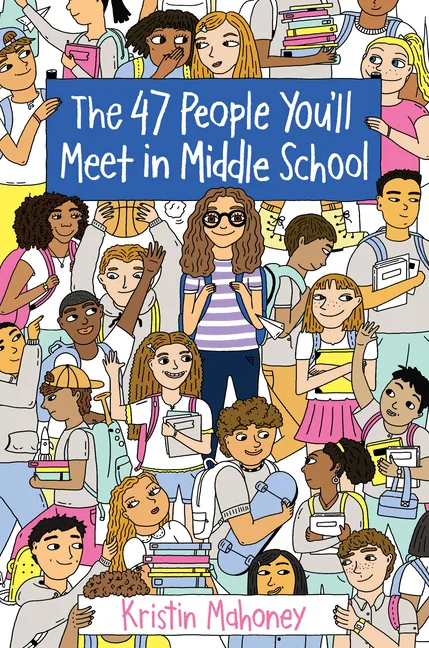 The 47 People You’ll Meet in Middle SchoolKristin Mahoney“The Math Teacher.” “The Assistant Principal.” “The Huggers.” “Your Old Best Friend’s New Best Friend.” “The Teacher Who Thinks She Knows You Well.” Gus describes her first year of middle school for her younger sister, Lou, through encounters with 47 people over the course of a year that sees her move from social insecurity and uncertainty to slowly growing confidence and greater maturity. Gus’s social interactions—for better and worse—play out against a backdrop of changing family dynamics: The girls’ parents recently separated and Gus hates moving back and forth between two homes. Gus gets in trouble a couple times at school—once for something she did, once for something she didn’t do—and she realizes the only time her parents are together is in the principal’s office; she hates that, too. Although likeable, Gus, white, is realistically self-centered, and part of her growth is realizing her sister, too, is hurting. It’s also in her burgeoning confidence as she makes new friends, and as they challenge sexism—in the dated Sadie Hawkins dance, and in the behavior of a boy who gooses female students. The title suggested a lighthearted novel, and there is plenty of humor, but also welcome depth.Fiction for ChildrenLexile Text Measure 740LATOS Book Level 4.7View book details
 Tristan Strong Punches a Hole in the SkyKwame MbaliaTristan is visiting his grandparents in Alabama when he falls into another dimension. In Alke, Brer Rabbit, John Henry, Anansi, and others from African and African American folklore and myth—stories his best friend Eddie, who recently died, loved to collect—are alive. The rise of the Maafa in their bone ships from the bottom of the sea, and the attack of fetterlings—living chains and shackles—is threatening life across Alke. Tristan just wants to get back home, but the hole he made falling through the sky is feeding the evil and he agrees to find Anansi, the weaver, to fix it. With Gum Baby—small of stature but full of confidence, and often hilarious opinions—two young women, Ayanna and Thandiwe, and Chestnutt, a young rabbit, Tristan embarks on a weaving mission of his own: get the various communities in Alke, suspicious of one another, to work together. The threats of the mythical world are aligned 80 Fiction for Children CCBC Choices 2020 with the slave trade history of our own in this complex, satisfying tale driven by entertaining and resilient Black characters and plenty of action, while also exploring Tristan’s grief over the death of his best friend.Fiction for ChildrenLexile Text Measure HL680LATOS Book Level 4.4View book details
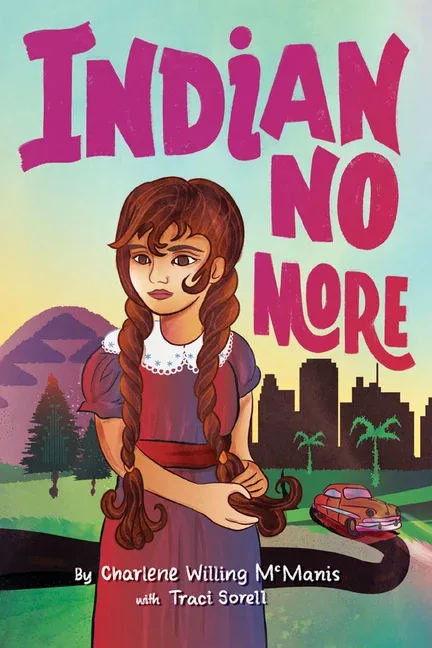 Indian No MoreCharlene Willing McManis, Traci SorellWhen the government strips the Grand Ronde in Oregon, comprised of multiple Northwest Native nations, of their federally recognized Indian status, Regina Petit and her Umpqua family move to Los Angeles. Biracial (Umpqua/ white Portuguese) Regina, 10, and her little sister, Peewee, are soon playing with kids in the neighborhood but find even their closest new friends, African American siblings Keith and Addie, think the Hollywood version of Indians is real. Regina’s frustration sometimes has her wishing she could just go along— why not dress up as Tonto for Halloween? Regina’s optimistic dad has gotten a good job and they are transforming their rundown house into a cozy home, but his positive outlook begins to unravel in the face of discrimination. Traditional tales and family history shared by her grandmother, Chich, help Regina feel comforted. So, too, does realizing that her Indian identity has been shaped by her family and Native community; it doesn’t come from outsiders. Regina’s compelling, engaging voice is honest and childlike in a novel based on author McManis’s family history. Set in the mid–1950s, Regina’s story speaks of resilience, even as the racism faced by Native children and children of color it reveals still resonates today. End matter includes McManis’s childhood photos, and information about government termination of tribes from the 1940s to 1960s (the Grand Ronde were reinstated in 1983), and the Indian Relocation Act of 1956.Fiction for ChildrenLexile Text Measure 720LATOS Book Level 4.4View book details
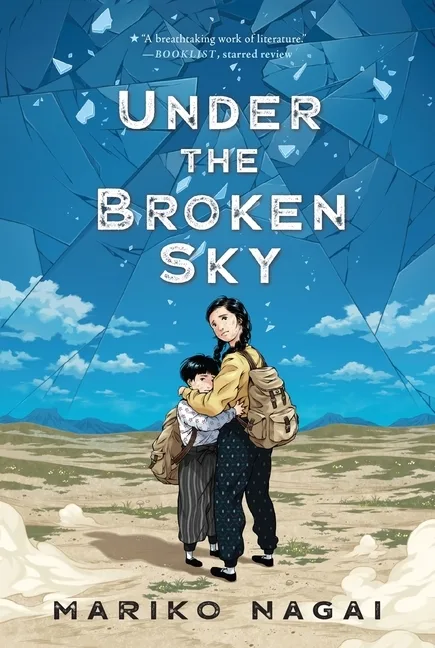 Under the Broken SkyMariko NagaiIn this novel-in-verse, Natsu and her younger sister Asa become refugees after fleeing their Japanese settlement in Japan-occupied Manchuria during the final year of World War II. Loyal to Japan and the Emperor, the community is kept in the dark about Japan’s changing fortunes in the war, but a hint comes when Natsu and Asa’s father and other men are drafted. After their father leaves, their neighbor, “Auntie,” cares for the two girls. Soon forced to flee the settlement, they journey on foot—deadly for many—to reach a train to a city where they take shelter in a school. Physical conditions are poor, and food is scarce. Auntie dies of illness. When Natsu becomes ill herself, she worries about what will happen to Asa if she dies; in desperation, she turns her over to a Russian woman. When Natsu recovers, she is determined to get Asa back so that the two can travel to Japan in search of their father. The story, excruciatingly sad at times, is also full of moments of love, care, and compassion. Natsu’s voice is compelling and distinct; she tells her tale with wonderful and horrible detail. An author’s note elaborates on the Japanese occupation of Manchuria, the displacement of Chinese, and the lives of the Japanese children and women sold or left behind.Fiction for ChildrenLexile Text Measure 870LATOS Book Level 5.5View book details
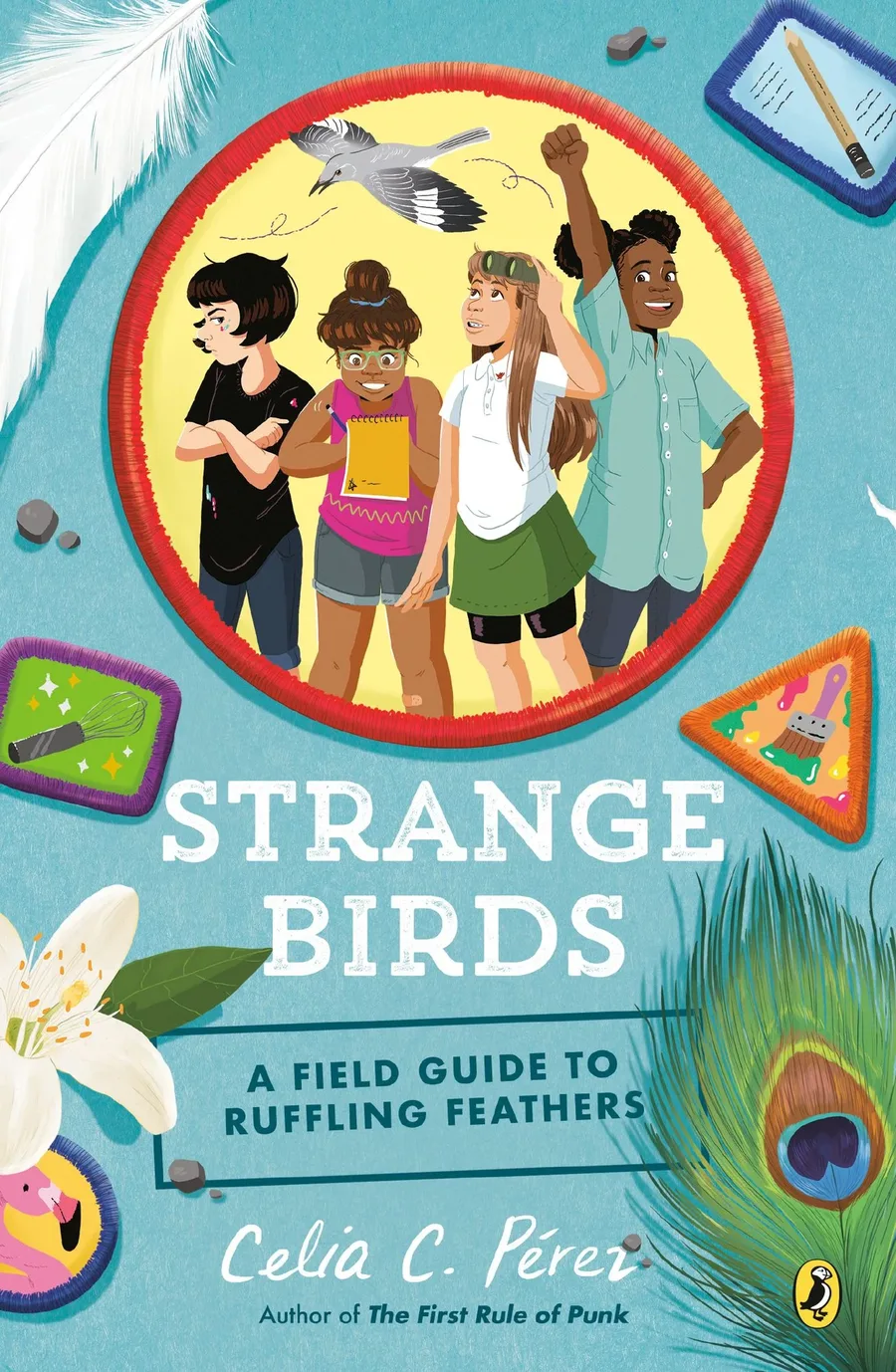 Strange Birds: A Field Guide to Ruffling FeathersCelia C. PérezCat Garcia, Aster Douglas, Ofelia Castillo, and Lane DeSanti find common cause as social activists when they join forces to protest the use of a hat with rare bird feathers in a local girls’ club called the Floras. It’s a cause they take on after lonely, wealthy Lane invites the other three to her tree house and they form a club of their own. Their decision to become social activists grows out of disparate goals. Cuban American Cat is a bird-lover facing family pressure to compete to become Miss Flora; aspiring journalist Ofelia, also Cuban American, is looking for a great story for a New York journalism camp application— assuming her parents will let her go that far from home; Aster is trying to help her grandfather research whether the famous DiSanti Orchards Winter Sun orange was actually brought to Florida by their Bahamian ancestors; and Lane, white, staying with her Florida grandmother following her parents’ divorce, is looking for connection. Exceptional characterizations, shifting points of view and a marvelously drawn Florida setting ground a story that sees the girls forming a bond of friendship that transcends their activism, although these four diverse kids have realistic discussions about both race and class in a book that blends the old-fashioned feel of a caper with contemporary sensibilities.Fiction for ChildrenView book details
 A Good Kind of TroubleLisa Moore RaméeAfrican American Shayla has grown up in the suburbs and went to a predominantly white elementary school. Now in a more diverse middle school, Shayla is hurt and confused to discover some of the other Black kids believe she thinks she’s better than they are. Shayla is also confused and upset after a not guilty verdict is returned in a police shooting of a Black man. Shayla’s older sister Hana, a politically active high school senior, is among those protesting in response. Shayla doesn’t like stirring things up, and she doesn’t like drawing attention to herself, but she’s fueled by the injustice and inspired by Hana to start a black armband movement at school, only to find herself the target of admonishment by the administration. Shayla’s political awakening is set against a deft blend of spot-on middle school social issues, from changing old friendships to trying to forge new ones to first interest in romance, which plays out in believably awkward, sometimes painful ways.Fiction for ChildrenLexile Text Measure 720LATOS Book Level 4.5View book details
 Look Both WaysJason ReynoldsMiddle school life is on display in ten interconnected short stories set in a single neighborhood, on a single day, and zeroing in on the individual lives of young African American adolescents. Each story is set on a different block in the neighborhood, and the kids and their lives are compelling, varied, and vivid; sometimes funny, sometimes poignant, often both. Although the kids are all particular and distinctive, their thoughts and interactions will ring true with most American teens whose lives are mainly focused on themselves and their peers, even as they reflect broader truths about friendship and family and community, and struggles and triumphs small and large. Although each story 82 Fiction for Children CCBC Choices 2020 can stand alone, taken as a whole readers will find recurring themes, images, and characters that also create a cohesive whole in this neighborhood of stories to relish and devour.Fiction for ChildrenLexile Text Measure 750LATOS Book Level 4.8View book details
 Nikki on the LineBarbara Carroll RobertsEighth grader Nikki has played basketball with her best friend, Adria, since they were young. Now, both are on an elite pre-high school league team. Nikki’s a great shooter, but as the team gradually gels under their wonderful coach, one of her teammate’s parents has Nikki doubting her abilities. Nikki’s struggle with her flailing confidence, drastically impacting her play, is one dimension of this story. Her changing friendship with Adria, who is spending a lot of time with new teammate Kate, is another. At school, Nikki is becoming friends with Booker, her table partner in science. Booker is adopted. Nikki’s father was a sperm donor. Neither of them wants to do the science assignment tracing a family genetic trait (an assignment the understanding teacher admits he didn’t think through). After school, Nikki is caring for her high-energy younger brother Sam—canceling his after school care was the only way Nikki’s mom could afford Nikki’s team fees, although Nikki doesn’t want anyone else to know. The various subplots are wonderfully balanced in a novel about identity and friendship, family and change that is also an action-packed sports story in which Nikki, who is white, and her diverse teammates’ passion for the game is palpable.Fiction for ChildrenLexile Text Measure 840LATOS Book Level 5View book details
 We’re Not from HereGeoff RodkeyWhen Lan Mifune’s family and others emerge from bio-suspension after a 20- year journey to the planet Choom, they discover they’re no longer welcome: A leadership change on Choom has put the colonizing Zhuri in control of the government, and Zhuri leaders don’t welcome immigrants. Environmental devastation on earth means going back is not an option. Following negotations, the Zhuri agree to allow one human reproductive unit—Lan’s family—onto the planet as an experiment to see if the species can integrate well. But the Zhuri believe humans are too emotional, and Zhuri leaders distrust emotion (which the Zhuri emit as scent). When they discover this, Lan, despite the pressure on their family to fit in, begins looking for ways to make the Zhuri laugh (a sweet, donut-like smell), while Lan’s new friend Marf, of a species called Ororo, begins distributing bootleg footage of Lan’s sister Ila, once a famous teen singer on earth, performing her biggest hit, rife with deep feeling. Zhuri society has abundant parallels to life in the United States, including school for Lan and Ila and jobs for their parents, along with a political climate taken to a satirical extreme, but it works in the context of this funny, insightful story. The end result is never in doubt, but getting there is a pleasure.Fiction for ChildrenView book details
 Just South of HomeKaren StrongAfrican American Sarah is less than thrilled when her grumpy cousin Janie arrives from Chicago to stay with her and her brother, Ellis, in Warrenville, CCBC Choices 2020 Fiction for Children 83 Georgia. Sarah and Janie do not get along. Janie distracts Sarah from her astrobiology project, complains constantly about the small town, and worst of all, she shoplifts. When Janie takes a necklace from the ruins of a Black church destroyed by the Klan—against Sarah’s warnings—she awakens a haint, the spirit of a boy named Abner. With help from local historian and conjurer Mrs. Whitney, Sarah, Janie, Ellis, and their friend Jasper, all of who are Black, must find a way to put Abner’s spirit to rest. But they’ll have to keep it a secret from their strict grandmother, Mrs. Greene, who would prefer not to dwell on the town’s painful history of racial turmoil. A spooky ghost story and believable cousin drama ramp up the tension in this adventure.Fiction for ChildrenView book details
 All the Greys on Greene StreetLaura TuckerIn 1981, Ollie (Olympia), 11, lives in a SoHo loft with her artist mother and art restorer dad, who has recently gone to France with a woman client, leaving a cryptic note for Ollie behind. Since he left, Ollie’s mom has taken to her bed. It’s not the first time her mom has been depressed, but now Ollie is on her own. She confides in her two best friends and swears them to secrecy, refusing to tell an adult, not even family friend Apollo. Her dad’s note, along with the appearance of a stranger asking questions about a missing piece of art, lead Ollie to wonder if her dad’s disappearance isn’t only about the French woman she and her friends call Vooley Voo. Smart, sensitive Ollie is an artist herself— she does pencil drawings—and her sketches are scattered throughout a story that has satisfying elements of mystery. But it’s the vividly realized setting— pre-gentrified SoHo—captured in myriad details, and the acute exploration of family, friendship, and the impact of a parent’s depression, that make this a book that will resonate deeply. It also offers hope, as Ollie, who is white, comes to understand things can’t go back to the way they once were, but the future is full of promise.Fiction for ChildrenView book details
 The Lost GirlAnne Ursu, illustrated by Erin McGuireIdentical twins Iris and Lark are shocked to discover they won’t be in the same fifth grade classroom. It feels like betrayal when they learn their parents support the split and insist they choose separate after-school activities, too, despite the girls’ protests. As time goes by, Iris grows worried about her sister, who seems to be withdrawing more and more into her mind. She finds unexpected solace at “Treasure Hunters.” Despite the store’s curious, somewhat menacing feel, the owner, Mr. Green, lends Iris a sympathetic ear. Lark, he says, sounds like his sister, Alice, who disappeared years before, although he’s never given up hope of finding her. There is already a hint of magic in this book before the appearance of Mr. Green, from an abundance of crows to things that go missing. Even as that sense of magic—and foreboding—builds, the heart of the story is grounded in the struggles and relationship of the sisters, who are white, and the way girls in general are so often discounted, invisible, used, or ignored. And during a heart-stopping climax, it is many girls working together, refusing to be victimized or discounted, asserting their agency and power, that defeats the danger Mr. Green represents in this memorable, multi-layered tale.Fiction for ChildrenLexile Text Measure 760LATOS Book Level 4.9View book details
 My Fate According to the ButterflyGail D. VillanuevaSab wants to celebrate her 11th birthday with her family at the country resort owned by her father and his partner, Wendell, outside Manila, but things are complicated. Her aspiring journalist sister, Ate Nadine, hasn’t spoken to their father in years, and Sab doesn’t know why. Worse, Sab recently spotted a dreaded black butterfly, which she believes to be a portent of her own death. Determined to enjoy her last days on Earth and to have her sister at her birthday party, Filipino Sab and her white best friend, Pepper, begin to spy on Ate Nadine, hoping to uncover the reason behind the father-daughter rift. As their quest takes them to various locations in Manila, they learn more about Ate Nadine’s desire to expose drug dealing on her college campus, and the often- violent methods of the government and police force to eradicate drug abuse. Sab is bright and observant; her guileless voice grounds this narrative even as she navigates complex political and personal situations. Sab learns difficult truths about her father’s past, but it comes with hope as new honesty brings the promise of healing the rift in her family.Fiction for ChildrenView book details
 StargazingJen WangChinese American Christine’s parents own a duplex, and the new tenants next door are Moon and her single-parent mom. They are also Chinese American, but Moon’s mom is more into New Age beliefs than traditional culture. Christine loves hanging out with Moon, who has a lot more freedom than she does. Moon is free-spirited and creative, although her imagination sometimes seems over the top. The other kids at school are initially leery of her—there are rumors she had to leave her last school because of fighting—but Moon makes friends easily and soon Christine finds herself a little jealous, and she betrays Moon. Moon gets angry, the first of many times, and then the fights with other kids start. Her behavior is perplexing to Christine until a sudden, surprising revelation near story’s end offers an explanation for some of Moon’s behavior, while Moon’s free-spirit and creativity are simply part of who she is. The author/ illustrator superbly explores the complexities of friendship in middle childhood. The characters are distinct individuals both visually and textually. The book concludes with an author’s note about the autobiographical parts of the story.Fiction for ChildrenLexile Text Measure GN510LATOS Book Level 3.4View book details
 Other Words for HomeJasmine WargaWith tensions mounting in Syria, Jude and her pregnant mother leave the country to stay with her maternal uncle, aunt, and cousin in Cincinnati, Ohio, leaving behind her father, college-age brother, and home. Jude has to adjust to American life, culture, and middle school, not to mention a self-centered cousin who has little initial interest in interacting with her—although they do watch TV together. She remains trusting, which makes it all the more painful when she encounters Islamophophia after she begins wearing hijab and even strangers can see that she’s Muslim. Still, there are many good things happening, from getting to know her uncle and aunt and kids in her ELL class to the CCBC Choices 2020 Fiction for Children 85 pending arrival of a baby sister. Even her cousin slowly becomes a friend. But she’s worried about her father and brother—he’s involved in protests—and best friend back home, and it seems no one at her school really understands or cares about what’s happening in Syria. This verse novel is a quick and easy read in Jude’s open, observant, engaging voice. The story, which begins just prior to the start of the Syrian Civil War, is global in scope, while personal in scale, and quietly triumphant.Fiction for ChildrenLexile Text Measure 930LATOS Book Level 5.3View book details
 Some Places More Than OthersRenée WatsonA visit to New York City is exactly what Amara wanted for her 12th birthday. She’s seeing Harlem, where her dad grew up; staying with Grandpa Earl; and getting to know her cousins, who are showing her around—although not always willingly. Her mom, eight months pregnant and unable to make the trip from their home in Beaverton, Oregon, has also charged Amara with getting Grandpa Earl and Amara’s dad talking—there’s been a rift between them for 12 years. The discovery that her dad, working his dream job for Nike, was a bookish kid like Amara, and used to write and perform poetry, while Grandpa Earl, a former basketball coach, pushed him to be more athletic, makes Amara think about her own relationship with her mom—it sometimes feels like they have so little in common. Seeing the same is true of her dad and grandpa is both unsettling and reassuring, especially after the distance between the two finally begins to close. As African American Amara explores both family history and the history of Harlem—a vibrantly realized setting in the novel—she discovers a lasting legacy of love.Fiction for ChildrenLexile Text Measure 750LATOS Book Level 4.6View book details
 Spy RunnerEugene YelchinLiving in Tucson in 1953 at the height of the Red Scare, 12-year-old Jake is just as caught up in the anti-Communist fervor as everyone around him. Jake, who is white, doesn’t remember his dad, who never came home from World War II and is believed to be in a Russian prison camp. When Jake’s mom takes in a Russian boarder, Shubin, Jake’s sure Shubin must be a Russian spy. It doesn’t help that Jake and his best friend are obsessed with a comic called Spy Runner; they believe it’s an instruction manual for how to expose Russian spies. It also doesn’t help that after Shubin’s arrival, Jake keeps seeing a mysterious man with gold teeth, is followed by a black car, and is even visited by two FBI agents who give him their cards. Determined to expose Shubin, Jake engages in a series of increasingly risky acts in this over-the-top novel with a comic book sensibility and flair. Occasional grainy back-and-white illustrations reminiscent of spy photographs, and essential to the plot, appear throughout an action-packed story full of unbelievable tasks of daring—a comic book without comics—that also offers insight into paranoia and false patriotism.Fiction for ChildrenLexile Text Measure 900LATOS Book Level 5.7View book details
Fiction for Young Adults
32 selections
 Love from A to ZS. K. AliSuspended from school for challenging a teacher’s Islamophobia, West Indian/ Pakistani American Zayneb spends an extended break in Doha, Qatar, with her aunt. Adam (Chinese/white) has returned to Doha for spring break from college in London. When they meet, Adam is immediately drawn to Zayneb. Not only are they both Muslim, they also both keep “Marvels and Oddities” journals, named for the same piece of Islamic art that inspired them, in which they record the ups and downs of their days. As they spend time together, the two slowly share their current struggles. Zayneb and her friends back home are trying to build a case against their teacher for his Islamophobic online activity. She’s also learning to embrace her identity as an activist, dealing with almost daily Islamophobia due to her hijab, and grieving her daadi, who was killed during a U. S. drone strike in Pakistan. Adam, recently diagnosed with MS, has dropped out of college without telling his father, wanting to focus on his art instead. Although they’re falling in love, Adam and Zayneb also struggle realistically to communicate and to support one another’s choices and reactions to events in their lives. This captivating and empowering novel offers a refreshing portrayal of two distinct teens whose approach to romance and dating is shaped by their strongly held Muslim beliefs.Fiction for Young AdultsLexile Text Measure HL740LATOS Book Level 4.7View book details
 Lovely WarJulie BerryThe fascination of Greek gods and goddesses with the daily lives of mortals forms the premise of a sweeping story in which they watch and meddle in the lives of two pairs of young lovers during World War II. Hazel, white, is a witty pianist from London who volunteers to entertain the troops. James, also white, is the sweet, inexperienced, lovesick British private who becomes an expert sharpshooter. Colette is a white Belgian singer with a tragic past. Aubrey is a gregarious African American soldier/jazz musician who’s enlisted to play with the Army band, and ends up with the Harlem Hellfighters. Aphrodite (goddess of love), Ares (god of war), Apollo (god of poetry, music and plague), and Hades (god of death and the underworld) each narrate the part of the story about these four humans in which they get involved as they manipulate their lives. The four human storylines are all individually developed and then wonderfully intertwined as the characters meet and the two love stories emerge, with the narration by the Greek gods adding a layer of complexity and humor (e.g., Aphrodite’s clever quips about the lovers’ techniques of wooing). With a riveting, dramatic plot that is moving and funny, sad and beautiful, and includes vivid war scenes, this brilliant book will satisfy older teens who enjoy meaty stories, and/or Greek epics with a more contemporary setting.Fiction for Young AdultsLexile Text Measure HL650LATOS Book Level 4.7View book details
 The Queen of NothingHolly BlackBlack, Holly. The Wicked King. (The Folk of the Air, #2) Little, Brown, 2019. 326 pages (978–0–316-31035–2) The second and third volumes of the Folk of the Air series satisfyingly complete this enchanting trilogy mired in the complex politics as imagined here in the world of faerie. In The Wicked King, mortal Jude struggles with her new, covert control of King Cardan—and thus the land of Faerie itself—while he does his best to subvert her power even as toxic attraction continues to sizzle between them. Meanwhile, new powers begin to vie for the throne, aided by a traitor who will betray Jude. When Queen of Nothing opens, Jude, who is white, is now queen and has been banished by Cardan to the mortal world. Disguised as her twin, Taryn, she reenters Faerie to find that war is on the horizon and a curse is about to complicate things further. It’s difficult to say which aspect of the series is strongest: the stunning, intricate world-building; the complex relationships among the characters; or the riveting plotting. Perhaps above all, Jude herself deserves praise. Brilliant, strong-willed, and determined, she is distinguished from the fae by much more than her mortality.Fiction for Young AdultsLexile Text Measure HL750LATOS Book Level 5.3View book details
 The Revolution of Birdie RandolphBrandy ColbertBirdie sometimes resents her mom’s overprotectiveness, which is why she hasn’t told her parents about Booker, the boy she really likes. Her parents have high expectations and she’s worried that Booker’s stint in juvie would be an issue, despite the mitigating circumstances. Birdie’s aunt Carlene, on the other hand, is easy to get along with. Clean and sober and working toward getting her cosmetology license after battling addiction for years, Carlene is far less rigid and judgmental than her sister, Birdie’s mom. Even Birdie’s doctor dad sometimes seems like he wants to cut both Birdie and Carlene some slack. Birdie knows her mom grew up taking care of Carlene, and has worked hard to move beyond her own self-described “ghetto” past to own her own salon. But that knowledge isn’t enough to ease the sense of betrayal when Birdie makes a discovery that completely upends her understanding of family. Spending time with the likable, acutely drawn characters this novel about an upper middle class African American teen in Chicago is an absolute pleasure. Birdie and Booker’s respectful relationship, and the novel’s open, non-punitive take on teens and sex (including discussion about birth control), is one of many things to appreciate.Fiction for Young AdultsView book details
 A Story about Cancer (with a Happy Ending)India DesjardinsAuthor Desjardins once met a ten-year-old leukemia patient who was tired of stories about cancer in which the protagonist dies; the girl asked for one that included humor, romance, and a happy ending. Desjardin’s narrator is a white teenager diagnosed five years before. About to learn if she’s in remission, she 88 Fiction for Young Adults CCBC Choices 2020 reflects on her experience across her treatment. “I wanted everyone to treat me like a normal person. Not feel sorry for me, or tell me how strong I was, or that I could beat this disease.” Her friend Maxine did die, “and definitely not because she wasn’t strong enough or didn’t fight hard enough.” The narrative explores the impact of being sick on her and her parents, including moments that are funny and moments that reveal the deep emotional toll; her friendship with Maxine, whom she met in the hospital; and her relationship with Victor, a boy she met at a high school party. Victor once came with her to the hospital when she got sick at school. “We laugh about it now because he tells everybody (except my parents, of course) that the first time he ever saw my butt was through the crack of a hospital nightgown!” The voice, and the art, mostly somber-toned but with a lightness of form, are affecting, while the title makes clear the ending is never in doubt.Fiction for Young AdultsView book details
 Someday We Will FlyRachel DeWoskinJewish Lillia is ten when she, her father, and her developmentally disabled younger sister flee Poland in 1940, taking a ship to the relative safety of Shanghai. Lillia’s mother is missing after a raid on the circus where her parents worked as acrobats and they were forced to leave the country without her. In Shanghai, Lillia and her family eke out an existence, living in squalid conditions among other Jewish refugees. Lillia befriends Wei, a Chinese boy who cleans the school she attends, as well as several Jewish girls from around the world, most of whom enjoy greater wealth, safety, and security than she. The war progresses, and with Japan occupying China, food and resources are scarcer than ever. Without her father’s knowledge, Lillia begins dancing at a night club, earning money for their family. All the while she holds desperately to the hope that her mother is alive and will join them soon. A story that navigates both implied and expressed trauma and threat is packed with vivid details of time, people, and place. This unusual World War II novel also employs acrobatics and puppetry as part of the plot to examine how creativity is a sustaining force and source of hope.Fiction for Young AdultsView book details
 StepsisterJennifer DonnellyAlthough they were once all close, Isabelle de la Paumé and her sister Tavi have been unkind, even cruel to their stepsister Ella in recent years, but life has not been kind to them, either. They are the “ugly” stepsisters whose interests— military history for Isabelle, math and science for Tavi—and bold, stubborn natures have seen them sorely criticized. Now Ella is off to a happily-ever-after life with the Prince. As for Isabelle? While her past is full of loss and regret, her future has already been determined by the three Fates, until Chance bets them he can change it for the better. As Chance and one of the Fates maneuver for control of Isabelle’s future, Isabelle, presumably white, has an encounter with the faerie queen Tanaqill (aka Ella’s fairy godmother), who gives her the means to change her life on her own by rediscovering what she truly loves. This sideways, feminist retelling of Cinderella follow’s Isabelle’s quest, which is as much emotional journey as rousing adventure involving her lost love for a horse, CCBC Choices 2020 Fiction for Young Adults 89 a young man, and her stepsister Ella, not to mention her passion and skill as a strategist and fighter.Fiction for Young AdultsLexile Text Measure HL640LATOS Book Level 4.7View book details
 The Last True Poets of the SeaJulia DrakeViolet is spending the summer with her Uncle Toby in Lyric, Maine, following her younger brother Sam’s suicide attempt. She and Sam, who’s lived with mental health issues much of his life, used to be close, and Violet’s guilt leaves her almost mute every time she tries to write him. In Lyric, Violet gets to know Orion, whose best friend Liz is a local history buff. Lyric’s origin story revolves around Violet’s great great great grandparents, Fidelia and Ransome, who fell in love following a shipwreck in which Fidelia was the sole survivor. Liz suspects there’s more than is known to their tale and Violet agrees to search for information in her uncle’s house. Violet discovers letters from Fidelia making clear Violet and Sam aren’t the first in their family to deal with depression, and Fidelia’s forthright acknowledgment of the struggle is reassuring. There are also old photos showing Fidelia dressed in men’s clothing. Violet shares some of what she finds with Liz while also trying to determine, at Orion’s request, if Liz’s feelings for Orion mirror his for her, a task made more difficult by Violet’s attraction to both of them, feelings she senses are mutual. A nuanced story that recasts Shakespeare’s Twelfth Night features characters who are deeply complicated, and incredibly kind and tender as they struggle to be honest with themselves and one another. Violet, who is white, is a magnetizing force at story’s center.Fiction for Young AdultsView book details
 Voices: The Final Hours of Joan of ArcDavid Elliott, map by Cara LlewelynBrief statements from Joan of Arc during her Trial of Condemnation, and from people who knew her and spoke at the Trial of Nullification 24 years after her death, are part of a compelling narrative that both recounts and imagines Joan’s final days, and revisits her exploits to vanquish the English claim on France early in the 15th century. Here Joan’s quest, guided by spiritual visions, is condemned by hatred. Those in power—especially from the Church—revile her for daring to dress and act like a man. A variety of poetic forms, including poems in verse structures that Joan of Arc might have heard during her lifetime, move back and forth among the voices of various individuals both real (e.g., Charles VII) and religious (Saint Michael); inanimate objects; animals; ideas (Victory); Joan herself as she awaits her death; and the Fire—waiting for her like an eager, dangerous would-be lover, a metaphor that plays out in a provocative and disturbing final poem that underscores the violence of misogyny. Joan approached her quest with confidence, and occasional uncertainty when her visions ceased; here she also is shown to feel a strong, steady sense of comfort, of coming home to herself, when presenting as a man, adding another fascinating dimension to this striking, discussible work of historical fiction that concludes with brief notes on poetic forms.Fiction for Young AdultsView book details
 PetAkwaeke EmeziIn the utopian city of Lucille, monsters—people who committed crimes, including those whose crimes had gone unpunished—were banished by angels years ago. In Lucille, where religion is a thing of the past, “angels” are people. It was the angels who banned weapons, did the hard work of creating a safe, peaceful community, and saw that justice was served. Jam, a Black, transgender, selectively nonverbal teenager, has grown up without monsters. But when she accidentally drips blood on her mother’s painting of a horned, fur- and feather- covered creature, it comes to frightening, three-dimensional life. Pet, as it wants to be known, announces that it has come to Jam’s world to hunt a monster, a person who has committed an unspeakable crime and has been living, unnoticed, amongst the people of Lucille—living, in fact, in Jam’s best friend’s home. Jam and Pet’s investigation inspires thoughtful discussion of complex questions: What actions should be taken when a “monster” is discovered? Is there such a thing as a “good” or “evil” person? Although at times predictable, this novel brilliantly addresses the unfortunate reality that people tend to look away from difficult or painful truths, even when they are right in front of their eyes.Fiction for Young AdultsLexile Text Measure 820LATOS Book Level 5.7View book details
 Amelia Westlake Was Never HereErin GoughTired of the sexual harassment perpetrated by the swim coach at her private girls’ academy in Sydney, Amelia Westlake publishes a cartoon calling him out in the school paper. Encouraged by the approval of her fellow students, her acts of resistance (aka “pranks”) continue, and soon school administration is bent on stopping her. The problem is that Amelia Westlake does not exist. She’s the handiwork of Harriet and Will, two polar opposites who reluctantly unite to call out sexism and hypocrisy at Rosemead under the guise of a made-up student. Harriet, a straight-laced overachiever, is an asset to the school; Will, who loves to challenge authority, is more of a liability. Later joined by Natasha Nguyen, Will’s friend and editor of the school paper, the three girls bring light to other problems at Rosemead, including homophobia and racism. Harriet and Will, who are both gay and dancing around an unacknowledged mutual crush, experience homophobia at school themselves; Vietnamese Natasha is the one who must do the work of expanding Harriet’s and Will’s narrow, white perspectives. Lighthearted and funny, this novel uses rom-com conventions to explore surprisingly meaty issues.Fiction for Young AdultsView book details
 DigRuth Hatfield, illustrated by Sophia WattsIn this taut, mesmerizing work, the Shoveler’s mom is adept at survival but has never told him anything about his dad. CanIHelpYou? rebels against her wealthy family with a drive-thru job at Arby’s; she also runs a thriving business selling weed. CanIHelpYou?, whose best friend, Ian, is Black, is sure she’s nothing like her unapologetically racist mother. Loretta lives in a trailer with her mom and abusive father. She copes by seeing herself as Ringmaster of a flea circus. While staying with his emotionally distant grandparents, Malcolm worries about his terminally ill, single-parent dad, and thinks about Eleanor, a local girl he met in CCBC Choices 2020 Fiction for Young Adults 91 Jamaica. Marla and Gottfried are having their house painted and hosting their grandson, unaware of the ways their ideas, and actions in the past have shaped generations. Teenage Jake seems to idolize his older brother, Bill. Jake is terrified of Bill. The Freak flickers in and out of all their lives as connections among these characters gradually unfold into a shape of certainty. Grounded in the real world in spite of astonishing elements, the story fearlessly navigates difficult terrain as the mostly white teens confront painful truths about themselves, their families, and the larger world, from racism to misogyny and violence. Their honesty and resilience makes it more than bearable, it offers hope.Fiction for Young AdultsView book details
 Butterfly YellowThanhhà LạiHang, 18, was able to get her little brother, Linh, on one of the last flights out of Viet Nam when U. S. forces fled six years before. Now she’s made it to the United States, too, driven by guilt over abandoning Linh and determined to find him. LeeRoy, 18, is a white, wealthy kid defying all family expectations with his determination to become a cowboy; his parents have given him a red pickup truck and the summer to get the crazy idea out of his system. Their paths meet at a Texas gas station, where a reluctant LeeRoy gives stranded Hang a ride. Hang finds her brother living on a ranch, but Linh, now David, has no memories of Hang, or Viet Nam, and doesn’t welcome Hang’s intrusion into his life. Hang and LeeRoy, who has a hard time saying no, get work on a neighboring ranch, where patient Hang is determined to remain in close proximity to Linh/David while waiting for him to recall some piece of their shared past. As the strangers around her become friends, Hang begins to feel safe enough for memories of her traumatic, harrowing refugee journey to surface, while LeeRoy is stripped of all pretense during a summer of humbling, muscle-building work. There is so much kindness in the characters, and at the heart of this beautiful story full of so much pain and poignancy but also so much hope.Fiction for Young AdultsLexile Text Measure HL810LATOS Book Level 5.4View book details
 You Must Not MissKatrina LenoMagpie (Margaret) Lewis’s family life has fallen apart since she caught her dad in bed with her mom’s sister six months ago. She wants nothing to do with her dad, her mom’s started drinking again, and her older sister has taken off. Her best friend has abandoned her, too, although that’s because of something that happened at Allison’s boyfriend’s party, which Magpie can’t fully recall. Magpie, who lives in a town called Farther, copes by writing about an imaginary, perfect place she calls Near. When Magpie, white, discovers a portal to Near and realizes she can not only go there, but has complete control over what happens there, it becomes the outlet for her anger and a place where she can exact revenge. With scenes from the party months before coming into full relief, Magpie remembers Allison’s boyfriend, Brandon, sexually assaulting her. But she doesn’t stop with getting back at Brandon. Not even Hither, a being from Near who acts as her conscience, can convince Magpie to reconsider as she sets out to punish anyone who’s hurt her, or, as things progress, dared to care. At the heart of this unflinching, unsettling novel navigating moral questions is a young 92 Fiction for Young Adults CCBC Choices 2020 woman whose pain is very real in a work open to interpretation, and ripe for discussion.Fiction for Young AdultsView book details
 Light It UpKekla MagoonA white police officer has just shot and killed 13-year-old Shae Tatum, an unarmed African American girl. Over the next few weeks, the aftermath of this tragedy is chronicled through a variety of perspectives, including Shae’s best friends, Tina (younger sister of Tariq, murder victim in Magoon’s earlier How It Went Down) and Sheila; community activists Kimberly and Zeke; gang leader Brick, Sheila’s protective big brother; Tyrell—Tariq’s best friend, now away at college and trying to keep it all at a distance; DeVante—another Black student in Tyrell’s dorm; Robb—DeVante’s white suite mate, who thinks he’s woke; Steve Conner, a Black man assigned the case when the police hire his PR firm; the young daughter of the white officer; and others. Among the many compelling elements of this narrative are discussions in the news of events taking place in the neighborhood in the aftermath of the shooting, offering keen insights into how media coverage often frames the activism and outcry of Black communities in response to racism and police violence as “rioting” and “violent,” as well as how activists must navigate myriad concerns in an effort to keep people safe. These and other compelling issues are examined through the lives of individual characters trying to make sense of what’s happening, and facing personal decisions about whether, and how, they will respond.Fiction for Young AdultsView book details
 HeroineMindy McGinnisMickey, a talented catcher, finds her softball dreams derailed after a car accident puts her and her best friend, pitcher Carolina, in the hospital months before their senior season. When the OxyContin Mickey is prescribed runs out sooner than it should, she stumbles upon another source: Edith, who snags Oxy from the senior citizens she drives to doctors’ appointments. At Edith’s house, Mickey befriends Jodie, a brilliant high school student who uses Oxy recreationally. When Mickey and Jodie, both white, “graduate” to heroin, Mickey struggles to keep it a secret from her family, even as she steals from her mom and stepmom to buy the drugs, and even as her performance behind the plate slides. There is never a moment in this harrowing but compassionate account that feels either unbelievable or melodramatic as it illuminates the terrifying ease with which anyone can fall victim to opioid addiction.Fiction for Young AdultsView book details
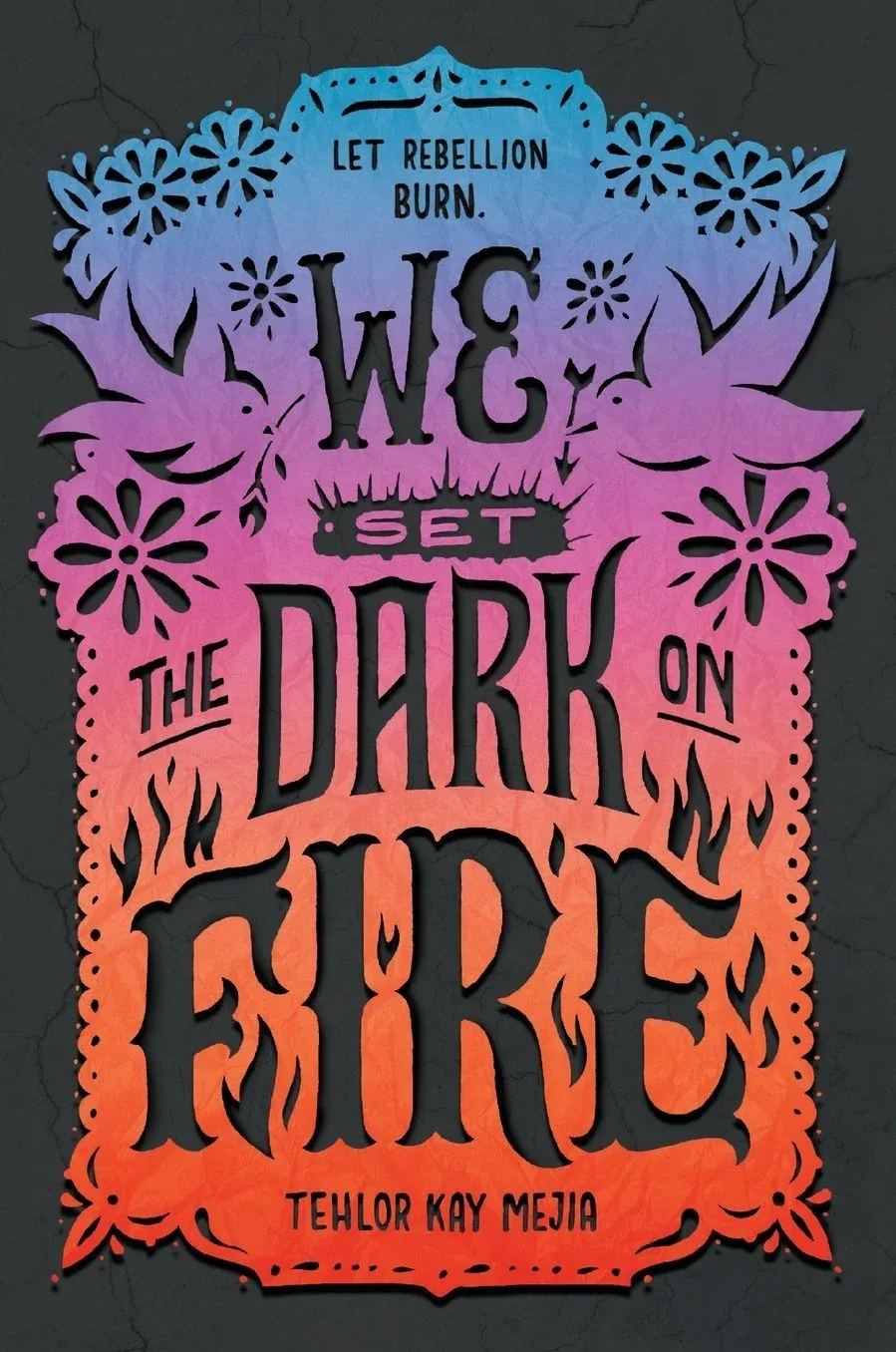 We Set the Dark on FireTehlor Kay MejiaDaniela and her family illegally crossed the border into Medio when she was small. At 12, with forged citizenship papers, she was accepted into the Medio School for Girls, where students are groomed for one of two roles: Primera or Segunda—first or second wife—to the sons of wealthy, politically connected families, roles with origins in their culture’s creation story. Primeras are intellectual confidantes who support their husband’s career; Segundas emotional CCBC Choices 2020 Fiction for Young Adults 93 and romantic companions. Now graduating, Dani has been chosen as Primera to Meteo Garcia, son in a powerful family with Presidential aspirations for him. Dani’s arch enemy at school, Carmen, has been chosen as Mateo’s Segunda. La Voz, a resistance group protesting border regulations and immigrant crackdowns, recently provided Dani with better forged papers, but at a price: They want her to spy for them in Mateo’s household. With Mateo cold and threatening, Carmen unexpectedly evolves into a friend, perhaps even someone Dani can trust. When Dani discovers Mateo’s role in increased hostilities against protesters, she struggles to balance protecting her secret against acting as her conscience dictates. She’s also navigating feelings for Carmen that are turning from a tentative bond of trust to strong romantic attraction. Political intrigue set in an unspecified Latinx-inspired culture merges with budding romance in a tightly paced plot that races to its cliff-hanger finale and has strong parallels to tensions in our world today.Fiction for Young AdultsView book details
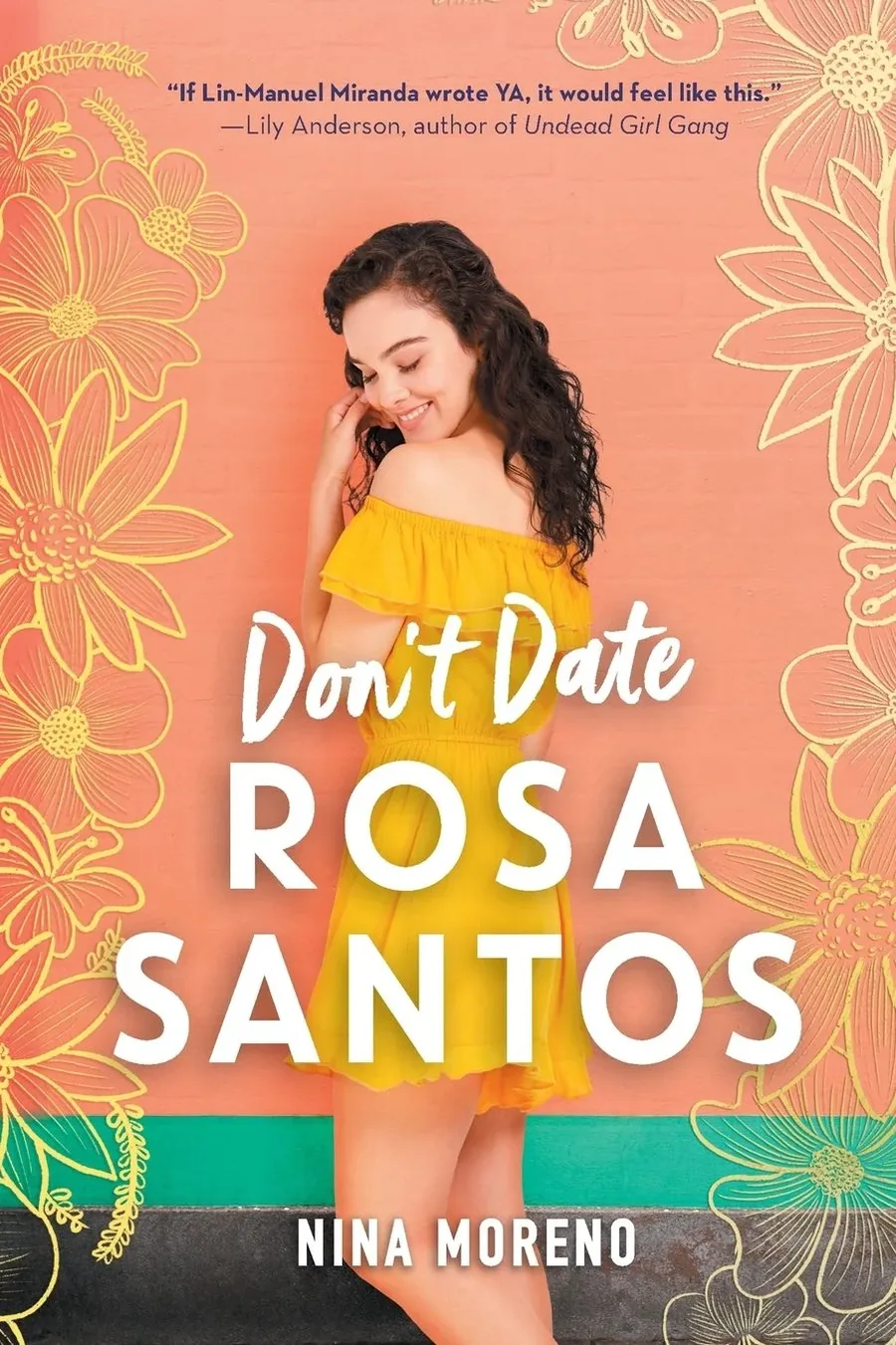 Don’t Date Rosa SantosNina MorenoHigh school senior Rosa Santos’s mother was born at sea during her grandparent’s escape from Cuba. Rosa’s grandfather drowned on that journey. Rosa’s own father died at sea before she was born. Rosa, who’s been shaped by both the love and the pain of her grandmother and mother, avoids the water, believing her family has a curse. Still, she longs to visit Cuba—stories of the island where her family came from filled her childhood and occupy her imagination. But she dreads telling her grandmother, who also can’t forget why they fled. When her town’s annual spring festival is threatened by development, Rosa and others in their diverse, predominantly Latinx community throw themselves into saving it. Among them is Alex, a young man Rosa finds more appealing than she wants to admit. But Alex is also a sailor. There’s a satisfying romance in this remarkable debut novel, but it’s the complex, heartfelt, nuanced exploration of mothers and daughters and grandmothers, immigration and exile, trauma and healing, family and community that makes it hard to put down. Both aching and whimsical, the writing is fresh, often funny, and always observant.Fiction for Young AdultsView book details
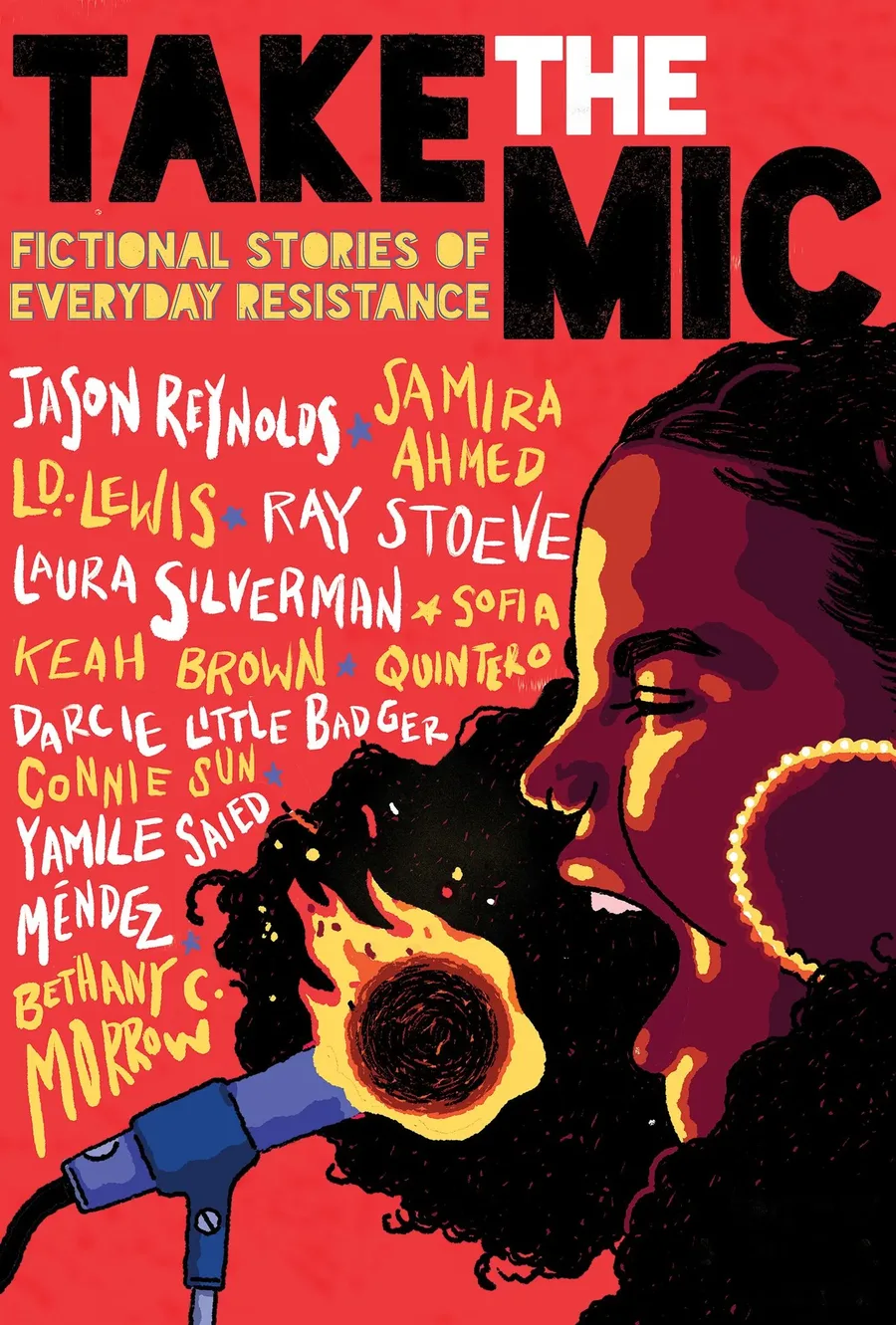 , Take the Mic: Fictional Stories of Everyday ResistanceBethany C. MorrowThe theme of resistance as explored here in four poems, one comic, and eight short stories illuminates how racism, sexism, Islamophobia, and other assaults are encountered in daily life. What can you do when a classmate you thought was a friend sexually harasses you? (“Grace” by Darcie Little Badger) What do you do when the white boy you really like masterminds a “promposal” that makes clear he knows nothing about the racism faced by you and others who are Black (“As You Were” by Bethany Morrow). Resistance as portrayed here, in these and other works, including “Are You the Good Kind of Muslim?” by Samira Ahmed, “Real Ones” by Sofia Quintero, “Parker Outside the Box” by Ray Stoeve, and others, is an act of choice, of necessity, of transformation. It is also an act of quiet courage demanded when the damage being done is inflicted 94 Fiction for Young Adults CCBC Choices 2020 by friends, neighbors, and classmates, not strangers, or the government. A collection that is no doubt relatable to many teens is also incredibly affirming, while the strength of its teen characters is inspiring.Fiction for Young AdultsView book details
 Like a Love StoryAbdi NazemianQueer pride, solidarity, and the unifying power of Madonna offer hope in a heartbreaking story that sheds light on the immense suffering of a generation of gay men. In 1989, three teens navigate the AIDS crisis in New York City. Iranian immigrant Reza is a closeted gay teen terrified of contracting HIV. Judy, an aspiring clothing designer, is an ally to the queer community. Her beloved uncle Stephen has AIDS; he’s already lost many friends and a partner to it. Stephen is a father figure to Judy’s best friend, Art, who is following in Stephen’s footsteps as an out and proud activist for ACT UP. When Judy and Art (both white), meet Reza, they befriend him and both begin crushing on him. In a decision that can only lead to heartache for all involved, Reza starts dating Judy despite his attraction to Art. In this novel queer history is brought to the forefront as Reza and Art grow into their community, take up the mantle in the fight against AIDS, and refuse to let the memories of their predecessors die.Fiction for Young AdultsView book details
 When the Ground Is HardMalla NunnIn 1965, 16-year-old Adele attends a boarding school for mixed-race students in the British protectorate of Swaziland. Her white father lives with his white wife and children, but calls and visits and pays for Adele’s schooling. Her mother, like Adele herself, is biracial (Black/white). At Adele’s school, class is the big divider: Students whose parents are able to pay tuition enjoy better treatment from staff and teachers, and are the most popular. When Adele is booted from her friend group after a new, wealthy student arrives, she is forced to room with Lottie, who is part Zulu and very poor. Adele despises Lottie’s poor manners, outspokenness, and penchant for fighting anyone who snubs her. But Adele grows to appreciate Lottie’s fearlessness. She also admires Lottie’s friendship with Darnell, who has a developmental disability, and whose disappearance becomes increasingly more central as the plot progresses. So, too, does Adele’s desire to learn more about her mother’s decision to leave the nearby village she grew up in. Although the complexities of this story are embedded in a specific time and place, the social dynamics are universal, as is Adele’s curiosity about her family’s past, and longing for reassurance she is loved. At times shocking in its depictions of racism and ableism, Adele’s story is compelling, and ultimately empowering.Fiction for Young AdultsView book details
 BloomKevin Panetta, illustrated by Savanna GanucheauAfter graduating high school, all Ari wants is to leave his small, coastal hometown and head to Baltimore with his bandmates so that they can pursue a career in music. But Ari’s family’s Greek bakery is struggling, and his strict but loving dad insists Ari stay to help. Angry but undaunted, Ari begins searching for his CCBC Choices 2020 Fiction for Young Adults 95 replacement. They hire Hector, a young Samoan American who is spending the summer in town to deal with his recently deceased grandmother’s belongings. Hector is easygoing, friendly, and passionate about baking. Needing little instruction, he quickly makes himself right at home in the bakery, although he struggles to fit in with Ari’s group of friends. Initially self-absorbed and sullen, Ari slowly gains perspective throughout the summer as he works hard in the bakery, gains new respect for his parents, learns to distance himself from a toxic person in his life, and spends time with Hector. A sweet love story between the two unfolds in a graphic novel that provides a realistic portrayal of working teens.Fiction for Young AdultsView book details
 Patron Saints of NothingRandy RibayJay Reguero came from the Philippines to the United States with his Filipino dad and American white mom as a baby. He hasn’t been back since he was 10, but has maintained a friendship with his cousin Jun across the years. When he learns Jun has died, Jay feels equal parts grief, guilt—he hadn’t written Jun much recently—and frustration: No one will tell him what happened. Jay wants answers, especially after he receives an anonymous message suggesting Jun’s death was connected to Philippine President Duterte’s violent war on drugs. Jay visits the Philippines during spring break of his senior year determined to learn what happened, although he tells his parents he simply wants to support Grace, Jun’s teenage sister. Jay’s search for truth is complicated not only by the silence he is unable to breach in his police officer uncle’s home, but also by what he learns about Jun. Nothing Jay discovers changes his understanding of Jun as smart, sensitive, compassionate, and committed to justice. But in tracing Jun’s final months, talking to family members, and working with journalism student Mia, Jay begins to see the complexities and contradictions in both his homeland and family. More than one silence is finally breached in a riveting novel that sees Jay deepening his understanding of himself, recognizing his privilege, and strengthening his connections to the Philippines and to the people he loves.Fiction for Young AdultsLexile Text Measure 840LATOS Book Level 5.4View book details
 Deposing NathanZack SmedleyA few weeks ago, Nate beat his former best friend, Cam, half to death; in retaliation, Cam stabbed Nate in the stomach with a shard of broken pottery. How did it come to this? In his deposition, Nate tells the story of their tumultuous relationship. Quiet, rule-following Nate, who lives with his often- working father and controlling Aunt Lori, is drawn to Cam’s exuberance and intelligence. When their relationship turns physical, Cam decides to come out as bisexual, while Nate struggles to integrate his new knowledge of himself with his Catholic faith and self-image. But as it turns out, there are more forces than just internalized biphobia working against them, and with Cam’s urging, Nate’s testimony begins to shed a light on family secrets that have remained hidden for far too long. Tense, compelling, and heartrending, this novel featuring two white teens puts a whole new twist on the classic coming-out tale.Fiction for Young AdultsView book details
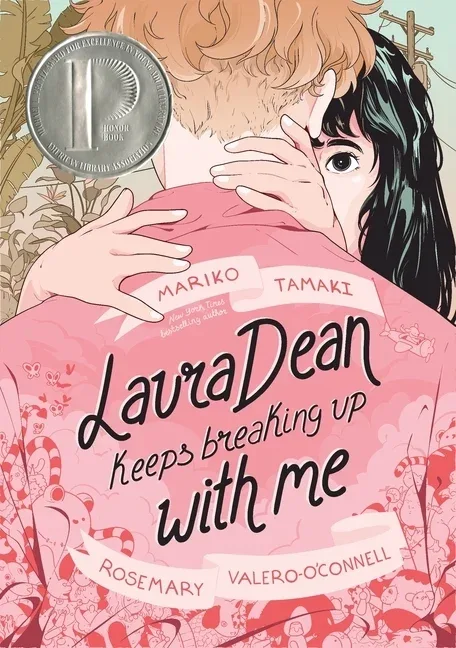 Laura Dean Keeps Breaking Up with MeMariko Tamaki, illustrated by Rosemary Valero-O’ConnellFreddy (Frederica) is totally on the hook for Laura Dean. They’re dating— sort of—but Laura kisses other girls and only pays attention to Freddy when it suits Laura. Biracial (Asian/white) Freddy gets upset, cries to her friends, and then inevitably goes back to Laura when Laura wants her attention. It’s a miserable cycle, and it’s affecting Freddy’s friendships, especially with her best friend Doodle. In fact, Freddy is so wrapped up in her Laura drama that she’s oblivious to the fact that Doodle is going through a crisis—she’s pregnant and could use Freddy’s support. Acutely accurate portrayals propel a graphic novel in which Freddy finally realizes that she—and her best friend—deserve more. Freddy’s self-absorption is so believable, as are all of the finely drawn characters and relationships—for better and for worse. The art is done primarily in black- and-white with light pink as an accent throughout.Fiction for Young AdultsLexile Text Measure HL230LATOS Book Level 2.5View book details
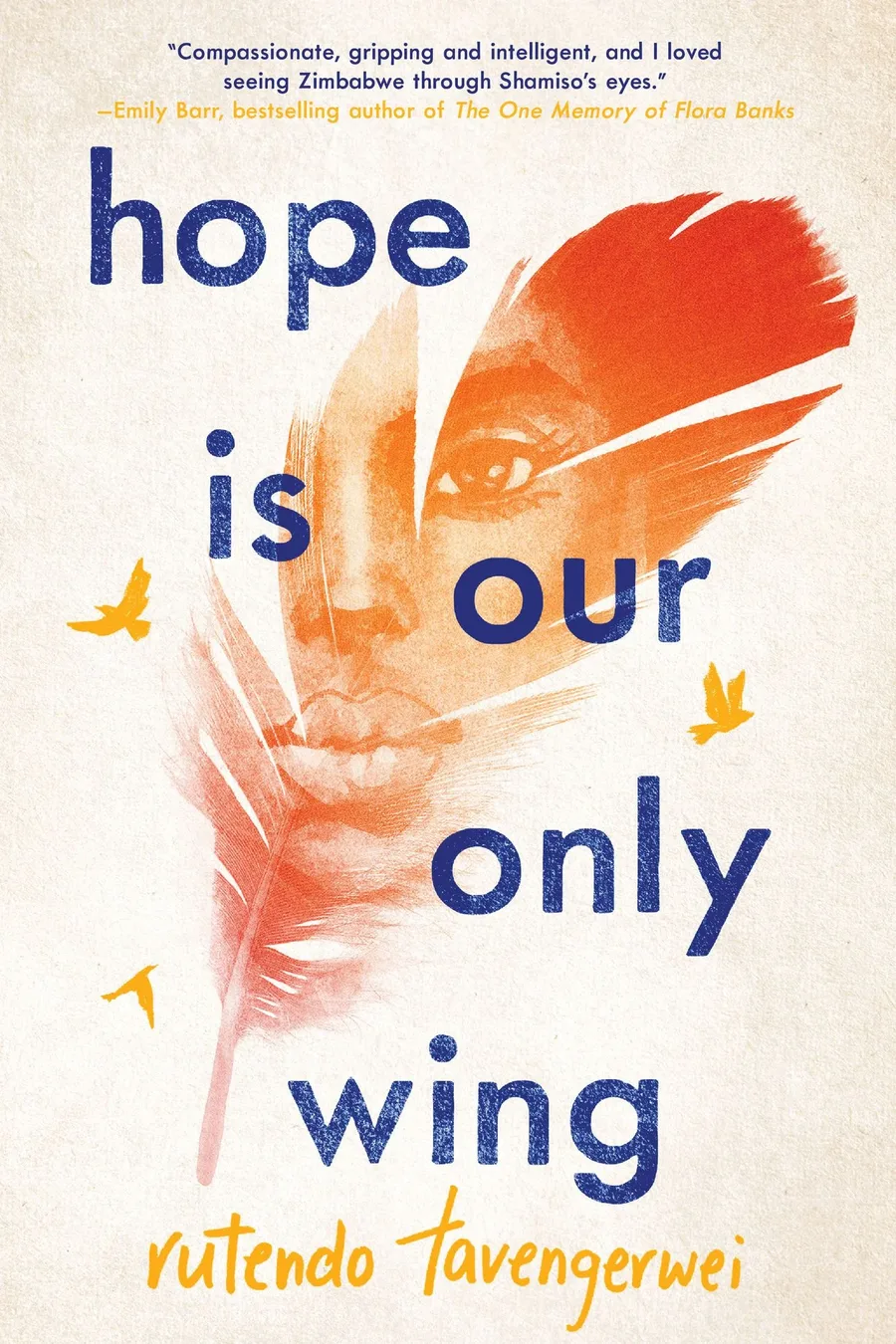 Hope Is Our Only WingRutendo TavengerweiShamiso’s father, a journalist investigating government corruption in Zimbabwe, recently died in a car accident. Shamiso and her mother have returned from England, where they were living before his death. With her grief fresh, compounded by rumors her father was murdered, Shamiso, 15, doesn’t want anyone at her new school to know she’s his daughter and keeps her distance from other students. Tanyaradazwa (Tanya), who attends the same school, is a talented singer, but she’s just learned the cancer she hoped was in remission has come back with a tumor on her vocal cords. Tanya doesn’t want pity; neither does Shamiso. It’s what draws them to each other. “Hope is our only wing,” says Tanya, quoting Shamiso’s father without knowing Shamiso is his daughter. But when Tanya gets sicker, Shamiso pulls away, unwilling to face another loss. A novel set in 2008 that deftly and keenly weaves the political and personal— government regulations means it’s harder and harder for Tanya’s family to afford her treatment; a letter from her father that Shamiso loses is a life and death matter because it references the government corruption—is also a beautifully rendered story of friendship between two Black girls.Fiction for Young AdultsView book details
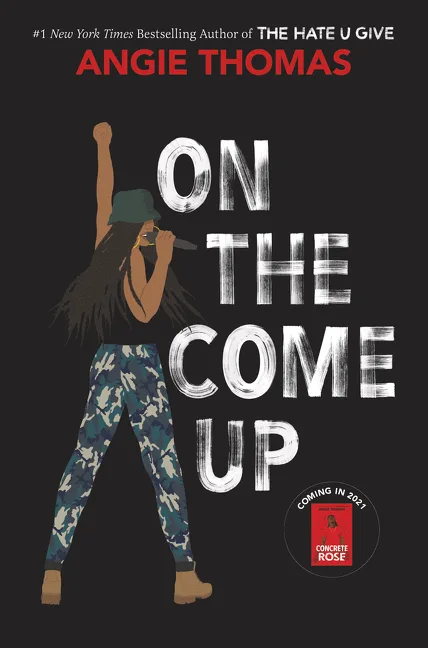 On the Come UpAngie ThomasBri, 16, dreams of being a rapper like her father, who was killed in a drive- by shooting when she was young. African American Bri has talent but knows making it also requires exposure and connections. In the meantime, with money tight at home, she helps out by reselling candy at her mostly white arts high school. After Bri’s candy-filled backpack is confiscated at a routine school security check and she is thrown to the ground and handcuffed, rumors fly that she was selling drugs. Bri channels her anger at what happened, and at the fact Black and brown kids at her school are often treated as suspect, into a rap song that blows up online. Bri’s family and friends know the tough, defiant attitude Bri displays in the song is not who she really is. At the same time, a producer has taken an interest in the song and Bri’s career, but wants to further cultivate CCBC Choices 2020 Fiction for Young Adults 97 an image of Bri that offers no room for nuance and no understanding that her posturing was a way to express pain and illuminate injustice. Bri, her family, and friends are dealing with many challenges, from economic struggles and racism to the threat of gangs and drug violence, but they are also loving, lively, funny, poignant characters in this vivid, visceral, heartfelt, ultimately hopeful work.Fiction for Young AdultsLexile Text Measure HL550LATOS Book Level 3.8View book details
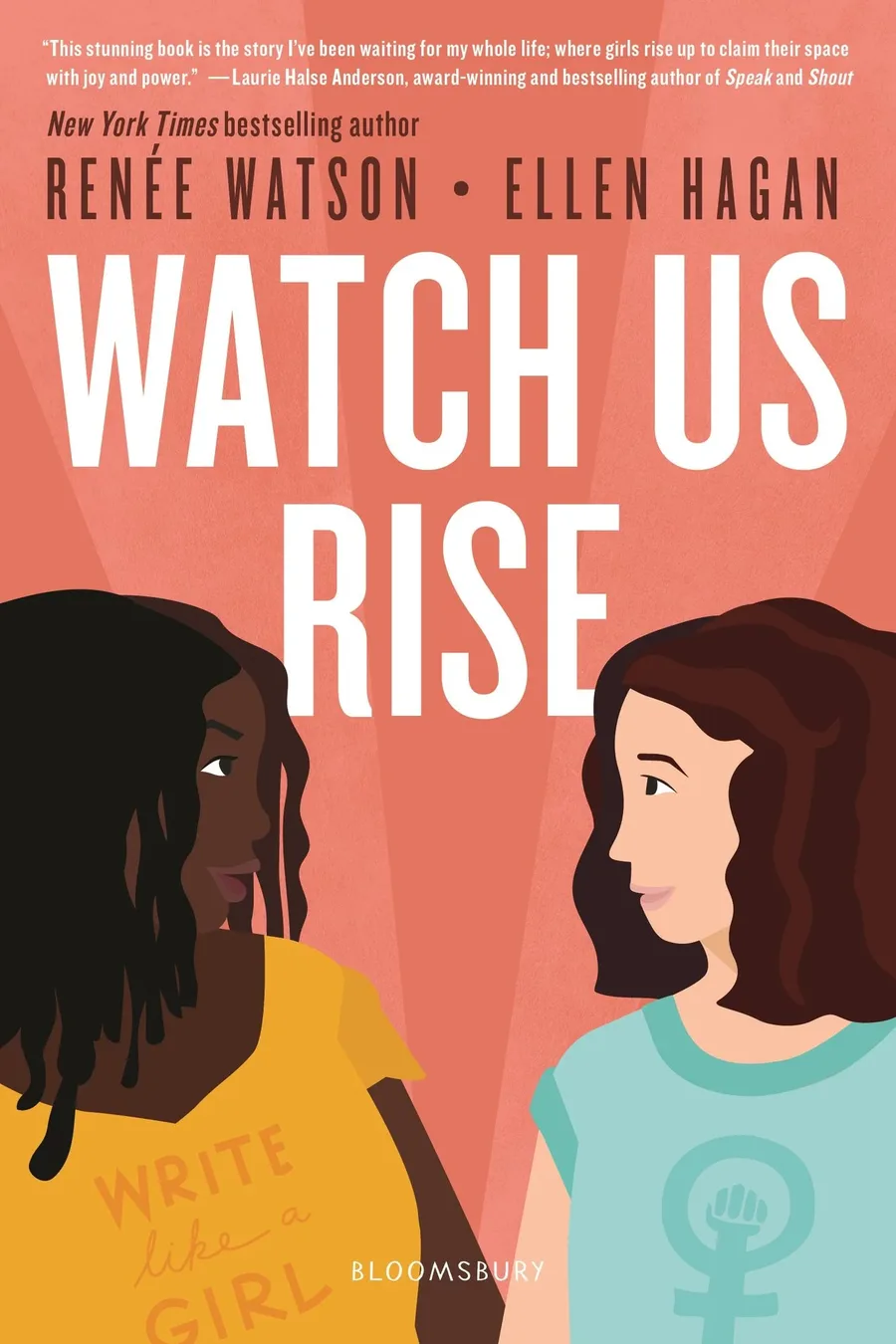 Watch Us RiseRenée Watson, Ellen HaganBest friends Jasmine, who is Black, and Chelsea, who is Jewish and white, attend a New York City high school with a stated commitment to social justice. It makes the sexism they experience, from physical harassment to lack of support for a Women’s Rights Club, all the more infuriating. They start a blog and, with mentoring from a woman in the community, begin to engage in other forms of activism. Jasmine, who is fat, asserts body positivity but still struggles with how others, including Chelsea, do—and do not—see her. She’s also dealing with her dad’s terminal illness. Chelsea is struggling with how her feminist values sometimes feel compromised in her relationship with her boyfriend, and with how to support her best friend through grief. The two young women want to stand up for themselves, each other, and other girls and women. Their willingness to listen, to learn, and to speak up and out is the heart of an intentional story in which their voices rise powerfully from the page. A novel that serves as an introduction to intersectional feminism lacks some secondary character development but still packs a punch.Fiction for Young AdultsView book details
 Genesis Begins AgainAlicia D. WilliamsGenesis’s family gets a deal on a rental in a suburb outside Detroit through a coworker of her dad’s. She loves the house but doesn’t know how long they’ll be able to stay given her dad’s history of gambling and losing the rent in his effort to get ahead. They’ve been evicted four times. At her new, predominantly white middle school, Genesis is wary that not even the Black kids will be nice given the darkness of her skin—she’s been called names like “Charcoal” in the past. Even Genesis’s dad, dark-skinned like she is, has made clear when he drinks that he wishes Genesis was light-skinned like her mother, a rejection that’s searing. Genesis finds release in singing, and the choir teacher tells Genesis she has a gift. But putting that gift on display in front of the entire school? Genesis, whose lack of self-worth is itemized in her ongoing list of all the things she hates about herself, can’t image doing so, until doing so becomes the only way she can move forward. An unflinching, candid exploration of the pain and impact of colorism on an African American family builds to a moment of triumph, and hope for healing and change for both Genesis and her family.Fiction for Young AdultsLexile Text Measure 670LATOS Book Level 4.5View book details
 White RoseKip WilsonA novel in verse about Sophie Scholl and the anti-Nazi White Rose Movement in Germany during World War II begins with the arrest of Sophie and her brother Hans, caught distributing anti-Nazi leaflets. The story then moves back and forth between Sophie’s interrogation (sections labeled “The End”) to her 98 Fiction for Young Adults CCBC Choices 2020 young adulthood and growing activism (“Before”), which include her romance with Fritz, a young man not unsympathetic to her feelings about the Nazis but also a lieutenant in the Germany army, to her actions on the day she and Hans were arrested (“Day Zero”). Dates on the first poem in each section clarify where the story is in time. The Nazi search for the creators and distributors of the leaflets encouraging German citizens to resist the Nazi regime, and the perspective of Sophie’s interrogators are also part of a work that builds incredible tension even when the final outcome is known. A final “Before” section shows Sophie at her youngest in the narrative, at a time when she didn’t question the Nazi youth activities in which she and Hans participated. It’s a striking contrast to what come next: a young woman walking to her death with her brother and a fellow conspirator, not necessarily without fear, but without regret. A brief, soaring epilogue is followed by notes and sources.Fiction for Young AdultsView book details
 Frankly in LoveDavid YoonHigh school senior Frank Li is first generation Korean American. He’s grown up solidly middle class thanks to his parents’ drive. They work almost constantly as owner/operators of a store in a poor urban neighborhood an hour away. Frank’s older sister, Hanna, has become persona non grata at home (but not to Frank) since dating and marrying a Black man. Frank’s best friend, Q, is Black, and he wishes he was courageous enough to challenge his parents’ racism like Hanna always did. He wishes it even more when he starts dating Brittany Means, who is white, knowing his parents won’t approve of a girlfriend who isn’t Korean. Instead, he deceives them, working out a plan with Joy, daughter of another Korean immigrant family, to fake date. Joy has been keeping her Chinese American boyfriend a secret from her parents, and the lie keeps all the parents happy while freeing Frank and Joy to spend time with their significant others. What could go wrong? Frank’s first-person voice is funny and tender in an exceptional, emotionally charged debut novel that plays out in ways both expected and unexpected, offering an insightful, nuanced examination of immigrant families, parents and children, race and racism, love and romance, and the sustaining gift of friendship.Fiction for Young AdultsView book details
 Black Enough: Stories of Being Young & Black in AmericaIbi ZoboiSeventeen Black authors contribute to a strong, nuanced collection of stories that shed light on the great diversity of experiences within America’s Black community. In one, a Nigerian American boy develops an affinity for heavy metal after befriending a neighbor girl in a metal band, an experience that inspires him to ask his mother about her childhood experiences in Biafra. Another tells the heartbreaking story of two half-sisters struggling to connect at a summer camp. There are lighthearted tales, too, including one about four Black boys fantasizing about the perfect sandwich. And there are powerful feminist stories dealing with sexting and sexual assault. There are stories about queer love and self-discovery, family and social class, religion and grief. This welcome, varied anthology will leave readers eager to seek out other work by the contributing authors.Fiction for Young AdultsView book details