
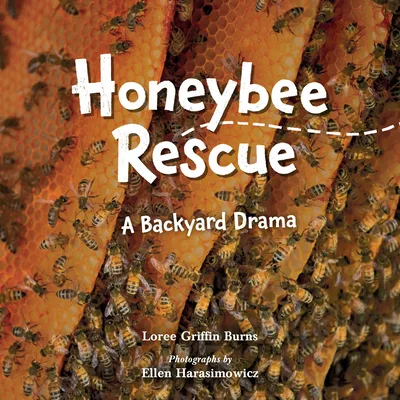
 Honeybee Rescue: A Backyard DramaLoree Griffin BurnsAfter Mr. Connery discovers that one of his bee colonies has established a new hive in a rickety, drafty garage where they may not be able to survive the cold winter, he calls Mr. Nelson, a bee relocation specialist. Using his specially designed “Honeybee Sucker-Upper,” Mr. Nelson takes several hours to carefully vacuum the 35,000 bees from their barn rafter into the device’s collection chamber, while Mr. Connery cuts down the now bee-free sheets of honeycomb to fit into hive frames. Once the bees are all vacuumed and the new hive frames are hanging in hive boxes, the bees are re-deposited. Over the course of the next two weeks, Mr. Connery moves the new hive a few feet each day, until it’s in his garden next to the bees’ original hive. Double-page spreads explaining swarming, hive structure, and the bee-vac device are interspersed throughout this intriguing account. Large photographs illustrate the engaging, accessible text, and final pages include a glossary and further reading, as well as a fascinating interview with Mr. Nelson. Among the vital questions he answers: How is it he rarely gets stung, even without protective gear?Science, Technology, and the Natural WorldView book details
CCBC Choices 2023
The 2023 edition contains 211 selections published by the Cooperative Children's Book Center, University of Wisconsin-Madison. The source uses 14 audience or subject sections, including Science, Technology, and the Natural World, Seasons and Celebrations, Historical People, Places, and Events, and Biography, Autobiography, and Memoir. It is one annual edition of CCBC Choices, the librarians' bibliography of recommended books.
CCBC Choices 2023See the original list
Selections211
Published byCooperative Children's Book Center, University of Wisconsin–Madison
Sections14 sections
Browse sections14 sections
Science, Technology, and the Natural World
19 selections
Honeybee Rescue: A Backyard DramaLoree Griffin BurnsAfter Mr. Connery discovers that one of his bee colonies has established a new hive in a rickety, drafty garage where they may not be able to survive the cold winter, he calls Mr. Nelson, a bee relocation specialist. Using his specially designed “Honeybee Sucker-Upper,” Mr. Nelson takes several hours to carefully vacuum the 35,000 bees from their barn rafter into the device’s collection chamber, while Mr. Connery cuts down the now bee-free sheets of honeycomb to fit into hive frames. Once the bees are all vacuumed and the new hive frames are hanging in hive boxes, the bees are re-deposited. Over the course of the next two weeks, Mr. Connery moves the new hive a few feet each day, until it’s in his garden next to the bees’ original hive. Double-page spreads explaining swarming, hive structure, and the bee-vac device are interspersed throughout this intriguing account. Large photographs illustrate the engaging, accessible text, and final pages include a glossary and further reading, as well as a fascinating interview with Mr. Nelson. Among the vital questions he answers: How is it he rarely gets stung, even without protective gear?Science, Technology, and the Natural WorldView book details The Universe in You: A Microscopic JourneyJason ChinIn a companion to Your Place in the Universe, which explores objects vast in size, Chin sheds a light on the opposite end of the spectrum: the microscopic building blocks of human bodies. The narrative begins with a Calliope hummingbird, the smallest bird in the United States, as it alights on the finger of a brown child who uses a wheelchair. As diminutive as the bird is, it is not as small as the smallest butterfly, which in turn is not as small as the smallest bee. Smaller still are humans’ finest hairs, called vellus hairs. And smaller yet are skin cells and their nuclei, which are comprised of even smaller particles, each of which have their own microscopic parts. The size of the objects in the narrative shrinks until it reaches elementary particles, or quarks and gluons, which are so small humans are unable to measure or divide them. Tiny though they may be, however, elementary particles are the building blocks of everything in the universe, including “the body of a unique human being … a singular person who can think and feel and discover.” On each page, detailed, labeled illustrations provide additional information about the mind-boggling particles mentioned in the primary narrative.Science, Technology, and the Natural WorldView book details
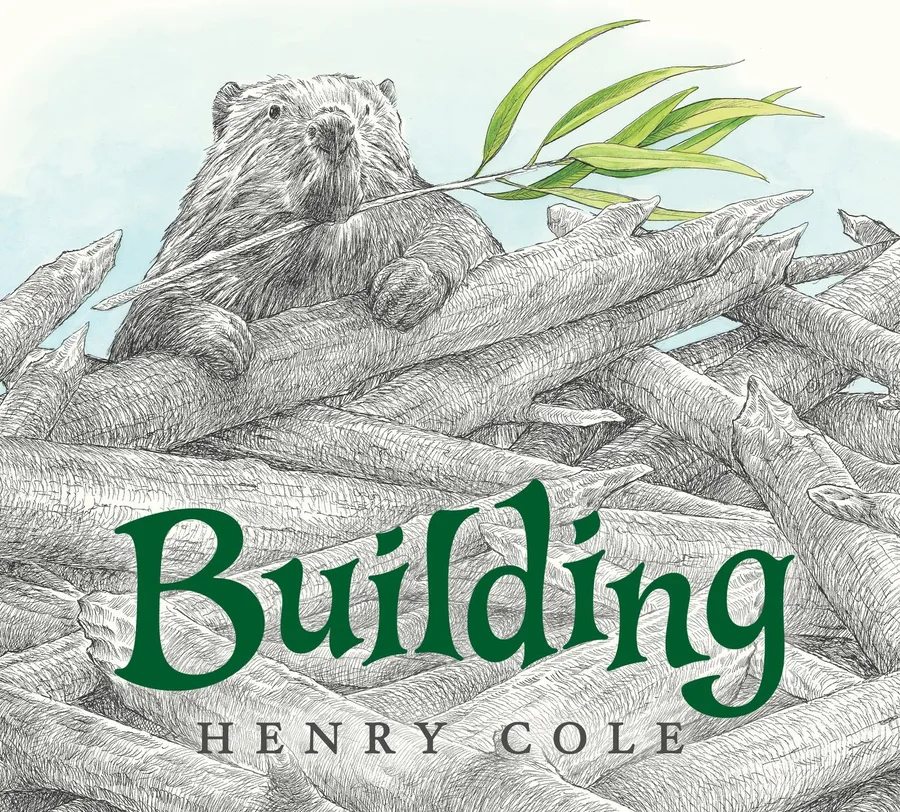 BuildingHenry Cole, illustrated by Henry ColeIn late winter, two beavers begin to build a dam in a small stream. “The beavers haul the cut branches into the stream and stick them in the mud … Building, building. That is what beavers do best.” A pond forms behind the dam. The beavers continue to build. The pond grows. “Building, building. That is what beavers do best.” This repeated refrain punctuates a picture book that sees baby beavers, born in the lodge in spring, venture out into the water a few days later … until a slap from their parents’ tails indicates danger, and they quickly dive under the water for safety. When a storm damages the dam, the beavers repair it. By summer, the now-large pond becomes a home to “ducks and blackbirds, butterflies and swallows, dragonflies and turtles.” In autumn, the beaver family stocks up on twigs and branches to eat. In winter the beaver family stays in its lodge to wait for spring. A descriptive yet straightforward narrative is set against detailed black-and-white illustrations done in micro-pens and acrylic, with seasonal colors accentuating various scenes.Science, Technology, and the Natural WorldView book details
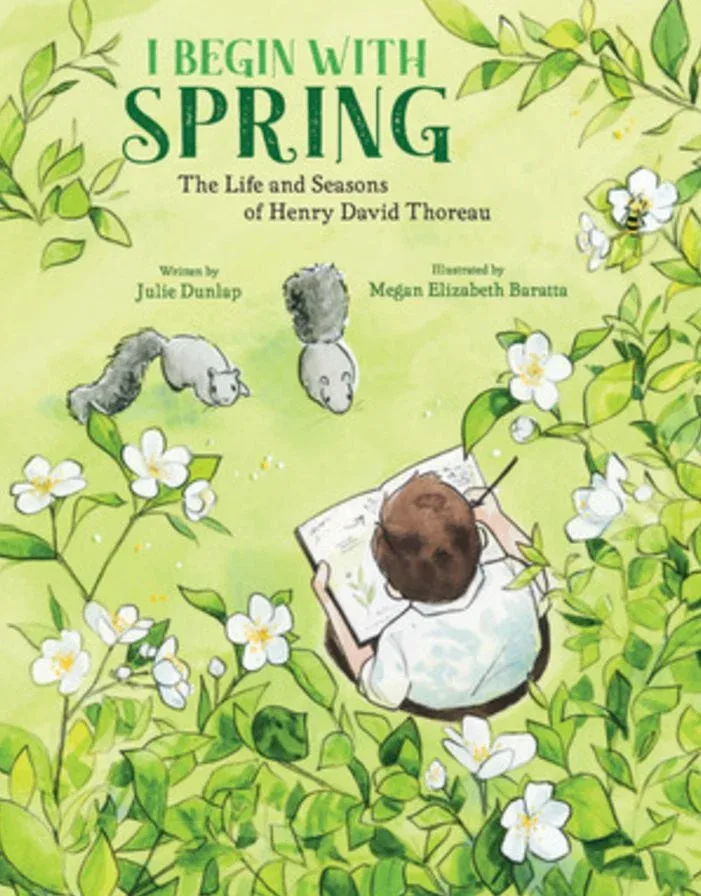 I Begin with Spring: The Life and Seasons of Henry David ThoreauJulie Dunlap, illustrated by Megan Elizabeth BarattaThis biography of Henry David Thoreau styled like a nature journal opens with the line, “There are four seasons in a year: Spring, Summer, Autumn, and Winter. I will begin with Spring.” Thoreau’s lifetime of observations around his home in Concord, Massachusetts, infuses every design aspect of this highly illustrated text. A dated timeline running across the bottom of each page introduces readers to the science of phenology (the timing of natural events) and sheds light on Thoreau’s contributions to the study of climate change today. His attentive and detailed notes about plants and animals, day by day and from year to year, broaden the impact of his work beyond his well-known two years at Walden Pond. Pencil and watercolor illustrations, many with scientific labels, are awash on every page. Historical images of people, places, and documents provide social, political, and geographic context for Thoreau’s life and times, including his support of abolition and thoughts on Charles Darwin’s work.Science, Technology, and the Natural WorldView book details
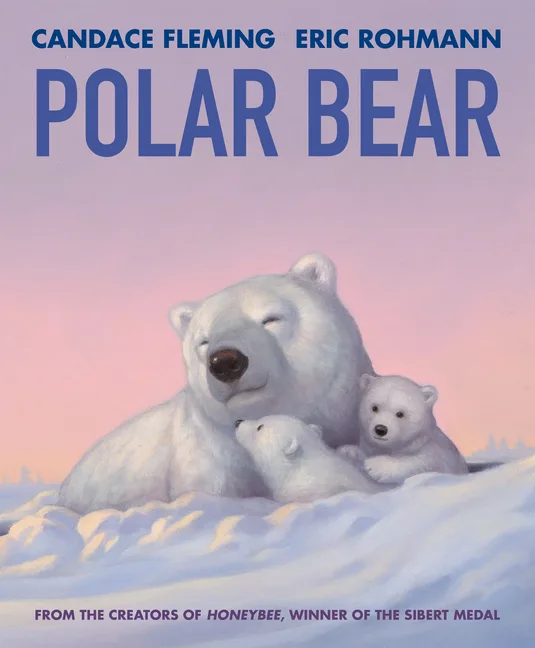 Polar BearCandace FlemingPredators and waning ice threaten the lives of a polar bear and her two cubs in a substantial informational picture book that spans the first year of the cubs’ lives. In April, Mother emerges from her den thin and hungry; instinct tells her to return “home” to the ice. Moving at the cubs’ pace, fending off wolves along the way, the bears arrive at the bay after six days and soon hunt a meal of ringed seal. Spring is a busy time: The cubs watch and imitate as Mother hunts. If she fails to put on enough fat now, she and the cubs will have little chance of surviving the summer. But the warm temperatures and melting ice make her job difficult; once, the three are stranded on an ice cap and only just make it back to land. In the summer, Mother’s fat and milk keep her and her cubs alive as they wait for the return of the ice and their food source. “But it is taking so long. Too long.” While climate change is not explicitly mentioned, the life-and-death tension of the narrative effectively underscores the importance of ice to polar bears’ survival as they navigate an ever-more- unpredictable landscape. Striking oil-paint illustrations add to the drama.Science, Technology, and the Natural WorldWord Count 1580View book details
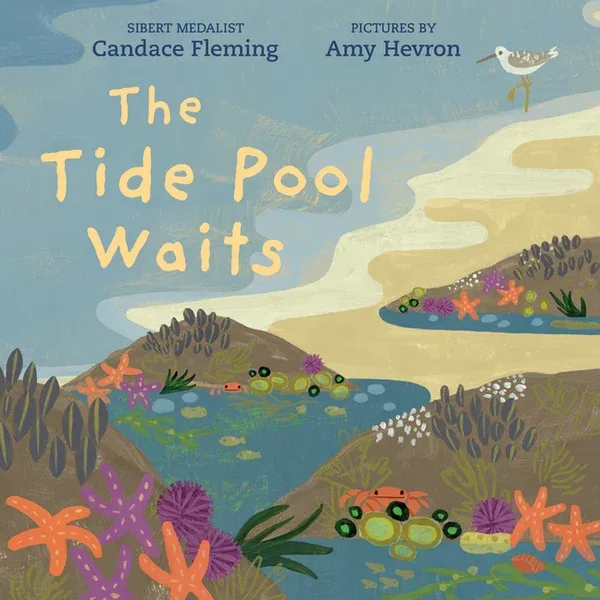 The Tide Pool WaitsCandace FlemingA world of sea creatures waits in the warm pools of water left between the rocks after the ocean’s tide recedes. Barnacles and mussels, turban snails and limpets “close up tight” against the heat of the day. Sculpins and opaleye fish conceal themselves in algae and seaweed. An octopus, crabs, and shrimp hide in cracks in the rocks. All are waiting for the tide to return and for the pool to become “part of the sea once more.” With the tide comes all kinds of activity: “Sea anemones bloom,” “shrimp paddle,” “sea slugs slither across sponge.” Barnacles and sea stars and crabs of all kinds scavenge for food, while other animals are swept in by the waves. “Everything is busy. All brim with life.” Until soon, the waves once again crawl out, and the tide pool waits. Acrylic paint illustrations depicting a colorful underwater world accompany a text that reflects the diverse and cyclical activity of tide pool life.Science, Technology, and the Natural WorldWord Count 402View book details
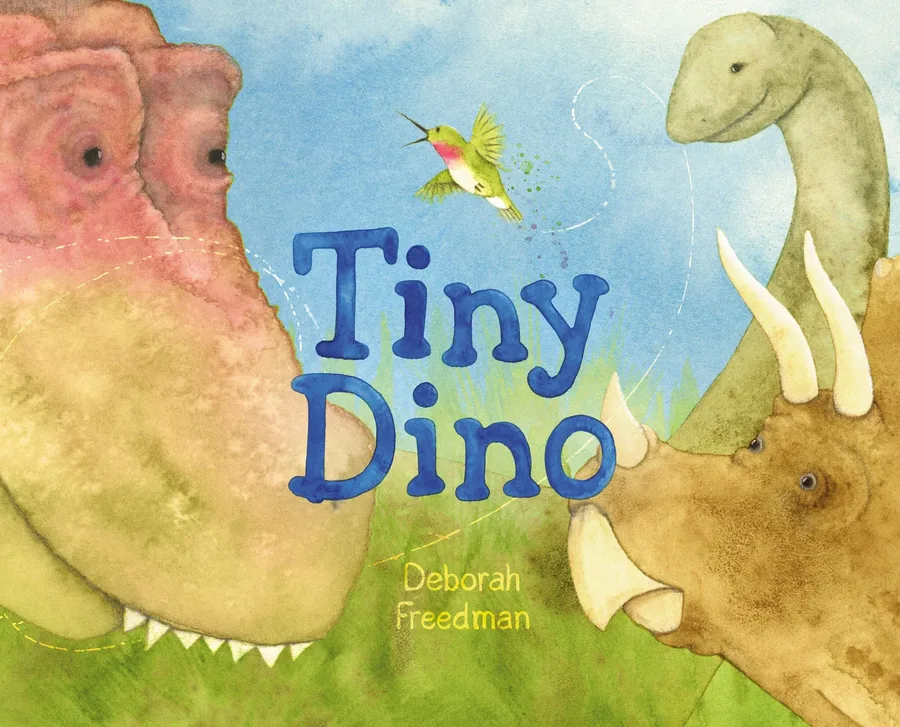 Tiny DinoDeborah Freedman“Did you know, did you know? I’m a DINOSAUR!” The tiny hummingbird making this proclamation is met by skepticism as a turtle and a frog point out all the differences between hummingbirds and dinosaurs. Dinosaurs had big feet that “stomped and clomped,” notes the turtle. “Your feet are too small to stomp and clomp.” The hummingbird eagerly points out it has toes just like a T. rex (four toes, three facing forward). Hollow bones, feathers, 11 Science, Technology, and the Natural World CCBC Choices 2023 and scales are other similarities with various dinosaurs. But what about claws? What about being fierce? “I have CLAWS! I am FIERCE!” Then along comes a crocodile, which the frog and the turtle mistake, with genuine panic, for a dinosaur. The shocked, upset crocodile insists it isn’t a dinosaur. The hummingbird agrees and then points out things it has in common with the crocodile (both hatched from an egg, have scales on their toes, and have a similar heart structure). “We are part of the same family tree … We’re cousins!” The humorous primary narrative is paired with supplementary text on each page spread providing more facts and information, while the art skillfully conveys both the feelings of the characters and additional facts, incorporating visuals that further illustrate the veracity of the hummingbird’s fiercely proud claims.Science, Technology, and the Natural WorldLexile Text Measure AD370LATOS Book Level 2View book details
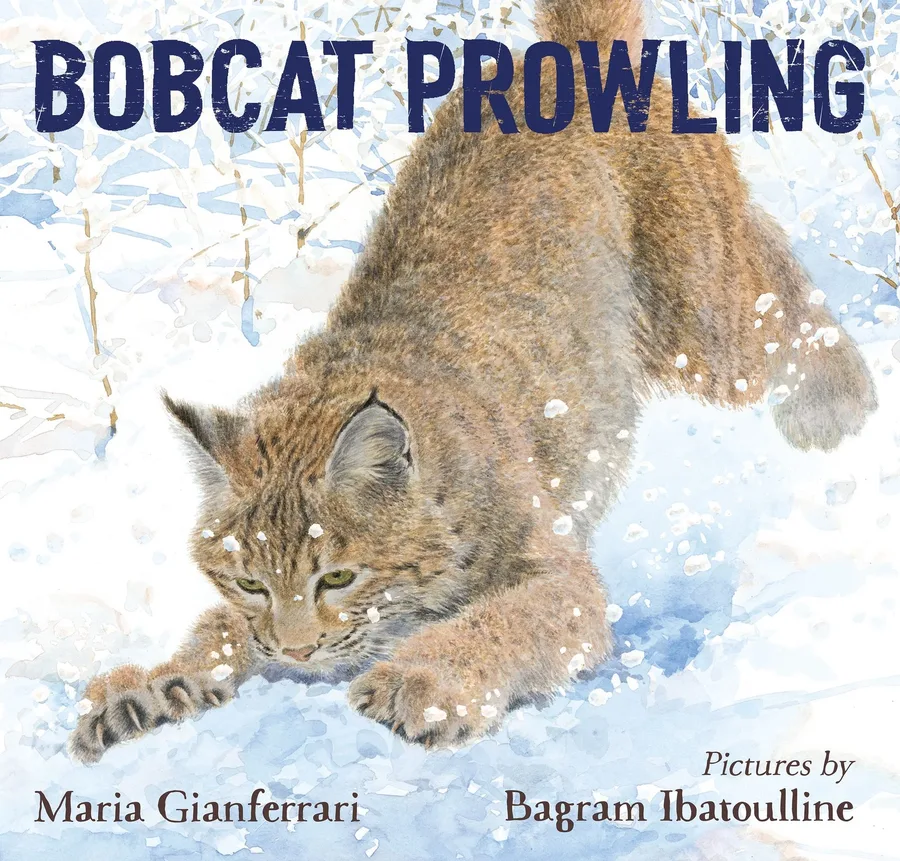 Bobcat ProwlingMaria Gianferrari, illustrated by Bagram IbatoullineDriven away from his mother’s home range, a young bobcat, “Yearling,” sets out on a journey to find territory of his own. It is winter, and the landscape is covered in snow. A human child addressed in the narrative touches Yearling’s tracks, which stretch through their front yard. “Could this be Yearling’s territory?” is the refrain as the bobcat continually comes upon—and is chased out of—land already occupied by other animals: bobcats, a Canada lynx (who beats Yearling to a snowshoe hare dinner), a coyote. In the bitter cold, Yearling follows a set of train tracks and stops to snack on birds at a birdfeeder. He wanders until spring arrives and he has matured from Yearling to Bobcat. On a street lined with houses, Bobcat encounters the body of Old Bobcat and marks the territory for himself. That night he rests in his new home. The text addresses two children in a tent in the backyard, “This is your home, too. And tonight, you will sleep under the stars. Just like Bobcat.” Detailed, realistic watercolors depict Bobcat in desolate landscapes and startling proximity to humans, while back matter provides additional information about these wild cats.Science, Technology, and the Natural WorldLexile Text Measure AD530LATOS Book Level 3.5View book details
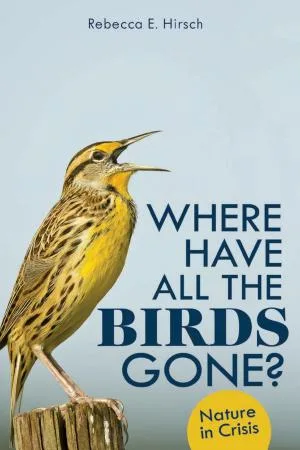 Where Have All the Birds Gone? Nature in CrisisRebecca E. HirschBirds face myriad threats: backyard cats and wind turbines, glass windows and diminishing food sources, a disappearing habitat, and light pollution that impacts migration. This informative account begins by sharing the disturbing results of a seminal study published in 2019: Since 1970, 3 billion birds—30 percent of bird populations—have disappeared. It’s a shocking number, but much of the decline happened quietly, certainly without most of us in the general population taking notice. Chapter by chapter, the narrative examines some of the key threats to birds in greater detail, sharing stories of loss and occasional examples of successful comebacks or species that have thrived. It also discusses what humans as a group and humans as individuals can do, the latter emphasized in the final chapter, “How You Can Help.” The clearly presented information is accompanied by occasional color photographs, with a glossary, source notes, a selected bibliography, and additional resources at volume’s end.Science, Technology, and the Natural WorldView book details
 A Walk through the Rain ForestMartin JenkinsStrikingly realistic pencil and oil paint images that evoke both black-and-white and colorized photographs present scenes from a tropical rain forest in Malaysia. The illustrations, which range in size from full-page to double-page spreads, provide a detailed look at this lush natural environment and include a variety of living things in views ranging from the forest floor to the canopy. Some of the flora and fauna are easy to spot, while some are harder to see at first glance. Details about them are included in an accompanying narrative that also provides information about the rain forest ecosystem. A visual recap of all the creatures included in the art is provided at volume’s end, making this, among other 12 Science, Technology, and the Natural World CCBC Choices 2023 things, a sophisticated book of seek-and-find. Additional information about the world’s rain forests, including the impact of deforestation on the survival of rain forest species, is also included at the end of this handsomely designed oversized volume.Science, Technology, and the Natural WorldView book details
 Luminous: Living Things That Light Up the NightJulia Kuo, illustrated by Julia Kuo“… always look, / really look / when it’s dark out.” A dark-haired child and adult woman of indeterminate race explore bioluminescence in the night, from foxfire and fireflies to a host of water creatures, in a picture book sure to inspire wonder. The brief primary narrative is only a few sentences long, with many page spreads featuring only a phrase. This is supplemented by a paragraph in smaller font that provides information about the organism or animal pictured. The illustrations in this informational picture book shine, with matte black backgrounds that make it seem as if the fascinating bioluminescent creatures shown are truly luminous.Science, Technology, and the Natural WorldView book details
 Yoshi and the Ocean: A Sea Turtle’s Incredible Journey HomeLindsay MooreA spotlight on Yoshi, a rescued, rehabilitated, and released loggerhead sea turtle, illuminates the incredible journeys undertaken by all female loggerheads. Rescued by Japanese fishermen off the coast of South Africa, an injured Yoshi spends two decades healing and growing in an aquarium in Cape Town. When she grows restless, the scientists who care for her know that she is ready to journey home. They attach a tracking device to her shell and release her into the ocean, hoping for the best. Will she know how to find food? Will she become prey or get tangled in fishing nets? “Hello from Yoshi. I am here,” her tag seems to say each time she surfaces, sending hope and her location to the Cape Town aquarium. After a year, and 25,000 miles, Yoshi makes it “home” to the Australian beach where she was born and where she will lay eggs of her own. Extensive back matter includes an annotated map of Yoshi’s journey, diagrams of loggerhead anatomy and life cycle, and additional information about the ocean and ocean life. Shades of blue dominate the sweeping, sun-dappled underwater landscapes, allowing Yoshi and other ocean life to stand out.Science, Technology, and the Natural WorldView book details
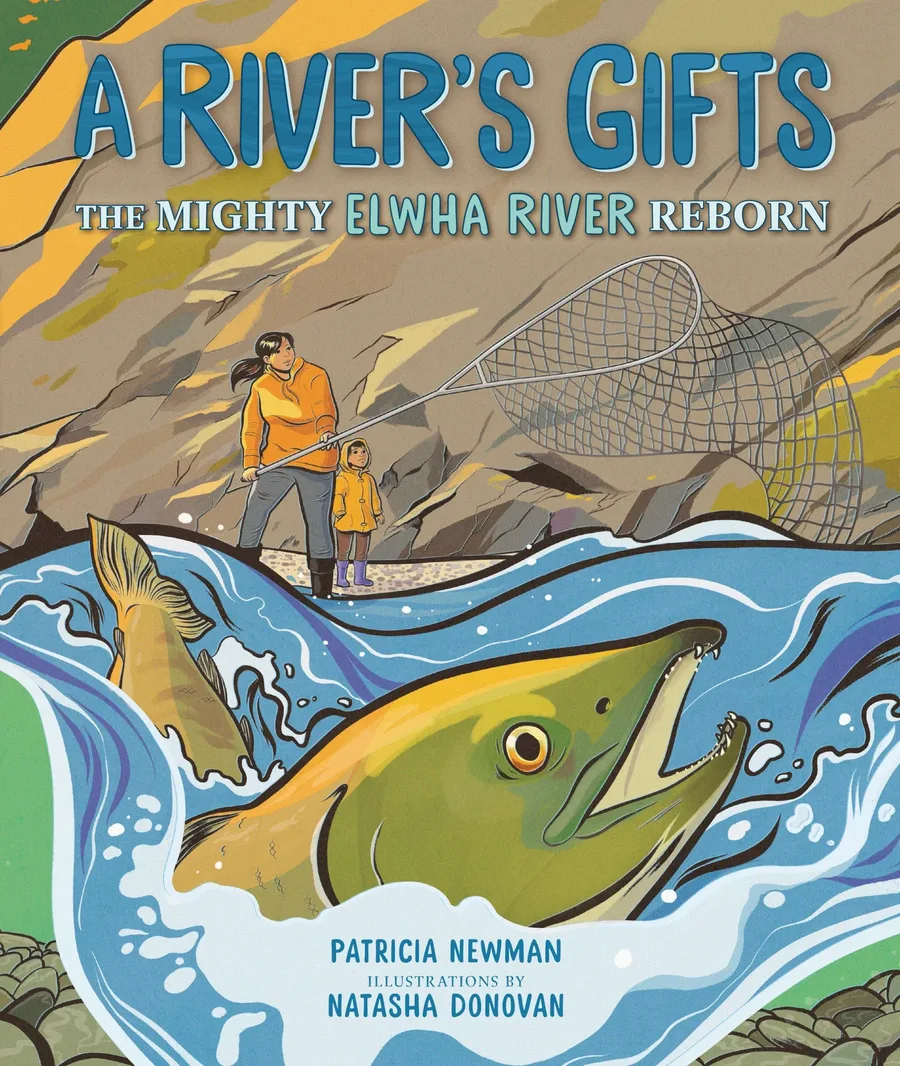 A River’s Gifts: The Mighty Elwha River RebornPatricia NewmanA thorough account elucidates the dramatic history of the Elwha River, sacred to the Elwha Klallam Tribe (also known as the Strong People) of the land commonly known as Washington State. Beginning with overviews of the river’s formation, the salmon that spawn in its waters, and the natural resources the river provides for the Strong People, the narrative then covers the decades of damage caused by the actions of white settlers. In 1910 and 1926, respectively, the “strangers” built two dams, greatly disrupting life in and around the river: The salmon population is decimated, habitats destroyed, banks eroded, and the Strong People’s Creation Site and lands are flooded. When the license for the dams is up for renewal, the Strong People and other allies double down on their efforts to have the dam removed; eventually, they succeed. Removal of the dams and successful rehabilitation of the river takes years and the work of many specialists, including fish, water, plant, tribal, and wildlife scientists, and many volunteers. Replete with clear diagrams and sidebars, this is a fascinating and inspiring account of perseverance, cooperation, and gratifying success.Science, Technology, and the Natural WorldView book details
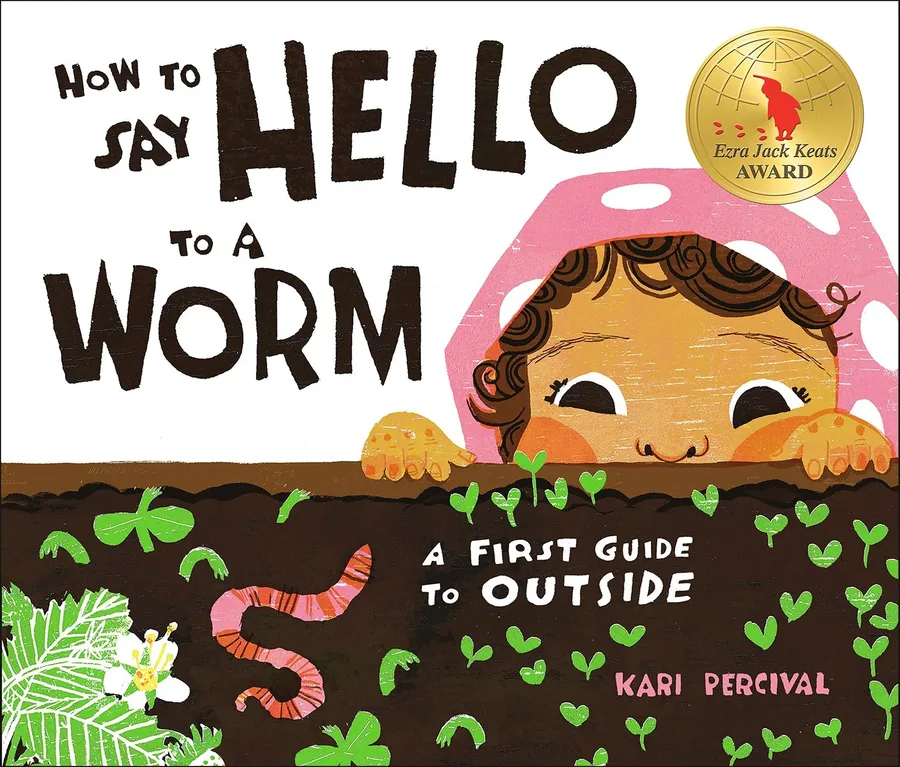 How to Say Hello to a Worm: A First Guide to OutsideKari Percival, illustrated by Kari PercivalA gaggle of toddlers engages in playful hands-on learning in the garden. Conversational question-and-answer text gently encourages exploration as the toddlers plant peas in the soil and wait patiently for them to grow. Fortunately, there are plenty of other things to explore in the meantime. “How do you make mud? Dig a path for the water to go. Make a river. Flood it! Mix, mix, mix. Mmmmm! Mud!” The toddlers greet critters like the titular worm (“Gently, very gently”) and bees (“Look but don’t poke … Listen but don’t grab”) and build a stick structure to support the growing pea sprouts. (It doubles as a play hut.) When enough time has passed, the children learn how to recognize a ripe strawberry, how to pull a carrot, and how to pop open a peapod to reach the tasty peas inside. Two afterwords— one “for kids” and one “for grown-ups”—provide additional guidance on how to garden with (or as) a toddler. Silkscreen illustrations show a racially diverse group of toddlers, including one who uses canes and wears leg braces.Science, Technology, and the Natural WorldView book details
 Saving Earth: Climate Change and the Fight for Our FutureOlugbemisola Rhuday-Perkovich, illustrated by Tim RoleyThis look at both the long and the recent histories of climate science, as well as humanity’s response to such knowledge, offers a fascinating historical perspective and a sobering look at where we are today. Scientists first made discoveries and advanced theories about the impact of carbon dioxide on the earth’s atmosphere in the 19th century. As early as the 1950s, several scientists were calling out the potentially catastrophic changes to come. From the 1970s onward, there have been many advances in scientific knowledge, which have led to ongoing efforts to increase public awareness and formulate meaningful political responses on both national and global levels. This has led to positive changes and frustrating—and at times infuriating—compromise, reaction, and inaction on the parts of national and world leaders and others. All of this is laid out in an accessible narrative that also focuses on climate change activism, with an emphasis on Black, Indigenous, and People of Color, including young people. Occasional cartoon-style black-and-white illustrations are included throughout, along with informational sidebars; detailed source notes for the quotations and other information throughout are provided at volume’s end.Science, Technology, and the Natural WorldView book details
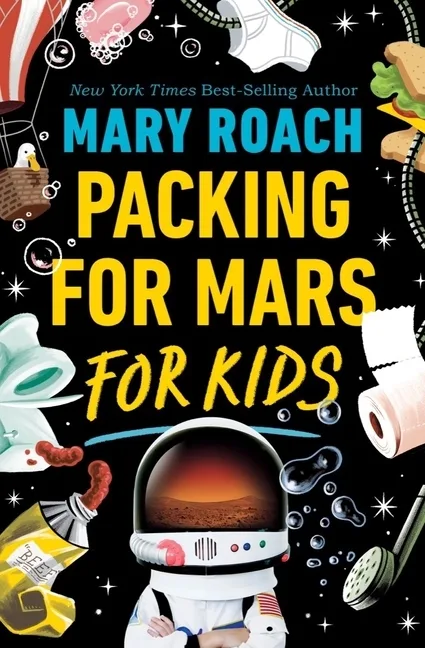 Packing for Mars for KidsMary RoachHow do astronauts eat and drink in space? How do they poop and pee and bathe? Grossly fascinating, this adaptation of the author’s adult book Packing for Mars focuses largely on the lack of gravity’s impact on the mechanics of being able to do the things a body needs to do to survive, and how scientists and engineers have come up with workable—if not always appealing—solutions. Chapter titles such as “Barfing on the Ceiling,” “Toilet Training for Adults,” “Strange Dinners,” and “Life Without a Bath” hint at the author’s willingness to be up front about the complicated, messy (literally) reality in a narrative that goes all-in on the details, with plenty of quotes from astronauts supporting this not-so-starry-eyed look at space travel. A final chapter, “Roommates for Very Small Rooms,” looks at the challenges of spending a lot of time with the same person or group of people in very tight quarters. Occasional black-and-white photographs are included throughout.Science, Technology, and the Natural WorldLexile Text Measure 900LATOS Book Level 6.5View book details
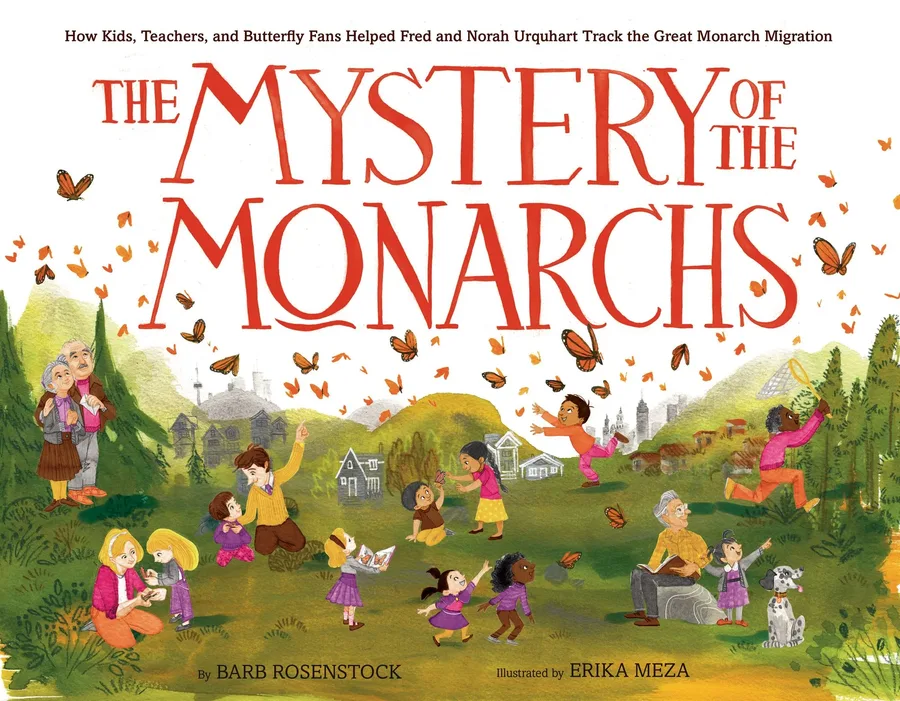 The Mystery of the MonarchsBarb RosenstockGrowing up in the early 20th century, Fred Urquhart was fascinated by monarch butterflies and wondered where they went in winter. As an adult, he became an entomologist focused on tracking monarchs. But he didn’t do it alone. Norah, his wife, helped him develop a tag for the butterflies and publicize his work. Publicity was important, as they had 14 Science, Technology, and the Natural World CCBC Choices 2023 embarked on the first monarch citizen science project, which relied on people (including schoolchildren) in the United States and Canada to help capture, tag, and release monarchs, and to report the tags of butterflies they found. Fred and Norah mapped and followed the data, driving south in search of the monarchs. They were home in Toronto in 1975 when two of their assistants in Mexico were guided by knowledgeable locals to the winter home of the monarchs; a year later, Fred and Norah saw it for themselves. Lively mixed-media illustrations are a bright accompaniment to this engaging account (although the book would have benefitted from in-text references to dates). The welcome, informative author’s note begins by acknowledging that people living in central Mexico were well aware of the monarchs wintering there long before researchers made this “discovery.” The volume concludes with a message from Dr. Karen S. Oberhauser, monarch researcher and director of the UW–Madison Arboretum.Science, Technology, and the Natural WorldLexile Text Measure AD760LATOS Book Level 4.9View book details
 The Lodge That Beaver BuiltRandi Sonenshine“This is the crunch in the darkening wood / of teeth against bark where the willow once stood / on the shore near the lodge that Beaver built.” A playful and informative patterned text modeled on “The House That Jack Built” follows the construction of a beaver lodge and the activity in and around that lodge over the course of a year. Beaver, its mate and subsequent offspring, and other creatures make appearances. There’s a musk turtle “burrowed down deep” under the lodge; a goose that builds a nest on top of the lodge; “buttonbush, alder, and sedge” that hide ducklings “from Hawk on her ledge … ” and more. Only the words “the lodge that Beaver built” are repeated with each new refrain, making for a spare and elegant narrative. Full of rich language and fascinating glimpses of the drama of the natural world, it is set against lovely, muted ink-and-colored pencil illustrations. An array of “Beaver Facts” concludes the volume.Science, Technology, and the Natural WorldView book details
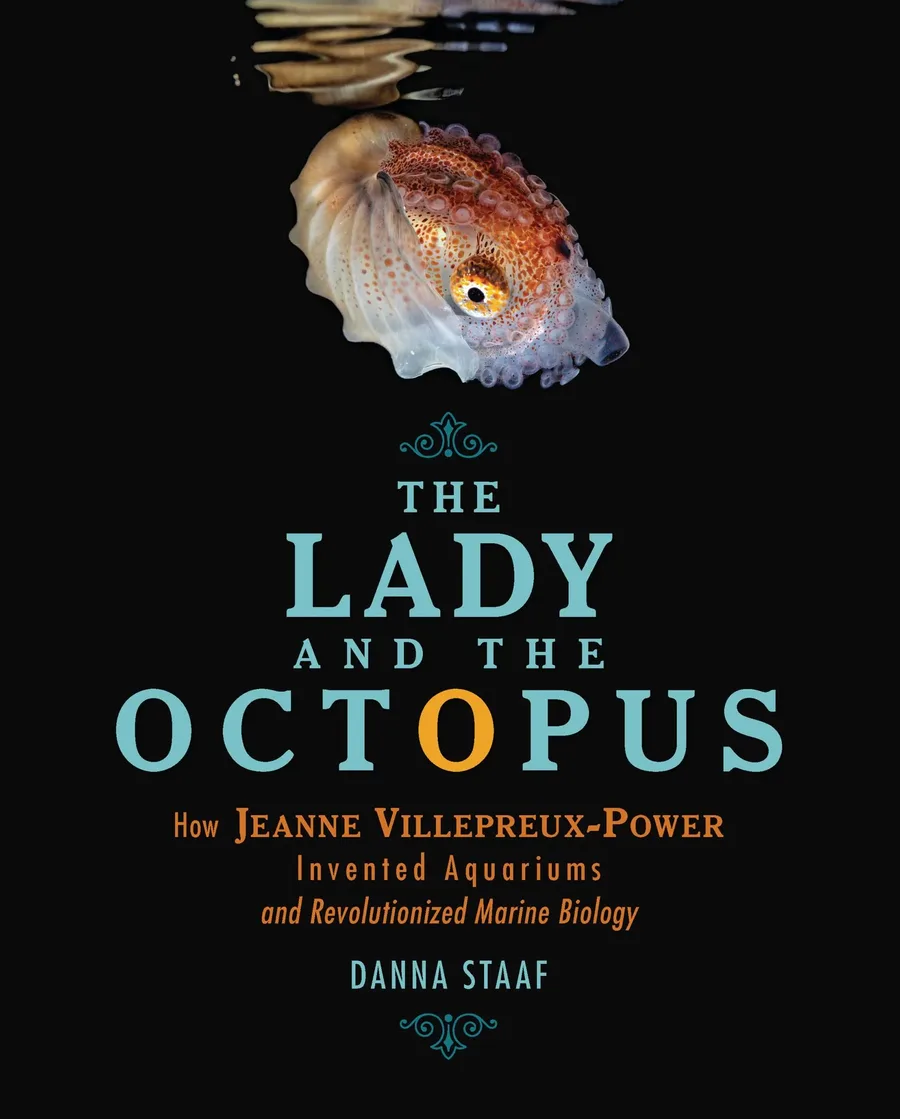 The Lady and the Octopus: How Jeanne Villepreux-Power Invented Aquariums and Revolutionized Marine BiologyDanna Staaf, illustrated by Danna StaafIn the 1830s, Jeanne Villepreux-Power’s groundbreaking work in what we now call the field of marine biology included inventing the precursor of the modern-day aquarium so she could study live animals in captivity, rather than dead specimens. She further refined her invention to observe marine animals in their natural habitats—unheard of at the time. The French-born, self-taught scientist’s research off the coast of Sicily, where she lived, focused on argonauts, a type of octopus that travels with a shell. Villepreux-Power proved that argonauts not only create their own shells but can repair them; she also identified the male of the species for the first time. At a time when the world of science was largely a world of men, many of whom didn’t think women had the intelligence or rigor for science, Villepreux-Power shared and sought credit for her work. When much of her documentation and research was lost in a shipwreck, she set about re-creating it. It’s not just Villepreux- Power’s extraordinary character and scientific work that makes this engaging book stand out; it’s also the author’s seamless integration of our 21st-century understanding of gender and class (noting, for example, that Villepreux-Power was a woman of economic privilege once she married) and her contrasting of scientific practices of the time with modern standards. Even the author’s research and writing methods are discussed up front, rather than solely in an author’s note, in this exemplary work of nonfiction. The lively narrative includes engaging, informative sidebars.Science, Technology, and the Natural WorldView book details
Seasons and Celebrations
6 selections
 Concrete: From the Ground UpLarissa TheuleThe history and uses of concrete, with a focus on how concrete “recipes” have changed over time and across continents, starts with the basics: Concrete is made of stone, sand, and water, glued together with cement. The text moves on to describe concrete at various times and in various places, ranging from a concrete-like floor dating to 9600 BCE in Turkey to the construction of Machu Picchu by Incans in the Andes Mountains. More recent uses of concrete include the Berlin Wall, the Sydney Opera House, the 4x4 House in Japan, and Zaha Hadid’s design for the Heydar Aliyev Center in Azerbaijan. Milestones in concrete’s evolution include civil engineer John Smeaton’s creation of a new recipe for concrete that allowed it to harden under water and the introduction of concrete reinforced with steel rods, which revolutionized building possibilities. Clear writing, moments of understated humor, and detailed illustrations that expand the text combine for a fascinating look at an everyday material.Seasons and CelebrationsView book details
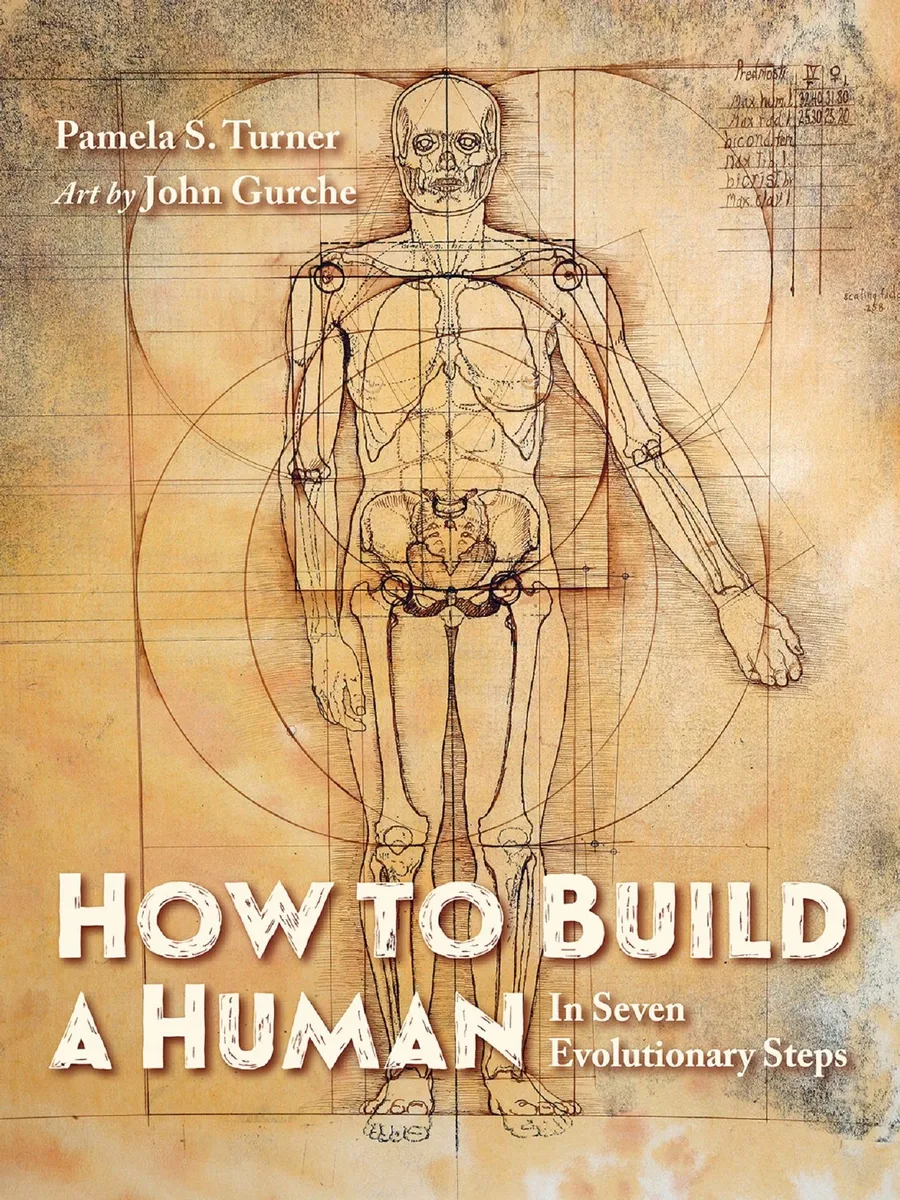 How to Build a Human: In Seven Evolutionary StepsPamela S. TurnerThis entertaining, informative, accessible account about human evolution starts with an explanation of natural selection and returns to it throughout as it touches on major milestones in the evolution of hominins, including which traits, behaviors, and skills allowed them—us—to continue to survive and evolve. The seven steps referenced in the title are chronicled in individual chapters titled “We Stand Up” (ability to walk upright), “We Smash Rocks” (using tools), “We Get Swelled Heads” (larger brain development), “We Take a Hike” (migration), “We Invent Barbecue” (use of fire), “We Start Talking (and Never Shut Up)” (language development), and “We Become Storytellers” (complex use of language and imagination). There is humor throughout the inviting narrative, including in occasional footnotes, but the overall sense is one of inclusivity. We are all Homo sapiens, after all; nothing divides us from one another on an evolutionary scale, and to see images of handprints made by Homo sapiens 40,000 years ago from locations around the world is to understand this on a very human scale: “We are one.” Sharing insight into our evolutionary past, this clear, cogent, fascinating work concludes with ample end matter, starting with a substantial author’s note about race being a social construct, not biological reality, even as racism and racial bias are very real results of that construct. More about evolution, a glossary, timeline, and resources are also provided. Visual material includes photographs of artifacts, drawings, and other artistic and scientific renderings of various species of hominins.Seasons and CelebrationsView book details
 Snow Horses: A First Night StoryPatricia MacLachlan“Snow falling / all day— / all night. / Drifting over / meadows / and gardens / and roads.” Tim and Tom, “midnight black” Percheron horses, love the snow. Jenny, their driver, hitches them to a sleigh decked with lights, their bridles bedecked with bells and jingling. In the snow-bright dark they make their way to town, joining the celebration marking the last night of the year. Tim and Tom give sleigh rides to brightly bundled children. After the children have gone home and gone to bed, Tim and Tom pull “grandmothers and grandfathers, aunts and uncles, and longtime friends” who remember when they were children. A small golden dog runs alongside the sleigh throughout the night. Like the 16 Seasons and Celebrations CCBC Choices 2023 children and the grown-ups, the dog eventually goes home to sleep. Jenny takes Tim and Tom back to the barn, where they sleep too. “The next morning Tim and Tom will wake in sunlight … happy New Year to the town, / to the children— / to the grandmothers— / grandfathers— / aunts and uncles— / and longtime friends— / to Tim and Tom— / to Jenny who drove them— … And to a little golden dog …” Exquisite collage illustrations comprised of homemade paper and ink and showing a diverse community amplify the abundant warmth and beauty and brightness of this lyrical First Night story full of captivating details.Seasons and CelebrationsView book details
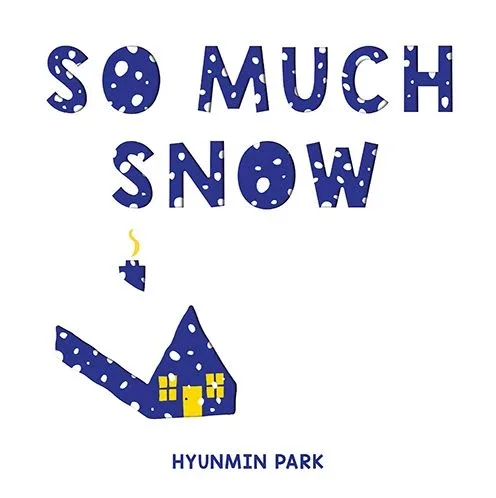 So Much SnowHyunmin ParkTranslated from Korean, this visually striking, nearly wordless picture book opens vertically to a mostly white two-page spread with a house standing small against a sliver of navy sky at the top. “I’ve never seen the snow fall like this. There’s so much. So much snow!” It’s an observation emphatic yet understated, because on the next (all white) spread, a door opens in the bottom right corner; after another page turn, two children emerge, shoveling a tunnel along the bottom of the page. They uncover a snow plow and tunnel upward. And upward. The perspective zooms out to show a single navy line—their tunnel— cutting diagonally across white pages, the snow plow a tiny, yellow dot emerging at the top. The kids roll and stack snow, finally photographing their creation, which is invisible to the reader against the white page. Then, having obtained an enormous, pointy yellow thing, the children ascend a tall ladder—so tall, in fact, that it requires the unfolding of two additional pages—and attach it beneath two large, navy circles. Zooming out further still reveals a colossal snowman standing stark white against the sky. Their play done, the children sled and ski, respectively, back down their tunnel and through the front door of their home. Cleverly utilizing the solid white of the book’s paper, the deceptively simple two-colored illustrations surprise and delight as the fantastical story unfolds.Seasons and CelebrationsView book details
 So Much SnowKristen Schroeder, illustrated by Sarah Jacoby“On Monday, it starts to snow. Silent swirling. How high will it go?” Snow continues to fall through the week, with the question “how high will it go?” repeated daily. A mouse sees the first fluttering flakes, a fox leaps over a drift on Wednesday, and by Sunday only the antler of a roaming moose is visible above a snow bank. The following week shows a warming trend as the snow quickly melts and the animals from the previous week reappear in reverse order. Even mouse is able to lounge under a newly blooming wildflower by Sunday, when the animals celebrate the seasonal shift. “Trees budding, birds singing, everyone’s springing.” Indeed, spring has arrived—or has it? New snowflakes dot the air on the final pages. Watercolors, pastels, and Photoshop combined in the creation of a charming cast of woodland creatures and the soft hues of their changing landscape.Seasons and CelebrationsLexile Text Measure 360LFountas & Pinnell Text Level LView book details
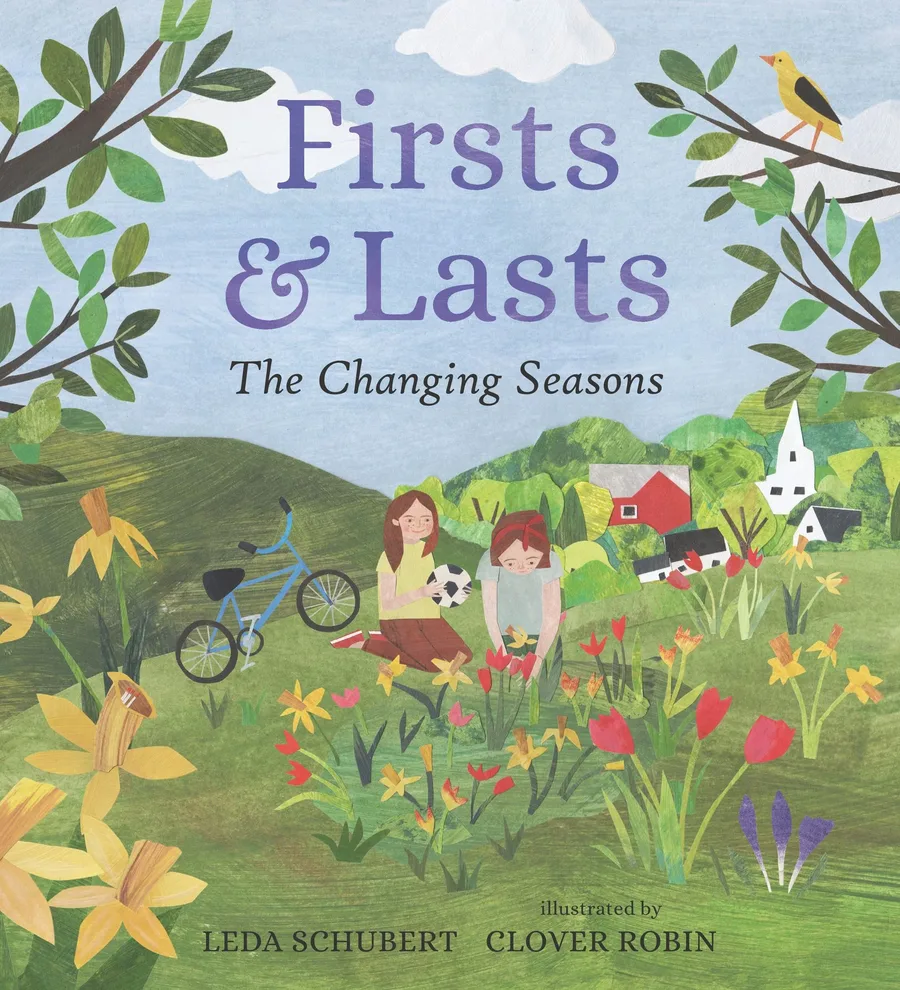 Firsts & Lasts: The Changing SeasonsLeda Schubert, illustrated by Clover Robin“Spring is … the last time we hear ‘Snow day!’ on the news … the last time we bundle into snowsuits … And it’s also the first time we see new grass … the first time we play catch, and the first time we wash the car.” This imaginative approach to describing the four seasons (in some regions) captures the overlapping traits that are inevitable between one season and the next. Each season here is characterized by a series of four “last time” followed by four “first time” observations. Summer is being barefoot in the grass and “June bugs hitting the screen” for the first time, but before that it’s the “last time we wear flannel pajamas.” Fall is “the last time mom mows the lawn” and the first time woolly bear caterpillars appear. Winter is “the last time we visit the playground” and “the first time the car gets stuck.” The 17 Seasons and Celebrations CCBC Choices 2023 patterned text features child-centered observations inviting reflection and offering great conversation starters. Colorful, cozy collage illustrations follow the same white family over the course of a year.Seasons and CelebrationsView book details
Historical People, Places, and Events
13 selections
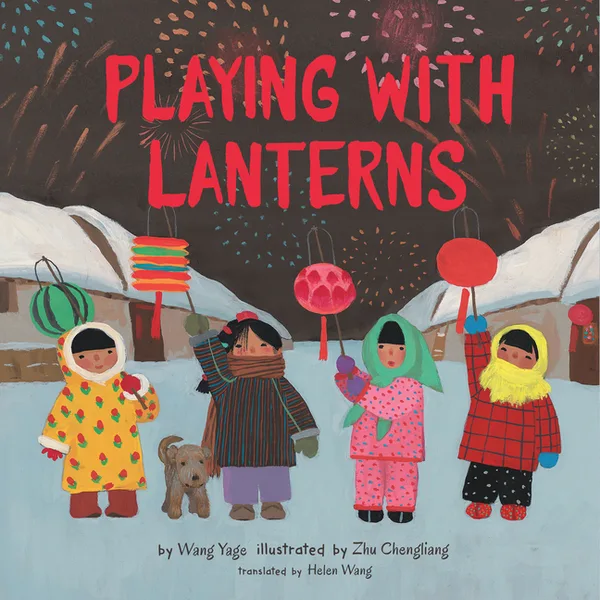 Playing with LanternsWang Yage, illustrated by Zhu ChengliangOn the third day of Chinese New Year, in a snow-blanketed village in Shaanxi province, uncles give their nieces and nephews colorful paper lanterns. Zhao Di’s uncle presents her with two. Careful to keep its candle burning, she carries one out into the cold darkness, where she joins friends with bright lanterns of their own. The girls parade around, enjoying their lanterns, relighting extinguished candles, and squealing at the antics of a pack of unruly boys before Zhao Di’s mother calls her inside. The New Year runs its course, and soon firecrackers light up the sky on the 15th day, seeming to sadly herald the end of the holiday. On the last evening, everyone in the village is outside celebrating. When the moon appears, glowing brightly in the sky, Zhao Di hears a cry: “Smash the lanterns! Smash the lanterns!” As tradition requires, she and her friends smash their lanterns, setting them ablaze before the candles go out, as failing to do so would bring bad luck. In the quiet days after the merriment of the holiday, Zhao Di feels empty until she reminds herself that New Year always comes around again. Illustrations and text work marvelously together to create a sense of time, place, and festivity: Brilliant lanterns and jackets pop against snowy backdrops, while sensory details abound in a translated narrative focused on a child’s experience of a joyful holiday and the letdown that can sometimes follow.Historical People, Places, and EventsLexile Text Measure AD610LATOS Book Level 4View book details
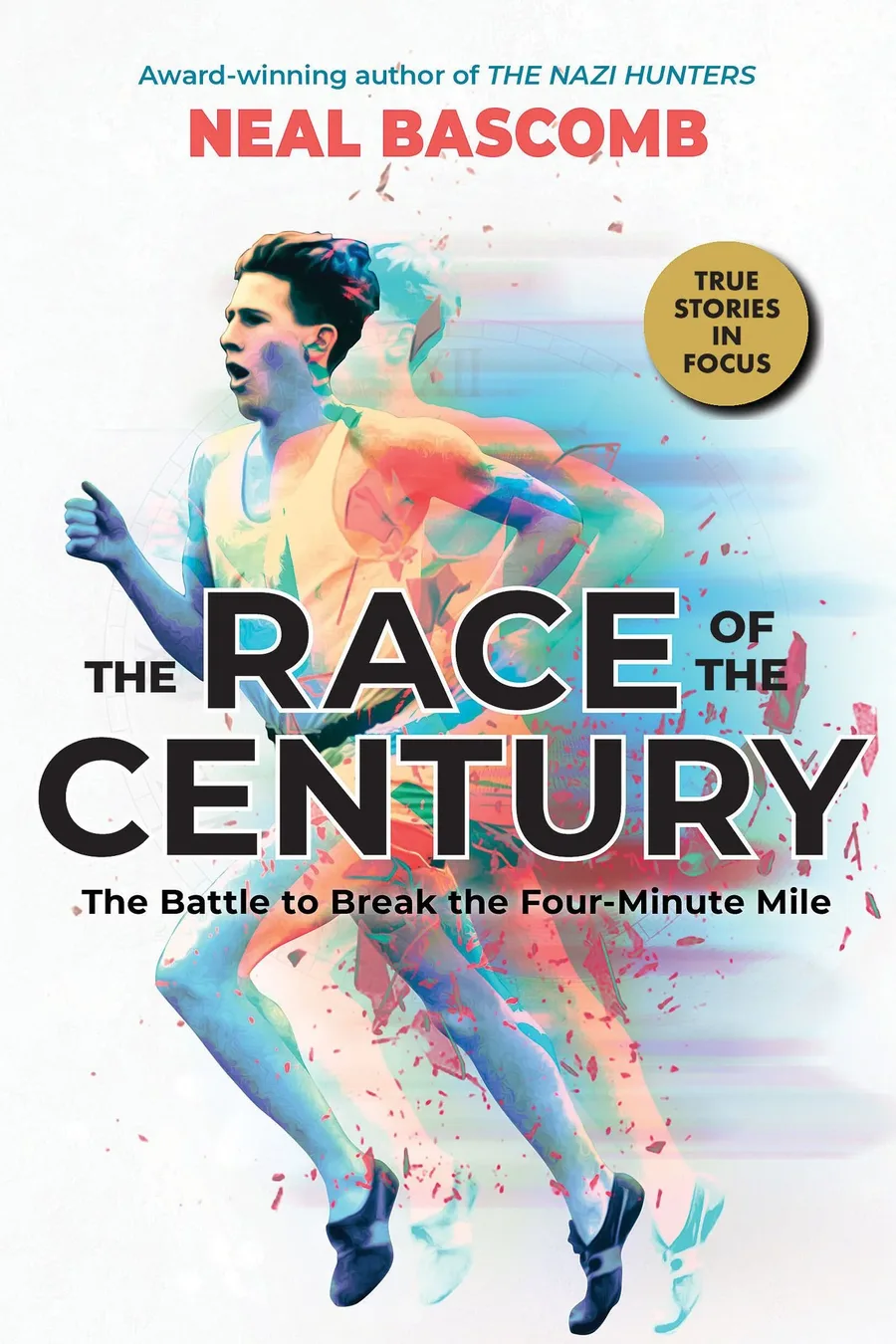 The Race of the Century: The Battle to Break the Four-Minute MileNeal BascombThis captivating look at the race to break the four-minute mile in the early 1950s focuses on the three top contenders: Roger Bannister of England, Wes Santee of the United States, and John Landy of Australia. Bascomb deftly follows each of their personal stories, as well as their growing awareness of one another, in an era when being in different parts of the world sometimes meant waiting two months to get an update on a time or race result from elsewhere—something that would be shared in seconds today. In a book as much about personal determination and grit as sport and a slice of history, each of the three runners had different styles, personalities, and challenges. Bannister didn’t meet his own or others’ expectations at the 1952 Olympics and committed himself to doing better; a full-time medical student and researcher, he often trained at night, the only free time he had. Santee had a difficult childhood; he succeeded on the track at the University of Kansas, but off the track he butted heads with the AAU. Landy was also a full-time student whose racing season in Australia was opposite those of Bannister’s and Santee’s. All the while, the world was watching, as this fast-paced, breathless account reveals the intense international interest in breaking the record, as well as in the rare head-to-head battles of two or more of the men, which garnered the same kind of attention as the Super Bowl or Olympics do today.Historical People, Places, and EventsView book details
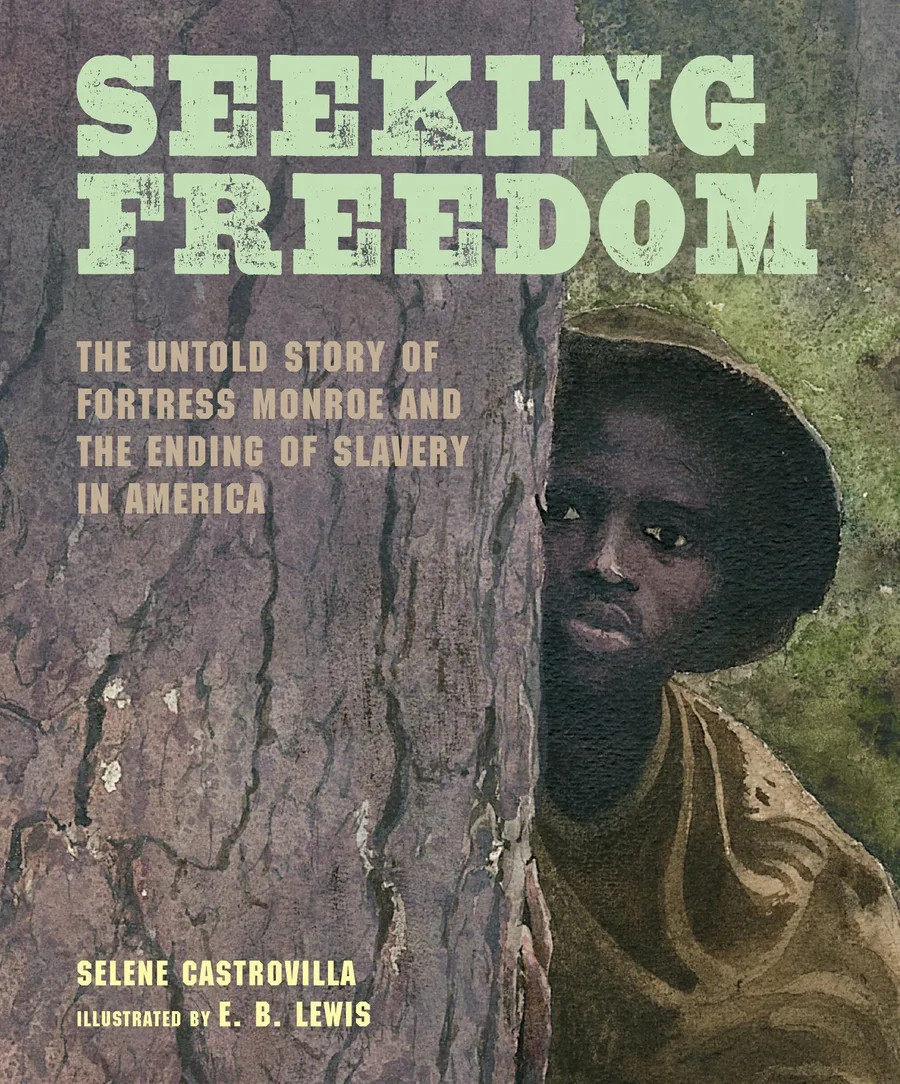 Seeking Freedom: The Untold Story of Fortress Monroe and the Ending of Slavery in AmericaSelene CastrovillaA dramatic historical account details the critical cooperation of a white Civil War general and a formerly enslaved Black man. As implied in the foreword, many enslaved people fled Virginia during the Civil War, desperate to prevent family separation as Black men were sent away to be exploited in the war effort. As the narrative opens in May 1861, George Scott has been hiding out in the woods for two years. When he witnesses Black people entering nearby Fortress Monroe, he determines that it must be a safe place for those escaping slavery. There he meets Major General Franklin Butler, who has decided to shelter the escapees “as contraband of war”—after all, the Confederacy, now “a foreign country,” intends to use Black men’s labor in the war effort. Because he has become so familiar with the woods, Scott agrees to serve as a spy for Butler, who hopes to track down a Confederate encampment. In return, Butler writes a letter beseeching President Lincoln and Congress to free all the Black people being held as contraband. Back matter details the aftermath of this event as well as the legacies of the two men. Full-page, earth-toned watercolor illustrations create an immersive sense of time and place.Historical People, Places, and EventsView book details
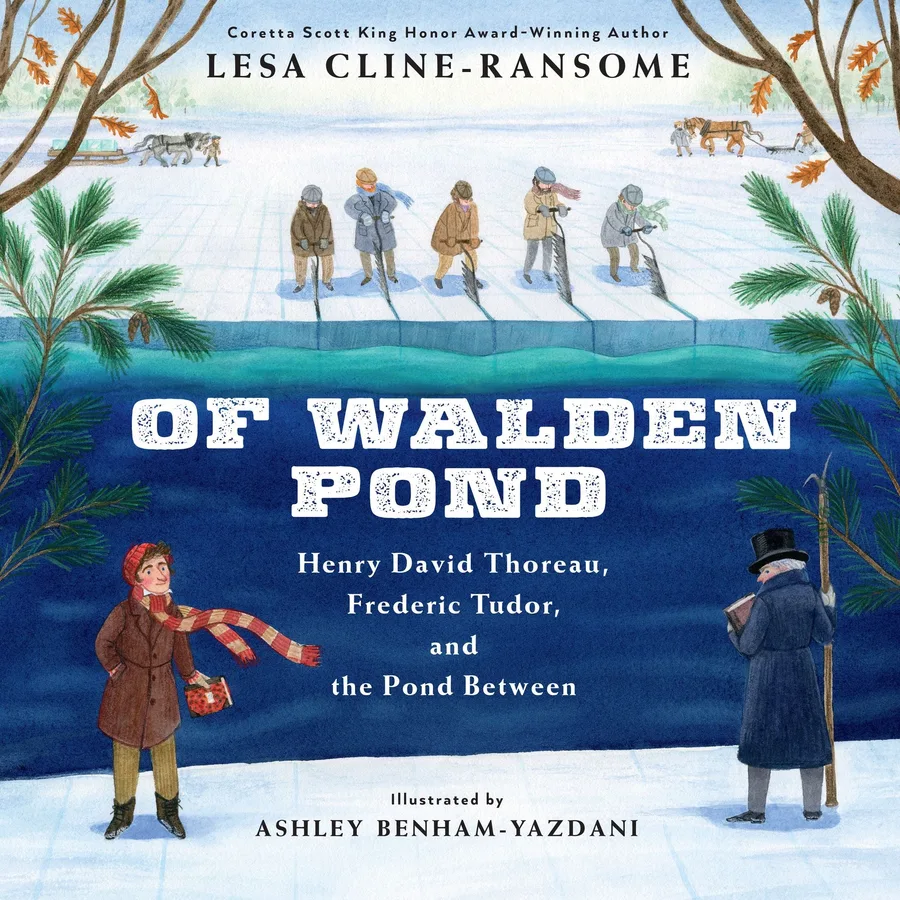 Of Walden Pond: Henry David Thoreau, Frederic Tudor, and the Pond BetweenLesa Cline-Ransome, illustrated by Ashley Benham YazdaniTwo white men, both “dreamers,” mine the treasures of Walden Pond. Henry David Thoreau, a nature lover, aspires to live simply and record in writing his observations of the pond and its wildlife. Frederic Tudor, a man in debt, sees a business opportunity in Walden Pond. From his one-room cabin, Thoreau watches as Tudor arrives with men, horses, and equipment and begins to harvest a thick layer of ice from the frozen pond. Written in poems and divided into sections according to season, the narrative describes the ice’s temporary storage (“blanketed in sawdust and hay” next to the pond), lengthy sea voyage to India, and eventual consumption by the wealthy white inhabitants of Calcutta. Even after it has left Walden Pond, the ice continues to inspire Thoreau’s diary entries; he imagines it “mingled with / the sacred water / of the Ganges.” Soft illustrations evoke the pond’s natural beauty and provide fascinating glimpses into ice harvesting and storage.Historical People, Places, and EventsView book details
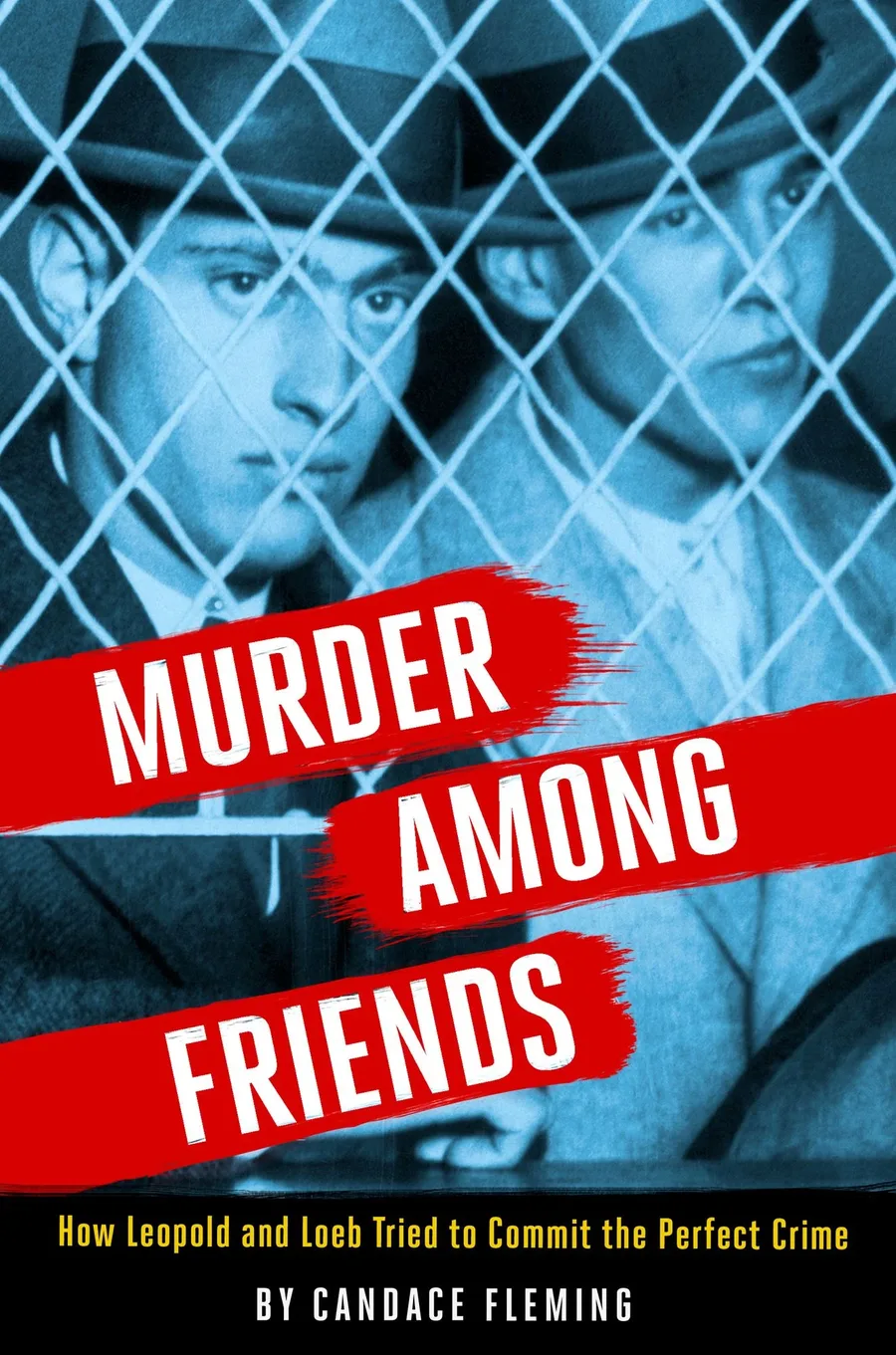 Murder Among Friends: How Leopold and Loeb Tried to Commit the Perfect CrimeCandace FlemingChicago, May 21, 1924. Brilliant, wealthy, and troubled companions Nathan Leopold (age 19) and Richard Loeb (18) set out to commit “the perfect crime.” Their unlucky victim:Historical People, Places, and EventsView book details
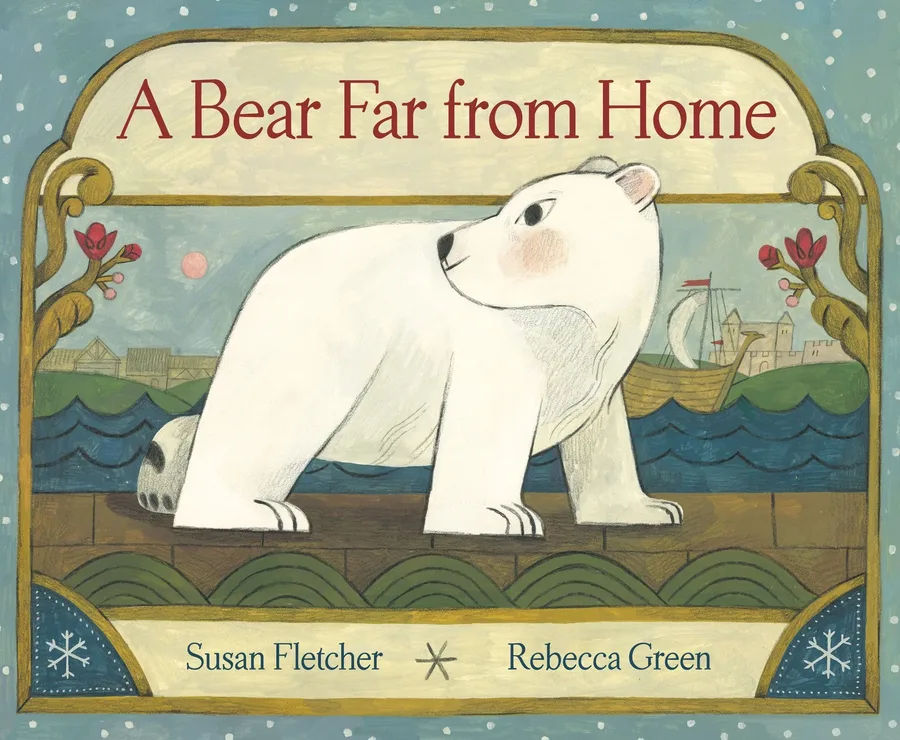 A Bear Far from HomeSusan Fletcher, illustrated by Rebecca GreenIn the mid-13th century, Haakon IV, the king of Norway, gave Henry III, the king of England, a white bear, which was sent to live at the Tower of London. A muzzle, iron chain, and “long, strong cord” were purchased to tether the live bear near the river and allow it to fish. Those are the facts—shared in an author’s note—that form the foundation of this artful and moving picture book that speculates on details not revealed by historical documents. The bear—here a female polar bear—is shown as a cub with her mother, learning to survive in the wild. “Imagine how the world must have seemed to her—white-bright and dazzling.” After being caught by trappers, she spends a caged journey on the deck of a ship to England and remains caged—part of a menagerie of unusual animals given to the king— until he orders the muzzle, the chain, and the “long, strong chord” so she can fish in the river. “And for a while, in this faraway land, she finds home.” Use of words like “imagine” and “perhaps” in the primary narrative helps readers cue into the conjecture, although the author’s note is essential for a full picture of how this account hangs on a small framework of known facts. Gorgeous acrylic, gouache, and colored pencil illustrations with decorative elements reminiscent of medieval book design further enhance this arresting volume.Historical People, Places, and EventsView book details
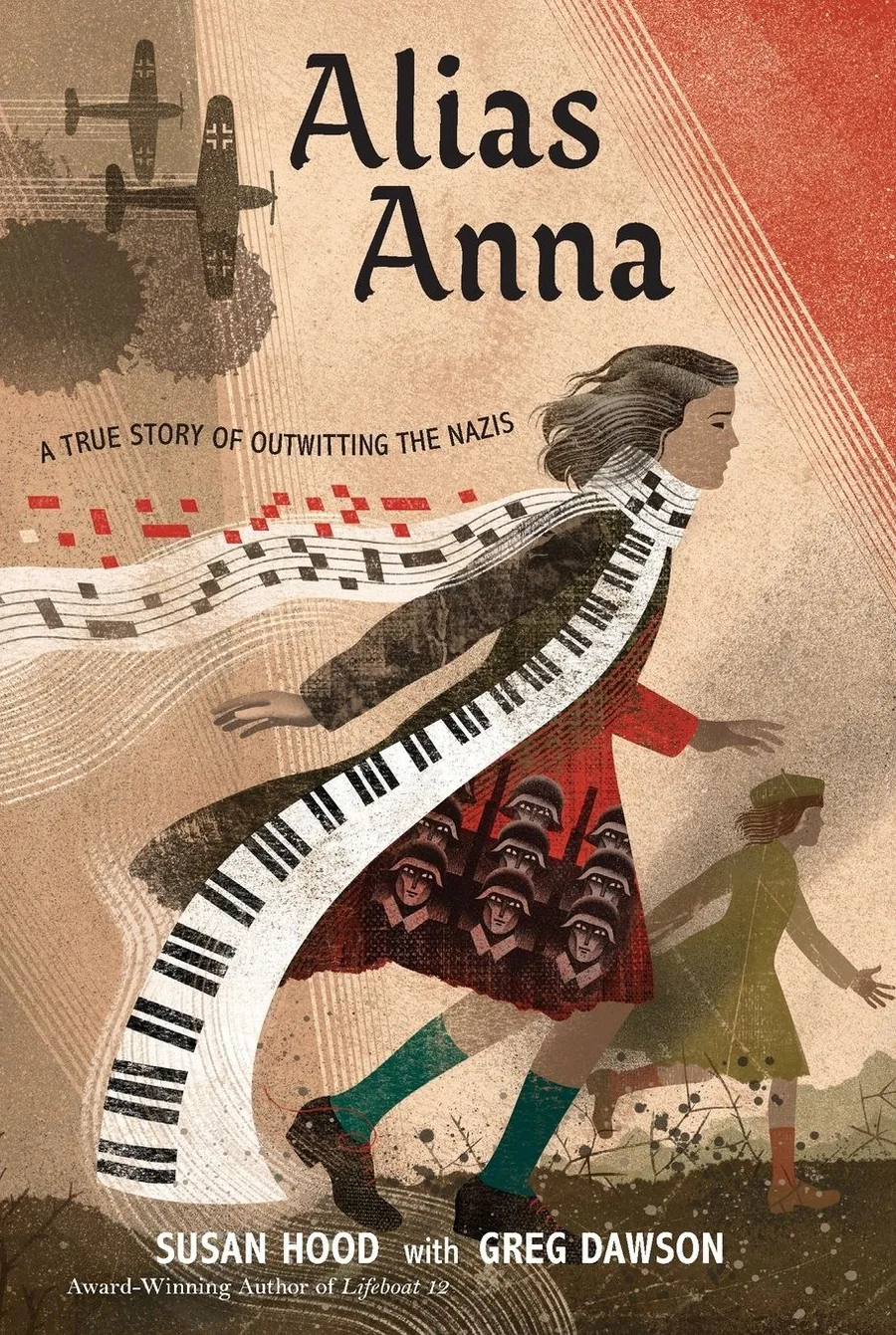 Alias Anna: A True Story of Outwitting the NazisSusan Hood, with Greg DawsonZhanna Arshanskaya and her sister, Frina, are talented musicians growing up in Ukraine in the 1930s. After their family is detained following the Nazi invasion of the Soviet Union during World War II, Zhanna manages to escape on the march to Drobytsky Yar (site of a mass killing of Jews). Her father’s instructions: Live. Later she miraculously reunites with her sister, although Frina won’t talk about how she escaped (the sense is she survived the mass killing and fled). The two girls eventually obtain false papers identifying them as Christian orphans: Anna and Marina. Their public performances in the past put them at risk of being recognized, but their talent sets them apart. They end up in a troop of traveling entertainers performing for Nazi officers. At war’s end, in a displaced person’s camp, they perform for Jewish survivors before the American camp commander helps them immigrate to the United States. Coauthor Greg Dawson is a journalist and Zhanna’s son. Zhanna never spoke of her experience when he was growing up. In the late 1990s, Zhanna’s granddaughter, then 13, asked Zhanna about her own life at 13 for a school assignment, and Zhanna finally began to tell her extraordinary story. This moving, lyrical account first grounds readers in Zhanna’s life before the Nazi invasion and then recounts the harrowing years that followed. It’s told in poems rich with musical references and divided into “movements.” End matter includes black-and-white photographs, Dawson’s fascinating research journey, poetry notes, and more.Historical People, Places, and EventsLexile Text Measure 910LATOS Book Level 5.9View book details
 American Murderer: The Parasite That Haunted the SouthGail JarrowThe newest installment of Jarrow’s “Medical Fiascoes” series delves into the devastating impact and attempted eradication of hookworm in the American South. The species in question, Necator americanus, or “American murderer,” was discovered by epidemiologist Charles Wardell Stiles. Thriving in warm climates, the hookworm larva enters the body via the skin—often of bare feet—and travels in the bloodstream to the lungs, where it exits the capillaries and is swallowed. Once in the small intestine, it attaches itself and grows to maturity on the blood of its host. Dubbed “the lazy germ” by journalists, hookworm caused debilitating weakness and stunted growth in its victims. Because the eggs are expelled in feces, the primary cause of its spread in poor, rural Southern communities in the 19th and early 20th centuries was poorly built outhouses. In 1909, the Rockefeller Sanitary 20 Historical People, Place, and Events CCBC Choices 2023 Commission was established to educate, test, and treat the public as well as advocate for improved sanitation systems. Facing resistance from the public, journalists, and even medical professionals along the way, their efforts were moderately successful. Like the others in the series, this account provides necessary social and cultural context alongside robust (and horrifying) medical and scientific information.Historical People, Places, and EventsView book details
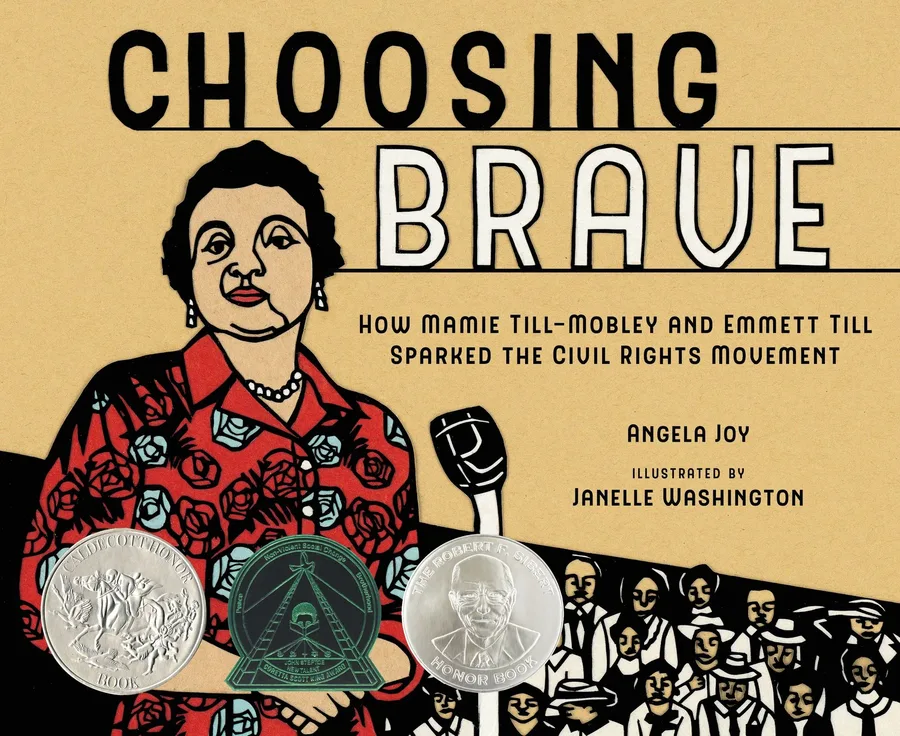 Choosing Brave: How Mamie Till-Mobley and Emmett Till Sparked the Civil Rights MovementAngela JoyAn informational picture book about Mamie Till-Mobley, the mother of Emmett Till, beautifully tells a wrenching story. The repeated refrain, “It was the braver thing,” underscores Mamie Till-Mobley’s lifelong inclination to do the thing that was often more frightening, more difficult. That included her decision to show the world Emmett’s body after the 14-year-old was lynched on a visit to relatives in Mississippi in 1955; as a result, the nation as a whole finally took notice of the brutality of racism. But before the aftermath of that awful event, Mamie and Emmett have space to live and breathe in these pages. Readers learn about Mamie’s childhood, her first marriage to Louis Till, and Emmett’s birth and childhood. They see Mamie’s love for her son, how she cared for him when he contracted polio and taught him to whistle to help calm himself when he was struggling with the stutter caused by the disease. In the aftermath of his murder, when his white killers were found not guilty, readers see her grief matched by courage as she continued to live a life of purpose. Every decision made and every judicious word chosen by the author is weighted with feeling, while the remarkable paper-cut illustrations, reproduced on matte pages in muted shades, are full of intentionality of line and movement. Exceptional back matter—including an author’s note telling more about Mamie’s life and the life and death of Emmett, a glossary, a timeline, and a playlist—round out this outstanding work of nonfiction.Historical People, Places, and EventsLexile Text Measure 680LATOS Book Level 4.4View book details
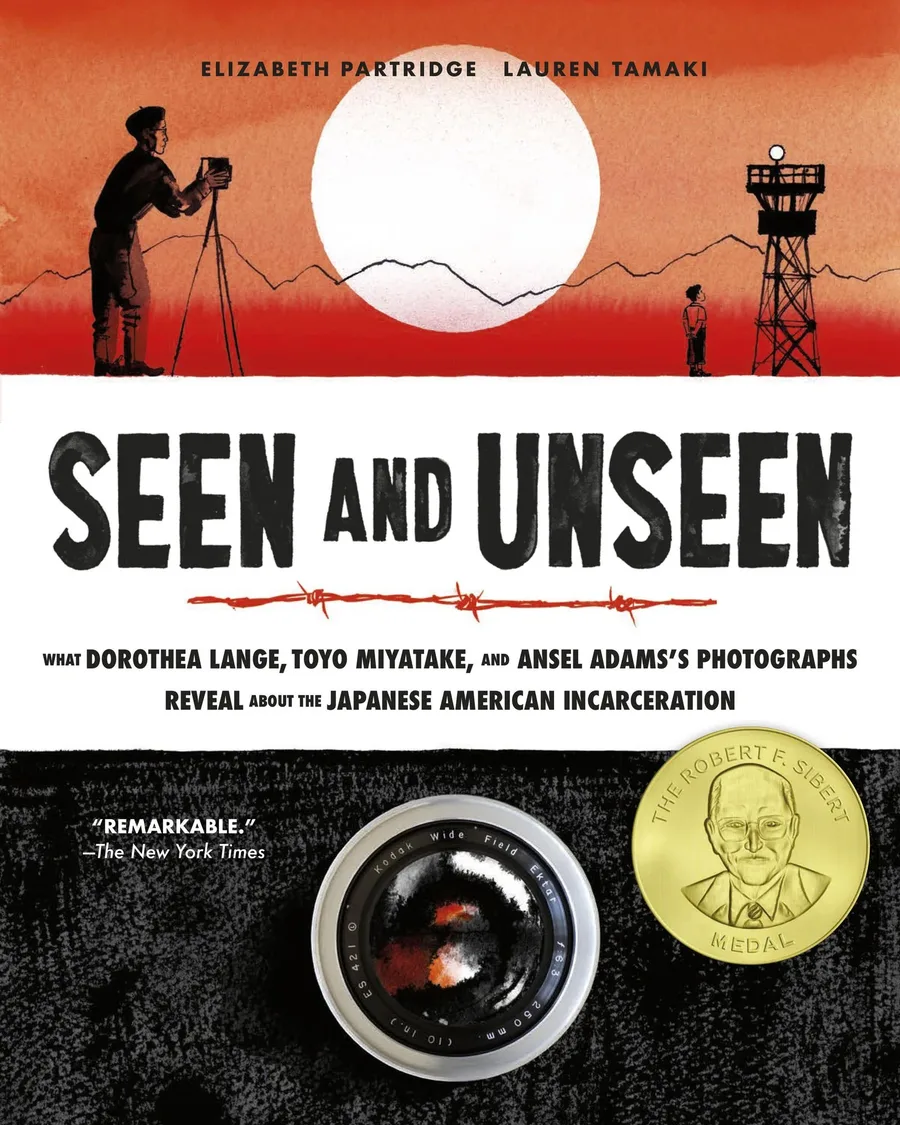 Seen and Unseen: What Dorothea Lange, Toyo Miyatake, and Ansel Adams’s Photographs Reveal about the Japanese American IncarcerationElizabeth PartridgeThrough the work of three photographers, a dynamic, probing account examines the U.S. government’s imprisonment of people of Japanese descent during World War II, inviting readers to consider what was seen and what went unseen, and why. The photographers had different approaches and faced unique constraints. Dorothea Lange, hired by the War Relocation Authority, was determined to document the injustice of what was happening, but many of her candid photos were censored by the U.S. Military. In his effort to “document everything,” Toyo Miyatake, a prisoner at Manzanar, made a secret camera and had film smuggled in. He captured conditions and moments among the prisoners that no one else could; later the government asked him to photograph milestones, such as weddings, in the camp (although at first they required that a white person push the shutter on shots he’d framed). Ansel Adams, hired by Manzanar’s director to take photos that might help the prisoners gain acceptance in society after their release, took posed images to show them as “hardworking, cheerful, and resilient.” The largely chronological, relatively short narrative provides additional details about Japanese American incarceration, such as the divisiveness and fear inspired by the loyalty questionnaire. The black-and-white photographs and expressive line drawings, along with wonderful book design, amplify the volume’s impact and appeal. Notes from the author and illustrator, and an essay from the illustrator, “The Damage of the Model Minority Myth,” round out this impressive work.Historical People, Places, and EventsView book details
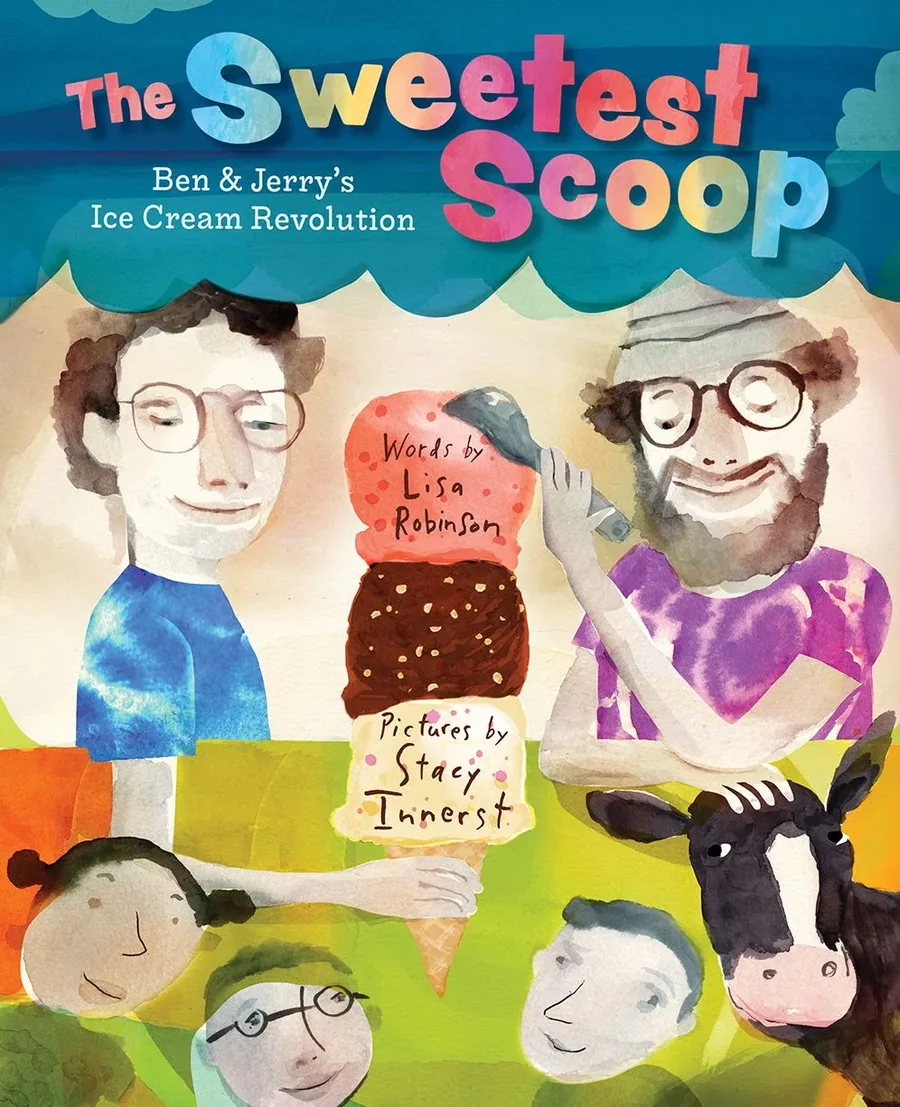 The Sweetest Scoop: Ben & Jerry’s Ice Cream RevolutionLisa Robinson, illustrated by Stacy InnerstInspired by a love of ice cream and guided by a strong sense of social justice, two friends established a shop that became a sensation. Both born in 1951, Ben Cohen and Jerry Greenfield were childhood friends whose first joint foray into the business of ice cream was a summer gig on an ice cream truck. Years later, when their initial career plans were foiled, they rented an abandoned gas station with big dreams in mind. Starting from the ground up, they renovated the shop, concocted an ice cream recipe, and experimented with sweet add- ins like candy and cookies. Their shop was an immediate success when it opened in 1978, and Ben and Jerry were creative and persistent business owners as they worked through obstacles and brainstormed creative flavors that would help their ice cream rise to the top. They got the public involved, too, first by inviting flavor suggestions (the famous “Cherry Garcia,” for instance) and then by soliciting support when Pillsbury blocked Ben & Jerry’s from stores by threatening to pull their own products. Most impressively, Ben and Jerry were guided by a strong sense of right and wrong; they paid employees fairly, “greened” their products and factory, and used their products to advocate for environmental and social-justice causes. Loose, colorful ink-and-watercolor illustrations complement a lively, conversational narrative with no shortage of ice cream jokes.Historical People, Places, and EventsView book details
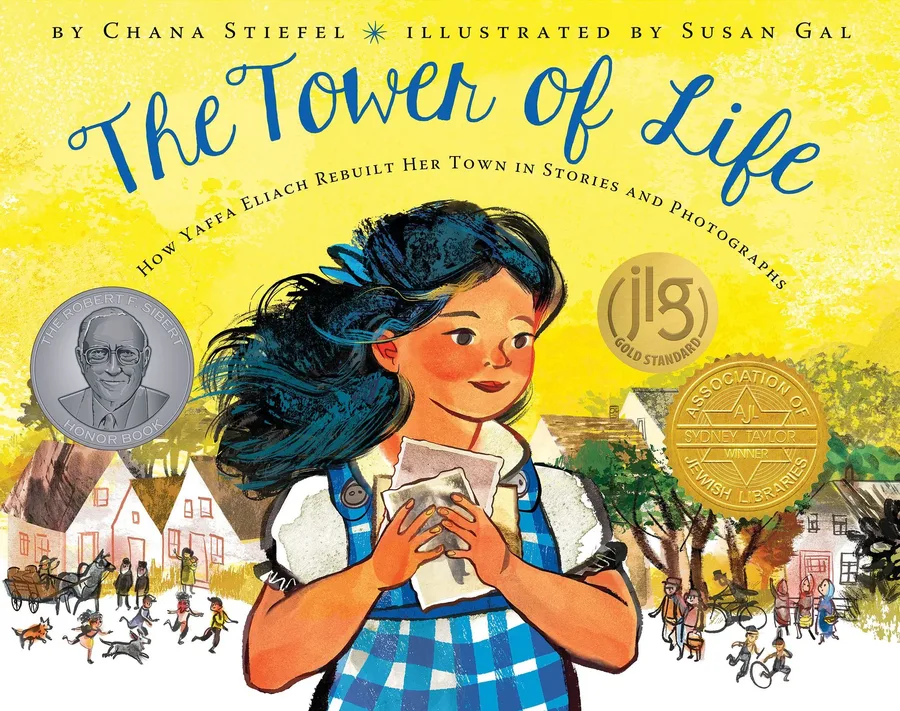 The Tower of Life: How Yaffa Eliach Rebuilt Her Town in Stories and PhotographsChana StiefelAs a young Jewish child living in the small shtetl of Eishyshok in Poland, Yaffa Eliach was rooted in family, community, and history. Yaffa loved helping her Grandma Alte, a photographer who took portraits of the people of Eishyshok that they would send off to relatives around the world. When Yaffa was six, the Nazis marched into Eishyshok. Yaffa’s family escaped; most of the town’s 3,500 Jewish citizens were killed. Yaffa and her family survived the war in hiding, moving from place to place. After the war, she came to the United States and became a historian. Years later, President Jimmy Carter invited her to help create a Holocaust memorial for the U.S. Holocaust Memorial Museum. Yaffa embarked on a 17-year global journey to collect photographs of her fellow Jewish citizens of Eishyshok. The resulting Tower of Life exhibit celebrates the lives and people of her village: “A world filled with love, laughter, and light.” This remarkable account is a superb testament to its subject, acknowledging dark times and awful truths but focusing on light and life. Spirited, sometimes appropriately moody ink, watercolor, and digital collage illustrations perfectly match the story’s shifting tenor throughout.Historical People, Places, and EventsLexile Text Measure 750LATOS Book Level 4.8View book details
 Love in the LibraryMaggie Tokuda-HallA story set against the backdrop of the imprisonment of Japanese and Japanese Americans during World War II finds hope in the midst of frustration, anger, and heartache. Tama lives behind barbed wire in Minidoka, where it’s brutally cold in winter and blistering in summer. She has no idea if she’ll ever be able to leave the incarceration camp. Most days are the same: “Constant questions. Constant worries. Constant fear.” Tama works in the library, where there are other constants: Books—the magic of how many worlds can fit inside the library’s four walls is something Tama calls “[m]iraculous”—and George. George comes to the library often and always has a smile for her. When she’s overwhelmed by the unfairness of what’s happened to them and too sad to smile back, George takes her hand and gives her a word for that, too: “Human.” They fall in love and marry, and their first child is born in Minidoka. “The love for the family they made was constant … To fall in love is already a gift. But to fall in love in a place like Minidoka … that was miraculous. That was humans doing what humans do best.” Set against gouache and watercolor illustrations in a subdued palette, this picture book is inspired by the story of the author’s maternal 22 Historical People, Place, and Events CCBC Choices 2023 grandparents, whose photo is included with an author’s note that discusses how racism in America has also impacted other groups of people throughout U.S. history and today.Historical People, Places, and EventsLexile Text Measure 620LATOS Book Level 4View book details
Biography, Autobiography, and Memoir
9 selections
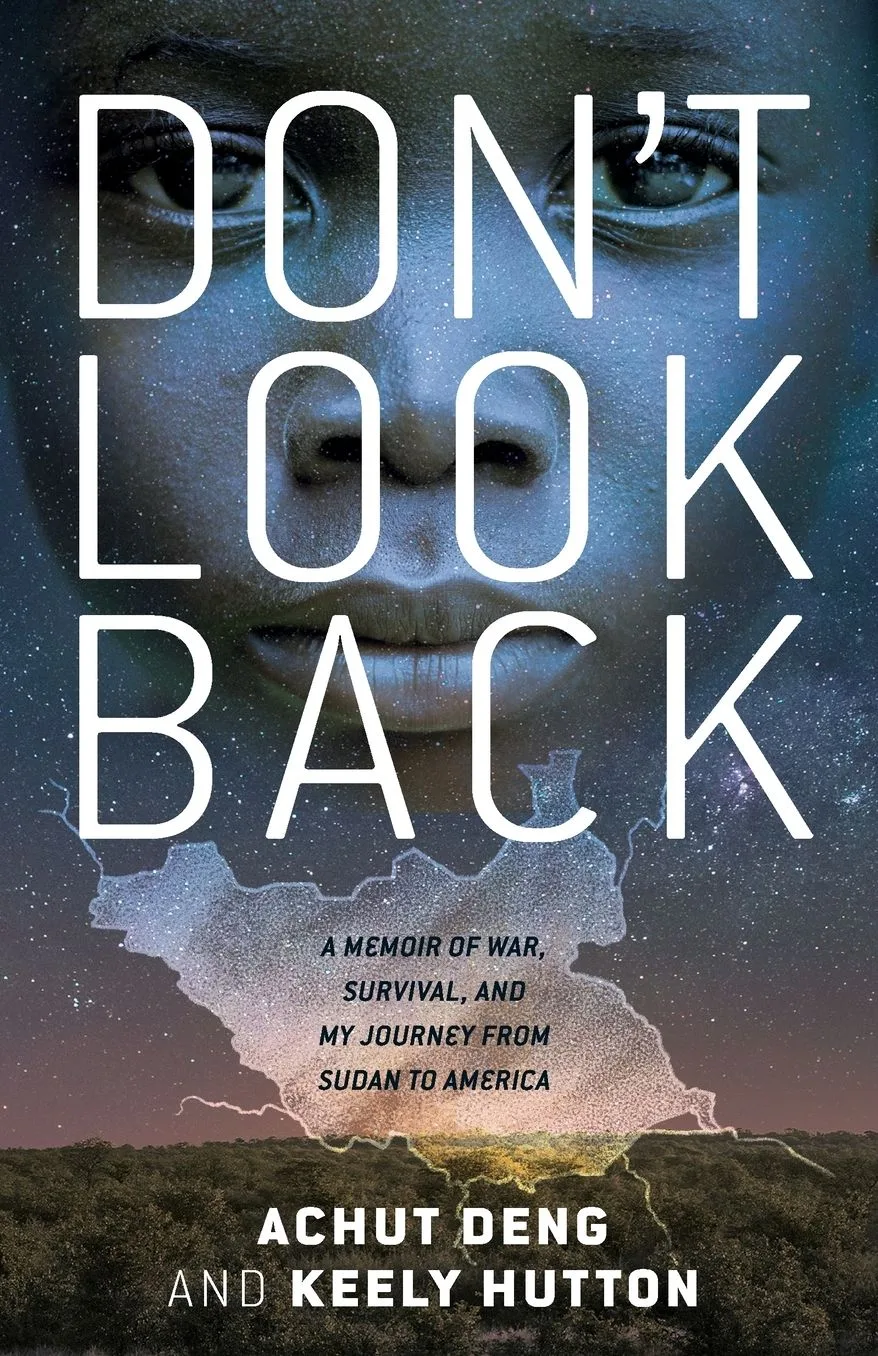 Don’t Look Back: A Memoir of War, Survival, and My Journey from Sudan to AmericaAchut Deng, Keely HuttonInterviewed in 2020 by the New York Times about the effects of COVID-19 on immigrants at a meat-packing plant in South Dakota, Achut Deng worked with children’s book author Keely Hutton to tell her full story in this riveting memoir. Achut was born during a time of political upheaval in southern Sudan in the mid-1980s. After the southern Sudanese split into two factions, violence came close to her home. She was seven the night Nuer soldiers invaded her Dinka village. Fleeing with her grandmother, Koko, and teenage aunt and uncle, she never saw her home again. The second night, Koko died while protecting Achut. Soldiers rescued Achut and the few survivors. Achut, orphaned, became connected with her mother’s good friend Adual, who cared for Achut while they were in a military prison camp. Eventually escaping, Achut, Adual, and a group of women and children made the difficult journey by foot to a refugee camp in Kenya. Years later, after experiencing the death of Adual and the traumas of daily life at the under-resourced camp, Achut was selected to move to the United States, along with a few male family members with whom she was reunited. While under the care of her relatives, Achut was sexually abused and contemplated suicide. With the determination that guided her so many times before, Achut escaped and built a life for herself. Despite a young life full of loss and cruelty, Achut’s visceral and harrowing memoir carries an undercurrent of hope and love.Biography, Autobiography, and MemoirView book details
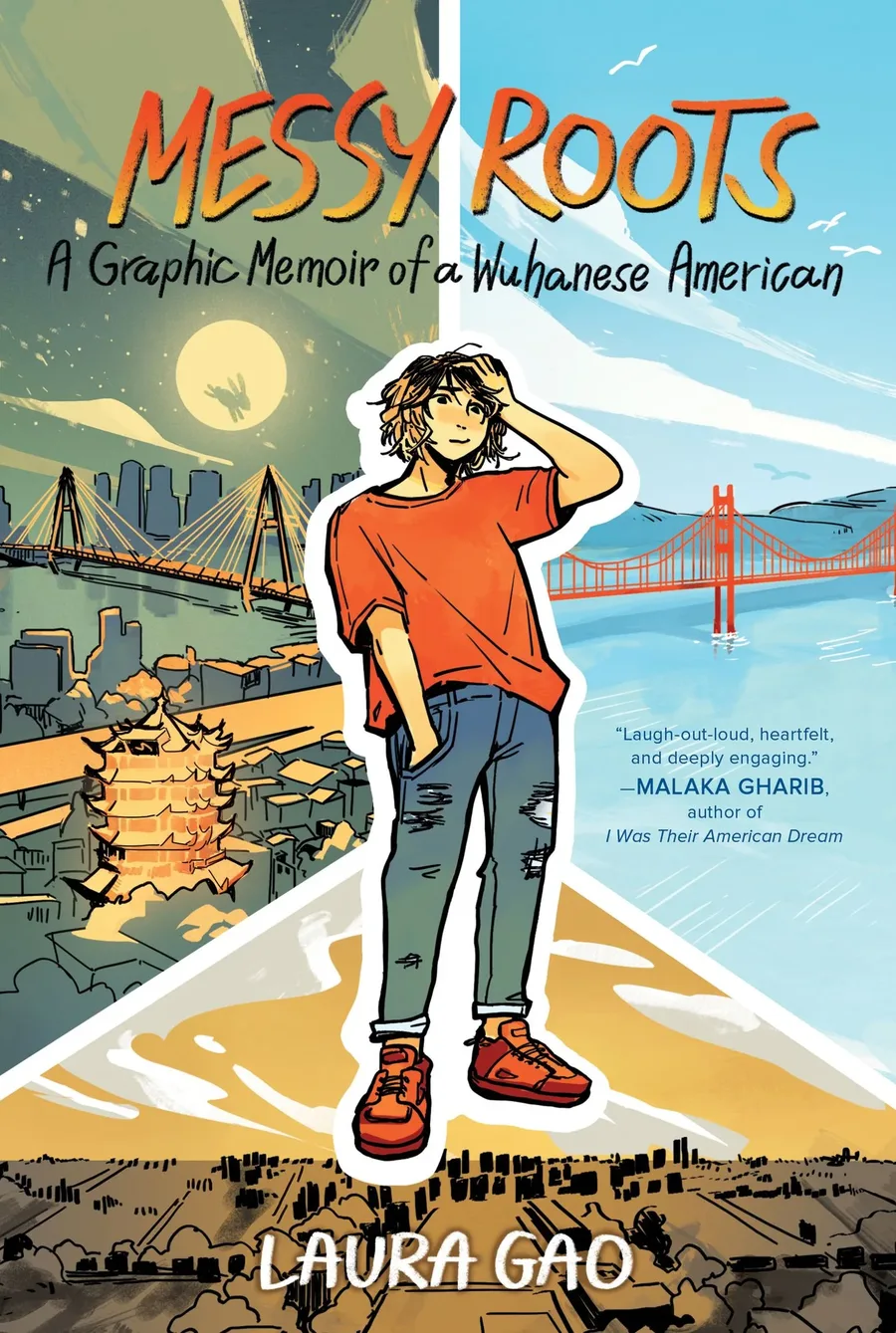 Messy Roots: A Graphic Memoir of a Wuhanese AmericanLaura GaoLaura Gao frames this lively and insightful look at her immigrant experience in the United States with memories of life in Wuhan when she was a young child and her experiences as a Chinese American during the pandemic. The tensions and challenges of being an immigrant impact Laura’s life at home, at school, and in the larger world; as well as her reunion with family members when she finally returns to visit Wuhan when she’s a young adult—will she have anything in common with her cousins anymore? (She does, including their shared love of White Rabbit candy and High School Musical.) In middle school, Laura rejects her parents’ pressure to be great at math and takes up basketball; as a high schooler she finds an even deeper sense of belonging among fellow artists. In college, she struggles with the idea of coming out, especially to her family, once she realizes she’s queer. Throughout her life there is particular tension between her and her dad. Immediately after college, she moves with friends to the Bay Area, but her mother’s cancer diagnosis brings her home and brings her closer to her father, too. The final chapter, “The Wuhan I Love,” shows that the place she originally comes from and the family members who are still there are so important to her sense of self and sense of the world in a graphic memoir told with humor and honesty.Biography, Autobiography, and MemoirView book details
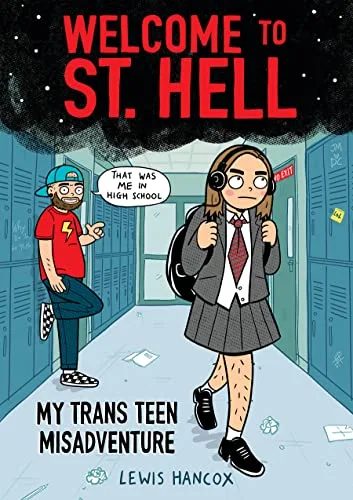 Welcome to St. Hell: My Trans Teen MisadventureLewis HancoxThis candid and humorous graphic novel memoir recounts the author’s experiences growing up in the early 2000s in a small town in the United Kingdom. Many of the memoir’s early episodes tackle familiar adolescent dramas of first crushes, fashion fiascos, friendships, and family struggles, through the additional layer and perspective of a young person deeply uncomfortable in their own body. Set in the nascent days of the internet, it’s not until later that Lois will discover the transgender community through YouTube via the encouragement of an art teacher. Narrated by his present self, Lewis pops up in panels with his old self, Lois, at various states of identity and transition, with reminders that his future self will be much happier. Additionally, the author interviews critical friends and family members about their memories of difficult moments and revelations, which are thoughtfully juxtaposed through the visual text. Described as the handbook he wished he would have had, Hancox’s memoir is compelling, funny, and full of hope.Biography, Autobiography, and MemoirView book details
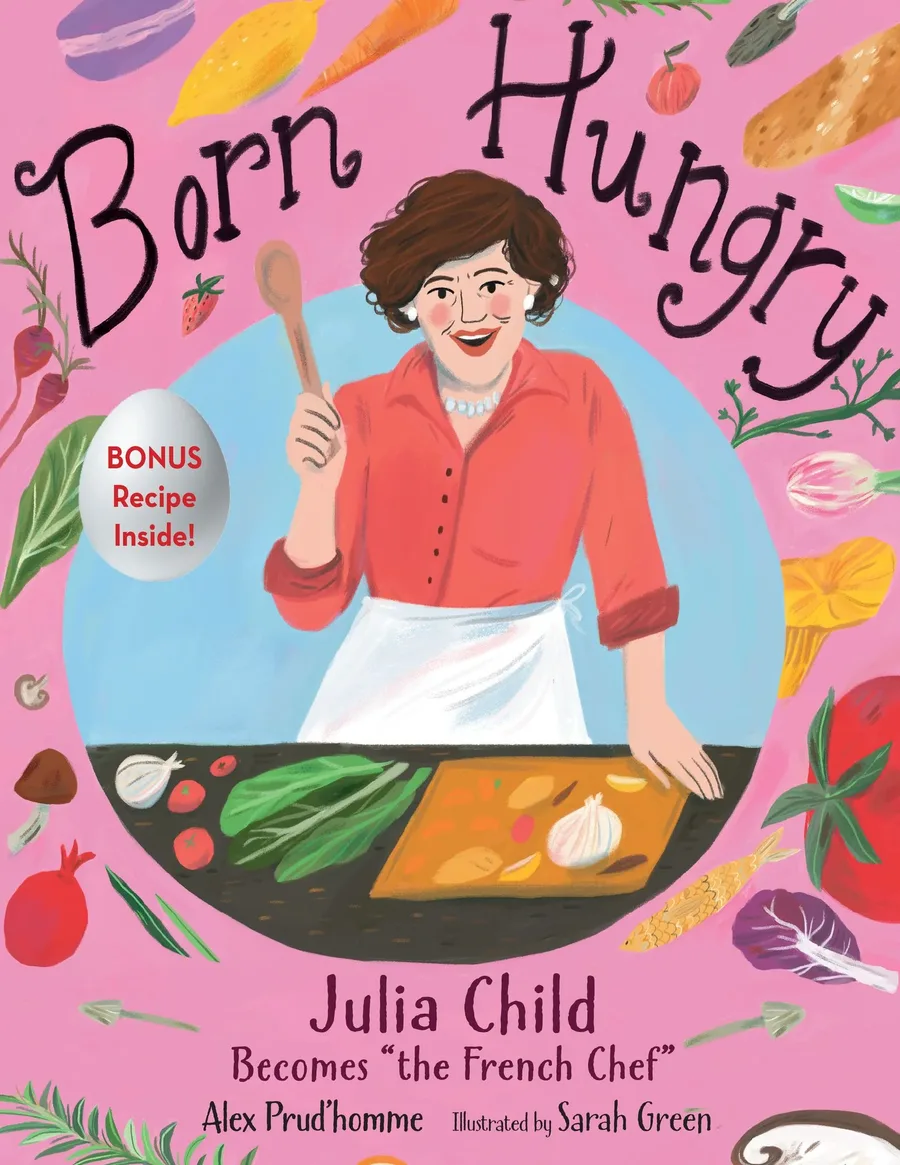 Born Hungry: Julia Child Becomes “the French Chef.”Alex Prud’homme, illustrated by Sarah GreenA spirited biography begins with an epigraph by Julia Child: “No one is born a great cook, one learns by doing.” And “do” she did. Born Julia McWilliams, Julia grew up knowing nothing at all about cooking. As a clerk typist for the U.S. Office of Strategic Services during World War II, she met future husband Paul Child, who introduced her to the delights of French cuisine. By the time they got married, Julia had created one recipe—for shark repellant. She still did not know her way around a kitchen. But after a “life-changing” French meal of sole meunière, she was determined to learn how to cook fresh, flavorful food herself. The only woman enrolled in her classes at Le Cordon Bleu, she was mentored by chef Max Bugnard, who taught her not only culinary techniques but also how to select the freshest, most delicious ingredients available at outdoor markets. Perhaps more than anything, Julia cooked with good humor, patience, and passion. Although her professional successes (cookbooks, her own cooking show) are detailed in an author’s note, the main narrative sheds a light on her love of learning, passion for good food, and cheerful attitude, all of which served her well on her way to becoming a great and beloved chef. Vibrant digital illustrations capture her personality and physical presence (she was 6’2”), as well as the adoration between Julia and Paul.Biography, Autobiography, and MemoirView book details
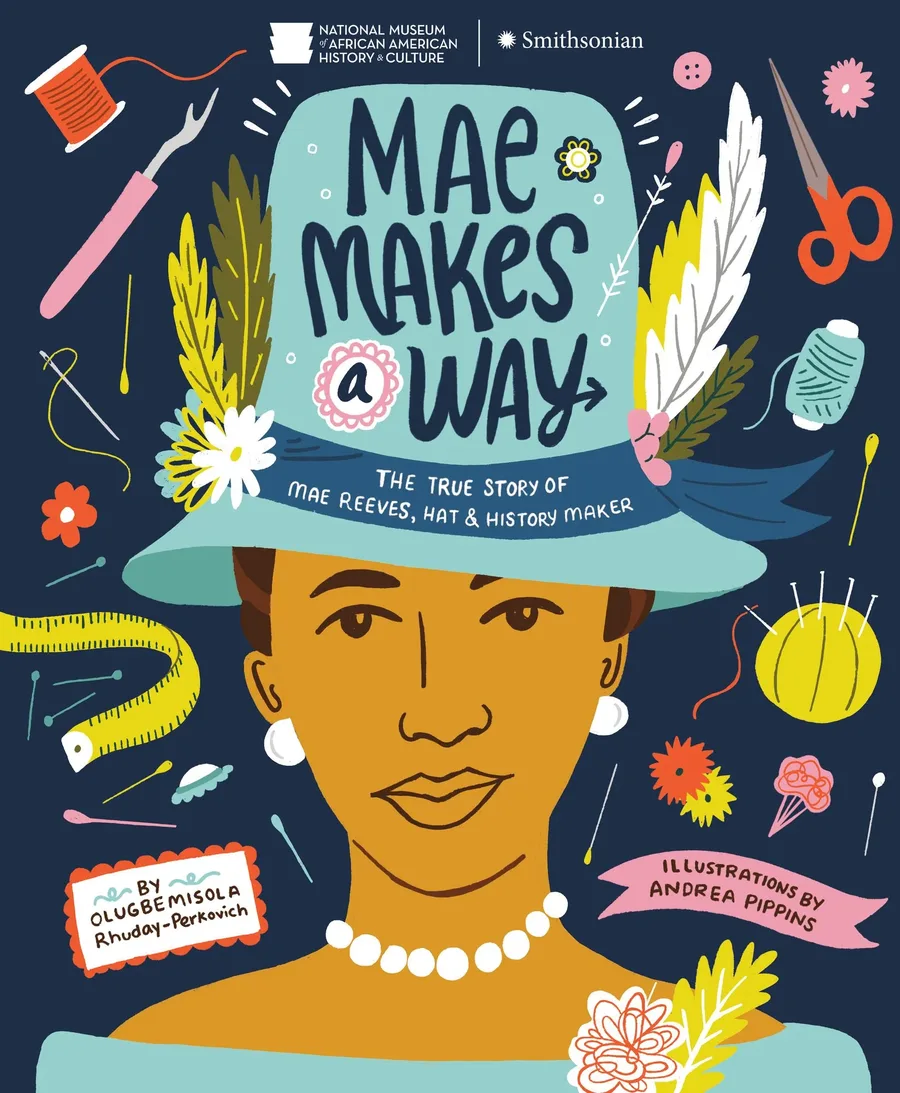 Mae Makes a Way: The True Story of Mae Reeves, Hat & History MakerOlugbemisola Rhuday-Perkovich, illustrated by Andrea PippinsAs a child growing up in Georgia, African American Mae Reeves wrote plays and sewed doll clothes she’d designed herself. She taught in a one-room school while still a teenager before joining the Great Migration by moving to Chicago and attending the Chicago School of Millinery. Later she relocated to Philadelphia, where she ran her own custom hat-making business. Mae’s clients included famous entertainers like Marian Anderson and Ella Fitzgerald, as well as “housekeepers, teachers, and the faithful church ladies who believed Sunday mornings were for showstoppers.” Her creativity, business prowess, and unfailing generosity made Mae Reeves a pillar in her community. Her shop has been re- created as an exhibit in the Smithsonian’s National Museum of African American History and Culture (NMAAHC). The significance of women’s hats in African American history is emphasized throughout this biography: “When a Black woman went out wearing a hat and gloves, there was a chance she’d be shown more respect. Hats were a way for these queens to be SEEN, shining a light on the dignity they always had.” Two pages of additional end matter offer interviews with Mae’s daughter and the Head of Collections at the NMAAHC, as well as photographs of two of Mae Reeves’s hats.Biography, Autobiography, and MemoirView book details
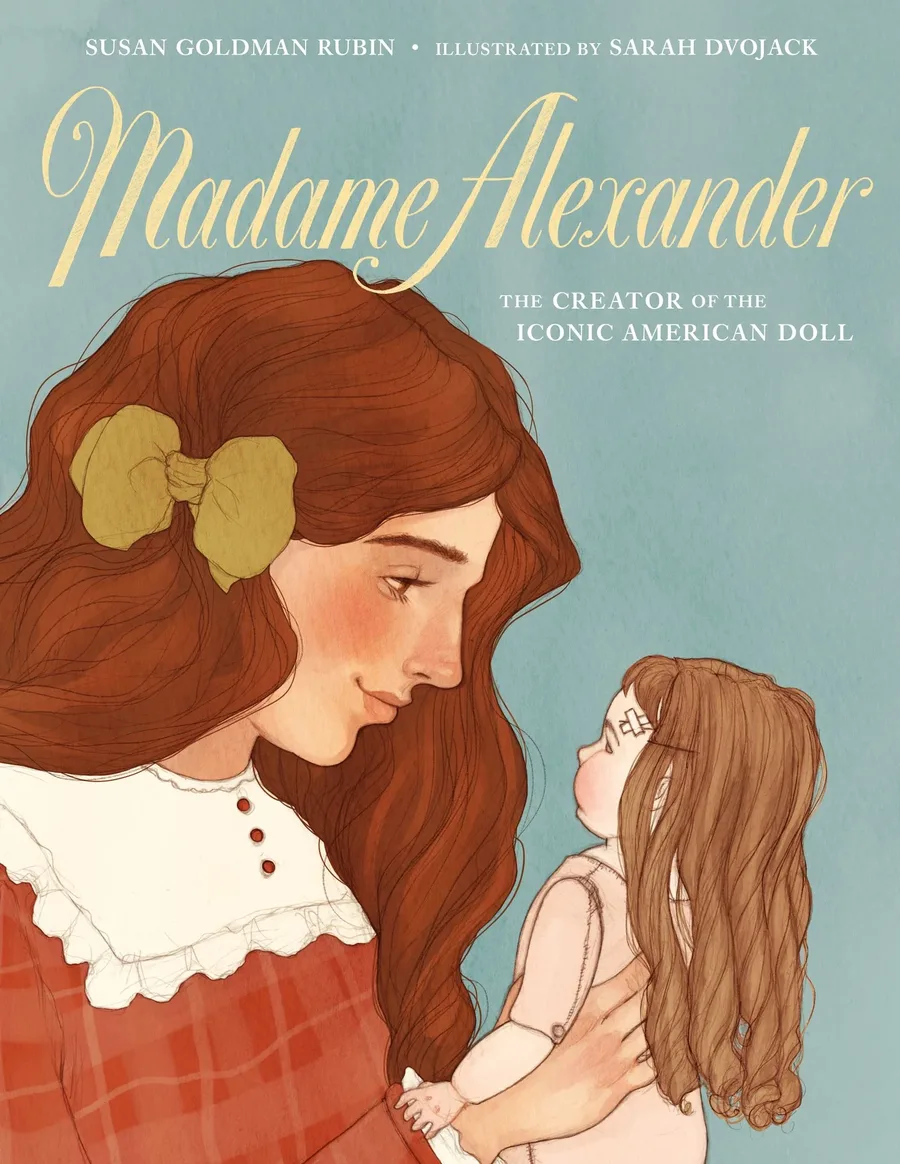 Madame Alexander: The Creator of the Iconic American DollSusan Goldman Rubin, illustrated by Sarah DvojackThe daughter of white Jewish immigrants, Beatrice Alexander grew up helping her father in his doll hospital on the bottom floor of their home on the Lower East Side at the turn of the 20th century. There, surrounded by cabinets bursting with doll parts, her father washed, repaired, built, and sold china dolls to wealthy customers. Beatrice loved to help care for the dolls during their stay in the hospital, dreaming up new ideas for dolls of her own—perhaps ones that would be unbreakable. As a young adult during World War I, when there was a shortage of materials to create and patch dolls, Beatrice crafted cloth dolls dressed as nurses or wearing old-fashioned dresses. After the war, she sold dozens of baby dolls modeled after her daughter to FAO Schwarz, and her business only grew from there. Professionally, Beatrice became known as Madame Alexander, the head of a company that designed and created countless iconic dolls for American children. Fascinating details underscore the artistry, labor, and skill required to make dolls in an account that shows great respect for dolls and the people who love them.Biography, Autobiography, and MemoirView book details
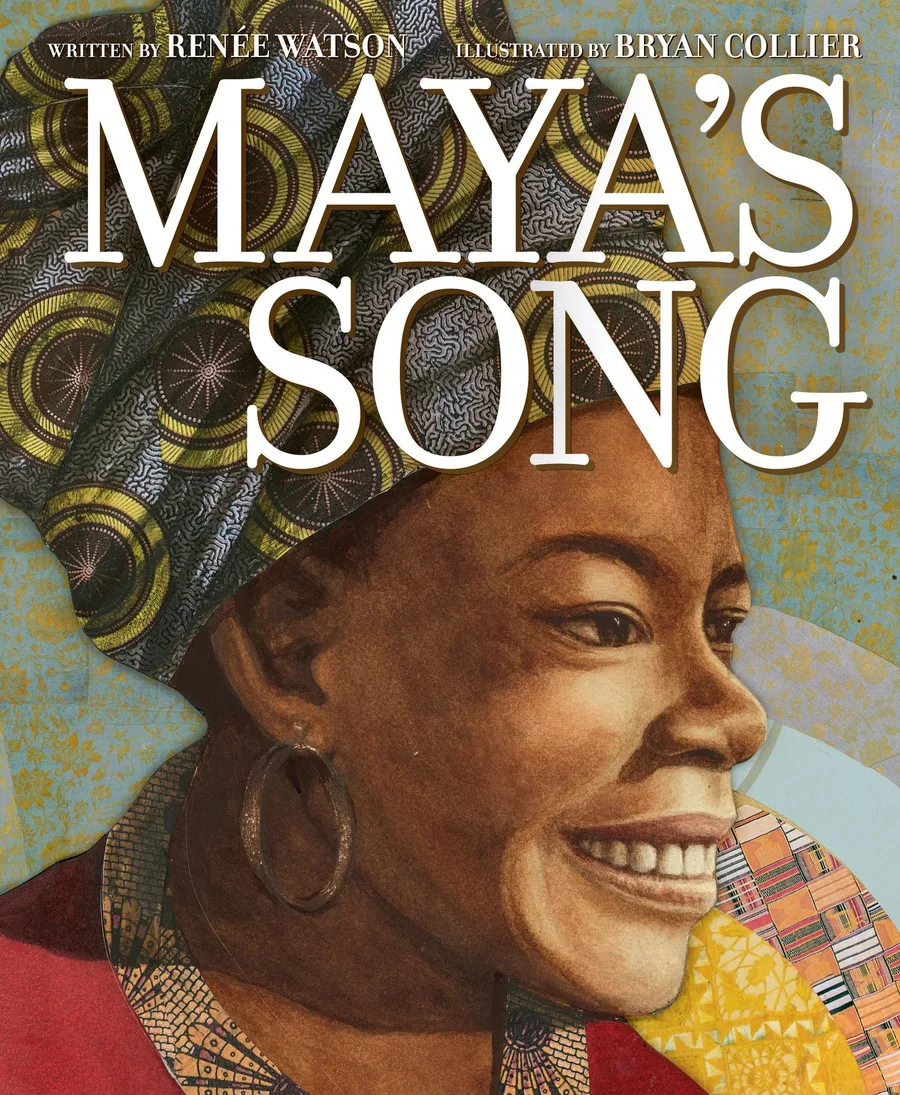 Maya’s SongRenée WatsonAn elegant biography in poems celebrates the distinctive voice and life of writer Maya Angelou. Born in 1928, Maya entered a world “that didn’t love Black girls.” When she was three, Maya was sent with her brother to live with their grandmother in Stamps, Arkansas. There she spent her time in a loving Black community, attending church and getting lost in books borrowed from the local white school. After a traumatic event, Maya stopped talking completely. “No words came out of Maya / for five years. / For five years, / hundreds of thousands of words came in.” Encouraged by people in her life and by the words of poets, Maya discovered her voice again and never stopped using it. She sang in countries around the world; engaged in civil rights activism; taught in Ghana; and wrote articles, essays, and books. She found countless ways to make her powerful voice heard. Soft watercolor and collage illustrations in warm earth tones provide glimpses of Maya in many and varied roles throughout her life.Biography, Autobiography, and MemoirView book details
 Play Like a Girl: A Graphic MemoirMisty Wilson, illustrated by David WilsonMisty is fiercely competitive and loves sports, especially football. When she decides to join the football team in seventh grade, she convinces her best friend, Bree, to do it with her. Bree doesn’t love the sport or the hard work and soon quits, but Misty sticks with it, earning a place in the starting lineup. Misty Wilson recounts the singular year in her life when she was not only navigating her position as the only girl on the football team—most players respect her, though one refuses to accept her presence—but also the changing relationships and social pressures of middle school that leave her feeling uncertain about where she fits in. At home, Misty’s stepdad is especially enthusiastic about her playing, but Misty feels ignored by her mom, who is overwhelmed caring for young twins. At the same time, Misty ignores her younger sister without seeing the parallels. The sports, friendship, and family storylines all seamlessly intertwine in this lively, honest, sometimes painfully funny (e.g., Misty’s first foray into using makeup) graphic memoir.Biography, Autobiography, and MemoirView book details
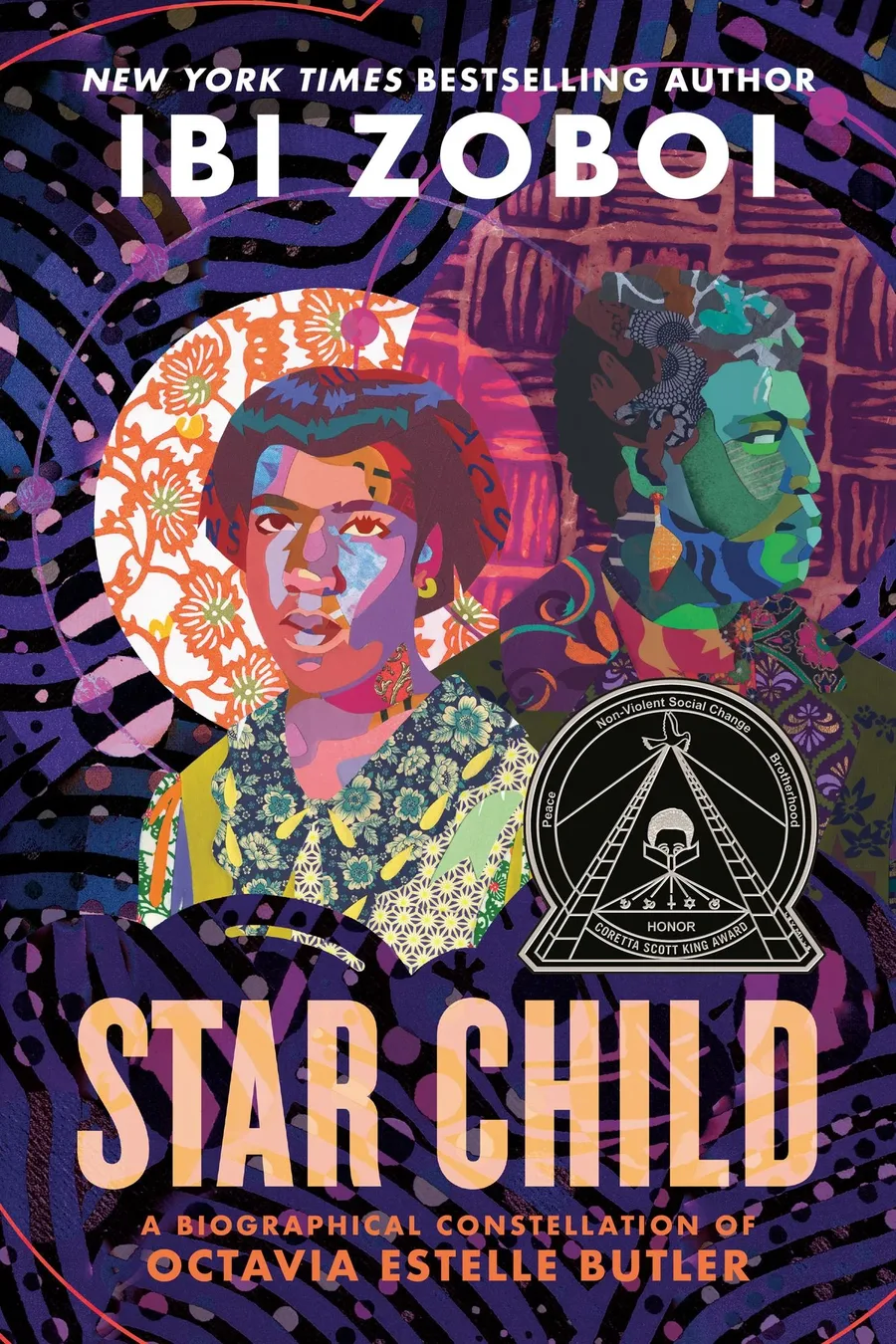 Star Child: A Biographical Constellation of Octavia Estelle ButlerIbi Zoboi“Our collective stories / are out there in the universe / and they become part of her / constellation / her vision for the future / born out of the imagination / of a little brown girl / who dreamed up new worlds.” (from “Stargazing”) An inspired biography uses poems and prose to explore the life of groundbreaking African American speculative and science 25 Biography, Autobiography, and Memoir CCBC Choices 2023 fiction writer Octavia Butler, whose writing helped define what is known as Afrofuturism. The engaging work reveals the life of a singular child who became a visionary writer, one who didn’t see herself reflected in the science fiction she grew up reading and watching and so created new worlds and works that have given countless others what she lacked: stories centering Black and brown characters, usually women. The narrative is framed around the motif of stars and the universe, with both the prose chapters and the poems connecting thematically and, in the case of concrete poems, structurally to the theme. Substantial quotes from Octavia Butler are incorporated throughout, set off typographically from author Ibi Zoboi’s poems and prose. A final chapter, “Kindred,” shifts from third to first person as Zoboi talks about her own experience as a reader of Butler and as an aspiring writer who got to meet and work with her at a writer’s workshop, underscoring that Butler is most certainly a writer whose life connects to that of contemporary readers, even as she created work that is forward thinking and timeless.Biography, Autobiography, and MemoirLexile Text Measure 1029LATOS Book Level 7View book details
Contemporary People, Places, and Issues
5 selections
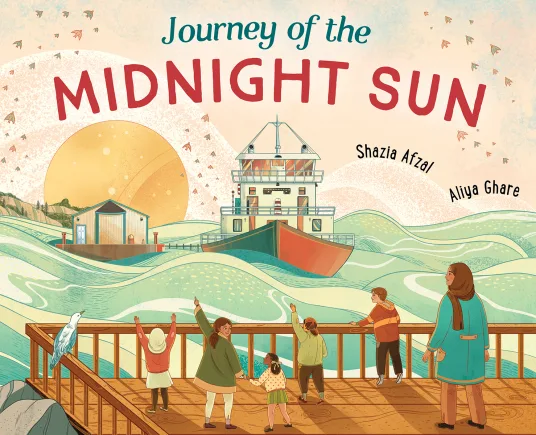 Journey of the Midnight SunShazia Afzal, illustrated by Aliya GhareWhen a Muslim community in Inuvik, 200 kilometers north of the Arctic Circle, outgrows its makeshift house of worship, a new mosque is delivered from the other end of the country. The Midnight Sun mosque is built in Winnipeg and loaded onto a truck to begin its 4,470-kilometer journey across Canada. Along the way, many people assist in the passage of such a wide load: moving road signs, directing traffic, lifting power lines, widening bridges, and sharing the road. The mosque arrives at the Hay River in time to board the final barge of the season, which will carry the Midnight Sun the last 1,800 kilometers to its destination. In Inuvik, the mosque receives its final touches. A carpenter travels there to build a minaret, and the people of Inuvik paint the interior walls and furnish the building with care. When the work is complete, the entire community—Muslims, Christians, Gwich’in First Nation Elders, and others—comes together to celebrate with a feast. A muted palette and clean art style accompany the straightforward narrative of a great feat of cooperation and community support.Contemporary People, Places, and IssuesLexile Text Measure AD840LATOS Book Level 5.4View book details
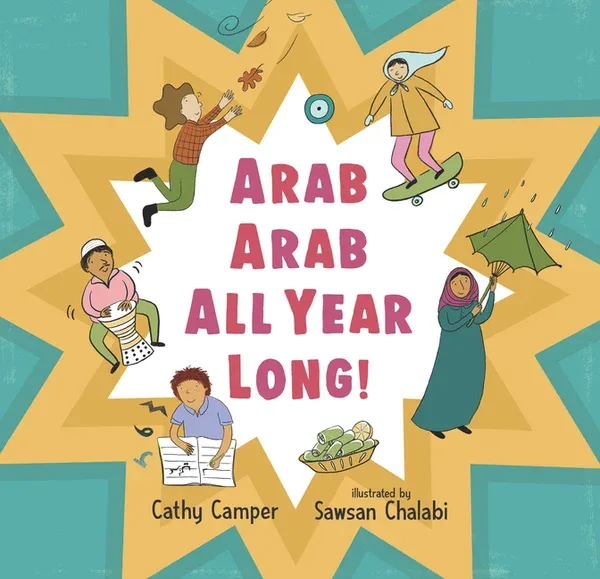 Arab Arab All Year Long!Cathy Camper, illustrated by Sawsan ChalabiVarious Arab traditions and cultural practices are observed all year round in this spirited picture book. Each month of the year gets a two-page spread while cheerful line drawings show Arab families and individuals with various skin tones, clothing styles, and interests engaging in a variety of activities, including but not limited to holiday celebrations and religious observances, with racial, religious, and cultural diversity among Arab people clearly shown. In February, inspired by a comic about Martin Luther King Jr., two children make a comic to educate their classmates about Ramadan, while March shows children making maamoul with their grandmother for Easter. The text celebrates other foods (warak enab and pomegranates), types of clothing (hijabs, keffiyehs), and art forms (a type of drum called a doumbek, henna designs, Arabic calligraphy). During special celebrations and on ordinary days, “no matter where we are, / no matter what we do, / we’re Arab, Arab, Arab, / the whole year through!”Contemporary People, Places, and IssuesLexile Text Measure 650LATOS Book Level 4.2View book details
 Unequal: A Story of AmericaMichael Eric Dyson, Marc FavreauThis smartly told, unflinching examination of the history of racism in the United States begins with a prologue acknowledging one of the realities of today: “This is a book of truth. So we’ll start by telling you the stone-cold fact that there are many people who do not want you to read it.” Each chapter examines a different dimension of white supremacy and suppression of Black people, including segregation, lynching, attacks on Black economic success, labor inequality, housing discrimination, education affirmative action, voting rights, activism, criminal justice and policing, environmental racism, and health care inequities. The short chapters begin with a brief spotlight on a contemporary person impacted by the issue before a historical deep dive of the topic. For example, an anecdote about Christian Cooper’s experience as a Black man birdwatching in Central Park in 2018 segues into a profile of Mary Church Terrell and her role in the history of legal segregation and perceived space ownership, from Jim Crow laws to Brown v. Board of Education. On their own, each chapter conveys how historical inequalities continue to shape the present. Collectively, they offer a compelling narrative for the interconnected and destructive forces designed to maintain inequality. The afterword again reflects current headlines and is a call for change: “The history we learn about in school is a battleground … Opponents of the truth want to close the curtains on the facts. Fortunately, it’s within your power to determine what is true and what is not.”Contemporary People, Places, and IssuesView book details
 Killer Underwear Invasion! How to Spot Fake News, Disinformation & Conspiracy TheoriesElise GravelA highly entertaining and informative book offers a comprehensive explanation of disinformation: what it is, why it’s made, how to spot it, and what makes it so dangerous. Written in comics, the information is delivered via colorful, amorphous beings with large, round eyes who ask questions and present scenarios illustrating the concepts they are discussing. For example, Mr. Wilson and Mr. Fmith are mayoral candidates who demonstrate the use of fake news by politicians and the potential impact of such disinformation. Exceptionally clear and accessible, this account is logically organized so that concepts and explanations build on what came before, and the examples clearly illuminate the potential impact of disinformation. For example: A commercial falsely claims that drinking shampoo will “cure every disease,” and anyone who says otherwise (i.e., doctors) is a liar. As a result, some people drink shampoo and get sick, and belief and trust in doctors and science is diminished. This leads to mistrust of science in other fields (climate science, for example) and related harmful decisions. The final chapter provides ten helpful, concrete tips for differentiating between “fake news” and actual news. Astute readers may connect several of the book’s examples with COVID and other real-life events and individuals.Contemporary People, Places, and IssuesView book details
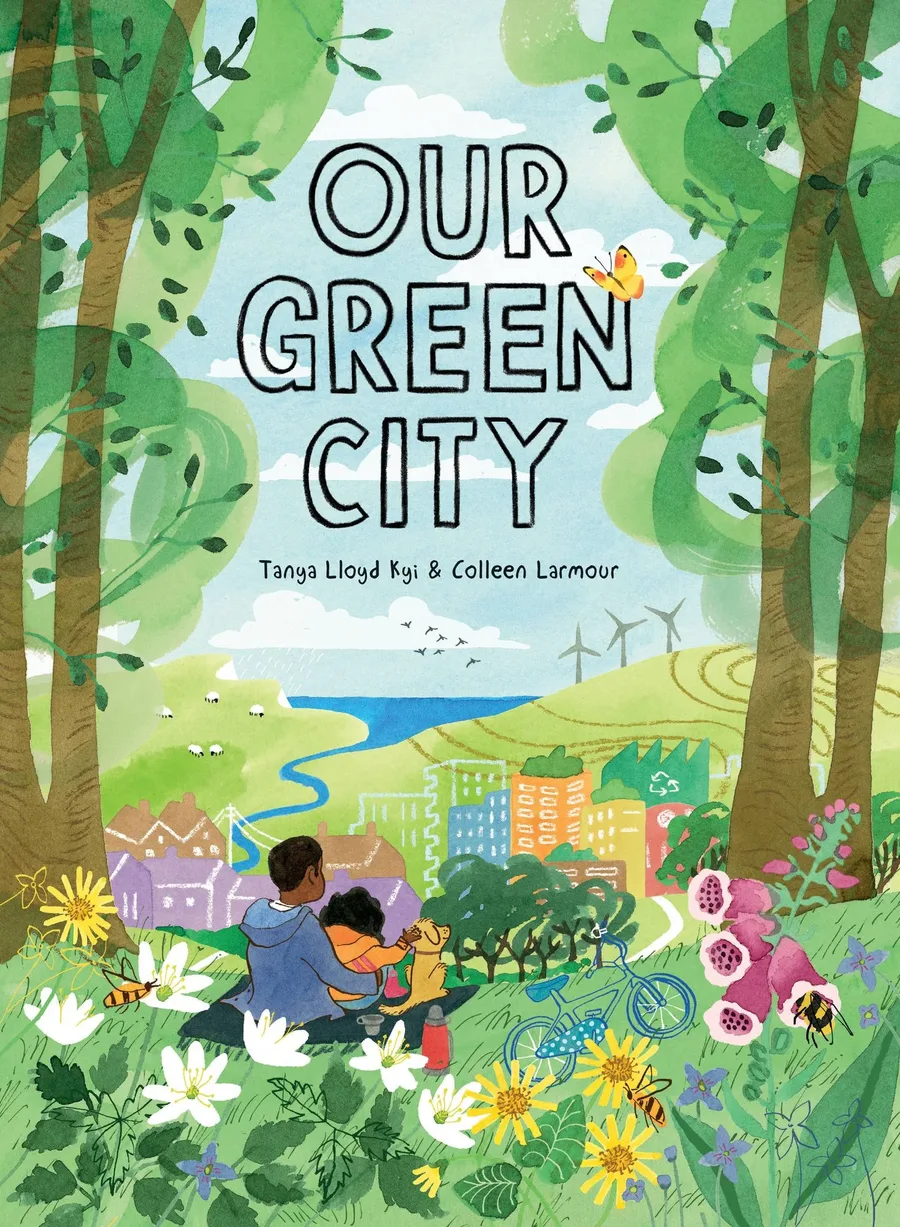 Our Green CityTanya Lloyd Kyi, illustrated by Colleen Larmour“Welcome to our green city... Being green means we take care of all living things.” This purposeful book about green practices at home and in a community has an interactive element for young children. Each double-page spread reveals a different scene from the fictional city and briefly discusses a specific aspect of environmentally friendly practices (e.g., transportation, energy, gardening and farming, green architecture, etc.). The narrative on each page ends with a question that invites readers to pore over the bright, energetic mixed-media illustrations showing scenes of life in the city and its diverse residents. Most questions are seek-and-find (“How many wheels can you count? … Who is hiding from the raindrops?”), although a few are open-ended, inviting discussion (“What should we do on this windy day?”).Contemporary People, Places, and IssuesView book details
Understanding Oneself and Others
7 selections
 What the Fact? Finding the Truth in All the NoiseSeema YasminBuckle up because this bold piece of nonfiction does not hold back. Dr. Seema Yasmin brings her experiences as a journalist, medical doctor, poet, and professor to the page in this vivid and enlightening discussion about facts, truth, and the business of information sharing. From the first page, Dr. Yasmin invites readers to challenge their thoughts about being a freethinker and to examine how content and ideas are manipulated by human behavior and big business. Using memorable examples from history, visual sidebars, and highlighted vocabulary, the author carefully walks through concepts such as contagious information, bias and beliefs, the evolution of journalism, the role of social media, and how to debunk and disagree. For example, an explanation of the inverted pyramid of news reporting (the lede, the body, and the tail) emphasizes how the instability of telegraph wire led to the shortening of news content in order to emphasize the most critical piece first. With a story’s chronology and facts less important than the headline, it’s easy to see the evolution of today’s hashtags and character counts. The positive tone of the text encourages readers to operate with a curious and critical mind and concludes with suggestions for how to find conversational middle-ground with others.Understanding Oneself and OthersView book details
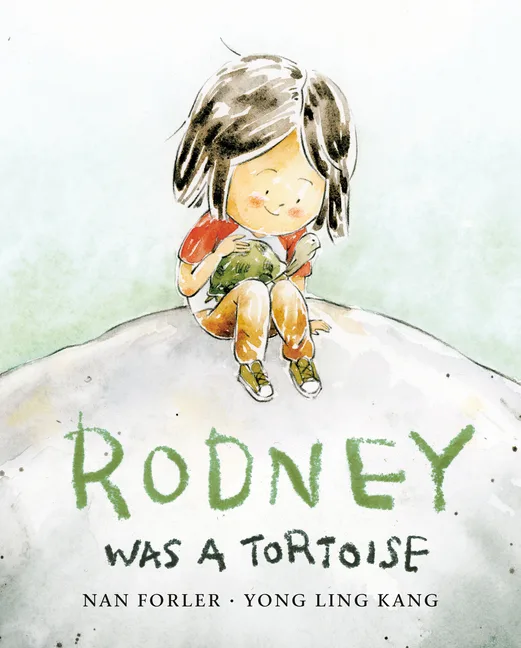 Rodney Was a TortoiseNan ForlerBernadette adores her tortoise Rodney, interacting with him in ways that may surprise those who doubt the species’s ability to be a gratifying pet. Bernadette (brown-skinned) engages with Rodney in ways well matched to his behavior, like the staring contests he inevitably wins because Bernadette always laughs first. When she reads animal stories aloud to Rodney at bedtime and says the tortoise lines, “she was sure she caught him smiling.” But Rodney is slowing down in his old age and one day he stops moving. Bernadette imagines he’s holding his breath as a joke, but her mother says Rodney is dead. The family holds a burial and tribute to Rodney’s many qualities, but in the days that follow, Bernadette continues to mourn, withdrawing from the other kids at school, who seem incomprehensibly oblivious to her loss. Receding into her metaphorical protective shell, Bernadette is isolated until classmate Amar acknowledges her sadness and offers the sympathy she needs to move forward. Bernadette’s happiness and grief both are conveyed through distinctive details in a narrative that adeptly balances a hard topic with moments of laugh-out-loud humor.Understanding Oneself and OthersLexile Text Measure AD560LATOS Book Level 3.7View book details
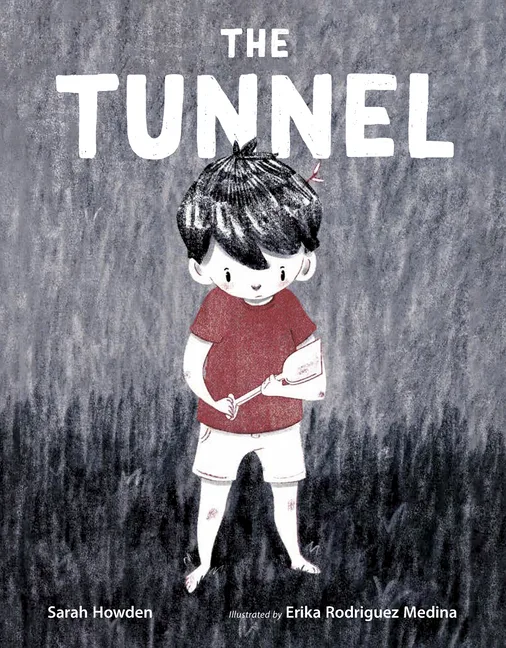 The TunnelSarah Howden“Something bad happened. I don’t like to think about it. Now it’s just me and my mom in the quiet house.” A young boy wants to be alone following an unspecified trauma. Shaded black and white illustrations, with red lines and accents, accentuate the somber mood. Seeking refuge in his room, the boy begins to dig, creating a tunnel from the floor of his bedroom to his backyard. Standing outside in the moonlight, he looks in at his empty room, at his mom being comforted by his aunt, and wonders if he should disappear. Sitting with the feeling, he feels a shift and decides to tunnel back inside, for now. In his room, the boy’s mother wonders where he escaped. “I think she knows I need a secret place. She might have secret places of her own. I think she knows we sometimes travel far away. Alone, where we don’t have to talk.” The tunnel is an effective metaphor for affirming the importance of a space of safety and silence in this quiet, sensitive picture book.Understanding Oneself and OthersLexile Text Measure AD460LATOS Book Level 3.1View book details
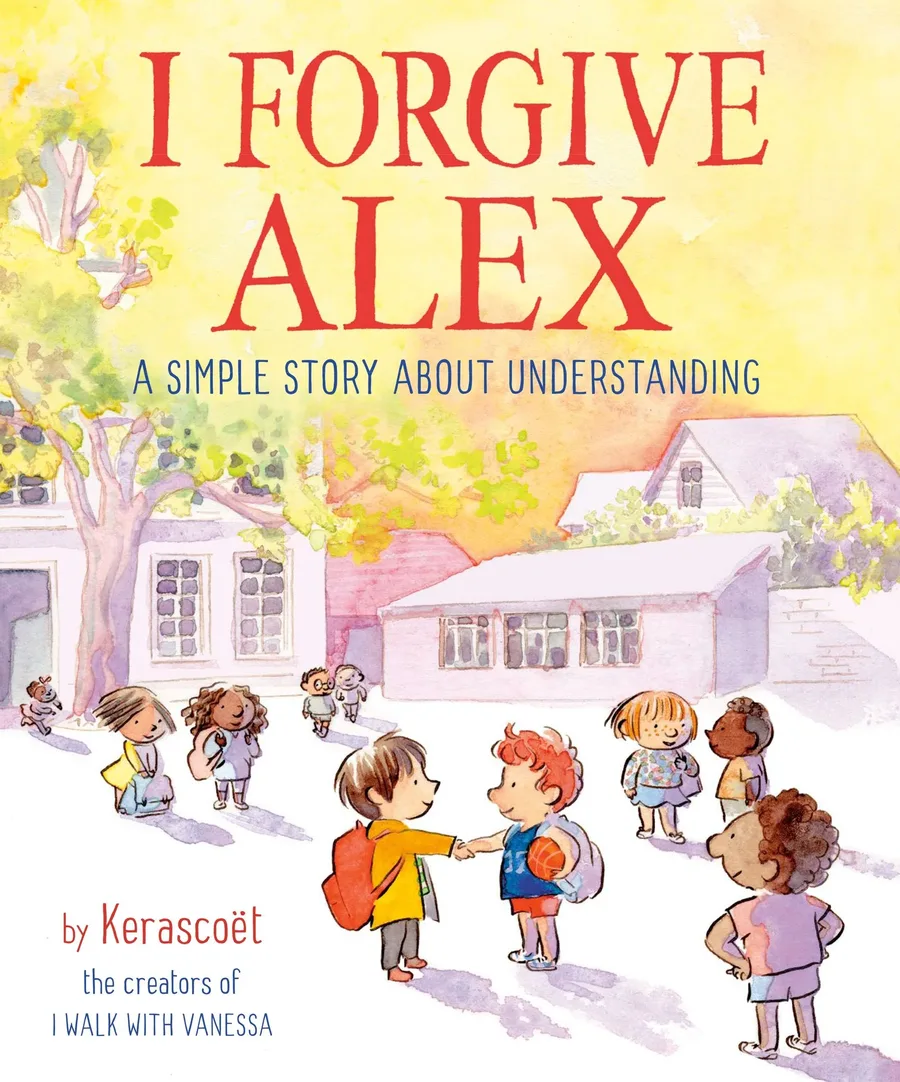 I Forgive Alex: A Simple Story about UnderstandingKerascoëtDressed in a jersey, Alex (white) is playing a game of keep-the-basketball-away-from- his-teammates in the wet schoolyard one day. Nearby, a white boy arranges several of his drawings on a bench for classmates to admire. When Alex carelessly tosses the ball over several kids’ heads, it lands on the drawings, knocking them off the bench and into a puddle, where they are ruined. Classmates rush to the artist to offer sympathy and shoot angry glares at Alex, who had already been annoying them with his game. Inside, a clearly remorseful and embarrassed Alex is shunned by his classmates, while the artist pulls himself together after a brief cry. After school, the artist approaches Alex; they talk and shake hands, and the other classmates follow the artist’s lead in forgiving him. An additional peace offering—a drawing Alex makes of himself and the artist playing basketball together—makes things even better the next morning. Appealing ink-and- watercolor illustrations of children with round, oversized heads clearly depict both the plot and, as importantly, the emotions in this wordless book.Understanding Oneself and OthersView book details
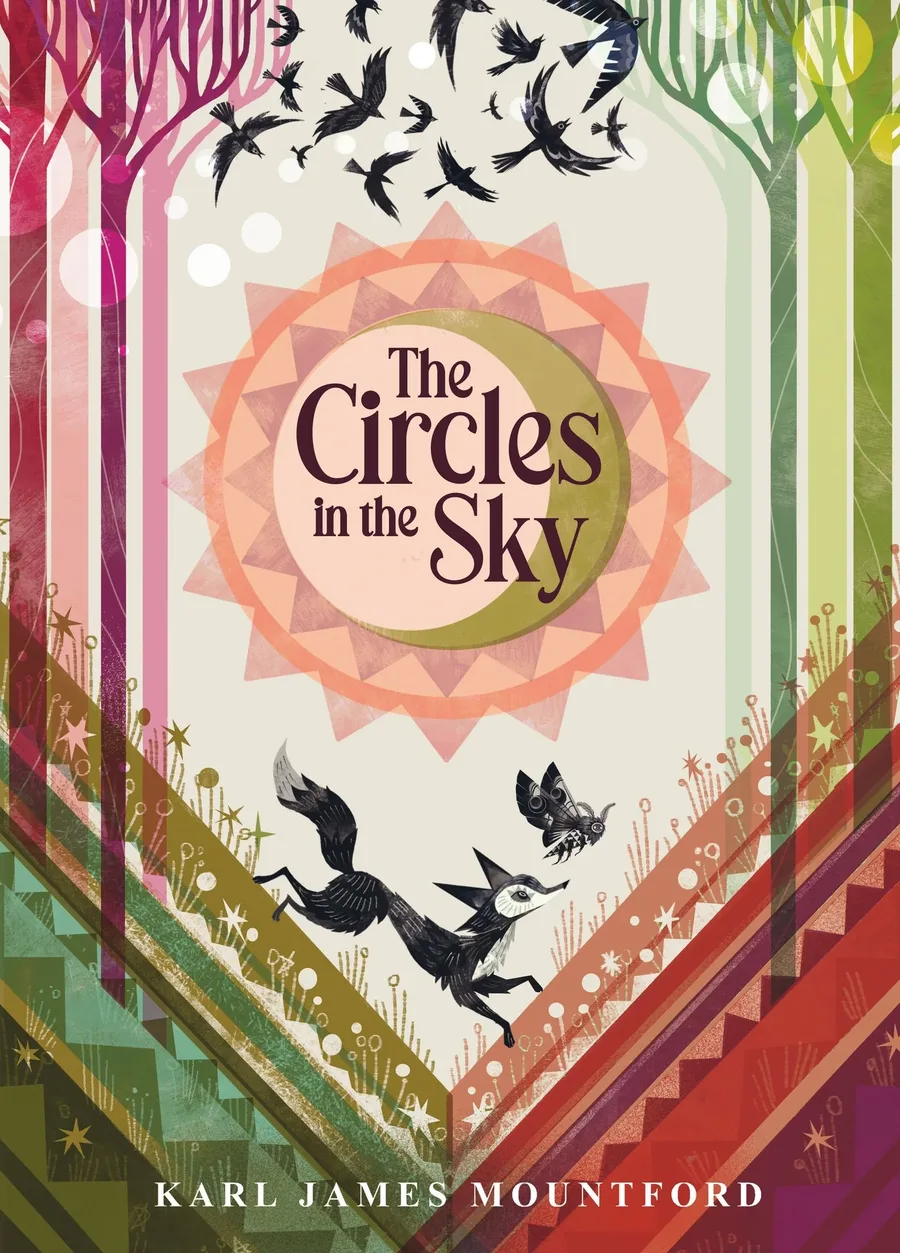 The Circles in the SkyKarl James MountfordCurious about the new and unusual song sung by the chorus of birds that wakes Fox each morning, he follows the birds through the forest. In a quiet meadow, Fox discovers that one of the birds is on the ground, still and unmoving. Unfamiliar with death, Fox is unsure why Bird won’t respond to his offers of food or invitations to sing. The digitally rendered illustrations magnify what Fox can’t yet comprehend, but what readers can understand. Below Bird, a cutaway of earth shows numerous animal skeletons and shells buried in dirt, suggesting the inevitability of death. The seasons of life are further echoed in the earthy- hued geometric backdrops. A black and white moth enters the scene and gently offers explanations to Fox about Bird’s mortality. Confused and frustrated, Fox howls at Moth and begs for the truth about Bird. “I was trying to be kind,” said Moth. “Sad things are hard to hear. They are pretty hard to say, too. They should be told in little pieces.” This beautifully illustrated picture book offers direct and thoughtful ways to process death and grief.Understanding Oneself and OthersView book details
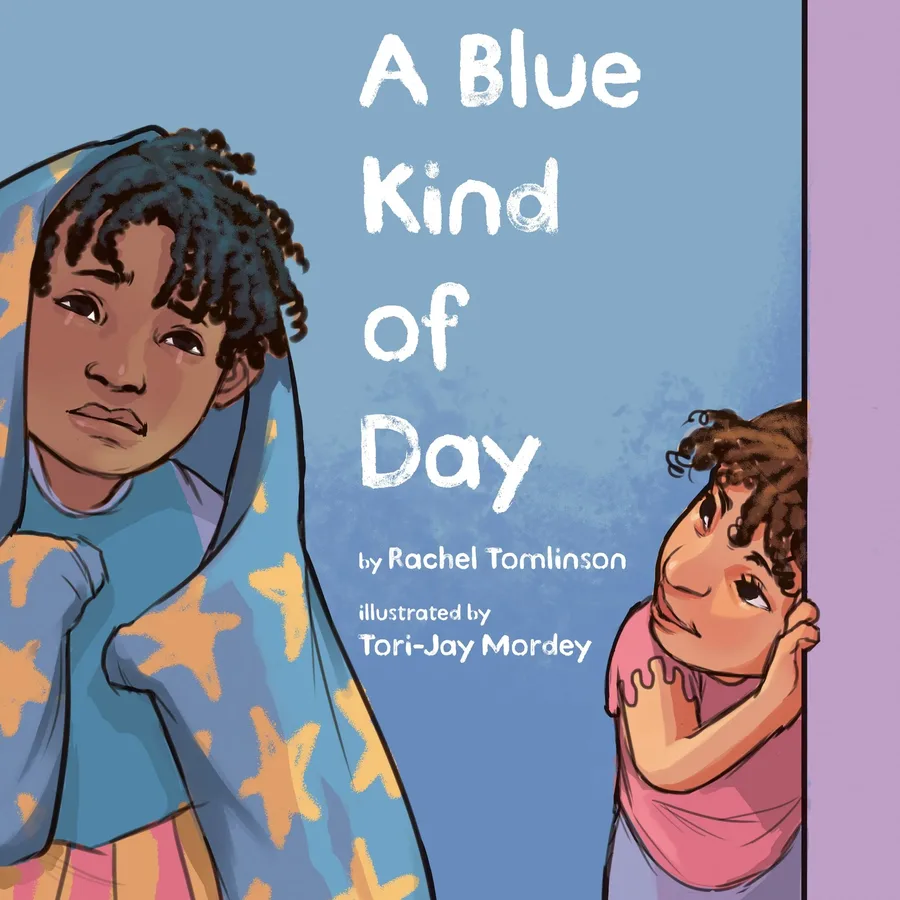 A Blue Kind of DayRachel TomlinsonCoen, a young Indigenous Australian boy, is having a blue kind of day. From the opening illustration, created digitally with blue and purple tones, Coen and his stuffed koala bear are slumped and sad in bed. Progressive scenes show Coen struggling with symptoms of depression and a desire to crawl back into bed. Initially, his multiracial family members (Indigenous/white) each try to pull Coen out of his dark mood but eventually respond to his need for quiet support and comfort. With time, Coen emerges from his blanket cocoon to engage with his sister and parent on his terms. This relatable book about feelings, illustrated by an Indigenous Australian, also includes an author’s note about depression and emotional distress in children.Understanding Oneself and OthersATOS Book Level 3.2AR Interest Level Lower Grades (LG K-3)View book details
 Walter Had a Best FriendDeborah UnderwoodWalter (a mouse) and Xavier (a duck) are best friends who do everything, including sitting in comfortable silence, together. “Until … quietly … slowly … they weren’t.” Over several page turns, the illustrations show the arrival of Penelope, a hedgehog, who really hits it off with Xavier. Penelope and Xavier are shown chatting as they walk side by side, while Walter trails behind despondently; and although they try to include Walter, “it wasn’t the same.” “Walter’s world quietly … slowly … changed.” Feelings of grief and loss, sadness, and loneliness consume him for a while. He even feels as though he hates Penelope and 29 Understanding Oneself and Others CCBC Choices 2023 Xavier, though that’s not really true. He simply misses his friend. But of course, on one particularly sunny day, things don’t feel quite as bad, and Walter decides to go out for a hike by himself, taking a new trail and enjoying the outdoors. When he encounters someone new, a badger named Ollie, it makes it all the better. A quiet, emotionally realistic story of changing friendships acknowledges feelings of loss and offers gentle encouragement.Understanding Oneself and OthersLexile Text Measure AD460LATOS Book Level 1.8View book details
The Arts
9 selections
 Covered in Color: Christo & Jeanne-Claude’s Fabrics of FreedomElisa BoxerWhen Christo’s parents fearfully destroyed his beloved art books after the Nazis brought their oppressive new laws to Bulgaria, it became a formative event in Christo’s life. Clearly, art was powerful, useful, and sometimes threatening; as a young man in art school years later, Christo wanted his paintings to illuminate the truth of life under Soviet control, while the government demanded that art serve as propaganda. Christo fled Bulgaria for France, where he met Jeanne-Claude, his future partner in life and art, and developed his signature art form and style: wrapping objects. Later, having immigrated to the United States, Christo and Jeanne-Claude set their hearts on a large art installation in Central Park but were repeatedly turned down. In the meantime, they wrapped ever-larger objects: enormous structures here and abroad, including the perimeters of small islands and part of the shoreline along the Australian coast. Eventually, after more than two decades, they were permitted to create their masterpiece, The Gates, a winding series of mounted orange flags in Central Park. Always temporary and designed with environmental preservation in mind, Christo’s “wild, wide-open creations” were, unlike the carefully controlled art of his childhood and adolescence, open to interpretation and accessible to all.The ArtsView book details
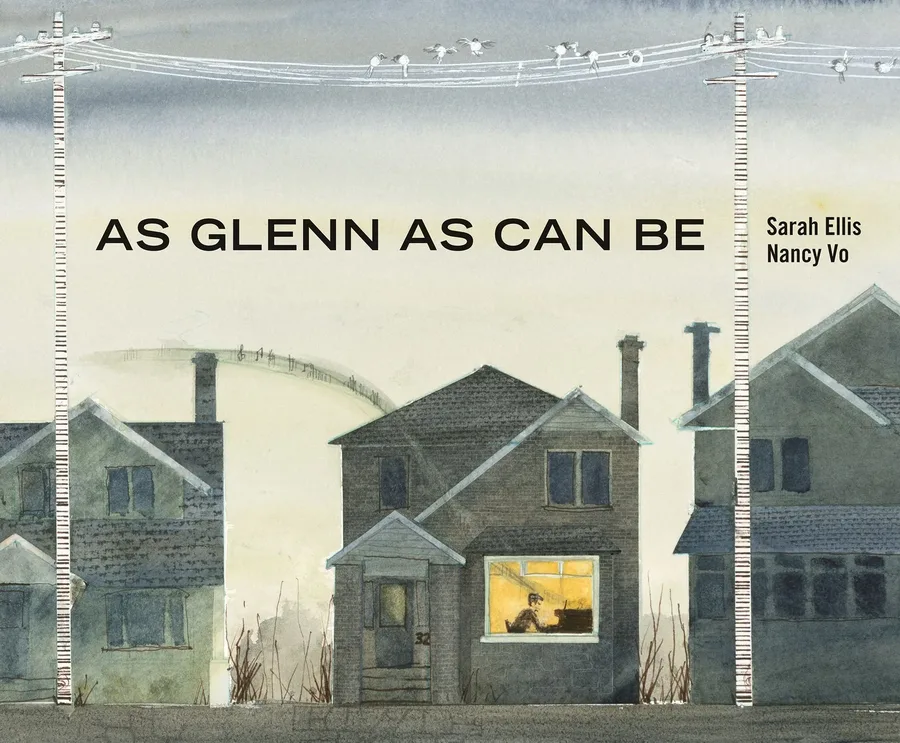 As Glenn as Can BeSarah Ellis, illustrated by Nancy VoThis artful, insightful look at pianist Glenn Gould is laid out in a narrative that uses a simple premise—articulating his “likes/dislikes”—and develops it into a sophisticated yet wholly accessible and highly engaging story. In childhood, Glenn likes boats, but not fishing; fun and playing pranks, but not bullying; nature, but not being cold. Glenn likes animals. “He loves his dog, Nicky, his rabbits, his goldfish, his budgie and his skunk, but... he finds people more difficult, especially in groups. He does not like parties.” Glenn’s certainties extend to liking reading but not school, liking rules—of games, math, and “the patterns in music”—but “not rules that squash him. His parents make a rule that he can only practice piano four hours a day. Glenn hates this rule … Glenn loves to play the piano.” And people like hearing him play. In adulthood, after performing around the world, Glenn realizes he doesn’t like giving concerts—there is too much that is uncomfortable and unfamiliar, and too many people! So he gives performances alone, making recordings in empty concert halls. “There’s nobody to please but himself. He plays until every note is just so. This is his perfect place.” Gould’s personality and passions are detailed in this skilled, sensitive picture book, in which there is implicit acceptance of his neurodiversity.The ArtsView book details
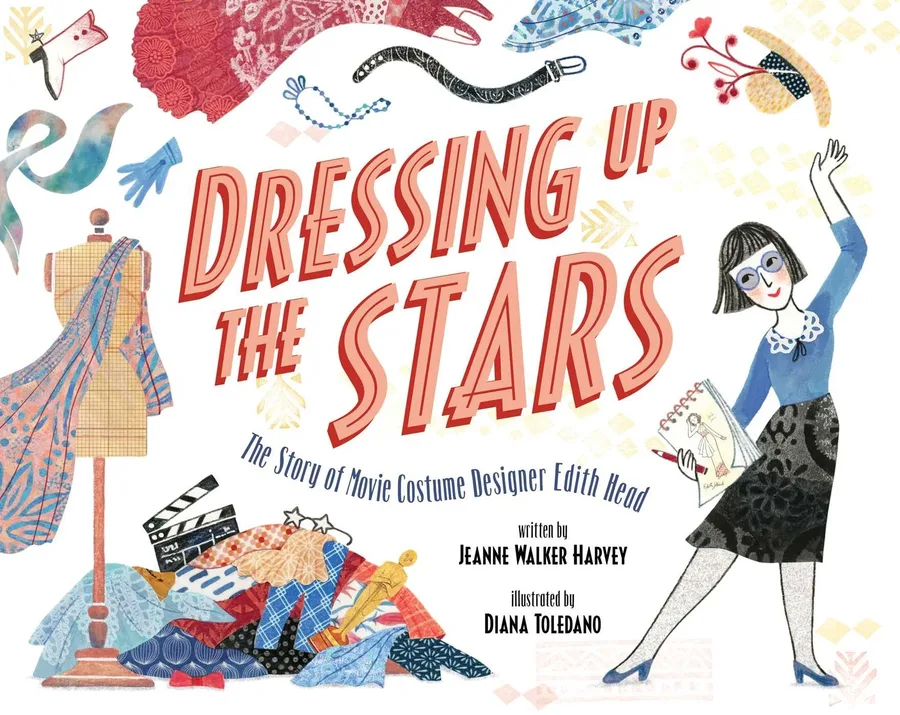 Dressing Up the Stars: The Story of Movie Costume Designer Edith HeadJeanne W Harvey, illustrated by Diana ToledanoA lonely, creative child who longed for a more exciting environment than the desert where she was raised, Edith Head was good at entertaining herself. She loved to dress up her animals and toys in ribbons and feathers, and she collected fabric scraps to make doll clothes. She put costumes together, too, for her friends’ plays. As a high school student in Los Angeles, Edith discovered movies, and after college she became a sketch artist in a Hollywood costume department—despite a complete lack of drawing skill. With diligent practice, and at least one early career failure, Edith moved up the ranks, designing costumes first for animals, then for dancers, and finally for movie stars. She became so skilled, in fact, that she won eight Academy Awards for Best Costume Design. Clean illustrations with plenty of white space accompany the biography of this exceptionally confident, determined, and passionate artist.The ArtsView book details
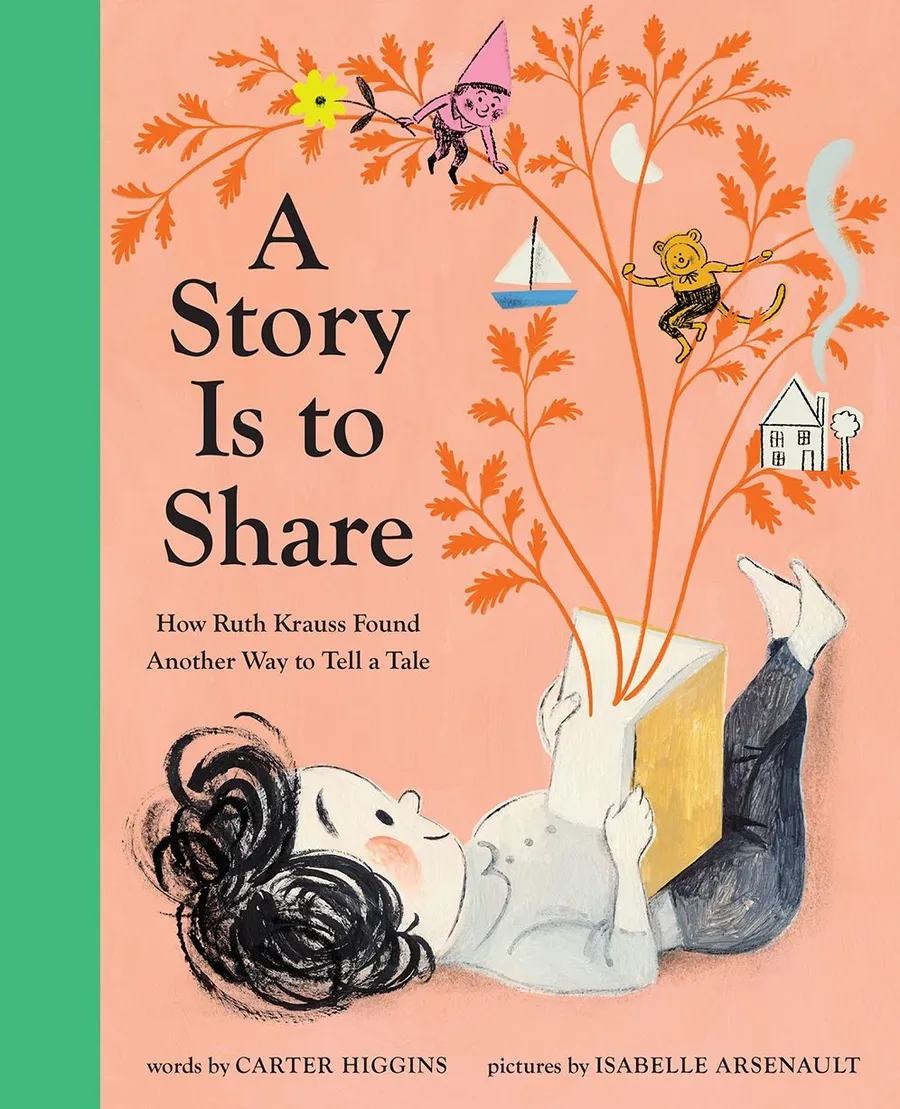 A Story Is to Share: How Ruth Krauss Found Another Way to Tell a TaleCarter Higgins, illustrated by Isabelle ArsenaultThis exceptional biographic tale of artist and writer Ruth Krauss is a story for every child in need of validation for their uniqueness. “Born / a baby / late at night / There’s / no parade / just crashing / rain.” The person who would become the author and illustrator well known for The Carrot Seed, A Hole Is to Dig, and A Very Special House is introduced to readers as a child who consistently “finds another way to be herself.” Whether riding a bicycle in her house, wearing her clothes backwards, or inventing new ways to play the violin, young Ruth Krauss creatively expressed herself, although not always in ways that were appreciated. Becoming a painter as an adult, Ruth discovers, “It’s good to paint and whoosh and whirl / to waint and whoosh and pearl / like this / She finds another way / to ploosh and swirl.” Rhythmic, imaginative, poetic text by Carter Higgins perfectly matches the playful, child-centric illustrations by Isabelle Arsenault; together they honor the spirit and story of Ruth Krauss.The ArtsView book details
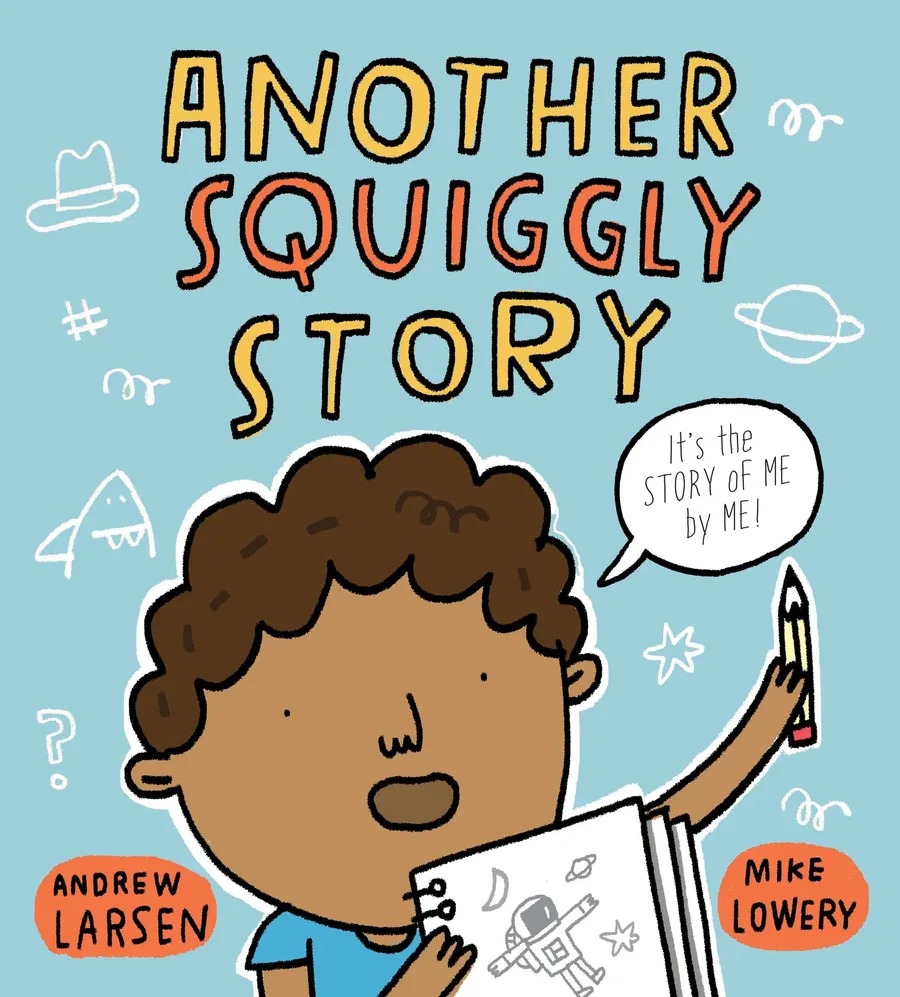 Another Squiggly StoryAndrew Larsen, illustrated by Mike Lowery“You can write about anything … as long as you write about you.” Mr. Lopez’s assignment has the young, brown-skinned narrator of this picture book stumped. At home, his sister explains that writing about yourself is called “autobiography.” She’s been writing one ever since she was in Mr. Lopez’s class. “It’s made up of different lists … things I do, things I feel … List by list, I’m writing the story of me.” Inspired, he writes down a title: “The Story of Me.” But what’s next? He tries making lists of things he likes, things he knows, and things he wants to be. But how can he turn his lists into a story? His sister suggests he look for connections—things his lists have in common. But first, she suggests, they should go the park. On their return, he takes a fresh look at his lists, and the connections start to appear. “Like when I look at the sky at night and try to connect the stars.” He begins to write, making changes after he shows his first draft to his friend Marcus. It’s all about the writing process in this picture book told in cartoon panels and covering the basics: brainstorming, drafting, editing, and the always important stepping away and looking at things anew.The ArtsView book details
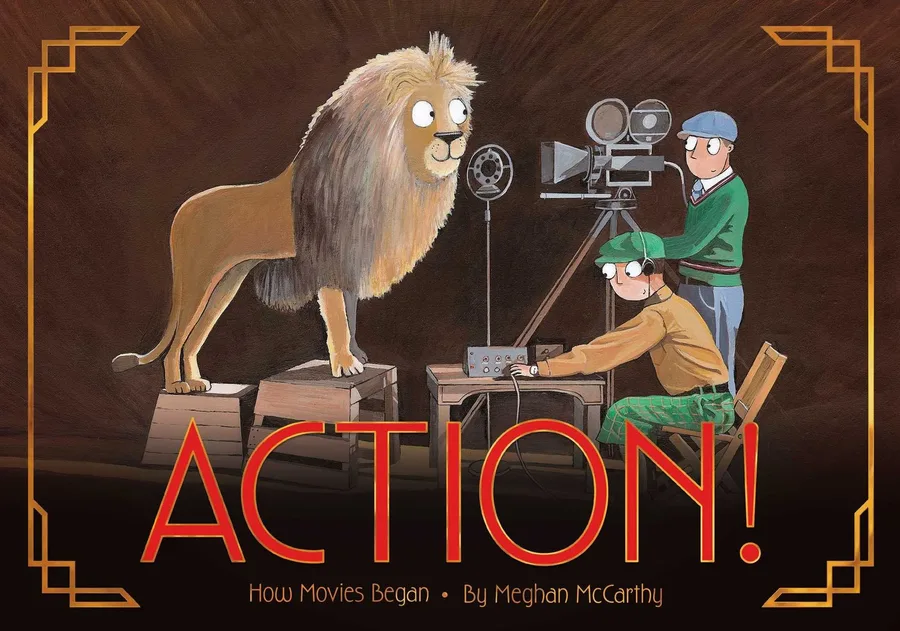 Action! How Movies BeganMeghan McCarthy, illustrated by Meghan McCarthyEadweard Muybridge’s series of still photos documenting a galloping horse in 1878 marked early efforts to show motion in photography. This concise and captivating account of how movies began and evolved to what we know today begins with Muybridge and moves on to development of Thomas Edison’s Kinetograph and Kinetoscope and the Lumière brothers’ 31 The Arts CCBC Choices 2023 film camera and projector inventions; these were followed by the addition of color and sound. The influence of early iconic performances from Charlie Chaplin, Buster Keaton, and Josephine Baker are connected to familiar contemporary actors and films. Horror, sci-fi, and action films throughout cinematic history all make an appearance, while McCarthy’s trademark bug eyes and comic style offer visual continuity across the years. The concluding author’s note extends the primary narrative with fascinating content about the MGM lion, women film editors, the advent of Hollywood, and more.The ArtsView book details
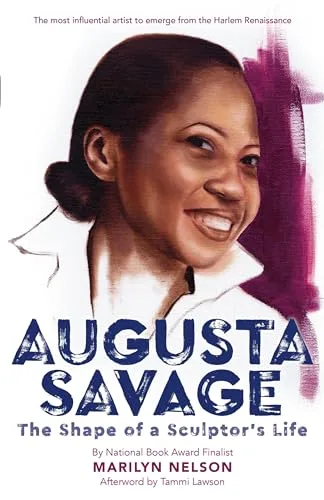 Augusta Savage: The Shape of a Sculptor’s LifeMarilyn Nelson, afterword by Tammi LawsonA biography written in free verse and concrete poems details the life and work of Harlem Renaissance sculptor Augusta Savage, best known for creating The Harp for the 1939 New York World’s Fair. Born Augusta Fells in Florida in 1982, Augusta had a difficult childhood. Her father tried to beat the artist out of her when he caught her making clay figurines in the backyard, claiming they were “graven images” that offended God. Augusta bore a child when she was still a child herself, only 15; her first husband died soon afterward. She pursued her creative interests in art school in New York City, but the scholarship she was offered to study art in France was rescinded when the selection committee learned that she was Black. But her work—sculptures that stunningly depicted Black life and culture— brought her recognition, and she opened the Harlem Art Workshop and the Harlem Community Art Center. She took a year off to create her masterpiece, The Harp (“Could I sculpt black love triumphant as a black harp? / How? Twelve strings? And each harp string a child? / Each child individual, a recognizable singing self”). Though it was hugely popular at the Fair, Augusta could not afford to cast the sculpture in bronze to preserve it, and so it was destroyed. This beautifully written account includes ample photographs of Augusta and her incredible art.The ArtsView book details
 Out of the Shadows: How Lotte Reiniger Made the First Animated Fairytale MovieFiona RobinsonBorn in Berlin in 1899, young Lotte Reiniger was entranced by the new technology of movies as well as traditional stories, using her paper cutting skills and a set of puppets to stage a living room production of Romeo and Juliet. As a young adult she joined the crew of famed actor and director Paul Wegener, first creating intertitles and eventually designing sets, costumes, and special effects for his films. An early adopter of stop motion animation and inventor of the multiplane camera, Lotte also made the first full-length silhouette animation film, The Adventures of Prince Achmed, a box office success. Stylized illustrations and silhouettes capture the time period of Lotte’s life and the creative quality of her groundbreaking art in this captivating account. An extensive author’s note provides further details about Lotte’s personal life and work in animation, including a discussion of orientalism and stereotyping in The Adventures of Prince Achmed.The ArtsView book details
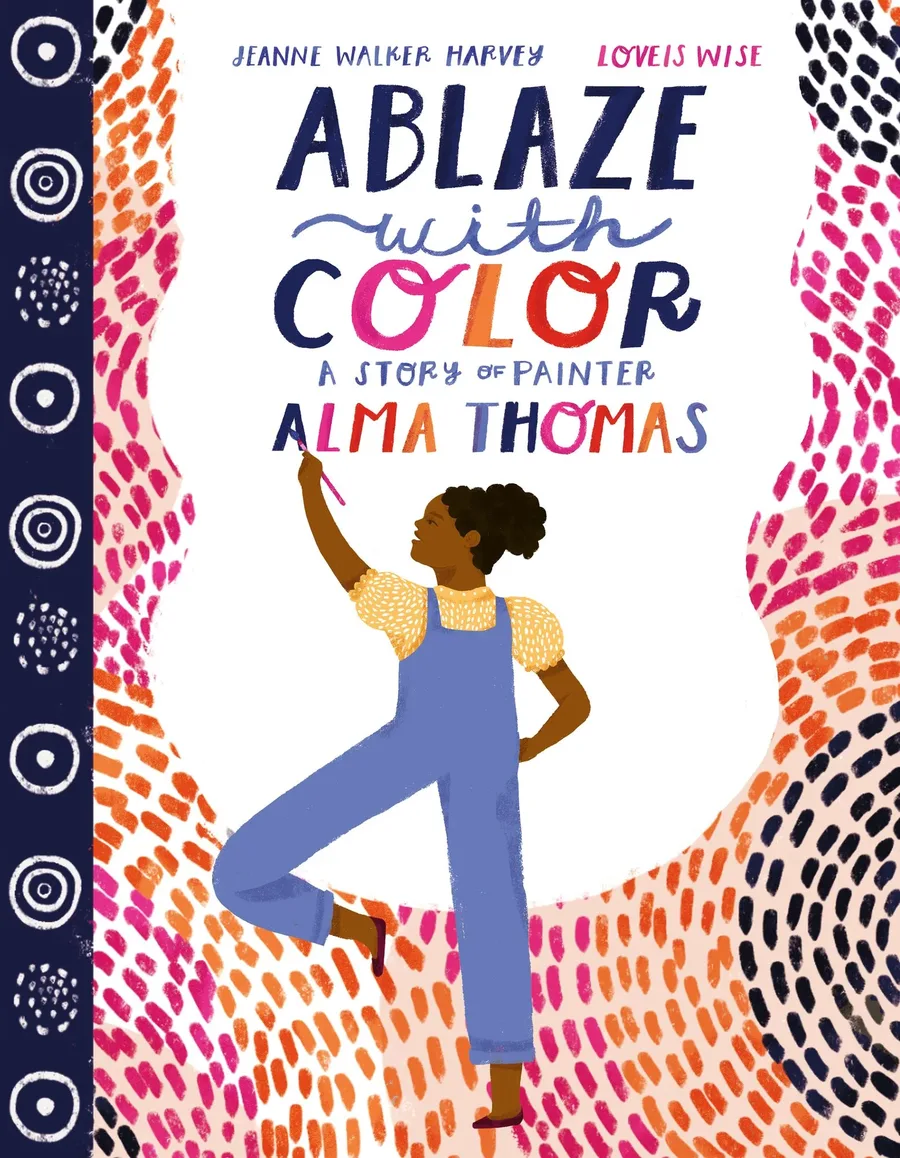 Ablaze with Color: A Story of Painter Alma ThomasJeanne Walker HarveyA Black woman who grew up in the South, Alma Thomas belonged to a family that encouraged creativity and cultivated an intellectual home where teachers were often invited to talk. When school segregation finally drove the family north, to Washington, D.C., Alma received an art degree and devoted herself to bringing arts education to young students in her neighborhood, where segregated schools meant that many could not access art. She taught, led art clubs, established an art gallery in a school, and organized field trips. Her home was a welcoming place where students could create their own works. Not until she was nearly 70 years old did Alma truly embark on her own artistic career, creating dazzling paintings in a style wholly her own. Rich with patterns and geometric shapes 32 The Arts CCBC Choices 2023 made from “dashes and dabs” of vibrant colors, Alma’s paintings earned places, and then an exhibit, in galleries and museums; after her death, President Obama selected one of her paintings for the White House Collection, where it hangs to this day. Bright digital illustrations in a palette reminiscent of Alma’s paintings accompany this narrative about the life of an impressive artist and educator.The ArtsView book details
Poetry
6 selections
 You Are the LoveliestHans Hagen, Monique HagenThis warmly illustrated collection of poems, translated from the Dutch, captures the innocence, emotions, and observations of a young child. In “Big Feet,” the tow-haired girl delights in trampling over a snowy city like a giant in a snowsuit: “my new shoes / are so big / they’ll carry this girl / all over the world.” Wonderings about nighttime stars and the speed of time, wishes for the arrival of sunshine after rain or a new puppy, and worries about a skinned knee are a few of the topics explored in the cozy collection, perfect for lap- time reading.PoetryView book details
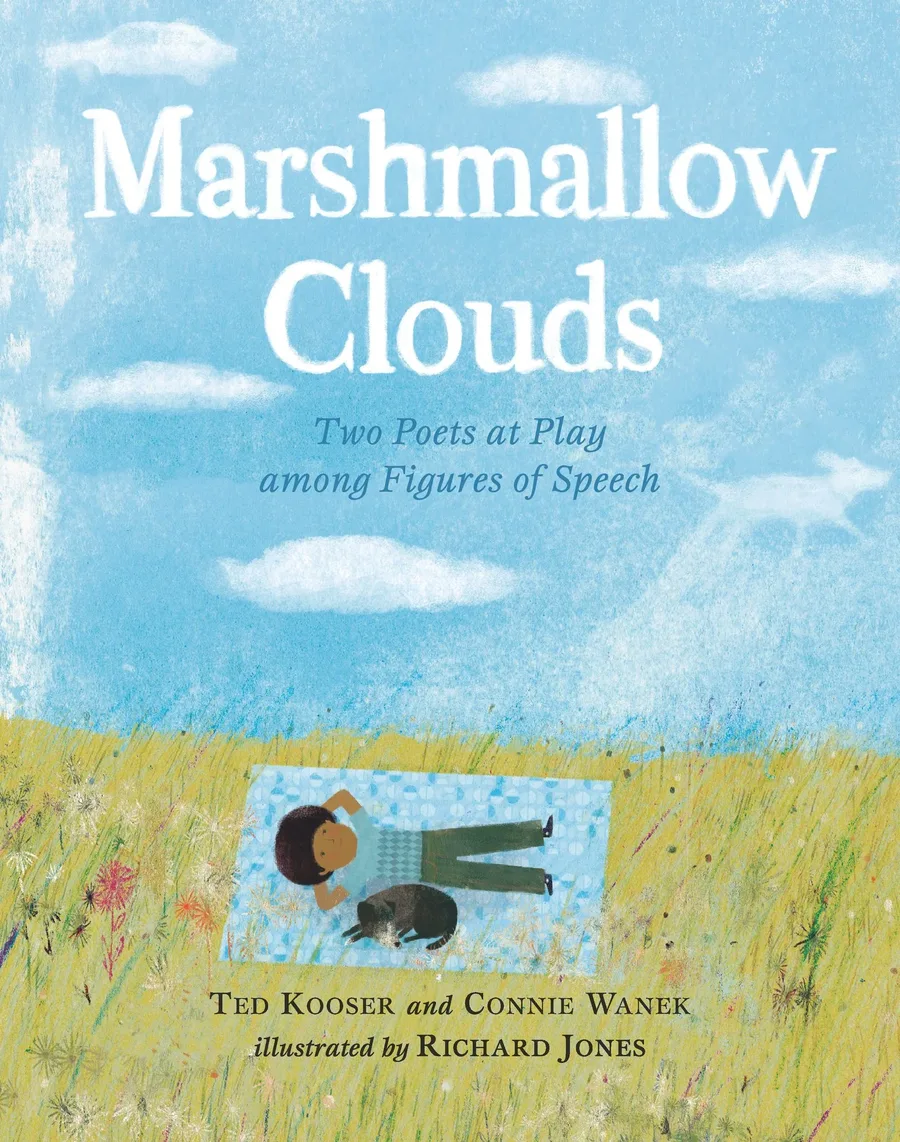 Marshmallow Clouds: Two Poets at Play Among Figures of SpeechTed Kooser, Connie WanekLooking at common—and sometimes uncommon—objects and events in fresh ways is one of the hallmarks of poetry. Here, two poets offer 26 imaginative, often playful free verse poems on a range of subjects. Across the poems, the common thread is new perspectives. Comma-shaped tadpoles are “the liveliest of all punctuation.” (“Tadpole”) “It’s good to free a secret / and let the place in your chest / where it clawed you like a badger / scar over and heal.” (“Secret”) July is “boiled and salted / like a peanut … the crimson crayon / melting in a sunny car” (“July”). A thunderstorm in the night “stumbles around, bumping the walls … now and then lighting a match / and then, just as quickly, blowing it out.” (“Thunderstorm”) Divided into four sections—fire, water, air, earth—the poems are each paired with a full-page illustration. The artful compositions are rendered in an overall subdued palette, accompanying rather than competing with or overpowering the poems. Notes from both poets, along with two bonus poems, speak to the “gift of imagination” we all possess.PoetryView book details
 Book of Questions / Libro de las preguntasPablo Neruda“Where is the center of the sea? / Why don’t the waves break there? … Do you hear explosions of yellow / in the middle of the fall?” Pablo Neruda’s Book of Questions is beloved by Spanish speakers, both children and adults. This beautifully designed bilingual edition includes 70 of the original 320 questions, presented in both their original Spanish and an English translation. The questions are set against Chilean artist Paloma Valdivia’s gorgeous, stylized illustrations full of animals and other elements of nature, including some human figures and inanimate objects. Her rich but judiciously limited primary palette features shades of blue, red, and yellow on predominantly black backgrounds, adding to the sense of mystery and wonder the narrative can inspire. The questions, which range from playful to dreamy to existential, are prompts for contemplation and expression and offer spark after spark of inspiration for young readers’ and listeners’ imaginations.PoetryView book details
 On the Move: Home Is Where You Find ItMichael RosenA powerful poetry collection explores the concepts of home and human migration through the lens of the author’s personal and family history. An introduction titled “Migrant Poetry” briefly discusses the long history of human migration and elucidates the difference between a migrant and a refugee. Rosen’s Jewish family members, many of whom were displaced or are “missing” due to the Holocaust, are the subject of the first section of poetry, in which the author ponders his family’s cultural traditions, songs, and languages—all of which originated in another country. A section titled “The War” recounts the author’s visit to Europe after World War II and his parents’ stories about the war, while “The Migrants in Me” is a meditation on the author’s challenging search for information about several family members who were murdered by Nazis. A final section, “On the Move Again,” draws connections between Rosen’s family history and refugees today. Underlying the collection is a plea for compassion: Throughout the world all kinds of people find themselves uprooted, for all kinds of reasons, all the time.PoetryView book details
 The Real Dada Mother Goose: A Treasury of Complete NonsenseJon Scieszka“Dada is creating art with humor and absurdity to challenge what many people might think is right or normal.” Here a handful of European/English Mother Goose nursery rhymes are reimagined in the spirit of Dadaism. The six traditional rhymes are presented in their familiar iteration before a half-dozen fresh and funny variations of each one. Humpty Dumpty’s fate as a game of telephone translation, for example, and described in a postcard Humpty writes home from camp. “Jack Be Nimble” as a book report (“The main character in this nursery rhyme is Jack …”) and a multiple-choice quiz. “Old Mother Hubbard” with Jabberwocky and as a comic strip. A “Hey Diddle Diddle” recipe and pop quiz. “Hickory Dickory Dock” in hieroglyphs and as a crossword. An anagram of “Twinkle, Twinkle, Little Star” and a version with excessive similes (“Like a slice of cherry pie. Like a rug hung out to dry …”). With literary play, ciphers, codes, and more, this book in which silly humor abounds features illustrations that are an homage to the classic artwork of Blanche Fischer Wright, illustrator of The Real Mother Goose, with plenty of tongue-in-cheek humor added. Information about the various devices used, from Morse code to the military alphabet, are included at volume’s end along with more about Wright and Dadaism.PoetryView book details
 Out of This World: Star-Studded HaikuSally M. Walker“Three stars in a row / Orion fastens his belt / ready for the hunt.” A majestic collection of haiku begins with humans’ use of telescopes to hunt for information about outer space before moving on to explore various aspects of the cosmos, beginning with the beginning: “One minuscule speck / grows into the universe / a mind-boggling birth.” The range of subjects, like outer space itself, is vast. Individual planets, stars, moons, galaxies, and eclipses are poetically presented, as are humans’ interactions with space (“from lunar orbit / astronauts behold earthrise / awestruck with wonder”). Spectacular mixed-media illustrations bursting with detail, texture, and movement accompany the poetry, inviting readers to gaze at the pages as if at a star-filled night sky.PoetryView book details
Picture Books for Young Children
34 selections
 A Is for Bee: An Alphabet Book in TranslationEllen Heck, illustrated by Ellen HeckThis playful and sophisticated alphabet book toys with translation in a visually engaging way. As the title suggests, animals that are typically symbolic of letters in the English language are substituted for animals in over 50 world languages, including several Indigenous languages. For example, the letter “D” is not for “Dog,” rather, “D is for Turtle. Daksi in Cherokee, Dortoka in Basque, Deckelsmouk in Luxembourish, and Dtào in Thai.” Clever scratchboard illustrations show English alphabet shapes, while hand-lettered text showcases several languages for each concept. A QR code links to the publisher’s webpage where native or fluent speakers pronounce the words that appear in the book. An author’s note explores cultural details about animals and vocabulary, as well as complications with transliterating words into English using the Roman, or Latin, alphabet.Picture Books for Young ChildrenView book details
 Ten Blocks to the Big Wok: A Chinatown Counting BookYing-Hwa HuA bilingual (English/Chinese) counting book follows little Mia and her Uncle Eddie on a walk through Chinatown. They are headed to the Big Wok restaurant for dim sum. On the way there they pass an array of items connected to their Chinese heritage, all in countable quantities: one giant panda, two stone lions, three ageless turtles, four miniature trees, and so forth. (An author’s note provides two or three sentences about the significance of each of these items in Chinese culture.) Patient Uncle Eddie allows Mia to stop and look carefully at everything that grabs her interest and appears to enjoy their walk through the neighborhood as much as she does. Once they get to the restaurant, Mia counts the dim sum offerings on their table, from ten soup dumplings down to two egg tarts. Then she asks for one bowl of anchovies to go, which she shares with the small orange and white cat that followed them on their journey to the restaurant. Culturally accurate watercolor and pastel paintings show an affectionate bond between a child and her uncle, who both clearly enjoy each other’s company as they walk along a lively street in their neighborhood. A final page shows the numbers from one to ten in both Chinese and English, along with a pronunciation guide for each one.Picture Books for Young ChildrenView book details
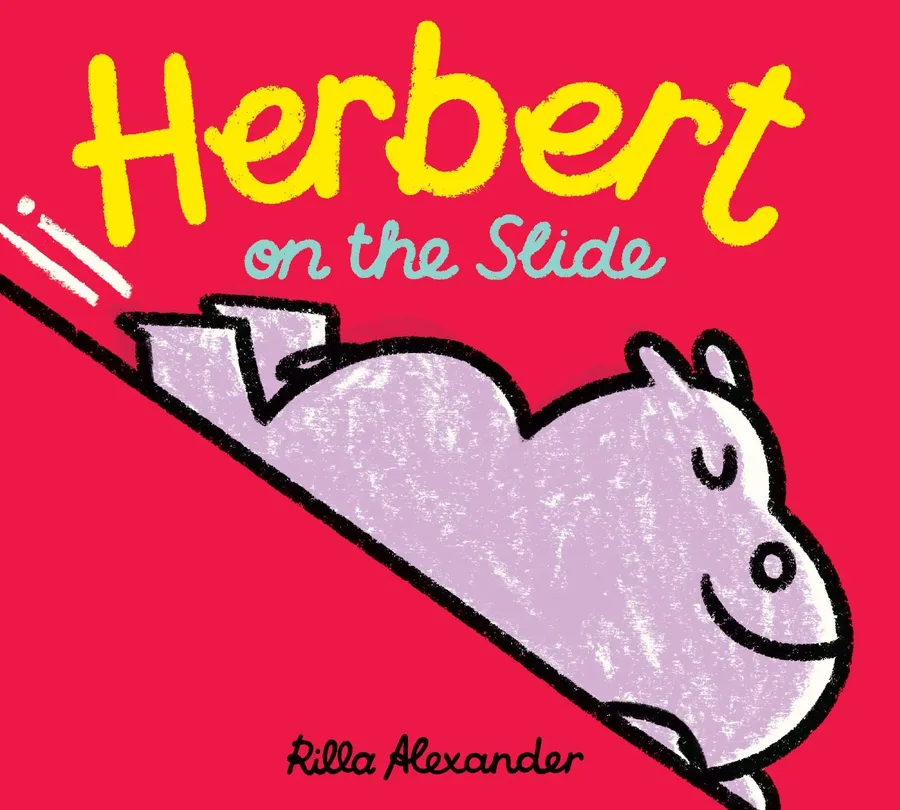 Herbert on the SlideRilla AlexanderThe trim size of this small picture book can barely contain the joy of its protagonist, a playful purple hippopotamus named Herbert who loves the playground slide. Herbert cannot decide what part of the slide he enjoys the most—climbing all the way up, the fluttery feel of anticipation at the top, or zooming down. As Herbert repeats each step of this exhilarating routine, his imagination takes off and the slide becomes a vehicle for deep sea diving, mountain climbing, and more. The colorful and cozy digital pencil illustrations are a perfect match for this energetic toddler story.Picture Books for Young ChildrenView book details
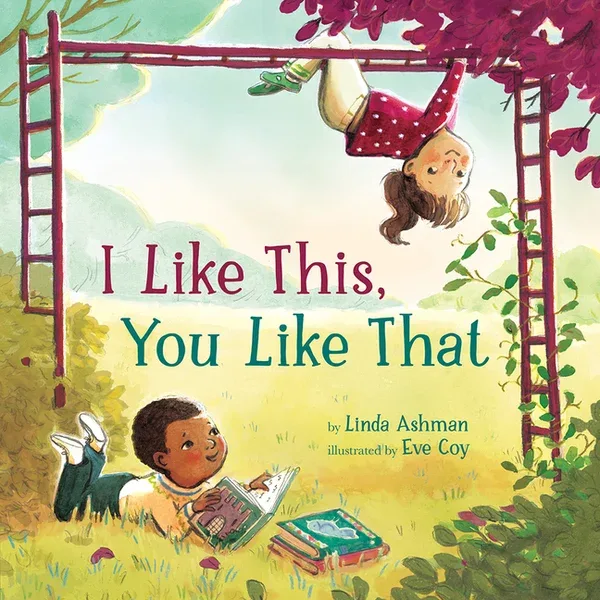 I Like This, You Like ThatLinda Ashman“‘I like rockets.’ / ‘I like trains.’ ‘I like tractors.’ / ‘I like cranes.’” Two preschool-age children, a girl who appears white and a brown-skinned child, chronicle the things they each like in a rhyming narrative that makes clear that they not only have different tastes in many things but also a solid friendship. Watercolor, crayon, and colored pencil illustrations show the two spending time together on each page spread, their statements appearing as speech bubble dialogue. One thing they realize they do agree on: pizza! They just can’t agree on who likes it more, leading to a brief negotiation over the division of four slices near story’s end. “But even when we disagree… / I like you / and you like me.”Picture Books for Young ChildrenView book details
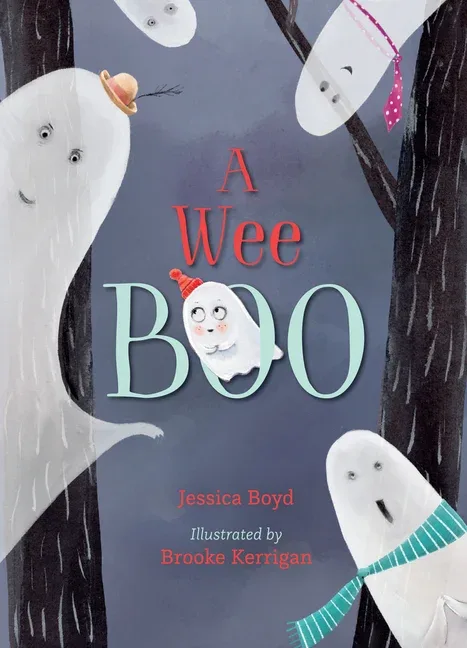 A Wee BooJessica Boyd, illustrated by Brooke Kerrigan“You know what’s not scary? Cute. Cute is not scary.” This is a problem for the ghost known as Wee Boo, who is downright adorable and has failed not once but twice to get her haunting license. The other ghosts are supportive yet clearly doubt Wee Boo’s ability to succeed, trying to build her confidence while simultaneously lowering their expectations and the requirements for success. Wee Boo’s third try begins with a ghostly “Ooooooo!” to which her human victims reply, “Is that a little bird outside? Or some kind of baby animal?” Boo changes tactics again and again. When Wee Boo turns her efforts to scaring the baby in the family, the baby starts to laugh, which is surely the least promising response of all. But more than one surprise is in store for Wee Boo in this charming, funny, utterly captivating picture book featuring ghostly hued digital and mixed-media illustrations punctuated by washes of color, along with one very cute ghost.Picture Books for Young ChildrenLexile Text Measure AD510LATOS Book Level 3.4View book details
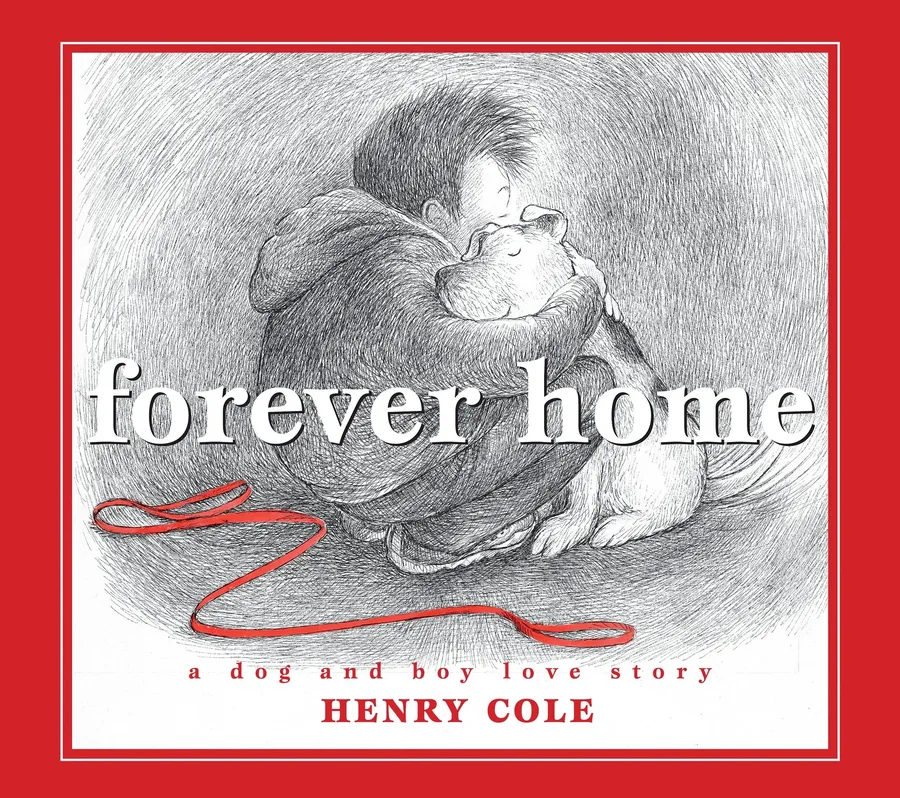 Forever Home: A Dog and Boy Love StoryHenry ColeThe paths of a stray dog and a determined boy cross in this heartwarming, wordless picture book. The reader is introduced pre-title page to a sweet-faced, spotted white dog who seems to have been abandoned. He rummages through trash, dodges cars, and takes shelter in a cardboard box, ears and tail drooping. The central narrative then shifts to focus on a white boy who, based on his bedroom décor, is a big dog lover. But when he asks his dads for a dog, they point out his incredibly messy room. Is he really ready for such a responsibility? Dragging a red leash (the only colored object in the art) behind him, the boy sets out to prove that he is worthy. Rain or shine, he takes regular walks with the leash, even pretending to pick up after his imaginary dog, until one day he passes the spotted stray and patiently wins its trust. Dreaming now of this dog, the boy steps up at home, helping with chores and cleaning his room. Finally, he gets the okay from his dads. He’s momentarily crestfallen to find the dog’s box empty, but dog and boy are joyfully reunited at the animal shelter—and it’s happily ever after from there. The wordless narrative is clearly communicated via detailed black ink drawings that are a pleasure to pore over.Picture Books for Young ChildrenView book details
 Where Is Bina Bear?Mike Curato, illustrated by Mike CuratoTiny, a small white rabbit, is having a party but can’t find their friend Bina, a large purple bear. As Tiny searches, shy Bina disguises herself as assorted inanimate objects (lamp, table, bookcase, tree). “Bina? Is that you?” (“No, I am a table.”) “Where is my friend Bina? I miss her.” When Bina, posing as groceries, pulls a brown paper bag off her head and explains, one tear trickling, that she doesn’t like parties but came because she likes Tiny, Tiny shows both compassion and solidarity, donning their own lampshade alongside Bina when the other party guests burst in, searching for them both. (Nothing to see here; just a couple of floor lamps.) Uncluttered scenes with clean shapes and a simple text full of feeling showcase this friendship and distinguish a story relatable to many children.Picture Books for Young ChildrenLexile Text Measure AD180LATOS Book Level 0.7View book details
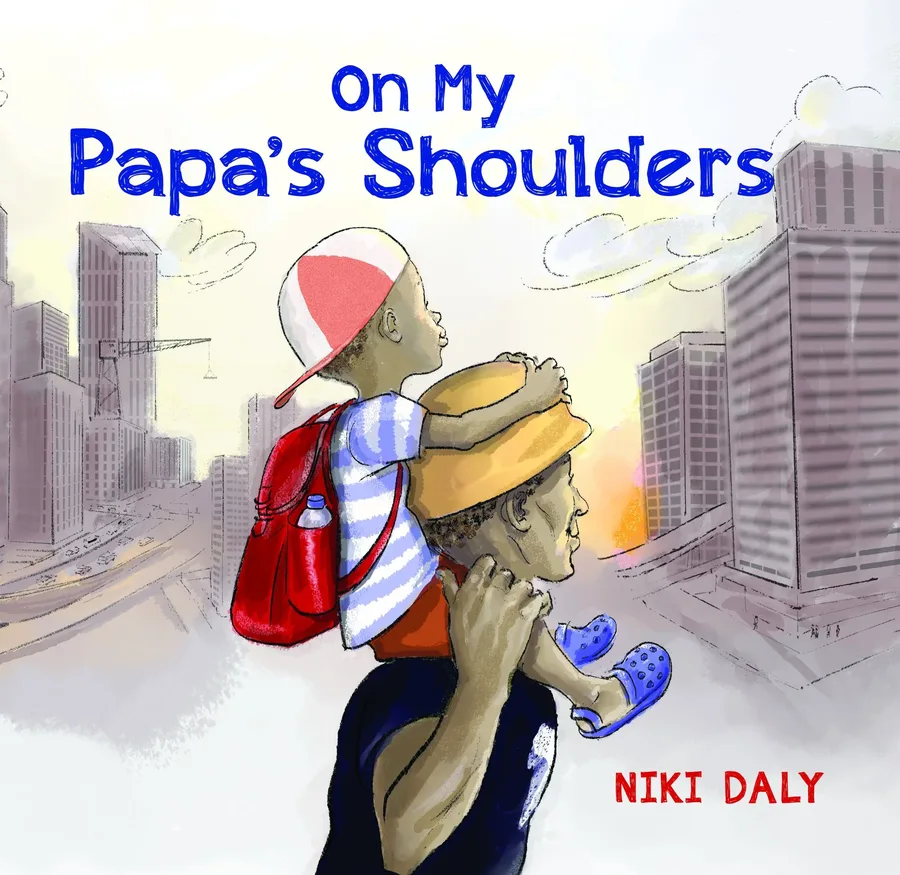 On My Papa’s ShouldersNiki Daly, illustrated by Niki DalyA boy describes how his city walks to school with various family members—Mama, Gogo, Tata, and Papa—are predictably different with each adult. Mama walks quickly and gives a goodbye kiss; Gogo prefers the quiet route and doesn’t hurry, allowing time for an encounter with a stray cat; and Tata uses shortcuts and prefers a parting hug to holding hands. But the best school walks are on Papa’s shoulders, where the boy is “high as a cloud and can see the whole world.” Loving relationships shine in the routine of a common daily activity. The mix of shorter and longer sentences and phrasing creates a wonderful narrative pace that is judiciously adjusted across the story to subtly mirror the qualities of each walk. Although no setting is named, this Black family appears to live in South Africa.Picture Books for Young ChildrenView book details
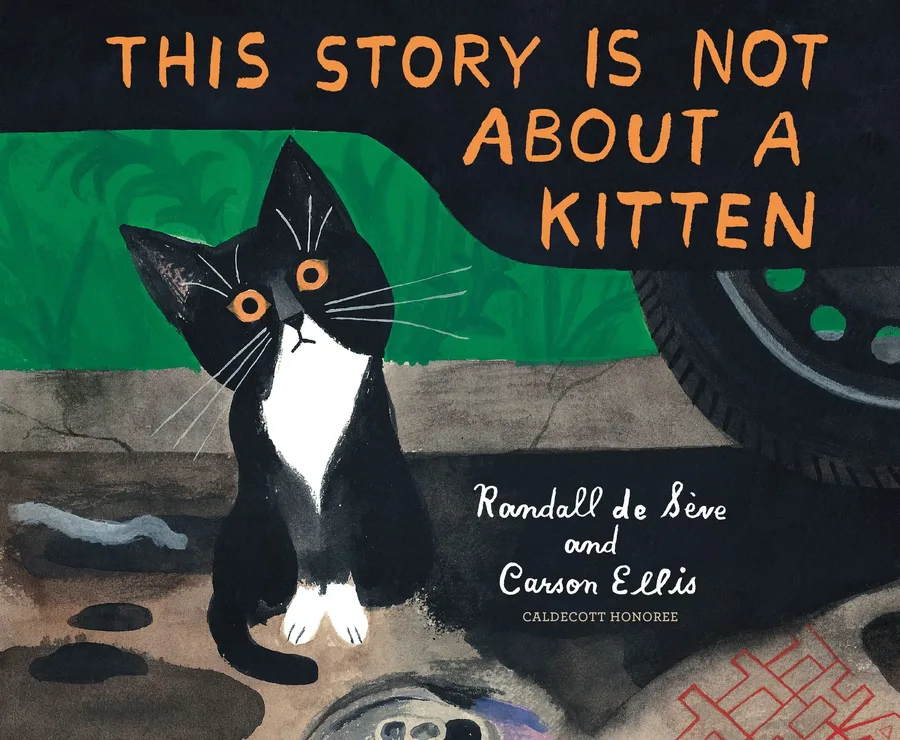 This Story Is Not about a KittenRandall de Sève, illustrated by Carson Ellis“This story is not about a kitten.” But of course it is. It’s also about community, cooperation, and cumulative storytelling. While a girl and her mother (both Black) are out walking, their dog spots a kitten hiding under a car, “hungry and dirty, scared and alone, meowing sadly, needing a home.” It marks the start of a rescue effort that also involves others in their neighborhood. Each individual and their contribution is introduced before the previous characters and actions are reiterated in a text patterned on “The House That Jack Built.” A break in the pattern heightens the drama as the kitten is finally lured into a box. “This story is not about the child who asked, ‘Could we?’... or the man who offered some milk, or the twins who brought a box, or the woman who held the dog...” It’s not about a kitten “now full-bellied and clean, no longer alone, purring happily. Home.” Lively text and colorful gouache illustrations tell an irresistible story inspired by a real-life rescue of a kitten in the author’s Brooklyn neighborhood.Picture Books for Young ChildrenLexile Text Measure AD520LATOS Book Level 3View book details
 Too EarlyNora EricsonDarkness gives way to day as father and child enjoy their early morning (emphasis on early) routine together. The barefoot, pajama-clad child (racially ambiguous) with sleep-tangled hair pads down the hall to their parents’ bedroom to wish them good morning. Daddy groans two words: “Too early.” But, letting Mama sleep in, he gets up. Downstairs, the child greets two stretching dogs and savors the smell of Daddy’s percolating coffee. Daddy muses sleepily, “You wake up too early.” Out on the front porch, the air is cool; the moon is out. At their dad’s prompting, the child spots Venus in the sky. (“Good morning, Venus. Do you wake up too early, too?”) They climb into their father’s lap, and together they sit peacefully as the sky lightens, bringing mountains into view. Birds begin to sing; a baby sibling cries upstairs. Soon it will be “all of us together, rush rush breakfast, rush rush clothes, rush rush school.” But for now, child and father snuggle close and watch the sunrise. “And yes, it’s true. I wake up very early. I wake up just in time.” Narrated by the child, the sparse, poetic text employs repetition and thoughtful, childlike observations. While deep blues dominate the foregrounds of the drawn, cut, and collaged illustrations, light glows in the background, beckoning father and child forward as they savor a cozy moment before the hectic day begins.Picture Books for Young ChildrenWord Count 360View book details
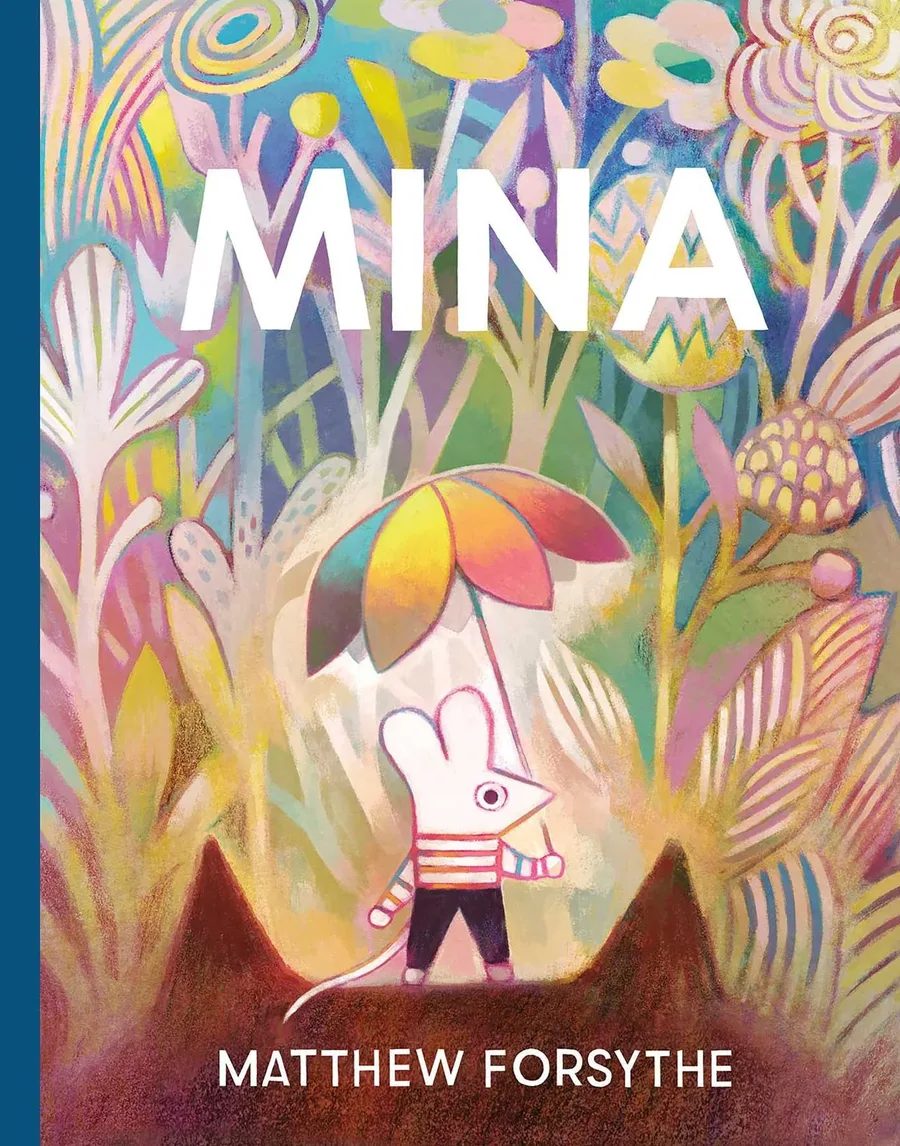 MinaMatthew Forsythe“Mina lived in her own little world where nothing ever bothered her. Except for one thing.” That “thing” is the latest surprise her naively optimistic father brings home: a “squirrel.” But as Mina—and readers—can clearly see, it’s a cat. Since Mina and her father are mice, this is a problem from Mina’s perspective, but her dad is absolutely convinced the big, bushy-tailed creature is a squirrel. The cat is always watching them—the tension 37 Picture Books for Young Children CCBC Choices 2023 building—yet everything really is fine, just like Mina’s father said it would be, until the “squirrel” stops eating. Concerned, Mina’s father brings home two more “squirrels”; they don’t eat either. Her father calls the doctor, who identifies the problem right away: “These squirrels are definitely cats.” It turns out they’re definitely hungry, too. A dramatic chase in which the cats pursue Mina, her father, and the doctor ends with a surprising and hilarious twist in this smartly funny story. The spare narrative, with its abundance of wry understatement, is paired with expressive watercolor, gouache, and colored pencil illustrations in a warm palette to tell a singular tale that also stands out for its handsome bookmaking, with heavy paper, elegant typography, and clean design.Picture Books for Young ChildrenView book details
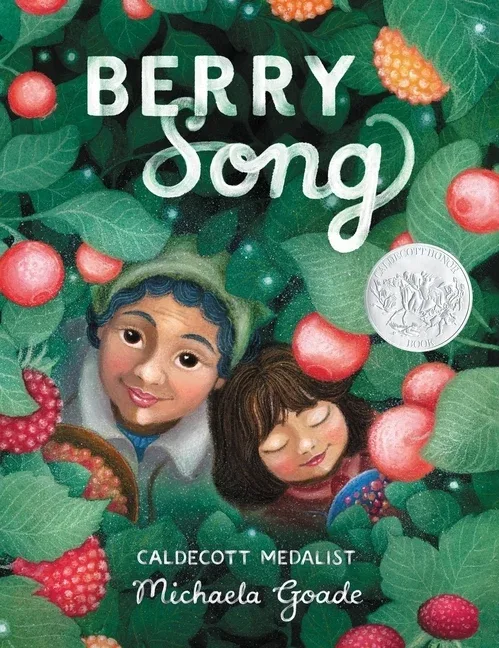 Berry SongMichaela GoadeA lush, gorgeously illustrated picture book set “on an island at the edge of a wide, wild sea” celebrates a Tlingit grandmother teaching her granddaughter “how to live on the land.” In and near the water, the pair gather herring eggs, seaweed, and salmon. And in the forest, there is a bounty of berries. Set off by cursive font, a rhythmic list of berries is interspersed with the main narrative. “Salmonberry, cloudberry, blueberry, nagoonberry. Huckleberry, soapberry, strawberry, crowberry.” As the land sings to them and sustains them, grandmother and granddaughter sing their gratitude to the land and forest and ocean. As the land cares for them, they, in turn, care for it. They hear the voices of their ancestors and answer in song and their Native language. And, on a page with artwork showing environmental protest art and music, the girl and her grandmother “sing for the future, / so that all will hear / and all will know / this beautiful berry song.” Back home at the end of the day, the grandmother and granddaughter join their family to create a colorful spread of pastries, desserts, and jams from the berries they have gathered. Soft, dreamy watercolor and mixed-media illustrations are a feast for the eyes in a story of familial love and the passing on of Indigenous knowledge.Picture Books for Young ChildrenLexile Text Measure 740LATOS Book Level 2.9View book details
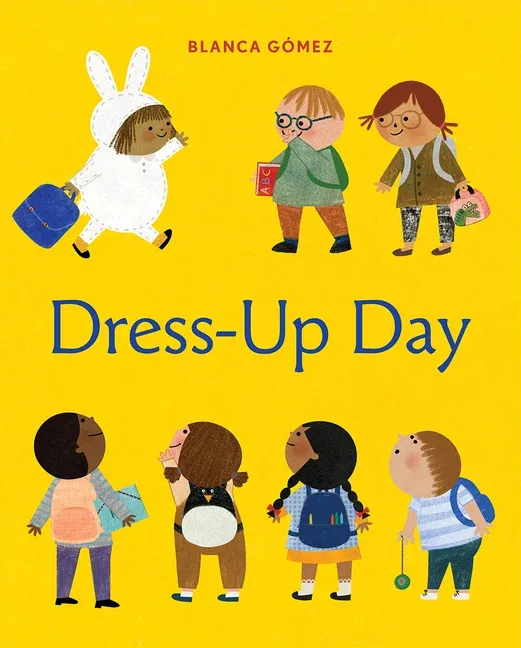 Dress-Up DayBlanca GómezThe brown-skinned protagonist of this endearing story is crestfallen when she wakes up sick on the day of her class’s costume party. She and her mom had prepared a white rabbit costume, complete with fluffy cottontail and carrot, that she had been so excited to wear. The next day, her mom suggests she wear the costume to school to make up for missing the day before. The girl is absolutely on board and can hardly wait to get to school. But when she arrives in the schoolyard, she draws the eyes of the other kids, who point and giggle; after all, costume day is over. Today is just a regular clothes day. Just as she begins to think she’s made a big mistake, she’s heartened by the arrival of Hugo, a blond boy dressed as—how perfect!—a bright orange carrot. He’d been sick yesterday, too. Hugo runs over heroically, crying, “‘Be sad no more, little rabbit—your carrot is here!’” Carrot and bunny start up a game of chase, and soon everyone wants to join in. All is well in the little girl’s world. Even better, the next day, the other kids show up in costume, hoping to prolong the fun. This playful tale will be relatable to anyone who has experienced the disappointment of missing an anticipated event or the discomfort of standing out. Paper-collage illustrations show a diverse class of small children with expressive faces.Picture Books for Young ChildrenView book details
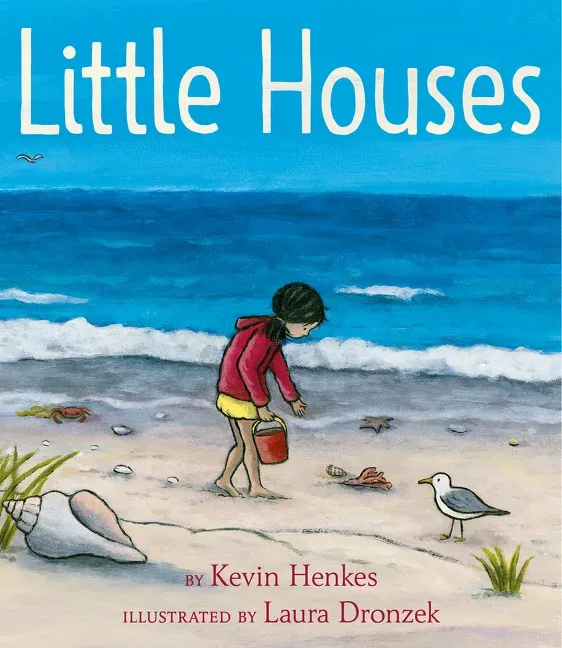 Little HousesKevin HenkesWhen a young girl visits her grandparents in their small house on the beach, she and her grandma look for shells every morning. They only keep the empty ones because shells are “little houses” for living things. The girl (light-brown-skinned) imagines the empty shells as rooms. She wonders who might have lived in them and whether there is a ghost inside. She also wonders about where the shells came from, what’s under the water in the ocean, how old the rocks are, and how deep the water is and why it can be so many colors at once. “I’d like to know what a pelican thinks of a sandpiper, and if a snow egret has 38 Picture Books for Young Children CCBC Choices 2023 ever seen snow.” Her grandpa assures her that someday she’ll know it all. For now, she knows this: She will take some of the little houses home to her own house. Her favorite will have a special place. “A house in a house in the world.” The measured, artful text moves from intimacy (the space inside a shell, family) to expansiveness (big ideas, big world) before returning to the comfort of home. The richly hued illustrations, done with acrylic pen and ranging from double-page spreads to a series of oval images, echo this duality of expansiveness and security in a picture book quietly illuminating the ways in which a shell, and the world, and the mind of a child all contain wonders.Picture Books for Young ChildrenView book details
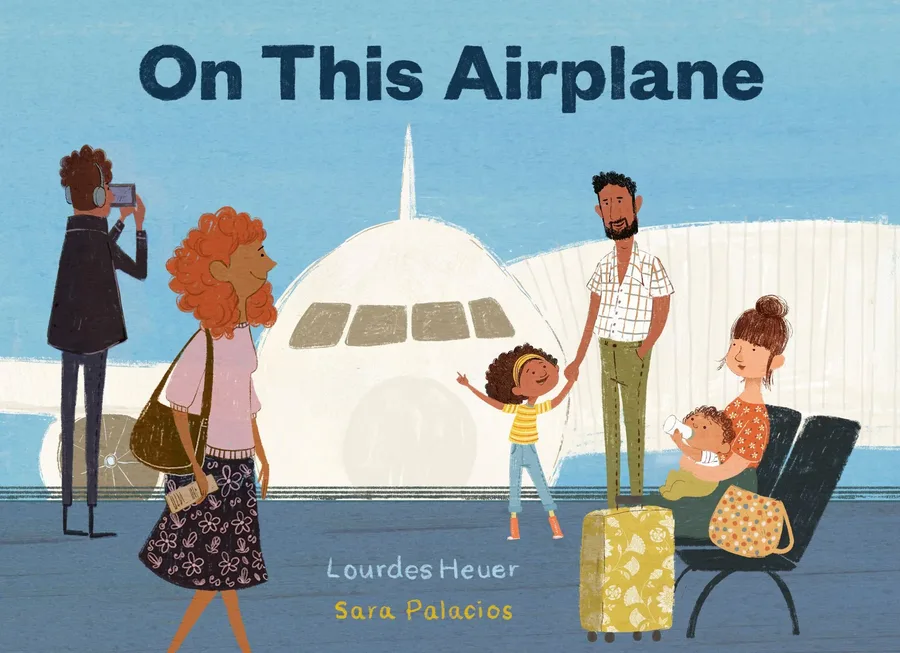 On This AirplaneLourdes HeuerFocusing on a multiracial family (tan and brown-skinned) with a child and baby moving to a new home, this picture book follows them on an international flight, detailing their experience from boarding to landing while also visually tracking the journeys of other passengers. “On this airplane, there is a pilot living her dream, one passenger daydreaming and another fast asleep.” Clever text describes the sights and sounds of flight routines and dramas, while also offering hints regarding who is who on the illustrated manifest. All of the familiar discomforts of air travel are witnessed, from cramped spaces to seat backs reclined too far to turbulence, as well as moments of pleasure. “On this airplane, someone lends an earbud. Someone lends an ear. Someone makes a fuss … someone makes a friend.”Picture Books for Young ChildrenLexile Text Measure AD510LATOS Book Level 3.4View book details
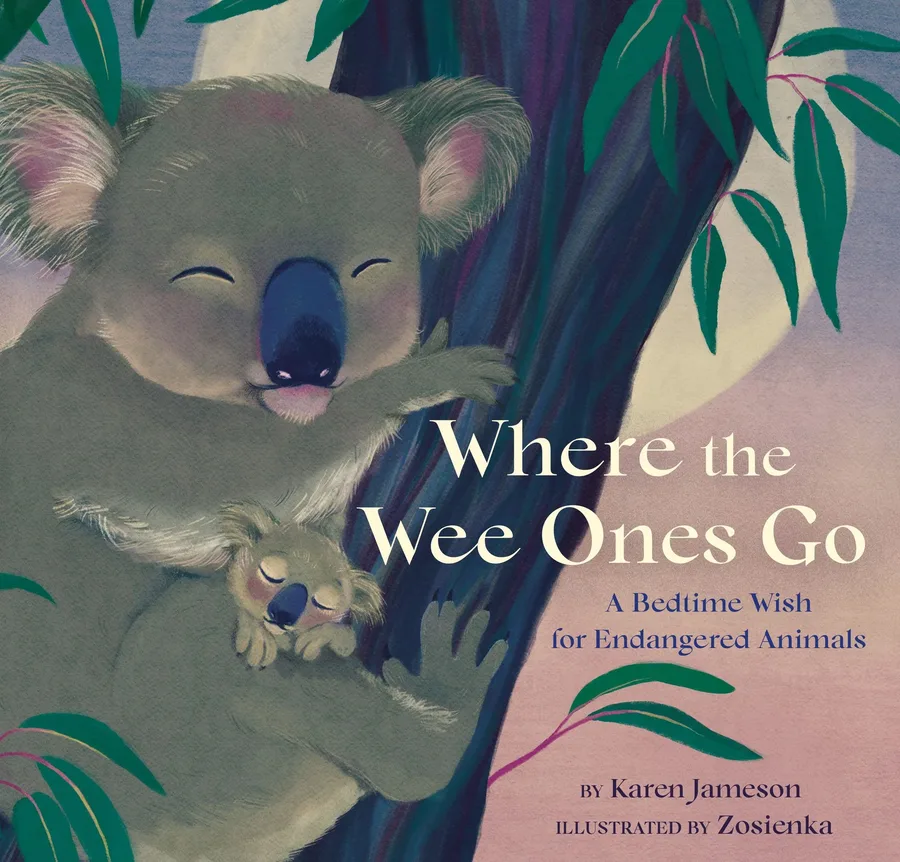 Where the Wee Ones Go: A Bedtime Wish for Endangered AnimalsKaren Jameson, illustrated by Zosienka“Where do the wee ones go, my love? Where do the wee ones go?” The “wee ones” in this cozy bedtime book are baby animals, each one the subject of its own rhyming quatrain answering the question found in the title and opening page spread. “Floating in Pacific waters, sweetly swaddled sons and daughters / drift hand in hand / near coastal sand. That’s where sea otters go.” In addition to sea otters, the distinct sleeping habits and geographic locales of young pandas, orangutans, elephants, alligators, rhinos, hippos, koalas, sea turtles, jaguars, condors, and polar bears are lyrically described in a narrative set against digital and mixed-media illustrations full of deep tones, soft curves, and snuggly but not too sweet baby animals in the wild.Picture Books for Young ChildrenView book details
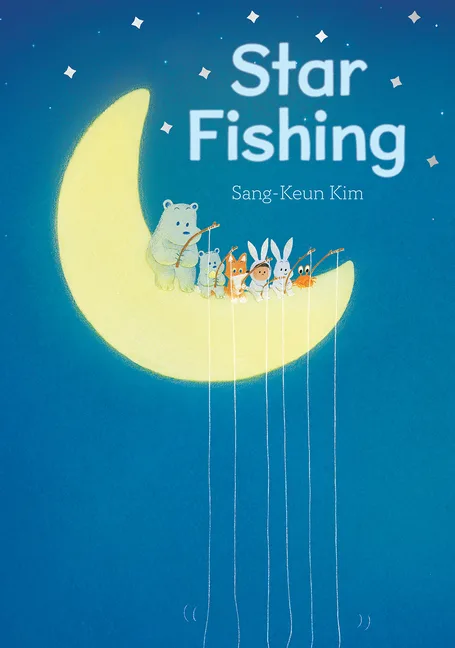 Star FishingSang-Keun Kim“It’s the kind of night when you just can’t fall asleep. You feel as though everyone in the world is asleep but you.” A small child dressed in bunny pajamas is wide awake in the peaceful calm of a deep-blue-hued bedroom, longing to play. In the midnight-blue sky, on the crescent moon, Little Rabbit casts down a bright yellow star on a gossamer string and pulls the child up. From their vantage point high above the earth, Little Rabbit and the child can see others who are awake—a crab, a fox, and two bears. They cast stars and reel them up one by one to join them. The group sits in the cradle of the moon dangling strings from poles, now capturing a cluster of yellow stars that eventually expands to fill the pages. They play on the bed of light until they tire. Little Rabbit cuddles them one by one, and they drift off to sleep before Little Rabbit sends them each back home. Dreamy, hypnotic illustrations in deep blues and bright yellows, with occasional touches of white and brown, perfectly complement the quiet repetition of a lulling narrative that ingeniously replicates the sense of being rocked to sleep. This picture book that feels like being on the edge of a dream world and then sinking into sleep is likely to pull even wide-awake young listeners into their own dream worlds at bedtime.Picture Books for Young ChildrenView book details
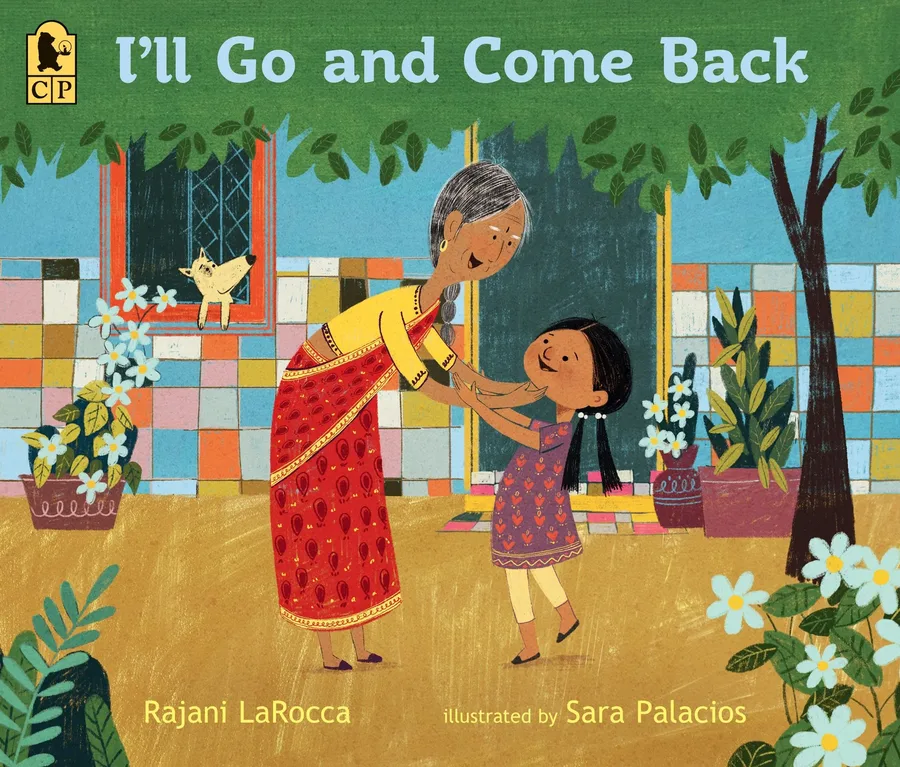 I’ll Go and Come BackRajani LaRoccaAt first Jyoti finds India so different from home that she has a hard time enjoying her visit, especially during the day when her cousins are at school. But eventually she and Sita Pati, her grandmother, connect despite knowing little of each other’s language (Tamil and English). They make rangoli designs with sand, play games (competitive Pati sometimes “counts wrong”), and drink warm milk with saffron to encourage sweet dreams. By the time the visit is ending, Jyoti doesn’t want to leave. Sita Pati says “Poitu variya?” (Will you go and come?) And Jyoti replies “Poitu varen” (I’ll go and come back). When Pati arrives in America the following summer, she also feels out of place and lonely until she and Jyoti again connect over the same simple activities: shopping for and cooking food, playing games (this time it’s Jyoti who occasionally employs creative scoring), and sharing cocoa at bedtime to bring sweet dreams. When it is time for Pati to go home, Jyoti doesn’t want her to leave but they make the same reassuring promise, to go and come back. The tangible love that develops between a grandparent and grandchild who live far apart is demonstrated in moments that feel both culturally and geographically specific yet also universal.Picture Books for Young ChildrenView book details
 A Day for SandcastlesJonArno LawsonPerseverance is key when three children spend a day at the beach building castles in the sand, their efforts thwarted by challenges beyond their control. The trio—an older boy, a slightly younger girl, and a smaller child (all white)—are intensely focused on their work. The first castle is crushed by a woman’s wide-brimmed, windblown hat; the second is washed out by encroaching waves; a third attempt is destroyed by a running toddler. As the incoming tide shrinks the beach, they continue to build and rebuild, each time closer to where their parents sit at the edge of a nearby dune. There are so many captivating details to pore over in this wordless story, from the three kids’ actions and reactions to the myriad activities taking place among the diverse beachgoers around them to the drama of a seagull determined to get a piece of their picnic lunch. A story that began with them tumbling off a bus beneath a bright sky and racing toward the deep blue sea ends with them on board the bus again as the sun in the gold-glazed sky touches the water, and a satisfying day of sea, sand, creativity, cooperation, and collaboration comes to a close.Picture Books for Young ChildrenView book details
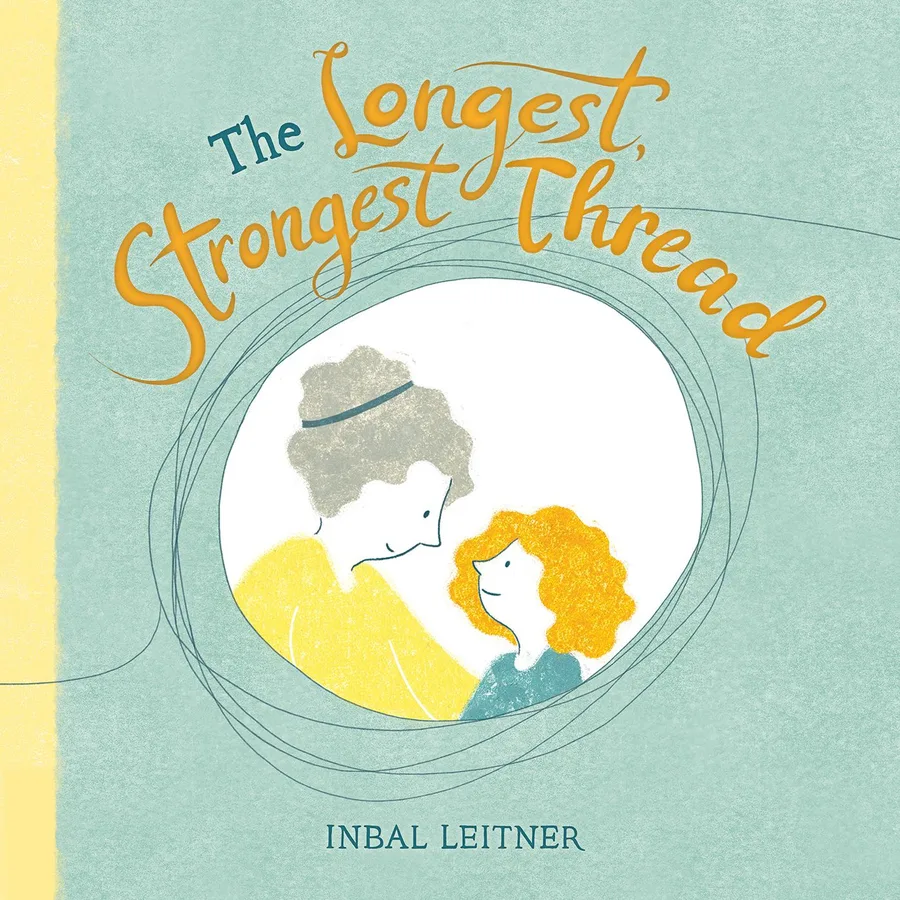 The Longest, Strongest ThreadInbal LeitnerThe golden-haired, white protagonist of this quiet story loves her grandmother’s sewing studio. She loves to help choose fabric for Grandma’s projects, as well as a good, strong thread to sew it all together. More than that, though, she just loves Grandma. Soon the girl will be moving to a place far away, “where the lakes freeze in winter,” and she’s worried about the distance. To be safe, she draws Grandma a map to her new home, so that Grandma will be able to visit. Then, with a few scraps of fabric and three mismatched buttons, she sews a lopsided airplane for Grandma, too. Grandma senses the girl’s worry and reassures her. The two of them “are connected by the longest, strongest thread in the whole world. I love Grandma, and Grandma loves me.” It will be hard to say good-bye, but distance—even very great distance—cannot break the thread of love. And “when winter comes, and the lakes freeze,” Grandma will use her hand-drawn map to find her way to her grandchild. A limited color palette (blues and golds) visually connects child and grandmother, while the narrative offers gentle reassurance without downplaying the girl’s sadness and worry.Picture Books for Young ChildrenView book details
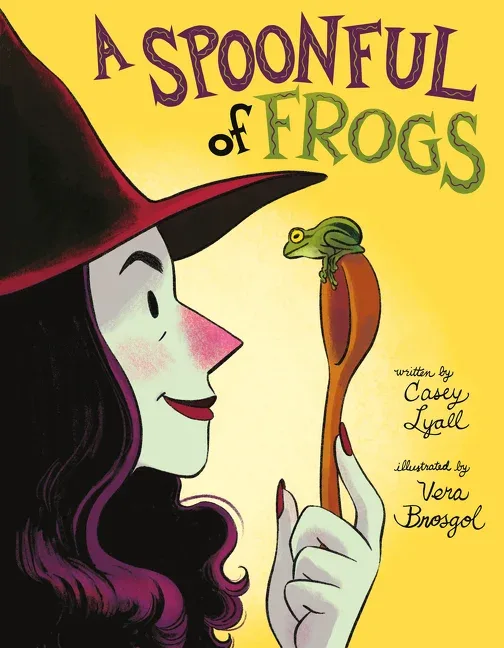 A Spoonful of FrogsCasey Lyall, illustrated by Vera BrosgolThe green-skinned witch hosting a cooking show breezes confidently through the first few steps of making Frog Soup. She’s filled her cauldron with water, added potatoes, carrots, 22 cloves of garlic, and fly extract. It’s not until she reaches her final ingredient—a spoonful of frogs for “a kick of flavor and a pop of color”— that the recipe jumps off course. She reaches a wooden spoon into a glass terrarium of frogs and scoops one up, but it leaps from the spoon onto her hat. The witch adjusts her instructions as the frog, joined by its compatriots, continually gets away from her. “Grab the frogs and put them on the spoon. Get the frogs. Put them on the spoon. Find the frogs and place them on the spoon. Scoop up the frogs with the spoon. Chase the frogs. Trap them in a pot. Tip them out … onto the spoon.” Her frustration mounts, culminating in a chase that leads out of the TV studio and into a park, where she slips into a stream during full frog pursuit. With a page turn, the witch is back on set (missing her hat and one shoe), suggesting pickles as an acceptable substitute for frogs. The witch’s attempts to keep her cool and continue her cooking narration begs to be read aloud, while the digital illustrations amplify the humor of this merry offering. Listeners will relish the frogs’ clear command of the mounting chaos.Picture Books for Young ChildrenView book details
 People Are WildMargaux Meganck, illustrated by Margaux MeganckThis playful picture book cleverly compares humans with a variety of other “wild creatures” through text and visual images. A quiet seal parent and pup are shown in the foreground while noisy human families splash at the beach. A lynx mother cleans her kit with her tongue while a human boy messily licks a dripping ice cream cone. Concepts of what it means to be wild, loud, messy, smelly, nosy, and strange are humorously depicted with warm, detailed colored pencil and watercolor illustrations. Facts about the animals, their habitats, and environmental vulnerability are provided in the end pages.Picture Books for Young ChildrenLexile Text Measure AD960LATOS Book Level 6.3View book details
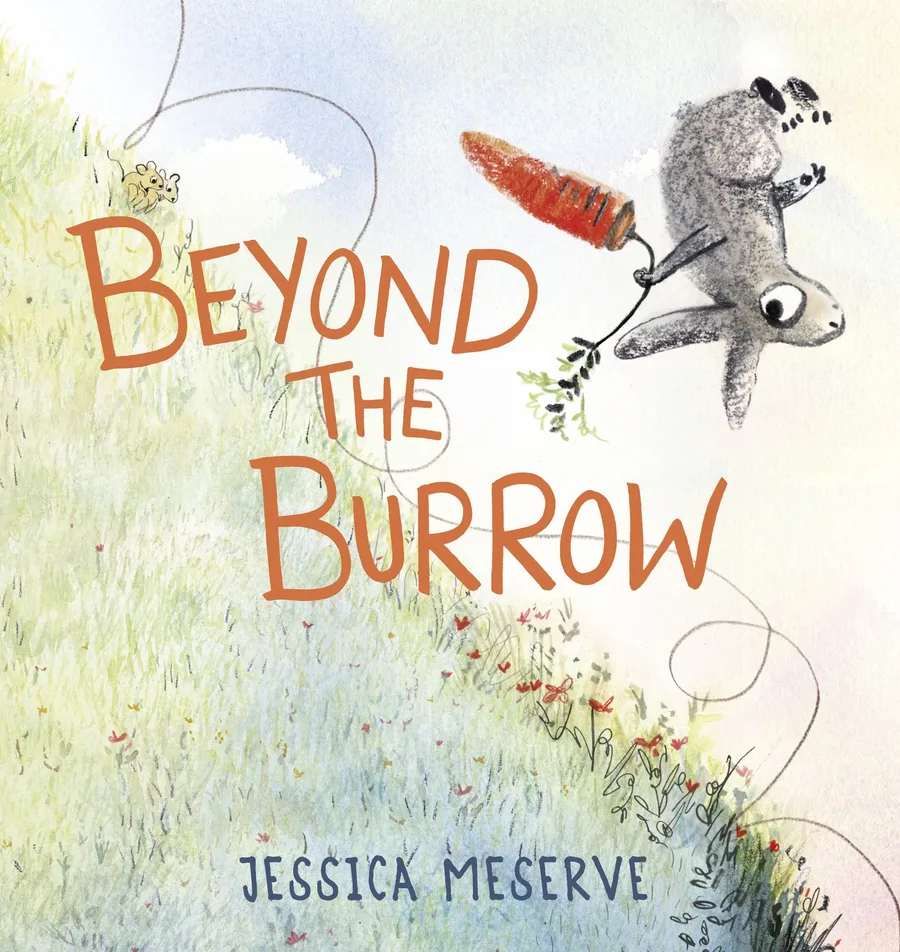 Beyond the BurrowJessica Meserve, illustrated by Jessica MeserveRabbit lives among other rabbits in a safe, cozy, rabbit-only environment, but pursuit of a carrot leads to an unwanted adventure that brings surprising revelations. “Falling is NOT a very rabbit thing to do. In fact, it’s something of a disaster.” But fall is exactly what Rabbit does while reaching for that sweet carrot. It sends her tumbling down a hole that lands her in a river, which leads her to an encounter with a not-rabbit (anteater), “giant and clawed and hairy, and most certainly scary.” Taking refuge in another hole, scared and hungry, Rabbit is given a gift by the not-rabbit. It isn’t a carrot. But it is “the most delicious thing she ever tasted.” Reconsidering her opinion of not-rabbits, Rabbit is now eager to learn more. What she discovers is a world full of many different not-rabbits, many opportunities for fun, and a great deal of kindness. Funny, sweet, but not too precious, this whimsical story features charming digital and mixed-media illustrations.Picture Books for Young ChildrenView book details
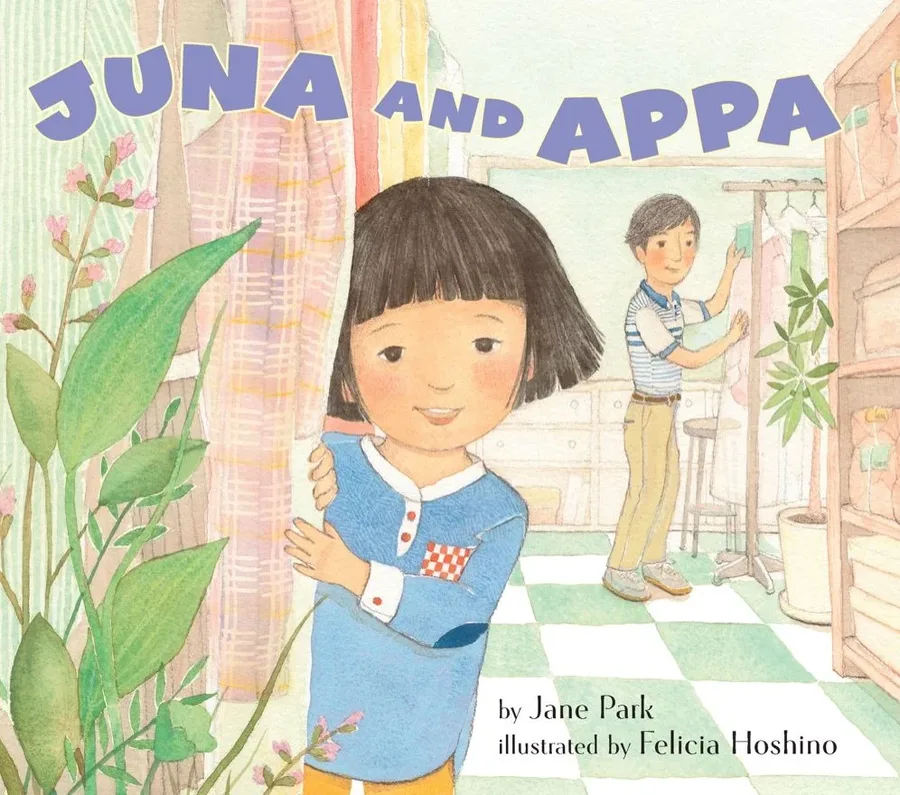 Juna and AppaJane Park, illustrated by Felicia HoshinoOn Saturdays, Korean American Juna is Appa’s “little helper” at their dry cleaning shop. When Mr. Parker’s expensive coat goes missing, Juna offers to help find it. But instead, Appa wants Juna to “please just sit still” while he searches. As she makes a lost-jacket poster, Juna imagines herself in the nest of a “giant appa rhea bird” who offers to keep her warm, just as he does his eggs, and hums her a song. Juna tries to hum the song to Appa, but he brushes her off, still looking for the coat. Fishing through a basket of clothes for the missing item, Juna imagines herself in a pond with a water bug who carries his eggs on his back to protect them. But a frustrated Appa snaps at Juna when she climbs playfully onto his back. Juna escapes to an imaginary forest, where a Darwin’s frog explains that “parents 41 Picture Books for Young Children CCBC Choices 2023 show love in lots of different ways.” (He swallows his tadpoles to keep them safe.) At Appa’s worried call, Juna returns to reality and offers to give her New Year money to Mr. Parker. Touched by the gesture, Appa assures Juna that they will look for the coat on Monday. Feeling warm and safe in his affection, Juna walks with her father to the taco truck for lunch, as always. Realistic moments of frustration and hurt feelings cannot negate the love and caring between father and daughter.Picture Books for Young ChildrenView book details
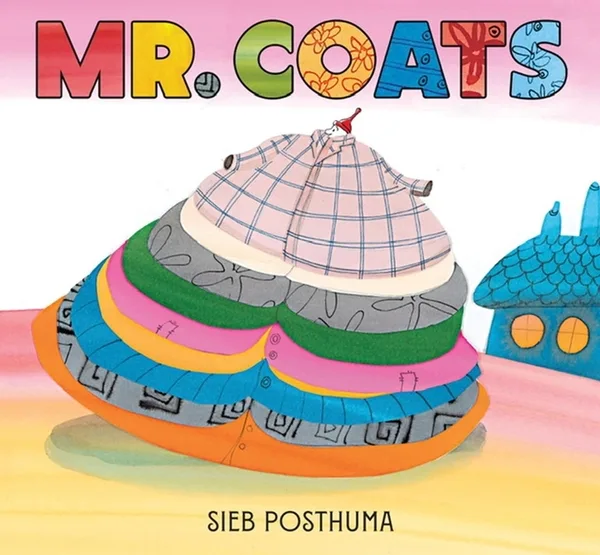 Mr. CoatsSieb PosthumaMr. Coats is always cold, always shivering, and always huddled up next to his stoves, which make his house much too warm for visitors. And so he is always lonely. One morning, having had enough of the cold, Mr. Coats ventures into town, where he asks a shopkeeper for the “thickest” coat she has. But even three such coats layered cannot keep Mr. Coats warm, so he buys some blankets to turn into coats and dons those, too. Soon Mr. Coats wears so many coats that he cannot fit inside his home; he must resort instead to living inside his cone-shaped mound of coats. Mr. Coats’s coat-house is a spectacle attracting reporters and admirers, one of whom insists that Mr. Coats accompany him to meet someone “very special”—a similarly freezing woman who also lives in a structure made of coats. The two hit it off, their conversation yielding remarkable results: They warm up. As the pleasure of companionship and new love thaws Mr. and Mrs. Coats, they shed their coats and move in together to spend their days in the warmth of each other’s company (and a single coat each). Whimsical art featuring boldly patterned coats in brilliant colors accompanies an absurd but charming story translated from Dutch.Picture Books for Young ChildrenWord Count 631View book details
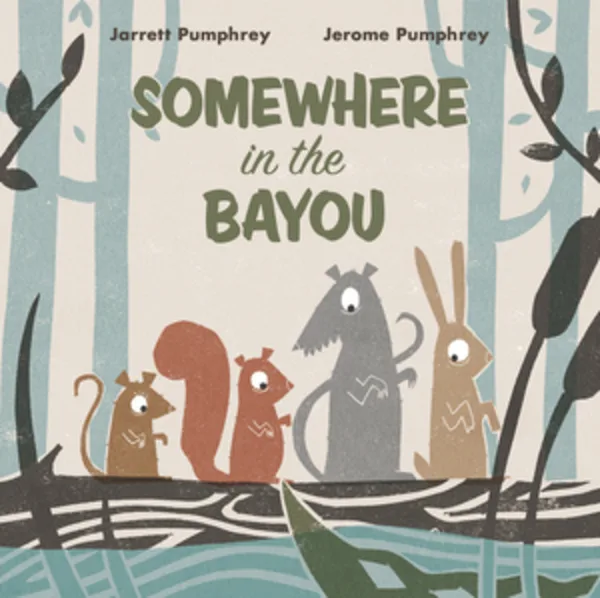 Somewhere in the BayouJarrett Pumphrey, Jerome PumphreyAn opossum, a rabbit, a squirrel, and a mouse stand at the edge of a river. In front of them is a convenient log they could use to cross the water, but the tip of a large, pointed tail sticks up out of the water next to the log. “That looks like a sneaky tail,” says rabbit. Opossum, certain of how to handle things, tiptoes across the log. “Smack Splash” … Now a rabbit, a squirrel, and a mouse stand at the edge of the river. “That’s a scary tail!” affirms Rabbit. Squirrel raises his paws and bares his teeth and steps out onto the log. “Smack Splash” … A rabbit and a mouse stand at the edge of a river … This sparely told story is a perfect picture book package. Distinctive, uncluttered panel art in muted tones with stylized figures (with incredibly expressive eyes) works in harmony with the patterned text told through speech- bubble dialogue to tell a funny tale with a punchline ending, perfect for reading out loud.Picture Books for Young ChildrenLexile Text Measure AD490LATOS Book Level 3.3View book details
 First Morning Sun: A Book of FirstsAimee Reid, illustrated by Jing Jing TsongPaired rhyming statements track a child from birth (“First morning sun. First day begun. / First tiny cry. / First lullaby.”) through traditional milestones (“First baby talk. First shaky walk.”) to other less conventional moments (“First scraped-up knee. First climbing tree.”). On the final page the celebrated child welcomes a newcomer: “First sibling new. More firsts for two.” Digitally created illustrations sporting a cheerful palette and bold outlines feature a family that appears to be Asian.Picture Books for Young ChildrenView book details
 The StackVanessa RoederIt starts with a chair, atop which young, pajama-romper-clad Luna stacks books. When she climbs on top of the tower, she realizes she’s barely begun. “Her quest seemed insurmountable. She had to think much bigger. She planned a complicated scheme to execute with vigor.” Brown-skinned Luna adds her bed, then a bathtub with her tallest friend inside. Plates, her neighbor’s house, and an array of animals and objects ending with 42 Picture Books for Young Children CCBC Choices 2023 a dragon come next. “Finally atop the beast she heaved a pirate ship. She grabbed a pack, a jar, a snack, and started on her trip.” The object of Luna’s desire: a star. But if the choice seems slightly precious, there’s one more playful joke in store when she returns home. “Back inside her room that night the gleaming starlight spread. She glanced around her room and wished … she hadn’t tossed her bed.” This rollicking, rhyming nonsense story features warm yet whimsical illustrations that are a perfect match for the spirited text.Picture Books for Young ChildrenView book details
 Bedtime for BoKjersti Annesdatter Skomsvold, illustrated by Mari Kanstad JohnsenThe opening pages of this large trim-size picture book show a yawning parent brewing a cup of hot tea; on the opposite page, an energetic toddler stands with one foot in the fruit bowl while balanced on the coffee table, holding the pet cat overhead. The story begins: “It’s evening and Bo is being silly. He does tumblesaults on the sofa and sings as loud as he can.” Laughing, Mommy initiates bedtime, but Bo insists he’s already asleep. Perching on one leg on the edge of the sofa, Bo (presumably white) announces that he’s a parrot, explaining how the birds sleep balanced on one leg. Playing along, Bo’s mother invites the parrot to eat a bedtime snack, only to find that with a tummy full of blueberries and porridge, Bo has become a hibernating bear. The bear needs a wash, and in the bath, Bo becomes a sea otter. Playful parent-child dialog pairs with brightly colored, fluid-lined illustrations that blend the cozy interior of Bo’s home with his richly imagined animal fantasies. This translated treasure will undoubtedly inspire young readers to invent their own animal bedtime routine, complete with bedding as comfy as a mob of meerkats.Picture Books for Young ChildrenView book details
 Ballet KidsHolly Sterling, illustrated by Holly SterlingThomas loves ballet. On this cold winter day, Thomas, who is Black, and five other preschoolers arrive for Mr. Elliot’s class. “We hang up our coats, hats and woolly scarves. Then we wiggle and slide into our ballet shoes.” They stretch, practice ballet positions, and improvise with great enthusiasm under Mr. Elliot’s guidance before choosing outfits for their upcoming show, The Nutcracker. “Some of the costumes are silky, some are soft, and some shimmer under the light … I pick out something as purple as a plum, covered in sparkly sequins … I am the Sugar Plum Fairy …” Thomas is nervous about performing, but Mr. Elliot assures him that if he listens and moves with the music, “the magic will come from within.” And it does! The beguiling first-person narrative, with its terrific word choice, conveys both dance-related details, including a few basic French dance terms, and Thomas’s love for dance, while the soft-edged, digitally colored pencil illustrations are as friendly and welcoming as Mr. Elliot’s class and his diverse students.Picture Books for Young ChildrenView book details
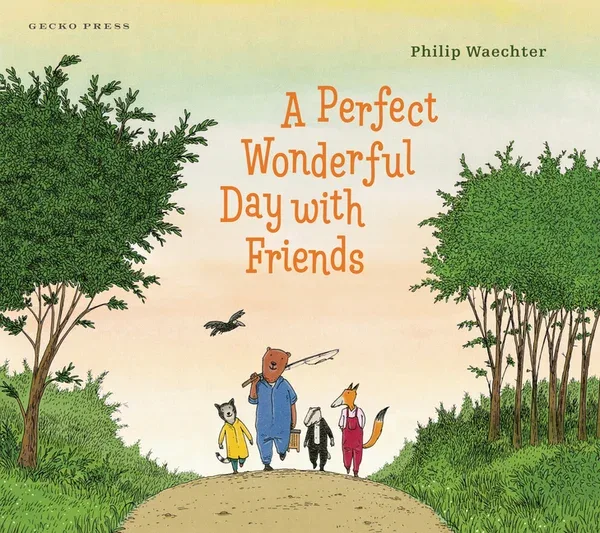 A Perfect Wonderful Day with FriendsPhilip WaechterWhen his usual tactics to alleviate boredom (reading, exercise) don’t work, Raccoon decides to bake an apple cake. Out of eggs, he heads to Fox’s to borrow some. Fox is busy fixing her roof and needs a ladder, so the two set off to get one from Badger. “Perfect … A walk with Fox,” thinks Raccoon. They find Badger puzzling over a crossword clue about honey. Clearly, Bear, a honey expert, is the one to ask, so the trio makes for Bear’s, stopping to pick blackberries on the way. “Perfect … A picnic with Badger and Raccoon,” thinks Fox. Bear isn’t home, but Crow knows where to find her. The four journey to the river. “Perfect … A climbing expedition with Raccoon, Fox and Crow,” thinks Badger. At the river, Bear is fishing. “Perfect … A fishing trip with Raccoon, Badger, Fox and Bear,” thinks Crow. Soon fishing is forgotten in favor of diving into the water. “Perfect … A swim with Raccoon, Fox, 43 Picture Books for Young Children CCBC Choices 2023 Badger and Crow,” thinks Bear. This subtly patterned, clever cumulative story unwinds as the group retraces their steps at the end of the day, completing their tasks with the help of the others. The penultimate reward? Apple cake for all. The ultimate reward? A perfect, wonderful day with friends, of course! Winsome, detailed illustrations in pen, crayon, and ink amplify the appeal.Picture Books for Young ChildrenLexile Text Measure AD560LATOS Book Level 2.4View book details
 Luli and the Language of TeaAndrea WangWhile her mother attends an English as a Second Language (ESL) class, Luli and the children of other ESL learners from various countries spend the time in childcare in the classroom next door. As none of them speak English yet, the kids engage in mostly solitary play—until Luli comes up with an idea. The next day, she carefully unpacks the components for tea at a round table: teapot, thermos of hot water, and a ball of dried green tea leaves. Setting the tea to steep, she takes a breath and calls to the classroom at large, “Chá!” (The Chinese character for “tea” is used, helpfully followed by its transliteration.) The word, though not exactly the same, is familiar to the other kids in the room, and each of them repeat in their own language, “Tea?” There’s “shay” in Arabic, “chay” in Russian, “chah-hee” in Farsi, “teh” in Hebrew, and many more. As they gather around the table, Luli pours them each a cup of tea … and then they all pour a bit of their own portion into Luli’s empty cup. The shared ritual breaks the ice (Luli’s box of cookies helps, too) and soon the children are playing together. Luli’s courage and cleverness shine in this story of cross-cultural connection. Back matter includes information about how tea is traditionally enjoyed in each of the children’s home countries.Picture Books for Young ChildrenView book details
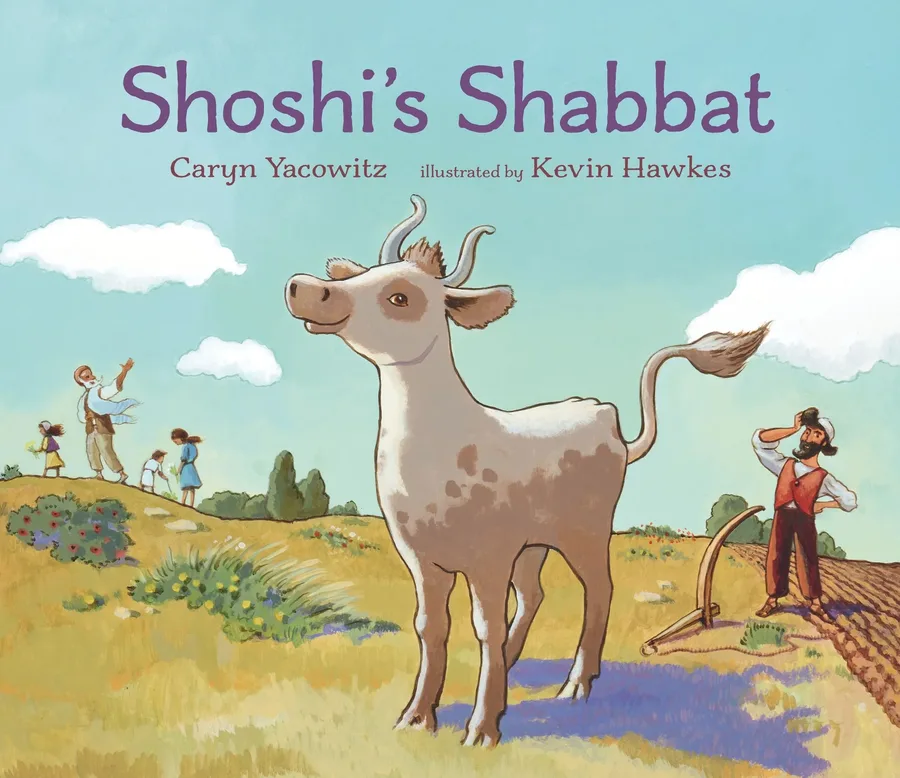 Shoshi’s ShabbatCaryn Yacowitz, illustrated by Kevin HawkesA humorously expressive ox named Shoshi is accustomed to life on Simon’s farm, where she helps Simon plow the fields for six days a week before resting on Shabbat. On Shabbat, Shoshi enjoys sweet hay, fresh water, and playtime with Simon’s grandchildren. When Simon grows too old to plow, he sells Shoshi to a young man named Yohanan, who is not Jewish. A hard worker, Yohanan yokes Shoshi to his plow for six days. But on the seventh day, when Yohanan comes for her, Shoshi refuses to walk to the field. Yohanan grumpily finds other work to do, paying no mind to the beauty of the world around him. Shoshi’s behavior continues in this pattern—six days of work followed by a day of refusal— until one day Yohanan spies Simon walking with his grandchildren and realizes it must be Shabbat. That’s when everything clicks. Observing Simon’s happiness and Shoshi peacefully napping in the hay, Yohanan thinks that clever Shoshi may have the right idea. Perhaps Yohanan ought to take a day to rest, to spend leisurely time with his family, and to appreciate his blessings. And so he does. All of the humans have brown skin in this story based on a midrash about Rabbi Yohanan ben Torta that affirms both the sacredness of Shabbat and the necessity of rest.Picture Books for Young ChildrenView book details
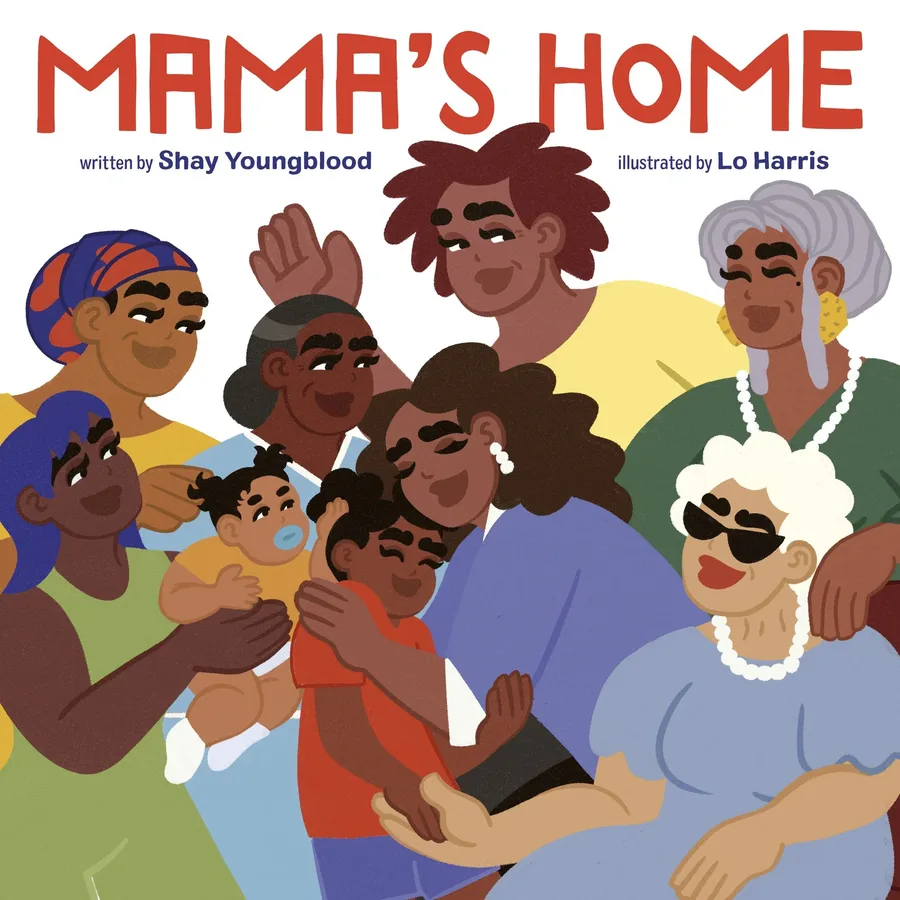 Mama’s HomeShay Youngblood, illustrated by Lo HarrisA young Black girl feels lucky to “have seven Big Mamas and seven houses, one for every day of the week.” When her mother stays late at work or travels for her job, the girl spends time in the homes of Black women who are friends or relatives of her family. She does specific things with each of them: sings songs in Spanish, French, and Igbo with Miss Zikora; beats out the answers to her math questions on pots and pans with Aunt Lily; and counts the change from Lil Jackie’s tip jar. Each of the women inspire the girl to think of careers she’d like to pursue, motivated by their interests and examples. This upbeat and affirming story concludes with the celebratory potluck meal they all share when Mama comes home again. In a final note, the author describes the cast of women who raised her and the unique 44 Picture Books for Young Children CCBC Choices 2023 perspectives they offered on how to be a Black woman. Stylized illustrations showcasing easily identifiable characters feature bold black lines and saturated colors.Picture Books for Young ChildrenView book details
Picture Books for School-Age Children
22 selections
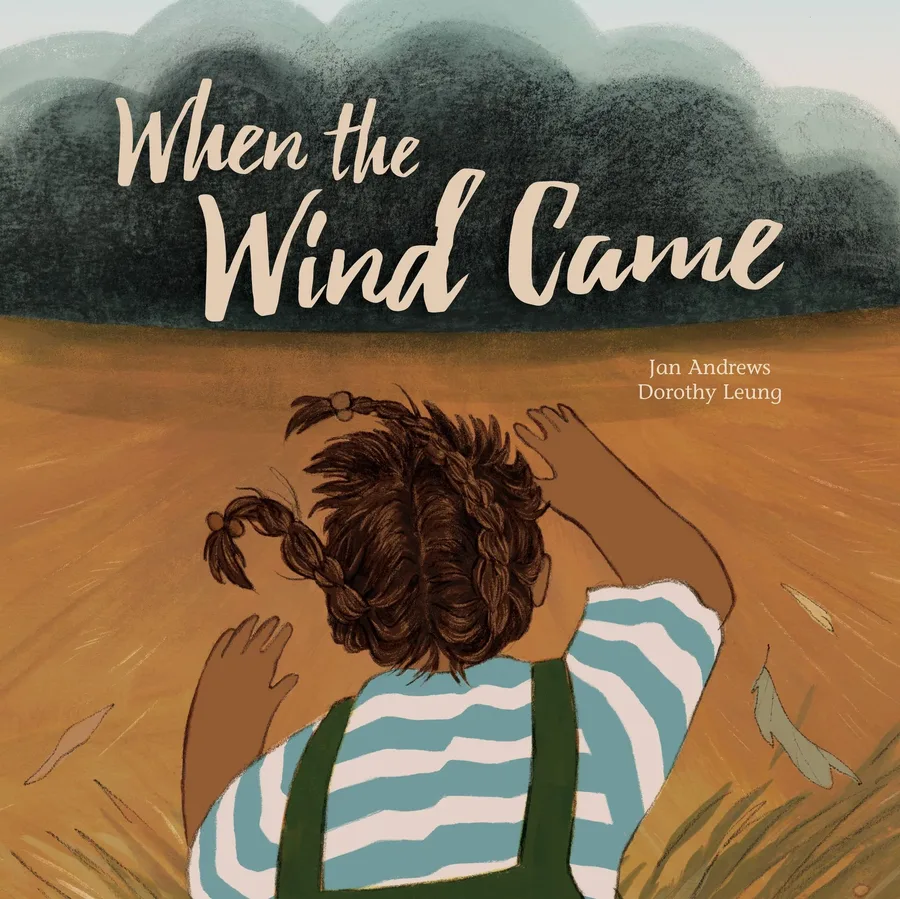 When the Wind CameJan AndrewsA brown-skinned young girl remembers the everyday life on the family farm, with her father working the cattle, her mother weeding, and her baby brother’s incessant whimpering. It all changed when the wind came and ominous dark clouds blanketed the sky. She remembers the family running to the root cellar, sitting silently inside in the dark, and emerging to see that their house was destroyed. Despite the loss, the family still needs to eat, so her mother made a meal and the girl washed dishes in a bowl until, without thinking, she began to blow dish soap bubbles through her curled fingers. Her baby brother was the first to giggle, and then the whole family was laughing. “Those laughs didn’t change anything. They made no difference. / Those laughs changed everything. They made all the difference in the world.” This account of remembering a traumatic event in vivid detail, and the realization that loss may be alleviated by human connection, is both dramatic and reassuring. Pencil and paint illustrations in tan, brown, gray, and blue darken as the powerful storm mounts, and then recede to lighter shades by the final hopeful pages.Picture Books for School-Age ChildrenView book details
 John’s TurnMac BarnettEvery Friday at the school assembly, one student gets to perform on stage. Today is John’s turn. The narrator can tell that John, who has light brown skin, is nervous. During Mr. Ross’s announcements, John changes his clothes. And then Mr. Ross introduces him. “‘What’s John gonna do?’ Andre asked without raising his hand.” Mr. Ross says that John is going to do a dance. “The music was strings, violins and things, and then maybe flutes. Someone said, ‘How the heck do you dance to that?’ (It was probably Tiffany.)” Kids laugh and are shushed by a teacher. And then John begins to dance. John dances ballet for ten nearly wordless pages; as he does, his face transforms from nerves to joy. Then he takes a bow. “We clapped,” says the narrator, and now it’s the faces of the other children that are full of joy. The unidentified narrator offers honest observations that lend veracity to the setting and events of this singular school story. Expressive ink and paint illustrations convey the flow of John’s movement as he performs and reflect the feelings of John and his audience, passing on a sense of happiness and triumph to readers and listeners.Picture Books for School-Age ChildrenWord Count 324View book details
 The Three Billy Goats GruffMac BarnettThe folktale of “The Three Billy Goats Gruff” is given a fresh flair with understated illustrations in muted tones by Jon Klassen and the subversive humor of Mac Barnett’s writing. Their retelling honors the Norwegian origins of the clever goat brothers’ story, while punching up the drama of the hungry troll beneath the bridge. “Who seeks to reach the grassy ridge? Who dares to walk across my bridge?” asserts the ridiculously nasty troll as each Billy Goat Gruff dares to pass. While the troll’s demise will not be a surprise, the humor of his goat recipes (“Goat smoked, goat poached, a goat pot roast. / Goat smorgasbord! Goat smeared on toast!”) will delight readers and begs to be read aloud.Picture Books for School-Age ChildrenView book details
 FarmhouseSophie Blackall“Over a hill, at the end of a road, by a glittering stream that twists and turns, stands a house, where twelve children were born and raised …” The farmhouse was on property that author/artist Sophie Blackall purchased. She imagines the lives of the white family who lived there—of secrets and dreams, music and books, chores and grumbling, seasons and sickness; of making potato print wallpaper and sewing shell buttons; of growing up and growing older and leaving one by one. Then the house stood empty and slowly eroded, nature moving into rooms that once knew human laughter and love, until the day Blackall stumbles upon the house and finds treasures in the ruins. “I filled my arms with wallpaper scraps and rain-soaked books and brittle maps and mud-caked dresses and handkerchiefs and a button that was once a shell in the sea …” She began to imagine the lives of those who lived there. A lyrical narrative of abundant detail unfolds against equally captivating illustrations using ink, watercolor, gouache, colored pencil, and bits of the farmhouse, such as wallpaper, books, newspapers, and clothing, giving the impression of peering in on the lives that occupied the space. An author’s note and endpapers with photos of some of Blackall’s discoveries add another layer of fascination to this account.Picture Books for School-Age ChildrenLexile Text Measure 870LATOS Book Level 5.6View book details
 Big Dreams, Small FishPaula CohenNo one in Shirley’s family thinks she’s old enough to help at the family store, even though she’s full of big ideas. But not even Shirley has been able to convince customers to buy gefiltefish. When Aunt Ida goes into labor, and Mama and Papa rush to the hospital, Mrs. Gottlieb and Shirley are on their own at the store. “Shirley wasted no time. She straightened. She decorated. She modernized. She advertised.” When her parents return, Shirley’s mother is pleased: The gefiltefish is gone! But when they look in the register her parents are dismayed. There’s so little money! It turns out Shirley gave the gefiltefish away with a “Buy anything and get a surprise!” offering: one can with every purchase. The next morning, however, neighbors are lined up out the door, waiting to buy more of the new (to them) delicacy. “You know Shirley, you have some pretty good ideas in that keppele after all.” The spirited illustrations are a perfect match for the energy of this story about a white Jewish girl living in a diverse neighborhood in the early 20th century. Yiddish words and phrases are incorporated throughout the story.Picture Books for School-Age ChildrenView book details
 Me and the Boss: A Story about Mending and LoveMichelle EdwardsLee’s big sister, Zora, is “the boss,” often telling him what to do and always watching out for him. At a sewing program at the library, Zora insists the librarian give Lee fabric, thread, and a needle just like the other kids, even though he’s younger. “Mrs. C shows us how to sail our thread through the needle’s eye like a little boat.” Lee’s jumble of stitches makes a crooked half-moon. “The boss makes a fine flower.” Lee hides his messy work when they get home. But in the middle of the night, he takes out the needle and thread and picks up where he left off; remembering to stitch slowly, he transforms the half-moon into a full moon, complete with a smile. Inspired, he keeps going, first sewing up the hole in his pants pocket and later surprising Zora by fixing the torn ear on Bess, her bear. “She wraps me and Bess in her special hug, and we share something that is bigger than my pocket, bigger than Bess’s ear, maybe even bigger than me or Zora.” The mixed-media collage illustrations, often with circular frames, echo the tenderness and warmth of a story about two Black siblings. Marvelous pacing and superb details further distinguish the storytelling.Picture Books for School-Age ChildrenView book details
 Olu & GretaDiana Ejaita, illustrated by Diana EjaitaOlu lives near Lagos, in Nigeria; Greta lives in Milan, in Italy. The two children (both Black) are cousins. “They have never met each other in person! How would they?” A playful narrative paired with pencil and digital illustrations that look like chalk on blackboard distinguish a beguiling picture book about two children who have a close bond and a lot in common, despite the distance between them. They can’t get to one another by walking or skating or parade or spaceship or dancing, notes the text in a series of page spreads showing them separately engaged in each of these activities on side-by-side pages. “Could they get there by car? By boat? By plane? YES! But not today.” Instead the cousins “send pieces of their lives to one another” (boxes in the mail). They talk to each other (on the computer). They dream of adventures (together in their imaginations). A satisfying wordless page spread at the end of this singular, captivating story shows now-teenage Olu and Greta with arms around each other … at last!Picture Books for School-Age ChildrenLexile Text Measure 330LATOS Book Level 2.4View book details
 BoneyCary Fagan, illustrated by Dasha TolstikovaWhile walking in the woods with her dog and her father, elementary school-age Annabelle (white) discovers a bone. Wondering if it had once belonged to an animal like a deer, a bear, or a wolf, curious Annabelle asks to take the bone home. Once the bone is cleaned and germ-free, Annabelle adds a ribbon and names it “Boney.” For the rest of the day, Boney has a seat at the table, a shoebox bed, and a trip in the wagon to the park. That night, Annabelle dreams of running with a deer, a bear, and a wolf. In the morning, something is different, and she notices in the mirror that her face is sad. Unable to articulate her feelings, she heads to the backyard with her neighbor friend. Sitting with her sadness, Annabelle sees that her dog, Scoot, has dug a small hole in the dirt. Annabelle solemnly and suddenly puts Boney in the hole, with her friend helping to cover the bone with dirt. In an awkward, poetic, and believably child-centric moment, the two friends have a fleeting acknowledgment of existentialism before dashing off to the park to play. This quiet and quirky picture book sensitively explores one child’s earnest imagination and understanding of life’s hard realities.Picture Books for School-Age ChildrenView book details
 The Sea in the WaySophie GilmoreLife for Badger is melancholy without Bear, who lives on the other side of the world. Winter is long and lonely, and their occasional phone calls only make Badger cry. Finally, one day, she has had enough and attempts to cross the offending sea in her rowboat. But soon the sea tosses her back onto the shore. “You are in the way!” Badger shouts in a huff, and surprisingly, the sea responds. “Of what?” The two exchange brief, confounding questions and answers until the sea finally concedes, “Fine … Bring me something nice, and I’ll let you cross.” Easier said than done. Badger bemoans the lack of nice things around her and wonders what exactly makes something “nice.” She tosses in a mushroom, first asking a nearby crow if it counts as “nice.” Next, the sea demands something “unusual,” and then something “loud, and the color of a storm.” Badger grows more confident and lively as she searches. Just as she is considering tossing her new crow friend (who, after all, is loud and the color of a storm) into the sea, she is interrupted by a phone call from Bear. This time, more fully engaged in life on her side of the shore, Badger has “so much to say.” Subtly hilarious and expressive pen-and-watercolor illustrations in a muted color palette accompany a narrative that invites readers to ask questions and offer interpretations about characters’ emotions and motives.Picture Books for School-Age ChildrenView book details
 The Coquíes Still Sing: A Story of Home, Hope, and RebuildingKarina Nicole GonzálezA resilient family rebuilds after the devastation of Hurricane María. “Co-quí, co-quí. Oh, how I love thee!” Elena sings in response to Puerto Rico’s native coquí frogs, which live in the mango tree beside her family’s house. After dark, the air fills with the sound of their song. But this evening, the wind is stronger than usual. There’s a hurricane on the way, and the family must prepare. As rain pours and wind howls, Papi comforts Elena with her song, “Co-quí, co-quí. Oh, how I love thee.” Afterward, the family surveys the damage. The storm has taken their roof and garden and stripped the mango tree. They are without electricity, water, and access to the road. But they are alive. Together with her family and their community, Elena helps clean up, plant seeds, and share food. When things feel hard, the still-living mango tree brings comfort; like Elena, its roots are strong. Finally, buds appear on the tree once again, and although “home has forever changed,” the familiar sound of the coquíes’ song has returned. Back matter provides additional information about the injustices many Puerto Ricans continue to face after Hurricane María. Ultimately hopeful, this story is nonetheless honest in its portrayal of the hurricane’s devastation on Puerto Rico and its inhabitants.Picture Books for School-Age ChildrenLexile Text Measure AD600LATOS Book Level 2.9View book details
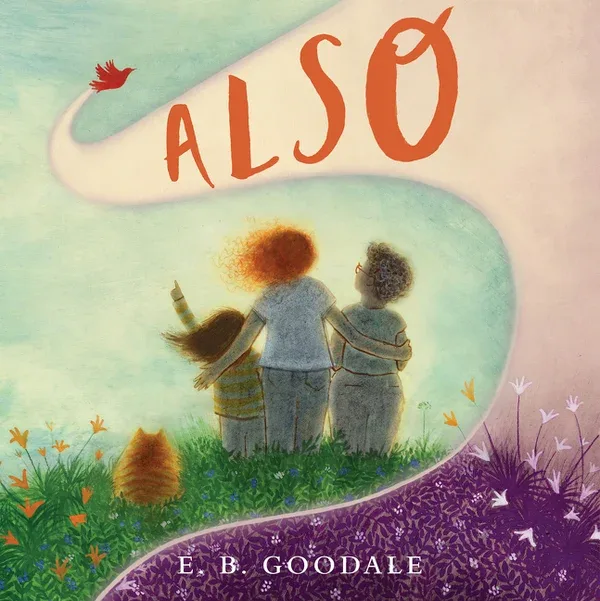 AlsoE. B. GoodaleLinks between events in the present and related moments in the past, and how those memories connect across three generations in a white family, are examined with a patterned format and illustrations that visually indicate placement in time. As a girl picks blueberries, she sees her gramma watching from a kitchen window; her gramma is remembering being surprised by a rabbit in her mother’s garden when she was small. “Today, my mama is walking down the hill, coming to find me,” the girl continues. “And also …… she is remembering sorting blueberries in the breakfast nook of her mama’s kitchen. Her sister was making her giggle.” Brightly colored art in the present moments change to sepia tones with each page turn that transports the reader to the related memory in the past. The girl picking berries in the opening pages is an adult by the book’s end, remembering her time among her gramma’s blueberry bushes. This quiet examination of time and family love invites thinking about how memories exist within us, how they surface, and how they connect us to one another.Picture Books for School-Age ChildrenWord Count 210View book details
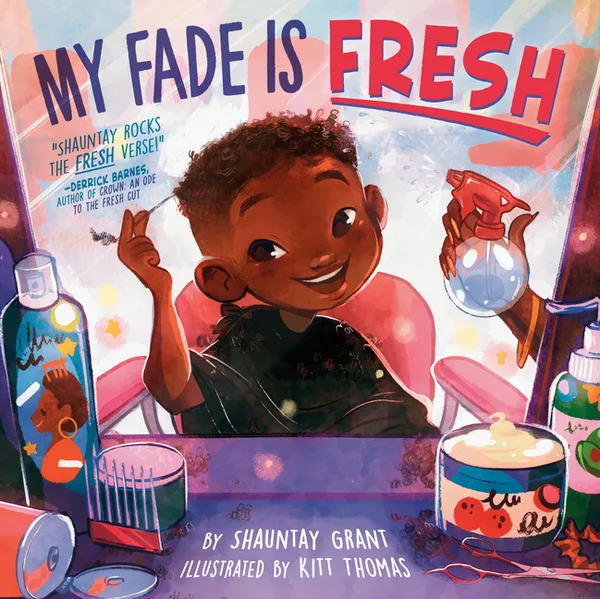 My Fade Is FreshShauntay Grant, illustrated by Kitt Thomas“Yesterday at ten o’clock, / I walked into the barbershop. / My bushy, brownish, biggish hair / was growing almost everywhere.” The young Black girl at the center of this rollicking story knows exactly what kind of haircut she wants: “The freshest fade up on the block!” Unfortunately her mom doesn’t listen, pondering other ideas with the stylist. Soon almost everyone in the salon, from other stylists to customers, begins to weigh in, their suggestions often mirroring their own hairstyles. More than two hours in, the girl still doesn’t have the fade she envisions, but the cut is getting closer to what she wants, and her frustration shifts to anticipation. That’s when everyone begins making suggestions for what she might get shaved into the side. “A rocket ship?”/ “A turbojet?” / “The whole entire alphabet!”/ “A treasure map with squiggly lines?” / “My word! / Just please make up your minds!” begs the now frazzled stylist. The girl, for her part, remains calm and emerges triumphant with “[t]he freshest fade up on the block.” The rhyming text, principally dialogue, is a delight to read, although matching the speaker to the various individuals in the bright, busy illustrations, which deftly chronicle the girls’ shifting feelings, takes a little effort the first time through.Picture Books for School-Age ChildrenLexile Text Measure AD490LATOS Book Level 3.3View book details
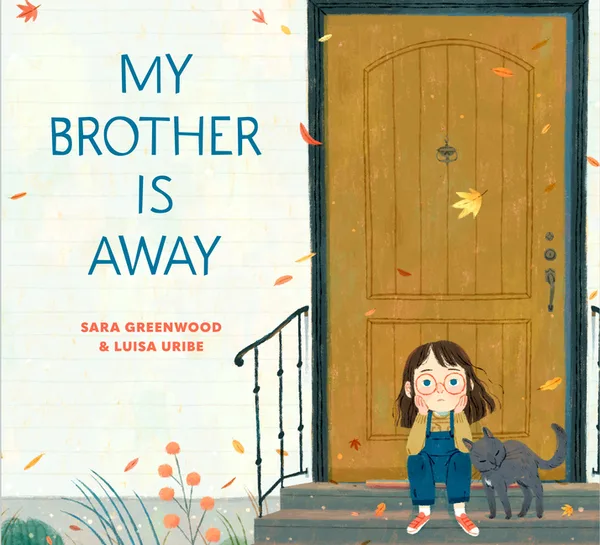 My Brother Is AwaySara GreenwoodA picture book from the perspective of a young white girl whose older brother is in prison builds to a reveal partway through; at first readers and listeners only know he’s away, and the girl misses him. She remembers how he used to hold her on his shoulders to look at the stars; he read to her; he sometimes called her “silly goose.” And she lies when someone asks her where he is. But one day a girl at school says, “I saw your brother on the news … He did something bad.” A flood of other feelings rises; the girl is mad at her brother for doing a bad thing that meant he had to go away. Her parents listen and comfort and say they’ll be going to see her brother soon. The girl isn’t sure what to expect on the visit, and she wonders if she’s grown and whether he’ll remember her. Then he comes through a door. “There’s my silly goose,” he says, wrapping her in a hug. A quiet, deeply felt story that leaves space for children to connect and fill in blanks in ways that work for them also offers reassurance, including the girl’s realization that she isn’t the only one whose brother (or father or uncle) is away. The author writes that her own brother was in prison during much of her childhood in a note that follows this much-needed picture book.Picture Books for School-Age ChildrenLexile Text Measure AD510LATOS Book Level 3.4View book details
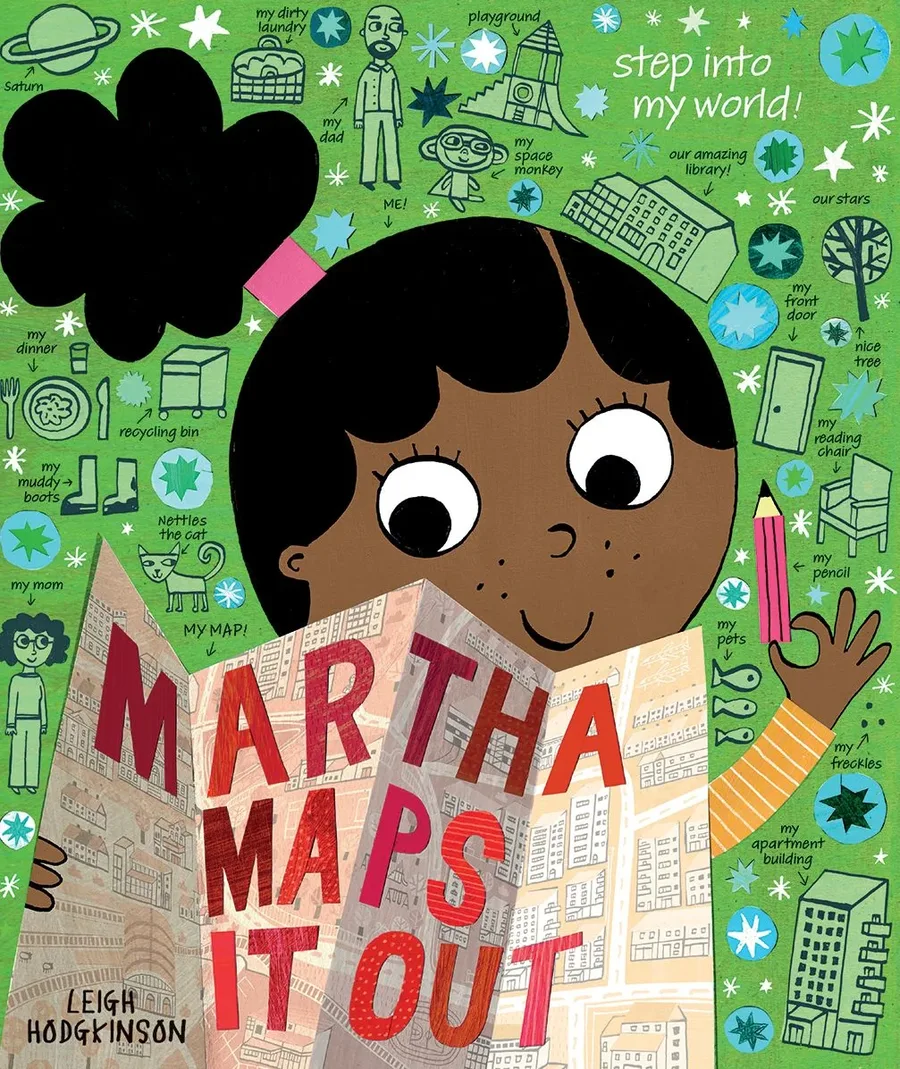 Martha Maps It OutLeigh Hodgkinson“Hello, universe! I am in here somewhere, but you can’t see me because I’m really tiny.” A page of colorful stars is the backdrop for these opening lines of a picture book that proceeds to map the various spaces that young Martha inhabits. With every turn of the page, brown-skinned Martha zeroes in on something smaller in scale, moving from the universe to the solar system to the earth to her city to her street to her apartment building to her apartment to, finally, her bedroom. The friendly map illustrations are full of childlike details and appeal, including Martha’s labels for various items, such as “Darren the succulent,” “squidgy banana,” and “stool (uncomfy).” By the time she gets to mapping her room, Martha notes that “on this map, I’m not so teeny-tiny anymore! After all, how can I be so teeny-tiny … if I think about such BIG things.” A map of her thoughts reveals many of those big things, and small things too, and the connections between them.Picture Books for School-Age ChildrenView book details
 The Book That Kibo WroteMariana Ruiz JohnsonA single book makes its way from one animal to another, providing comfort, enjoyment, and transformative experiences along the way. Written by a rhinoceros named Kibo, the story in question is about the sights and sounds of the savanna where Kibo lives: its “red sky,” “the buzz of the bugs,” “the silhouettes of the birds.” Kibo’s friend Naki the crane stitches the book together and carries it into the city, where she leaves it in a “hidden corner.” The book is found by Camilo the lion, who is filled with nostalgia as he reads of the savanna, the place where he was born. From there, the book continues to travel. It inspires a songwriter and helps forge a connection between new acquaintances. It teaches a traveler about a place and animals that are unfamiliar to her. It warms the fur of a reader living in a frigid climate. Black, white, and solid primary colors dominate the bold digital art, while vivid, sensory text underscores the theme of the power of a well-written story. The diverse experiences of the characters in this translated book demonstrate a single story’s capacity to affect individual readers in vastly different ways.Picture Books for School-Age ChildrenView book details
 The Treasure BoxDave KeaneIn her secret treasure box, a girl with brown skin collects special found items: a particularly smooth, round rock; a papery snakeskin; a large feather; a bird’s nest. She delights in sharing these items with her white grandfather when he visits. Grandpa examines each item with a magnifying glass and obvious appreciation before putting on his blue hat and accompanying his granddaughter on a treasure-finding walk. (The hat is repurposed as 49 Picture Books for School-Age Children CCBC Choices 2023 a basket for new items.) When Grandpa gets sick, the girl finds comfort in her treasures, and when she is able to visit Grandpa—first at home, where he now uses a nasal cannula, and later at the hospital—she brings along new items to share with him. When Grandpa dies, the girl attends his funeral, where she studies old photos and says goodbye “in [her] heart.” For a time, the treasure box becomes a source of sadness. But when Grammy finally visits, alone, she brings gifts—Grandpa’s magnifying glass, blue hat, and watch, inspiring the girl to share her treasures with her grandmother. The warmth and closeness between grandfather and granddaughter are beautifully depicted in the details of their interactions, and the story’s emotional arc is grounded in this child’s observations, not only of loss but of the progression of her grandpa’s illness.Picture Books for School-Age ChildrenLexile Text Measure AD550LATOS Book Level 3.6View book details
 Elephant’s Big SoloSarah KurpielWhen Ms. Gator announces that everyone will be playing a solo at the next music recital, Elephant feels as though the rug has been pulled out from underneath her feet. Music class is her favorite precisely because she can blend in—something she’s a bit too conspicuous to be able to do most of the time. (Her classmates—a snake, a turtle, a rabbit, even the tiger— are much smaller than she.) Her friends’ trite encouragements underscore their lack of understanding. Why a solo? Why can’t it be enough that Elephant hears herself play? She’s even writing her own song! In class Elephant helps her friends with their solos, choosing to learn her own part at home. When rehearsal comes around, and it’s time for Elephant to play, she panics. But as she starts to run off, her classmates speak up. They’ll play with her. Relieved, Elephant teaches everyone her song—the song she wrote herself—and when the big day comes, the whole class performs Elephant’s “solo” together. And “it felt wonderful to be heard.” Digital illustrations in a pastel palette depict a sweet, mint-green pachyderm with absolutely palpable anxiety. Her experience will resonate with readers who prefer to keep a low profile.Picture Books for School-Age ChildrenView book details
 The Legend of Gravity: A Tall Basketball TaleCharly Palmer“He leaped so high that he looked like he was never coming down, like he defied gravity or something.” The new kid at the neighborhood basketball court doesn’t have a nickname, but his skills quickly earn him one. “Gravity once jumped so high that we were able to go out for ice cream before he came down.” With Gravity on their side, the players hope their team can finally win the Best of the Best, “Milwaukee’s biggest and baddest pickup basketball tournament.” Their strategy? Get the ball to Gravity and he’ll do the rest. In the closing minutes of the final, an exhausted Gravity calls on the skills of Liquid, Sky High, and Left 2 Right in turn. Then he turns to the narrator. “I’d never had a nickname, but when Gravity said, ‘I’ma call you … Butta! You got flava, so we need you to melt into the backcourt and spread the defense,’ something inside of me got unstuck.” The new strategy: teamwork. The results: triumph. The recognizable Milwaukee setting is just part of the fun in this dazzling picture book with its vibrant sense of Black community, wonderfully composed illustrations full of color and motion, and writing that crackles with energy and warmth. An added pleasure is seeing the young, female narrator emerge from the background into her own.Picture Books for School-Age ChildrenLexile Text Measure AD800LATOS Book Level 5.1View book details
 Growing an Artist: The Story of a Landscaper and His SonJohn Parra, illustrated by John Parra“Today is a BIG day. Today is the first time I get to help my papi at his work. He is a landscape contractor.” Juanito and Papi begin by picking up Javier, who works for Papi and has been teaching Juanito some Spanish. “‘¿Listo para trabajar?’ he says. ‘Sí, listo,’ I answer.” At the first job, Juanito waves to Alex, a boy he knows from school who is watching from the house next door. But Alex pretends not to see him, leaving Juanito feeling awkward 50 Picture Books for School-Age Children CCBC Choices 2023 and sad. Throughout the day, Papi and Javier teach Juanito how to help with various tasks, but at every work site Juanito also pulls out his sketchbook and draws. And throughout the day, Juanito remembers Alex looking away. It prompts him to ask Papi if he likes his job. Papi explains that even though it’s hard work, and sometimes he’s treated like he’s invisible, “when you do something you love and get to feel creative, you feel proud.” A story that leaves space for both reflection and discussion also showcases the nurturing of a young artist; it was inspired by author/artist Parra’s own father and childhood. In a moving author’s note, Parra tells more about his Mexican American family and the workers, often from Mexico, whom his father employed. Parra’s distinctive, folk-art-inspired illustrations are full of captivating details and abundant warmth.Picture Books for School-Age ChildrenView book details
 One Boy WatchingGrant Snider, illustrated by Grant SniderThe experience of a long school bus ride is seen through the eyes of a rural boy who is the first student to board on his route. “One boy. Waiting. For two bright headlights. Bus Number Four. Three big steps up.” From his seat he watches the view out the window, seeing trees, deer, cars, sunflowers, and an infinite sky. Eventually 48 kids arrive at school, and later in the day they get back on the bus for the trip home. Everything is described numerically, as this observant child, who has light skin and black hair, contemplates the landscape of his daily routine. Vibrant colors and a childlike sensibility infuse the introspective text with an upbeat energy.Picture Books for School-Age ChildrenLexile Text Measure AD390LATOS Book Level 1.3View book details
 Powwow DayTraci SorellOn the day of the tribal powwow, everything feels different for River—and not in a good way. She’s still recovering from a recent illness, presumably cancer, and trying to regain her energy. She tries to dance Grand Entry and then the intertribal dance, but she “can’t feel the drum’s heartbeat” like she usually does. Worst of all, she can’t participate in the jingle dance. It’s the healing dance, the one she needs the most. Seeing her so downhearted, River’s community steps up. Her friend Dawn offers to dance for her, and as River watches the girls in their beautiful dresses dancing “for the Creator, the ancestors, their families, and everyone’s health” she feels a new confidence. Standing tall, feeling the beat of the drum in her body, she realizes: “I will join them at the next powwow. I will dance again.” This hopeful story is distinctive in its focus: not on the details of the powwow itself but on one girl’s deep desire to be strong enough to dance. Her dual feelings of excitement and disappointment will resonate with young readers. River’s specific tribal affiliation is not named in a story that concludes with information about powwows. Intricate details of Native American regalia are on view in bright, lively digital illustrations.Picture Books for School-Age ChildrenLexile Text Measure AD610LATOS Book Level 2.5View book details
 EggasaurusJennifer Wagh, illustrated by Hallie Bateman“Dear Customer, Thank you for your Eggasaurus purchase. Your eggs may contain herbivore, omnivore or carnivore … They enjoy listening to music. NO REFUNDS.” Brown- skinned Maximus is thrilled with the arrival of the eggs he ordered. His dad—not so much. In a series of letters between Maximus and Eggasuarus, Inc., Maximus explains his dad’s lack of enthusiasm, but not only does the company underscore its “NO REFUNDS” policy, it also sends more eggs—repeatedly. “My dad was floored after the last delivery,” writes Maximus. “We are delighted your father was overwhelmed with joy...” The humor in this over-the-top story that unfolds in the ongoing exchange of letters between Maximus and Eggasaurus, Inc., isn’t just in the company’s persistently optimistic interpretation of events; it’s also in the visual storytelling and a story arc sure to charm. Colorful, naïve illustrations full of child appeal and whimsy reveal Maximus’s ever-increasing glee as the number of eggs grows, and his dad’s ever-increasing dismay. Once the eggs hatch, an adorable array of baby dinosaurs takes over Maximus’s house. They’re creating havoc, but they’re also 51 Picture Books for School-Age Children CCBC Choices 2023 delightful; soon even Maximus’s dad is all-in on the venture in a picture book sure to please.Picture Books for School-Age ChildrenLexile Text Measure AD640LATOS Book Level 4.1View book details
Books for Beginning Readers
3 selections
 The World Belonged to UsJacqueline Woodson“In Brooklyn / in the summer / not so long ago” is the refrain in this joyful, nostalgic picture book about the freewheeling play of a group of children on a particular city block. In the summer, grown-ups are always busy with something or other, but “us kids were free as air. Free as sun. Free as summer.” On a street where Spanish, English, Polish, German, and Chinese are spoken, where famous baseball players and singers and writers grew up, kids open fire hydrants for relief from the heat (instantly curling the Black narrator’s straightened hair). They play skully with tar-filled bottle caps, jump double Dutch, and scrape their knees. They build forts out of cardboard boxes, play stickball and steal-the- bacon and kick-the-can and tag. They chase the ice cream truck and tell stories. Every free moment between breakfast and dinner is spent in the glorious outdoors, where everything feels possible. Judging by the retro clothing and Afros in the vibrant art, the story takes place in the 1960s or 1970s, providing a snapshot of the carefree kid culture of a particular time and place.Books for Beginning ReadersLexile Text Measure 970LATOS Book Level 6.4View book details
 Snow Angel, Sand AngelLois-Ann Yamanaka, illustrated by Ashley LukashevskyClaire and her brother, Timbo, each make winter-themed dioramas for a school project. Timbo’s is cotton balls of snow and glitter; Claire’s is about migration—their home, the Big Island of Hawai‘i, is a winter refuge for many birds. Their parents also drive them high up Mauna Kea to see and play in snow for the first time. Someday, Claire thinks, she’ll live where snow falls regularly; she’ll own mittens so she doesn’t need socks to warm her hands; she’ll have a real sled instead of an inner tube; she’ll be like the Inuit and know a hundred names for snow. “Native Hawaiians know the names of a hundred winds and all of the ocean currents,” says her father. On a later trip to Hapuna Beach, Claire and Timbo repeat their snow activities but with sand and water. “My father names the hundred winds that carry the fragrance of these waters to us near the far reef … The tide begins to rise, filling sand angel wings with soft sea foam. I watch my sandman melt away. But I am not sad.” A lively story expressing longing for something different and deep appreciation for what one already has, this lyrical picture book about a girl and her family, which includes Japanese ancestry, and her Hawaiian home and culture is set against dynamic, richly colored digital illustrations. An author’s note discusses the environment and microclimates of the Big Island of Hawai‘i.Books for Beginning ReadersLexile Text Measure AD690LATOS Book Level 4View book details
 Billy & Rose: Forever FriendsAmy Hest, illustrated by Kady MacDonald DentonAn episodic early chapter book stars two darling friends who, like any good literary pair, encourage and antagonize one another in turn. In chapter one, “Chores and Cellos,” Rose, an expressive-eared pig, is procrastinating on doing the laundry. Breakfast is more important, and reading a magazine is more fun. Even bathing is better than laundry. Out in the yard, Rose finds Billy, a sheep, who has just finished his wash but is putting off practicing his cello, “a very big chore.” Each of them persuades the other to finish their dreaded task—and it’s not so bad when they do them side by side. Subsequent chapters 52 Books for Beginning Readers CCBC Choices 2023 show Billy and Rose blaming each other for their own athletic shortcomings before working together to improve, offering to be each other’s customer at their ice cream stand when no other buyers show up, and compromising on their sleepover location by meeting between their two houses with flashlights and sleeping bags. Set across the seasons, the four short, sweet, and humorous stories of these young friends are told in a generous black typeface on clean white backgrounds and illustrated with charming ink-and-watercolor art in a muted palette.Books for Beginning ReadersView book details
Books for Newly Independent Readers
6 selections
 Reina Ramos Works It Out!Emma Otheguy, illustrated by Andrés LandazábalWhen Mr. Li announces that the class will have a wax museum event, Reina immediately knows the celebrity she wants to portray—her Latina hero, Mexican painter Frida Kahlo! The trouble is, Reina’s best friend, Nora, signs up to be Frida, not realizing Frida was Reina’s choice. Reina makes a mess, literally and figuratively, dealing with her feelings. Her abuela’s advice, and music, inspire Reina to make up with Nora and make a different choice. While young readers might not be familiar with the concept of a wax museum, they will undoubtedly recognize feelings related to school friendships and problem-solving. Spanish words, a glossary, and a list of the famous Latine persons mentioned are included in this colorfully illustrated chapter books for independent readers.Books for Newly Independent ReadersWord Count 484View book details
 Too Small Tola and the Three Fine GirlsAtinuke, illustrated by Onyinye IwuTola lives in Lagos, Nigeria, with her big sister, Moji; older brother, Dapo; and Grandmommy, who takes care of them. The three chapter stories begin with “Tola Saves the Day,” in which Tola’s small size and persistence help her find an earring from Grandmommy’s favorite pair. In “Tola Takes Control,” Grandmommy is too sick to sell groundnuts under the bridge. When Tola insists she and Dapo take over the work, Dapo’s lack of effort frustrates her, but he has a surprise in store. In the title story, “Tola and the Three Fine Girls,” it’s Grandmommy with a surprise after Tola sees three girls whom she envies, respectively, for their nice clothes, car, and hairstyle. Grandmommy is having none of it. But Grandmommy also clearly loves and adores her grandchildren and offers Tola something money can’t buy when they get home. This funny, poignant chapter book for reading aloud or for newly independent readers is a follow-up to Too Small Tola. Like the original, it’s brimming with warmth as well as humor.Books for Newly Independent ReadersLexile Text Measure 610LATOS Book Level 3.5View book details
 A Place to Call HomeLauren Castillo, illustrated by Lauren CastilloThe second book in the Our Friend Hedgehog series will be warmly received by both fans of Hedgehog and readers new to the friends of Hedge Hollow. In this story, the titular Hedgehog, a humble, loyal, and anxious friend, finds herself face-to-face with another … hedgehog. Discovering more kin like herself stirs up feelings of belonging, but also separation from her beloved friends—Mole, Beaver, Hen and Chicks, Owl, and Annika Mae. Should she take up residence in Hedge Hideaway, the cozy chalet village where the other hedgehogs hibernate? The changing seasons challenge Hedgehog’s ideas of where she belongs. Only when the snow begins to swirl does she center on the solid understanding that home and family are self-defined. Lauren Castillo’s warm pen, pencil, and watercolor artwork lavishly illustrate this comforting early chapter book.Books for Newly Independent ReadersLexile Text Measure 580LATOS Book Level 3.8View book details
 Cornbread & PoppyMatthew Cordell, illustrated by Matthew CordellCornbread is a mouse who likes to be prepared. In anticipation of winter, he has foraged and stocked his cupboards with food to sustain him through the cold days. His best friend Poppy, though, is a procrastinator. As the first snow begins to fall, she arrives at Cornbread’s house to begin foraging. But it’s much too late for that; all the food is gone! The only place left to forage is on the dreaded, owl-infested Holler Mountain. The only mouse brave enough to climb Holler Mountain, Ms. Ruthie, never returned. But the friends have no choice; wagon in tow, they set off together. Holler Mountain turns out to be nothing like they expect: They do meet an owl, but he’s friendly. In fact, he knows a place with food and is willing to give Cornbread and Poppy a lift. To their delight and surprise, when they arrive at a small cabin, it’s none other than the vanished Ms. Ruthie who opens the door and welcomes them in. She does have food, and, fortunately for Poppy, she’s happy to share; in return she asks only that Poppy and Cornbread return for a future visit. Lovable protagonists, gentle humor, and Cordell’s signature expressive illustrations make this a satisfying and entertaining spin on “The Ant and the Grasshopper” for emerging readers.Books for Newly Independent ReadersView book details
 Surely Surely Marisol RaineyErin Entrada KellyThe kickball unit is coming up in gym, and biracial (Filipina and white) Marisol is deeply worried. Her apprehension is amplified when classmate Evie brags about her kickball super skills and mocks Marisol’s lack of athleticism. Marisol is jealous of her brother Oz’s soccer prowess and angry that her dad’s oil rig job keeps him away from home, unable to provide the in-person coaching she wants. When she finally shares her concern during a family FaceTime call, her dad suggests asking Oz for help. (Oz’s main advice, which he makes Marisol repeat one word at a time: Never. Take. Your. Eye. Off. The. Ball.) Marisol’s small victory in a game (she manages to connect her kick with the ball and run to first base) is both plausible and satisfying. Authentic worries, strong emotions, and realistic drama centering on a child dealing with anxiety make this a strong follow-up to Maybe Maybe Marisol Rainey.Books for Newly Independent ReadersView book details
 Bear in the FamilyEric WaltersJasmin is feeling trepidation as she and her family drive down the long road to their house in the woods. Squished in the backseat with the family dog, her little brother, Hunter, and baby sister, Tara, biracial Jasmin is looking to her dad (white) and mom (Black) for explanations about the forest fire devastation surrounding them. With matter-of-fact gentleness, Jasmin’s parents discuss the visible destruction and prepare the kids for what they might find at home. They quickly discover that while they’ve lost their barn, their house is intact. While walking over to check on their neighbors, Jasmin hears a whimpering sound that she assumes is the neighbor’s frightened cat. However, she discovers that it’s a baby bear cub, orphaned and suffering from burns. Jasmin and her family quickly provide temporary care for the bear at their home after connecting with the local veterinarian. The baby bear, nicknamed Boo-Boo, captivates the siblings with his cuteness, but they realize, along with readers, that wild animals have very different needs than pets. In the end, Jasmin and Hunter say a bittersweet but relieved goodbye to Boo-Boo when a spot is available in the wildlife rehabilitation center. This highly engaging chapter book features black-and-white illustrations. While the story centers on the bear rescue, the loving and sensible family dynamic offers a firm foundation for the larger story about wildfires and rural community response.Books for Newly Independent ReadersView book details
Fiction for Children
41 selections
 The Door of No ReturnKwame AlexanderIn 1860, 11-year-old Kofi Offin, an Asante boy of the fictional West African village of Upper Kwanta, reveres his older brother, Kwasi, and loves the stories told by his grandfather, Nana Mosi. He has a best friend, Ebo, and a crush on a girl named Ama. He resents his schoolteacher for insisting that his students speak “the Queen’s English” rather than their native Twi in school. And he is often at odds with his bully of a cousin, who has challenged him to a swimming competition. But the rhythms of Kofi’s daily life and relationships are disrupted when Kwasi accidentally kills the son of the leader of nearby Lower Kwanta in a wrestling match at the annual Kings Festival. Though officially acquitted, Kwasi is devastated, and the people of Lower Kwanta are enraged. They kidnap the two brothers; Kwasi is beaten to death, and Kofi, along with several other boys, is taken to a fortress—the last stopping point before they will be put on a ship, the USS Georgetown. His life abruptly upended, Kofi finds himself on a path of horror that readers know will inevitably lead to the titular “door of no return,” the door through which prisoners pass before being forced into the Middle Passage. This novel in verse, told in Kofi’s genuine, engaging voice, is captivating and disturbing in equal measure.Fiction for ChildrenLexile Text Measure NP0LATOS Book Level 5.9View book details
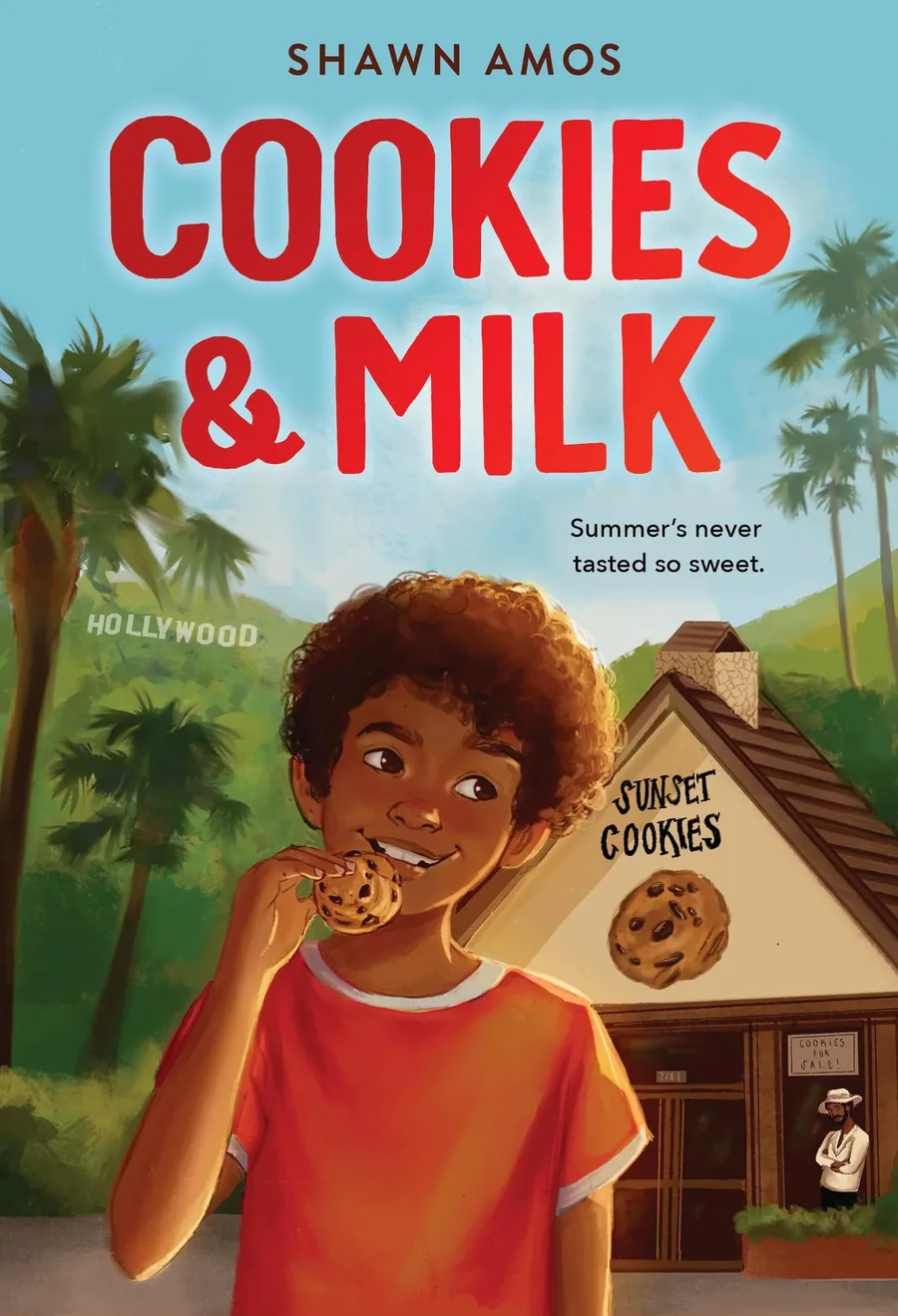 Cookies & MilkShawn AmosEllis’s parents recently divorced, and Ellis, who is Black, resents having to spend the summer of 1976 with his dad while his mom takes some time to herself. Ellis’s dad is a dreamer who has had one failing business idea after another. Now he’s embarking on a new venture: a chocolate chip cookie shop. Ellis loves his dad’s cookies, but who’s ever heard of a cookie store? As Ellis helps get the shop ready to open, he gets to know some of the people in the Los Angeles neighborhood where the store is located. The coolest is DJ Wishbone, who clearly has a tense and mysterious history with Ellis’s dad that Ellis is determined to discover. DJ Wishbone spins records at KIRA and invites music-lover Ellis to watch him work. Then there are the surfing kids Ellis meets on the city bus, the bus driver, and others; as well as Ellis’s dad, grandma, and best friend Alex (white), all rooting for the store to be a success. And in the midst of it all, Ellis realizes that his dad is trying as hard to build a stronger relationship with Ellis as he is to build a business. A premise that could have easily been over the top hits the sweet spot in this entertaining story about family, friendship, and community.Fiction for ChildrenView book details
 OdderKatherine ApplegateA novel based on the experiences of several real sea otters offers a glimpse into rehabilitation methods at the Monterey Bay Aquarium. Odder the otter is curious and fearless—so much so that she finds herself back in the care of aquarists after a nearly fatal run-in with a shark. Swimming too far out in the bay, she’d put her friend Kairi, who had followed her, at risk as well. Although Kairi was not harmed, she’s in the aquarium, too, being treated for illness. Odder’s stay will be permanent this time. Rescued as an orphaned pup and raised by humans, she has developed a problematic liking for people and has proven she’s not safe in the wild. Once both otters are healthy, Odder and Kairi are happily reunited. Kairi, who’d been pregnant but lost her pup while ill, has been paired with an orphaned pup, and soon Odder finds a pup in her own tank as well. The humans, now fully concealed behind welder’s helmets and ponchos, observe closely. Odder stubbornly ignores the pup for several days before finally taking pity on it. The pups will be fostered by the mature otters—and denied the chance to bond with humans—until they are ready to be released 55 Fiction for Children CCBC Choices 2023 into the Bay. Sweet, informative, and not overly precious, this novel in verse is complete with fascinating back matter and undeniably endearing illustrations.Fiction for ChildrenLexile Text Measure NP0LATOS Book Level 0.1View book details
 Iveliz Explains It AllAndrea Beatriz ArangoThis novel in verse offers a deeply moving and honest look at a middle schooler struggling with depression. Iveliz’s dad died two years ago in a car accident, and she blames herself. Sometimes he appears and talks to her, which worries her mom. It also worries her mom that Iveliz gets in trouble at school for fighting. Puerto Rican Iveliz begins seventh grade hoping for a fresh start, but things quickly spiral downward. Her good friend Amir is upset because Iveliz’s feelings take up all the space in their relationship, and his own family’s recent struggles go ignored by her. Her burgeoning friendship with Akiko hits some rough spots, and then Iveliz gets suspended for lashing out at a bully. This first-person narrative written in journal form follows Iveliz into a dark place psychologically and emotionally and then slowly back into the light when her mother realizes how much her daughter is struggling and makes sure Iveliz gets more help. This debut novel also addresses attitudes toward mental health: Mimi, Iveliz’s abuela, doesn’t initially see the need for Iveliz to take antidepressants or go to therapy, but she comes to see how important they are to the well-being of the granddaughter she loves in a narrative that is primarily in English but incorporates Spanish throughout.Fiction for ChildrenLexile Text Measure 940LATOS Book Level 6.2View book details
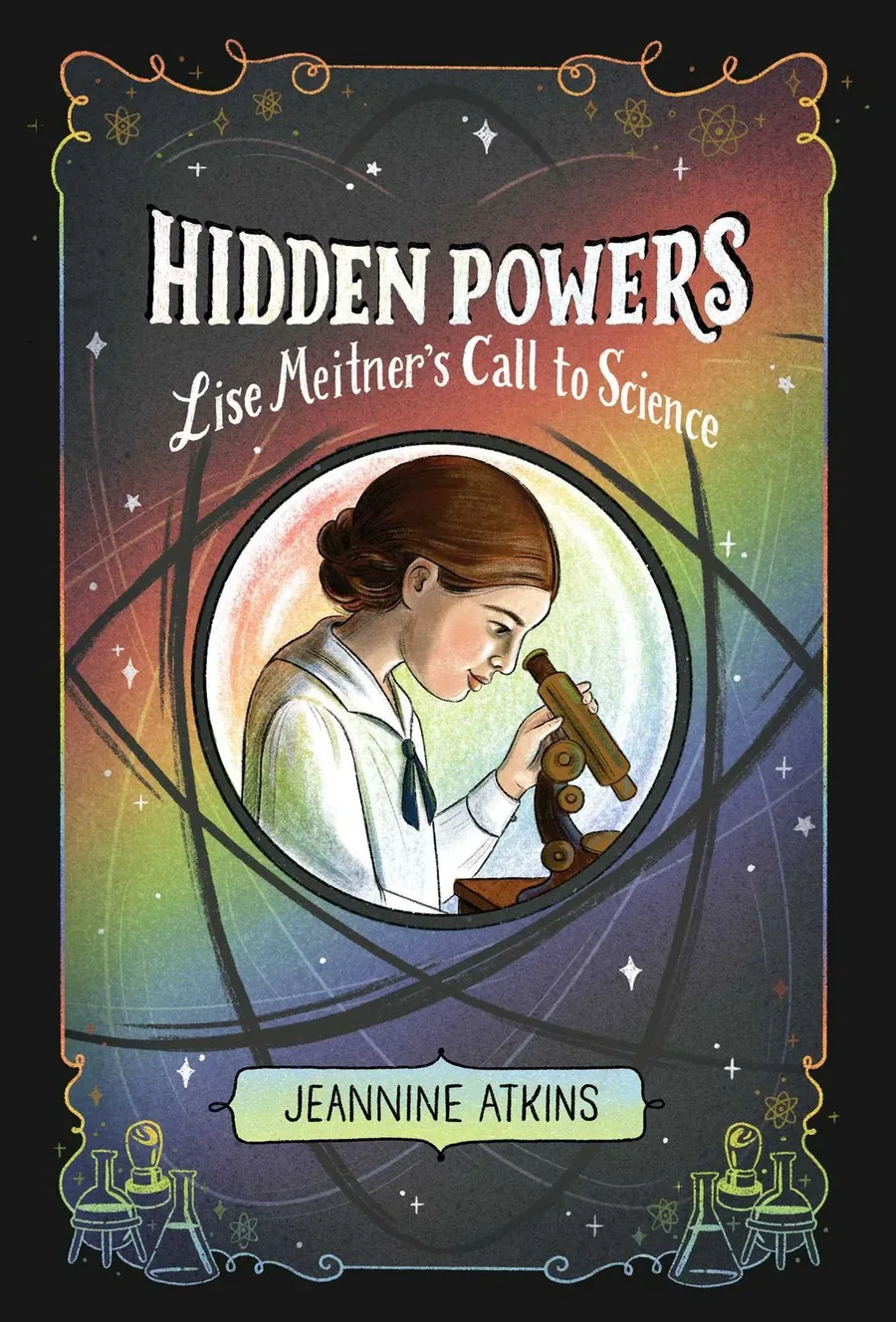 Hidden Powers: Lise Meitner’s Call to ScienceJeannine AtkinsLise Meitner’s work as a scientist led to discovery of the element protactinium early in her career and nuclear fission later. An Austrian Jew born in 1878, Lise was living and working in Germany when Hitler’s rise to power began—vividly accounted here. Like many others, she was eventually dismissed from her job because she was Jewish. Colleagues helped her escape to Sweden, and it was there that she revisited some of the work she’d done with Otto Hahn, with whom she’d collaborated for 30 years in Germany and identified nuclear fission. When Hahn, whose name appeared first on all of their papers, was awarded the Nobel Prize in 1944 for the discovery, he did not credit or acknowledge Lise’s work, a stunning example of the sexism she faced throughout her life and career. Lise, meanwhile, had refused to help develop the atomic bomb, firm in her resolve to not be involved in any effort that contributed to war. This fictionalized account of Lise’s life is a novel in verse that makes the most of its form, with compelling scientific metaphors for events or feelings in her life. The author’s note is an essential complement to the primary narrative, explaining that this admirable portrait of Lise has a framework of facts but includes many imagined elements, especially when it comes to how people might have been feeling or what they might have said.Fiction for ChildrenView book details
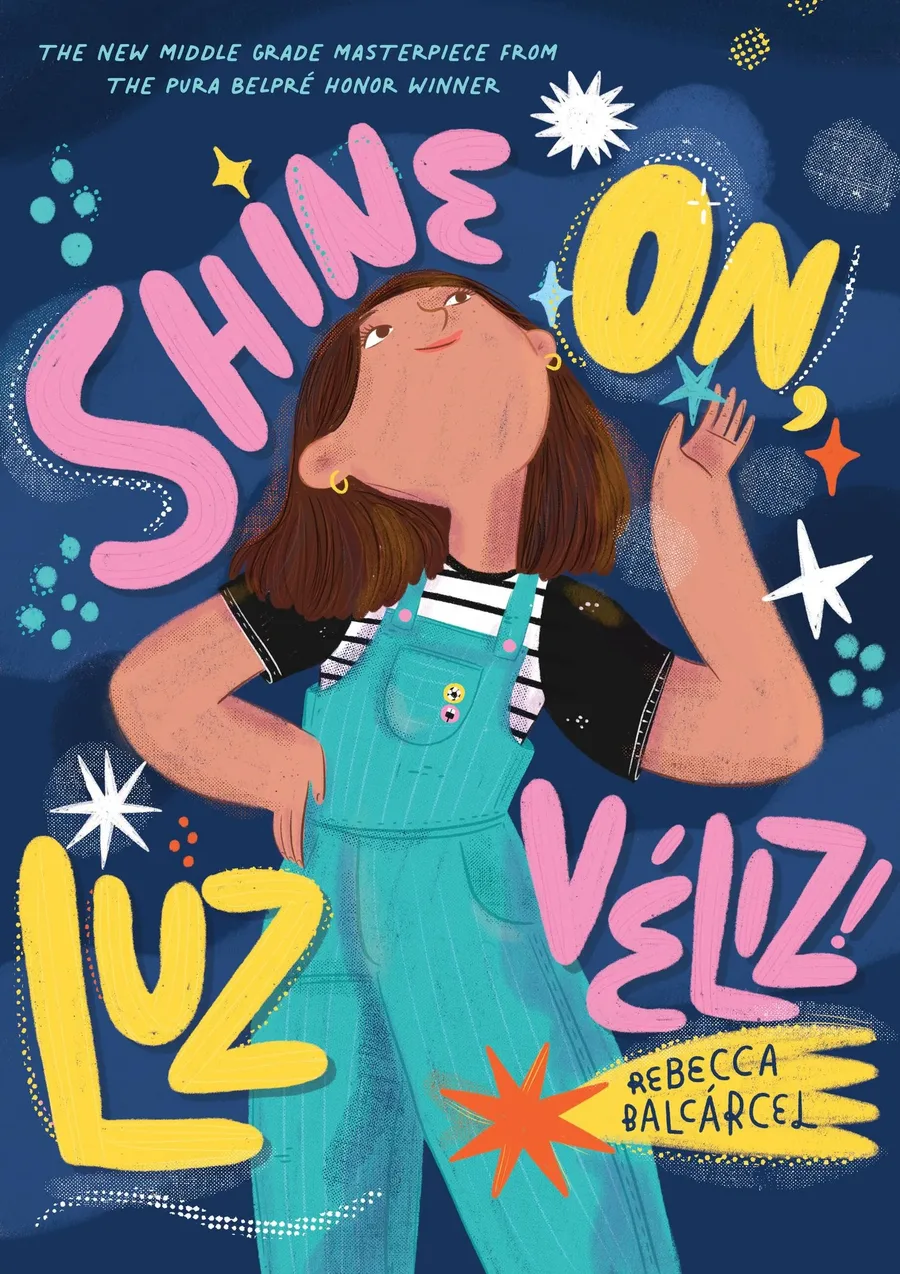 Shine On, Luz Véliz!Rebecca BalcárcelPermanently sidelined from playing soccer by a serious injury, Luz, 11, is going through a time of transition made harder by the fact that her dad was her coach; they’ve been struggling to connect since she was hurt. The tension she senses between her parents also isn’t helping. And who is she without soccer? Pursuing her interest in coding, Luz is learning from their neighbor, Mr. Mac, a retired engineer. Then her dad drops a bombshell: He recently learned he has a 13-year-old daughter in Guatemala, where he’s originally from. Solana’s mother has died, and Solana is coming to live with them. Luz is shocked and angry and certainly not prepared to welcome her half-sister. Despite her resentment, Luz can’t deny, once Solana arrives, that she’s likeable; in fact, Solana is remarkably upbeat and seems to find it easier to make friends than Luz does. But no matter how nice Solana is, Luz doesn’t want to share Mr. Mac and robotics … until she discovers how much Solana 56 Fiction for Children CCBC Choices 2023 is hurting, hiding the pain she feels over everything she’s lost. Solana’s backstory provides insights into aspects of contemporary life in Guatemala in a novel featuring sisters with a passion for coding and who are both expanding their understanding of family.Fiction for ChildrenView book details
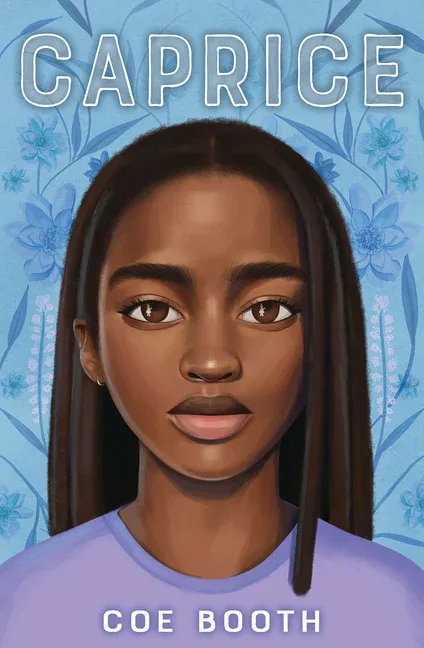 CapriceCoe BoothTwelve-year-old Caprice (Black) is back in Newark after attending a summer program at Ainsley International School in upstate New York. She loved the school and the kids she met, but she missed her best friend, Nicole, and the community center in Newark that’s the center of her out-of-school social life, where she’s advocating to start a “women’s group” for girls. It makes deciding whether to accept the scholarship to attend Ainsley full-time hard—so hard she doesn’t tell Nicole about the offer. But it’s not the only secret she’s keeping. Her last night at Ainsley, a boy kissed Caprice without consent, and the feeling of powerlessness has brought up memories she’s worked hard to ignore: She’s never told anyone her uncle sexually abused her when she was little. Caprice and her mom were living with her grandma when the abuse took place, and now her grandma is ill, further complicating Caprice’s feelings. The complexities of the plot—around the abuse but around family and friendship too—and intense emotions are masterfully handled in this story, with layers of revelation for readers and for Caprice and other characters. For Caprice, that revelation provides her with deeper understanding of the past, including how her innocence was manipulated. Speaking her truth marks the beginnings of getting help and healing. Nuanced characters also distinguish this affecting, ultimately hopeful story.Fiction for ChildrenLexile Text Measure 590LATOS Book Level 4View book details
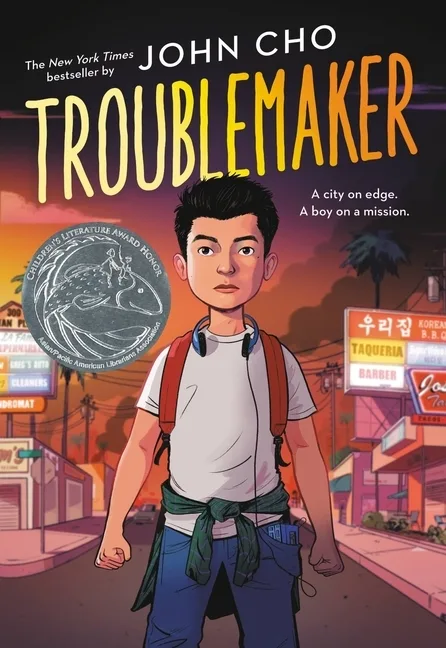 TroublemakerJohn Cho, with Sara SukWith things already tense in the aftermath of an argument with Appa, sixth-grader Jordan isn’t eager to share the news of his school suspension for cheating. But he gets home to news that the Rodney King verdict has triggered public protests and riots in Los Angeles. Concerned that their family-owned liquor store will be targeted by rioters, Appa has gone to board up the shop. When Appa doesn’t call home as promised, Jordan, Korean American, decides to sneak out of the house in order to deliver his father’s gun to Appa for protection. After Jordan wrangles a ride from his friend Mike’s older brother, Jordan’s journey is quickly derailed, and soon he and Mike are wandering the city alone. Jordan encounters unexpected obstacles and unexpected help in his quest to reach the family’s store. An honest conversation with Appa when Jordan finally makes it there not only reveals that Appa intentionally left the gun at home, but that he moved the family to the United States so that his kids could have more opportunities and now, considering the racism around them, he wonders whether he made the right choice. The author notes he was inspired to write this novel by trying to talk to his children about the murder of George Floyd, by the anti-Asian violence of 2020, and in remembering how the Rodney King police beating and the murder of Latasha Harlins impacted his own life as an 18-year-old in 1991.Fiction for ChildrenLexile Text Measure 669LATOS Book Level 4.3View book details
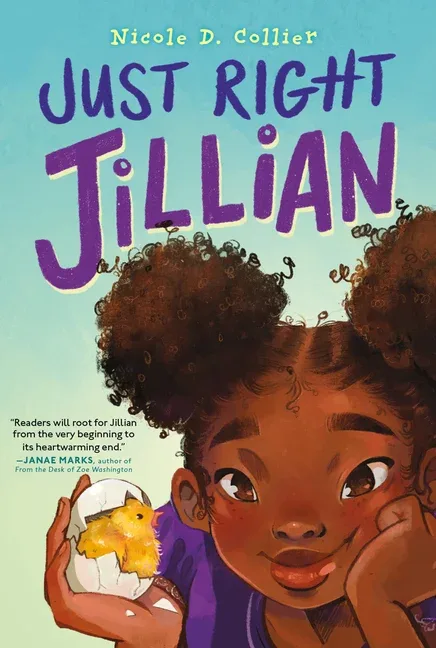 Just Right JillianNicole D. CollierThe girls in Jillian’s fifth-grade class try hard to look alike. They wear the same bland, neutral colors and ho-hum hairstyles on the same days each week. Jillian, bored by this unofficial uniform, longs to be herself—and speak up more too—but she’s afraid to stand out. Before her beloved grandmother died, Jillian promised her she would work on growing her confidence despite her extreme shyness; her mom (who has lupus) and dad also encourage her to be herself. So when Jillian’s teacher urges her to enter the school-wide Mind Bender trivia competition, Jillian feels that this is her chance. She is bright and knows many of the answers but freezes when it comes time to show her knowledge in front of an audience. Fortunately, her main competition, Rashida, turns out to be more friend than “foe.” With 57 Fiction for Children CCBC Choices 2023 support from Rashida and another classmate-turned-friend, Jillian, who is Black, learns to relax and focus when her anxiety flares. Meanwhile, as Jillian begins to come out of her shell, she and her classmates anxiously monitor a dozen chicken eggs incubating in their classroom. As Jillian observes how the chicks that developed prepare to hatch, each in its own time, she further pushes herself, despite her anxiety. In a novel reflecting deep understanding of social anxiety and the grounding power of creativity, Jillian gradually reveals more of who she is to her classmates, including her colorful personal style and talent for weaving. They, in turn, prove eager to get to know her.Fiction for ChildrenWord Count 42258View book details
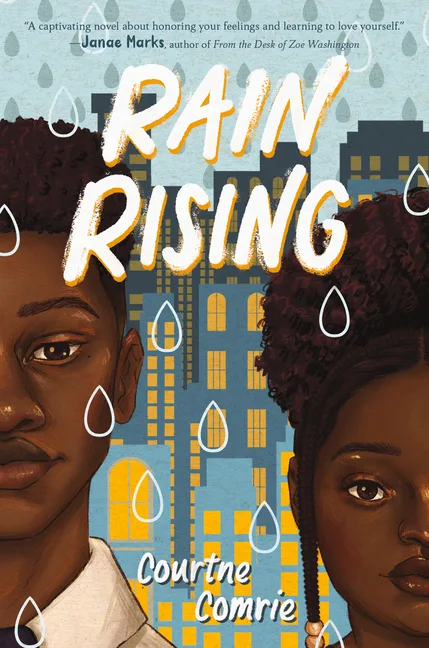 Rain RisingCourtne ComrieThe only person who consistently brings joy to 13-year-old Rain is her fun-loving, academically and athletically gifted older brother, Xavier. Rain and X, who are Black, have a mostly absent father and a mother who works multiple jobs to support her two children. Rain is often left alone with a heavy sadness she can’t escape. She wishes she had lighter skin, a smaller body, a prettier face. She has an overwhelming sense that bad things will happen. And then something does: While on a college visit, X is severely beaten by a group of white frat boys at a party. Devastated, Rain spirals, falling behind in school and resorting to self-harm to cope. When X is released from the hospital, his PTSD makes him seem like a different person. Help for Rain comes in the form of a teacher who notices that she is struggling. An afterschool support group, individual therapy sessions, and a willingness to communicate her feelings with her family members—who open up about their own struggles—bring hope and healing. In time, with healthier coping mechanisms and a strong support system, Rain pursues new interests and tries to love herself for who she is. Written in verse, this novel authentically explores one girl’s experience of depression, survival, and healing.Fiction for ChildrenLexile Text Measure 549LATOS Book Level 3.6View book details
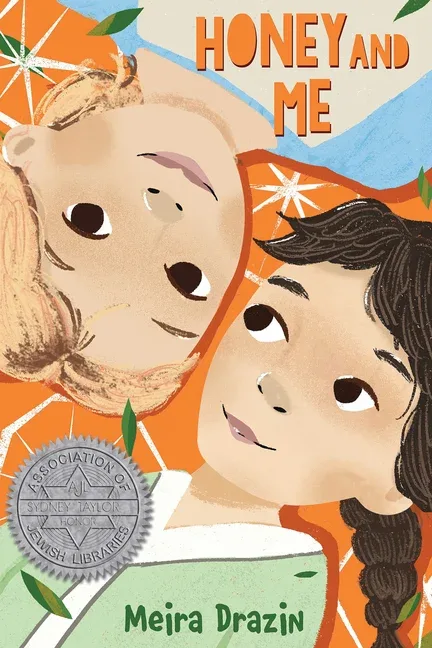 Honey and MeMeira DrazinA coming-of-age novel follows Modern Orthodox Milla and her best friend, Honey (both white), as they prepare for their bat mitzvahs and navigate the ups and downs of a school year. Milla and Honey have been best friends forever, but this year Honey will be attending Milla’s school for the first time. Initially ecstatic, Milla quickly finds it a challenge to navigate popular, outspoken Honey’s presence in her class. But outside of school, Milla still enjoys spending time with Honey’s large, loud family—so different from her own. Although she loves her cool, 25-year-old aunt Steph, Milla finds her mom too controlling and protective and longs to have more control over her own life and choices. In a year marked by friends’ bat mitzvah celebrations, the death of a beloved teacher, and a tense speech competition, Milla and Honey experience the push and pull of their relationship as they each begin to grow into their own individual selves. Honey makes the controversial decision to learn to chant Torah for her bat mitzvah, while Milla finds confidence in standing up for herself and opening up communication with her mother. In the end, each girl—and their friendship— comes out stronger in a slice-of-life tale strongly oriented around Jewish holidays and Modern Orthodox culture.Fiction for ChildrenLexile Text Measure 829LATOS Book Level 5.3View book details
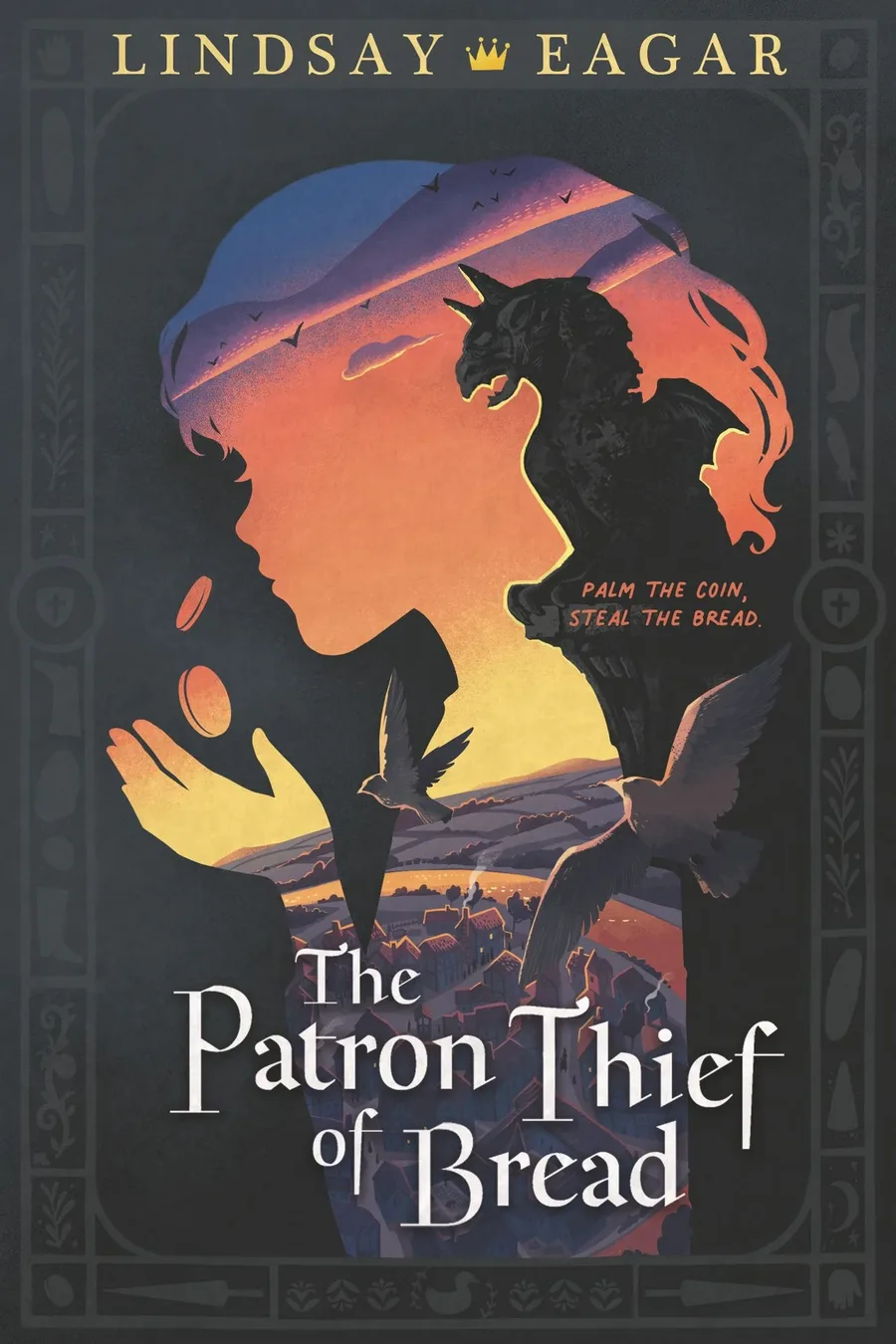 The Patron Thief of BreadLindsay EagarDuck (presumably white) is the youngest member of a gang of street urchins known as the Crowns. When the gang moves to Odierne, Avilogne (akin to medieval France), the Crowns’ cruel but clever leader, Gnat, forges apprenticeship papers for Duck. As the baker’s apprentice, Duck will be able to pass bread and coin to her friends under the baker’s nose. But Gnat and Duck do not foresee the kindness of the baker, Griselde, or the way she takes to Duck as if Duck were her own daughter. Duck develops a conscience and finds herself torn. She feels compelled to provide for her old family, the Crowns, but terribly guilty about stealing from Griselde, who feeds, educates, and genuinely cares for her. Sensing this, Gnat 58 Fiction for Children CCBC Choices 2023 and the rest of the Crowns grow resentful of Duck, accusing her of becoming an “inside cat” whose loyalty has shifted. Gnat decides to take matters into his own hands, making a deal with the leader of the Red Swords, a rival gang threatening the Crowns, that may prove disastrous for all involved. This unusually lengthy middle grade novel, replete with duplicitous tricks and delicious bread-making details, moves along at a steady clip. There are elements of mystery and occasional chapters in the voice of a watchful gargoyle on the city’s unfinished, abandoned cathedral. Complex and likeable, Duck undergoes an immense amount of growth as she tries to balance the many relationships and responsibilities in her life.Fiction for ChildrenView book details
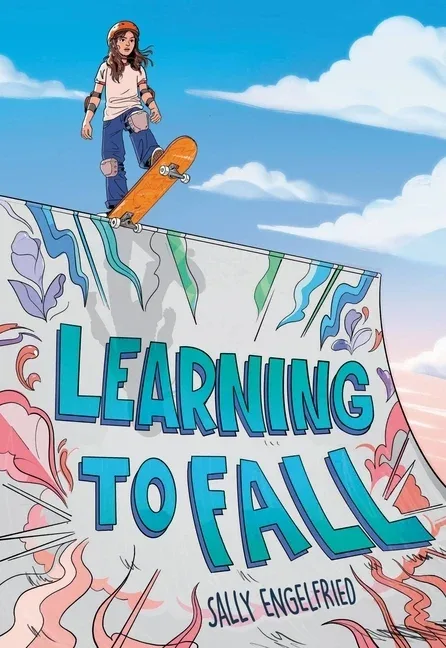 Learning to FallSally EngelfriedDaphne, 13, isn’t happy about spending the summer in Oakland with her dad, but her mom got a career break and is in Prague filming a movie. Daphne (white) has never forgiven her dad for standing her up on her tenth birthday, when he was supposed to meet her at the skate park and teach her an ollie. She was not only hurt and humiliated; she broke her arm when she tried the move on her own and hasn’t skated since. Her dad has since gone into treatment for his alcoholism, but Daphne doesn’t feel safe trusting him with her heart. Over the course of the summer, she can see her dad is trying to repair their relationship and improve his life—made possible in part by a strong support network, including her paternal grandparents and his good friend Gus, as well as AA. She slowly, realistically drops her defenses, helped by the friendship she forms with Alex, the son of Gus’s girlfriend. Skateboarding is a way to connect with her dad, but they both know it can’t be the only way: Talking about the past is essential. In doing so, Daphne finds her anger shifting to her mom. Daphne’s feelings toward both her parents are vivid and realistically self-righteous in a story with flawed, likable characters. What’s clear in the end is that both Daphne’s parents love her. A story about family, friendship, and learning to trust again rolls along with plenty of skateboard action.Fiction for ChildrenLexile Text Measure 631LATOS Book Level 4.09View book details
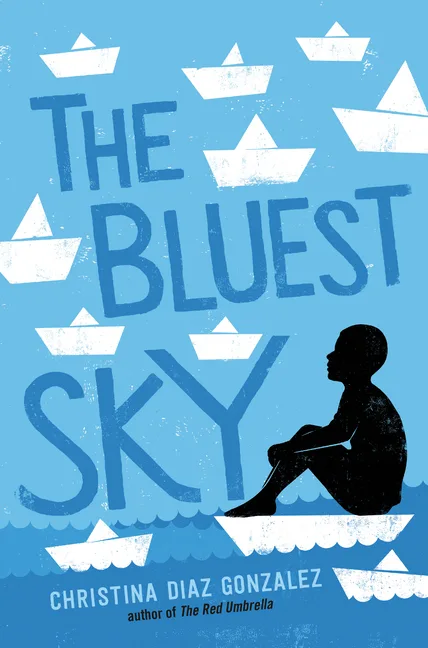 The Bluest SkyChristina Diaz GonzalezHéctor lives in Cuba. Years ago his father was arrested and exiled for his political views. His maternal abuela is a pro-Castro politician. Héctor’s mamá walks a careful line, although Héctor doesn’t know it. Héctor has never thought to question the Cuban government and feels good about his home and country. He doesn’t feel a great connection to his father, who lives in Florida, although he sometimes talks to him by phone, while his grandmother is a forceful presence in his life. But it’s the summer of 1980, and when the government opens the port of Mariel to those wanting to leave Cuba (as long as they can arrange transport), Héctor discovers the extent to which Mamá disagrees with Abuela politically. Determined that they will leave, Mamá cautions Héctor and his older brother, Rodrigo, not to tell anyone—not even Héctor’s two best friends, twins Isabel and Teo, who live across the street, and certainly not Abuela. He becomes a secret keeper, like everyone that summer. A novel following events in Héctor’s family and neighborhood just outside Havana is firmly grounded in Héctor’s perspective as his carefree childhood is gradually disrupted by painful events and awakenings, with the government’s heavy-handed tactics leading to more than one tragedy. The lack of an author’s note providing context doesn’t detract overall from this gripping novel about the Mariel boat lift—a flight to freedom for some and forced exile for others.Fiction for ChildrenLexile Text Measure 650LATOS Book Level 4.2View book details
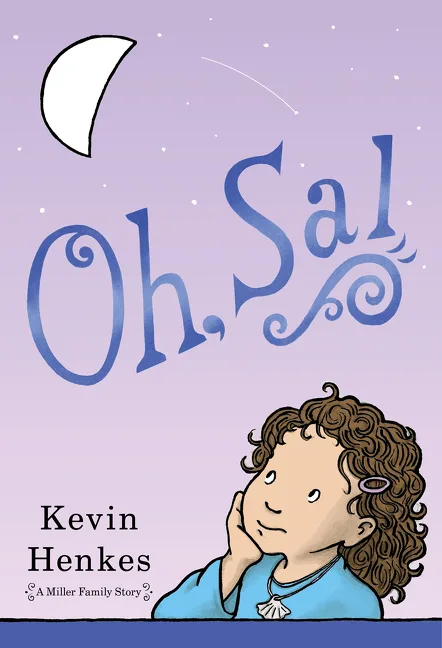 Oh, SalKevin HenkesBilly Miller’s little sister, Sal, gets her day and her own book in this delightful stand-alone companion to the Billy Miller novels. At four, Sal is adjusting to a new baby sister, just over a week old and as yet unnamed; her visiting uncle, who sometimes teases; and the loss of part of her favorite Christmas present: the pair of her day-of-the-week underpants embroidered with a poppy flower and the word “Poppy” (the Wednesday pair). Set over a single day during the winter holidays, this story is beautifully grounded in Sal’s perspective. Her hunt for the underpants and her surprising discovery of where they are lead to her longing to share the news with Mama or Papa only—not Billy or Uncle Jack, who might tease her. But with a new baby around, it’s hard to get time alone with them, especially Mama. With the dough for their homemade pizza dinner taking forever to rise, Sal decides to write a letter to Mama while she waits. “This was going to be harder than Sal had thought. She knew the alphabet. She could spell her own name. She could spell Mama and Papa … But she didn’t know how to spell certain words that would be important for her letter.” Entertaining, insightful, and full of vivid emotions, delightful surprises, and honest family dynamics, this perfect read-aloud story will also enchant young, independent readers.Fiction for ChildrenView book details
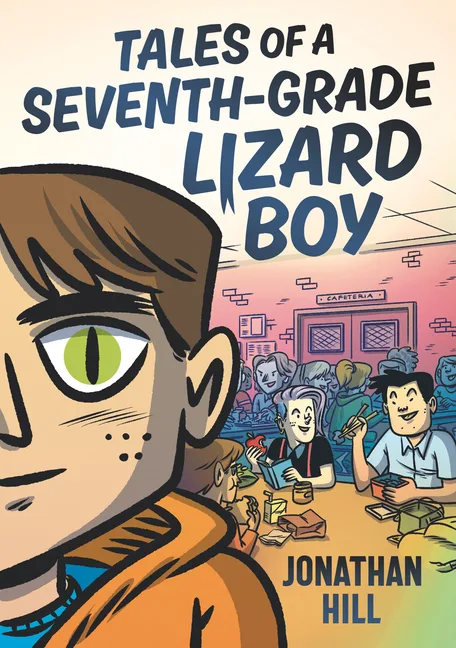 Tales of a Seventh-Grade Lizard BoyJonathan HillImagine trying to fit in at middle school when you aren’t even human. Tommy Tomkins’s real name is Booger Lizk’t; he and his family are lizard people from far beneath the earth’s surface who escaped when their subterranean world was destroyed. Fearing how humans will react to them, they transform their appearance to pass as human. Despite looking like an ordinary boy, Tommy doesn’t feel like he fits in at his new school. Meeting Dung Tran helps. Dung is in Eagle Valley so his parents, Vietnamese scientists, can study a mysterious sinkhole (a remnant of Tommy’s family’s arrival). Dung seems able to ignore other kids’ taunts about his name and the food he eats, and he convinces Tommy to try out for the basketball team. Tommy eventually trusts Dung enough to reveal the truth to him. When they meet Scarlet, the custodian’s daughter, the three outsiders form a tightknit group … until Tommy sees Dung and Scarlet kiss. Worried they’ll have no space for him if they are a couple, Tommy betrays them both. Owning his mistakes and asking for forgiveness come with understanding that he must find a way forward, as there is no going back. This graphic novel examines the refugee experience, the importance of friendship, and the universal longing to fit in with humor and gravity both. A terrific author’s note connects the story to his own family’s experiences as Vietnamese immigrants.Fiction for ChildrenLexile Text Measure GN400LATOS Book Level 2.8View book details
 The Button BoxBridget Hodder, Fawzia Gilani-WilliamsA time-travel adventure rich with religious and cultural details opens in the 21st century, with fifth-grade cousins Ava (Jewish) and Nadeem (Muslim) at their grandmother’s. After hearing that Ava barely avoided getting into a fight when friends suggested that it would be better if she and Nadeem didn’t hang out at school, Granny Buena tells the story of their distant relative Ester ibn Avram, a Sephardic Jew. As a girl in 775 CE, in what is now Morocco, Ester helped Abdur Rahman escape into Spain after his ruling family was deposed in Syria. Granny shows Ava and Nadeem the jeweled pin (button) that Rahman gave Ester for helping him escape. That button is the portal that transports Ava and Nadeem, along with Granny’s cat, Sheba, to the North African city of Sabtah, where young Ester and her family live. They arrive just as Abdur Rahman is seeking help. Ester, small for her age but mightily determined to be taken seriously—a challenge due to her size and gender—is aided by Ava and Nadeem, whom everyone mistakes for her visiting cousins, in fulfilling Abdur Rahman’s request for assistance. This breezy, swiftly paced story is followed by authors’ notes. Abdur Rahman is a historical figure who ushered in a period of enlightenment when he was ruler of Spain. Ester is wholly fictional.Fiction for ChildrenLexile Text Measure 329LATOS Book Level 2.4View book details
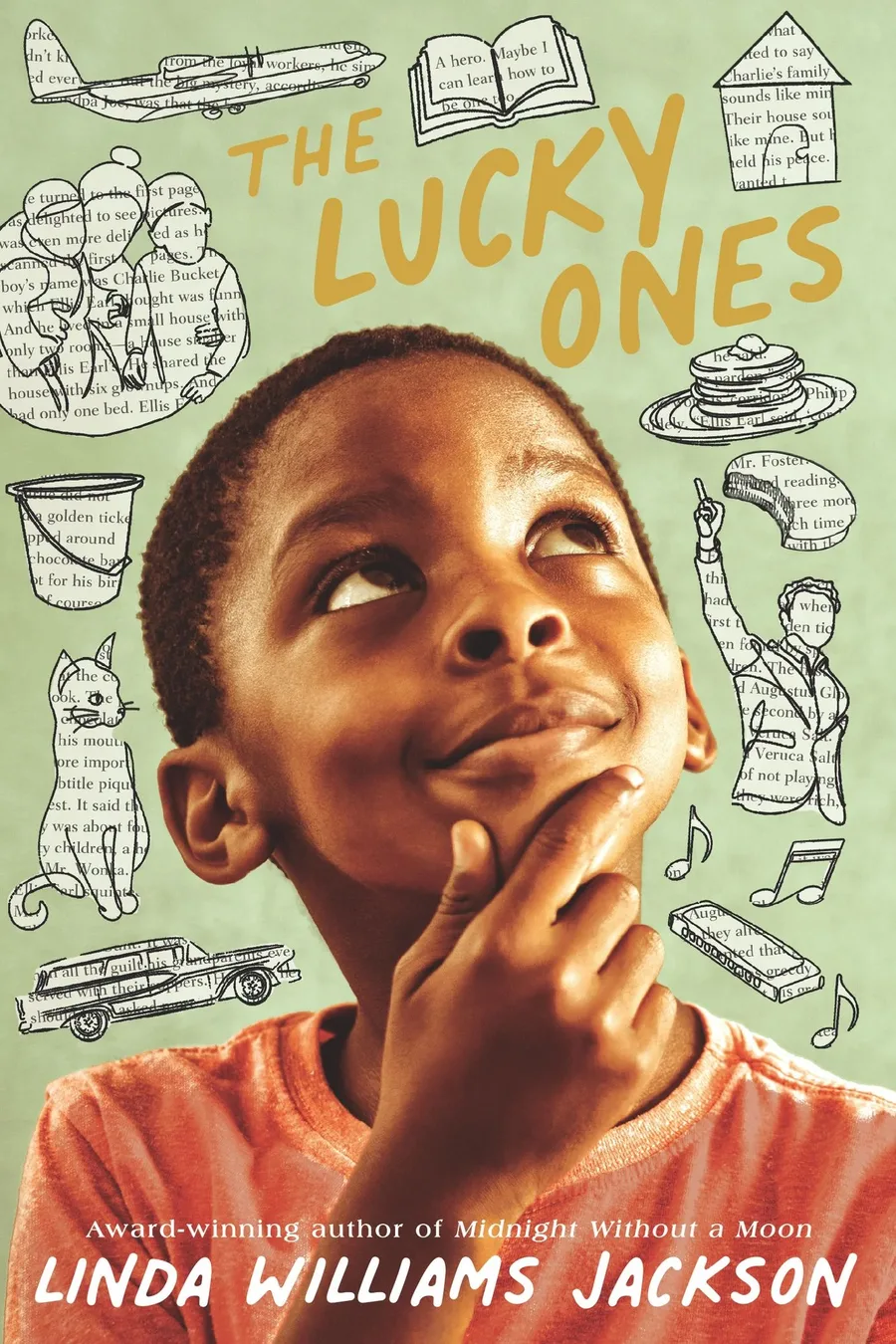 The Lucky OnesLinda Williams JacksonEleven-year-old Ellis Earl (Black) lives with his mother, six siblings, and several nieces and nephews in a three-room house in Mississippi in 1967. Food is a constant worry, but school is a bright spot—and not only because Ellis Earl’s beloved teacher, Mr. Foster, often brings food for his hungry students. Ellis Earl loves to learn and dreams about being a lawyer or a teacher someday. Mr. Foster recognizes Ellis Earl’s hard work and goes out of his way to create opportunities for Ellis Earl and the other students. He invites Ellis Earl to give a short speech at his church and helps his students stay informed about current events, especially ones that affect African Americans. He tells them about Marian Wright, a Black lawyer who is lobbying Congress for relief for people living in poverty in Mississippi. When Senator Robert Kennedy plans a trip to the South to witness these living conditions firsthand, Mr. Foster invites Ellis Earl and several others to join him on a trip to Jackson to see Senator Kennedy arrive. But Ellis Earl’s mother is uncertain; she knows racist white people will pose a risk, both along the way and in the city. In a novel with outstanding characterizations, Ellis Earl is a delight—not perfectly behaved but genuine, curious, and loving. He and his family are navigating a time of hardship, but there is hope on the horizon, and there are good people working for change.Fiction for ChildrenView book details
 Hide and GeekT. P JaggerGina (white) and her best friends, Elena (Latine), Edgar (white), and Kevin (Black), live in Elmwood. Years ago, inventor Maxine van Houten established a toy factory in the town, which became the community’s driving economic force; she also gave generously to the public causes. Since her death, van Houten’s adult children have squandered her estate and sold the factory, which the new owner has just announced will be closing. When the four kids, collectively known as the GEEKs (for their combined first initials), hear the rumor that van Houten left a hidden treasure to benefit the town, they decide to investigate. Finding such a treasure could be the difference in whether their families will be able to stay or have to leave. Each of the four brings unique skills and interests to their search: Gina is an aspiring journalist and the driving force of the hunt, Elena brings scientific knowledge, Edgar knows theater and farming, and Kevin is committed to community and public service. The mystery and the interpersonal relationships are nicely balanced in this enjoyable work of genre fiction.Fiction for ChildrenView book details
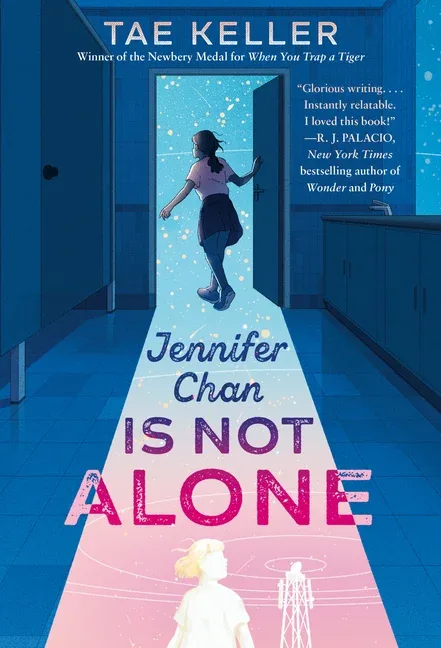 Jennifer Chan Is Not AloneTae KellerJennifer Chan (Chinese American) is obsessed with extraterrestrial life, a fascination she shared with her late dad. Biracial (Korean/white) Mallory Moss, always worried about fitting in, may not believe in aliens from other worlds but admires her new neighbor Jennifer’s ability to be herself, even as she distances herself from Jennifer once the school year begins. Mallory knows Jennifer won’t have an easy time at their middle school if she shares her belief in alien life with others. This book opens well into the school year, when Jennifer has run away. Mallory feels sick as well as scared, sure of the reason why Jennifer is missing: Mallory’s best friend, Reagan, began the year treating Jennifer in ways that she claims were “nice” but were cruel in both intent and reality; this evolved into a concerted effort to belittle Jennifer. Anxious Mallory not only didn’t say “stop” but participated. The story moves back and forth between the past, revealing more about these and other characters and their relationships, and the present, with Mallory determined to find Jennifer, involving her former best friend, Ingrid, in helping her unravel the mystery. This novel illuminates feelings, behavior, and dynamics among its middle school-age characters with sharp and incisive honesty, offering nuanced glimpses of complicated lives and relationships. But those complications never become tropes or excuses for inexcusable cruelty as it probes anxiety, jealousy, pain, grief, indifference, and the beginnings of forgiveness.Fiction for ChildrenLexile Text Measure 640LATOS Book Level 4.1View book details
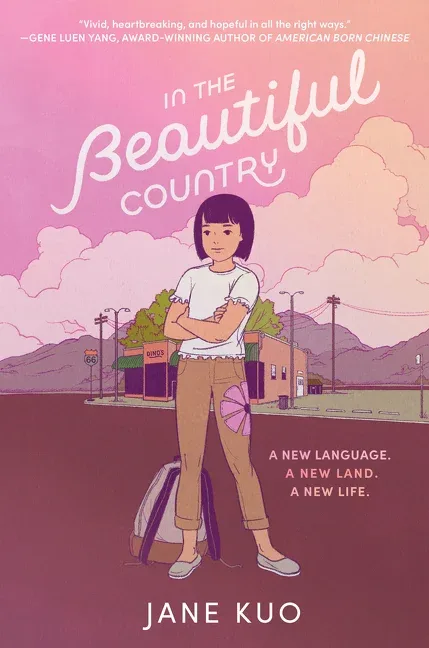 In the Beautiful CountryJane KuoAi Shi, whose American name is Anna, moves from Taiwan to the United States in 1980 after her parents purchase a restaurant in Los Angeles County. But nothing in “the beautiful country” is as she imagined or as her parents hoped it would be. Her father quickly realizes the former owner of the restaurant had greatly exaggerated its success and popularity— but it’s all they have. They are unable to afford a car, making it nearly impossible to build community with fellow Chinese and Taiwanese immigrants. The people at church are unfriendly and look down on them for their work, and Anna is teased at school for a multitude of reasons. Worse, the restaurant is vandalized, putting the family in even greater financial straits. But the stress and misery of their first year in America slowly give way to modest hope. Ma, Ba, and Anna find true friends in one of the restaurant’s white cashiers and her family, and the restaurant gains customers (and better food) when Ma decides to add some of her Chinese recipes to the menu. While Anna’s family experiences hardship and sadness, this novel in verse offers a realistic portrait of the peaks and valleys of starting over in a new place.Fiction for ChildrenLexile Text Measure 731LATOS Book Level 4.7View book details
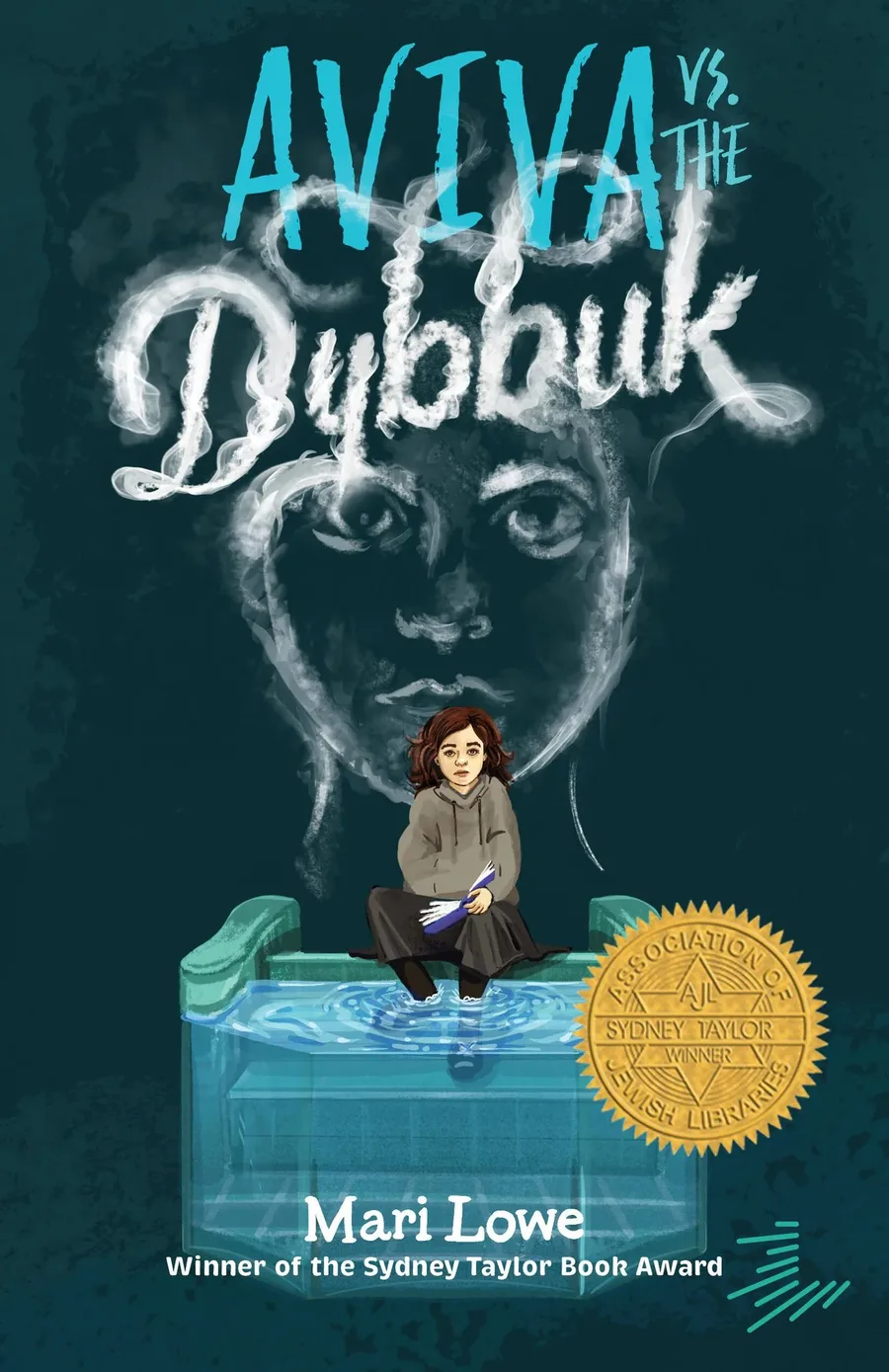 Aviva vs. the DybbukMari LoweNext to the synagogue, in the building that houses the mikvah (ritual bath), Aviva lives with her mother, Ema, and a dybbuk—visible only to Aviva—who delights in wreaking minor havoc. Ema, who used to teach at Aviva’s Orthodox girls’ school, has struggled with severe depression since the death of Aviva’s father six years prior. Left mostly to fend for herself at home, Aviva feels isolated and lonely at school as well; after her father’s death, she had a falling out with her best friend, Kayla. During a machanayim game at recess, a tense incident involving the two girls results in a classmate’s injury. As punishment, Aviva and Kayla, both white, are ordered to work together to drum up excitement for their class’s upcoming mother-daughter Bas Mitzvah Bash. In spending time together, the two rekindle their friendship. The discovery of an underwater door in the mikvah—which, after draining the tub, the girls open to discover a passageway leading to the synagogue—and the antics of the mischievous dybbuk inspire them to create a spooky scavenger hunt for the girls at the Bash. Meanwhile, a swastika etched in wet concrete in front of the synagogue has the community on alert; later, when the synagogue is ransacked, Aviva senses traumatic, repressed memories beginning to surface. A captivating tale of grief and loss counters terrifying instances of antisemitism with the comfort and love of Orthodox Jewish life and community.Fiction for ChildrenView book details
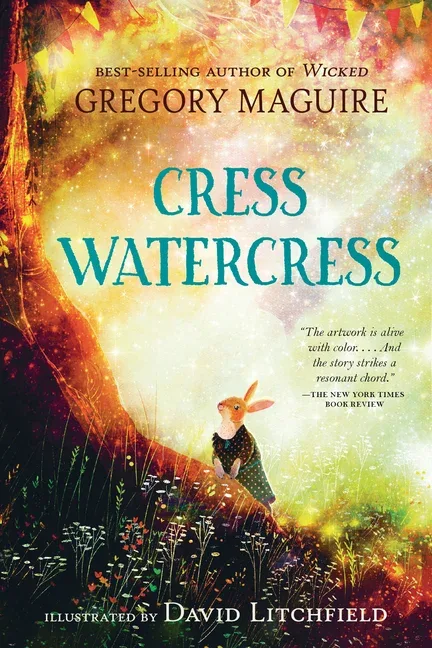 Cress WatercressGregory MaguireCress Watercress is a young rabbit whose family is on the move. Papa didn’t come home from his last foraging trip. Mama is now supporting Cress and Cress’s baby brother, Kip, on her own. They’ve left the spacious warren Cress has known all her life for a cramped basement apartment in an old oak tree called the Broken Arms. Their new neighbors include the super, a field mouse named Manny; a squirrel family with four rambunctious boys; and Mr. Owl, their landlord, who makes his expectations about timely payment of rent clear. Eventually, their new neighbors prove to be friends they can rely on. This charming, moving, marvelous story beautifully balances serious themes (grief and loss— Papa likely met danger he couldn’t escape—financial worries, feeling lonely), adventure (white-water rafting, being imprisoned by a haughty skunk named Lady Cabbage, being rescued by Mama), and wry humor (a menacing snake called The Final Drainpipe, for a start). Cress bristles at Mama’s overprotectiveness and feels some of the weight of Mama’s worries. She’s starting to reflect on her feelings and behavior, even if she’s not always fully in control of them. She’s beginning to think about others, not just herself. She’s learning 62 Fiction for Children CCBC Choices 2023 about friendship. She’s longing to prove herself. She’s discovering what it means to be herself. Gorgeous book production, including full-page, full-color illustrated plates, adds to the appeal of this stirring, spirited story for reading alone or reading aloud.Fiction for ChildrenLexile Text Measure 669LATOS Book Level 4.3View book details
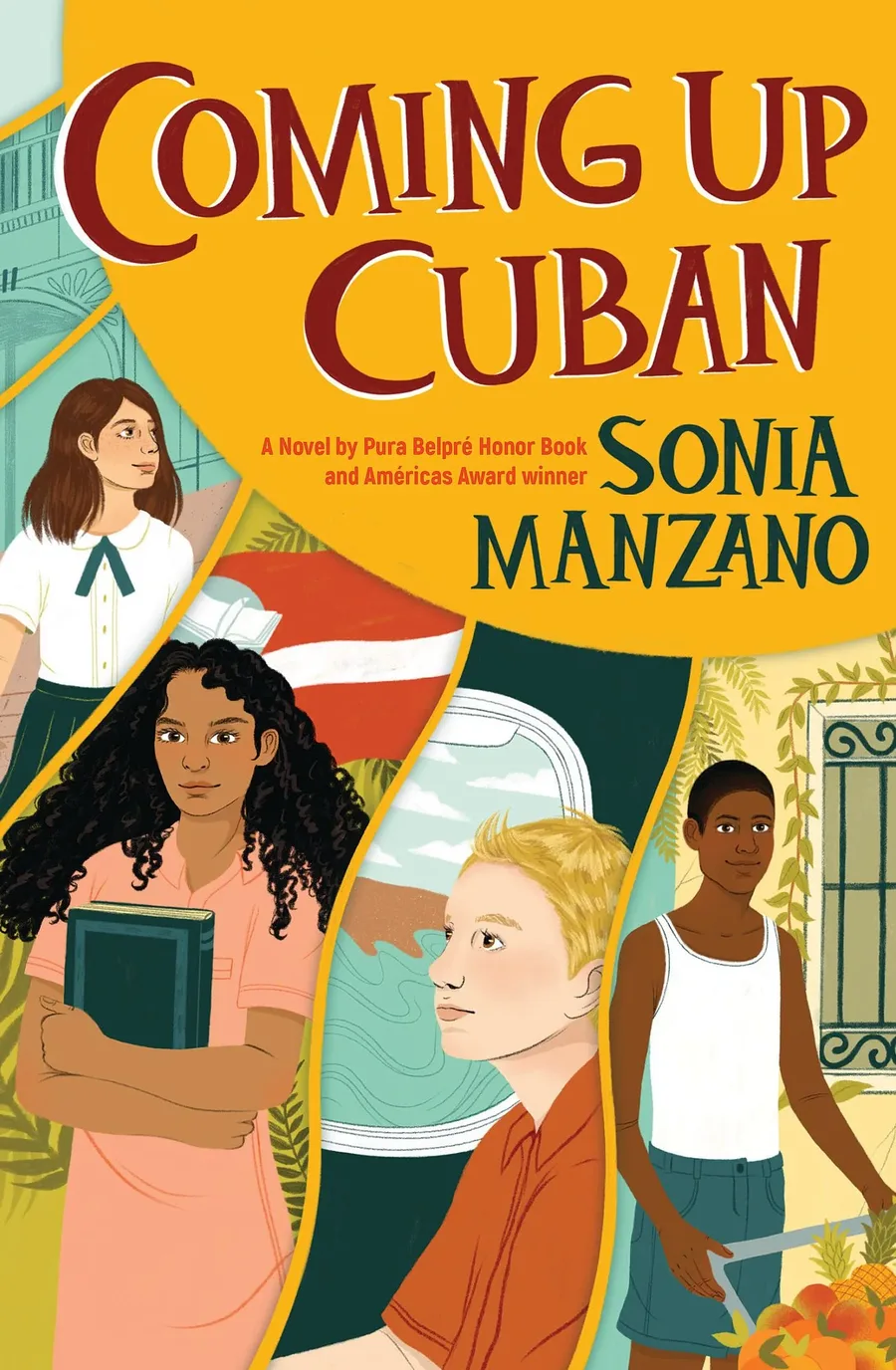 Coming Up CubanSonia ManzanoFour stories follow four racially diverse, young Cubans in the first years after the Cuban Revolution. Ana and her mother move to the United States after her father, who fought for Castro, dies in government custody after protesting the new regime’s brutality. Upper- middle-class Miguel’s journey as part of Operation Pedro Pan leads to an orphanage in New York, where he and other light-skinned Cuban refugees protest after realizing they’re given privileges that the Black and brown U.S. kids who live there don’t receive. Zulema lives in rural Cuba, where two young brigadistas are teaching people to read, an opportunity that delights her in spite of the growing tensions around resistance to Castro. In the aftermath of the Bay of Pigs, Afro-Cuban Juan distances himself from his friend Paco, his “blood brother,” who gets caught up in the idea of being a soldier and finds purpose and camaraderie in spying on neighbors. Individually compelling, with details of each protagonist’s life and the changes they undergo in both circumstance and feelings about themselves and others, these four loosely connected stories offer insight into some of the reasons behind the Cuban Revolution and changes it brought for better (greater access to education and health care for the poor) and for worse (oppression, violence, and exile).Fiction for ChildrenView book details
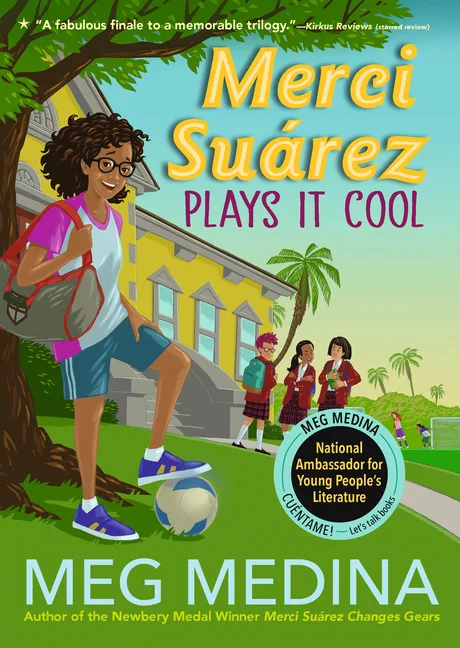 Merci Suárez Plays It CoolMeg MedinaCuban American Merci Suárez starts eighth grade sure of her steady, reliable friendships with Hanna, Leah, and, more recently, Edna, but Merci is less sure about what to make of feelings for her friend Wilson. Does she like him romantically? Soccer player Merci is also on the fringes of a group of several popular girls, teammates who seem to be suggesting she must choose between them and her old friends, and she’s having a hard time knowing what to do. At home, where Merci lives alongside her tightknit extended family, her beloved grandfather Lolo’s Alzheimer’s is progressing; he needs more help than their family alone can provide. Meanwhile, her twin nephews’ dad is suddenly in their lives—albeit not wholly enthusiastically—after her aunt asks him to step up, and Merci doesn’t like seeing the boys so enamored of him. The theme of change has been a constant across the three Merci Suárez books, but it’s never just more of the same. As Merci grows and matures, she navigates new challenges and new realities, from the increasing complexities of relationships to accepting that her nephews deserve to have a relationship with their dad. Lolo’s death is the hardest change of all. But the love of family and friends is the other constant in Merci’s life and the one that matters most as she grieves.Fiction for ChildrenLexile Text Measure 750LATOS Book Level 4.8View book details
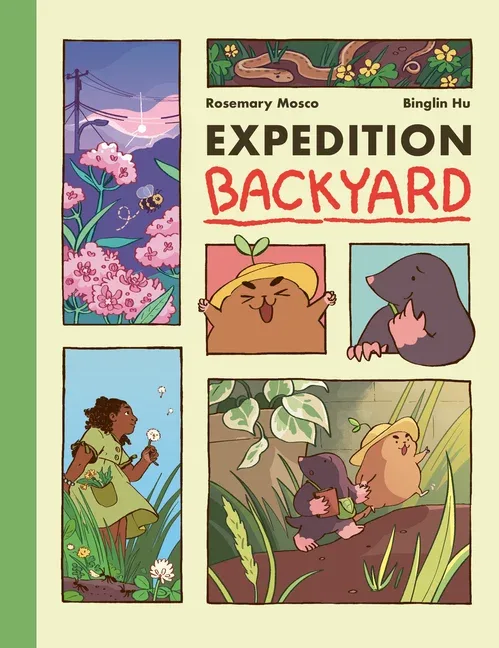 Expedition BackyardRosemary Mosco, illustrated by Binglin HuFriends Mole and Vole live in the country. Mole is content with a quiet life observing and drawing nature, and Vole is an adventure seeker, always rallying Mole to head out on their next expedition. This lively graphic novel unfolds in chapters chronicling a series of these expeditions, which start out in familiar territory as they explore their country environs, first by day and then at night. After heading into a nearby house to watch a nature documentary, they end up trapped in a packing box that’s loaded onto a moving van, and they are transported to unfamiliar territory: a city. Mole is nervous, but intrepid Vole is eager to explore, first by day and then at night once again. Regardless of the time of day, nature in the city is very different from what they know, and their explorations result in new friends and new perspectives. The same is true for the Black child whose family has moved to the 63 Fiction for Children CCBC Choices 2023 city; her story unfolds in the background of Mole and Vole’s, with her initial loneliness after the move ending in new friendship. Across their escapades, Mole’s fascination with nature is as constant as Vole’s enthusiasm for exploration. The charm, warmth, and humor here extend from their individual excitement to the dynamic of their relationship to the details of each of their expeditions.Fiction for ChildrenLexile Text Measure GN460LATOS Book Level 3.1View book details
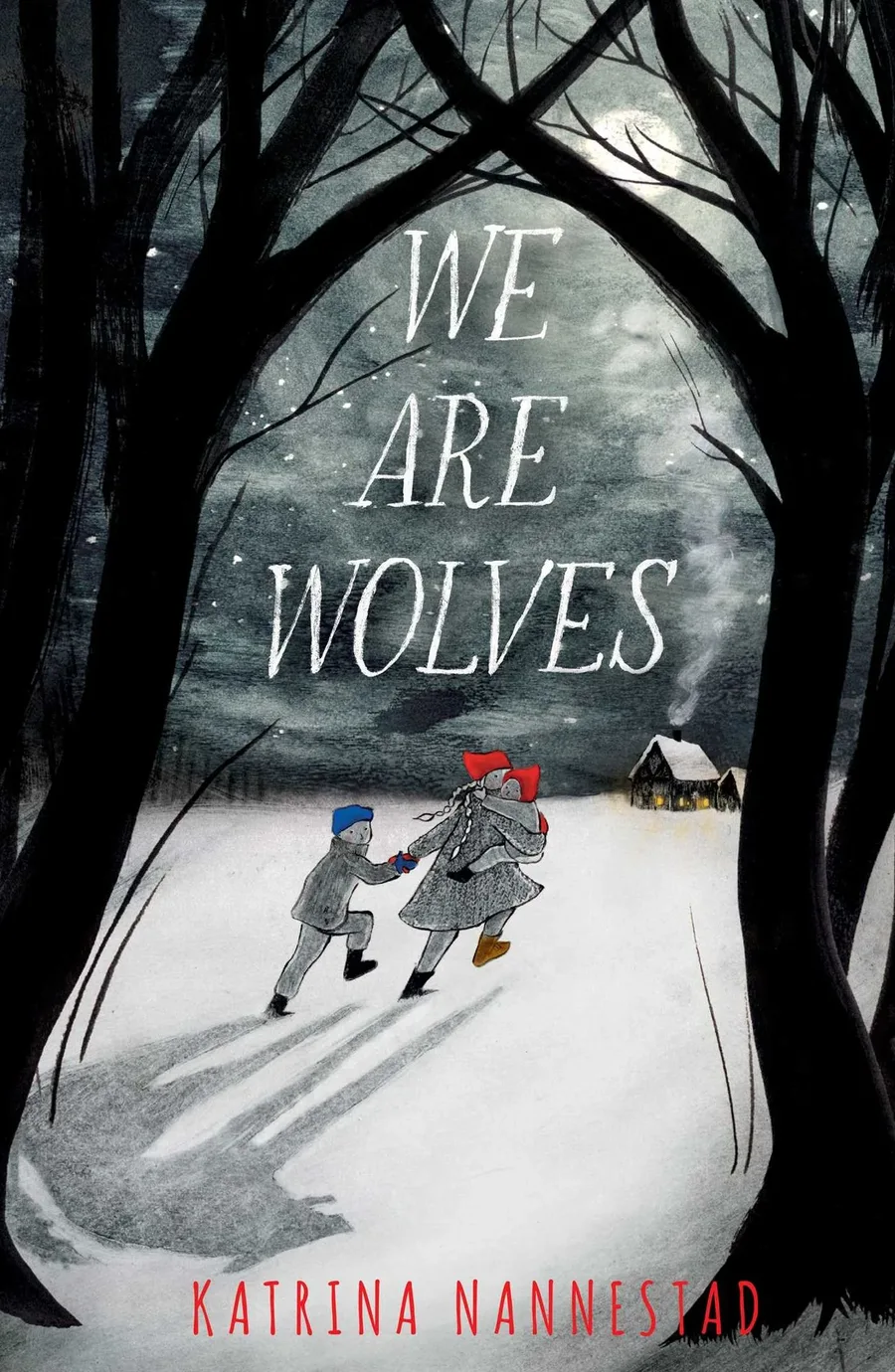 We Are WolvesKatrina NannestadWolfskinder, German children left to survive in East Prussia after World War II, are the lesser-known subject of this moving historical novel. As the story opens on the aptly named Wolf family, Papa has been called to war. Germany is losing, but 11-year-old Liesl, seven- year-old Otto, and toddler Mia don’t know that. Soon after Papa is reported missing in action, Russian soldiers invade and the Wolfs flee their village. They hope to cross the frozen Vistula Lagoon and reach a ship that can take them to safety, but the children are separated from Mama during a Russian attack. Liesl, Otto, and little Mia take temporary shelter in an abandoned farmhouse before Russian soldiers find them and take the children to their camp. Liesl and Otto work in exchange for food. But when one soldier expresses interest in taking Mia home with him, the children run. Scavenging for food, constantly near starvation, Liesl worries that she and her siblings have become “wild.” Eventually, the siblings make their way to Lithuania. They’re taken in by a couple who nurse them back to health, but this good fortune comes at a cost: They must give up their German identities and learn to speak Lithuanian if they want to survive. This sensitive survival story that shines a spotlight on the humanity of the many children behind the “Wolfskinder” label offers the fictional family at its heart welcome relief by tale’s close.Fiction for ChildrenView book details
 The Turtle of MichiganNaomi Shihab Nye, illustrated by Betsy PeterschmidtIn this kindhearted, stand-alone companion to The Turtle of Oman, eight-year-old Aref moves from Oman to Ann Arbor, Michigan, so his parents can attend graduate school. The start of their three-year stay is buoyed by welcoming new neighbors and a summer art class that helps ease Aref’s transition. By the time school begins, Aref, who learned English at his school in Oman, has several friends. His diverse classmates originally come from many countries—and the Upper Peninsula! His white teacher is kind and encouraging. At his apartment building, his next-door neighbor, Hugh, is blind, well-traveled, and a great cook. Aref loves Ann Arbor’s food, the decorations in his school, the lights at Christmastime, the SNOW, all the (not palm!) trees, and the small turtles in the river when his family hikes in the nature preserve. The only thing Aref doesn’t like about Ann Arbor? There’s no Sidi, his grandfather. Sidi and Aref email back and forth, and Aref tries to persuade Sidi to come visit. Sidi, for his part, is lonely back in Oman but afraid to fly. The poems and journal entries Aref occasionally writes reveal a child taking everything in with a curious, open heart that’s a perfect match to the overall sensibility of this story.Fiction for ChildrenLexile Text Measure 720LATOS Book Level 4.59View book details
 Growing PangsKathryn Ormsbee, illustrated by Molly BrooksKatie, the protagonist of this fictionalized graphic memoir, attends class at a co-op once per week with other homeschooled kids, including her best friend, Kacey. In the summer, Katie and Kacey attend sleepaway camp together. When Katie makes a new friend at camp, Kacey’s jealous side comes out, and their friendship eventually comes to a painful end. As she faces additional stressors, like braces and minor oral surgery, Katie becomes more aware of persistent, unwelcome thoughts that compel her to tap or count or perform a certain task. If she doesn’t do so, she believes that something bad will happen. As she tries out for a local theater production, makes new friends, and goes about her life, Katie tries 64 Fiction for Children CCBC Choices 2023 to keep her thoughts secret. But soon her compulsions consume so much time and energy that she reaches out to her parents for help; comfortingly, her father reveals that he, too, had OCD as a child, and it can be treated. “Our thoughts aren’t us,” he tells her. “They’re just thoughts … They don’t make us who we are.” Colorful, clean illustrations depict Katie, a white girl, often swarmed by the buzzing bees that represent her compulsive thoughts.Fiction for ChildrenLexile Text Measure GN380LATOS Book Level 3View book details
 Black Bird, Blue RoadSofiya PasternackSet in the independent Jewish empire of Khazaria in the tenth century, Ziva and her twin brother, Pesah, search desperately for a cure to Pesah’s leprosy. Although Pesah resides in a separate building to avoid transmission of his disease, Ziva can’t stay away from her twin. Who else will change his bandages? The two concoct experimental salves to try to cure Pesah’s sores, but when Ziva overhears her uncle’s plan to send Pesah to a colony where he will eventually die, she takes drastic measures. Escaping with the family wagon, the twins head for Byzantium, where they hope to find doctors. They feel a particular urgency after Pesah has a vision in which he meets malach ha-mavet, the Angel of Death, on Rosh Hashanah—the holiday is fast approaching. Along the way, Ziva frees a sheyd, or demon, from captivity; in turn, he leads the twins to a city called Luz, where malach ha-mavet is not permitted. But Luz is not what the twins expect; a life there will be devoid of pleasure and meaning. Unwilling to simply leave and let Pesah die, Ziva attempts to bargain with the Angel of Death. A novel firmly grounded in Khazarian Jewish culture avoids the problematic trap of magical healing for Pesah; instead, Ziva’s and Pesah’s painful, heartbreaking acceptance of Pesah’s approaching death is thoughtfully and sensitively portrayed.Fiction for ChildrenView book details
 TumbleCelia C. PérezWhen Adela Ramirez’s stepfather, Alex, asks if he can formally adopt her, Addie needs to get some questions answered before she decides. Mexican American Addie wants to know the identity of her biological father, first and foremost. A little sleuthing among family photographs and old high school yearbooks at the local historical society proves that her father is none other than famous local luchador Manny Bravo. Addie’s mother reluctantly arranges a meeting between Addie and her father and the entire colorful Bravo clan, all of whom are steeped in lucha libre culture. Addie is warmly welcomed into the fold by her abuela, an outstanding wrestler in her day; her uncle, who quit wrestling in favor of making lucha libre masks; her twin cousins, who love wrestling and have their own lucha libre personas; and even her gruff abuelo, a past champion who dreams of his sons following in his footsteps. Manny himself is kind to Addie, but it’s clear he is unpracticed and perhaps ultimately uninterested in being a parent. Wrestling is his priority. When he misses Addie’s big performance as Marie in her school’s production of The Nutcracker, it’s the last straw for Addie. Disappointed as she is, though, Addie’s determination to ask questions, take risks, and learn more about her father has brought her clarity and a greater sense of what family is and can be.Fiction for ChildrenLexile Text Measure 660LATOS Book Level 4.5View book details
 Violet & Jobie in the WildLynne Rae PerkinsA comfortable indoor life for wild mouse siblings Violet and Jobie, living in the walls of a house, comes to an end when their human cohabitants capture and release them into a nearby state park. The mice must quickly learn the basics of survival, but the learning curve is steep and the dangers (i.e., predators) are abundant. Fortunately, an aging mouse named Zolian soon takes the siblings under his wing. While Jobie finds a group of mouse friends and eventually a mate, Violet finds a like-minded curious, adventurous companion in Zolian himself. When Zolian disappears one day, Violet suspects he has gone to witness 65 Fiction for Children CCBC Choices 2023 the migration of the sandhill cranes: a final adventure at the end of his days. Hitching a ride on the back of a rabbit, Violet catches up with her friend in time to share a final, majestic experience. A sophisticated, bittersweet ending sees Violet and Jobie following divergent paths. Although their sibling bond was strong, their individual identities—and fates— mean their futures will be very different. Charming spot illustrations accompany an animal fantasy grounded in realistic mouse behavior yet rich in human emotion.Fiction for ChildrenLexile Text Measure 650LATOS Book Level 4.2View book details
 WindsweptMargi PreusFantasy fans intrigued by maps of imaginary lands and readers enchanted by tapestry tales woven from Norwegian, German, French, Russian, British, and Irish folklore will delight in Margi Preus’s vivid quest novel. Tag, short for Tagalong, has not been able to tag along anywhere for years, ever since her big sister was Windswept. In fact, Tag has been kept inside her boarded up house for protection against the snowy squalls that take children under the age of 15. Imprisoned by boredom, too, Tag is intrigued by a message slipped under her front door inviting her to sneak outside and meet others like herself. Escaping with a lucky ribbon and a rope made from clothing, she meets three other children, Boots, Ren, and Ant, and teenage Finn. They forge a plan to travel to the Unknown and find the missing Windswept children. After Finn becomes Windswept, Tag becomes the default leader; armed only with a contraband book of fairytales, she reluctantly shepherds the rag-tag group deeper into the forest. They encounter numerous fantastical and whimsical characters while learning more about the forces governing their world that have prevented rescue of the Windswept children and contributed to environmental degradation and intellectual censorship, with adult greed and longing for power the most destructive. Preus succeeds in creating a recognizable Euro-folklore world with clever nods to contemporary issues. Black-and-white spot illustrations contribute to this magical story with a dramatic ending.Fiction for ChildrenView book details
 Nina Soni: Snow SpyKashmira Sheth, illustrated by Jenn KocsmierskyA snowy Wisconsin weekend provides the backdrop for Indian American Nina Soni to make new friends, enjoy quality time outdoors, and covertly surveil the Mystery Person whom she sees entering the home of a neighbor who is out of town. Old friends of Nina’s parents and their two children, newcomers to winter weather after a recent move from Florida, are spending the weekend with Nina’s family. Nina and her little sister, Kavita, introduce visitors Priya and Nayan to the seasonal joys of snowman construction, sledding, and a spirited snowball fight. Priya proves to be an eager operative in Nina’s spying efforts, even as their dramatic theory behind the Mystery Person evaporates when the mundane explanation is revealed. Making lists helps Nina stay organized and focused, a strategy that appears throughout this appealing wintertime story that explores new friendship in Nina’s relationship with Priya and reassurance that her existing friendship with her best friend, Jay, is solid, even when he spends time doing things with others.Fiction for ChildrenView book details
 The Last MapmakerChristina SoontornvatIn a society where status comes from how far back one can trace the generations of their family, Sai has only a father who’s a thief. That Sai is apprentice to the famed mapmaker Paiyoon Wongyai is a testament to both her skill and intelligent deception. Sai’s island nation of Mangkon has recently emerged the victor from years of war; now Sai is accompanying Paiyoon Wongyai on a journey to map unknown territories on a ship led by war hero Captain Sangra, the queen’s niece. On board the ship, the captain’s friend Rian befriends Sai, while Sai befriends a young stowaway, Bo, and agrees to help hide him from everyone else. When Rian reveals the queen wants them to search for the Sunderlands, the rumored great southern continent, she asks Sai to help convince Paiyoon to chart a likely 66 Fiction for Children CCBC Choices 2023 course. Paiyoon’s reluctance to do so comes from having seen firsthand what conquerors do to the places they “discover.” And while some sailors are hesitant to make the journey south because of rumors of dragons, most are eager to claim a share of the cash prize being offered for the continent’s discovery. This fantasy features a well-drawn world, engaging characters, and satisfying plot twists with deception, betrayal, friendship, and loyalty all on display. It also illuminates the impact of colonialism on both the human and natural worlds and features a compelling protagonist in Sai, whose relationships with Paiyoon Wongyai and Bo are particularly satisfying elements of this fantasy adventure.Fiction for ChildrenLexile Text Measure 740LATOS Book Level 4.7View book details
 The TryoutChristina SoontornvatThai American Christine lives in a small, predominantly white Texas town, where her parents run a Chinese restaurant. Christine’s start-of-seventh-grade anxieties about finding her place and fitting in aren’t necessarily eased when her best friend, Iranian American Megan, suggests they try out for the cheerleading squad. Christine’s excited at the prospect of becoming a cheerleader, but tryouts will culminate in a performance in front of the entire school, with the final decision coming down to a vote by the student body. One of the many pleasures of this spirited, often funny graphic novel is that it smartly avoids tropes, instead offering complexity and nuance and balance. The cheerleaders aren’t mean girls; the candidates are generally supportive of one another; and when Megan partners with someone other than Christina for the tryouts, it isn’t the beginning of the end of their friendship. The talk Christina and Megan eventually have is deep and genuine, revealing Christina’s hurt but also Megan’s hope that partnering with white girls would give them each a better chance of making it. Christina is making new friends and trying new things outside of cheerleading, too, as well as asking questions about who she is (what does it mean to be both Buddhist and Presbyterian—is that even possible?). So many thoughts and feelings flow through this story, all of them genuine. As for the tryouts: The tension is real as the story builds to its climax. This fictionalized account is inspired by author Soontornvat’s seventh grade year.Fiction for ChildrenLexile Text Measure GN360LATOS Book Level 3.2View book details
 The CallersKiah ThomasQuin comes from a long line of Callers—people who can conjure food, resources, and other things that the citizens of Elipsom desire or need. But Quin (presumed white) has never been able to Call a thing. His mother, head of the ruling Council, intervenes when the time for his Calling test arrives, and when Quin impresses the examiners, he knows it was a ruse: His sister did the Calling. In the aftermath, he discovers that much of what he’s been taught is a lie. Elipsom is on one side of a planet that is supposedly barren everywhere else. But on the other side of the planet is a place called Evantra. Through Allie, a girl who lives there, Quin learns that Calling isn’t conjuring, it’s stealing—from the people of Evantra. The Elipsom Council, led by his mother, is in charge of a system in which the people of Evantra are essentially enslaved to serve Elipsom by growing the food that is Called. Calling is not a typical gift among Evantrans, but Allie has the ability—it’s how Quin found himself there. And her ability has been a secret … until now. This satisfying fantasy offers a straightforward line of action and a clear line between good and evil. But it’s a line along which there’s plenty of tension, as Quin must choose between his family and everything he’s known, and what he knows is right.Fiction for ChildrenLexile Text Measure 800LATOS Book Level 5.09View book details
 The View from the Very Best House in TownMeera TrehanSam (white) and Asha (Indian American), both autistic, are best friends until Sam is accepted to Castleton Academy for seventh grade. At Castleton, Sam is bullied until popular girl Prestyn takes a sudden interest in him. She invites him to her home: a mansion called Donnybrooke. Asha is surprised to learn that Sam is hanging out with “Prestyn the 67 Fiction for Children CCBC Choices 2023 Intestine” and envious that Sam is spending time at Donnybrooke. An architectural oddity, the mansion is Asha’s very favorite building, but she’s been banned from setting foot there ever since an incident that took place at Prestyn’s birthday party years ago. Chapters alternate between the third-person perspectives of Asha, who worries about Sam despite herself; Sam, who doesn’t realize that Prestyn actually delights in playing cruel tricks on him; and Donnybrooke itself, which wants to be appreciated and loved, especially by its own family—just as Prestyn herself longs to be. When one of Prestyn’s pranks puts Sam in danger, he finally reaches out to Asha, the one person he can trust. Throughout it all, Sam and Asha navigate complex social situations and learn to advocate for themselves around people who fail to truly see and appreciate them, while Donnybrooke’s distinctive voice provides levity and insight.Fiction for ChildrenLexile Text Measure 760LATOS Book Level 4.9View book details
 A Rover’s StoryJasmine WargaMars rover Resilience (“Res”) is being built and tested, primarily by NASA scientists Xander and Rania. Res’s understanding of the world is limited to the details in his coding and his observations of the humans around him. Although Rania (who speaks English and Arabic) resists anthropomorphizing the rover, Xander addresses Res as though Res is alive. Over time, Res begins to develop an understanding of human emotions—and even to feel them himself, though he knows this will not serve him well on Mars. When he arrives on the red planet, Res is accompanied by an excitable drone named Fly and, distantly, a satellite named Guardian. His mission is twofold: to locate a rover that went offline years ago and to search for evidence of long-ago life on Mars. Being an emotional rover, Res wants desperately to succeed and collect samples that will warrant his return to Earth. He is also willing to ignore orders from NASA to protect Fly when Fly is in danger, despite the risk to himself. Res’s stint on Mars is a long one; the passage of time is delineated in letters that Rania’s daughter, Sophie, writes to Res over the years. While Res’s eventual return to Earth and reunion with Rania and now-adult Sophie may be far-fetched considering NASA’s current limitations, it provides a nonetheless satisfying ending to a tender, gently humorous story with a great amount of heart.Fiction for ChildrenView book details
 Smaller SisterMaggie Edkins WillisLucy and her older sister, Livy, only 20 months apart, have always been close. But when they start at a new school, Livy develops an eating disorder that gradually becomes apparent to Lucy. Livy, short-tempered and unapproachable, no longer wants to spend time with or confide in her younger sister. Her anorexia becomes a looming, scary presence in the family’s life, but with a lot of therapy and treatment, Livy enters recovery. When the family moves, this time it’s Lucy who begins to grapple with body image, a struggle fueled in part by cruel remarks from her new classmates and a growing awareness of what other people think of her. Fortunately, honest conversations with Livy offer comfort and support when Lucy most needs it. Without getting lost in the details of Livy’s disordered eating, this graphic novel offers a realistic portrayal of the emotional toll that such a disorder can have on a family. Sibling and middle school friendship drama are perfectly balanced by the renewed warmth and openness that Lucy eventually finds with her older sister.Fiction for ChildrenLexile Text Measure GN440LATOS Book Level 3View book details
 Maizy Chen’s Last ChanceLisa YeeEleven-year-old Maizy Chen travels from Los Angeles with her single mom to spend the summer in Last Chance, Minnesota. They are there to help with the family’s Chinese restaurant, the Golden Palace, because her grandfather is ill. Maizy has only met her Opa and Oma once before; there is a long-standing tension between them and her mom. Maizy gets to know the quirky regulars at the restaurant, befriends a local boy, Logan, who is 68 Fiction for Children CCBC Choices 2023 white, and deals with snobs and bullies. But the highlight for Maizy is spending time with Opa. In spite of his ailing health, he teaches her to play poker and recounts the story of her great-great-grandfather, Lucky, who emigrated from China to California in 1853 and eventually ended up in Last Chance. Maizy learns about her family’s history, including the racism and threats of violence her ancestors faced, and their connection to many Chinese immigrant “paper sons” who emigrated after the Chinese Exclusion Act and came through Last Chance because of Lucky’s and his wife, Lulu’s, kindness. When Bud, the seven-foot wooden bear that’s stood outside the restaurant for generations, is stolen, Maizy and Logan set out to solve the mystery, in the process encountering some of the same racism her immigrant ancestors endured. An appealing, humorous story, with a satisfying plot, distinctive setting, and memorable characters, bubbles along the surface of this novel that also reveals the history of social injustice toward Chinese Americans that reverberates today.Fiction for ChildrenLexile Text Measure 670LATOS Book Level 4.3View book details
Fiction for Young Adults
31 selections
 A Song Called HomeSara ZarrLou’s mom is about to marry Steve, an unwelcome change that means she and her older sister will be moving from San Francisco to the suburbs, enrolling in new schools, and living far from friends. Mom met Steve at church, and he seems okay. But Lou and Casey (white) worry that, like their mostly absent dad, who struggles with alcoholism, Steve may reveal himself to be unreliable or even cruel. To cope, Lou internalizes her feelings and steals small items from friends and others; Casey has angry outbursts and abandons Lou after school to hang out with old friends. The sisters escape by spending time with the cool couple next door, Shannon and Marcus: Casey confides in Shannon, while Lou, who mysteriously received a guitar for her 11th birthday, gets music lessons from Marcus. Assuming the guitar must be from her father, Lou fantasizes about bringing him back to their family with a stellar performance in the school talent show. Acceptance and healing begin to come with the passage of time, the help of a new friend whose mother is a recovered alcoholic, and Steve’s consistent, patient efforts to build good relationships with his new stepdaughters.Fiction for Young AdultsView book details
 SquireSara Alfageeh, Nadia ShammasWhen Bayt-Sajji leaders announce that young people ages 12 to 17 from any background are now eligible to become squires, Aiza seizes the opportunity. She is Ornu, a conquered people disdained by citizens and the government alike. Success would mean a pathway to citizenship—currently denied to the Ornu—not to mention potential knighthood and economic stability. At her parents’ urging, Aiza keeps her Ornu identity a secret at training camp. Her fellow recruits come from throughout the Bayt-Sajji Empire, and despite their differences and competitiveness, friendships begin to form. Unbeknownst to Aiza, one of her new friends is spying on her for the camp general. When Aiza is promoted to squire, it’s clear to readers, but not Aiza, that the general is using her and setting up the Ornu in order to advance both her own and the Empire’s interests. This ambitious, beautifully illustrated graphic novel is a fantasy that taps into the hopes, anxieties, pressures, and idealism of youth, with a setting and characters inspired by the diversity of the Arab world. In notes, the author and illustrator discuss their desire to encourage young people to interrogate the stories they are told that shape their understanding of history and the present, considering whose perspectives dominate the narrative, and whose perspectives and experiences are not reflected or are missing.Fiction for Young AdultsView book details
 Each Night Was IlluminatedJodi Lynn AndersonCassie’s belief in God died the day she witnessed a deadly train crash at age 11. Since then she’s only gone through the motions of her family’s Catholic faith, unable to tell her dad or older sister she’s not a believer anymore. Something fierce in Cassie also died that day; seven years later, she can’t imagine taking risks, although her devotion to her younger brother is the only reason she acknowledges for staying in her small town after high school. The summer after Cassie’s senior year, a boy named Elias, visiting at the time of the crash and the only other witness, has returned to town. Cassie (white) avoided answering Elias’s letters for years, not wanting to talk about the accident; now Elias invites Cassie to help him search for the ghosts of the Van Dorens, the family that was killed. Elias is also a prankster; his favorite target is a local priest whose hateful, divisive rhetoric on everything from immigration to climate change has Cassie reflecting on the power of words to shape perception, influence thinking, and entrench people’s beliefs. A book asking big questions about the world in which we live, our relationship to the idea of truth, our vulnerability, and the allure of turning away from things that frighten us is also a human story of connection, friendship, family, fear, survival, and fighting to reclaim one’s life. The writing is sharp and crisp and the story irresistible.Fiction for Young AdultsView book details
 The Life and Crimes of Hoodie RosenIsaac BlumOrthodox Jewish Yehuda “Hoodie” Rosen (white) has moved with his mother, father, and four sisters to Tregaron, a fictional town near Philadelphia. Hoodie’s father wants to build a high-rise apartment to house Orthodox families, but Mayor Monica Diaz-O’Leary, fearing the apartment will invite an unwelcome influx of Orthodox Jews, is stonewalling the project. When Hoodie meets the mayor’s daughter, Anna-Marie, they tentatively hit it off and even work together to remove some swastikas that have been spray-painted on Jewish graves. Hoodie knows that he is not allowed to talk to Anna-Marie, but he’s begun to question the necessity of Orthodoxy’s strict rules. While he loves his community and feels deeply religious, he’s also curious about the world. Like his strong-willed older sister, Zippy, he is willing to bend the rules (albeit behind their parents’ backs). Hoodie and Anna- Marie’s cultural differences mean they have vastly different expectations of one another, and Hoodie greatly misjudges Anna-Marie’s interest in him. But the two teens become inextricably connected when both survive a devastating act of antisemitic violence in the local kosher supermarket. A story told in Hoodie’s thoughtful and playfully sarcastic voice provides a refreshingly nuanced exploration of Orthodox practice, family life, and community.Fiction for Young AdultsView book details
 Vinyl MoonMahogany L. BrowneTeenage Angel is staying with her uncle in Brooklyn after a violent incident with her (now) ex-boyfriend left her both physically and emotionally harmed. Angel’s voice is immediate and compelling, and her journey to self-affirmation moving and real, in this novel with a rich cast of secondary characters, most of whom help lift Angel up even as they deal with struggles of their own. They include her Uncle Spence; Ms. G, a phenomenal teacher who encourages Angel and other young women in her class to express themselves and respect both themselves and one another; and new friends that include Kadijah and Kadijah’s brother, Sterling, with whom Angel senses a possible more-than-friend connection. All of them show Angel (Black) that contentment and even joy are possible in spite of challenges. When Ms. G. introduces Angel to the works of Toni Morrison, Zora Neale Hurston, Maya Angelou, and others, Angel connects to their literary characters and thinks deeply about their stories, seeing herself and aspects of her life reflected. Angel also finds an outlet in music, and she begins to express herself through playlists and carve out an identity 70 Fiction for Young Adults CCBC Choices 2023 as a DJ. Flashbacks gradually reveal what happened with her ex-boyfriend in this story that calls out violence and male entitlement but focuses on self-esteem, creativity, and healing. Brooklyn itself is a vibrant character in this novel that blends poetry and prose.Fiction for Young AdultsView book details
 One More MountainDeborah EllisAuthor Deborah Ellis returns to the world of contemporary Afghanistan and her Breadwinner series in this story set in 2021. As U.S. forces prepare to withdraw and the Taliban regains its hold, teenage Damsa has run away from her wealthy family to escape a forced engagement. Found by Shauzia, a police officer, she’s taken to Green Valley, the refuge for women and girls Parvana runs with her husband, Asif, and 11-year-old son, Rafi. Rafi is about to leave for the United States with his aunt Maryam to attend a ballet school. When Asif takes them to the airport, they learn that all commercial flights have been cancelled; only military flights will be leaving. In the chaos of trying to get Rafi and Maryam on a military flight, Asif is killed. Rafi, who has always felt sheltered in ways both good and bad by his loving parents, finds himself alone and determined to return home. Meanwhile, when they learn the Taliban is headed to Green Valley, Parvana, Damsa, and the other women and girls flee. As frightening as things are, Damsa, who has always had others to do things for her, discovers just how capable she is as she cares for younger members of their group and helps navigate their journey toward safety. This riveting story, punctuated by moments of kindness and generosity as well as selfishness and cruelty, follows its wonderfully drawn characters to a new place of refuge.Fiction for Young AdultsView book details
 BitterAkwaeke EmeziBitter spent much of her childhood in foster care. Now she’s at Eucalyptus, a residential school for young artists run by the regal and mysterious Miss Virtue. Outside the walls of Eucalyptus, the fight for racial and economic justice in the city of Lucille is fierce, with young activists from a group called Assata regularly holding peaceful, forceful protests that the police often respond to violently. Bitter doesn’t want anything to do with the protests. It’s not that she doesn’t care, but she’s overwhelmed by her past and the chaos; Eucalyptus is a safe haven she doesn’t want to leave. But when one of the protesters with whom she’s friends is seriously hurt, and another is killed, Bitter expresses her rage through art and then uses her own blood to bring her creation to life. The beings she’s created this way in the past have always been ephemeral and harmless. This creature is neither. It insists Bitter (Black) call it by the name she chose in her head—the feeling driving her as she created it—Vengeance. And it insists on being sated, drawing others into its sphere of influence along the way. But what kind of world does Vengeance want to create? This prequel to Pet, featuring Pet’s parents, Bitter and Aloe, as teens, looks at big questions about social justice while illuminating how protest movements encompass many kinds of activism, including art and music as forms of resistance and unity.Fiction for Young AdultsView book details
 The Summer of Bitter and SweetJen FergusonLou (Métis/white) is spending the summer before college working at her family’s ice cream stand in her Canadian prairie town. After her mom leaves to sell beadwork on the powwow circuit, Lou’s biological father—the white man who raped Lou’s mom when she was 16— lets Lou know he’s out of prison and demands to meet her. Lou tells no one: not her mom when they text or talk; not her uncles, stressing about the business’s finances; not her best friend, Florence (white), struggling with mental health issues; not her former best friend, King (Black), back in town after living in Toronto—their reconnection offering the chance to heal a sudden split three years before. Lou’s personal, family, and community history is 71 Fiction for Young Adults CCBC Choices 2023 full of trauma rooted in the racist treatment of Indigenous people. She’s made choices she regrets, like previously trying to pass as white, and has secrets she can’t imagine telling— out of shame, out of loyalty, out of fear. At the same time, her family and friends fill her life with love, warmth, and laughter, even as those relationships are imperfect and sometimes stressful. Nuanced, complex, vividly drawn characters are among the many standout elements of this beautiful novel as Lou navigates a summer of challenges and promise; so is the wonderful discussion of Lou’s sexuality as she begins to realize she’s demisexual and finds support, help, and understanding from King as they explore the expanding boundaries of their relationship.Fiction for Young AdultsLexile Text Measure 650LATOS Book Level 4.2View book details
 How to Date a Superhero (And Not Die Trying)Cristina FernandezAstrid Rose (white), pre-med in her sophomore year at Columbia, manages her time with the precision of life-and-death maneuvers; it’s how she stays on top of her intense schedule full of classes and activities to impress on her future medical school application. She even schedules make-out sessions with her boyfriend, Max. After Astrid is kidnapped out of the blue and rescued by the superhero known as Kid Comet—who saved her entire class during a supervillain attack in high school—Max reveals that he is Kid Comet. Max encourages her to enroll in a training program for the significant others of superheroes, designed to help them stay safe during kidnapping attempts, which are apparently inevitable when dating a superhero. Despite Astrid insisting she doesn’t have time to attend, at Max’s urging she makes time. Part adventure, part mystery (someone keeps sabotaging Astrid’s work at the coveted lab job she landed), part romance, and all fun, this fast-paced, spirited debut is not without substance as Astrid grapples with questions about her life, relationships, and priorities. No one, least of all Max, wants Astrid to compromise her dreams or ideals; but while Astrid is not averse to self-reflection, the one thing she never schedules time for is considering whether her long-term goals continue to reflect her true desires. Ever since the attack in high school, she’s been driven to be in control, but it’s after things spiral out of control that Astrid finally regains a sense of balance in her life.Fiction for Young AdultsView book details
 The GetawayLamar GilesIn a not-too-distant future in which current societal and natural threats, from economic disparity and racism to climate change, are further heightened, Karloff Country is a Disneyesque resort in Virginia providing escape. Many Karloff Country employees, including teenage Jay and his family, are BIPOC. Jay (Black) takes pride in his work and is grateful for the economic and food security Karloff Country provides for his family; he dismisses his friend Zeke’s accusations of devious intentions by the billionaire owner. But when the global situation grows dire, it becomes clear that Karloff Country’s true purpose isn’t vacation destination; it’s safe haven when society unravels. Even worse, the company orchestrated events leading to sudden global crisis. Employees aren’t given the choice to stay or leave; they’re needed to serve the mostly white uber-wealthy Karloff Country “Trustees” who’ve flooded to the resort. As unreasonable demands and racist microaggressions escalate, employee behavior is controlled with painful punishments delivered via an un- detachable armband; then comes the sanctioned lynching. Jay’s girlfriend, Seychelle, biracial granddaughter of the Karloff founder, occupies an uncomfortable space, privileged and wealthy but regularly disparaged by her grandfather for her Blackness. Jay can’t believe she knew about the plan, and when he joins the underground activist group that is fighting back, he must decide if he can trust her. Most of this enthralling, unsettling, provocative story is from Jay’s perspective, his turmoil palpable as his worldview takes a 180-degree turn.Fiction for Young AdultsLexile Text Measure 920LATOS Book Level 6View book details
 The Silence That Binds UsJoanna HoThe seemingly out-of-the-blue suicide of May’s older brother, basketball star and Princeton-bound Danny, just before graduation sends her Chinese American family into a downward emotional spiral. May’s return to attend junior year the following fall is eased by her best friend, Haitian American Tiya Marie, and Tiya Marie’s older brother, Marc. After a white parent’s diatribe blaming the increase in teen suicides on the ripple effect of Asian parents who put too much pressure on their children—referencing Danny without knowing anything about him or their family—May channels her rage into a poem that sparks a “#TakeBacktheNarrative” movement among BIPOC students at her school. There are also plans to protest the school’s new internship program, sponsored by the parent who made the racist remarks. May seeks support from several white students who claim to be allies but won’t commit to hard choices, and she is challenged to consider her own actions—or lack of—on issues that extend beyond her own family and community; she already knows she let Tiya Marie and Marc down when she didn’t understand the reasons behind a protest over the recent police killing of a Black boy. This insightful exploration of social justice activism, allyship, community, and commitment reveals it’s often messy and complicated and that everyone is learning. Running through it all are so many honest feelings about family and friendship, some of them a revelation, as well as May’s grief and her longing to understand why Danny took his own life.Fiction for Young AdultsView book details
 Rust in the RootJustina IrelandLaura Black, 17, left her small Pennsylvania hometown in 1937 for New York City with the goal of obtaining her mage license and becoming a famous baker. She’s down to a couple of dollars and about to get evicted when she reluctantly accepts a government job as apprentice to the Skylark, the woman who’s head of the NYC Colored Auxiliary of the U.S. Bureau of the Arcane’s Conservation Corps. Government policy strictly controls the practice of magic, favoring a branch called Mechomancy (industrial, exploitative) over Dynamism (grounded in the natural world), although Dynamism practitioners like those at the Colored Auxiliary are relied on when things go wrong. Soon Laura, with the new name Peregrine, is on a mission with Skylark and others to the Ohio Deep Blight Zone, where something is wiping out the resonators needed to amplify Mechomancy’s reach. They find ghost towns, destruction, deadly shadows, and forces of white supremacy determined to raise a Norse god. To stop them, Peregrine must draw on the skills she learned growing up in her Black community, skills that she calls Craft (outlawed by the government) as well as power she didn’t know she had. The riveting plot, captivating characters, and original world-building hang neatly on real-life history in this smart historical fantasy—the first in a series—in which magic is woven across the history and legacy of slavery and the power dynamics of politics and racism.Fiction for Young AdultsView book details
 Kiss & TellAdib KhorramThe ups and downs of pop-star life are illuminated during the first U.S. tour of Canadian teenage boy band Kiss & Tell. As the tour begins, Hunter is nursing a broken heart over his split with Aidan, the twin brother of one of Hunter’s bandmates. Like their highly publicized relationship, Hunter and Aidan’s breakup received a lot of media attention. But soon Hunter is moving on with Iranian American Kaivan, the drummer of Kiss & Tell’s opening act, and in retaliation Aidan goes public with old text messages revealing details of his and Hunter’s sexual relationship and drinking. It’s not only a violation of Hunter’s privacy but a public relations disaster from his record label’s perspective, revealing information counter to Hunter’s innocent public persona. The record label swoops in to run damage control: upping Hunter’s feminine image via his wardrobe and requesting he alter his behavior while out on dates with Kaivan. As the stress of maintaining an inauthentic image 73 Fiction for Young Adults CCBC Choices 2023 mounts, Hunter, who is white, feels that the pressures of celebrity are unfairly piled on him for being gay; he’s oblivious to the racism his non-white bandmates regularly experience. The intersections of fame, sexuality, and race are thoughtfully explored in a narrative that liberally incorporates tabloid articles, tweets, emails among record label executives, and fan fiction about Hunter’s romantic relationships.Fiction for Young AdultsView book details
 Destination UnknownBill KonigsbergMicah is a gay teen in New York City in 1987 when he meets CJ, 18, at a club. Unlike CJ, a club is the last place quiet Micah is typically found. He’s closeted, and his only relationships have been secret hookups with a couple of “straight” boys at his school. He’s also grown up incredibly sheltered and has only recently gained some independence. CJ, by contrast, has been largely ignored and neglected by the adults in his life and feels certain there’s only a narrow margin between what safety he has and life on the streets. He works as a dancer at a gay night club and often goes out with mostly older men. It takes CJ a long time to drop his many defenses and be honest with Micah about his life; once he does, Micah is all in, falling in love with this beautiful boy who, when he isn’t busy doing whatever it takes to survive, delivers meals to men who are homebound with AIDS. Micah also comes out to his parents, who are trying but struggling in their efforts to support him. AIDS looms even larger in this book once both teens confess they’ve never been tested despite knowing they should be; they commit to getting tested together. Micah and CJ (both white) are characters to root for in this book alive with vivid details of New York City, the gay community’s rising AIDS activism, and the boys’ evolving and intimate relationship.Fiction for Young AdultsView book details
 When the Angels Left the Old CountrySacha LambLittle Ash delights in causing small bits of trouble when the young demon and his angel companion aren’t studying Torah or following life in their small shtetl. When they learn that Essie, a young woman who left for America, hasn’t been heard from, Little Ash, hungry for big adventures, convinces the angel they should go in search of her. In Warsaw they make their first discovery about the exploitation of immigrants before securing funds for passage. Their fellow passenger Rose is traveling alone after her beloved best friend abandoned their plans, choosing instead to marry. After an eventful journey, the trio arrives on the Lower East Side of New York, a vibrant immigrant community. They are drawn into tensions between struggling workers and rich sweatshop bosses, like the one for whom they discover Essie works. Spirited, playful Little Ash; the kind, thoughtful angel, always pondering the right moral and spiritual choice; and bold, forthright Rose are captivating characters in a novel exploring substantial themes, including questions of identity (the angel has been given a male name but doesn’t identify as male or female) without feeling weighty. The early 20th-century Jewish immigrant community is vividly realized, with religious beliefs and the spiritual world a seamless part of the story. And if the romantic love Little Ash and the angel eventually realize they feel for each other surprises the two of them, it’s a sweetly satisfying resolution for readers who’ve followed them on this journey of adventure and self-discovery.Fiction for Young AdultsView book details
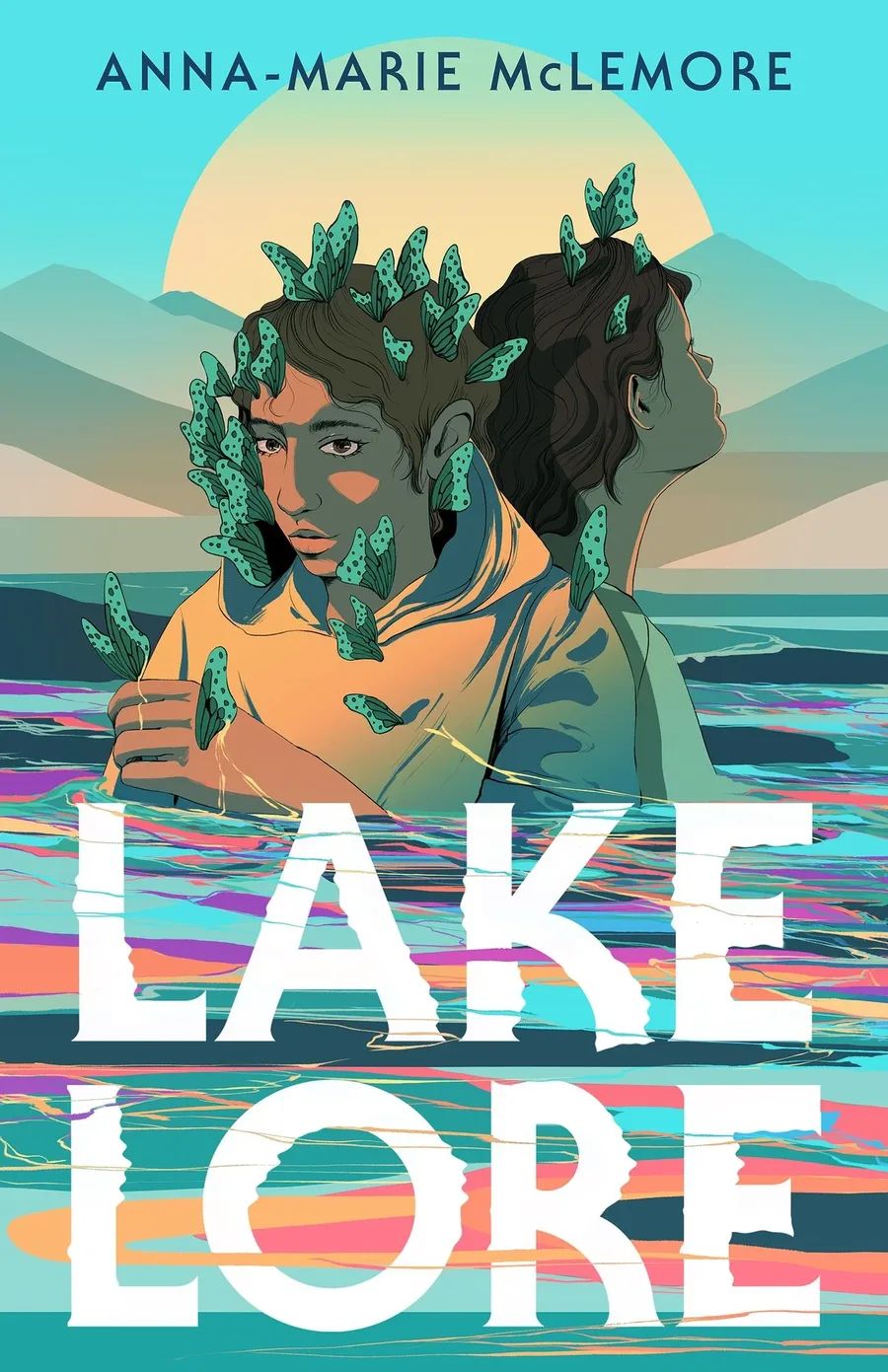 LakeloreAnna-Marie McLemoreBastián and Lore (both Mexican American and nonbinary) had each heard the stories about the world under the lake, but like everyone else, they believed it was just “lakelore”— until they ended up there together as children. Now teenagers, the two have become reacquainted, and Lore will be starting at Bastián’s school. Both are struggling in their own ways: Lore recently fought a bully who had tormented them for years due to their dyslexia; and Bastián, who is just starting on testosterone, has ADHD, doesn’t understand how to do 74 Fiction for Young Adults CCBC Choices 2023 their injections, and feels too ashamed to ask for help. Bastián also struggles with emotional regulation, overthinking, and anxiety; on bad days, they make papier-mache alebrijes (a Mexican art form) and release them into the underwater world, where the alebrijes come to life. As Lore and Bastián grow closer, the underwater world begins expanding and encroaching on their existence, flooding their streets and houses—perhaps in an attempt to deliver a lesson about self-acceptance and self-love. A dreamlike, magical love story remains firmly grounded in Lore’s and Bastián’s lives, identities, and perspectives; readers with dyslexia and ADHD may feel deeply seen, while others will benefit from concrete descriptions of these appealing characters’ particular experiences.Fiction for Young AdultsView book details
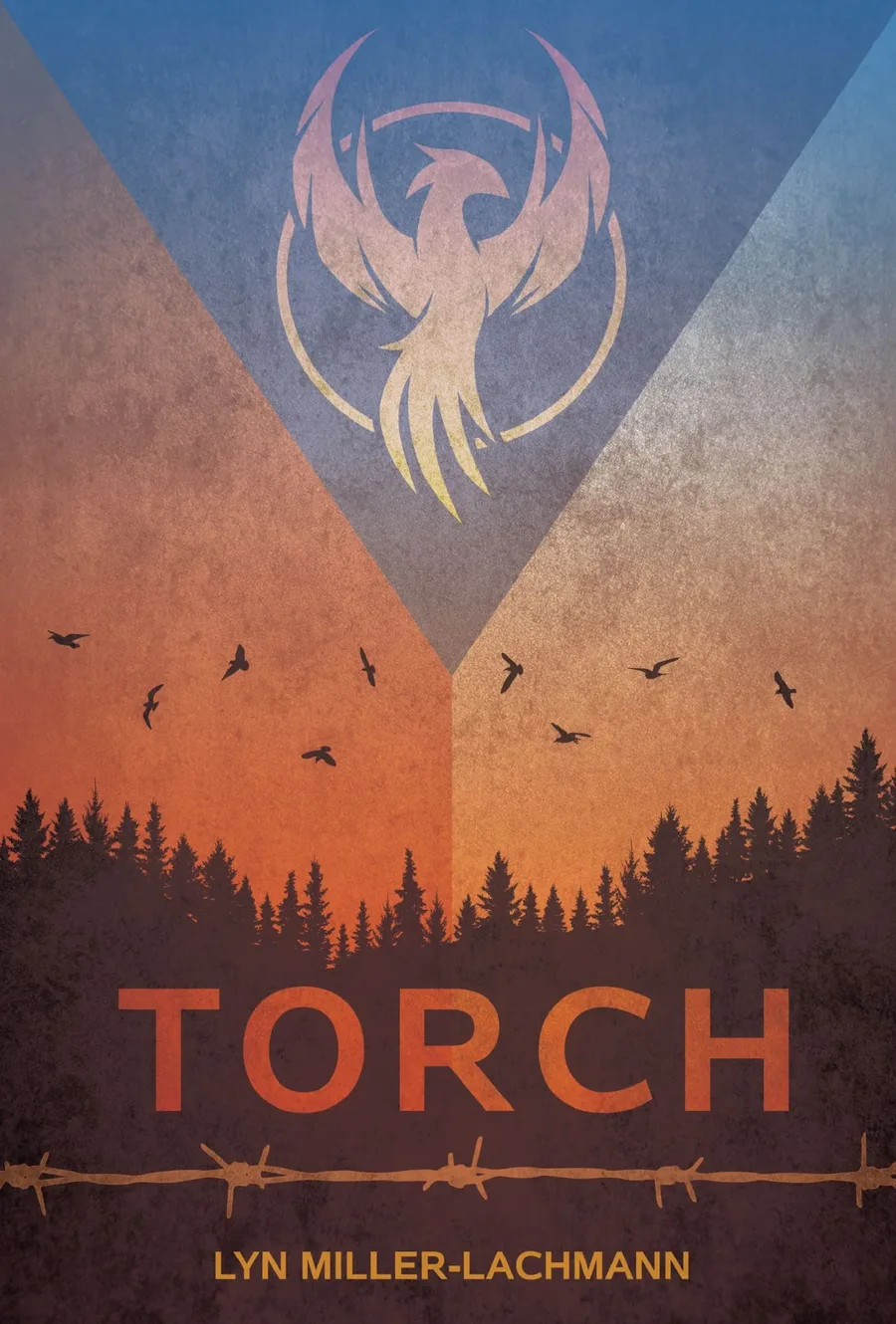 TorchLyn Miller-LachmannIn Czechoslovakia in 1969 during the authoritarian Soviet occupation, 17-year-old Pavol persuades two of his friends, Štěpán and Tomáš, to help him write a letter of protest to the government. When they fail to deliver their message, though, Pavol publicly self- immolates. His act turns the government’s suspicious eyes on Štěpán, a star hockey player who is kicked off his team for suspected “homosexual activity” and tortured for information; Tomáš, who is autistic (undiagnosed) and the son of a cruel party member; and Pavol’s pregnant girlfriend, Lída, who lives with her alcoholic father, Ondřej, and would like to flee the country to protect her unborn child. As their situations grow more desperate, Lída, Štěpán, and Tomáš hatch a daring and dangerous plan to escape across the river to Austria. Gripping and intense, this novel delves deeply into the lives, emotions, and dreams of three young people who are trapped in a violently oppressive society.Fiction for Young AdultsView book details
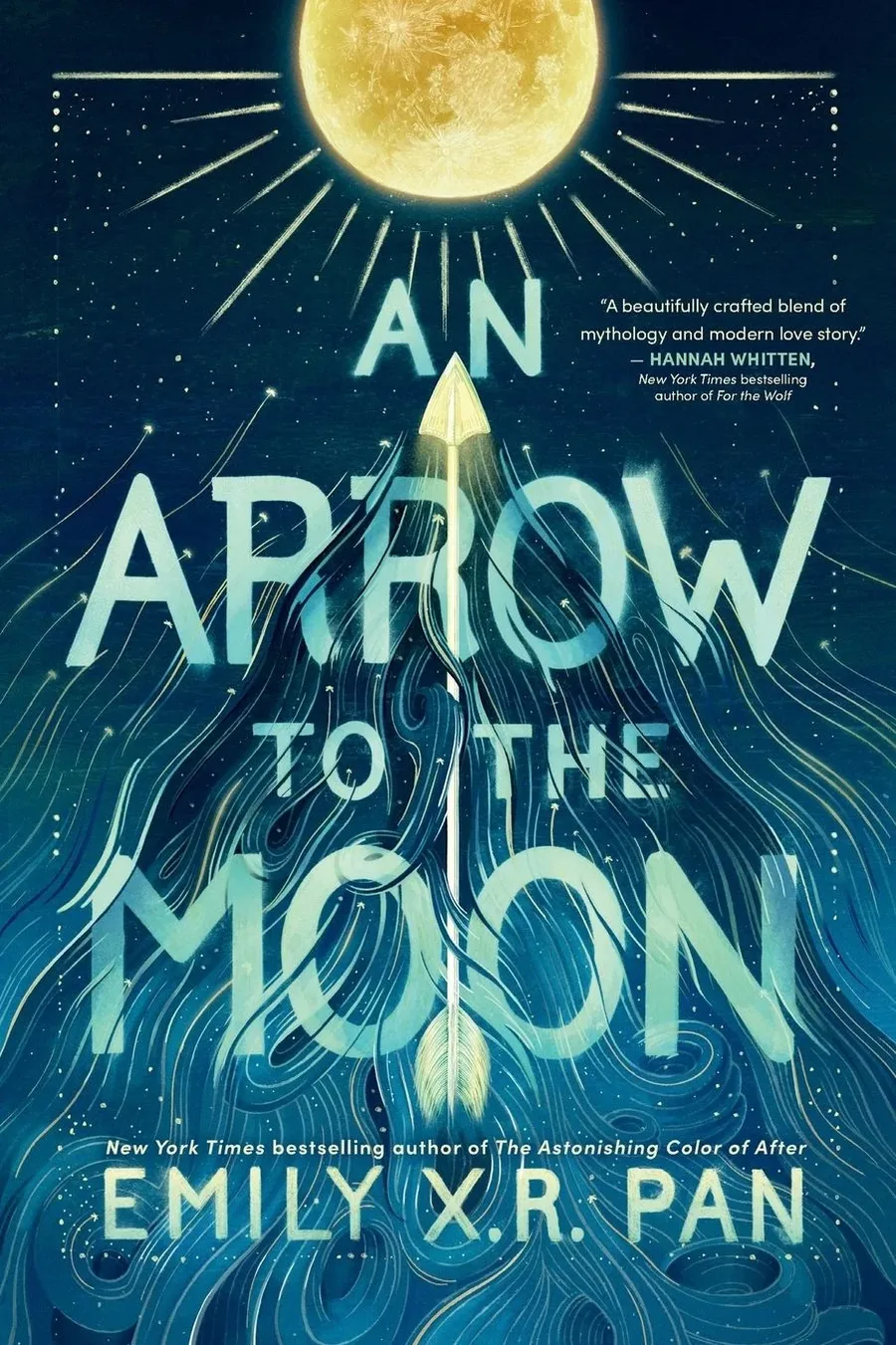 An Arrow to the MoonEmily X. R. PanA star-crossed story of family, identity, and fate set in 1991 beautifully blends a realistic romance with mesmerizing magical realism. Luna Chen and Hunter Yee were born in the United States to immigrant parents from Taiwan. Luna’s parents can’t stand the Yees, and Hunter’s parents can’t stand the Chens. Naturally Luna and Hunter fall in love, reveling in their burgeoning relationship while grappling with family dramas and inexplicable events. Hunter’s parents have been living in fear since stealing an ancient Chinese artifact when Hunter was a child; he and his little brother, Cody, have paid a heavy price. Luna feels pressure to get into Stanford and make her parents proud, and then she discovers their lies. The world is crumbling literally around the two of them, too, as huge cracks and fissures appear in their town. Hunter, a boy with perfect aim, and Luna, a girl who attracts fireflies day and night despite the cold, bear a burden they don’t understand in this arresting tale that begins by recounting how the girl who was the moon’s “heart and its breath” stood on her tiptoes to look at the boy “who made the stars fly” and fell off the edge. “It shifted the universe off its axis.” Moving back and forth between Luna’s and Hunter’s points of view, the story includes occasional other perspectives, most notably of their four parents, offering insight into the complexities of their histories and adult lives.Fiction for Young AdultsView book details
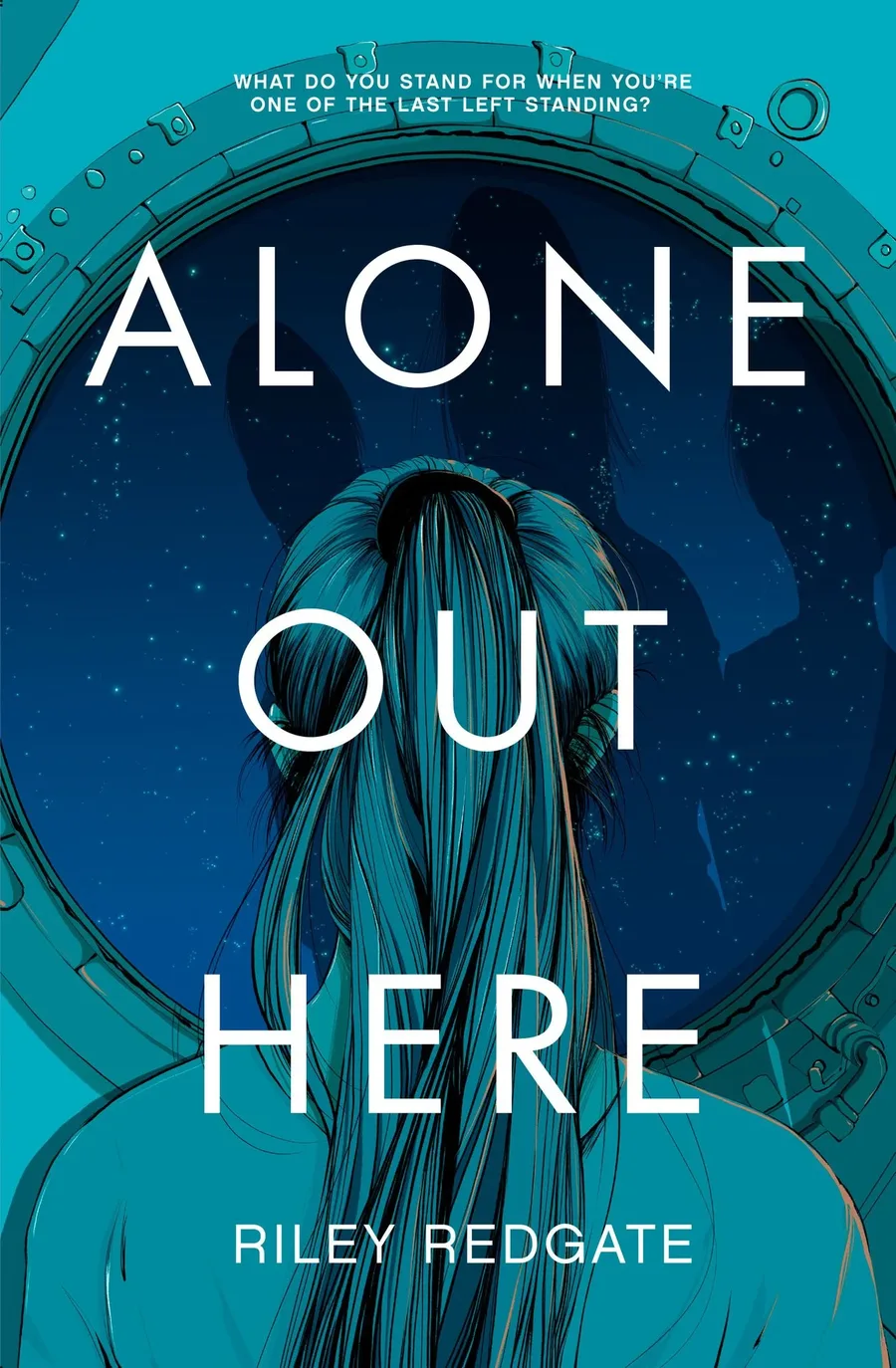 Alone Out HereRiley RedgateTeenager Leigh Chen is fleeing for her life. It’s 2072, several years since scientists realized methane build-up would lead to volcanic eruptions that would destroy Earth’s atmosphere. Leigh, daughter of the U.S. president, was in California for a PR tour of the Lazarus, the prototype for a fleet of ships designed to save a small percentage of the human population, when the alarm signaling the first eruption went off months earlier than expected. The pilot’s daughter launches the ship as the world explodes around them. There are 53 people on board, none over 18, children of world leaders, scientists, historians, and preservationists. 75 Fiction for Young Adults CCBC Choices 2023 Leigh, a born organizer and a natural politician when it comes to walking the middle road and keeping her true feelings hidden, joins a few others to form a leadership council. When they discover the Lazarus was not fully supplied with essentials to survive, like ample food and a seed bank, decisions become tougher, discontent grows, alliances form, and efforts to undermine or overthrow the council make it impossible for Leigh to know whom to trust, let alone to reveal what she really thinks and feels, even as she’s challenged to do just that. This fascinating look at group dynamics is also such a personal, human story. Leigh and others are struggling with grief, loss, fear, and the genuine desire to do what they believe is best for everyone in a novel that never stops offering surprises.Fiction for Young AdultsView book details
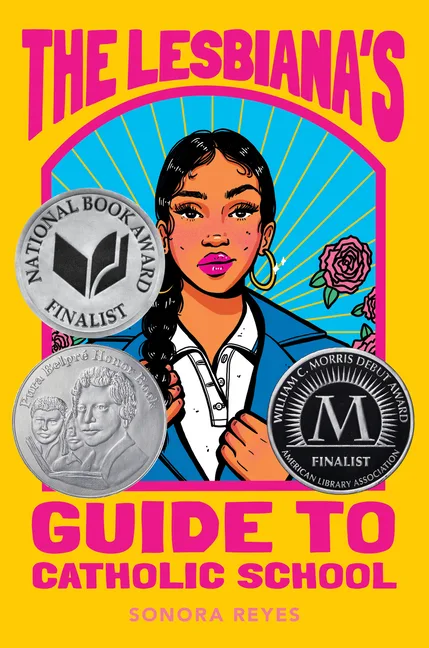 The Lesbiana’s Guide to Catholic SchoolSonora ReyesWhen her younger brother Cesar starts at a Catholic high school, Mexican American Yamilet joins him there to help keep him out of trouble. Yami doesn’t want to come out at her new school, but she can’t help crushing on Chinese American Bo, who is also queer and has no trouble speaking out about gay rights. Yami’s accustomed to being closeted—at least she was until her former best friend outed her at their public school. Often at odds with her judgmental, religious mother, Yami is closer to her father, who was deported to Mexico years ago. When she finds out that Cesar is bisexual, Yami fake dates his boyfriend, Jamal, to keep their mom in the dark. But after a night when she has too much to drink, Yami comes out to her dad via text. His response: silence that grows heavier with each passing day. Declining to accompany her mom and Cesar on a trip to visit their dad in Mexico, Yami stays with Bo instead. Meanwhile, as Yami juggles her lies (some outright, some of omission), Cesar is fighting a silent mental-health battle. Everything comes to a devastating halt when he survives a suicide attempt, and the family finds that honesty may pave a path toward healing. Featuring smart, imperfect, appealing characters, this novel explores the painful complexity of two queer teens navigating life in and out of the closet.Fiction for Young AdultsLexile Text Measure 681LATOS Book Level 4.4View book details
 Ain’t Burned All the BrightJason ReynoldsA singular verse novel set across a series of moments on a day in the summer of 2020 is composed of three sentences, or “Breaths,” sharply observed and deeply felt, set against sophisticated collage illustrations. In Breath One, the young, Black male narrator is feeling overwhelmed and isolated. The TV news tells stories of “another woman … another man … another kid my age … ” while each member of his family is preoccupied, and the boy wonders if anyone who looks like him can live and breathe freely. In Breath Two, the boy worries about his dad, fevered and coughing in the next room, while his dad tries to reassure him he’ll be alright. In Breath Three, feeling like they’re all suffocating, the boy is searching for an oxygen mask when a TV commercial makes the hint of a laugh rise in his mother, “… and in that moment I realized … that maybe the oxygen mask was hidden on the hinges of my mother’s mouth … or in my brother’s PEW PEW sound effects or in my sister’s loopy handwriting or in my father’s relentless shoulders …” This quiet, monumental shift in perception is light seeping in; the boy feels a renewed hope in connection to and appreciation for his family members and their strength. Each page spread is composed of a handful of words set against the mixed-media illustrations, with myriad opportunities for meaning-making in the words and images and the relationship between them.Fiction for Young AdultsATOS Book Level 5.2AR Interest Level UGView book details
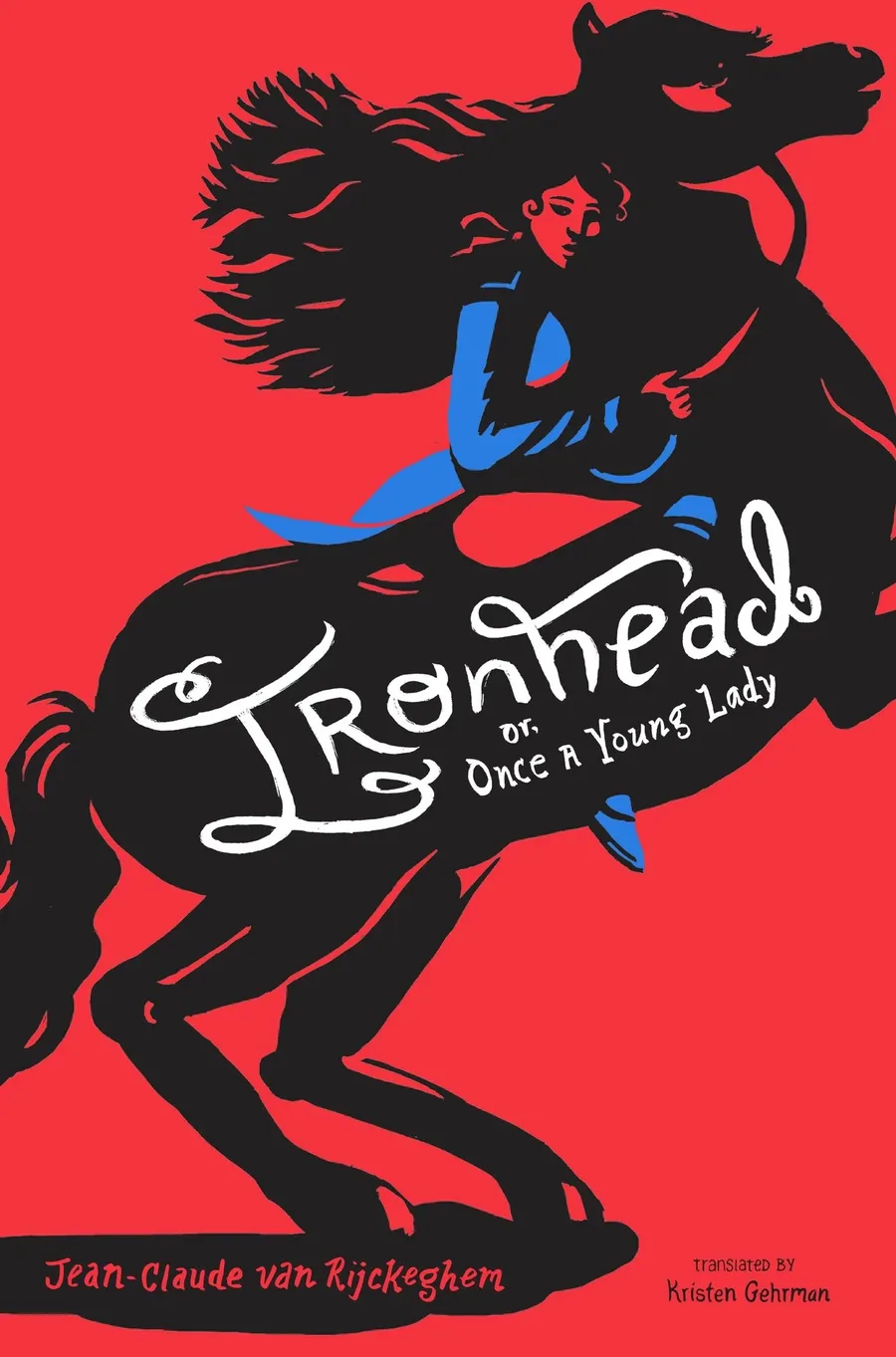 Ironhead, or, Once a Young LadyJean-Claude van RijckeghemStance, 18, lives in Ghent in 1808. She’s always looking for experiences more interesting than what her fate as a woman seems to hold. Her brother, Pier, 14, who wants to be a scholar, is dismayed by his older sister’s boldness and defiance. Pier is even more dismayed when his father can’t afford to pay his school fees. After wealthy Lieven agrees to finance their father’s new cannon design in exchange for Stance’s hand in marriage, Stance is resigned to her fate only so long; inspired by a young woman she saw moving through the world as a man, she eventually escapes into Napoleon’s army. A story alternating between Stance’s and Pier’s perspectives follows Stance’s life as a soldier—everyone assumes she’s a man—and Pier’s journey with Lieven’s shady business associate, Dupin, to find her; they assume she’s among the women who follow the troops. Naïve, trusting Pier is determined to find his sister to secure his future at school and determined to prove himself to his father by delivering the cannon plans to Napoleon. Fierce, secretive Stance is learning what it means to be a comrade and to love another woman. But neither knows what it means to go to war. This rousing read blends humor, pathos, high adventure, and complex character development in a richly satisfying tale about siblings and family, the bonds among soldiers and brutality of war, and a young woman determined to live life on her own terms.Fiction for Young AdultsView book details
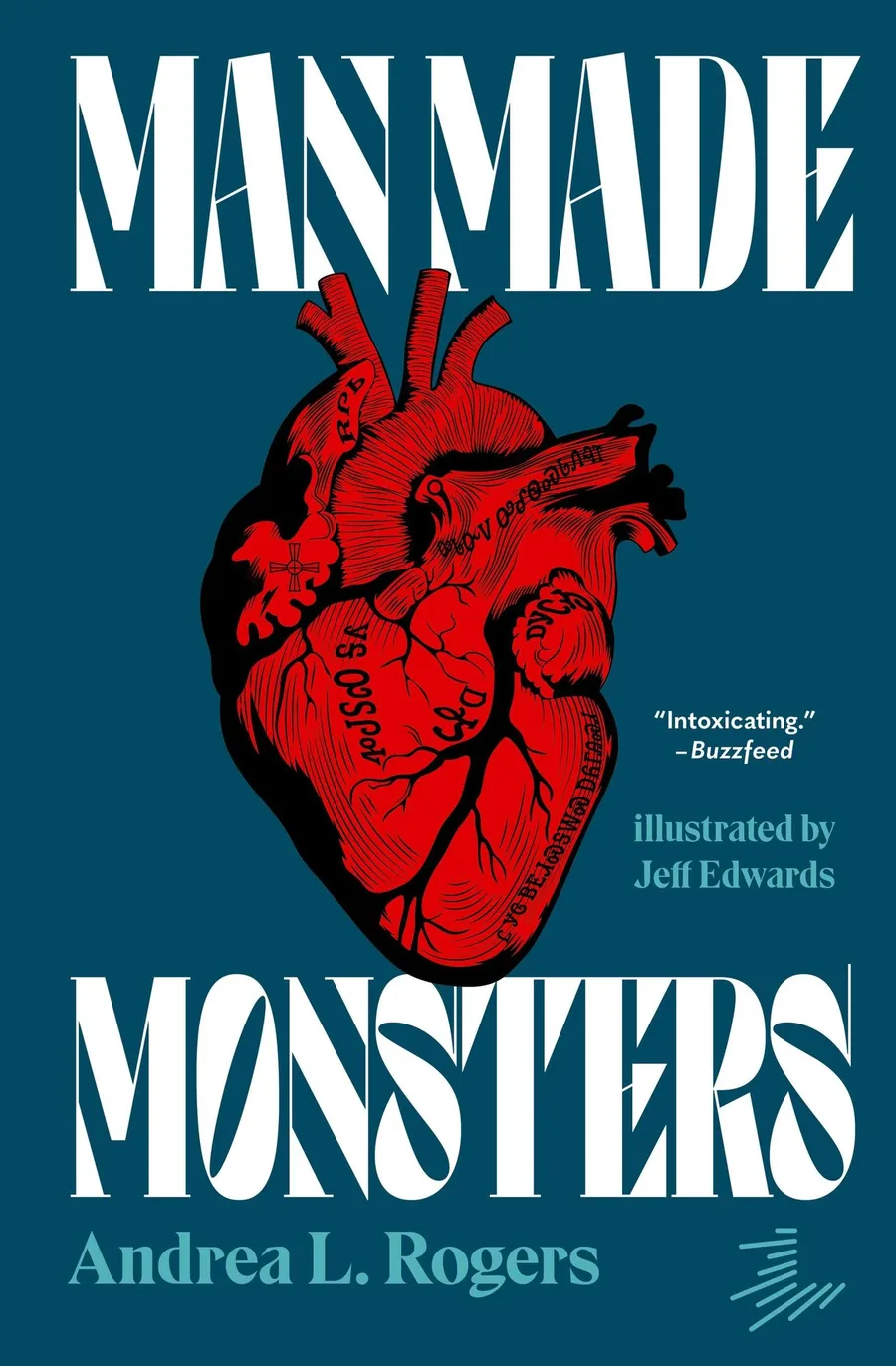 Man Made MonstersAndrea L. Rogers“Cherokee speakers view the world as a large room … in this room there are all the things that have happened, will happen, or could ever happen … behaviors that people engage in today are witnessed by their ancestors … the events that affected their ancestors are also visible in this room.” (Introduction) A collection of short stories set across 200 years and multiple generations of two connected families begins in 1839. Ama Wilson is fleeing with her family and other Tsalagi people, pursued for being Native, hoping to reach Indian Territory before the Texas Rangers catch up with them. Slowed by her little brother’s fever, Ama and her family stop to give him a chance to recover. A strange man speaking German sets up camp nearby and attacks the family in the middle of the night, killing Ama’s mother and “feeding” from Ama, setting her on the path to becoming a vampire. This hair-raising opener sets the stage for stories that follow. Ama makes appearances throughout, a benevolent but powerful monster among a cast of humans and monsters, some supernatural, including zombies and werewolves (some, like Ama, using their powers for righteous good), others humans with monstrous intentions and actions. Each story is firmly grounded in specifics of time, sometimes referencing characters from earlier stories and generations. Beautiful book design also graces this astounding collection that includes striking illustrations incorporating the Cherokee syllabary (the author is Cherokee) and two family trees.Fiction for Young AdultsView book details
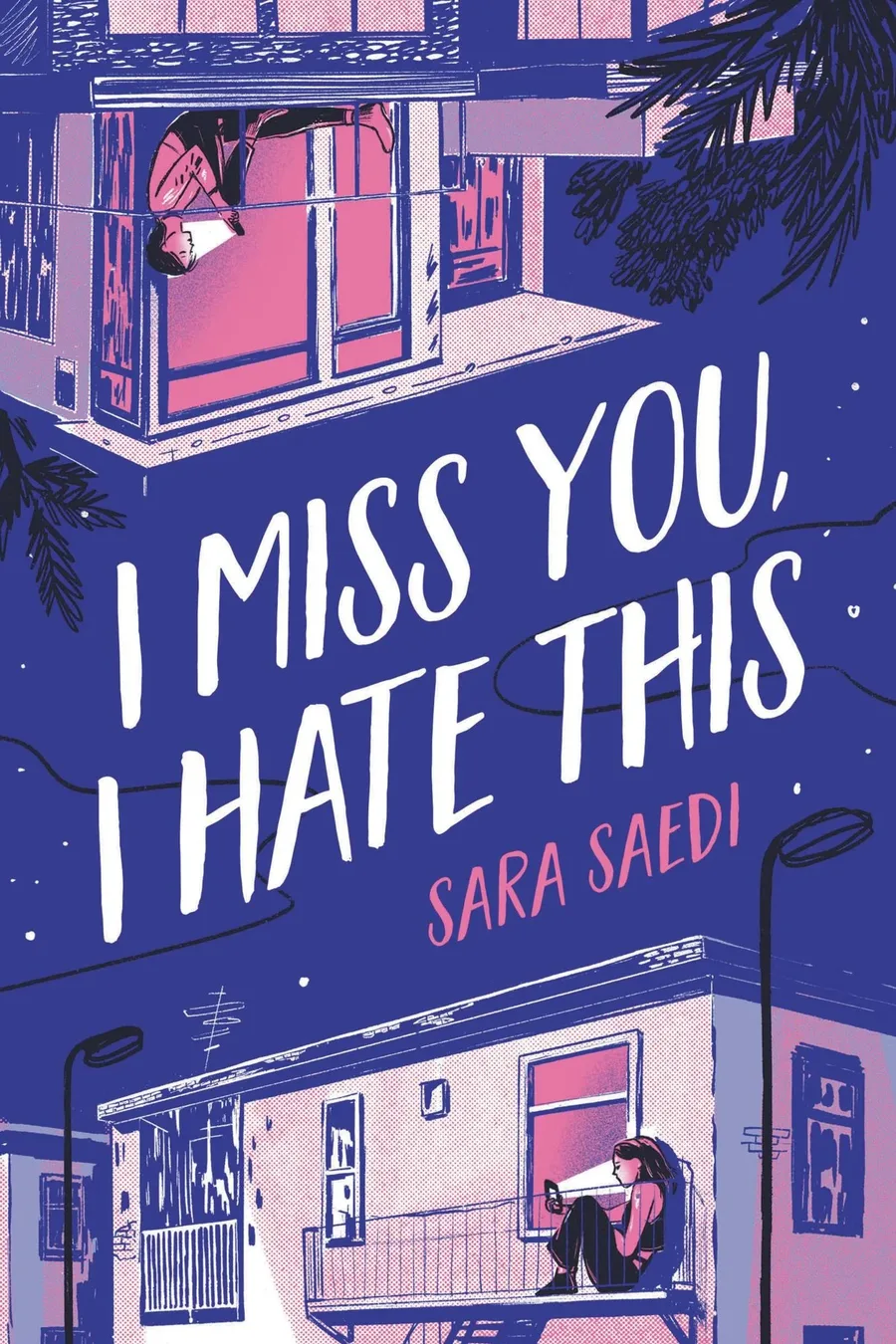 I Miss You, I Hate ThisSara SaediWhen best friends Parisa and Gabriela’s senior year is disrupted by a pandemic, schools— and their friendship—must go virtual, especially when it becomes clear that young adults are most susceptible to the virus. Iranian American Parisa can’t believe it when a classmate across the street hosts a party. In the aftermath, Andrew, once a close friend, gets sick and dies. Parisa becomes a recluse, afraid to go outside; aside from her family, her only connections are virtual, mostly with Gabriela and her older sister’s boyfriend, Gideon. Gideon is helping her with her college essay and … flirting with her? Staying home isn’t an option for Mexican American Gabriela: Saving for college and helping out her two moms, she can’t afford not to work. No one is more surprised than Gabriela when she and Wes—a 77 Fiction for Young Adults CCBC Choices 2023 third member of their friendship group that once included Andrew—fall in love. A touch, let alone a kiss, seems impossible, but they look for ways to be physically close while following reasonable precautions. In a story that alternates between the two young women’s points of view and includes numerous text exchanges, so much is out of these teens’ control, making the things they can control and the choices they make all the more important. The relationship arcs and personal dramas include feelings and misunderstandings that are inevitably amplified by the stress of extraordinary circumstances in a story sure to resonate with many contemporary readers.Fiction for Young AdultsView book details
 I Must Betray YouRuta SepetysWhen 17-year-old Cristian Florescu is called to his school office and confronted by a member of the Romanian secret police, the Securitate officer tells Cristian that he and his family won’t be punished for the illegal American dollar Cristian possesses if he’s willing to become an informer. Cristian hates himself for agreeing to spy on the 17-year-old son of the American diplomat his mother works for, but the Securitate officer has promised much-needed medicine for Bunu, Cristian’s beloved grandfather, who has leukemia. Wise, funny Bunu is the most important person in Cristian’s life: He shares his opinions about the government even though the family knows their cramped apartment in Bucharest is bugged, like those of all their neighbors. Having grown up under the brutal Ceauşescu regime, Cristian knows there are spies and informers everywhere; now he is one of them. But Cristian, who writes his thoughts and dreams in a secret journal he hides in the closet where he sleeps, thinks he can outwit the Securitate, even as he begins to wonder if there are greater threats than he realized right within his home. Interspersed with the staccato- paced, first-person, present-tense narrative are top secret State Security reports, giving readers insight into the danger Cristian is in. This tense, riveting thriller captures life in Bucharest in the weeks leading up to the 1989 uprising that ousted Ceauşescu from office, illuminating the physical and psychological cruelty of his oppressive regime and the courage of citizens demanding freedom.Fiction for Young AdultsLexile Text Measure 550LATOS Book Level 4.3View book details
 See You YesterdayRachel Lynn SolomonCollege freshman Barrett Bloom (white, Jewish) is starting the University of Washington intent on reinventing herself, or at least others’ perceptions of her. But her first day of class begins with the late arrival of a new roommate: Lucie Lamont, who was once Barrett’s friend but long ago left Barrett behind. In Intro to Physics, Barrett sits next to a guy who ends up embarrassing her in front of the class. Her interview to work for the campus paper starts out great, but she sees the moment the editor’s interest starts to wane. And Barrett’s spur-of-the-moment decision to attend a frat party ends in flames … literally. To her dismay, Barrett wakes up the next morning to discover it’s still the first day of class. Trapped in a time loop, she learns she isn’t alone. Miles (Japanese American/white, Jewish), the guy from Physics, is trapped, too. Miles is eager for Barrett to help him research the problem; eventually, however, she convinces Miles that they should live every day to the fullest. All the while, they share their pasts and their hopes and their fears, from Barrett’s loneliness and the sexist online abuse she endured at the end of high school to Miles’s worries about his older brother, Max, just out of rehab for the fourth time. And all the while, they are falling in love. Sharp, funny writing buoys a novel that is both entertaining and substantial.Fiction for Young AdultsView book details
 Breathe and Count Back from TenNatalia SylvesterVeró’s immigrant family came to the United States from Peru years ago seeking opportunities for Veró and her younger sister and better treatment options for Veró’s hip dysplasia. Now 17, Veró hates the way her immigrant parents are sometimes treated. She also sometimes hates the way they treat her, especially when it comes to sexist standards regarding her behavior. They are also overprotective, shielding Veró from medical information she wants to know. Excited to get a job at her town’s tourist attraction, Mermaid Cove—she’s dreamed of being a mermaid since she was a child—Veró doesn’t tell her parents, sure her father in particular wouldn’t approve, but can only keep her new job a secret for so long. Wonderfully developed characters and relationships propel this story culminating in a performance inspired by the Peruvian stories of Huacachina, reshaped by Veró to speak her own truth and advocate for others. Veró is confident of her capabilities, yet sometimes self-conscious about her disability; she’s an almost-adult longing for respect, even as she doesn’t always afford the same to her younger sister. This lively exploration of the complexities, and sometimes the contradictions, of Veró and her life touches on struggles of those around her as well, including her boyfriend Alex’s depression and Mermaid Cove management’s treatment of gender nonbinary Geoff, another performer. It’s all perfectly weighted and a pleasure to read, thanks to the fine storytelling.Fiction for Young AdultsLexile Text Measure 829LATOS Book Level 5.3View book details
 The QAmy TinteraIn the not-so-very-distant future, the city formerly known as Austin, Texas, has been walled off to contain a virus. Life inside the Q goes on, with the U.S. government providing shipments of supplies but not much else. Two rival gangs largely control the Q: the Lopez family in the south and the Spencers in the north, where supply shipments come in. Maisie Rojas, 17, is the daughter of the late Isaac Rojas; her father was the Lopez family enforcer. It’s a role Maisie doesn’t think she’s capable of taking over—something her ex- boyfriend, clearly angling for the job, often echoes. Lennon Pierce, 19, lives outside the Q. When Lennon, the black sheep son of a Democratic senator and presidential candidate, is kidnapped and dropped into the Q, he’s found by the Lopez family and becomes the charge of Maisie. In this high-octane novel alternating between Maisie’s and Lennon’s viewpoints, Maisie agrees to lead a mission into Spencer territory to help Lennon escape through the north gate and to hijack the south’s supplies from the Spencers, while Lennon realizes his experience inside the Q is giving him insights about life in the quarantine zone that people on the outside ought to know. The romance that inevitably develops between Maisie and Lennon is just one of the satisfying elements of a fun, fast-paced story in which both characters discover as much about themselves as they do about each other.Fiction for Young AdultsView book details
 Lulu and Milagro’s Search for ClarityAngela VelezPeruvian American sisters Lulu and Milagro aren’t exactly close and certainly weren’t planning to spend spring break together. Stellar student and aspiring marine biologist Lulu is going on a school-sponsored trip to visit colleges, intent on acing her interview for a summer program at Stanford while also getting their older sister, college freshman Clara, to help convince their mom to let Lulu go if she gets in. Milagro is looking forward to staying home and sleeping with her boyfriend for the first time. Stunned when she learns he’s cheating, and forced to go on the trip at the last minute, Milagro, smart but uninspired by school, decides having fun with some college boys is the perfect antidote to heartbreak. All the St. Agnes high school girls on the trip are paired with high school boys from St. Anthony’s. Milagro hits it off with her partner, Lucas, a talented musician who is gay. Lulu’s partner is popular, good-looking Leo, with whom she’s sure she has nothing in common. Alternating chapters from Lulu’s and Milagro’s perspectives chronicle a journey that covers 79 Fiction for Young Adults CCBC Choices 2023 many miles, numerous escapades, a developing romance between Lulu and Leo, and the deepening mystery surrounding Clara, who is clearly harboring some secrets. Punctuated by sharply funny observations and witty dialogue, this delightful, insightful work that also examines some of the challenges of first-generation college students is a story of discovery and self-discovery in which revelations and realizations for both sisters strengthen their relationship and the bonds within their family.Fiction for Young AdultsView book details
 On the Subject of Unmentionable ThingsJulia WaltonTeenager Phoebe Townsend writes “Circle in the Square,” an informational blog about sex, under the pen name “Pom.” Not even Phoebe’s best friend, Cora, knows unassuming Phoebe (white) is behind it. Phoebe’s goal is to provide reliable answers to readers’ sex- related questions; she’s become a skilled researcher, and the blog is proving far more useful for her peers than the requisite health education class (which avoids mentioning sex as much as possible). Now local mayoral candidate Lydia Brookhurst has decided the blog— and Pom, whom she assumes is an adult and male—are morally corrupting the youth of the community and encouraging them to have sex. Brookhurst’s wealth and influence have far reach. It’s one thing when Neil, Phoebe’s recent crush and her editor on the school paper, reverses his admiration for Pom after making some journalism connections through Brookhurst. But when Phoebe’s mom seems to be wavering—her parents’ small accounting business has a local religious group as a client—it’s a blow. There are vocal supporters of Pom, too, including Cora and high school quarterback Jorge, but when Phoebe is stripped of her anonymity and later doxed, the onslaught of attention and criticism is brutal, challenging many to think deeply about what they believe and how they behave, although change is not a given. This timely, gripping novel isn’t subtle, even as there’s more nuance than the plot alone suggests in a story that plays out in ways that are achingly, sometimes infuriatingly, believable.Fiction for Young AdultsView book details
 The Most Dazzling Girl in BerlinKip WilsonOn her own in 1932 Berlin, Hilde, 18, feels bereft and abandoned after aging out of the orphanage where she’s been living and not hearing a word from her girlfriend, Gretchen, since Gretchen left months before. Hilde finds refuge one night in Cafe Lila, where a waitress named Rosa gets Hilde a job. Hilde feels right at home at Café Lila, a gay nightclub, and she’s dazzled by kind and beautiful Rosa, who invites Hilde to stay with her and her aunt. The rise of the National Socialist Party and Adolf Hitler start out in the background of this story, in which Hilde struggles to overcome her stage fright to perform at Café Lila, and to overcome her fear of rejection and tell Rosa how she feels. But even as Hilde (white) rises to these personal challenges, the escalating tensions around the elections, as well as Nazi attitudes toward Jewish people, like Rosa and her aunt and gay people, become an ever-increasing threat to both young women and the communities of which they are a part. This beautifully realized novel in verse succeeds on every level—as a work of historical fiction vividly bringing the past to life, as a love story, as a story about overcoming one’s personal fears, and as a work illuminating chilling parallels between early-1930s Germany and Western society today. It’s also a story that celebrates community and family—both blood and found.Fiction for Young AdultsView book details