
 Life After Whale: The Amazing Ecosystem of a Whale FallLynn Brunelle“She drifts slowly. The late afternoon sunlight slants through the rippled water overhead and streams down the skin on her back.” “She” is a blue whale, earth’s largest animal. “Her years are told in her ears,” where layers of wax mark her age like the rings of a tree trunk. This whale is old, and when she dies, her body begins to transform, first bloating, and then, as the gases escape, drifting down to land on the seabed. There, her body begins to break down, providing nourishment and shelter across decades. After 150 years, there are still parts of her skeleton harboring organisms and other sea life. This fascinating book conveys the science and beauty of this cycle through lyrical text and dramatic watercolor and gouache illustrations capturing the grace of the blue whale in life, and the details of its transformation in death over time. Print and online resources are provided at book’s end.Science, Technology, and the Natural WorldView book details
CCBC Choices 2025
The 2025 edition contains 251 selections published by the Cooperative Children's Book Center, University of Wisconsin-Madison. The source uses 14 audience or subject sections, including Science, Technology, and the Natural World, Seasons and Celebrations, Historical People, Places, and Events, and Biography, Autobiography, and Memoir. It is one annual edition of CCBC Choices, the librarians' bibliography of recommended books.
CCBC Choices 2025See the original list
Selections251
Published byCooperative Children's Book Center, University of Wisconsin–Madison
Sections14 sections
Browse sections14 sections
Science, Technology, and the Natural World
20 selections
Life After Whale: The Amazing Ecosystem of a Whale FallLynn Brunelle“She drifts slowly. The late afternoon sunlight slants through the rippled water overhead and streams down the skin on her back.” “She” is a blue whale, earth’s largest animal. “Her years are told in her ears,” where layers of wax mark her age like the rings of a tree trunk. This whale is old, and when she dies, her body begins to transform, first bloating, and then, as the gases escape, drifting down to land on the seabed. There, her body begins to break down, providing nourishment and shelter across decades. After 150 years, there are still parts of her skeleton harboring organisms and other sea life. This fascinating book conveys the science and beauty of this cycle through lyrical text and dramatic watercolor and gouache illustrations capturing the grace of the blue whale in life, and the details of its transformation in death over time. Print and online resources are provided at book’s end.Science, Technology, and the Natural WorldView book details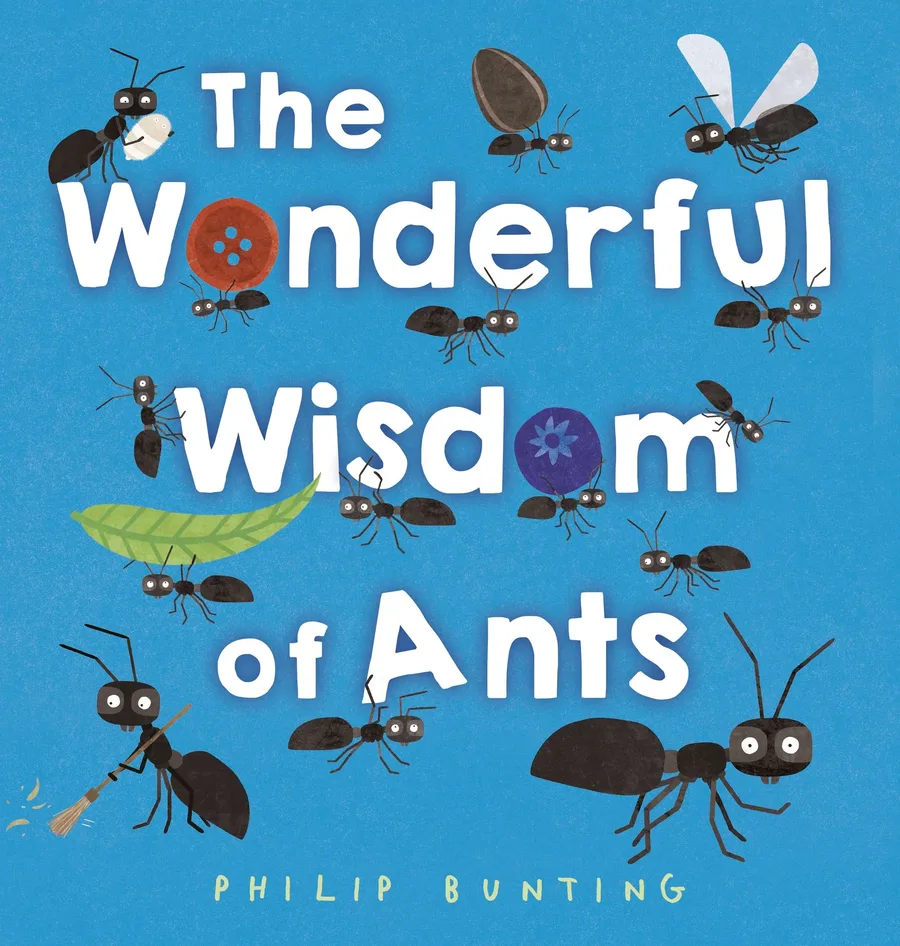 The Wonderful Wisdom of AntsPhilip Bunting, illustrated by Philip BuntingA clever text punctuated with frequent pops of humor and perfectly paired papercut and digital collage illustrations introduce young readers to the fascinating world of ants. A list of what ants love (family, recycling, micronaps, helping others, and “being caught on camera carrying stuff way bigger than they are”) leads to an explanation of the types of ants living in colonies and their roles, the function of pheromones in ant communication, and ants’ significance in creating robust soil. The closing pages return to the opening list and what ants love and recommends that humans adopt some ant behaviors by loving family, avoiding waste, power napping, and doing your best for others.Science, Technology, and the Natural WorldView book details
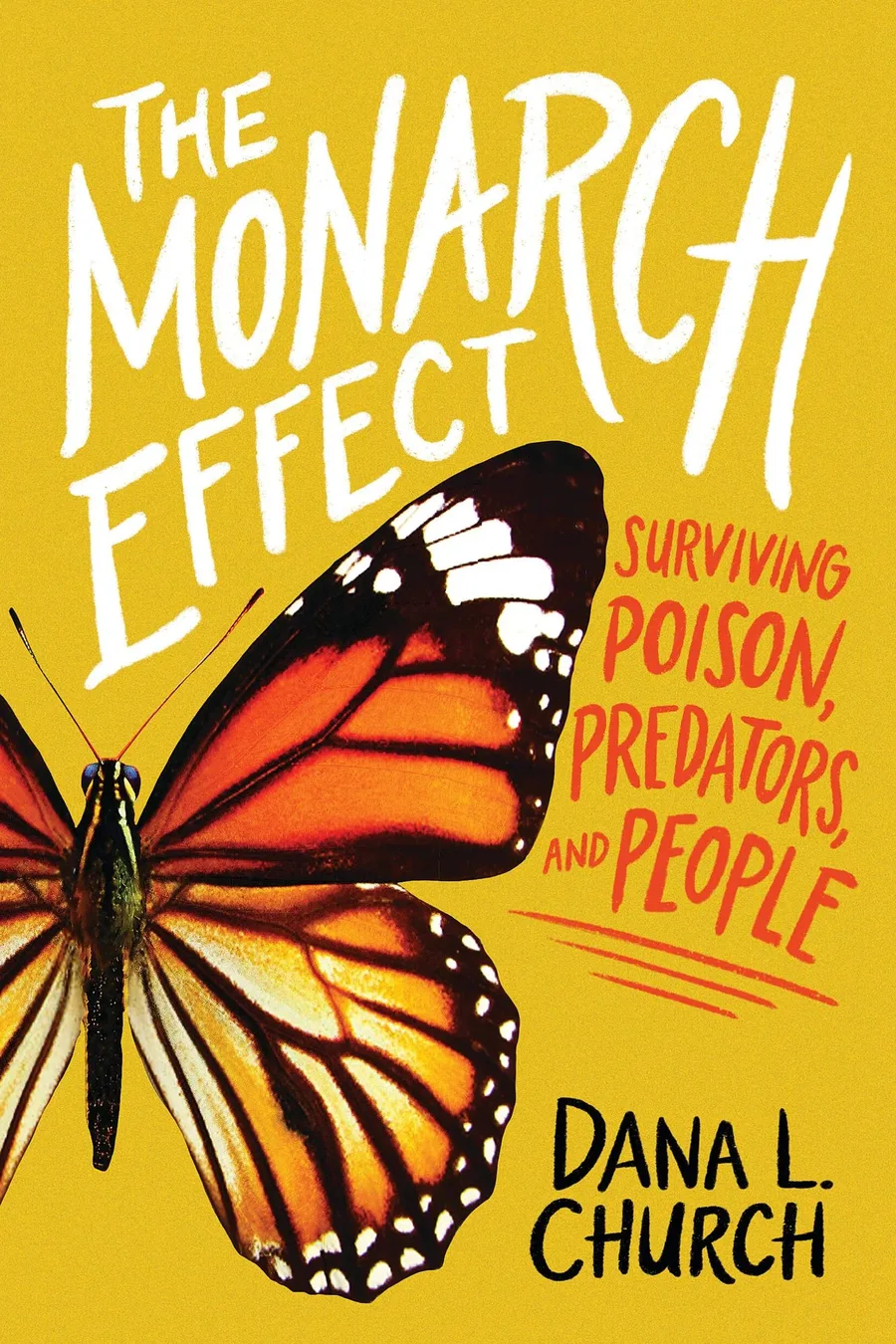 The Monarch Effect: Surviving Poison, Predators, and PeopleDana L. ChurchThis engrossing, detailed work of nonfiction delves into not only the behaviors and characteristics of monarch butterflies, but also the long history of human fascination— and, unfortunately, interference—with monarchs. Beginning with a description of the monarch life cycle, from the insect’s perilous caterpillar days on milkweed leaves to its metamorphosis into its distinctive adult form and eventual migration, this account provides ample explanations of the experiments and efforts of scientists both professional and amateur to learn more about this long-admired insect. A substantial portion of the narrative covers the history of how monarchs’ overwintering sites in Michoacán, Mexico, were “discovered.” Credit is usually given to Dr. Urquhart, a white Canadian whose National Geographic article revealed the approximate location of the sites. Urquhart failed to properly credit Mexican naturalist Catalina Trail, who had searched for and informed him of the exact site. Even before Urquhart and Trail, however, Indigenous peoples had long lived in and cared for the forests where the monarchs spend their winters. The account also covers efforts to conserve overwintering sites (and the unintended, negative consequences of these efforts), monarch migration patterns, and the recent sharp decline in monarch populations. It concludes by urging all who live in monarchs’ natural habitat to help cultivate conditions that will lead to the preservation of these marvelous butterflies.Science, Technology, and the Natural WorldView book details
 Defending Nature: How the US Military Protects Threatened and Endangered SpeciesSneed B., III CollardAt Eglin Air Force Base in Florida, one ongoing activity that some may find surprising is conservation work. The base is home to the endangered red-cockaded woodpecker (RCW). In 1989, after the United States Forest Service prevented the military from conducting a munitions test because of the risk posed to the RCW, the Department of Defense (DOD) embarked on a groundbreaking collaboration with civilian scientists and others to protect the RCW’s habitat. This intriguing photodocumentary provides an account of those efforts. DOD lands “hold more threatened and endangered species than the United States’ National Parks System.” A brief account of other DOD conservation projects, author’s note, glossary, sources notes, and further reading suggestions are at volume’s end.Science, Technology, and the Natural WorldView book details
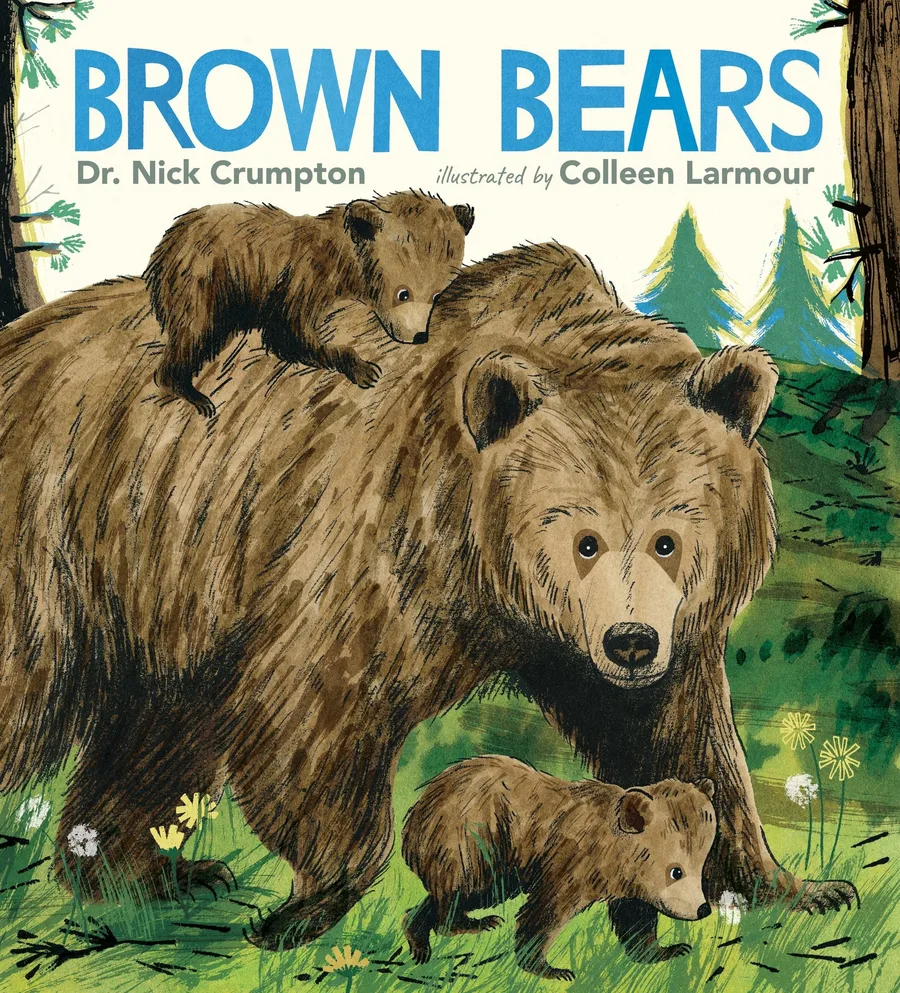 Brown BearsDr. Nick Crumpton“Through a carpet of pine needles and a small hill of moss, twigs, and soil, three shiny black noses push up into the crisp air. Spring has arrived in Alaska.” An appealing account follows two bear cubs and their mother from the time they emerge from the winter den where the cubs were born through spring, summer, and into fall. The cubs and their mother find food and shelter, and practice behaviors that will help the cubs survive and live independently. The inviting text is full of captivating details that will fascinate young animal enthusiasts. Each page spread includes several sentences offset in italics that provide factual information. Pleasing mixed-media illustrations in muted tones have a cozy feel while retaining the sense of realism. A note from the author, a map, and an index round out this introduction to brown bears, a species found in many locations in the northern hemisphere.Science, Technology, and the Natural WorldView book details
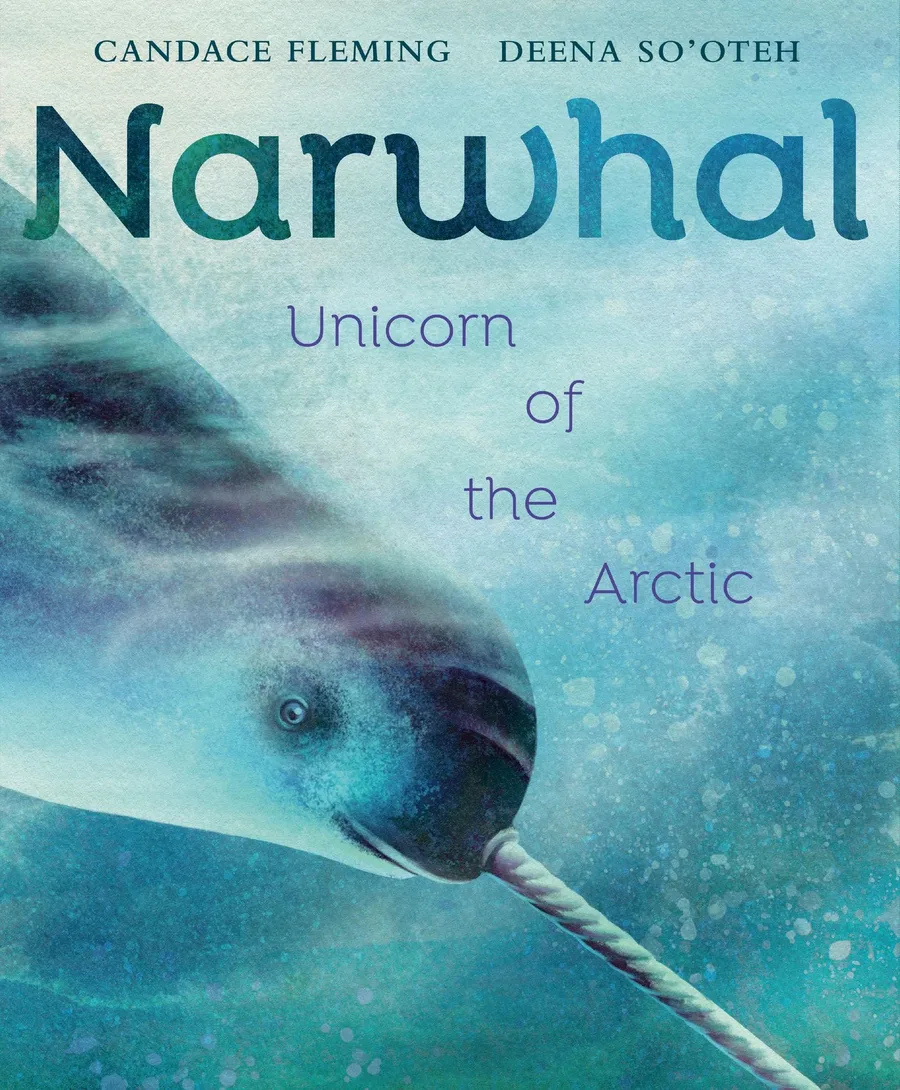 Narwhal: Unicorn of the ArcticCandace Fleming“You are a narwhal—shy, swift, small (for a whale).” Full of sensory detail, this narrative focusing on the life and activities of the “unicorn of the Arctic” begins on a “biting-cold December day,” in the dark of the Arctic, as “you,” a male narwhal, clash your tusk with that of another male. “Clackety-clack!... Are you playing? Fighting? Showing off for a female?” Onomatopoeia is used effectively throughout: “Pshhht!... Ahhhh!” as narwhals surface for air; the “Tik-tik-tik-tik” of their echolocation. In summer, the narwhals migrate, some birthing calves along the way. There are threats: predatory orcas and dwindling food. The pod becomes trapped in an inlet when the surface freezes over; they swim “around and around, clicking and whistling. There’s no way out. No place to breathe.” They use their heads to break through, only to attract the attention of a hungry polar bear on the surface. These moments of drama bring realistic tension and urgency to an otherwise poetic account of the daily and seasonal rhythms of narwhal life. Immersive illustrations full of deep, sweeping blues and greens provide a mix of realistic details (sea lice on a narwhal tusk, spotted narwhal bodies) and awe-inspiring scenes (the glow of the Northern Lights, stars that “sparkle like ice chips”). Additional information is included at volume’s end.Science, Technology, and the Natural WorldView book details
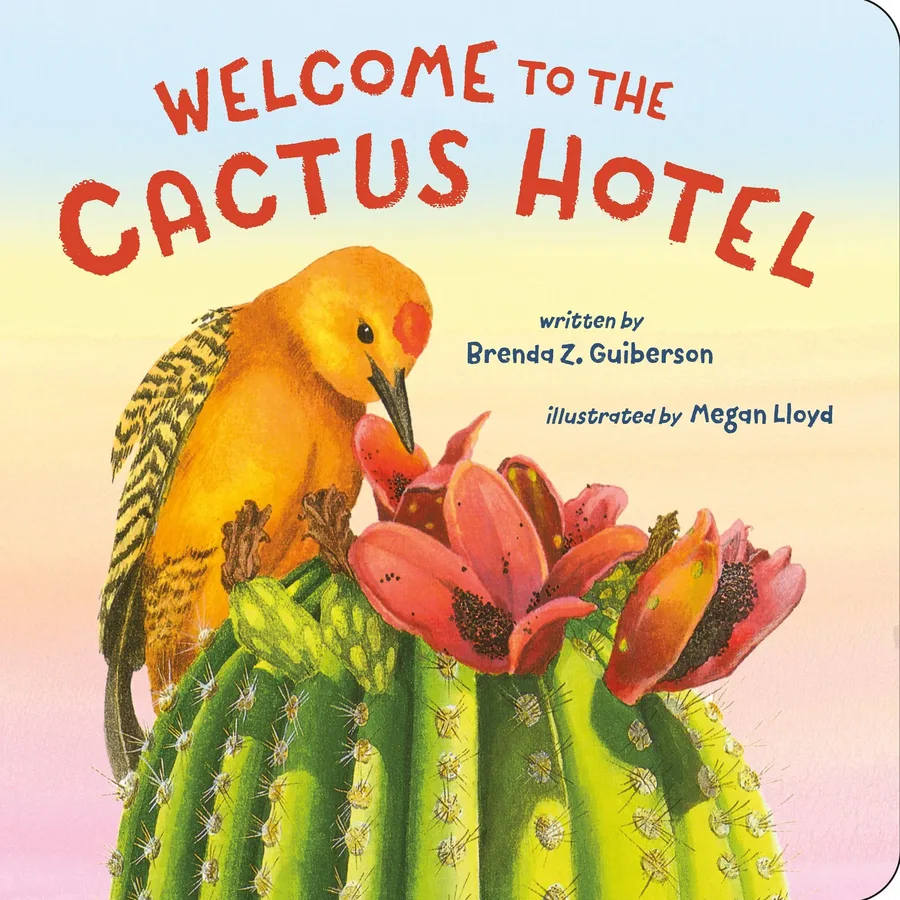 Welcome to the Cactus HotelBrenda Z. Guiberson, illustrated by Megan LloydWelcome to the Cactus Hotel! Let’s meet the guests. A Gila woodpecker is the first to arrive at the giant cactus in the Sonoran Desert. He tap tap taps a hole and moves right in. Owls, 11 Science, Technology, and the Natural World CCBC Choices 2025 red-winged hawks, and white-winged doves soon join the succulent shelter. When the cactus flowers bloom, bats come for nectar and bees come to pollinate. The blooming flowers produce fruit that the hungry javelinas snuffle up from the ground. Like any satisfied guest, the numerous dwellers leave a great review by carrying seeds and pollen across the desert so future cactus hotels might grow. Realistic illustrations and lively text introduce young readers to a rich desert ecoregion.Science, Technology, and the Natural WorldView book details
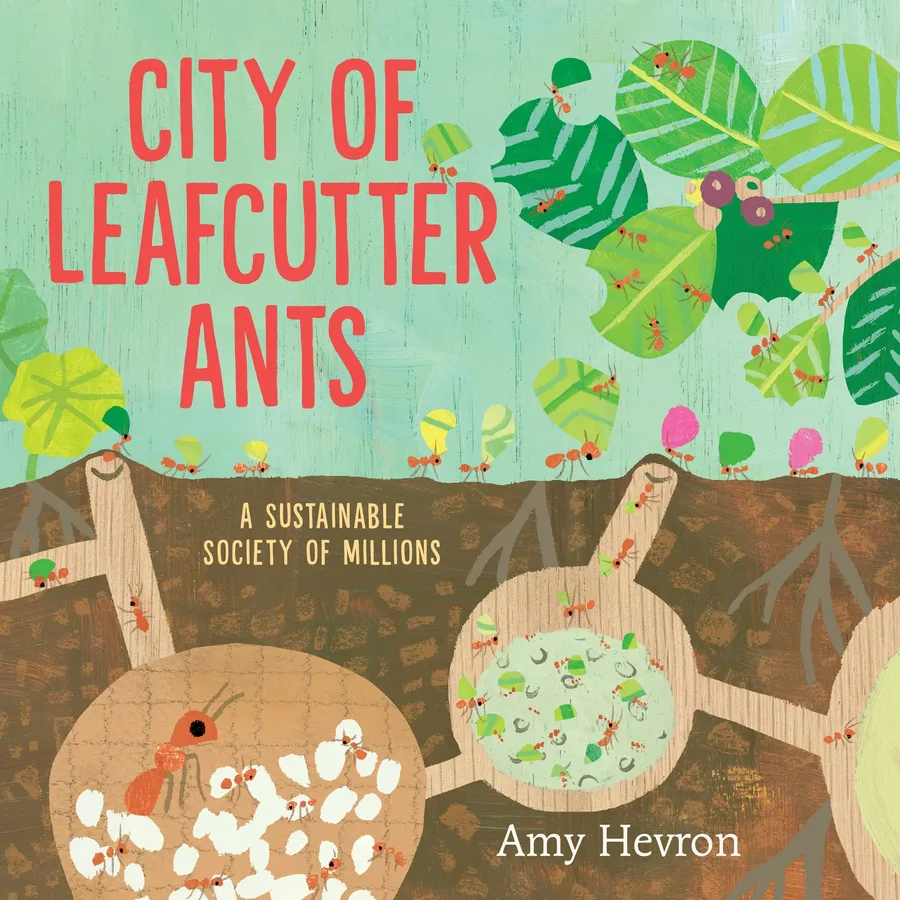 City of Leafcutter Ants: A Sustainable Society of MillionsAmy HevronBeneath a Central American rainforest there exists a bustling, thriving city of eight million. Eight million leafcutter ants, that is. They’re sisters, all of whom come from the same queen, the colony’s founder. Though all are female, the ants are differentiated by their physical traits and specialties. Each plays her role in the city’s functioning, whether it be caring for the queen and her larvae, assisting in the decomposition of waste, cleaning leaf cuttings, producing antibiotics, digging tunnels, defending the colony, or foraging for leaves. The leaves are carried, in pieces, back to the colony, where they are chewed into a paste that feeds a garden of fungus: the ants’ food source. When a new queen is grown, she will take some of this fungus on her own mating flight and use it to start her own city. The “city” metaphor is used to great effect, making the details of the ants’ jobs and society familiar and accessible to young readers. The ants in the lively illustrations are busy and focused. The back matter provides more information about leafcutter ant societies and jobs.Science, Technology, and the Natural WorldView book details
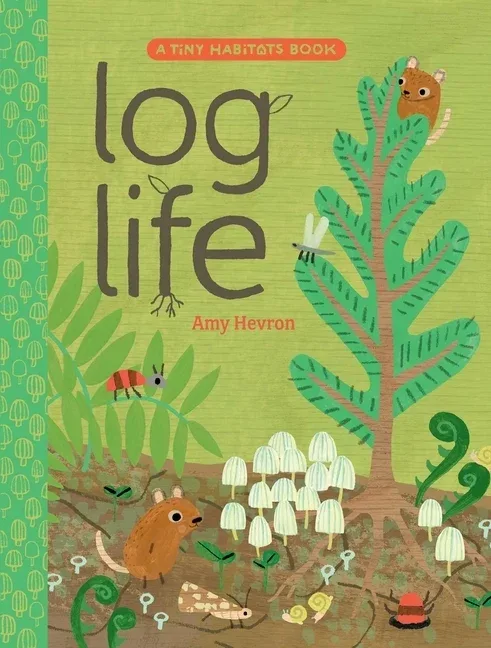 Log Life (A Tiny Habitats Book)Amy HevronWhat happens when a giant fir tree is felled by a storm? It becomes a nurse log, a home to countless creatures on the forest floor. Five chapters chart the long life of the log: spring, year 1; summer, year 10; autumn, year 100; winter, year 500, and spring, year 1000. Almost immediately, new life and activities spring up on and around the fallen tree. Fungi arrive, followed by lichen, liverwort, hornwort, and chicken mushrooms. Animate creatures, including beetles, ants, snails, and birds, are next. The nurse log’s surface becomes blanketed in ferns and molds. It offers shelter, shade, and warmth to myriad mammalian and amphibious beings. Eventually, a new fir tree sprouts. It is a tree that, hundreds of years in the future, takes the place of the decomposed nurse log... until “a great gust” comes along to start the cycle over again. Readers are likely to delight in the cheerful, adorable illustrations (even the fungi have cute little smiles). While the incredible span of time may be difficult for young children to grasp, the scientific information is delivered via a conversational, accessible text.Science, Technology, and the Natural WorldLexile Text Measure 420LATOS Book Level 2.9View book details
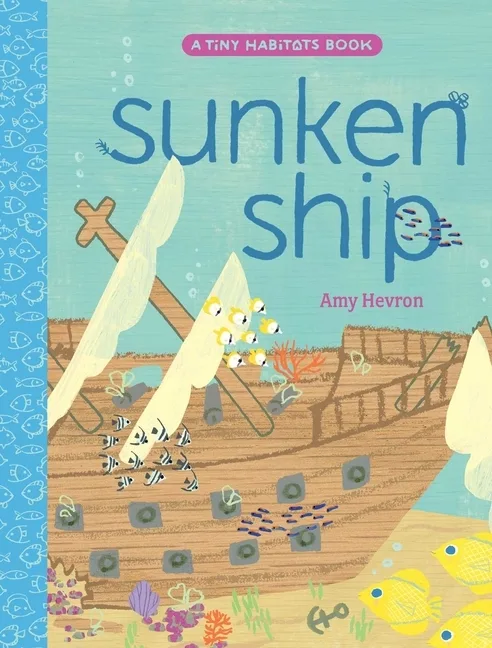 Sunken Ship. (Tiny HabitatsAmy HevronA Spanish Galleon that sank in 1733 became “a treasure ship of another kind” as the ruin transformed into the heart of a new ecosystem in the ensuing years. “Algae and sea lettuce were the first to move in. They washed into the ship’s wooden hull.” The engaging, accessible narrative and humorous panel illustrations skillfully mark huge swaths of time as they show the developing reef over the first year, at the first decade, and the first century. Today, the reef community continues to provide a safe habitat for sea life, while also protecting against erosion and lessening ocean surges during storms. An end note discusses this specific sunken ship, which is located off the Florida Keys, and the current science surrounding sunken ships.Science, Technology, and the Natural WorldView book details
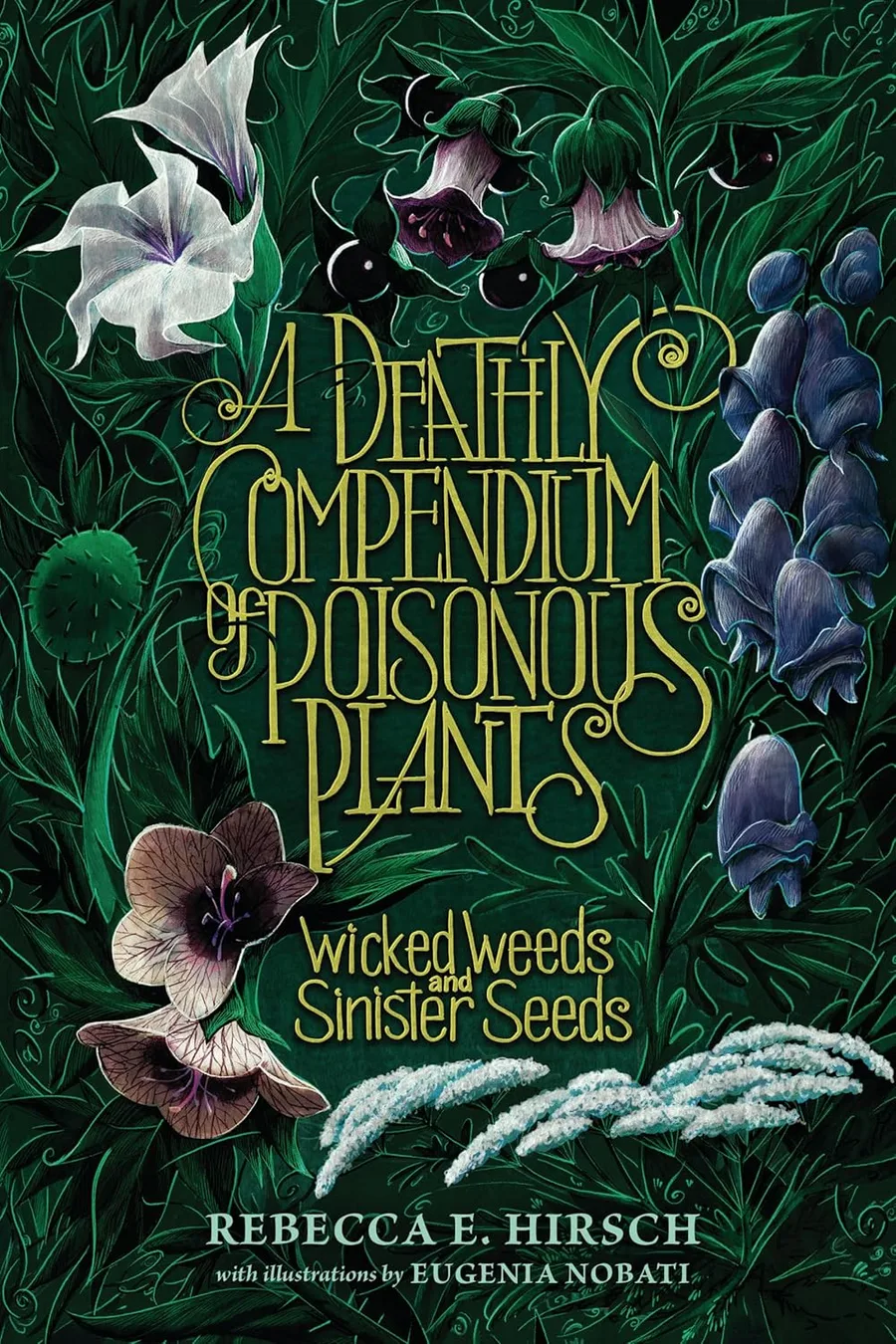 A Deathly Compendium of Poisonous Plants: Wicked Weeds and Sinister SeedsRebecca E. Hirsch, illustrated by Eugenia NobatiShort chapters introduce 25 poisonous plants (actually, 24 plants and one fungus) following a similar format for each, with most including sections titled “Wicked Weed” or “Sinister Seed” (as appropriate), “Bodily Harm” (impact on a human body, including the gross particulars), and “Deadly Details” (such as “Mandrake was a component of witches’ flying ointment—a concoction that when smeared on the skin produced powerful hallucinations of flight.”) Many chapters include a gruesome account of people killed by the plants, some historical and others more recent. The conversational and sometimes sassy tone employs “Dear Reader” moments to emphasize the serious dangers posed by encounters with poisonous plants. The book’s highly visual format utilizes lush botanical illustrations, historical images, photographs, and page decoration. A glossary, source notes, bibliography, and selected additional resources round out this compact and engaging volume for strong-stomached horticulturists and medical aficionados.Science, Technology, and the Natural WorldView book details
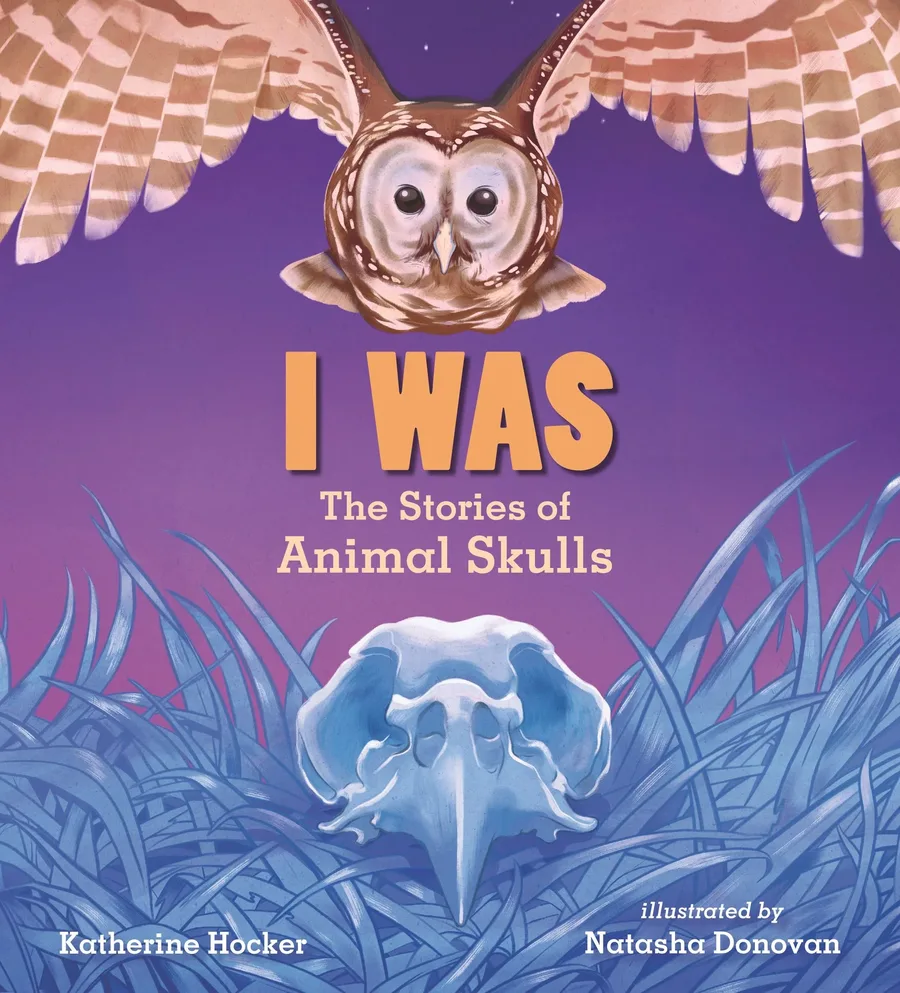 I Was: The Stories of Animal SkullsKatherine Hocker, illustrated by Natasha Donovan“A skull speaks in arches and ridges and caverns of bone. It speaks in teeth and cracks, and holes into, and holes through. It says: I was.” This poetic, patterned text goes on to describe various animal skulls, focusing on a particular characteristic of each. “See these hollows, wide as windows and round as moons? They held my eyes. I was the watcher in the winter forest.” A turn of the page shows an illustration of the animal when alive, while artfully showcasing one way it used that physical feature. “When the light was dark... I hunted hares with my eyes full of light. I was.” The visual and textual clues offer opportunities for children to puzzle out what the animal might be before the page turn with its revealing illustration. The narrative concludes with a human skull: “You are the thinker—you can calculate the paths of comets and stars. You are the seeker—you can learn your father’s language, and your grandmother’s too.” Each of the other animals is identified by name at volume’s end, and include a lynx (featured above), deer, wolf, beaver, hummingbird, and owl. Additional information about the skulls appears in the back of the book.Science, Technology, and the Natural WorldView book details
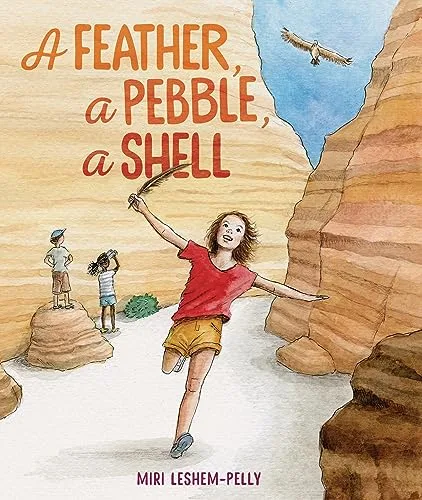 A Feather, a Pebble, a ShellMiri Leshem-PellyA young girl visits a variety of natural environments with a group of children and an adult leader. In each location, she finds a small natural object that she observes, holds, and leaves behind, off to the next adventure. A small text box defines each object and provides a few scientific facts. For example, after perching on a boulder in the Dan River, the girl watches the water flow over the round, black pebbles. A text box explains that the black rock was likely a basalt pebble formed from rapidly cooling lava 100,000 years ago. The girl and her group visit 11 locations around the country of Israel (a map is on the final page). Whether in desert, sea, cave, or beach, the girl’s temporary touch offers a moment of reflection, and connection to a particular place. In a note the author discusses her childhood exploring Israel with her parents and the country’s unique topographic, geological, and climate diversity.Science, Technology, and the Natural WorldView book details
 Change Is in the Air: Carbon, Climate, Earth, and UsDebbie LevyThis succinct and scientific text explains what the element of carbon is, how it is created and used, and why there is an excess of carbon blanketing the Earth. Three mechanisms by which the planet has the power to reduce atmospheric carbon are also delineated, 13 Science, Technology, and the Natural World CCBC Choices 2025 including kelp in the sea, mangroves in the wetlands, and dirt in the forest. For example, in an above- and below-ground scene of a deciduous forest, accessible language describes how leafy plants and trees drink carbon from air while their roots bury carbon into the dirt. White dotted lines and arrows illustrate the movement of the invisible carbon without complicating the big picture. The book concludes with the critical role humans play, highlighting ways humans can decrease carbon, such as conversion to non-fossil fuels, restorative farming practices, and clean transportation choices. Without blame or doom, this science-rich picture book aims to empower young citizens. Comprehensive endpapers with clear line drawings round out the book’s core concepts.Science, Technology, and the Natural WorldView book details
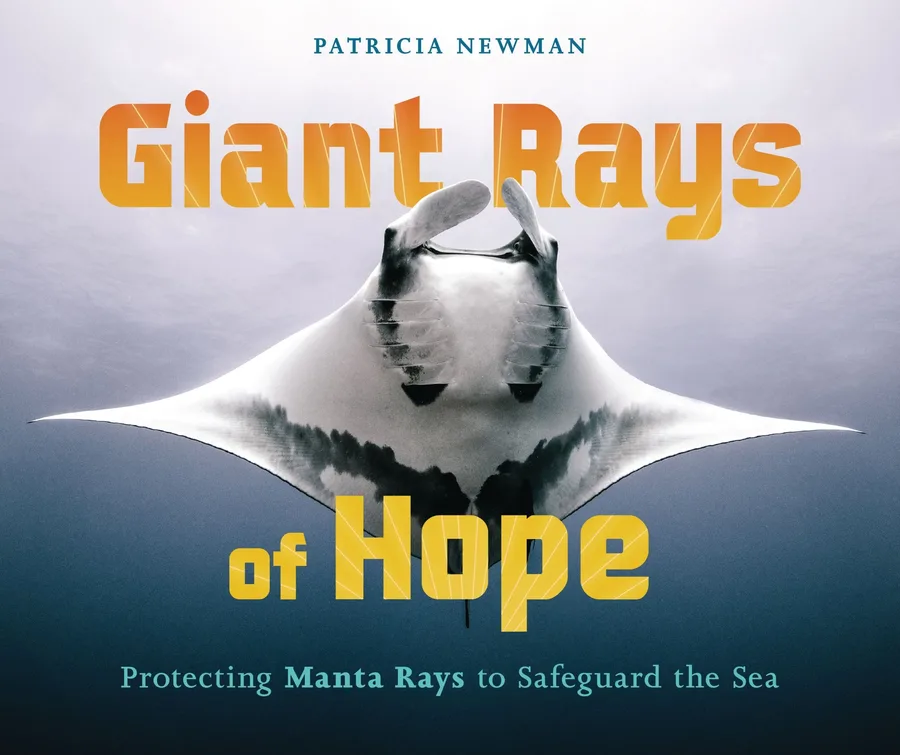 Giant Rays of Hope: Protecting Manta Rays to Safeguard the SeaPatricia NewmanThis inspiring book chronicles the efforts of Kerstin Forsberg, a Peruvian conservation leader, who has been building connections between people and animals since she was a child. At age eight, she started a club to get her disinterested classmates excited about the small zoo on their school campus. At age 10, she had a conservation story published in a magazine to draw attention to ocean contamination. After college, Forsberg had the opportunity to work with fishermen in a small community in northern Peru, solidifying her belief that nothing changes unless the community is involved. Forsberg’s focus on listening is central to this story of creating protections for manta rays, huge animals (as big as four king-size beds) that play a pivotal role in ocean health. Working with school children and fishermen, Forsberg and her organization, Planeta Oceano, build awareness for why protecting rays ultimately yields better fish for fishermen, and how this benefits other aspects of the local economy. Numerous photographs and sidebars add valuable information about the rays. Interviews with fishermen and children explore how Forsberg and Planeta Oceano have helped them understand the importance of manta rays, and how they take part in protecting the rays in this excellent profile of environmental science and community activism for young readers.Science, Technology, and the Natural WorldView book details
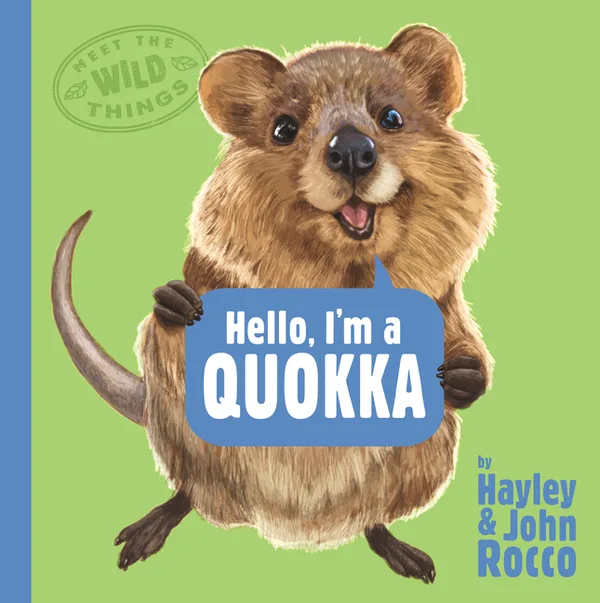 Hello, I’m a QuokkaHayley Rocco, John RoccoA talkative quokka introduces itself to those unfamiliar with the small Australian marsupial, popular for its photogenic “smile.” Information about quokkas’ behavior, habitat, and history as impacted by human populations and climate change is sprinkled with questions for the reader (“Do you like hopping?” “When do you sleep?”). Realistic pencil, watercolor, and digital illustrations accompany the simple first-person text, and the final two pages offer additional information about the species and its endangered status.Science, Technology, and the Natural WorldLexile Text Measure AD650LATOS Book Level 4.2View book details
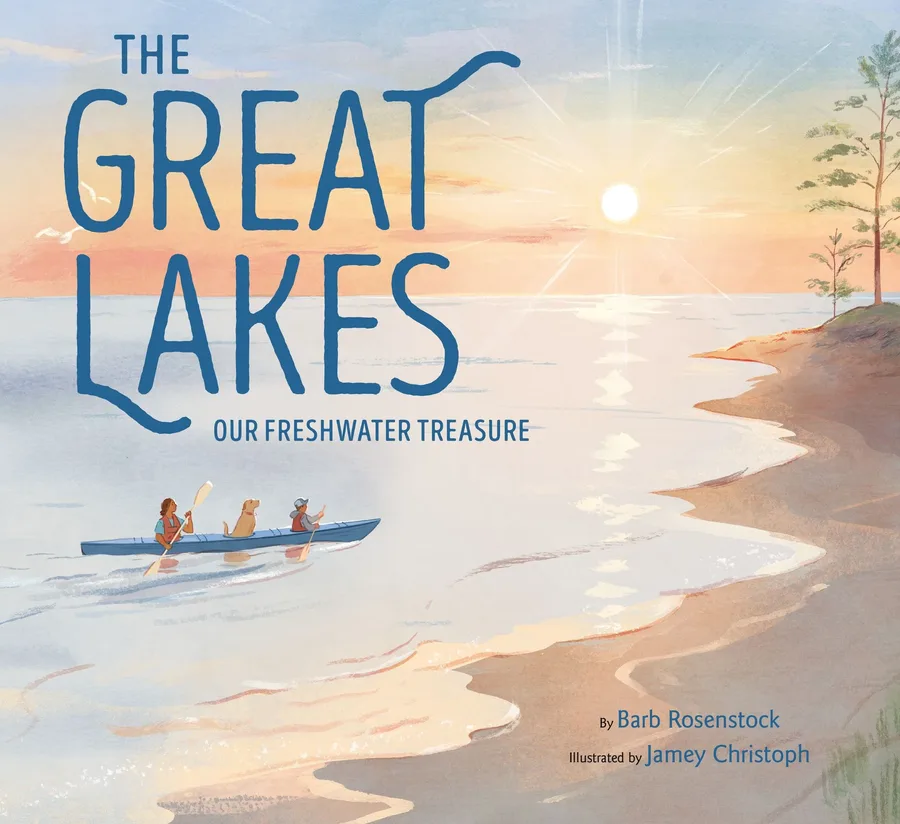 The Great Lakes: Our Freshwater TreasureBarb RosenstockBeloved in Wisconsin and the upper Midwest, and critical to the nation, the Great Lakes are only 3,000 years old in their current, widely recognized shapes, the “youngest major geological feature on the planet.” But the conditions that led to their formation began two million years before, with falling snow and the formation of glaciers. This informational picture book begins by detailing how the Great Lakes, which contain most of the freshwater in North America, formed. It then follows a drop of water as it moves from Lake Superior to Huron, to Michigan, to Erie, then over Niagara Falls, into Lake Ontario, down the St. Lawrence River and finally into the Atlantic Ocean. A final section looks at how humans have used the Great Lakes—first Native peoples, and then European settlers, who contributed vast amounts of pollution, before Indigenous activists led efforts to clean up 14 Science, Technology, and the Natural World CCBC Choices 2025 the Lakes. A narrative deftly weaving science, history, and environmental activism is paired with illustrations depicting the lakes’ geologic and human history as well as their beauty.Science, Technology, and the Natural WorldView book details
 The Iguanodon’s Horn: How Artists & Scientists Put a Dinosaur Back Together Again & Again... and AgainSean Rubin“The iguanodon died a long time ago. A really long time ago. Bit of a bummer way to start a story, but hang on.” From the 1822 discovery of a fossilized tooth to the 1878 discovery of full skeletons, to the breakthrough realization in the 1960s that dinosaurs were related to birds, this fascinating and often funny account documents how scientists, artists, and others have used evidence and imagination to make conjectures about and revise their conception and understanding of the creatures known as iguanodons. What did they look like? How did they behave? Early evidence was scant, and concepts were wildly off from what we know today. New discoveries led to new theories that sometimes negated and sometimes expanded what was previously understood. Today, we still have no way of knowing what an iguanodon looked like from the outside, but the work of scientists and artists continues to contribute to our understanding of these creatures, as well as our imaginations. A masterful integration of narrative text and images, this entertaining, informative book is also a terrific primer on scientific investigation. It concludes with the author/artist’s detailed notes about source material and inspiration.Science, Technology, and the Natural WorldView book details
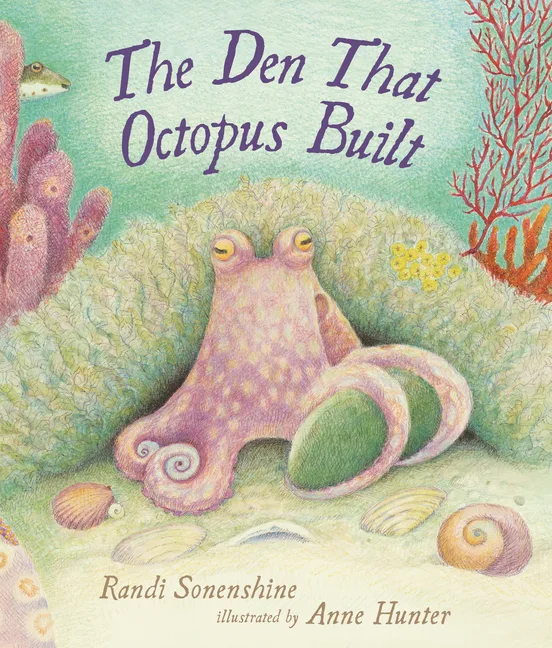 The Den That Octopus BuiltRandi Sonenshine, illustrated by Anne Hunter“This is the ledge of sandstone and lime, / layered with shells cemented by time, / that shelters the den that Octopus built.” Marvelous word choice anchors this captivating account of an octopus in its habitat. Octopus gathers food, uses camouflage (“These are the shells she wears like a sheath, / keeping her safe from Tiger Shark’s Teeth”), and evades a predatory seal with a squirt of black ink. Clever, playful, and informative, the full-circle story concludes with one of Octopus’s hatchlings searching for a place to build a home of her own. Additional information about these “Cephalopod Superstars” is provided along with a glossary and author’s note. The handsome undersea illustrations are a winning accompaniment, blending realism with a hint of whimsy.Science, Technology, and the Natural WorldView book details
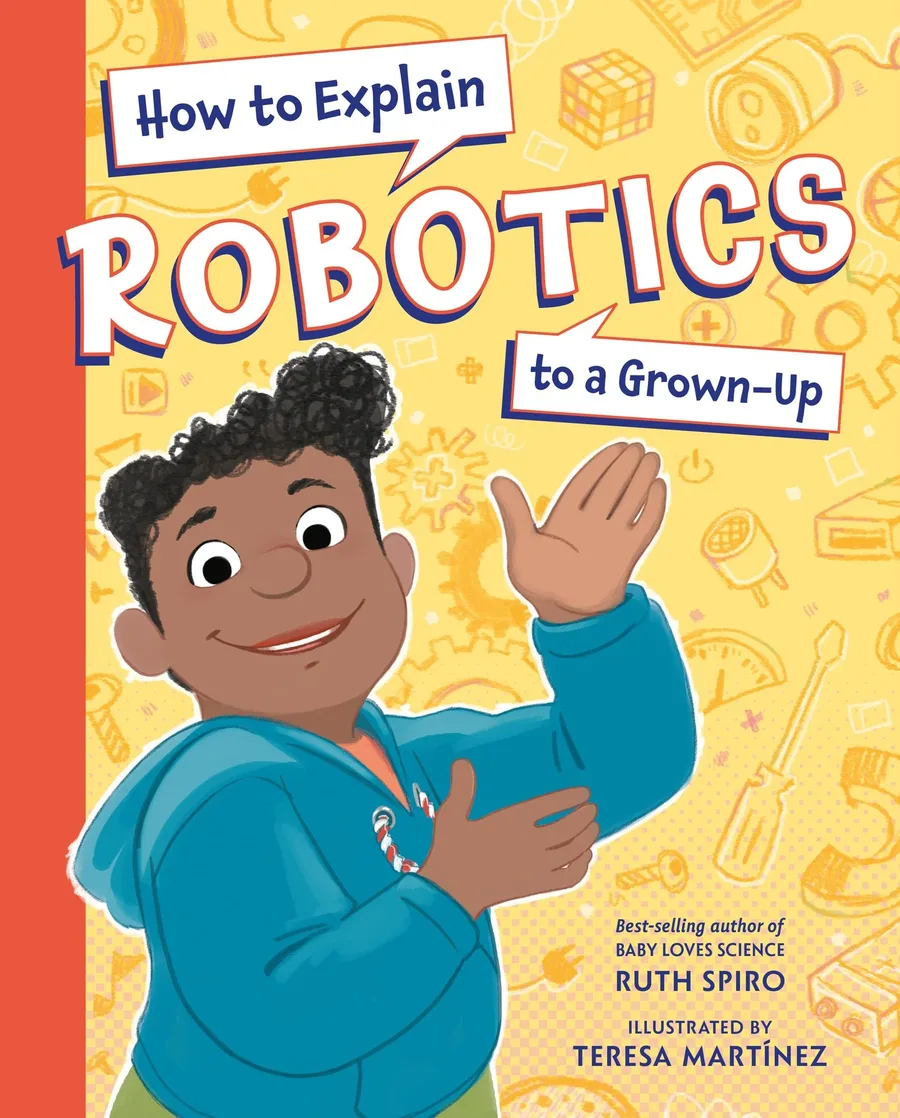 How to Explain Robotics to a Grown-UpRuth SpiroThis entertaining primer features a young Black robotics enthusiast explaining robotics to their mom (who uses a wheelchair), showing readers how they, too, can enlighten the grown-ups in their lives about robotics. The informative narrative and speech-bubble dialogue incorporated into the cartoon-like illustrations provide a lively and accessible overview with dashes of humor throughout. Examples of various types of robots, from those that do exciting things (like exploring space) and boring things (like packing boxes or vacuuming the floor) precede an extended explanation of robots’ ability to sense (take in information), compute (analyze the information and decide what to do), and act (take physical action)—three things essential to making a robot a robot. A glossary and brief information on sensory technology used in robots are included at volume’s end.Science, Technology, and the Natural WorldView book details
Seasons and Celebrations
7 selections
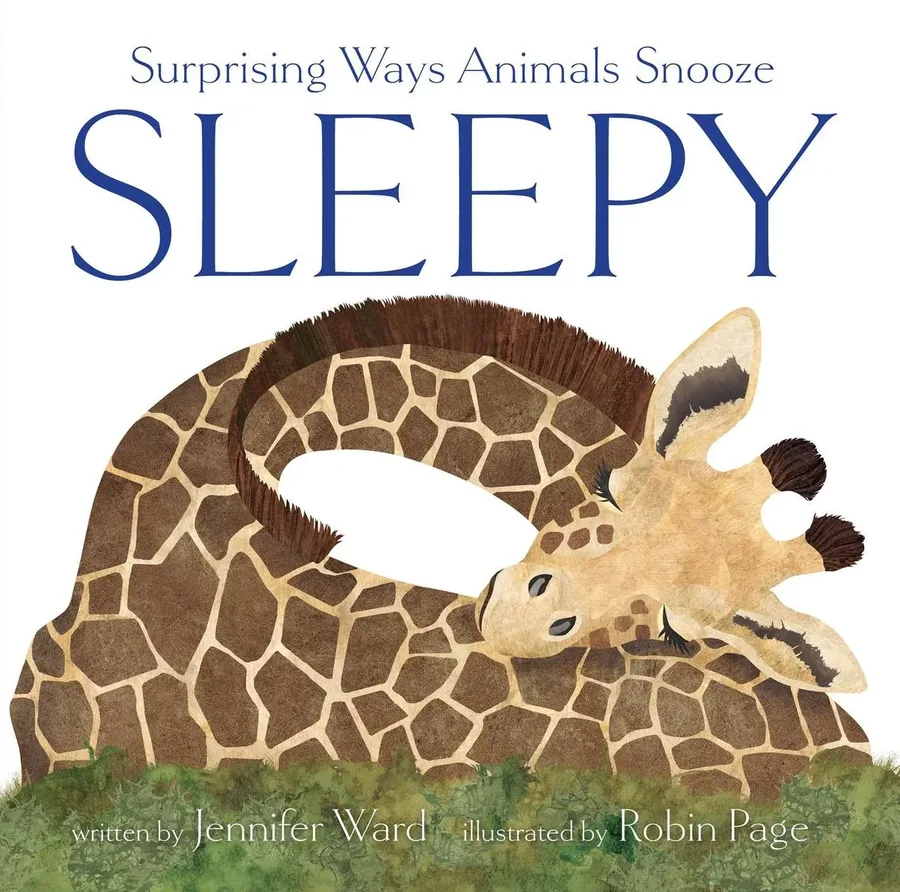 Sleepy: Surprising Ways Animals SnoozeJennifer WardAll animals sleep, but they don’t all do it in the same way. “If you’re a... koala, / you are such a sleepyhead / in your eucalyptus bed. / You’ll snack and chew an hour or two, / then back to sleep when you are through.” The sleep habits of a koala and 16 other creatures are briefly detailed in a delightful second-person narrative followed by a brief paragraph of additional information (set off in a smaller font) about their sleep habits. Each creature is pictured in color illustrations that manage to bridge realism and coziness. A book sure to elicit a yawn or two ends with a human child tucked into bed: “at sunrise you are on the go! / But once it’s dark it’s time to slow...” Additional information about the various types of animal sleep shown and how much each creature sleeps (including humans at various ages) is provided at volume’s end.Seasons and CelebrationsView book details
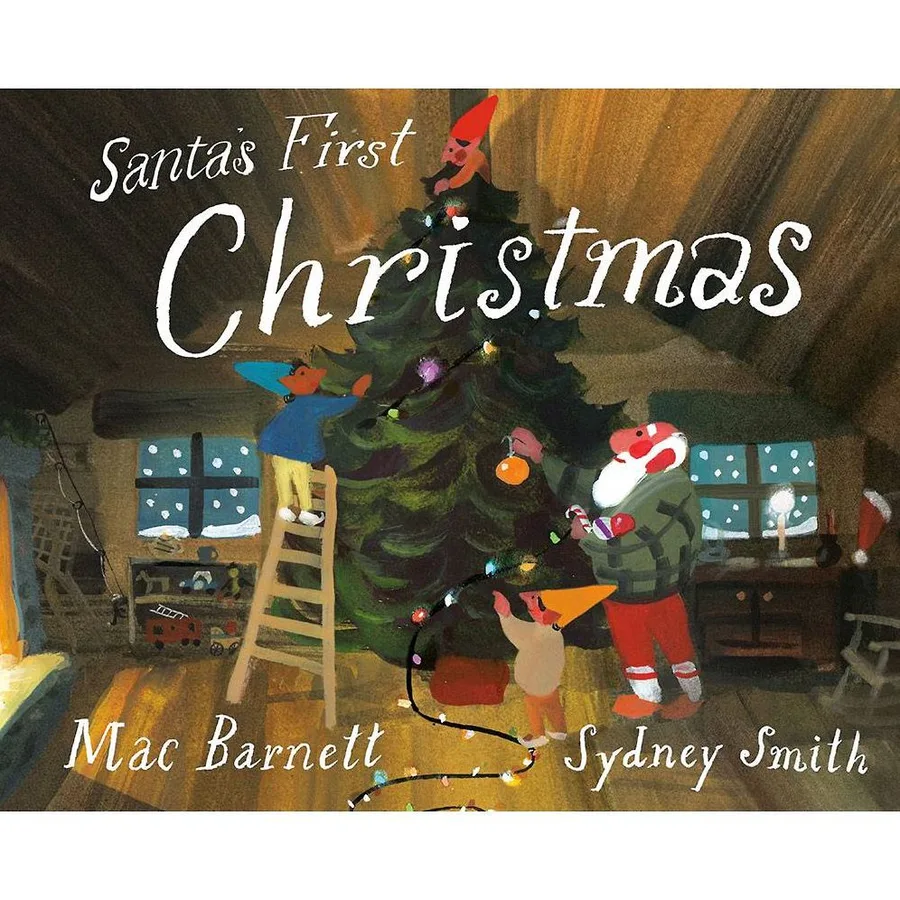 Santa’s First ChristmasMac Barnett“In the old days, Santa didn’t have Christmas.” After a year of making toys and delivering them on Christmas Eve, Santa would awaken on Christmas morning and start in on the next year’s gifts. It wasn’t until a passing polar bear questioned Santa’s relentless schedule that the embarrassed elves decided it was past time for a change. This year, Santa’s Christmas day begins with breakfast in bed followed by picking out and decorating a tree, hanging stockings, and cookie baking. Initially surprised by the new routine, a genial Santa is soon fully engaged and must be sent to another room when caught putting his fingers in the cookie icing. When a bearded visitor wearing a red suit (the polar bear who started it all) delivers a sack of gifts, “Santa could tell who it was, but he didn’t say.” A sumptuous dinner and the North Pole village glowing with holiday lights round out the day of appreciation and celebration. Warm watercolor and gouache illustrations convey a homey atmosphere brimming with charming details and glowing with first sunlight and then candle flames as the day progresses into night and a new tradition is firmly ensconced.Seasons and CelebrationsView book details
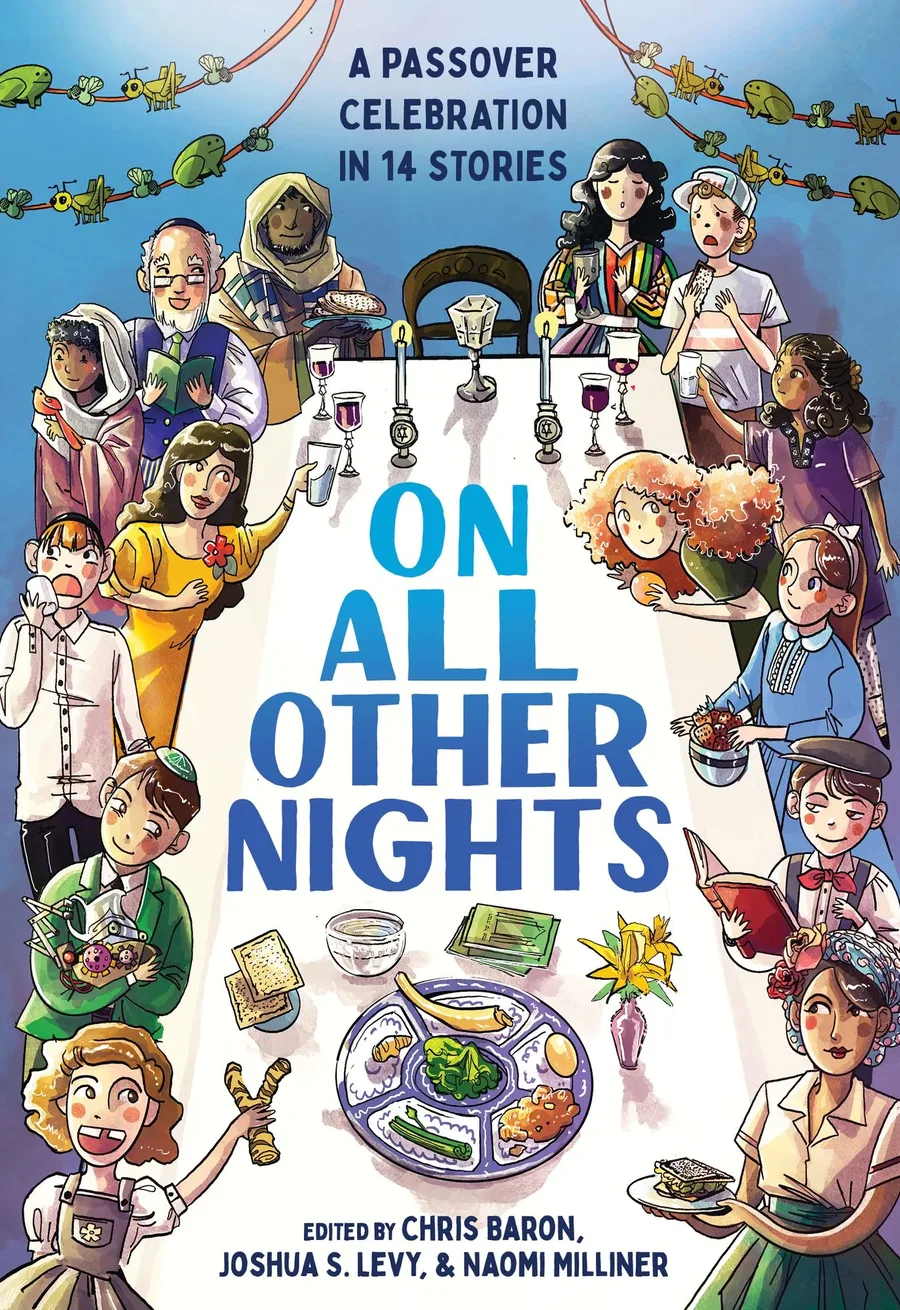 On All Other Nights: A Passover Celebration in 14 StoriesChris Baron, Joshua S. Levy, Naomi MillinerA diverse collection of stories celebrates the traditions, foods, and religious practices that accompany the Jewish holiday of Passover. Most of the 14 stories in this collection take place during the Passover seder, with each story corresponding to one of the steps in the Haggadah, the book containing the Exodus story, prayers, and songs of Passover. While most of the stories’ protagonists seem to be white Ashkenazi, Ruth Behar remembers the differences between her Ashkenazi and Cuban grandparents’ seders, and Veera Hiranandani writes of a biracial Indian American girl raised by one Hindu and one Jewish parent. A nonbinary protagonist hopes to come out during their family’s seder, while a neurodivergent child just can’t stomach her grandmother’s gefilte fish. Other protagonists are dealing with grief, guilt, and growing up. The stories vary in genre and format, but themes of family, memory, tradition, and identity abound. Each story is preceded by a short introduction to the seder step and four reflection questions; the volume concludes with several recipes. The steps may be the same for all, but each family’s seder is unique.Seasons and CelebrationsView book details
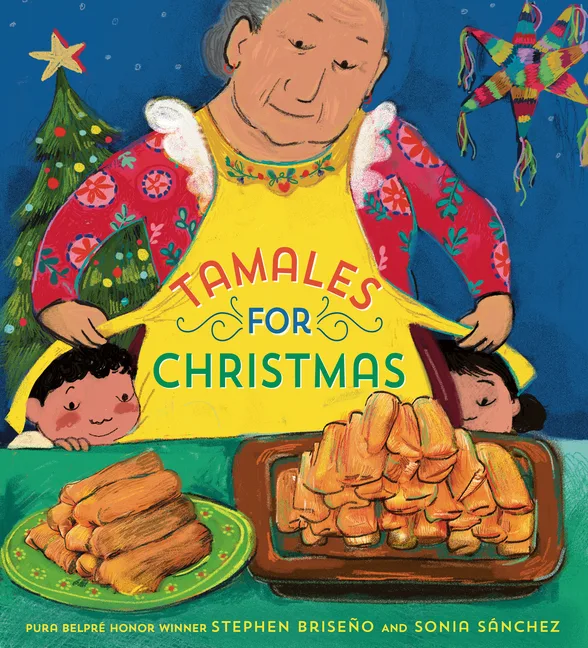 Tamales for ChristmasStephen Briseño, illustrated by Sonia SánchezGrandma begins preparing for the Christmas holiday long before the month of December. She earns the money needed to put presents under the tree for her children and grandchildren by selling tamales made in her kitchen, “the heartbeat of our familia.” The escalating tamale count is tracked through the fall, from an initial 15 dozen tamales to 150 dozen by Halloween to 575 dozen by early December. When she reaches 850 dozen, Grandma’s earned enough to start shopping, but she’s not done yet. As the household holiday preparations progress, Grandma works relentlessly, until she’s made 1,000 dozen tamales. Grandma’s gift is much more than the boxes under the tree in this celebration of work undertaken with love, and a large, multi-generational Latine family that appreciates and supports one another. An affectionate tone permeates the text and the warm-hued illustrations.Seasons and CelebrationsView book details
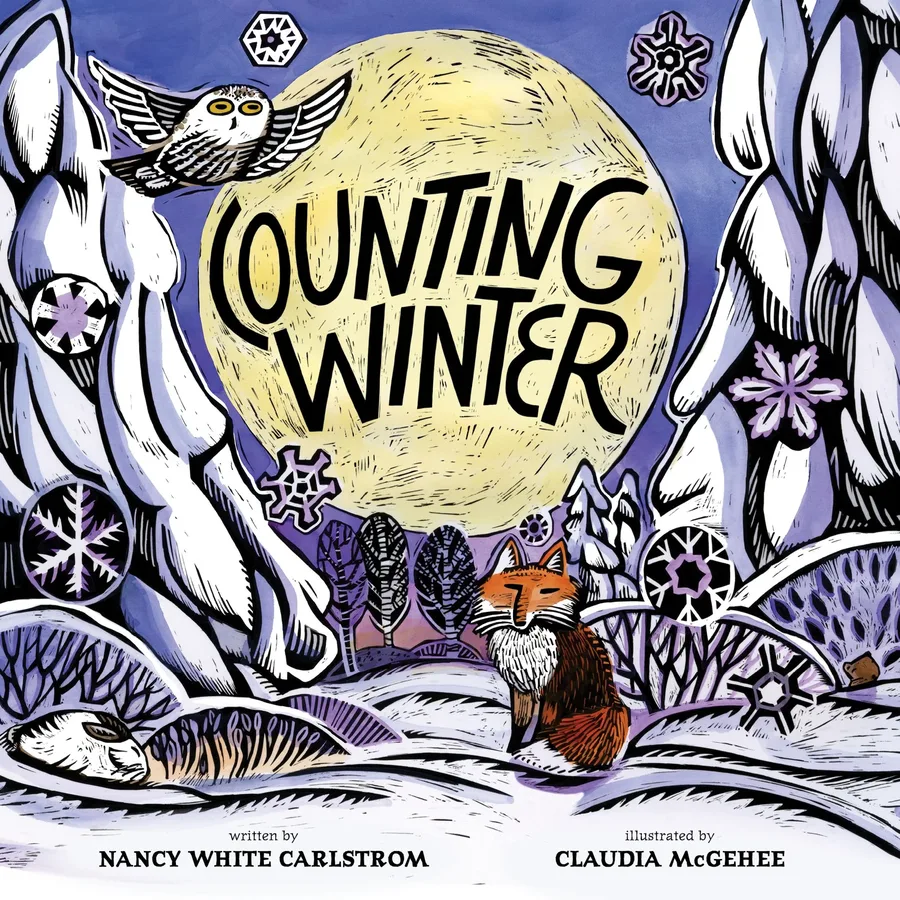 Counting WinterNancy White Carlstrom“One red fox / walks across the white snow / quietly / stalking winter.” A narrative playfully describing the ways a host of animals relate to a winter landscape is set against gorgeous scratchboard and watercolor illustrations in this seasonal counting book. Two ravens, three snowshoe hares, four red squirrels, five golden eagles, six voles, seven musk oxen, eight sled dogs, nine owls, ten woodpeckers, and eleven chickadees in turn inhabit the lovely winter landscape scenes revealed with each turn of the page, their presence described in a brief stanza rich with descriptive and action words. The final counting spread features twelve children “happily /meeting spring.”Seasons and CelebrationsView book details
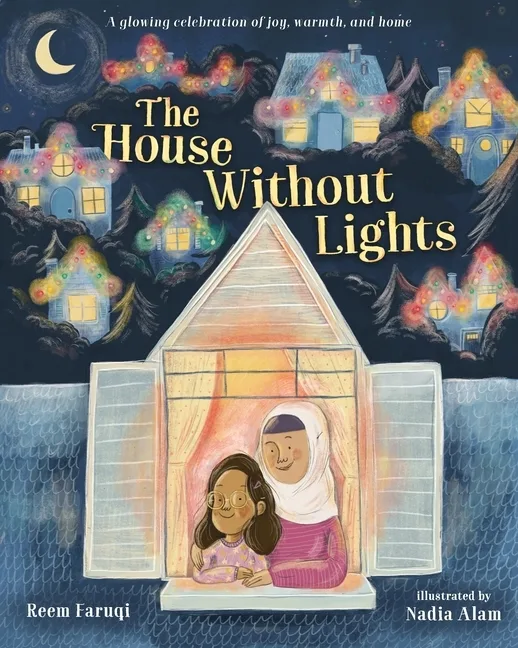 The House without LightsReem Faruqi, illustrated by Nadia Alam“In a windy, wintry neighborhood stood one house without lights.” House has watched its neighbors shine, from Diwali lamps in autumn to menorah candles at Hanukkah. Now many glow with Christmas lights while House remains unadorned, even as a new family moves in. On Christmas morning, there is lots of activity inside House as aunts, uncles, and cousins arrive, but no special lights. Instead, House listens as Amma and Abba say goodbye to young Huda. “We’re working today so our friends can celebrate with their families,” they explain. House enjoys the sounds and sights of Huda and her cousins playing all day. And that night, when Amma and Abba return, House listens as they promise her that in a few months, when Eid comes, they’ll celebrate together. “And we’ll put up all our lights.” House feels proud. “Even though I don’t have lights... I’m full of love and hope.” Detailed illustrations glowing with warmth form the sparkling backdrop to this openhearted, purposeful tale about a Muslim family.Seasons and CelebrationsView book details
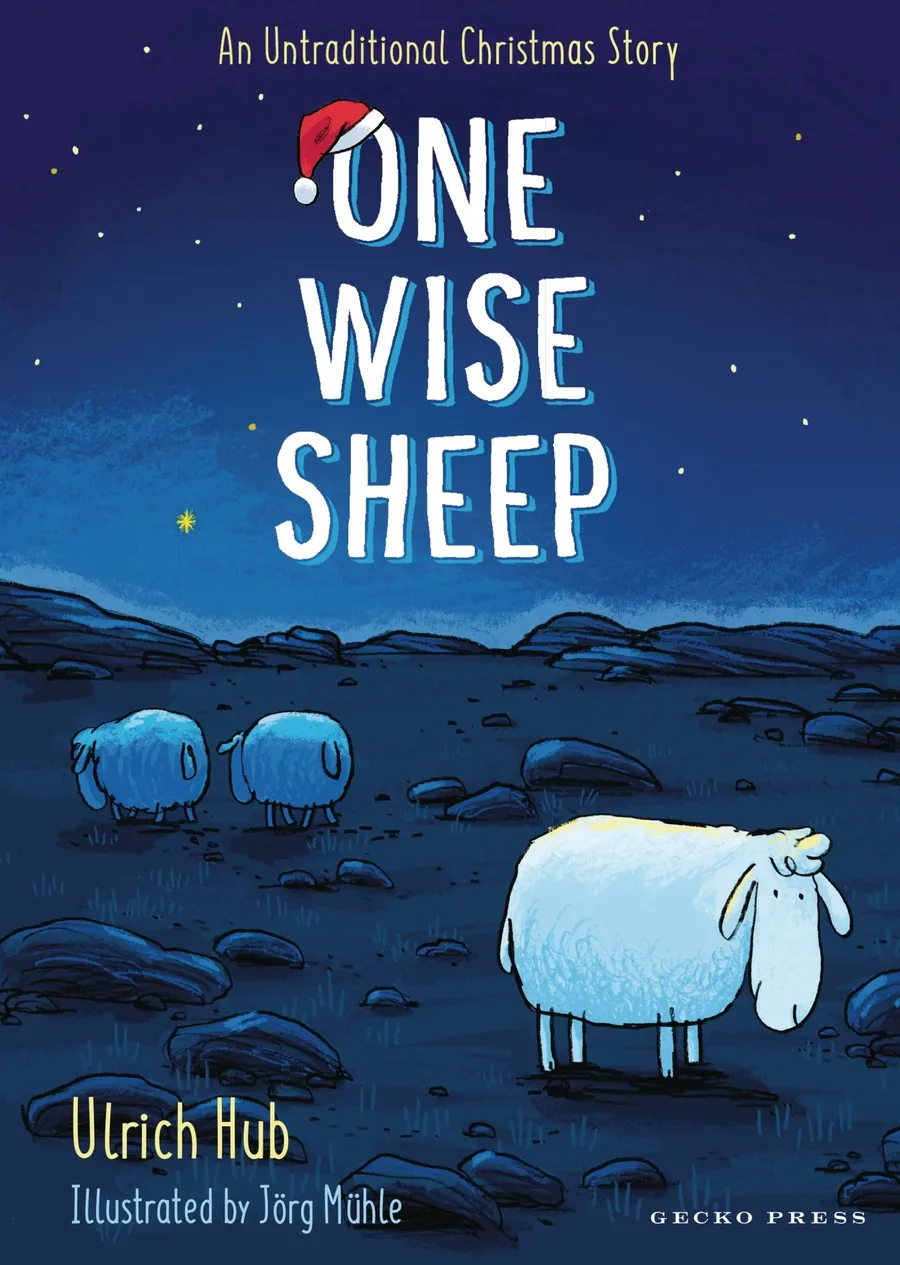 One Wise SheepUlrich HubWhen an extraordinary baby rumored to be the savior of the world is born one winter night, a nearby flock of sheep (each one identified by a single unique—and ridiculous— characteristic) seems to be the last to hear the good tidings. A goat informs them: Their shepherds have gone to see the baby with “long eyelashes” and “gorgeous curly hair” who “doesn’t cry at all” (a girl, obviously, the sheep think). Not wanting to miss out, the sheep set out on a “thrilling night hike,” a meandering journey during which they must repeatedly 17 Seasons and Celebrations CCBC Choices 2025 double back for stragglers. Along the way, other animals inform them that the baby was born in the scrapyard (why didn’t her parents make a reservation at a hotel? they wonder) and that gifts are expected (the sheep will have to come up with something, and quickly). By the time they arrive, though, the crowds have left, and the baby boy (“Nobody makes that kind of fuss when a girl is born,” the camels say) is nowhere to be found. The otherwise disappointing holiday is saved, though, when the sheep return home to find the shepherds have gifts for the entire flock—all seven of them. Paralleling the Nativity story, this absurdly silly yet undeniably fresh tale would make a riotous family read-aloud.Seasons and CelebrationsView book details
Historical People, Places, and Events
24 selections
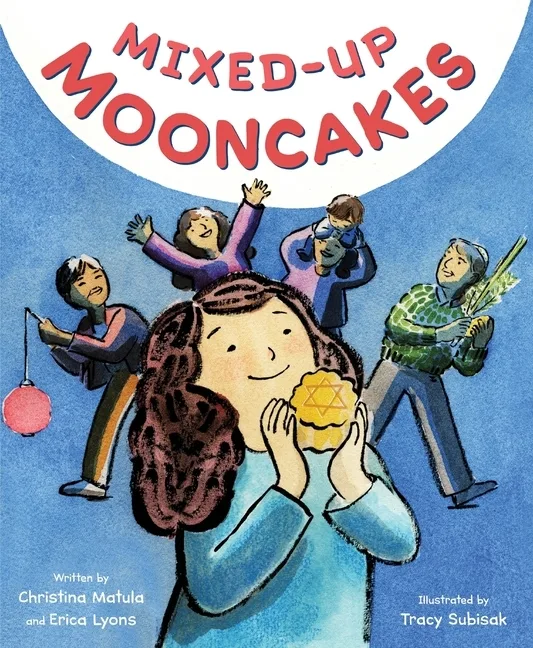 Mixed-up MooncakesChristina Matula, Erica Lyons, illustrated by Tracy SubisakBiracial Ruby (Asian/white) is excited to celebrate two harvest festivals simultaneously with her family. She works to prepare for the Chinese Mid-Autumn Festival with her grandmother, Nainai. With her grandfather, Zayde, Ruby gets ready for the Jewish holiday of Sukkot. Ruby is full of gratitude and quick to recognize the symbolism in the food and decorations, yet she also wants to find a meaningful way to connect the celebrations. With the help of her Chinese grandmother and Jewish grandfather, Ruby combines recipes to present a batch of “mixed-up mooncakes” for dessert under the sukkah. Digital artwork made from illustrations using Chinese brush, sumi ink, Japanese watercolors, and pastels bring warmth and intention to this bicultural family holiday story. Notes from the authors and illustrator follow the text, plus additional information about the festivals and Ruby’s special recipe.Historical People, Places, and EventsView book details
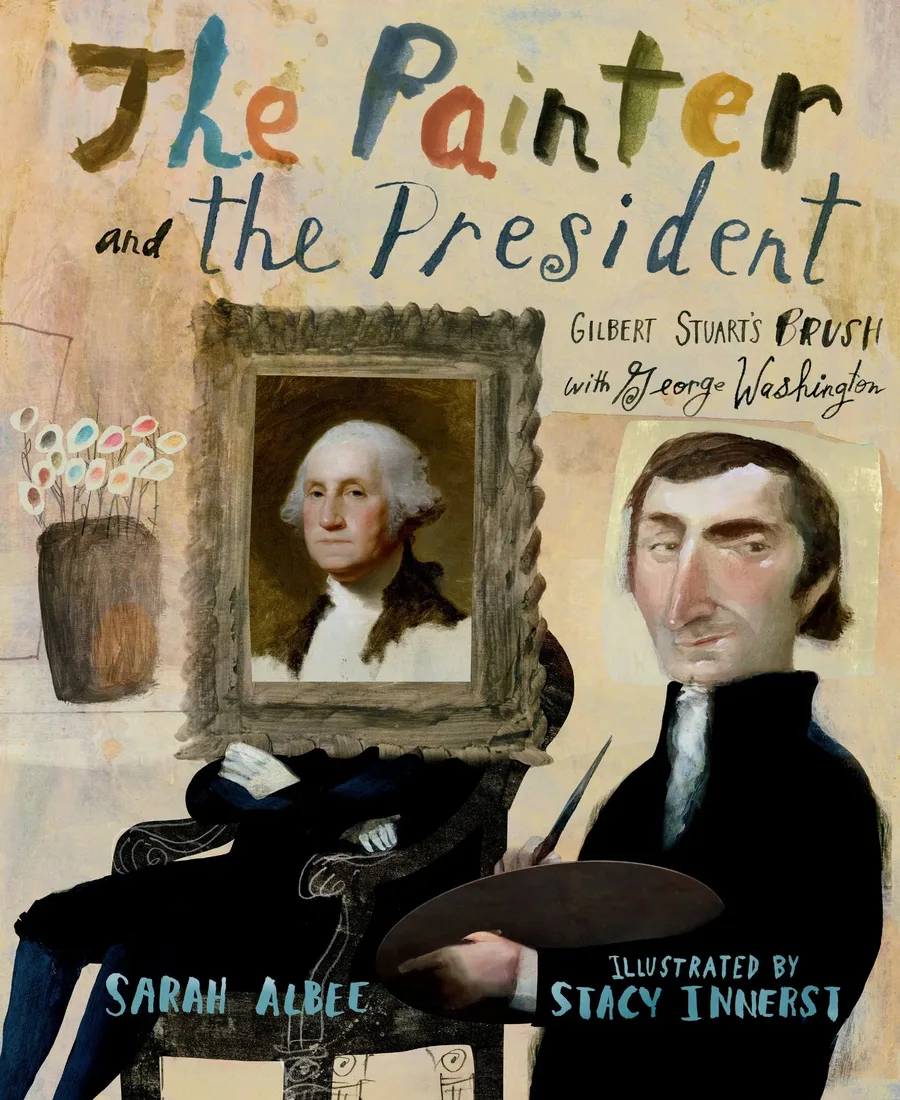 The Painter and the President: Gilbert Stuart’s Brush with George WashingtonSarah Albee, illustrated by Stacy InnerstConjure a mental image of George Washington and it will likely resemble his serious, unsmiling profile picture on the one-dollar bill. How we picture the first president is the legacy of 18th-century portrait painter Gilbert Stuart, whose experience painting the now iconic portrait was a challenge. George Washington’s dislike of having his portrait painted, and the dental pain he was experiencing, made him resistant to sit for Gilbert Stuart on the eve of his retirement from the presidency. This eventful portrait session is retold with a quick wit and fast pace for young readers. Funny details about how and why portraits were made at the time offer historical insights with modern meaning. For example, a page describing Gilbert Stuart as a celebrity painter includes an image with the text: “Here’s his selfie. (In the eighteenth century it’s known as a self-portrait.).” Acrylic, pencil, and digital illustrations evoke the time period and painting style in an unfussy, accessible, and entertaining manner. A timeline follows, as well as an explanation of George Washington’s tooth troubles, and more on the dollar bill engraving. (Ages 5-10).Historical People, Places, and EventsView book details
 The Fourteenth Amendment and the Fight for Equality. (Whose Right Is ItHana BajramovicThe Fourteenth Amendment to the U.S. Constitution codifies aspects of citizenship, equal protection under the law, and due process of law. This insightful, important examination of the Fourteenth—what it says, how and why it came to be, and the role it has played in cases 18 Historical People, Places, and Events CCBC Choices 2025 relating to racial discrimination, gender equity, immigrants’ rights, and LGBTQ rights—is an excellent and accessible look at both history and contemporary issues today. The volume is divided into three main sections titled “The Constitution,” “The Supreme Court,” and “The People.” The author, a lawyer, is comfortable writing about law and about social justice, including the importance of identity as it relates to who is and isn’t in decision- making roles at any given time throughout history. Among the illuminating elements is discussion of the Supreme Court’s impact on how interpretation of the Constitution, including the Fourteenth Amendment, changes depending on who sits on the Supreme Court. This hard-hitting truth underscores connections between the law and politics and has inspired activism to protect rights by other means. Numerous sidebars expand on various concepts and processes in a volume that is detailed but never dry.Historical People, Places, and EventsView book details
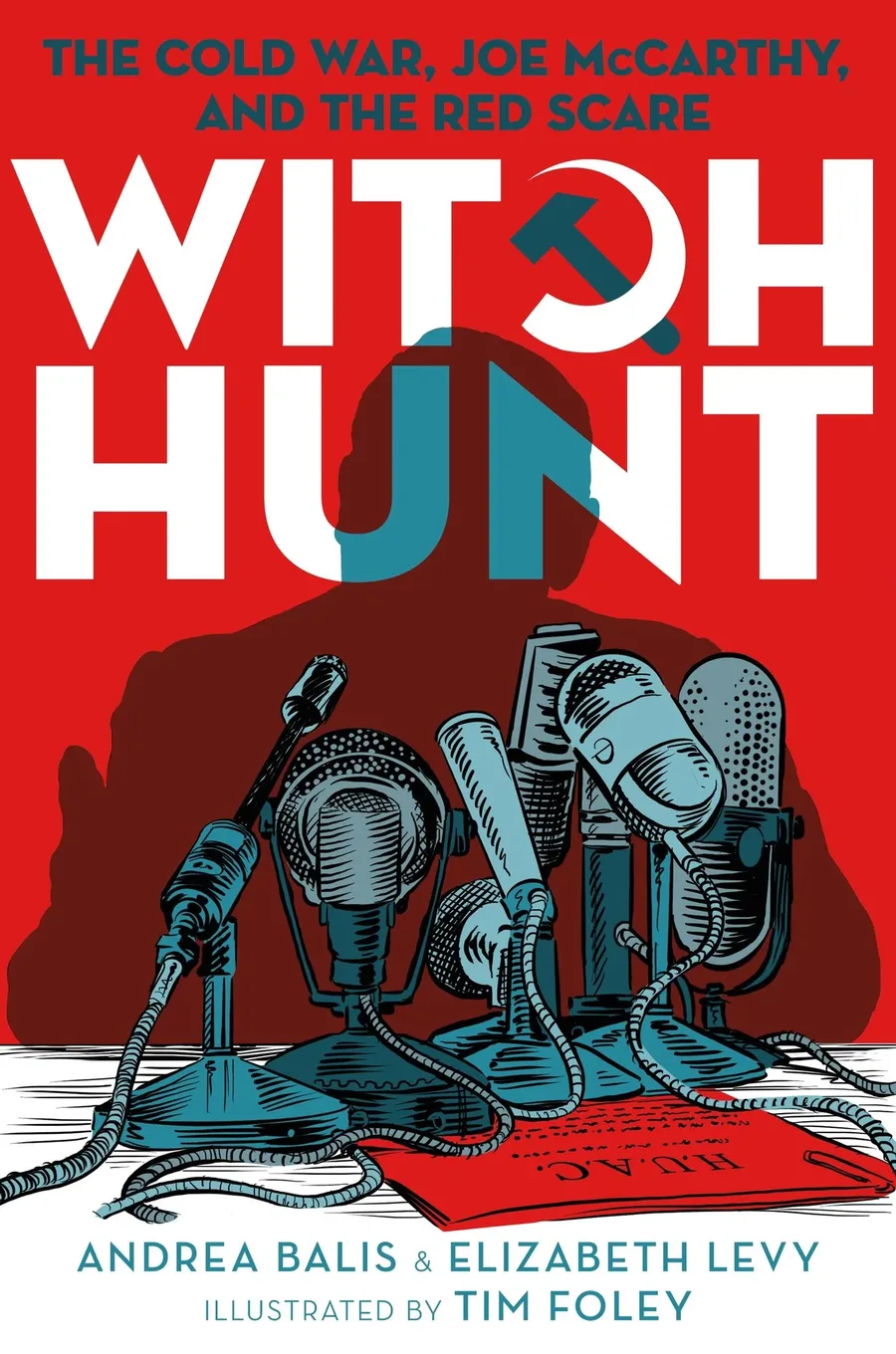 Witch Hunt: The Cold War, Joe McCarthy, and the Red ScareAndrea Balis, Elizabeth LevyThis compelling overview of McCarthyism and the Red Scare opens with an Indiana newspaper article from 1953 about banning the story of Robin Hood from school textbooks because, “Robin Hood robbed from the rich and gave it to the poor. That’s the Communist line.” This is the first of many vignettes used by the authors to portray the paranoia surrounding Communism in post-World War II America, an era of political witch-hunts that draws parallels to contemporary public affairs and ideologies. Centering their historical recap on the idea that there is more than one memory of historical events, the authors utilize a “fly on the wall” technique to summarize key individuals, significant headlines, and interviews for a young adult audience. Black-and-white line illustrations add visual interest and context for this captivating look at a pivotal period in American history, and an infamous politician from Wisconsin.Historical People, Places, and EventsView book details
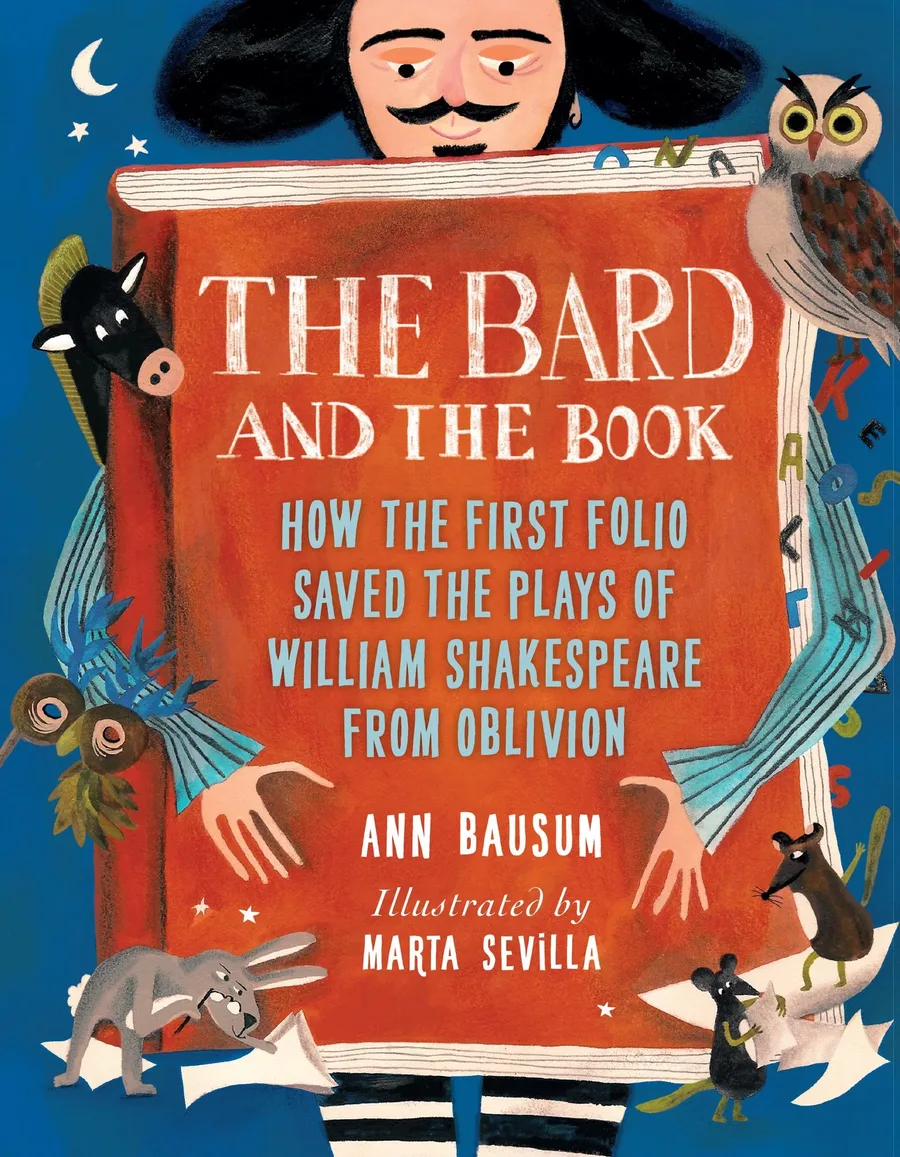 The Bard and the Book How the First Folio Saved the Plays of Williams Shakespeare from OblivionAnn Bausum“Act I: William Shakespeare Becomes Brilliant, Then Dies.” A captivating account details how the works of William Shakespeare were saved from obscurity thanks to the First Folio, printed seven years after his death. As this history makes clear, the creation of this first compilation of Shakespeare’s plays was far from an easy feat. The idea of printing a play as a literary work was relatively new. Quarto editions of some of the Bard’s plays existed (not all of them reliable), but the effort of compiling whole plays, let alone his body of work, was enormous. The spirited narrative touches briefly on the life and work of Shakespeare, as well as practices in Elizabethan theater that clarify why there weren’t handwritten editions of each play to draw upon, before describing efforts that likely went into creating the First Folio. This includes a detailed account of the printing process, which explains why there are differences among various printings (referenced in the playful title to Act III: “Romeo and Juliet Tussle with Their First Teen Reader”). The author’s fascination with her subject shines in a work that illuminates much that is known and how we know it, but also how much is still unknown about Shakespeare and the First Folio. Appealing design elements include large font, diagrams, photographs of artifacts, and whimsical spot art. A marvelous author’s note, source notes, and more follow the closing curtain.Historical People, Places, and EventsView book details
 The Wild River and the Great Dam: The Construction of Hoover Dam and the Vanishing Colorado RiverSimon BoughtonThe issue of water rights in the western part of the United States has always been fraught, and today’s heightened climate crises adds to tensions rooted in decisions made to waterways 100 years ago. The construction of the Hoover Dam and the manipulation of the Colorado River was the largest feat of architecture and engineering in the nation upon completion in 1936. In the first chapter, the author explains the untamed and unpredictable phenomena of the Colorado River and how and why the U.S. government invested in a dam to control the river’s powerful properties. Three robust chapters detail the ambitious construction of the dam. Built during the Great Depression, jobs created by the dam offered many white men desperately needed employment. The minimized roles available to men of color and to women are also discussed. The risks involved in the work and the living conditions were horrific, yet the project forged on. The final chapter discusses implications of the dam from its completion to present day, including the critical drop in water availability and the numerous states that depend on the Colorado River. Maps and photographs illustrate this well-researched piece of environmental history.Historical People, Places, and EventsView book details
 Fighting with Love: The Legacy of John LewisLesa Cline-Ransome“Before John Lewis was old enough to read the word ‘love’ in his Bible, he could feel it all around him.” The childhood and young adulthood of John Lewis unfold across this lengthy, lively picture book biography. The dynamic storytelling weaves facts about Lewis into spirited prose that propels the reader from page to page, chronicling Lewis’s experiences, influences, and growing passion for activism and justice. The narrative builds to the moment that John Lewis and other marchers for voting rights, facing “a wall of police officers,” stepped out onto the Edmund Pettis Bridge in 1965. An author’s note detailing what happened next follows. A narrative timeline and source notes are included at volume’s end. The idea of marching and marchers is a repeated motif in the marvelous artwork, which includes bold, colorful compositions spanning page spreads, along with more intimate insets.Historical People, Places, and EventsView book details
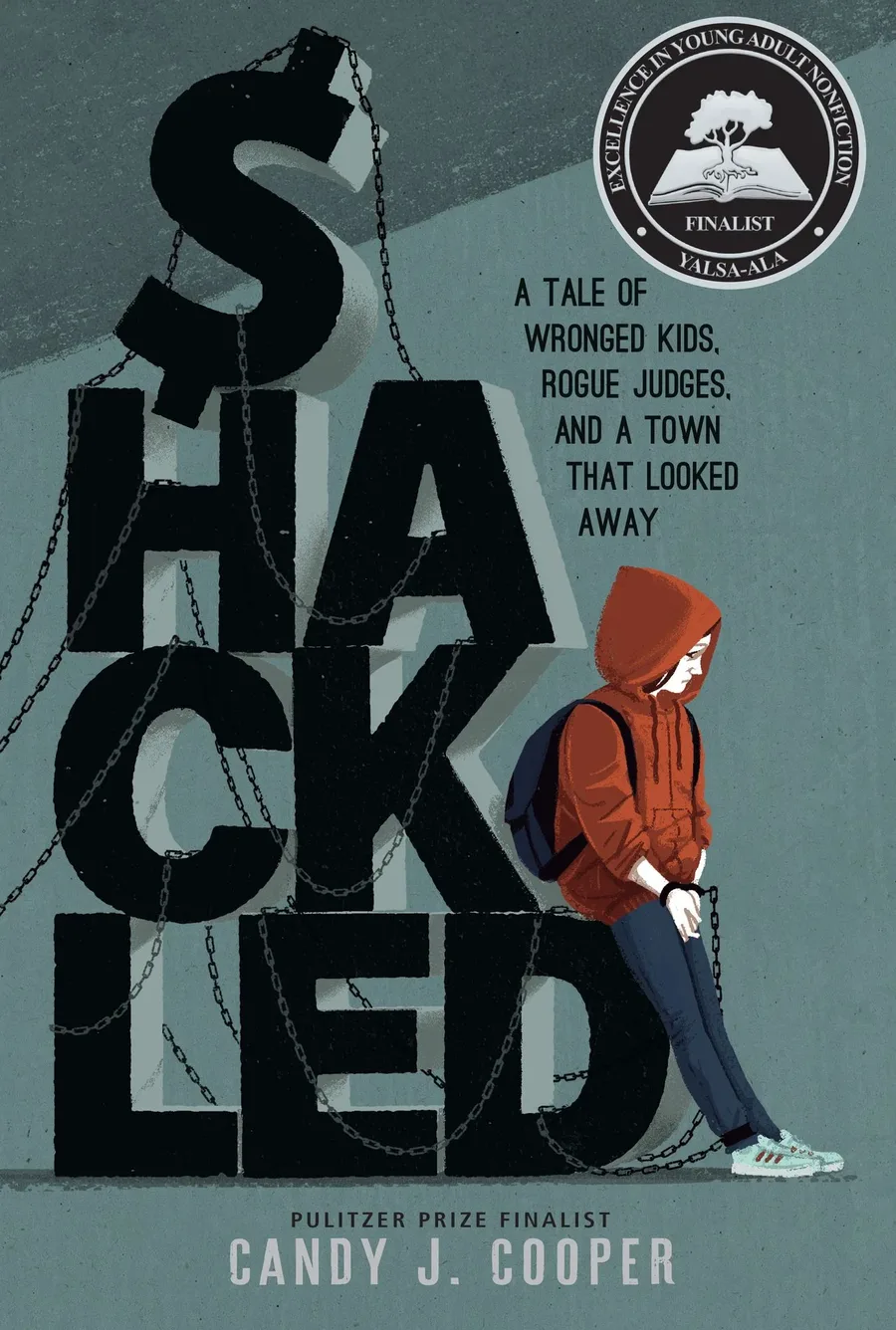 Shackled: A Tale of Wronged Kids, Rogue Judges, and a Town that Looked AwayCandy J. CooperDuring the post-Columbine early 2000s, as the United States experienced a heightened fear of violent teenagers, a group of white men in Pennsylvania—two judges (Mark Ciavarella and Michael Conahan), a real estate developer (Robert Mericle), and an attorney (Robert Powell)—established a for-profit juvenile detention center. Appallingly, the men funneled large amounts of money from the detention center into their personal bank accounts in what has since become known as the Kids for Cash scandal. To keep the prisons fully occupied for maximum personal financial benefit, Ciavarella adopted a zero-tolerance approach in the courtroom, verbally assaulting juvenile defendants as he handed down harsh sentences for minor infractions. Children expecting to receive community service were stunned to be carted away in shackles. This gripping account documents attempts by whistleblowers and others to draw attention to this unconscionable practice while also acknowledging the many court workers and other system staff who were complicit. Descriptions of the state judicial system’s inability to respond to complaints, and the judges’ power to silence detractors time and again, are horrifying; a case against the men gained traction only once the FBI got involved. Heartbreaking stories and interviews with 20 Historical People, Places, and Events CCBC Choices 2025 several of the affected young people, now in their 20s and 30s, add to the power of the narrative: Incarceration ruined many of their lives and devastated their families (who were billed for the time their children were incarcerated) both emotionally and financially.Historical People, Places, and EventsLexile Text Measure 1140LATOS Book Level 8.2View book details
 Represent: The Unfinished Fight for the VoteMichael Eric Dyson, Marc FavreauWhen the United States was formed, it was a democracy in name but not practice; the right to vote was limited in every state, primarily to white male landowners. Today, the right to vote has vastly expanded but is not universal for all citizens, while threats to voting rights remain. This informative, honest account looks at the history of voting and voting rights in the United States, focusing on the fight among various groups to gain the right to vote, including African Americans, women, immigrant communities, and American Indians. Sometimes these efforts have been aligned, and sometimes they have been at odds with one another. With each gain, there has been pushback—efforts to limit people’s ability to exercise their right to vote, from literacy tests and threats of violence to more recent laws that make voting harder. Across it all, “people power” has made the difference—courageous individuals who have spoken and acted to expand and protect the right to participate in our democracy through voting. An account that examines these important historical and contemporary events concludes with rich end matter, including “People-Power Ideas,” ideas for making our elections more democratic, suggestions for getting involved, and a voting rights timeline, as well as source notes and an index.Historical People, Places, and EventsView book details
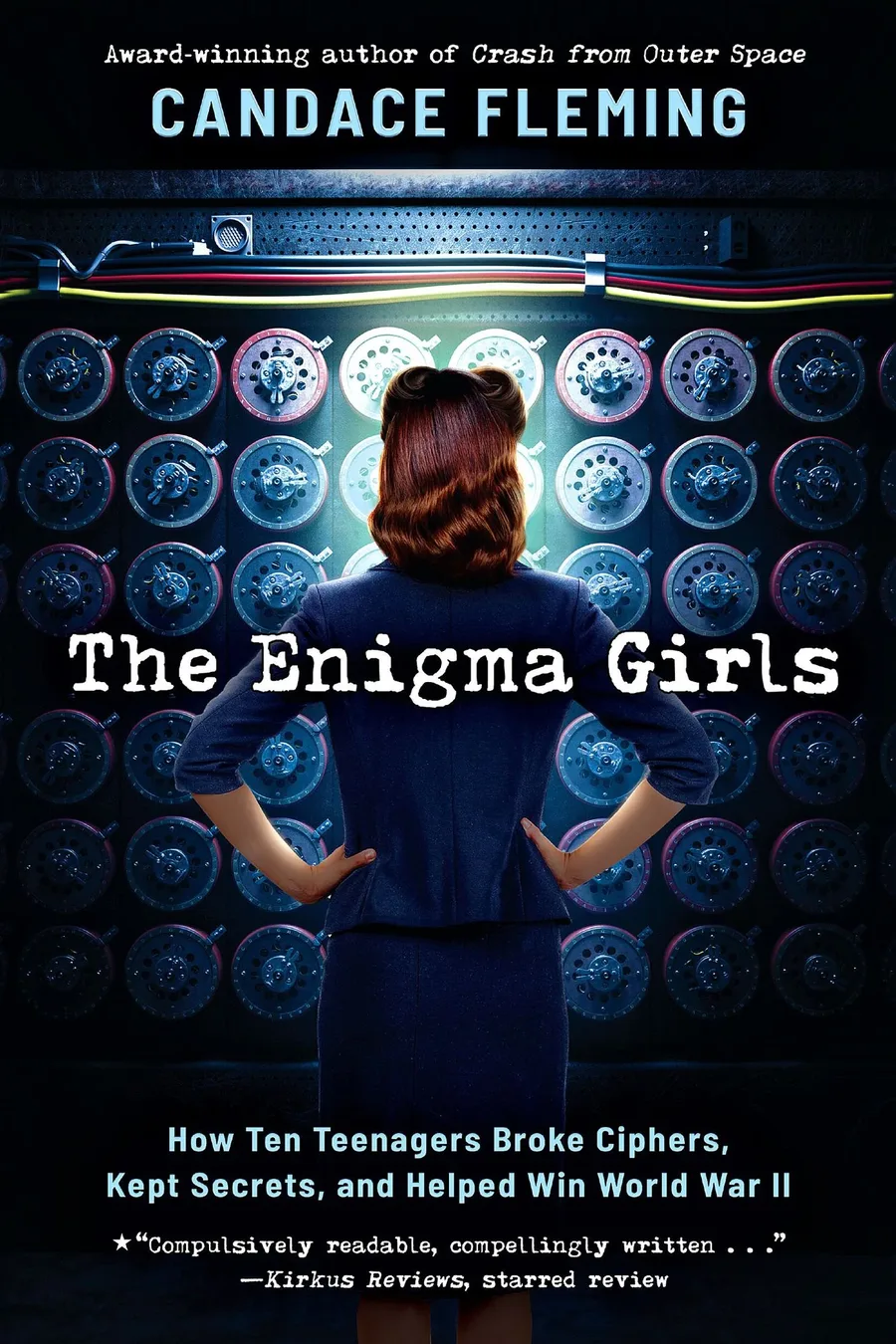 The Enigma Girls: How Ten Teenagers Broke Ciphers, Kept Secrets, and Helped Win World War IICandace FlemingImagine accepting a job knowing nothing about the work, only to arrive by train at a nondescript location where the first order of business is to sign the Official Secrets Act. In the early days of World War II, many young British women found themselves arriving at Bletchley Park in the English countryside, the desire to serve their nation guiding their decisions to accept work so secretive that they had no idea what they’d be doing when they agreed they wouldn’t tell anyone about it. Candace Fleming’s fast-paced and engaging text chronicles the contributions of ten white British teens who contributed to the war effort through cipher work and related jobs. Going beyond the stories told by Hollywood, this volume highlights the dedication and daily efforts of young women who were more than just cogs in the machinations of England’s wartime spy and surveillance system. Short chapters illuminate the experiences of a range of young women from different backgrounds doing critical work for the British government while knowing nothing about one another or the bigger picture of their efforts. Isolated and exacting working conditions caused many to wonder what they had signed up for, while also acknowledging the opportunity afforded to their gender while many young men were away, fighting. Personal anecdotes about friendships, workplace hijinks, and post-war dreams round out the teens’ stories. Short, interspersed, informational sections offer a primer on codes and ciphers, while generous black-and-white photos provide helpful geographic and technical visuals.Historical People, Places, and EventsLexile Text Measure 870LATOS Book Level 5.6View book details
 Vigdís: A Book about the World’s First Female PresidentRán Flygenring, illustrated by Rán Flygenring, Jonas MoodyA budding author, in the form of a tow-headed young child, visits their neighbor in Reykjavík for help writing a book about the world’s first female president. Their neighbor just happens to be Vigdís Finnsbogadóttir, the woman in question, who was the head of state for Iceland from 1980 to 1996. Translated from Icelandic, this distinctly Nordic picture book celebrates a child’s curiosity, feminism, and following one’s own path. Animated illustrations portray the child’s interview/conversation with Vigdís in her home. Narrative text maintains momentum on the factual events in Vigdís’ life, while dialog bubbles from Vigdís and the child, and artifacts around her house provide amusement and additional insights. In addition to her major life role as Iceland’s president, Vigdís also had an active life in the theater, taught French, and was the first single woman in Iceland to adopt a child. The story concludes with her proudest accomplishment: the planting of three birch saplings, with the help of local children, in every community she visited around the country in this fresh, child-centered biography of an influential leader.Historical People, Places, and EventsView book details
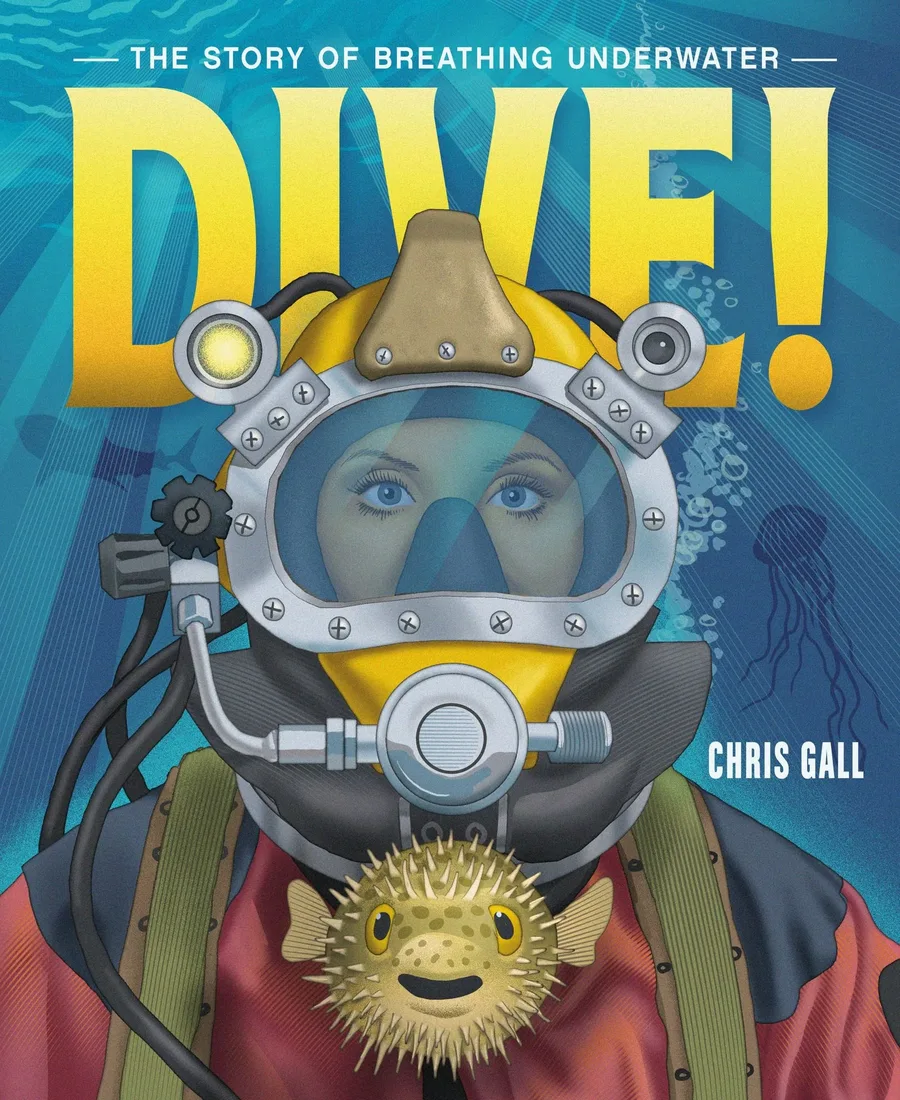 Dive! The Story of Breathing UnderwaterChris Gall, illustrated by Chris GallThe history of human effort to breathe underwater across millennia opens with a description of ancient Greek sponge divers holding heavy stones to help them sink rapidly. They also learned to breathe through hollow reeds when near the water’s surface. Aristotle described a diving bell around 400 B.C., and innovations over the next thousand years improved the air flow in and out of the bell. In the 18th and 19th centuries, compressed air allowed workers to spend more time inside, but returning to the surface often caused painful cases of the bends, or decompression sickness. Later individual diving bells of a helmetlike construction evolved into a closed-circuit system using a portable oxygen tank called a rebreather. In 1934, inventors of the bathysphere set new records for depth diving, and in the following decade Jacques Cousteau and Émile Gagnan created the aqua- lung. More recent vessels, like small submarine submersibles, able to explore surfaces and shipwrecks far below the ocean’s surface. The contemporary multiracial family introduced on the opening end papers sorting through diving gear at home in what looks like an upcoming trip to Greece, reappear in illustrations throughout the book, and then can be seen prepping photography equipment on the closing papers as they ready for a Kenyan safari.Historical People, Places, and EventsView book details
 Coming Home: A Hopi Resistance StoryMavasta Honyouti, illustrated by Mavasta Honyouti, Marilyn ParraArtist Mavasta Honyouti recalls stories told by his kwa’a (grandfather), who was forced to attend the Keams Canyon boarding school in the early 20th century. When Mavasta’s great-grandfather and other Hopi men protested their children being taken from home, they were threatened with arrest. At the school, Mavasta’s kwa’a was told pick a new, Anglo name; without any understanding or context, he chose Clyde. Clyde missed his home and family, but vowed to not lose his language and culture despite threats of punishment. His attempts to run away were unsuccessful, although he finally returned home in later years. The bilingual narrative was written in English and translated into the Hopi language. The author/artist is a woodcarver, like his father and grandfather before him. His account is paired with painted woodcarvings that evoke the southwest landscape and elements of Hopi culture, and dramatically capture the events and emotions of the boarding school trauma in static but stirring scenes. More about the history of Hopi people and boarding 22 Historical People, Places, and Events CCBC Choices 2025 schools, the translation of the narrative, and the author/artist’s work are in essays with photographs at the volume’s end.Historical People, Places, and EventsView book details
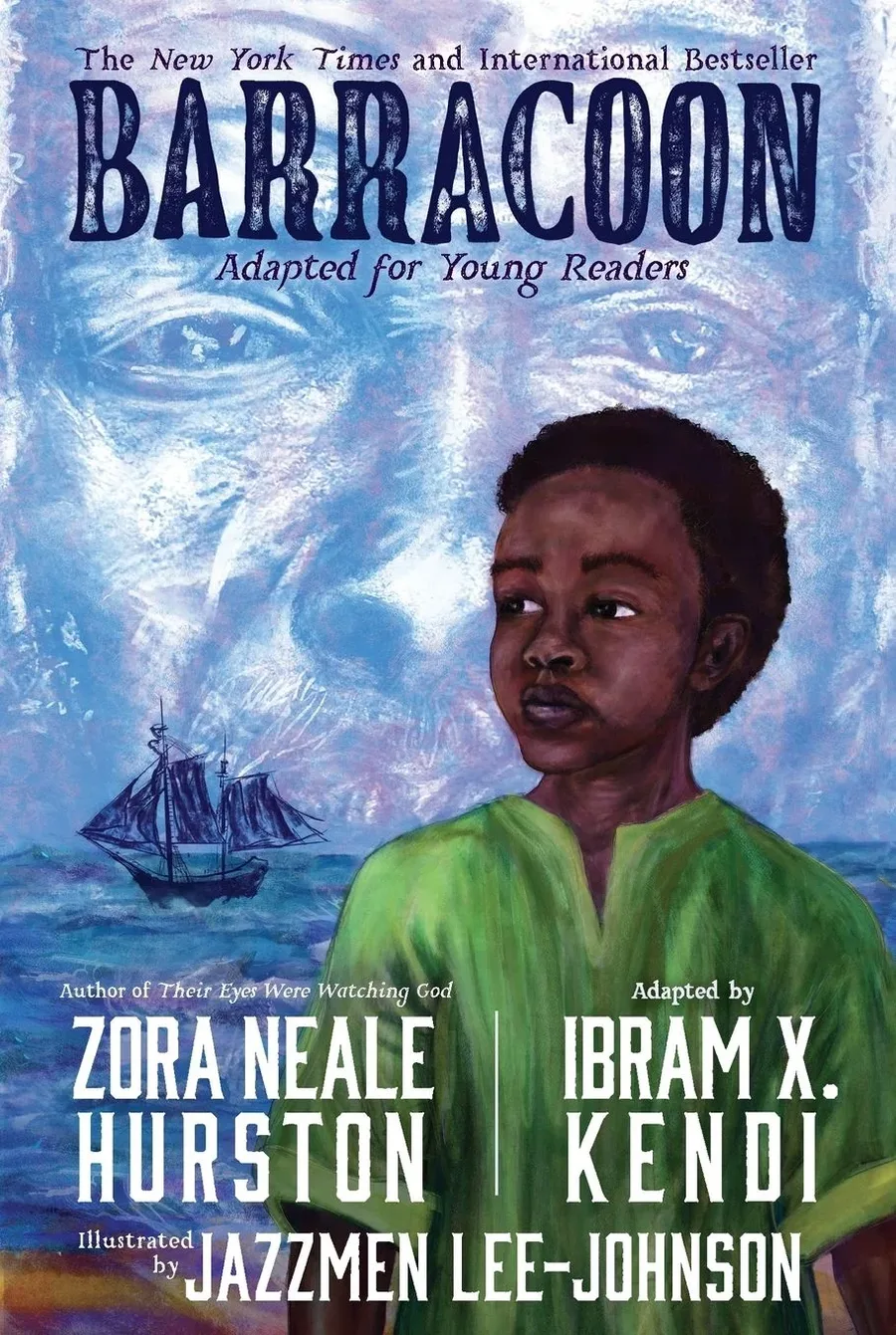 Barracoon. Adapted for young readersZora Neale Hurston, illustrated by Jazzmen Lee-JohnsonAt 86 years old, Cudjo Lewis was the last survivor of the trans-Atlantic slave trade known to be alive when he was interviewed over a series of visits by Zora Neale Hurson in 1931. He was 19 when he was captured in Africa, decades after the Atlantic slave trade was outlawed, illegally transported to the United States, and sold into slavery. The book’s introduction provides historical context about the slave trade, slavery in America, and this adaptation for young people before launching Hurston’s narrative. She describes her interactions with Lewis and conveys the stories he told. Lewis talked about his childhood, his capture, and his life in the United States during and after being enslaved. Hurston’s first-person voice is inviting and accessible. Lewis speaks what Hurston in 1931 referred to as “African American English” or “Ebonics,” a language, she explains, which enslaved people created out of their own languages and English. She notes it is not “broken” English, just as English is not “broken” Latin or German. This volume offers students of history a primary source account as well as a thoughtful perspective on the importance of building trust and respecting one’s subjects when conducting oral interviews.Historical People, Places, and EventsView book details
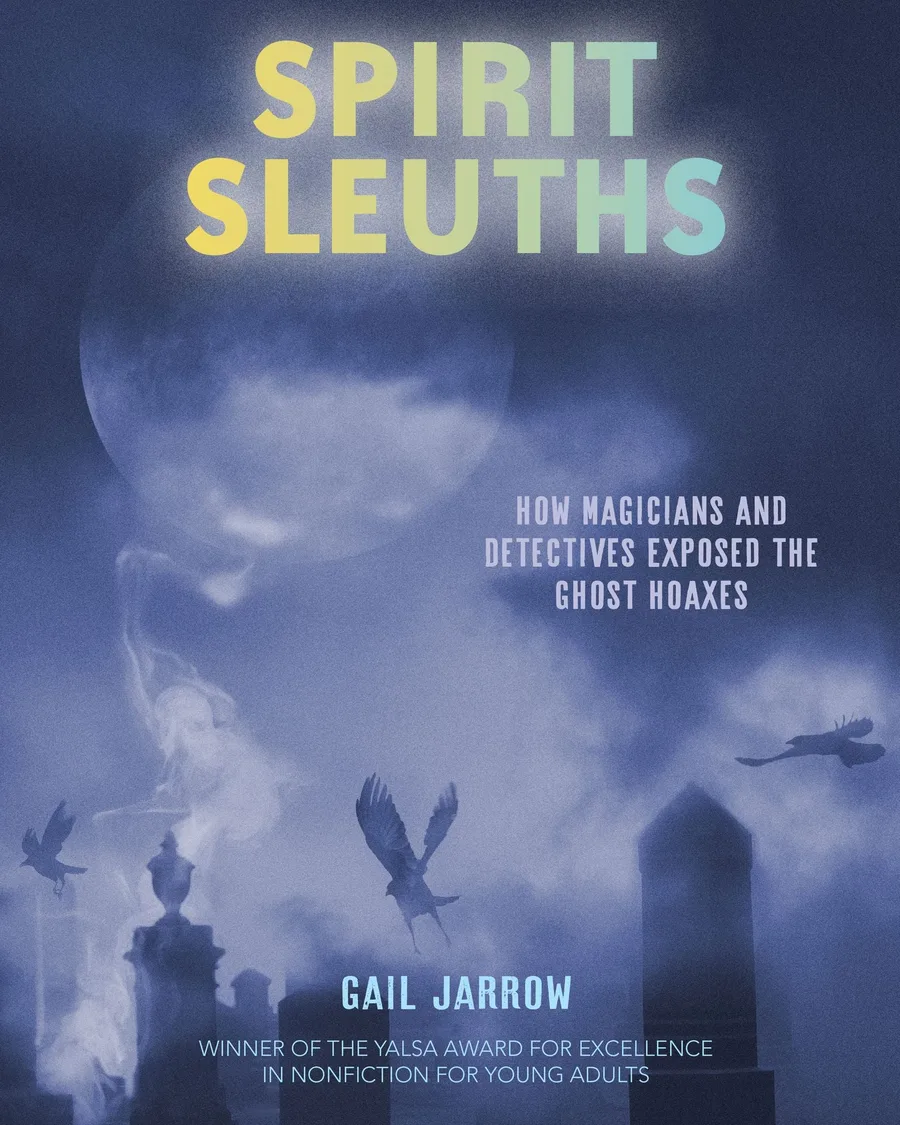 Spirit Sleuths: How Magicians and Detectives Exposed the Ghost HoaxesGail JarrowTable tipping, rapping, and glowing spirit trumpets were some of the tactics used by 19th - and early 20th-century spiritualists to convince customers that they were a conduit to the dead. This account of spiritualists provides explanations of how they created these and other phenomena before discussing the efforts of Harry Houdini and Rose Mackenberg, who were dedicated to discrediting the charlatans. Houdini and Mackenberg exposed some of the most well-known mediums of the era. A final chapter focuses on more contemporary psychic frauds. An author’s note places the historical popularity of spiritualism within the current context of misinformation and propaganda. Plentiful photographs, newspaper excerpts, and archival illustrations provide a visual accompaniment to the lively text.Historical People, Places, and EventsView book details
 Ida B. Wells Marches for the VoteDinah Johnson, illustrated by Jerry JordanBorn in Mississippi, Ida B. Wells was a baby when the Emancipation Proclamation freed enslaved people. Growing up in this period of imperfect freedom had an impact on Wells’s parents and how they raised Ida and her siblings. They modeled the importance of striving to do the right thing no matter the consequence, such as when her father voted for the first time, even though it meant that his white boss fired him. As Ida came of age, she also made brave choices and used her voice to make a difference in her work as a teacher, caretaker for her siblings, and editorial writer and journalist taking on racial and gender injustice. This picture book account focuses on Ida’s involvement in the 1913 women’s suffrage march in Washington, D.C. The march was organized by the National American Woman Suffrage Association, which was a whites-only group. Despite their exclusion, a small number of Black women had traveled to the nation’s capital to participate. The Black marchers were relegated to the back of the parade, but Ida made her way to the front to walk arm in arm with the other white suffragists from Illinois. Historical information and lyrical sentiments are tightly woven in this compelling text about a female Black activist. Oil paintings rich in color and action portray important scenes from Ida’s life and times.Historical People, Places, and EventsView book details
 Wat Takes His Shot: The Life & Legacy of Basketball Hero Wataru MisakaCheryl KimJapanese American Wataru Misaka grew up in Ogden, Utah, where he loved playing basketball. Because they were not in a coastal state, Wat’s family was not incarcerated by the government after the Japanese bombed Pearl Harbor. But there was no place for Wat in the segregated dormitories at Utah State. At the time he tried out for and made the college team, he was sleeping under the bleachers. Wat was small but fast on the court—he’d led his high school team to state—but he wasn’t fast enough to outrun the crowd’s insults. Still, he and another Japanese American player led their college team to the championship. Wat served in the army before returning to college and the basketball court, and he took every opportunity he was given when he was sent into the game. “Gambatte!... Just do my best. For my team. For my community.” Drafted by the New York Knicks in 1947, Wat become the first Japanese American player and first non-white player in professional basketball. This welcome account of a groundbreaking player concludes with a lengthy note telling more about Wat’s life, work, and accomplishments. Appealing, comic-style illustrations excel at conveying action and movement.Historical People, Places, and EventsView book details
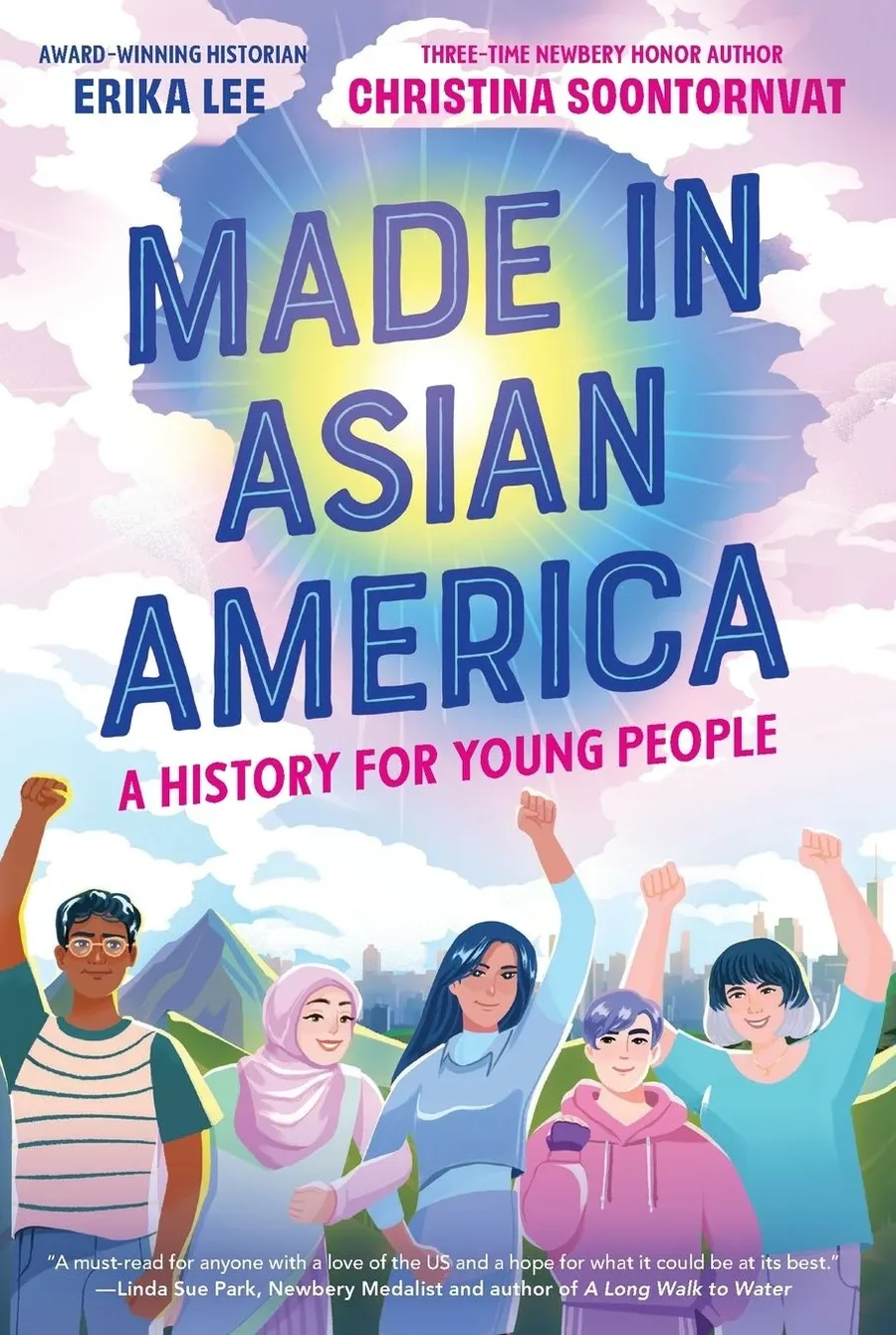 Made in Asian America: A History for Young PeopleErika Lee, Christina SoontornvatThis adaptation of Lee’s adult book, written in an informative yet conversational tone, examines the history of Asians in America. As it moves across centuries up to recent events, the narrative illuminates experiences of different Asian national and ethnic identity groups immigrating to the United States. Sidebars explore concepts and issues that are referenced in the primary narrative. An explanation of “Racism,” for example, examines modes of thinking in racist justification: “Those people are inferior to us.” “Those people are dangerous.” “There are too many of them.” “This is for their own good.” The narrative often calls back to one or more of these as it chronicles the experiences of different Asian groups in America over time. The narrative also establishes two modes of colonialism that are referenced throughout: Finders Keepers and Takers Keepers. These attitudes impacted events in the United States and around the world and influenced conditions that led to people coming here, making clear that geo-political influences impact how Asian heritage is perceived in America at any given time. This is a sweeping picture but constantly grounded in specifics of identity, individuals, and events, making for an accessible, engaging work that affirms that there are many ways of being Asian in America.Historical People, Places, and EventsView book details
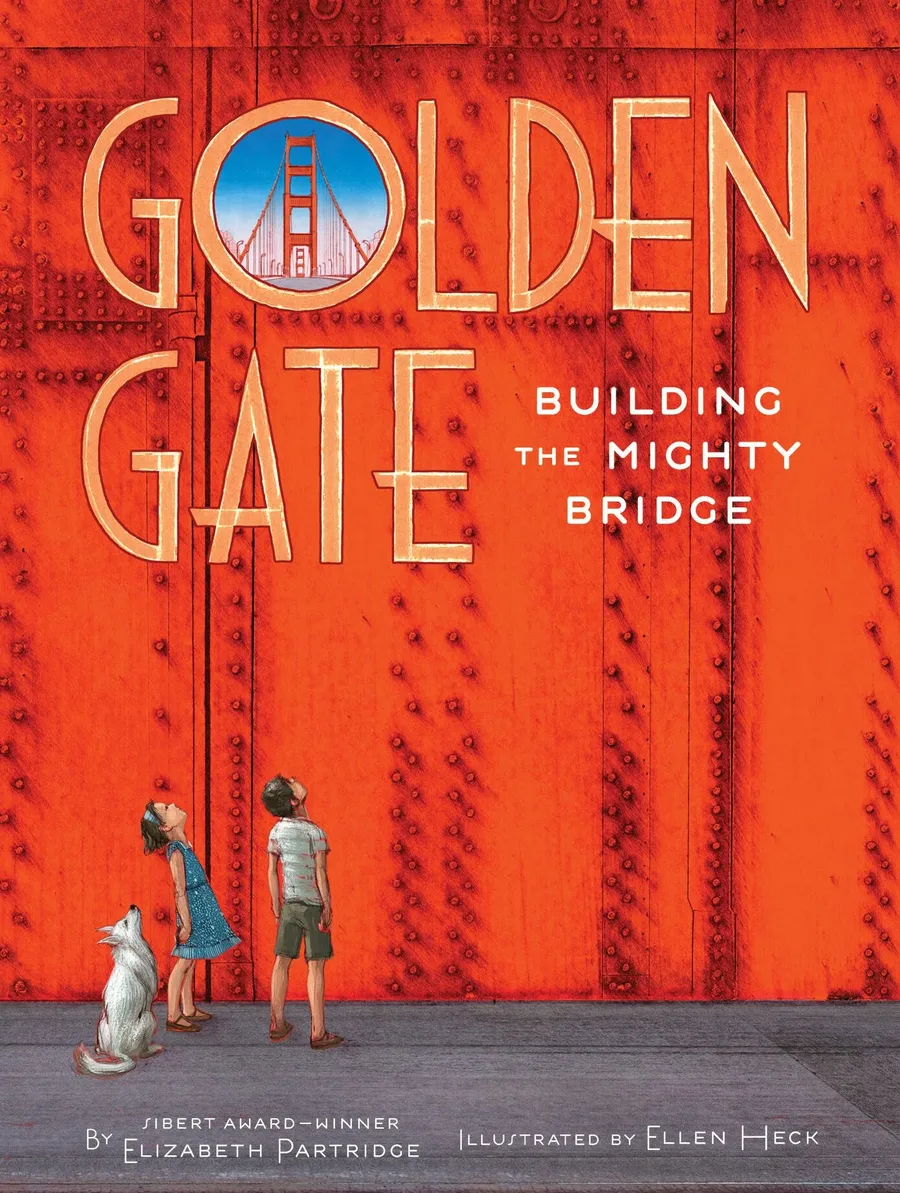 Golden Gate: Building the Mighty BridgeElizabeth PartridgeTwo children witness history as they watch the construction of the Golden Gate Bridge. Their seaside home below the rocky cliffs of the Pacific (their father tends the foghorn) is the perfect vantage point to mark the project’s progress. From the first day, when machines and dynamite blasts “carve a place for the anchorage block,” to the opening day celebration, when “towers touch the sky,” the text provides a concise and fascinating summary of the building process. The mixed-media illustrations of this towering picture book give a sense of vista and scale, while also revealing the children’s keen, ongoing interest. A more detailed image along the bottom of each spread exhibits the current stage of work being done in the context of the landscape or from a blueprint perspective. A lengthy afterward provides additional intriguing facts about the bridge’s construction, including the length of time it took (four years).Historical People, Places, and EventsView book details
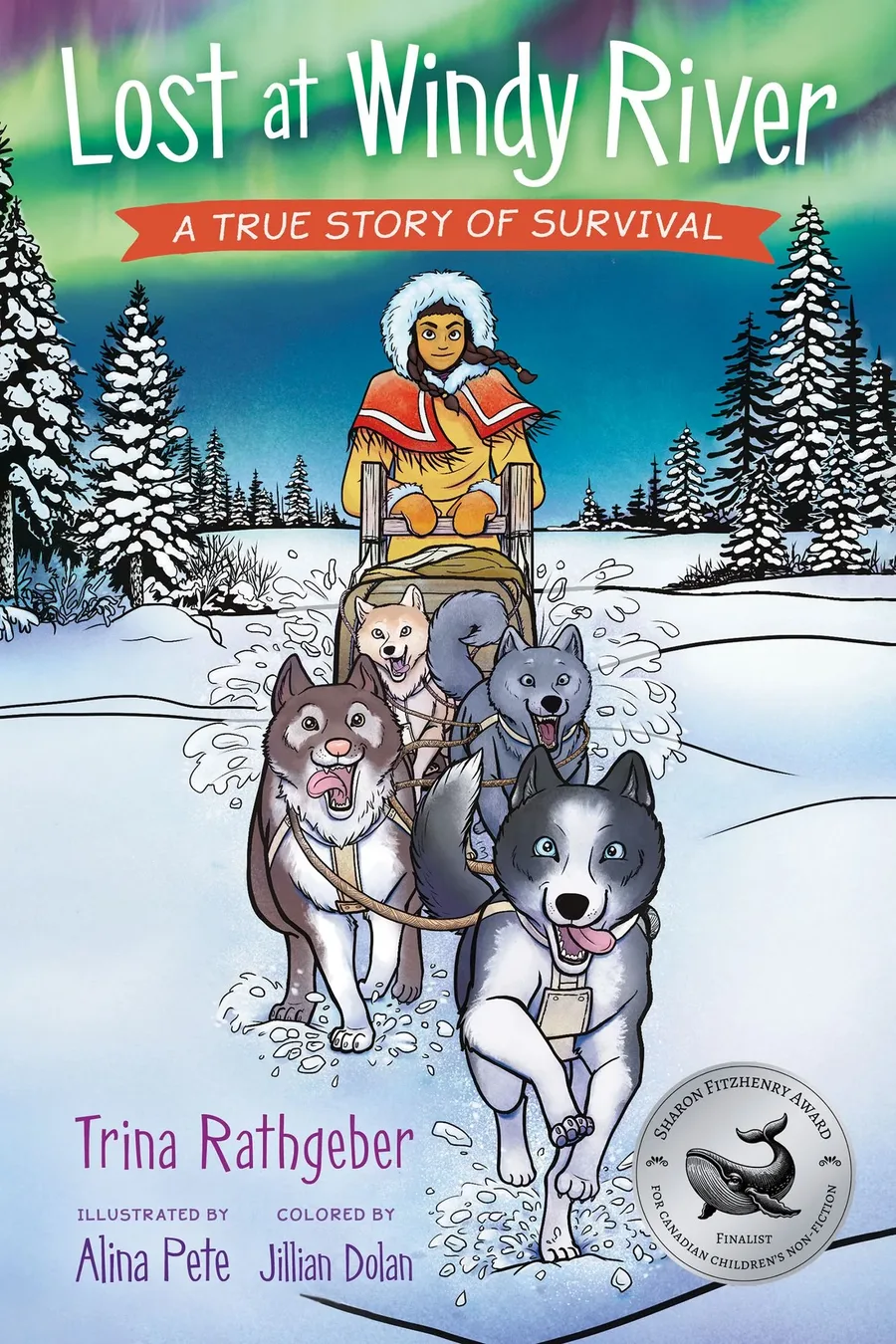 Lost at Windy River: A True Story of SurvivalTrina RathgeberIn remote, northern Canada in 1944, 13-year-old Ilse (Cree) and her siblings prepare their dogsleds to do a trip around the trapline. What should have been a straightforward outing as part of their family’s fur-trade route quickly escalated into a dramatic story of survival. Ilse Schweder was an experienced young outdoorswoman and respected in her family for her skills and connection to nature. On this fateful day, Ilse was running her own dogsled to train the smaller dogs rather than riding along with her older brothers in a sled pulled by the big dogs. After their first night on the tundra, quick weather changes develop into whiteout conditions. Initial strategizing to break into two groups proves dangerous, and soon Ilse becomes isolated and lost. Miraculously, she survives for nine days on her own. The details of her survival, which resulted in severe frostbite and other trauma, are recounted with dramatic precision in graphic novel format. Thought bubbles, text boxes, sensory-rich illustrations, and informational sidebars, including on Indigenous culture, explain Ilse’s grueling journey to reach help. Additional information from the author explores how Ilse’s true story was previously, and inaccurately, co-opted by Canadian author Farley Mowat. This riveting account draws from the author’s extensive research to honor the story as her grandmother had lived it.Historical People, Places, and EventsView book details
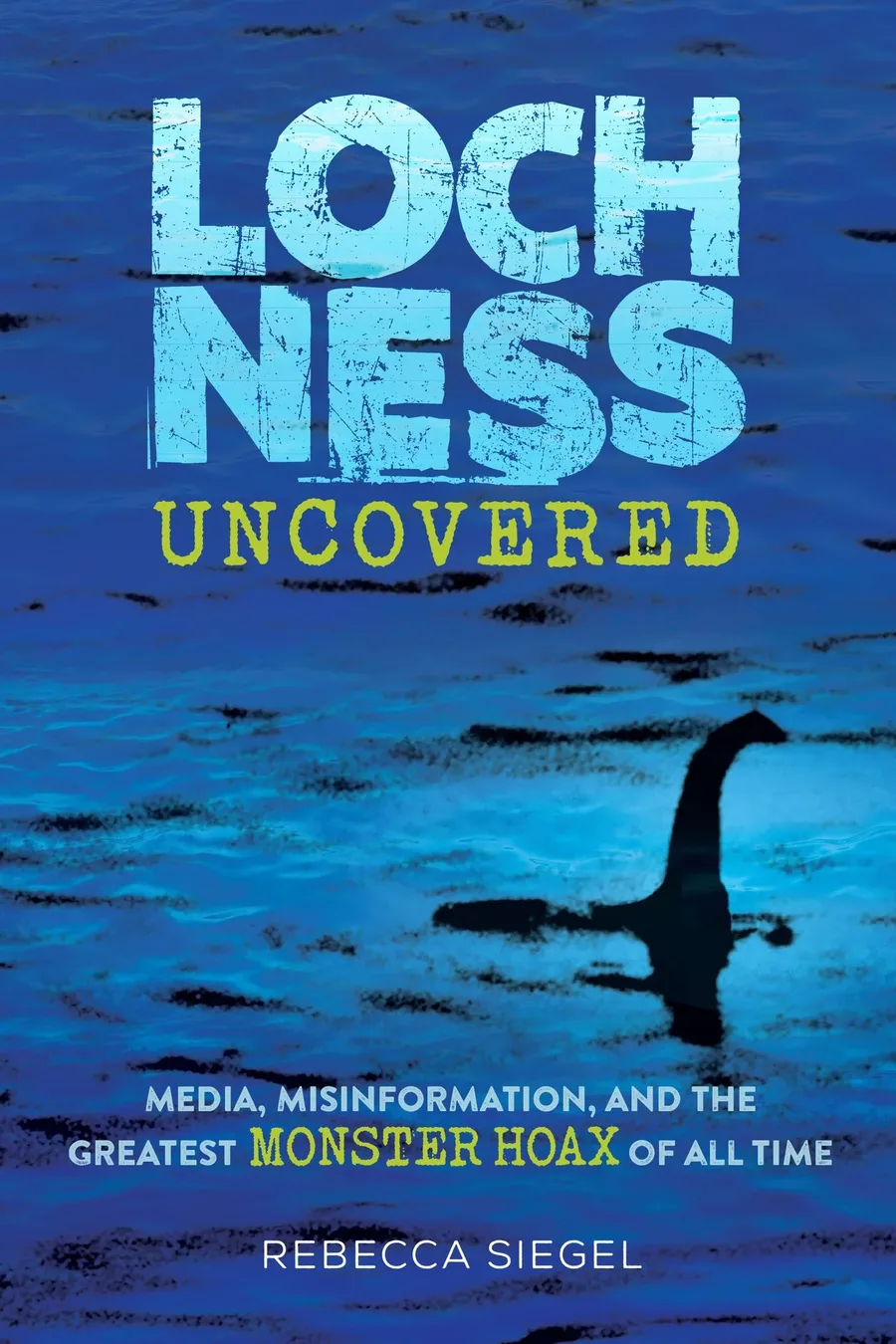 Loch Ness Uncovered: Media, Misinformation, and the Greatest Monster Hoax of All TimeRebecca SiegelIn 1933, a woman named Alice Mackay reported spotting a “beastie” in Loch Ness, a Scottish lake. Almost immediately, a local newspaper ran with her claim, less concerned with facts than providing a sensational read. Mackay, as it turns out, owned an inn that needed customers, and tourism soon boomed in the area, helped along by the spurious story. One sighting led to more, and then big game hunter and filmmaker Marmaduke Wetherell journeyed to Loch Ness and produced “proof” on film. This well researched, engaging look at the myth of the Loch Ness monster is also a look at how misinformation is fueled and can easily run rampant. Wetherell’s “proof” is deconstructed so that readers see how he staged his “evidence”; so, too, are other claims. Despite this, belief in Nessie, as the monster was fondly known, persisted, although the momentum of the myth fell off with the start of World War II, during which Nessie was used as propaganda by the Axis powers as proof of their superiority—the British must be easily duped if they believed Nessie was real. Belief in Nessie lingers today, despite the historical evidence outlining her creation, which is laid out in this well-researched and documented work that concludes with a look at misinformation in our modern age, and tips for being an information consumer. This volume contains occasional black-and-white photographs.Historical People, Places, and EventsView book details
 American Wings Chicago's Pioneering Aviators and the Race for Equality in the SkySherri L. SmithThis comprehensive look at efforts to get Black aviators off the ground in the early and mid-20th century centers on Cornelius Coffey and Johnny Robinson, two men at the heart of the Chicago-based Black aviation movement. Robinson and Coffey’s flight paths were sometimes parallel, sometimes divergent, and eventually at odds. Something the two men agreed on was an integrated flight school; despite their own struggles to be accepted at white schools, they wanted to train both Black and white pilots. The ways this both helped and harmed their efforts across the years is part of what is chronicled in this detailed account of their dreams, their efforts, and the times in which they lived. The work Robinson 25 Historical People, Places, and Events CCBC Choices 2025 and Coffey did together and separately had an immense impact nationally and globally. Coffey lobbied his alma mater, Tuskegee Institute, to develop a flight training program—a precursor to the history-making Tuskegee Airmen—and later went to Ethiopia at the invitation of Emperor Haile Selassie to establish an air force to help the country’s effort to stop an Italian invasion in the 1930s. Both men helped countless pilots—Black and white— learn to fly. The contributions of Janet Harmon Waterford and Willa Brown, who worked with Coffee and Robinson on organizing and providing opportunities for Black flyers in Chicago, are an important part of this hefty tome that includes occasional black-and-white photographs and rigorously documented end notes.Historical People, Places, and EventsView book details
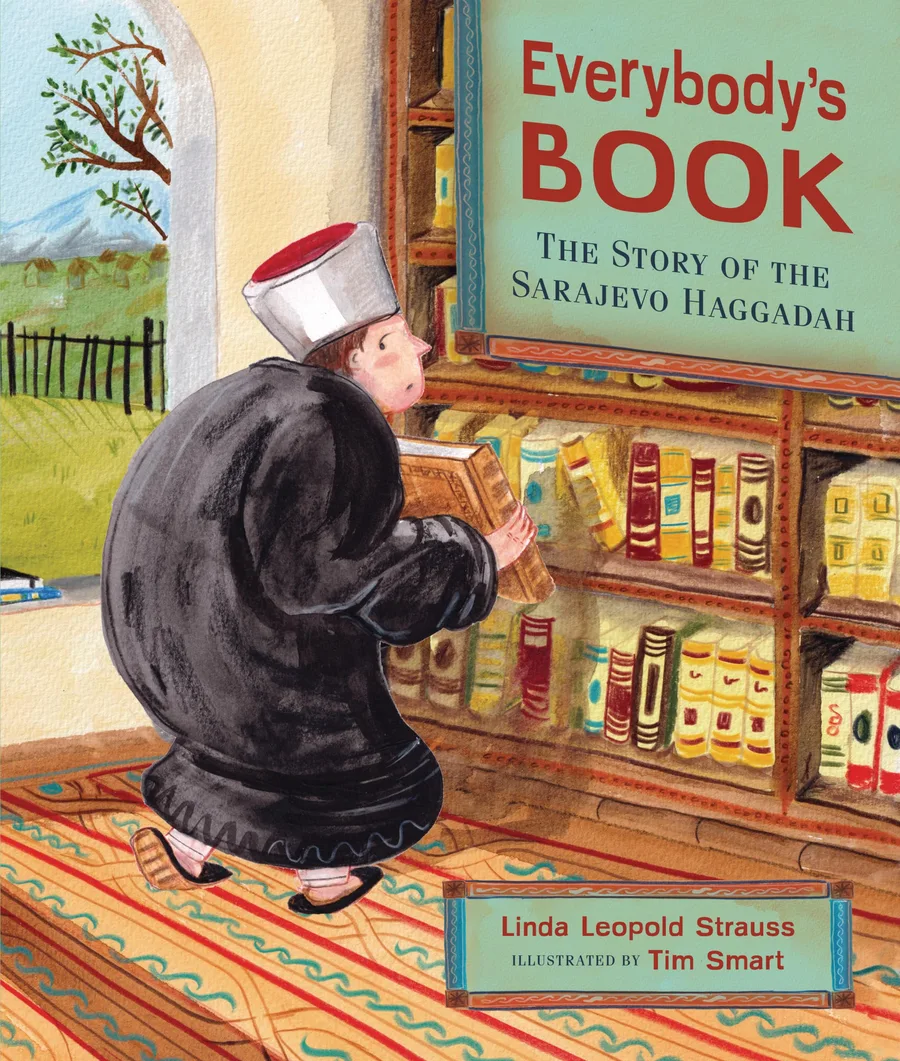 Everybody’s Book: The Story of the Sarajevo HaggadahLinda Leopold StraussRepeatedly evading theft and destruction with the help of many over several centuries, a treasured book becomes a symbol of hope in a war-torn land. This hand-painted and -lettered haggadah—the book used to conduct a Passover Seder—had a relatively humble beginning: In the mid-14th century, it was given to a Jewish couple on their wedding day. When they escaped Spain during the Inquisition, the haggadah’s journey was only just beginning. It traveled with generations of the family to Italy and then Bosnia before it was sold to the National Museum in Sarajevo. There it became a historical artifact called the Sarajevo Haggadah. But there was much unrest to come. When Nazis tried to steal it during World War II, the Haggadah was smuggled to a remote village and temporarily hidden in a small mosque. In 1991 it was rescued by a Muslim professor when Serbs bombed the museum. The Haggadah was brought out from its secret location only once to reassure a group of Christians, Muslims, and Jews celebrating Passover together in Sarajevo’s only remaining synagogue that it still survived. After the war, the Haggadah—almost 650 years old, “a book that was cherished by the whole family of nations”—was restored and returned to the Bosnian National Museum. Protected and cherished by people from many religious backgrounds, the Haggadah’s storied life, told here in a picture book that reads like a thrilling adventure, reflects history and represents unity.Historical People, Places, and EventsView book details
 Rising from the Ashes: Los Angeles, 1992. Edward Jae Song Lee, Latasha Harlins, Rodney King, and a City on FirePaula YooThis ambitious account of the 1992 riots following the acquittal of the officers charged with beating Rodney King also looks at the lives and experiences of King and two other young people in order to explore racism, race relations, economics, and other contributing factors and complexities leading to the violence. Korean American Edward Jae Song Lee, 17, responded to the call to help defend Koreatown businesses being smashed, burned and looted; he was one of 63 people who died over three days. Latasha Harlins, 15, was an African American teen killed in March, 1992, by a Korean store owner, shot in the back as she left the store following an altercation after she was accused of trying to steal orange juice. Yoo makes clear they each had dreams, and each faced challenges that were complicated by race, racism, and economics. Along with their stories she places what happened in the larger context of the history of the Black and Korean communities in L.A. and the relations between them, which were far more nuanced and complex than the stereotypes that media coverage at the time relied on. A deep dive into the events of April 29 to May 3, 1992, includes the experiences of Black and Asian journalists covering the unrest, those who courageously stepped in and saved lives, and those who look back with regret at their actions in this work that admirably refuses to simplify or sensationalize its subject.Historical People, Places, and EventsView book details
Biography, Autobiography, and Memoir
14 selections
 As Edward Imagined: A Story of Edward Gorey in Three ActsMatthew Burgess, illustrated by Marc MajewskiA playful biography of artist and writer Edward Gorey is staged in three acts. “Act One: An Artist Is Born” introduces a precocious child who taught himself to read at age three and soon began crafting his own “deliciously sinister” tales. Unabashedly unusual, he had a unique sense of fashion that persisted into adulthood. “Act Two: Edward in the City” sees the artist residing in Manhattan, where he was a devotee of the New York City Ballet and worked as a book cover artist from an apartment crowded with cats. When he began writing and illustrating his own works, he persisted despite an initially lukewarm reception, slowly gathering a devoted following. He was disinterested in fame and attention, though, and eventually moved out of the city to “a squeaky, creaky, leaky fixer-upper” on Cape Cod, as detailed in “Act Three: At Home by the Sea.” While he enjoyed venturing out to work with actors in local theaters, at home he worked in peace, relishing his solitude (plus cats, of course), his eccentric collections, and his vast personal library, until his death. Vibrant, expressionistic acrylic illustrations are well suited to the narrative, which fondly depicts Gorey as a truly singular and exceptionally imaginative man.Biography, Autobiography, and MemoirView book details
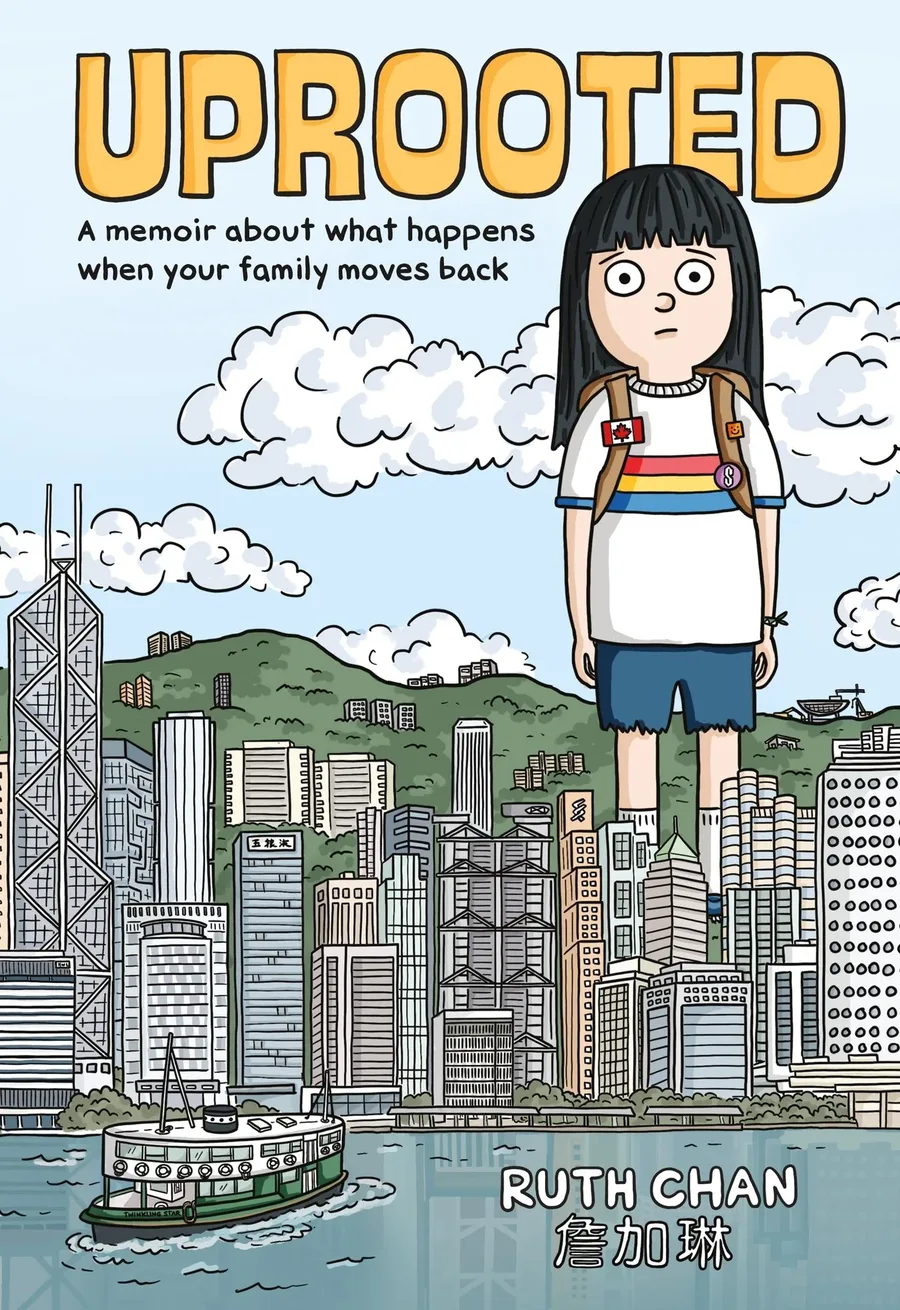 Uprooted: A Memoir About What Happens When Your Family Moves BackRuth Chan, illustrated by Ruth ChanIn 1993, Ruth Chan (Chinese Canadian) was living a happy life as a middle school student in Toronto when her parents decided to move back to Hong Kong. The move allowed her mother to be close with her family and her dad to take a great new job in mainland China. Ruth’s older brother stayed in Canada to finish his senior year in boarding school. Devastated to leave her close group of friends, Ruth was unsure of her new life in a place she had only visited a few times. Ruth’s emotional and physical journey is shown in parallel to the story of how her father’s family fled their homeland in southern China in 1944 during the Sino-Japanese war. While Ruth has heard this story many times, it takes on a new meaning as it is retold incrementally during her transition to life in Hong Kong. Ruth’s experience of being uprooted is different from her father’s in many ways. She makes a few friends, enjoys time at the mall, and appreciates the new climate. However, she also feels lonely and unseen, both by her mom (who is busy with reconnecting with family), by her dad, who visits from the mainland infrequently, and her classmates and extended family, who see her as an outsider who is struggling with Cantonese. Crisp, detailed illustrations depict Ruth’s memories with depth and humor. Font colors distinguish words in English and Cantonese, and Chinese characters are used to show when the author could not fully understand the language.Biography, Autobiography, and MemoirView book details
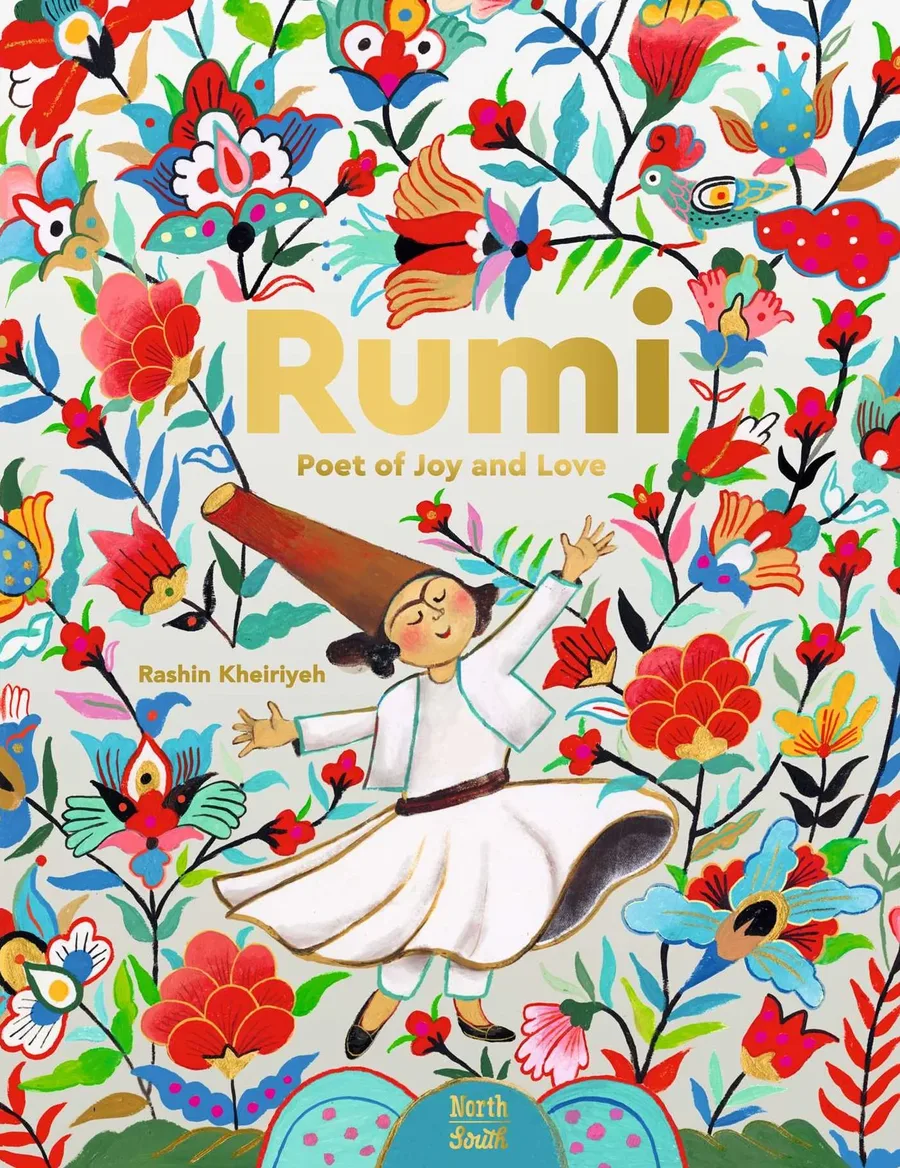 Rumi: Poet of Joy and LoveRashin KheiriyehIranian American author-illustrator Rashin Kheiriyeh brings vivacity and vitality to this beautiful picture book biography of the Persian poet, Rumi. Thrumming with color and warmth, the story of Rumi’s life blossoms from a garden of pages filled with flowers, trees, and birds: “On September 30, 1207—that is a long time ago—a child was born on a crisp and colorful day in Iran. They called him Rumi.” Cheerful, folkloric illustrations show Rumi’s childhood, capturing his curiosity and love of nature. His adult life as an Islamic scholar and Sufi mystic is explored in an accessible account for young readers that also 27 Biography, Autobiography, and Memoir CCBC Choices 2025 celebrates his life’s masterpiece, “The Masnavi,” an extensive poem filled with stories of animals and people, recognized worldwide in Rumi’s time and today.Biography, Autobiography, and MemoirView book details
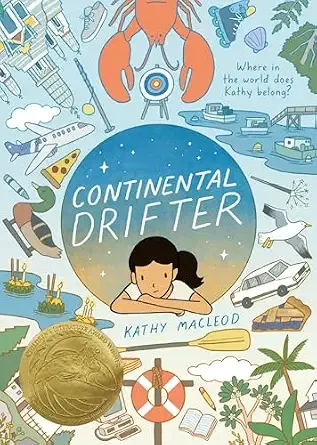 Continental DrifterKathy MacleodAt Kathy’s international school in Bangkok, the diverse student body celebrates Culture Day by wearing traditional clothing from their cultural backgrounds. The “American” getup Kathy’s mom makes her wear, though, feels incomplete—like Kathy, “not one thing or the other.” She is biracial—in Thai, a luk khrueng (“half child”). She speaks only English, which distances her from her Thai-speaking mother. Kathy loves American culture, food, and television shows; she’s counting down the days until she and her family leave for a summer in coastal Maine, where her white father’s family lives and where she’ll be attending summer camp. But the summer is more complicated than she expects it to be. Although she’s overjoyed to be reunited with extended family members, she feels self-conscious in the mostly white town. It turns out she and her parents and sister have nothing to talk about, and she realizes she knows very little about her parents—especially her father, who was married twice before meeting Kathy’s mother. Even camp is a disappointment as other kids ask racist, intrusive questions. There are uplifting moments of connection, though, before the summer ends: She meets second cousins who are fun and welcoming, and she learns that her sister is also struggling with loneliness. By the time summer ends, she’s sad to leave Maine but looking forward to returning home to Bangkok. This relatable, honest graphic memoir excels in its depiction of feeling “in between” cultures, homes, and identities.Biography, Autobiography, and MemoirATOS Book Level 3.5AR Interest Level MG 4-8View book details
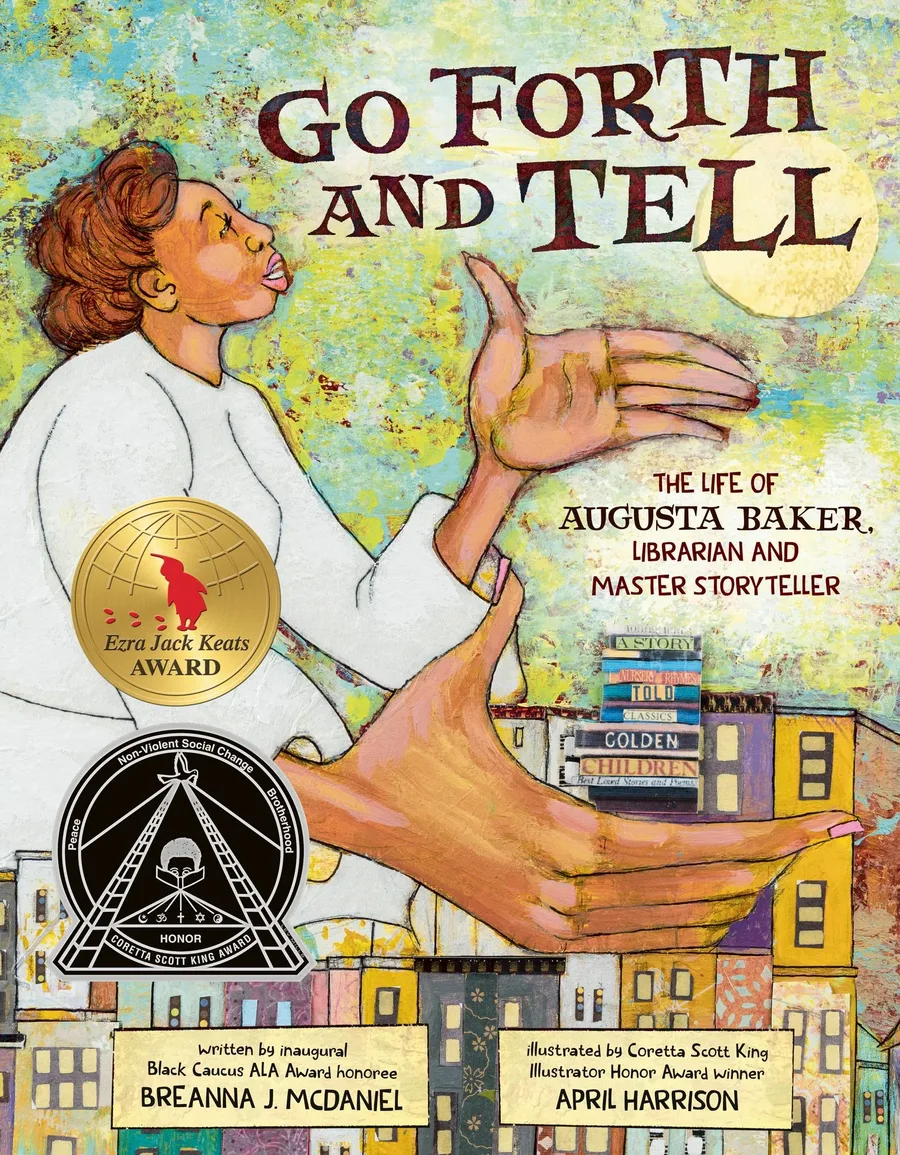 Go Forth and Tell: The Life of Augusta Baker, Librarian and Master StorytellerBreanna J. McDanielAugusta Baker grew up listening to stories. “Her grandmother’s lilting, tilting voice shaped incredible worlds and passed them down to Augusta.” When Augusta left home, she took along the “where there’s a will there’s a way” attitude her grandmother’s folktales taught her. A unit on folklore while Augusta was studying to become a teacher convinced her that telling and sharing stories was her calling. She began her career as a children’s librarian for the New York Public Library (NYPL) in Harlem. Upset by the depictions of Black people in books on the shelf, she set about sharing authentic stories by and about Black people, including the ones her grandmother told her. Her illustrious career included being the first Black coordinator of children’s services at NYPL, teaching at Columbia University, and becoming Storyteller-in-Residence at the University of South Carolina, where an annual festival is still held in her name. Whether curating collections, supporting and promoting the work of other Black writers and artists, or telling stories herself, Augusta was devoted to sharing stories that lifted up Black lives and culture and enriched the world of children. An author’s note rounds out this informative, celebratory picture book biography.Biography, Autobiography, and MemoirView book details
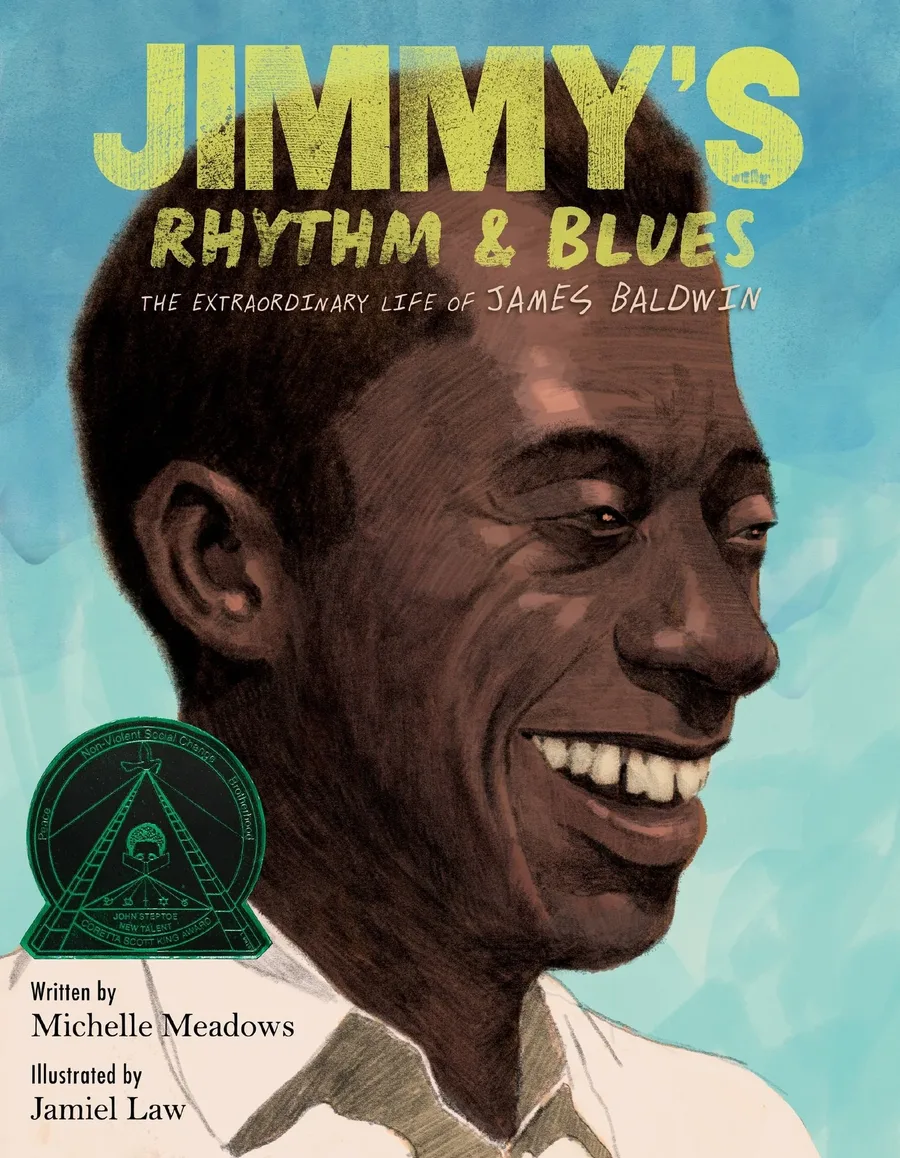 Jimmy’s Rhythm & Blues: The Extraordinary Life of James BaldwinMichelle Meadows“Home is brick brown, / Harlem, uptown, / trains rumbling by.” An exquisitely composed picture book biography of James Baldwin illuminates his interest in the arts and development as a writer from a young age. Jimmy was raised by a strict preacher father who only saw value in reading the Bible, and a mother who warmly nurtured him. A Black boy in America, Jimmy knew “the sting of violence and racism” but “Whether he felt frightened, 28 Biography, Autobiography, and Memoir CCBC Choices 2025 lonely, sad, or worried... Words soothed him.” He wrote often and devoured books at the public library after school. Support and mentoring had a huge impact on his life from the time he was young. “Over the years, Jimmy also thought of becoming a musician, a painter, or an actor. But he saw writing as his special gift—a calling to capture the voice of his ancestors, stand up for oppressed people, and push the world to change.” Through finding love as a young gay man in Paris, to his first book’s publication, to his determination to bear witness to racism in the United States, to his decision to move to France, Baldwin was a passionate, sharply insightful, deeply caring voice in American and world letters. An author’s note, sources, a Baldwin bibliography, and a timeline are included in the end matter, while a delightful photo collage of Baldwin graces the endpapers of this artful account paired with digital illustrations dancing with shadow and light.Biography, Autobiography, and MemoirView book details
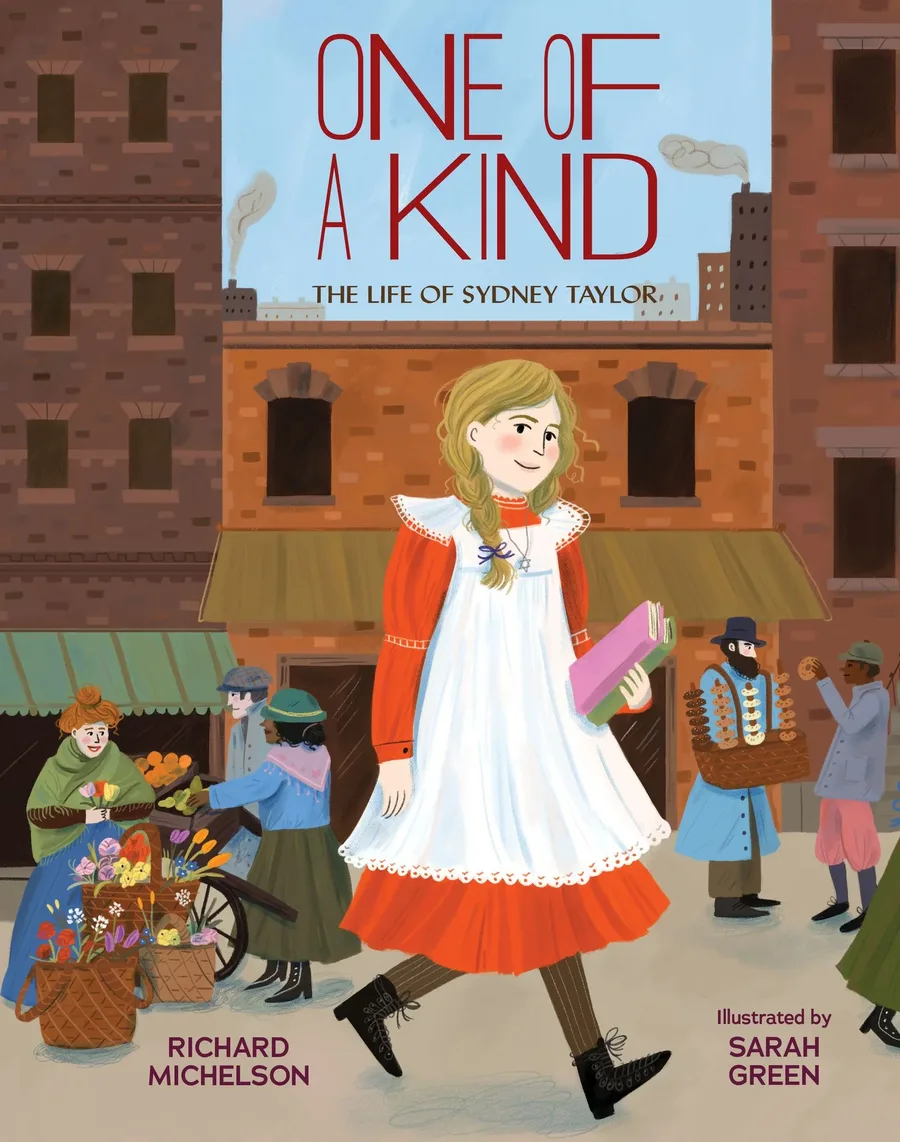 One of a Kind: The Life of Sydney TaylorRichard MichelsonBest known for her All-of-a-Kind Family series of children’s books based on her own childhood in New York City, Sydney Taylor led a full and impressive life beyond what is depicted in her beloved stories. Born Sarah Brenner, Sydney was the middle of five daughters (eventually joined by a brother) in a Jewish immigrant family that maintained their religious practice while making an effort to learn American customs. Creative and expressive, Sarah loved acting and dance and began keeping a diary at age 14, signing her entries “Sydney,” a name she felt was bolder and more “modern.” She had a strong sense of justice and self-worth; she believed that women and Jews deserved full rights and respect, and she was active in the Young People’s Socialist League, where she met her husband, Ralph Taylor. When their daughter, Jo, lamented that protagonists in books were all Christian, Sydney began telling stories from her childhood, which she eventually wrote down. While she didn’t have immediate success in publishing, Ralph later submitted her stories to a publishing contest, leading to a book that became a series that was popular with both Jewish and non-Jewish children alike. While the ending is rather abrupt, this narrative succeeds in conveying Sydney Taylor’s singular spirit.Biography, Autobiography, and MemoirView book details
 Wings of an Eagle: The Gold Medal Dreams of Billy MillsBilly Mills, Donna Janell BowmanA first-person narrative that opens at the starting line of 10,000-meter race at the 1964 Tokyo Olympics takes readers around the track and across the years in this picture book account of Billy Mills’s life and accomplishments on and off the field. Mills (Oglala Lakota) grew up on the Pine Ridge Reservation, where the Traditional Giveaway—gifts shared among the community, “thanks from people with blessings and success”—left him wondering if he would have something to give some day. Following his mother’s death, he finds comfort in running “away from the bullies who fling racist words like arrow. Away from my broken heart. Through the prairie grasses, and over the gullies and gulches, I feel connected to myself, to my family, and to the earth.” Mills attends Haskell Institute, determined to make the track team, and later the University of Kansas, where he’s reminded of his outsider status, before joining the Marines, where he’s diagnosed with borderline diabetes. “The Marines’ mantra becomes my own—Adapt and Overcome.” Billy wins gold at the Tokyo Olympics and returns to Pine Ridge a hero. In the decades since, as documented in a pictorial afterword, as well as additional end matter, he has been committed to giving back to his community. S. D. Nelson’s singular illustrations in acrylic on Masonite are a striking backdrop for Mills’s story.Biography, Autobiography, and MemoirWord Count 1545View book details
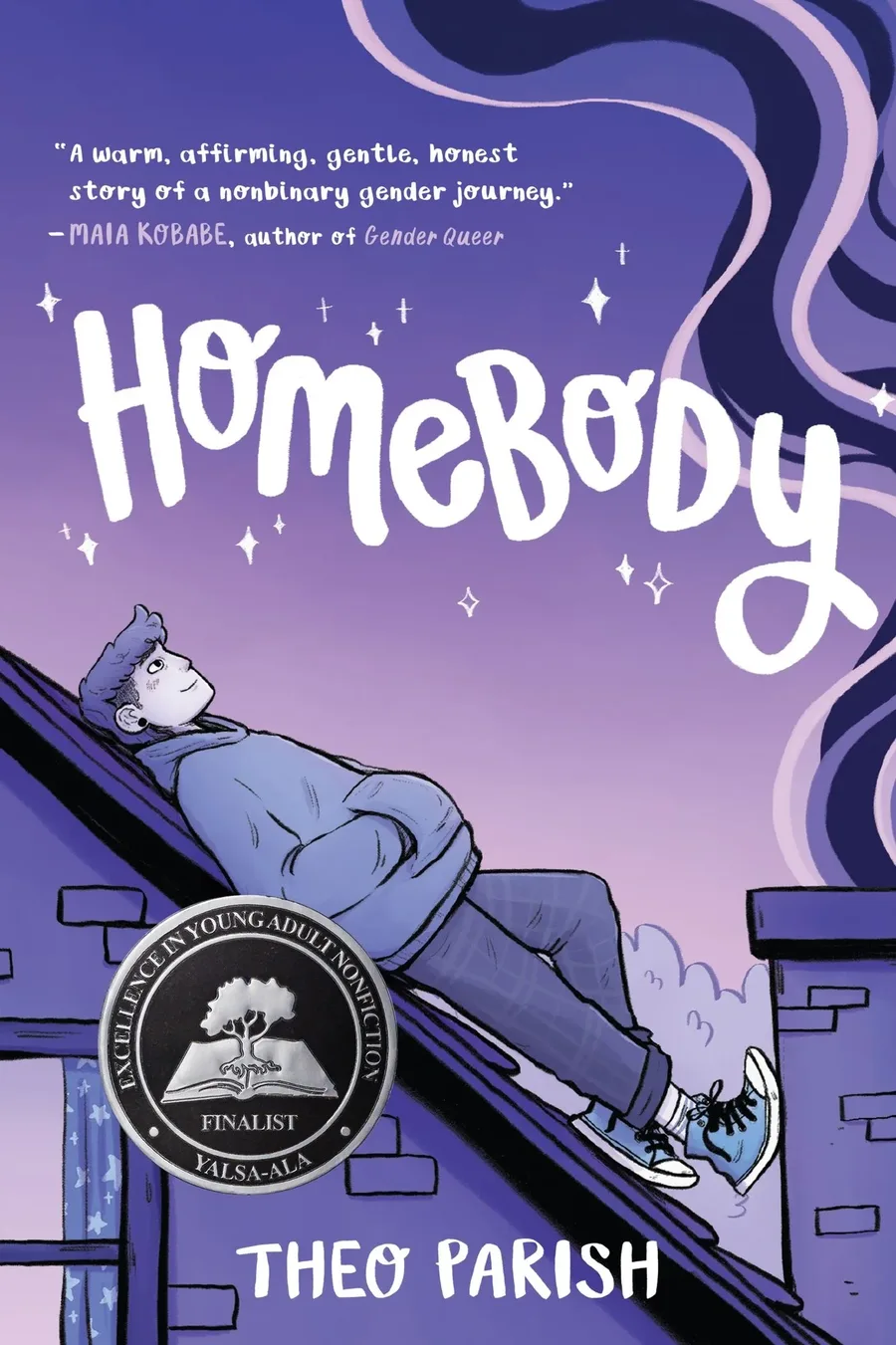 HomebodyTheo Parish, illustrated by Theo ParishA quiet graphic memoir illuminates the author’s ongoing gender identity exploration, and their efforts to feel at home in their body, with care and openness. Written in a direct, conversational tone, Theo begins by introducing themself and their experience of being transgender and nonbinary. Choosing to follow “the scenic route” on their gender “journey,” Theo takes their time, enjoys the process, and remains open to change. The main narrative begins in their childhood, describing a loving family life that allowed them to be “free and content to just be.” Outside the home, though, gender-related assumptions and expectations chafed. It wasn’t until college, in community with other art students, that Theo felt free to make physical changes like a haircut and new wardrobe. Despite knowing they weren’t a girl, “boy” didn’t feel right either; it wasn’t until they learned of nonbinary identities that things began to click into place. Shedding their birth name and choosing the name “Theo” seemed to break an invisible boundary, leading to greater contentment and closer relationships. While the narrative ends in Theo’s young adulthood, they acknowledge that the journey is ongoing, and while they are “grateful” for the body they have, they still “dream of... the day [they] will call this house... home.” A soft purple palette, uncluttered illustration style, and concise text make this explicitly affirming memoir an accessible, inviting read.Biography, Autobiography, and MemoirView book details
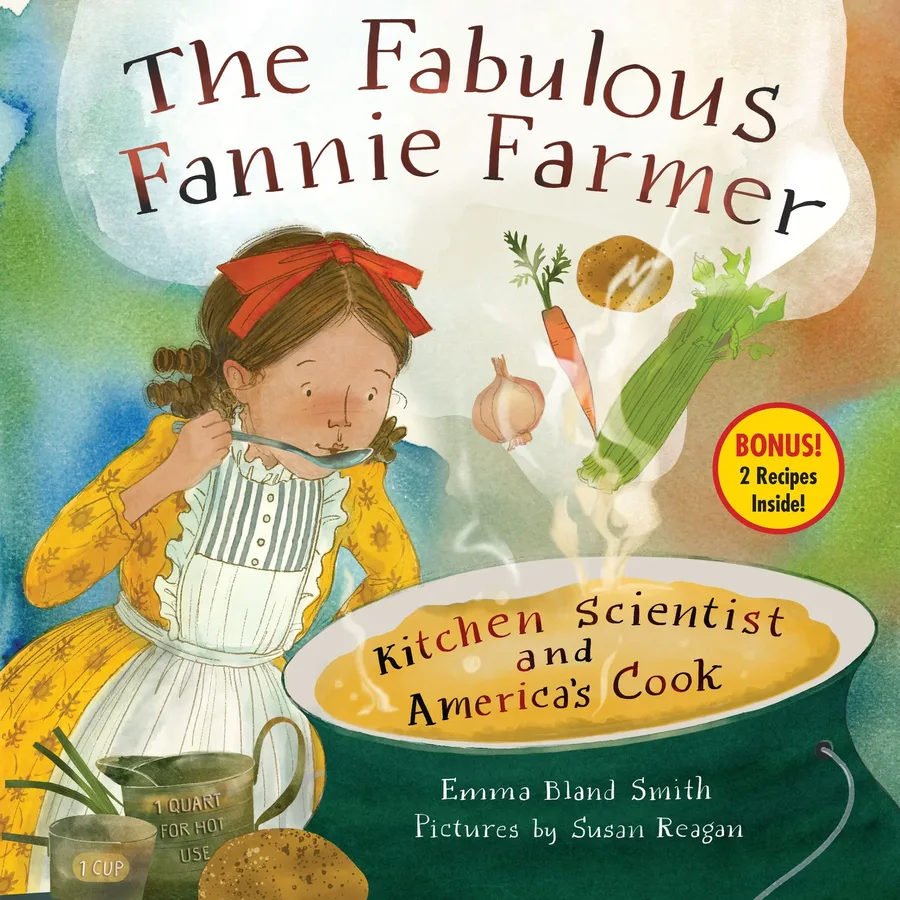 The Fabulous Fannie Farmer: Kitchen Scientist and America’s CookEmma Bland SmithFannie Farmer loved cooking as a child. When she lost the use of a leg as a teenager due to polio, her love of cooking helped reshape her vision for the future; while she recovered, she cooked. Fannie noticed that the imprecise instructions and measurements in most recipes in the late 19th and early 20th centuries (e.g., “a suspicion of nutmeg”) made for inconsistent results. She enrolled in the Boston Cooking School and stayed on after graduation, eventually becoming principal. She led not only the school but the charge for using exact measurements and providing precise instructions in recipes, and showcased the results when she rewrote the school cookbook, which became a hit with the general public. This spirited recounting of the accomplishments of this food pioneer includes terrific end matter, beginning with a note about research and conjecture versus fact in the narrative before exploring many dimensions of Fannie’s life, work, legacy, and the times in which she lived. A design that highlights quotes from Fannie throughout, alongside pleasing watercolor and digital illustrations, round out this winning picture book biography.Biography, Autobiography, and MemoirView book details
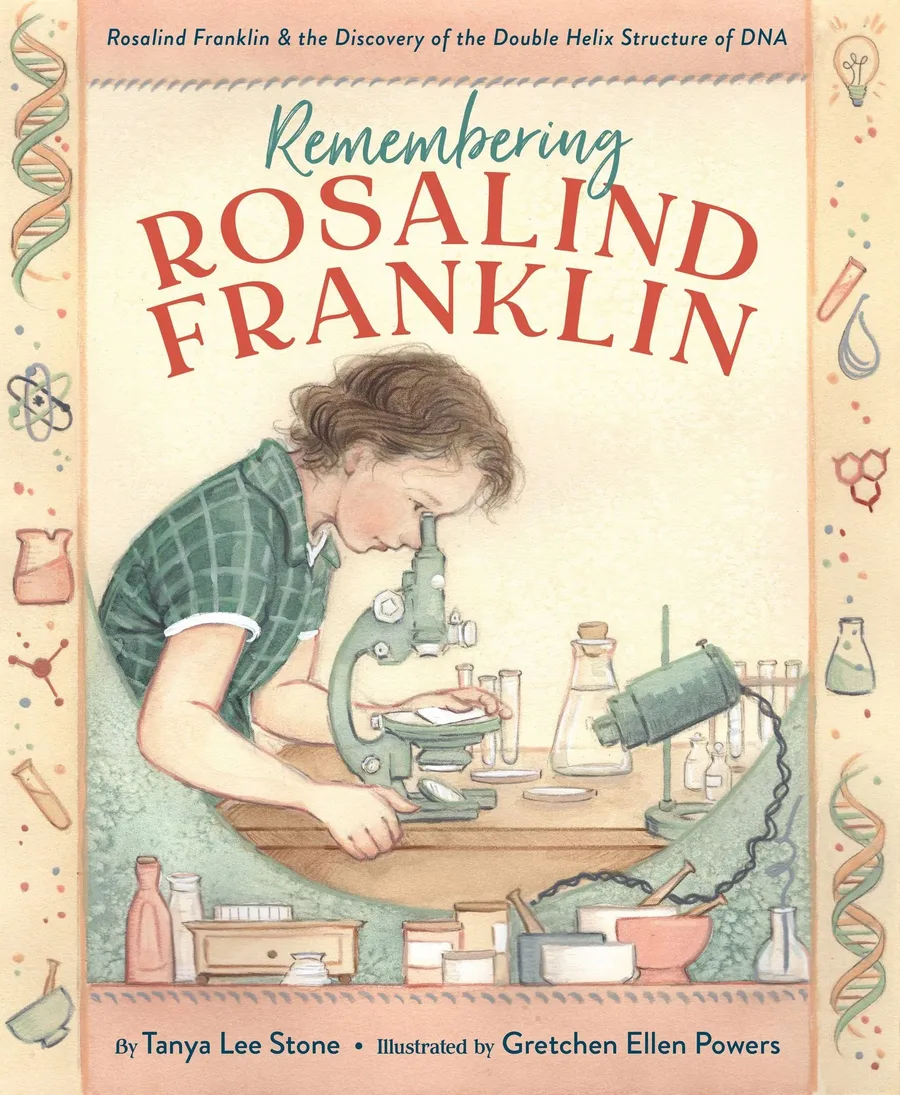 Remembering Rosalind Franklin: Rosalind Franklin & the Discovering of the Double Helix Structure of DNATanya Lee Stone“Dear Reader, This true story doesn’t have a happy ending.” This arresting opening introduces the life of Rosalind Franklin: a smart, curious girl who grew up to study science and became an expert in X-ray crystallography—the use of X-rays to study atoms and molecules. Working in a lab at Cambridge University, she tried to focus on her work while surrounded by the egos and conflicting personalities of the men around her. In 1952, she took an image she labeled Photo 51, writing a careful analysis in her end-of-year report. Shortly after, tired of the tension and disregard, she left the lab. Ten years later, three male scientists, including one who worked in Rosalind’s lab, won the Nobel Prize for discovering the double-helix structure of DNA. Their research, on which Rosalind had never been 30 Biography, Autobiography, and Memoir CCBC Choices 2025 consulted, relied on her image and analysis. Sadly, Rosalind had died four years before. Author Tanya Lee Stone’s opening and closing directly address readers to underscore that Rosalind Franklin made a unique contribution to science and deserves to be written back into history. This picture book account closes with more about Rosalind Franklin and the “Matilda Effect,” when the work of women goes uncredited. The soft images capture scenes of Rosalind’s life and work.Biography, Autobiography, and MemoirView book details
 Comet Chaser: The True Cinderella Story of Caroline Herschel, the First Professional Woman AstronomerPamela S. Turner“It was my lot to be Cinderella of the family,” is how Caroline Herschel recalled her designation as the housekeeper and servant to her parents and four older brothers when she was a girl growing up in 18th-century Hannover, Germany. Yet Herschel had an active mind and longed to pursue her interests. When her older brother, William, requested that Caroline join him in England, her life in drudgery was over. Reunited, the siblings bonded over music as part of William’s daytime career, and at night they celebrated the night sky with their passion for stargazing. Their informal interest and observations were soon noted by the astronomy community. In fact, the siblings had built their own home telescopes that rivaled those of scientists. The Herschels’ scientific skills and studies were cemented when William discovered the planet Uranus. In partnership, they discovered the rings of Uranus, two moons circling Uranus, new moons of Saturn, and thousands of nebulae. On her own, Caroline discovered several comets and was awarded her own salary as a professional astronomer by the king of England. Painted illustrations in muddy, midnight tones dotted with moments of light convey the time period and dark sky discoveries, as well as Caroline Herschel’s evolution from housekeeper to highly regarded comet chaser.Biography, Autobiography, and MemoirView book details
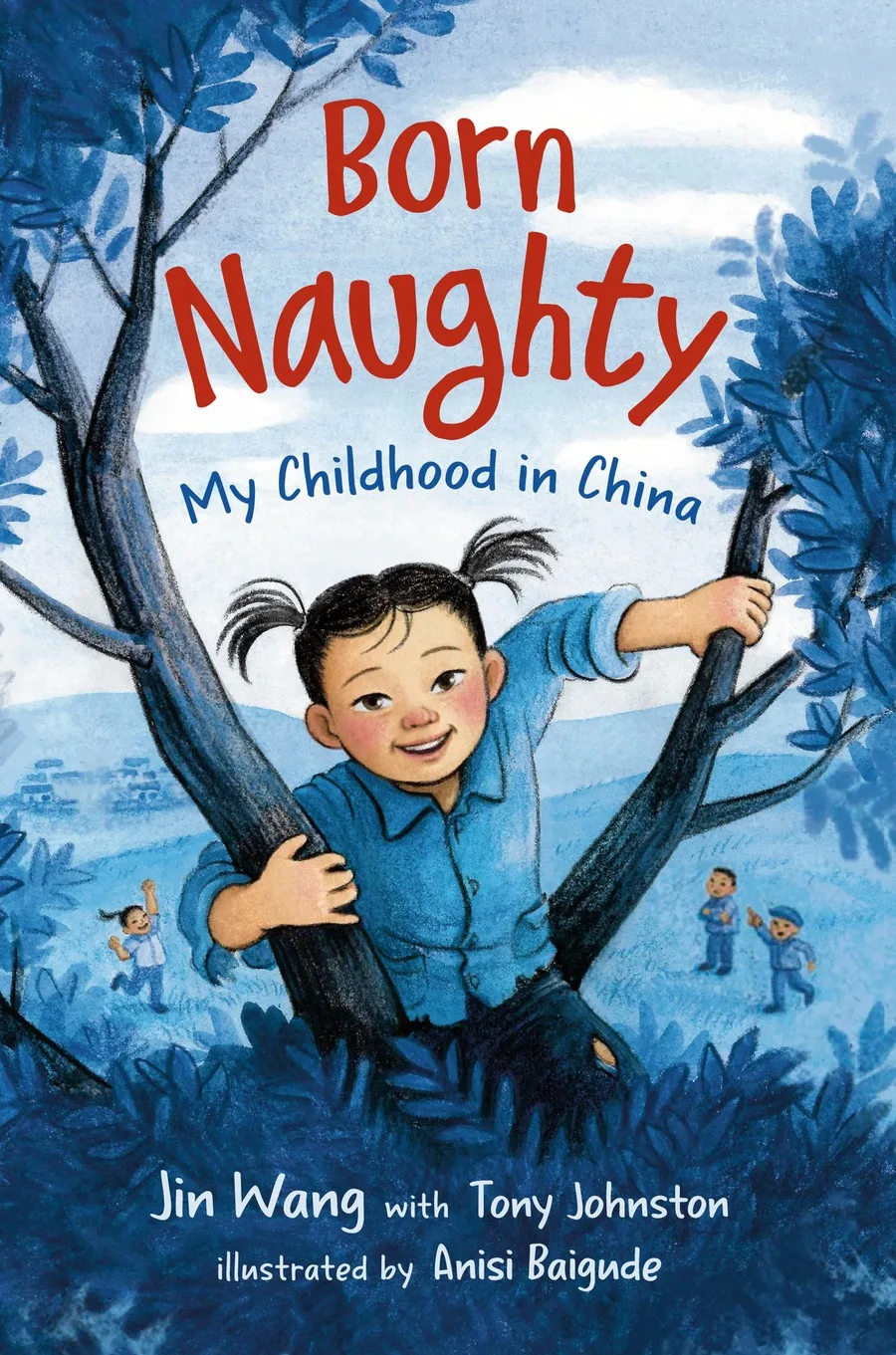 Born Naughty: My Childhood in ChinaJin Wang, with Tony JohnstonAn utterly delightful, early chapter book memoir chronicles author Jin Wang’s life in Nan Ba Zi, a village (“about eighteen houses...and a tiny store”) in Inner Mongolia, China, the year she was eight. Jin (called Haiyan by her family) loves her parents, Ma and Diē; her little brothers, Haijun and Haibing; and her grandpa, Grandfather Ocean. She loves the cozy, one-room mud hut where they live without electricity or running water. She loves to climb trees and look for wolves, even though Ma tells her not to. And she loves her school, where students are taught by kind Mr. Chen. The routines of Jin’s daily life are punctuated by special occasions described in humorous detail. There’s the infrequent appearance of the popcorn man and his popping machine; the seasonal planting of potato hunks and gathering of mushrooms; the hustle and bustle of preparing for an unanticipated family portrait; the unpleasant Chinese calligraphy lessons using smelly black ink. There are hardships, too: Amidst a harsh winter, Jin makes things worse for herself by licking a frozen door handle. When Jin is attacked by dogs, Ma uses bricks to draw out the “dog poison” (rabies). “I did not know our life was so hard,” Jin reflects. She writes with warmth and fondness, painting a vivid picture of her village, her family members, and her spirited childhood.Biography, Autobiography, and MemoirLexile Text Measure 650LATOS Book Level 4.2View book details
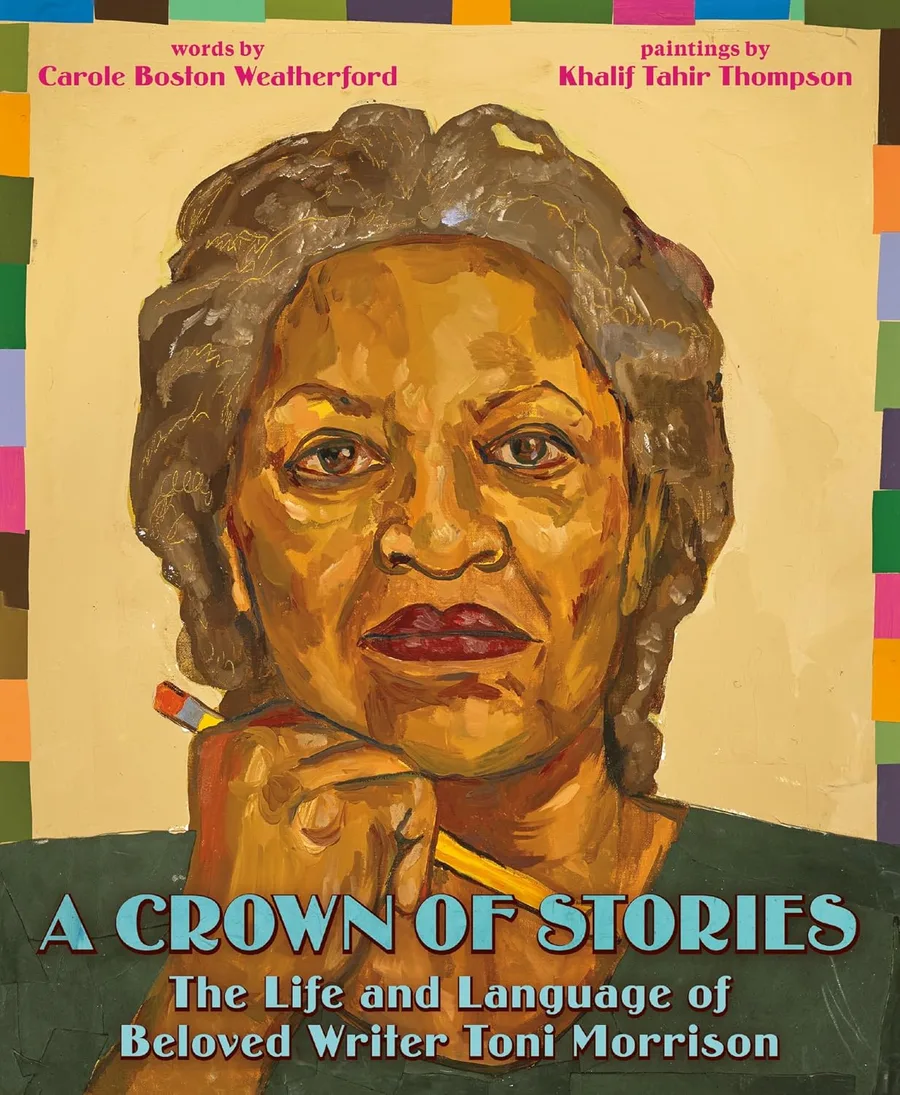 A Crown of Stories: The Life and Language of Beloved Writer Toni MorrisonCarole Boston WeatherfordA marvelous, stirring homage to writer Toni Morrison uses a second-person voice addressing Morrison herself to chronicle people, places, and events that shaped and defined her before 31 Biography, Autobiography, and Memoir CCBC Choices 2025 describing how she, in turn, helped shape the literary landscape, nurturing Black writers as an editor before becoming one of the seminal voices in contemporary American literature. “You so love language that by first grade you—the sole Black student in the room—are the only one who can read. All by yourself.” At college (where a mistaken classmate called her Toni—a name she claimed), immersed in theater and literature and studying Black characters in Shakespeare, “you listen for coins and cans of sardines inside care packages your mother sends.... That is how love sounds.” In writing novels, “You listen to the haunted and unholy places that your characters call home... You echo the deep pain of our past and the vast possibilities of our future.” With details of Morrison’s life and references to her works as touchstones throughout, this richly woven tapestry can serve as an introduction to Morrison but also inspire further exploration of her writing and life. Masterfully composed mixed-media paintings illustrate the exceptional narrative. An author’s note, timeline, and bibliography round out the volume.Biography, Autobiography, and MemoirATOS Book Level 5.7AR Interest Level Lower Grades (LG K-3)View book details
Contemporary People, Places, and Issues
8 selections
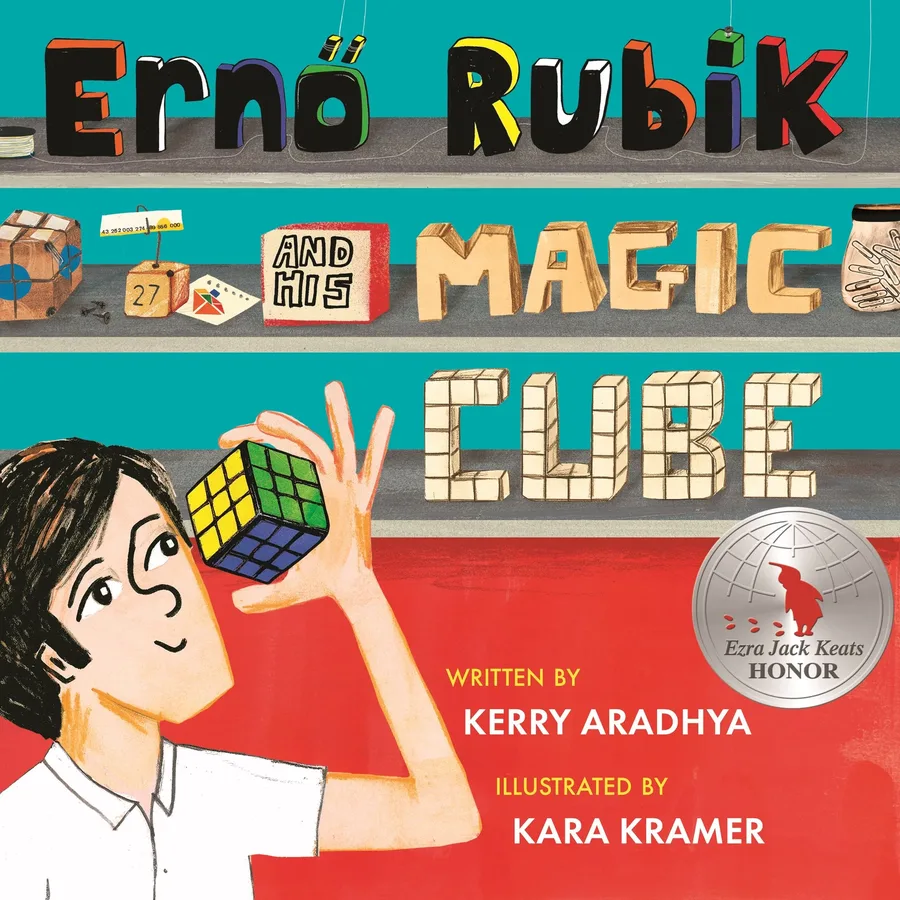 Ernő Rubik and His Magic CubeKerry AradhyaGrowing up in Budapest in the mid-20th century, Ernő Rubik was a curious child who loved figuring out the way things worked. He studied art and architecture before becoming a teacher, building models to help his students learn about three-dimensional objects. “Would it be possible to build a big cube out of smaller cubes that moved around each other and stay connected?” Ernő decided to try. This intriguing look at Rubik’s efforts is a wonderful account of trial-and-error and problem-solving in action. An important part of Ernő’s process was taking breaks to reflect on sticking points in his design. He would sometimes walk, finding inspiration and answers as he did. The round core at center of the cube, for example, was inspired by the way he saw water moving around pebbles in a river. More about Ernő’s “magic cube,” which is now known around the world as the Rubik’s Cube, is included in the back matter. Colorful mixed-media and collage illustrations that draw on the Rubik’s Cube and Ernő’s life for inspiration are an engaging accompaniment to the narrative.Contemporary People, Places, and IssuesView book details
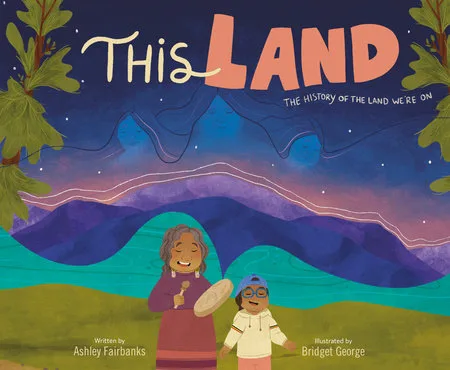 This Land: The History of the Land We’re OnAshley Fairbanks, illustrated by Bridget GeorgeWith intention and grace, this child-centered text explores the history of belonging to places while also centering the story on the historical and contemporary Indigenous people. The narrative begins with a girl and her family (white) standing outside their house. “This is my house. I live here with my family. Before us, another family lived here. Before that, another family lived here, too.” An illustration shows family groupings from different time periods who lived in the girl’s house. The story then transitions to an illustration of the people who lived on the land originally, and what happened when people from Europe forced those Indigenous families to leave their homes. Back in contemporary times, the girl speaks about her friendship with TJ (Indigenous) and what she and her family have learned from his Noko (grandmother), particularly how every place can be viewed from the perspective of how the land was originally inhabited and held sacred by many Indigenous peoples. For example, while the Golden Gate Bridge is an icon of San Francisco, the Ohlone have been fishing in the bay for years. The book concludes with the girl riding in a car. Out 32 Contemporary People, Places, and Issues CCBC Choices 2025 one window is an image of present-day, out the other is an image of Indigenous people on the same land in long-ago times. While the artwork provides sufficient context, the text in this book conveys important concepts about the history of the land we’re on.Contemporary People, Places, and IssuesLexile Text Measure AD630LFountas & Pinnell Text Level MView book details
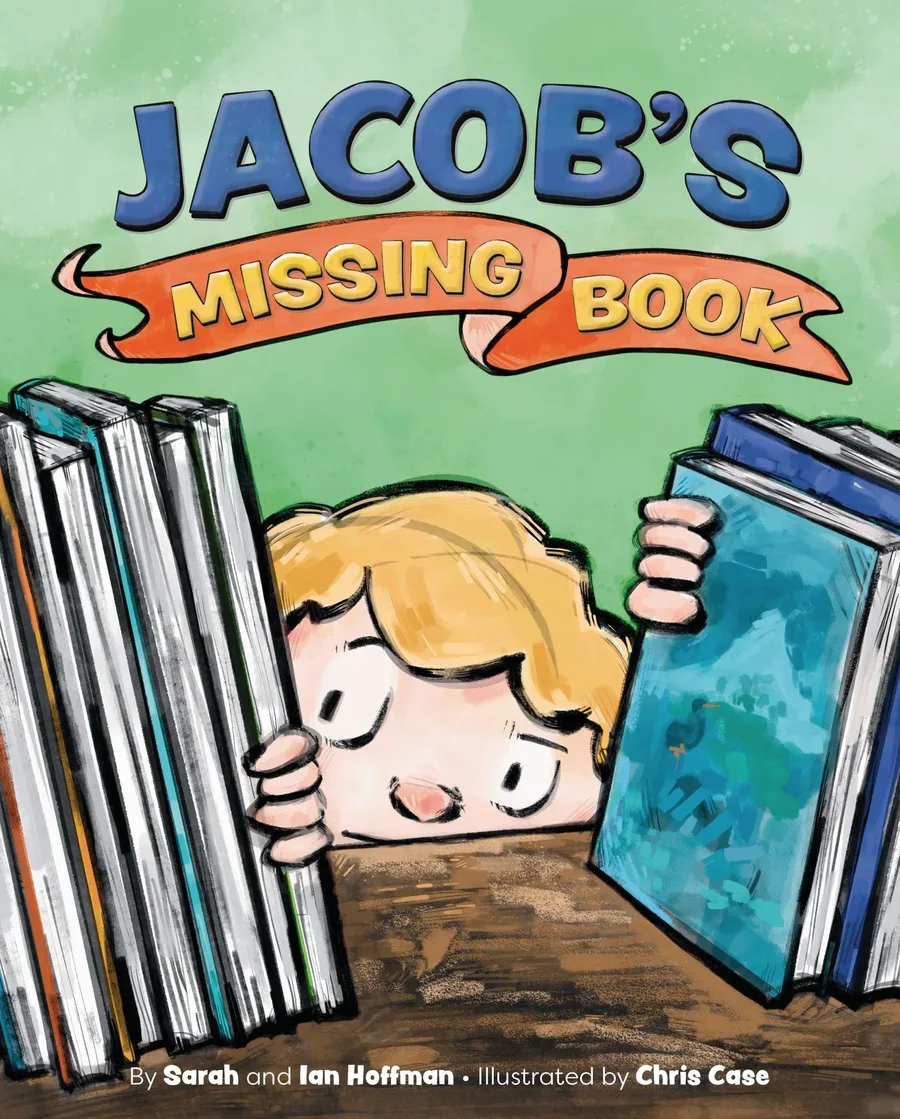 Jacob’s Missing BookSarah Hoffman, illustrated by Chris CaseAt bedtime, Jacob chooses “the penguin book” (clearly a reference to And Tango Makes Three), adding that he wanted to read a copy at school but couldn’t find it in the library. The next day, he asks his teacher if they can have it at story time. His teacher explains that she can’t read it to them: “Some people are unhappy with the books we have in our library and classrooms... While the school is trying to figure that out, some of the books have been taken away. The penguin book is one of them.” Jacob and his classmates want to know more but his teacher explains that’s all she can say. The kids briefly speculate at lunch about what could be wrong, a discussion that inspires them to play a recess game in which they pretend to be nesting penguins. This purposeful story excels at staying child- centered while addressing book censorship impacting younger school-age children, who try to make sense of a vague (to them) situation in a totally childlike way–one that has them moving on to playing penguin. The story also shows (rather than tells) the awkward position such situations put educators in, as well as the impact on a child in a family with two dads who is briefly upset by what’s happening before being comforted by both the teacher and Jacob.Contemporary People, Places, and IssuesView book details
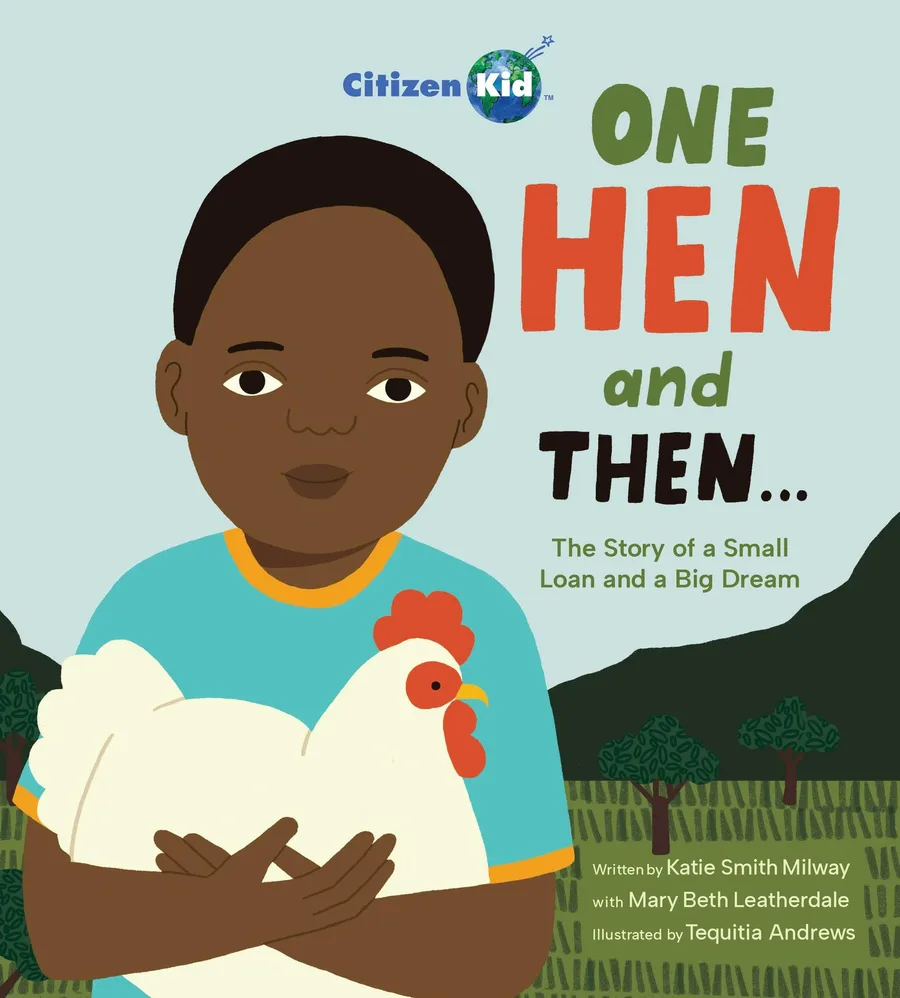 One Hen and Then... The Story of a Small Loan and a Big DreamKatie Smith, with Mary Beth Leatherdale Milway, illustrated by Tequitia AndrewsIn a picture book about microfinance set in a contemporary rural setting on the continent of Africa, a young boy named Kojo explains what happens when he manages to buy one chicken with a small amount of money left over from a loan his mother received to buy a sewing machine. After one week with his fluffy white chicken, Kojo collects five eggs. Keeping two (one for himself and one for Mom), Kojo has three eggs to sell at the market. With the money he earns, he pays back his mother for the money she loaned him to buy his egg-laying hen. And then... several iterations later, readers see how Kojo is able to buy more hens, who produce more eggs, which allow Kojo to pay for school fees and a uniform, and with enough education, Kojo uses his savings to buy land for a poultry farm. The process starts anew when Kojo applies for his own loan to buy 900 chickens. With matter-of-fact text and neat, colorful illustrations, this volume provides welcome information about microloans and the impact on identity and economy. Back matter introduces readers to the real Kojo and provides additional information about microfinance programs.Contemporary People, Places, and IssuesView book details
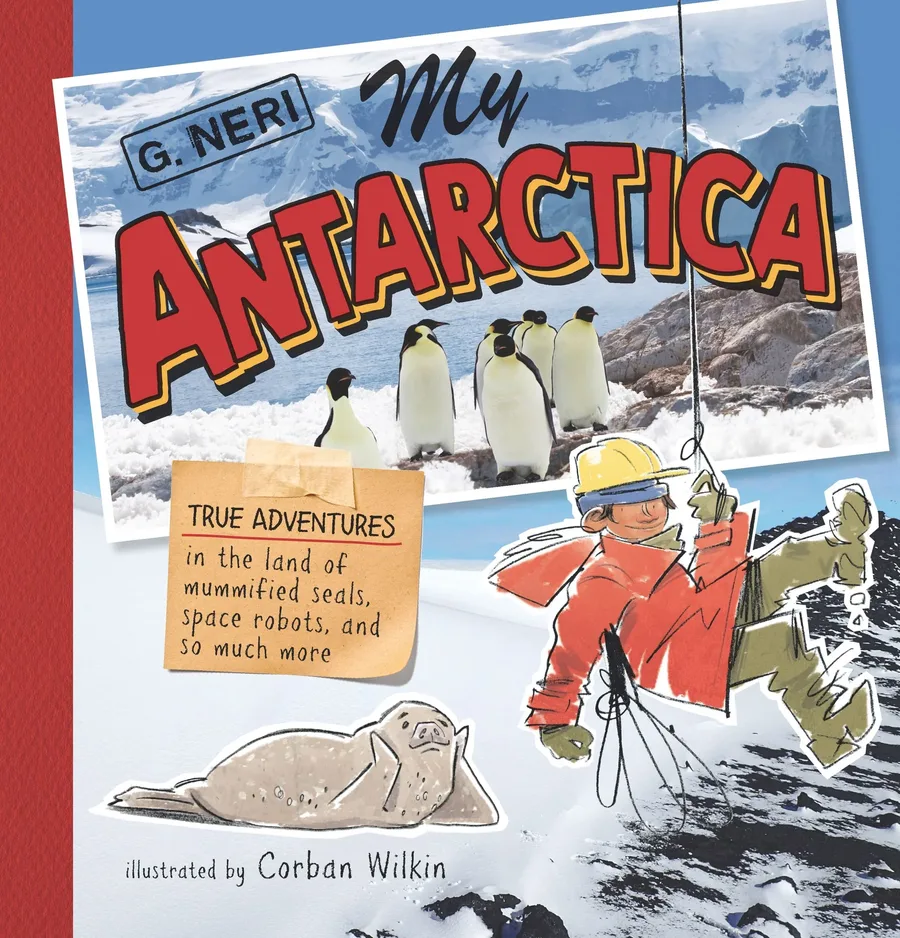 My Antarctica: True Adventures in the Land of Mummified Seals, Space Robots, and So Much MoreG. NeriThis dynamic account of author G. Neri’s seven-week venture to Antarctica blends a lively first-person narrative with abundant photographs and other visuals, including cartoonlike illustrations. Neri made the trip as part of the National Science Foundation’s Artists & Writers program. His sense of curiosity and wonder is palpable as he describes his trip, including the environment of Antarctica, living accommodations for surviving and thriving, the people he meets and the work they are doing, and other topics. Scientists, engineers, and others he gets to know are conducting experiments about the earth in the past, the earth today, and even outer space. The author’s penchant for list-making (e.g., Things 33 Contemporary People, Places, and Issues CCBC Choices 2025 You Will Find in Antarctica, Things You Won’t Find in Antarctica, Critters of Antarctica, Toilets of Antarctica—really!—and others), is one of many entertaining elements, while his reflections on being Black in a place of so much white—and so much unexpected color— offer moments of thoughtful reflection. The back matter includes an author’s note, “Facts and Stuff,” and “Big Questions about Antarctica.”Contemporary People, Places, and IssuesView book details
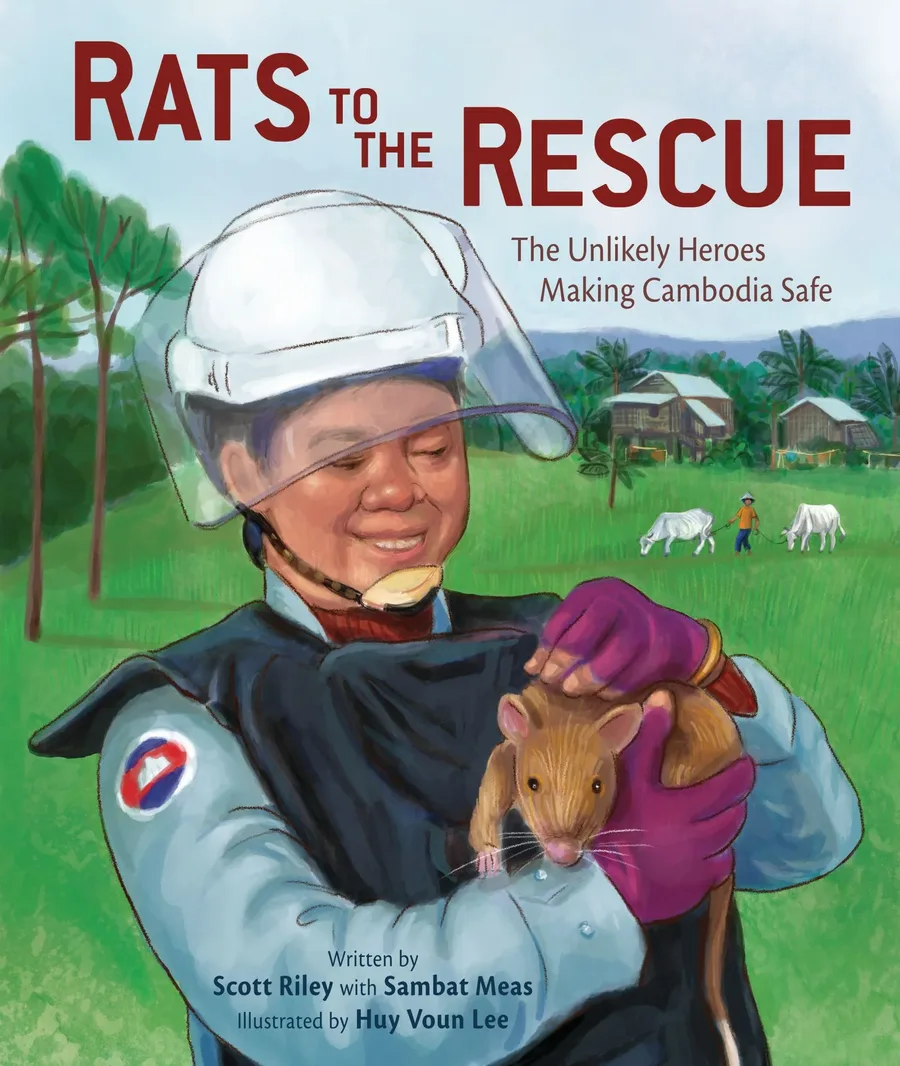 Rats to the Rescue: The Unlikely Heroes Making Cambodia SafeScott, with Sambat Meas Riley, illustrated by Huy Voun Lee“This work is too difficult... It’s not meant for women... You might get hurt.” Malen knew that working as a deminer would be challenging, but she was determined. Growing up, Malen stuck to the familiar paths and plowed fields of her village, knowing that—unlike many parts of Cambodia—they concealed no dangerous landmines left over from a past war. Initially Malen learned to locate mines using a metal detector, but soon a more efficient method arrived all the way from Tanzania: giant African pouched rats. Light enough to walk across mines without setting them off, the rats were trained to scurry back and forth across a marked area, sniffing out TNT. One rat, named Magawa, excelled at his job, clearing fields faster than any other rat. Along with his human teammates, Magawa “found hundreds of mines and cleared dozens of fields.” It is hoped that, due to the courageous work of deminers, Cambodia will one day be “free of secrets,” a place where “all Cambodians can live, farm, and play without any fear at all.” Authors’ and illustrator’s notes, information about HeroRATs and rat training, and a timeline follow this fascinating and moving account.Contemporary People, Places, and IssuesView book details
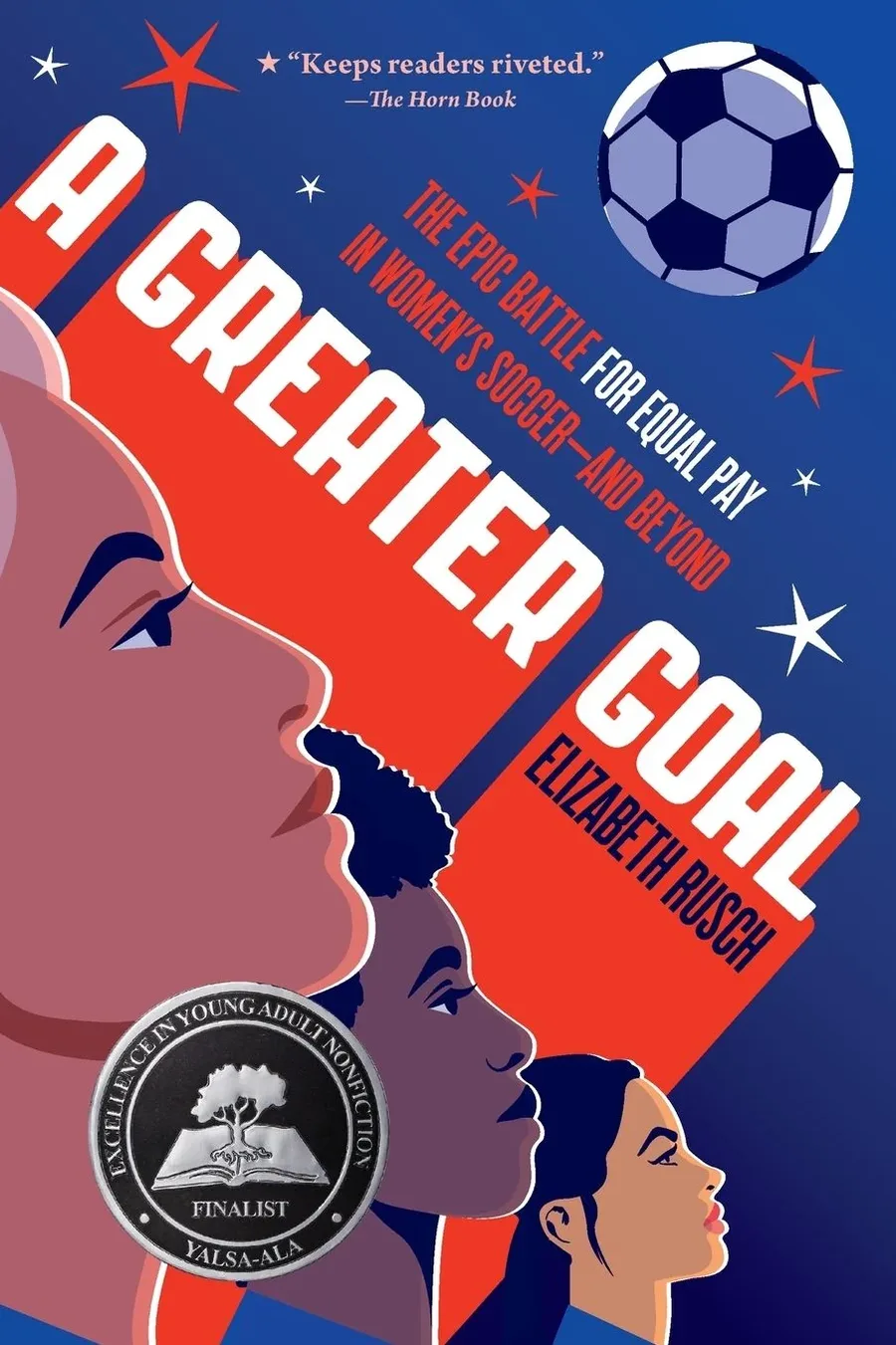 A Greater Goal: The Epic Battle for Equal Pay in Women’s Soccer— and BeyondElizabeth RuschThe U.S Women’s National Soccer Team (USWNT) played their first match in 1985. From the beginning the players were treated differently—and worse—than their counterparts on the men’s national team regarding both working conditions and compensation. This riveting and sometimes infuriating account details efforts that began in the early 1990s to address this unequal treatment, which culminated in a 2022 agreement between the USWNT and their employer, the non-profit US Soccer. Across years of demands from the USWNT for improvements that impacted their physical well-being as well as pay, US Soccer moved the dial only incrementally each time the players negotiated a new contract. When the USWNT took their battle to the courts (and to the court of public opinion) US Soccer continued to dig in its heels, until public revelation of their blatantly sexist and antiquated thinking cleared the stage for new leadership, creating the opportunity for real change. This fast-paced work balances the fight of the USWNT across decades with stories of individual players, placing it all in the context of the law, social attitudes, and the struggle for equal pay for women both within and beyond the United States. The inspiring unity of the women on the USWNT in their quest, knowing they were fighting not just for themselves but future generations, leaves a lasting impression. So, too, does the solidarity offered by others. All of it reinforces a profound yet matter-of-fact message to readers: No one’s worth should be defined or limited by their gender.Contemporary People, Places, and IssuesView book details
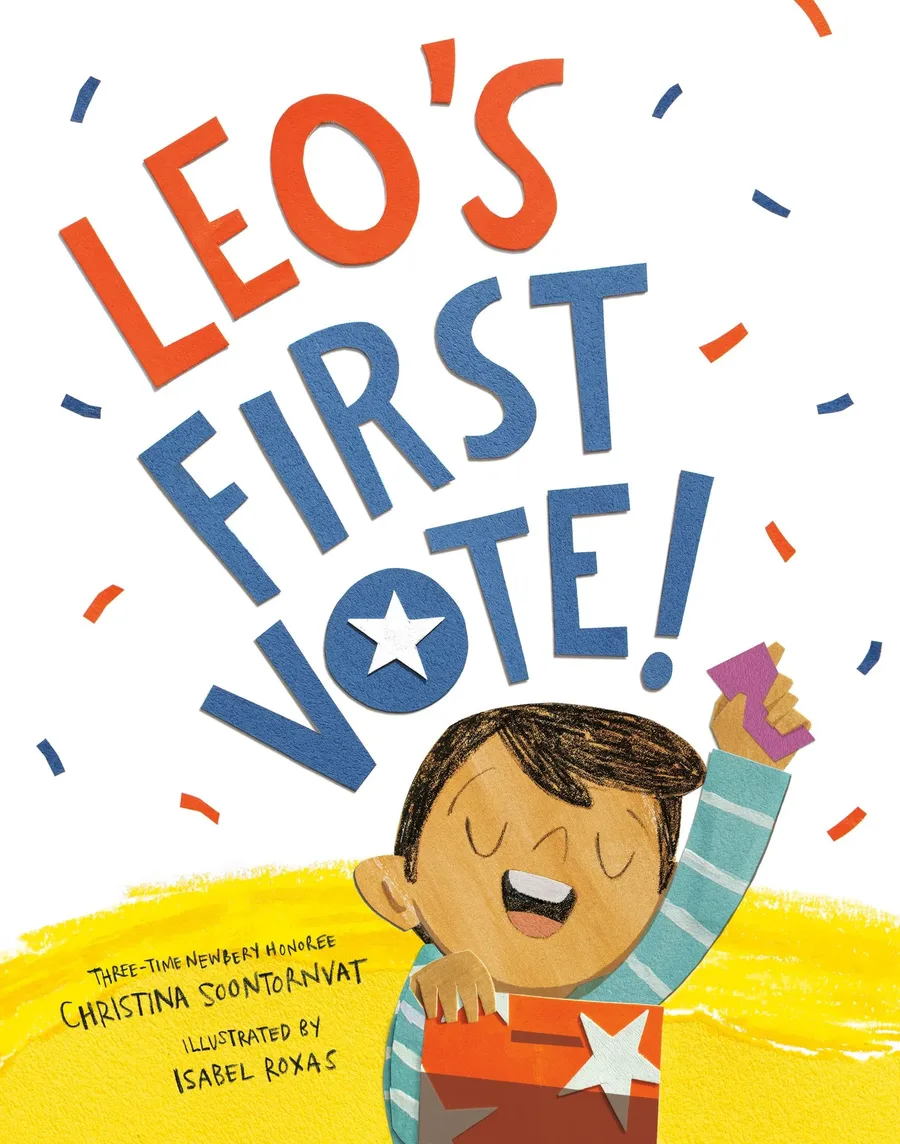 Leo’s First VoteChristina SoontornvatLeo’s dad has just become a U.S. citizen, which “means so much for our family.” Leo (brown- skinned) is excited that his dad has promised Leo can come along when he casts his first vote in a presidential election. At school, Leo’s teacher, Ms. Beck, is holding a mock election. Both at home and in class Leo learns more about elections and events leading up to them, 34 Contemporary People, Places, and Issues CCBC Choices 2025 like national conventions and debates. His dad listens to and learns about both candidates before deciding whom he’ll vote for. Leo is disheartened to hear his cousin say that he’s not planning on voting, since one person can’t really make a difference. Leo wonders if this is true—that one person’s vote doesn’t matter—but his class election proves that one person does make a difference when the winner is decided by a single vote. Information about voting and voting rights, some of it understandably simplified, is packed into this winning story that never feels didactic. The end matter about voting extends opportunities for learning in a picture book with lively, colorful mixed-media illustrations.Contemporary People, Places, and IssuesView book details
Understanding Oneself and Others
2 selections
 You’re SO AmazingJames Catchpole, Lucy CatchpoleJoe “knew he was amazing because everyone kept telling him he was amazing.” It may be meant as a compliment, but to Joe (white), who has one leg and uses crutches, it’s more annoying than anything. Strangers comment, “You’re so amazing!” as Joe goes down the slide or hangs on the monkey bars with his friends. It’s rather insulting to be told that he’s “so amazing!” as he waits in line to enjoy an ice cream cone. Joe’s friends, too, are puzzled and annoyed; their skills and talents go unnoticed when Joe is around. Even when Joe tries to make himself invisible, he receives unwanted attention—pity—which is worse. Thankfully, Joe has friends who see him not as “Amazing Joe” or “Poor Joe,” but as himself, “just Joe.” When his friend Yui invites Joe to play soccer, Yui doesn’t tell Joe his first shot at the goal is “amazing”—because it’s not. Yui just rolls the ball back to Joe. And out of all the shots Joe takes, he gets three in the goal, which feels truly “amazing” to him. While it doesn’t offer solutions or responses for disabled readers, this child-friendly story successfully depicts the harm done by a phrase commonly directed at disabled people and the comfort that supportive friends can provide. Cheerfully illustrated with gouache and colored pencil, the story is accompanied by a “Dear Adult” author’s note that further contextualizes the message.Understanding Oneself and OthersView book details
 Insha’Allah, No, Maybe SoRhonda Roumani, Nadia RoumaniEvery time Ranya asks for something—a trip to the park, a sleepover, going to Disneyland— her mom says “insha’Allah,” (if Allah wills it). To Ranya (brown-skinned), it feels like her mom is really saying “No.” But, her mom clarifies, “insha’Allah” doesn’t mean no, or even maybe. “We say it when we want something to happen but don’t know if it will. Sometimes Allah has other plans.” Ranya asks, “What were Allah’s plans for us last night. You said insha’Allah we could bake cookies, but we didn’t.” Her mom explains that she didn’t finish her work in time to bake cookies. “Next time, I should say ‘We can bake, insha’Allah, if I finish in time.’” She adds that just because something hasn’t happened doesn’t mean it won’t. She’s already planning to reschedule the sleepover that couldn’t happen the week before, and the clouds have cleared up so a trip to the park that afternoon is possible. As for Disneyland? “We will take you to Disneyland... before you turn eighteen. Insha’Allah.” A child-centered story offering insight into a phrase and idea common to Muslims and Arabs of all faiths around the world will be relatable to any child who’s ever been told “maybe” and assumes it means “no.” Art full of pleasing details underscores the warmth and relatability of Ranya’s family.Understanding Oneself and OthersView book details
The Arts
9 selections
 Animal Albums from A to ZCece BellA book to delight fans of vinyl records, absurd animal humor, and/or abundant use of alliteration, Animal Albums from A to Z is an energetic invitation to imagine animals performing as solo artists, duos, trios, and more, complete with detailed album covers and the lyrics to one song per album. Mandy and the Meerkats, for example, is a girl group of mongooses with stylized beehive hairdos whose songs are “the most marvelous music made here in the Motor City!” Their album includes hits like “Mudpuppy Mambo,” “(Don’t You) Mollycoddle Me,” and “I’m in the Mood for Mustard,” the lyrics of which are featured. In addition to the variety of musical genres and animal performers, a QR code for every album takes readers to an online audio recording of the book’s featured songs, such as the four-part harmony of the Barbershop Beagles performing “Bud Believes in Betty (But Betty Believes in Brad).” Silly songs aside, this alphabetical compilation offers clever poetry, design, and humor.The ArtsView book details
 Nothing: John Cage and 4’33Nicholas DayOne day in 1952, a pianist walked into a barn. (Yes, you read that right). He sat down at a piano (because the barn was also a concert hall), and for the next 4 minutes and 33 seconds, he played “Nothing.” No, not nothing, “Nothing,” a new work by a composer named John Cage that was 4 minutes and 33 seconds of silence. But it turns out silence isn’t really silent. The piano made no sound, but in the concert hall audience members cleared their throats or shifted in their seats; from outside there was the sound of rain pattering, and wind blowing in trees. “John Cage wanted to write a piece in which people would hear how much something there is in nothing.” That first audience found it unsettling, infuriating, but over time, “Nothing” has become a classic, performed before huge crowds and small gatherings alike. “And every time, the audience hears something different.” This whimsical picture book about the singular genius of John Cage and his composition “Nothing” is an inspired delight, with playful mixed-media illustrations and spirited book design adding to the pleasure.The ArtsView book details
 Everywhere Beauty Is Harlem: The Vision of Photographer Roy DeCaravaGary GolioA photographer finds beauty in the everyday activities of Harlem residents in the 1940s. After work, when Roy DeCarava’s time is his own, he wanders the streets of his neighborhood, “hungry” for fleeting moments that can be captured by his 35mm camera. “SNAP!” Roy captures a photo of a boy making a sidewalk chalk drawing. “SNAP!” A woman taking a photo of her son. “SNAP!” Black and brown boys splashing around in the cool spray of a fire hydrant. Roy’s vision is expansive, creative, and admiring; he sees Harlem itself in the eyes of the people on the streets. “Beauty is not in the camera. Beauty is in the person.” Additional information, including a short account of this Jamaican American artist’s work and a timeline of his life, follows the main text. Watercolor scenes strikingly use light and shadow to bring Roy’s Harlem to life, while the sparse, thoughtful narrative, interspersed with quotations, will inspire readers to slow down and find the beauty in their own surroundings.The ArtsLexile Text Measure 570LATOS Book Level 2.5View book details
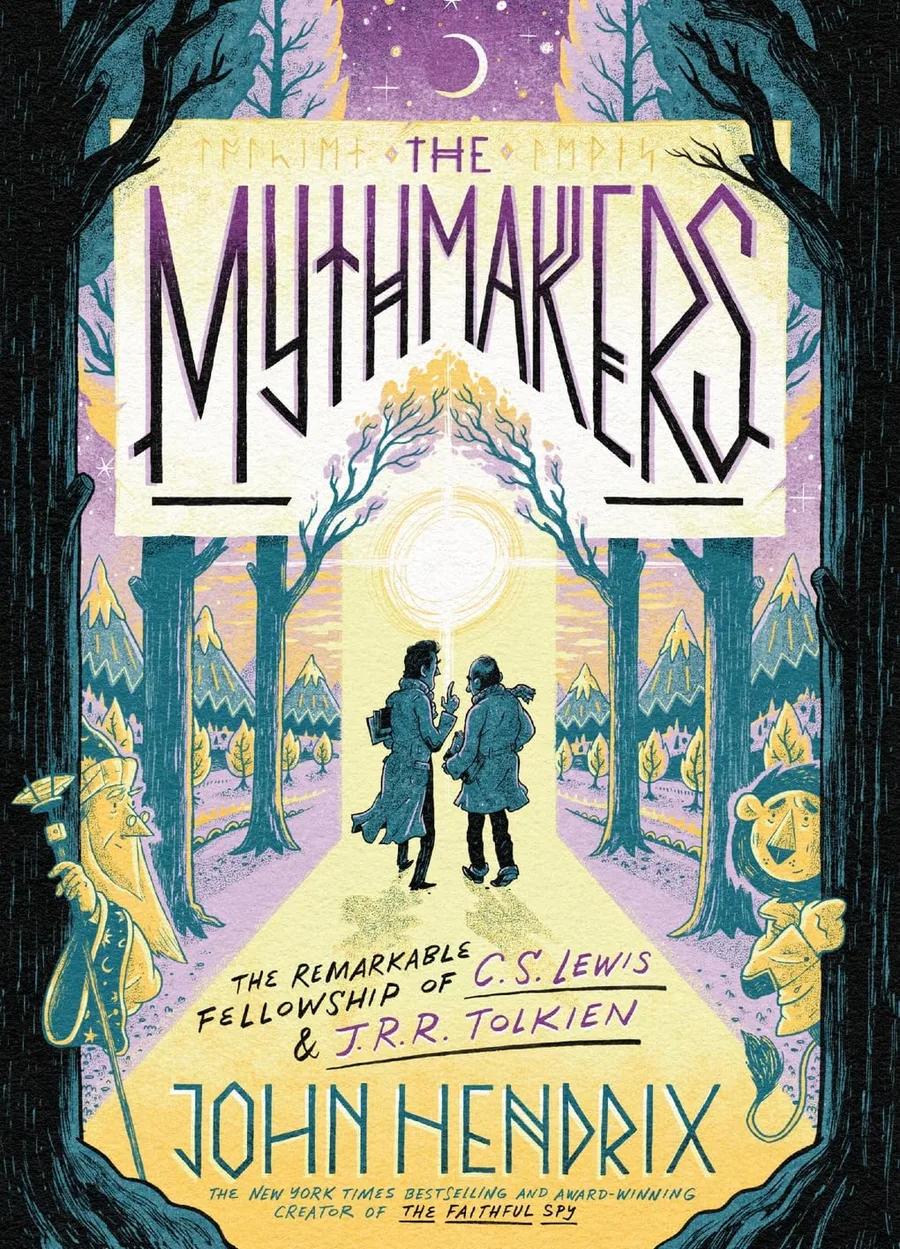 The Mythmakers: The Remarkable Fellowship of C. S. Lewis & J. R. R. TolkienJohn Hendrix, illustrated by John HendrixA fascinating look at the friendship between C.S. Lewis and J.R.R. Tolkien is also an ambitious exploration of the intersection of intellect, imagination, and faith in their lives. This graphic novel introduces the anthropomorphic Mr. Lion and Mr. Wizard as guides; they begin with an explanation of mythology and its related forms. The narrative then turns to the two men, recounting each of their childhoods and early adulthoods. Lewis and Tolkien met after World War I at Oxford, connecting first over shared love of mythology. Tolkien, a devout Catholic, found the integration of faith and myth seamless, while Lewis, a former Protestant who came out of the war an atheist, did not. But their deep, ongoing discussions led to a series of revelations for Lewis; Tolkien’s belief in myth-making and storytelling as human expressions of the divine led Lewis back to Christianity. If not for Lewis’s encouragement at key points, Tolkien, a perfectionist, might never have finished writing The Lord of the Rings; while Lewis’s integration of faith and creativity was the wellspring of much of his work. Dynamics within the Inklings, their critique and discussion group contributed to their eventual rift, a bittersweet endnote to each man’s success. Each remained an admirer of the other while mourning the loss of the closeness they once had. Teens (and adults) who are fans of their works will find much to appreciate in this rich exploration of their individual creativity and shared friendship.The ArtsView book details
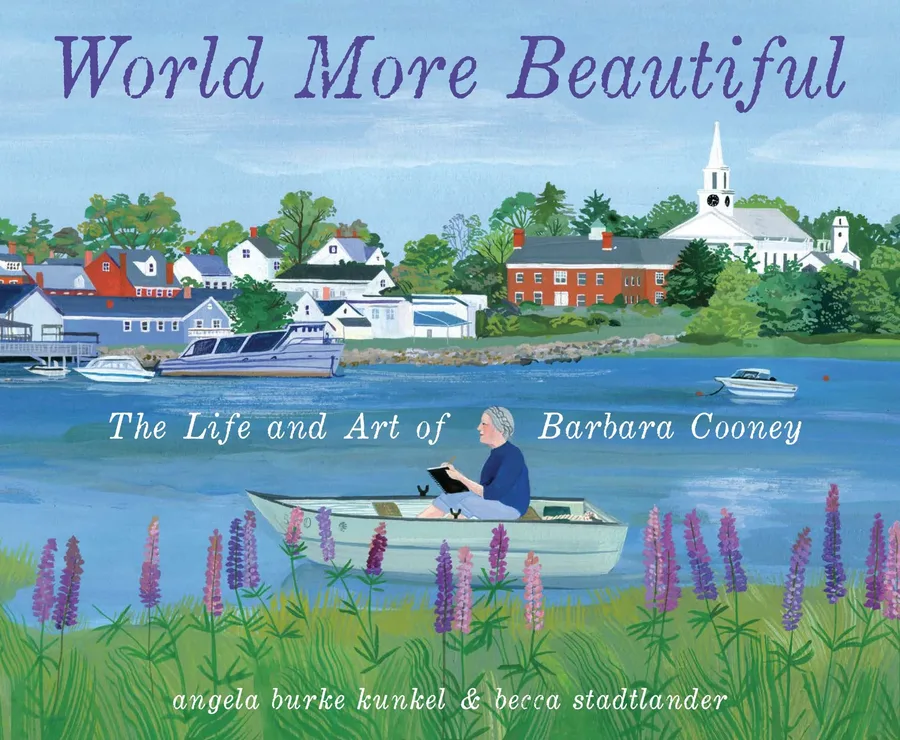 World More Beautiful: The Life and Art of Barbara CooneyAngela Burke Kunkel, illustrated by Becca StadtlanderThroughout her career, Barbara Cooney created over 100 books for children and won two Caldecott Medals for her art. One of her most personal and popular books is Miss Rumphius, which centers on the importance of making the world more beautiful. Cooney’s own path to beautifying the world is thoughtfully chronicled in this picture book biography. The illustrations echo without mirroring Cooney’s recognizable folk-art style. The significance of color is given symbolic attention in the text. Cooney’s identity as an artist brightened when she expanded beyond black-and-white scratchboard art. Observed colors in nature and in her travels influenced Cooney’s personal and artistic palette, such as the blues and greens of Maine summers, sapphire and cerulean in Greek seas, and browns and pinks in the deserts of Mexico. In addition to creating many beautiful books for children, Cooney also played a major role in creating a public library in her small Maine community. An author’s note and afterword provide additional information and appreciation about a much-loved artist and book creator.The ArtsView book details
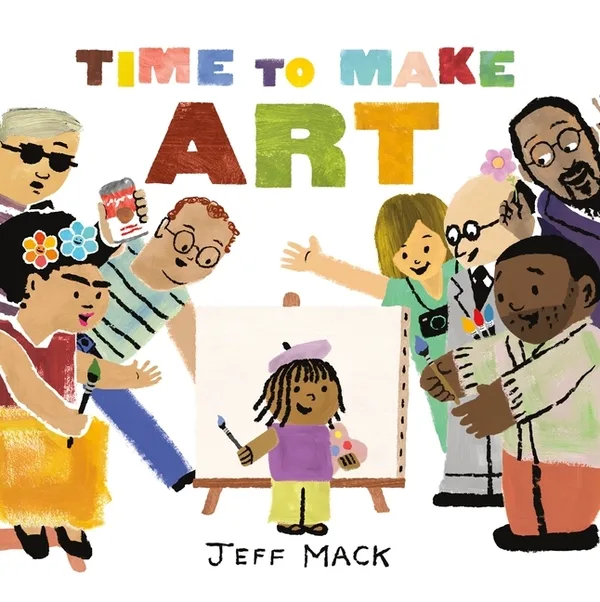 Time to Make ArtJeff Mack, illustrated by Jeff MackThe question “When I make art, does it have to be perfect?” is the first of a series of child- centric queries about what art “has to” be and what it can be. The answers come from real artists, historical and contemporary, all of whom made or make art in different ways and with different materials. The encouraging tone and expansive view of art covers questions about materials, inspiration, mistakes, subject matter, and much more. The increasingly complex topics (“Can art ever be pretty and ugly at the same time?” “How about my computer? Can it make art?”) encourage a deep dive into the meaning and personal nature of artistic work and appreciation. Short bios of the artists referenced often include a personal and little-known fact about each (Piet Mondrian loved to dance the Charleston). With a format that lends itself to dipping in and out, and approachable illustrations that capture the style of each artist cited, young art enthusiasts are welcomed without judgment.The ArtsView book details
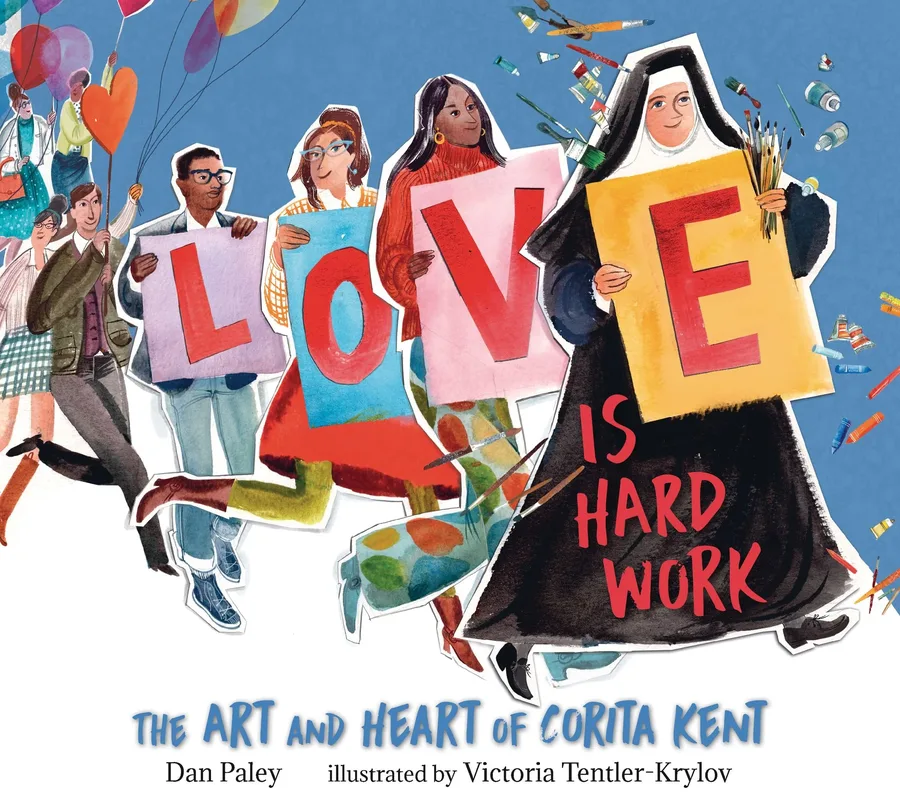 Love Is Hard Work: The Art and Heart of Corita KentDan Paley, illustrated by Victoria Tentler-KrylovDuring the 1950s and 1960s, when the Catholic church and society in general were undergoing transformation, Sister Corita Kent, a teacher and artist, embraced change, encouraging her students to think outside the box while creating art of her own that was rooted in social justice. When she and her fellow Immaculate Heart of Mary Sisters faced pushback from Church traditionalists, Corita followed a new path, fully embracing her identity as an artist. “She believed art had the power to recognize people in need, to inspire action, and to be a source of hope and joy in a troubled world.” This picture book profile of Corita Kent celebrates the life and legacy of a woman whose work was an expression of her love, compassion, and commitment to working for a better world. Colorful, energetic illustrations reflect the buoyant spirit, if not graphic style, of Corita Kent’s art.The ArtsView book details
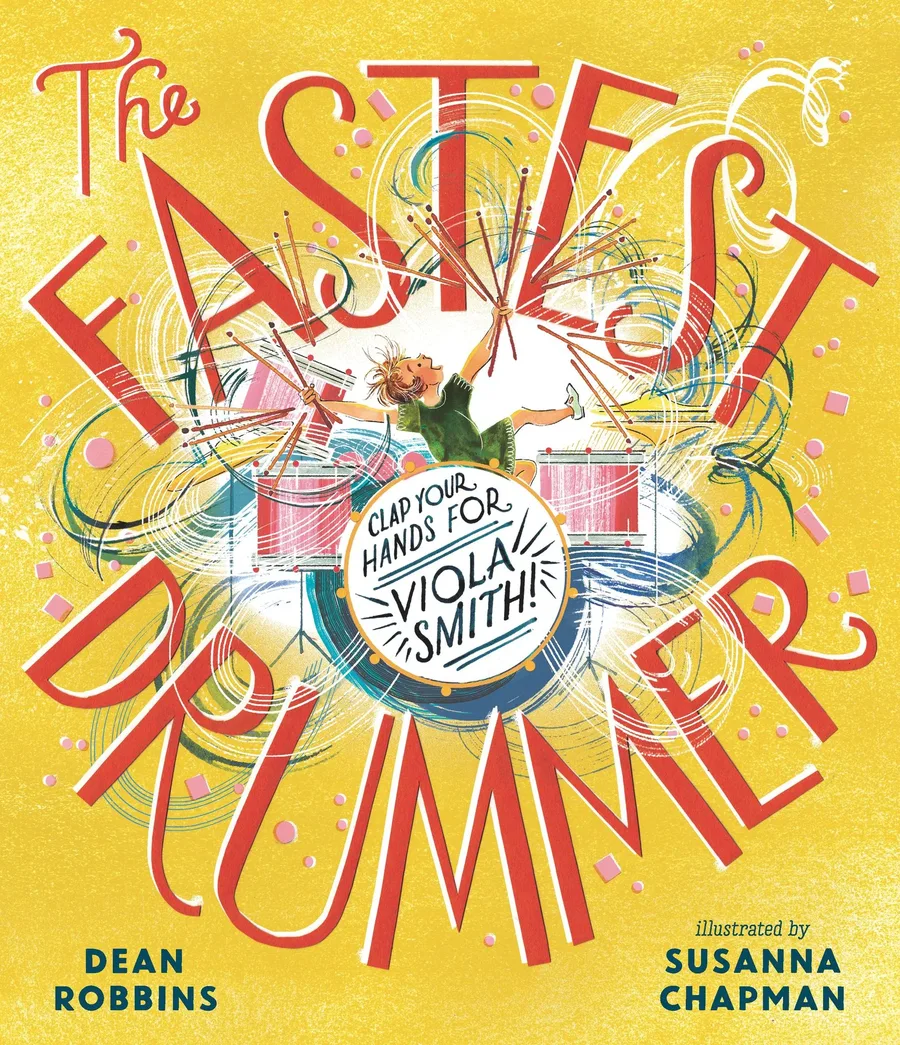 The Fastest Drummer: Clap Your Hands for Viola SmithDean Robbins, illustrated by Susanna ChapmanWhen Viola Smith first played the drums, “She lost the beat, made a terrible racket, and had more fun that she’d ever had before!” Born in 1912, Viola grew up in Mount Calvary, Wisconsin, where she and her sisters had a family band, the Smith Sisters Orchestra. They performed in town and around the Midwest, and Viola never passed up an opportunity to talk with other drummers about how she could improve. Most of her sisters lost interest in the band as they got older, but not Viola, who also knew women didn’t get as much respect or as many opportunities as men in the music business. To try to change that, she formed her own women’s band, The Coquettes, in the 1930s. During World War II, she advocated for women musicians to fill in for male musicians who were serving in the war. Spirited, curious, skilled, and dynamic, Viola performed with other renowned drummers and musicians throughout her career (she was sometimes called “the fastest drummer in the world” when she was younger; and was still playing at age 100). A vivacious picture book biography capturing Viola’s enthusiasm, drive, and force of personality is paired with mixed-media illustrations full of energy and movement. An author’s note telling more about Viola, glossary of musical terms, and sources are included.The ArtsView book details
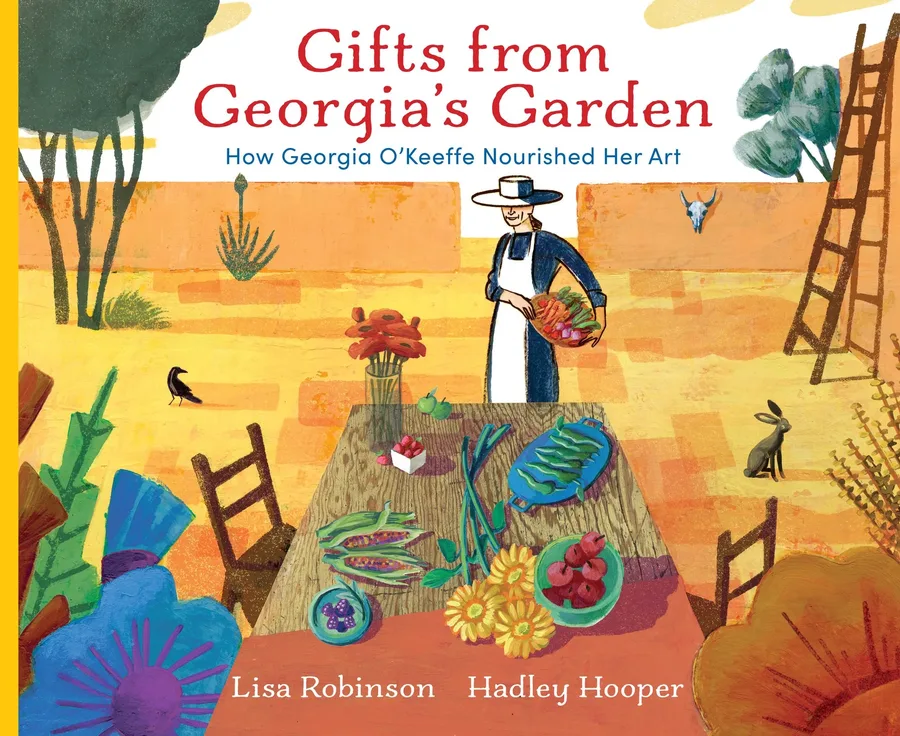 Gifts from Georgia’s Garden: How Georgia O’Keeffe Nourished Her ArtLisa Robinson, illustrated by Hadley HooperA fresh approach to the life of Georgia O’Keeffe uses the garden Georgia planted and grew at her home in New Mexico as an artful touchpoint to explore ways her creativity and interests extended beyond painting, even as painting was a constant. Georgia planted, she tended, and yes, she painted. While her garden grew, she explored, she sewed, and she painted. When her garden blossomed, she cooked “simple soups—minestrone, potato, and leek; salads—watercress or beet and bean; dinner dishes—tomato soufflé and green chile enchiladas... And all the while, she painted.” End matter includes a photograph of Georgia working in her New Mexico garden along with brief biographical information, and discussion of sustainable gardening. Illustrations masterfully balance visual references to Georgia’s lush and moody art with distinctive and captivating scenes of her daily life and the desert landscape she inhabited.The ArtsView book details
Poetry
7 selections
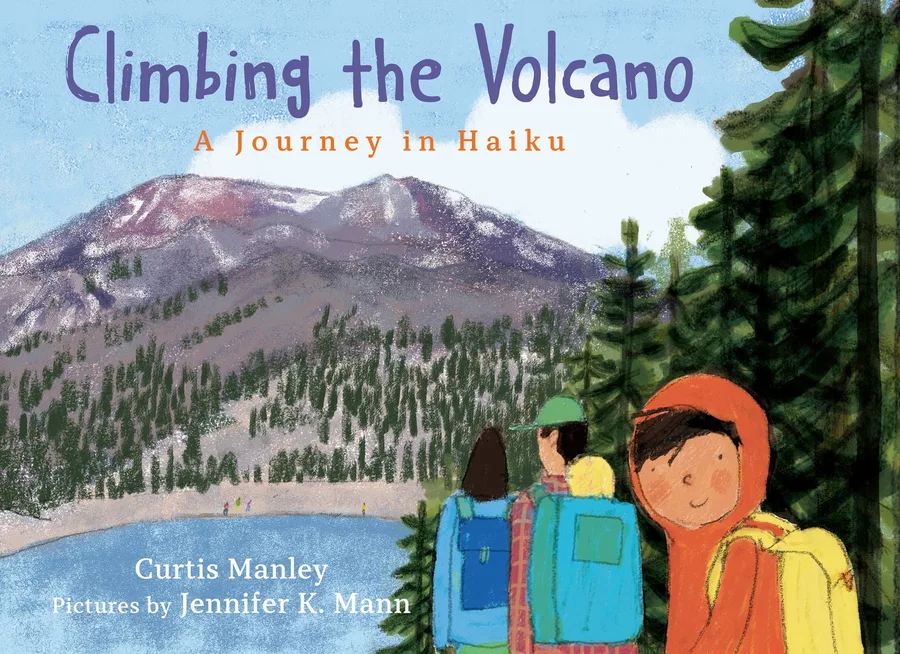 Climbing the Volcano: A Journey in HaikuCurtis Manley“[H]ow do you / climb a mountain? / one step at a time...” A brown-skinned child and their family set out to climb dormant South Sister volcano. Leaving their campground at sunrise, they follow a trail through the forest, taking note of wildlife both pesky (mosquitos) and endearing (tiny toads). The volcano itself is a “pumice desert” of “gray lava domes,” covered in layers of snow and bobcat tracks. The narrator passes other hikers and a marmot, spots birds of prey and butterflies galore. Near the top, gray stone gives way to “cinders underfoot— / the red I saw blazing at dawn.” The family’s effort pays off when they reach the summit. The view is majestic, the “tiny pond / like a great blue eye,” “the world— / looking like a big map / of the world.” Thankfully, the route down is easier: “sliding fast— down the snowfield / that I slogged up” before a rest at the lake and a return trek through the woods. The narrator is not tired but energized and inspired after a day of adventure. “[T] rying to sleep— / what mountain will I climb / next?” Written in haiku—the back matter specifies that the poetry form does not have to be in a 5-7-5 syllable pattern—the author packs the text of this outdoor adventure with vivid imagery and details of the natural world. The book’s trim size allows for wide views of the varied landscape.PoetryView book details
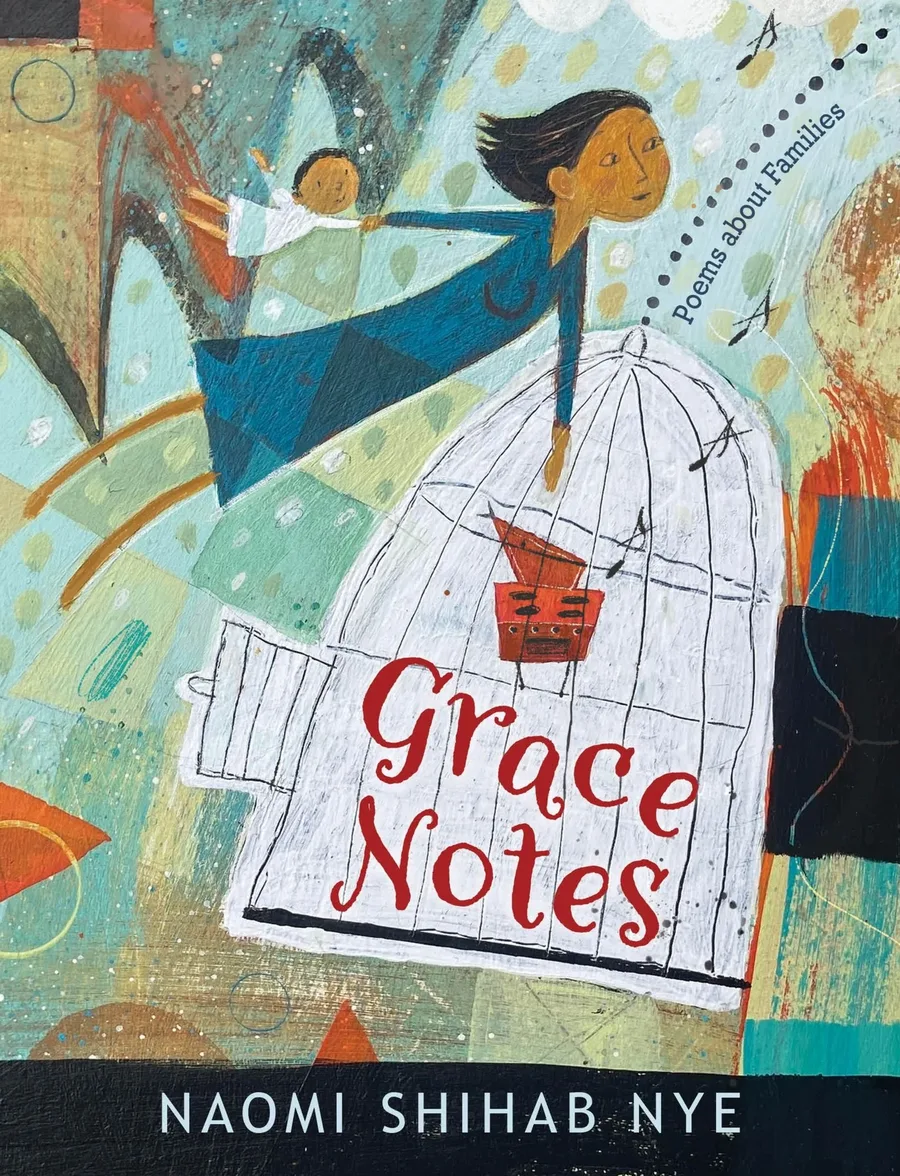 Grace NotesNaomi Shihab Nye“First memory: / clinging to the rail. / They were not happy in the living room. / Mama, Dada. / Two big people, hard words / bouncing back and forth.... I didn’t know many words yet, but heard / their edges.” (from “I Stood in My Crib”) Poems about families focus on poet Naomi Shihab Nye’s own family first and foremost, especially her mother and their relationship over time. It’s clear her mother’s ambitions, frustrations, interests, and challenges, including living with depression, imprinted themselves on and influenced Nye’s life from childhood on. Poems that invite reflection on what it means to be a child in relation to the adults in one’s life, and sometimes in opposition to them, may especially resonate with young readers, and be particularly relatable for any living with an adult who has depression. Poems about Nye’s father are also part of this collection that expands in Part Two (“Sometimes We Need a Bigger Family”) to also look at other important people in her childhood and influences in her life. This includes events happening around the world, especially in the Middle East, to which Nye, whose father was Palestinian, has always brought a personal, informed, compassionate lens.PoetryView book details
 The Smell of Wet Dog and Other Poems and DrawingsBarney Saltzberg, illustrated by Barney Saltzberg“It’s hard to sit. / It’s hard to stay. / Who makes these rules up, anyway?” (from “Sit and Stay”) Twenty-eight poems about dogs (and one cat who can’t resist inserting itself at volume’s end) delight in this tail-wagging picture book. Aspects of life with a dog, or being a dog, are chronicled in poems that are playful and occasionally bittersweet. The rhyme pattern, rhythm, and style across the poems vary but the good fun is sustained throughout. Spot illustrations showcase a range of slightly comic canine companions in this appealing volume.PoetryView book details
 Starlight SymphonyBuffy SilvermanAs night falls, notes rise in a symphony of nature’s instruments. “A flutist’s / airy melody / sparkles in / a lakeside tree. / Eee-oh-lay!” This wood thrush song is followed by a host of other animal instrumentalists playing their songs, including the “Rat-a-tat” of a woodpecker’s drumming, the wood duck’s oboe call, a bullfrog’s low tuba notes, and more. Each page spread features a striking close-up photograph of the animal musician, with more about each provided in a “Meet the Musicians” feature at volume’s close.PoetryView book details
 The City Sings Green & Other Poems about Welcoming WildlifeErica SilvermanThis uplifting, inspiring work highlights eleven environmental restoration and problem- solving projects around the world. When Toronto began creating more green spaces and urban forests, ravens returned to the city. A penguin tunnel was built to help 14” Little Blue penguins cross a busy highway in New Zealand, and a honeybee highway in Oslo, Norway, provides the pollinators with food and resting places on rooftops across the city. A concerted effort to regreen Singapore has resulted in the return of vanishing wildlife, including smooth-coated otters, while a project to rewild a Los Angeles schoolyard has resulted in thriving native plants and the appearance of a rare burrowing owl. These and other featured endeavors, described in playful poems and brief informative text, create a sense of hopeful possibility in a can-do collection with vibrant illustrations that add to the cheerful feel. Additional resources about restoration work and each specific project, as well as suggestions for learning about issues close to home and ways to take action, are at volume’s end.PoetryView book details
 HomeMatt de la Peña, illustrated by Loren LongNatural history, poetry, and art converge in this beautiful, intriguing volume. Poems in the voice of each subject feature animals giving brief tours of their unique homes, from the “Stony Villa” of the common octopus, a “pretty chamber lined with stones,” to a comet moth’s “Silky Apartment” made from a single “strong, silvery thread,” to the elf owl’s “Cactus Cabin,” a “spiny colossus” for the world’s smallest owl. Descriptions of these and 24 other animal homes are set against deep-hued, lushly detailed digital illustrations showing each animal in its habitat. Information about animal behavior is incorporated into the poems, with more information about each creature, along with a glossary, at volume’s end.PoetryLexile Text Measure AD910LFountas & Pinnell Text Level OView book details
 Poetry ComicsGrant SniderA collection of original poems full of quiet surprises and small moments of pleasure is presented in comic format. Organized around the seasons, many of the short poems explore familiar scenes and subjects (e.g., nature, swimming, back to school, snow), but offer the delight of the unexpected in moments of reflection, fresh observation, and wondering. The poems also explore ways of seeing the world (e.g., “Other Oceans,” “Places to Feel Big,” “Autumn ABC’s”) and oneself (e.g., “Best Friends,” “I Can Be...,” “Confidence”). There are poems about poetry, too, and what it means to be a young writer or poet: “Write a poem. / Read it. / Put it in your pocket. / Forget it. / Days later... / reread it. / Wring out all that parts / that are sloppy. / Rewrite it.” (“How to Write a Poem #3”). The bright, uncluttered panel illustrations, done in pen and marker and colored in Photoshop, feature the same two children throughout: one brown-skinned with a dark ponytail, and one light-skinned with short black hair. Their recurring presence gives the volume the feel of a story collection, 40 Poetry CCBC Choices 2025 offering glimpses into characters who are kindred spirits. At once playful and insightful, inviting and inspiring, this elegantly simple but far from simplistic volume is a pleasure to look at, read, and reflect on.PoetryLexile Text Measure NP0LATOS Book Level 0.1View book details
Concept Books
4 selections
 Black Girl You Are AtlasRenée Watson“Rodney King was beaten by LAPD police officers / and I can’t stop thinking about the cute boy at school / who asked me, Why are you so beautiful?... Mariah Carey understands me. And Boys II Men sing everything / I want to hear from the cute, smart, jazz-loving Black Boy / who now has a girlfriend who is not me.” (from “Turning Thirteen”) Poems rooted in the soil and substance of author Renée Watson’s life comprise a collection that is uplifting through validation and example as much as intention. Watson’s observations and experiences are grounded in the specific, in what is real and messy and holy in relationships with her family and members of her community. “On Saturdays, Ms. Tiny’s kitchen / becomes the House of Miracles. / She baptizes my hair, / washing its sin down the drain of her basin.” (from “Church of Press & Curl”) Watson reflects on her family’s love—small moments and their lasting impact—and wonders, laments, and celebrates what it means to her to be a Black woman, as well as the importance of Black women to Black communities. Gorgeous, painterly portraits and spot illustrations accompany the poems in this stirring work.Concept BooksView book details
 Animal CountdownLaura Vaccaro SeegerA beautifully designed peek-a-boo counting book uses a single die-cut on each page spread to give a glimpse of an animal that is fully revealed and named by folding out (or in this case, up!) the die-cut page. The numbers, which are spelled out on the left-hand side of each spread, count down from ten to one, starting with ten sea otters and ending with one snow leopard. Together the left and right pages of each spread create a full scene, placing the animal in a natural setting. The final page of narrative notes that each of the animals is endangered, while the end matter repeats each animal’s picture along with brief information. The lush mixed-media illustrations blend realism and artfulness.Concept BooksView book details
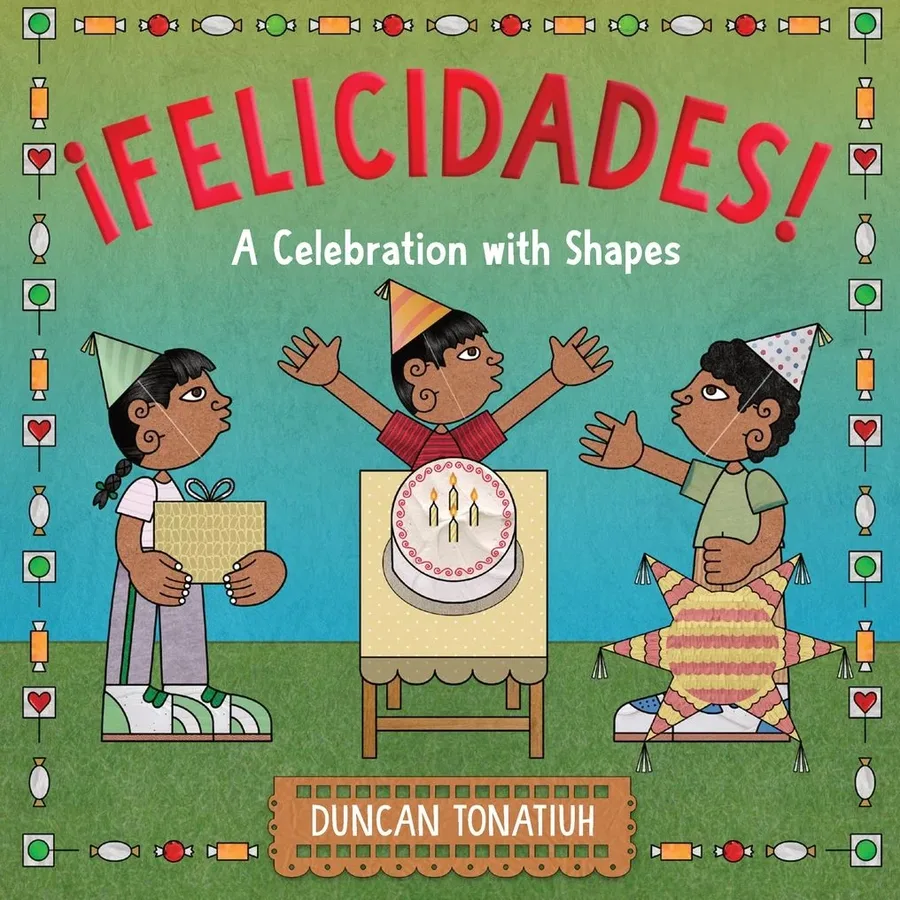 Felicidades! A Celebration with ShapesDuncan TonatiuhAuthor-illustrator Duncan Tonatiuh’s stylized Mesoamerican artwork perfectly complements the topics of a pair of bilingual concept books. In ¡Felicidades!, each page is dedicated to a geometric shape, identified in English and Spanish. Each shape is also an object; for example, a square/cuadrado is a table/mesa. Collectively, the shapes play a role in the setting and entertainment for a child’s birthday party. In ¡Fiesta!, each page is dedicated to a color, identified in English and Spanish. Each color is also an object; for example, blue shawl/rebozo azul. Collectively, the colored objects play a role in the setting and entertainment for a street festival. An author’s note about the respective objects and celebrations completes each volume. The square design of these books enhances the geometric elements of the art.Concept BooksView book details
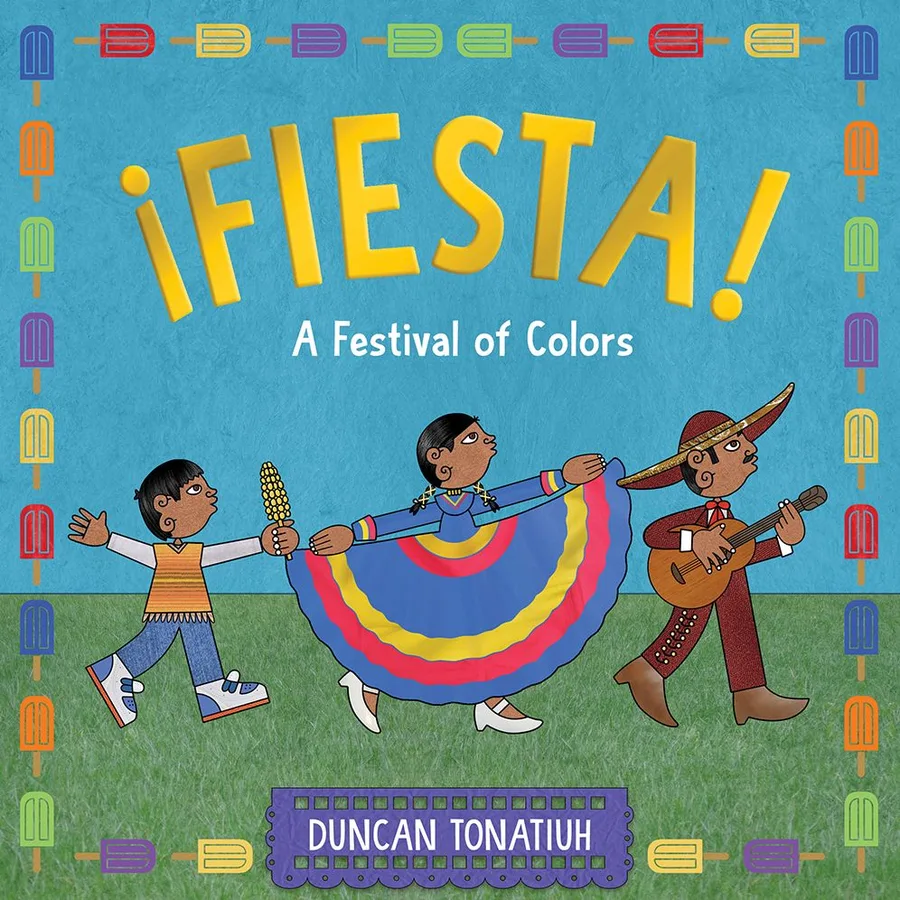 Fiesta! A Festival of ColorsDuncan Tonatiuh, illustrated by Duncan TonatiuhAuthor-illustrator Duncan Tonatiuh’s stylized Mesoamerican artwork perfectly complements the topics of a pair of bilingual concept books. In ¡Felicidades!, each page is dedicated to a geometric shape, identified in English and Spanish. Each shape is also an object; for example, a square/cuadrado is a table/mesa. Collectively, the shapes play a role in the setting and entertainment for a child’s birthday party. In ¡Fiesta!, each page is dedicated to a color, identified in English and Spanish. Each color is also an object; for example, blue shawl/rebozo azul. Collectively, the colored objects play a role in the setting and entertainment for a street festival. An author’s note about the respective objects and celebrations completes each volume. The square design of these books enhances the geometric elements of the art.Concept BooksView book details
Picture Books
65 selections
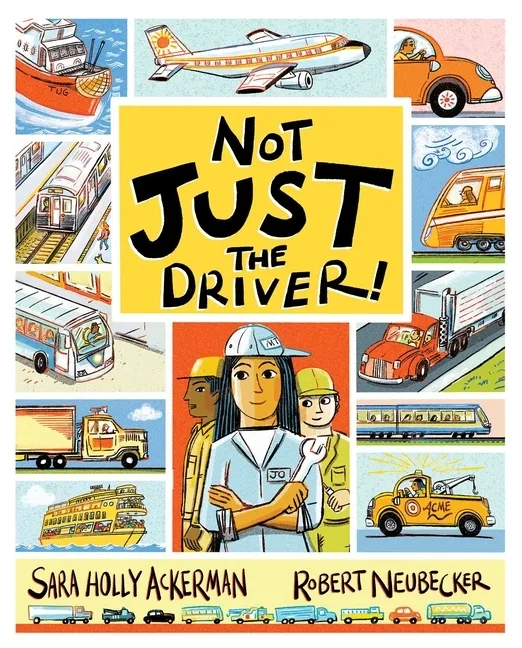 Not Just the DriverSara Holly Ackerman, illustrated by Robert Neubecker“Who makes buses rev and go / through detours, gridlock, storms, and snow? / Block by block, who smooths the journey —/ potholed, hilly, testy, turn-y?” This engaging, simplified look at behind-the-scenes workers who make sure various types of vehicles and transport run smoothly pairs a fact-filled rhyming text with bright, bustling illustrations. Buses, cargo trucks, subway trains, commuter trains, boats and ferries, and airplanes are featured. Each type of vehicle gets an introductory page spread, followed by a page spread showing workers such as mechanics, fork lifter operators and loaders, track maintenance workers, ticket agents, and dispatchers getting their moment to shine. The illustrations show diverse people working across the many types of jobs and are filled with details that will be a delight for young children to pore over.Picture BooksView book details
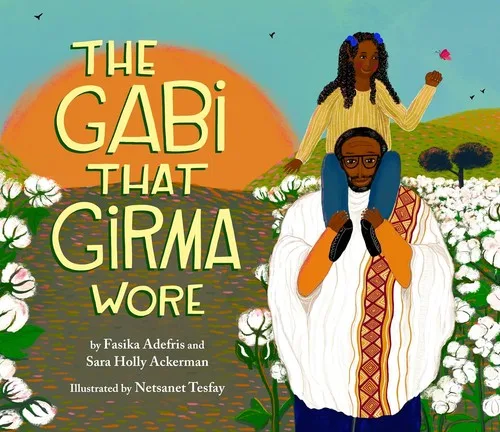 The Gabi That Girma WoreFasika Adefris, Sara Holly Ackerman, illustrated by Netsanet TesfayA text modeled on “The House That Jack Built” stands out for both its subject matter and skillful writing. “This is the cottonseed, oval and slight, / hugged by the soil and warmed with light... / to sprout the Gabi that Girma wore.” An Ethiopian Gabi is a traditional woven cotton garment worn both for warmth and special occasions. From seed to finished product, the text outlines the making of a Gabi. After the cotton is harvested, seeds are removed by hand and the cotton is spun into yarn. The garment, white with a colorful geometric border design, is woven on a large, manual loom before being pieced together. Once the fringe is completed, the Gabi is “ready for trade, / carefully folded and proudly displayed.” The Gabi is carefully selected by a woman, Genet, as a special gift for her husband, Girma. Girma wears his Gabi with pride and shares it with their children, “snuggling under a field of white, / gathering memories into the night...” With flawless rhythm and rhyme, the text includes Amharic words that, if unfamiliar to the reader, are easily discernible in context; there is also a glossary in the back matter. Boldly colored digital illustrations clearly depict the creative process behind these works of textile art.Picture BooksView book details
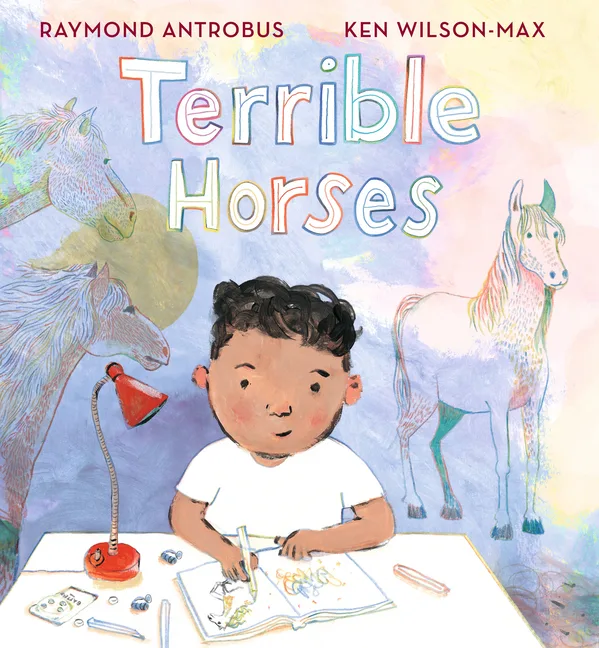 Terrible HorsesRaymond Antrobus, illustrated by Ken Wilson-MaxA young, brown-skinned boy wants to share his big sister’s toys, and her friends. Instead, the two of them fight. “Push Pull Hurt Hide. We do not use our words.” The boy, who wears hearing aids, takes refuge in his room and writes stories about “terrible horses.” “In the stories, I am a pony. Everyone else in the world is a horse... It is lonely being a pony.” The sibling discord continues and so, too, do his stories about “ghastly, galloping,” “nagging, neighing” horses. “I write about the pony that can’t compete / that can’t speak / that can’t sleep.” Then his sister finds his book of stories. She smiles “a whole smile.” She says sorry. “She never says sorry.” She offers a hug. He wonders what she saw in his stories. He wonders, “Is she a terrible horse? Or a pony?” A spare yet emotionally rich text explores the pain of the boy’s feelings of disconnect and isolation, the power he finds in creative expression, and the solace of a hopeful (re)connection. Uncluttered mixed-media illustrations anchor the story’s feelings and actions with images that show the two siblings and the boy’s imagined world. The boy’s concluding, open-ended questions are a wonderful invitation to young readers and listeners to consider what, if anything, has changed, and why.Picture BooksView book details
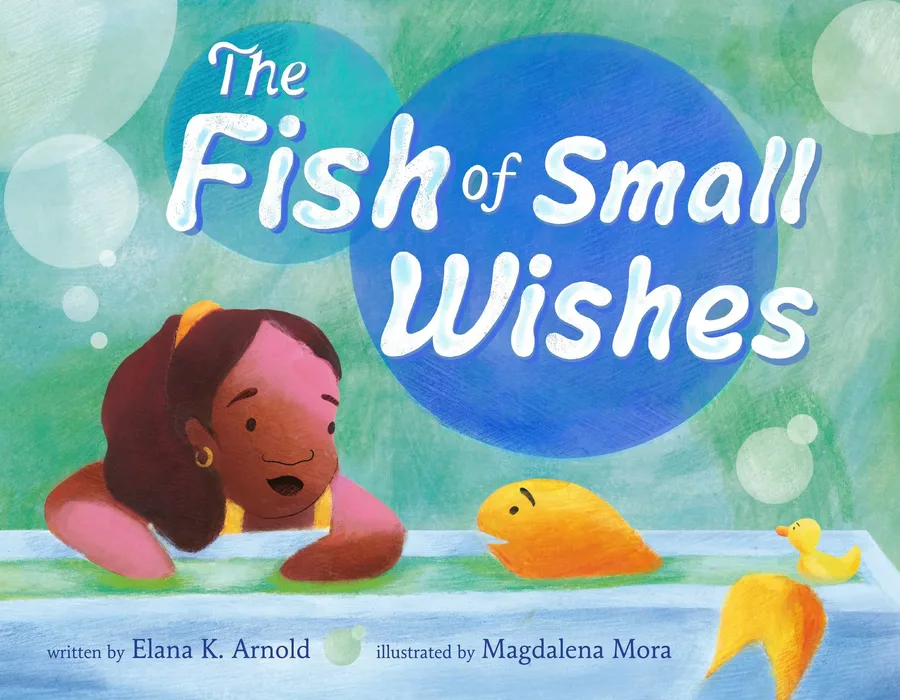 The Fish of Small WishesElana K. Arnold, illustrated by Magdalena MoraInspired by a fantastical fish, a shy girl learns she has the wherewithal to reach out to others when the moment calls for it. There are lots of kids on Kiki Karpovitch’s block, but joining in their play is intimidating. When Kiki (who has brown skin) finds a golden fish floundering on the asphalt, she rushes to put it in the bathtub. In exchange, the fish offers to grant Kiki a wish. But, Kiki’s wishes, as the fish explains—to have “lots of friends,” to be less shy— are too big. “I am a fish of small wishes.” With the fish rapidly outgrowing the tub, Kiki’s third wish, for a deep hole in the courtyard, is still too much for the fish of small wishes, so Kiki must ask for help. “Words rose like bubbles in her throat, and she almost swallowed them,” but Kiki calls out to the other kids, asking them to help her dig a hole. The work of creating a makeshift pond draws out their siblings and parents too. While she still feels “sort of shy,” Kiki also feels “proud. And happy.” The fish is safe, and Kiki’s wishes have come true—thanks to her own gumption. An author’s note reveals the inspiration behind the story: Her great-grandfather, “a big softy,” freed his family’s live Passover carp before it could become gefilte fish. The repeated pleasure of the “fish of small wishes” phrasing is just one of the delights for readers and listeners of this whimsical offering.Picture BooksView book details
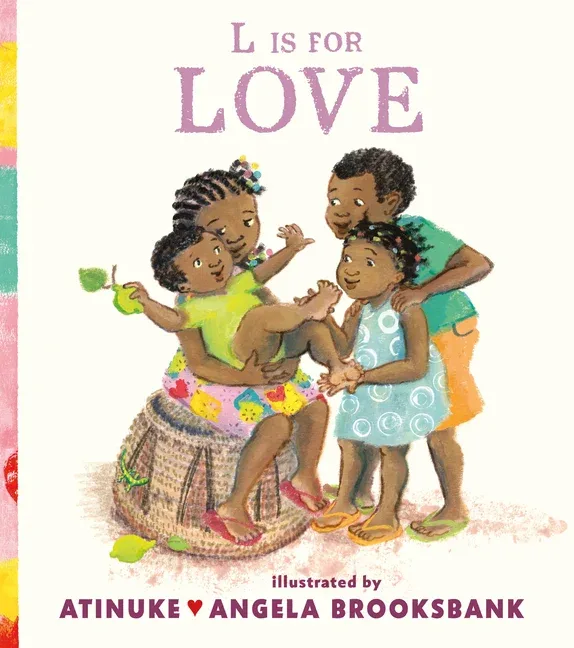 L is for LoveAtinukeA Nigerian family (mother, father, three children, all Black) journeys from their rural home to the big city of Lagos to sell their lemons at market in this story pairing a clever text with lively visual storytelling. The narrative is comprised of statements beginning “L is for” that describe elements and activities of the long, eventful day. It begins in early morning darkness, saying goodbye to grandparents and an infant sibling (“L is for Love... L is for Leaving... L is for Lamp”) and ends with their nighttime return (“L is for Late.”). In between are many things they do and see as they walk (“L is for Legs”), ride (“L is for Lift”), observe (“L is for Lazy Lions... L is for Lagos!”), work, and play (“L is for Lemons... L is for Laugh.”). There are sensory-rich details in both the words and mixed-media visual images of a story that comes full circle as they arrive home in the dark and are welcomed with hugs. “L is for Love” indeed.Picture BooksView book details
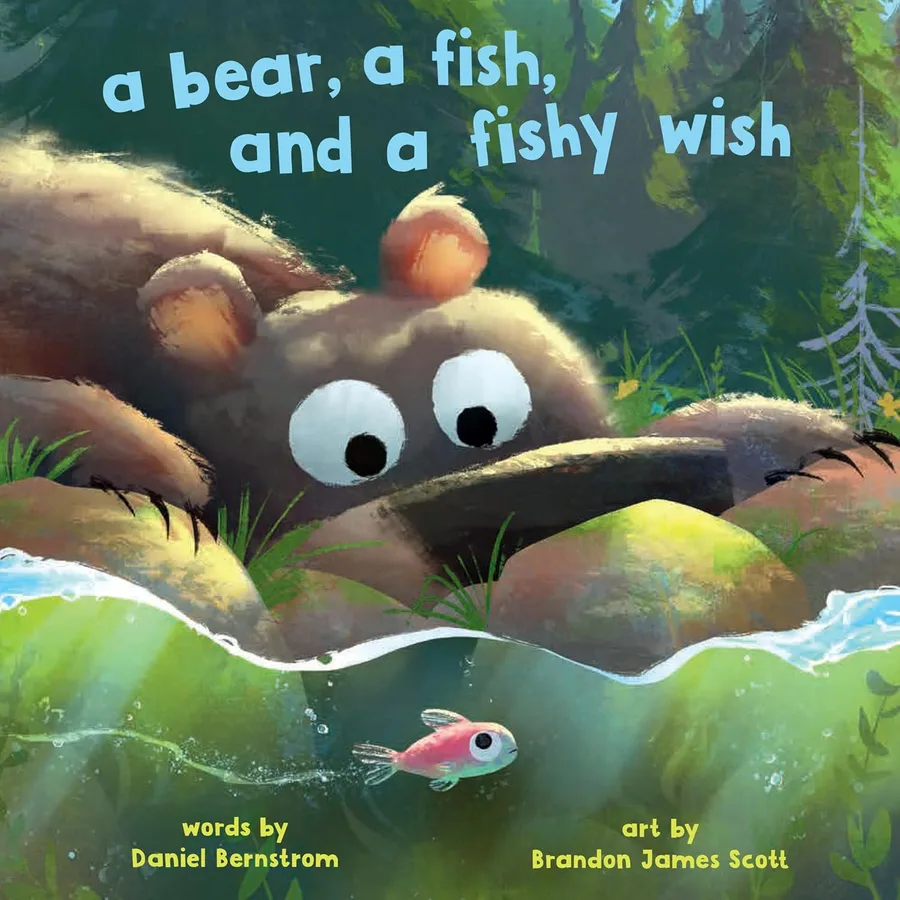 A Bear, a Fish, and a Fishy WishDaniel BernstromA hungry brown bear with a “fishy wish” has its eyes—and stomach—set on a lone small pink and silver fish working its way upstream toward home. The fish is mid-jump up a waterfall when the bear succeeds in capturing it. “One fish / two fish / fish galore” follow, their eyes suspicious slits of annoyance and anger as they, too, leap up the waterfall, over the wide-eyed bear and its equally wide-eyed fishy captive. Both bear and fish topple into the water before washing up on the riverbank. “A flip / a flop / a gasp for air / a worried stare / a starving bear...” The brief rhyming text, humorous digital illustrations and mounting tension, and its tender resolution are all a delight in a story perfect for reading aloud.Picture BooksATOS Book Level 1.1AR Interest Level Lower Grades (LG K-3)View book details
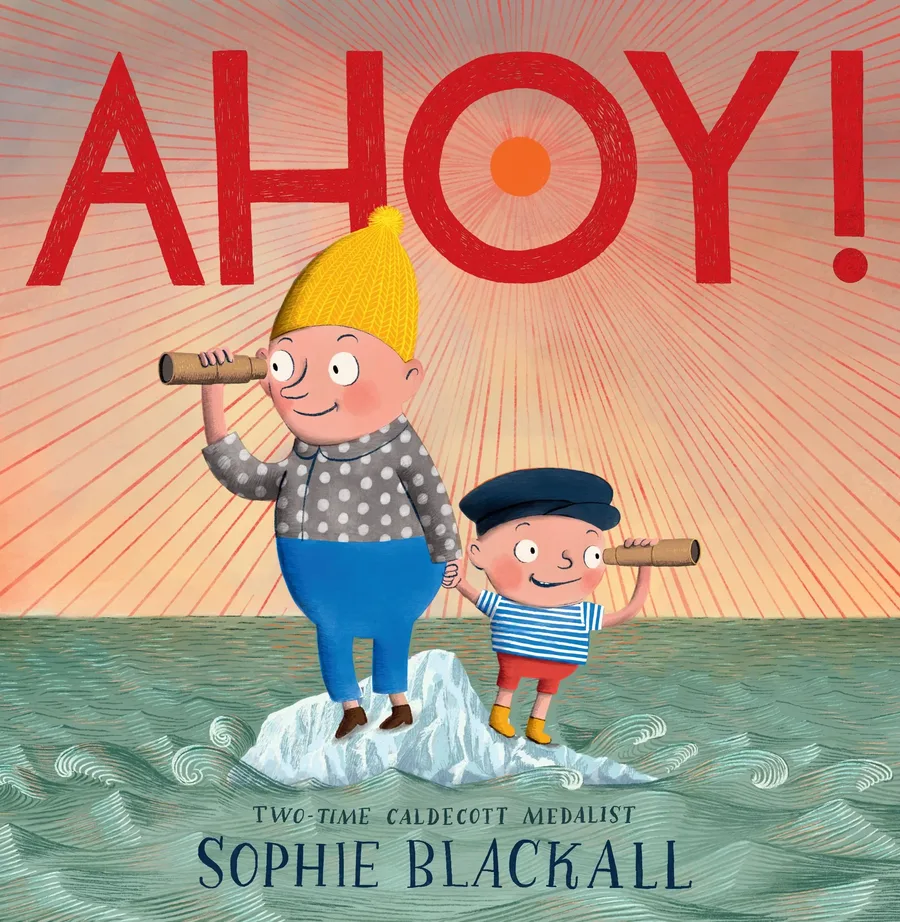 AhoySophie BlackallAny child or juvenile sailor could tell you that a large blue rug is not a rug—it’s an ocean! The youngster (white) at the center of this enthusiastic picture book sets sail on imaginative nautical adventure, inviting their grown-up (white) to abandon vacuuming and join them on high seas. Illustrations rich with color and humor convey the highly visual plot, while compelling dialogue bubbles narrate the maritime melodramas and related emotions. A 43 Picture Books CCBC Choices 2025 dining room chair bolstered by broom handles and other kitchen utensils comprise the “ship.” “Help, Captain! I’m being attacked by a giant squid!” yells the grown-up, while the vacuum hose and electrical cord are twisted about their legs. Hungry sharks and the dreaded doldrums are a few of the other obstacles in this breezy, playful read. A glossary for novice seafarers is included in the front matter.Picture BooksLexile Text Measure AD410LATOS Book Level 2.8View book details
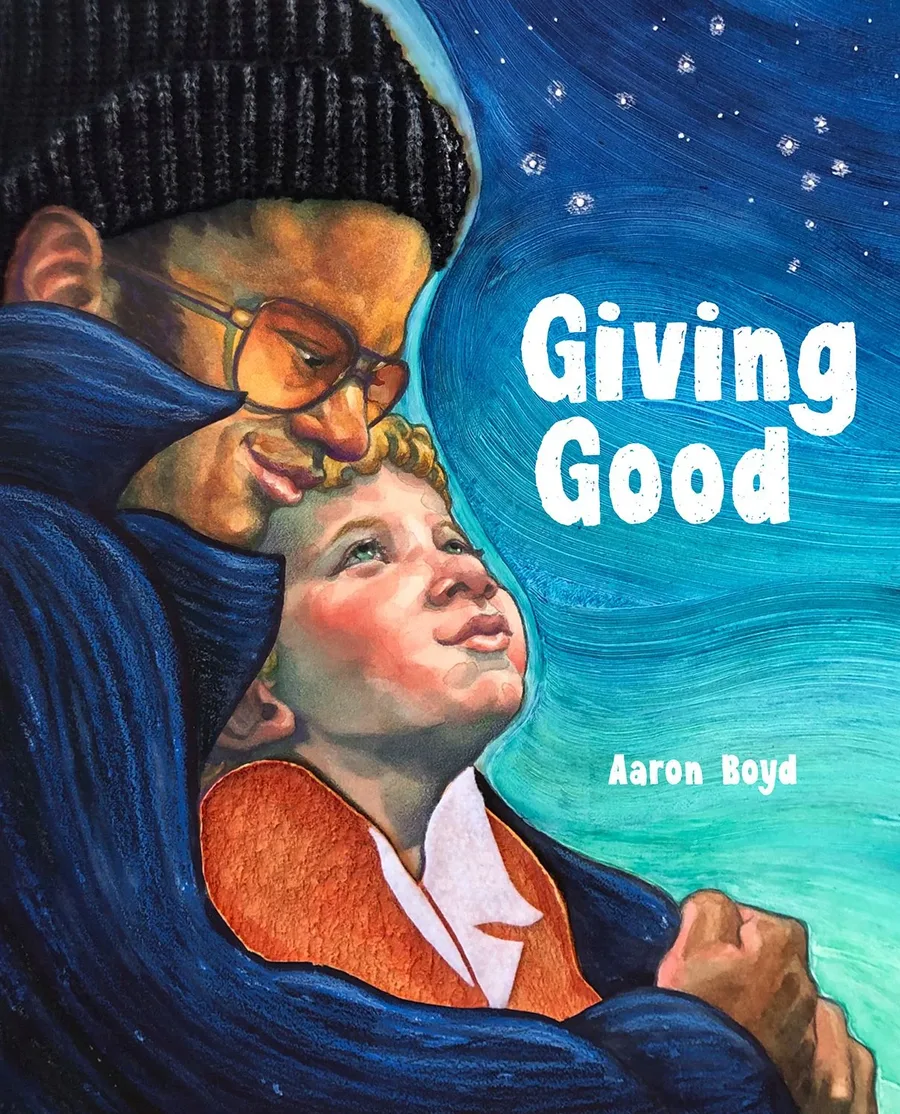 Giving GoodAaron BoydWarmth and connection are all that matter to a young boy (biracial) as he heads out to spend precious time on a school night with his father (Black), who doesn’t live with him. “We roll out in the icy twilight. Only old houses to witness us. Daddy’s eyes go deep. Bad stuff happens sometimes. Don’t matter what he did or didn’t do. Daddy just got hit hard.” While the boy doesn’t have the words yet to express his feelings, he finds comfort in being with his dad and passing the time building balsa wood planes. Though their evening time is brief, and more is left unsaid than spoken, the boy witnesses the many ways “Daddy always giving good” through his words and actions. While there is understated uncertainty regarding the father’s future, the boy is secure in his father’s love and proud of his role model.Picture BooksView book details
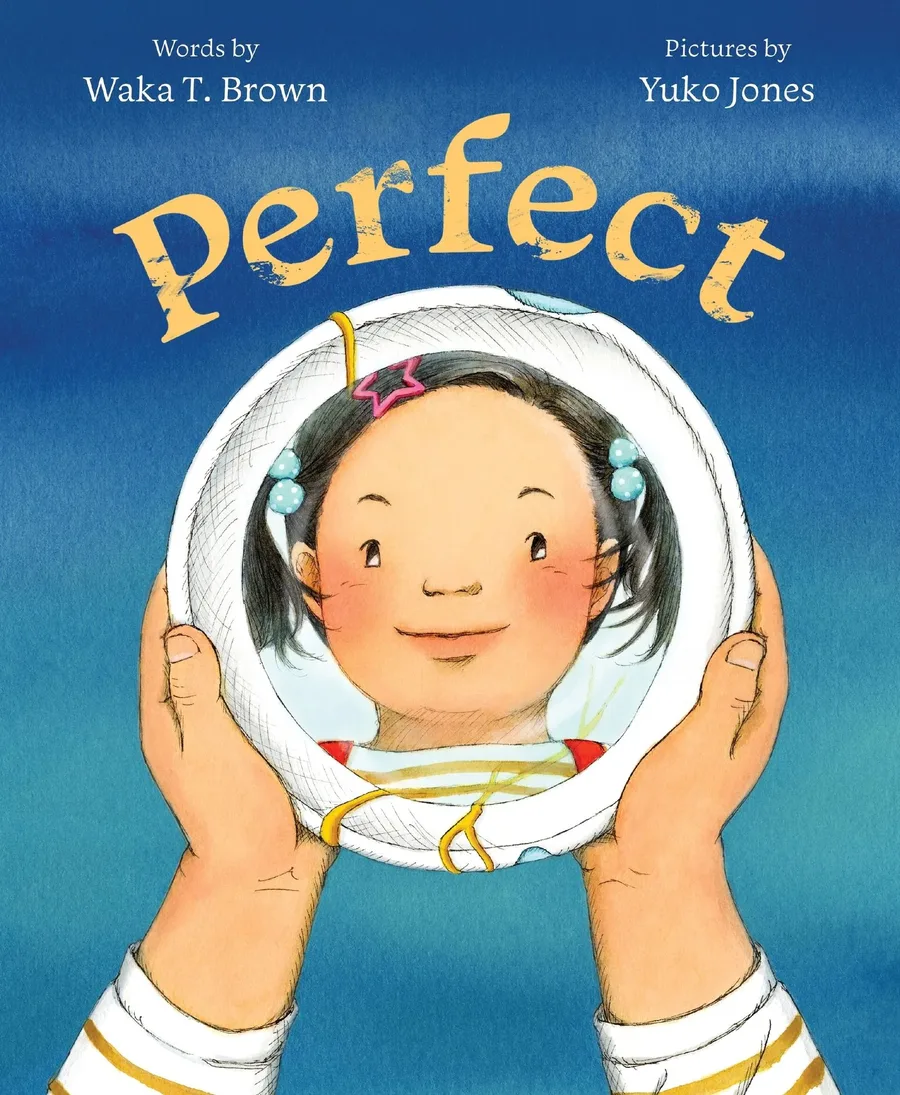 PerfectWaka T. BrownMika, who likes things to be perfect, loves the pottery teacup from Japan her Obaachan gave her. The white and blue colors remind her of the clouds and the sea, and it feels cool and heavy in in her hands. When Mika accidentally breaks the cup, she’s devastated. Obaachan assures her it can be fixed, but after it’s repaired, “Golden lines zigged across the blue. Golden lines zagged across the white.” Obaachan explains that this kind of repair is called kintsugi—“to join together with gold.” Mika isn’t sure about it—the cup is no longer perfect after all—but she realizes it still reminds her of the beauty of the sea, this time during a lightning storm she once saw. More importantly, with Obaachan’s help, she realizes accidents happen, and that imperfect doesn’t mean useless or unworthy of love. Sophisticated ideas explored through a child-centered, accessible story in this picture book about a Japanese American child and her grandmother. Warm, colorful mixed-media illustrations accompany the story.Picture BooksView book details
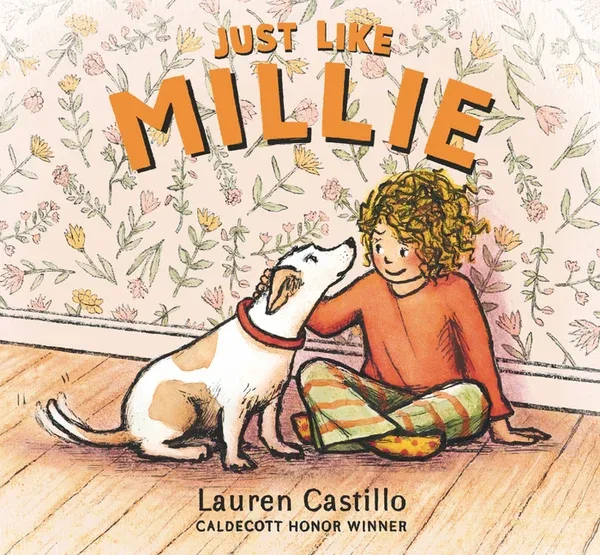 Just Like MillieLauren Castillo, illustrated by Lauren CastilloWhen this book’s young, white narrator and her mom move into a new apartment in a new city, she feels comfortable and safe there. She enjoys reading and independent play. But meeting new people? That’s a different story. The thought of a play date with new neighbors or joining the other kids at a local bookstore’s story time makes her cry. Then her mom surprises her with a new dog. “A not too big, not too small dog. A just right dog.” Millie sleeps next to the narrator’s bed, “like roommates,” and enjoys three walks a day. Millie’s wagging tail and amiability draw the attention of at least one friendly stranger on every walk. At first, when people wave or stop to pet Millie, the narrator feels too shy to return their greeting. But she feels safe with Millie there, and soon she begins to recognize and even say hello to familiar faces. Gathering her courage for a visit to the dog park, the narrator feels shy when she meets another girl, but looking across the park at Millie romping with new dog friends, she approaches the girl, along with her mom, to say hello. The ink, watercolor, and soft pastel illustrations of this satisfying and believable story astutely depict the narrator’s anxiety via body language that subtly changes as she grows more comfortable around others with the help of her sociable dog.Picture BooksLexile Text Measure 361LATOS Book Level 2.6View book details
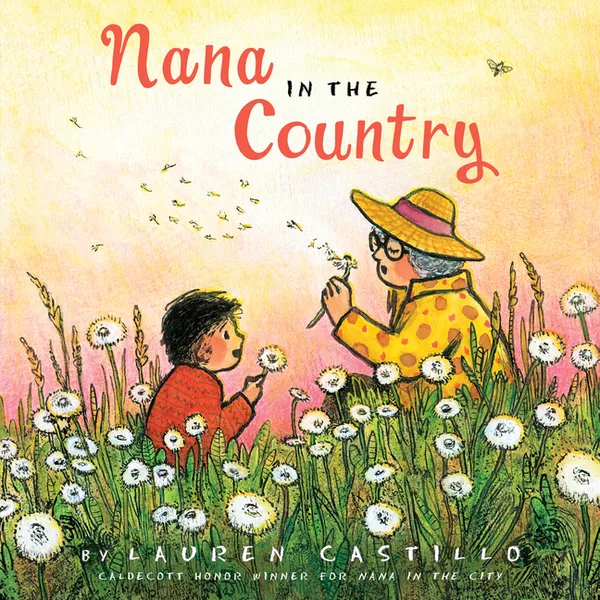 Nana in the CountryLauren CastilloA preschool-age child who lives in the country is eager to show their “city nana” around. A visit that the child has clearly been anticipating doesn’t live up to their initial expectations, however. To the child (who has tan skin and short black hair), the country is friendly, wild, magical and, they assume, unfamiliar to Nana. Nana’s pleased but not awed reaction to things the young narrator shares are a disappointment after such great expectations. “I can’t show Nana how to do a thing in the country. She already knows how to do it all.” Nana’s reassurance that she’s eager to learn more the next day offers little comfort at bedtime. During the night, however, a thunderstorm and a loose sheep provide an opportunity for the child to shine, because, unlike Nana, they know exactly what to do. It’s a reset that makes the rest of the visit exactly what the child hoped for, as they show Nana how to do various chores on their small farm. By visit’s end, Nana agrees that the country is friendly, wild, and “filled with the most magical thing—ME!” A quietly comforting story punctuated by middle-of-the-night drama is brimming with emotional honesty. This companion to Nana in the City features cozy ink, watercolor, and pastel illustrations in a warm palette.Picture BooksView book details
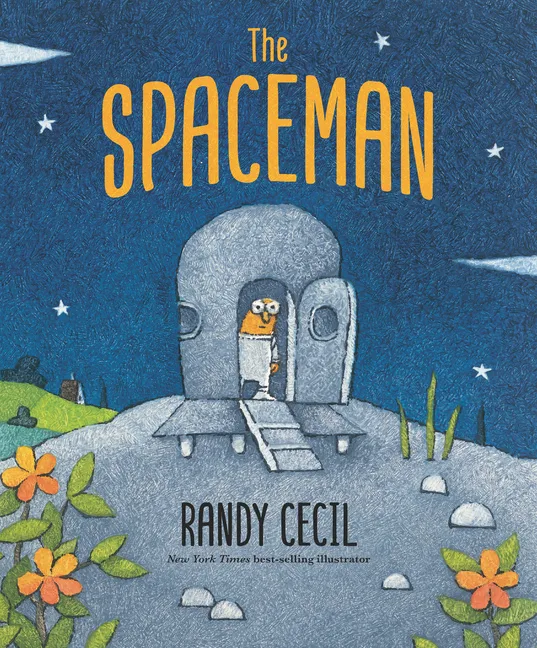 The SpacemanRandy Cecil, illustrated by Randy Cecil“I must confess, at first glance I thought this a rather ordinary planet.” A tiny, orange, bug- eyed “spaceman” peers out of a spaceship at planet Earth. His job is to collect soil samples. “But once in a very rare while, one encounters something special. Something that causes one to forget all about soil samples...” That “something” is a vibrant red flower taller than the spaceman himself. As he admires said flower, a bird makes away with his spaceship. With no other course of action, the spaceman “follow[s] the winged bandit into the unknown” and is startled by a “hideous beast” (a dog), from which he flees in fright. When the sun rises, he finds himself surrounded by “a fantastical array of creatures,” including a butterfly that gives him a lift before dropping him unceremoniously into a pond. And who should fetch him from the water? The hideous beast, of course, who turns out to be “not without its charms.” Enjoying the company of the dog, the spaceman spots his ship in the tree above. He knows he has responsibilities, but what if the ship were to just... get knocked into the water? “Then here I must stay. In this extraordinary place. Laughing and playing. And enjoying the gentle breeze with my friend.” Funny and unexpectedly sweet, the spaceman’s formal, observational tone of voice offers a new perspective on the natural “specimens” around us that we may take for granted.Picture BooksView book details
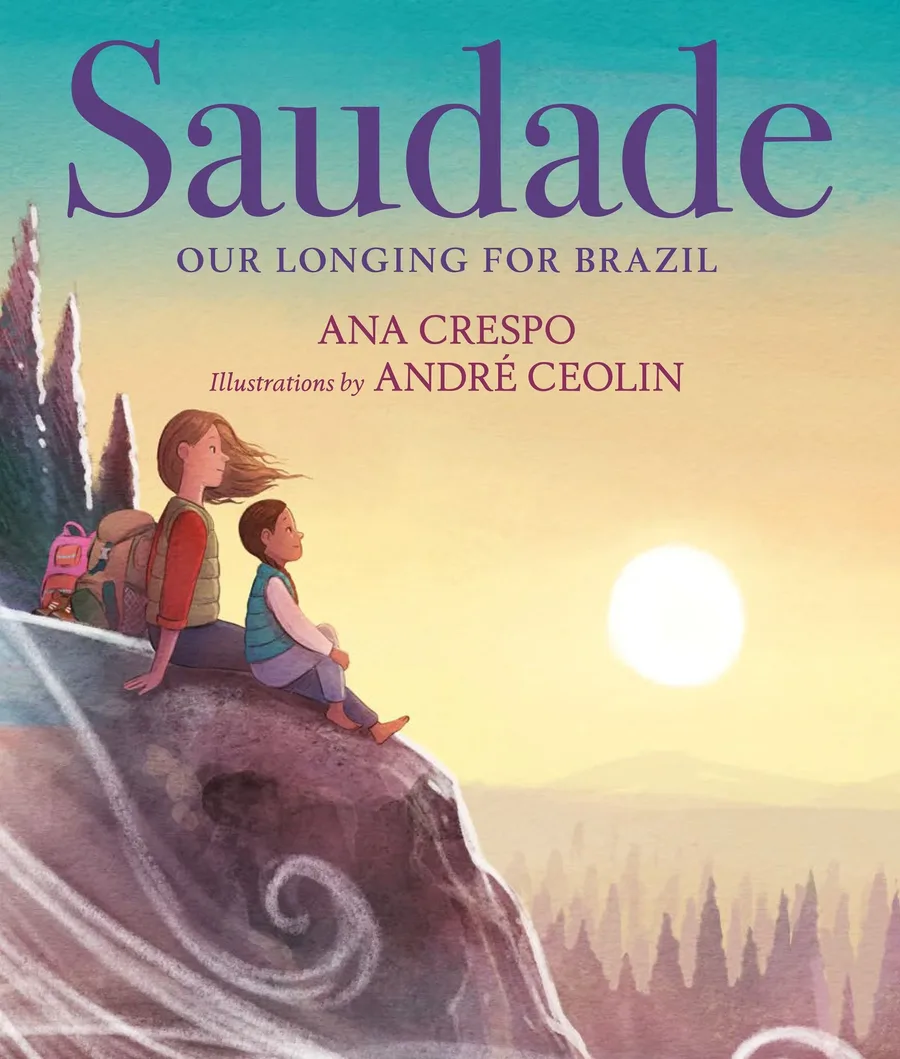 Saudade: Our Longing for BrazilAna Crespo, illustrated by André CeolinThe young narrator of this deeply felt picture book doesn’t know what her mother means whenever she says “Que Saudade!” To the girl, it sounds like a secret. She learns instead that Mamãe is describing a feeling. “She feels saudade... when she dreams of her mother’s pão de queijo but can’t find the ingredients anywhere. Mamãe says saudade is a strong longing for something you can’t have.” Is her own longing for ice cream saudade? No, Mamãe teasingly explains, that’s just a craving. As the girl thinks about visits to Brazil and time spent with family there—happy memories of playing with cousins; being with the grandparents that she can only visit on the computer for now—and the feeling she experiences “on cold and quiet days,” she realizes she does understand saudade. “I didn’t know that feeling had a name.... Saudade is like a painful blister after a long and beautiful hike—No matter how much it hurts, the memories are always worth it.” The author’s note explains that saudade is a common theme of Brazilian art and literature. Here, its 45 Picture Books CCBC Choices 2025 meaning unfolds in a child-centered story grounded in Brazilian culture but accessible to all. Watercolor and digital painting were used to create the soft and warm mixed-media illustrations.Picture BooksView book details
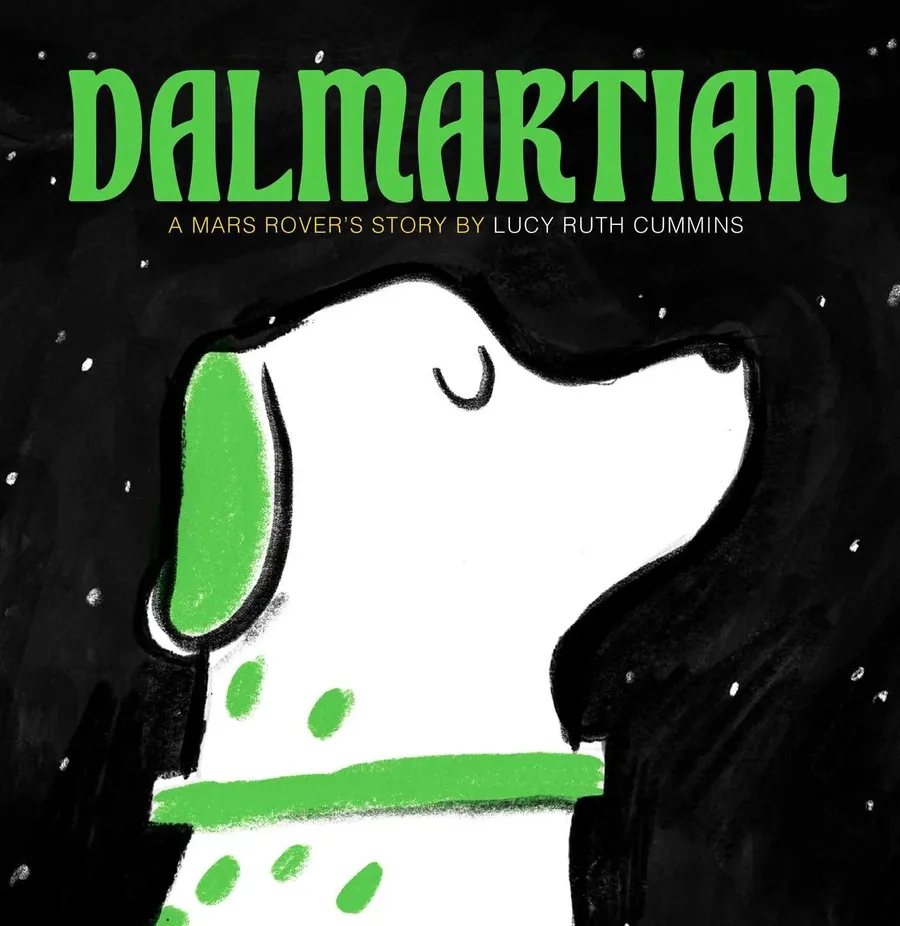 Dalmartian: A Mars Rover’s StoryLucy Ruth Cummins, illustrated by Lucy Ruth Cummins“The visitors came to Stephen’s yard one otherwise ordinary summer night.” The visitors appear to be Dalmatians, but these are no ordinary canines. For one thing, their spots are bright green. For another, they arrived via spaceship. When Stephen (white) turns on the porch light to investigate, one visitor is left behind as the others flee. Stephen invites him inside. It being the middle of the night, they head up to Stephen’s bedroom—and immediately disagree on the sleeping arrangements. (They compromise by sharing the bed.) Stephen’s expectations are upended the next morning at breakfast (the visitor turns his nose up at dog food) and on their walk (the visitor resents the leash and prefers to walk upright on two legs). As the day progresses, it becomes increasingly clear that the visitor is unlike any dog Stephen has ever encountered. He enjoys Stephen’s account of local history. He likes learning about local plant and animal life. And he can’t imagine doing his business in front of everyone at the dog park. When the visitor’s crewmates return for him, he goes, but as he and Stephen lie awake in their respective beds that night, it becomes increasingly clear that the Dalmartian has found a new home. Ink and charcoal illustrations comedically depict Stephen’s and the visitor’s initial awkwardness and confusion around one another in a story that deftly balances humor with growing friendship and connection.Picture BooksView book details
 A Star Shines ThroughAnna Desnitskaya, illustrated by Anna DesnitskayaThe school-age child narrator and their parents used to live in a city, in an apartment with a star-shaped cardboard lamp in the kitchen window. “When I returned home from music lessons... I could recognize our window from afar: a star shone through the cold November darkness.” When war begins, the child and their mother flee to another country. Everything is different: the language, the apartment, the view from the window, the food. “Even Mom is different. Even I’m different.” Then the child’s mom brings home the makings of a star lamp, just like they had at their old home. They put the new star in the window, and things start to feel less different. “It still doesn’t feel like home here. But now, when I return home from music lessons, I recognize our window: a star shines through it....” A spare, skillful narrative captures feelings of comfort, displacement, and emerging hope— reflected in both a shift in perspective inspired by the new star, and the hint at some return to normalcy in the music lessons taking place once again. The marvelous, clean-lined illustrations masterfully convey both character emotions through posture, gesture, and facial expression, and the changing emotional tenor of the story with colors that go from vivid to somber and back again. An author’s note details her family’s displacement and search for home after the Russian invasion of Ukraine.Picture BooksLexile Text Measure 430LATOS Book Level 2.9View book details
 At the End of the DayLisl H. Detlefsen, illustrated by Lynnor Bontigao“At the end of the day, sometimes everyone is exhausted. Or bored. Or in a mood.” There is a litany of additional reasons why the family in this story sometimes find the end of the day a challenge: homework, piano lessons, chores, “mismatched, stinky socks to pick up,” a shot at the doctor’s office, excitement over a newly delivered package that turns out to be for someone else—and boring, a fight with a friend, a missing puzzle piece, and more. At the end of a day, even small frustrations can feel huge. But small things can also turn 46 Picture Books CCBC Choices 2025 feelings from frustration to delight, bringing moments of unexpected pleasure, “like the laughter that follows an especially good knock-knock joke” or when “that missing puzzle piece turns up after all.” A story sure to resonate with almost every child and family features a wonderfully paced text full of relatable details paired with lively illustrations following this multiracial family (Asian dad, Black mom) through end-of-the-day challenges and pleasures. The mom is in the military and shown on video calls until story’s end, when her return home is surely the biggest (not-so-) small thing of all.Picture BooksView book details
 My Hair Is Like YoursSt. Clair Detrick-Jules, illustrated by Tabitha Brown“My hair is like my sibling’s, curly and bouncing with glee. / My hair is like my uncle’s, long and loc’d and free.” A board book with photographs of Black children, each sporting a different hairstyle, notices how their hair is similar to that of someone else—a friend or family member, an adult or another child. They have cornrows, twists, loose curls, long locs, braids, fades, and puffs, as well as varying skin tones and hair textures. The book ends with a mirror and words of affirmation: “No matter the style, I always remember that I am more than enough!” The photographs are bursting with carefree joy and love.Picture BooksView book details
 Everyone Gets a TurnMarianne Dubuc, illustrated by Marianne DubucWhile playing in the woods, Bear, Turtle, Mouse, and Hare come across an egg and decide to care for it. When they can’t agree on who should take it home a voice from the egg weighs in: “Everyone gets a turn!” At Mouse’s, Little Egg is cold so Mouse builds a fire and provides warm clothes. At Bear’s, a crack is the first sign of change before “Little Egg became Little Bird.” At Hare’s, Little Bird tries lots of foods until she finds what she likes to eat. And at Turtle’s, Little Bird explores, asks questions, and has conversations. Each of the animals provides Little Egg/Little Bird with something crucial growing and thriving; most important of all, however, is each animals’ tender care. By story’s end, Little Bird has made a home of her own and proclaimed her new name: Clara. The gentle, humorous story is told in short chapters through panels pairing dialogue with soft-toned, winsome illustrations in ink, watercolor, and pencil.Picture BooksView book details
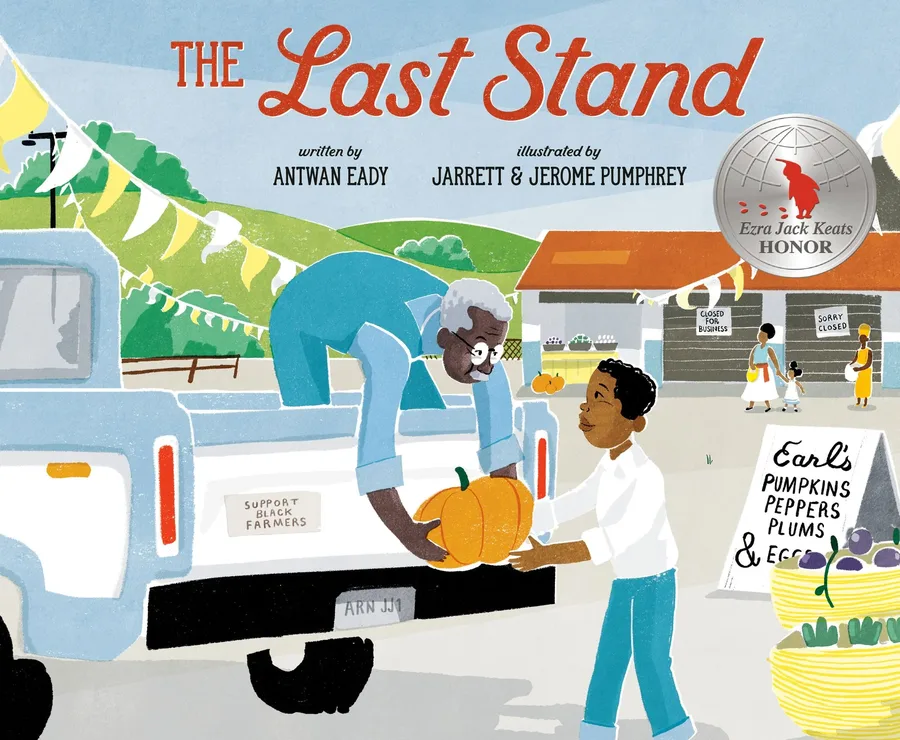 The Last StandAntwan Eady“On Saturdays, we harvest, Papa and I.” Papa is the young narrator’s grandfather. Saturdays they take Papa’s garden bounty—peppers, plums, pumpkins—along with eggs the boy gathers from the chickens to the farmer’s market in town. Papa has the last and only market stand still operating in their Black community. Papa’s movements are “slow and steady” as they work serving the people who come to buy fresh produce and eggs, like Ms. Rosa and Mr. Johnny. On the way home, they drop off a basket of plums at Mrs. Brown’s. It’s dark when they get back home, “the star-speckled sky black as only a town without streetlights could be...” The next Saturday, and the one after that, Papa is too tired to harvest and work the stand, so the boy does his best on his own, making deliveries by bike the first week, and pulling a wagon into town to open the stand on his own the second. His wagon is still heavy on the way home, but now it’s “loaded with well wishes for Papa,” a bounty of homemade food from customers—pumpkin pie, candied plums, stuffed peppers. This love letter to Black farmers and community that also acknowledges challenges is paired with distinctive illustrations created from hand stamps and digitally colored. In a moving, powerful note, the author discusses his childhood community, and the disappearance of Black farmers and 47 Picture Books CCBC Choices 2025 rise of food desserts nationally, touching on the complicated social and political history of each.Picture BooksView book details
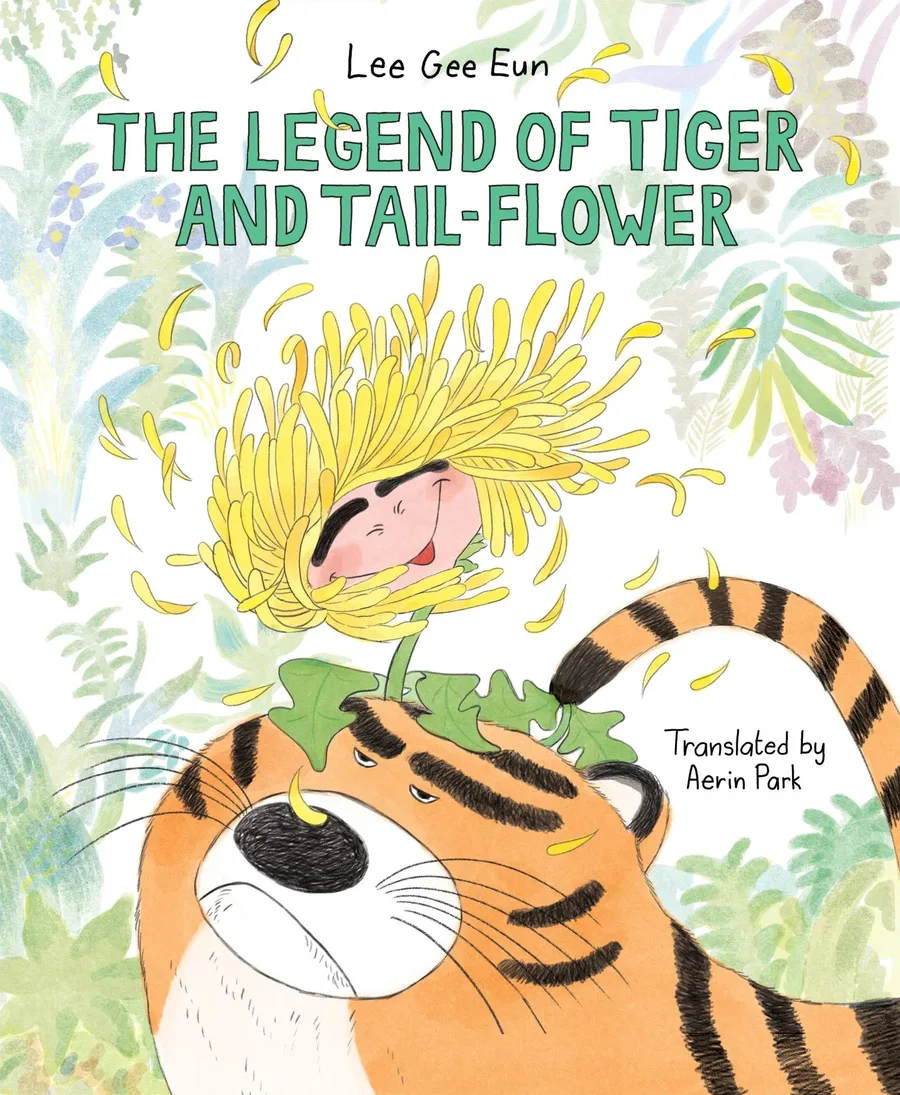 The Legend of Tiger and Tail-FlowerLee Gee Eun, illustrated by Lee Gee Eun, Aerin ParkThis buoyant, lengthy picture book is a translated work from a beloved Korean graphic novelist. Tiger, a big beast and bully of the forest, is not well liked by the other animals and is comfortable with his solitary and independent life. One day he wakes up to find that a talking dandelion has sprouted at the tip of his tail. The dandelion quickly forges a connection with the forest animals, who empathize with its predicament of being stuck to the mean tiger. After episodes in which the dandelion forces the tiger to help save a chicken egg, and later assist some animals across the river, the tiger recognizes that it can be nice to be nice. As the seasons progress, a bond develops between Tiger and Tail Flower. When the yellow dandelion turns white and fluffy, the orange tiger also turns white, though he doesn’t realize that this is an indicator of age. When Tiger finds himself caught in a hunter’s net, Tail Flower insists that Tiger blow on her dandelion’s petals as a rescue signal to their animal friends. Tiger’s salvation is also Tail Flower’s demise, since she has now blown away in her old age. This sweet, reflective, and unusual tale is a successful combination of animal story, picture book, and graphic novel.Picture BooksView book details
 We Are Definitely HumanX. FangWhen a midnight racket draws Mr. Li to his yard, he finds three strangers. Bulbous eyes, blue skin, and with a shape “very hard to describe,” the obviously extraterrestrial beings declare they are “DEFINITELY human” and “having car trouble.” Mr. Li explains that the car repair will have to wait until daytime when stores are open and offers his home for the night. Although surprised by the visitors’ unique appearance and behavior the next morning, customers at the general store politely accept the differences and offer to help fix their car. With tools, food, and music from a radio, the community pitches in with a will to repair the “car” —a hot pink spherical spaceship. The gathering evolves into a party, although the guests require explanations of dancing and eating (hot dogs belong in the mouth, not the ear). With their vehicle mended, the visitors depart into the sky, carrying the memory of meeting those who “do what kind humans do— offer help to those in need.” The message of kindness steers clear of sentimentality or didacticism by sticking to the hilariously deadpan delivery, augmented by the counterpoint between matter-of-fact text and illustrations that show the aliens in their other-worldly glory.Picture BooksLexile Text Measure AD530LATOS Book Level 3.5View book details
 Let’s Go! haw êkwaJulie Flett“Cacussh! Cacussh! Cacussh!!” A young Cree boy watches from his window as a skateboarder goes by. “haw êkwa! Let’s go!” His mom gives him her old skateboard and he begins to learn to ride. “Push, push.... Ow!” He falls and gets back up again. “Swoosh.... Oh!” At the park, where the path runs like a river, he sees “a waterfall of skateboarders crashing down.” He sits by himself in a quiet place to watch, soon joined by other younger riders. “We sit together. Watching the patterns and pace. And feet and hands and faces.” Eventually he becomes one of the experienced skaters. Sometimes he’s part of a river of friends flowing down the street on their boards. And sometimes there’s a new rider, watching quietly. They sit with her until she’s ready. “haw êkwa! Let’s go!” A beautifully spirited story full of the sounds and flow of skateboarding is paired with warm-hued, wonderfully composed mixed-media illustrations capturing eagerness, tenderness, energy, and joy. A note from the author/illustrator discusses her family connection to skateboarding through her son; its 48 Picture Books CCBC Choices 2025 welcoming, creative, community; and the meaning of “haw êkwa!” (okay then!) and other Cree words related to the sport.Picture BooksView book details
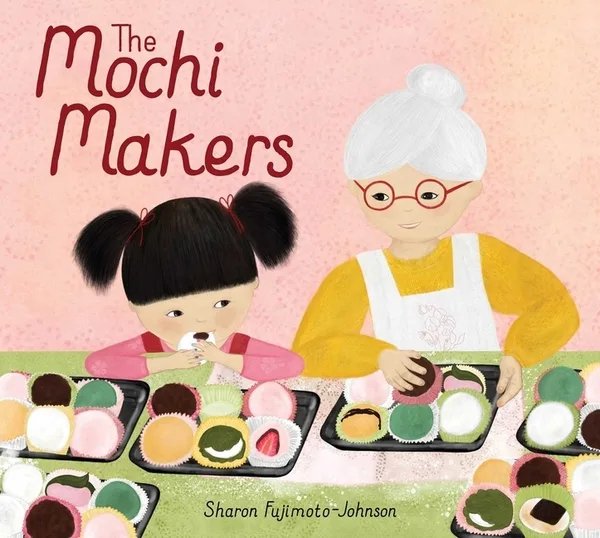 The Mochi MakersSharon Fujimoto-JohnsonJapanese American Emi is making mochi with Obachaan. While the rice cooks, Obachaan tells her granddaughter about bringing the recipe she learned from her mother and grandmother when she came to America from Japan. When they put the rice in the mixer to pound it into a sticky mound, Emi recalls how Obachaan pounded the rice by hand with a wooden mallet when she was young. As they form the sticky rice into small cakes, stuffing some and leaving others plain, “the way Ojichaan liked it,” they remember when Ojichaan tried to help and dropped mochi on the floor. “Not so good at making, very good at eating.” They package mochi for family and friends before sitting down to eat some at a table set with lacquered dishes Obachaan brought from Japan. “Mochi is how we share love.... Mochi is how we pass on our family traditions.... Mochi is how we say thank you.... in our hands, it feels as warm and soft as love.” A deliciously detailed narrative is paired with digital collage illustrations that incorporate the author/illustrator’s family photographs, as well as softly rounded images and a soothing, mochi-like palette full of pinks and golds. An author’s note and recipe follow, while tasty endpapers are dotted with different kinds of mochi in this warmly filling story.Picture BooksView book details
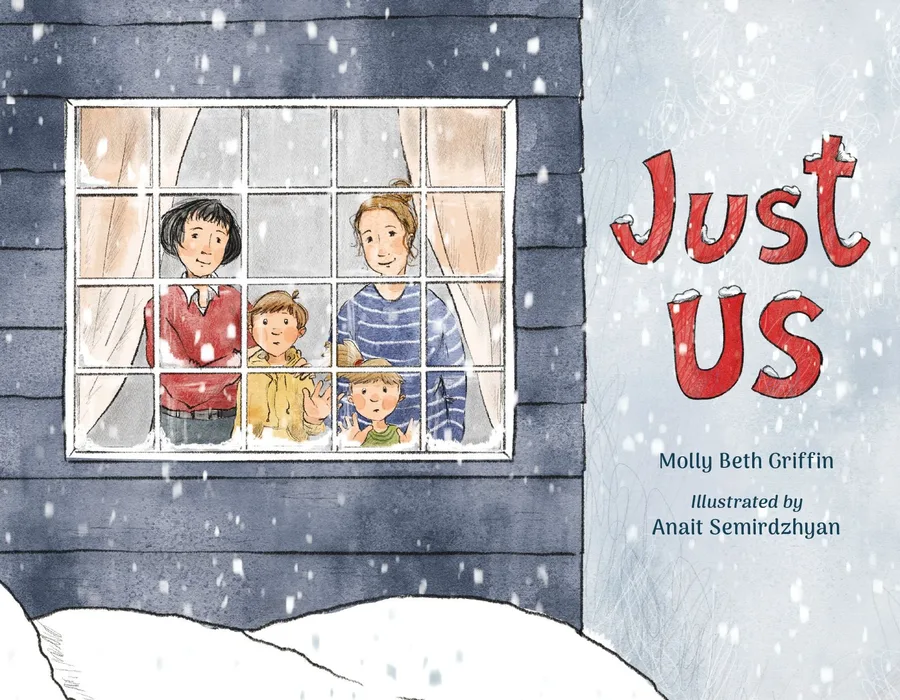 Just UsMolly Beth Griffin, illustrated by Anait SemirdzhyanEvery year during the winter holidays, the young narrator’s Grandma flies in to visit, and her aunts and uncles arrive at her house by car with all the cousins. “Every year we play charades, loud and rowdy. Then we light a fire in the fireplace and eat Grandma’s three kinds of pie. That’s what happens every year. It’s tradition.” This year a huge snowstorm disrupts travel plans and it’s just her immediate family members (all are white): Mom, Mama, her brother and her. “Would it even feel like the holidays with just us?” Mom directs them in making stew in the slow cooker (no turkey from Aunt Sarah), and Mama leads them on a hike through the glittering snowy landscape. There aren’t enough people for charades after dinner, but they play cards. “It wasn’t loud. It wasn’t rowdy. But it was kind of fun anyway...” Still, when it’s time for the fire and dessert, the narrator’s lingering disappointment brims over—no pie! A video call to grandma, in which she talks them through making apple crisp, is the perfect salve. “It was just us, but it still felt special.” This entertaining, relatable, emotionally honest story is full of delight in the details while illuminating ways disappointment can sometimes make space for unexpected pleasure, and even new traditions.Picture BooksView book details
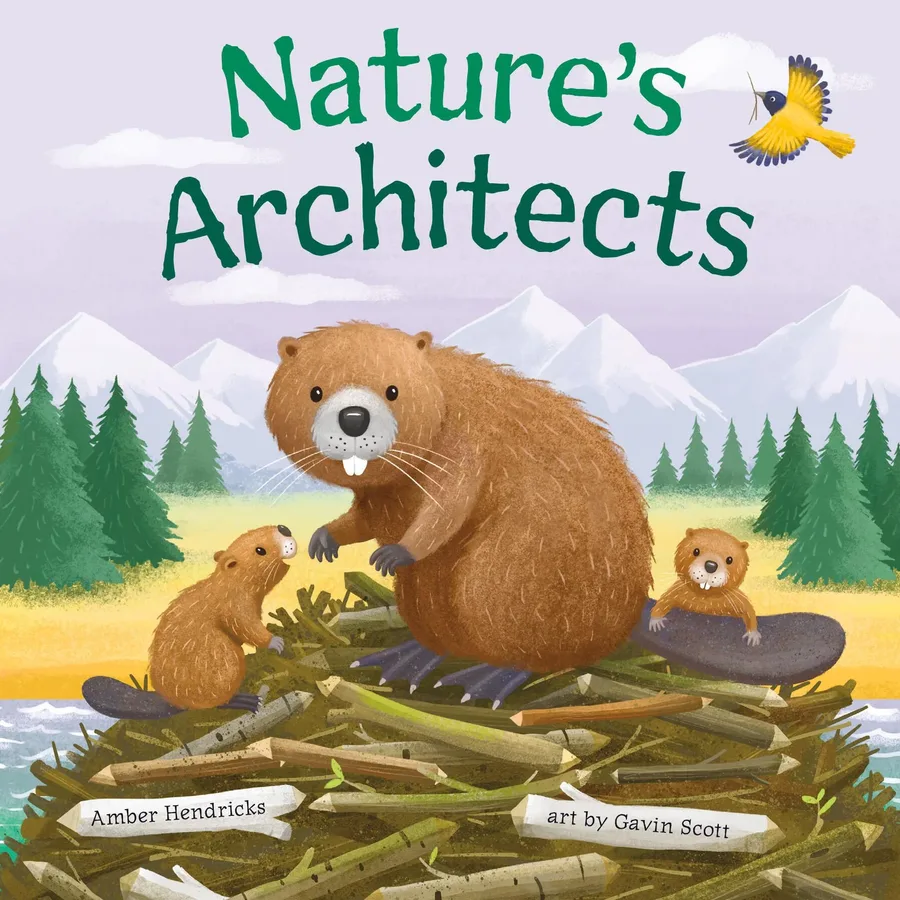 Nature’s ArchitectsAmber Hendricks, illustrated by Gavin ScottThese pleasing entries in the Little Nature Explorers board book series pair rhyming texts offering rich vocabulary with cozy illustrations. In Sparrow Takes Flight, a fledgling sparrow prepares to fly for the first time. (“Quiver, quiver, quake. / Ruffled feathers shake.”) Home- building activities of four different animals (squirrel, bird, ant, and beaver) are featured in Nature’s Architects. (“Plan, plan, plot. / Pick the perfect spot.”)Picture BooksView book details
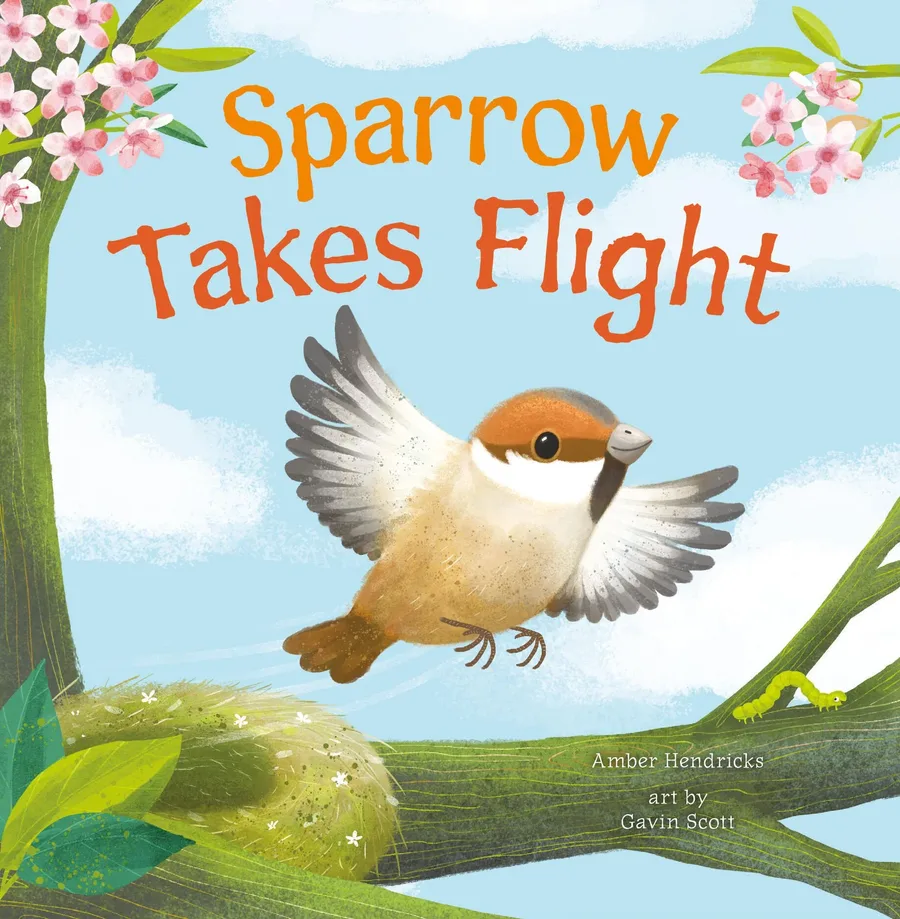 Sparrow Takes FlightAmber Hendricks, illustrated by Gavin ScottThese pleasing entries in the Little Nature Explorers board book series pair rhyming texts offering rich vocabulary with cozy illustrations. In Sparrow Takes Flight, a fledgling sparrow prepares to fly for the first time. (“Quiver, quiver, quake. / Ruffled feathers shake.”) Home- building activities of four different animals (squirrel, bird, ant, and beaver) are featured in Nature’s Architects. (“Plan, plan, plot. / Pick the perfect spot.”)Picture BooksView book details
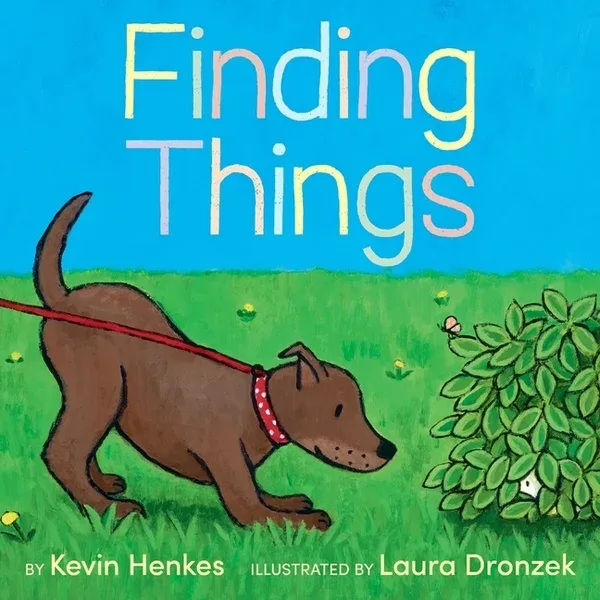 Finding ThingsKevin Henkes“If you found...” is the repeated refrain in a picture book illuminating childlike attention to, and delight in, the possibility of small things: a ball, a flower, a box, a kitten. If you found any one of these things, and it didn’t belong to anyone, and you had permission from everyone (at least when it comes to the kitten), you could take it home. You could play with the ball. You could put the flower in a cup of water. You could save the box “for something good.” You could take the kitten inside. “If you found all of these things, you would be lucky.” You would have a kitten with “a place to sleep [box]”, “something nice to look at [flower],” and “something fun to play with [ball]. Everyone would be happy.” A black-haired, light skinned child appears on the title and closing pages, while the brown dog the child and their parent are walking appears on and off throughout, engaging with each potential discovery—ball, flower, box, and, in the end, no-longer-homeless kitten— because sometimes possibilities converge into perfection. The accomplished acrylic illustrations feature rich color and uncluttered composition—a perfect accompaniment to a narrative graced with simple yet captivating details.Picture BooksView book details
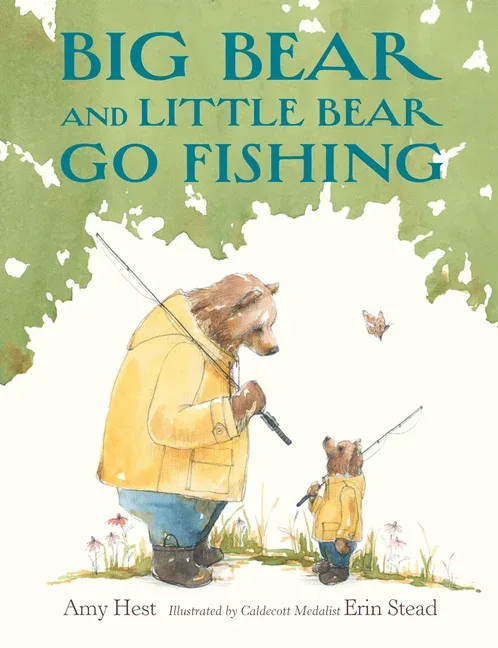 Big Bear and Little Bear Go FishingAmy Hest“One day Big Bear says to Little Bear, I’m just in the mood for fishing.” Little Bear promptly agrees that he, too, is “just in the mood,” and the bears don their fishing pants, jackets, and boots. “Now they are ready for fishing. Almost.” There are some things fishermen need. Poles, for example, which they load in their wagon. “Now they are ready for fishing. Almost.” Big Bear remembers that fishermen also need “nice, warm blueberry scones,” which they bake together, and “a book with stories.” The bears pull their wagon to the river and climb into their rowboat. They wait patiently, but the fish aren’t biting. Thank goodness the fishermen have brought along scones and a storybook to pass the time. When a fish finally does appear, the bears “look at Fish and Fish looks back. Nobody moves. Nobody blinks.” Perhaps unsurprisingly, the fishermen do not manage to catch the fish. But “Big Bear puts his arm around Little Bear. Together they watch the light on the lake. They think about Fish.” Back home, their hammock awaits, promising continued relaxation. With gentle humor, pleasing repetition, and carefully chosen words, this quiet, lovely tale feels like a classic. Little Bear’s imitation and obvious admiration of Big Bear are endearing, and careful readers will realize that quality time together—not catching fish—was always the goal.Picture BooksWord Count 555View book details
 When Rosie Walks GeorgeAmy Hest, illustrated by Taeeun Yoo“George is old and deaf in one ear, and he doesn’t run fast anymore.” The brown-spotted white dog, clearly beloved, still needs to go for walks, however. Rosie is too little to walk George alone but sometimes the whole family walks him along the beach near their home. Rosie, the youngest, “lags behind, rolling her ball near the sea.” George is slow too. “He steps. And stops. And looks around.” He notices birds and shells and waves. And Rosie. “He keeps an eye on Rosie.” As George and Rosie follow the others, Rosie rolls her red ball and cartwheels. George sniffs and soaks up the sun, steps and stops, and keeps his eye on Rosie. Sensory language, skillful pacing, and small, satisfying moments of repetition immerse children in a story that defies predictability, taking a gently surprising turn when Rosie’s ball is lost to the waves. George watches the ball float out to sea. And watches. “All through the dark summer night until morning... when a bright red dot rolls off a wave and onto the beach.” The wonderful narrative is paired with lovely illustrations that evoke the seashore and a loving, multiracial family. The art also subtly reflects the passage of time 50 Picture Books CCBC Choices 2025 referenced at story’s end. Rosie is a little bit older (her hair visibly longer), and so is George. “But he still needs a walk. And he still keeps an eye on Rosie.”Picture BooksLexile Text Measure AD450LATOS Book Level 3.1View book details
 The Fruit Shop / La fruteria (Teeny Tiendas)Lourdes Heuer, illustrated by Zara González HoangTwo bilingual board books set in a bustling frutería and florería, respectively, highlight a variety of fruits and plants in both English and Spanish. Inside Mr. Manzano’s fruit shop, there are “loquats and figs / nísperos e higos, star fruit and dragon fruit / carambolas y pitayas” and more. Among the things Mrs. Rosario sells are “roses and rosemary, rosas y romeros, hibiscuses and hydrangeas, hibiscos y hortensias...” Young readers are invited to choose their favorite fruit and flower at each small volume’s close. Buoyant illustrations seeded with playful details show shoppers embodying a wide range of diverse identities.Picture BooksView book details
 The Flower Shop / La floreria (Teeny Tiendas)Lourdes HeuerTwo bilingual board books set in a bustling frutería and florería, respectively, highlight a variety of fruits and plants in both English and Spanish. Inside Mr. Manzano’s fruit shop, there are “loquats and figs / nísperos e higos, star fruit and dragon fruit / carambolas y pitayas” and more. Among the things Mrs. Rosario sells are “roses and rosemary, rosas y romeros, hibiscuses and hydrangeas, hibiscos y hortensias...” Young readers are invited to choose their favorite fruit and flower at each small volume’s close. Buoyant illustrations seeded with playful details show shoppers embodying a wide range of diverse identities.Picture BooksView book details
 I Know How to Draw an OwlHilary Horder HippelyWhen her teacher praises Belle’s drawing of an owl and asks how she made him look alive, Belle just shrugs and shakes her head. The owl is part of her private story and not for sharing. Belle and her mom used to have a house, but now they live in their old blue car. They spend nights in a tree-filled park, and Belle’s mom says they’re lucky when the nearby owl hoots because he’s “keeping an eye on you and me.” Belle wants to see the owl but only hears his “hooty lullaby” until the night he alights on a nearby branch. As they look into each other’s eyes, she finds comfort in the owl’s presence. Belle believes she’ll never share her experience, until the day she sees a new boy arriving at school in an old blue car, looking as if he might cry. Thinking of her owl, she shows the new boy around, as if to say “I’m here. I understand. I’ll keep my eye on you.” Belle’s living situation is presented on her own terms, neither romanticized nor catastrophized, in a skillfully understated and child-centered narrative. Each thoughtfully chosen word serves a purpose, matter-of- factly expressing the reality of Belle being unhoused while also beautifully conveying her mother’s loving support and care, and Belle’s empathy for her classmate. The illustrations’ edgy realism is anchored by deep nighttime shades of black, blue, and green.Picture BooksLexile Text Measure 381LATOS Book Level 2.7View book details
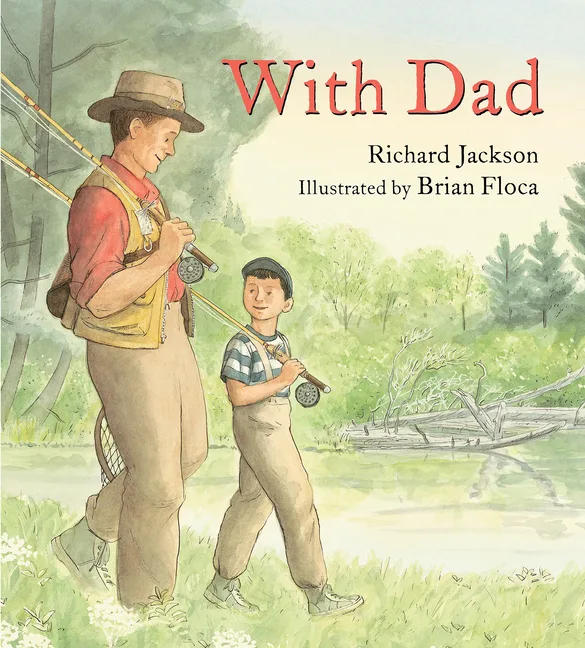 With DadRichard Jackson“In Michigan country, on a two-run road, along a stream called the upper South Branch of the Au Sable River...” In this autobiographical picture book’s first-person narrative, a boy (white) of nine or so describes a fishing trip with his dad. His dad lets him help steer the jeep as they drive along a rutted road to where they will camp. Clearly set in the past, the narrative offers a lovely account of the setting and this family’s warm bond, which includes his mom, who is back home but sends a teasing note along. The story lacks a huge dramatic arc but serves as an excellent example for writing about memories, while the final page turn adds context and contemporary relevance. While still set in the past, some time has passed, and the boy now imagines his dad driving a different Jeep “in a far-away war... I want Dad home / safe / and soon / and warm.” The soft, detailed pen-and-ink, watercolor, and gouache illustrations are a perfect accompaniment to this poignant story. A brief note from the illustrator adds historical context to the time period (early 1950s).Picture BooksView book details
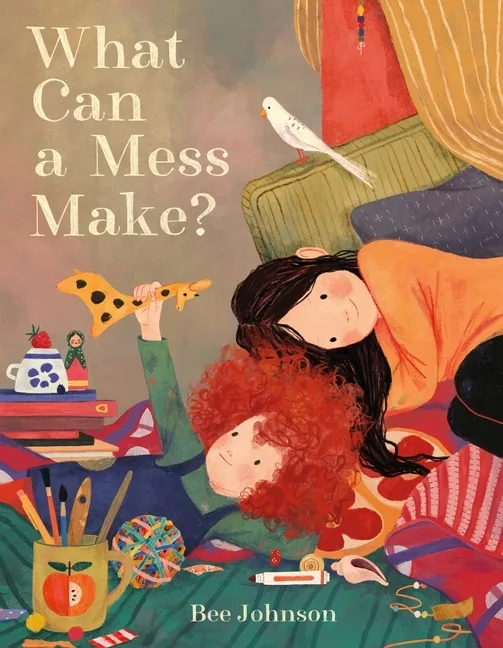 What Can a Mess MakeBee Johnson, illustrated by Bee JohnsonWhat can a mess make? A clever rhyming text and cozy, colorful illustrations offer a series of delightful answers to the question posed by this picture book’s title while chronicling the activities of two sisters over the course of a day. “Kitchen clatter. / Milk and juice. / Syrup splatter. / Chocolate mousse. / Bowl of berries. / Red and blue. / A mess can make / a meal for two.” Following that tasty breakfast, the duo engage in a series of creative projects and imaginative play before an argument (“A mess can make us scream and shout.”), a time out, and apology bracelets (“A mess can make things good as new.”). A dinner disaster (“A mess can make / a change in plans.”) leads to cleanup and, finally, bedtime (“A mess can make / a good night’s sleep.”). The rhythm of the narrative scans beautifully, making this a terrific choice for reading aloud, while the details in the illustrations heighten the story’s charm.Picture BooksLexile Text Measure AD360LATOS Book Level 2.6View book details
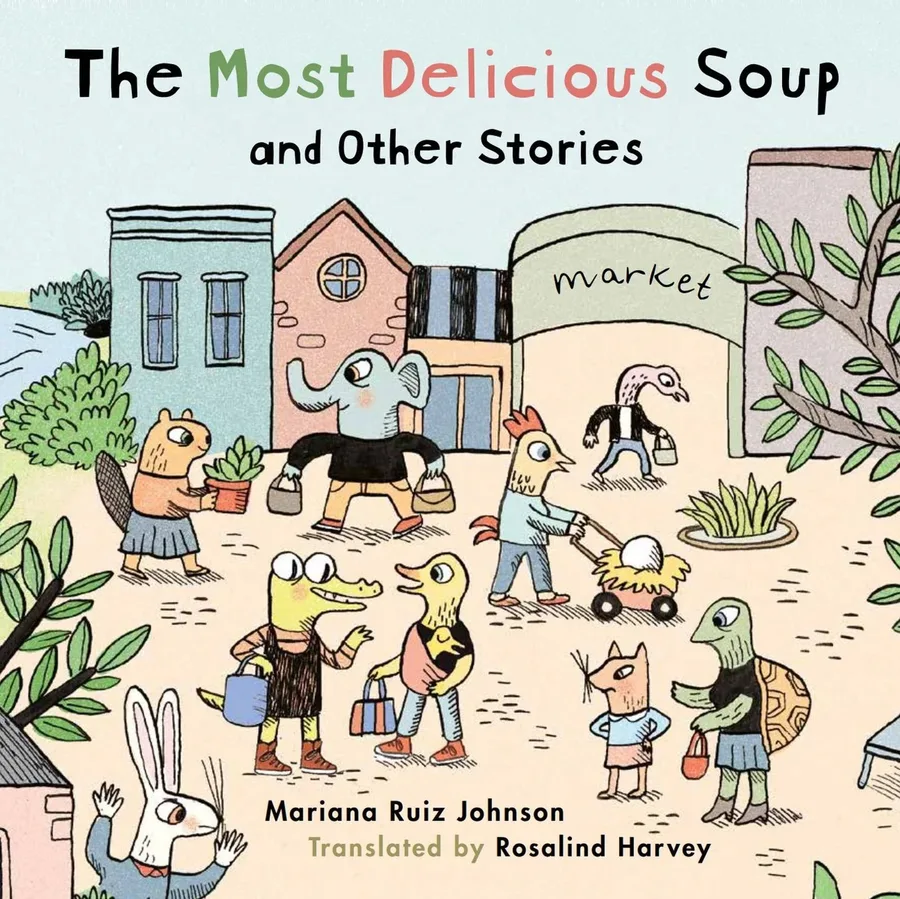 The Most Delicious Soup and Other StoriesMariana Ruiz Johnson“Welcome to Villa Verde! This is where we have all our adventures,” is how this inviting, translated picture book from Argentina begins. Short vignettes with detailed illustrations spotlight members of the Villa Verde community, including Coco the crocodile, who adopts a new pet; Luis the turtle, who spends time with his grandmother after school every day; and Gina the duck, who wants one of everything while shopping with her dad. The short stories are illustrated with succinct actions and dialog, varying between a quartet of panels and full-page scenes. The cast of harmonious animal villagers is drawn in a friendly comic style in a muted palette, appreciable on both a large scale and in the small details. For example, a daddy duck carries a sleeping newborn across his chest in a baby wrap, two fish in a pond offer each other a toast with their drinks in stemmed glasses, and an animated frog expresses his drum talents with an extra set of arms. Of course, the compilation includes a story about the most delicious soup!Picture BooksView book details
 This TableAlex Killian, illustrated by Brooke SmartWhat began as a seed that grows into a tree ends up as a table, but that’s barely the beginning of this warm-hearted picture book about the table—and members of a single family—across years. It’s a table around (and under!) which the bustling, growing multigenerational family gathers for celebrations and quiet moments; art projects, puzzles and imaginative play; homework and grown-up work; and much more. But “mostly it was for gathering, and sharing stories, and being together... the heart of someone’s home.” A delightful text that makes judicious use of alliteration and wordplay is set against warm watercolor illustrations that show the family at the heart of the story with skin tones and hair in a range of shades and colors. Entertaining visual details chronicle many relatable moments as well as change across the years, with children growing up and adults aging. The final page spread shows this family and table at the center of a scene offering glimpses of other families gathered around tables small and large in their homes.Picture BooksView book details
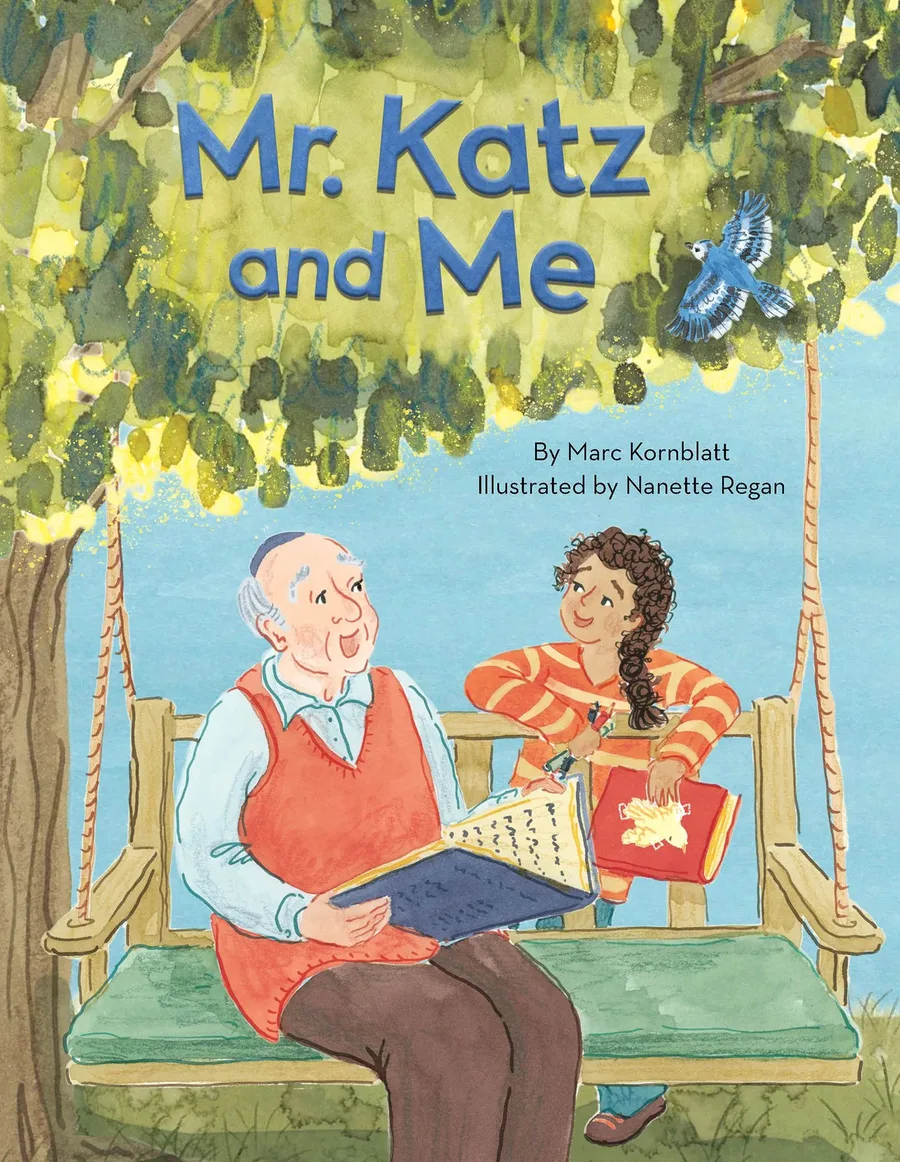 Mr. Katz and MeMarc Kornblatt, illustrated by Nanette ReganMr. Katz is different from other students that eight-year-old Sarah’s father tutors for their bar and bat mitzvahs. “You’re way past thirteen,” Sarah (brown-skinned) tells the elderly man the first day he comes for a private lesson. Mr. Katz is good humored, while Sarah must work at curbing her bluntness and lack of patience. She learns Mr. Katz is 81, likes birds just 52 Picture Books CCBC Choices 2025 like she does, and likes talking with her. When she asks why he never had a bar mitzvah, Mr. Katz explains that when he was growing up in Russia, it was too dangerous to have one because they were forbidden by the government. By the time Sarah attends his bar mitzvah, she feels proud to be Mr. Katz’s friend. “Mr. Katz keeps coming to our house once a week... But he doesn’t sing with my father, he sings with me.” The intergenerational friendship at the center of this tender story features two strong, distinct personalities that shine. The warm, welcoming illustrations incorporate recurring bird imagery.Picture BooksView book details
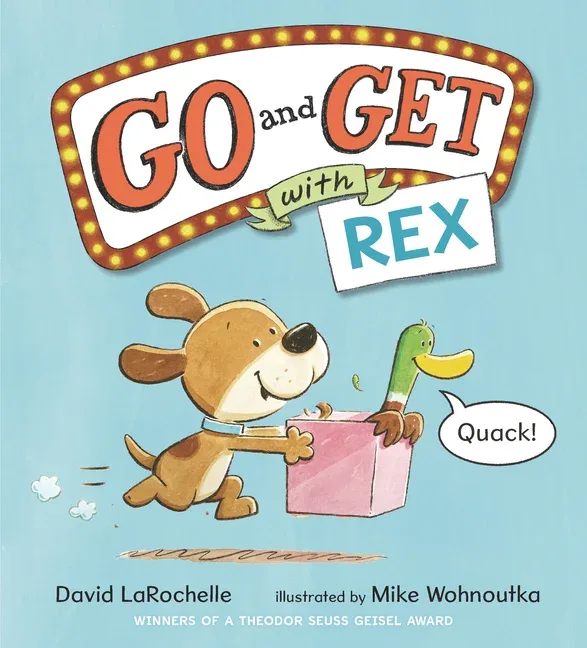 Go and Get with RexDavid LaRochelleJack, Jill, and Rex are playing an exciting game of “Go and Get,” racing to find things that start with each letter the narrator calls out. “Go and Get something that begins with the letter F!” The three return in a flash (or rather in a “Zip! Zap! Zoom!”). Jack (light-skinned) brings a FROG! Jill (brown-skinned) brings a FISH! And canine Rex (brown and white, floppy-eared, pointy tail) brings “a DUCK?... Oh! This duck is your FRIEND.” Rex shows similar creativity with the letter S (he brings two ducks, but they’re SISTERS), and M (he has a dozen ducks, but they’re all MUSICIANS). So when D is called out, it’s obvious what Rex will bring... or is it? The joke never gets old in this breezy, frenetic, laugh-out-loud picture book with delightful gouache illustrations.Picture BooksView book details
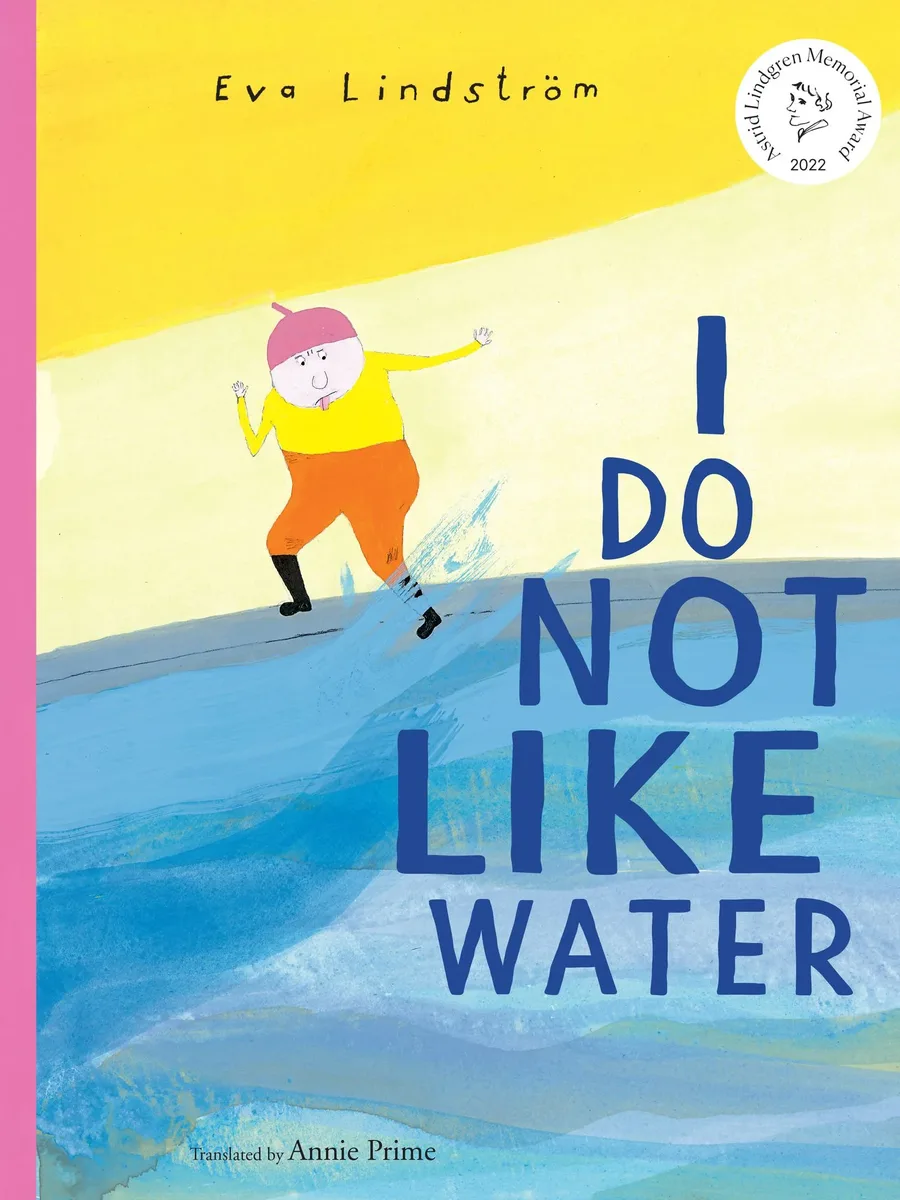 I Do Not Like WaterEva Lindström, illustrated by Eva Lindström, Annie PrimeAlf is unequivocal in his dislike of water, including “rain, lakes, rivers, seas, puddles, pools, oceans, streams, marshes, ponds, brooks, and creeks!” While his friends play in a swimming pool, Alf, clothed from boots to beanie, walks the perimeter until he loses his balance and immerses one entire leg. While canoeing, he and Igor capsize their canoe, ruining the sandwiches in his backpack as well as Alf’s day. Things look up in winter, when all the water is frozen. As summer returns, Alf’s ready with a solution: floating atop the water on an inflatable air mattress, in the company of his swimming friends but still high and dry. Although readers may question how long that sense of dry security will last, those with an intense aversion will empathize with such an adamant anti-immersion stance. Gouache and watercolor illustrations tip the scales towards humor, moderating Alf’s steadfast maxim.Picture BooksView book details
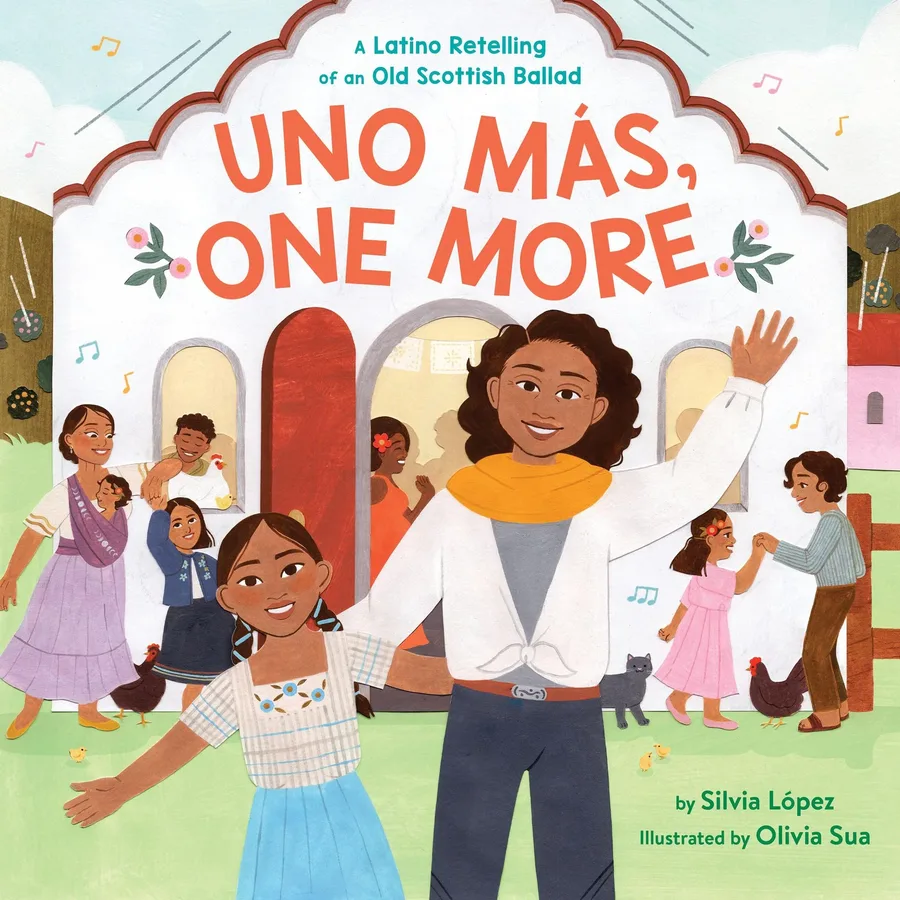 Uno Más, One More: A Latino Retelling of an Old Scottish BalladSilvia López, illustrated by Olivia Sua“In a one-room casita near a one-lane road, Don Manuel and Doña Lila lived with their five children, one goat, two dogs, four cats, and a dozen chickens.” They’re a musical family; even the animals join in when they play and sing. And when they make music, neighbors knock at the door, eager to join in too. Each time someone arrives, Don Manuel says, “Uno más? One More? Peus, claro! Of course!” One night, the guests just keep coming, and Don Manuel greets them with his welcoming refrain. The small house is literally bursting at the seams when “las paredes of the house bulged and wobbled... the rafters rocked and rattled... el techo shook and trembled... CATAPÚN!” In the aftermath, with their small house gone, Don Manuel and his family’s hospitality is returned tenfold when friends and neighbors gather to build them a new home—and this time, there really is room for one more! A Scottish ballad was the inspiration for this tale set in a Mexican community. The storytelling that sings with onomatopoeia and alliteration. Mixed-media illustrations suggestive of folk art create the lively backdrop for this picture book that concludes with a substantial author’s note about cross-cultural storytelling, mariachi, and a glossary.Picture BooksView book details
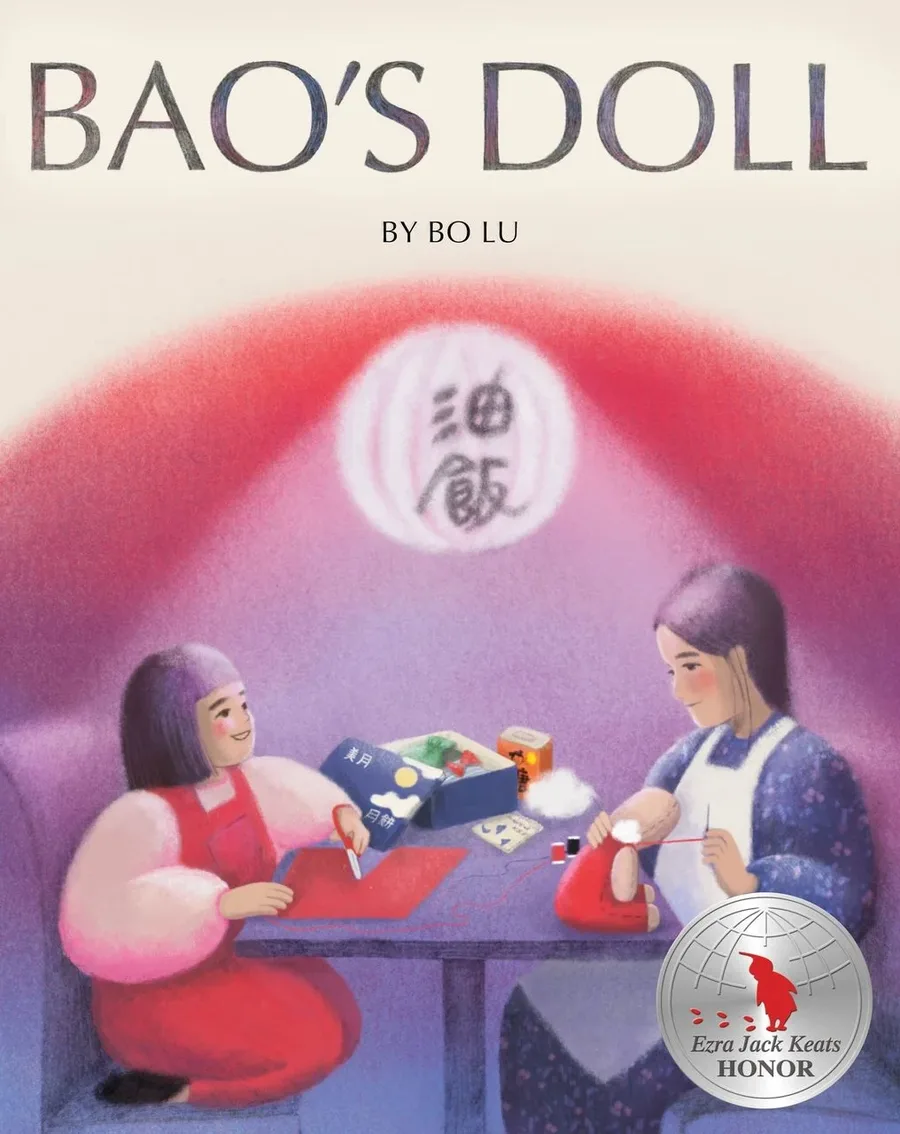 Bao’s DollBo Lu, illustrated by Bo LuBao (Taiwanese American) yearns for her own All-American Artist Amanda doll. But “Mama did not hear that.” Mama, who often tells Bao about how little she had as a child in Taiwan, also does not see her daughter’s desire for a close relationship with her. After Bao is caught trying to steal the doll from a store, the gulf between her and her mom seems to grow wider. When she can’t face the silence any longer, Bao apologizes, and Mama tells her a little bit about her own childhood and how much she missed her mother when she “lived in a home with many children.” She brings out an old tin box filled with mementos, and together they use some of them to make a doll that looks just like Bao. Bao and her Little Bao doll share “jokes, snuggles, dreams, and even birthday parties together,” while Bao and her Mama share a deeper understanding of each other. Bao and her Mama’s feelings of isolation are conveyed with dramatically dark backgrounds that later brighten to lighter shades signifying the healing of their relationship.Picture BooksView book details
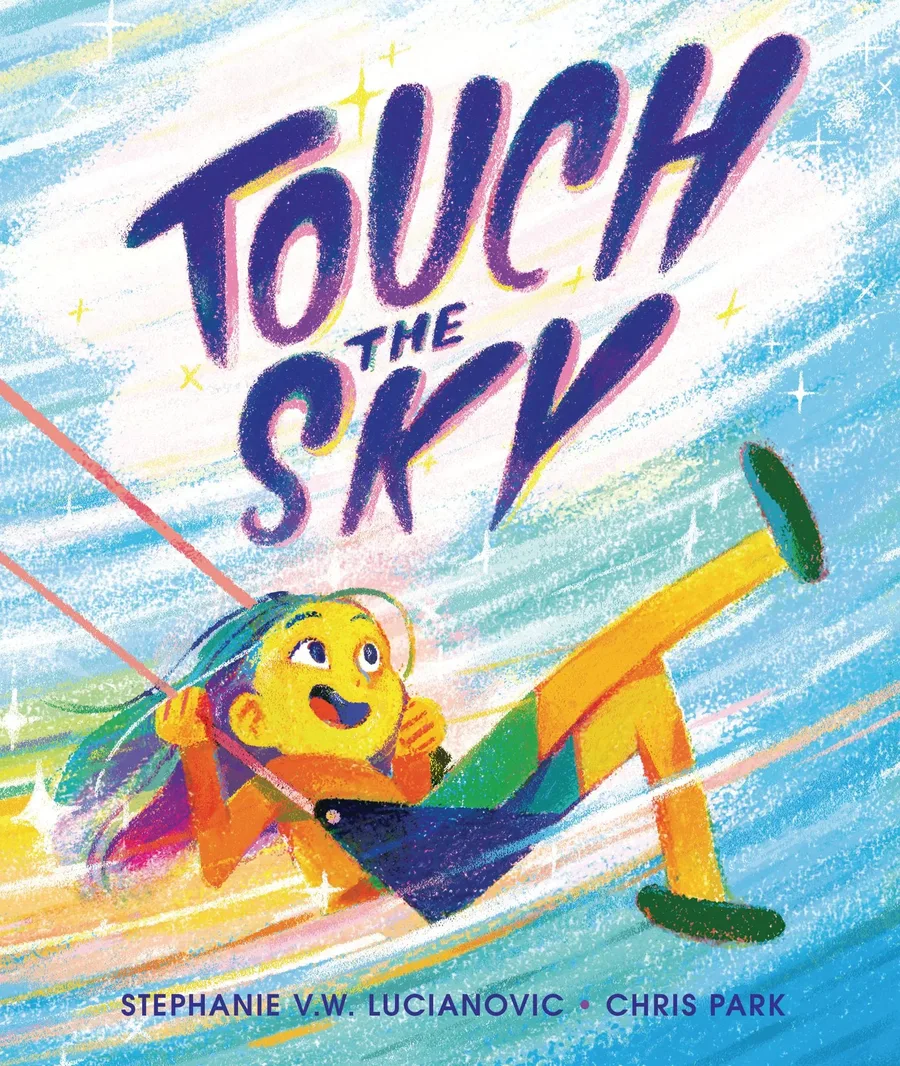 Touch the SkyStephanie V. W LucianovicWhen Vern goes to the park he wishes he could swing like the other kids “who swooped until their toes touched the sky.” First he needs to learn how to pump. He tries to ignore the kids who say it’s easy and yells at his legs to pump, but he stays earthbound. It’s not until Gretchen offers advice (“lean back and keep your legs very straight”) and encouragement (“It feels hard until you get it, and then it’s not”) that Vern starts to make progress. After many attempts and failures, Vern’s toes touch the sky just as he’d wished. Now it’s his turn to teach another child how to pump a swing, his empathy paired with fresh memories of his own frustration. Colorful mixed-media illustrations vibrate with movement and energy, while the font swings across the page along with the children. Vern appears white and wears his hair long.Picture BooksView book details
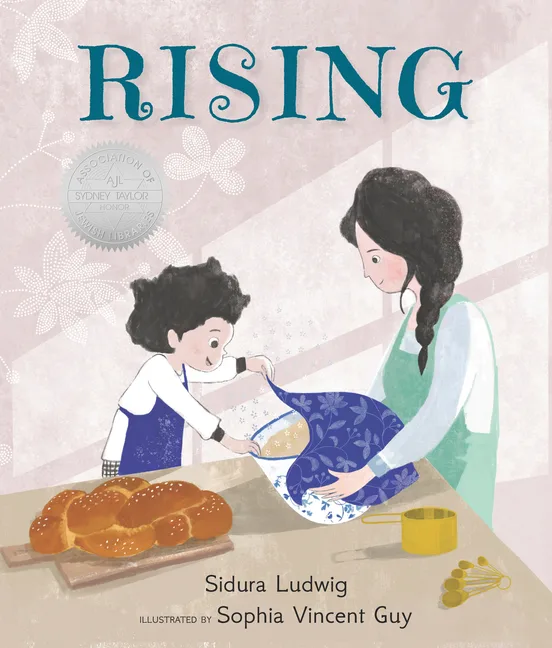 RisingSidura Ludwig“Ima says everything grows in its own time.” In this quietly captivating story with pleasing details, the young narrator describes helping Ima make challah for their family’s Shabbat meal. “We split the dough into six parts, roll them out like snakes, and then we braid six strands into each loaf of challah... Just as six days of the week become one Shabbat. Everything from the past week comes to rest.” Finally, clothes are changed, grape juice is poured, and it’s time to sit down for the meal. “We bless the candles. We say kiddush. We say hamotzi. We say, Thank you, Hashem, for so many blessings.” The distinctive mixed-media art features a soft-hued palette punctuated by deep blue (the child’s apron, patterned cloth to cover the rising dough) and bold red (the big enamel pot on the stove, Ima’s dress at dinner). Shown in the art but never directly mentioned in the narrative is the charming story of change amidst tradition and ritual: Ima is visibly pregnant; in the final spread she’s holding a baby, and it’s the child and their father donning aprons to make challah.Picture BooksLexile Text Measure 381LATOS Book Level 2.7View book details
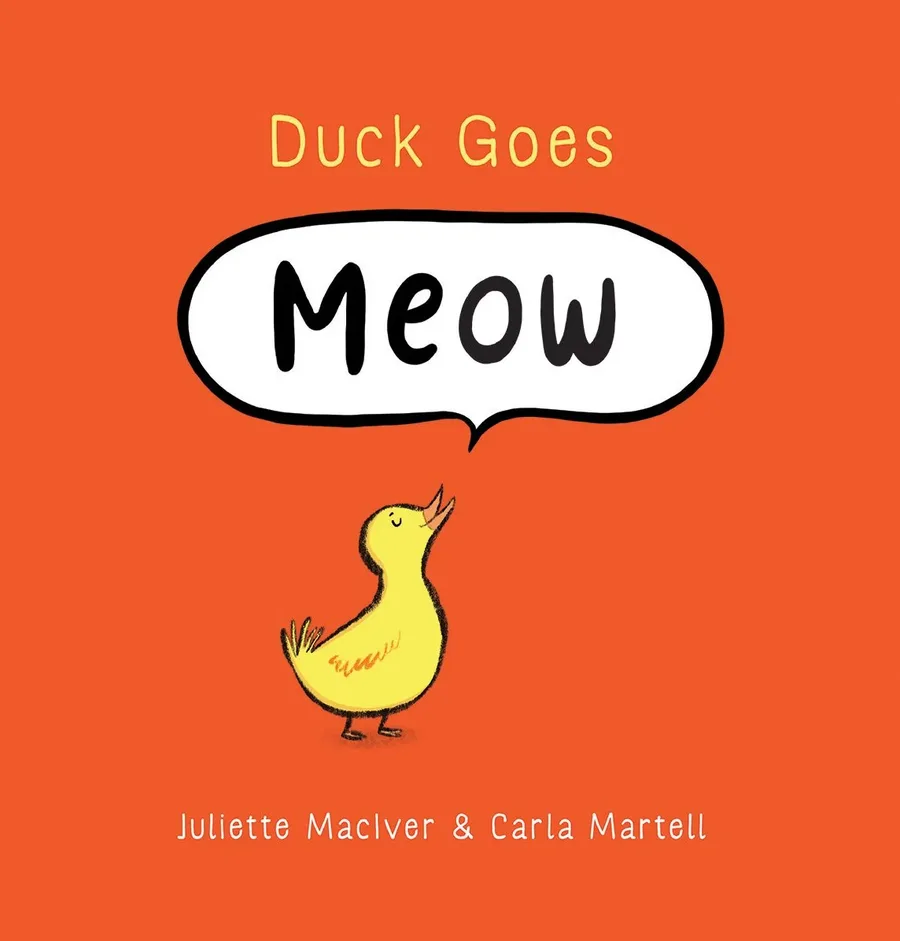 Duck Goes MeowJuliette MacIver, illustrated by Carla Martell“‘Mooo!’ says Cow. What joy abounds! Let’s all sing our animal sounds!’” The cow that opens this irresistible barnyard story with its friendly invitation gets an immediate response. There is Dog’s “Woof!” and Hen’s “Cluck!”; Horse’s “Neigh!” and Wren’s “Cheep!” There is Snake’s “Hiss!” and “Boar’s “Oink!”; Yak’s “Grunt!” and Sheep’s “Baa!” But young Duck keeps responding with “Meow.” The animals gently encourage Duck to try again; Yak even offers a brief tutorial. Before Duck can explain why “I don’t say ‘Quack,’” a cat appears. 54 Picture Books CCBC Choices 2025 “Mama!” cries Duck. And sure enough, when Mama cat invites her babies to snuggle, two kittens and Duck answer her call. A sense of whimsical exuberance is conveyed in the rhyming text and the visuals, which include tiny duck footprints that patter across the yellow endpapers (joined by kitten prints at volume’s end), bold colors, and expressive lines. This winsome picture book is sure to delight toddlers and preschoolers and invite their participation.Picture BooksView book details
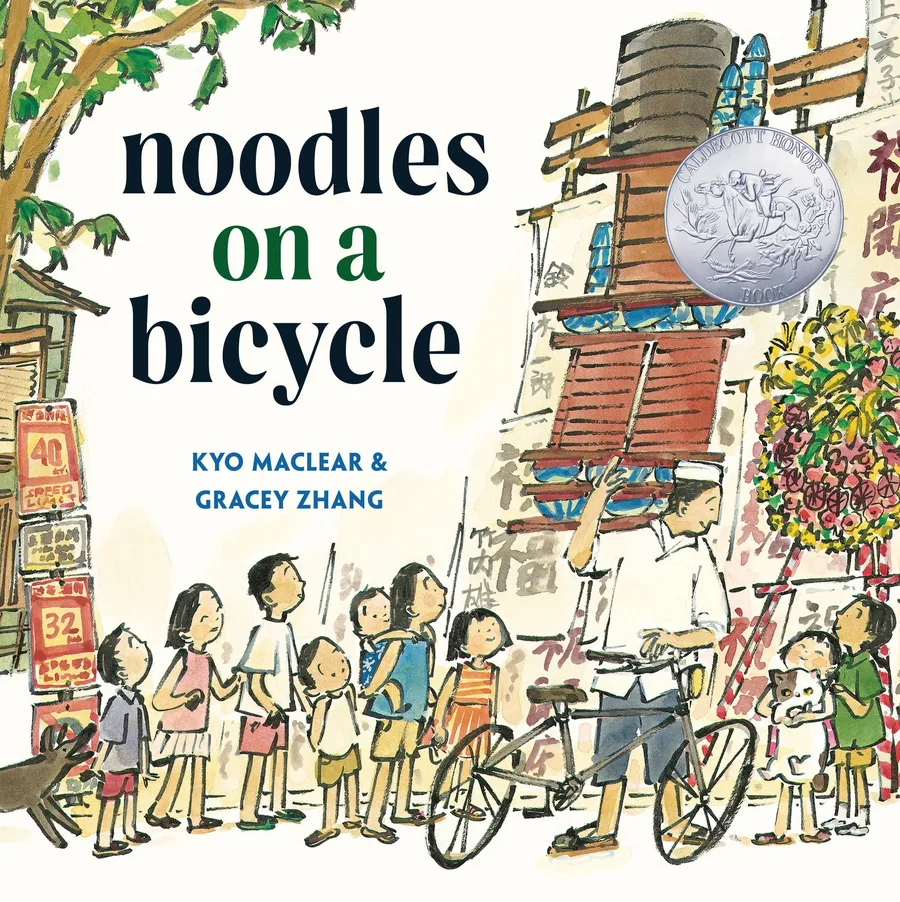 Noodles on a BicycleKyo MaclearIn a bustling Japanese city, a group of children admires the agility and athleticism of noodle deliverymen on bicycles. The men “stack the ceramic soup bowls and wooden soba boxes. One tray on top of another. On top of another.” Expertly balancing their towers of food on a single shoulder, they “whizz” and “soar” through the streets. The children run alongside them and pretend that they themselves are deliverymen, but—“Rattle, wobble... clatter, crash!”—their bowls of water topple to the ground. At the end of the day, the children want—what else?—“soupy, slurpy noodles. Thin, long, belly-filling noodles. Cold, chewy noodles made for dipping.” And who delivers their own tower of food? Papa! Their very own “delivery daddy,” exhausted after a “swift and sweaty day” but eager to sit down with his family for a delicious dinner. Vivid, poetic language is perfectly paired with dynamic ink-and-gouache illustrations, bringing a specialized skill of a bygone era to life in this mouth-wateringly delicious work.Picture BooksLexile Text Measure 479LATOS Book Level 3.2View book details
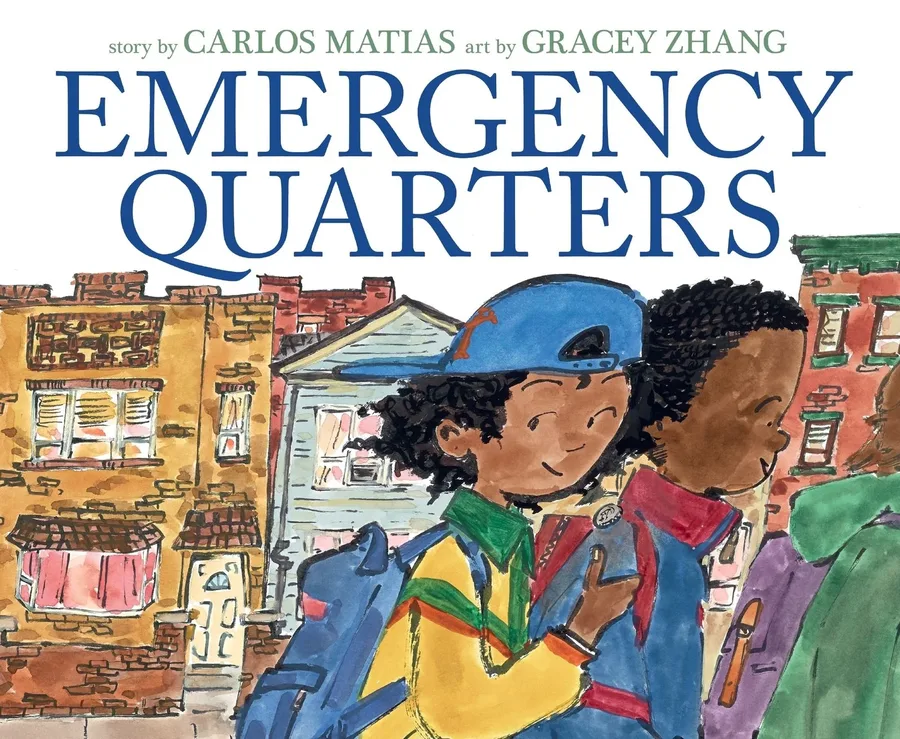 Emergency QuartersCarlos Matias, illustrated by Gracey ZhangErnesto (Dominican American) is finally big enough to go to school on his own. On Monday, his mother puts a quarter in his hand. “For emergencies, Ernesto... If you need me, look for a pay phone.” Ernesto counts how many pay phones there are between home and school, reassured. Throughout the week, he gets a new quarter and the same reminder every morning. Day after day, he passes up chances to do something else with his quarters—buy a treat at Señor José’s bodega, play NBA Jam at Manny’s Video games, or get fruit juice from Señora Mayra’s stand. The coins are jingly security in his pocket, but he wishes he had more quarters, like his friend Raúl. “...we only have enough quarters for emergencies, mijo,” explains his mom. Ernesto has five quarters by the end of the week when an unexpected—and sweetly funny—emergency arises on Friday. A vibrant picture book narrative, wonderfully paced and with delightful details, is paired with lively mixed-media illustrations capturing the warmth of Ernesto’s family and the energy of his neighborhood. A short opening note from the author tells readers and listeners that there was a time when cell phones were not common, but pay phones were. In his childhood, it cost $.25 to make a call, and his mother gave him a quarter every day, telling him, “For emergencies, mijo.”Picture BooksLexile Text Measure 530LATOS Book Level 3.5View book details
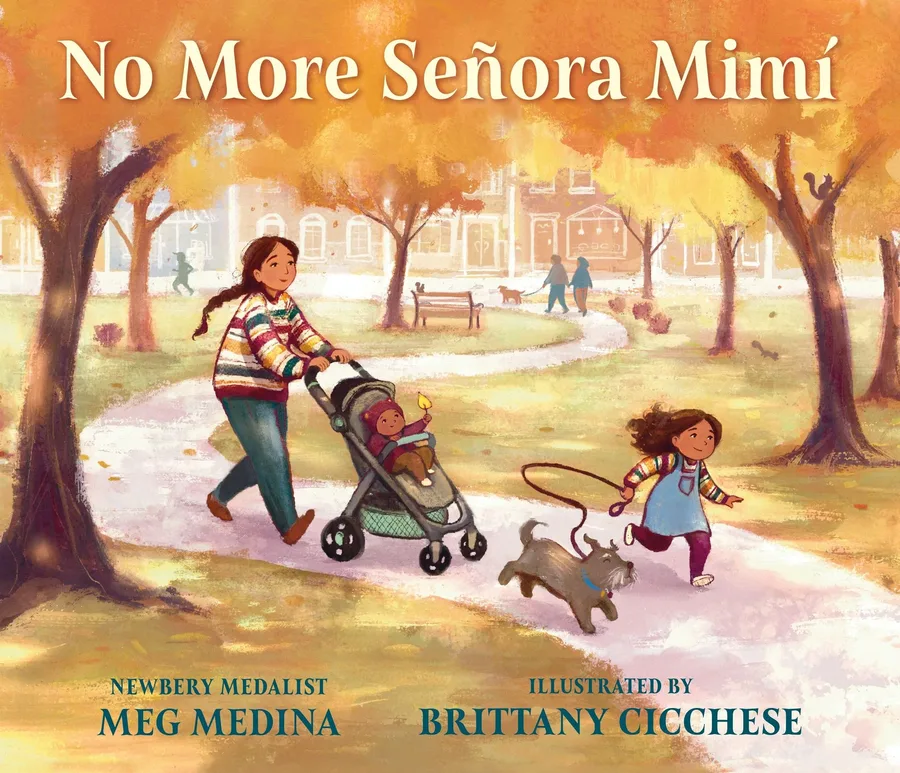 No More Señora MimíMeg Medina, illustrated by Brittany CiccheseAna (Latina) spends her day before and after school with her apartment building neighbor, Señora Mimí, while her mother is at work. “Señora Mimí has a two-tooth baby named Nelson and a no-tooth dog named Pancho, who likes buttered crackers as much as I do.” Ana and Señora Mimí’s relationship is one of warmth, familiarity, and loving routines; they even have matching hand-knitted sweaters Señora Mimí made. On this day, Ana is excited because her abuela is coming to live with her and her mother; Abuela will also become Ana’s babysitter. It isn’t until a classmate points out that there will be no more Señora Mimí 55 Picture Books CCBC Choices 2025 once her abuela arrives that Ana’s enthusiasm deflates. Sitting with her sadness while hiding beneath Señora Mimí’s table after school, Ana knows that nothing will be the same. Señora Mimí sits with Ana to share her own sadness, but also celebrate the specialness of abuelas, and makes clear she still wants Ana to visit. Soon, Ana is listing all of the things to tell Abuela about Señora Mimí, as well as making plans for her and Abuela to visit Señora Mimí every afternoon for a snack. Warm digital illustrations add gentle sprinkles of visual humor and story-enhancing details to a picture book narrative that honors the emotions of a young child processing a big childcare transition, with wonderful, realistic details. A reassuring closing image shows Ana’s plans for regular visits have come to fruition.Picture BooksLexile Text Measure 459LATOS Book Level 3.1View book details
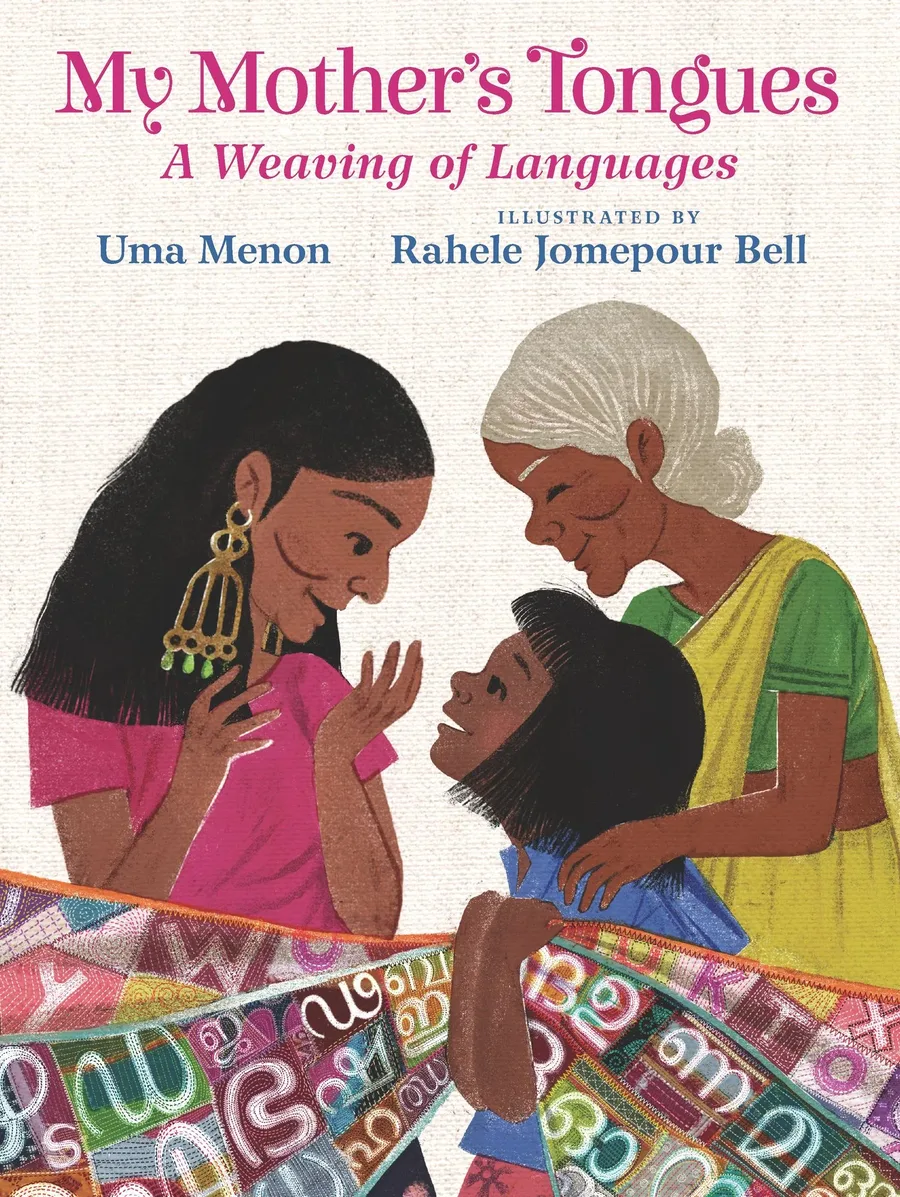 My Mother’s Tongues: A Weaving of LanguagesUma Menon“My mother has two tongues. With one tongue, she speaks Malayalam. With the other, she speaks English.” Young Sumi (Indian American) explains that her mother changes the language she speaks depending on who she’s with and what she’s doing. With Sumi’s grandmother, she speaks Malayalam, her first language. To the cashier at the store, she speaks English. And to Sumi, she speaks a combination, “the two tongues... now woven together like fine cloth.” Sumi tells about her mom’s childhood in Kerala, India, speaking Malayalam at home. Her mom learned English in school, before coming to America, and speaks it with an accent. “A person’s accent holds hints about what their first language might be, or where they might be from.” Sumi’s first language was also Malayalam; she’s learned English, her second tongue, in her neighborhood and at school. She has other family members who speak even more languages. “My family reminds me that each language is like a muscle. It needs exercise and practice to grow strong.” One day, Sumi hopes to have a “tapestry of tongues,” to speak to people around the world. This welcome, purposeful story offers an accessible metaphor for the ability to speak multiple languages while matter-of- factly affirming the value in doing so. Warm, vibrant mixed-media illustrations are full of lively details of Sumi’s family and experiences.Picture BooksView book details
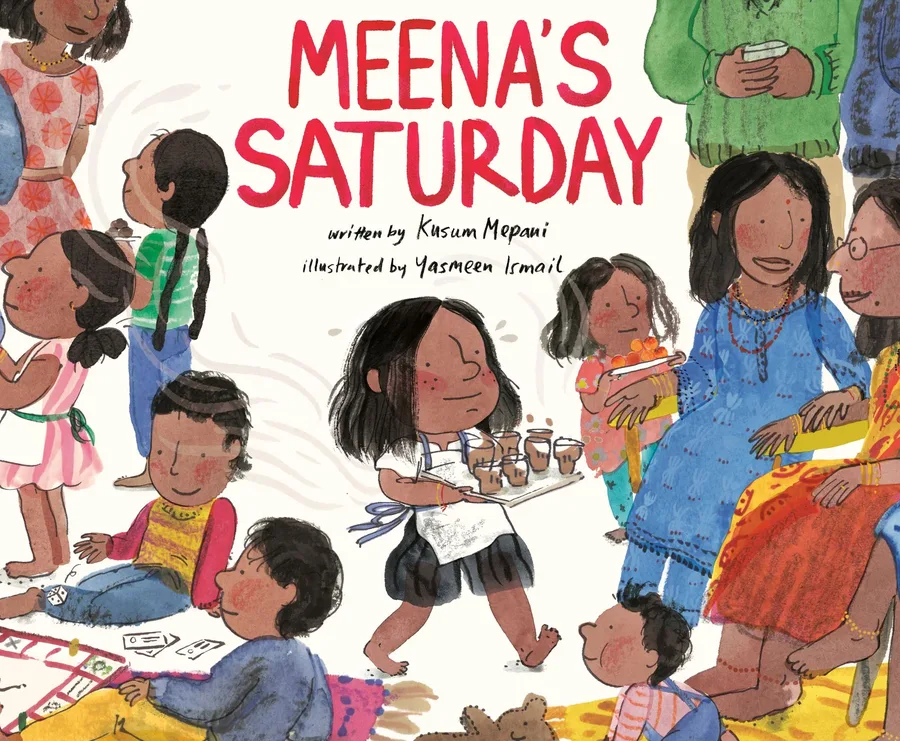 Meena’s SaturdayKusum MepaniMeena’s Saturdays start at sunrise, sipping chai with her sisters before they launch into a morning of nonstop cleaning and grocery shopping until the first relatives arrive at noon. Meena’s job is making chai for the guests, a task she finds boring and endless. The women and girls crowd the small kitchen for an afternoon of cooking, followed by more cleaning, while the doorbell rings constantly with cousins, aunts, and uncles, all neighbors and friends. Meena’s parents were the first to move from their village in India to a new country, and they helped others who came later. All come on Saturdays to acknowledge that assistance and celebrate community. Meena and her cousins work hard, but also find time to watch Indian movies and practice their dance and fighting moves. After more effort in the kitchen making fresh chapatis, a spectacular dinner is ready to be served. Table space is limited and a protocol is followed each week: The men eat first. But Meena, who objects to gender-biased practices throughout the day and is fed up with waiting for progress, decides to make her own small step toward change when she takes the seat next to her father. Warmth, humor, and a realistic childlike perspective blend in this lively portrait of family, both chosen and blood, spending a day framed by tradition and evolving attitudes.Picture BooksView book details
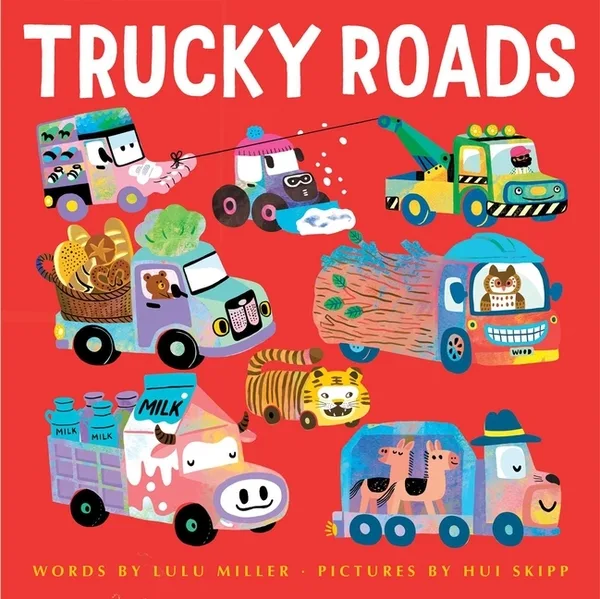 Trucky RoadsLulu Miller, illustrated by Hui SkippTrucky Roads is a truck guy. He doesn’t just see trucks on the road, he sees all kinds of trucks on the road. Trucks with specific jobs, like dump trucks, garbage trucks, and fire trucks. Trucky also imagines a wide range of trucks, like tow trucks and toe trucks, as well as monster trucks and tiger trucks. Whimsical illustrations with tie-dye hues bring humor and definition to Trucky’s lyrical classifications of actual trucks and invented vehicles. Occasional side commentary adds additional levity to this welcome addition to the picture books about transportation canon.Picture BooksView book details
 The Boldest White: A Story of Hijab and CommunityIbtihaj Muhammad, S. K. Ali, illustrated by Hatem AlyFaizah (Black) loves the feeling of belonging to a community and feeling part of the crowd at mosque when she prays. “It feels right. / I feel right.” But at her fencing class, her teacher is encouraging her to take a step outside her comfort zone by competing in an upcoming tournament. Faizah doesn’t feel ready. “Bravery grows in your mind. But its roots are in your heart,” Mama says, telling Faizah not to worry because “bravery will grow.” Faizah’s looks up to her big sister Asiya, who’s also a fencer. Asiya encourages Faizah to enter the tournament too. But it isn’t until Faizah’s teacher asks her to demonstrate a move for the class that Faizah finds the courage to step up and stand out. When she does, she realizes that people aren’t looking at her, they are looking at what she can do. “So that they can do it too.” Colorful mixed-media illustrations provide a cheery backdrop for this story about developing the confidence to shine. Scenes show Faizah’s loving family, joyful best friendship, and her Muslim faith, all of which are woven seamlessly through the story.Picture BooksView book details
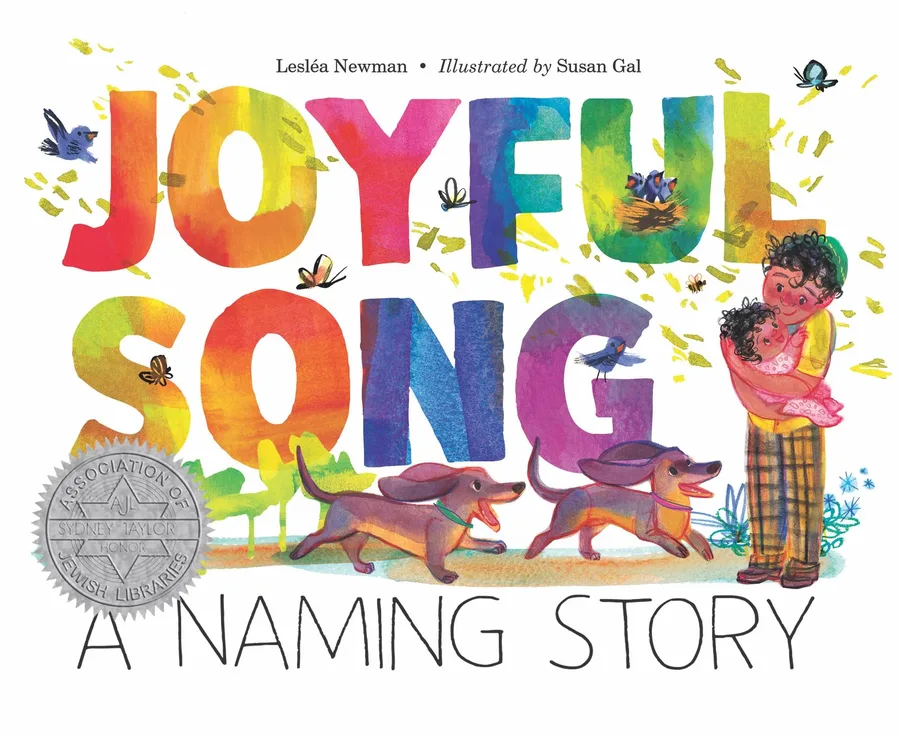 Joyful Song: A Naming StoryLesléa NewmanThis Shabbat service will be special for brown-skinned Zachary and his Jewish family. It’s his baby sister’s first Shabbat, and he and his moms (one of whom is Black, and one white) will announce her name to the world. On their way to the synagogue, they pass a series of neighbors, each of whom asks what the baby’s name is. Each time, the family gives a term of endearment rather than her given name: Little Babka, Shayneh Maideleh (“beautiful girl”), Snuggle Bunny. And each time, Zachary invites the neighbor to join them for services, and they do. Near the end of the service, Zachary and his moms and sister join the Rabbi on the bima. After his parents and the Rabbi bless his sister, Zachary is the one who gets to announce her name and its meaning. He has practiced the words all week. “Because you make our hearts sing with happiness... we decided to call you... Aliza Shira,” or “joyful song.” On the walk home, they say good-bye to each neighbor, giving the story a satisfying, full-circle pattern. This warm story of familial and community love is accompanied by richly colored watercolor and digital illustrations.Picture BooksView book details
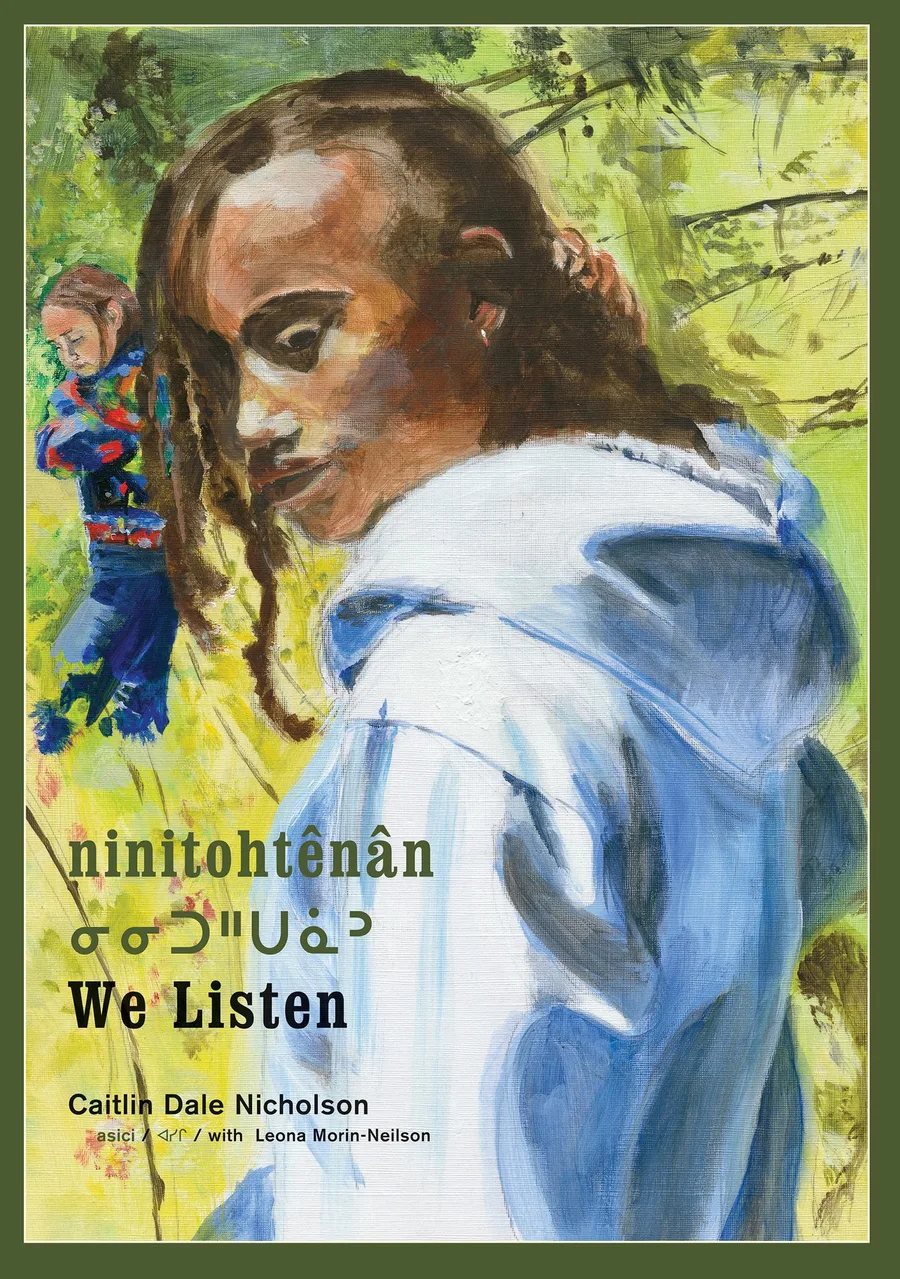 Ninitohtênân / We ListenCaitlin Dale, with Leona Morin-Neilson NicholsonA school-age Cree girl visiting her grandmother, Nôhkom, describes Nôhkom’s measured actions, each of which the girl, her friend (who is Black), and her mother repeat. “Nôhkom prays. We pray. Nôhkom picks. We pick.” The simple story eloquently shows the role this elder plays in teaching by doing, while also giving a lovely sense of family as the foursome walks in the woods to harvest berries and gather other things for a meal. An unexpected, child-centered moment of humor comes when the simple pattern is broken (“Nôhkom rests. 57 Picture Books CCBC Choices 2025 Mom rests. Not us!”) This is the third book in this bilingual series in which the narrative on each page appears in twice in Y Cree—in roman orthography and then syllabics—before the English text. Full-page acrylic illustrations beautifully capture the light and landscape of the natural world and the distinct characters as they move through it.Picture BooksView book details
 HeatwaveLauren RednissA boy and his dog pass languid hours at the beach in a picture book that strikingly conveys the pulsing heat of a triple-digit day. Grayscale, mixed-media illustrations appear almost hazy against solid red pages, evoking the oppressive weight of scorching heat. The sparse text—averaging two words per two-page spread—lends the reading an appropriately sluggish pace. “No way.” The boy stands with hand to forehead, staring up at the sky. “Too hot.” He reclines on a beach chair, arms at his sides. “Game cancelled.” He sits on his basketball, head in hand, his French bulldog sprawled next to him. Other people lie on towels, shield their faces, apply sunscreen. “100 degrees, / in the shade. / Try not to burn.” Then, a sign of hope arrives. “Wind picks up. / Clouds roll in.” Could it be? The boy and his dog look up toward the sky as a single raindrop, cool blue against the red, falls. Then: “Downpour.” The red pages become streaked with blue lines until the only remaining red is the setting sun. As night falls, the red gives way as the pages become completely awash in blue relief, and the boy and his dog return home and fall into bed.Picture BooksView book details
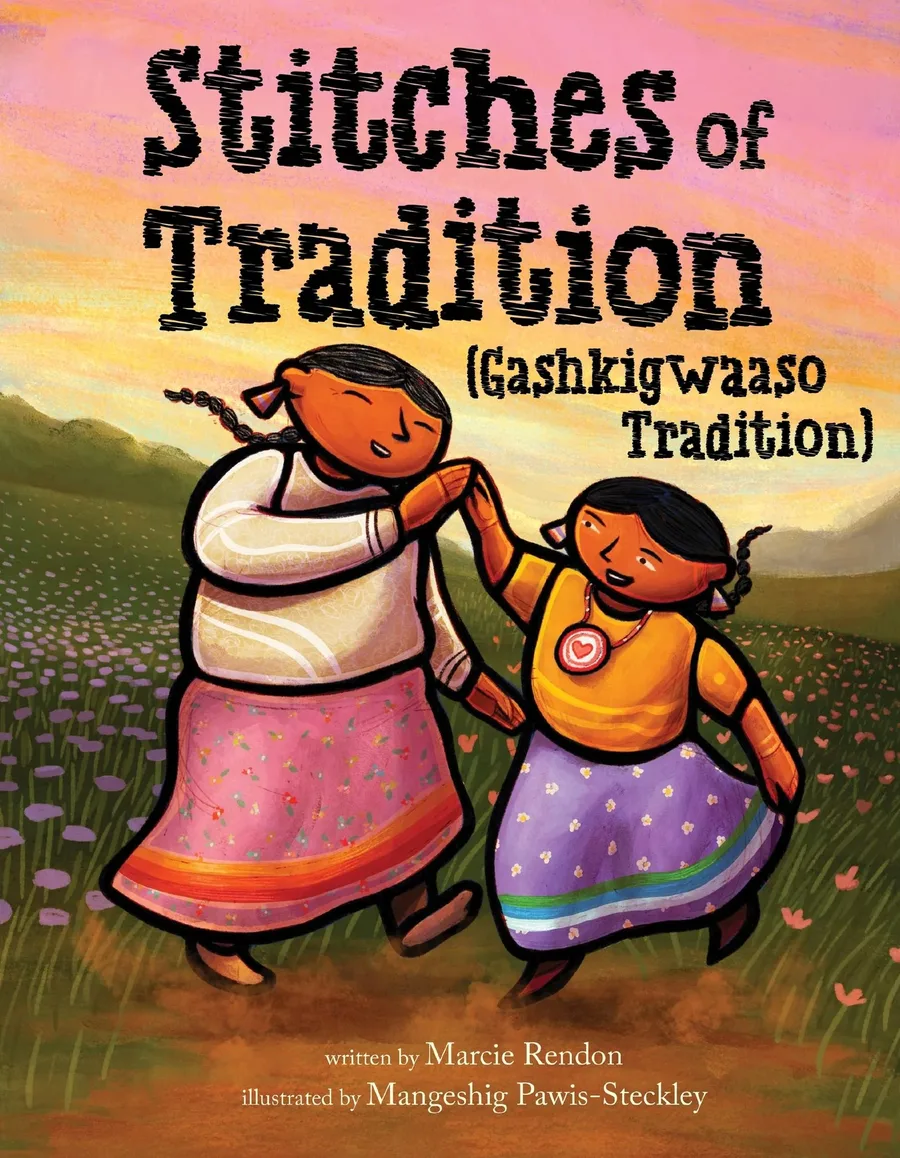 Stitches of Tradition (Gashkigwaaso TraditionMarcie Rendon“Traditions stitch together generations with love.” Tatiana needs a ribbon skirt for her little cousin’s naming ceremony. Nookomis measures her and Tatiana falls asleep to the sound of Nookomis’s sewing machine. “In the morning, on my bed is a beautiful ribbon skirt... It fits my waist just right. It touches my ankles when I twirl.” Nookomis tells her, “My granddaughter, live a good life.” And Tatiana answers, “Eya.” Over the coming years, Tatiana grows taller and Nookomis grows shorter. One year, Tatiana needs a new ribbon skirt for Fall Ceremony. Nookomis measures her and Tatiana falls asleep to the sound of the sewing machine, waking up to a ribbon skirt that “fits my waist just right. It touches my ankles when I twirl.” Nookomis tells her to live a good life. “Eya,” Tatiana replies. Events repeat again the year Tatiana needs a new ribbon skirt to celebrate her auntie’s judgeship, and again a few years later, at the time of Tatiana’s naming ceremony. The brilliant use of repetition in both the telling and structure of this story beautifully embodies the importance of ritual and tradition in Tatiana’s Ojibwe family and culture. Ojibwe language is incorporated throughout, as are rich details full of child appeal. The narrative is set against illustrations brimming with color and warmth.Picture BooksView book details
 Chooch HelpedAndrea L. Rogers“This is the baby. We call him Chooch.... everyone just calls me Sissy.” Sissy explains that Chooch is two, so not really a baby anymore, but because he’s usdi (young), he “just gets away with everything.” Everyone else lets Chooch help with whatever they’re doing, even though he often makes a mess. But when Chooch tries to help Sissy make a clay pot, she shouts at him and he cries. “Shouting is no help!” Sissy’s parents yell, which makes Sissy cry. Chooch wipes away her tears. An apology from their parents is followed by a story about how Sissy “helped” when she was little just like Chooch does now. But it’s the reminder that she is one of Chooch’s most important teachers that encourages Sissy to embrace a different approach with her little brother as she offers to help him learn to make 58 Picture Books CCBC Choices 2025 a clay pot. A universal story of sibling tension is beautifully grounded in the specifics of a Cherokee family and their culture. Cherokee words integrated into the narrative include phonetic pronunciation beneath, and definitions in a glossary at story’s end. Oranges and russets predominate in the gorgeous mixed-media illustrations incorporating Cherokee motifs and symbols.Picture BooksLexile Text Measure AD440LView book details
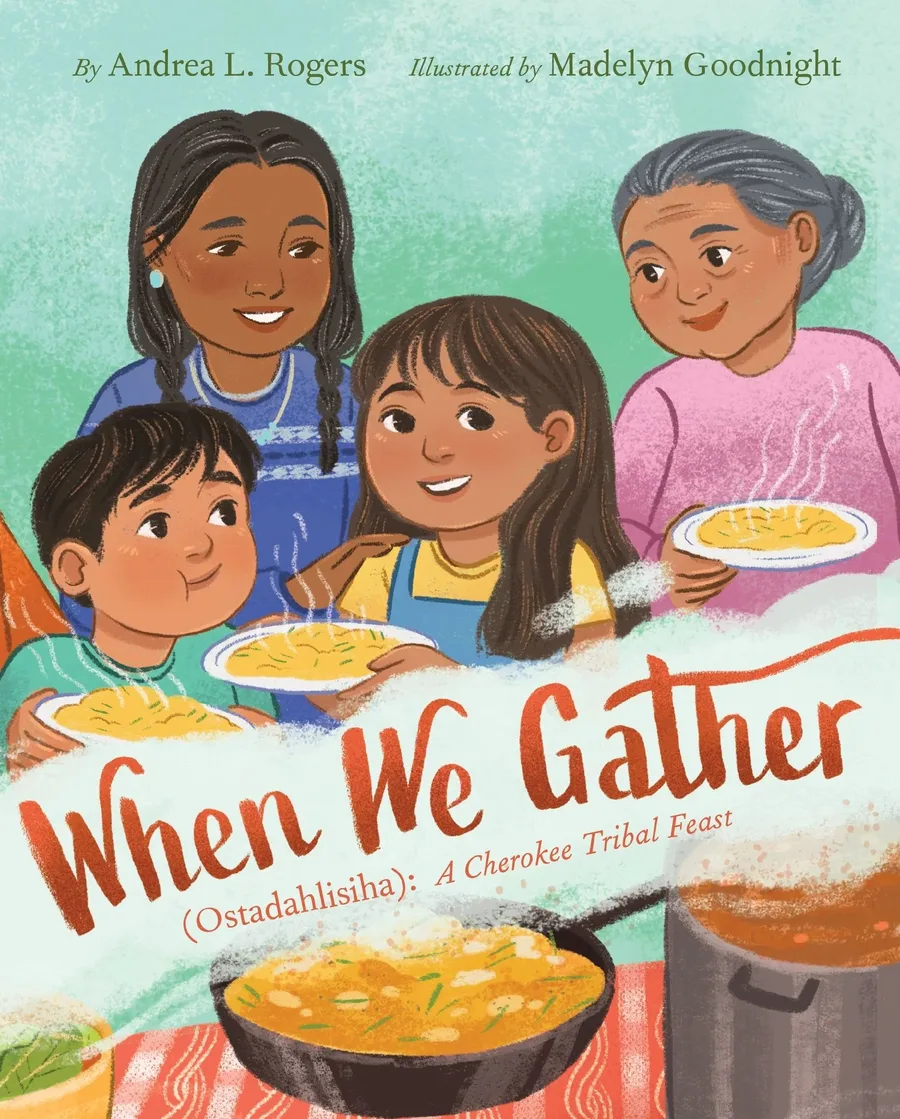 When We Gather (Ostadahlisiha): A Cherokee Tribal FeastAndrea L. Rogers, illustrated by Madelyn Goodnight“Nothing welcomes spring like a wild onion dinner!” A Cherokee girl describes a seasonal ritual as she and her family help prepare a community feast to welcome spring. But first, her Uncle Fish takes her and her younger brother to the spot where they’ll harvest wild green onions. Other family members join them; they each have their favorite tool for digging, from stick to shovel to spoon. They leave most of the onions behind so more will be waiting next spring. When it’s time to cook at the community center, the menu includes corn soup, grape dumplings stew, wild onions and eggs, and more. Following a prayer to thank the Creator, it’s time to eat! A lovely, lengthy author’s note about the importance she places on history and culture, including food and language, closes this cheerfully illustrated, buoyant story.Picture BooksView book details
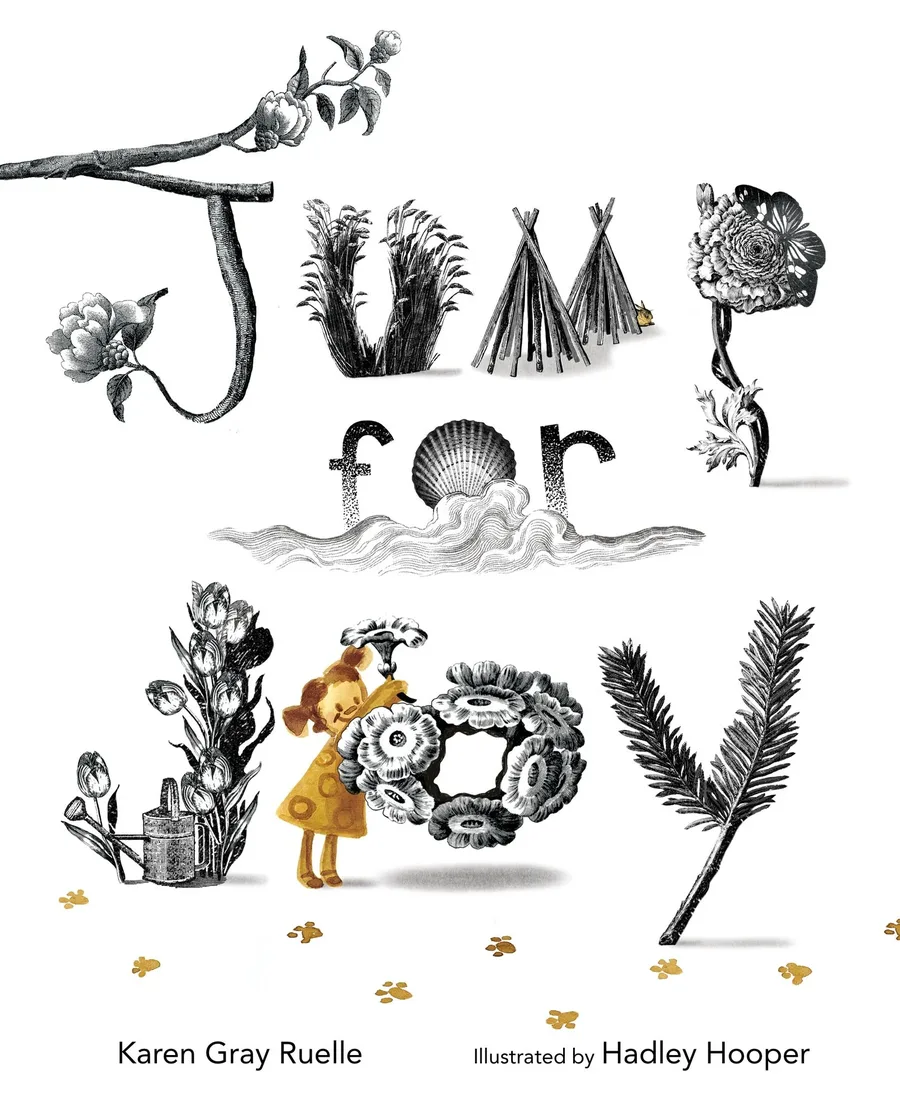 Jump for JoyKaren Gray RuelleJoy (a kid) loves dogs and has always wanted one, and Jump (a dog) loves kids and has always wanted one. Neither of them is picky about the details. The dog (or kid) could be big or little, spotted or curly. Each season, Joy and Jump put their artistic skills to good use, making dogs (in Joy’s case) and kids (in Jump’s case) out of various materials. In the spring, Joy uses flowers, and Jump uses ferns. But in both cases, their sculptures “wilted and fell to the ground.” In the summer, Joy makes a seashell dog named Shelby, and Jump makes a sand kid named Sandy. “But the waves washed [them] away, bit by bit.” In the fall, the wind dismantles Joy’s stick dog (Bark) and Jump’s mud kid (Patty), and in the winter, the sun melts Joy’s and Jump’s snow friends. The next spring, when flowers and ferns sprout again, both Joy and Jump exclaim in delight, believing their plant companions have returned. Instead, their shouts alert them, for the first time, to each other’s presence. “And Joy jumped for joy and Jump jumped for Joy. / And neither of them wilted or melted or scattered or splattered or washed away.” Expressive brush-and-ink characters against distinctive black-and-white collage backgrounds give way to a riot of color once Jump and Joy meet in a charming book full of wordplay and child appeal.Picture BooksView book details
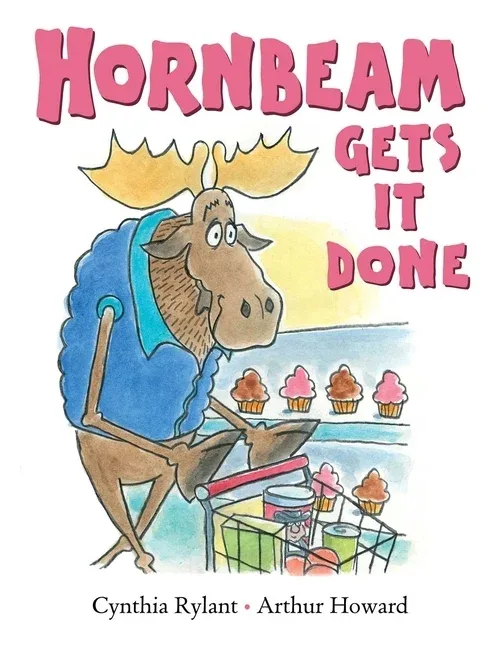 Hornbeam Gets It DoneCynthia Rylant, illustrated by Arthur HowardAffable moose Hornbeam is back with his oddball friends for more quirky adventures in this follow-up to 2023’s Hornbeam All In. In the first episode, “March Worries,” Hornbeam is reasonably worried about his fragile blueberry bush during the windy month of March. “He could see all the blueberry muffins... blowing away” with it. After some trial and error, he and Eureka (a goose) come up with a solution: staking and roping not just the bush, but all items—a flagpole, a birdfeeder, a mailbox—that may also find themselves victim to the wind. “Food Shopping” sees Hornbeam and Cuddy (a cow) being too enticed by the baked goods during their Monday grocery shopping to get anything done. A pair of blinders keeps them focused, but a hot pepper in the mouth—suggested by a fellow shopper—works even better. In the final story, “Game Night,” Hornbeam (with snacks and lucky socks) joins other friends at Eureka’s house to play board games. The winner always brings a surprise 59 Picture Books CCBC Choices 2025 to the next game night, ensuring a fun night for everyone. “No matter who won, everybody went home happy!” Colored pencil and gouache illustrations depict four approachable and endearingly dressed (Eureka wears crocs) animal friends in this funny picture book perfect for early readers.Picture BooksView book details
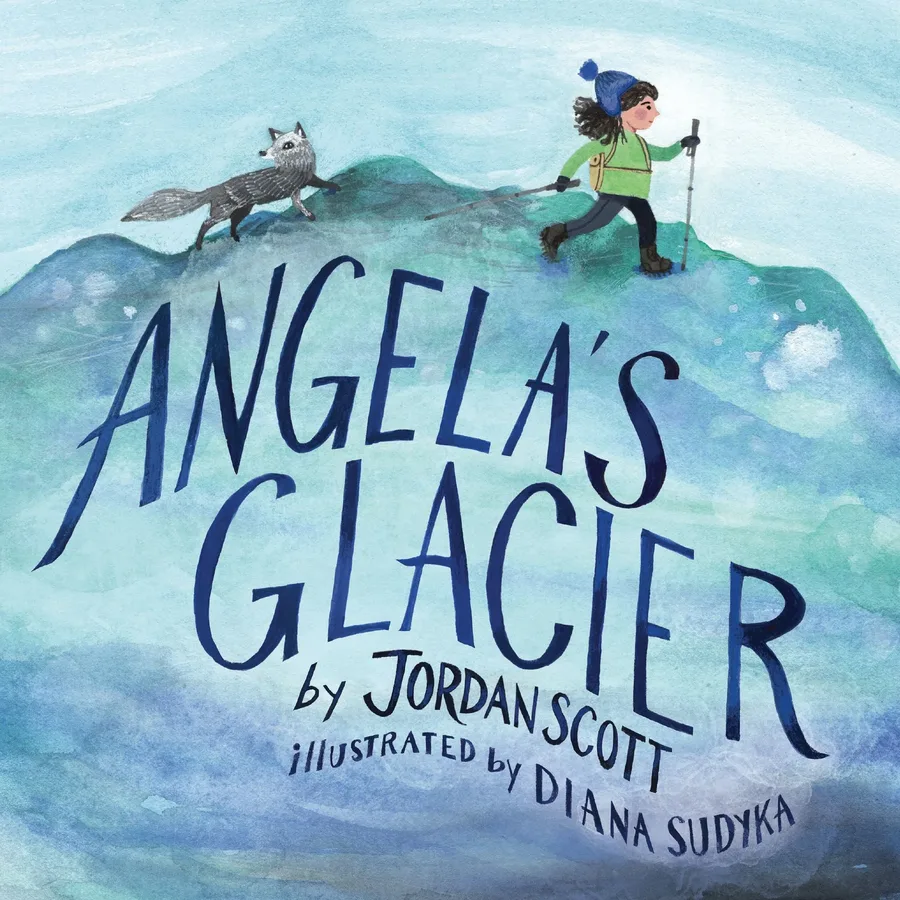 Angela’s GlacierJordan ScottGorgeous gouache illustrations and poetic text speak to the beauty and bond offered by nature. Inspired by his friend’s connection with a glacier in Iceland, author Jordan Scott tells the story of a young girl’s early relationship with the environment. Angela and her dad (both white) live near Snæfellsjökull, a huge, ancient glacier in Iceland. When Angela is born, her father takes her outside to see the glacier in the distance, and before she learns to walk, she rides on her father’s back as he hikes up it. “They walked through snowfields thick like pancakes to the glacier’s ice-blue heart. Angela listened to the glacier. Her father held her still in this universe of sound.” As Angela gets older, she walks up the glacier herself, touching the ice, listening, and whispering to it. When she gets older still, and her days get busier, something about her heart sounds strange. Her dad suggests visiting Snæfellsjökull. She makes a promise to the glacier that she will always visit and always listen, and that night, her heartbeat sounds like the name of the glacier: snæ fells jö kull snæ fells jö kull. An Icelandic pronunciation guide and afterword provide context and meaning to this quiet but powerful story about the sounds and impact of nature on human lives.Picture BooksView book details
 Being HomeTraci Sorell“Today is moving day!” A young Cherokee girl has been living in the city, where the pace is too fast, animals are too few, crowds are too big, and the rest of her family is too far away. With everything packed, she bids a swift goodbye to the house and backyard swing before she and her mom head off, driving toward their ancestral homelands. “Singing, / shell shaking, / storytelling, / stickball playing / all offer different beats.” When they finally arrive, it’s to a lush landscape, a large and loving family and community, and “the rhythm of being home.” The words are spare but emotionally evocative, with pleasing details in the text extended by mixed-media illustrations in which rich colors are used to echo the comforting feeling of home as a place of warmth and belonging.Picture BooksLexile Text Measure AD450LATOS Book Level 3.1View book details
 A Maleta Full of TreasuresNatalia SylvesterIt’s been three years since her Abuela’s last visit, and Dulce imagines her upcoming arrival with maletas—suitcases—full of exciting surprises. Indeed, her Papi must squeeze Abuela’s many maletas into the car when they pick her up at the airport. She’s brought chocolates and caramels, books, photos, and blankets “softer than cotton balls.” As the days pass, Dulce slows her consumption of the treats, realizing that they will run out, and so will her Abuela’s visit. As the maletas are packed for the return trip, Dulce adds her own gifts of mini dolls for her primas, and a collection of pictures she’s drawn of her time with her Abuela. At departure, her Abuela declares that someday Dulce will fly to visit her, but for now she should check under her bed. There Dulce discovers a new suitcase with her name on the tag, filled with candies, cookies, pictures, a hand-knit chullo, and a loving note. The story is relatable for anyone with cherished relatives who live far away, yet specific to Dulce’s family with details and seamless translanguaging. A note describes the art as honoring “Andean cultures, including the Quechua, Inca, and Aimara people” in the color palette and patterns appearing throughout.Picture BooksLexile Text Measure AD760LATOS Book Level 4.9View book details
 The Blue PickupNatasha TripplettJu-Girl (Black) loves spending time with her granddad, who runs a garage. “I help him fix radiators, switch out batteries, and even change a car’s oil.” Her favorite thing is organizing Granddad’s socket wrench set. When the two take a break, they sit on the gate of his old Blue Pickup, where she drinks Ting and listens to Granddad’s stories of when he—and the truck—were both younger, and he drove to jobs around the island. The truck no longer runs, and when Ju-Girl suggests Granddad fix it he says he doesn’t have time. Then comes a day with two surprises. The first is the truck, running once more. They drive around their parish and Granddad reminisces about places they pass and people who used to live there. The second surprise, when they’re back in town, is a socket wrench set of her very own. “Granddad, do you think one day I can drive the Blue Pickup?” she asks. “Ju-Girl, one day you can have the blue pickup.” An energetic, upbeat tale inspired by the author’s grandfather, who taught her the importance of taking care of old things and “preserving the past through storytelling,” is set in Jamaica and paired with illustrations that reflect the colors of the island and the loving relationship at the heart of the story. A brief author’s note is accompanied by a photo showing that she did, indeed, inherit the Blue Pickup, a coda that will add to readers’ pleasure.Picture BooksWord Count 650View book details
 Emma’s Awesome Summer Camp AdventureAmy Webb, Grace Webb, illustrated by Merrilee LiddiardEmma is excited to be at summer camp for the first time, making new friends, learning about their interests, and taking part in the many activities at Camp Waterfall. These include games, crafts, and swimming. There’s even a zip line. But the best thing about Camp Waterfall its practice of inclusion for all. For Emma, who uses a wheelchair, and her cabin mates, who have differing disabilities, this means everyone can participate, no matter the activity. This purposeful picture book underscores the value of inclusion while illuminating feelings relatable for all children, from Emma’s nerves when she looks down from atop the zip line tower to Bradley’s fear of dancing in front of everyone during the talent show.Picture BooksLexile Text Measure AD610LATOS Book Level 4View book details
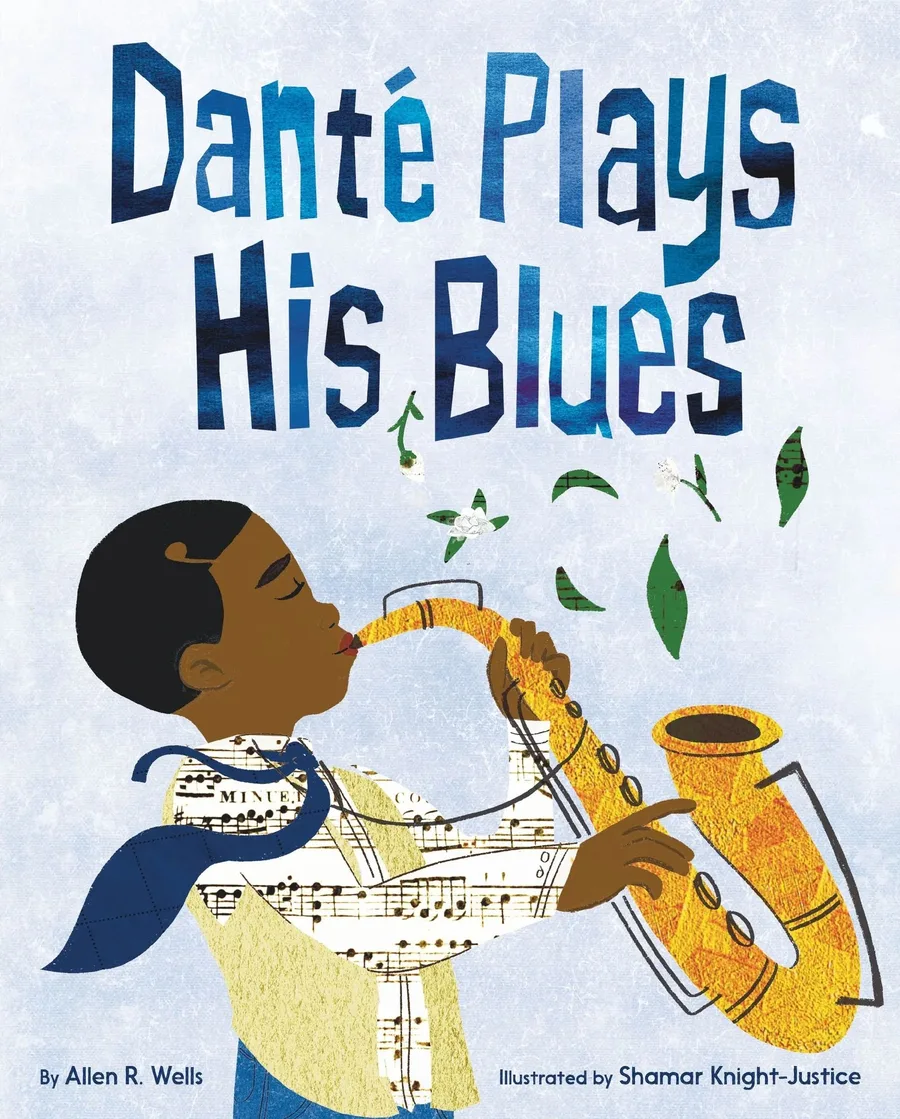 Danté Plays His BluesAllen R. WellsDanté and his mama move in with his uncles and cousin after they lose their home. Mama promises they’ll have a place of their own again soon, but Danté misses Luna Park, where they lived. Uncle Ron, a sax player, begins teaching Danté how to play the saxophone, giving him a small one to practice on. When Uncle Ron tells Danté he should name his saxophone—Uncle Ron’s sax is Charlene, after Danté’s grandmamma—Danté names it Luna. Danté practices all summer long. There are highs, like blowing his first clear note (“Solid”) but also continued sadness because his mama works hard and they still lost their home. “Turn yo’ blues into yo’ muse,” suggests Uncle Joe. By the time the leaves are turning gold, Danté is ready for a short song on stage with his uncles’ band. “It isn’t perfect, but I keep playing all the way to the end.... Maybe someday, Mama and I will have our own house again. Until then, my uncles’ house is our house. Solid.” A warm, honest picture book centering feelings around loss and change features a Black boy and his lively, supportive extended family. Musical imagery appears in the background and throughout the vibrant mixed-media illustrations.Picture BooksView book details
Books for Beginning Readers
4 selections
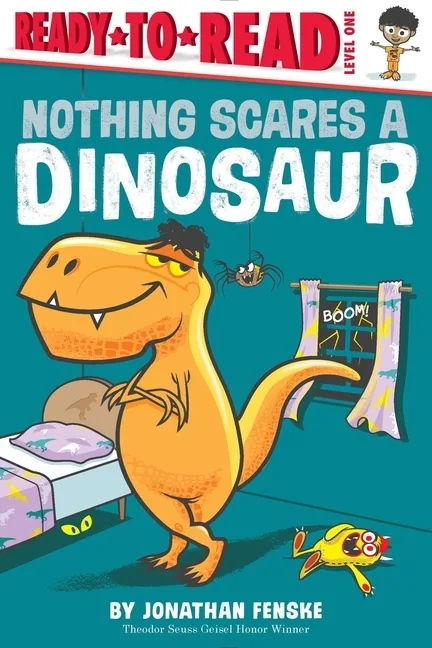 Nothing Scares a DinosaurJonathan Fenske, illustrated by Jonathan FenskeA little boy (brown-skinned) in dinosaur pajamas is tucked into bed for the night, but as soon as the lights are out, he sits up. “I lie awake. I look around. I see a shadow. Hear a sound.” The mysterious noises are no match for this fearless dinosaur! Stealthily, the boy/dinosaur hunts the terrors in his room—a spooky shadow, the cat beneath his bed, a fearsome spider—until the moment Mommasaurus roars for him to go to sleep. Easy rhymes and engaging illustrations offer humor and appeal for early readers.Books for Beginning ReadersWord Count 238View book details
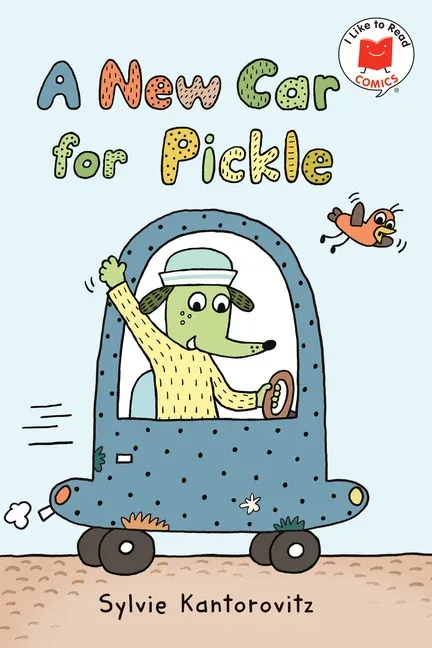 A New Car for PickleSylvie KantorovitzThere is a Busytown-esque quality to this easy graphic novel about Pickle, a pickle-colored, doglike creature with car problems. When his car breaks down, Pickle pushes it to Coco’s Garage and tells Coco he needs a new car. Pickle’s eyes grow wide with excitement when he sees a sporty one on the lot. He’s sure it’s the car for him and takes it for a test drive (“Vroooom”), only to get pulled over for speeding. A subdued Pickle goes back to Coco’s, where his eyes alight on a big car. But a test drive proves it’s a bit too big when Pickle runs into a stand at the farmer’s market. Back at Coco’s, Pickle is dazzled by a fancy car—it isn’t too big or sporty. The test drive confirms it for Pickle—this is the car he wants, until Coco tells him the cost (“a million dollars”). Coco also explains that he’s checked Pickle’s car, and all it needed is gas (!), tune-up, and a car wash for good measure. Uncluttered, easy- to-follow panels and speech bubbles, appealing animal characters, and plenty of silliness make for a winning reader with a subtle message.Books for Beginning ReadersView book details
 We Are Up a Tree!Jeff Mack, illustrated by Jeff MackOn a wintry day, Dog sees a climbing opportunity on a leafless tree, with branches stepped perfectly like a ladder. He asks Pony for permission to climb, and quickly finds out that it’s harder than it looks. After a few unsuccessful attempts, Dog is gleeful on his new perch... but how does he get down? A cascading series of back-and-forth exchanges ensues, resulting in Dog and Pony BOTH getting stuck in the tree. How will they get down? Patience and cleverness help the pals execute a smooth exit from their predicament. This beginning reader includes a how-to guide for first time graphic novel readers, as well as simple text and sight words.Books for Beginning ReadersView book details
 Lunar New Year (Robin Hill School)Margaret McNamara, Wendi GuRobin Hill School has a visitor! Eigen’s mom is a guest in the first-grade class. Ms. Wong talks about the Lunar New Year using a variety of props, like a vase of flowers, a globe, and platter of dumplings. While she shares details about this spring holiday celebrated all over the world, especially in China where Eigen’s family is from, the students try to guess what part of the holiday Eigen likes best of all. Easy sight words and large, full-color illustrations anchor this school story celebrating the students’ curiosity and Eigen’s family traditions.Books for Beginning ReadersView book details
Books for Newly Independent Readers
10 selections
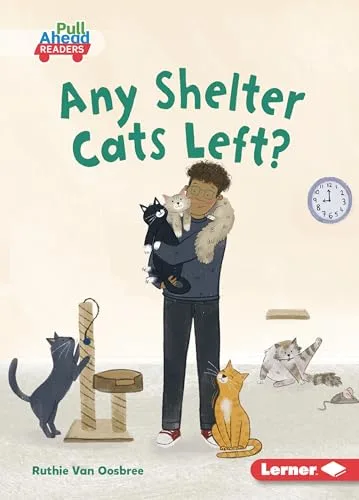 Any Shelter Cats LeftRuthie Van Oosbree, illustrated by Felicity SheldonSimple sentences encourage novice readers to use math skills at an animal shelter. If there are five cats at the shelter, and Boots, Lily, and Tiger find homes, how many cats are left? Soon the remaining two felines find their home, as Salt and Pepper are adopted by a family of four. Racially diverse humans welcome their new pets in this short book that includes three visual prompts in a “Did You See It?” final page.Books for Newly Independent ReadersView book details
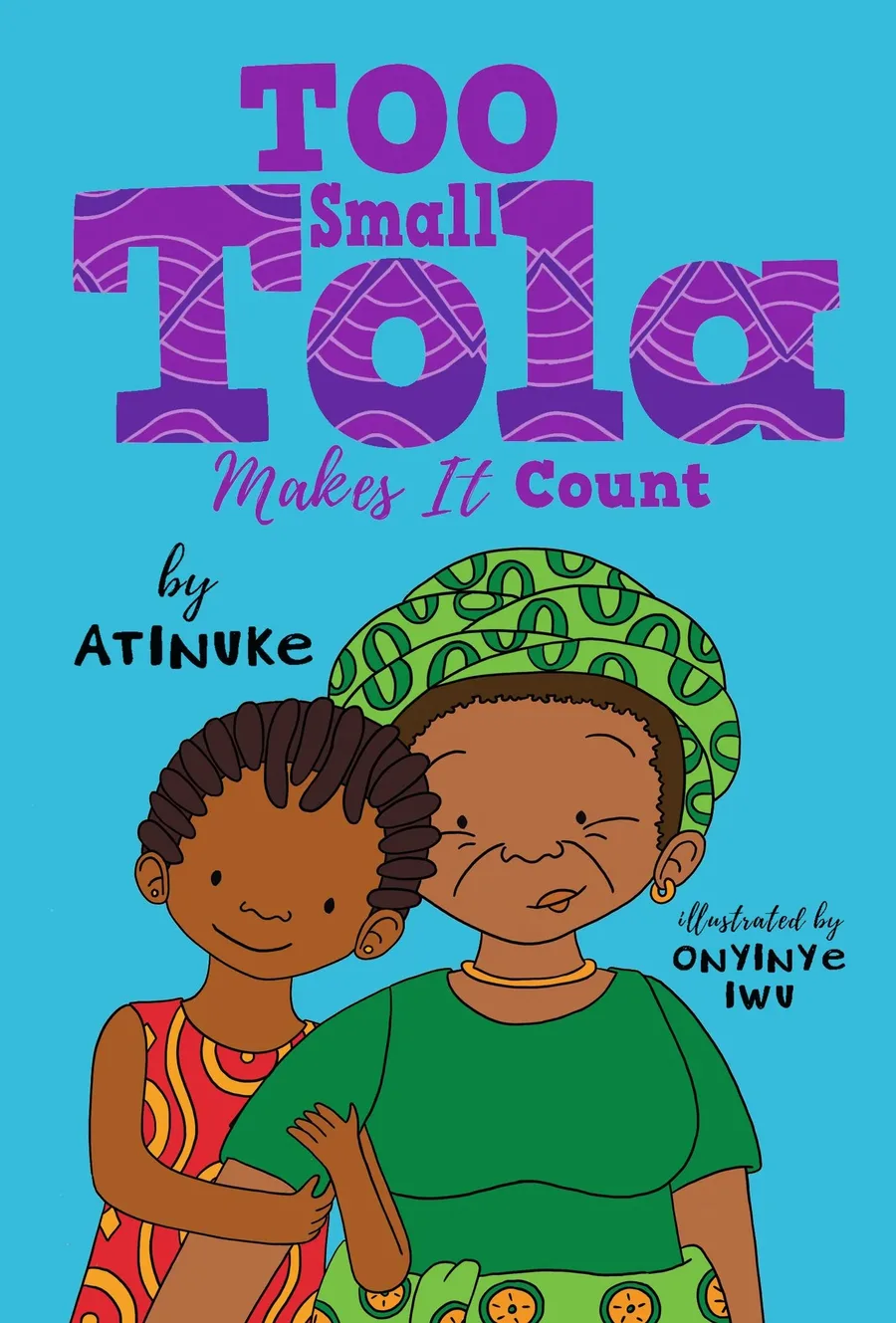 Too Small Tola Makes It Count (Too Small Tola, #4)AtinukeTola (Black), lives in Lagos, Nigeria, with her older sister, brother, and Grandmommy. During the pandemic she was working for famous pop stars, but other kids don’t believe her, leading to a rift with friends now that the pandemic is over. She’s also worried about Mrs. Shaky-Shaky, an elderly neighbor who can no longer easily climb to her apartment on the top floor of their apartment building. Meanwhile, Grandmommy doesn’t like that Tola’s brother Dapo hangs out so much with the “nobodies,” young men in a first-floor apartment, even though Tola has observed that the older boys are nice. A day trip to the seaside with Grandmommy is meant to be a treat, but Tola is unsettled after the long, hot, crowded journey ends at a beach covered with trash—the only one they can afford to visit. But Grandmommy is so happy to have brought her there. Creative thinking, gratitude, patience, and cautious optimism all bring satisfying rewards in Atinuke’s latest story about Tola, which deftly blends tenderness and humor.Books for Newly Independent ReadersView book details
 Stella & Marigold (#1)Annie Barrows, illustrated by Sophie BlackallAt four years old, Marigold still has a lot to learn about the way the world works. Fortunately her older sister, seven-year-old Stella, takes her job very seriously. “I’m going to tell you all the secret things I know,” Stella whispered into newborn Marigold’s ear the first time they met. And so she does, in her kind and clever way. When the plumber removes a hairclip from their clogged drain, everyone knows that Marigold put it there. After their mother scolds Marigold, though, Stella casually explains to Marigold that the objects in the bathroom come alive and walk around each night; obviously, the hairclip fell in during a nighttime excursion. Each chapter presents a different learning opportunity or bonding moment for the white sisters. Embarrassed to have gotten lost in a viewing tunnel at the zoo, Marigold is reassured by Stella’s story about the time the Vice President got lost in their city. When Marigold fibs to her classmates about living in Japan, Stella pretend-travels with her to Japan that evening. The sisters delight in imaginary play that creates a sense of closeness and a special world that only they share. Colorful illustrations add even more sweetness and humor to an appealing sibling story steeped in child sensibilities.Books for Newly Independent ReadersView book details
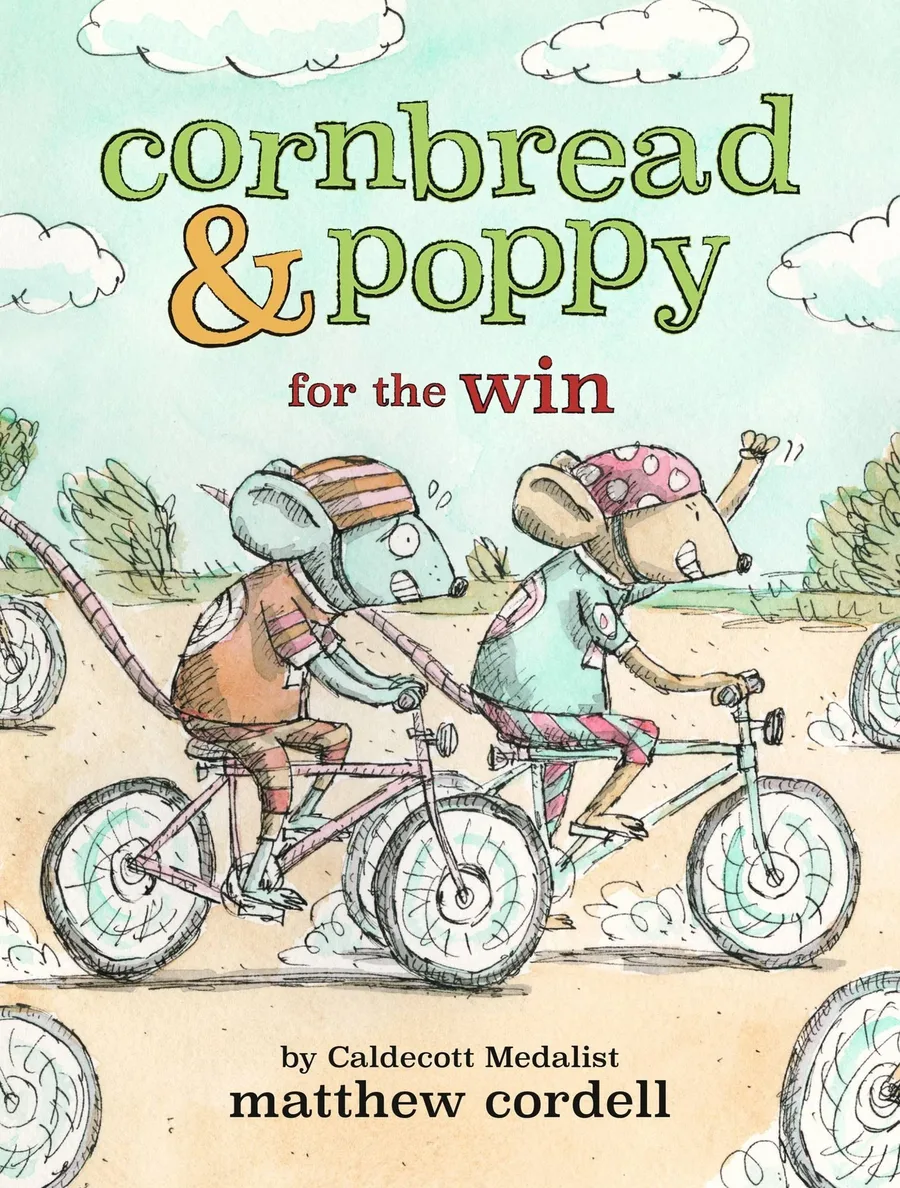 Cornbread & Poppy for the WinMatthew CordellIt’s time for the Small Rodents Competitive Cycling Championship Classic, otherwise known as the SRCCCC. While Cornbread is just looking to do his best and have a good time, competitive Poppy is focused on winning. She especially wants to beat Gerald (“Ugh, Gerald”), a cocky fellow who has won the race the last four years. Poppy has purchased 63 Books for Newly Independent Readers CCBC Choices 2025 the best gear—tight pants—for herself and, to his dismay, for Cornbread; and she has a “Master Plan,” a strategy that involves going “fast-but-not-too-fast” for all but the final lap of the race, when they will “punch it” and secure themselves a win. Race time arrives, and the various small rodent competitors are off. Mishaps befall several racers, putting Cornbread, Poppy, and Gerald in the lead until disaster strikes. Those cycling pants? Perhaps too tight. A dramatic pile-up leaves Poppy in the clear but Gerald on the ground. How can she leave him behind? After all, “friends matter more” than winning a race. Cordell’s expressive, scribbly illustrations underscore the humor in this action-packed, suspenseful, and empathetic tale.Books for Newly Independent ReadersView book details
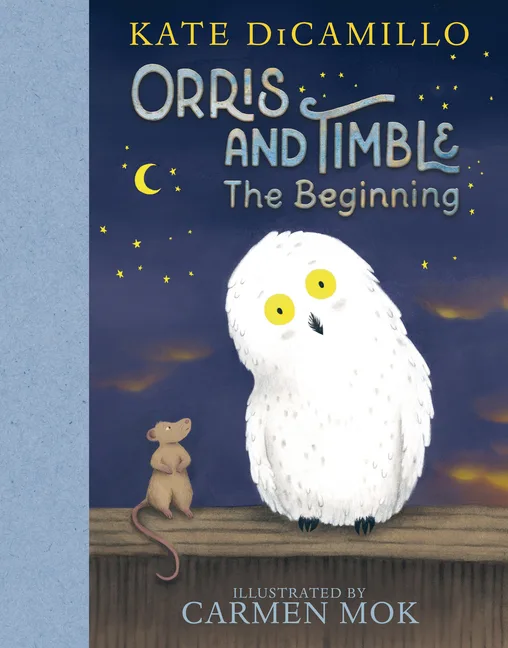 Orris and Timble: The BeginningKate DiCamillo, illustrated by Carmen MokA love of stories and storytelling transforms an inauspicious meeting into a promising friendship in this early chapter book series opener. Orris, a rat, enjoys a solitary life in an abandoned barn, where he has furnished his nest with select treasures: a red velvet slipper, a yellow marble, and an unopened can of Imperial Sardines. One night, Orris’s peace is disturbed by a sudden shrieking. An owl—Orris’s natural enemy—has gotten his foot caught in a mousetrap in the barn. Inclined as he is to simply leave the owl to suffer alone, Orris feels taunted by the slogan on the Imperial Sardines can. “Make the good and noble choice!!” As he contemplates releasing the owl, whose name is Timble, the story of a lion and a mouse comes to Orris’s mind. Naturally, Timble would like to hear the story, and he’s persistent about it. He even comes back the next night with a gift of thanks and a request for another story. By the end of this first volume, the two have established a friendship built on gratitude and the enjoyment of stories. “But that’s not the end of the story,” Timble observes. “No,” says Orris, “it’s the beginning.” In the appealing illustrations, Orris is a tired-looking brown rat, Timble a darling white owl; the art is perfectly suited to this quiet story of mistrust and wariness (on Orris’s part) giving way to connection and companionship.Books for Newly Independent ReadersLexile Text Measure 540LATOS Book Level 3.6View book details
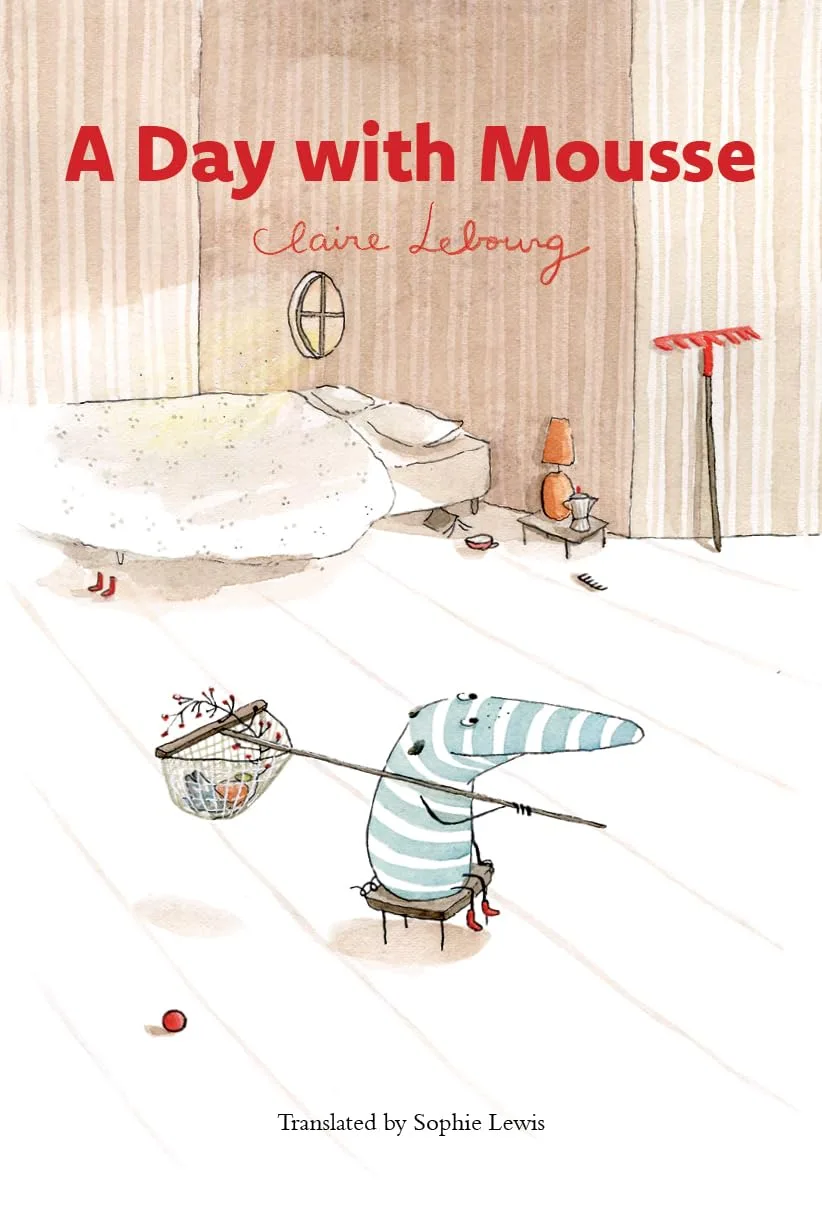 A Day with MousseClaire LebourgMousse, who lives in a house by the sea, has blue-and-white stripes and a long nose, and likes peace, quiet, and routine. This includes listening to the radio each morning while enjoying a cup of coffee and waiting for the tide to roll into his living room. Once it recedes, tender-hearted Mousse makes sure any living creatures left behind are put safely back in the water before cleaning the treasures, like winkle shells, to photograph and sell online. It’s a nice, sedate life... until Mr. Barnacle arrives. Mousse finds the big, brown, walrus-like creature lounging in his floating armchair, enjoying a cup of coffee and a cookie. Mousse asks him nicely to leave. He doesn’t. The next day Mousse intends to make him leave, but Mr. Barnacle is sick with a cold, so Mousse cares for him instead. When Mr. Barnacle is finally well again and departs, Mousse realizes his house is now a little lonely. While the plot arc is predictable, the characters and setting make this a quirkily charming read. The soft, color illustrations are essential, providing visual reference points for Mousse and his world as well as laugh-out-loud moments, including the surprise at story’s end.Books for Newly Independent ReadersView book details
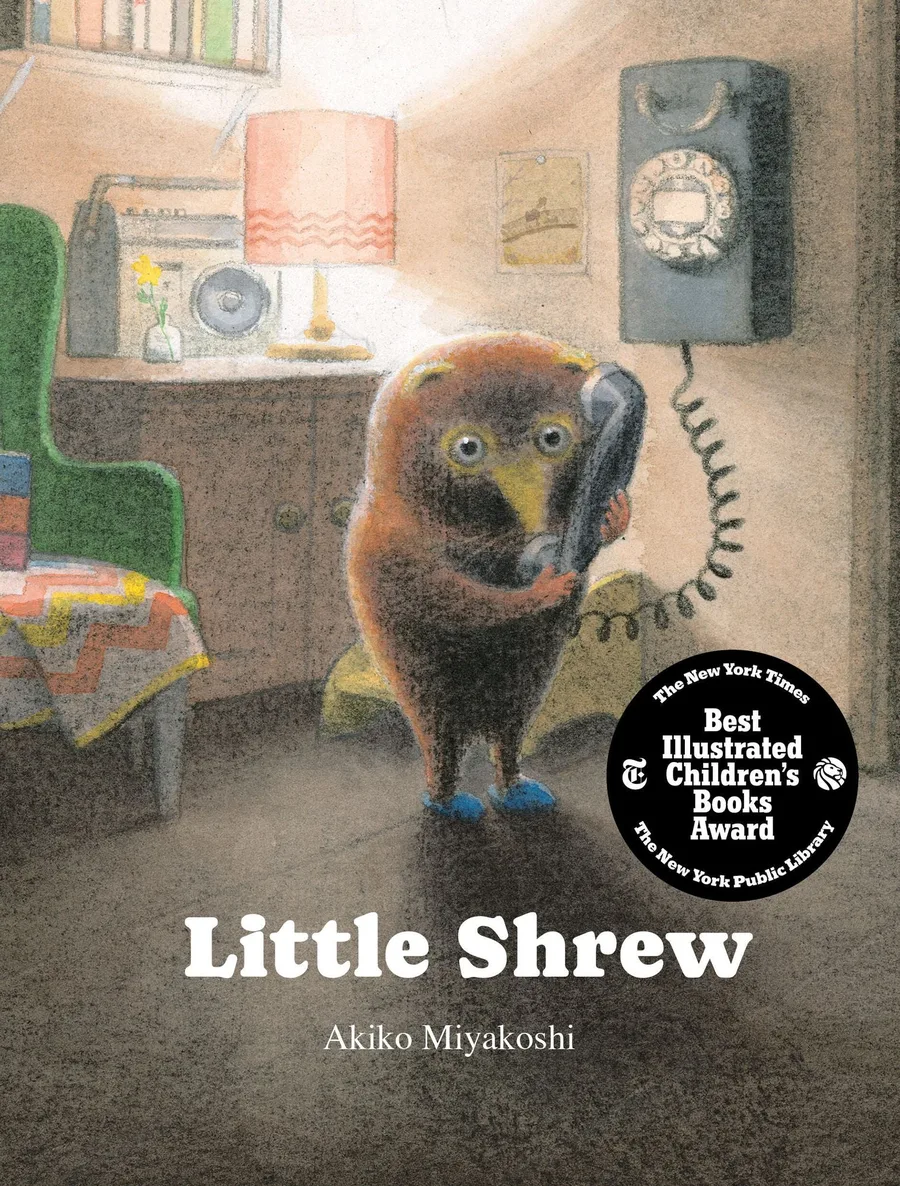 Little ShrewAkiko Miyakoshi, illustrated by Akiko MiyakoshiLittle Shrew, a silky rodent with a pointed nose and round eyes, lives a rather commonplace life with a well-established routine. He eats the same breakfast each day, brushes his fur with a hairbrush he’s had “forever,” and departs for his job at the currency exchange. He is a diligent and organized worker. After dinner, he listens to the weather forecast and 64 Books for Newly Independent Readers CCBC Choices 2025 then “turns to [the] evening’s to-do.” (Mondays are laundry days, while Thursdays are for playing with his Rubik’s Cube. He cooks on the weekends.) On his day off, Little Shrew trades his scarf for an old television at a garage sale. On the TV he sees, for the first time, the ocean, and his “heart fills with a dream of traveling to a tropical island.” Amazingly, he soon finds a poster with a tropical scene outside near the trash and hangs it at the foot of his bed, hoping to inspire sweet dreams. In the third and final chapter, Little Shrew prepares for his two friends’ annual New Year’s Eve visit. The three of them enjoy a meal, conversation, television, and music before Little Shrew’s friends head out into the night, leaving him to reflect on his “good year.” Plentiful illustrations bring Little Shrew’s surroundings to life; he lives in a humble apartment in a world largely populated by humans. Understated and charming, this story revels in “ordinary” life, which needs not be glamorous to feel satisfying and complete.Books for Newly Independent ReadersLexile Text Measure 640LATOS Book Level 4.1View book details
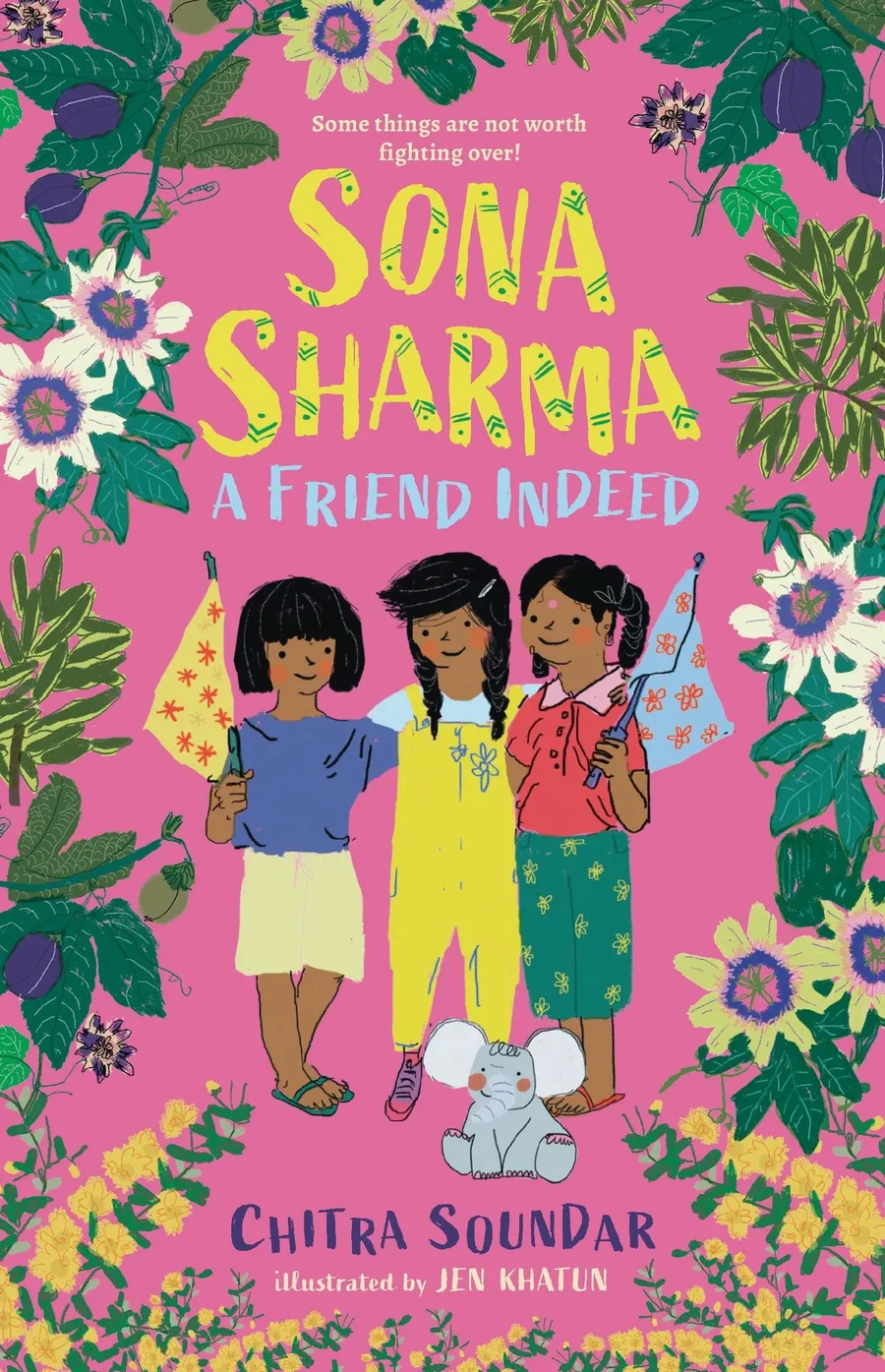 Sona Sharma: A Friend IndeedChitra Soundar, illustrated by Jen KhatunSona Sharma’s class is holding an election for class leader. When her arrogant classmate Pradeep pronounces that everyone will vote for him, Sona impulsively blurts out that she’s running, too, only to have her two best friends, Joy and Renu, mad at her before Joy announces she is running, too. Sona and her fellow candidates must follow their teacher’s campaign rules, which include “no name-calling, bad language, or insults; no fake news; and no promises you cannot keep.” But as Sona works on her campaign, she realizes that her only motivation to run was annoyance at Pradeep; Joy is the one with ideas for their class. Sona’s anxiety about the election is compounded by frustration at home, where she feels like all anyone cares about is her little sister Minmini’s upcoming first-birthday party and Ayush Homam ceremony. In spite of her frustration, it’s clear Sona’s parents and grandparents are tuned in to Sona, too, in an amiable short novel set in India that organically integrates thoughtful information for young readers about campaigning and elections. Occasional black-and-white illustrations accompany the story.Books for Newly Independent ReadersView book details
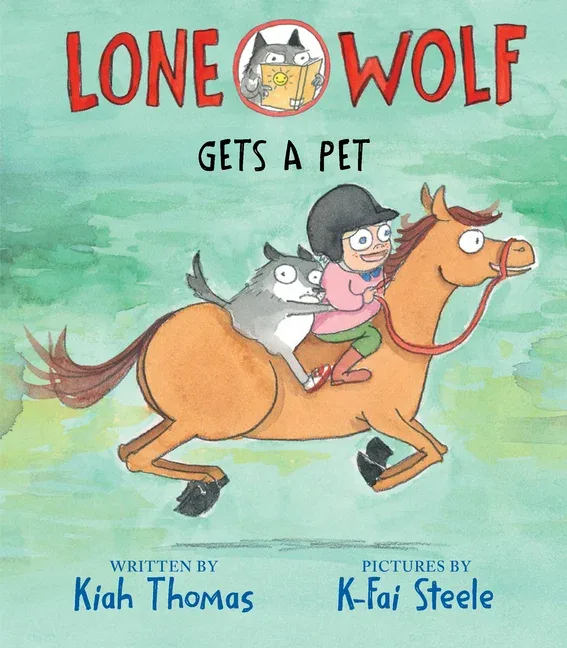 Lone Wolf Gets a PetKiah Thomas, illustrated by K-Fai SteeleAlthough he is a solitary apex predator who enjoys his quiet, independent life, Lone Wolf (gray) finds solitude isn’t always possible. In Lone Wolf Gets a Pet, he learns the store is sold out of jellybeans because they’ve all been purchased as a prize for a best pet competition. Seething, Wolf concludes that he must get a pet and win the competition to satisfy his jellybean craving. After a trial-and-error series of pets (dog, cat, horse) he ends up with a goldfish, sure there’s no way he’ll win until a clever solution presents itself and Wolf is happily jellybean rich and pet-free. In Lone Wolf Goes to School, Wolf is surrounded by kids with snot and annoying behaviors. At the movie theater, a tall man blocks his view of the screen. At the beach, greedy seagulls attack and eat all his chips. Again, a clever solution gives Wolf exactly what he wants: solace and solitude. Wolf’s grumpiness and unique joys are relatable in this quirky series for early readers featuring short chapters, straightforward text, and ample visual humor.Books for Newly Independent ReadersLexile Text Measure 361LATOS Book Level 2.6View book details
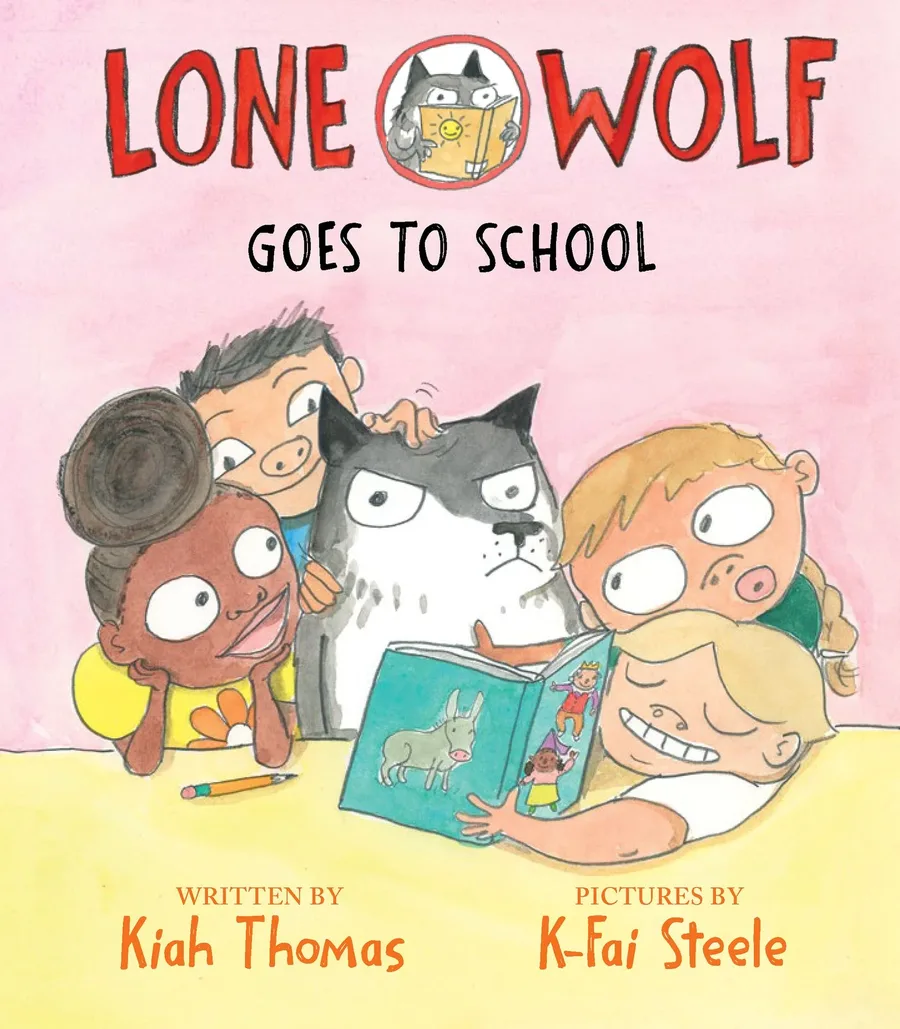 Lone Wolf Goes to SchoolKiah ThomasAlthough he is a solitary apex predator who enjoys his quiet, independent life, Lone Wolf (gray) finds solitude isn’t always possible. In Lone Wolf Gets a Pet, he learns the store is sold out of jellybeans because they’ve all been purchased as a prize for a best pet competition. Seething, Wolf concludes that he must get a pet and win the competition to satisfy his jellybean craving. After a trial-and-error series of pets (dog, cat, horse) he ends up with a goldfish, sure there’s no way he’ll win until a clever solution presents itself and Wolf is happily jellybean rich and pet-free. In Lone Wolf Goes to School, Wolf is surrounded by kids with snot and annoying behaviors. At the movie theater, a tall man blocks his view of the screen. At the beach, greedy seagulls attack and eat all his chips. Again, a clever solution gives Wolf exactly what he wants: solace and solitude. Wolf’s grumpiness and unique joys are relatable in this quirky series for early readers featuring short chapters, straightforward text, and ample visual humor.Books for Newly Independent ReadersLexile Text Measure 381LATOS Book Level 2.7View book details
Fiction for Children
49 selections
 Beti and the Little Round HouseAtinukeBiracial Beti (Black/white) “lives in a little round house in a green woods under the mountains. She lives with Mam and Tad and baby Jac.” A similar refrain opens each of the four episodic chapters in a story following Beti’s life in the forest with her family over a single year. In spring Beti gets a goat for her birthday, but it comes with a troublesome baby who ruins Beti’s birthday party. Still, Beti is heartbroken when “Naughty,” as she names the baby goat, temporarily disappears. In summer, Beti and her friends accidentally spill the big heavy water urn that Mam and Tad fill each morning. Then they problem- solve, figuring out how to fill it again all by themselves. In autumn, after helping Tad, Beti gets separated from him during a storm. She finds shelter in the barn, and comfort with Naughty. In winter, while Tad is away, Beti doesn’t shut the field gate and the horses get out. With Mam and Jac sick, Beti rounds them up by herself in the middle of the night, despite her fear of the dark. Cozy full color, full-page illustrations and spot black-and-white art grace this charming book for reading aloud or independently. The idyllic setting (no electricity or phones by choice) is balanced by realistically childlike behavior. In a note, author Atinuke describes living in a simple roundhouse in the woods in Wales when her son was a toddler, adding that around the world many people live “simply on the land.”Fiction for ChildrenLexile Text Measure 549LATOS Book Level 3.6View book details
 Boy 2.0 (#1)Tracey BaptisteCoal has lived in foster care his entire life. Now 13, Coal (Black) thought his previous placement with Tom might last, but Tom’s breakdown has resulted in Coal’s placement with the McKay family (also Black). Shortly after arriving, Coal visits Tom’s old street and ends up chased by police; at the height of his terror, Coal realizes they can no longer see him. His skin, like a chameleon’s, has changed to blend in with his surroundings. Coal confides in his best friend, Door, who’s skeptical until Coal recreates the effect on camera. Desperate to understand what’s happening, Coal’s online research leads him to a company called Mirror Tech. Door and the three McKay kids, high school-aged Aaron, Mari, 12, and Hannah, 7, are all part of Coal’s efforts to breach Mirror Tech and unlock the mystery of his skin. It’s a mystery that turns out to be connected to his past, and the mother who left him as an infant. Until now, he’s only had the quilt she’d wrapped him in as tangible evidence of her love. Inside Mirror Tech, where he discovers she’d worked as a scientist, he finds much more: additional proof of her love, answers he’s longed for, and danger he may not be prepared to meet. This fast-paced work of adventure sci-fi shines with appealing characters and a satisfying origin story to be continued.Fiction for ChildrenView book details
 Across So Many SeasRuth BeharIn a novel that spans centuries and countries, the individual lives and experiences of four 12-year-old girls coalesce to tell the story of one Sephardic Jewish family. In Toledo, Spain, in 1492, Benvenida scrawls a message on the wall of her home before leaving with her family for Naples; they have chosen migration over conversion to Catholicism. But with the rise of antisemitism in Italy, their time there will be limited. In 1923, Benvenida’s descendant, Reina, lives in peace with Muslims, Christians, and other Jews in Constantinople. When Reina is caught spending time with her neighbor, Sadik, her father disowns her and arranges a marriage for her in Cuba, where her aunt lives. In 1961, Reina’s youngest child, 66 Fiction for Children CCBC Choices 2025 Allegra, is eager to become a brigadista and teach people in the Cuban countryside to read; she signs up against the wishes of her father, who is skeptical of the Revolution. But after her older siblings escape Cuba, Allegra ends up moving to the United States, securing passage as part of the Pedro Pan airlift. Finally, in 2003 Paloma is traveling to Spain with her mother, Allegra, and grandmother, Reina. The story comes full circle at the Sephardic Museum in Toledo, where the family unknowingly admires the message written by their very own ancestor, Benvenida. While heartache abounds for this family, so too does resilience; and while the timeline is sprawling, the girls are connected by tradition, pride, history, and a great love of music.Fiction for ChildrenLexile Text Measure 830LATOS Book Level 5.3View book details
 One Big Open SkyLesa Cline-Ransome, map by Allira TreeThis novel-in-verse about 19th-century Black pioneers is told in three female voices: Lettie, 11; her mother, Sylvia; and Philomena, 18. The decision of Lettie’s family, which includes two younger brothers, to head west is driven by Lettie’s father Thomas. Thomas talks big to cover the hurt of a painful past in slavery, and of not being able to do all he’d like for their family under the yoke of Mississippi racism in 1879. When Thomas hears that Nebraska is welcoming homesteaders without regard to race, he insists they go despite Sylvia’s reluctance to leave extended family. This immersive, finely detailed story follows their journey as part of a group of Black homesteaders. There are tensions, twists, and turns as they leave everything they knew behind and venture into the unknown. Philomena joins them in Independence, Missouri; Lettie’s parents need the money she can pay to accompany them to Nebraska, where she has a teaching job waiting. Spirited and independent, Philomena eventually becomes an essential part of Lettie’s family. A compelling narrative full of challenges, adventure, heartbreak, and hope, the potential appeal of this story to middle grade readers is huge, although the unfortunate book design—particularly the unusually small font—may demand adult encouragement to convince some to pick it up.Fiction for ChildrenView book details
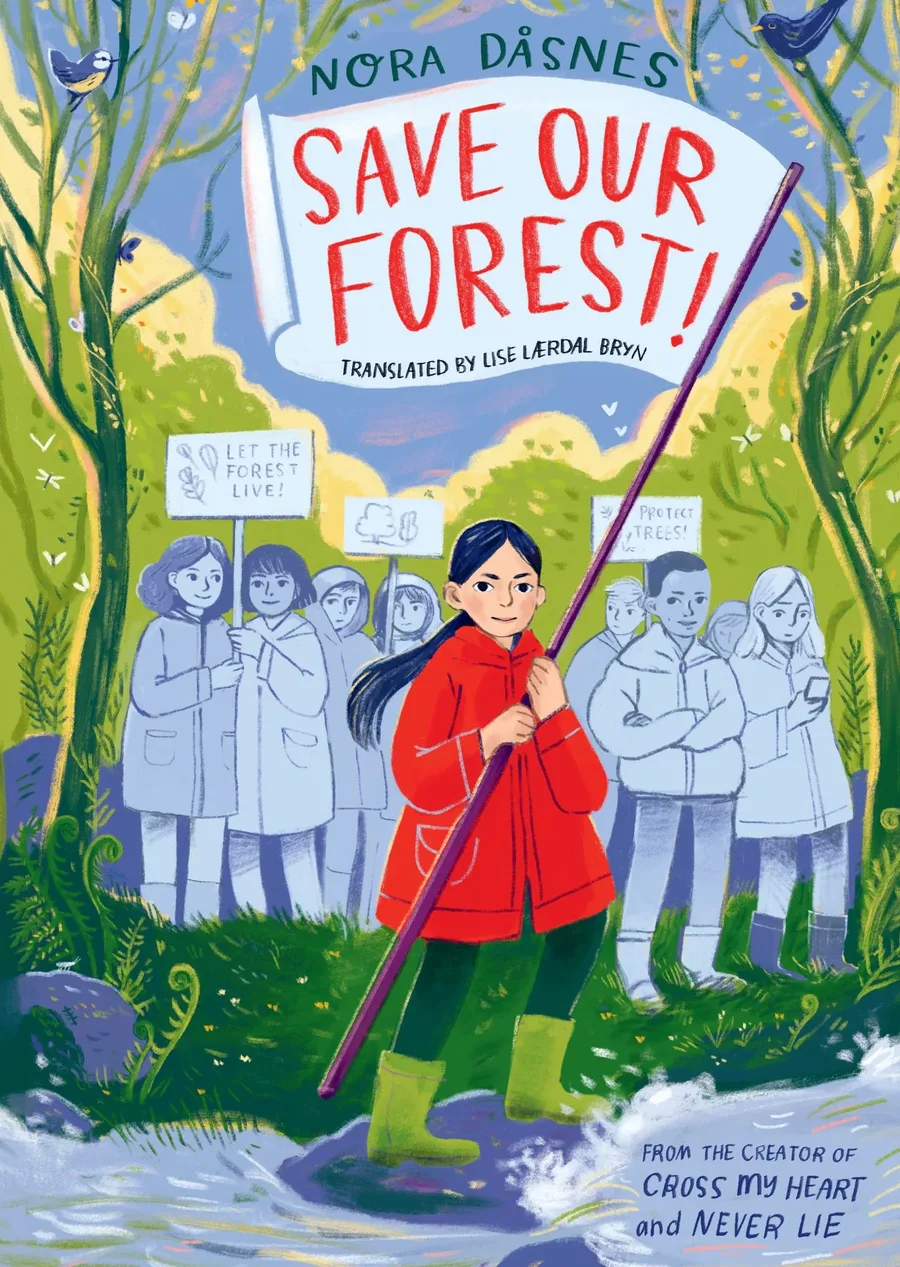 Save Our Forest! (Cross My Heart, #2)Nora Dåsnes, illustrated by Nora Dåsnes, Lise Lærdal BrynBao (Vietnamese Norwegian) and her best friends Tuva and Linnea (both white) love the bog (forest) behind their middle school, where they’ve played and adventured for years. Bao is also passionate about environmental issues, and, as president of the student council, a student representative on the school board. A convergence of issues—not enough parking, and unusually heavy rain causing flooding in the forest that poses a danger—leads to members of the board outvoting Bao and deciding to raze part of the forest to expand the school parking lot. Bao’s furious: No one seems to care about the impact on forest life or kids, or that more cars only contribute to climate change, which is behind changing weather patterns, while more concrete means more runoff. Her anger is compounded by frustration with her mom, who was too busy to help Bao prepare for the meeting. She tries to rally other kids to protest the parking lot, at first with limited success, but a daring act on Bao’s part inspires a group of them to stage a camp-in, occupying the forest so work cannot begin. Bao’s passion, rooted in climate anxiety and her love for the forest, is not always matched by her fellow protestors, especially once the rain begins again; it’s one of the elements that makes this heartfelt, inspiring graphic novel, translated from the Norwegian, so genuine.Fiction for ChildrenLexile Text Measure HL290LATOS Book Level 2.2View book details
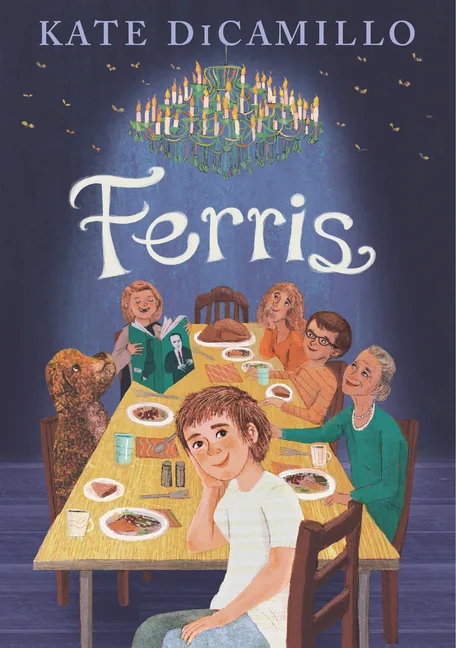 FerrisKate DiCamilloEmma Phineas Wilkey, 11, born beneath a Ferris wheel on the county fairgrounds, has been “Ferris” ever since. “Every good story is a love story,” says Ferris’s grandmother, Charisse, who delivered her. But Charisse has heart problems and is spending more and more time resting, which worries Ferris. Charisse is also communicating with a ghost. Ferris’s Uncle Ted has moved in to work on a masterpiece, although he spends more time asking Ferris (white) to find out if his estranged beautician wife, Aunt Shirley, misses him than he spends painting. Ferris’s little sister, Pinky, 6, is a self-proclaimed outlaw-in-training who dreams of being on “Wanted” posters and does her best wreaking havoc in order to reach her goal. Ferris’s dad is obsessed with the raccoons in the attic. Ferris’s beleaguered mom seems resigned to the chaos. Ferris’s best friend, Billy, is a talented pianist with a drive to play a single composition, “Mysterious Barricades.” Ferris’s fifth-grade teacher, Mrs. Mielk, whose sternness and expectations gave Ferris and Billy an appreciation for the many vocabulary words with which their lives have been enriched, is newly widowed and grief stricken. In a masterfully told story set perhaps a generation ago, with tight plotting that belies the sense of shapeless summer days, these vivid characters surround Ferris. But it’s Ferris’s own observations, actions, questions, feelings, and ability to take an occasional bird’s eye view that propels this novel detailing not a single love story but a tapestry of them.Fiction for ChildrenLexile Text Measure 630LATOS Book Level 4.4View book details
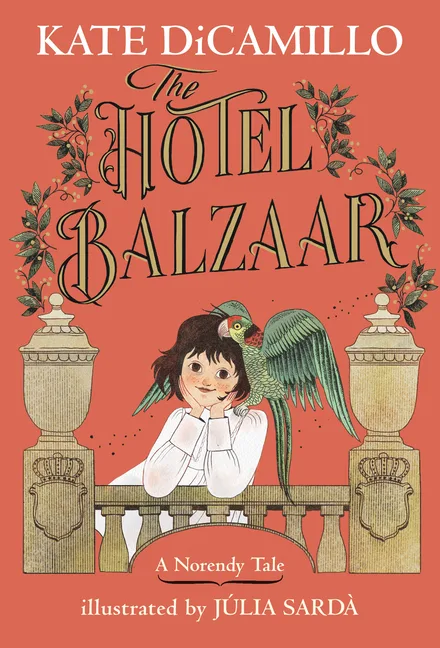 The Hotel Balzaar (A Norendy Tale, #2)Kate DiCamilloMarta (white) lives in the attic of the grand Hotel Balzaar with her mother, a maid. Marta’s father, away at war, has not contacted them in more than a year, but Marta hasn’t given up hope he will return. Marta heeds her mother’s warnings to bother no one at the hotel; she explores quietly and alone. But her days change dramatically with the arrival of the countess. The wealthy woman with a parrot on her shoulder explains to Marta that she’s come to tell her seven stories. The countess calls Marta “my little ray of light,” which is how Marta’s father addressed her in his last letter. Her stories are about a general, a parrot, a nun, a king, a fox, a boy, and his parents. Are they real? What do they mean? Marta is frustrated and unsure. But as seemingly impossible things start happening and connections begin to emerge, Marta thinks “that there is some small amount of light seeping through the stories.” When the countess disappears before the final story, Marta is devastated. But the story is still unfolding, and this time Marta plays a part. It is “the story of people finding each other again against all odds. It is the story of love enduring.” This warm, cozy tale will delight readers who like to puzzle through clues and make connections. There is enchantment throughout, from the hope that Marta holds onto to the intricate black-and- white illustrations that grace each chapter.Fiction for ChildrenView book details
 The OutsmartersDeborah EllisKate, 12 (white) has lived with her grandmother, who runs a junk shop at the edge of their Canadian town, even since her mom, a drug addict, left her there several years before. Kate’s prickly grandmother has one ongoing battle with a neighbor, a second with a customer, and has been visited by the police. Kate has also felt Gran’s resentment at having to care for her, but Gran supports Kate’s various money-making endeavors (her latest is a Peanuts-inspired philosophical advice booth), clearly determined to teach Kate to be independent. Kate, who was expelled at the end of grade 7 for behavioral issues (she was labeled “trouble”), is back for grade 8 and proves to be, simply and profoundly, someone who doesn’t look away when she sees bullying behavior in others, child or adult. To her surprise, she’s also making a few friends, including Gran’s neighborly nemesis, a retired 68 Fiction for Children CCBC Choices 2025 teacher. When Kate begins to learn more about her mom’s history in the town—that a local doctor was responsible for her OxyContin addiction; that Kate’s own dad was a local teen who died in a freak accident while drunk at college—she’s angry at Gran for withholding so much information, and for doing nothing when surely she could do something, about the doctor for a start. Sharp, funny, tender characters propel this heartfelt novel in which kindness and community meet courage and action.Fiction for ChildrenView book details
 The Shape of Lost ThingsSarah EverettSkye’s older brother, Finn, has been gone for two years, ever since their dad kidnapped him in the aftermath of their parents’ divorce. Skye, 12, not only misses Finn, but struggles with feelings of abandonment and inadequacy, sure her dad chose not to take her because she wasn’t special like Finn. Now Finn has been found. But when he comes home to their changed and changing family (Black), he isn’t the dynamic, funny, protective big brother she remembers. When Skye realizes Finn no longer has a scar on his elbow—a scar she remembers because it was her fault—she decides that whoever this person is, he’s only pretending to be Finn. Skye starts calling him “Not-Finn” in her head, finding more and more evidence to support her belief that he’s an imposter. Each chapter of this compelling novel grounded in Skye’s observant, imperfect perspective ends with a description of a photograph she’s taken, and feelings implied by the image for Skye. It’s Skye’s feelings and family dynamics that so skillfully propel this story that builds to an emotional climax in which Skye realizes she isn’t alone in feeling like too much has changed for things to ever feel right again. It’s a moment of catharsis offering hope that Skye—and Finn, too—will, after all, be ok.Fiction for ChildrenView book details
 A Game of NoctisDeva FaganPia Paro, 12, lives in the island city-state of Dantessa, where skills in a wide range of games determine one’s access to resources. In theory, the biblical The Book of Play and its rules for all 8,684 games create an equitable society, with robotic-like arbiters policing the games, and a ruling Council in charge. In fact, wealthier players purchase boons that give them advantages in various games, while players whose skill level drops to 0 become pawns—laborers, who cannot play and have few chances to raise their status. Pia’s beloved grandfather was once a highly skilled player until his increasingly poor eyesight hampered his ability to compete. With her grandfather now a pawn, rule-follower Pia’s only hope is to earn enough money to buy him status as a player again. When she meets Vittoria, also 12, who’s putting together a ragtag team to complete against the odds in the annual Noctis competition, Pia agrees to join. Teams are comprised of players ages 12 to 15, and the winners are richly rewarded—and also, typically, already rich. Noctis requires both individual skills and teamwork. Over the course of their time practicing and competing, Pia and her teammates bond, their experiences and perspectives challenging her to question the foundations of their society and the inequity at its core, while revealing a cheating scheme that further undermines any chance of fairness. A diverse cast graces this original, fast-paced, richly imagined fantasy with a Venice-inspired setting.Fiction for ChildrenLexile Text Measure 750LATOS Book Level 4.8View book details
 Next StopDebbie FongThe Sunset Tours desert bus tour culminates in a visit to the purportedly magical Cessarine Lake, which draws individuals who are, for one reason or another, seeking a miracle. Pia (Asian American) is one such traveler; the miracle she seeks is gradually revealed as the story unfolds. Traveling without parental supervision, Pia befriends Sam (white) and gets to know other families in the group during stops at gimmicky tourist traps like the World’s 69 Fiction for Children CCBC Choices 2025 Smallest Corn Maze, the Stairway to Nowhere, and a cactus-themed amusement park. Sepia-colored flashbacks to the preceding months show Pia and her parents navigating her mother’s severe depression following the accidental death of Pia’s little brother, Ben. When she reaches the underground lake, Pia places one of Ben’s action figures in the water, hoping against hope that the lake’s magic will somehow fix the tragedy that Pia believes is her fault: Ben drowned on her watch. Deftly balancing quirky humor with deep emotion, this heartfelt graphic novel explores grief, guilt, and the gentle healing power of friendship.Fiction for ChildrenLexile Text Measure GN400LATOS Book Level 2.8View book details
 Max in the House of Spies: A Tale of World War IIAdam GidwitzMax is a Jewish boy living in Berlin in 1939 when he’s sent to England on a Kindertransport and taken in by the Jewish Montagu family. He appreciates the Montagu’s kindness and warmth, but worries constantly about his parents back in Germany. Ignoring his foster brother David’s advice to stay quiet at school about being Jewish, Max comes up with a funny prank to protest the antisemitism of some of his classmates–a prank that enrages or delights the Montagus, depending on the family member. Uncle Ivan and Uncle Ewen, who works for Naval Intelligence, are particularly thrilled. Willing to do anything to get back to Berlin to help his parents, Max wants to show Uncle Ewen’s boss, the Admiral, that he can be a spy for Britain. Although his plans to impress the Admiral don’t go as planned, Max gets his wish and is sent to a secret training facility at a country estate. It’s already clear Max is brilliant, but he must develop physical strength, learn new skills, and prove he’s capable of creative problem-solving. Max’s story is entertaining and completely over-the-top— including the presence of Stein and Berg, two diminutive old men (a German kobold and Jewish dybbuk) often perched on Max’s shoulders and sharing quips and wisdom. While the plot is incredible, Max’s emotional story is authentic and historically grounded in this engaging action-adventure with a cliffhanger ending surely to be continued...Fiction for ChildrenView book details
 Taming PapaMylène GoupilMélie and her mother, Sofia, came to Canada when Mélie was an infant. Mélie has always thought of the apartment the two of them share as safe, comforting, and familiar. But that changes when her Papa arrives after being released from prison in the country where she was born. He’d been locked up because he refused to be quiet in a country where speaking out was dangerous. Once he arrives, however, Papa is a silent stranger. He doesn’t speak Mélie’s language, and she does not speak his. He is afraid to leave their apartment. During the day, he just watches TV. At night, he has bad dreams. Frustrated and angry by Papa’s seeming disinterest in getting to know her and being her Papa, Mélie gets a summer job with her former teacher; he and his husband are overwhelmed with a new baby and family illness. At home, Mélie tries to connect with Papa by helping him learn to speak her language, but isn’t sure he cares. When Mélie finds a cat, it becomes a bridge for her and Papa. But their apartment doesn’t allow pets, and Sofia says they can’t keep it. Writing remarkable for its sensitivity to both Mélie and the adults around her grounds a story offering an accessible, hopeful look at a child living with an adult with PTSD. Once Mélie and Papa begin to communicate, it becomes clear to Mélie that he has been trying all along, and clearly loves her.Fiction for ChildrenView book details
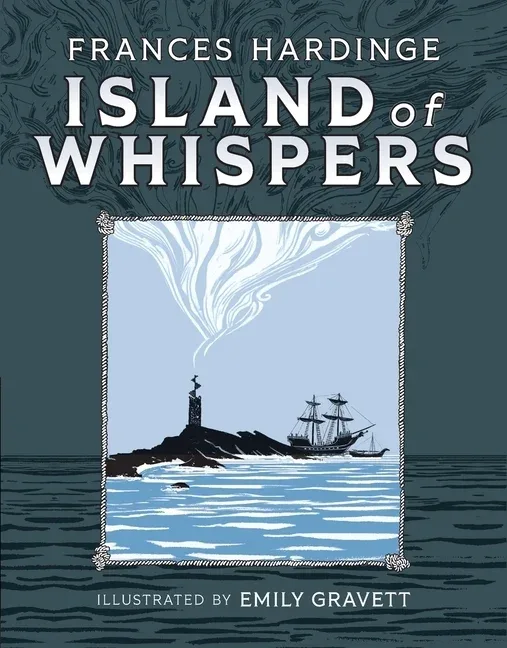 Island of WhispersFrances HardingeMilo’s father is the Ferryman, delivering the ghosts of the dead to the Island of the Broken Tower, where they rest in peace as long as their shoes go with them. Milo’s sensitivity keeps his father from training him to become a Ferryman; to look upon a ghost is to invite death upon oneself, and he knows it would be difficult for Milo to keep up his guard. After the 70 Fiction for Children CCBC Choices 2025 local Lord’s teenage daughter dies and her mother delivers her shoes to the Ferryman, the Lord demands they be returned to him. He regrets not spending time with his daughter, Gabrielle, and believes his magicians can bring her back to life. Milo’s father refuses to aid such dark magic and is killed by the Lord’s men. With Milo’s older brother taken prisoner, it is up to inexperienced Milo to deliver Gabrielle’s ghost and four others to the island on his own. Milo races their boat toward the island with the Lord’s men and his evil magicians, conjuring dark magic, in pursuit. This thrilling tale is more than a story of good vanquishing evil. It is one of great compassion as Gabrielle’s ghost spurs Milo’s empathy, which helps him see how the Ferryman can do more than deliver the ghosts of the dead; he can also bring comfort to them and those they leave behind. Striking full-page illustrations in black, white, and blue add to the elegance and ambience of this original fairy tale with an all-white cast of characters.Fiction for ChildrenLexile Text Measure 888LATOS Book Level 5.7View book details
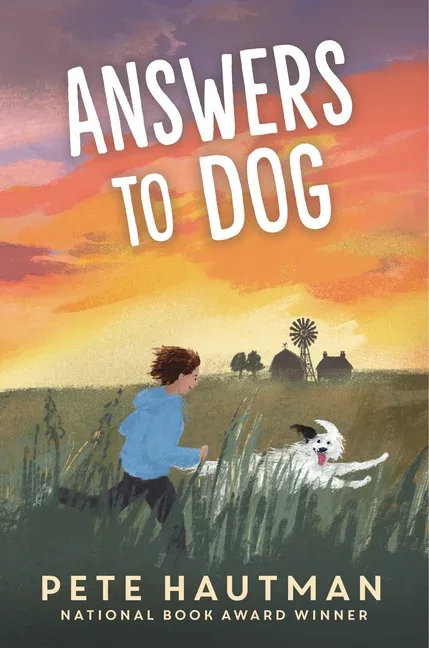 Answers to DogPete HautmanEvan Dunn (white) lives a quiet life as a bus-riding eighth-grader in a rural community. Much of his daily routine is unexamined. He takes his quirky bus buddies for granted, avoids the school bully, and rarely questions his reserved, self-focused parents. Out of the blue, a dog shows up and starts to follow Evan around. Around the same time, a neighbor returns to school after an extended medical leave. The arrival of the dog and Hana (white) unleash a series of surprises and changes to Evan’s private life. First, they discover that it’s not just a lone stray, but an intelligent Border Collie from a nearby breeder. Second, Evan finds out that the breeder is neglecting and abusing the dogs at the kennel. Unsure how to ask for help, Evan finds that there is support all around him—his new friend Hana and her mom, his teacher and track coach, and, in unexpected ways, his parents. On the surface, this is a story about a boy and a dog who love to run, but on a deeper level, it’s about being seen and finding connections, often when you least expect them. Short, straightforward chapters (some narrated by the dog), keep a tight pace on this tender novel.Fiction for ChildrenLexile Text Measure 619LATOS Book Level 4View book details
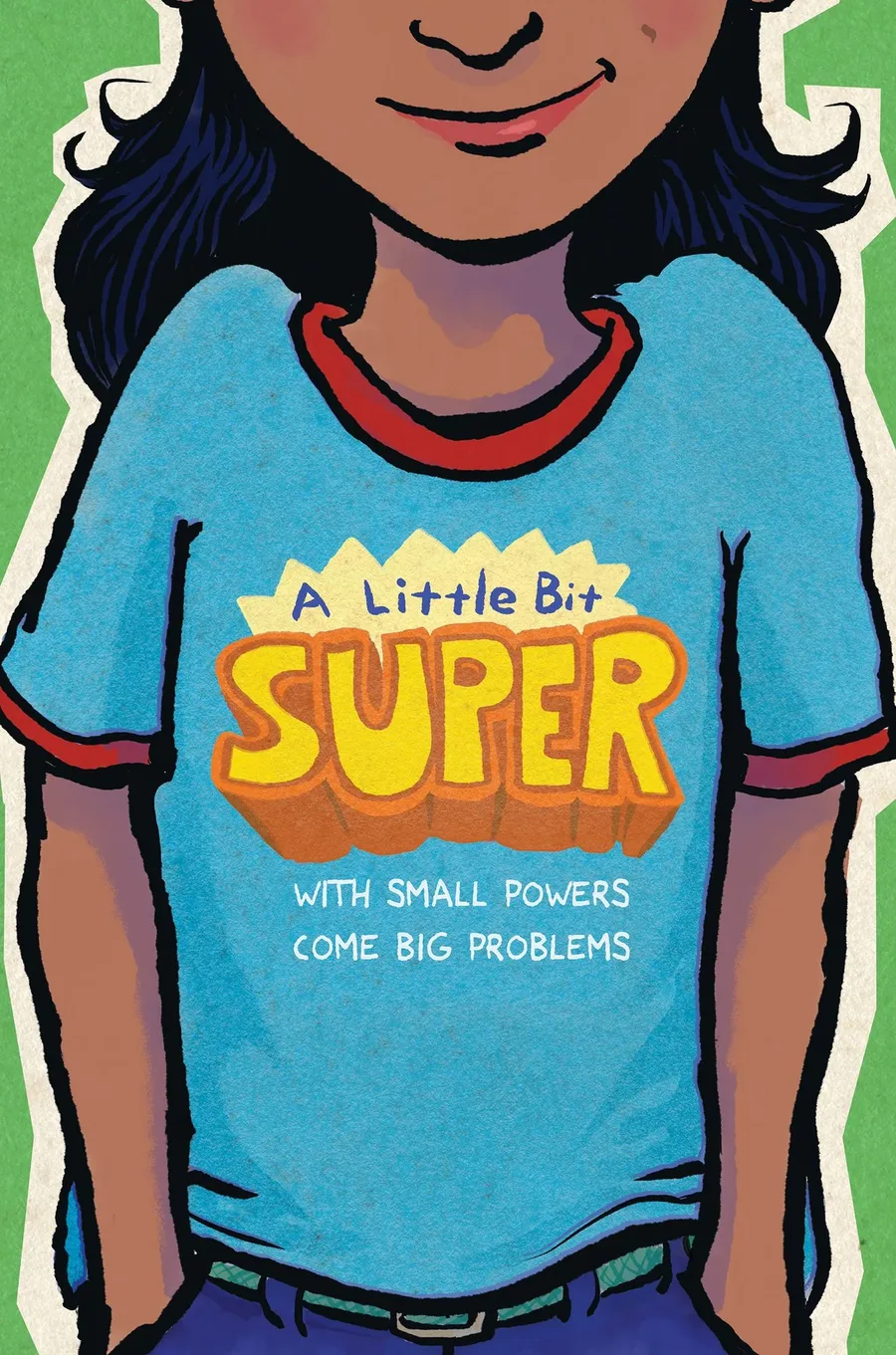 A Little Bit Super: With Small Powers Come Big ProblemsLeah Henderson, Gary D. SchmidtA collection of 14 short stories features middle-school-aged protagonists making use of their atypical superpowers (there’s not a cape in sight). In Brian Young’s “Corwin the Empathic,” a boy who can sense the feelings of others determines which of his classmates is deeply worried before reaching out to help, offering a solution that is grounded in a simple act of friendship rather than extraordinary ability. In Nikki Grimes’s “Shift,” a girl who can physically take on the traits of others finds herself succumbing to pressure the first few days of middle school, changing her looks to fit in. She jeopardizes her best friendship and sense of self before realizing that being herself is enough. Connecting these and 11 other stories is Jarrett J. Krosoczka’s “A River of Thoughts,” an interstitial comic introducing each new protagonist. In it, River is a young artist who has visions of other kids with superpowers and feels compelled to draw them. River’s work brings unwanted attention from shadowy, threatening authority figures, and loner River takes a courageous step by asking classmates for help. The diverse characters and wide range of story styles and tones (Remy Lai’s bittersweetly funny, Daniel Nayeri’s entertainingly bizarre) will appeal to many tastes in a collection that invites readers to consider ways a superpower can be both burden and gift.Fiction for ChildrenView book details
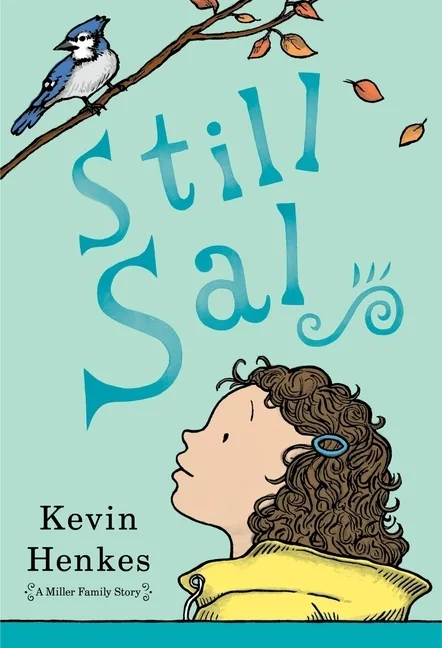 Still Sal. (A Miller Family StoryKevin HenkesSal is eager to start first grade, but nothing goes as she’d imagined after she and her best friend, Griff, get different teachers. Griff has Ms. Flowers, who is young, wears red shoes, and has a tape-measure belt. Sal (white) gets Ms. McCormick, who is older and wears shoes that look like “loaves of underbaked bread.” In the coming days at school, Sal longs to be in Ms. Flowers’s class, which is clearly more fun; she dresses like Ms. Flowers and looks for ways to get switched. An uncomfortable disagreement with Griff adds to Sal’s unhappiness. At home, Sal is frustrated by having to share her bedroom with little sister, Poppy, and jealous of big brother Billy’s job as a dog-sitter. Sal agrees to getting her often- tangled hair cut shorter, realizing it will give her one more thing in common with Ms. Flowers. Instead, it makes her question whether she’s still the same Sal she was before first grade. As in the earlier Miller Family books, Sal’s parents provide love, stability, and reassurance as she navigates unsettling emotional terrain. But it is Ms. McCormick who provides much-needed comfort when Sal is upset one morning, an encounter that leaves Sal feeling a meaningful connection to, and genuine warmth for, her teacher. Solidly grounded in Sal’s perspective, this tenderly funny story shines with its honest depiction of and respect for Sal’s messy feelings.Fiction for ChildrenView book details
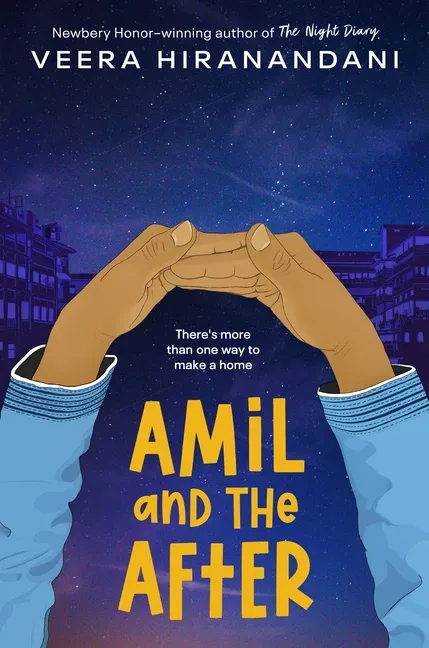 Amil and the AfterVeera HiranandaniThe storytelling shines in this stand-alone sequel to The Night Diary set in India following Partition. Amil, 12, lives in a small apartment in Bombay with his twin, Nisha; their father; their grandmother, Dadi; and their family’s longtime employee and friend Kazi, who is Muslim. The trauma of exodus from their former home, located in newly created Pakistan, haunts Amil. He also simply misses their former life. Drawing is a release for Amil, and a way to feel close to his late mother, but it’s also a source of friction between Amil and his father, who wants him to work harder at his studies, something Amil struggles with. The contrast between Amil’s father’s and his father’s upbeat cousin, Ashok, who runs a cinema and whose life seems worry-free, helps Amil understand that the stress of their lives weighs on his father. But tensions at home rise higher when his father faces problems at work that increase his worries about the family’s future in Bombay, while Dadi, withdrawn and weak after their harrowing journey, has a fall that puts her in the hospital where he’s a doctor. And when Amil’s new friend Vishal, who lives in a nearby refugee camp and has lost his family, grows desperately ill, Amil is determined to get medical care for his friend, further complicating his father’s situation. This historical novel weaves in social and political issues of the times while never straying from Amil’s authentically childlike voice and perspective.Fiction for ChildrenLexile Text Measure 731LATOS Book Level 4.7View book details
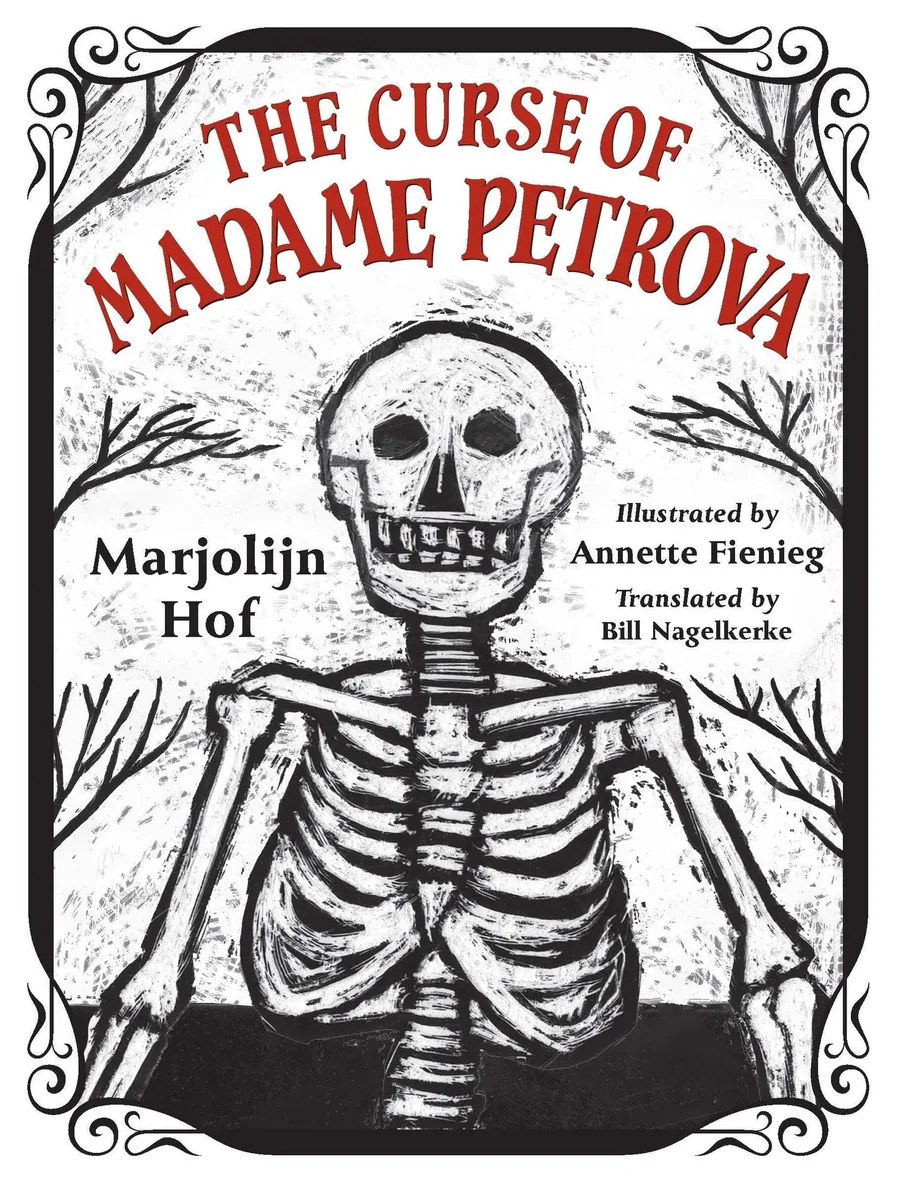 The Curse of Madame PetrovaMarjolijn Hof, illustrated by Annette FieniegA moody fairy tale translated from the Dutch tells the fate of twins predicted by Madame Petrova to kill each other. Years later, Silke and Janis (white) are now orphans who faked their death and ran away from the cruel cousins who inherited the family estate. Silke, the sister, is committed to strategizing a better life. Janis, the brother, wants nothing more than to create art and find quiet companionship with animals. Together, they are determined to break from their terrible past and the fortune told to their dead parents. The twins try to eke out a living from Silke’s hunting and by selling the wooden spoons carved by Janis. While peddling in town, they are taken in by Loore and Ranno and invited to join their traveling wagon. Loore is a fortune-teller who wants Silke as an apprentice. Ranno trains Trine, a 72 Fiction for Children CCBC Choices 2025 dancing bear who enchants Janis. An agreement is made to join the couple, but it’s uneasy because of the role of card-reading in the twins’ lives, as well as the debt they’ve incurred for food and clothing. Though elements of this folkloric novel might feel familiar to readers, tensions related to truth and entitlement keep the twin’s future unclear until the very end. Striking full-page etchings illustrate this handsome, unusual volume.Fiction for ChildrenView book details
 All the Best DogsEmily JenkinsFour sixth graders, two adults, and six—or is it seven?—dogs are the focus of this waggish tale set in a Brooklyn neighborhood. Mei (Asian/Black), who lives with Panda (“corgi- adjacent”) and Paddington (Border collie), wonders if her friends find her too bold and bossy, especially after an interaction with Kaleb (white) at a rehearsal for the school play. Kaleb, whose family recently acquired big, energetic puppy Cup-Cup, is not only feeling bad about what happened with Mei, but struggling since falling out with his former best friend, Ezra. Ezra (white, Jewish) is a worrier who can’t stop the “What if” scenarios in his head. His dog Cash (Chow Chow) is a comfort, although Ezra worries about Cash too: What if he gets out of their yard? Jilly (white), new to the neighborhood, is living with her aunt Valeria while her mom is in rehab. Valeria is the owner of finicky terriers Lottie and Grover, dogs used to occupying the center of Valeria’s attention. Ruth fosters many dogs but doesn’t have a pet of her own. Her newest foster, Thunder, however, has her reconsidering. Deftly balancing the perspective of humans dealing with big issues—anxiety, uncertainty, change, and/or the challenges and rewards of friendship—with entertaining and sometimes hilarious dog thoughts, this delightful story is filled with warmth and many good dogs.Fiction for ChildrenView book details
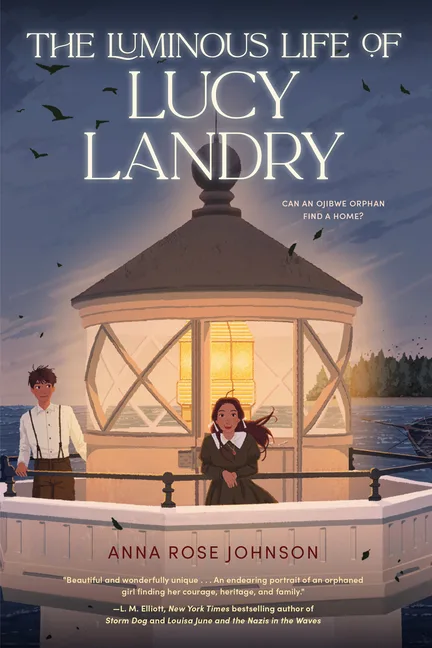 The Luminous Life of Lucy LandryAnna Rose Johnson, map by Emily Faith JohnsonIn 1912, eleven-year-old Lucy Landry (Ojibwe and French American) finds herself briefly adrift when her guardian, Miss Mamie, passes away. Lucy’s father perished in a recent shipwreck; her mother is long dead. The Ojibwe Martin family, who reside in a lighthouse on a minuscule island on Lake Superior, offer to foster her. Lucy, who is afraid of water, gets off on the wrong foot with most of the six Martin children, who resent her sudden presence in their family life. Determined to be a help, not a burden, Lucy works extra hard around the house, taking on tasks without being asked—a strategy that backfires when she makes mistakes. (She digs up flowers, for instance, thinking they’re weeds.) Imaginative Lucy copes with her discomfort and emotions by assuming various personas and telling fanciful tales about her father’s sailing days, further exasperating the Martin siblings. She is particularly fixated on her father’s story of a message in a bottle that told of a ruby necklace that was lost on a capsized boat. She’s convinced that if only she had a chance to search, she could find the jewelry washed up in nearby Mermaid Cove. First, though, she must conquer her fear of the lake. Lucy’s story, with her big imagination, is reminiscent of Anne of Green Gables and will appeal to readers who appreciate adventure and danger in their historical fiction.Fiction for ChildrenWord Count 49286View book details
 The First State of BeingErin Entrada KellyIn August 1999, 12-year-old Michael Rosario is preparing for possible disaster with the turn of the new century when he meets Ridge, a teenager who’s time-traveled from 2199. Ridge shares the next day’s headline story to prove his claim to Michael and Michael’s teenage neighbor and sometimes babysitter, Gibby. For biracial Michael (Filipino American/white), who’s been stealing canned food his mom can’t afford to stock up on supplies, Ridge holds 73 Fiction for Children CCBC Choices 2025 the answers to what will happen with Y2K. But Ridge won’t risk impacting the timeline by revealing that future; he also has worries of his own. He time-traveled without permission and isn’t sure he can get back to 2199 due to damaged tech. Ridge is also fascinated by Michael and Gibby’s world: 1999 is his favorite year in history. While Gibby and Michael are Ridge’s guides to life on earth in 1999 (correcting his humorous misuse of slang; taking him on a thrilling—for Ridge—trip to a mall), Ridge’s family in 2199 is frantically trying to unravel what happened and bring him home—sections of narrative that read like a script, with amusing insight into the family’s lively dynamics. Ridge’s unexpected presence, along with an unexpected loss, give anxious, lonely Michael a new perspective, buoyed by the friendship that he, Ridge and Gibby develop: The future is unknown, but life in the moment (the “first state of being”) is full of possibilities.Fiction for ChildrenLexile Text Measure 681LATOS Book Level 4.4View book details
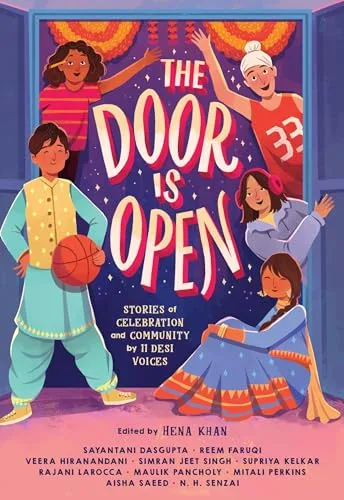 The Door Is Open: Stories of Celebration and Community by 11 Desi Voices11 Desi VoicesEleven short stories set in fictional Maple Grove, New Jersey, feature diverse young South Asian protagonists. In the opening entry, “Check Yourself,” a chess tournament is where Chaya encounters her nemesis, a boy who not only beat her in the tournament the year before but who she overhead making racist comments about Indian people just before their match. That chess tournament takes place at the Maple Grove Community Center, which is featured in each of the interconnected stories. It’s the site of a coveted badminton class, a dreaded cooking class, and a wedding at which one young attendee is bittersweet and another dances happily. Individual family dynamics shine in these enjoyable offerings, while community becomes a central theme when the center’s funding is threatened, building to a closing story in which civic engagement and activism take center stage.Fiction for ChildrenView book details
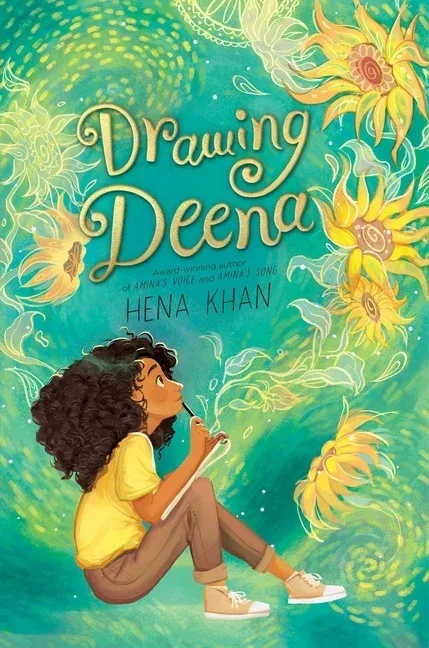 Drawing DeenaHena KhanAn emotionally resonant novel explores anxiety, social media, and finding one’s voice as a young artist. As much as Pakistani American Deena enjoys her seventh grade art class, she’s eager to improve her creative skills with additional training. Classes are expensive, though, and Deena has overheard her parents arguing about finances. Her mom designs and sells desi clothing out of their home; to help grow her customer base, Deena designs a logo and starts a website for Z’s Threads, complete with photos of her cousin, Parisa, modeling the clothing. Parisa, who is more interested in makeup, fashion, and social media than Deena is, has been urging Deena to put more thought into her appearance and persuades Deena to start a social media account to showcase her artwork. This pressure, along with worries about her parents’ relationship, contributes to Deena’s anxiety; she has persistent nausea and a cracked tooth due to clenching. She reaches a breaking point when she has a panic attack at school. Initially resistant to therapy, her parents come around when Deena advocates for her own treatment. Aware now of their daughter’s struggles, Deena’s loving parents become more mindful of recognizing her hard work and dedication to art as well. When Deena and her mom visit a local Pakistani American artist’s exhibit, Deena finds inspiration and a welcome chance to share an interest with her mom, who is an artist in her own right.Fiction for ChildrenWord Count 46595View book details
 We Are Big TimeHena KhanAliya is none too pleased about moving from Tampa to Milwaukee, where everything feels different and disorienting (and a lot colder). At her Islamic high school, Peace Academy, she joins the basketball team, hoping the familiarity of her favorite sport will help her to feel more settled. Her new team leaves something to be desired, but the newly hired 74 Fiction for Children CCBC Choices 2025 Coach Jess (Puerto Rican) is determined to turn things around. To help unite old and new leadership, Coach appoints Aliya co-captain along with prickly Noura, a senior who’s not keen on sharing the role or the spotlight. Coach Jess stresses teamwork and practice, and she urges them to embrace their individual motivations for joining the team. As the team begins to turn its season around, they draw the attention of local news outlets—but the team quickly realizes that interviewers seem to be more interested in the girls’ hijabs than in their athleticism. Navigating this, too, requires team solidarity. While the overall tone of this sports-centered graphic novel is lighthearted, the story is not without depth. In the end, Aliya and her team emerge triumphant in the face of microaggressions, interpersonal drama, and challenging team dynamics.Fiction for ChildrenLexile Text Measure GN320LATOS Book Level 2.4View book details
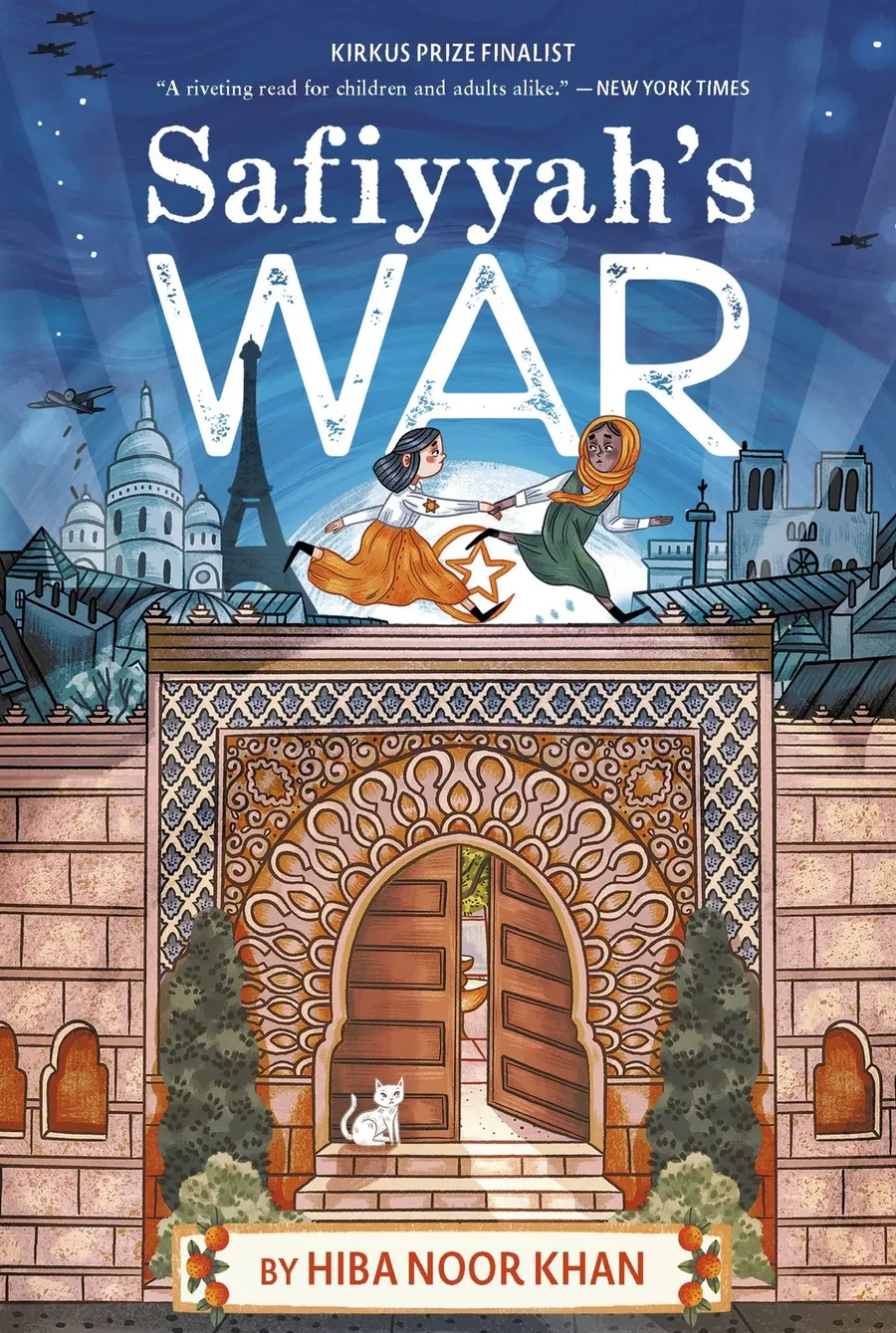 Safiyyah’s WarHiba Noor KhanIn Nazi-occupied France, Safiyyah and her family (Algerian French) live in an apartment in the Grand Mosque of Paris, where her father, Baba, and uncle, Ammo Kader, work. The presence of German soldiers in the city streets has everyone on edge, but Baba is particularly tense. His efforts with the Resistance—hiding injured Allied soldiers and making fake identity papers for Jews, saying they’re Muslim—puts his family at great risk. When Baba comes under Nazi scrutiny, Safiyyah steps up; guided by her Muslim faith and values, she delivers papers to Jews around the city in Baba’s place. When Jewish neighbors begin to disappear, though, the papers are no longer enough. Baba, Ammo Kader, and other members of the Resistance hide groups of Jews in the mosque until they can escape via underground tunnel to the river, where they are clandestinely transported out of France on barges. When Safiyyah’s friend, Hana, who was in hiding, is rescued after her parents are arrested, she recovers in Safiyyah’s apartment. The two develop a sisterly bond before it is Hana’s turn to make the dangerous journey through the Souterrain with a large group of fellow escapees. After Nazis raid the mosque, hindering Baba, it falls to Safiyyah to guide them out. The courageous actions of a compassionate, daring fictional heroine bring to light the little-known history of the Parisian Muslim community’s role in saving hundreds of Jews in this fresh World War II novel.Fiction for ChildrenView book details
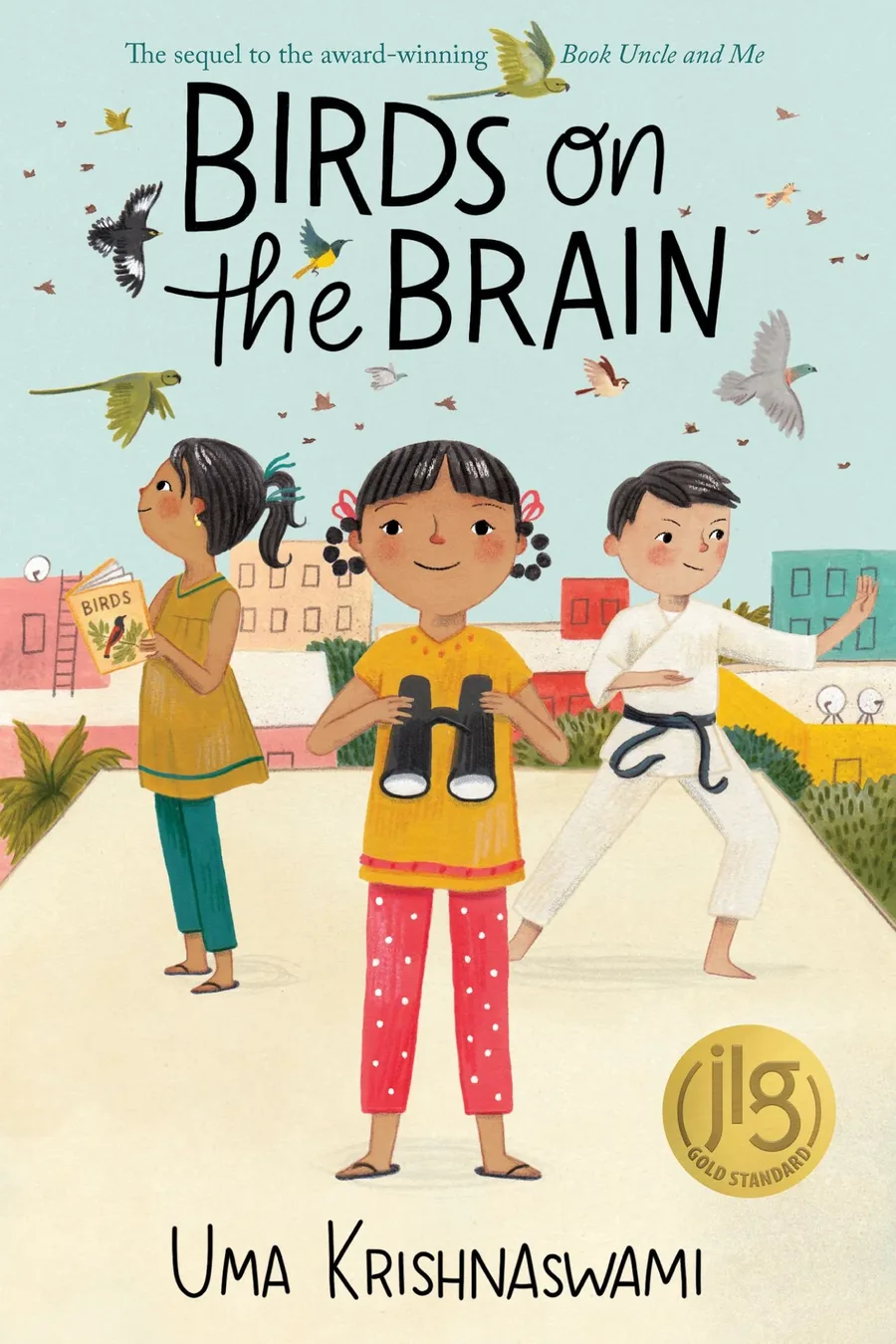 Birds on the BrainUma KrishnaswamiReeni loves birds and is eager to participate in the annual Bird Count India, part of a global bird count day. But the mayor and city leaders, upset by the previous year’s data showing fewer birds, are closing a large local park on the day of the count. Closer to home, the istri lady, who irons people’s clothes in Reeni’s neighborhood, has been told that she must shut down her stall because she uses a coal iron, which is being banned. At school, Reeni and her friends Yasmin and Anil embark on their data collection projects. Anil doesn’t want to collaborate with Reeni and Yasmin, which feels strange because they always work together. But he wants to do a study combining karate and solar power, while Reeni and Yasmin are doing one on books and birds. Reeni and Yasmin designing their data collection project is one of the terrific elements in this upbeat story that sees both projects playing a role in resolving the istri lady’s job woes and the city government’s reluctance to support the bird count. As with the first appealing book featuring Reeni, Yasmin, and Anil, Book Uncle and Me, Book Uncle, a local book vendor, dispenses perfect books for each person, and civic engagement is a major theme.Fiction for ChildrenView book details
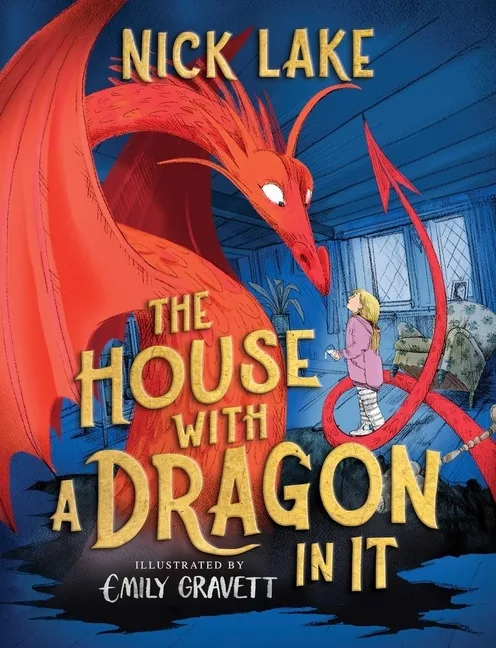 The House with a Dragon in ItNick LakeFourth-grader Summer (white) has been living with her new foster family for a short while when a large sinkhole appears in their living room. Summer, who figures she won’t be living with them for very long, is drawn to explore its depths. She discovers a dragon guarding a treasure deep below the British home. Not fancying herself a hero, Summer is surprised when she’s able to claim the dragon’s prize, a glass bottle, and escape. Opening the bottle, Summer releases an ancient witch who promises her three wishes. Vaguely recalling her biological mom’s warning about bottle witches, and having been disappointed by many in her life, Summer is wary, suspicious of the magic. At the same time, she finds herself navigating tensions between a potential new friend and the cool girls at school. Ultimately, Summer’s intuition, careful assessment of others, and acceptance of her own vulnerabilities play a role in her clever tactics to outsmart the witch before her new home and budding friendship is destroyed. The design of this handsome novel is richly accentuated by Emily Gravett’s spot and full-page illustrations. Equal parts realistic and magical, this middle- grade novel is smart and satisfying.Fiction for ChildrenView book details
 Quagmire Tiarello Coudn't Be BetterMylisa LarsenIt’s the first day of summer vacation, and 14-year-old Quentin “Quagmire” Tiarello (white) wants nothing more than to sleep-in, eat junk food, play video games, and maybe see what Cassie Byzinski (white) is up to. He’s not expecting to find his mom in one of her “spinning” moods. Quag’s used to managing his mom’s mental illness, and today’s technique is to get out of her way. Once outside of his apartment, he is happy to cross paths with Cassie, who invites him to Art Camp at the Y, insisting that he has the perfect skills for her group’s radio show. To his surprise, Quag has a knack for creating sound effects and finds some connection with the other drama kids, despite his prickly tendencies. Cue the record- scratch sound effect when Quag emerges from the Y to find his mother screaming at him to get in the car. Quag complies, only to find himself on the road and unable to redirect his mom’s behaviors like he has in the past. After a difficult moment at a road stop, Quag’s mom drives away, abandoning him. Forced to call an uncle he’s never met to pick him up, Quag finds himself in rural Nebraska, waiting on a mom who might not return. Painful realities are softened with wry humor and observations in this tender sophomore novel.Fiction for ChildrenLexile Text Measure 800LATOS Book Level 5.1View book details
 Gut ReactionKirby Larson, Quinn WyattTess Medina (white) is starting eighth grade at a new school in a new city and feels lonely. She’s also still mourning her dad, a professional baker, who died three years ago. Tess is also a baker; at the time of her dad’s death, she was a finalist in the Jubilee Flour Junior Baker West Coast Competition. Now, she makes treats to share, and two kids at her new school, Elly and Rajeet, quickly become her good friends. Ironically, Tess’s own do-not-eat list is growing thanks to pains in her stomach, which she compares first to a woodpecker, then a porcupine. As the pain becomes even more excruciating, she refers to it as The Knife. But Tess keeps it a secret from her mom and her friends, along with her increasingly intense, sudden need for the bathroom. It’s not until after she passes out at school and ends up in the hospital that Tess is diagnosed with Crohn’s disease. Elly and Rajeet are nothing but supportive when she finally tells them her diagnosis, and cheer Tess on when she’s determined to proceed with plans to compete in Jubilee Flour Best of the Best Bake-Off. Strong writing distinguishes this novel about learning to live with a chronic illness. Tess 76 Fiction for Children CCBC Choices 2025 discovers that even though Crohn’s disease is something she can’t necessarily control, and it sometimes impacts what she can do, her illness does not define her.Fiction for ChildrenLexile Text Measure 561LATOS Book Level 3.7View book details
 Deer Run HomeAnn Clare LeZotteEffie (white), who is deaf, communicates with sign language, which no one in her family has bothered to learn. Effie and her older sister, Deja, recently moved in with their dad, a heavy drinker who has no interest in them, but their mom didn’t want them living with her anymore. When summer ends, Effie, repeating fifth grade at a new school, finds a familiar, welcome presence in Miss Kathy, her sign language interpreter. Effie’s new English teacher, Mr. Bart, is a positive change from the past, telling Effie that her writing, which reflects the grammar of sign language, is like poetry. Effie also makes friends with Cait, who has cerebral palsy, uses a wheelchair, and is on a mission to free herself from her controlling aid. Miss Kathy, suspecting Effie is neglected at home, makes a visit to confirm this and has soon obtained temporary custody of Effie while a termination of parental rights hearing is initiated. Miss Kathy’s involvement and genuine caring is a relief in the big picture, even as she sometimes pushes Effie to talk about things she isn’t ready to discuss. This includes her stepfather’s past sexual abuse, which Effie has never revealed. This novel-in-verse, loosely based on a news story from the 1990s about an interpreter given custody of the deaf child she worked with, ends with Effie living safely, permanently with Miss Kathy. It’s a welcome resolution, even if not reflective of the complexities for many children facing abuse or neglect.Fiction for ChildrenView book details
 The Secret LibraryKekla MagoonBiracial Dally, 11, lives on the family estate with her mom (white), who runs the family business and is already training Dally to take over. Dally hates her mom’s workaholic ways and demanding expectations. Dally’s dad (Black) died years before. More recently, Dally lost her beloved maternal grandfather. When Dally discovers The Secret Library, it’s clear the mysterious librarian, Jennacake, knows who Dally is. Jennacake explains the library rules: only secrets to which Dally has a connection will reveal themselves to her, and she can read just one a day. Each secret transports Dally back to the place and time of its origins. She witnesses her mom and dad’s early romance, when a failed dare led to love that transcended racial and economic differences. And she repeatedly finds herself with the crew of an 1850s pirate ship. It becomes clear that the captain, Eli (white), and first mate, Pete (Black), are life partners, a secret it would be dangerous to reveal, and that they created the treasure map that Dally’s Grandpa cherished. It’s also on the ship that she meets Jack, another crew member and, she later discovers, another time traveler. Jack’s connection to Dally is a welcome surprise, but one that reveals another unsettling truth about race and racism in the past. Dally’s discoveries bring clarity to her family history and identity, as well as her mother’s grief, while setting her on a surprising yet seemingly destined course in this captivating tale.Fiction for ChildrenLexile Text Measure 680LATOS Book Level 4.4View book details
 Countdown to YesterdayShirley MarrEleven-year-old James Greenway (Chinese Australian/white) is heartbroken when his parents announce they’re divorcing. James has always considered his mom a bit rigid, and less fun to spend time with than his dad. But her new apartment is decorated in a surprisingly colorful style, she has interesting answers to questions he would normally ask his dad, and for the first time ever she’s going to enter the annual cake decorating contest at James’s school. James’s dad, by contrast, a curious, nerdy type who loves to make 77 Fiction for Children CCBC Choices 2025 speculative models on the computer (e.g. what would happen if the Earth started spinning in the other direction?), seems a bit lost. When James’s classmate Yan tells him she knows how to time travel and gives him a brief demonstration, James, who can’t stop lamenting happy memories of his family in the past, asks her to send him back in time. Yan (Chinese) grows increasingly reluctant to help, not wanting to lose her new friend. Eventually, she offers to send him back to his six happiest memories so he can decide which time he’ll choose. As James revisits the past, however, he discovers life was never idyllic—for his parents or for him—even as he’s always been loved. A richly imagined, emotionally spot- on novel explores themes of family, friendship, and change, while dimensions of immigrant childhoods (James’s mom in the past and Yan in the present) are woven throughout. There is also a lot of cake!Fiction for ChildrenLexile Text Measure 811LATOS Book Level 5.2View book details
 Rosa by StarlightHilary McKay, illustrated by Matt RockefellerEleven-year-old Rosa Mundi (white) “lived in a world where she hoped there was magic,” setting the stage for a classic orphan story with a cat-centric dollop of fantasy. Orphaned as a toddler, Rosa has been living with her sketchy aunt and uncle whose care ranges from negligent to malicious. Fortunately, Rosa’s lonely life is enlivened by the companionship of Balthazar, the cat living a pampered life next door, who first entered her room through a closed window. On a trip to Venice, Rosa’s aunt and uncle dump her at a small family-run hotel, where she learns how to communicate with the Italian-speaking owners and ventures into the city on her own. Interactions with Venetian cats and a near fatal encounter with her so-called caretakers culminate in a magical interlude with a winged lion statue and restored memories of the loving connection she once shared with her parents. Ensconced in her newfound hotel family, Rosa’s promising future seems assured. The nostalgic trope of the hard-luck orphan who finds happiness gets a fresh take with a contemporary setting and a dose of the fantastical.Fiction for ChildrenView book details
 Magnolia Wu Unfolds It Alll, Chanel MillerMagnolia Wu’s parents own the Bin Qi Ling Bubble Laundromat in New York City. In this tender, funny, quirky story, Chinese American Magnolia and Vietnamese American Iris, both 9, set out to determine who each of the lone socks Magnolia has put on display at the laundromat belongs to and return them to their owners. The girls use observation and deductive reasoning as they follow the clues, starting with the pattern on each sock. Magnolia knows the customers, Iris points out, and surely each sock’s pattern reveals something about the person who wears it. Solving the mystery of each sock takes them around the city, which Iris, who just moved from California, initially finds overwhelming. The mystery-solving process also reveals surprising things to Magnolia about each of her parents, about Iris, and about two classmates she doesn’t really like. These small, often poignant discoveries are seamlessly woven into a story that is pure delight, even as it also sensitively navigates sometimes difficult experiences, from feeling lonely or scared to dealing with difficult parents (the plight of two secondary characters), to anti- Asian racism. Distinctive black-and-white line drawings accompany this spirited work.Fiction for ChildrenView book details
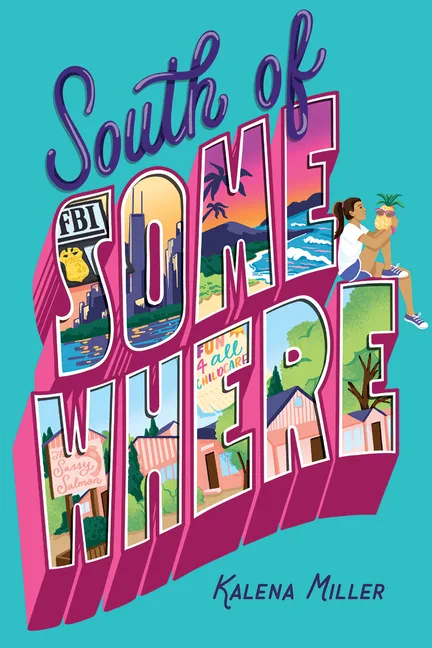 South of SomewhereKalena MillerWhen white, 12-year-old Mavis’s mother is accused of embezzlement, the rest of the family makes an abrupt transition from a life of luxury to small-town living. Upon returning to their upscale Chicago home after a vacation, the family finds that the FBI is already there— and Mom is already in hiding. With their bank accounts frozen, Mavis’s father takes his kids to live with his estranged sister just south of Somewhere, Illinois. Vacillating among 78 Fiction for Children CCBC Choices 2025 disbelief, anger, and grief, and hoping to help alleviate their dire financial situation, Mavis finds a babysitting gig with a new friend. Meanwhile, her sister has been dismissed from her dream internship due to their mom’s notoriety, and her brother is coping by throwing himself into a new relationship. When Mavis begins receiving postcards from her mom from various tropical locations, she keeps them a secret. While she initially believes her mom has left the country, she soon suspects that the postcards are a red herring, and that her mother may be nearer than she thought. Though it stretches credibility at times, this absorbing story is firmly centered on Mavis’s emotional response and perspective. She and her family have satisfying arcs as they adjust to their new life circumstances. Privileged, wealthy Mavis and her brother and sister are far more than stereotypes, and Mavis’s judgmental views of small-town folks rapidly evolve as she settles into her new community.Fiction for ChildrenView book details
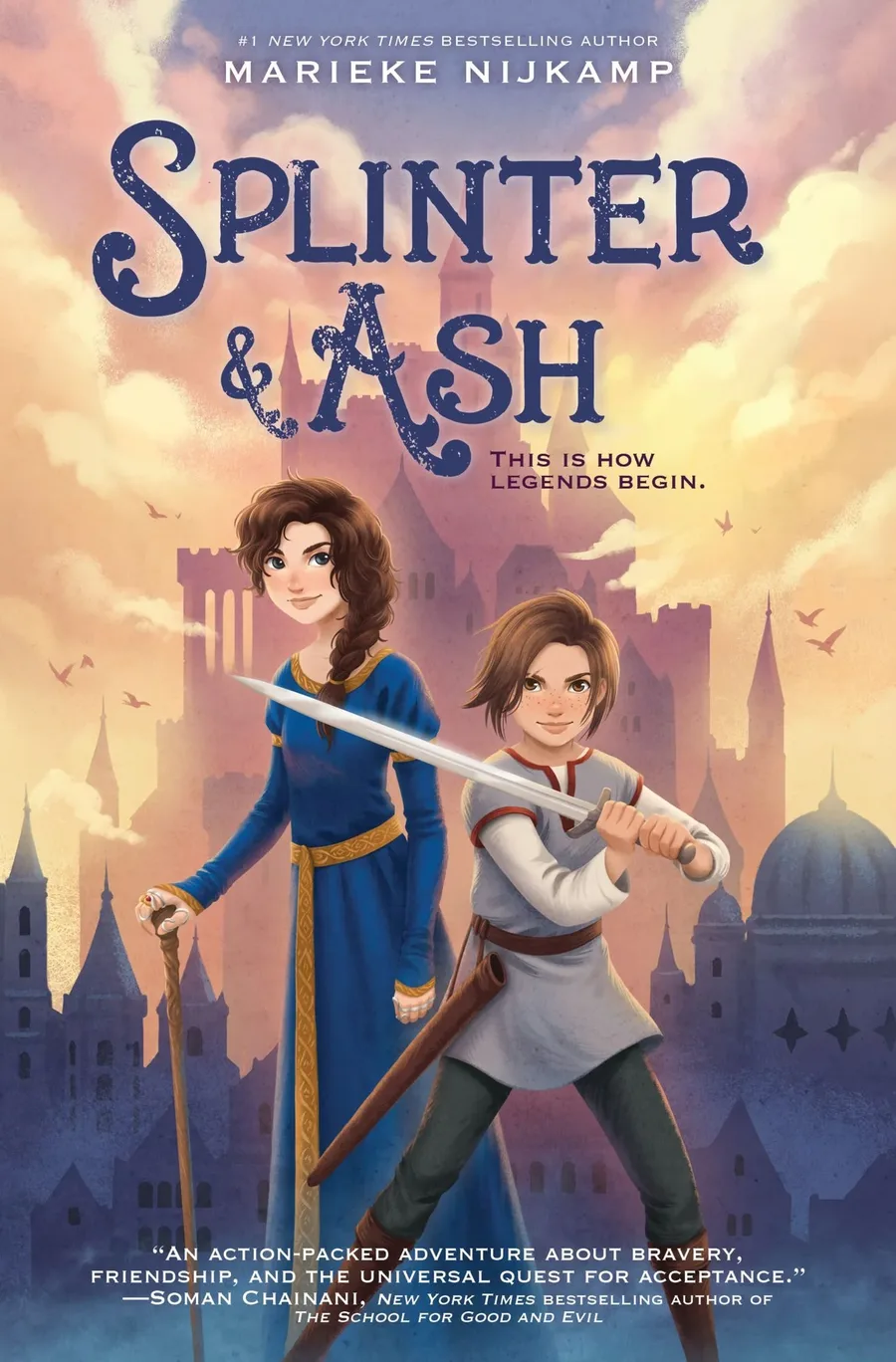 Splinter & Ash (#1)Marieke Nijkamp, illustrated by Vivienne ToPrincess Ash, a young teen, is looked down upon because of her disability—she has a crushed leg and uses a cane—and her long absence from Haven, the capital, to which she’s only recently returned. Even her once-beloved older brother, crown prince Lucen, has not been welcoming. Splinter, a squire, is disliked because most people think she’s a girl, and girls aren’t supposed to be squires. Splinter, who does not feel like a girl or boy, is regularly harassed and bullied by other squires, with Lucen taking the lead. After Ash declares her support for Splinter, Splinter swears to protect the princess. The queen has asked Ash to befriend two daughters of a noble family suspected of working against the crown to spy on their household. Ash does so with increasing reluctance: She and Splinter both like her new friends. Then Ash is kidnapped from the palace. While Ash looks for ways to escape from her captors, who are taking her north, Splinter sets out to find Ash, accompanied by guilt- ridden Lucen, now grappling with the repercussions of his awful behavior toward both his sister and Splinter. A story that successfully hits all the notes for middle grade fantasy offers just the right amount of action, tension, and political intrigue along with appealing (mostly white) main characters and a satisfying resolution that will have readers eager for book 2 in the planned trilogy.Fiction for ChildrenView book details
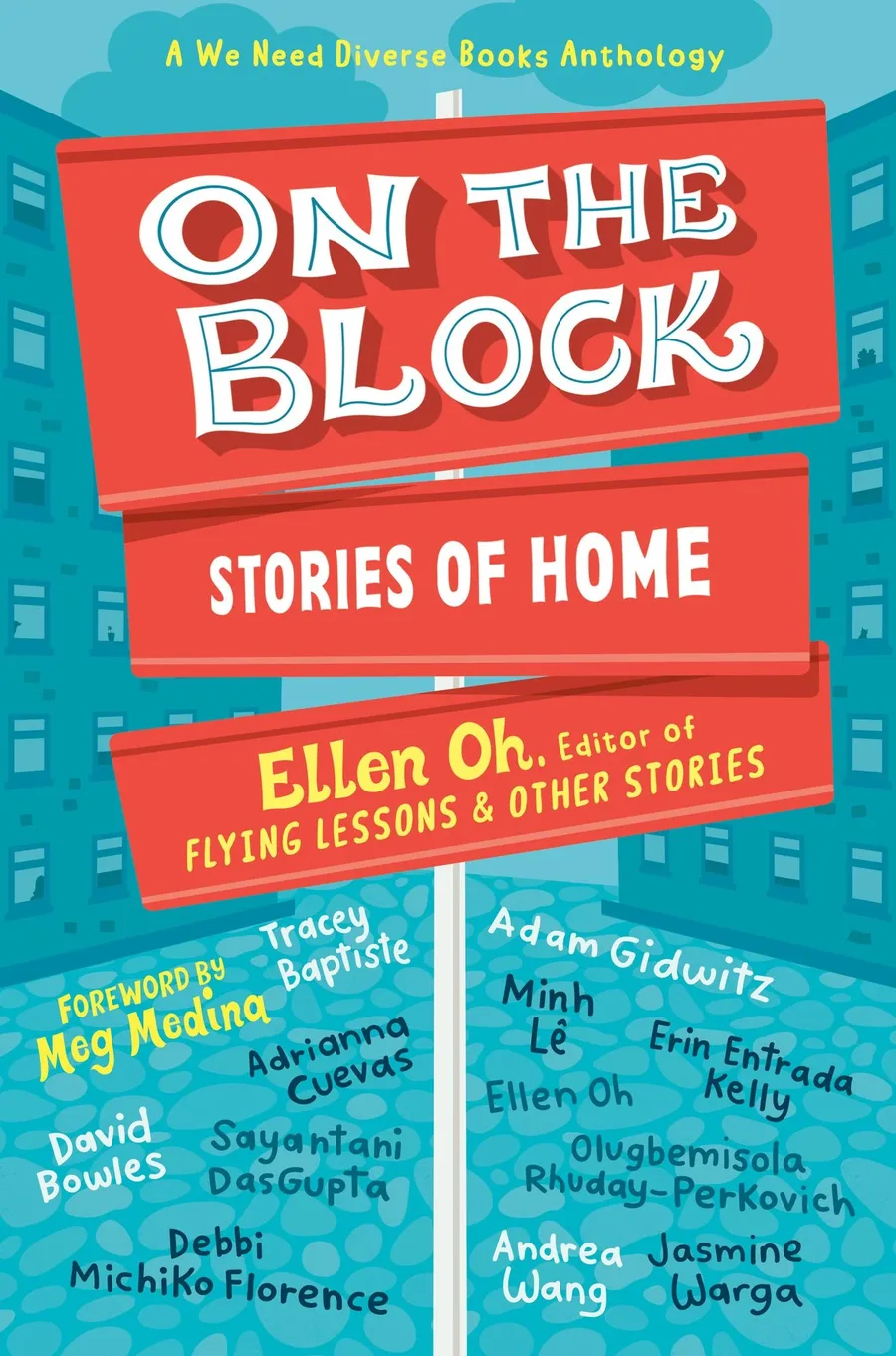 On the Block: Stories of HomeEllen OhIn her introduction to this 12-author anthology, Meg Medina writes about growing up in an apartment building. “Together, we were tenants, neighbors, and, occasionally, friends who shared a mail room, a front stoop to cool off on hot evenings, and thin walls that offered us—for better and for worse—glimpses into each other’s lives.” The twelve interconnected short stories that follow, set in a single five-story apartment building in New York City, capture the sense of curiosity and connection among its diverse middle school-age protagonists. They include Lila, a recent immigrant from Trinidad acclimating to her new home (Apt. 5B); Cuban American Yaniel, whose passion for bridge-building requires consuming many, many popsicles (Apt. 6C); and Japanese American Emi, a reluctant visitor to the building where her aunt is living after moving from Japan (Apt. 3B). Many of the kids have established friendships, but new friendships are also formed in this enjoyable offering that culminates in a building-wide gathering.Fiction for ChildrenView book details
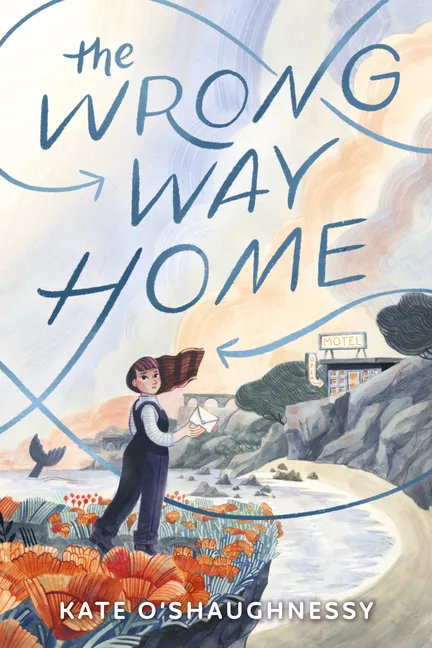 The Wrong Way HomeKate O’ShaughnessyFor the past six years, Fern and her mother (white) have been living at the Ranch, where Dr. Ben controls all aspects of their off-the-grid, self-sustaining community. When Fern’s mother realizes that the cult is no longer safe for Fern, the two flee in the middle of the night. They make their way to California, where Fern’s mother has secured a housekeeping job at a motel. They receive additional support from Babs, a friendly local businesswoman and old friend of Fern’s grandmother. Taught to fear technology and the influence of society, Fern is furious at being uprooted. She quickly realizes how little she knows about the real world—like how to mail a letter. To say she’s behind in school is an understatement; she’s never heard of George Washington or Google. Determined to contact Dr. Ben and get her mom back on “the path,” Fern asks a private investigator for help and sets about earning the money to pay him. In the meantime, she finds a modicum of comfort in new friend Eddie (Indian/white), but almost nothing can shake Fern’s faith in Dr. Ben or loosen the iron grip that his ideology has on her. While aspects of the plot may stretch credibility, Fern’s emotional journey and psychological struggle to disentangle herself from the influence of a dangerous, charismatic leader are frighteningly believable.Fiction for ChildrenLexile Text Measure 640LATOS Book Level 4.1View book details
 Gracie Under the WavesLinda Sue ParkSixth grader Gracie’s dream is to snorkel in the Maldives, but for now she’s thrilled that her parents agree on a family spring break trip to Roatán in Honduras, where there is a marine park. Even her little brother Ben, who can be exhausting, can’t dim her enthusiasm. Unfortunately, Gracie (Korean American) cuts her leg on coral on her first dive after Ben accidentally bumps into her. The wound becomes infected, keeping her out of the water for several days. Gracie knows it was an accident, but her feelings bubble over into anger when her disappointment at not being able to snorkel twines with her resentment at feeling she has to accommodate Ben (who is likely neurodivergent) so often. On the bright side is her budding friendship with Alina, who lives in Roatán. Alina’s mom is a marine biologist currently doing research in the Maldives while her dad is an engineer working on protecting and regrowing coral at the marine park. Alina and her dad not only provide Gracie and her family with wonderful experiences in Roatán, they also help them understand the threats to coral around the world, the marine park’s efforts to grow new coral, and things Gracie and her family can do to help protect it. This breezy yet purposeful story features captivating descriptions of marine life and sees Gracie and her family learning more about caring for the ocean and listening to one another.Fiction for ChildrenATOS Book Level 4.7AR Interest Level MG 4–8View book details
 Every Story Ever ToldAmi PolonskySeventh grader Stevie can’t wait to attend her New Jersey community’s “Kickoff to Summer” festival. Shortly after she and her parents arrive, someone with a gun opens fire, injuring Stevie’s mom and many others. In the hours and days that follow, friends and family, including her grandparents, her good friend Avi, and neighbor Evelyn tend to Stevie’s fragile state while her mom is in a medically induced coma at a hospital in New York City. Stevie (white) is guilt-ridden, believing that if she’d said yes when her mom asked Stevie to join her throwing coins in the fountain, her mom might not have been hurt. As part of this grief and guilt, Stevie, staying in her mom’s childhood bedroom, leans in to understanding her mom more and begins re-reading poems that her mother wrote when her own dad was dying of AIDS (a story told previously in World Made of Glass). Exploring NYC by foot with Avi and emotional support dog Raisin helps Stevie deal with the physical and emotional PTSD symptoms she is experiencing while retracing meaningful places 80 Fiction for Children CCBC Choices 2025 in her mom’s childhood. Phone calls with Evelyn, a Holocaust survivor, also help Stevie see that it’s possible to find a way forward. Stevie’s emotional response to the shooting is harrowing and genuine in this story that sees her surrounded by love and support she needs to begin to heal.Fiction for ChildrenView book details
 Red Bird DancedDawn QuigleyAriel, 11, and Tomah, 12, have been friends for years, growing up in the same intertribal apartment complex. Ariel’s Auntie Bineshiin, who lives with her and her mom, is missing, an absence that casts worry and sadness in their home and inspires Ariel (Ojibwe) to do a school project on Missing and Murdered Indigenous Women (MMIW). Tomah is a born observer of nature who loves sitting on a bench in front of his apartment and watching birds, and a born storyteller who loves learning and sharing traditional stories. But Tomah can’t read. Although he uses humor, especially at school, to hide this fact, his teacher, Ms. Begay, has caught on and wants to help him. When Auntie Bineshiin is found dead, it isn’t just Ariel and her mom who mourn her. The loss spurs Tomah to a symbolic act that draws their intertribal Native community together. Ariel, who has been reluctant to learn jingle dancing (she loves ballet but they can no longer afford lessons) embraces the healing dance for her aunt, and for Tomah, who is diagnosed with a heart condition. In the process, she discovers it is also a gift to herself. This emotionally compelling novel-in-verse alternates between Ariel and Tomah’s points of view and offers a powerful exploration of loss and healing, in addition to illuminating the cause of MMIW, and the deep sense of community among the diverse Native peoples.Fiction for ChildrenView book details
 The Kodiaks: Home Ice AdvantageDavid A. RobertsonMoving from the reserve where he’s grown up to Winnipeg for his dad’s new job, Alex (Cree) starts grade 6 without his best friend George or his old hockey team, the North Stars. A skilled player, Alex is doing great at tryouts for a new team in Winnipeg; then another kid, Terrence, calls him “Chief” while aggressively checking him. Alex makes the team, but so does Terrence. Luckily, so does Aidan, whom Alex also met at tryouts and becomes a fast friend. At school, Alex gradually gets to know Jenny (like Aidan and Terrence, white), another friend he learns he can trust. On the ice, despite their rough start, Alex and Terrence come to respect each other, a shift that starts with Alex choosing to not respond to pettiness with more pettiness. Still, Alex faces racist attitudes from some kids, and once even parents, on other teams. He also hates how he feels when his genuinely nice but oblivious coach occasionally uses terms like “powwow” and “low man on the totem pole.” Alex’s parents are validating and supportive, providing guidance while leaving choices up to Alex in a story that sees Alex finding his footing off the ice in addition to showcasing his skill on it. The hockey action is riveting, while Alex’s feelings are genuine and illuminating in a story that builds to a championship game in this first book in a series.Fiction for ChildrenView book details
 The Creepening of Dogwood HouseEden Royce“Gotta keep pushing, Baby. No matter what.” Since his mom’s death, Roddie (Black) holds onto her words, along with memories of her smile, of cooking together, of her braiding his hair. Aunt Angie has offered to help with his hair, but he prefers doing it himself. Aunt Angie and Uncle Erik (both Black) live in Dogwood House, where his mom and aunt, her younger sister, grew up. The old house built by his ancestors is in serious need of repair, and an airing—there’s a funk in almost every room. Roddie’s grief is eased a bit by his aunt and uncle’s love and he throws himself into helping, but he’s unsettled by what he finds 81 Fiction for Children CCBC Choices 2025 beneath the old wallpaper: hair, in strands and coils. Aunt Angie has given him a bowl to burn his own stray hair—a ritual of her childhood, although, she explains, it was his mom not her who loved hearing their grandmother’s stories of hoodoo traditions, like burning hair to keep the Bridgeweaver from returning. Aunt Angie can’t remember more, no matter how hard she tries, just like she isn’t sure why Roddie’s mom left so suddenly as a teenager. Roddie’s nighttime wanderings reveal scenes from the past that convince him that, like his mom before him, he must face the Bridgeweaver to protect his family. This shivery middle grade novel balances its eerie horror elements with the love and warmth in Roddie’s life.Fiction for ChildrenLexile Text Measure 829LATOS Book Level 5.3View book details
 Impossible Creatures (#1)Katherine Rundell, illustrated by Ashley MacKenzieMal lives in a world called the Archipelago, where the magic of the Glimourie Tree sustains creatures like unicorns, griffins, and others, which exist alongside humans. Christopher lives in the human world. Following the appearance of a baby griffin, Christopher discovers that his grandfather is Guardian of the portal between the two worlds—a role he will someday inherit. The griffin, Gelifen, belongs to Mal, and the two of them are on the run from a killer who is after Mal, although she doesn’t know why. When Mal appears in the human world too, Christopher accompanies her and the griffin back to the Archipelago, where the magic of the Glimourie Tree has been weakening; the populations of some magical creatures, like griffins, are nearing extinction. Their flight from the murderer becomes a quest to save the Glimourie Tree once they realize why Mal is being pursued: Hers is the soul of the Immortal, reborn each generation and charged with tending the tree. But evil has suppressed the Immortal’s knowledge for several generations. Mal is initially resistant to embracing the responsibility, which comes with knowledge of all the bad and good in the world, until an attack and wrenching loss steel her commitment. This lushly designed middle grade fantasy features an array of arresting magical creatures along with human characters (including a kindhearted berserker named Fidens Nighthand) as Mal and Chrisotpher (both white) complete one challenge after another to save the magic of the Archipelago.Fiction for ChildrenView book details
 Kareem BetweenShifa Saltagi SafadiAt the start of the 2016-2017 school year, Chicago Bears fan Kareem (Syrian American) aspires to be a star quarterback but underperforms at middle school tryouts and doesn’t make the team. When Austin, the quarterback and coach’s son, offers to help Kareem get on the team in spring if Kareem does Austin’s school assignments, Kareem reluctantly agrees. Austin is an unlikable bully, but Kareem feels an immediate camaraderie with new student Fadi, a Syrian. But when Austin targets Fadi with racist bullying, Kareem doesn’t speak out to support his new friend. The personal and political collide when Kareem gets into a fight with Austin and his attempt to hide it leads to his dad’s delay in booking flights for his mom and grandparents. His mom had traveled to Syria to bring her parents, including Kareem’s ailing grandfather, to the United States. They are stuck overseas when the Trump Administration’s 2017 executive order banning immigrants from seven countries with significant Muslim populations is announced. Kareem feels responsible, and deeply guilty when his grandfather dies before the ban is lifted and his mother, with his grandmother, safely returns. Football metaphors are a unifying element across this novel-in-verse that makes the impact of Islamophobia achingly personal and vivid through Kareem’s story.Fiction for ChildrenLexile Text Measure 731LATOS Book Level 4.7View book details
 The Bletchley RiddleRuta Sepetys, Steve SheinkinSiblings Lizzie, 14, and Jakob, 19, who have grown up in England, are the children of an American mother and Polish father. Their father died years before. Now, with England fighting World War II, their mother, who worked for the American embassy in London, is presumed dead after being caught in Poland on embassy work as the German invasion there began. Irrepressible Lizzie refuses to believe their mother is dead. She evades the chaperone accompanying her to their grandmother in Cleveland and makes her way to their London apartment, where she finds documents her mother secreted under a floorboard. Cautious Jakob, annoyed by his sister’s rogue behavior and stressed by his responsibilities, reluctantly brings Lizzie back to his lodgings near Bletchley Park, where he, a math student at Cambridge, is now working on the secret Enigma codebreaking efforts. Alternating chapters focus on Lizzie’s efforts to prove their mother is alive, helped by two new friends, and Jakob’s work in Hut 6 on breaking the hold of Enigma on German messages. Slowly, their efforts converge, bringing them closer as they realize their mother was involved in helping Polish codebreakers—who contributed greatly to the work the British are doing at Bletchley—flee the Germans during the Polish invasion. This swiftly paced story is steeped in real as well as fictional intrigue.Fiction for ChildrenLexile Text Measure 631LATOS Book Level 4.1View book details
 MishkaEdward van de Vendel, Anoush ElmanWhen it finally sinks in that they are no longer moving, that her family is finally settled in a home of their own, that the refugee center is in the past, nine-year-old Roya (Afghani) announces that her family needs a pet. “What?” her three older brothers and her mother and father exclaim. That is how Mishka, a white dwarf rabbit, becomes part of Roya’s family. Roya explains to Mishka how her family became citizens of the Netherlands after their long journey from Afghanistan when she was three years old. Talking to Mishka and seeking comfort in his soft white fur is something Roya does intuitively. Each family member has their own connection to the rabbit as well. Gentle Hamayun knows the best way to pet Mishka, while Papa feeds him lettuce leaves. He’s so comfortable with Mama that he pees on her. Brother Navid takes pictures of Mishka for Roya’s school presentation. Bashir, the biggest brother, helps to search the neighborhood when Mishka escapes from his hutch. Having Mishka helps the family share individual and collective memories from their long, difficult journey. Short chapters with fresh, lively dialogue are accentuated with warm, full-color illustrations.Fiction for ChildrenView book details
 Shark TeethSherri WinstonRecently back home after a stint in foster care, 12-year-old Sharkita (Black) lives in fear of again being separated from her precocious sister, Lilli, and developmentally disabled brother, Lamar. While Mama goes out—sometimes for days at a time—Kita cooks dinner, pays the bills, cleans the house, and cares for her siblings. Kita’s head swirls with adult worries and complicated emotions: She longs to be loved and cherished by her mother even as she sometimes hates her. She is both her mom’s “ride-or-die” and the target of her abuse; she knows she is a burden to her mother, who can’t even be bothered to fix the hyperdontia that gives Kita two rows of teeth, like a shark. Kita’s only reprieve is dance; she’s a baton twirler on the team and loves her coach, Miss Kadejah, who takes Kita under her wing. When Kita decides to go out with her friends after a game one night, her mom leaves Lilli and Lamar home alone, and the result is disastrous. Kita blames herself as she and her siblings are sent to separate foster homes—but this time, with the support of her new therapist, her friends, and Miss Kadejah, Kita summons the courage to speak the truth 83 Fiction for Children CCBC Choices 2025 about her family’s crisis in order to give her siblings—and herself—the homes, love, and security they need and deserve. The promise of hopeful futures for these three children comes as a great relief after the trauma they endure.Fiction for ChildrenLexile Text Measure 669LATOS Book Level 4.3View book details
Fiction for Young Adults
28 selections
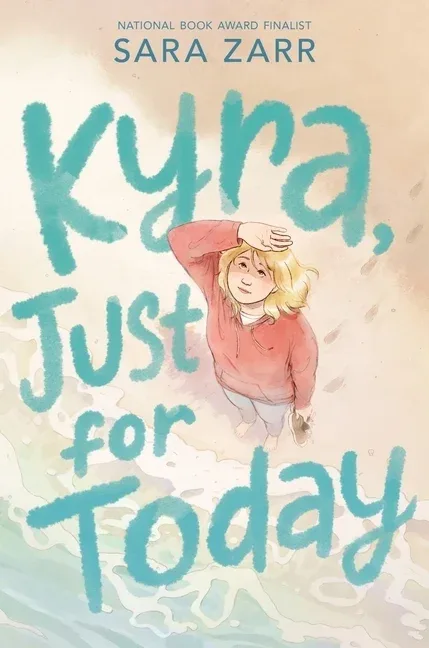 Kyra, Just for TodaySara ZarrKyra’s mom is an alcoholic, but she’s been in recovery for more than five years now. She cleans houses for a living, sometimes with Kyra’s help. In many ways, Kyra’s life revolves around her mom’s recovery. Kyra (white) keeps everything under control at home. She cooks and cleans, packs her mom’s lunch, and reminds her mom to take her phone charger with her. She attends Group, a supportive space for kids who are affected by others’ alcoholism. Kyra and her mom journal together and share their entries with one another. Kyra has always felt grateful that her mom is committed to recovery, but lately, something has changed. Her mom starts coming home later and has become moody, sometimes snapping at Kyra in anger. The truth—her mom is drinking again—comes out when Kyra, who is home alone one evening, burns herself while cooking and can’t hold of her mom. Although her mom recommits to recovery, it doesn’t erase Kyra’s pain, anger, or feelings of neglect and betrayal. But with the support of friends both within and outside of Group, Kyra begins to set boundaries and to gain a healthier image of herself as a whole, complex, multifaceted person apart from her mother. This raw, tender novel is honest in its depiction of the effects of one parent’s addiction on her child.Fiction for Young AdultsWord Count 68953View book details
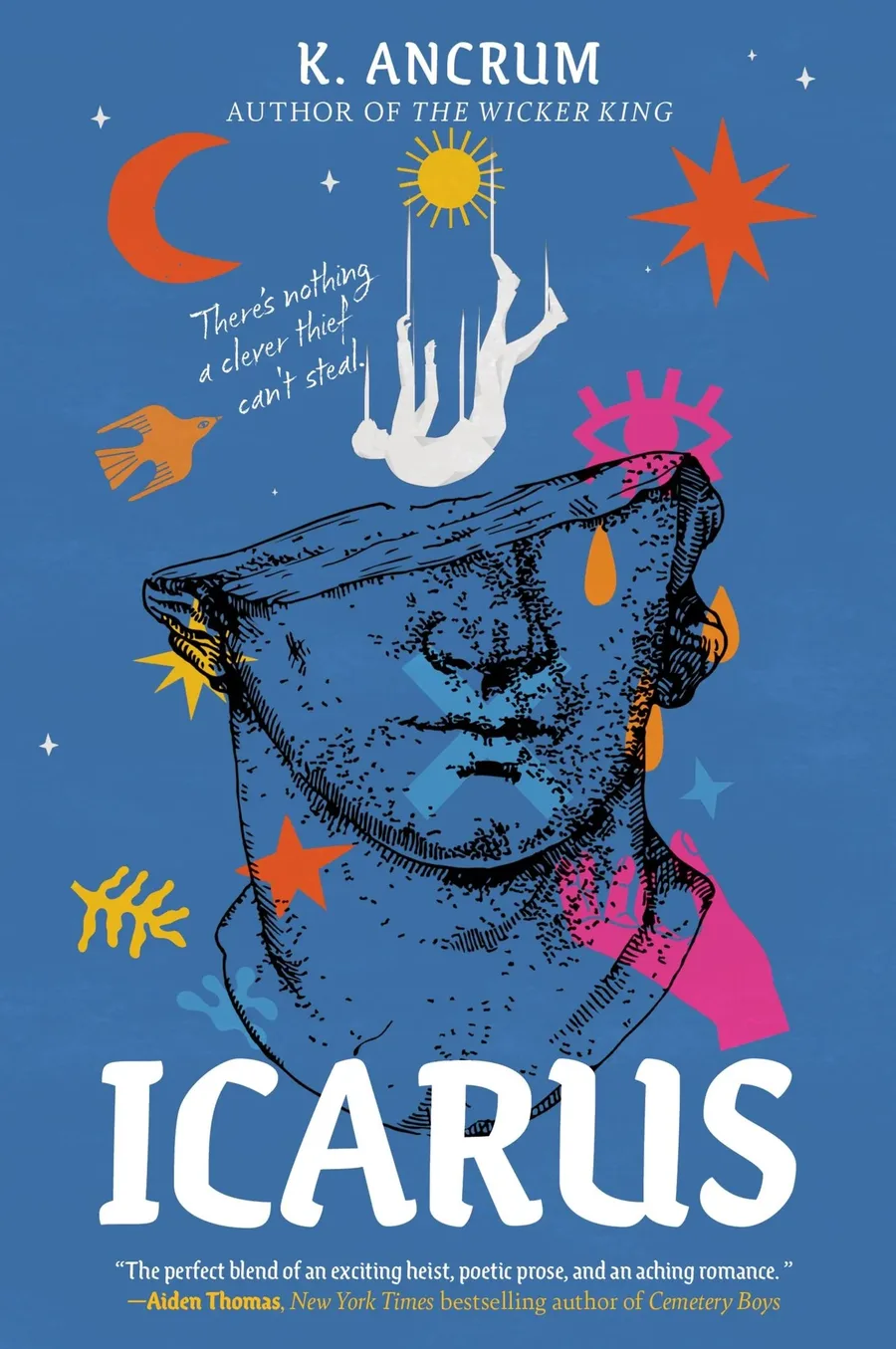 IcarusK. AncrumIcarus, 17, works for his father, Angus, an art restorer and forger. Part of his job is to regularly break into Mr. Black’s mansion to replace art pieces with forgeries Angus made. Because their lives demand secrecy, intelligent and socially savvy Icarus (white) maintains distance from kids at school, curating acquaintanceships with strict emotional and physical parameters. Secretly plotting to flee home and their life of crime when he turns 18, Icarus’s plans are upended when he discovers Mr. Black’s teenage son, Helios, is a literal captive— wearing an ankle monitor and unable to escape Mr. Black’s house or abuse. Lonely Helios promises to keep Icarus’s thefts secret if Icarus continues to visit. Icarus does, and the two become friends and then fall in love. At the same time, Icarus is surprised to discover that the school relationships he thought he could so carefully control are something else altogether—they’re friendships. And it turns out his friends have been worried about him—a realization that is transformative for Icarus and Helios both. This richly layered novel full of symbolism and suspense explores themes of abuse and trauma, families and friendship. But at its heart it’s a tender, hopeful story about kids taking care of one another, a theme further buoyed by the author’s note discussing how teens are often first to notice when a peer is having problems, and can often be the first (and sometimes only) ones to lend support.Fiction for Young AdultsView book details
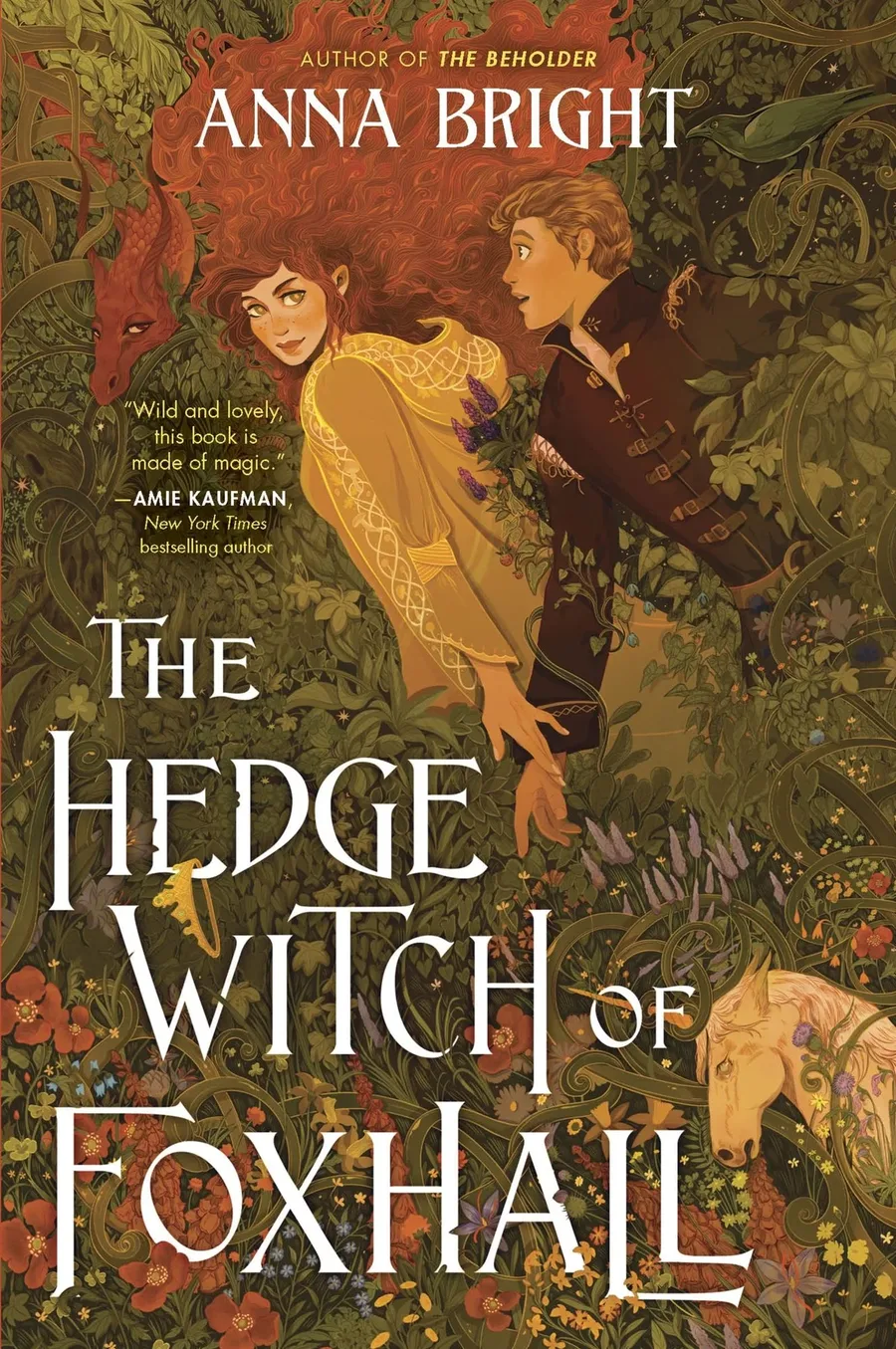 The Hedgewitch of FoxhallAnna BrightFfion is a hedgewitch who refuses to join the coven in her village of Foxhall, which exploits desperate people and wields magic that harms the land. When Ffion’s fox companion, Cadno, dies as a result of the coven’s magic, Ffion knows she has until the new moon to bring him back. Prince Taliesin and Prince Dafydd have been charged by their father, King Cadell, to stop the threat at their borders by taking down King Offa’s wall, which is draining the magic from Wales. Dafydd doesn’t want the crown he’s destined for, while Tal is desperate to have it, and to protect his mother, even if he’ll never have his father’s approval. Tal joins forces with Ffion, hiring the hedgewitch to take down the wall. As Ffion and Tal endure a difficult, dangerous, muddy journey, walking the length of the wall so she can plant seeds of destruction—and, unbeknownst to Tal, gain magical strength to bring back Cadno—they each try to resist their mutual attraction. Meanwhile the diplomatic solution sought by Dafydd fails, and he gives up until he realizes that Ffion is the young woman he’s seen in visions—the one his court magician bound him to years before; the one he loves. Politics and interpersonal relationships (and Welsh words!) are complex in this lush historical fantasy set in eighth-century Wales, while the lively characters and swiftly moving plot make for a riveting read.Fiction for Young AdultsView book details
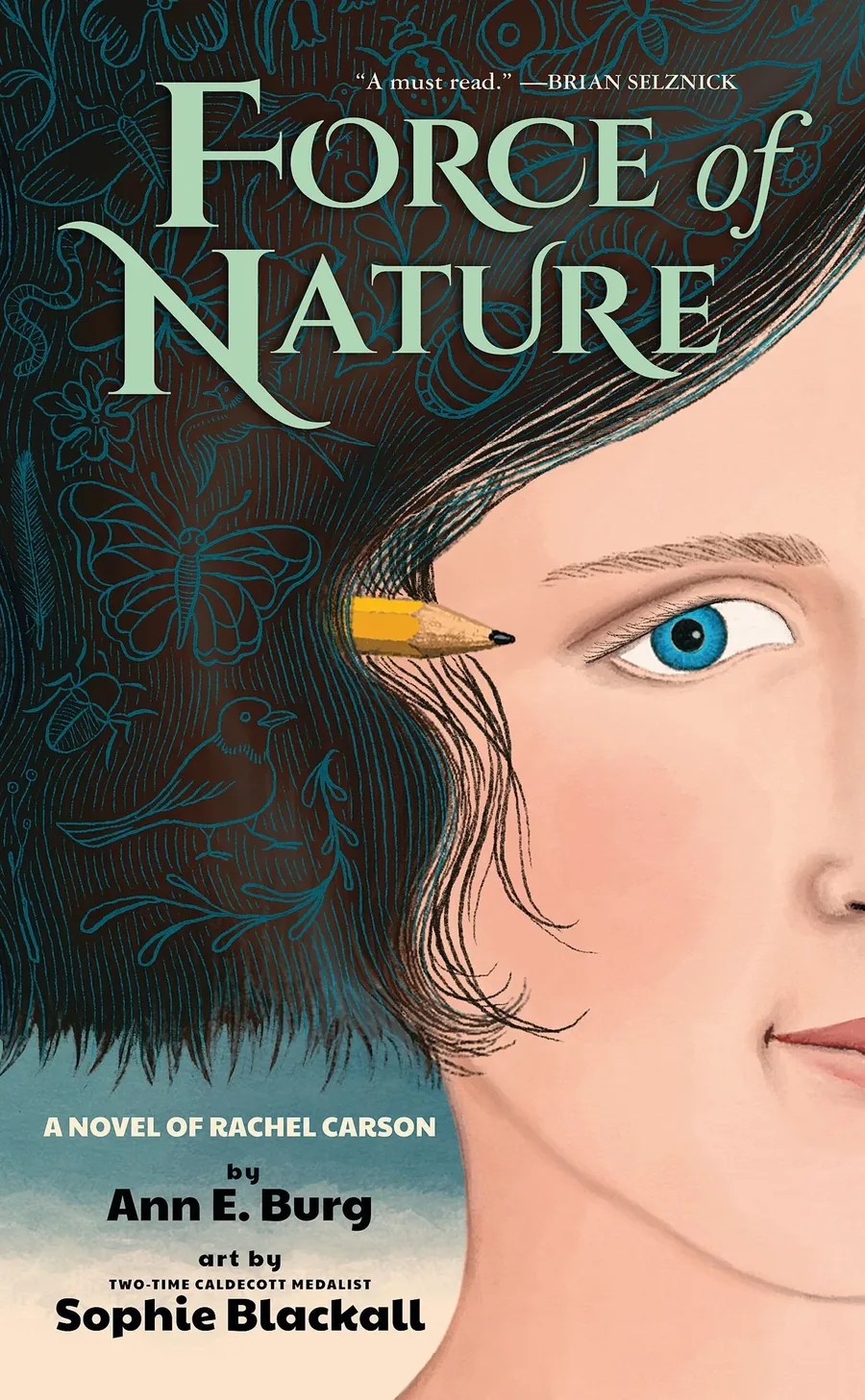 Force of NatureAnn E. Burg“In school we learned the earth / was once covered in water. / Imagine! / Ocean water covering everything... Someday I want to visit / the ocean and meet all / the wonderful creatures / who live there!” A lyrical novel-in-verse about Rachel Carson begins with her childhood in rural Pennsylvania. Young Rachel delighted in nature; it also provided escape and solace as family members navigated difficult times. A child who loved writing, Carson studied English in college until falling in love with biology, switching majors despite warnings of limited opportunities for women in science. She’d almost graduated before finally seeing the ocean for the first time. She entered a graduate program in marine biology but had to find paying work after the death of her father and her older sister left her the sole provider for her mother and two young nieces. Writing about science and nature became a beautiful melding of her two passions. She wrote several highly regarded books for children before Silent Spring, penned while undergoing treatment for cancer and caring for her young nephew. Carson faced immense losses in her life, which are given full feeling here, but they’re balanced with the joy she found in nature and family—especially her nieces and great-nephew. Her remarkable spirit and accomplishments also leave a lasting impression in this inspiring work graced by black-and-white spot art.Fiction for Young AdultsLexile Text Measure NP0LATOS Book Level 5.9View book details
 Looking for SmokeK. A. CobellFour Blackfeet teens—Loren, Mara, Eli, and Brody—relate their versions of events following the murder of their friend, Samantha, during an Indian Days ceremony. The community was already on edge because of the disappearance of Loren’s sister, Rayanne, a few weeks prior. When Rayanne’s body is found after Samantha’s death, it’s clear that the two murders are connected. Mara, new to the reservation, befriends Loren and helps her investigate the crimes. They’re unsure whether they can trust Eli and Brody, the other two teens who’d been in a group photo with Samantha just prior to her death. While the detectives on the case suspect drugs were involved, Loren is doubtful; Rayanne saw their mother’s life destroyed by addiction. Texts on Rayanne’s phone suggest she’d been romantically involved with Eli, who is devoted to caring for his younger sister and is keeping a major family secret of his own. And when Brody’s older brother Jason becomes a suspect in the 85 Fiction for Young Adults CCBC Choices 2025 case, Brody puts his own future at risk to help prove Jason’s innocence. Interspersed among the four teens’ timestamped narratives are short chapters by an unknown narrator who is intensely interested in the case. All of the main players in this intriguing crime thriller are well developed and credible; their narratives reveal their strengths as well as the struggles they face as individuals and as part of a community that is deeply affected by the Missing and Murdered Indigenous Women crisis.Fiction for Young AdultsView book details
 Out of BodyNia DavenportA former sci-fi nerd becomes the latest test subject of a terrifying technology she thought existed only on television. When Megan meets LC at a coffee shop, the girls develop a friendship almost instantly. Fast forward a few weeks: LC persuades Megan to take molly at a party. Megan wakes up on the lawn a few hours later—in LC’s body. Megan’s parents are alarmed when she shows up on their doorstep, looking like LC but claiming to be Megan. Worse, Megan sees her real body there, at home. With nowhere to go, Megan ends up on the street and arrested by the police, identified as Jade McCall, a girl who ran away a few months ago. As Megan bides her time living as Jade, with Jade’s anxious, overbearing parents, she pieces together clues about the apparent upheaval to Jade’s life that caused her to run away. But was it actually Jade who ran away, or a third girl—the real LC—in Jade’s body? Why would LC steal Jade’s body in the first place? And is there a way to return everyone to their rightful places? As Megan navigates her unnerving new reality, the reader catches glimpses of LC’s motivations in short, interspersed chapters. On the run herself, LC has utilized the body-swapping technology to survive—regretfully placing Megan and Jade in grave danger as well. Unwilling to trust the police, these three Black girls rely on their own grit and resourcefulness to defeat a powerful opponent.Fiction for Young AdultsView book details
 Eddy, EddyKate De GoldiRaised by his Uncle Brian (aka Brain), with whom he still lives, Eddy Smallbone, 19, works at a grocery store and walks dogs for a living. He is smart, sensitive, kind, and struggling. Eddy (white) is hired by a nun studying Jungian psychology to care for her cockatoo, while a new dog-walking job morphs into babysitting a precocious, talkative seven-year-old girl and her quiet, reclusive older brother. Eddy also runs into his ex-girlfriend, Boo, whom he has not seen or talked to in two years, and discovers their romantic attraction remains. Each of these is a surprising, uplifting development in the present. The narrative also slowly reveals details of the past that upended Eddy emotionally. They include the devastating 2011 earthquake in Christchurch, New Zealand, where Eddy lives; the health struggles of his best friend, Toss; and what happened with Boo. All of it culminated in Eddy having a breakdown that resulted in him acting out and being expelled from his Catholic high school. Marvelous characters and meaningful relationships are the driving force of this tender, full- hearted story that begins in September and culminates just after a Christmas party at Brain and Eddy’s house, attended by Brain’s quirky old group of four friends and Eddy’s new friends. But the Christmas party also brings forth painful memories and confessions; these complete the picture of what Eddy has been dealing with, but also provide the catharsis he needs to embrace the future.Fiction for Young AdultsView book details
 Made GloriousLindsay EagarIn this contemporary retelling of Shakespeare’s Richard III, Rory King is a scholarship student at Bosworth Academy. Rory (white) exists on the edges of high school life, knowing she doesn’t fit in at Bosworth. But she’s also a senior; one who’s paid her dues in the theater department and wants her just reward: the leading role in the spring musical. It’s a reward Rory knows won’t be bestowed upon her, so she’s going to take it. Rory’s 86 Fiction for Young Adults CCBC Choices 2025 never had more than a single line in a play, but humility, helpfulness, and assurance that she’s fine (she previously attempted suicide) are roles she carries out with finesse while enacting an insidious, calculating plan. Like Shakespeare’s Richard in his quest to be king, she’ll let no one get in her way—not her mom, her only friends, the theater teacher who rules the drama department, or the English teacher who’s mentored her. Unthreatening and unassuming on the surface, Rory is brilliant and driven, her relationship to morality and reality ungrounded. Her plan comes to fruition, step by increasingly disturbing step, in a twisty story that sees Rory’s unreliable narration shifts from first to third person— sometimes moving between them—and across various forms, primarily prose but also script and musical score. Increasingly compelling and unsettling, the story also offers Rory’s entertaining, insightful yet skewed perspective on fellow theater kids and other peers, her teachers, and others in this literary novel with mature content and themes.Fiction for Young AdultsView book details
 Bright Red FruitSafia ElhilloIn Samira Abdullahi’s tight-knit Sudanese American Muslim community, her unfounded reputation as a “bad girl” leads to a stifling life of rules imposed by her mother. She longs for the freedom to express herself and dreams of being a poet in New York City. When she’s grounded for the summer—except for her weekly poetry workshop—Samira takes refuge in an online poetry forum, where she begins communicating with a popular poet named Horus. Finally, here is a person with whom she can have real conversations. Flattered by his admiration of both her writing and physical appearance, she soaks up Horus’s attention and even writes him a love poem. Farrah, the instructor of Samira’s workshop, warns Samira that not only does Horus have a reputation for being untrustworthy, he’s also an adult. But Samira cannot—or won’t—give him up, even as he becomes more demanding of her time and attention both online and in person. It’s only when Horus steals Samira’s poem, attempting to pass it off as his own, that Samira dares to stand up to him and reaches out for support. Samira’s naivete and sense of isolation lend themselves to a believable and all-too-common form of manipulation and abuse, but this beautifully written verse novel ends in triumph as Samira repairs her relationship with her mother and stands in solidarity with other survivors.Fiction for Young AdultsView book details
 Twelfth KnightAlexene Farol FollmuthViola “Vi” Reyes (Filipina American) is smart, forthright, and uncompromising. Jack “Duke” Orsino (biracial Black/white) is talented, charming, and easygoing. The general consensus among their high school classmates is that Vi should be nicer, and Jack is Mr. Nice Guy. Vi and Duke serve on student council, where he shows no interest in leadership and she carries the load. Star athlete Duke, couch-bound after an injury, discovers the world of ConQuest, an MMORPG game where, it turns out, Vi, is a high-achieving player who goes by Cesario. After Duke realizes Cesario goes to his school, Vi lies and says she’s her twin brother, Bash. Online, Vi—as Bash—joins forces with Duke on a quest. In the real world, Duke, longing to understand why his girlfriend Olivia broke up with him, cuts a deal with Vi: He’ll take on a vexing student council task (“You mean you’ll do your job?”) if she’ll try to find out why. Vi becomes friends with Olivia even as she and Duke grow close. This delightful reimagining of Shakespeare’s Twelfth Night isn’t all fun and games. Among the social commentary and insights are Vi’s constant battles with sexism; Jack’s realization that he’s crafted his nice guy persona to ease his life as a Black athlete at their predominantly white high school; and the homophobia Olivia reveals in her extended family. Still, there’s plenty of humor, love, and romance along with reckoning as truths are revealed.Fiction for Young AdultsView book details
 Divine Mortals (Divine Mortals, #1)Amanda M HelanderWhen Mona (white) was eight years old, she accidentally killed her beloved older brother, Patrick. Traumatized, she was transported to the Flood, a place of magic and gods, where she received a divine gift: the ability to name one’s soulmate. Returned to her human world, she experienced agoraphobia and didn’t leave her home for 10 years, until Delmar Whitman (white), master of the King’s magical advisors, comes to bring her to the palace. The young king is ill, and it is urgent that he marry and produce an heir before he dies. Mona is needed to identify his soulmate. Once at the palace, Mona finds an ally in Bernadette (Black), also gifted by the gods as a seer. Secrets abound, starting with a big one: Mona’s reading of the king’s soulmate has an unexpected result that she is loath to announce: His soulmate is Mona herself. This has political and magical consequences and complications, including the undeniable romantic and sexual tension between Mona and Delmar. Plot twists, betrayal, loyalty, and the survival of humanity propel the plot. Equally significant are the lusty trysts and tumultuous questioning of whether a soul mate is also the person most loved or best-suited for life companionship. Smart dialogue paired with fresh fantasy and a sex-positive protagonist make this a welcome addition to the young adult romantasy genre.Fiction for Young AdultsView book details
 The Brightwood CodeMonica HesseEdda, 18, has recently returned from working as a Hello Girl for the American Expeditionary Forces on the front lines of World War I. Now a telephone operator for Bell Systems in Washington, D.C., Edda (white) is weighted with guilt over an incident during her service: Despite her ability to quickly translate between French and English, and working hard to memorize codes that changed daily, she forgot a code word (“Brightwood”) at a critical moment and 34 soldiers died as a result. Already depressed, Edda starts getting haunting, accusatory calls while at work warning that she must tell the truth about what happened overseas. She’s determined to discover who’s behind them. With the help of Theo, a young man who also lives at her aunt’s boarding house, Edda begins investigating who might be behind the calls, starting with members of the dead soldiers’ families in the D.C. area. Her research adds layers of complexity to her feelings of guilt over their deaths, and to her feelings about Theo, who she discovers has a secret of his own. When Edda finally acknowledges details of the night she forgot the code word—she made the mistake just after being sexually assaulted by the officer who had been mentoring her—it gives her insight into the calls and the fact that her guilt is misplaced. This compelling historical mystery addresses PTSD, sexism, and sexual assault in ways relatable for contemporary readers while feeling authentic for the time.Fiction for Young AdultsView book details
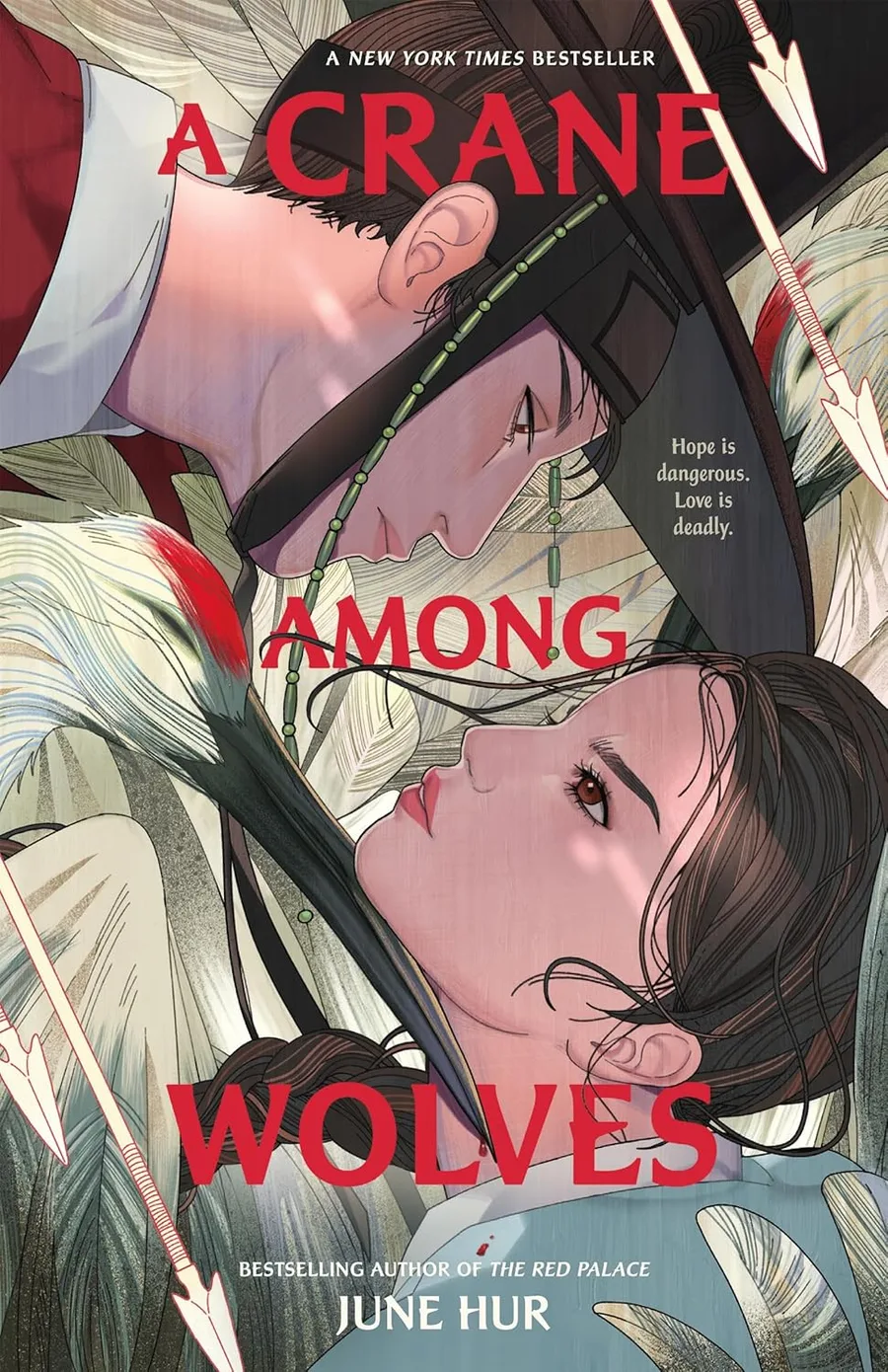 A Crane Among WolvesJune HurIn early 16th-century Korea, King Yeonsan terrorizes the populace, torturing those he considers enemies and kidnapping women as consorts. Iseul, 17, was raised in a noble family but her parents were killed in one of the king’s sweeping campaigns of vengeance. Now her older sister, Suyeon has been kidnapped by the king and Iseul is determined to rescue her. Once pampered and self-absorbed, Iseul takes a job at an inn and soon is immersed in the hunt for an assassin known as Nameless Flower—who’s been murdering supporters of the king—in the hopes of trading the assassin’s identity for her sister’s release. Meanwhile, the king’s half-brother, Prince Daehuyn, maintains appearances in support of Yeonsan’s rule but is secretly helping organize a coup. The planning takes place at the inn where Iseul is working, and she finds herself drawn to Prince Daehuyn, as he does to her. Iseul’s priority 88 Fiction for Young Adults CCBC Choices 2025 remains saving Suyeon, but as her questions about whom to trust deepen, she finds her best hope of doing so is knotted with the coup attempt, and realizes that all the women kidnapped by the king deserve saving. This sweeping love story and immersive work of historical fiction is told in chapters alternating between Iseul and Prince Daehuyn’s points of view, revealing each of their personal histories. The author’s excellent preface and end note provide helpful historical context.Fiction for Young AdultsATOS Book Level 5.8AR Interest Level Upper Grades (UG 9-12)View book details
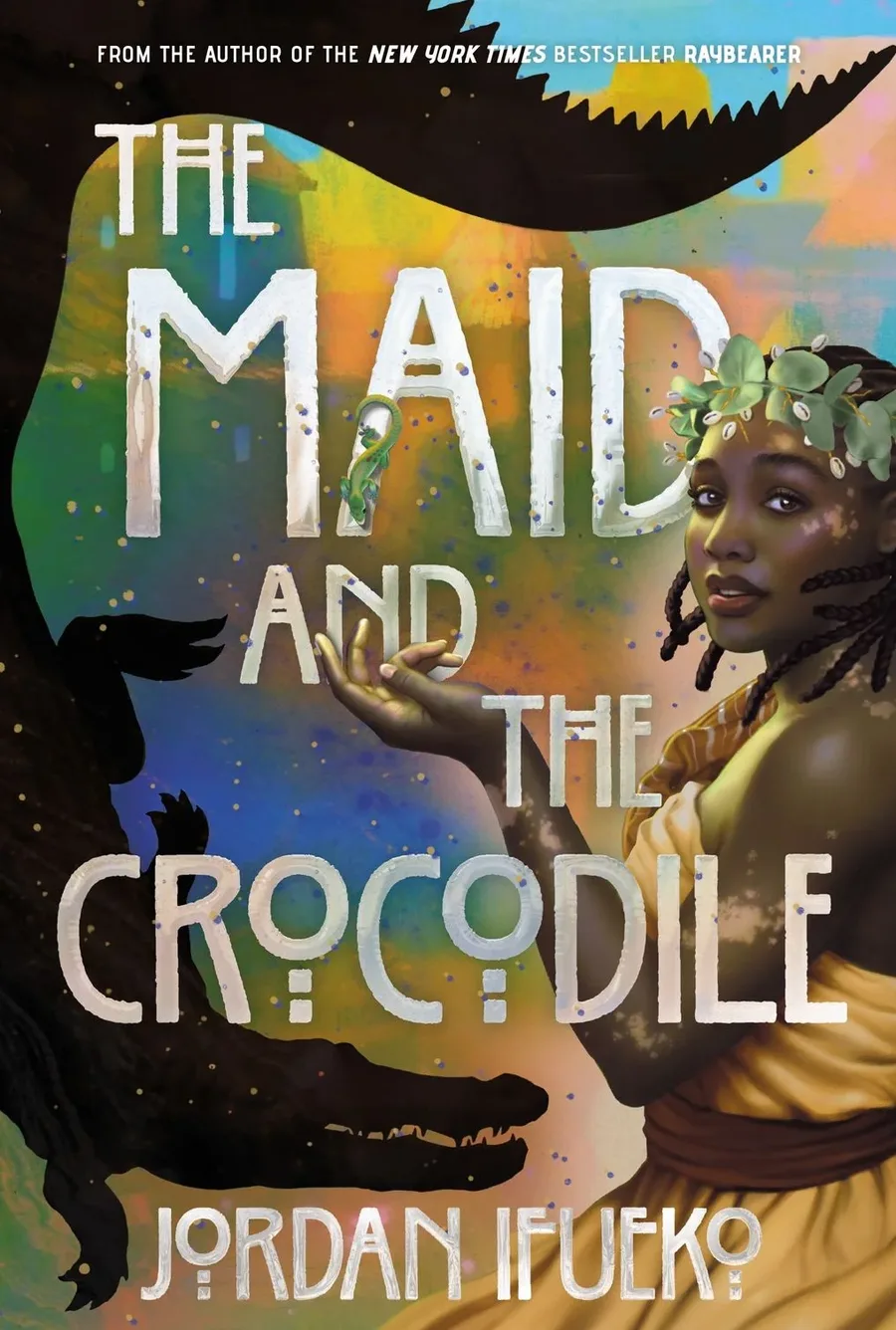 The Maid and the CrocodileJordan IfuekoA sparkling novel set in the same world as the author’s West African-inspired Raybearer series succeeds as a lively stand-alone. Small Sade (Black) is an orphan who’s aged out of the care system. With no supports for young people like her and a crushed foot from an accident when she worked as a child laborer years before, her prospects aren’t promising. Small Sade also has mottled skin (vitiligo), but finds comfort in her appearance. When Small Sade meets Crocodile—a cursed man slowly losing his human form—the attraction between them is immediate. Every time he uses magic he furthers his transformation; this complicates their developing love story, since he often uses magic to be helpful to Small Sade. Small Sade gets a cleaning job at a struggling inn run by a once wealthy and still self- serving and self-centered woman. When the woman discovers Small Sade’s Curse-Eating gift—she can consume people’s negative emotions, transforming the way they feel—she offers Small Sade’s services to eat people’s guilt. Small Sade knows she’s being used, but to her it is a means of independence—employment and a place to stay among the community of friends she’s made on staff, whose dreams inspire her. Themes of social justice, self- worth, and personal empowerment are deftly woven through a story told in Small Sade’s observant, captivating voice. A concluding author’s note acknowledges references to popular fairy tales throughout, as well as factual information about society and politics that informed her telling.Fiction for Young AdultsView book details
 Shut Up, This Is SeriousCarolina IxtaAn affecting debut novel explores intersecting complexities in the lives of two teenage girls. Ever since Pa left, taking the family’s savings with him, Mexican American Belén has been struggling both in school—she’s flunking—and at home. Her mom is either absent or, if she’s home, crying; her older sister, Ava, works constantly to help support them. Belén conceives of her own depression as a physical, suffocating pressure. Hooking up with Alexis, a college student who’s clearly using Belén, provides temporary relief but long-term heartache. Belén feels her life trajectory has stalled, and she struggles with a deep-seated fear that she not only looks like her father but will someday behave like him, too. And then a new complication arises: Belén’s best friend, Leti, an ambitious AP student, is pregnant. Although Leti’s Catholic parents know she’s pregnant, Leti is terrified to reveal the identity of the baby’s father; her boyfriend, Quentin, is Black, and Leti knows her Mexican immigrant parents—who often lament that Leti’s skin is so dark—will never approve. There are no simple fixes for these Oakland teens, and their lives may not look exactly as they had planned, but neither is the outlook bleak; by the end, both Belén and Leti take steps toward a more promising future.Fiction for Young AdultsView book details
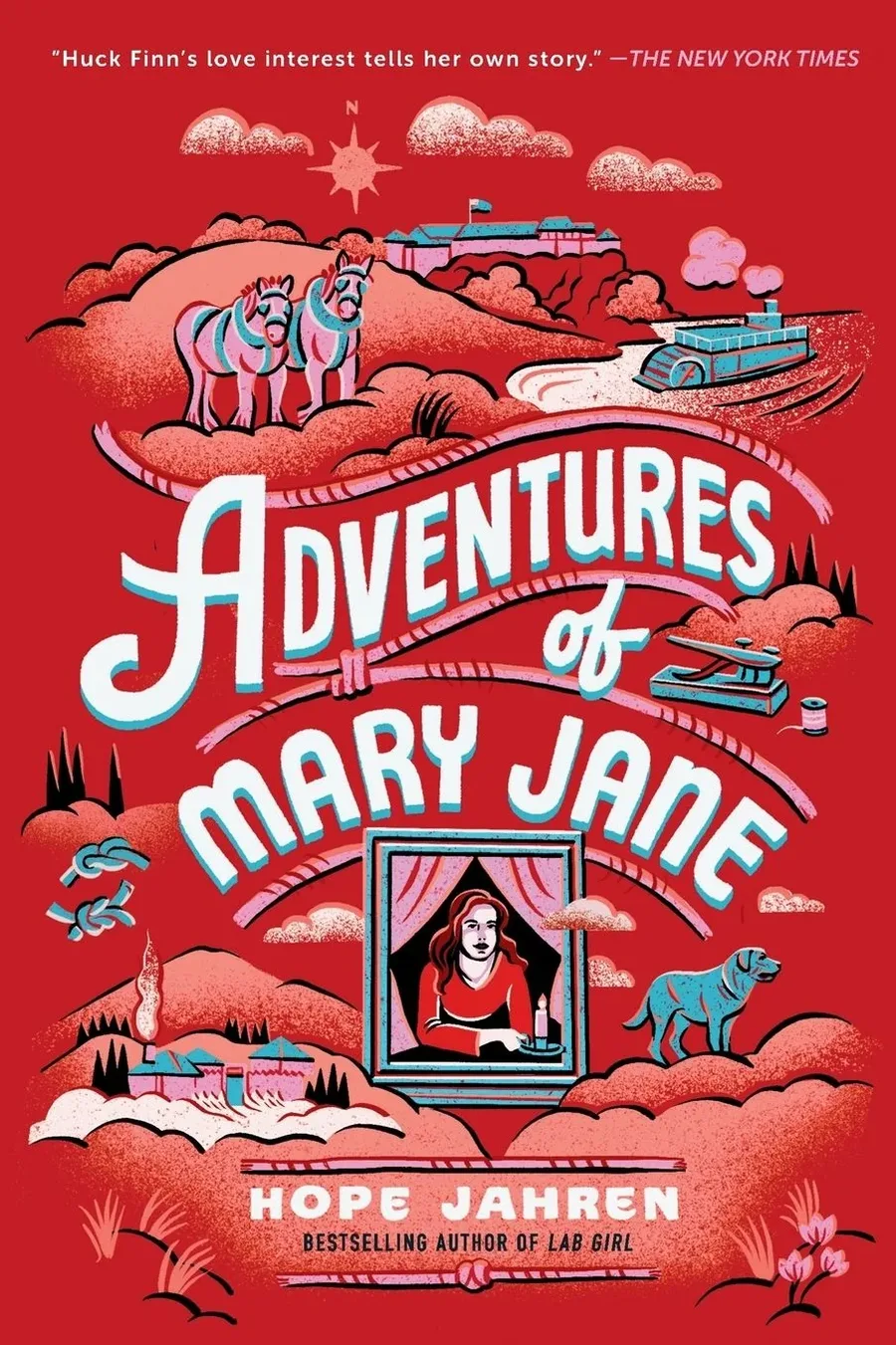 Adventures of Mary JaneHope Jahren, map by Virginia NoreyIn the 1840s, 14-year-old Mary Jane lives on a trading post in the Minnesota Territory. A letter from Ma’s sister asking for a “helping hand” provides the impetus for Mary Jane (white) to head south. Observant, forthright Mary Jane proves to be capable and open- hearted, if sometimes naïve, on her journey. She helps her aunt’s family and, when tragedy strikes, accompanies her now-orphaned teen cousins when they’re sent by a judge to 89 Fiction for Young Adults CCBC Choices 2025 another uncle farther south. That uncle turns out to be a slaveholder. When she catches him abusing one of her cousins, Mary Jane plots to secure their safety, thwarting two con men—including the young, handsome Huck Finn—in the process. This adventure starring a minor character from Huckleberry Finn (and offering satisfying parallels and references for readers familiar with Huck) shines with exemplary characterizations and plotting. The novel deftly blends eye-opening historical authenticity with 21st-century sensibility, from generous, gender amorphous Mrs. Captain, who pilots a riverboat and takes Mary Jane under her wing; to Mary Jane’s schooling in white saviorism when she hopes to free Candy and Sugar, the enslaved mother and daughter at her uncle’s; to demeaning laws and attitudes that contradict women’s obvious capabilities. Mary Jane is admirable through the lenses of both historical authenticity and modern sensibility: She is strong, smart, kind, and resilient; she’s also flawed, learning from her experiences. A fascinating author’s note details the exhaustive research that went into this rousing tale.Fiction for Young AdultsView book details
 Pretty FuriousE. K JohnstonDuring their senior year of high school in a small Ontario town, five friends take turns on their birthdays choosing a group action that retaliates against behavior they find abusive or unjust: salting the ground around a Catholic church’s memorial to the unborn so nothing will grow there; planting a damaging rumor about a boy who framed his ex-girlfriend for steroid use, ending her student athlete career; setting up a group of boys who sexually harass girls in the school’s stairwell to be caught and punished; destroying the team’s uniforms after the basketball coach denies a transgender student a spot on the roster; and more. They successfully execute these covert missions with scrupulous planning, relying on their reputations as “good girls” to avoid suspicion. The girls’ (white) identities range across family structure, financial status, sexual identity, and rural/town residence. Their actions, sometimes cruel, offer the opportunity for thought and discussion of ethics and morality, as well as the pervasive role of gender and class privilege that shelter them from detection.Fiction for Young AdultsView book details
 A Suffragist’s Guide to the AntarcticYi Shun Lai, maps by Filippo VanzoIn 1914, 18-year-old Clara Ketterling-Dunbar (white) is the only female (and American) member of a crew of 28 on board the British Resolute when it sinks in Antarctic waters, leaving everyone stranded on ice floes. A staunch women’s suffragist, Clara was involved with the Women’s Social and Political Union in London before she grew frustrated with their decision to halt their suffrage efforts to focus on wartime contributions. Clara is determined to prove both herself and women as a whole on this ambitious expedition— based on that of Sir Ernest Shackleton—to cross the Antarctic, but she is routinely underestimated, even scorned, by crewmates who believe she can do little more than cook and trim hair. As the crew bide their time in tents, waiting for a passage to open up in the ice, Clara records her experiences in her notebook, hoping it will serve as a guide for future women explorers. She describes her crewmates as both individuals and archetypes: Among others, there are the Boss, whose leadership must be trusted if they are to survive; the Cook, who treats her with gruff kindness; Timothy, her friend; and the Villain, a man named Hotchkiss, who causes a perilous rift in the crew when he assaults Clara. In a desolate and unforgiving environment, Clara stubbornly proves herself again and again, battling for her own and her crew’s survival in an engrossing story that balances action and adventure with introspection and observations of group dynamics.Fiction for Young AdultsView book details
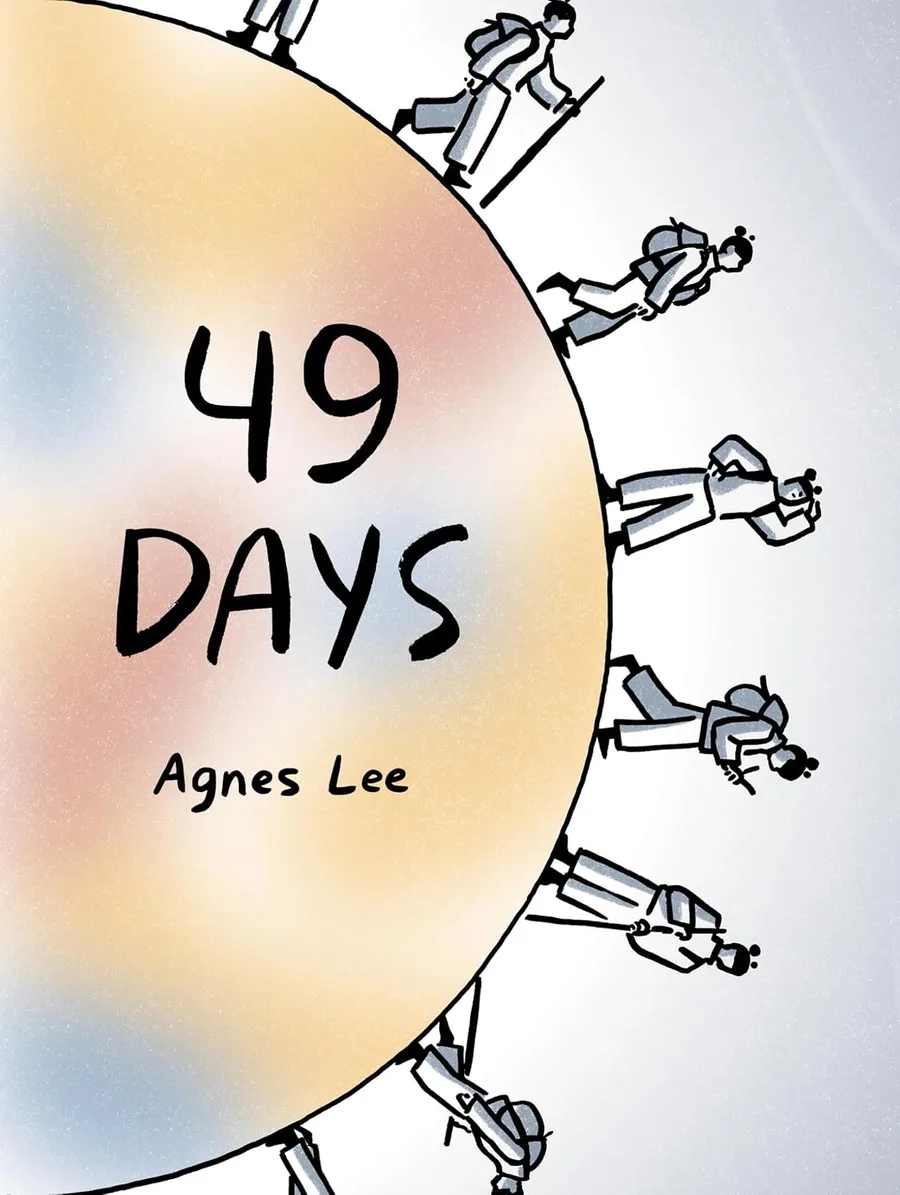 49 DaysAgnes LeeIn Buddhist tradition, a person is in a transition state called bardo for 49 days after death. This graphic novel opens on “Day 1.” Korean American Kit wakes in a lonely landscape of rocks and water with a map, a distant destination marked by an X. The 49 days following Kit’s accidental death unfold in scenes that chronicle her bardo experience as a literal journey, one that is frustration- and grief-filled before she finds acceptance, and then peace. On Day 5, something in Kit’s efforts sparks a happy childhood memory—a scene in which pale gold replaces the gray hues. Additional memories appear over the subsequent days of Kit’s struggle to traverse the landscape. On some days, scenes in which the accent color changes to a soft coppery-brown follow her surviving family members (mother, sister, little brother, and cat) and close friend, Kevin. These, too, are punctuated by memories. Details of Kit’s childhood, young adulthood, spirited personality, and relationships emerge. For both Kit and those left behind, memories and time are both part of the journey from pain toward peace. It takes some work to contextualize Kit’s bardo state and the weaving of present and memory—always clarified by the accent color. But the effort is worth it in this original story that takes readers on their own journey that is sad, tender, and ultimately hopeful. A brief author’s note makes clear this is an artistic interpretation of bardo, not a model of what is “true or false.”Fiction for Young AdultsView book details
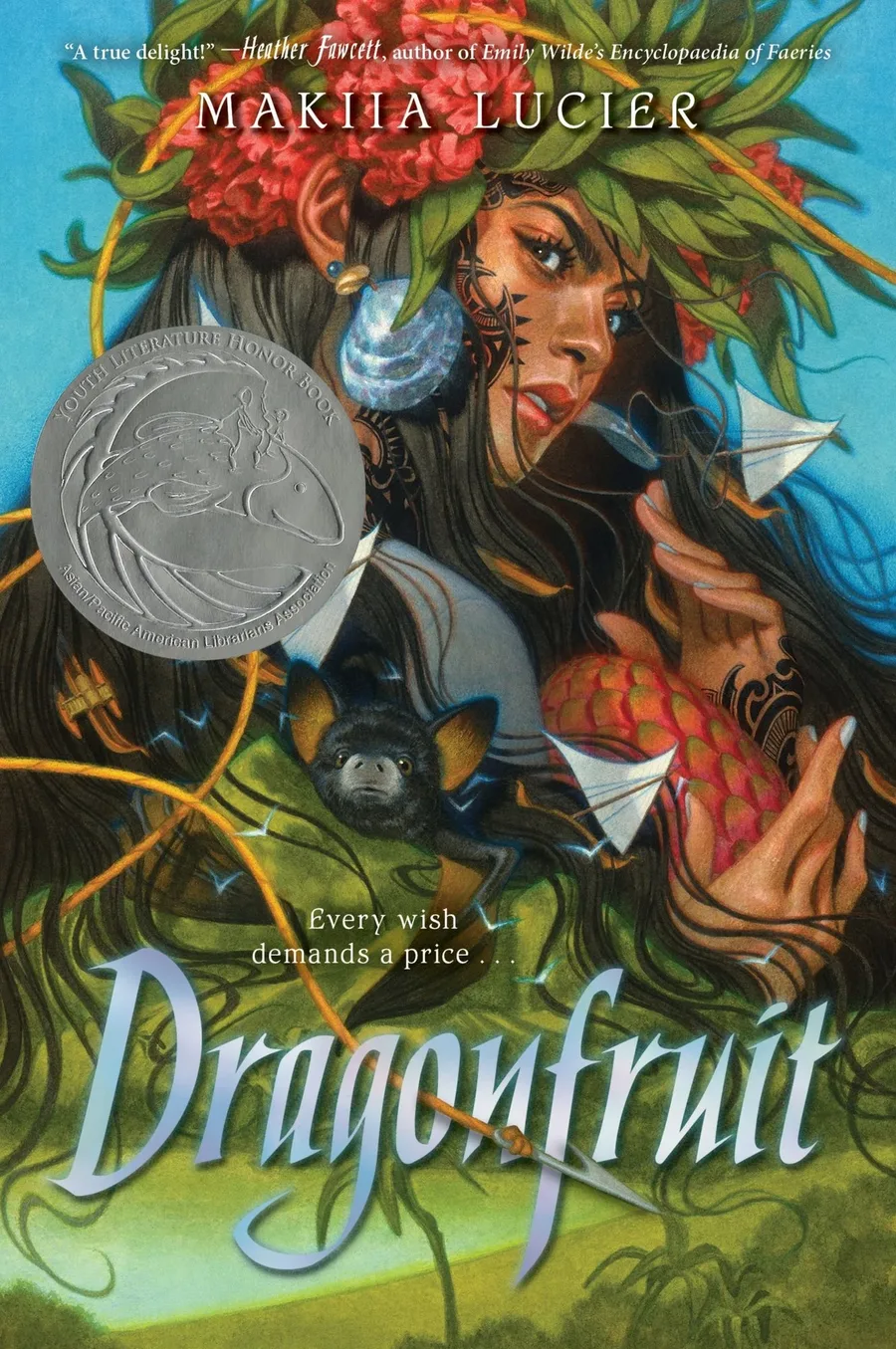 DragonfruitMakiia LucierAs a child, Hanalei was Lady Hanalei, page to Princess Oliana of Tamarind. When the princess and Hanalei were poisoned, Hanalei’s father stole a seadragon’s egg, making a wish upon it to save his daughter. But legend says every wish upon a dragon’s egg demands a price, and Hanalei’s father died horribly in the exile he brought upon them both. Orphaned Hanalei lived a hard life, but now she’s a young adult helping protect seadragons from the dragoners who hunt them for their precious dragonfruit, the eggs. When she’s captured by a dragoner, Hanalei makes a daring escape off the coast of Tamarind. She’s welcomed home by the Queen and Prince Samahtitamahenele—Sam, her childhood friend. The princess remains a comalike state, and Sam, her son, continues to seek another egg to heal her, hoping two of the dragons in his menagerie will breed in captivity, even as Hanalie warns about the price. When the wild female seadragon that the ship she escaped from was pursuing is killed on the beach after a violent attack, Hanalei knows the seadragon recently laid eggs. She also knows that the male seadragon will be guarding them somewhere nearby, and she, Sam, and others set off to find the male dragon and the eggs before the dragoners do. A wonderfully realized setting inspired by the Pacific Islands, creative details, complex characters, and a romance that refrains from predictable tropes all distinguish this richly imagined fantasy.Fiction for Young AdultsView book details
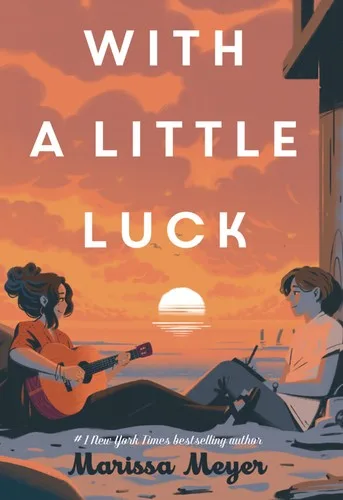 With a Little LuckMarissa MeyerHigh school junior Jude has a big, loving family; a supportive, insightful best friend in talented songwriter Ari; a love of drawing and creating D&D adventures for his friends; and a fear of asking out Maya, whom he’s had a crush on since seventh grade. Why set himself up for rejection? Maya (Black) is smart and popular; Jude (white) likes flying under the radar. But when Jude starts having a run of extraordinary luck after finding a ruby-red 20-sided die, it’s the confidence boost he needs. He asks Maya to a concert (he won VIP tickets) and they have a great time. She’s soon fitting right in with his D&D group. But there’s no spark of romance. Just after Jude realizes the person he does have feelings for is Ari, he loses the die. Suspecting it was magical, he’s sure of it when a string of disasters ensues. Signs that Ari (Mexican American) might have feelings for him, too, aren’t enough 91 Fiction for Young Adults CCBC Choices 2025 to overcome Jude’s uncertainty about telling her how he feels. This delightful romantic comedy infused with music (Jude and his siblings are all named for Beatles songs) and a little magic shines with a vividly drawn cast of characters. The nerd humor is witty and respectful; diversity (race, gender, sexuality) is matter-of-fact; warmth among characters is genuine; and Jude’s creativity, caring, and growing confidence are a perfect match for Ari’s own in this stand-alone book 2 in the Fortuna Beach series.Fiction for Young AdultsView book details
 Twenty-four Seconds from Now...: A LOVE StoryJason ReynoldsSeventeen-year-old Neon (Black) is standing in the bathroom at his girlfriend, Aria’s, house, excited and nervous about their plans for the evening: to have sex for the first time. From this opening scene, the story spins back in time—first 24 seconds from that moment, then 24 days, 24 weeks, 24 months—all the way back to when he and Aria (Black) first met. All of the good and bad and awkward and affirming conversations that Nee has had with people in his life (mom, dad, older sister, friends) about sex and relationships play out. So, too, do details of his and Aria’s relationship. There’s clear trust and love and respect between them, and the decision to have sex is one they’ve come to mutually, even as their future is uncertain (Nee feels college is not for him; Aria already has scholarship offers). Throughout the story, as senior year winds down, Nee is working on a project for his class’s digital yearbook, asking classmates to sum up high school in three words—their answers (like the conversations Nee has had about sex) are insightful, funny, and surprising. Then the story returns to where it started, in that bathroom, and Nee opens the door. “We pull each other. Me and Aria. Meet in the middle. Of ourselves. As ourselves.”Fiction for Young AdultsView book details
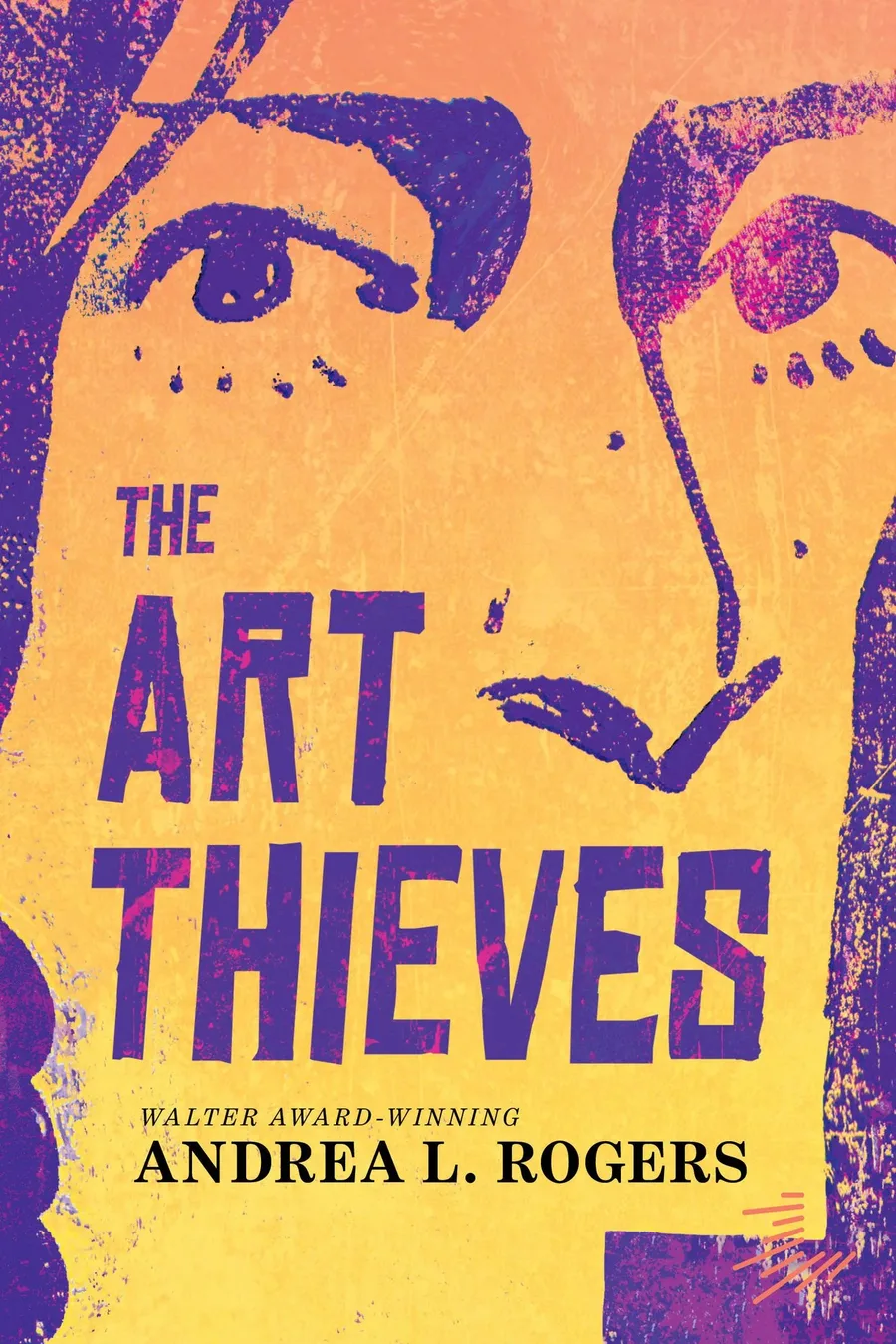 The Art ThievesAndrea L. RogersIn 2052, Stevie (Cherokee), a recent high school graduate and aspiring photographer in Texas working at a modern art museum, is looking forward to starting college at UT Austin. Stevie adores her much younger brother Levi (Cherokee/Black), and her two best friends, Loren and Jess. And she appreciates her mom and stepdad, even if they are overprotective. Adam is a new artist intern at the museum especially interested in the museum’s piece Ladder for Booker T. Washington by Martin Puryear. With romantic tension between them building, Stevie is more than a little angry when he bails on attending a special museum event. When Adam finally explains, she doesn’t want to believe his story: He claims he’s come from 200 years in the future to steal the Ladder, part of a humanitarian mission to save meaningful art about human history and experience from the global disaster that’s about to strike—a three-month pandemic, continued climate crisis, and the unraveling of society. Then Levi is diagnosed with a rare cancer—one that will likely kill him if Adam’s story is true. But if Adam’s story is true, can the future save her little brother? This deliciously head- spinning time travel story offers hope in Adam’s assurance that the unraveling of society as Stevie knows it provides the foundation for building a more just and compassionate world.Fiction for Young AdultsView book details
 On the Bright SideAnna SortinoWhen Ellie’s boarding school for the Deaf closes, Ellie (white) must finish high school in her hometown of Cincinnati. Jackson (white) is another senior at Ellie’s public high school. His recent puzzling health issues have scuttled his soccer season and his relationship with his former teammates. Assigned to show Ellie around school, the two slowly hit it off. Ellie, who has a hearing aid and a cochlear implant, is most comfortable with sign language, but one of her new interpreters doesn’t always convey Ellie’s thoughts accurately. Ellie 92 Fiction for Young Adults CCBC Choices 2025 is also viewed skeptically by her new classmates, who’ve heard her speak and wonder if she’s truly deaf. At home, Ellie’s parents have never bothered to learn sign language and get upset when she removes her hearing aid and cochlear receiver, compounding Ellie’s frustration. Jackson, working to learn signs, is one bright spot in all the change. Romance is just beginning to blossom when Jackson’s health takes a dramatic turn, and he’s diagnosed with Multiple Sclerosis (MS). As Jackson adjusts to this new reality and learns more about life with MS, Ellie gains new confidence and independence as she finds Deaf community. Each is figuring big things out but also realizing that they don’t want to give up on their relationship. This compelling novel illuminates dimensions of disability experience, including the frustration of ignorance and importance of community for each of the main characters.Fiction for Young AdultsLexile Text Measure HL730LATOS Book Level 4.7View book details
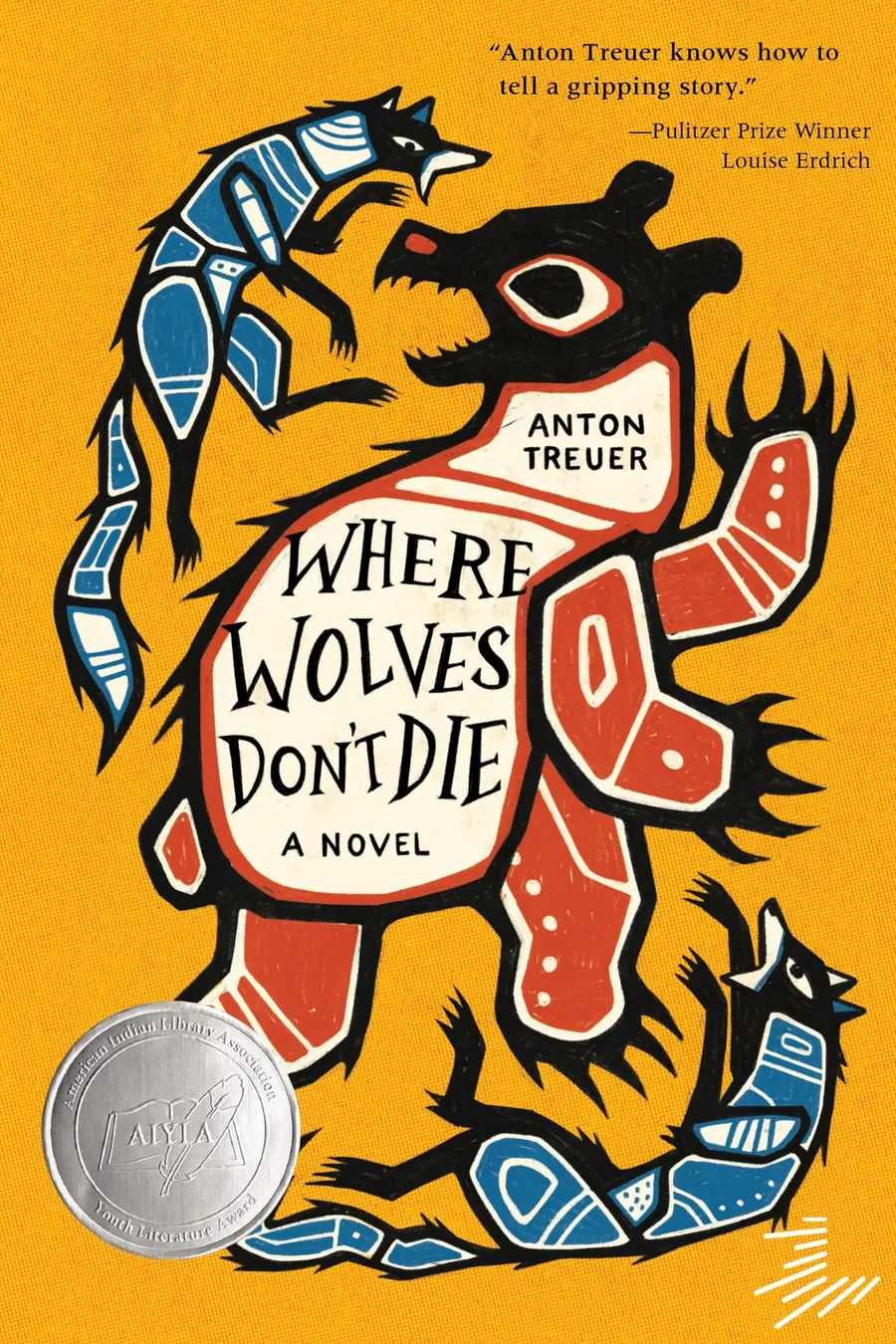 Where Wolves Don’t DieAnton TreuerMinneapolis teen Ezra longs to spend more time at Red Gut, the Ojibwe reservation where his extended paternal family lives. When his school bully, Matt, is killed in a house fire, Ezra is brought in for questioning; he’d punched a locker earlier that day after Matt threatened Ezra’s friend and crush, Nora. While he complies with the investigation, Ezra’s father also swiftly moves Ezra to live with his grandparents just over the Canadian border, in Red Gut. Ezra is invited to spend the winter on a remote trapline with his beloved grandpa Liam, learning the ways of his people. Life on the trapline requires strength, discipline, and patience. Traps must be set and monitored, and animals must be collected and prepared for food. Ezra and Grandpa Liam live in a small cabin without running water or electricity, in woods that are home to wolves, bears, and other potentially dangerous animals. During visits back to Red Gut, Ezra and Nora try to determine exactly what happened during the fire at Matt’s house. While it has moments of gripping intensity, this novel excels in depicting Ezra’s meaningful growth and learning over a winter on the trapline, an experience told with fascinating detail. At the novel’s heart is the strong, but tender, bond between Ezra and his grandfather, whose skillful guidance helps Ezra grow into his place in his Native community.Fiction for Young AdultsView book details
 Canto ContigoJonny Garza VillaMexican American Rafie fully expects to be appointed lead vocalist of Todos Colores, the mostly queer mariachi group at his new high school in San Antonio. After all, Rafie led his former group to victory over Todos Colores at the Extravaganza Nacional competition two years in a row. But when he auditions, Rafie’s extreme arrogance is off-putting to the maestra, who assigns Rafie backup to their current lead singer, Rey—a trans, Afro- Mexican American boy Rafie made out with at Extravaganza last year. Rafie is outraged and worried that if he’s not the star of the show he won’t be able to uphold his beloved late abuelo’s mariachi legacy. When Rey messes up their first competition, Rafie doesn’t hesitate to jump in, leading to a minor performance disaster but also the discovery that their voices complement each other beautifully. For his part, Rey is struggling to square his first impression of Rafie, who had been so kind to him when they met, with the rude (yet attractive) boy in front of him now. Rafie will have to learn to set his ego and insecurities aside, making way for his grief over his abuelo’s death and for the talent of his fellow mariachi group members, if he wants a chance at winning Extravaganza—and Rey’s heart. Bursting with colorful details of lively mariachi performance, this novel centering queer Latine teens offers flawed characters who are passionate about their music and one another.Fiction for Young AdultsView book details
 Louder Than WordsAshley Woodfolk, Lexi UnderwoodJordyn Jones (Black) is starting the new school year at Edgewood, a D.C. public high school, after being expelled from private school. Jordyn is hoping Edgewood will be a chance to start over, and to live and act according to her values. But she worries the truth about what happened at her old school will get out: One of Jordyn’s “friends” constantly bullied a girl Jordyn was once close to, and Jordyn did nothing to stop it before the girl tried to commit suicide. This story slowly unfolds as Jordyn finds herself making new friends, surprised and pleased to be welcomed into a group that includes Kaleb (white, queer), Mila (Latina), Anton (East Asian), and Bryce (white). She can’t imagine what they’d think if they knew what she did—and didn’t—do, and worries a secret podcast called Tomcat Tea, which shares gossip about Edgewood students, will be her undoing. No one knows who the podcaster is, but after Jordyn’s new boyfriend, Zay, is the target of rumors that threaten his college scholarship, Jordyn decides to take action, only to find her own secret exposed. There’s a lot to consider in this story that invites readers to think about the impact of choices they make, and the complicated and emotionally charged issue of trusting someone whose done harm by giving them a second chance.Fiction for Young AdultsLexile Text Measure 710LATOS Book Level 4.5View book details
 The Ping-Pong Queen of ChinatownAndrew YangHigh school junior Felix (Chinese American) lost his social footing when his family moved to Long Island and has yet to make a close friend. His achievement-oriented parents have hired an admissions coach to help him with college applications, but Felix feels overwhelmed by their high expectations. When he encounters Cassie Chow at a ping- pong tournament, he remembers how she once beat him in a piano competition. Cassie’s confidence and skill at verbal sparring has Felix looking for ways to kindle a friendship. When his admissions coach tells Felix he needs a spark in his application essay, Felix turns to the one thing he enjoys unreservedly: old movies. Starting a movie club at school connects him with Gaspard, and the two begin making a film. Felix crafts a story starring Cassie as a girl who loves ping-pong; it’s a unique concept and it gives him an excuse to see her. At first on board with the idea, Cassie eventually feels Felix is exploiting her life and her often tense relationship with her mom, and his efforts at friendship backfire. Although Felix had tried to ignore the growing discomfort he’d felt about the film’s impact on Cassie, he eventually recognizes that good intentions don’t negate the impact of his actions in an entertaining novel that offers a rich examination of friendship both unexpected (Gaspard) and not quite attained.Fiction for Young AdultsView book details