
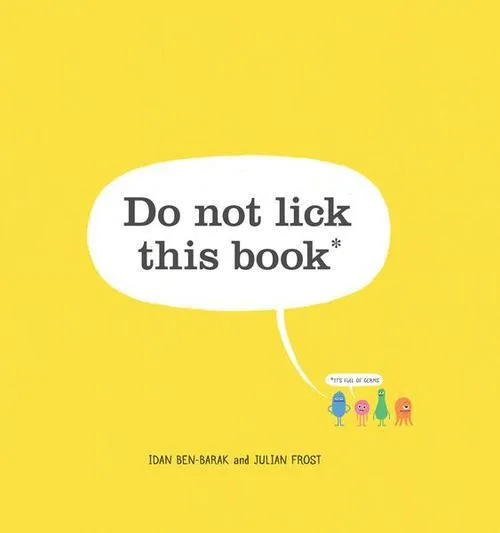
 Do Not Lick This BookIdan Ben-Barak, illustrated by Julian FrostThis playful, interactive introduction to microbes invites readers to travel with Min, an E. coli microbe, to the pages of a book, front tooth, shirt, and belly button. Microscope photographs reveal the familiar locations as unrecognizable terrain, each hosting their own microbe population. Min is joined at each destination by another microbe, including streptococcus, fungus, and corynebacterium, all represented as comic caricatures. Humor and facts work together in this clever primer for young scientists.Science, Technology, and the Natural WorldLexile Text Measure AD480LATOS Book Level 2.6View book details
CCBC Choices 2019
The 2019 edition contains 249 selections published by the Cooperative Children's Book Center, University of Wisconsin-Madison. The source uses 16 audience or subject sections, including Science, Technology, and the Natural World, Seasons and Celebrations, Folklore, Mythology, and Traditional Literature, and Historical People, Places, and Events. It is one annual edition of CCBC Choices, the librarians' bibliography of recommended books.
CCBC Choices 2019See the original list
Selections249
Published byCooperative Children's Book Center, University of Wisconsin–Madison
Sections16 sections
Browse sections16 sections
Science, Technology, and the Natural World
20 selections
Do Not Lick This BookIdan Ben-Barak, illustrated by Julian FrostThis playful, interactive introduction to microbes invites readers to travel with Min, an E. coli microbe, to the pages of a book, front tooth, shirt, and belly button. Microscope photographs reveal the familiar locations as unrecognizable terrain, each hosting their own microbe population. Min is joined at each destination by another microbe, including streptococcus, fungus, and corynebacterium, all represented as comic caricatures. Humor and facts work together in this clever primer for young scientists.Science, Technology, and the Natural WorldLexile Text Measure AD480LATOS Book Level 2.6View book details Belle’s Journey: An Osprey Takes FlightRob Bierregaard, illustrated by Kate GarchinskyRob Bierregaard, or “Dr. B,” has been studying ospreys since 1971. One summer on Martha’s Vineyard, he and his partner attach a tiny satellite to a fledgling they name Belle. They observe and monitor Belle as she learns to fly and catch fish. When she leaves on her first migratory journey at the end of the summer, they have only the transmitter to follow Belle, who flies straight over the Atlantic, getting caught in a hurricane before heading south. She stays for 1.5 years in South America before heading home, up through Florida and along the coast. Although Bierregaard had no way of knowing many of the specifics of Belle’s experiences, he’s used informed conjecture based on his knowledge of ospreys to create an engaging, highly dramatic narrative grounded in fact. The inclusion of two children, George and Ella, who met Dr. B the summer he tagged Belle and follow her journey online through the satellite transmissions, sometimes emailing him questions when they’re worried, adds another wonderful element to this informational book featuring occasional full-page and spot illustrations.Science, Technology, and the Natural WorldLexile Text Measure 930LATOS Book Level 6.1View book details
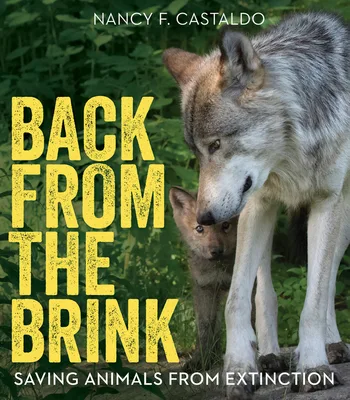 Back from the Brink: Saving Animals from ExtinctionNancy F. CastaldoFollowing an opening chapter detailing efforts that led to passage of the Endangered Species Act in in 1973, subsequent chapters focus on efforts to save 7 species: whooping cranes, wolves, bald eagles, giant Galápagos tortoises, California condors, American alligators, and American bison. Each chapter includes the reason(s) the species’ population declined (often multiple factors, including specific types of pollution impacting mortality or ability to reproduce, hunting, and destruction of habitat) as well as information about one or more efforts to bring that animal back from the brink. (The work of the International Crane Foundation in Baraboo is the main focus of the chapter on whooping cranes.) Sidebars throughout provide intriguing tidbits, whether debunking myths about “big bad wolves,” profiling a father/daughter duo who CCBC Choices 2019 Science, Technology, and the Natural World 13 have volunteered to help condors, or providing more information on specific legislation, or kinds of pollution. Color photographs add appeal throughout, while a final “Call to Action” chapter suggests ways to get involved. The ample end matter includes where to go for more information on each of the efforts and animals profiled, a glossary, and index.Science, Technology, and the Natural WorldView book details
 Backyard Bears: Conservation, Habitat Changes, and the Rise of Urban WildlifeAmy CherrixThis exploration of the intersection of wildlife and human populations in urban and suburban areas opens with four wildlife biologists studying the growing black bear population in and near Asheville, North Carolina. Their study acknowledges the challenges (and rewards) to humans who regularly encounter urban bears, dispels some misinformation about the species, and describes practical ways that co-living can be managed. Information gained from bears fitted with radio collars helps the biologists predict behavior and recommend ways to keep both bears and humans safe. Final chapters delve into how humans have historically made poor decisions involving interaction with wildlife, with outcomes that often threaten animal habitat and food supply. Other species that have adapted to encroaching urban landscapes are briefly presented, including leopards in Mumbai, wild boars in Berlin, and feral chickens in Hawaii.Science, Technology, and the Natural WorldView book details
 The ElephantJenni DesmondAn author’s note at the beginning of this fascinating informational picture book states that the number of elephant species has gone from more than three hundred at one time to only two surviving today. This startling fact will likely stick with readers as they follow a brown-skinned boy wearing a red crown cracking open a picture book about elephants. The boy—and readers—learn about the differences between the two elephant species; behaviors; physical descriptions; elephant senses, such as hearing and touch; baby elephant-rearing; appetite and diet; and the importance of elephants to other animals and plants. Although the boy occasionally feels intrusive to the narrative, he is handily integrated into the beautiful illustrations to demonstrate tusk size and the way that elephants walk on their toes. The highly readable text imparts a sense of respect, awe, and admiration of an animal population in need of protection.Science, Technology, and the Natural WorldView book details
 This Is the Nest That Robin BuiltDenise Fleming, illustrated by Denise FlemingWhen Robin builds her nest, she makes use of the handiwork of many other creatures in this “House That Jack Built” accounting of the effort and its aftermath. Squirrel trimmed twigs “not too big,” Dog brought string “long and strong,” Horse shared straw, Pig mixed mud, Rabbit picked grass, and so on. When the nest is ready, there are eggs “brittle and blue,” and eventually nestlings “tufted and pink,” who turn into fledglings “rumpled and ruffled and ready to fly. Good … Bye.” The energetic text is built on rhythm and exemplary word 14 Science, Technology, and the Natural World CCBC Choices 2019 choice—terrific action verbs and adjectives abound—and set against captivating illustrations that celebrate the natural world, done in Fleming’s trademark combination of printmaking techniques and collage.Science, Technology, and the Natural WorldLexile Text Measure 700LATOS Book Level 4.5View book details
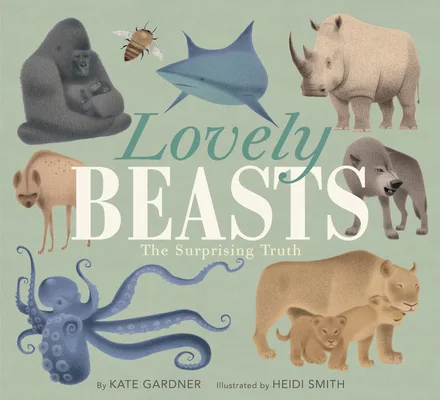 Lovely Beasts: The Surprising TruthKate Gardner, illustrated by Heidi SmithA handful of familiar animals each are introduced with a word describing a sensational or negative trait often associated with that species. The word is paired with a striking illustration reinforcing that perspective, such as an adult gorilla appearing appropriately “Fierce.” But a page turn offers another look at the same animal through a positive, often unexpected lens. The intimidating gorilla is also a “papa” who constructs soft nests for its offspring and uses grooming as a means of sustaining relationships. Hedgehogs are “prickly … but gentle,” a shark is a “sharp-toothed … guardian,” and an octopus is a “slimy … genius.” Each positive trait is expanded upon with a few descriptive sentences and an illustration exemplifying the characteristic. A highly effective use of negative space and stunning charcoal pencil and Adobe Photoshop illustrations add drama to this exceptional animal book for young children.Science, Technology, and the Natural WorldView book details
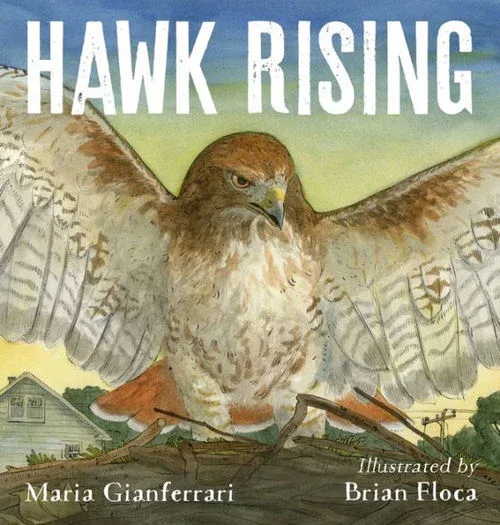 Hawk RisingMaria GianferrariAs a girl watches from her window and yard through the course of a single day, a pair of red-tailed hawks care for their chicks nesting in a cedar tree. While the female hawk stays on the nest, the male hunts for prey, missing a chipmunk and a sparrow before delivering a squirrel to his young just as the sun is setting. The drama of the hunt and the necessity of the kill are balanced by the dependency of the hungry nestlings on the success of their parent’s effort. A lyrical text and the ink and watercolor illustrations document the realistic work of an avian predator, while returning at intervals to the earthbound girl and her mother, both brown-skinned with straight black hair.Science, Technology, and the Natural WorldLexile Text Measure 480LATOS Book Level 2.4View book details
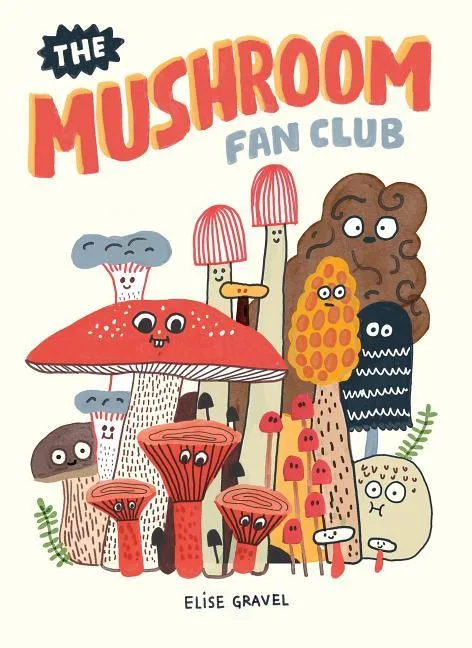 The Mushroom Fan ClubElise GravelIn this delightfully offbeat informational book with a friendly, engaging narrative and comic-style art, mushrooms take center stage. The silliness of the illustrations, including mushrooms with googly eyes, is part of the overall charm, but so, too, is the author’s enthusiasm, whether she’s describing mushroom hunting with her children, or some of her many favorite types (many are not edible, while some, she cautions, are downright deadly). The interplay of narrative and art offers moments of laugh-out-loud humor, while Gravel’s appreciation is boundless, whether commenting on the poetry of mushroom names (Pink Disco, Cat Dapperling, Whiskery Milkcap, Devil’s Fingers…) or the quirkiness of their appearance. Gravel cautions readers about the importance of not eating unknown mushrooms, but most of all encourages them go outside and see what they can find.Science, Technology, and the Natural WorldLexile Text Measure GN630LATOS Book Level 4.09View book details
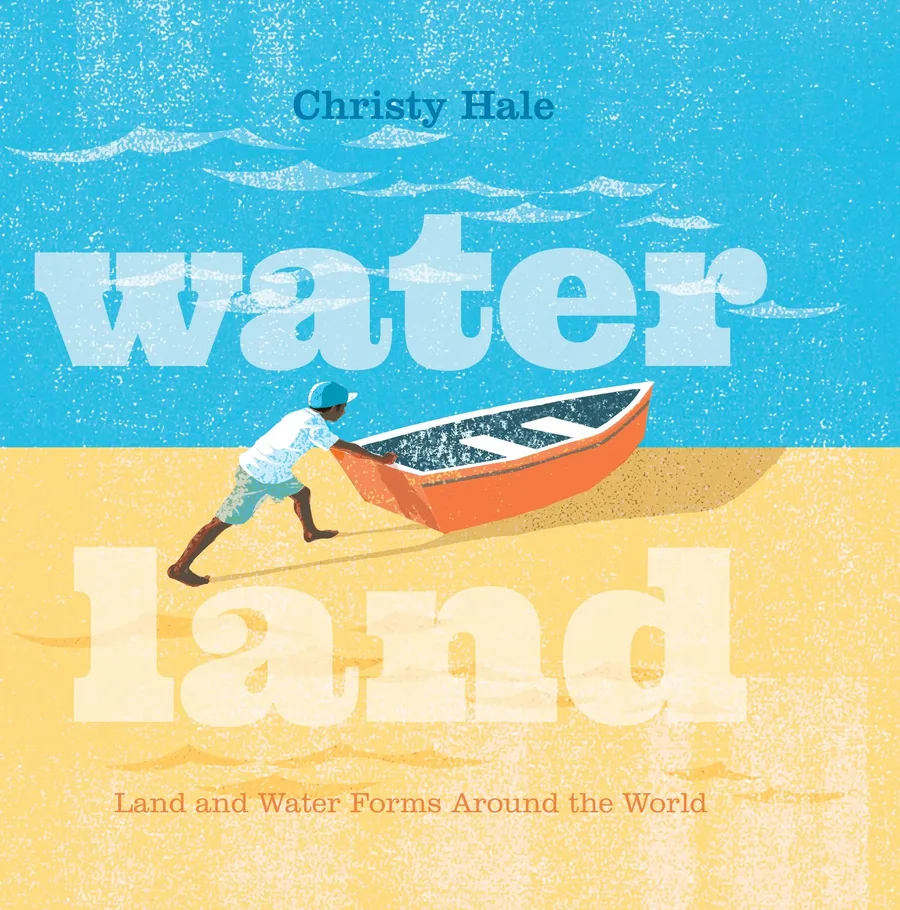 Water Land: Land and Water Forms around the WorldChristy HaleCleverly designed die-cut pages visually transform water forms into land forms—or the reverse— with each page turn. The land and water forms are clearly labeled on page spreads that feature colorful printed texture-and-digitally layered illustrations. “Lake,” with a boy fishing from a rowboat and a girl running through falling leaves on shore, becomes “island” with a page turn. The same fishing boy is now drifting in a much larger body of water, while the girl sends SOS signals from her fire on a deserted desert island. Touches of humor are added to many scenes by the antics of people on or near the water or land forms. A final, multi-page foldout provides one sentence definitions of each form (including bay, strait, system of lakes, gulf, island, cape, isthmus, archipelago, and peninsula), examples from around the world, and a global map pinpointing the location of some of these.Science, Technology, and the Natural WorldView book details
 Prickly Hedgehogs!Jane McGuinness, illustrated by Jane McGuinnessCharm and information share the stage in this easy informational book about hedgehogs. Their protective spines, nocturnal lives, and the raising of baby hoglets are all described, as well as the dangers they face from vehicles and badgers. The creatures’ diet, including wood lice, centipedes, and butterflies, is vital as they gain weight in preparation for their winter hibernation. A short final note states that none of the 17 species of hedgehogs are found in the wild in North America, and that it is illegal to keep them as pets in many places. Mixed-media illustrations showcase infinitely appealing hedgehogs (sporting an anthropomorphic smile) in their natural environment throughout the changing seasons.Science, Technology, and the Natural WorldLexile Text Measure 650LATOS Book Level 4View book details
 The Hyena ScientistSy MontgomeryMichigan State University’s Kay Holekamp’s 30 years of research on the spotted hyena has revealed that the species doesn’t deserve the negative stereotype of sly scavenger it is so often assigned. Her field work in Masai Mara, Kenya, using a non-threatening observation method, has expanded scientific knowledge of the animal’s hunting behavior, vocalizations, and clan social structure. Chapters describing daily observation outings are interspersed with fascinating spotlights on the humans involved, including Kay’s path to her current expert status, her diverse crew of young American students, a Kenyan research assistant, and the extraordinary chain of events that brought 69-year-old Dee, a one-time zookeeper (and supervisor of Kay’s high school internship) to her job as data manager and assistant on the hyena study. Abundant photographs highlight the hyenas and their habitat, as well as the scientists at work.Science, Technology, and the Natural WorldLexile Text Measure 1000LATOS Book Level 6.8View book details
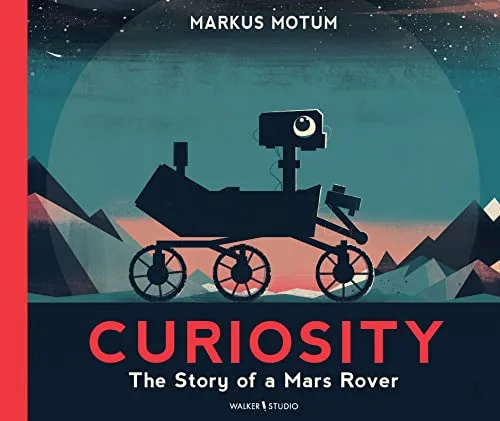 Curiosity: The Story of a Mars RoverMarkus MotumTold in the first-person voice of wheeled robot that has been exploring Mars since 2012, an easy-to-follow account gives an overview of the science leading up to the creation of the rover, how the rover works, the launch into space for its 253-day journey to Mars, the tenuous landing, and a sampling of information that has been sent back to NASA in the past eight years. The large size of the picture book gives readers a sense of the enormity of the operation, of space, and of the barren landscape on the red planet. Mixed-media illustrations include details that will help young readers understand the mission, and they give Curiosity as much personality as a robot can have without detracting from the scientific information of the text.Science, Technology, and the Natural WorldView book details
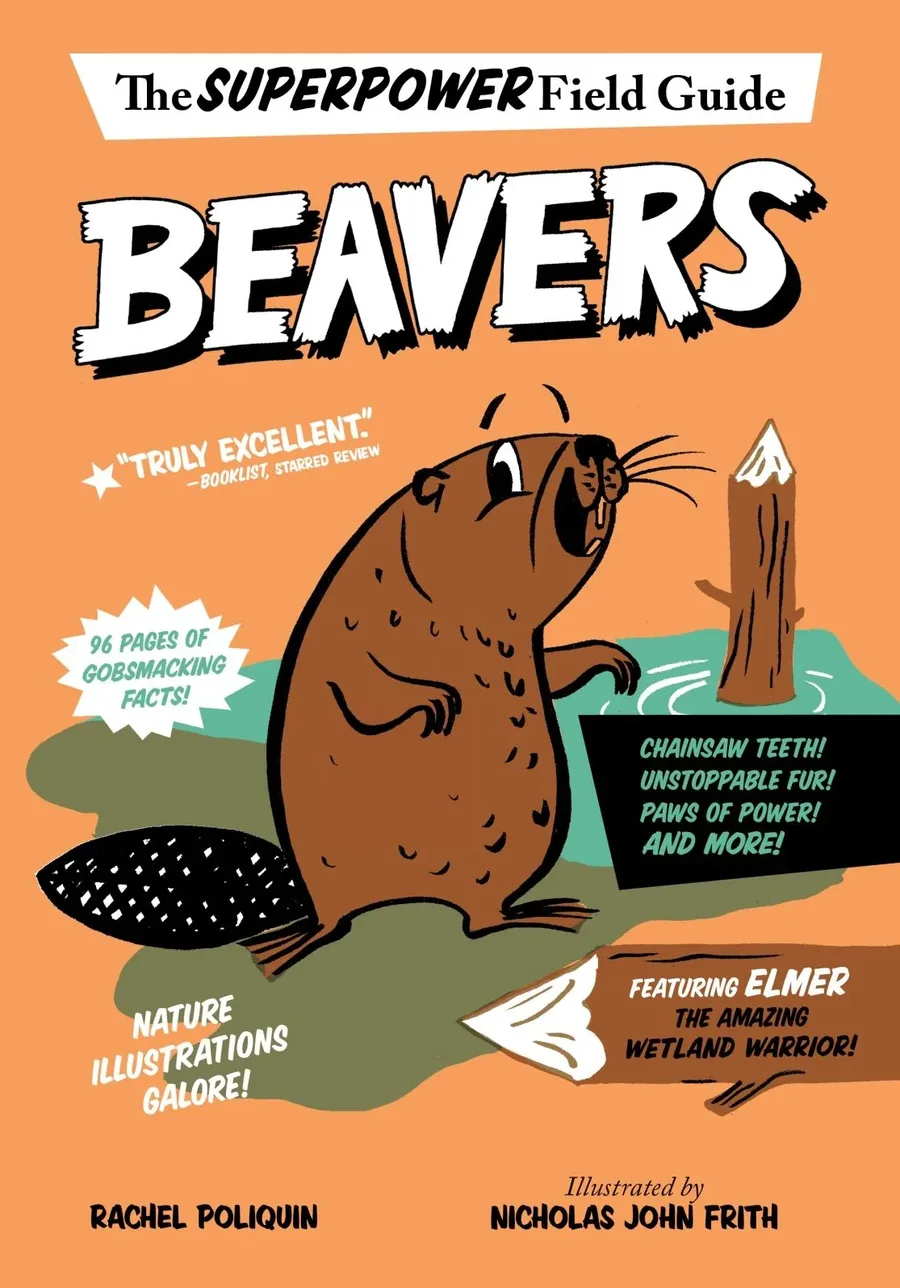 BeaversRachel PoliquinChainsaw Teeth! Paws of Power! Turbocharged Superstink! These are just a few of the beaver attributes presented as superpowers in an entertaining work of nonfiction that is simultaneously silly and chockful of information. Elmer Beaver and his partner Irma serve as ambassadors of their species in a volume that covers topics including beavers’ near-extinction in the past (due to the popularity of beaver fur hats), the art of dam construction, and their vital role in wetland water management. Retro-style illustrations and occasional quizzes (True or false: “Elmer and Irma sometimes rent out rooms in their lodge to muskrats, visiting voles, and other such folk.”) contribute to the guide’s comic sensibility and appeal. (True! “... beavers don’t mind sharing their homes with a muskrat or two. They even charge rent, of sorts. I once saw a muskrat take out the dirty bedding and replace it with clean reeds.”)Science, Technology, and the Natural WorldView book details
 Otis and Will Discover the Deep: The Record-Setting Dive of the BathysphereBarb Rosenstock, illustrated by Katherine RoyAs a child Otis Barton loved the ocean and dreamed of seeing the deep. He even invented a wood helmet with glass windows, enlisting the help of a friend to pump air into the helmet with a bike pump so that Otis could explore the harbor. Years later, Otis, an engineering student, teamed up with Will Beebe, the director of research at the Bronx Zoo. Beebe was intrigued by the deep ocean after diving off the Galápagos Islands, and Otis believed he could help him develop a diving tank. The resulting Bathysphere, a 5,000-lb hollow metal sphere with small windows, was barely big enough to fit the two men. They crawled inside and were lowered a terrifying 800 feet into the ocean. They persevered despite a leaky window, claustrophobia, and the constant threat of death by pressurized water if the hatch bolts were to break. The dramatic narrative, illustrated with pen-and-ink and watercolors, culminates in a double- fold-out wordless page spread showing the Bathysphere as a tiny light shining in in the midst of the vast ocean depths.Science, Technology, and the Natural WorldLexile Text Measure 620LATOS Book Level 3.6View book details
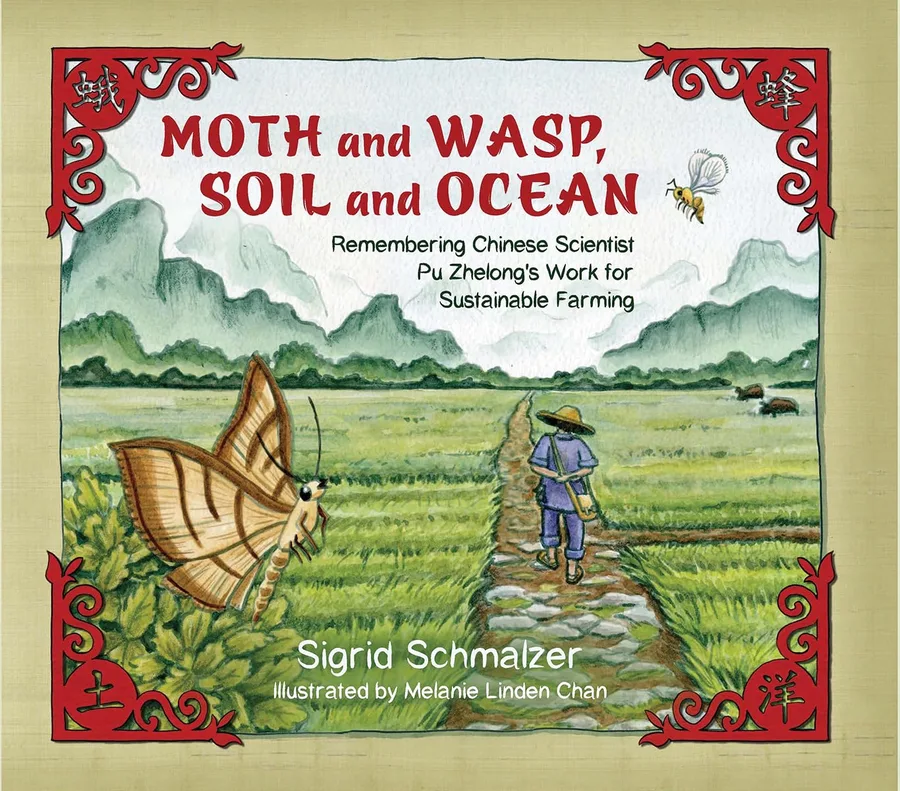 Moth and Wasp, Soil and Ocean: Remembering Chinese Scientist Pu Zhelong’s Work for Sustainable FarmingSigrid Schmalzer, illustrated by Melanie Linden ChanA fictional narrator recounts real-life scientist Pu Zhelong’s pest-control efforts with Chinese farmers in the province of Guangdong. Known in the 1960s and 1970s for their lychees and rice, village farmers struggled to eradicate the stinkbugs and leafroller moths that wreaked havoc on their crops. When they began using chemical pesticides, the problem seemed to be solved—until the pests returned even stronger the next year, forcing the farmers to up their pesticide use in what quickly became an increasingly poisonous and futile cycle. Pu Zhelong, who lived in the city of Guangzhou and had studied in the United States, traveled to the village to help the farmers implement a natural form of pest control: wasps that lay their eggs inside moth eggs, destroying the moth larvae before they have a chance to hatch. Cooperation between the initially reluctant village farmers and Pu Zhelong represents the merging of the concepts of soil (“local, rural, humble, and Chinese”) and ocean (“foreign, modern, elite, and Western”), with the goal of achieving environmentally sustainable—and effective—pest control.Science, Technology, and the Natural WorldView book details
 Hidden Figures: The True Story of Four Black Women and the Space RaceMargot Lee Shetterly, with Winifred Conkling“Dorothy Vaughan, Mary Jackson, Katherine Johnson, and Christine Darden were good at math. Really good.” In the late 1940s and early 1950s, Dorothy, Mary and Katherine went to work for the U.S. space agency (now NASA) as computers—people who calculated complex math. The three African American women fought racism, sexism, stereotypes, and segregation within and beyond the agency to take charge of the trajectory of their careers. Christine joined NASA in 1967 to work on the Apollo 11 mission, knowing her dream of being an engineer was made possible in part because of the three African American women who broke ground before her. An energetic narrative focuses on each woman in turn while offering a unifying sense of individual and collective challenges, contributions, and accomplishments. This terrific informational picture book is based on Shetterly’s adult book (not the movie it inspired). The illustrations feature a variety of engaging compositions and scenes. The end matter includes brief biographies telling more about each of the four women’s lives, along with a glossary and author’s note.Science, Technology, and the Natural WorldLexile Text Measure 980LATOS Book Level 5.8View book details
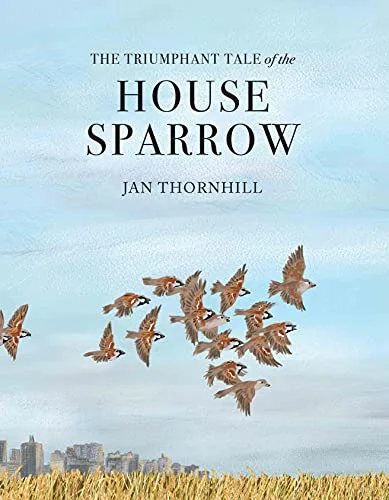 The Triumphant Tale of the House SparrowJan ThornhillBeginning about 12,000 years ago, house sparrows in the Middle East stopped migrating and started nesting near humans, who had begun to grow grain. As agriculture spread into other countries and continents and people immigrated to the United States, the ever-adaptable and prolific house sparrow followed, often quickly becoming a pest. People in many countries, in fact, have made creative and largely futile attempts to rid themselves of the troublesome birds. 18 Science, Technology, and the Natural World CCBC Choices 2019 Within the last century, however, changes in housing (no more thatched roofs), transportation (no more grain-filled horse manure on streets), and farming (introduction of herbicides and pesticides) have caused a decline in the house sparrow population throughout the world. Scientists now believe house sparrows can provide us with information about pollutants or other dangers: If such an adaptable animal is dying, could humans also be in harm’s way? Readers will look at sparrows with new eyes after taking in this absorbing and, yes, triumphant account.Science, Technology, and the Natural WorldView book details
 Champion: The Comeback Tale of the American Chestnut TreeSally M. WalkerA fungus wiped out the majority of the majestic American chestnut trees in the first part of the 20th century. This fascinating account documents how the fungus was identified, and three scientific programs to bring the American chestnut back from the brink. An inoculation program injects a weaker form of the fungus, found in Japanese and Chinese chestnuts, into infected trees. If it spreads it turns the deadly fungus into a milder form of blight the trees can survive. (A stand of trees near West Salem, Wisconsin, is one of the test sites.) In the backcross breeding program, healthy American chestnuts are bred with blight-resistant Chinese chestnuts. Resistant offspring are crossed with another American chestnut until there is a blight-resistant sixth-generation tree that is mostly American chestnut. The first of these were planted in forests in 2009. The third effort is a high-tech: wheat genes that produce oxalate oxidase (OxO), which breaks down the oxalic acid that the killer fungus produces, are injected into American chestnut embryos in hopes the resulting trees will be healthy. Science is accessible and engaging in this real-world, problem-solving mystery that includes outstanding documentation and a treasure trove of intriguing back matter.Science, Technology, and the Natural WorldView book details
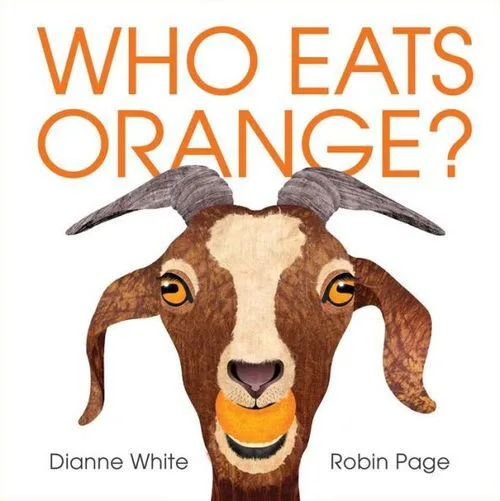 Who Eats Orange?Dianne White, illustrated by Robin PageAn ingenious color concept / early science book repeatedly asks and answers the question “Who eats...?” as a means of presenting basic information in a pleasingly playful way. The striking illustrations of 24 animals from six different ecosystems, along with the colorful foods they eat, are set against a stark white background to make the colors pop. The narrative introduces familiar animals (rabbit, rooster, goat, and pig) before moving on to less familiar ones, and each grouping of animals not only eats food of the same color but also lives in the same ecosystem. Notes at the back of the book give additional information about each species, but the core of the text for preschoolers sets up a strong pattern that will invite prediction, observation, and scientific inquiry. The predictive pattern is broken with two of the animals, which will cause young children to stop, observe, and think in order to puzzle it out.Science, Technology, and the Natural WorldLexile Text Measure 260LATOS Book Level 2.1View book details
Seasons and Celebrations
5 selections
 StumpkinLucy Ruth Cummins, illustrated by Lucy Ruth CumminsOn the sidewalk outside a city shop is a cheery display of bright orange pumpkins. But one pumpkin knows he’s different. He’s a stemless pumpkin. A stumpkin. The shopkeeper’s black cat likes Stumpkin, but no one else seems to want him as one by one other pumpkins are chosen and later appear as jack- o-lanterns in the windows of nearby apartments. When even a gnarled yellow gourd is taken home to be transformed into a Halloween visage before the shop closes on Halloween night, Stumpkin’s future looks pretty grim... Humor and pathos are perfectly balanced in a picture book that is also a masterful pairing of words and pictures. The illustrations rendered in gouache, pencil, ink, and brush marker are black-and-white on cream-colored pages, with pumpkin-orange (of course) and hints of green for stems (or stump) as accent. The humans are all faceless silhouettes, the pumpkins incredibly expressive. The narrative is perfectly paced, guileless, and open-hearted—of course we care about Stumpkin, whose story is poignant, and sweetly triumphant.Seasons and CelebrationsLexile Text Measure 500LATOS Book Level 2.2View book details
 Winter Is HereKevin HenkesComforting illustrations with wintry hues—deep blues, bright blues, grays and whites—and cozy scenes featuring animals, brightly clad children, and snow and wind and ice, grace the pages of this picture book in which the lush acrylic artwork amplifies keen observations about the season expressed in the sparkling narrative. Winter is “falling …dripping … sticking... reaching …crouching ….settling” in fresh, vivid descriptions. Winter sits softly (snow), but can also be hard (ice). It is inside and outside. Quiet and loud. “The wind howls in every language.” Winter is clothing: boots and vests and scarves and mittens and lots of zippers. And winter stays…and stays, until it “shrinks away bit by bit … peeking back then moving on.” To spring, of course. An artful picture book offering delight in the language, the images, and the harmony of their pairing. Highly Commended, 2019 Charlotte Zolotow AwardSeasons and CelebrationsLexile Text Measure AD510LATOS Book Level 3.4View book details
 All-of-a-Kind Family HanukkahEmily JenkinsGertie, 4, is youngest of five sisters and eager to be part of her family’s Hanukkah preparations. But when Mama says Gertie is too little to peel or grate potatoes or fry the latkes in schmaltz, a spectacular tantrum is the result, and Gertie is sent to her room to wait until supper. Feeling sorry for herself, and certain her family must miss her, Gertie waits, and waits, for Mama to return. It’s Papa who finally appears, drawing Gertie out of her mood and back into the fold of her family. In fact, Gertie gets to help light the first Hanukkah candle, and Mama serves the first latke to her. This original story is based on the characters originated by Sydney Taylor in her “All-of-a-Kind Family” stories about a Jewish family on the Lower East Side of New York city in 1912. Gertie’s frustration is 20 Seasons and Celebrations CCBC Choices 2019 relatable to every young child, while the love, warmth and good humor in her family provide a deep sense of security. Cozy yet spirited illustrations add to the abundant appeal of the story, while endnotes provide additional context for the history of the characters, the setting, and the Hanukkah celebration.Seasons and CelebrationsLexile Text Measure AD520LATOS Book Level 2.8View book details
 Holi ColorsRina SinghThis color concept board book revolves around the Hindu Holi celebration of spring. A rhyming text describes the colors in terms connected to the natural world—marigold orange, sunset red, peacock blue, tree green—while shining photographs show young children and families participating in a colorful Holi celebration, which includes tossing colored powders. A note at books’ end explains the powders are called “gulal” and that the celebration of the love between Lord Krishna and his beloved, Radha, is known as the festival of colors.Seasons and CelebrationsLexile Text Measure AD390LATOS Book Level 2.7View book details
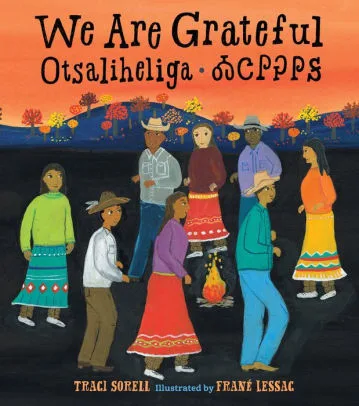 We Are Grateful / OtsaliheligaTraci SorellThroughout the year Cherokee people express their gratitude with the word “otsaliheliga” as “a reminder to celebrate our blessings and reflect on struggles.” Beginning in fall, the book moves through the year, touching on seasons, ceremonies, celebrations, and everyday cultural practices and daily life, all instances in which Cherokee say “otsaliheliga.” Cherokee words are integrated into the text, with pronunciations and the words written in the Cherokee syllabary at the bottom of the page on which they appear. Notes at the end provide more information about objects, games, historical events, and ceremonies mentioned in the book, as well as the lived experiences of the author and various cultural experts she spoke to in her research. The naïve style illustrations use bold, bright colors and show a variety of contemporary Cherokee people in a single community.Seasons and CelebrationsLexile Text Measure NC970LATOS Book Level 3View book details
Folklore, Mythology, and Traditional Literature
2 selections
 How Raven Got His Crooked Nose: An Alaskan Dena’ina FableBarbara J. Atwater, Ethan J. AtwaterAs a Dena’ina girl and her grandmother pick berries and clean salmon, the grandmother tells the story of how Chulyen, Raven, got his crooked nose. In the story within this story, vain Raven has lost his nose while Chida, a grandmother, has found a strange object that she can’t identify, but she knows it will make a good tool. Chida uses the new tool so often to scrape and clean that it starts to show wear. Raven, seeing Chida has his nose, comes up with a plan to scare her away from her house so he can steal it back. He’s successful, but his nose is so worn from all the use, and he jams it on so quickly, that it’s crooked CCBC Choices 2019 Folklore, Mythology, and Traditional Literature 21 forever after. This entertaining pourquoi tale uses two art styles to delineate the framing story from the Raven’s tale. Dena’ina words appear throughout, with a pronunciation guide at the bottoms of the pages and a glossary in the back.Folklore, Mythology, and Traditional LiteratureView book details
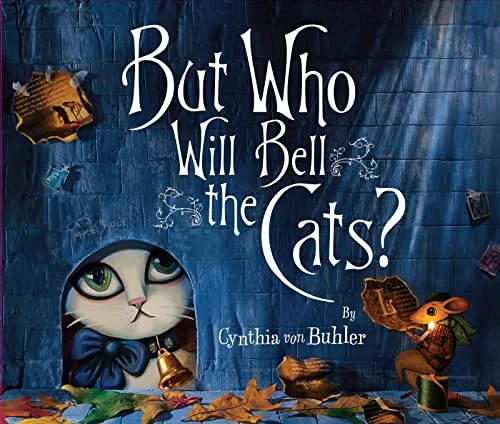 Who Will Bell the Cat?Patricia C. McKissack, illustrated by Christopher CyrA group of barn mice have a brilliant idea: If they can put a bell around the cat’s neck, they’d always know when she was coming and could hide. Through industrious teamwork they find the necessary materials to make a collar with a bell, but how will they ever get it around the cat’s neck? After a couple of well- planned but unsuccessful attempts, the mice serendipitously get help from a little girl, part of a family of “giants” that’s just moved in. McKissack’s modern (and extended) version of a medieval fable is illustrated with detailed paintings that show the humans at the end of the book as African American.Folklore, Mythology, and Traditional LiteratureView book details
Historical People, Places, and Events
20 selections
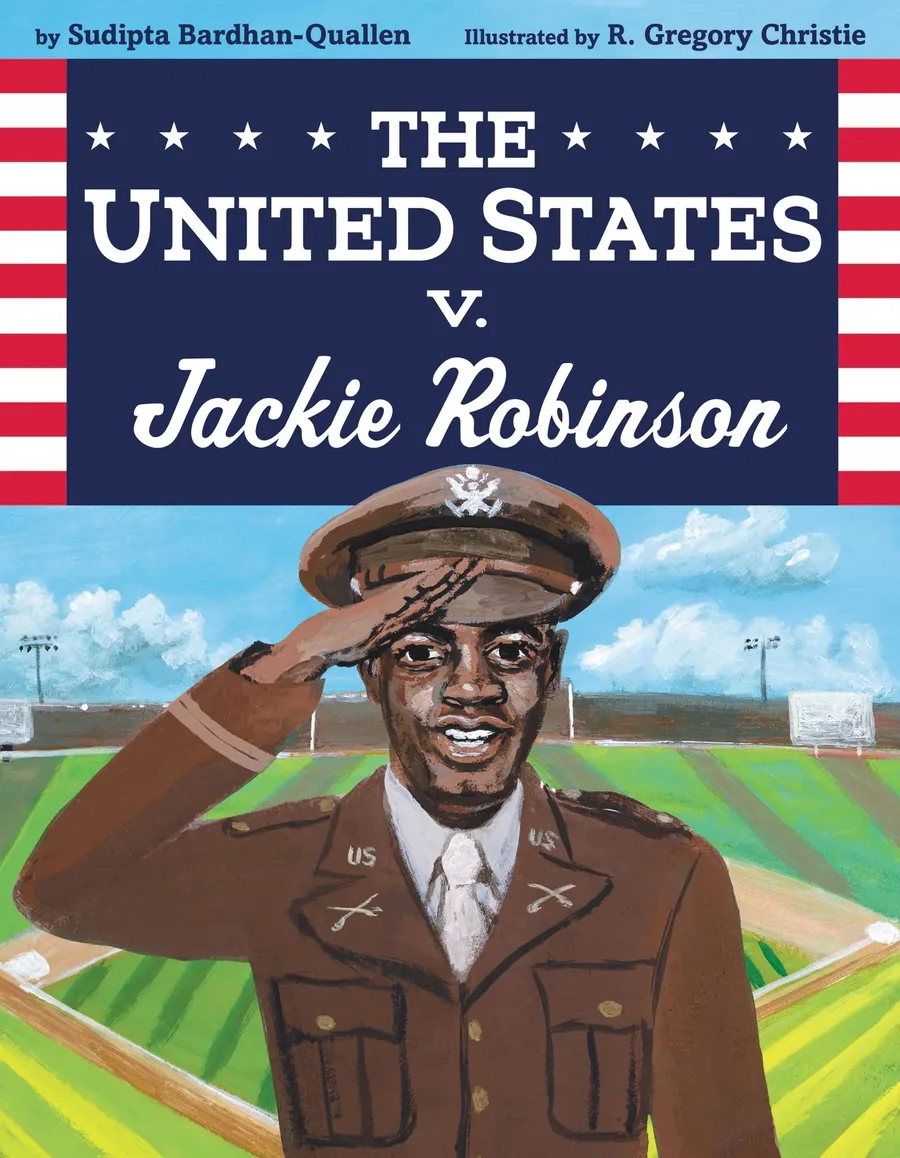 The United States v. Jackie RobinsonSudipta Bardhan-QuallenAs a child dealing with racism, Jackie Robinson learned from his mother “to stand up for what was right, even when that was difficult to do.” He carried that lesson through his years as a college athlete and into his World War II military career, where racial segregation was a regular practice. After a 1944 army order prohibited segregation on military posts and buses, Jackie chose a seat in the middle of an army bus, ignoring the driver’s angry demands that he move to the back. Military police sided with the driver, and Jackie was charged with two crimes. At his court martial, Jackie’s description of his actions was confirmed by witnesses, and several commanding officers testified in his favor; eventually a verdict of “not guilty” was delivered. While many readers know of Jackie Robinson’s groundbreaking career integrating professional baseball, this less familiar earlier episode exemplifies the courage and commitment to fighting racism he demonstrated throughout his life.Historical People, Places, and EventsView book details
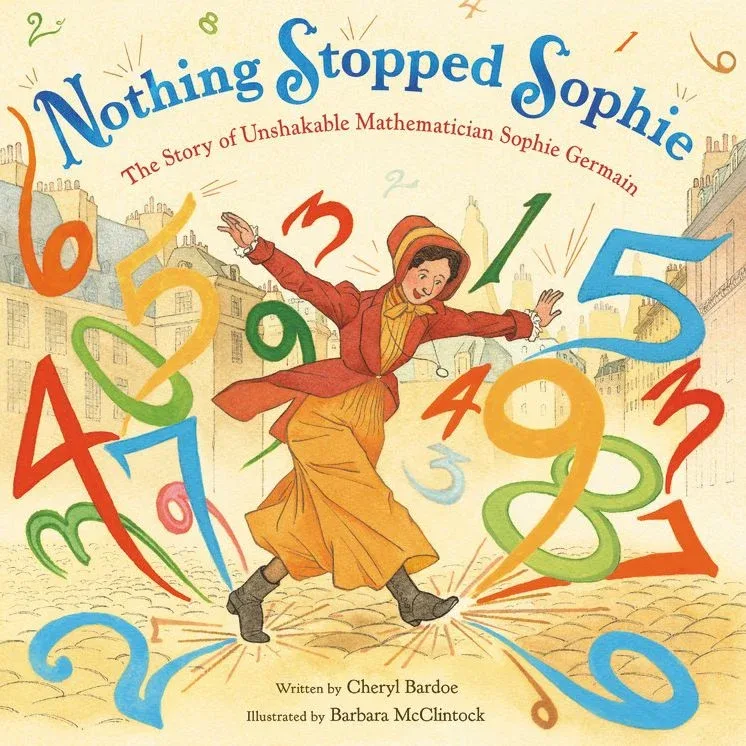 Nothing Stopped Sophie: The Story of Unshakable Mathematician Sophie GermainCheryl Bardoe, illustrated by Barbara McClintockSophie Germain grew up France at a time of chaos during the French Revolution. She found order in math. Nothing could detract from her interest, despite mathematics being considered unsuitable for a girl. Sophie thought math was like a poem, and she wanted to write poetry of her own. No university would let her enroll as a woman, so she submitted work under a man’s name. When her identity was finally discovered, she was considered more curiosity than scholar. For years, she studied on her own, eventually solving a problem many considered unsolvable: develop a mathematical formula to predict patterns of vibration. This picture-book account of Sophie’s accomplishment is followed by more about Sophie and her work, including the relationship between math and physics, as well as informative notes from both author and illustrator on their research and approach to this treatment, including how they conjectured about what isn’t known.Historical People, Places, and EventsLexile Text Measure 1030LATOS Book Level 5.3View book details
 March Forward, Girl: From Young Warrior to Little Rock NineMelba Pattillo BealsAs a teenager, Melba Patillo was one of the Little Rock Nine, the first group of Black students to enroll in the formerly all-white Little Rock Central High School in 1957. This memoir recounts Melba’s childhood, including the many experiences that primed her as an activist. Melba was an observant and sensitive child who deeply felt the injustice of the Jim Crow laws in the South. From an early age, she felt stifled and frustrated by the rules of behavior she had to follow outside of her home and neighborhood, particularly around white people. Her grandmother’s belief that God would provide doesn’t soothe her. Although supported and affirmed at home, Melba often felt unsafe; she knew even her beloved elders could not always protect her. Her memoir recounts several extraordinarily painful experiences, acts of violence perpetrated against her and members of her Black community. But her narrative is one of courage, resilience, and love of family and community. Her words effectively transport the reader back to a moment in history that was—considering Melba is still alive today—not long ago at all.Historical People, Places, and EventsView book details
 No Small Potatoes: Junius G. Groves and His Kingdom in KansasTonya BoldenJunius Groves was born on a Kentucky plantation shortly before the end of the Civil War. After the war he headed west with other African Americans, settling in Kansas. He went from hired hand to renting land to buying his first 80 acres on which he continued to farm. His crop of choice: potatoes. Eventually he owned over 500 acres. His yields were extraordinary, and newsworthy, earning him the title “Potato King of the World” in 1902. “Junius G.’s spuds—baked, boiled, fried, mashed, puffed, souped, diced for potato salad, sliced thin for chips—filled bellies around America.” A lively account focuses on Groves and his wife Matilda’s hard work and vision. A timeline, glossary, sources, and notes follow an energetic narrative set against upbeat mixed media illustrations. The illustrator’s note acknowledges the Native history of land Groves purchased, once part of the Kaw Nation, and “the Native American history that pervaded the story of Junius Groves.”Historical People, Places, and EventsView book details
 Let the Children MarchMonica Clark-RobinsonThe story of the children’s march in Birmingham in May, 1963, is told from the perspective of a fictional young girl. After hearing Martin Luther King, Jr., speak at church, the girl and her brother are inspired to march, knowing that the consequences of their action might be jail. And, indeed, the girl does go to jail, for two days. But her participation, and that of other courageous children, helped shine the spotlight on racial injustice inherent in Jim Crow Laws. Frank Morrison’s vivid oil paintings accurately portray the historical time period, and his shifting perspectives and sweeping images heighten the tension and the drama of this story.Historical People, Places, and EventsLexile Text Measure 650LATOS Book Level 3.8View book details
 Streetcar to Justice: How Elizabeth Jennings Won the Right to Ride in New YorkAmy Hill HearthA century before Claudette Colvin and Rosa Parks refused to gift up their seats on a public bus, there was Elizabeth Jennings. In 1854 she stood up to New York City’s segregated streetcar laws by refusing to get off when the driver asked her to. Her legal case was taken by a young attorney who was trying his very first case— future President of the United States Chester A. Arthur. This fascinating, gracefully written account, based on primary sources, is a necessarily a slender volume because so little is known about this amazing trailblazer, but after a decade of research, the author managed to pull together enough to tell the story of Jennings’s courageous and historic act of civil disobedience. The author’s endnotes detailing how she researched an obscure historical figure are as fascinating as Jennings’s story.Historical People, Places, and EventsView book details
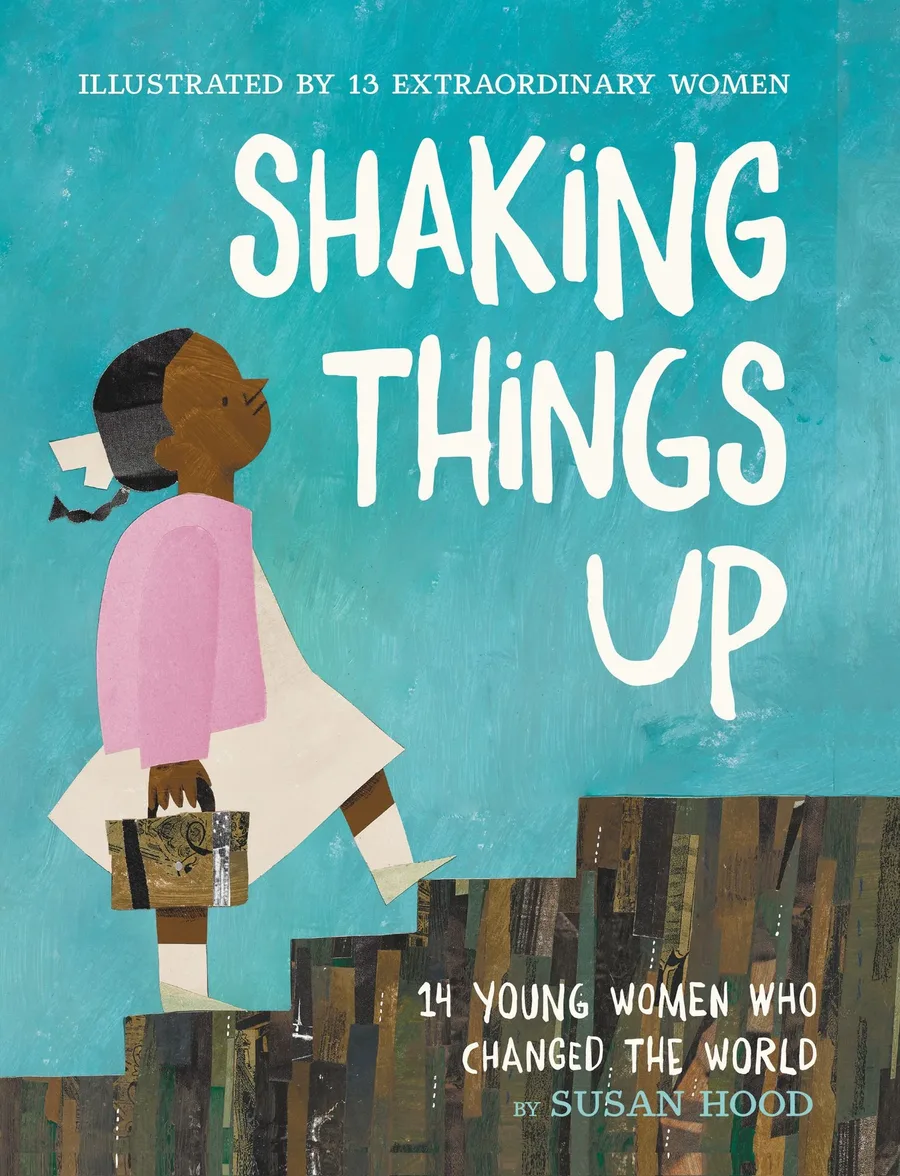 Shaking Things Up: 14 Young Women Who Changed the WorldSusan HoodSingle-page poems relate the remarkable achievements of 14 girls and women who defied expectations, gender restrictions, racial prejudice, and social bias to make a mark early in their lives. Some names (Ruby Bridges and Frida Kahlo) may be familiar, while others (18th-century firefighter Molly Williams and World War II British secret agents Jaqueline and Eileen Nearne) are likely to be new to most readers. The diversity of the women highlighted—across time, race, class, and achievement—as well as the variety of poetic structures, including acrostic, concrete, and free verse, lend energy to this accessible volume. Each poem is paired with an illustration by a female artist thoughtfully selected to expand the book’s inclusivity.Historical People, Places, and EventsView book details
 Attucks! Oscar Robertson and the Basketball Team That Awakened a CityPhillip HooseCrispus Attucks High School was created by the KKK in the 1920s to segregate Indianapolis’s Black students. The school was overcrowded and underfunded but attracted outstanding faculty. In 1950, Ray Crowe, a gifted math teacher and basketball coach, took over Attucks’ basketball program. Crowe nurtured his players on and off the court. One of these was Oscar Robertson, who had had natural talent as well as drive—he spent hours practicing. This account of the Attucks Tigers’ rise to basketball fame in 1950s Indiana moves back and forth among the stories of individuals, especially Crowe and Robertson, the team, and the social context of the times. Racism was alive and well in Indianapolis in the 1950s, but the city had never won the state basketball championship. Blacks and whites both rallied behind the Attucks Tigers, who became so dominant in high school basketball that it was the impetus for desegregation in the city. This fascinating history draws on a great deal of primary research, including original interviews. Black-and-white photographs appear throughout; sources and notes follow the narrative.Historical People, Places, and EventsView book details
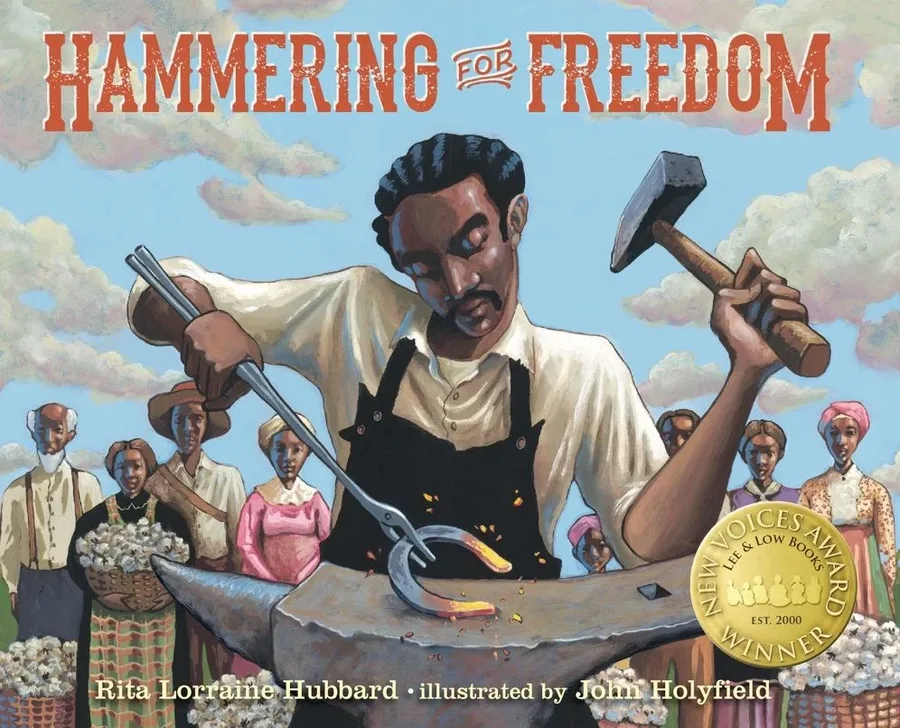 Hammering for Freedom: The William Lewis StoryRita Lorraine HubbardAn engaging picture book tells the fascinating story of William Lewis, an enslaved African American blacksmith who rented himself out, saving his earnings until he could buy his own freedom, then opened his own shop and earned enough money over 26 years to buy the freedom of all of his family members. The superbly written narrative focuses on Lewis’s talent and perseverance, using occasional onomatopoeia (“Clang! Clang!” / “Ding! Ching!”) to represent the endless hours of work in his blacksmith shop. Dynamic acrylic illustrations filled with details of the time period vividly capture the emotion on the faces of Lewis’s family members as they are freed (or left behind as someone else is freed, their own moment of liberty not yet come). The author’s sources tell how she pieced together the story of this remarkable man who was all but forgotten save for a historical marker in Chattanooga, Tennessee, using interviews, personal correspondence, newspaper articles, census records, court minutes, and historical documents such as wills and slave deeds.Historical People, Places, and EventsView book details
 Spooked! How a Radio Broadcast and Sparked the 1938 Invasion of AmericaGail JarrowOctober 30, 1938: Listeners across the United States tuned in to the weekly Mercury Theater radio show, for which Orson Welles and John Houseman chose books for adaption into 60-minute scripts complete with music, sound effects, and voice actors. This week, the book was H.G. Wells’s The War of the Worlds, a sci-fi novel about a Martian attack on Earth; the adaptation was set in New Jersey. Shortly after the broadcast began, it became apparent that a surprising number of listeners were mistaking the show for live news. Calls flooded the studio and came into police stations across the country as people believed the attack was real. Jarrow describes the development of the program that week before she moves rivetingly through the night’s broadcast, comparing real time to the condensed time that elapsed in the show, before exploring the aftermath, including the public’s highly varied and emotional response. She notes that it’s difficult to determine how widespread the panic actually was, because the mythology began almost immediately, fed by widespread coverage and first- person accounts of the event. With a design that expertly brings together the disparate elements of this event, this book examines the power of hoaxes (even unintentional ones), misinformation, and the media. A fascinating account that is also timely for today.Historical People, Places, and EventsView book details
 All That Trash: The Story of the 1987 Garbage Barge and Our Problem with StuffMeghan McCarthySurely one of the most bizarre news stories of 1987 followed the travails of the Break of Dawn, a barge carrying 3,186 tons of garbage when it left New York City headed for North Carolina. A man named Lowell Harrison planned on harnessing the methane resulting from the garbage’s decomposition for energy. But North Carolina didn’t want New York’s garbage. Neither did Alabama, 26 Historical People, Places, and Events CCBC Choices 2019 Mississippi, Louisiana, Florida, or Mexico, Belize, or the Bahamas. Heading back to where it started, the barge was caught in a court battle while it floated between New York and New Jersey. Finally, after five months and 6,000 miles at sea (with a captain who thought he was setting out for a one-week job), a judge ordered the garbage burned. McCarthy’s slightly quirky illustrations are perfectly suited to this absurd yet true story; while her engaging, thoroughly researched and well-documented narrative skillfully mines facts while letting the drama and moments of humor feel organic to the story. Terrific end matter includes a brief photo essay and facts about the barge and environmental issues related to garbage and recycling along with a source bibliography.Historical People, Places, and EventsView book details
 The Eye That Never Sleeps: How Detective Pinkerton Saved President LincolnMarissa MossA picture-book account of how Allen Pinkerton formed the first U.S. detective agency in the mid–19th century culminates in his prevention of an assassination plot against Abraham Lincoln shortly after he was elected president. After brief biographical information about Pinkerton, the author describes the development of the Pinkerton Method, things considered standard for private eyes today, such as undercover work. The second half of the book deals with Pinkerton’s investigation of an 1860 plot by secessionists to assassinate Lincoln in Baltimore. How Pinkerton and his staff, which included several female detectives, first uncovered and then foiled the plot with the complete cooperation of President Lincoln reads like a good mystery, with twists and turns. The faux woodcut illustrations printed in shades of orange and purple give the book a jaunty and appealing look.Historical People, Places, and EventsView book details
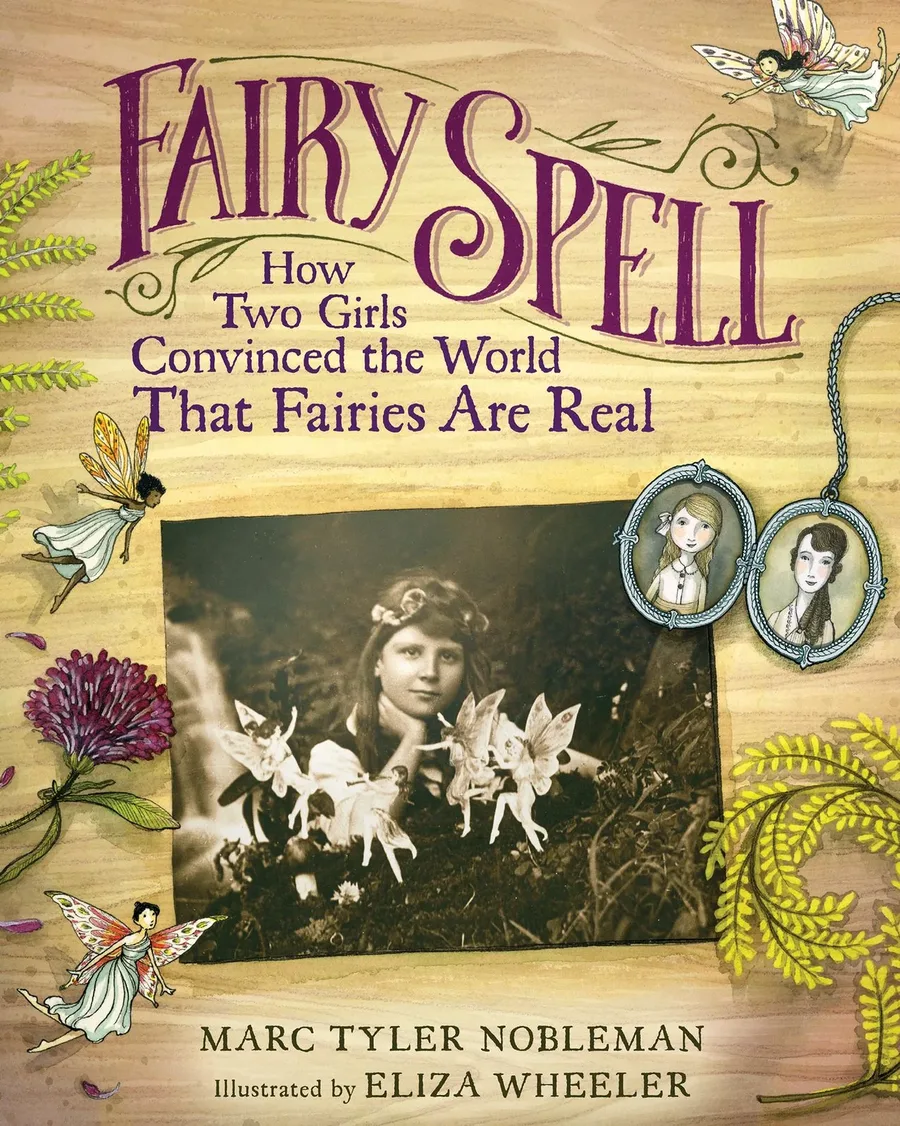 Fairy Spell: How Two Girls Convinced the World That Fairies Are RealMarc Tyler NoblemanThe cleverness of two girls fools legions of adults in this picture-book account of one of the earliest “viral” photographs ever taken. Cousins Frances Griffiths and Elsie Wright wile away the summer of 1917 playing near the “beck” in their family’s garden—a stream that, according to Frances, is home to fairies. Borrowing their father’s camera, they return with what appears to be photographic evidence: Frances and Elsie surrounded by fairies. Their father laughs, their mother quietly wonders whether the photos—and fairies—are real. She shares them, and they eventually come to the attention of Arthur Conan Doyle, a true believer, who coauthors an article that includes the photos. The public speculates wildly: Are fairies real? Or is it all just an elaborate hoax? The girls’ creative mischief expands here into a broader exploration of humans’ desire and willingness to believe (or not believe) what’s in front of their eyes.Historical People, Places, and EventsView book details
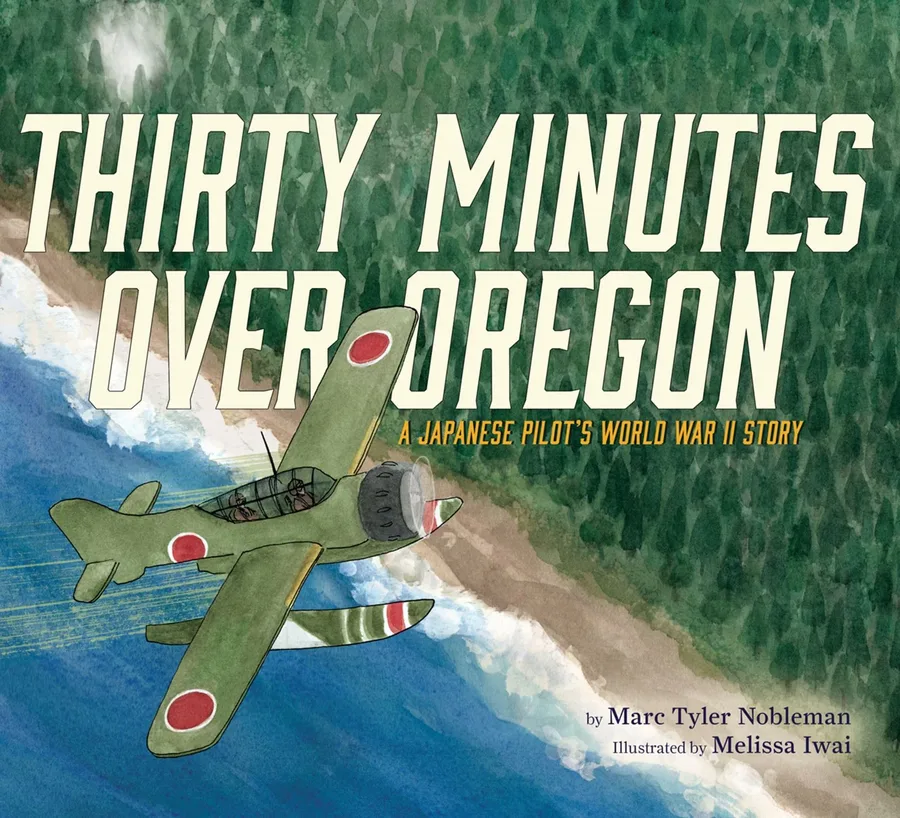 Thirty Minutes over Oregon: A Japanese Pilot’s World War II StoryMarc Tyler NoblemanIn 1942, at the height of the U.S. involvement in WWII, Japanese pilot Nobuo Fujita embarked on a mission to bomb a section of Oregon, just east of the CCBC Choices 2019 Historical People, Places, and Events 27 small town of Brooking, in order to set a large forest ablaze. His equipment malfunctioned and he only managed to drop two small bombs, neither of which did much damage. But foresters found metal fragments of the bomb that identified them as Japanese, and the news rattled the town of Brookings for a short time. After the war, Fujita returned home and resumed his quiet life as the owner of a hardware store. Fast forward to 1962, when the Brookings Jaycees decided to track down the pilot who’d dropped the bomb and invite him to Brookings for their annual Memorial Day celebration, despite some people’s objections. Fujita, who had been consumed by guilt in the ensuing years, accepted. This remarkable story of forgiveness (on both sides) and redemption is quietly told in an understated tone, and beautifully illustrated with detailed watercolor paintings.Historical People, Places, and EventsView book details
 Boots on the Ground: America’s War in VietnamElizabeth PartridgeChapters detailing the experiences of diverse individuals in Vietnam during the war—soldiers, a military advisor, a military nurse, a young Vietnamese woman trying to flee the country with her family after the fall of Saigon—alternate with chapters focusing on the political front in the United States in this arresting account of the Vietnam War. Each individual story illuminates how the perspectives of those with “boots on the ground” differed vastly from the official government narrative, as well as how far removed political and military decisions are from the lives of those whom they impact, often devastatingly. The chapters set in the United States illuminate the thoughts and actions of presidents (Kennedy, Johnson, Nixon, Ford) and protesters (Martin Luther King, Jr., who was criticized within and beyond the Civil Rights Movement for his decision to speak out against the war, and Country Joe McDonald, who wrote one of the most popular anti-war anthems). The narrative turns toward healing as it documents efforts to create the Vietnam Veterans Memorial, including initial backlash against architect Maya Lin’s design, and the Memorial’s cathartic impact. Photographs throughout, detailed notes, a comprehensive bibliography, and brief updates on the lives of those Partridge interviewed to show us the war through their eyes round out a forceful work.Historical People, Places, and EventsView book details
 Fly Girls: The Daring American Women Pilots Who Helped Win WWIIP. O’Connell PearsonOver 1,000 American women served as WASPs—Women Air Force Service Pilots—during World War II. This compelling account relates the history of the organization, from initial resistance by military leadership to the eventual assignment of noncombat flying jobs to female pilots. Personal stories of several of the WASPs draw on a repeated theme of brave, skilled women who flew despite facing many obstacles. Although the pilots were required to comply with all military rules and regulations, the women didn’t have military status so had to buy their own uniforms and pay for their food and housing. They worked without health benefits and were unable to receive honors for exemplary performance or when they died in duty. Regularly harassed and faced with dismissive sexist attitudes by their male commanders and peers, the women 28 Historical People, Places, and Events CCBC Choices 2019 showed dedication to their jobs and a willingness to take on any task, all while turning in well-documented high levels of performance. An epilogue describes the changing role of female military pilots since WWII, including a 1977 bill giving WASPS military status, and is followed by an extensive bibliography, notes, and time line.Historical People, Places, and EventsView book details
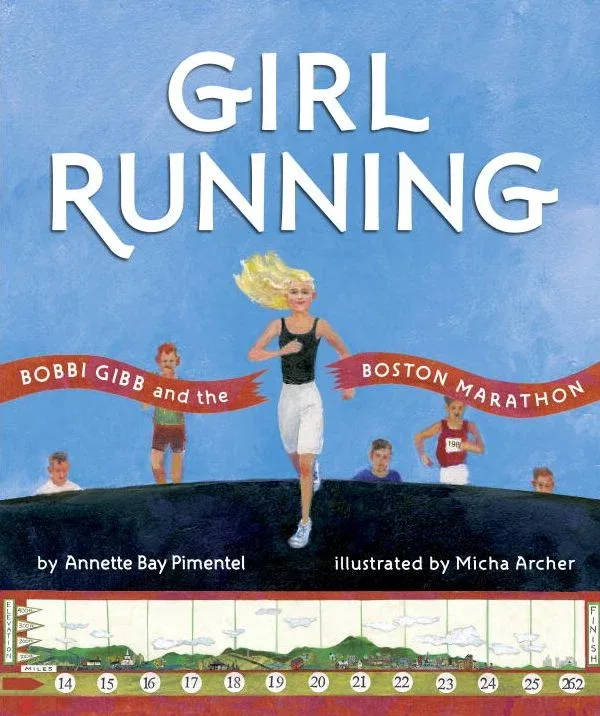 Girl Running: Bobbi Gibb and the Boston MarathonAnnette Bay PimentelAfter school, Bobbi Gibb leaves rules behind. Rules about girls not wearing pants. Rules about girls not running. After school, Bobbi changes into pants and runs. She keeps running as she gets older. In good weather, she runs in nursing shoes. In winter, she runs in boots. And then, she runs into resistance when she tries to enter the Boston Marathon. She’s denied entry because “women are not physiologically able to run 26 miles, and furthermore the rules do not allow it.” Rules? Bobbi leaves them behind, unofficially running the race anyway. She finishes in 124th place, with 291 men still behind her. Because of Bobbi Gibb, more women run the race the following year, and the rules finally change, although it would be 30 years (1996) before she received recognition for that first race. A finely paced picture book pairs an inspiring narrative with oil and collage illustrations full of interest. An afterword provides more information on Bobbi Gibb and the story’s historical timeframe.Historical People, Places, and EventsLexile Text Measure AD580LATOS Book Level 3.7View book details
 Pride: The Story of Harvey Milk and the Rainbow FlagRob SandersThis visually colorful account traces the history and symbolism of the rainbow- striped, LGBTQ Pride flag, beginning with Harvey Milk’s dreams of equality for gay people. He gave speeches, ran for political office, and protested laws that discriminated against the LGBTQ+ community. When Harvey decided that the community needed a symbol—a flag—he enlisted the help of Gilbert Baker, an artist who helped Harvey create the rainbow stripes. Although Harvey was assassinated, his legacy lives on. The narrative expands to illuminate the continuing hope, pride, and fighting spirit of the LGBTQ+ community, which continued to flourish after Harvey’s death. The vibrant illustrations throughout the book depict the now-widespread use of the rainbow flag, including an impressive spread of the White House sporting the rainbow colors.Historical People, Places, and EventsView book details
 Pass Go and Collect $200: The Real Story of How Monopoly Was InventedTanya Lee Stone, illustrated by Steven SalernoA picture-book history describes the evolution of the popular board game through the contributions of the people involved over the years in its creation. In 1903, Elizabeth Magie created a board game called Landlord to show how unjust landlord/tenant relationships often were. She patented her game in 1904 but no toy companies were interested in buying it. People were certainly interested in playing the game, however, making handmade boards to play. Over the years, the rules and the name of the game changed. In 1932, a player named Charles CCBC Choices 2019 Historical People, Places, and Events 29 Darrow made his own improvements to the game and was able to sell it to it to Parker Brothers. A patent search, however, revealed that Magie was the original inventor, although she would not end up profiting from her work. These details and more are shaped into a highly engaging story for young readers. Illustrations giving an excellent sense of the historical setting also capture the spirit of the original and current Monopoly graphics and illustrations. Back matter includes a note from the author and bibliography of sources, as well as trivia about the game and a section on Monopoly math.Historical People, Places, and EventsView book details
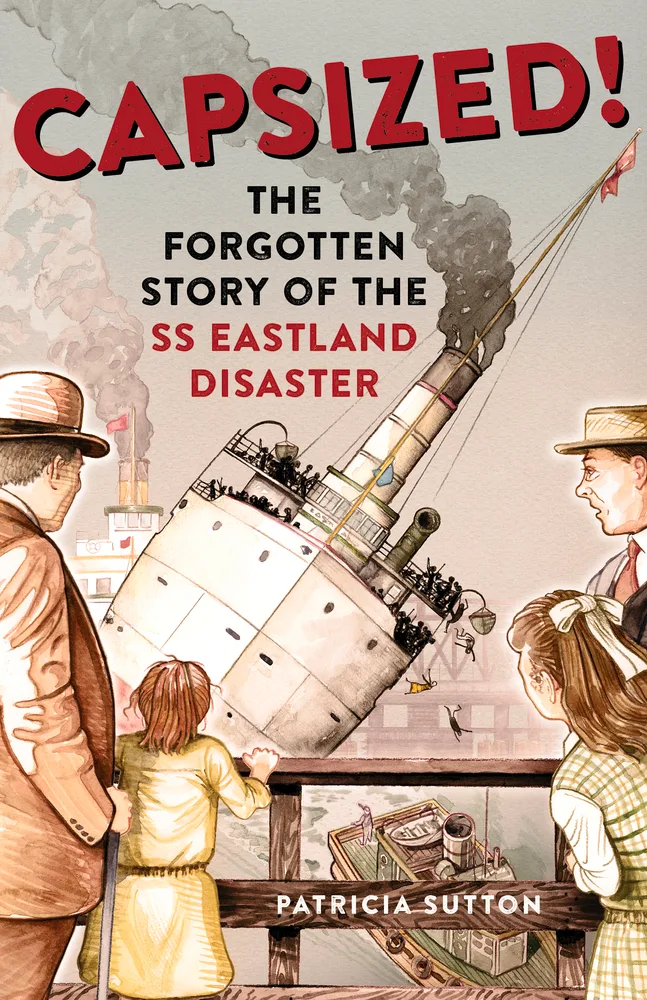 Capsized! The Forgotten Story of the SS Eastland DisasterPatricia SuttonOn July 24, 1915, the SS Eastland was scheduled to deliver 2,500 passengers from a port in the Chicago River to a Western Electric employee picnic on the shores of Michigan City, Indiana. Instead, the steamship capsized while still moored in Chicago, resulting in the deaths of 844 on board. Personal accounts following a number of Western Electric employees, their young children and crew members on board, as well as a nurse who aided the injured, relate minute- by-minute details of the disaster, including the bravery of many passengers and first responders. Possible causes of the accident and events that contributed to the tragic outcome are explored, from earlier close calls that had been ignored, to a problematic ballast system, to Harbormaster warnings that didn’t reach the captain. Photographs, diagrams, and extensive notes augment this compelling account of a little-known disaster that claimed more lives than the Titanic.Historical People, Places, and EventsView book details
Biography, Autobiography, and Memoir
9 selections
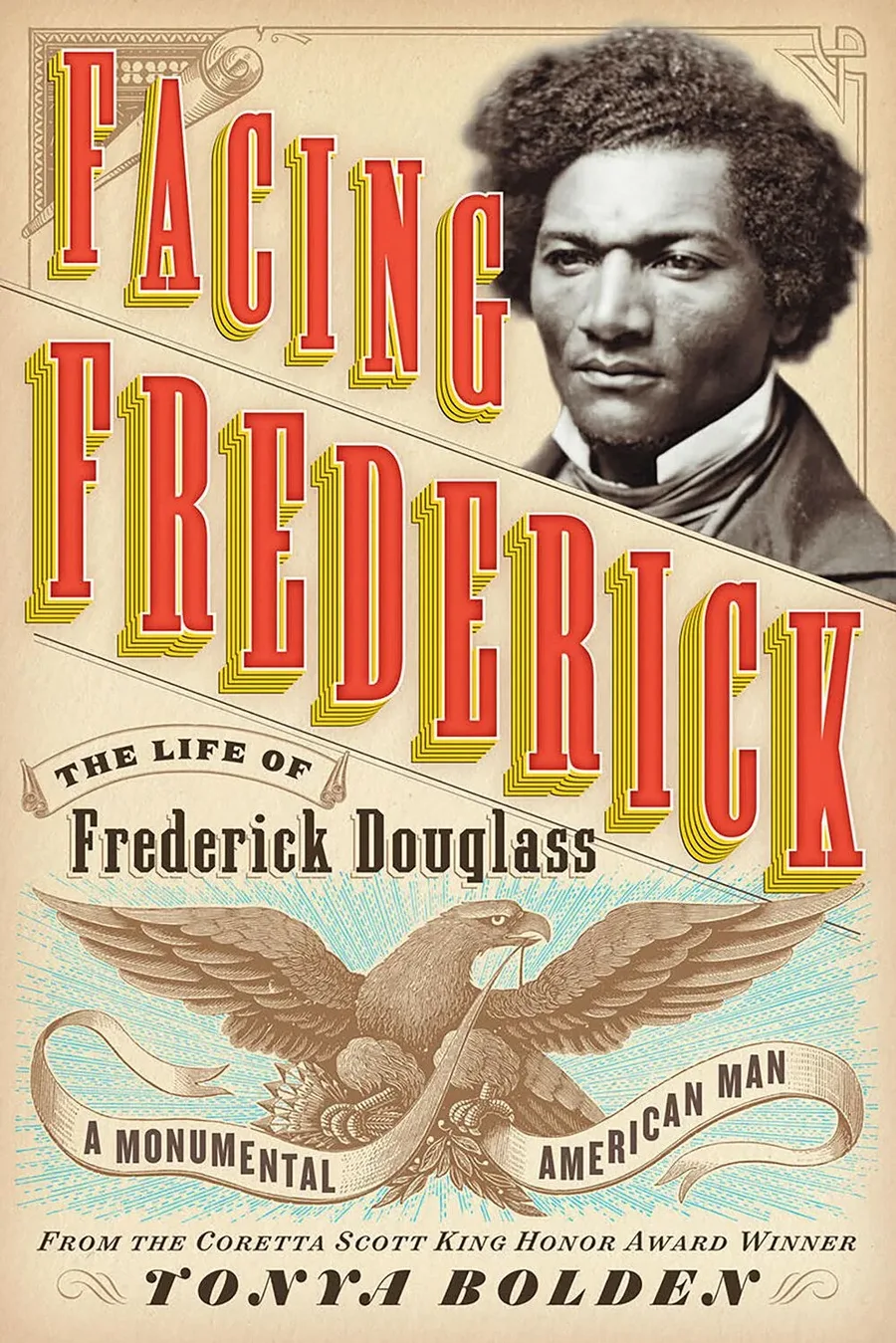 Facing Frederick: The Life of Frederick Douglass, a Monumental American ManTonya BoldenAlthough today he is remembered primarily as an abolitionist, Frederick Douglass fought his entire life on behalf of equal rights for all people, both here in the United States and abroad. Through his travels, his speeches, and his newspapers, he was able to build an impressive network of allies who supported his work financially and intellectually. Since he had no trouble expressing his strong, often unpopular, opinions, he made a fair number of enemies as well, and this work does not shy away from describing the conflicts that arose between Douglass and other abolitionists, other African Americans, and President Lincoln. Drawing on a large number of primary source materials, Bolden offers young people a compelling account of Douglass’s complex life and times. Douglass’s fascination with photography led to him being the most photographed man in the 19th century, and many images of him are included in this intimate, arresting portrait.Biography, Autobiography, and MemoirView book details
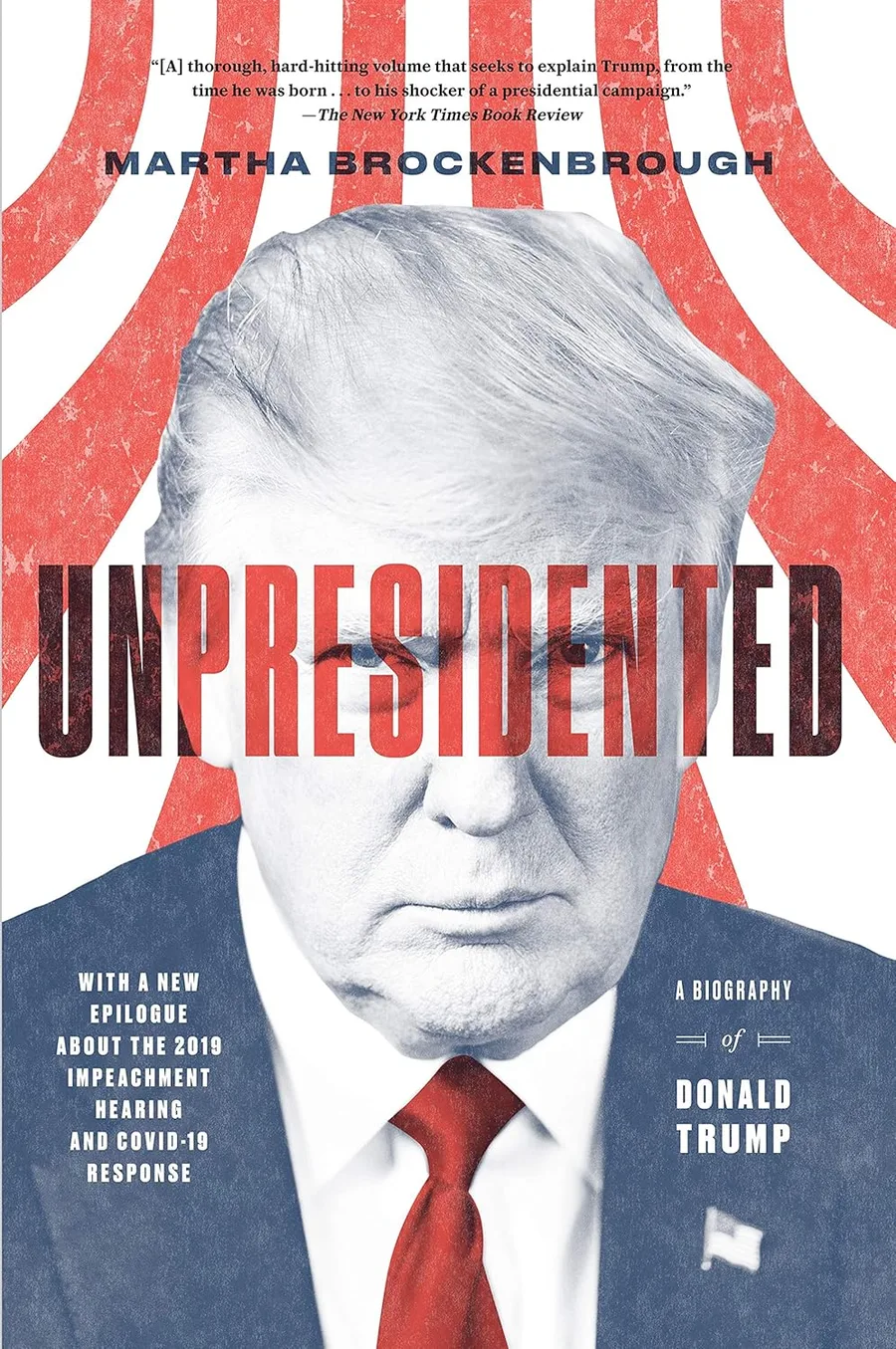 Unpresidented: A Biography of Donald TrumpMartha BrockenbroughThis intelligent, accessible biography of Donald Trump details his successes and failures as a businessman and politician. The narrative touches on the arrival in the United States and financial prosperity of his forebears as well as Trump’s childhood before diving into his real estate business, where he employed cunning and borderline-illegal business strategies and often found himself in financial trouble. Trump’s relationship with Russia is established early on, a thread that continues throughout. Brockenbrough skillfully weaves in key players as they appear, including Robert Mueller, head of the special counsel investigation of Russia’s interference in the 2016 election, as well as Trump’s many rotating allies and loyal family members. She illuminates the disparity between his unbridled promises and controversial actions, explores parallels between Trump and other demagogues, and discusses the danger of Trump’s erosion of the public’s trust in U.S. intelligence agencies and the free press. The account ends with the meeting between Trump and Putin in Helsinki on July 16, 2018. Extensive back matter, including a timeline, information about key players, and ample endnotes, demonstrate the meticulous research that went into this timely, informative, and damning account, a must-read for teens interested in current U.S. politics.Biography, Autobiography, and MemoirView book details
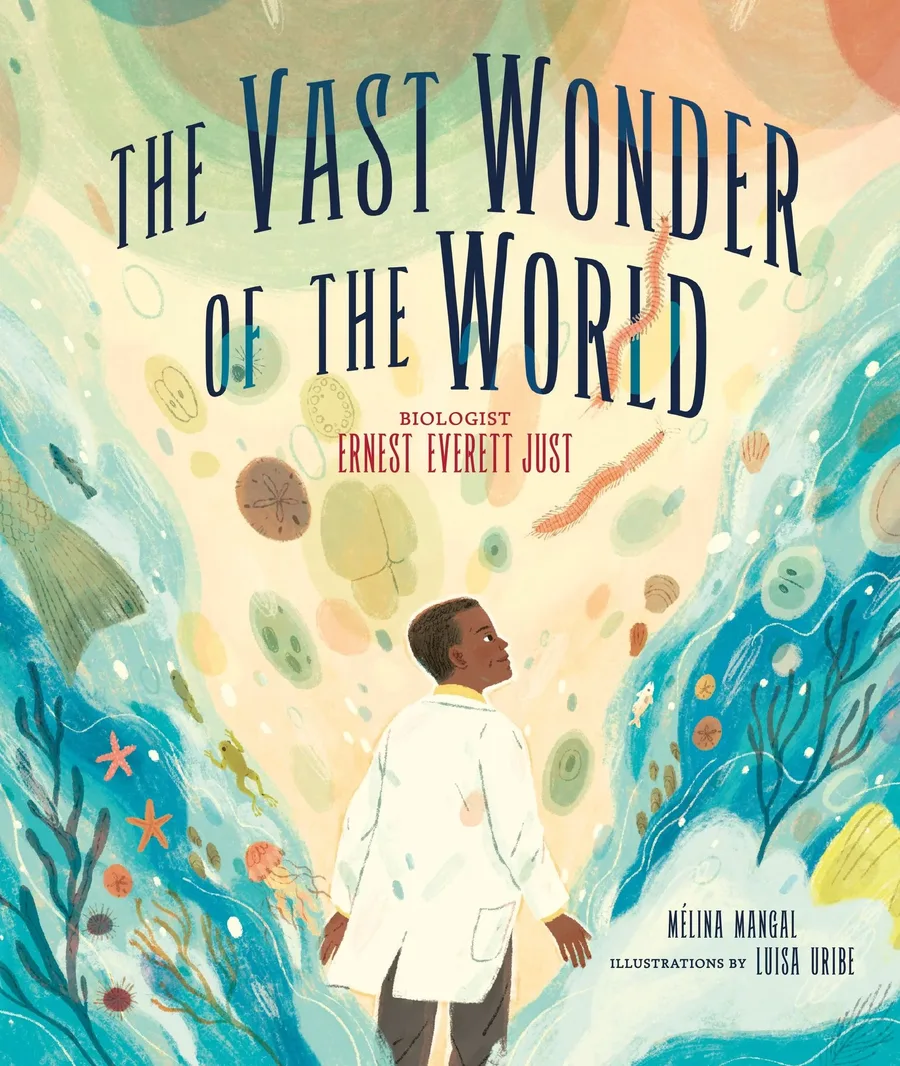 The Vast Wonder of the World: Biologist Ernest Everett JustMélina MangalFrom childhood on, Ernest Everett Just observed his world carefully and learned from what he saw: in the natural world, through his microscope, and in the racist practices prevalent in the social and professional culture of early 19th- century United States. Confronted with financial, health, and family challenges, Ernest persevered to graduate from Dartmouth College and become a biology professor at Howard University. He taught his method of observation to his students, and made breakthrough discoveries on the function of egg cells during fertilization. Despite his international scientific reputation, Ernest continued to suffer racism at home and eventually relocated to France. An ample author’s note following this picture-book account of African American Ernest tells more about his life and research. Additional end matter includes an illustrator’s note, timeline, glossary, and quotation and research sources.Biography, Autobiography, and MemoirView book details
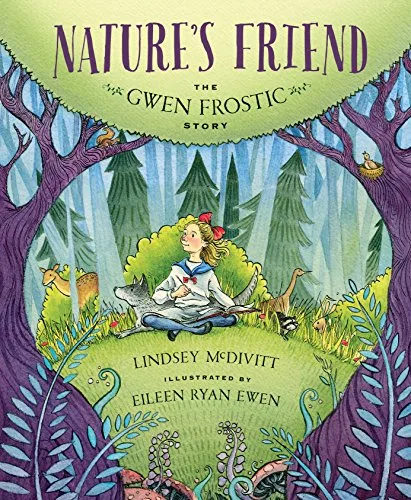 Nature’s Friend: The Gwen Frostic StoryLindsey McDivitt, illustrated by Eileen Ryan EwenBorn in 1906 in Croswell, Michigan, Gwen Frostic grew up loving art and the outdoors. Although an illness left her with weak hands and slurred speech, her mother encouraged her, sending her to school and providing her with art supplies. Gwen drew comfort from nature, and her hands grew in strength as she sketched and, later, took mechanical drawing and shop classes with male classmates outside of Detroit. In art school, she explored new forms: printmaking and metalwork. During WWII, she designed tools used to make bombers for the war effort. Gwen’s drive to create led to the establishment CCBC Choices 2019 Biography, Autobiography, and Memoir 31 of her own stationery company; eventually, she moved to northern Michigan and set up her shop in the woods, creating art inspired by her observations of the wetlands. Her work inspired others to help protect the natural beauty that surrounded them. This brightly illustrated biography tells the inspiring story of a motivated, independent woman who quietly channeled her talents and passions into making a better world for herself and others.Biography, Autobiography, and MemoirView book details
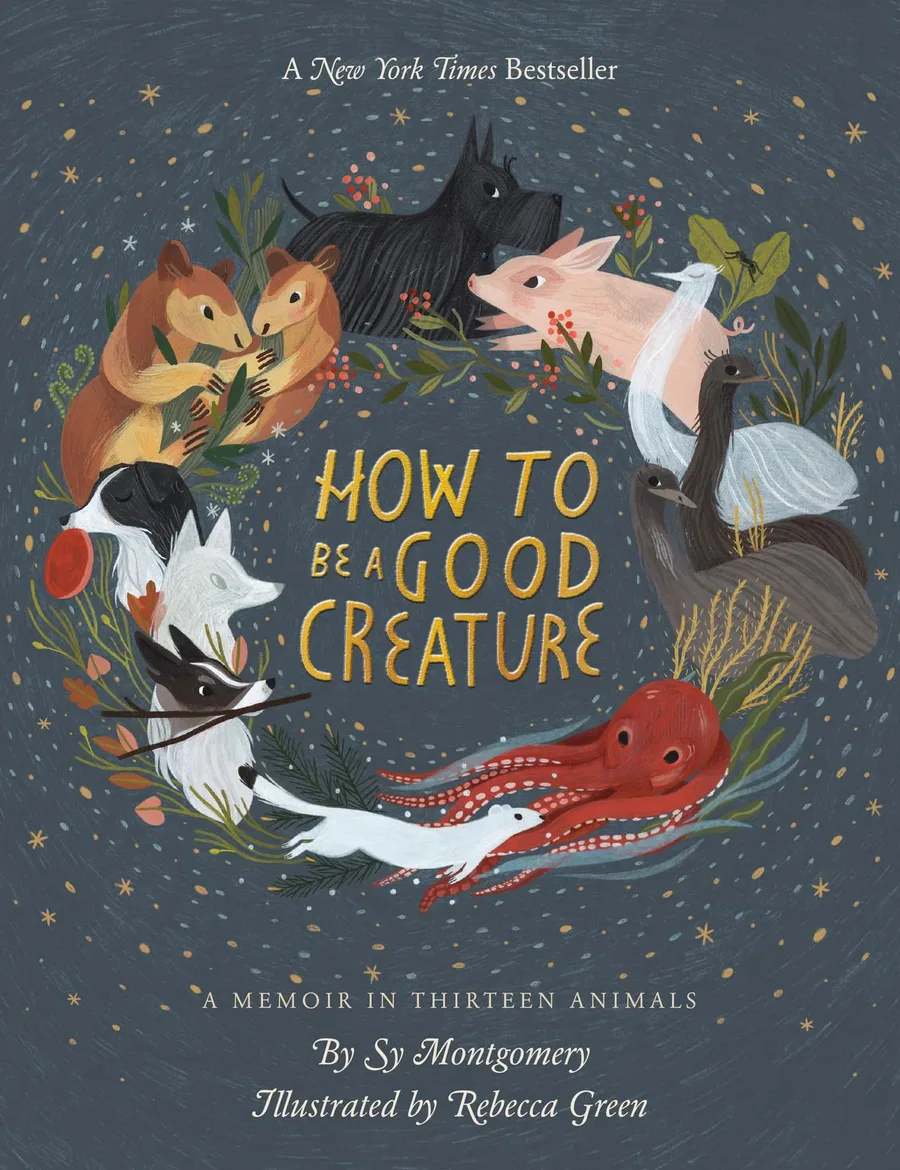 How to Be a Good Creature: A Memoir in Thirteen AnimalsSy MontgomeryAnimals have been central to Sy Montgomery’s life since childhood. She draws on the impact of 13 of them—from beloved pet dogs, to the wild emus that triggered her writing career—as a lens for her memoir. Each of the animals featured can be seen to influence Montgomery’s life in significant ways, whether professionally or personally, like Christopher Hogwood, a pig whose hearty appetite and social charisma prod his introverted owner into interacting with neighbors. While the book design, illustrations, and general theme of this memoir give an impression of suitability to young children, the focus on an adult life and challenging issues including parental estrangement, severe depression, and thoughts of suicide, place it solidly in the young adult realm.Biography, Autobiography, and MemoirView book details
 Brave Jane Austen: Reader, Writer, Author, RebelLisa PliscouThe challenges of poverty and sexism in Jane Austen’s childhood and young adulthood were countered by her early and ongoing exposure to stories, a powerful imagination, and her family’s support of her literary ambition. At a time when young women’s future goals were limited to marriage, Jane defied gender conventions both by writing books and populating them with entertaining characters that behaved badly. She turned down a marriage proposal that would have solved her financial worries, later stating that any type of lifestyle is better than “marrying without Affection.” Although only 41 when she died, Jane lived to see the publication and popularity of four of her books. End matter in this picture-book biography includes additional information about Jane Austen’s life, selected quotes from her letters, and a source list.Biography, Autobiography, and MemoirView book details
 Mary Shelley: The Strange, True Tale of Frankenstein’s CreatorCatherine ReefA prologue describing how Mary Shelley kept Percy Bysshe Shelley’s desiccated heart wrapped in pages of poetry in her writing desk for 30 years seems a fitting entry into the life of Frankenstein’s creator. Influences on young Mary are detailed, from her mother’s legacy as a feminist writer, to her father’s role as teacher and publisher, to her teenage meeting with the married poet Percy Shelley. The tumultuous nature of Mary and Percy’s life together, moving often, struggling with debt, and rumors of infidelity, eroded their early romantic unity. The deaths of three of their four children added to Mary’s emotional 32 Biography, Autobiography, and Memoir CCBC Choices 2019 burden, capped by Percy’s drowning in a boating accident at age 29. Despite the success of Frankenstein, completed when she was just 19, Mary Shelley struggled to support herself and her son with her lesser known novels and other works throughout most of her life, and was criticized for her editing of a collection of her late husband’s writing. Illustrated with engravings and portraits, this meticulous biography includes extensive notes and a bibliography.Biography, Autobiography, and MemoirView book details
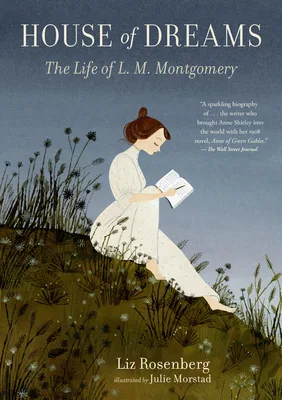 House of Dreams: The Life of L. M. MontgomeryLiz Rosenberg, illustrated by Julie MorstadA fascinating account of the life of Lucy Maud Montgomery (Maud) chronicles her difficult childhood and far more difficult adulthood. Raised by stern grandparents, Maud, unlike her literary hero Anne, was not openly cherished, although her grandmother quietly defied her grandfather and supported Maud’s education. As an adult, Maud was much admired by a number of suitors, but the man she fell passionately in love with was engaged to someone else. She was already a published author, caring for her aging grandmother, when she met the minister whom she would marry—a man she liked but did not love. Maud struggled with depression. Her husband suffered from mental illness that became incapacitating. Maud endured, raising their children while also taking her original publisher to court when she discovered he’d been cheating her—a protracted battle she eventually won. Occasional, judicious parallels between people in Maud’s early life and characters in Anne come up, but it is Montgomery’s own life that leaves a lasting impression, on its own, and in contrast to the idyllic account of girlhood and young womanhood she created.Biography, Autobiography, and MemoirView book details
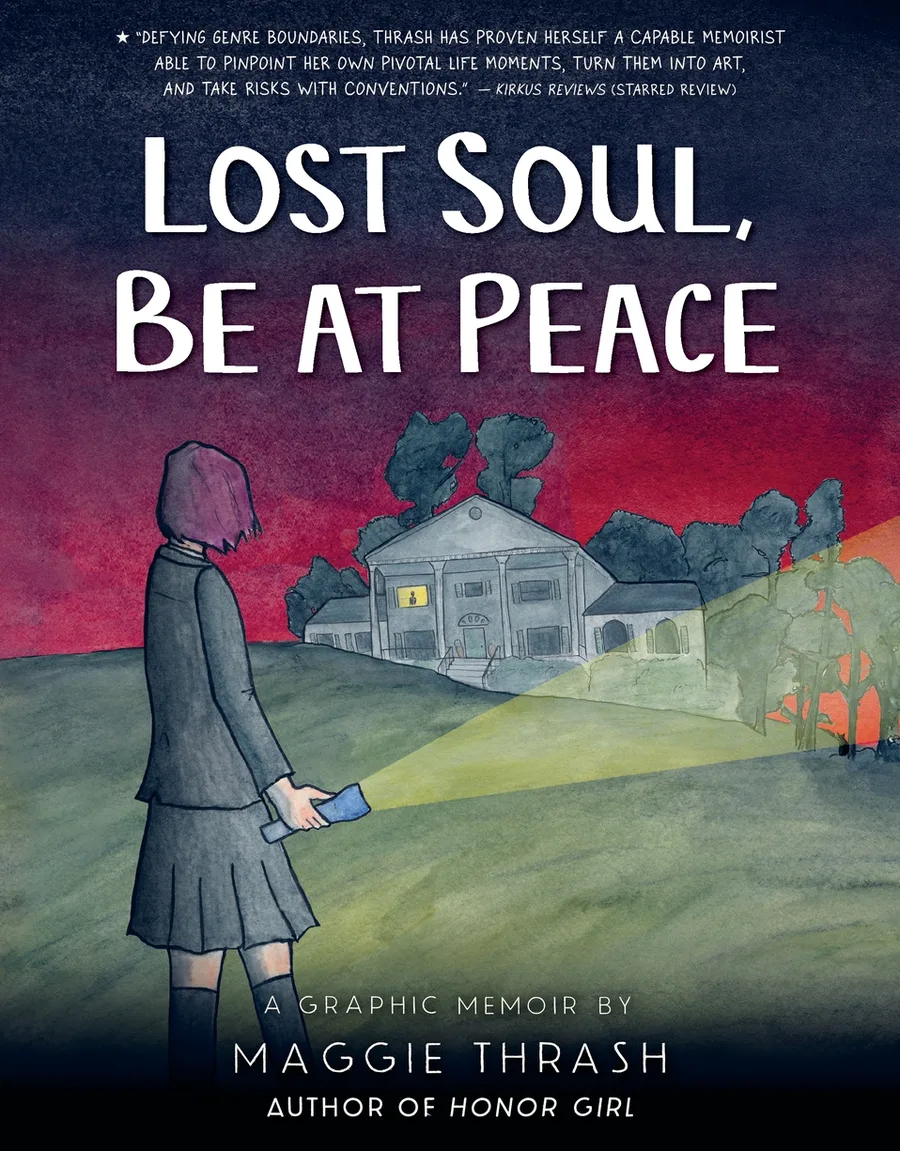 Lost Soul, Be at PeaceMaggie ThrashIn this graphic memoir by the author of Honor Girl, Maggie is depressed and failing classes at her expensive private high school. Her coming out as a lesbian at school has been met mostly with silence. She and her parents are not close; her mom alternates between ignoring and criticizing her, and her dad, a federal judge, is an emotionally distant workaholic. Distraught over the disappearance of her beloved cat Tommi, Maggie searches for Tommi inside her family’s 13-room home and instead finds the ghost of a boy named Tommy. Tommy spends time with Maggie at home and even accompanies her to her father’s courtroom for a day, where she realizes just how much power her dad has over other people’s lives. Later, when her father’s mother dies, Maggie and Tommy (who is invisible to everyone but Maggie) accompany Maggie’s father to his old, decrepit childhood home in Alabama, where a light is finally shed on his rather mysterious past…and other things. This tightly woven, artfully told memoir uses the ghost to illuminate how past experiences—and past selves—influence and contribute to individuals’ growth and development.Biography, Autobiography, and MemoirView book details
Contemporary People, Places, and Events
6 selections
 The Unwanted: Stories of the Syrian RefugeesDon BrownUsing composites based on real Syrian refugees, Brown’s graphic novel offers a chronology of recent events under the Bashar al-Assad regime that have led to civil war and the great waves of Syrian refugees streaming into Turkey and Europe. Tens of thousands are stuck (perhaps forever) in refugee camps where conditions are miserable. Others have made perilous journeys, only to be turned away by nations that are closing their borders. Although he never focuses on one person or family for very long, Brown humanizes his subjects, and makes readers feel compassion, if not outright anger at the way they are being treated. This powerful account is hard-hitting and, at times, painful to read, but it is a critical story for our times and will provide teens with information and insight into what’s going on behind the headlines of current news stories.Contemporary People, Places, and EventsView book details
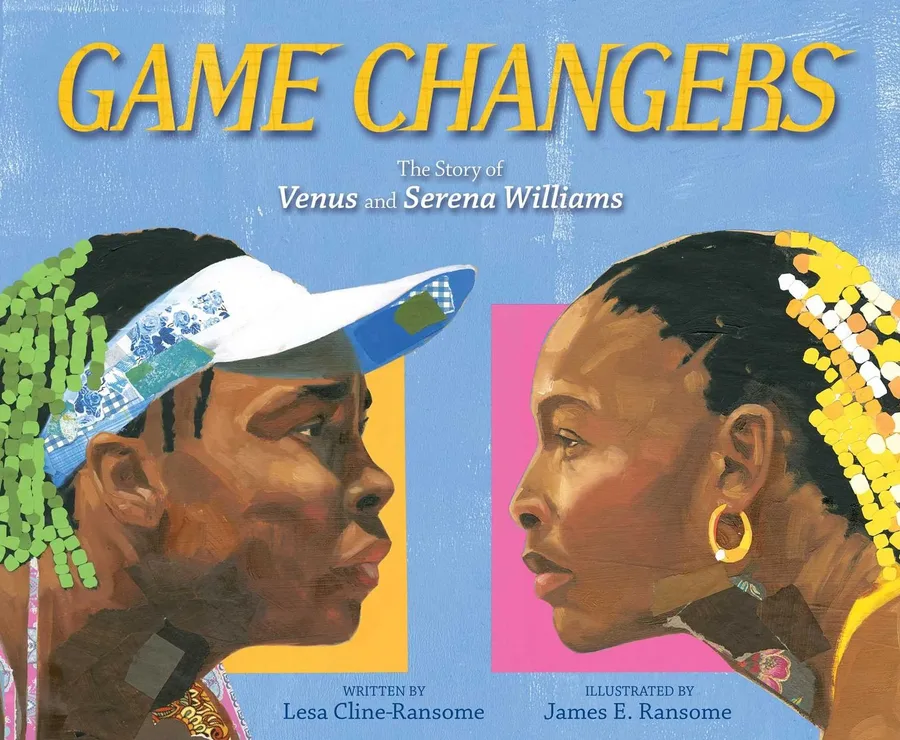 Game Changers: The Story of Venus and Serena WilliamsLesa Cline-RansomeAt age four Venus Williams showed a remarkable talent for tennis, and her little sister Serena was not far behind. Six days a week, the girls trained at a broken- down tennis court near their home in Compton. With their father’s coaching, they became stronger and faster. He had them throw footballs to improve their serves and take track and ballet to increase their speed and agility. He even paid neighbors to jeer from the stands, knowing that they would likely face taunting on the professional circuit because they were Black. By the time they were young teens, they’d already gone pro and quickly worked their way up until they were ranked one and two in the world. This forceful account of the tennis champions’ triumphs and challenges, and their lives on and off the court, is brightly illustrated with cut paper, pencil, and acrylic paints.Contemporary People, Places, and EventsLexile Text Measure 1030LATOS Book Level 6View book details
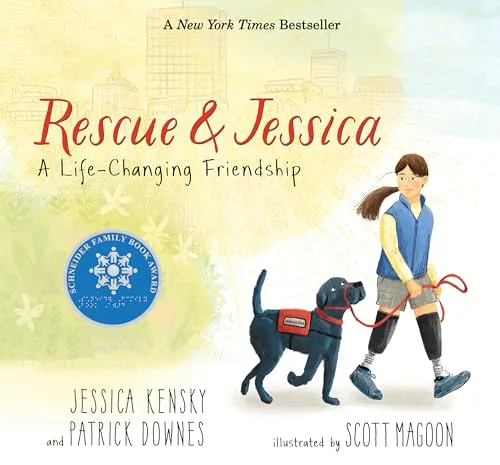 Rescue & Jessica: A Life-Changing FriendshipJessica Kensky, Patrick Downes, illustrated by Scott MagoonA young woman who has lost her leg finds a helpful companion in Rescue, her new service dog, in this story based on author Jessica Kensky’s experience after losing both legs due to injuries received in the 2013 Boston Marathon bombing. While Rescue, who began life as a Seeing Eye trainee, transitions to service dog training and learns to fetch objects and open doors, Jessica is adjusting to life with her wheelchair and prosthetic leg. After meeting a service dog in the hospital, Jessica applies for her own. The two are matched, and Rescue helps Jessica physically—fetching objects and people, opening doors, and helping her up when she falls—as well as emotionally, comforting her when her second leg 34 Contemporary People, Places, and Events CCBC Choices 2019 is amputated, and bringing joy into her life. A story that underscores the skill and versatility of service dogs and the value of their help and companionship also shows the fortitude of one young woman as she heals.Contemporary People, Places, and EventsView book details
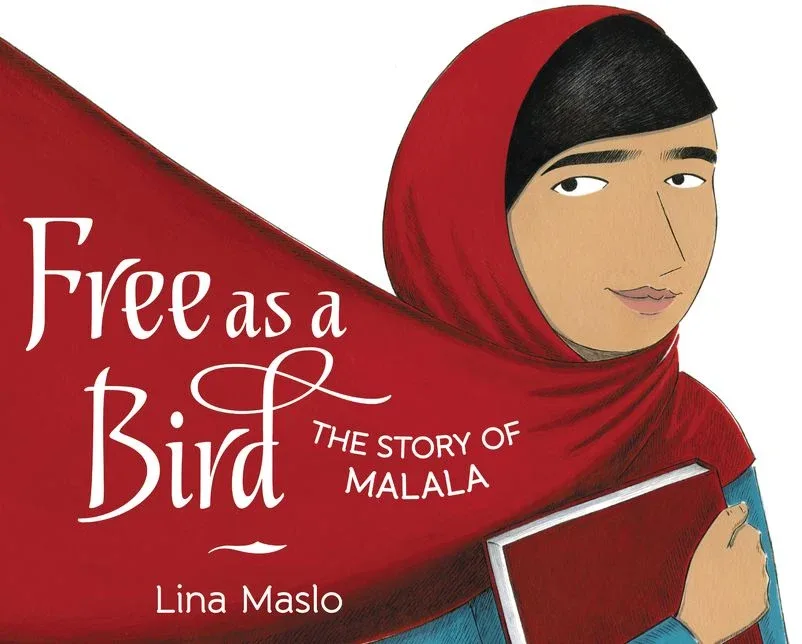 Free as a Bird: The Story of MalalaLina Maslo“I did not clip her wings, and that’s all.” This quote from Malala Yousafzai’s father opens a picture-book account of Malala’s life and accomplishments to date. Born into Pakistani culture that values girls less, Malala thrived in a family that valued her without reservation. She began advocating for girls’ education while still a girl herself. When she and her father were threatened by “a new enemy in Pakistan” it didn’t silence them. The threats escalated and Malala was harmed. An account that focuses on the strength of Malala and her family is spare in the details of the trauma (only the endnote explains she was shot), but the affecting acrylic and ink illustrations change dramatically at that point, going from airy and light to abstract and heavy, shifting back as she begins to recover and speaks out again. “When the whole world is silent, even one voice becomes powerful,” says Malala in the closing quote, which is followed by the author’s note and a timeline.Contemporary People, Places, and EventsView book details
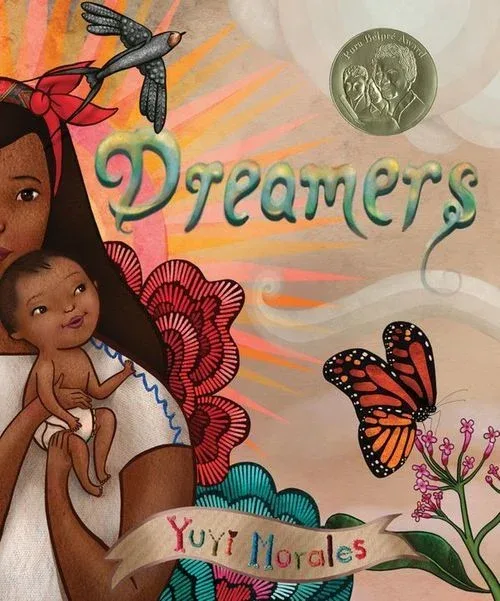 DreamersYuyi Morales“…when we made it to the other side, thirsty, in awe, unable to go back, we became immigrants.” Yuyi Morales tells the story of her journey with her young son to the United States and what happened next in a picture book that pays tribute to love, resilience, books and reading, and dreamers everywhere. The text, spare and poetic, describes a physical journey but, more important, a journey of discovery when mother and son stumble on a place that was “Suspicious. Improbable. Unbelievable. Surprising.” A place that was full of stories. The books they found at the public library were home, and inspiration, and validation, affirming that their stories, their voices, their dreams, their gifts, matter. The lush, fanciful multimedia illustrations incorporate 48 children’s books that Morales was inspired by during that time. End matter includes more details about Morales’s immigrant journey from Mexico, as well as a bibliography of the books she incorporates into the artwork and a brief note on how she made the book. Highly Commended, 2019 Charlotte Zolotow AwardContemporary People, Places, and EventsLexile Text Measure AD480LATOS Book Level 2.2View book details
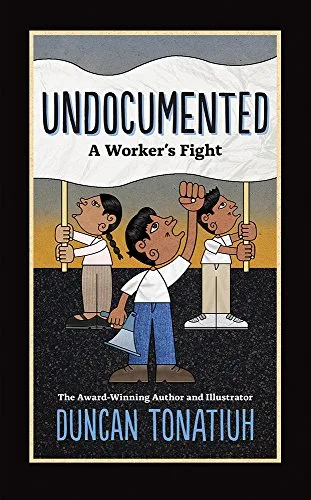 Undocumented: A Worker’s FightDuncan Tonatiuh, illustrated by Duncan TonatiuhLabor rights and the challenges faced by undocumented immigrants are the focus of a fictional story about an undocumented Mexican immigrant who is working long hours in a restaurant for less than minimum wage. A Chinese immigrant who begins working there urges him to go with her for help at a workers’ center. There, the two are told that if they want change, they need to get their coworkers involved. Eventually they are able to convince their coworkers to file a legal complaint against their boss, even though many of them are afraid they might be deported as a result. Tonatiuh’s signature Native CCBC Choices 2019 Contemporary People, Places, and Events 35 Mexican-inspired art style unfolds here in an accordion format that echoes the Mixtec codices that predated Europeans on the American continents. This aptly supports the reader–Friendly, sequential nature of the storytelling in a work that offers a strong social justice point of view, but feels intimate rather than didactic.Contemporary People, Places, and EventsView book details
Understanding Oneself and Others
6 selections
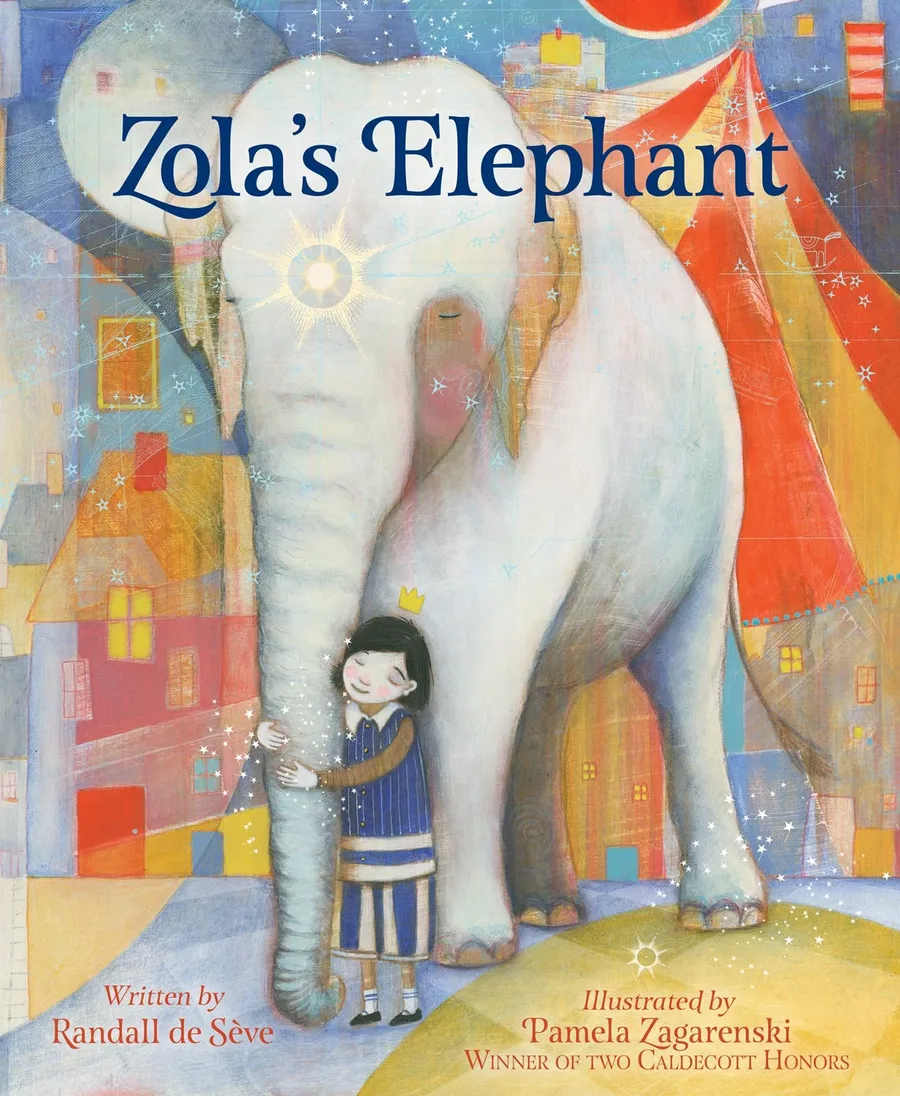 Zola’s ElephantRandall de SèveA young girl has an abundance of reasons why she shouldn’t go visit the new girl, Zola, who moved in next door, even though their mothers have met and “decided we should be friends.” All of the reasons revolve around Zola’s elephant. The young narrator knows she has one, because she saw the big box. And she’s certain Zola and the elephant are far too busy together to want her company, because she’s heard them. Every scene the young girl imagines taking place with Zola and the elephant next door is followed by a wordless page spread showing a very different explanation for the sound, and a very lonely Zola. Finally, the narrator talks herself into, rather than out of, knocking on Zola’s door. “Okay, so maybe Zola doesn’t have an elephant. But do you know what she does have? A new friend.” Whimsical illustrations accompany a story grounded in very real social anxiety.Understanding Oneself and OthersView book details
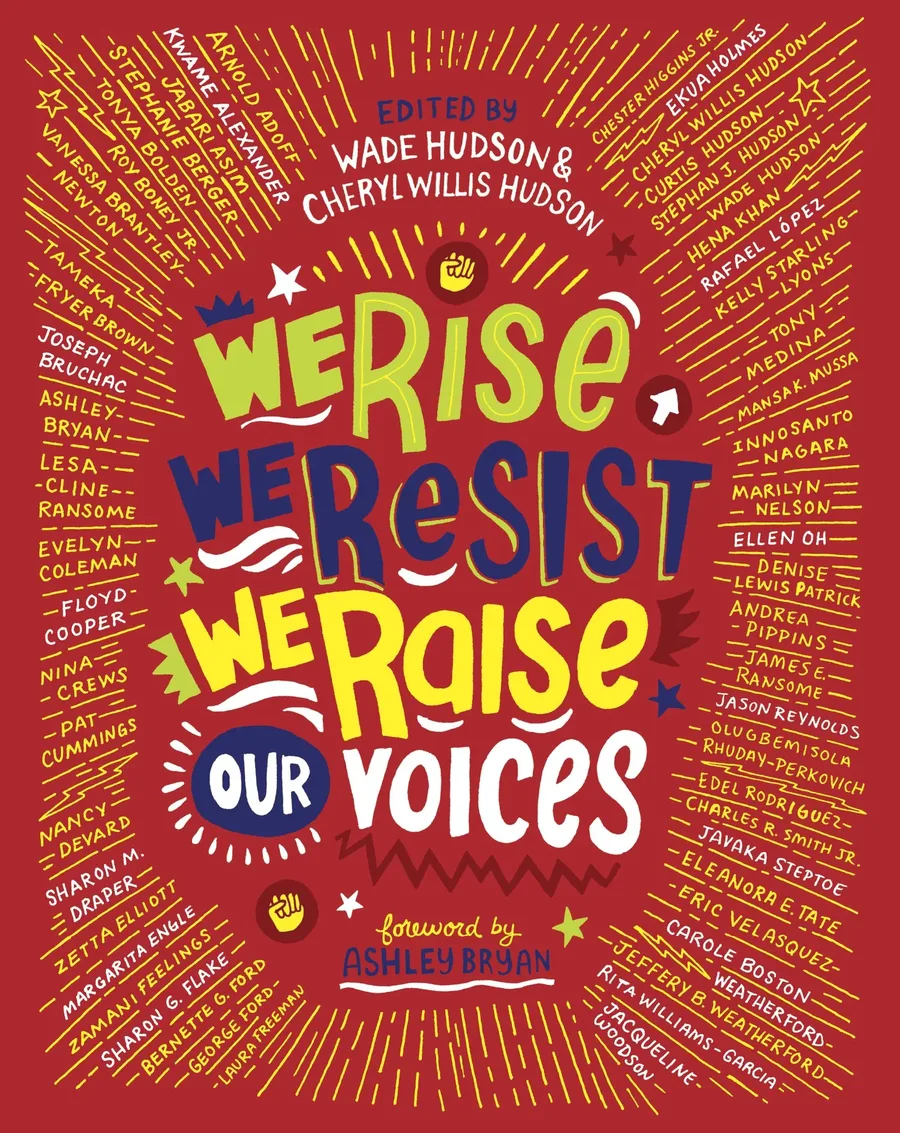 We Rise, We Resist, We Raise Our VoicesWade Hudson, Cheryl Willis Hudson, foreword by Ashley BryanThe intention throughout this volume is clear and focused: It reads like a love letter to Black and brown children. A gathering of poems, essays, short stories, and a wide range of artwork, the pieces include hard truths and hopes and dreams grounded in experience, memory, and imagination. “Kindness Is a Choice,” Jacqueline Woodson writes in a letter to her children. “Stay safe my child …. Come home to me each night,” writes Sharon Draper in “Prayers of the Grandmothers.” Ellen Oh’s childhood memories affirm that words have power—to hurt, yes, but also to change minds. “One day Pap’ drove me to school,” begins Tony Medina’s short story of the same name, in which the young narrator’s father is arrested by ICE. “There is always a storm,” writes Pat Cummings in her poem assuring young readers and listeners that “We’ve Got You.” Thirty written offerings are paired with 30 visual accompaniments in this collection featuring many authors and illustrators of color and from First/Native Nations.Understanding Oneself and OthersLexile Text Measure 850LATOS Book Level 5.4View book details
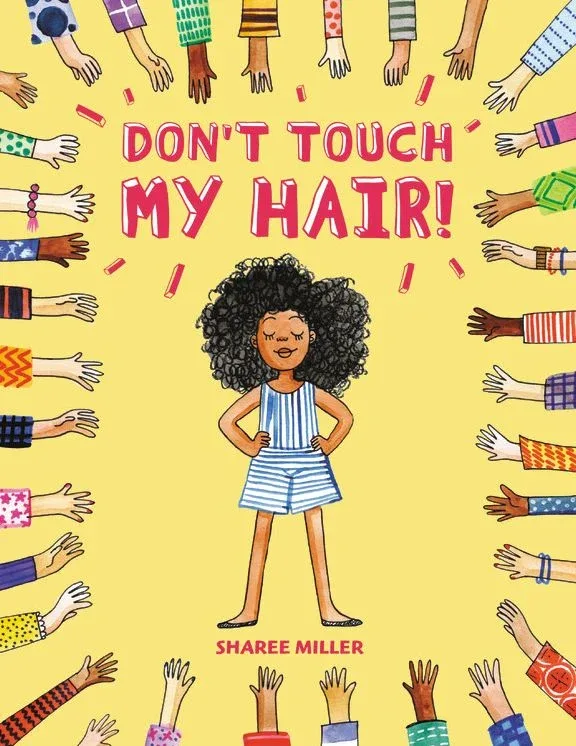 Don’t Touch My Hair!Sharee MillerAria loves her hair. The problem is that other people love her hair, too— some so much that they “try to touch it without even asking permission.” This purposeful picture book uses both humor and directness to address an experience unfortunately far too common for African American children (and adults): the disrespect of someone touching their hair without asking. The lesson extends to all personal boundaries, not just hair, the author explains in a note: Children should learn to ask permission, and know it’s alright to say—or hear—no. (It does not address that the question coming from a child may be rooted in curiosity, but from an adult it may suggest objectification.) Bright, colorful mixed-media illustrations amplify the upbeat tone in this treatment of a serious subject.Understanding Oneself and OthersView book details
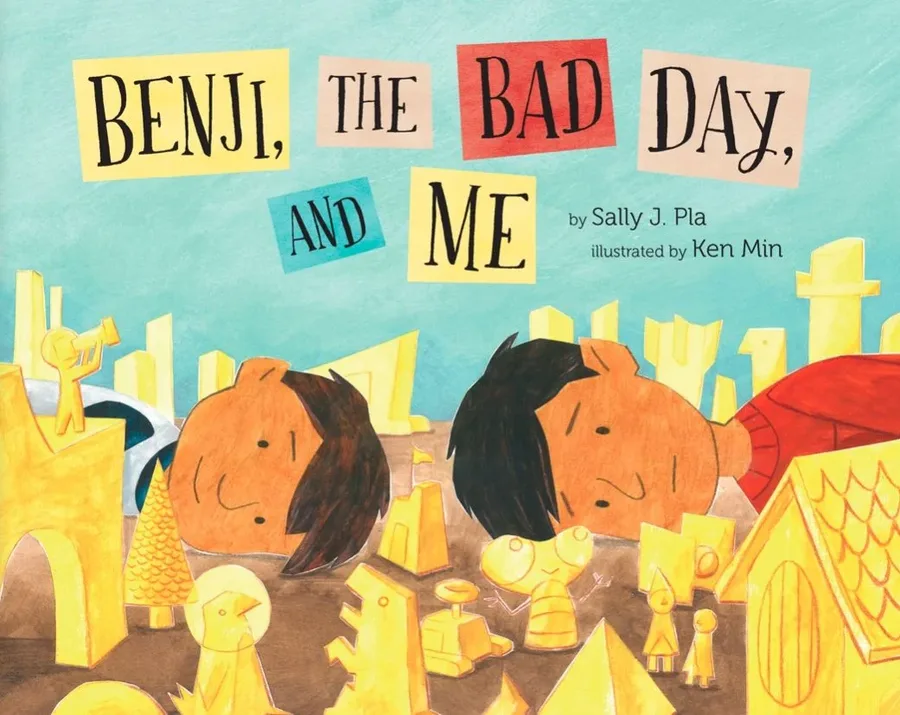 Benji, the Bad Day, and MeSally J. PlaSammy’s had a hard day at school. His little brother, Benji, has had a hard day at preschool. “When Benji’s had a bad day, we tiptoe and speak softly. When I’ve had a bad day, no one tiptoes or speaks softly.” Sometimes it seems everything is about Benji. Sammy can’t take karate lessons because the classes are on the same day Benji has therapy with “Super-Happy-Lady.” But on this day when nothing is going right, Sammy gets comfort from Benji, who comes out from the cardboard fort where he likes to take refuge and burrito-wraps Sammy in his fuzzy blue blanket, just like Mama does for Benji because it comforts him when he’s upset. The author shares that she has one child with autism and one without. It also stresses that no two kids with autism are alike, and that everyone, whether or not they are autistic, has bad days.Understanding Oneself and OthersLexile Text Measure AD500LATOS Book Level 2.6View book details
 The Old ManSarah V, illustrated by Claude KA child begins her day in the city. Not far away, “it’s time for the old man to get up, too.” He has spent a cold, uncomfortable night on the street, and now he is hungry. He moves slowly through his day, keeping to himself but often CCBC Choices 2019 Understanding Oneself and Others 37 bothered by others: Policemen nudge him awake on the curb, telling him to move along; people stare at him on the bus. At the shelter, he can’t remember his name—required—upon checking in, so he heads to the park instead. There, the child who appeared at the start of the book offers him a sandwich and, with a smile, tells him he looks like a teddy bear. Bolstered by the child’s kindness, the man returns to the shelter, where he identifies himself as “Teddy” upon entering. Soft illustrations and plenty of white space accompany this quiet story about the power of a kind word, a small, generous act, and a nonjudgmental attitude.Understanding Oneself and OthersView book details
 The Day You BeginJacqueline Woodson“There will be times when the world feels like a place that you’re standing all the way outside of.” Maybe no one understands “the way words curl from your mouth” in the language of home. Maybe the experiences you’ve had feel like nothing compared to others’, or the food you love is seen as strange, or “the game isn’t one you can ever really play.” The vivid sense of difference, and isolation, experienced by four children in the opening pages of this picture book invites all readers and listeners to consider the strength of “your own brave self…There will be times when you walk into a room and no one there is quite like you until the day you begin to share your stories … this is the day you begin to find the places inside your laughter and your lunches, your books, your travel and your stories, where every new friend has something a little like you—and something else so fabulously not quite like you at all.” Buoyant mixed-media illustrations lend a celebratory feel to a book in which selfhood is triumphant. Highly Commended, 2019 Charlotte Zolotow AwardUnderstanding Oneself and OthersLexile Text Measure AD980LATOS Book Level 4View book details
The Arts
7 selections
 Carlos Santana: Sound of the Heart, Song of the WorldGary GolioCarlos Santana was raised steeped in music. His father played violin for a living and taught his son to do the same. But the instrument didn’t speak to young Carlos. Neither did playing the same mariachi songs over and over for tourists. Carlos longed to play an electric guitar and the blues music he’d heard on the radio from artists like Muddy Waters and B.B. King. And eventually he would, going on to craft his own unique sound after moving to the United States. It was a sound that blended his Mexican roots with American tradition: “a new flavor of rock and roll, charged with Latin passion and the raw honesty of American blues.” Dazzling mixed media illustrations full of color and a sweeping sense of movement accompany a narrative focused on Santana’s feelings about music, and his relationship to his father around music, as a child. An informative author’s note, a personal note from the illustrator sharing his connection with Santana’s music, glossary, and sources conclude the volume.The ArtsView book details
 When Angels Sing: The Story of Rock Legend Carlos SantanaMichael MahinAn artful, second-person narrative dives into the heart and hopes and dreams of Carlos Santana. He wanted to play music that made angels sing, like his father did. But his father’s music didn’t speak to young Carlos, let alone inspire angels, when he tried playing it himself. The narrative illuminates details of Santana’s life, from economic hardship in Mexico as a child to struggles with racism and language barriers after moving to the United States, to his pride in his mestizo heritage, to the inspiration he found in Cesar Chavez and Dolores Huerta. Through it all is his ongoing search for the sound that would make angels sing. He found it when he eventually fused blues music, jazz, and the rhythms and sounds of his homeland. An account that culminates with Santana taking the stage at Woodstock is paired with full-page, richly hued, stylized paintings in acrylic and colored marker. An author’s note, bibliography, and “further listening” suggestions are included.The ArtsView book details
 When Paul Met Artie: The Story of Simon & GarfunkelG. NeriOpposites attract in this picture-book account of two Jewish boys from Queens who begin making music together as young teens. Jokester Paul and “math geek” Artie hit it off as cast members in the sixth-grade production of Alice in Wonderland. Both music lovers, Artie studies the way sounds work together to form harmonies; he takes the high notes while Paul takes the low, creating the sound that would make them famous. Although they enjoy early fame with a song that hits the Top 10 in New York before they even graduate high school, Paul and Artie part ways, pursuing separate interests for years before reuniting. Inspired by the political songs of Bob Dylan and social movements of the 1960s, they rebrand themselves as Simon and Garfunkel and record their showstopper: “The Sound of Silence.” For these long-time friends, the road to stardom is paved with persistence, good timing, and, above all, extraordinary talent.The ArtsView book details
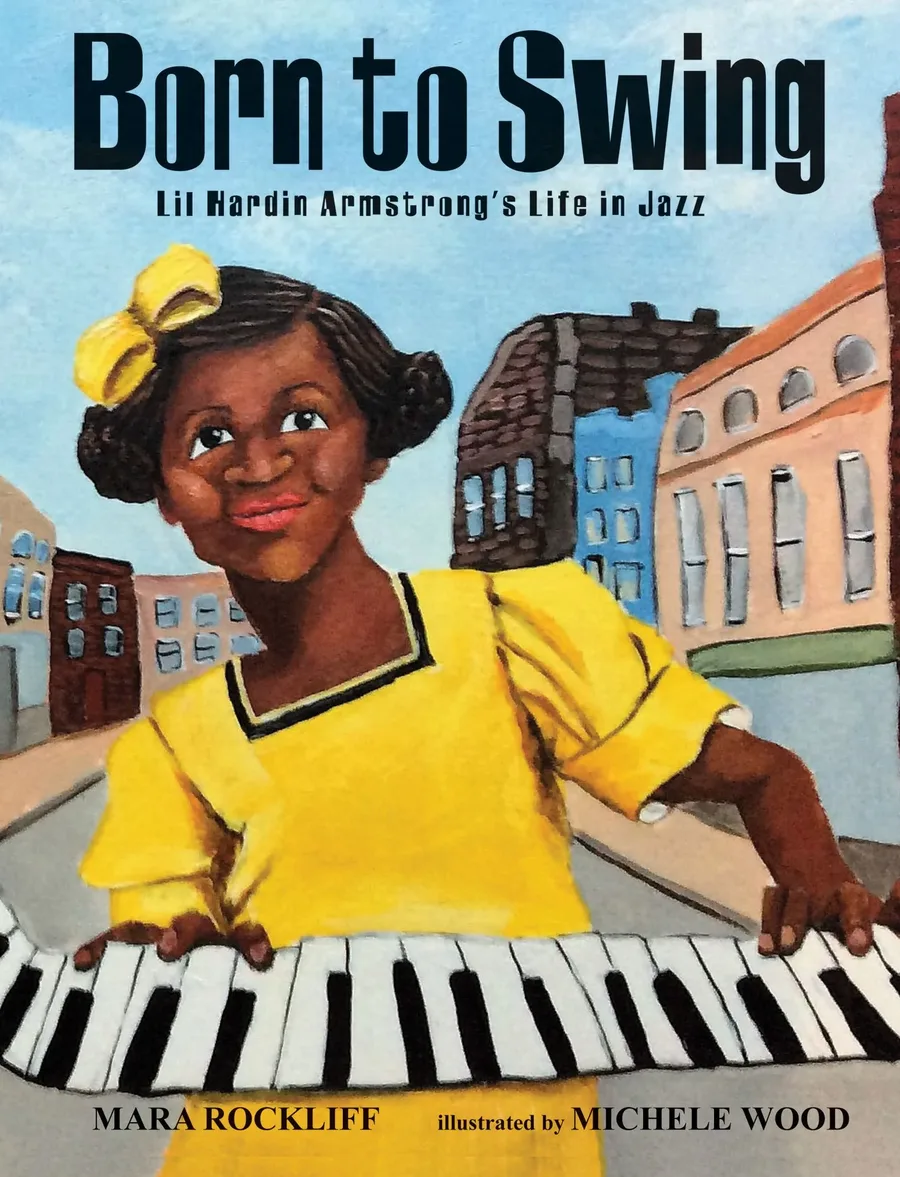 Born to Swing: Lil Hardin Armstrong’s Life in JazzMara RockliffBorn in Memphis in 1898, Lil Hardin loved jazz. Unfortunately, she wasn’t allowed to play what her mother dubbed “Devil’s music,” but Lil added her own beat and style to the organ music she played at Sunday school. She learned to improvise after losing her place during a piano contest at Mrs. Hicks’s School of Music. When her family moved to Chicago, Lil landed a job at a music store, the meeting (and jamming) place for many of the city’s jazz musicians. Soon, she was asked to join the New Orleans Creole Jazz Band, and she became a fixture in the scene. She met, and then married, Louis Armstrong before he was a jazz legend, while her own fame garnered attention. A woman of many talents, Lil continued jamming until her death in 1971. Written in first person, this biography crackles with Lil’s confident character and passion for music. End CCBC Choices 2019 The Arts 39 matter provides additional information, a timeline, bibliography, and a list of Lil’s most famous songs.The ArtsView book details
 The Secret Kingdom: Nek Chand, a Changing India, and a Hidden World of ArtBarb RosenstockRaised in a village in the Punjab region of Asia, Nek Chand Saini is surrounded by stories told by his family members and traveling minstrels. Bursting with imagination and creativity, Nek constructs fantastical miniature worlds outdoors. A young adult when the Partition of India takes place in 1947, Nek flees his village with his family, resettling in the concrete city of Chandigarh, India. Longing for the life he left behind, Nek carves out a space in a swath of jungle on the edge of the city where he can create his own “village.” He spends years collecting discarded objects, remnants of the villages that once existed where Chandigarh now stands, and begins to build his “kingdom.” Nek creates an elaborate landscape of paved paths and mosaic walls with his found objects, populating it with dozens of sculptures of humans and animals. When his kingdom is discovered by the government after 15 years, they want to tear it down. The people of Chandigarh come to his rescue, persuading city officials to allow him to continue creating. A double gatefold of photographs of Nek’s expansive kingdom is the perfect culmination of this awe-inspiring artist’s story.The ArtsView book details
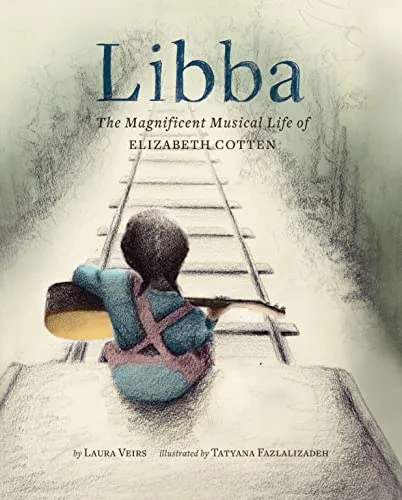 Libba: The Magnificent Musical Life of Elizabeth CottenLaura VeirsAs a child in rural North Carolina in the early 20th century, Libba Cotten “heard music everywhere.” She borrowed her brother’s guitar when he wasn’t home and played it upside-down and backwards, because she was left-handed. “Nobody else played that way, but it was the way that felt right to Libba.” Libba composed the song “Freight Train” around age 11, inspired by the sounds of trains on nearby railroad tracks. “But even trains get derailed.” Libba stopped playing to work and raise her daughter. She was a grandmother working at a department store in Washington, D.C., when she met musician Ruth Crawford Seeger, who hired Libba as a housekeeper. When she picked up a guitar again, Libba impressed the Seegers and their musician friends. The Seeger family helped promote Libba’s music, “[b]ut it was Libba’s perseverance, her love of music, and her belief in herself that gave the world her voice.” An understated, concise yet lyrical text is followed by a concluding note, which touches more on the realities of Libba’s experience as an African American woman, and sources. Libba’s story is warmly illustrated in softly-shaded graphite art with digital color.The ArtsView book details
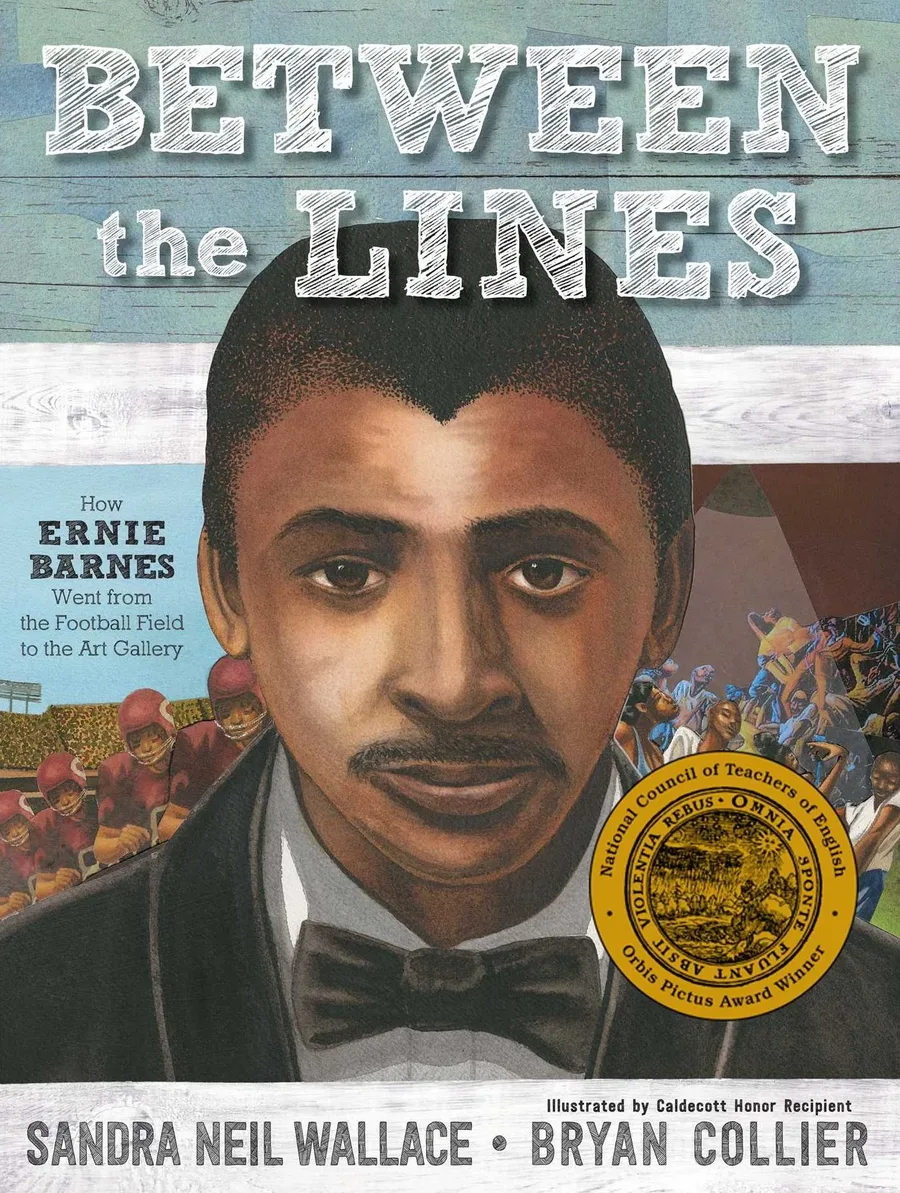 Between the Lines: How Ernie Barnes Went from the Football Field to the Art GallerySandra Neil WallaceErnie Barnes loved to draw as a child, and that love never went away, even when he was given a full football scholarship to college and later drafted by the American Football League. Ernie brought his sketchbook to practice, stashed in 40 The Arts CCBC Choices 2019 his sock, and pulled it out to make notes and sketches. He began painting what he saw on the football field and eventually he transformed his art work into his career. He began by negotiating a job painting for the American Football League but his work and his reputation soon went far beyond football as the expressive movement of the human form he had perfected in sports was applied to paintings of ordinary people. (Many adult readers will recognize his work from the popular 1970s sitcom Good Times.) An extensive author’s note at the end includes several photos of Ernie Barnes’s artwork, showing the progression of his style over time in this fascinating portrait.The ArtsView book details
Poetry
5 selections
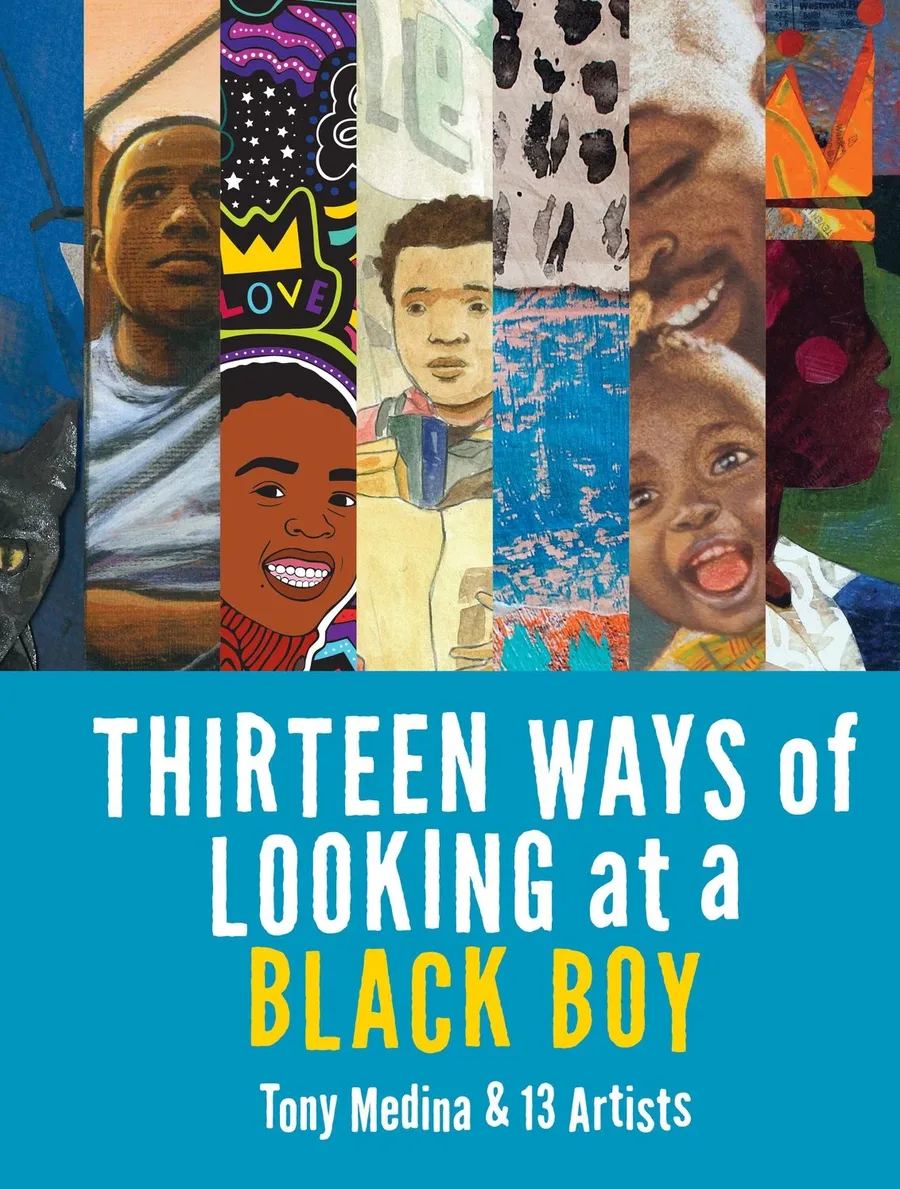 Thirteen Ways of Looking at a Black BoyTony MedinaFourteen poems—the 13 brief poems referenced in the title plus a longer introductory offering—affirm the lives and experiences of Black boys and young men. Across the collection, the poems and accompanying illustrations move from very young childhood (“mama’s little butterfly” in “Anacostia Angel”) to middle childhood (“My granny made me this suit / so I can look nice for God” in “Little Mister May”; “Summertime on stoop / Forehead sweat like ice cream tears” in “Lazy Hazy Days”) to adolescence and young adulthood (“Know how many times / I done miss this broke-down bus” in “Athlete’s Broke Bus Blues”). The final poem is in the voice of a young Black man who has returned to his childhood school as a teacher (“Givin’ Back to the Community”). Each poem is illustrated by a different Black artist, showcasing an arresting array of visual styles, media, and depictions of Black boys. Notes from the poet and about each of the artists conclude this slim, essential volume.PoetryView book details
 Voices in the Air: Poems for ListenersNaomi Shihab Nye“Can we go outside and listen?” Naomi Nye ponders in her introduction. Or stay in. Reflect. Pay. Attention. If we do, we’ll find there is no such thing as a too- small moment or memory. The poems here range topically from the treatment of Palestinians (grief), to Ferguson, where Nye grew up (more grief), to the way genuine connection uplifts her. Many poets and writers are introduced— some in dedications, some in the poems themselves—and further illuminated in Nye’s brief comments at volume’s end. Nye is, above all, a poet of hope and heartening. In “Mountains,” she writes about Jesse, a young man of 21 who was once a 6-year-old child in one of her poetry workshops. “It was my Best Day!” he tells her, and wonders how he can get back to that feeling. “... You knew the truth / when you were six that your street was magical / and full of mountains / though it was utterly flat. / You wrote about the rooster’s songs / and the dog’s barkingful wonder. / You wrote Who do you think I am am am? / And knew instinctively it was more powerful to say / ‘am’ / three times than one— / You are still that person.” Go Jesse. Go Naomi.PoetryView book details
 Hidden City: Poems of Urban WildlifeSarah Grace TuttleA collection of short poems illuminates the ways in which nature thrives and adapts to life in urban areas. Urban wildlife can be small and fierce, like two ant colonies battling one another on the sidewalk. It can be sprawling and colorful, like a community garden in a vacant lot. It is found in parks, backyards, and sidewalk cracks; on rooftops; under stairs; and in the branches of trees. It can be welcome (sunflowers and birds) or unwelcome (raccoons and mice). It is everywhere, and these poems quietly celebrate its presence amongst buildings, traffic, and humans. The short lines of the poems pack plenty of detail, and the large pages feature brightly colored digital illustrations. Additional “fun facts” about the wildlife mentioned in the poetry are included at the end.PoetryView book details
 Martin Rising: Requiem for a KingAndrea Davis PinkneyIn early April 1968, Dr. Martin Luther King, Jr., returned to Memphis to stand again with striking sanitation workers. Fevered and tired, he wanted to skip the April 3 evening rally at Mason Temple, but went and roused the crowd with his oratory and his faith in the path of nonviolence and the promise of the future he knew he may not live to see. Late afternoon April 4, he participated in a gleeful pillow fight in his room at the Lorraine Motel before dressing for dinner. These and other moments illuminated in poems detailing King’s life, and especially his final days, his death, and the grief that followed, are full of poignancy, power, and tension. Divided into three sections—Daylight, Darkness, Dawn—the poems’ language and cadence don’t just invite but insist on being spoken aloud. Impeccably researched and documented, the poems, paired with expressive mixed-media illustrations, conclude with a brief photo essay about the Memphis strike and King’s assassination, along with a timeline, sources, and an essential author’s note. The pain of King’s loss feels immediate and shocking, the hope of his legacy lasting.PoetryView book details
 Seeing into TomorrowRichard WrightRichard Wright grew up in Mississippi. “He was a little boy who knew the sound of trees rustling in the wind, the journey of a solitary ant, and the brown of a muddy dirt road,” writes Nina Crews in a brief introduction to these lovely haiku. African American Wright, Crews continues, was a child at a time when “people said that brown little boys like him didn’t grow up to be famous writers.” Of course, Wright did, in fact, grow up to be exactly that. The 12 poems here, which Wright wrote later in his career, all reflect a sense of connection to nature. They’re paired with photographs taken by Crews showing diverse brown-skinned boys in this delightful and affirming collection that concludes with more about haiku (of which Wright wrote more than 4,000) and Richard Wright.PoetryLexile Text Measure 650LATOS Book Level 2.8View book details
Concept Books
3 selections
 LlamaphonesJanik CoatVariations on a stylized green llama illustrate 17 pears…er…pairs of homophones in a board book that is a visual delight. A “pair” of llamas and a llama shaped like a “pear.” A llama on a bottom “stair” and a comically round- eyed llama caught in a “stare.” A glistening-winged llama “fairy” and a llama on a ferry. Each page spread features two sound-alike words and two droll illustrations sure to bring smiles, whether or not children are old enough to read the words. For those who are, the sly sophistication will overcome resistance to the book format.Concept BooksView book details
 Ducks Away!Mem FoxA mother duck waddles onto a bridge followed by her five ducklings. A sudden gust blows the last little duck into the river below. Its mother quacks, “What should I do? Where should I go, with four on the bridge and one below?” Each of the remaining ducklings falls into the river in turn, with Mother Duck repeating her refrain, re-stating the numbers of little ducks on the bridge and in the water each time. Eventually only she is left on the bridge until, encouraged by her brood, she joins them in the river. Subtraction, sorting, and spatial concepts are smoothly incorporated into a funny and appealing read-aloud for preschool or kindergarten.Concept BooksLexile Text Measure 241LATOS Book Level 2View book details
 A Parade of ElephantsKevin HenkesFrom morning to night, five brightly colored little elephants march in a line, up and down, under and over, round and round, introducing simple concepts to very young children. Although the text is spare, a subtle use of word play (double meanings for “round” and “done,” for example) adds surprise, as does the final trumpeting before the elephants fall asleep at night. The heavy brown outlines contrast with the soft pinks, blues, greens, and yellows, and anchor the watercolor illustrations, keeping the elephants in line. Exquisite bookmaking includes heavy creamy paper, day and night endpapers, and a front cover that shows the front of the elephant and a back cover that shows the elephant’s backside. This elegant book for babies and toddlers offers so many pleasures to both the eye and the ear that they and their parents will enjoy reading it again and again.Concept BooksLexile Text Measure 47LATOS Book Level 0.9View book details
Picture Books for Young Children
40 selections
 Black Bird Yellow SunSteve LightA deceptively simple board book, with just four words per page (two of which are always “black bird”) is also quite elegant. From morning to night, a black bird moves from page to page, each featuring part of the natural world that’s a different color. Logically organized from sun up (“yellow sun”) to sundown CCBC Choices 2019 Concept Books 43 (“blue moon”), the little black bird is shown from various perspectives throughout the day, sometimes flying, sometimes perched. The lines are clean and the shapes are clear in the textured collage artwork, so that a baby will always be able to find the black bird in its natural setting. It’s rare for an eight-page-spread board book to offer such a high level of artistry and such an exquisite aesthetic. (Birth to age 3) Agee, Jon. The Wall in the Middle of the Book. Dial, 2018. 40 pages 978–0–525–55545–2) A little knight on the left-hand side of the brick wall running down the exact center of this book explains that his side of the wall is completely safe as he scales a ladder to repair a broken brick near the top. The other side, he notes, is filled with danger. And indeed, a rhino, a tiger, and a gorilla are on the other side of the wall. But they don’t look particularly scary. In fact, they are all frightened by a mouse. Even the ogre who enters the scene from stage right appears to be friendly (and turns out to be altruistic). Meanwhile, unbeknownst to the knight, there are all sorts of dangers creeping up behind him on his side of the wall: a crocodile, predatory fish, and quickly rising water. But he’s too obsessed with the perceived danger on the other side to notice. A clever design and funny storyline combine to serve as a parable about fear of the unknown.Picture Books for Young ChildrenView book details
 Good Morning, Harry, Good Night, DaddyKaty Beebe, illustrated by Valeri GorbachevIn this cozy story of a working-class British family, a father’s overnight shift on a sleeper train parallels his family’s evening and bedtime rituals. In a narrative alternating between father and son, Daddy helps passengers board and find their cabins as Harry and Gran head home for late afternoon tea. As Daddy delivers trays of tea to families on the train, Harry feeds Baby while Mummy puts supper on the table. Daddy enjoys his late-night lunch while, back home, Harry and Baby are bathed. In the morning, when Daddy finally arrives home, ready for a bowl of porridge and bed, Harry is just beginning a new day. Peppered with British words, phrases, and lullabies (“moggy,” “mind the gap,” and “too- ra-loo,” to name a few), this book offers a glimpse into the life of a loving, multigenerational family and the fascinating-to-kids work of a sleeper train attendant.Picture Books for Young ChildrenView book details
 Captain StarfishDavina Bell“The day before the Underwater Dress-Up Parade, Alfie got that feeling.” It’s a familiar feeling, and not a nice one. Alfie tells himself he’s brave enough to be Captain Starfish in the parade, but that night he dreams of sea monsters. In the morning his tummy hurts and he doesn’t go. His parents take him to the aquarium instead. During their visit, Alfie notices a small clown fish who swims 44 Picture Books for Young Children CCBC Choices 2019 to the glass for just a second before darting away to hide in the coral. Inspired by that brief encounter, Alfie realizes it’s okay not being Captain Starfish this year, but decides that next year he’ll be a clown fish in the parade. Alfie’s fear will be relatable for many children with social anxiety. His parents’ calm acceptance means they don’t try to push Alfie, or treat him like there’s something wrong that needs fixing. It makes the final page spread showing clown fish Alfie one year later all the more satisfying. A limited, unusual color palette with soothing blues and punctuations of bright coral adds further distinction to this welcome picture book.Picture Books for Young ChildrenLexile Text Measure AD540LATOS Book Level 3.6View book details
 Our CarJ. M Brum, illustrated by Jan BajtlikDistinctive illustrations take center stage in this sprightly import from Poland in which a child delights in the family’s little red convertible through whimsical journeys rooted in imaginary play. The size of the book (short and wide) accentuates the movement of the little red car from left to right across the page, except when mechanical work is being done. The details about the car are childlike (its color, how fast it can go, what happens when it rains, etc.), adding to the book’s appeal. In the end, it’s revealed that the child has been playing in a makeshift car inside the house all along in this deceptively simple, aesthetically appealing book sure to be a crowd pleaser with young car enthusiasts.Picture Books for Young ChildrenLexile Text Measure AD460LATOS Book Level 3.1View book details
 Lena’s Shoes Are Nervous: A First-Day-of-School DilemmaKeith CalabreseLena is excited to be starting kindergarten. She’s picked out her favorite clothes to wear—blue dress, pink striped socks, green-flowered headband, yellow shoes—but her shoes are reluctant to go. When Lena’s dad suggests her dress (which is “very outgoing,” according to Lena) talk to her shoes, Lena informs him they don’t get along. Luckily Lena’s headband is friends with all her clothes. Between the headband’s encouragement, and Lena’s suggestion that she might have to wear her slippers if the shoes won’t come, the shoes—and Lena—find their courage. Brown-skinned Lena uses imagination and role-playing to work through first-day-of school nerves, while her supportive dad knows when to step in and when to get out of the way. A fresh, playful story perfectly matched by exuberant, digitally rendered illustrations that use both bright colors and black- and-white lines to wonderful effect.Picture Books for Young ChildrenView book details
 Good DogCori DoerrfeldA small, adorable dog watches a brown-skinned girl and her mom get on a bike before the title page. “Stray dog” begins the narrative—two words on the left side of each spread, accompanied by the full-page visual storytelling on the right, here showing the small white-and-black pup chasing them. The girl waves to the dog. The dog loses sight of them in traffic (“Lost dog”). Scared, lonely, hungry, hopeful: The dog’s status shifts across scenes in which the young girl usually appears and the pup always appears (sometimes to break your heart), following them. In the park, the girl gives the dog a treat, but leaves her teddy CCBC Choices 2019 Picture Books for Young Children 45 bear behind when they leave. “Smart dog” realizes what’s happened, and retraces the route taken across the day to return it to her at home. “My dog?” the girl asks her parents (dad is Black, mom is white). “Good dog” she tells the pup as they get ready for bed that night in this sweetly tender offering with charming digital ink illustrations and wonderful word choice. Good story.Picture Books for Young ChildrenView book details
 Baby’s FirstsNancy Raines DayBabies are cared for and loved by their families from the moments immediately following birth (“First cry. First meal. First burp. Warm feel.”), on through a series of physical and developmental milestones of their first year in this pleasing picture book. First smiles, laughter, and teeth are followed by crawling, walking, and words. The year of babies’ firsts culminates in a first birthday celebration. A diverse cast of families and a succinct rhyming text lovingly capture many of the highs and some of the lows (dirty diapers, parental exhaustion) of welcoming a newborn into the home.Picture Books for Young ChildrenView book details
 Albert’s TreeJenni DesmondAlbert the bear heads straight to his favorite tree after hibernating. He’s missed climbing and the peace and quiet he enjoys there. Then he hears a wail. Is his tree crying? Albert, Rabbit, and Caribou try to cheer the tree up—they dig holes for it to play in and gather some grass for the tree to eat, but nothing helps. Finally, Albert gives the tree a hug and asks why it’s crying. The tree replies that he’s scared of the big hairy monster. Albert (the big hairy monster) realizes that the voice is not coming from the tree, but from a tiny owl nesting inside it. After the initial shock of their meeting, Albert and Owl bond over their shared love of the tree. Gentle humor and a sweet, unexpected friendship are complemented by mixed-media illustrations that give a cozy feel to Albert’s forest home with shades of green, brown, grey, and blue.Picture Books for Young ChildrenView book details
 You and MeRebecca Kai Dotlich“His skin’s so soft. / His hair’s so fine. / I know my numbers / up to nine.” A board book brimming with warmth offers a fresh, lively, relatable look at family change. Rhyming couplets pair third-person statements in the voice of an adult (who appears to be the mom) making observations about the new baby in the family to an older sibling, with first-person statements in the voice of the older child, who is eager to tout their own accomplishments. The big sibling is also, of course, assuring they still have a place at the grown-up’s center of attention, something that there is no doubt about even before the big kid finally gets a lap and storytime—when the baby falls asleep. “Hurray! / It’s time for you and me! ” The baby is a boy; the older child could be any gender in story that celebrates both children in this Black family. The illustrations, like the narrative, provide a vivid, comforting sense of realism.Picture Books for Young ChildrenView book details
 Up the Mountain PathMarianne Dubuc, illustrated by Marianne DubucWhen Lulu the cat asks to join Mrs. Badger on her weekly solo hike up to Sugarloaf Peak, she learns a lot from the more experienced hiker, and not just about hiking. Detailed illustrations offer an even bigger picture of all that’s going on in Mrs. Badger’s world while the wry, understated text leaves room for the child’s mind to figure out all that’s happening by linking the words to the pictures. Like Lulu, readers and listeners will see the small acts of kindness that define how Mrs. Badger lives her life. Animals who should be enemies/ predators make quiet, conscious choices here to co-exist. The friendship that develops between Mrs. Badger and Lulu is depicted by showing, not telling. The same goes for Mrs. Badger’s aging process and inevitable death (keep your eye on the vulture) in this gentle storybook that doesn’t sugarcoat its message but is comforting nonetheless.Picture Books for Young ChildrenLexile Text Measure 361LATOS Book Level 2.6View book details
 A Lion Is a LionPolly DunbarA scowling lion on page one dons a hat, skips down the street, wipes his feet on the front mat, and inquires after the health of Auntie Sue. Is a lion still a lion if he behaves nicely, and says please when asking for pudding? “Yes! A lion is a lion is a lion!” When he shows his teeth and roars, is it time to hide, or is it time to say “No!” and shoo that lion out the door? A jaunty text and playful illustrations encourage readers to trust their instincts and say no if something doesn’t feel safe without ever becoming overly heavy-handed or didactic. The empowered children who chase the lion from their home know they are not obligated to be polite to someone who is trying to hurt them, even when that someone is large and powerful.Picture Books for Young ChildrenView book details
 When Mama Braids My HairMonique DuncanHair braiding is a Sunday night ritual for a little girl and her mama. “Tugging, combing, pulling, twisting—Mama parts my thick coils to smooth out all the tangles.” As her mama works, she tells the girl that her hair style echoes those worn by women thousands of years ago. The little girl imagines herself as an Egyptian queen, a Nigerian goddess, a Zulu warrior, and a Maasai girl, each with a different hairstyle. All of the hairstyles are rooted in specific geographic and cultural regions of Africa (shown in the back with a map and brief description) but all also reflect contemporary styles worn by Black women and girls today. The history and cultural grounding of these styles is further detailed in brief descriptions accompanying photographs of children wearing them at book’s end. The warmth between mother and daughter is as lasting as the cultural pride in this picture book featuring bold acrylic and collage illustrations.Picture Books for Young ChildrenView book details
 Ben and the Scaredy-DogSarah Ellis“When Ben looks at a dog he sees jaws and teeth. That’s a dog to Ben. Jaws and teeth.” When Erv moves in next door to Ben and invites him over to play, Ben CCBC Choices 2019 Picture Books for Young Children 47 knows her dog, Max, will be there. But it turns out Max is scared too—of the shiny floors in his new home. Max has his big bulk contained on a tiny bath mat. When Ben is left alone for a moment with Max, he knows everything not to do: Don’t look him in the eye; don’t let him smell fear. So Ben shuts his eyes tight, and tries not to smell like anything. “Then he heard a sound. Tickety- tick. It was the sound of a dog’s toenails on a shiny floor.” Ben starts to hum nervously, and soon feels Max’s big bulk pressing into his side. When Ben finally risks a glimpse, “He didn’t see jaws and teeth. He saw a brave, friendly leaner.” The drama of the tickety-tick of Max’s claws and the huge shadow of Max that precedes his arrival at Ben’s side both amplify the tension, which in turn adds to the sweet relief of this warm, satisfying story.Picture Books for Young ChildrenView book details
 Little BrownMarla FrazeeLittle Brown, a cranky (but otherwise unremarkable) brown dog, has no one to play with at the kennel. Is that why he’s cranky? Or do none of the other dogs include him because he's cranky? When he hoards all the other dogs’ toys, what should they do? What should Little Brown do? In Frazee’s superb text, supported by equally fine, soft-hued pencil and gouache illustrations, a dramatic narrative crafted with wonderful language and artful pacing is full of hilariously spot-on dog behavior. But Little Brown’s isolation is heartbreaking, while the puzzlement of the other dogs and the “dilemma” they all face make for a complex look at social dynamics. The brilliant open ending leaves everything up for discussion with young readers and listeners, who no doubt know people like all of the dogs portrayed here. Winner, 2019 Charlotte Zolotow AwardPicture Books for Young ChildrenView book details
 The Crocodile and the DentistTaro GomiA crocodile with a painful tooth and his human dentist both approach an appointment with dread: “I really don’t want to, but I have to.” Their mirrored perspectives continue throughout the encounter (“I’m scared … But I should be brave.”) even to the shared “Ouch!” as the dentist prods the sensitive tooth and the crocodile reflexively bites down on his hand. Although both parties reflect it was “an awful thing to do!” they also privately agree “there’s no use getting angry.” As the patient departs the office, both state fervently that they don’t want to see the other again, so tooth brushing is a must. Their twinned perspectives on each statement offer a humorous chance to explore differing takes on the same series of events.Picture Books for Young ChildrenWord Count 134View book details
 Little TruckTaro Gomi, illustrated by Taro GomiA bright pink Little Truck makes its way along the road under the watchful eye of a large orange truck. The orange truck warns Little Truck not to go too fast and provides a helpful push when Little Truck slows down trying to crest a hill. When Little Truck heads into a tunnel, the trailing orange truck wonders, “Where did Little Truck go? Are you okay, Little Truck?” After catching up, orange truck gives Little Truck a ride on its flatbed. “Sweet dreams, Little 48 Picture Books for Young Children CCBC Choices 2019 Truck. It’s time to go home.” The simple text and boldly outlined illustrations of this compact board book offer both drama and the safety net of an attentive caretaker for young adventurers.Picture Books for Young ChildrenView book details
 Honk! Splat! Vroom!Barry GottWritten almost entirely in onomatopoeia, this picture book follows five mice in tiny, different-colored racecars. When they take off at the starting line in the grassy outdoors (“Vroom!”), the mouse in the blue car is left sneezing in the dust. But when the four lead mice get stuck in a mud puddle (“Splat! Splat! Splat! Splat!”) the blue mouse uses them as stepping stones (“Boink! Boink! Boink! Boink!”). Briefly in the lead, the blue mouse tumbles into a creek and thinks it’s all over, but he’s assisted by a passing goose. Meanwhile, the four others retake the lead but are waylaid and nearly eaten by a cat, until blue mouse and the goose come to their rescue. The life-threatening race has taught the mice to be better sports, and they all cross the finish line together. With spare but expressive text that varies in size and boldness, this story is loads of fun and carries a clearly communicated, but not preachy, message of cooperation.Picture Books for Young ChildrenView book details
 Something Smells!Blake Liliane Hellman, illustrated by Steven HenryOne morning, upon awakening, Elliot’s nose detects “a most terrible smell.” A search for the source commences. There’s nothing stinky hiding under his bed. There doesn’t seem to be a skunk in the neighborhood. It’s not his hamster, his bird, or his dad. At breakfast, Elliot is so busy searching that he ignores his mother’s admonishment (“Not one more day in that costume, Elliot!”) and continues sniffing various human and animal members of the family. It isn’t until Elliot’s mother insists he remove his skeleton costume and take a bath that Elliot realizes what readers have known all along: He is the source of the smell. Detailed illustrations show a large, slightly hectic family home and evidence of a recently celebrated Halloween. Readers who have a leg up on Elliot will laugh at his humorous thought process and total bewilderment.Picture Books for Young ChildrenLexile Text Measure 301LATOS Book Level 2.3View book details
 Where’s Bunny?Theo Heras, illustrated by Renné BenoitA brown-skinned toddler and his older sister work their way through a bedtime checklist outlined on the opening endpaper. From picking up toys through bathing, tooth brushing, pajama donning, and story time, the little boy cheerfully follows the routine under the loving supervision of his big sister. An occasional “where’s Bunny?” check-in shows the reassuring proximity of a favorite toy. The evening closes with hugs, kisses, and a lullaby, followed by a final “Good night, Bunny.”Picture Books for Young ChildrenView book details
 FloatyJohn Himmelman, illustrated by John HimmelmanMr. Raisin is something of a grump. He enjoys sewing. He does not enjoy mysterious baskets left on his front porch. He does not enjoy receiving unsolicited puppies in said baskets. And he especially does not enjoy puppies CCBC Choices 2019 Picture Books for Young Children 49 that float. After nudging the floating puppy off the ceiling with a broom, Mr. Raisin considers ushering him out the front door—but he’s not heartless enough to let the puppy just float away. He fumbles his way through his first day of dog ownership, tossing cornflakes into the air for the puppy—now floating on a leash—to eat and aiming a water hose at his mouth. Over time, the dog grows on Mr. Raisin. He’s not such a bad companion. Mr. Raisin names him Floaty, much to his own amusement. But to his dismay, when they’re out for a “walk” one day, Floaty floats off when his leash snaps. Mr. Raisin must use his sewing skills to rescue his beloved new friend. Brightly colored illustrations provide most of the humor in this delightfully droll and heartwarming story.Picture Books for Young ChildrenLexile Text Measure AD540LATOS Book Level 2.6View book details
 Will Sheep Sleep?Hilary LeungLeung, Hilary. Will Ladybug Hug? Scholastic, 2018. 36 pages (978–1–338–21560–1) Leung, Hilary. Will Bear Share? Scholastic, 2018. 36 pages (978–1–338–21559–5) Three board books offer thoughtful, sometimes unexpected answers to three titular questions. In Will Bear Share?, Bear has a playroom full of toys and snacks, but will she share? Each page spread depicts Bear with one of her possessions as it asks the question. The answer is always “yes”—except when it comes to her toothbrush, which she will not share with her crocodile friend. Using the same question-and-answer format, Ladybug offers to hug each friend in Will Ladybug Hug? All of her friends accept her increasingly creative hugs except Sheep, who, in a simple lesson about consent and respect, says that he “does not want to hug and that’s okay.” In Will Sheep Sleep?, Sheep is tired, but will he sleep? He tries a few different bedtime activities. Brushing his teeth, cuddling his favorite stuffed animal, and reading a story do not help him sleep, but counting sheep—with a little help from his sheep-costumed friends—just might. Silly, engaging questions and bug-eyed animals invite young children to think and talk about activities and social interactions they likely encounter in their own day-to-day lives.Picture Books for Young ChildrenLexile Text Measure AD270LATOS Book Level 2.1View book details
 A BIG Mooncake for Little StarGrace LinLittle Star’s Mama takes the Big Mooncake out of the oven and lays it onto the night sky to cool. “Can you remember not to touch this Big Mooncake until I tell you to?” Little Star says yes, and she does remember until the middle of that night. Then all she can think about is that Big Mooncake. “Pat Pat Pat.” She tiptoes out and takes a tiny nibble. Trailing crumbs, she flies back to bed. But the next night she does it again. And again the night after that. Slowly the Big Mooncake gets smaller, its shape gradually changing from round to crescent to nothing at all. Grace Lin’s enchanting original story inspired by the Chinese Mid-Autumn (Moon) Festival features luminous gouache illustrations in beautiful black and gold showing Little Star, Mama, and the deep night sky in which the Big Mooncake wanes, crumbs sparkling as stars. Highly Commended, 2019 Charlotte Zolotow AwardPicture Books for Young ChildrenLexile Text Measure AD430LATOS Book Level 2.2View book details
 Julián Is a MermaidJessica LoveRiding the train home from the swimming pool, Julián and his abuela see women clad in elegant, mint-green dresses trailing tail fins: mermaids. Wide- eyed Julián drifts into a fantasy: submerged in water, his hair lengthens and he’s swept up in a stream of sea creatures, a tail where his legs had been, a large blue fish presenting him with a coral necklace. Once home, while Abuela takes a bath Julián removes his clothing, tucks fern leaves and flowers into a headband, and kneels on the vanity to apply lipstick. From the gauzy window curtain he fashions a tail and strikes a pose—only to be discovered by a towel-wrapped Abuela, who promptly walks away. Julián’s relief is palpable when Abuela, dressed in blue, returns to present him with a beaded coral necklace. Without a word, she takes Julián’s hand and leads him to the mermaid parade, where they join in the celebration. A soft, colorful palette and gorgeous watercolor and ink illustrations on brown paper realistically portray bodies of all different sizes in this touching story of an abuela’s love and acceptance of her gender-creative grandchild.Picture Books for Young ChildrenLexile Text Measure 190LATOS Book Level 0.8View book details
 The Little Red FortBrenda MaierWhen Ruby decides to build a fort, her brothers Oscar Lee, Rodrigo, and José, tell her, “You don’t know how to build anything.” Ruby shrugs and says she’ll learn. “And she did.” When she asks who wants to help draw plans, the boys say no. Ruby says she’ll draw them herself. “And she did.” So it goes as industrious young Ruby is undeterred by her brothers’ laughter and disinterest, which lasts until the fort is finished. When Ruby asks who wants to play inside, all three boys are eager. “Not so fast,” says Ruby, who invites them in only after they’ve shown their willingness to lend a hand. A fresh, original take on The Little Red Hen features a self-possessed young Latinx girl and her family. While the dialogue features only Ruby and her brothers, the equally energizing mixed-media illustrations show Ruby’s adult family members, who look to be her mom, dad, and grandmother, helping her get the job done. The author shares her enthusiasm for The Little Red Hen variations in a note following this captivating new version.Picture Books for Young ChildrenLexile Text Measure AD470LATOS Book Level 1.9View book details
 Hip-Hop LollipopSusan McElroy MontanariLollie just can’t stop dancing. Even though Mama says “Lollipop stop!” and “Time for bed. Bed.” When Lollie dances with sister, Daddy reminds her it’s bedtime. “Teeth brushing. / Music crushing! / Bass thumping. / Shoulders pumping!” Finally, she’s in her pjs and turns the music low. “She can still hear it, though.” Daddy turns the lights down. “Last rotation. Relaxation. Eyes close, but just then …” It turns out Lollie dances in her dreams, too, in this smile-inducing story featuring a young Black girl. Watercolor and India ink illustrations full of energy and movement capture Lollie’s joy, and the love and patience of her family.Picture Books for Young ChildrenView book details
 BlueLaura Vaccaro SeegerVarious shades of blue are part of the life of a boy and his dog as both of them grow and change. Seeger’s masterful acrylic paintings offer a surprise with every single page turn, whether in clever die-cuts or in the paired words that play on the color and concept of “blue.” Every double-page spread suggests its own story as it captures a moment in time, encouraging readers to think about what came before that moment and what will come after. “Maybe blue,” for example, shows a spill of yellow paint on the boy’s mostly blue painting. There is also a book-long narrative that unfolds in the interplay between the boy and his dog over time, from babyhood to adulthood, puppyhood to old age. By story’s end, “blue” has become a mood, as the poignant moment when the boy—now grown—must say goodbye arrives (“So blue”) in a work that is funny and sad, powerful and tender.Picture Books for Young ChildrenWord Count 38View book details
 Harriet Gets Carried AwayJessie SimaHarriet wears costumes everywhere—laundromat, park, dentist. When her dads take her shopping for her birthday party snacks, she’s dressed as a penguin and waddles off in search of party hats. “… don’t get carried away,” they tell her. Harriet does get carried away—literally—by a passel of penguins she meets in the frozen food aisle. “Where are we going?” It turns out the penguins are going back home, in hot air balloons. “I don’t think I belong here,” Harriet says when they arrive. An ice floe, an improvised parasail, an orca whale, and some city pigeons all aid in her return trip, and she nabs the last package of party hats on the rack. Harriet changes into her lion costume for the evening rooftop birthday party, which includes her diverse group of friends, each sporting costumes of their own. Layered visual storytelling in soft purple, blue, and gray chronicle biracial Harriet’s whimsical journey and warm, funny, realistic details of her life in the city with her dads (one Black, one white) in an affirming story that celebrates imagination.Picture Books for Young ChildrenLexile Text Measure AD520LATOS Book Level 3.2View book details
 Bim Bam BoomFrédéric StehrAn owlet drumming with wooden spoons on an overturned saucepan (“BIM BAM BIM BAM BIM”) inspires another young bird to fetch a pair of pan lid cymbals (“TISH TISH”). One by one, three more avian friends join the impromptu ensemble, employing a colander, spatula, measuring spoon, and fork to add BOOM, DONG, and CLANG to the musical mix. The noise brings an adult owl to reclaim the kitchenware, in trade for a luscious treat. The final page of this onomatopoeic revelry on board pages suggests the creative crew will soon be off to their next project as they eye shelves of colorful preserves.Picture Books for Young ChildrenView book details
 HoneyDavid Ezra SteinBear wakes up after his big sleep. Now in his second year, he remembers honey: “Warm, golden, sweet … spicy, aromatic, sparking with sunlight…” But when he goes in search of honey, he’s disappointed to discover spring is too soon to 52 Picture Books for Young Children CCBC Choices 2019 find it. Soon he’s distracted by other good things: the splatter of rain on his back, the feel of cool river water on his muzzle, the sight of fat clouds in the sky. Eventually, the sight of a bee reminds him: Honey! And it’s finally time. Easygoing, endearing Bear lives fully in each moment. His disappointment, while genuine, is always followed by something wonderful he takes notice of. Terrific word choice contributes to fine pacing that slows down and speeds up depending on Bear’s emotions. Warm, sprightly illustrations done primarily in watercolor are framed in soft black lines and surrounded by white space contributing to the friendly feel of the story. Honor Book, 2019 Charlotte Zolotow AwardPicture Books for Young ChildrenView book details
 Want to Play Trucks?Ann StottAlex and Jack each bring their favorite toys to their daily play date in the park: sparkly tutu-clad dolls for Alex, a collection of toy trucks for Jack. When Jack wants to play trucks, and Alex wants to play dolls, the two friends play dolls that drive trucks. But when Jack brings out a toy crane, it sparks an argument. Crane drivers, Jack asserts, cannot wear tutus. Alex disagrees. It becomes a shouting match before Jack explains that a tutu “wouldn’t fit in the driver’s seat.” They calmly discuss how best to continue their game before buying a treat from a passing ice cream truck. (They fully agree that ice cream is delicious.) Bob Graham’s illustrations bring additional joy and detail to this story about communication and cooperation: Jack’s and Alex’s mothers are talking animatedly on a park bench in the background, and diverse community members pass on the street. Jack’s and Alex’s genders are not indicated; both are shown with short hair, wearing blue jeans and white shirts.Picture Books for Young ChildrenView book details
 So Far UpSusanne Strasser, illustrated by Susanne Strasser, Elisabeth LaufferAn enticing cake in a second-story window draws the attention of a hungry Bear. “But the cake is so far up. And Bear is so far down.” Pig jumps onto Bear’s head, but they still can’t reach the cake. Dog is added to the mounting animal ladder, followed by Rabbit, Hen, and Frog, but each time the cake remains “so far up.” When a child suddenly appears at the window and takes the cake, it seems the animals’ combined effort was in vain—until the front door pops open and the cake is shared with all. Appealing illustrations showcasing the animals’ acrobatic balancing act, a patterned refrain, and energetic sound effects combine in a board book with a delicious surprise ending.Picture Books for Young ChildrenLexile Text Measure AD620LATOS Book Level 4View book details
 Kitten and the Night WatchmanJohn Sullivan, illustrated by Taeeun YooThe night watchman leaves his home and family as the sun is setting and heads off to work alone. He makes his rounds on a city lot where big equipment is parked through the night. “Stars twinkle. The full moon shines like an old friend. He thinks of his boy and girl, safe and asleep at home.” Then out from under a big truck comes a small kitten. “Meooowww.” The kitten follows him. CCBC Choices 2019 Picture Books for Young Children 53 “Garbage trucks line up like circus elephants …. An excavator bows like a strange giraffe.” He shares his dinner with her on his break, and then…she disappears! The worried night watchman is relieved when the kitten finally shows up again, and as night becomes dawn, he heads home. “But this time he is not alone.” Arresting descriptions of the sights and sounds surrounding the night watchman are as satisfying as the tender resolution of this story featuring a brown-skinned man and his mixed-race family.Picture Books for Young ChildrenLexile Text Measure 470LATOS Book Level 2View book details
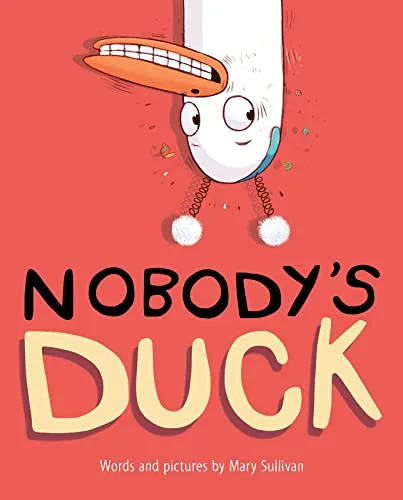 Nobody’s DuckMary SullivanA duck camped out in an alligator’s front yard claims to belong to nobody. Sure that can’t be true, and annoyed by the duck’s persistent presence, the alligator loads the duck and its comically ample collection of hats into a wagon and heads out. At each stop (library, movie theater, go-kart track, skydiving company), the alligator asks, “Is this your duck?” At each stop, after careful scrutiny, the queried animal replies, with increasing degree of emphasis, in the negative. And at each stop, the duck engineers an adventure, checking out books, and purchasing two admissions to the movie (Dogzilla ), the go-karts, and skydiving in turn. By day’s end, it’s been a wild ride (and drop from the sky) for the alligator. As for the duck, it has an answer at last to the alligator’s persistent question: “I am your duck!” Reflecting on the day, the alligator knows it’s true. Absurdly funny, much of this story plays out in the details of the comic-style illustrations, but the spare, speech bubble dialogue is perfect.Picture Books for Young ChildrenView book details
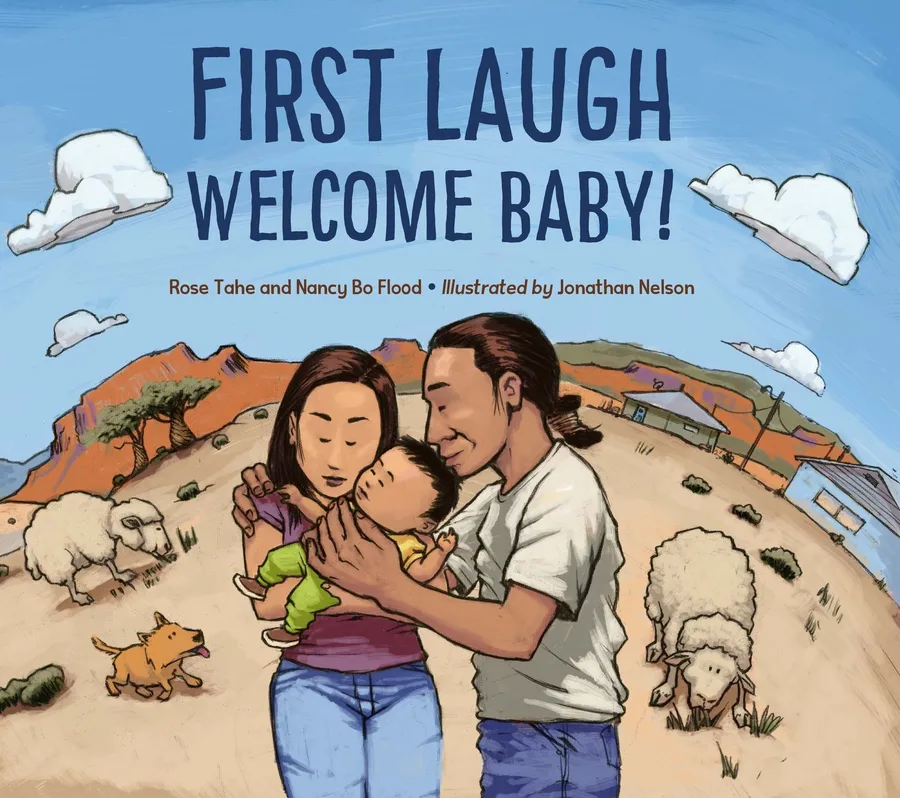 First Laugh—Welcome, Baby!Rose Ann Tahe, Nancy Bo Flood“Baby! We wait. Watching, tickling, smiling. When will we hear your first laugh?” A great deal of Navajo cultural information and details about this fictional family’s life is woven into both text and warm illustrations in a story in which Baby is the center of everyone’s attention. Baby’s first laugh will mean it’s time to hold the First Laugh Celebration to formally welcome Baby into the family and clan. At home in the city, and on a visit to Grandparents in the Navajo Nation, Baby naps and eats, wiggles and squirms, but there’s no laugh. “Your mouth opens wide…. It stretches…. A smile? Oh, no. It’s a sleepy pink yawn.” Finally, Grandfather lifts baby into the air and Grandmother whispers a corn-pollen prayer, and Baby laughs for the first time. Information about the Navajo First Laugh Ceremony, and new baby ceremonies in other cultures, follows this cheerful story.Picture Books for Young ChildrenView book details
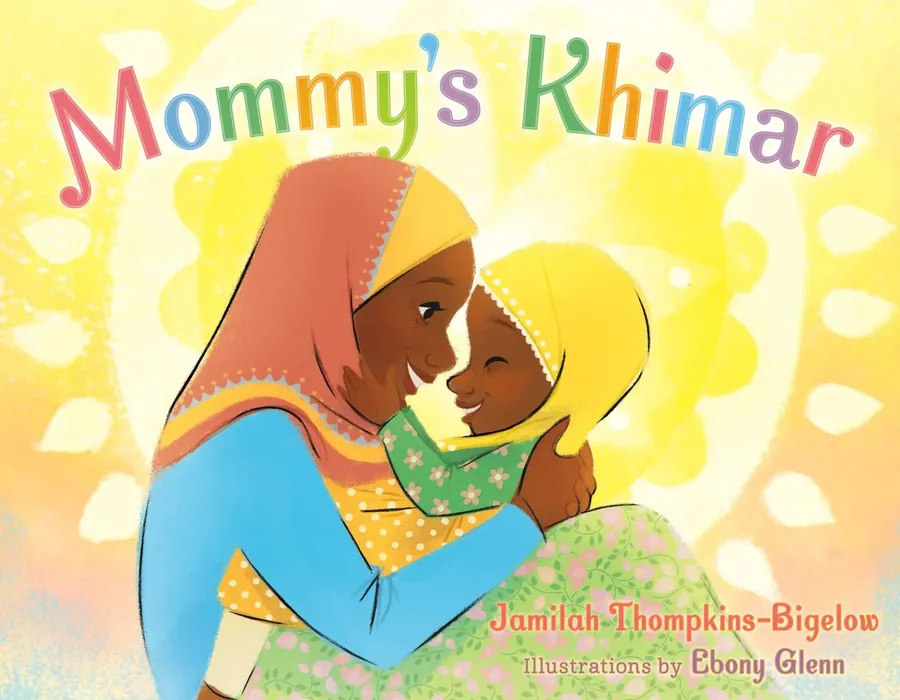 Mommy’s KhimarJamilah Thompkins-BigelowA young girl admires the rainbow of khimars in her mother’s closet. “Some have tassels. Some have beads. Some have sparkly things all over.” Her mother wears one every day, tucking her hair under the scarf before she leaves the house. On this day, the little girl decides to put one on too, choosing her favorite color, yellow. She imagines herself a queen, a bird, a superhero with a cape; when daddy swings her up, she flies. The khimar smells like her mother: coconut 54 Picture Books for Young Children CCBC Choices 2019 oil, cocoa butter, and cinnamon. Her grandmother, Mom-Mom, doesn’t wear a khimar, or go to mosque. Stopping by after her Sunday service, she calls the little girl “Sunshine” when she sees her draped in yellow. At mosque, older women say, “Assalamu alaikum, Little Sis!” and her Arabic teacher tells her another word for khimar is “hijab.” A story that will resonate with any child who loves dressing up offers a joyful, welcome depiction of an African American Muslim child, her family, and community.Picture Books for Young ChildrenView book details
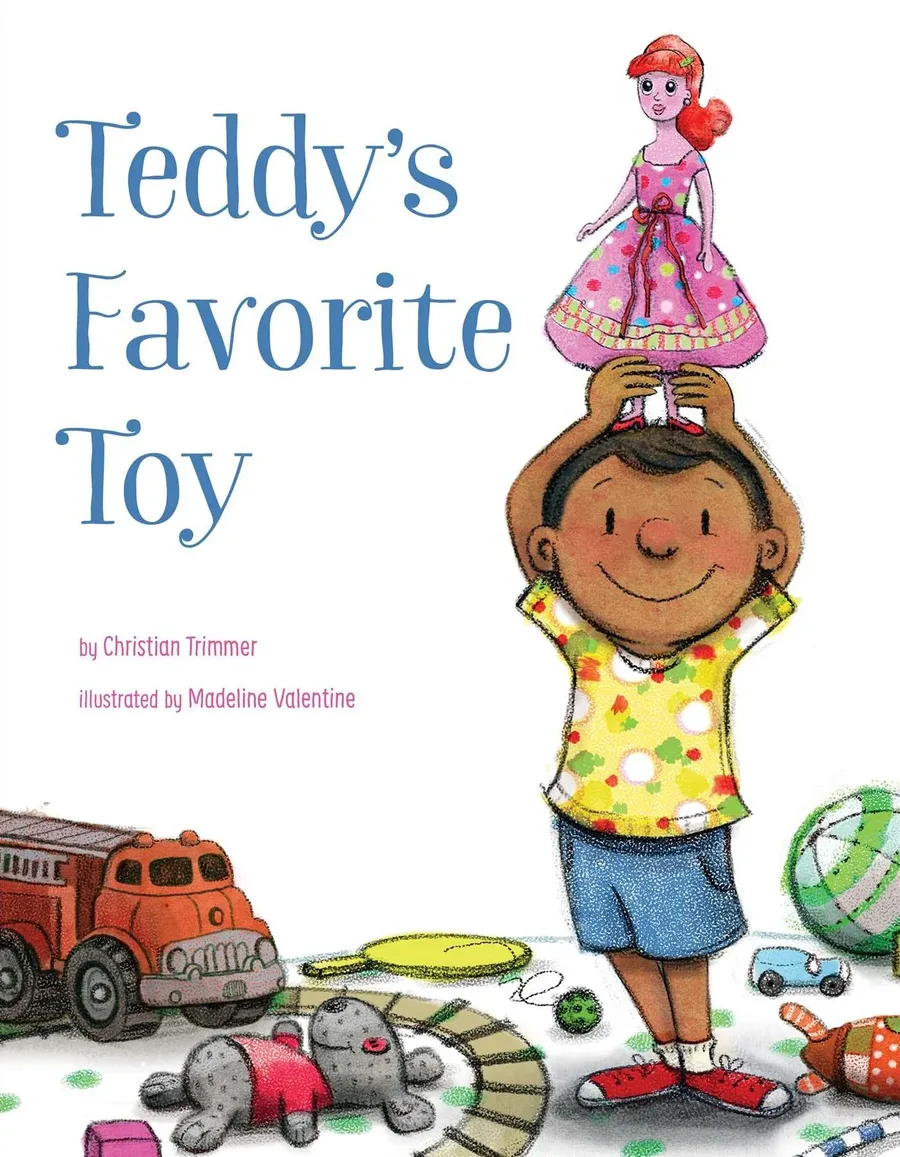 Teddy’s Favorite ToyChristian TrimmerBrown-skinned Teddy has many cool toys, but his favorite is “Bren-Da, Warrior Queen of Pacifica,” who looks like an off-brand Barbie. With her impeccable manners, “sickest fighting skills,” and ability to rock a vast range of outfits (including a sandwich bag still containing pretzels), Bren-Da stars as the lead in Teddy’s imaginative play, until the day her leg snaps off. Teddy tries to fix her— unsuccessfully—before he heads off to school, leaving Bren-Da bundled in a wad of tape on his bed. His well-intentioned mother chooses that day to tidy Teddy’s room, and tosses the maimed doll out with the trash. When a panicked Teddy reports that his prize toy is missing, his mom springs into an impressive action mode that mirrors how Teddy plays with Brend-Da, saving both the doll and the day. This celebration of unstructured play affirms Teddy’s cherished toy choice while never directly commenting on its break with traditional gender alignment.Picture Books for Young ChildrenView book details
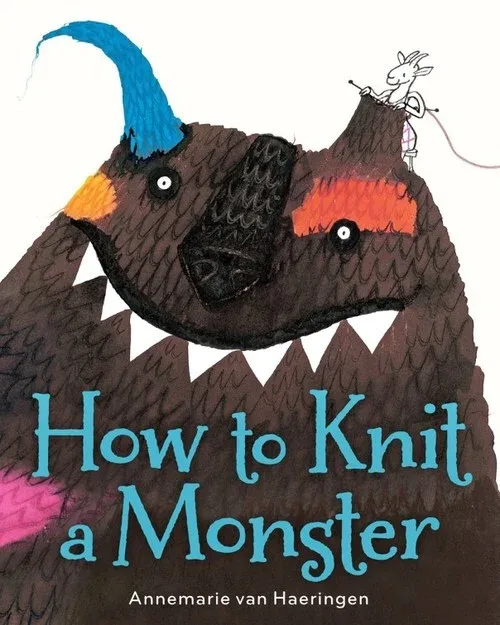 How to Knit a MonsterAnnemarie Van Haeringen, illustrated by Annemarie Van HaeringenAn accomplished knitter, Greta the goat expands her output from socks to a herd of little goats. But when Mean Mrs. Sheep criticizes Greta’s technique, Greta loses her concentration and inadvertently knits a wolf, who chases the little goats away and eats Mrs. Sheep. Greta manages to hide in a storage closet, where she quickly knits a tiger. The tiger is a temporary solution: It gobbles the wolf, but then smells a “succulent goatie” it would like for its next course. Greta’s creative knitting delivers the tiger’s nemesis—a monster—which she cleverly keeps under control and reels back in by never casting the last stitches off her needles. “Riffle raffle riffle raffle whoosh”: Greta unravels the monster, and then the tiger, and finally the wolf. The satisfying denouement celebrates Greta’s quick thinking, while the ink, watercolor, and colored pencil illustrations capture the whimsy of her knitted creations.Picture Books for Young ChildrenLexile Text Measure AD500LATOS Book Level 2.7View book details
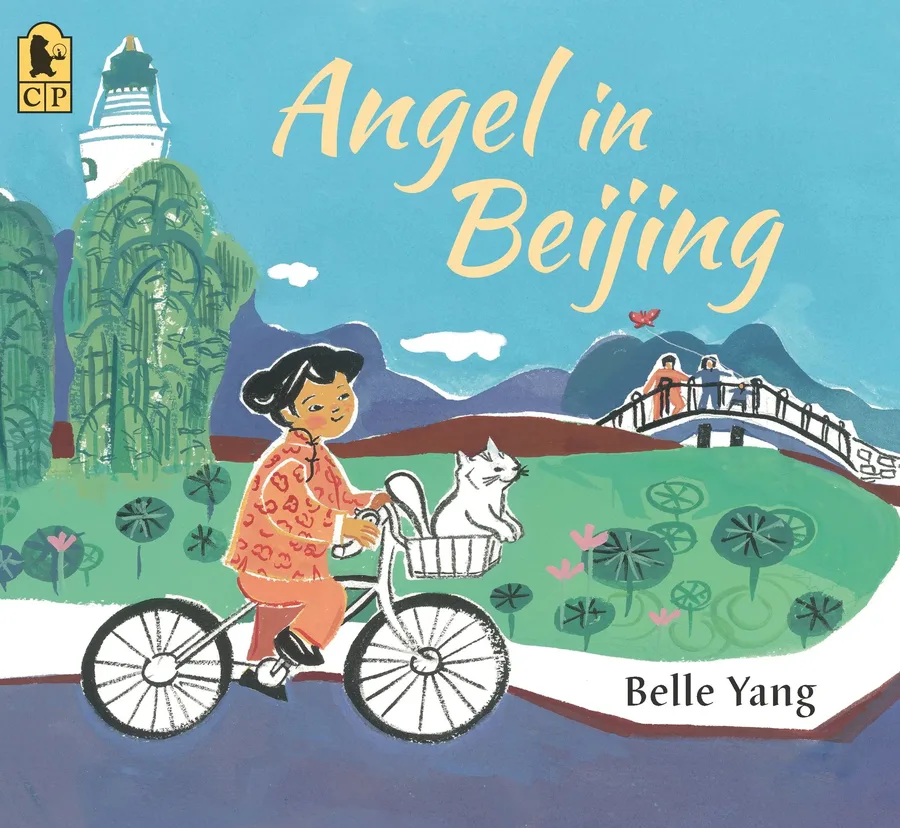 Angel in BeijingBelle Yang, illustrated by Belle YangA young girl cycles to various Beijing landmarks as she searches for her lost cat in this colorfully illustrated story. The white cat appeared in the girl’s tree on New Year’s Eve, and the two became inseparable. In Beihai Park, they shared candied haw fruit. In Tiananmen Square they enjoyed the kites at the Dragon Boat Festival. But when Kitty chased the huge dragon kite’s tail, she was lifted into the air and disappeared. Devastated, the girl cycles the city, checking all of Kitty’s favorite places: The rowboats at Beihai Park, the Temple of Heaven, CCBC Choices 2019 Picture Books for Young Children 55 artists’ workshops and antique shops on Liulichang Street. Returning to her neighborhood, the girl hears Kitty’s “Niaow-niaow!” and finds her white cat stretched across the feet of an elderly woman, who has decided to name her Angel. The girl offers to visit the woman and Angel often; without claiming ownership she selflessly accepts that Kitty has moved on to provide comfort and companionship for another.Picture Books for Young ChildrenView book details
 Pip & PupEugene Yelchin, illustrated by Eugene YelchinA newly hatched chick approaches a sleeping puppy, who awakens and frightens the chick with its rambunctious behavior. The chick retreats to its shell. When it starts to storm, the puppy cowers beneath a tractor. The emboldened chick approaches, assesses the situation, and places the top half of its shell on the puppy’s head for protection and comfort. The sun comes out, the new friends play, and there’s still a surprise or two in store in this captivating wordless story. Mixed media, including oil pastels and colored pencils, give a crayon-like quality to the expressive illustrations of a story that, for all its playfulness and gentle charm, has wonderful moments of drama.Picture Books for Young ChildrenView book details
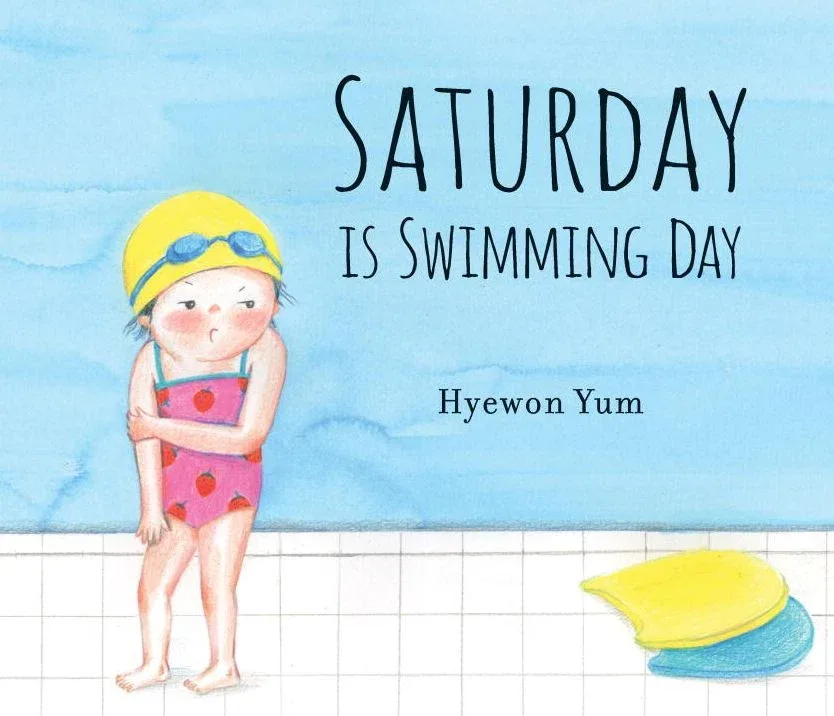 Saturday Is Swimming DayHyewon YumA little girl is nervous about swimming lessons. Claiming a stomachache the first week, she sits on the side of the pool. The second week, she still has a stomachache, but her teacher, Mary, offers to hold her, “so I could practice ice- cream scoops like the other kids.” By the third week, Mary helps her float like a starfish, even letting go (at first unexpectedly) so the little girl can float alone. This realistic, relatable look at anxiety is told in simple declarative sentences that are spare yet full of wonderful details, from the little girl’s strawberry swimsuit and too-tight swim cap to the cold, slippery floor. More important, it’s also full of comfort and reassurance, with neither her mom nor the brown- skinned teacher pushing her but instead offering just the right amount of encouragement and assistance. The little girl appears Asian; her mom is white. Honor Book, 2019 Charlotte Zolotow AwardPicture Books for Young ChildrenLexile Text Measure 420LATOS Book Level 2.9View book details
Picture Books for School-Age Children
36 selections
 The DamDavid AlmondA haunting story, based on an actual occurrence, recounts singular events leading up to the completion of a dam in Northumberland in 1981. A young girl named Kate and her dad visit the now-abandoned town that will disappear under water once the dam is active. They enter the empty houses and buildings so Kate can play a song on her fiddle in each one. The village, now a ghost 56 Picture Books for School-Age Children CCBC Choices 2019 town, was once vibrant and full of music, so Kate plays the last song that will ever be heard in each place. Somber, realistic illustrations capture the intimacy, loneliness, and poignancy of Kate and her father’s acknowledgement of the village’s history and of the people who once lived there. An author’s note identifies the real father and daughter behind the story, and tells that Kate grew up to be a great folk musician and composer.Picture Books for School-Age ChildrenView book details
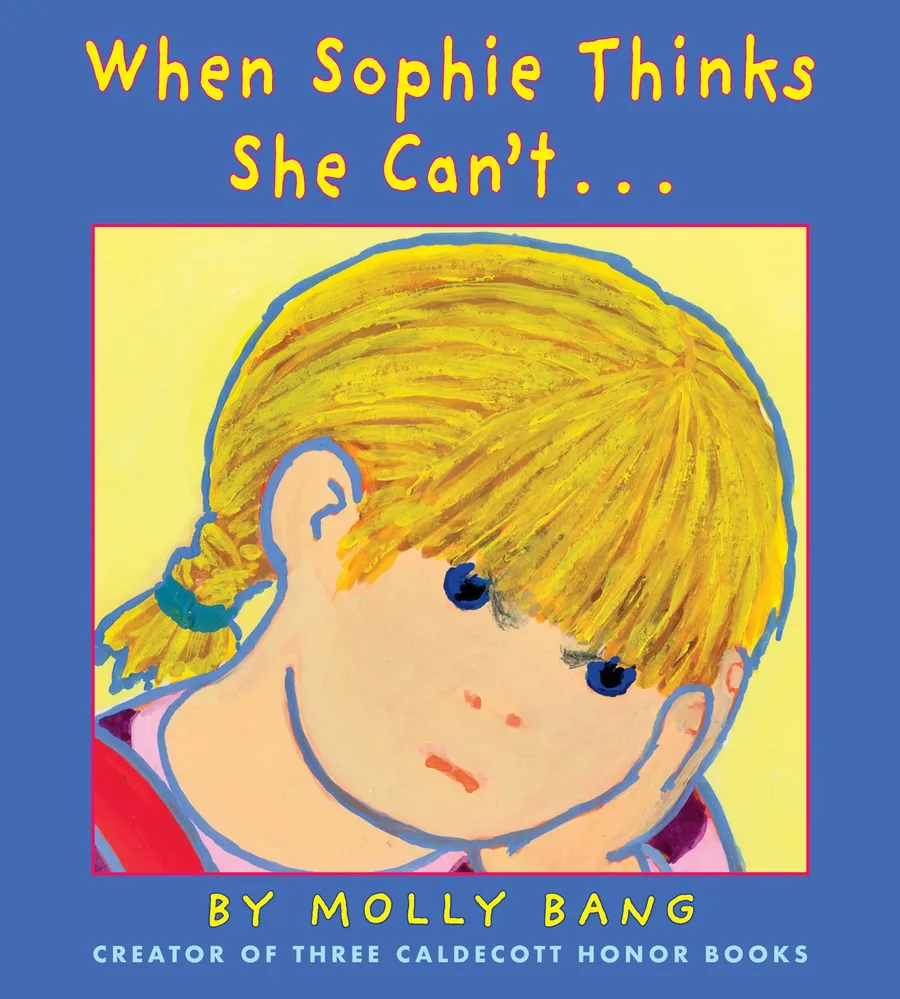 When Sophie Thinks She Can’t …Th 8Molly Bang, illustrated by Molly BangOn a rainy day at home, Sophie is flummoxed by a math puzzle using various shapes (tangrams) to make a square, but her sister solves it right away. The next day at school her teacher challenges everyone to exercise their brains (which, she explains, is how brains get stronger, just like muscles) by building a large rectangle out of 12 small squares. Sophie knows before she even begins that it’s useless. “I CAN’T do puzzles and I’m NEVER smart at MATH.” Soon her tablemates all agree: The problem is too hard. “Now’s the time to use the Most Important word,” says their teacher. “That word is YET. You haven’t figured it out … YET.” It turns out there are many ways to solve the problem; Sophie does so by thinking about the rows of vegetables in her garden at home. A note geared toward adults about “growth mindset” follows this story featuring a character who will be familiar to some children (e.g., When Sophie Gets Angry …. Really, Really Angry ) in a situation that will be relatable for many.Picture Books for School-Age ChildrenLexile Text Measure 520LATOS Book Level 2.5View book details
 SquareMac Barnett, illustrated by Jon KlassenSquare works all day moving rocks from inside his cave to outside. When Circle comes along, she thinks one of the square-shaped rocks he’s moving is a work of genius. “It looks just like you!” She commissions Square to do one of her, and leaves before Square can explain he doesn’t know how to sculpt stone. “Circle is perfect. So I must make this perfect.” He chips away into the night, through the rain, until he is surrounded by a pile of rubble—the opposite of perfection in Square’s mind. When Circle returns, Square is sure he’s a failure, but rain has collected in the middle of the pile, and in the small pool Circle sees … her reflection. “You are a genius,” said Circle. “But was he really?” The bold, clean, black-and-white illustrations and uncluttered text work together to create a deceptively sophisticated board book. The tongue-in-cheek humor leaves it up to readers and listeners to decide for themselves if what Square has accomplished is art.Picture Books for School-Age ChildrenView book details
 Hello LighthouseSophie BlackallA new keeper arrives at a lighthouse on a tiny island. Every day he winds the clockwork that keeps the light turning, writes in his log book, refills the oil, trims the wick, polishes the lens. He fishes for his dinner and writes letters to his wife. Eventually, she arrives on the tender that also brings supplies. In the long arc of routine across years, there are moments of high drama, and slow change, calm seas and fierce storms. Shipwrecked sailors are rescued. Their baby is born and begins to grow into a little girl. Eventually, there is a collective goodbye as CCBC Choices 2019 Picture Books for School-Age Children 57 new lights are installed that make the keeper’s job obsolete. Exquisite Chinese ink and watercolor illustrations capture the sweeping romantic sensibility that lighthouses can conjure while porthole-shaped insets show intimate scenes of family life (such as the keeper’s wife walking circles while in labor, and their little girl playing with toy boats). The measured, present-tense narrative is followed by a robust author’s note, “About Lighthouses,” that fills in additional details about keepers’ busy, sometimes lonely, lives.Picture Books for School-Age ChildrenLexile Text Measure AD510LView book details
 Grace for GusHarry Bliss, illustrated by Harry BlissGrace is determined to help raise money to buy a friend for the classroom guinea pig, Gus. After she kisses her two dads goodnight, she sneaks out into the city with her violin and plays for money on the subway platform. Then she works for a while as a street artist, painting caricatures of tourists, and finally she returns to the subway for some acrobatic dancing. After scooping up her earnings, she returns home for some shut-eye before going to school to make her sizeable contribution to the “Friend for Gus” fund. The mostly wordless story is told with sophisticated, sequential cartoon art filled with famous personages in the Manhattan crowd scenes. While adults may enjoy finding characters such as Alfred Hitchcock, Vincent van Gogh, Patti Smith, and Andy Warhol, younger readers will likely recognize familiar popular culture characters such as Charlie Brown, Frankenstein, and Nancy in this funny, over-the-top story about a resourceful (and talented!) girl.Picture Books for School-Age ChildrenView book details
 On the Other Side of the GardenJairo Buitrago, illustrated by Rafael YocktengOn her first night at her grandmother’s house, Isabel is lonely and uncertain. She doesn’t know her grandmother and she doesn’t know how long her father will be gone. Then an owl, a frog and a mouse appear at the window and lead her outside. The owl, a gentle caretaker, the frog, forthright and full of questions, and the mouse shy and hoping for a snack, tell her about her grandmother, who is kind, and perhaps a little lonely, too. She tells them about her mother, who lives in another country and writes her letters, and her dad, who is looking for work. The dark night eventually becomes a bright morning, and waiting for Isabel is her grandmother, offering matter-of-fact reassurance. The warm colors and rounded shapes of the three animals against dark-sky pages, the small moments of humor throughout the striking digital illustrations reminiscent of pen-and-ink, and the brightening palette mirroring Latina Isabel’s shifting outlook all contribute to the sense of comfort this picture book provides, however children choose to make sense of the events taking place: magical realism, dream, or imaginative flight of fancy.Picture Books for School-Age ChildrenView book details
 My Hair Is a GardenCozbi A. CabreraWhen MacKenzie is teased at school for having messy hair, she takes refuge at her neighbor’s home. She’s always been drawn to Miss Tillie, whose Black hair and dark brown skin are just like hers. Admiring Miss Tillie’s beautiful hair, 58 Picture Books for School-Age Children CCBC Choices 2019 she asks for help her with her own, admitting that her mother isn’t sure how to care for it. Miss Tillie begins by helping MacKenzie shampoo. Worried her hair will never grow to be as long as Miss Tillie’s, MacKenzie is encouraged after Miss Tillie takes her into the garden and talks about the patience and care needed to cultivate it over many years. The two admire Miss Tillie’s tall Japanese maple and her tiny, bright succulents—different from one another, but both beautiful—and MacKenzie sees that her hair is like a garden, needing daily care so that it can flourish. Instructions for caring for Black hair, along with two recipes for haircare products, follow this tender story of knowledge lovingly passed down from one woman to her young friend.Picture Books for School-Age ChildrenLexile Text Measure AD620LATOS Book Level 4View book details
 Bowwow Powwow / Bagosenjige-niimi’idimBrenda J. ChildWindy Girl and her dog Itchy Boy are inseparable. Inside the cab of Uncle’s truck (the best place for stories), Windy Girl listens to Uncle tell about the old days when, the night before the powwow, dancers went from house to house singing, “We are like dogs. We are like dogs.” and people gave them gifts. At a powwow at the end of the summer, Uncle’s story inspires Windy Girl’s dream about an all-dog powwow. Underneath this inventive and humorous fantasy, the text and illustrations give authentic details of what a powwow is like—the dancers, the drummers, the food stands, and the children going to bed early underneath the shooting stars. The text is bilingual in English and Ojibwe.Picture Books for School-Age ChildrenView book details
 The Patchwork BikeMaxine Beneba ClarkeA girl who enthusiastically describes her antics with her brothers says riding the bike they built themselves is her favorite of all they do. The bike is comprised of found objects: “handlebar branches that shicketty shake … tin can handles and wood-cut wheels…and a bell that used to be Mum’s milk pot.” That it is handmade out of economic necessity, sometimes requiring repairs relying on more ingenuity, is something that can be inferred but it has no relation to the siblings’ pleasure and delight. Set in a village on the African continent, “at the edge of the no-go desert,” under the “stretching-out sky,” the story featuring a Muslim family celebrates creativity, imagination, and universal joy in play. The fresh, playful use of language is perfectly suited to its theme. The same is true of the acrylic-on-recycled cardboard art, in which the use of shadow and light suggests the hot sun on every page. Informative notes from both author and illustrator speak more to the story’s themes, and intentional connections the artist made between the African setting and characters and African Americans in the United States, including a “BLM” license plate. Highly Commended, 2019 Charlotte Zolotow AwardPicture Books for School-Age ChildrenLexile Text Measure 420LATOS Book Level 2.9View book details
 Imagine!Raúl ColónIn a whimsical wordless story, a young Latino boy checks his skateboard at the front desk of the Museum of Modern Art and enters into the world of fine art—literally. Characters from Matisse’s Icarus, Picasso’s Three Musicians, and Rousseau’s Sleeping Gypsy come to life and step out of the paintings to follow the boy through the museum and then right out the front door into the streets of New York City. They dance past familiar city landmarks and take a subway to Coney Island before heading back to the museum and reassuming their original poses. Colón’s playful tribute to the power of art, creativity, and imagination is illustrated in spirited watercolor, Prismacolor pencils, and lithographic pencils.Picture Books for School-Age ChildrenView book details
 Carmela Full of WishesMatt de la PeñaOn her birthday, Carmela is finally old enough to accompany her brother as he runs errands in town. Carmela rides her scooter and jingles her bracelets, annoying her brother as he pushes his cart to the laundromat, locksmith shop, and bodega. When Carmela picks up a fluffy white dandelion, her brother bossily informs her that she must make a wish before blowing on the seeds. Carmela imagines her mother being able to sleep in nice hotel beds instead of making them. She imagines her father returning home, “papers fixed.” Before she has a chance to decide on a wish, she falls, crushing her dandelion. Her brother guides her to the sea, encouraging her to wish among the thousands of dandelion seeds floating in the air. Earth-tone acrylic and collage illustrations show a Latinx community, and Carmela’s wishes are depicted in papel picado designs. A typical, contentious-but-loving sibling relationship unfolds through a narrative that makes excellent use of descriptive language and varied sentence structure and length. Highly Commended, 2019 Charlotte Zolotow AwardPicture Books for School-Age ChildrenLexile Text Measure 630LATOS Book Level 4View book details
 I Got a Chicken for My BirthdayLaura Gehl, illustrated by Sarah HorneA girl who wants tickets to an amusement park for her birthday gets a chicken from her Abuela Lola instead. A chicken that isn’t interested in eating and doesn’t have time to lay eggs. It does, however, have a list. At the top of the list: 100 steel girders. At the bottom: a partridge in a pear tree. In between is everything from a winch, cement, a horse, and firewood to a bird, a cat (to catch the bird), a dog (to catch the cat) and pom-poms. The chicken also has a plan. It involves complicated construction, which the chicken oversees as it puts the various animals to work. When the chicken arranges for Abuela Lola to visit, it puts her to work too. “I got a chicken for my birthday,” says the young narrator with each turn of the page before describing the latest developments in a spare, droll accounting paired with colorful India ink illustrations. The end result? A fully functioning amusement park.Picture Books for School-Age ChildrenLexile Text Measure AD320LATOS Book Level 1.6View book details
 AfricvilleShauntay Grant, illustrated by Eva CampbellFor over 150 years, from the late 1700s to the 1960s, Africville, an endnote with photographs explains, was a Black community in Halifax, Nova Scotia. Its residents, including Black loyalists to the crown, individuals who escaped slavery in the United States, and their descendants, were tight-knit, building a strong community despite lack of outside support and essential services. Africville was demolished by Halifax in the 1960s. In the 1980s the first reunion was held, and in 2002 it was declared a National Historic Site of Canada; an apology from the city government for its destruction followed, and a replica of the church was built, now serving as a museum. This informative note provides fascinating context, while the spare, lyrical picture-book text that precedes it is a moving, detail-rich ode to place and people, community and resilience. The richly textured paintings that serve as the backdrop provide visual context in the form of a reunion—scenes that, like the narrative details, are full of relatable moments for children.Picture Books for School-Age ChildrenView book details
 ImagineJuan Felipe Herrera, illustrated by Lauren CastilloHerrera’s journey from his childhood in a migrant family to poet laureate of the United States is exceptional, but here it is a chronicle of the ordinary as well as the extraordinary to inspire children to see their own potential. “If I…” he begins each reminiscence as he describes being a young boy immersed in the natural world and a loving family; as he describes saying goodbye and moving from small town to “the winding city of tall, bending buildings”; as he describes walking into a classroom speaking only Spanish; as he describes practicing spelling words “in English by saying them in Spanish,” and falling in love with the words he was learning and the sight of ink on a page; as he describes writing poems, and turning them into songs as he grew. “If I….,” he tells readers, shaping scene after scene with lyrical language, then “Imagine… imagine what you could do.” Warm-toned illustrations in pen and foam monoprint invite children into each scene.Picture Books for School-Age ChildrenView book details
 Night JobKaren HesseOn Friday nights when the sun goes down, a young boy joins his father for a motorcycle ride to the school where dad has a cleaning job. Sometimes the boy helps with jobs like sweeping the halls, but most of the time he is engaged in his own childlike activities: shooting hoops in the school gym, listening to a baseball game on the radio, reading a book and then sleeping on a couch in the school library. Although the father is clearly working hard, there are some gentle, intimate moments between the two. They take a break at 10:00 pm to eat egg salad sandwiches in the courtyard, they hoot together as they ride the motorcycle over a hill on the way home, they fall asleep together in the big recliner once there. The soft, muted illustrations give a strong sense of a quiet night where father and son appear to be the only ones awake, and the language of the narrative is stunningly evocative of an important shared experience between father and son.Picture Books for School-Age ChildrenLexile Text Measure AD920LATOS Book Level 3.4View book details
 We Don’t Eat Our ClassmatesRyan T. Higgins, illustrated by Ryan T. HigginsPenelope Rex is nervous about starting school, but she’s prepared: She’s got a new backpack with ponies on it (she loves ponies—they’re delicious), and 300 tuna sandwiches packed for lunch. But she is not prepared when she discovers the other students are all children. “So she ate them. Because children are delicious.” She spits them back up after being yelled at by her teacher, but it isn’t easy to make friends after that. Everyone is afraid of her, especially as she’s prone to the occasional relapse. Discouraged, she asks Walter, the class goldfish, if he’ll be her friend. Walter’s response gives Penelope a new perspective on how it feels to be someone’s snack. There’s no heavy-handed lesson in this hilarious picture book with perfect pacing, but that doesn’t mean there isn’t food—or at least a snack—for thought. The humor gets an even greater boost in mixed-media illustrations showing sweet-faced Penelope in her bright pink overalls alongside a diverse cast of sometimes angry, sometimes fearful, ultimately friendly human classmates. Highly Commended, 2019 Charlotte Zolotow AwardPicture Books for School-Age ChildrenLexile Text Measure AD500LATOS Book Level 2.3View book details
 Ruby in the RuinsShirley Hughes, illustrated by Shirley HughesRuby and her mother remain in London during WWII, waiting for her father’s return, and when he finally comes home after the war, everything has changed. Ruby’s ruins are all around, not just in the rubble of the buildings she plays in with her mates but also in her own emotions as her relationship with her father must be rebuilt. With a richness of details in both the text and the realistic illustrations, Hughes has brought to life a particular time and place, and a particular little girl, showing a small moment of growth within a single character.Picture Books for School-Age ChildrenView book details
 The FuneralMatt JamesGoing to the funeral of her great-uncle Frank isn’t sad for young Norma: She gets to miss a day of school and see her younger cousin, Ray. Norma is not grief-stricken and that’s perfectly fine in this remarkably honest picture book. The story’s wonderful details, as when Norma explores the contents of her mother’s purse at church, are so authentic they feel familiar. So, too, is the fact that Norma finds the service boring. Ray asks, “Is Uncle Frank still a person?” Norma has no answer. The wonderful mixed-media art, a blend of full-page and sequential images, shows adults around Norma often somber-faced, sometimes hugging or crying. It also exquisitely conveys the sense of release Norma feels when she and Ray are able to escape the sober atmosphere to play outside. In the end, Norma is not unaffected. After pausing to consider a photo of great-uncle Frank, she tells her mom, “I think Uncle Frank would have liked his funeral.”Picture Books for School-Age ChildrenLexile Text Measure 549LATOS Book Level 3.6View book details
 The Boy Who Went to MarsSimon James, illustrated by Simon JamesWhen Stanley’s mom leaves on an overnight business trip, Stanley decides to take off on a trip of his own—to Mars. Traveling in a backyard spaceship 62 Picture Books for School-Age Children CCBC Choices 2019 fashioned from a cardboard box, he lands on Mars and sends a Martian home in his place. Both his dad and his older brother welcome the Martian, and quickly adjust to his habits, such as skipping dinner to make room for dessert, and not washing. The Martian sleeps in Stanley’s bed and even goes to school the next day, where everyone mistakes him for Stanley. When Stanley’s mom returns home, so, too, does Stanley. Cartoon pen-and ink and watercolor illustrations add humor to an already funny story about a boy using imaginary play as a coping mechanism. His wonderful family members are all wise enough to play along, letting Stanley work through his anxiety in his own way.Picture Books for School-Age ChildrenLexile Text Measure 500LATOS Book Level 2.7View book details
 Saffron Ice CreamRashin Kheiriyeh, illustrated by Rashin Kheiriyeh“In Iran, the Caspian Sea looked endless, blue, and beautiful. How will the sea look in Brooklyn?” wonders a little girl going to the beach for the first time since moving to the United States. She’s used to the beach on the Caspian Sea where there were rules, and a big curtain in the water separating men and boys from women and girls. Once a group of boys peeked through a hole in the curtain. “The Islamic beach guards ran to fix the holes in the curtain. It was chaos! But it was fun. Will it be fun in Brooklyn, too?” There was ice cream at the beach in Iran, and the saffron-flavored ice cream was her favorite. It turns out there is no saffron ice cream at Coney Island, but another girl encourages her to try chocolate crunch, and it’s good, too! So is being at a (new) beach with a (new) friend. The tenor of the narrative and the whimsical illustrations play off each other well as they depict cultural differences and make other comparisons without setting anything up as “the norm.”Picture Books for School-Age ChildrenLexile Text Measure AD580LATOS Book Level 3.8View book details
 Auntie Luce’s Talking PaintingsFrancie Latour, illustrated by Ken DaleyA girl who visits her mother’s homeland, Haiti, every winter remembers a trip when she was seven and her Auntie Luce painted her portrait. For the girl, Auntie Luce’s stories about the country, their family, and the heroes among them both, many of whom she’s painted, were eye-opening. The girl’s mother left Haiti to escape hardship. Auntie Luce stayed because she sees joy as well as the sorrow, beauty as well as the struggle. And in the portrait Auntie Luce paints of her, the girl sees something new: a sense of belonging, and history. “You were born outside, that’s true. But you hold this place in your skin, deep in your bones,” Auntie Luce explains, “Colors do not lie.” A powerful, affirming work has additional information about the history of Haiti in an author’s note. Vibrant acrylic illustrations accompany the story.Picture Books for School-Age ChildrenWord Count 1265View book details
 The Rough PatchBrian Lies“Evan and his dog did everything together.” Their favorite among many things is working in Evan’s garden. “But one day, the unthinkable happened.” The death of Evan’s dog sends him into a spiral. First Evan destroys the garden, then he lets “spiky,” “prickly” weeds take over. But he leaves a rogue pumpkin vine that creeps under the fence into his garden alone—it’s prickly and twisty, too. Soon he begins to tend the vine. Come fall, he takes the pumpkin to the fair, CCBC Choices 2019 Picture Books for School-Age Children 63 where he spends time with friends and wins third prize: ten dollars “or one of the pups in that box.” A story written with vivid, visceral language shows that sadness can lead to anger but the two emotions are not the same. Lush acrylic, oil, and pencil illustrations show Evan as an anthropomorphized fox, allowing kids space to consider their own feelings without being overwhelmed in a story in which grief and love go hand-in-hand, but with time so do hope and healing. Highly Commended, 2019 Charlotte Zolotow AwardPicture Books for School-Age ChildrenLexile Text Measure AD580LATOS Book Level 2.8View book details
 GeraldineElizabeth LillyGeraldine is a giraffe who feels like an outcast in a world where she is the only giraffe. Indeed, all of the other students at her new school are children. She’s understandably worried about going to school until she bonds on the first day with a girl who’s also an outcast, because she wears glasses, likes math, and organizes her food. Most of Geraldine’s emotions are communicated through her body language and, since she’s a giraffe, she has a particularly expressive neck. Although first-day-of-school jitters is a common theme in children’s books, this one stands out for its unusual characters, and its well-realized theme of learning to accept oneself and to be open to others.Picture Books for School-Age ChildrenView book details
 Goldfish on VacationSally Lloyd-Jones, illustrated by Leo EspinosaIn a small apartment live three children and their three goldfish: Barracuda, Patch and Fiss. At a nearby park is a rundown fountain no longer in use, until a sign goes up at the start of one summer: “Calling all goldfish looking for a summer home.” In the coming days a man scrubs, scrapes, and eventually fills the fountain. And then come the goldfish parents, dozens of kids bearing bowls of fish. For the rest of the summer the fountain is a gathering place for children and adults, who visit the fish and share stories. At summer’s end, it’s time for the fish to go home. “And so the goldfish—who may have been Barracuda and Patch and Fiss, or some other goldfish altogether—went back to being in a fishbowl.” The charm of this tale is both in the telling and in the fact that it’s based on the true story of Hamilton Fountain in New York City, where neighborhood goldfish were invited to spend summers from 1992 to 2005. The flat, stylized art has an old-fashioned feel while the cast of city characters is realistically, wonderfully diverse.Picture Books for School-Age ChildrenLexile Text Measure AD640LATOS Book Level 4.1View book details
 Josie’s Lost ToothJennifer K MannJosie is a stand-out girl, the most agile monkey-bar climber, fastest runner, and best reader. But she’s also the only person in her class who has never lost a tooth. She would really like to change this. When Josie finally discovers a loose tooth, she tries to hurry things along by hanging upside down, crunching into an apple, and pulling it with string, but it’s only later, as she’s playing sharks with Richard, that Josie falls down and her tooth falls out, vanishing in the grass. Richard generously offers Josie his shark tooth to put under her pillow in lieu of her real tooth, and the Tooth Fairy delivers: The next morning there are two shark-tooth necklaces nestled beneath her pillow, one for her, and one 64 Picture Books for School-Age Children CCBC Choices 2019 for Richard. Delightfully child-like pencil and pastel illustrations depict Josie with brown skin and Richard with white in a story to which many children will relate.Picture Books for School-Age ChildrenView book details
 Doll-E 1.0Shanda McCloskeyCharlotte is a tinkerer and coder, inventor and troubleshooter. When her not- so-tech-savvy parents give her a doll, she doesn’t know what to do with it. The doll doesn’t do anything except say “Ma-ma.” Then Charlotte realizes if the doll speaks, it must have power supply. “Now things were getting interesting.” Charlotte is working on downloading an update that will expand the doll’s vocabulary when her dog, Blutooth, snatches the doll, ripping it to shreds. “Charlotte couldn’t let it end this way.” She puts the doll back together “with a few spare parts and a bit of code,” turning it into a toy that she truly enjoys. Energetic pencil and watercolor illustrations offer over-the-top humor and affirmation that tech can be a means of expressing creativity.Picture Books for School-Age ChildrenView book details
 The Dinosaur ExpertMargaret McNamara, illustrated by GMr. Tiffin’s class (seen previously in How Many Seeds in a Pumpkin and other stories) is on a field trip to the Natural History Museum and Kimmy is thrilled. She loves fossils, knows tons about dinosaurs, and wants to be a scientist when she grows up. “Girls aren’t scientists,” says classmate Jake when Kimmy shares her plans, along with some information about the first exhibit they see. After this, Kimmy grows quiet, although she knows a lot about the fossils in the other exhibits. It isn’t until they enter a special exhibit with a dinosaur she’s never seen—a Gasparinisaura, named for the scientist who discovered it—that her enthusiasm returns: Dr. Zulma Brandoni de Gasparini is a woman! In fact, Kimmy’s report, “My Favorite Paleontologists” (included as a brief photo-essay at book’s end), is about 7 girls and women, four of them people of color, known for their work in paleontology.Picture Books for School-Age ChildrenLexile Text Measure AD550LATOS Book Level 3.6View book details
 La frontera, el viaje con papá / My Journey with PapaDeborah Mills, Alfredo AlvaA first-person narrative tells the true story of a boy’s journey from Mexico to the United States. When Papa can no longer provide for his growing family, Abuelo urges him to leave La Ceja, Mexico, for the United States, and to take Alfredo along. They hire a man, Coyote, to guide them to the border, but he disappears after Papa carries Alfredo across a river. Papa and Alfredo continue the journey alone, finally arriving at the Embassy, a collection of old vehicles and furniture where they take up residence. Alfredo begins school, although he is frightened and does not understand English. Things begin to look up when an older, Spanish-speaking boy takes Alfredo under his wing. After four years, the rest of the family join Alfredo and Papa in the United States. Details of this young immigrant’s experience—the $100 bill he carries in case he’s deported and needs to buy a bus ticket back to La Ceja, his fear that the “men in uniforms” may appear on his school bus—make this purposeful account particularly affecting.Picture Books for School-Age ChildrenView book details
 Thank You, Omu!Oge MoraOmu is cooking “thick red stew in a big fat pot for a nice evening meal.” As it simmers, the scent of the stew wafts out the window. “Knock!” A little boy is at her door, drawn by the delicious smell. “Knock! Knock!” A police officer arrives. “Knock! Knock! Knock!” This time it’s the hot dog vendor, followed by many others from her neighborhood, all unable to resist the smell of her stew. Each time, Omu gives the unexpected guest some stew. But when the time for her own dinner arrives the pot is empty. Luckily there’s one more big surprise in store in this debut picture book celebrating the spirit of generosity and reciprocity, appreciation and thanksgiving, inspired by the author/illustrator’s Nigerian grandmother. Mixed-media collage art comprised of bold shapes is the perfect pairing for the bright, warm-hearted story. Highly Commended, 2019 Charlotte Zolotow AwardPicture Books for School-Age ChildrenLexile Text Measure AD630LATOS Book Level 3.2View book details
 The FieldBaptiste PaulA game of futbol on the island of Saint Lucia isn’t going to be stopped by anything. Not cows on the field (“Shoo!”) or the arrival of rain (“Dash. Splash. Slip-slide. Belly flop!”) or the calls of mamas that it’s time to come home as the sun begins to set (“Vini, abwezan! Come now!”). Only when the game is finally over do the children disperse, racing off to their homes in the dusk. “We dream about futbol. We dream about friends. Until the field calls again.” A spare, energetic narrative that weaves in words from the author’s native Creole language expresses a joyful sense of childhood and community that is extended by marvelous illustrations full of energy, color and movement. An author’s note about his childhood playing futbol on Saint Lucia, and a glossary of Creole terms, is provided at story’s end.Picture Books for School-Age ChildrenView book details
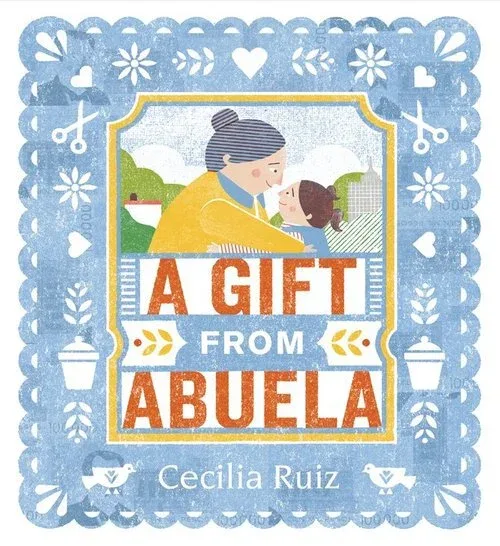 A Gift from AbuelaCecilia RuizAbuela loves her granddaughter Nina from the moment she is born. The two are often together, making up songs, people-watching in the park, and creating papel picado banners. Abuela secretly begins to save 20 pesos every week so that she can buy a gift for Nina. Years pass. Life gets harder in Mexico and Abuela has no extra money to save. Nina starts spending more time with friends. When the government changes the money, and everyone must turn in their old pesos for new ones, Abuela can’t remember where she put the pesos she saved long ago. One day Nina stops by and, as a surprise, cleans Abuela’s kitchen, discovering the old pesos hidden atop the refrigerator. They’re now worthless, but Nina and Abuela decide to make papel picado banners out of the old bills. Though their world has changed, and they have, too, the love between them remains strong. Muted mixed-media illustrations include details of Abuela’s home and neighborhood, and a family resemblance across generations.Picture Books for School-Age ChildrenLexile Text Measure AD540LATOS Book Level 2.8View book details
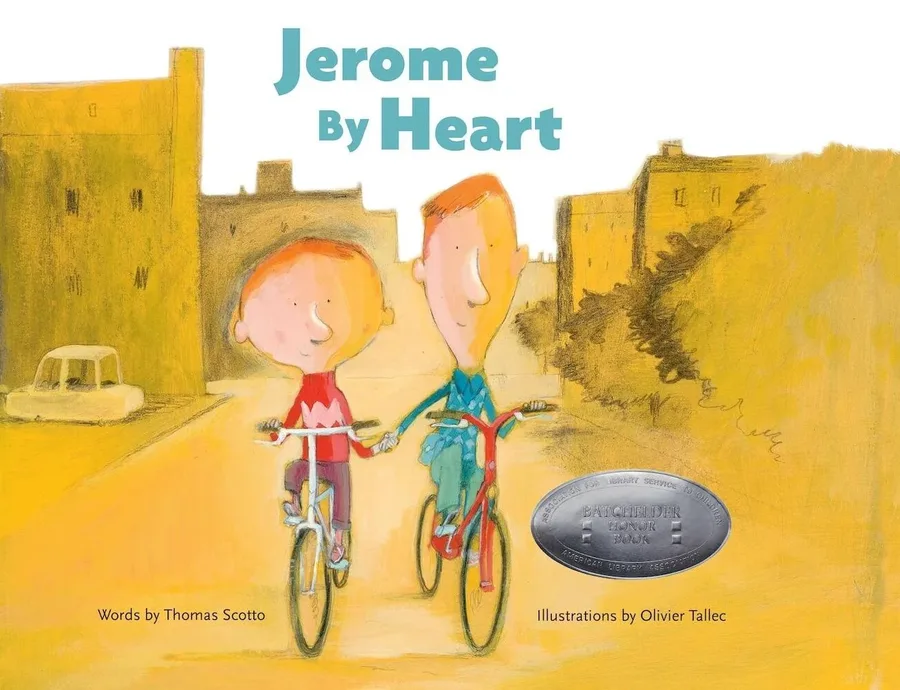 Jerome by HeartThomas ScottoRaphael loves his friend Jerome, who holds his hand and chooses him for a buddy on field trips. Jerome, who is fun to be with and makes Raphael feel safe. Raphael’s parents think he talks and thinks too much about Jerome. “Now that’s enough,” says his dad. “Dad’s voice is like sharp fish bones in my hot chocolate.” But Raphael knows “Jerome” is not a bad word, and is determined to find the perfect gift for his friend, who is always up for an adventure, and would never hide his head in shame. “Raphael loves Jerome. I can say it. It’s easy.” Illustrations that are soft yet slightly quirky showcase the deep and genuine affection between the two boys, and the temporary dissonance and isolation caused by adult disproval before Raphael affirms feelings that bring him such contentment and joy. This welcome picture book offers sweet and essential confirmation of emotions that children are too often encouraged to deny or suppress, particularly when it comes to same-gender friendships, and especially between boys.Picture Books for School-Age ChildrenView book details
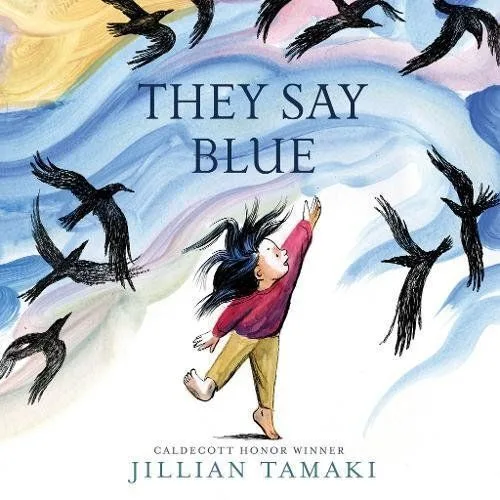 They Say BlueJillian TamakiA small girl playing in the natural world as the seasons change compares her own observations to what she’s been told. For example, they say the sea is blue, but when she holds it in her hands, the water looks clear. Other things she knows even when she can’t observe them: her blood is red and the yolk inside an egg is orange. A stream-of-consciousness narrative captures the inner thoughts of a young Asian girl as she experiences her world. Brightly colored acrylic and watercolor illustrations sweep across each page, offering continuity as time, colors, and the seasons change, and an artistic child learns to trust her own imagination.Picture Books for School-Age ChildrenLexile Text Measure 281LATOS Book Level 2.2View book details
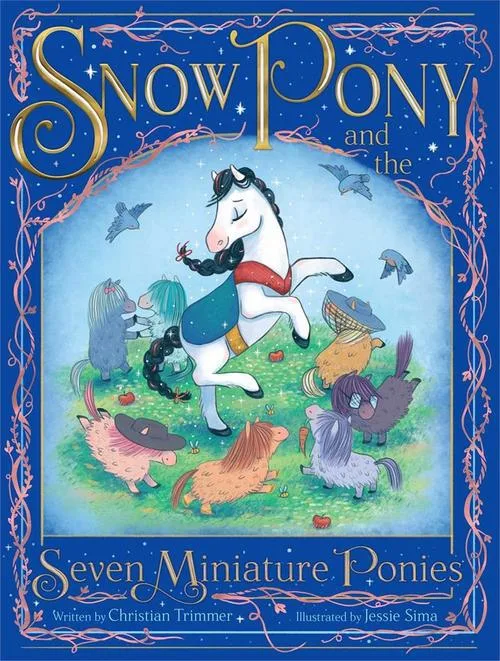 Snow Pony and the Seven Miniature PoniesChristian Trimmer, illustrated by Jessie SimaA shimmering, hair-braiding, line-dancing horse stars alongside seven miniature ponies in this sassy Snow White-inspired tale. Snow Pony and Charmaine specialize in song-and-dance routines, much to the delight of kids who visit their farm—and to the consternation of fellow equine Queenie. Believing her own considerable talents are eclipsed by Snow Pony’s showy behavior, Queenie lures Snow into the forest with a trail of apples. Lost, frightened, and ill-tempered from eating so much fruit, Snow stumbles upon a stable where seven miniature ponies of diverse interests (beekeeper, gardener, tax attorney…) reside. Snow Pony enjoys their company, and they appreciate her skills, but she misses Charmaine. Meanwhile, the children back at the farm are bored to death by Queenie’s intro-to-scrapbooking classes. A cool but brilliant palette and storybook illustrations perfectly complement this ridiculous retelling of a classic tale that ends with a joyful reunion.Picture Books for School-Age ChildrenLexile Text Measure 700LATOS Book Level 3.9View book details
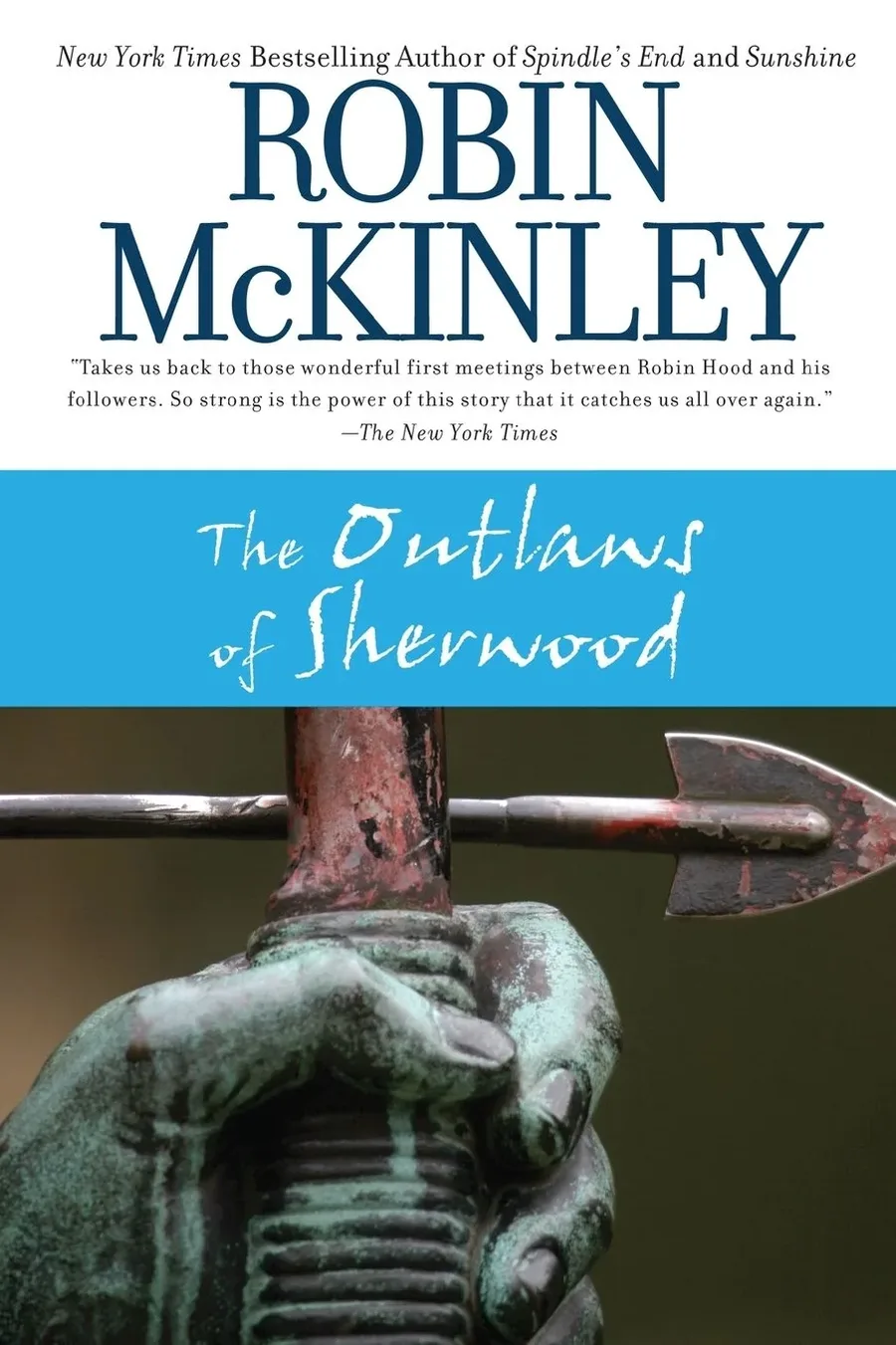 The OutlawNancy VoIn a small town in what appears to be the Old West, most people fear the Outlaw, for good reason. Eventually, much to the townspeople’s relief, the Outlaw stops coming to town. Years later, a stranger comes to town. The man quietly lends a hand wherever he can, building and repairing structures, until one day he is recognized as the Outlaw. A crowd gathers; people kick dirt and spit at his feet. A boy defends him, saying that he is “trying,” and the crowd slowly disperses. Although some people are moved by the boy’s words, others are still angry, but the Outlaw continues “to make amends.” Illustrations on previous pages show the same boy caught stealing food; the Outlaw appears to take him under his wing. This simple narrative about the complexity of forgiveness and reconciliation is illustrated with watercolor and ink in a muted, gray palette. Newsprint transfer and scraps of 19th-century fabric patterns add further visual details to this highly discussable story.Picture Books for School-Age ChildrenView book details
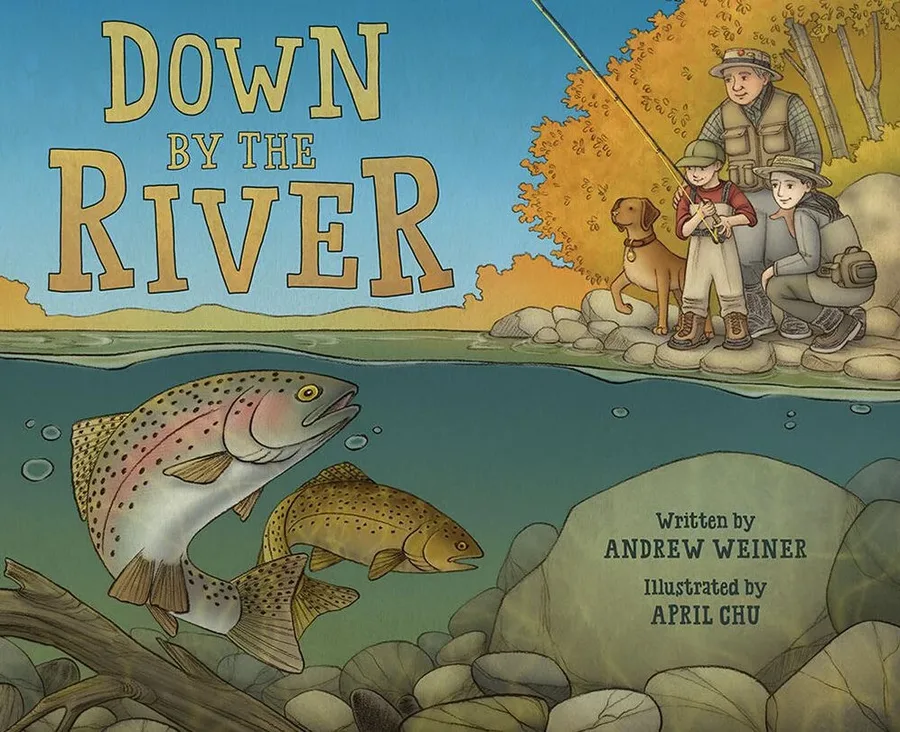 Down by the RiverAndrew Weiner, illustrated by April ChuThere’s a lovely sense of the natural world in this quiet intergenerational story about a little boy who goes fly fishing on an autumn day with his grandpa and his mom. While they fish, the boy just learning—and struggling—and Grandpa offering guidance, Grandpa and Mom reminisce about past fishing trips when she was a girl. Both story and illustrations reveal that it’s Mom who is the expert fly-fisher now, and, refreshingly, her skill is simply a matter of fact. At story’s end, the little boy has become the grandpa, passing down the traditions to his granddaughter. Both the family fishing and the natural setting will resonate with many Wisconsin families. The endnotes include basic information about fly fishing, catch-and-release, equipment, and clothing, while the endpages show detailed realistic illustrations of 80 different flies.Picture Books for School-Age ChildrenLexile Text Measure 479LATOS Book Level 3.2View book details
Books for Beginning Readers
3 selections
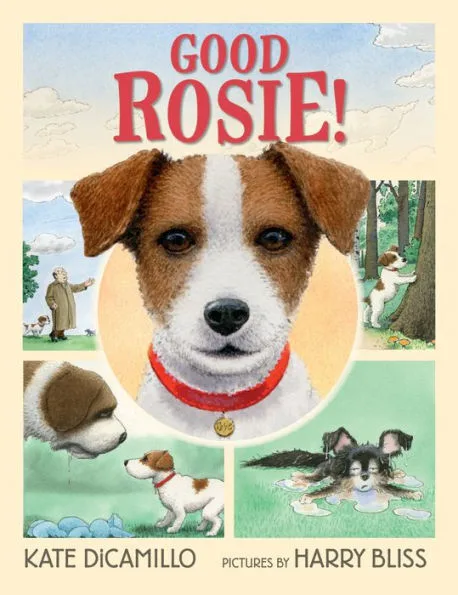 Good Rosie!Kate DiCamilloRosie is a shy Jack Russell terrier who lives with George. She’s mostly happy with her predictable life but occasionally sees another dog and feels lonely. When George takes her to the dog park, she meets a big dog named Maurice and a small yippy dog named Fifi. Rosie is not sure she wants to interact with either one until a sudden emergency causes her to take action. The understated narrative is perfectly matched by mostly realistic watercolor paintings that tell the story in a comics format. Short declarative sentences broken up into nine brief chapters are full of humor that comes mostly from perfect comedic timing and textual restraint. The interactions of the three dogs—all so different from one another in breed and personality—is at once realistic and hilarious in the illustrations, which excel at communicating canine emotions through body 68 Books for Beginning Readers CCBC Choices 2019 postures. A book showing a tremendous respect for the intelligence of children is one that adults will enjoy reading and re-reading as much as children do, while many newly independent readers will enjoy the sophisticated humor.Books for Beginning ReadersLexile Text Measure 490LATOS Book Level 1.9View book details
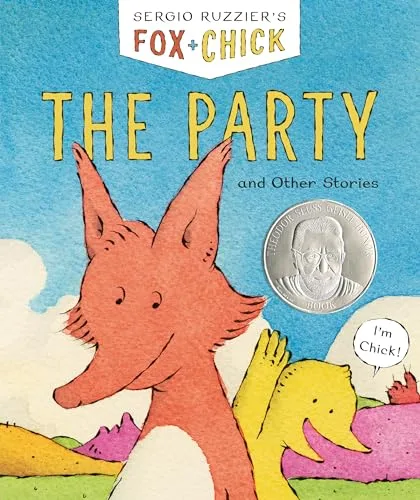 Fox + Chick: The Party and Other StoriesSergio RuzzierThree short chapters use sequential art to describe three events in the unlikely friendship of a fox and a chick. In the first story, Chick asks to use Fox’s bathroom and, it turns out, he’s using it to hold a party for his friends. In the second, Chick is critical of Fox’s vegetarian lifestyle until he realizes he himself might otherwise be on the menu. In the third, Chick finds it hard to pose for a portrait that he wants Fox to paint of him, finding all sorts of reasons he just can’t sit still. The three short chapters are all funny and character-driven, with satisfying storylines that will appeal to newly independent readers. Happily, a concluding page hints that there will be more stories about this duo.Books for Beginning ReadersView book details
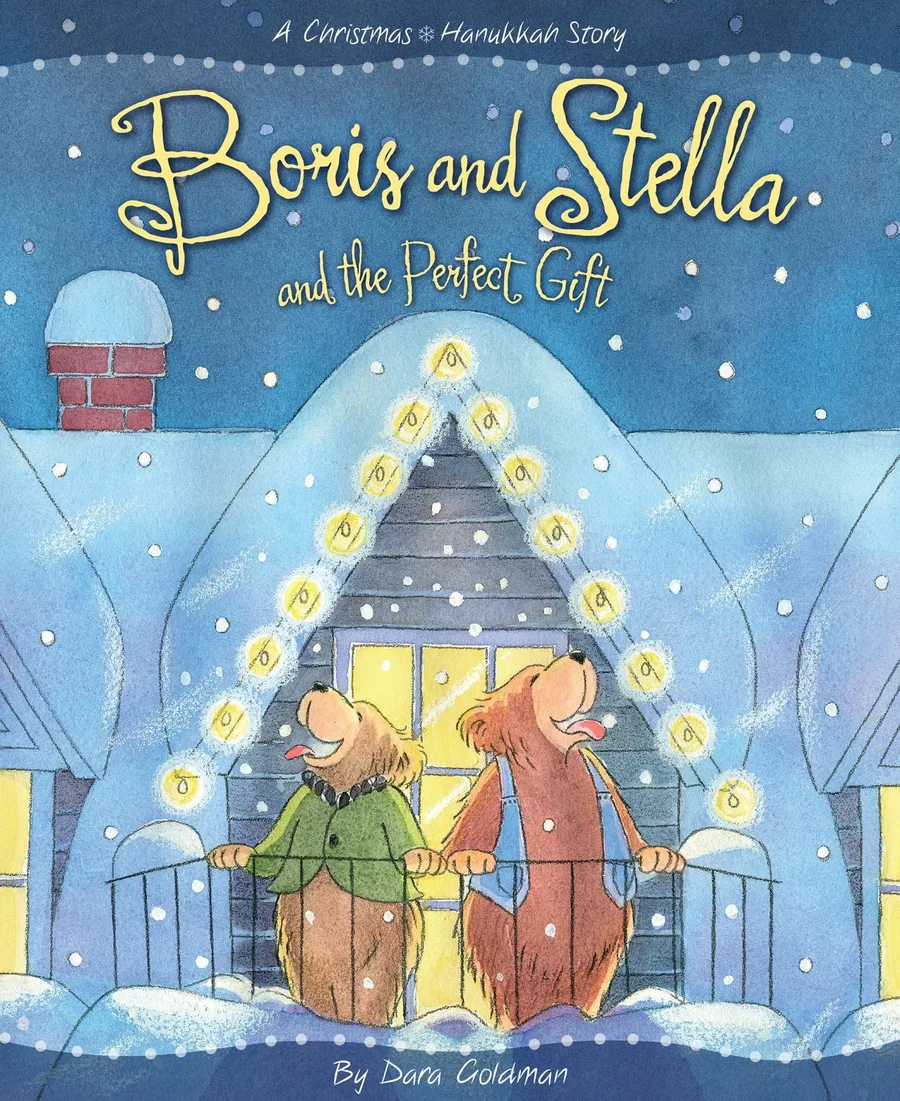 The Perfect GiftPaula Yoo, illustrated by Shirley Ng-BenitezIn this new installment in Yoo’s early reader series focusing on members of a diverse group of friends, Mei’s family is planning a party to celebrate her baby brother Ming’s first one hundred days of life. After helping her grandma dye a couple dozen eggs the lucky color red for their party guests, Mei visits her friends to hand out invitations and ask their advice on a gift for Ming. Her friends have good suggestions—a truck, a drum, something from the toy store—but none of them seem right to Ming. On the morning of the party, Ming still doesn’t have a gift for her brother. “The perfect gift,” her grandma says, “comes from the heart.” Mei decides that rather than buying a gift, she’ll create something by hand for her brother. A short note about the Chinese one hundred days celebration follows this sweet story of a loving older sister and her new brother.Books for Beginning ReadersView book details
Books for Newly Independent Readers
2 selections
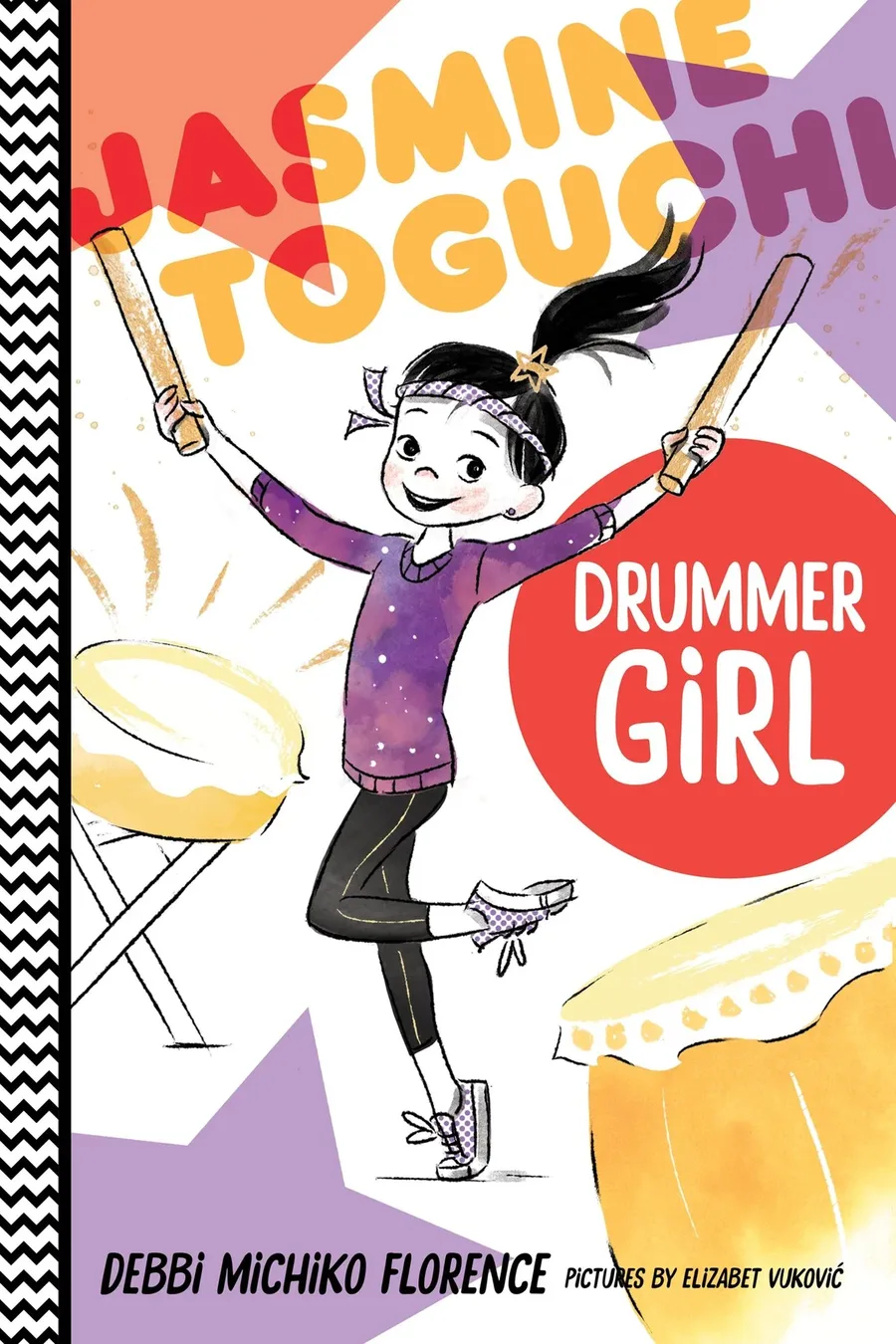 Jasmine Toguchi, Drummer GirlDebbi Michiko Florence, illustrated by Elizabet VukovićWhen Jasmine discovers that her school is holding a talent show, she wonders how she’ll choose among her many talents. But as she learns her classmates’ plans (dancing, piano playing, yoyo tricks), Jasmine begins to question whether she can do anything as impressive. New student Maggie’s incessant bragging about her skills as a violinist intensify Jasmine’s anxiety. With her mother’s help, Jasmine comes up with an idea that she’s eager to pursue: playing taiko, a CCBC Choices 2019 Books for Newly Independent Readers 69 traditional Japanese drum. Although Jasmine continues to worry—proficiency doesn’t come instantly—with lessons from her mom’s college friend and diligent practice she credibly masters a simple drum routine for the talent show. This latest entry in a series starring a contemporary Japanese American eight-year-old continues to serve up appealing and realistic drama well suited to its audience.Books for Newly Independent ReadersView book details
 Tiger vs. NightmareEmily TetriTiger has always had a monster living under her bed and that’s a good thing because the monster scares all her nightmares away. Tiger’s parents assume that Monster is an imaginary friend and they play along, but he is indeed real. Before bed each night, Tiger gives Monster part of her dinner and they play games together before Tiger goes to sleep and Monster goes to work. But one night there’s a nightmare that’s too much for Monster to handle. Frightened Monster cowers, while Tiger offers comfort, and then encouragement: What they can’t do alone, they can do together. Joining forces, they have the strength to conquer the nightmare. This unusual graphic novel has a great deal of depth and humor, and it will be accessible to newly independent readers who like just a little bit of scary—but not too much.Books for Newly Independent ReadersLexile Text Measure GN500LATOS Book Level 2.1View book details
Fiction for Children
49 selections
 ReboundKwame AlexanderA novel-in-verse set in the 1980s revisits the Bell family of Crossover, telling the story of Charlie (Josh and Jordan’s dad in Crossover ) as a teen. Charlie has been struggling since the unexpected death of his father, his feelings complicated by the fact that he and his mom are having a hard time connecting. Concerned by some of the choices Charlie is making, his mom sends him to stay with his Bell grandparents near Washington, D.C. for the summer. There, Charlie’s cousin Roxie schools him in basketball; his grandfather introduces him to jazz; and his grandmother provides openhearted love. Glimpses of his future romance with Candace (Josh and Jordan’s mom), the origins of each twin’s future name, and other elements will be satisfying touchstones for fans of Crossover, but Charlie’s own story of moving through grief and recognizing the pain in others; making not-always-great choices and finding out they aren’t the end of the world if he takes responsibility; and reconnecting with his mom is compelling in its own right.Fiction for ChildrenView book details
 The Assassination of Brangwain SpurgeM.T. Anderson, Eugene YelchinWerfel the Archivist gladly serves his goblin nation as a gracious host to scholar Brangwain Spurge, who has been sent as an elfin emissary. In spite of their mutual interests in history and culture, the two have vastly different world views 70 Fiction for Children CCBC Choices 2019 shaped by the propaganda of their respective kingdoms. As a guest, Brangwain constantly tries Werfel’s nerves, but Werfel is determined to be a good host. For his part, Brangwain finds everything about the goblins horrifying—the food, the music, the clumsy attempts at honoring elfin culture. It all reinforces his determination to complete his mission, which is actually one of spying and subterfuge, not diplomacy. To underscore the two characters’ vastly differing perspectives, the book’s creators brilliantly use words and pictures in opposition to each other, with Werfel’s point of view conveyed in the prose narrative, Brangwain’s in the art, although readers must deduce this on their own. Gradually, the two narratives begin to align as Werfel and Brangwain slowly realize they are each pawns in their leader’s respective plots and join forces against political machinations in this ingenious, rollicking good story. Everything about the book is exceptional, from its appropriately old-fashioned design to its inventive use of narrative and illustration, original characters, gripping plot, and subtle social satire.Fiction for ChildrenLexile Text Measure 760LATOS Book Level 5.3View book details
 Snow LaneJosie AngeliniTen-year-old Annie Bianchi is the youngest of 9 kids in a Catholic family in mid–1980s Massachusetts. Exceptionally bright and creative, Annie’s in a class for gifted students despite struggling with dyslexia. Although Annie doesn’t always follow the nuances of social interactions, she looks for the good in people and has a wonderful friend at school in her lab partner, Jordan. At home, she doesn’t think of her family as poor, or even unusual, although Annie knows her teenage sister Fay’s physical abuse and cruelty, usually directed at her sister Nora, is wrong, just as she knows her mother is often overwhelmed. A narrative grounded in Annie’s perspective, told in her engaging, ingenuous voice, offers a masterful slow reveal of the larger truths hinted at in small details and occasional dramatic moments that are part of Annie’s daily life. It’s not that Annie’s an unreliable narrator; it’s that she only begins to fully comprehend that things at home are not typical when she gets a glimpse of her family through the perspective of outsiders after Nora runs away. Everything and everyone are more complicated, and more poignant, than at first revealed in this moving, captivating work about family, and resilience, and survival, and the love, in spite of everything, that is never in doubt.Fiction for ChildrenView book details
 Small SpacesKatherine ArdenOllie, 11, stays up late one night reading a book called Small Spaces. Published in 1895, it tells of a woman whose husband made a deal with the devil to bring his brother back to life. The next day, Ollie’s class takes a field trip to a local sustainable farm. The farm’s history has elements that match the story—long- ago disappearances and rumors of ghosts—while the owner turns out to be the woman Ollie got the book from under strange circumstances, although the woman shows no signs of recognizing Ollie. On the way back to the school at the end of the day, the bus breaks down on a darkening road. Heavy mist and no cell service send Ollie’s teacher in search of help, while the driver, with an eerie smile and flicking red tongue, tells the kids, “At nightfall, they’ll come for the CCBC Choices 2019 Fiction for Children 71 rest of you.” With two of her classmates, Ollie bolts from the bus in fear. Ollie, who’s been a loner since her mother’s death months before, has been dismissive of Coco, who cries a lot, and Brian, a jock, but the three work together to evade capture from whatever is out there and come up with a plan to save their classmates. This genuinely scary work of genre fiction features terrific character development, which is why it also succeeds as a satisfying, surprisingly warm story about family, loss, and friendship.Fiction for ChildrenView book details
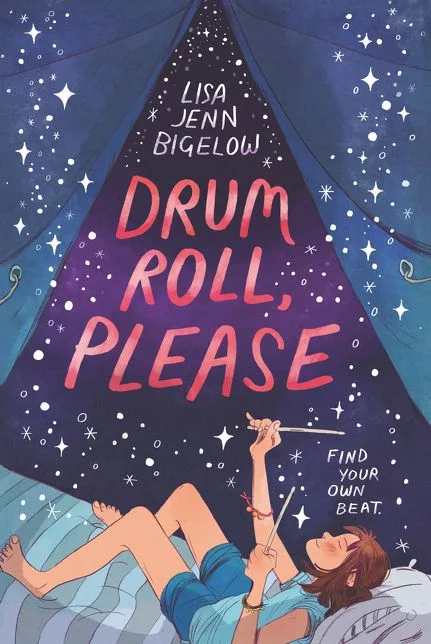 Drum Roll, PleaseLisa Jenn BigelowMelly feels her world rocked in more ways than one in this novel steeped in authentic middle-school turmoil. Immediately before leaving for Camp Rockaway with her best friend Olivia, Melly’s parents announce their impending divorce. Still trying to absorb this news, Melly is plunged into the camp routine. A drummer, she is assigned to a band with three other young musicians, one of who is Adeline. In need of a friend and listening ear, Melly confides in Adeline about her parents’ divorce and is surprised to realize that she’s developing a crush on her new friend. Olivia, meanwhile, has been neglecting Melly in favor of spending time with a cute boy in her own band. With Adeline’s help, Melly learns to communicate her feelings about the divorce through a song for her band’s final performance. With a romance perfectly suited to preteen readers, the narrative deftly touches on issues of consent and leaves Melly excited about future self-discovery. The well-drawn music camp setting provides a unique backdrop for this touching portrayal of one girl’s growth over two momentous weeks.Fiction for ChildrenLexile Text Measure HL630LATOS Book Level 4.4View book details
 Be PreparedVera BrosgolAt her classmate’s sleepover birthday party, Russian immigrant Vera feels like an outsider, not just culturally but economically. When she convinces her mom to let her have her own sleepover birthday party, the feeling doesn’t change. These scenes, mined for humor as well as pathos, set up Vera’s desire to attend summer camp. Not just any summer camp, but ORRA, a camp for Russian immigrant 72 Fiction for Children CCBC Choices 2019 children. With tuition help from their church, she heads off with her comically resistant-to-camp younger brother, eager to participate in the camaraderie and activities. But from the bathrooms (latrines!), to tentmates (longtime campers and best friends who barely tolerate Vera), to capture the flag, to things that go scratch in the night, Vera finds little to like and a lot to hate about summer camp, until she (finally) starts hanging out with Kira. Only 8–1/2 to Vera’s almost 10, Kira is the first person at camp Vera genuinely likes. And unlike Vera, Kira doesn’t worry about what others think—both relief and inspiration. This funny, poignant graphic novel, inspired in part by the author’s childhood, is drawn with clean lines and slightly comical style, and colored in shades of camp-tent khaki green.Fiction for ChildrenLexile Text Measure GN360LATOS Book Level 2.6View book details
 Ana María Reyes Does Live in a CastleHilda Eunice BurgosEleven-year-old Ana María lives in a cramped apartment in Washington Heights with her parents and three sisters, with another baby on the way. Ana María hopes to get a full scholarship to a private girls’ school by impressing them with her academic prowess and her skills at playing the piano. But prospects of attending the school have made her aware of everything she doesn’t have in terms of material things, making her resent the coming baby and some of the other choices her parents have made. When her family travels to the Dominican Republic to attend her aunt’s wedding, Ana María is struck by the economic disparities between her aunt’s affluent lifestyle and the lives of many of her less fortunate relatives. Ana María also finds it unsettling to see how her aunt, whom she’s always admired, treats the girl Ana María’s age who works for her. It gives Ana María pause. Ana María’s growth comes in fits and starts in this warm, realistic story. There is no magic transformation but she does slowly gain a deeper understanding of her own privilege and things that really matter even as it remains an easy, breezy middle-grade novel, one full of humor, cultural authenticity, and surprising depth.Fiction for ChildrenView book details
 Hurricane ChildKheryn CallenderEvery morning Caroline Murphy makes the short trip by boat from her home on Water Island to her Catholic school on St. Thomas of the U.S. Virgin Islands. Caroline’s thick hair and skin “darker than even the paintings of African queens hanging in tourist shops” make her an easy target for bullies and contemptuous light-skinned teachers. Home isn’t much better: Her mother left Caroline and her father about a year ago, but the tenacious 12-year-old is determined to find out what happened to her. When a new girl, Kalinda, transfers to Caroline’s school from Barbados, Caroline is immediately drawn to her and determined to make Kalinda her first friend—and possibly more. She suspects that Kalinda, like she, can see spirits, and she enlists Kalinda’s help in communicating with them in the hopes that they will lead her to her mother. This emotionally complex novel thoughtfully explores the anguish that occurs when a mother’s survival comes at the cost of her daughter’s happiness. A vivid Caribbean setting and a tentatively hopeful ending will bring readers some relief on behalf of this determined and aching young girl.Fiction for ChildrenView book details
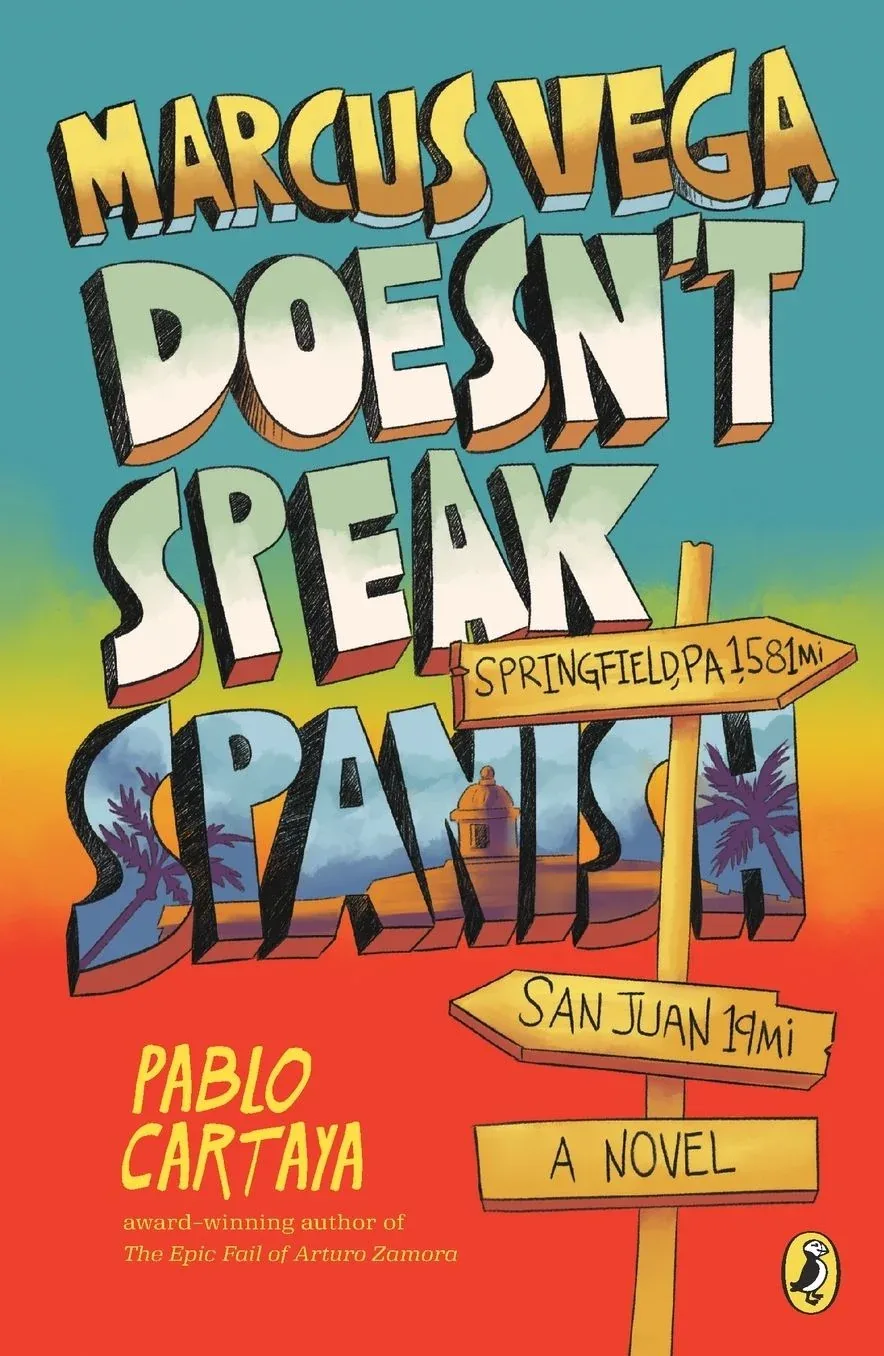 Marcus Vega Doesn’t Speak SpanishPablo CartayaBiracial (Latinx/white) Marcus, 14, is not above intimidating kids with his size, although he’d much rather protect them from Steven, a class bully, in one of his several moneymaking schemes to help out at home. When Marcus is suspended after punching Steven, who called his little brother Charlie the r-word, their mom decides a break is needed and arranges a five-day visit to extended family in Puerto Rico. Puerto Rico is where Marcus’s dad lives. Even though he abandoned their family not long after Charlie, who has Down syndrome, was born, Marcus is convinced his dad will want to see them. The trip is a captivating, enriching, eye-opening look at family and culture and heritage for Marcus. For once his mom is relaxed rather than stressed about work and money, and he sees a whole new, adventurous side of her; Charlie, too, holds surprises; and his relatives, spread out across the island, are warm and wonderful. Still, Marcus yearns to see his dad, sure he will have changed from the man who left into the man Marcus wants him to be. Terrific relationships and wonderfully realized characters ground this story in which Marcus realizes that while he can’t have everything he longs for, he is already surrounded by love.Fiction for ChildrenView book details
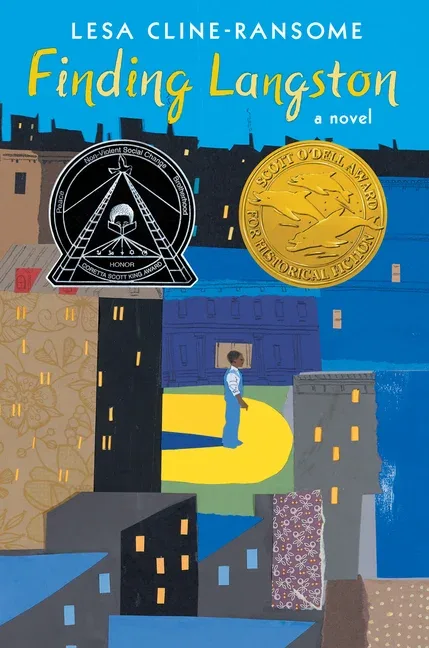 Finding LangstonLesa Cline-RansomeIn the late 1940s, 11-year-old Langston recently moved to Chicago from Alabama with his father and is having a hard time with the transition. He and his dad are both still grieving the death of Langston’s mother, while Langston is teased at school for being a country boy. On a day he’s evading a bully after school, Langston discovers the George Cleveland Hall branch of the Chicago Public Library. Back in Alabama, his mother had told him that libraries were for white people, but here he sees people that look like him going in. Langston enters and finds a welcoming world. He’s drawn first to the work of a Black poet who has the same name as he does: Langston. Reading Langston Hughes’s poems makes Langston feel like he’s found someone who understands his life, whose words could be his own. Talking more to his dad and reading old letters, Langston realizes that his mom, too, found resonance and hope in the words of Langston Hughes, and that she chose to name him “Langston” because of Langston Hughes. A short, stirring novel that sees Langston making new connections in myriad ways also sees him move from loneliness and isolation to hope.Fiction for ChildrenLexile Text Measure 760LATOS Book Level 4.5View book details
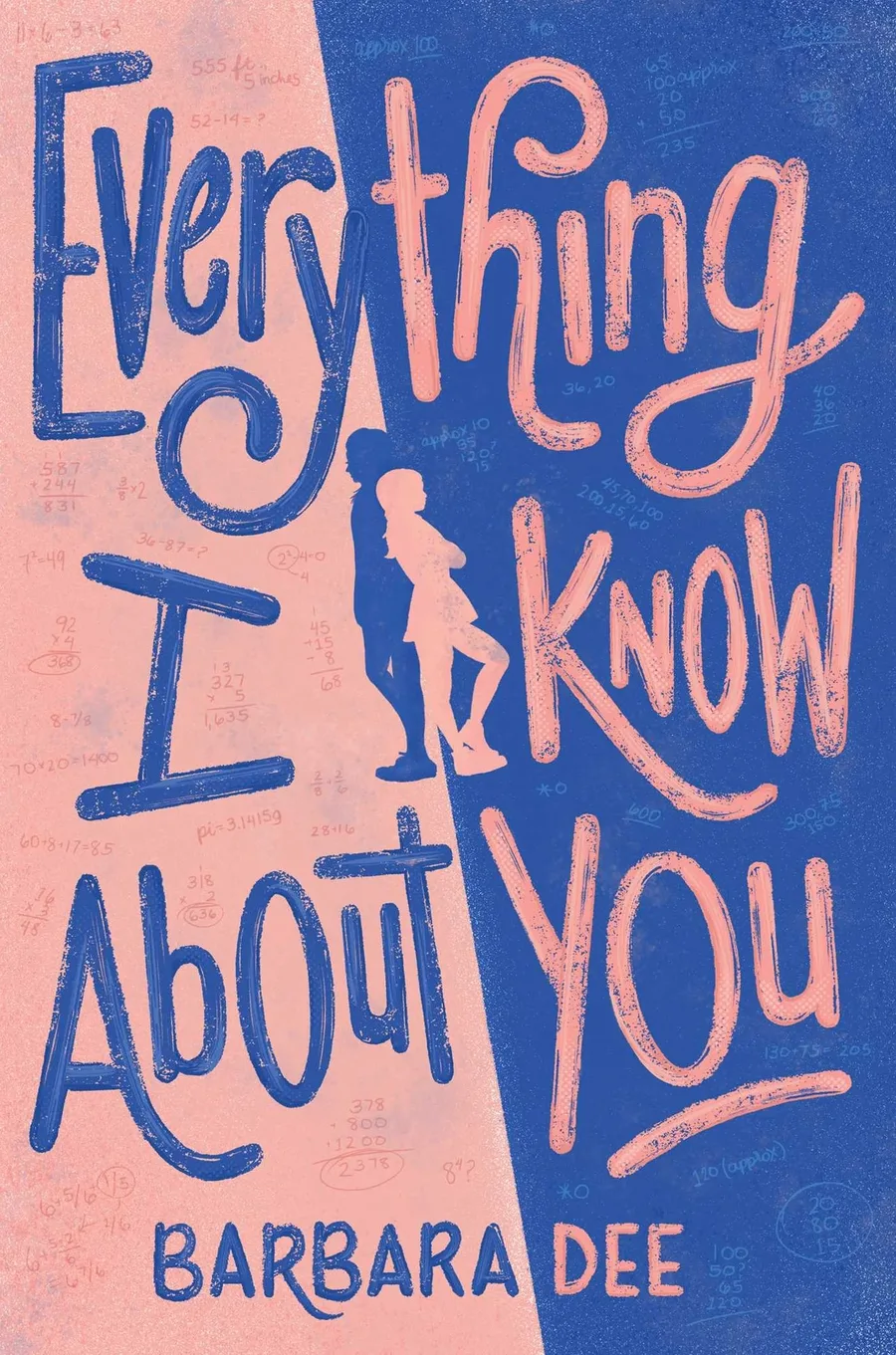 Everything I Know about YouBarbara DeeMuch to her displeasure, Tally is paired with Ava as her roommate on an overnight seventh-grade field trip to Washington, D.C. Tally is blunt, judgmental of others, and protective—in a somewhat smothering way—of her two best friends, Spider and Sonnet. Tally scorns girls like Ava, popular and preoccupied with appearance. Ava is so preoccupied, in fact, that Tally begins to suspect that Ava’s habits (keeping daily lists of numbers, exercising excessively, restricting her diet) may be signs of an eating disorder. Such behavior is puzzling to Tally, who unapologetically loves her own body the way it is. Tally may like 74 Fiction for Children CCBC Choices 2019 not Ava very much but she realizes Ava needs help. She struggles over what to do, the situation all the more challenging because Ava is desperate to keep her illness a secret. A novel for older children and young teens that doesn’t glamorize eating disorders in the least is also matter of fact about adoption, body image, and mental health as it explores acceptance of one’s self and of others.Fiction for ChildrenView book details
 Louisiana’s Way HomeKate DiCamilloLouisiana Elefante is heartbroken when she and her Granny leave Florida in the middle of the night: She didn’t get to say goodbye to her friends Raymie and Beverly, and her beloved cat, Archie, was left behind. After Granny’s dental emergency lands them in Richford, Georgia, Granny abandons Louisiana there. Granny had explained the reason for the trip was to undo a family curse, one she didn’t want Louisiana to bear. But the letter Granny leaves behind reveals that the story she’d always told Louisiana about her parents was a lie. That it was a lie spun from love makes it no less difficult for Louisiana to understand. Now stranded in Richmond, with a motel owner and church organist who look at her with nothing but suspicion, and a boy, his parents, and a minister who treat her with nothing but deep kindness, Louisiana must take charge of her own story; relief comes in knowing she doesn’t have to do it on her own. Louisiana is a girl of courage, fortitude, and deep feeling. This novel featuring a character introduced in Raymie Nightingale is completely improbable, if not impossible, yet brimming with honest emotion.Fiction for ChildrenView book details
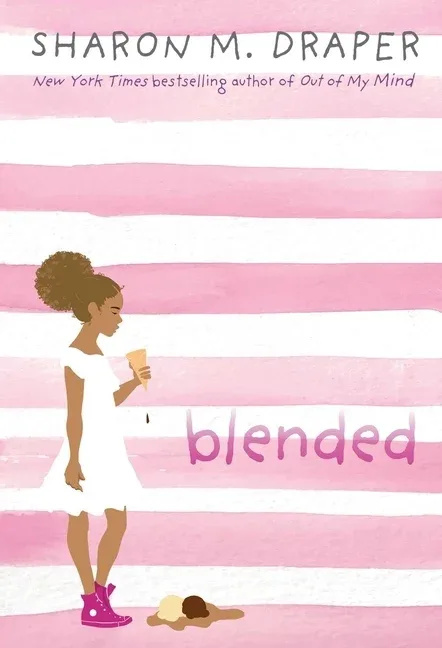 BlendedSharon M. DraperIsabella, 11, alternates weeks living with each of her divorced parents. Although they’ve assured her the ongoing tension in their relationship is about them, not her, Isabella is always aware that they don’t get along. It doesn’t make the weekly exchanges easy, nor does the fact that her working class, white mom and middle class, Black dad lead very different lives. Isabella loves them both, and she loves —and is loved by—their new partners, Anastasia and John Mark, while Anastasia’s son is like a big brother. Still, she feels like there is her mom’s place, and her dad’s place, but no place that’s really hers. Isabella’s preparations for an upcoming piano recital, and the announcements that both her mom and her dad are getting married, are exciting but also points of tension. A racist incident at school has Isabella thinking more about her racial identity, adding an additional challenge to her complicated life. A harrowing and credible trauma ties several of these plot strands together, as well as bringing the conflicting elements of Isabella’s blended family into a tighter, more supportive network in this appealing, moving work.Fiction for ChildrenLexile Text Measure 610LATOS Book Level 4View book details
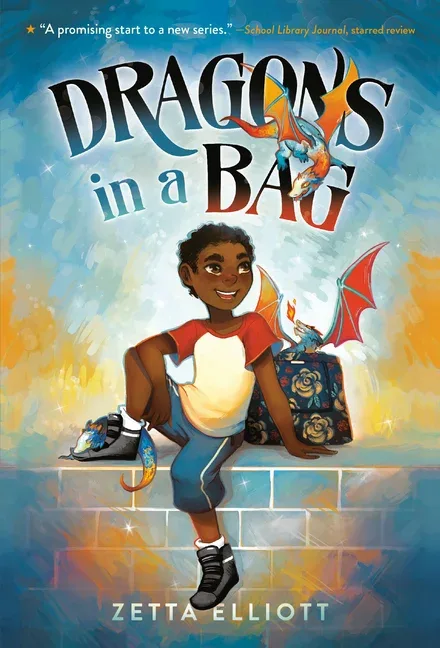 Dragons in a BagZetta ElliottWhen nine-year-old Jaxon’s mom, desperate for a babysitter while she goes to court to fight an eviction notice, leaves him with an eccentric woman she calls “Ma,” Jaxon assumes it’s his grandmother, although he never met her. Ma is CCBC Choices 2019 Fiction for Children 75 snappish and stern and clearly reluctant to watch him. Jaxon would much rather stay with his best friend, Vik. But there’s something mysterious going on in Ma’s apartment, too: Jaxon is certain he’s seen a package from Madagascar move all by itself. When he learns that there are three tiny dragons in the package and Ma wants his help returning them to their natural environment, he readily agrees, even though it means traveling through time and to parallel worlds—something at which Ma is clearly experienced. This engaging fast-paced fantasy features a diverse cast of well-rounded characters of color, including its African American protagonist. Unpredictable Ma, the mysterious homeless man Ambrose, and Jaxon’s own grandfather all serve as surprising conduits between the earthly world and the magical one, while Vik and Vik’s little sister, Kavita, prove to be unflappable friends in the winning first volume of this series.Fiction for ChildrenLexile Text Measure 740LATOS Book Level 4.7View book details
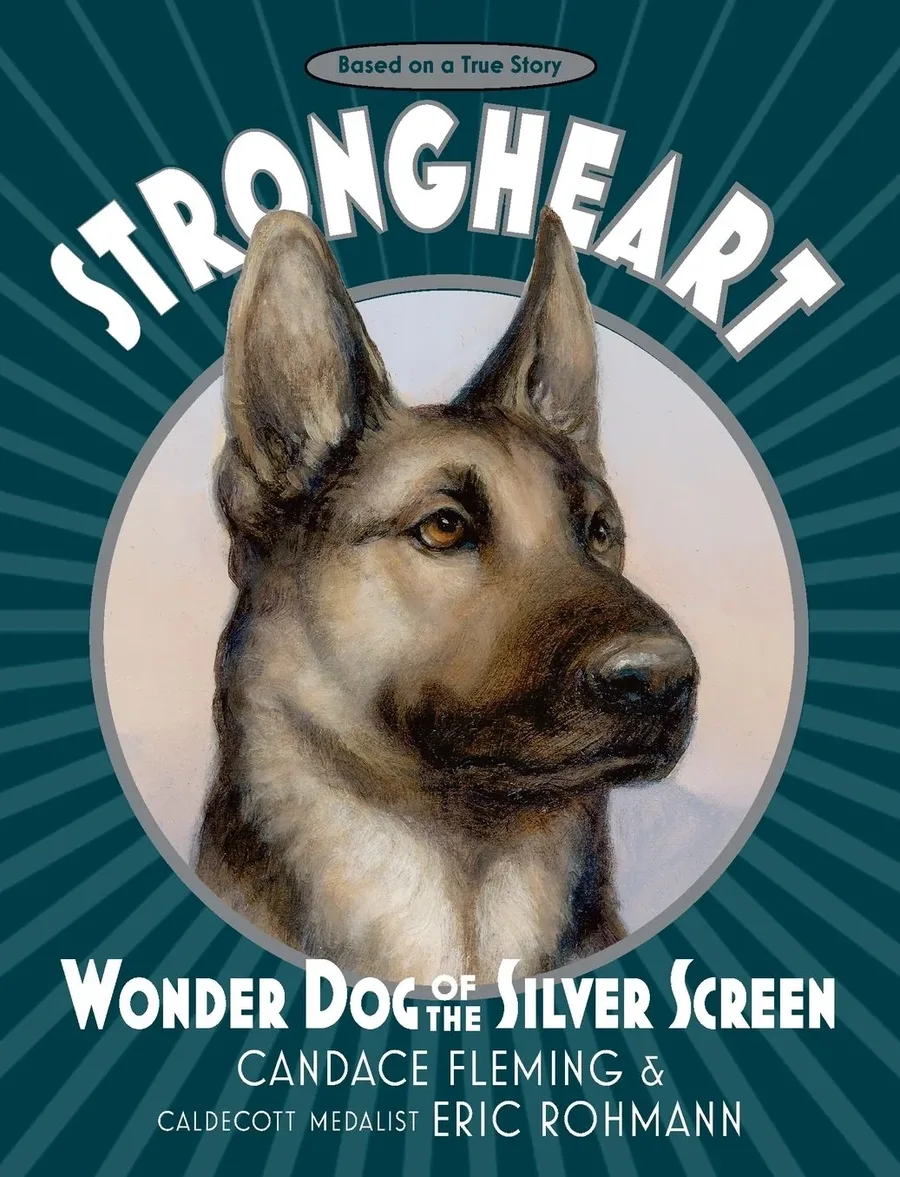 Strongheart: Wonder Dog of the Silver ScreenCandace FlemingA captivating easy novel, based on a true story, is set during the silent film era. In search of the next big star, director Larry Trimble has an idea: A dog. He isn’t interested in an animal that can just do tricks; he wants a heroic star. But finding one proves a challenge. Enter Etzel. Trained as a vicious police dog in Germany, Etzel is clearly smart, but Larry has his work cut out after purchasing him. While screenwriter Jane Murfin works on scripts, Etzel, now renamed Strongheart, gradually learns to trust. But when it comes to acting, he proves to be a natural, with a lot of big screen charisma. With the release of his first movie, Strongheart is an overnight sensation. In the 1920s, he was the It Dog. He had public appearances, magazine spreads, product endorsements, and even his own Hollywood scandal. He is also responsible for making German shepherds the most popular dog breed in the United States. Sadly, only one of his films survives, but Fleming has done meticulous research to piece together his amazing story. Rohmann’s detailed black-and-white line drawings throughout are wonderfully cinematic, giving a sense of the black-and-white silent era and Strongheart’s charisma.Fiction for ChildrenView book details
 Fake BloodWhitney GardnerAs he begins 6th grade, AJ is an ordinary kid who enjoys hanging out with his best friends, Hunter and Ivy. Happily, they are all in the same class with a cool new teacher, Mr. Niles, from England. But life changes quickly for AJ when he develops an immediate crush on the unattainable Nia Winters, the smartest kid in Spoons Middle School—and an avid fan of vampires. He becomes obsessed with how to make her notice him and decides the best way is to pretend to be a vampire. He mousses his hair, uses his older sister’s makeup to put dark circles under his eyes, and takes to wearing sunglasses. He uses books and television shows to study up on vampire behavior so he can impress Nia with his knowledge. He even starts drinking fake blood, making sure that it leaves stains on his teeth and gums. While AJ may be maturing with his first serious crush, Ivy and Hunter still play like children; it’s one of the ways Gardner skillfully captures middle school behavior. All are part of a strong cast 76 Fiction for Children CCBC Choices 2019 of well-rounded characters who populate this witty, distinctive graphic novel in which AJ’s research, not to mention Nia’s vampire expertise, prove to be critical.Fiction for ChildrenLexile Text Measure GN150LATOS Book Level 2.5View book details
 The Night DiaryVeera HiranandaniWhen Nisha and her twin brother Amil turn 12, Nisha receives a notebook from her family’s beloved cook, Kazi. She uses it as a diary, writing entries in the form of letters to her mother, who died when the twins were infants. Observant, sensitive Nisha is an excellent writer, but anxiety makes it difficult for her to speak. India has recently been freed from British rule, and when tensions among Muslims, Hindus, and Sikhs erupt in her hometown of Mirpur Khas, Nisha fears for her family’s safety. Nisha and Amil’s mother was Muslim, but their father and grandmother are Hindu, putting them at great risk when their part of India becomes Muslim Pakistan after Partition. Nisha observes that her “childhood would always have a line drawn through it, the before and the after.” Forced to leave their comfortable life—and Muslim Kazi—behind, the family flees on foot, setting off across the desert for the “new India,” with only a few jugs of water in hand. They encounter many dangers on their harrowing journey, only to arrive at a place that is not home, and where they have nothing but one another. Nisha effectively communicates not only the profound pain of loss and separation faced by this family during a tumultuous period of Indian history, but also the comfort of learning how to express love and gratitude for one another.Fiction for ChildrenLexile Text Measure 700LATOS Book Level 4.5View book details
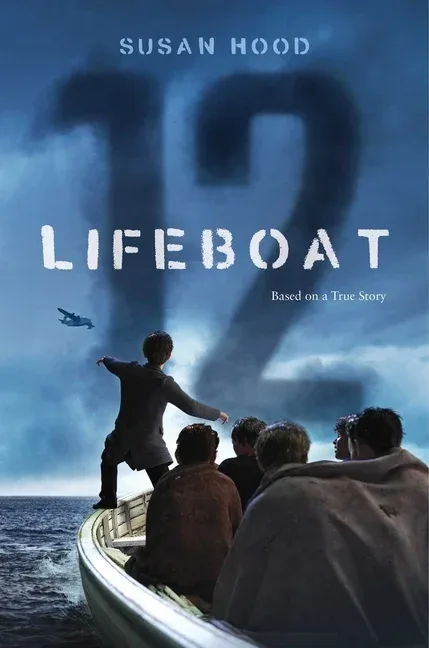 Lifeboat 12Susan HoodThis novel in verse is based on the experiences of Ken Sparks, who, at 13, survived a harrowing eight days on a lifeboat in the Atlantic. Ken was a child evacuee from England heading toward Canada, part of an organized effort during the Blitz in WWII. Ken is eager to escape the bombings and considers his trip aboard the SS City of Benares an adventure. As one of the oldest, he tries to buoy the spirits of younger boys in his group. The ship is luxurious; compared to the meager rations back home, each meal is a veritable feast. Six hundred miles out, though, the Benares is struck by a U-boat torpedo. Ken boards Lifeboat 12. As the night passes, crewmen aboard the lifeboat suspect that rescue efforts have missed them. Over the next week, the 46 passengers— among them six boys—struggle to survive on strictly rationed food and water. They suffer sunburn, trench foot, and sheer boredom; to pass the time, the boys’ escort, Mary Cornish, invents a story, which she doles out in parts day by day. This well-researched, fast-paced, exciting survival story is followed by end matter that includes photographs and additional information about the survivors, including the South Asian sailors (Lascars) who were not identified by name in contemporary news reports of the rescue.Fiction for ChildrenLexile Text Measure 610LATOS Book Level 4View book details
 The Parker InheritanceVarian JohnsonAt her late grandmother’s house in Lambert, South Carolina, African American Candice discovers an old letter referencing a hidden treasure in town, one it turns out her grandmother tried to find years before to help the city. Instead, she lost her job. Candice, who loves puzzles, teams with neighbor Brandon, who has internet access and research skills, in hopes of finding it and redeeming her grandmother’s reputation. While details about their lives unfold—Candice’s parents are separated; Brandon is dealing with a bully and a disapproving grandfather—the clues they follow reveal Lambert’s mid-twentieth century history. Chapters set in the past follow middle-class Siobhan, the talented, forthright daughter of the tennis coach at the Black high school, who falls in love with poor Reggie, the best player on the team. But Siobhan’s father, a Black man who’s worked hard to get where he is, doesn’t approve. When a secret 1957 match between the white and Black boys’ tennis teams triggers a violent racist attack after the Black team wins, Siobhan’s family and Reggie must flee town for their own safety. The teens’ resulting separation is at the heart of the mystery in this entertaining homage to The Westing Game (favorite book of several characters) that deftly yet meaningfully incorporates social justice issues from the present (e.g., ongoing racism, homophobia) and the past.Fiction for ChildrenLexile Text Measure 610LATOS Book Level 4.2View book details
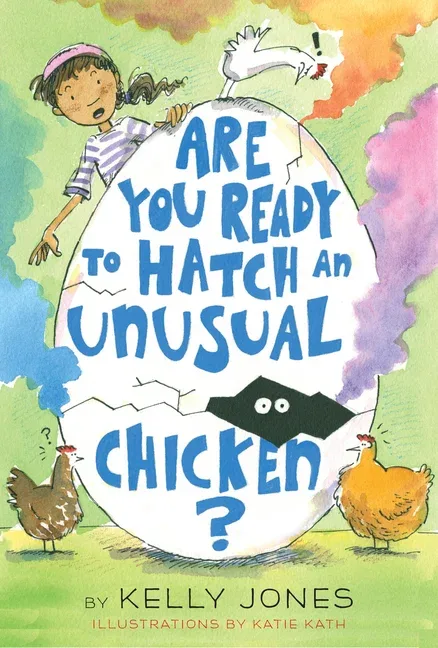 Are You Ready to Hatch an Unusual Chicken?Kelly Jones, illustrated by Katie KathIn Unusual Chickens for the Exceptional Poultry Farmer, Sophie discovered the chickens her family inherited from her late Great Uncle Jim, have special powers. Now Sophie is getting ready to oversee her first batch of eggs hatching, while her 18-year-old cousin, Luna, has come to stay with her family while she attends college nearby. It’s perhaps no surprise when the newly hatched chicks start behaving a little oddly—they’re Unusual Chickens, after all—but odd becomes dangerous when it appears one of them breathes fire. Sophie gets help from Luna even as her cousin adjusts to life with Sophie’s family and to college—her anxiety over the latter heightened at one point by an incident of racism. And Sam and Chris, the friends Sophie made after moving to town over the summer, are ready to lend a hand, but she wishes they and her new friend Xochi, the only other Latinx student at her school, got along better with one another. Biracial (Mexican/white) Sophie’s warm, loving family, supportive friends, and over-the-top chicken antics, make for a lighthearted yet substantial story, one told primarily in letters and emails, with occasional black-and-white drawings and other visual elements.Fiction for ChildrenLexile Text Measure 840LATOS Book Level 5.3View book details
 CheckedCynthia KadohataThe three things 11-year-old Conor loves most are hockey, his dad, and Sinbad, his Doberman rescue. After Sinbad is diagnosed with cancer, Conor’s dad tells Conor not to give up his dream of being on the AAA team, although they stop private lessons to better afford Sinbad’s treatment, which the vet has made clear will only prolong his pet’s quality of life. Conor can’t imagine losing Sinbad, but he’s also worried about his dad, who still seems sad since his divorce 78 Fiction for Children CCBC Choices 2019 from Conor’s stepmom, and whose job as a police traffic officer is stressful even without the financial worries. Finely developed characters and nuanced, meaningful relationships are at the heart of a story about finding acceptance, not answers, and embracing opportunities and change even when they’re scary, like reconnecting with the Japanese American grandparents Conor hasn’t seen since he was young. An abundance of hockey action and the friendships Conor has formed through the sport, as well his struggles with reading his playbook and his natural gift for seeing and understanding the patterns of play on ice, are a seamless part of a narrative in Conor’s open, appealing first-person voice.Fiction for ChildrenLexile Text Measure 760LATOS Book Level 4.9View book details
 You Go FirstErin Entrada KellyTwelve-year-old Charlotte’s dad is hospitalized and she’s scared to visit him. Meanwhile, her best friend wants to move up in the social hierarchy at school and is willing to belittle Charlotte to do so. Eleven-year-old Ben is surprised and then furious when his parents announce they’re divorcing. He throws himself into running for student council treasurer, although his earnest campaign is destined to fail. Both smart and precocious, Charlotte and Ben live in separate cities. Their connection to each other is through an online word game and the online chatting that has grown around their play. Ben is generally oblivious to his social awkwardness and inability to pick up on cues that would no doubt make his transition to middle school easier. Charlotte is more aware of the ways she’s seen as odd. Alternating chapters follow each of their lives over the course of a difficult week, although neither is honest with the other about their current challenges. The parallels offer readers plenty to ponder. So, too, does the fact that Charlotte and Ben’s personalities are a matter of fact, not fault or in need of fixing. When they each connect with someone new at school, it’s clearly because of who they each are, not in spite of it.Fiction for ChildrenLexile Text Measure 640LATOS Book Level 4.7View book details
 Begone the Raggedy WitchesCeline KiernanAfter Mup’s beloved Aunty dies, Mup begins to see “raggedy witches” in the shadows of trees. It turns out the witches have been sent by Mam’s own mother, an evil queen wanting to make sure Mam won’t challenge her throne. Mam remembers nothing of her life in Witches Borough—Aunty took her away as a child—but when Mup’s dad is kidnapped by rebels fighting the queen, Mam crosses the barrier between worlds to rescue him with Mup, her baby brother, Tipper, their faithful dog, Badger, and the faintly glowing ghost of Aunty in tow. In the world of magic, Tipper turns into a joyful, talking puppy and Mup befriends sad, lonely Crow, who is both boy and bird. Mup also discovers that she, like her mother, has magical power. Aunty’s ghost tries to keep Mam focused on rescuing her husband and returning to her human life, but the queen’s cruelty has been boundless. Those who challenge her must talk in rhyme; those who defy her are punished and killed. For biracial (white/ Black) Mup, trying to understand the world of magic, her own power, and the wickedness of a grandmother she’s never met leads to big questions about CCBC Choices 2019 Fiction for Children 79 right and wrong, responsibility and freedom, love and family, in Book 1 of a breathless, beautifully written fantasy.Fiction for ChildrenView book details
 Running through SprinklersMichelle KimSara, 12, has been best friends with Nadine since they were in diapers. Both are biracial, Sara Korean/white, Nadine Japanese/white, and have grown up moving in and out of each other’s houses and families and traditions with ease. Sometimes it seems to Sara they’re a single person, and she likes that feeling. As the summer before grade 7 winds down, two things disrupt Sara’s sense of security: A boy named Daniel Monroe disappears without a trace, and Nadine announces she will be skipping a grade and entering high school (grade 8 in Canada). Sara’s sense of hurt is amplified by the feeling that Nadine is ready to leave her behind. When school starts, Sara focuses on getting good grades in the (unrealistic) hope of skipping to grade 8 midway through the year. She also becomes closer to Nadine’s younger sister, sixth grader Jen, but still longs for reconnection with Nadine. Sara is imperfect, at times incredibly selfish, but genuinely grieving and achingly real as first-time novelist Kim writes with a singular style and sure hand, immersing readers in Sara’s slowly expanding perspective in a story that explores friendship, family, growth, change, loss, and finding the light again.Fiction for ChildrenView book details
 Peasprout Chen: Future Legend of Skate and SwordHenry LienPeasprout Chen, 14, and her younger brother, Cricket, have been sent by the Empress Dowager of Shin to attend the Pearl Famous Academy of Skate and Sword. Peasprout is already accomplished at Wu Liu, a martial art combining skating and kung fu. She’s certain she will be the best first-year at the Academy, representing Shin and the Empress Dowager with honor. But Suki, who will do whatever it takes to win, and the reserved, mysterious Doi, are equally gifted. Pearl is both a place and a substance—the entire city is made of its smooth surface on which everyone skates. But what is it? After Suki accuses Peasprout of being the Empress’s spy and someone starts sabotaging Academy training structures made of Pearl, suspicion falls on Peasprout, who is determined to uncover the real culprit. Only Doi and her twin brother Hisashi, whose father is in charge of repairs, stand by Peasprout as tensions and suspicion mount. Intrigue, action (they skate everywhere ), and a surprising, tender twist to the hint of romance are all part of this fantasy adventure that blends elements drawn from Chinese, Taiwanese, and Japanese cultures into an original setting and captivating boarding school story. Peasprout’s almost boundless confidence is part of the novel’s tremendous appeal.Fiction for ChildrenView book details
 The Season of Styx MaloneKekla MagoonCaleb and his older brother Bobby Gene have led a sheltered, idyllic life in a small Indiana town where everyone knows one another. That’s the way their father likes it—ordinary. Theirs is the only African American family in town, and he wants his sons to fit in, so they can grow up safe and protected. But Caleb 80 Fiction for Children CCBC Choices 2019 longs for something more. Even the science museum in Indianapolis would be a great adventure to him. Enter Styx Malone, a streetwise older African American boy who’s come to live with a foster family nearby. Styx is full of ideas that take both brothers out of their comfort zone. He partners with them in a series of escalator trades that starts with a bag of fireworks and ends with a motorbike. It all seems to be working like a dream until some of the trades start to involve illegal and dangerous moves. Caleb’s wry observant voice recounts the boys’ escapades through a summer that proves to be anything but ordinary, and also shows Caleb’s growth and maturity as he wrestles with trust, relationships, and ethical dilemmas.Fiction for ChildrenLexile Text Measure 510LATOS Book Level 3.4View book details
 The Mad Wolf’s DaughterDiane MagrasDrest, 12, has been raised by Da and her older brothers, who are training her to be part of their war-band in medieval Scotland. When they’re attacked by knights from Faintree Castle, only Drest, in hiding, escapes capture. Emerick, a wounded young knight from the invading band left for dead, can’t get back to Faintree without Drest’s help. She agrees, developing a plan to rescue her father and brothers by trading Emerick for one of them. On the road with Emerick and Tig, a boy from a healer’s family who joins them on their journey, Drest begins hearing things about her family that she doesn’t want to believe. She’s never thought to question the stories that she’s been told, until now. At the same time, Emerick turns out to be more than the knight he claimed to be, and it’s clear his almost-death in the attack on Drest’s family was treachery from within his own family at Faintree. This fast-paced adventure exploring loyalty, friendship, and family features a winning hero in Drest, who is smart and skilled, while her empathy, and demands for honesty from her family, force her father and brothers to reassess everything they thought they knew about her, too.Fiction for ChildrenView book details
 TightTorrey MaldonadoBoth of Bryan’s parents encourage him to spend time with Mike, a new kid in their Brooklyn projects. He and Mike have a lot in common, from fathers who’ve been in jail to a love of superhero comics and drawing. Bryan, who is Puerto Rican, likes when Mike, who is African American, says they’re brothers, even if he’s a little jealous of the attention his dad gives Mike. But Mike is sometimes selfish, and mean for no reason. He creates drama just to see what will happen. Bryan can’t deny some of the drama is thrilling, like jumping onto the back of a subway train. Yet when things fall apart, Mike doesn’t stick around and take his share of the blame. It makes Bryan angry, and despite the fact that Bryan isn’t tough (something he’s keenly aware he’s judged for), he knows he has a temper, and he’s worried he’ll go off, which is exactly how his dad ended up in jail. At what point, he wonders, is a friend no longer a friend? There isn’t an easy answer, and it only gets harder when Bryan’s parents tell him to be honest with Mike, but not give up on him completely. Bryan’s struggle is so relatable, and so realistically complex, as he comes to realize the voice he needs to listen is his own.Fiction for ChildrenLexile Text Measure 600LATOS Book Level 3.9View book details
 Nowhere BoyKatherine MarshAhmed, 14, is a Syrian refugee whose father disappeared in the water as they tried to reach Greece. After months living in a makeshift Belgian refugee camp, Ahmed hopes to make it to England, but things go terribly wrong and he finds refuge in the basement of a Brussels home. Max, 13, is an American expatriate. He hates his French-speaking school, the class bully, his parents’ fights, his sister’s perfection. When Max discovers the boy living in his basement, his initial fear quickly dissolves. His tutor speaks disparagingly of Muslim refugees but has also told Max, with pride, about Albert Jonnart, the Belgian man for whom their street is named. Jonnart was killed for hiding a Jewish boy from the Nazis. As Max learns more about Ahmed’s life and the horror of the war, including the death of Ahmed’s mother and little sister in a bombing, he’s determined to help with more than just food and books for his new friend in hiding. But terrorist attacks heightening Islamophobia making everything more challenging. Compassion is at the heart of this timely, discussable story moving back and forth between the two boys’ lives. Some of the plot stretches credibility but the hearts of the characters are genuine.Fiction for ChildrenLexile Text Measure 810LATOS Book Level 5.4View book details
 BobWendy Mass, Rebecca SteadIt’s been over five years since Livy, now almost 11, last visited her grandmother in Australia. Her grandmother is disappointed that Livy doesn’t remember much from that earlier trip. It’s even more disappointing to Bob, whom Livy finds in the closet of her mother’s childhood bedroom. A tattered chicken suit disguise five-year old Livy made can’t hide the fact that Bob’s a small green creature, neither human nor fowl. Bob’s spent time waiting for Livy’s return practicing the hokey pokey, constructing and deconstructing a Lego pirate ship, and occasionally crying as he wondered where and why his friend had gone. Livy’s memories of Bob gradually return in bits and pieces as he tells how she rescued him—or did he rescue her? Chapters alternate between Bob’s and Livy’s perspectives, and the impossible truth about Bob emerges within a larger story of family and home. Livy’s voice is firmly grounded in childhood as she struggles with anxiety about staying without her mother, who is off seeing friends, reconnects with Sarah, a girl she played with during her last visit, and attempts to keep Bob safe from all who might not be fooled by his chicken costume. Occasional brown-tone illustrations add a reassuring feel to this seamless merger of everyday and extraordinary.Fiction for ChildrenLexile Text Measure 590LATOS Book Level 3.9View book details
 Winnie’s Great WarLindsay Mattick, Josh Greenhut, illustrated by Sophie BlackallCole already knows the tale of the bear that inspired the Winnie the Pooh books. When he wants a new bedtime story, his mother decides he’s old enough to hear more about Winnie. Expanding on the picture book Finding Winnie, this story begins with a bear cub orphaned after its mother is killed by a hunter. The cub wreaks havoc when it’s taken in by the hunter’s child before being adopted by a Canadian veterinarian (Cole’s great-great-grandfather, Henry Colebourn) headed to training for World War I military service. Winnie— 82 Fiction for Children CCBC Choices 2019 short for Winnipeg—has a special rapport with horses and rats on board the ship, brokering a peace between them, while she provides companionship and delight for many behind the lines in Europe before the veterinarian realizes war is too dangerous for Winnie and arranges for the London Zoo to take her. It is there she eventually meets a boy named Christopher Robin Milne and his writer father. At times funny, moving, tender, and sad, Winnie’s tale is always firmly centered on the loving relationship between a bear and his human and full of child-appeal. Charming illustrations introduce each chapter, and a concluding “Coleburn Family Archive” offers family photographs and artifacts.Fiction for ChildrenView book details
 Merci Suárez Changes GearsMeg MedinaCuban American Merci, 11, lives with her parents and older brother, Roli, at Las Casitas—three adjacent houses occupied by her extended family. Merci and Roli attend Seaward Academy, a private school where Roli is an academic star and Merci, now in her second year, has recently been named a “sunshine buddy” for a new student Michael Clark. Being a scholarship student at the school has enough challenges without Edna Santos, Merci’s own sunshine buddy the year before, annoyed at Merci. It turns out Edna likes Michael, creating drama Merci wants no part of. The drama Merci can’t avoid is at home, where her beloved grandfather, Lolo, has been acting moody and forgetful. When Merci has to take over caring for her young cousins after school because Lolo cannot, it means she can’t go out for soccer. Upset, and worried about Lolo, Merci wants reassurance her family seems unable to provide. When they finally reveal Lolo was diagnosed with Alzheimer’s, it’s a difficult truth, but one that Merci needed to know. Merci is firmly grounded in family and culture, giving her the stability she needs to meet and respond to change in this lively, moving story.Fiction for ChildrenLexile Text Measure 700LATOS Book Level 4.6View book details
 The Book of BoyCatherine Gilbert MurdockIn 1350 France, Boy is an orphan bullied and shunned because of the hump on his back. To escape his daily torment, he agrees to accompany a stranger named Secundus, who’s on a quest find the seven relics of St. Peter in order to get into heaven. Secundus already has the saintly rib, but he still needs tooth, thumb, toe, dust, skull, and tomb. It turns out Secundus is willing to beg, borrow, and steal to get the relics, which results in more than one narrow escape for the two as they journey across France to Rome. Secundus doesn’t want to explain why he’s in need of the relics to get into heaven. But Boy is keeping a few secrets of his own: He doesn’t need to eat and he has a deep empathy for and ability to communicate with animals. And then there’s what’s under his shirt; something he’s learned never to reveal. Beautiful bookmaking graces a singular story that is full of humor, warmth, and surprises, not the least of which is the true identity of Boy, who longs to be a real boy. Fascinating historical details are woven into a narrative told in Boy’s voice full of innocence and wisdom, and brimming with humanity.Fiction for ChildrenLexile Text Measure 600LATOS Book Level 4.3View book details
 The Orphan Band of SpringdaleAnne NesbetIn spring, 1941, Augusta (Gusta) Hoopes Neubronner arrives in Springdale, Maine, with a battered French horn and the hope of finding a long-lost wishing coin. Her mother is working in New York City. Her father, a German immigrant, is on the run from authorities for his work as a labor organizer. Gusta’s Grandmother Hoopes runs an orphanage, and Gusta is deemed an honorary orphan by Josie, 14, the welcoming and unfailingly upbeat oldest among her charges. While some find Gusta’s German last name suspicious given the war in Europe, at home, at school, and in the community she earns the respect and affection of many, including the town occulist, another German immigrant, who gives her a job so she can work off the cost of spectacles that radically alter—and improve—her vision. When Josie, Gusta, and Gusta’s cousin Bess form a band, it gives Gusta reason not to sell her beloved French horn, which she’s been considering. Gusta hasn’t found the wishing coin, and the horn might bring enough money to pay for surgery Bess’s papa needs after a mill accident. All her hopes come crashing down before everything works out fine in this warm, heartfelt work of historical fiction full of period details that give it both veracity and charm.Fiction for ChildrenView book details
 No Fixed AddressSusin NielsenFelix and his mom, Astrid, are living in a van. He hates it. And he hates how good his mom is at lying, although he’s grateful she got him into the sixth grade French Immersion class in one of their former Vancouver neighborhoods using a false address. Reunited with old friend Dylan, he doesn’t tell Dylan or new friend Winnie that he’s homeless. The difficulties of keeping the secret and managing daily life become more challenging when Astrid’s savings run out. She hasn’t found another job and begins to steal food. So Felix sets his sights on winning a television quiz program—the prize would be enough to rent an apartment and pay the store owner what they owe. Then Astrid falls into one of her “slumps” and can’t get out of bed. Felix holds out hope that his birth dad, Daniel—a gay Black man and an old friend of Astrid’s who lives in Toronto—might be able to help, but it’s clear Daniel has struggles of his own so Felix doesn’t tell him what’s happening. A novel that illuminates difficult truths doesn’t fall into the trap of a perfect ending. But warmth abounds, and Felix and Astrid’s lives are looking up by story’s end. Felix and Astrid’s richly developed backstories are among the things that make this novel stand out.Fiction for ChildrenLexile Text Measure 620LATOS Book Level 4.3View book details
 Astrid the UnstoppableMaria Parr, illustrated by Katie HarnettAstrid, the only child in her small Norwegian village, is known as “the little thunderbolt” for her fearless, full-speed-ahead approach to life. Her best friend is gruff Gunnvald, her aging godfather, who adores Astrid. The feeling is mutual. But a mysterious letter sends Gunnvald into a moody spiral, and then he breaks his leg. In the aftermath, Gunnvald’s adult daughter Heidi appears. Heidi is angry at her father, and he at her, for what they each see as abandonment by the 84 Fiction for Children CCBC Choices 2019 other. Heidi’s mother left her with Gunnvald when she was four, returning eight years later to take her away. The pain of that separation is still raw and real for them both. Astrid is hurt and confused that Gunnvald could have abandoned his child—it’s clear that he never tried to contact Heidi after she left. And Astrid wants to hate Heidi for planning to sell Gunnvald’s farm to Klaus Hagen, owner of the local wellness retreat and hater of children in general and Astrid in particular. But she can’t ignore what she knows about Gunnvald, and what she learns about Heidi. So Astrid hatches a plan, and then another, in hopes of changing Heidi’s mind, and, eventually Gunnvald’s and Heidi’s hearts, in this funny and moving translated novel.Fiction for ChildrenLexile Text Measure 800LATOS Book Level 5.09View book details
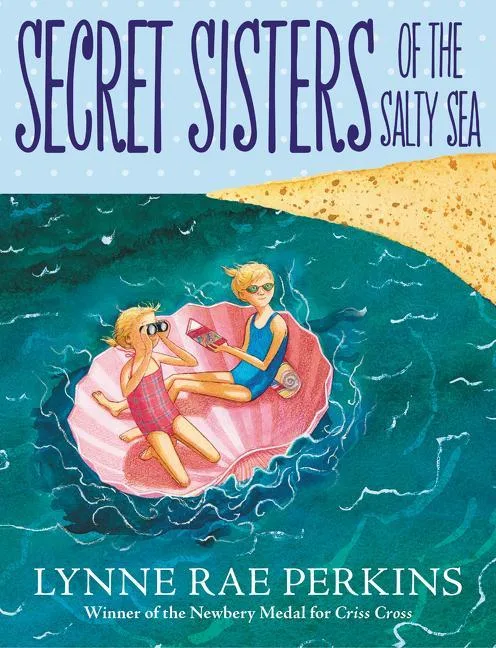 Secret Sisters of the Salty SeaLynne Rae PerkinsA weeklong summer vacation for Alix and her older sister, Jools, is a series of small moments that combine to create an experience far different than their day-to-day life back home, from swimming in the ocean to cycling to a nature preserve to getting involved in a raptor rehabilitation program to making a new friend in African American Nessa, whose grandmother owns, and lives upstairs from, the apartment the girls’ family is renting. A quietly observant book that beautifully captures sibling and family dynamics, how cartwheels can lead to instant friendship, and how new experiences can leave such a lasting impression, is told primarily from Alix’s point of view, with Nessa’s perspective woven in throughout. For Nessa, some of the things unusual to Alix and Jools, from the shocking size of June bugs to building sandcastles by the sea—only to have them washed away by the tide—aren’t unusual at all. Occasional black-and- white illustrations add to the appeal of this understated story full of warmth and charm.Fiction for ChildrenLexile Text Measure 590LATOS Book Level 3.8View book details
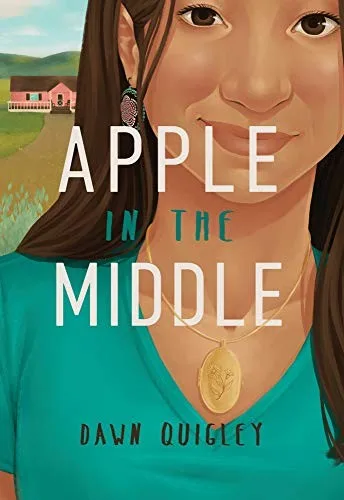 Apple in the MiddleDawn Quigley“Apple” can reference something precious and much loved: apple of one’s eye. “Apple” is also a derogatory term for Native people: red on the outside, white on the inside. Apple, 12, never knew her Ojibwe/Michif mom, who grew up on the Turtle Mountain Chippewa Indian Reservation in North Dakota but died in a car accident while pregnant. Apple has been raised by her white dad and her stepmom. Now she’s spending the summer on the Turtle Mountain Reservation. For the first time she is learning about her mom, whom her dad doesn’t talk about, and her heritage, and meeting members of her extended family of blood and community. A story that hits its stride at the point Apple arrives on the reservation features an abundance of warmth and humor, including Native humor that Apple is being exposed to for the first time, and wonderfully complex, nuanced characters. A subplot involving a man who was in love with Apple’s mom when they were teens is less compelling, as is the framing story with her dad, stepmom and little brother, but it all comes together as Apple begins to see herself not as someone in the middle or caught between, but as a girl connected to many good people and things across all aspects of her life.Fiction for ChildrenView book details
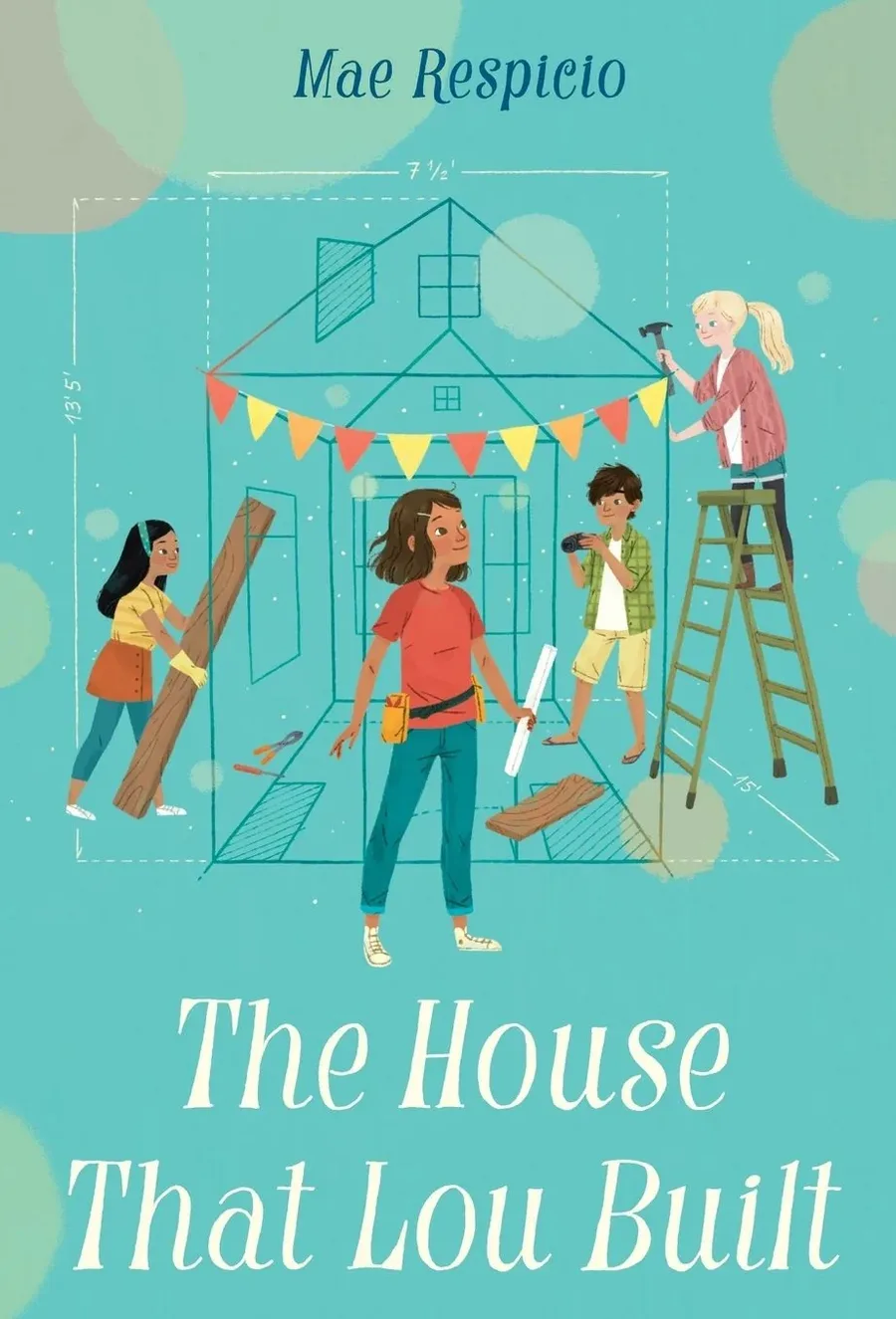 The House That Lou BuiltMae RespicioLucinda (Lou) Bulosan-Nelson is good with her hands. She loves her woodworking class at school, and she has a dream: to build her own tiny house on the plot of land left to her by her white father, who died before Lou was born. When Lou’s mom considers taking a nursing job in Washington State, Lou panics. She doesn’t want to leave San Francisco, her friends, or her extended family and Filipino community. And what about her tiny house? She’s been collecting materials. She has a blueprint. She knows that building this house will help her feel more connected to the father she never knew. Then, worse news arrives: Unless Lou’s mom resumes tax payments on Lou’s land, the county will auction it off. Lou decides to take matters into her own hands (literally) and get started on that tiny house. Lou is resourceful, highly creative, and determined to learn and to find solutions—and she’s also smart enough to know how to ask for help when a project becomes too difficult. STEM themes abound, but Lou’s story is built on a foundation of family, friends, and community support.Fiction for ChildrenView book details
 LuJason ReynoldsReynolds, Jason. Sunny. (Track: Book 3) A Caitlyn Dlouhy Book / Atheneum, 2018. 159 pages (978–1–4814–5021–8) Reynolds rounds out his “Track” series with books focusing on the characters of Sunny and Lu, members of same elite track team as the main characters in Ghost and Patina. In Sunny, reliable miler Sunny decides he’s done with that race. He felt pressure from his dad to run it as a tribute to Sunny’s mom, a former marathoner who died after giving birth to him 13 years before. That’s a hard truth to live with, but even though he always wins, Sunny finds no joy in running the mile. What he really wants to do is dance, and in a story told through Sunny’s diary entries, bursts of onomatopoeia reflect his love of rhythm and movement. Home-schooled, Sunny has a wonderful tutor in vibrant Aurelia, but there is little connection between Sunny and his distant dad. But while the Defender’s coach works at turning Sunny into a discus thrower, an event that relies on rhythm and timing, Sunny and his dad are gradually moving toward new and deeper emotional honesty. In Lu, Lu(cas) is adjusting to big news: His mom is pregnant. As he considers what it will mean to be a big brother, he learns something upsetting about his dad, a former drug dealer, involving the Defenders’ beloved coach. On the track, Lu and his co- captain are at odds, while Lu’s new event—hurdles—is vexing him: Every time he approaches a hurdle, he freezes. It isn’t until Coach takes advantage of Lu’s poor eyesight—a side effect of his albinism—and asks him to run essentially blind that Lu begins to soar, learning to trust himself. The two books continue to build on the relationship among the four title characters, all of who are African American, while developing the individual stories of Sunny and Lu and their immediate families. The richly developed, credible secondary characters further emphasize the importance of connection and family—both blood and formed—forgiveness, and deciding what really matters.Fiction for ChildrenView book details
 Amal UnboundAisha SaeedTwelve-year-old Amal lives in a Pakistani village where a powerful family, the Khans, incites fear because of their ruthlessness when seeking repayment for loans they’ve given. When Amal insults Jawad, the oldest Khan son, by refusing to sell him the last pomegranate, which she just purchased at the market, the price of the insult is high: Jawad calls for immediate repayment of Amal’s father’s debt. Since Amal’s father has no money, Jawad forces Amal to work at the Khan home as an indentured servant until the debt can be repaid. Amal becomes the personal servant of Jawad’s mother, Nasreen Baji. Unlike her son, the older woman is unusually kind. Still, Amal is desperate to leave the Khans and return to her family, and to school, which she loves. With room and board deducted from her wages, however, repayment of the loan is next to impossible, and Amal feels trapped. One tenacious girl’s search for justice is the center of a novel that affirms the value of girls and the importance of education.Fiction for ChildrenView book details
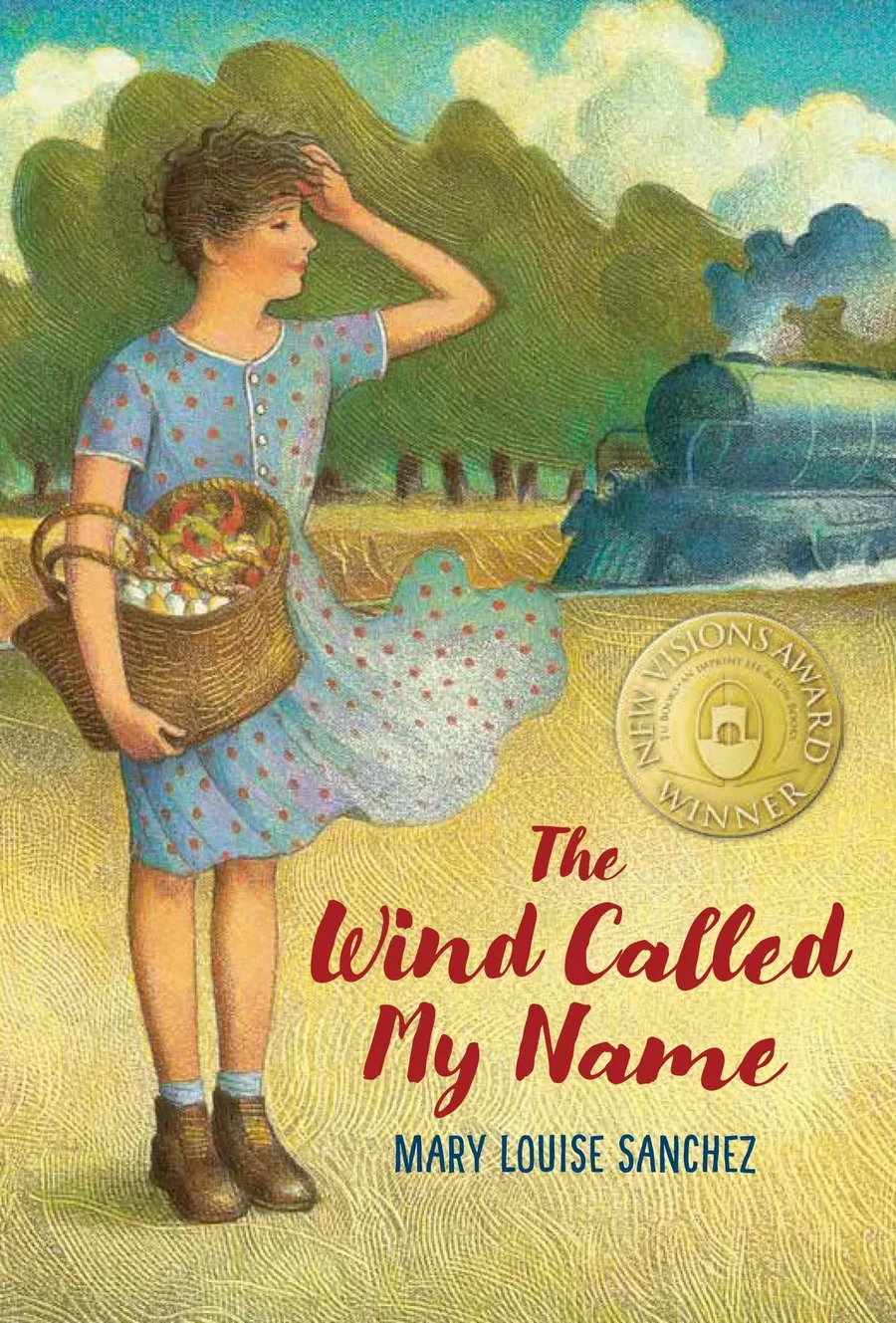 The Wind Called My NameMary Louise SanchezWhen Margarita and her family move from New Mexico to Wyoming, Margarita’s goal is to make a new friend. She misses home and her abuela, who remained behind; in Wyoming, where her father and brother work for the railroad, her Mexican American family is in the minority, and not everyone is welcoming. Margarita is wary of bossy Caroline, who befriends her but insists she choose an “American” name. (Margarita, whose great-grandfather fought in the Civil War in New Mexico, repeatedly informs Caroline that she is, indeed, American.) Racism plays out in many ways, from daily microaggressions experienced by the whole family to outright hostility and discrimination against Margarita’s father and brother at work. As Margarita works to pay off a debt at the local general store, she also struggles to determine whether Caroline is a true friend. Grounded in rich details of family, tradition, and food, Margarita’s appealing and insightful story is one of quiet triumph and well-deserved pride. The Spanish spoken by Margarita’s family incorporated throughout the story is “Nueva España,” the geographically distinct Spanish spoken in New Mexico and southern Colorado historically, including during the Great Depression, when this story is set.Fiction for ChildrenView book details
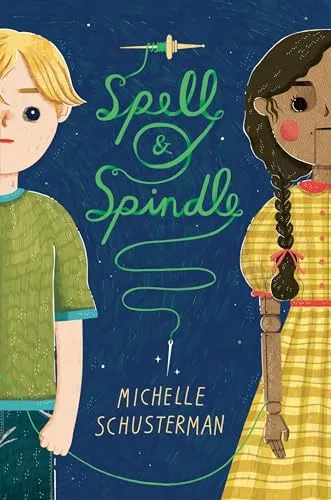 Spell & SpindleMichelle Schusterman, illustrated by Kathrin HonestaChance is given a life-sized marionette from the owner of a curiosity shop and discovers he can hear the puppet’s thoughts whenever he touches her strings. Penny has spent years on a shelf watching everything around her, and has hazy memories of a long-ago, different life. After Penny’s strings are cut by a shadowy man who slips into Chance’s bedroom window unseen, Chance uses a spindle he finds, left by the man, to try to reattach them. Instead, he and Penny switch places: He is now in the puppet’s body; Penny is in his. Chance’s older sister, the seemingly always sweet-tempered Constance, realizes Chance is not himself and teams with Penny to find him after the marionette disappears. Constance and Penny (in Chance’s body) stumble into a mystery tied to an evil puppeteer CCBC Choices 2019 Fiction for Children 87 and numerous children who’ve gone missing across decades. An exceptionally satisfying story set in mid–20th-century New York City offers frissons of excitement and fear and features memorable characters in Chance—a boy both smart and kind; Penny, facing a moral dilemma as she longs to remain human but doesn’t want to sacrifice Chance; and Constance, a girl whose seemingly compliant personality has been a ruse in response to the way girls and young women are seen—and not seen. She is intelligent, courageous, audacious, angry, and determined to get her brother back.Fiction for ChildrenView book details
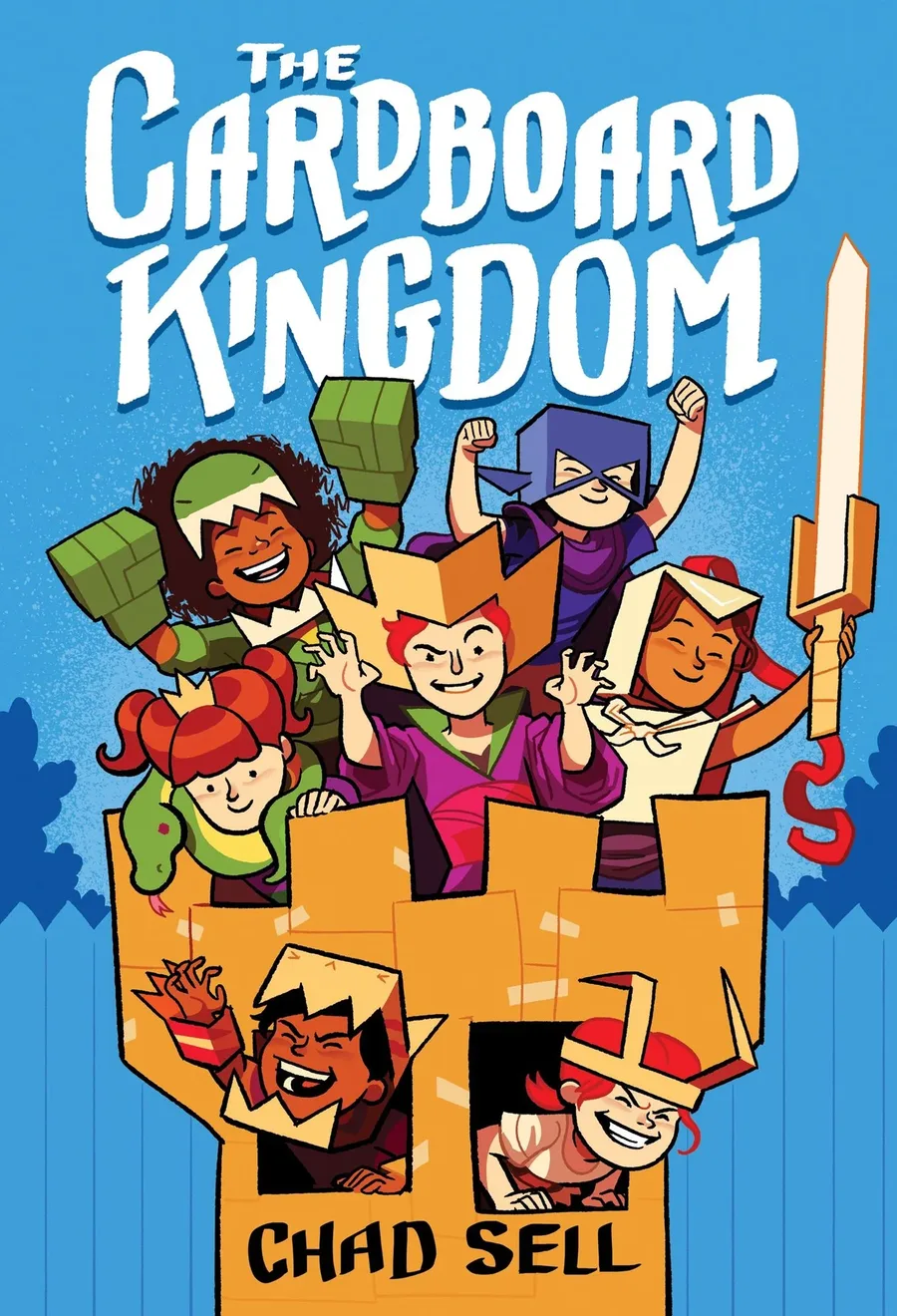 The Cardboard KingdomChad SellWhen 16 children in one neighborhood take on superhero personas, stories unfold in their extended imaginary play. Using cardboard and bits of scrap to make their costumes, they transform themselves into the Huntress, the Mad Scientist, the Big Banshee, the Gargoyle, etc., and choose up sides for their mock backyard battles. This graphic novel switches back and forth between their fantasy world and their daily lives in which they create their cardboard constructions. This device is effective at portraying their shared imaginary world but, along with the shifting points of view from chapter to chapter, does require a bit more work at reading the pictures than most graphic novels for middle- grade readers. But for those willing to study the illustrations and put in the work, the rewards are great, including humor, family drama, and peer conflicts and social hierarchies that will resonate with most children. The diverse cast of characters includes kids of different ethnicities, sizes, and gender identities.Fiction for ChildrenLexile Text Measure GN150LATOS Book Level 2.4View book details
 Betty Before XIlyasah Shabazz, with Renée WatsonIlyasah Shabazz’s fictionalized account of her mother’s childhood, written with Renée Watson, emphasizes Betty’s resilience and compassion, showing signs of the remarkable woman she would become, as the wife of Malcolm X and in her own right. Abused and unwanted by her biological mother, young Betty spends the first six years of her life in the loving care of her aunt in Georgia. Following her aunt’s death, Betty joins her mother, Ollie Mae, and Ollie Mae’s husband and children in Detroit. In the late 1940s, Betty is a young teenager who loves and is loved by her younger sisters but mistreated by Ollie Mae. Betty eventually finds a home with Mrs. and Mr. Malloy, members of her church. Mrs. Malloy is active in the Housewives’ League, an organization that encourages African Americans to boycott businesses that refuse to hire them. When Betty joins the League as a junior member, her identity as an activist begins to emerge, and she gains a sharper—and painful—understanding of racism and oppression, as well as of the diversity of opinions within her community. Through it all, Betty delights in friendship and chosen family, while her relationship with Ollie Mae is contentious yet slowly evolving. Notes about 1940s Detroit, the characters, and the supportive Bethel African Methodist Episcopal Church community, are included.Fiction for ChildrenLexile Text Measure 810LATOS Book Level 4.9View book details
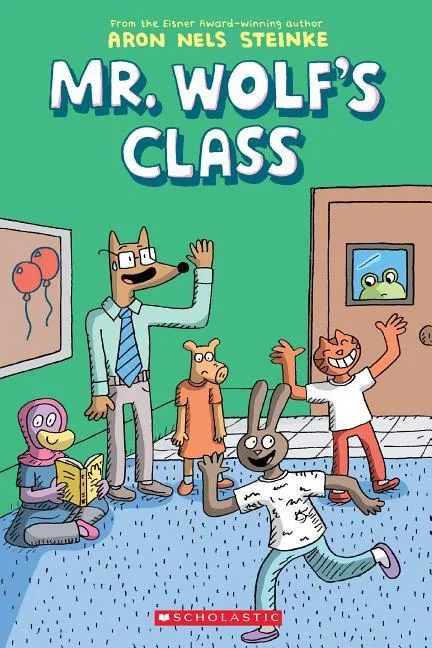 Mr. Wolf’s ClassAron Nels SteinkeMr. Wolf, a brand new, slightly nervous fourth-grade teacher, wants, above all, to do a good job on his first day of school. This original graphic novel seamlessly shifts perspectives among Mr. Wolf and his 17 students, all facing their own first-day joys and challenges. Scenes zooming in and out of the students’ lives are anchored by Mr. Wolf’s perspective, to which the story returns throughout the day. Each student is a different species of animal and each one is further individualized by personality and personal habits. Characters are skillfully developed through facial expressions, actions, and dialogue, and taken together they give readers a sense of the complex organism that is a busy classroom, as well as glimpses into the lives of the students beyond school. Well-rounded characters and an appealing plot distinguish this humorous graphic novel for middle-grade readers.Fiction for ChildrenLexile Text Measure GN400LATOS Book Level 2.8View book details
 The Language of SpellsGarret WeyrBenevolentia Gaudium, or “Grisha,” is a 300-year-old dragon, although he spent much of his life as a teapot after being captured by a sorcerer at 60 and transformed. But the teapot’s second owner recognized Grisha for what he was and kindly restored him to his original dragon state. Grisha is now living in Vienna, where all remaining dragons were exiled after the World War II. Maggie is an 11-year-old, homeschooled human who lives in a hotel with her father. Maggie is friendless, but when she and Grisha meet they quickly grow fond of each other. Grisha is delighted that Maggie can see him at all; most humans no longer have time or need for magic and therefore cannot see magical creatures. When Grisha discovers over 70 dragons were put to sleep and buried somewhere in the city after the war (gold-eyed dragons like Grisha were allowed to live in the overcrowded city; purple-eyed dragons were put under a spell), he and Maggie, armed with a strong sense of justice and rudimentary knowledge of magic, set out to find, awaken, and free the missing creatures. Grisha and Maggie have skills, talents, and personalities that complement one another beautifully, while their shared commitment to justice extends to sacrificing the thing they value most.Fiction for ChildrenLexile Text Measure 900LATOS Book Level 6View book details
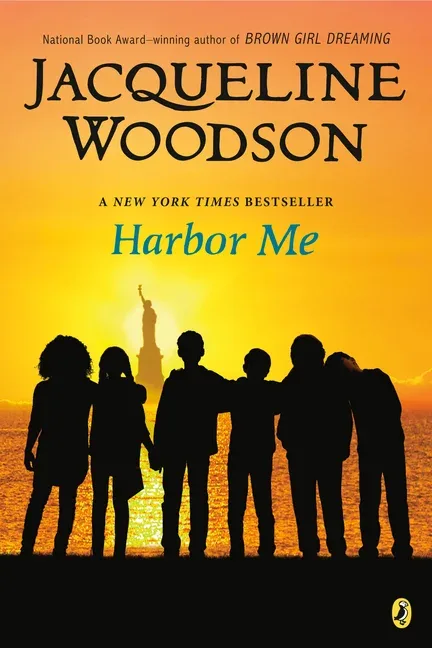 Harbor MeJacqueline Woodson“I want each of you to say to the other: I will harbor you.” Eleven-year-old Haley’s teacher, Ms. Laverne, challenges Haley and her classmates to be there for one another. But how do you become someone’s harbor? The final hour of school each week, Ms. Laverne leaves Haley and her five classmates alone to talk, trusting them to figure it out. As the kids spend time together over the course of the school year, they gradually reveal some of the hardest parts of their lives: A father who was picked up by immigration, fears about racism, bullying, housing and economic insecurity. Quiet Haley is hesitant to share her own, complicated story: Her father, who is white, is getting out of prison, where he’s been serving time for the accidental death of her mom, who was Black, in a car accident when she was three. She loves her dad, but isn’t sure CCBC Choices 2019 Fiction for Children 89 about living with him, and can’t imagine daily life without the uncle who’s been raising her. Haley’s classmates often laugh and joke, but they also come to embody the meaning of refuge for one another: safety, security, relief. Woodson’s characters are vivid, lively, poignant, and relatable in a story that reveals hope in everyday connection and caring, and will be deeply resonant for young readers.Fiction for ChildrenLexile Text Measure 630LATOS Book Level 4.1View book details
 Front DeskKelly YangNine-year-old Mia Tang’s immigrant Chinese parents manage the Calivista Motel in Anaheim. Because the job comes with a room to live in, and because their family has been homeless on and off since coming to the United States, Mia’s parents won’t complain to Mr. Yao, the owner, about his unfair labor practices. Outgoing Mia likes helping out at the front desk. She checks short- term guests in and becomes friends with the “regulars,” customers who live there, while unofficial guests—Chinese immigrants her parents occasionally let stay for free when Mr. Yao isn’t around—give her an even deeper understanding of how immigrant workers can be threatened and exploited. Mia’s English is more proficient than her parents, although, her mom cautions, not good enough to be a writer, Mia’s dream. It’s a remark made out of the concern that Mia be realistic, but it cuts deep, undermining Mia’s confidence. Mia is a natural optimist, however. She’s also precocious and determined, whether entering an essay contest to win a hotel in Vermont, fighting back against racism faced by an African American resident, or pulling off an incredible organizational coup. The results of her efforts are not only satisfying, but firmly grounded in this upbeat, engaging novel’s realm of possibility.Fiction for ChildrenLexile Text Measure 640LATOS Book Level 4.5View book details
Fiction for Young Adults
36 selections
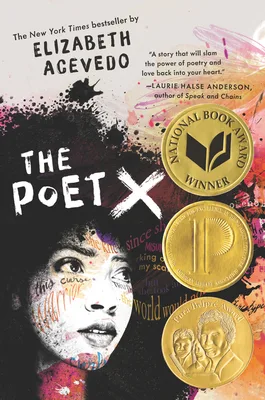 The Poet XElizabeth AcevedoFifteen-year-old Xiomara is a Dominican American teen living in Harlem. Her twin brother, Xavier, a smart, gentle boy, can do no wrong in their mother’s eyes. Xiomara can do no right. She often feels unseen and misunderstood, even by Xavier, despite the fact she has always defended him, whether from bullies or from their mother’s judgment by keeping his secret that he’s gay. Xiomara is intrigued by the new poetry club at school, and by Aman, a boy she meets in biology class. Her mother forbids dating, however, and insists Xiomara attend Catholic confirmation classes, which are the same afternoon as the club. But she and Aman connect over music. He sees her, not her developing body which often draws unwanted attention, and he becomes the first person she shares one of her poems with as their secret, out-of-school friendship blossoms into romance. There is an intense emotional arc to this electrifying novel in poems showcasing the emergence of a gifted writer. As Xiomara faces her mother’s 90 Fiction for Young Adults CCBC Choices 2019 scorn, questions her faith, and deals with complications of friendship and romance, her journey is heart-wrenching. Her triumph comes in daring and then demanding to be seen, asserting her voice within and beyond her family and claiming her identity as a poet.Fiction for Young AdultsLexile Text Measure HL800LATOS Book Level 5.2View book details
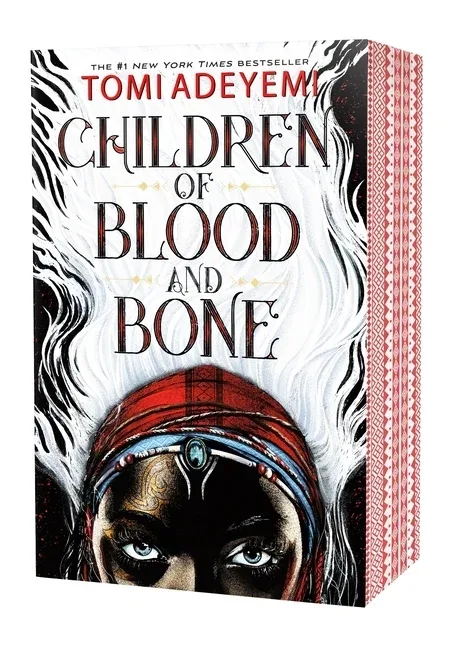 Children of Blood and BoneTomi AdeyemiZélie was three when she saw her mother murdered along with the other maji in Orisha. Their deaths severed the links with the gods of the ten maji clans. As a result, young diviners like Zélie, identified by their white hair and disparagingly called maggots, can’t come into their magic. Amari is the daughter of King Saran. Her father killed the maji, believing magic a threat to Orisha. When Amari sees her maid and best friend Binta, a diviner, murdered by her father after Binta touches a scroll that awakens her power, she steals the scroll. She asks for help fleeing her pursuers from the first diviner she sees: Zélie. A fast-paced fantasy set in a world that draws on African cultures and geography (the almost-lost language of magic is Yoruba), follows Zélie, Amari, and Zélie’s brother, Tzain, on their quest to reestablish the connection between maji and their gods. The king’s guard in pursuit is led by Amari’s brother, Inan, who loves his sister but falls easily under the spell of their cruel father’s logic. Inan is also desperate to keep his own magical gifts, awakened by the scroll, hidden. While the plot isn’t wholly original, the opening volume of this series offers twists, turns, and surprises as Zélie, Amari, and Inan, haunted by their separate pasts, each seeks to change the future, although not necessarily in the same way.Fiction for Young AdultsLexile Text Measure HL670LATOS Book Level 4.8View book details
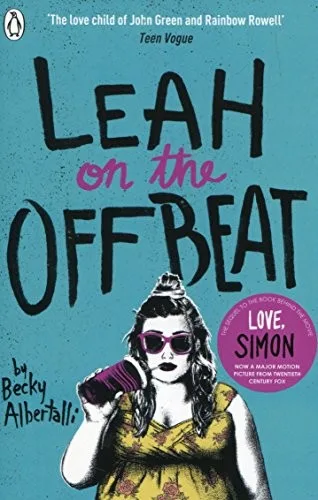 Leah on the OffbeatBecky AlbertalliLeah takes the main stage in this companion novel to Simon vs. the Homo Sapiens Agenda. In their senior year of high school, Leah and her ethnically diverse friends are busy preparing for the near future while trying to savor their final few months together. While most of the others explore their many college options, Leah, who doesn’t enjoy the same economic privilege, has already applied and been accepted to the University of Georgia. As it turns out, Leah and her friend Abby are in the same boat, so they decide to take a road trip to visit the school together. Closeted, bisexual Leah, who is “always weird around Abby” (perhaps because Abby is so pretty and sweet), begins to fall for her friend as they spend more time together. However, Leah remains firmly convinced that Abby just isn’t into girls. Chock full of snarky, smart dialogue, this novel offers an unforgettable protagonist who makes mistakes, judges too quickly, and loves fiercely as she sometimes clumsily navigates her senior year and her complex and varied relationships.Fiction for Young AdultsView book details
 MunmunJesse AndrewsIn a parallel world, the size of humans depends on how much money (munmun) they have. The poorest people are tiny (the size of rats) and face daily challenges and dangers (cats, being stepped on, or just getting from Point A to Point B CCBC Choices 2019 Fiction for Young Adults 91 can all prove deadly). Wealthy people are giant-sized by comparison and have to eat and drink massive quantities just to stay alive. But no one is stuck in their sizes, and with enough munmun, a tiny person can size up. Warner is a scrappy LittlePoor—the smallest, poorest, and weakest of beings. At his mother’s direction, he and his best friend Usher accompany Warner’s sister across town to a law school campus, hoping she will attract the attentions of a MiddleRich law student who might fall in love with her and then size her—and possibly, the whole family—up. Their escapades are both hilarious and hair-raising as events unfold in Warner’s comically distinctive voice. Warner uses a deliciously skewed English, which includes new compound words and clever phonetic spellings, in this original novel that offers a sharp, witty social satire, as well as an exploration of economic inequities.Fiction for Young AdultsView book details
 The Cruel PrinceHolly BlackTeenager Jude and her sister Taryn were only seven when Madoc, a member of the high court of Faerieland, came to the human world in search of his daughter, their older half-sister, Vivi. After killing the girls’ parents Madoc kidnapped the twins along with Vivi and they’ve been raised in Faerieland as his children. While Taryn enjoys all the privileges and trappings of their life in Faerie and longs to make a romantic match, Jude is not only more wary but wants to prove herself as a knight. But no one can forget she is human, least of all her nemesis, Prince Cardan, youngest of the High King’s sons. Cardan, a bully with power, is only one of the many dangers Jude will face in this story full of political and emotional intrigue, plot twists and turns, acts of nobility and acts of betrayal. Nothing is simple, least of all the relationships among characters whose complexities bring them into full and messy relief. At the center of it all is Jude, a young woman of great intelligence, courage, and heart.Fiction for Young AdultsLexile Text Measure HL760LATOS Book Level 5.3View book details
 All That I Can FixCrystal ChanTeenage Ronney’s small Indiana town has been overrun by wild animals released from a private zoo, the owner’s last act before committing suicide by gun. Ten- year-old Sam, a friend of Ronney’s little sister, Mina, is convinced Ronney can find his older brother, who ran away. Ronney is worried about Sam, worried about Mina, and worried about his stressed out mom. He also feels betrayed, and heartbroken, when he learns his two best friends are dating (they all know he has a crush on one of them). Above all, Ronney is uncompromisingly angry at his dad, who’s battling depression and recovering from a self-inflicted gunshot wound in a suicide attempt months before. This compelling, ambitious novel has just the right touch of the absurd to balance its serious themes. Some of the dangers and complexities of guns in society continue to play out as townspeople arm themselves against the animals, with some animals—and some people— proving more dangerous than others. Mixed-race Ronney’s specific heritage is intentionally never revealed. His experience as a brown-skinned teen is that people want to categorize him, and do judge him. He is an irresistible force at the center of this story, caring with each beat of his huge heart, despite every claim he makes to the contrary.Fiction for Young AdultsView book details
 Finding YvonneBrandy ColbertYvonne, a high school senior raised by her father, an African American chef, thought college would be a music school, but her (former) private violin teacher has made clear Yvonne isn’t good enough, and she knows it’s true. Her orchestra teacher says there are other careers in music besides performance, while her dad’s mentor thinks she has talent as a baker. Yvonne is also in love, she thinks, with Warren, her dad’s 21-year-old sous chef, although they’ve taken things slowly, because he works with her dad and because she isn’t yet 18. Then she meets Omar, a busker, attracted to his joy in music, his spontaneity, and his seemingly carefree life. The week Yvonne turns 18, she ends up sleeping with both Warren and Omar; not long after she discovers she’s pregnant. She can’t imagine telling her dad, while she already thinks her best friend judges her for choosing to have sex, a fact about which Yvonne is unapologetic. A novel that is complex and nuanced features characters that are genuine at every turn. Yvonne is smart but she’s not a prodigy at music or baking or life. She is trying to figure things out, and learning to ask for and give honesty and emotional accountability in all of her relationships. By story’s end, which includes a frank discussion of abortion, one thing she’s certain of is being surrounded by love.Fiction for Young AdultsView book details
 The Journey of Little CharlieChristopher Paul CurtisAt 6’4”, Little Charlie Bobo looks like a man but is still a child at 12. Cap’n Buck, the overseer of a nearby plantation, claims he paid Charlie’s late dad for a job he never did and now expects Charlie to follow through on the commitment: Help Cap’n Buck recover $4000 in stolen “property,” an African American family that escaped slavery nine years before. For Charlie, poor and white, slavery is a fact of life in the south, not something he’s ever thought to question. That slowly changes as he travels north. When they venture into Canada to convince the escaped couple’s son, Sylvanus, that his parents need him back in Detroit, it’s Charlie’s job to build rapport with Sylvanus and get him to board the train. Charlie’s goodness shines through from the start, but his journey from innocence and ignorance to understanding is genuine and compelling in a novel that once again showcases Curtis’s ability to create believable characters, offer laugh-out-loud humor, and reveal searing truths. A lengthy author’s note describes Curtis’s decision to tell the story from the perspective of a white character (not his original intention) who, although raised steeped in poverty and racism, is capable of “seeing the lie of what he’s been taught” and “possessed great courage to which we all could aspire.”Fiction for Young AdultsLexile Text Measure 960LATOS Book Level 5.8View book details
 Driving by StarlightAnat DeracineLeena’s father, a leader during the 2011 Arab Spring uprising in Saudi Arabia, is imprisoned. Mishie’s father works for the government. The two young women have been best friends for years, Leena always willing to support Mishie’s small rebellions against strict rules for female behavior. But Leena’s future is compromised by her father’s imprisonment, her family economic situation, and CCBC Choices 2019 Fiction for Young Adults 93 strict Saudi laws. When she meets Ahmed, an admirer of her father, she believes he and his friends may be planning to get him out of prison. She wonders if she’s falling in love with this young man who takes her out into the desert at night and teaches her to drive. Leena risks not just arrest but friendship in order to spend time with Ahmed, knowing Mishie likes him, too. When it all comes crashing down—her friendship with Mishie, her trust in Ahmed, her hope for the future—Leena begins studying with her father’s law partner, Hussein. She reaches out to other girls and devises a radical plan to use the restrictive laws to their advantage. Many finely drawn characters reveal a range of political and religious viewpoints as a young woman and her friends draw on their intelligence and courage to change the course of their lives in a novel that takes an astonishing, liberating turn.Fiction for Young AdultsView book details
 Unclaimed BaggageJen DollEver wonder where all that lost luggage ends up when no one claims it at the end of a flight? Unclaimed Baggage is an eclectic resale shop in a small Alabama town. The work of unpacking and inventorying lots of unclaimed luggage purchased by the store is shared among three teens. Doris is a liberal feminist floating in a sea of conservative Christians; Grant is a former star athlete whose out-of-control drinking resulted in a very public fall from grace; and Nell has just moved to Alabama from Illinois, reluctantly leaving her boyfriend behind. Over the course of the summer, Doris and Nell support one another as friends and as young women, and do their best to help Grant, who struggles to abstain from alcohol and to forgive himself for the poor decisions he’s made. While Grant struggles to recover, Doris misses the guidance of her kindred-spirit aunt, who recently passed away, and Nell must confront her white privilege when her biracial (Black/white) boyfriend comes to visit. Although the lessons in racism may feel a bit forced toward the end, this entertaining novel excels at exploring the value and necessity of friendship among teens.Fiction for Young AdultsView book details
 Jazz Owls: A Novel of the Zoot Suit RiotsMargarita EngleMost of this novel-in-verse recounting what happened before, during, and after what are unfortunately known as the Zoot Suit Riots is told through the eyes of three members of one family: Ray, 12, when the story begins, and his older sisters Marisela,14, and Lorena, 16. A patriotic family with an older brother fighting in the war, their identity as proud Mexican Americans is at odds with those who see them and as Mexican only. Marisela is a “jazz owl” who spends her evenings dancing with sailors. Ray, too, loves to dance, while Lorena is focused on education. The 1943 riots are fueled by tensions after the conviction (overturned two years later) of a group of Latino men for murder. The riots were started by U.S. sailors attacking young Zoot Suit-wearing Mexican Americans, whom the police pursued and media blamed. In the aftermath, Ray, who was humiliated by the police, pursues dance with greater intention. Marisela, working in a war plant, becomes a strike organizer and also longs to marry the Cuban drummer she is in love with, but he’s classified as white and mixed marriage is illegal. Lorena takes a job at an airplane plant, dreams of learning to 94 Fiction for Young Adults CCBC Choices 2019 fly, and finds a way to proudly affirm her Mexican American identity when she protests a factory Beauty Contest. An author’s note provides more context for the tensions of the times.Fiction for Young AdultsView book details
 The Book of PearlTimothée de FombelleA young prince, Ilian, in love with a fairy, is banished to another world—our world. In late 1930s France, a Jewish couple, the Pearls, take in the homeless young man who appears outside their Paris shop. He becomes like a son to them. When French officials don’t believe the Pearl’s late son is dead, the young man takes the place of Joshua Pearl and joins the French army. As time passes and his losses in this world mount, the prince’s/Joshua’s driving passion becomes tracking down relics from the place he came from as proof that the world of stories is real, in hopes they will help him find his way back. This astonishing work moves between our world and Prince Ilian’s, and between present and past in both places. It includes the story of Olia, the fairy in love with the prince, also banished to our world but who agreed never to let Ilian know she was there in exchange for his life. And it includes the story of a heartsick French teenager who has a memorable encounter with the eccentric, middle-aged Joshua Pearl and grows up to become the masterful teller of this tale, one he finds it impossible to believe even as he is telling it. This extraordinary account of love and exile, cruelty and kindness, loss and longing honors the power of story to hold it all, and all of us, in place.Fiction for Young AdultsView book details
 Here to StaySara FarizanA junior at an elite private high school, Bijan Majidi finds himself thrown into the midst of controversy when a photograph showing his head Photoshopped onto a rifle-toting jihadist is distributed via anonymous email to the entire school community. Bijan suspects the photo was sent by one of his basketball teammates, Drew, who is jealous that Bijan is an outstanding varsity player. Bijan wonders if he was also targeted because he recently joined a group of student activists petitioning to change the school mascot—the Gunners—to something less violent, although he was motivated less by a desire for change than by his crush on Elle, one of the student organizers. He also joined to support his friend Stephanie, who is single-minded in her devotion to a cause and largely resented by the student body. Bijan’s well-drawn character, believable experiences, and raw emotional responses as he navigates the Islamophobia directed at him and works to support others experiencing homophobia and other forms of harassment solidly ground this novel.Fiction for Young AdultsView book details
 Give Me Some TruthEric GansworthIn 1980, Carson Mastick and his best friend, Lewis Blake, are high school seniors living on the Tuscarora Reservation in upstate New York. Maggi Bokoni, 15, has just moved back to the reservation with her older sister, Marie. Former honor student Lewis paid a heavy price at school for standing up to a white bully CCBC Choices 2019 Fiction for Young Adults 95 years before (the story told in If I Ever Get Out of Here ). His future uncertain, he works cleaning buses for the school district, where Maggi also gets a job and meets Jim, a white grounds supervisor in his early 30s who seems to understand her desire to make art beyond traditional beadwork. Hopeful musician Carson forms a band with reluctant Lewis on bass and Maggi on water drum, intent on winning a competition that could lead to New York. And Marie is in love with one of her former high school teachers from the city. Their stories, individual, intertwined, unpredictable, play out over a series of months in which Carson also mounts a protest against “Custard’s Last Stand,” a restaurant glorifying General Custer that blatantly posts a “No Indians” sign. Though most from the Rez avoid the place, Carson, who can pass as white, wants to confront the racism directly. The nuances and intricacies of these smart, tender characters and their lives unfold in a funny, righteous and illuminating novel. Songs of the Beatles and John Lennon and Yoko Ono provide chapter titles and touchpoints as the teens find solace and inspiration in both music and art.Fiction for Young AdultsView book details
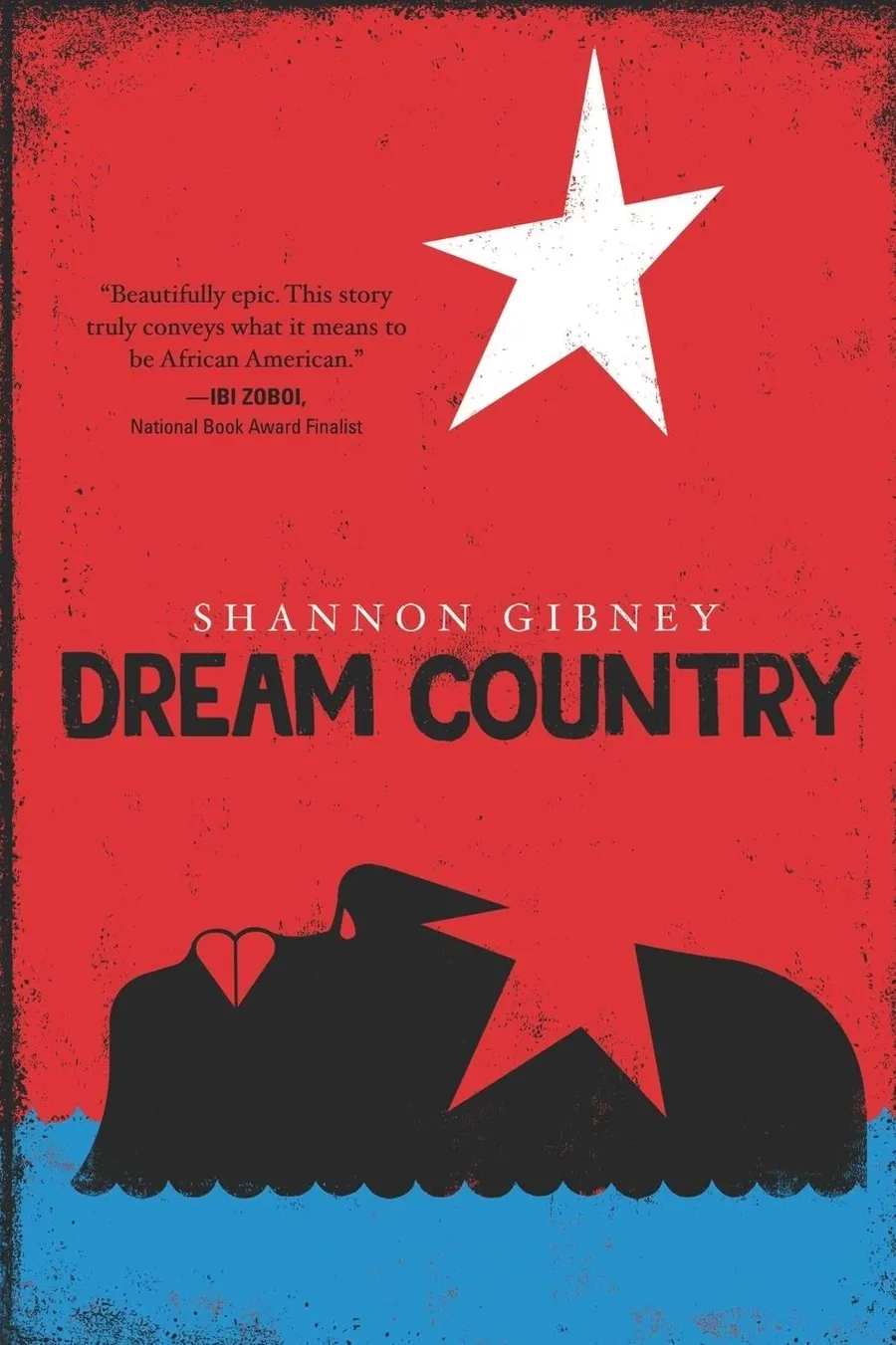 Dream CountryShannon GibneyIn 2008, Kollie, whose family emigrated to the United States from Liberia due to civil war, is struggling. After Kollie is suspended from school for beating up an African American classmate, Kollie’s father decides to send him back to Liberia. In 1926, Togar is fleeing soldiers who raided his village to conscript men and boys for work on farms owned by Congos—descendants of African American immigrants to Liberia. In 1827, Yasmine and her children escape slavery for Liberia, the trip arranged by white men whose motivation is to rid America of the problem of slaves. Following hardship and tragedy, Yasmine’s family becomes part of Liberia’s ruling class, although her daughter choses life with the boy she loves from a native tribe. In 1980, Liberian student Ujay is involved in government protests while the young woman he loves is a member of the ruling class who acknowledges the need for change but does not know how to achieve it. The price for political change proves high. And in 2018, Kollie’s sister, Angel, is piecing together this history, one in which oppressed become oppressors, and racism and classism seem endemic to the human condition. It is the history of her family, and a single talisman, the clasp of a purse, runs through it. So, too, does kindness and love—things that can and must endure. An informative and personal author’s note concludes this ambitious exploration of the painful, long-lasting effects of the colonization in Liberia by formerly enslaved African Americans.Fiction for Young AdultsLexile Text Measure 900LATOS Book Level 5.8View book details
 Picture Us in the LightKelly Loy GilbertChinese American Danny just got a full scholarship to the prestigious Rhode Island School of Design. His immigrant parents are thrilled for him, as is his popular best friend, Harry, with whom Danny is secretly in love. Harry’s girlfriend Regina is happy for Danny, too, although things have been weird between them ever since their friend Sandra died by suicide a year ago. Danny feels guilty about Sandra, as they’d had a falling out before her death. When 96 Fiction for Young Adults CCBC Choices 2019 Danny finds a box of documents and letters at home that puzzle him, and his parents won’t answer his questions, he takes things into his own hands, uncovering a story about his family, and the older sister he’s always been told died before he was born, that is initially shocking, then oddly comforting. This quiet, emotionally intense novel in Danny’s observant first-person voice integrates two seemingly disparate storylines: the one-year aftermath of Sandra’s suicide, which reveals the intense pressure she felt as a high-achieving student, and Danny’s family story. Danny’s friendships are integral to both, and it is these relationships, and Danny’s searching, tender heart, that tie the two threads together.Fiction for Young AdultsView book details
 Fresh Ink: An AnthologyLamar GilesTwelve short stories by writers and artists of color and Indigenous creators provide contemporary readers with a diversity of protagonists, styles, and formats. Here are culturally authentic heroes for all readers, characters that reflect specifics of identity that will provide essential reflection and affirmation for many. “I hope you find one who looks like you, or thinks like you, or feels like you,” writes editor Lamar Giles. “If not, I hope you find glimpses into other worlds that are both respectful and enlightening.” The contributors include Jason Reynolds, Malinda Lo, Eric Gansworth, Aminah Mae Safi, Walter Dean Myers, Sara Farizan, Daniel José Older, Sharon G. Flake, Melissa de la Cruz, Gene Luen Yang and Thien Pham, Schuyler Bailar, and Nicola Yoon.Fiction for Young AdultsView book details
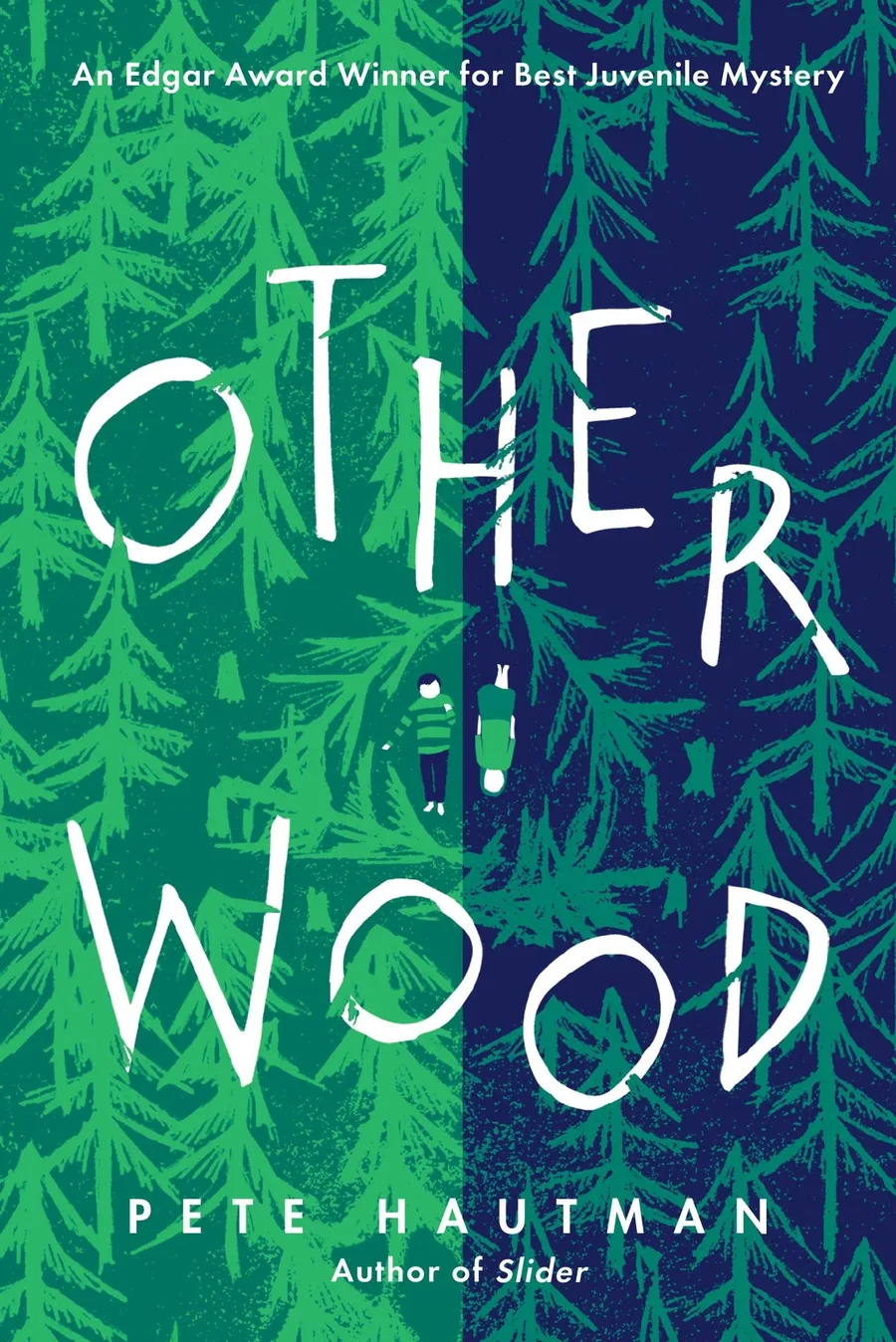 OtherwoodPete HautmanStuey has always known that the woods growing behind his home was once a golf course built by his great grandfather. And he knows his great grandfather was a rather unscrupulous character—a bootlegger and, he later learns, an anti- Semite. He’s also heard odd stories about the strange disappearance of both his great grandfather and the lawyer who was after him. Most people assume that Stuey’s great grandfather murdered the lawyer and skipped town, but no one knows for sure. Stuey’s grandfather always warned him there were ghosts in the woods, but the woods have always seemed perfectly normal to Stuey, until he finds a mysterious treefall that forms a small shelter, big enough to play in. Things just seem different there—special, and sometimes creepy. It turns out the treefall has also been claimed by another child, a girl named Elly Rose who has just moved in to a house on the other side of the wood. The two quickly become best friends (soulmates, Elly Rose claims). It all seems like the normal stuff of childhood, until the day Elly Rose disappears. Literally. This deliciously strange novel defies the laws of physics but consistently follows its own rules as it moves toward a surprising resolution.Fiction for Young AdultsView book details
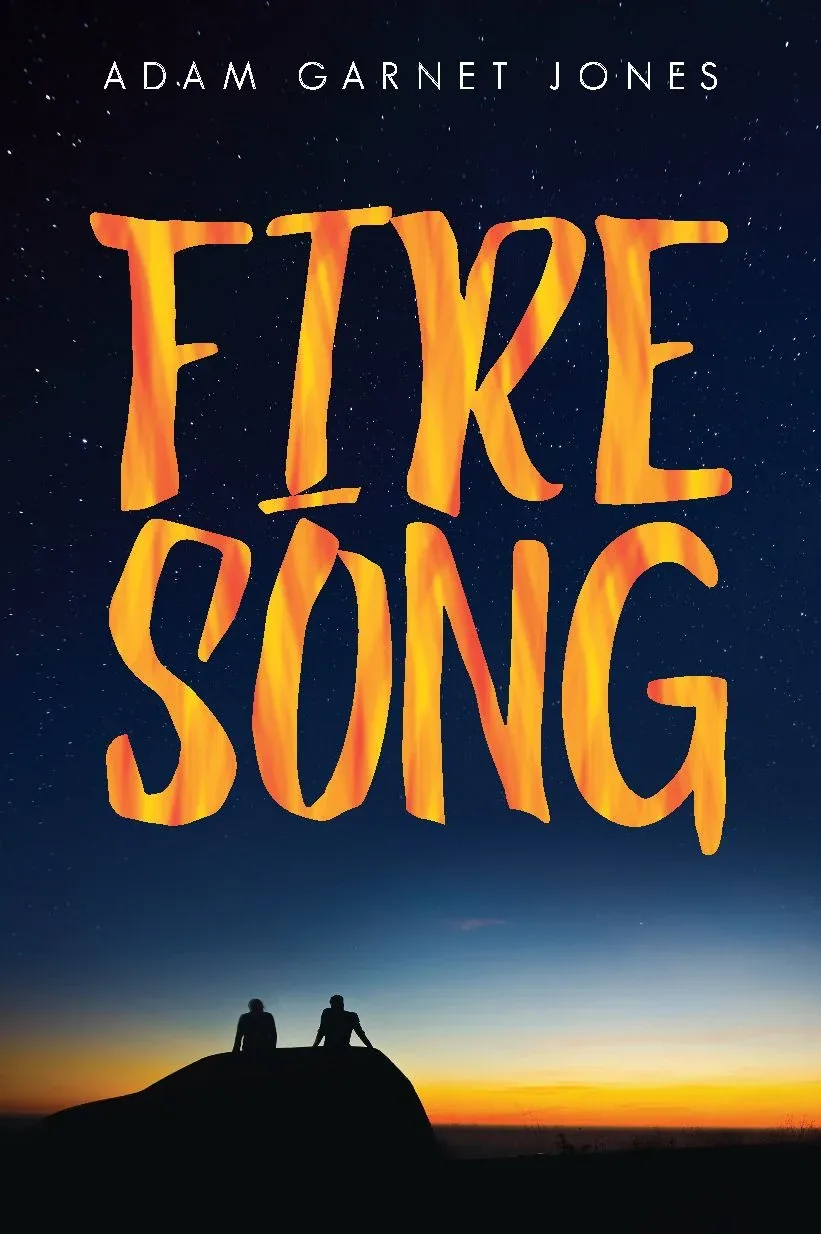 Fire SongAdam Garnet Jones, Adam Garnet JonesReeling from his teenage sister’s suicide and worried about his depressed and grieving mother, an Anishinaabe teen finds his plans disrupted immediately CCBC Choices 2019 Fiction for Young Adults 97 after high school graduation. Shane had been planning to leave the reservation for college in Toronto, but with a gaping hole in the roof of his family’s house and a lack of financial assistance, he won’t be going anywhere soon. He longs to move to the city, where he can live authentically as a gay man, preferably with David, with whom he is secretly involved. David, though, is reluctant to leave the reservation or to come out. Shane is closeted too, and his girlfriend, Tara, hopes to accompany him to the city. As Shane’s options become fewer, his desperation and despair grow, leading him to hatch a foolhardy escape plan. In elegant prose, this novel movingly portrays the determination and desires of characters struggling to embrace their various identities within the spaces they inhabit, despite a dearth of resources and overwhelming odds against them, while the tragedy of suicide among young First Nations women echoes through the narrative.Fiction for Young AdultsView book details
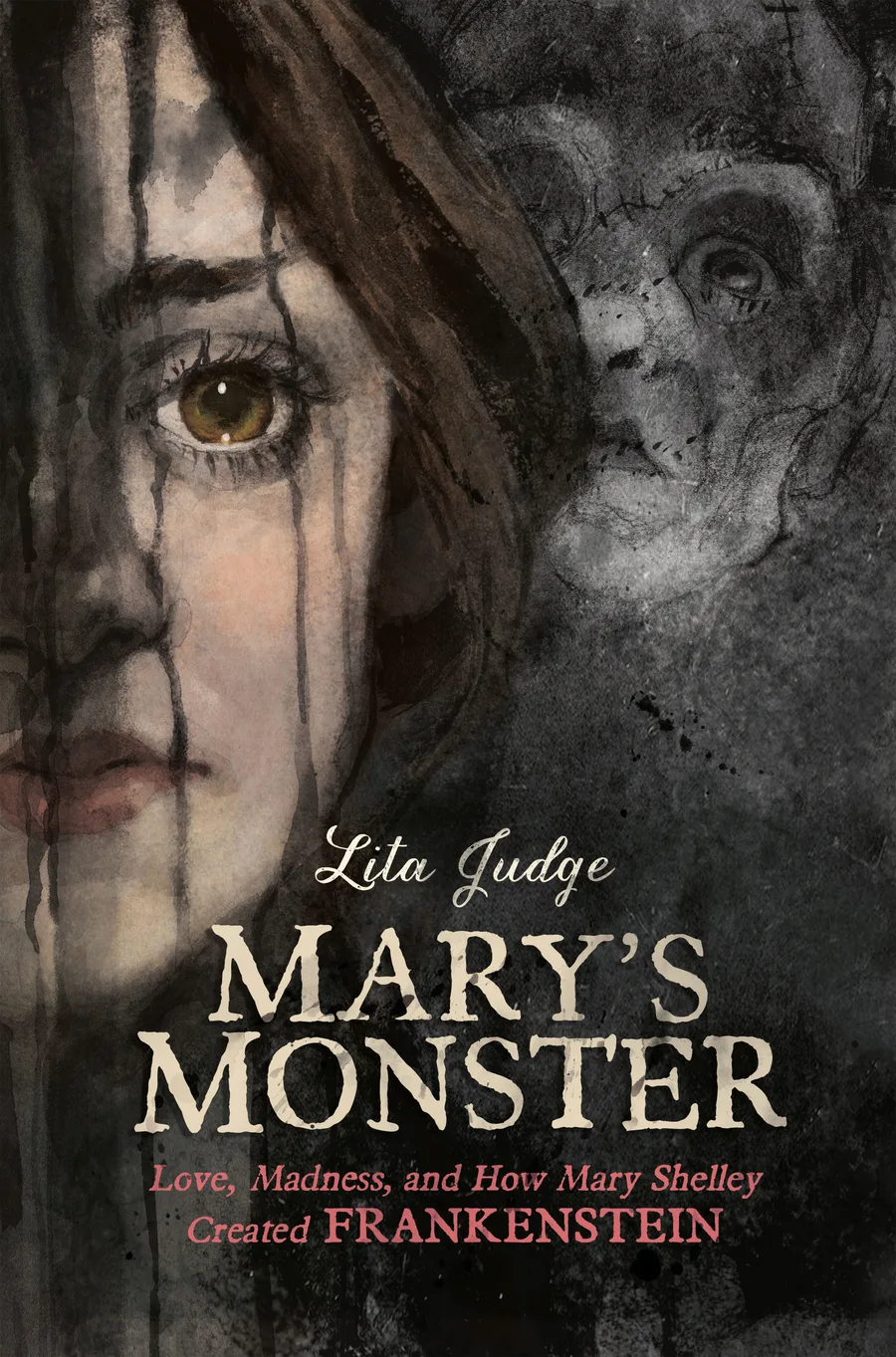 Mary’s Monster: Love, Madness, and How Mary Shelley Created FrankensteinLita Judge“She conceived me. / I took shape like an infant, / not in her body, but in her heart, growing from her imagination / till I was bold enough to climb out of the page / and into your mind.” Frankenstein’s monster speaks the Prologue, but it’s Mary Shelley’s voice that cries out across fictionalized, first-person poems recounting her life from childhood through shortly after writing Frankenstein when she was barely more than 20. Raised with her father and late mother’s feminist ideals but abused by her controlling stepmother, Mary left home as a teen to live with Percy Bysshe Shelley, a passionate (married) writer who struggled with severe mental illness. She was deeply in love, and soon pregnant. The years that followed were marked by turmoil, betrayal, and loss, all of which contributed to the conception of her literary masterpiece, which was crafted over a period of nine months. Full-page grayscale ink wash illustrations throughout set the perfect mood, while notes and documentation at volume’s end provide additional information, as well as commentary on how Judge, who drew on Mary’s letters and diaries as well as other sources in her research, navigated the space between fact and fiction.Fiction for Young AdultsView book details
 Darius the Great Is Not OkayAdib KhorramDarius is a self-described “fractional” Iranian; his mom from Iran, his dad a white “ubermensch.” Darius loves tea and Star Trek with equal passion. Watching episodes of “The Next Generation” is one of the few ways he and his dad connect. Otherwise, he feels judged—for his lack of friends, for being overweight, for being so sensitive, for not standing up to bullies in high school. Although both he and his dad take medication for depression, they don’t talk about it. When Darius’s family travels to Iran to spend time with his grandparents, Darius makes his first good, true friend in Sohrab. Sohrab “doesn’t have walls around his heart”—he is easy to talk to and openly affectionate. Because of Sohrab, Darius starts to see himself differently. And because of Sohrab, and his grandparents and extended family, and the places they visit in Iran, Darius also begins to understand the history and culture of the 98 Fiction for Young Adults CCBC Choices 2019 place and people that live in his mother’s—and now his—heart. And because of his grief—over his grandfather’s illness, over unexpected hurt—his dad bridges the distance between them, revealing love that’s always been there. Darius is a funny and tender first-person narrator in a debut novel with terrifically drawn characters, richly depicted relationships, and full of warmth and hope. Darius is just beginning to consider his love for Sohrab may be more than friendship by story’s end.Fiction for Young AdultsLexile Text Measure HL710LATOS Book Level 4.7View book details
 Summer of SaltKatrina LenoAll of the women in the Fernweh family discover their magical power by the age of 18. Twins Georgie and Mary are turning 18 at the end of summer and will leave the tiny island of By-the-Sea for the first time to attend college. Mary has always been able to float if not fly, but Georgie suspects she, herself, may not have any magic. The girls and their mother, who concocts potions, run an inn that’s overrun each summer by “birdheads,” ornithologists and devoted fans of an extremely rare bird called Annabella that only appears on By-the-Sea for two months of the year. The Fernwehs suspect Annabella is Georgie and Mary’s 300-year-old “great-great-great–Maybe-another-great-” aunt, who could fly, and disappeared around the time the bird first showed up generations ago. When a week passes with no sign of Annabella, birdheads and island dwellers alike are nervous. When two and then three weeks pass, they become frantic. The discovery of Annabella does not bring the relief everyone hoped for, and Georgie is more worried than most: Mary is suddenly distant and depressed, and seems to be hiding something. Magical realism is at its finest in this deft blend of fantasy with sometimes-harsh reality in a story that grippingly illuminates the life-altering effects of sexual assault and trauma while never losing sight of the magic that is hope and healing.Fiction for Young AdultsView book details
 Learning to BreatheJanice Lynn MatherAlthough she was raised mostly by her loving grandmother, everyone seems to expect 16-year-old, Black Bahamian Indy to follow in the footsteps of her mother, who has a drug addiction and cannot provide a stable home for her daughter. So when Indy moves to Nassau to live with her aunt and is raped by her cousin Gary, she keeps the resulting pregnancy a secret, afraid that her aunt will kick her out of the house. Struggling in school and in agony due to the trauma she has survived—and which she continues, horrifically, to experience at Gary’s hands—Indy spends a lot of time alone on the island. Stumbling upon a yoga retreat one day, she experiences the kindness of the owner and employees, all locals, and slowly opens herself up to receiving the support that she deserves and so desperately needs. This is a heart-wrenching study of one vulnerable young woman who, with help, summons the strength to speak her truth, to regain her footing, and to press on despite the violence she has endured.Fiction for Young AdultsView book details
 Blood Water PaintJoy McCulloughIn early 17th-century Rome, Artemisia Gentileschi, 17, has surpassed her father’s skill as a painter but gets no credit for her work because she is a woman. Artemisia’s late mother told her about the Biblical figures of Susanna and Judith, wanting Artemisia to understand the struggles of the two women—the things they suffered simply for being women—as well as their courage and bravery, none of which Artemisia sees reflected in the work of men who’ve painted them. When her father hires Agostino Tassi to tutor her in perspective, Artemisia is happy to learn from a better teacher, and their mutual attraction leads her to believe he may propose. Then he rapes her. Artemisia makes the decision to publicly charge him. The burden of proof placed on her by the court is emotionally and physically brutal, and it is visions of Susanna and Judith that she draws upon for strength. This extraordinary, enraging, astonishing novel based on true events is told primarily in verse, with stories about Judith and Susanna interspersed in prose. McCullough’s research included over 300 pages of transcripts from the 1611 trial. Artemisia won her case (although the sentence for Tassi was laughable), but her true triumph, more fully documented in an author’s note, is in what came next: A career as a painter—more than 50 of her works survive.Fiction for Young AdultsView book details
 Puddin’Julie MurphyMillie Michalchuk is planning ahead, applying for a summer broadcast journalism camp. Millie is fat, and she’s comfortable with it—unlike her mother, who persistently fills the fridge with diet foods and can’t believe Millie doesn’t want to go back to Daisy Ranch Weight Loss Camp; and unlike classmate Callie Reyes, who treats Millie with contempt. Callie is co-assistant captain of the school’s highly accomplished competitive dance team. When a local gym is forced to withdraw funding for the team, Callie and her teammates retaliate with vandalism. Millie, who happens to work at the gym, identifies Callie in the security footage, and Callie takes the fall for the team, paying off the damages by working at the gym for free. Outgoing and forgiving, Millie befriends a suddenly friendless and dance team-less Callie, even inviting her for weekly sleepovers with her friends, and seeking Callie’s advice on making a move with her crush, Malik. Biracial Callie, who feels alone both at school and at home, where she is the only brown Latina living with her white mom, stepdad, and little sister, begrudgingly finds herself enjoying Millie’s company. This funny and endearing companion novel to Dumplin’ champions young women in all their glorious flaws and complexities. Fat or thin, bubbly or cynical, asexual or boy crazy, the important thing is to support one another.Fiction for Young AdultsView book details
 The Place between BreathsAn NaGrace is a high school senior with a coveted intern position at the genetics lab where her dad recruits scientific researchers. Her schizophrenic mother left them when Grace was a small child, a loss that echoes continuously. Grace finds her dad’s obsession with the lab’s work trying to isolate a gene for schizophrenia 100 Fiction for Young Adults CCBC Choices 2019 frustrating. It’s not like isolating a gene will lead automatically to a cure, and it’s not like her mom will benefit—they have no idea what happened to her. Grace wishes her dad devoted more of his time and attention to her. A beautifully written narrative moves between Korean American Grace in the present day—her lonely life at home, her work at the lab, where she meets graduate student Will; her early childhood memories in which her parents’ love and her mom’s increasingly unpredictable behavior and growing sense of desperation filters through—and second-person chapters in which an unknown speaker addresses an unknown “you.” Locating oneself in the story becomes more and more challenging in a novel that parallels Grace’s own experience as it becomes clear she also has schizophrenia. Like Grace, it’s hard to know what is real. But beyond the fear, pain, and sense of loss in this aching, deeply resonant novel, are glimmers of hope, too.Fiction for Young AdultsView book details
 And the Ocean Was Our SkyPatrick Ness, illustrated by Rovina CaiBathsheba is Third Apprentice to Captain Alexandra, one of the great hunting whales. For whales, water is “sky,” and the “abyss” is the human world. They have a complex society, culture, and history, and they hunt humans largely for self-defense, but not always. When Captain Alexandra finds a ship with a lone human survivor, she recognizes the coin he holds, inscribed with the letters TW, as a sign from monstrous Toby Wick, the devil among humans who has cruelly killed so many whales in his great white ship. The Captain goes in single- minded pursuit of Wick, convinced the coin was a sign left for her because of events long ago. Bathsheba, put in charge of the human survivor, grows curious about him. By the time the Captain’s inevitable order comes to kill him, Bathsheba is reluctant. Why are we doing this? Bathsheba wonders. Is Toby Wick real, or a myth with only a bit of truth in its origins, one used to justify actions no different than killing done by humans? This remarkable reimagining of Moby Dick comes to an extraordinary climax, one that is tragic, shocking, and deeply moving. Teens do not need to have read the original book to find much to appreciate and consider. Illustrated sections of storytelling beautifully extend the mood in this provocative offering.Fiction for Young AdultsView book details
 After the Shot DropsRandy RibayMany in Bunny’s neighborhood feel he betrayed them when he accepted a basketball scholarship to St. Sebastian’s, a private high school. His best friend Nasir, who still plays for their neighborhood high school, won’t even talk to him. As Bunny’s sophomore season heats up, he’s also questioning his decision to transfer. Basketball is the only way he fits in at St. Sebastian; in every other way it’s a challenge, because he’s Black and, compared to most students, poor. At the same time, college recruiters are paying far more attention to him than they would have at his old school. Bunny and Nasir’s tentative gestures of reconciliation are complicated by Bunny dating Keyona, a girl on whom Nasir has crushed for years. Nasir is also worried about his cousin Wallace, about to be evicted because his grandmother can no longer afford the rent in their gentrifying building. When Wallace reveals he’s been betting against St. CCBC Choices 2019 Fiction for Young Adults 101 Sebastian’s in the hopes of winning enough to pay their rent, it complicates things for Nasir even further. Chapters alternating between Bunny and Nasir’s points of view reveal the complexities and challenges of their lives in a riveting novel that illuminates how often the right thing to do is muddied by the ripple effects of every action; while doing the right thing, even when it’s clear, isn’t always easy.Fiction for Young AdultsLexile Text Measure HL730LATOS Book Level 4.6View book details
 Not the Girls You’re Looking ForAminah Mae SafiMuslim American Lulu Saad is one of four young women in a tight group of friends in Houston. Her dad is a history professor who emigrated from Iraq; her mom is a lawyer from Louisiana. Lulu’s friendships are strong and fierce, but also complicated and at times highly charged. Her family and extended relations with their Muslim community in Houston are also challenging as Lulu navigates her complex identity. A work that illuminates sexism, racism, Islamophobia, homophobia, and prejudice (many of the Muslim women in their extended community aren’t exactly welcoming to her mom, so the prejudice in her family works both ways) isn’t about any of those things. It’s about a teen girl trying to understand what has happened as her friendships seem to be unraveling, where she is accountable and where she is owed accountability; it’s about figuring out who she is and how she fits into her circle of friends and her extended family and community. While a revenge plot against a boy is over the top (if viscerally satisfying), the feelings behind it regarding consent are not in a story that is otherwise nuanced and bold, funny and painful, and that confronts macro- and micro-aggressions on many fronts.Fiction for Young AdultsView book details
 DryNeal Shusterman, Jarrod ShustermanWhen their water is shut off without warning, Alyssa, her ten-year-old brother Garrett, and their parents assume it’s temporary and head to the store for a case of water to tide them over. But Costco is a madhouse, and all the water is gone. It’s the beginning of what is dubbed the “Tap-Out”: Arizona has blocked the Colorado River due to water shortages, throwing Southern California into a state of crisis and panic. In addition to Alyssa and Garrett, this riveting and all-too-believable narrative focuses on Kelton, Alyssa’s classmate and next- door neighbor, and Jacqui, a tough-as-nails teen they meet. Kelton’s family are “preppers.” They have weeks’ worth of food and water, an arsenal of weapons, and their own electricity, all of which make them a target. They also have a “bug-out” with additional supplies hidden in the woods. They pick up Jacqui on their arduous and obstacle-riddled journey to the bug-out. Snapshots of others—a journalist, a teammate of Alyssa’s, a member of the National Guard, etc.—provide a fuller picture of the chaos as it develops. A range of human behavior is on display in this chillingly credible novel, from the utterly desperate acts of those dying of thirst to the brilliant resourcefulness of others, in a story that serves as a warning of what may come if we fail to halt climate change.Fiction for Young AdultsLexile Text Measure 790LATOS Book Level 5.5View book details
 ThunderheadNeal ShustermanCitra and Rowan, now full scythes named Anastasia and Lucifer, respectively, have similar beliefs about the roll scythes play in society, gleaning lives to keep the population in check, but vastly different approaches to bringing about change within the scythedom. Lucifer has gone off the grid, gleaning corrupt scythes at his own discretion, and is wanted by the scythedom. Anastasia controversially allows her innocent victims a month to prepare for their gleaning and to choose how they will die. As the division within the scythedom between the bloodthirsty “new order” and the seemingly moral old guard continues to grow, the all-seeing, self-aware, artificially intelligent Thunderhead questions its purpose. In striving to be fair and minimally involved in the decisions made by humans, the Thunderhead—created to protect humanity from certain dangers—may find itself standing by as society falls. This compelling, finely plotted sequel to Scythe ends on a cliffhanger, but not before skillfully building on the first book’s foundation, or before inviting thoughtful consideration of ethical questions not easily answered.Fiction for Young AdultsLexile Text Measure 870LATOS Book Level 6.7View book details
 Hearts UnbrokenCynthia Leitich SmithLou starts senior year feeling protective of her little brother, Hughie, an incoming freshman, but Hughie fits right in among theater kids. Lou joins the school paper, and soon is crushing on a fellow journalist, Lebanese American Joey. Burned by her last boyfriend’s unexpected racism, she is hesitant to tell Joey that she is Muscogee Creek, even after it’s clear he likes her, too. Meanwhile, inclusive casting of The Wizard of Oz at their predominantly white suburban Kansas high school has a parent group up in arms: The actor playing Dorothy is Black, the Scarecrow is a Latinx student, and Hughie is the Tin Man. The administration, and staff on the paper, face pressure to decry the play, while anonymous racial slurs are sent to the three actors. Racism and school politics, social relationships and romance converge in this lively, illuminating novel. Lou is appealing and fallible, self-absorbed and genuinely caring; her relationships, with Joey and with extended family members and friends, are wonderfully realized. Coming to terms with her anger at what is happening, and her own missteps (including mis-assumptions about Joey because of his Arab heritage, and blindness to her middle-class privilege), Lou discovers Hughie is torn about his role after reading Oz author L. Frank Baum’s hateful writings about Native peoples in a story that explores difficult truths and hard decisions even as it entertains.Fiction for Young AdultsView book details
 What the Night SingsVesper Stamper, illustrated by Vesper StamperThis gorgeously produced book offers a unique look at the difficulty of life after liberation from Nazi death camps: creating a family, finding a home, rebuilding one’s life as a refugee. After years of evading capture by Nazis, Jewish Gerta and her father were discovered. Her father was immediately murdered upon arrival at Auschwitz, but Gerta’s talent on the viola granted her a place in the women’s orchestra despite her young age. She was later sent to Bergen-Belsen. C CBC Choices 2019 Fiction for Young Adults 103 In the aftermath of the war, Gerta is now a refugee recovering from physical and emotional trauma. Flashbacks provide glimpses of her life before Auschwitz: Music was Gerta’s life and passion. A talented singer, she was preparing for her opera debut under the tutelage of her stepmother. Although she hung onto her viola until the war’s end, she’s lost her voice and must grapple with her new post-war identity. Who is she without her family and music, and what can she do if not sing? Her father had kept her ignorant of her Jewish heritage for years before they were captured, and Gerta now struggles to associate anything good with being Jewish. Some refugees talk of going to Israel, and Lev, a kind, devout Jew, wants desperately to marry her, but Gerta is reluctant, and fearful of commitment. Delicate ink wash illustrations are perfectly suited to this somber and illuminating story.Fiction for Young AdultsView book details
 Check, Please!Ngozi UkazuEric Bittle loves to bake, vlog, and skate. The former Junior figure skating champion from Georgia is now a freshman hockey recruit at Samwell University, where his Yankee teammates are big and loud and brash. All except team captain, Jack, who is quieter than the rest, almost smoldering when he turns his blue eyes on Bitty. In fact, Bitty is sure Jack hates him. Although raucous and sometimes crass, the other players are also unfailingly kind. Bitty comes out first to teammate Shitty, but no one on the team cares that he’s gay. Bitty bakes for the boys, and he’s learning to take checks from skaters twice his size thanks to Jack’s tutorials. By sophomore year, he is living in the hockey house, where the antics are never-ending and the unpredictable oven drives him nuts. And Jack? Jack, whose room is right across from Bitty’s, remains a mystery. Bitty will be as loved by readers as he is by his teammates in this riotously funny, endearing first entry in a new graphic novel series. Bitty is a genuine delight, the secondary characters are wonderful, and the sweetly satisfying love story that comes to fruition is icing…on the cake that is.Fiction for Young AdultsView book details
 The Prince and the DressmakerJen WangWhen an unconventional dress design (“Make me look like the devil’s wench,” says the client) costs Frances her job, it attracts the attention of a wealthy new patron in search of a personal seamstress. Whisked away to the palace, Frances discovers she’s been summoned by Prince Sebastian, heir to the throne. After a brief, half-hearted attempt to conceal his identity, Sebastian confesses that it is he who would like to wear her dresses. Although sometimes comfortable as Sebastian, the prince has an alter ego: the confident and charming Lady Crystallia. Under pressure from his loving but clueless parents to find a bride, Sebastian finds respite in several clandestine outings with Frances, dancing and meeting new people—one of who happens to be Frances’s idol, the famous designer Madame Aurelia, who offers Frances a spot in an upcoming fashion show. Frances jumps at the opportunity, but Sebastian is terrified it will lead to the discovery of his secret. This clearly and brightly illustrated graphic novel has a wonderfully affirming message of acceptance of gender-expansive identities.Fiction for Young AdultsLexile Text Measure GN360LATOS Book Level 2.6View book details
 PrideIbi ZoboiZuri is second oldest of five sisters in the Dominican-Haitian-American Benitez family. After the wealthy Darcys move into a renovated brownstone across the street from the Benitez’s apartment building in Bushwick, Zuri’s older sister, Janae, and friendly Ainsley Darcy fall for each other, but Zuri finds Darius Darcy to be arrogant and aloof. Once she’s thrown together with him, however, she begins to see there’s more to Darius. She’s intrigued, and more than a little attracted, until Warren, who attends Darius’s private high school on scholarship, tells her a story that confirms Zuri’s initial impression. Warren, meanwhile, is fine, not to mention sweet and charming. And he’s from the neighborhood, the real deal in every way. Isn’t he? Readers of Pride and Prejudice may find delight, recognition, and surprise in how this remix reimagines characters and plot for the 21st century, but familiarity is not required. Zuri is smart, witty, and perceptive; her sisters lively and entertaining. Rooted firmly in the specifics of people and place, this novel is steeped in Zuri’s tight-knit Afro-Latinx family and working-class community, her love of them both, and her plans for attending Howard University and returning to Bushwick someday. It explores economics and race and culture and gentrification, revealing the complexities where and how they intersect. It’s also a satisfying love story.Fiction for Young AdultsView book details