
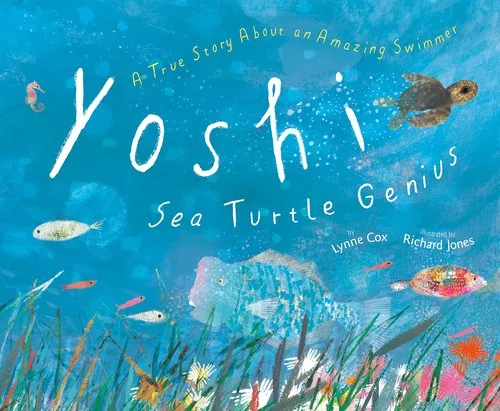
 Yoshi, Sea Turtle Genius: A True Story about an Amazing SwimmerLynne Cox, illustrated by Richard JonesAn informative, engaging account of the life and migration of a loggerhead turtle who came to be known as Yoshi began with her hatching on an Australian beach. After five years of swimming among other sea creatures, from sea anemones to whale sharks, and drifting on algae rafts, she arrived at Africa’s southern point. There she became trapped in a net until rescued and cared for by a Japanese fisherman who later delivered her to a Cape Town aquarium. After 20 years in the aquarium, the staff developed a training program to enable Yoshi to gain the strength and stamina needed for ocean life. Outfitted with a tracking device, she was released back into her natural habitat. Over the next two years Yoshi covered 22,998 miles, eventually returning to the Australian beach of her hatching where she laid a clutch of eggs. Yoshi’s aquatic world is visually captured in exquisite illustrations of life beneath the ocean’s surface as well as conveying her herculean journey with the effective use of horizontal panels and focused spot art.Science, Technology, and the Natural WorldView book details
CCBC Choices 2024
The 2024 edition contains 238 selections published by the Cooperative Children's Book Center, University of Wisconsin-Madison. The source uses 13 audience or subject sections, including Science, Technology, and the Natural World, Seasons and Celebrations, Historical People, Places, and Events, and Biography, Autobiography, and Memoir. It is one annual edition of CCBC Choices, the librarians' bibliography of recommended books.
CCBC Choices 2024See the original list
Selections238
Published byCooperative Children's Book Center, University of Wisconsin–Madison
Sections13 sections
Browse sections13 sections
Science, Technology, and the Natural World
13 selections
Yoshi, Sea Turtle Genius: A True Story about an Amazing SwimmerLynne Cox, illustrated by Richard JonesAn informative, engaging account of the life and migration of a loggerhead turtle who came to be known as Yoshi began with her hatching on an Australian beach. After five years of swimming among other sea creatures, from sea anemones to whale sharks, and drifting on algae rafts, she arrived at Africa’s southern point. There she became trapped in a net until rescued and cared for by a Japanese fisherman who later delivered her to a Cape Town aquarium. After 20 years in the aquarium, the staff developed a training program to enable Yoshi to gain the strength and stamina needed for ocean life. Outfitted with a tracking device, she was released back into her natural habitat. Over the next two years Yoshi covered 22,998 miles, eventually returning to the Australian beach of her hatching where she laid a clutch of eggs. Yoshi’s aquatic world is visually captured in exquisite illustrations of life beneath the ocean’s surface as well as conveying her herculean journey with the effective use of horizontal panels and focused spot art.Science, Technology, and the Natural WorldView book details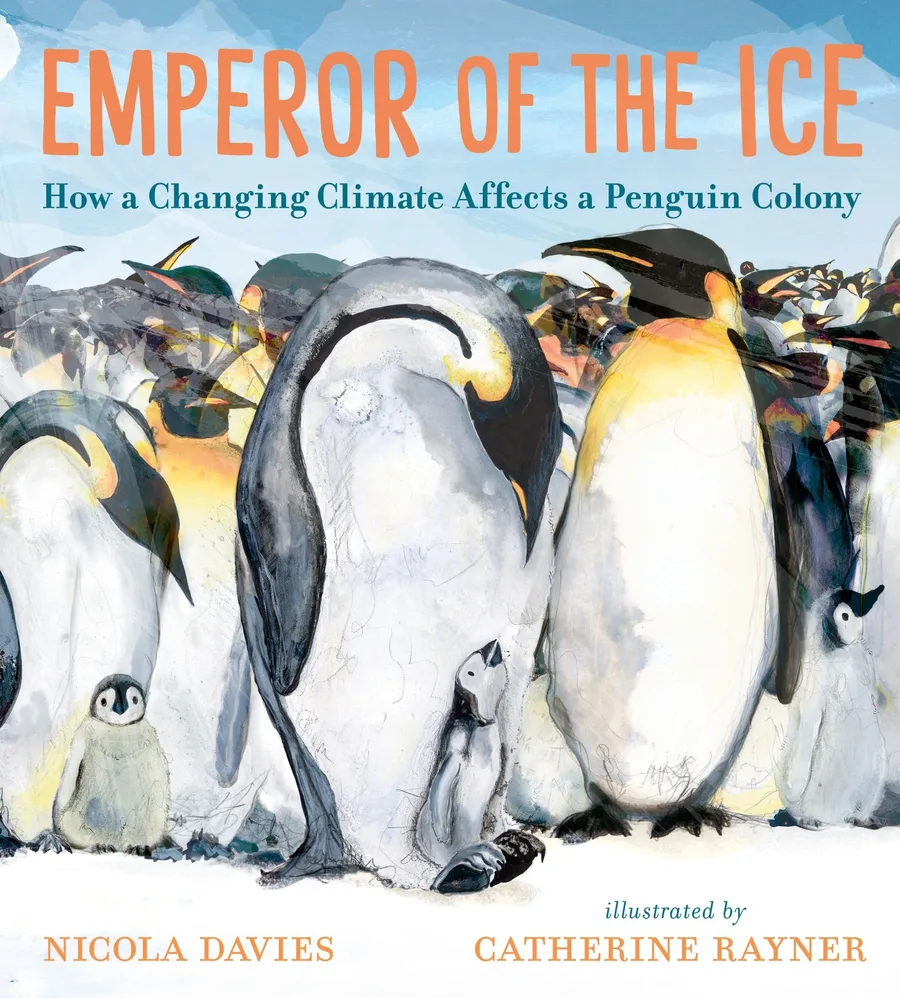 Emperor of the Ice: How a Changing Climate Affects a Penguin ColonyNicola DaviesFall in Antarctica begins in April, when Emperor penguins gather on the sea ice to breed. A particular female penguin journeys to Halley Bay to find a mate and lay an egg. Once she does, she returns to the ocean to feed and regain strength while her mate keeps the egg warm over several weeks. In July the female come back to raise her chick, tag-teaming with her mate to keep the young penguin warm and hunt for its food. But the next year, climate change has altered Halley Bay; it’s no longer a safe place to lay an egg. This penguin and others must find a new place to breed where the sea ice is still reliable. An ending that feels intentionally ambiguous (the female “has found a new place to raise a chick, where the sea ice can be trusted. … At least for now.”) serves to both sound an alarm and offer some hope. Final notes provide more information about Emperor penguins, climate change, and what people might do to effect positive change. Stunning mixed media illustrations evoke the dramatic natural setting where the penguin colony raises their young.Science, Technology, and the Natural WorldView book details
 Wind and Water (Vivi Loves Science)Kimberly Derting, Shelli RFollowing a storm in her ocean-side town, Vivi (Asian/Black) and her classmate Graeme (Black) help clean up the beach debris with a group of volunteers. Noticing the missing tide pools and flattened dunes, Vivi and Graeme wonder how a rainstorm could cause so much change. Ranger Earle helps explain the power of wind and water, specifically the effect of erosion. Back at school, Vivi and Graeme demonstrate their new knowledge with the help of their teacher, Ms. Cousteau. The erosion experiments performed by the classmates are included at the end of this illustrated beginning reader text. A glossary and additional examples of landscapes changed by wind and water, such as caves and canyons, are included.Science, Technology, and the Natural WorldView book details
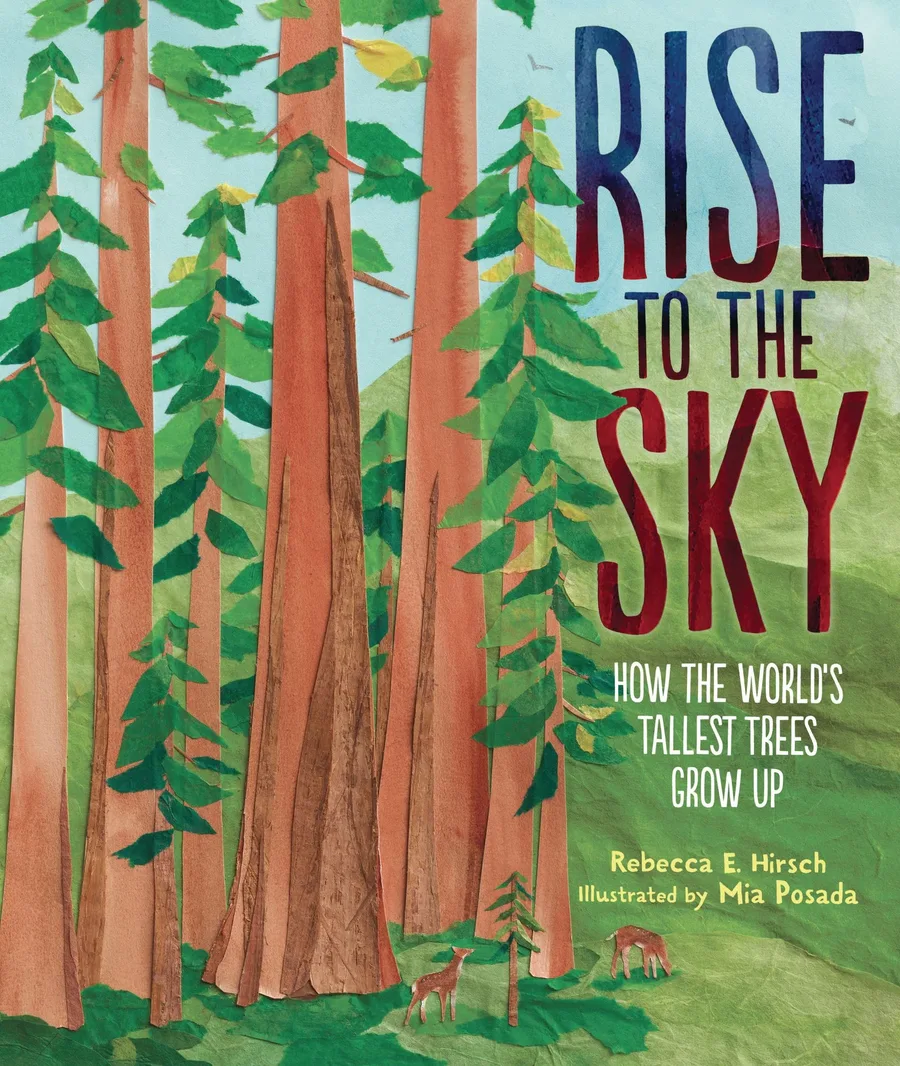 Rise to the Sky: How the World’s Tallest Trees Grow UpRebecca E. Hirsch“What is the tallest living thing? It’s not an elephant or a giraffe or even a blue whale. It’s a tree!” This celebratory nonfiction text graphs the tallest trees in the world and chronicles how, exactly, they manage to grow so tall. Textured, lifelike collage and watercolor illustrations add awe to these arbor giants. In addition to a narrative outline of a tree’s growth process, back matter defines the critical parts of a tall tree, answers additional questions about tall trees, and provides a world map of showing where the tallest trees live.Science, Technology, and the Natural WorldView book details
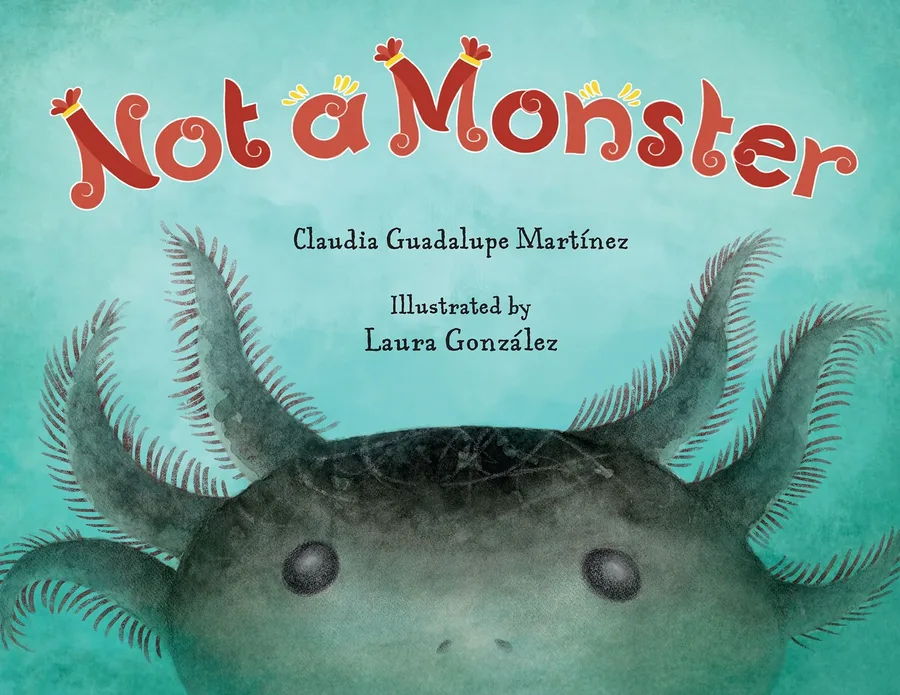 Not a MonsterClaudia Guadalupe MartínezThe word axolotl stems from the Aztec god of monstrous things, but this myth-busting science text explains how the axolotl, an amphibian unique to the canals of Mexico City, is anything but a monster. Soft watercolor illustrations convey the life cycle of the gentle axolotl, from egg to full-grown salamander. Two children (Latine) are shown in a canoe observing an axolotl in its native habitat. These characters serve to introduce the pollution issues facing wild axolotls, and the conservation efforts aimed at protecting the Xochimilco canals. Spanish vocabulary is used for many key terms, including colored text for color- related words. An author’s note discusses the differences between axolotls in captivity versus axolotls in the wild. Information about preservation efforts is also provided.Science, Technology, and the Natural WorldLexile Text Measure AD620LATOS Book Level 4View book details
 The Book of TurtlesSy MontgomeryAn engaging informational picture book offers a comprehensive introduction to turtles in all their singularity. The narrative begins, naturally, with “the wonderful shell” and other basics of turtle anatomy and turtle type before covering characteristics and behaviors both common and unusual. An appealing section on extremes shines a spotlight on turtles of remarkable size and speed, turtles with unusually long necks or oddly flat bodies (the aptly named Snake-necked Turtle and Pancake Tortoise, respectively), and even the smelliest species. Sy Montgomery’s respect and admiration for turtles is evident throughout, with ample space devoted to the “many talents” of turtles: their ability to learn complex tasks, their surprising athleticism, and their hunting skills. “Today, 61 percent of all turtle species are dangerously declining—or are already extinct in the wild.” Fortunately, the narrative wraps up on a positive note, with ten ways that humans can help protect and advocate for turtles. Detailed, realistic acrylic paintings on clean, white backgrounds spotlight many species throughout.Science, Technology, and the Natural WorldLexile Text Measure 870LATOS Book Level 5.6View book details
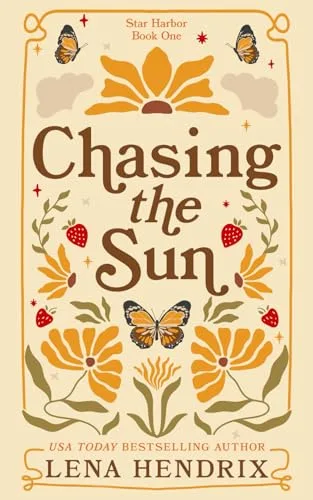 Chasing the SunTimothy MussoStriking woodcut prints and a spare, lyrical text chronicle a year in the life of a female Arctic tern, who travels more than 50,000 miles on her journey from Antarctica to Alaska’s Arctic coast and back over the course of 12 months. Along the way, she meets her lifelong mate; once at her destination, she “produces a small, round treasure” before—“Crack!”—a chick hatches. Returning south in late summer, she is now part of a family of three. An inset in the upper right corner of most page spreads chronicles her progress on a map of the globe and calendar of the year, detailing her location and the number of miles traveled. Over the course of the journey, the distinctive black and white bird with a red-orange beak is the focal point of each elegant illustration, but she flies over numerous other creatures on 12 Science, Technology, and the Natural World CCBC Choices 2024 land and in the sea. More about Arctic terns is included at volume’s end, along with brief information identifying the various animals that appear along her journey in this arresting offering.Science, Technology, and the Natural WorldView book details
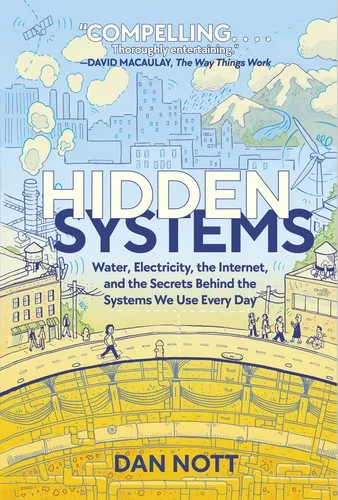 Hidden Systems: Water, Electricity, the Internet, and the Secrets Behind the Systems We Use Every DayDan Nott, illustrated by Dan NottHow does clean water simply come out of the tap? What are those things up on cell phone towers? If the internet is in the cloud, why do we need big server farms? This fascinating graphic novel primer details how the systems that deliver water, electricity, and the Internet work, including how each came to be, and what they might look like in the future. Notable for exploring its complex subject matter with remarkable clarity, the explanations unfold in a skillful narrative and line drawings rendered in a limited, cool palette that help it feel light and accessible. Encompassing history, science, technology, and ecology, a recurring theme across the three subjects is the impact of humans manipulating nature. For example, California’s Central Valley water network was an engineering feat, but also created economic tensions related to subsidies and corporate farming. Issues related to resource use, abuse, ownership, and climate change are woven throughout. This unintimidating volume is ideal for readers who are curious about how the world works, as well as those interested in environmental issues.Science, Technology, and the Natural WorldView book details
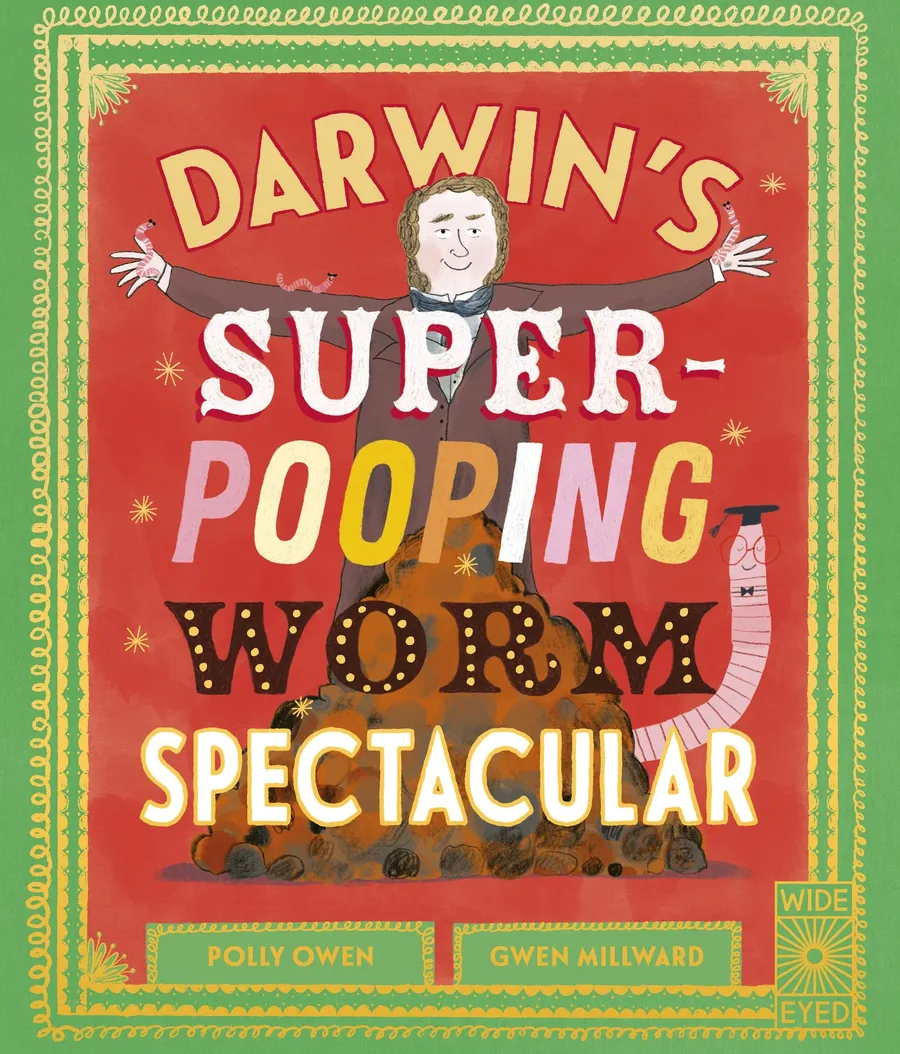 Darwin’s Super-Pooping Worm SpectacularPolly OwenCharles Darwin’s belief that worms were amazing contributors to the natural world was not shared by the public, who considered them nothing more than garden pests. Determined to prove his opinion scientifically, Darwin tested worms’ vision, learning they didn’t have eyes but used sensors in their skin to detect light. He went on to examine their hearing, smell, and taste using methodologies that evolved with each failed attempt until he hit on a viable approach. His results underwhelmed his peers until he reported that the soil aeration caused by worms’ underground movement and the nutritive value of their poop “acts as a plant super-booster.” An energetic, light-hearted text paired with humorous illustrations that make effective use of dialogue bubbles document Darwin’s 40-year study of earthworms that culminated in the publication of his book The Formation of Vegetable Mould Through the Action of Worms, a bestseller of its time.Science, Technology, and the Natural WorldView book details
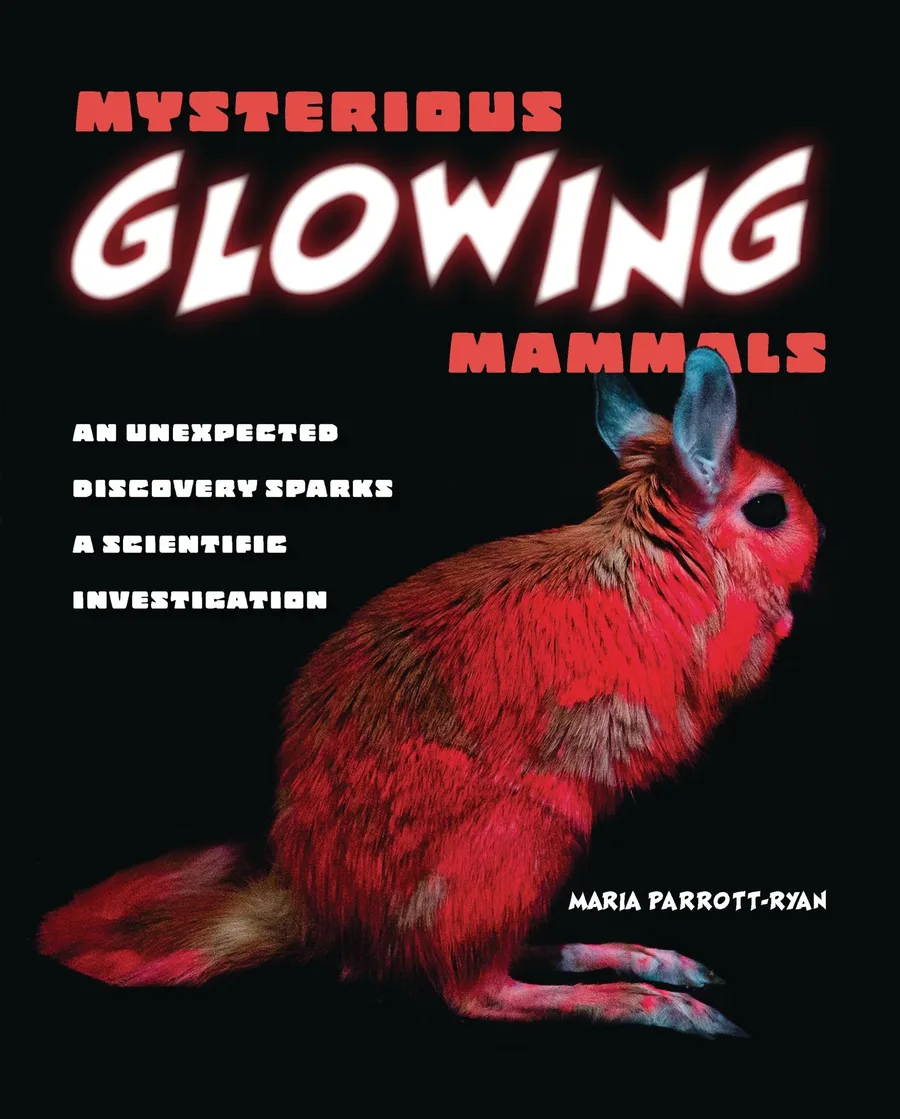 Mysterious Glowing Mammals: An Unexpected Discovery Sparks a Scientific InvestigationMaria Parrott-RyanThis intriguing science mystery by a debut Wisconsin author begins in the Northwoods, on a night ecologist Jonathan Martin was studying tree frogs in his backyard. Using his ultraviolet flashlight, he saw something pink and luminous flash through the upper canopy. He couldn’t believe his eyes: It was a flying squirrel. Specifically, a GLOWING flying squirrel. Nothing like it had ever been documented. The surprise discovery led to the formation of a small team of scientists at Northland College in Ashland. Was this phenomenon unique? Tied to a specific family of squirrels or certain species? Was the fur glowing from exposure to something, or did it glow naturally? Were there other animals that glowed? “Team Biofluorescent,” as they called themselves, began researching the scientific record to find out what else was known about biofluorescence in animals. There were many examples of jellyfish, coral, and sea anemones, and some land animals like tree frogs and chameleons, but only one record of a mammal, and nothing about flying squirrels. They narrowed their search by looking at other specimens at the Field Museum 13 Science, Technology, and the Natural World CCBC Choices 2024 in Chicago, discovering even more surprises in the dark. Their exciting scientific discovery from 2019 is told here in an engaging account that includes explanation of scientific terms, and captivating photographs.Science, Technology, and the Natural WorldView book details
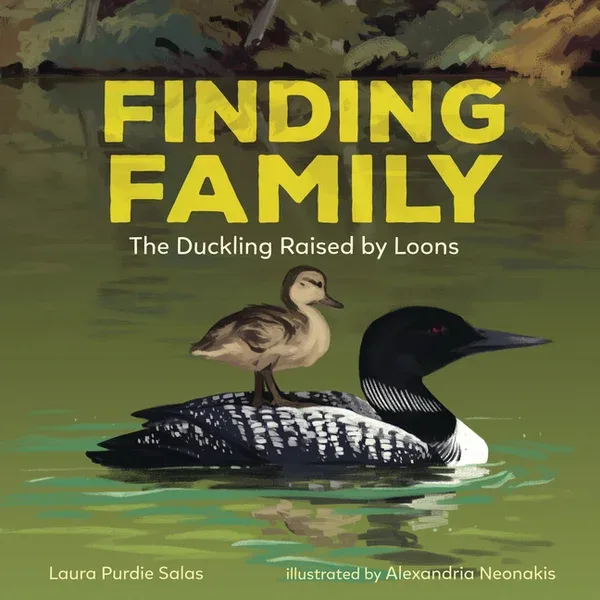 Finding Family: The Duckling Raised by LoonsLaura Purdie Salas, illustrated by Alexandria NeonakisEntries dated May 13 through August 3 tell the story of a loon pair on a Wisconsin lake who raise an orphaned mallard duckling after their own chicks disappear (“Snatched / by snapping turtle or northern pike, / lurking below the water’s surface? / Nobody knows”). The two species are natural rivals, and their behaviors are not particularly similar, but Duckling “learns loon ways” (diving for food) and eats loon prey (minnows); she rides on the back of the male loon like a loon chick would (even until she is so large that the loon floats comically low in the water). But Duckling retains mallard behaviors and eats mallard food, too. She doesn’t know that she should hide when a strange loon appears and challenges the adult loons for their territory, and she doesn’t always stick close to the adults like a loon chick would. By the time Duckling is full grown, it’s time to fly south, separately (like both loons and mallards do). A text both factual and poetic presents the story of this atypical occurrence while acknowledging that there are many unanswered questions about why these three birds formed an “unlikely family” and what their future behaviors will look like. Back matter includes more information about the research centered on this family grouping observed in 2019, and a Venn diagram that further illustrates the differences between loons and mallards.Science, Technology, and the Natural WorldWord Count 611View book details
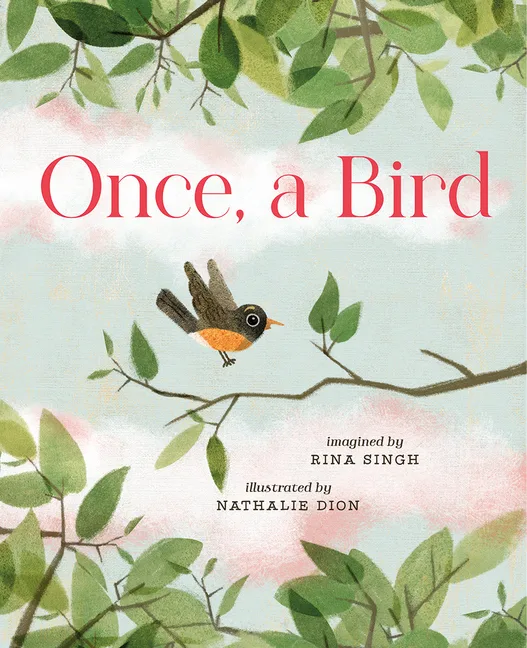 Once, a BirdRina Singh, illustrated by Nathalie DionIn a still-snowy landscape, a robin lands on a seemingly bare branch and finds a pale pink, barely-there bud. There are other signs spring is emerging as the bird takes to the sky: It flies over greening farm fields and rivers with remnants of ice in flowing water. The robin eventually lands again, this time in a decidedly urban environment. It goes from a public fountain to a tree outside an apartment building. Inside the building, over the course of the days and weeks that follow, various residents watch through their windows as the bird builds a nest, lays and cares for its bright blue eggs, and tends to its hatchlings. The charm of this wordless book is in the gouache, watercolor, and digital art through which the story and changing seasons unfold, and in the way it deftly captures the simple joy that a bird— and nature—offers young and old alike.Science, Technology, and the Natural WorldView book details
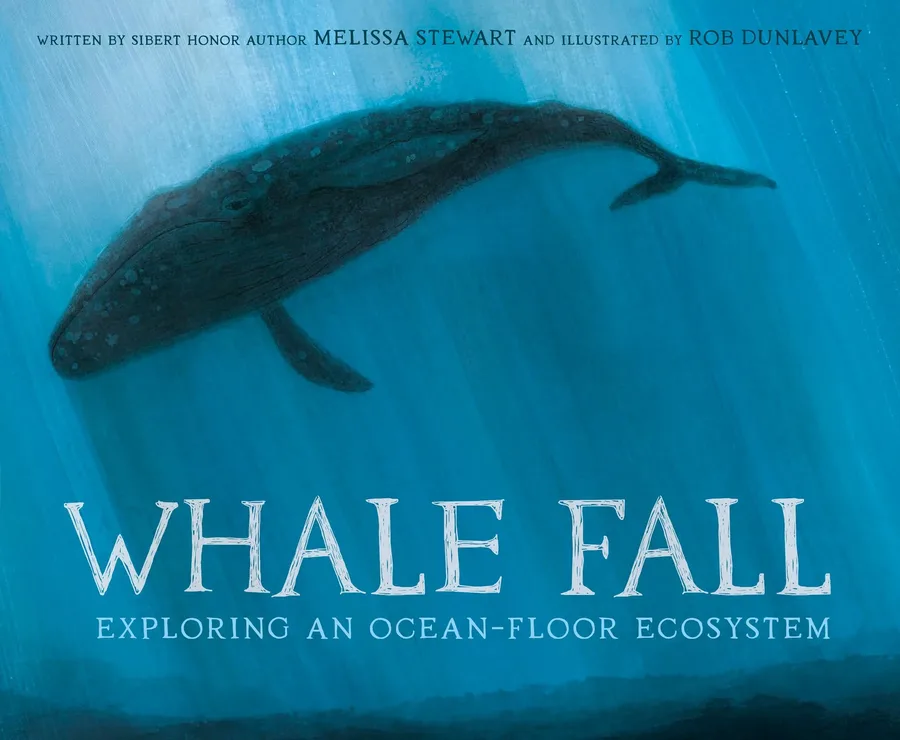 Whale Fall: Exploring an Ocean-Floor EcosystemMelissa Stewart“When a whale dies, its massive body silently sinks down, down, through the inky darkness, finally coming to rest on the soft, silty seafloor.” An informational picture book describes the ecosystem that develops on and around the whale’s corpse in the roughly 50 years following its death. The whale’s body is “a bountiful gift,” a source of food for countless sea creatures, beginning with hagfish, sleeper sharks, and other fish that eat the whale’s blubber and flesh. Microscopic amphipods pick the bones bare while crabs, hooded shrimp, and pink sea pigs sift through sediment for scraps, all attracting other scavengers. When only the skeleton remains, zombie worms attach themselves to absorb fats and proteins; they break down the bones and are eventually replaced by bone-eating bacteria that produce gases that feed other microbes. Over five decades, the whale’s body supports the life of more than 500 other species. Deep-sea blues abound in the digitally 14 Science, Technology, and the Natural World CCBC Choices 2024 enhanced watercolor and mixed media illustrations, which include enlarged spotlights of microscopic creatures. End matter includes an extensive bibliography and additional information about the species mentioned in the text.Science, Technology, and the Natural WorldLexile Text Measure AD1060LATOS Book Level 7.3View book details
Seasons and Celebrations
10 selections
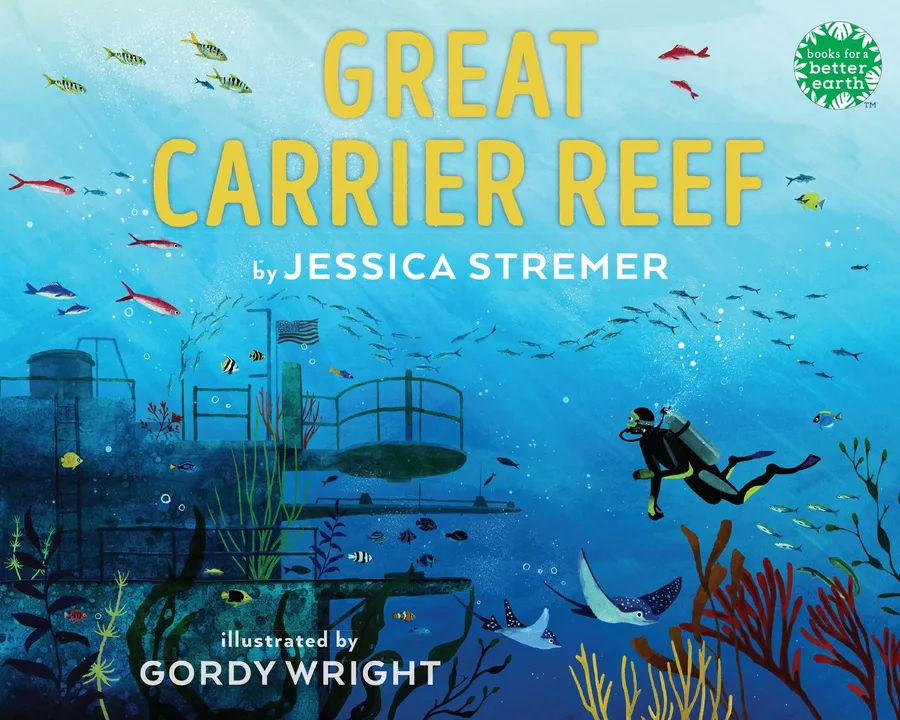 Great Carrier ReefJessica Stremer, illustrated by Gordy WrightHealthy coral reefs support a variety of sea life. But as pollution damages and endangers these reefs, the species that rely on them to flourish are also in peril. Scientists looking for ways to protect reef fish off the coast of Florida decide to sink a decommissioned aircraft carrier in hopes of creating an artificial reef. First, the USS Oriskany, also known as “The Mighty O,” must be cleaned of all traces of oil and fuel. “Cables and wires are severed, the interior gutted, toxic paint scrubbed away.” Then tug boats pull it out to sea, explosives are wired into place, and the countdown begins: “5 4 3 2 1 KABOOM!” It takes 37 minutes for the ship to disappear, descending to the ocean floor, where it becomes host to life and haven for creatures of the sea. “Carried by the current, sea squirt, mollusk, and octocoral larvae land on the Mighty O. … Eagle rays glide through steel caverns. Urchins parade across the former flight deck. … The Mighty O serves on, solid and stationary, transformed into the GREAT CARRIER REEF.” More about reefs, this fascinating and ingenious project involving more than 150 people, and the USS Oriskany is included in the end matter.Seasons and CelebrationsView book details
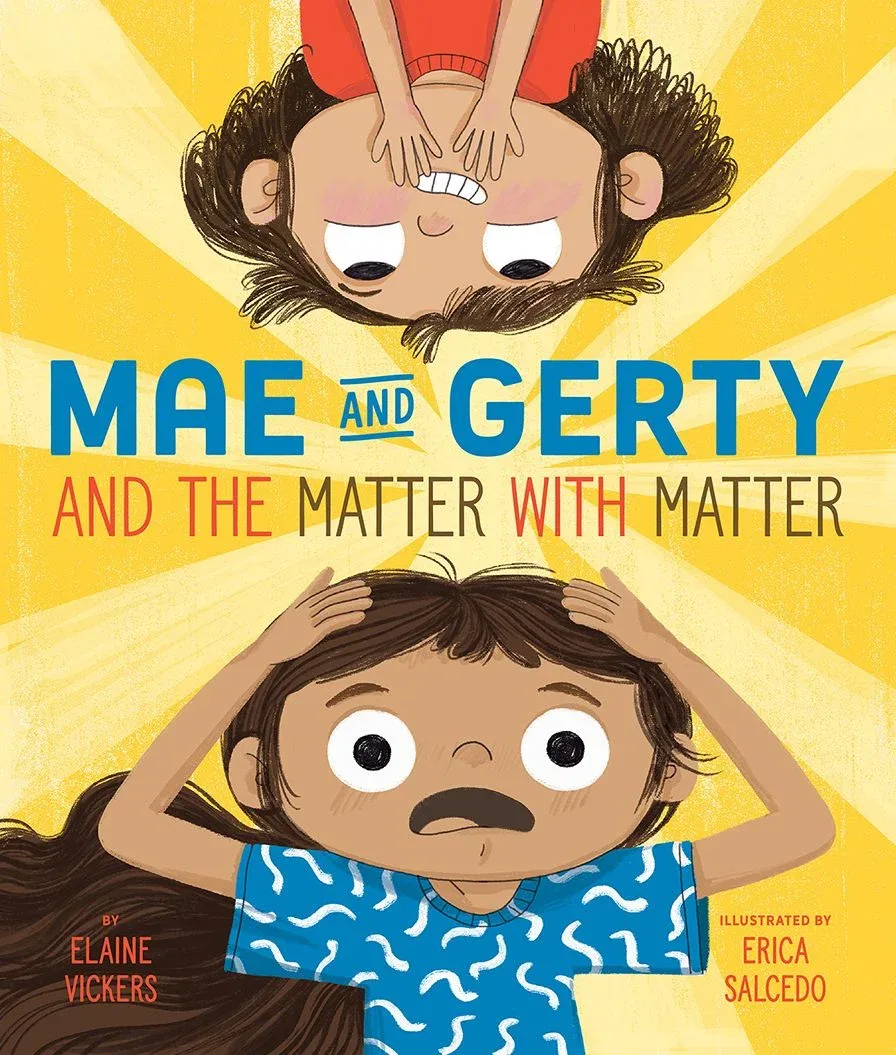 Mae and Gerty and the Matter with MatterElaine Vickers, illustrated by Erica SalcedoMae’s little sister Gerty is considered a science genius by her parents. Scientific “matter” was Gerty’s first word! While her parents dote on Gerty’s bubble popping and piano banging as matter manipulation and vibration, Mae is fed up. Science is not child’s play—making messes and asking questions—or is it? In that moment, Mae puts mind over matter and decides to be a scientist, too. Suddenly, the sisters are making messes and getting curious together. Colorful illustrations dotted with humor celebrate science and love in this brown- skinned family.Seasons and CelebrationsView book details
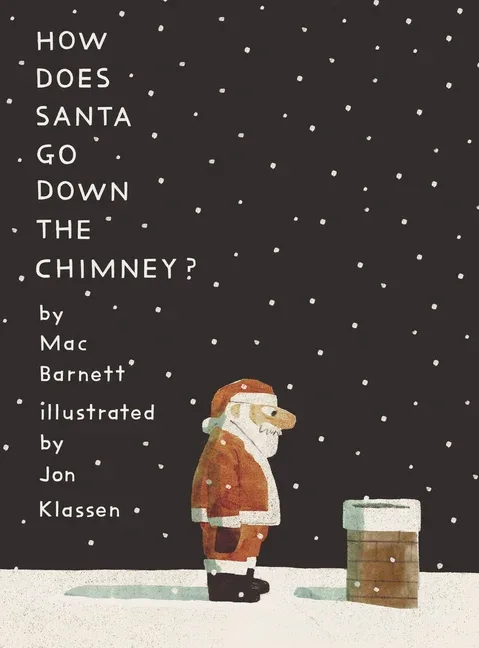 How Does Santa Go Down the ChimneyMac BarnettAuthor-illustrator duo Mac Barnett and Jon Klassen combine their talents and humor to address the age-old mystery of How does Santa go down the chimney? Terrific page turns and layouts propel the question-and-answer format of this wry holiday story. If he goes down the chimney, “Does his suit get sooty? Because chimneys have soot. And then does Santa do laundry before he goes to the next house?” A disappointed and soot-covered Santa (white) on one page is shown on the opposite page in a basement reading the newspaper in red heart boxers while his suit spins in the washer. Imaginative solutions and practical observations abound in this seasonal treat.Seasons and CelebrationsLexile Text Measure 420LATOS Book Level 2.9View book details
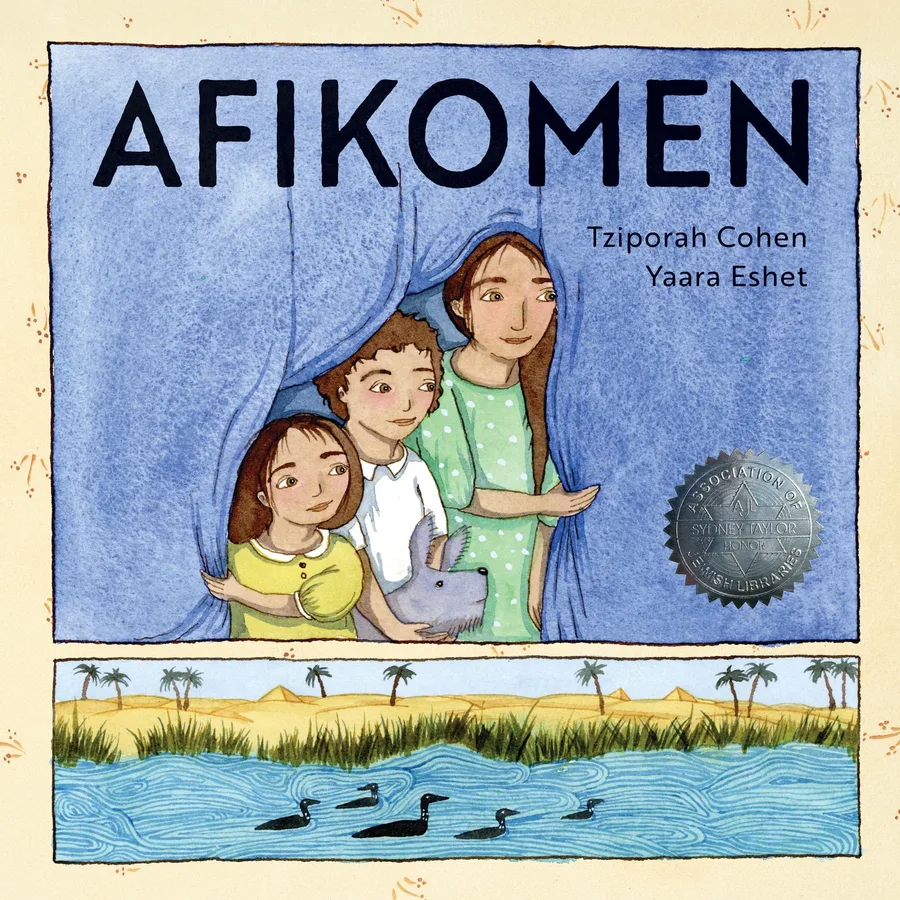 AfikomenTziporah CohenThree children experience a fantastic, time-traveling adventure during their Passover Seder in this wordless picture book. The story opens on a diverse group seated around a broad dinner table, Haggadot open in front of them. The Seder leader snaps a piece of matzah in 15 Seasons and Celebrations CCBC Choices 2024 two and puts one half in a bag: This is the Afikomen—the eating of which will eventually signal the end of the Seder—which the children, who have light-brown skin, promptly squirrel away. Crawling beneath the blue tablecloth, they magically emerge on the other side from a tent in ancient Egypt. There, along the banks of the Nile, they see a woman and her daughter sorrowfully place an infant—Moses!—into a floating basket. The children guide Moses away from dangers and discovery and toward his destination (Pharaoh’s daughter, who will raise him) as he drifts downriver. First, though, they stop to share a piece of matzo with him. Once he is safe, the children wave to Moses’s mother before making their return journey from tent to tablecloth, where they relinquish the Afikomen to end the night. Detailed ink and watercolor illustrations follow the imagined heroic actions of three children on a night when Jews around the world envision themselves within the Exodus story.Seasons and CelebrationsView book details
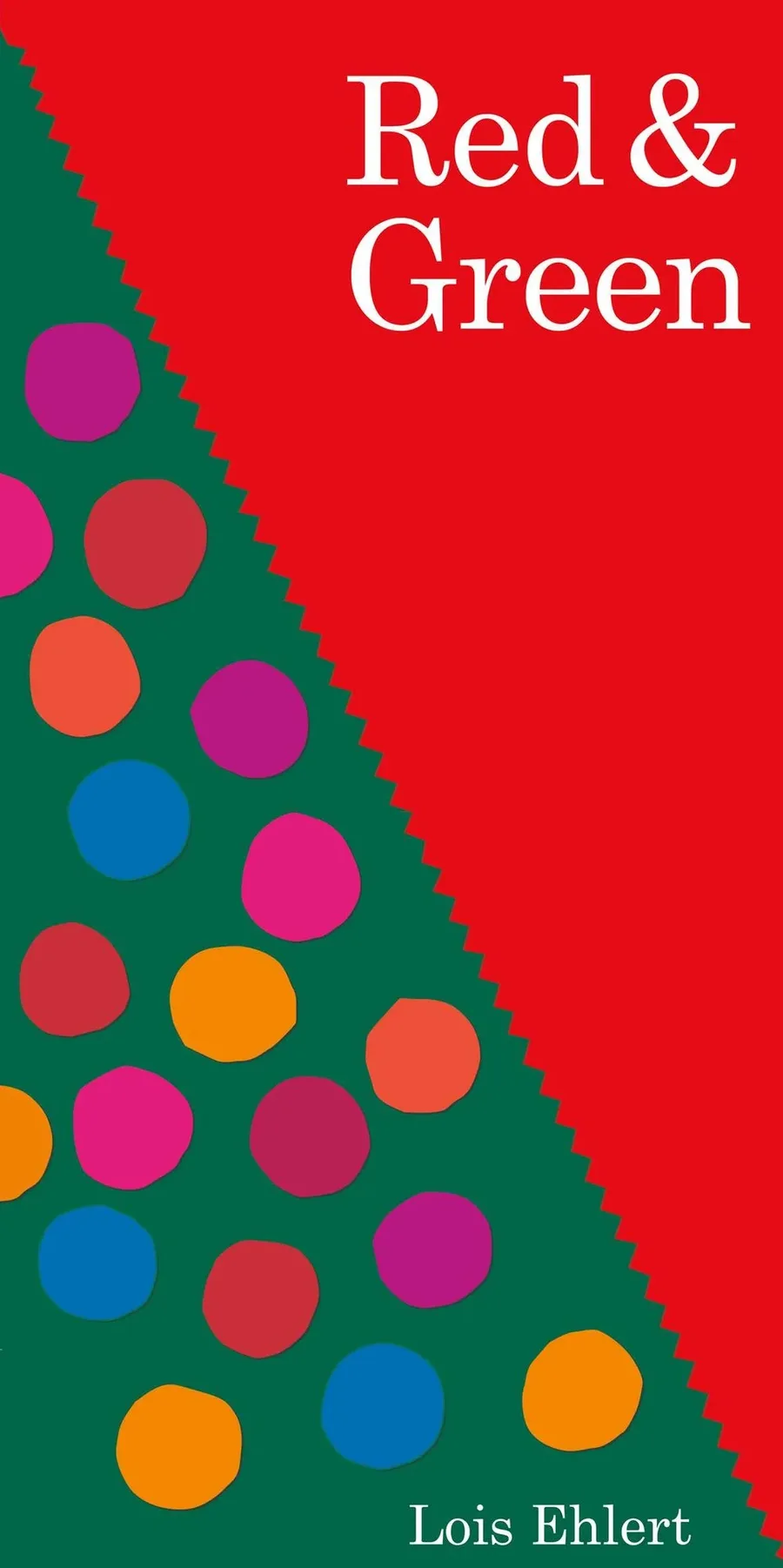 Red & GreenLois Ehlert, illustrated by Lois EhlertThis tall, narrow book features a bisected green tree studded with boldly colored “ornaments” on its red cover. Inside, a rhyming text riffs off Clement Moore’s poem “’Twas the Night Before Christmas” (“It was a cold, wintry night, and all through the house, not a creature was stirring … except a small mouse!”) across die-cut pages filled with winter and holiday images (wreath and garland, mittens, cookies, and more). The die-cuts offer peeks, reveals, and delightful surprises with each page turn. The illustrations, rendered in Ehlert’s trademark style in which color and shape become artistic media, move beyond the season’s traditional red and green palette to a spectrum that shines with bright pink, magenta, gold, and purple. After viewing the fresh snow and a rotund snowman through a window, the mouse enjoys a sweet snack and is tucked into a mitten bed before the sack- toting, red-suited visitor notices the plundered cookie plate. Lois Ehlert died in 2021; the late Wisconsin artist’s holiday vision is a gift for young children.Seasons and CelebrationsView book details
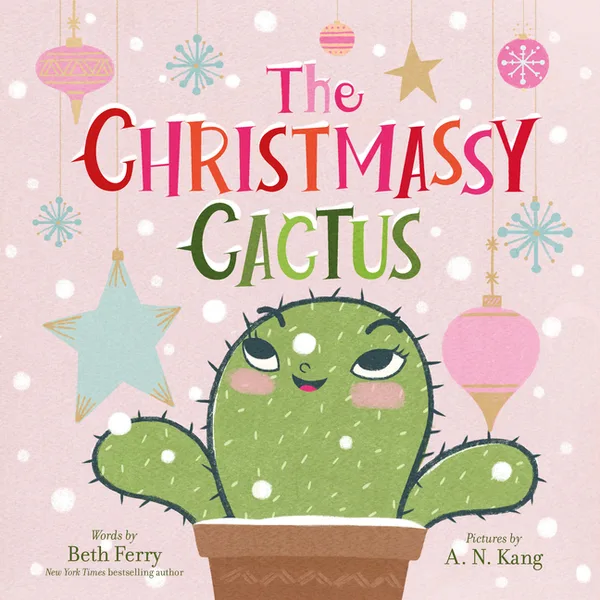 The Christmassy CactusBeth Ferry, illustrated by ATiny Cactus is a much-loved member of her family. When Tiny Cactus is introduced to Christmas, she’s in awe of all the shine and shimmer, twinkle and tinsel. “I cannot wait to be decorated!” she tells her elephant friend. But even as Christmas books appear on the bookshelf where Tiny Cactus sits, Tiny Cactus’s little (human) girl is too busy with Christmas to remember Tiny Cactus. “And Tiny Cactus knew why. How could anyone remember a tiny green spiny thing when there was a giant green piney thing sparkling in the living room?” She makes a Christmas wish, just like in the stories on the shelf, but by the time Christmas morning arrives, Tiny Cactus is still undecorated and feeling anything but merry. “You have to believe in the magic of Christmas,” says elephant. Tiny Cactus isn’t sure how to believe. But on Christmas night, long after the family’s celebration is over, the magic of Christmas delivers more than one surprise. A quirky plot, festive mixed-media illustrations, and language that is pure delight make for a winning holiday story featuring a winsome cactus, a wise ceramic elephant, and an ebullient brown-skinned girl.Seasons and CelebrationsView book details
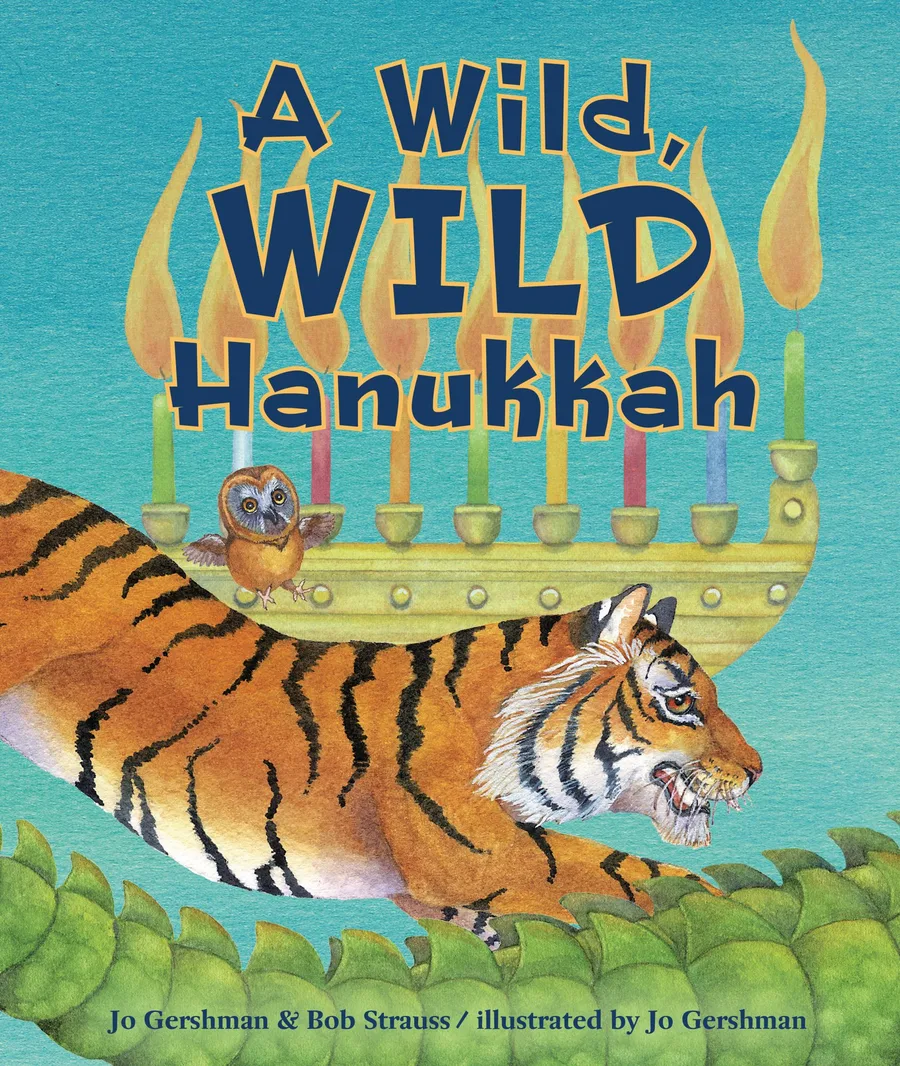 A Wild, Wild HanukkahJo Gershman, Bob Strauss, illustrated by Jo Gershman“Night descends, / the stars shine through. / Hushhhhhhh, / the white snow falls. / Hanukkah candles / burning bright. / Swisshhhh, / the wild wind calls.” Outside it may be peaceful and quiet, but a helter-skelter Hanukkah celebration is about to commence at the home of one white Jewish family. (Animal shadows appear as the child falls asleep, suggesting a dream.) “Whoosh! The door flies wide. / A plump and perky polar bear / invites himself inside!” 16 Seasons and Celebrations CCBC Choices 2024 Wearing a scarf and bearing a large, empty platter, the polar bear is joined on each of the following nights by other animals numbering as many as the current night of Hanukkah. Most of the raucous animal guests contribute culinary skills or ingredients for traditional Hanukkah foods. (The chimpanzees who arrive on the fifth night simply “fling flour.”) Amidst the celebratory chaos, the holiday comes together properly. There are latkes made by singing owls, and games of dreidel played by penguins. The human child reads the story of Hanukkah to the whole rowdy crew on the eighth night, and the candles in the menorah burn low as the shadows of the wild animals leap away into the darkness. The rhythmic, rhyming text gallops along, while the illustrations are bursting with movement and close- ups, emphasizing the crowdedness of the home.Seasons and CelebrationsView book details
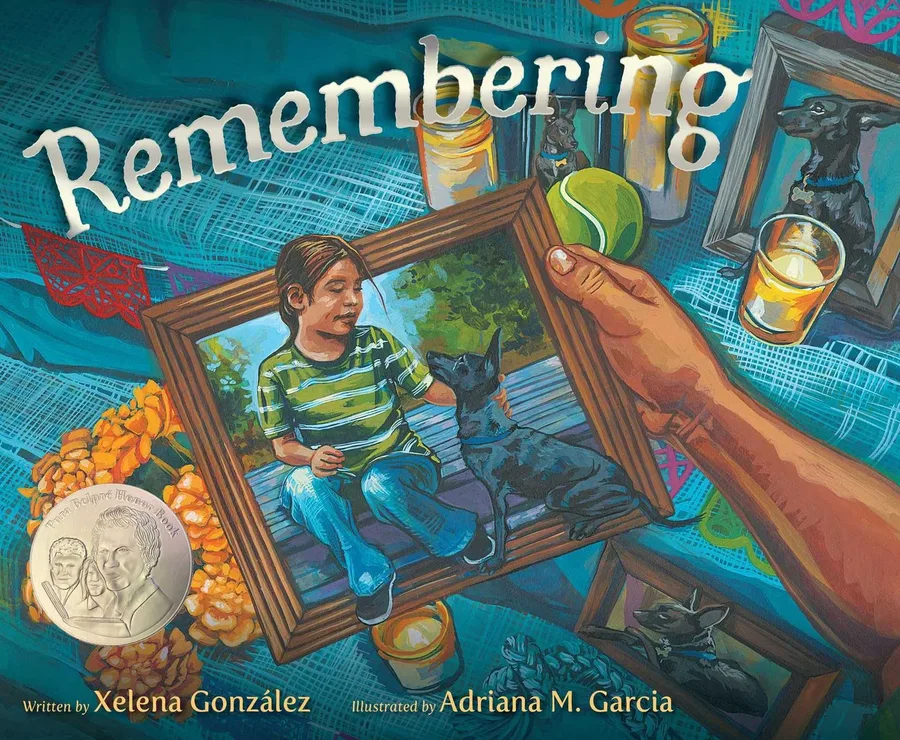 RememberingXelena GonzálezDía de los Angelitos, a ritual of the Día de Muertos celebration, specifically honors deceased children or pets. In Remembering, a Latina girl and her family remember a beloved dog who has passed on. Lush acrylic paintings realistically portray the tender memories of a pet who offered love and companionship. As the family prepares an altar, the daughter collects special items—framed photographs, dishes of kibble and water, a chew stick, a walking harness, and a tennis ball. Candles, incense, and marigold flowers complete the ofrenda, offering a path home on a sacred night. Notes from the author and illustrator recount personal pet losses and the value of celebrating memories. Instructions for “Building Your Own Ofrenda” share additional details, alternatives, and considerations when celebrating Día de Muertos.Seasons and CelebrationsView book details
 Two New YearsRichard HoWhat’s better than one New Year celebration? Two New Year celebrations! For one multicultural family, both Lunar New Year and Rosh Hashanah (the Jewish New Year) are times to celebrate with family and to enjoy traditional foods and activities. The two holidays may follow different calendars and have different cultural roots, but at their hearts lie similar sentiments. Both offer a chance to “sweep past troubles out the door” and “try on new beginnings.” Both inspire “good wishes” for the year ahead. And both are marked by distinctive sights and sounds: the peal of the shofar and special melodies of Rosh Hashanah, and the noisy fanfare of firecrackers and bright lanterns of Lunar New Year. “Together, we watch, / listen, / and celebrate. / One family. / Two New Years. / A shared year of double blessings.” A sparse, straightforward text and sunny, digitally collaged ink illustrations convey an abundance of joy and love in this Chinese American and white Jewish family.Seasons and CelebrationsLexile Text Measure 329LATOS Book Level 2.4View book details
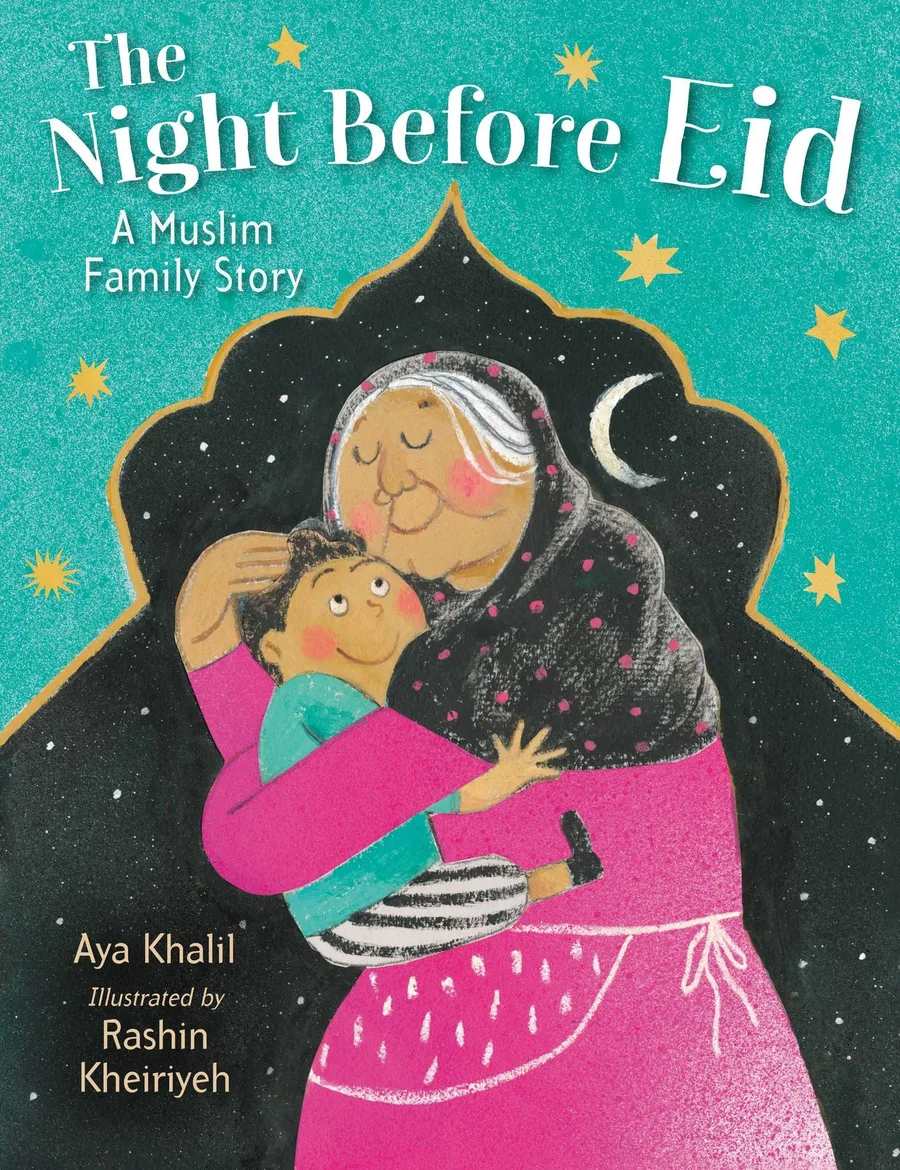 The Night Before Eid: A Muslim Family StoryAya Khalil, illustrated by Rashin KheiriyehZain (brown-skinned) is excited when Teita arrives from Egypt. He’s even more excited to be helping Teita make ka’ak for Eid, eager to share the cookies steeped in culture, tradition, and family with his classmates. As they bake, Teita shares memories of making ka’ak with Zain’s mama when she was a girl in Egypt, along with cultural history about the cookies that are “as ancient as the pharaohs.” Mama scoops out mounds of dough “round and smooth like Ramadan’s full moon.” When Zain struggles with pressing the cookies into the ka’ak mold to imprint a design, Teita says, “El sabr gameel,” reminding him that “patience is beautiful.” Sharing is beautiful, too, and Zain innovates his own way to decorate the treats that he proudly offers at school on Monday. A buoyant picture book seamlessly 17 Seasons and Celebrations CCBC Choices 2024 integrating cultural and religious elements and Arabic phrases is set against blithe mixed- media illustrations buzzing with neon-bright punctuations of pink and orange and glowing with love and affection.Seasons and CelebrationsView book details
Historical People, Places, and Events
14 selections
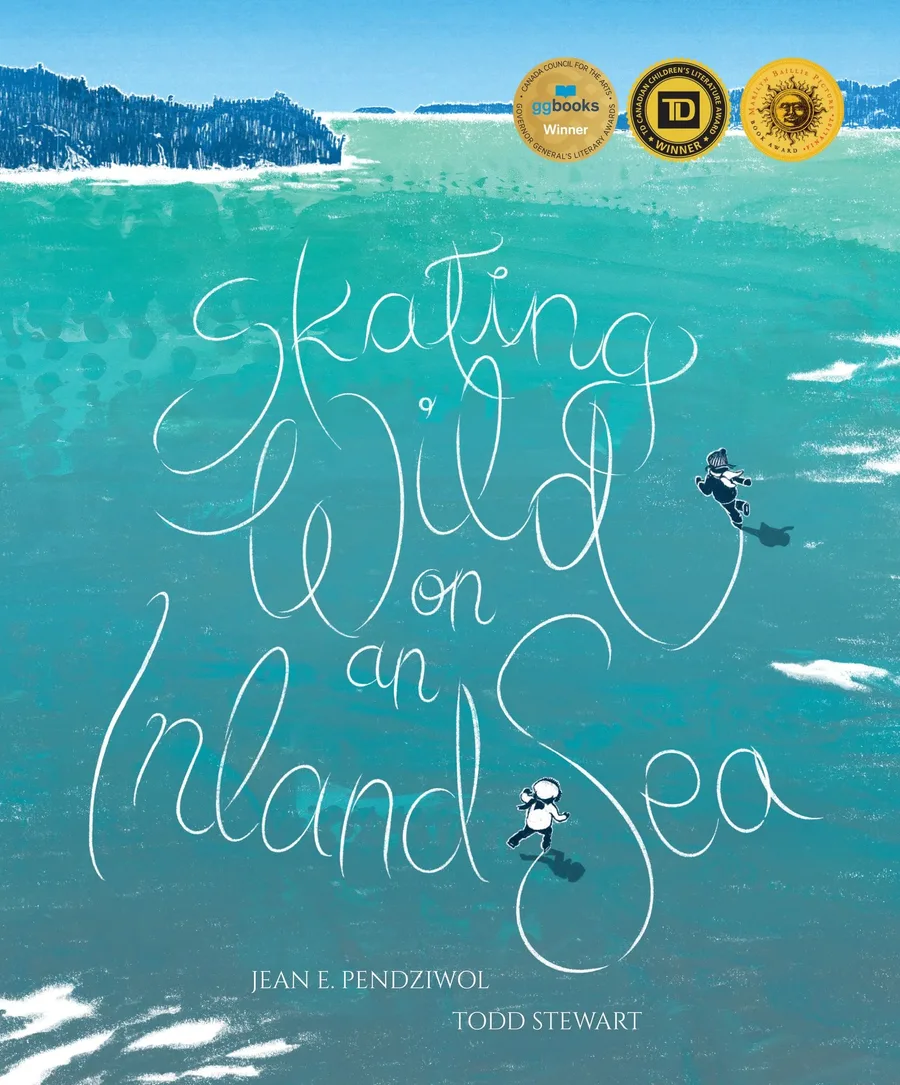 Skating Wild on an Inland SeaJean E. PendziwolA seasonal story that quietly yet thrillingly evokes nature’s wild winter beauty follows a girl and her younger brother, who venture out early one morning to skate on a remote frozen bay on Lake Superior. They begin the day in the blue light of dawn and the warm glow of the woodstove, eating oatmeal before bundling up and heading out. As they walk through the woods they observe the breath of the lake—sea smoke far from shore. “Beneath our boots snow creaks and crunches … we can trace the journey of fox and white-tailed deer, follow the trail of snowshoe hare, mink and otter …” Once they reach the shore, they put on their skates and glide, their blades “hissing and swishing” while the lake sings: “Her voice vibrates beneath our feet, distant thunder cracking and rumbling …” The “music” of nature is a repeated refrain throughout this lyrical narrative set against gorgeous digital and mixed-media art.Historical People, Places, and EventsView book details
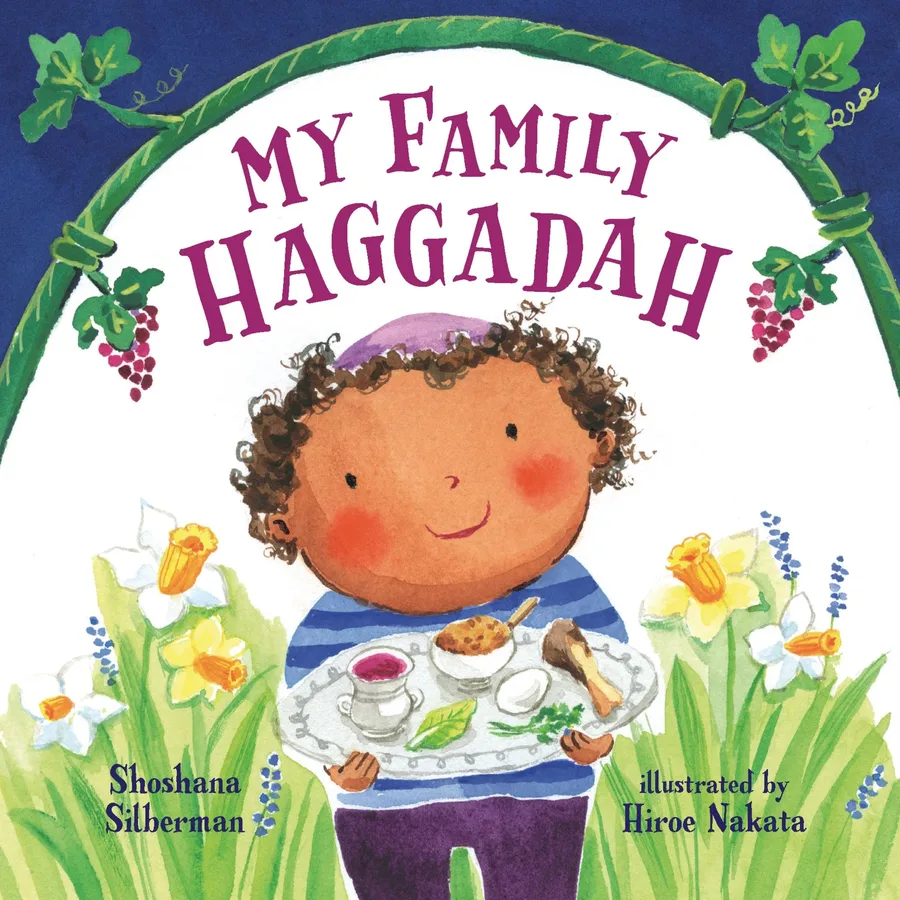 My Family HaggadahShoshana Silberman, illustrated by Hiroe NakataThis sweetly illustrated board book describes one child’s experiences celebrating the Passover Seder. A simple text (e.g., “We set the table. We light the candles.”) shows familiar rituals from a brown-skinned toddler’s perspective. The child cheerfully explains that “‘Todah’ means ‘thank you!’” as they hug their family’s Haggadah before heading off to bed.Historical People, Places, and EventsView book details
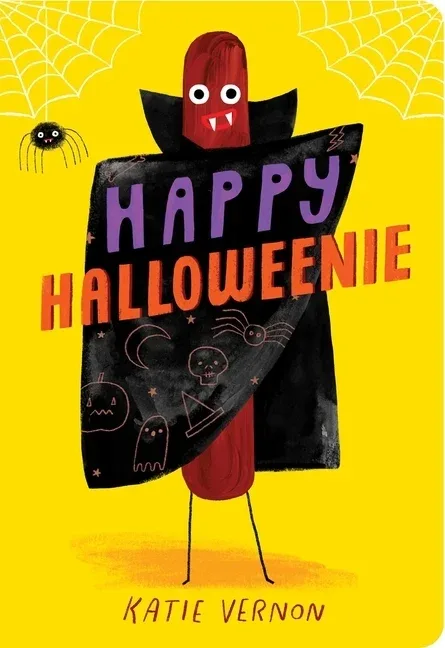 Happy HalloweenieKatie VernonDecision-making can be tough, especially when faced with the wide-ranging costume options available to Weenie, a hotdog with sartorial ambitions. Should he go with a classic and cute rotund pumpkin suit, or the equally timeless but scary cape and vampire fangs? Opposing outfits are paired, each summarized with a single word: “yucky” zombie or “yummy” ice cream cone, “breakfast” skillet of bacon and eggs or “dinner” burger, “yellow” banana or “green” Frankenstein? The visual juxtaposition of Weenie’s iconic sausage body sporting each get-up, complete with appropriate facial expressions (a Dragon Weenie casts a concerned side-eye towards a sword-toting Knight Weenie) infuses this board book with humor that can be appreciated by both young children and their adults.Historical People, Places, and EventsWord Count 88View book details
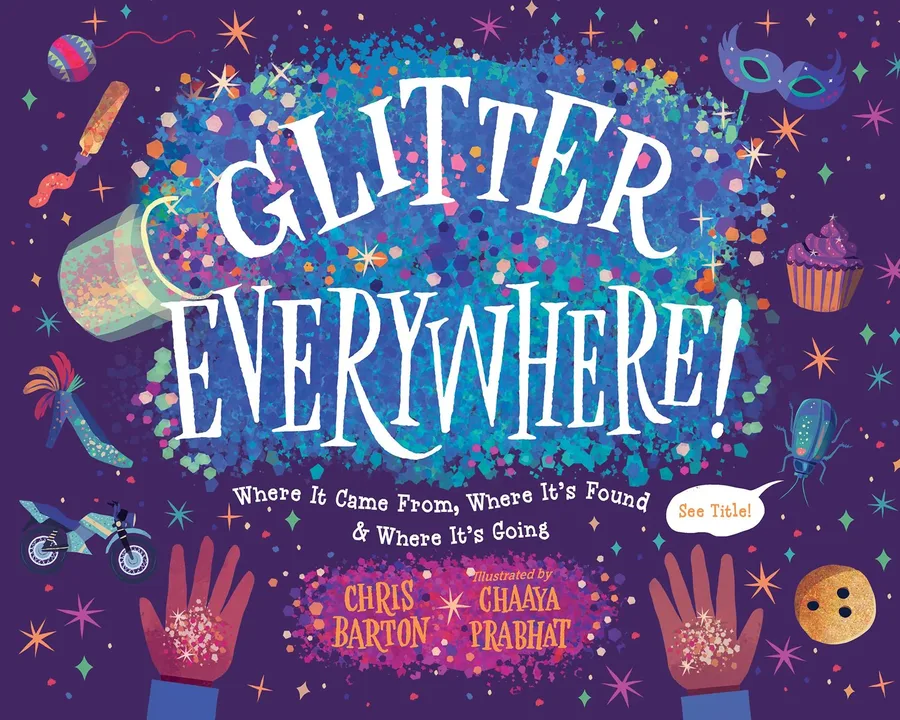 Glitter Everywhere! Where It Came From, Where It’s Found & Where It’s GoingChris BartonThe scourge of many a household, glitter’s iridescence also makes it undeniably appealing. An explanation of the science behind why and how glitter shines begins this sparkling work of nonfiction. Evidence of human fascination with all that glitters includes iridescent beetle wings used by ancient Egyptians to decorate Tutankhamun’s tomb, and bits of mica that added sparkle to South African cave paintings, Greek pottery, and Mayan temple walls. 18 Historical People, Place, and Events CCBC Choices 2024 More recently, early 20th-century U.S. manufacturers “cut mica, metal and paper into tiny pieces they called … flitter.” When the U.S. military required mica during World War II, Henry F. Ruschmann invented “slivers”—cut bits of thin plastic Eventually, Ruschmann’s sliver operation evolved into a glitter factory that is still in operation today. Over time, competitors created their own glitter, and the process was streamlined by cutting shapes with straight edges (less waste than circles) using a range of materials. Glitter pieces got smaller and were used in more and more products, from makeup to motorcycles. The final pages explain why glitter’s negative electrical charge causes it to stick so annoyingly to everything it touches; the negative impact of microplastics, including glitter, on the environment; and the dangers of mica mining, often performed by children. Recently developed biodegradable glitters sourced from plant cellulose and tree sap resin filled with hatched insect eggs may offer safer ways to continue sparkling. This fascinating history is as irresistible as glitter itself.Historical People, Places, and EventsLexile Text Measure 950LATOS Book Level 6.3View book details
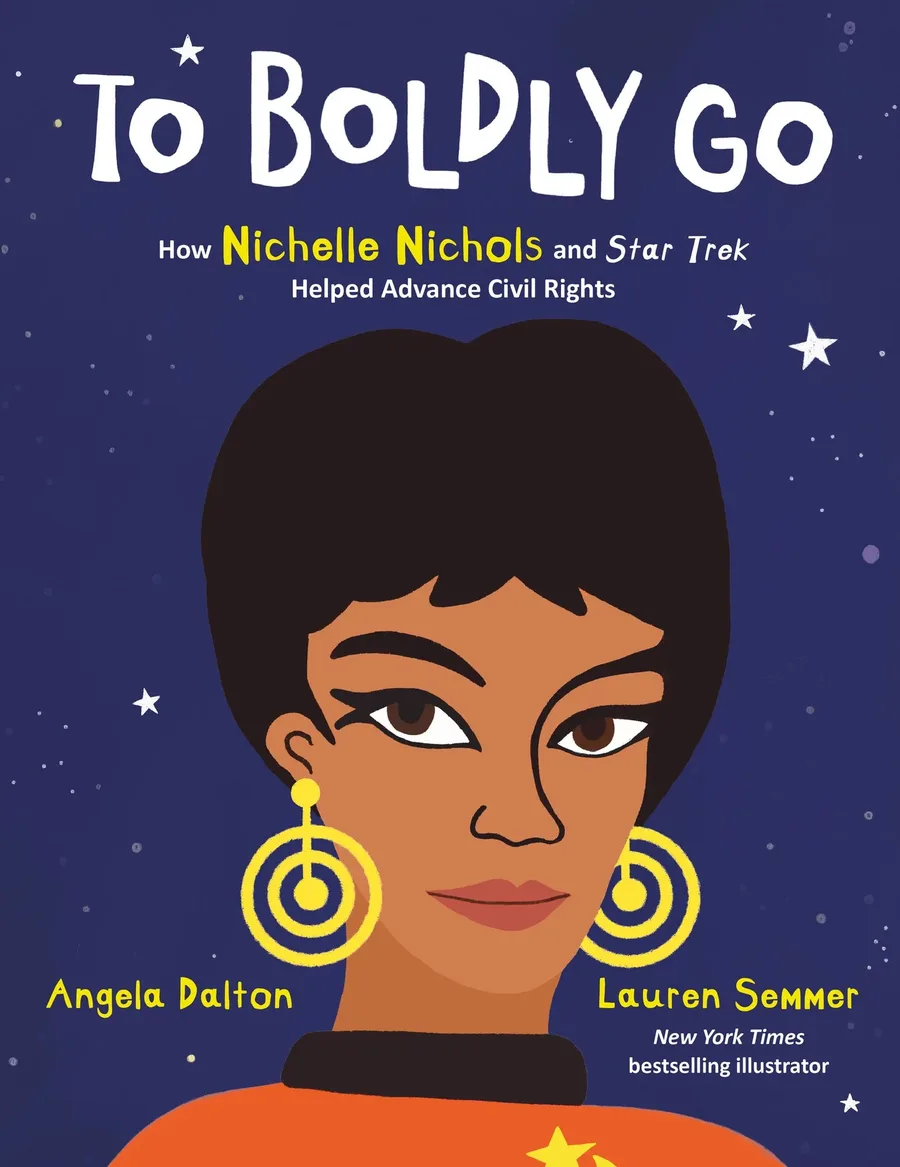 To Boldly Go: How Nichelle Nichols and Star Trek Helped Advance Civil RightsAngela DaltonA Black girl and her parents settle in to watch an episode of the original Star Trek television show, featuring Captain James T. Kirk exploring the galaxy with his crew. The family “watched to see Lieutenant Uhura perform her duties as the starship’s communication officer. … we burst with pride seeing someone who looked like us standing as an equal to make the future better for everyone.” Actress Nichelle Nichols helped develop the character of Uhura with the show’s creator, Gene Roddenberry, in the mid-1960s, during a period of intense civil rights activism for racial justice. This short biography recounts Nichelle’s life from childhood on, and how the impact of racism intersected with her ambitions as a dancer, performer, and actor. When Uhura’s character began to receive less screen time, Nichelle decided to quit the show until Star Trek fan Dr. Martin Luther King, Jr., urged her to stay, stressing the importance of her role for all viewers, so Black people can be seen by the world “as equals, as intelligent people.” Although Lieutenant Uhura’s role was never developed to the extent Nichelle wanted, “she never forgot what her presence meant to the lives of the people who looked like her.” A concluding note describes Nichelle Nichols’s activism for women and people of color that continued long after the series closed in 1969.Historical People, Places, and EventsView book details
 The Mona Lisa Vanishes: A Legendary Painter, a Shocking Heist, and the Birth of a Global CelebrityNicholas DayTwo related stories from history alternate in this lively account centered on the painting Mona Lisa. The primary narrative documents the 1911 theft of the Mona Lisa from the Louvre and the subsequent investigation, which failed to find the culprits or the work of art. It was this theft and the media and public response that transformed the Mona Lisa into what is now a ubiquitous element of our cultural consciousness. Interstitial chapters focus on Leonardo Da Vinci, highlighting his brilliant and curious mind, his talent as an artist, his many interests, and how unlikely it was that he came to paint a portrait of a woman named Lisa Gherardini in the early 16th century. The author’s style is friendly, funny, and forthright, directly acknowledging readers and offering occasional but matter- of-fact call-outs of sexism and racism when relevant to the story (such as the very limited options for Lisa Gherardini as a woman in 16th-century Florence), and also revealing how quickly rumors and false narratives become accepted as fact—a truth from history that’s also highly relevant today. Occasional illustrations are likely to appeal to skilled younger 19 Historical People, Place, and Events CCBC Choices 2024 readers who may be engaged by the narrative but intimidated by its length in a book that also has rich potential for classroom use.Historical People, Places, and EventsView book details
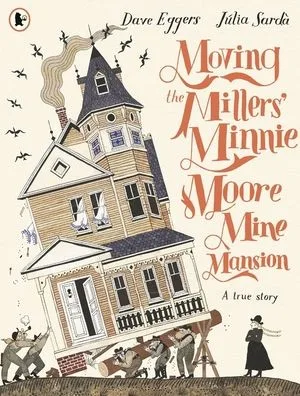 Moving the Millers’ Minnie Moore Mine Mansion: A True StoryDave Eggers, illustrated by Júlia Sardà“Like all the best stories, this takes place in Idaho.” Deadpan humor sets the tone for this droll recounting of historical events that culminated in a four-mile, month-long house relocation. A silver mine discovered in the 1870s by John “Minnie” Moore, later purchased by Brit Henry Miller, became the site of a three-story luxury home built for Miller’s bride, Annie. After Henry’s death, Annie “was tricked by a crooked banker,” lost her money, and began to raise pigs for income until confronted by a city prohibition against livestock. Unwilling to leave her home or abandon her pigs, Annie and her son Douglas elected to move the house outside the city limits, a complicated process that involved shifting the structure onto huge logs and hitching it to a team of horses. After rolling the house six feet forward on the logs, workers would stop, move the logs at the back to the front, and begin again. Reportedly, Annie and Douglas lived in the house during the move, along with their cook. “The pigs, we assume, followed along behind.” Earth-toned, whimsical, Gorey-esque illustrations are a pitch-perfect accompaniment to the story.Historical People, Places, and EventsView book details
 Race Against Death: The Greatest POW Rescue of World War IIDeborah HopkinsonThis compelling and compassionate story delineates the plight of American and Filipino soldiers and medical personnel through the Bataan Death March and prison camp experiences in the Philippines. Primarily told through first-person accounts, beginning with the attack on Pearl Harbor and ending with the rescue mission in January 1945, each chapter tracks the events chronologically, often returning to the same voices. Archival photos, maps, and drawings made by soldiers and inmates are scattered throughout. The fast-paced narrative does not shy away from horrors experienced under the Japanese occupation of the island. The successful rescue operation outlines the critical role of Filipino resistance/guerilla efforts and assistance of local farmers. In rich detail, Hopkinson illuminates an important, and oft-forgotten, episode in the Pacific theater of World War II.Historical People, Places, and EventsView book details
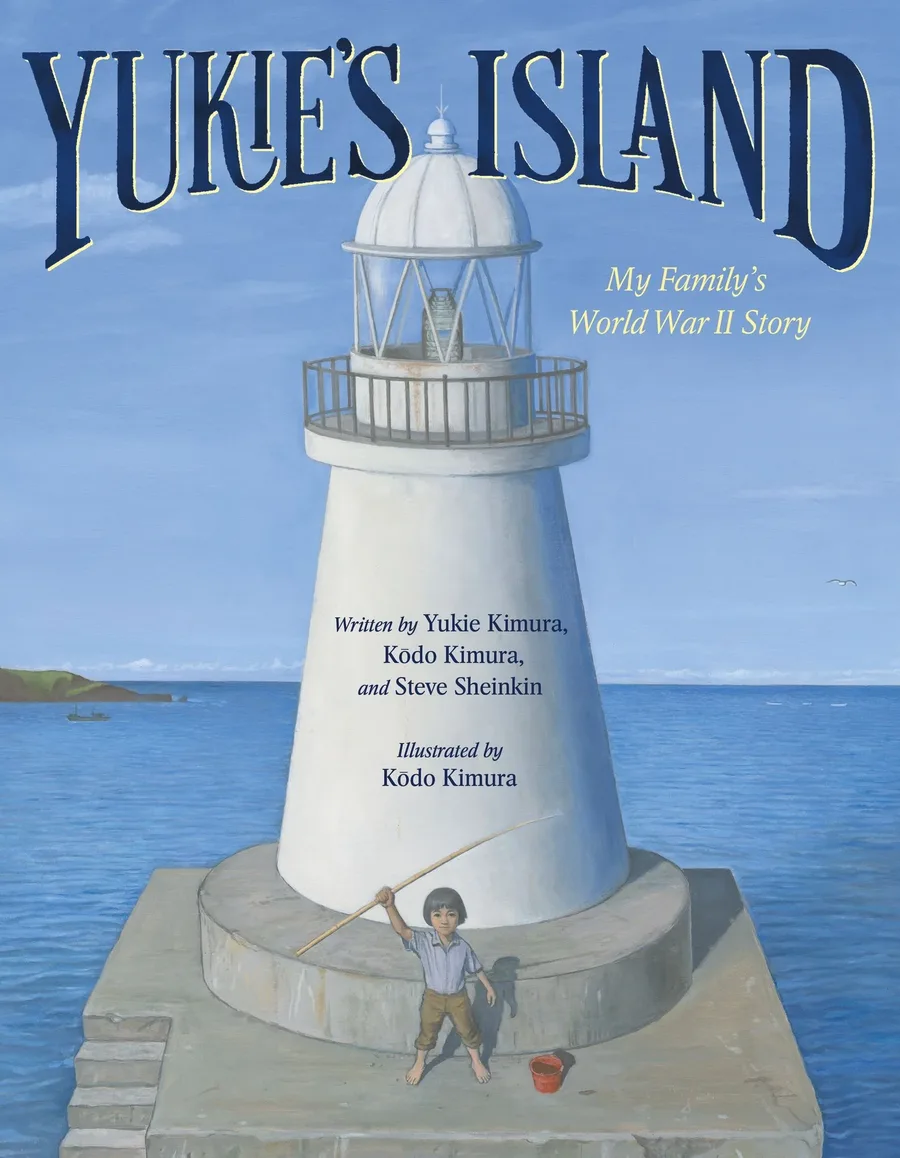 Yukie’s Island: My Family’s World War II StoryYukie Kimura, K–odo Kimura, Steve SheinkinWhen Yukie Kimura was six years old in 1943, her family moved to the island of Bentenjima off the coast of Japan, where her father worked as lighthouse keeper. The opening pages of Yukie’s story capture the easy innocence of the next two years, playing with her brother and sister on the island. Life changed when the war came closer to their home; they cowered in a bomb shelter while the American bombs explode nearby. “The war ended soon after that. But not everyone came back to school.” Empty seats in the classroom are mute reminders of students who didn’t survive. Later Yukie spots ice floes coming into shore. Despite their parents’ obvious concern, the siblings jump from one to the next with joyful abandon. A spare text captures Yukie’s memories of this time, which are striking for conveying both her pleasure in the freedom of childhood play and the impact of war. Oil paint illustrations in solemn hues give a strong sense of place while skillfully expressing emotion. Lengthy endnotes expand on details about Yukie’s early life and the connections that led to the creation of this picture book based on her memories, 77 years after these events took place.Historical People, Places, and EventsView book details
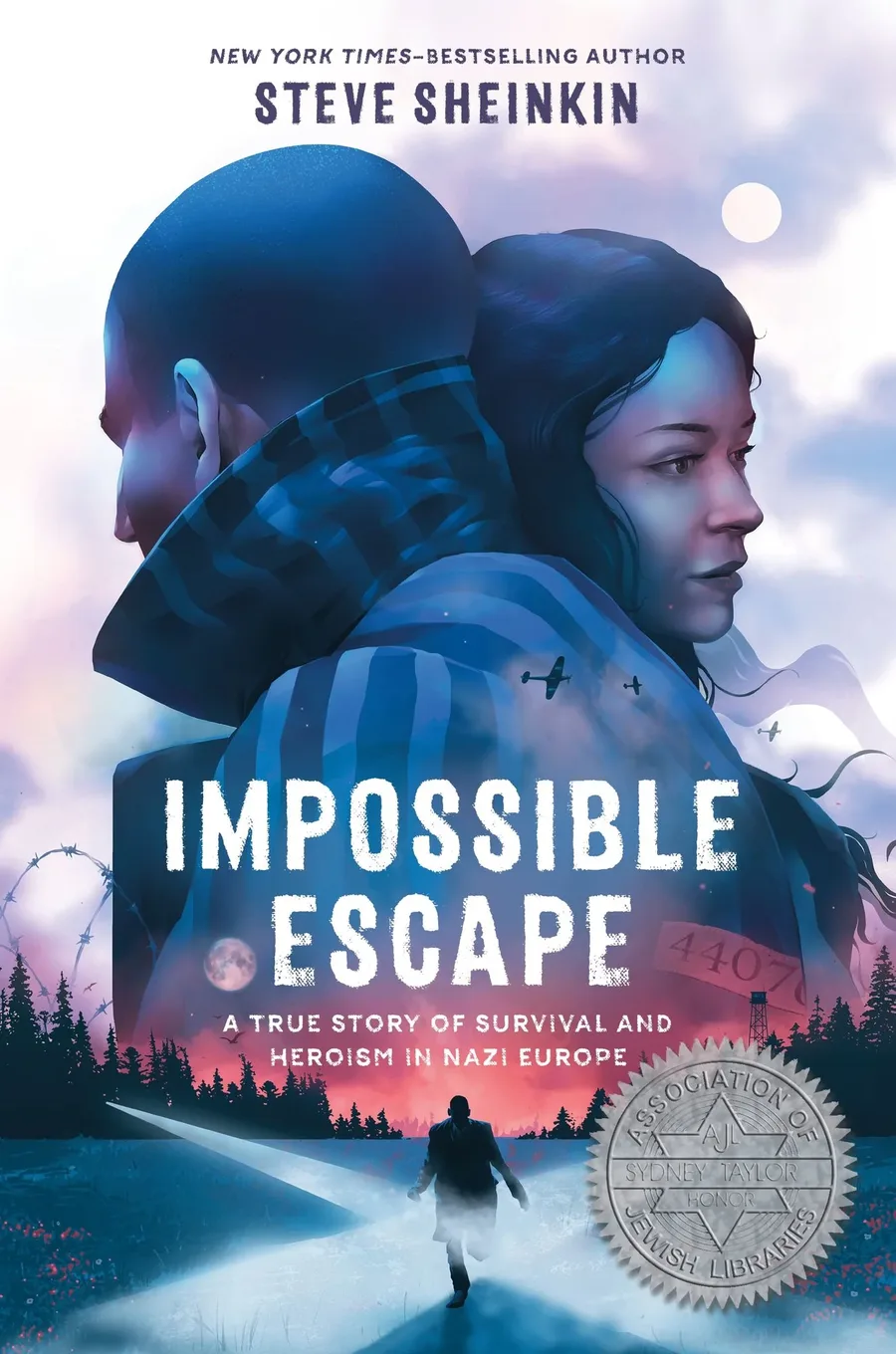 Impossible Escape: A True Story of Survival and Heroism in Nazi EuropeSteve SheinkinRudi Vrba, a Slovakian Jew, was 17 in 1942 when he left home determined to make it to Great Britain to fight the Nazis. He ended up in Auschwitz. Gerta Sidonová, a friend of Rudi’s from their hometown, was able to escape Slovakia to Hungary, where Jews were still living with few restrictions in the early 1940s. In a riveting account that alternates between their two stories, Rudi embarks on a mission to escape, determined to get word out that the Germans are systemically killing the majority of Jewish people coming into Auschwitz and Birkenau; his quest becomes even more urgent when he realizes the Nazis are increasing their killing capacity. This coincides with growing pressure on the Hungarian government to round up Jews and transport them to the camps, as well as Gerta’s capture by the Gestapo while working for the resistance. The meticulous plan for Rudi’s escape with friend Alfred Wetzler unfolds in fascinating and sometimes brutal detail. They succeeded against remarkable odds, providing the first inside account of the mass murders of the Jews. What became known as the Vrba-Wetzler Report reached Switzerland in June of 1944, after which articles about what was happening inside Auschwitz and Birkenau began appearing in newspapers around the world. Fascinating on its own, this work also provides numerous jumping-off points for further digging into history, such as looking up stories from 1944 based on Rudi and Fred’s testimony.Historical People, Places, and EventsView book details
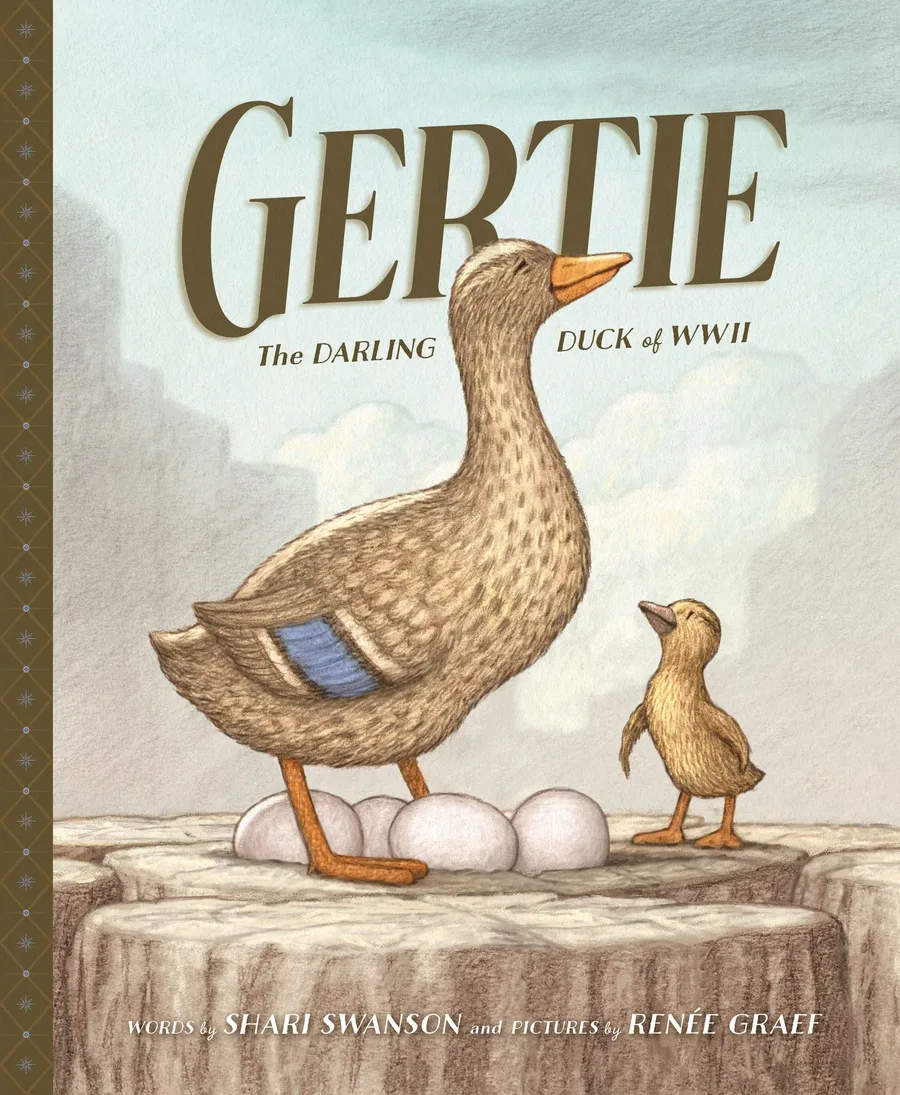 Gertie: The Darling Duck of WWIIShari SwansonIn April 1945, a duck laid eggs on a high piling in the Milwaukee River, near a drawbridge in the heart of the city’s downtown. Named Gertie by a local reporter for the Milwaukee Journal, her unusual choice of a nesting location captivated the city as her story spread. Crowds regularly gathered on the bridge above to watch her. Would the eggs hatch? Would her ducklings be safe so high above the river? The bridge tenders were determined to protect Gertie’s future ducklings, and it was a good thing they were: When a storm bore down on the small family after most of the eggs had hatched, the men rowed repeatedly into the choppy river to save the ducklings that fell in. Gertie and her babies were reunited and moved to the window of Gimbel’s department store for three days before being released in a local park lagoon. This winsome story features illustrations capturing the historical setting and the charm of Gertie and her family, while the moments of drama, and the scope and scale of interest in Gertie—around Milwaukee and far beyond—at a time when “the world was weary of war” also make for a fascinating tale. An excellent “More to the Story” essay, including photographs, tells more about Gertie’s fame and global reach.Historical People, Places, and EventsView book details
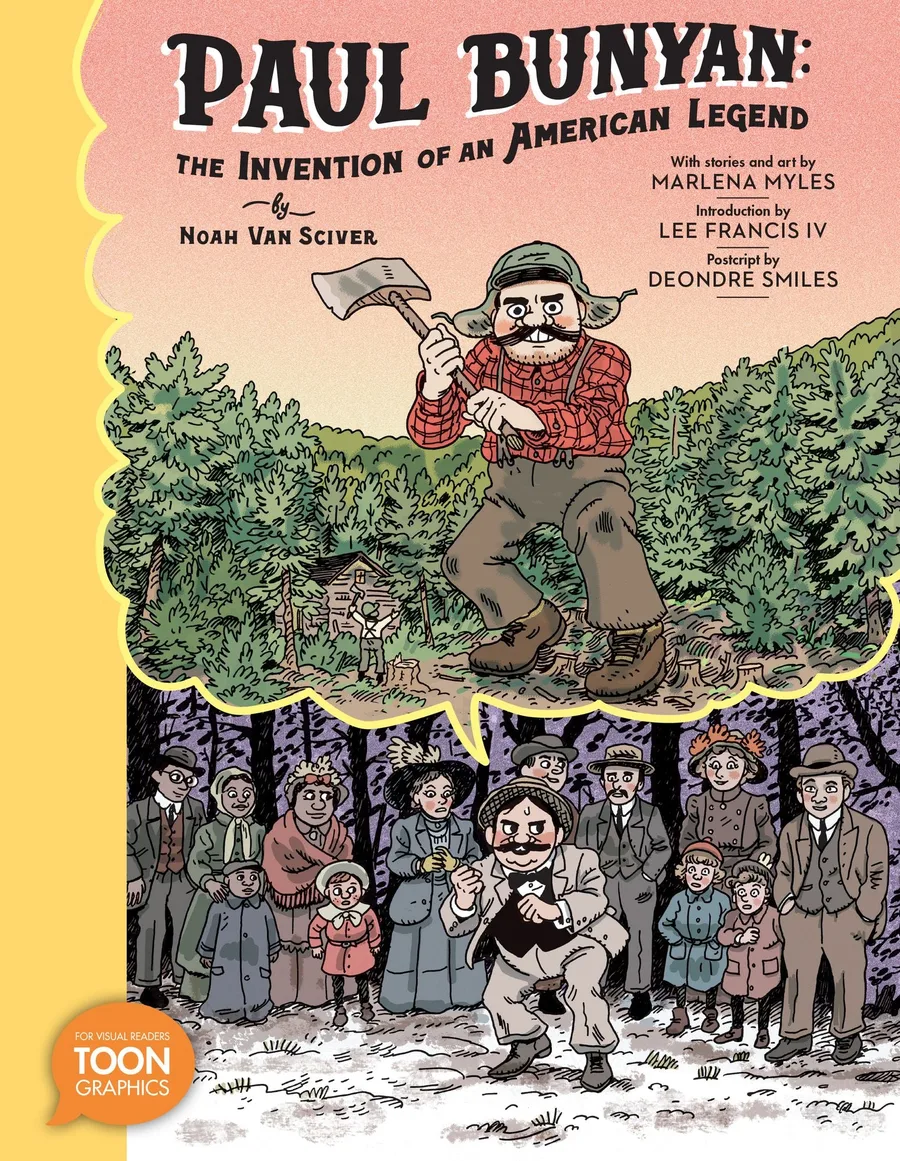 Paul Bunyan: The Invention of an American LegendNoah Van Sciver, illustrated by Noah Van SciverA graphic novel offering a fresh perspective on the origins of the legend of Paul Bunyan begins with a compelling, insightful introduction by Lee Francis IV, a Laguna Pueblo artist, educator, and comic book creator. Francis discusses what is missing from traditional stories of the American tall tale hero: the history of North American indigenous peoples and land irreparably harmed by the timber industry. The 30-page fictional story, told through visual panels in a traditional comic book style, is set on a 1914 winter train ride in Minnesota. When the train is delayed by an accident, the passengers step out into the snowy woods to stretch and build a bonfire. The ambiance and audience perfectly align for a talkative advertising manager to tell the tale of Paul Bunyan, the greatest lumberjack of all time. His account ties to the true story of William Laughead, who invented the character of Paul Bunyan as part of a campaign to promote the timber industry. Following the comic story is 21 Historical People, Place, and Events CCBC Choices 2024 an informative essay, “The Invention of an American Legend,” by Dr. Deondre Smiles of the Leech Lake Band of Ojibwe, and a visual history with text and art by Marlena Myles, Spirit Lake Dakota. Both pieces enrich the exploration of colonialism that anchors this intriguing volume. Historical images and maps are included in the end matter.Historical People, Places, and EventsView book details
 How Do You Spell Unfair? MacNolia Cox and the National Spelling BeeCarole Boston WeatherfordA foreword describes how Marie Bolden became the first Black finalist in a national spelling bee in 1908; the next was MacNolia Cox, in 1936. Eighth grader MacNolia first won her school spelling bee in Akron, Ohio, and then advanced to win the city’s spelling bee. After that, she was off to Washington, D.C., for the National Spelling Bee, but not before being celebrated all over Akron. “A crowd of thousands” and a military band sent her off at the train station. As the train crossed into Maryland, she was forced to move from an integrated train car to a segregated one. And in D.C., she stayed with a local Black doctor, because she wasn’t allowed at the contestants’ whites-only hotel. She and her mother had to take the stairs—not the elevator—to the spelling bee banquet, and during the competition, MacNolia and the only other Black contestant, Elizabeth Kenney, had to sit at a table apart from the white participants. MacNolia made it to the top five before she misspelled “nemesis”—a word that wasn’t on the official list, triggering a protest dismissed by the judges. MacNolia was out of the contest but not before making history, despite the unfair treatment she received.Historical People, Places, and EventsView book details
 More Than a Dream: The Radical March on Washington for Jobs and FreedomYohuru Williams, Michael G. LongThis fresh, insightful account of the 1963 March on Washington for Jobs and Freedom documents the event from initial idea through behind-the-scenes planning to the tensions and triumphs of the day. One critical early question was whether Bayard Rustin would play a key organizing role; there was hesitancy among some Civil Rights leaders because Rustin was gay, but A. Philip Randolph knew Rustin brought essential skills. Sexism among the organizers meant that the insistence of the one woman among them, Anna Arnold Hedgeman, on including women speakers—many women played critical organizing roles in the Movement—went largely unheard. John Lewis’s planned speech criticizing the shortcomings of Civil Rights Act legislation before Congress angered some, and whether Lewis would take the stage was being negotiated almost up to the moment he stepped up to the podium. There was also tension with the Kennedy administration over the March, and myriad logistical questions to answer. And then there was the biggest question of all: Would people come? Throughout, there are also memorable and gratifying stories of women and men who served in less visible roles behind the scenes. End matter of this terrific contribution to literature for youth about the Civil Rights Movement includes additional facts, questions to consider, notes, an index, and more.Historical People, Places, and EventsView book details
Biography, Autobiography, and Memoir
9 selections
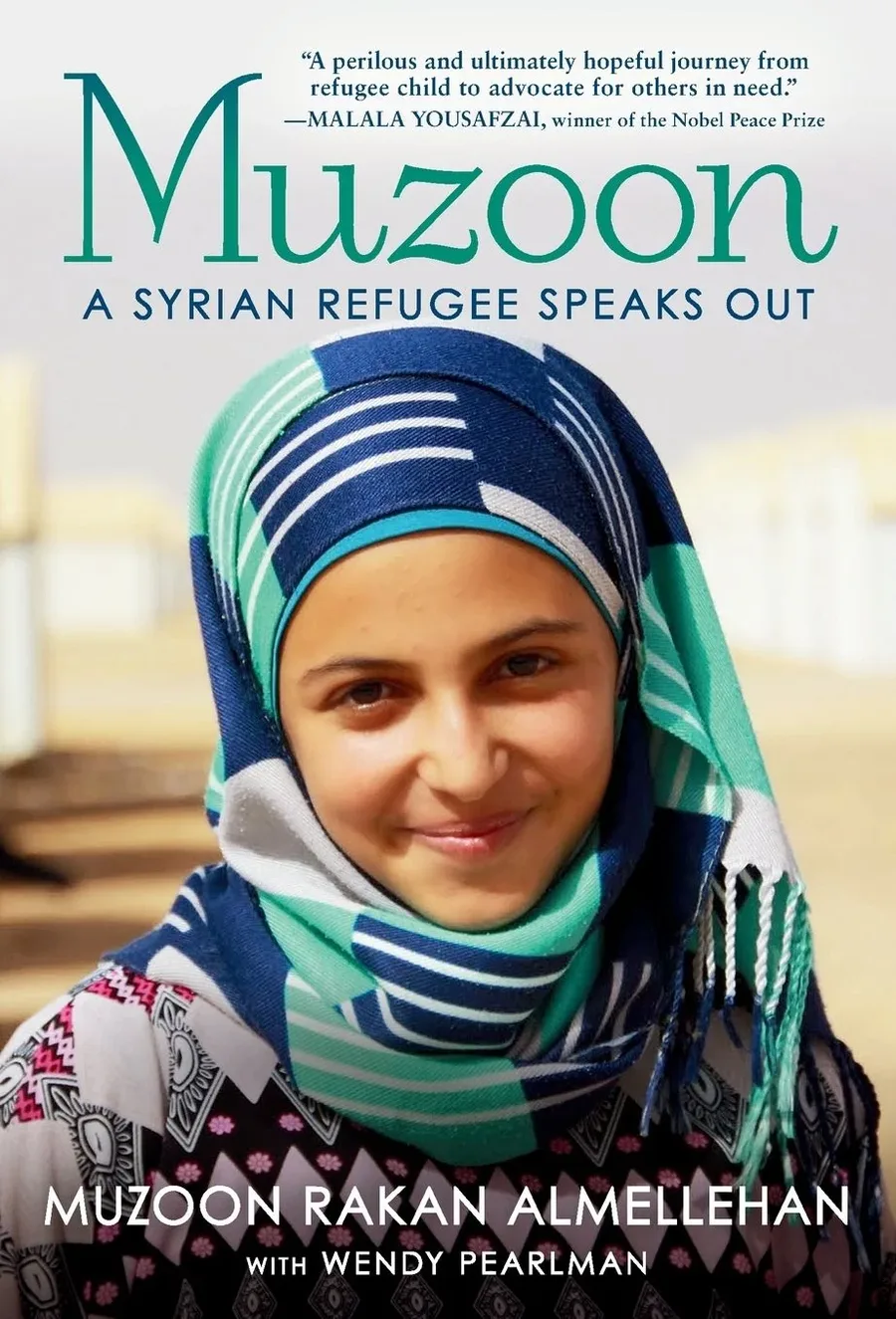 Muzoon: A Syrian Refugee Speaks OutMuzoon Almellehan with Wendy PearlmanMuzoon Almellehan’s refugee experience offers a glimpse into the hardships faced by so many Syrians. Her account begins in 2010, in the midst of a pleasant childhood in the small town of Izraa, where Muzoon, who is Muslim, loves to play soccer in the street with her siblings and cousins. Too young to question the way things are, Muzoon knows only that “the walls [have] a lot of eyes” and that she should ask questions about the government only at home, where she won’t be overheard. As the Arab Spring begins, Muzoon develops an intense interest in current events, especially as Syria attempts to oust its regime, leading to rising violence across the country. Two years into the war, her family flees to a refugee camp in Jordan, where the tasks of daily life are made arduous by overcrowding and lack of resources. Muzoon takes refuge in her schoolwork and finds purpose in speaking with other young refugees about returning to school. Her passion earns her a role as a UNICEF spokesperson in the camp advocating for education. Confident and assertive, Muzoon’s advocacy and persistence eventually leads to a placement in Great Britain for herself and her family, where she goes on to earn her college degree. This is an accessible, compelling memoir by an indefatigable young woman.Biography, Autobiography, and MemoirView book details
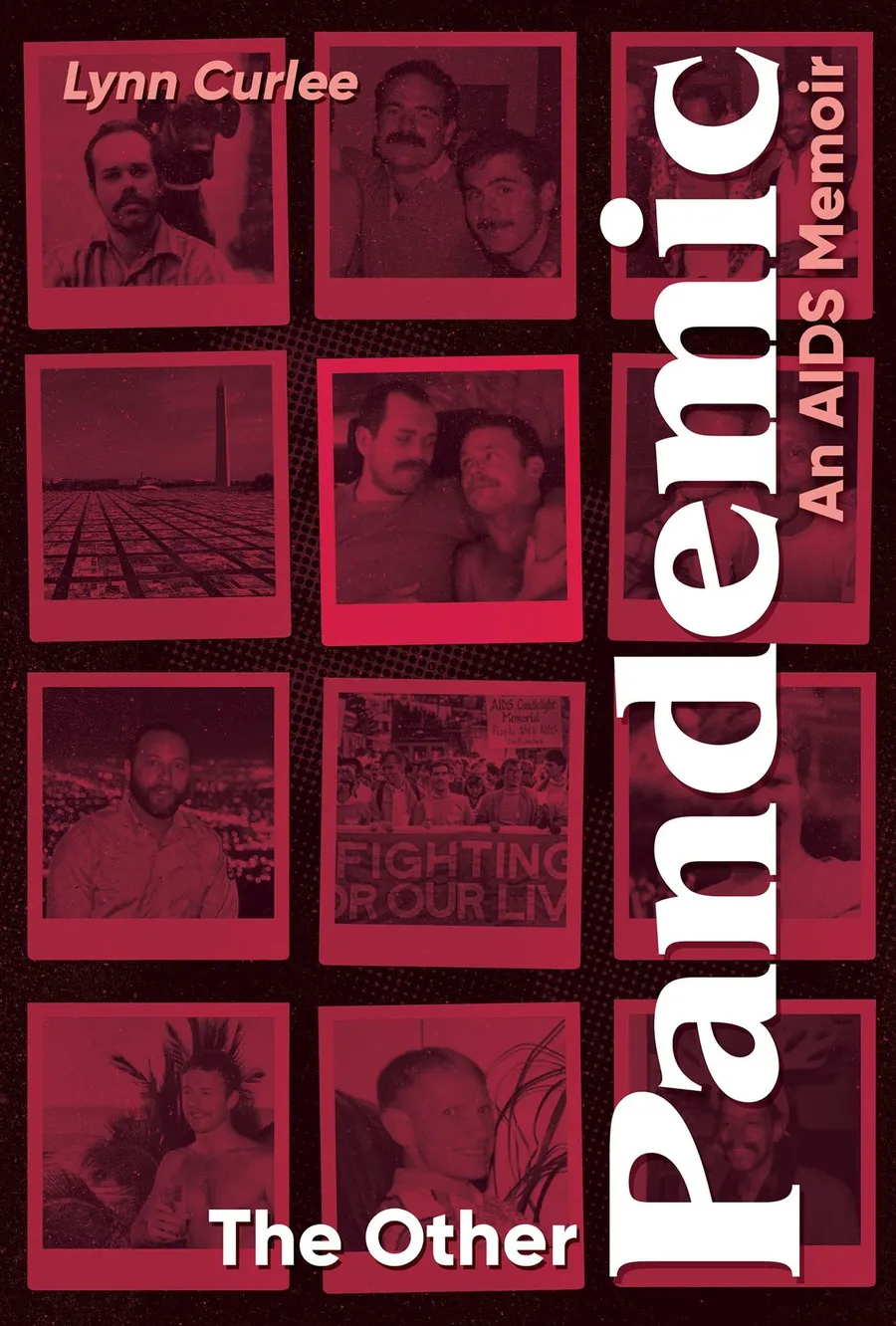 The Other Pandemic: An AIDS MemoirLynn CurleeA prologue describing a tragic loss for a contemporary teen during the early days of COVID offers an arresting entry into a memoir that pulls AIDS out of history and into the present. Lynn Curlee begins by briefly recounting his childhood and young adulthood. After college, in the early 1970s, he moved to New York City. It was a thrilling time to be a young gay man there and embarking on a career as an artist. He made friends, found community, fell in love, and saw professional success. He goes on to document the growing alarm within the gay community around the mysterious disease that we now know as HIV/AIDS, followed by loss after loss of people he knew and those in his wider community: friends, friends of friends, former lovers, and others. Through Curlee’s eyes the sense of unease, fear, and grief comes through vividly, as does the anger within the larger gay and LGBTQ community at public attitudes and ignorance, and government inaction. His account provides a compelling personal look at the impact of AIDS at a time when AIDS may feel like ancient history for many contemporary teens.Biography, Autobiography, and MemoirView book details
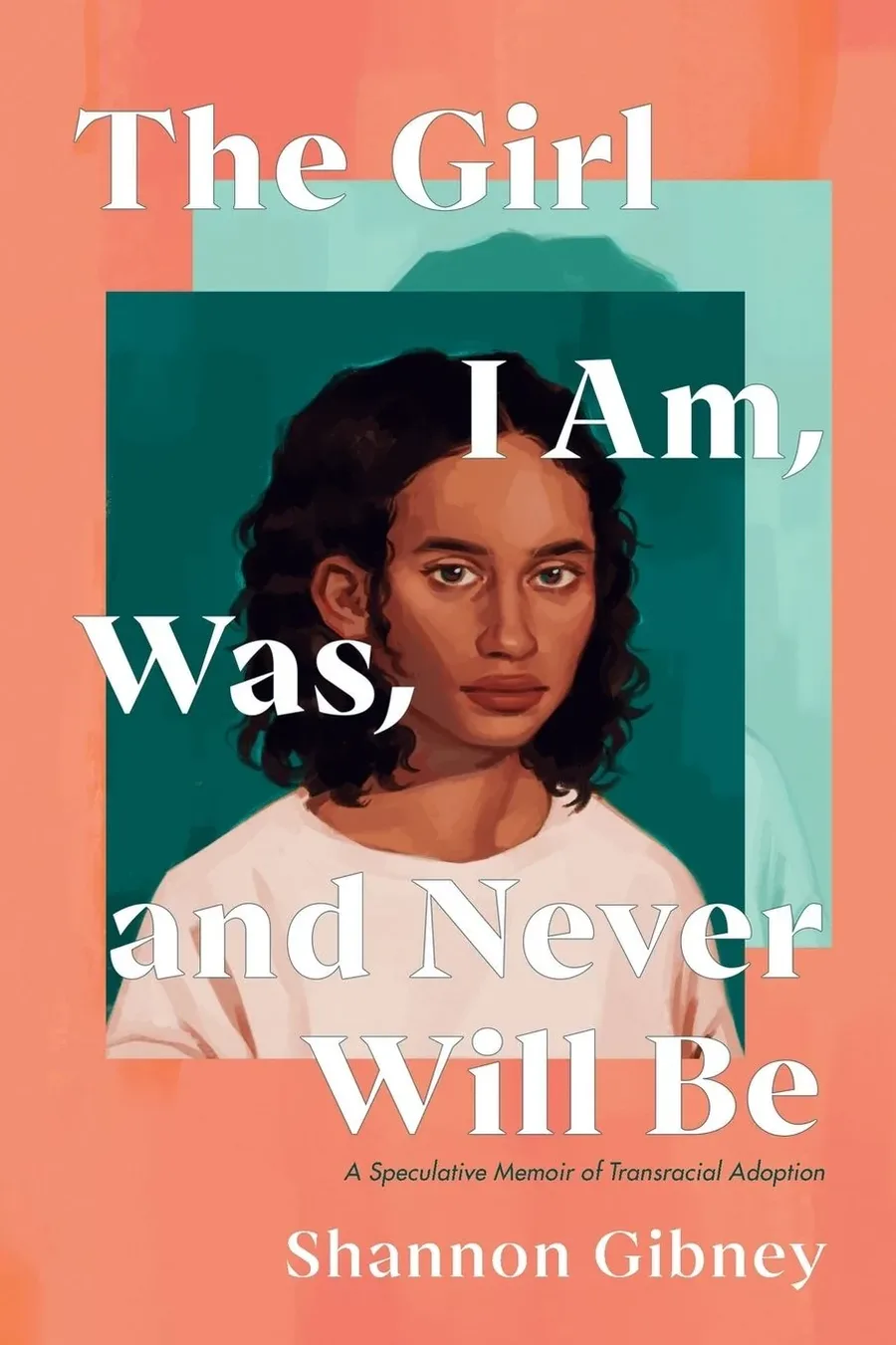 The Girl I Am, Was, and Never Will Be: A Speculative Memoir of Transracial AdoptionShannon GibneyIn an experimental work blending memoir and science fiction, transracial adoptee Shannon Gibney recalls experiences from her childhood, adolescence, and adulthood and imagines what her life might have been like had she not been placed for adoption. Named Erin by her birth mother, Gibney was adopted by a white couple in Ann Arbor, Michigan, who name her Shannon. When she is old enough, Shannon seeks information about her white birth mother, with whom she develops a difficult relationship, and her Black birth father, who died when she was a young girl. As Gibney reveals memories of growing up the only Black child in a financially comfortable white family, a different, parallel timeline imagines Erin living with a casually racist mother who struggles with alcoholism. At times, a wormhole between the two allows Shannon and Erin to catch glimpses of each other. Sometimes, Shannon travels outside of these timelines, to a past where she meets her biological father. 23 Biography, Autobiography, and Memoir CCBC Choices 2024 The narrative follows Shannon into adulthood and motherhood and through her treatment for breast cancer; her biological mother had warned her of her genetic predisposition. Integrating letters, adoption and medical records, family trees, and other documents, the threads of this work coalesce into a highly original exploration of family and identity.Biography, Autobiography, and MemoirView book details
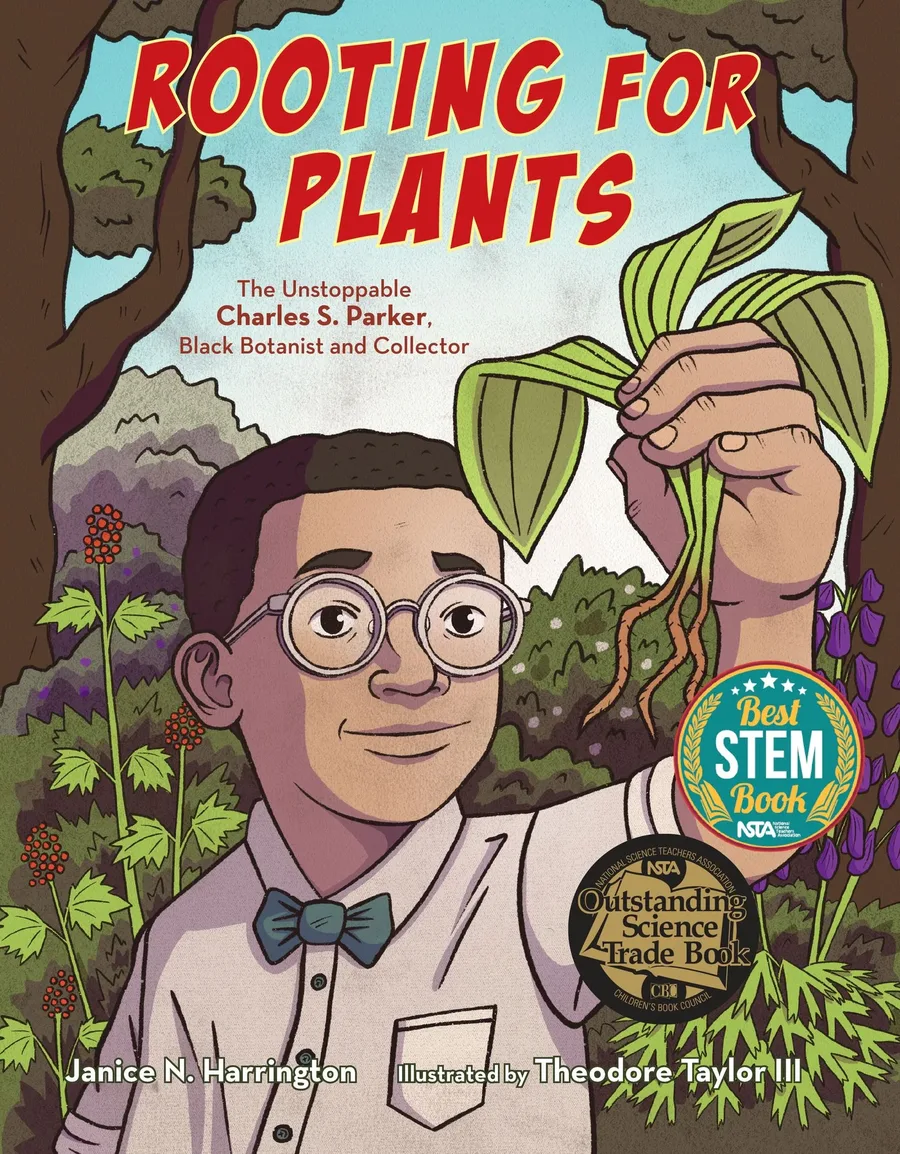 Rooting for Plants: The Unstoppable Charles S. Parker, Black Botanist and CollectorJanice N. HarringtonCharles Parker loved nature as a child. As a young man, he served overseas during World War I and returned home to the Pacific Northwest deeply moved by both the loss of human life and the destruction of forests and plants he’d witnessed in the war. He went to school to study botany and began cataloging numerous plants of the Pacific Northwest. He also developed a method to preserve plants. Parker was hired by Howard University, where he loved teaching—and was a beloved teacher—and encouraging young Black people to become scientists. He also continued his fieldwork, exploring and chronicling plants region by region in the United States, always asking questions, and encouraging his students to do the same. The back matter of this picture book biography includes a biographical essay, a timeline, and brief profiles of other Black scientists.Biography, Autobiography, and MemoirView book details
 The Fire of Stars: The Life and Brilliance of the Woman Who Discovered What Stars Are Made OfKirsten W. LarsonCecilia Payne was born in England in 1900. A curious and science-minded child, she yearned to understand how the world worked. As a young woman, she faced barriers to her education but eventually received a degree from Cambridge. Limited by the scientific opportunities available to her in England, Cecilia moved to the United States to study astronomy at Harvard. At age 25, as part of her Ph.D. research, Cecilia made a momentous discovery when she proved, for the first time in human history, what stars are made of. Pencil and ink illustrations with added digital color in sepia tones portray Cecilia’s life and times, with bursts of yellow signifying her successes. Secondary illustrations shown behind Cecilia’s story are rendered on a dark, celestial backdrop. Abstract swirls and bold brush strokes, combined with brief italicized text, inform readers the process by which stars are formed. End matter includes additional notes on Cecilia Payne’s accomplishments, a timeline of her life, and a technical overview of star formation.Biography, Autobiography, and MemoirView book details
 Mexikid: A Graphic MemoirPedro MartínPedro Martín’s exuberant graphic memoir about growing up the seventh of nine kids in a Mexican American family in the 1970s is full of teasing and love, poignancy and laugh-out- loud humor. His account details the summer his family traveled to his parents’ hometown of Pegueros, 2,000 miles away from their California home, to bring Abuelito back to live with them. Pedro’s perspective on Mexican life and culture is filtered through dual lenses of cultural outsider and family insider: He is one among the four youngest siblings born in the United States, while his older sibling were born in—and have memories of—Mexico, a fact they happily exploit with the younger kids. These and other family dynamics are marvelously drawn with singular characterizations and a collective dynamic of warmth and good humor. Pedro, a lover of TV, drawing, and superheroes, doesn’t know Abuelito, but the stories he hears about him as younger man during and after the Mexican Revolution become superhero exploits in his imagination and sketchbook—his grandfather as a courageous force of good fighting soldiers and bandits alike. That sketchbook becomes 24 Biography, Autobiography, and Memoir CCBC Choices 2024 a means of connection between the two on the long journey home. Funny and tender and aching by turn—and sometimes all at once—this is a work of generous spirit and marvelous honesty that will leave readers longing to spend more time with Pedro and his family.Biography, Autobiography, and MemoirLexile Text Measure HL530LATOS Book Level 3.5View book details
 Virginia Wouldn’t Slow Down! The Unstoppable Dr. Apgar and Her Life-Saving InventionCarrie A. Pearson“Did you know that you took your first test just one minute after you were born?” This spirited portrait of Dr. Virginia Apgar, inventor of the APGAR scale for newborns, paints her as smart, energetic, and irrepressible. Growing up, Ginny ignored both expectations and limitations placed on girls and women and did the things that made her happy. During the Great Depression, she gave up her dream of becoming a surgeon to study anesthesiology, which had a greater rate of employment, becoming the second female board-certified anesthesiologist in the United States. It was through this work, attending many baby deliveries to monitor the mother’s health, that Ginny realized the need to assess the condition of newborns. Her five-point scale, created in 1949 and later officially named APGAR, had become standard practice through the United States and beyond by the early 1960s. This buoyant picture book biography focusing on the high points in Ginny’s life and career includes a biographical essay, timeline, and sources at volume’s end.Biography, Autobiography, and MemoirView book details
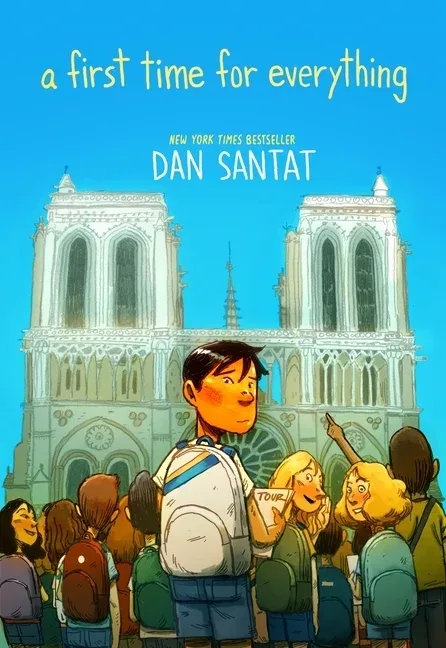 A First Time for EverythingDan SantatAfter several painful experiences with middle school bullies, Thai American Dan just wants to fly under the radar, to be quiet and unnoticed by his peers. A three-week summer tour of Europe with a small group of students (some Dan’s classmates, some strangers) does not appeal, but his parents are determined to broaden their son’s horizons beyond their Los Angeles suburb before he begins high school. As the group travels by bus across France, Switzerland, Germany, Austria, and England, Dan befriends not only the kids in his group but others as well, including the French teenagers at his Austrian homestay and their adult host, Helga, who speaks German but bonds with Dan over their shared love of professional tennis. For Dan, the trip offers new sights, adventures, foods, cultures, independence, and even a first kiss; he has a whirlwind romance with fellow traveler Amy, which culminates in his first heartbreak upon their return to the United States (Amy lives in St. Louis). Along the way, Dan is gently encouraged by his teacher to step out of his comfort zone and “live a little.” With burgeoning self-confidence and a new thirst for adventure, Dan returns to L.A. more prepared to tackle whatever high school might bring. An author’s note and photos from the actual trip conclude this heartfelt and relatable graphic memoir.Biography, Autobiography, and MemoirWord Count 13232View book details
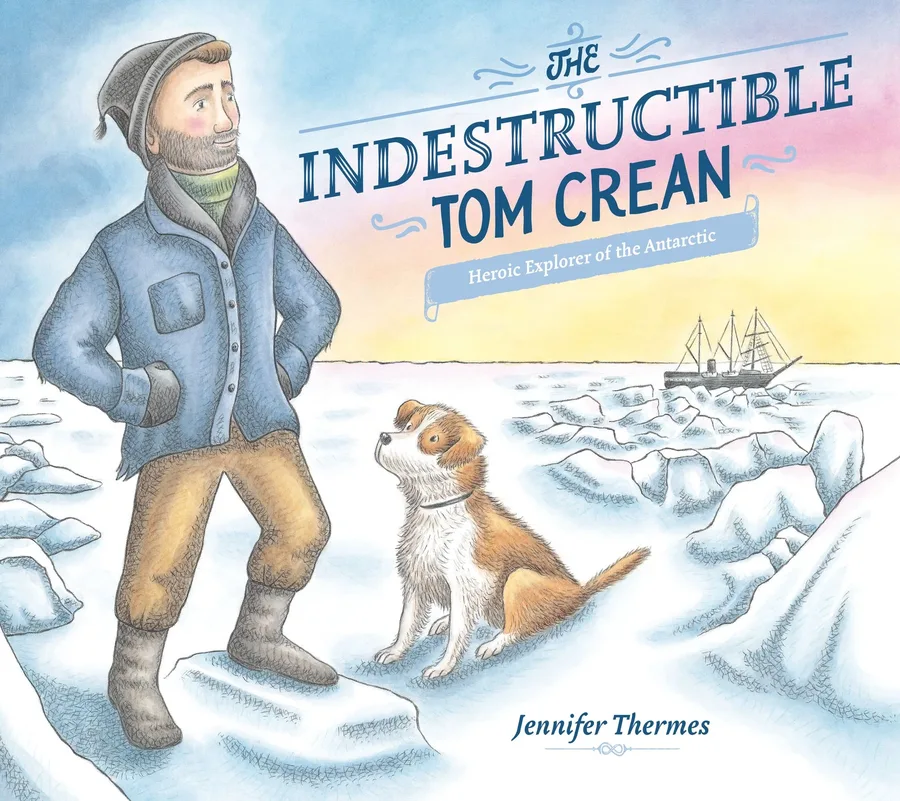 The Indestructible Tom Crean: Heroic Explorer of the AntarcticJennifer ThermesTen years after joining the British Royal Navy at 16, Tom Crean filled a last-minute spot as a sailor on the Discovery, bound for Antarctica in 1901; the ship and crew spent two years trapped in ice before finally returning home. Tom returned to Antarctica on the Terra Nova expedition with Captain Scott in 1910; he was one of the crew chosen to make the 10-week land trek toward the pole but was later sent back to base camp with two others, one of them injured. Tom eventually walked 35 miles alone to reach help. In 1914 Tom again sailed to Antarctica, this time with Captain Shackleton on the Endurance. After the crew abandoned the ship as it was slowly crushed by ice, Tom and four others voyaged in a small boat through violent seas before hiking across a glacial range to reach help at a whaling station on South Georgia Island. Tom remained humble about his achievements; in fact, 25 Biography, Autobiography, and Memoir CCBC Choices 2024 he didn’t talk about his Antarctic adventures after retiring to his home in Ireland. But those who sailed with him recounted his mental and physical stamina and the heroic actions that helped save the lives of his crewmates, as well his “raucous sense of humor.” Detailed watercolor and colored pencil illustrations in varied layouts and perspectives capture the drama of his experiences and the beauty of Antarctica.Biography, Autobiography, and MemoirView book details
Contemporary People, Places, and Issues
9 selections
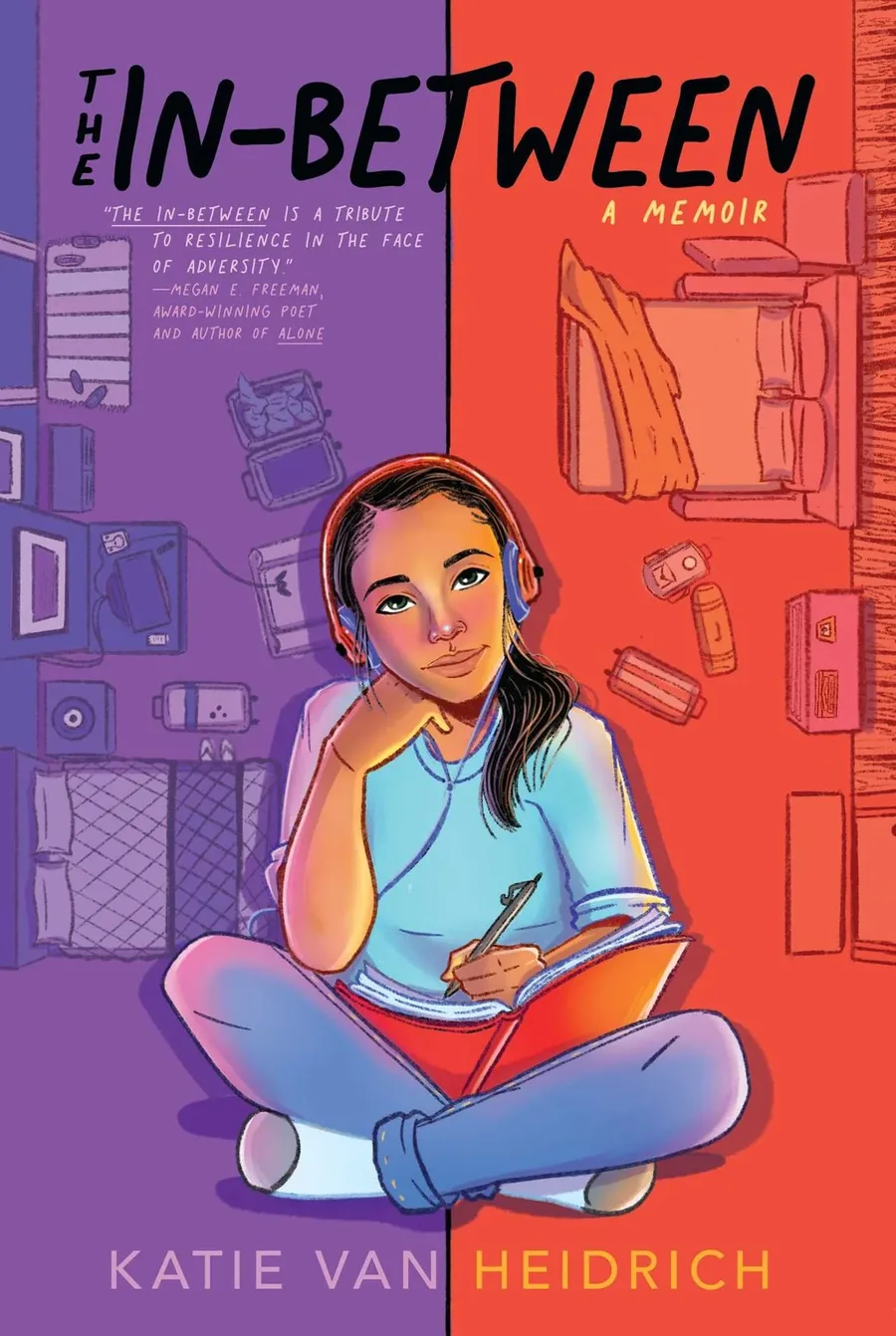 The In-BetweenKatie Van HeidrichIn this memoir in verse, the author recalls the period in her childhood when she, her two younger siblings, and their mother were evicted from their apartment. Katie’s mom (Black) is out of a job and depressed. Her dad (white) lives in a house in the suburbs with his new Thai wife, Ning. With both food and privacy in too-short supply at the extended-stay motel where they’ve landed, Katie is mad at her mom for being unable to provide and unwilling to accept help from their father; she’s mad at her father for not helping them more when he has the means. Eventually, Katie gains insight into past traumas and very real fears that have impacted both her parents, as well as Ning. But for Katie and her siblings, the fact remains that their lives have been upended, and it isn’t until they are out of the hotel and back in a new apartment that things begin to turn around. Katie’s story is hard, and eventually hopeful, and will resonate both factually and emotionally with readers for a range of reasons, from the uncertainty and fears that go with being homeless to the messiness and complexity of families to the way adult problems and struggles impact children’s lives. The author’s note shines a light on Van Heidrich’s later childhood and adulthood, including positive relationships with both parents, and her career as an educator.Contemporary People, Places, and IssuesView book details
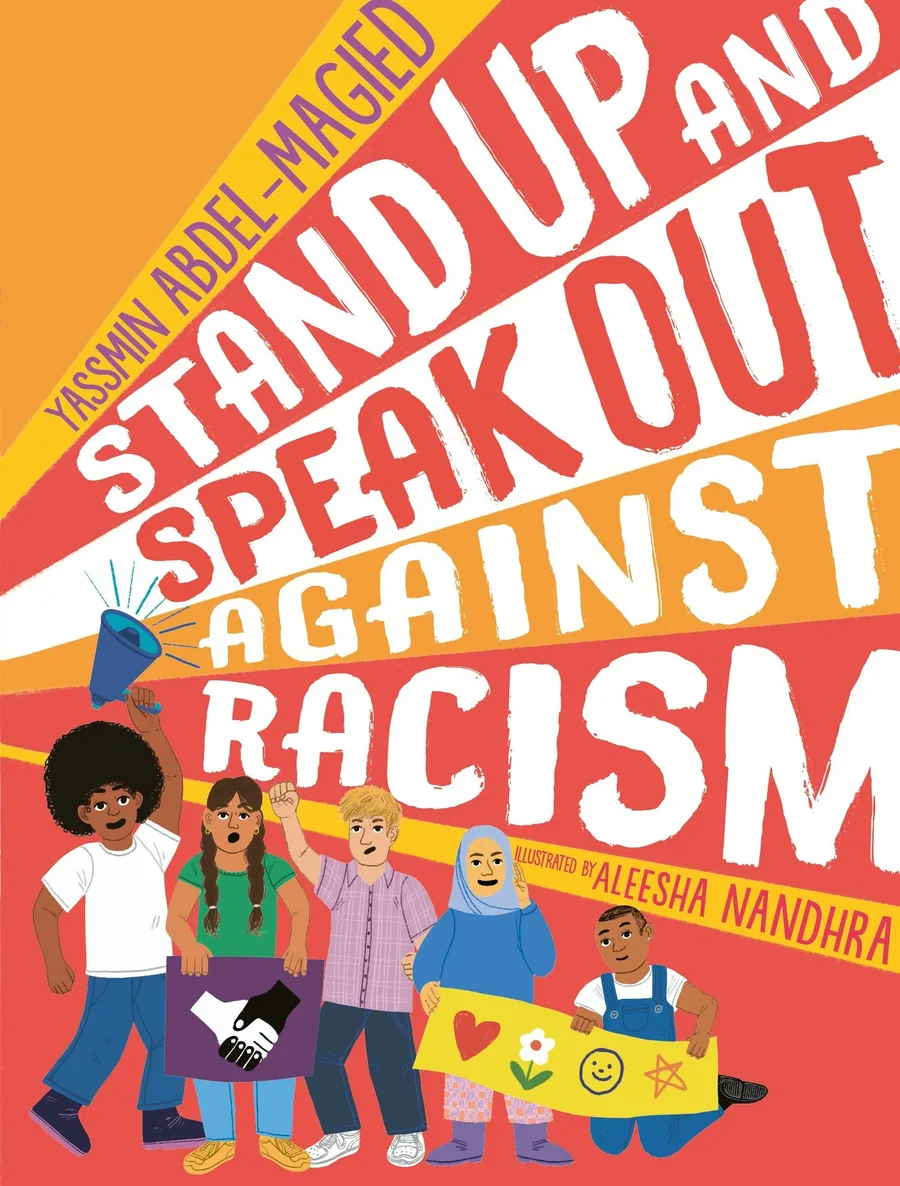 Stand Up and Speak Out Against RacismYassmin Abdel-Magied, illustrated by Aleesha NandhraA straightforward, accessible guide explores the history of racism, racism’s effects today, and ways to “stand up and speak out.” Occasionally referencing her own identities and experiences to underscore a point, Yassmin Abdel-Magied, a Muslim woman of Sudanese heritage, writes candidly and conversationally. The first two sections of the guide lay a strong historical foundation, including the invention of the concept of “race” and the ways in which it has been, and continues to be, used to exert power over others. Abdel-Magied covers key concepts: the differences between race, nationality, and ethnicity; the distinction that racism is prejudice combined with power; and discrimination toward religious groups. Particularly effective is the use of metaphor to illustrate certain concepts. If racism is a tree, for instance, certain branches (e.g., slavery) have been chopped down, but the roots (e.g., white supremacy, racist institutions) stubbornly remain. The final, and longest, section offers practical guidance to fighting internalized, interpersonal, and institutional racism. Bright digital illustrations and vibrantly colored paper add to the appeal of this engaging volume.Contemporary People, Places, and IssuesView book details
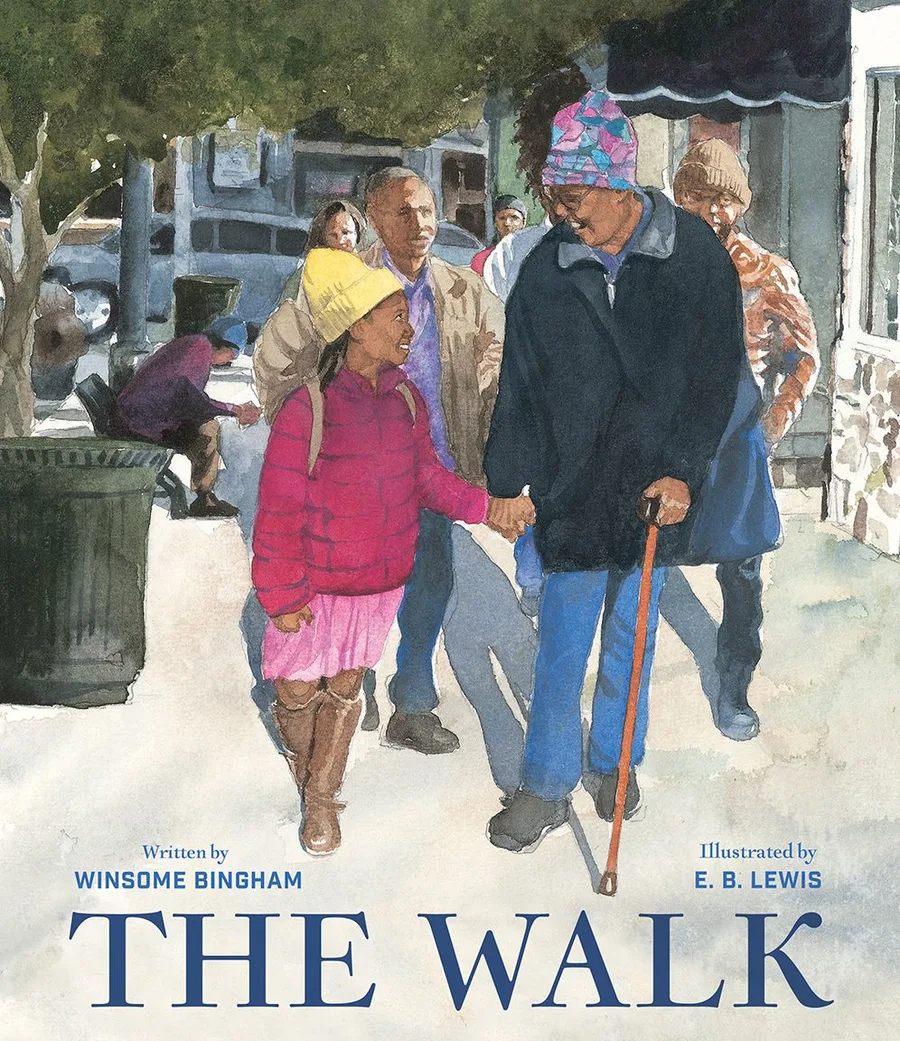 The WalkWinsome Bingham“My granny is taking me on THE WALK.” The young Black narrator of this story doesn’t know where “the walk” will lead, but her granny clearly has a destination in mind. Along their journey, she and her Granny are joined by other “treasured souls” in their diverse, 26 Contemporary People, Places, and Issues CCBC Choices 2024 predominantly Black neighborhood, some recalling other walks they’ve taken. More and more people join them. “The walking wasn’t always this long … But folks keep making it longer. They don’t want us to say what we have to say. That’s why we have to show up, show out, and show them,” Granny explains as they arrive at the girl’s school. When the girl points out that there isn’t school that day, Granny tells her, “School is always in session, baby. And today, the lesson is for the community … a big test we cannot miss. … WE’RE VOTING.” A welcome contemporary story about the importance and responsibility of voting buzzes with anticipation while conveying an underlying sense of urgency, including around challenges to voting rights. The watercolor illustrations shine with hopeful faces and the warmth of community.Contemporary People, Places, and IssuesView book details
 83 Days in Mariupol: A War DiaryDon BrownAt the start of the Russian re-invasion of Ukraine in February 2022, the coastal city of Mariupol seemed doomed by its geography on the Sea of Azov. Occupying Mariupol would help enable Russia to create a critical land bridge to the Crimean Peninsula. Under Putin’s orders, a quiet urban Ukrainian landscape became a war zone in a matter of hours, and then for days that stretched into months. No one was safe, and there was no way of knowing what strategy would offer protection to individuals, or to the country. Conditions akin to World War II quickly developed, with the resistance shown by citizens of Mariupol, and other besieged Ukrainians fighting similar attacks, lauded. Chronicling the early days of this modern geopolitical nightmare, Don Brown recounts the heroism and horrors of 83 days in Mariupol with his signature journalistic lens and stark illustrations in graphic novel format.Contemporary People, Places, and IssuesView book details
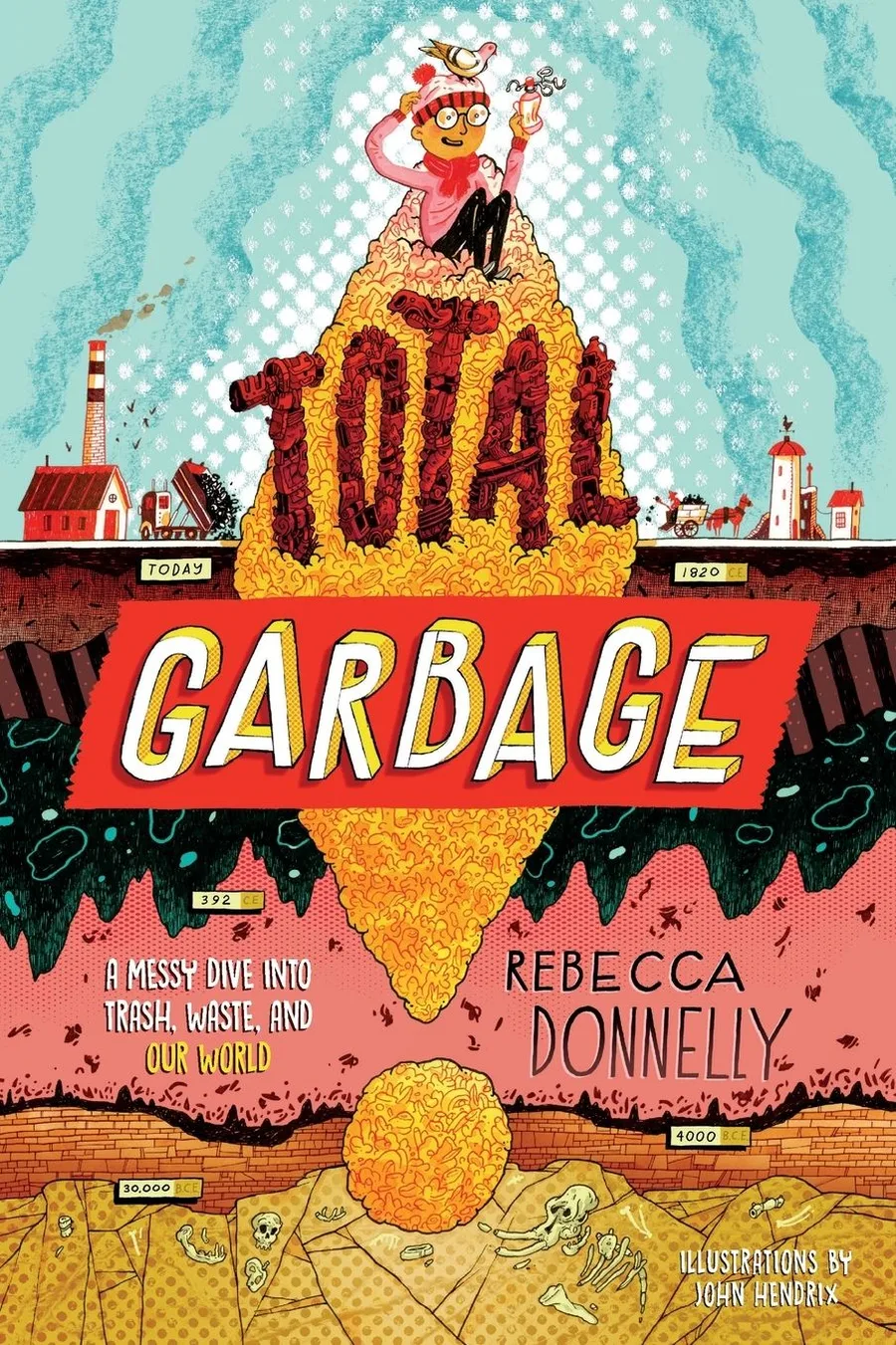 Total Garbage: A Messy Dive into Trash, Waste, and Our WorldRebecca DonnellyAn eye-opening, occasionally gross, and above all fascinating account explores what we do with the things we no longer want or need. Chapters titled “What Is Trash?”, “Where Does Our Garbage Come From?”, “Why Do We Make So Much Garbage?”, “Where Does Our Garbage Go?”, “What Can We Learn from Our Garbage?”, and “How Can We Do Better?” explore various kinds of waste; the waste stream, which exists for both an item’s production (upstream) and post-use (downstream); and options for what we can (and can’t) do with various kinds of waste; as well as some intriguing history. The absence of a table of contents is unfortunate, but the engaging narrative invites thoughtful consideration of the individual and collective impact of our choices and the cause-and-effect relationship humans have with garbage. A “Trash Timeline,” selected resources, and index are included in the back matter of a volume that is pure trash—in the best way possible.Contemporary People, Places, and IssuesView book details
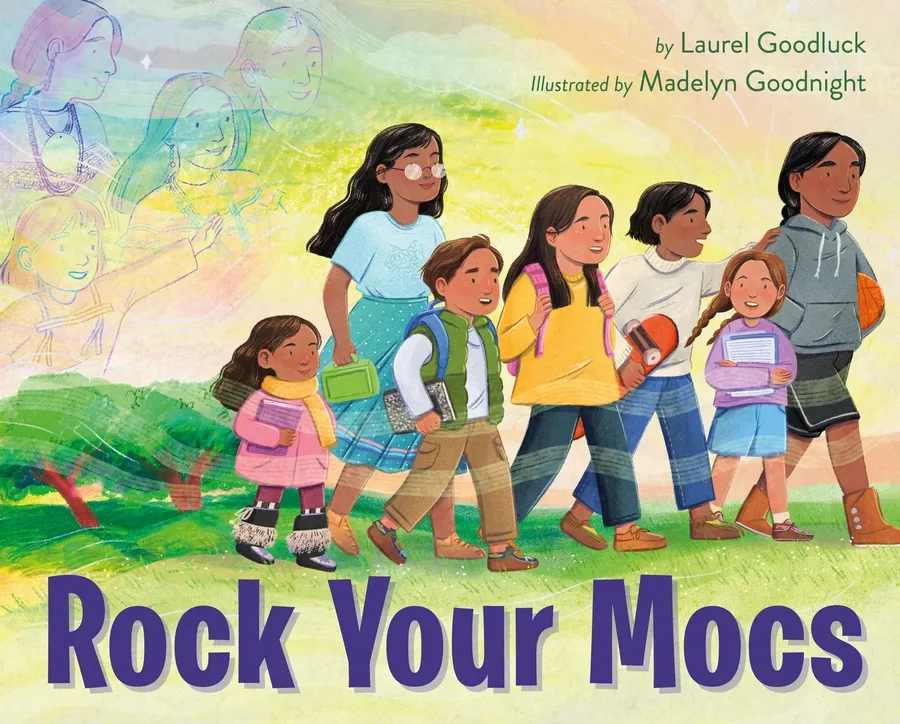 Rock Your MocsLaurel Goodluck, illustrated by Madelyn GoodnightIn recognition of Rock Your Mocs Day, which began in 2011 and takes place each year on November 15, a cast of Indigenous kids dons their traditional footwear for the day. There’s Alyssa, a member of the Colville Nation, whose moccasins “shimmer and shine” with beads. Maria (Osage) dances in her mocs, Riley (Little Shell Chippewa) skateboards in his, and Tristen (Seminole) plays a carefree game of tag. Moccasins are works of art that can be made of deer, elk, moose, or seal; they are gifted to babies and custom-fit to older kids; they come in different colors, designs, and styles. Perhaps most importantly, “moccasins connect us to our past,” promote pride, and are a traditional skill passed from generation 27 Contemporary People, Places, and Issues CCBC Choices 2024 to generation. Simple, upbeat language makes for a joyful celebration shared by visually diverse kids from various tribal nations.Contemporary People, Places, and IssuesView book details
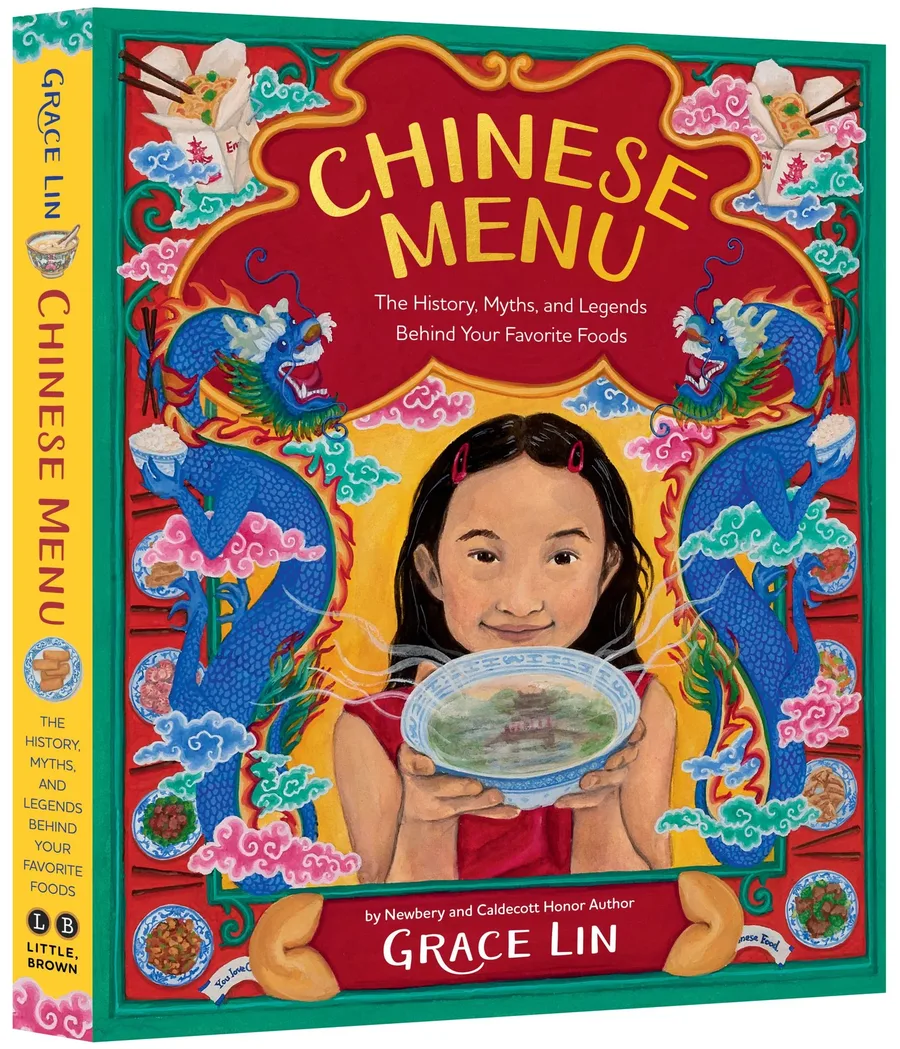 Chinese Menu: The History, Myths, and Legends Behind Your Favorite FoodsGrace LinThis mouth-watering buffet enriched with history, culture, folklore, and personal anecdotes is divided into sections based primarily on courses of a Chinese meal (Tea, Appetizers, Soup, Side Orders, Chef’s Specials, Dessert) as author/illustrator Grace Lin details the history and traditions encompassed in various dishes of Chinese origin, along with some Chinese American offerings. She makes clear from the outset that “Chinese food” is actually food of many different regions and groups, building on this distinction as she delves into individual dishes and related stories. Lin also chronicles changes that took place when Chinese people began cooking food in the United States, adapting to what was available, and, sometimes, when opening restaurants, to preferences among the would-be customers. Throughout the work, she shares her personal connections to various dishes, which adds to the inviting feel of this informative, welcome, and welcoming volume. Each course and each dish is accompanied by cheery illustrations in this tasty treat for readers young and old, whether they’re discovering the history of foods with which they are familiar or those that are new to them.Contemporary People, Places, and IssuesLexile Text Measure 1040LATOS Book Level 7.1View book details
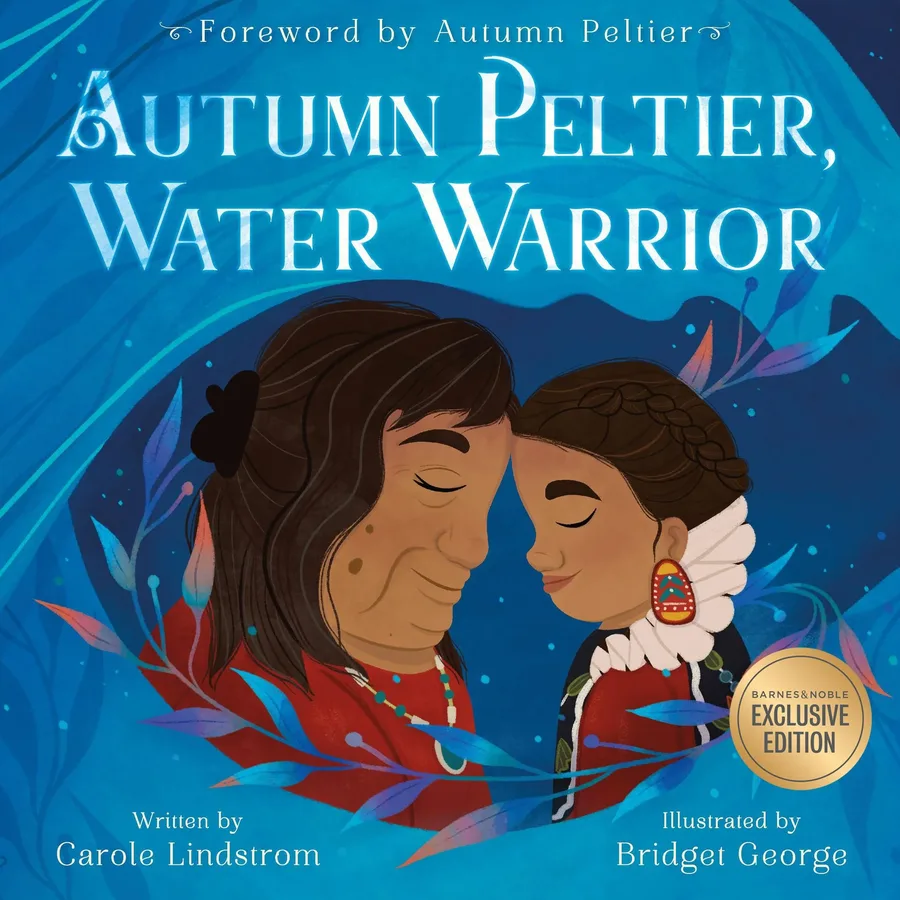 Autumn Peltier, Water WarriorCarole Lindstrom, illustrated by Bridget George“I am nibi. / I have a spirit. / I have feelings. / I remember.” The voice of water narrates a picture book about the Anishinaabe peoples’ relationship with water and the work of two Anishinaabe water activists, Grandma Josephine (Jospehine Mandamin) and her great- niece, Autumn Peltier. When water’s voice was quieted by those who “didn’t cherish me,” Grandma Josephine walked miles around the Great Lakes to draw attention to water’s plight. “I remember her touch. / The ripple.” After Grandma Josephine died, Autumn began speaking out. “Telling them that I am precious. / Telling them that without me, there would be no life.” The text flows with grace and purpose across pages featuring thoughtfully composed illustrations connected by rippling swaths of blue. The volume opens with a foreword by Autumn Peltier; end matter includes more about the efforts of Water Walker Josephine Henrietta Mandamin and Autumn Peltier, who began her activism in 2012 at age eight, along with resources for further learning.Contemporary People, Places, and IssuesView book details
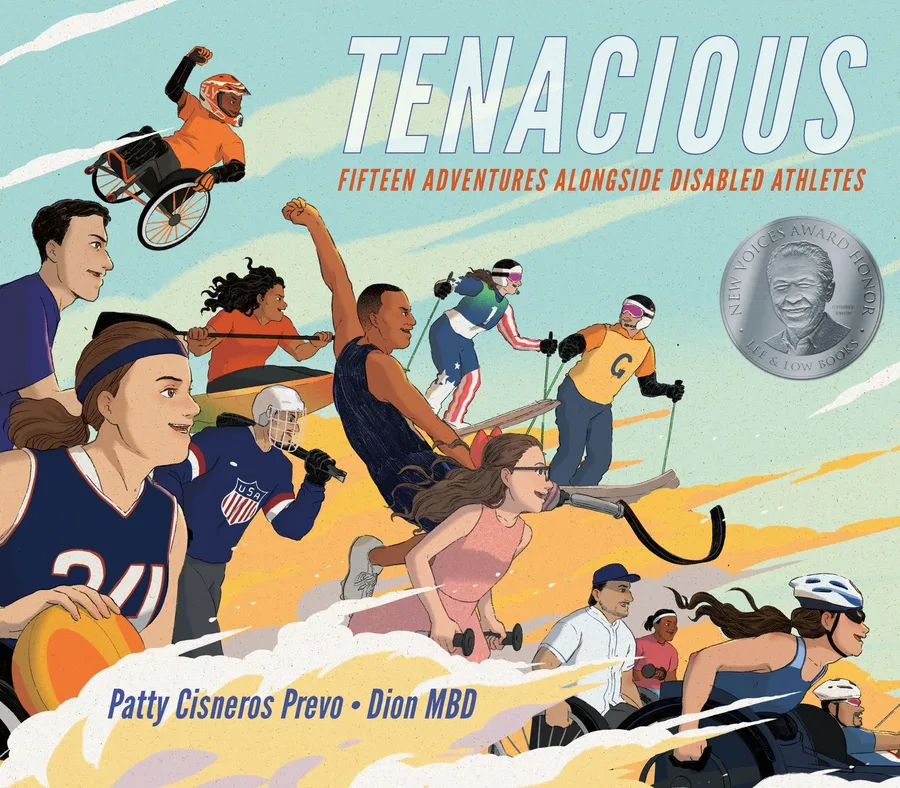 Tenacious: Fifteen Adventures Alongside Disabled AthletesPatty Cisneros Prevo, illustrated by Dion MBDTenacity is a defining characteristic shared by the disabled athletes showcased in Wisconsin author Cisneros Prevo’s debut book. Each athlete’s profile includes a brief description of their sport, disability, and personal history, ending with the athlete sharing their daily joy and a daily challenge. The profiles underscore both their individuality and dimensions to their lives everyone—disabled or not—can relate to. For instance, Rico Roman became disabled while serving in the U.S. Army and later got involved in sled hockey. He notes that maintaining motivation to work out is his daily challenge, and his daily joy is his wiener dog, Peanut Butter. At the conclusion, the author shares her experience as a member of the community of disabled people and as a disabled athlete. A discussion of preferred language is also included at volume’s end.Contemporary People, Places, and IssuesView book details
Understanding Oneself and Others
7 selections
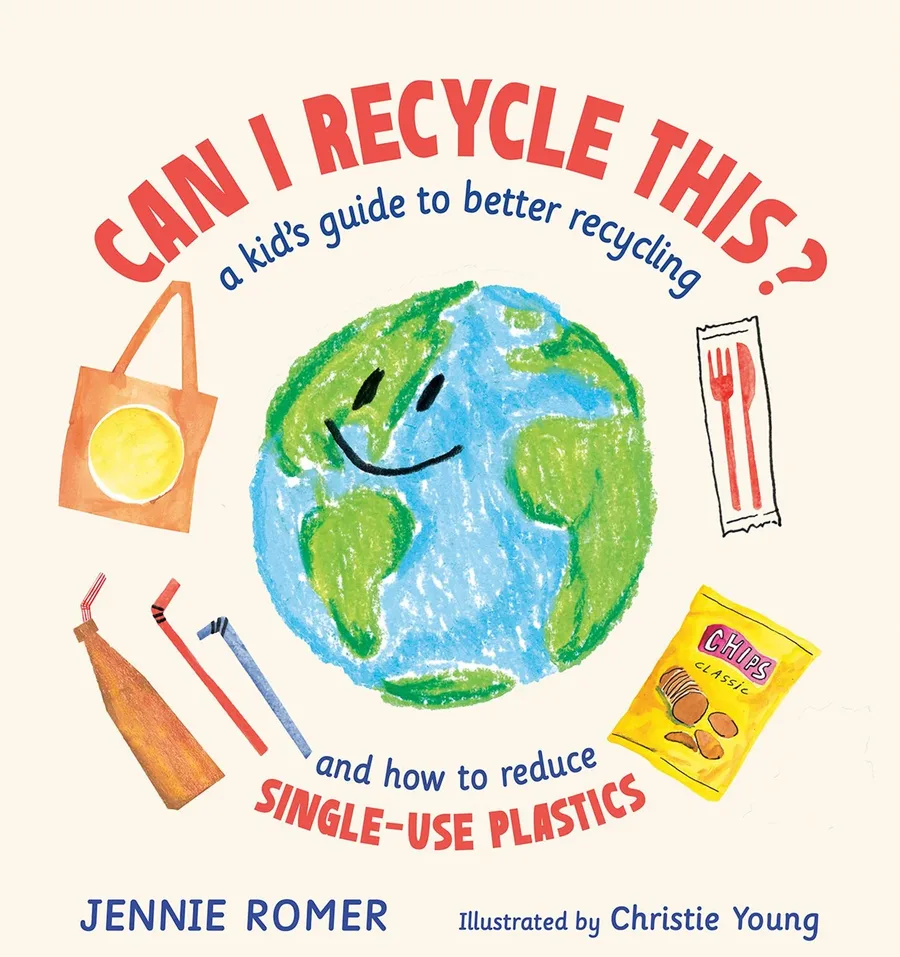 Can I Recycle This? A Kid’s Guide to Better Recycling and How to Reduce Single-Use PlasticsJennie Romer, illustrated by Christie Young“My friends are always asking me their questions about recycling. In fact I get so many questions, I wrote a book to answer them!” Author and recycling expert Jennie Romer makes clear that local recycling rules are the most critical guide that anyone reading this book should follow. Even so, that still leaves plenty of information for her to share in this lively picture book, from reasons to recycle to what happens at a recycling facility (“sorting—lots and lots of sorting!”) to the kinds of materials that can be recycled (and the kinds that cannot), to important reasons to avoid “wishcycling” (throwing things into recycling that aren’t actually recyclable), and more. Romer delivers her knowledge with enthusiasm, while humorous spot illustrations add to the appeal.Understanding Oneself and OthersView book details
 The 21: The True Story of the Youth Who Sued the U.S. Government Over Climate ChangeElizabeth RuschIn 2015, the lawsuit Juliana v. United States was filed by an organization called Our Children First on behalf of 21 plaintiffs who ranged in age from seven to 19. The suit argued that the U.S. government’s active role in promoting fossil fuels when it had long known the danger they present is in violation of the plaintiffs’ constitutional right to life, liberty, and property. This largely chronological account introduces lead attorney Julia Olson and several of the diverse young plaintiffs. When the case was first filed, the general consensus among legal scholars, including those specializing in environmental law, was that it didn’t have a chance. Most have since changed their minds. Despite numerous machinations by the U.S. government across every presidential administration since 2015 to delay the case or have it dismissed, the Juliana legal team has kept it alive by their insightful, tactical, and creative arguments and appeals grounded in the law. Meanwhile, climate change continues to worsen, while the plaintiffs are growing up; some of them are now college graduates (including one who attended UW-Madison). This account makes clear that even as it is undeniably political, this is a case and issue that transcends party lines and politics. Teens interested in climate change activism or the law will find it fascinating. End matter includes updates on the 21 plaintiffs, legal definitions, a timeline, and more.Understanding Oneself and OthersView book details
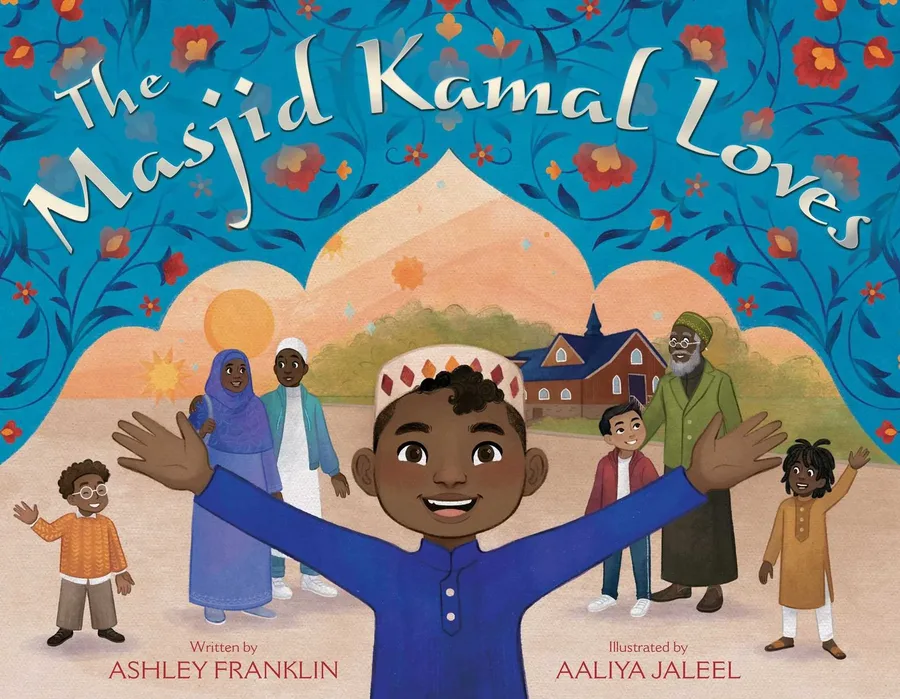 The Masjid Kamal LovesAshley Franklin, illustrated by Aaliya Jaleel“This is the masjid Kamal loves. / These are the friends / Who come to the masjid Kamal loves. … These are the feet / That wiggled in shoes / That belong to the Friends / Who come to the masjid Kamal loves.” A cumulative narrative patterned on “The House That Jack Built” details a brown-skinned Muslim boy’s time at the masjid for Jumu’ah prayer. But Kamal’s time at the masjid is not just about prayer; it’s about the learning that takes place in the context of this supportive community through the teaching of the Imam and the modeling of other adults. It’s also about the joyful sense of community itself. An author’s note talks more about these elements in an affirming, child-centered story set against digital illustrations with deep hues that show a diverse Muslim community.Understanding Oneself and OthersView book details
 BigVashti Harrison“Once there was a girl with a big laugh and a big heart and very big dreams.” As she grows, she’s told, “‘What a big girl you are!’ … And it was good … until it wasn’t.” The young Black girl at the center of this story begins noticing an edge to the way people say that she’s “big,” talking about her body thoughtlessly or pointedly, sometimes adding words that are overtly cruel. The word “big” starts to make her feel “small … judged, yet invisible.” A series of page spreads shows her in a storm-colored dress that contrasts the soft soothing pinks that predominate elsewhere, curling in on herself with hurt and boxed into an increasingly cramped space, until she gathers the taunts from her pool of tears, breaks down the “walls” (shown in a dramatic fold-out), and makes room for self-love. It’s a cathartic transformation that takes place largely without words. Guided discussion may deepen children’s understanding of this emotionally resonant story that unfolds in part through visual metaphor and pulses with tenderness toward its young protagonist. An author’s note briefly discusses how children, especially Black girls, sit “in the crosshairs of adultification and anti-fat bias.”Understanding Oneself and OthersLexile Text Measure 190LATOS Book Level 1.7View book details
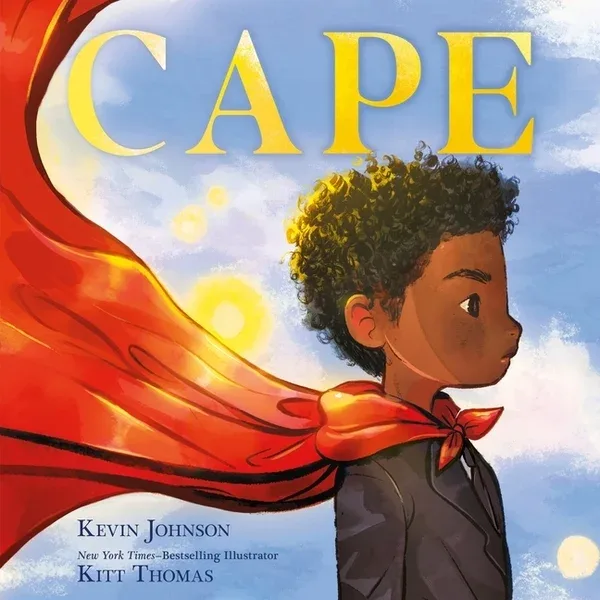 CapeKevin JohnsonA spare first-person text marked by powerful descriptive moments follows a young Black boy on the day of his father’s funeral. He has a new haircut, a new suit, and his cape— “in case I remember.” But he doesn’t want to remember, or listen to what’s being said around him. “Memories make my swallow hurt.” He and his auntie go to the cemetery and then back to the house and “a party where no one smiles.” The cape is to block unwanted memories—he’ll use it like a shield. But the memories are unstoppable, and when the boy eventually does remember, he recalls his dad’s laugh, his dad’s love, and the day his dad gave him the cape. “I remember the way to my smile.” The illustrations are a mix of full- page scenes and spots that make thoughtful use of white space.Understanding Oneself and OthersLexile Text Measure AD350LATOS Book Level 2.5View book details
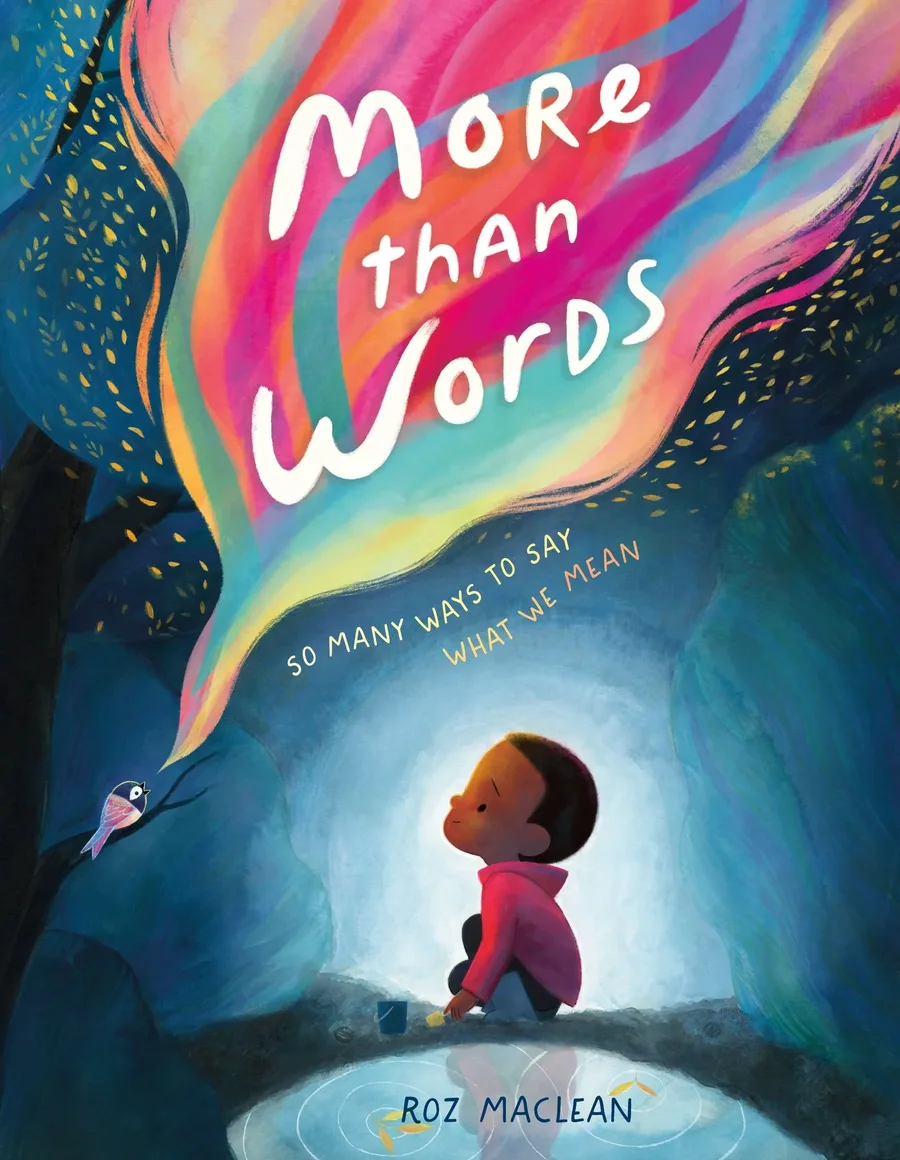 More Than Words: So Many Ways to Say What We MeanRoz MacLean, illustrated by Roz MacLeanThis welcome, purposeful picture book identifies and honors the different ways that students in a particular elementary school classroom communicate. Nathan (Black) doesn’t say much but listens carefully. Nathan’s classmates display a range of other ways to communicate. Many of his peers use their voices, but some use specific kinds of Augmentative and Alternative Communication (AAC) to express themselves, such as an alphabet board, Brailler, and text-to-speech technology. Receptive communication is highlighted as well, including facial expressions, gestures, and other cues. Through the various communication styles explored, Nathan’s classmates can understand his offer of friendship and invitation to play in spite of his silence (possibly selective mutism). Warm, stylized illustrations portray an inclusive student group—race, ethnicity, religion, and disability are intentionally depicted. An overview of communication, AAC, access, and inclusion is included at the end.Understanding Oneself and OthersView book details
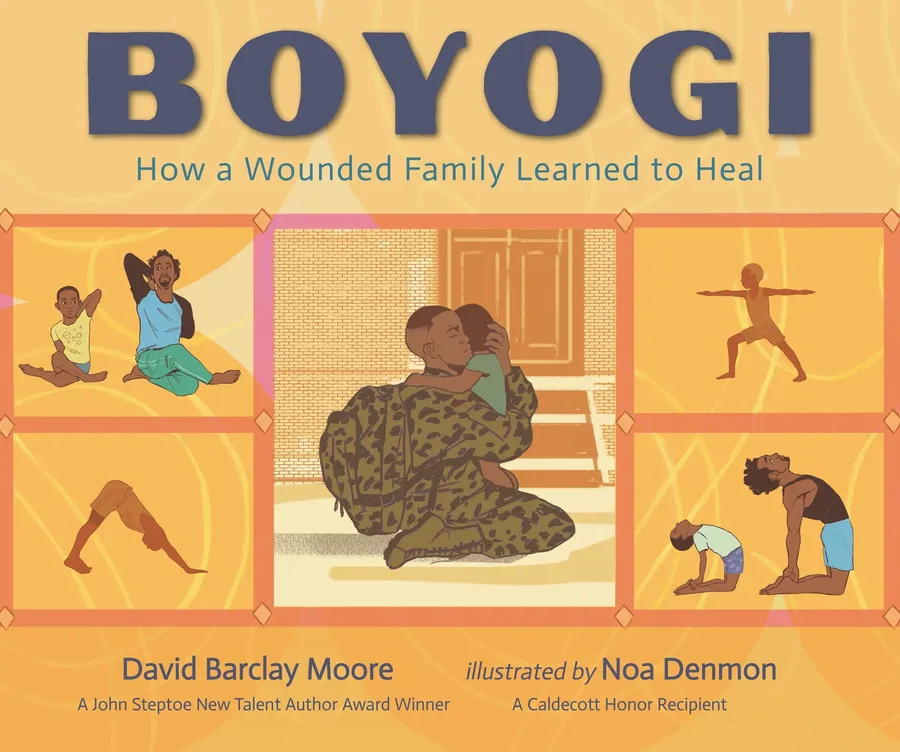 Boyogi: How a Wounded Family Learned to HealDavid Barclay MooreA young boy’s father has returned “from far away,” where he was a soldier, changed. Daddy used to be fun, but now he’s angry and sad and spends a lot of time in his room. The boy’s mother explains that Daddy’s mind is hurt by bad things that happened while he was gone, and she assures the boy that they are trying to figure out how to help Daddy feel better. One day Mommy insists Daddy come with her to a yoga class at the Y. The boy goes, too, and watches as the instructor explains the importance of practicing yoga with calm, 30 Understanding Oneself and Others CCBC Choices 2024 positive thoughts, adding that anyone who practices yoga is called a yogi. Soon the boy and his daddy are regular attendees. “My favorite was the Cobra Pose, because it made me feel like a snake!” Daddy tells him, “You’re a regular little boyogi.” Daddy adds that yoga has helped him feel better—less jumpy and nervous and sad. “My therapist tells me yoga has helped a lot.” Clean-lined digital art illustrates this child-centered story about a Black family impacted by one parent’s PTSD.Understanding Oneself and OthersView book details
The Arts
15 selections
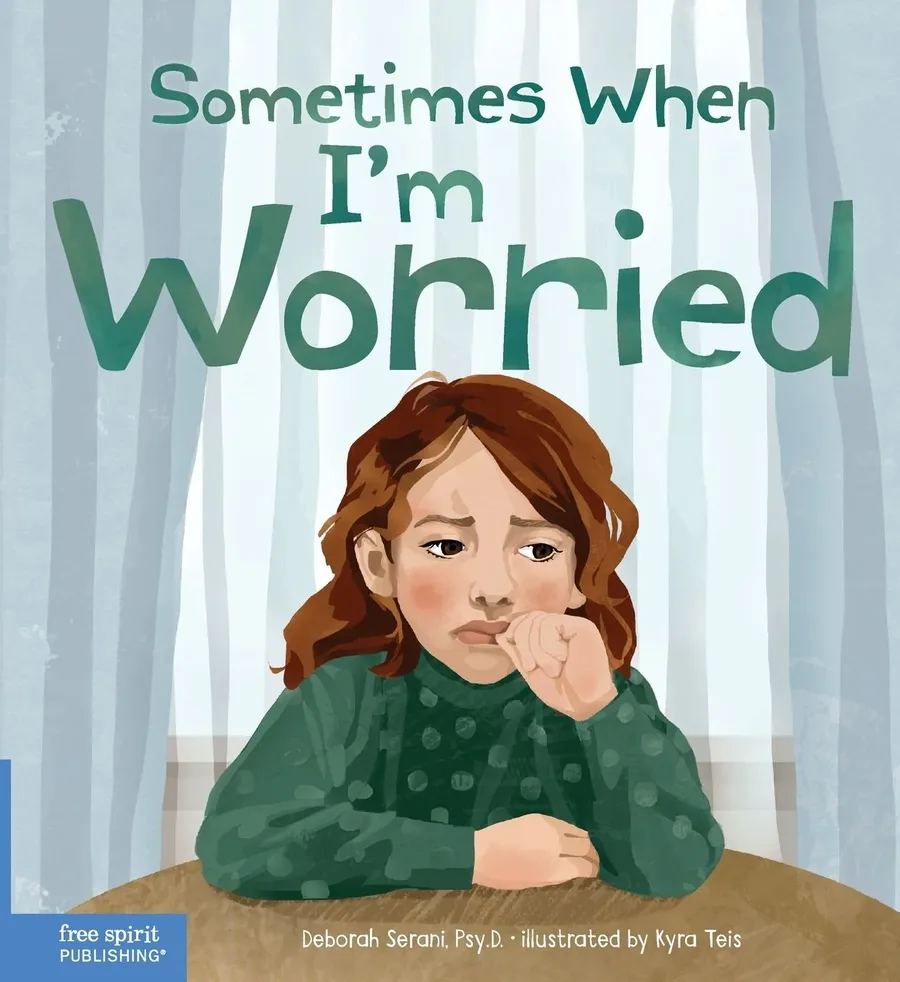 Sometimes When I’m WorriedDeborah Serani, illustrated by Kyra TeisA girl (white) describes the many ways she feels and acts when worried: scared, nervous stomach, reluctant to try to new things, problems sleeping, and not wanting to go to school or play with friends. In each scenario, a supportive family member (she has two dads and a sister) acknowledges her concerns and suggests concrete coping mechanisms that help her feel better, including deep belly breathing, trying new things one step at a time, stretching like a cat, and remembering “that you can have a nice time even if you’re scared in the beginning.” A six-page “Guide for Caring Adults” offers information about anxiety in children and suggestions on ways to help.The ArtsView book details
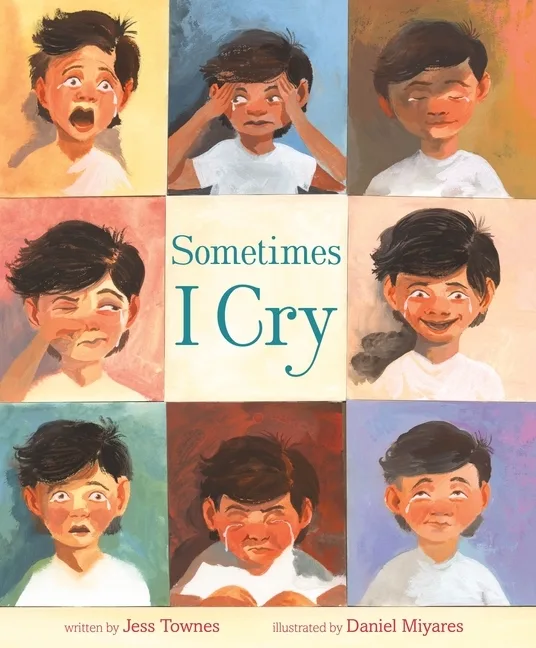 Sometimes I CryJess TownesA brown-skinned child describes the range of experiences that make them cry, and the different emotions triggered by each. Falling off a bike and skinning their knee brings tears of pain, while striking out at bat results in tears of disappointment. Anger, fear, sadness, laughter, and overwhelming love all produce tears, and the child describes being filled with strong feelings “Until I think I might burst / But when I let my tears out / My feelings fit perfectly inside my body … / And I know it’s okay that / Sometimes / I cry.” The everyday relatable moments described and pictured offer reassurance that crying is a normal response experienced by everyone.The ArtsLexile Text Measure NP0LATOS Book Level 0.1View book details
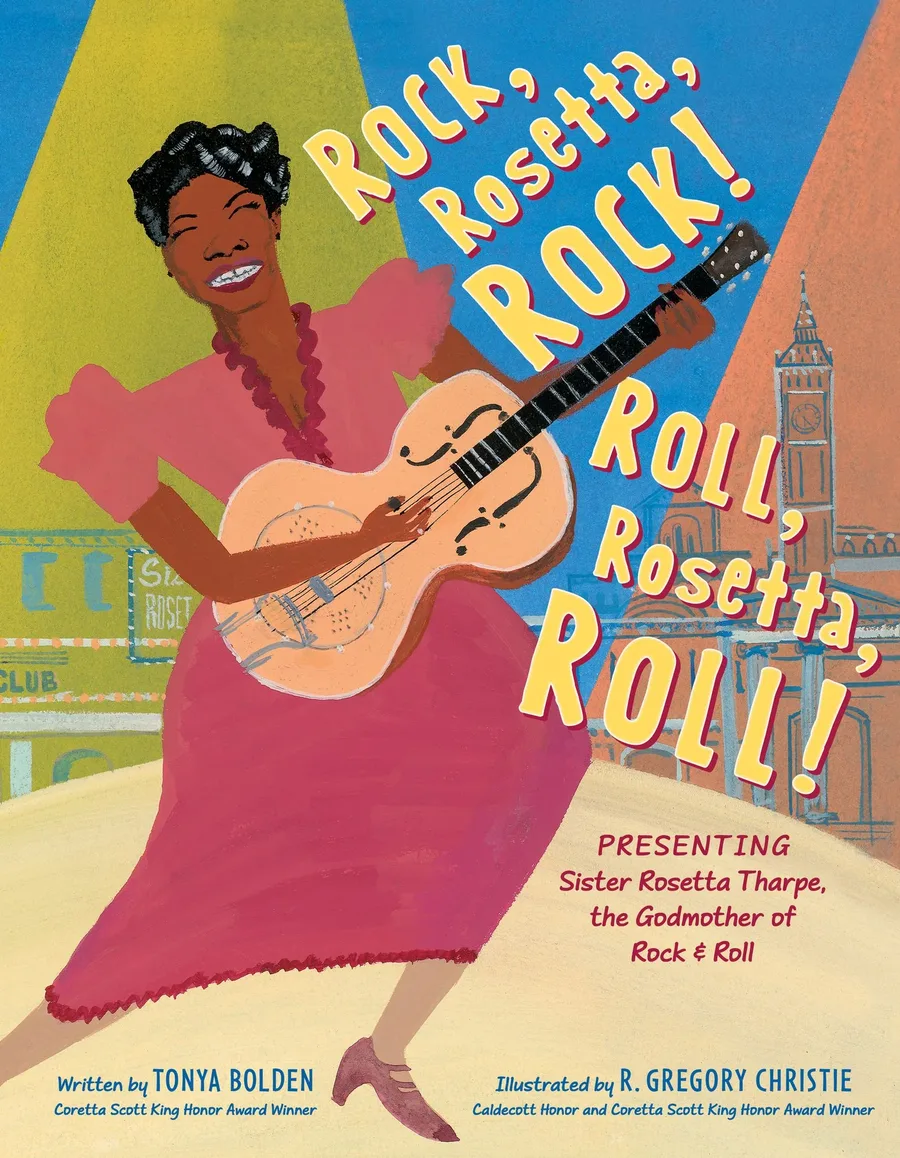 Rock, Rosetta, Rock! Roll, Rosetta, Roll! Presenting Sister Rosetta Tharpe, the Godmother of Rock & RollTonya Bolden“Bold, audacious, in a word, bodacious …” A joyful picture book biography introduces Sister Rosetta Tharpe and celebrates her singular musical talent, apparent from the time she was young. She started out playing guitar and singing gospel in church in a small Arkansas town as a child. “Little girl. Big guitar.” When her family moved to Chicago, Rosetta sang wherever her mother, a preacher, spread the gospel. As a young adult, Rosetta expanded her repertoire and her reach. “Mixing it up with beats from Gospel’s / Cousin Boogie- Woogie, / Cousin Jazz, / Cousin Swing, / Cousin the big, bad Blues” she sang and played in nightclubs. Eventually, Sister Rosetta Tharpe was making records, singing on the radio and TV, and touring the country and internationally. She was also inspiring younger musicians, who were “Diggin’ your licks, / Coppin’ your style.” An author’s note explains that Sister Rosetta Tharpe’s performances—an impassioned blend of distinctive guitar playing, vocal interpretation, and dynamic moves—influenced music across many genres, from rock- and-roll to the blues, gospel, country, and R&B; and influenced other iconic performers, such as Elvis Presley, Chuck Berry, Little Richard, and Johnny Cash. The note, accompanied by a timeline, also includes details about her personal life and more about her career. The 31 The Arts CCBC Choices 2024 bright, bold, wonderfully composed illustrations are a perfect pairing with the smart, spirited text in this dazzling account.The ArtsView book details
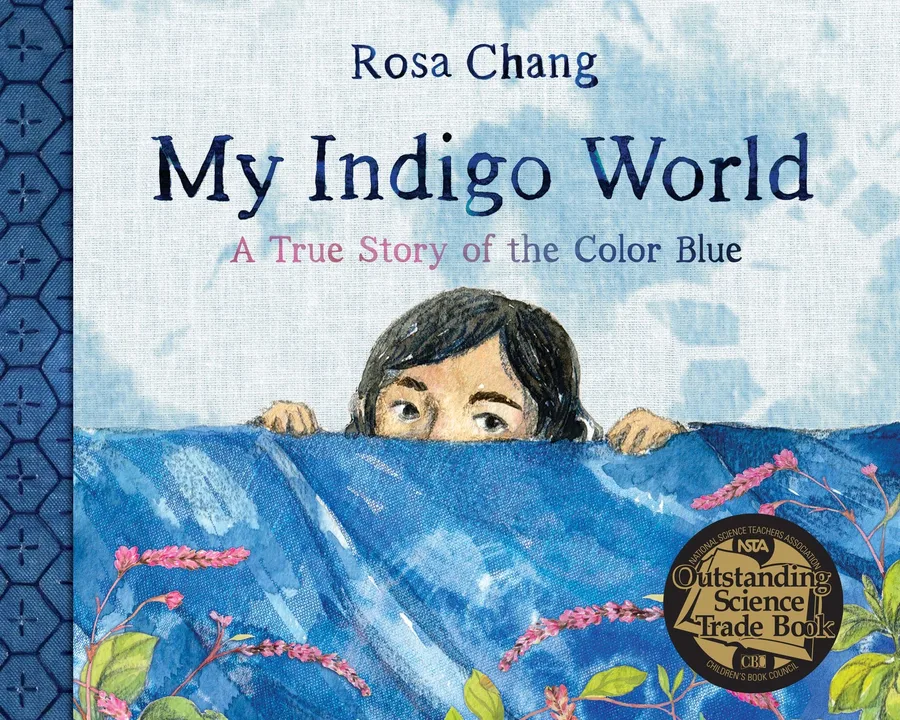 My Indigo World: A True Story of the Color BlueRosa ChangIndigo is celebrated as a color, a plant, and an art form in a multifaceted volume that begins with the author’s childhood recollections of the color blue. Growing up in Korea, she admired blue in its many forms: the fluctuating blue of the sky, the stripes on the sleeves of her hanbok, the sea. Now an adult living in the United States, she grows indigo on a small cooperative farm. Each summer she and her friends cultivate the plants from seeds, harvest the leaves, and make their own indigo dye—“the bluest blue of all”—which they use to color a variety of garments and other fabrics. Indigo is more than just a color; for her and her friends, it represents connection, cultural heritage, and healing. (Korea has a long cultural history of jjok, or indigo, dyeing.) The narrative touches on the uses of indigo around the world and its history in the United States while remaining grounded in the author’s personal experience. Illustrations made using watercolors and hand-dyed indigo fabrics include clear, labeled images showing the steps of the indigo-making process. Extensive end matter includes information about indigo species and Korean jjok dyeing, a map showing the variance in indigo shades around the world, and instructions for making indigo dye using two traditional East Asian methods.The ArtsView book details
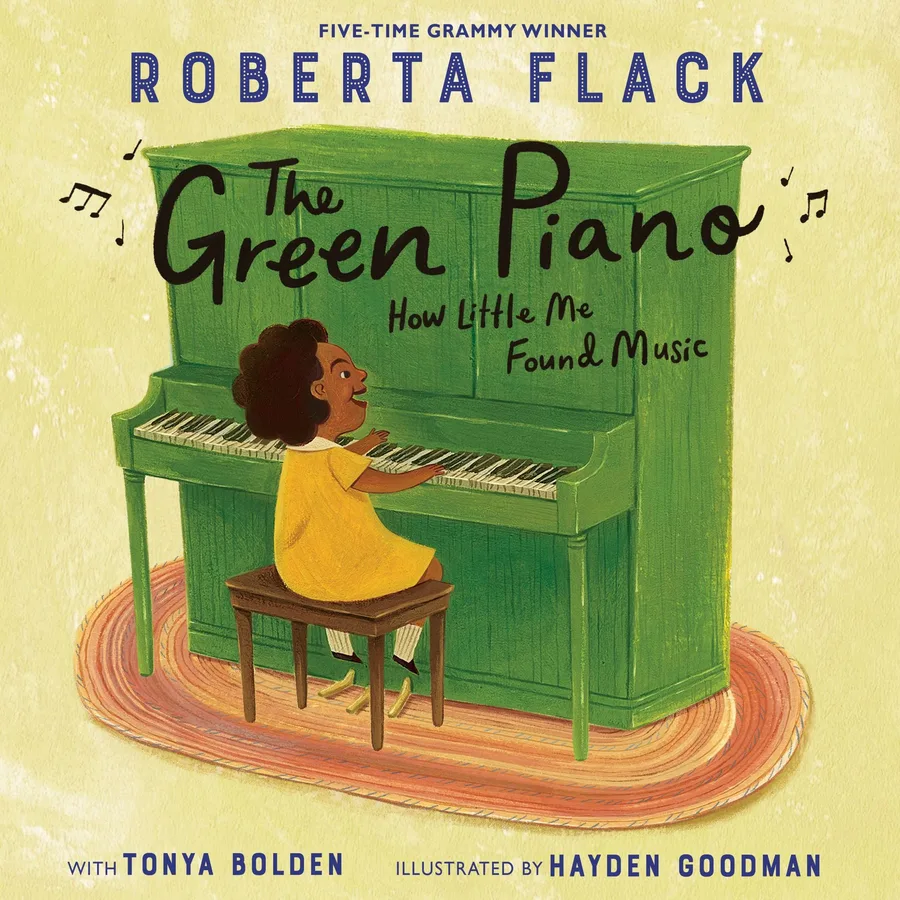 The Green Piano: How Little Me Found MusicRoberta Flack, with Tonya Bolden“I didn’t have fancy-fine clothes, high-priced toys, or other richy-rich things. But I had music. My treasure. My gold.” As a little girl in Asheville, North Carolina, Roberta Flack was drawn to the piano at church and dreamed of having one at home. She took lessons at the home of a piano teacher, but it wasn’t until her family moved to Green Valley, Virginia, that her daddy brought home an old piano he found in the junkyard. “When can I play it?” she asked over and over as her daddy transformed the “weather-worn, faded, stinky thing” into a grassy green, musical dream come true. “Grown-up me lived this dream! Year after year after year!” A picture book memoir that sings with longing, anticipation, and happiness is paired with engaging gouache illustrations full of their own child appeal. More about Flack’s life and career is included in the end matter.The ArtsView book details
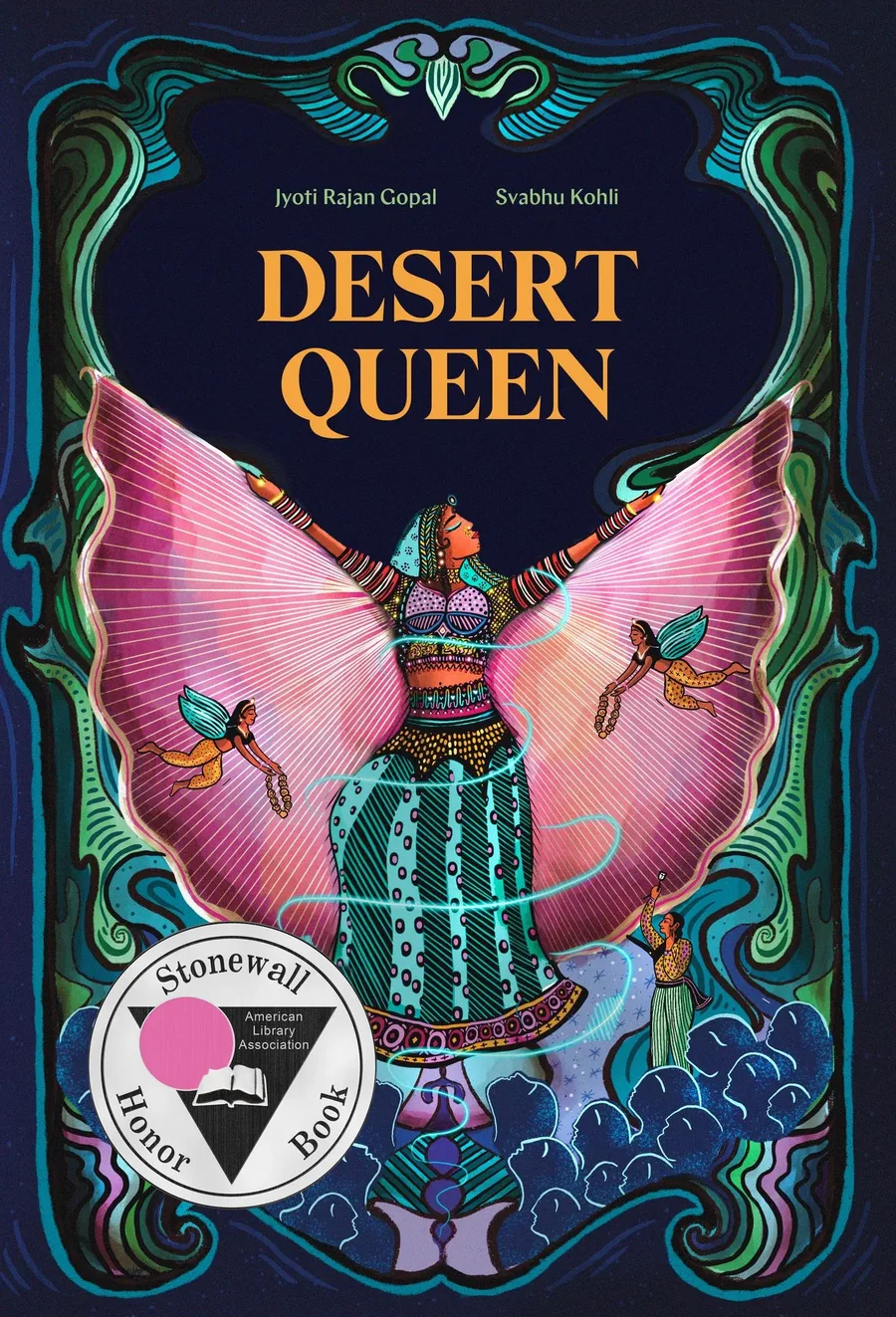 Desert QueenJyoti Rajan GopalThe boy is drawn to the music and folk dancing and forms of expression that are traditionally considered female in his Rajasthani culture, but he can only move to those rhythms in secret. He finds courage in the shadow of grief, putting on the clothes that call to him. “In the spinning, twisting turns / fear is tucked away. / Worry quiets. / And so … so … SHE stands. / A goddess. / Shining, strong, proud.” This stirring, poetic tribute to Indian drag performer Queen Harish chronicles her life and career, including the initial harsh response to her performances. Queen Harish dazzled, though, gradually drawing people in with her talent, grace, and warmth. “Not / Boy OR girl. / Man OR woman. / But / fluid / flowing / like a dance / in between / and all around.” Vibrant pen-and-ink and paint illustrations feature scenes and images pulsing with color set against jewel-hued backdrops. The art is rich with cultural elements from Jaisalmer, the northern Indian city where Queen Harish (Harish Kumar) was from. Essential biographical and contextual information about Queen Harish/ Harish Kumar, who died in a car accident in 2019, is at volume’s end.The ArtsView book details
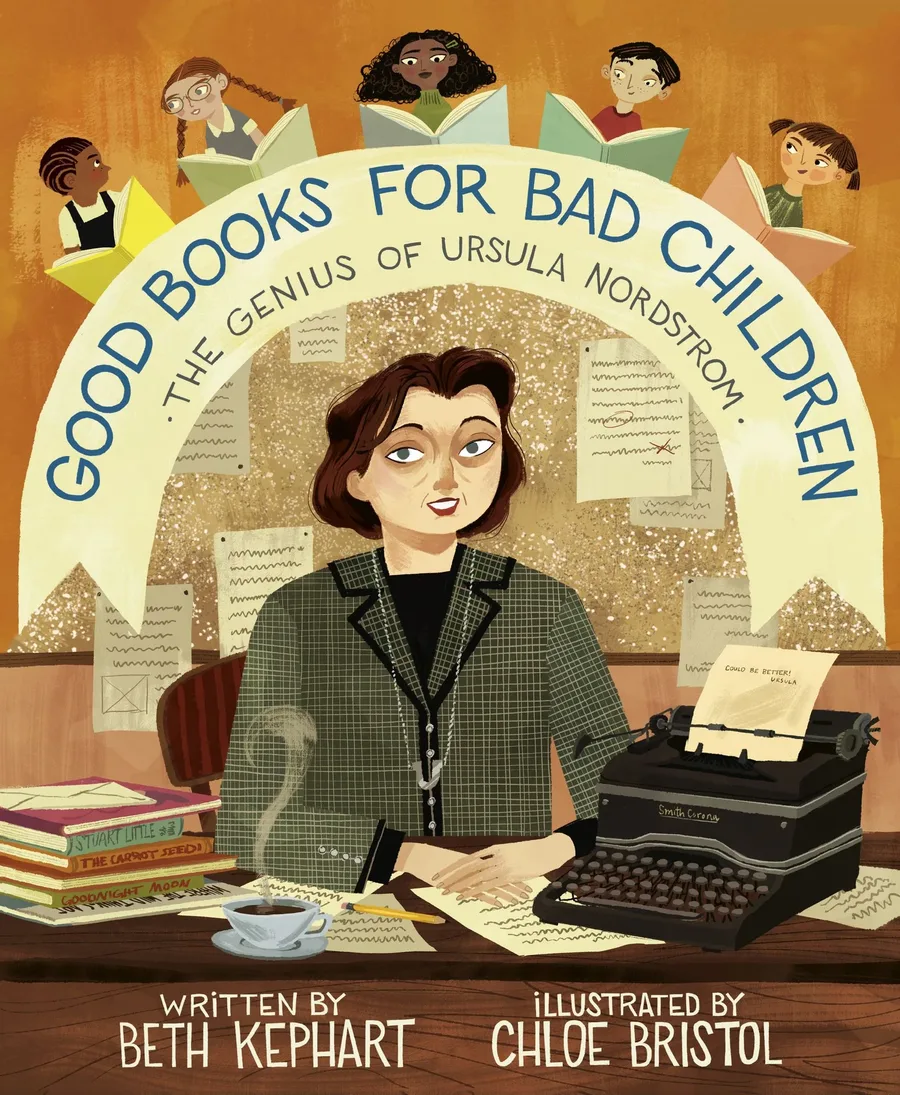 Good Books for Bad Children: The Genius of Ursula NordstromBeth Kephart“Ursula Nordstrom was a grown-up who never forgot what it was to be a child.” Following a lonely early childhood, where she learned to love books, and boarding school, where she made friends but still sometimes felt different, Nordstrom stumbled into a career that she was seemingly made for: publishing “funny / naughty / scary / true children’s books.” She carried out her work with wry wit and a deep respect for children and those who create books for them. Nordstrom was an editor—and editorial force—in mid-20th- century children’s publishing. Not that children will know this. What many will recognize, however, are some of the books she published: Charlotte’s Web, Goodnight Moon, Harriet the Spy, Stevie, Where the Wild Things Are, and others. This captivating picture book account of Nordstrom’s life and career doesn’t begin to catalog them all, but it does refer to some— either directly, in a narrative written with artful flair, or scattered like little treasures throughout the delightful illustrations.The ArtsView book details
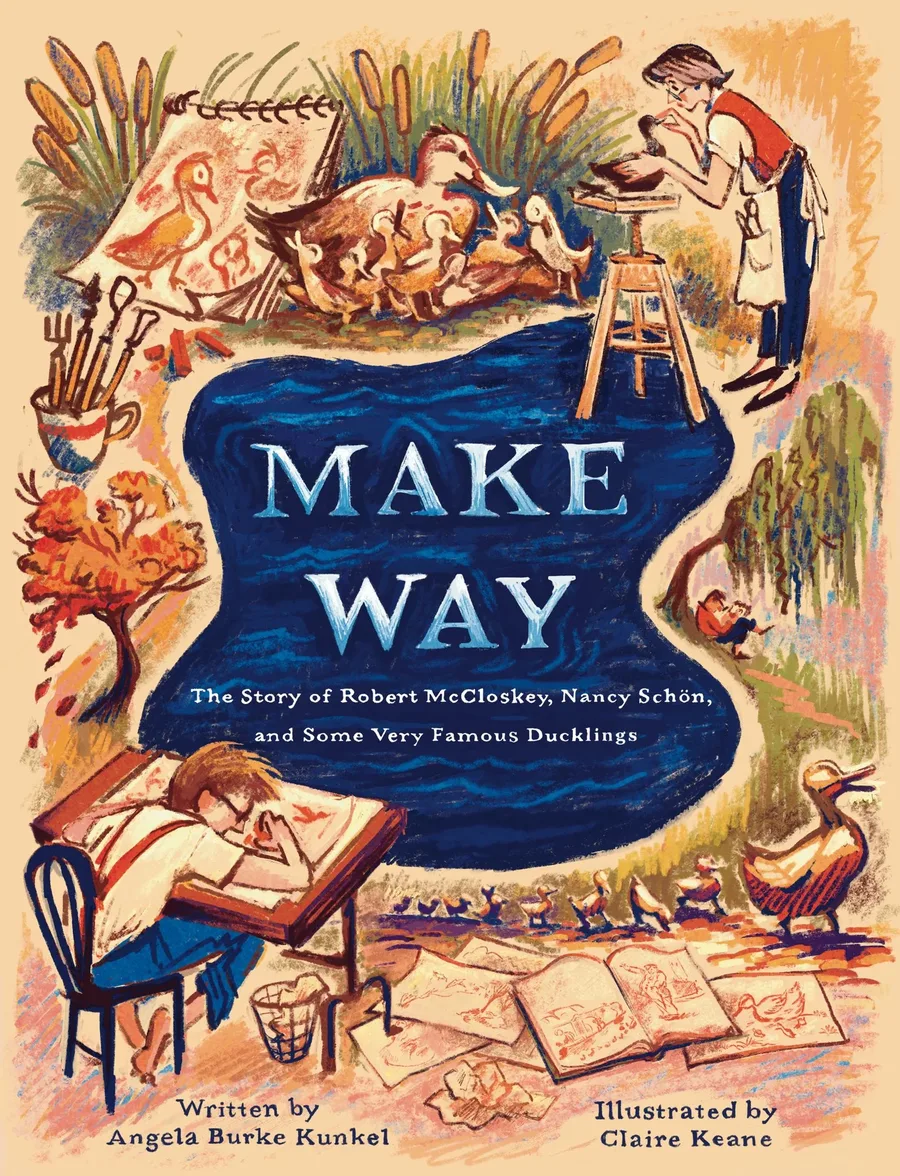 Make Way: The Story of Robert McCloskey, Nancy Schön, and Some Very Famous DucklingsAngela Burke Kunkel“In the beginning, a duck is an egg. A drawing is a blank page. A sculpture is a lump of clay.” In the beginning, there was a boy named Bob and a girl named Nancy. Bob grew up in Ohio and later studied art in Boston, where he often watched the ducks in the Public Garden. Nancy grew up near Boston and liked looking at books about sculptors in the library. Bob, a.k.a. Robert McCloskey, wrote and illustrated a beloved picture book called Make Way for Ducklings. Nancy Schön later created the iconic, child-pleasing duck sculptures in Boston Public Garden based on the story. This charming account of the two artists and their linked works incorporates marvelous details about their individual research for their respective projects (McCloskey even brought home a live duck for study), and their first and subsequent meetings as Nancy sought Bob’s approval for the sculptures. The winsome illustrations are a perfect pairing for the storytelling in a volume that includes more about each artist in an author’s note, along with a timeline and short bibliography.The ArtsLexile Text Measure AD820LATOS Book Level 5.2View book details
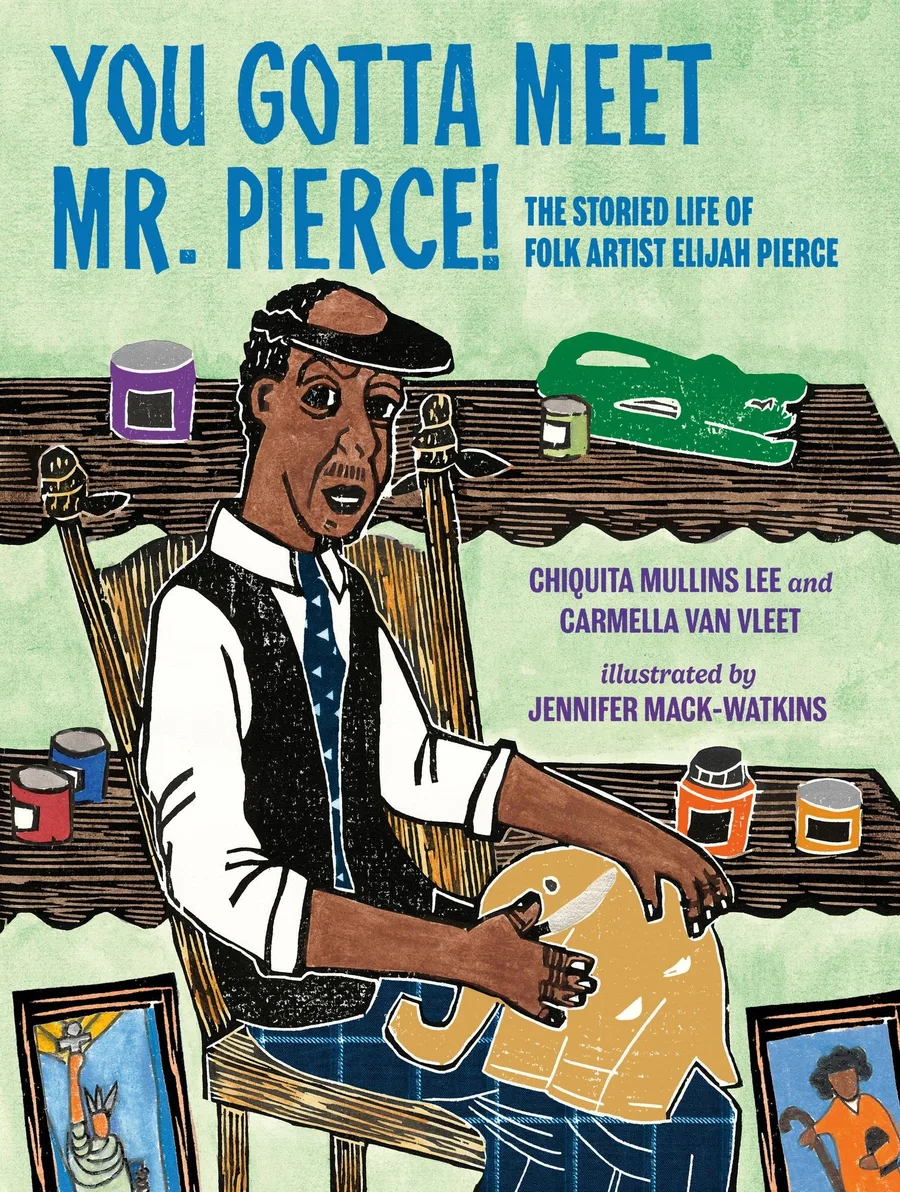 You Gotta Meet Mr. Pierce! The Storied Life of Folk Artist Elijah PierceChiquita Mullins Lee, Carmella Van Vleet, illustrated by Jennifer Mack-WatkinsMr. Pierce’s barbershop is the place to be according to the young Black narrator of this joyful picture book. “Razors and roaring laughter. Scissors and stories. Tonics and tunes on the radio.” But the shop is more than a barbershop. It’s also an art gallery, full of the wood carvings that Mr. Pierce has created. Mr. Pierce tells the boy that he started carving when he was a boy himself. “I could see a picture that I liked, or a person would tell me a story … and I’d get me a piece of wood and start to carve it. … Everything I carve, I want it to tell some kind of story.” This inventive, inspired introduction to Black folk artist Elijah Pierce imagines an encounter between Pierce and a fictional Black child in the late 1970s. But Pierce’s barbershop gallery in Columbus, Ohio, and the astonishing body of work he created are real, as are the quotes from Pierce throughout the story. Pierce’s work ranged from animals to Bible stories to portraits to personal history. Photographs of 11 of his pieces are included in the end matter, along with an informative author’s note, a timeline, and illustrator’s note. The illustrator used the mokuhanga printmaking process along with collage to make striking images perfectly suited to a book about a folk artist.The ArtsView book details
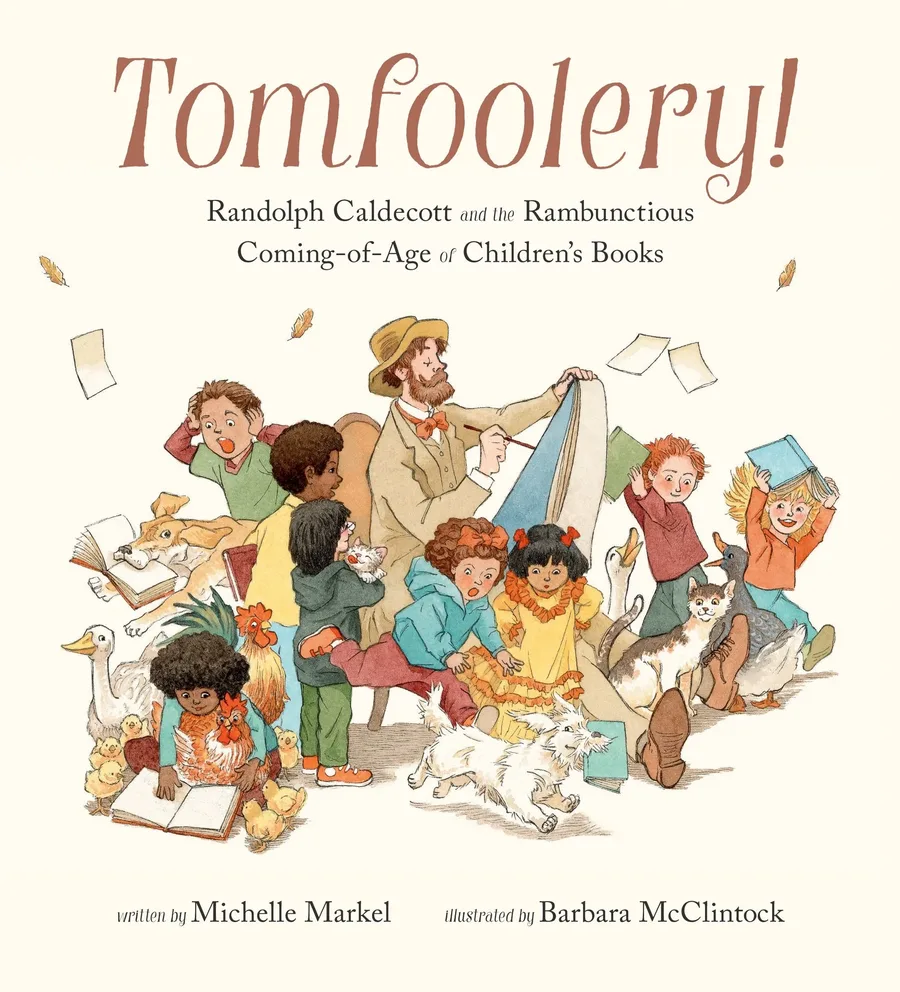 Tomfoolery! Randolph Caldecott and the Rambunctious Coming- of-Age of Children’s BooksMichelle MarkelYoung readers might not know who Randolph Caldecott is, or even what “tomfoolery” means, but they will easily relate to an artist following his heart and bucking convention, especially an artist who paved the way for creating lively picture books for children. With animated language and ample use of descriptive fonts, the narrator of this picture book biography speaks directly to readers, inviting them back in time to marvel at Caldecott’s journey from invalid to banker to industry-transforming artist. Gorgeous pen and watercolor illustrations match the mood of the text, integrating images from Caldecott’s work as well as original scenes showing his love for animals and action. A full-page recreation of a recognizable literary scene from John Gilpin’s hunt is a masterpiece. This thrilling page-turn celebrates Caldecott’s artistic success and serves as an Easter egg for those familiar with the image on the gold medal bearing his name. Detailed endnotes identify the reproductions of Caldecott’s art referenced, share additional details about the historical events delineated, and provide information about the transformation from Victorian periodicals to “toy books” in this rich history and delightful romp for readers of all ages.The ArtsView book details
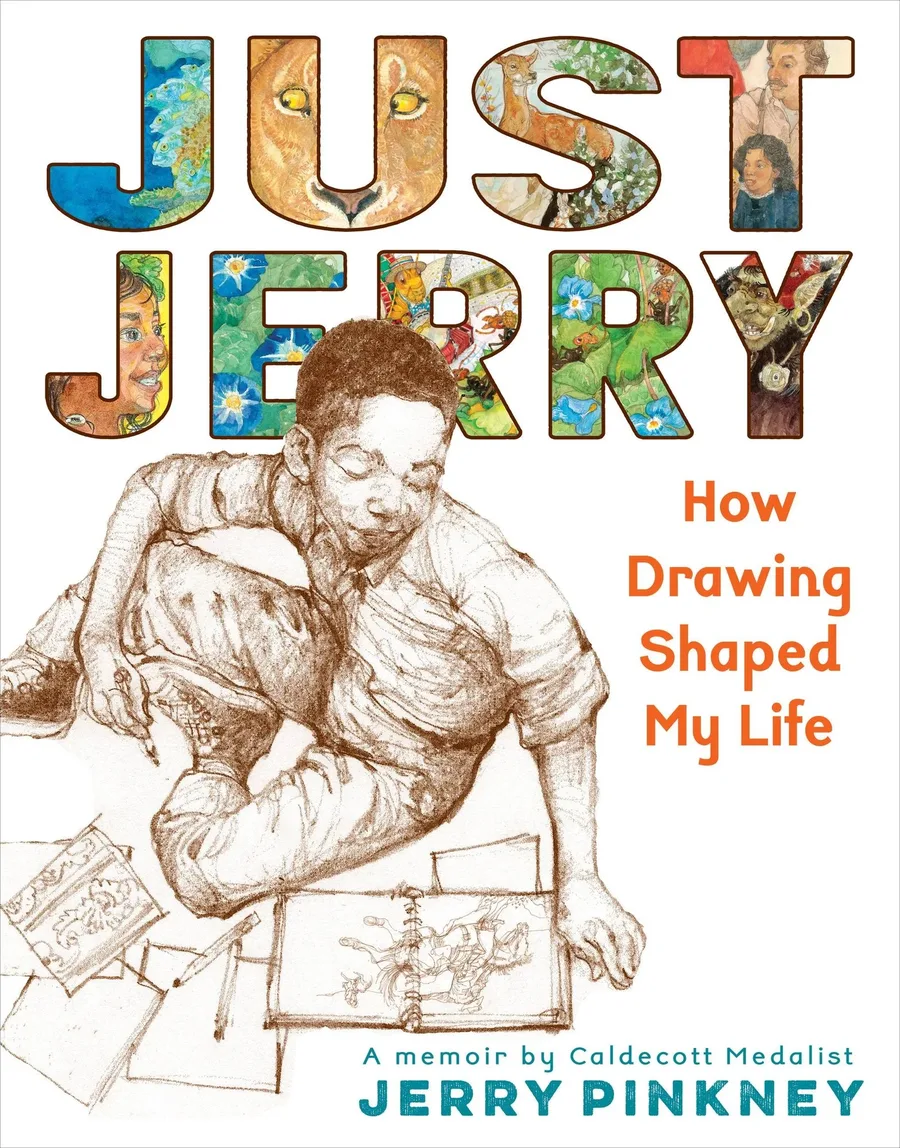 Just Jerry: How Drawing Shaped My LifeJerry PinkneyPinkney spent more than a decade composing the narrative of this moving memoir, which largely recounts his childhood in an all-Black neighborhood in Philadelphia in the 1950s. Jerry (his name really is “just Jerry,” not Gerald) had five siblings, a carpenter father, and a close relationship with his mother, who truly appreciated his gentle, sensitive spirit. If he wasn’t drawing, Jerry was thinking about it; everything around him was a potential sketch. He had a thriving imagination and an unquenchable thirst to create, and people took notice. Although he struggled to read due to dyslexia, one of his teachers honored him with the title of “class artist” and integrated art assignments into his schoolwork for extra credit. Jerry sold papers at a newsstand, where his boss allowed him to sketch during slow times. It was here that Jerry began sketching passersby, selling his drawings for a nickel each. As luck would have it, one of his customers was comic strip artist John Liney, who invited Jerry to his studio to observe his creative process. The experience planted a seed in Jerry’s mind: Perhaps one day he, too, could make a career out of art. Indeed, the epilogue expounds upon his great success as a beloved and prolific children’s book illustrator. Although the memoir’s copious illustrations are only rough sketches—Jerry died before completing them—they provide a clear view of the memoir’s setting and subjects.The ArtsView book details
 There Was a Party for Langston: King o’ LettersJason Reynolds“There was a party for Langston at the library … to celebrate the man who wrote wake- up stories, and rise-and-shine rhymes …” The 1991 celebration of the opening of the Langston Hughes Auditorium at the Schomburg Center for Research in Black Culture inspired this dynamic introduction/tribute to Hughes, along with poets Maya Angelou and Amiri Baraka. It was a photograph of Angelou and Baraka at the celebration that first made author Jason Reynolds wonder what event had brought these two “word makers” together—on a dance floor! The narrative offers artful, observant, inviting entry points into all three poets’ work. Hughes could “make the word HARLEM sound like the perfect place to have a party.” Angelou could “make the word WOMAN seem like the word MOUNTAIN.” 34 The Arts CCBC Choices 2024 Baraka could “make the word Black echo into the future and way back into the past …” The Pumphreys’ distinctive illustrations, created using handmade stamps, are a perfect pairing for the energy of the text and pay tribute to other Black writers on the opening endpapers.The ArtsLexile Text Measure 640LATOS Book Level 4.1View book details
 The Women Who Built Hollywood: 12 Trailblazers in Front of and Behind the CameraSusan Goldman RubinThe diverse group of groundbreaking movie pioneers profiled here includes actors, producers, directors, a screenwriter, a costume designer, a film editor, and a stuntwoman, with some of the subjects working in more than one of these roles in the first decades of the 20th century. While the individual women’s distinct personalities, ambitions, and creativity come through, there is also a collective sense of commitment to supporting other women in the burgeoning film industry on display, even when some were vying for the same jobs. From Mary Pickford taking charge as one of the three founders of United Artists, to mixed-race Fredi Washington—cast as a mixed-race character in Imitation of Life (1934)—having her demands that some changes be made to “straighten out” inaccuracies in the script taken seriously, there are wonderful examples of progressive thinking in early Hollywood. There are also many examples of racism and sexism, including the stereotypical roles most often available to Black actors and other actors of color, and Chinese American filmmaker Marion Wong’s frustration at never seeing her self-produced work The Curse, which debuted in 1917, picked up for distribution. Marion quit filmmaking; The Curse was discovered decades later and is now “hailed as a masterpiece.” An afterword briefly touches on progress and the frustrating lack of it across various aspects of the industry today in an inspiring work concluding with source notes and index.The ArtsView book details
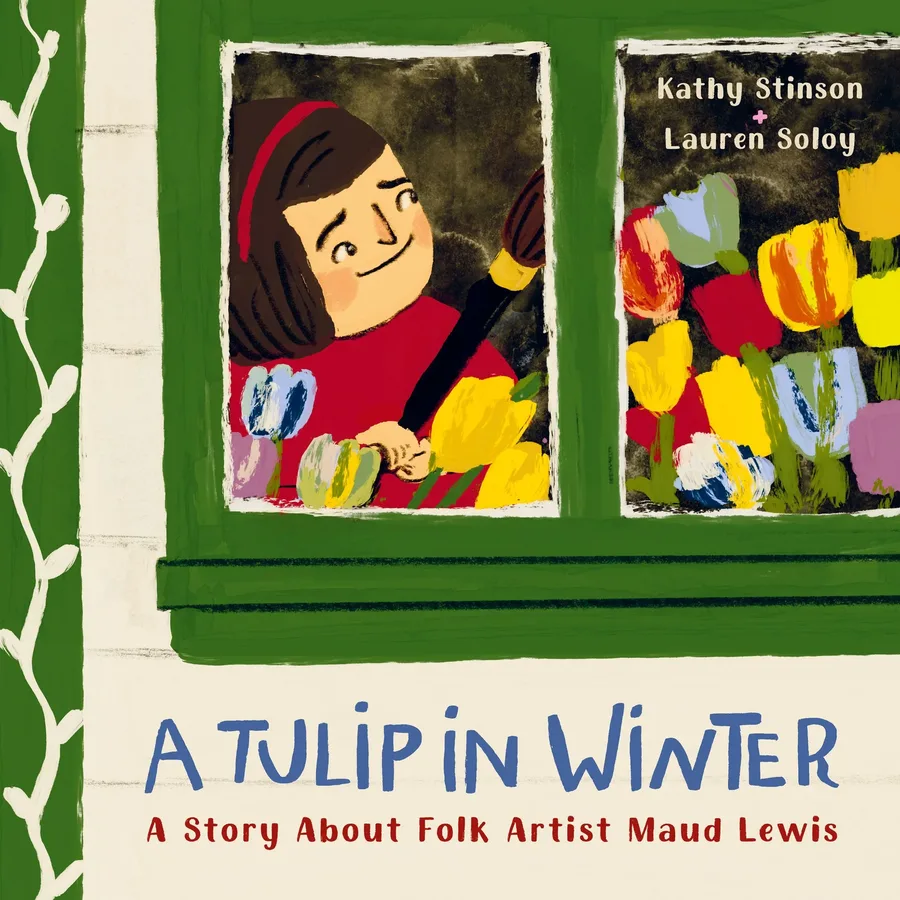 A Tulip in Winter: A Story about Folk Artist Maud LewisKathy Stinson, illustrated by Lauren SoloyNova Scotian folk artist Maud Lewis loved playing piano as a child. When her hands started growing twisted and stiff from a mysterious condition (since identified as rheumatoid arthritis), she could no longer play but she could hold the paintbrush her mother gave her. “Maud jabbed the brush into red and dragged it across the paper. … Red on white made its own kind of music.” She loved painting, excited by shape and color and line. In adulthood, Maud couldn’t find a job to support herself. Then a gruff fishmonger named Everett Lewis hired her as his live-in housekeeper once she assured him that her condition was not contagious. “Everett was strong in body. Maud was strong in spirit.” They married, and although money remained tight, Maud painted wherever and whenever she could. “She painted on walls, windows, doors, shelves, trays, breadboxes, the canisters, the dustpan … Even the woodstove!” The once dreary house became a work of art. The joyful, vibrant spirit of this singular artist’s work shines from both words and images in this appreciative account, while a welcome note provides more about Maud’s work and legacy as an artist as well as perspectives on her marriage to Everett.The ArtsView book details
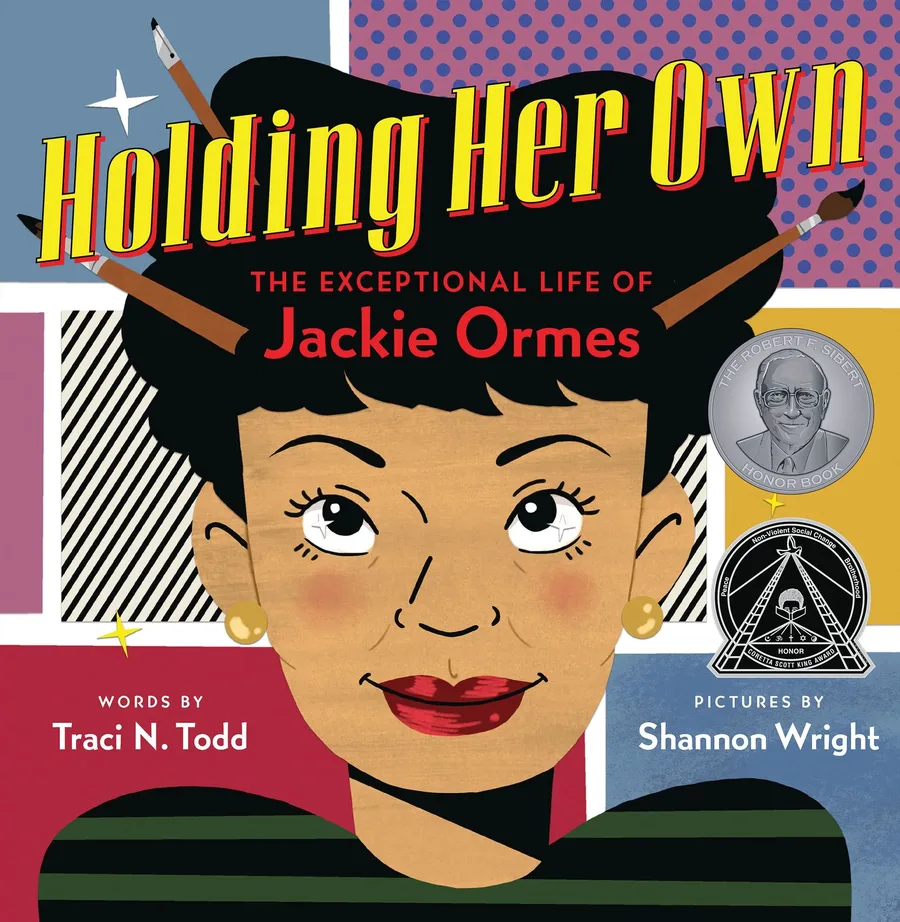 Holding Her Own: The Exceptional Life of Jackie OrmesTraci N. ToddJackie Ormes was the first Black female cartoonist to be nationally syndicated. This picture book biography utilizes stylized cartoonlike illustrations and energetic layouts to chronicle Jackie’s hard won success story. As a young woman in the 1930s, Jackie pushed to get a job as a reporter at the Black newspaper in Pittsburgh, though she really wanted to illustrate. She eventually started her own cartoon about a woman, Torchy Brown, who leaves Mississippi for fame and fortune in New York during the Great Migration. After marrying, 35 The Arts CCBC Choices 2024 Jackie relocated to Chicago, where she and her husband moved in wealthy and political circles. Jackie was monitored by the FBI for 10 years because of her political opinions and connections. During this time, Jackie was best known for her cartoon series about Patty-Jo, a sweet and spunky Black girl, in strips that didn’t shy away from addressing racism and social justice. Jackie went on to develop a Patty-Jo doll. A note from the author provides historical photos and additional details about Jackie Ormes’s life and the significance of her contributions as an artist.The ArtsLexile Text Measure 701LATOS Book Level 4.5View book details
Poetry
3 selections
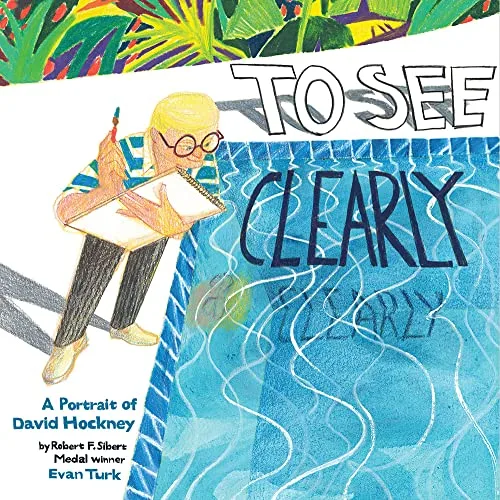 To See Clearly: A Portrait of David HockneyEvan Turk, illustrated by Evan TurkAn insightful picture book portrait of artist Hockney begins with two elements of his childhood that informed aspects of his life and career. The first is his fascination with creating art; as a boy he would draw on everything from newspapers to chore lists to the linoleum floors. (“His mother finally said Enough! and got David a blackboard …”) The other is his childhood trips to the movies, where he fell in love with bright, sun-drenched California, so different from his dull hometown in Yorkshire, England. He was also still a boy when he got his first crush on another boy. Drawing taught young David how to look, and throughout his development as an artist, he continued to challenge himself to see more and see differently. Following art school in London, he pursued his California dream. “As he stepped off the plane, the sun seemed so much brighter … the spaces and the ocean felt infinite … Everything seemed to pulse with color and excitement.” Hockney strove to capture it all on canvas and continued to do so for decades—to growing attention and accolades—always seeking new perspectives and new ways of seeing the world and capturing his vision on canvas. An intimate author’s note is among the welcome resources provide at volume’s end.PoetryView book details
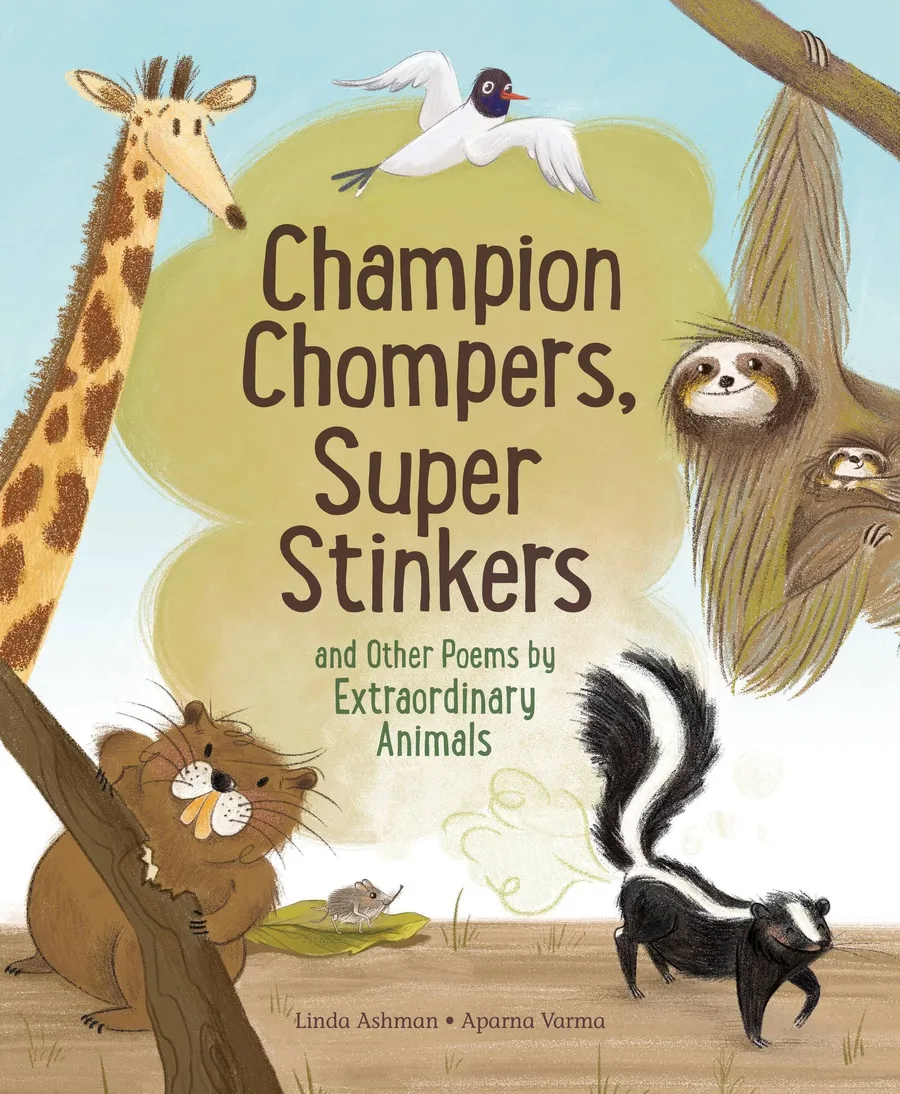 Champion Chompers, Super Stinkers and Other Poems by Extraordinary AnimalsLinda Ashman, illustrated by Aparna Varma“Although I know / I’m very slow / (the pokiest around), / I take first prize, / Endurance- wise, / for time spent upside down.” (“Slowpoke) Twenty animals are personified in this collection of poems arranged in a guessing-game format. Readers are encouraged to speculate who is the fastest, stinkiest, strongest etc. Digital artwork celebrates the features of these extraordinary animals, such as the sticky tongue of the Giant Anteater or circular sand art creations formed by the White-spotted Puffer Fish. Some animals will be familiar for their feats, like Cheetah speed, and the sloth’s status as slowest mammal (exemplified in the “Slowpoke” poem above), while others will be novel, such as the Eurasian Hoopoe’s distinctive scent. Animal facts follow each “mask” poem (which speak in the persona of each animal subject), with additional details about protecting endangered animals, animal measurements, and more at volume’s end.PoetryLexile Text Measure NC1090LATOS Book Level 7.6View book details
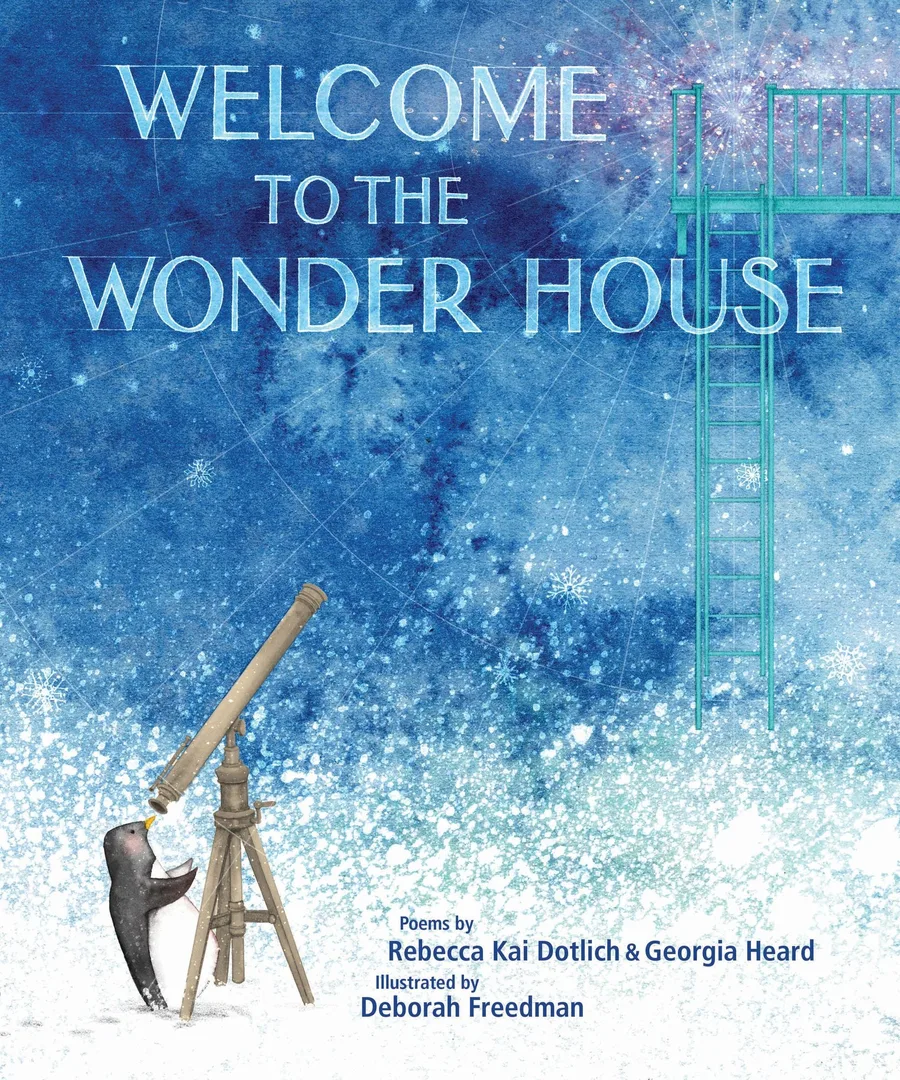 Welcome to the Wonder HouseRebecca Kai Dotlich, Georgia HeardIn the metaphorical Wonder House, each “room” is dedicated to a different theme or topic: curiosity, praise, ordinary things, creatures, nature, science, time, place, quiet, imagination, mystery, and wishes. Two to four poems explore each theme in ways that are both complementary and contrasting. In the Room of Nature, Heard writes, “Thunder 36 Poetry CCBC Choices 2024 drums the skin of sky / striking / an / electric / scar / from cloud to cloud.” Dotlich describes rain in the forest, where “my feet balance on a tangle / of puzzled roots in a wilderness of secrets” and “raindrops speak small lullabies …” In the Room of Science, an entomologist “studies whirligig beetles twirling / like tiny bumper cars that never touch” (Heard) while Dotlich’s haiku preserves the “scribbles of old gold” inside a crystal. The artful yet exacting imagery across the poems, paired with the imaginative possibilities the volume can inspire, is itself a wonder. A brief note encourages readers and listeners to value the role of wonder and their own power as wonderers in this fresh, lovely volume featuring illustrations that combine delicate renderings of concrete images with beautiful washes of color that shift from one “room” (page spread) to the next.PoetryView book details
Concept Books
5 selections
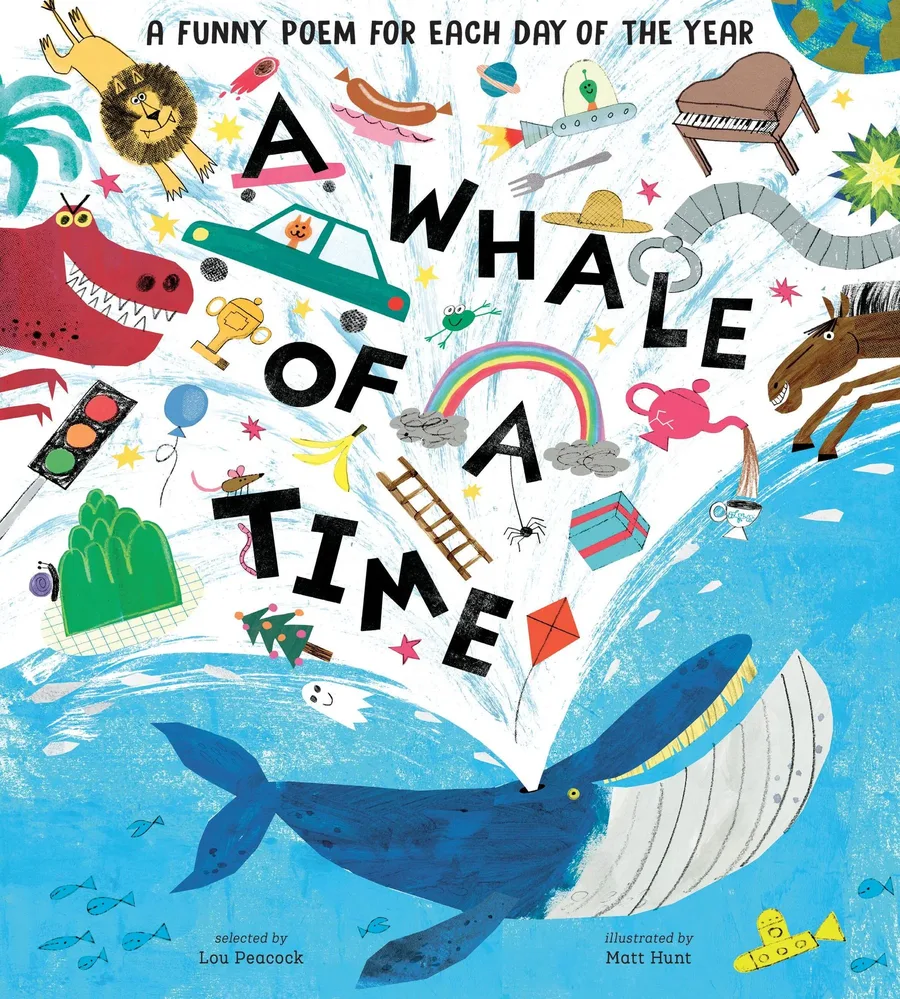 A Whale of a Time: A Funny Poem for Each Day of the YearLou Peacock, illustrated by Matt Hunt, Lou PeacockThe cheerful blue whale on the cover of this poetry collection is a nod to the playful title and the behemoth size of the volume. Indeed, this amusing anthology offers 366 funny poems arranged by month and date, complete with a brightly colored ribbon bookmark to track the daily offerings. Colorful and energetic illustrations in mixed media celebrate the humor and subject of each selection. The classic and contemporary poems from around the world were chosen for child appeal and their lively and lighthearted qualities. Pets, food, weather, and silly conundrums are just a few of the themes explored. Whether intended as a gift or for daily reading in the classroom, this tome offers a whale of a time for individuals or groups.Concept BooksView book details
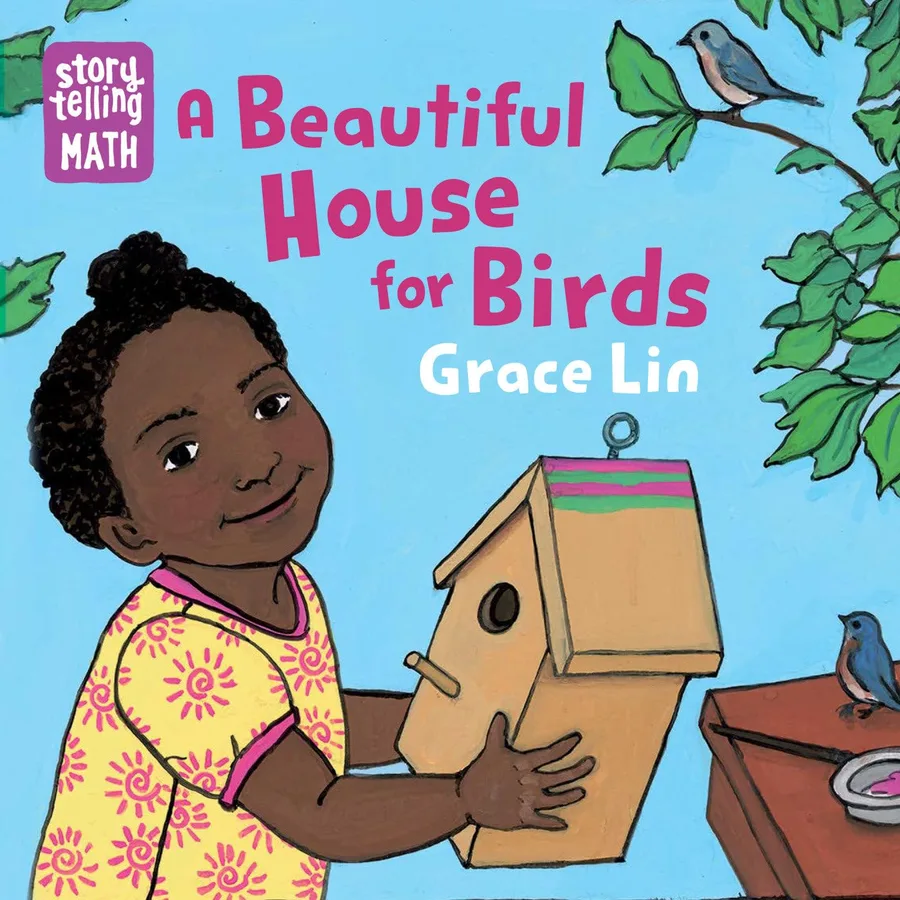 A Beautiful House for BirdsGrace LinGrace Lin adds to her math concept series with four new board books featuring three diverse preschoolers. In Who Jumps More?, about measurement, Olivia (Black) and Mei (Asian) take turns jumping in the snow like a rabbit (Olivia) and a reindeer (Mei), each covering the same distance in hops of different sizes. Where Are the Eggs? follows Mei’s search for the eggs her chickens laid; as she finds each one she describes its location in relation to objects around it (“next to,” “behind,” “under,” etc.). Olivia is painting a birdhouse in A Beautiful House for Birds, using different colors of paint to create a pattern that goes from simple to more complex. And in Our Favorite Apples, Manny (Latine) goes apple-picking with Olivia and Mei, and the three decide to sort their harvest by color. The brief volumes conclude with more about the skills that the featured concept in each book develops, and suggested “Try This” activities.Concept BooksView book details
 Our Favorite Apples. (Storytelling MathGrace LinGrace Lin adds to her math concept series with four new board books featuring three diverse preschoolers. In Who Jumps More?, about measurement, Olivia (Black) and Mei (Asian) take turns jumping in the snow like a rabbit (Olivia) and a reindeer (Mei), each covering the same distance in hops of different sizes. Where Are the Eggs? follows Mei’s search for the eggs her chickens laid; as she finds each one she describes its location in relation to objects around it (“next to,” “behind,” “under,” etc.). Olivia is painting a birdhouse in A Beautiful House for Birds, using different colors of paint to create a pattern that goes from simple to more complex. And in Our Favorite Apples, Manny (Latine) goes apple-picking with Olivia and Mei, and the three decide to sort their harvest by color. The brief volumes conclude with more about the skills that the featured concept in each book develops, and suggested “Try This” activities.Concept BooksView book details
 Where Are the Eggs? (Storytelling MathGrace LinGrace Lin adds to her math concept series with four new board books featuring three diverse preschoolers. In Who Jumps More?, about measurement, Olivia (Black) and Mei (Asian) take turns jumping in the snow like a rabbit (Olivia) and a reindeer (Mei), each covering the same distance in hops of different sizes. Where Are the Eggs? follows Mei’s search for the eggs her chickens laid; as she finds each one she describes its location in relation to objects around it (“next to,” “behind,” “under,” etc.). Olivia is painting a birdhouse in A Beautiful House for Birds, using different colors of paint to create a pattern that goes from simple to more complex. And in Our Favorite Apples, Manny (Latine) goes apple-picking with Olivia and Mei, and the three decide to sort their harvest by color. The brief volumes conclude with more about the skills that the featured concept in each book develops, and suggested “Try This” activities.Concept BooksView book details
 Who Jumps More? (Storytelling MathGrace LinGrace Lin adds to her math concept series with four new board books featuring three diverse preschoolers. In Who Jumps More?, about measurement, Olivia (Black) and Mei (Asian) take turns jumping in the snow like a rabbit (Olivia) and a reindeer (Mei), each covering the same distance in hops of different sizes. Where Are the Eggs? follows Mei’s search for the eggs her chickens laid; as she finds each one she describes its location in relation to objects around it (“next to,” “behind,” “under,” etc.). Olivia is painting a birdhouse in A Beautiful House for Birds, using different colors of paint to create a pattern that goes from simple to more complex. And in Our Favorite Apples, Manny (Latine) goes apple-picking with Olivia and Mei, and the three decide to sort their harvest by color. The brief volumes conclude with more about the skills that the featured concept in each book develops, and suggested “Try This” activities.Concept BooksView book details
Picture Books
67 selections
 365: How to Count a YearMiranda Paul, illustrated by Julien ChungA year can be counted as 365 days (366 in a leap year!), or 52 weeks, or 12 months, of course. It can also be counted by hours (8,760), minutes (525,600), or seconds (31,536,000). But why stop there? Other ways of counting a year in this playful picture book range from straightforward (365 good mornings and good nights) to silly (365 clean pairs of underwear, “hopefully”); messy (“52 Friday night movie popcorn spills”) to sublime (“52 sleep-in Saturdays). The range of examples invites readers and listeners to come up with ideas inspired by the context of their own lives to create “1 marvelous collage of 1 year in the life of you.” Brightly colored digital illustrations provide a cheerful backdrop for this creative concept book.Picture BooksView book details
 How to Count to 1Caspar Salmon, illustrated by Matt HuntA “fun new counting book” that directs readers to simply follow the instructions opens with counting a single apple: “Correct! One!” It moves on to counting something bigger (a single elephant) before a spread with two large whales and the question, “How many … sausages do you see?” (Answer: one, balanced atop the water vapor spouting from a blowhole.) With each page turn, a varying number of objects appear paired with a query, but the answer to each question is always “one.” The narrator insists that the reader will only ever count to one, until the penultimate spread when they flub the question (answer: two) and then makes amends by awarding the reader a prize (#1) for being such a good counter. The delight in this picture book is not only in the gimmick of repeatedly counting to “one,” but in the many obvious but unstated counting possibilities for the beginning mathematician found in the cheery illustrations.Picture BooksView book details
 Día de Muertos Números: A Day of the Dead Counting BookDuncan Tonatiuh, illustrated by Duncan TonatiuhIn a book that works equally well as a counting book and holiday primer, a Day of the Dead altar is assembled one item at a time. On each page, the left side shows a close-up of each item, with brief text in Spanish and English. The right shows a multi-tiered altar on which different Latine family members place the highlighted item. At the conclusion, a double-fold page spread shows all ten family members gathered around the altar with candles, music, food, and drinks to celebrate the memory of a deceased loved one. Duncan Tonatiuh’s Mesoamerican art style incorporates digital collage in a warm and straightforward accounting of Día de Muertos.Picture BooksView book details
 When Stars AriseE. G Alaraj, illustrated by Martyna CzubAfter a busy afternoon of playing outside, a brown-skinned toddler and their parent make their way inside to ready for bed. Sensory reminders from all around encourage the transition to bedtime—the lulling sounds of the river, the wind sighing in the grass, the chimney smoke curling in the sky, and fizzing bubbles in the bath. Sweet and simple rhyming stanzas lace the journey to bed, always ending with the refrain to hold off sleep “until the twinkling stars arise.” Cozy watercolor illustrations depict the peaceful passage from play to rest, complete with kisses for stuffies, a purring cat, and a skyful of stars.Picture BooksView book details
 All the Faces of MeLaura Alary, illustrated by Salini PereraA young girl fascinated by her Nana’s set of traditional nesting dolls notes that they all have identical smiles. Deciding the dolls shouldn’t be stuck with the same smiles, the girl “fixes” them, adding a range of expressions to their faces. She’s happy with her effort. Nana is not, and she angrily takes the “ruined” dolls (and dessert!) away. The girl is mad too, insisting that “If those dolls were me … they would not all be the same” because she has different feelings at different times; there are even different kinds of happiness. “Somehow they all fit together. So many people wrapped up in one.” After considering, Nana agrees; the hug she gives “is big enough to hold all of me.” Brimming with humor and emotional honesty, this superb picture book skillfully translates complex ideas about emotions and identity into an accessible story full of child-appeal. Terrific pacing also distinguishes this tale of a loving (if momentarily fraught) relationship between a brown-skinned girl and her white grandmother. The exceptional storytelling is paired with illustrations that have a naïve yet slightly edgy quality.Picture BooksView book details
 Ancient NightDavid Álvarez, with David BowlesA tale that offers “a twist on several traditional stories of Mesoamerica” shines a light on the mysteries behind the creation of the moon and sun. Diligent Rabbit collects luminous aguamiel from “the first and holy maguey” to refill the moon (depicted as a large, rounded jug) as needed. Observing the waxing and waning light of the moon, Opossum follows Rabbit to learn her ways. Envious that Rabbit gets the aguamiel all to herself, Opossum uses his walking stick to crack the moon, releasing a stream of nectar. Aghast at the sudden darkness, Rabbit upbraids Opossum. Ashamed, Opossum journeys belowground in search of a “treasure” that might rectify his actions: a “fire prepared by mighty gods as a gift for future humans who might shiver in the dark.” He returns bearing a large, clay jar spouting with flame, which he places in the sky: A sun to light the world. A lyrical text is accompanied by stunning digitized acrylic and oil paint illustrations in a limited palette. The moon glows brilliantly against a star-studded black sky before the backdrop becomes a buttery cream with the appearance of the sun. Rabbit and Opossum are equally appealing with their smooth curves, velvety fur, and unassuming faces.Picture BooksView book details
 Mazal BuenoSarah Aroeste, illustrated by Taia MorleyA loving, brown-skinned Sephardic family celebrates their baby’s milestones in this sweet board book. “When you first learned to crawl, as a baby so small, we cheered. ‘Go, baby, go! Mazal bueno!’” From first grin to first solid food, and then first time standing without support, the baby’s parents encourage their child with the familiar exclamation, “Mazal bueno!” It’s no surprise when the baby speaks their first word. “When you said your first word, it was ‘bueno’ we heard! And we hugged. ‘Yes, baby, yes! Mazal bueno!” Warmth, joy, and a celebratory Ladino refrain make for a happy story.Picture BooksView book details
 The Tree and the RiverAaron Becker, illustrated by Aaron BeckerAn immersive wordless picture book follows the development and subsequent devastation of a civilization surrounding a tree growing at the bend of a river. As the story opens, a family builds a house and livestock enclosure. Soon a small community springs up, complete with fortified castle, river dam, and nearby thatched-roof structures. The town thrives, then falls into disrepair before industrialization revives it. Steam engines, flying machines, and then cars and electricity enter the picture. The formerly small, rural town is now a bustling 39 Picture Books CCBC Choices 2024 city, the landscape laden with skyscrapers, neon lights, and elevated highways. The river has become a canal. The tree has grown to a magnificent size and reached the end of its long life; it stands barren on the only small patch of grass remaining. The next page turn marks a devastating change: The landscape has frozen over and flooded; all but the top of the tree is submerged. Buildings have crumbled. Humans live on houseboats. When the floodwaters recede, all that remains is mud and ruins. But on a branch reaching out of the gnarled old tree trunk, a few leaves and an acorn grow. The appearance of a sapling, a deer, and two children foretell a revival of the land, and perhaps of the community, on the final, tentatively hopeful pages of a thought-provoking saga of humanity and the environment.Picture BooksView book details
 One, Two, Grandpa Loves YouShelly Becker, illustrated by Dan Yaccarino“One, two, Grandpa loves you. Three, four, rush to the door!” A biracial girl (Black/white) and her Black Grandpa’s overnight camping adventure unfolds in a narrative echoing “One, two, buckle my shoe.” The first series of rhyming couplets ends with the duo’s arrival at the park. The pattern starts over to describe things they see hiking into their site (e.g., “Five, six, hungry chicks.”). The third round describes exploring until bedtime (e.g., “Nine, ten, all snuggled in.”). The final refrain starts with breakfast the next morning and ends back at home (“Nine, ten, can we go again?”) before repeating the opening line, underscoring their love and affection in this story paired with colorful, clean-lined digital images on bright white pages.Picture BooksView book details
 You Go FirstAriel BernsteinDuck is eager to go on the new slide in the park. Cat is not. It’s a bigger slide. A curvier slide. “Cat, a very good friend, wanted to make sure Duck had considered all options.” But no, Duck doesn’t want to go on the swings first. Or play in the sandbox. Halfway up the ladder, Cat, “a very good friend,” suggests a snack. Back in line, Cat suggests they politely let others who are waiting a turn go first. Cat, “a very good friend,” makes other “helpful” suggestions before finally telling Duck that the slide might not be safe: “… you may fall! And scream! And cry!” And Duck, to Cat’s surprise, agrees; she will not go on the slide. Seeing her disappointed, “Cat, a very good friend, worried that Duck was going to miss out on something she wanted.” With the potential to resonate with many children, this funny, tender story about fear and friendship features cheery, charming pencil and digital illustrations in which Cat’s anxiety is apparent from the start. The terrific text offers ample opportunities for inference and makes judicious use of repetition, while humorously revealing supporting dialogue arrives at a surprising, satisfying resolution.Picture BooksView book details
 If I Was a HorseSophie BlackallThis galloping and playful picture book by Sophie Blackall whinnies with childish delight (and a dash of absurdity). A biracial (brown skin/white) child narrates how they would spend their day, if they were a horse. They would gallop all day and go wherever they wanted. They could give their sister a ride to school and roll in the mud if it was raining. No baths or clothes necessary! Blackall’s distinctive illustration style, including watercolor, pencil, fabric, and wallpaper collage, effectively portray the dream life of a horse/child within the supportive space of a loving family and cozy home. Clever endpaper illustrations complete this ode to a child’s imagination.Picture BooksWord Count 109View book details
 My Dad Is a DJKeith Henry Brown, Kathryn Erskine, illustrated by Keith Henry BrownTrevor’s dad is a DJ, and they always used to groove to the same rhythm. But since his dad moved out, Trevor finds it harder to connect with him. Even though they see each other regularly, his dad isn’t staying in tune with Trevor. Trevor’s mom encourages Trevor to talk to his dad, and Trevor uses music to help him say what he has to say by showing his dad that he still appreciates the classics—and him—but is also developing his own tastes, interests, and identity. The love between Trevor and his dad, both Black, is never in doubt in this warm picture book with energetic illustrations and that features an older elementary- age protagonist.Picture BooksView book details
 The Hospital BookLisa Brown, illustrated by Lisa BrownA girl describes her hospital stay for appendicitis by detailing the times she cried (nine) and the times she didn’t. The physical and emotional ups and downs of a first-time hospital visit start with the stomachache that triggered the first bout of crying. There are subsequent tears with a needle poke, the scary news of impending surgery, and the loneliness of an overnight stay (even though dad is sleeping on the pull-out chair next to her bed). An array of encouraging and sympathetic medical providers perform routine health care protocols, from checking her temperature, blood pressure, and blood oxygen level to changing her into a hospital gown, setting up an IV, and performing an ultrasound. The busy operating suite is “a little scary, but also a little fun” and the anesthesia works quickly, even though she isn’t tired. Returning to the post-surgical comforts of home means wearing familiar pajamas and crying relieved tears, along with her family. The girl and her mixed-race family (Black/white) are supported by broadly diverse cast of hospital staff, patients, and visitors.Picture BooksWord Count 1001View book details
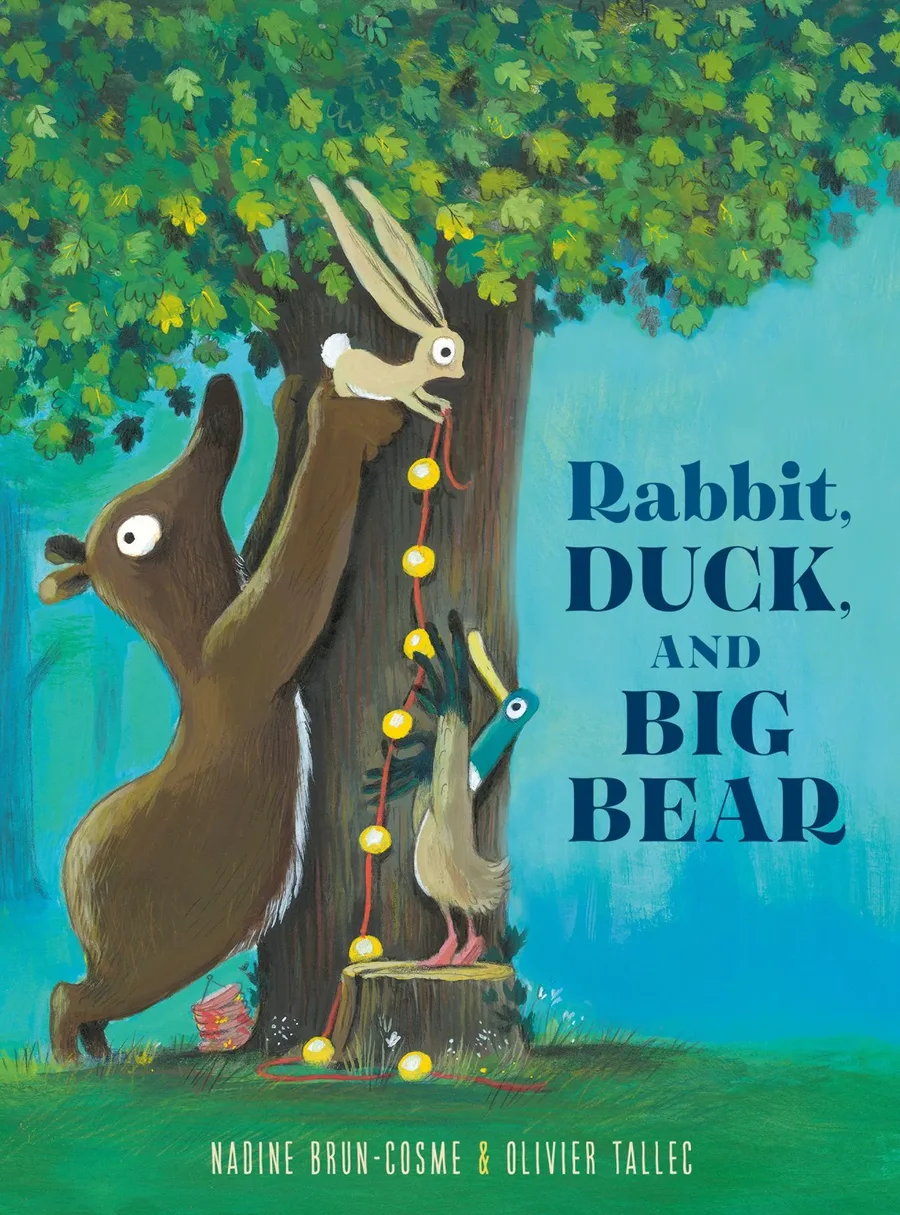 Rabbit, Duck, and Big BearNadine Brun-Cosme, illustrated by Olivier TallecRabbit, Duck, and Big Bear are forest friends who “do everything together,” relishing one another’s company. Their seasonal activities are full of delight but never include venturing down one particular winding path in the woods; Duck and Big Bear always suggest reasons to avoid it. One winter day when Rabbit unexpectedly hurtles down the path on skates, she discovers a gorgeous fir tree. “All Rabbit can think is, If only my friends were here to see this.” She’s eager to share it with Duck and Big Bear, only to learn that they’ve seen the tree. In fact, they each regularly go down the winding path on their own to spend some peaceful time alone in the serene spot. Confused (“But we do everything together”), Rabbit takes a moment to breathe in and out. “She feels the magic of the great fir. It’s almost like her friends aren’t even there.” Rabbit, Duck, and Big Bear are forest friends who do almost everything together. And that’s perfectly okay. A story with slowly building tension regarding what is down the path has a quietly joyful resolution that affirms the value of both friendship and solitude and celebrates the grounding power of nature. Expressive pencil-and-acrylic illustrations full of humor and a sense of joie de vivre also capture the beauty of the natural world.Picture BooksLexile Text Measure AD560LATOS Book Level 3.7View book details
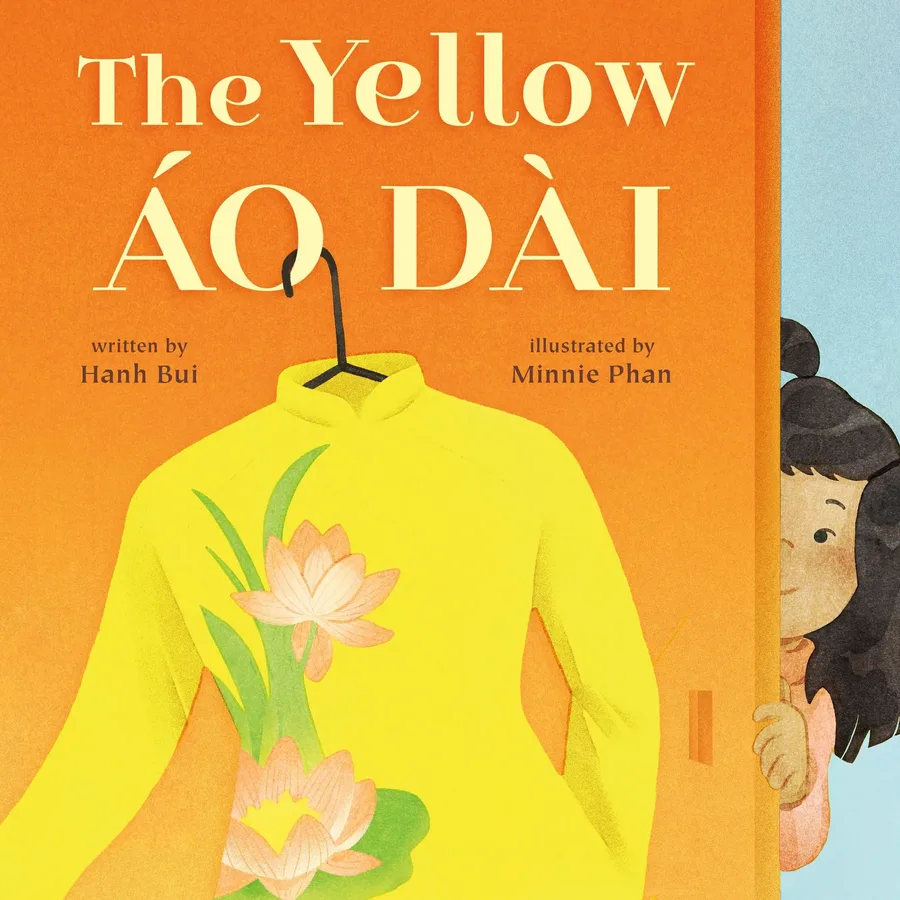 The Yellow Áo DáiHanh Bui, illustrated by Minnie PhanNaliah tries on her mother’s yellow áo dài (dress), embroidered with swans and water lilies, to practice the Fan Dance she’s going to perform at school. When she accidentally rips the dress, she hides it away in the closet. Then her mother gives Naliah a new yellow áo 41 Picture Books CCBC Choices 2024 dài and tells the story of her own yellow dress—the one with swans and water lilies that her own mother, Naliah’s grandmother, wore to perform the Fan Dance back in Vietnam. Heartbroken, Naliah confesses, sure she’s ruined her Grandmother’s special dress. Naliah gets reassurance and a surprise from her mom—it turns out she ripped the dress when she was a little girl, too! Naliah’s grandmother added the water lilies to cover the rip that Naliah’s mother made, and now Naliah’s mother will embroider a frog to cover the new tear. Naliah’s brief worry and anxiety over the accidental tear is palpable and relatable, while the story of the dress’s history, and the resolution, are terrifically satisfying in this pleasing story paired with warm digital illustrations.Picture BooksView book details
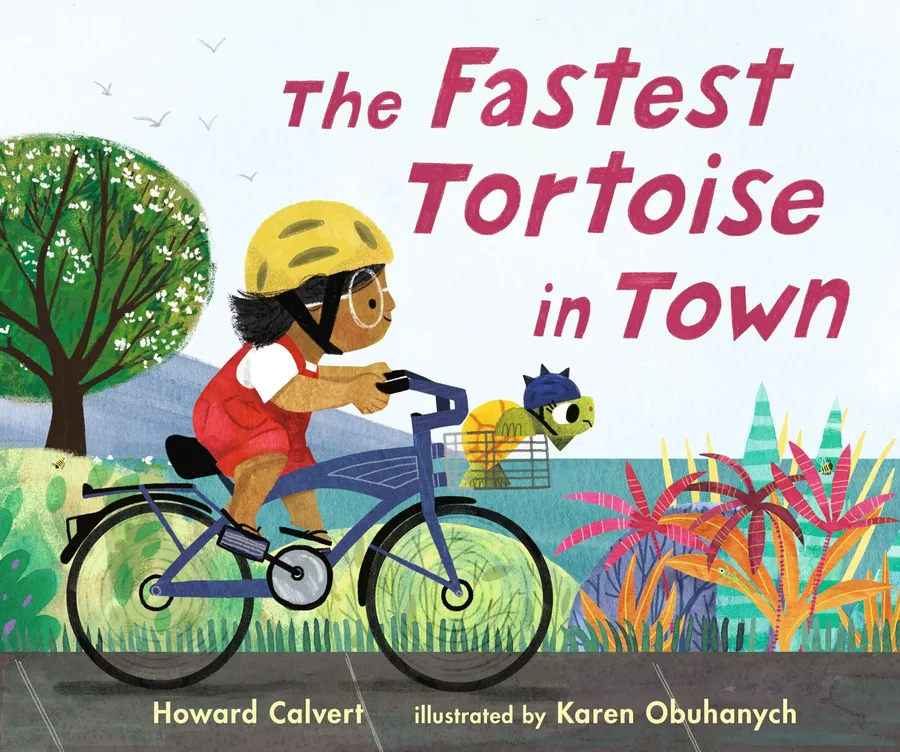 The Fastest Tortoise in TownHoward Calvert, illustrated by Karen ObuhanychBarbara Hendricks can’t quite believe it, but she’s entered a race. “Me … just a regular leopard tortoise. RACING. Against other animals.” Her best friend, Lorraine, a brown- skinned human girl, offers both encouragement and training tips. But their long walks to build muscles and stamina are discouraging to Barbara: Everyone passes her, from an absentminded worm to toddler Lily, who’s just learned to walk, to a remote-controlled brachiosaurus. “Don’t worry about what anyone else is doing,” Lorraine tells her. “Just run your own race.” By race day, Barbara doesn’t want to come out of her shell. Lorraine offers gentle encouragement and soon Barbara Hendricks is at the starting line, assessing the competition: “a slug, a snail, a slow loris, a sloth, and Woody the grumpy Walrus … The best of the best, the fastest animals I’ve ever seen!” All Barbara can do is follow Lorraine’s advice and run her own race. The absurdity of the premise paired with the sincerity of the telling is a delight, while the illustrations extend the charm of a story that builds to a hilarious account of the race itself. And first across the finish line is …Picture BooksWord Count 516View book details
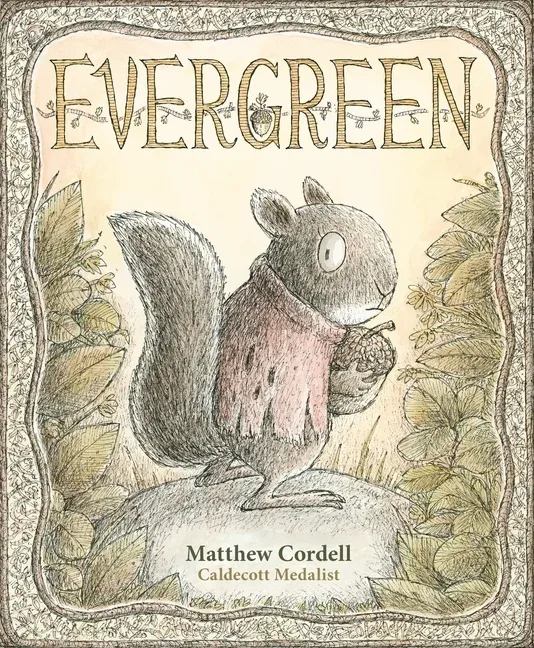 EvergreenMatthew CordellThe list of things that frighten a young squirrel named Evergreen is long: “Afraid of loud noises. Afraid of meeting someone new. Afraid of heights, afraid of swimming, afraid of germs. And thunderstorms—her very worst fear was thunderstorms.” When Mama tasks Evergreen with taking soup to ailing Granny Oak, Evergreen sets off despite her fears. This captivating picture book chronicling Evergreen’s journey through Buckthorn Forest is divided into separate stories, each with its own dramatic arc. In “Briar,” Evergreen helps a rabbit in need who proceeds to steal the soup. “Ember” sees Evergreen, having reclaimed the soup, caught by a hawk. Evergreen meets a young, frightened toad stuck in the middle of a river in “Spring & Squirt.” She finally arrives at Granny Oak’s in “The Bear,” but the twists, turns, and surprises aren’t over. Every time Evergreen encounters one of the things that frightens her, she repeats the words “I … can do it.” By the time she returns home, she’s feeling triumphant … if not for long. A story with abundant drama and humor has subtle references to Western fairy tales and fables throughout (e.g., Evergreen’s red cloak; a predator in need). The color brown predominates in pen-and-watercolor images that include muted tones of other hues. From the creatures’ expressive eyes to the blend of realism (renderings of fur and feathers and amphibian skin), and fancy (the clothes!), the images are as exactingly and charmingly detailed as the story itself.Picture BooksLexile Text Measure AD580LATOS Book Level 3.8View book details
 Our PoolLucy Ruth Cummins“… from the moment I open my eyes I can tell it’s a Pool Day.” It’s clear the young narrator isn’t the only one who thinks the pool is the perfect place to spend a hot summer day in the city in this lively picture book following a racially diverse group of children and families 42 Picture Books CCBC Choices 2024 as they spend the day at “our pool.” The story is composed of a string of evocative details (e.g., waiting impatiently for sunblock to be applied; the many and varied ways of getting into and being in the water; the muffling of city noises underwater; floating behind Mom “like a cape”; the collective disappointment when dark clouds appear and collective cheer when they move away). The gouache, colored pencil, and digital art’s sun-bright palette, punctuated by fluorescent pinks and greens, and the many and varied scenes that are sure to be familiar to pool-goers and enticing to novices, add to the irresistible energy. The unidentified narrator could be any of the children shown throughout the story in this celebration of summer, city life, and the sense of community that a shared space can inspire.Picture BooksWord Count 747View book details
 Quiet Time with My SeeyaDinalie Dabarera, illustrated by Dinalie DabareraSona and her Sri Lankan grandpa don’t speak the same language. Her mum says that’s why their time together is “quiet.” But Sona and Seeya are far more rambunctious than the title of this picture book suggests, something readers and listeners will delight in discovering as the story unfolds. Seeya and Sona play together, garden together, and play video games together. “He’s not very good. But he tries his best.” When he reads to her, “I don’t know all the words, but I get what he means.” They cook together, eat together, and go on adventures. When she reads to him, “I can tell … he knows what I mean.” Sona’s straightforward, childlike voice shines in a narrative paired with soft colored pencil illustrations showing scenes brimming with warmth, love, and humor, Seeya being a grandpa whose playful spirit is clearly a match for his granddaughter’s.Picture BooksView book details
 Okra Stew: A Gullah Geechee Family CelebrationNatalie DaiseAfter Mama leaves for work and Big Sis heads to school, young Bobo and his father begin their day’s task: making okra stew. They start in the garden, picking okra and tomatoes, while Grandpa sews baskets on the porch. Later Papa nets shrimp in the creek and Bobo collects shells in his bucket. Next comes chopping and dicing vegetables and adding seasonings to the pot before stirring in the shrimp, while Papa tells Bobo how he learned to make okra stew from his daddy in the same kitchen where they work now. They bake cornbread, and then Papa asks Bobo what else is needed. “‘Rice!’ I say. Papa laughs and sings, ‘Dat’s fa true, gotta have rice with okra stew!’” That evening the family shares a delicious meal that has been enjoyed for generations, clearly a beloved cultural and family tradition. An author’s note states that the Gulla Geechee people are descended from West Africans who were enslaved and brought to the American southeastern coastal region. The book is created “in the spirit of Sankofa, a word from the Twi language of Ghana, which means ‘go back and fetch it,’ or to reach back to the past for that which is good and bring it with us into the future.” The collage-like illustrations exude joy and familial connections.Picture BooksView book details
 On the Edge of the WorldAnna Desnitskaya, illustrated by Anna Desnitskaya, Lena TraerVera lives on the Kamchatka Peninsula in Russia, with the Pacific Ocean stretching out beyond the coast. “My mom says we’re on the real edge of the world.” Lucas lives with his family in a small town on the coast of the Pacific Ocean in Chile. “It’s the real edge of the world!” his grandmother tells him. In a book comprised of two separate stories that start at each end and meet in the middle, Vera (white) and Lucas (Latine) reveal their “most valuable things,” how they spend (or want to spend) their time, and their loneliness: Each longs for a friend. Both children sometimes end the day at the beach near their respective homes, using Morse Code to send out a flashlight signal: “Hi, I’m Vera.” “Hi, I’m Lucas.” The two stories are connected by a series of pages showing the span across the ocean that their two signals must travel to reach the other, which is surely an impossibility, and yet … 43 Picture Books CCBC Choices 2024 Whether it’s the magic of storytelling or something else that sees this impossibility become a reality is one of many things readers can ponder in this full-hearted work beautifully grounded in the lives of two contemporary children living continents apart. Marvelous details conveyed through text and illustrations reveal many parallels and some contrasts between Vera’s and Lucas’s lives. The distinct, artful style and clean lines of the digital illustrations, which include a map and Morse Code on the endpapers, add to the book’s appeal.Picture BooksView book details
 BeneathCori DoerrfeldGrandpa wants to talk about Finn’s “horrible mood,” but Finn declines, believing that Grandpa doesn’t understand how Finn is feeling. Finn agrees to a walk but insists on remaining cloaked in a blanket. “‘Don’t worry,’ said Grandpa. ‘I’ll remember to think of what’s beneath.’” As the two amble through the woods and along the shore, Grandpa talks about things that can be seen and things that cannot. Though they may be hidden, there are roots growing beneath trees and fish teeming beneath a motionless boat. Sometimes we know what’s beneath (eggs under a nesting bird) and sometimes we don’t (what is that fox digging up?). And while we can see “what’s happening on the outside,” there’s also plenty going on beneath the surface of plants, animals, and even people: experiences, explanations, emotions. The digital art echoes this concept visually, providing glimpses beneath and inside the landscape and other creatures. When Grandpa tells Finn that “‘[b]eneath someone who looks like they won’t understand … is someone who knows exactly how you feel,’” Finn embraces his offer of connection. This child-friendly narrative successfully balances the concrete with the figurative and offers plenty of moments for contemplation, understanding, and discussion in both the text and illustrations.Picture BooksView book details
 Water DayMargarita Engle, illustrated by Olivia SuaIn a young girl’s Cuban village, the water required to bathe, do laundry, cook, hydrate, and flush the toilet does not come from taps. In this village, water is delivered by the water man, who arrives in a truck or with a horse and wagon and a big tank. From there, the water is dispersed and stored in personal tanks for use by individual families. Water days are festive and hectic. On this day, the girl’s mami patches their hose while her papi repairs their pump. Her bisabuelita tells her that when she was a child, there was rain enough to fill their wells and big clay jars. But now, “everything” has changed. “Weather. Rivers. Groundwater. Lakes.” Still, they are fortunate; the water man is here, and after him comes the fish lady to deliver the “silvery little peces” that eat mosquito larvae from the stored water, preventing the spread of malaria. Once the family’s personal needs have been met, the girl helps Bisabuelita water “the toes of thirsty trees.” The brilliant blue of the water tank stands out in a mostly earth-toned palette in the painted cut-paper illustrations. Spanish words are integrated into a text that acknowledges the global water crisis while maintaining an upbeat—but never naïve—tone.Picture BooksView book details
 Dim Sum PalaceX. FangLiddy (Asian) is excited about eating at the Dim Sum Palace tomorrow. She goes to bed wondering if it’s a real palace with an empress. “‘You’ll just have to wait and see!’ Mom replied. ‘Good night, my little dumpling.’” But Liddy can’t sleep. When a delicious smell wafts into her room, she follows it to the Dim Sum Palace, a fantastical place with enormous food. Liddy falls into a bowl of filling and ends up tucked into a dumpling being served to the Empress. “STOP! Don’t eat me!” she cries, cradled between chopsticks with the Empress’s open mouth looming. After Liddy loudly proclaims that she’s not a dumpling but a little girl, the charmed (and, until then, oblivious) Empress invites Liddy to share her meal rather than be part of it. The next morning Liddy wakes up in her bed, and the family goes to the real Dim Sum Palace, where the food “tasted better than in her wildest dreams.” This 44 Picture Books CCBC Choices 2024 delightful homage to In the Night Kitchen is also inspired by the debut Taiwanese American author/illustrator’s memories of childhood dim sum feasts. The illustrations, rendered in graphite and digitally colored, are marvelously offbeat and full of dim sum-inspired shapes, including dumpling-esque humans sure to bring a smile.Picture BooksLexile Text Measure AD500LATOS Book Level 3.3View book details
 What My Daddy LovesRaissa Figueroa“My daddy loves starting the day with me.” On each page spread, a simple first-person statement about what the daddy shown loves doing “with me” accompanies an illustration showing a different Black dad and his young child engaged in the activity. In addition to “starting the day with me,” these activities include eating, playing, discovering, studying, growing, fixing things, and more. Across this lovely, child-centered affirmation of the love between these fathers and children, the illustrations include dads who are young, middle aged, and older; one has hearing aids, and one uses a wheelchair. The toddler and preschool-aged children shown clearly revel in the everyday moments of love and connection the narrative celebrates.Picture BooksView book details
 Friends Beyond Measure: A Story Told with InfographicsLalena Fisher, illustrated by Lalena FisherHarwin (white) and Ana (brown-skinned) have been having fun together since the day they met. From making “fairy tea” with backyard ingredients to spending hours on the trampoline, their friendship has been full of creativity and compromise. Humorous and sophisticated illustrations document the girls’ activities using a range of infographics. A Venn diagram outlines their similarities and differences, a timeline shows their trick-or- treating activities on Halloween, and a pictogram depicts their careful count of Harwin’s horse collection. No chart, however, can quantify their distress and sadness when Harwin must move far away. Text bubbles and child-like drawings made with pencil, marker, and Adobe photoshop convey the heartbreak of losing a good friend, and the hopeful resolution of staying in touch and charting future adventures. A chart of charts is included at the end, with a brief description of how they convey information.Picture BooksWord Count 423View book details
 MineCandace Fleming“In a tall, tall tree, at the tip-tippy top, hung a single red apple, just about to drop.” Mouse is the first to see the tempting fruit and claim it as her own: “‘An apple,’ squeaked she. ‘Mmm-mmm, how divine. When it tumbles to the ground, it’ll all be mine!’” She lingers beneath a leaf, imagining it as her own. Hare is the next to spy the prize, and he settles in the grass to await its fall. Then comes Fox, followed by Deer, and finally Bear. Each of them hovers nearby, anticipating solo ownership, and a melee ensues when the apple eventually drops. The contested treasure rolls free, unnoticed by all except a passing possum, who first considers it as “mine?” but then declares “ours!” to the smiling worm who has already occupied the coveted fruit. The patterned rhyming text and ever-increasing size of those vying for the fruit amps up the suspense, tempered by the finale’s generosity. Bold black outlines and framed double-page spreads showcase the parade of animals created with stained paper and relief printmaking.Picture BooksView book details
 At the Drop of a CatÉlise FontenailleA young boy shares his observant and abundant appreciation for his grandpa, Luis, in this picture book originally published in France. Luis takes care of the six-year-old narrator 45 Picture Books CCBC Choices 2024 twice a week: “Every Wednesday, and on Sundays, too.” Luis is a gardener and a lover of nature. “When he talks to the chickadees, they talk back. … Luis talks with his cat too. They don’t always agree.” The boy notes that Luis has been working since he was a young boy himself. Later, he was a refugee; he walked to France from Spain at age 11. “Dad told me Luis didn’t have a chance to be a kid.” Luis never learned to read or write, and he says he’s too old to learn now, but he loves wordplay, sometimes teasingly saying “at the drop of a cat,” or telling his grandson that he’s “the apple of his pie.” The young narrator loves these turns of phrase, even if his teacher doesn’t. Luis can draw, cook, sing, and play guitar; and now, he’s teaching his grandson to play, too. Love—unstated yet obvious—radiates from every page of a child-centered story set against distinct, expressive illustrations celebrating the natural world that—along with his grandson—clearly brings Luis joy.Picture BooksView book details
 From Here to There: A First Book of MapsVivian FrenchWhen Zane (brown-skinned) mails a letter to his friend Anna (white), inviting her to his house, he includes a hand-drawn map showing his apartment building, Anna’s house, and a few other important neighborhood places. Anna wishes she had a map with her house in the middle, not Zane’s, so her dad suggests she draw one of her own. She does, but she can’t fit Grandma’s house; it’s too far away. Her dad shows her another kind of map that takes a bird’s eye view, using shapes and symbols instead of detailed drawings to mark certain types of buildings and landmarks. Unimpressed, Anna decides instead to draw a map of their house for her cat, Whiskers (e.g., Anna’s bed, kitchen table, Dad’s pile of papers). Then dad shows her yet another kind of map—a family tree (missing Whiskers, whom Anna adds). Brief tidbits of map-related information, such as scale, compass, symbols, and perspective, are sprinkled throughout a cheerfully informative picture book with pleasing mixed-media illustrations. Readers are encouraged to make a map of their own in end matter that provides ideas, encouragement, and helpful suggestions for doing so.Picture BooksWord Count 301View book details
 A Walk in the WoodsNikki GrimesA week after his dad’s death, a Black boy opens the envelope his dad left him and finds a map marked with a red X. He’s reluctant to visit the woods, a place that has always been theirs together, alone, but he finds unexpected comfort in familiar sights as he follows the path laid out by his dad. The woods are alive with wildlife: a garter snake, a magnificent eagle, a nest of young grouse. The map leads the boy to “a lonely brick fireplace,” the only remnant of an old structure, where he finds a metal box with drawings of woodland animals tucked inside. There are poems, too, each about a different animal and most ending with a question, as if unfinished. The boy sees a signature and a date—his dad’s name! He drew these when he was only the boy’s age. Finally, the boy finds a note. “Finish my stories, or not / but this last page is for you, Son. / Draw and write your own story. / I’ll always be watching.” Feeling lighter, with tears and a smile on his face, the boy heads home, “but in no particular hurry. Dad knew I needed / this walk in the woods.” Told in vivid, eloquent verse, Grimes’s tender story is accompanied by drawings begun by Jerry Pinkney and completed with warm, swirling strokes of paint by Brian, his son, after Jerry passed away.Picture BooksView book details
 The World and Everything in ItKevin Henkes, illustrated by Kevin HenkesKevin Henkes again connects with young children on their level in a picture book blending a spare, soothing, second-person text with tender visuals to illuminate reassuring truths 46 Picture Books CCBC Choices 2024 about our world. It’s a world that contains small things, like “little animals,” “tiny flowers,” and “pebbles,” and big things like the sea, the sun, and the moon. The narrative moves from this elegantly simple expression of scope and scale to a more nuanced exploration—always through scenes, objects, and perspectives familiar to a small child. You can have some small things—a single pebble, a single flower, a kitten in a lap. But you can have some of the big things too: not the entire sea, but a handful of sea water; not the whole sun, but a patch of sunlight on the rug; while the whole, full round moon is visible through a bedroom window. And in a world of big things and small things “and everything in between,” most of the things are in between, “Like you. / And me.” With quiet precision, Henkes assures young children that big, small, and in between, “everything is in the world.” Illustrations done in brown ink and watercolor in a warm pastel palette show each scene dotted with things familiar to young children—an acorn, a raincloud, woolly white sheep—while square outlines cozily contain each image.Picture BooksWord Count 153View book details
 The Red JacketBob Holt, illustrated by Bob HoltDespite being surrounded by a horde of fellow seagulls and assorted shore creatures, Bob feels left out and lonely. A chipper bird sporting a snazzy red jacket notices the gull’s dejected state and offers Bob his coat. A little stunned, Bob peppers the bird with questions, ending with a bewildered, “Why?” The bird replies simply that he no longer needs it, mentioning that there are fries in the pocket as he flies away. The new jacket buoys Bob’s outlook, evident as he sunnily greets blue crabs, a pelican, a seal, flounders, and, finally, his own flock of seagulls. All respond with equal good humor, and Bob credits the jacket with the change in his social status. Disaster strikes when a large wave hits the beach, submerging Bob and taking the red jacket out with the tide. Bob searches desperately, asking all that he encounters if they’ve seen it. By the time it’s returned, Bob realizes his friendships are not dependent on the red jacket and so he passes it on—complete with fries—to cheer a mopey turtle. Bright colors and a comic visual style pair perfectly with a text told completely in dialogue bubbles, the exchanges perfectly capturing the diverse personalities of the animal community where Bob finds friendship and gains confidence.Picture BooksLexile Text Measure 140LATOS Book Level 1.4View book details
 My Mother Was a NannyLaura JamesA Black child describes her hard-working mother by cataloging the many jobs she does by day of the week. On Monday, her mother nannies for her daughters’ teachers, Tuesday she shops at the greengrocer, Wednesday she bakes bread for the week, Thursday she’s ready for a customer to pick up the wedding dress and cake she made, Saturday she cleans offices. The mother is also a sympathetic friend and listener who makes time for friends and relatives. A story focused on the mother remains marvelously child-centered, just like the young narrator and her sisters are clearly a focus of their mother’s life—made clear when their mother surprises them with matching handmade Easter dresses. “‘I may be busy,’ Mummy said. ‘But I always have time for you.’” Race and class issues are never explicitly mentioned but apparent across the pages of this picture book honoring James’s Antiguan mother and featuring paintings in acrylic on linen with saturated colors that pop.Picture BooksView book details
 TadpolesMatt JamesAs the narrator of this picture book describes the field near his school, a supplementary story about his family life plays out in the art. The boy begins with frogs. “A kid in my class says she saw a two-headed frog.” It was probably just two frogs, though, according to his dad. His dad has also told him about the ephemeral ponds in the field. The boy reports on the more interesting, abandoned junk he has discovered there: a waterlogged piano, a rusted bicycle, an empty silo where he once “yelled every single swear word” he knew, angry that his dad moved out. “I guess I was worried that he wouldn’t love me anymore, but my dad says that some things never change.” It’s an unequivocal moment that expresses the heart of this distinctly childlike story. The boy goes on to share what he knows about frogs while the illustrations show him with his dad (both white), decked out in rain gear, carefully fishing tadpoles out of a pond for closer examination before letting them go. The text remains focused on tadpoles while the illustrations show the two walking. Outside a house, his dad embraces the boy before the boy goes inside, where his mother waits to greet him. The meandering flow of the narrative is almost stream-of-consciousness, while the loose, boldly colored illustrations illuminate the father’s presence in his son’s thoughts and life.Picture BooksView book details
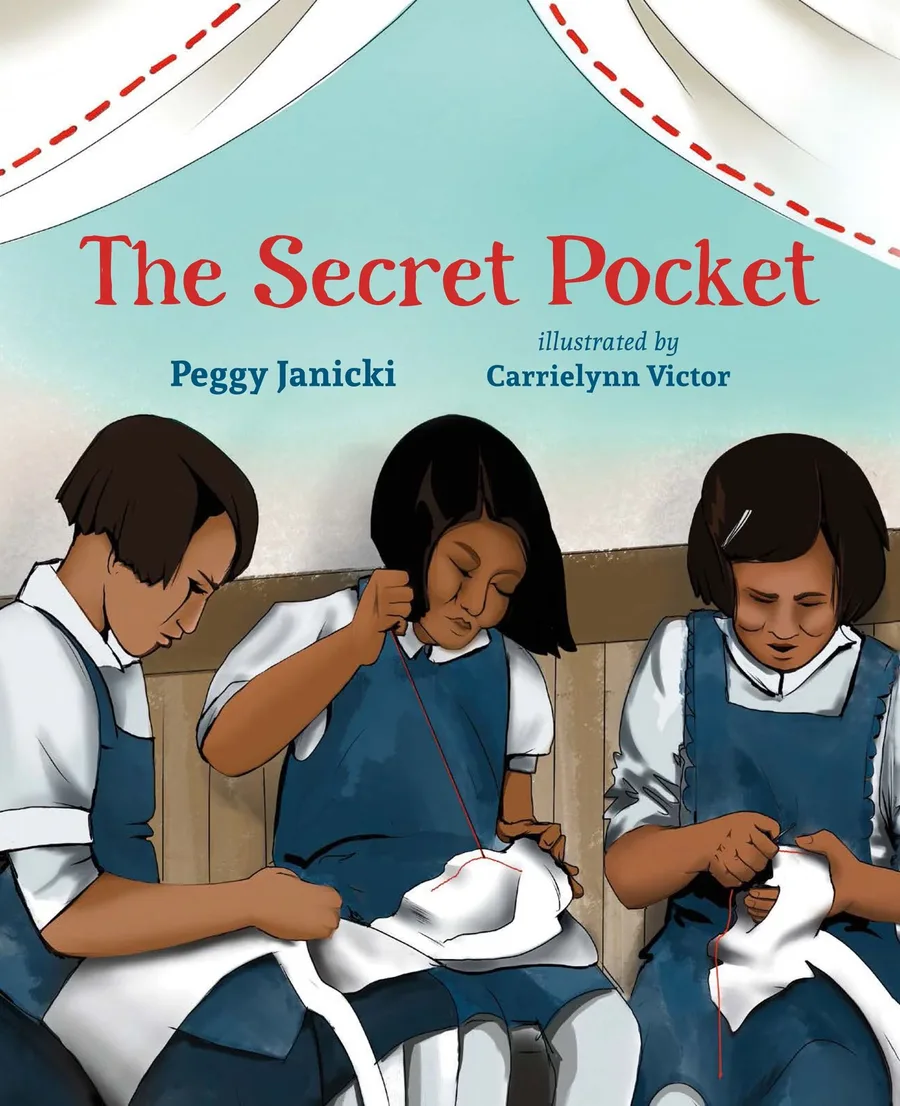 The Secret PocketPeggy Janicki, illustrated by Carrielynn Victor“I was always hungry and cold at Lejac. … Soup at lunch was a different color depending on the season. Gray soup in wintertime and colorful soup in the fall.” This moving account of a young Dakelh girl in western Canada forced to leave her home to live at a church-run residential school for much of the year is imbued with marvelous details and remarkable balance as it describes both hardship and resilience. Told in the voice of an older woman looking back on her childhood, her memories are of sadness and loss but also moments of humor (discovering nuns go the bathroom!), ingenuity (she and her friends sewed secret pockets inside their petticoats to hide food), and joy. Nothing was more joyful than the arrival of her grandfather’s sleigh to take them home at winter break, and the renewing months of summer among family. “Now … I look back at this time and see what sweet little geniuses we were. … We sewed our survival into every stitch. We were geniuses. We are geniuses. We will always be geniuses.” Heartrending and heartening, this stirring picture book features illustrations with a somber palette that brightens, and sober expressions that lighten, when setting and thoughts shift to home.Picture BooksView book details
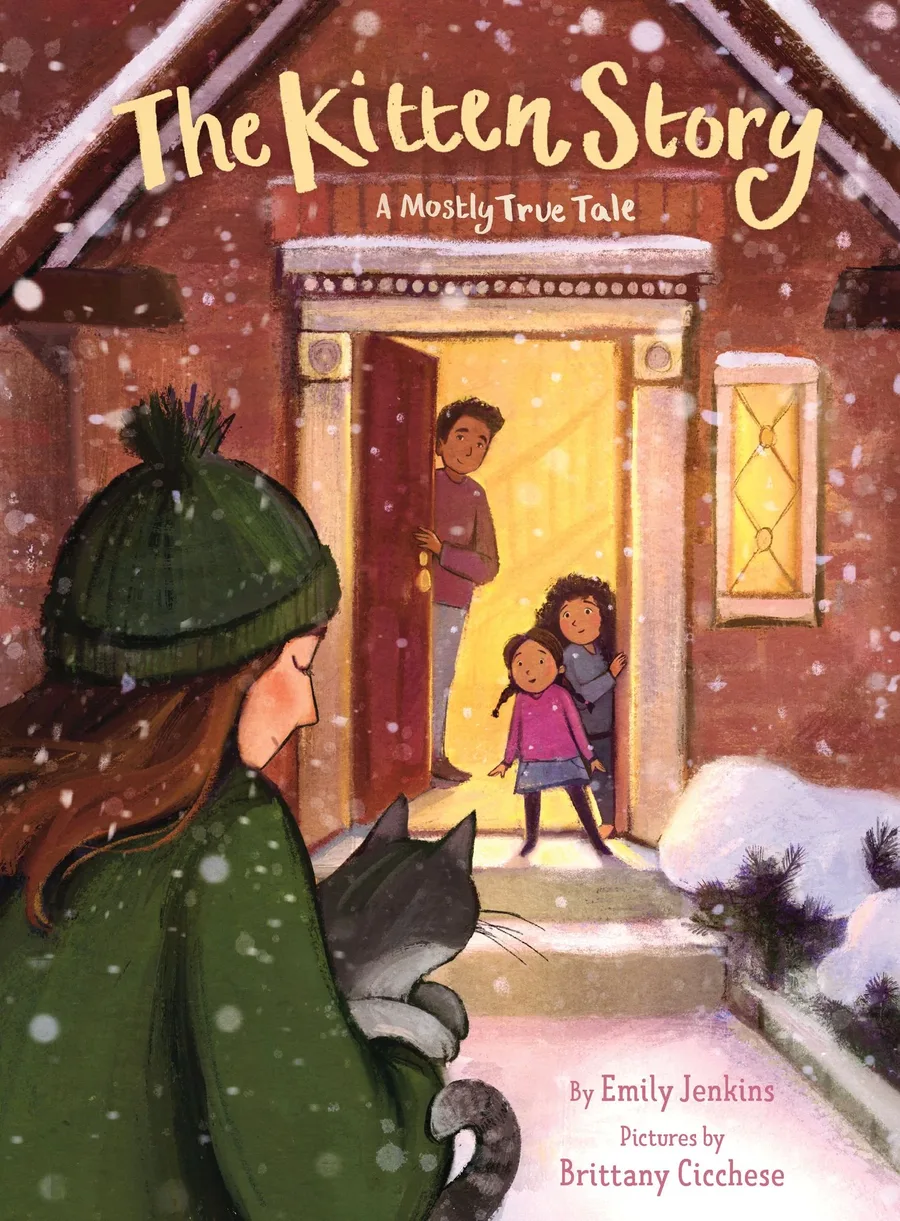 The Kitten Story: A Mostly True TaleEmily Jenkins, illustrated by Brittany CiccheseWhen a family decides that “life would be better if we got a cat,” discussions, disagreements, and negotiations ensue. Daddy (brown-skinned) wants an older cat, but daughters Rosie and Tulip (biracial) want a kitten. Mommy (white) is the tiebreaker: “Kitten!” The girls finally agree on a name (Nigel), and then the search for their new pet begins. The first shelter is closed, leading to disappointment. Mommy goes alone to the second shelter, where there are lots of kittens in cages, and also a single carrier with a single cat. “He wasn’t small. In fact, he was almost an older cat. And he wasn’t very cute. He couldn’t be our kitten.” Then she takes him out. All prior family protocols, agreements, and understandings abandoned, she decides he’s the one (of course he is!), and names him Blizzard without consulting anyone. “Rosie loved him at first sight. Tulip loved him, too. There was rejoicing. Even Daddy.” Amusingly realistic and highly entertaining family dynamics play out in a skillfully droll narrative that hums with excitement, anticipation, disappointment, and delight. The story is paired with art in a subdued palette that mines each moment of humor and warmth and wonderfully extends the fun.Picture BooksView book details
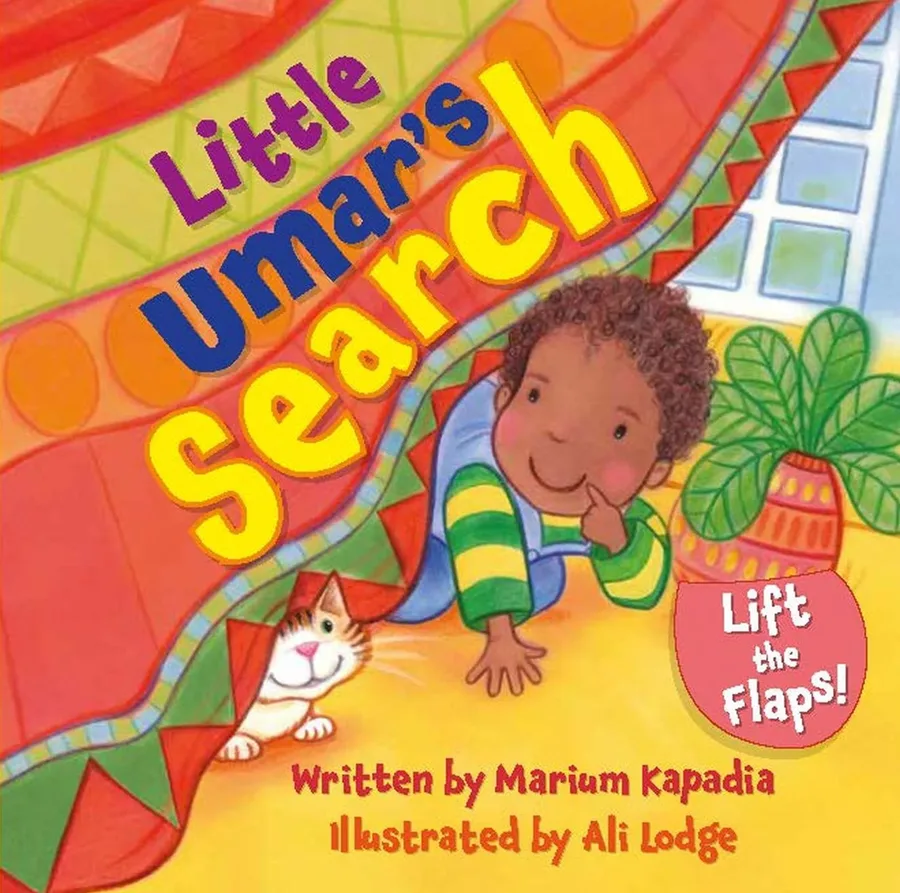 Little Umar’s SearchMarium Kapadia, illustrated by Ali LodgeUmar, a Muslim toddler who wants to play with his big brother, Ibrahim, searches for him throughout the house in this pleasing board book with liftable flaps that reveal the worship-related activity in which each family member is engaged. “Are you in the kitchen?” No. “This is Grandma doing dhikr.” In the garden? Grandpa is making du’a. Sister is in the hallway, wearing her hijab. Daddy is finishing wudu in the bathroom. And Mommy is in the study reading the Qur’an. Finally Umar checks the living room, and there is Ibrahim, offering salah. The brief, patterned text and cheery illustrations convey the elements of the family’s religious practice matter-of-factly and with ease.Picture BooksView book details
 Summer Is for CousinsRajani LaRoccaAn extended South Asian American family enjoys a delicious summer together. Every year, all 15 of them gather at “a house that’s not any of ours, near the ocean and a lake.” Now that baby Leela has arrived, narrator Ravi is no longer the youngest of the family. But he still looks up to his oldest cousin, Dhruv. Feeling shy, Ravi is pleased when Dhruv kindly includes him, inviting Ravi to paddleboard and encouraging him as Ravi takes a turn on the rope swing. (He was too scared to swing last summer.) Ravi wonders if Dhruv remembers that they have something in common: their favorite ice cream flavor, which unfortunately is never available at the ice cream stand. The cousins’ days are filled with summer fun: They swim and swing, hike and bike, and play mini golf. When it rains, they read or nap or piece together a jigsaw puzzle. The days end with drive-in movies and, of course, ice cream. When it’s the cousins’ turn to make dinner, Ravi’s contribution is … a blue plastic ball? The kids roll it around, confused, until Ravi opens it to reveal a treat: ice cream! Dhruv takes the first spoonful. “‘Banana,’ he says. He puts an arm around [Ravi’s] shoulders. ‘Our favorite!’” Colorful, saturated digital illustrations show cousins of all ages playing together in a sweet and joyful story that celebrates personal growth and the enduring love of extended family.Picture BooksView book details
 Once Upon a BookGrace Lin, Kate MessnerThis gorgeously illustrated adventure is a book within a book. Alice (Asian) is irritated inside her house on a cold winter day. Bored, Alice stomps around and in doing so ruffles the pages of a book on the floor—an invitation to escape. Much like her famous storybook namesake, Alice falls into a wonderful world of talking animals and new experiences. First, she climbs into a tropical forest and is surrounded by lush flora and colorful birds—so different than the dreary scene at home! But when it begins to rain, Alice wishes for a warmer, drier place and steps through to a new page, onto the back of a camel caravanning through the desert. When a sandstorm blows in, Alice is off to yet another enticing environment. Visual clues provide hints about Alice’s destinations, and keen readers will search for an unnamed white rabbit that joins her journey. Ultimately, the aroma of dinner and cozy feel of her family home bring Alice out of the book and to the dinner table. Drawings of objects and décor in Alice’s dining room, such as the avian wallpaper, hint at the inspiration for an afternoon spent lost in a book.Picture BooksLexile Text Measure 440LATOS Book Level 3View book details
 My Powerful HairCarole LindstromThe Ojibwe narrator of this heartfelt picture book delves into the significance of hair in her community. When the story opens, the girl stands in front of a mirror, her smooth black hair cropped just below her ears. She is excited to grow it out, something her mom never did because “she was told hers was too wild.” The girl’s Nokomis, too, was denied long 49 Picture Books CCBC Choices 2024 hair; her braids were forcibly cut at a boarding school. The text adopts a pattern as the girl marks milestones in her hair growth journey, savors new memories woven into her hair, and recalls traditional beliefs about the importance of hair. She notes the length of her hair during momentous events: the day her grandfather, Nimishoomis, teaches her to fish; the birth of her brother; the time she learns to make moccasins. According to her ancestors, “hair carries energies and power,” brings her “close to Mother Earth,” acts as medicine, and more. By the time Nimishoomis passes away, the girl’s hair is waist-length; she cuts it, sending “it into the spirit world with him[.]” Now it’s time again to grow it long; but this time, her mom will join her. “We’ll do it together.” An illuminating author’s note provides context for a moving story that embraces Native peoples and celebrates Indigenous beliefs.Picture BooksLexile Text Measure 530LATOS Book Level 3.5View book details
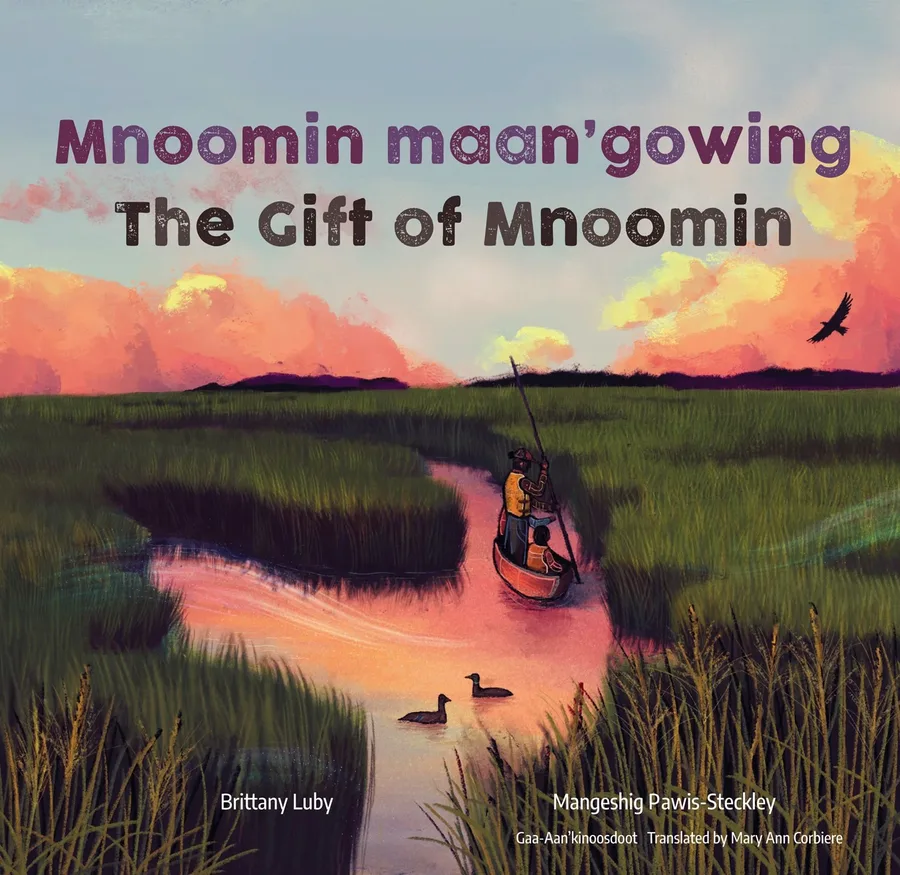 Mnoomin maan’gowing / The Gift of MnoominBrittany Luby, illustrated by Joshua Mangeshig Pawis- Steckley“A seed is a story you can hold in your hand.” A young narrator preparing to sow wild rice (mnoomin) shares observations about the ecosystem in which wild rice plays a part, and of the role and rituals of wild rice in the child’s Ojibwe culture, in a spare yet lyrical bilingual (Ojibwe/English) picture book. Mayfly and Pike, Eagle and Muskrat, Moose and Heron and Bat are all part of the marshy world in which wild rice grows. When the rice is “heavy with new life” it is time to harvest. “We offer semaa to the waters, asking for safe passage. We offer tobacco to the fields, asking mnoomin to fill our canoe.” Harvesting means bending stalks and knocking seeds loose into the canoe; it means leaving those that don’t easily let go. Some of the harvest is set aside for sowing, the rest is roasted to dry before the husks are loosened beneath dancing feet, and the seeds are winnowed and then cooked. “We say miigwech to mnoomin for allowing us this feast.” Warmly hued, beautifully composed illustrations glow with the beauty of the natural world and warmth of family and tradition. A translator’s note discusses variations in the Objibwe/Nishnaabemwin language among different communities and the cultural grounding for her translation.Picture BooksView book details
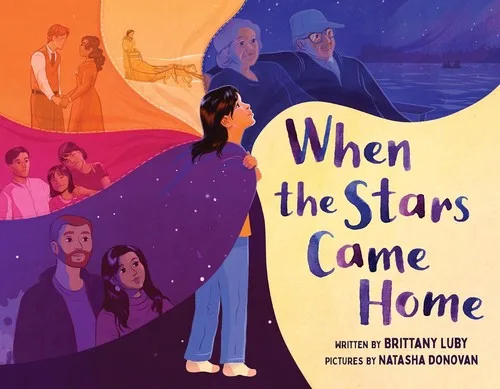 When the Stars Came HomeBrittany Luby, illustrated by Natasha DonovanOjiig moves to the city from the country with his mom (Anishinaabe) and dad (white). He feels uncomfortable and unseen in the urban environment. Ojiig observes that, “His neighbors say ‘hello,’ instead of ‘boozhoo.’ Mostly his neighbors said nothing at all. City folk paid more attention to park ducks than they did to him.” The cultural differences are hard enough, but Ojiig deeply misses the country landscape, specifically the vast night sky full of stars. Lamenting, his parents buy him glow-in-the-dark stars for his ceiling and a star-shaped nightlight, but it’s not the same. In time, his mother begins working on a patchwork quilt, and with each fabric color, she relates a story of Ojiig’s ancestors. Reassured by the stories, Ojiig feels physical and emotional comfort when his mom reveals the completed quilt with a giant star design in the center. Ojiig is doubly surprised when his beloved grandparents, Mishomis and Kookum, arrive for a visit from the country. It is only then that Ojiig begins to warm to his new home.Picture BooksView book details
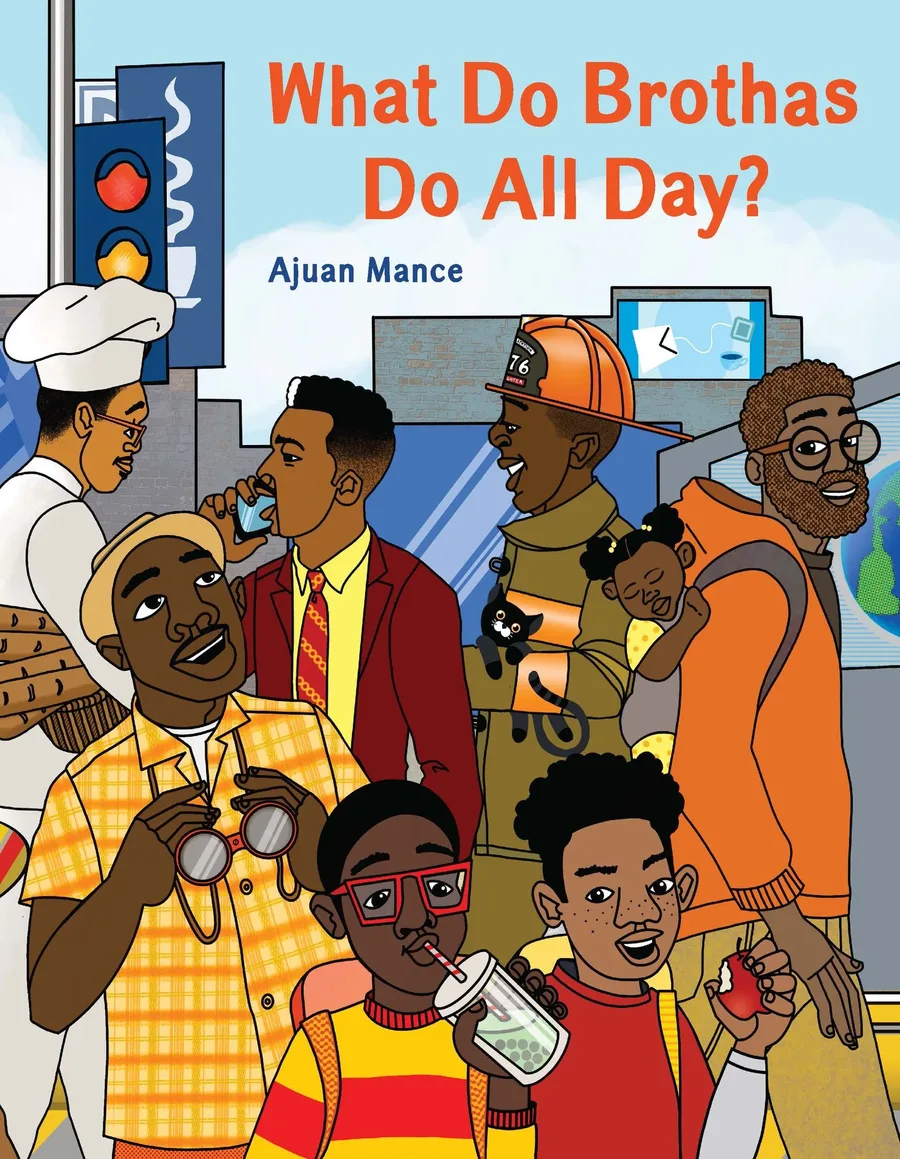 What Do Brothas Do All DayAjuan Mance“What do brothas do all day?” Inspired by Richard Scarry’s What Do People Do All Day?, a jovial text gives myriad answers to the question of how Black men spend their days. Men are pictured driving a work truck, reading a book on the subway, and chatting at a bus stop. Others wait in line at the grocery store, while another gets his cut “lined up” 50 Picture Books CCBC Choices 2024 at the barbershop. There’s plenty of joy, too, among the everyday tasks. “Brothas jump” double Dutch in the street. “Brothas sing. / Brothas rock” (with guitars) “and roll” (on a skateboard). “Brothas play …” (a saxophone) “and play …” (basketball) “and play” (video games with a friend). They enjoy conversation over coffee, listen to one another, and laugh together. And of course, brothas love. Ink and digital collage illustrations with bold lines and colors depict a joyful community of Black men of different ages, skin tones, body sizes, and personal styles.Picture BooksView book details
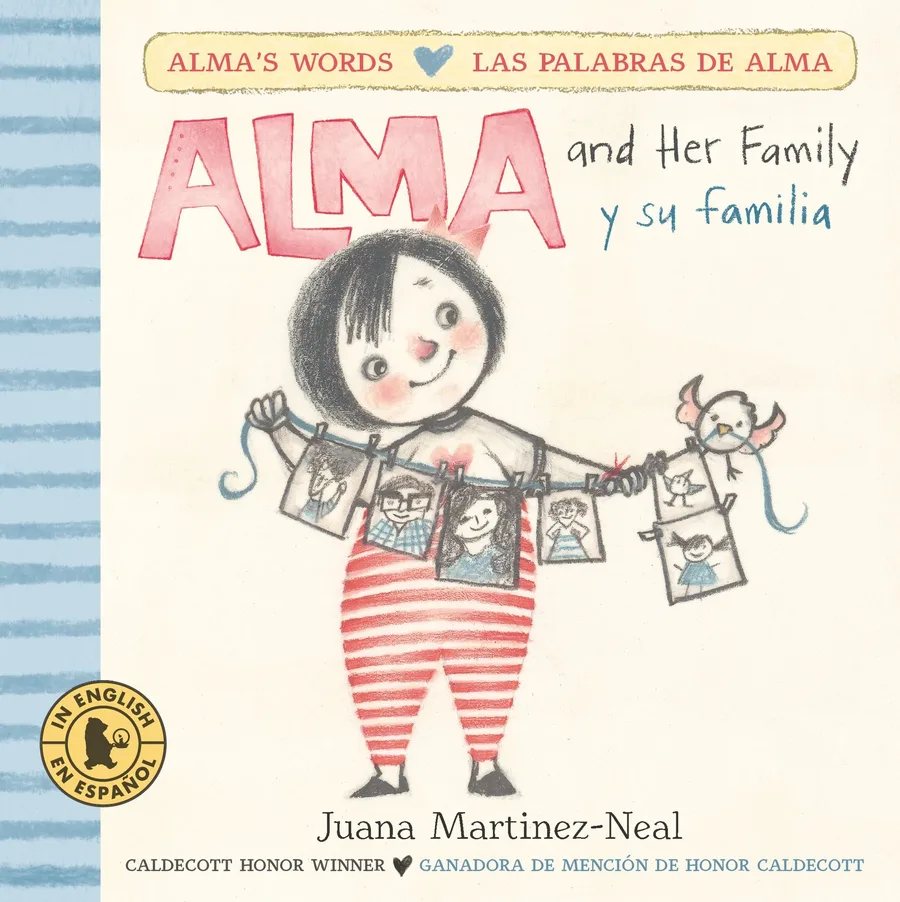 Alma and Her Family / Alma y su familiaJuana Martinez-NealA pair of bilingual (English/Spanish) board books about Alma, the young Peruvian American girl who debuted in the picture book Alma and How She Got Her Name, introduces this spirited child to a toddler audience. In Alma and Her Family / Alma y su familia, Alma details a specific thing she likes to do with individual family members (e.g., “I listen to my great-grandma. / Esucho a mi bisabuela.”). In Alma Head to Toe / Alma de pies a cabeza, Alma tries to stay focused on describing her body from head to toe but spends just as much time interacting with her pet bird, Pajarito, whom she snuggles right up to her chest near story’s end. “And here is my heart. / Y aquí está mi corazón.” The short, declarative sentences in each book use black for English, red or blue for Spanish. Ample white space surrounds the text and art, which uses a muted palette of black, white, red, and blue.Picture BooksView book details
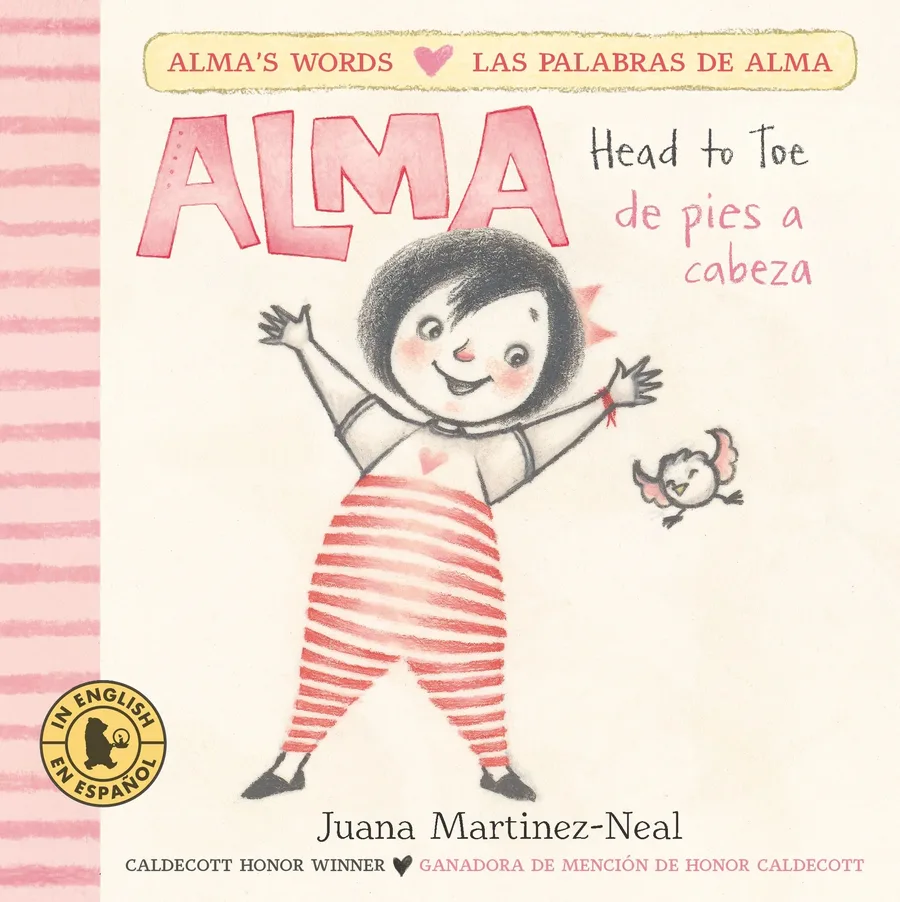 Alma Head to Toe / Alma de pies a cabezaJuana Martinez-NealA pair of bilingual (English/Spanish) board books about Alma, the young Peruvian American girl who debuted in the picture book Alma and How She Got Her Name, introduces this spirited child to a toddler audience. In Alma and Her Family / Alma y su familia, Alma details a specific thing she likes to do with individual family members (e.g., “I listen to my great-grandma. / Esucho a mi bisabuela.”). In Alma Head to Toe / Alma de pies a cabeza, Alma tries to stay focused on describing her body from head to toe but spends just as much time interacting with her pet bird, Pajarito, whom she snuggles right up to her chest near story’s end. “And here is my heart. / Y aquí está mi corazón.” The short, declarative sentences in each book use black for English, red or blue for Spanish. Ample white space surrounds the text and art, which uses a muted palette of black, white, red, and blue.Picture BooksView book details
 Frank and BertChris Naylor-Ballesteros, illustrated by Chris Naylor-BallesterosWhen best friends Frank (a fox) and Bert (a large bear) play hide-and-seek, Frank knows he’ll win. The outcome is inevitable given Bert’s choice of inadequate hiding places, such as a nearly leafless tree, or behind a too-small boulder. Frank improves his friend’s odds by increasing the counting time from 10 to 100 and Bert happily darts off across hills and stream, unaware that his hot pink scarf is unravelling behind him. Frank, following the yarn, is about to signal victory when he’s struck by a realization: “Bert is going to be very sad if he loses again. And even though I love winning, I love my best friend more!” And indeed, Bert is delighted to have won at last. When the game resumes another day, it’s Bert who counts while Frank runs off, confident in victory and unaware that Bert is holding the end of his bright blue hat, the yarn unravelling in his wake. A sly wink on Bert’s face suggests that he understands their play dynamics better than Frank suspects. It’s not only that wink keeping this charming duo’s story from being overly sweet, it’s also the droll illustrations with their judicious use of fluorescent colors among a mostly muted palette.Picture BooksView book details
 The Babka SistersLesléa Newman, illustrated by Tika, Tata BobokhidzeSisters Esther and Hester (both light skinned) live next door to each other; Esther has a fat black cat named Lester; Hester has a stubby brown dog named Chester. When someone moves into the house across the street, both sisters decide to bake a babka for Shabbat to welcome the newcomer, each claiming, “After all, I bake the best babka in the world.” That’s how the “Great Babka Bake-Off” begins. The harmonious relationship between the two briefly frays under the strain of the undeclared competition. Luckily, their new neighbor, Sylvester, turns out to be a Master of Diplomacy (or a hungry opportunist) and equilibrium is restored, at least until the next Shabbat. (“Which of you makes the best KUGEL in the 51 Picture Books CCBC Choices 2024 world?”) A breezy, bouncy text and whimsical illustrations delight in this buoyant picture book centered around Jewish cultural and religious traditions.Picture BooksView book details
 Vamos! Let’s Go ReadRaúl the Third, illustrated by Raúl the ThirdThe fourth installment of Raul the Third’s ¡Vamos! series is a love letter to libraries and literacy as well as a celebration of the colorful characters introduced in earlier books. Little Lobo and his dog Bernabé, along with friends Coco Rocho, Kooky Dooky, and new pal La Chida roll through the town library’s annual book festival on Little Lobo’s delivery wagon and La Chida’s skateboard. They take in all the activities celebrating literature, learning, and community. There is something for everyone—romance novels for Bernabé, a tool lending library for La Chida’s skatepark, Lucha Libre comics for Little Lobo, video games for Kooky Dooky, and more! Returning character La Oink Oink teaches festival-goers how to design their own luchadore identity, while Señor Duende offers zine-making for personal origin stories. Raul the Third deftly interweaves Spanish and English words as well as Mexican and Mexican American cultural images and concepts into his distinctive, singular illustrations. A picture book focusing on festive experience over plot buzzes with energy, sprinkling plenty of delights to discover throughout the text and illustrations.Picture BooksView book details
 Night Owl NightSusan Edwards RichmondSova’s mom is a scientist who studies saw whet owls. From the time she’s a little girl, Sova asks if she can come along when her mom monitors owl migration each October. Each time her mom explains, “A scientist must learn to wait.” Now Sova is finally old enough to stay up late and go along. Although the night she’s been longing for has finally arrived, Sova discovers that even more waiting is required when their first two checks of the net her mom set up yield nothing but dry autumn leaves. Her mom has explained there’s never a guarantee she’ll catch an owl; still, Sova’s disappointment is palpable. But on their final check of the net, there’s one small saw whet. Sova watches as her mom measures, records data, and bands the young owl before they release it back into the night. There’s a perfect balance of storytelling, information, and suspense in this lengthy picture book narrative. Sova’s engaging voice is full of curiosity, while the information her mom shares in response to her daughter’s questions provides a plethora of facts about saw whet owls. The illustrations show the warm relationship between Sova and her mom, both brown- skinned, and charmingly capture Sova’s fascination with the owls she’s clearly loved since early childhood.Picture BooksView book details
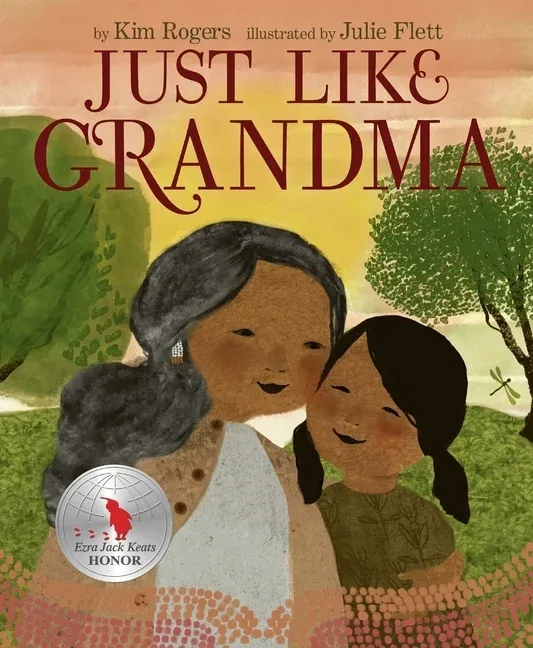 Just Like GrandmaKim Rogers“On the steps of a house at the end of the street …” A patterned text begins with a series of vignettes in which Becca wants to be “just like Grandma.” She watches Grandma bead, dance, and paint, asking each time if she can join in. “Together they bead … flutter like the most beautiful butterflies … paint …” Each activity ends when Grandpa calls them in to eat: corn soup, fried chicken, pancakes. At the powwow, it’s beans and fry bread after Grandma dances Fancy Shawl and wins the grand prize. A reversal in the story comes with Grandma watching Becca practice basketball. She wants to be “just like Becca,” and together they shoot hoops “until Grandpa calls them in for to:kic and white bread.” When Becca makes the team, the three go out for pepperoni pizza to celebrate. “On the steps of a house at the end of the street Becca knows that she is just like Grandma … And Grandma knows that she is just like Becca.” The emotion is palpable in this lyrical, wonderfully paced picture book. The narrative and muted, warm-hued illustrations work together to convey details of this 52 Picture Books CCBC Choices 2024 contemporary Wichita family’s life and love. The author (Wichita and Affiliated Tribes) includes a note about her own grandparents and a glossary; the illustrator (Swampy Cree/ Métis) includes information on the importance of beadwork in Native cultures historically and today.Picture BooksLexile Text Measure 549LATOS Book Level 3.6View book details
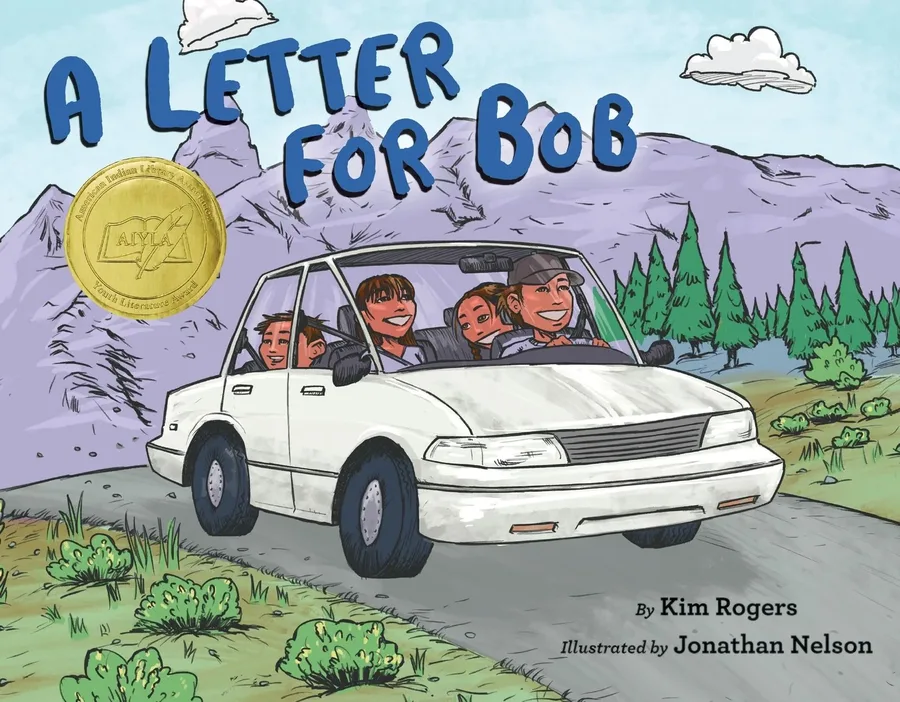 A Letter for BobKim Rogers, illustrated by Jonathan Nelson“Bob” is the name Katie gave the family car when she was a little girl. Years later, as she prepares to say goodbye to Bob, she reflects on the many memories in which Bob played a part. Bob took them to the Wichita powwow, where she first danced as a “Tiny Tot.” They went on vacation to the Grand Tetons and Yellowstone. “You drove us to visit Aka:h in the Smoky Mountains—which the Cherokee call Shaconage—before she got sick.” At home, there were trips to the library and dog park; to the hospital when her little sister, Jenna, was born; and to her aunt’s to celebrate Jenna’s arrival. “But when families grow, sometimes they need bigger cars.” Saying goodbye is a bittersweet moment in this epistolary picture book written as a letter to Bob. Engaging details in the text and stylized illustrations underscore the warmth of family and importance of identity across the passage of time. A glossary and brief information about the Wichita and Cherokee tribes are at volume’s end.Picture BooksView book details
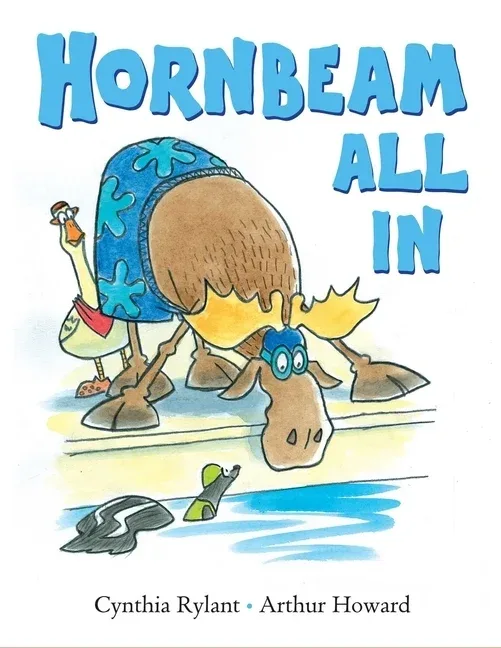 Hornbeam All InCynthia RylantHornbeam, an affable moose, has three friends—Cuddy the Cow, Eureka the Goose, and Adorabelle the Skunk. Three separate stories celebrate Hornbeams’s friendships through foibles and funny anecdotes. When his furnace breaks down, Hornbeam gratefully spends the night at Cuddy’s, only to keep Cuddy up all night with his snoring. A love of potato salad entices Hornbeam to tag along on Goose’s picnic, only to discover it’s a family reunion and 100 inquisitive geese stand between him and the spuds. Not a water lover, Hornbeam is happy to watch Adorabelle at her swim meets, but she insists that he take lessons and he somberly complies. Colored pencil and watercolor illustrations add personality and punch.Picture BooksView book details
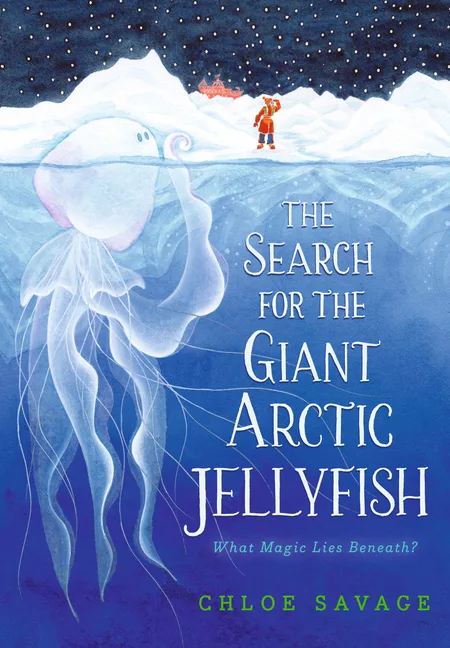 The Search for the Giant Arctic JellyfishChloe Savage, illustrated by Chloe SavageNo one has ever set eyes on the giant Arctic jellyfish, but after extensive research, Dr. Morley (white) is determined to be the first. She and her worthy crew (racially diverse) embark for the icy waters of the Arctic Circle, hopeful and prepared. They don scuba gear and dive. They drill into the ice. They “collect important measurements and scientific samples.” They marvel at the Northern Lights and are charmed by the wildlife—beluga whales, orcas, narwhals—but the giant Arctic jellyfish remains elusive. The crew’s faith in Dr. Morley buoys them as they continue to explore the brutally cold ice shelf, but stalwart as they are, their determination flags after months without success. A question creeps into their minds: “Is the giant Arctic jellyfish really just a myth after all?” The brilliance of this picture book lies in the ink and watercolor illustrations, which provide a counterpoint to the narrative: Billowing translucent pink and wide eyed, directly beneath the ship or among the craggy ice, the giant Arctic jellyfish shyly lurks. Young readers will delight in searching for the jellyfish on the page, finding success where the hard-working but oblivious crew does not, until finally a tentacle breaks the surface to wave. “Wait. Could that be …?”Picture BooksView book details
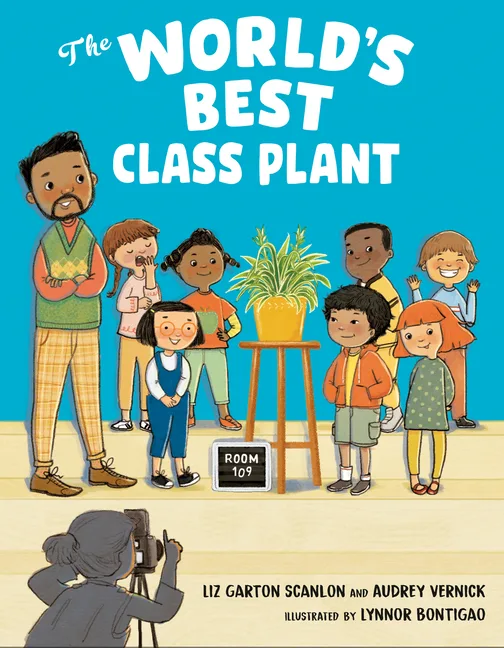 The World’s Best Class PlantLiz Garton Scanlon, Audrey Vernick, illustrated by Lynnor BontigaoArlo isn’t alone among his classmates in feeling disappointed. While other classrooms have pets, his class has a plant. “A mostly green, hardly growing, never moving plant.” While kids in other rooms take turns cradling and caring for animals, Arlo’s class takes turns watering. “Sometimes they forget, because it doesn’t squeak or whistly or whimper. It’s just a plant.” Arlo’s teacher, seemingly oblivious to their disdain, suggests they name the plant Jerry. Suddenly the plant is no longer just a plant. It’s Jerry, and everyone has ideas about how to take care of him. They learn that Jerry is a spider plant, and that too much water can kill him. “And—this is unbelievable—Jerry makes little baby Jerrys. They’re called spiderettes! You can cut them off and they’ll turn into who whole new plants.” Arlo even thinks he can hear Jerry breathe … or maybe it’s more of a whisper. A droll and surprisingly tender picture book takes turn after unpredictable turn as Arlo and his classmates’ attitude toward Jerry transforms over the course of the school year from disinterested to dynamic appreciation. The superb text is paired with blithe digital illustrations that capture the energy and diversity of a contemporary classroom and show both Arlo and his teacher as brown-skinned.Picture BooksLexile Text Measure AD710LATOS Book Level 3.6View book details
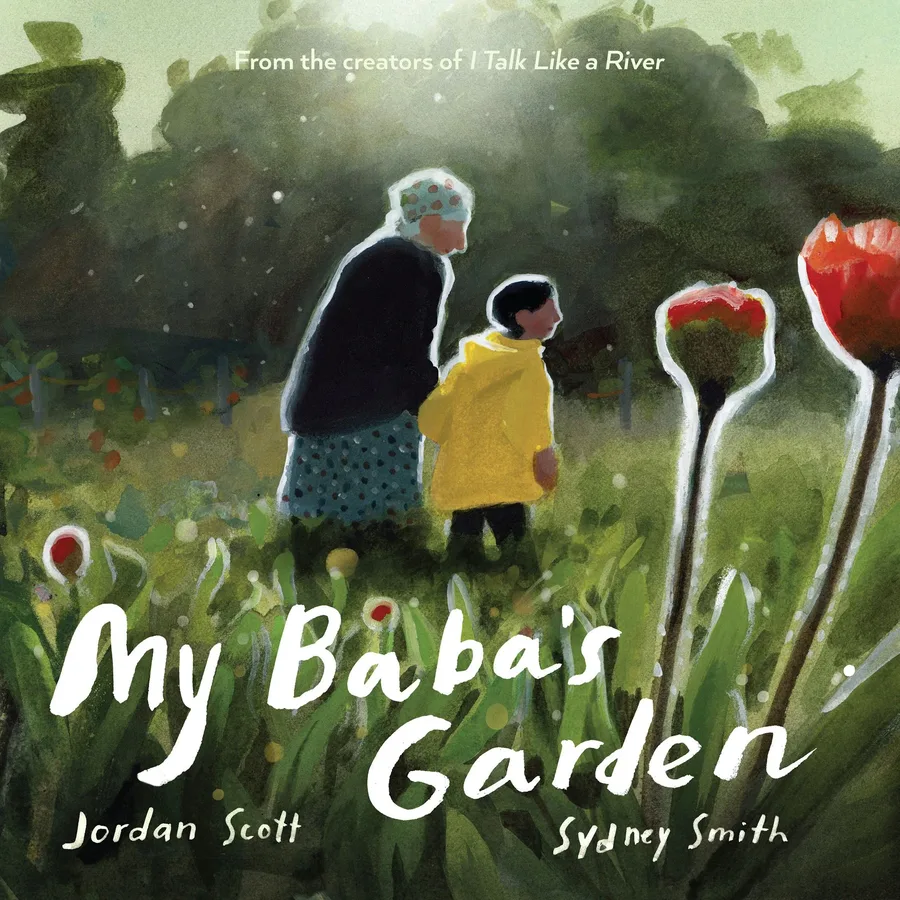 My Baba’s GardenJordan ScottEach day before school a young boy rides with his dad “past mountains that look like whale bellies” to his Baba’s. He finds his grandmother in the kitchen, “hidden in the steam of boiling potatoes, dancing between the sink, fridge, and stove.” He knows his Baba, who doesn’t speak English well, lived through a time when she didn’t have much food; now she stores it everywhere, and the boy eats all of the breakfast she sets before him: oatmeal with pickles, cabbages, and beets that come from her garden. If he spills, she picks up the food and kisses it before returning it to his bowl. When she walks him to school she always looks for worms, picking them up and putting them in a dirt-filled jar. Later, she will place them in her garden; when the boy asks why, she wriggles her fingers in his hand. He understands the worms help the soil; he understands her love. When Baba eventually moves in with his family, the boy brings her oatmeal and a cut apple every morning, kissing a slice before handing it to her. She grows sun-gold tomatoes in a pot. In the rain, he looks for worms. A story based on the author’s childhood memories of his Polish immigrant grandmother is distinguished by writing full of vivid imagery and tenderness, accompanied by gorgeous watercolor and gouache illustrations that are richly hued, earthy, and lush.Picture BooksView book details
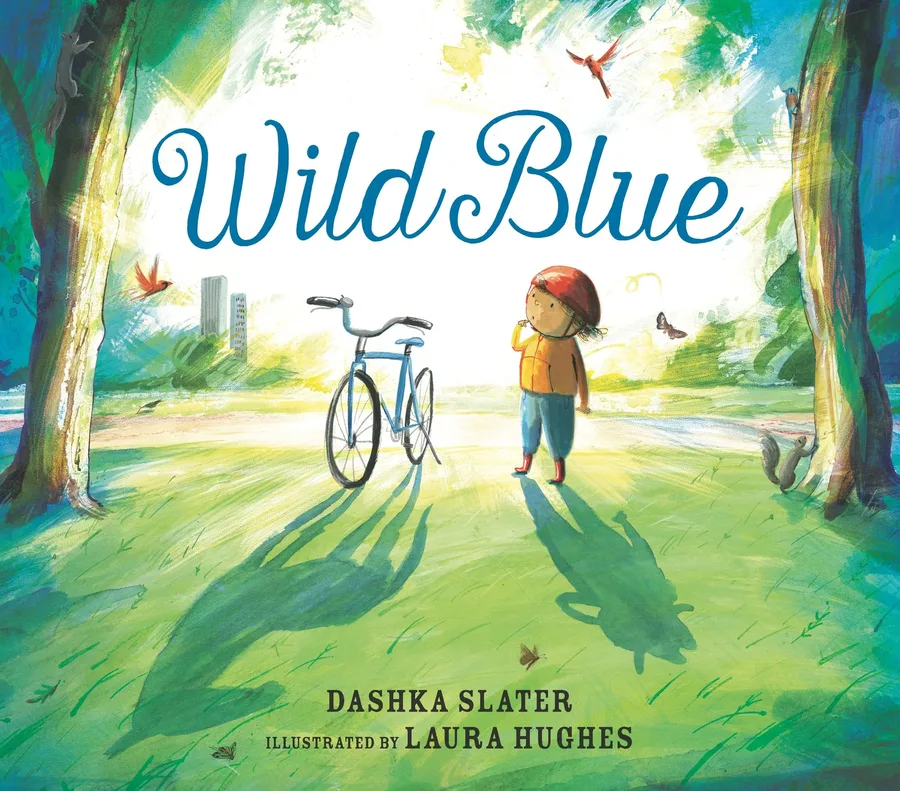 Wild Blue: Taming a Big Kid BikeDashka Slater, illustrated by Laura HughesYoung Kayla has outgrown her small pink bike with training wheels. After her “pink pony” is put out to pasture, she “wrangles a new one from the herd” (a.k.a. the bike shop). She saddles her new blue bike with the name “Wild Blue,” but it’s not quite happy trails, at least initially. Wild Blue bucks, and Kayla is on the ground. Taming Wild Blue takes time and courage. Finally, at the sight of other bicyclists passing by in the park, “Wild Blue lifts her head. Sniffs the wind. She trills her bell, a wild bike whinny.” Wild Blue and Kayla are both ready to ride. Along with the wordplay in the extended metaphor, the illustrations marvelously showcase this small brown-skinned girl’s big imagination. Kayla’s red helmet becomes a red cowgirl hat, and, as her confidence grows once she starts pedaling, her new bike becomes a swift, muscular steed that she joyfully rides.Picture BooksView book details
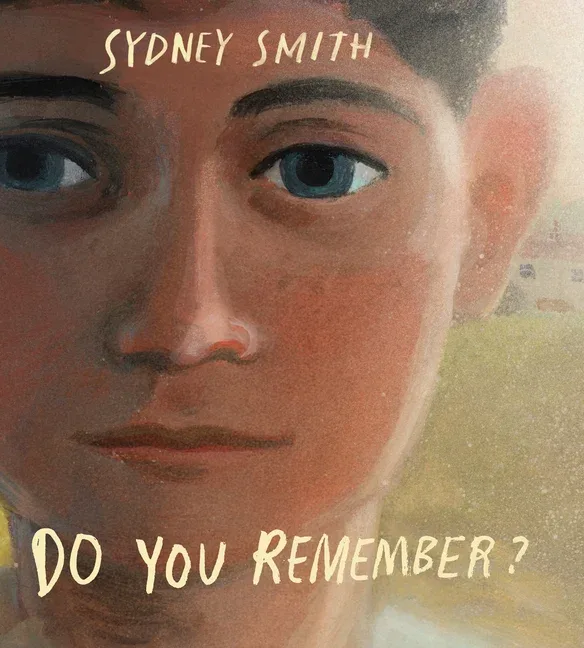 Do You RememberSydney SmithA boy and his mother (both white) face each other on a bed. A closeup of their pillowed heads is accompanied by the words “Do you remember …” They recall a picnic in a field with an unexpected bounty of wild berries, a first attempt to ride a bike that ended with a tumble into a haypile, and the smell of an old oil lamp during a rainstorm power outage. The boy’s dad is in each of the memorys, including the one in which they are packing their belongings into a truck—an image shows his father handing the boy a stuffed bear and then waving goodbye as the boy and his mother drive off. As the dark room where the boy and mother lie gradually lightens, the focus shifts to their view from the bed: belongings stacked against the opposite wall, waiting to be unpacked. “Can we make this a memory, too? We could say: ‘Do you remember the first morning in our new home? It was just you and me. … And we weren’t worried or scared. We knew we were going to be just fine.’” The recent absence of the father is unstated but ever-present in a story with rich narrative description and detail, while the loving connection between mother and son promises a future of new shared family memories. Warm watercolor and gouache illustrations show the present clearly, while the memories are mostly snapshots edges softened by the distance of time.Picture BooksLexile Text Measure 261LATOS Book Level 2.1View book details
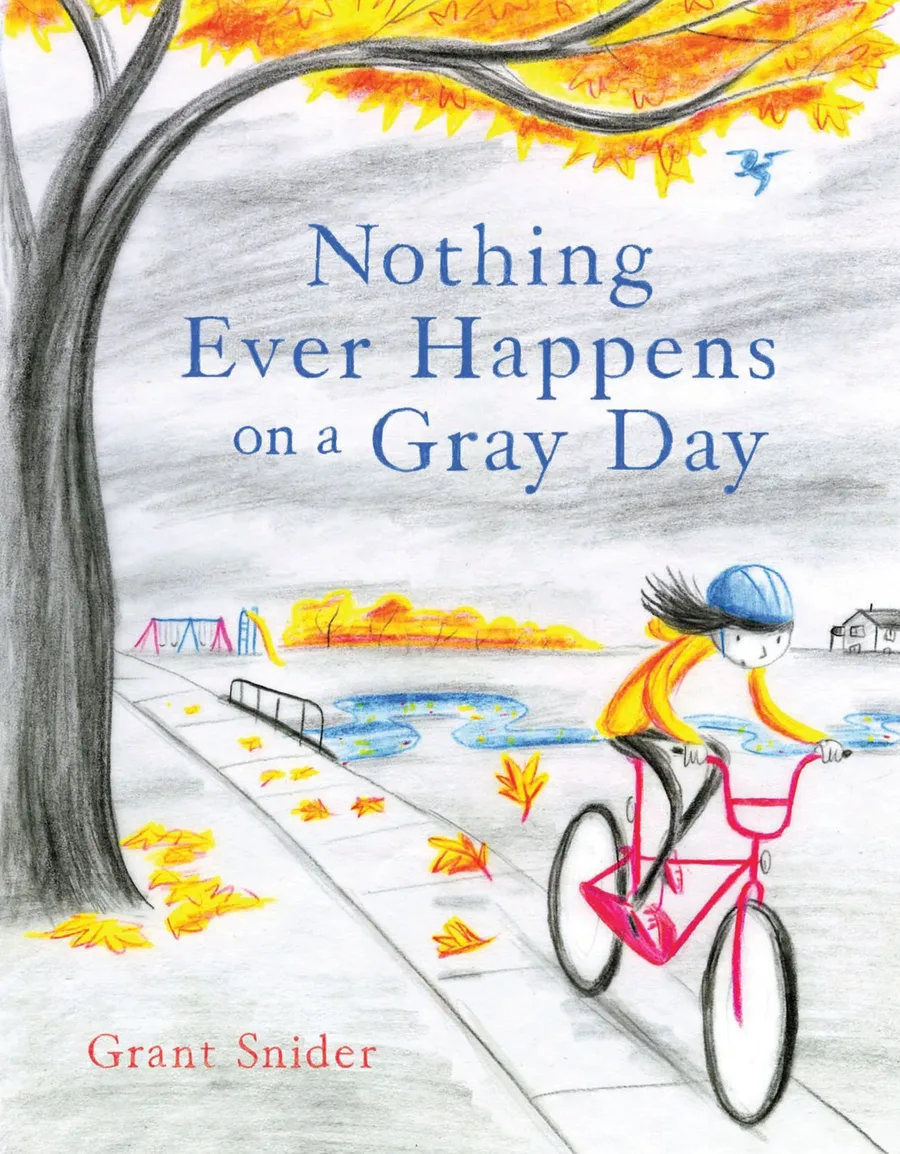 Nothing Ever Happens on a Gray DayGrant SniderIts title epitomizes the mindset of a school-age child at home on a bleak and moody day, but pops of color on the cover of this muted picture book suggest a surprise. Hopping on her bicycle in search of something on this day of nothing, the girl passes by a drained swimming pool and empty playground. Yet a trail of vibrant leaves piques her curiosity, and she begins to explore what’s beyond the fence. Intentional strokes of blue, yellow, and pink highlight what’s hiding amidst the gray landscape. A stream, a squirrel, and an old silo offer a shift in her perspective. A vibrant blue heron lands nearby and flies off again, and in this intimate moment, alone in nature, the girl discovers what a gray day has to offer.Picture BooksView book details
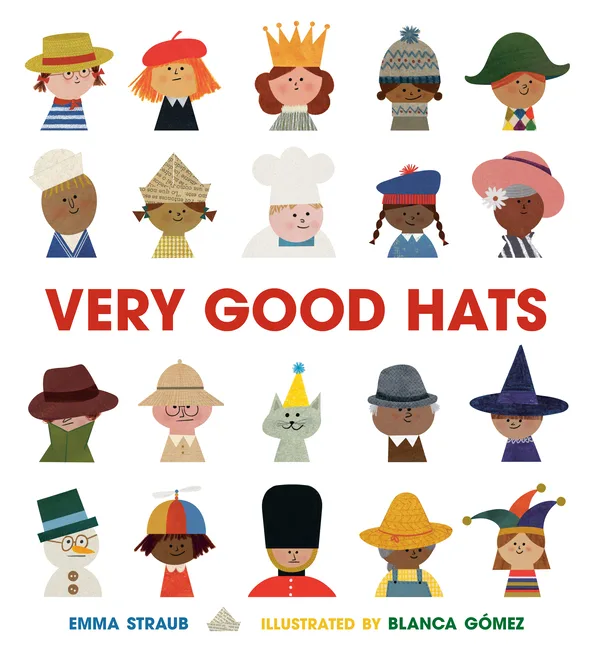 Very Good HatsEmma Straub“Do you know what a hat is? I bet you think you know what a hat is,” notes the unseen narrator at the start of this ode to the chapeau. “Hats are everywhere you look!” An inventory of familiar hats and headwear as well as unusual and inventive definitions for hats parades across the pages, illustrated with delightful digital art and paper collage. Haberdashery hats are one thing, but what about towel turbans and flower crowns? And hats are not just for heads—consider acorn caps on fingertips or the lid of a pot or roof on a house. Hat possibilities are endless as enthusiastically conveyed in this picture book that invites readers to try a few on!Picture BooksLexile Text Measure AD630LATOS Book Level 4.1View book details
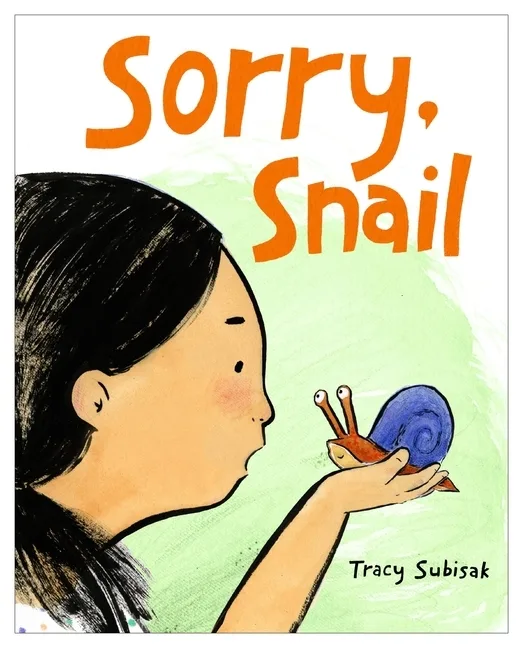 Sorry, SnailTracy SubisakAri is mad, and dancing her feelings out isn’t helping. A snail in the yard provides an outlet for her anger as she furiously whispers, “Look at that slimy body. … That silly shell.” She gets right in its face and adds, “Those tentacle eyes! I just can’t look at you anymore, snail.” The snail “zooms” away (at a snail’s pace). That night, Ms. Snail appears at Ari’s bedside. Telling Ari that her day was ruined by the insults, she requests an apology. Looking into Ari’s soul, Ms. Snail isn’t fooled by Ari’s insincere “I’m sorry.” Ms. Snail appears again the next day, and this time she’s brought backup: An “escargatoire” comprised of her snaily friends, who sing Ms. Snail’s praises and demand Ari apologize. Ari is incensed: Her day is ruined; the snails should apologize to her! Only then does Ari remember that she had 55 Picture Books CCBC Choices 2024 ruined Ms. Snail’s day. This time her apology—involving chalk art and a fine speech—is sincere, and Ms. Snail’s is, too: They can tell when they look into each other’s souls. The absurd premise paired with genuine feelings and authentic childlike behavior (we can’t vouch for the snails) delivers a life lesson with breezy-ness and ease in this droll picture book featuring spirited, colorful multimedia illustrations.Picture BooksView book details
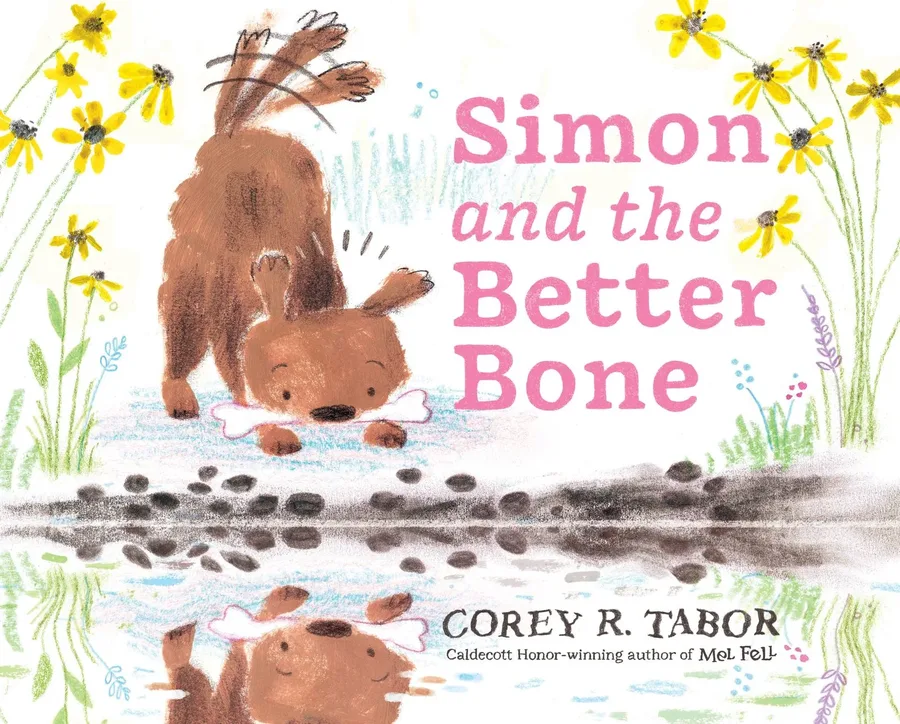 Simon and the Better BoneCorey R. TaborSimon, a small brown dog, finds a nice bone near the pond, but then he spots an even better bone (his bone’s reflection in the water), held by a “scrawny little dog” that Simon could definitely take. A series of light competitions ensues, including a staring contest and a display of tricks, but the other dog is Simon’s equal. Finally (after issuing a warning growl) Simon jumps on the other dog, and both lose their bones. Seeing that the other dog now has no bone, Simon finds another bone, an even better better bone, and drops it in the water for his doppelganger. “Simon smiled. He’d lost a bone, but he’d found a friend.” A note at the beginning states that Simon’s encounter is based on Aesop’s “The Dog and His Reflection,” although “Simon gets a happier ending (he is a good boy, after all).” Effective use of vertical formatting positions the fur-and-bones Simon above the gutter, while his watery companion resides below. Simon is rendered adorably scruffy in pencil, colored pencil, and acrylic paint.Picture BooksWord Count 251View book details
 Papá’s Magical Water-Jug ClockJesús TrejoJesús is eager to be Papá’s assistant on this Saturday morning, helping out with their family gardening business. His first task: Fill Papá’s big water jug. Papá explains that it’s more than a jug of water—it’s also a magical clock. “It tells us how much work is left to do! When the jug is empty, that means, time to go home. … I’m putting you in charge of it, mijo.” Jesús (Latine) takes his responsibility seriously; unfortunately, he also uses the water liberally, not just for himself and Papá but also for the plethora of cats at the first house, the dog at the second, and the peacocks at the third, all of which he’s sure look thirsty. When Jesús announces mid-morning that it’s time to go home because the jug is empty, Papá has to explain that the jug isn’t really magic. “You’re my partner, but you’re also my kid. That’s why I try to make our workday fun.” Respect for their hard work and pride in a job well done are important finishing elements of this laugh-out-loud story. Comical details in the gleeful illustrations begin with the gardening-inspired Lucha Libre figures on the endpapers (El Plantador, Super Sodder, Clippity Clipper …) and never stop, while the storytelling mines situational humor that grows increasingly absurd while never making fun of Jesús’s naïve belief in the clock’s magic.Picture BooksView book details
 The Good Hair DayChristian Trimmer, illustrated by J YangNoah, who has brown skin, is not shy about dropping “subtle hints” regarding what he’d like for his upcoming birthday. He has plenty of ideas. But he doesn’t ask for the thing he secretly wants most of all: long hair that he can toss expressively and style. Everywhere he looks, boys and men have short hair (or no hair!), and Noah knows that some people can be unkind to boys with long hair. After his birthday haircut—“the usual”—he starts to cry. To cheer himself up, he wears a t-shirt around his head like a wig. When his big day arrives, Noah is delighted to receive several of the gifts he asked for. The best gift, however, is a surprise: a long, flowing, “magnificent” wig from his parents. “‘I’m gorgeous!’ he declared,” admiring himself in the mirror. And when Noah’s birthday comes around the next year, all he needs is “a little off the ends” of his now shoulder-length hair. A gently humorous, 56 Picture Books CCBC Choices 2024 feel-good story that celebrates self-expression and family acceptance ends with a few “conversation starters” about acceptance of self and others regardless of personal style or expression.Picture BooksView book details
 Bear Helps the Forest (Maybe You Help, TooKaren Lynn Williams, illustrated by Andrés LandazábalA small bear frolics in autumn leaves. While she plays, “the forest did its work” as sap flow slows down and more leaves let go. When it’s time for a long nap, Bear sleeps, “and the forest did its work. … Bacteria and fungi grew, while earthworms nibbled and chewed. Beetles and mites and slug and snails munched, too.” Bear awakens in spring, surprised that the leaves she played in are gone. Mama explains it’s because the forest did its work. Bear waits all summer, enjoying the sun and rich soil, but eager for the fallen leaves to return. When they finally do, she jumps in, and the leaves crumble: It turns out Bear, like the beetles and mites and slugs, and deer and moles and shrews, is also helping the forest ecosystem. An author’s note provides additional information on the role many creatures play or can play—including young humans!—in this seasonal cycle of breakdown and renewal. The informative, language-rich story is paired with pleasing watercolor illustrations.Picture BooksView book details
 Hedge LionRobyn Wilson-OwenBusy Ida, a precocious white youngster, noticed everything in her town, especially things that other people didn’t. That’s why she saw the Hedge Lion. She knew it was a lion, even though he blended into the sidewalk hedges, complete with sticks, leaves, birds, and bugs nestled in his mane. Terrific line drawings with effective use of hatching lend charm to the cityscape and create camouflage for the shy lion. Springtime colors, with a notable sunshine yellow, make it easy to spot the Hedge Lion and Ida in her suspender rain pants. Ida confronts and befriends the hidden lion, determined to help him get his roar back. When it comes, it is full of sadness and anger. It’s also a little bit scary. With Ida’s patience and perspective, the Hedge Lion allows that he is still lovable and perhaps no longer needs to hide, although Ida and the birds and bugs are the only ones who see him in this offbeat exploration of emotional regulation and acceptance.Picture BooksView book details
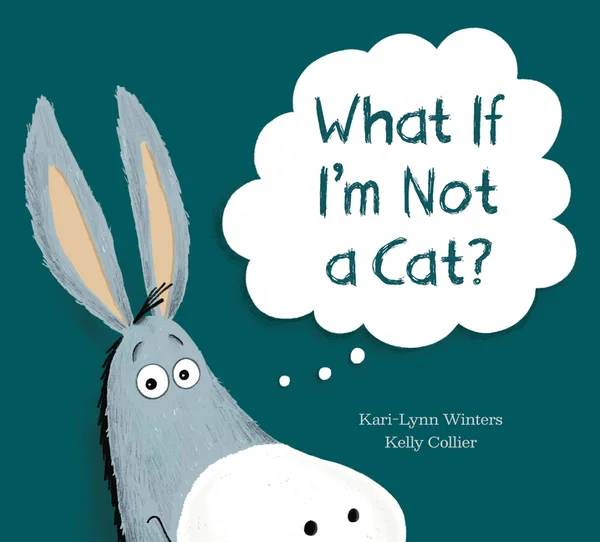 What If I’m Not a CatKari-Lynn Winters, illustrated by Kelly CollierA farmer’s goodnight to the many cats in her barn has led to some confusion on the part of the donkey who also lives there. Donkey “knew he was a cat because Farmer had said so.” Donkey’s catlike behavior—pouncing, perching in high places, climbing trees, catching mice—does not always come naturally to him. But Donkey knows he’s young and still learning. While Donkey is sitting on Farmer’s lap for a cuddle, Farmer tells him he’s acting like a cat. “Obviously,” Donkey thinks. “I AM a cat! A spiffy, strong cat!” Still, when he compares his appearance to the rest of the litter, he begins to wonder. It leads to a sleepless night during which Donkey’s heroic intervention to rescue a hapless wandering kitten from a fox leads to the certainty he’s been searching for. The farmyard identity crisis isn’t an original plotline, but it’s delivered here with an abundance of humor and visual charm.Picture BooksLexile Text Measure AD500LATOS Book Level 3.3View book details
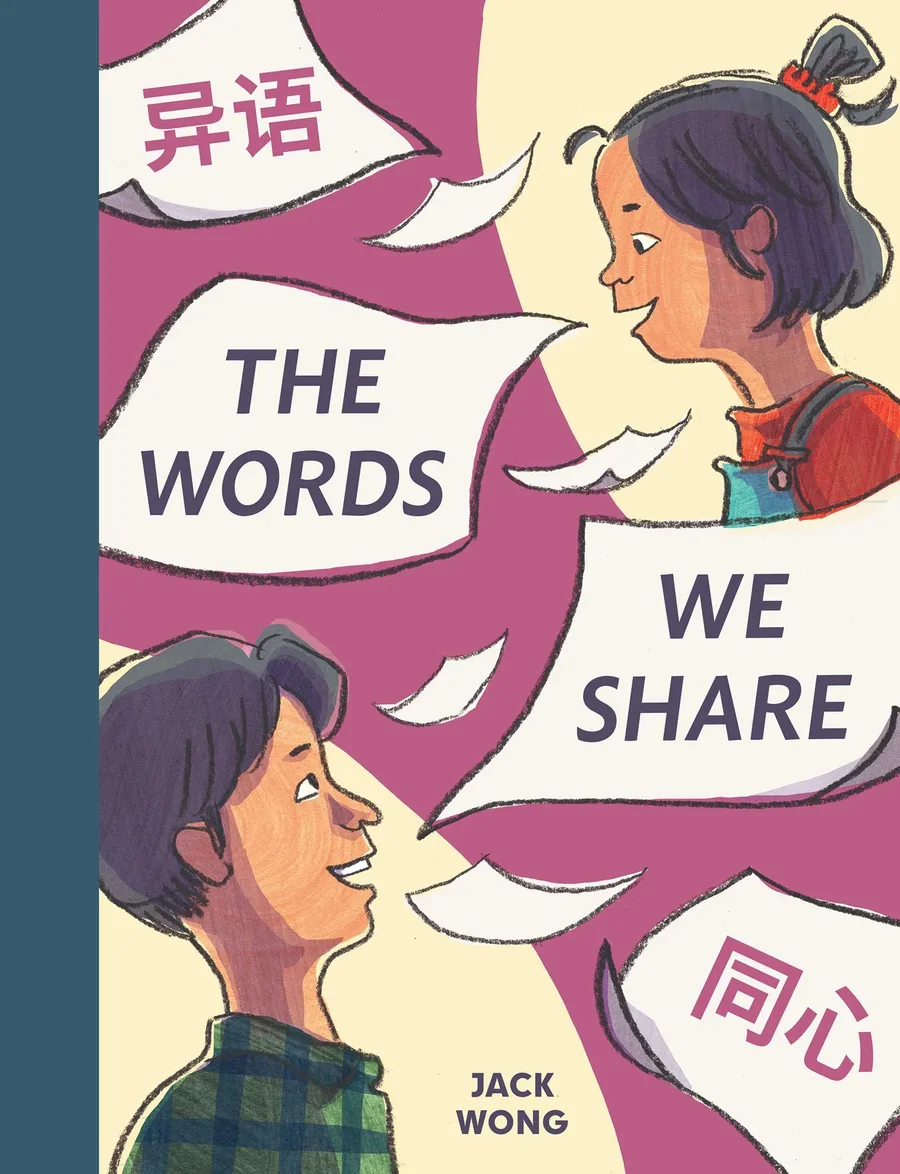 The Words We ShareJack Wong, illustrated by Jack WongAngie has been helping her father translate from Cantonese ever since they arrived in Canada. Going to school has helped her learn English more quickly, and she assists with reading menus and labels, and in conversations. When helping her dad make signs for his workplace, she gets the idea to help other Chinese business owners with signs, like writing the daily specials in English on the sandwich board for Mrs. Fong’s canteen. However, 57 Picture Books CCBC Choices 2024 when one of Angie’s laundromat instructions accidentally shrinks a customer’s laundry, Angie needs her dad to help smooth things over with Mr. Chu. To Angie’s surprise, Mr. Chu and her dad start speaking Hakka, discovering that they grew up in the same area. This time, Angie’s dad is the one whose language skills make a connection and Angie is the one dependent on his translation. Intentional use of Chinese characters and English text in italics reinforces dialog and language differences in this thoughtful immigration story that concludes with a note from the author.Picture BooksView book details
Books for Beginning Readers
7 selections
 Nell Plants a TreeAnne Wynter“Before a grip on a branch / and a fall to the ground / and a scrape / and a leap / and a reach for the top, / before anyone finds out how high they can climb, / Nell picks up a seed.” Nell, first shown as a young Black girl, nurtures a seed to sapling and eventually plants a tree. The tree grows up, as does Nell, who is joined by a friend-turned-husband. Eventually the mature tree, now casting shade and pecans on their lawn, becomes a haven and hangout for Nell’s visiting grandchildren. A clever poetic pattern, echoed by fabric patterns in the illustrations, tells the story of a family tree, both literally and figuratively, with careful clues providing context for time and relationships. Notes from the author and illustrator pay homage to the role of trees and pecan harvests in their respective childhoods.Books for Beginning ReadersView book details
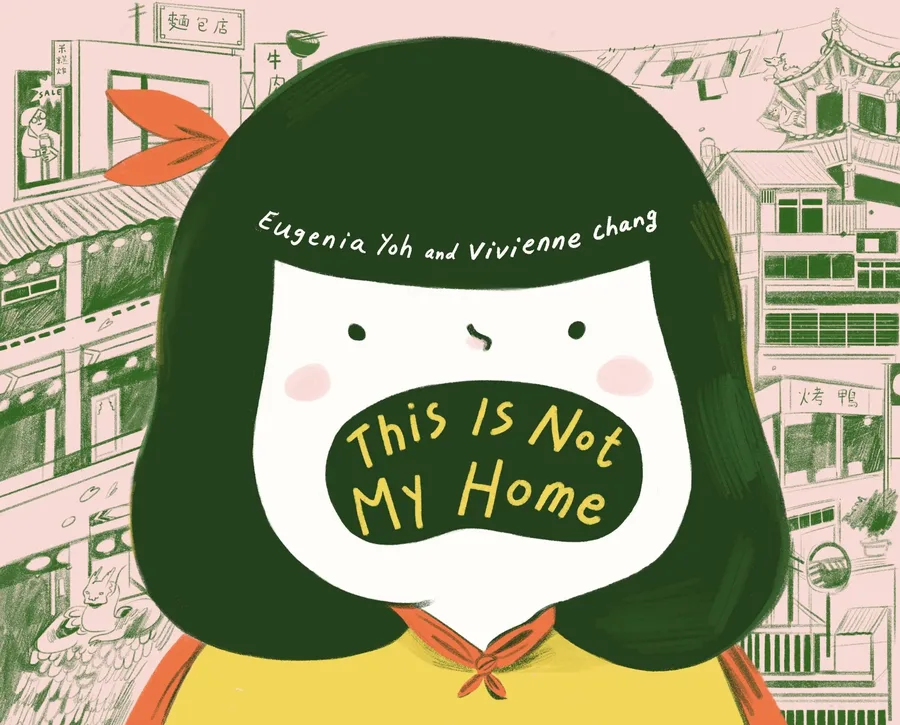 This Is Not My HomeVivienne Chang, Eugenia Yoh, illustrated by Vivienne Chang, Eugenia YohLily is upset when her mom tells her the two of them will be moving from the United States to Taiwan so that her mom can help take care of her Ah Ma. Lily has a litany of things she will miss and doesn’t want to leave behind, including fireflies, her best friend, the Strawberry Hill Farmer’s Market, and school. “Please try to be understanding,” says Lily’s mom. But “Lily was not understanding.” In Taiwan, nothing feels right or familiar to Lily, and she doesn’t know the language. “This is not my home.” Her mom is sympathetic, but she also explains that Taiwan is her home. “And it can be ours.” It’s a turning point for both Lily and the story as a series of wordless page spreads shows the passage of time, with the unfamiliar gradually becoming familiar and friendly. At a family gathering at story’s end, Lily tells her mother in Chinese, “This is my home.” The marvelous text, told mostly in brief dialogue, and skillful panel illustrations in which Lily’s feelings are always expressively apparent work together beautifully to tell this heartening story about moving, change, and family.Books for Beginning ReadersLexile Text Measure 92LATOS Book Level 1.2View book details
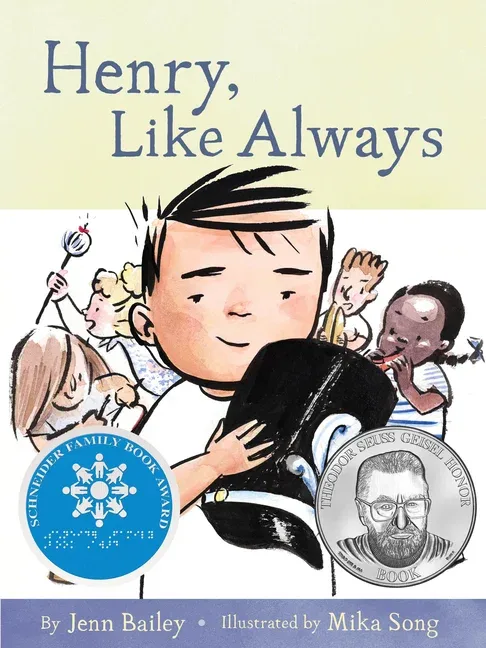 Henry, Like AlwaysJenn BaileyIn Classroom Ten, Mrs. Tanaka keeps a predictable schedule. To Henry’s satisfaction, the Big Calendar looks the same every week—except for this Monday, when Mrs. Tanaka makes an unexpected announcement. In lieu of Friday afternoon Share Time, the class will have a special parade. Distressed by the disruption to his routine, Henry, who is autistic, feels off- kilter the entire week. During Art Time, he stubbornly makes a poster for Share Time rather than for the parade. He dislikes the jangle of the tambourine he’s given to play during Music Time. And during the rescheduled Share Time, Henry leaves class with a stomachache— Thursday is not the right day for Share Time. On Friday, though, Henry, who appears Asian, 58 Books for Beginning Readers CCBC Choices 2024 and his classmate, Samuel, make a trade: Samuel will play Henry’s tambourine during the parade, and Henry will don the soft, noise-blocking marching band hat that Samuel was going to wear as parade leader. Each of the boys is pleased with this solution, and much more comfortable with his new item and role. Watercolor and ink illustrations with soft blue accents accompany this perfectly paced early chapter book about a resourceful boy.Books for Beginning ReadersLexile Text Measure 381LATOS Book Level 2.7View book details
 Gigi and Ojiji: What’s in a NameMelissa IwaiJapanese American Gigi reflects on her own name after explaining to her grandfather, Ojiji, how she chose Roscoe as their dog’s name. As a little girl, Gigi couldn’t pronounce Geraldine, but now wonders if she’s ready to give up the juvenile nickname. Her grandfather likes her middle name, Hanako, which is easier for him to pronounce, and Gigi is delighted to learn how to write it in Japanese characters. Realistic dialog and warm illustrations center this thoughtful, age-appropriate text about name and identity that sees Gigi coming full circle regarding her own thoughts about what she wants to be called in a story that includes a limited glossary of Japanese words.Books for Beginning ReadersView book details
 Elena RidesJuana MedinaElena, a positive-minded purple elephant, is determined to ride her bicycle. With her green helmet buckled and a little red bird tweeting encouragement, Elena slides, glides, and flies on her bicycle. Except when she crashes. Repeatedly. Energetic text with rhythm and rhyme propels this beginning reader with bright and bold illustrations by the author.Books for Beginning ReadersWord Count 91View book details
 Reina Ramos Meets a Big PuppyEmma Otheguy, illustrated by Andrés LandazábalReina (Latina) loves to practice gymnastics in the park with her friend Lila (Black). Lila does forward rolls while Reina works on her cartwheels. The young girls feel especially proud when neighbor, Ms. Carol, and her tiny dog, Gala, watch and cheer. Reina is excited when Lila announces that her family is getting a puppy, but the following week at the park, Reina is shocked to see that the puppy is HUGE (depicted as a large Burmese mountain dog). Reina does not want to admit that she fears Chico and avoids being near the dog or telling Lila about her discomfort. Readers will empathize with Reina’s worries and relate to the simple friendship problem explored in the second installment of this series. Spanish phrases are used in the text with a glossary provided in the back.Books for Beginning ReadersView book details
 Fox Has a ProblemCorey R. TaborIn this newest installment of the Fox readers, Fox creates a series of escalating, and funny, problems. It all starts when Fox gets his kite stuck in a tree. (“It is not a new problem,” says the narrator on the next page, where an illustration shows many kites hanging in the trees.) “But Fox has an idea. / A big idea.” Fox wheels in an enormous fan, which blows all the fallen leaves (and several kites) into Bear’s den, creating a new problem. As a solution to Bear’s dirty den, Fox brings in a very large vacuum that sucks up everything (including Bear), but inadvertently plugs the hole to Rabbit’s warren (yet another problem). Logically, Fox pops the vacuum bag with a pin, launching all the animals into the nearby trees. The animals realize they have a Fox problem and ask him to go away before a sage woodland Elephant arrives to save the day with a solution for everyone.Books for Beginning ReadersWord Count 83View book details
Fiction for Children
48 selections
 Too Small Tola Gets Tough (Too Small Tola, #3)Atinuke, illustrated by Onyinye IwuIn this third installment about Tola’s life with her siblings and Grandmommy in Lagos, Nigeria, Tola’s community navigates the onset of the COVID-19 pandemic. In the first chapter, Tola (Black) has a breakthrough realization: “Multiplication and division are the same! … But backward!” The next morning, a lockdown is implemented to slow the spread of a new “killer illness.” Tola’s sister will stay with her teacher, who has a computer she can use for her studies; her brother will stay with his boss, so he can continue to work; Tola will stay with Grandmommy. In chapter two, Tola watches their food supplies diminish day by day. Fortunately, their neighbor finds Tola a job as a housegirl for Mr. and Mrs. Diamond, a wealthy celebrity couple. Though it’s a difficult transition, Tola quickly establishes herself as a hard worker. In the final chapter, Tola’s newfound math skills come into play when she exposes the diesel fuel provider’s practice of overcharging the Diamond household. The Diamonds give Tola a cash bonus for her good work, and she can return home with Grandmommy, giving the story a hopeful ending after a series of realistic challenges. Atinuke pens captivating stories with emotional honesty, here tackling the impact of the pandemic and economic disparity while keeping the focus on Tola’s daily life.Fiction for ChildrenView book details
 Jo Jo Makoons: Snow DayDawn Quigley, illustrated by Tara AudibertSeven-year-old Josephine Makoons Azure (Jo Jo) lives with her Mama, Kokum, and cat Mimi on the fictional Pembina Ojibwe Nation. When a snowstorm cancels school, Jo Jo makes the most of her free day. She delivers food to Elders in the neighborhood, thoughtfully “taste-testing” the frybread first. Later she and her friends involve the Elders in their Ojibwe Olympics, which include a Lip-Pointing Race and a round-dance. Jo Jo’s irrepressible energy and distinctive voice add humor to this short, spirited illustrated novel imbued with a deep sense of community and grounded cultural knowledge.Fiction for ChildrenView book details
 Gnome and RatLauren StohlerThe graphic novel for young readers scene is brighter and better with the introduction of a new odd couple—Gnome and Rat. Gnome (white), a quintessential garden gnome with a pointy red hat and long white beard, is full of enthusiasm, if a bit shortsighted. Rat, his roommate, is a spotted and sensible fellow (and decidedly cuter than his real-life counterpart). Five short chapters are peppered with silly dialog and woodland escapades. In one story, Gnome applies hair-growth shampoo with exponential results, causing him to be mistaken as a yeti. After he is rescued by Rat, they celebrate with lily-pad pizza, topped with mushrooms, sausage, and a pinch of cotton candy. Cute, comical illustrations by the author are sprinkled with elementary-age humor.Fiction for ChildrenLexile Text Measure GN440LATOS Book Level 3View book details
 Hamra and the Jungle of MemoriesHanna AlkafThe day of Hamra’s 13th birthday begins without fanfare. Her mother is still at work at the hospital, her father is exhausted from delivering food to families isolated by the pandemic, she both worries about and is irritated by her aging grandfather and dementia- challenged grandmother, and she’s facing a day of remote school at the dining room table. 60 Fiction for Children CCBC Choices 2024 This contemporary novel set in Malaysia slips into fantasy when Hamra walks into the nearby jungle later that morning without following her family’s established protocol: Ask permission before entry, never take something that isn’t yours, and “If you hear someone calling your name, never, ever look behind you.” In a rush, Hamra doesn’t ask permission, the mango she takes isn’t hers, and the thing that calls her name is an enchanted tiger. Soon Hamra (Malay) and her best friend, Ilyas (Malay/Chinese), have embarked on a multi- staged, riddled quest: If Hamra and Ilyas help return the tiger to his human form, he will restore her grandmother’s slipping memory. A swiftly paced story studded with harrowing adventure and near escapes from disaster sees Hamra, who is Muslim, emerge with a new and deeper understanding of friendship, family, loyalty, and trust.Fiction for ChildrenLexile Text Measure 860LATOS Book Level 5.5View book details
 Elf Dog & Owl HeadM.T. AndersonAs the online pandemic school year wraps up, Clay is dreading summer with his increasingly irritated and irritating family members when he encounters Elphinore in the woods near his home. Unbeknown to Clay, the white elf-hound is part of the Royal Hunt of the People Under the Mountain. She wandered off to explore during a brief expedition into our world and was left behind when the other hounds and riders returned home. That the regal dog with the jeweled collar is magical becomes clear: Walking the woods with Elphinore, Clay (white) encounters other worlds. That’s how he meets Amos, an Owl Head boy; the two become friends despite the Owl People’s general distrust of humans. Eventually, Clay’s older sister, DiRossi, a miserable and angsty 14-year-old, and his younger sister, Juniper, join him and Elphinore on their encounters, and DiRossi finds the validation she didn’t know she needed from an ancient giant whose doom-and-gloom outlook comically matches her own. Their parents, meanwhile, preoccupied by financial worries, are vaguely bemused by the strange happenings in and around their house. When Amos reveals that the People of the Hunt want their rogue elf-hound back, the discovery poses a threat, and leaves both Clay and Elphinore with conflicted feelings. This fresh, inventive, funny story with occasional black and white illustrations features distinctive characters (human and otherwise), an original plot, and an arresting weaving of the magical world with our own.Fiction for ChildrenLexile Text Measure 660LATOS Book Level 4.3View book details
 Something Like HomeAndrea Beatriz ArangoLaura, 11, called 911 after she couldn’t wake her parents. Now she’s staying with her Titi Silvia, a virtual stranger, while her parents are in rehab for drug addiction. Laura’s social worker says that she’s lucky, but it doesn’t feel that way. Puerto Rican American Laura is worried her parents are angry with her, and wonders when she’ll get to see them again. She also resents Titi Silvia’s many rules and can’t imagine her aunt actually wants to take care of her. When Laura finds a puppy, she’s surprised Titi Silvia says she can keep it. Laura names him Sparrow and plans to train him as a therapy dog. Her new friend Benson, who is dog- savvy, agrees to help. But Benson (Black), who has sickle cell anemia, is clearly upset when Laura later notes that the two of them are friends “for now”—because she hopes to return home with her parents, and to her old friends, soon. Laura’s observant first-person voice is full of uncertainty, hope, and longing in this novel-in-verse about the impact of parental addiction on Laura’s outlook and sense of security as she navigates being in kinship foster care. Honest regarding the struggle of overcoming addiction, the story offers a welcome, hopeful, but realistic ending, with Laura and her aunt building a loving relationship, Laura and Benson building a solid friendship, and Laura’s parents still trying to get better—for her sake and theirs.Fiction for ChildrenLexile Text Measure 870LATOS Book Level 5.6View book details
 The Year My Life Went Down the ToiletJake Maia ArlowSeventh grade is off to a rough start for Al: She’s just been diagnosed with Crohn’s disease. This explains the stomach pain she’s been having, but it doesn’t make it any less embarrassing to leave class every time she needs to use the bathroom—or worse, has an accident at school. Though she’s initially reluctant to attend, Al (white and Jewish) finds unexpected friendships and solidarity in a support group for kids with Crohn’s or ulcerative colitis; to her surprise, the kids there talk openly about, and even find humor in, their symptoms. These new friendships are especially welcome since Al’s best friend, Leo (Filipino American, Jewish), hardly has time for her now that he’s been cast in the school play. And at home, Al’s relationship with her single mom—who constantly questions Al’s food choices and recently started dating a woman—is strained. Al, too, has started dating a girl from her support group, but now she feels she can’t come out. What if everyone thinks she’s just copying her mom? While it does not shy away from describing the physical and emotional toll of chronic illness, this well-balanced novel shows that chronically ill children can thrive when provided with the right support system and a space to talk about their experiences without shame.Fiction for ChildrenView book details
 DuelJessixa Bagley, illustrated by Aaron BagleySixth grader Lucy knows starting middle school will be complicated rather than eased by the presence of her older sister, eighth grader Gigi. The two don’t get along, having deep- seated jealousy and animosity that grew out of grief following the death of their dad (Black) a few years before. He was a fencing instructor and taught them both; now Gigi is vying for captain of the school fencing team, while Lucy has given up the sport. Each sister firmly believes that their father favored the other. Their mom (white) is overwhelmed by work and parenting on her own, and it feels to both sisters like she’s checked out, always telling them to resolve their disputes independently. When an argument in the school cafeteria leads to a public challenge, Lucy throws herself back into training, while Gigi works out a way to veil the duel as team tryout to disguise the sisters’ showdown. As they each prepare, the fighting and sniping continues, while flashbacks reveal what slowly brought them to this place of disconnection. A graphic novel with abundant information about fencing works as an introduction to the sport on one level, while exploring the complexities of grief as it impacts individuals and a family on another. A note from the author expands on the duality of Duel, complemented by an illustrator’s note from her collaborator husband.Fiction for ChildrenView book details
 Flying Up the MountainElizabeth-Irene BaitieAto (Black) lives in West Africa and is making a long-coveted trip to Nnoma, an island established as an environmental sanctuary. Allowing visitors again after a long hiatus, Nnoma invites groups of kids for week-long stays during which they compete in environmentally themed challenges, with those on the top three teams given the honor of being named Asofa, earth protectors, at week’s end. The island’s Guardians, who run the activities, are adults who were among the first Asofa. Ato desperately wants to be named Asofa. But he also hopes to use his time on the island to find a message that his dad, who died when Ato was young and who was involved in the creation of Nnoma, supposedly left there for Ato. Friction between the two girls on Ato’s team, and between Ato and a boy on another team, is already hindering his progress toward these goals when Ato discovers the future of Nnoma is in jeopardy: One or more of the Guardians is conspiring with developers to mine the island’s resources. Thwarting these nefarious plans becomes 62 Fiction for Children CCBC Choices 2024 the most important mission of all in this mystery-adventure from a Ghanaian author. The young characters’ knowledge and enthusiasm for protecting the environment is inspiring, while friendship dynamics and tensions ground them as refreshingly relatable.Fiction for ChildrenView book details
 Simon Sort of SaysErin BowThe town of Grin and Bear It, Nebraska, in in the National Quiet Zone, an area where scientists listen for radio signals from outer space, and interfering signals like internet, Wi-Fi, cell phones, radios, and microwave ovens are prohibited. To Simon (white), the sole survivor of a horrific school shooting in his fifth-grade classroom in Omaha two years before, Grin and Bear It sounds ideal: He can escape the media attention that has been hounding him ever since. At his new school, Simon befriends Kevin (Filipino/white), the son of a local scientist; and Agate (white, autistic), who plans to use a microwave oven to send fake alien signals and would like Simon’s help. With a wonderfully effective blend of slapstick humor, witty dialogue, and deep emotion, the narrative follows Simon through the spring semester of seventh grade; eventually he is outed as “the kid from the school shooting photo,” triggering renewed panic attacks and severe anxiety. This time, though, Simon is supported not only by his steady, loving parents (his mom is an undertaker; his dad a Catholic deacon—careers that add surprising humor and levity to the plot), but by his new friends as well. A moving, sensitive story of trauma and grief, family and love, friendship and support shows great respect for its protagonist, who does not miraculously overcome his PTSD but moves to a more comfortable place by story’s end.Fiction for ChildrenLexile Text Measure 811LATOS Book Level 5.2View book details
 A Pocketful of StarsAisha BushbySafiya, 13, thinks her mom doesn’t understand her; she certainly doesn’t understand Safiya’s passion for gaming. Safiya (multiracial) suspects that the tension between them wasn’t helped when she chose to live with her dad (white) after her parents’ divorce. When her mom, who is Kuwaiti, has a stroke and ends up in a coma, Safiya is scared and wracked with guilt over their last argument. Visiting her mom in the hospital, Safiya slips into what she first thinks is a dream before realizing she’s moving through her mom’s memories of growing up in Kuwait. Navigating the world of her mother’s young adulthood becomes like a video game quest: After each “visit,” Safiya must determine which object in the memory will unlock the next memory, and then hunt the item down in the real world. It’s a quest that reveals layers of her mom that have remained hidden to Safiya, including her youthful dreams and passions and the challenging relationship she had with her own mother. And it’s a quest that develops urgency when Safiya discovers a locked room at the top of her mom’s childhood home. Through the keyhole she can see her mother asleep on the bed. In the real world, her mom remains in a coma, her condition fluctuating, and Safiya is convinced that if she obtains the key and unlocks the door, she can save her. This intriguing, deeply felt story also explores difficult changes to a longtime friendship, deftly integrating the two storylines.Fiction for ChildrenWord Count 50269View book details
 MiracleKaren S ChowChinese American Amie shares a love of music with her father, Ba-ba. Amie’s mother provides the structure to their home routine, with scheduled time for homework, violin practice, evening walk, and health regimens for Ba-ba’s cancer treatments. Sixth grader Amie’s best friends are Bella (white) and Rio (Latino); they see themselves as a Harry-Ron- Hermione trio. When Ba-ba dies, this close network provides support for Amie, but also creates tension. She feels like Harry Potter—famous for family tragedy, with everyone 63 Fiction for Children CCBC Choices 2024 looking at her and wanting to know if she’s okay. Meanwhile, her mother channels her grief into action by taking on more activities, much to Amie’s frustration. Overwhelmed by her feelings, Amie is unable to play violin, which has been an important means of expression as well as a connection to her father. The loss of that connection, along with her guilt at not visiting Ba-ba in the hospital on his last day alive, eats away at Amie in a moving middle grade novel that explores the rawness and pain of grief with tremendous honesty. Each chapter begins with a musical vocabulary word and a black and white line drawing, and Amie’s family’s blend of Chinese and American traditions feels both fresh and authentic in a story that sees Amie turn the corner toward healing.Fiction for ChildrenView book details
 Cross My Heart and Never LieNora DåsnesTuva (white) starts seventh grade assuming nothing has changed with her two best friends, Bao (Vietnamese) and Linnea (white)—until Linnea announces that she has a boyfriend. Bao is first annoyed and then angry when it becomes clear that Linnea has new priorities. Tuva, meanwhile, feels torn: She doesn’t want to give up the childlike games they’ve always played, but she’s intrigued by the idea of romance. The problem is she can’t think of a single boy she likes. Then she meets new student Mariam (brown-skinned) and develops a crush. Bao has no problem with Tuva liking a girl, but a big problem with Tuva being yet another friend obsessed with love. Tuva hopes a birthday sleepover at Linnea’s will be a chance for the three friends to make amends, but Bao ends up outing Tuva to the group in a moment of hurt. This spirited graphic novel examines the sometimes-challenging transition between childhood and adolescence among a group of best friends. With hand-lettered text and light-hearted illustrations ranging from full-page to panel to spot images, the fresh, diary- style storytelling includes the wonderful, often droll relationship between Tuva and her single-parent dad. While explicit acknowledgment that outing someone is never okay would have been welcome, it is implied in a story that concludes with a terrific author’s note discussing the inspiration of her childhood friendships, and what she’s learned from seeing her book translated into different languages.Fiction for ChildrenLexile Text Measure HL430LATOS Book Level 3.2View book details
 We Still BelongChristine DayTwelve-year-old Wesley Wilder (Upper Skagit) starts the day nervous but excited on two fronts. Her poem, “We Still Belong,” is in the school newspaper for Indigenous Peoples’ Day, and she plans to ask a boy named Ryan Thomas, whom she’s gotten to know through gaming club, to the upcoming school dance. Wesley misses the opportunity to ask Ryan to the dance in order to reach out to Ella—a girl some of her classmates predicted would be the one to go with him—at a moment when the other girl is visibly upset. But it’s the reaction—and non-reaction—to her poem that’s most disappointing. For the most part, few people say anything, while her English teacher, who gives students extra credit for submitting to the school paper, says she didn’t follow his guidelines and should have used her piece to argue a position about Indigenous Peoples’ Day in relation to Columbus Day. By the end of the school day, Wesley is feeling disheartened and discouraged. But strands of Wesley’s day come together in surprising and wonderful ways when she attends a powwow with her family that evening. This lively, swift-paced story rejects broad tropes of middle school drama in favor of moments of genuine connection, with wonderful, relatable characters in Wesley, her family members, and friends. In addition to the inclusion of gaming culture—among Wesley and her friends and online, including Native gamers— the story and author’s note offer thoughtful perspectives on Native identity.Fiction for ChildrenLexile Text Measure 770LATOS Book Level 5.3View book details
 When Impossible HappensJane De SuzaSwara, almost 9, lives in apartment building in Bengaluru, India. When the pandemic lockdown begins, she especially misses her maternal grandmother, whom she calls Pitter Paati. Pitter Paati, living across town, talks with Swara online, but it’s not the same. Then Pitter Paati gets sick and quickly worsens. Swara can’t believe Pitter Paati might die, and indeed won’t acknowledge the truth when her beloved grandmother is gone. The strange activity Swara observes in the nearby sari shop is at first a distraction from her confused feelings: Men enter the building each night flashing small lights that eventually appear in neighboring shops, too. Pitter Paati, who loved reading mysteries, called Swara Little Miss Marple. Now Swara looks for signs from Pitter Paati that she’s on the right track as she tries to determine what the men are up to. She organizes kids in her building—most connecting virtually—to help her keep watch, with Swara’s 17-year-old brother, Rishi, an at-first- reluctant part of the team. The entertaining, slightly over-the-top mystery is woven into a lively, lovely story about family and community, grief and healing. Swara’s parents, and her teasing, sometimes prickly, clearly loving relationship with Rishi, are wonderfully realized, while Swara’s teacher, Nina Miss, creates opportunities for Swara and her classmates to talk about their worries, fears, and feelings in online school. All of it plays a part in Swara’s gradual acceptance of her grandmother’s death, and her understanding of ways Pitter Paati will always be with her.Fiction for ChildrenView book details
 The Puppets of Spelhorst: A Norendy TaleKate DiCamillo, illustrated by Julie MorstadFive puppets who belonged briefly to a lonely sea captain named Spelhorst feel a shared sense of purpose—that they are meant to be in a story—and individual longing. The wolf wants to use her sharp teeth to destroy; the owl with real feathers wants to fly; the king with a crown wants to command; the boy with bow and arrows wants to do something important; and the girl with violet eyes is keen on seeing the world. The puppets are given to two sisters, Emma and Martha. Emma, captivated, writes a play to perform with them. Martha, less enamored, pulls two of the wolf’s teeth. More shocking, disruptive misfortune befalls the puppets in the hours that follow, until it’s time to put on the show. Emma, Martha, and their maid, Jane (all white), use the puppets to tell the story of a boy who loved a girl with violet eyes but was gone so long seeking his fortune at sea that he lost her. Afterward, curious Jane reconsiders her life, and the puppets sense that they “contain stories upon stories. Stories without end.” It’s an idea made manifest by a surprise ending suggesting a multitude of possibilities for them all. Exceptional characterizations—puppets and human alike—make this tender, funny tale brimming with unexpected moments and satisfying full-circle elements come alive. The setting has the feel of 19th-century Europe.Fiction for ChildrenView book details
 The Eyes and the ImpossibleDave EggersJohannes takes his job as the “eyes” of the seaside park where he’s lived in the wild since he was a puppy very seriously. His best friend, seagull Bernard; Sonja, a squirrel; Angus, a raccoon; and Yolanda, a pelican, all assist him. Johannes reports nightly to the three bison who live in a fenced off area and maintain the park’s “equilibrium.” One day while mesmerized by paintings at an art show in the park, Johannes is snatched by a group of humans. Johannes’s friends thwart the effort to dognap him, but Johannes comes away from the experience with a new appreciation for freedom and realizes the bison deserve to be free, too. Johannes’s friends are willing to help plan and execute a mission to release them, but they want to help Johannes, too: A museum is opening in the park, 65 Fiction for Children CCBC Choices 2024 and they’re determined to get Johannes safely inside to view the art, since he clearly finds it fascinating. There’s more than one “impossible”—and a whole herd of goats—in this funny, philosophical, tender, action-packed story. Heroic and hilarious, it illuminates acts of compassion and friendship, and more than one revelation that has Johannes expanding his understanding of himself, his friends, and the world. As a narrator, Johannes is enthusiastic, earnest, endearing, and droll in a wonderful choice for reading aloud or reading alone.Fiction for ChildrenLexile Text Measure 790LATOS Book Level 5.3View book details
 Will on the InsideAndrew EliopulosAn avid soccer player, seventh grader Will, recently diagnosed with Crohn’s disease, is disappointed that he can’t play until his flare-up is under control. Eager to show that his new treatment has mitigated his gastrointestinal symptoms and fatigue so he can get back on the field, Will (white) hides the fact that he isn’t improving from his parents and doctor. Will is also upset by his teammate Luca’s homophobic taunting of classmate Griffin. Will likes Griffin, who is openly gay, and starts hanging out with him, but he worries that Luca and his own best friend, Henry, will make assumptions about Will’s own sexuality if they find out. When his Crohn’s diagnosis becomes public at school and church, Will hates the cloying attention. He starts to feel a lot of anger and anxiety about his condition, while his concern about being connected publicly to Griffin leads to less-than-stellar behavior as a friend. An awkward conversation in his Baptist church’s youth group about his church’s stance on being gay leads to a reassuring discussion with his pastor, who tells Will that he hopes their church would welcome a gay couple and treat them with respect, although he acknowledges that not everyone feels the same. This honest, sensitive account of a young person learning to live with a chronic illness—a reality that is a learning curve for his family members as well—also offers a welcome, nuanced look at his emerging consideration of his own sexuality.Fiction for ChildrenView book details
 The Probability of EverythingSarah EverettKemi, 11, is eating Sunday breakfast with her parents when her younger sister, Lo, 17 months, draws their attention to the living room. Kemi’s dad investigates, followed by Kemi and her mom. On TV is news of a planet-altering, life-ending asteroid heading toward Earth. Kemi loves science and probability, but not now, when the chance of a full collision with earth is 87 percent. Kemi’s family goes to stay with Kemi’s aunt, uncle, and cousins across town in their old neighborhood. There is comfort there—Kemi and her family, who are Black, had moved into a neighborhood that is predominantly white and not as welcoming. Fixated on creating a time capsule to tell something meaningful about her family for future humans on earth, Kemi also hopes to help her dad, who had quit his high-pressure job, determine what kind of meaningful work he might have loved before their time runs out. As this story progresses, moments suggesting that the narrative Kemi is telling does not add up or reflect the literal truth of what is happening become more plentiful, until it’s clear the asteroid is a metaphor—Kemi’s response to some unknown trauma. The violent truth of what happened, and the devastating loss Kemi must face, is shocking and painful, rooted in racism and the response to Kemi’s Black family’s moving into a space that someone decided was not for them. Hope, healing, and change begin with confronting the hardest truths in this story of trauma, grief, and loss.Fiction for ChildrenWord Count 52720View book details
 Not an Easy WinChrystal D. GilesLawrence is quick to defend himself when he’s taunted, which has gotten him into trouble since he and his younger sister, Nik, moved with their mom to Larenville, N.C., to live with their grandmother. After he’s expelled from predominantly white Andrew Jackson Middle School for fighting, he begins spending time with Mr. Dennis, a neighbor who runs an after-school program that serves mostly Black kids. It’s a relief to be away from his grandmother’s disapproval; Lawrence does his online schoolwork, helps prep for the other kids’ arrival after school, and learns to play chess. After a boy named Deuce baits Lawrence into a fight, a girl named Twyla points out that Lawrence can choose not to respond. Twyla also knows Lawrence and Deuce have a lot in common: Deuce has an absent mom and Lawrence an absent dad, painful situations for them both, and Deuce in particular is struggling. When Lawrence decides to try to connect with Deuce over a shared love of music, it changes their dynamic and sets the stage for friendship. Meanwhile, an upcoming chess tournament in Charlotte, Lawrence’s home town, has him determined to represent the after-school program along with Twyla and Deuce, a trip that underscores the fact that Larenville is home now … and that’s okay. There’s much to appreciate in this engaging story, from the cast of thoughtfully developed characters to the satisfying and authentic evolution of Lawrence’s relationships with Deuce, Twyla, and his grandmother in particular.Fiction for ChildrenLexile Text Measure 770LATOS Book Level 5View book details
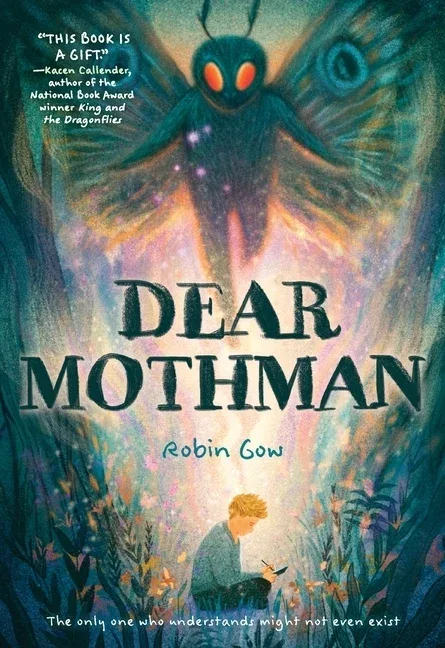 Dear MothmanRobin GowNoah’s best friend, Lewis, was killed in a car accident several months ago. Noah and Lewis were only out as trans to each other–not their families or at school, where Noah is Nora and Lewis was Ella. Noah, autistic, has not only lost his best friend but the essential sense of being known, seen, and understood. Lewis was deeply imaginative and determined, and for the sixth-grade science fair had planned to find proof of the existence of Mothman, a legendary cryptid in their region. Noah hadn’t been interested in the project, but is now determined to carry it out. He starts with writing letters to Mothman. In them, Noah expresses his grief and loneliness, something he suspects Mothman understands. Leaving the notebook with the letters out near the edge of his yard, Noah (white) sees evidence each morning that Mothman is reading them. This tender, lovely novel in verse follows Noah from isolation and grief to an emerging sense of belonging and healing. His journey is helped by a connection with three other kind, imaginative kids at school: Molly, Alice, and especially Hanna. They are the first people beyond Lewis to whom Noah comes out, his trust well placed, and Noah is slowly able to broaden that circle to his parents and teacher. Supernatural elements are given space to exist in a way that allows readers to decide for themselves how to make sense of this aspect of a quietly captivating story.Fiction for ChildrenLexile Text Measure 701LATOS Book Level 4.5View book details
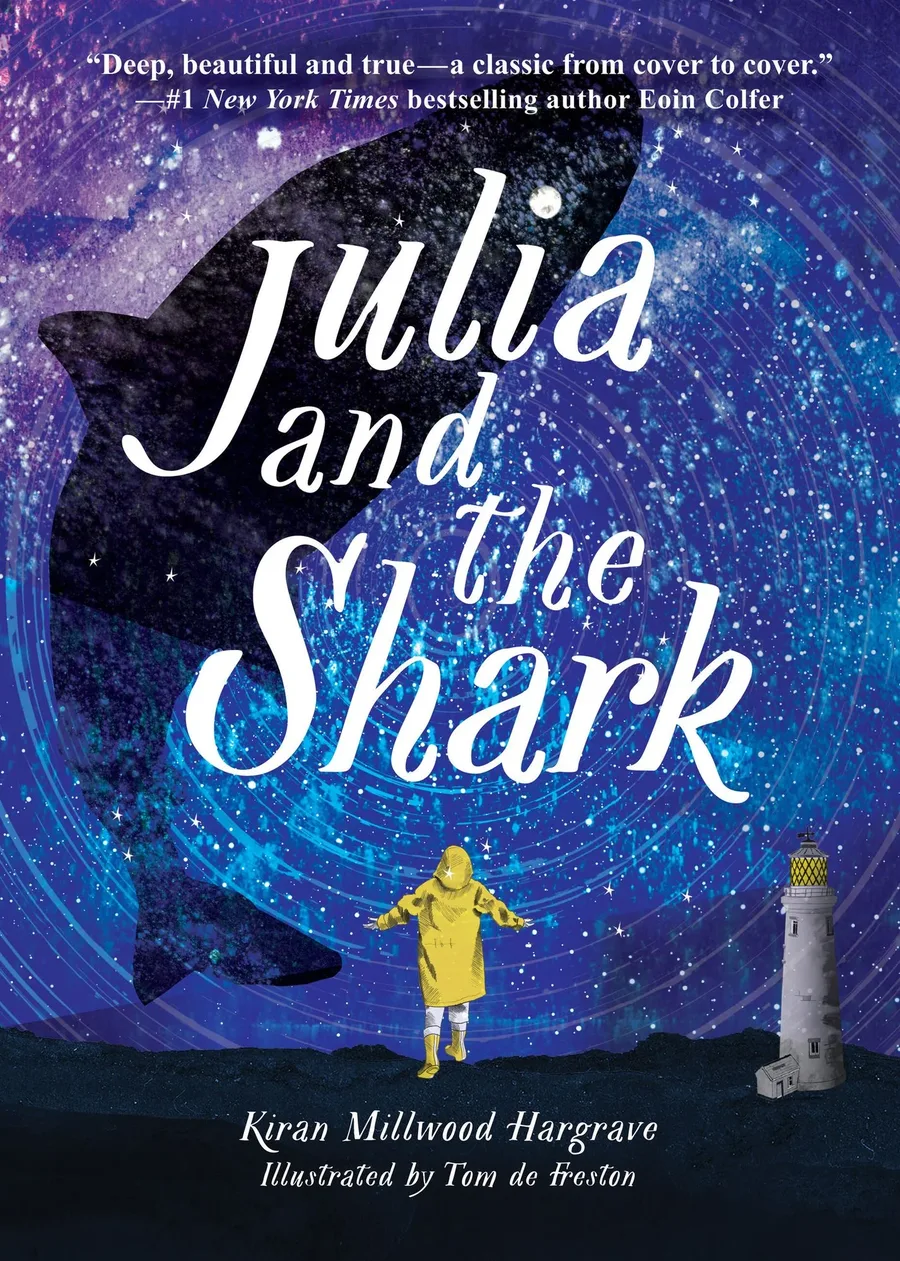 Julia and the SharkKiran Millwood HargraveJulia (white) and her parents are spending the summer far from their Cornwall home, at the Uffle-Gent lighthouse on the island of Unst in Shetland, Scotland. Her dad will be automating the lighthouse, while her scientist mum is in search of a Greenland shark. Remarkably slow moving and long living, these sharks—Mum thinks—could hold the key to a breakthrough dementia treatment for humans. Missing home, Julia is happy to find a new friend in local boy Kin (South Asian). When Mum’s funding dries up without a shark sighting, though, Julia begins to sense mounting tension between her parents. Fixated on the sharks, Mum buys an extravagant camera and a rickety old boat without consulting the family first. Julia admires, even idolizes, Mum, but soon even she cannot ignore Mum’s erratic behavior; Mum is ill, and her manic episode takes a nearly fatal turn into a severe 67 Fiction for Children CCBC Choices 2024 depression. Determined to salvage things by tagging a Greenland shark for Mum, Julia recklessly takes to the sea in Mum’s boat, making her way toward the coordinates of a reported sighting. Beautifully written, the story is honest in its depiction of the impact of parent’s severe mental illness on a child. Moody black and white illustrations evoking fog, water, and billowing clouds are shot through with splashes of brilliant yellow.Fiction for ChildrenView book details
 The Worlds We Leave BehindA.F. HarroldWhen Hex and Tommo (both white) head into the woods to play one morning, they have a tagalong: a little girl named Sascha, who wants a turn on the rope swing, too. As Sascha soars over the creek, Hex tosses a stone—he doesn’t know why he does it—that causes her to fall and break her arm. Hex feels sick about what has happened, but rationalizes it by blaming others. Sascha’s sister Maria, understandably angry, soon avenges Sascha with a punch to Hex’s face. When Hex meets an unusual woman, Missus, and her enormous, shaggy dog, he accepts her offer: She can erase the injustice that’s been done to him by removing Maria from the world. Maria won’t die; she’ll simply never have existed. No one will remember her. Over the next few days, the unexpected and unwelcome repercussions of Hex’s choice play out—and he’s not the only one who has met Missus. It will take more than just Hex, who soon blinks out of existence himself, to set the world (or rather, worlds) straight again. Eerie chiaroscuro drawings with their moody contrast of dark and light add to the foreboding sensibility of this short, unsettling British novel examining the intended and unintended consequences of choices both small and large.Fiction for ChildrenView book details
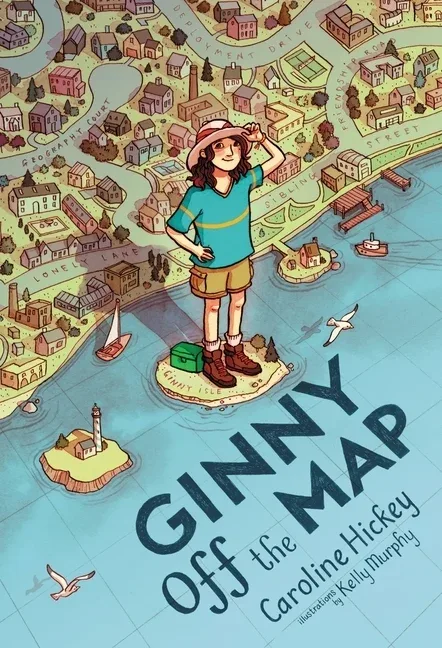 Ginny Off the MapCaroline Hickey, illustrated by Kelly MurphyEleven-year-old Ginny’s dad is an army doctor. Ginny (white) and her older sister, Allie, are blindsided when they learn his posting to Afghanistan in the new year has been changed; he leaves shortly after their expected move from North Carolina to Maryland at the end of the school year. Allie, who is gifted athletically and makes friends easily, is out playing with kids in their new neighborhood right away. Ginny, who is gifted academically but struggles socially, isn’t. Passionate about maps, she’s upset when a geography summer camp at the nearby community center is cancelled, and her efforts to engage the neighborhood kids in her interests fail. Ginny’s dad, who understands her best, video calls when he can, but not as often as any of them want. With their mom focused on a new job, and Allie and Ginny at odds, tensions in their house are high. As the family faces an additional unexpected challenge around the deployment, Ginny and Allie’s relationship, and their individual struggles with the move and missing their dad, turn a corner as everyone in the family learns to be more honest, open, understanding, and supportive of one another. Believable characters ground this engaging book set in 2015 illuminating some of the challenges unique to military families, as well as challenges many families can understand. Smaller subplots involving the diverse kids in the neighborhood and Ginny’s expectations around school all further enrich this inviting, welcome story featuring a likely neurodivergent main character in Ginny.Fiction for ChildrenView book details
 Eagle DrumsNasuġraq Rainey HopsonThis illustrated novel retells an origin story of the first Iñupiaq Messenger Feast, a Native Alaskan tradition. Piŋa lives in the Arctic with his parents; their solitary lives revolve around the hunting, fishing, and trapping essential to their survival. In prior years, Piŋa’s two older brothers each took a trip up the mountain to get obsidian for knapping spearheads but never came back; the pain lingers for all three of them. Now Piŋa is making the same journey, vowing to return. When he encounters a threatening golden eagle that transforms 68 Fiction for Children CCBC Choices 2024 into a man, Piŋa realizes he may be meeting the same fate as his brothers. The eagle reveals himself a god, and Piŋa complies with his order to make an arduous journey to the heart of the eagle’s community. There, grandmother eagle informs Piŋa he has been chosen to learn critical lessons to carry back to the human world; his survival is dependent on succeeding. Piŋa’s lengthy and challenging lessons include drumming, dancing, storytelling, how to build a qalgi shelter, and the importance of gift-giving. For his final challenge, he must return home, build a qalgi, make gifts, and bring together 100 people to share what he has learned. This spellbinding retelling of an Iñupiaq story underscores the origin of specific cultural traditions and beliefs, including the importance of people coming together in community rather than being suspicious and afraid of one another. Occasional full-page, full-color illustrations by the author enhance a unique and captivating story.Fiction for ChildrenLexile Text Measure 910LATOS Book Level 5.9View book details
 The House of the Lost on the CapeSachiko KashiwabaWhen the 2011 Japanese earthquake and tsunami hit, a mute, orphaned girl was on her way to live with an uncle, and a young woman was fleeing an abusive marriage. In the shelter where they meet, an old woman with magical gifts orchestrates their move to a home outside the town of Kitsunezaki. There the girl, newly called Hyori; the young woman, now going by Yui; and the old woman, Obachan, become a family. Although Hyori remains mute, she loves the routines they establish and her life with Yui Mama and Obachan; she even makes a good friend in town. But when Obachan realizes that the tsunami freed an evil being that was imprisoned in an underwater cave generations ago, they set off on an extraordinary road trip so she can arrange protection from various spirits. The town has lost so much, however—people who died and those who left in the aftermath of the tsunami—and Obachan knows that it will take hope as well as help to defeat the dark force. This emotionally authentic tale of trauma and healing is a skilled blend of realism and fantasy, with three immensely likable main human characters and a host of intriguing magical spirits (most of them kind, some also funny). Hyori’s and Yui’s back stories make their growing confidence and agency one of many things to celebrate in this imaginative and satisfying tale.Fiction for ChildrenView book details
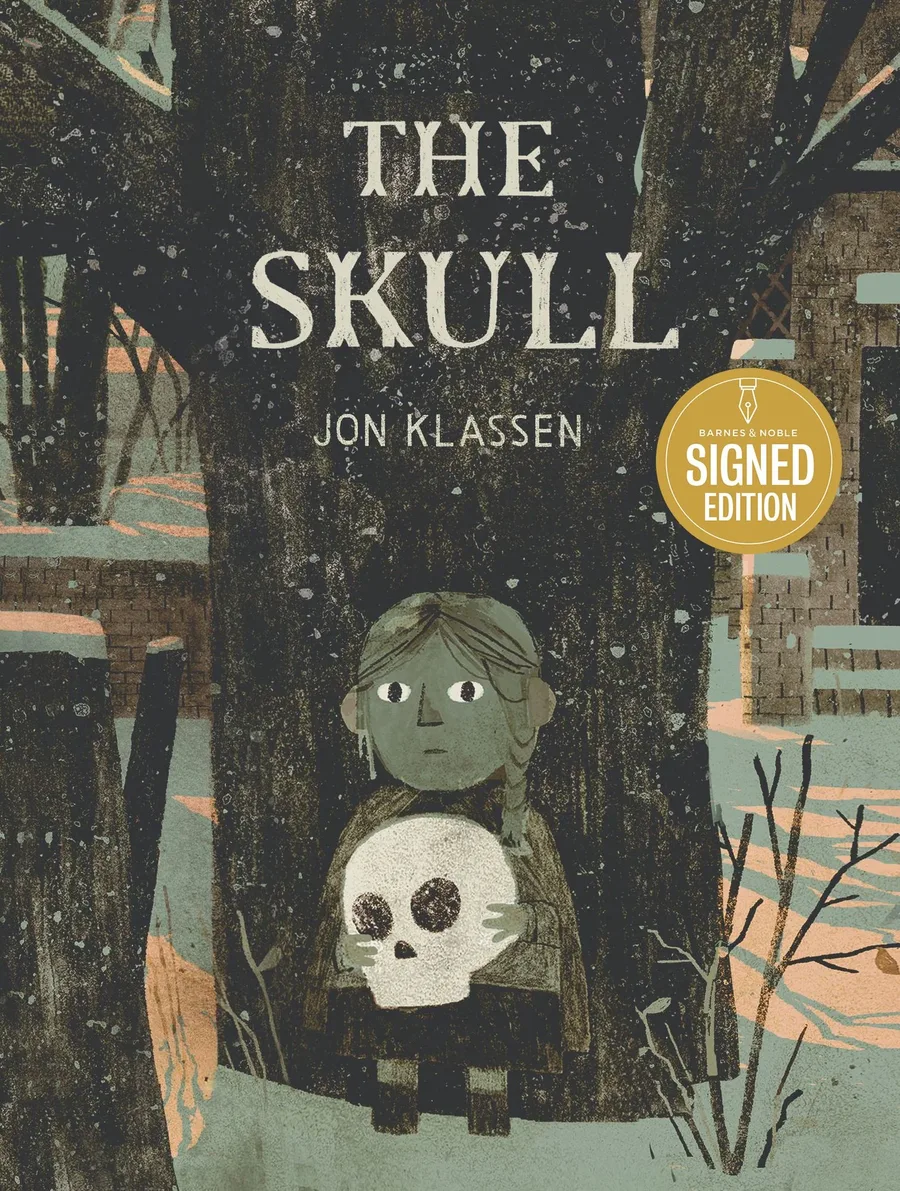 The Skull: A Tyrolean FolktaleJon KlassenAn author’s note reveals the inspiration behind this delightfully odd retelling: A year after first stumbling upon the Tyrolean folktale “The Skull,” Klassen reread it and found that he misremembered significant parts. From that slightly off tale, “[his] brain’s version,” he wrote The Skull. A runaway white girl, Otilla, comes upon a mansion in the woods, in which resides a talking skull. The skull welcomes Otilla and provides a tour of the house. In fact, the two rather hit it off. With Otilla’s help, the skull can once again enjoy tea by the fireplace and pears from the garden. He and Otilla don decorative masks and dance together in the ballroom. Then the skull reveals his secret: Every night, a headless skeleton comes looking for him. Indeed, that night the skeleton appears. It chases Otilla and the skull onto the balcony, intoning, “GIVE ME THAT SKULL. I WANT THAT SKULL,” until Otilla pushes it over the edge. In the forest, she sets about destroying the bones of the skeleton once and for all. Over breakfast the next morning, Otilla and the skull plan their day, the beginning of what will undoubtedly be a long and happy companionship. Simple text, generous font size, and classic Klassen illustrations accompany a story that manages to be eerie and cozy, funny and suspenseful all at once.Fiction for ChildrenView book details
 Land of Broken PromisesJane KuoIn this follow-up to In the Beautiful Country, Anna (Taiwanese name Ai Shi) is finally adjusting to life in the United States, where she is finishing sixth grade. Although her parents’ restaurant does okay, there’s no extra income to spend on fun things like summer camp. When the family realizes that Ba missed the deadline for filing paperwork to extend their stay in the United States, they fear they’ll be deported. Anna’s new summer plans? She’ll be working in the restaurant while her mom takes an under-the-table job in San Diego to pay an immigration lawyer. As the summer goes on, Anna begins to appreciate both of her parents as individuals with whom she has distinct relationships. She and Ma “try to outdo each other’s worry, / as if worrying is just another way to say I love you.” Anna and Ba connect over a love of literature, though they “inhabit two separate worlds … / His world is in Chinese. / Mine is in English / and there’s a divide.” Frustrated with the nonresolution proposed to their immigration status, Anna contemplates a school speech prompt, “What America Means to Me.” Written in contemplative free verse, this story offers an honest exploration of one girl’s sense of self in a new home that’s not always welcoming.Fiction for ChildrenLexile Text Measure 811LATOS Book Level 5.2View book details
 Tethered to Other StarsElisa Stone LeahyIt’s never occurred to Wendy Toledo to wonder why her Salvadoran American dad and her Guatemalan mom, who’s been in the United States legally for years, are adamant about not making waves, but she’s taken the message to heart. So when Wendy and her friends start experiencing racist incidents at her new middle school, she downplays the impact of what’s happening, lying first and foremost to herself. She’s especially unwilling to seriously consider the possible involvement of Brett, a cute white boy who’s been flirting with her, and is excited when she and Brett are paired for a science project to build a telescope. At home, tensions are rising as her older brother, Tom, gets involved with protests in support of Luz, a Mexican woman who’s taken sanctuary from Immigrations and Customs Enforcement (ICE) in a nearby church. Wendy also finds old papers that prompt her to question the stories her parents have always told her about their pasts. When Wendy can no longer ignore Brett’s involvement in the increasing racist bullying, she’s frustrated when speaking out has little impact, at least at first. Meanwhile community outrage over both immigration and ICE is intensifying, leading to a terrifying incident that impacts Wendy and her family. This compelling, heartfelt story grounded by excellent characterizations delves into the complexity and messiness of human relationships on both an interpersonal and community scale and illuminates the powerful force that people working together for positive change can be.Fiction for ChildrenView book details
 In the TunnelJulie LeeAlternating timelines tell the story of Myung-gi as a nine-year-old living with his parents and sister in the Korean north following the Soviet occupation, and as a 16-year-old soldier for the Republic of Korea Army (ROKA) in 1952, trapped in a collapsed tunnel. Seven years earlier, Myung-gi, an avid reader, treasures the forbidden novels Ahpa secretly brings home for him. As life under Communist rule becomes more oppressive and the Korean War begins, Ahpa secretly plans their family’s escape to the south. On a day when Myung- gi was supposed to be keeping watch but is distracted by a book, Ahpa is taken by North Korean soldiers. Myung-gi, his sister, and his mother make the treacherous journey south, hoping Ahpa escaped and they can reunite with him in Busan, but Ahpa never arrives. In the years that follow they live in a make-shift home, earning money for food any way they can. Myung-gi’s guilt over Ahpa’s capture fuels his decision to the join the army; in battle 70 Fiction for Children CCBC Choices 2024 after only ten days of training, he ends up trapped in the dark tunnel along with an “enemy” soldier. Facing death, he accepts that he’s unlikely to ever be reunited with Ahpa. In an epilogue, an elderly Ahpa, still living in North Korea, receives a smuggled copy of Myung- gi’s memoir and learns that his son now lives in the United States. This companion novel to the earlier Brother’s Keeper was inspired by the author’s desire to recognize child soldiers of the Korean War.Fiction for ChildrenView book details
 Enlighten MeMinh LêThe members of Binh’s Vietnamese American family have varying opinions on spending the weekend at a Buddhist silent meditation retreat. While his parents and older sister have been looking forward to it, his younger sister can think of a whole list of camps she’d prefer to attend. And Binh? It’s “gonna suck” without his GameBoy to help him escape, but at least he’ll be free of his parents’ nagging questions about the fight he recently got into with a bully who’d been taunting him with racist comments. During meditation breaks, the children at the retreat meet with Sister Peace, who tells them Jataka tales, parables about the Buddha’s past lives. As he listens, Binh imagines the tales—which impart lessons about the value of relying on one’s inner wisdom, family members, friends, and community— as levels in a video game, with himself as a character. Still ruminating on the incident at school, Binh reflects on the parables in relation to his own life and how he might open up to his family about what happened. On the ride home, Binh, feeling present in the moment, finds himself eager to talk about the retreat with his family. Buddhist practice inspires a welcome new perspective during a difficult time in this fast-paced graphic novel interweaving contemporary scenes, flashbacks, and video game sequences.Fiction for ChildrenView book details
 The Dubious Pranks of Shaindy GoodmanMari LoweAdmired for being smart and “nice,” the girls in Shaindy Goodman’s sixth-grade class at Bais Yaakov Orthodox Jewish day school don’t bully Shaindy outright, but neither do they befriend or include her. She may as well be invisible. So when her popular neighbor, Gayil, invites Shaindy to join her in pulling pranks on their classmates, Shaindy is thrilled to have Gayil’s attention. But the High Holidays—a time to make amends—are approaching, and the not-so-harmless pranks soon make Shaindy uneasy, especially as their classmates and teacher grow increasingly upset and eager to catch the perpetrator. By the time Shaindy realizes that there’s a pattern to the pranks (all the victims shared a bunk with Gayil and Shaindy at summer camp), it’s too late: Shaindy herself is the final target on Gayil’s list and Gayil frames her for all of their wrongdoing. Suspended from school, enraged, and ostracized by her classmates, Shaindy seeks an explanation for Gayil’s manipulative, vengeful behavior. What she learns makes her reevaluate her own role in a traumatic event that occurred at summer camp. Both girls have done wrong. As Yom Kippur, the Day of Atonement, comes around, Shaindy learns that moving forward will require a lot from everyone: a willingness to apologize, to forgive, and to extend hands in tentative friendship.Fiction for ChildrenLexile Text Measure 870LATOS Book Level 5.6View book details
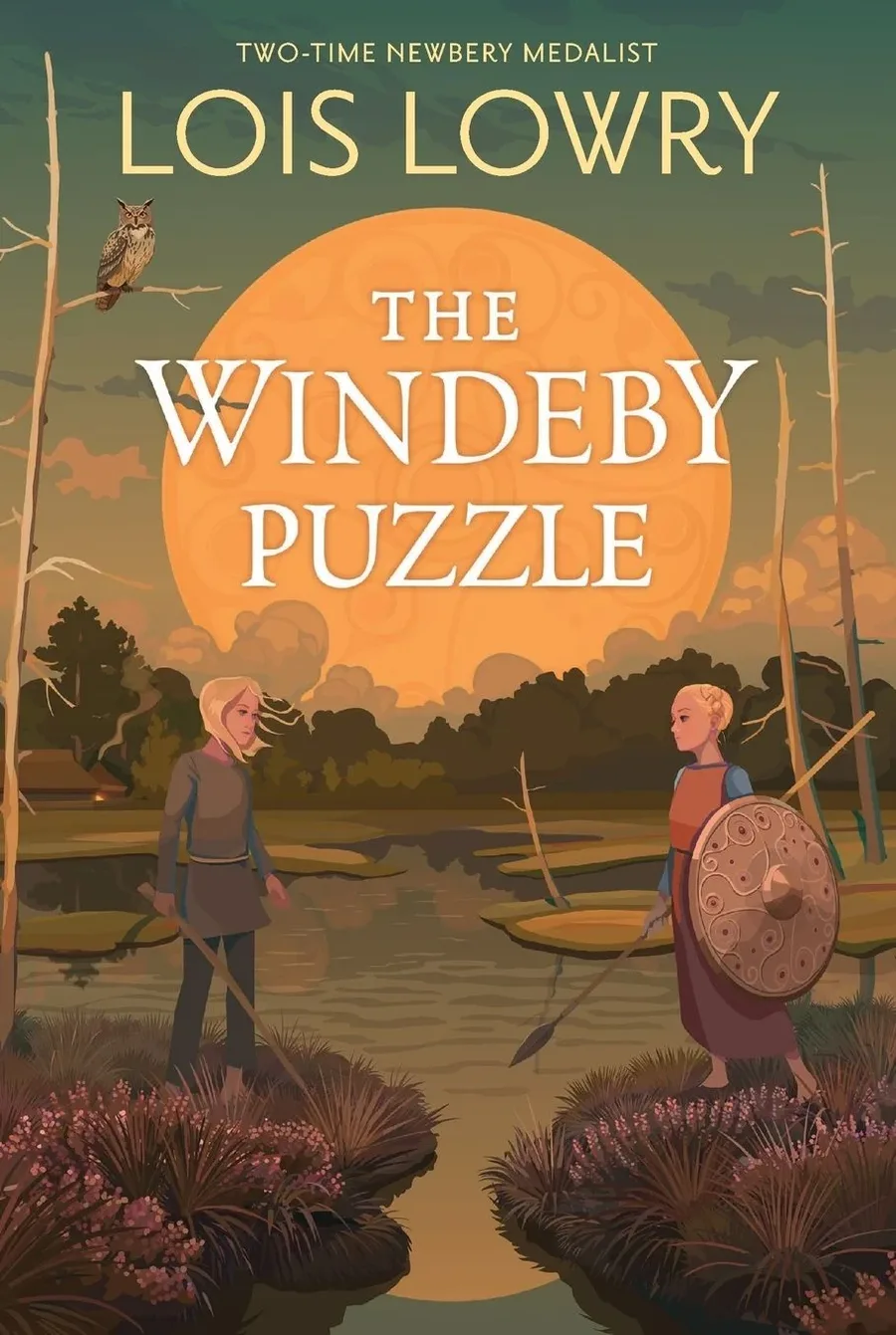 The Windeby Puzzle: History and StoryLois LowryInspired by the Windeby Bog Child—a 2,000-year-old mummified body found in a peat bog in northeastern Germany in 1952—this wholly original work is comprised of three distinct elements: Two fictional stories imagine the life of the child who died, while a third, nonfiction narrative delineates the author’s research and creative process in writing those two stories. The first story imagines the child as Estrild, a girl who attempts to break the gender barrier of her community and culture via recognition as a warrior during a sacred 71 Fiction for Children CCBC Choices 2024 annual ceremony. Passionate and confident, she fails to consider that her proposal will not be well received. Estrild is trained for the ceremony by Varick, the protagonist of the second story, an orphan whose “twisted back” prevents him from following the traditional path of the other boys. Varick’s careful study of animal skeletons allows him to fix the village forger’s hip when it is dislocated during a fall. Three interspersed “History” sections provide scientific and cultural context about the bog child, whose sex cannot be determined, as well as the careful deliberations that went into developing the two protagonists’ character traits and their imaginative, heartbreaking stories. While details of the fictional stories are historically unlikely, this work offers an exciting, engrossing glimpse into an archeological mystery.Fiction for ChildrenView book details
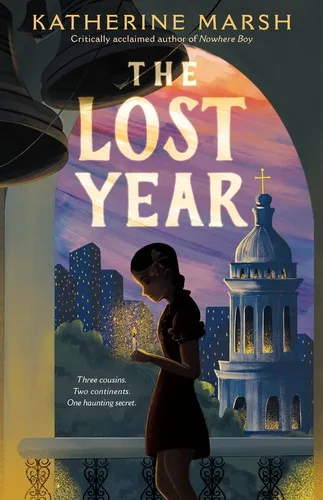 The Lost Year: A Survival Story of the Ukrainian FamilyKatherine MarshThree compelling storylines move back and forth between the first months of the pandemic in 2020, and Ukraine and Brooklyn in 1932 and 1933. Matt, 12 (white), is an only child living with his mother and great-grandmother, Nadiya, known as GG, during lockdown. He’s lonely, bored, chafing at his mother’s rules, and alternately angry at and worried about his dad, a journalist based in Paris. GG is sometimes tender and sometimes moody, especially when Matt asks questions about the diaries, letters, and a photograph in her boxes of belongings. These tell the tale of three cousins: Mila, the privileged daughter of a Ukrainian Soviet official in Kyiv, has never doubted the goodness of her father, the government, or Papa Stalin; Nadiya has lost her family to famine in the Ukrainian countryside; Helen, daughter of a Ukrainian immigrant family in Brooklyn, chafes at a recent New York Times piece denying the Ukrainian famine and is determined to set the record straight while helping bring her cousin Nadiya to America. As Matt follows his father’s journalistic advice for building trust with GG, the cousins’ stories, with twists, turns, and GG’s painful secret at their core, unfold. And as Matt builds a deeper relationship with GG, he moves outside his own worry and frustration and into conversations with his parents that help him better deal with the uncertainty of the pandemic. An author’s note tells more about the Soviet- engineered Ukrainian famine, the Holodomor.Fiction for ChildrenView book details
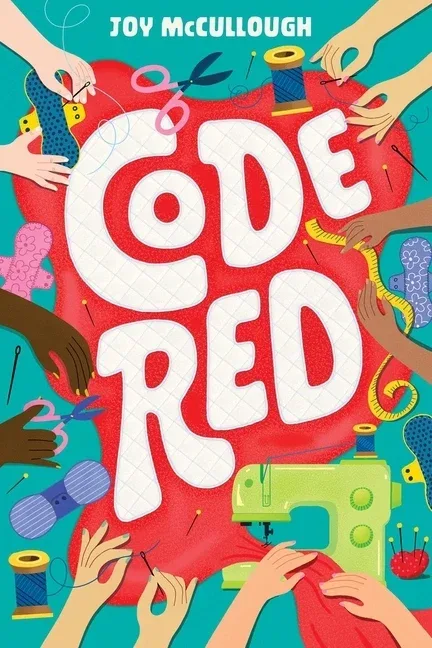 Code RedJoy McCulloughEden (white) is struggling to find her middle school social footing after an injury ended the gymnastics career that once consumed her life. Although Eden is proud of her mom’s rags to riches story as the founder and CEO of a menstrual products company, she’s dismayed when her mom is invited to give a talk on Career Day and humiliated by the predictable period jokes and teasing that ensues. After a hallway altercation with a bully, Eden finds herself in the principal’s office along with Mirabel (Latina/white), a classmate who came to her defense. Suspended for accidentally injuring the boy, the girls end up spending time together at Casa Esperanza, a food bank/community resource center run by Mirabel’s mother, Silvia. While there, Eden’s eyes are opened to the issues of poverty, homelessness, and Seattle city dynamics related to corporate growth. Eden’s insights further coalesce after discovering firsthand the importance of menstrual product accessibility. Her budding friendship with Mirabel quickly expands to include Mirabel’s sisters, friends, and community activists. Motivated to make a difference, Eden becomes involved in sewing fabric menstrual pads and a political campaign to create a period tax while hiding these activities from her increasingly disapproving mother, from whom she feels more and more disconnected. This poignant, passionate novel explores friendship, family, activism, self- discovery, and the challenge of being true to oneself.Fiction for ChildrenLexile Text Measure 781LATOS Book Level 5View book details
 The Many Assassinations of Samir, the Seller of DreamsDaniel NayeriA boisterous yet tender tale set along the Silk Road in the late 11th century begins with orphaned Omar rescued from an attack by Samir, a merchant traveling as part of a small caravan. As Omar describes him, Samir is a fast-talking, logic-spinning optimist who dreams of great riches. Their fellow travelers soon reveal multiple death threats against Samir from angry buyers of his wares. Omar, now called Monkey, negotiates how much his various acts of assistance are worth to Samir as a string of assassins makes attempts on Samir’s life. The would-be killers include a Viking Berserker, a Persian dervish, a Chinese poisoner, Bedouin raiders, and a rogue Roman legion, in addition to a mysterious figure known as “Cid.” Colorful characters, vivid settings, high adventure, and surprising twists abound in these delightful tales narrated by Monkey in flashback. Monkey often ruminates on love, inspired by both an ache to belong and his crush on a fellow traveler. And what Monkey says often contradicts what is true, none more than his claims to dislike Samir. The eventual reveal of his tales’ audience explains his tactics, and by volume’s end it’s clear that in Samir he knows he has found a family. Occasional full-page paintings enhance a volume concluding with a marvelous author’s note detailing more about the Silk Road, the area where these stories are set (between modern-day Xinjian Province in China and modern- day Tajikistan), and Samir and Monkey’s Sogdian ethnicity (an ancient Iranian people who were successful merchants).Fiction for ChildrenLexile Text Measure 841LATOS Book Level 5.4View book details
 You Are Here: Connecting FlightsEllen OhTwelve linked short stories center on East and Southeast Asian American children and teens stranded at a Chicago airport on a stormy, flight-delayed day. Eleven of the 12 are travelers; one finds himself at work with his mom when childcare arrangements fall through. Each story has a vivid sense of place and conveys particulars of both identity and circumstance, grounding readers in its protagonist’s thoughts and feelings about what brought them there, who they are (or aren’t) with, and where they are headed and why. Whether in the midst of a journey across the country or around the world, or making a forbidden, heroic foray from one terminal to another, these children and teens are already navigating the unexpected brought on by flight delays when they each encounter one or more incidents of anti-Asian racism. Some of what they experience is overtly racist, but some is more subtle, and part of the power of this collection is in illuminating what too often goes unseen by non-Asians. But there is nothing didactic in these lively stories. The racism is achingly believable, often coming seemingly out of the blue and revealing beliefs and ideas that too often go unchallenged. At the same time, while an unsettling part of the landscape these children and teens must navigate, these upsetting moments punctuate but do not define their experiences. Each story turns as their protagonist finds insight, resilience, resolve, or unexpected, welcome solidarity.Fiction for ChildrenView book details
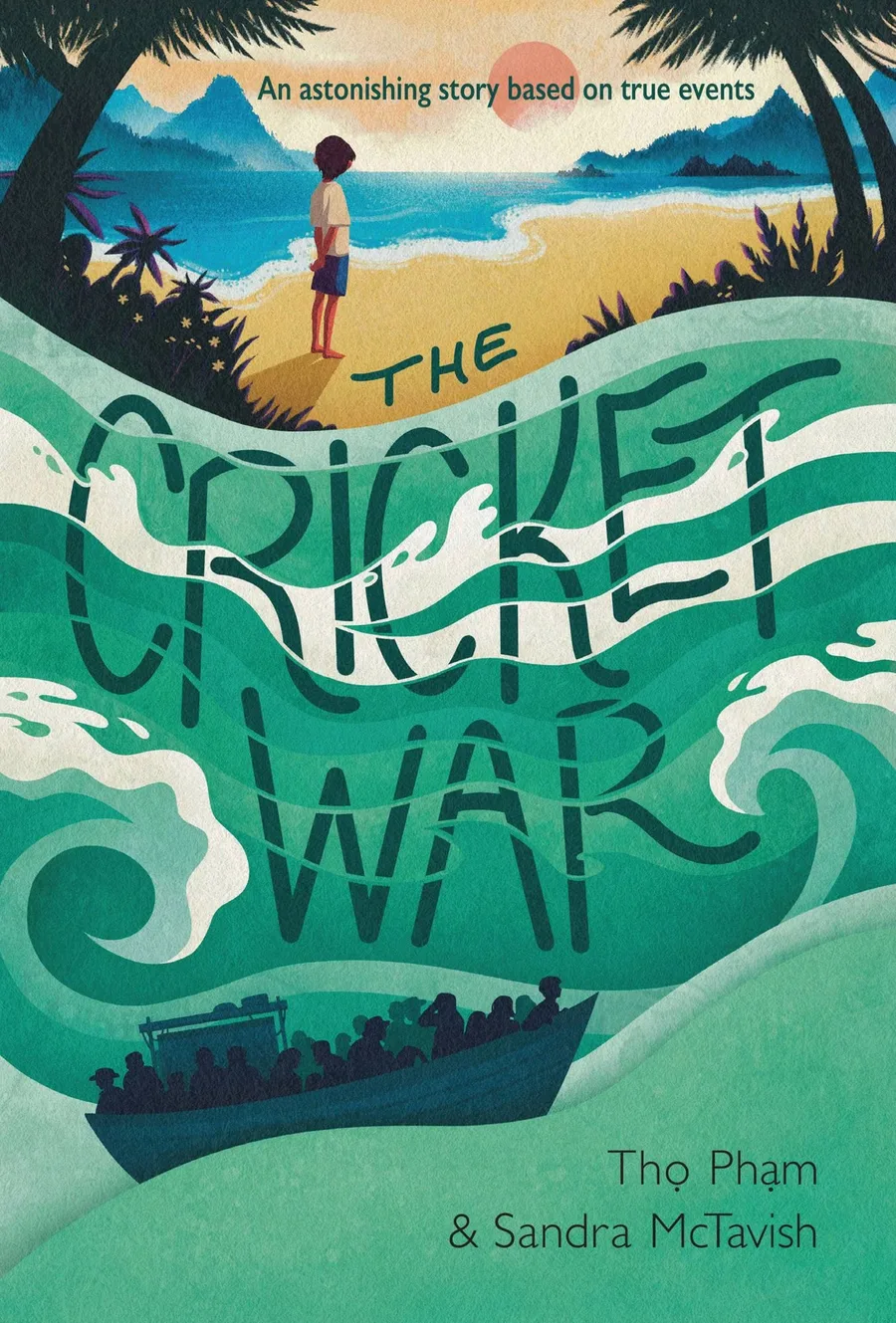 The Cricket WarThọ Phạm, Sandra McTavishAs more and more furniture disappears from their home, 12-year-old Thọ understands without ever being told that his parents are selling it so that he can escape Vietnam and forced conscription into the army when he turns 18. To admit such a plan, or that a son has fled as Thọ’s older brother already did, is to face the threat of government repercussions in this story set in 1980. Still, it’s sudden and shocking the morning Thọ awakens to the realization that he’s leaving that day. Thọ’s journey from Vietnam begins on an overcrowded boat full of refugees, which is repeatedly attacked by pirates. Although most of the pirates give the refugees a little food and water in addition to stealing anything they have left of 73 Fiction for Children CCBC Choices 2024 value, Thọ decides to attempt to influence his own fate by sneaking onto one of the pirate ships. He bides his time and chooses well, stowing away on a large boat among pirates who take good care of him once he’s discovered. When the pirates rendezvous with a ship called the Cap Anamur, they turn Thọ over to the German boat’s crew, whose mission is to rescue refugees on the ocean. This rousing yet tender story in Thọ’s observant voice follows him to a refugee camp in the Philippines and, eventually, to Canada. Based on author Phạm’s own experiences, it is a tale in which hope and human kindness leave lasting impressions.Fiction for ChildrenView book details
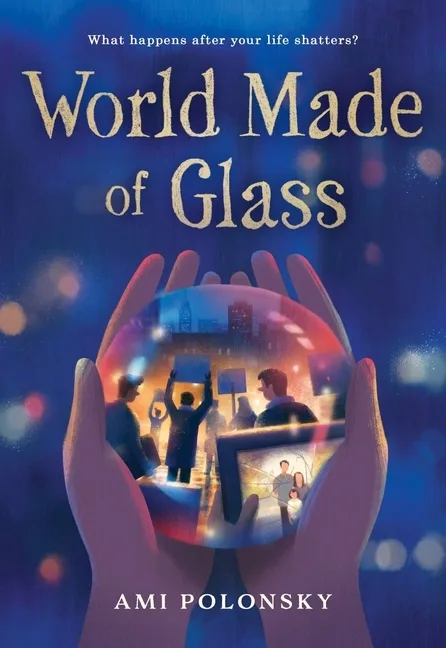 World Made of GlassAmi PolonskyIn a hospital bed in the living room of his apartment in New York City in 1987, Iris’s beloved father is dying of AIDS. Though she thinks about it constantly (“Dad. Is. Dying. Dad. Is. Dying.”), Iris (white) keeps her father’s illness a secret, knowing that the virus instills fear and prejudice in so many. The secret keeps her two friends, Will and Toby, at arm’s length, though she does confide in an understanding new friend, Julian. While her dad’s partner, J. R., is gentle and kind, Iris is stubbornly determined not to like him too much. Her parents divorced after her dad came out as gay, but her obstetrician mom still helps care for him. Iris and her father have long written and exchanged acrostic poems; she takes comfort in these during his final days. After her dad’s passing, Iris wants to take action, to help educate the public, to help prevent further spread of AIDS. J. R. introduces her to his community of AIDS activists, and she and Julian—with the unexpected but welcome support of Iris’s other friends—attend ACT UP protests. Heartbreaking and vivid in its depiction of grief and anger, this novel is an eye-opening glimpse into the human tragedy of the AIDS epidemic. Informative back matter provides additional context about the AIDS epidemic and ACT UP.Fiction for ChildrenWord Count 50565View book details
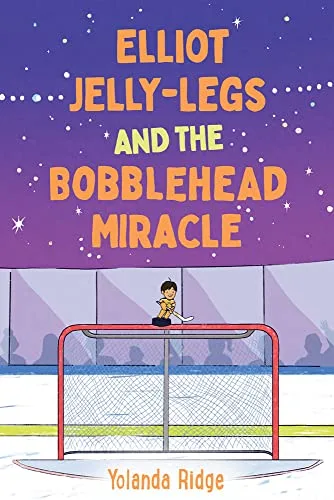 Elliot Jelly-Legs and the Bobblehead MiracleYolanda Ridge, illustrated by Sydney BarnesSixth grader Elliot’s mediocre skating skills kept him benched much of his first hockey season. Now in his second year, he volunteers to replace an injured player as goalie. After Elliot (white) makes a wish for victory on his Carey Price bobblehead before their first game (Price is a Montreal Canadiens goalie), the team not only wins but Elliot doesn’t allow a single goal. Convinced it’s because of the bobblehead, the wishing ritual becomes an essential part of Elliot’s pre-game prep. This blithe premise is deftly turned into something more substantial as it examines issues of self-confidence and emotional well-being. Elliot’s having a shutout season, but every win ups the pressure he feels to succeed. Only Elliot’s best friend and teammate Duncan knows about the bobblehead wish; when the secret gets out, Elliot is sure Duncan is to blame, causing a rift in a friendship already experiencing tension. At home, Elliot feels bad whenever he hears his parents arguing about the cost of him playing hockey and angry when they seem more interested in his sister’s science contest project than his games. When Elliot begins to lash out, it becomes clear he’s struggling—first and foremost to believe in himself—in this entertaining and insightful novel. Discussions of athletes’ mental health—with goalie Price, who is Indigenous, one of Elliot’s role models for his openness about seeking treatment—and of sexism in traditionally male sports are welcome moments throughout a sporting story set in Canada.Fiction for ChildrenView book details
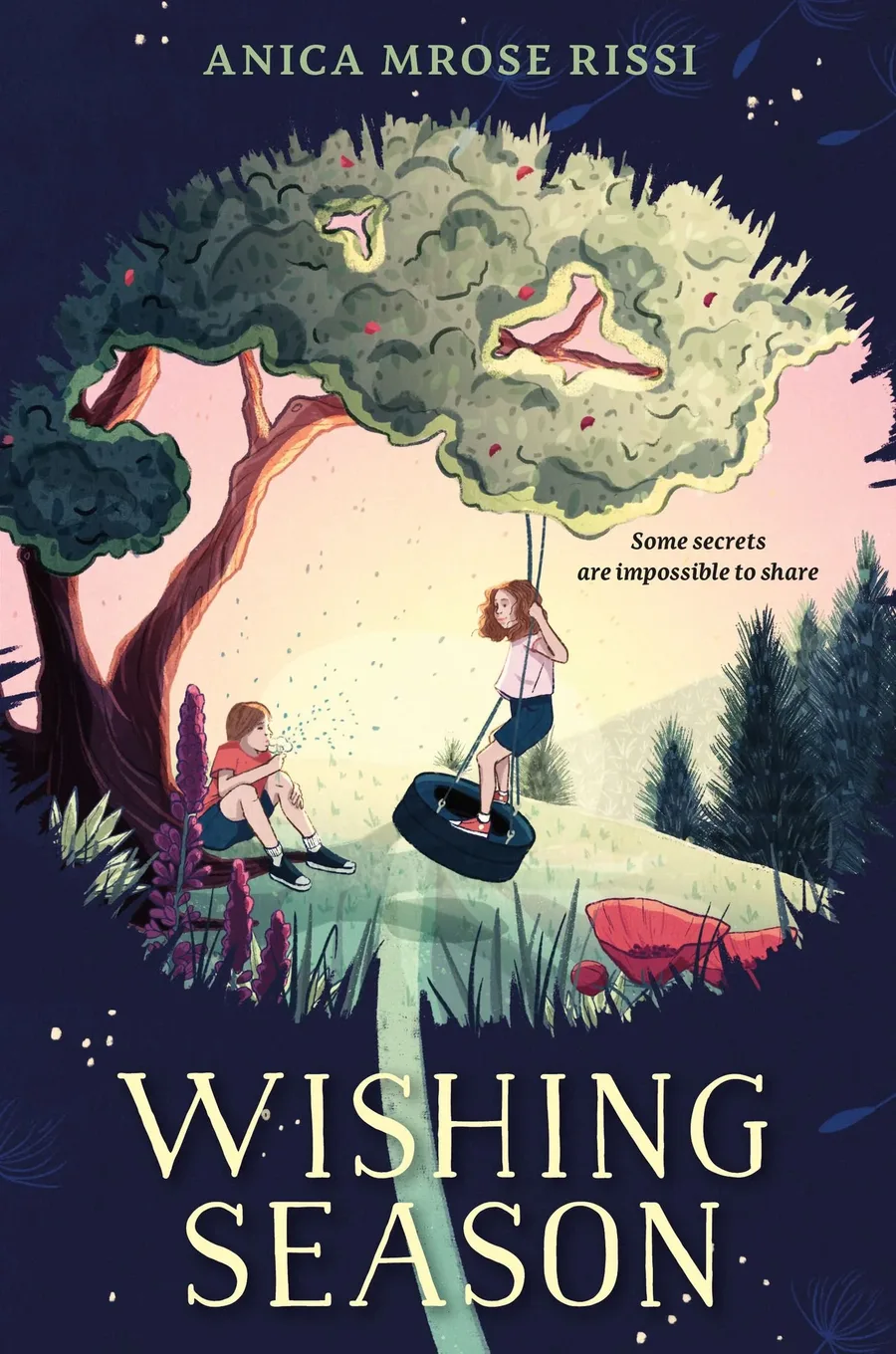 Wishing SeasonAnica Mrose RissiGrief and a ghost both haunt Lily (white), 11, in the months after her twin brother Anders’ death from cancer. Lily has yet to really cry, while her mom cries all the time and can’t seem to pick up the pieces of their lives. Lily is doing her best for them both while harboring a secret: Anders has come back. She regularly meets him in a space behind the barn he describes as the “overlap,” where his existence after death and hers in life can coexist. He doesn’t automatically appear; sometimes she waits. And now, in the summer after fifth grade, she waits more and more often, while the boundaries of the overlap are shrinking. Anders has a theory: The overlap will last seven-and-a-half months, the amount of time they spent together in the womb. He encourages Lily to spend more time with other people, but their family is relatively new to their small Maine town where belonging is marked by generations. Still, the neighbors have been incredibly kind, especially teenage Quinn, who begins regularly dropping by and inviting Lily to do things. Lily’s burgeoning friendship with Quinn has its rocky moments, and it takes time to ease the struggle for Lily and her mom to regain their equilibrium as a family, but these elements only add to the authenticity and appeal of an accomplished story in which the use of magical realism beautifully underscores the ways its wonderfully drawn characters are so very human.Fiction for ChildrenView book details
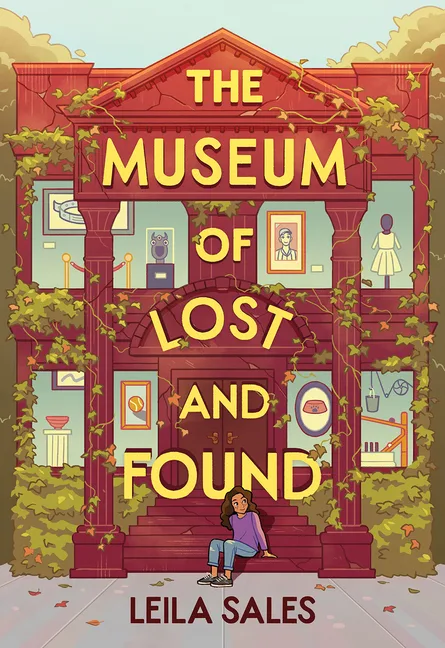 The Museum of Lost and FoundLeila SalesAn abandoned building still housing remnants of its history as a museum, including an intriguing painting of two young women in the early 1970s, inspires sixth grader Vanessa (white) to curate an exhibit of her own. The focus: Her long friendship with Bailey, which recently ended for reasons Vanessa doesn’t understand. When Vanessa’s Hebrew school classmate Eli stumbles on the museum, he asks to add a display about his late dog, Einstein. Then Vanessa’s brother, high school freshman Sterling, brings in the baseball card collection he’s maintained to have something in common with their dad, who’s deploying to Afghanistan. Vanessa is worried about her dad; she’s also angry that he’s always telling her to stop picking her cuticles, as if stopping were easy. It isn’t—she’s tried. Her curiosity about the painting of the two young women is a distraction that leads to an exciting discovery: It’s rumored to be the lost work of a famous, still-living artist. The museum storyline provides an unusual and intriguing framework for this honest, nuanced look at loss, transitions, and change. For Vanessa in particular, the exhibit she curates, and later the one Bailey creates in response, provides opportunity to consider and reconsider their friendship from various perspectives. Vanessa also learns that her cuticle picking is something called a Body-Focused Repetitive Behavior—more than a label, like so much else she’s recently discovered, it’s information that gives her hope.Fiction for ChildrenView book details
 The Witch of WoodlandLaurel SnyderWhen Zipporah’s mother tells her that Rabbi Dan has agreed to let Zippy (white) have a bat mitzvah ceremony, Zippy is bewildered and dismayed. In her mind, her sporadic (at best) synagogue attendance and lack of Hebrew school education make her only a “part-time Jew.” She feels more in tune with her practice of witchcraft. Her best friend, Bea, used to love playing Witches with Zippy, but lately Bea has been hanging with the popular crowd instead. When Zippy channels her frustration and loneliness into the incantation of a Hebrew phrase, she summons—to her utter surprise—an ethereal, winged girl whom she calls Miriam. Zippy is nourished by this new friendship, while Miriam gains strength from sparks of energy drawn from Zippy’s touch. Seeking to understand her own magic—her 75 Fiction for Children CCBC Choices 2024 connection with Miriam gives her remarkable Hebrew abilities—as well as the context of a phrase about sorceresses in her Torah portion, Zippy speaks with Rabbi Dan, who gives her a book on Jewish demons and other creatures. While Zippy’s journey reaches a conclusion that is decidedly on her own terms, and Miriam’s story finds resolution, Zippy must first navigate an emotional labyrinth: her desire to help Miriam, sadness over losing Bea, deep annoyance with her parents, and confusion over her entwined beliefs in Judaism and witchcraft. All of this is chronicled in Zippy’s self-possessed voice as the novel’s narrator and scribe.Fiction for ChildrenView book details
 The Lost LibraryRebecca Stead, Wendy MassA mystery told in the alternating voices of a fluffy orange cat, a former assistant librarian who may or may not be a ghost, and an 11-year-old boy centers on a forgotten library fire. A newly erected Little Free Library brings community reading and book exchange back to Martinville, and plenty of petting to Mortimer, the orange cat who stands sentry. Eleven- year-old Evan (white) borrows two books and discovers they’re both from the old library. The cards inside reveal one was last checked out by a now-famous mystery writer and returned on the day of the Martinville library fire 20 years earlier; the other was checked out by his dad. The ghosts of that library fire reside in the town’s history museum, unable to let go of the tragedy and find a way forward. Intrigued by one of his Little Free Library choices, How to Write a Mystery Novel, Evan begins to investigate the library fire and is surprised to discover a connection to his father and secrets of the past. With a hefty dose of ghostly intrigue but shy on scary chills, this short, entertaining novel offers satisfying puzzles and reveals, culminating in a win for fans of the both mysteries and the public library.Fiction for ChildrenLexile Text Measure AD570LATOS Book Level 3.7View book details
 Parachute KidsBetty C. TangAn insightful graphic novel loosely based on the author’s childhood is set in 1981 and follows a fictional family of “parachute kids”: Asian children in the United States without their parents. Feng-Li, 10, is excited to come to America and go to Disneyland. After a whirlwind, wonderful time as tourists—even her sullen older brother, Ke-Gāng, is engaged—Feng- Li’s parents announce that the kids will stay to attend school in America. Their father will go back to his job in Taiwan; their mom will stay until her visa expires. Both will return on periodic tourist visas. Academically driven eldest daughter Jia-Xi, who chooses the new name Jessie, takes on running the household while navigating her junior year of high school. Ke-Gāng, who hates his American name, Jason, is angry and drawn to a gang-like group of other immigrant Asian kids. Usually optimistic Feng-Li, who goes by Ann, finds it hard to stay hopeful, the language barrier making it hard to achieve academically or make friends. A story punctuated by lovely moments of humor follows a year of the individual and family challenges. A turning point for both siblings and parents comes after Ke-Gāng, who is attracted to a boy in the group he hangs with, is injured. The fresh visuals include use of colored speech bubbles to distinguish when characters are speaking Chinese or English. An author’s note discusses the reason her own parents chose to send her and her siblings from Taiwan to the United States in 1979.Fiction for ChildrenLexile Text Measure HL250LATOS Book Level 2.5View book details
 The House that WhispersLin ThompsonTo give their parents time alone to recalibrate their marriage, Simon and his sisters, Talia and Rose, are spending the week with their grandmother, Nanaleen. Things have been rough since their dad lost his job, and now there’s a new worry: Nanaleen has become alarmingly forgetful, and her big, old house seems like it might be too much for her to take care of. With all this weighing on his family (white), the last thing Simon wants is to add 76 Fiction for Children CCBC Choices 2024 to their stress by telling anyone that he is trans. No one in his family knows he’s a boy, or that he’s chosen the name Simon. Instead, he switches words in his head when someone unknowingly calls him the wrong thing. For now, at least, it works. At Nanaleen’s, Simon becomes preoccupied with the scratching sounds in the walls. Could it be a ghost? Perhaps it’s Nanaleen’s sister, Brie, who moved away from the family when she was only 17 for reasons Simon doesn’t know. As Simon becomes more desperate to solve the mystery of the ghost, he also grows increasingly frustrated at being perceived as a girl, and more concerned about what seems to be a growing rift between him and his sisters. The characterizations of Simon and his sisters shine in a story that underscores the significance of strong sibling bonds, especially in the middle of family change.Fiction for ChildrenView book details
 To the IceThomas TidholmFrigid arctic conditions are known to affect a person’s thinking, but in the manner of polar explorers, Ida (white) does her best to accurately recount the extraordinary events when she and neighbors Jack and Max (both white) went “to the ice.” Playing near the creek behind their houses in early spring, the threesome step onto the ice; it cracks and they find themselves on a floe headed to sea. There is a sense of practicality, play, and adventure as the three drift further and further from home (and land). When their ice floe eventually becomes part of an ice pack, the stoic and curious friends continue to explore— summiting the craggy icy terrain and traveling to a stony mountain, where they happen upon an abandoned cabin. Cold, resourceful, and mildly optimistic, the three settle in for the winter by telling stories, singing songs, and eating from the store of canned fish balls, their dialog providing both humor and the logic behind their decision-making. In time, the sun reappears and the trio fashion a boat from wood scraps, their journey home as swift and remarkable as it is inevitable. When they arrive, it was as though they had never been gone. Translated from the Swedish, this slender and highly illustrated novel blends a straightforward telling and dreamlike quality to honor the imagination of children.Fiction for ChildrenView book details
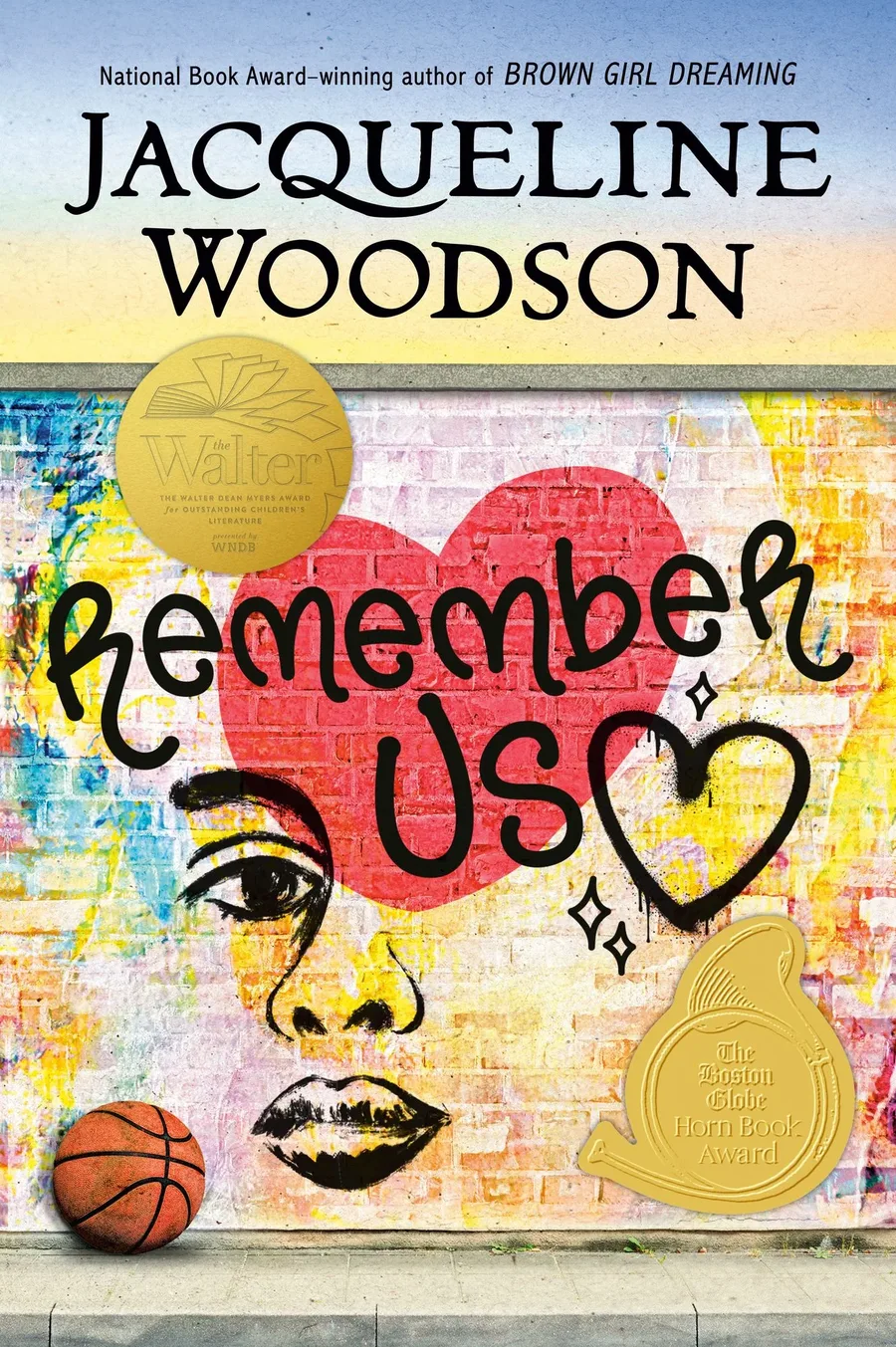 Remember UsJacqueline WoodsonIn the 1970s, the Bushwick neighborhood where Sage lives is known as the Matchbox. “Smoke always seem[s] to be billowing” as countless homes burn to the ground, leaving blackened ruins for kids to pick through in search of “treasures.” Sage’s father, a firefighter, died in the line of duty, and her mom is saving money so that they can move to a safer place. Meanwhile, Black preteen Sage is beginning to leave childhood behind, her sense of self developing yet still fragile. Obsessed with basketball, Sage feels most comfortable in loose athletic clothes and dreams of becoming the first woman to play for the NBA. When an older boy threatens her as she’s shooting hoops at the park (“What kind of girl are you? … I should punch you in the face just to show you you ain’t a dude”) it rattles her so deeply that, for a while, she abandons the sport she adores. This tender, lyrically written novel is imbued with the neighborly love of a community that weathers not only endless fires but the tragic death of a child. When Sage and her mom finally move out of Bushwick, Sage is most heartbroken over saying good-bye to her best friend, Freddy, who sees and loves her for exactly the girl she is. “‘You’re the Sage kind,’ Freddy said. ‘The Sage kind loves ball.’”Fiction for ChildrenLexile Text Measure 669LATOS Book Level 4.3View book details
Fiction for Young Adults
31 selections
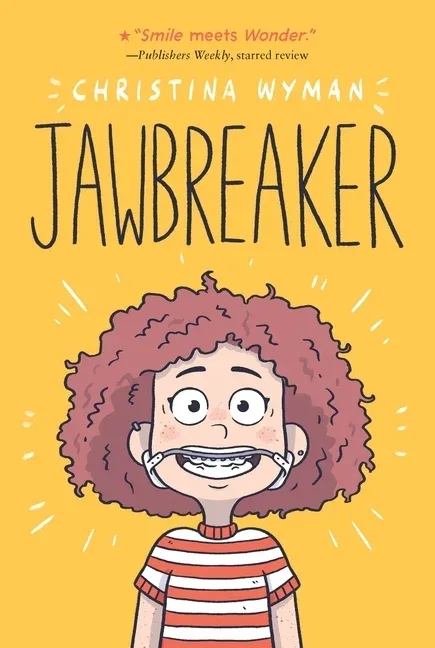 JawbreakerChristina WymanMax Plink’s teeth seem to be the cause of most of her problems. Her severe overbite requires expensive, painful orthodontia—including her new headgear, or “jawbreaker”—and the frightening potential of double jaw surgery down the road. The expense is straining her family’s already stretched-thin finances; her parents fight over money, and her dad drinks too much. Max’s younger sister, Alexis, joins the bullies at school in relentlessly tormenting Max, calling her Bucky Beaver and worse. To top it all off, a local journalism competition for junior high students, which Max has long hoped to win, decides to accept only video entries, not essays, and Max is loath to appear onscreen. Amid the chaos she finds comfort in a blog written by a young man who chronicled his own experience with double jaw surgery—and the bullying that preceded it—and a lightbulb goes on. For her application, Max will report on bullying in schools. And, if she’s brave enough to wear it in the video, surely her headgear will make an impact. While Max’s jawbreaker is the titular topic, it turns out it’s not the root of her problems. Unflinching in its depiction of a host of challenges that can stem from intergenerational trauma, toxic family dynamics, and poverty (including lack of access to technology needed for schoolwork), this novel ends on a high note as Max and her family (white) commit to communicating, seeking help, and being kinder to one another.Fiction for Young AdultsLexile Text Measure 760LATOS Book Level 4.9View book details
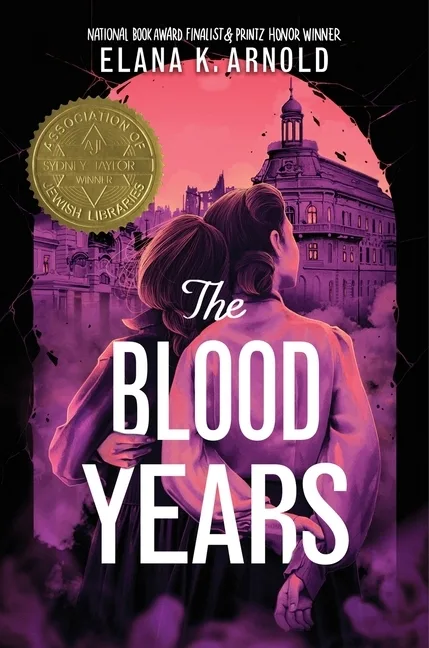 The Blood YearsElana K. ArnoldA devastating novel based on the author’s grandmother’s experiences sheds light on the trials of Romanian Jews during the Holocaust. In the late 1930s, Frederieke lives in Czernowitz with her depressed mother; glamorous sister Astra; and loving, protective grandfather Opa. Rieke adores and is exasperated by her older sister in equal measures; she often tags along with or covers for Astra when Astra meets up with her philandering lover, Marcel, a doctor. Meanwhile, the war arrives in their beautiful, cosmopolitan city. The Soviet occupation leads to a tightly controlled food supply and unwelcome divides as neighbors spy and report on one another. When the Nazis take over, Rieke and her family are ordered into a crowded ghetto with other Jews, but in a stroke of luck they avoid deportation because Marcel’s medical skills are needed at a local hospital. Life under Nazi rule is dangerous and uncertain, and Rieke faces extreme hardships: A man who offers the family shelter and later brings them food secretly and repeatedly sexually assaults her as “payment,” and her chronic cough, which she suspects is tuberculosis, eventually requires hospitalization. In the final moments of the story, Rieke makes a critical decision about her future, providing a welcome sense of hope after so much suffering.Fiction for Young AdultsLexile Text Measure 829LATOS Book Level 5.3View book details
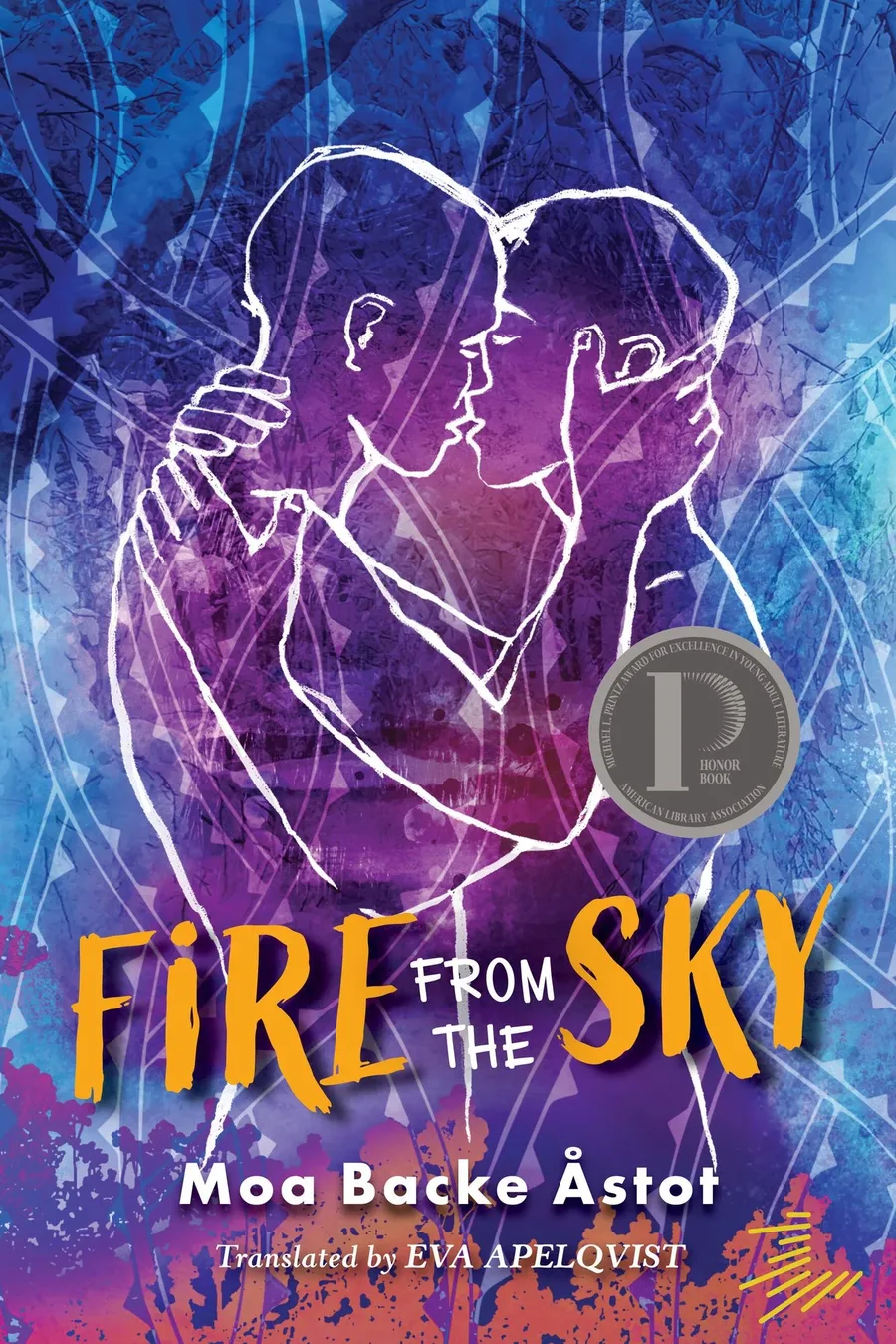 Fire from the SkyMoa Backe ÅstotTeenage Ánte loves his life in a small northern Swedish town. His Sámi family herds reindeer, although they’re no longer nomadic. Indeed, he’s living a settled, 21st-century life, going to high school, texting with friends, engaging (or not) on social media. Ánte has no desire to go anywhere but wonders if he’ll be able to stay: He doesn’t know anyone else who is gay. Are there gay reindeer herders? Ánte isn’t out; he’s also in love with his best friend, Erik. Struggling with a looming sense of loss at someday having to leave, Ánte 78 Fiction for Young Adults CCBC Choices 2024 slowly finds hope. It begins with support close to home when his teenage cousin Ida makes clear she understands him. His grandmother is less direct but no less full of acceptance and love. Ánte also sees signs that his attraction to Erik may not be one sided, although the fact that Erik has a girlfriend confounds him. This standout translated novel includes a subplot about the disturbing work of a Swedish researcher in the early 20th century who sought to prove the inferiority of the Sámi because of “racial differences” between them and Swedes, an echo of racist eugenics research in the United States and oppression against North American Indigenous peoples. From tender descriptions of imagined first love to energetic conversations among Ánte and his friends, this finely told story shines.Fiction for Young AdultsView book details
 Warrior Girl UnearthedAngeline BoulleySixteen-year-old Perry Firekeeper-Birch isn’t thrilled to be a summer Kinomaage program intern. Unlike her twin sister, Pauline, she doesn’t have big college dreams but does need to repay Aunt Daunis for car repairs. Perry’s tribal museum position immerses her in the Native American Graves Protection and Repatriation Act (NAGPRA). Low compliance since NAGPRA became law in 1990 makes the soul-disturbing sight at nearby Mackinac College of Native bones in stacked boxes and sacred and treasured items disrespected and misunderstood even more agonizing. For fiery Perry, quick action seems better than long- term negotiations for their return, and two impulsive decisions threaten her internship and burgeoning romance with fellow intern Eric. Perry’s summer is also shadowed by the disappearance of several young local Indigenous women. After the murder of a college trustee leads Perry to another horrifying, heartbreaking discovery—a silo full of Native ancestral remains—she discovers more than old bones are hidden on the land. Navigating both tribal politics and intense feelings, Perry is grounded by her family (Ojibwe/Black), friendships, and Sugar Island Ojibwe culture and community, where she speaks both Anishinaabemowin and English. The connection between history and present-day violence is found in both government policy and individual acts of racism and misogyny in this riveting mystery/thriller set in 2014. A story distinguished by rich, nuanced characterizations and many moments of humor and warmth is also tender, tense, and eventually terrifying before seeing Perry safely home and considering a surprising future path.Fiction for Young AdultsLexile Text Measure HL720LATOS Book Level 5.09View book details
 Funeral Songs for Dying GirlsCherie DimalineWhen the owner of Toronto Haunted Ghost Tours arrives at Winterson Cemetery to investigate two reports of paranormal activity, Winifred, who is Métis and lives on the grounds with her distant, grieving father, sees an opportunity. Her father is at risk of losing his job at the failing crematory; moving out would mean leaving not only their home, but also the ashes of Win’s late mother, who died during childbirth, behind. Win knows the reported “sightings” are not real—both times it had been she who was spotted among the gravestones—but recently she has been visited by the actual ghost of an Indigenous teen girl, Phil, who died in a ravine next to the cemetery. Hoping to summon Phil while a tour group visits Winterson, Win reluctantly ropes her caustic, money-grubbing cousin, Penny, into helping with her scheme. As Win and Phil get to know each other, though, and even begin to fall in love, the story of Phil’s tragic death slowly unfolds. Win begins to regret her decision to exploit Phil’s death for profit and tells Penny she’s changed her mind. But Penny is motivated by more than just money; painful family dynamics and past humiliations have bred her desire to hurt her cousin. Heavier themes—how and when to let go of a lost loved one, the pervasive violence against Indigenous girls and women—are deftly balanced by warmth, humor, and familial and romantic love in this exquisitely written novel.Fiction for Young AdultsView book details
 Where You See YourselfClaire ForrestMinneapolis high school senior Effie Galanos (white) has cerebral palsy and uses a wheelchair. Effie hopes to go to Prospect University in New York City for college, and she worries less about getting in than about telling her parents her plan. She knows proving she can advocate for herself will go a long way toward getting their approval, and her high school is providing plenty of opportunities to rise to the challenge. Her IEP says she can have two lockers, but one is taken away. And now that she’s a senior, Effie is allowed to leave campus for lunch, but the only door the school leaves unlocked isn’t accessible. Effie is also working with Wilder, another member of student council, on a school beautification project that will be welcoming to physically disabled students. When Effie finally tells her parents about Prospect, and they take a family trip to visit campus, she’s dismayed to discover how inaccessible Prospect (and the subway) is; in fact, a wheelchair user has never graduated from Prospect. In contrast, she also gets into U.C. Berkeley, which has achieved great strides in accessibility and in making disabled students feel welcome. Effie’s starry-eyed crush on Wilder and their developing romance is yet another aspect of this story that offers eye-opening insights for readers who aren’t physically disabled as Effie is confronted again and again with the small and large challenges of mobility in a world in which accessibility is an too often an afterthought.Fiction for Young AdultsLexile Text Measure 829LATOS Book Level 5.3View book details
 First-Year OrientationLauren Gibaldi, Eric SmithA well-rounded anthology of loosely connected short stories explores the excitement, trepidation, and (sometimes literal) magic of first-year orientation at fictional Rolland College. Some protagonists, who are diverse in race and sexual orientation, partake in the scheduled fun—games, live concert, scavenger hunt, student org fair—while others find adventure at parties, off campus, or in the dorms. They say goodbye to overbearing but beloved parents, greet new roommates, join clubs, and form friendships (or more). They bring with them a range of experiences and interests: There are former child actors hoping to reinvent themselves, athletes and marching band members, student workers and those on financial aid, an international student, a “townie” who opts out of college, a queer girl who looks forward to being in community for the first time. While most of the stories are realistic, a few take surprising turns into paranormal fantasy or science fiction, ensuring something for everyone in a collection that captures the chaos and sense of possibility that come with starting college.Fiction for Young AdultsView book details
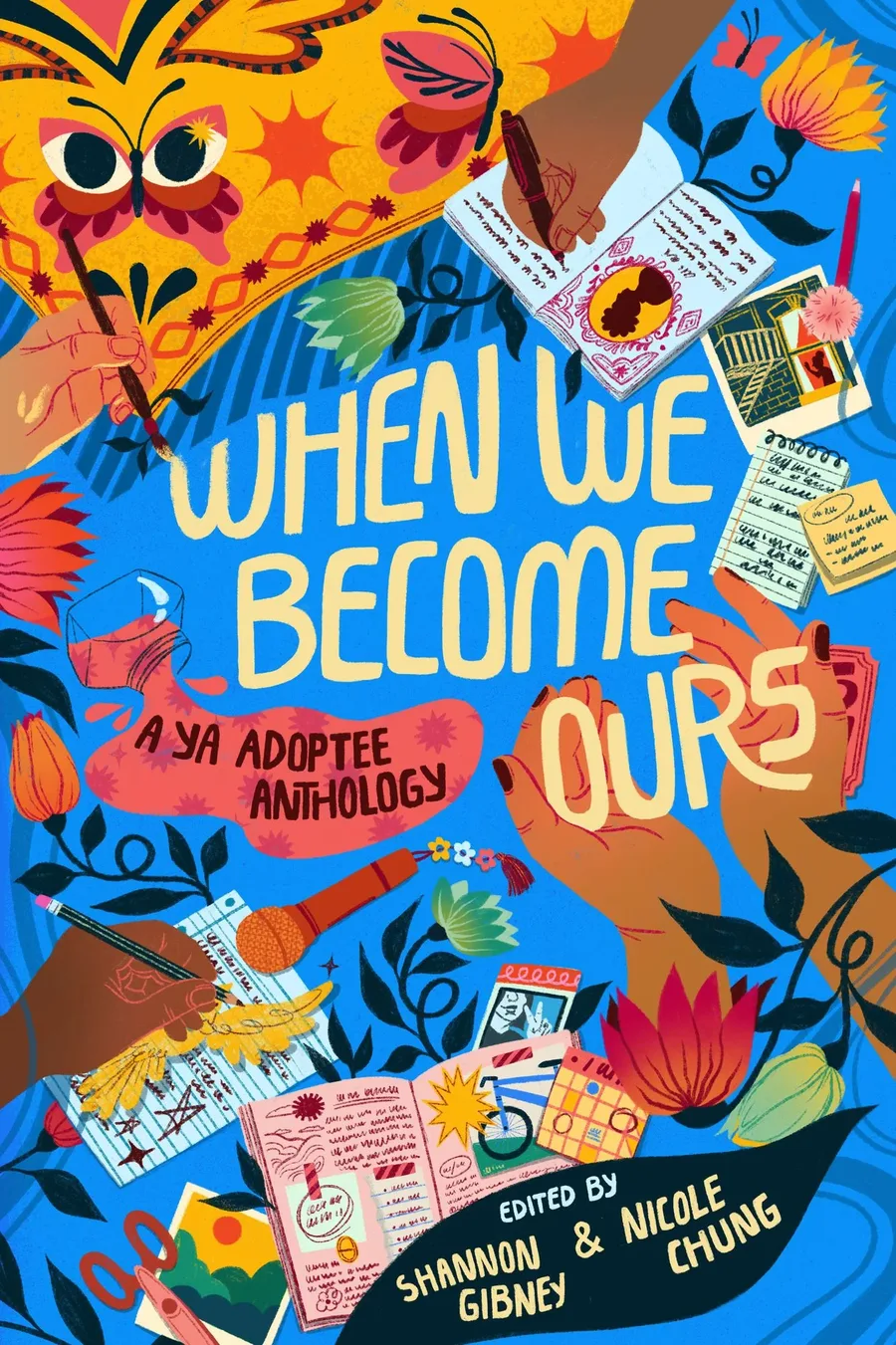 When We Become Ours: A YA Adoptee AnthologyShannon Gibney, Nicole Chung, editorsFrom the introduction: “Adoption shows up a lot in literature and pop culture. But most of the time, our stories are written by non-adoptees. … The lack of authentic representation— of literature about adoptees, by adoptees—can lead to one-dimensional, even harmful portrayals of adoption and adoptee characters.” This is an essential collection providing important visibility of adoptee voices to young adult readers. The 15 stories span a range of genres, including realistic fiction, fantasy, and science fiction, and will appeal to a variety of reading tastes. Most stories are prose; one is a graphic short story. Some of them address adoption and being a transracial adoptee directly, while some use metaphor or feature plotlines in which adoption is an essential part of the protagonist’s identity but not the plot. What they all speak to in one way or another are the emotional complexities that these young adult adoptees and transracial adoptees navigate, including the sense of loss or feeling of being an outsider that most experience no matter how loving their adoptive families are, as well as the microaggressions and racism that they face in the world and, sometimes, in family spaces that should be safe. All of this unfolds through stories with characters and circumstances that are individual and distinct.Fiction for Young AdultsView book details
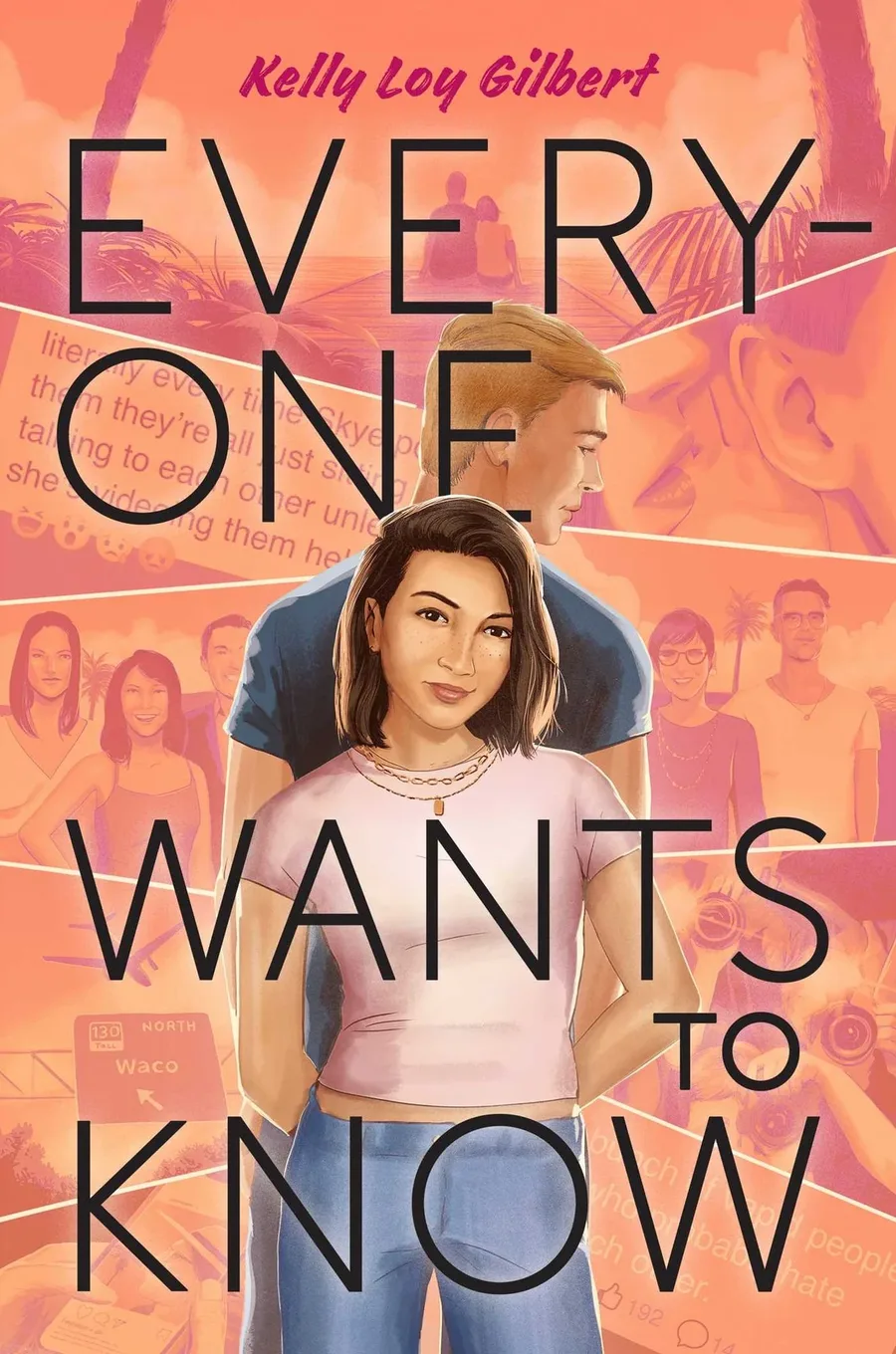 Everyone Wants to KnowKelly Loy GilbertHonor Lo, 15 (Chinese American/white), grew up in the spotlight thanks to a reality TV show about her family. Although the show has ended, her parents and two older sisters continue to seek the spotlight and monetize their fame. Honor and her twin brother, Atticus, prefer a low profile, while their older brother finds their past toxic and has an on- again, off-again relationship with the family. When their parents announce a separation, Honor, who suffers from anxiety and panic attacks, is devastated. Her pain is amplified when online speculation and gossip, rampant and hard to ignore, reveals that someone close has betrayed her confidence. But more than anything, Honor wants to reunite her family. She pins her hopes on a trip to celebrate hers and Atticus’s birthday, only to discover their dad has been seeing a much younger woman. Then Honor’s sister Skye, an online influencer who’s just started college, shares that she’s been diagnosed with cancer. It’s news that changes everything. As the family pulls together to support Skye during her treatment, online rumors continue to fly in this page-turning story that also sees Honor navigating how and whom to trust as she seeks to establish connections at a new school. A book that’s both entertaining and thought-provoking invites readers to contemplate big ethical questions about the behavior of online “influencers,” including adults who put their children on display, as well as followers who freely judge and speculate about their lives.Fiction for Young AdultsView book details
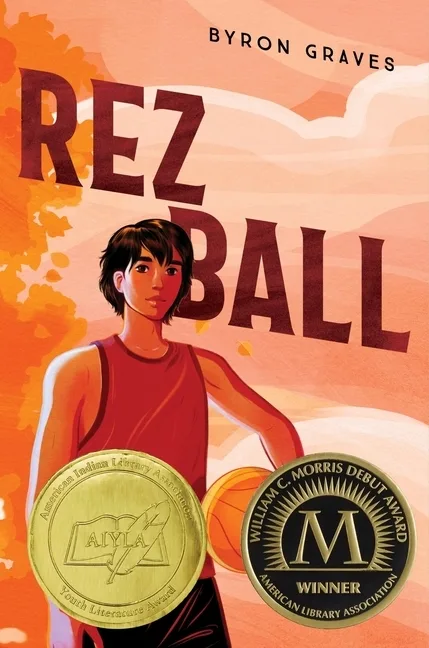 Rez BallByron GravesTre Brun is entering his sophomore year of high school on the Red Lake Ojibwe reservation in Minnesota. Tre has been training hard all summer in hope of making his school’s varsity basketball team. His long-term dreams are big: Division 1 college ball and then the NBA. But Tre is playing for more than just himself: His older brother, Jaxon, was a star player on the team before dying in a car accident earlier in the year. Tre doesn’t feel pressure to be Jaxon, but as he continues to grieve along with his parents, he wants to honor his brother with his play. Basketball is a constant in this story that follows Tre from late summer through the subsequent school year as he and his Native teammates become a force to be reckoned with and work their way to the state championship. But basketball is not Tre’s only interest in this multidimensional story; he loves comics and video games, too, and his relationships with his family members, teammates, and friends, including a new girl at school with whom he connects and would like to be more than friends, are essential and engaging parts of the narrative. The sports action is riveting, and following this underdog team on their journey is immensely satisfying. But the characters and relationships shine in quieter moments, while the games themselves underscore how important the team’s efforts are to their Red Lake community.Fiction for Young AdultsLexile Text Measure 681LATOS Book Level 4.4View book details
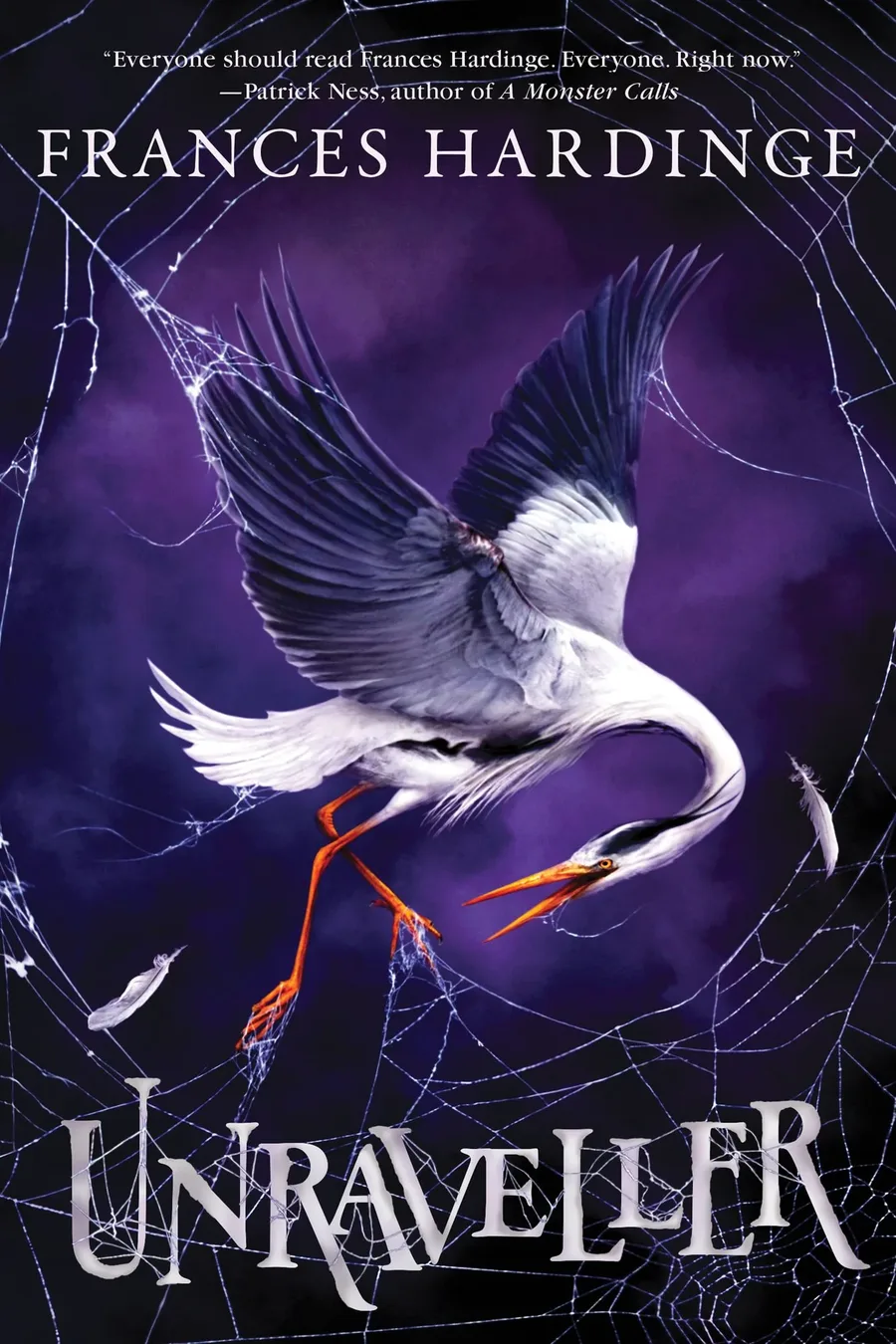 UnravellerFrances HardingeThis complex, original fantasy moves beyond the simplistic duality of right versus wrong as it offers a nuanced exploration of human behavior. Fifteen-year-old Kellen can unravel curses and is regularly hired to do so. Nettle has been his traveling companion ever since Kellen unravelled the curse that transformed her into a heron. When hot-tempered Kellen offends a wealthy client, landing them both in jail, a man named Gall offers to arrange their release before engaging them to work for an anonymous patron. Gall and his marsh horse (a carnivorous creature that bonds with the human who voluntarily gives it one of their eyes) will protect Kellen and Nettle while they fulfill unravelling jobs requested by their new employer. Unravelling a curse isn’t complicated if all cursers are inherently evil, 81 Fiction for Young Adults CCBC Choices 2024 as is commonly believed. But as Kellen and Nettle work through their assigned tasks, it becomes increasingly clear nothing is that simple: mistakes, secrets, faults, and complex feelings motivated the cursers. Adding to their troubles is the realization that someone— or something—is coming after Kellen. Mounting tension and an accelerating plot pace peppered with one close call after another lead to a dramatic climactic scene where betrayal and the abuse of power is defeated by loyalty, love, and the sincere desire to do good.Fiction for Young AdultsView book details
 Highly Suspicious and Unfairly CuteTalia HibbertCeline Bangura and Bradley Graeme, Afro-British teens living in Nottingham, are former best friends who fell out in early adolescence. From Celine’s perspective, Brad rejected her for popularity. From Brad’s, he just wanted to branch out socially. Now in their last year of high school, both have been selected for a program that offers participants professional networking opportunities, with one winning a scholarship at year’s end. Celine is fierce and funny but emotionally guarded because of her lawyer dad’s abandonment of their family; sharing her true feelings and trusting people is hard. Brad’s life appears effortless on the surface, but he’s quietly battling the buzz in his brain from his OCD with the help of therapy, and doubting his dream to become a writer—a dream he can’t find the courage to share with his own lawyer father. The enrichment program includes two camping expeditions, and as they engage in tasks requiring cooperation and teamwork, as well as creative thinking, leadership, and resilience, Brad and Celine learn about themselves, each other, and how they each perceive what happened in the past. And they fall in love. This entertaining romance is elevated by the thoughtful development and individual growth of each of the two protagonists.Fiction for Young AdultsView book details
 Hopeless in HopeWanda John-KehewinFourteen-year-old Eva, who is Cree, lives in a small Canadian community with her little brother, Marcus, and her beloved grandmother, Nokhum, who takes care of them. Her mother, Shirley, is an alcoholic, unpredictable and unreliable; her negligence sent Eva into temporary foster care when she was little. Now Nokhum provides love and warmth and stability, although uncertainty is unescapable with money tight and Shirley in and out of their lives. When Nokhum breaks her hip, Shirley tries to pull herself together, but Eva and Marcus end up in separate foster homes after a frightening incident. Eva doesn’t like her social worker, and resents being separated from Marcus, but Grace, her foster parent, proves to be a reliable guardian. One of five Native teens in the house, Eva slowly builds trust— trust in Grace, trust in her housemates and, finally, trust in her mother, who is working hard in recovery. Eva is also reluctantly learning more about her mother’s and Nokhum’s past through her mom’s journal. Although she’s always thought of Nokhum as infallible, it turns out Shirley grew up in foster care because Nokhum, too, was an alcoholic during her daughter’s childhood, drinking after the trauma of residential school and losing her own mother. The intergenerational trauma of residential schools is a strong theme throughout Eva’s tale, as is recovery—and the fact that recovery often includes relapse. Eva’s story ends in a place of hope as she looks toward a brighter future.Fiction for Young AdultsView book details
 The Isles of the GodsAmie KaufmanA captivating nautical fantasy opens with an ancient human sacrifice to the gods, serving as warning that in this imaginary kingdom, the gods must be remembered. Fast forward 501 years: A key ritual has been overlooked, leaving dashing Prince Leander of Alinor (brown-skinned) fumbling to make up for his forgotten royal duty. Selly (white), a whip- smart sailor who has no time for the entitled class, is determined to prove her sea captain 82 Fiction for Young Adults CCBC Choices 2024 abilities. When Prince Leander commandeers her boat for secret passage to complete his sacrificial task, Selly is not having it. But before she can resist his arrogant maneuver, a deadly explosion rocks the harbor and they barely escape with their lives. The brisk pace of this richly written fantasy is fueled by treason plans and political power grabs. Multidimensional secondary characters, each with their own secrets, add to the drama of the seafaring quest. Magic and romance are also at play, adding to the suspense of this race- against-time novel, the first in a series.Fiction for Young AdultsView book details
 Buffalo FlatsMartine LeavittRebecca yearns to own her own piece of land in the Northwest Territories of Canada, where she lives with her parents and three brothers in a religious community of the Church of Jesus Christ of Latter-Day Saints. It’s 1890, and only men are allowed to homestead, but with her mother’s support, Rebecca’s father reluctantly agrees to purchase a deed in her name if she can raise the $480 price. Rebecca’s quest to fulfill her desire for land isn’t the only challenge facing her in this exquisite historical novel. Rebecca struggles to understand her feelings toward two young men—quiet and reliable Coby, whom she’s known for years, and handsome and outgoing Levi, the bright center of every social gathering. Her community faces catastrophic blizzards and floods, influenza and stillbirth, and domestic abuse and pregnancy outside of marriage, with the response of Rebecca’s mother—whose faith drives her insistence on compassionate, sometimes radical action—providing insight into Rebecca’s own determined nature. Inspired by her own family history, the author’s fictional story is populated with nuanced and distinct personalities, realistically centered in their religion and era (all are white). But it is with Rebecca’s singular voice, including witty dialogue and snappy comebacks, that the narrative excels at rendering a 17-year-old who is both of her time and timeless in her drive for agency, love, and a meaningful life.Fiction for Young AdultsView book details
 Her Radiant CurseElizabeth LimChanni was just a toddler when her father offered her to the Demon Witch in a desperate attempt to save his wife from dying during childbirth. Before the witch can kill Channi, the little girl is saved by a bite from the King of the Serpents; it poisons her blood so that the witch can’t kill her. The witch, who wanted newborn Vanna in payment for her mother’s life, gets revenge by cursing Channi, giving her face scales and snake-like features; she will undo the curse only if Channi delivers Vanna before her sister turns 17. Channi has endured a childhood of taunting and isolation because of her disfigurement. Her only friends are Ukar, a snake she can talk to because of the curse, and her beloved younger sister, whose ethereal beauty radiates light that awes all who see her. As Vanna’s 17th birthday approaches, their father encourages wealthy suitors to compete for Vanna’s hand, unconcerned that some of them are clearly brutes. Intent on protecting her sister, Channi becomes entangled in a string of challenges, drawing on her combat skills and strategic instincts as she forges an uneasy bond with a dragon, escapes a kidnapping, and learns the Demon Witch is still intent on claiming her sister—and why. This complex, action-packed fantasy is also a richly satisfying, character-driven exploration of trust and loyalty set in the same well-drawn world inspired by cultures of Southeast Asia as the author’s Six Crimson Cranes duology.Fiction for Young AdultsView book details
 Forever Is NowMariama J. LockingtonAfter witnessing an act of police brutality against another Black teen, Sadie’s generalized anxiety disorder shifts into a case of severe agoraphobia as she becomes afraid that danger, especially for Black people, is everywhere. Now stuck in the house, Sadie faces a summer of isolation and online therapy. She finds solace in Ruckus, “a TikTok with a purpose” where activists connect to organize and share resources. She regularly goes live on the app to muse on mental illness and Black joy. Sadie, who is bisexual, also befriends and begins to fall for new neighbor Jackson, a transracial adoptee with depression; at first they hang out in Sadie’s back yard, but as Sadie progresses in therapy, Jackson accompanies her on outings in Oakland. With Jackson’s support, Sadie sets a goal: to host an open mic celebrating Black joy before joining a protest against police violence at the end of the summer. This novel in verse offers an honest depiction of mental illness, including the differing responses of Sadie’s family members to her agoraphobia, and her “two steps forward, one step back” progress in healing. Even as she is traumatized by the realistic fear of racist violence, Sadie remains resilient, creative, and driven.Fiction for Young AdultsLexile Text Measure HL710LATOS Book Level 4.7View book details
 Down Came the RainJennifer MathieuEliza and her parents, displaced after flooding in Houston during Hurricane Harvey, are staying with her aunt’s family as Eliza starts the 2017 school year. Since her high school was also flooded, she and other Baldwin students—mostly white upper-middle class kids like Eliza—are attending Southwest High, in a working class neighborhood with majority Black and brown students. Southwest student Javier’s house wasn’t damaged in the storm, but since the hurricane he’s been having severe panic attacks every time it rains. A story alternating between Eliza’s and Javi’s points of view balances their slowly developing romance with their activism when they become co-presidents of an environmental club. With the help of the school counselor, Mexican American Javi learns coping techniques to manage his situational stress. He also begins researching the disproportionate impact of climate change on poor communities, especially communities of color globally. He’s hoping to do a presentation for the club on climate anxiety and eco-justice, but Eliza, laser focused on meeting different goals and unwilling to engage with the emotional impact of everything she’s gone through, brushes the idea off on a day when nothing seems to be going right, and each thing going wrong has a snowball effect. This exploration of mental health related to climate anxiety is wonderfully grounded in its two main characters and the context of their lives, including the fact that each of their families have significant, if vastly different, economic connections to the Houston oil industry.Fiction for Young AdultsView book details
 Enter the BodyJoy McCulloughFour of Shakespeare’s young female characters—Lavinia, Cordelia, Ophelia, and Juliet— have died countless times on stage and will do so countless more, because that is how their stories were written. Until now. Gathered in the “Trap Room,” the space beneath the stage, they begin to share the unscripted parts of their lives. In differing verse narrative styles, Juliet, Ophelia, and Cordelia each reveal that they are so much more than characters in service to a plot. They are young women who live and dream and laugh and ache, who long for lost mothers, lost opportunity, and lost love. Soon they begin to converse, an entertaining exchange in 21st-century young adult voices in which they poke and prod and critique, challenging one another to shape their stories into something new. None of them is initially so bold as to imagine a wholly different outcome for herself, but when Cordelia, the most cynical and eye-rolling among them, figures out why silent Lavinia 84 Fiction for Young Adults CCBC Choices 2024 has not spoken—her tongue has been cut out and hands cut off so she cannot name her rapist—she understands that speaking up when others can’t is necessary, and imagining boldly is an act that lifts them all. This fiercely imaginative, astonishingly original and arresting work is a novel that can also be read as a play. Just as it challenges its characters, it challenges readers to think critically about these young women’s narrow existence on the stage, and the expansive possibilities of their lives.Fiction for Young AdultsView book details
 Once There WasKiyash MonsefOnce was, once wasn’t. This is how all Persian folktales told by Marjan’s Iranian father began. The stories are hazy to 15-year-old Marjan, like many details of her family life. Her father, distant emotionally after her Norwegian American mother’s death, shared little and traveled often—and unusually—for his veterinarian job. Now he’s died and Marjan is struggling both emotionally and financially, trying to figure out what to do with his barely profitable clinic. A mysterious summons to England that brings Marjan face to face with an ancient griffin and the human family that cares for it suddenly begins to illuminate her father’s mysterious work trips, and questions surrounding his death. The shocking discovery that magical creatures secretly exist in our world comes with Marjan’s stunning realization that, like her father, she has the ability to assess their well-being with a physical touch. Marjan is soon drawn into the complex network of people determined to either care for, collect, and/or profit from these creatures’ existence. As she begins to explore her skills and build an understanding of the magical creature ecosystem, she must figure out whom to trust as she not only investigates her father’s death but also tries to figure out how to protect the magical animals from those who would harm them. This imaginative work is a spellbinding mystery-adventure that that delivers an action-filled plot, superb world- building, and thoughtful and compelling characters while exploring themes of grief, ethics, friendship, and family.Fiction for Young AdultsLexile Text Measure 700LATOS Book Level 4.9View book details
 Only This Beautiful MomentAbdi NazemianThree generations of Iranian and Iranian American men confront secrets and difficult truths in a novel that spans eight decades. In 2019, 17-year-old Moud and his father are traveling to Iran to visit Moud’s grandfather, who is dying. He’s overwhelmed to be going “home” for the first time, and to be spending so much time with his father, who barely acknowledges that Moud is queer. Worried about Iran’s treatment of LGBTQ people, Moud scrubs his social media of all evidence of his gayness before leaving, only to be surprised to discover a community of queer people in Iran, many of whom his grandfather knows. In 1978, Moud’s father, Saeed, is a young man forced to leave Iran for participating in protests. In the United States, Saeed is distraught to learn that his parents are both gay and married each other to keep their true identities hidden. In 1939, Bobby—Saeed’s father, Moud’s grandfather—is a child actor in the United States; his controlling mother pushed him into the industry. When he signs a contract with MGM, Bobby—who is gay, closeted, and in love with his best friend—meets queer adults who offer him both hope and, when he’s outed, support. As the three men gather in Iran in 2019, their secrets and pasts are confronted for the first time in a moving novel that delves into not only queerness and homophobia but Iranian history, conflict, and politics.Fiction for Young AdultsView book details
 Bittersweet in the HollowKate PearsallFor generations, the women in Linden’s family have each had a special ability, which differs from one mother, daughter, or sister to the next. Teenage Linden (white) can taste people’s feelings, a gift that carries over into the baking she does for the family restaurant, where whatever she makes is influenced by her mood. But it’s a gift that’s useless in helping 85 Fiction for Young Adults CCBC Choices 2024 her recall what happened a year ago when she disappeared on the night of the annual Moth Festival, which celebrates the legend of the Moth-Winged Man rumored to inhabit the forest in their part of Appalachia. She showed up the next morning bloodied, scared, and with no memory of what had happened. Now another young woman, Linden’s friend Dahlia, has gone missing on the night of the Moth Festival—but Dahlia ends up dead. The new trauma layered over the old not only sparks flashbacks for Linden—frustrating snippets without sense or context—but throws her back together with Cole, her longtime friend and longed-for boyfriend, from whom she’s been estranged for the past year. This gorgeously written novel weaves an intricate tapestry from its finely drawn characters, increasingly tense plot, and beautifully drawn setting. These are the weft, drawn through the warp and warmth and humor of family, with Linden surrounded by fierce, tender, loving women whose secret gifts turn out to be connected to the legend that defines their town.Fiction for Young AdultsView book details
 I’d Rather Burn Than BloomShannon C. F. RogersMarisol’s mom died following a car accident that happened after she and Marisol had a huge fight. Marisol, 16, blames herself and has been out of control ever since, fixated on her failures as a daughter, especially how she and her mom (Filipina) always fought and the fact that she didn’t say goodbye to her mom as she lay dying at the hospital. Marisol’s been drinking heavily and getting into trouble at school, and she had sex with her (ex) best friend’s boyfriend. Her dad (white) is at his wit’s end, but he’s also unwilling to engage with his own feelings and memories, so that the silence around the grief in their home is all-consuming. This exploration of grief, guilt, friendship, and family starts with Marisol relentlessly angry and chronicles her slow catharsis. Relief comes in numerous ways and for many reasons: concern for her younger brother, Bernie, who’s been skipping school; time spent with new friends, even as she continues to mourn the lost bond with her former best friend and the Filipina heritage they shared; and healing through memory and ritual on the Day of the Dead, an observance that she learns is also part of Filipino culture. The transformation lets other, happier memories in—memories of times when Marisol and her mom were not at odds. For Marisol, taking control also means demanding that her dad do better in a story that ends with a sense hope and a new beginning.Fiction for Young AdultsView book details
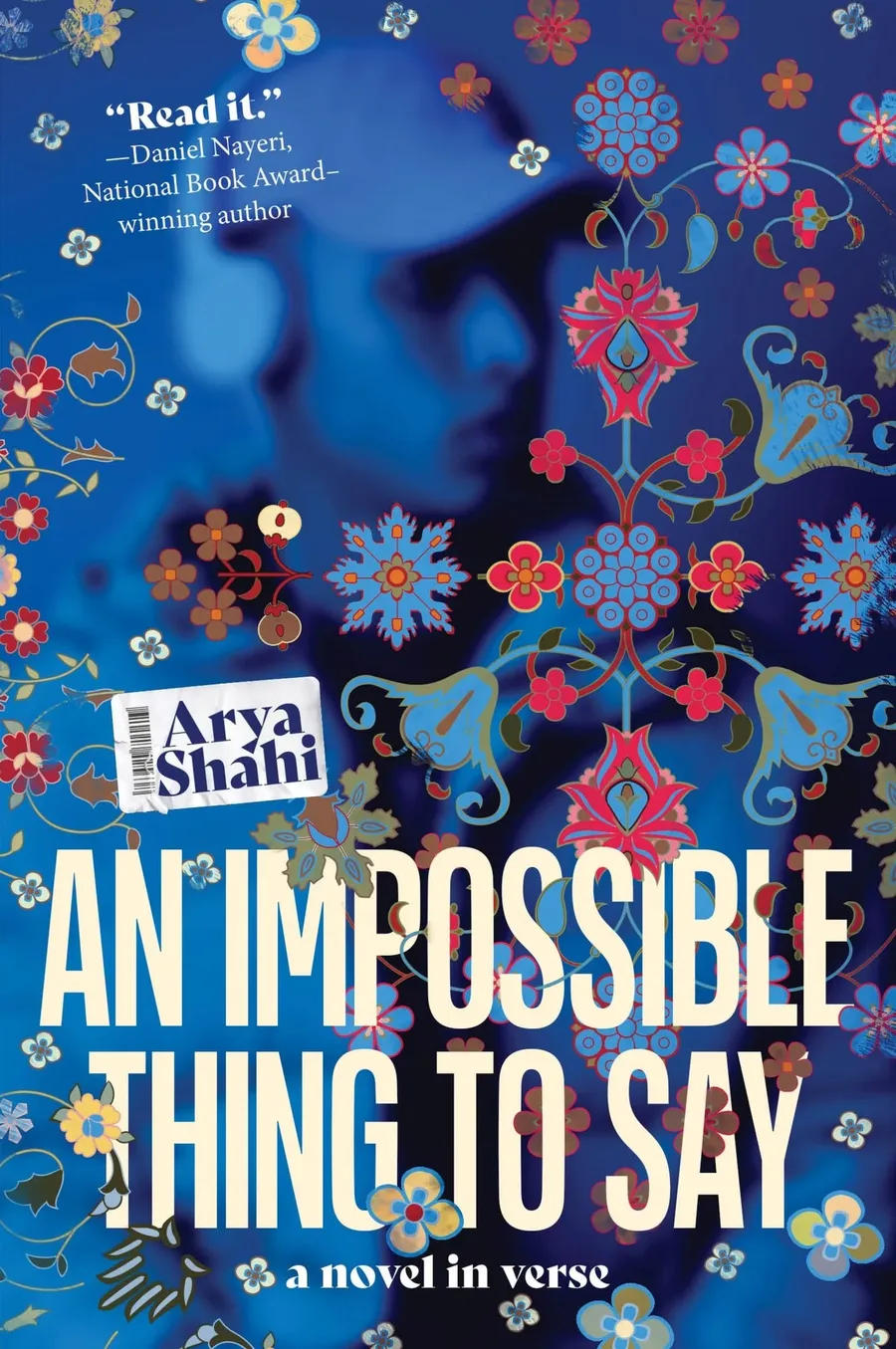 An Impossible Thing to SayArya ShahiIranian American Omid lives with his family in Tucson, Arizona, in 2001. At the private high school he attends, Omid is shy and lacks confidence. But he hits it off with new student Emily (white) and the two convince each other to try out for the school play, A Midsummer Night’s Dream. Emily is cast as Titania and Omid is cast as Bottom, a role he’s excited to play even though he also wishes he got the role of Emily’s lover. Omid is also getting to know his grandparents, Maman Joon and Baba Joon, who’ve just emigrated from Iran. He feels challenged, in a good way—to speak more Farsi, to understand their lives, including the oppression they faced in Iran for their Baha’i faith. (Omid’s father came from a Muslim family, although he is no longer devout.) With the events of 9/11 and its aftermath playing out in the background, intense feelings begin to overwhelm Omid, especially after Baba Joon, who has shown signs of increasing unhappiness, disappears; and his crush on Emily leads to him punching Geoff, the senior with whom she’s paired in the play and spending a lot of time. But his best friend Sammy (Black) has introduced him to rap, and after listening to Sammy’s playlists on repeat, Omid begins writing his own raps, processing his thoughts and feelings through his unique brand of English/Farsi spoken word poetry. This novel in verse about finding your voice has realistically messy, marvelously realized characters.Fiction for Young AdultsView book details
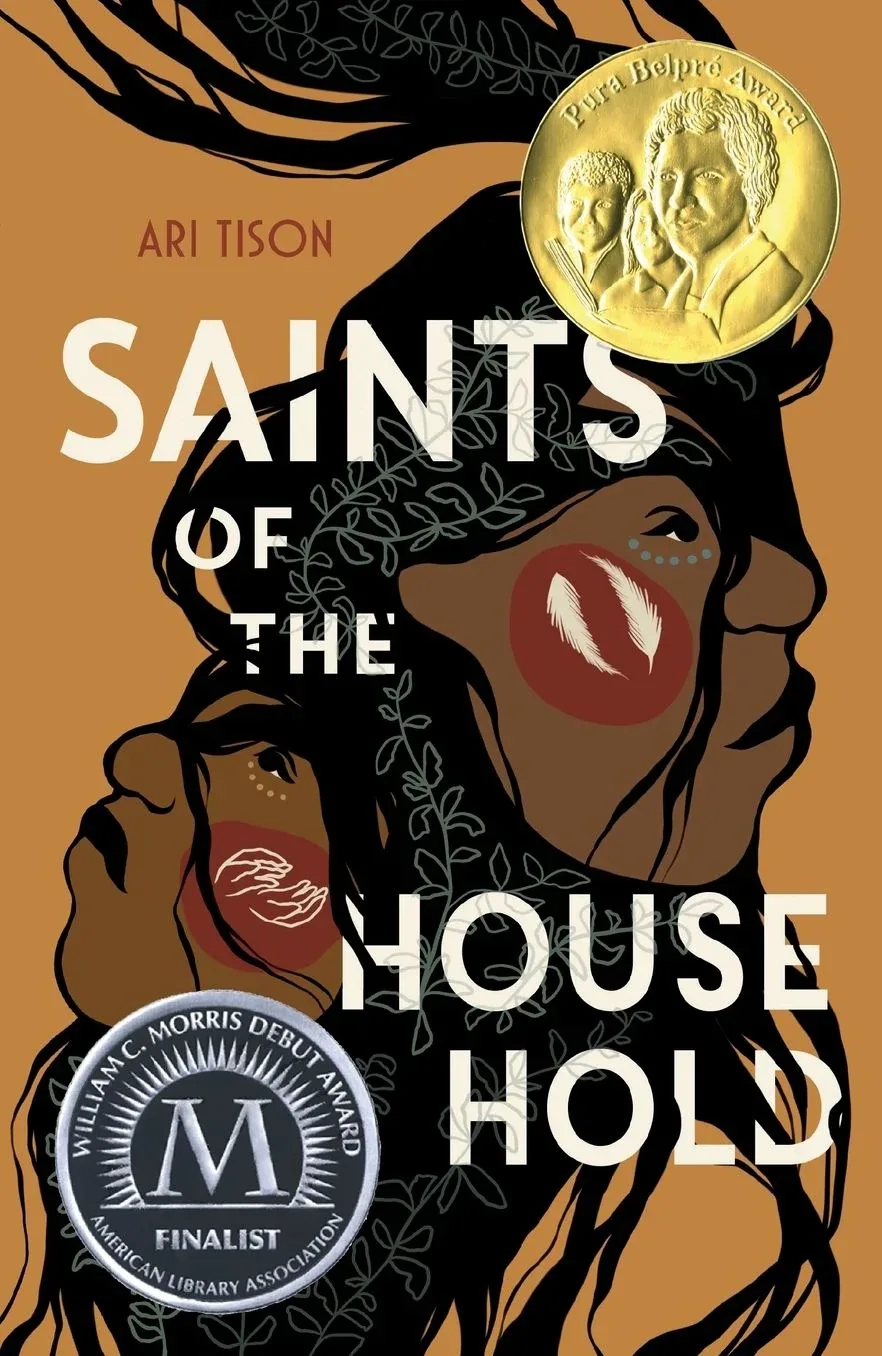 Saints of the HouseholdAri TisonBrothers Jay and Max, 11 months apart, are high school seniors in Minnesota. They live with their mother, who is Bribri (Indigenous Costa Rican), and their physically abusive white dad, always on high alert for danger. Because their dad is much less likely to hurt their mom if one of them is around, they make sure she’s alone with him as little as possible. Jay and Max are also in counseling after beating up Luca, their cousin Nicole’s boyfriend, when they were sure he was physically threatening her. After their father is arrested and sent to jail, the tight bond between the brothers begins to fray. Jay is smart but has never considered leaving his mom to go college. He continues to spend most of his free time at home or with Nicole, and he remains fixated on the danger Luca represents. Meanwhile, Max is working on his portfolio for his art school application, secretly dating a girl named Melody, and feeling frustrated by his brother’s disinterest in the future. When the growing tension between the two erupts into violence, the presence of their Bribri grandfather, who comes to spend a few weeks, is calming for Jay especially as the brothers make steps toward reconciliation and independent, hopeful futures. This beautifully written exploration of the impact of family trauma and abuse is written in Max’s and Jay’s alternating voices; Max in verse and Jay in prose.Fiction for Young AdultsView book details
 Always the AlmostEdward UnderhillMiles, a musically talented white teen from the suburbs of Milwaukee, has two New Year’s resolutions. The first is to win back his ex-boyfriend, Shane, who ended their relationship after Miles came out as trans. The other is to finally beat his rival at this year’s Tri-State classical piano competition. To prepare for the latter, Miles begins lessons with Stefania, a highly skilled instructor for advanced pianists. Stern and intimidating though she may be, Stefania embraces Miles’s trans and queer identities. Insisting that self-knowledge will translate into a stronger musical performance, she encourages Miles to reflect on who he truly is and why he plays. As the year goes on, Miles faces challenges both within and outside of his control. He begins dating new student Eric even as he struggles to let go of Shane, and he is deeply hurt by the transphobic attitudes of a few people within his piano community. Notably, though, Miles finds strength in the support of his family members and friends as well as in his music. True to Stefania’s word, when Miles leans into the joy of being trans and gay, his performance shines. Alongside Miles’s heartfelt personal journey, this debut novel excels at depicting the—perhaps surprising—excitement, tension, and high stakes of an elite piano competition.Fiction for Young AdultsView book details
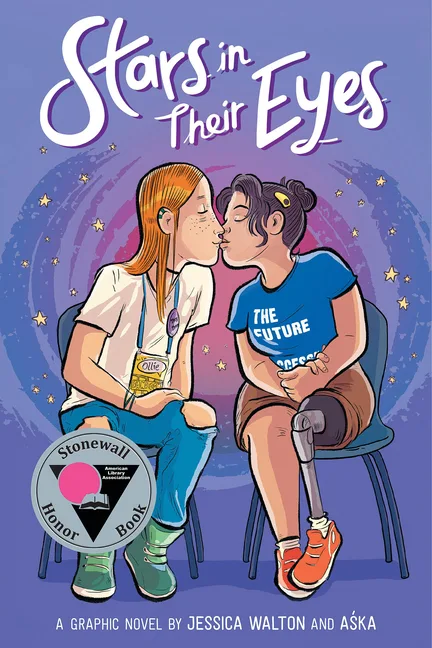 Stars in Their EyesJessica Walton, illustrated by AśkaMaisie and her mom are attending Maisie’s first fan convention, where teenage Maisie (brown-skinned) is looking forward to meeting her favorite actor on her favorite show, Midnight Girls. Like Maisie, Kara Bufano is an above-the-knee amputee with a prosthetic leg. It’s meant a lot to Maisie, whose leg was amputated due to childhood cancer, to see a TV character who is an amputee played by an amputee. On the first day of the con, Maisie meets nonbinary Ollie (white), who is attending with their dad. Ollie’s favorite show is Twisted Beasts, and they are excited about meeting the nonbinary actor playing the first openly nonbinary character on TV. The con is sometimes overwhelming for Maisie, who lives with fatigue and chronic pain. Luckily, Maisie’s mom, like Ollie’s dad, knows the ins and outs of con culture (both parents are charmingly enthusiastic in their geekiness) and Maisie makes use of the quiet rooms when she needs to. When Maisie and her mom and Ollie and their dad end up at the same panel discussion, Maisie and Ollie begin to forge 87 Fiction for Young Adults CCBC Choices 2024 a connection, one that blossoms into romance. The terrific dynamic between Maisie and her mom underscores both their lively, loving relationship and the matter-of-fact reality of Maisie’s disability, while Maisie and Ollie’s exchanges captures the excitement of new romance. The fan con setting is perfect for creating organic yet eager conversations about the importance of media representation in this entertaining graphic novel.Fiction for Young AdultsLexile Text Measure 440LATOS Book Level 3View book details
 StatelessElizabeth WeinStella North, 17 (white), the only female contestant in Europe’s first air race for young people, represents Britain; she prefers no one know she escaped the Russian Revolution as a young child. The August 1937 race aims to promote peace and unity at a time when fascism is rising in Europe. The other pilots fly for Germany, Italy, Poland, France, Norway, Sweden, and the Netherlands. The wealthy British woman race organizer and two experienced WWI fighter pilots from Germany and France are among the chaperones. Stella’s first meeting with bristly Tony Roberts, the pilot representing France, is both exhilarating and unsettling; it’s soon clear that he’s also harboring secrets about his past. The first race day, Stella sees a plane seemingly attacked by another before crashing into the ocean. The organizers are skeptical of her report until the Italian contestant never arrives at the first layover. As Stella tries to unravel the truth behind the attack and other acts of sabotage, the political landscape impacts the calculus of whom she suspects and whom she can trust. She finds some surprising allies among the other competitors even as the safety of a few of them is more and more uncertain. Realizing that surviving the race, not winning it, is the real challenge, Stella is determined they’ll all make it through alive. Gradually revealed backstories add depth to characters and their burgeoning relationships, while danger on the ground and in the air heightens tension in this riveting work of historical fiction.Fiction for Young AdultsView book details
 My Flawless LifeYvonne WoonHana Yang Lerner (Chinese American/white) is the “fixer” at her elite Washington, D.C., high school. Her wealthy classmates hire her to make their problems disappear and ensure their secrets remain private. Managing other people’s lives provides Hana some measure of control now that her own life and reputation are beyond repair: Her senator father was involved in a hit-and-run that severely injured a pedestrian and caused total upheaval to her family and their living situation. When Hana is “hired” by an anonymous client, “Three,” who asks Hana to follow Hana’s ex-best friend, Luce, Hana finds herself embroiled in a mystery. She spies Luce’s boyfriend meeting secretly with a boy who could be his twin, and soon her investigation leads her to an education nonprofit that turns out to be a front for a much shadier operation. Meanwhile, as the story progresses, layers of deception, denial, and pain are revealed within Hana’s own family and past, including the reason for her falling-out with Luce. While at first glance this mystery offers the thrills of political intrigue and crime, it has great emotional depth as well. It will take every ounce of strength Hana has to truly fix her life, even if the task before her feels impossible.Fiction for Young AdultsView book details
 Greymist FairFrancesca ZappiaHeike’s mother kept the villagers of Greymist Fair safe before her death, using magic to appease the witch who controls the wargs—spirits of the dead that attack and kill those who stray from the path through the surrounding forest. At least that’s what Heike was taught. Heike grew up learning the tailor’s trade along with magic from her mother, but is worried she doesn’t know enough to continue to protect the village. Brown-skinned Wenzel, Heike’s best friend, was abandoned in the village as a child by his abusive father 88 Fiction for Young Adults CCBC Choices 2024 and now runs the inn he inherited from his adoptive parents. Liesl’s brother was recently killed by wargs. Another victim, Katrina, was the privileged, sheltered, curious daughter of Lord and Lady Greymist. Fritz is so desperate for companionship that he follows the bidding of self-centered, disaffected, cruel Hans. Visiting Prince Altan is overly enamored of his magical gift and ripe for a lesson. Kind and knowing Doctor Death is a stark contrast to bitter, lonely Death themself. There is tension within and across the nine interconnected stories that follow these characters in an absorbing work that builds to a climax in which Heike is ready to risk everything on compassion, not magic, in order to save her village. Based on a number of lesser-known Grimm’s tales as well as “Hansel & Gretel,” this atmospheric, immersive novel has a setting that feels old-world European, including most characters reading as white, while embracing 21st-century sensibilities regarding love and identity.Fiction for Young AdultsView book details
 Nigeria JonesIbi ZoboiSixteen-year-old Haitian American Nigeria Jones has been raised inside her father’s small, insular, radical Black Power Movement, which emphasizes self-actualization outside white systemic oppression. Since her mother’s death following the birth of her brother more than a year ago—a trauma Nigeria has been unable to fully acknowledge—Nigeria has pushed against some of the boundaries of the vegan, militant, homeschool commune in which she’s been raised. Learning that her mother had been advocating for her to attend Philly Free School, a Quaker prep school where she’s earned a scholarship, Nigeria decides she wants to go. The struggle for Nigeria isn’t academic, it’s everything else—moving beyond the insular world of the Movement while not wholly rejecting it; challenging her father’s authority and, at times, her classmates and teachers; gaining new perspectives on her parents’ relationship; her sexual attraction to new Movement member Chris (Black); and her developing friendship and foray into romance with white Liam, her debate sparring partner. She also discovers her father has a girlfriend in the Movement, who is pregnant. Nigeria knows her father loves her and knows her mother did, too, yet their dreams for her diverged. Nigeria’s own voice and heart are what she must listen to as she figures out her path forward. In a book that is intense, passionate, and critical of many aspects of society, especially racism, sexism, and classism, Nigeria courageously navigates uncertainty and conflicting ideas to discover the truth and dreams that matter: her own.Fiction for Young AdultsLexile Text Measure 829LATOS Book Level 5.3View book details