
 A Nest Is NoisyDianna Hutts AstonNests created and used by different animals, from various kinds of birds to several aquatic species, amphibians, and mammals, are the focus of this elegant book of information. Each page spread highlights one or more creatures, and begins with a simple descriptive phrase in display text: “A nest is noisy … enormous … tiny … spiky … papery … pebbly.” A fascinating lengthier narrative provides information on how each animal builds (or chooses) its nest. Beautifully detailed watercolor illustrations grace each page. The choice of cursive for the display font is the one shortcoming of this lovely volume. Many children today are not taught cursive and this may be a barrier to some readers.Science, Technology, and the Natural WorldLexile Text Measure NC1120LATOS Book Level 5.6View book details
CCBC Choices 2016
The 2016 edition contains 251 selections published by the Cooperative Children's Book Center, University of Wisconsin-Madison. The source uses 14 audience or subject sections, including Science, Technology, and the Natural World, Seasons and Celebrations, Historical People, Places, and Events, and Biography and Autobiography. It is one annual edition of CCBC Choices, the librarians' bibliography of recommended books.
CCBC Choices 2016See the original list
Selections251
Published byCooperative Children's Book Center, University of Wisconsin–Madison
Sections14 sections
Browse sections14 sections
Science, Technology, and the Natural World
17 selections
A Nest Is NoisyDianna Hutts AstonNests created and used by different animals, from various kinds of birds to several aquatic species, amphibians, and mammals, are the focus of this elegant book of information. Each page spread highlights one or more creatures, and begins with a simple descriptive phrase in display text: “A nest is noisy … enormous … tiny … spiky … papery … pebbly.” A fascinating lengthier narrative provides information on how each animal builds (or chooses) its nest. Beautifully detailed watercolor illustrations grace each page. The choice of cursive for the display font is the one shortcoming of this lovely volume. Many children today are not taught cursive and this may be a barrier to some readers.Science, Technology, and the Natural WorldLexile Text Measure NC1120LATOS Book Level 5.6View book details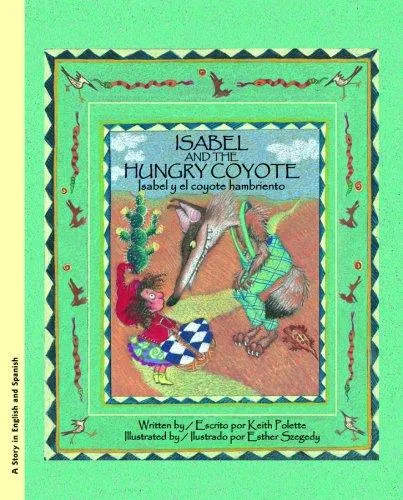 Hungry CoyoteCheryl Blackford, illustrated by Laurie Caple“Down at the lake, the ice groans and thumps … Coyote slinks toward slick ice. Wary and watchful, he sneaks past the crowd.” A lyrical text follows a city coyote through one year, with the search for food paramount across the seasons. In winter he pounces and misses a vole. In spring, “Coyote hunts to feed his famished family.” In summer, he makes off with picnickers’ fare for his growing pups. Autumn brings a flock of geese, and Coyote is able to snatch one. Autumn also brings the first signs of winter. Beautiful watercolor illustrations are the perfect backdrop for a lovely narrative that comes full circle. A brief note about city coyotes, and their close proximity to humans (referenced in both the narrative and illustrations throughout) is at volume’s end.Science, Technology, and the Natural WorldView book details
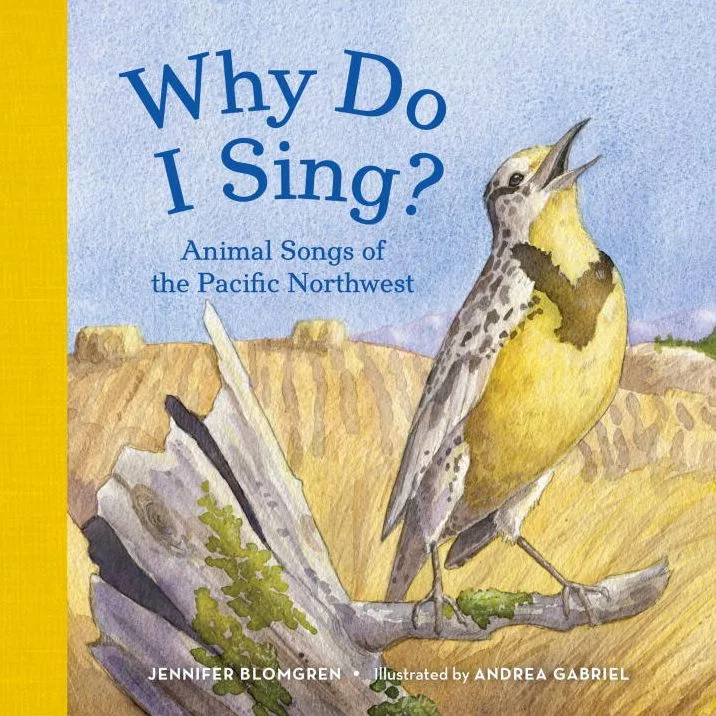 Why Do I Sing? Animal Songs of the Pacific NorthwestJennifer Blomgren, illustrated by Andrea GabrielRealistically rendered illustrations of ten animals with habitats in the Pacific Northwest are each paired with a four-line rhyme describing their vocalizations. From honeybees to fin whales to marmots, a wide-ranging lineup of species is showcased in a board book to be shared with the youngest of naturalists. Even amphibians are accounted for, as “the Pacific tree frogs / lead a big twilight chorus / that fills up the wetlands / and pastures and forests.”Science, Technology, and the Natural WorldView book details
 Trapped! A Whale’s RescueRobert Burleigh“The huge humpback whale dips and dives. Her sleek black sides shimmering, she spyhops, lobtails, flashes her flukes.” The whale becomes entangled in nets used for crab fishing. She struggles, tiring, before a team of divers arrives and embarks on a rescue mission. Will they free the whale in time to save her? CCBC Choices 2016 Science, Technology, and the Natural World 15 Robert Burleigh’s tense, dramatic picture book narrative is based on an actual event that happened off the California coast in 2005. When the whale is finally freed, she swims past her rescuers and gently nudges each one, “as if saying thanks.” Wendell Minor’s gorgeous illustrations offer a variety of arresting perspectives of the whale and the divers in the sea in an account that concludes with additional information about the event on which it is based, as well as more about whales and whale rescues.Science, Technology, and the Natural WorldView book details
 Inside Biosphere 2: Earth Science Under GlassMary Kay Carson, Tom UhlmanLocated in the Arizona desert, Biosphere 2 was originally the site off an early 1990s experiment in which eight scientists lived together within its walls, raising their own food and studying various elements of both the ecosystems and their own survival. It is now the venue for various experiments in the differing biosystems that provide information related to how the earth responds to climate change, among other things. Current scientists use the Biosphere’s controlled environment to study how trees in the rainforest respond to drought and carbon dioxide saturation, how long it takes rock to break into to soil, and how water moving through a watershed impacts this. An ongoing, system- wide study in alternative energy determines the best underlayment to maximize solar panel production and how to capture systems for watering. Brief sidebar Flashbacks give glimpses into the ever-fascinating living experiment of Biosphere’s early days in the 1990s.Science, Technology, and the Natural WorldView book details
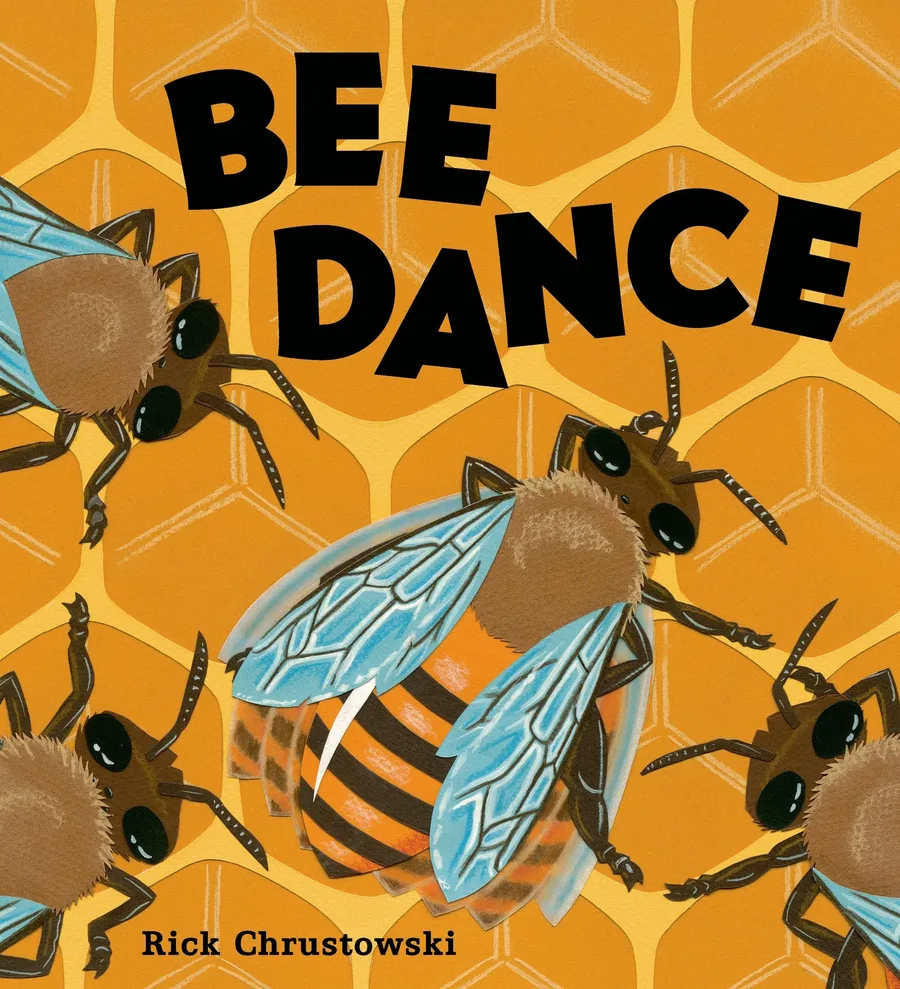 Bee DanceRick ChrustowskiA simple text effectively uses high energy and a sense of drama to describe the work of honeybees. When a bee on patrol finds the “honeybee gold mine” of a prairie in bloom, he returns to the hive to tell the other bees where to go. Through an interpretive dance, diagrammed in the book, the bee communicates the location of and distance to the field of flowers. After collecting nectar and pollen, the forager bees deliver their bounty back to the hive at the day’s end. Bold cut-paper collage illustrations with pastel pencil details bring the small details of a bee’s world into clear view. A final page supplements the main text with a more detailed description of honeybee communication.Science, Technology, and the Natural WorldView book details
 I Don’t Like SnakesNicola DaviesWhen her puzzled, snake-loving family asks a young girl why she doesn’t like snakes, she points out that snakes slither and have “slimy, scaly skin” and “flicky tongues.” They also stare. In response to these and other points, her dad, mom, and brother have an explanation—and sometimes a correction (e.g., snakes aren’t slimy; their skin is dry)—expanding the girl’s understanding of and appreciation for snakes. This picture book deftly blends the appealing fictional story and its blithe illustration style with factual text and images about snake biology and behavior. A brief bibliography and an index conclude the volume.Science, Technology, and the Natural WorldView book details
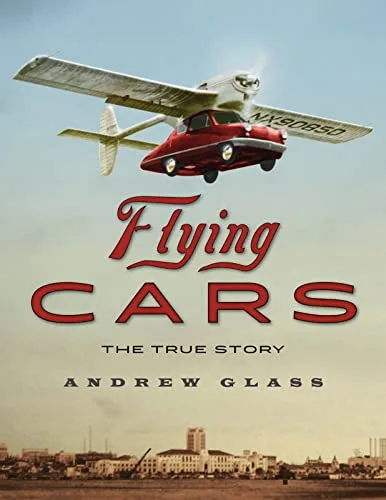 Flying Cars: The True StoryAndrew GlassIn the early days of human flight in the late 19th and early 20th centuries, there were those intent on improving airplanes, and those who thought a plane/ auto hybrid would be the future of flight. An unexpectedly fascinating look at both inventions and attitudes follows efforts to develop flying cars through the mid–20th century. Each chapter looks at a different iteration of the flying car concept, introducing the inventors, their idea, and to what extent it met with success (or failure). A couple came close to being mass produced, although government regulations (and at least one untimely accident) ultimately killed the projects. Just as fascinating as the inventions themselves, which show such a vast array of approaches and designs, is the social history, especially post-World War II, when the concept captured public imagination. Photographs of the cars in action (or cars’ inaction), sketches, schematics, and publicity are among the visual material across this well-documented volume.Science, Technology, and the Natural WorldView book details
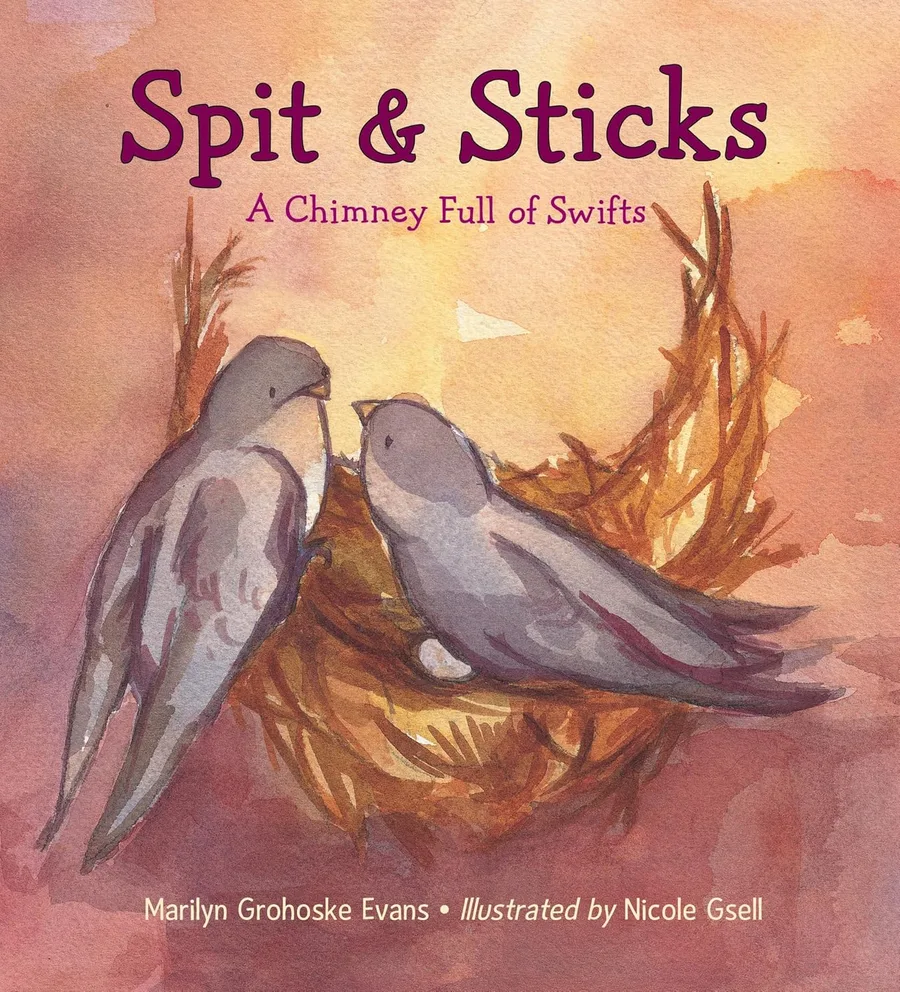 Spit & Sticks: A Chimney Full of SwiftsMarilyn Grohoske Evans, illustrated by Nicole Gsell“A stub-tailed, cigar-shaped bird streaks across the Texas spring sky.” A nonfiction narrative follows a family of chimney swifts from the time the adults mate in the spring to the point when they and their offspring are ready to fly south in the fall. The engaging text describes the activities of the chimney swifts, which are also shown in the digital watercolor illustrations. But a parallel story plays out only visually, as the multiracial family living in the house where the swifts have nested (mother, father, young girl) prepare for and welcome the arrival of a new baby. More about chimney swifts is provided in a note at volume’s end.Science, Technology, and the Natural WorldView book details
 The Most Amazing Creature in the SeaBrenda Z.“Who is the most amazing creature in the sea?” This opening question leads to 13 first-person responses from various sea creatures. The box jellyfish notes, “My venom is the deadliest.” A mimic octopus describes how it is a “master of disguise.” A leafy seadragon states that its camouflage is “among the best and most elaborate of all animals.” Each creature provides additional information before concluding, “That’s why I am the most amazing creature in the sea!” From the gross to the scary to the truly amazing, the fascinating facts give plenty for readers and listeners to consider … because in the end, it’s up to them up to decide who they think the most amazing creature in the sea might be. Lush, richly hued illustrations show all of the creatures in their natural settings. An author’s note provides additional information about ocean life.Science, Technology, and the Natural WorldView book details
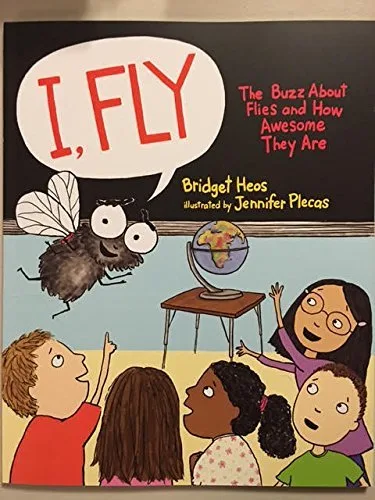 I, Fly: The Buzz About Flies and How Awesome They AreBridget Heos, illustrated by Jennifer PlecasThe fly narrating this informative picture book is full of enthusiasm, not to mention knowledge, eager to convince a class studying butterflies that flies are CCBC Choices 2016 Science, Technology, and the Natural World 17 just as worthy a subject. “Here’s how the story goes: My 500 brothers and sisters and I started out as eggs. Our mom tucked us into a warm, smelly bed of dog doo.” The fly’s impromptu lecture (it came in through the window during a science class) is followed by a Q-and-A session, with the fly dispelling misinformation about its species. Bridget Heos’s funny, factual narrative (well, except for the talking fly) is perfectly matched by Jennifer Plecas’s clean-lined, cartoonlike illustrations.Science, Technology, and the Natural WorldView book details
 Egg: Nature’s Perfect PackageSteve Jenkins, Robin Page“Animals that lay eggs bury them, carry them, guard them or simply leave them alone.” In their usual blend of bold visuals and clear, crisp, engaging narrative, Steve Jenkins and Robin Page provide basic information about eggs. “All insects, spiders, amphibians and birds lay eggs.” So do most fish and reptiles, and two mammals (echidna and platypus). Each page spread looks at a different dimension of animals and eggs, from relative size (eggs to the animals and eggs to one other); to where eggs are laid; how many eggs are laid; how they are protected, packaged (egg casings), and carried; to threats to eggs; incubation; and hatching. The examples chosen to illustrate each aspect of eggs in nature make for a wide and varied range of creatures that are included in the volume. A visual index in the back provides a bit more info on the more than 50 species included in the book.Science, Technology, and the Natural WorldView book details
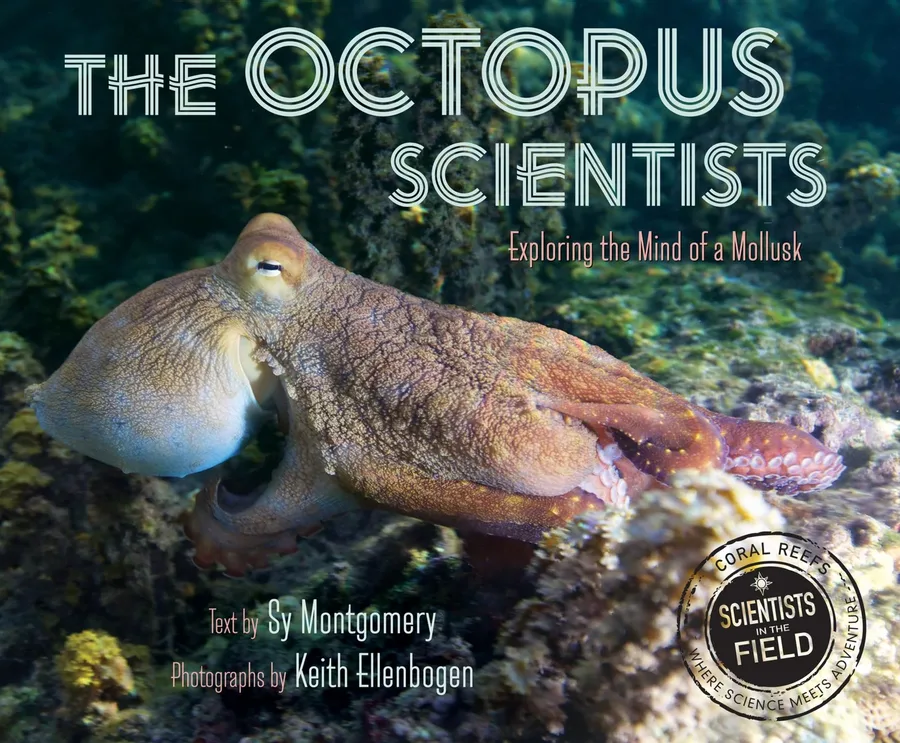 The Octopus Scientists: Exploring the Mind of a MolluskSy Montgomery, Keith EllenbogenA team of five researchers, led by 69-year-old psychologist Jennifer Mather, have gathered on the island of Moorea, near Tahiti, as part of ongoing research into octopus behavior. Jennifer is interested in how octopuses think, solve problems, and develop individual personalities. Author Sy Montgomery and photographer Keith Ellenbogen have joined the group and chronicle efforts first to locate octopuses, which are accomplished masters of camouflage, and then to observe and document what the octopuses do. Four of the five researchers in the group are women, and all of them share appreciation for these intelligent, fascinating, and incredibly diverse creatures. As with other best books in the Scientists-in-the-Field series, Montgomery’s narrative introduces each scientist and chronicles the frustrations and success of their field research, in addition to aspects of octopus biology and behavior. The author’s enthusiasm for her subjects—human and octopus alike—propels a narrative of significant length accompanied by captivating color photographs.Science, Technology, and the Natural WorldLexile Text Measure 1009LATOS Book Level 6.8View book details
 A Chicken Followed Me Home! Questions and Answers about a Familiar FowlRobin Page“A chicken followed me home. What do I do now?” To start with, find out what kind of chicken it is, what it eats, and whether it’s a male or female. How? Read on! This engaging, accessible informational picture book offers a few basics about chicken breeds, chicken needs, and chicken behavior. Every page spread 18 Science, Technology, and the Natural World CCBC Choices 2016 asks a chicken-related question (e.g., “Will my chicken lay eggs? … What if I want baby chickens?”) in large bold font, followed by a clear, concise response in smaller type. More chicken questions (and answers) are found at the end of a book featuring dynamic, appealing digitally rendered illustrations that look like paint and collage and show a variety of bright-eyed chickens and related items.Science, Technology, and the Natural WorldATOS Book Level 3.5AR Interest Level Lower Grades (LG K-3)View book details
 Water Is Water: A Book About the Water CycleMiranda PaulA description of the water cycle that is concise, accurate, and lyrical begins with “Drip. Sip. Pour me a cup. Water is water unless … / it heats up. Whirl. Swirl. Watch it curl by. Steam is steam unless …” With each page turn the cycle moves on to its next stage, from liquid to steam to vapor and precipitation. Eventually, the water that has transformed into ice and snow returns to its liquid form and is absorbed by tree roots, finally becoming part of an apple that is pressed into cider. The rhyming text is expanded into a visual story by illustrations of a brown-skinned boy and girl interacting with the water cycle through the seasons as they wait for the school bus in the rain, skate on a frozen puddle, squelch through spring mud, and enjoy late summer cider. Supplemental pages describe the complete water cycle again, including relevant terms like evaporation, condensation, and precipitation that don’t appear in the primary narrative, as well as a few fascinating facts about water and conservation. Highly Commended, 2016 Charlotte Zolotow AwardScience, Technology, and the Natural WorldView book details
 Mesmerized: How Ben Franklin Solved a Mystery that Baffled All of FranceMara RockliffScientific discoveries were all the rage the first time Ben Franklin visited Paris. His own work showing lightning was the same as electricity—arrived at through the scientific method of observation, hypothesis, and testing—was among the ideas that dazzled Parisians. Then a man named Dr. Mesmer captivated the French city with his claims that he had discovered a mysterious force that “streamed from the stars and flowed into his wand” and with which he could cure sickness (not to mention make people swoon, twitch, and tremble). On a return trip to Paris, Ben used the scientific method to prove that mesmerizing was a hoax (and a lucrative one at that): It was all the power of suggestion. This expansive and entertaining picture book is told and illustrated with humor and pizzazz while introducing, explaining, and reinforcing the scientific method. A lengthy author’s note tells more about Franklin and Mesmer in Paris.Science, Technology, and the Natural WorldView book details
 High Tide for Horseshoe CrabsLisa Kahn Schnell, illustrated by Alan MarksA picture-book account of the annual spawning of horseshoe crabs on the beaches of Delaware Bay also touches on the ecosystems surrounding the spawning, the professional and citizen science involved in tagging the crabs and counting accompanying birds, and the natural history and origins of the CCBC Choices 2016 Science, Technology, and the Natural World 19 horseshoe crab. All of this takes place in a two-tiered narrative: a bold, larger font offering a simple action statement (e.g., “It’s starting.” “They’re arriving.” “They’re tagging.”), and a still-brief but more informative, graceful explanation of that action associated with each statement (e.g., “Scientists and vacationers brush sand off their binoculars. They pack up data sheets, beach chairs and stories …”). Detailed yet impressionistic watercolor illustrations provide an alluring backdrop for an inviting, informative look at fascinating creatures. End matter includes far more detailed information about horseshoe crabs.Science, Technology, and the Natural WorldView book details
Seasons and Celebrations
4 selections
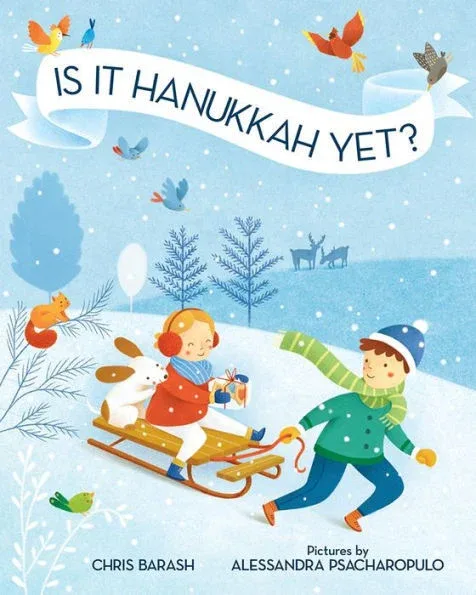 Is It Hanukkah Yet?Chris Barash, illustrated by Alessandra Psacharopulo“When all forest creatures search for a den / Where they’ll snuggle and sleep till spring blossoms again … Hanukkah is on its way.” A rhyming story with a repeated refrain builds excitement as Hanukkah approaches. Attaching intentional references to winter’s arrival (“layers and layers of warm winter clothes”) and activities such as baking, singing holiday songs, and gathering with family and friends to the specific traditions of Hanukkah makes this sweet package feel a little subversive in the best way, serving as a reminder that there is more than one cherished observance near the end of the year. Warm stylized illustrations are an inviting backdrop for the appealing narrative.Seasons and CelebrationsLexile Text Measure 510LATOS Book Level 2.9View book details
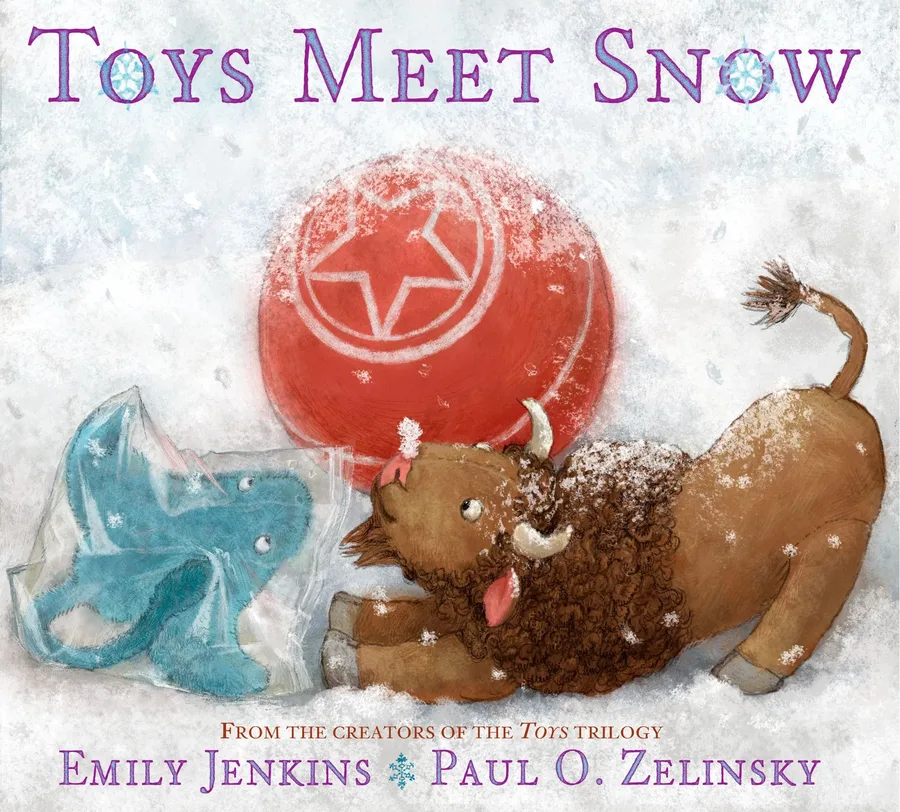 Toys Meet Snow: Being the Wintertime Adventures of a Curious Stuffed Buffalo, a Sensitive Plush Stingray, and a Book-Loving Rubber BallEmily Jenkins“Lumphy is a stuffed buffalo. SingRay is a plush stingray. Plastic is a rubber ball. She can’t help it that her name doesn’t match her body.” There’s no need to be familiar with these characters first introduced in the chapter book Toys Go Out to feel immediately grounded in this funny, endearing picture book about their journey outside during the season’s first snowfall. Curious Lumphy (wearing a mitten for a hat) is full of questions. Poetic Stingray (encased in a plastic bag because she’s dry clean only) is lyrically observant. Knowledgeable Plastic (going “natural” because she’s, well, plastic) is full of facts (“I read it in a book.”). There is the challenge of getting ready, and then getting out the door, before the delight as they play and explore, going from snow angels to a snowman to sledding. A “strawberry syrup” sunset marks the end of their day. Emily Jenkins deftly creates distinct characterizations through masterful dialogue in the terrifically paced narrative that affirms the value of friendship and different ways of being in the world. Paul O. Zelinsky’s illustrations, ranging from panels to full-page spreads, make the most of every opportunity the narrative offers for humor but, like the story itself, they are also imbued with warmth.Seasons and CelebrationsView book details
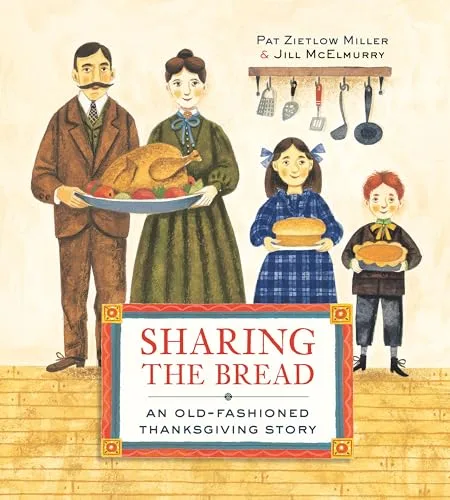 Sharing the Bread: An Old-Fashioned Thanksgiving StoryPat Zietlow Miller, illustrated by Jill McElmurry“Mama, fetch the cooking pot. Fetch our turkey-cooking pot. Big and old and black and squat. Mama fetch the pot.” An energetic patterned text goes on to call on every member of an extended, multigenerational family to do their part as they all pitch in to prepare the Thanksgiving meal. Daddy tends the fire. Sister bakes bread. Brother bastes the turkey. Grandpa cooks berries. Grandma makes pie. Auntie mashes potatoes. Uncle pours cider. And Baby? Baby sleeps, quiet as a mouse, until it’s time for everyone to share the meal. A narrative that could easily be describing a contemporary family is paired with muted gouache illustrations showing a family of lively personalities living in the late 19th or early 20th century.Seasons and CelebrationsView book details
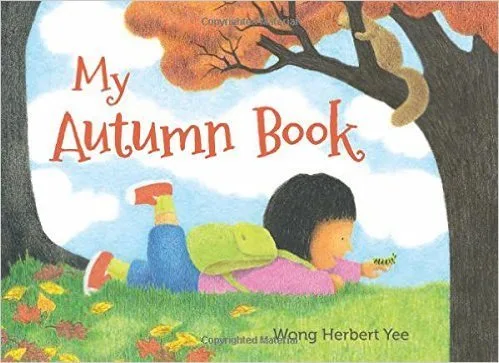 My Autumn BookWong Herbert Yee“The air turns crisp. / The sky turns gray. / Is autumn really on the way?” In the fourth lovely, season-related picture book about the same small Asian girl, autumn is indeed arriving. It comes with swirling and twirling leaves, busy squirrels, flying geese, cocooning caterpillars, and more. As in past books featuring this girl and her father, author/illustrator Wong Herbert Yee’s rhyming text is paired with soft color illustrations full of warmth and appealing details. The book’s trim size makes it perfect for small hands to hold.Seasons and CelebrationsView book details
Historical People, Places, and Events
23 selections
 Symphony for the City of the Dead: Dmitri Shostakovich and the Siege of LeningradM.T. AndersonA substantial, complex, and compelling history provides an overview of Russia and the Soviet Union in the first fifty years of the 20th century through the life of composer Dmitri Shostakovich. Born in tsarist Russia in 1906, he was a boy who felt fervor during the revolution, and a young composer when Stalinism took hold. His early career was heavily influenced by the Soviet sense of futurism in the 1920s and then impeded as the Soviets under Stalin had stronger and stronger ideas about what was and was not art against the state. Then Germany invaded during World War II—an invasion that Stalin refused to believe was possible—and the country became united in resistance. The heart of the book is the writing and eventual impact of Shostakovich’s Seventh Symphony (The Leningrad Symphony, dedicated to the people of his home city living under German siege), which was of interest to the Allies as well as Soviets as a morale builder and propaganda tool. In telling that story, M. T. Anderson gives a deep sense of the horror and terror under both Stalinism and the Nazis while observing how difficult it is to understand some of the small truths and details about Shostakovich because so much of what he said, CCBC Choices 2016 Historical People, Places, and Events 21 or others said about him, was calculated for safety during terrifying times of oppression. Visual material includes occasional black-and-white photographs and reproductions of propaganda and other material in meticulously researched volume that is exceptional in both writing and design.Historical People, Places, and EventsView book details
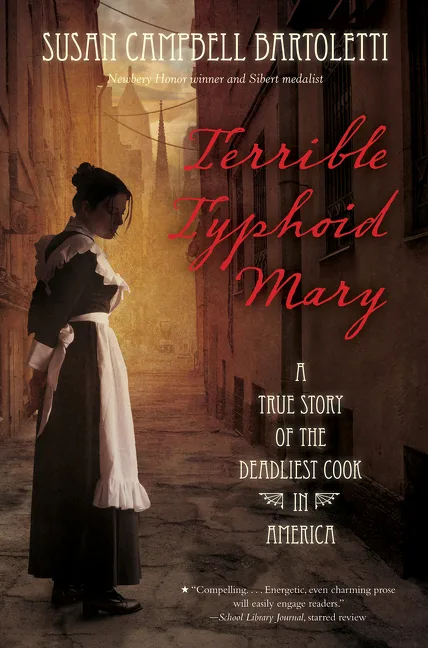 Terrible Typhoid Mary: A True Story of the Deadliest Cook in AmericaSusan Campbell BartolettiSusan Campbell Bartoletti tells the story of Mary Mallon, the Irish-born cook in America who was found to be a typhoid carrier—a fact she refused to believe—and was held on Brother’s Island in New York City without charge and against her will for years. Bartolleti delves into the personalities of key players in Mallon’s fate, notably epidemiologist George Soper and health department doctor Sara Josephine Baker. She also focuses on the civil rights implications of Mary’s imprisonment. Mary Mallon was a strong, independent woman of the lower classes. Bartoletti conjectures how sexism and classism may have impacted how she was perceived and treated by Soper and Baker (who was a feminist and seemed to ultimately have more respect for Mary), as well as the media, which played a huge role in shaping public perception of Mary. Photographs, a timeline, and ample notes conclude the volume that offers rich possibilities for discussing point of view.Historical People, Places, and EventsLexile Text Measure 980LATOS Book Level 7.2View book details
 The Amazing Age of John Roy LynchChris BartonJohn Roy Lynch escaped enslavement at age 16 during the Civil War. He found a job, went to school, and, in the war’s aftermath, got involved in Mississippi politics before he was even old enough to vote. He went on to be among the first Black public servants in Mississippi, serving as a justice of the peace and then in the U.S. Congress. This picture book about this notable man is notable, too, for its honesty about racism. For example, Lynch’s father was a white Irish overseer who wanted to liberate Lynch’s mother and their children. They would still “belong” to him, the text notes, and “while he may have loved these slaves, he most likely took the whip to others.” Regarding the rising violence against Blacks during Reconstruction, author Barton writes, “white terrorists burned black schools and black churches.” A narrative that ends with a quote from Lynch’s passionate speech in the House of Representatives about the shortcomings and potential of America also includes a historical note and timeline as well as notes from the author and illustrator about presenting this information for children.Historical People, Places, and EventsLexile Text Measure 920LATOS Book Level 5.7View book details
 Stonewall: Breaking Out in the Fight for Gay RightsAnn BausumA history of the Stonewall riots sets the scene with a vibrant description of west Greenwich Village in 1969. That summer, the Stonewall Inn was a place to drink and dance and a place to be free for gays, lesbians, cross-dressers, and transgender people. Everyone knew police raids happened, but the raid on June 28 was different. Its aim was to shut the Mafia-run bar down. It was also different because this time, bar patrons, so often disrespected and closeted 22 Historical People, Places, and Events CCBC Choices 2016 outside places like the Stonewall, pushed back. Stonewall customers and their supporters took control against the police, who hadn’t planned on the crowd getting so angry and who didn’t know the warren of streets in the neighborhood as well as those who lived or hung out there. Ann Bausum’s riveting, detailed account includes an overview of activism in the years leading up to these events at Stonewall and a look at their immediate and long-term impact. This includes increased visibility and activism in events like the annual parade that began to commemorate Stonewall (the genesis for gay pride parades across the nation and beyond), the more radical activism that arose during the AIDS crisis when lives were on the line, Don’t Ask Don’t Tell and its repeal, and the fight for marriage equality. A spare collection of black-and-white photos accompanies this fascinating history that includes source notes and an ample bibliography.Historical People, Places, and EventsView book details
 Tommy: The Gun that Changed AmericaKaren BlumenthalThe Tommy gun was developed during World War I, but the prototype was finalized and mass-produced too late to make an impact. The war ended and the manufacturer looked for other markets. It became the favored choice of gangsters, its firing power leading to bloody scenes in Prohibition gang wars in Chicago, and spread from there. The pursuit of criminals like John Dillinger and others that fueled the career of J. Edgar Hoover also fueled new regulations, most notably the National Firearms Act, and the rise of a lobbying arm of the National Rifle Association. At the same time, the U.S. government started a campaign in Hollywood to make G-men, and not gangsters, movie heroes. As our country struggles today with disagreements over guns and gun legislation, this fascinating accounting is highly relevant, even noting that in their first arguments before Congress opposing new regulatory legislation requiring firearm registration, NRA representatives never mentioned the Second Amendment. Occasional black-and white photos, a bibliography, and notes round out this timely work.Historical People, Places, and EventsView book details
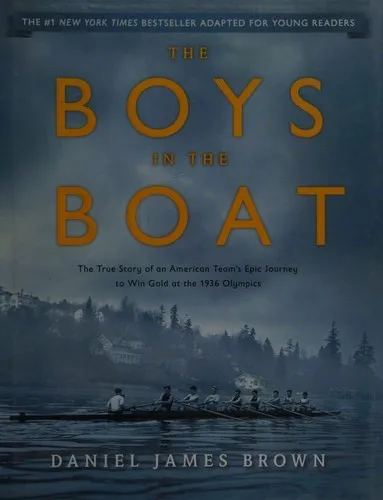 The Boys in the Boat: The True Story of an American Team’s Epic Journey to Win Gold at the 1936 OlympicsDaniel James BrownThe personal story of Joe Rantz and the collective story of the University of Washington rowers who became the U.S. gold-medal winning team at the 1936 Berlin Olympics are interwoven in this captivating work. Rantz grew up in a family hit hard by the Depression and by tragedy. On his own at age 15, he worked his way to Seattle, was admitted to the University of Washington, and tried out for the rowing program as it was beginning to excel. Unlike members of elite rowing teams from the east coast, Rantz and his fellow rowers were primarily working class young men and some, like Rantz, could take nothing for granted. The contrast when they traveled east for big races was obvious and undeniable, but their hard work, and developing teamwork under coaches committed to making them the best, eventually earned them the right to represent the country. This fine adaptation of a book originally published for CCBC Choices 2016 Historical People, Places, and Events 23 adults will be satisfying on numerous levels for middle and high school readers, not the least of which is as a sports story with riveting accounts of numerous races.Historical People, Places, and EventsView book details
 Drowned City: Hurricane Katrina and New OrleansDon BrownAn informative and deeply moving chronicle of Hurricane Katrina opens as “a swirl of unremarkable wind leaves Africa and breezes toward the Americas. It draws energy from the warm Atlantic water and grows in size.” As he did in The Great American Dust Bowl, Don Brown offers a factual account that makes brilliant use of the graphic novel form to provide information and to underscore the human impact and toll of a disaster. As the storm builds and unleashes its power, it wreaks havoc—on levees and on neighborhood and on people, so many people. Some of those affected wouldn’t leave the city of New Orleans. Most of them couldn’t, and this becomes an integral part of the narrative. Failures pile up: empty Amtrak trains leave the city when Amtrak’s offer of transport was ignored, thousands of people are stuck in misery at the convention center, police who desert their posts, even joining the looting. The travesties go on and on. But there is courage and compassion, too, including many who risked their lives to help others. Brown pulls no punches in a book offering a clear and critical point of view. The straightforward presentation of grim and sometimes shocking facts paired with emotionally rich images results in a work that is powerful, poignant, and sometimes haunting. Documentation includes extensive source notes for this notable work.Historical People, Places, and EventsView book details
 Freedom’s SchoolLesa Cline-RansomeThis portrait of a fictional community’s efforts to establish a school for African American children begins on the title page with an illustration of the newly arrived teacher and a newspaper beside her on the bench with the headline “Thirteenth Amendment Ends Slavery.” Lizzie and Paul’s Mama tells them that “bein’ free means we got to work harder than ever before. And I don’t just mean in the field. Real freedom means ’rithmetic and writing.” After the children start attending a one-room school house where classes are taught by an African American woman, they face some obstacles, including harassment from white boys during the walk to school. But the real challenge comes when the school is burned down. Paul and Lizzie try to continue practicing their reading and writing at home. When the weather gets warmer, Mizz Howard teaches outside, on the site of the burned-down school. In the background, the children can see and hear a new school being built.The dramatic story is told through Lizzie’s distinctive voice, while the pencil and watercolor illustrations add historical detail.Historical People, Places, and EventsView book details
 Game Changer: John McLendon and the Secret GameJohn CoyIn 1944, the Duke University Medical School basketball team played a secret game against five members of the Eagles from the North Carolina College of 24 Historical People, Places, and Events CCBC Choices 2016 Negroes in defiance of segregation laws. The match was arranged by Eagles coach John McLendon, who had an African American father and Delaware Indian mother, and believed an interracial game could help erase prejudice. The Eagles blew out Duke with a final score of 88 to 44, dominating the play with their new fast-break attacking style. A second game of shirts and skins followed, with players from both teams mixing to make a more evenly matched competition. In a post-game gathering at the Eagles’ dormitory, all players agreed to keep the game secret in order to protect one another and Coach McLendon from legal liability or social retribution. A concluding sentence of this captivating story pays tribute to Coach McLendon and the players of both teams who “were years ahead of their time” on the road to athletic racial integration.Historical People, Places, and EventsView book details
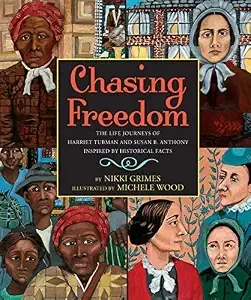 Chasing Freedom: The Life Journeys of Harriet Tubman and Susan B. Anthony, Inspired by Historical FactsHistorical Facts by Nikki GrimesIn 1904, when Harriet Tubman spoke at a Women’s Suffrage Convention, she was introduced by Susan B. Anthony. Here Grimes imagines that the two of them had tea prior to the event, and that they reminisced about their lives and shared stories from their pasts. This device allows the author to share a lot of biographical details and give a good account of each woman’s accomplishments. But what’s especially interesting is the many ways their lives intersected—they were fighting for each other’s causes, of course, but sometimes there was a direct connection, as when Susan B. Anthony’s younger brother Merritt provided shelter to John Brown and his followers, many of whom had been recruited by Harriet Tubman. Each double-page spread has a full-page illustration painted in a distinctive naive style.Historical People, Places, and EventsView book details
 The Boys Who Challenged Hitler: Knud Pedersen and the Churchill ClubPhillip HooseWhen Germany invaded Denmark in April, 1940, the Danish government signed an agreement not to fight back. This capitulation did not sit well with many ordinary Danes. Knud Pedersen was a school boy, but he and his brother and some friends began acts of resistance—small scale annoyances and mayhem. When the Pedersens moved, the brothers formed the Churchill Club, and their activity began to escalate. From the time they stole their first gun, the boys began thinking about what they were doing in moral terms: Could they shoot a German? Under what circumstances? Meanwhile, they focused on the sabotage of train cars and vehicles. Caught, they were eventually sent to prison, but their trial sparked greater resistance efforts across the nation. By the time Knud got out of prison, his family had become an important part of the growing Danish resistance. Phillip Hoose interviewed Knud Pedersen extensively as part of this riveting account, which goes back and forth between Knud’s reminiscences and Hoose’s narrative. The boys’ youth, and at times immaturity, is conveyed along with their commitment and passion for their cause.Historical People, Places, and EventsView book details
 Fatal Fever: Tracking Down Typhoid MaryGail JarrowSanitary engineer and chemist George Soper was a “germ detective” in the early 20th century. Soper was hired in 1906 by the Thompson family of New York City when six family members fell ill with typhoid. Through a meticulous process of elimination, Soper determined that a cook, Mary Mallon, was the most likely source of the bacteria. When public heath doctor Sara Josephine Baker tracked down Mary Mallon, a.k.a. Typhoid Mary, Mallon refused to believe she carried typhoid. Mallon’s case became a civil rights issue when she was quarantined against her will on Brother’s Island off the coast of Manhattan. Mallon was eventually released when she promised not to work as a cook again, only to be returned to the island after another typhoid outbreak was traced to her. She lived there the rest of her life, even as it was acknowledged she was surely far from the only typhoid carrier in the city. Soper’s rigorous methodology, Baker’s doggedness, and Mary Mallon’s unfortunate story illustrate the confluence of science, detective work, and social attitudes during the early decades of the 20th century. This captivating, well-researched volume is augmented by numerous photographs and back matter that includes source notes, a timeline, and bibliography.Historical People, Places, and EventsView book details
 March: Book TwoJohn Lewis, Andrew AydinThe second volume of this graphic novel memoir trilogy follows U.S. Congressman John Lewis’s activism and leadership in the Civil Rights Movement in the early 1960s. Beaten, jailed, but steadfast and further politicized and energized during the Freedom Rides, he emerged into a leadership role in the Student Nonviolent Coordinator Committee (SNCC) as protests heated up in Birmingham early in 1963. It was in his SNCC role that he was involved in planning the March on Washington that year and to speak at the event, only to be asked to make last-minute changes to lines in his speech questioned as too divisive and critical. The direct, powerful conversational narrative is paired with dramatic black-and-white panel art and occasional full-page illustrations, and includes Lewis’s account of other key figures and their role in the sweeping social change taking place. Like March: Book One, President Obama’s 2008 inauguration provides a framing device in a volume that ends, tragically and poignantly, with the Sixteenth Street Baptist Church bombing in Birmingham that killed four girls in September, 1963. The original draft of Lewis’s March on Washington speech is included in the end matter.Historical People, Places, and EventsView book details
 Finding Winnie: The True Story of the World’s Most Famous BearLindsay MattickAuthor Lindsay Mattick is the great-granddaughter of Harry Colebourn, the Winnipeg veterinarian who purchased an orphaned cub at a train station while on his way to service in World War I. Mattick’s unique perspective and engaging style (punctuated with plenty of humor) make for an irresistible narrative that includes herself and her young son, Cole, as characters as she tells what is clearly a familiar and much loved story to the little boy. Harry named the cub Winnipeg (soon shortened to Winnie) and she charmed everyone. Winnie was full of affection and exploits, and it was hard for Harry to imagine leaving her behind in England when word came his unit was leaving for the front. But he took Winnie to the London Zoo and it was there, years later, that a little boy named Christopher Robin Milne first saw her. The conversational style of Mattick’s narrative is finely crafted and utterly charming. So, too, are Sophie Blackall’s warm illustrations, which are finely detailed and emotionally expansive, emphasizing the bond between mother and son, and man, child, and bear. An album of photographs of Colebourn, Winnie, Christopher Robin, and Mattick and Cole round out this winsome volume. Honor Book, 2016 Charlotte Zolotow AwardHistorical People, Places, and EventsLexile Text Measure AD590LATOS Book Level 3.4View book details
 Earmuffs for Everyone! How Chester Greenwood Became Known as the Inventor of EarmuffsMeghan McCarthy, illustrated by Meghan McCarthyThe subtitle of this blithe, informative offering is not “How Chester Greenwood Invented Earmuffs” but rather “How Chester Greenwood Became Known as the Inventor of Earmuffs.” It is an important distinction, as McCarthy’s lively narrative makes clear, not only to the history of earmuffs but also to understanding history in general: A lot of truth gets simplified or blurred as it falls through the funnel of time. McCarthy details the history of earmuffs, and it turns out Chester didn’t invent them; he dramatically improved them. He was also the one who got a patent for “ear-mufflers.” (What is a patent? McCarthy explains.) It’s for these reasons that he became known as their inventor. Well, that and the annual Chester Greenwood Day in Maine, created in the 1970s by a man who made up stories about Chester to bolster the cause. In the end, McCarthy notes that improving an invention can sometimes make all the difference. (Just ask Thomas Edison.) Humorous illustrations accompany the text, and a terrific author’s note details more about Greenwood, patents, and McCarthy’s research.Historical People, Places, and EventsView book details
 Queen of the Diamond: The Lizzie Murphy StoryEmily Arnold McCully, illustrated by Emily Arnold McCullyLizzie Murphy grew up in the early 20th century in a baseball-loving family. Lizzie was both eager to play and savvy, bargaining her way onto her brother’s team. By 15, she was playing on two amateur teams. At 18, she set out to earn a living playing baseball, despite her mother’s concern. “But it’s what I do best,” Lizzie replied. To the manager of the semi-pro team who signed her, Lizzie was a novelty who would bring more people into the stadium to see the game. But Lizzie was a good player, and she demanded to be paid the same as her male teammates. Lizzie played professional baseball for 17 years. In an author’s note at the end of this spirited account, McCully writes that Lizzie wasn’t the only woman to play on teams with and against men, but she was among a small number, and she was not only the first woman to play a major league exhibition game, but “the first person to play on the National and the American leagues’ all-star teams.” A photograph of Lizzie in uniform accompanying this note is the winning run in this welcome, inspiring volume.Historical People, Places, and EventsView book details
 Breakthrough! How Three People Saved “Blue Babies” and Changed Medicine ForeverJim Murphy“Blue baby syndrome” was the result of a heart condition known as tetralogy of Fallot that led to insufficient oxygen in the blood. Before late 1944, treatment was limited, and ultimately unsuccessful: children eventually died. Life- changing, lifesaving measures to treat blue baby syndrome were first realized at Johns Hopkins University in 1944 thanks to the work of three individuals. Dr. Helen Taussig was a compassionate care provider desperate to save her young patients. Dr. Alfred Blalock was a driven researcher and surgeon. Vivien Thomas’s official title was lab assistant to Blalock, but this brilliant African American technician was the one who developed and perfected the surgical procedures that would save children’s lives. Jim Murphy weaves together profiles of all three into the story of this breakthrough medical treatment. The sexism faced by Taussig as a woman in medicine is a topic of her story, while the racism faced by Thomas is a running theme throughout this account that ends describing the due recognition he eventually received.Historical People, Places, and EventsView book details
 Sitting Bull: Lakota Warrior and Defender of His PeopleS.D. Nelson, illustrated by S.D. NelsonIn a fictionalized first-person voice, Nelson offers a powerful, moving narrative of the life of the great Hunkpapa Lakota leader, Sitting Bull. By juxtaposing Sitting Bull’s early life with the presence of the U.S. government troops at the beginning of the book, Nelson introduces the conflicts and contradictions that plagued Sitting Bull throughout his life. Before his birth, the wasichus, or white men, disrupted the Lakota lands and lives. Still, young Sitting Bull grew up in the traditions of his people to become a strong, honorable warrior. Sitting Bull was keenly aware of the “two faces” of wasichus who offered one thing and provided another much worse option. As a leader, Sitting Bull made every effort to protect his people from this and avoided signing treaty rights. When 28 Historical People, Places, and Events CCBC Choices 2016 Sitting Bull could no longer protect his people and stave off the government, the tragedy is palpable as he becomes what he once hated: an Indian relying on government handouts. He is ultimately murdered for still being held in such high regard by his people. Integrating ledger-book art, an art form that originated during the last part of the 19th century by Native American artists using discarded ledger books, and weaving together quotes, photographs, illustrations, and prose, Nelson creates a dynamic, engaging biography of Sitting Bull and a welcome perspective on this history. Detailed notes with a timeline and a more personal author’s note are included.Historical People, Places, and EventsView book details
 The Book Itch: Freedom, Truth & Harlem’s Greatest BookstoreVaunda Micheaux NelsonVaunda Micheaux Nelson revisits the topic of Lewis Michaux and the National Memorial African Bookstore that was the subject of her singular young adult novel No Crystal Stair, here introducing her great uncle and his Harlem store in a picture book told in the engaging fictionalized voice of Lewis Michaux’s son. Young Louie shares the history of the store, for which his father could not get a bank loan to open because the banker believed “Black people don’t read.” And he shares a sense of the vibrant, vivid gathering place the store is: a place of activism and action with its “zillion books” by Black people—African Americans, Africans—and others who aren’t white, with its many visitors from the famous (Muhammad Ali, Malcolm X) to the anonymous (the boy who spends every Saturday reading at the store), and with its readings and rallies. Read to learn, his father tells him, and to learn how “to figure out for yourself what is true.” In the aftermath of Malcolm X’s death, Louie is comforted by his father’s reminder that “His words will never leave us.” And Louie thinks about the importance of words, and the importance of their bookstore as a place to find them in this picture book strikingly illustrated by R. Gregory Christie. Nelson tells more about the store, which closed in 1975, and her personal connection in end material that includes photographs and a bibliography.Historical People, Places, and EventsView book details
 Hiawatha and the PeacemakerRobbie RobertsonHiawatha is consumed by thoughts of revenge after his village is burned and his wife and children killed by Onondaga Chief Tadoaho. Then a leader called the Peacemaker convinces him that unity, not fighting, is the path to take, and asks Hiawatha to help him carry his message of peace among the nations of the Iroquois. They travel in turn to the Cayuga, Seneca, Oneida, Mohawk, and finally, the Onondaga. On the journey, the Peacemaker meets skepticism and anger with quiet courage and soft-spoken wisdom and his cause is championed by the Clan Mothers. Eventually, Hiawatha’s thoughts of revenge are replaced by forgiveness. He meets his former enemy with understanding, helping Tadoaho defeat the evil that possesses him. Robbie Robertson’s emotionally rich retelling of the origin story of the Iroquois Confederacy he first heard as a child visiting his Mohawk and Cayuga relatives is vivid and compelling. Punctuating the longer narrative is a slightly varied, repeated refrain that gives CCBC Choices 2016 Historical People, Places, and Events 29 the story the rhythm of a cumulative tale, this one drawn from history. A historical note explains that Hiawatha and the Peacemaker, a spiritual leader named Deganawida, are thought to have lived in the 14th century. The story is set against strong, beautifully rendered oil illustrations by David Shannon that respect rather than romanticize the characters.Historical People, Places, and EventsLexile Text Measure AD740LATOS Book Level 5View book details
 Most Dangerous: Daniel Ellsberg and the Secret History of the Vietnam WarSteve SheinkinAn engrossing look at U.S. government deception of the American public throughout our involvement in Vietnam, and Daniel Ellsberg’s efforts to make that deception—chronicled in the Pentagon Papers—public. Ellsberg, a veteran and Harvard Ph.D., worked at the Pentagon, and later for the State Department in Vietnam, gradually changing his views on U.S. involvement there, especially as he realized how much was being kept from the public. U.S. fears of communism post-World War II, and the refusal of one president after another to “lose” a war, were among the barriers to rational decision-making. But at a new position for a California-based think tank, Ellsberg ended up with access to a single copy of the Pentagon Papers, which he eventually decided to photocopy. No politician would touch what he begged them to make public, so he went to the New York Times. Part political thriller, part American primer, Sheinkin’s account becomes even more riveting as it follows the release of the story in the Times, a court injunction to stop publication of additional stories in that paper, and Ellsberg, hiding from federal authorities, getting additional copies into the hands of one major paper after another. Ellsberg’s patriotism is never in doubt in Sheinkin’s account, but neither is the patriotism of soldiers serving in the war who, like Vietnamese civilians and our military allies there, were also at the mercy of the decisions being made. Detailed source notes round out this masterful account that includes occasional black-and-white photos.Historical People, Places, and EventsView book details
 Winnie: The True Story of the Bear Who Inspired Winnie- the-PoohSally M. WalkerSally Walker’s concise, finely crafted informational picture book about the bear that inspired A. A. Milne’s Winnie-the-Pooh begins with Harry Colebourn, the Canadian veterinarian in World War I who purchased on orphaned bear cub. “Harry’s job was caring for horses that would be needed for battle. Winnie’s job was being Harry’s shadow.” Winnie was also a comfort and joy to horses and men alike, and provided plenty of entertaining moments, but Harry made the difficult decision to give her to the London Zoo when he was leaving for the front. Winnie was 11 when a young boy named Christopher Robin first saw her, and soon his father was spinning stories based on his son’s fascination with the bear. Walker’s account is short enough to easily incorporate into a storytime, with Jonathan Voss’s illustrations offering warm and engaging visual accompaniment, as do the wonderful photos on the endpapers.Historical People, Places, and EventsView book details
 Voice of Freedom: Fannie Lou Hamer: Spirit of the Civil Rights MovementCarole Boston Weatherford“When I was born, on October 6, 1917, the plantation owner / paid my mother fifty dollars for producing a future field hand.” A biography in poems of activist Fannie Lou Hamer follows her path from a childhood working cotton in a family of sharecroppers to her emergence as a civil rights activist and politician working to secure voting rights and representation for African Americans in Mississippi and nationally. Readable, accessible, and compelling, the poems in Hamer’s first-person voice illuminate her strength of character, but they also feel personal, with vivid details ranging from tender (remembering a mother who taught her “black is beautiful”) to painful (being sterilized without her knowledge). Direct quotes from Hamer are woven into the poems in italics. An author’s note telling more about Hamer’s life and her activism, timeline, and detailed source notes are provided. The illustrations are singular artistic compositions that interpret the content of each individual poem while giving the volume as a whole a striking visual impact and cohesive visual tone.Historical People, Places, and EventsView book details
Biography and Autobiography
9 selections
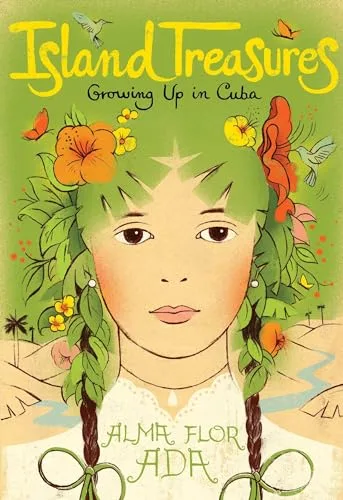 Island Treasures: Growing Up in CubaAlma Flor Ada, illustrated by Antonio MartorellAn engaging volume brings together two of Alma Flor Ada’s previously published memoirs, Where the Flame Trees Bloom and Under the Royal Palms, with a third collection of essays, Days at La Quinta Simoni. All are about her childhood in Cuba in a large and loving extended family prior to the rise of communism. Ada’s wonderful storytelling voice is warm and friendly, inviting readers right into her childhood. The slight repetition among the three volumes, in which a similar incident may be recounted in two or more ways, further gives one a sense of being part of Ada’s family: In any family there are always stories that get told over and over in slightly different ways. Across the stories, not only do vivid scenes of Ada’s childhood emerge, but so, too, does the strong sense of compassion she was taught to have for those around her.Biography and AutobiographyView book details
 Enchanted Air: Two Cultures, Two Wings: A MemoirMargarita EngleMargarita Engle’s mother was Cuban, her father American. Introverted Margarita felt socially awkward here in the United States but something eased for her when she visited her mother’s family in Cuba. She loved her relatives, the land, the ways of being, the very air when they would visit in the 1950s. Then came the 1960s, with the Bay of Pigs, the Cuban Missile Crisis, and the travel ban that cut them off from the place and the people she and her mother cherished. There were comments at school, tension at home, visits from the government, and no word on how their loved ones faired. Engle’s family CCBC Choices 2016 Biography and Autobiography 31 continued to travel, but not to the place she most longed to go. A memoir in poems that takes Engle through age 14 ends with one in which she writes, “Someday, surely I’ll be free / to return to the island of all my childhood / dreams.” Her eventual return in 1991 and recent political changes are discussed in a brief author’s note in a volume that also includes a Cold War timeline. Grounded in Engle’s specific experience, the sense of loss, of feeling an outsider, of longing, will resonate with many tween and teen readers.Biography and AutobiographyView book details
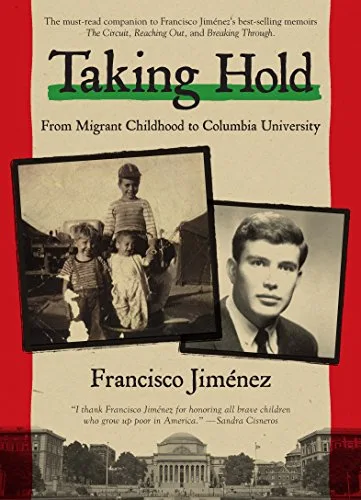 Taking Hold: From Migrant Childhood to Columbia UniversityFrancisco JiménezThis final book in Francisco Jiménez’s memoir cycle that began with The Circuit begins with his arrival at graduate school at Columbia University in the late 1960s. By the end, he has earned his master’s degree and Ph.D., married his college sweetheart, and started a family. Although he is already in adulthood when this account begins, much of what he describes is about learning to live in the larger, sometimes unknown world, a topic resonant and relevant for teens. He has to figure out transportation in New York, how he will afford to eat, how to buy an engagement ring when he proposes, and how to find an apartment once he gets married and moves out of the graduate student dorm. Jiménez’s personal values and faith influence his choices, especially with regard to his commitment to and belief in non-violence as he witnesses the anti-war protests of the late 1960s on campus. Most affecting, though, is when he discusses discovering the work of Mexican authors writing about experiences similar to his own family. The affirmation he felt reading literature by and about people like him was profound. Jiménez’s voice is earnest and appealing in this engaging offering.Biography and AutobiographyView book details
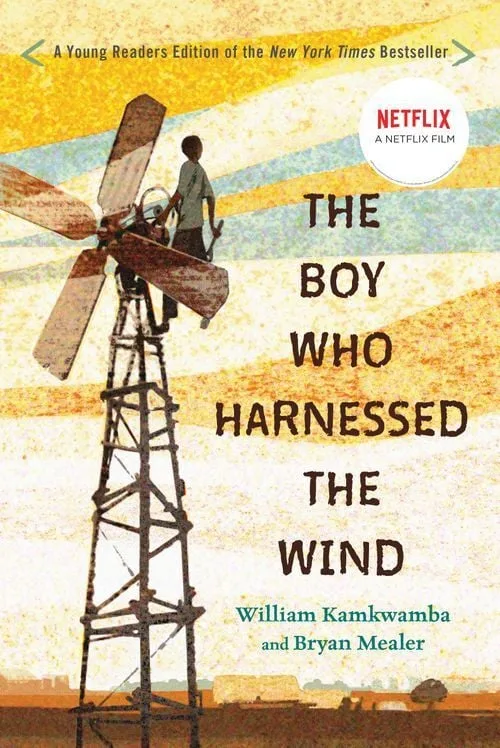 The Boy Who Harnessed the WindWilliam Kamkwamba, Bryan Mealer, illustrated by Anna HymasAfter the devastating drought of 2000–2001 in Malawi, William Kamkwamba’s family could no longer afford his school fees, but he continued to use the primary school library in his village. Interested in science, William found two books that inspired him to build his first windmill, which he used to power a small lightbulb at home. He went on to build a bigger windmill and wire his entire house, gaining attention that led to further educational opportunities. William scavenged everything, and not only had to understand the science but also think creatively. In this adaptation for young adults of William’s adult memoir, his voice is engaging and occasionally self-deprecating as he describes a confidence born of enthusiasm that kept him focused even when he faced ridicule, since early on no one understood what he was doing. It also kept him going through failure—an inevitable aspect of his experimentation. The context of William’s life—his community and family and the impact of the drought on his country—is as vivid as William’s optimism in this account that includes inset color photographs, including one of his recent graduation from Dartmouth.Biography and AutobiographyLexile Text Measure 860LATOS Book Level 5.5View book details
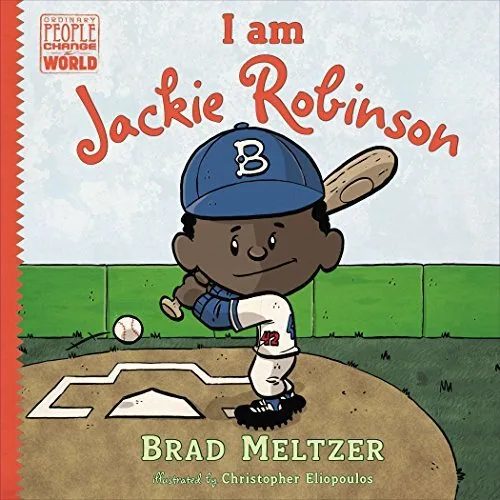 I Am Jackie RobinsonBrad Meltzer, illustrated by Christopher EliopoulosLike other books in this author/illustrator duo’s “Ordinary People Who Changed the World” series, this inspired offering delivers a handful of facts to reinforce significant traits about its subject. In the case of Robinson, it’s his athletic talent and his role as a leader within and beyond sports. The blend of brief, engaging, first-person text and fictional speech-bubble commentary work together to advance the themes and outline the story of Robinson’s life, including his accomplishments in baseball and the racism he faced. The visual humor centers around Robinson’s appearance as a child in a baseball uniform and cap with a “B” from his earliest days, a point of occasional speculation in the comic-style dialogue, even in the midst of serious moments. At one point, Jackie describes the segregated pool of his childhood. “Don’t they know how mean that is?” asks one friend. “Trust me, they know,” Jackie replies. “Maybe the ‘B’ is for buoyant?” suggests another friend of Jackie’s. In the end, of course, the “B” is for Brooklyn. But also for “brave.”Biography and AutobiographyLexile Text Measure 610LATOS Book Level 3.4View book details
 The Inker’s ShadowAllen Say, illustrated by Allen SayAllen Say picks up where he left off in Drawing from Memory, continuing his memoir in a volume blending prose narrative with intricate full-page, panel, and spot illustrations in both color and black-and-white. Fifteen and newly arrived in the United States from Japan, Say is given $10 and a few words from his father (“Don’t disgrace me”) before he is deposited at a military school run by his father’s old friend. His experiences there are mixed: He knows great kindness and also great frustration. He eventually leaves on his own, hoping to get a job and attend college, but first he has to finish high school. An understanding principal helps him enroll and find a job to support himself (he was living alone in a small hotel room), and a keen-eyed and compassionate art teacher helps him take the next steps on his journey to becoming an artist. He also falls in love for the first time. Occasional photographs and examples of his high school art are also included in a volume in which Say’s alter ego, a comic strip character named Kuysuke created by Say’s Japanese master teacher, is both a source of comfort and companionship for the lonely teen, as well as a sounding board.Biography and AutobiographyView book details
 Poet: The Remarkable Story of George Moses HortonDon TateGeorge was born into slavery near the beginning of the 19th century and from the beginning he loved words. He longed to read, but it was not permitted for slaves to do so. When he came upon an old spelling book, George pored over the pages and, little by little, he taught himself how to sound out words. After that, he read everything he could get his hands on and found that what he especially loved was poetry. Soon George began to write his own poems, and had to keep them in his head because there was no way for him to write them down. The incredible story of how George Moses Horton came to be a CCBC Choices 2016 Biography and Autobiography 33 published poet—with two books published while he was still enslaved—is told with grace both in words and illustrations.Biography and AutobiographyView book details
 Growing Up PedroMatt TavaresThe athletic success of stellar baseball pitcher Pedro Martinez began with his Dominican Republic childhood, watching his big brother Ramón play ball and practicing his own throw by aiming rocks at ripe mangos in the trees behind their home. Following in Ramón’s footsteps, Pedro attended the baseball academy run by the Los Angeles Dodgers in the Dominican Republic, and then left his home to play ball in the United States. Encouraged by Ramón to learn English, Pedro worked hard at his language skills while continuing to move up through the Dodgers’ Minor League system. At first devastated by a trade to the Montreal Expos in 1993, Pedro soon exceled as a starting pitcher. His success on the mound was recognized with the 1997 Cy Young Award, and a trade to the Boston Red Sox where he continued to lead his team, eventually winning the 2004 World Series. This compelling picture book emphasizes that throughout both brothers’ careers, their support and encouragement of one another and their ongoing commitment to the people of their home country never faltered.Biography and AutobiographyView book details
 Honor GirlMaggie Thrash, illustrated by Maggie ThrashThe summer she’s 15, Maggie falls for Erin, an older teen and senior counselor at her summer camp. It takes Maggie by surprise—she hasn’t considered her sexuality, or relationships in general—but she senses the attraction is mutual. The times Maggie and Erin see each other become increasingly weighted with possibility, but Maggie doesn’t know how to act on her feelings, and she’s worried the other girls will figure them out. For Maggie, the camaraderie and the competitiveness, the boy craziness and hijinks of her fellow campers is something that generally puzzles her. But she finds a supportive friend in Bethany, who is younger, a little less mature, and a lot less self-conscious, not to mention refreshingly open minded. When Maggie and Erin finally connect, it is heady and charged as they hold hands and eventually kiss. When the camp director finds out, it’s clear she tells Erin to keep her distance form Maggie. This distance—physical, emotional, crushing—remains through summer’s end. The main story at camp is framed by opening and closing chapters set two years later, when Maggie and Erin reunite and their four-year age difference proves to be a chasm. Thrash’s understated graphic novel is an emotional masterwork, conveying through a myriad of small details what it’s like to be young, to fall, to flail, and to feel so deeply in a memoir that is not without humor but is also aching and bittersweet.Biography and AutobiographyView book details
Contemporary People, Places, and Events
2 selections
 One Plastic Bag: Isatou Ceesay and the Recycling Women of the GambiaMiranda PaulWhen Isatou Ceesay first noticed a piece of silky fabric on the ground in her Gambian community, she wasn’t sure what it was. “Plastic,” her Grandmother explains with a frown. Soon there is more. The bags are convenient but people discard them when they break. The litter is unsightly, and a hazard to livestock that eat it. It’s a problem that grows as Isatou reaches adulthood. Watching her sister crochet gives Isatou the idea to turn the worn bags into something useful again, and soon a group of women are transforming old plastic bags into purses after washing and cutting them into strips to crochet. The new bags are not only a solution to the litter problem but become a means of economic development in their community. Debut Wisconsin author Miranda Paul brings a storyteller’s gift for language and pacing to this picture book account based on real events and set against Elizabeth Zunon’s illustrations full of texture and color. An author’s note with more about Isatou and the ongoing initiative, pronunciation guide for the Wolof words incorporated into the narrative, timeline, bibliography, and color photographs are included in the end matter.Contemporary People, Places, and EventsView book details
 Emmanuel’s Dream: The True Story of Emmanuel Ofosu YeboahLaurie Ann ThompsonBorn with only one functioning leg, Emmanuel Ofosu Yeboah grew up with a mother who focused on his abilities. “He learned to crawl and hop, to fetch water and climb coconut trees.” When he grew too heavy for her to carry, he hopped two miles to school and two miles home again. “Emmanuel had a sharp mind, a bold heart, and one strong leg.” At 13, he left home for the city of Accra in Ghana to earn money to help support his family. Time and again he encountered people who assumed he couldn’t do much because of his disability. After his mother’s death, he decided to honor her last words by showing that being disabled doesn’t mean being unable, and, after much organization and planning, embarked on a bike ride across Ghana: 400 miles in 10 days, with one strong leg. An understated narrative emphasizes Emmanuel’s spirit and persistence in addition to his physical abilities, while the stylized illustrations are full of emotion. An author’s note tells of Emmanuel’s continued disability rights activism.Contemporary People, Places, and EventsView book details
Understanding Oneself and Others
4 selections
 RedJan De KinderThis picture book about bullying from the bystander’s perspective is narrated by a young girl who inadvertently starts a spiral of hurtful words and actions until she chooses to speak out. The girl thinks it’s funny that Tommy, a boy in her class, is blushing, but things quickly get out of control when she points it out to other kids. The girl’s simple observation quickly turns to teasing from everyone in the class. “We whisper color into Tommy’s cheeks.” Soon, she becomes uncomfortable with the teasing and taunting especially as she gradually becomes aware of Tommy’s discomfort. But she doesn’t know how to stop the taunting from her classmates, especially after a boy named Paul turns the taunting physical. Finally, she gets up the courage to respond to the teacher’s question about what happened, and other kids speak up as well. Descriptive language and understated art convincingly and evocatively capture the emotions of the children as well as the tension of the situation.Understanding Oneself and OthersLexile Text Measure AD320LATOS Book Level 1.8View book details
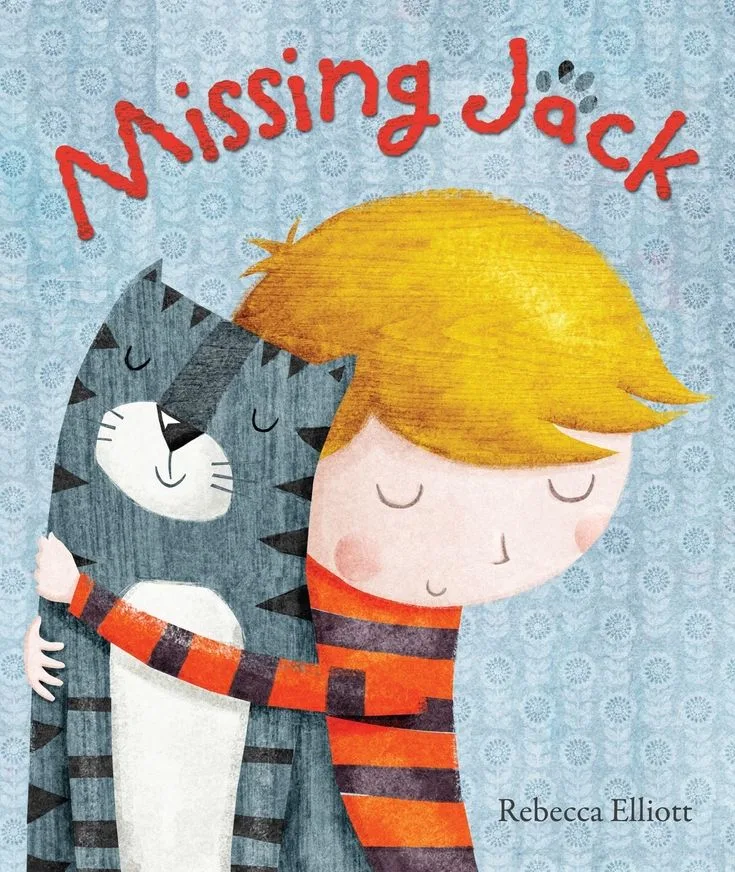 Missing JackRebecca ElliottIn the opening pages of this picture book, a small blond boy explains why his cat Jack was the best cat ever, and then tells how Jack started slowing down as he got old. “Then Jack died. And I miss him.” The family buried Jack in the garden (“I think he would have liked it”) and the boy’s mother tells him they can get another cat. But he doesn’t want another cat, until he meets a kitten named Humphrey. Spitfire Humphrey is nothing like Jack, but “still pretty awesome.” The narrative’s honest, understated, childlike tone, with one or two moments of whimsy, is set against illustrations that also blend blitheness with poignancy. As an aside, the boy’s sister is shown using a wheelchair—something never mentioned in the narrative—in a picture book that offers a comforting, gentle look at the death of a pet.Understanding Oneself and OthersView book details
 I Used to Be AfraidLaura Vaccaro Seeger, illustrated by Laura Vaccaro SeegerSpiders, shadows, the dark. Making mistakes, change, being alone. These are all things the young narrator used to be afraid of. “But not anymore,” she notes. The spare yet essential text is almost a grace note to a story in which much is conveyed visually. Boldly colored, textured illustrations with die cuts show first a scene in which the girl fears each thing, and then a scene reflecting her current feelings about the object or idea. Sometimes, a scene of transition between the two is also provided, building a fuller story in which her family is seen leaving its old home and moving to a new one. One of the marvelous things about Laura Vaccaro Seeger’s picture book is that it leaves plenty of space to think and talk about what is happening. Seeger is masterful at offering just the right amount of information and leaving it up to young readers and listeners to decide how to fill in the blanks.Understanding Oneself and OthersView book details
 Sex Is a Funny Word: A Book About Bodies, Feelings, and YOUCory SilverbergOne of the most unusual and welcome aspects of this graphic novel on human growth and development is its treatment of gender as non-binary. Another is its emphasis on four core concepts across the chapters: trust, respect, joy, and justice. Chapter topics include What Is Sex? Learning About Bodies; Boys, Girls, All of Us; Touch; Talking about Sex; Crushes, Love and Relationships; What’s Next? The information is presented in a dynamic context as four friends, age eight to 10, are learning about sex (which has several definitions ranging from gender to the sexual act to reproduction). The kids are shown in discussions with one another, family members, and others on some pages, while other pages focus on presenting factual information. One of the kids, Zai, clearly understands s/he falls outside the gender binary, not identifying as either boy or girl. The book’s unusual palette features characters with skin that is blue, green, purple, violet, and other colors, while faces show cultural specificity and distinction. There is also a range of body types and abilities affirmed across the illustrations.Understanding Oneself and OthersView book details
The Arts
16 selections
 Trombone ShortyTroy AndrewsGrowing up in Tremé, a New Orleans neighborhood, Troy “Trombone Shorty” Andrews was surrounded by music. It was in his house as his brother played trumpet, in the streets, in the air all year long, but especially during Mardi Gras. And he loved it. Wanting to create musical “gumbo” of his own, he used homemade instruments and paraded behind his brother before he found a broken trombone. His brother gave him his nickname, and Andrews was still smaller than his trombone when Bo Diddley called him up to play on stage at the New Orleans Jazz Festival. Today the young man is a performer around the world, but he always returns to New Orleans. The musical energy and vibrancy of that city burst from every page of a dynamic picture book written by Andrews and featuring the pulsing images of Bryan Collier. A photo essay at book’s end, also by Andrews, expresses more of his appreciation for the city and people who nurtured him.The ArtsLexile Text Measure 760LATOS Book Level 4.2View book details
 Ira’s Shakespeare DreamGlenda ArmandIra Alridge’s dream of performing Shakespeare was difficult for a young African American man to achieve in early 19th-century America. Despite his obvious talent, his father urged him to forgo acting and put his vocal skills to use as a minister. Instead, Ira became a cabin boy on a cargo ship heading to South Carolina, where he narrowly escaped being sold into slavery. Ira signed on as a valet to British actors James and Henry Wallack for their voyage home. Once in CCBC Choices 2016 The Arts 37 England, he worked in theaters running errands and as an understudy, all while studying acting. His perseverance paid off, and by the 1840s he was considered “one of the most celebrated Shakespearean actors in Europe.” He spoke out against slavery in the U.S. and encouraged audience members to financially support abolitionists. Oil wash illustrations employ warm earth tones and soft edges to follow the evolution of Alridge’s career from eager school boy to mature professional, a welcome account.The ArtsView book details
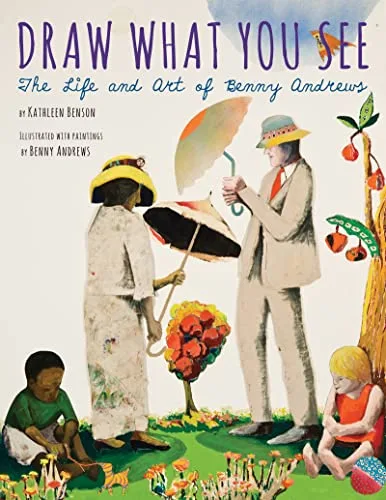 Draw What You See: The Life and Art of Benny AndrewsKathleen BensonAs a child, Benny Andrews drew “hot suns and red clay and little wood-frame houses that stretched as far as he could see. He drew Black people working in the fields.” When he grew up and moved to Chicago for art school, Andrews drew jazz artists in the clubs he visited, and janitors at the school he attended. After moving to New York City, he drew people in Harlem, “the happiness and sadness that he saw.” Throughout his career, his art was inspired by the people and scenes of his childhood and by those in his life in the present tense, including the burgeoning protests of the civil rights movement. A lovely, graceful picture book has a trim size suggestive of the elongated figures in Andrews’s paintings, which illustrate this admiring, informative narrative about the artist-activist that opens with a vignette describing his work with children displaced by Hurricane Katrina. An author’s note observes that Andrews work included “teaching both inside and outside the classroom.”The ArtsView book details
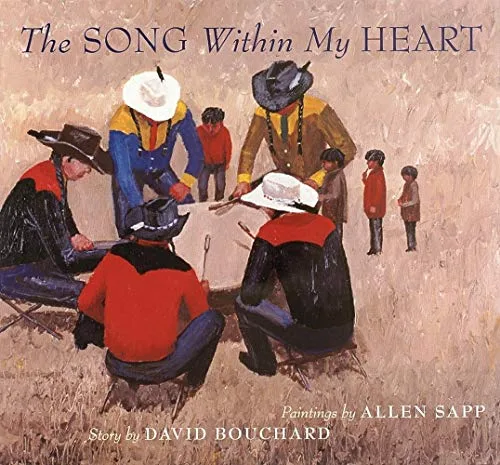 The Song within My HeartDavid Bouchard, illustrated by Allen SappA grandmother guides her grandson through his first pow-wow. He hears the beating of the drums and the singing, but does not understand what they are saying. By urging him to listen and hear, the grandmother gently directs her grandson until he finds the stories and an understanding of his culture. With her warm presence and thoughtful words, the boy’s grandmother, his nokum, grounds her grandson in the history and present of this First Nations experience as well as leads him into his future, encouraging her grandson to own his “stories, songs, and beating heart.” Written in both English and Cree, this story showcases the stunning, brilliant colored and evocative artwork by renowned Cree artist Allen Sapp. Poetic, tender, and informative, the paintings and text are based on Sapp’s memories of being raised by his grandmother on the Red Pheasant reservation in Saskatchewan.The ArtsView book details
 Enormous Smallness: A Story of E. E. CummingsMatthew BurgessAt a young age, the poet E. E. Cummings discovered an open, playful love of language and words that lasted throughout his life. This picture book account of his life follows Cummings through his idyllic childhood with a house full of family (including a creative, encouraging mother and an imaginative, engaged father) as well as his time in the country and a sturdy tree house in the city, all 38 The Arts CCBC Choices 2016 the way to his adulthood as an established poet. Cummings was always a keen observer of everything around him, thriving on the small things in life. He also eagerly embraced experimentation with words, language, and art. Wanting people “to look at words on tiptoe,” Cummings crafted poems that celebrated the small in words, attracted the reader’s eye in print, and captured new ways of looking through his poems. With art and design that echo Cummings’s playfulness and imagination, this biography paints an engaging and thoughtful portrait of the poet. Cummings’s poems are incorporated throughout the text and in the end notes along with an author’s note.The ArtsView book details
 My Story, My Dance: Robert Battle’s Journey to Alvin AileyLesa Cline-RansomeAs a child, Robert Battle wore heavy metal braces on his legs to straighten and strengthen them. Once they were finally removed, he felt lighter than air, and he began to dance. The great uncle who helped raise him always told him to pursue his dream of becoming a ballet dancer, even if it meant he had to also study karate to learn to defend himself from the kids who teased him about it. Robert’s goal was to be the first “black Baryshnikov,” and although he got a late start, he was recognized as a gifted student at the progressively more challenging schools he attended. A full scholarship to Julliard led him to a career as a professional dancer, culminating in his current position as the artistic director of the Alvin Ailey American Dance Theater. Lesa Cline-Ransome has consulted several primary sources, including interviews with Robert Battle himself, in order to recount his fascinating journey, and James Ransome’s pastel illustrations communicate the energy and grace of ballet dancing.The ArtsView book details
 Drum Dream Girl: How One Girl’s Courage Changed MusicMargarita EngleMillo Castro Zaldarriaga was born in Cuba in the 1920s and grew up attuned to the rhythms in the world around her and inside her. She dreamed of drumming, but only boys and men learned how to play at that time. She dared to drum anyway, “tall conga drums / small bongo drums / and big, round, silvery / moon-bright timbales … Her hands seemed to fly / as they rippled / rapped / and pounded / all the rhythms / of her drum dreams.” Her father said no when her sisters asked 10-year-old Millo to join their band. Only boys should play drums, he said. But Millo couldn’t silence the sounds. Her father agreed to find her a teacher who was amazed by her talent and helped Millo change the way people thought about girls and drumming. Margarita Engle’s musical poem makes a striking picture book narrative and is set against the vibrating tropical colors of Rafael López’s lush illustrations. A note tells how Afro-Chinese-Cuban Millo went on to be a world-famous musician who played alongside jazz greats, in addition to changing hearts and minds with her beats. Winner, 2016 Charlotte Zolotow AwardThe ArtsView book details
 Bird & DizGary GolioA picture book about jazz artists Charlie Parker and Dizzy Gillespie is as spirited in tone as it is unusual in format. The duo credited with creating bebop are engaged in a friendly collaboration/competition here as they perform the song “Salt Peanuts.” It plays out like a game of tag, which is used as a metaphor in the narrative, or a contest of friendly one-upmanship: “Bird’s fingers fly across the brass. / Is that smoke coming out of his horn? / He wrinkles his nose, and his bow tie jitters. / Top that, Dizzy Boy.” Verbally energetic and visually dynamic, the free-flowing, colorful, textured art spans the accordion-fold pages, extending into single, long image on each side. The format will bring surprise and pleasure, much like bebop itself. It also makes it a book best shared through collaboration and participation, again, perfectly in tune with the music. More information about Parker and Gillespie’s collaboration on bebop is provided in an afterword that invites readers to listen to a performance of Bird and Diz and “pick up your crayons and draw!”The ArtsView book details
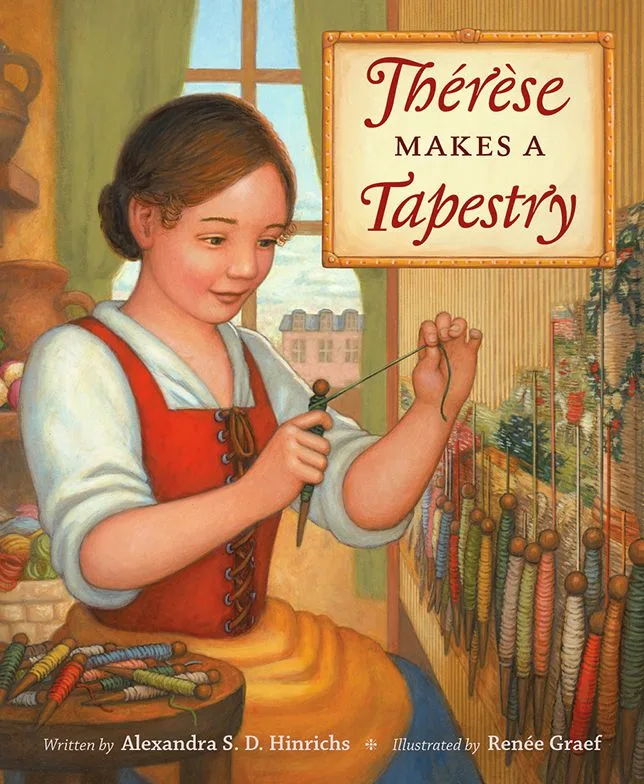 Thérèse Makes a TapestryAlexandra S. D Hinrichs, illustrated by Renée GraefThérèse is a fictional member of a real family of artisans who lived in France in the mid–17th century, working at the Gobelins Manufactury. Through her eyes, we see all the stages necessary for the creation of a tapestry, beginning with the painting of a scene and the sketching of a cartoon copy, and then the stages of spinning and dying the wool and weaving the tapestry itself, using the cartoon as a guide. All of this is done in preparation for a visit from King Louis XIV, who had commissioned a series of tapestries about his life achievements. Both the text and illustrations give a strong sense of the daily lives of ordinary people living in a specific time and place, as we see Thérèse interacting with other artisans in her community. The endpages show a detailed birds-eye map of the manufactory and all the places Thérèse visited as she gathered the necessary materials for her project.The ArtsView book details
 In Mary’s GardenTina Kügler, Carson KüglerAs a child, Mary Nohl helped her father build a house along the shore of Lake Michigan just north of Milwaukee and was “happiest when her hands were busy making, building, creating things.” Mary grew up to travel all over the world and was captivated by the art in the places she visited. When she came back home to the house she’d helped build, she began to collect found objects on the beach, with the help of her dogs Sassafras and Basil. The things she gathered were part of something bigger—a creature she could see her in imagination. From cement, supports, and “odds and ends, bits and bobs,” a “magnificent creature” emerged in her yard. Wisconsin natives Tina and Carson Kügler introduce young children to one dimension of this unusual and brilliant artist’s immense creative outpouring in this engaging picture book. A note provides additional information about Nohl’s extraordinary art—her home and her yard were her canvas—and efforts to preserve it.The ArtsLexile Text Measure 650LATOS Book Level 4.2View book details
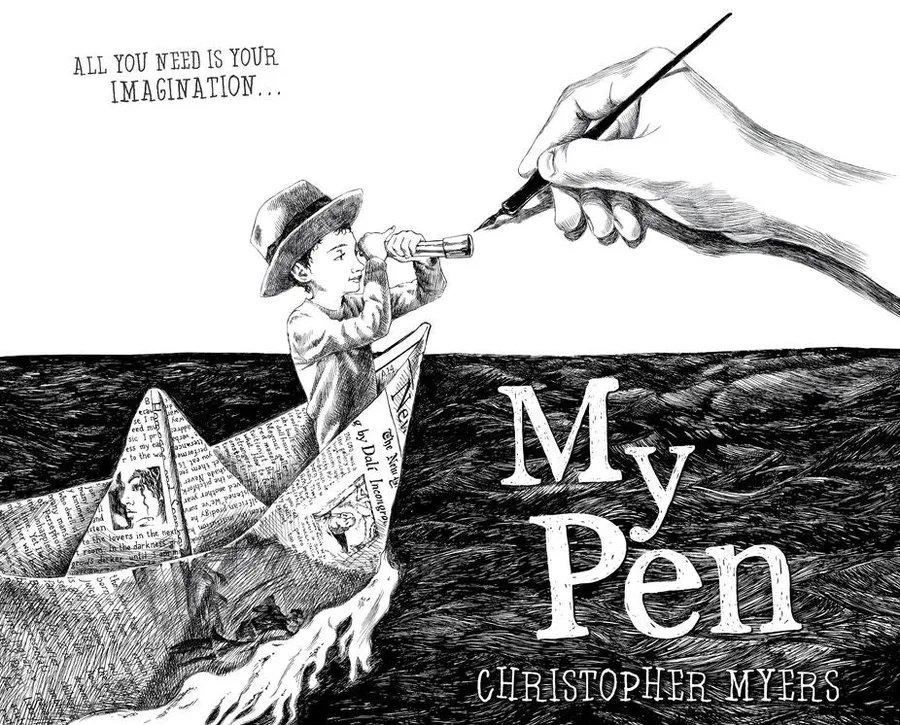 My PenChristopher MyersA young artist expresses the power of his pen, the strength of his heart, and the wilds of his imagination through pictures and words as he draws and writes about everything he is able to do with pen in hand. The sketchbook feel of the illustrations, which are black-and-white and range widely in subject, brings an anything-is-possible, what-will-come-next feel to a picture book whose intent is shaped by words. “My pen worries about all the wars in the world, then tells everyone I love that I love them….My pen tells stories in the margins of the page, but it doesn’t always get it right.” Myers’s exploration of creativity affirms that this, too, is part of what it means to be an artist—struggling and searching in a book that ends by encouraging other young artists to explore the “million worlds” inside their own pens.The ArtsView book details
 Mahalia Jackson: Walking with Kings and QueensNina Nolan“People might say little Mahalia Jackson was born with nothing, but she was born with something all right. A voice that was bigger than she was.” Nolan’s concise, conversational text traces the course of the Mahalia Jackson’s life from a shotgun shack in New Orleans to her years singing at Carnegie Hall and the March on Washington. John Holyfield’s expressionistic acrylic paintings capture the larger-than-life spirit of the great gospel singer, who was happiest “hollering” for the Lord in churches across the country.The ArtsView book details
 Funny Bones: Posada and His Day of the Dead CalaverasDuncan TonatiuhJosé Guadalupe Posada’s etchings of calaveras (skeletons) are a cultural treasure in Mexico. Posada, who was known as Don Lupe, began creating them to illustrate short, funny poems called literary calaveras in the late 19th century. Duncan Tonatiuh combines biographical elements about Posada with a history of the calaveras he created, including his artistic mentors and the printing process he used. Tonatiuh discusses the cultural importance of Don Lupe’s calaveras and their connection to El Día de los Muertos. He moves seamlessly through these elements in the narrative while going back and forth visually between his own distinctive art style and reproductions of a number of calaveras created by Don Lupe and an earlier artist named Manuel Manila. Don Lupe’s calavera images included social and political figures, and Tonatiuh ponders their meaning, and also imagines what subjects Don Lupe might choose if he were alive today. A volume that is playful, admiring, and informative is also visually arresting across the two styles of art. A substantial author’s note provides more information on the Day of the Dead, Posada, and calaveras.The ArtsView book details
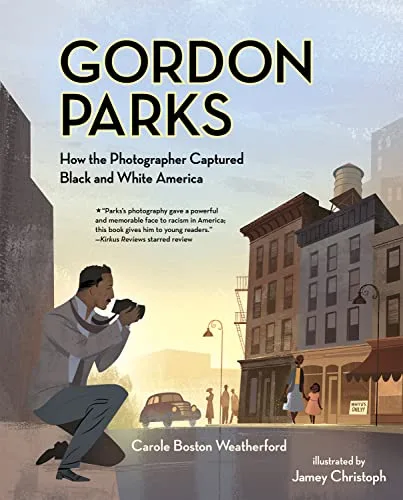 Gordon Parks: How the Photographer Captured Black and White AmericaCarole Boston Weatherford, illustrated by Jamey ChristophWhen he was a child, Gordon Parks’s all-Black class was told by their white teacher: “‘You’ll all wind up porters and waiters.’ What did she know?” Gordon CCBC Choices 2016 The Arts 41 worked odd jobs as a teenager and young man—including porter and waiter. But he bought a used camera when he was 25 and soon was a taking pictures for a living. He knew “there are enough photos of white men carved in marble and granite” and began to document the life of Ella Watson, the Black cleaning lady in his Washington, D.C., office building. He went on to become the first Black photographer for publications like Vogue and Life, and write poetry and music, but a photo of Ella, titled “American Gothic,” is his most famous image. A notable, arresting narrative is set against sepia-toned illustrations that convey the differing worlds Parks moved through and documented. An essay with several of Parks’s photographs are included at volume’s end.The ArtsView book details
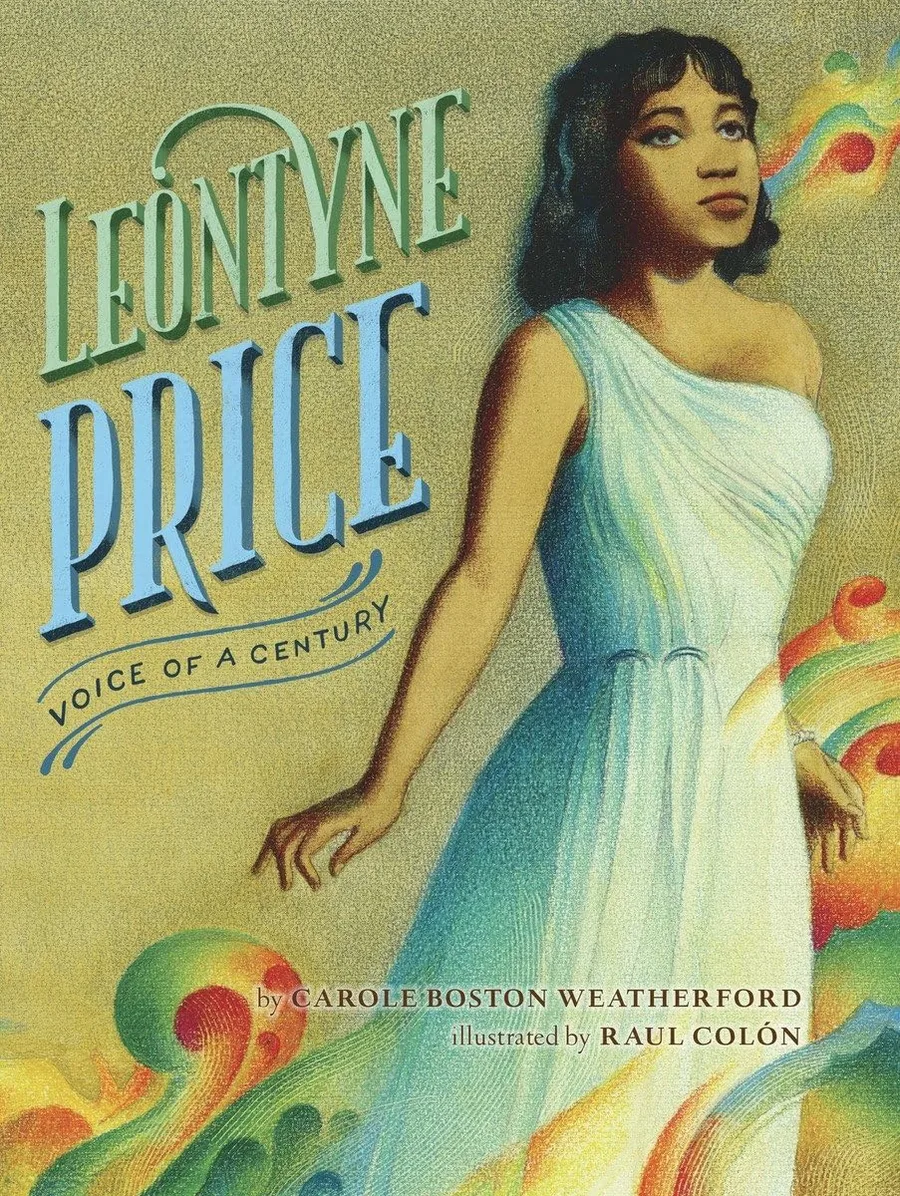 Leontyne Price: Voice of a CenturyCarole Boston Weatherford, illustrated by Raúl ColónFrom the time she was a child in Mississippi, Leontyne had always loved listening to the Metropolitan Opera’s Saturday afternoon radio broadcasts, but she knew there weren’t any Black opera singers. Then she heard about Marian Anderson, who became a lifelong inspiration to her. Anderson opened many doors and left them ajar for Leontyne to later blast through and leave wide open. After studying music at an Ohio college, Leontyne enrolled in Julliard, and from there went to Broadway before finally finding the career she had dreamed of—opera. Weatherford’s poetic text gives a strong sense of the barriers Leontyne Price faced and broke through, and Colón’s dreamlike illustrations underscore the aspirations of a gifted young singer following her heart to achieve her goals.The ArtsView book details
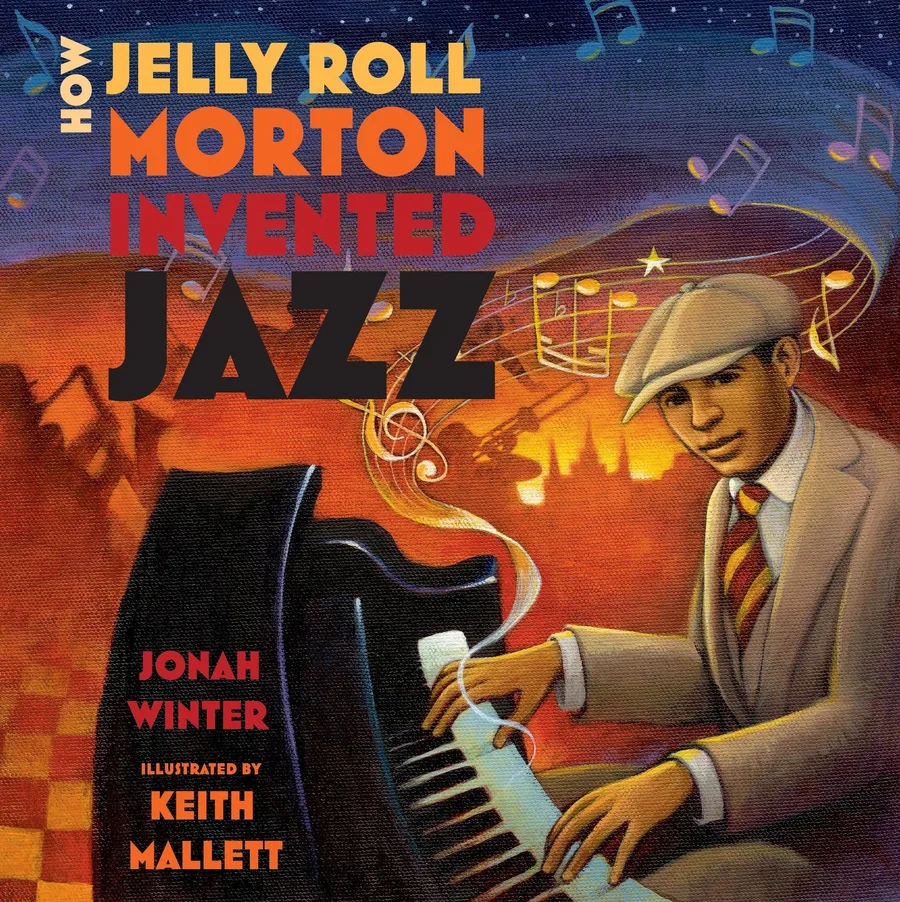 How Jelly Roll Morton Invented JazzJonah Winter, illustrated by Keith MallettThere’s a tall-tale feeling to this picture-book biography, and not just because it opens with a godmother/voodoo queen putting a spell on a newborn baby. It’s also written in second person, building on a “let’s say…” construction. This technique works in an accounting of Jelly Roll Morton’s early life, since he was a bit of a braggart who “tooted his own horn” and claimed to have invented jazz (both the music and the word) in 1902. He’s not the only musician to have made that claim and certainly there were a lot of creative hands in that jazz stew in New Orleans back then. What can be documented is that Jelly Roll was the first musician to publish a jazz composition. The playful text is complemented by appropriately whimsical illustrations that give a strong sense of the early New Orleans jazz scene.The ArtsView book details
Poetry
7 selections
 Goodnight Songs: A Celebration of the SeasonsMargaret Wise BrownAfter Margaret Wise Brown’s death in 1952, hundreds of unpublished manuscripts, poems, and songs were packed away in a relative’s barn for many decades. This volume introduces 12 of her poems for very young children, 10 of which have never before been published. Each poem is accompanied by a double-page illustration by a different children’s book artist, and the poems themselves are arranged to reflect the cycle of seasons. Kittens, bunnies, and the joy of being outside in the natural world are the recurring themes that run through all of these child-friendly offerings. Each one has been set to music by Tom Proutt and Emily Gary, and a CD of them performing the 12 original songs is included with the book. Grimes, Nikki. Poems in the Attic. Illustrated by Elizabeth Zunon. Lee & Low, 2015. 40 pages (978–1–62014–027–7, $19.95) A warm picture book collection alternates between poems in the voice of an African American girl whose mom is away in the military, and poems in the voice of her mother as a child, growing up in a military family that moved many times. The contemporary girl’s discovery of her mother’s childhood poems has inspired her to write her own, which often reflect on the differences between their childhoods, especially as she is living in one place with her grandmother while her mom is away, rather than moving from place to place. But there are many parallel experiences that play out in the two poems on each page spread, one in each voice. There is a strong sense of connection and continuity—in both present and past there is a child missing a parent who is away on duty. The illustrations do a terrific job of distinguishing between present and past on the same page spread. An author’s note talks more about the experiences of military children and identifies the actual U.S. air force bases that formed the locales for the places the girl’s mother lived as a child.PoetryView book details
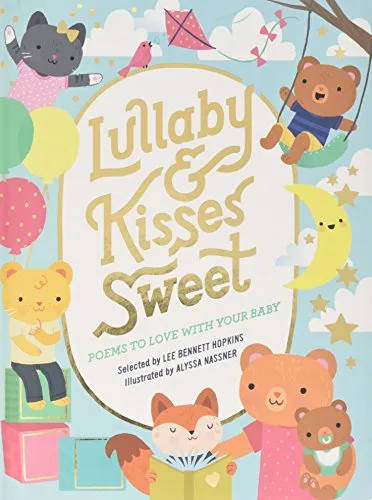 Lullaby & Kisses Sweet: Poems to Love with Your BabyLee Bennett Hopkins, illustrated by Alyssa Nassner“When she takes my hand / and begins to sing / I love her more / than / anything.” (“Grandma” by Prince Redcloud) A hefty board book anthology features 30 short poems for babies and toddlers arranged into sections titled Food, Family, Firsts, Play, and Bedtime. Most of the poems feature the strong rhythm and rhyme typical of poems and verse for the very young. The bright, cheerful illustrations, which are sweet leaning toward precious, feature personified animal families.PoetryView book details
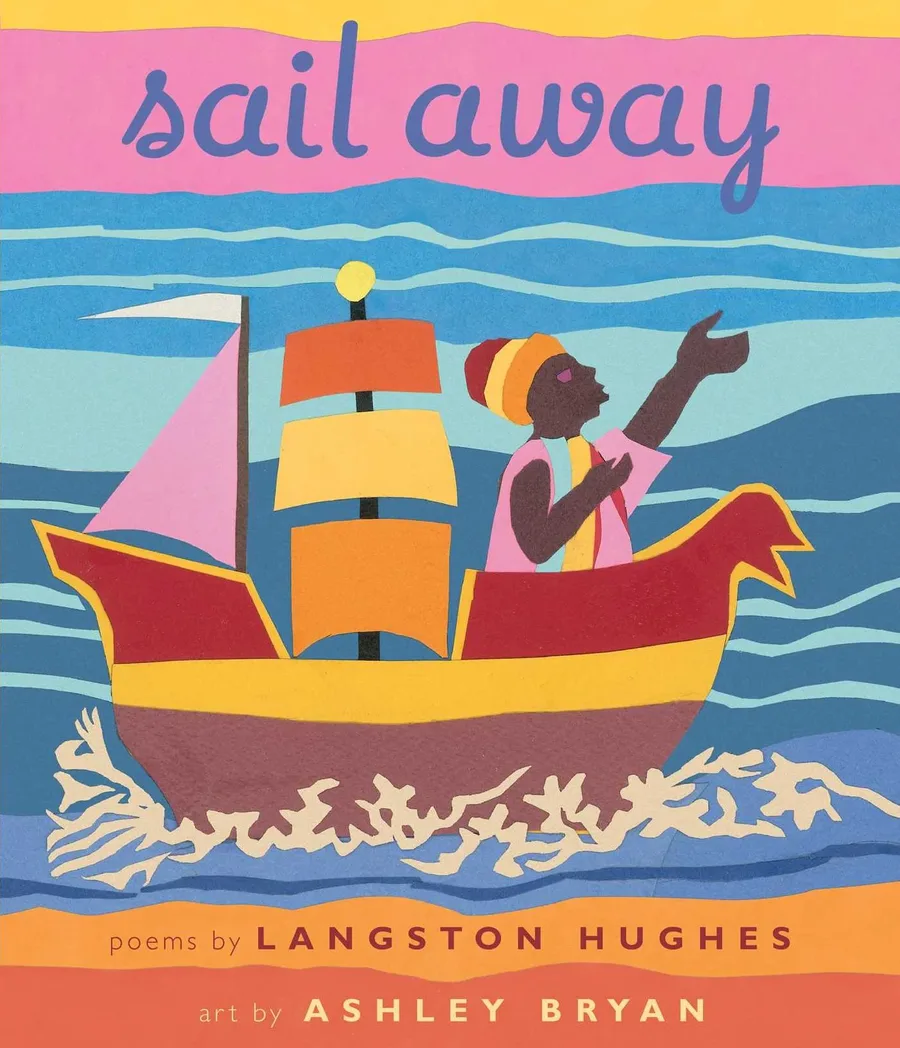 Sail AwayLangston HughesFifteen poems by Langston Hughes are lovingly illustrated by artist Ashley Bryan in brightly colored, cut-paper collage. There is such jubilance in Bryan’s images, which singularly celebrate the natural world about which Hughes was writing in many of the poems. There are also beautiful, brown-skinned children, whom both poet and artist have strived to affirm. To hold this book is to feel joy.PoetryView book details
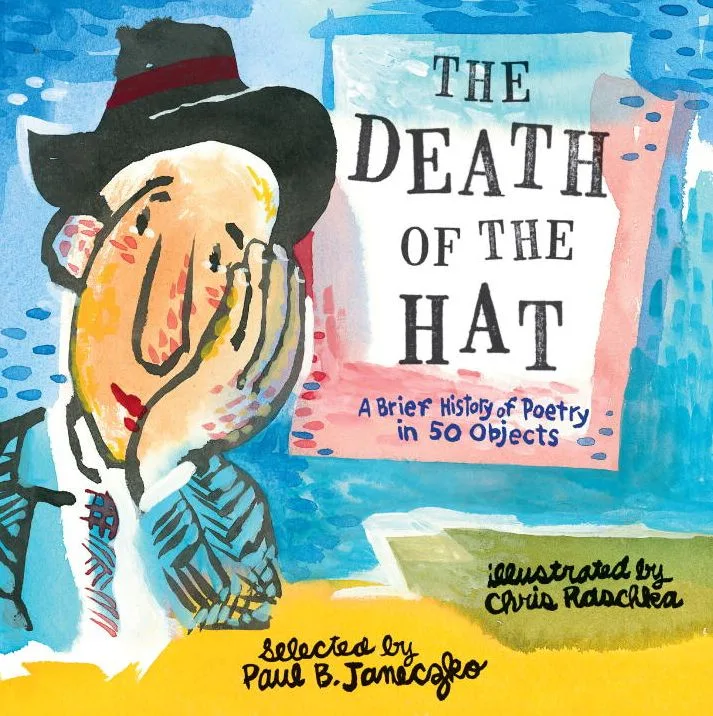 The Death of the Hat: A Brief History of Poetry in 50 ObjectsPaul B Janeczko, illustrated by Chris RaschkaA wide range of poems from across epochs all have the theme of “things” in common, even though, as Janeczko points out in his introduction, physical objects were not common subjects of poems across many centuries, especially in early writing. The “object-ness” of the poems serves as a unifying theme, but the result is a rich and varied collection both stylistically (from a variety of structured forms to free verse) and in terms of familiarity. There are poems that will be recognizable to some readers here, and many that will be new to them. The design features a clean, sans serif font that makes the poems stand out on the white pages, while Raschka’s illustrations can be points of entry to understanding, or fade into the background, depending on an individual reader’s need or preference.PoetryView book details
 Please Excuse This Poem: 100 New Poets for the Next GenerationBrett Fletcher Lauer, Lynn Melnick, introduction by Carolyn ForchéThe task of selecting 100 poems and poets for this anthology must have felt both limiting and liberating. Limiting because if these poems are any example—and they surely are—the talent pool of young poets in America is deep and diverse. That isn’t a surprise, but it must have made the number 100 feel like a huge challenge at times. Yet as hard as choosing must have been, 100 poems also allowed for remarkable inclusiveness. The result feels like a gathering you might find in any large city, and certainly across America: multicultural and diverse in all senses of the words. The poets’ experiences and observations here are always personal, sometimes intimate, sometimes deeply unsettling. The poems themselves are often thick with images and full of surprises. These selections are more challenging as a whole than what is often found in young adult anthologies (a genre that has languished in recent years), but their wide range of subjects provide many possible points of connection for a wide range of readers. It’s impossible to not come away from such a rich collection appreciative not only of the poets’ talents, but of the ways language is flexible enough to be bent and shaped and crafted to speak so many distinct and powerful truths. For young adults whose inclination is to write poetry themselves, it’s impossible not to come away from this volume with words—their own words—sounding.PoetryView book details
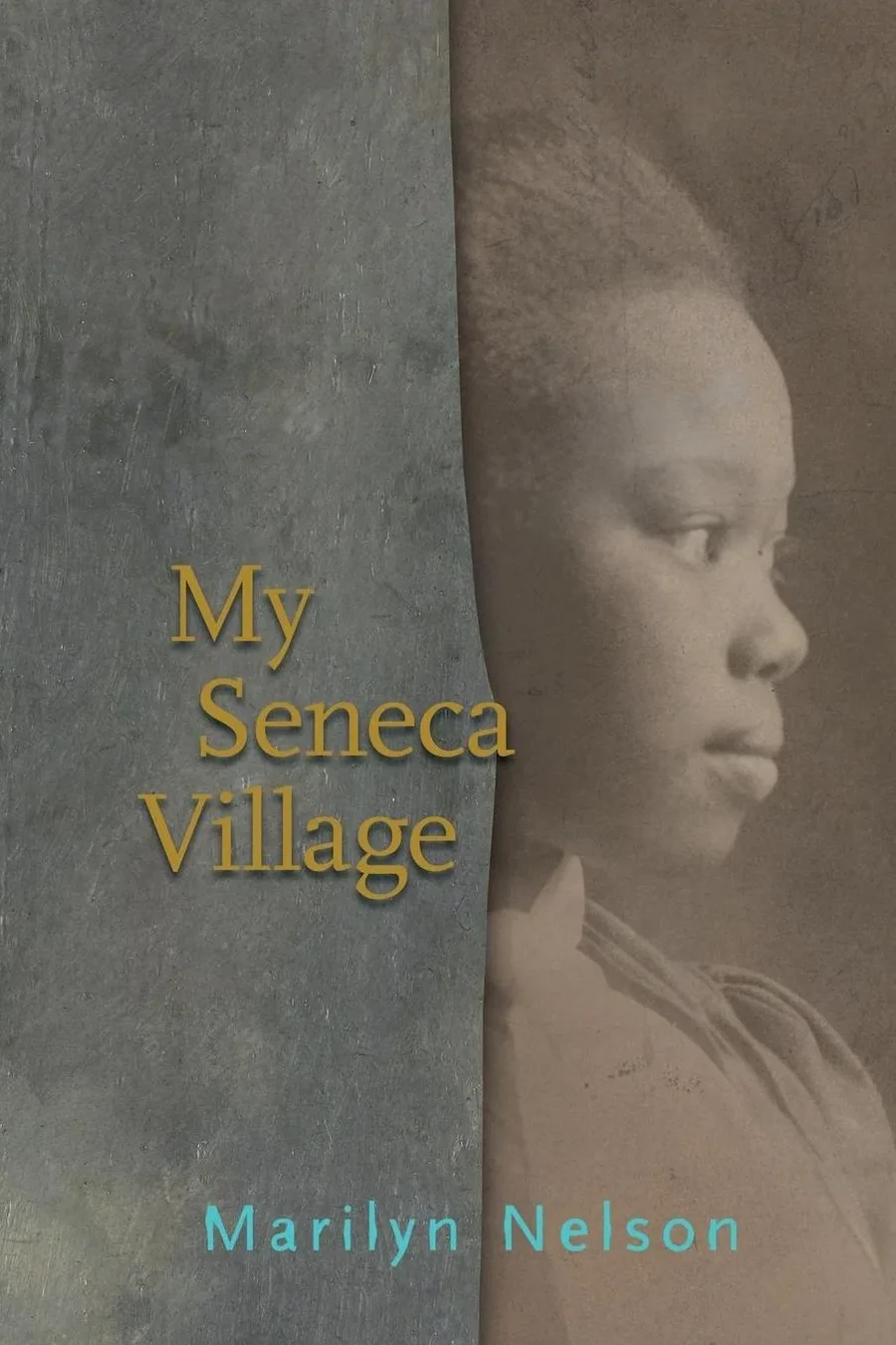 My Seneca VillageMarilyn NelsonThe Seneca Village of the title was a predominantly African American community in New York City that was torn down in 1857 to build Central Park. Seneca Village emerges here through the fictionalized voices of characters whose names are based on real people Marilyn Nelson found in census records. Her first poem, titled “Land Owner,” is attached to “Andrew Williams, bootblack” and dated 1825, when Seneca Village was established. Her final poem, “Uncle Epiphany,” is dated 1855, just two years before the community would be gone. Nelson has imagined individuals of weight and heft and detail as she moves in and out of various lives and families. Brief prose narratives connecting the poems create a fuller sense of story. An opening note provides more information on Seneca Village, while a detailed discussion of the specific poetic form for each poem appears at volume’s end.PoetryView book details
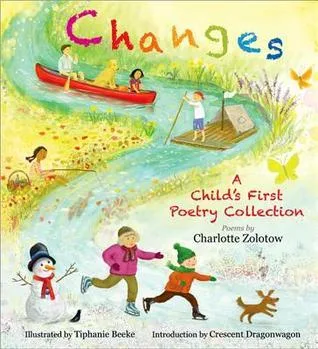 Changes: A Child’s First Poetry CollectionCharlotte Zolotow, illustrated by Tiphanie BeekeTwenty-eight poems for young children are organized around the seasons and speak, notes Charlotte’s daughter Crescent Dragonwagon in the introduction, to both change (“every moment, each flower, the breeze, and the sky, is ever- altering and unique”) and “the comforting cycle of repetition” that nature offers. As the opening poem, “Change,” observes, each season returns as it always has. “It is only I / who have changed.” Poems that are playful and observant, grounded in both the physical world and the emotional world of the young children, are set against Tiphanie Beeke’s illustrations that include both inviting full-page scenes and charming spot illustrations.PoetryView book details
Concept Books
5 selections
 Counting CrowsKathi Appelt, illustrated by Rob DunlaveyA clever counting book counts by threes to show sets of crows flying in to eat different things, such as crunchy chips and slimy snails (which are also countable). The stylized black-and-white pencil illustrations use red highlights— all the crows are wearing red-and-white striped sweaters and the fourth crow sports a red scarf with white polka dots. After 12 crows have gathered, a cat comes along and scares them all away—again in groups of three. As they fly off into the sky, the polka-dotted scarf drops and, in the end, the cat sits with the scarf around his neck, dreaming of the dinner that got away.Concept BooksLexile Text Measure AD390LATOS Book Level 1.7View book details
 8: An Animal AlphabetElisha Cooper, illustrated by Elisha CooperA traditional approach to the alphabet book offers a subtle twist encouraging close observation by readers. Of the handful of animals representing each letter CCBC Choices 2016 Concept Books 45 of the alphabet, only one—in a range of poses and in some cases, species—is shown eight times. It’s up to readers to find the eight similar creatures on each page spread. Perusal of the F page shows a falcon, ferret, firefly, flamingo, flying squirrel, and fox, as well as eight unique frogs. From familiar (ant) to unusual (zebu), Elisha Cooper’s clean watercolor art and generous use of white space offers an inviting venue to explore the animal kingdom as well as the alphabet. Four concluding pages provide a thumbnail sketch and a fascinating fact about each animal included.Concept BooksView book details
 Alphabet SchoolStephen T JohnsonStephen T. Johnson brings his artist’s eye to a school environment to locate letters of the alphabet in ordinary objects and scenes. The shadow of a school bus mirror forms the letter B. Two flags on a pole make an F. Remnants of a peanut butter and jelly sandwich curl into a G. A flipped-up toilet seat is an almost perfect U. Johnson’s striking full-page, realistic paintings have a tinge of grittiness with their speckled texture, looking like well-worn photographs. The imperfections amplify the realism, and while these are surely images drawn from one or more specific places, there is also a universality, as if this could be any school. It’s hard to imagine children not being inspired to look closely around their own classrooms, hallways, gymnasiums, and playgrounds to see what letters might be lurking, and some will surely want to create images and books of their own.Concept BooksView book details
 One FamilyGeorge Shannon, illustrated by Blanca GómezAn unusual, conceptually sophisticated counting book looks at the way the number “one” can be represented by a single object, a pair of items, or a group of things varying in number from three all the way up to 10. For every number from two to 10, “one” is also a group with that many members. “One is three. One house of bears. One bowl of pears … One is five. One bunch of bananas. One hand of cards.” The narrative works hand-in-hand with the illustrations, with each page spread featuring a scene in which everything named can be found and counted (e.g., a family of three walking down a street in which one building they pass has a bowl with three pears in the window and a toy shop with a window display featuring the three bears in a doll house). While the art has a nostalgic feel, there is multicultural and intergenerational diversity within and across the families, all of whom are shown together on the final page spread: “One is one and everyone. One earth. One world. One family.”Concept BooksLexile Text Measure 200LATOS Book Level 1.8View book details
 Alphabet TrainsSamantha R Vamos, illustrated by Ryan O’RourkeThe Alphabet Train is leaving the station! That would be many trains, actually, in this A (Auto-Train) to Z (California Zephyr) look at different kinds of rail transport. The examples range from the general (freight train) to the specific (“Q train—Fifth to Lex”), all presented in paired letter couplets (“O is for ore train, hauling iron in the back. P is for Pacific Surfliner. Store your surfboard 46 Concept Books CCBC Choices 2016 on a rack.”). Brief information about the specific trains or kinds of trains listed is provided at book’s end. Young train enthusiasts will be on board with this alphabet book, made even more inviting by the stylized illustrations suggestive of early to mid–20th century travel posters.Concept BooksLexile Text Measure AD470LATOS Book Level 3.2View book details
Picture Books for Babies, Toddlers, and Preschoolers
55 selections
 It’s Only StanleyJon Agee, illustrated by Jon AgeeOne by one every member of the Wimbledon family is awakened during the night by a strange noise or smell in the house, and every time Walter, the father, goes to investigate, he returns to report, “It’s only Stanley.” Stanley is an ordinary looking beagle engaging in increasingly ludicrous behavior, from banging on the basement boiler with a hammer to working on the bathroom plumbing. A sudden “Kapow!” is startling for everyone. “The Wimbledons went flying, Including Max, the cat. Wendy looked around and said, ‘Well, what on earth was that?!’ ‘I’ll go and look,’ said Walter, ‘And I’ll be back very soon.’ ‘It’s only Stanley,’ Walter said. ‘We’re going to the –’” Stanley, it turns out, is not only a mechanical genius, but he’s in love with a pink poodle on the moon. Jon Agee’s absurd and delightful picture book is full of visual clues and foreshadowing. Repeated readings guaranteed.Picture Books for Babies, Toddlers, and PreschoolersLexile Text Measure AD530LATOS Book Level 2.1View book details
 Global Baby BedtimesMaya AjmeraBabies love seeing other babies. So what could be more appealing than the sight of one sleeping baby? How about a book that shows 18 sleeping babies from countries around the world? Following the format of earlier books in the Global Babies series, this board book features a photograph of a sleeping baby (and in one case, twins) on every page. A very brief rhyming text points out that babies everywhere sleep, whether in a crib or on a floor, on the back or in the arms of someone who loves them. Every photograph is labeled with the country in which the baby pictured lives.Picture Books for Babies, Toddlers, and PreschoolersView book details
 Vincent Paints His HouseTedd ArnoldWhen a Van Gogh-looking artist sets out to paint his house, he decides on the color white. The spider hanging from the eaves has another idea. “This is MY house, and I like red.” To which Vincent replies, “Red is nice.” But the caterpillar likes yellow, the beetle likes purple, the bird likes blue, and so on. Each time, Vincent affirms his appreciation for the new color and starts using it. The creatures are all helping paint, too. The end result is an Impressionistic display of color. “Everyone was happy!” This pleasing story has a simple text with a lot of repetition, and the added use of a large bold font makes it a great CCBC Choices 2016 Picture Books for Babies, Toddlers, and Preschoolers 47 choice for beginning readers. The book’s final image of the house at night set against the swirl of a starry, starry sky is nothing if not perfect.Picture Books for Babies, Toddlers, and PreschoolersLexile Text Measure AD270LATOS Book Level 1.1View book details
 Bunnies!!!Kevan AtteberryA little monster wandering the woods greets almost everything he passes in a ho-hum kind of way. “Hello, tree. Hello, clouds. Hello, butterfly. Hello – Bunnies!!!” The monster’s sudden and riotous happiness at encountering a group of four rabbits is matched by the bunnies’ terror, and they quickly flee. “Bunnies?... Noooo bunnies,” the monster notes dejectedly. This pattern repeats itself several times, the little monster growing sadder and sadder each time the bunnies run away until they realize the monster just wants to be friends. All is well for bunnies and monster alike. But what’s that over there? “Birdies!” Toddlers won’t be able to resist this lovable little monster in a picture book that alternates understatement with enthusiasm and invites participation. The illustrations set brightly colored characters against a palette suggesting the natural world.Picture Books for Babies, Toddlers, and PreschoolersView book details
 My BikeByron Barton, illustrated by Byron BartonA companion to Barton’s My Car and My Bus introduces Tom and Tom’s bike, shown with all parts labeled. Tom rides his bike to work. On the way, he passes trucks, cars, buses, people, monkeys … monkeys? Yes! And acrobats, lions, tigers, and elephants, too. Tom, it turns out, works at the circus. He’s a clown. And as a clown, he rides … a unicycle! Barton’s visual style features bright, bold, colorful images, here of cars and trucks and people and animals. As with the previous two books in this series, he uses just a few words on every page spread to document a satisfying journey that again ends with a little punchline of surprise.Picture Books for Babies, Toddlers, and PreschoolersView book details
 This Is My Home, This Is My SchoolJonathan BeanA blond-haired boy who is homeschooled points out and describes all the elements of his home as part of his school day, accompanied by cartoon-style pen-and-ink illustrations with watercolor wash. At his school, his mother is his teacher, his sisters are his classmates, his living room is his classroom, but so is his kitchen, his backyard, and his basement. While this is likely to especially resonate with homeschool families, children who attend traditional schools will be able to relate, as the narrator includes many familiar school experiences, including the school bus, the playground, the bully, the substitute teacher, etc. The same family was featured in Building Our House and both books are based on the author/illustrator’s childhood experiences.Picture Books for Babies, Toddlers, and PreschoolersLexile Text Measure 157LATOS Book Level 1.5View book details
 Black Cat, White CatSilvia BorandoTwo cats are exact opposites: One is entirely white, the other black. Black Cat only goes out during the day, and White Cat only at night. Curious about what they might be missing, they each set off to find out. The two cats meet face to face and introduce each other to their worlds. Black Cat points out “the most beautiful things of the day—daisies, doves, and butterflies …” while White Cat reciprocates with “the most tasty treats of the night—snakes, bats, and mice.” Black Cat and White Cat become “inseparable. So inseparable, in fact, that they have one, two, three, four, five, SIX … KITTENS!” The arrival of their offspring necessitates the addition of a third color to the final page of what had been an exclusively black and white palette: orange, the color of the kittens. A deceptively simple visual style emphasizes the mirror quality of the two cats and the merger between their worlds.Picture Books for Babies, Toddlers, and PreschoolersLexile Text Measure 348LATOS Book Level 2.5View book details
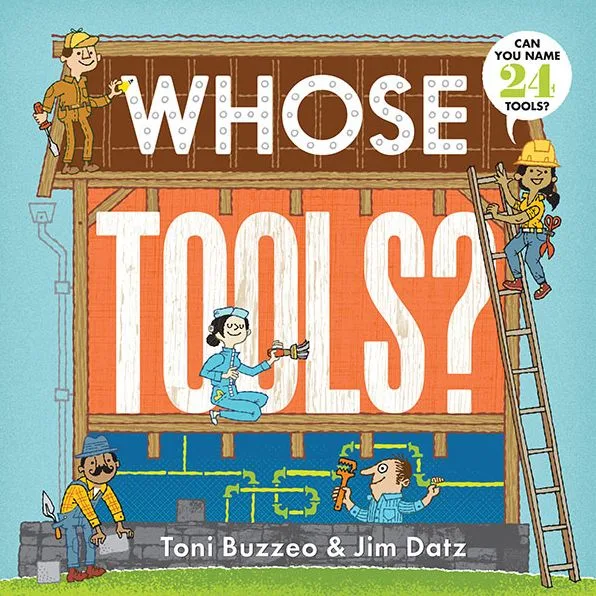 Whose Tools?Toni Buzzeo, illustrated by Jim DatzA clever board book shows the stages of building a house, with each page spread labeling four different tools and asking to whom they belong. “Keep all rooms dry in rain or snow. Whose tools are those? Do you know?” is the question on a layout that features a utility knife, nail gun, snips, and ladder. A foldout page reveals the answer (“the Roofer’s!”) and shows a worker or workers on the job using the tools. The workers include both men and women and are culturally diverse in a board book that is a wonderful vocabulary builder and discussion starter, in addition to its obvious child-appeal.Picture Books for Babies, Toddlers, and PreschoolersView book details
 The New Small PersonLauren Child, illustrated by Lauren ChildElmore Green enjoys being an only child. He doesn’t have to worry about anyone messing with his stuff, and “Elmore Green’s parents thought he was simply the funniest, cleverest, most adorable person they had ever seen.” When a “new small person” arrives, Elmore Green’s perfectly ordered life is turned upside down. “They all seemed to like it … maybe a little bit MORE than they liked Elmore Green.” As the new small person gets bigger, he disrupts Elmore’s things, he licks Elmore’s jelly beans, he follows Elmore around, he moves into CCBC Choices 2016 Picture Books for Babies, Toddlers, and Preschoolers 49 Elmore’s room. It’s awful, until the night Elmore has a bad dream and the small person comforts him. Not long after, Elmore is arranging his precious things in a long line, and the small person is adding his own things to the effort. “It felt good to have someone there who understood why a long line of things was SO special.” And it turns out that this small person has a name: Albert. A fresh, funny take on a familiar family scenario features two brown-skinned brothers in droll, spirited illustrations that are a perfect match for the narrative’s tone. Lauren Child’s story is joyful even as it acknowledges the very real feelings of frustration and uncertainty that come with a new sibling. Honor Book, 2016 Charlotte Zolotow AwardPicture Books for Babies, Toddlers, and PreschoolersLexile Text Measure AD490LATOS Book Level 3.6View book details
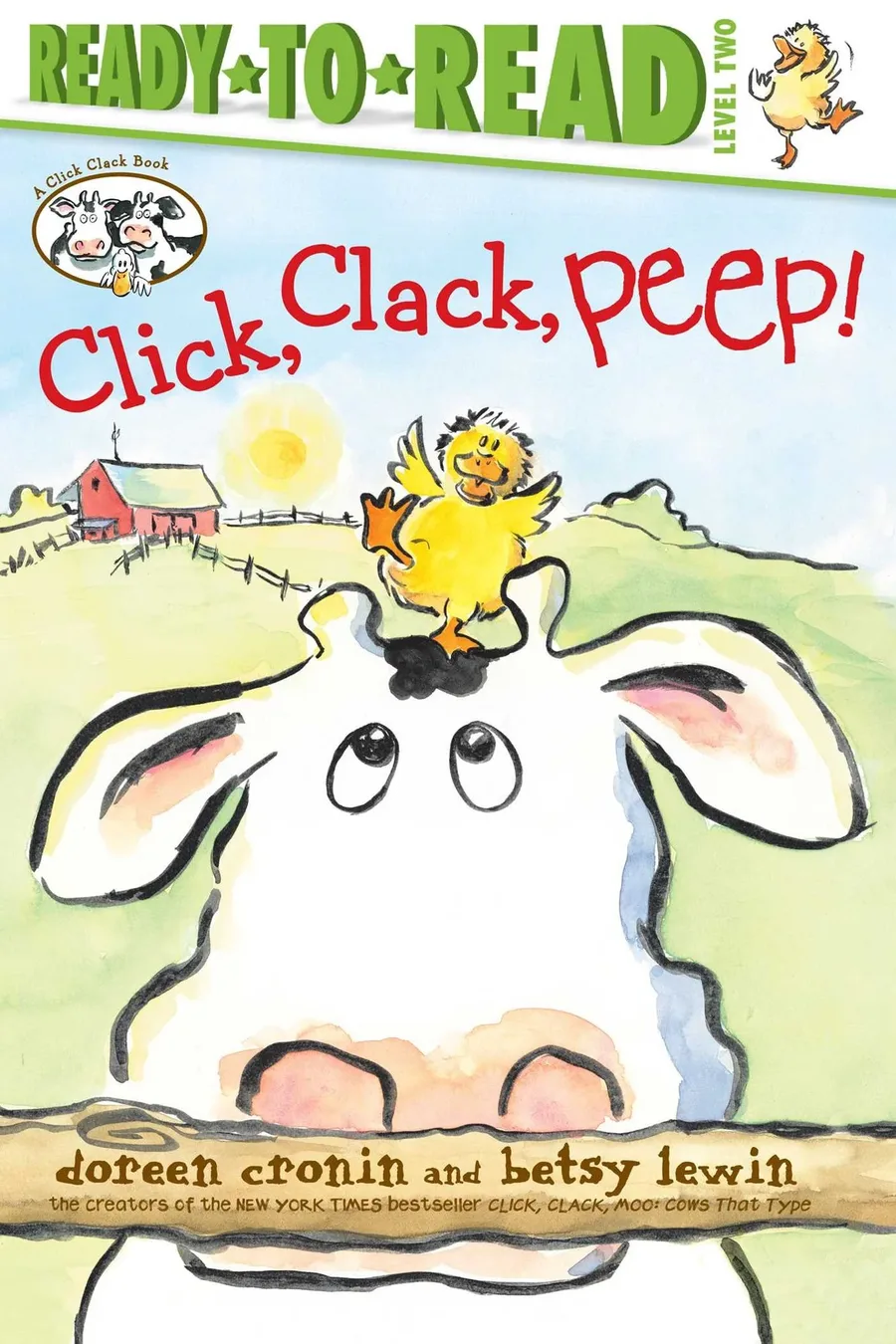 Click, Clack, Peep!Doreen CroninFans of Click, Clack, Moo! will recognize the cast members of the newest offering by Doreen Cronin and Betsy Lewin. All of the barnyard animals have been eagerly awaiting the hatching of an egg and at first they welcome Baby Duck, until night falls and he won’t shut up. They try all the typical bedtime tricks but to no avail until Duck comes up with a clever—and hilarious— solution: He steals the keys to Farmer Brown’s tractor and drives Baby Duck all around the barnyard to lull him to sleep. A final wordless spread offers an amusing and satisfying conclusion in another worthy successor to a popular favorite.Picture Books for Babies, Toddlers, and PreschoolersView book details
 Last Stop on Market StreetMatt de la PeñaAs he and his nana take the bus across town, observant young CJ is full of questions and more than a little wishful thinking: Why don’t they have a car instead of having to take the bus? Why do they always have to go somewhere after church? How come that man sitting near them can’t see? Why is the neighborhood where they get off the bus so dirty? In response, his nana points out everything they would miss if they weren’t right where they were at each moment, from the interesting people they get to see and meet, to the realization that beauty can be found everywhere. Rather than telling CJ about what community means, she’s showing him that he’s a part of it. After an event-filled ride, they arrive at their destination. “I’m glad we came,” CJ says looking at the familiar faces in the window of the soup kitchen where they both volunteer. Wonderful descriptive writing (“The bus creaked to a stop in front of them. It sighed and sagged and the doors swung open.”), and abundant, child-centered details propel an engaging picture book set against illustrations that have a naïve quality while reflecting the energy, vibrancy, and diversity of a contemporary city. Honor Book, 2016 Charlotte Zolotow AwardPicture Books for Babies, Toddlers, and PreschoolersLexile Text Measure AD610LATOS Book Level 3.3View book details
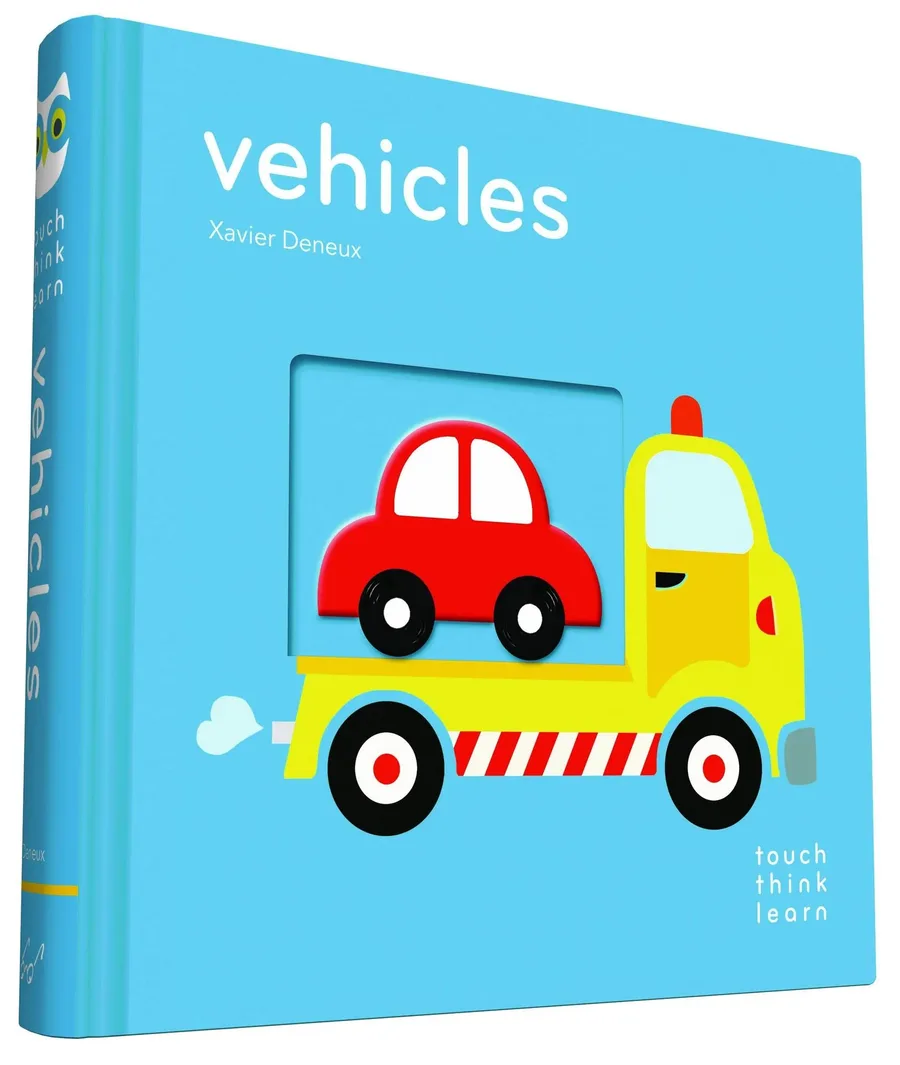 VehiclesXavier DeneuxEach page spread of this playful, visually and verbally engaging board book features a particular kind of vehicle. The not-quite three dimensional illustrations highlight each vehicle type with a brightly colored, sturdy raised image, like a puzzle piece, that is solidly affixed to the page. It’s impossible 50 Picture Books for Babies, Toddlers, and Preschoolers CCBC Choices 2016 not to want to touch, but there’s no risk of pulling them off. Meanwhile, the shape of the cut-out is recessed on the facing page, so that the two fit perfectly together when the book is closed. A grouping of words that correspond to each vehicle type also appears on each page with the action verbs in italics. The page spread featuring a train, for example, lists the words “locomotive, tracks, caboose, passenger car, curve, windows, roof, chugging, rolling.”Picture Books for Babies, Toddlers, and PreschoolersView book details
 Knit TogetherAngela DominguezA little girl who loves to draw wishes she could also knit, like her mom. Her mother tries to teach her, but it turns out to be harder than it looks. When the girl gets discouraged, her mom points out that the little girl’s drawings have inspired many of her knitting projects and suggests that they collaborate. After a day at the beach the little girl puts crayons to paper. “We talk about our project. And then we work to make something we could never have made alone.” The result is functional art: a blanket featuring a beach-inspired design originally drawn by the girl. The bond of this dynamic mother-daughter duo is obvious in a warm, engaging picture book that also offers insight into creativity and collaboration. Both the fairly spare narrative and the illustrations are full of personality, warmth, and charm. (It’s particularly fun to notice the ways the mother’s knitting reflects many of her daughter’s drawings even prior to their partnership.)Picture Books for Babies, Toddlers, and PreschoolersView book details
 Wolfie the BunnyAme DyckmanThe Bunny family is delighted to find a baby on its doorstep. Only little Dot seems concerned that her new baby brother is a wolf. “He’s going to eat us up!” Dot warns her parents, but they don’t listen. Instead they fuss over and indulge their little son, dressing him in pink footie pajamas with rabbit ears. Wolfie has a voracious appetite—for carrots—and grows so quickly that he soon towers ominously over the entire Bunny family. When Wolfie is threatened by a bear on a trip to the Carrot Patch Co-op, it’s Dot who comes to his rescue and scares the bear away. The gentle humor in both the text and heavy-lined acrylic illustrations make this a not-so-scary tale of the wolf-eat-bunny world of early childhood.Picture Books for Babies, Toddlers, and PreschoolersLexile Text Measure AD440LATOS Book Level 1.8View book details
 Holey MoleyBethan Clarke“See this hole? I dug it. I’m a mole.” The mole appears through a softball-sized die-cut circle through the book’s jacket, cover, and first page. After that, most of the action occurs above and beneath a horizontal line that represents the above and below ground. Keep your eye on the winding red lane; that’s the mole’s tunnel beneath the earth. As she navigates, she tells about the world above and below her, a world filled mostly with curving, wiggly worms, root vegetables, and butterflies. There are a few short lines of rhyming text on every page, but Ehlert’s bold cut-paper assemblages are the real star here. A visual index at the book’s end shows labeled pictures of each of the creatures below and above ground that the mole encountered, and a final double-page spread CCBC Choices 2016 Picture Books for Babies, Toddlers, and Preschoolers 51 extending through the final endpapers lays out a map to her underground home.Picture Books for Babies, Toddlers, and PreschoolersView book details
 Nobody’s PerfectDavid Elliott“‘Nobody’s perfect.’ That’s what everybody says. And I guess they’re right.” A little boy provides examples of people in his life who are less than perfect: His little sister Gigi is loud, his best friend Jack is a show-off, and his mom is stubborn. He himself is messy, humorously illustrated in back-to-back full-page illustrations of his room before and after he cleans it. The “after” version is even messier than the original because of all the playing that occurred during the so-called cleaning. Perspectives flip when he goes back through the same list of imperfections and puts a positive spin on each one (“Sometimes I’m happy that Gigi is loud. Really loud!”), concluding that “nobody’s perfect, but sometimes they come close, and that’s perfect enough for me.” The scratchy childlike illustrations are expressive and exuberant in this light-hearted exploration of a universal theme.Picture Books for Babies, Toddlers, and PreschoolersView book details
 The Nesting QuiltCathryn FalwellMaya and her family are nesting in preparation for a new baby, just like the birds she loves watching with her Nana. Wanting to contribute something to the process, Maya is inspired by a finch carrying a twig in its beak to make a soft nest for the baby out of fabric instead of sticks. With Nana’s help, Maya draws her idea and looks at quilting books for guidance. She cuts fabric squares, arranges the pieces, and sews them together (with some assistance from Nana and Mama). When Maya’s baby brother arrives, her lovingly crafted quilt is ready to keep him “warm and cozy in his own little nest.” This multiracial and multigenerational family offers a welcome spin on the new baby story, which includes instructions on making a simple small quilt. The layered illustrations echo the quilting theme while the colors reflect those found in nature.Picture Books for Babies, Toddlers, and PreschoolersView book details
 I Don’t Like KoalaSean Ferrell, illustrated by Charles SantosoWhen you’re a small child, there’s nothing more exciting than opening a gift— but what happens when that gift is something you don’t really like? Adam finds his new stuffed koala’s yellow eyes scary, and no matter how often he hides Koala, the toy somehow always ends up back in Adam’s bed (placed there by well-meaning parents). Koala even reappears when Adam tries to “lose” him at the grocery store and the park. Adam’s parents’ efforts to quietly reunite the two just make Koala seem all the more ominous to Adam. There is a lot of humor in both the story and the illustrations, but it’s never at the expense of the child, who is genuinely afraid of his creepy toy. The understated text leaves a lot of room for Charles Santoso’s colored pencil illustrations to fill in the young child’s emotions, from his original delight at opening a gift, to his fear, disgust, frustration, anger, and eventually acceptance. Varied compositions also 52 Picture Books for Babies, Toddlers, and Preschoolers CCBC Choices 2016 highlight Adam’s problem solving techniques—as well as the way in which they are thwarted.Picture Books for Babies, Toddlers, and PreschoolersView book details
 Bulldozer’s Big DayCandace FlemingA small bulldozer is full of excitement as he sets off across a construction site. “Guess what today is!” But his happiness gradually wanes as each big vehicle he encounters seems too busy to care. Digger is “scooping … scooping … scooping.” Dump truck is “sifting … sifting … sifting.” Cement Mixer is stirring. Scraper is filling. Grader is chopping. Roller is mashing. By the time he gets to Crane (“lifting … lifting … lifting”), Bulldozer’s blade is “dragging sadly in the dirt.” But could that be a cake Crane is lifting? Candace Fleming’s text is a marvelous balance of repetition and freshness, with well-chosen verbs doing double-duty to describe both the work of big equipment and cake-making. Eric Rohmann’s colorful illustrations featuring bold black frames and black outlines masterfully personify the vehicles without veering into cuteness. A story that is immensely entertaining also has an immensely satisfying emotional arc as a much-loved little bulldozer is celebrated.Picture Books for Babies, Toddlers, and PreschoolersView book details
 DinoblockChristopher Franceschelli, illustrated by PeskimoIn the same chunky format as last year’s Countablock, this hefty board book opens with two kids entering a dinosaur exhibit at a natural history museum. On the following pages, 23 different dinosaurs, both familiar and lesser known, introduce themselves to the pair by first comparing one of their distinctive physical features or behavioral traits to something found in the contemporary world. “I have a neck like a goose …” “I stretch high like the ladder on a fire truck …” “I am ferocious like a bear …” This comparison is on a page- spread showing the two kids and the named animal or object. A page turn reveals the dinosaur itself along with a statement identifying what it is. “I am a Coelophysis.” “I am a Brachiosaurus.” “I am a Tyrannosaurus.” The first and last double-page spreads are constructed with flaps that open to give a panoramic view of the museum’s interior. Part of the book’s wonderful design are interior page trims, each cut to highlight an element of a particular dinosaur’s features.Picture Books for Babies, Toddlers, and PreschoolersView book details
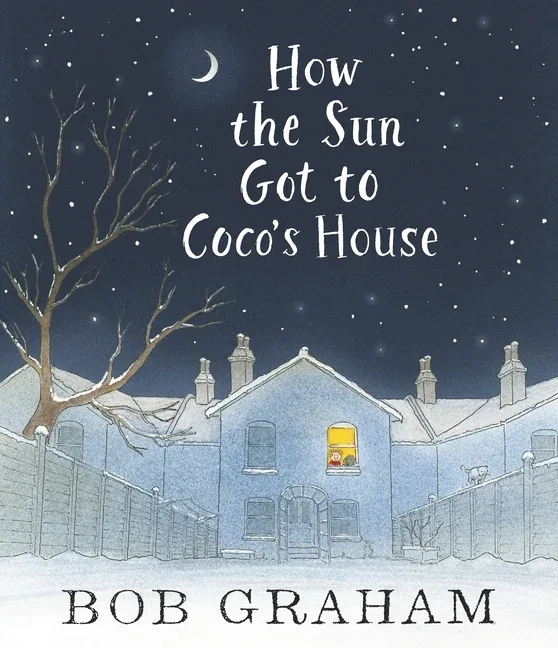 How the Sun Got to Coco’s HouseBob Graham, illustrated by Bob Graham“While Coco slept far away, the sun crept up slowly behind a hill, paused for a moment, and seemed to think twice … before it plunged down the other side and skidded giddily across the water.” Bob Graham once again displays his masterful ability to extend a small series of moments into an expansive picture book, in this case one that traverses the globe describing the journey of the sun from east to west, across artic snow and frozen tundra, touching the tip of an airplane wing, meeting rain over a desert, passing over a small village in mountains. “Then the sun leaped whole countries, chasing the night.” Eventually, the sun comes to Coco’s, following her through the house and out the door, where they spend the day together. In words and pictures, each scene CCBC Choices 2016 Picture Books for Babies, Toddlers, and Preschoolers 53 conveys a stunning, soothing sense of the natural world—usually in winter— or an intimate snapshot of life on our planet, both animal and human, in a playful, delightful offering. Highly Commended, 2016 Charlotte Zolotow AwardPicture Books for Babies, Toddlers, and PreschoolersLexile Text Measure AD650LATOS Book Level 3View book details
 Red: A Crayon’s StoryMichael Hall, illustrated by Michael HallAll the other crayons expect Red to conform to their expectations but he simply can’t. He can’t draw a red strawberry, and when he and Yellow are paired in school and assigned to draw an orange together, he fails at that, too. Even his self-portrait is wrong—he draws himself blue. Everyone tries to fix Red, but with no success. Children will see what the other crayons can’t—that Red is actually a blue crayon with the wrong paper label. Ultimately Red’s story is both a clever and accessible way to show that people aren’t always what you expect them to be, and that we must look beyond labels and outside appearances.Picture Books for Babies, Toddlers, and PreschoolersView book details
 Monkey and Duck Quack Up!Jennifer Hamburg, illustrated by Edwin FotheringhamMonkey wants to enter a rhyming contest to win a three-day cruise, but is frustrated by his teammate, Duck, who only says “Quack!” To practice, Monkey begins some free-style rhyming: “High! Fly! Sky! Cry! Eat a spicy pizza pie! Tie a tie. Be a spy, Say hello and wave good—” “Quack.” Monkey’s dilemma is laid out in a pattern that young children will pick up immediately so that they can participate (either as Duck or as Monkey’s dream team member). Finally Monkey comes up with a solution for their performance: “Rack! Sack! Plaque! Track!...” and Duck, of course, is the star of the show. Comical cartoon illustrations perfectly complement the silly humor of a book that’s sure to be a story-time crowd pleaser.Picture Books for Babies, Toddlers, and PreschoolersView book details
 WaitingKevin HenkesChildhood is full of waiting. It turns out childhood toys spend a lot of time waiting, too. An owl with spots waits for the moon, a pig with an umbrella waits for the rain, a bear with a kite waits for the wind, a puppy on a sled waits for the snow, and a rabbit with stars looks out the window in which they all sit, happy to be just be watching. Some waiting is easily fulfilled—the moon shows itself often. Some waiting stretches on and on. But there are always new things to see, occasional visitors, and sometimes delightful surprises. Kevin Henkes’s lyrical picture book is a graceful and perfect interplay between words and images. The finely paced narrative expresses and extends the sense of possibility in waiting, whether attached or unattached to expectation. The soft, muted illustrations expand on that possibility, further illuminating how the quiet between big moments is as important as the moments themselves. Time is measured in the repeated refrain of a four-paned window, through which seasons change and change again. Highly Commended, 2016 Charlotte Zolotow AwardPicture Books for Babies, Toddlers, and PreschoolersLexile Text Measure 440LATOS Book Level 1.9View book details
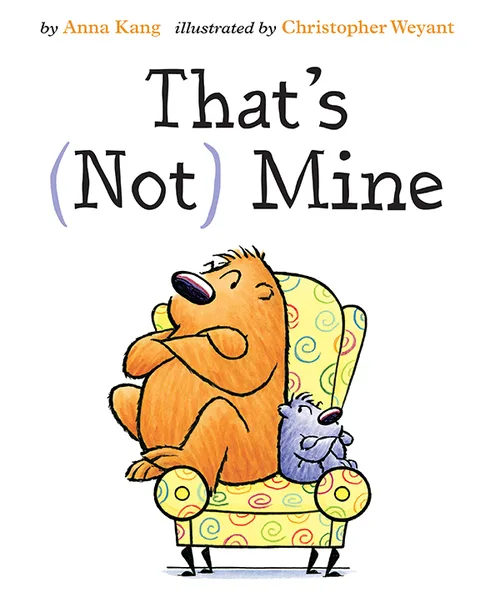 That’s (Not) MineAnna Kang, illustrated by Christopher WeyantOh, the agony of someone else having what you want. For the fuzzy duo who first debuted in You Are (Not) Small, it’s a chair. But any child knows it could just as easily be a toy or the coveted spot on the couch. A small purple creature looks at the occupied armchair and claims, “I was sitting in it before.” The large orange creature being addressed is unmoved: “I’m sitting in it now.” There is arguing (“I had it first … I have it now. “), trickery (the introduction of a swiveling black desk chair that is just too irresistible … until it isn’t; a ticklish feather), and a territorial battle as they both occupy the seat (“Mine … Mine!”) before the escalating tension breaks and peace is restored. The duo moves on from the former object of their desire, leaving it available for a patient third party. (“Mine.”) The spare, deftly paced narrative and bold, charming visuals set against a clean white backdrop pair to create a story of great whimsy, and perhaps even greater truth, which only adds to the possibilities and the fun.Picture Books for Babies, Toddlers, and PreschoolersLexile Text Measure -20LATOS Book Level 0.1View book details
 Finders KeepersShelley TougasA chain reaction of events is set off when a squirrel takes off his red bowler hat and leaves it on the ground to mark the place where he has buried an acorn. First the wind blows the hat up into a tree where a bird uses it as a nest. Then it falls from the tree into a stream where an ant uses it as a boat. A series of natural events continually move the hat from animal to animal—each one declaring “Finders keepers!” before putting it to good use, until the hat finally comes full circle and lands right back on top of the buried acorn to be found—and kept— by the squirrel who had placed it there. Keiko Kasza’s signature illustration style using anthropomorphized animals set against a stark white background is coupled with her pleasingly patterned narrative to make this a great choice for story times. And as with most Kasza picture books, there is a satisfying and humorous twist at the end.Picture Books for Babies, Toddlers, and PreschoolersView book details
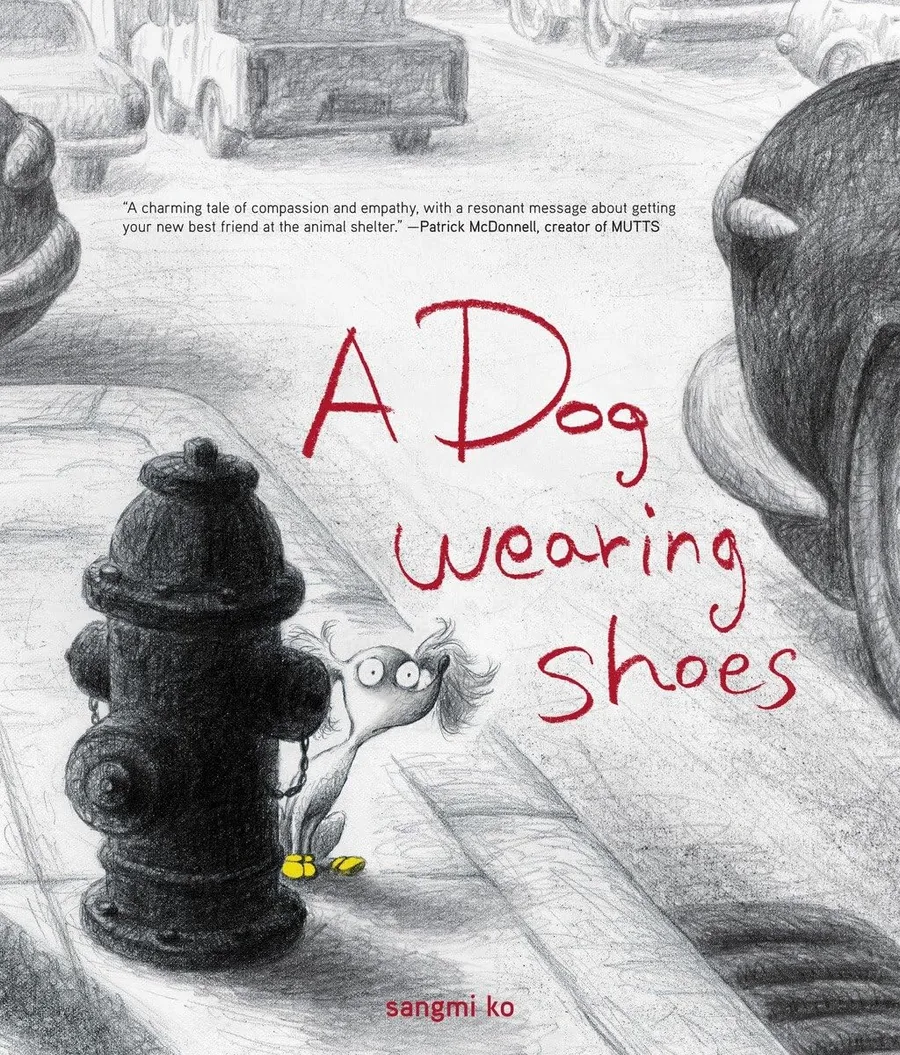 A Dog Wearing ShoesSangmi KoMini and her mom are stuck in a traffic jam when Mini notices a small dog in the road, wearing bright yellow shoes. They pick him up and take him home. Mini wants desperately to keep him but her mom points out that he must belong to someone because “he has shoes.” Mini is determined not to find the rightful owner until the dog runs away from her while they’re out for a walk and she realizes exactly how it feels to lose a dog. Sangmi Ko’s expressive black- and-white pencil drawings, filled with humor, emotion, and details of city life, use only small touches of bright color: the dog’s new red leash and, of course, his bright yellow shoes. There’s information at the back about adopting rescue dogs, but even if readers have no such intentions, it’s still a satisfying story.Picture Books for Babies, Toddlers, and PreschoolersLexile Text Measure AD480LATOS Book Level 1.8View book details
 You Can Do It, Bert!Ole Könnecke, illustrated by Ole Könnecke, Catherine Chidgey“This is Bert. It’s his big day.” Bert is a small orange bird heading toward the end of a branch and it’s presumably his big day to finally fly. Or is it? After checking that he’s ready Bert retreats toward his nest, emerging with a banana, which he eats. Then he retreats again, looking worried. “BERT!” yells an off-page voice. Bert steels himself and takes a running leap, only to flip and fall through empty air until “Splash!... I did it!” Bert cries. His floaty-wearing feathered friends who were waiting in the water below profess their faith in him all along before they all climb back up to do it again. A simple, spare design (branch and bird against white-paged sky with a single blue cloud) and a satisfying, laugh-out- loud twist to the expected outcome makes this a picture book a winner for storytime, as well as a great book to use when talking about prediction and surprise.Picture Books for Babies, Toddlers, and PreschoolersView book details
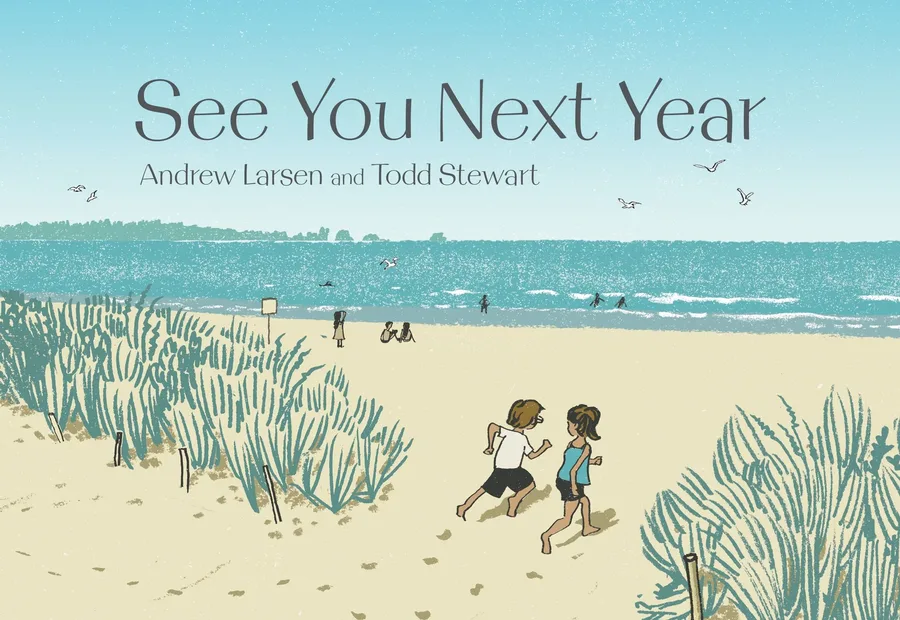 See You Next YearAndrew LarsenA girl and her family vacation at the same beach each summer for a week, returning to a place that feels like home each year. From the winding roads on the way to the motel to the Monday night at the bandstand in town, everything is the same each year. The daily routine of toting towels, coolers, and umbrellas to the beach and back and playing in the waves and sand is a welcome treat, as is a new friend this year. In simple, straightforward text, Larsen captures the wonder of summer vacation, the comfort in the familiar, and the delight in finding a new friend. Stewart’s muted palate and retro-style illustrations evoke the comforting feel and wistfulness of warm summer days.Picture Books for Babies, Toddlers, and PreschoolersView book details
 Strictly No ElephantsLisa Mantchev“The trouble with having a tiny elephant for a pet is that you never quite fit in.” Indeed, all the other kids in the neighborhood have ordinary pets like dogs and cats. So when the elephant owner shows up for Pet Club Day at number 17, he is crushed to see a sign on the door that reads “Strictly No Elephants.” Walking back home, he runs into a girl with a pet skunk who was also unwelcome, so the two of them form their own pet club, where everyone is welcome. Taeeun Yoo’s linoleum block print and pencil illustrations show an intriguing array of pets being brought to the club meeting—a porcupine, a giraffe, a bat, a penguin, and a narwhal, ultimately followed by two kids with their dogs— because everyone is welcome.Picture Books for Babies, Toddlers, and PreschoolersLexile Text Measure AD490LATOS Book Level 2View book details
 Happy in Our SkinFran Manushkin“Look at you! You look so cute in your brand-new birthday suit. This is how we all begin: small and happy in our skin.” And skin, whatever beautiful color it comes in “keeps the outsides out and your insides in … When you fall, your skin will heal with a scab, a perfect seal.” A simple, rhyming text affirms 56 Picture Books for Babies, Toddlers, and Preschoolers CCBC Choices 2016 both universality and uniqueness within the human family when it comes to skin: how it looks, what it does. The joyful narrative’s message is amplified by illustrations focusing on a mixed race family as part of a diverse-in-every-way, vibrant community. The light-skinned parent in the family is a woman; the Black parent’s gender is open to interpretation.Picture Books for Babies, Toddlers, and PreschoolersLexile Text Measure AD540LATOS Book Level 2.6View book details
 Night AnimalsGianna Marino, illustrated by Gianna MarinoNight animals are scary! That’s what possum thinks, soon joined by skunk, wolf, and bear. “Something HUGE is coming!” It takes a small bat to point out that the four of them ARE night animals. “Ohhhhhhh.” The spare narrative of Gianna Marino’s picture book narrative is told entirely in speech bubbles. Her arresting illustrations feature the wide-eyed night animals against the deep, dark blackness of the pages. The comical undertone is punctuated by a visual subplot showing the possum overcome by the skunk’s smell, and by an ending introducing two more fearsome—and fearful—creatures in a story that feels both familiar and fresh.Picture Books for Babies, Toddlers, and PreschoolersLexile Text Measure AD250LATOS Book Level 2View book details
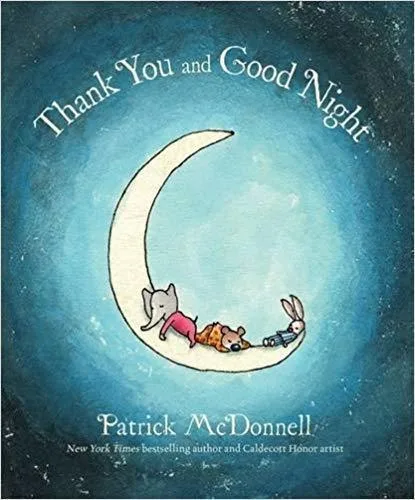 Thank You and Good NightPatrick McDonnellThat this bedtime book is a heartfelt tribute to Goodnight, Moon, Babar, and Winnie-the-Pooh will probably not be obvious to its intended audience. What will be obvious to them is its warmth and delight. Maggie and her bunny, Clement, are hosting elephant Jean and Alan Alexander, a bear, at a sleepover. The animals bounce on the bed, play hide-and-seek, and even practice yoga. And of course there’s a snack (“Nom Nom Nom”). Finally Maggie tucks them all in and reads them their favorite stories “about a majestic elephant, a brave bear, and a quiet bunny….” Maggie then invites them to recite a list of everything they’re thankful for, and the narrative ends with a lyrical, lovely rhyming poem that feels like an embrace, or a goodnight kiss. McDonnell’s beautifully paced story is paired with tender, humorous illustrations that include visual references to all three books.Picture Books for Babies, Toddlers, and PreschoolersLexile Text Measure AD480LATOS Book Level 2.1View book details
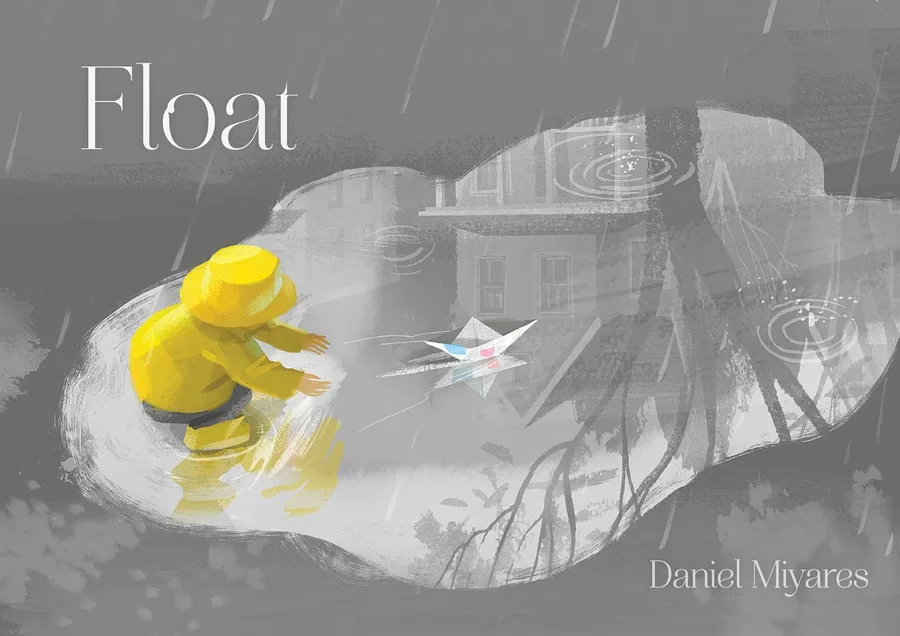 FloatDaniel MiyaresOn a gray, rainy day, a brown-skinned boy dressed in bright yellow rain gear heads outside to play with the boat his dad has folded for him out of newspaper. Once the rain stops he floats his boat on puddles, but it is suddenly carried away down the street on a swift current, and right into a storm sewer. The boy later finds his boat in a drainage ditch, but it’s all soaked and shapeless. Downcast, he returns home where his dad is waiting with a hug, dry clothes, and a mug of cocoa. And he sets out again, this time with a folded paper airplane. This completely wordless book is illustrated in grays, browns, and bright yellows, and the pictures themselves of a young boy at play recall the work of Ezra Jack Keats.Picture Books for Babies, Toddlers, and PreschoolersView book details
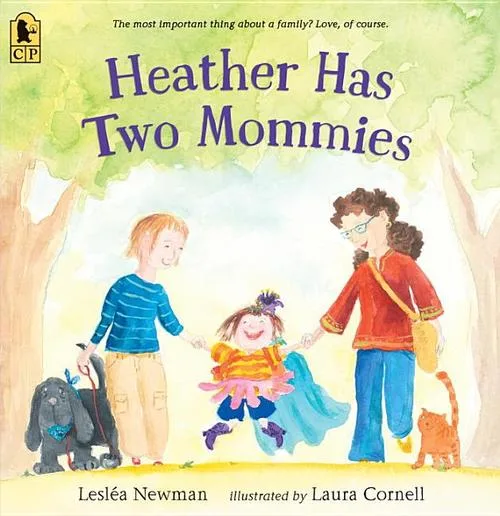 Heather Has Two MommiesLesléa Newman, illustrated by Laura CornellMuch has changed in this revised edition of the groundbreaking picture book which was first published in 1989. This is the fourth time the text has been revised, and each time it gets a bit shorter and more child-friendly. There is now so much family diversity in Heather’s classroom that the fact she doesn’t have a daddy doesn’t raise any eyebrows, nor does it cause Heather to cry. And long gone are the unneeded explanations of artificial insemination. We now have a fluid text that celebrates different kinds of family with completely new watercolor illustrations. Heather used to be the first—and for a long time—the only picture book about a child with lesbian moms. Now it’s one of a growing number and, thanks to multiple revisions, one of the best.Picture Books for Babies, Toddlers, and PreschoolersLexile Text Measure AD460LATOS Book Level 3.1View book details
 P. Zonka Lays an EggJulie Paschkis, illustrated by Julie PaschkisNadine, Maud, Dora, and all of the other hens in the barnyard lay eggs. But P. Zonka is too busy wandering dreamily around the barnyard, noticing the beauty of nature, to lay an egg. None of the other chickens understand. Nadine even accuses her of being lazy. All of them encourage her to try, and try she finally does. “Flutter, flutter. Cluck, cluck. PUSH!” P. Zonka’s egg isn’t like any other egg in the barnyard. “There were patterns of sun yellow, grass green, tulip red. There were blues as bright as day and blues as dark as midnight.” It is, they all agree, beautiful. A playful picture book builds a story around the tradition of Ukranian decorated eggs (pysanka) in a highly original take on a barnyard tale. The simple yet elegant writing gives distinct personalities to each of the characters, while the gorgeous, vibrant illustrations are rendered in the style of pysanka folk-art. An added treat, and moment of wonderful discovery, is the small artist’s palette in the feathers on the side of P. Zonka’s head.Picture Books for Babies, Toddlers, and PreschoolersLexile Text Measure AD500LATOS Book Level 2.6View book details
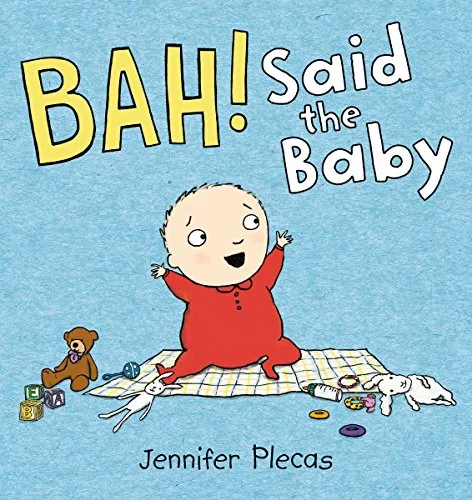 Bah! Said the BabyJennifer Plecas“Bah!” said the Baby. But what does Baby want? Book? Ball? Bow? Brother? Bunny? Bear? Block? Bottle? Mom, Brother, and Sister all consider what Baby might be saying, offering one object after another. From the puzzled, priceless expressions on Baby’s face, it’s clear that no one understands. Baby’s meaning is finally made clear the fourth time a family member leaves the room. “Bah-Bah.” “The Baby said ‘Bye-Bye!’” Jennifer Plecas combines a brief, clever, patterned text with superb and terrifically appealing supporting illustrations that offer clues to what Baby is saying from the opening page of the story.Picture Books for Babies, Toddlers, and PreschoolersView book details
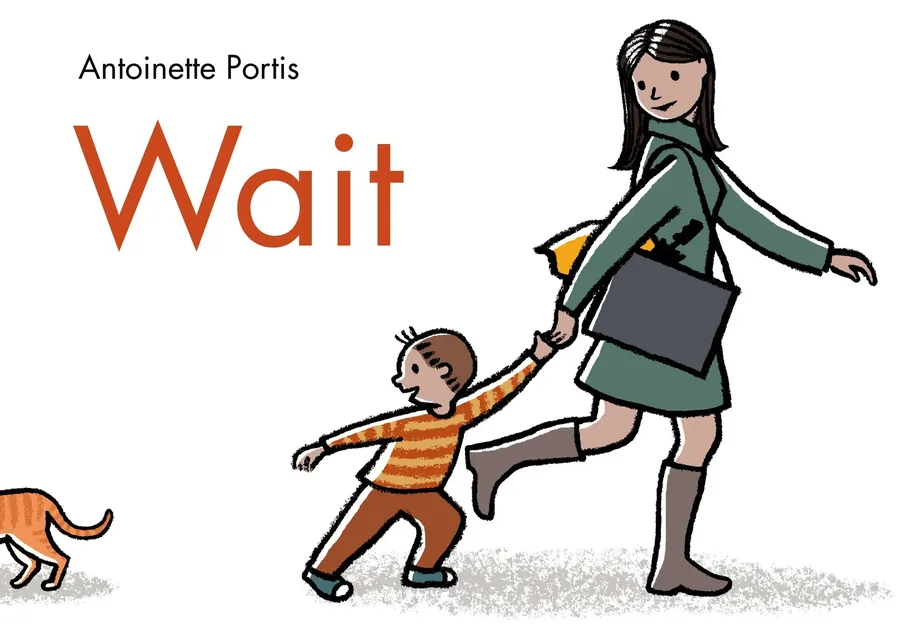 WaitAntoinette PortisAs a mother hurries her preschooler along through city streets so that they can catch a commuter train, the little boy keeps asking her to wait so he can enjoy the sights along the way. He has to stop to pet a dog, wave at a construction worker, help a man feed the ducks, ask for an ice cream, look through a pet store window, and touch a butterfly. Once it starts to rain, it’s hurry, hurry, hurry to avoid getting wet as they get closer to their train stop, but there is one 58 Picture Books for Babies, Toddlers, and Preschoolers CCBC Choices 2016 last thing the boy asks his mother to wait for—to look at a rainbow. They stop to admire it as the train pulls away, and the mother finally agrees, “Yes, wait.” Told with just a few words (hurry and wait ) the details are mostly in the pencil, charcoal, and ink color illustrations that suggest a strong left to right motion in a book that’s much wider than it is tall.Picture Books for Babies, Toddlers, and PreschoolersView book details
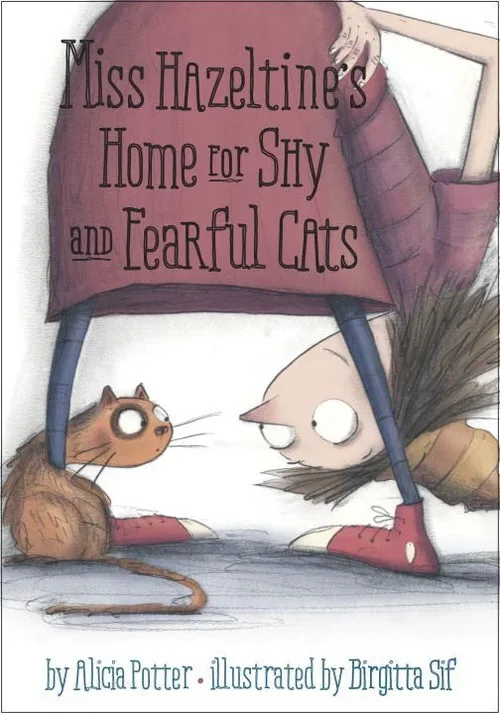 Miss Hazeltine’s Home for Shy and Fearful CatsAlicia Potter, illustrated by Birgitta Sif“When Miss Hazeltine opened her Home for Shy and Fearful Cats, she didn’t know if anyone would come. But come they did.” They come with all sorts of problems—fear of mice and birds or the inability to pounce or purr. And then, there is Crumb, who stands out even among the shy and fearful for his timidity. Miss Hazeltine gives lessons: Bird Basics, Climbing, Scary Noises, Meeting New Friends, How Not to Fear the Broom. She also tells Crumb she’s afraid too, of mushrooms, and owls, and the dark. So when Miss Hazeltine trips on the way home one evening and ends up with a twisted ankle in a dark woods full of mushrooms and owls, she tries to think positive thoughts. So do the cats, who are waiting for her back home, alone and afraid. It is Crumb who rallies them all, leading the no-longer-shy-and-fearful cats on a rescue mission. Alicia Potter’s superb storytelling is laugh-out-loud funny but also offers a sensitive look at anxiety and shyness. Birgitta Sif’s marvelous illustrations range from full page to spot (on) and delightfully expand on the story’s humor and warmth. Highly Commended, 2016 Charlotte Zolotow AwardPicture Books for Babies, Toddlers, and PreschoolersLexile Text Measure AD560LATOS Book Level 2.9View book details
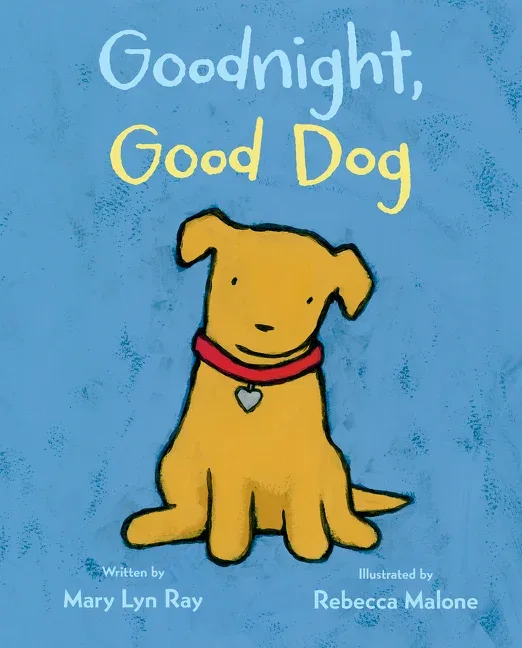 Goodnight, Good DogMary Lyn RayThe little dog knows all the signs that his family had turned in for the night—the click of the bedside lamp, the small night sounds, the shadows in the corners. And he knows his bed is waiting for him, “round like the moon.” But he just isn’t sleepy yet so he remembers all the good things about his day and then makes his nighttime rounds—going up the stairs, checking on the sleeping girl, walking down the hall—before finally curling up into his own bed to sleep. Soft acrylic paintings with thick black outlines lend a sense of nighttime coziness to this reassuring story of preparing for sleep. Highly Commended, 2016 Charlotte Zolotow AwardPicture Books for Babies, Toddlers, and PreschoolersLexile Text Measure 157LATOS Book Level 1.5View book details
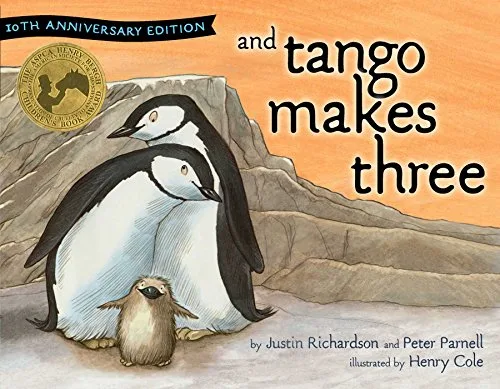 And Tango Makes Three: 10th Anniversary EditionJustin Richardson, Peter Parnell, illustrated by Henry ColeAlthough much has changed globally concerning LGBTQ rights in the past 10 years, nothing has changed in the text or illustrations of this groundbreaking picture book based on the true story of a penguin chick being raised by two male penguins in the Central Park Zoo. Since it was first released in 2005, it has been at the top of the American Library Association’s list of most frequently challenged books several times, and was officially banned and shredded in Singapore—although an amazing show of popular support caused the government to back down. The afterword to the 10th anniversary describes these events, and more, and ends with a moving personal note that the authors CCBC Choices 2016 Picture Books for Babies, Toddlers, and Preschoolers 59 have since followed in “the webbed footsteps of Roy and Silo” by adopting their own daughter.Picture Books for Babies, Toddlers, and PreschoolersView book details
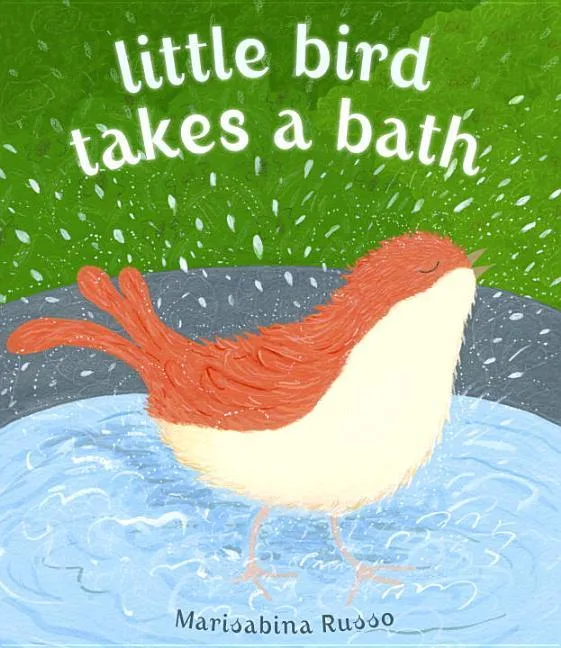 Little Bird Takes a BathMarisabina RussoLittle Bird does not like rain at all, so he always hunkers down in his nest on rainy days, thinking about tomorrow. And after a rainy day, tomorrow generally means puddles and the opportunity for Little Bird to take a bath. After he finds just the right puddle, his bath is continually interrupted, first by children playing ball, then by a girl jumping in puddles, and finally by a dog. By the time everyone is gone, so, too, is his puddle, so he has to find another source of water for his bath. Short but lyrical sentences are accompanied by engaging gouache illustrations that show Little Bird as the center of his urban universe.Picture Books for Babies, Toddlers, and PreschoolersLexile Text Measure AD500LATOS Book Level 3.3View book details
 SupertruckStephen SavageBucket truck. Fire truck. Tow truck. Each of them goes about its important job in the city. But the garbage truck? “He just collects the trash.” When a blizzard hits, the first three trucks get stuck in the snow and can’t work. But the garbage truck becomes “Supertruck!” with the addition of a snowplow. Stylized illustrations showing cheerful, personified vehicles in bright colors combine with an appealing storyline (what’s not to love about a garbage truck superhero who remains anonymous in the end?), ensuring this will be a big hit among the toddler and preschool-age set.Picture Books for Babies, Toddlers, and PreschoolersLexile Text Measure AD370LATOS Book Level 1.5View book details
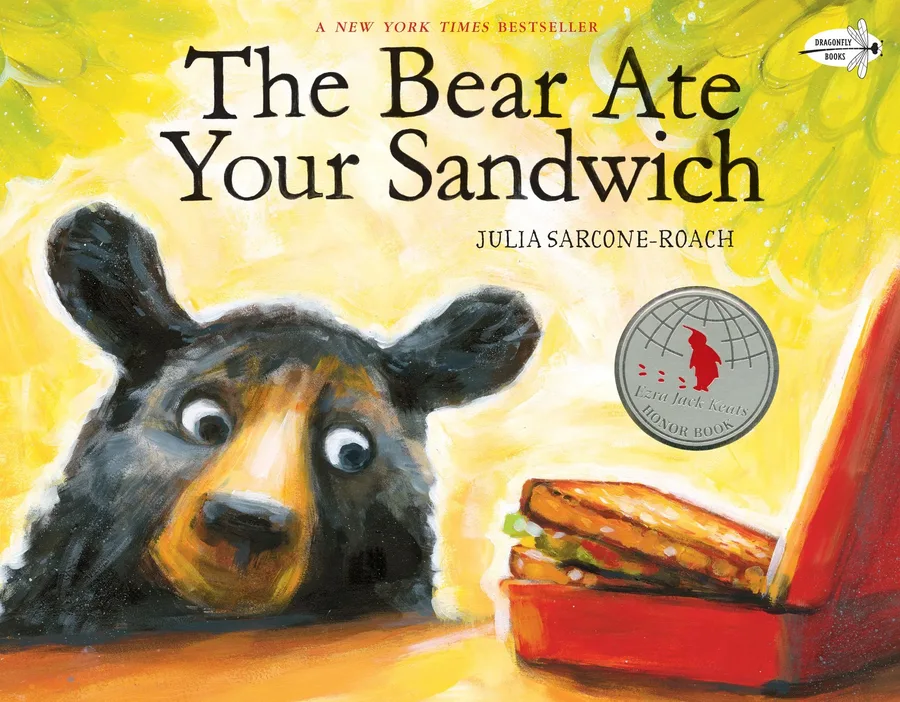 The Bear Ate Your SandwichJulia Sarcone-‐Roach“It all started with the bear.” An unknown narrator weaves an impossible story to account for someone’s missing lunch in a picture book pairing a straightforward narrative with beautifully realized illustrations, whimsical in their impossibility. The bear, it seems, fell asleep in the back of a truck full of berries and ended up in a new forest (a city), where he found “climbing spots” (fire escapes, clothes lines between buildings), “good bark for scratching” (a brick-sided building), and “many interesting smells” (garbage cans). Eventually the bear got hungry, and there was the sandwich, all alone in the midst of leafy green (on a bench in a park). An already delightful story takes an even more waggish turn in its final pages when the identity of the speaker and subject are revealed: a small black dog (somewhat bear-like) pouring out the tall tale to a now lunch-less little girl. The warm, colorful acrylic and pencil illustrations are superb; their realistic accounting of the bear’s adventure will be a source of glee for young readers and listeners, as will the play between narrative and art.Picture Books for Babies, Toddlers, and PreschoolersLexile Text Measure AD490LATOS Book Level 2.5View book details
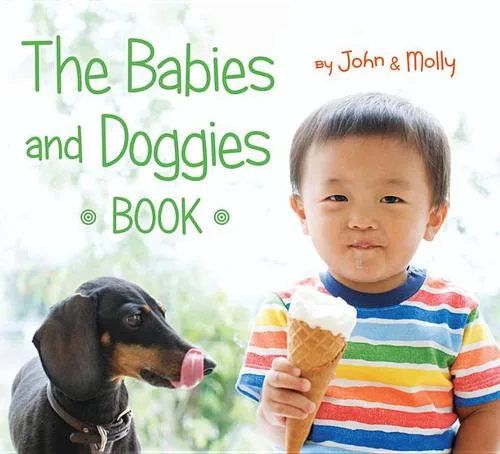 The Babies and Doggies BookJohn Schindel, Molly WoodwardBabies and puppies feature in this adorable board book that looks at how many things babies and puppies have in common. Both hide and peek, for example, and both like to eat, and both like to be silly. A simple series of rhyming and almost rhyming statements is paired with smile-inducing color photographs sure to charm both babies and toddlers and their adult caregivers.Picture Books for Babies, Toddlers, and PreschoolersLexile Text Measure AD200LATOS Book Level 1.8View book details
 Ballet Cat: The Totally Secret SecretBob SheaBest friends Ballet Cat and Sparkle Pony are trying to find something to play together. But all Ballet Cat wants to do is dance, and her enthusiasm is a force Sparkle Pony can’t overcome. Sparkle Pony finally gives in, but his disappointment is obvious. Finally, he confesses the truth: He doesn’t love to dance, at least not all the time. The realistic self-centeredness of Ballet Cat and the growing anxiety of Sparkle Pony are things children will be able to recognize and relate to. Both are conveyed entertainingly through speech bubble text and blithe line-drawn images in a book that concludes with another confession: Ballet Cat likes Sparkle Pony even more than dancing.Picture Books for Babies, Toddlers, and PreschoolersView book details
 Who Done It?Olivier Tallec“Who didn’t get enough sleep? … Who ate all the jam? … Who’s shy about dancing?” Each double-page spread of this horizontal picture book poses a single question. The answer is determined by examining the illustrations, which show nine or 10 figures—both children and animals—with various revealing expressions and poses. There is always a fairly obvious answer to each question: A black bear-like creature is the only one clearly tired, eyes half-closed; a blue- coated animal that is clearly covered with jam. An answer key is included at the back. But there is also plenty to look at and discuss, about the answer and about the other characters in a picture book that has great child appeal while offering opportunities to build on visual literacy and verbal skills.Picture Books for Babies, Toddlers, and PreschoolersView book details
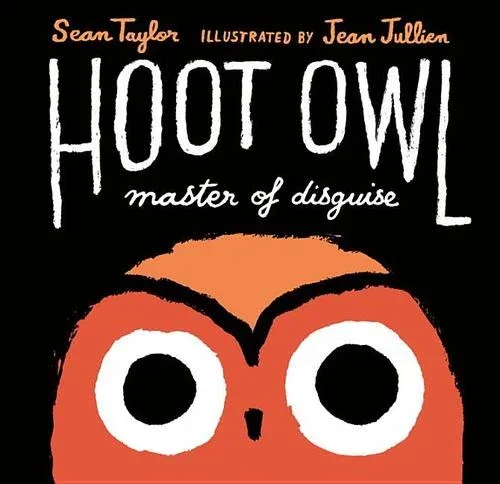 Hoot Owl: Master of DisguiseSean TaylorUnconventional Hoot Owl concocts one outrageous costume after another as he attempts to bag his evening meal. But just as his carrot disguise doesn’t fool a rabbit, his ornamental birdbath get-up fails to result in a pigeon dinner. Undaunted, Hoot Owl moves from one lost opportunity to the next, finally nailing an inanimate pepperoni pizza while wearing the white jacket and toque of a chef, complete with a mustache penciled below his beak. Despite his repeated failures, this bird of prey remains unfailingly confident (“I swoop through the bleak blackness like a wolf in the air”) as he invokes his flamboyant descriptive powers (“The shadowy night stretches away forever, as black as burnt toast.”). Bold black outlines and saturated, flat colors add dramatic flair to Hoot Owl’s nighttime escapades, while his melodramatic prose extends the humor of his plight. After scarfing his pizza, Hoot Owl flies off “into the dark CCBC Choices 2016 Picture Books for Babies, Toddlers, and Preschoolers 61 enormousness of the night … And the world can sleep again.” Honor Book, 2016 Charlotte Zolotow AwardPicture Books for Babies, Toddlers, and PreschoolersLexile Text Measure 348LATOS Book Level 2.5View book details
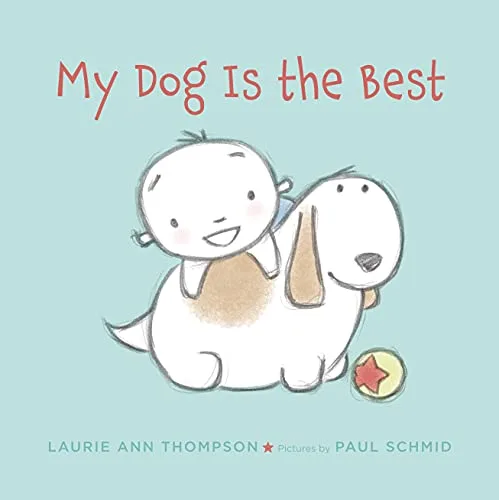 My Dog Is the BestLaurie Ann Thompson, illustrated by Paul SchmidA small boy sings the praises of his dog, citing many specific reasons he’s the best. The simplicity of the narrative (“He rolls over … He plays chase … He blows bubbles.”) is echoed in the illustration style, which features simple, rounded shapes and a muted palette. The quiet pleasure of this book is in the interplay between art and text. The illustrations show the boy and dog engaged in each of the activities stated, but until the very end of the story the dog is sound asleep. It’s only as the child winds down that the dog wakes up, and their roles are reversed at story’s end. The bond between boy and dog, even with only one of them awake at a time, is sweet and strong in a picture book in which the gentle humor also invites discussion.Picture Books for Babies, Toddlers, and PreschoolersView book details
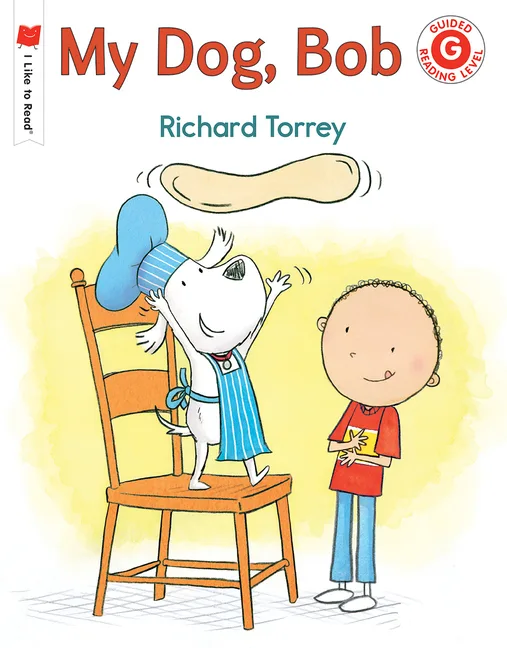 My Dog, BobRichard TorreyOn the one hand, Bob the dog is a lot like most dogs. He likes breakfast, riding in cars, and going outside. But this picture book veers delightfully between the straightforward and the unexpected as every simple statement about things Bob likes is followed by one that surprises. Bob likes breakfast, and sometimes he makes it himself (in fact, he makes it for the whole family). Bob likes riding in the car, especially when he’s driving. When he’s outside, Bob likes playing golf. Another young dog owner, unaware of Bob’s unique talents, brags that her dog can catch, sit, and speak. Bob, it seems, can do none of these things. “We win!” says the girl. “I’m sorry,” says Bob on the way home. “That’s okay,” I said. The humorous premise plays out in both the cartoonlike art and text, both of which are understated (if it’s possible for a dog in an apron to be understated).Picture Books for Babies, Toddlers, and PreschoolersLexile Text Measure 320LATOS Book Level 1.2View book details
 Rude CakesRowboat WatkinsRude cakes never say please or thank you. They are selfish, thoughtless, and don’t listen to their parents. Dreaded didacticism is turned on its head and lands frosting side down on the floor (well, metaphorically) in this picture book that does, indeed, offer an overt lesson in manners. But it’s delivered so entertainingly that it’s impossible to mind. Rude cakes, or in this case one particular rude cake, is a small, pink, tiered, manner-less confection who bullies and bellows and “thinks baths are dumb.” Enter the giant cyclopses, who, it turns out, are polite and kind and “LOVE to wear jaunty little hats.” Unfortunately, they’ve mistaken one particular little rude cake for a hat. Eventually, they hear the hat’s pleas (actually, it’s a solitary “PLEASE!”) and are most apologetic (of course!). The absurd premise (they’re CAKES and cyclopses!) is amplified by numerous small moments of humor in the dialogue bubbles and background details. In the end, it turns out “no cake is ever too rude to change.”Picture Books for Babies, Toddlers, and PreschoolersLexile Text Measure AD360LATOS Book Level 1.6View book details
 Chooky-Doodle-DooJan Whiten, illustrated by Sinéad HanleyOne little chooky chick just can’t pull a worm out of the dirt. “What should chooky do?” Ask some friends for help! With the addition of each chick to the worm-pulling queue, the worm grows longer but still won’t budge until a rooster jumps in line to help. Together, they dislodge the stubborn “squirmy, wormy” and unearth a surprise. The cheery graphic-style illustrations are a perfect complement to the rhyming, rhythmic text. These plucky chooky chicks would make a charming choice for read alouds for any size audience.Picture Books for Babies, Toddlers, and PreschoolersView book details
 Hurry Home, Hedgehog! A Bilingual Book of SoundsBelle Yang, illustrated by Belle YangYang, Belle. Squirrel Round and Round: A Bilingual Book of Seasons. Candlewick Press, 2015. 24 pages (978–0–7636–6597–5, $6.99) A pair of board books offers rich vocabulary in English and Mandarin Chinese. Squirrel Round and Round describes the changing landscape and activities of its inhabitants as a squirrel travels through the seasons of the year. The squirrel observes blooming camellias, noisy cicadas, ripe persimmons, and more as winter turns to spring then to summer and fall. The first frost and fresh tracks in the snow bring the squirrel back to winter. In Hurry Home Hedgehog, a young hedgehog hurries to make it home before a storm. “Pinecones fall / Plunk, plunk” and “Mice race for their holes / Skitter, skatter” alerting Hedgehog to the coming storm. “Crack! Baroom! / The sky sounds angry” and “Rain falls hard like soybeans / Ping ping, pang pang” before hedgehog makes it safely home to his warm den and his Mama. Attractive illustrations painted in impressionistic colors are simple yet detailed.Picture Books for Babies, Toddlers, and PreschoolersView book details
 You Nest Here with MeJane Yolen, Heidi E. Y. Stemple, illustrated by Melissa SweetA gentle, rhyming bedtime book uses the metaphor of nesting for bedtime in a narrative that describes the nesting environments of 14 different birds in couplets that end with the repeated refrain, “You nest here with me.” The opening and closing of the story feature a mother putting her young child to bed. Melissa Sweet’s cozy mixed media, gouache, and watercolor illustrations are lovely, with soft edges and soothing colors. While not wholly realistic, the individual species of bird are distinct and the scenes suggest specific environments in the natural world.Picture Books for Babies, Toddlers, and PreschoolersLexile Text Measure AD520LATOS Book Level 3.4View book details
 Moving BlocksYusuke YonezuA book offering a plethora of possibilities for interaction (color concept, spatial reasoning, prediction, and types of transportation for a start) begins with a page spread showing a rectangular pattern of yellow, green, blue, and red blocks with die-cuts suggesting a shape. The text asks, “What are you building? What can it be?” A page turn shows the die-cut shape surrounded by white against the CCBC Choices 2016 Picture Books for Babies, Toddlers, and Preschoolers 63 block pattern on the previous page to reveal a vehicle made of blocks: car, bus, train, ship, rocket ship. The full rectangle of blocks and two questions repeat on every other spread before the next reveal, giving a sense of pattern and order to the book as a whole that is also visually suggested by the repetition of the block shapes in this clever, developmentally appropriate board book.Picture Books for Babies, Toddlers, and PreschoolersView book details
Picture Books for School-Age Children
37 selections
 Eat, Leo! Eat!Caroline Adderson, illustrated by Josée BisaillonWhen Leo won’t eat, his Nonna tells a story about a boy on the way to his Nonna’s one dark night. Wishing for light, the boy looks up and finds stars, shaped just like the stelline pasta in Leo’s bowl. “Mangia,” Nonna tells Leo, who begins to eat. The following week, Nonna continues the story: The boy is now walking along on an unpaved road and wishing for an easier path. When he looks down, there are paving stones, shaped just like the chiancaredde on Leo’s plate. “Mangia.” Another Sunday comes, and Nonna is serving occhi di lupo: wolf eyes pasta. The story continues: “Ah-oooooooo!” Week after week Leo and his extended family are captivated by Nonna’s storytelling, the food she cooks, and the power of both to bring everyone together in a delightful picture book featuring a story-within-a story and whimsical illustrations. “Mangia!”Picture Books for School-Age ChildrenView book details
 When Otis Courted MamaKathi AppeltCardell “had a perfectly good mama and a perfectly good daddy.” His coyote family’s perfection is marred only slightly by the facts that Cardell’s daddy lives in a different part of the desert and Cardell has to “share him with his perfectly nice stepmama, Lulu, and his perfectly cute stepbrother, Little Frankie.” But Cardell doesn’t have to share his mama with anyone. Then Otis shows up, “holding a handful of ocotillo flowers in one paw and a bag of cactus candies in the other. Cardell felt a grrr form in his throat.” Otis isn’t the first hopeful beau to court Mama. But Mama isn’t sending Otis on his way like she did the others. In time, Cardell discovers Otis has his strengths: he can whip up a delicious prickly pear pudding and demonstrates impressive pouncing skills. Eventually, Cardell’s stubborn grrr evaporates. Not long after, Cardell is able to count on Otis as a perfectly good stepdaddy. The challenges of changing family structures are sympathetically embodied here, while regionally specific details in text and illustrations and perfectly patterned language lend depth and finely tuned humor. Honor Book, 2016 Charlotte Zolotow AwardPicture Books for School-Age ChildrenLexile Text Measure 600LATOS Book Level 3.9View book details
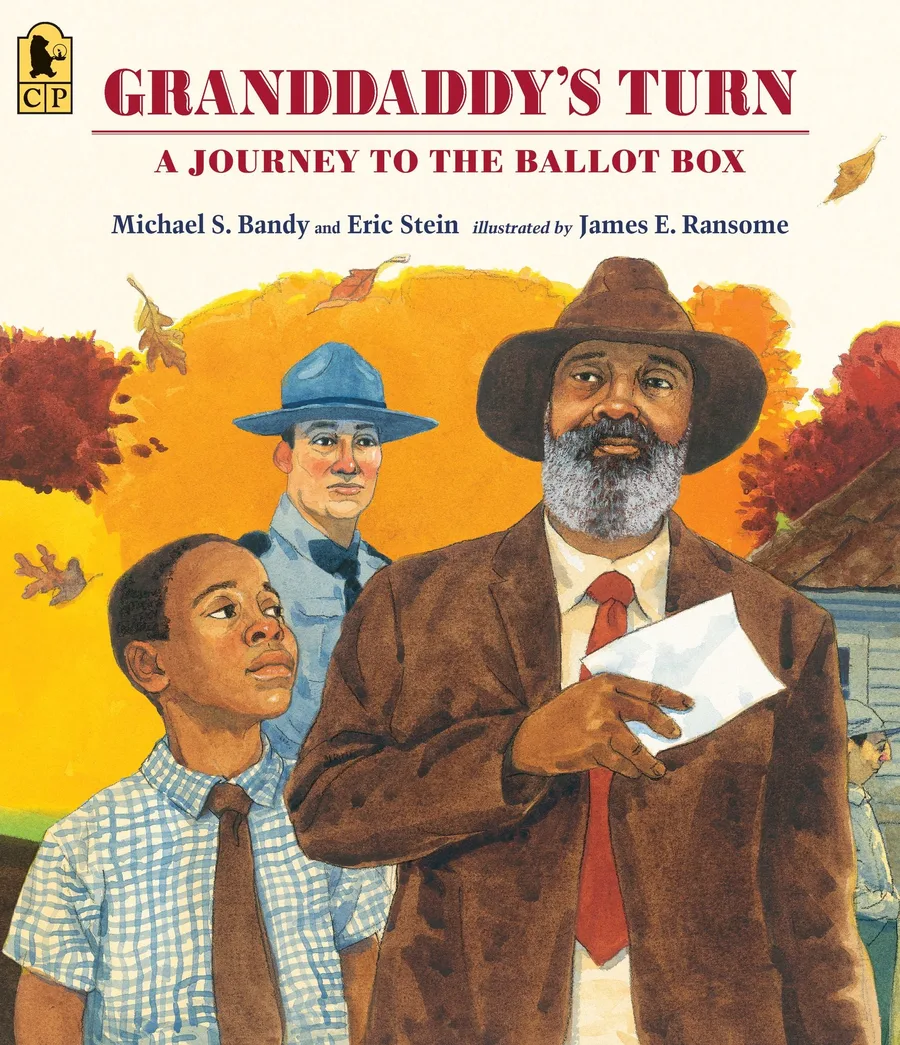 Granddaddy’s Turn: A Journey to the Ballot BoxMichael S. Bandy, Eric Stein, illustrated by James EA young African American boy who idolizes his grandfather walks with him from their farm to town so his granddaddy can vote for the first time in his life. The little boy snaps a photo of Granddaddy proudly holding his ballot. Then his grandfather is given a difficult text and asked if he can read it aloud. When he can’t, he is told he can’t vote. Fast forward to the little boy now grown and old enough to vote for the very first time in 1976. He takes the photo of his granddaddy proudly holding the ballot he was never allowed to cast with him to the polls. The bond between the grandson and grandfather is strongly established in the first part of the story, and the moment when the grandfather is turned away from the polls is heartbreaking. The fine narrative is matched with illustrations that underscore the bond between the two and the emotional depth of this story that humanizes the struggle for voting rights. A note at story’s end provides more information about the voting rights struggle in the 1950s and 1960s.Picture Books for School-Age ChildrenView book details
 When Sophie’s Feelings Are Really, Really HurtMolly Bang, illustrated by Molly BangSophie’s favorite tree—the big beech that she goes to whenever she is angry or sad, the one that makes her feel calm and good again—is the one she decides to paint during art. But painting the tree how it really looks, with its gray trunk and plain green leaves, doesn’t capture how the tree makes her feel. So she paints the trunk turquoise, and the sky orange, and the leaves chartreuse. She adds a yellow border around the tree, and animals in its branches. Now her picture captures the way the tree makes her feel: happy! Until her classmates begin teasing: “We’re supposed to paint a real tree Sophie. You did it WRONG.” Luckily Sophie’s teacher, inviting Sophie and another student to talk about their very different pictures, knows exactly how to affirm that there isn’t a right or wrong way for an artist to capture the truth about something in Molly Bang’s visually vibrant and emotionally rich and engaging story. Highly Commended, 2016 Charlotte Zolotow AwardPicture Books for School-Age ChildrenLexile Text Measure AD490LATOS Book Level 3.3View book details
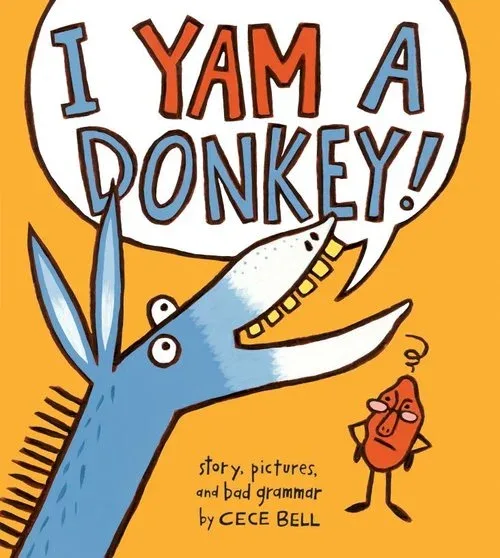 I Yam a Donkey!Cece Bell“I yam a donkey,” states a big-toothed blue donkey. A persnickety, spectacled yam replies, “The proper way to say that is ‘I am a donkey.’” To which the donkey replies, “You is a donkey, too?” It’s Abbott and Costello all over as the ever-more- enraged yam (“I am not a donkey. I am a YAM!”) doesn’t grasp the futility of trying to get the donkey to understand a few basics of good grammar (not to mention the difference between tubers and mammals). The arrival of some other vegetables provides the yam with the perfect opportunity to get his point across: “I am a yam … He is a carrot. She is a turnip. They are green beans.” That’s a truth the donkey is finally able to sink his teeth into. Cece Bell’s laugh-out-loud picture book makes for a grammar lesson that’s easy to swallow and entertaining, too. Bell uses a flat, naïve style to great effect in her illustrations, in which the personified vegetables and donkey are wonderfully expressive.Picture Books for School-Age ChildrenLexile Text Measure 370LATOS Book Level 2.6View book details
 My Three Best Friends and Me, ZulayCari BestZulay, who is blind, wants to be treated like the other kids in her elementary classroom. And mostly, she is. She and her three best friends (one white, one Asian American, and one African American, like Zulay) help one another in class and play together during recess. But Zulay also has to work with Ms. Turner, who is teaching her to walk with a cane. Zulay doesn’t want to use a cane because it makes her stand out. When their teacher announces an upcoming Field Day, however, Zulay is determined to run a race in her new pink shoes, and this motivates her to work hard with Ms. Turner so she will be able to participate. Inspired by a real child the author met on a school visit in New York City, the story is refreshingly realistic. Vanessa Brantley-Newton’s spirited illustrations show uniformed students in a public school where accommodation is shown as an integral part of their inclusive community. The name labels tacked to the desks of all 22 students in Zulay’s classroom, for example, are written in both print and Braille.Picture Books for School-Age ChildrenView book details
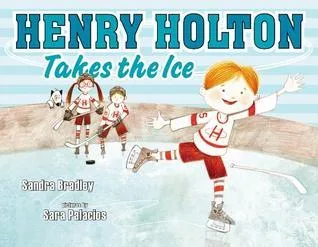 Henry Holton Takes the IceSandra Bradley, illustrated by Sara PalaciosHenry was born into a hockey-crazed family. “The only person in Henry’s family who didn’t play hockey was his grandmother and that was because she’d hurt her hip. Before that she was voted MVP in the Silver Skates League six years running.” Henry takes to skates almost as soon as he can walk. But Henry takes no pleasure in hockey. When Henry attends an ice-dancing performance, it’s a heart-pounding revelation: “There were no sticks, no pucks, no helmets or pads. Only bodies. Moving with the music.” His parents aren’t certain about Henry’s new interest, but when they see his happiness as he glides across the ice on figure skates, all doubt disappears. “It took Henry sixty-nine tries before he could dash down the ice, spin like a top, and finish with one foot high in the air. On the sixty-ninth try, Grandma was sitting in the bleachers. ‘Henry Holton, you beauty!’ she hollered. ‘I knew you’d make one fine ice dancer! ’” Sandra Bradley’s funny, spirited, superbly told story is sensitive to the importance of being true to oneself and to the value of being surrounded by people who offer unconditional love and support.Picture Books for School-Age ChildrenView book details
 Maya’s Blanket / La manta de MayaMonica BrownLittle Maya loves her manta (blanket), which was made by her abuelita. When the edges of the blanket fray from use, Abuelita helps Maya turn it into a vestido (dress). They later make the vestido into a falda (skirt), which they eventually sew into a rebozo (shawl), before turning it into a bufanda (scarf), and then a cinta (headband). When Maya gets her hair cut, she turns the cinta into a marcador de libros (bookmark). When she loses her bookmark, Maya realizes she can write the entire story down. And when she is grown with a little girl of her own, she tells that story to her. Based on a traditional Yiddish folk song, this lively contemporary story is grounded in Latino culture and told in both 66 Picture Books for School-Age Children CCBC Choices 2016 English and Spanish. Monica Brown’s engaging cumulative narrative seamlessly integrates Spanish words into the English, defining them in context. Cultural details and a wonderful, warm sense of family as Maya grows are brought into full visual relief in David Diaz’s richly hued, heartfelt, whimsical illustrations. Highly Commended, 2016 Charlotte Zolotow AwardPicture Books for School-Age ChildrenView book details
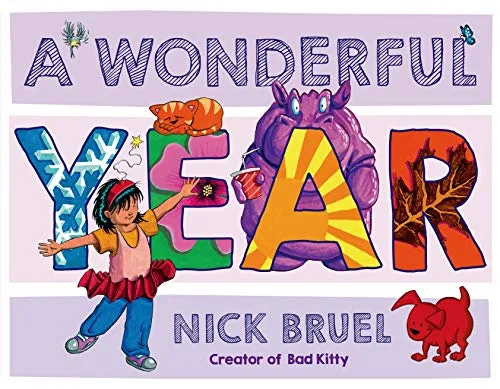 A Wonderful YearNick BruelFour stories, one for each season, feature the same girl, beginning in winter when she sees her first snowfall and wants to go outside. Her mother tells her to put on her boots, her father tells her to wear her earmuffs, the dog tells her to wear her snow pants—even the refrigerator tells her something to put on. By the time she is dressed to go out, the snow is gone. In spring, she pretends to be a fairy princess and her dog plays along as her knight in shining armor, but her cranky cat just wants to be left alone. In summer, it’s so hot that the girl literally melts and her pet purple hippo, Louise, sucks her puddle up using a straw, empties it in a cup, and puts her in the freezer to reconstitute while Louise goes to watch The Can of Beans Show on TV (“starring a can of beans!”). And in fall, there is a conversation between the girl and a tree, who is horrified to learn it will be losing its leaves. Most of the art is sequential, designed to look like comics, but the final story uses a traditional picture book format. This funny, quirky book may not be for everyone, but for those who connect with its bizarre world view, it will be a wonderful year indeed.Picture Books for School-Age ChildrenView book details
 Two White RabbitsJairo Buitrago“When we travel, I count what I see … One little bored donkey and fifty birds in the sky … the people who live by the train tracks.” A singular and extraordinary picture book pairs the matter-of-fact voice of a young girl giving a childlike accounting of the journey she and her father are taking with detailed color illustrations that show the context and content of their travels. They are journeying away from their home and toward some unknown that surely represents safety, and, one can imagine, freedom and opportunity. However, none of this is stated in a narrative firmly grounded in the child’s voice. From riding atop her father’s shoulders to crossing a river on a raft, sitting on top of a train car to sleeping in the back of a pickup truck, the challenges and potential dangers of their travels are revealed through the art, in which the warmth between father and child is also apparent. So, too, is the weight of the father’s worry, although he is clearly trying to keep it from being her burden, too. Tender, heartbreaking, exceptional, this volume concludes with a note about the movement of refugees across Central America and Mexico toward the United States.Picture Books for School-Age ChildrenLexile Text Measure AD490LATOS Book Level 1.9View book details
 Yard SaleEve Bunting“Almost everything we own is spread out in our front yard. It is all for sale. We are moving to a small apartment.” A young girl’s parents have put a positive spin CCBC Choices 2016 Picture Books for School-Age Children 67 on their new place, with its “fun” bed in the living room that folds down from the wall, but she’s uncertain, especially as she sees strangers buy many of their belongings. When a man loads her bike into the back of his truck, she gets angry and tries to pull it back. Her dad reminds her there’s no place to ride at their new place (“I think his eyes are all teary”). Then a woman jokingly asks if the girl is for sale. “A shiver runs through me, from my toes to my head.” Her parents tell her they’d never sell her, “not for a million, trillion dollars. Not ever, ever, ever.” A child-centered narrative with small, believable, heartbreaking details and big emotional punch ends with the girl feeling reassured. The comforting illustrations ease the telling of a welcome story conveying a difficult reality.Picture Books for School-Age ChildrenWord Count 787View book details
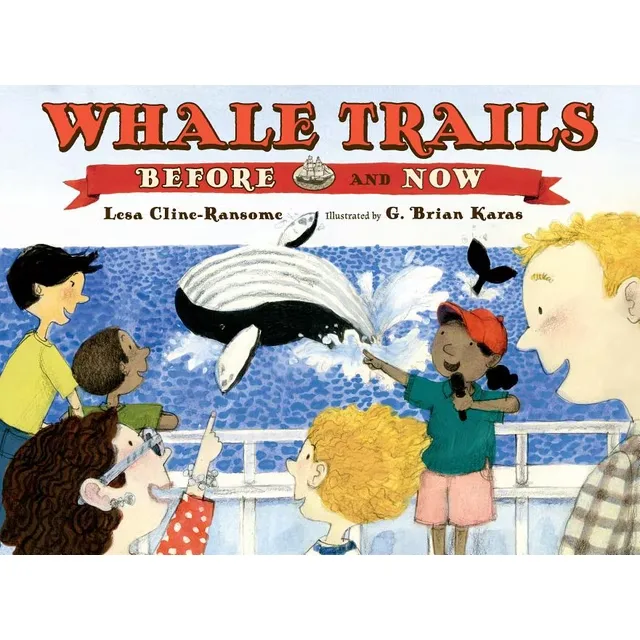 Whale Trails: Before and NowLesa Cline-RansomeAn African American girl has the enviable position as a helper on her family’s whale boat. Today they carry tourists going on whale watches but in the past hunting for whales had a completely different purpose. Alternating pages show the activities in contemporary times in color illustrations and a spritely conversational prose style, explaining what’s going on the facing page, with brown-tone illustrations showing what things were like aboard a whale boat in the past, “before now.” There is an amazing amount of information packed into this short text but it never gets overwhelming, and it’s fascinating to see the comparisons between the two time periods.Picture Books for School-Age ChildrenView book details
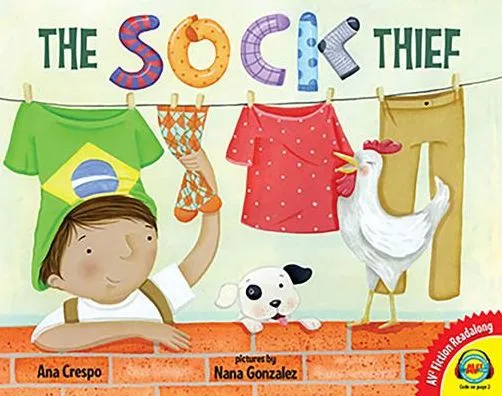 The Sock ThiefAna Crespo, illustrated by Nana GonzalezFelipe leaves home one morning with a backpack full of mangos. He is on his way to school, but he is a man with a mission. Every time he sees a pair of socks hanging on a line or out a window, he takes them, leaving a mango in their place. He stuffs the first pair with old newspaper, and then stuffs that into each successive pair he steals, in order to make a soccer ball so he and his friends can play before school, during recess, and after school. An author’s note explains that the story was inspired by her Brazilian father’s own childhood experience and that, in fact, many Brazilian children grow up playing street soccer with balls made of socks—including the greatest soccer player of all time, Pelé. Colorful stylized illustrations by an Argentine artist give a sense of life in a small South American town where many people hang out their old socks for children like Felipe to pick up.Picture Books for School-Age ChildrenLexile Text Measure AD560LATOS Book Level 2.8View book details
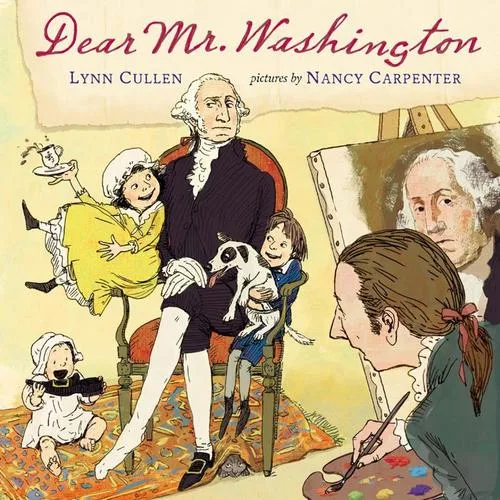 Dear Mr. WashingtonLynn Cullen, illustrated by Nancy CarpenterFact: Gilbert Stuart painted the best-known portraits of George Washington. Fact: Washington hated having his portrait painted. Almost everything else in this picture book is a product of the author’s imagination as Lynn Cullen writes letters of apology to Washington in the voice of Stuart’s young daughter Charlotte. Washington’s portrait sittings at their house have been constantly and consistently disrupted by the antics of Charlotte and her 11 siblings. The letters describe her version of the chaotic events of each visit, along with the despair 68 Picture Books for School-Age Children CCBC Choices 2016 of their father at ever finishing the painting, let alone getting Washington to smile. They also quote from “Rules of Good Manners for Boys & Girls,” a gift that Washington bestowed on Charlotte after his first visit. Nancy Carpenter extends the storytelling and humor in marvelous illustrations that not only show a disconnect between Charlotte’s version of events and what is happening, but also reveal Washington’s growing pleasure in Charlotte and her family. An entertaining and essential author’s note is included at story’s end.Picture Books for School-Age ChildrenLexile Text Measure AD760LATOS Book Level 4.9View book details
 Mama’s Nightingale: A Story of Immigration and SeparationEdwidge DanticatSaya’s mother was in the United States for years without documentation before being arrested. She’s now in prison. Saya and her father don’t know when she will get out, or if she will get out only to be deported back to Haiti. The difficult reality of this situation is related in the heartfelt voice of young Saya, whose father always reassures her how much her mother loves her. At the same time, he is navigating a huge unknown for their family while trying to advocate for Saya’s mother. Saya describes his efforts to get political intervention or media involvement in her mother’s case, and a story Saya writes about missing her mom ends up helping in that effort. While the ending is rosy, the long-term outcome for Saya’s mother remains unknown. Warm illustrations emphasize the love that is the driving force for Saya in a picture book told with grace and honesty. An author’s note provides personal and global context for this story. Highly Commended, 2016 Charlotte Zolotow AwardPicture Books for School-Age ChildrenView book details
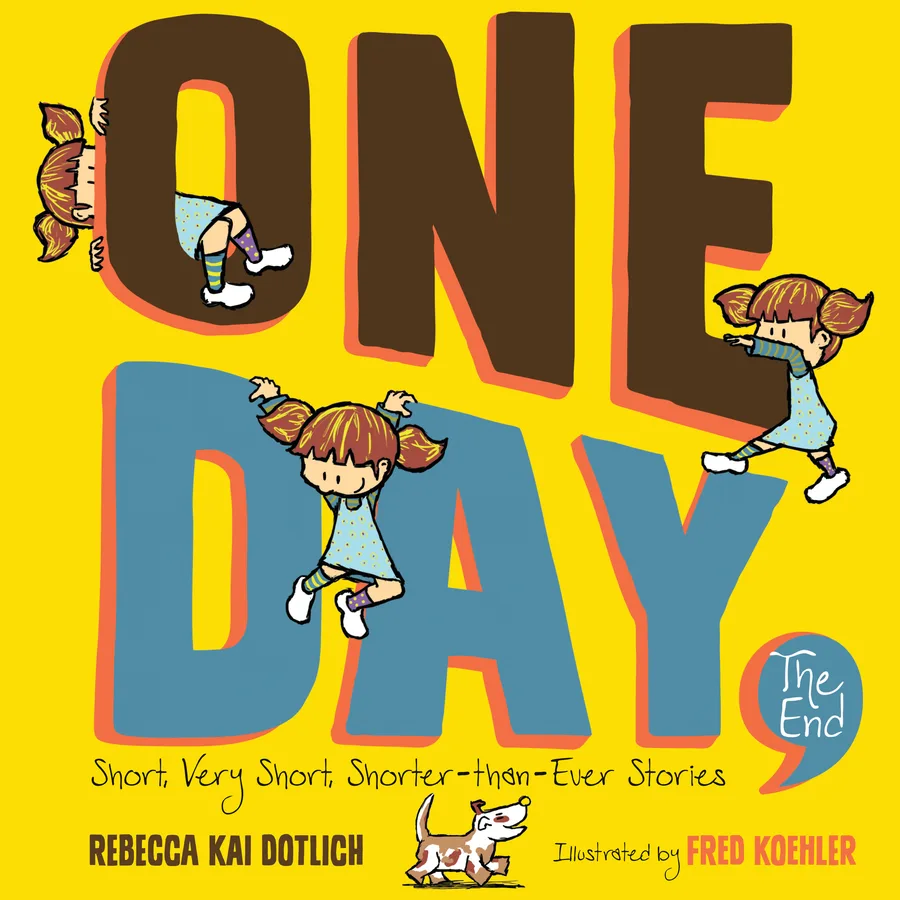 One Day, the End: Short, Very Short, Shorter-than- Ever StoriesRebecca Kai Dotlich, illustrated by Fred KoehlerNine stories are told almost entirely without words, with only the repetition of “One day” at the start of each and “The end” at the conclusion. The rest is all through done through illustrations. This technique requires readers to slow down and study every page—to read the illustrations—in order to understand the story’s plot. Although the device is the same with each story, there is enough visual variety to keep readers interested in a book that shows great respect for children in providing them the tools to figure out what’s happening for themselves. A fresh, original, and playful way to tell a story.Picture Books for School-Age ChildrenView book details
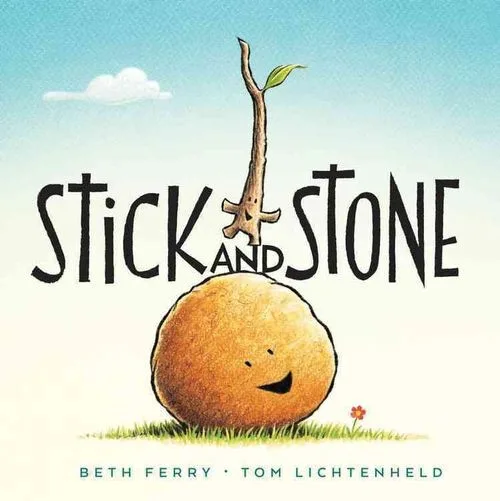 Stick and StoneBeth Ferry, illustrated by Tom LichtenheldStick and Stone are each alone, and each are lonely until a pinecone comes along and makes fun of Stone. Stick overhears and sticks up for Stone. Need we say it’s the start of a wonderful friendship? Later, when adversity in the form of a hurricane enters the picture, it is Stone’s turn to come to Stick’s aid. Alone they were a zero (Stone) and one (Stick). Together they’re a perfect 10. Tom Lichtenheld’s pencil and watercolor illustrations make the most of the possibilities suggested by Beth Ferry’s premise, conveying poignancy, sweetness, and plenty of humor. Ferry’s rhyming text smartly varies the rhythm and pacing CCBC Choices 2016 Picture Books for School-Age Children 69 and is not without its surprises, not the least of which is the choice of a pinecone as adversary (one that sees the error of its ways).Picture Books for School-Age ChildrenLexile Text Measure -250LATOS Book Level 1.2View book details
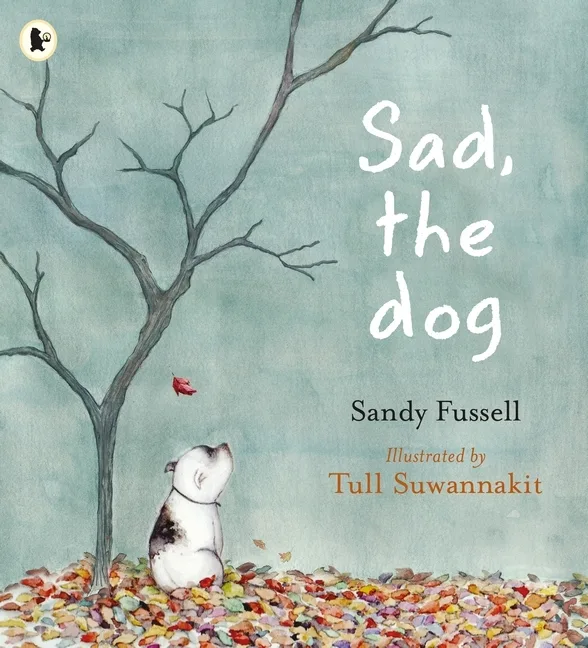 Sad, the DogSandy Fussell, illustrated by Tull SuwannakitEven if the dog weren’t called Sad, you’d immediately know that he was, just from the illustrations that show his eyes and drooping little body. Sad is owned by an elderly couple who cater to his basic needs but who just don’t give him any love. And when they move away, they leave him behind. Happily, the new family who moves into the house is thrilled to learn that the house comes with a dog. It takes a while for the boy, Jack, to coax Sad into trusting him but once he does, he’s given a new name: Lucky. Tull Suwannakit’s distinctive watercolor illustrations perfectly reflect the range of emotions of all of the characters, from the solemn, cranky elderly couple who first owned Sad to the ebullient and enthusiastic little boy who renames him, and we see the impact of their attitudes on little dog who just wants to be loved.Picture Books for School-Age ChildrenView book details
 The Red Bicycle: The Extraordinary Story of One Ordinary BicycleJude IsabellaA compelling picture book about the journey of a single bicycle that plays an important role in many lives. The bike is originally purchased by a boy in North America who eventually outgrows it and donates it to an international organization that provides bicycles to people in Africa. The bicycle is shipped overseas to Ghana, and from there to the country of Burkina Faso, where it ends up with a girl named Alisetta. She uses the bike for transportation to and from the fields to tend crops and to sell things at the market. She eventually donates it to a group that repairs it and turns it into a medical clinic ambulance in another village. Haridata, a young woman who volunteers for the clinic, rides the ambulance from village to village tending to the people in need of care. The lengthy primary narrative is complemented by a much simpler one that appears as display type on each page spread in this picture book that uses a fictional story to provide a concrete example of repurposing, cause-and-effect, and caring. A helpful author’s note tells more about a number of programs that repurpose bicycles in local communities and internationally.Picture Books for School-Age ChildrenView book details
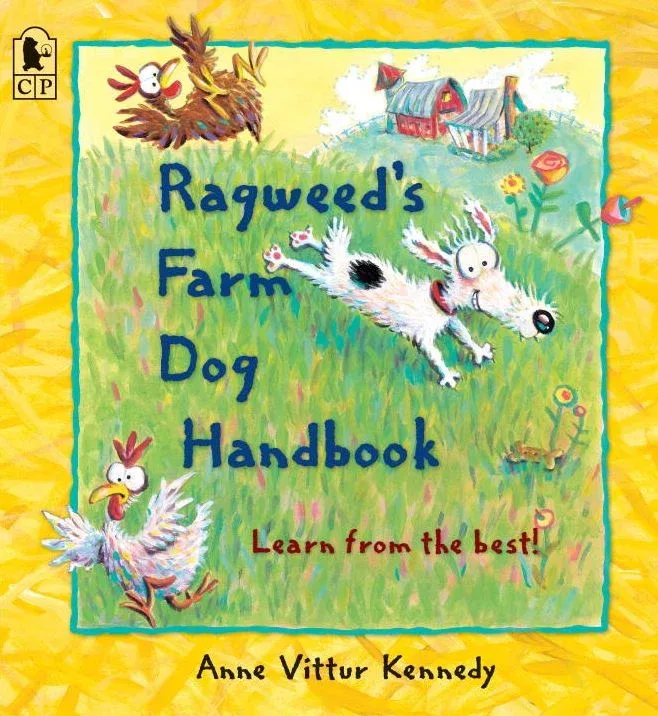 Ragweed’s Farm Dog HandbookAnne Vittur Kennedy, illustrated by Anne Vittur KennedyA how-to handbook offering sage advice from an experienced farm dog begins, “Here’s the first thing you need to know: The rooster wakes the farmer early in the morning. That’s his job. That’s not your job. Don’t wake the farmer. You will really, really want to wake the farmer … If you DO wake the farmer, you can get a biscuit just to go away.” Each lesson proves to be a slight variation on this theme as Ragweed, one of the most entertaining and authentic canine narrators ever to speak from the pages of a picture book, lays out who does what on the farm, what not to do as a farm dog, and how doing it anyway will generally result in a biscuit (or three!). Ragweed’s enthusiasm and almost single-minded focus on biscuits is consistent and convincingly doglike, while the occasional 70 Picture Books for School-Age Children CCBC Choices 2016 variation on the pattern only adds to the humor. (“If the farmer is away, chase the sheep! No biscuit. It’s just worth it.”). Anne Vittur Kennedy pairs her terrific narrative with illustrations full of color and movement. Ragweed’s joy in the life he lives is irresistible. Highly Commended, 2016 Charlotte Zolotow AwardPicture Books for School-Age ChildrenView book details
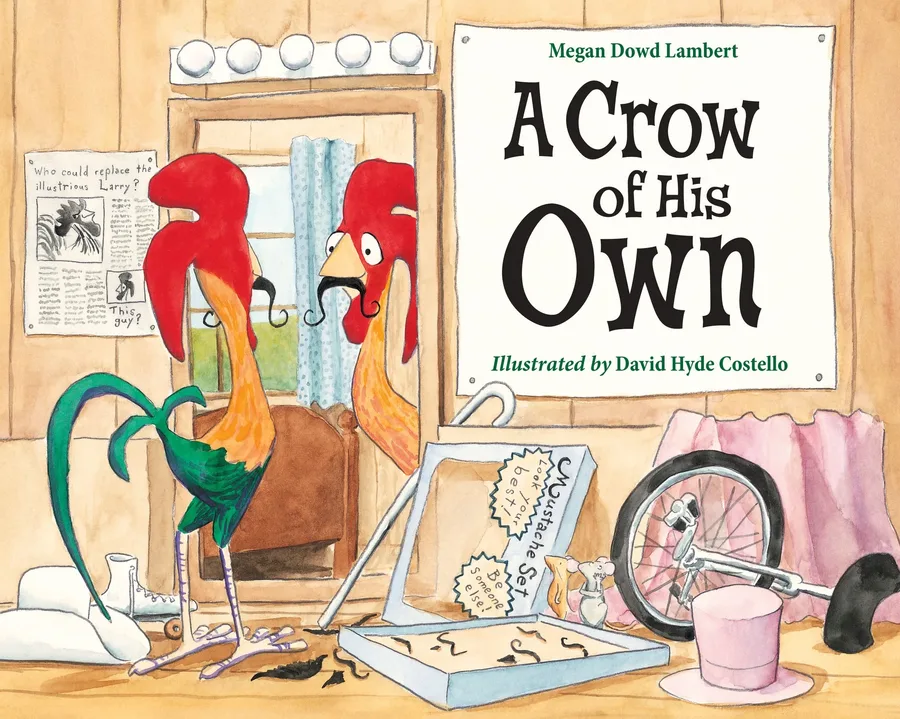 A Crow of His OwnMegan Dowd Lambert“When Larry was called off to new opportunities, Sunrise Farm suddenly found itself without its prized rooster.” But Farmer Jay and Farmer Kevin (who appear to be a couple) have a plan and “their plan turned out to be a scrawny little guy named Clyde.” The new little rooster tries unsuccessfully to live up to Larry’s legacy by putting on a real show every morning, but fails miserably each time. When he finally just tries to crow, well, it’s “… enough to give you goosebumps.” This barnyard tale is filled with lots of humor, wordplay, and onomatopoeia in a story about finding one’s own voice. A great choice for a read-aloud to a group or one-on-one.Picture Books for School-Age ChildrenLexile Text Measure AD500LATOS Book Level 3.2View book details
 Sidewalk FlowersJonArno LawsonA little girl dressed in a red hoodie walks through black-and-white city streets with her father, who is talking incessantly on his cell phone for most of their walk. He doesn’t see what his daughter sees along the way—small touches of color in the occasional flowers that grow up through sidewalk cracks or by the foundations of buildings. She picks them as they walk. Once she has a nice bouquet of subtly colored blossoms, she leaves them, one by one, where they are needed: next to a dead bird, a sleeping homeless man, a dog on a leash. As a result of her small acts of kindness, we see her world begin to fill with color. Once she gets home, everything is in color. She even has a few flowers remaining to give her mother and brothers. Simple yet sophisticated, this is a story that will stay with the reader long after the book is closed.Picture Books for School-Age ChildrenView book details
 Hoppelpopp and the Best BunnyMira Lobe, illustrated by Angelika KaufmannBunnies Binny, Benny, Bernie, Bonnie, and Buddy love being together. Every time one of them starts playing, the others eagerly join in. But when Hoppelpopp arrives on the scene, he turns everything into a contest. Who is the fastest? The strongest? The smartest? The bravest? The best? “From that day on, everything changed. The bunnies didn’t eat together anymore. They didn’t sleep together anymore. And they didn’t play together anymore … Buddy cried because he wasn’t the best at anything.” The arrival of an intruder—a badger!— eventually reminds the bunnies that they’re better together than apart. “And Hoppelpopp hopped away. He didn’t find the best bunny, but he did find five equally good ones.” Playful illustrations add to the appeal of a story that will ring true for many readers and listeners.Picture Books for School-Age ChildrenView book details
 I Will Never Get a Star on Mrs. Benson’s BlackboardJennifer K MannRose so wants to get a star in class. But Mrs. Benson hands them out for things like neatness and always raising your hand to speak. That’s not Rose’s style. She’s an artist and a daydreamer. Even when she tries to be neat, she can get carried away when creativity strikes. Worst of all, Mrs. Benson’s class assignment to write thank you notes to Mr. Sullivan, an artist who had visited their class, coincides with the day Rose is to have her desk checked for neatness—her last hope for a star. A surprising and satisfying resolution shows Rose finally getting her sought-after star. It’s not for neatness and likely never will be, but both Rose and Mrs. Benson come to understand that there are many talents that can be rewarded. Jennifer Mann has a pleasing and affable style, in both writing and illustration, and her story will strike a chord with any child who has ever longed for praise and recognition.Picture Books for School-Age ChildrenView book details
 The World in a SecondIsabel Minhós Martins, illustrated by Bernardo P“While you turn the pages of this book, the world doesn’t stop …” A picture book takes readers and listeners on a journey around the world, offering glimpses of things happening at the same moment in time. A boat tossed by a storm in the Baltic Sea, passengers stuck on an elevator in New York City, a soccer ball flying toward a window in Greece, a man resting on a bench in Tokyo, a thief entering a home (perhaps his own, it’s playfully noted) in Pescara, Italy. The location of these and other scenarios isn’t always stated or obvious, but the detailed, stylized illustrations offer many intriguing, and sometimes revealing, things to look at, while each two-page spread is numbered. A world map at the end identifies the locale of each numbered scene, along with the time in that location at the moment (e.g, 9:32 a.m. in Buenos Aires, 9:32 p.m. in Tokyo). The final scene, of a girl on a bed reading, states, “…And a book reaches the end.”Picture Books for School-Age ChildrenView book details
 A Poem in Your PocketMargaret McNamaraThe students in Mr. Tiffin’s class featured in two prior volumes (How Many Seeds in a Pumpkin?, The Apple-Orchard Riddle ) spend the weeks leading up to “Poem-in-Your-Pocket Day” and a school visit from poet Emmy Crane learning about poetry, reading poetry, and writing poems of their own. Overconfident Elinor is sure she’ll write more poems than anyone. But time and again she gets frustrated when the idea in her head doesn’t come out right on paper. She wants perfection. Instead, she’s the only one without a poem to share for Emmy Crane. The poet reassures her, saying, “No poem is perfect.” And when Emmy Crane asks Elinor to talk about her ideas, Elinor’s recitation of all the things she’s seen and felt over recent days is like a poem, of course. Margaret McNamara again hits just the right tone in looking at a classroom learning experience in an engaging, nurturing picture book blithely illustrated by G. Brian Karas. Highly Commended, 2016 Charlotte Zolotow AwardPicture Books for School-Age ChildrenLexile Text Measure AD530LATOS Book Level 3.5View book details
 Mango, Abuela, and MeMeg MedinaMia doesn’t speak Spanish well and her abuela, who has come to live with Mia’s family, doesn’t speak English well. They share a room, and Abuela watches Mia after school, but there is a lot of silence. Then Mia begins teaching her grandmother English words, even labeling things at home like they sometimes do in her classroom at school, and Abuela teaches Mia Spanish words. The locked door between them starts to open. It opens wider when Mia sees a parrot at the pet shop and the family buys it for Abuela, who had a pet parrot back home. By story’s end, Abuela is reading Mia her favorite book, and telling stories “about Abuelo, who could dive for river stones with a single breath and weave a roof out of palms.” A warm picture book story that has some lovely turns of phrase and integrates Spanish words into the English text is set against cheery illustrations.Picture Books for School-Age ChildrenLexile Text Measure AD560LATOS Book Level 3.4View book details
 Grandma in Blue with Red HatScott Menchin, illustrated by Harry BlissAn art teacher asks a boy and his classmates touring a museum to consider why various pieces are on display: What makes them art? “Because it’s beautiful,” says Alice about one painting. “Because it came from somewhere far away,” says Thomas about another. “Because it’s different.” “Because it tells a story.” “Because it makes me feel good.” “Because it’s funny.” That night the boy thinks about his classmates’ observations, and about what the teacher said, “Anything can be in an art exhibition.” And then he thinks about his Grandma, who is different, funny, tells him stories, makes him feel good, and comes from far away. “I should give Grandma to the museum!” Alas, the museum director explains, they don’t accept Grandmas. A playful yet probing narrative is paired with illustrations blending cartoon styling with renditions of the real works of art that inspire the students’ thinking and creativity. The African American boy at story’s center goes on to paint a whimsical series in tribute to his Grandma.Picture Books for School-Age ChildrenView book details
 New ShoesSusan Lynn MeyerWhen Ella Mae, who’s always had hand-me-downs, goes shoe shopping for the first time, she’s eager to try on the pair of new saddle shoes she’d been eyeing in the window. But it turns out Black people aren’t allowed to try on shoes at the shoe store. Ella Mae’s mom traces Ella Mae’s foot on a piece of paper and they determine what size to buy based on the tracing. The experience diminishes the joy of new shoes for Ella Mae, but it also inspires her. She and a friend begin to do odd jobs for a nickel and a pair of outgrown shoes. They invest the money in polish and laces, scrub and shine the pairs they’ve collected, and invite anyone to come in and try them on before purchasing, asking for more old shoes as part of the price of payment to guarantee the goodwill can continue. A story set in the mid–20th century South underscores the unfairness of racism through a common childhood event. The story pulls no punches in describing how it feels to Ella Mae to be treated so unfairly. Ella Mae’s response is one that also underscores determination, generosity, and fairness. An author’s note provides additional historical context, as do the period illustrations.Picture Books for School-Age ChildrenView book details
 Ketzel, the Cat Who ComposedLesléa NewmanComposer Moshe Cotel loves the sounds of the city. One day while out walking he hears a new sound. “It was a small sound. It was a sad sound.” It was a kitten, which Moshe names Ketzel. Back home, Moshe composes while Ketzel listens. But when he enters a competition to write a 60-second composition, Moshe is stymied. “Impossible!” While Moshe stews, Ketzel prances across the keys. Moshe likes what he hears: “Your composition has a clear beginning, middle, and end, is full of heart, and takes exactly twenty-one seconds to play.” He enters it in the competition under the name Ketzel Cotel, titling it “Piece for Piano: Four Paws.” It earns a certificate of special mention. A charming picture book story based on true events further detailed in the author’s note tells how Ketzel’s piece went on to be performed in public, even earning a $19.72 royalty check (used to buy cat food). Warm watercolor illustrations are a perfect accompaniment to the story.Picture Books for School-Age ChildrenView book details
 Rodeo RedMaripat Perkins, illustrated by Molly IdleMove over, partner. There’s a new kid in town. He goes by the name of Sideswiping Slim, and he’s “as slippery as a snake’s belly in a mudslide.” And don’t even think of calling the Sheriff or her Deputy. They’ve been completely taken in by that scallywag. This funny, fresh-voiced take on a new sibling is told a little like a tall tale in the voice of a cowgirl who is prone to hyperbolic metaphors. Much of the humor comes from the over-the-top language contextualized visually by scenes of the sort of typical sibling rivalry we see with an older sibling and new baby—fighting over a favorite toy, for example. And, of course, the baby has “the law” on his side, so Rodeo Red is placed in a “holding cell,” a.k.a. a time-out chair.Picture Books for School-Age ChildrenLexile Text Measure AD720LATOS Book Level 3.9View book details
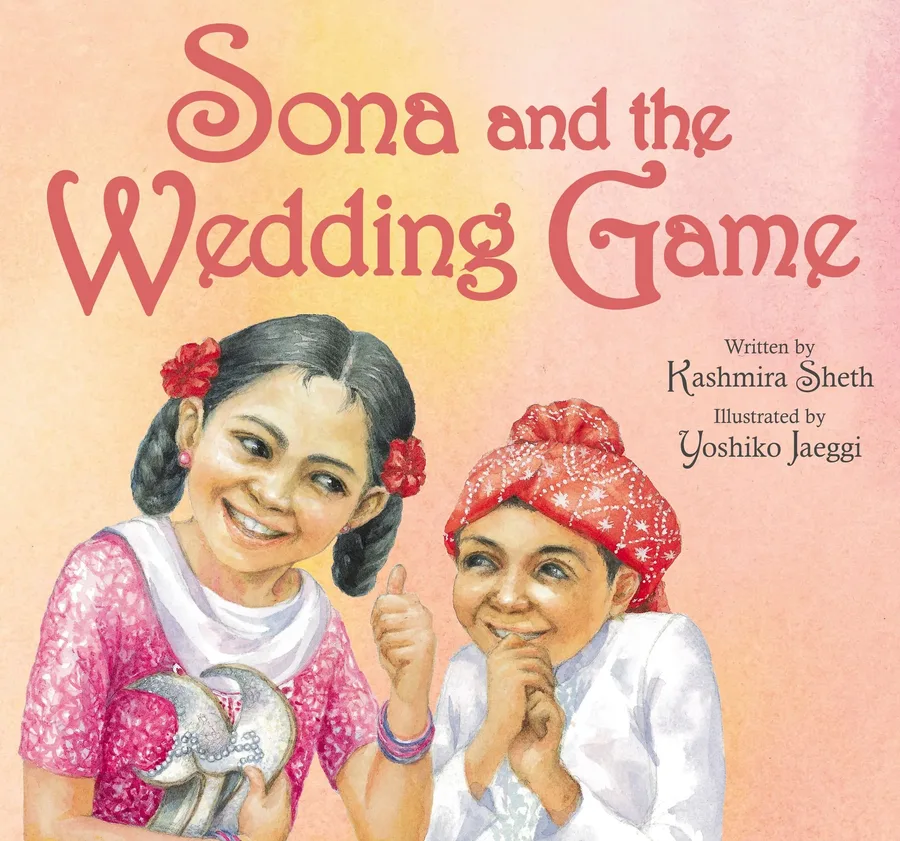 Sona and the Wedding GameKashmira ShethSona’s sister is getting married and her know-it-all cousin Vishal has come with her grandparents from India to attend. He can’t believe how little Sona knows about Hindu weddings, including the fact that it’s Sona’s responsibility as a younger sibling of the bride to steal the groom’s shoes during the ceremony and then bargain with him for their return. Nervous but determined, Sona comes up with a plan to do so, and she’s even willing to involve Vishal in carrying it out. An engaging story draws readers right into Sona’s experience as she describes being part of traditions that are new to her yet steeped in family and culture. And when the time comes, there’s just the right amount of tension leading to great delight as Sona successfully steals the shoes and bargains for the perfect exchange. An author’s note provides additional information about Hindu weddings, including the fact that the details may vary widely from family to family and place to place.Picture Books for School-Age ChildrenView book details
 Lenny & LucyPhilip C. SteadAlready unhappy about moving, on Peter’s first night in the new house where he and his dad are now living, he imagines terrible things on the other side of the nearby bridge leading into a dark forest. So he constructs a sentinel out of pillows and blankets and names him Lenny. Peter decides Lenny is lonely guarding the bridge, and makes him a friend, called Lucy. Peter, Lenny, Lucy, and Peter’s dog, Harold, spend a long day together, but there is still a sense of emptiness. Then Millie, who lives next door, arrives. “She had binoculars that everyone could share (and a bag of marshmallows, too).” A quiet picture book text of big ideas and small moments is paired with soft, detailed charcoal and tempura illustrations that use color sparingly to a lovely effect. The art is finely tuned to the emotional tenor of the story as it moves from a sense of sadness and loneliness to brightness and connection, while adding small moments of whimsy.Picture Books for School-Age ChildrenView book details
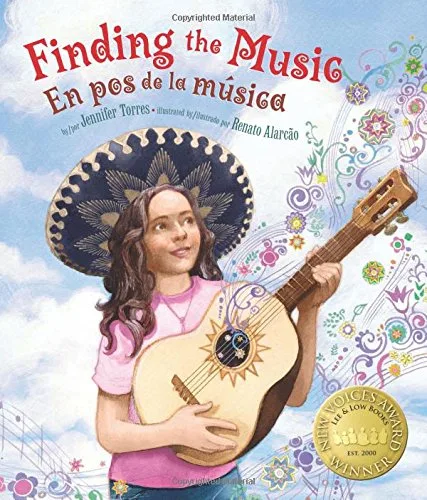 Finding the Music = En pos de la músicaJennifer Torres, illustrated by Renato AlarcãoWhen Reyna accidentally breaks her late grandfather’s vihuela, a small guitar- like instrument he played in a mariachi band, she asks various community members to help her fix it before her mother finds out. During her visits to her music teacher, the music store, the hardware store, and other places, Reyna learns more about her abuelito and mariachi music. Each person also gives her an object related to her grandfather—his old hat, a photo, a record of his band—which Reyna brings home to share with her mother. A warm, bilingual picture book has a strong, satisfying storyline that conveys a vibrant sense of community and family, reflected in the acrylic illustrations. A note provides more information about mariachi music, which grew out of the blending of indigenous and Spanish musical traditions in Mexico.Picture Books for School-Age ChildrenView book details
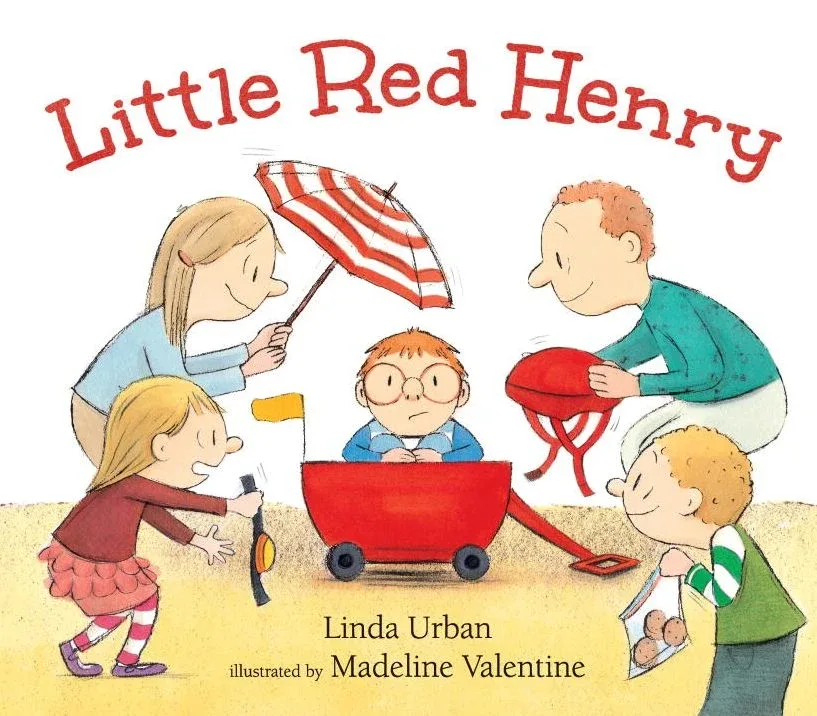 Little Red HenryLinda Urban, illustrated by Madeline ValentineLittle redheaded Henry is the youngest in his family. His mother, father, sister, and brother do everything for him. “Frankly, little redheaded Henry was sick of it.” Henry’s assertion of his independence (“I can do it myself,” he says time and time again. “And he did.”) plays out in a series of comical, over-the-top scenes that underscore the degree to which his family coddled him, from cutting his food and choosing his clothes to managing his playdates. As Henry asserts himself, his family is adrift. “Without Henry to do things for, they had no purpose.” With so much time on their hands, however, they can suddenly pursue new interests. And when bedtime comes, Henry realizes he isn’t quite ready to give up everything his family once did for him: “Could somebody please tuck me in?” Wonderful word choice and narrative flow, along with illustrations that extend both the humor and the warmth, make this picture book a delight.Picture Books for School-Age ChildrenView book details
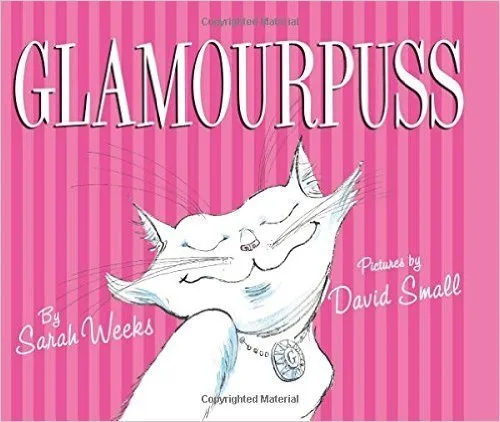 GlamourpussSarah Weeks, illustrated by David SmallGlamourpuss is a pampered pussycat belonging to the wealthy Highhorsens. “Her one and only job was to be glamourous, and she was very good at it.” Then Mrs. Highhorsen’s sister Eugenia arrives from Texas with Bluebelle, her Chihuahua. Bluebelle has an array of costumes that Glamourpuss finds tacky (including a maracas and fruit ensemble and a southern, Scarlet O’Hara- inspired belle-of-the-ball gown). And Bluebelle wears them while performing her many tricks. The Highhorsens are captivated. Glamourpuss is ignored. When Eugenia calls Bluebelle “glamourous,” it leads to a crisis of confidence for Glamourpuss, until she discovers Bluebelle is miserable wearing the ridiculous costumes and having to perform. It is, as they say, the start of a beautiful friendship. The high-humored premise is told in a narrative with wonderful pacing and rich vocabulary, while the illustrations amplify the over-the-topness of both Glamourpuss and Bluebelle’s existence.Picture Books for School-Age ChildrenLexile Text Measure AD780LATOS Book Level 4.6View book details
 Lillian’s Right to Vote: A Celebration of the Voting Rights Act of 1965Jonah Winter“A very old woman stands at the bottom of a very steep hill. It’s Voting Day, she’s an American, and by God, she is going to vote. Lillian is her name.” An informative picture book covers an expanse of history and emotion as 100-year- old Lillian ascends the hill, reflecting on African Americans and voting. Her great-great-grandparents were sold on the auction block in front of a courthouse where only white men could vote. Her great grandfather, her grandfather and uncle, her parents, and Lillian herself lived through times when the right to vote existed in theory but was denied in fact or pursued with great risk. Lillian remembers struggles and losses of the Civil Rights Movement, the march from Selma to Montgomery, and the Voting Rights Act of 1965, after which she cast her first ballot. Her ascent is a metaphor in which the struggle is tangible, palpable (“my, but that hill is steep”). Her encounter with a young man whom she asks, “Are you going to vote? … You better” is one of many powerful moments. Shane W. Evans’s layered art skillfully distinguishes present from past and is full of its own rich symbolism.Picture Books for School-Age ChildrenView book details
Books for Newly Independent Readers
2 selections
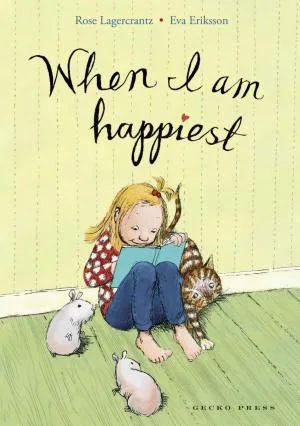 When I Am HappiestRose Lagercrantz, illustrated by Eva ErikssonOn the second-to-last day of her first year at school, Dani’s excitement about the next day’s festivities and her memories of things that happened over the school year—some happy, some not, but mostly happy because that’s what Dani likes thinking about—are interrupted when she’s called out of class. Her 76 Books for Newly Independent Readers CCBC Choices 2016 teacher gently explains that Dani’s dad has been hit by a car while riding his bike to work. When her grandma arrives, Dani wants to go to the hospital. But her dad’s unconscious, and they go to her grandparents’ house instead. Dani thinks she is like her dad, who doesn’t cry. But after a few hours in which not even her cousin Sven can distract her, Dani bursts into tears that won’t stop. She insists on seeing her dad even though the doctor says it might be scary. It is scary, and then reassuring: Dani’s dad wakes briefly and says her name. Afterward, a thoughtful but more carefree Dani wonders if it’s okay to be “a little bit happy” when your dad has been run over, and is excited at the prospect of spending the summer with her best friend Ella’s family while he recovers. A story set over a single day is superbly grounded moment by moment in Dani’s emotional experience. Occasional black-and-white illustrations complement the narrative. Dani has appeared in two prior chapter books by this author/ illustrator team.Books for Newly Independent ReadersView book details
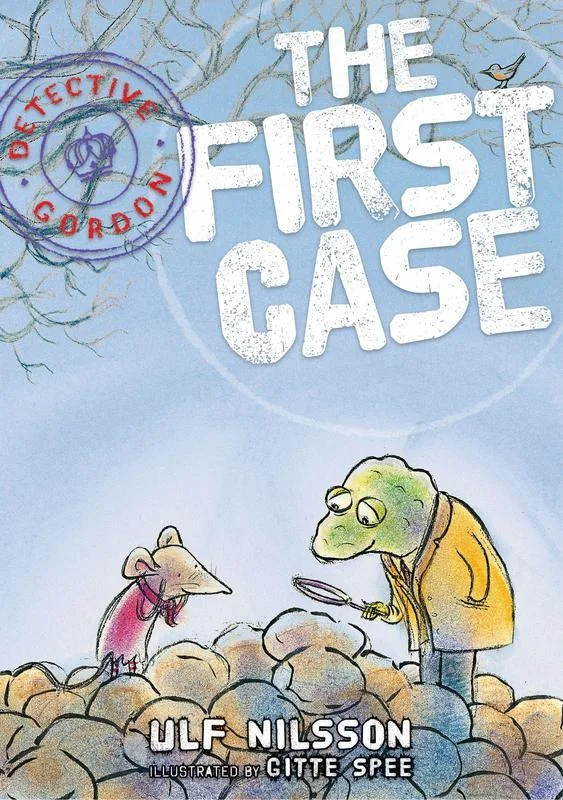 The First CaseUlf Nilsson, illustrated by Gitte SpeeAn engaging, character-driven mystery begins with an aging toad detective investigating the theft of nuts from a very upset squirrel. Detective Gordon can’t move as quickly or as easily as he once did. Then he meets a nameless mouse who is young and spry and eager, who quickly becomes his able assistant. First order of business: give her a name. He suggests one he’s always loved: Buffy. The interactions between Buffy—so bright and optimistic and open-hearted—and Detective Gordon—slightly world-weary but wise and buoyed by her presence—are warm and wonderful in a story full of understated humor punctuated by brighter, laugh-out-loud moments (often involving the squirrel). The duo inspect the scenes of the crime, gather clues, conjecture based on what they’ve observed (clearly the suspect can climb trees, for example), then lay a trap, and eventually capture the thieves. Beautiful design, including charming spot and full-page color illustrations, embellish a winning, winsome short chapter book.Books for Newly Independent ReadersLexile Text Measure 510LATOS Book Level 4View book details
Fiction for Children
27 selections
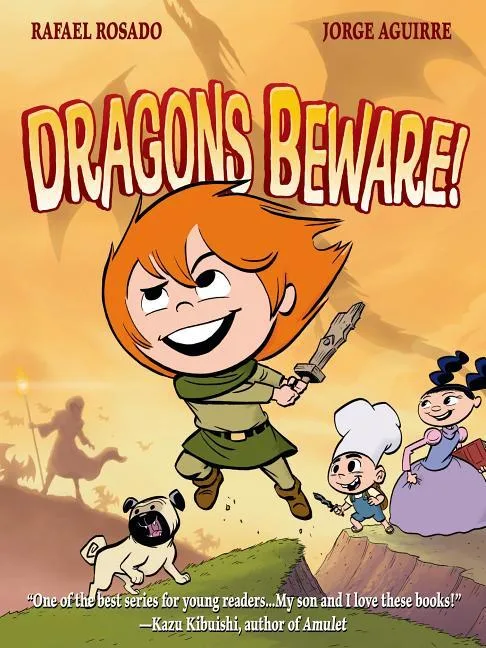 Dragons Beware!Jorge Aguirre, illustrated by Rafael RosadoShe’s back! Still the “act first, think later,” wooden-sword wielding fighter introduced in Giants Beware, bold Claudette is itching to protect her town from the menacing sorcerer Grombach and his army of gargoyles. With her best friend, Marie, and little brother, Gaston, at her heels, Claudette follows her father on his quest to reclaim his powerful sword and face their foe. Grombach’s true identity is revealed, a cursed hag provides a helpful tool, and a sword- swallowing dragon is convinced to return his plunder (albeit in a disgusting vomit-manner). Drawing on a combination of courage, luck, and a dose of CCBC Choices 2016 Fiction for Children 77 cooperation and diplomacy, the three kids again save their community from looming disaster. Appealing characters and large doses of humor (like the seven hopeful princes trailing after Marie) complement the non-stop action of this full-color graphic novel.Fiction for ChildrenLexile Text Measure GN320LATOS Book Level 2.9View book details
 Ruby on the OutsideNora Raleigh BaskinRuby and her aunt visit her mom every week at the Bedford Hills Women’s Correctional Facility, where Ruby has learned all of the rules across the years— and there are a lot of them. But Ruby hasn’t learned what, exactly, her mother did to end up in prison when Ruby was five. Not knowing is a way of coping. So, too, is not letting anyone get too close, so Ruby has never had a good friend, although she’s made brief connections with other kids visiting their parents. That changes the summer before sixth grade, when she meets Margalit. Ruby wishes she knew how to tell the truth about her mom to Margalit. But her desire is not only frustrated by missing information, it’s complicated by Ruby’s fear that her mom might be connected to the death of Margalit’s brother years before. Nora Raleigh Baskin skillfully handles the plot, avoiding an unbelievable coincidence that would have gotten in the way of everything else done so well in a story revealing emotional complexities for this child with an incarcerated parent. Ruby has memories of the night her mom was arrested, and once she learns the truth about everything, must struggle with the fact that the man who committed the crime with her mom is free. Most of all, Ruby misses having her mom in her life on a daily basis. But she also knows her mom loves her, even if she can’t be with Ruby every day.Fiction for ChildrenView book details
 Malcolm under the StarsW. H. Beck, illustrated by Brian LiesIn this sequel to Malcolm at Midnight, Malcolm the rat finds out Amelia, the nutter (child) to whom he is closest in Mr. Binney’s classroom at McKenna School, is leaving in a week. Her family has to move because her dad lost his job. Meanwhile, the school itself is at risk of closing because the almost 100-year- old building is in need of major repairs the district can’t afford. Malcolm and the Midnight Academy, the organization of classroom pets who help protect McKenna School, decide to investigate the legend of a hidden stash in the building. Could it be enough to cover the costs? In the context of a satisfying mystery, author W. H. Beck excels at creating appealing and surprisingly complex human and animal characters, and the heart of her story lies with them. The students in Mr. Binney’s class are at once singular and recognizable, and as she further develops two of their characters, Beck reveals, as she did with others in the first book, that they shine in unexpected ways. The same is true of some of the animals Malcolm encounters. The lesson for Malcolm? Everyone is more than they might seem. And everyone deserves a second chance. There are moments of tension and drama and a hint of scary before all is well, but the lasting feeling is one of warmth.Fiction for ChildrenLexile Text Measure 610LATOS Book Level 4.3View book details
 The Thing about JellyfishAli BenjaminSuzy Swanson, a socially awkward 12-year-old, is convinced that Franny, her former best friend, was stung by a rare jellyfish. Why else would Franny, who was a good swimmer, have drowned? Her focus is a means of avoiding her grief and her guilt over what happened between her and Franny. Suzy’s hurt as a once-close friendship fell apart within the new social structure of middle school is revealed through flashbacks. Eventually, it led her to do something terrible to Franny on the last day of sixth grade. After Franny’s death, Suzy withdrew into silence. But the theory she develops about Franny’s death, which begins with a seventh-grade science project, ignites her. Through exacting scientific method, Suzy sets out to prove it’s true. Her need to believe this is poignant, while her fascination with jellyfish is genuine and deep in this nuanced, layered, beautifully realized novel about grief and its aftermath for one particular girl. Suzy is never labeled in the book—we know and understand her through her thoughts and behavior—although she appears to be on the autism spectrum.Fiction for ChildrenLexile Text Measure 740LATOS Book Level 5View book details
 The War that Saved My LifeKimberly Brubaker BradleyTen-year-old Ada was born with a club foot that was never fixed and her abusive, financially struggling mother has kept her isolated all her life. The evacuation of London children during World War II gives Ada and her little brother, Jamie, a chance to escape their grim life. The two end up in a small village at the home of a woman named Susan Smith. There is not necessarily anything extraordinary or unpredictable in this satisfying story in which the three become a close and loving family except for the telling itself, which reveals refreshing complexities of characters and situations. As Ada, Jamie, and Susan adjust, it becomes clear that Ada, despite many seemingly idyllic elements of her new life, feels immense anger and grief over a mother who could not love her. Susan, too, is grieving— her former housemate died the year before and though it’s never stated, it’s clear the two women were a couple. Susan is also figuring out parenting and caretaking, tasks made more difficult by the children’s abusive history and the temporary nature of the arrangement. A nearby RAF airfield, the evacuation of Dunkirk, and the bombing of London all come into play in a story that also offers honesty regarding the hard truths of war but is ultimately full of the hope that comes with kindness and connection.Fiction for ChildrenLexile Text Measure 580LATOS Book Level 4.1View book details
 Stella by StarlightSharon M. DraperAfter 11-year-old Stella and her little brother, Jojo, see the burning cross and the men in white, members of the African American community in their small North Carolina town gather at Stella’s house to discuss the danger, but the rhythm of life continues: The kids go to school, the adults go about their work. When Stella’s dad, the preacher, and a neighbor named Mr. Spencer register to vote—a decision made after careful consideration and tense debate—the retaliation is swift and awful: Mr. Spencer’s house is set on fire. But neighbors rally, including a few whites, to care for the family. This strong, resilient CCBC Choices 2016 Fiction for Children 79 community graces Sharon Draper’s compelling story set during the Depression with a profound sense of comfort. So, too, do the finely drawn characters. Stella, her family, and most of her neighbors feel like friends one can count on in a story grounded in Stella’s perspective. In addition to the racism that is a daily and unsettling part of life, Stella is facing a much more personal challenge, working hard to get better at writing. Although it doesn’t come easily, she is driven to improve, and this portrait of an emerging writer beginning to understand the power of putting words and ideas on paper is notable and gratifying.Fiction for ChildrenLexile Text Measure 740LATOS Book Level 4.8View book details
 GeorgeAlex GinoA girl born into a boy’s body, 10-year-old George hasn’t yet confided this truth to anyone. Then she decides to try out for the part of Charlotte in the fourth grade’s dramatization of Charlotte’s Web. George thinks the play will be a vehicle to let her mom know that she’s really a girl, not a boy. But she also wants the part of Charlotte because she loves the character. George finally tells her friend Kelly the truth, and after Kelly is cast as Charlotte, she and George conspire to have George play Charlotte in the second performance. By then George has told both her mom and her older brother. Both of them had assumed George was gay, and while George’s brother looks at George as if she finally makes sense to him, George’s mom is struggling. Alex Gino’s warm debut novel is a pitch-perfect story for younger middle grade. Substantial without a hint of heaviness, the almost lighthearted tone offers a matter-of-fact presentation of George’s identity, leaving room for the delightful development of characters and the plot around Kelly and George’s plan. The support George receives from Kelly, from her brother, and from the school principal, as well as the range of responses of others, are all realistic. But all of the characters are more than their responses, just as George is more than her gender. She’s George, a girl with many interests finally able to outwardly express an elemental aspect of her identity.Fiction for ChildrenView book details
 The ImaginaryA.F. HarroldA level-headed, independent child with a streak of adventurousness, Amanda has found the perfect best friend in Rudger, a small boy who is up for anything. The fact that no one else can see Rudger doesn’t bother Amanda a bit. Then a man named Mr. Bunting shows up at their door conducting a survey and oozing creepiness. It turns out Mr. Bunting hunts down imaginary friends and feeds on them in order to prolong his own life. When Rudger starts fading after Amanda is hit by a car running away from Mr. Bunting, he’s rescued by a cat before Mr. Bunting can find him. The cat leads Rudger to the public library—the haven for imaginary friends without humans. Rudger is supposed to choose a new child, but he’s determined to make his way back to Amanda, who is lying unconscious in the hospital. The perfect blend of funny (often), tender, and scary (truly!), A. F. Harrold’s fresh, original tale is a tribute to the bold spirit of possibility in childhood and features perfect, moody black-and- white illustrations by Emily Gravett.Fiction for ChildrenLexile Text Measure 720LATOS Book Level 4.7View book details
 Paper ThingsJennifer Richard JacobsonEleven-year-old Ari and her older brother, Gage, have lived with their legal guardian, Janna, since their mother’s death five years before. Gage, now 19, isn’t getting along with Janna and decides that he and Ari should move out. He lies and says he has an apartment. Instead, he and Ari are homeless. They move from one of Gage’s friends to another, occasionally spending a night at a shelter. Ari, who doesn’t want to be disloyal to her brother, tells no one what’s happening. Although a few details are a bit too easy regarding Janna letting Ari go, the story reveals harsh realities of being homeless as well as the kindnesses that help them barely get by. Ari, who has always prided herself on being a good student, is struggling to keep up at school, and battling a growing sense of insecurity. Gage is truly trying to pull their lives together, but it’s not easy getting a job let alone an apartment without a current address. A subplot regarding the loss of beloved traditions at Ari’s elementary school because of a new, results-obsessed principle is a bit pointed yet shows how important rituals and traditions are for kids, and that, for some kids, school represents stability and constancy. And it’s in the small details and emotions surrounding the search for stability and constancy that this novel shines.Fiction for ChildrenLexile Text Measure 830LATOS Book Level 5.4View book details
 Roller GirlVictoria JamiesonAstrid Vasquez and her best friend Nicole can barely tolerate Astrid’s mother’s regular Evenings of Cultural Enrichment until she surprises them with a Rose City Rollers roller derby match. Astrid is hooked and is eager to sign up for roller derby summer camp. She assumes Nicole will, too. But Nicole has other CCBC Choices 2016 Fiction for Children 81 plans for the summer, attending dance camp with Astrid’s long-time nemesis, and Astrid feels betrayed. As Astrid goes through hard weeks of training, leading up to a junior bout during the half-time of a pro roller derby match, she makes a new friend but still feels the sting of losing Nicole. Roller derby gives her an outlet for her anger as she discovers she has a fierce competitive streak. When Astrid unintentionally hurts her new friend, it’s an opportunity for self- reflection, but there’s plenty of roller derby action here, too, as novice skater Astrid gains skills and confidence but, realistically, never gets to be really good. Along the way, she gets some tips about finding her own inner strength through an ongoing secret correspondence with her hero, Rose City Roller Rainbow Brite. This witty, original, and action-packed graphic novel was written and illustrated by a skater for the Rose City Rollers.Fiction for ChildrenLexile Text Measure GN440LATOS Book Level 3.2View book details
 Unusual Chickens for the Exceptional Poultry FarmerKelly JonesAdjusting to life in the country brings challenges and surprises for Sophie Brown. While her unemployed dad learns about small-scale farming, her mom is churning out one freelance article after another to stay on top of bills. Sophie, meanwhile, is learning to care for the chickens that once belonged to her Great Uncle Jim, only Uncle Jim’s chickens prove to be far from ordinary. Henrietta has a Forceful gaze—literally. Sophie has seen her levitate things. Chameleon turns invisible. And all six are the target of a would-be chicken thief who clearly knows they’re special. This funny, spirited story is told almost entirely through letters. Many are from Sophie to her Abuelita or her Great Uncle Jim, both of whom have passed away. Letters full of questions and advice also go back and forth between Sophie and Agnes, owner of Redwood Farm Supply. Agnes’s letters are mysteriously typo-ridden, but her poultry correspondence course is informative and no-nonsense. Trying to protect her flock, Sophie makes the first friend her own age in town while asserting her claim on the chickens she’s come to love. Sophie, who is biracial (her mom is Mexican American, her dad is white), occasionally reflects on cultural aspects of her family history and identity in ways that are genuine and unforced in this blithe but not unsubstantial debut novel featuring pitch-perfect black-and-white illustrations.Fiction for ChildrenLexile Text Measure 880LATOS Book Level 5.7View book details
 Blackbird FlyErin Entrada KellyWhen Analyn “Apple” Yengko gets put on the dog log—a list of the ugliest girls at her southern Louisiana middle school—she finds solace in music. It’s always been a connection to her late father, who died before she and her mother came to the United States from the Philippines. Against her mom’s wishes, Apple secretly takes up guitar, and she proves to be a gifted student. She also connects with new kid Evan, the first friend she’s had who is genuinely interested in rather than dismissive of the Filipino culture that Apple can’t escape and has always found an embarrassment. The mean kids are sadly believable in Erin Entrada Kelly’s debut novel, as is the limited ability of adults in the school to change those kids’ behavior. But that matters less and less to Apple as she immerses herself in learning the songs on the Beatles tape her father left behind, 82 Fiction for Children CCBC Choices 2016 and as her friendship with Evan helps her understand that she isn’t the only outsider and that she, too, can reach out. Music and friendship transform Apple’s relationship with her mother, too, who finally lets Apple see the depth of her grief while revealing the surprising source of Apple’s musical talent. This satisfying novel traverses an arc from sadness, pain, and isolation to hope and connection.Fiction for ChildrenLexile Text Measure 660LATOS Book Level 4.3View book details
 A Handful of StarsCynthia LordLily has never given much thought to the migrant workers who harvest blueberries in her Maine community. Then she meets Salma Santiago, and they become friends. When Salma, with Lily’s support, decides to enter the local Blueberry Queen contest—the first migrant child ever to do so—Lily’s friend Hannah offers to help, despite also being in the competition. In the hands of a less skilled author, this premise would turn into mean girl drama, but Cynthia Lord is sure-handed in a novel that focuses first and foremost on the deepening friendship between Lily and Salma but doesn’t freeze out Hannah. Lily, whose single mother died when she was two, wants her tightly contained world to be fixable when it isn’t predictable. She’s saving money so her dog, Lucky, can have cataract surgery, because she is convinced he’s miserable. Salma can’t control many things about her life, but her family is a reassuring constant. The same is true of Lily’s grandparents, but Lily misses not having a mother. Nuanced, fully realized characters and a well-developed story arc distinguish this quiet, satisfying novel in which Lily begins to see her life not in terms of what is missing, but rather what she has.Fiction for ChildrenLexile Text Measure 681LATOS Book Level 4.4View book details
 In the Footsteps of Crazy HorseJoseph Marshall IIIJimmy McLean is self-conscious about his blue eyes, fair skin, and light hair. He even worries about his last name—McLean—which doesn’t sound Lakota, and is sometimes teased at middle school about being too white. Over summer, Jimmy’s Grandpa takes him to visit places significant in the life of the Lakota warrior and leader Crazy Horse, who was known as Light Hair as a boy. The history of Westward expansion and the Indian Wars, including the Battle of Little Bighorn, unfolds from a Lakota perspective, rooted in the drive for survival, while Jimmy gains insight into courage and identity. Lakota author Joseph Marshall echoes the oral tradition he grew up with in Grandpa’s stories about Crazy Horse. Set in italics, these are gripping accounts full of urgency that reveal the warrior’s intelligence and effort to keep his people free. Light Hair, later Crazy Horse, is witness time and again to brutality, persistence, and lies of Long Knives and others. But Grandpa is not unsympathetic to the fear and discomfort of U.S. soldiers fighting the Lakota and others so far from home— war is a human story for everyone. The present-day narrative featuring Jimmy and Grandpa is less fluid, but at times unexpectedly moving.Fiction for ChildrenLexile Text Measure 620LATOS Book Level 4.7View book details
 Binny in SecretHilary McKay, illustrated by Micah PlayerBinny and her lively family are renting a house on the edge of town while their own house undergoes repairs. Binny’s present-day story—of finding treasures in the attic and pawprints in the nearby wilds that hint at a mysterious creature, and of tribulations with classmate and new neighbor Clare—alternates with a story set in the early 20th century. Clarry, her brother Pete, and their cousin Rupert spend summers with their grandparents in the country. Rupe, a teenager, has less and less time for exploring as he gets older. Pete is desperate to avoid boarding school, while Clarry longs to study science, which her father considers unladylike. In the present, Binny’s attic discoveries make her jump to conclusions about Clarry—a girl who dared to pin butterflies to a board. But the story set in the past makes clear her conclusions are wrong, just as Binny’s initial thoughts about Clare’s mother, from whom they are renting, and Clare herself, turn out to be based largely on an impulse to judge (although Clare is far from kind early on). Binny eventually realizes that some of Clare’s meanness is because she, too, desperately wants to protect the mysterious creature— which turns out to be a lynx. Effortless to read, with skilled and delightful characterizations and a satisfying level of depth, Hilary McKay proves once again she’s a master at both humor and heart in this follow-up to Binny for Short.Fiction for ChildrenView book details
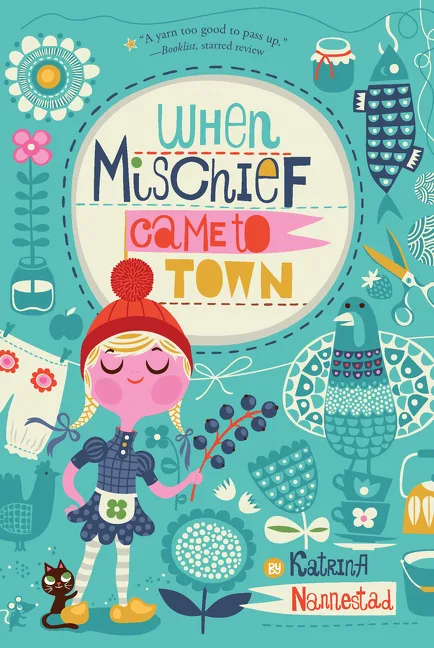 When Mischief Came to TownKatrina NannestadIn 1911, 10-year-old Inge arrives to live with her grandmother on a remote Danish island. She is bereft—her mother has died—but her grief doesn’t diminish her spirited nature. Inge doesn’t know her grandmother well—she 84 Fiction for Children CCBC Choices 2016 and her mother lived in the city far away. But it gradually becomes clear that beneath her grandmother’s seemingly stern exterior is a woman of great caring and warmth, along with clues her grandmother as a child was very much like Inge, with a knack for getting into trouble without trying. A boy named Klaus, smart and resilient like Inge, who is carrying his own burden, further eases Inge’s transition, especially at school. At home, when Inge’s suddenly overwhelmed with sadness, her grandmother is there. Buoyant, funny, and also deeply moving, Katrina Nannestad’s marvelous chapter book features a wonderful cast of secondary characters. A number of these are older people in the community whose personalities are slowly revealed, and whose lives are brightened by Inge and Klaus.Fiction for ChildrenLexile Text Measure 930LATOS Book Level 5.6View book details
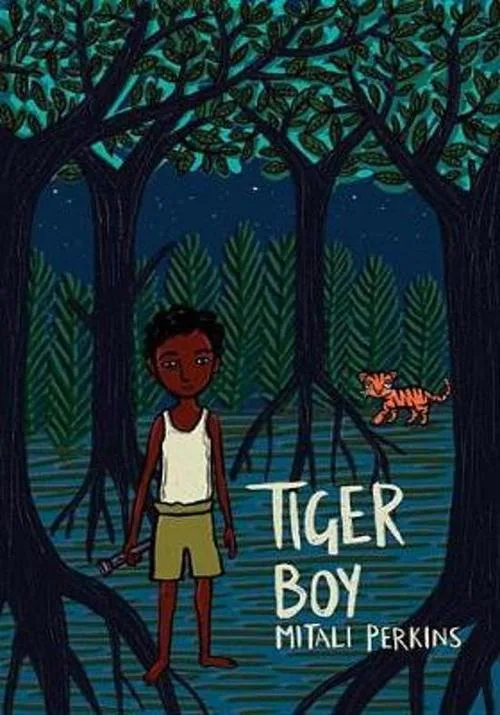 Tiger BoyMitali Perkins, illustrated by Jamie HoganNeel lives on one of the Sundarban islands off the coast of Bangladesh. Neel’s father has always said it’s important to protect the land and the tigers, so Neel is dismayed when Baba agrees to work for wealthy Mr. Gupta hunting a tiger cub that escaped from a nearby refuge. Everyone knows Mr. Gupta wants to sell the cub on the black market. But hardworking Baba needs extra money to hire a tutor to help Neel prepare for an upcoming scholarship exam. Neel doesn’t care about the scholarship. He does care about the little cub, however. He and his older sister, Rupa, who wishes she could go to school, set out to find the cub before anyone else, even Baba, and return it to the refuge. The sense of urgency that propels Neel and Rupa’s hunt for the cub creates the perfect amount of tension in an engaging story wonderfully grounded in Neel’s point of view and his experiences in his family and community. Their effort to save the cub helps Neel understand how furthering his education is one means of helping protect the place he lives. Just the right amount of information about the complexities of economic and environmental issues is seamlessly incorporated into this warm, lively chapter book featuring occasional illustrations and a satisfying and believable ending. An author’s note tells more about the islands and the challenges faced there.Fiction for ChildrenLexile Text Measure 770LATOS Book Level 5.1View book details
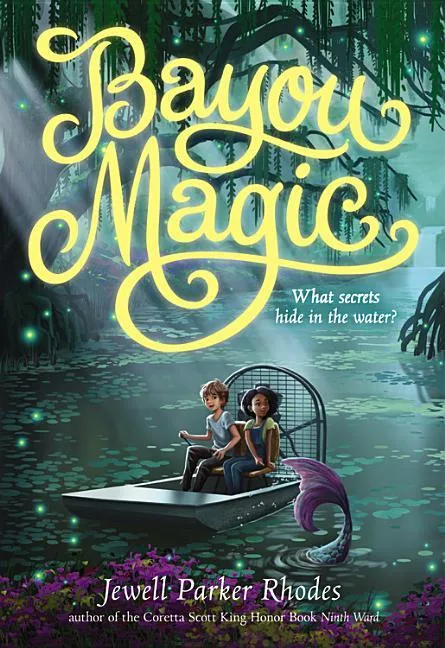 Bayou MagicJewell Parker RhodesNine-year-old Maddy is spending the summer with Grandmere in Bon Temps Bayou. Grandmere knows things by intuition, by observation, and also by her gift, and she suspects Maddy may be the same. Grandmere tells Maddy the story of her great-great-great-grandmother, Membe, who loved Mama Wata, the water goddess, but felt abandoned by her after being captured and enslaved. Mama Wata sent a firefly to comfort Membe, and traveled alongside the boat bringing Membe to America. Like Grandmere, Maddy can call fireflies. But only Maddy can sees the girl in the water who Grandmere is sure is Mama Wata. Maddy feels like a genuine kid, and her exploration of the bayou with a boy named Bear has a sense of everyday adventure in a story that deftly blends magical realism with strongly developed real-world setting and characters. When an explosion on an offshore oil rig threatens the bayou with devastation, the storytelling gains a sense of urgency. Maddy must call on her gift and her CCBC Choices 2016 Fiction for Children 85 courage to reach Mama Wata for help in order to save the place and people she has come to love.Fiction for ChildrenLexile Text Measure 410LATOS Book Level 2.8View book details
 The MarvelsBrian SelznickAlmost the first two-thirds of this hefty novel is told through black-and-white illustrations depicting generations of the Marvels, a theater family in England, from 1766 to 1900. A jump to 1990 begins the prose narrative in which Joseph, cold, wet, and sick, arrives on the doorstop of his Uncle Albert’s Victorian home in London after running away from boarding school. He doesn’t really know Uncle Albert, but Joseph’s parents are traveling outside the country, so he stays. Uncle Albert’s neighbor, a girl named Frankie, strikes up a friendship with Joseph, and the two of them begin trying to string together information about a famous theater family, the Marvels, who clearly once lived in Uncle Albert’s house, which is a living museum in their honor. There are personal belongings and even letters to be found in rooms that are staged like tableaus. Uncle Albert won’t talk about them, which makes Joseph and Frankie even more curious: How are the Marvels connected to Uncle Albert, and to Joseph? When finally revealed, the answer is bitter for Joseph. But for Joseph and for readers, too, it becomes bittersweet, and then wonderful: a tribute to the power of story and the gifts of imagination, friendship, and love. Brian Selznick moves back and forth between prose and visual narrative in the final third of a novel that concludes with an extensive and fascinating author’s note about the two men and the house that were the real-life inspiration for the story.Fiction for ChildrenLexile Text Measure 770LATOS Book Level 4.6View book details
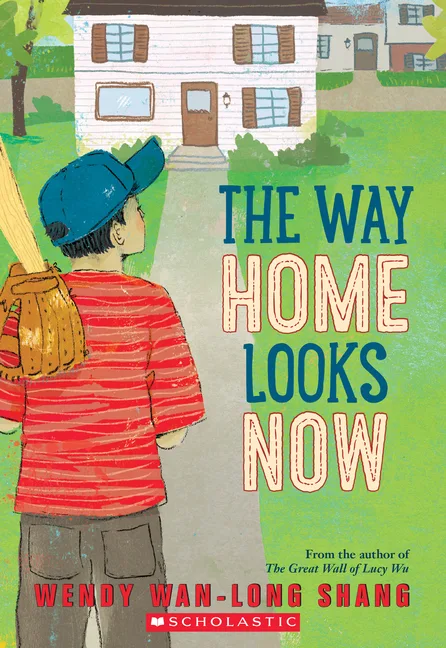 The Way Home Looks NowWendy Wan-Long ShangPeter’s Taiwanese American family is struggling since the death of his older brother, Nelson. Peter, Nelson, and their mother shared a love of baseball, so Peter tries out for a team in hopes it will spark his mother’s interest since she’s so sad she rarely leaves the couch. But it’s Ba who gets involved, volunteering to coach Peter’s team. Angry with his father, who argued with Nelson about the Vietnam War and can’t make things at home better, Peter is now embarrassed by him as a coach. But it turns out Ba has been paying attention to baseball— he even played as a boy—and to what’s happening at home more than Peter knew. Grounded in the perspective of a child in a family working through grief, this novel also succeed as an accessible, engaging sports story that addresses changing social norms in the 1970s. When one of the team’s best players, Aaron, turns out to be Erin (a girl), parents threaten to pull their sons from the team. Ba leaves it up to the kids to decide if she should stay. Meanwhile, there are moments when Peter’s mother shows a spark, but baseball is not a magic cure. “Time,” says Ba. Nuanced characters, including Peter’s mother and Nelson, both developed in flashbacks, are among the story’s many strengths.Fiction for ChildrenLexile Text Measure 650LATOS Book Level 4.2View book details
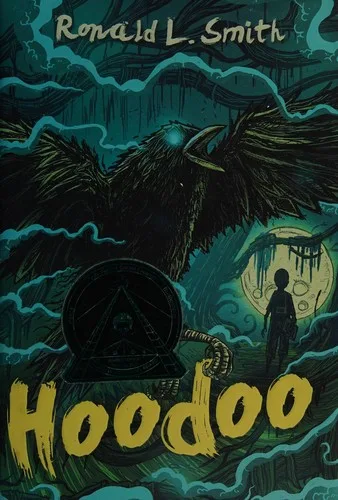 HoodooRonald L. SmithEleven-year-old Hoodoo Hatcher has a bad feeling about the Stranger in town, with good reason. The man is a servant of the devil hunting something he calls Mandragore, or Main the Gloire —”the one that did the deed.” To Hoodoo’s dismay, his own left hand is what the Stranger is looking for. Hoodoo’s father, lynched years before, tried to use his conjuring skills to escape into his young son’s body but succeeded only as far as his hand. Hoodoo knew none of this before the Stranger’s arrival. Determined to face the Stranger on his own in order to protect his family and friends, Hoodoo goes in search of spells and knowledge beyond what his family already knows. He finds answers following clues in an old book of his father’s, and he finds great, just power in his left hand. Author Ronald L. Smith takes his time—in a wonderful way— establishing setting (a small rural African American community in Tuscaloosa County, Alabama, in the past) and characters in a story that deftly balances real-world and otherworldly scary. But it never feels heavy or heavy-handed, in part because Hoodoo is such an appealing, smart, and often funny narrator who never loses his sense of goodness, or even innocence, in spite of all the knowledge he gains of darkness in and beyond this world.Fiction for ChildrenLexile Text Measure 600LATOS Book Level 4.2View book details
 Moonpenny IslandTricia SpringstubbFlor’s uneventful but happy life is dealt two simultaneous blows. Her best friend Sylvie, the only other 11-year-old in their Lake Erie island community, is sent away to attend a private academy at the same time that Flor’s mom leaves, ostensibly to care for her ill mother. But Flor knows that her grandmother’s many relatives living nearby could help out and suspects her mom’s leaving has more to do with the escalating arguing between her parents. Money is tight, and sometimes Flor imagines that it’s hard for her mom being the only non-white person, let alone the only Spanish-speaker, on the island. Meanwhile, Flor’s perfect older sister Cecelia has become secretive and distant, abandoning Flor just when she needs her most. Welcoming the distraction of island newcomers, Flor finds herself intrigued by eccentric Dr. Fife and his daughter Jasper and their study of trilobites. Enduring and unexpected friendships and connections play important roles in a story rich with character development, successfully blending a compelling plot with thoughtful introspection, all framed by the appealing small-town island setting.Fiction for ChildrenView book details
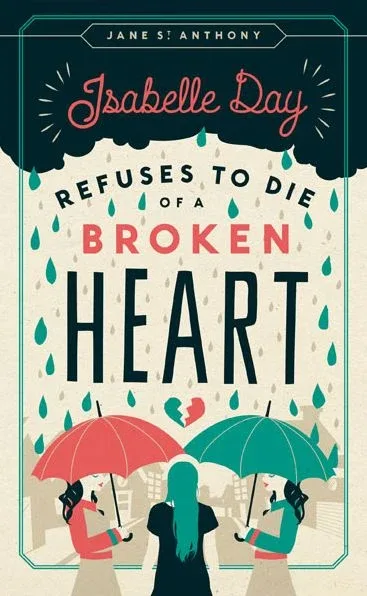 Isabelle Day Refuses to Die of a Broken HeartJane St. AnthonyThirteen-year-old Isabelle Day has just moved from Milwaukee to Minneapolis following her father’s death in the early 1960s. Isabelle makes a good friend in her neighbor Margaret—the girls both attend the nearby Catholic school, where their teacher is a sharp, singular, sometimes surprising nun—while the elderly McCarthy sisters who live downstairs befriend both Isabelle and her mom. Everything in this superb, understated novel unfolds through showing rather than telling as it explores the way grief can settle beneath the surface of people’s lives. Isabelle initially thinks the McCarthy sisters are nosy; she gradually realizes CCBC Choices 2016 Fiction for Children 87 their concern and goodness are genuine. She isn’t sure about her friendship with Margaret’s best friend, Grace, but slowly finds solid ground as one of three. And she initially idealizes her dad, but eventually allows the memories of harder times to surface. Still, the truth she doesn’t think she can tell is that he committed suicide. There is not a huge emotional arc to this story in which grief and loss echo through the lives a number of characters. Yet hope, and often humor, is present all along, and by book’s end it is clear Isabelle, while still grieving, has not only settled into her new home, but feels surrounded by love.Fiction for ChildrenView book details
 Goodbye StrangerRebecca SteadThe structure of Rebecca Stead’s novel is complex and the connections are deep and rich between characters and across several storylines as she examines friendship, family, and love. Bridge’s best friends are Emily and Tab. Seventh grade brings changes and challenges as Emily likes an older boy named Patrick, who may or may not be reliable, and there’s fallout when a picture Emily sends him is widely shared, illuminating a sexist double standard that Tab doesn’t hesitate to point out. Bridge is still occasionally plagued by nightmares from when she was hit by a car in third grade; an accident that her new friend Sherm Russo remembers, too, although Bridge doesn’t know it. Meanwhile, Bridge’s brother is on the verge of losing yet another bet with his closest-but-not-so-nice friend, and Sherm is ignoring texts from his grandfather, with whom he was close until he left Sherm’s grandmother months before. Finally there is Tab’s older sister, Celeste, whose betrayal of her new friend Gina’s confidence to her old friend Vinny, whose mean streak is getting worse, has her mortified. While the three younger girls manage to be true to themselves and one another, Celeste and Bridge’s brother are realizing that sometimes you have to let a friendship go in a novel full of truths that will resonate with readers.Fiction for ChildrenLexile Text Measure 560LATOS Book Level 3.9View book details
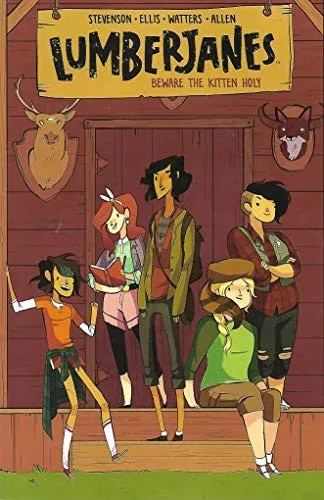 Lumberjanes: Beware the Kitten HolyNoelle Stevenson, Grace Ellis, illustrated by Brooke AllenMiss Qiunzella Thiskwin Penniquiqul Thistle Crumpet’s Camp for Girls Hardcore Lady Types is where Lumberjane scouts gather in summer. Campers Molly, Mal, Ripley, April, and Jo are finding camp holds a lot of surprises. When they’re beset by a wild group of wolves in the forest (they go into the defensive “Little Red formation”), they’re determined to discover the meaning of the mysterious message “Beware the Kitten Holy,” which appeared above the wolves in the sky. Ditching their counselor, Jen, at every opportunity, they have one supernatural encounter after another. Meeting each challenge means working together, building a steadfast bond. A boisterous graphic novel featuring singular characters, each of whom brings her own unique strengths to the group, is feminist, funny, and refreshing. The book is divided into rousing episodic chapters, each of which is aligned to a section of the facetiously formal Lumberjanes manual detailing the requirements for a specific badge (e.g., “Up All Night Badge—Learn what goes bump in the night”).Fiction for ChildrenView book details
 Hamster Princess: Harriet the InvincibleUrsula VernonThis twist on “Sleeping Beauty” stars Harriet Hamsterbone, an atypical princess. She’s good at some traditional hamster princess skills like checkers and fractions, but is abysmal at others, like looking “ethereal” and being “melancholy.” Harriet would much rather battle dragons or ogrecats and enter jousting matches with her trusty riding quail, Mumfrey. When her parents reveal that Harriet was cursed by the wicked fairy, Ratshade, at birth and is fated to fall deeply asleep when she cuts herself on a hamster wheel on her 12th birthday, clever Harriet sees a fabulous loophole. She is invincible until then. The curse must keep her alive until she turns 12. Harriet and Mumfrey set out a numerous dangerous challenges and find great success. On the fated day, unexpected allies and Harriet’s stereotype-crushing attitude ultimately save the day. Illustrations and text bubble asides successfully complement the traditional prose in this humorous tale of a strong and unconventional heroine.Fiction for ChildrenView book details
 Gone Crazy in AlabamaRita Williams-GarciaDelphine, Vonetta, and Fern are sent to rural Alabama to spend the summer of 1969 with their grandmother, Big Ma, and her mother, Ma Charles. Before putting them on the Greyhound bus, their father tells them: “… Once you cross the line from North to South all of that black power stuff is over.” At 12, Delphine is old enough to understand and believes she can keep her younger sisters in line. But 10-year-old Vonetta is enjoying the attention of Ma Charles and her half-sister and life-long rival, Aunt Miss Trotter. The two elderly sisters haven’t spoken to each other in years and dramatic Vonetta is only too willing to serve as a conduit between them as they pass information and insults back and forth, taking advantage of Vonetta’s twin skills of mimicry and showmanship. The girls’ daily trips across the creek to the Trotter home offers them insight into their own family history, and an understanding of their family’s place within a specific rural Southern setting, all of which seems more than a little crazy to Delphine. And this all lays the groundwork for some much-needed family unity when a tragedy strikes. The witty dialogue and singular characterizations that were hallmarks of One Crazy Summer and P. S. Be Eleven continue here, and like its predecessors, this novel offers insights into social history during a pivotal time of change.Fiction for ChildrenLexile Text Measure 740LATOS Book Level 4.5View book details
Fiction for Young Adults
43 selections
 Half a Creature from the Sea: A Life in StoriesDavid AlmondDavid Almond shares dimensions of his childhood growing up in the working class town of Felling-on-Tyne in England in the 1950s and 1960s in a series of reminiscences that precede each of the short stories in this collection, many of which have autobiographical elements. The stories draw on the same themes seen in many of Almond’s novels: religion, art, working-class life, friendship. A sense of the specific community in which they are set, and of things that exist just beyond the realm of reality, also infuse a number of the stories, which are both gritty and lovely. Almond writes: “These stories take place in a real world—the streets in which I grew, the fields and beaches over which I walked. People I know appear in them. But in fiction, real worlds merge with dreamed worlds. Real people walk with ghosts and figments. Earthly truths go hand in hand with watery lies.”Fiction for Young AdultsView book details
 The Tightrope WalkersDavid AlmondDominic Hall is the only child in his working-class, East Anglian family in the 1950s. His best friend is middle class Holly Stroud. The two greatly loved children are both gifted artists. Vincent McAlinden is all tough and rumble, a boy with a harsh life and often feared by other kids. Rich, complex, satisfying storytelling centers on Dom, but follows the fate of all three from childhood through adolescence to young adulthood in the 1960s. Dom’s gift as a writer sets him apart from his parents and others, including the men he eventually works with inside the great tankers being built—men who may not think as deeply as Dom but whose goodness and tenderness shine. The divide is poignant at times, yet Dom knows he is no better than others, just different, and he sometimes wonders, “Why me?” Vincent’s roughness, with vulnerability at its core, turns brutal as he grows, his self-loathing complicated by being gay in a time and place where there are no models or support. And Holly, increasingly haunted by the fate of her mentally ill mother, is determined to pursue rather than stifle her own artistic dreams. Everything feels like a balancing act as Dom and Holly work to meet the future on their own terms, with Vincent a shadow that they can’t shake. A deeply thoughtful, unflinching novel features multidimensional characters who grow and change and challenge at every turn (Vincent is both sympathetic and terrifying, for example), and dizzying, beautiful language.Fiction for Young AdultsView book details
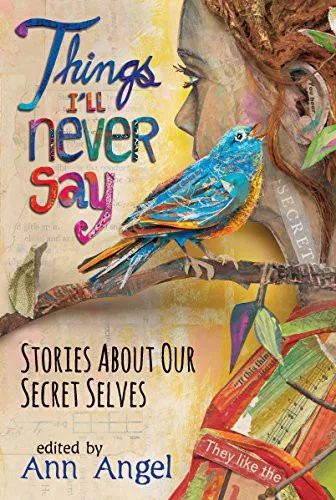 Things I’ll Never Say: Stories about Our Secret SelvesCassandra NewbouldWhat’s your secret? It’s an obvious question to ask after sharing one or more of the short stories in this collection developed around the theme of secrets. And the secrets revealed here are fictional explorations of the kinds of secrets 90 Fiction for Young Adults CCBC Choices 2016 we all may keep or struggle to reveal: some truth about ourselves, our lives, our families, our fears, or things that threaten us. Secrets are often seen as a way to protect, but they are also a means to harm. Sometimes there is such a web of deceit that determining the truth is impossible. Sometimes, someone else’s secret is a burden hard to bear. Fifteen diverse authors have contributed to this collection of stories, offering a range of styles and subject matter in a volume that invites exploration and reflection.Fiction for Young AdultsView book details
 The Scorpion RulesErin BowAlmost 18, Greta, Duchess of Halifax, will soon be released from the Precepture where she has lived since she was six. Like her companions, Greta is the child of a world leader, held hostage as a deterrent to war. If any nation or region acts with hostility toward another, the child of its leader is sacrificed. Refusing to abide by the rules means one of its cities will be obliterated by Talis, the Artificial Intelligence that conceived the peacekeeping system. Greta and her friends from other countries have been groomed to accept that their lives always hang in balance. Teenage Elian, a new hostage from a rising power in the American south, has not. He is repeatedly punished for his resistance by the Abbott. Like Talis, the Abbott is Artificial Intelligence. He’s also always been kind to Greta, and the cruelty takes her by surprise. The invasion of troops from Elian’s region led by his grandmother, a general determined to free her grandson and get water rights to Greta’s homeland, and the arrival of Talis, who has no intention of relinquishing control, sets the stage for a tense standoff in which Greta and the others, awakened to new possibilities, refuse to be pawns. A satisfying, complex story poses big questions about self-determination and sacrifice and the things that make us human. There is a love story here, too— two of them, as Greta tries to untangle feelings she has for both Elian and her roommate, Da-Xia. All of the characters, including Talis, are multifaceted, full of both strength and poignancy.Fiction for Young AdultsView book details
 Lair of Dreams: A Diviners NovelLibba BrayIn the second volume of the Diviners series, a mysterious and deadly sleeping sickness has hit New York City. Dreams turn to nightmares and, eventually, people never wake. The sickness first appears in Chinatown, and the city’s first response is to quarantine Chinese and Chinese Americans, although the sickness has already spread. Chinatown resident Ling and musician Henry both are dreamwalkers. They first meet in a dream and soon discover their dreamwalking powers are enhanced when they’re together. The more time they spend in dreams, the weaker they grow in the waking world. Still, they return again and again, especially when they begin to suspect the source of the sleeping sickness now gripping the city may be the ghost of a young Chinese woman they’ve encountered in their dreaming. Her tragic story of exploitation is a direct result of strict anti-Chinese immigration laws. This character- driven, supernatural, historic thriller examines social justice issues related to race, gender, immigration, and sexuality. The novel’s rich themes are expanded through the continuing stories of Evie, Sam, Memphis, Theta, and Jericho that CCBC Choices 2016 Fiction for Young Adults 91 Bray also develops, hinting at things to come while offering astute and thought- provoking commentary on the distortion of patriotism, religion, and science for power and control.Fiction for Young AdultsView book details
 Stone in the SkyCecil CastelluciTula Bane is still the only human on the space station Yertina Feray. While she hasn’t forgotten her desire for revenge against Brother Blue, responsible for the death of her mother and sister, she is trying to move on. The discovery of a fertile crop of the valuable plant alin on the planet Quint coincides with the return of fellow humans Reza and Caleb, whom Tula had saved from Brother Blue by shipping them off to the edge of the galaxy. As prospectors rush to take advantage of the alin bounty, Tula heads to Quint too. She is less interested in short-term gain than promoting interspecies cooperation, something the ruling Imperium is trying to undermine. But the reappearance of Reza also forces her to face conflicted feelings. She was once falling in love with him, but she also can’t deny her strong attachment to security head Tournour. And Tournour has declared his feelings for her. Tula has no doubts when it comes to promoting cooperation among different species, but is a romantic relationship possible? Tournour is no help when he offers his understanding. “I can see with my eyes that he is a handsome Human … He smells as nice as you do.” This satisfying sequel to Tin Star has surprises in store for Tula, and readers too, as it continues to plumb the depths of characters and connections.Fiction for Young AdultsView book details
 Apple and RainSarah CrossanAfter walking out of her life years before, Apple’s mom is back and seems to understand 14-year-old Apple’s desire for independence far better than strict and loving Nana. So Apple says yes to living with her mother. It’s only after she arrives at her mom’s apartment that Apple learns she has a half-sister, 10-year- old Rain. Rain, who has emotional issues, refuses to go to school. Their mom’s partying (in which she includes Apple) and financial situation both get worse, and more and more Apple is responsible for her sister. While parts of this novel are predictable—Apple’s initial resentment of Rain turns to love; Apple’s new friend Del becomes the steadfast person she relies on; things with her unreliable mom get steadily worse before Apple can bring herself to tell Nana the truth— the emotion across the story arc is richly and honestly portrayed. The book is divided into sections (Solitude, Fear, War, Love, Disappointment, Poetry), each one aligned to the theme of one of the poems Apple’s English class is studying with their marvelous teacher. The poems Apple writes for her assignments, also aligned to the themes, become honest expressions of the ways things are spiraling out of control. By novel’s end, Apple’s emerging voice as a young poet is something to celebrate along with relief at a safer future for the sisters back with Nana.Fiction for Young AdultsView book details
 UntwineEdwidge DanticatAfter her identical twin Isabelle is killed in a car accident, Giselle’s grief is compounded by her own injuries. Gisele wakes up in the hospital in small fits and starts. At first, there is the realization that Isabelle is dead; then comes the understanding that the staff and her aunt think that she is Isabelle and Giselle is the one who died. The mistake is rectified, but the loss remains, deep and ravaging, as Giselle moves through the first days and weeks after the accident. She and Isabelle were different, and sometimes fought, but even as they sought to be independent of each other, their closeness was a foundation. The loss changes the way Giselle sees her future, her friends, and her family, and underscores both the ways she and her sister strived to be individuals and also how deeply they were connected. Edwidge Danticat’s beautifully written look at the early days, weeks, and months of grieving is grounded in a Haitian American family that was already in transition, not only because the two sisters were starting to think about life beyond high school, but also because their parents were separating prior to the accident. Deeply moving, ultimately cathartic, it is a story that speaks, most profoundly, of love.Fiction for Young AdultsLexile Text Measure 920LATOS Book Level 5.6View book details
 A Prince without a KingdomTimothée de FombelleThe sequel to Vango: Between Earth and Sky continues with the same breathtaking speed and intricacy as it follows Vango through World War II Europe and New York City. Vango knows he is being pursued for a murder he didn’t commit, but far more dangerous are the forces trying to kill him for reasons he cannot fathom. They have emerged from a past he knows nothing of. The truth of that past is revealed in chapters that compellingly weave Vango’s fictional existence into historical events. Mystery and intrigue, heroes and villains, poignancy and impossibility exist side by side in a novel that follows multiple characters and storylines. Politics and war, power and evil, and the ongoing quest for peace are all threaded through the story. At the center of it all is Vango, a young man moving toward a hopeful future, assuming he survives the threats from his unknown past. Exceptional writing and translation make this is a pleasure to read, even as it challenges readers to keep track of all the elements.Fiction for Young AdultsView book details
 The Accident SeasonMoïra Fowley-‐DoyleEvery October, teenage Cara’s family struggles through the month they’ve come to call “the accident season.” Sometimes the accidents are small—a cut, a sprain. Sometimes they are more serious—a broken bone. And sometimes, they’ve been deadly. Cara, her older sister, Alice, and ex-stepbrother Sam, are always mindful. But they won’t give up their lives for a month. Their anxious mother, meanwhile, would encase them in bubble wrap if she could. This particular October, Cara is not only aware that it’s the accident season, she’s trying to find a classmate named Elsie, a quiet girl no one seems to remember. Cara is also finding it harder and harder to ignore her attraction to Sam. A novel that blends CCBC Choices 2016 Fiction for Young Adults 93 reality with elements of the supernatural is, above all, a psychological thriller as secrets and uncertain memories come into the light, and monsters of the real world are gradually revealed. Truths about love and abuse and power and control and love again unfold in beautiful language, through the interactions of incredibly real, complex characters in a novel that is vivid, compelling, and compassionate.Fiction for Young AdultsView book details
 See No ColorShannon GibneyAlex(andra) is a biracial teen who was adopted by white parents as a very young child. She looks Black but has never interacted with Black kids at her high school, who disdain her for acting white. Her family is hesitant and ill-equipped to talk about race (you’re only “half black” her father says, and she assumes he’s trying to minimize her Blackness as if there is something wrong with it). Then she discovers her African American birth father wrote her a series of letters her parents have never showed her. At the same time, she starts dating a Black boy she’s met through baseball. She’s angry her parents withheld the letters, and is happy with her boyfriend, Reggie, but is unable to be completely honest with him about her complicated identity struggles. A book with some unforgettable moments (like Alex’s discovery that she was considered a special needs adoption, and therefore cheaper, because she is mixed-race) excels at exploring Alex’s confusion and complexities surrounding race and identity. Alex’s introduction into aspects of Black culture range from humorous to poignant, while her need to feel understood is heartrending and profound. Her family’s love for her and hers for them is never in doubt, but it doesn’t change her struggle in this honest and groundbreaking novel.Fiction for Young AdultsView book details
 Wolf by WolfRyan GraudinAs a child, Yael was subjected to Nazi medical experimentation attempting to physically transform subjects into the ideal Aryan. Her hair gradually turned blonde, her eyes blue. But Yael also discovered she could take on the appearance of other women and girls at will, a secret that was her means of escape from the concentration camp. Ten years have passed in this alternate history sci- fi hybrid, and Yael is at the center of a plot to assassinate Hitler. The Axis powers—Germany and Japan—hold an annual motorcycle race that crosses their two empires. In 1955, a young woman named Adele Wolf won. In a rare public appearance, Hitler danced with Adele at the Victor’s Ball. Now Yael has been training for a year to pose as Adele, win the race, dance with Hitler, and assassinate him. A novel that hurtles at a breathtaking pace alternates between chapters chronicling Yael’s progress in the race—complicated by the unexpected entry of Adele Wolf’s twin brother, Felix, who is trying to convince her to quit and come home, and the unexpected relationship between Adele and another champion, Luka Löwe—and her past, full of hard lessons and aching, poignant loss. Dirty tricks and sabotage are expected among contestants, and alliances are often the only way to make it to the next checkpoint. But whom can Yael trust? The relationships are complex and satisfying, with all of the characters 94 Fiction for Young Adults CCBC Choices 2016 drawn with greater and greater subtlety as the novel races toward a shocking conclusion.Fiction for Young AdultsView book details
 Are You Seeing Me?Darren GrothAlternating perspectives of 19-year-old twins Justine and Perry chronicle their trip to Vancouver, B.C. Perry has autism (deduced through what is shown; never stated) and recently made the decision to move to a residential program back home in Brisbane—something their dad arranged as an option before dying of cancer. Justine doesn’t want Perry to leave home. She’s told him they’re in Vancouver because of his interest in seismology and sea monsters—the surrounding area is ripe for exploring both. But she also plans on meeting the mother who abandoned the two of them years before. A third voice in the narrative is their father, in the journal he wrote for Justine from the time she was born. Wholly devoted to both his kids, he wanted to make sure Justine would not forego her own dreams for Perry. Perry’s coping mechanisms include a love of all things Jackie Chan and he sometimes imagines fantasy scenarios in which he is Jackie. Justine, who loves literature, has dreams in which the stress of her life plays out as scenes based on Robinson Crusoe. These two who are so close are also at odds as Justine in particular can’t imagine a future in which her brother is not at the center of her life. Although she’s finding Perry can surprise her, she can’t yet see that Perry is ready and capable of making his own choice in this story with two singular, wonderfully revealed characters.Fiction for Young AdultsView book details
 BeastkeeperCat HellisenAfter 12-year-old Sarah’s mother leaves, her depressed father takes Sarah to stay with her grandparents, whom she’s never met. In the old castle where her grandmother lives, Sarah discovers her grandfather is a beast in a cage. Once a vain prince, he chose the prettier of two foster sisters to wed for her beauty rather than love. The other sister cast a spell: He would become a beast if he CCBC Choices 2016 Fiction for Young Adults 95 ever fell in love with his wife. Now his wife, Sarah’s grandmother, is bound to him; she will die if she leaves. In retaliation Sarah’s grandmother turned her foster sister into a white raven, a curse that will last until the death of the one her sister loves the most: her daughter, Sarah’s mother. Meanwhile Sarah’s father, who inherited his father’s curse, has turned into a beast beyond reason because he lost his love, while Sarah’s mother has turned into a wren. The magic and curses are thick and capricious in this fast-paced story, and that’s part of the point: Jealousy and revenge weave thorny, tangled, complex webs, and cutting through them to the heart and the truth of things isn’t easy. Cat Hellisen’s immensely satisfying offering doesn’t end with happily ever after, and it’s richer for it. But smart, spirited Sarah, discovering she, too, has inherited the beastly curse, finds balance and peace, learning to live with the wild inside her.Fiction for Young AdultsView book details
 A Thousand NightsE. K Johnston“Lo-Melkhiin killed three hundred girls before he came to my village looking for a wife.” Determined to save her older sister from being ruler Lo-Melkhiin’s next victim, the narrator of this story makes sure she is the one Lo-Melkhiin chooses as his bride. Few have survived more than a short time, but she does, already in possession of magic Lo-Melkhiin cannot understand because it is rooted in love. Because of the young woman’s sacrifice, her sister and other women in her village turn her into a living smallgod, and her power grows. In the qasr where Lo-Melkhiin lives, she bears the title of queen and becomes part of the warp and weft of daily life, forming bonds with other women, whose creativity and forbearance are the foundations of the kingdom, and making a few friends among men. Because she can see Lo-Melkhiin’s past, she knows he wasn’t always evil but returned from one of his trips to the desert possessed by a demon. She can also see the spot in the corner of his mind where she suspects the real Lo-Melkhiin remains. The voice of the demon occasionally speaks in this novel and his cruelty and contempt for the man he possesses, for women, for all humanity is palpable. But his arrogance blinds him to the young woman’s strength and her power to create in E. K. Johnston’s vivid tale set in the Pre-Islamic Middle East. Lush with detail, it is an original, strongly feminist offering.Fiction for Young AdultsView book details
 Read Between the LinesJo KnowlesSet in a high school community over the course of a single day, each chapter of this novel is told from the point of view of a different individual, most of them students, one a recent graduate, one a first-year English teacher. At some point, each of them is either on the giving or receiving end of “The Finger.” A gesture that looks and feels incredibly impulsive and rude when on the receiving end becomes surprisingly weighted and nuanced when the context behind it is revealed. Readers are privy to what the person being flipped off is not: the frustration, humiliation, fear, or despair that the individual flipping them off experienced in minutes, hours, or even days leading up it. Sometimes it’s even a lifetime of pain as a story reveals challenging or dysfunctional family dynamics. 96 Fiction for Young Adults CCBC Choices 2016 Unexpected moments of connection and tenderness are also on display. The well-drawn characters are a mix of types—jock, cheerleader, slacker, and loner—each one proving to be more than what they seem when the person behind the label is even briefly revealed. While characters appear in multiple stories—sometimes as the protagonist, sometimes in the background—the stories are not directly overlapping or perfectly tied up. Neither high school nor life is that neat.Fiction for Young AdultsView book details
 The Porcupine of TruthBill KonigsbergWhen Carson meets Aisha in the gift shop of ZooMontana, he is awed by her beauty and quick wit. Although initially disappointed to discover that Aisha, a lesbian, isn’t the potential romantic partner he’d hoped, Carson realizes she has the friendship potential that he craves. Recently arrived in Billings from his New York City home, Carson and his mom intend to spend the summer caring for his terminally ill, alcoholic, long-estranged father. African American Aisha’s father made her leave home after she came out to her parents. New information about his paternal grandfather (also estranged from the family) sends Carson and Aisha on a quest to track the man down and bring him back into his son’s life before it’s too late. During a road trip that eventually takes them to San Francisco, the two teens struggle with difficult questions about religion, race, alcoholism, family relationships, and the sometimes rocky road to an open and equal friendship. Humor, honesty, and a willingness to explore important but often uncomfortable topics combine in this exceptional contemporary novel.Fiction for Young AdultsLexile Text Measure HL670LATOS Book Level 4.4View book details
 You Can’t See the ElephantsSusan KrellerThirteen-year-old Mascha spends summers with her grandparents while her father engrosses himself in work, his coping mechanism since the death of Mascha’s mother several years before. Mascha’s grief is the subtext to a story in which her loneliness leads her to befriend two younger kids who live near her grandparents’ home. Like Mascha, Julia and Max seem like outsiders even though their father is well-known in the community. Mascha notices their bruises but it isn’t until she stops by their house one day that she realizes something is terribly wrong. Hearing a scream she looks in the window and sees their father throwing Max against a wall. When she tells her grandparents, they don’t believe her: He’s a well-known citizen, of course he doesn’t beat his children! The denial of adults—and it becomes clear that denial has been happening in the community for a while—is one of the realities of this novel; another is Mascha’s childlike belief that she can save her friends. Her plan involves hiding the children in an abandoned house. Soon the police are looking for the missing children and when they are found Mascha is accused of kidnapping. Nothing is neat in this novel—it’s part of what makes it so compelling—but the story ends with signs of hope, not only for Julia and Max, but also for Mascha, who has great courage and no regrets.Fiction for Young AdultsView book details
 RazorhurstJustine LarbalestierThe year is 1932, and the gritty Sydney neighborhood of Razorhurst is controlled by two rival gangs; one led by Gloriana Nelson and the other by Jim Davidson. Prostitution, gaming, illicit drugs, nightclubs, and grog shops run rampant in the area alongside poverty. An uneasy truce between the two factions is threatened by the murder of Jimmy Palmer, Gloriana’s right-hand man. Kelpie is an orphan who can see and talk to ghosts, and who exists on the edges of her community. A story set over less than 24 hours begins with Kelpie stumbling onto the murder scene of Jimmy Palmer. High-class prostitute Dymphna Campbell is also there—she was Jimmy’s girlfriend. It’s clear Dymphna didn’t kill him, but she and Kelpie flee as the police arrive. On the run throughout Razurhurst and Sydney, Kelpie and Dymphna, accompanied by Jimmy Palmer’s ghost, try to keep a step ahead of Gloriana and Jim Davidson, both of whom are in pursuit. Aspiring writer Neal Darcy is captivated by Dymphna and is drawn into their drama. A vivid sense of time and place permeates the action, while complicated characters model the many ways people are trapped by circumstances of poverty, crime, racism, and violence. One of the story’s revelatory moments comes when it’s revealed that Dymphna, who seems like a worldly adult, and Kelpie, who seems like a child, are almost the same age. The two teenagers’ similarities gradually emerge as they draw on their combined intelligence and instincts to survive a harrowing day.Fiction for Young AdultsView book details
 ZeroboxerFonda LeeAfter Ari’s boyfriend Win dies, Ari asks a hekamist to wipe her memories of their time together. The side effects of the magic are severe. A talented dancer headed to New York, Ari loses her grace and ability to dance. She stops going to dance class and tells no one. She also doesn’t reveal that she’s only pretending 98 Fiction for Young Adults CCBC Choices 2016 to be grieving since she can’t remember her relationship with Win. Chapters focusing on Ari; on Win’s best friend Markos, who feels untethered without him; on Ari’s close but insecure friend Kay, who has told no one she went to a hekamist for magic that binds Ari to her; and on Win himself, who was battling severe depression, reveal complex characters, complicated relationships, and secrets mired in the past. Life can be difficult, grieving is hard, friendship is built on trust: These are truths that there is no magic or shortcuts to get around. The theme of no easy answers extends to a moving subplot of Maggie Lehrman’s story: Hekamists—all of whom are women—are dying slow, cruel deaths because of government restrictions on their magic, and one young woman determined to save her mother through her own magic has tied her fate to Ari and her friends.Fiction for Young AdultsLexile Text Measure 870LATOS Book Level 6.3View book details
 The Cost of All ThingsMaggie LehrmanAfter Ari’s boyfriend Win dies, Ari asks a hekamist to wipe her memories of their time together. The side effects of the magic are severe. A talented dancer headed to New York, Ari loses her grace and ability to dance. She stops going to dance class and tells no one. She also doesn’t reveal that she’s only pretending to be grieving since she can’t remember her relationship with Win. Chapters focusing on Ari; on Win’s best friend Markos, who feels untethered without him; on Ari’s close but insecure friend Kay, who has told no one she went to a hekamist for magic that binds Ari to her; and on Win himself, who was battling severe depression, reveal complex characters, complicated relationships, and secrets mired in the past. Life can be difficult, grieving is hard, friendship is built on trust: These are truths that there is no magic or shortcuts to get around. The theme of no easy answers extends to a moving subplot of Maggie Lehrman’s story: Hekamists—all of whom are women—are dying slow, cruel deaths because of government restrictions on their magic, and one young woman determined to save her mother through her own magic has tied her fate to Ari and her friends.Fiction for Young AdultsView book details
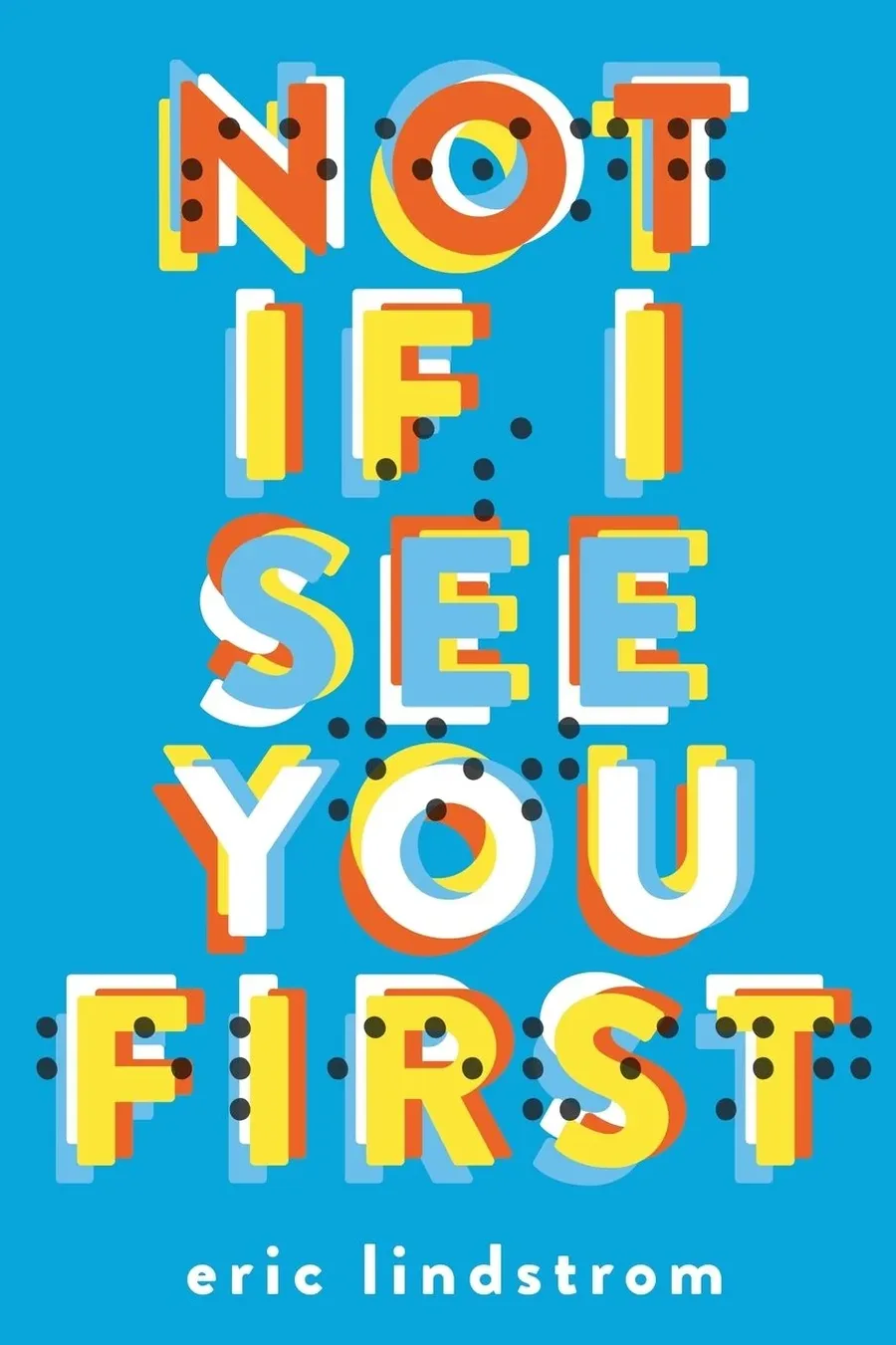 Not If I See You FirstEric LindstromSixteen-year-old Parker Grant has been blind since the car accident that killed her mother when Parker was seven. Now Parker’s father, who helped Parker become the independent young woman she is, has died of an overdose. Parker hadn’t even known he was taking antidepressants and wants to believe it was an accident. In a novel that exquisitely balances deep, sometimes gut-wrenching feelings with levity and humor, Parker finds herself questioning past decisions, current friendships, and her own self-centeredness as she realizes she is an accomplished self-advocate but often oblivious to the feelings and struggles of others. Those others include her former boyfriend, Scott, whom she’s shunned since an eighth-grade betrayal; her current best friend, Sarah; and her shallow cousin, Sheila, whose entire family uprooted their lives so Parker wouldn’t have to move. The characters in this book are vivid, the depth of their conversations and the nuances of their relationships marvelous. Even the secondary characters are far more than stereotypes as the author delves beneath the surface, so that even bitchy Trish, who is paired with Parker as a running partner when Parker joins the track team, has depth and surprise. Parker starts out believing her emotional control is a strength—she keeps a chart to track the number of days she’s gone without crying since her dad’s death. By novel’s end, she understands that the greater strength is in letting go, reaching out, and letting others in.Fiction for Young AdultsView book details
 SculptorScott McCloudYoung sculptor David Smith’s career is in a tailspin. Struggling artistically, he has lost gallery representation. Then he makes a deal with Death: For 200 days David will have the ability to transform his artistic visions into reality using whatever material he touches. Then he’ll die. David’s excitement to begin creating his legacy is short-lived: Before the end of the first day he meets Meg and quickly falls in love with her. Their love is revealed passionately and sweetly in a graphic novel that vibrates with energy and delves deeply into creativity. New York City comes alive, from the highbrow world of fine art to the gritty and electric world of guerilla and street art. The impact of ego and insecurity, the double-edged sword of patronage and money in the art world, CCBC Choices 2016 Fiction for Young Adults 99 and conflicting ideas about beauty and what art is, all come into play. Through it all, David and Meg are navigating the reality of an inevitable end. There is so much for mature teen readers to latch onto emotionally in this fast-paced story that also takes numerous plot twists and turns. The clean style of the art and the techniques used to show memory and otherworldly elements are all extremely effective.Fiction for Young AdultsView book details
 Dumplin’Julie MurphyWillowdean routinely introduces herself as a fat girl, but her feelings about her body are much more complicated than this forthrightness suggests. The daughter of a former beauty queen, she’s rarely allowed to forget she isn’t thin. Still, Willowdean makes no apologies for her weight. She decides to enter the local Miss Teen Blue Bonnet pageant for her beloved late aunt, who lived largely in seclusion because of her weight. She’s also doing it for the girls she’s convinced to join her—three other teens at school who don’t meet typical standards of beauty. Together, she tells them, they can make a statement. But when Willowdean’s pretty best friend Ellen signs up with them, Willowdean feels betrayed. Meanwhile, Willowdean is growing close to Bo, on whom she’s had a longstanding crush. But she recoils when he puts his hand on her waist while they’re kissing, worried what he’ll think of her fat. She can also imagine what people at school would say if they see the two of them as a couple. It’s easier to picture herself with Mitch. Like Bo, Mitch is an athlete. Unlike Bo, he’s on the heavy side. Both boys genuinely like her. Bo is the one she’s attracted to. Mitch is the one she’s convinced herself makes sense, although she knows she’s not being fair to Mitch in letting him think she feels more. Willowdean’s ultimate struggle isn’t accepting herself; it’s accepting the love of others in an insightful, honest, funny novel that comes with a big ol’ riotous dose of Dolly Parton.Fiction for Young AdultsLexile Text Measure 710LATOS Book Level 4.5View book details
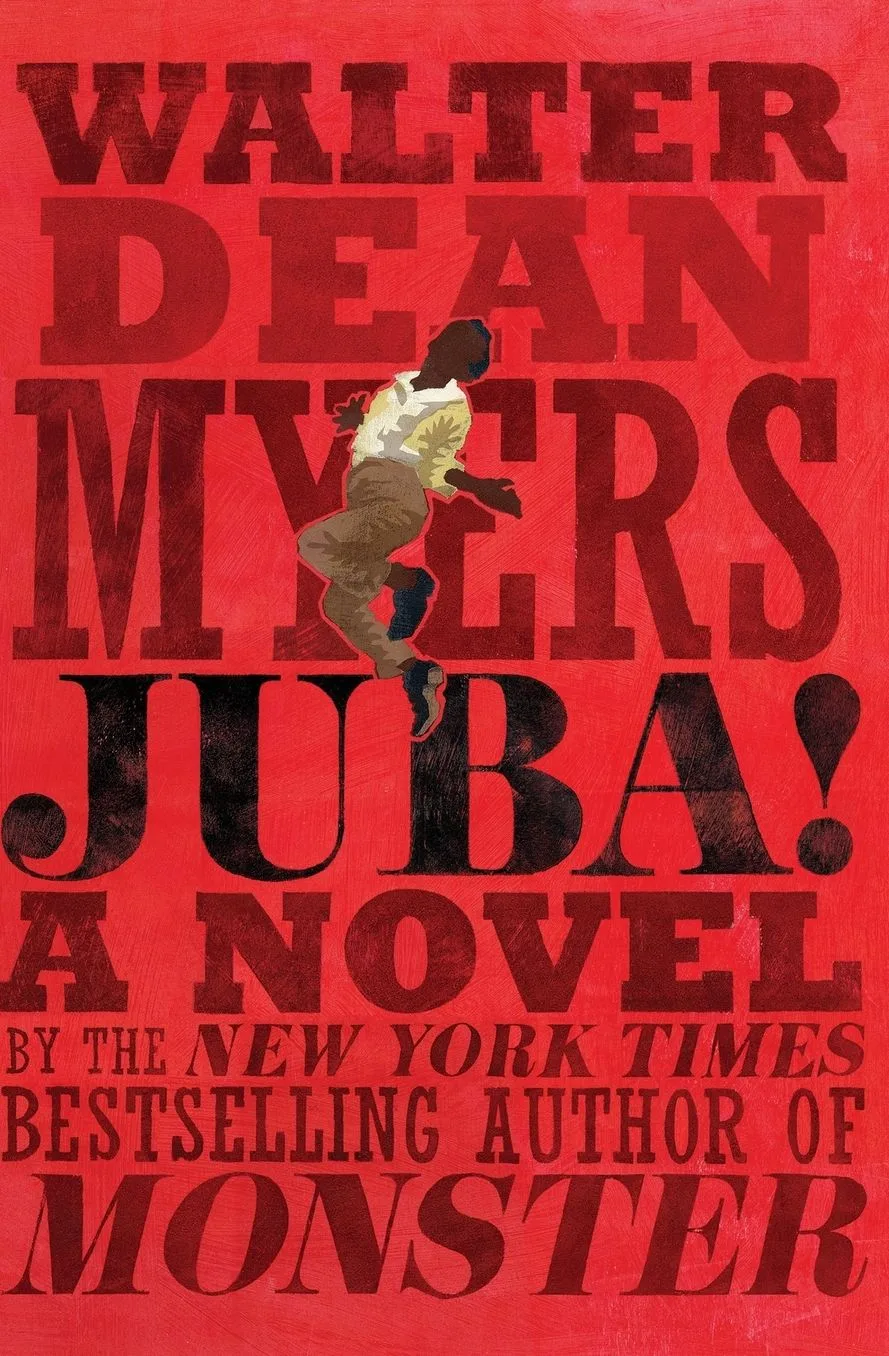 Juba!Walter Dean MyersWilliam Henry Lane was an African American dancer who went by the name Master Juba. Juba’s determination to make a living as a dancer is compelling as Myers sketches a few facts into full relief in this fictionalized account of the years between Juba’s young adulthood in New York City and death in Liverpool, England, at age 30. As he imagines Juba’s life in Five Points, Manhattan, in the 1840s, Myers reveals a vibrant young man full of creativity and schemes to live his dream. The many cultures in Five Points, especially Irish, all contribute to Juba’s dance steps, but he makes them into his own in inspired performances. When Charles Dickens sees Juba dance he is so taken he writes about Juba when he returns to England. That helps pave the way when Juba joins an otherwise all-white traveling troupe. Pell’s (Minstrel) Singers with Juba as a member head overseas and are initially able to capitalize on the Dicken’s publicity. Eventually, the group’s star fades. He marries Sarah, a white English woman, but he dies in a poor house while searching for work, his final love letter to her unsent. Myers deftly and deeply examines the racism that is a constant factor and force in Juba’s life, including a discussion of the use of blackface that parallels 100 Fiction for Young Adults CCBC Choices 2016 considerations today about the N-word. An author’s note examines the small gathering of facts and conjecture that formed the basis for a novel full of energy and poignancy.Fiction for Young AdultsView book details
 Serendipity’s FootstepsSuzanne NelsonA pair of shoes is the constant among stories across decades in a novel that begins in Berlin in 1938. Dayla, the daughter of a Jewish cobbler, has made a pair of pale pink, embroidered shoes to wear when she eventually weds. In 2013, Ray and Pinney are runaways from a group home in Texas. Pinney, whose full name is Chopine, loves shoes. She wants to go to New York because she’s seen a picture of a tree full of lost shoes there. On it is the pair she’s sure her mother was wearing before her mother got lost. Ray is running away from embarrassment and hopelessness. She doesn’t want Pinney along, but Pinney has a way of attaching herself. On the trip, Pinney, who has Down syndrome, has brought along the pair of graying pale pink embroidered shoes that Ray stole from a thrift store and cast off in hurt and anger the night before they left. How the shoes got from then to now and there to here, what happened to Dayla, what happened to Ray and Pinney before they ever met, and what happens to them next are all revealed in this intricate, emotionally generous novel that invites readers to believe in a little of what Pinney thinks of as magic.Fiction for Young AdultsView book details
 The Rest of Us Just Live HerePatrick NessMikey, his sister Mel(inda), and their friends Henna and Jared are about to graduate high school. Mel has anorexia and Mikey lives with severe anxiety and OCD, neither matching the image their high-aspiring politician mother wants their family to project. Henna’s parents plan on taking her to the Central African Republic to do missionary work, despite the war there. Jared feels the weight of being an only child on the verge of leaving his single-parent father. Jared is also a god. Well, technically a quarter-god. And there is the delicious twist in this emotionally rich story about facing a time of transition and uncertainty: The otherworldly is real. When indie kids (it’s always the indie kids) in the foursome’s small community begin disappearing, it isn’t the first time. In the past the culprits were vampires and soul-sucking ghosts; now it’s aliens. Mikey and his friends aren’t indie kids (despite Henna’s name) but are aware of the danger, which plays out in hilarious chapter openings chronicling the indie kids’ efforts to combat the threat, making a merry satire of countless young adult novels. But the heart of this novel is the reality of change—in relationships, in circumstances, in what we understand; imperfect families; and the sustaining power of friendship. As a narrator, Mikey is real and complex, and a little bit heartbreaking. As a work of fiction, Ness’s book is funny and tender and true, and a little bit dazzling. (Age 13 and older).Fiction for Young AdultsView book details
 Newt’s EmeraldGarth NixA Regency romance meets magical foul play in this action-packed mystery. At her 18th birthday celebration, the magical emerald that Lady Truthful Newington is to inherit when she turns 25 is stolen. The spectacular heart- shaped emerald, known as the Newington Emerald, imbues its wearer with magical power and is the source of the Newington family’s good fortune. In its absence, her father falls ill. The sheltered but curious Truthful sets off to London to search for the heirloom. Aided by her Great Aunt’s magic, Truthful takes on an alter-ego, Chevalier de Vienne, a mustachioed male French cousin set to become a priest, so she can move about London freely, something her gender and class would otherwise prohibit. Early in her search, Truthful, as Chevalier de Vienne, encounters the handsome and daring Major Harnett. He agrees to help the young man find the missing emerald. Truthful is a bold heroine and formidable partner for Harnett, whether in disguise or as herself. In the end, they find the emerald and lose their hearts. Nix seamlessly interweaves genres to create a world and characters that are well-developed and engaging.Fiction for Young AdultsView book details
 ShadowshaperDaniel José OlderStrange things are happening in Brooklyn even before a re-animated corpse attacks Sierra Santiago at the inaugural party of the summer. The murals on local buildings are changing and fading, tears and anguished expressions moving across the faces of the people in the paintings. Sudden, urgent requests from her invalid grandfather to team up with a boy named Robbie lead Sierra to discover a world of ancient magic tied directly to their Caribbean heritage: shadowshaping. An artist initiated into the shadowshapers can create a work of art—drawing, story, song, mural—and channel spirits to inhabit the creation and do the creator’s will. Robbie inducts Sierra, who shows a natural talent, into the shadowshapers. With the aid of Nydia (an archivist from Columbia University), Manny the Domino King, Neville Spencer (Sierra’s resourceful godfather), and her friends, Sierra and Robbie use their talents to unravel the mystery of the disappearing murals, fight a power-hungry anthropologist, and restore strength to the shadowshapers. The realistic characters and grounding of this urban fantasy in Puerto Rican and Haitian culture stand out. There is dialogue peppered with Spanish and French, comfort food of plantains and chicken and rice, Robbie’s tattoos portraying his Taino heritage, and the Salsa- Thrash Metal band led by Sierra’s brother. Open discussions of race and racial politics among the characters are also notable in a book that affirms the power of owning and embracing one’s cultural heritage.Fiction for Young AdultsView book details
 Out of DarknessAshley Hope PérezA gripping work opens with the explosion of the white school in New London, Texas, in 1937. The fictional story, woven around the facts of this actual event that killed almost 300 students and teachers, examines racism, sexual abuse, religion, and the powerful pull of family. At the center is the love between two 102 Fiction for Young Adults CCBC Choices 2016 teenagers, Mexican American Naomi and African American Wash. Much of the novel is in flashback. Wash befriends Naomi and her younger half-siblings, twins Cari and Beto, after they move to town. Naomi’s white stepfather, Henry, sexually abused her years before when her mother was dying. She told no one. When it becomes clear Henry’s intent, at the suggestion of his pastor, is to marry Naomi, she is desperate to leave, but she won’t go without the twins. Wash is determined to run away with them, despite his own family’s plans for him to go to college. Then the school explodes. In the aftermath, an angry and grieving white community is looking for someone to blame, and Wash is in their sights. Vivid, complex, and nuanced in both characters and telling, this novel is also incredibly forthright, building to a brutal climax. The violence is horrifying, but to make it anything less would be to undermine telling the truth of racism and sexual violence. But there is a thread of hope in one survivor’s determination to tell the story whole.Fiction for Young AdultsWord Count 4735View book details
 All American BoysJason Reynolds, Brendan KielyAuthors Jason Reynolds and Brendan Kiely put the issues of police bias, violence against Blacks, and white privilege front and center in this novel that alternates between the voices of high school students Rashad Butler and Quinn Collins. African American Rashad is brutalized by a white police officer who makes a snap judgment of a scene and assumes Rashad was harassing a white woman and stealing from a neighborhood store where he’d gone to buy potato chips. Quinn, who is white, shows up as handcuffed Rashad is being pummeled by the cop on the sidewalk outside. The officer is his best friend’s older brother, Paul, a man who has been like a father to Quinn since his own dad died in Afghanistan. In the aftermath of the beating, hospitalized Rashad deals with pain and fear as his family deals with fear and anger and tension, especially between Rashad’s older brother, Spoony, and their ex-cop dad. As the story goes viral, Quinn is feeling pressure to support Paul but can’t stop thinking what Paul did to Rashad is wrong. He begins to realize that saying nothing—he slipped away from the scene before he was noticed—is also wrong. Silence, he realizes, is part of the privilege of being white, and it’s part of the problem of racism. Something too few are willing to acknowledge, including school administrators and some teachers in the aftermath. Rashad and Quinn and their classmates are singular, vivid characters—kids you feel you might meet in the halls of just about any school—in a novel that is both nuanced and bold as it explores the harsh realities and emotional complexities surrounding race in America.Fiction for Young AdultsView book details
 The Boy in the Black SuitJason ReynoldsAfter his mother dies, Matt finds comfort in an unexpected place: the neighborhood funeral parlor. Owner Mr. Ray offers Matt a job, and in addition to helping get things ready for the post-funeral receptions, Matt likes sitting in on the services. Observing other people who are grieving gives Matt a way to see his own pain from the outside in. Mr. Ray becomes a surrogate father to Matt. It’s a role Matt welcomes since his own dad, also devastated, has started CCBC Choices 2016 Fiction for Young Adults 103 drinking again and ends up in the hospital. Meanwhile, at one of the funerals, the principle mourner is a teenage girl named Love. Soon Matt and Love become friends and are on their way to falling in love. It’s a sweet romance between two smart, singular, not-quite-alone-in-the-world teens. Matt and Love need, and can rely on, the larger community to take an interest in them, and vice versa: Love was raised by a grandmother who taught her to do good deeds in the world, and she draws Matt into that service. The sense of this New York City community as something both sustained by and sustaining of individual lives is beautifully rendered in Jason Reynolds novel, even as it doesn’t shy away from some of the challenges and dangers in a place where there are many struggles. Distinctive, well-developed characters, including Matt’s mother—a presence through flashback—populate this poignant, sometimes funny, emotionally true and tender story.Fiction for Young AdultsLexile Text Measure HL760LATOS Book Level 4.8View book details
 Carry OnRainbow RowellIn her novel Fangirl, Rainbow Rowell referenced a Harry Potter-esque fantasy about a wizard named Simon Snow. Carry On is Simon’s story, or the last volume of it. Now 17, Simon is an orphan who’s been attending a wizarding school since he was 11. He’s considered the chosen one among wizards, and the Mage who oversees the school is a father figure to him. Sound familiar? The world of magic is threatened by the Insidious Humdrum, a force that destroys magic and manifests looking like 11-year-old Simon. Simon’s roommate, Baz, is a privileged boy from an old, arrogant, and potentially dangerous wizarding family. Simon hates Baz, and has spent countless hours over the years trying to prove his suspicions that Baz is a vampire (he is). Now in their last year at school, Simon and Baz call a reluctant truce in their ongoing animosity after the ghost of Baz’s mother, the former headmistress, appears, leading them to investigate the attack that killed her years before. The truce is hard on Baz because he relies on hating Simon—it’s the only way he can hide the fact that he’s in love with him—while Simon finds himself acknowledging how very human Baz is. A novel told from multiple perspectives, and as much Baz’s story as Simon’s, is full of humor (the spells!), depth, and poignancy as Rowell examines love, friendship, desire, and also, more darkly, what can happen when good intentions becomes obsession as Simon discovers what he is made of, whom he loves, and what he must sacrifice to save his world.Fiction for Young AdultsView book details
 Bone GapLaura RubyTeenage Finn is the only person in Bone Gap who believes Roza, a young woman relatively new to town, was abducted. Finn is sure Roza was a prisoner in the car he saw her riding in, but he can’t describe the driver. Everyone else thinks he made up the story and was in love with Roza. In truth, Finn’s older brother Sean is the one in love with Roza, and Finn feels increasingly frustrated by Sean’s distant behavior and seeming lack of concern: Sean clearly assumes Roza left Bone Gap—and him—of her own accord. When the point of view of this exquisitely written novel switches to Roza, who is, indeed, being held prisoner, the story takes on the overtones of a thriller, slipping into the realm 104 Fiction for Young Adults CCBC Choices 2016 of magical realism as Roza’s storyline develops. Defying all boundaries, Laura Ruby moves assuredly back and forth between Roza’s ever-more-complex history and situation and small town life in Bone Gap, where Finn is marked by loss that precedes the present events and finds unexpected friendship and solace in a developing relationship with classmate Petey. Roza is strikingly beautiful. Petey is often seen as remarkable for her lack of beauty. Neither woman can be defined by her appearance—one of the story’s many points. Themes of small town life, family, loss, love, evil, beauty, sexuality, power and its abuse all resound in a story that can be read, among many ways, as a feminist fairy tale.Fiction for Young AdultsView book details
 Written in the StarsAisha SaeedWhen Pakistani American Naila’s parents find out she has a boyfriend, they see it not only as a huge betrayal of trust but also worry how far she is moving from their culture and control. It doesn’t matter that her boyfriend, Saif, is Pakistani, too. Genuinely afraid for Naila, her parents take her to visit family in Pakistan the summer before she starts college. Naila doesn’t understand until it’s too late why they keep postponing their return: They’re arranging a marriage for her. After a failed escape attempt, Naila is drugged by her uncle and forced to marry Amin. He is a kind and patient young man who feels trapped in his own way by tradition. But when Amin’s mother threatens to send depressed Naila back to her family, Amin rapes Naila to consummate the marriage. It’s a short, powerful scene that underscores the warped way conservative tradition has shaped his perspective: He thinks he has no choice. Aisha Saeed reveals complexities of characters, situations, and culture in a riveting and moving debut novel. Naila has immense strength, and Saif is her ally in self-determination when he and his father finally help her get away. An insightful and powerful author’s note provides personal, cultural, and global perspectives on the distinction between arranged marriages in which a young woman has a choice, and forced marriages that still take place in many countries, including our own.Fiction for Young AdultsView book details
 Lizard RadioPat SchmatzIn a future time when government control requires gender identity determination at an early age, Kivali is one who struggles to escape the narrow definitions. Her hormone levels put her right at the designated space between male and female; although she could take “T” to boost her male attributes, she chooses not to. Her outward appearance is that of a traditional girl, but she doesn’t feel like anything but herself. Now she’s been sent to Crop Camp against her will, where success means a chance at a safe life, and failure means relocation to the Blight, an unsanctioned area for societal castoffs. Kivali forms a bond with (and a crush on) her tent-mate Sully, and in collaboration with a few other like-minded campers, they risk their futures and maybe even their lives to challenge Machete, the disingenuous Camp director, and the Crop Camp system. Kivali’s world of gender definition, treachery, love, loyalty—and perhaps even aliens—is gradually unveiled through context and word clues, requiring readers to fill in the details of the setting incrementally while the plot CCBC Choices 2016 Fiction for Young Adults 105 unfolds, and rewarding them with a richly imagined and complex speculative future.Fiction for Young AdultsView book details
 Orbiting JupiterGary D. SchmidtJack is in sixth grade when his parents bring a foster child to their small farm in Maine. Fourteen-year-old Joseph is from an abusive background and got into trouble for attacking a teacher. He is also a father, of a baby girl named Jupiter whom he’s never met. A chronic runaway from juvenile detention placements, Joseph arrives withdrawn and uncommunicative. Taking his cue from how the farm’s cows respond to Joseph, Jack is loyal to his foster brother from the first day they go to school together. While most of the kids and teachers assume Joseph is bad news, a few look deeper and see a boy who is smart and kind, but deeply hurt. Eventually Joseph learns to trust Jack and his parents enough to share his whole story. How he met 13-year-old Madeleine and how the time they spent together was solace from the rest of his painful life. How Madeleine ended up pregnant and was sent away. How she died but the baby lived. Now Joseph is aching to see his daughter, who is in foster care with her status in limbo because Joseph’s father—a volatile and violent man—will not sign off on the papers allowing adoption. Hauntingly real characters and disciplined writing that maintains a tight and true emotional core centers Joseph’s dramatic tragedy within Jack’s perspective.Fiction for Young AdultsView book details
 X: A NovelIlyasah Shabazz, with Kekla MagoonThis novelized account of Malcolm X’s early life is full of both a young man’s promise and the pain of racism and struggle of being Black in America. Growing up in 1930s in Lansing, Michigan, Malcolm stands out as exceptional in a family that nurtured education and achievement. His outspoken father is killed when Malcolm is six. Seven years later, his mother is institutionalized. Malcolm leaves Lansing for Boston after a white teacher makes clear he thinks college is out of Malcolm’s reach. Malcolm feels betrayed by his father’s promises. “You’re meant for great things. You have nothing and no one to fear, for God is with you… He told me these things about myself and about the world like they were true. But they were only his hopes.” In Boston and later New York, disillusioned Malcolm, whose intelligence shines from every page of this first-person narrative in how he expresses himself and in the way he thinks deeply, opts for good times. Eventually arrested for theft, he sits in prison filled with anger and thinks, “They want to write a story about me that ends behind bars … Papa would tell a different story.” His father’s beliefs live inside him, and they are nourished by the teachings of the Nation of Islam. Structurally complex, with a timeline that moves between the 1930s and 1940s, the strong narrative thread makes this fearless, penetrating work cohesive and accessible, while its themes are both timeless and all too timely. End matter includes a commentary from Ilyasah Shabazz (Malcolm’s daughter), a timeline, and additional information on historical figures and events.Fiction for Young AdultsView book details
 Challenger DeepNeal ShustermanShort chapters move back and forth between a conventional narrative of teenager Caden Bosch’s day-to-day reality and his surreal experiences on board a ship where the Captain and a parrot determined to undermine the Captain’s authority each try to get him on their side. Caden’s increasingly upsetting behavior in real life alarms his friends and family. When his parents have him committed to the psychiatric unit of a hospital, it becomes clear that everyone he encounters on the ship—including the parrot—are based on his fellow patients, doctor, therapist, and others. Flashbacks also show memories that have morphed into experiences on the ship in his mind. When Caden is aware of reality, he is sensitive to others, and he is able to use art as a way to express himself and connect. His improvement is not always steady, but as he gets better in the hospital, through therapy and medication trial and error, his insight and empathy fully emerge. There is the feeling of immersion and resurfacing in this novel that draws readers deeper and deeper into Caden’s confusion and then back out with him. The story is based in part on the experiences of Shusterman’s son, Brendan, who created the spot illustrations giving visual dimension to Caden’s often chaotic state of mind.Fiction for Young AdultsView book details
 More Happy Than NotAdam SilveraAaron Soto and his neighbors in the Bronx projects have had more than their share of bad experiences and tough times. The memory-wiping promises of the Leteo Institute are a tempting solution. The procedure seemed to help Aaron’s friend, Kyle, start a new life after his twin was accidentally killed. Aaron has survived his own family tragedy—his father’s suicide—with the help of his dedicated girlfriend, Genevieve, and his loving mother. Still, life in the family’s one-bedroom apartment is grim. His mother is overworked and depressed, and his brother is distant. When Aaron meets thoughtful, artistic Thomas, he finds some happiness and a true friend. As they grow closer, Aaron realizes he is in love with Thomas. Heartbroken by Thomas’s rejection, Aaron’s sadness feels inescapable, and the Leteo Institute’s memory wipe may be the only escape. But, this high-risk procedure has questionable rewards. Set with small, vivid details that bring the book to life, Silvera creates a palpable tension between the loss of childhood, lack of safety, and wonder of love in a novel that offers an honest, edgy look at race, class, sexuality, and mental health. Ultimately, Aaron’s struggle to be honest to who he is and the beautifully developed relationships between Aaron and others are the heart of this book.Fiction for Young AdultsView book details
 The Hollow BoyJonathan StroudPsychic investigators Anthony Lockwood, Lucy Carlyle, and George Cubbins are back for more adventures. A widespread, ever-escalating outbreak of Visitors threatens London while a new assistant, Holly Munro, challenges the interpersonal dynamics of Lockwood & Company. Holly is pert, pretty, and efficient. She quickly has Lockwood & Company operations organized and running smoothly, cleaning up the house, dispensing remedies to clients for CCBC Choices 2016 Fiction for Young Adults 107 minor hauntings, and booking more high-profile cases. Meanwhile, Scotland Yard has called every psychic investigation agency except Lockwood & Company to fight the multiplying Visitors. A successful spirit removal for a high-powered client, a case booked by Holly, earns Lockwood & Company a spot on the team. The creative world-building and frightening, breath-taking action scenes are balanced with humor, emotional interpersonal relationships, and personal growth of the characters. Unkempt George and messy Lucy chafe under Holly’s cleaning regime. Overly private Lockwood opens up to George, Holly, and particularly Lucy about his family. Lucy, egged on by the sardonic talking skull, takes increasingly dangerous risks to test her spirit-listening talents causing major riffs with Lockwood, a life endangering fight with Holly, and a decision that creates a distressing cliff-hanger ending.Fiction for Young AdultsLexile Text Measure 710LATOS Book Level 5.3View book details
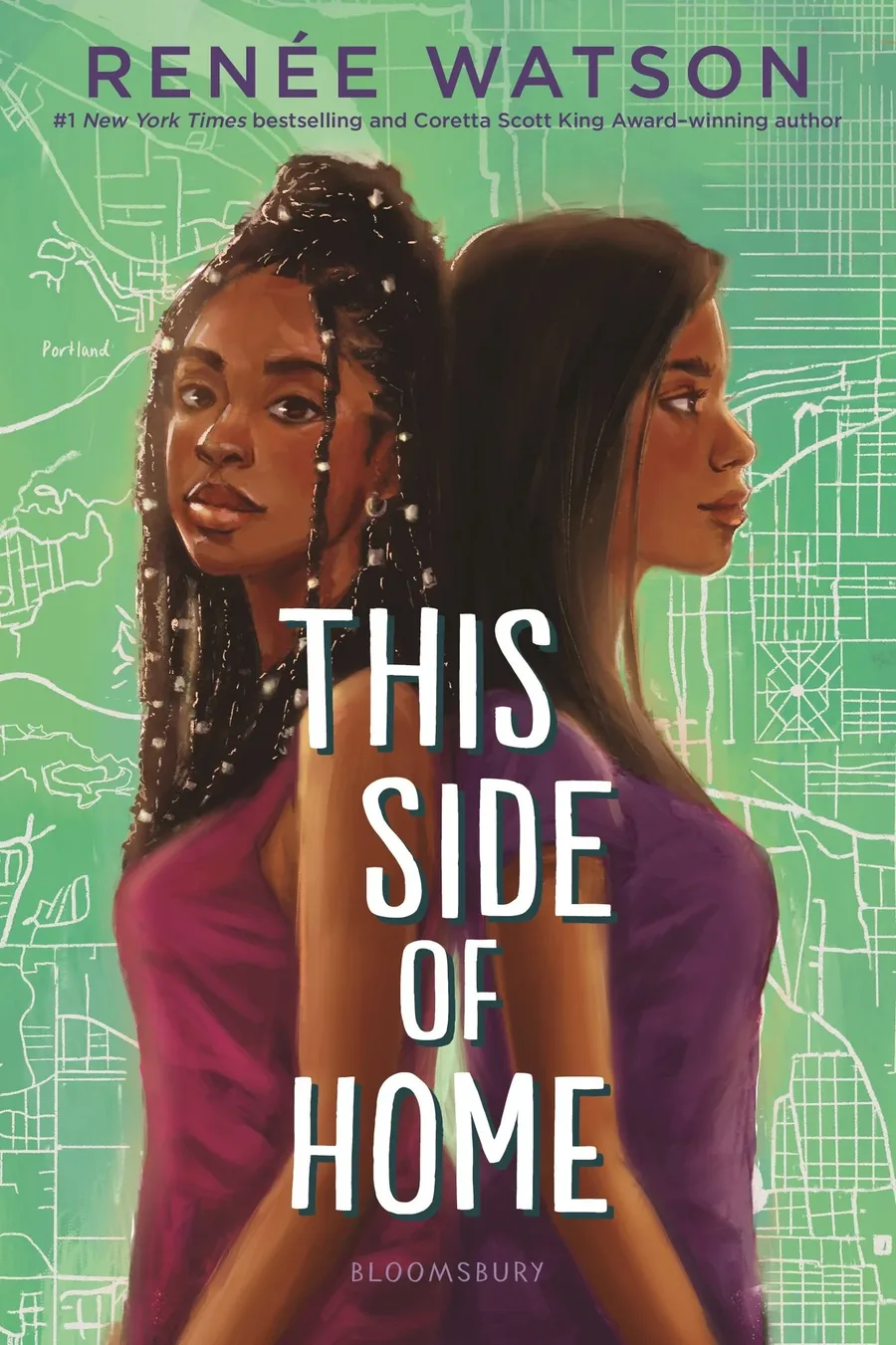 This Side of HomeRenée WatsonMaya Younger has always been secure in who she is and where she is going. Her plan has always been to attend Spelman University together with her twin sister, Nikki, and their best friend, Essence. But, with the gentrification of their North Portland neighborhood everything begins to change. Nikki starts shopping at the neighborhood’s hip new boutiques and befriends one of the new residents. Housing renovations and increased rents force Essence and her mother to find cheaper housing in seedier parts of Portland. The high school’s new principal eagerly finds ways to combat the school’s rough reputation while courting the new residents as he promotes a watered-down multiculturalism over the school’s traditional Black history and community events. Feelings surrounding race and class at school and in the community escalate into racial slurs and property destruction. A thoughtful response from Maya and her friends begins to heal the community. Watson skillfully explores the complexity of experiences, emotions, and politics that come from the gentrification of a historically African American neighborhood while offering a nuanced portrait 108 Fiction for Young Adults CCBC Choices 2016 of teens struggling with the shifting definitions of self, family, and community identities when facing both openly hostile and more subtle forms of racism.Fiction for Young AdultsView book details
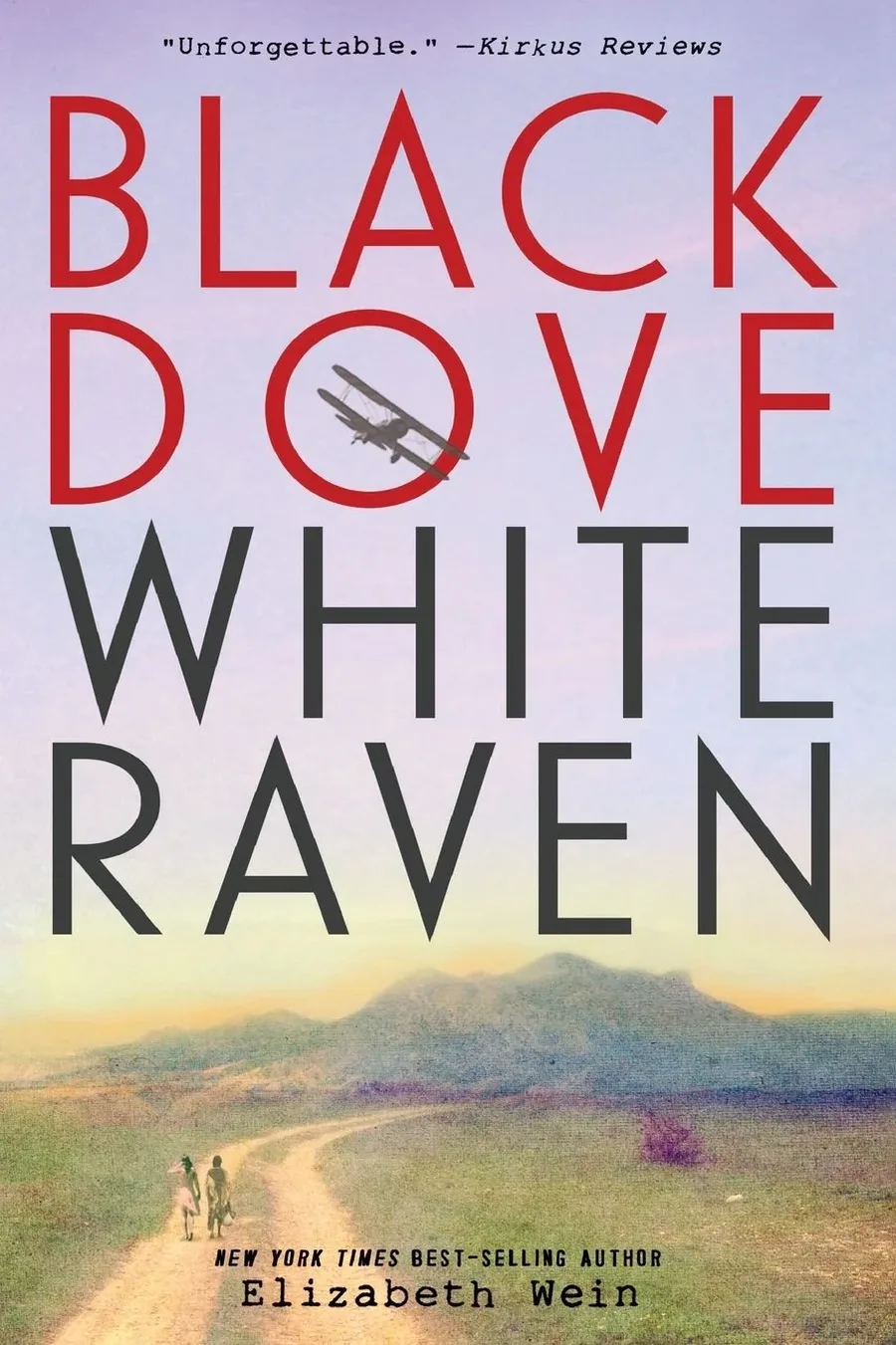 Black Dove, White RavenElizabeth WeinThe alternating voices of foster siblings Emmy and Teo describe their life together in the 1920s and early 1930s, first in the United States and then in Ethiopia, where they are caught in that emerging nation’s internal and international struggles. Teo’s mother, Delia, who was Black, and Emmy’s mother, Rhoda, who is white, were pilots who performed together in stunt shows. After Delia’s death, Rhoda moved the children to Ethiopia, fulfilling Delia’s dream for their family. Over the next five years, tensions begin to rise between the Ethiopian government and the Italians just over the country’s borders. At the same time, Haile Selassie is trying to bring his country into the 20th century while not offending the interests of the powerful Ethiopian landowners. Rhoda learns she won’t be able to keep Teo out of a war that seems inevitable when they learn Teo’s Ethopian father, long dead, was enslaved, meaning Teo, by law, is enslaved. The man who owns Teo demands his service to fly an ancient relic to safety before the war breaks out. Teo disappears while doing so, and Emmy, also a pilot, goes in search of him. Elizabeth Wein’s richly layered novel is dramatic, detailed, and gripping, with both main and secondary characters fully realized. Her author’s note goes into great detail about what is fact and what is fiction in her story, as well as providing additional historical context for the political history of Ethiopia.Fiction for Young AdultsView book details