
 Agua, agüita = Water, Little WaterJorge Tetl ArguetaA first-person narrative in Spanish and English tells the story of the water cycle. Agüita (Little Water) starts the journey deep inside Mother Earth, gradually working its way to the surface, where it forms as a drop of morning dew. It eventually makes its way into a river and then into the sky. Argueta’s poetic text moves from the smallest drop to an ever-expanding personification of water (“I am all colors / and have no color. / I am all flavors / and have no flavor. / I am all shapes / and am shapeless … ”) Ugalde Alcántara’s textured paintings suggest Aztec-inspired symbols, and the text itself appears in Nahuat at the back of the book.Science, Technology, and the Natural WorldView book details
CCBC Choices 2018
The 2018 edition contains 236 selections published by the Cooperative Children's Book Center, University of Wisconsin-Madison. The source uses 16 audience or subject sections, including Science, Technology, and the Natural World, Seasons and Celebrations, Folklore, Mythology, and Traditional Literature, and Historical People, Places, and Events. It is one annual edition of CCBC Choices, the librarians' bibliography of recommended books.
CCBC Choices 2018See the original list
Selections236
Published byCooperative Children's Book Center, University of Wisconsin–Madison
Sections16 sections
Browse sections16 sections
Science, Technology, and the Natural World
17 selections
Agua, agüita = Water, Little WaterJorge Tetl ArguetaA first-person narrative in Spanish and English tells the story of the water cycle. Agüita (Little Water) starts the journey deep inside Mother Earth, gradually working its way to the surface, where it forms as a drop of morning dew. It eventually makes its way into a river and then into the sky. Argueta’s poetic text moves from the smallest drop to an ever-expanding personification of water (“I am all colors / and have no color. / I am all flavors / and have no flavor. / I am all shapes / and am shapeless … ”) Ugalde Alcántara’s textured paintings suggest Aztec-inspired symbols, and the text itself appears in Nahuat at the back of the book.Science, Technology, and the Natural WorldView book details Winter DanceMarion Dane Bauer“Winter is coming … what should I do?” Many animals have an answer for the red fox who is wondering how to prepare. A caterpillar suggests spinning a chrysalis. A turtle suggests swimming deep down into mud. Gather nuts like squirrel? Zip into a cave, hang upside down, and sleep like bat? Fly south like the geese? “That won’t do for me,” fox answers each time, knowing he isn’t meant to do any of those things. Finally another red fox has an answer fox knows is just right: “When a million snowflakes fill the air, twirling, tumbling, spinning, waltzing, you and I join them.” A lyrical, patterned narrative is set against gorgeous illustrations in muted tones with occasional fox-red accents in a book evoking the natural world with both appreciation and playfulness.Science, Technology, and the Natural WorldLexile Text Measure AD520LATOS Book Level 3.4View book details
 Eye of the Storm: NASA, Drones, and the Race to Crack the Hurricane CodeAmy CherrixNASA’s Hurricane and Severe Storm Sentinel Mission (HS3) is based on Wallops Island, near the Assateague Island National Seashore off the coast of Virginia. The project mission is to gain information that can lead to better hurricane prediction. This photo-documentary follows a group of researchers (including three from UW–Madison) and project participants as the Global Hawk drone takes off and flies to meet Hurricane Edouard as it is forming over North Africa in 2014. The goal is to gather data that researchers hope will help them learn more about what makes hurricanes escalate in strength and severity. Across this narrative, several themes emerge, most notably the importance of collaboration and creativity along with the knowledge each person brings to their work, whether they are a meteorologist running an experiment, project manager, flight director, drone pilot, or other team member. The CCBC Choices 2018 Science, Technology, and the Natural World 13 political complexities of using a drone are also touched on, while a powerful opening chapter introducing a 13-year-old girl who died in Hurricane Sandy emphasizes the human cost of these powerful storms and the importance of research.Science, Technology, and the Natural WorldView book details
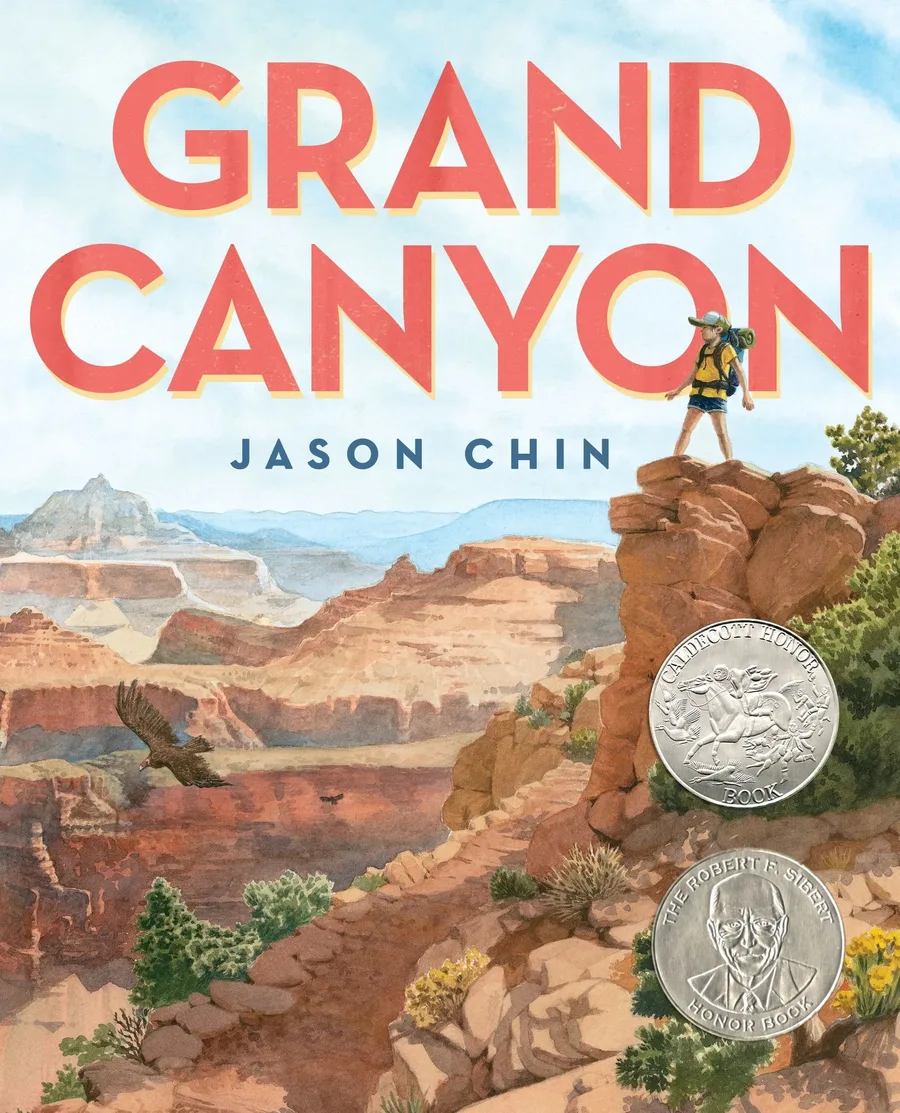 Grand CanyonJason ChinA captivating and imaginative look at the various ecosystems and geologic history of the Grand Canyon is a journey through space and time. Pen-and-ink, watercolor, and gouache illustrations that are both sweeping and detailed follow a girl and her dad, both of Asian heritage, as they hike from the bottom of the canyon, where they’ve been camping, to the top. As they journey upward, they move through the changing ecosystems at various elevations, but also through time as their present-day journey alternates with page spreads showing the girl’s imagined foray into the past at that particular spot (e.g., holding her breath beneath a sea, or caught in a desert sandstorm). The informational narrative, which never refers to the hikers directly but occasionally references “you,” is supplemented by additional information on the bottom of the present-day pages detailing things such as the animals found in that particular ecosystem/ elevation, or the formation of rock layers, or the detritus left over time from when what is now a canyon was once a sea, in a book that works on both a grand and intimate scale.Science, Technology, and the Natural WorldLexile Text Measure 1000LATOS Book Level 6.9View book details
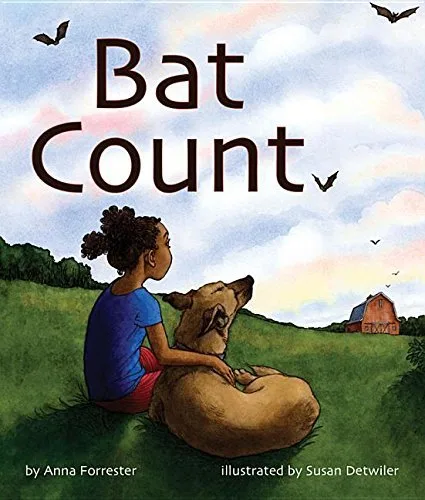 Bat Count: A Citizen Science StoryAnna Forrester, illustrated by Susan DetwilerBefore Jojo’s three-year-old twin brothers were born, the family barn was a bat maternity roost, a safe place where mother bats could give birth during the summer months. Since then, White Nose Syndrome has caused the bat population to dwindle. As this story opens, African American Jojo and her family are preparing for a “bat count.” Each year they observe the number of bats that fly from their barn at nightfall, hoping there will be more than the year before. To their delight, this year there are three: the mother bat has given birth to twins. The appearance of the bats mirrors the joy experienced by Jojo’s family when her brothers were born after years of Jojo’s mother wanting another child, inspiring hope that the new bat family (and bat population at large) will similarly prosper. More information about bats, as well as ways to help them, follow the story.Science, Technology, and the Natural WorldView book details
 The Sockeye MotherHetxw’ms Gyetxw (Brett David Huson)“There’s a strong undertow today. The turbulent waters caress the backs of the little semelparous life forms emerging from their gravel nests.” The life cycle of the sockeye salmon, a keystone species in the Xsan (“River of Mist”) region of the Pacific Northwest, unfolds in a language-rich narrative that delivers science with poetic grace. The importance of the salmon to life in the region, including the life of the Gitxsan people, is at the heart of this account written by Gitxsan author Huson. Occasional scientific terms used in the narrative are footnoted and defined in boxes set into the gorgeous illustrations reminiscent of woodcuts 14 Science, Technology, and the Natural World CCBC Choices 2018 created by Métis artist Donovan (e.g., “Semelparous means ‘breeding only once in a lifetime.’”) Gitxsan words and terms such as “Xsan” are defined within the narrative. A note about the Gitxsan Nation tells more about its location (the Xsan is “also known by its colonial name the Skeena River”) and matrilineal culture.Science, Technology, and the Natural WorldLexile Text Measure 1140LATOS Book Level 8.2View book details
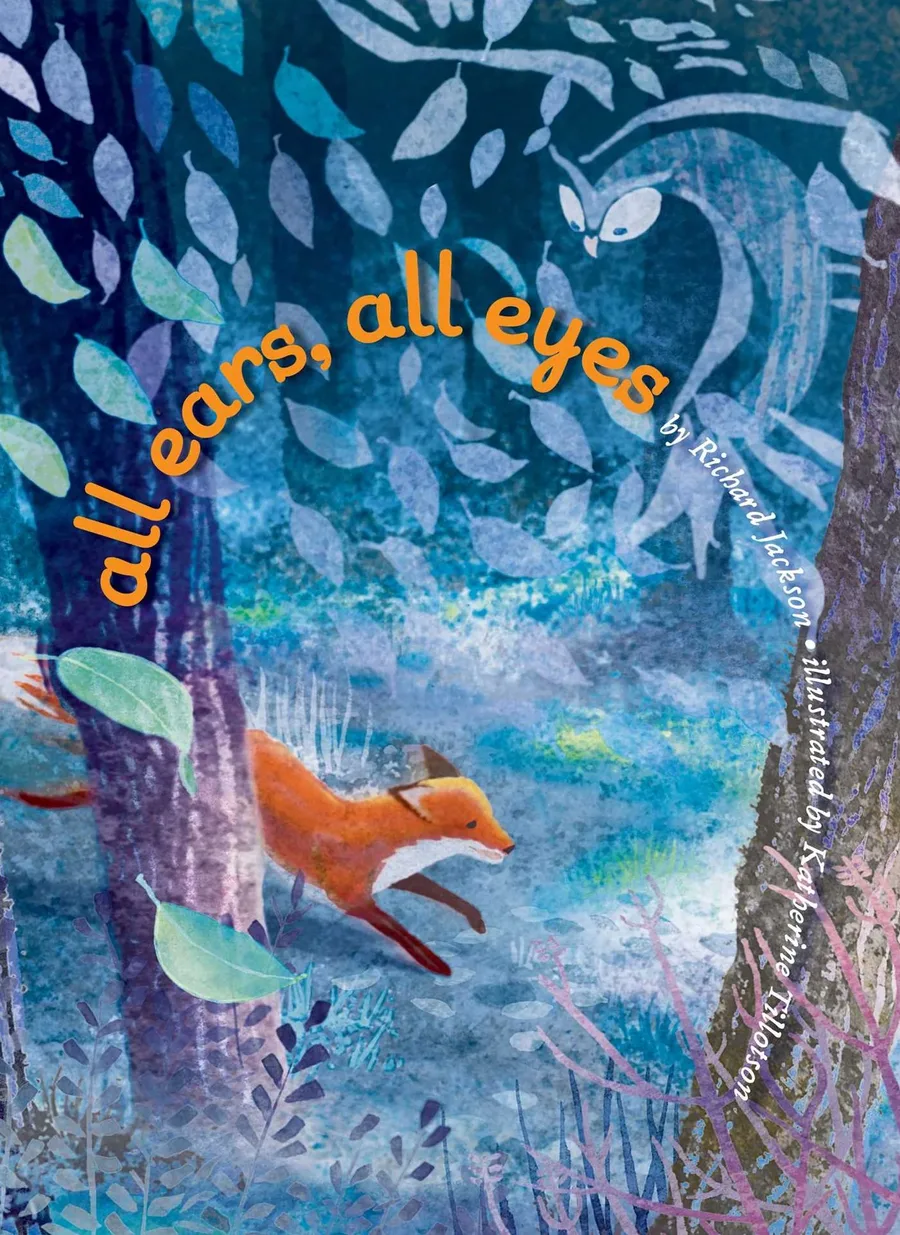 All Ears, All EyesRichard Jackson, illustrated by Katherine Tillotson“An owl hoots in our dim-dimming woods.” A lyrical account of activity in a forest as day turns to night is interspersed with questions that invite close observation of the gorgeous watercolor and digital illustrations with their gradually darkening palette and subtle, sometimes playful rendering of the creatures within the woods. The poetic narrative is both quiet and, like the art, playful, featuring onomatopoeia and occasional surprises. Although the varied font sizes can be confusing (and the smallest occasionally hard to see), this is a book highlighting observation and experience rather than a storied narrative: spending time on each page spread to take in the words, their sounds, and the images offers both satisfaction and delight.Science, Technology, and the Natural WorldView book details
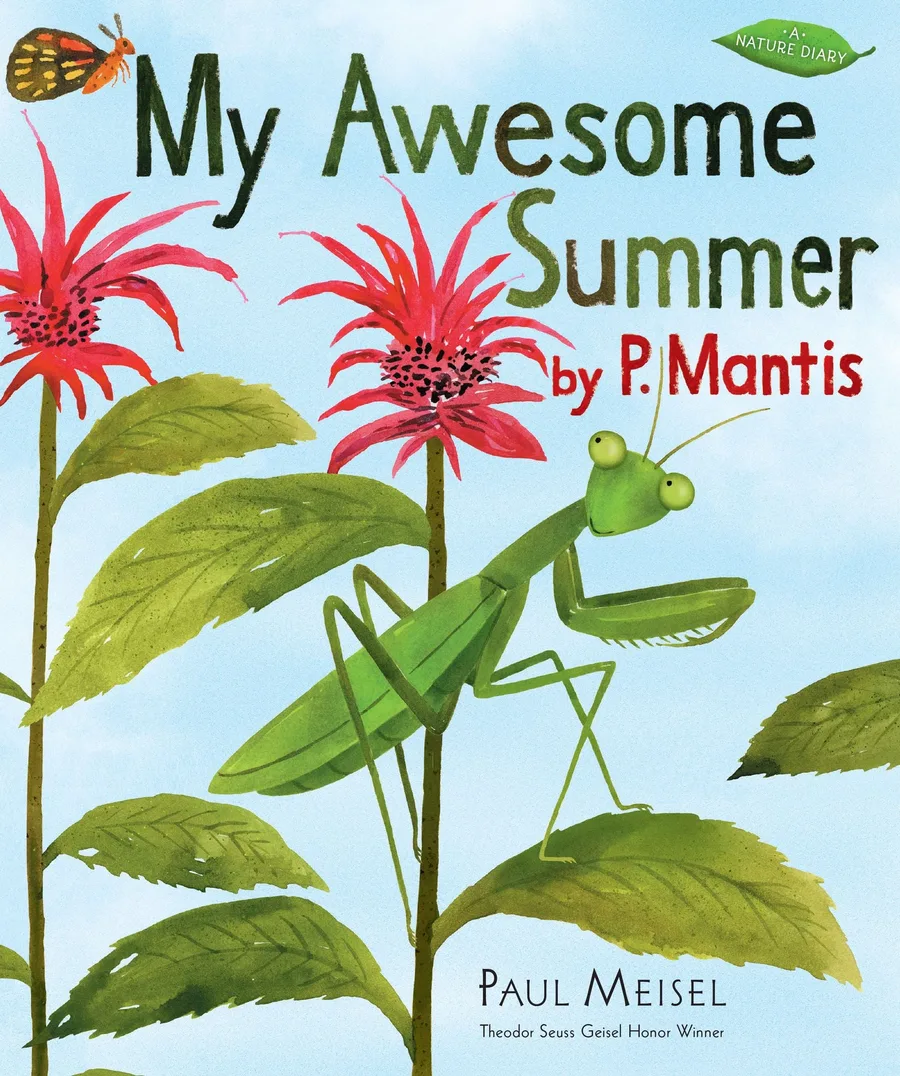 My Awesome Summer by P. MantisPaul MeiselThe eventful summer of the spunky P. Mantis begins on the sunny day of May 17 (“I was born today!”). The praying mantis’s sparse but entertaining log continues for the next five months as she records her growth spurts, ravenous appetite—on June 2 she eats two of her brothers—and impressive camouflage skills. As we read about P.’s adventures, we learn interesting tidbits about praying mantises. They can turn their heads to look behind themselves; they can fly (eventually); they shed their skin many times as they mature. In the end, after laying her own eggs on the plant where she was born, P. Mantis lies down for “a long nap.” Notes on the endpapers confirm what readers may have suspected: adult mantises do not survive the winter, but their short lives are indeed “awesome.”Science, Technology, and the Natural WorldView book details
 Over and Under the PondKate Messner, illustrated by Christopher Silas NealThe activity above and beneath the water of a pond on which a boy and his mother are paddling a canoe as sunset approaches is distinct yet parallel in this lyrical account. Over the pond a blackbird flies with grass for her nest, a moose eats water lilies, a young goldfish is ready to fly. Under the pond, caddisfly larva makes a home in pebbles and sand, a beaver eats roots, tadpoles begin to transform into frogs. Each over/under pairing emphasizes both what the boy can see and what his mother knows about the natural world. End matter provides more information about pond ecosystems and the behavior of animals mentioned. The mixed-media illustrations on matte paper capture life above and beneath the water in strikingly composed scenes from a variety of perspectives. The boy and his mother are Black.Science, Technology, and the Natural WorldLexile Text Measure AD660LATOS Book Level 4.3View book details
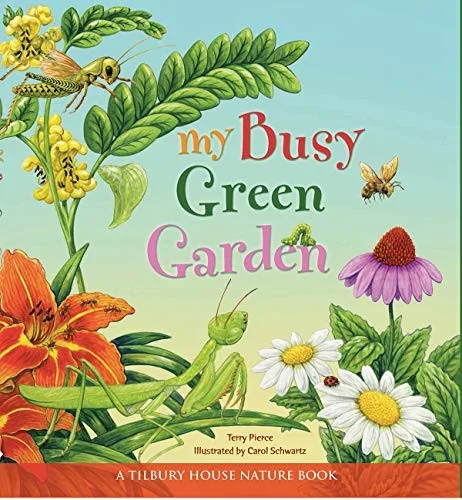 My Busy Green GardenTerry Pierce, illustrated by Carol SchwartzA cumulative text in the style of “The House That Jack Built” describes the activity in a “busy green garden” where a “surprise in clever disguise” hangs. Illustrations focus on a single garden, the one constant being a long-stemmed plant with green leaves and hanging yellow flowers. Sometimes the plant is seen up close, sometimes as part of the larger garden-scape. The dramatic, ever- building chain of events includes a variety of flora and fauna, with predators never quite getting their prey. (“This is an earthworm that creeps up and down, / dodging the hummingbird fluttering ’round … ”). The satisfying reveal of the surprise comes with the emergence of a large yellow butterfly from the leaf- like chrysalis that’s been camouflaged on the plant. Informational end matter includes more about the critters that appear.Science, Technology, and the Natural WorldView book details
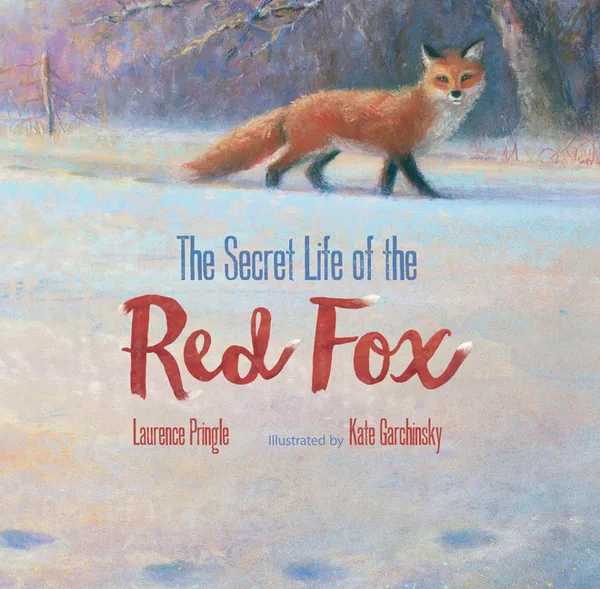 The Secret Life of the Red FoxLaurence Pringle, illustrated by Kate GarchinskyA female fox, or vixen, is most active when much of the human world sleeps. This factual account follows Vixen through winter and on into spring as she hunts, meets with her mate, escapes chasing dogs, and explores abandoned burrows of other animals. Vixen stays in her den more and more as spring nears, her mate bringing food. In late spring, when she emerges to hunt, she is followed out of her den by four kits. The kits learn from their parents through the summer and by fall are ready to set off on their own. The drama is unforced and genuine in a lyrical narrative that never anthropomorphizes its subjects. Realistic pastel paintings convey both the wildness of the foxes and their proximity to humans. A note provides more information about the red fox.Science, Technology, and the Natural WorldLexile Text Measure 650LATOS Book Level 4View book details
 Impact! Asteroids and the Science of Saving the WorldElizabeth Rusch“About once a year, a car-size asteroid strikes the Earth … roughly every five thousand years, the Earth is struck by an asteroid as big as a football field.” And then there are the really big ones every few million years—the kind that can trigger a global disaster. (Think dinosaurs.) How do scientists understand the past and potential future impact of asteroids on earth, and calculate risk? It’s work that takes place on many fronts, from amateur meteorite hunters to geologists studying craters of long-ago impacts to asteroid hunters, both amateurs and professional scientists, monitoring space using telescopes on the ground and orbiting the earth. Each kind of research and monitoring plays an important part in understanding asteroids and identifying potentially hazardous asteroids. The men and women introduced here share their fascination with their work, as well as things some readers may find surprising. (e.g., “A lot of science is writing … You are always trying to convey what you’ve done or what you’re hoping to do.”). The inviting design includes ample color photographs and graphics, while a final chapter, “How to Save the World,” offers fascinating theories on how we might try to divert a potentially devastating asteroid from impact.Science, Technology, and the Natural WorldView book details
 RoundJoyce Sidman, illustrated by Taeeun Yoo“I love round things,” says the young child narrator of this picture book, who goes on to give examples of round things found in nature, from the obvious (oranges, seeds) to the harder-to-find (rings on a tree stump, small butterfly eggs). Some things that don’t start out round become round with time (a mushroom grows into its curves; once-jagged rocks smooth over many years). Round can be ephemeral (bubbles, ripples in a pond) or forever (the moon and stars). “I can be round, too,” the girl says, “in a circle of friends” or curled up alone. Intimate yet expansive, the simply stated observations are childlike even as they suggest a deep, visceral human response to roundness: the desire to touch, the feeling of being secure. Brief examples at story’s end reference both science and aesthetics in discussing why so many things in nature are round. Ample curves in the flat, naïve-style illustrations featuring bright colors with a muted, slightly retro feel complement the quiet narrative. Highly Commended, 2018 Charlotte Zolotow AwardScience, Technology, and the Natural WorldLexile Text Measure AD490LATOS Book Level 3.3View book details
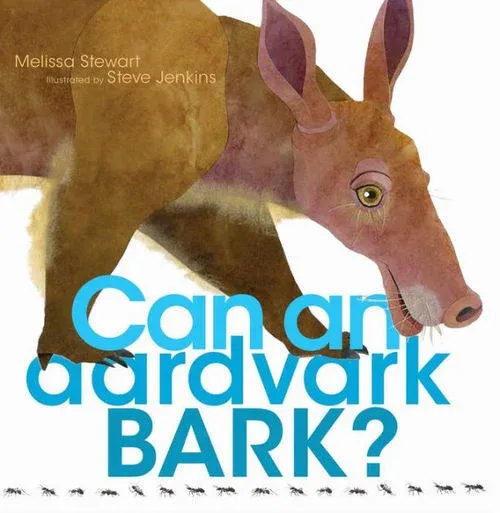 Can an Aardvark Bark?Melissa Stewart, illustrated by Steve JenkinsA primary narrative strings together questions and answers about the sounds animals do and don’t make (“Can an aardvark bark? No, but it can grunt … Can a seal squeal? No, but it can bark … Can a wild boar roar? No, but it can squeal.”). Each question-and-answer pair is followed by a page spread that provides examples of other animals that make the same sound. (e.g, “Lots of other animals grunt too.”) For all of the animals named—and shown in Steve Jenkins’s striking collage portraits set against white pages—there is a brief description relating to the sound it makes: how it makes that sound, or under what circumstances. (“A European hedgehog snorts when it’s angry and purrs when it’s happy. When the prickly critter senses danger, it squeals and rolls up in a tight ball.”) There is playfulness in the rhymes and the occasional disruption of the patterned primary text, while the brief information about each animal is also offered in the spirit of both fact-finding and fun.Science, Technology, and the Natural WorldLexile Text Measure 720LATOS Book Level 4.1View book details
 ABCs from Space: A Discovered AlphabetAdam VoilandTwenty-six satellite images of Earth from space reveal the letters of the alphabet in their natural or man-made formations. Clouds, rocks, rivers, roads, and even the tracks of ships when seen from far above the earth are among the photographic subjects. While most of the letters are easy to spot in the full- page photographs, the end matter provides thumbnails of each image with the alphabet letter superimposed. The thumbnails are accompanied by additional information about each photo, including where it is located on Earth, the date it was taken, which of four orbiting satellites took the image, and whether the image is natural-color (light visible to the human eye) or false-color (capturing light both visible and invisible to the human eye). A world map showing the location of each image (identified by letter), and two FAQs—one on satellite images and the other on the science related to some of the natural formations— round out this unexpectedly captivating work.Science, Technology, and the Natural WorldView book details
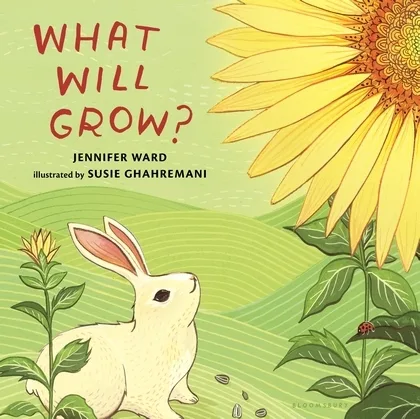 What Will Grow?Jennifer Ward, illustrated by Susie GhahremaniTwelve types of seeds are introduced in descriptive rhyming couplets (“Fluffy, white. Taking flight.”) followed by the question: “What will grow?” Guesses are encouraged by visual hints, and confirmed in both art and text (“Dandelion.”) Fold-out pages are used intermittently to emphasize the growth trajectory of a seed: a page that folds down shows a cut-away of carrots growing underground, while a page that folds up showcases a tall pine tree. Final pages offer supplemental information about each of the seeds and outline the four stages of growth from seed to plant.Science, Technology, and the Natural WorldLexile Text Measure 250LATOS Book Level 2View book details
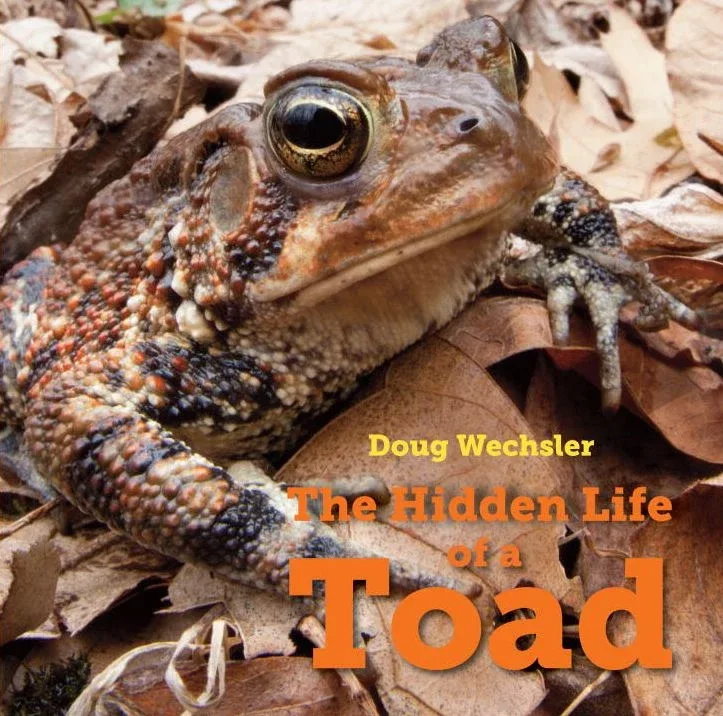 The Hidden Life of a ToadDoug WechslerEveryone knows what a tadpole looks like, but did you know that just nine days before they reach that stage, toad embryos live in “strings of jelly” resembling spaghetti? This beautifully photographed account follows the life cycle of toads, starting with eggs, moving through the tadpole stage to tiny toadlets, and ending three years later with a mature female toad ready to mate and start the life cycle over again. Close-up photographs are labeled with the toads’ ages and accompanied by clear, simple text that will be accessible to young children. The book is equipped with a glossary, additional information about toads, and a note about how the author managed to snag such revealing photographs.Science, Technology, and the Natural WorldView book details
Seasons and Celebrations
10 selections
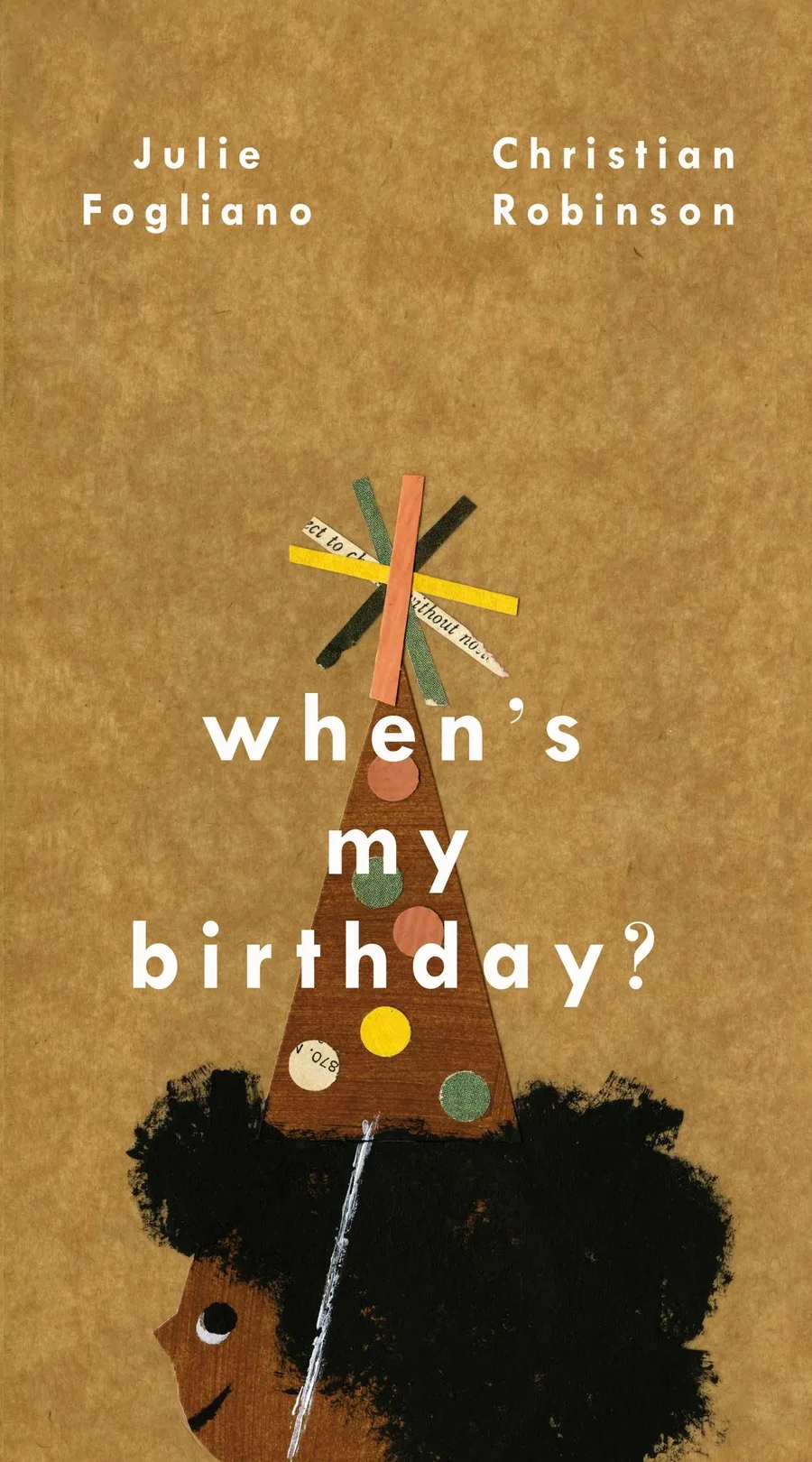 When’s My Birthday?Julie Fogliano“When’s my birthday? When’s my birthday? How many days until my birthday?” The singsong text of this celebratory picture book bursts with the excitement and anticipation of an upcoming birthday. Upon seeing another girl with birthday hat and balloons, a child begins to ask rapid-fire questions about her own big day. “Will my birthday have some singing? Will we sing so happy happy?” The whimsical, childlike questions give way to wishes (“I’d like some berries on my birthday and tiny sandwiches with soup”), and then invitations. Finally, it’s the night before her birthday, and the little girl can hardly sleep with the anticipation. When the big day arrives, it’s filled with everything a birthday should be: friends, decorations, and cake. The soft, subdued palette of the illustrations balances the story’s exuberant text, and the diverse cast of characters includes a child of unspecified gender wearing a dress. Highly Commended, 2018 Charlotte Zolotow AwardSeasons and CelebrationsView book details
 In the Middle of FallKevin Henkes“In the middle of Fall, / when the leaves / have already turned … ” A picture book that evokes that time in the season when chilly air and gray skies and “frisky” squirrels and “apples like ornaments” and trees full of color can be observed notes that it should all be remembered, because “ … soon, / very soon / the sky will be white and empty— / ready to fill up with snow.” The poetic text with its wonderful imagery is paired with equally evocative acrylic paintings in which the muted tones of the autumn and winter skies are as exceptional as the bold fall colors, and the softly rounded figures (child, animals) add tenderness to the warm, inviting scenes. Highly Commended, 2018 Charlotte Zolotow AwardSeasons and CelebrationsLexile Text Measure 390LATOS Book Level 2.7View book details
 Halloween A B CJannie HoToddler-friendly illustrations of familiar Halloween symbols (bats, ghost, pumpkin) and some surprising ones (the dark, invisible, underpants) are paired with their appropriate initial letter in this alphabet board book. Clean, uncluttered illustrations in a seasonally appropriate palette include a racially diverse cast of young children.Seasons and CelebrationsView book details
 Snow SceneRichard JacksonA quiet, lovely picture book is a perfect pairing of spare, poetic text and lush, textured acrylic on canvas illustrations as it moves from snow-soft winter to the blossoming of spring (“Just seen / A hint of green.”) to the fullness of summer, and then the first hints of fall. The words offer concrete imagery in brief but elegant phrases (“Shadows of crows”) and also build anticipation for each turn of the page by asking simple questions (“What now?”) or offering hints of more to come (“Look here!”). The richly hued images emphasize the natural world but sometimes include the same boy and girl. The interplay between them is essential and gratifying in this playful, cozy offering.Seasons and CelebrationsView book details
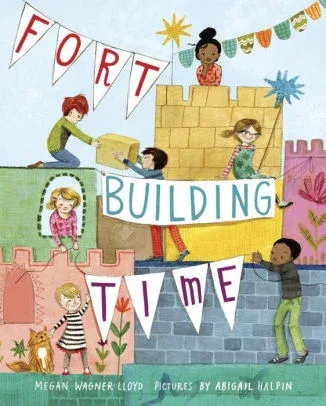 Fort-Building TimeMegan Wagner Lloyd, illustrated by Abigail Halpin“Winter is a snowball-throwing, scarf-wrapping, sled-pulling, ice-sliding time. / A dog-snuggling, cocoa-drinking, snowman-making, fort-building time!” A lilting rhyming text describes the activities of four children who build a different kind of fort in each season, starting with a snow fort in winter, then on to a tent fort, a beach fort, and finally a tree fort. Spritely watercolor illustrations show a multiracial cast of the three girls and one boy playing together outside over the span of a year. Both the words and pictures acknowledge that children will always find a way to build a “cozy-keeping” fort of some type and incorporate it into their imaginative play.Seasons and CelebrationsLexile Text Measure AD470LATOS Book Level 3.2View book details
 The Nutcracker in HarlemT. E. McMorrowE. T. A. Hoffman’s familiar story of “The Nutcracker and the Mouse King” is re-imagined in the Sugar Hill Neighborhood of Harlem in the 1920s. African American Marie is surrounded by family and friends at a Christmas Eve party where jazz music replaces Tchaikovsky’s classical notes. Although thrilled to receive a drummer boy nutcracker as a gift, Marie is quiet when she’s urged to join in the singing, afraid that she won’t be as good as the adults around her. But later, as she dreams by the Christmas tree, Marie finds the courage to play a drum and lead the toy soldiers against the charging mouse army. James Ransome’s richly saturated tones capture the warmth of a festive Christmas gathering and a dramatic fantasy dream, while T. E. McMorrow’s text pays homage to both the original tale and the history of Harlem.Seasons and CelebrationsLexile Text Measure 401LATOS Book Level 2.8View book details
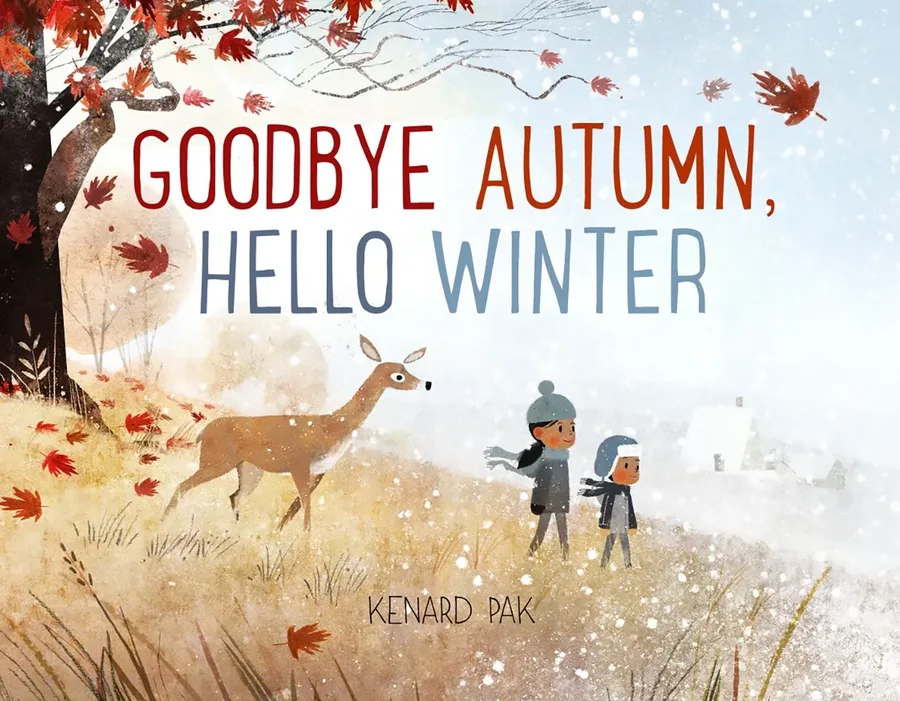 Goodbye Autumn, Hello WinterKenard PakA brown-skinned boy and girl say hello and then good-bye to the sentinels of autumn (leaves falling from branches, robins and cardinals preparing to fly south, sheep growing thick fur for the winter). Each greets the children in turn and offers a sentence or two about preparing for the coming winter. The children walk from a wooded area into town to their home as the sun sets, and snow falls overnight. They awaken to icicles, frost, and falling snow, which they greet, and then make their way back to the wooded spot to play. Digitally enhanced watercolor and pencil illustrations transition from the warm hues of fall to the cooler blues, grays, and white of winter.Seasons and CelebrationsLexile Text Measure AD560LATOS Book Level 1.6View book details
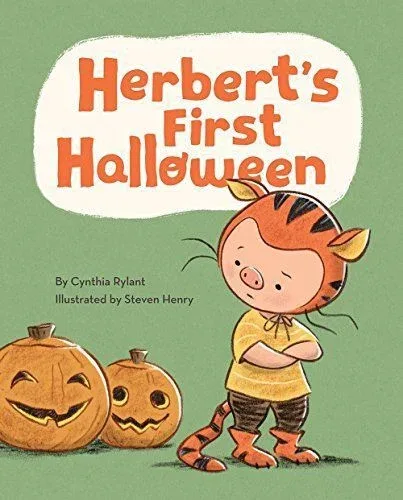 Herbert’s First HalloweenCynthia Rylant, illustrated by Steven HenryHerbert is a little pig who “was not so sure about Halloween.” Herbert’s dad loves Halloween, however. When Herbert decides he wants to be a tiger his dad measures Herbert and sews ears, tail, and paws with claws while Herbert practices his roar. Herbert’s dad carves a smiling-faced pumpkin they name Jack, and tells Herbert about the candy. “You will need a bucket. … A big one.” Herbert’s dad is gently reassuring, helping Herbert navigate his uncertainty throughout a warm, sparely told yet perfectly paced story that follows Herbert through his first night of trick-or-treating. “Herbert roared many tiger thank-yous.” Muted illustrations echo the narrative’s understated charm. Honor Book, 2018 Charlotte Zolotow AwardSeasons and CelebrationsLexile Text Measure AD400LATOS Book Level 2.8View book details
 Red & LuluMatt Tavares, illustrated by Matt TavaresFor cardinals Red and Lulu, home is an enormous evergreen that stands in front of a little house. Every winter, the multiracial family of four that lives in the little house strings lights in the tree and sings a song about its magnificence, and Red and Lulu are happy. One fall, Red returns home with food and is stunned to find their tree has been cut down and strapped to the back of a truck, with Lulu still chirping within its branches. Although he tries to follow the truck (and Lulu), it soon outpaces him, and Red arrives in a large, strange city alone 20 Seasons and Celebrations CCBC Choices 2018 and lost—until he hears voices singing a familiar song about a certain tree. He follows the sound to find his and Lulu’s tree on display for all to admire in Rockefeller Center, with Lulu waiting on their favorite branch. Gorgeous, full-page illustrations present the beauty that is New York City in wintertime, and a fascinating note at the end details the history of the Rockefeller Center Christmas tree.Seasons and CelebrationsView book details
 Spring for SophieYael WerberA little girl repeatedly asks her parents when spring will come and each time they respond by telling her to use a different one of her five senses: when you hear the birds start to sing, when you feel the ground getting soft under your feet, when you see the snow start to melt, when you smell the earth and rain. Each answer leads Sophie to closely observe the natural world and notice the gradual changes as winter slowly loosens its grip. When the first rainstorm finally arrives, Sophie runs outside and catches a raindrop on her tongue. “Now I know spring is here … Because this is what spring tastes like!” The narrative has a patterned structure but feels expansive with the passage of time and the inclusion of the many details Sophie notices. Warm, inviting full-page and circular spot illustrations done digitally and with gouache show Sophie’s country home and the surrounding natural world in a folk-influenced style.Seasons and CelebrationsLexile Text Measure 590LATOS Book Level 3.8View book details
Folklore, Mythology, and Traditional Literature
3 selections
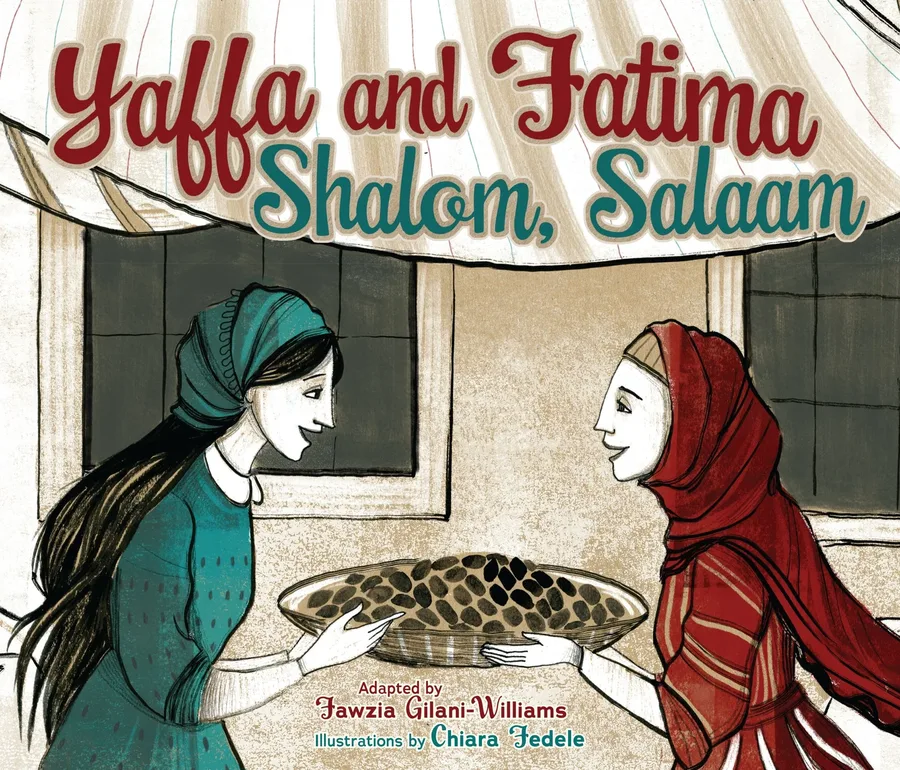 Yaffa and Fatima: Shalom, SalaamFawzia Gilani-Williams, illustrated by Chiara Fedele, Fawzia Gilani-WilliamsFriends and neighbors Yaffa and Fatima lead similar lives in the Land of Milk and Honey. They both make a living selling dates from their groves at the market. They prepare meals and eat dinner together, and they always greet one another cheerfully. “Shalom! Peace!” calls Yaffa, and Fatima responds, “Salaam! Peace!” Both women follow God’s teachings, and they both pray—Yaffa in a synagogue, and Fatima in a mosque. Although the two women belong to different faith traditions, the parallels between their religious practices are apparent. More importantly, the two women care for one another, sharing values and a generous spirit. When dates are scarce one year, each worries that the other may be hungry and quietly adds a portion of her dates to her friend’s basket. Simple, repetitive text and side-by-side illustrations reinforce the message of embracing one another despite, and because of, our differences—a message that has great weight in this Israeli setting.Folklore, Mythology, and Traditional LiteratureLexile Text Measure AD530LATOS Book Level 3.5View book details
 Brave Red, Smart Frog: A New Book of Old TalesEmily JenkinsIn her author’s note, Emily Jenkins explains that her goal was not to reinvent the fairy tales in this collection but rather to simply tell them as she wanted to tell them, using her own voice. Stories such as “Snow White,” “Hansel and Gretel,” and “Red Riding Hood” feel familiar but fresh, while lesser known tales have slightly altered details: Perrault’s “Toads and Diamonds” becomes “Toads and Pearls,” the folktale “The Three Sillies” becomes “The Three Great Noodles.” (The amusing term “noodle” appears in each story.) Jenkins’s fairy tales have new, funny dialogue, and many share a setting: a frozen forest, where the animals are hungry and (most) humans dare not venture. The characters are more fleshed out than usual, with feelings and motivations that add a degree of nuance to the marvelously told tales. Jenkins’s graceful prose is complemented by the mildly whimsical (yet appropriately ominous) illustrations on each story’s title page.Folklore, Mythology, and Traditional LiteratureView book details
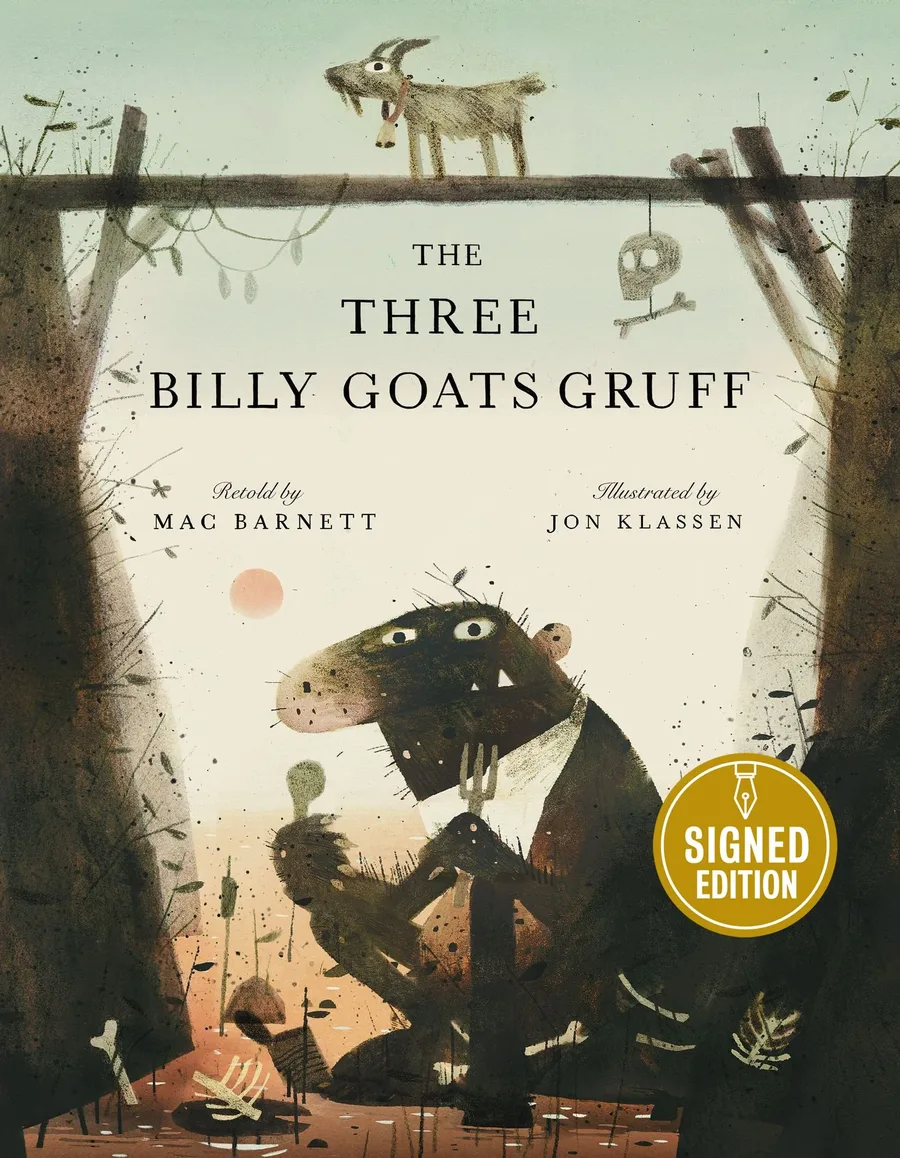 The Three Billy Goats GruffMac BarnettThis mostly faithful retelling of the traditional tale stars the familiar trio of goats crossing a bridge guarded by a terrible troll to reach a lush pasture. After the smallest and mid-size goats successfully outwit the troll and cross the bridge, the largest billy goat Gruff butts the creature into the river. There, in a moment of satisfying reciprocity, the troll narrowly escapes a close encounter with a huge and hungry fish. Jerry Pinkney’s trademark pencil and watercolor illustrations masterfully capture his subjects, from charming goats to a deliciously menacing troll. Observant readers who follow the story into the endpapers will see hints of a new community where goats and troll live cooperatively.Folklore, Mythology, and Traditional LiteratureView book details
Historical People, Places, and Events
13 selections
 Dazzle Ships: World War I and the Art of ConfusionChris BartonDuring World War I, more than 1,200 U.S. ships and twice as many British ships were camouflaged in dazzling geometric designs. The goal was to paint patterns that would create confusion regarding the direction in which ships were traveling when viewed by German submarines. The idea originated with Norman Wilkinson, a commander in the Royal Navy reserve. It was carried out in part by women artists in Britain and, when the United States began dazzling, the Women’s Reserve Camouflage Corps. Did the camouflage work? No one knows for sure. “But some insisted that at the very least, sailors on those ships just felt better knowing that something had been tried to keep them from getting torpedoed.” This fascinating bit of history is followed by an equally fascinating author’s note about his research and the decisions he made in crafting the 22 Historical People, Places, and Events CCBC Choices 2018 account. Likewise, bold, bedazzling mixed-media illustrations are followed by an intriguing illustrator’s note. A timeline with black-and-white photographs and suggestions for further reading complete the volume.Historical People, Places, and EventsView book details
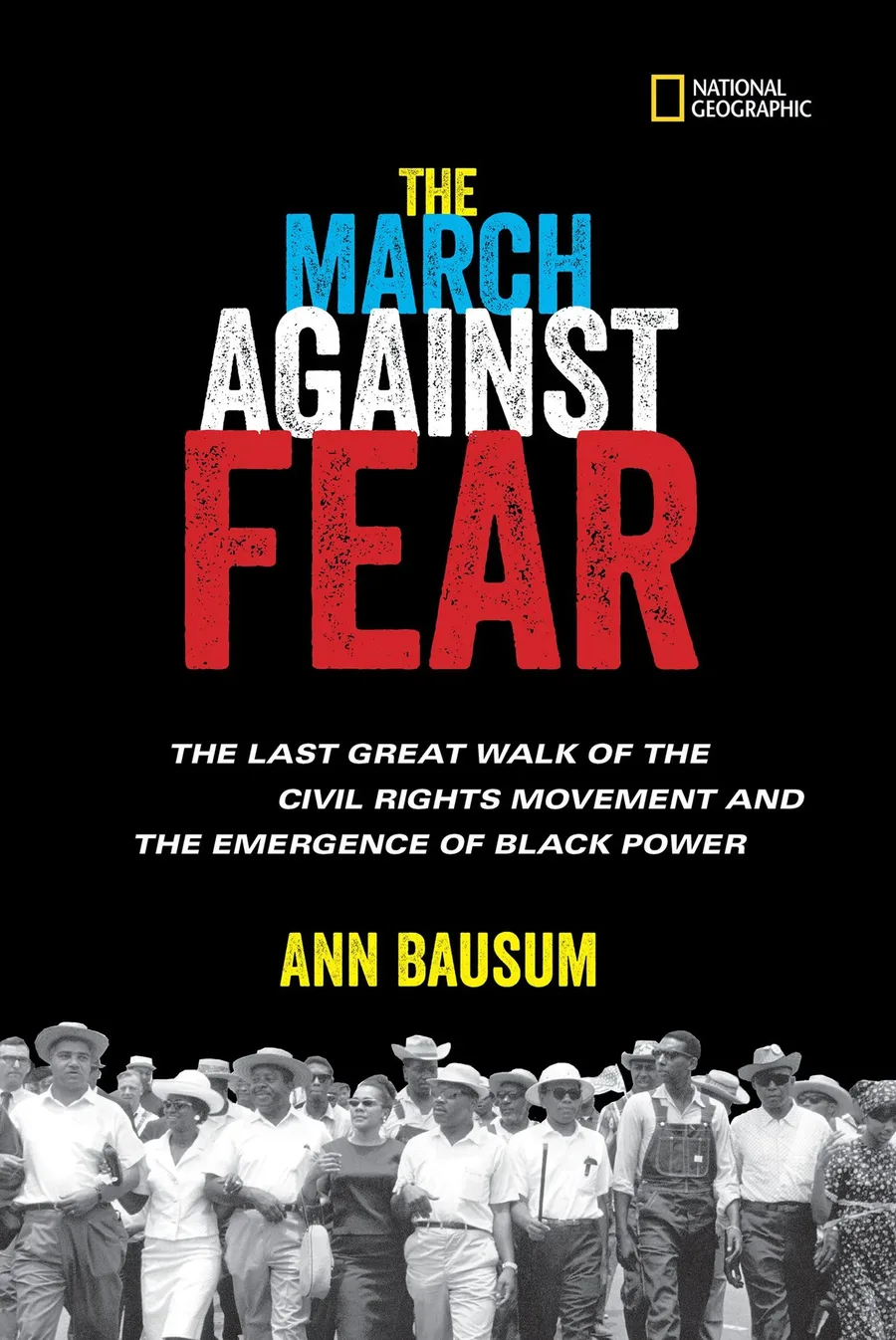 The March Against Fear: The Last Great Walk of the Civil Rights Movement and the Emergence of Black PowerAnn BausumAlthough James Meredith is best remembered today as the student who integrated the University of Mississippi in 1962, his years after graduation were devoted to continuing the struggle for Black civil rights. Described as a “quirky loner,” Meredith chose not to join the movement led by Dr. Martin Luther King, Jr., deciding instead to make his mark in his own way. He believed that the biggest barrier African Americans faced in the movement was fear, and so he decided to walk by himself from Memphis, Tennessee, to Jackson, Mississippi, a daring and courageous act for a Black man in any era, but particularly in the highly charged South in the mid-1960s. His March Against Fear attracted many others both in support and in violent opposition, and eventually led to the development of the Black Power Movement. Bausum’s chronological account is enriched by in-depth primary research into archives and contemporaneous news accounts, including an interview with James Meredith himself, shining a light on historical events that should not be forgotten. It’s unfortunate that the design of the book does not match the remarkable content; still it’s a critical and timely volume that will find an audience with readers interested in social justice and Black Lives Matter.Historical People, Places, and EventsView book details
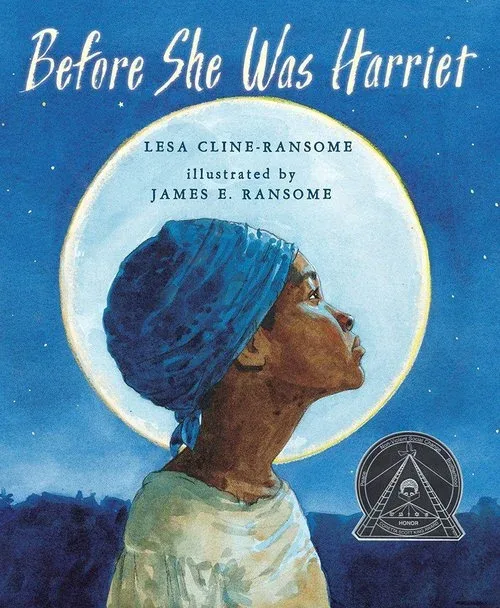 Before She Was HarrietLesa Cline-RansomeA journey backward in time through the life of the woman known most often as “Harriet Tubman” emphasizes the many roles she played—suffragist, Union spy, nurse, conductor on the Underground Railroad, daughter—the many names by which she was known—General Tubman, Aunt Harriet, Moses, Minty, Araminta—and the name she chose for herself, Harriet. She “dreamed of living long enough / to one day / be old / stiff and achy / tired and worn and wrinkled / and free.” The skillful narrative’s imaginative and effective structure, in which Tubman’s life unspools from old woman back to childhood, allows the child audience to build on prior knowledge and emphasizes Harriet’s agency throughout her life. The many facets of Tubman’s life and the many roles she played are vividly portrayed in the full-page paintings that provide a rich backdrop for the fine narrative. Highly Commended, 2018 Charlotte Zolotow AwardHistorical People, Places, and EventsLexile Text Measure 701LATOS Book Level 4.5View book details
 Trudy’s Big Swim: How Gertrude Ederle Swam the English Channel and Took the World by StormSue Macy“Violent storms, numbing cold, exhaustion, leg cramps, painful jellyfish stings and ongoing fears about sharks” have (understandably) deterred scores of swimmers from crossing the English Channel. But not Trudy, who by 1926 has already set dozens of records in women’s swimming events. On this, her second CCBC Choices 2018 Historical People, Places, and Events 23 attempt to cross the waterway, she is determined to be the first woman to succeed. During her remarkable journey, Trudy “dodges chunks of driftwood” and “slimy, poisonous jellyfish hurled at her by the waves.” She rests only to snack on chicken legs and a bottle of broth delivered to her in a net from an accompanying boat. She braves choppy water and is forced to adjust her course, adding five miles to her route. Finally, after 14 hours and 39 minutes, she emerges on a beach in England, triumphant. Detailed, realistic illustrations add drama and urgency to the already exciting story of an impressive woman athlete.Historical People, Places, and EventsView book details
 Noah Webster’s Fighting WordsTracy Nelson MaurerThe feisty confidence and unbridled American pride of Noah Webster will charm readers of this account of his literary accomplishments. A lover of words from the time he was a boy, Noah learned to put them to political use as a college student during the Revolutionary War. As a teacher, Noah’s patriotism merged with his love of words when he wrote a speller for his students, who until that point had been using only British books. He wasn’t shy about changing things up—words should be written as Americans pronounce them, and with no unnecessary letters! “Colour” became “color,” and new, American words (like “skunk”) were included. Eventually, Noah realized that the country needed an American English dictionary, and so the first Webster’s Dictionary came to be. Not all of Noah’s suggestions caught on—“is” is not spelled “iz,” for instance—but no one else in history has ever succeeded in changing the spelling of as many American English words. With snarky asides from “editor” Noah (he was “simply helping people to see the right point of view”!), this picture book biography is a delight.Historical People, Places, and EventsView book details
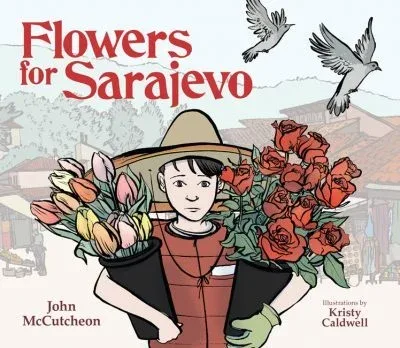 Flowers for SarajevoJohn McCutcheonIn 1992, in the marketplace of Sarajevo during the Balkan War, 22 people were killed by a mortar attack while waiting in line to buy bread. In the 22 days that followed, a lone cellist entered the devastated square to play a song to honor each one of them. This fictional story focuses on Drasko, a boy who witnesses these events. Before the attack, Drasko has taken over selling flowers for his soldier father. Where once there was relative harmony among the Croats, Serbs, Muslims, and Christians, now everyone is “tired and bad-tempered,” and Drasko longs for the days when he considered his fellow merchants friends. The day after the attack, all is quiet in the marketplace—until a cellist begins to play his eulogy. The music, which according to Drasko is “a language we all understand,” gives voice to grief and hope and inspires healing in the diverse crowd of onlookers. This somber story is eloquently told without being overly sentimental. Additional content includes sheet music and lyrics, notes about the Balkan Wars and cellist Vedran Smailovic, and an author’s note that further illuminates the musician’s convictions and generous spirit.Historical People, Places, and EventsLexile Text Measure 570LATOS Book Level 3.7View book details
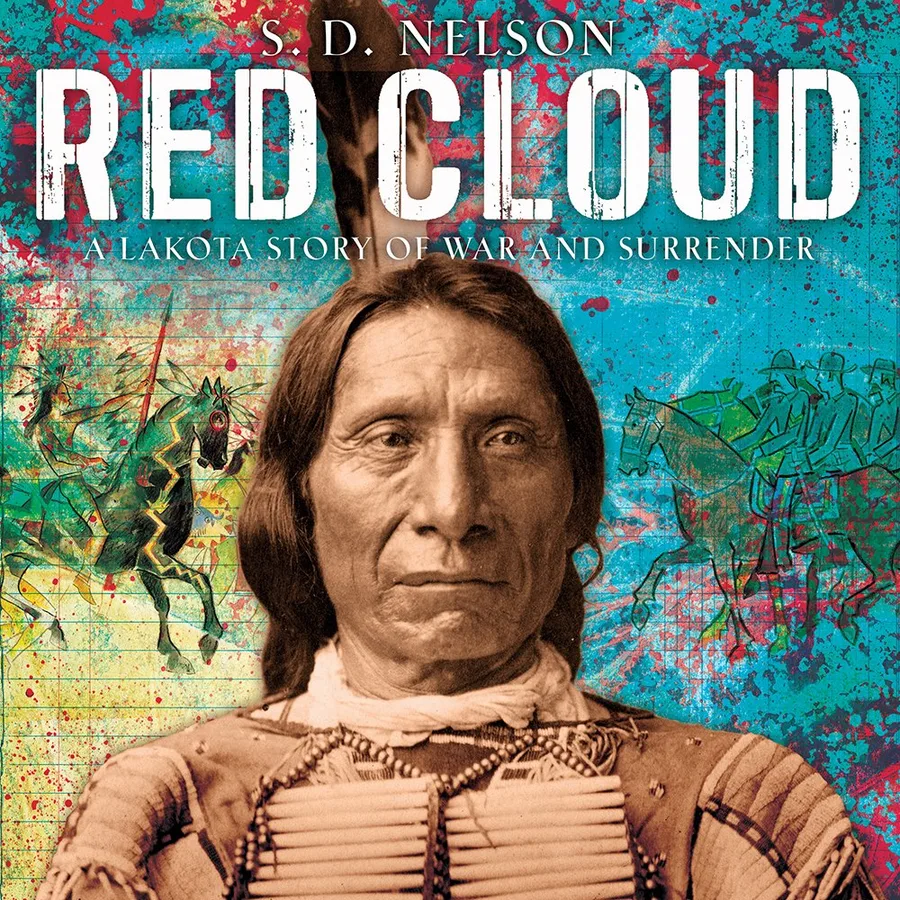 Red Cloud: A Lakota Story of War and SurrenderS.D. Nelson, illustrated by S.D. NelsonRed Cloud was an Oglala Lakota warrior and chief who led Lakota, Cheyenne, and Arapaho warriors in battles against wasichus, or white men, seeking to colonize the Plains. Written in Red Cloud’s fictionalized first-person voice, this book recounts the unfair treaties proposed by the U.S. government, the necessary development of battle strategies by the Plains Indians, and the Lakota victory against the U.S. Army at the Fetterman Battle/Massacre—a victory that halted the advance of the Army and led to the Indian Peace Commission and the establishment of reservations. Red Cloud disagreed with Native leaders who signed treaties, but after years of resistance he came to believe that surrendering to the U.S. government was the only way to prevent “the complete destruction” of the Lakota people and way of life. Not all Lakota agreed with him when he accepted the terms of the government’s treaty that saw the Lakota settled in the Black Hills (land that would later be taken from them). The illustrations that accompany this compelling account of a controversial chief imitate the Lakota ledger-art style. Photographs and well-chosen quotations are distributed throughout, and additional information is provided in an author’s note. The author is a member of the Standing Rock Sioux Tribe.Historical People, Places, and EventsView book details
 The People Shall Continue: 40th Anniversary Special EditionSimon J. Ortiz, illustrated by Sharol Graves“Many, many years ago, all things came to be. The stars, rocks, plants, rivers, animals, Mountains, sun, moon, birds, all things. And the People were born.” A 40th-anniversary edition of this essential work offers a history of Native peoples in the Americas from a Native perspective. Written in the cadences of oral tradition, and imbued with the perspective of one descended from the original inhabitants of the land, the story acknowledges and honors the emergence of numerous distinct Indigenous cultures, and the shared, tragic impact of Europeans’ arrival. It speaks of treaties made and treaties broken, of suffering, and above all of endurance and survival, which comes in the sharing of knowledge and experience with the next generation. The need to protect the earth, and to honor the dignity of all people, is a powerful theme that resonates across the narrative. This new edition concludes with an author’s note referencing the original publication, and the continued presence and ongoing struggles of Indigenous people, including the Standing Rock Tribe of Sioux’s protest against the Dakota Access Pipeline.Historical People, Places, and EventsView book details
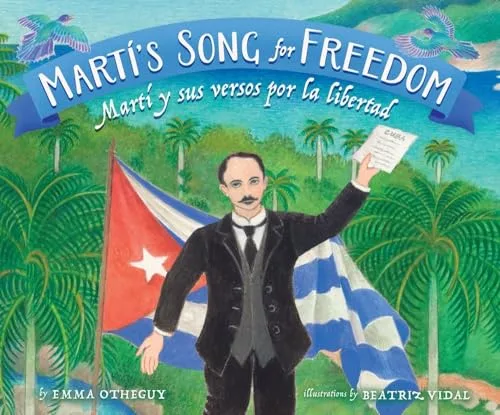 Martí’s Song for Freedom = Martí y sus versos por la libertad. Versos sencillosEmma OtheguyEqual parts poet and political revolutionary, José Martí devoted his life to fighting for Cuba’s freedom from Spain. As a young man, after witnessing the injustice of slavery on his home island, Martí was inspired to help the enslaved, who had “souls like his own—souls that should be free.” When Cuba’s Ten Years’ War—the fight for independence from Spain—began, Martí joined the cause as a political writer, for which he was imprisoned and then CCBC Choices 2018 Historical People, Places, and Events 25 eventually exiled from Cuba. But Martí traveled “from country to country,” continuing to advocate for Cuba’s independence. After living in New York for a few years, Martí returned to Cuba to become a soldier in the Cuban War for Independence. He died in battle. Written in elegant verse, the narrative of Martí’s activism is complemented by stanzas from his own Versos sencillos. As a poet, he drew inspiration not only from his political work, but from his deep appreciation for nature, writing about the beauty of both Cuba and New York’s Catskill Mountains. This is a moving tribute to a man who, tragically, died before seeing his dream of Cuban independence come to pass.Historical People, Places, and EventsView book details
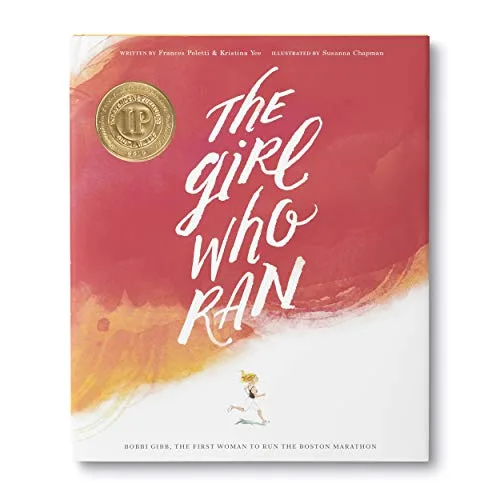 The Girl Who Ran: Bobbi Gibb, the First Woman to Run the Boston MarathonFrances Poletti, Kristina Yee, illustrated by Susanna ChapmanThe first time Bobbi Gibb watches as hundreds of runners stream along the streets during the Boston Marathon, she knows she wants to join them. Bobbi has always loved running; she savors the solitude and the sound of the wind in her ears. But it’s 1966, and women aren’t allowed to register for the Boston Marathon. In fact, women are not supposed to run at all, and Bobbi’s parents agree. Run a marathon? How “silly” and “unladylike!” Bobbi might hurt herself! Now Bobbi is more determined than ever. She knows she can do this. She trains in secret and dons men’s clothing for the big race, hoping to run undetected. To her surprise, when the secret gets out midway through her route, Bobbi is met with the cheers of spectators and fellow runners. With their encouragement and the endurance she gained during her training, Bobbi completes all 26.2 miles. Although her race is over, the journey of women in running has just begun, and soon others will follow in Bobbi’s footsteps. A timeline detailing milestones in women’s marathons follows the story.Historical People, Places, and EventsView book details
 Undefeated: Jim Thorpe and the Carlisle Indian School Football TeamSteve SheinkinBorn in Oklahoma of Fox and Sauk heritage, Jim Thorpe was sent to a local Indian boarding school as a young child but ran away so many times he was finally, at age 11, sent far away to the Haskell Institute. He hated the school but discovered football and learned about one of the nation’s greatest teams, the Carlisle Indians. By age 15, he was at the Carlisle Indian School, playing for the storied team under the direction of Coach Pop Warner. Sheinkin skillfully weaves Thorpe’s life story with that of Pop Warner and the evolution of football, a sport that was very greatly shaped by the Carlisle Indians. This amazingly gifted team, built by Pop Warner from Carlisle’s most athletic students, who came from various Native nations, invented plays and techniques that are standard today, from the forward pass and spiral pass to field goals kicked from a distance greater than 30 feet. Plenty of play-by-play action, pieced together from contemporaneous newspaper accounts, provide details about the skill, athleticism, and inventiveness that led to frequent Indian victories over the likes of Harvard, Yale, Penn, and Princeton. Sheinkin does not shy away from the pain, racism, and exploitation the Carlisle students faced on a regular basis, although an account of government policy that forced most Native children to attend the schools is lacking.Historical People, Places, and EventsView book details
 Sinking the Sultana: A Civil War Story of Imprisonment, Greed, and a Doomed Journey HomeSally M. WalkerMore than 2,000 passengers were on board the steamboat Sultana in April 1865 as it traveled up the Mississippi. The majority of them were Union soldiers recently released from Confederate prison camps heading north to be mustered out of the army. When one of the ship’s boilers exploded in the middle of the night, it marked the start of the worst maritime disaster in U.S. history. This gripping account provides context for this time in American history, but the narrative returns again and again to the hours leading up to and following the explosion. Those who weren’t killed in the blast ended up in the frigid Mississippi, some severely burned. People on shore and in other boats heard cries for help and did what they could to rescue survivors. In the aftermath, an investigation into what might have caused the blast and why so many were on board a boat authorized for 376 when the army left a second steamship empty are also chronicled. Older children and teens fascinated by the Titanic and other disaster accounts will be just as compelled by this one. A note on the author’s research, source notes, and glossary round out the volume. (Ages 10–14).Historical People, Places, and EventsView book details
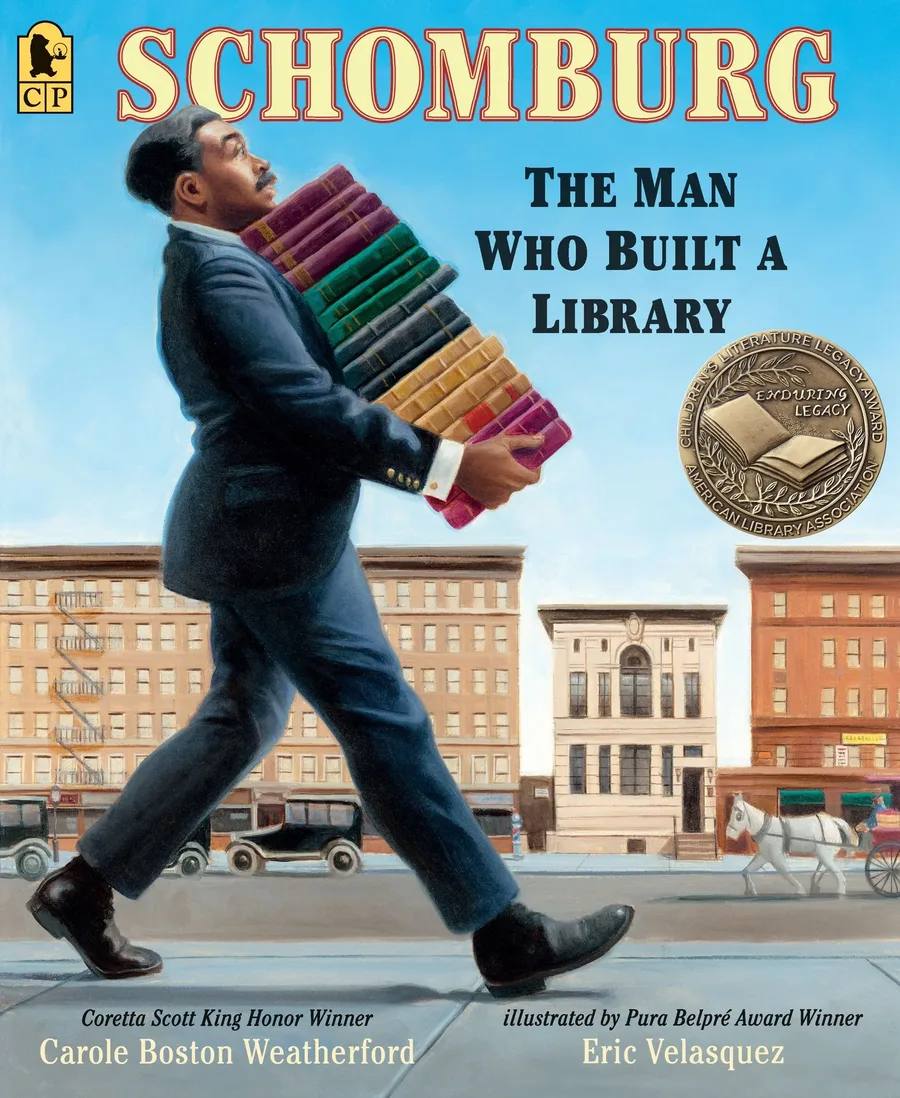 Schomburg: The Man Who Built a LibraryCarole Boston WeatherfordArturo Schomburg’s keen interest in documenting the many and varied contributions of people of African descent to arts, letters, and science led to decades of meticulous, patient work as he searched out and collected books, art, and other artifacts. At first glance, this work is a biography of Puerto Rican–born Schomburg, who worked as a bank clerk in New York City by day, in poems. But it is also history and inspiration and determination. Schomburg believed Black contributions existed and mattered and were worthy of preservation. He was a detective, ferreting out hidden history, as well as a collector and preservationist. Among his many accomplishments was documenting buried histories of African heritage in famous people such as Beethoven and Alexandre Dumas. “Arturo saw that the historical record was colorblind / only when that best served greedy motives. / So when genius was black, skin color was left out. / But Schomburg chased the truth and turned up icons / whose African heritage had been whitewashed.” Schomburg died in 1938. His legacy lives on in his work and in the New York Public Library research center that houses his collections and bears his name.Historical People, Places, and EventsView book details
Biography and Autobiography
9 selections
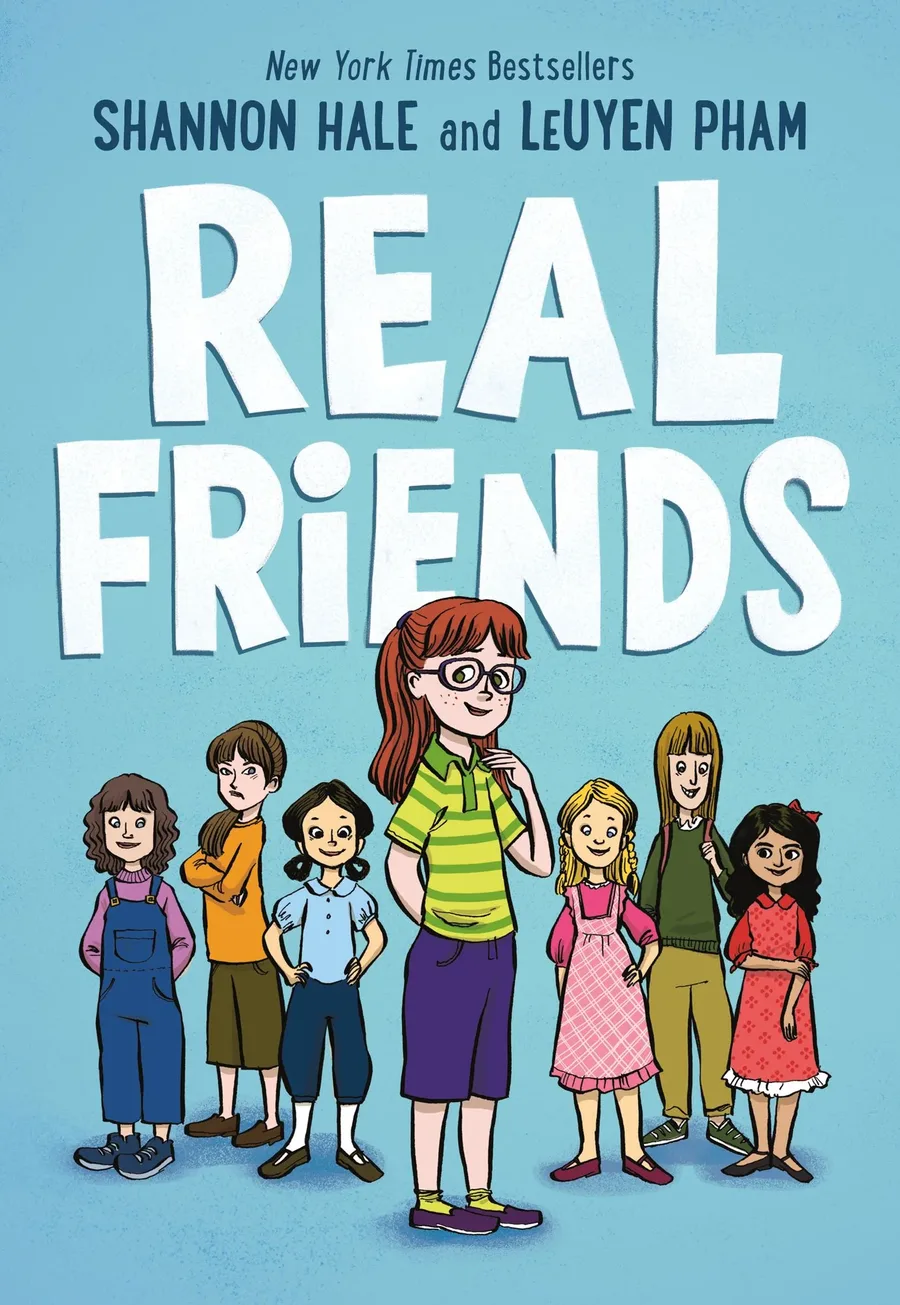 Real FriendsShannon HaleThe middle child in a family of five children, Shannon is nervous to start kindergarten and to be away from her mother. It’s not long, though, before she meets Adrienne, her first best friend, who shares Shannon’s love of imaginative play. Adrienne is the first in a long succession of friends who are sometimes true, sometimes flaky, and other times downright mean. Mostly, though, they are like Shannon, just learning to navigate the world of elementary school– age friendships. In this graphic memoir, Shannon Hale frankly recounts her struggle to fit in with “the group,” the bullying she suffered from her classmate Jenny, and her desire to find, as her mother says, “one good friend.” She also recalls with at-times uncomfortable honesty the abuse she faced at the hands of her oldest sister, Wendy, whose own loneliness transformed Wendy into a frightening bear in Shannon’s eyes. LeUyen Pham’s bright, clear illustrations are well suited to the large cast of characters, who grow from kindergarteners to sixth-graders in this ultimately hopeful memoir about friendship and sister relationships that will be relatable to many girls today.Biography and AutobiographyView book details
 Vincent and Theo: The Van Gogh BrothersDeborah HeiligmanAs a young man, Vincent Van Gogh worked at an art auction house but was neither happy nor successful. He turned to God and ministered to the poor with great humility and an unsettling passion for self-denial until he was asked to leave his post. At 27, he returned home and began to draw and paint with purpose, relentless in the desire to improve. His brother Theo, two years younger and a successful art dealer, was his greatest critic and staunchest supporter financially and emotionally. Excited by the new style called Impressionism, Theo encouraged Vincent to use more and more color in his work. There had been signs for years that Vincent could be unstable, sometimes subject to deep sadness and withdrawal, sometimes frenzied. Theo, too, battled despair. A narrative that quotes liberally from their prolific correspondence details their individual struggles, while the devotion between them is its heart and soul. This exquisite, remarkable book told in the present tense positions readers as intimate observers of Vincent’s and Theo’s lives. Two portraits emerge in rich detail: a deep-thinking, gifted artist who was a troubled, gentle, compassionate man; and an insightful critic who recognized his brother’s brilliant mind and work, devoting incredible energy and resources to nurturing and supporting him. Uplifting, poignant, and tragic by turns, the brothers’ lives unfold in a work of exceptional literary nonfiction weaving scholarly research (further detailed in ample end matter) into a vivid, immersive account.Biography and AutobiographyView book details
 A Boy, a Mouse, and a Spider: The Story of E. B. WhiteBarbara HerkertA pleasing look at the life of E. B. White spins fragments and memories and anecdotes drawn from numerous sources into a narrative in which his love of the natural world and of words merge, resulting here in two of the stories for which he is best known: Stuart Little and Charlotte’s Web. Other aspects of White’s life are also touched on, from his anxiety to college journalism days to his work at The New Yorker. But it’s his love of nature, whether as a boy in the barn or on his Maine farm in adulthood, that will most captivate readers, especially as it connects to the books with which they may be familiar. “Andy filled his barn with stoic sheep, anxious hens, and gossiping geese. But he still had a mouse on his mind.” Congenial mixed-media illustrations accompany a narrative that concludes with a substantial note providing more about White’s life, and a bibliography.Biography and AutobiographyLexile Text Measure 770LATOS Book Level 4.1View book details
 Take a Picture of Me, James VanDerZee!Andrea J. Loney“Now this is how you make great pictures.” A creative child, James VanDerZee is awed by the photograph of his family produced by a contraption called a camera. After saving enough money to buy a camera of his own, James starts small, taking photographs of his family and classmates. As a young adult, he becomes an assistant photographer at a New Jersey portrait studio. Initially confined to the darkroom because of the color of his skin, James carefully adjusts and retouches the portraits to make people shine. Eventually, James opens his own studio in New York. He excels at putting customers at ease and setting the scene before shooting photographs. Thanks to his innovative methods and his penchant for photographing middle-class African Americans (uncommon subjects at the time), James enjoys great success during the Harlem Renaissance. This book recounts not only the career but the exceptional artistic vision of a photographer whose body of work documented 40 years of history in Harlem.Biography and AutobiographyView book details
 Isaac the Alchemist: Secrets of Isaac Newton, Reveal’dMary LosureHow do you recount the life of a 17th-century scientist in a way that is captivating for youth? One way is to make it magical. Isaac Newton grew up at a time when there was little or no distinction between magic and science. His mathematical discoveries are what helped firmly distinguish between the two; even so, he never gave up his belief in alchemy. Here, Newton is profiled from childhood on as a singular intelligence. He didn’t often relate well to people, but he was brilliant and passionate in pursuit of his interests, from alchemy to math to mechanics. Although details about his childhood in particular are not abundantly known, Losure creates a vivid sense of the time and place in which he grew up, including ample information about alchemy, which so fascinated Newton. Near volume’s end, after recounting how Newton’s discoveries transformed understanding in physics and astronomy in particular, Losure writes, “This magician, this last sorcerer—the greatest of all alchemists—was CCBC Choices 2018 Biography and Autobiography 29 the same man who banished magic from the scientific world.” End matter in this highly readable volume includes glimpses of Isaac’s notebooks, and excerpts from some of the alchemy books of his time, as well as source notes and bibliography.Biography and AutobiographyView book details
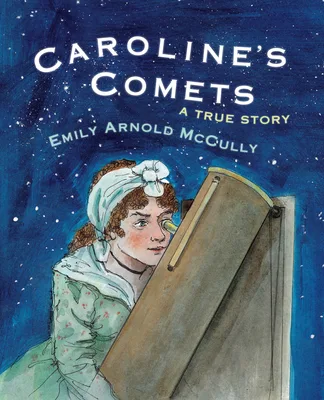 Caroline’s Comets: A True StoryEmily Arnold McCully, illustrated by Emily Arnold McCullyCaroline Herschel, Hunter of Comets, grew up knitting stockings and performing the duties of a scullery maid for her own family. It wasn’t until her brother, William, moved to England and invited her to join him that Caroline finally escaped these duties (although not without first making two years’ worth of stockings). William was a musician, but he was also interested in planets and stars and other objects of the night sky. With Caroline’s assistance, he built a telescope—the best one in the world at the time. After discovering the planet Uranus, William was appointed King’s Astronomer. Meanwhile, not only was Caroline quietly assisting William with his observations and records, she was also keeping his house, cleaning equipment, sewing, handling her brother’s accounts, and making astronomical discoveries of her own. Her discovery of “the Lady’s Comet” led to Caroline becoming the first professional (and famous) woman scientist. Short excerpts from Caroline’s autobiography add a dash of her spunky personality to the story and emphasize the astronomer’s intelligence, mettle, and devotion to her brother in this picture book account of her life.Biography and AutobiographyView book details
 Dangerous JaneSuzanne SladeThis picture book biography of Jane Addams—referred to as “Saint Jane” during her lifetime—recounts her decades of remarkable social justice work and promotion of peace throughout the world. Even as a child, Jane had great empathy for people in need. Years later, while touring England, she was inspired by a London settlement house where people living in poverty could go to learn new skills. Jane returned home and opened Hull House in Chicago, where she welcomed and offered assistance to anyone who needed it, especially immigrants and the poor. Jane’s peace work continued throughout her lifetime: during World War I, she formed the Women’s Peace Party and led the International Congress of Women. After the war, she provided care for ill and injured children around the world—work that some considered traitorous. In the eyes of the FBI, for a time “Saint Jane” became “the Most Dangerous Woman in America.” But the tenacious woman continued on, and in 1931 she was recognized for her work with the Nobel Peace Prize. Along with her many accomplishments, this book brings Jane’s kindness, generosity, and sense of conviction to the forefront of her story.Biography and AutobiographyView book details
 SpinningTillie Walden, illustrated by Tillie WaldenIn this quiet graphic-novel memoir, 11-year-old Tillie must adjust to new coaches, teammates, and routines when her family moves from New Jersey to Austin, Texas. A competitive solo and synchronized figure skater, Tillie 30 Biography and Autobiography CCBC Choices 2018 practices at the crack of dawn and endures grueling, day-long competitions on the weekends. While skating is the unifying activity throughout, this is a memoir about Tillie grappling for control in multiple aspects of her life. When Tillie begins a romantic relationship with another girl and Tillie’s mother finds out, Tillie decides to selectively come out to friends, family members, and mentors. Although she has friends at her new school, she must endure the persistent bullying of a classmate. Most of all, Tillie realizes that although she likes winning, she does not enjoy skating. Finding the courage to quit the sport into which she has invested years of time and energy and to pursue a different passion—art—is hard: It means bringing the momentum of her life to a halt and beginning a new path. Walden’s narrative skillfully unfolds at a comfortable pace, and her uncomplicated, monochromatic illustrations complement the emotional heft of the story.Biography and AutobiographyView book details
 The World Is Not a Rectangle: A Portrait of Architect Zaha HadidJeanette WinterThe late Iraqi architect Zaha Hadid is the subject of a picture book that follows her from a childhood full of creativity and imagination and ideas and observations about the natural world to a young woman who loves math and wants to build cities and studies to be an architect. When she opens her own company, “Zaha’s designs don’t look like other designs. Her buildings swoosh and zoom and flow and fly. ‘The world is not a rectangle.’” But no one wants to build what she designs, until suddenly they do: building after building inspired by what she has noticed all her life, shapes and patterns and movement found in the natural world. A spare, lyrical tribute to the architect’s work and her tireless creativity weaves in quotes from Hadid and concludes by identifying some of her best-known buildings, referenced in the main narrative and shown again in thumbnails for visual reference. The stylized illustrations in Winters’s trademark, clean, warm style wonderfully convey moments of Hadid’s life and the direct inspiration of nature in her work.Biography and AutobiographyView book details
Contemporary People, Places, and Events
10 selections
 #NotYourPrincess: Voices of Native American WomenLisa Charleyboy, Mary Beth LeatherdaleThis diverse collection of art, essays, poems, quotations, and interviews amplifies the voices of Native American women as they affirm themselves and their sisters and acknowledge the impact of painful personal and cultural histories. Many of the women acknowledge physical and sexual violence; because they are Native and because they are women, they know racism and sexism as relentless. Through their art and writing, they defy and challenge stereotypes that label Native American women “princesses” or “costumes.” Their pieces are also CCBC Choices 2018 Contemporary People, Places, and Events 31 bursting with positive truths, cultural pride, and courage. These women are artists, writers, physicians, athletes, scholars, and more who address the lasting harm caused by colonialism and other crimes against Indigenous peoples, and who continue to support one another and thrive today.Contemporary People, Places, and EventsView book details
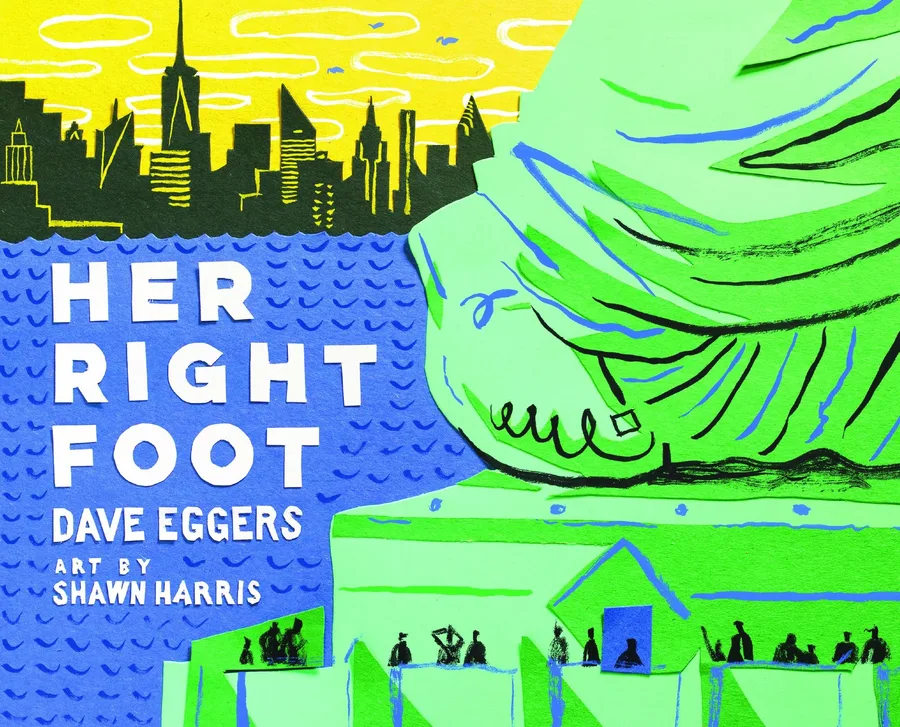 Her Right FootDave EggersA 94-page picture book about the Statue of Liberty begins as a funny, sometimes downright satirical look at the statue’s construction and design. (“While the statue was rising, Bartholdi set up a lunch, four stories up, to impress and enthrall these French writers, who, being difficult to impress and enthrall, were at least mildly amused.”). The narrative never loses its sense of humor as it seamlessly transitions into a heartfelt, thought-provoking reflection on the statue as a symbol of liberty and freedom and refuge. Have you ever noticed, the unseen narrator asks, that the statue is mid-stride? That her right foot is poised to take another step? Why? “Here is an idea. Here is a theory. Here is a reminder. If the Statue of Liberty is a symbol of freedom, if the Statue of Liberty has welcomed millions of immigrants to the United States, then how can she stand still? … In welcoming the poor, the tired, the struggling to breathe free. She is not content to wait. She must meet them in the sea.” Unabashedly patriotic and grounded in a social justice perspective, the narrative is paired with terrific construction paper and India ink illustrations that are also rendered with both humor and poignancy.Contemporary People, Places, and EventsLexile Text Measure NC800LATOS Book Level 4.5View book details
 Malala: Activist for Girls’ EducationRaphaële Frier“Malala grew up with the smell of notebooks in the air.” Malala Yousafzai’s life to date is the subject of this amazingly comprehensive yet accessible and engaging picture book account that emphasizes her activism and interest in education from a young age, rooted in the progressive ideas of her family. Malala was already a well-known and outspoken advocate of education for girls in Pakistan when men from the Taliban boarded her school bus and shot her in the head three times. Her recovery, both difficult and extraordinary, has led to an even bigger global platform for this courageous and committed young woman, now only 20, who has already received the Nobel Peace Prize. More about Malala’s life, her native country of Pakistan, those who inspire her, and her ongoing work are included in photo-essays at the end of this inspiring, beautifully illustrated work.Contemporary People, Places, and EventsView book details
 Chef Roy Choi and the Street Food RemixJacqueline Briggs Martin, June Jo LeeFrom the endpaper photograph of tightly packed, wavy ramen noodles to the mouthwatering descriptions of food, this account of Chef Roy Choi’s fusion of fine dining and street food and cultures will whet appetites, but for more than just something to eat. Born in Seoul, Roy Choi grew up in Los Angeles, eating his mom’s Korean cooking at their family restaurant and exploring the 32 Contemporary People, Places, and Events CCBC Choices 2018 city. Looking for where and how he fit in, he found the answer in cooking, attending culinary school and then working as an elite chef until “he couldn’t cook fast enough for all those diners. He forgot recipes. Lost his job.” He opened a Korean barbecue taco truck, Kogi Tacos, with a friend. But he didn’t just want to make food; he wanted to feed people. Roy opened cafés in “worn- out neighborhoods” and encouraged other chefs to open fast-food restaurants in challenged areas of town. He also taught kids to make and sell their own food. For Roy Choi, cooking is activism and community as well as good eating as he strives to “remix neighborhoods everywhere with hope, mad cooking skills, and fresh ingredients.” Street artist Man One’s spray paint and digital ink illustrations further energize a vibrant work full of optimism.Contemporary People, Places, and EventsLexile Text Measure 710LATOS Book Level 4View book details
 The Banana-Leaf Ball: How Play Can Change the WorldKatie Smith Milway, illustrated by Shane W. Evans, Shane WAfter escaping the war in his country of Burundi, Deo lives in Lukole refugee camp in Tanzania along with thousands of others. With resources at the camp stretched thin, boys form gangs and steal food from others. Although Deo tries to keep to himself, he is bullied by Remy and his gang, who steal the twine Deo is using to make a banana-leaf ball. Soon Deo has a chance to play, however, when a man with a real soccer ball organizes a game for the boys in the camp. Placed on the same team, Remy and Deo play well together. They form a tentative friendship, teaching each other new soccer skills, making banana-leaf balls, and eventually sharing memories of their homes and families. Extensive notes about the man who inspired the story, organizations and games that promote teamwork, and ways to help follow this story of children building trust and friendships through play.Contemporary People, Places, and EventsView book details
 Blue Sky White StarsSarvinder NaberhausA meditation on the history, geography, and diverse people of the United States, this oversized picture book relies on visual and word play, leaving its meaning open to interpretation. On one page, the words “white rows” describe an illustration of rows of white covered wagons—or is it white settlers?— crossing the plains. Next to it, the same words accompany an illustration of the red and white stripes of the American flag. Naberhaus also makes use of homophones. “Sew together won nation” is paired with an image of a young white woman stitching an early American flag, while next to it, “so together one nation” accompanies a group of people of many ethnicities, ages, and religions. The sparse text, along with Kadir Nelson’s rich illustrations, invite discussion with children of many ages.Contemporary People, Places, and EventsWord Count 72View book details
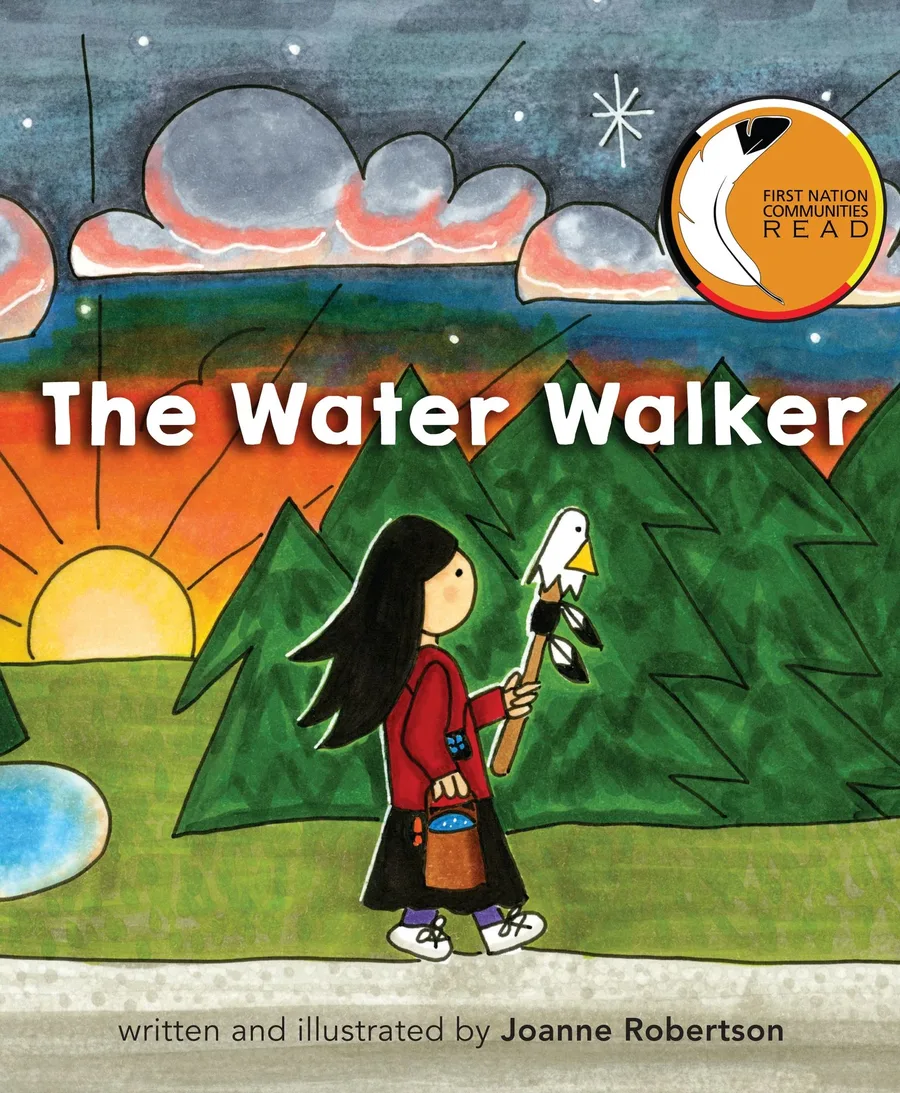 The Water WalkerJoanne Robertson, illustrated by Joanne RobertsonJosephine Mandamin, concerned about water quality and conservation, organized a group of other Ojibwe women to walk around all the Great Lakes and the St. Lawrence River, blessing and singing to the water. They accomplished this remarkable feat in seven years, and then organized women from other CCBC Choices 2018 Contemporary People, Places, and Events 33 Native Nations to do the same with the Atlantic and Pacific Oceans, the Gulf of Mexico, and in the frozen north. The account uses numerous Ojibwe words (defined in the glossary) to give a strong sense of setting and of the organizer’s Ojibwe heritage. Other colorful details, such as the fact that Nokomis (the name the narrator uses for Mandamin) went through 11 pairs of sneakers on her walks, make her unusual story particularly appealing to children.Contemporary People, Places, and EventsView book details
 The 57 BusDashka SlaterDespite recently losing a friend to gun violence, African American Richard is focused on improving his grades and graduating from his Oakland high school. Sasha, who attends private school, is agender and brilliant, the type of person who invents languages for fun. On November 4, 2013, as Richard and Sasha ride the bus home from their respective schools, Richard holds a lighter to Sasha’s skirt, which erupts into flames. This event sets in motion a long, painful process of court appearances for Richard, and healing for both. The two teens are treated with respect and empathy in this nonfiction account that begins with an exploration of their backgrounds, including Sasha’s gradual understanding that they don’t identify as either male or female, and continues through Sasha’s recovery and Richard’s sentencing. Accessible descriptions of aspects of the U.S. and California justice systems—the practice of restorative justice and California’s Proposition 21, which allows juvenile offenders to be charged as adults—in addition to information about Richard’s personality and adolescent brains and behavior, suggest that, as Richard’s friend attests, the crime “was like a funny prank-joke turns to something that ends your whole life.” Although a grim event begins this narrative, the humanity of both teens and their families is palpable throughout.Contemporary People, Places, and EventsLexile Text Measure 930LATOS Book Level 6.5View book details
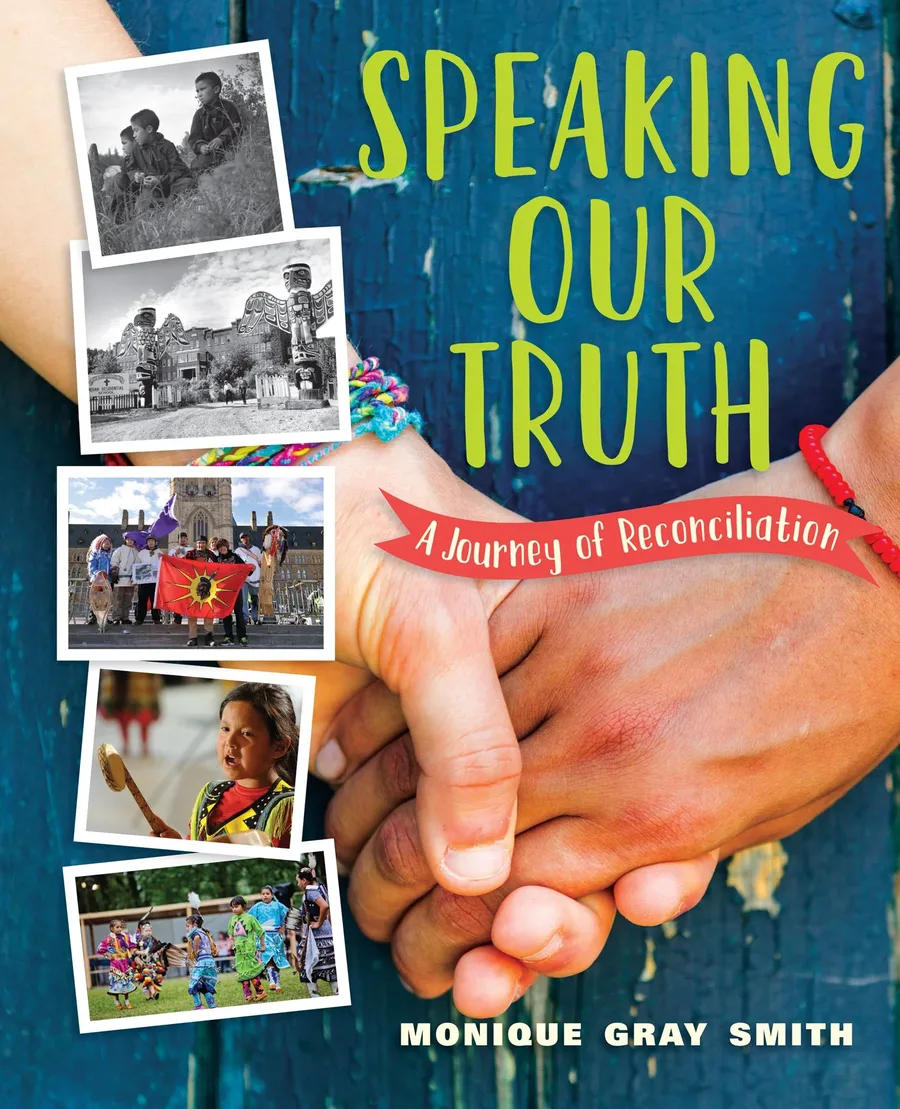 Speaking Our Truth: A Journey of ReconciliationMonique Gray SmithSmith calls readers in to learn about the tragic history and lasting impact of Canadian Residential Schools on Indigenous lives. Her narrative provides an overview of what happened to Indigenous people after Europeans arrived, including eventual legislation that negated, denied, and oppressed the rights and humanity of Native peoples. It then looks closely at the Residential Schools and their lasting impact on generations of Indigenous Canadians, including intergenerational survivors today. She does not specifically discuss varying perspectives of Indigenous Canadians on the Canadian Truth & Reconciliation Commission whose work in part is the focus of this book, but does state, “I do not speak for all Indigenous people. I am one voice … I am sharing with you my own understanding of a complex and painful history.” Personal narratives from commission testimony is woven into this account that, the author notes, is not just Indigenous history but Canadian history, important for all to know and understand. Although specific to Canada, this work illuminates similar trauma experienced by Indigenous peoples in the United States, who also were forced to attend residential schools, while modeling a remarkable tone for discussing systemic racism with children, an idea buoyed by perspectives 34 Contemporary People, Places, and Events CCBC Choices 2018 provided by a diverse group of contemporary children whose voices are included.Contemporary People, Places, and EventsView book details
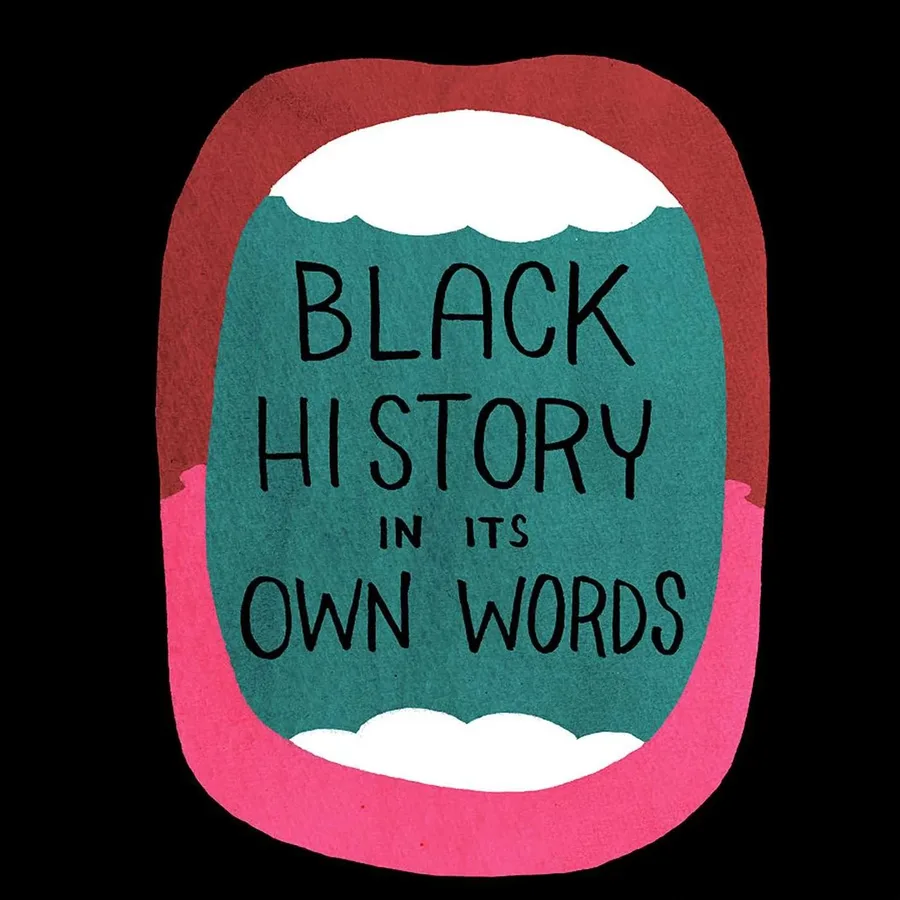 Black History in Its Own WordsRonald WimberlyThis collection is a compilation of quotations by and portraits of prominent contemporary and historical African American icons paired with one- to two- sentence biographies. Each bold portrait is drawn comic-book style: thick, black lines with white spaces that pop against solid-color backgrounds. In many, the subject’s accomplishment or profession is incorporated into the portrait: Serena Williams is drawn swinging a tennis racket; Cathay Williams holds a sword and wears a U.S. Army uniform. Others, such as MC Ride and Poly Styrene, are rapping, singing, or simply appearing to be captured mid- speech. The individuals included in the collection are diverse in their talents: artists, musicians, politicians, writers, academics, athletes, activists, and more. They were chosen for inclusion because all were “people whose words and lives spoke to [Wimberly] personally.” Their quotations, which range from offhand to profound and thought-provoking, will undoubtedly strike a chord with readers, too.Contemporary People, Places, and EventsView book details
Understanding Oneself and Others
4 selections
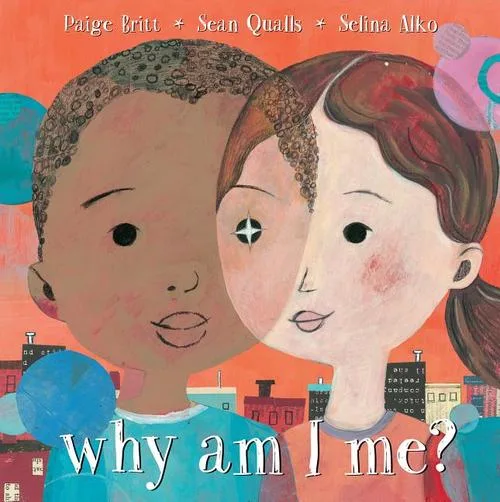 Why Am I Me?Paige Britt, illustrated by Sean Qualls, Selina Alko“Why am I me … … and not you?” A philosophical picture book poses questions that invite consideration of individual identity. What makes these big ideas accessible is the visual story, which attaches the questions to specific characters as it follows two children from the moment they are standing near each other on a large city subway platform through their journeys home. They sit across from each other on the subway (“Why are you, you … … and not me?”). On the ride, each looks out the window. The African American boy wonders who he would be if he were someone else. Would I be “taller, … smaller, smarter?” The light-skinned girl wonders, what if someone else were her. Would they be “lighter, … darker, bolder?” A narrative that invites children on a journey of self-reflection, self-perception, and consideration of others is both lifted up and solidly grounded by the energetic acrylic, colored pencil, and collage illustrations showing the two children as part of a diverse and vibrant city, and in solitary moments of reflection.Understanding Oneself and OthersLexile Text Measure AD200LATOS Book Level 1.8View book details
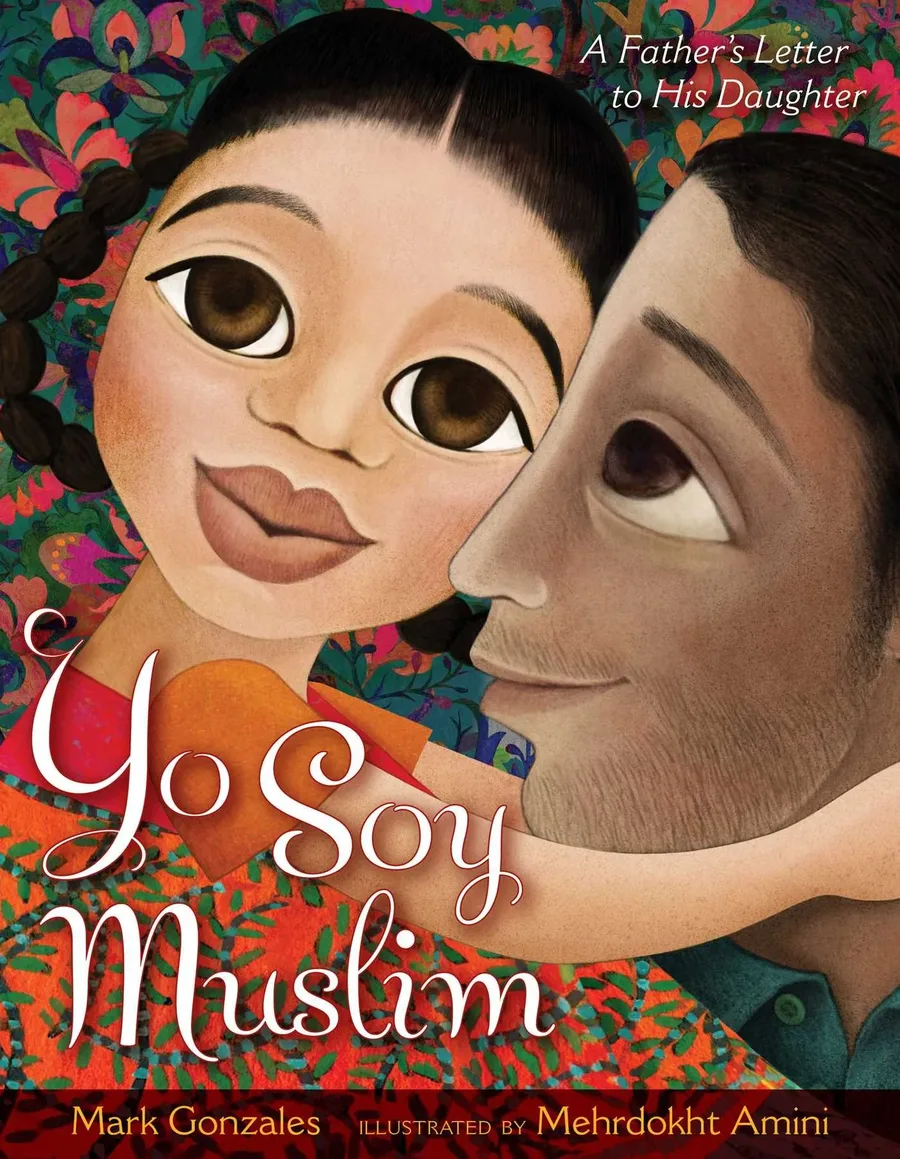 Yo Soy Muslim: A Father’s Letter to His DaughterMark GonzalesA lyrical second-person text offers the perspective of a Mexican Muslim father talking to his daughter, affirming for her the joy and pride of being both Mexican and Muslim. “There are questions this world will ask. What are you? CCBC Choices 2018 Understanding Oneself and Others 35 And where are you from? … On this day tell them this: Yo soy Muslim. I am from Allah, angels, a place as old as time. / I speak Spanish, Arabic, and dreams.” Mehrdokht Amini’s extraordinary digitally rendered illustrations are at once whimsical and rooted in details from two ancient cultures. The text does not shy away from reality—it includes the heartbreaking line “And there will come a day / when some people in the world / will not smile at you.” This carries a double meaning, as it refers to both Muslims and Latinx in the United States in this powerful, accessible, welcome work.Understanding Oneself and OthersView book details
 All Around UsXelena González“Grandpa says circles are all around us. We just have to look for them.” A young Latina girl gardening with her grandfather begins to notice and appreciate all the different kinds of circles he points out to her, both literal (the sun, the clock, bicycle wheels) and figurative (the other half of a rainbow, the life cycle). Once Grandpa gets her to start looking, she sees them everywhere and can feel herself as part of the great circle of life. In her debut picture book, Xelena González makes an abstract concept completely accessible to young readers, and Adriana M. Garcia’s realistic digital art heightens this visual interplay between metaphor and reality while also showing the close relationship between a child and her grandfather. Although the text never mentions death, the book could certainly be used to open a discussion on the subject between an adult and a child. In a note, the author discusses how her mestizos (Spanish and American Indian) heritage informed the perspective of the story.Understanding Oneself and OthersLexile Text Measure AD680LATOS Book Level 2.8View book details
 In Your HandsCarole Boston Weatherford, illustrated by Brian PinkneyFrom the time her son is born, an African American mother has dreams for his future in a world she knows will not always be just or welcoming to him. Her words become a prayer that he will be safe wherever he goes, from crossing the street on the way to kindergarten to “crossing over to adolescence.” “I will pray that the world sees you as a child of God, and, as you cast a longer shadow, that you will be viewed as a vessel to be steered rather than a figure to be feared.” Carole Boston Weatherford’s poetic plea offers powerful and necessary words for our time.Understanding Oneself and OthersView book details
The Arts
12 selections
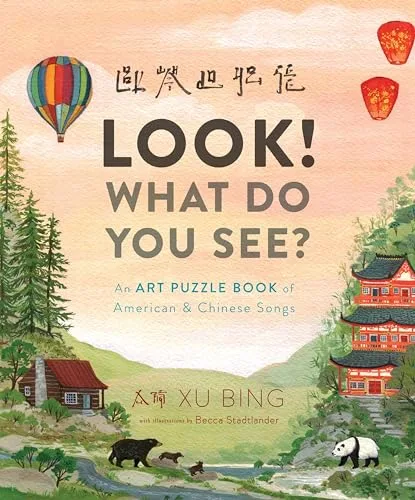 Look! What Do You See? An Art Puzzle Book of American & Chinese SongsXu Bing, illustrated by Becca StadtlanderXu Bing has invented a writing system (called a “code” here) called Square Word Calligraphy that uses Roman letters and makes them look like Chinese calligraphy. This unusual and inventive book showcases his transliterated lyrics of several popular American folk songs (e.g., “Skip to My Lou,” “This Land 36 The Arts CCBC Choices 2018 Is Your Land”) and five popular Chinese children’s songs into Square Word Calligraphy. Each is accompanied by a detailed illustration that offers a subtle picture clue, and the challenge for readers is to use the picture clue to decode the song. Once you see the words, you can really begin to read the lines, even of the Chinese songs. The pleasure of decoding is addictive in this volume that features exceptional book-making. For children who love puzzles and decoding, it’ll be a rewarding challenge, and Chinese American children may have double the fun. In fact, in an introduction, the author addresses Chinese children directly, saying, “If you are from China, you might know these from camp or school sing-alongs.”The ArtsView book details
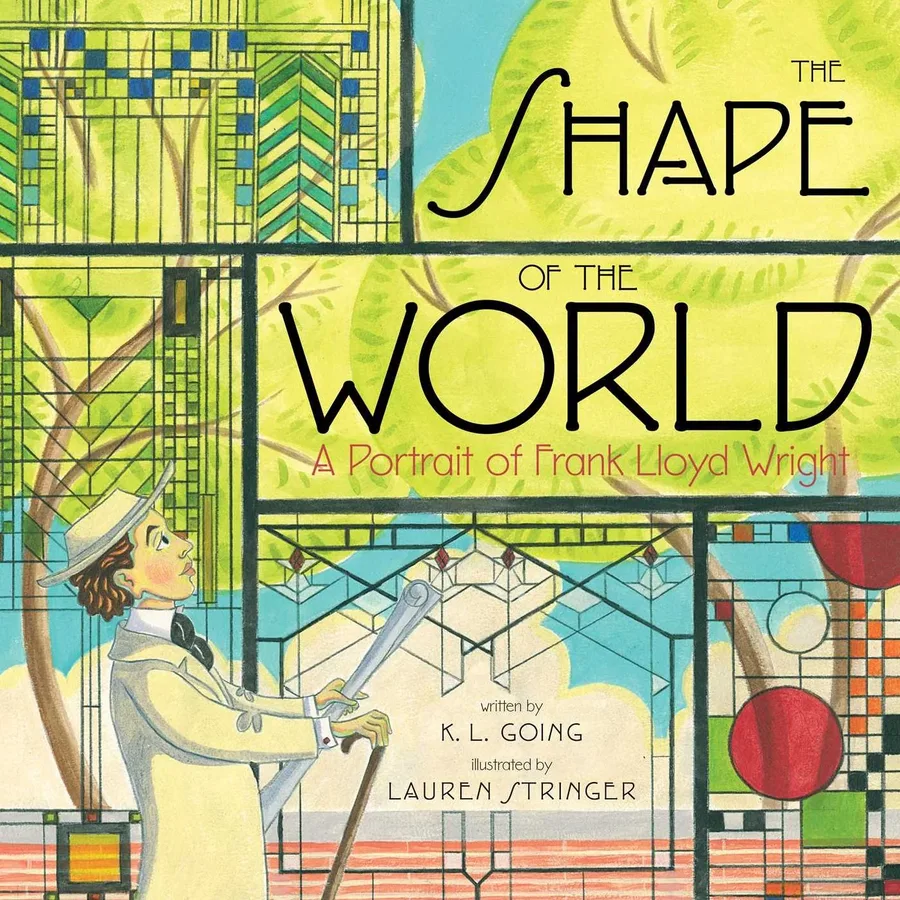 The Shape of the World: A Portrait of Frank Lloyd WrightK. L. Going“When the baby grew into a boy, his mother gave him gifts: cubes, spheres, cones, pyramids, cylinders. The boy loved the smooth shapes.” Young Frank Lloyd Wright builds with his blocks as a child, and, during summers on his uncle’s farm (near Spring Green, Wisconsin), “He saw shapes everywhere he looked. He found an arch inside the pathway of a frog, a cone inside the petals of a flower … ” This picture book look at Wright emphasizes the fascination with geometric shapes and love for the natural world that permeated his singular, brilliant career as an architect. “When other architects chose walls, he chose windows. … He built a house like a honeycomb, a museum like a shell … ” It is Wright’s work, rather than the sometimes difficult aspects of his personality, that takes center stage in this appreciative, accessible, gracefully illustrated account.The ArtsView book details
 Keith Haring: The Boy Who Just Kept DrawingKay A. HaringIn this picture book biography of Keith Haring, Keith is just too busy drawing to answer the many “why” questions put to him by teachers, friends, family members, and others. Keith began drawing when he was a child, encouraged and mentored by his father. As the refrain says, Keith “just kept drawing” for the entirety of his life: he doodled on tests in elementary school, sold his bike to buy art supplies, gave his paintings away for free in high school. He studied art in college, where teachers questioned his unique style and subject matter. He moved to New York City, where his art began to appear on walls and in subway stations, “because everyone needs art.” When his paintings sold, Keith donated the money (people asked, “Why?”) and “just kept drawing.” Written by Keith’s sister, this quietly inspirational book has an author’s note imparting memories and photographs of Keith, as well as additional information on the artist and the Keith Haring Foundation. Photographs of Keith’s vibrant works of art blend seamlessly with Neubecker’s illustrations on nearly every page, with details about the works used at the end of the book.The ArtsView book details
 Maya Lin: Artist-Architect of Light and LinesJeanne Walker HarveyMaya’s journey as an artist-architect began as a child. Growing up with an artist father and poet mother, Maya loved to observe nature, create tiny buildings out of paper, and play chess with her brother. Inspired by buildings both at her college and overseas, Maya imagined that she herself would one day become an architect. When 21-year-old Chinese American Maya’s design for a Vietnam War memorial was chosen as the winner of a highly competitive contest, the judges and nation alike were “shocked.” Maya bravely stood up to their criticism and opposition and saw her Vietnam Veterans Memorial through to completion. The rest, of course, is living history. But Maya’s career has continued. This work showcases the thoughtfulness and brilliance with which Maya approached not only the memorial, but all of her works, which invite people to “Look. Touch. Read. Walk around. Sit by. Think about.”The ArtsView book details
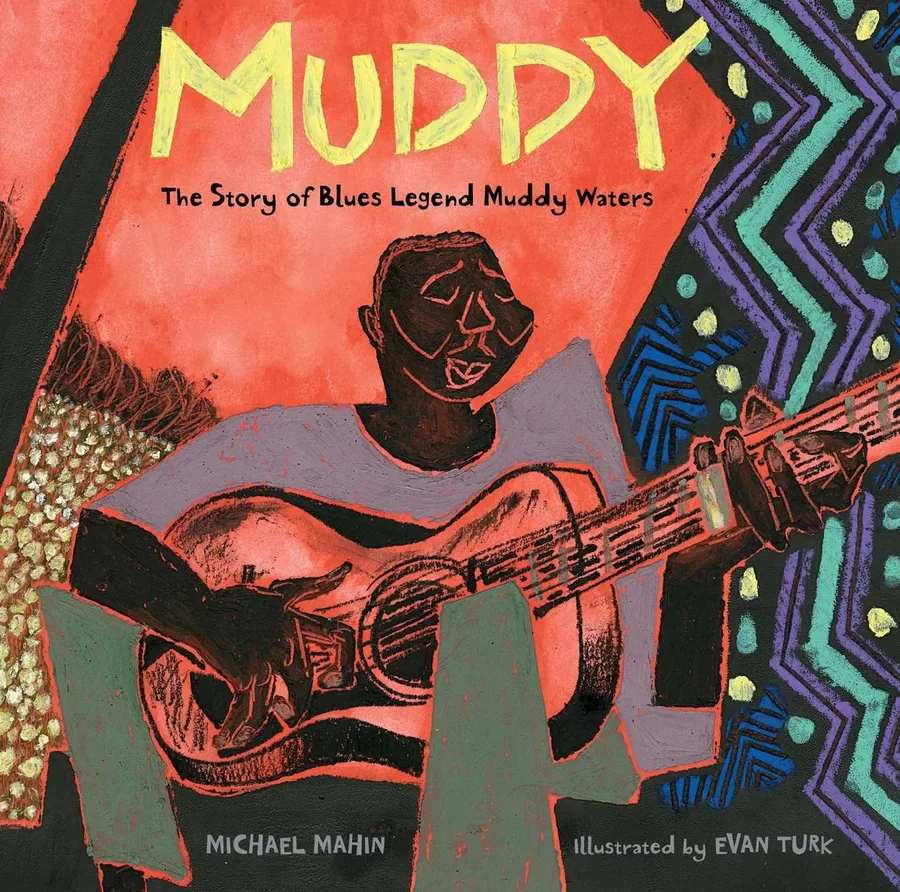 Muddy: The Story of Blues Legend Muddy WatersMichael MahinBorn into an area rife with poverty and racism in the Mississippi Delta, Muddy Waters could count on two things in his life: his Grandma Della, and music. Muddy loved the music he heard in church on Sundays, but his favorite was “fish-fry music,” “shake off the dust / and wring out your worries / and laugh and cry and feel alive music.” Muddy loved the blues. After leaving his “back- busting, soul-breaking” job as a sharecropper, Muddy moved to Chicago to make music. He was told he needed to incorporate more jazz into his style, but he stuck with what he knew and brought “the sound of the Delta” to the big city. As it turned out, people in Chicago couldn’t get enough of Muddy’s blues. After a few false starts in the recording business, a record producer gave Muddy a chance to record his own music, his own way, and it was a hit. Muddy was on his way to becoming one of the greatest blues musicians the world has ever known. Bright, bold illustrations against a black background, and an inventive, evocative choice of descriptive words, set the tone and conjure up the sound of the blues in this picture book biography.The ArtsView book details
 Balderdash! John Newbery and the Boisterous Birth of Children’s BooksMichelle MarkelBack in 1726, a child would be hard-pressed to find a book that wasn’t meant to teach or moralize. When he became a publisher, John Newbery recognized this dreadful lack of light-hearted stories for children and set out to remedy the problem. He opened a store in bustling London and promptly compiled a book of games, rhymes, pictures, ABCs, and proverbs (which came with a bonus ball or pincushion for two pence extra). Witnessing the book’s great success, Newbery went on to publish a magazine and even a wildly popular novel, The History of Little Goody Two-Shoes, all for children. These publications were written anonymously, although “everyone knew who” was really behind them. The playful, enthusiastic narrative of this picture book biography is accompanied by delightfully exaggerated drawings of hordes of children who 38 The Arts CCBC Choices 2018 transform from miserable, weeping students with dull primers to joyful readers happily clutching stacks of books.The ArtsView book details
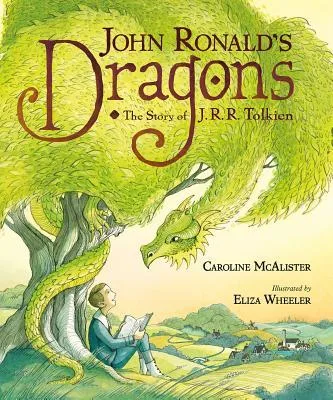 John Ronald’s Dragons: The Story of J. R. R. TolkienCaroline McAlister, illustrated by Eliza WheelerA picture book biography of fantasy author J. R. R. Tolkien focuses on the power of his imagination from childhood through adulthood and his successful writing career. After losing his mother when he was 12, John Ronald’s imagination helped him through difficult times living with an unwelcoming aunt, and later while serving in World War I. It was during his tenure as a teacher at Oxford that he wrote his first line about a hobbit, which he eventually expanded into stories to entertain his children. The dragons that John Ronald loved as a child populate the pages of his life story, and an illustrator’s note describes the care Wheeler took to bring fantasy elements into a historical biography.The ArtsView book details
 Niko Draws a FeelingBob RaczkaNiko loves to draw. His pictures, inspired by what he observes, are abstract images of the in between—the feeling or action or intent—of a situation. He draws the “ring-a-ling” of the ice cream truck, not the truck or the ice cream; the hard work of a mother bird building her nest, not the bird or nest. Friends and family don’t understand his pictures. Believing that no one will ever understand his art, Niko expresses how he feels in a picture he tapes to his door. When new neighbor Iris learns Nico draws, she asks to see his pictures. Looking carefully at each one, she doesn’t ask what they are. When she gets to the one on his door she says, “It looks like how I feel. You know, sad because I had to move.” Niko knows he’s found someone who understands him: a new friend. A straightforward yet thoughtful narrative touches on abstract art, the complex experience of creative inspiration, and the emotions of being misunderstood. Mixed-media illustrations provide a winning accompaniment, conveying the concrete of Nico’s world, including his mixed-race family, and his abstract art. Honor Book, 2018 Charlotte Zolotow AwardThe ArtsView book details
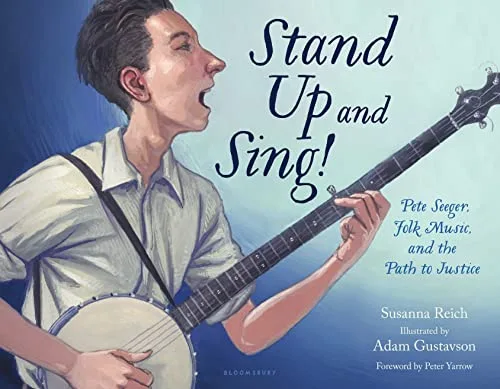 Stand Up and Sing! Pete Seeger, Folk Music, and the Path to JusticeSusanna Reich, illustrated by Adam GustavsonPete Seeger used savings from his allowance to buy his first banjo when he was in high school. Around the same time, he went to his first protests, marching with his middle-class father in workers’ parades during the Depression, attending gatherings where songs about workers’ rights were sung. Music and activism would continue to shape his life. This substantial picture book account follows Seeger’s journey through decades. His passionate involvement in causes such as union organizing, the Civil Rights Movement, and environmental issues helped make music one of the defining elements of those causes for many. At the same time, it was Pete’s genuine interest in and concern for people, and his ability to invite everyone to join in the song, that made him beloved. Ample quotes are incorporated into a text set against realistic illustrations in which CCBC Choices 2018 The Arts 39 well-known faces (e.g, Martin Luther King, Jr.) make occasional appearances. An author’s note and source material are part of the end matter.The ArtsView book details
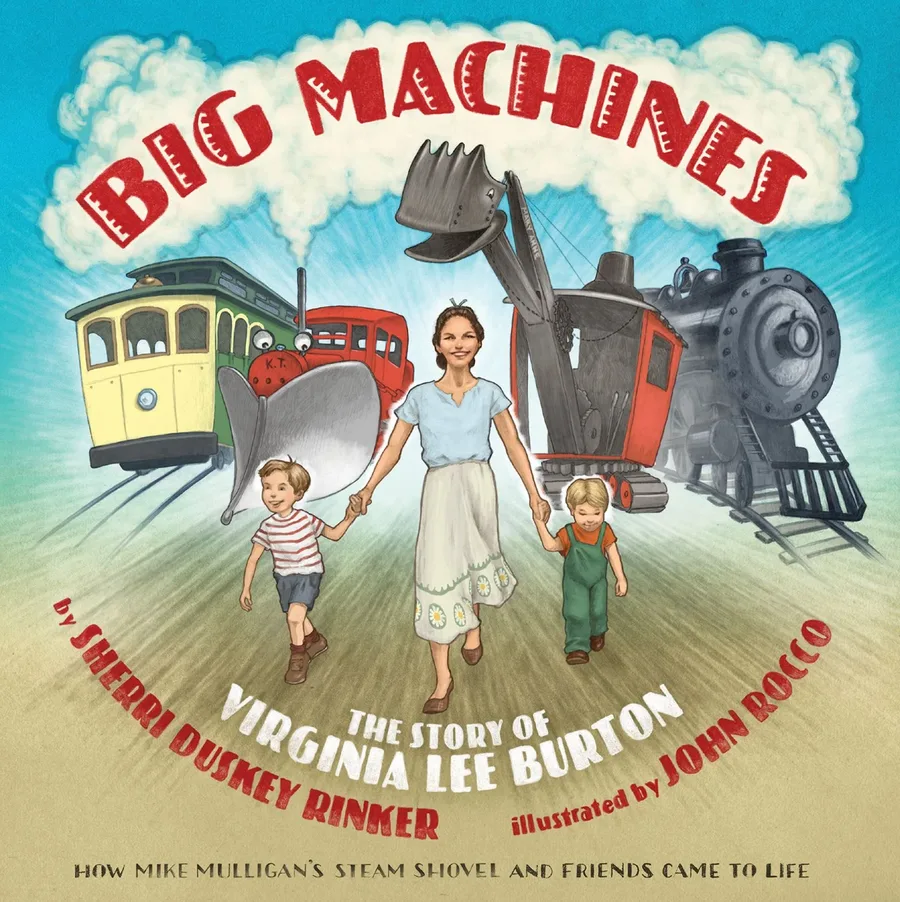 Big Machines: The Story of Virginia Lee BurtonSherri Duskey RinkerThis picture book biography of the writer/illustrator of Mike Mulligan and His Steam Shovel among other well-known works illuminates the inspiration she drew from her sons, Aris and Michael. Although his mother can draw animals, people, and even dinosaurs, Aris is most enchanted by Burton’s train, called Choo Choo. Michael, on the other hand, loves big trucks and construction vehicles, so Mary Anne the steam shovel and Katy the tractor are born. Later, Burton draws a little pink house—initially uninteresting to her boys—that needs to be saved from the crush of the city that has sprung up around it. Who will come to the rescue? Burton’s big machines, of course! Burton’s books are woven seamlessly into this story of her life as both a serious artist and a mother, with the illustrations of her and her boys cleverly incorporated into representations of her art. The focus on her sons invites a child audience into her story, and an author’s note elaborates on her life and accomplishments.The ArtsView book details
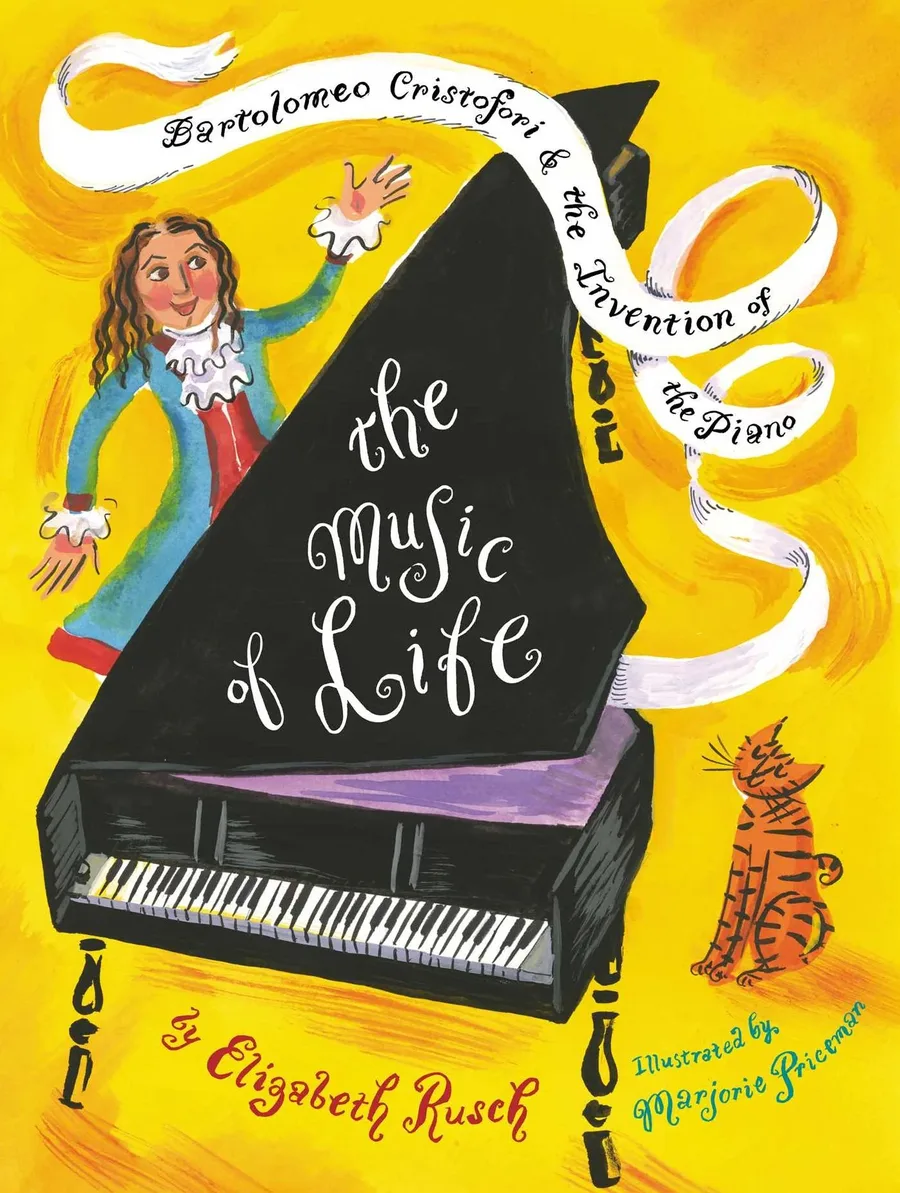 The Music of Life: Bartolomeo Cristofori & the Invention of the PianoElizabeth RuschBartolomeo Cristofori, master instrument maker and tuner for the Medici family in 18th-century Italy, had an ear finely tuned to the notes of the quiet clavichord and robust harpsichord as well as many other instruments. Unfortunately, no matter how the notes were struck, the clavichord made only soft sounds, and the harpsichord only loud ones. Inspired by violins and violas, Cristofori set out to invent a keyboard instrument that could achieve the same range of volume. He experimented with hammers, strings, and other materials before crafting his first pianoforte—an instrument that he continued to refine until his death, but which wasn’t fully appreciated until years later. Accompanied by bright, playful illustrations, each section of the narrative includes musical direction tracking the story’s arc: “Crescendo (becoming louder)” as Cristofori begins his employment at court, for example. Frequent, direct quotations from primary sources are included on several pages, and additional resources include a timeline, extensive notes on the author’s primary and secondary sources, and facts about Cristofori’s and modern pianos. A thoroughly researched, engaging account of the instrument’s origin.The ArtsView book details
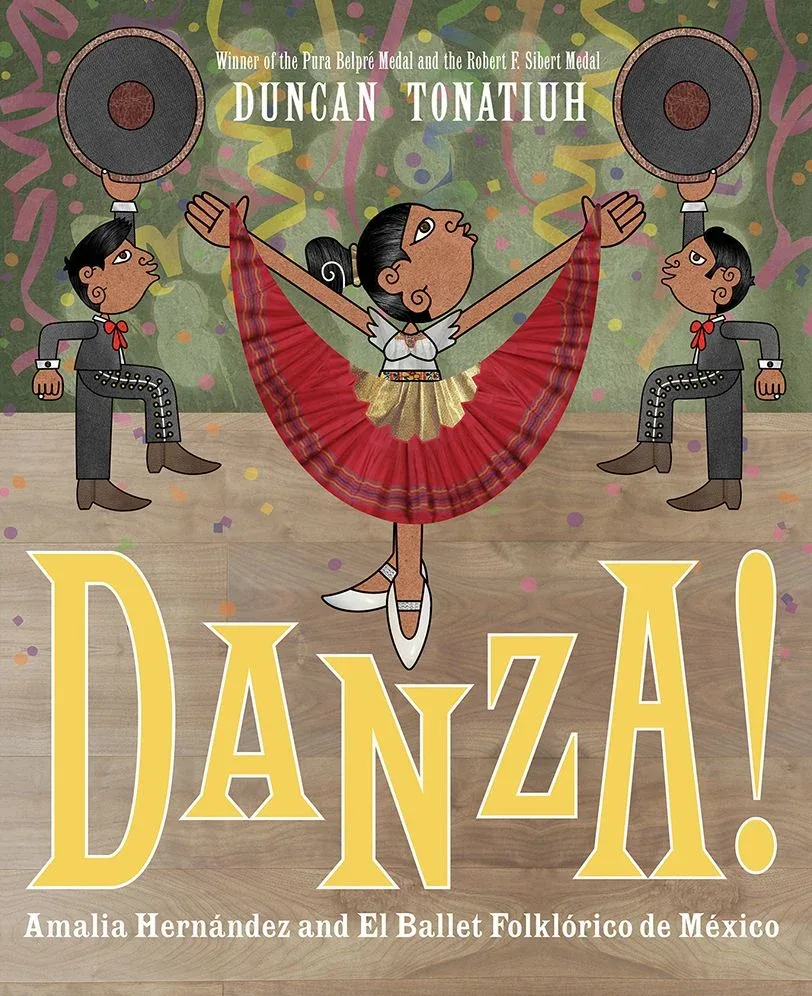 Danza! Amalia Hernández and El Ballet Folklórico de MéxicoDuncan TonatiuhBorn in Mexico City in 1917, Amalia Hernández loved traditional Mexican folk dancing from the first time she saw it as a child in a public square. She studied ballet as a girl, and then modern dance as she got older, but it was audience reception to a ballet she choreographed based on a tradition danza that convinced her to make these traditional dances the focus of her work. She traveled around Mexico to learn regional dances and read about the 40 The Arts CCBC Choices 2018 history behind them before creating interpretations for El Ballet Folklórico de Mexico, the company she founded. Ami died in 2000 but El Ballet Folklórico de Mexico continues, and has also inspired countless other groups. This lively account is paired with Tonatiuh’s distinctive, Mixtec-inspired illustrations. An author’s note discusses struggles Amalia faced, from financing her company to criticism of appropriation and misrepresentation. A glossary, bibliography, and index conclude this energizing work.The ArtsView book details
Poetry
3 selections
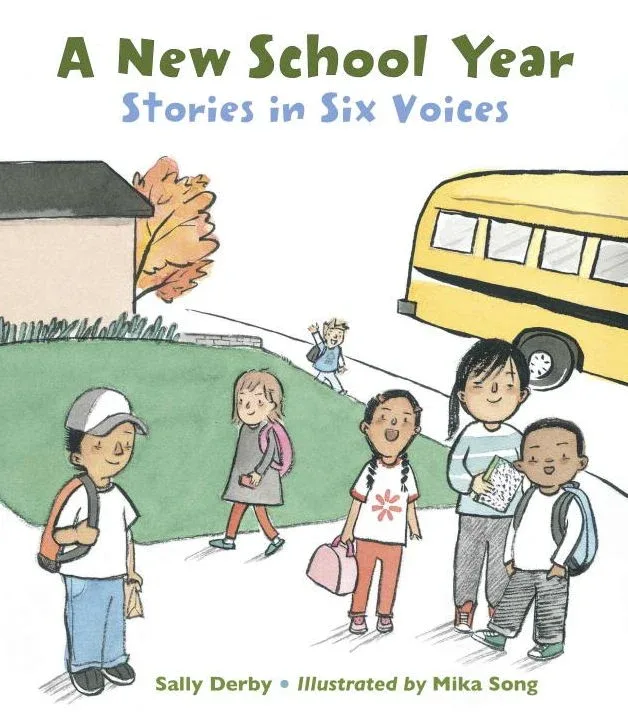 A New School Year: Stories in Six VoicesSally DerbySix children ranging in age from kindergarten through fifth grade walk us through the excitement, jitters, and small pleasures that accompany the first day of a new school year. Divided into four time periods—The Night Before, In the Morning, At School, and After School—each child voices four poems. Dimensions of identity, economics, ability, and experience are seamlessly integrated into the poems. Fourth-grader Carlos, for example, notices that there are not many other black-haired, brown-skinned students like him—but he notes that his teacher, Mr. Liu, seems fine, even though no one else looks like him either. Third-grader Jackie goes to school early, because her mom has a long bus ride to work every day. Fifth-grader Mia wears hearing aids and is pleased to be assigned a seat near the front of the classroom, where she’ll be able to hear her teacher. Such details ensure that each child remains a distinct individual, CCBC Choices 2018 Poetry 41 even as their poems reflect the familiar emotions of so many children on such a momentous day.PoetryView book details
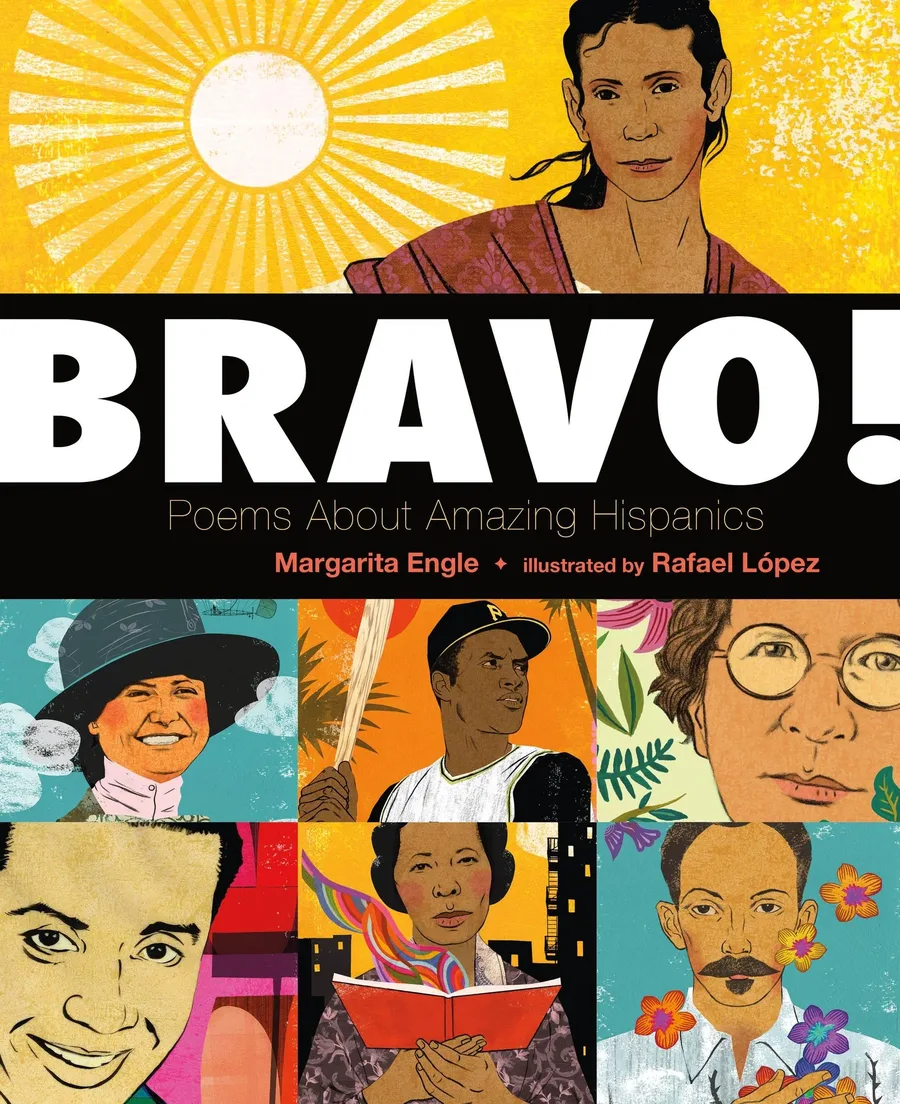 Bravo! Poems about Amazing HispanicsMargarita Engle“Flight! / I’m the first woman pilot, but I won’t be the last— / every little girl who sees me up here in blue sky / will surely grow up with dreams / of flying too!” (from “The World’s First Woman Pilot,” Aída de Acosta, 1884–1962, Cuba). Biographical poems introduce 18 Hispanics whose lives, notes author Margarita Engle, range from “some who were celebrated in their lifetimes but have been forgotten by history,” to others who “achieved lasting fame.” Even the shortest poems provide a brief but intriguing sense of their subjects’ lives and accomplishments while nurturing readers’ desire to learn more. Brief biographical “Notes about the Lives” at volume’s end are a starting point for doing just that, while a concluding poem, “More and More Amazing Latinos,” is a treasure trove of additional names—and lives—to learn about. The men and women profiled come from across Latin America and were accomplished in many fields. Gorgeous full-page portraits of each subject incorporate elements of the work for which they were known, while inspired spot illustrations add to the volume’s beauty.PoetryView book details
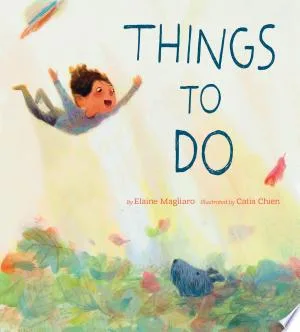 Things to DoElaine MagliaroMoving from morning to night, 14 short, child-centered poems each begin with the words “Things to do if you are … ” followed by a variety of everyday objects, creatures, and aspects of the natural world: dawn, birds, a honeybee, an acorn, a snail, etc. Each poem is imaginative and playful (“Things to do if you are the sky / Stay clear and blue / let the sun smile down / don’t grow grumpy, gray, and frown … ”) and taken as a whole the collection can inspire creative thinking and writing. Bright watercolor illustrations show a single small girl interacting with her environment throughout the day.PoetryView book details
Concept Books
6 selections
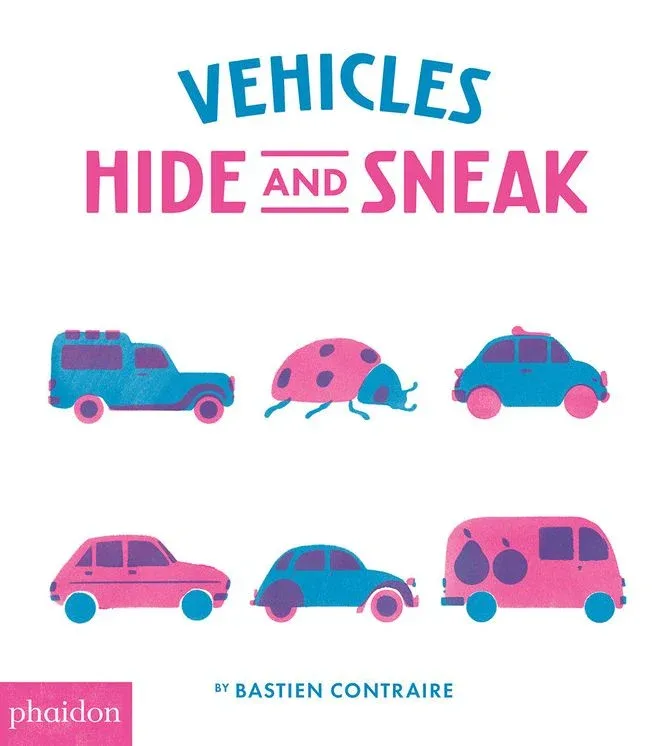 Vehicles Hide and SneakBastien Contraire“One of these things is almost like the others … ” begins this board book, prompting readers to locate on each two-page spread the object that, upon closer examination, definitely does not belong. Insects, animals, and household objects hide among the small collections of vehicles of the same type (boats on one page spread, airplanes on another, and so on). On one spread there are four buses—no, three buses and a toaster. On another, there are five helicopters and a hornet. The color palette adds difficulty—each object is printed in solid 42 Concept Books CCBC Choices 2018 shades of hot pink and blue—and each vehicle differs slightly from the others of its type, slowing down the eye as it searches for the rogue object.Concept BooksView book details
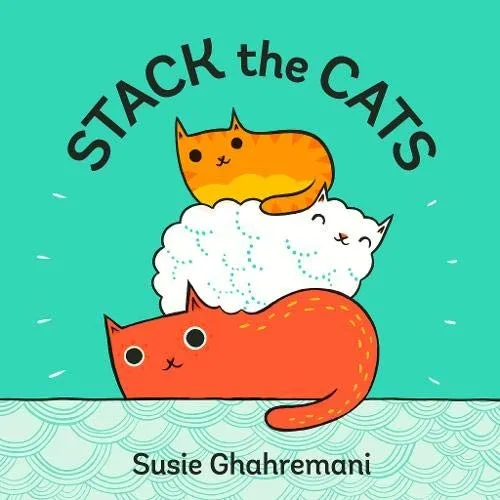 Stack the CatsSusie GhahremaniA whimsical counting book from 1 to 10 features an abundance of adorable feline antics. The cats are simply shaped—variations on ovals, with pointy ears and round black dots for eyes (unless they’re sleeping). Occasionally a paw or tail extends from their rotund bodies. The limited color scheme (a predominance of aqua, with bright punctuations of orange and gold along with neutral tones) adds to the visual pleasure as the cats engage in various actions, including but not limited to play, hide, seek, climb, teeter, totter, sleep (they’re cats, after all), and, yes, stack! In fact, every multiple of 3 (3, 6, 9) is cats in a stack (or two stacks, or three). Even the most curmudgeonly I’m-not-a-cat-person will be charmed, while young children will be delighted.Concept BooksView book details
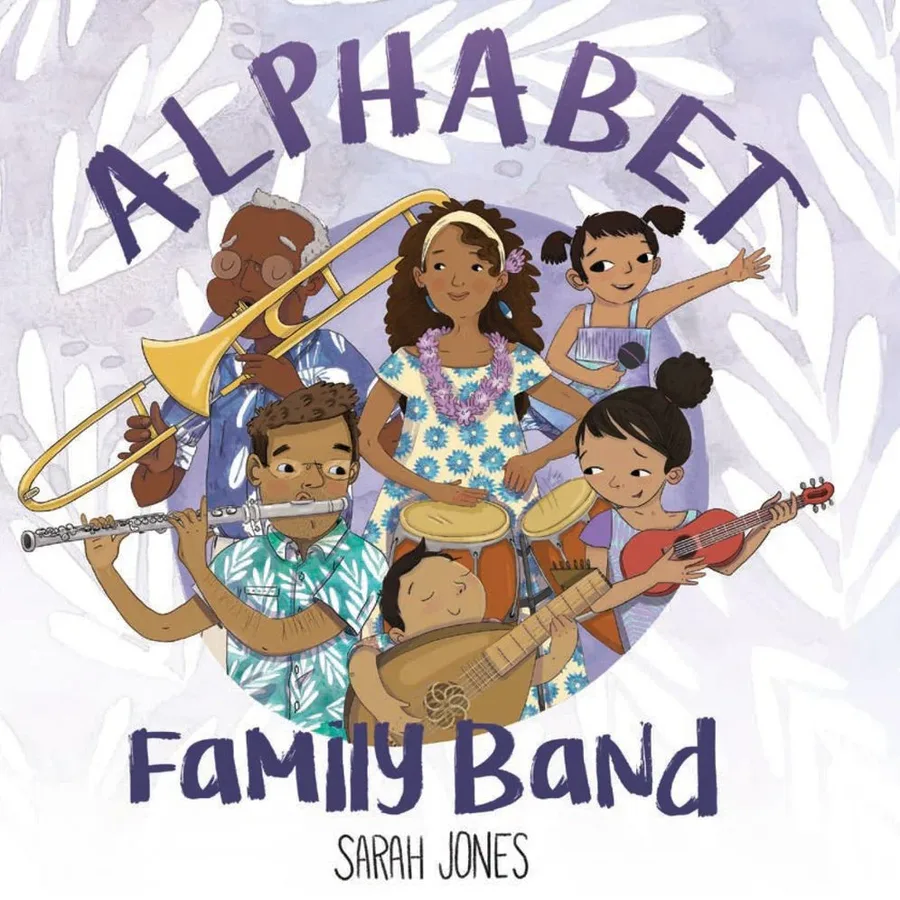 Alphabet Family BandSarah JonesThe musical members of a large, multiracial family demonstrate their skills with a wide array of instruments in this upbeat, rhyming board book. Beginning the alphabet with “Auntie Bangs Congas” and continuing through “Vince Works Xylophone,” each family member is featured. The last player showcased is “You,” as “You Zig, zag and zoom,” adding vocals with a microphone. Readers will discover new musical instruments (an ipu and lute are part of the collection) and enjoy the details on the culminating two-page spread of the entire Alphabet Family Band, dressed in floral clothing and leis, performing on a sandy beach.Concept BooksView book details
 The Little Red Cat Who Ran Away and Learned His ABC’s (the Hard Way)Patrick McDonnellA little red cat running away from home is chased by an alligator, bear, chicken, and dragon. And that’s only the first four pages of a tale that continues through the remaining 22 letters of the alphabet. Tension and comedy come equally into play as the cat and his retinue ice skate, swing through a jungle, climb over mountains, take a restroom break, and encounter a unicorn. Suspense, humor, and reconciliation are packed into a nearly wordless story that requires readers to use visual cues to work out the word associated with each consecutive letter of the alphabet. A final page delivers all 26 words for those who appreciate a little help.Concept BooksView book details
 One Leaf, Two Leaves, Count with Me!John Micklos Jr.A playful rhyming concept book that combines counting with changing seasons shows oak leaves budding in the spring (“One leaf … two leaves on the tree. Three leaves, four leaves, count with me!”) A brown-skinned child observes the changing landscape and counts the new growth up to 10 leaves. Summer follows spring, and then “Air grows chilly, whistling winds. Leaves CCBC Choices 2018 Concept Books 43 change color. Fall begins!” Leaves drop, accompanied by a countdown from 10 to one. And after winter, “New buds stir high on the tree, growing bigger, watch and see.”Concept BooksLexile Text Measure AD370LATOS Book Level 2.6View book details
 Circle, Triangle, Elephant! A Book of Shapes & SurprisesKenji OikawaIn this delightful board book featuring three stacked objects on each page, the expectation of a simple pattern of geometric shapes (“Triangle, circle, square / Circle, rectangle, triangle”) is interrupted when an elephant makes a sudden appearance on page three (“Triangle, elephant?!, circle”). After that all bets are off as each flip of the page throws an unexpected object into the mix. Expertly playing on the concept of humor through incongruity, this silly book would make an excellent read-aloud with a group or one-on-one. Clear illustrations also invite children to participate in a point-and-say reading experience.Concept BooksView book details
Picture Books for Young Children
42 selections
 Life on MarsJon AgeeA child astronaut lands on Mars, so determined to find life there that he’s brought a gift of chocolate. He searches the entire lonely planet with no success, all the while unaware that a big red creature is following him, curious about the stranger. The boy finally finds a form of life—a yellow flower, left for him by the Martian in return for the box of candy—but never does see the quiet, friendly Martian. The Earthling leaves in his spaceship, taking the candy box with him, not realizing that it’s empty until he is well on his way back home. A wry, clever story with a very simple first-person text is sure to please young listeners, who will enjoy knowing more than the main character.Picture Books for Young ChildrenLexile Text Measure AD470LATOS Book Level 1.4View book details
 The Fox WishKimiko Aman, illustrated by Komako SakaiWhen a small blonde girl and her little brother return to the playground to retrieve the jump rope she had left there before snack time, they find, to their surprise, a group of foxes playing with it. The foxes aren’t very good at the human game, so the two children join them, giving them pointers (“Keep your tail up.”) to improve their form. The situation is innocently childlike and fantastical, and the small girl shares her observations in a matter-of-fact tone that adds to the gentle humor of the story. Appealing honey-toned illustrations complement the gentle nature of a picture book that also demonstrates kindness without ever making it the point.Picture Books for Young ChildrenWord Count 546View book details
 I Have a BalloonAriel Bernstein, illustrated by Scott MagoonAn unenthusiastic owl states the obvious: He has a balloon. But, as the monkey observes, it’s not just any balloon. It’s a “shiny red balloon,” and one that would perfectly match the monkey’s outfit as he walks to school. Hearing this, the owl realizes what a treasure his balloon is and refuses to trade it for any of the monkey’s proffered possessions—a teddy bear, a sunflower, even a robot. That is, until the monkey offers the owl an old, unwanted sock. A sock, observes the owl, with a star on it. A sock with a “perfectly shaped hole.” Yes, the owl decides, he will trade his balloon for the sock. Now that the owl mentions it, though, the monkey realizes his sock is awfully desirable. Perhaps he’d better keep it for himself! The animals’ impressive range of emotions are delightfully conveyed in the illustrations of this story about coveting, and seeing old objects with new eyes.Picture Books for Young ChildrenLexile Text Measure 270LATOS Book Level 1.6View book details
 Baby’s First WordsStella Blackstone, Sunny Scribens, illustrated by Christiane EngelA toddler’s day provides the story arc of a board book that offers engagement, affirmation, and delight, showing a mixed-race, gay-parented family. “Good morning!” reads the primary text on the opening page spread. The colorful scene includes word labels for “baby” (the girl), “bed,” “blocks,” “clock,” “laugh” (she’s all smiles as she greets one of her dads), “woolly mammoth” (a stuffed animal), and more. Objects, actions, and feelings are labeled as the little girl gets dressed, plays outside, eats lunch, plays inside, and, over the course of the day, experiences a range of emotions, engages with a variety of vehicles, and encounters an array of animal toys before being given a bath and going to bed. The pleasing illustrations are punctuated by humor (e.g., the woolly mammoth is often shown doing something funny for a woolly mammoth—coloring with a crayon, brushing its teeth) and full of warmth. One dad, home with her throughout the day, is Black, the other is light-skinned, like the little girl.Picture Books for Young ChildrenView book details
 Raisin the Littlest CowMiriam BuschRaisin is the littlest cow in the herd and she enjoys the perks of that status, especially being doted on by the bigger cows. Raisin also enjoys making lists of her favorite things (movies, the color brown, lists) and those she doesn’t like (cauliflower, thunder, change). But “one Thursday, her mother had a cow … one who was even smaller than Raisin.” Jealous of the attention showered on her new sibling, Raisin resists her mother’s efforts to get her to engage with the baby and instead makes a list of places to run away to. The final insult occurs when a thunderstorm pre-empts Raisin’s outdoor movie viewing. As her baby brother wails along with the weather, Raisin realizes they have something in common and their shared fear of thunder spurs her to connect with the new littlest cow. A familiar tale of sibling jealousy takes on fresh life with its memorable bovine cast, clever storytelling, and endearing illustrations.Picture Books for Young ChildrenLexile Text Measure 401LATOS Book Level 2.8View book details
 Georgie’s Best Bad DayRuth ChanWhen Georgie gets up on the wrong side of the bed, everything goes wrong. And not just for him but for all his friends, too. They engage in group activities to make themselves feel better—making pickles, gardening, knitting, baking a cake—but that all goes wrong, too. It isn’t until the last straw in their bad day strikes them all funny that they are all able to enjoy what the day has brought them. Chan is skilled at creating an understated text and letting the pictures tell most of the story in her humorous, child-friendly illustrations. This new author/illustrator in the tradition of Keiko Kasza and Kevin Henkes is definitely someone to watch.Picture Books for Young ChildrenView book details
 Big Cat, Little CatElisha CooperA big, white cat shows the ways of the indoor world to a small, black kitten when it arrives. “Big cat, little cat.” The two bond and the black cat eventually grows bigger than the white one. “Big cat, bigger cat.” Years go by in which they eat, dream, play. “For five minutes each day, they went wild.” And then comes a day the older, white cat leaves and does not come back. “And that was hard. For everyone.” But guess what happens next? With the arrival of a small white kitten, the story begins again. “Big cat, little cat.” Although the premise isn’t original, the execution of this picture book is superb. The black-and-white line drawings are both eloquent and playful, full of believable, often humorous details of cat life and conveying a rich emotional narrative. And the symmetry is not just in the overall structure of the story but also in the repetition of specific scenes and details, so that the relationship between the big and little cat at the story’s beginning mirrors (although not exactly) the relationship between the big and little cat at the end. Highly Commended, 2018 Charlotte Zolotow AwardPicture Books for Young ChildrenLexile Text Measure AD370LATOS Book Level 2.6View book details
 Jabari JumpsGaia CornwallA young African American boy is sure he’s ready to jump off the diving board at the pool … or is he? “‘Looks easy,’ Jabari said. But when his dad squeezed his hand, Jabari squeezed back.” Jabari starts up the ladder, only to come down again to take “a tiny rest” at his dad’s suggestion. “It’s okay to feel a little scared,” his dad tells him. “Sometimes if I feel a little scared, I take a deep breath and tell myself I am ready. And you know what? Sometimes it stops feeling scary and feels a little like a surprise.” Intrigued (“Jabari loved surprises”), Jabari decides to try again. Anxiety, anticipation, and accomplishment all take the stage in this sparkling picture book featuring a finely paced text and a warm father–son relationship. The mixed-media illustrations show a range of wonderful perspectives, including an overhead of Jabari’s toes hanging off the board just before he jumps, or, in his mind, flies. Honor Book, 2018 Charlotte Zolotow AwardPicture Books for Young ChildrenLexile Text Measure AD490LATOS Book Level 2.3View book details
 Little Pig Saves the ShipDavid Hyde Costello, illustrated by David Hyde CostelloLittle Pig’s older siblings are going to sailing camp for a week, but Little Pig is too young. His oldest brother gives him a piece of rope and a book on sailors’ knots to practice with while they’re gone. That’s how Little Pig spends Saturday before his grandpas, Grandpa and Poppy, arrive. On Sunday, Little Pig and Poppy work on the model ship Poppy is making for him. On Monday, and Tuesday, and Wednesday, and Thursday, and Friday, Little Pig and Poppy sail the ship. But on Saturday, the ship gets blown off course. There’s a mad dash to save it as it goes over the waterfall and downstream. Poppy isn’t fast enough and the ship is getting away from him when Little Pig has a big idea: He uses the rope, and a knot, to capture the ship and save the day. Even his brothers and sisters, arriving home from camp, are impressed. A warm story charmingly captures imaginative play, a big, loving family, and what it’s like to be the youngest.Picture Books for Young ChildrenLexile Text Measure 361LATOS Book Level 2.6View book details
 Hooray for Birds!Lucy CousinsWith her signature bold black outlines and flat colors, Cousins engages the picture-book set from page one, encouraging young children to imagine themselves as birds, waking up and shouting, “Cock-a-doodle-doo!” Each page focuses on a sound or movement that will be easy for children to imitate or act out (“Scratch the ground with your feet / Catch a fly with your beak.”) and each one offers a picture clue showing a brightly colored bird. The uncluttered pages and large format of the book both make it easy for children to see, and they will all be flapping, hopping, and pecking along until it’s time to—“Whoo! Whoo!” —say good-bye.Picture Books for Young ChildrenView book details
 There Might Be LobstersCarolyn CrimiA day at the beach might be fun for Eleanor, but to her dog, Sukie, it represents one potential threat after another. Descending the stairs to the sand? Sukie might get a shell stuck up her nose, fall on her head and need stitches, “and CCBC Choices 2018 Picture Books for Young Children 47 besides, there might be lobsters.” Eleanor carries Sukie down the steps, but then the little dog is faced with a beach ball. It might knock her down and she’d never get up again, forcing her to live on the beach eating seaweed, “and besides, beach balls attract lobsters.” Anxiety-stricken Sukie sees disaster—and lobsters—lurking at every turn and prefers to sit quietly with her toy monkey, Chunka Munka, while Eleanor plays in the water. But when an errant wave pulls Chunka Munka out to sea, Sukie doesn’t think twice and heroically paddles out to retrieve her friend. Reassuring illustrations (Chunka Munka smiles serenely as he floats atop the water) and Sukie’s recurring lobster phobia infuse this tale of anxiety with gentle humor.Picture Books for Young ChildrenView book details
 WindowsJulia Denos“At the end of the day, before the town goes to sleep, you can look out your window … / and see more little windows lit up like eyes in the dusk, / blinking awake as the lights turn on inside: a neighborhood of paper lanterns.” An early evening dog walk allows a brown-skinned boy in a red sweatshirt to observe all kinds of things in his neighborhood—a cat, an early raccoon, sleeping plants, but best of all, lighted windows, showing all sorts of life within. “Some windows will have dinner, or TV, / Others are empty and leave you to fill them up with stories.” But the best windows of all are those of the boy’s own home, with his mother waiting just inside, watching for him and waving. A beautifully lyrical text accompanied by quiet ink-and-watercolor illustrations capture the drama and appeal of glimpses into other people’s lives.Picture Books for Young ChildrenView book details
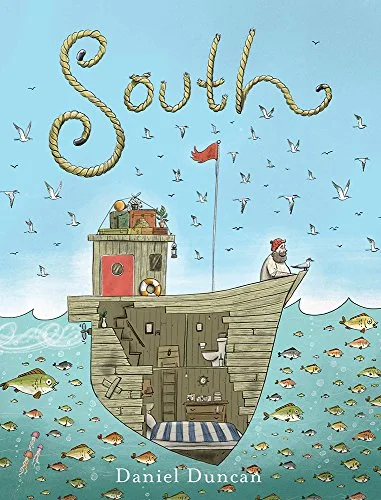 SouthDaniel DuncanA lone sailor traveling the seas welcomes the company of a seagull with a broken wing who lands on the deck of his boat. As the sailor nurses the bird back to good health, the two form a strong bond, but the pull of the south is strong and the sailor knows the bird needs to migrate. He helps the bird out by pointing his boat toward warmer climes, realizing that it’s time to say good-bye. As he places a framed feather on his wall after the bird’s departure, we see many mementos suggesting that the sailor has a wide circle of friends and family that no doubt await his return home. Pen-and-ink and watercolor illustrations are filled with fascinating details of the boat’s interior and the sailor’s rich life.Picture Books for Young ChildrenView book details
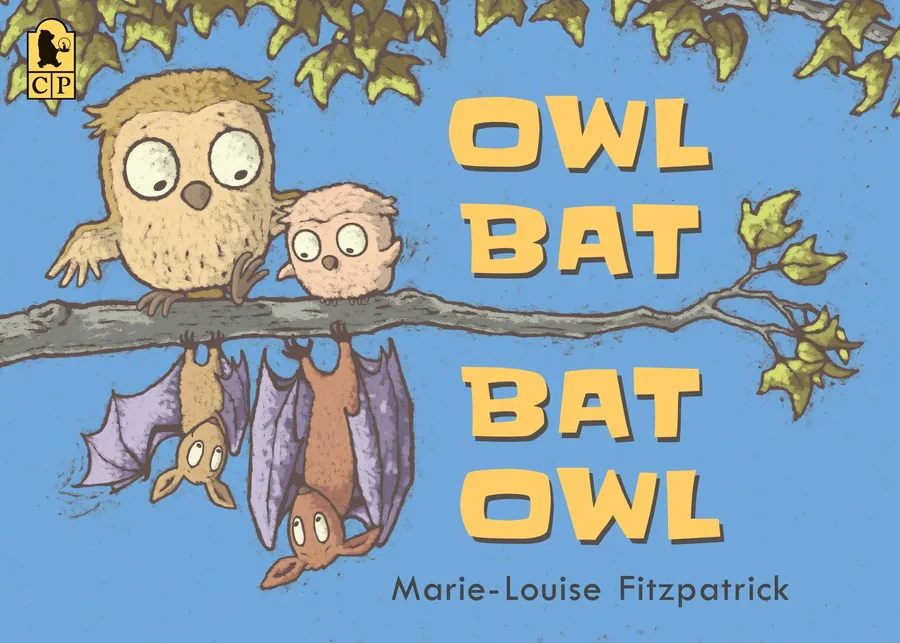 Owl Bat Bat OwlMarie-Louise FitzpatrickA family of owls is sound asleep on the top of a branch when a family of bats arrives and hangs from the bottom. The startled owls all awaken, but soon doze off again. The bats do the same. All except the smallest owl and the smallest bat, who are curious about each other. The two adults awaken and admonish them. They all fall asleep. Then it begins to blow, a fierce, strong wind that knocks owls and bats off the branch and in every direction. The two frantic adults begin swooping after their youngsters and returning them to safety, quickly going from saving their own young one to saving the nearest young one they reach. Is it any wonder a beautiful family friendship is the result? The warmth of this wordless story is trumped only by its charm. The visual narrative is easy to 48 Picture Books for Young Children CCBC Choices 2018 follow and yet there is so much to notice, from the ever-changing expressions— those eyes!—of the owls and bats to the small, secondary story of a spider on the tree, to the marvelous palette, and the pattern of symmetry and its disruption. Everything is intentional and perfect in a story sure to be requested again and again.Picture Books for Young ChildrenView book details
 Bulldozer Helps OutCandace FlemingEveryone is busy on the construction site, but while Cement Mixer stirs and Crane Truck lifts and Digger Truck scoops, little Bulldozer’s only job is “watching … watching … watching.” Yearning to help, he’s given a job clearing away a small pile of junk. He charges off ready to work … and then does almost nothing! When the big trucks check on him later, Bulldozer isn’t interested in hearing what they have to say. “Shhh!” he admonishes. What’s gotten into this kid? It turns out Bulldozer has found a different job to do in this charming companion to Bulldozer’s Big Day. The story features the same gathering of rumbling, grumbling, lovable construction site characters and their eager young companion, the same lively language, and the same bold, personality- filled illustrations, along with the addition of a soft, sweetly foreshadowed surprise (“His motor hummed, soft as a lullaby.”).Picture Books for Young ChildrenLexile Text Measure 520LATOS Book Level 2.5View book details
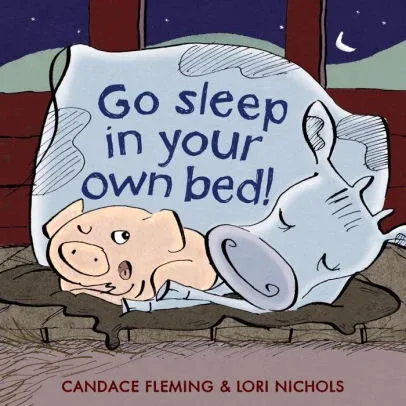 Go Sleep in Your Own Bed!Candace FlemingA pleasingly circular barnyard story in which each animal, asleep in the wrong bed, is awakened in turn by the animal who belongs there with the repeated command: “Go sleep in your own bed!” But each one finds an interloper, who is given the same command. In the end the last creature, a cat, is picked up from his spot on the porch and carried inside by a little girl who happily shares her bed with him. With the strong pattern and repetition, as well as the funny species-specific interjections and onomatopoeia, this will make a terrific read-aloud for young children. The amusing acrylic illustrations give added personalities to each of the animals.Picture Books for Young ChildrenLexile Text Measure AD460LATOS Book Level 3.1View book details
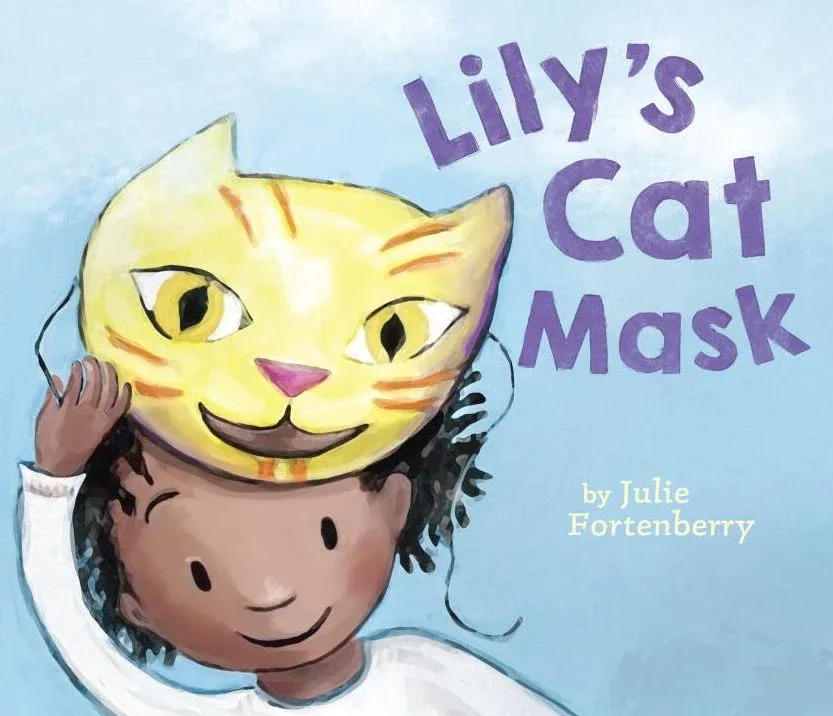 Lily’s Cat MaskJulie FortenberryShy Lily does not look forward to shopping for new school clothes with her dad because she is a bit afraid of starting school. But when she finds a cat mask for sale, her dad lets her get it, and she wears it everywhere—including to school on the first day. Her teacher, Ms. Ito, tells her it’s a distraction, so Lily is only allowed to wear the mask at recess. And it’s at recess that she finds a boy who is also wearing a cat mask: a friendship destined to be. Fortenberry’s tender story of an introvert who finds her way on her own terms is illustrated with spritely watercolors that show Lily as a brown-skinned girl.Picture Books for Young ChildrenView book details
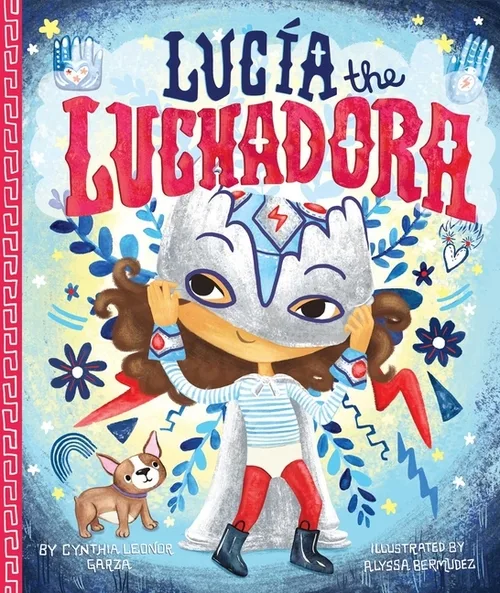 Lucía the LuchadoraCynthia Leonor Garza, illustrated by Alyssa BermudezLucía is a brave, active girl who wants to be a superhero. The boys on the playground tell her girls can’t be superheroes because they’re made of sugar and CCBC Choices 2018 Picture Books for Young Children 49 spice and everything nice. Abuela comes to the rescue when she gives Lucía her own luchadora mask and tells her all about the Mexican tradition of lucha libre. Lucía assumes the luchadora persona and—now disguised—impresses all the boys on the playground by doing the exact same things she had done as a superhero. The difference is that no one knows she’s a girl until she reveals herself, surprising all the doubters. A playful, well-told story with spirited illustrations delivers a strong feminist message.Picture Books for Young ChildrenLexile Text Measure 440LATOS Book Level 3View book details
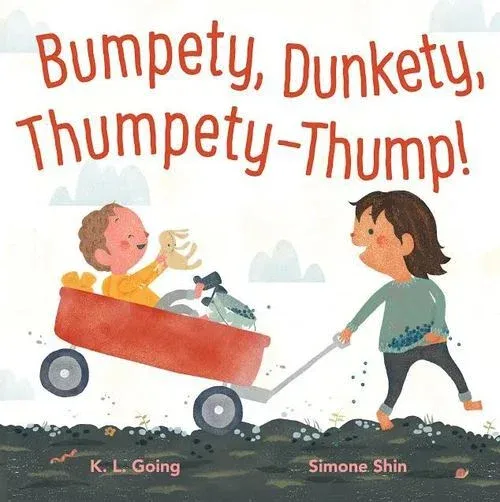 Bumpety, Dunkety, Thumpety-Thump!K. L. Going, illustrated by Simone Shin“Wagon on gravel goes bumpety-bump.” Two young children go berry-picking and return home with their bounty, which is served as pie at the table before a bath and bedtime in this playful, onomatopoeic text. The repeated but slightly changing chorus of delightful sounds drawn from the short, descriptive phrases about each part of their day make this an ideal read-aloud choice. “Bumpety, thunkety, thumpety-thump … Bumpety, plunkety, clunkety-clunk … ” Cozy, stylized illustrations add to the warmth of a story that ends with the brown-skinned boy and light-skinned girl tapping noses, snuggling in a pile of blankets, then joined by their mom and dad for a bedtime story as “Hearts beat close … Bumpety, lumpety, thumpety-thump.”Picture Books for Young ChildrenLexile Text Measure AD330LATOS Book Level 2.4View book details
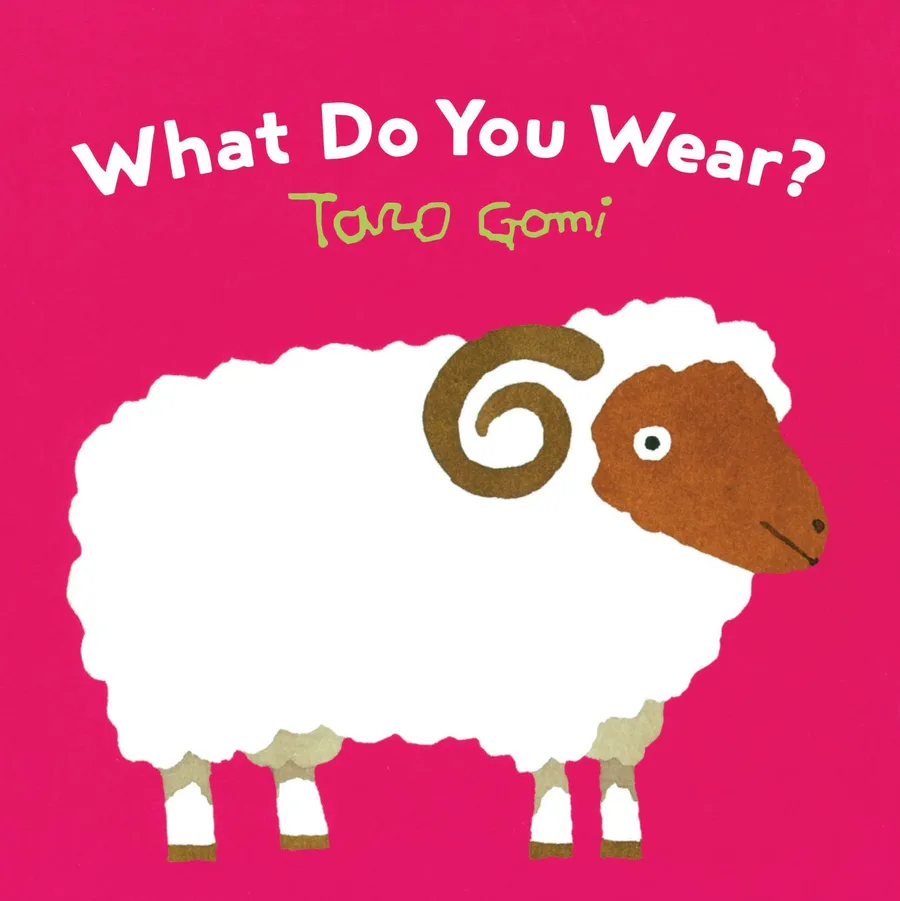 What Do You Wear?Taro GomiA small square board book offers simple text on white page faced with an accompanying illustration in vibrant colors. Answering the titular question on each turn of the page, Gomi offers expected and unexpected ideas that inspire imagination while introducing new vocabulary. “Sheep wears a fluffy jacket. / Goldfish wears a tie-dyed skirt. / Duck wears a fancy cardigan.” The surprise conclusion features a boy at story’s end in this work originally published in Japan in 1980 and translated into English for this edition.Picture Books for Young ChildrenView book details
 Little Fox in the ForestStephanie GraeginWordless sequential art in shades of blue shows a little girl losing her beloved stuffed fox on the school playground. Viewers see that the toy has been stolen by a real fox who carries it back home to a full-color world populated by animals who behave as people. The human girl and her observant friend find their way into the alternate reality of an animal fantasy world to search for the stuffed fox. Meanwhile, young readers will see that the little red fox has now bonded completely with the girl’s toy, even fighting a wily weasel who tried to take it away. Graegin expertly balances the two realities, playing them off each other so that both protagonists (the girl and the fox) are equally congenial. The ultimate resolution satisfies both, and will likely satisfy young readers as well in this original and charming offering.Picture Books for Young ChildrenView book details
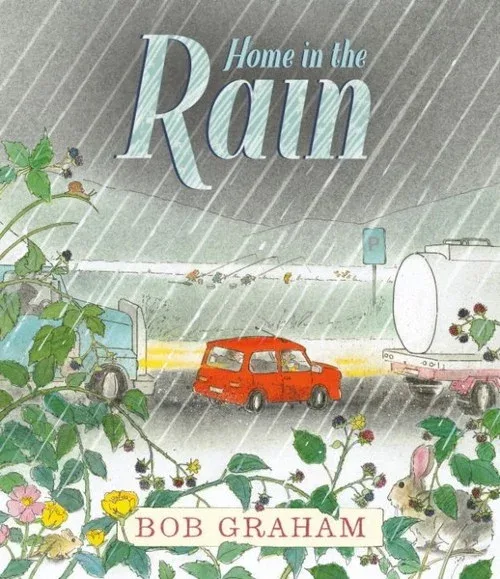 Home in the RainBob GrahamA brown-skinned mother and daughter, relentless rain, and the small stage of a car interior are all the elements needed to find quiet drama in an ordinary day. Francie, her mom, and her baby sister brave the highway for the drive home from Grandma’s, while it “rained on endless lines of cars and buses, oil tankers and trucks, the windshield wipers in despair.” Glimpses of those they pass (a fisherman, some ducks, two men on the shoulder post fender-bender) alternate with small moments inside their vehicle, including a shared in-car picnic at a wayside pull off. Details of family life emerge during the trip, like learning that Francie’s father, who is white, has been away for three weeks, working at sea, and that her baby sister has yet to be born. A moment of inspiration at a service station stop for gas yields the new baby’s name: Grace. By the time they arrive home, the setting sun makes an appearance, shining on a doorstep reunion with Dad.Picture Books for Young ChildrenLexile Text Measure AD590LATOS Book Level 3.8View book details
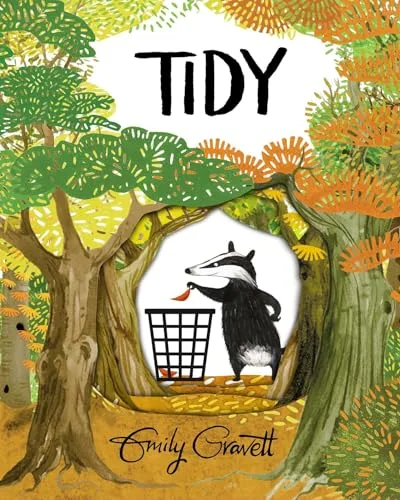 TidyEmily GravettRhyming nonsense humor showcases an obsessively tidy badger who goes to extremes with tidying up the forest. Ultimately, he digs up all the trees and paves over the forest floor, but then, finding nothing to eat, he has to break up all the cement and restore the forest back to its natural, messy state. There’s a conservation message of sorts here but the story is so zany, it doesn’t hit readers over the head. The quick-paced text and clear illustrations make this a great choice for a preschool read-aloud. And don’t miss the copyright page at the end where the tidy badger is vacuuming up the cataloging-in-publication data.Picture Books for Young ChildrenView book details
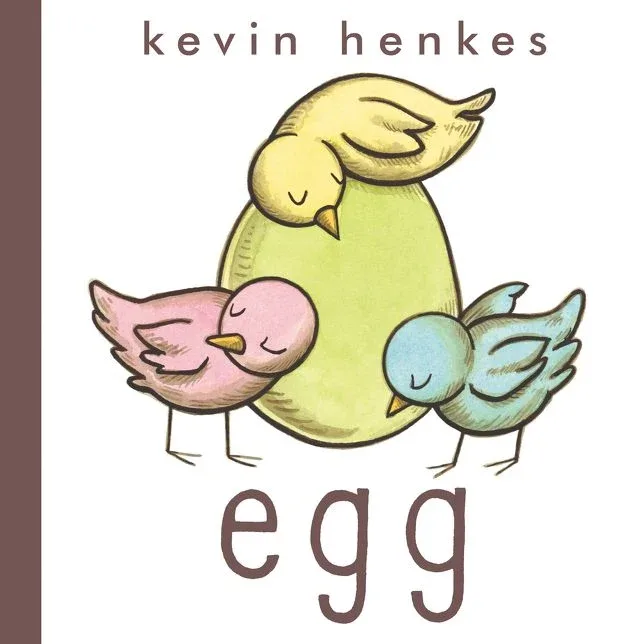 EggSteve Jenkins, Robin PageFour eggs: one pink, one yellow, one blue, one green. Three of them crack. Three of them hatch. (“Surprise!”) Three small birds, one pink, one yellow, one blue, wait, listen, and peck and peck and peck at the green egg until “Surprise!” It’s a green … crocodile? The startled birds fly off. The crocodile is alone, and lonely, and sad, but not for long. The birds return, a friendship is formed, and they eventually head off into the coral … sunset? The simplicity of this elegant, satisfying picture book is deceptive. The sophisticated combination of full-page and panel illustrations to convey passage of time and intensity of action is marvelous, while the combination of predictability and surprise offers comfort but is also sure to inspire smiles. Brown ink and watercolor were used to create the soothing but never static illustrations in which there is the promise of possibility on every page.Picture Books for Young ChildrenLexile Text Measure AD1050LATOS Book Level 7.2View book details
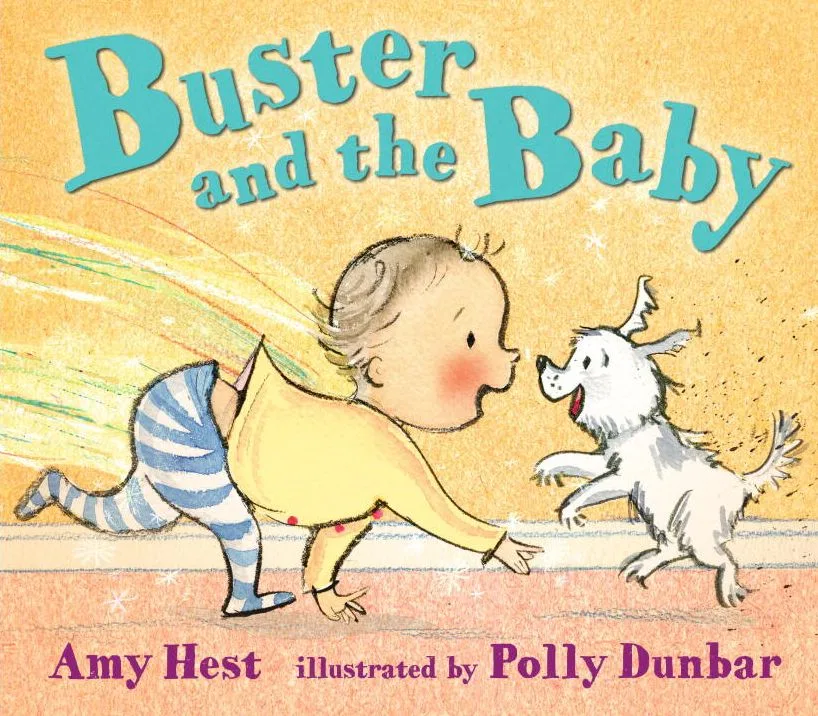 Buster and the BabyAmy Hest, illustrated by Polly DunbarBuster is a scruffy little white dog who delights in hiding from an active toddler. Thump, thump, thump goes his heart as he waits to be found under the table, behind an arm chair, behind a large teddy bear. Each time baby is equal to the task, finding Buster with squealing and whirling as the two play throughout the day. CCBC Choices 2018 Picture Books for Young Children 51 Hest’s patterned text and Dunbar’s lively illustrations capture the anticipation and excitement of waiting to be found in the classic game of hide-and-seek, one that has a playful reversal and cozy conclusion as the day draws to a close. Honor Book, 2018 Charlotte Zolotow AwardPicture Books for Young ChildrenView book details
 On the Night of the Shooting StarAmy HestIn a blue house nestled among the tall grass of her yard, Bunny enjoys reading books and drinking cocoa. On the other side of the fence, in his red house, Dog enjoys reading books and eating biscuits. The two neighbors lead happy but solitary lives. “No one says hello. Or hi. Or nice to see you today,” but Bunny is curious about Dog, and Dog wonders about Bunny. Every morning they observe one another through the fence. As they read in bed after dark, they peek out their windows to see whether the light in the window of the house next door is lit. One evening, as they both admire the night sky from their respective yards, they witness a shooting star. With this shared experience, the ice breaks and a connection is made. Bunny offers Dog a mug of cocoa, Dog fetches a basket of biscuits, and the two enjoy the beginning of what is to be a long and “exceptional” friendship. Cheerful watercolor illustrations that expertly balance white space with clever details accompany this quiet story that captures the joy of making a new friend.Picture Books for Young ChildrenView book details
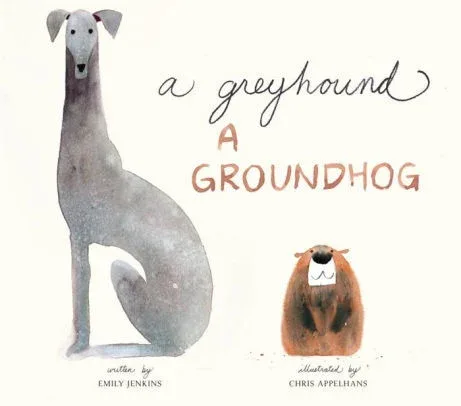 A Greyhound, a GroundhogEmily JenkinsA round hound (a greyhound, curled up in a circle) and a round hog (or groundhog, for which roundness comes naturally, no effort or repose required) are at the center of a picture book following them from initial meeting (once the greyhound awakens) through their dizzying, delightful encounter. “A round hound, a grey dog, a round little hound dog. A grey hog, a ground dog, a hog little hound dog.” The story unfolds in a mirthful, rhyming text comprising a limited number of words rearranged, and occasionally expanded (how many words rhyme with “round”?). The synergy between Emily Jenkins’s words and illustrator Chris Appelhans’s illustrations is superb. In the art, a muted palette on creamy white pages, grey (hound) and brown (groundhog) predominate in compositions that echo and extend the duo’s playful, sometimes frenzied interaction. There are also soft punctuations of other colors, as when butterflies appear and “astound and astound!” the two creatures. It’s waggish, waddling, tongue-twisting fun, perfect for playful, sound-rich reading aloud. (Jenkins offers a “debt of inspiration and rhythm” to Ruth Krauss’s A Very Special House.)Picture Books for Young ChildrenLexile Text Measure AD200LATOS Book Level 1.8View book details
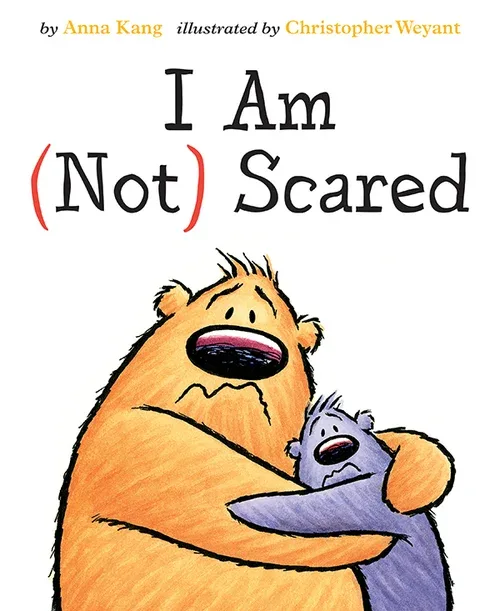 I Am (Not) ScaredAnna KangTwo furry creatures—one big and brown, the other small and purple—go back and forth debating which of them looks more scared as they wait in line to ride the Loop of Doom roller coaster. The smaller of the two points out things that are scarier (snakes, a tub of hairy spiders, hot lava, fried ants, an alien), then the roller coaster pulls in—with a snake on board! “Let’s be scared together!” 52 Picture Books for Young Children CCBC Choices 2018 Several almost wordless page spreads (except for the screams) document their wild ride while the snake sits behind them, looking just as terrified. When the ride is finally over, there’s only one thing for all three of them to do. Ride it again, of course! As with the earlier books featuring this furry duo, the mix of spare, simple text (“I am not scared. Are you?”), terrific visual storytelling, and abundant humor make this great for beginning readers as well as for storytimes.Picture Books for Young ChildrenLexile Text Measure AD310LATOS Book Level 2.3View book details
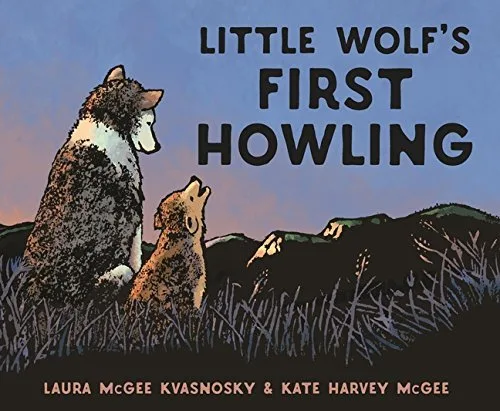 Little Wolf’s First HowlingLaura McGee KvasnoskyLittle Wolf is eager to go out at night with his father, Big Wolf, to learn how to howl. As the moon begins to rise, Big Wolf demonstrates a howl that ends with a lengthy “ooooooooooo.” Little Wolf’s first attempt starts strong but his enthusiasm gets the better of him as he brings it to a close: “I’m hoooowling, ’oooowling, ’ooooowling!” Which isn’t, Big Wolf notes, “proper howling form.” Big Wolf demonstrates. Little Wolf tries again. This time, his howl starts strong and ends with a jazzy “dibbity dobbity skibbity skobbity skooo-wooooo-woooooooooooo.” Big Wolf praises Little Wolf for many things. “But your howling. It is not proper howling form.” So they try again. This time, Little Wolf’s ending is even more unrestrained. And Big Wolf can’t help it: he starts tail-wagging and ear-twitching and paw-tapping along. Distinctive digitally rendered paintings reminiscent of colored block prints create an inviting backdrop for a story begging to be howled aloud. Highly Commended, 2018 Charlotte Zolotow AwardPicture Books for Young ChildrenView book details
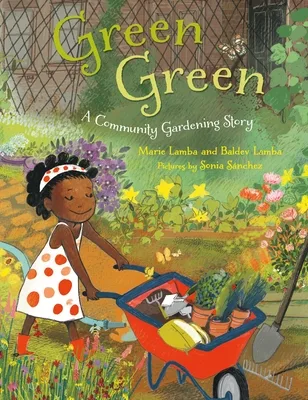 Green Green: A Community Gardening StoryMarie Lamba, Baldev Lamba, illustrated by Sonia Sánchez“Green green / fresh and clean. Brown brown / dig the ground,” begins this story as a group of children play in a grassy meadow and tend to a sprawling backyard garden. Soon, though, “brown brown / dig the ground” takes on a less pleasant meaning, as bulldozers and trucks begin clearing the land to make way for new buildings. Grass and flowers become stone and metal as the city expands. In the midst of the concrete jungle, what was once a grassy lot becomes a makeshift junkyard. Gardens are reduced to planters on balconies. Then one day, a little girl with a shovel turns the book’s familiar refrain into a question. “Brown brown / dig the ground?” An affirming “Brown brown / dig the ground!” sounds as a diverse group of neighbors gathers in a large lot to remove the litter, till the earth, and plant seeds. The garden they create grows into a colorful, verdant, once-again-sprawling place of beauty in the midst of the city. Sánchez’s illustrations are as vibrant as the community garden that blooms in these pages.Picture Books for Young ChildrenView book details
 Play with Me!Michelle LeePip the pig and Nico the bear both want to play. As Nico sets up his cello, Pip suggests they play ball, dolls, hopscotch, blocks, dress up, hide and seek—but Nico isn’t interested in playing any of those. Increasingly frustrated, Pip tugs on Nico’s arm (“Come on and play!”). When Nico explains that he already is playing—playing the cello, that is—Pip shouts, “I meant play with me!!!” A simple misunderstanding has been corrected, but Pip is ready to go home. He’s already played everything, anyway! Until Nico realizes there is one thing they haven’t played together yet. Pulling out a drum for Pip, the two play music in a story that gently demonstrates the importance of communication between friends.Picture Books for Young ChildrenView book details
 The Perfect SiestaPato MenaWhen a cool breeze starts to blow through the rain forest, the jaguar decides it would be a perfect time for a siesta. But he has something important to do soon, so he asks the coati to wake him in 10 minutes. The coati agrees but then decides that it is the perfect time for a siesta, so he asks the cockatiel to wake him in 10 minutes. And so it goes, with a series of animals agreeing to wake others from their naps, only to succumb to the pleasant cool breeze and the need for a nap. Finally the sloth is the last one standing and even though she struggles to keep her eyes open, she too falls asleep in the last minute of the jaguar’s nap. A surprise twist at the end makes for a satisfying resolution of this cumulative tale. Stylized illustrations of animals native to Central America make this work particularly distinctive.Picture Books for Young ChildrenView book details
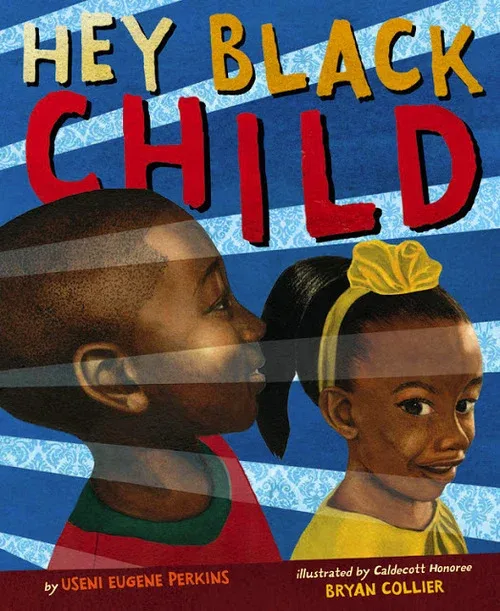 Hey Black ChildUseni Eugene PerkinsFirst written in 1975 for a children’s theater production, The Black Fairy and Other Plays, this poem of affirmation is well known and often recited within African American communities. Over the years, it has been attributed to Countee Cullen and Maya Angelou, among others, but it was not until the decision to publish it in a picture-book edition was made that the true author was located. Useni Eugene Perkins, now in his 80s, is a Chicago poet, playwright, and social worker whose uplifting words of empowerment from more than 40 years ago still resonate in our times. Bryan Collier’s collage and 54 Picture Books for Young Children CCBC Choices 2018 watercolor illustrations show four specific children who will one day grow up to be an artist, dancer, political leader, and scientist in this moving ode in honor of African American youth and promise.Picture Books for Young ChildrenWord Count 130View book details
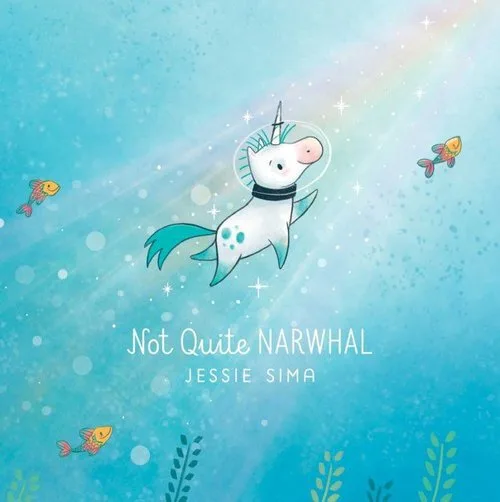 Not Quite NarwhalJessie SimaKelp knows he’s different from other narwhals. His tusk is short, he doesn’t like typical narwhal food, and he isn’t a very good swimmer. When Kelp is caught in a current and swept far from home, he sees land for the first time. High on a cliff he spots “a mysterious, sparkling creature” and feels an immediate affinity. Kelp swims ashore, finds his land legs, and sets out in pursuit. “Land narwhals!” Kemp cries in delight when he spots an entire group of them. “Actually, we’re unicorns. And, by the looks of it, so are you!” Kelp learns his tusk is a horn (complete with cascading rainbows) and the legs with which he couldn’t swim well are excellent for galloping. He loves every minute of his life with the unicorns, until he remembers his narwhal friends. Will the narwhals still love him once they learn he’s a unicorn? It turns out they knew it all along. Will he have to choose between narwhals and unicorns? Never. Rainbows and unicorns and sparkles (and narwhals) serve a genuine purpose in this winsome tale of identity, self-discovery, and acceptance. Clever humor in the appealing art, created in Photoshop and incorporating cartoon elements, punctuates a story overflowing with warmth.Picture Books for Young ChildrenLexile Text Measure AD590LATOS Book Level 3.3View book details
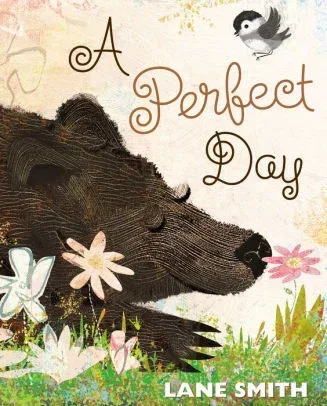 A Perfect DayLane SmithCat, Dog, Chickadee, and Squirrel are all relishing a perfect day, although the reason for perfection differs for each of them: the warm sun in a flowerbed (Cat), a cool pool (Dog), birdseed (Chickadee), and a corncob (Squirrel). Enter Bear, who disrupts everyone’s moment of bliss. Each of the animals hastily abandons a prized spot or snack when Bear lumbers near. It turns out Bear, whose massive presence can barely be contained on the page, is having a perfect day, too. His comprises a composite of comforts: “The warmth of the sun. The cool of the water. A belly full of corn and seed. A flower bed for a nap.” A simple text showcases repetition and predictability, while the dynamic mixed-media illustrations command attention with changes of scale and perspective.Picture Books for Young ChildrenLexile Text Measure AD260LATOS Book Level 1.6View book details
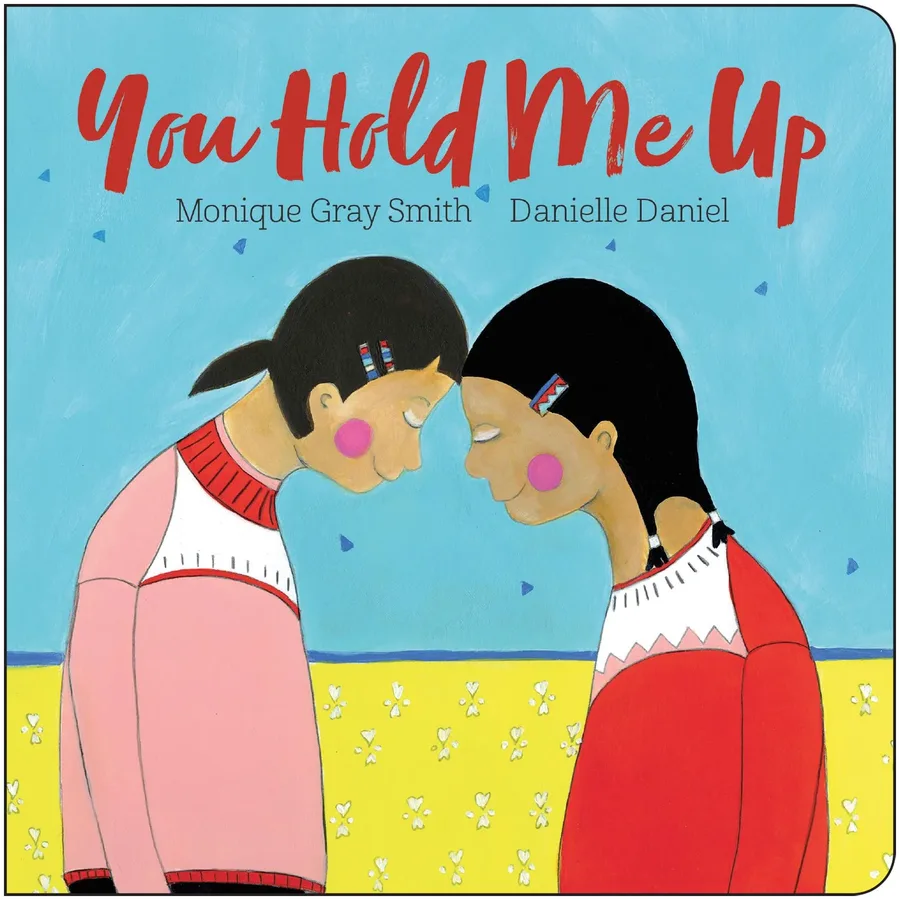 You Hold Me UpMonique Gray SmithWhat does it mean to hold someone up? To give and receive support? A series of simple, declarative statements offers answers to those questions for young children. “You hold me up when you share with me.” Or play, or learn, or laugh, or sing, or listen with me. “You hold me up when you comfort me.” Or respect me. Each action statement is accompanied by a full-page image of individuals engaged in the stated behavior in a book that creates space for children to talk about what each action means, and/or to think about how it might look in their own life. The author is Cree and Lakota and the full-page gouache, acrylic, and pencil illustrations show Indigenous children and adults CCBC Choices 2018 Picture Books for Young Children 55 in images that are stylized but have the warm emotional weight of scenes from real life in a picture book that affirms the importance and power of acts of kindness and connection.Picture Books for Young ChildrenView book details
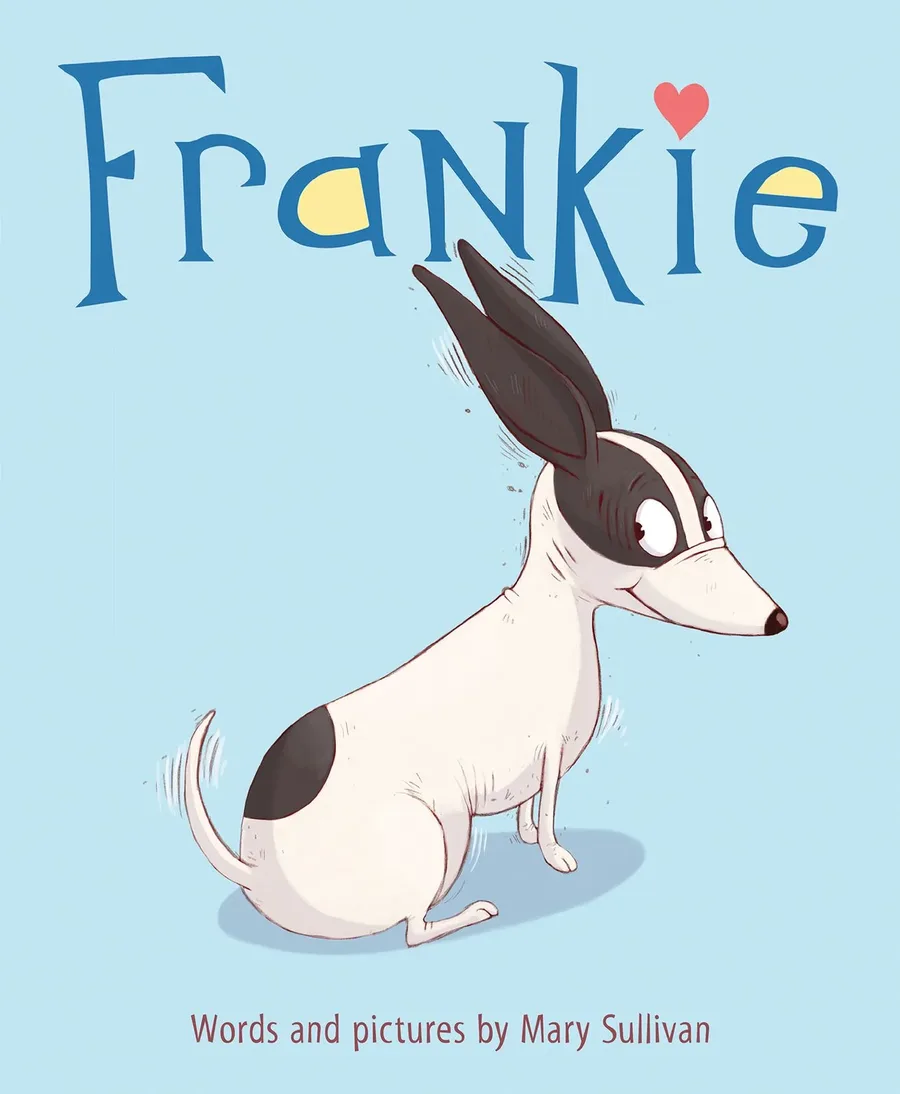 FrankieMary Sullivan, illustrated by Mary Sullivan“Frankie’s home,” says the owner of a newly adopted small dog, and Frankie is all wagging tail and high-point ears on hearing it. Taking the idea of belonging to heart, Frankie wonders if everything else she sees is hers, too. The ball? (“Frankie’s ball?”) The bone? The (stuffed) puppy? The rope? The blankie? The bed? She comes to each new object with hopeful enthusiasm, only to have both object and enthusiasm snatched away by Nico, the old dog already in residence. (“Nico’s ball … bone … ” etc.) Irrepressible Frankie doesn’t stay sad long, however. She’s just finished collecting an array of substitute items from around the house when she hears her name being called (“Frankie’s name! Frankie’s name!”). A treasure trove of items like Nico’s have been bought just for her along with one little something extra. “Nico’s frog?” wonders the old dog. Nope. The minimal text is paired with expressive pencil and digitally colored illustrations that capture Frankie’s exuberance, Nico’s crabby resistance to change, and a final moment of endearing detente in a delightful picture book beginning readers may also enjoy.Picture Books for Young ChildrenView book details
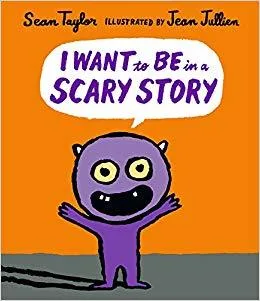 I Want to Be in a Scary StorySean Taylor, illustrated by Jean JullienLittle Monster is ready to be in a scary story. The narrator begins with a dark and scary forest. “Oh my golly gosh!” says Little Monster, not ready for something quite that scary. The scene changes to a spooky house. “Oh my goodness me! … Oh yikes and crikes!” Finally Little Monster admits it would be better to do the scaring. Anticipation builds as Little Monster walks toward a room to scare whoever is inside … “can we maybe change this book so it’s a FUNNY story?” The back-and-forth dialogue between Little Monster, who is small and wide-eyed, his purple-inked dialogue matching his color, and the unseen narrator, whose words are shown in black, is always easy to follow. So, too, are Little Monster’s emotions. The gentle tension shifts to the comically absurd and then back again in this begs-to-be-read-aloud picture book when Little Monster suddenly disappears and the narrator becomes increasingly worried. “Boo!” Digitally colored ink illustrations show Little Monster against white pages when talking with the narrator, and in full-color, bold, slightly comical (and maybe a teensy bit scary) scenes when part of the various stories being told.Picture Books for Young ChildrenLexile Text Measure AD440LATOS Book Level 1.7View book details
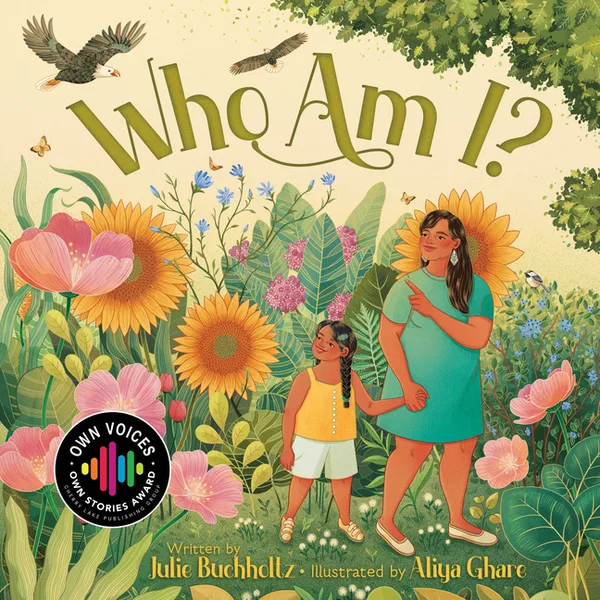 Who Am I?Jeffrey TurnerIn this playful book for very young children, a rabbit repeatedly stands behind other familiar animals, such as a frog, a rooster, and a tiger, claiming to be that animal as he speaks its language with onomatopoeic words. But his ears sticking up from behind each of his subjects are a dead giveaway he isn’t what he claims to be. This fresh, humorous take on bunny ears invites interaction from toddlers who will enjoy correcting the rabbit again and again, 56 Picture Books for Young Children CCBC Choices 2018 and will also enjoy that they are too smart to be fooled by the wily rabbit.Picture Books for Young ChildrenLexile Text Measure 560LATOS Book Level 3.7View book details
 Where Are You?Sarah WilliamsonA green worm searches for a pink worm across the pages of this interactive picture book for young children. It’s not just the pink worm that’s fun to find on each page spread, camouflaged as a mast among colorful boats, for example, or exiting page right as it crosses a bridge, or circled inside the rim of a bicycle wheel. The green worm is just as fun to spy, rising from sea grasses, or from behind tall buildings. Directional prepositions (up, down, above, below, around, inside, through, etc.) are part of the simple narrative as the pink worm describes its location. The various scenes in the brightly colored, charming gouache and paper illustrations gain context with endpapers showing the worms’ world: a small section of park that includes a pond with boats, a sandbox with buildings, bicycle riders, and more, all offered from a worm’s eye view in the story.Picture Books for Young ChildrenView book details
 Thank You, BeesToni YulySeven short declarative sentences about nature (e.g., “The sun gives us light.”) are followed by a simple thank you in a lovely tribute to the Earth and to gratitude. The young child pictured in the multimedia collage illustrations makes observations and offers thanks to the sun, bees, sheep, clouds, trees, dirt, and Earth. Yuly skillfully takes a large and important concept and makes it completely accessible to young children, inspiring them to use the same pattern to express what they are thankful for.Picture Books for Young ChildrenView book details
 Professional CrocodileGiovanna ZoboliLike many professionals, Mr. Crocodile wakes to the sound of an alarm, dresses in a shirt and tie, and enjoys a hot beverage before making his way out of his apartment and into the bustling city. With only a handful of exceptions Mr. Crocodile’s fellow city dwellers are human, but they pay no attention to the large, well-dressed reptile in their midst. Newspaper in hand, Mr. Crocodile squeezes his way into a crowded subway car, hops off at his stop, and purchases a bouquet of flowers and a rotisserie chicken as he walks the last few blocks to work. He passes a monkey enclosure before entering a locker room, where he neatly removes his clothing and stores his chicken. Towel around his waist, he enters a large, domed room equipped with pool, trees, and a glass wall behind which wide-eyed humans watch Mr. Crocodile—now sans towel—lie on his belly next to the pool. This wordless picture book will have readers guessing about Mr. Crocodile’s profession until the delightfully satisfying end, and the illustrations are chock full of details just waiting to be discovered upon a reread.Picture Books for Young ChildrenView book details
Picture Books for School-Age Children
33 selections
 Crown: An Ode to the Fresh CutDerrick BarnesA distinctive second-person narrative speaks directly to readers to honor an everyday experience—going to the barbershop for a haircut, a universal experience for boys, but specific here to African American boys. Barnes deftly uses hyperbole, exaggeration, and metaphor to instill the story with a sense of pride and a good deal of humor. It truly is an ode in the traditional sense, but so modern, too. Fresh and original turns of phrase appear on every page, celebrating an experience of joy and confidence, while the descriptions of other men (and their specific haircuts) in the shop place the boy firmly at the center of a community that pulls together as a strong extended family. Bold colors and broad brush strokes capture both the individuality of the men and boys in the shop, as well as the protagonist’s pride in his own fresh cut.Picture Books for School-Age ChildrenLexile Text Measure 700LATOS Book Level 3.8View book details
 TriangleMac BarnettMischievous Triangle lives in a triangular world where everything fits just right. When he ventures out into the world and finds other shapes, he decides to play a sneaky trick on Square. Knowing Square’s fear of snakes, he hisses right at the square-shaped door of his square-shaped home, and when Square realizes he’s been fooled, he chases Triangle back into his triangular world, and gets stuck in Triangle’s door. But the joke turns out to be on Triangle because guess who’s scared of the dark? Klassen’s illustrations manage to give a lot of character to geometrical shapes with minimal details, and they add greatly to the humor of this witty story.Picture Books for School-Age ChildrenLexile Text Measure AD310LATOS Book Level 2.1View book details
 The Wolf, the Duck & the MouseMac BarnettA jar of jam, a tablecloth, several pieces of furniture. “You’d be surprised what you find inside of a wolf,” says a duck, longtime resident, to a mouse, recently gobbled up, that has joined him in the safe haven of the wolf’s belly. When the new friends dance it creates a ruckus that sickens the wolf. The sly duck encourages the wolf to eat a few luxuries to ease his upset stomach (“a hunk of good cheese,” “a flagon of wine”). Later, when the wolf narrowly misses a hunter’s bullet, the duck and the mouse decide they must suit up to defend their home; they charge out of the wolf’s mouth wearing household-item armor to scare away the hunter. In return for saving his life, the wolf grants the two a favor, and you can guess what they ask of him. This droll tale turns the familiar “must escape!” narrative of eaten animals on its head and offers a creative explanation for wolves’ howling at the moon.Picture Books for School-Age ChildrenLexile Text Measure AD470LATOS Book Level 2.2View book details
 Where’s Rodney?Carmen BoganRodney likes moving, not sitting in a desk at school; he likes the freedom of outside, not the constraints of inside. But Rodney isn’t excited about an upcoming field trip to the park—he knows the little, triangle-shaped space with yellow grass in his city neighborhood. “It had one large cardboard trash can and two benches where some grownups sat all day long.” The day of the trip, however, the bus rumbles right by that park, out of the city, past farm fields, and through a mountain tunnel. At the other end, it emerges into bright sunshine and a park unlike any Rodney has known. It’s a place where he can climb high on a cliff, or down low into a canyon; he can run and shout, or discover small things of great beauty with quiet observation. “Rodney was outside—more outside than he had ever been before.” Rodney, a Black child in a diverse, contemporary classroom, is experiencing nature on a scale both grand and intimate at the center of this buoyant yet contemplative picture book with illustrations that reflect both the changing physical landscape and emotional range of the story as Rodney discovers that “outdoors” can not only be “majestic,” but peaceful, too.Picture Books for School-Age ChildrenView book details
 Priscilla GorillaBarbara BottnerPriscilla loves gorillas. She’s not only filled to the brim with knowledge about them, but she has gorilla pajamas and likes acting like a gorilla sometimes, too. Her gorilla behavior is acceptable at home, and even at school on the day the teacher asks everyone to talk about their favorite animals. In fact, most of the class comes in costume. But when she refuses to take the costume off, her teacher loses his patience. The problem is resolved when Priscilla goes back to her gorilla books and learns that even gorillas don’t always get their way. There is still a time and a place for her to release her inner gorilla, however. Emberley’s cartoon-style line drawings capture all of Priscilla’s enthusiasm and spirit, and show the other characters as distinct individuals, as well.Picture Books for School-Age ChildrenLexile Text Measure 550LATOS Book Level 3.2View book details
 Walk with MeJairo Buitrago“Keep me company on the way home,” a girl says to a big, thickly maned lion. The lion does as she makes the long journey by foot to the outskirts of the large city where she lives. She imagines herself riding on the lion’s back. She picks up a younger sibling at child care and stops at the store “that won’t give us credit anymore” for food, inviting the lion to eat the meal she prepares. She tells the lion he can wait until “Mama gets home from the factory,” or return to the hills. “But then come back when I call.” Against a somber backdrop— crowded city, spare, rundown apartment—the child finds strength and solace in imagination. There are moments of humor in the images—people around her stunned by the lion’s presence—while a final image of great poignancy shows a bedside photograph of her father, absent from her real life, with a thick mane of hair. Thoughtful and moving, this work invites both discussion about what is happening in the story and reflection on imagination and resiliency. CCBC Choices 2018 Picture Books for School-Age Children 59 This dynamic author/illustrator duo are from Mexico City and Bogotá and signs in the illustrations (on buses, buildings, etc.) are in Spanish.Picture Books for School-Age ChildrenView book details
 A Thousand Billion Things (and Some Sheep)Loïc Clément, Anne MontelAn oversized search-and-find picture book begins with a girl stating that she doesn’t like going to sleep. Why? Because most of her life is filled with choices. Cereal or toast at breakfast? Stripes or spots when getting dressed? On Saturdays, the farmer’s market is a bounty of flavors to try, and a trip to the toy store and bakery both display dazzling arrays. Everything she does offers myriad things to choose from or discover or see. Each double-page spread focuses on a single activity the girl describes in a lively narrative that addresses readers directly. Most of the page spread is devoted to an expansive and crowded collection of things—all of her food choices, all of her clothes, all of the toys at the store, and confections at the bakery, etc. Readers are asked to find one or two of them from among the many. A key at the end of the book repeats each illustration in smaller form and mostly black and white, with only the item or items requested in color. Children who love the challenge of the search and those who love poring over detailed illustrations will delight in these pages. As for why the girl hates to sleep … well, going to sleep is nothing but sheep.Picture Books for School-Age ChildrenView book details
 Luna Loves Library DayJoseph Coelho, illustrated by Fiona LumbersFor Luna, going to the library is special. She finds a book that’s even longer than she is. She reads about bugs (which, unlike her dad, she does not find gross) and discovers a book to learn magic tricks (maybe she can make her dad reappear at home). But most of all, Luna loves library day because it means spending time with her father. Luna’s dad is always waiting when her mom drops her off, and they explore the library together. They find a book with pictures of the island where he grew up, and together they enjoy a fairy tale (a separate story inset into the book) that reflects their family situation. Although Luna’s dad no longer lives with Luna and her mom, it’s clear he still loves Luna very much. The illustrations show each book coming to life as Luna and her dad read, and the library (complete with self-checkout) is realistically contemporary. Luna is biracial (Black/white).Picture Books for School-Age ChildrenLexile Text Measure 401LATOS Book Level 2.8View book details
 The Ring BearerFloyd Cooper, illustrated by Floyd Cooper“Mama’s having a wedding, and Jackson has an important job to do … ” That job is to carry the rings for Mama and Bill down the aisle. But Jackson is worried he’ll trip. He’s worried about other things, too: being a big brother to Sophie, Bill’s daughter, and calling Bill “Dad.” In a picture book set in the minutes leading up to and during the wedding, Jackson’s anxiousness is genuine, but so, too, are the loving relationships revealed between Jackson and Bill, Jackson and Grandpop, Jackson and Mama, and Jackson and Sophie, who does trip when she is walking down the aisle. Luckily for Sophie, her about-to-be big brother is there to catch her. Judicious use of repetition underscores Jackson’s feelings 60 Picture Books for School-Age Children CCBC Choices 2018 while adding to the rhythmic pleasure of a narrative set against mixed-media illustrations that further emphasize the warm bonds among members of this African American family.Picture Books for School-Age ChildrenLexile Text Measure AD540LATOS Book Level 3.5View book details
 Wolf in the SnowMatthew CordellSnow is falling lightly as a red-hooded girl leaves her home and heads to school, walking across a winter-brown landscape. Elsewhere, there are wolves howling as the first flakes descend. When school lets out, the girl, in her pointy, slightly comical red parka, heads home in the thickening white, moving left to right across the landscape of the page. Elsewhere, the wolves are on the move, ominous and wild, moving right to left. But one small wolf pup falls behind. Girl (“huff huff”). Wolf pup (“whine whine”). When the two meet, the girl picks up the small pup and bravely carries him toward the howling as the snow deepens. She comes face to face with a yellow-eyed adult wolf (!), reuniting the pup with its pack. The girl trudges on until she falls and can go no farther. Will she be eaten by those wild wolves heading back her way? The drama is genuine, and breathtaking, and unexpectedly moving in this magical story brilliantly told. Masterful pacing, a mix of expansive page spreads and spot images, and the blending of stylized (the girl in her triangular jacket) and realistic (those sinuous wolves) pen-and-ink and watercolor images make for an exceptional (almost) wordless story.Picture Books for School-Age ChildrenWord Count 41View book details
 FeatherRémi Courgeon, illustrated by Rémi Courgeon, Claudia Zoe BedrickPaulina—a.k.a. Feather, because she’s so small—lives with her father and three older brothers. She tends to get the short end of the stick at home. Her brothers are bigger and stronger than she and when the siblings fight one another to determine who will do the chores, Feather usually loses. One evening, she announces she’s going to swap piano (her favorite pastime) for boxing. As she begins her training, Feather also begins to stand up for herself, asking that her family call her by her real name, Paulina. Inspired by other women “who had bravely made a place for themselves in the world,” Paulina’s confidence grows along with her muscles, and soon she is ready for her big match. When she pulls on her boxing gloves, she is surprised to find slips of paper inside: long-overdue notes of encouragement and support from her father and brothers. Paulina’s hard-won victory at the match inspires changes at home and increased respect for Paulina, who, having proven herself, decides to put away her gloves for good and return to her piano. The boldly colored illustrations in this oversize picture book excel at framing Paulina as a small but mighty presence on each page.Picture Books for School-Age ChildrenView book details
 King of the SkyNicola DaviesA young boy who’s emigrated from Rome to Wales feels alone and alienated. Nothing is familiar to him except the pigeons he sees in a loft behind his house. They’re being raised by elderly Mr. Evans, and the boy and man forge CCBC Choices 2018 Picture Books for School-Age Children 61 a friendship over their mutual interest in the birds. Mr. Evans tells the boy he developed a love of pigeons himself during all the years he was working in a coal mine. He liked seeing the birds fly after all the days spent underground. The boy learns about racing pigeons—and about life in general—as his loneliness and sense of displacement ease. A bird he and Mr. Evans call King of the Sky is the one they enter in a race from Rome (the birds are taken by train) back to Wales, and the wait for the bird’s return—will it return?—is agonizing and heartfelt in this soaring work in which the idea of “home” transforms. Intimate, soft illustrations portray the gentle friendship between the two, and expansive double-page spreads of the flying birds capture all the majesty and drama of their flights.Picture Books for School-Age ChildrenWord Count 752View book details
 The Rooster Who Would Not Be Quiet! = ¡El gallo que no se callaba!Carmen Agra DeedyThe village of La Paz is noisy. “Dogs bayed, mothers crooned, engines hummed, fountains warbled, and everybody sang in the shower.” In fact it’s so noisy the mayor is fired and an election is held to choose a new one. “Only Don Pepe promised peace and quiet. He won by a landslide.” First Don Pepe bans loud singing, then he bans singing altogether. Seven quiet years pass until a “saucy gallito” moves into town and does what roosters do: “Kee-kee-ree KEE!” Furious, Don Pepe cuts down the tree where the rooster sits. When that doesn’t silence the rooster, Don Pepe throws him in a cage alone, then takes away his corn, and blankets him in darkness. Still the rooster crows. “I sing for those who dare not sing—or have forgotten how,” he tells Don Pepe. Even under threat of being turned into soup, the rooster is defiant, stating a song “will never die—so long as there is someone to sing it.” A delightfully told tale is an entertaining allegory about the importance of speaking up, and sometimes resisting authority. Colorful mixed-media illustrations with a comic edge provide a vibrant backdrop for the language- and idea-rich story, here in a bilingual edition.Picture Books for School-Age ChildrenView book details
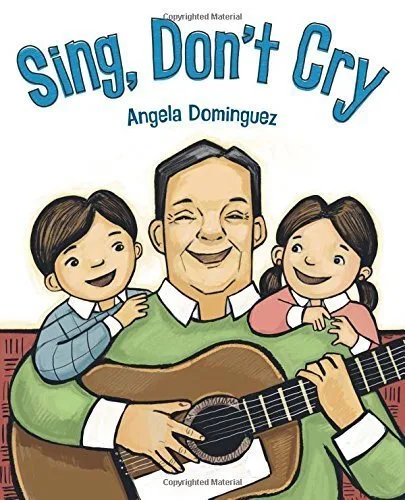 Sing, Don’t CryAngela DominguezIn a tribute to her abuelo, Angela Dominguez shares the advice she grew up hearing from him: even when you’re sad or things don’t turn out the way you want them to, singing will lift your spirits and draw people closer to you. Born in Mexico, her grandfather, Apolinar Navarrete Diaz, was a mariachi musician who experienced a fair amount of adversity but never let it get in the way of his optimistic approach to life. Digitally colored pencil illustrations show two young grandchildren enjoying the company and the music of their guitar- playing grandfather, who has come from Mexico to visit them. The end pages are appealingly illustrated with promotional photographs, sheet music, and a family picture of the author/illustrator as a child with her abuelo.Picture Books for School-Age ChildrenLexile Text Measure 329LATOS Book Level 2.4View book details
 The One Day HouseJulia DurangoYoung Wilson is full of ideas for ways to help fix his elderly neighbor Gigi’s house: paint it orange and yellow “like the sun,” fix the windows so they’ll open, build a fence so she can have a dog, repair the steps and the chimney and the roof, plant a garden. He’d even like to fix her piano, “so you can play music again.” Across summer, fall, and winter, he shares his ideas with Gigi and others, from the ice cream man to the librarian to his classroom teacher. Gigi always makes sure Wilson knows he is already gifting her with his presence, and she clearly is not expecting young Wilson’s many ideas to come to anything, but when spring arrives, they do! Wilson’s agency is presented realistically in an engaging picture book showcasing a dreamer and do-er. The satisfying patterned text is set against vibrant multimedia collage illustrations featuring a brown-skinned boy and his diverse, multigenerational neighborhood. Highly Commended, 2018 Charlotte Zolotow AwardPicture Books for School-Age ChildrenLexile Text Measure AD470LATOS Book Level 2.3View book details
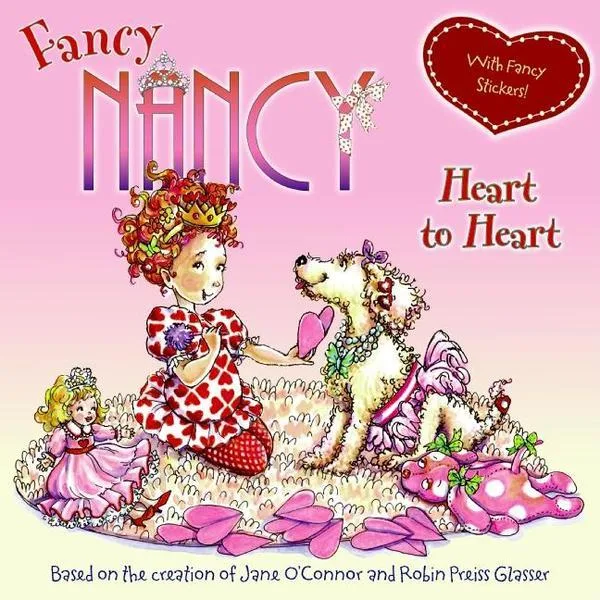 Heart to HeartLois EhlertWith her trademark vibrant palette, Ehlert creates a clever rebus puzzle of colorful, cut-out shapes, vegetables, numbers, and letters that ultimately translates as a love note. Language play and visual symbols make it a fun challenge to decipher for young readers who are able to work it out. Whether alone or with an adult, they will find a lot of humor in Ehlert’s playful ingenuity.Picture Books for School-Age ChildrenLexile Text Measure AD360LATOS Book Level 2View book details
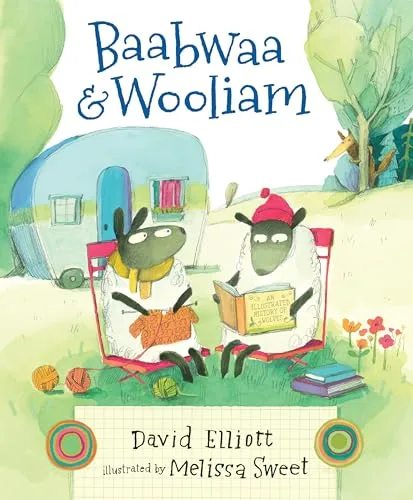 Baabwaa & WooliamDavid Elliott, illustrated by Melissa SweetA droll, not-quite-fractured but surely sideways original tale of two sheep, Baabwaa and Wooliam, who go in search of adventure and encounter a wolf in sheep’s clothing. Baabwaa and Wooliam are innocents up to a point, but Wooliam is a reader and based on stories he knows exactly what the wolf really is. When he tells the wolf as much, the wolf is intrigued and wants to learn more. Wooliam shows him a book, but it turns out the wolf can’t read. And so a strange, entertaining friendship begins: Wooliam teaches the wolf to read, Baabwaa knits him a new coat, because, as she notes, his current one is a disgrace, and the wolf, being a wolf, just can’t help himself every so often and chases them around. A tongue-in-cheek premise told with straight-faced humor is paired with blithe watercolor illustrations that embrace both the silliness and warmth of the story, which includes the pleasure the wolf finds in reading.Picture Books for School-Age ChildrenView book details
 All the Way to HavanaMargarita Engle“We have a gift and we have a cake and today we’re going to drive all the way to the big city to see my new baby cousin on his zero-year birthday!” To get to Havana from his village home, the young narrator and his family will drive Cara Cara, their beautiful, beloved old sky blue car that “chatters like a busy chicken—cara cara, cara cara, cluck, cluck cluck … ” But Cara CCBC Choices 2018 Picture Books for School-Age Children 63 Cara sounds more like a baby chick when they start the engine. So the boy and his papá open the hood and twist and tighten and experiment until the car sounds fine again. On the trip they pick up neighbors in needs of rides, and zoom through the countryside, along the water, and into the busy city full of “noisy old cars of every color.” The young narrator embodies childlike enthusiasm, while playful onomatopoeia add to the energy of an account set against mixed-media illustrations infused with island colors and light. Both the author and illustrator provide notes talking about the abundance of old cars in Cuba and the ingenuity of Cubans that keeps them running. Highly Commended, 2018 Charlotte Zolotow AwardPicture Books for School-Age ChildrenLexile Text Measure AD890LATOS Book Level 4.2View book details
 The Unexpected Love Story of Alfred FiddleducklingTimothy Basil Ering, illustrated by Timothy Basil EringCaptain Alfred is sailing toward home with a gift for his wife—a duck egg close to hatching—stashed in his fiddle case when a sudden storm tosses his boat about. When calm returns, the newly hatched duckling, Alfred, finds himself alone in one half of a broken fiddle case and drifting through the fog. As Alfred embraces an object (the Captain’s fiddle) floating in the water nearby it makes a beautiful sound. Meanwhile, the Captain’s wife worries about her missing husband. When the lonely duckling comes ashore, still clutching the fiddle, he encounters the Captain’s dog and the two bond over their appreciation of the fiddle’s music. That music brings the Captain’s wife to their side, while a final spread shows the Captain paddling a makeshift raft as the sound of his fiddle leads him home. An unlikely but successful pairing of fantasy and realism woven through the text and illustrations adds charm to this story of separation, reunion, and the magic of music.Picture Books for School-Age ChildrenView book details
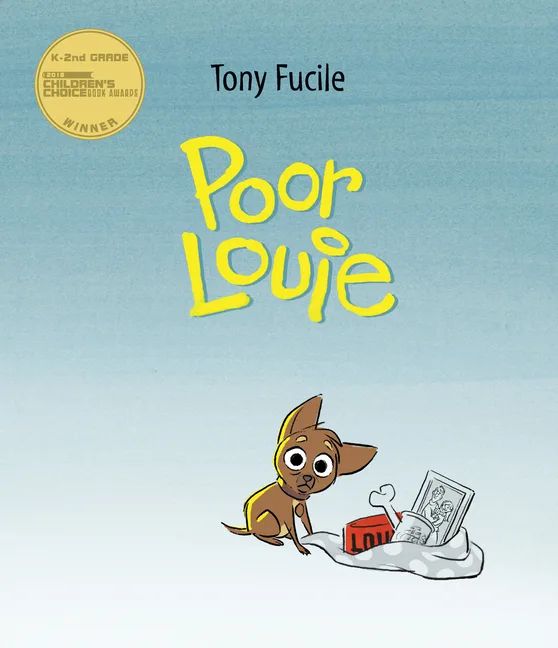 Poor LouieTony FucilePampered pooch Louie is at the center of his humans’ world. They do everything together. That’s how Louie ends up at a playdate with Mom and her friends being mauled by babies. “All I could say was thank goodness we’d never have one of those in OUR house.” Then things start getting strange at home: Louie has to eat dinner on the floor instead of at the table, and there’s less and less room next to Mom’s belly in bed. Eventually, Mom and Dad start bringing tons of stuff home: two beds, two hiking pouches, two matching sweaters. It isn’t until the arrival of a double stroller, however, that the truth hits Louie, hard: Not just one baby, but two babies will be moving into his house! Little Chihuahua Louie’s distinctive first-person voice is half the fun in this over- the-top look at a changing family, but so, too, is a surprise ending that is both sweetly funny and patently absurd. The illustrations feel reminiscent of 1960s animation but with 21st-century sensibility in the details.Picture Books for School-Age ChildrenLexile Text Measure AD480LATOS Book Level 1.8View book details
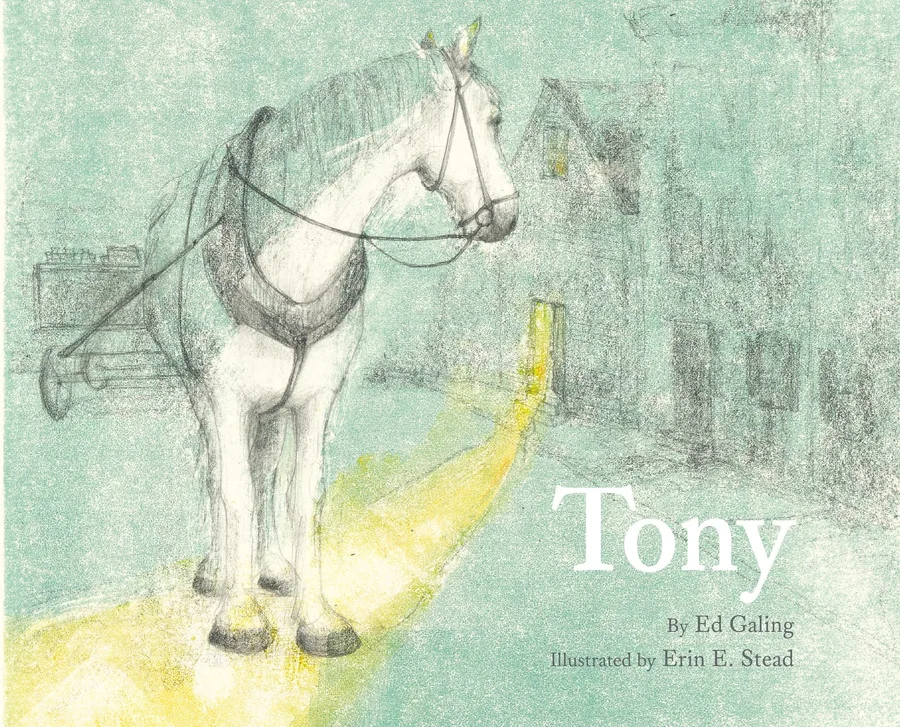 TonyEd GalingTony is a white horse who pulls Tom’s milk wagon through town each morning before dawn. Gentle and reliable, he is beloved by Tom and by the young narrator who always awakens to say hello and to give Tony a pat. The 64 Picture Books for School-Age Children CCBC Choices 2018 understated poetic text invites readers to slow down and look at the intimate pencil illustrations that evoke an earlier era and a strong sense of early morning. The narrator is neither pictured nor named, but a pair of saddle shoes on the floor next to two pieces of hard candy, an apple, and some carrots suggests that it might be a school-age girl, up early perhaps to help with farm chores in this beautiful pairing of text and illustrations.Picture Books for School-Age ChildrenView book details
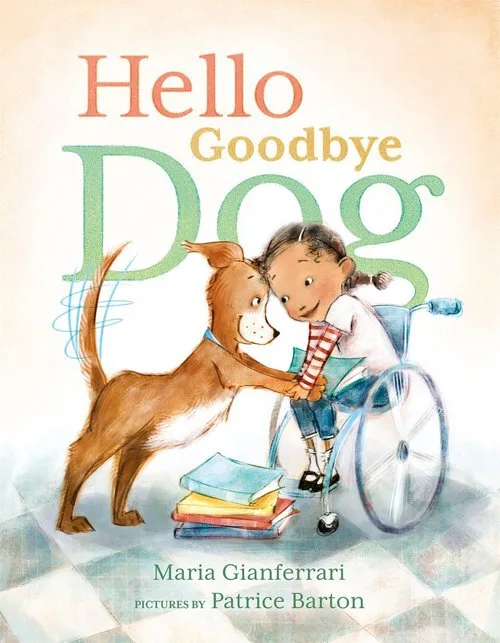 Hello Goodbye DogMaria Gianferrari, illustrated by Patrice BartonZara’s dog, Moose, has a hard time letting Zara out of his sight. One morning, Moose follows Zara to school. When Zara’s mom comes to take Moose home, Moose gets away again and heads back to Zara’s class. An ever-growing group of adults (Zara’s teacher, the librarian, the principal) try to remove Moose as Zara goes through her day, and each time loyal Moose manages to resist—to the delight of Zara’s classmates. A solution comes with the decision to sign Moose up for therapy dog training, giving Moose an official role to play as the “reading dog” for Zara’s class. Watercolor illustrations show biracial Zara with an African American mom and a white dad. Zara uses a wheelchair, something incidental to the story rather than a plot device.Picture Books for School-Age ChildrenLexile Text Measure AD460LATOS Book Level 2.3View book details
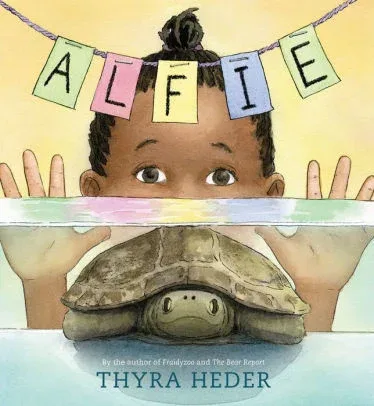 AlfieThyra HederOn her sixth birthday, Nia welcomes her new pet turtle, Alfie, into her home. She introduces him to her stuffed animals, sings songs she wrote just for him, and tells him stories each night about her school day. Alfie, though, is not the most enthusiastic companion, and Nia gradually loses interest in him— until he disappears as her seventh birthday approaches. A switch in perspective offers Alfie’s side of the story: despite his demure personality, he adores Nia and deeply appreciates everything she does for him. In search of a present for her birthday, he explores the nooks and crannies of their apartment before venturing outdoors. Tired after his long journey, he slips into the backyard pond for a nap. Beautifully detailed ink-and-watercolor illustrations show both Alfie’s perspective (scavenging behind the couch, crossing the sandbox “desert”) and African American Nia’s (building a snow turtle in the winter, planting seeds beside the pond in the spring unaware of Alfie’s presence nearby). Alfie’s obliviousness to the passage of time makes the ending all the more delightful when he emerges triumphantly from the pond, gift in hand (or rather, on shell), ready for Nia’s seventh birthday, never realizing that she is now celebrating her eighth.Picture Books for School-Age ChildrenLexile Text Measure AD490LATOS Book Level 2.5View book details
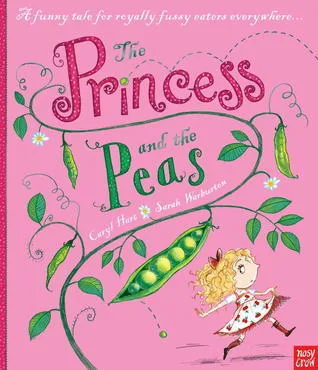 Princess and the PeasRachel HimesMa Sally is the best cook in the county and is especially known for her delicious black-eyed peas. Ma Sally decides that whomever her son John wants to marry, she’ll have to be as good at cooking black-eyed peas as she is. John is much admired around town for his kindness, especially by Miss Hannah, Miss Hattie, and Miss Harriet. Unfortunately for all three, they’re terrible cooks. It’s Princess, new to town, who impresses. Her peas are even better than Ma Sally’s. But she’s not so sure about marrying. “I like John well enough, but I’ve got my own CCBC Choices 2018 Picture Books for School-Age Children 65 plans. How about this—dancing Saturday at the juke joint?” She also makes clear she expects John to help clean up the dirty pots and pans. A fresh telling of a classic tale is followed by a note in which the author-illustrator discusses how the original never made sense to her (who can possible feel a pea under a mattress?) and also that she chose to set this story in an African American community in the South in the mid-1950s. Her desire to showcase love, family, and community is supported by a lively narrative and naïve-style illustrations in which details make for a vibrant sense of time, place, and characters.Picture Books for School-Age ChildrenView book details
 The Book of MistakesCorinna LuykenThe first mistake is made as soon an unseen artist begins drawing a human head. That second eye is just too big. But the artist keeps drawing rather than starting over or erasing. She embellishes instead, and with each addition her image transforms into something more expansive. There are more mistakes, but they are clearly opportunities in the eyes and hands of the young artist. Her drawing becomes a wordless story full of surprise and whimsy. “Do you see / how with each mistake / she is becoming? / Do you see now / who she could be?” Fresh in both concept and resolution, this funny, provocative book will appeal to visual learners and to those who like to pore over illustrations.Picture Books for School-Age ChildrenLexile Text Measure AD520LATOS Book Level 2.4View book details
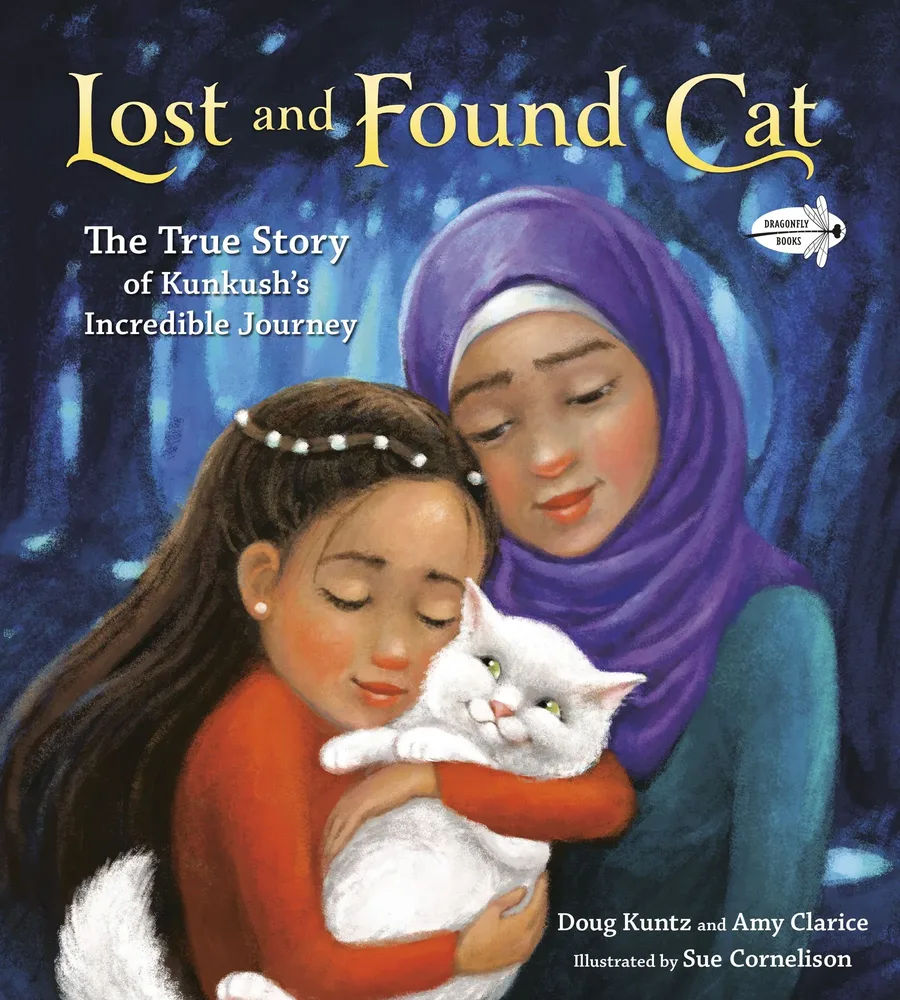 Lost and Found Cat: The True Story of Kunkush’s Incredible JourneyDoug Kuntz, Amy Shrodes, illustrated by Sue CornelisonWhen Sura and her five children fled Mosul, Iraq, in August 2015, they brought along their beloved cat, Kunkush, hiding him because they knew others would consider him an extravagance. But the family could not picture life without the long-haired white cat, so they smuggled him along in a basket as they made the dangerous journey by car, on foot, and in a small overloaded boat. Just when they reached safety, the frightened cat—unattended for a few moments—ran away. Months later, the family, now living in Norway, were reunited with Kunkush, thanks to an international effort to return the cat to its owners. A dramatic true story concludes with additional information and photos of the family, their cat, and other people who were involved, underscoring the need for compassion and humanitarian efforts in the current refugee crisis in the Middle East.Picture Books for School-Age ChildrenView book details
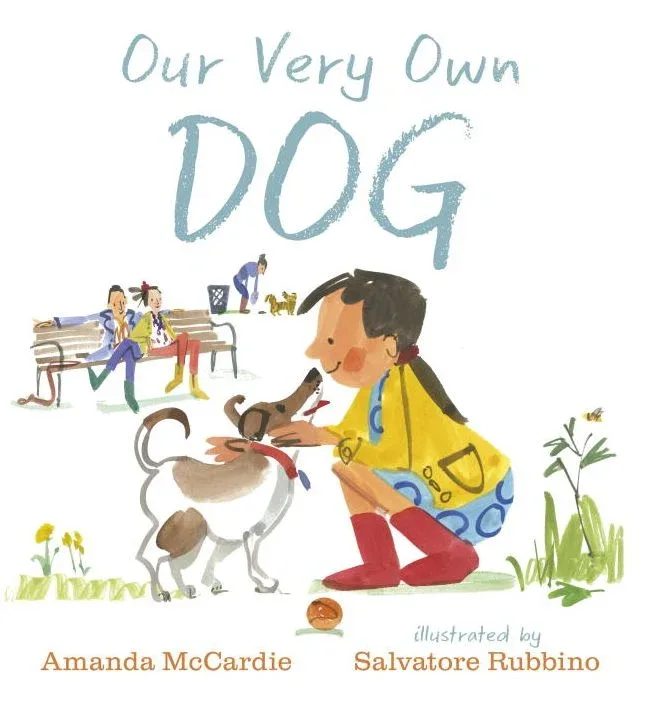 Our Very Own DogAmanda McCardie“A dog came to live with us when I was four.” An engaging picture book in the voice of a girl whose family adopts a dog from the shelter works as a terrific informational narrative, too. The little girl’s dog, named Sophie, “was nervous around my father at first, so he was careful not to look into her eyes or pet her or get too close.” How-tos like this are seamlessly integrated into a narrative that also incorporates related facts in a smaller font on each page. (“A shy or nervous dog may feel threatened if you look too closely into her face.”) The child narrator talks about the specific behavior of Sophie—playing, eating, socializing, and more—and in doing so shares helpful information 66 Picture Books for School-Age Children CCBC Choices 2018 for any child or family hoping or dreaming or planning for a dog, or simply interested in reading about them. Breezy mixed-media illustrations add to the blithe, upbeat feel of a volume that concludes with a final page of advice and an index.Picture Books for School-Age ChildrenView book details
 When a Wolf Is HungryChristine Naumann-VilleminEdmond Bigsnout has an appetite for a “grain-filled, silky haired rabbit. A city bunny.” So the hungry wolf sets out with his knife, headed for the fifth floor of a tall apartment building where Max Omatose, miniature rabbit, resides. Edmond’s quest for dinner, however, is stymied again and again by friendly neighbors taking the same elevator. They all assume Edmond is a new resident. Each neighbor asks to borrow the cooking implement Edmond has run home to fetch for bunny-cooking—a chainsaw, a rope, a cooking pot, a grill. As it turns out, they are all headed to a rooftop barbeque, and “new resident” Edmond is invited. There he meets another wolf who strikes his fancy—as a life partner, not a meal. The neighbors ultimately kill Edmond’s appetite for rabbit with kindness in this hilarious cause-and-effect story.Picture Books for School-Age ChildrenView book details
 A Different PondBao PhiA Vietnamese American boy’s predawn fishing outing with his dad is the subject of a narrative shaped by an exquisite accounting of details. So much beyond the action is conveyed through beautifully weighted sentences (“I feel the bag of minnows move. They swim like silver arrows in my hand.”): The specific experience of this immigrant child (“A kid at my school says my dad’s English sounds like a thick, dirty river. But to me his English sounds like gentle rain.”); a hard-working family’s economic hardship (“‘If you got another job why do we still have to fish for food?’ I ask. ‘Everything in America costs a lot of money,’ he explains. I feel callouses on his hand when he squeezes mine.”); bittersweet memory as the boy’s dad recalls fishing at a similar pond as a child in Vietnam with his brother, who died during the war. And running through it all is the boy’s happiness in their time together, a pleasure that extends to feelings about his entire family when they gather at day’s end. The evocative art masterfully and movingly reveals details of character, setting, and action while superbly reflecting the warmth and intimacy of the story. At volume’s end, both the author and illustrator share memories of growing up in Vietnamese families that came to the United States when they were children. Winner, 2018 Charlotte Zolotow AwardPicture Books for School-Age ChildrenView book details
 Town Is by the SeaJoanne SchwartzA boy describes his day in the town by the sea where he lives, an accounting made extraordinary by its lyricism and its visual accompaniment. “It goes like this … ” is the repeated refrain as he details each part of his day. Morning includes butterflies in his stomach when he swings up high; lunch is a baloney sandwich and carrots; in the afternoon he notices the salt-smell of the air when CCBC Choices 2018 Picture Books for School-Age Children 67 he stops at the graveyard overlooking the sea. Most of the ink, watercolor, and gouache illustrations have a muted palette but feel full of light and movement and convey an exceptional sense of place along with the narrative. But there is another repeated refrain: Two consecutive double-page spreads between each part of the day in which the boy takes note of how the sea looks (paintings show its expansiveness and the play of light on water), and thinks of his father at work in the coal mine beneath the sea (paintings dominated by heavy, oppressive dark bearing down on the workers). The boy notes matter-of-factly that his future will be the mine, just like his father and grandfather. But for now readers see he is secure in the warmth of family and familiarity, and also the light. An author’s note explains more about the setting of Cape Breton, Nova Scotia, in the 1950s.Picture Books for School-Age ChildrenLexile Text Measure AD550LATOS Book Level 3.6View book details
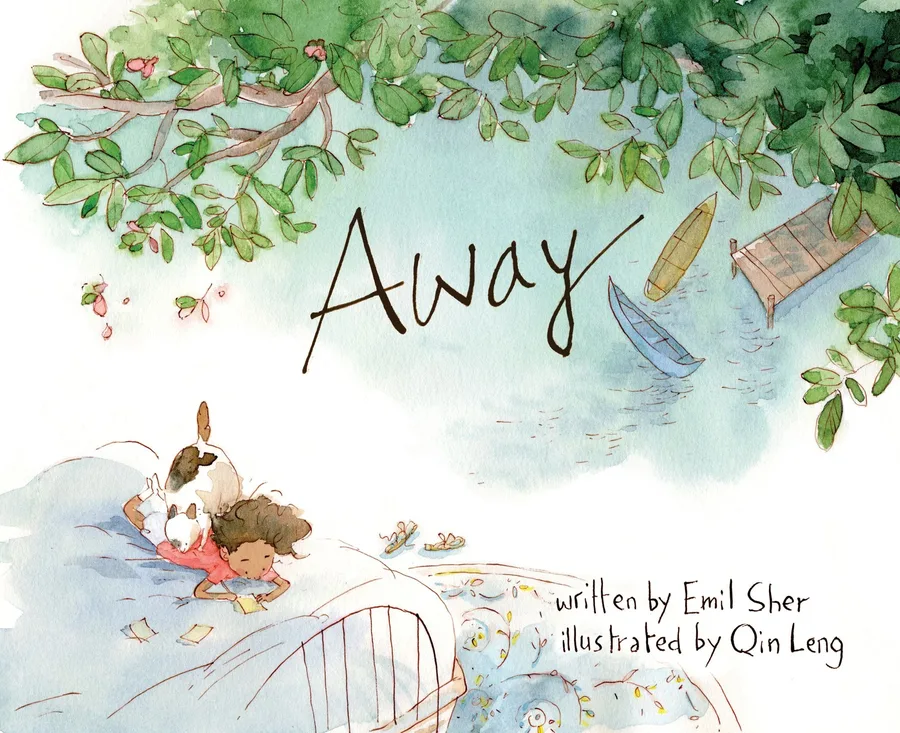 AwayEmil SherSkip does not want to go to sleep-away camp, and in the busy days before she leaves she maintains her stance of resistance through a series of sticky notes left for her mom, even as she resignedly proceeds with getting ready. Meanwhile, Skip’s mom is a gentle, steady force of consistency in notes of her own as she shepherds Skip through the necessary preparations and packing. The notes comprise a spare written narrative that reveals satisfying details of their lives and relationship (“I bought you bug spray. Bring math homework to laundromat. I quiz, you fold.” “Bigfoot last seen under your bed.”), while expressive ink and watercolor illustrations show brown-skinned Skip and her white mom navigating the days leading up to their separation. Skip’s mom reassures Skip that Lester the cat will be alright without her, and that her own memories of sleep-away camp are “warm as biscuits” in spite of an old picture showing her in tears on the day she left. As for Skip, by story’s end she’s ready to admit, in a (sticky note) letter home, that “Next year’s goodbye will be easier!”Picture Books for School-Age ChildrenView book details
 “Fall in Line, Holden!”Daniel W Vandever“As class ends and recess begins, we all fall in line.” All except Holden. The rhyming narrative here creates a sense of rigidity and conformity, and the repetition of the phrase “We all fall in line” has an almost musical feel. The breaks in the rhyming with the repeated command to “Fall in line, Holden!” are not just respite from the structure but a reminder of the risk of breaking free. The rewards are shown in the art, which reveals what Holden’s vivid imagination sees: pictures on the walls become animals breaking free, the janitors a circus act, gym class gladiators in battle, the computer lab a space for exploration … or is that exploration in space? Navajo author/illustrator Vandever’s stylized art shows Holden as a Native child, and for most of the book Holden’s blue shirt is the only color on the black-and-white characters. But Holden’s classmates eventually begin to embrace nonconformity and creativity, as evidenced by the later color added to their clothes and faces. A map of the school at story’s end allows readers to follow Holden’s literal and imaginative journey, while the opening refrain of the story alludes to residential schools Native children were forced to attend for generations, a history further 68 Picture Books for School-Age Children CCBC Choices 2018 examined in the author’s note. But Holden and his classmates are very much contemporary children.Picture Books for School-Age ChildrenView book details
 GumNancy Willard, illustrated by Jeff NewmanOne quarter in the gumball machine at Mr. Wright’s story gets six gumballs. “Lucky people get six gumballs and a plastic four-leaf clover. Very lucky people get six gumballs and a ring. Very, very lucky people get six gumballs and a little silver racer.” Danny and James have been eyeing the little silver racer in the gumball machine for a month. Today’s the day they’ll try to get it. They take turns putting in the quarters they’ve been saving. They get gumballs, and more gumballs. (“I wish I liked gumballs.”) James gets a ring. Then a three-leafed four-leaf clover. And more gumballs. Danny gets a little wheel, which isn’t even a thing. And more gumballs. James’s fifth and final quarter is his lucky Canadian quarter. Should he risk it? The drama builds as the quarters disappear in a delightful story about desire and disappointment and the unexpected—both good and bad—that is wonderfully child-centered. The colored ink illustrations have an old-fashioned sensibility in a story featuring two white boys.Picture Books for School-Age ChildrenView book details
Books for Beginning Readers
6 selections
 King & Kayla and the Case of the Mysterious MouseDori Hillestad Butler, illustrated by Nancy MeyersButler, Dori Hillestad. King & Kayla and the Case of the Secret Code. Illustrated by Nancy Meyers. Peachtree, 2017. 46 pages (978–1–56145–878–3) A charming new series introduces King, a large dog, and Kayla, the brown- skinned girl who is, he explains, “my human.” King narrates these appealing mystery stories. In the Case of the Mysterious Mouse, the question is what happened to King’s ball after Kayla’s friend Jillian accidentally threw it over the fence. It’s nowhere to be found. In the Case of the Secret Code, Kayla and her friend Mason wonder who has left them each a message in code. Kayla approaches each case by making lists of what they know, and what they need to find out. But King knows things he can’t communicate to Kayla, like the fact that the cat with no name says a mouse took his ball (which seems impossible to King), and that the mysterious letters smell like Jillian (who is, indeed, behind them, and explains how to crack their simple code). King is a hilarious narrator, in part because he is telling Kayla (and readers) what he knows, but of course all she’s hears is barking, and in part because he’s just funny (“But then I see Jillian! She is only eleventy ten houses away!”) Pencil and digitally colored illustrations accompany the narrative in each book. We look forward to more King and Kayla!Books for Beginning ReadersView book details
 Block PartyGwendolyn HooksAnother short, accessible chapter book for advanced beginning readers in the Dive into Reading series that features a group of diverse young friends in an urban neighborhood. Here, Indian American Padma worries that her mom’s contribution of lentil soup to the block party potluck will be an offering no one likes. When the big day comes, Padma tries to hide the pot of soup behind other food items. She and her friends Pablo, Henry, Mei, and Lily eat rice and beans, corn on the cob, egg rolls, and fish and chips before Lily discovers the soup, which, it turns out, everyone finds delicious! A recipe for lentil curry soup follows this satisfying story with color illustrations.Books for Beginning ReadersView book details
 Snail & Worm AgainTina KüglerThe dynamic duo of Snail and Worm returns for an encore performance following last year’s publishing debut. Three short stories composed entirely of dialogue and accompanying art are firmly rooted in humor and friendship, as Snail believes he has grown wings, is convinced Lincoln’s image on a penny is actually a reflection of his own, and yearns for a more special shell. In each case Worm is the perfect foil for Snail’s silliness. Suited to beginning readers as well as picture book audiences, this irrepressible pair of invertebrates offers light- hearted entertainment.Books for Beginning ReadersView book details
 I See a CatPaul MeiselA round-eyed dog notes each animal he sees out the window or inside his house with a simple declarative statement on each double-page spread of this picture book designed for beginning readers. “I see a cat … bird … fly … bee … ” The dog is often measured, at times clearly bored, all of this conveyed in the marvelous watercolor, acrylic, and pencil illustrations that emphasize the dog’s expressive eyes and body. The first time the dog sees a squirrel, after lazily observing a fly in the room, there is obvious excitement. Then the dog grows bored again, and can barely lift its head to look outside at the bee flying by. But with a turn of the page a squirrel appears again, and the dog is full of hilarious frenzy. Finally, a brown-skinned boy appears—more excitement!— and together they race through the yard. There is great accomplishment in reading the words, and great delight in reading the pictures.Books for Beginning ReadersLexile Text Measure BR50LATOS Book Level 1View book details
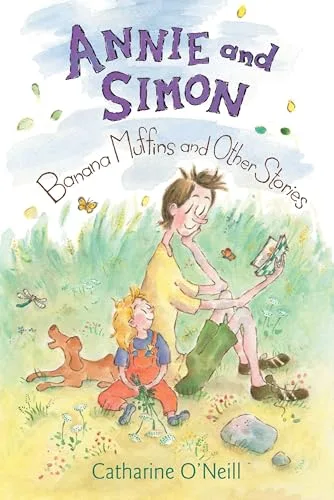 Annie and Simon: Banana Muffins and Other StoriesCatharine O’NeillSiblings Annie and Simon are back in another terrific book for advanced beginning readers. Three humorous stories showcase their relationship. In the first, teenage Simon gets unsolicited help making banana muffins from preschool-age Annie, who is determined that chocolate chips will be included whether or not they’re part of the recipe. In the second Annie helps Simon take care of baby Theo from next door (“‘Simon, jump around and do your silly dance. That will make Theo stop crying.’ ‘Oh, for heaven’s sake,’ said Simon, but he went ahead and did his silly dance.”) In the third, Annie rediscovers 70 Books for Beginning Readers CCBC Choices 2018 her “bobo,” her pacifier, and insists on using it, to Simon’s annoyance, but it comes in surprisingly handy when they go in search of butterflies and find a porcupine instead. Spot watercolor illustrations add to the charm of this volume.Books for Beginning ReadersView book details
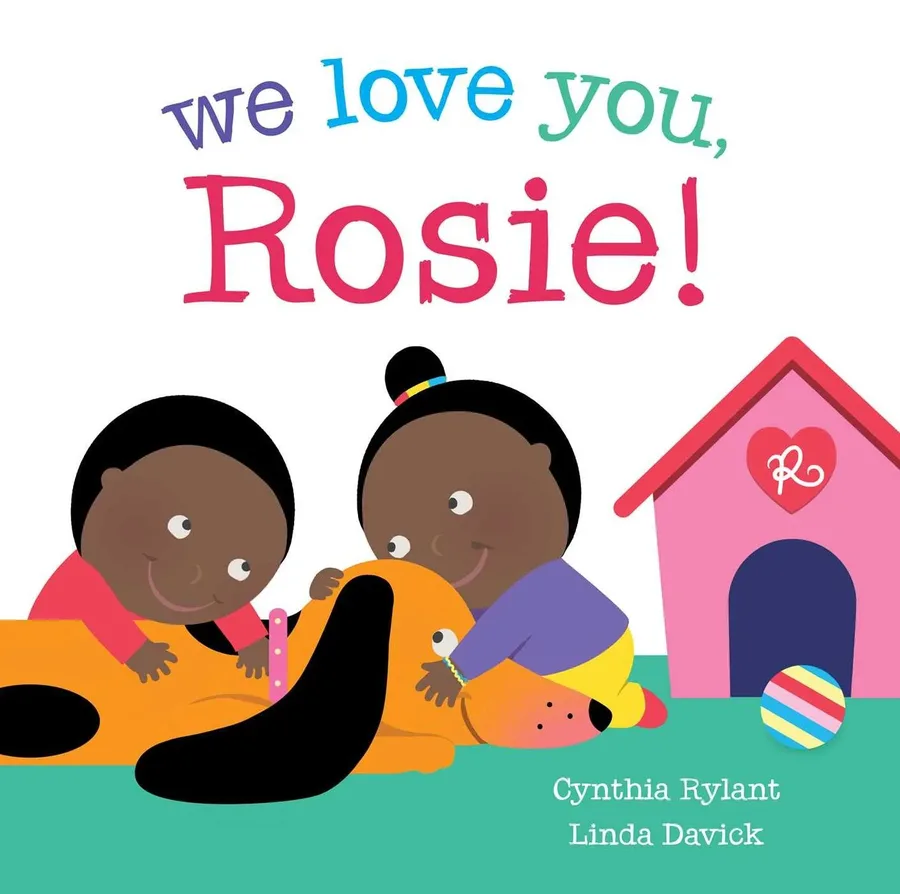 We Love You, Rosie!Cynthia Rylant, illustrated by Linda DavickSix short chapters in a picture book format recount the doings of Rosie the dog, as reported by the two round-headed African American children in the family with whom she lives. Rylant has shaped the story using the basics of typical dog behavior—playing and sleeping, going up and down, in and out, here and there, etc. The sentences are short, the chapters are episodic, and the picture clues and easy vocabulary will make this perfect for beginning readers, but also fun for reading aloud.Books for Beginning ReadersView book details
Books for Newly Independent Readers
2 selections
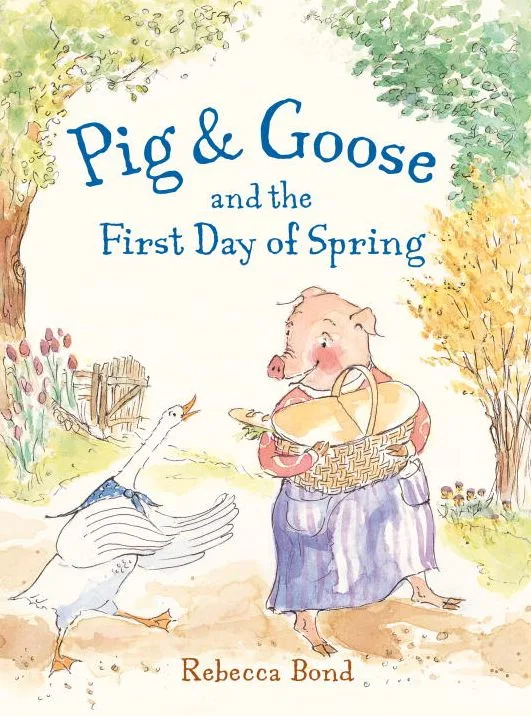 Pig & Goose and the First Day of SpringRebecca BondThree chapters outline the meeting, bonding, and destined-to-endure friendship between Pig and Goose. Pig’s upbeat personality imbues all their endeavors, from trying to fly (a failure, but worthy of laughing that includes snorting and honking), to picnicking by the pond, to a glorious First-Day- of-Spring Party, with an appreciation of life’s small pleasures. By the time the party dishes are dried, Goose fully realizes the value of his new friendship with Pig and tells her so: “‘Pig,’ whispered Goose, ‘you are wonderful.’ ‘Really?’ Pig said, blushing. ‘Me?’ ‘Yes,’ said Goose, ‘you.’” That open acknowledgement of a friend’s quality, especially one who never misses an opportunity to boost those around her, is a lovely close to a delightful story.Books for Newly Independent ReadersView book details
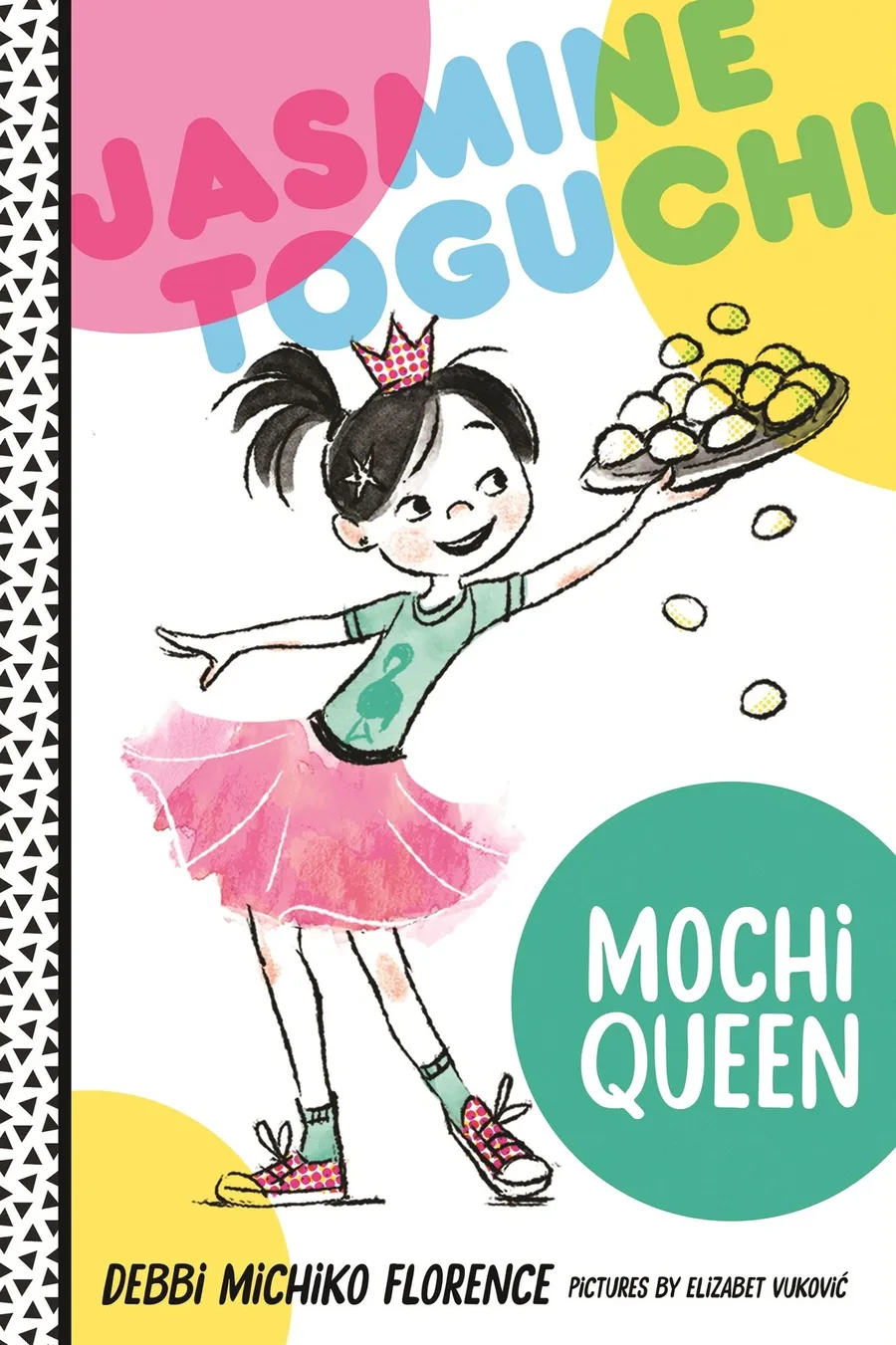 Jasmine Toguchi, Mochi QueenDebbi Michiko Florence, illustrated by Elizabet VukovićFlorence, Debbi Michiko. Jasmine Toguchi, Super Sleuth. Illustrated by Elizabet Vuković. Farrar Straus Giroux, 2017. 108 pages (978–0–374–30413–3) Eight-year-old Japanese American Jasmine Toguchi makes her debut in two engaging and lively books for newly independent readers. In Jasmine Toguchi, Mochi Queen, Jasmine is determined to help make mochi for the New Year, even though she’s only 8 and family tradition says girls start when they’re 10. Tradition also says girls and women form the rice into balls after it’s been pounded by the men and boys. When she can’t convince her mom or Obaachan to let her help form the mochi, Jasmine appeals to her dad to help pound it, only to discover it’s a lot harder than she realized. After everything will she fail? In Jasmine Toguchi, Super Sleuth, Jasmine is excited to have her best friend, Lizzie, join her family’s Girls’ Day celebration, although it can’t make up for the fact that her big sister, Sophie, at 10, doesn’t want to participate. When Jasmine and Lizzie have a fight, Jasmine uses her sleuthing skills to figure out how to make it right, and in the process realizes Sophie isn’t as ready to let go of observing Girls’ Day as she pretends. Jasmine’s terrific first-person voice is so believably 8, and so is her behavior. Her reactions to others are rooted in her emotions of the moment, leaving room for her to be surprised when people behave in unexpected ways, and room for her to consider what that means. Both books feature occasional black-and-white spot illustrations.Books for Newly Independent ReadersView book details
Fiction for Children
27 selections
 The War I Finally WonKimberly Brubaker BradleyAda is both annoyed by and envious of the emotional ease with which her little brother, Jamie, seems to have adapted to their new life with Susan, their guardian, in this sequel to The War That Saved My Life. Ada loves Susan, but still harbors anger over years of her own mother’s neglect and cruelty. The death of their mother in the London Blitz, which opened the door to Ada finally having surgery to repair her club foot, makes for complicated, messy feelings. With Susan’s house in the village where Ada and Jamie were evacuated after leaving London also damaged by German bombs, the three of them move into a cottage on the Thornton estate. They’re soon joined by teenage Ruth, a German Jewish refugee whom Susan has been asked to tutor in math. Mrs. Thornton is furious: Jewish or not, Ruth is German and therefore the enemy. When the British military takes over the Thornton house, tensions rise even higher as Mrs. Thornton, too, moves into the cottage. Ada finds respite riding Butter, her beloved pony; in a burgeoning friendship with Ruth, dealing with her own trauma; and with her best friend, Maggie. Wonderful character development again distinguishes a book exploring grief and anger, loss and hope, love and family.Fiction for ChildrenLexile Text Measure HL520LATOS Book Level 3.7View book details
 The Epic Fail of Arturo ZamoraPablo CartayaArturo lives in an apartment complex in Miami along with most of the rest of his extended, closeknit, sometimes chaotic Cuban American family. At the center of their lives are Abuela and La Cocina de la Isla, the restaurant she began with Arturo’s late grandfather. With Abuela’s health in question, no one wants to tell her about the threat to the proposed expansion of the restaurant into the empty lot next door: a new, buffoonish developer in town has plans for an upscale high-rise. At the heart of this lively story are important questions: How do communities shape and value individuals? How do individuals shape communities? How do differing ideas of what constitutes “progress,” including gentrification, impact community, and the family that community can be? They are explored in a blithe narrative featuring a slightly lovesick middle schooler (Arturo is trying to figure out if visiting Carmen likes him the same way he likes her) trying to help his family convince the city council to vote in favor of their restaurant’s proposal. Arturo finds inspiration for both his ideals and love in the poetry of Jose Martí, the Cuban poet and activist whom, he learns, his late grandfather loved (and Carmen does, too).Fiction for ChildrenLexile Text Measure 750LATOS Book Level 5View book details
 CycloneDoreen CroninNora, 12, is small for her age but finally tall enough to ride the Cyclone roller coaster at Coney Island while visiting her cousin Riley. Riley goes on the ride with Nora and then collapses when they get off: an undiagnosed medical CCBC Choices 2018 Fiction for Children 73 condition has resulted in a stroke. Riley ends up in the PICU (pediatric intensive care unit) while Nora, at first scared to see Riley, is spending long hours in the hospital waiting room. Monica, a hospital counselor, and Jack, an experienced kid visitor because of his younger brother’s illness, both help Riley navigate the frightening uncertainty, but she can’t bring herself to tell anyone how guilty she feels. It turns out Riley was terrified to go on the roller coaster so Nora blackmailed her, threatening to tell Riley’s mom about an older guy Riley’s been texting. Nora’s engaging, honest voice and compelling extended family dynamics (achingly real and recognizable, and sometimes funny) propel a story that also captures how strangers step up at times of need. Riley’s slow progress by story’s end is all the more satisfying because it shows how the stroke, for all it has changed what Riley is able to do, especially with regard to speaking, has not changed who she is.Fiction for ChildrenLexile Text Measure 600LATOS Book Level 4.2View book details
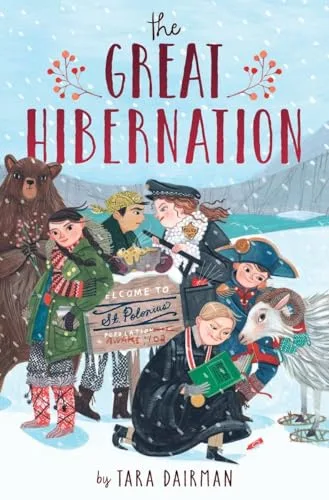 The Great HibernationTara Dairman, illustrated by Rebecca GreenDuring St. Polonius-on-the-Fjord’s annual Founder’s Day event, everyone over 12 years, 4 months, 6 days old must eat a slice of bear liver in honor of the North Sea village’s long-ago founders, who survived a cold winter after eating bear liver and falling asleep until spring. Twelve-year-old Jean, participating for the first time, spits her piece out when no one is looking. Hours later, every adult and teenager in town falls into a sleep from which no one can wake them—not a typical Founder’s Day occurrence despite the long-ago miracle. The town charter says children must do their parents’ jobs if the adults are incapacitated, so the kids step up. Jean is convinced the mayor’s son, Magnus, is up to no good when he announces plans to carry out the election to decide whether the town will build a thistleberry processing plant—something sure to change St. Polonius forever. Along with her younger brother, Micah, best friend Katrin (giving cutting edge haircuts at her mom’s salon), 8-year-old Axel (operating his dad’s snowplow), and Isara, who’s keeping everyone fed at his immigrant parents’ Thai restaurant, she investigates. Magnus, in turn, passes restrictive laws and deputizes other kids to keep Jean and her friends in check. The silliness is not without substance in this novel that takes political machinations to a not-unrecognizable extreme, but it’s the story’s over-the-top charm that wins the day.Fiction for ChildrenView book details
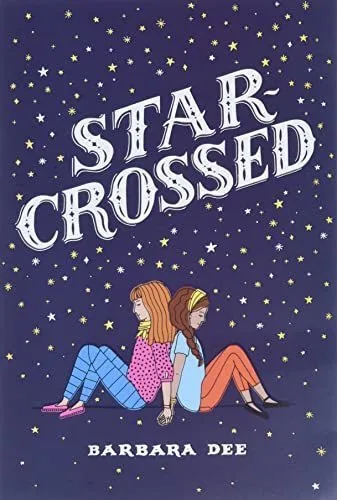 Star-CrossedBarbara DeeThere’s drama on and off the stage in this middle school romance in which shy eighth-grader Mattie decides to try out for Romeo and Juliet. She’s thrilled to be cast as Paris. Although it’s a small part, it allows her to swoon over her secret crush, Gemma, who is playing Juliet. At 12, Mattie is just beginning to figure out her own sexuality and Barbara Dee perfectly captures the awkward passions of a first crush, made all the more challenging by Mattie’s uncertainty about how any advances she might make will be received, not just by Gemma but by all the other kids at school. The director, Mr. Torres, notices Mattie has an affinity for Shakespeare and asks her to run lines with dreamy Liam, the 74 Fiction for Children CCBC Choices 2018 reluctant Romeo, who needs extra help. When Liam suddenly drops out of the play due to a hockey injury, Mattie is tapped to take his place since she already knows the part so well. Now she gets a rare chance to act on her feelings, at least on stage, playing Romeo to Gemma’s Juliet. The chance to kiss Gemma/Juliet? Excruciatingly thrilling, and it fills Mattie with so much anxiety that it’s all she can do to remember her lines. And will she ever be able to tell Gemma how she really feels? It all adds up to a surprisingly tender coming out story with subtle parallels to the original star-crossed lovers.Fiction for ChildrenLexile Text Measure 640LATOS Book Level 4.3View book details
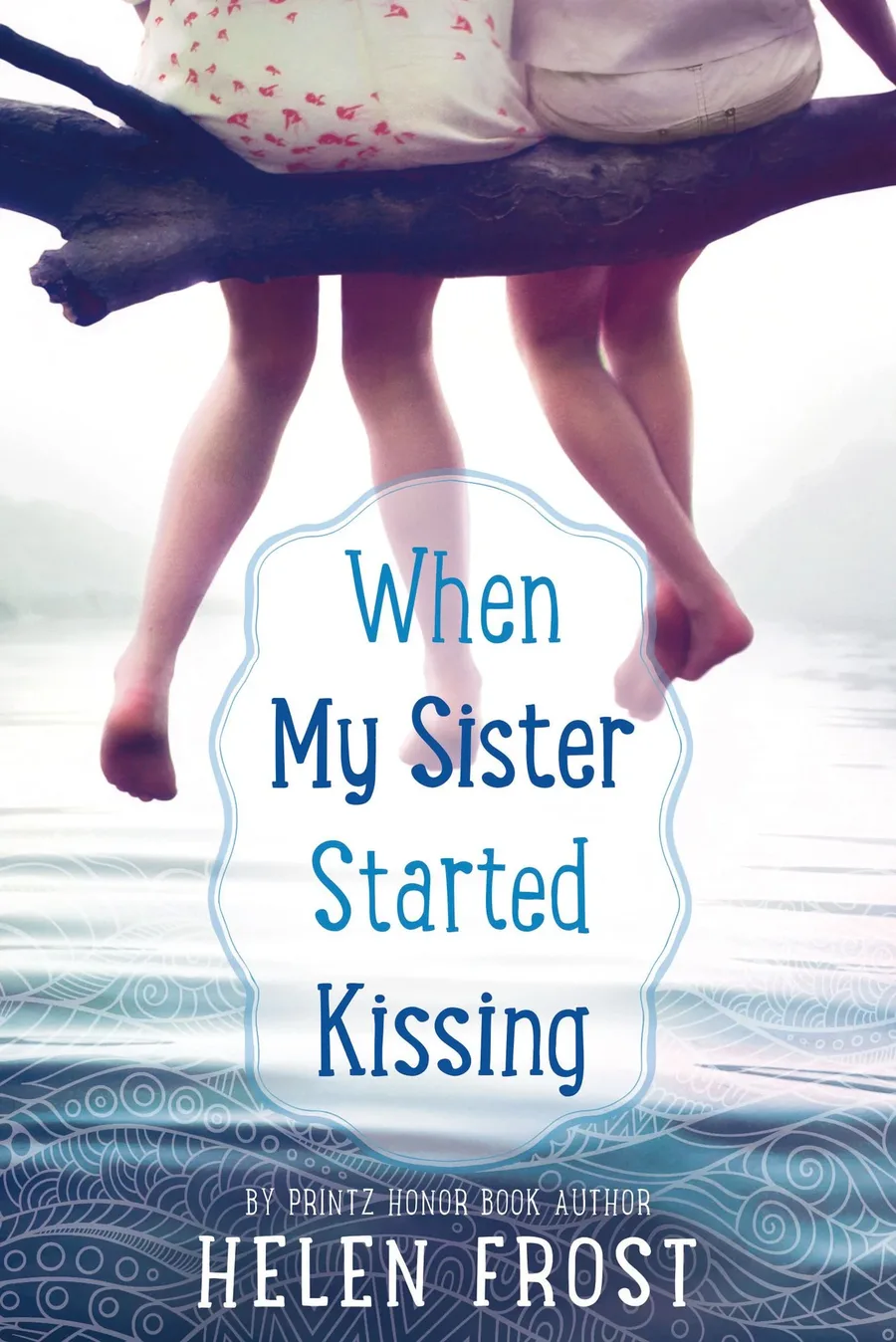 When My Sister Started KissingHelen FrostThis novel in verse alternates between the voices of two sisters, 11-year-old Claire and 13-year-old Abigail, with occasional contributions in the voice of the lake where they are spending the summer with their dad and pregnant stepmother. Abigail (who now asks to be called “Abi”) is diving into adolescence, and is struggling between her feelings for two boys: TJ, a longtime summer friend whom she kissed at the end of the previous summer, and Brock, this year’s hot new guy. Claire is wary of the new Abi, and resents being asked to cover for her when Abi breaks their father’s rules. Claire also misses the way things were when it was just the three of them, before Pam, her stepmother, came into the picture. The pending arrival of a baby brother is yet another transition in the family structure. Frost’s deft skill with poetic form (including quatrains, kayak poems, free-verse, and acrostics) keeps the focus on the relationship between the sisters, as well as providing insight into the thoughts they keep private. Although their history includes a tragedy—their mother was struck and killed by lightning many years earlier—this is a summer without melodrama, but rife with the usual challenges of adolescence, family, friends, and change.Fiction for ChildrenView book details
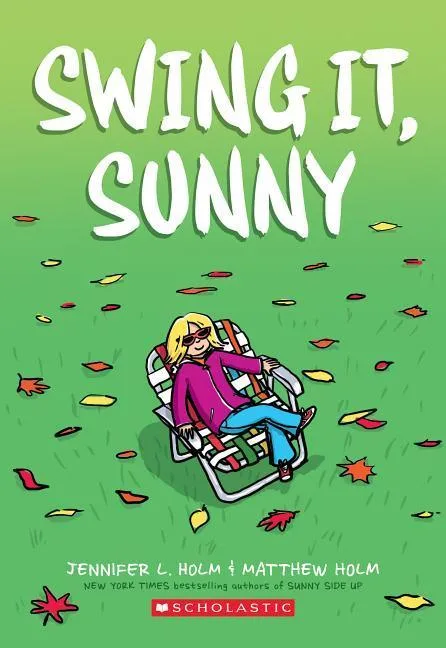 Swing It, SunnyJennifer L. Holm, Matthew HolmTen-year-old Sunny is finding it hard to get used to her big brother Dale’s absence—he’s been sent to military school after troubling behavior with alcohol and drugs. Sunny is excited for Dale’s first visit home, at Thanksgiving, but he’s bitter and withdrawn the entire time. When he’s home for Christmas, Sunny gives him a pet rock as a gift (it’s the 1970s—they’re all the rage). He’s underwhelmed. Optimistic Sunny tucks the rock in his luggage when he’s about to leave it behind, but she’s also hurt and confused. Sunny’s new next- door neighbor is a teenage girl who does swing flags in color guard. Sunny is an eager student when the girl offers to teach her. It’s not only fun but provides a welcome distraction from life at home. A visit from Gramps, who lives in Florida, gives Sunny the chance to finally talk with someone about Dale, something her parents have found it hard to do, although her mom is trying. There is hope that the big brother Sunny has always adored is finding his way by story’s end in this honest and ultimately upbeat graphic novel that continues the story begun in Sunny Side Up.Fiction for ChildrenLexile Text Measure GN480LATOS Book Level 3.2View book details
 All’s Faire in Middle SchoolVictoria JamiesonImogene has been home-schooled her entire life and has also spent eight weeks every year with her family at the Renaissance Faire in her Florida community. Now she’s finally getting the chance to play a part in the Faire as a squire to her dad’s villainous knight. Imogene is also starting public school—her own choice—for the first time. Imogene’s trials and tribulations as she navigates middle school are framed in terms of a Medieval drama at the start of every chapter of this graphic novel. (“Our heroine’s journey through the halls of middle school winds through unknown lands and uncharted territories.”) The false face and slings and arrows of one popular girl in particular are a challenge, but not as painful as discovering she, herself, is not above treachery as she tries to position herself in the social strata. Her behavior isn’t very noble at home, either. Luckily her family is marvelously grounded, not to mention wonderfully realistic. Life isn’t all Faires and fun, after all: Her dad sells pools and spas as his day job while everyone pitches in at home, whether helping make crafts for the shop her mom runs at the Faire, or watching her little brother. Imogene’s dad is brown-skinned, her mom white, in this entertaining and highly relatable quest in which Imogene emerges the hero of her own story—what every kid can be.Fiction for ChildrenView book details
 Hello, UniverseErin Entrada KellyShy Virgil feels like a failure for not finding the courage to say hello to Valencia before the end of the school year. But his friend Kaori, who believes in fate and fortunes and is an aspiring astrologer, is sure it’s fated for Virgil and Valencia to be friends, so as summer starts she’s offering him counsel. On his way to Kaori’s one day, Virgil encounters bullying Chet in the woods. True to form, Chet steals Virgil’s backpack. Then he drops it down an old well and takes off. Inside the backpack, nestled in fleece, is Virgil’s beloved guinea pig. Chet was unaware, but would it have mattered? Virgil attempts a rescue on his own but gets stuck at the bottom of the well. Meanwhile, Valencia is out exploring the woods nearby, on her way to her own appointment with Kaori, but she can’t hear Virgil calling out from the bottom of the well because she is deaf. The strands of fate and friendship intertwine in surprising ways in this riveting story alternating among the perspectives of Virgil, Kaori, Valencia (all wonderfully developed, singular characters), and Chet. Filipino American Virgil, who feels overshadowed even in his own boisterous family, finds that his grandmother’s (Lola) stories help sustain him in the well, and maybe, just maybe, their magic extends to real life. If friendship is magic, they surely do.Fiction for ChildrenLexile Text Measure 690LATOS Book Level 4.7View book details
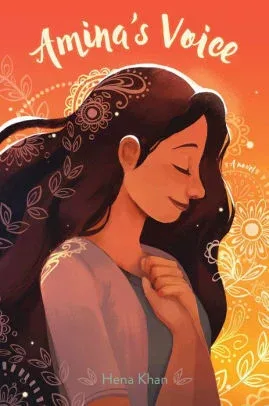 Amina’s VoiceHena KhanAmina is unhappy that her best friend, Soojin, has started inviting Emily, a classmate neither of them has ever liked, to spend time with them. At home, Amina’s family is getting ready for the visit of Thaya Jaan, her father’s older brother, from Pakistan. To impress Thaya Jaan, and support their Imam, Amina’s parents insist Amina and her older brother, Mustafa, complete in 76 Fiction for Children CCBC Choices 2018 their mosque’s upcoming Quran recitation competition. Mustafa, who wants his parents to let him play high school basketball, agrees willingly. But Amina suffers from serious stage fright—it’s why she never tries out for a solo in her middle school choir, despite her talent and love of singing. A swiftly paced novel showing a Muslim family and community as part of the fabric of American life also includes a hateful attack when vandals break into the mosque. No one is hurt, but the damage is great and the fear and sadness palpable. So, too, is the caring. People both within and outside Amina’s faith community offer solace, support, and help repairing the damage. This welcome story has finely developed primary and secondary characters, from Amina, Soojin, and Emily (whom Amina comes to appreciate) to Amina’s family members, including her at-first intimidating uncle, who proves to have both conservative ideas and an open mind. The novel is set in the Milwaukee-area community of Greendale.Fiction for ChildrenLexile Text Measure 800LATOS Book Level 5View book details
 Step Up to the Plate, Maria SinghUma KrishnaswamiMaria loves softball and is thrilled to discover a woman teacher at her small- town school in California is starting a team for girls. The only problem: She’s not sure her Sikh father will let her join. When he reluctantly agrees, her next goal is to convince him to let her wear shorts rather than a dress when she plays. As the girls begin to practice, they are sometimes jeered by boys in town, and sometimes at odds with one another, with coveted positions and racial tensions both coming into play. Maria and several other girls have fathers from India who came to the United States via Mexico because of U.S. anti-Indian immigrant laws. Many of the men married women who are Mexican American, like Maria’s mother. Many others in town, including the man from whom Maria’s father rents the land he farms and whose daughter is her rival on the team, are white. The same anti-immigrant laws also prevent Maria’s father from purchasing the land he’s been farming for years when the owner decides to sell. A story set during World War II deftly balances substantial information with an engaging character and storyline. Less lighthearted than the cover suggests but still hopeful, this novel showcases family, culture, community, and even politics, from the keen interest of Maria’s father to the end of British rule in India to the impact of the war on families in town.Fiction for ChildrenLexile Text Measure 680LATOS Book Level 4.4View book details
 Mary Anning’s CuriosityMonica KullingThis fictionalized account of the childhood of Mary Anning, who at age 12 in 1811 discovered the first icthyosaurus fossil in the world, is written with child- appeal at the forefront. Mary, growing up in Lyme Regis, England, early in the 19th century, is from a poor family. Her father is a carpenter by trade but also hunts fossils and Mary loves going with him, despite her mother’s disapproval. Ma wants Mary to get an education, not grubby on the cliffs and beach, but the sale of ammonite and other fossils helps support their family. When Pa dies, Mary’s passion and drive and grief all find release in the search for new specimens, which is how she and her brother spot the giant eye that leads to the amazing discovery of a great creature, one Pa always suspected was hidden CCBC Choices 2018 Fiction for Children 77 somewhere in the rock. Mary emerges as a singular child full of determination in a story that features occasional black-and-white illustrations reminiscent of Lois Lenski’s cozy images. A short, accessible chapter book concludes with more information on Mary’s life and work, as well as the discovery of fossils and the deepening understanding they helped scientists develop about the history of the earth.Fiction for ChildrenLexile Text Measure 840LATOS Book Level 5.2View book details
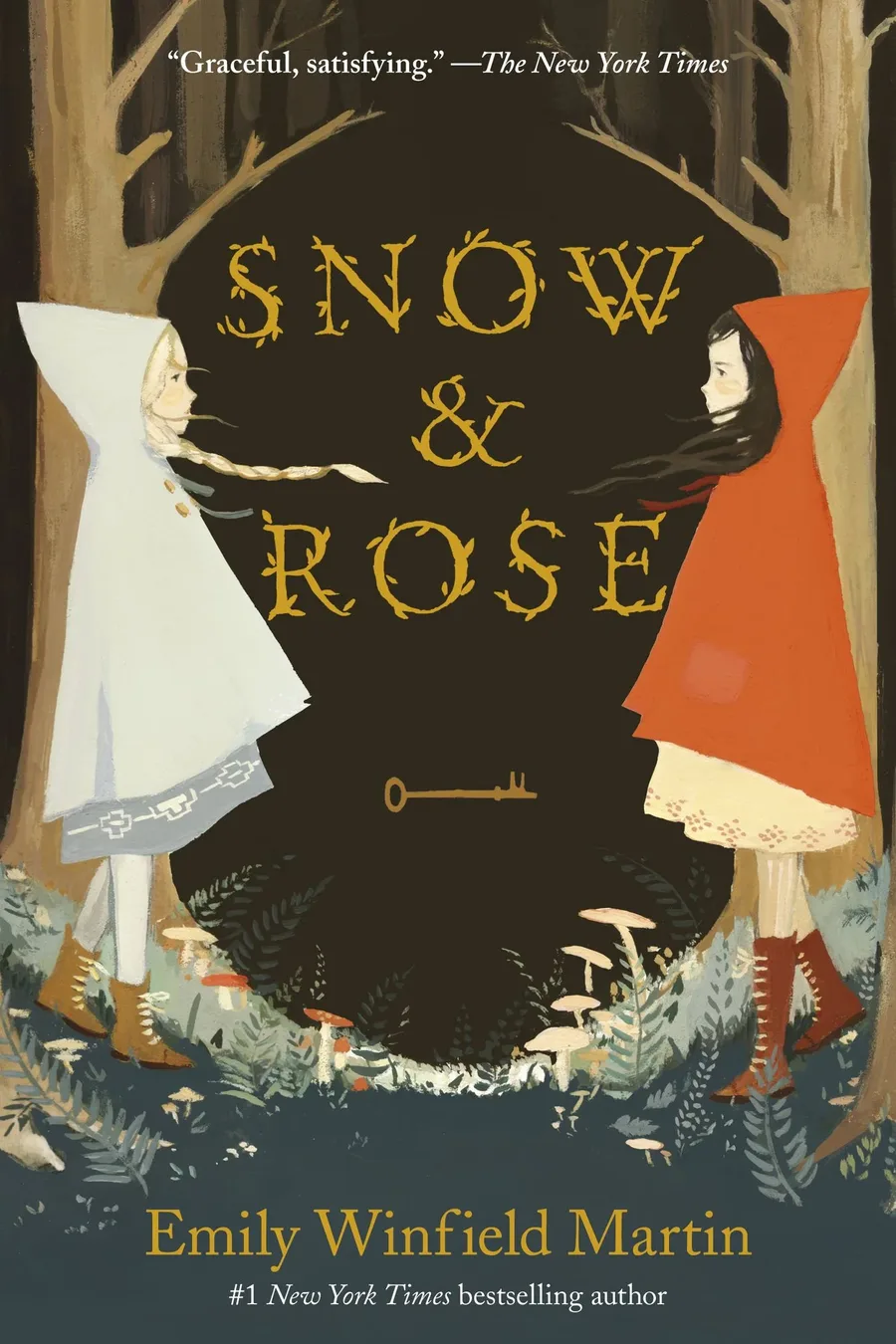 Snow & RoseEmily Winfield MartinBeautiful bookmaking including decorative elements and occasional full-page, full-color illustrations accompanies a fresh story spun from Grimms’ “Snow White and Rose Red.” The two sisters have lived with their mother in a small cottage since their nobleman father disappeared. Snow has never given up hope that their father will return. Intensely spirited, she’s sometimes volatile in her grief. Calmer Rose takes comfort in the natural world. On forays into the woods the sisters meet Ivo, a boy who lives underground with his family of mushroom foragers; discover a library of stories in the form of random objects; and meet and rescue a little man who is caught in the beak of a gigantic crow, and later in the mouth of a massive fish. A huntsman saves the sisters from a huge wolf, but they are sad the wolf was killed. So when they find a giant bear in a trap, they free him despite their fear. These oversized animals are inexplicable, an ominous plague in the woods. But when the bear, staggering from its trap injuries, shows up at their door, the girls and their mother take him in and care for him, keeping him a secret from the hunter. The original turns of the story are marvelous as the episodic chapters merge into a cohesive whole, one that makes for a more-than-satisfying fairy tale and also a moving exploration of grief and loss, fear and hope.Fiction for ChildrenView book details
 RollDarcy MillerRen’s family recently moved to his late grandmother’s house outside the small Minnesota community where he’s grown up. He misses spending time every day with his best friend, Aiden, who comes over sometimes but also seems to be having a pretty good time in town without him. Ren has made his athletic dad happy by agreeing to go out for track, but a summer spent trying to run has only convinced him of how much he hates it. In the final weeks of summer break, Ren meets Sutton, a new neighbor down the road. She and her family recently moved from the D.C. area, although her dad is currently at Mayo Clinic recovering from an accident. Sutton raises Birmingham Roller pigeons. Ren knows absolutely nothing about the birds when he and Sutton meet, but he’s intrigued. Soon Sutton is teaching him all about them. In some ways, he feels closer to her than to Aiden, whom he’s known since kindergarten. And it hurts. An understated story about new and changing friendships, and families, is written with grace and fine touches of humor as quiet Ren learns how to speak up for himself, and also for friendship. Terrific characterizations are one of the things that make this story stand out.Fiction for ChildrenView book details
 The Stars Beneath Our FeetDavid Barclay MooreOn the edge of young adulthood, Lolly has the support of his hardworking, no nonsense mom and her girlfriend; his dad, who isn’t a daily presence in his life but whose love is never in doubt; staff at the community center; and his best friend, Vega. He’s also keenly aware that the freedom with which he moved through Harlem when he was young has changed now that he’s 12; now that he’s eyed by various crews of older boys and young men as being either with them or against them. The threat feels all the more real since his big brother Jermaine was recently shot and killed, and Lolly’s grief is complicated by the fact his brother, so often his protector, was mad at him for refusing to get involved in Jermaine’s dubious business. But Lolly’s sense of himself and the world and possibilities begins expanding after receiving an architecture book as a gift. Inspired to begin constructing an elaborate city out of Lego bricks, his efforts lead to a surprising new friendship with Rose, a girl most kids shun, who is navigating struggles of her own, and to exploring the real places pictured in the book. Lolly and his family, friends, and neighbors are vivid and alive in a story featuring exceptional characterizations and dialogue. The complexities of family and friendships come into full relief in a story celebrating the power of creativity and community in a child’s life.Fiction for ChildrenLexile Text Measure 650LATOS Book Level 4.2View book details
 Have Sword, Will TravelGarth Nix, Sean WilliamsBest friends Eleanor and Odo live in a small village near a river that has recently run almost dry. Eleanor, who longs to be a knight like her late mother, is dismayed when it’s Odo who finds a magical sword in the muck of the riverbed. The sword, which announces itself as “Hildebrand Shining Foebiter and Scourge of … something or other,” doesn’t fully remember how it ended up there, or much about its past for that matter, but it does know its purpose. Since Odo awakened it when he accidentally dripped blood on the steel, the sword promptly knights Odo, while Eleanor must settle for being a squire. Odo, a cautious homebody, is a reluctant adventurer while Eleanor longs for heroics and eagerly sets out with Odo and Hildebrande to determine what’s blocking the river up in the mountains. They suspect it’s the great dragon, Quenwulf, which means a likely battle in order for the waters to flow freely again. An adventure full of action and humor, intrigue, and silliness features three engaging main characters (not the least of which is the sword) on a life- changing (sword-changing?) journey for them all.Fiction for ChildrenView book details
 Flying Lessons & Other StoriesEllen Oh“Blame my Uncle Kenneth. Everybody else does.” (Tim Tingle) “It’s a lot of pressure to pick a good elf name.” (Tim Federle) “Nani wears a fur coat to the beach.” (Soman Chainani) Whether starting with irresistible opening lines like these, or easing more quietly into the lives of their characters, the 10 short stories in this anthology are wonderfully crafted slices of life. Whether funny or poignant, painful or hopeful (and most are a combination), these stories featuring mostly contemporary older children and teens are widely CCBC Choices 2018 Fiction for Children 79 varied in style and setting. The unifying theme is this: Everyone’s voice matters, everyone has a story. What the stories also have in common are vividly realized characters whose lives feel genuine and are exceptional to the extent that every child and young adult is exceptional—singular and needing to be seen. Inclusion itself should not be exceptional, however. It should be deep and genuine and meaningful as it is within and across these pages featuring diverse writers—something foundational to the vision of this work that models how any anthology, regardless of theme, should be conceived. The result is a collection of stories that will spark recognition, and connection, and enjoyment for all readers in a multitude of ways. Additional contributors include Kwame Alexander, Kelly J. Baptist, Matt de la Peña, Grace Lin, Meg Medina, Walter Dean Myers, and Jacqueline Woodson.Fiction for ChildrenView book details
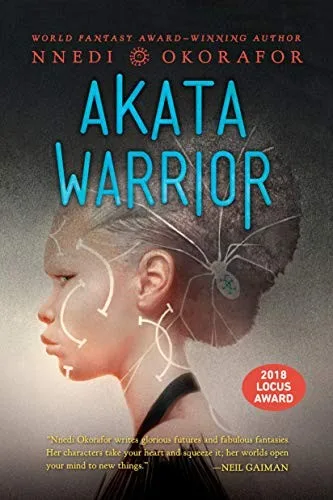 Akata WarriorNnedi OkoraforSunny Nwazue, 13, is continuing her training as a member of the secret Leopard Society while also still living with her family among the Lambs— nonmagical humans—in her Nigerian community. Sunny’s nightmares tell her the world is at risk, and what she sees on the news only reinforces her belief that the environmental disasters threatening Nigeria and the world are the work of the goddess Ekwensu. Ekwensu knows of Sunny, too, and in an attack separates Sunny from her spirit face, Anyanwu. Sunny is left sure she’s powerless to work juju; even worse, she’s left uncertain of who she is. Sunny must adapt to these and other unexpected events, including a threat in the human world to her brother that leads her to violate Leopard Society rules, before she and her friends Chichi, Orlu, and Sasha set off on a journey to find the place where Sunny can confront Ekwensu. Sunny, who is albino, may hold the fate of the world in her hands, but she also plays soccer, and loves (and sometimes feels at odds with) her family and friends. She is a young woman constantly navigating boundaries within and between the magic and nonmagic world in a tightly woven, complex, satisfying fantasy follow-up to Akata Witch that vividly conveys many multicultural dimensions of Nigerian society as well as the world of magic Sunny also inhabits.Fiction for ChildrenView book details
 The First Rule of PunkCelia C. PérezMalú and her mom have moved from New York to Chicago for her mom’s two- year visiting professorship. Mixed-race (Mexican/white) Malú, whose parents are amicably divorced, is unhappy about leaving her dad, who nurtured her interest in punk. She also feels like her mom, whom she calls SuperMexican, wants her to be a perfect señorita, which couldn’t be further from Malú’s understanding of herself (or, it turns out, the truth). Expressing her punk identity with heavy make-up the first day at José Guadalupe Posada Middle School doesn’t just raise her mom’s eyebrows, however: Malú’s in violation of school rules. The mom of Malú’s new friend, Joe, introduces Malú to Mexican American punk musicians—something Malú didn’t know existed— and other Mexican singers. Malú recruits Joe and two other kids to form a punk band and try out for the school talent show. When the principal rejects 80 Fiction for Children CCBC Choices 2018 their act, Malú and her bandmates organize an alternate talent show in the spirt of their school’s namesake while reworking a classic Mexican song into a punk performance that brings together the parts of Malú’s identity she once thought were disparate. Malú’s zines exploring aspects of her personal history and culture add a rich visual dimension to a spirited, engaging story about a creative, irrepressible girl navigating uncertainties and making new connections and discoveries. (Ages 9–12).Fiction for ChildrenLexile Text Measure 670LATOS Book Level 4.5View book details
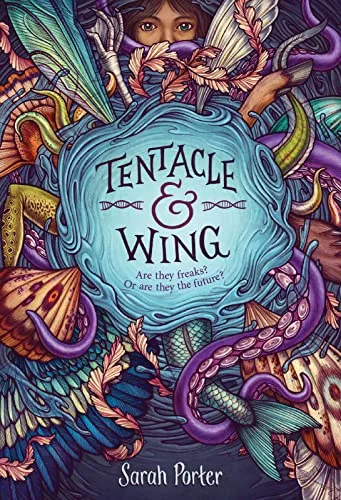 Tentacle & WingSarah PorterAda is a kime, short for chimera—a child with animal genes and traits. So far kimes have only been born on Long Island, where a former conference and retreat center has been converted to a place kime children can grow up away from the general population, since they are generally feared and despised. Twelve-year-old Ada’s particular animal trait is exceptional eyesight—she sees far more of the spectrum than human eyes can. There is no obvious physical manifestation and her scientist father has helped keep her secret. Now mandatory genetic testing at school has given her away. Taken to the center, which is both refuge and prison, Ada is still reeling from what feels like her father’s betrayal—he didn’t fight against the authorities taking her—when she notices a strange blue light that no one else can see. It appears to be an intelligent being trying to communicate with her. As she investigates, she’s also navigating relationships among other kime children, whose various animal traits are sometimes astonishing, and who each bear the scars of society and family rejection differently. When the light leads Ada to a disturbing discovery, she doesn’t know whom among them she can trust. Ada’s constant state of uncertainty makes for a tense and satisfying story exploring ethics, prejudice, social justice, and survival of humanity and Earth itself.Fiction for ChildrenView book details
 The Book of Dust: La Belle SauvagePhilip PullmanLyra, the heroine of Pullman’s “His Dark Materials” series, is a mere baby in this prequel to the epic fantasy trilogy. Eleven-year-old Malcolm, living near Oxford in his family’s tavern, encounters infant Lyra when she is taken in for care by the nuns of a nearby priory. At first intrigued by the little girl, Malcolm’s initial interest deepens into a strong desire to protect her from threats, including the Consistorial Court of Discipline (CCD) agents and sinister Gerard Bonneville and his hyena daemon. Enlisted to help the secret Oakley Street resistance group by Oxford researcher Hannah Relf, Malcolm is drawn into the world of alethiometers, Lord Asriel, witch clans, and intrigue. A devastating storm leads to a harrowing trip by canoe through the flooded countryside and streets of Oxford as Malcolm and Alice, a teenager who works in the tavern, try to deliver Lyra to safety while being pursued by both Bonneville and the CCD. Pullman introduces compelling new characters into his complex world, and raises probing questions of good and evil within a suspenseful plot. While it works as a stand-alone, this novel will be best appreciated by those who have already been indoctrinated into the world of daemons and Dust.Fiction for ChildrenView book details
 PatinaJason ReynoldsPatina lives with her white aunt and African American uncle, who’ve adopted Patina and her younger sister. Patina’s dad died when she was younger, and her mom’s health has made it impossible for her to care for Patina and her sister, although she’s still very much a part of their lives. Patina has recently started attending a private school, and feels no connection to the other girls in her class, who are all white and upper class. She’s much more comfortable with the three other African American girls on her 4 x 800 relay track team, but both social groups require careful navigation and complex cultural competence. Patina slowly gets to know one of her classmates while working on a school project with three other girls. Finding a way for their group to work together both parallels and contrasts the teamwork she is learning on the track team, where she’s discovering that there is a middle ground between holding out and giving in that can be a sweet spot of synchronicity. There’s a great deal of depth and heart in this appealing, often humorous, story about the day-to-day life of an African American girl. Fans of Ghost will appreciate encountering Ghost and other members of the track team, here serving in secondary roles as Patina’s life takes center stage.Fiction for ChildrenLexile Text Measure 710LATOS Book Level 4.7View book details
 This Is Just a TestMadelyn Rosenberg, Wendy Wan-Long ShangA late Cold War, made-for-television movie called The Day After, which imagines what happens in a small U.S. town after a nuclear bomb is dropped, leaves seventh-grader David Horowitz upset and unsettled the fall of 1983. Until the movie, his greatest worry was his upcoming bar mitzvah. Now it’s the end of the world. Then again, he’s sometimes just as worried about things exploding in his own home, where his Chinese maternal grandmother, Wai Po, who lives with his family, and his Jewish paternal grandmother, who moved from New Jersey to around the corner after Wai Po moved in, are often at odds in quietly cutting ways. David’s also trying to navigate a new friendship with Scott, a boy who teamed up with David and David’s longtime best friend, Hector, for a trivia contest. They won. Now Scott, who also saw The Day After, has invited David to help him dig a fall-out shelter, and has made it patently clear Hector, who is far from being a cool kid, is not included. Authentic characters, genuine relationships (for better and worse), tension, and humor all combine to make this story about family and friendship and David’s struggle for peace in his own life pleasurable, poignant, and immensely satisfying.Fiction for ChildrenLexile Text Measure 690LATOS Book Level 4.7View book details
 The Harlem CharadeNatasha TarpleyThe rich past and present of Harlem is central to this lively, Balliett-esque mystery featuring three diverse young detectives. When Korean American Jin first pairs with African American Alex for a school assignment to explore some dimension of Harlem history, she’s challenged by Alex’s brusque and secretive manner. The two unite over shared interest in the recent discovery of a painting by a Black woman activist artist of the 1960s. African American Elvin, who’s been living on his own after his grandfather’s recent attack and hospitalization, 82 Fiction for Children CCBC Choices 2018 is drawn into their search for the woman’s other paintings—whereabouts unknown. The three seventh-graders begin to unravel the intersecting paths of the recovered painting, the missing art, the attack on Elvin’s grandfather, and the plans of a shady councilman who wants to create Harlem World, a cultural amusement park that will severely impact the lives and livelihoods of many Harlem residents. Their connection deepens as they reveal private concerns: Alex is ashamed of her family’s wealth, Jin fears her grandparents’ bodega is threatened by the proposed amusement park, and Elvin worries about his ill mother. This satisfying mystery also illuminates controversy surrounding an actual Museum of Modern Art Exhibit on Harlem in the late 1960s and spotlights the timeless and timely question at the intersection of cultural identity and art: “Who gets to tell our stories?”Fiction for ChildrenLexile Text Measure 800LATOS Book Level 5.1View book details
 Seeking Refuge: A Graphic NovelIrene N Watts, illustrated by Kathryn EEleven-year-old Marianne Kohn is one of the first Jewish children on a Kindertransport out of Nazi Germany in 1939. A last-minute substitute, no one in London is expecting Marianne, who is younger than the girl she replaced. She ends up with a wealthy woman who takes her out of a sense of obligation but offers no warmth or understanding. Marianne is the subject of cold comments or ignored. But Marianne makes a good friend at school, and writes letters home, holding out hope her parents will be able to join her in England. When Marianne is evacuated to the country with other children in London during the Blitz she is separated from her friend and again finds herself at the mercy of strangers. Her placement with a couple in Wales makes her uncomfortable because of too much attention—her hosts see her as a replacement for their dead daughter, while anti-Semitic comments she’s heard since arriving in England continue. The white-framed, gray-toned pencil drawings of this graphic novel are a perfect match for the emotional tone of a story that balances dark and light. Marianne’s feelings of helplessness are matched by her resilience, while there are kind people, too, some of whom help make good things happen in the end.Fiction for ChildrenView book details
 Bronze and SunflowerCao WenxuanSunflower is the young daughter of an artist living in a Cadre School across the river from the Chinese village of Damaidi. Bronze is a village boy who has been mute since a fire years before. Both children are lonely and after meeting at the river they form a close friendship. When Sunflower’s father dies, Bronze’s family takes her in. Sunflower quickly becomes a beloved younger sister to Bronze and beloved daughter and granddaughter to his parents and Nainai. Because he can’t speak Bronze has never gone to school. He was finally going to start when Sunflower joined their family. They use the school fees they’d saved to send her instead. Aware of this sacrifice, Sunflower gives back by teaching Bronze what she learns, but as she gets older she wants to do more to help her family. A story grounded in vivid details—of characters and relationships, of CCBC Choices 2018 Fiction for Children 83 place, of events—follows the family across several years. A sense of community also emerges—the village has its characters, including a mean-spirited boy who is Bronze and Sunflower’s nemesis—in a novel set in the waning years of the Cultural Revolution. Engaging episodic chapters offering moments of humor and abundant warmth make this an ideal read-aloud choice.Fiction for ChildrenLexile Text Measure 790LATOS Book Level 5.6View book details
 Clayton Byrd Goes UndergroundRita Williams-GarciaClayton Byrd loves playing the blues harp (harmonica) with his grandfather, Cool Papa Byrd, and other blues musicians in the park. Clayton is eagerly looking forward to the day he’ll finally get the nod from his grandfather to take a solo during one of their performances. When his grandfather dies suddenly, Clayton’s mother is too wrapped up in her own complicated feelings to be sensitive to her son’s grief and sells Cool Papa’s belongings. Struggling in the days that follow—he keeps falling asleep in class—Clayton finally skips school to go in search of the bluesmen in the park. On the subway, he’s mesmerized by a group of kids who beatbox and dance for money. Clayton can’t help but join in on his harmonica, and the boys net their biggest take of the day when they pass the hat. While Clayton likes the younger kids in the group, the oldest teen snatches the hat Clayton is wearing, the last thing Clayton has left from Cool Papa. Determined to get it back, Clayton sticks with the group, bending notes to create a melody matched to their hip-hop beat. A marvelous author’s note on the musical origins of blues and hip-hip and her appreciation for both concludes a story about love and grief and music and family and the importance of being heard.Fiction for ChildrenLexile Text Measure 720LATOS Book Level 4.4View book details
Fiction for Young Adults
39 selections
 The Lines We CrossRanda Abdel-FattahTeenage Michael’s dad is the founder of Aussie Values, a new anti-immigrant political group that believes too many refugees are coming into the country while those already in residence too often fail to assimilate after they arrive. Michael’s never questioned his parents’ political opinions until he meets Mina, a new student at his school who came to Australia as a Muslim refugee from Afghanistan when she was a child. Mina’s initially disgusted when Michael spouts his parents’ rhetoric in class, but she also can’t deny her attraction to him as time goes on. Michael likes her, too, and when Mina challenges his beliefs he begins to examine what he’s heard at home and starts forming his own opinions, informed by a new, broader understanding of the experience of refugees. Still, he’s not ready to directly challenge his parents’ point of view. But it gets more complicated when several members of Aussie Values target the restaurant owned by Mina’s mom and stepdad. One of many striking things in this novel is that Michael’s parents are complex characters, decent people who genuinely believe their ideas are essential for the good of their country. Mina’s 84 Fiction for Young Adults CCBC Choices 2018 own history provides a critical counterpoint, as do Michael’s experiences as he begins to observe more closely and think more critically, while the romance between Mina and Michael is all the more satisfying for the rich and sometimes challenging conversations they have.Fiction for Young AdultsView book details
 Saints and MisfitsS. K. AliTeenager Janna Yusuf loves photography, the stories of Flannery O’Connor, and hanging out with friends. She willingly helps her Uncle Ali, the Imam at her mosque, with his thoughtful, engaging advice column. She’s less enthused about giving up her room when her older brother, Muhammad, moves back into the small apartment she shares with their mother. He’s courting “Saint Sarah,” who seems to embody the perfect Muslim woman Janna does not aspire to be. Janna’s only dared to tell her best friend about her own crush, classmate Jeremy, who isn’t Muslim. Meanwhile, she’s told no one about Farooq, a boy who recently tried to assault her. Farooq is good at fooling adults, and when his harassment of Janna intensifies, Janna finds a surprising ally in Sausun, a girl she’s never particularly cared for. Sausun is a niquabi, choosing to cover her face in public. She uses the anonymity to defy stereotypes and battle misogyny, and together Sausun and Janna work out a plan to expose Farooq’s predatory behavior. Janna moves from fear to determination to speak out in a novel that is funny and fierce by turns. It’s immensely satisfying to be immersed in the singular yet relatable complexities of her life, which include recently divorced parents, changing friendships, and new relationships that inspire her.Fiction for Young AdultsView book details
 Midnight at the ElectricJodi Lynn AndersonIn 2065, Adri moves in with her newly discovered cousin, Lily, while she trains for her future life as a settler on Mars. Loner Adri worries living with elderly, open-hearted Lily will be hard, but Lily is respectful of Adri’s privacy and Galapagos, a giant tortoise on Lily’s Kansas farm, is a peaceful companion. In 1934 Catherine lives with her mother, little sister, and a tortoise named Galapagos on their Kansas farm, where the dust storms ravaging the Plains threaten her little sister’s health. Learning the boy she loves also loves her is bittersweet when Catherine, debating something drastic to save her sister, discovers a secret about the past that raises huge questions about her family. In 1919, Lenore lives in England, mourning the loss of a beloved brother in the Great War. Lenore wants to visit her best friend, Beth, in America. In the meantime, she forges a friendship with James, a disfigured young man who tests her understanding of compassion and acceptance while spinning impossible stories about his life. For Adri, who’s never relied on anyone but herself and is struggling to connect with others on her team, the old letters and journals in Lily’s house leading her to Catherine’s and Lenore’s stories hold surprising fascination. Family, friendship, and the family that friendship can be are the gifts Catherine, Lenore, and especially Lily give Adri as she prepares for her journey in this singular novel graced by complex, poignant characters and relationships.Fiction for Young AdultsView book details
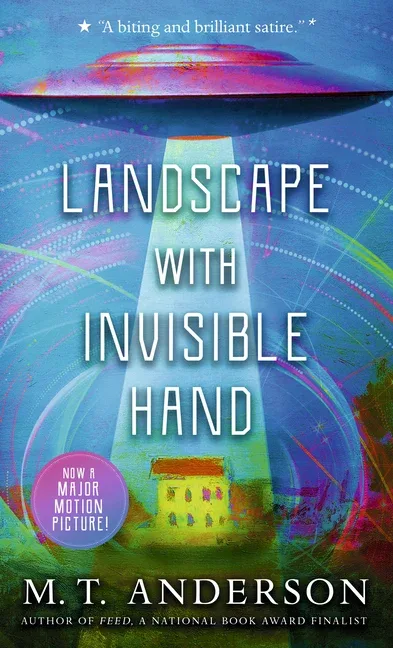 Landscape with Invisible HandM.T. AndersonWhen the vuvv first arrived to conquer Earth they promised great technology, cures for all disease, and freedom from work. The truth, as teenage Adam knows, looks very different. Great technology and medical care are only for those who can afford it. Work is hard to come by thanks to all that tech, while food and housing still cost money. Adam’s attraction to Chloe was the impetus to earn money for both their families by live streaming their romance to the vuvv, who think Hollywood romances of the 40s and 50s, when they first tapped into human transmissions, are the ways all humans interact. Adam and Chloe’s dates were a hit and the money started rolling in. Now they’ve fallen out of love and seethe beneath their live-streamed smiles. Meanwhile, Adam longs to be a serious artist. When some of his paintings garner positive attention and he’s invited to enter a prestigious vuvv contest, he faces a dilemma: enter a piece that expresses the idealized human world they imagine, or a piece that reflects the truth of his grimmer outlook and experience. The decision has potential life or death implications when Adam’s chronic illness, an intestinal condition that impacts his daily life and for which his family cannot afford vuvv treatment, worsens. A slim volume packed full of big ideas that resonate with the world today, delivered with humor and poignancy. Each vignette-like chapter is named for one of Adam’s paintings.Fiction for Young AdultsLexile Text Measure HL730LATOS Book Level 4.9View book details
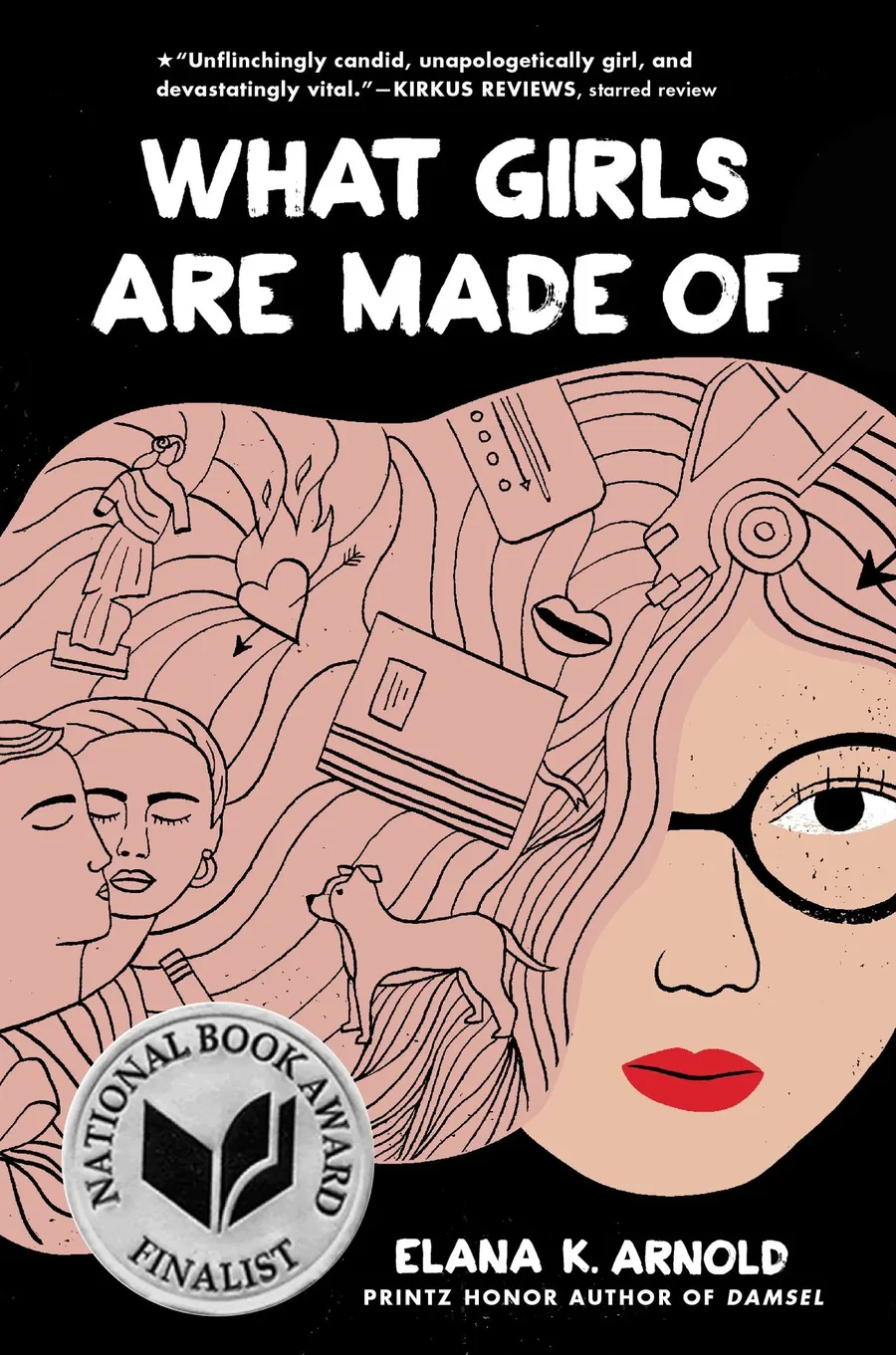 What Girls Are Made OfElana K. ArnoldNina is an only child in an emotionally distant family. She’s wrapped up in her boyfriend, Seth, who calls the shots in their relationship in a way she doesn’t challenge, but her closest connection seems to be the animals at the shelter where she’s doing community service for a cruel stunt she pulled on Seth’s former girlfriend. Nina discovers she’s pregnant right after Seth breaks up with her. She finds herself reflecting on a trip she took with her mom to Italy two years before, when she was 14. Her mom’s passion for art history and martyred female saints, who were often tortured or objects of obsession, informed the trip’s itinerary, and now they’re informing Nina’s AP English writing project, a series of pieces that reflect on being female. At first it’s an unconscious theme; but the more she thinks about that trip, the more she sharpens her perspective. “As long as there have been women,” her mom told her, “there have been ways to punish them for being women.” Nina sees it now; in her own life, in her mother’s life, too. A bold, singular literary work features matter- of-fact treatment of sexual pleasure, sexual objectification of women, and abortion, among other topics. Its depiction of a challenging mother–daughter relationship between two singular individuals is also notable, but it’s Nina’s transformation into a thoughtful, more confident young woman that drives the narrative.Fiction for Young AdultsLexile Text Measure 900LATOS Book Level 5.8View book details
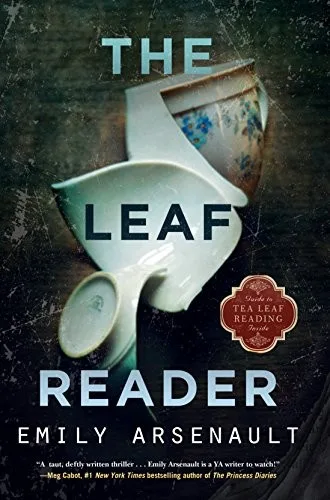 The Leaf ReaderEmily ArsenaultMarnie Wells practices tasseomancy, divination with tea leaves. Months after the disappearance of a girl named Andrea, Andrea’s best friend, Matt, seeks 86 Fiction for Young Adults CCBC Choices 2018 Marnie out. Matt’s been receiving cryptic emails from someone claiming to be Andrea and doesn’t know whether to believe it’s her. Marnie finds herself drawn to Matt and colliding with the wider circle of friends Andrea was part of, all of them wealthy kids at the upscale high school that Marnie attends only because her grandmother teaches there. Although Andrea’s never been found, the police believe the emails are a cruel hoax. Marnie isn’t sure. She also isn’t sure if Matt can be trusted and the images in the leaves, although open to interpretation, are unsettling. Then Marnie discovers Andrea knew Jimmie, a former friend of Marnie’s brother. Everyone has always considered Jimmie troubled but Marnie remembers him from her childhood because of his surprising, if misguided, attempts to please her. She wants to ask Jimmie about Andrea but the search for him proves frustrating as she knocks on doors, then terrifying when images and insight from the tea leaves lead to a chilling discovery that illuminates a deep and callous class prejudice and disregard for human life. A tense, compelling work that veers into the metaphysical as Marnie comes to terms with a family gift she isn’t sure she wants also fits solidly into the genres of mystery and contemporary realistic fiction.Fiction for Young AdultsView book details
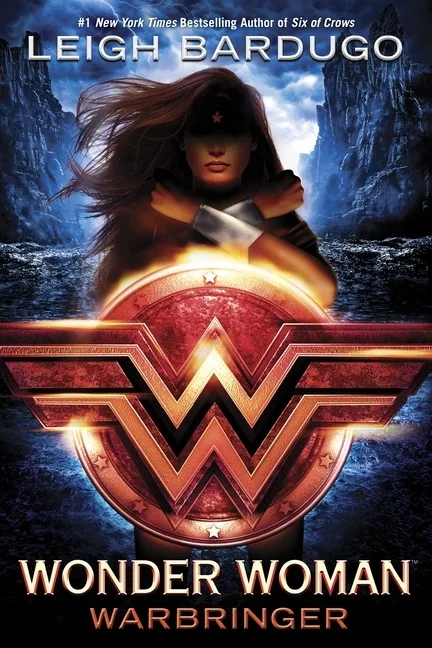 Wonder Woman: WarbringerLeigh BardugoA Wonder Woman first adventure story opens with Diana among her Amazon community on their island. Breaking the rule of coming in contact with the human world, Diana puts everyone she loves at risk when she saves teenage Alia after the boat on which she was sailing explodes off the coast. When the Oracle reveals Alia is a descendent of Helen of Troy, a Warbringer who will usher in a new age of war among humans unless she is purified in the waters near where Helen rests, Diana believes she has no choice but to take Alia there. Alia, until then unaware of her fated role, just wants to go home to New York. To Diana’s dismay, that’s exactly where they end up. Diana is trying to make sense of the human world—and humans—while keeping Alia safe after it becomes clear others know her identity and intend to kill her. Chapters alternating between Diana and Alia—both distinctive, strong-willed characters—describe this hero’s quest as Diana, Alia, Alia’s brother Jason, and their friends Nim and Theo try to avoid assassins while making their way to Greece and locating Helen’s burial site. Biracial (Black/white) siblings Alia and Jason’s wealth and high-tech family business ease some aspects of the journey and complicate others in this story full intrigue, action, and humor.Fiction for Young AdultsLexile Text Measure 750LATOS Book Level 5.3View book details
 Crossing Ebenezer CreekTonya BoldenOn December 9, 1864, the Union Army crossed Ebenezer Creek in Georgia. Former slaves traveling with the Union regiments brought up the rear. When a Union general ordered the pontoon bridge on the creek pulled up before all the African Americans had crossed, hundreds drowned or were killed by pursuing Confederate soldiers. That tragic historical event is the impetus for this arresting fictional story. The arrival of the Union Army on the Georgia plantation where Mariah has been enslaved her entire life means freedom, but with nowhere to go she and others attach themselves to the regiment. The commanding officer’s CCBC Choices 2018 Fiction for Young Adults 87 open-mindedness eases their way, but his sentiments aren’t shared by everyone. Greater help comes from Caleb, a Black man who has been with the regiment longer and knows how to get by and whom to avoid. As they journey, individual stories unfold: Mariah’s, Caleb’s, fellow travelers Mariah has known all her life without ever fully comprehending their pain. And Mariah and Caleb fall in love. Mariah is startled when Caleb reveals he grew up among free Blacks in Savannah, but his experience helps her imagine the future. Set over a few weeks, the story is propelled by compelling, finely drawn characters whose daring hope makes the unforgettable conclusion as they arrive at Ebenezer Creek all the more gut-wrenching. A lengthy author’s note provides more information about the Ebenezer Creek crossing.Fiction for Young AdultsView book details
 The SpeakerTraci CheeIn a satisfying continuation of the trilogy that started with The Reader, Sefia and Archer begin a campaign to free those taken by impressors, forming a vigilante group of boys and young men (and one girl besides Sefia) who call themselves bloodletters. Sefia and Archer are also falling in love, but Archer doesn’t believe himself worthy of Sefia because of the terrible things he’s done in the past. The impressors forced Archer to kill in order to survive; now he wonders if he can be anything but a killer. Sefia doesn’t believe herself worthy of Archer when she learns the impressors exist because of her late parents. She also worries that in battling the impressors, Archer is becoming the very fighter the Guard is looking for to carry out its destiny as written in The Book. Meanwhile, Captain Cannek Reed looks beyond his own legacy to unite the pirates against powerful Serakeen, and Tanin, demoted within the Guard, looks to regain her status. Through it all The Book, which remains in Sefia’s possession, holds present, past, and future in its pages. As it reveals more to Sefia about all three, however, she learns perhaps the most astonishing thing of all: The Book can be untrustworthy. The world-building in this complex, imaginative, action- packed fantasy remains solid, and the characters remain singular, and so very human.Fiction for Young AdultsView book details
 Us, In Progress: Short Stories about Young LatinosLulu DelacreThe emphasis across this collection is on diversity of Latino experiences. The 12 older children and teens in the 12 stories represent a number of different cultural backgrounds. All of them are living in the United States, although the specifics of their lives vary widely, from middle class to striving poor; from those whose families have been here for generations to those born here with parents who are undocumented to those who are undocumented themselves. Immigration status is a focus of some but not all of the stories, while family is a constant theme. Compelling, believable characters and situations make for stories that will be relatable to a wide-ranging audience, while Delacre’s haunting pencil portrait of each protagonist embodies her hopes: “The portraits give faces to the many young Latinos who are often invisible to mainstream America and who experience challenges similar to those described in the stories.” End matter includes notes on each story, providing context about 88 Fiction for Young Adults CCBC Choices 2018 the situation each character faces, and an English translation of the Spanish refrane at the start of each story (a succinct summary statement, almost like a moral).Fiction for Young AdultsView book details
 The Marrow ThievesCherie Dimaline“It began as a rumor, that they had found a way to siphon dreams right out of our bones.” In a not-too-distant future when environmental devastation has killed millions, many people no longer dream when they sleep. At the Canadian government’s new residential “schools,” the dreams of Indigenous people are distilled from their marrow for later use by the wealthy and privileged. Sixteen-year-old Frenchie escaped school Recruiters at 11 and has been with his found family ever since. One elder, one middle-aged adult, four teens, and four children from several Nations, they are constantly on the move evading Recruiters as new schools are built farther and farther north. Although they’re skilled at survival, safety is an unknown destination, and when tragedy strikes at the heart of their group Frenchie decides it’s time to stop running and take a stand. This riveting work confronts the reality of genocide but never loses sight of hope. It’s the breath of those who survive. It’s the love, the solidarity with others, cultural traditions, and the power of languages kept alive. Métis author Dimaline’s plot is fast-paced and unyielding while her finely drawn main characters, although marked by pain, are full of intelligence, compassion, and grace. Dimaline’s exquisite writing offers beautiful turns of phrase and lines that sting with their sharpness and honesty, while Frenchie’s teen voice and feelings, often surprisingly funny, are, like the story itself, at once of his time and our own.Fiction for Young AdultsLexile Text Measure HL810LATOS Book Level 5.5View book details
 It All Comes Down to ThisKaren English“Jennifer once asked me what it felt like—to be Negro. I said I really couldn’t explain it. Just that you remembered what you were all the time. All the time … But you really remembered it when you were the only Negro around.” Twelve-year-old Sophie’s upper-middle-class Black family recently moved to a mostly white neighborhood in Los Angeles. Across the unstructured days the summer of 1965, Sophie is understanding what racism looks like there (not being invited to a pool party, the suspicion with which a store clerk watches her). She’s also trying to understand why their new Black housekeeper, Mrs. Baylor, doesn’t like her. As Sophie pursues a part in a neighborhood center play with passion, Sophie’s Spelman-bound older sister, Lily, who sometimes passes for white and has been raised with the expectation she’ll marry a light- skinned boy, falls for Mrs. Baylor’s dark-skinned, politically active son. The tension it causes is compounded by their mother’s simmering anger at their father’s affair. When the Watts riots begin in south central Los Angeles, where Mrs. Baylor’s family lives, they seem a world away for their neighbors but touch Sophie and Lily deeply as the summer comes into sharp focus. The complexities of race and racial politics are a deep seam running through a story grounded by vivid characters, events and emotions, including Sophie’s first crush, CCBC Choices 2018 Fiction for Young Adults 89 crushing disappointment, and fighting with a sister she just as fiercely loves.Fiction for Young AdultsView book details
 I Believe in a Thing Called LoveMaurene GooDesi Lee has always been confident, driven, and in control, with a plan for achieving every goal and a long list of successful accomplishments. But Desi’s confidence plummets with boys. Her crush on artsy transfer student Luca Drakos feels different from all her others, but she’s certain she’s headed toward another “flailure” (“flirting failure”). Desi’s dad, who followed her late mom to the United States from South Korea years before—an epic love story right in Desi’s own home—loves Korean teledramas (K dramas), a fascination Desi doesn’t share. But after a weekend feeling blue and binge-watching, she emerges with the realization that every series shares a common formula for falling in requited love. Desi breaks it all down into steps and comes up with a plan to facilitate true love with Luca. Of course love—and people—can’t be scripted in real life, and in a book that is funny and uncomfortable by turns, Desi’s maneuvers to manipulate her relationship with this genuinely nice boy she likes and who clearly likes her are at the least questionable and at times ethically problematic, both of which are pointed out to her by her friends. The plot intentionally follows a predictable arc, but the characters, especially Desi, her dad, and Luca, are singular and nuanced, as are the details of their lives, from Luca’s relationship with his dad to how Desi and her dad navigate grief over her mother’s death.Fiction for Young AdultsView book details
 That Thing We Call a HeartSheba KarimPakistani American Shabnam Queresh has been estranged from her best friend, Farrah, since early in their senior year. When Shabnam falls for free-spirited Jamie the summer before college, she reconnects with Farrah to share her joy: She’s missed her friend. Farrah is clearly underwhelmed by college boy Jamie, but she is far more supportive than Shabnam was of her decision to wear hijab. Shabnam gives herself over to Jamie completely in this achingly honest look at falling hard for the first time. If his fascination with experiences beyond his own sometimes makes her uncomfortable—she’s horrified when his clueless response to a survivor of the Bosnian genocide is “cool!”—he also appreciates the Urdu poetry she shares. She trusts him. She loves him. And she can’t help comparing the warmth and passion between them to her own parents, whose affection is reserved to the point of invisibility. There is a wealth of emotion and experience, culture and history, packed into this novel, and it works beautifully. The characters are complicated and nuanced, from tender, infatuated, self-absorbed Shabnam to steadfast, fiery Farrah to obliviously self- centered Jamie. Shabnam’s parents are fascinating individuals, as is her uncle and other secondary characters. Shabnam’s understanding of and relationship with each of them is singular, growing, and changing throughout a novel in which heartbreak is as inevitable as discovery.Fiction for Young AdultsView book details
 ExoFonda LeeTeenage Donovan is a member of the security forces keeping the peace after years of war that followed the invasion of Earth by the Mur zhree. Although the war has ended, an active human resistance remains. “Hardened” with zhree biotechnology as a child, Donovan can activate a protective exoskeleton, but it can’t prevent him being kidnapped by the Sapience resistance when a raid goes awry. When the resistance learns Donovan is the son of the Prime Liaison—his father is the highest ranking human in their district and works closely with zhree leaders—he’s taken to a Sapience hideout as a pawn. Although Donovan has personal issues with his demanding father, he’s loyal to the zhree and, especially, his fellow security officers. But the identity of the principle Sapience propaganda writer turns everything upside down: It turns out to be his mother, who left when he was six, unable to save Donovan from the Hardening his father volunteered him for. The resistance believe exos are no longer fully human. Donovan knows it’s his humanity that makes him feel so conflicted upon seeing his mom—both hungry for and resistant to her love. A fast-paced, compelling work of science fiction with strong world-building deftly addresses the logistical and emotional complexities of political conflict and change through intriguing characters—human and nonhuman alike.Fiction for Young AdultsView book details
 WarcrossMarie LuTeen bounty hunter Emika Chen is down to her last few dollars and about to be evicted from her New York City apartment when she hacks into a promotional round for the Warcross championship, a popular worldwide virtual reality game. Within hours she is jetting off to Tokyo on the private plane of the game’s creator, 21-year-old Hideo Tanaka. The longtime focus of Emika’s private crush, Hideo not only invites her to participate as a wild card in the draft for the official Warcross teams, he also asks her to secretly investigate and unveil Zero, another hacker who is able to move through the game anonymously. Emika is the first pick of the draft, and as she trains with her fellow Phoenix Riders teammates and they enter into the games, she spies on her own teammates and members of other teams. Her meetings with Hideo to report her findings evolve from business to romance, while uncertainty about whom she can trust becomes a critical issue when she realizes Hideo’s life is in danger, and so, too, is her own. A novel set in the not-too-distant future creates an immersive experience in both the “real” and virtual worlds the characters move between. With plenty to offer readers interested in action as well as technology, it features a strong, smart female protagonist and offers ethical questions to ponder as it sets up the next book in the series.Fiction for Young AdultsLexile Text Measure 810LATOS Book Level 5.6View book details
 All the Wind in the WorldSamantha MabryIn this novel set in the not-too-distant future, Sarah and her boyfriend, James, are working in the southwest, cutting maguey plants with other jimadors and saving their money in hopes of going east. They dream of raising horses. When an accident forces them to flee their jobs, they find work at a desert ranch rumored to be cursed. The two have learned not to let anyone know they are a couple—it can too easily be used against them—and in fact make a point CCBC Choices 2018 Fiction for Young Adults 91 to have James show interest in someone else. As laborers, Sarah, James, and other workers are at the mercy of landowners, and of one another. Knowing whom to trust can be a matter of life and death, and both Sarah and James manipulate others to survive, sometimes doing awful things. But do they also manipulate each other? Readers of this first-person narrative are allowed inside Sarah’s head—an exercise in both sympathy and abhorrence. James’s thoughts, feelings, and motives remain to some degree a mystery by story’s end, much like the seemingly supernatural elements also woven into this compelling narrative. With much potential for satisfying debate at the conclusion of this richly told tale, one in which the setting is a character as riveting as any other, the element that is undeniable from page one is the power and pull of its story.Fiction for Young AdultsView book details
 MoxieJennifer MathieuVivvy loves the Riot Grrrl bands and zines of her mother’s youth, but unlike her mom at 16, Vivvy is not a wave-maker or rule-breaker in her small east Texas town, until anger at the rampant sexism at her school spurs her to action. Vivvy creates an anonymous zine, Moxie, calling out the sexism—some of it verbal, some of it physical, some of it psychological, all of it an assault. New student Lucy, an avowed feminist, loves Moxie, while Vivvy’s best friend Claudia finds the word “feminist” too much and the Moxie calls to action useless. New boy Seth, on whom Vivvy has a crush, sees Vivvy placing copies of Moxie in the bathrooms, but he keeps her secret and romance blossoms. Moxie begins to illuminate and then bridge divides of race and class as many different girls begin to embrace the anonymous zine and the Moxie movement slowly grows. The sexism at Vivvy’s school—insidious and infuriating—is both believable in the context of this story and also symbolic of the sexism in our society as a whole: It is systemic in scope; takes myriad forms; is too rarely acknowledged or challenged; has an impact that is achingly personal; those who fight back face repercussions; and every additional voice adds power to the call for change. Mathieu’s narrative is fierce and inspiring, while her nuanced characters and the complexity of their relationships ground the story.Fiction for Young AdultsView book details
 Wild BeautyAnna-Marie McLemoreThe Briar family gave the Nomeolvides women safe haven from accusations of witchcraft long ago in exchange for their labor. Generations of Nomeolvides created La Pradera’s beautiful gardens with their gift for calling their namesakes from the soil. But La Pradera also holds the Nomeolvides hostage: They will die if they leave the land, and those they love will be consumed by the earth unless they are sent away. Gloria, Azelia, Dahlia, Estrella, and Calla Nomeolvides all love Bay Briar, who recently inherited La Pradera. They hold their feelings close not only for Bay’s safety but to avoid each of their mothers’ certain disapproval. When Fel appears out of the soil at La Pradera, he is barely more than a boy. Brown-skinned, like the Mexican American Nomeolvides, Fel’s hands are calloused, his body thin and scarred. He knows nothing of his past. Estrella’s cousins think of Fel as a brother; Estrella finds he sparks other feelings in her. 92 Fiction for Young Adults CCBC Choices 2018 The arrival of arrogant Reid Briar, challenging Bay’s inheritance, sets a string of events into motion that illuminates Fel’s past and the tragic history of La Pradera rooted in racism, classism, and privilege. The Briars sought to cover it in flowers; the land demands justice. A lush, lyrical, mesmerizing work of magical realism also delves deeply into the heart, providing affirmation and solace for those who simply and profoundly are who they are and love whom they love.Fiction for Young AdultsView book details
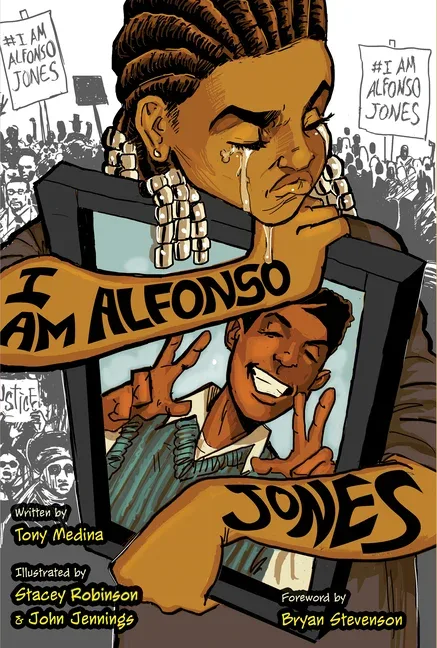 I Am Alfonso JonesTony MedinaAlfonso Jones is a Black teenager shot and killed by an off-duty police officer working as a department store security guard in the opening pages of this graphic novel. Alfonso was shopping for his first suit when another customer reported him as behaving suspiciously. The cop said Alfonso had a gun. He didn’t: He was holding a hanger from a suit he was trying on. Alfonso’s story unfolds in chapters and scenes moving back and forth between the present— he is among ghosts on a subway car, looking in on the survivors of his own life—and the past. The past includes more of Alfonso’s life and family story. His dad was about to get out of prison, having just been exonerated with DNA evidence proving he did not rape and murder a woman years before. The other ghosts on the train are all other victims of police violence (based on real people). Their presence draws a direct line across decades: What happened to Alfonso has happened to so many others (notes in the back provide information about the “real” people who are ghosts on the train, including Henry Dumas, a black writer shot and killed by police in 1968 and for whom Alfonso’s school is named) in a work that also connects the activism of Black Lives Matter to the long history of Black resistance and protest.Fiction for Young AdultsLexile Text Measure GN640LATOS Book Level 4.2View book details
 When Dimple Met RishiSandhya MenonTeenage Dimple Shah loves coding and wants to be an app designer. She’s not interested in having a boyfriend, let alone thinking about getting married, something her traditional Indian parents can’t understand. Rishi Patel embraces traditional Indian values, respects his parents and their opinions, and wants to make them happy. When Dimple’s and Rishi’s parents decide that the two would be a good match, Rishi embraces the idea—he likes everything he’s learned about Dimple—and agrees to attend the same university summer app development program for high school students that Dimple is going to. He’s unaware Dimple knows nothing about the informal arrangements their parents have made for their lives after college. It’s the perfect setup for this romantic comedy with a Bollywood flair (sans singing—although they do dance!) when Dimple, angry and appalled by what Rishi tells her when they meet, finds herself thrown together with him on a project at the camp and they (inevitably) fall in love. This delightful novel told in third-person chapters alternating between them is more than just fun and romance, although it offers plenty of both. As a young woman of color, Dimple navigates sexism and racism during her time at tech camp while also being keenly aware that most campers, including CCBC Choices 2018 Fiction for Young Adults 93 Rishi, are from wealthy families, while Dimple has little money to spend or spare.Fiction for Young AdultsLexile Text Measure HL700LATOS Book Level 5.1View book details
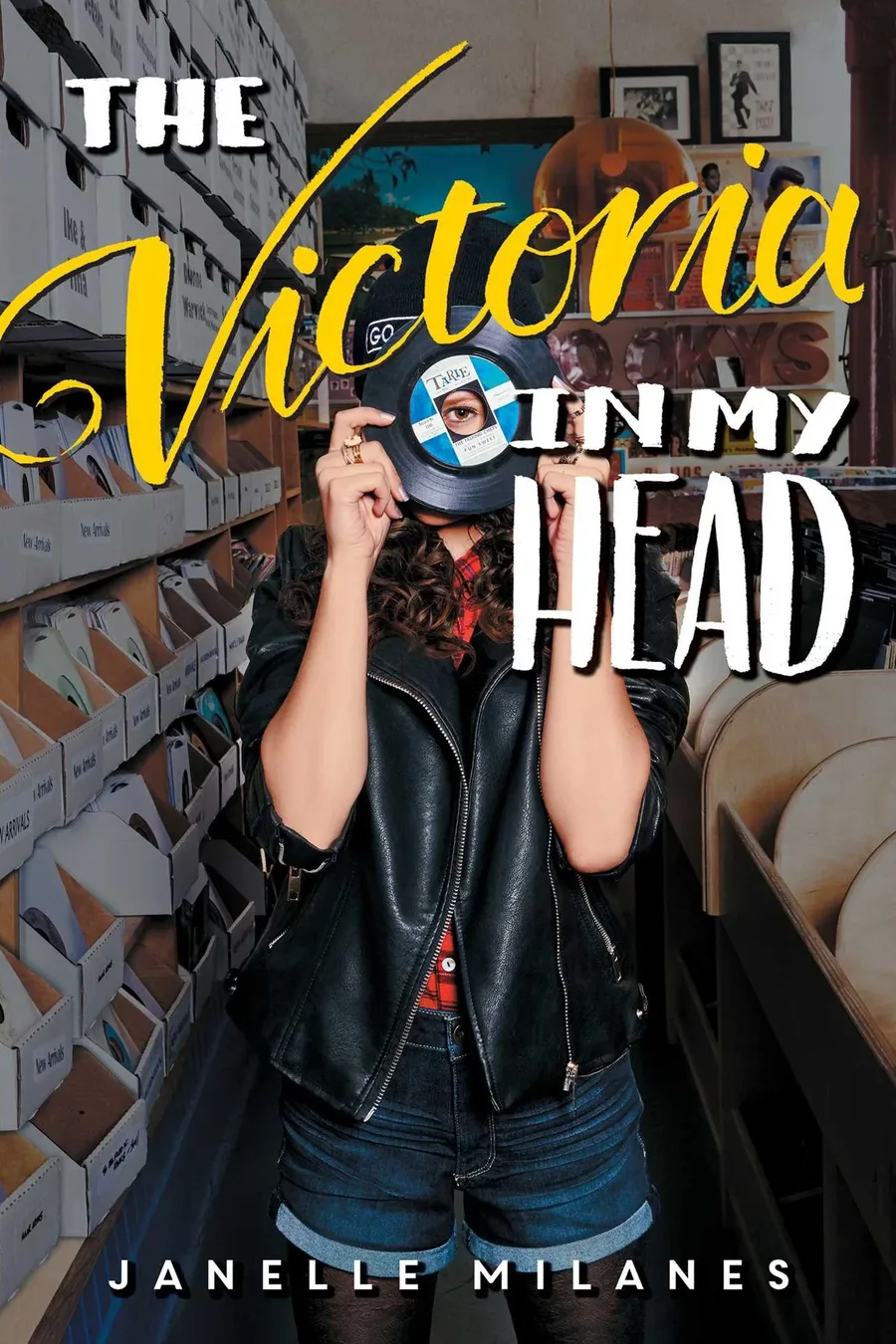 The Victoria in My HeadJanelle MilanesMiddle class, Cuban American Victoria is a sophomore at a private New York high school she attends on scholarship. She is quiet, responsible, and does everything her counselor suggests to get into Harvard, since going to Harvard has always been her parents’ dream for her. She’s also feeling edgy by the sameness of her days. Still, Victoria, who loves to sing in the privacy of her room, is dismayed when her best friend signs her up to audition for a student rock band. She’s even more dismayed when she gets the job. Her bandmates include cute guitarist Strand, with his love-them-and-leave-them reputation; fierce looking drummer Krina; and serious Levi, the bass player. If Victoria’s heart beats faster around Strand, it’s Levi who clearly likes her, and soon they’re a couple—her first boyfriend, although she doesn’t feel much spark. But it’s Strand who volunteers to be her partner rehearsing for her cousin’s quinceañera court. Wonderfully complex characterizations and relationships with her culturally diverse friends and family distinguish this compelling, at times laugh- out-loud funny debut novel in which music is a seamless part of the narrative. The story also dives deeper as Victoria tries to figure out what attraction and love feel like; tries to keep the band a secret from her parents (she fails); and tries to understand what a future following her own dreams might look like.Fiction for Young AdultsView book details
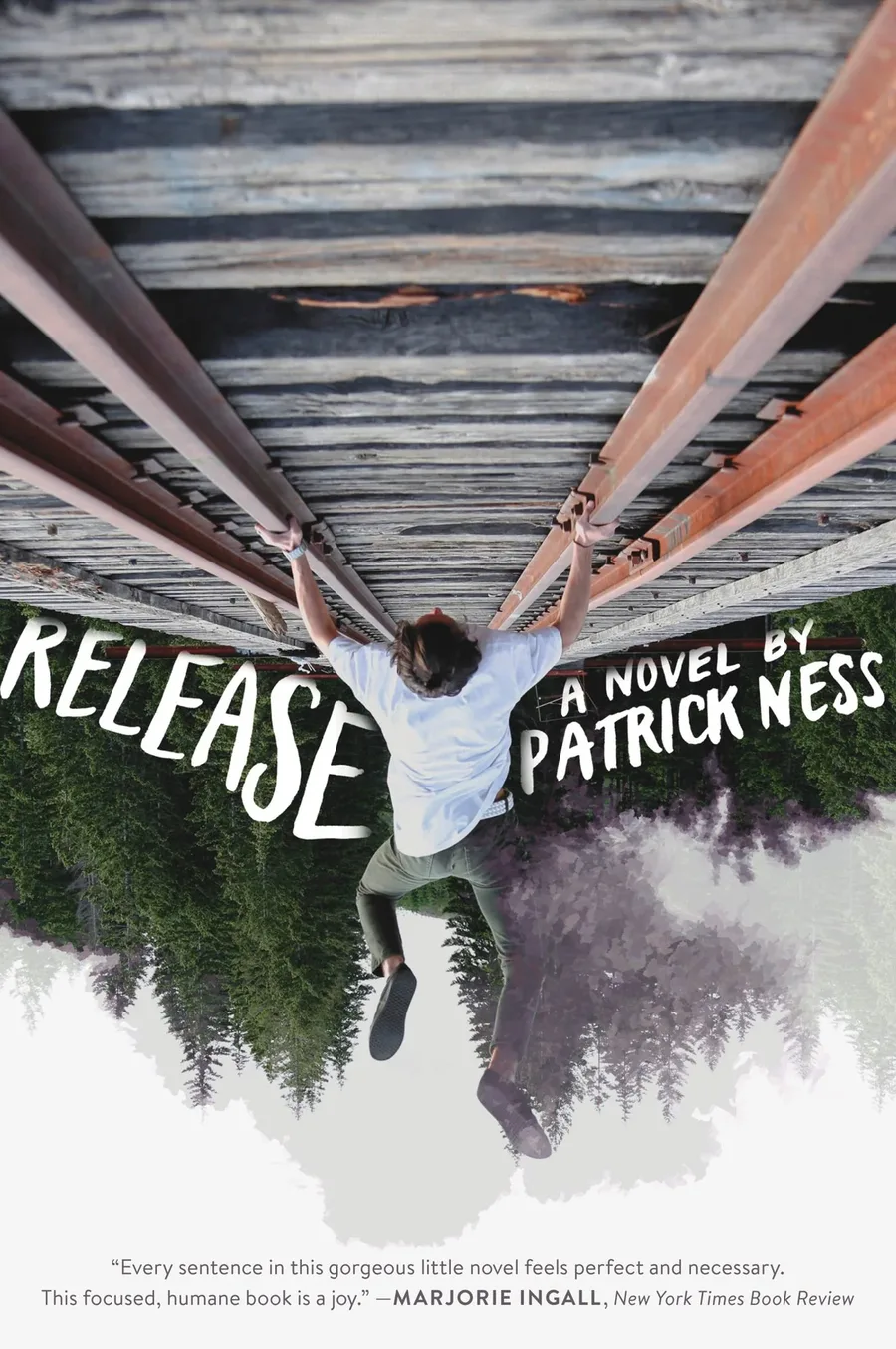 ReleasePatrick NessTeeange Adam Thorn’s conservative parents refuse to acknowledge that Adam is gay, and Adam is biding his time until he finishes high school and can leave his small town. His best friend, Angela, and her parents, and his boyfriend, Linus, provide support and humor and affirmation and solace in his life. Against his better judgment, Adam tells his preacher father about the ongoing sexual harassment he’s faced from his boss, Wade. He does so on a day when Wade has gone from implicit to overt coercion, making clear Adam’s job is at risk if he doesn’t have sex with him. He does so following a moment in which he and his dad have genuinely connected and it feels possible. But Adam’s world feels at risk of unraveling when his dad suggests Adam led Wade on, and then confesses how hard he has to work at loving Adam. It’s a gut-wrenching moment, one that underscores the importance of everyone else in Adam’s life who’s there to hold him up. A gripping novel set over the course of a single day punctuated by flashbacks juggles several other elements of Adam’s life as well as an interstitial story about the ghost of a girl recently murdered by her boyfriend who’s in search of revenge. Ness acknowledges a debt to Judy Blume and Forever in his note following a story that is exceptional for multiple reasons, including its sexual and emotional frankness and honesty.Fiction for Young AdultsView book details
 You Bring the Distant NearMitali PerkinsThree generations of women in a Bengali American family are given voice in this expansive work. Sisters Tara and Sonia came to the United States with their parents as teens in the 1970s after living first in Ghana, then in London. The two couldn’t be more different from each other, and from their traditional mother, Ranee. Beautiful Tara loves acting and expects to be a screen star, while bookish Sonia just wants some peace and quiet to pursue her reading and writing. Both girls have their own ways of assimilating into American life in the early 1970s—Sonia takes an interest in racial politics and the women’s movement, even though neither makes her particularly popular, including at home, while Tara tries to fit in by acting like Marcia Brady, with a fair degree of success. Flash forward a generation, and both girls are now grown women with teenage daughters of their own. Anna and biracial (Indian/Black) Chantal are each taking on the world in her own way in high school, and each is beloved by her grandmother, Ranee. Over the span of her daughters’ and then her granddaughters’ lives, Ranee transforms as she figures out what matters most to her from tradition, while also moving beyond longheld prejudices in this deep, eloquent exploration of race, gender, culture, generational divides, and the connections that can bridge all manner of distances.Fiction for Young AdultsView book details
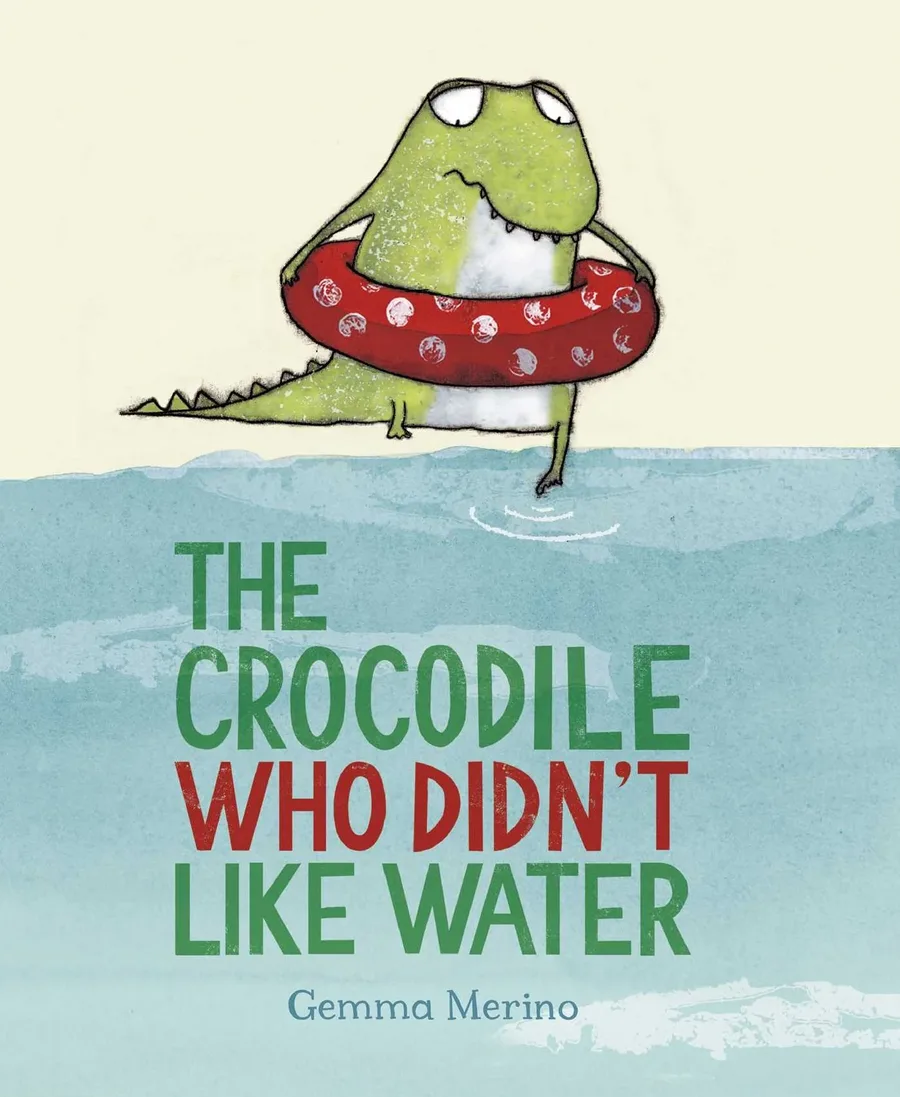 Like WaterRebecca PodosVanni Espinoza’s plan to leave her small New Mexico town after high school dissolved when her dad was diagnosed with Huntington’s disease. Vanni’s family needs her help at home and at their restaurant. To distract herself from the ever-present fear that she also has Huntington’s, Vanni throws herself into work and casual sex. When she meets Lucas at a nearby pool, he gets her an audition for a mermaid role at a water park and introduces her to his sister, Leigh. Leigh is resentful of having to move from Boston to New Mexico to live with their dad, but she and Vanni hit it off. Soon it’s obvious there’s a mutual attraction between them. For Vanni, who has only dated boys, her relationship with Leigh is eye-opening and wonderful—until she witnesses Leigh’s reckless behavior and angry outbursts. Although Leigh’s anger is not directed at Vanni, Vanni takes a step back. Vanni loves her, but she has enough uncertainty in her life, including trying to decide whether she should undergo genetic testing for Huntington’s. A door opens again between them after Leigh begins seeing a counselor and comes to the realization that she is genderqueer. Strong characterizations distinguish this story about friendship, love, and overcoming fear as two young people come to terms with their bodies—Leigh in terms of her gender identity, Latina Vanni in accepting that she cannot control what her DNA may reveal.Fiction for Young AdultsView book details
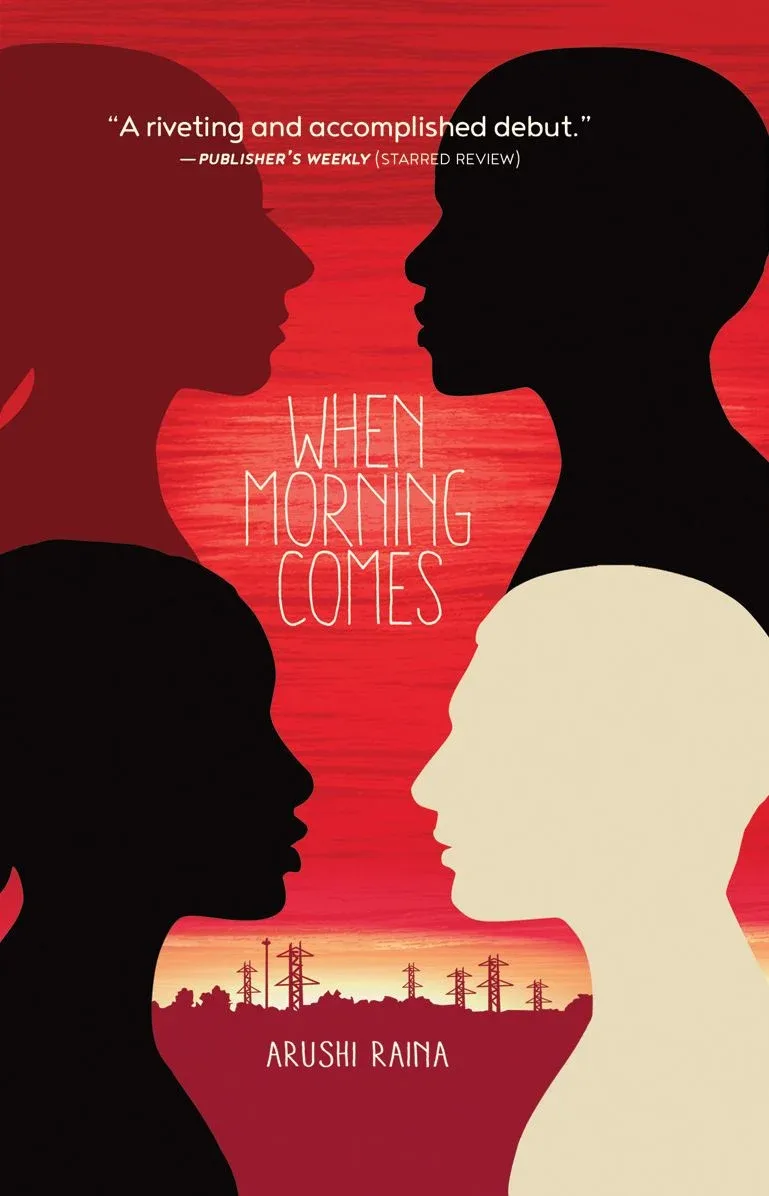 When Morning ComesArushi RainaA powerful novel set in Johannesburg in 1976 offers four different points of view on the same historical events. Central to the story are Zanele, a Black South African teenage girl who is active in the liberation movement, and CCBC Choices 2018 Fiction for Young Adults 95 Meena, an East Indian girl who is just becoming radicalized and wants to be part of the liberation movement. Their lives intertwine with each other’s and with those of Thebo, a Black South African teenage boy who is a gang member and not politically active, and of Jack, a privileged white boy who falls in love with Zanele. Jack would do anything he could to help her succeed, even though she doesn’t particularly want or need his help. Zanele is a charismatic character, and all three of the others are drawn to her. Each teen is interesting and credible as readers see the same events from four very different perspectives. The point of view changes frequently, and keeps the pace moving along quickly, building to a resolution that will have readers on the edge of their seats.Fiction for Young AdultsView book details
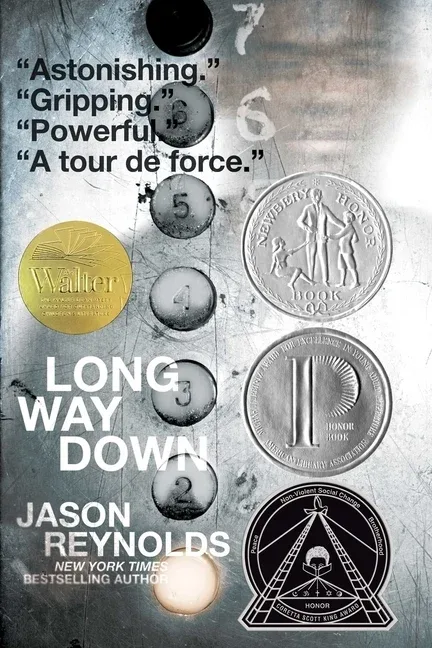 Long Way DownJason ReynoldsWill learned “The Rules” from his older brother, Shawn. No. 1: No crying. No. 2: No snitching. No. 3: Get revenge. When Shawn is shot and killed, Will’s grief is trapped behind a wall of unshed tears. He’s sure he knows who did it: Riggs. And of course he won’t tell the police. Using the gun Shawn kept in his middle drawer, the gun he was never supposed to touch, Will leaves his 8th floor apartment the morning after Shawn’s death. He gets on the elevator at 9:08:02 a.m. Over the next 67 seconds and 234 pages of this taut, tightly paced novel in verse, different rules are broken: the rule in which no one talks on the elevator; and rules of life and death, space and time. On every floor, as Will descends, someone impossible gets on. Will knows each one of them, and their conversations—with him, with one another—explore the strange, unreliable honor of The Rules and reveal the cycle of violence they perpetuate. And now it’s Will’s turn to put The Rules into play, to shoot Riggs for killing Shawn. Isn’t it? The final two words of this novel are explosive, inviting discussion about what comes next, but it’s the entirety of Will’s reality-bending, expansive 67-second descent that makes it possible to wonder.Fiction for Young AdultsLexile Text Measure HL720LATOS Book Level 4.3View book details
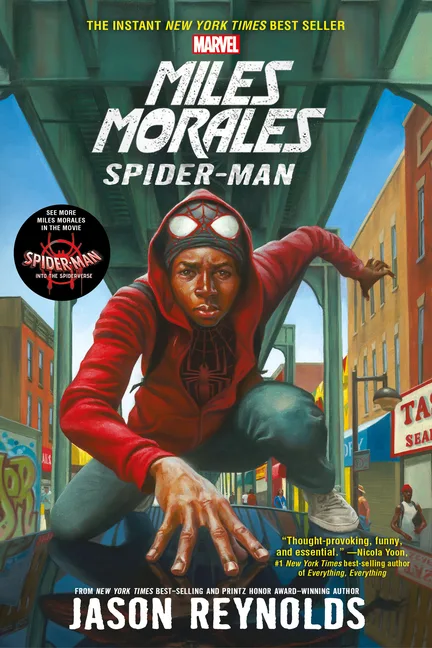 Miles Morales: Spider-ManJason ReynoldsHalf Black, half Puerto Rican, Miles Morales is comfortable in his own skin, even if some people aren’t always comfortable with his skin. But the same can’t be said for how Miles feels about other aspects of his identity. He’s a scholarship student from a poor Brooklyn neighborhood attending an elite prep school and he wants to do well for himself, his family, and community, but it’s a lot of pressure. And then there’s the fact that he’s Spider-Man. Only his best friend, Ganke, knows this truth. It was on a visit to his late Uncle Aaron, an ex-con his parents had forbidden him to see, that Miles was bitten by the spider that transformed him. Aaron has been on Miles’s mind a lot lately. For all that he has superpowers, Miles wonders if he has the same bad blood that made his uncle turn to crime. And being a superhero doesn’t mean Miles can solve the challenges in his neighborhood, let alone the world; he can’t even challenge a racist teacher without getting suspended. There is a superhero storyline here as Miles comes to understand and confronts a threat to the world—full of the action and moments of humor expected in the genre—but it’s deftly 96 Fiction for Young Adults CCBC Choices 2018 wrapped inside a vivid work of relatable, contemporary realistic fiction.Fiction for Young AdultsLexile Text Measure HL710LATOS Book Level 4.9View book details
 The Inexplicable Logic of My LifeBenjamin Alire SáenzHigh school senior Sal(vador) Silva was 3 when his mom died. Adopted by Vicente, his mom’s best friend, the love between father and son is palpable. Sal’s best friend, Sam(antha) Diaz, has a single mom so wrapped up in her own life that Sam feels like an afterthought. Sal’s friend Fito works two jobs to save money for college and to escape his family of addicts. Sal knows he has a good life. So why is he suddenly full of rage? He lashes out even before he learns that Mima, his grandmother, is dying. Mima means the world to Sal, his dad, and their extended Mexican American family, in which it’s never mattered that Sal is white. Sal worries his instinct to respond with his fists—to a whispered slur about his dad, who is gay, or to a boy who treats Sam badly—is a trait from the birth father he’s never known or cared to find out about. Several explosive events disrupt the shifting currents of daily life in a deeply felt story graced with moments of humor. Exquisitely realized and genuine, it’s about living and struggling and loss and regret. It’s about changing relationships and growing up and friendship. It’s about the power of language. Above all, it’s about the expansiveness of the words “love” and “family.”Fiction for Young AdultsView book details
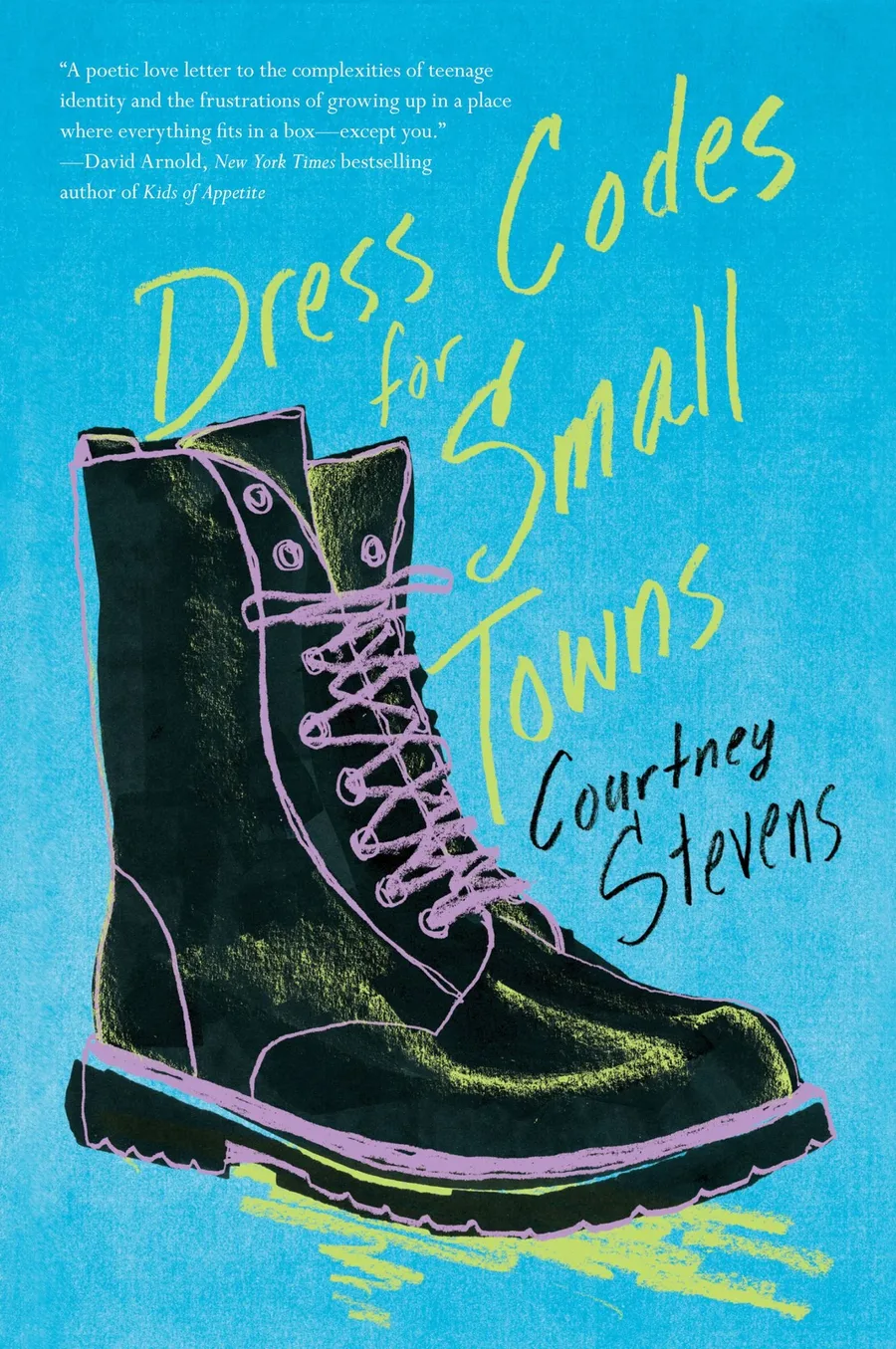 Dress Codes for Small TownsCourtney StevensA YA book set in a small town in which the main character, a preacher’s kid, does not hate either the town or being a preacher’s kid. In which the group of friends at the story’s heart feels both exceptional and ordinary and authentic. At the center of it all is Billie McCaffrey, who may be in love with both of her best friends, Wood and Janie Lee; who dresses in jeans and combat boots and creates large-object art in her garage; who is part of a group of six friends who call themselves the Hexagon and are as adept at creating community as causing havoc. The Hexagon’s efforts to save Otter Falls’ annual Harvest Festival and Corn Dolly competition—both of which are presented with astonishing appreciation through Billie’s eyes—is the storyline around which Billie and her friends make discoveries about themselves and one another in a novel that is funny and poignant and probing by turns as it examines sexuality, gender, friendship, love, and family, all with remarkable little angst in spite of some serious soul searching.Fiction for Young AdultsView book details
 The Hate U GiveAngie ThomasStarr’s childhood friend, Khalil, is driving her home when they are pulled over by the police for a broken taillight. After patting Khalil down, the white officer tells him to stay put and walks back to the patrol car. Khalil opens the driver’s door and asks Starr if she’s okay. The police officer shoots and kills Khalil. Over the next 13 weeks, Starr struggles with shock, grief, anger, fear, rage, and indecision about whether to testify. Several issues complicate Starr’s thinking: worry about a local gang leader who intimidates through fear and violence; CCBC Choices 2018 Fiction for Young Adults 97 worry about jeopardizing her father, a current business owner and former gang member who changed his life trajectory while in prison; her strained friendship with two friends who aren’t African American at the private school she attends; her mixed feelings about her white boyfriend; her mother’s wish to move the family to a safer neighborhood; and her relationship with her police officer uncle. Starr and the other characters in this novel are vibrant and fully realized; her life and community are multifaceted and complex. It’s in Starr’s loves of Harry Potter, and her complicated feelings about her half-brother’s other sister, who gets more of his time, but has a less stable family life. It’s in the authentic moments of humor, and in the way hope lives side by side with fear and anger in a story that is so much more than its plot and theme.Fiction for Young AdultsLexile Text Measure HL590LATOS Book Level 3.9View book details
 Song of the CurrentSarah Tolcser, map by Virginia AllynCaro Oresteia has grown up delivering cargo up and down the river with her father. After her father is arrested without cause, Caro is blackmailed into transporting a mysterious crate to earn his release. When it becomes clear the large box is being sought by pirates, she opens it, wanting to know what’s inside. It’s a young man, a royal courtier from a neighboring country in political upheaval. He’s arrogant and annoying and utterly useless on a boat until their pursuers force his hand. He’s still not great on water, but it turns out he is good with a sword. It also turns out he’s lying about his identity. If the romance is inevitable, the characters and world-building and action-packed plot make this a satisfying, adventurous read. Markos, it turns out, has a mission that strays from what his handlers expect, and Caro risks her father’s freedom helping him. Meanwhile, the traditional expectations he’s been raised with for women contrast sharply with Caro’s experience. Wherry captains are just as apt to be women as men, while her mother runs a great ocean shipping company, and her parents’ devotion is genuine but they lead separate and fulfilling independent lives. Myth and magic are woven throughout this fast-paced story. Strong-willed Caro is biracial (Black/white), and Markos is her worthy partner in whatever adventure comes next.Fiction for Young AdultsView book details
 Thick as Thieves: A Queen’s Thief NovelMegan Whalen TurnerSecretary to the Mede ambassador, Kamet has ambitions despite the confines of slavery. But when he’s warned that his master has been poisoned, Kamet’s plans evaporate as he faces certain execution as demanded by Mede tradition. Grabbing an unexpected (and suspect) avenue of escape proffered by an Attolian soldier, he flees Mede and all that is familiar. At first suspicious of his companion and disdainful of all things Attolian, Kamet slowly begins to trust the man in whose hands he’s placed his fate. Their journey to Attolia is richly satisfying for readers, not just in terms of the action but also its emotional arc. The two men are echoes of two legendary Mede heroes, Immakuk and Ennikar, in stories Kamet knows by heart. By story’s end, he knows his own heart just as well, and that of his companion—a true friend—in this stand-alone work set in the multi-book fantasy world of A Queen’s Thief. Those familiar with the earlier books will recognize people and events during this road trip with all the 98 Fiction for Young Adults CCBC Choices 2018 political intrigue, plot twists, and top-rate character development readers have come to expect and relish in this richly satisfying work.Fiction for Young AdultsView book details
 Pemmican WarsKatherena Vermette, illustrated by Scott BEcho is a 13-year-old Métis girl who just started at a new school. During history class she finds herself transported back to Qu’Appelle Valley in 1814, watching Métis hunt buffalo. Class after class, as they learn about the events leading to the Pemmican Wars in Canada, Echo is witnessing them firsthand. As she travels back in time she learns more about what is happening from a young Métis woman, who pays more attention to Echo than any of her classmates. In the present, Echo dives into research to learn more about this time in history. All of it provides a connection to her Métis heritage, something she’s never learned much about. Echo’s mother is in prison, and Echo herself appears to be living in foster care—both things shown but not expressly stated or explained in this arresting graphic novel. Dynamic visuals underscore both Echo’s isolation (she often walks the school halls with earbuds, listening to music) and the strong sense of community among the Métis she visits in the past, something that she begins to share with her mom when Echo visits her. A timeline at book’s end provides more context for the history surrounding the Pemmican Wars, although a brief prose narrative would also have been helpful.Fiction for Young AdultsView book details
 Piecing Me TogetherRenée WatsonJade misses going to school with neighborhood friends but the private school she attends on scholarship offers an international volunteer opportunity. This year she hopes to be chosen. In the meantime, Jade’s school counselor encourages her to participate in a community-based mentoring program for African American girls. Jade is paired with Maxine, an African American alum of her school. Meanwhile Jade’s classmate Sam—whom she gets to know because they both ride the bus, a rarity—has never stepped foot in Jade’s neighborhood. It all has Jade thinking about how people perceive her, and her community. Then she isn’t chosen for the volunteer trip to Costa Rica, despite tutoring fellow students in Spanish. The reason? Jade already participates in the mentoring program and her teacher feels other students deserve opportunities, too. Jade’s frustration is further fueled by the assault of a young Black woman by police in a nearby community. For Jade, the beating is too close, too personal, intensifying her sense of disquiet and disconnect with her school community, including Sam. Why, she finally challenges her teacher, her counselor, her mentor, does everyone assume because she is poor and Black that she needs help and “opportunities” but has nothing to offer, something to give? This vivid, poignant novel features singular characters; complex, authentic relationships; and a young woman voicing a critical truth.Fiction for Young AdultsLexile Text Measure 680LATOS Book Level 4.5View book details
 The Pearl ThiefElizabeth WeinNo one in her family is expecting Julia to come home from school for summer break three days early. So no one thinks to worry when an unconscious girl is admitted to the local hospital. It’s Julia, who was hit on the head when she wandered down to the river after arriving home to an empty house. Identified after a few days, she has only spotty memories of the attack. As Julia struggles to remember, concern mounts over the disappearance of the professor who was cataloging historical items of her family’s estate, being sold to cover her late grandfather’s debts. And where are the river pearls that once filled the reliquary, a centuries-old wooden cup given to the family by the ancestors of Ellen and Euan McEwan? The McEwans are Travellers. Ellen and Euan were the ones who found unconscious Julia and took her to the hospital. Julia likes them. In fact, she finds herself liking standoffish Ellen a lot. Because they’re Travellers, the McEwans are suspect in many people’s minds, a prejudice that infuriates Julia, who’s confronted with her own social privilege as a result. This satisfying mystery tackles themes of class, prejudice, gender, and physical appearance, and will be of additional interest to fans of Code Name Verity, as it gives a glimpse of Julia’s life as a teenager in Scotland.Fiction for Young AdultsView book details
 A Season of Daring GreatlyEllen Emerson WhiteJill Cafferty is 6’2” high school senior with a fastball that consistently clocks over 90 mph when she becomes the first woman drafted by a major league baseball team after the Pittsburgh Pirates pick her in the third round. On the Pirates’ minor league team in Pomeroy, New York, some players and others are openly welcoming, some are openly hostile, and some seem to be waiting to see what she can do. How all of these responses play out, and how Jill herself responds, is at the center of this compelling story. Off the field Jill meets sexism that ranges from subtle and stupid to vicious with remarkable presence of mind. On the field, the stress shows. Author White’s knowledge of baseball is clearly vast and these details add veracity, as does the way she balances the sexism Jill faces with support in many forms, from Jill’s family and friends back home to her steadfast catcher to the team manager who treats her like everyone else, even when it makes Jill mad. If Jill is a little too poised for an 18-year-old just out of high school dealing with incredible pressure, small glimpses of her life before show what has grounded and prepared her for this moment. Jill’s triumph is in being able to take her place on the field and know it’s where she belongs.Fiction for Young AdultsView book details
 Gem & DixieSara ZarrGem took care of her sister Dixie when they were younger and their parents were addicts. Now both in high school Dixie makes friends easily, whereas Gem is lonely, an outcast. Although their mom got sober and kicked their dad out years ago, she struggles to pay the rent and buy food, and sometimes slips back into dangerous habits, oblivious to her daughters’ physical and emotional needs. When the girls’ dad shows up out of the blue with money to burn, Dixie 100 Fiction for Young Adults CCBC Choices 2018 is thrilled, Gem suspicious, their mom furious. She dumps out all the food he buys, appalling Gem, who is often hungry, and tells him to go. He leaves behind a hidden backpack full of money. When Gem finds it, she sees it as a chance for her and Dixie to escape. For Dixie, their journey is an adventure. For Gem, it’s survival. On the road, Gem and Dixie are often at odds, but also gradually finding their way back to a small bit of common ground. Gem’s determination, a well-meaning if fallible guidance counselor, and the kindness of strangers are threads of genuine hope leaving a lasting impression in a story that doesn’t minimize poverty or despair.Fiction for Young AdultsView book details
 American StreetIbi ZoboiFabiola Toussaint hopes to find the American dream when she comes with her mother from Haiti to live with her Aunt Jo and her cousins, Chantal, Primadonna, and Princess, on the corner of American Street and Joy Road in Detroit. But when her mother is detained coming into the country, Fabiola must navigate this very different world without her. Finding her place means navigating her cousins’ vibrant yet vastly differing personalities and the sometimes gritty world in which they live while holding on to what she values most from her life in Haiti, including the spiritualism that helps her see her path. In authentic teen voices, Zoboi offers a deft, absorbing narrative that pulls the reader along at an escalating pace. Interspersing Fabiola’s keen observations and an increasingly tense plot with stories of other characters, Zoboi creates a work that is as deep and rich as it is swift and compelling. Detroit, especially American Street, is not just a setting but a powerful presence in a narrative that looks at the immigrant experience and American society through an honest and unsettling lens. Fabiola’s Haitian culture and her immigrant perspective is foundational to a story infused with possibility even as it offers a thoughtful and sharp critique of the institutional racism and classism of both countries. Immigrant or not, it turns out the American dream can be all but unreachable when you’re Black and poor.Fiction for Young AdultsLexile Text Measure HL690LATOS Book Level 4.4View book details