Mathical Prize WinnerBaby Goes to MarketAtinuke, illustrated by Angela BrooksbankBaby accompanies Mama to a busy market in southwest Nigeria while she shops. Vendors give Baby fruit and snacks, which Baby eats or adds to the basket without Mama noticing. The collection includes bananas, oranges, biscuits, sweet corn, and coconut, and the basket grows heavier as they move through the stalls. The story uses the accumulating treats as part of its counting.Pre-KindergartenLexile Text Measure AD460LATOS Book Level 2.1View book details
Mathical Book Prize 2018
The 2018 edition includes 1 Mathical Hall of Fame title, 11 Mathical Honor Books, and 3 Mathical Prize Winners. The source uses 6 audience or subject sections, including Pre-Kindergarten, Grades K through 2, Grades 3 through 5, and Grades 6 through 8. It records that year's Mathical Prize, Honor, and Hall of Fame results across the program's grade groups.
2018 Mathical Book Prize Winners and Honor BooksSee the original list
Selections15
Published byMathical Book Prize
Sections6 sections
Browse sections6 sections
Pre-Kindergarten
3 selections
Mathical Prize WinnerBaby Goes to MarketAtinuke, illustrated by Angela BrooksbankBaby accompanies Mama to a busy market in southwest Nigeria while she shops. Vendors give Baby fruit and snacks, which Baby eats or adds to the basket without Mama noticing. The collection includes bananas, oranges, biscuits, sweet corn, and coconut, and the basket grows heavier as they move through the stalls. The story uses the accumulating treats as part of its counting.Pre-KindergartenLexile Text Measure AD460LATOS Book Level 2.1View book details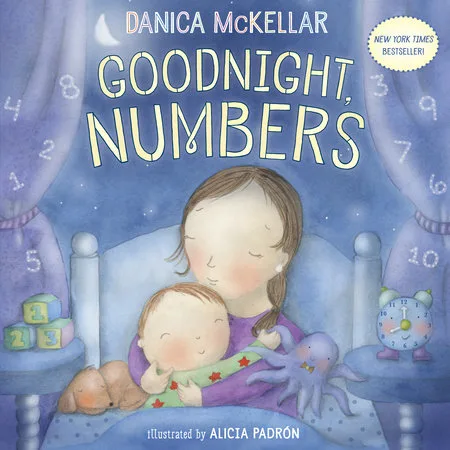 Mathical Honor BookGoodnight, NumbersDanica McKellar, illustrated by Alicia PadrónGoodnight, Numbers is a bedtime counting picture book that slips early math concepts into a nightly routine. As children say goodnight to the objects all around them—three wheels on a tricycle, four legs on a cat—they connect with the real numbers in their world and build the foundations of counting. Rhyming text carries the reader from one through ten, and the pages invite the repeated reading that bedtime books get, so the book works both for getting ready for bed and for learning at home. It is the first title in the McKellar Math line by author and mathematician Danica McKellar, illustrated by Alicia Padrón. School Library Journal called it a winner for bedtimes and storytimes that focus on counting, and Kirkus noted its pretty art and its homage to Goodnight Moon.Pre-KindergartenLexile Text Measure AD300LFountas & Pinnell Text Level IView book details
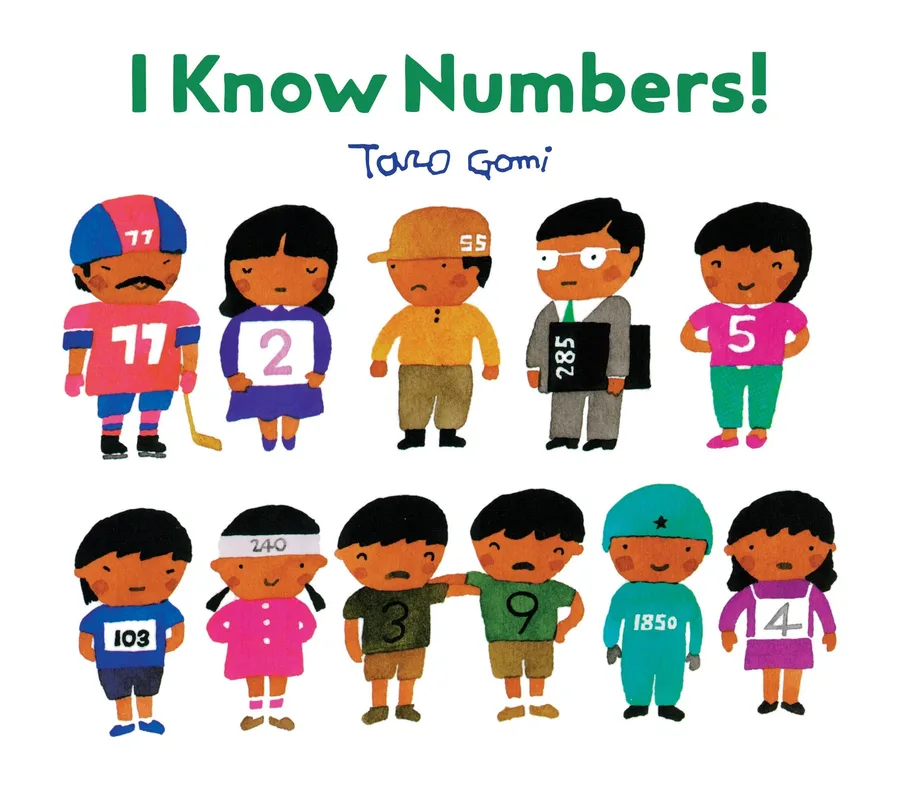 Mathical Honor BookI Know Numbers!Taro Gomi, illustrated by Taro GomiNumbers appear throughout everyday life: on street signs, at bus stops, on phones, thermometers, chalkboards, and scales. This book draws attention to those familiar places where numbers can be found and invites readers to notice their many uses. By gathering examples from travel, communication, measuring, school, and public spaces, it presents numbers as a recurring part of the world people move through each day.Pre-KindergartenLexile Text Measure 320LATOS Book Level 2.4View book details
Grades K–2
4 selections
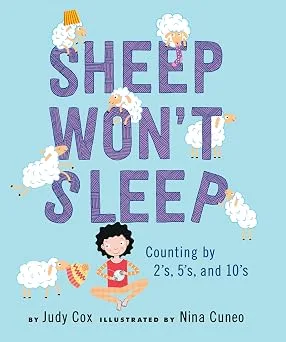 Mathical Prize WinnerSheep Won’t Sleep: Counting by 2s, 5s, and 10sJudy Cox, illustrated by Nina CuneoClarissa cannot fall asleep, and counting sheep brings woolly animals into her bedroom. Her attempts expand to pairs of alpacas, groups of llamas counted by fives, and yaks counted by tens. She uses skip-counting by twos, fives, and tens, along with subtraction, to put things back in order. The counting problem unfolds through the increasingly crowded assortment of animals in her room.Grades K–2Lexile Text Measure 620LATOS Book Level 4.0View book details
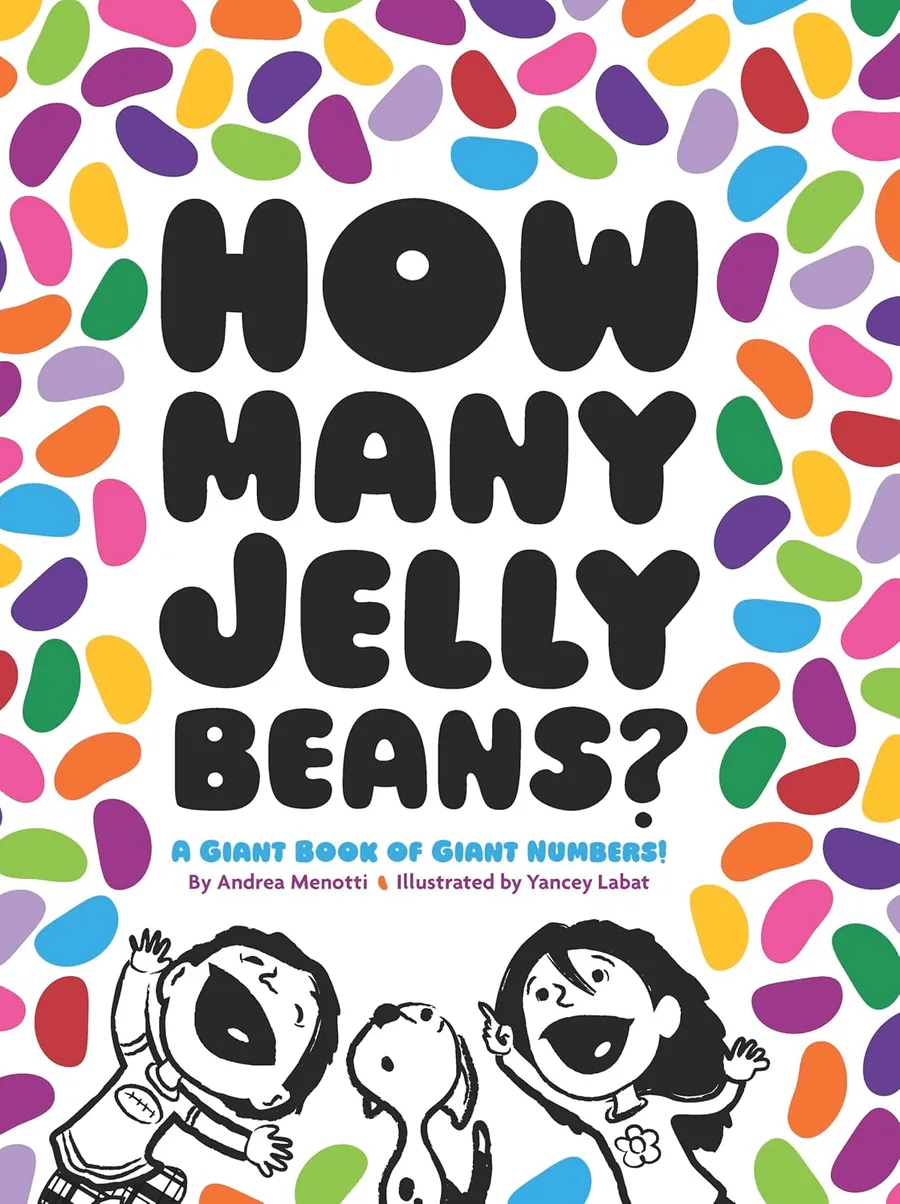 Mathical Honor BookHow Many Jelly Beans? A Giant Book of Giant Numbers!Andrea Menotti, illustrated by Yancey LabatHow Many Jelly Beans? is an extra-large counting picture book about very big numbers. Aiden and Emma cannot decide how many jelly beans are enough and how many are too many: is 10 enough? How about 1,000? Eaten over a whole year, a thousand jelly beans would be only two or three a day. Starting at 10, each page shows more and more colorful candies, giving children a visual way to grasp quantities as they grow, and the book ends with a giant fold-out surprise—one million jelly beans. Andrea Menotti's text keeps the children's debate playful, and Yancey Labat's bright illustrations fill the oversized pages. Chronicle Books published the title in 2012.Grades K–2ATOS Book Level 1.5AR Interest Level LGView book details
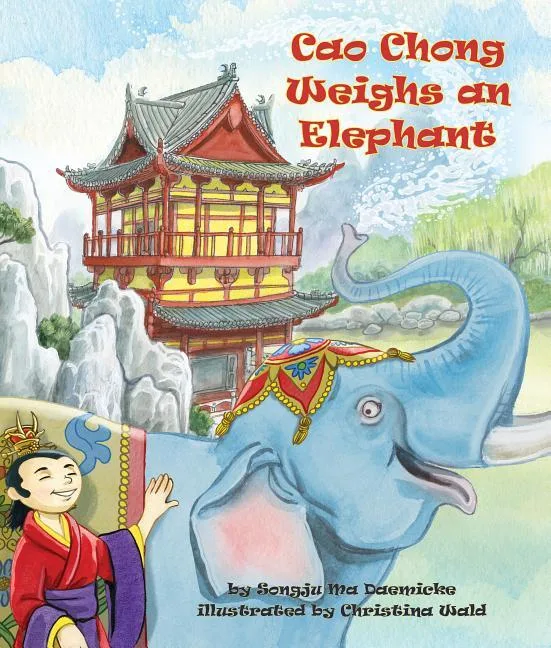 Mathical Honor BookCao Chong Weighs an ElephantSongju Ma Daemicke, illustrated by Chistina WaldSet in China two thousand years ago, this fictional story follows six-year-old Cao Chong as he tackles the problem of weighing an elephant without a modern scale. While advisors debate possible methods, Chong uses creative thinking and the principle of buoyancy to find a solution. The book combines a historical setting with a scientific problem and includes a four-page For Creative Minds section.Grades K–2Lexile Text Measure 830LATOS Book Level 4.2View book details
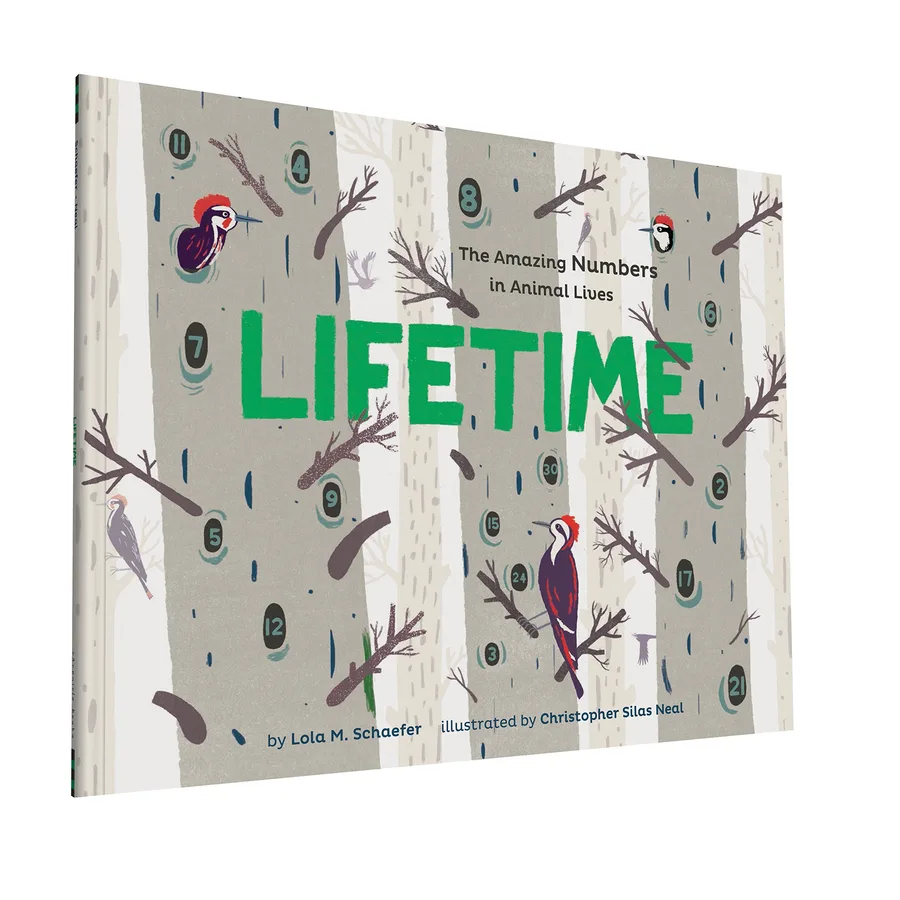 Mathical Honor BookLifetime: The Amazing Numbers in Animal LivesLola M. Schaefer, illustrated by Christopher Silas NealLifetime: The Amazing Numbers in Animal Lives is a counting picture book about the quantities a single animal accumulates, produces, or sheds over the course of one life. Its premise is arithmetic rather than narrative: in one lifetime a caribou will shed 10 sets of antlers, a woodpecker will drill 30 roosting holes, a giraffe will wear 200 spots and a seahorse will birth 1,000 babies. Christopher Silas Neal's illustrations show every one of those items, so readers can count along and see what a large number actually looks like. A closing section collects the animal facts behind the artwork and explains the averaging behind the figures, making the book an early introduction to estimation and to the idea of a mathematical average. Lola M. Schaefer's text is brief and rhythmic, and Chronicle Books published the title in 2013.Grades K–2Lexile Text Measure AD640LATOS Book Level 3.0View book details
Grades 3–5
3 selections
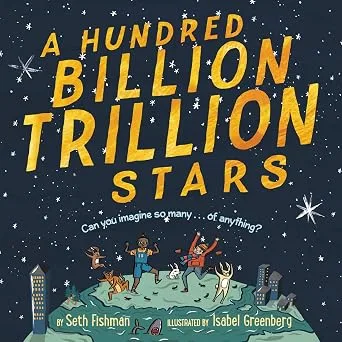 Mathical Prize WinnerA Hundred Billion Trillion StarsSeth Fishman, illustrated by Isabel GreenbergUsing enormous quantities drawn from the natural world and outer space, the book considers how numbers can change continually. It compares examples such as trees, ants, people, rabbits, and stars, including figures in the trillions and quadrillions. The scale moves from an immense number of stars in space to one individual person, inviting readers to picture quantities that are otherwise difficult to grasp.Grades 3–5Lexile Text Measure AD650LATOS Book Level 4.2View book details
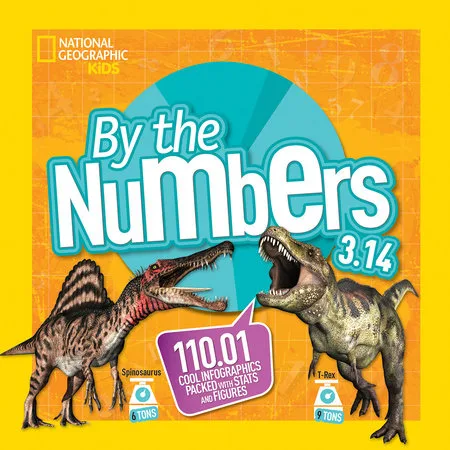 Mathical Honor BookBy The Numbers 3.14: 110.01 Cool Infographics Packed with STATS and FiguresNational Geographic KidsBy the Numbers 3.14 is a collection of infographics that turns statistics, measurements and records into pictures. More than a hundred illustrated spreads use graphs, pie charts, word clouds, maps, comparative images and photography to make very large or very fast numbers concrete: 318,979,564,000 ways to play the first four moves of a chess game, or 500 beats per minute for a hummingbird's heart. The subjects range from science and technology to nature, wildlife, sports and television, so the numbers are attached to things readers already recognise. Short question-and-answer features introduce people who work with numbers, such as computer programmers and data artists. The square-format book is designed to be browsed rather than read straight through, and National Geographic Kids published it in 2017.Grades 3–5Lexile Text Measure IG890LFountas & Pinnell Text Level TView book details
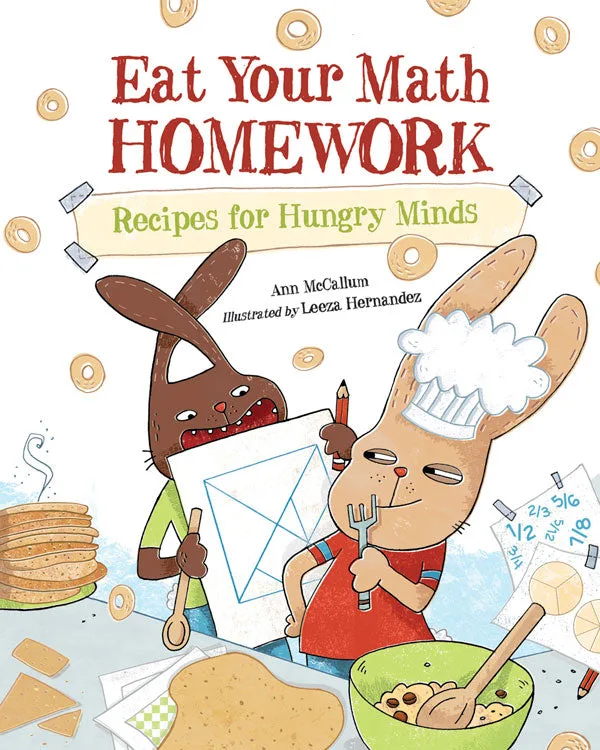 Mathical Honor BookEat Your Math Homework: Recipes for Hungry MindsAnn McCallum, illustrated by Leeza HernandezThis collection of recipes and math facts invites young readers into the kitchen to explore mathematical ideas. It opens with an introduction to kitchen safety, then presents a main text covering concepts such as probability, Fibonacci numbers, tessellations, and variability, followed by six kid-friendly recipes. The recipes include Fibonacci Snack Sticks, Variable Pizza Pi, and Milk and Tangram Cookies, several of which come with additional food activities. Each dish is paired with explanations of the mathematics behind it, so that patterns in nature, geometry, and number sequences show up in everyday cooking. The book is written for readers roughly seven to ten years old and is intended for use at home or in the classroom.Grades 3–5Lexile Text Measure 910LATOS Book Level 6.2View book details
Grades 6–8
3 selections
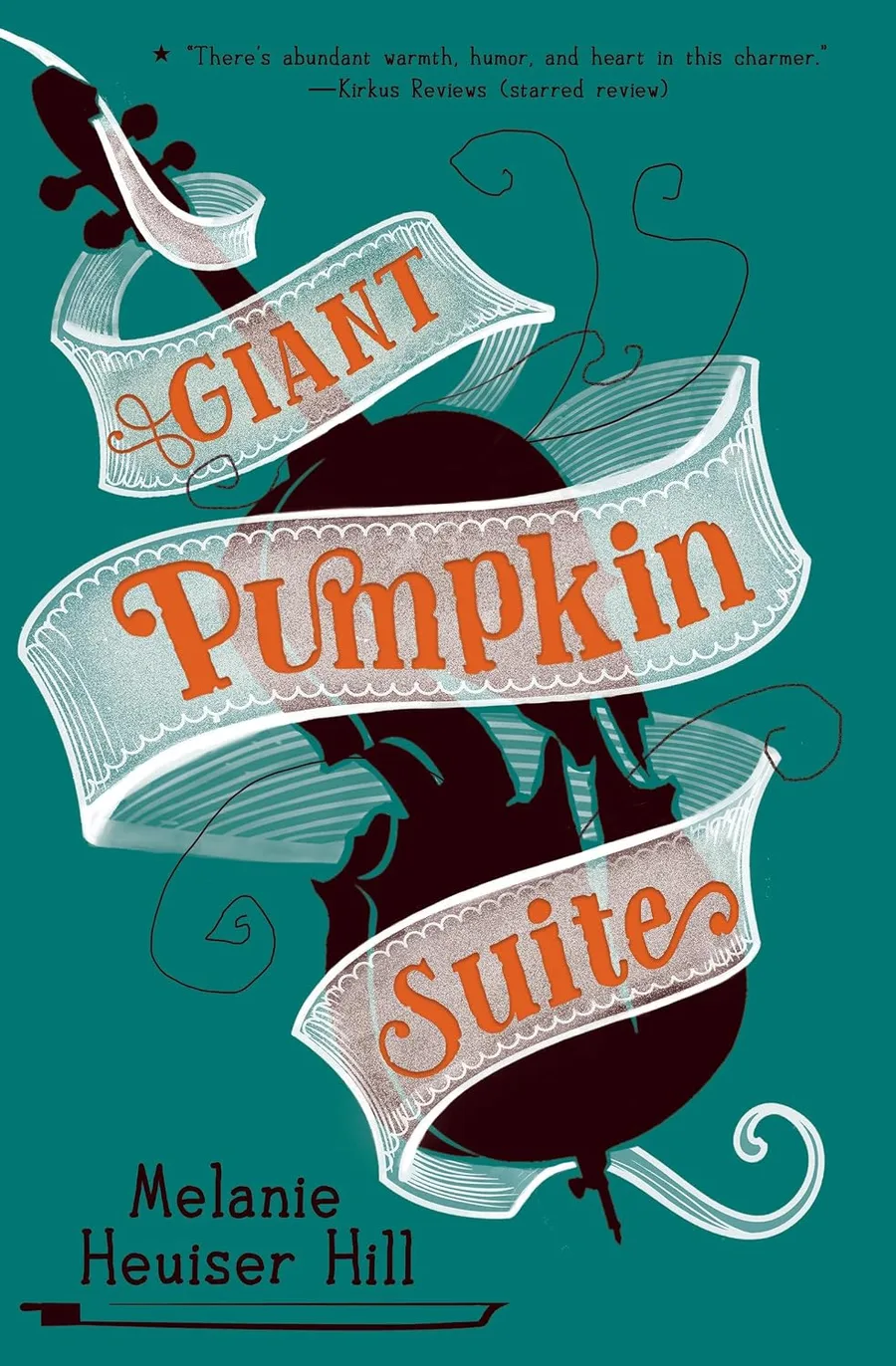 Mathical Honor BookGiant Pumpkin SuiteMelanie Heuiser HillTwelve-year-old Rose Brutigan has grown seven inches in the last eight months. She has always been different from her twin brother, Thomas, but now she towers over him in too many ways, and the gap in their interests keeps widening. Musically talented Rose is focused on winning the upcoming Bach Cello Suites Competition, while happy-go-lucky Thomas has taken up the challenge of growing a giant pumpkin in the yard of their elderly neighbor, Mr. Pickering. When a serious accident changes the course of the summer, Rose is forced to grow and change in ways she never could have imagined. Along the way there is tap dancing and classic musicals, mail-order worms and neighborhood-sourced compost, fresh-squeezed lemonade, the Minnesota State Fair, and an eclectic cast of local characters.Grades 6–8Lexile Text Measure 700LATOS Book Level 5.0View book details
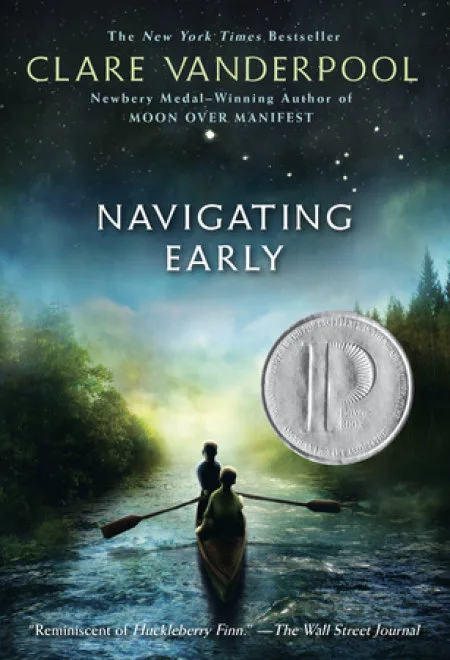 Mathical Honor BookNavigating EarlyClare VanderpoolSet just after World War II, this middle-grade novel follows Jack Baker, whose father sends him from his home in Kansas to a boys' boarding school in Maine. There he meets Early Auden, an eccentric classmate who reads the digits of pi as a story and refuses to accept truths that other people take for granted. Lonely and out of place, Jack connects with Early, and during a break from school the two boys set out along the Appalachian Trail in search of a great black bear. Their journey brings them into contact with peculiar and dangerous characters and leads them toward difficult discoveries about themselves and their families. The book combines an odyssey-like adventure with mathematical thinking, as Early's reading of pi runs alongside the boys' quest, and it explores friendship, loss, and perseverance. Clare Vanderpool is also the author of the Newbery Medal-winning novel Moon Over Manifest.Grades 6–8Lexile Text Measure 790LATOS Book Level 5.2View book details
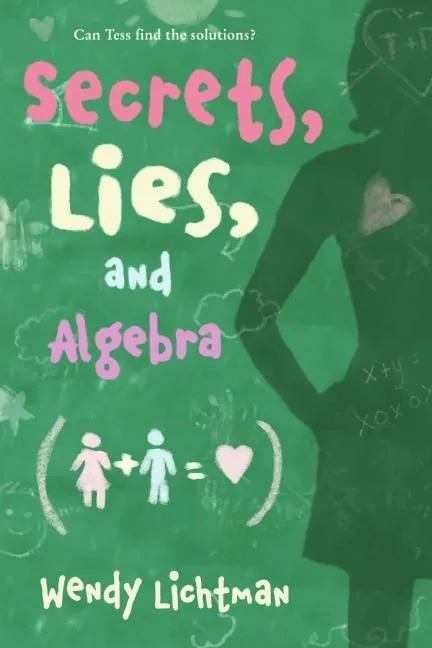 Mathical Honor BookSecrets, Lies, and Algebra (Do the Math #1)Wendy LichtmanTess is an eighth grader who loves mathematics and uses algebraic ideas such as axioms, theorems, and the number zero to make sense of her life. In this first book of the Do the Math series she discovers how much both math and life can change in eighth grade: friendships shift, the social order at school becomes harder to read, and she has her first crush. When a family friend dies under mysterious circumstances and she witnesses a cheating episode at school, Tess has to think about injustice and ethics and decide whether staying silent is really the safest choice. The novel follows her attempts to apply mathematical reasoning to problems that have no simple solution and to work out which principles she can rely on while her own life keeps changing.Grades 6–8ATOS Book Level 5.9AR Interest Level MG+View book details
Grades 9–12
1 selection
Hall of Fame
1 selection