
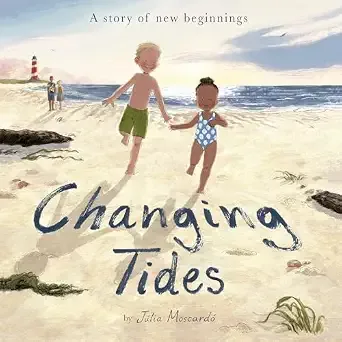
 Changing TidesJúlia MoscardóA newly blended family ventures to the beach together for the first time in this understated story. Lula (Black) is not so sure about sharing the trip with Simone and her son, Theo (white). Lula chafes a little when Theo hands her beach toys to her dad to load into the car, but she cheers up in the car and loves Simone’s suggestion that she and Theo build a sandcastle on the beach. Lula gets right to work but is soon frustrated by the waves’ encroaching on her sandy structure. That’s when Theo offers a helpful suggestion. “What if you add a moat? I can help you dig one.” Two wordless pages show Lula watching carefully as Theo digs a moat around her castle. It works! “But something is still missing.” Theo collects a variety of colorful shells from the shallow water and hands them to Lula so that she can decorate the walls. The finished castle is a thing of beauty. They show their parents… and then a wave crashes in, washing it away. Like any sweet big brother, Theo is reassuring. “It’s okay… Tomorrow we’ll make another sandcastle, taller, stronger, and prettier!” This snapshot of a couple of days in the life of a new family is quiet, satisfying, and refreshing in that it doesn’t feel the need to show a sibling struggle before the children have a unifying experience.Picture BooksView book details
CCBC Choices 2026
An annual selection from the Cooperative Children's Book Center professional library team.
CCBC Choices 2026See the original list
Selections231
Published byCooperative Children's Book Center, University of Wisconsin–Madison
Sections13 sections
Browse sections13 sections
Picture Books
21 of 66 selections on this pageContinued from page 2
Changing TidesJúlia MoscardóA newly blended family ventures to the beach together for the first time in this understated story. Lula (Black) is not so sure about sharing the trip with Simone and her son, Theo (white). Lula chafes a little when Theo hands her beach toys to her dad to load into the car, but she cheers up in the car and loves Simone’s suggestion that she and Theo build a sandcastle on the beach. Lula gets right to work but is soon frustrated by the waves’ encroaching on her sandy structure. That’s when Theo offers a helpful suggestion. “What if you add a moat? I can help you dig one.” Two wordless pages show Lula watching carefully as Theo digs a moat around her castle. It works! “But something is still missing.” Theo collects a variety of colorful shells from the shallow water and hands them to Lula so that she can decorate the walls. The finished castle is a thing of beauty. They show their parents… and then a wave crashes in, washing it away. Like any sweet big brother, Theo is reassuring. “It’s okay… Tomorrow we’ll make another sandcastle, taller, stronger, and prettier!” This snapshot of a couple of days in the life of a new family is quiet, satisfying, and refreshing in that it doesn’t feel the need to show a sibling struggle before the children have a unifying experience.Picture BooksView book details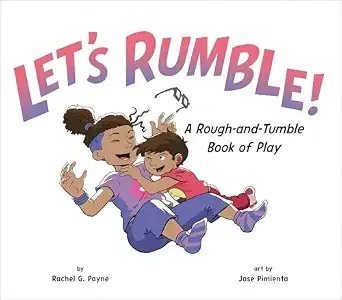 Let’s Rumble: A Rough-and-Tumble Book of PlayRachel G PayneClear pencil-and-ink drawings with bright digital coloring inspire activity in a book that intentionally encourages physical play. Straightforward dialogue between a parent and two children (brown-skinned) and corresponding illustrations depict imaginative rough- housing in a home setting. “Earthquake!” “Wrecking Ball!” “Rolling Pin!” and “Doughnut” are a few of the expressions and wrestling-style moves enacted by the parent and a younger child who uses a hearing aid. When an older sibling wants to join in, the need for a code word is explained so that the play remains safe and fun for all. Occasional full- page illustrations convey the make-believe scenarios, such as when the parent dogpiles on the kids in a “sandwich” move (an animated picture shows the parent lying on the supine siblings amidst the layers of a bread, cheese, lettuce, and deli meat sandwich). For families familiar with creative physical play, this book might offer some new moves or reminders about safe boundaries. For novice wrestling families, the book suggests easy ways to engage in silly, consensual, full-body play.Picture BooksView book details
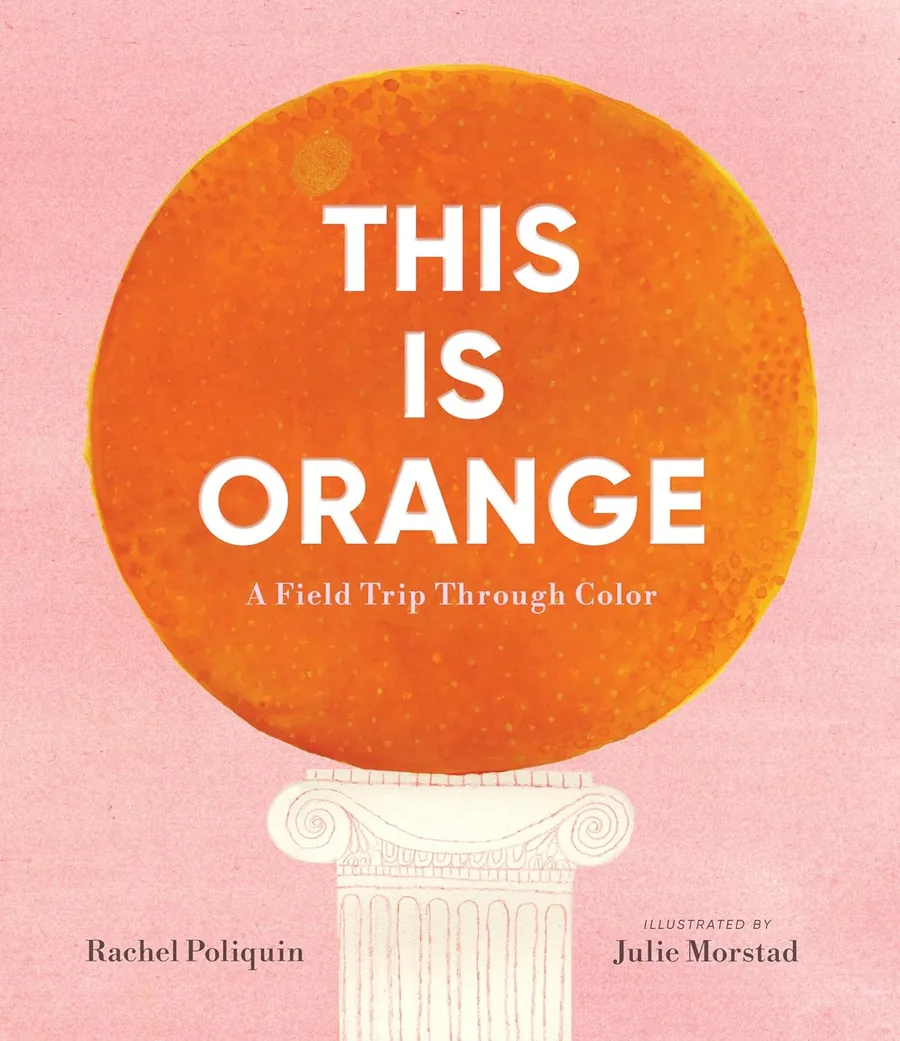 This Is Orange: A Field Trip Through ColorRachel Poliquin, illustrated by Julie MorstadUsing a curious and conversational tone, the author offers readers an exploration of the color orange, including its naming, creation, and use. The mineral realgar, for example, was used to make an orange pigment, and the orange mineral crocoite led to the discovery of the element chromium. Remarkable tidbits are balanced with more child-centered observations (“Artists can make their own orange by mixing red and yellow paints.”). On a double-page spread that shows a child viewing an oil painting, the text reads, “This painting is called Orange and Yellow. It is by Mark Rothko, and it is very large. If you stand close enough, you might feel absorbed into its orange glow.” From paintings to space suits, and from monarchs to marigolds, Poliquin’s curated field trip invites readers to consider the color orange in their own worlds.Picture BooksATOS 4.7AR interest Lower Grades (LG K-3)View book details
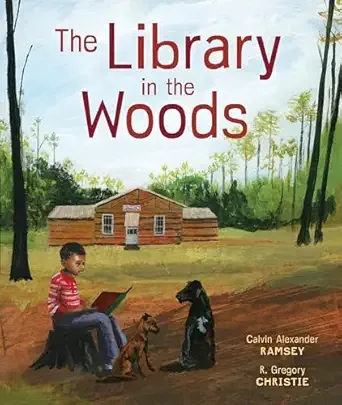 The Library in the WoodsCalvin Alexander RamseyMoving to Roxboro, North Carolina, in 1959, a Black boy is introduced to the unexpected pleasure of a library. After bad weather ruins his crops two years in a row, Junior’s father moves the family to the city, where Junior is impressed by his new friends’ televisions and books—“and I do not mean schoolbooks.” They read books for fun, books that they check out at the library. While public libraries are segregated, this African American community has its “own library” in a log cabin in the woods. To Junior, the collection is astounding, not least for the number of Black authors it includes. He checks out three books: for himself, his mother, and his father. Daddy sits on the porch with his book every night. When it comes time for the books to be returned, Junior’s mom tells him “something important”: His father can’t read. She suggests Junior read aloud to him. “Your daddy taught you [how to swim and fish] with love and kindness, and that is how you will read his book to him.” Junior is hesitant, but as he reads aloud to his father, he notices joyful tears in Daddy’s eyes. Based on the library the author grew up visiting, this book concludes with a wonderful Author’s Note describing the importance of that library and the culture of literacy cultivated by its librarian. Soft acrylic paintings in a muted palette punctuated by swaths of cheerful gold further help situate the reader in time.Picture BooksView book details
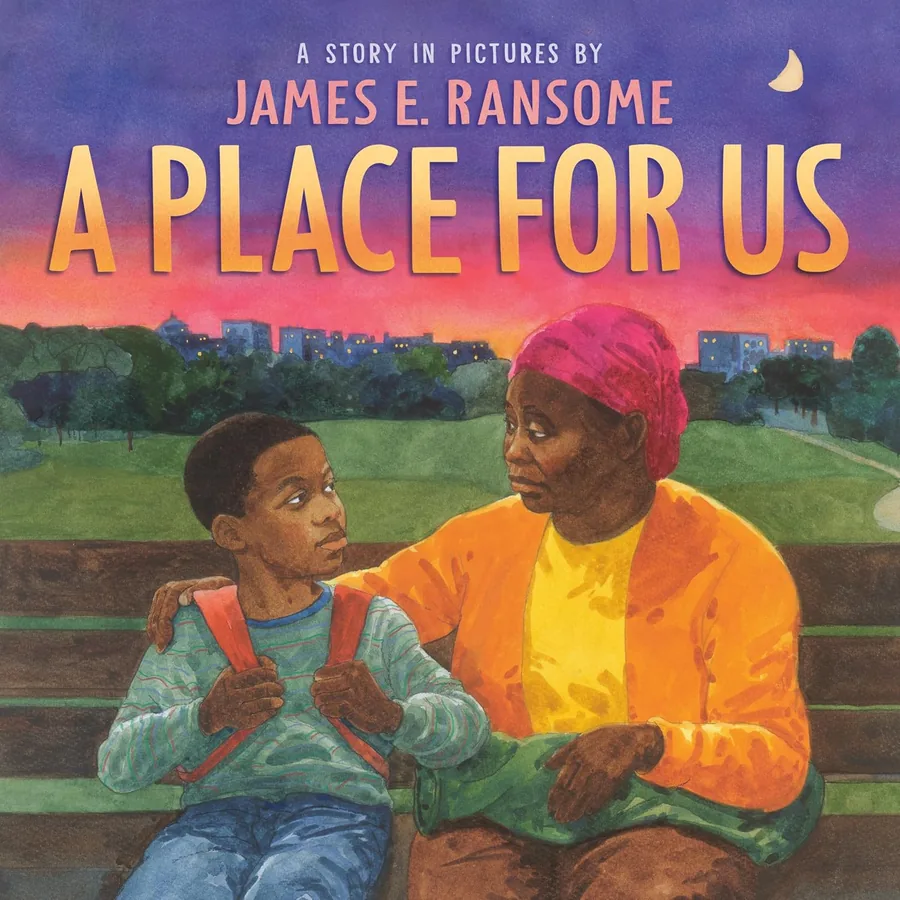 A Place for UsJames E. Ransome, illustrated by James E. RansomeA powerful, wordless narrative illustrated with lush watercolor and colored pencils focuses on a mother and son (both Black) and their daily routine. The mom meets her son after school, they have dinner at a food court, and then they spend the evening at the public library, where the mom reads while her son does his homework. When the library closes, the parent and child walk to a park where they will spend the night on a bench. The mom stays alert, making sure they are safe, while providing a warm and comforting spot for her son to rest his head. In the morning, they get dressed and brush their teeth using a water fountain, and the routine comes full circle when the mom drops her son off at school. The realities of their life are presented as a matter of fact, without objectification or overt messaging, but not without emotion. The book succeeds in part because the story is less about the circumstances of the mother and son and more about their relationship, which is clearly one of closeness and care.Picture BooksView book details
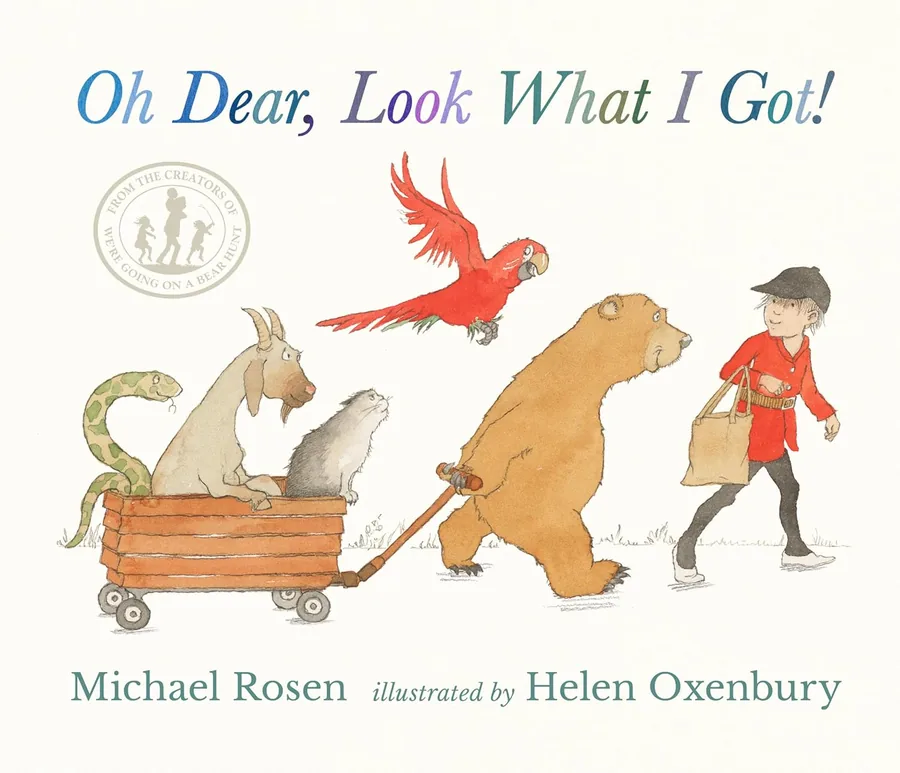 Oh Dear, Look What I Got!Michael Rosen, illustrated by Helen OxenburyA child’s shopping misadventure is built on repetition and rhyme, with page turns that are sure to provoke eager predictions by child listeners. “I went to the shop to get me a carrot. Oh dear, they gave me … [page turn] a parrot!! Oh dear, look what I got! Do I want that? No, I do NOT!” A menagerie of purchases follows: Instead of a hat, they get a cat; instead of a coat, they receive a goat; and so on. The animal medley mounts until a wriggly pup “chased the bear, that stepped on the snake, that hissed at the goat, that butted the cat, that startled the parrot” and bedlam ensues. A knock at the door admits the adults who brokered the original sales, and who now help to round up their respective creatures before walking off in pairs on the end papers. The patterned text and watercolor illustrations impart an old- fashioned sensibility with timeless appeal.Picture BooksATOS 1.1AR interest Lower Grades (LG K-3)View book details
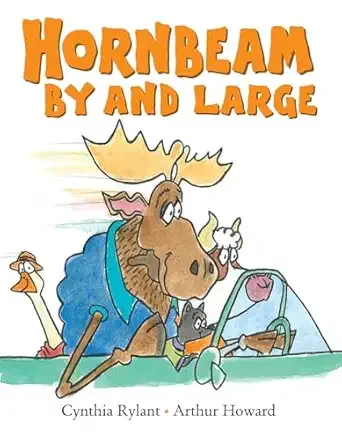 Hornbeam By and LargeCynthia RylantAffable moose Hornbean returns with friends Cuddy, Eureka, and Adorabelle for a third book in the series. Understated humor is perfectly matched with cheerful colored pencil and watercolor illustrations in these short stories. In the first, Hornbeam attends a swap meet with Eureka, where he trades an old badminton racket for a “Best Listener” trophy. In the second story, Adorabelle invites Hornbeam to play on her volleyball team, and after an antler-net entanglement, the game ends in a draw with waffle cones for all. Lastly, the whole gang attends Cuddy’s birthday party at Adventure World. While their exploits are often over-the-top, Hornbeam and company exhibit down-to-earth, affirming attitudes.Picture BooksView book details
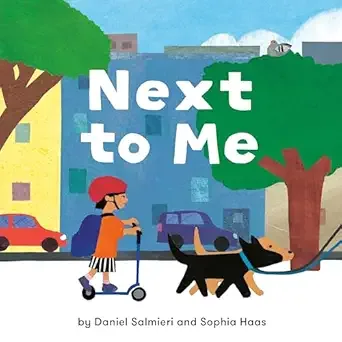 Next to MeDaniel SalmieriA series of familiar people and objects leads the brown-skinned narrator through their afternoon routine in this cheerful story. Running down the steps after school, the child is greeted by their mom and dogs. “I see PEPPER / Next to PEANUT / Next to MAMA!” Walking home through their urban neighborhood, the child observes big and small details. Looking down, they see a chalk drawing next to tiny plants in the sidewalk cracks, and in the sky there’s “a PUFFY CLOUD / Next to an AIRPLANE.” Childlike descriptors are used (“spinny clothes” at the laundromat, “big kids” playing basketball, the “big hole” of a construction site), and occasional happy exclamations break up the list of sights (“Let’s go!” “We’re home!” “Yum!”). When they get home, there’s Papa cooking dinner (“BROCCOLI / Next to NOODLES / Next to DUMPLINGS”). Then it’s time for bath and a bedtime story, where “cozy in my bed / I feel SOFT / Next to SOFT / Next to SOFT.” Colorful, appealing paint-and-collage illustrations depict an after-school routine that will be recognizable to many readers.Picture BooksView book details
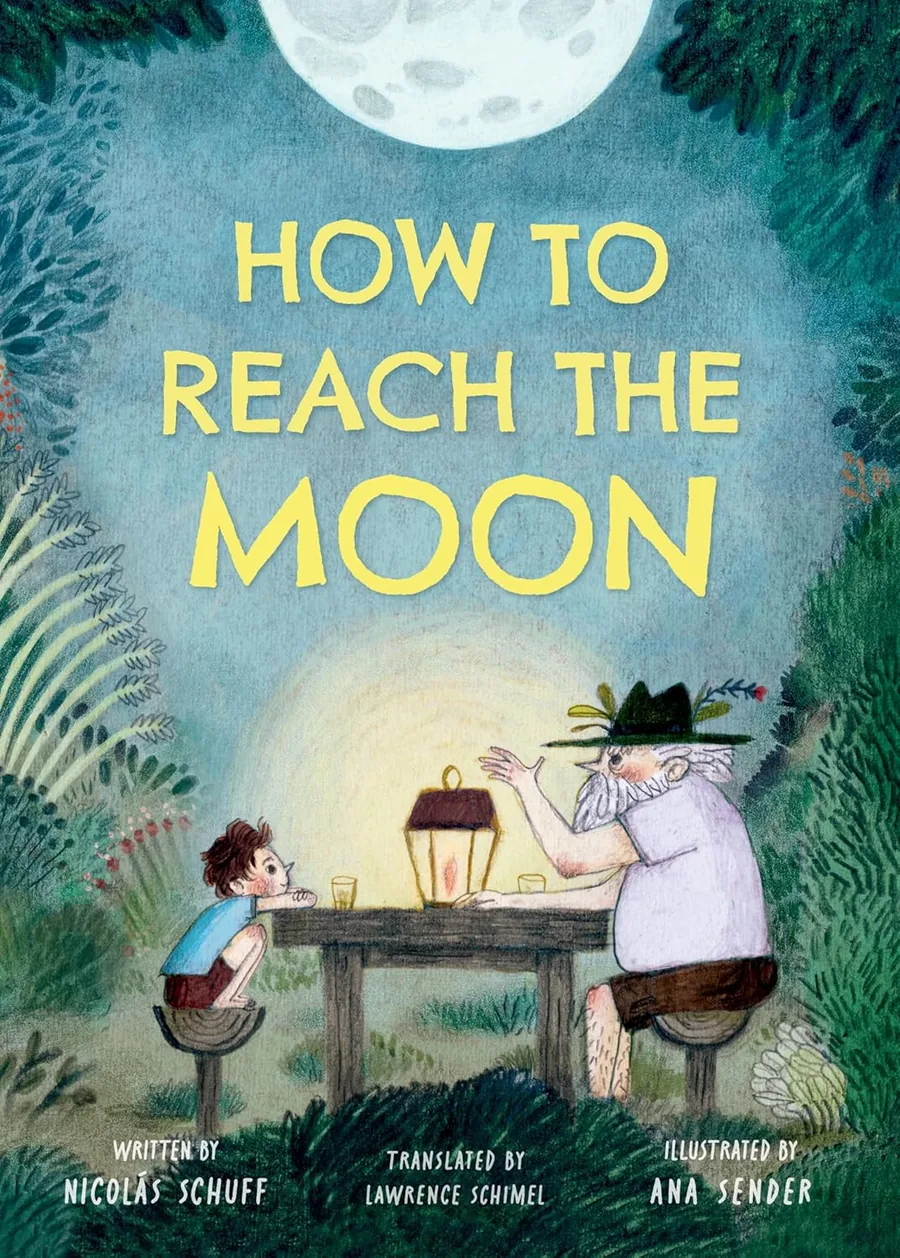 How to Reach the MoonNicolás Schuff, illustrated by Ana Sender, Lawrence SchimelIn the summer, Emilio (Latine) leaves the city and travels past a landscape of pointed mountains to the forest, where his abuelo lives in a house among the trees. There they eat dinner outside by lantern light, and afterward, in the dark, Abuelo treats Emilio to fantastical stories. Seeing the moon in the sky one night, Emilio asks whether it is “true that the moon has a face we never see.” In fact, it “has many faces!” says Abuelo. Would Emilio like to meet the moon? “I would love to.” Abuelo leads his surprised grandson on a journey through the woods, where “plants caress their legs and arms,” and where Emilio imagines himself and his grandfather as animals. They reach the edge of a ravine, and Emilio sees the moon reflected large and silver in the water below. “Ready for takeoff?” Abuelo takes Emilio’s hand; they run and run and “WHOOP! They leap and fly through the air, howling and flailing their arms with joy, and they land right in the middle of the moon in the lagoon.” After a good swim, they build a campfire and sleep beneath the stars. This beautifully translated work feels imbued with otherworldly magic. The special summer setting, Emilio’s lively imagination, and Abuelo’s playful, spontaneous spirit make for a warm and enchanting reading experience.Picture BooksView book details
 Freya and the SnakeFredrik SonckFreya and her family are spending the summer in the Åland islands. When she and her siblings spot a snake sunning itself on the beach, Freya is delighted and names it “Snakey.” Her parents, concerned about Freya’s toddling baby brother getting bitten, are alarmed. Her father reads a book to learn how to safely capture a snake, but when he attempts to catch the snake with a stick and bucket, he is comically unsuccessful. The mother then suggests that he find a less sentimental way, and in a quick succession of events and page turns, he clubs the snake to death with an old oar. Freya is distraught. “SNAKE MURDERER!” she yells. She mourns the death of Snakey and is outraged by her father’s violence. She stays angry, unable to forgive him even as the rest of her family moves on and enjoys ice cream together. This Nordic picture book bluntly addresses issues of death, violence, and animal rights while also keeping the story firmly child centered. Freya’s raw emotions are as much about Snakey as they are about the human fallibility of her father. Following a moment of repair and reflection between Freya and her father, the sad story of Snakey is laid to rest, with Freya getting the final word.Picture BooksView book details
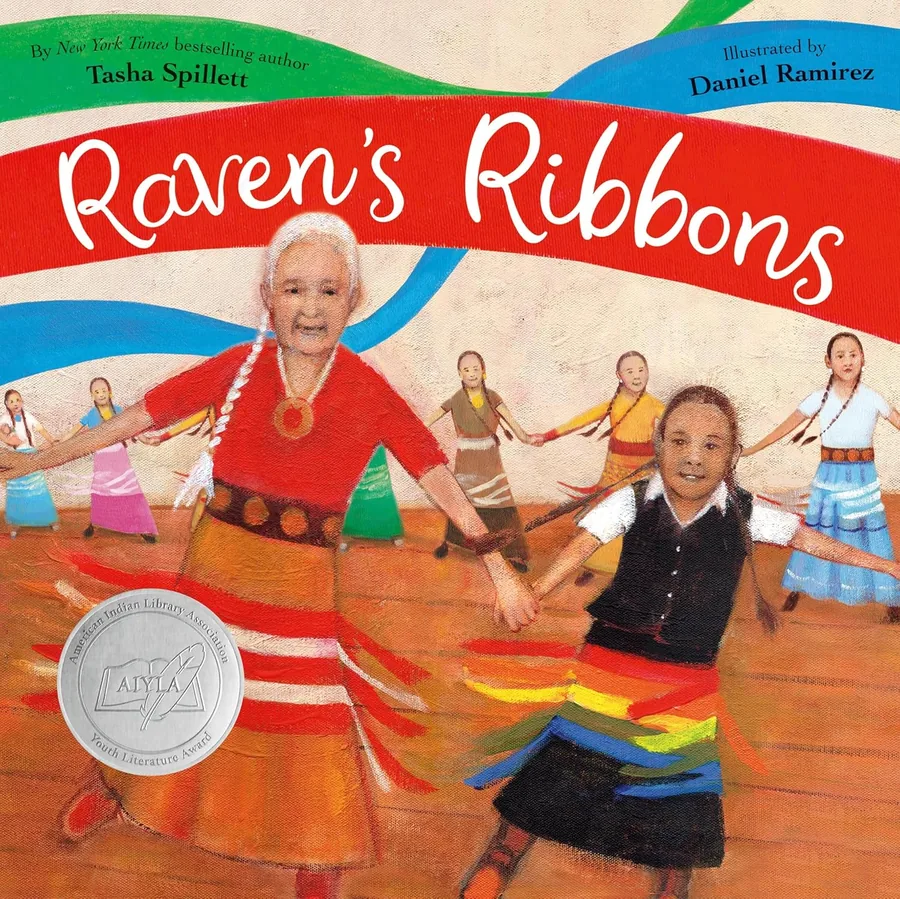 Raven’s RibbonsTasha Spillett, illustrated by Daniel Ramirez“Boom-boom. Shuffle-shuffle.” Raven loves taking part in round dances, holding his grandma’s hand as “round and round they go” with other members of their Indigenous community. Raven especially admires the vibrant ribbon skirts worn by girls and women. Many of them were sewn by his grandmother, the colors carefully chosen for each individual. “Like people, no two skirts are the same.” One day, Raven ventures to ask his grandmother whether a boy could wear a ribbon skirt. Nohkum squeezes her grandson’s hand, pauses, and answers honestly. “I’ve lived for a long time, Nosesim, and have never seen a boy in a ribbon skirt.” As Raven sleeps that night, Nohkum is hard at work at her sewing machine; the next morning, she rouses Raven to present him with “the most beautiful rainbow. His very own ribbon skirt.” “I’ve lived for a long time, Nosesim,” she says, “and I’m lucky to see beautiful things that I’ve never seen before.” At the next round dance, Raven is the first to hit the dance floor, proudly “leading the way” in his new ribbon skirt. As stated in the Author’s Note, this gentle story of belonging and acceptance “honors the imperative of prioritizing our people over rigid cultural protocols.” Raven trusts Nohkum to see his whole, unique self, and Nohkum thoughtfully makes space for him. Soft acrylic paintings depict colorful ribbons flowing through Nohkum’s skilled hands, connecting individuals through a shared dance.Picture BooksATOS 3.0AR interest Lower Grades (LG K-3)View book details
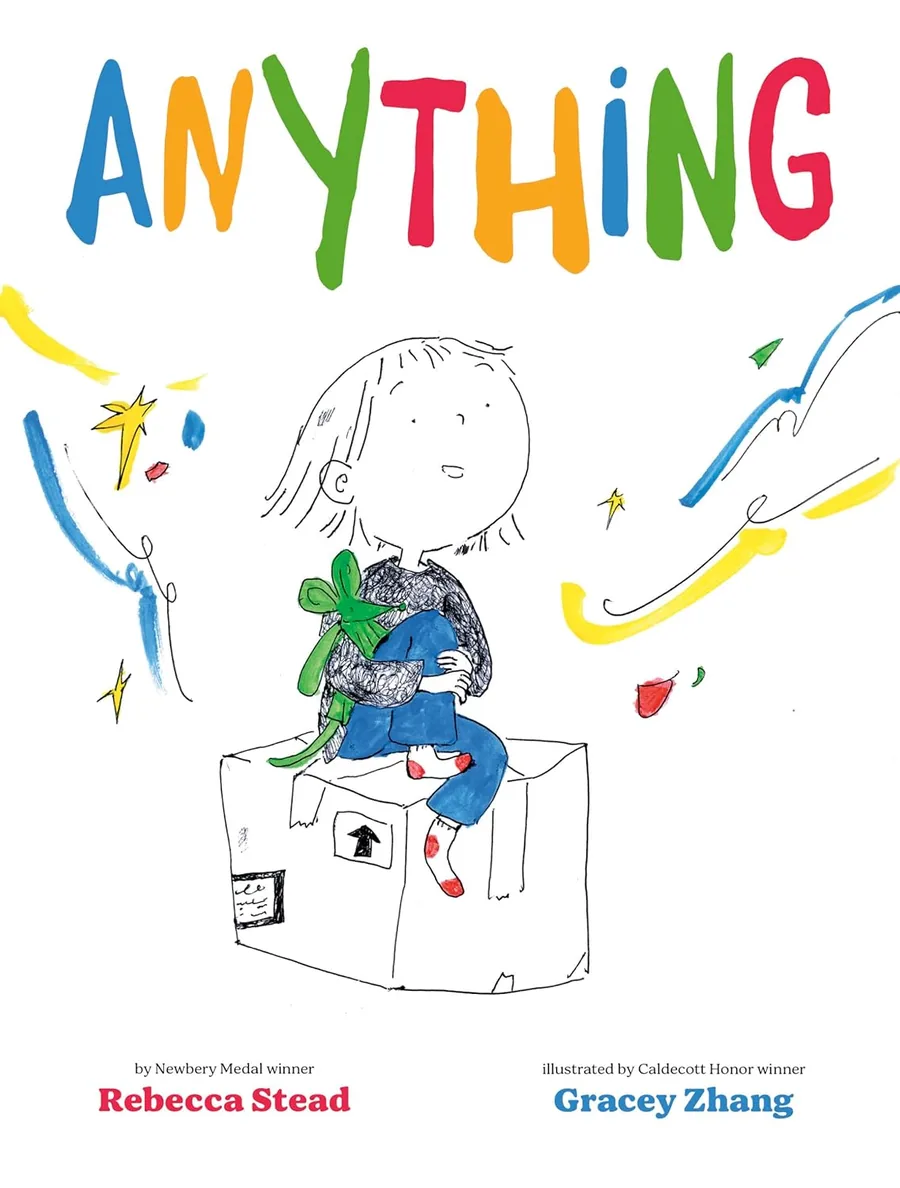 AnythingRebecca Stead, illustrated by Gracey ZhangA thoughtful father eases a tough transition for his young daughter. On the day the narrator and her dad move into their new apartment, Daddy makes a cake with one candle (for the apartment’s birthday) and tells his daughter to make a wish—for anything. Three anythings, in fact. “I can wish for very hard things. But Daddy didn’t look scared.” As they go about their day unpacking and visiting the nearby playground, the girl wishes for many things in her heart: that the slide were not so tall, that the apartment didn’t smell like paint, and that they hadn’t had to move at all. To Daddy, she wishes for a rainbow in her room (he paints one), pizza for dinner (granted), and to skip her bath (done). Waking up in the middle of the night, she asks Daddy for one more wish: to go home. “Daddy opened his arms. ‘All aboard the train to home!’” Around the apartment they walk, talking occasionally; Daddy’s repeated reassurances that the trip is a long one, and that he’ll be carrying her “for a long time still” are comforting. The trip ends with the narrator tucked safely into bed, and in the morning, Daddy has a new favorite breakfast ready for her. Scribbly black line drawings show Daddy and the narrator with paper-white skin; bright, rainbow colors fill in objects here and there. Touching without being too sweet, this gentle story depicts a dad who knows his daughter—and what she needs—well.Picture BooksATOS 2.3AR interest LG K-3View book details
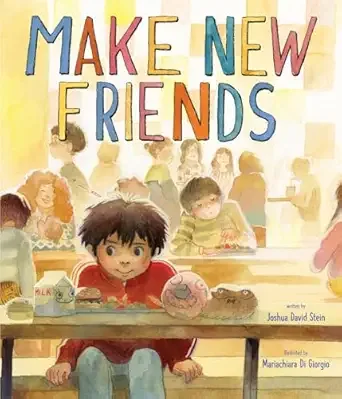 Make New FriendsJoshua David SteinMaking friends at a new school is no easy feat, so one boy gets creative. At recess, Tomasso (white) finds himself alone—until he finds a couple of old playground balls. He draws eyes on them and christens them Roland and Barry. That night, when his dad asks if Tomasso made new friends, Tomasso says, “Not yet, Dad…” Over the next few weeks, Tomasso’s posse of friends expands to include Coco, a carton of milk; Ms. Take, an eraser; Henny, a paper bag; and other friendly objects. When his dad again checks in, Tomasso says he has made some friends—and “his dad’s face lit up like a lamp.” Before Tomasso knows it, his dad has cheerfully planned a pizza night for his son and his new friends. When the day arrives, Tomasso nervously arranges his inanimate pals at the table while his dad picks up the food. His dad’s exuberant greeting upon his return is followed by a “silence as loud as thunder” when he sees his son’s “friends.” Tomasso’s anxious anticipation stretches across several pages, his cheeks burning as his father gathers himself. And then, “his dad’s face broke into a big wide Dad smile.” He pulls Tomasso in for a hug and joins in the pretend play. “You must be Roland!” At the heart of this tender story is the supportive, loving relationship between resilient Tomasso and his single father, both of whom are making the best of a challenging transition.Picture BooksView book details
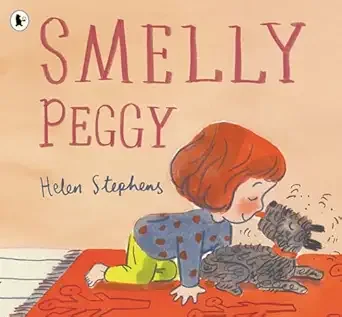 Smelly PeggyHelen StephensPie, the narrator of this rollicking picture book, introduces the reader to their rescue dog, Peggy, a curly-haired thing not much bigger than a loaf of bread. “What do you think of her? Do you think she looks nice? Well, she’s not. She’s naughty.” In fact, Peggy’s naughtiness knows no bounds. In the morning, Mom gets “an extra-slobbery lick,” and Dad gets the other end—dog butt to the face—before Peggy makes off with Mom’s underwear. But there’s more. “So, when we first got Peggy, she didn’t even know what a stick was. And now? She LOVES sticks.” What does she do with them? Mows down her family as she runs past with an extra-large one. “PEGGGY!” Of course, there’s also the habit that results in Peggy’s titular moniker: She loves to roll in smelly things, especially “POOP! Rabbit poop, seagull poop, all the poops! Can you believe it? SMELLY PEGGY!” Once Peggy is sufficiently stinky, she brings the odor home and rubs it all over the carpet before being forced into the bathtub (to be followed by “the big shakedown”). “But do you think we love her? Do we? Of course we do! No one is perfect.” It’s impossible not to laugh at the protagonist’s eager, childlike voice. Despite the complaining, Pie’s love for Peggy is obvious. Appealing crayon- and-watercolor illustrations depict Pie with light skin and red hair, and carefree Peggy with irresistibly cute charm.Picture BooksView book details
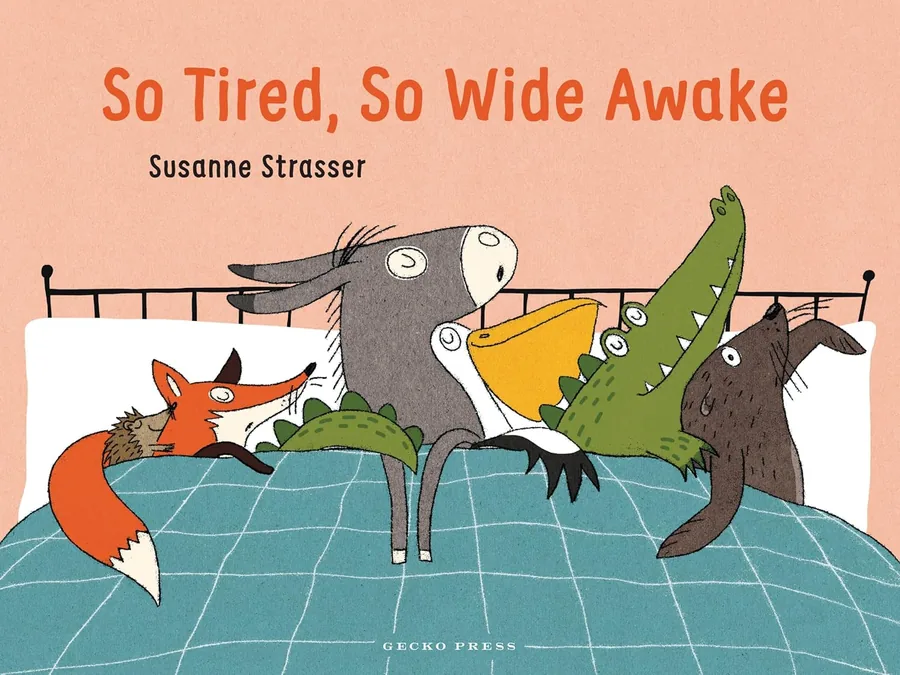 So Tired, So Wide AwakeSusanne Strasser“It’s time for bed,” and most of the animals tucked snugly side-by-side in their large, shared bed “are SO tired.” But not Seal. “Seal is wide awake. … Flip flap, flip flap.” He makes his way to the bathroom. “Door open, door shut.” On the next page, everyone is snoozing but for Crocodile, her eyes wide, tail clenched anxiously between her teeth—which she has forgotten to brush! “Sciff, scuff, sciff.” To the bathroom she goes. And so goes the pattern, with the animals waking one by one and getting out of bed to take care of one task or another. The varying sounds of their feet are heard (“Flitch flotch … trippity trapp … pit, pat … tip, tip, tip”), followed by the opening and closing of the door, until finally even little Hedgehog, afraid to be left alone, gets out of bed. She joins her companions, who have gathered in the bedroom of a sleeping child (white) for a goodnight kiss. They pile on the bed to sleep, waking the child up. All of a sudden—“What a stink! Who did that?” The animals flee the smelly room, leaving the child (one eye open, a sly smile on their face) happily alone again. “Door open … Eyes shut.” A satisfying pattern, comically sweet illustrations, and a funny surprise make this simple board book a standout.Picture BooksView book details
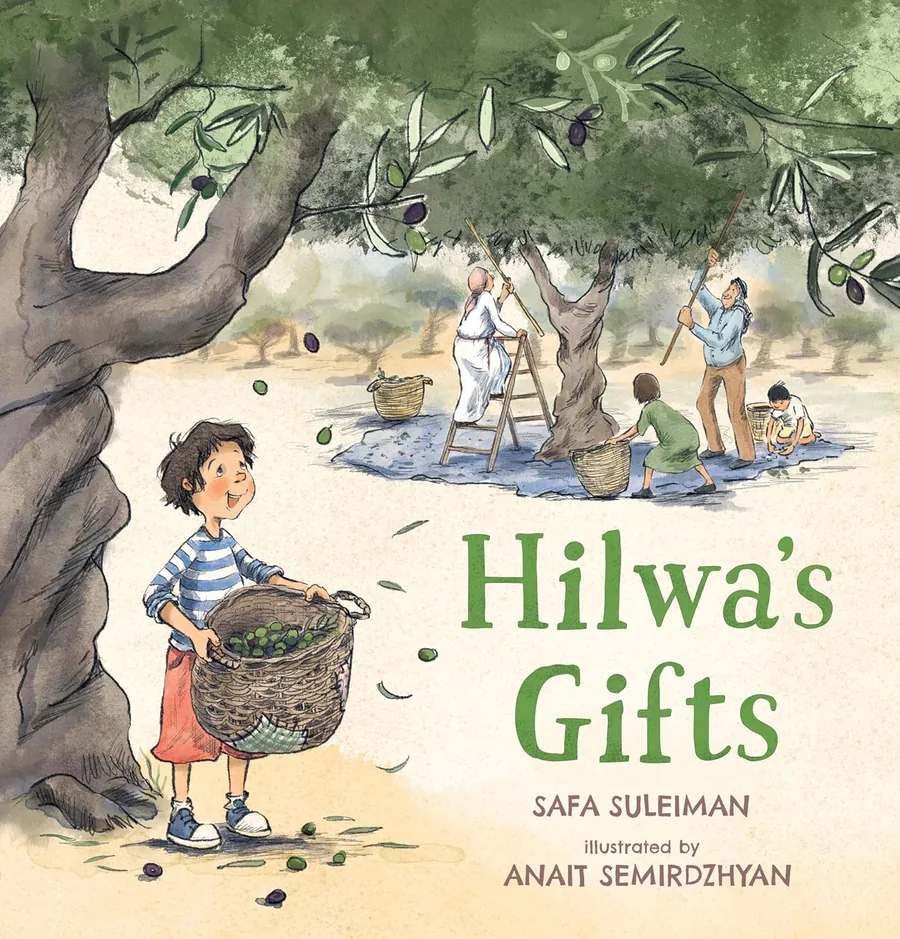 Hilwa’s GiftsSafa Suleiman, illustrated by Anait SemirdzhyanA boy visiting his grandparents in Palestine experiences the bounty of an olive harvest for the first time. Ali is especially fond of a mature olive tree he calls “Hilwa,” which Seedo (his grandfather) planted with his grandfather. Ali loves Hilwa so much that he first insists on harvesting her olives by hand rather than using the more efficient—but alarming!— method of hitting her with a stick to make the fruit fall. He changes his mind, though, when he realizes how quickly the fruit falls with a good whack. There are so many olives, and that’s not the only gift that Hilwa gives. Seedo takes Ali along to the olive press, where the grinding machine produces fresh oil to eat and for making soap, and pulp to kindle fires for bread. Together the family cooks and enjoys a meal under the trees to celebrate the harvest. “And that’s the greatest gift of all.” This Palestinian family’s love of the land and appreciation for nature’s gifts, combined with appealing behind-the-scenes details of olive processing, make this story both joyful and fascinating.Picture BooksView book details
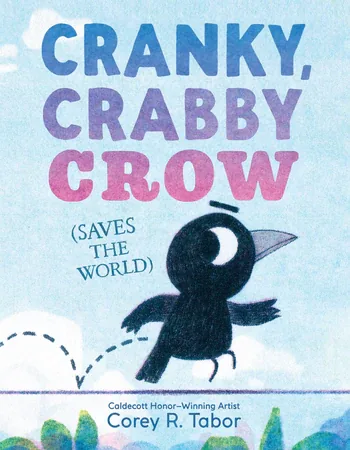 Cranky, Crabby Crow (Saves the World)Corey R. Tabor, illustrated by Corey R. TaborCrow, sitting on his telephone wire, repeatedly turns down various animals who approach him wanting to play with a loud “KAW!” Having successfully chased off Squirrel, Hummingbird, Rat, Bat, and even Cat, Crow hears a “RING-RING RING-RING” behind him. Answering the phone attached to the telephone pole, he assures whoever’s on the other end that he has “cleared the area.” “Good,” the voice replies. “It’s time. And we don’t have a moment to spare!” Crow leaps into action, getting on an elevator concealed within the pole and descending to a small complex of rooms. He dons a spacesuit and fires up a rocket that bursts out of the top of the pole and into space, where a giant asteroid is hurtling toward Earth. Crow employs missiles and lasers, blasting the asteroid into tiny bits before returning home. Soon, the same animals again approach, this time with invitations from Crow. They line up together and wait. It’s getting dark. Then—“Wow!” “Shooting stars!” “Purrfect.” “And Crow? Crow says nothing. But what’s that? Is Crow smiling? Nah, it couldn’t be.” Crow’s heroic mission comes as a delightful plot twist at a point when his story appears headed towards a didactic message about manners. A comic style and page layout culminate in a cinematic close-up of Crow as he breaks the fourth wall with a cheeky wink at the reader.Picture BooksATOS 1.8AR interest LG K-3View book details
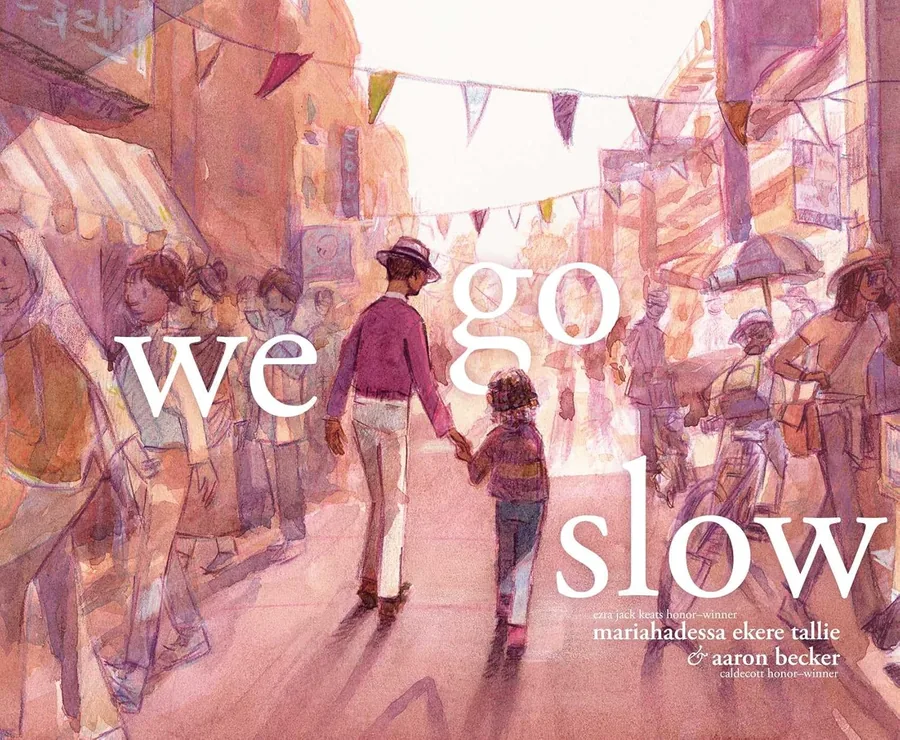 We Go SlowMariahadessa Ekere Tallie, illustrated by Aaron BeckerAs the rest of the family rushes out the door wearing sports uniforms and work scrubs, a Black girl and her grandfather indulge in a quiet breakfast together at home before heading out into the city where “palms of light… wave us outside.” “We go slow” is the refrain setting the pace of their day as they wander mindfully, taking in the sights: flowers, chalk drawings, soft fabrics for sale outside a store. They join “a busy, buzzing line” for “bright, bold slices of ripe sunshine” sprinkled with chili powder and lime. They stop for cups of chai, wander through a park, and watch artists painting the brick wall of a building. As the sun begins to set, they make their way home hand in hand. Soothing and meditative, this gentle story with lyrical text is awash in softly blurred watercolor and colored-pencil illustrations.Picture BooksView book details
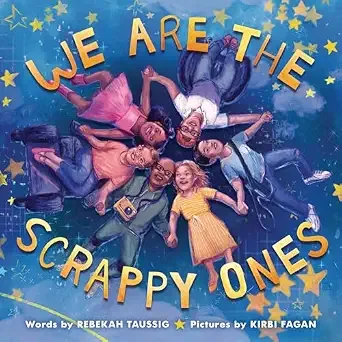 We Are the Scrappy OnesRebekah TaussigThis purposeful, affirming book about disability concretely addresses some of the realities of being disabled in our society. Vibrant, warm illustrations created with pastel, colored pencils, collage paper, and pen tablet depict a range of smiling, playful children in real and imagined settings, along with their family members and others. Double-page spreads show a wide variety of visible and invisible disabilities, adaptive aids, and mobility or medical devices. The text celebrates the minds and bodies of children with disabilities while also validating challenges, like existing in a “world that wasn’t built with us in mind. A world starved for creativity and flexibility.” While most of the text is intentionally upbeat, there is honest acknowledgment of the hardship: “All of this—this living, this adapting, this defying—can be exhausting. There’s no shame in feeling it. When you need a break, take it.” Excellent notes from both the author and illustrator offer their personal perspectives and intentions with this picture book anthem of belonging.Picture BooksView book details
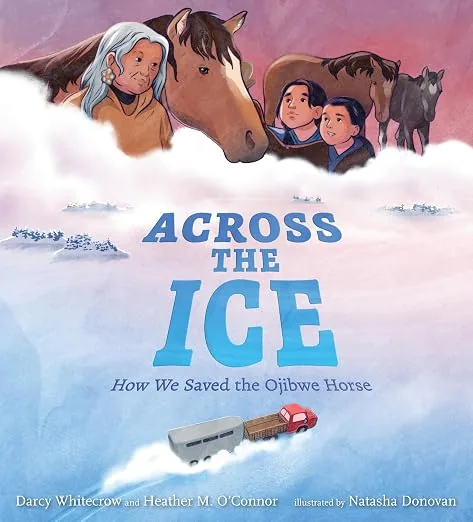 Across the Ice: How We Saved the Ojibwe HorseDarcy Whitecrow, Heather M. O’ConnorA moving fictional narrative tells of the real-life efforts to rescue and revitalize a nearly extinct horse breed. At Lac La Croix First Nation in Northwestern Ontario, Canada, two siblings are awake past their bedtime on “a special night.” As they anticipate an arrival, Nookomis offers to tell them the story of the Ojibwe horses, a pony native to—but now absent from—the land. Long ago, these “curious and friendly” ponies were captured by Indigenous people, who trained them to assist with manual labor in the fall and winter and let them roam free in the spring and summer so that they could have foals. By the time Nookomis was born, most ponies had been rounded up and killed by the government. The four that remained (all mares) were caught by the Indigenous community and transported across the frozen lake to Minnesota, where they would be safe. To preserve the breed, the farmer who took them in bred them with a mustang stallion, which continued the line and slowly increased the size of the herd. Now, on this night, the siblings and other family members are awaiting the arrival of six Ojibwe horses, the first of the breed to return home. “Now you are part of the story, too,” Nookomis tells her grandchildren as they joyfully greet the animals. An Afterword provides additional interesting information about this unique breed and its importance to the Ojibwe people.Picture BooksView book details
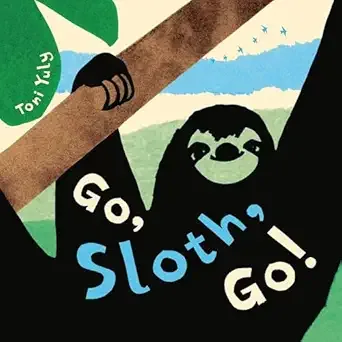 Go, Sloth, Go!Toni YulyDeep greens and rich blues made with ink and torn paper are the layers of a thick jungle canopy where a dark shape emerges on the page. It’s Sloth, who after some sleep is ready to eat. With a big yawn, masked eyes, and quiet resolve, Sloth begins to climb. “Go, Sloth, Go!” is the energetic refrain after each careful move on Sloth’s slow, deliberate, and dedicated climb toward food. “She moves by degrees towards the tastiest leaves.” Simple rhyming text and a satisfying chant will delight young readers and those in quest of a perfect snack.Picture BooksView book details
Books for Beginning Readers
12 selections
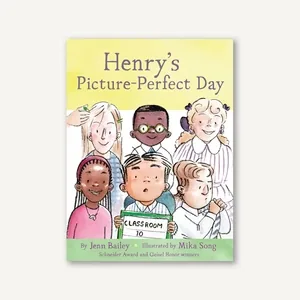 Henry’s Picture-Perfect DayJenn Bailey, illustrated by Mika SongUnlike his classmates, Henry (East Asian) is not excited for class picture day. His striped shirt is irritating: the collar too close to his ears, the cuffs too tight around his wrists. And the buttons? They’re never ending! Worse, Vivianne tells Henry that her mom says stripes make a person look taller—but Henry is not taller, which makes his shirt a liar. When the photographer is running late, the class munches on some mess-free carrots in the meantime—and Henry’s tooth starts to wiggle, leading to a degree of chaos. Vivianne frets that a loose tooth will “ruin [their] picture,” but despite his classmates’ efforts, the tooth will not be secured; to the contrary, it falls out and gets lost in the shuffle. Could it be one of those white specks in the soil of the potted plants? Better dig to find out. By the time the tooth is located, Henry’s shirt is streaked with dirt. Surely this will ruin their picture, Vivianne says. Ms. Tanaka, though, is reassuring. “Pictures are meant to show special times and special friends. That is all.” Henry takes this to heart. The class picture was “not about a shirt. Henry did not have to be perfect. He just had to be Henry.” This latest installment about Henry, who thrives on routine and is likely neurodivergent, is charming, reassuring, and full of humorous classroom antics.Books for Beginning ReadersATOS 2.7AR interest LG K-3View book details
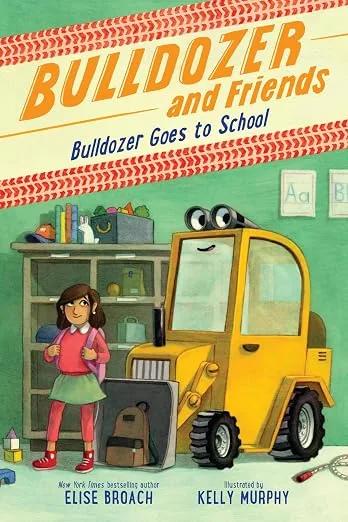 Bulldozer Goes to SchoolElise BroachBulldozer (or “B”) is a childlike construction vehicle with a (white) human family. Happy with his home routine, B is anxious about starting school in the fall and making friends. In Bulldozer’s Big Rescue, his mother gives him some cookies for the new neighbors. B is paralyzed with fear—they’re strangers! What will he say? Thankfully, the Patels (Indian American) warmly welcome him, although Bulldozer “feels insulted” when their son, Jay, wants B to give him a ride on his blade. (“He is so much more than a truck.”) Reluctantly, B gives Jay a ride while sister Millie walks beside him. When a cat darts in front of B, he slams on the brakes! The frightened cat scales a tree, and B, now in way deeper than he wanted with this social errand, finds a way to save the day while also extending his emotional boundaries. In Bulldozer Goes to School, B has a rough first day in the classroom. He can’t sit crisscross applesauce and doesn’t know what to share during Circle Time. He makes a mess while trying to clean up, and then he accidentally backs into a table and breaks it. Discouraged, B joins Millie and Ryan (white) for imaginary play during recess and is pleased when his earth-moving abilities improve the landscape for their fort. Plentiful pencil illustrations with gray and yellow shading accompany these universal stories about social anxiety.Books for Beginning ReadersView book details
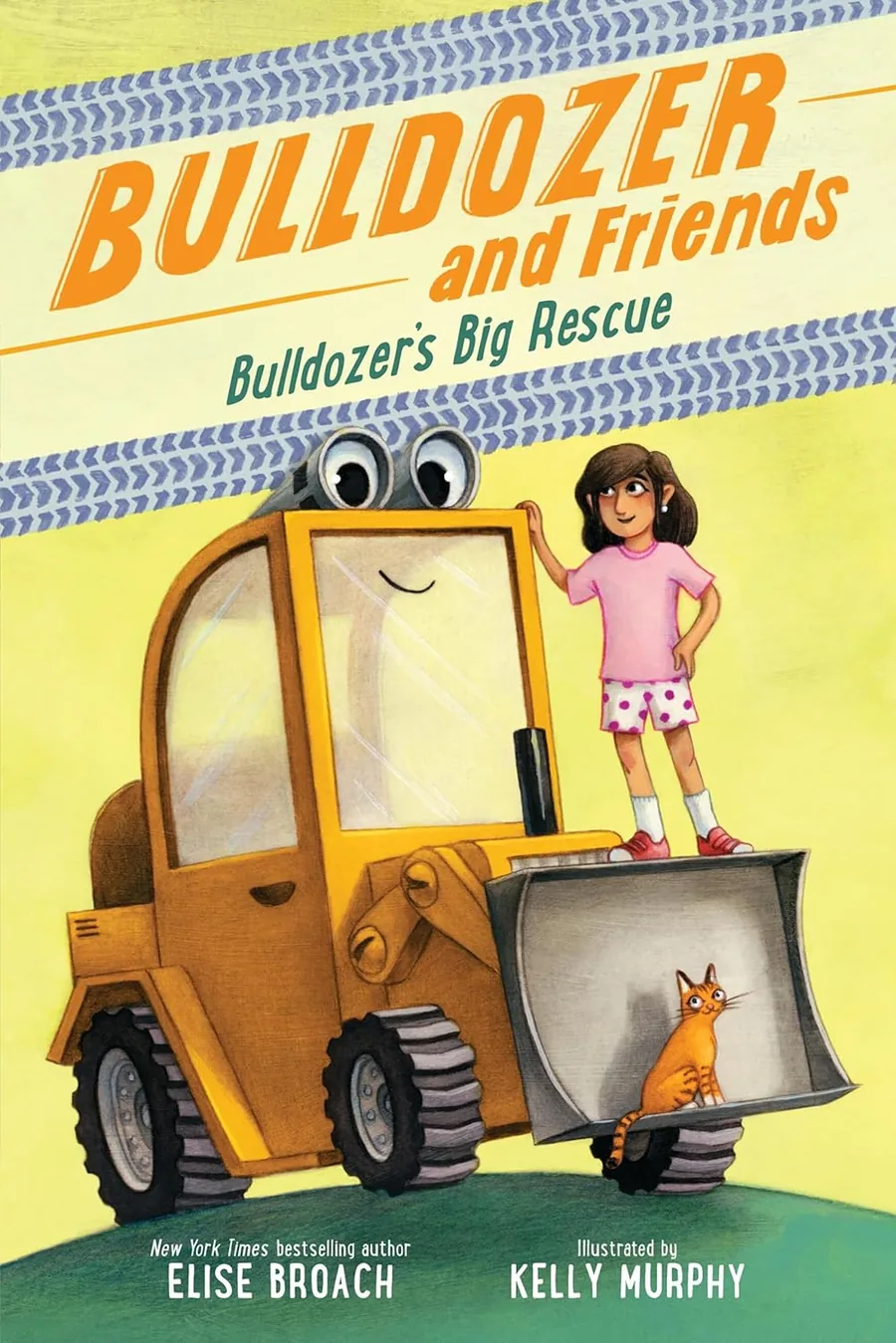 Bulldozer’s Big RescueElise BroachBulldozer (or “B”) is a childlike construction vehicle with a (white) human family. Happy with his home routine, B is anxious about starting school in the fall and making friends. In Bulldozer’s Big Rescue, his mother gives him some cookies for the new neighbors. B is paralyzed with fear—they’re strangers! What will he say? Thankfully, the Patels (Indian American) warmly welcome him, although Bulldozer “feels insulted” when their son, Jay, wants B to give him a ride on his blade. (“He is so much more than a truck.”) Reluctantly, B gives Jay a ride while sister Millie walks beside him. When a cat darts in front of B, he slams on the brakes! The frightened cat scales a tree, and B, now in way deeper than he wanted with this social errand, finds a way to save the day while also extending his emotional boundaries. In Bulldozer Goes to School, B has a rough first day in the classroom. He can’t sit crisscross applesauce and doesn’t know what to share during Circle Time. He makes a mess while trying to clean up, and then he accidentally backs into a table and breaks it. Discouraged, B joins Millie and Ryan (white) for imaginary play during recess and is pleased when his earth-moving abilities improve the landscape for their fort. Plentiful pencil illustrations with gray and yellow shading accompany these universal stories about social anxiety.Books for Beginning ReadersView book details
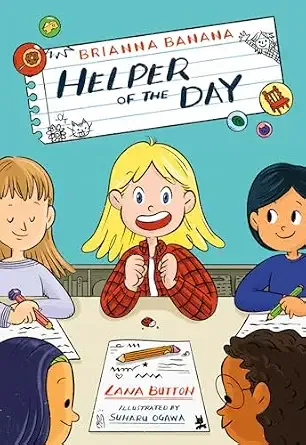 Brianna Banana, Helper of the DayLana ButtonBrianna (white) is an impulsive third grader who longs for friends. Her good intentions are often overshadowed by her enthusiastic actions that make sense to her but annoy others. Brianna recently moved with her mom from their trailer home to a city home with her grandmother, while her father moved to Western Canada for work. Brianna wants nothing more than to be selected as the Helper of the Day in her classroom, a job that offers positive attention and the privilege of returning classroom books to the library, an errand that requires walking independently to the school’s second floor. Once again, Brianna is not chosen, and on this day, the honor is given to Rumi (brown-skinned), the quiet new girl. Brianna is envious but also tries to set Rumi at ease. With her Helper of the Day status, Rumi is welcomed into the social circle of classroom clique the Cheese Girls—but only to hold their coats at recess, not to play with them. Brianna can relate to this exclusion and invites Rumi to join her and a young neighbor that Brianna protects from bullies. Later, when the teacher asks Rumi to pick a classmate to walk with her to the library, Rumi picks Brianna. In Brianna’s excitement, she gets them lost in the hallways of the big-kid classrooms but uses her pluckiness to set things right. A straightforward school story offers tender insights into the challenges of making friends and doing your best.Books for Beginning ReadersView book details
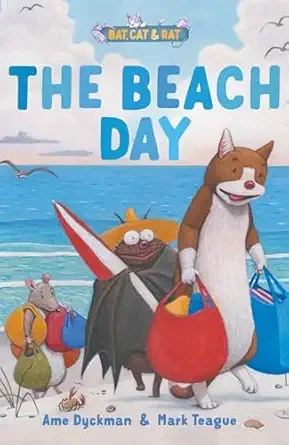 The Beach DayAme DyckmanAfter sweating it out on a hot day in the backyard, Bat, Cat, and Rat decide to cool off at the beach. Cat packs a bag of books, Bat packs a large sun hat, and Rat packs a kite. At the beach, Bat is warned not to share his snack with the seagulls, but he cannot resist. Cat offers assistance with the swarming birds, and Bat pays it forward by helping Rat with his misplaced kite. Animated illustrations, snappy dialogue, and short sentences round out this volume of the trio’s adventures.Books for Beginning ReadersView book details
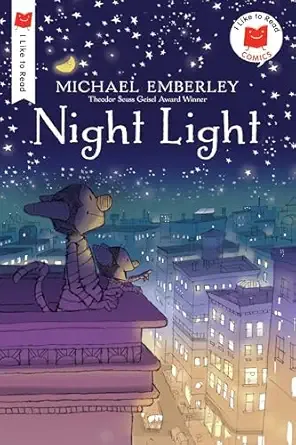 Night LightMichael Emberley, illustrated by Michael EmberleyWearing matching striped pajamas, a parent and child engaged in their bedtime routine are interrupted by a power outage. When a faint flashlight won’t get the job done, the parent’s solution is to climb a ladder to the stars and return with a big bag of celestial wattage. When the stars are too bright for the child to sleep, the parent procures sunglasses as the obvious solution for dimming the light. There is pleasant comfort in this getting-your-needs-met bedtime story, as well as cheerful whimsy. The easy-to-follow panel illustrations and brief dialogue make this an accessible and confidence-boosting selection for a burgeoning reader.Books for Beginning ReadersATOS 1.0AR interest Lower Grades (LG K-3)View book details
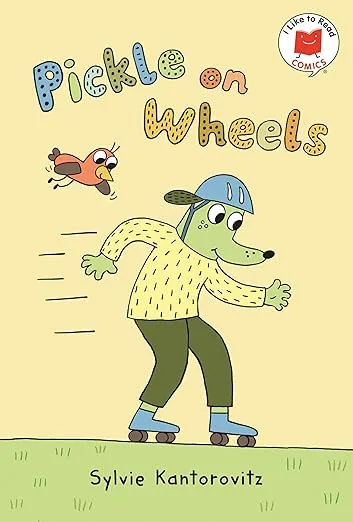 Pickle on WheelsSylvie KantorovitzPickle, the lovable green dog previously seen in Pickle Gets a Car, is looking for new wheels. Inspired by TV hero Superdog, a superhero on skates, Pickle’s grandma gifts him roller skates. Pickle quickly discovers that skating is a lot harder than it looks. Bird offers encouragement and safety reminders while Coco offers to hold hands and practice together. Pickle returns the favor by encouraging his unsteady friend Felix in the same way. The biggest surprise is who shows up at the skate park with all the skills and tricks. Hint: It’s not Superdog. Comic panel illustrations and crisp text bubbles make Pickle’s escapades smooth rolling and reading.Books for Beginning ReadersView book details
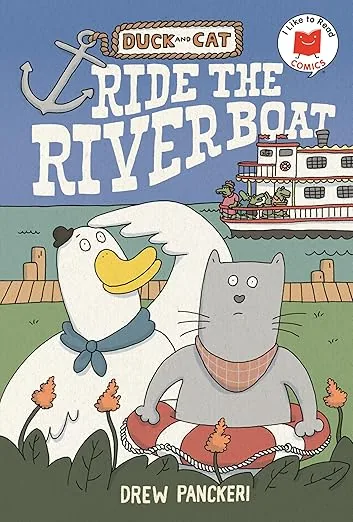 Duck and Cat Ride the RiverboatDrew PanckeriDuck and Cat are enjoying a perfect day filled with sunshine, ice cream, and being together. When Duck spots a riverboat tour, she thinks it would make the day even better. Cat hates water, but to make Duck happy, he agrees to go. Unfortunately, things start to sour as soon as they embark. The boat’s cook and entertainer get sick and offboard via raft, so the dinner and live show are cancelled. The boat’s captain offers passengers crackers as a meal instead, but that is not enough for a hungry crocodile family who suddenly has its eyes on Duck and Cat. Petitioning the captain for help, Duck and Cat find themselves as the makeshift chef (Cat) and dancer (Duck) to feed and amuse the hangry crocodiles. Clean illustrations and well-formatted panel and text layout make the story easy to follow. Ample visual and textual humor abounds in this suspenseful beginning reader comic book.Books for Beginning ReadersView book details
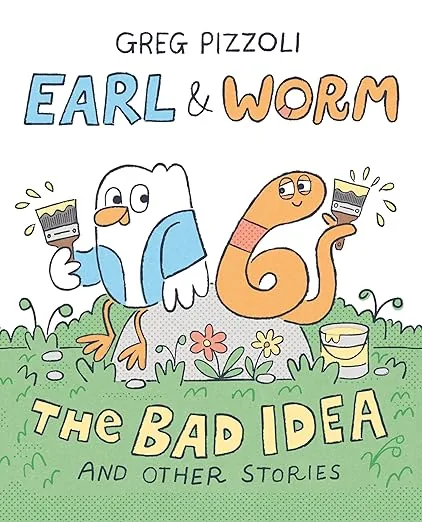 Earl & Worm: The Bad Idea and Other StoriesGreg PizzoliWhen Earl E. Bird moves into the tree next door (The Bad Idea and Other Stories), Worm is not sure what to think of her new neighbor. He’s up at dawn, and he’s cheerful. “Worm was cranky. She did not like new things. And Earl was new.” Eventually, over glasses of sweet lemonade, the neighbors discover what they have in common: Neither likes to be alone. Thus begins a new Frog and Toad-esque friendship in a delightful trio of early reader books, each containing three stories. In The Bad Idea and Other Stories, Earl and Worm meet, make bad paint-color choices, and appreciate poetry. In The Big Mess and Other Stories, Earl and Worm learn that one person’s junk is another’s problem, contemplate what constitutes luck, and stay awake all night. In Snow Problem and Other Stories, Worm eagerly awaits wishing Earl a happy birthday, the friends fail to take a perfect selfie, and they cement their best-friend status. Charming pastel illustrations, clean layouts, and amiable humor make Earl & Worm a welcome addition to the early reader scene.Books for Beginning ReadersView book details
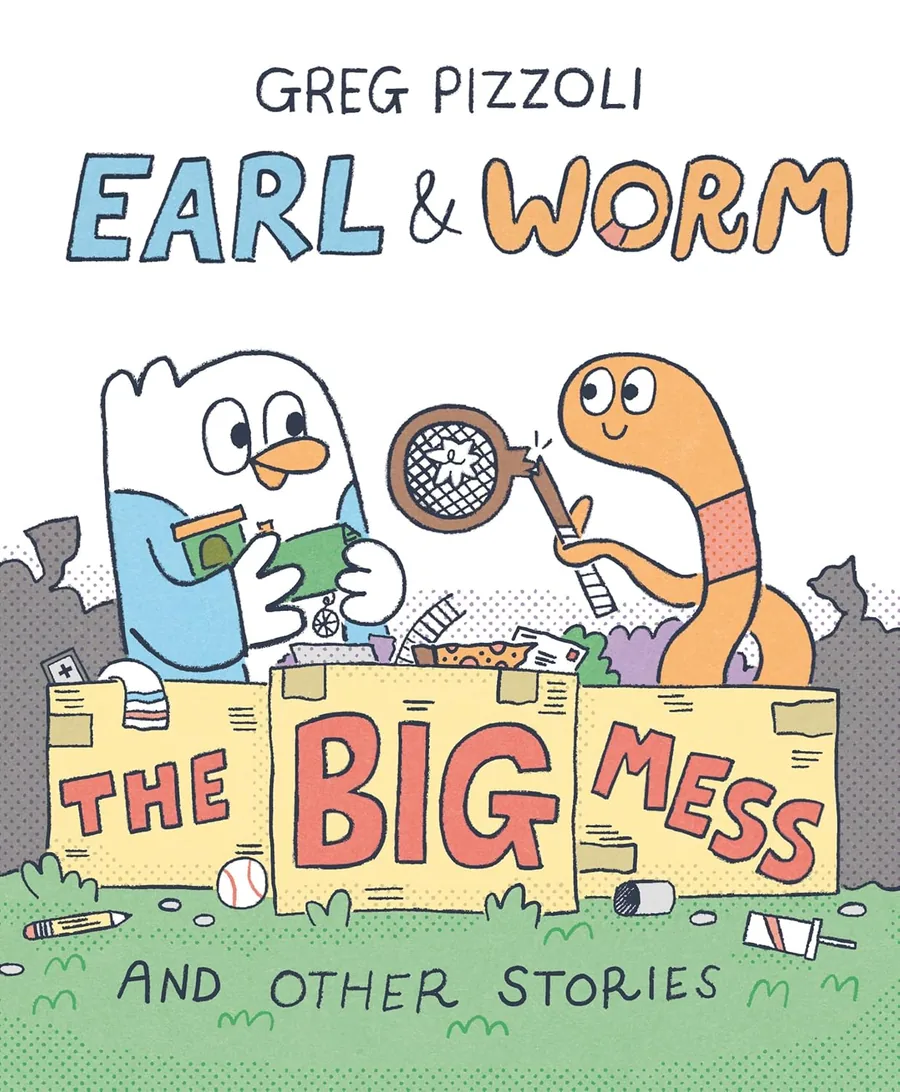 Earl & Worm: The Big Mess and Other StoriesGreg Pizzoli, illustrated by Greg PizzoliWhen Earl E. Bird moves into the tree next door (The Bad Idea and Other Stories), Worm is not sure what to think of her new neighbor. He’s up at dawn, and he’s cheerful. “Worm was cranky. She did not like new things. And Earl was new.” Eventually, over glasses of sweet lemonade, the neighbors discover what they have in common: Neither likes to be alone. Thus begins a new Frog and Toad-esque friendship in a delightful trio of early reader books, each containing three stories. In The Bad Idea and Other Stories, Earl and Worm meet, make bad paint-color choices, and appreciate poetry. In The Big Mess and Other Stories, Earl and Worm learn that one person’s junk is another’s problem, contemplate what constitutes luck, and stay awake all night. In Snow Problem and Other Stories, Worm eagerly awaits wishing Earl a happy birthday, the friends fail to take a perfect selfie, and they cement their best-friend status. Charming pastel illustrations, clean layouts, and amiable humor make Earl & Worm a welcome addition to the early reader scene.Books for Beginning ReadersATOS 2.3AR interest LG K-3View book details
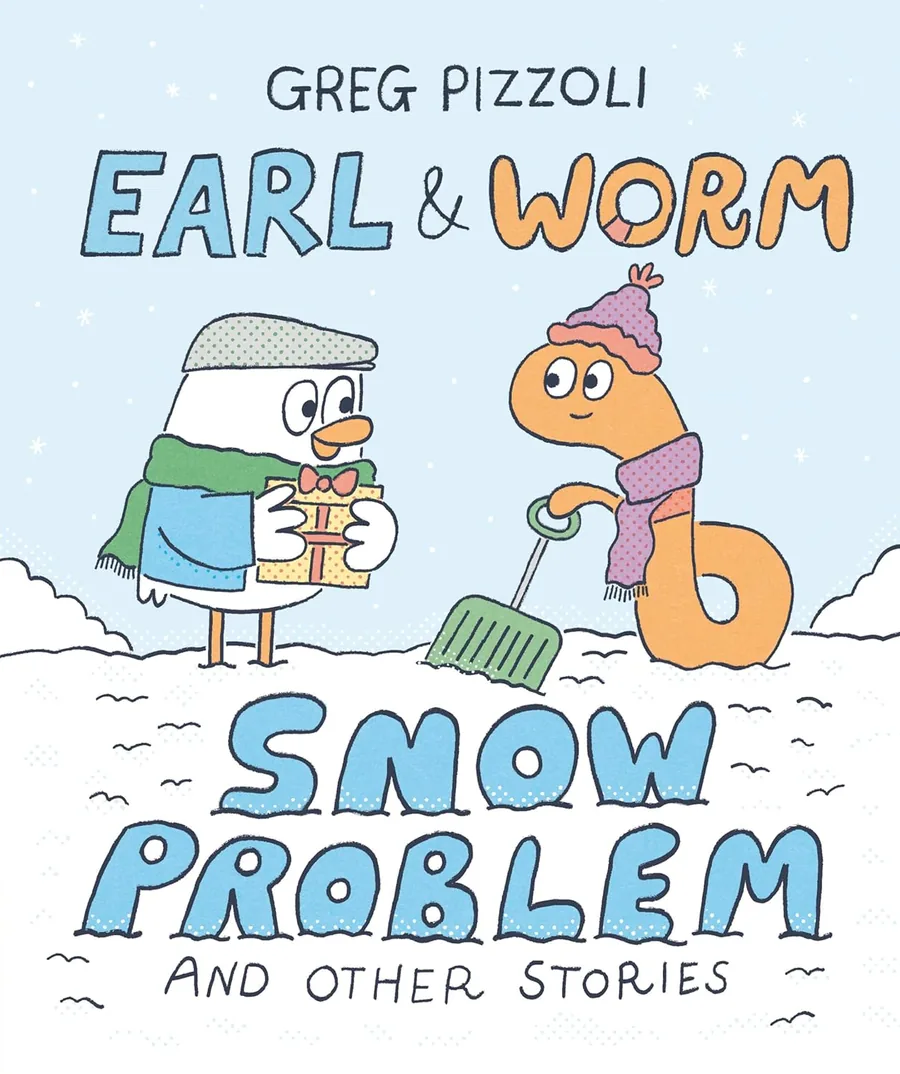 Earl & Worm: Snow Problem and Other StoriesGreg Pizzoli, illustrated by Greg PizzoliWhen Earl E. Bird moves into the tree next door (The Bad Idea and Other Stories), Worm is not sure what to think of her new neighbor. He’s up at dawn, and he’s cheerful. “Worm was cranky. She did not like new things. And Earl was new.” Eventually, over glasses of sweet lemonade, the neighbors discover what they have in common: Neither likes to be alone. Thus begins a new Frog and Toad-esque friendship in a delightful trio of early reader books, each containing three stories. In The Bad Idea and Other Stories, Earl and Worm meet, make bad paint-color choices, and appreciate poetry. In The Big Mess and Other Stories, Earl and Worm learn that one person’s junk is another’s problem, contemplate what constitutes luck, and stay awake all night. In Snow Problem and Other Stories, Worm eagerly awaits wishing Earl a happy birthday, the friends fail to take a perfect selfie, and they cement their best-friend status. Charming pastel illustrations, clean layouts, and amiable humor make Earl & Worm a welcome addition to the early reader scene.Books for Beginning ReadersView book details
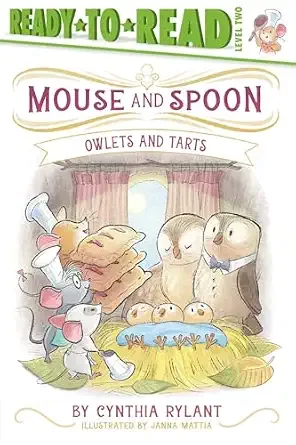 Mouse and Spoon: Owlets and TartsCynthia RylantThree mice siblings run a bakery, The Mouse and Spoon, which is popular with birds. A very tired owl father walks in one day and orders three pillow tarts. The mice whip them up and deliver them—straight to the beds of the owlets, who lay their heavy heads on the fluffy, soft tarts and promptly fall asleep, much to the relief of the tired new parents. This cozy confection of an early reader will delight fans of sweet treats and anthropomorphic animal families.Books for Beginning ReadersView book details
Books for Newly Independent Readers
7 selections
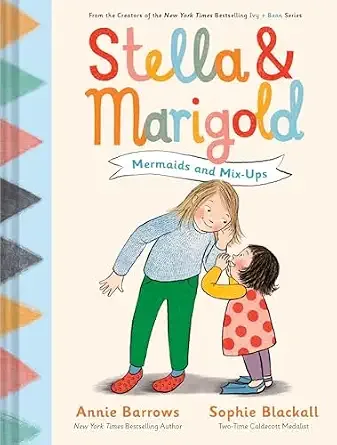 Stella & Marigold: Mermaids and Mix-UpsAnnie BarrowsSisters Stella (age 7) and Marigold (age 4) are often skeptical of the gifts sent by their cousin Judy; while they “always looked exciting from the outside,” the contents tended to be disappointing. Their new guided notebooks (Me and My Besties! Our Secrets, Our Faves, Our Fun!) are no different, and the girls (both white) are disheartened to realize that their number of “besties” is fewer than they’d like. Mishaps in the following chapters—swiping a scary mermaid tchotchke from the upstairs neighbors’ apartment, cutting out a hundred fake band-aids, plotting to run away—are part of the girls’ efforts to pad their lists of friends. Delightfully child-centered, this volume in the “Stella and Marigold” series revolves around more of their imaginative antics and heartwarmingly intimate and supportive sibling bond. The ample, colorful illustrations are warm, humorous, and expressive.Books for Newly Independent ReadersView book details
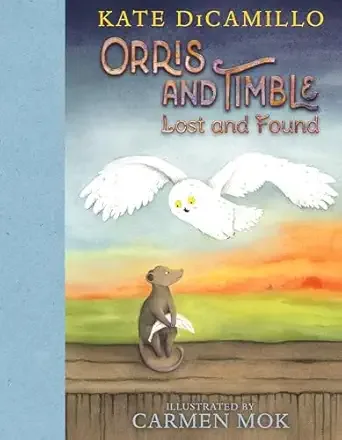 Orris and Timble: Lost and FoundKate DiCamilloThe unlikely friendship of Orris the rat and Timble the owl is put to the test in book two of this gorgeously illustrated series. Every night, Timble visits Orris in the barn where the old rat tells the young owl stories. One night, Timble does not arrive, and Orris is heartbroken and then dismayed. Convincing himself that they should never have been friends in the first place, Orris’s loyalty wavers—until he hears the familiar hoot of his companion. Relieved but resentful, Orris hides from Timble. The patient owl knows his friend well, though, and coaxes him out with a story of his own. “It’s a story about an owl who got lost.” Storytelling, friendship, and strong emotions shine in this big-hearted story by the brilliant Kate DiCamillo.Books for Newly Independent ReadersView book details
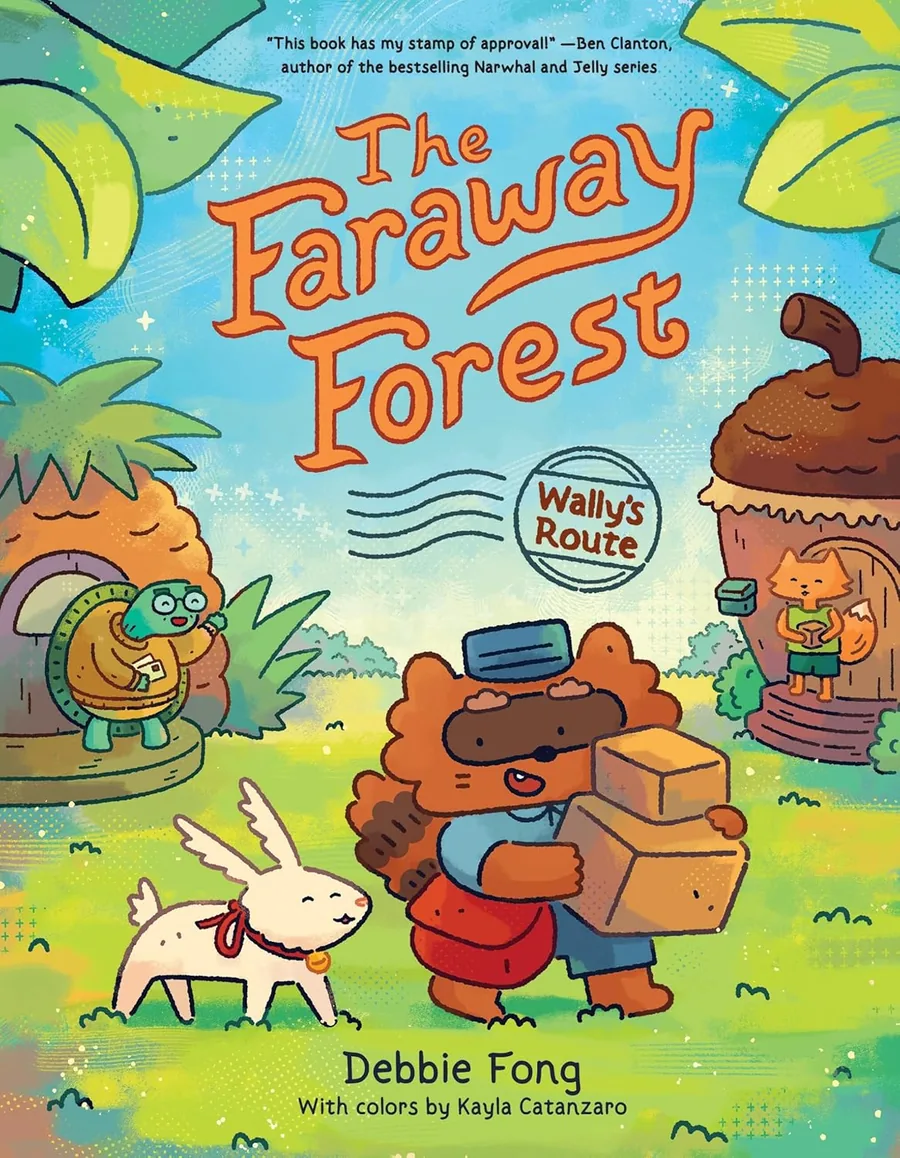 The Faraway Forest: Wally’s RouteDebbie FongWally is a racoon mail carrier who walks his daily route with Bo, his rabbit best friend, in this easy graphic novel comprised of four interconnected chapters. Wally and Bo help out their community in various ways as they deliver the mail, which sometimes slows them down, to the frustration of Mr. Sternbill, who is expecting an important letter. But when a torrential rainstorm might have turned the less committed aside, Wally lives his motto (“Rain, sleet, snow, or shine! Every house, every time!”) which includes Mr. Sternbill’s delivery. In the final chapter, Wally’s laid low by a cold after his day in the rain, but friends and neighbors stop by to deliver get-well gifts. Even Mr. Sternbill comes to apologize for his brusque behavior and offers his own delivery: a book on the history of the postal service. Accessibility for budding graphic novel readers pairs winningly with a cozy sensibility and charming illustrations.Books for Newly Independent ReadersView book details
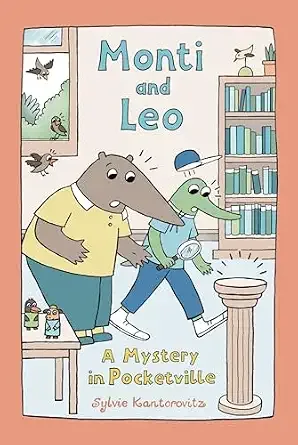 Monti and Leo: A Mystery in PocketvilleSylvie KantorovitzIn this inviting installment of a graphic novel series, friends Monti (a mole) and Leo (a lizard) are excited to see a new display at the Pocketville Public Library: Mrs. Sheep’s personal collection of animal figurines. Monti wants to be a collector, too, like the librarian, who collects things people forget in library books; or like Leo, who collects rocks. In fact, everyone but Monti seems to collect something! Monti is particularly enamored with a small bird in Mrs. Sheep’s collection, which he returns to admire again the next day. When the figurine disappears, the town is in a tizzy, and Monti quickly becomes a suspect. Despite Monti’s protestations, Mrs. Sheep is convinced that he is guilty. Seeing his friend depressed and overwhelmed by the accusations, Leo is determined to find out what really happened. “Could Mrs. Sheep be right? … Wait! NO! Mrs. Sheep’s words made their way into my mind. … I need to find my own thoughts!” Leo’s commitment to uncovering the truth leads to the clearing of Monti’s name. A conversation with friends over cookies and milk provides emotional healing for Monti—and gives him an idea for a collection. Simple linework and clean, separate panels make for a smooth reading experience, while the story offers gentle guidance in making amends and supporting a friend.Books for Newly Independent ReadersView book details
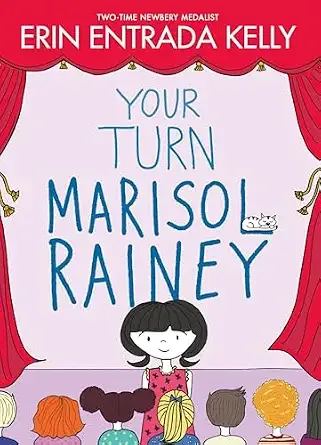 Your Turn Marisol RaineyErin Entrada KellyIs it possible to improve one’s personality? Marisol (Filipina and white) and her best friend, Jada (Black), think so, and both resolve to change one thing about themselves. Jada wants to be a better athlete, and Marisol, who is quiet and anxious, wants to speak up more in class. At school the next day Marisol starts off strong, raising her hand and getting called on twice. But when classmate Evie (who definitely has no qualms about speaking up) makes fun of her, Marisol’s anxiety doubles down. When her teacher assigns a haiku-writing project that must be recited in front of the class, Marisol is paralyzed as she imagines the worst-case scenarios that will surely play out. She struggles to land on a nature subject for her poem and loses the battle with her emotions at recess, shouting at Evie for making fun of her (“You think you’re funny, but you’re not! … And all your haikus are stupid!”). She feels horrible after her outburst. When she later apologizes to Evie, she is surprised to learn that loquacious Evie, too, gets nervous. Marisol writes and recites her haiku despite her dread, and she ends the school week feeling relieved and proud—perhaps all the more so after experiencing so much anxiety.Books for Newly Independent ReadersView book details
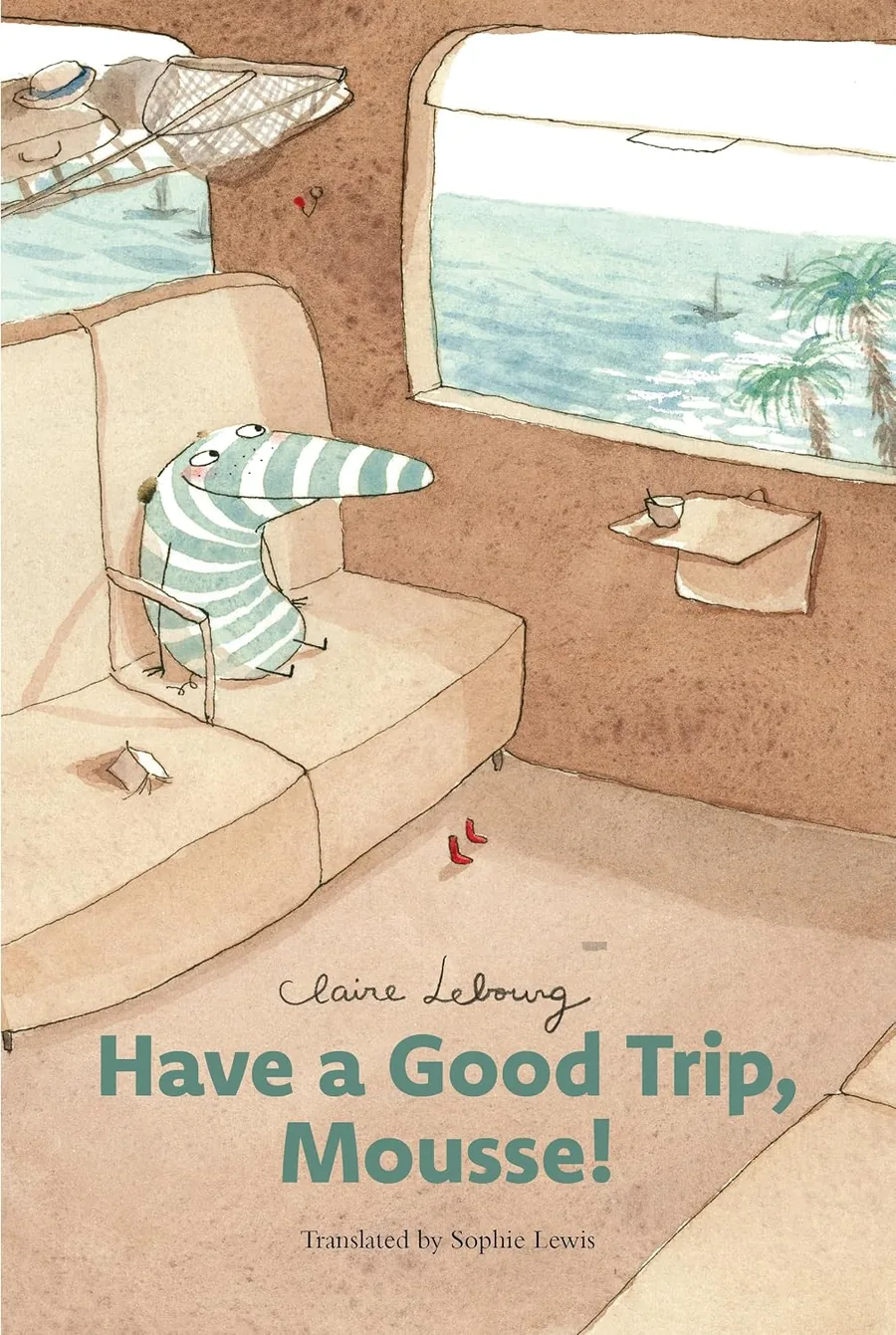 Have a Good Trip, Mousse!Claire LebourgThis follow-up to A Day with Mousse offers a change of pace for our long-nosed, striped protagonist. One rainy morning, Mousse finds few seashells during his morning hunt and even fewer friends at the beach. When he learns that everyone is on summer holiday, Mousse decides to take a trip to the South. There he experiences pleasures (“velvet” beach sand, balmy weather, an ice cream shop on the terrace) and drawbacks (crowds, sunburn). He invites his walrus friend, Barnacle, to join him, and the two sign up for a spa package. The mud bath is delightful—until a new guy, Felix, rudely dives in, creating a splash. Mousse is annoyed and jealous when Barnacle befriends Felix, and things come to a head when Felix laughs at Mousse’s nickname. But there’s unexpected reconciliation—and even connection—when Mousse and Felix later discover a shared interest in collecting seashells. The vacation culminates in a delicious shared meal. “I have never had … such a great trip!” Mousse declares to his two friends. “To summer vacations!” Soft, colorful, funny illustrations round out the story, showing a world filled with animals and animal- adjacent creatures.Books for Newly Independent ReadersView book details
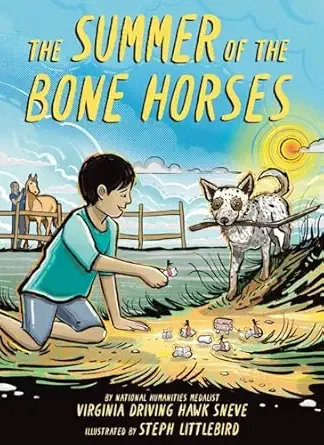 The Summer of the Bone HorsesVirginia Driving Hawk SneveEddie (Dakota) arrives at his maternal grandparents’ home on the Rosebud Reservation in South Dakota where he will spend several weeks while his father recovers from surgery in the city. While Eddie has spent time with his grandparents before, he is anxious about being separated from his parents for the first time. He is quickly and lovingly brought into his grandparents’ daily routines, many of which are new to Eddie since they live without electricity or running water. Eddie assists with weeding in the garden and takes care of Buck, his grandfather’s horse. Grandpa offers Eddie a set of bone horses to play with to pass the time on the long summer days. The bone horses are made from old cow vertebrae, but Grandpa explains that their people traditionally used bison bones. With a bit of wire, leather, and some cardboard boxes, Eddie creates riders and a corral for his new figurines. When Grandpa is injured and Grandma can’t get the car started, Eddie rides Buck to the general store to get help. By the end of his stay, he has a closer relationship with his grandparents and an appreciation for their reservation life and values. Happy to see his parents, Eddie departs with a newfound resilience and his treasured bone horses. Based on the author’s brother’s experience as a child, the end matter also includes a photo of bone horses. Colorful, stylized line drawings and spot art complete this warm family story.Books for Newly Independent ReadersView book details
Fiction for Children
20 of 38 selections on this pageContinues on page 4
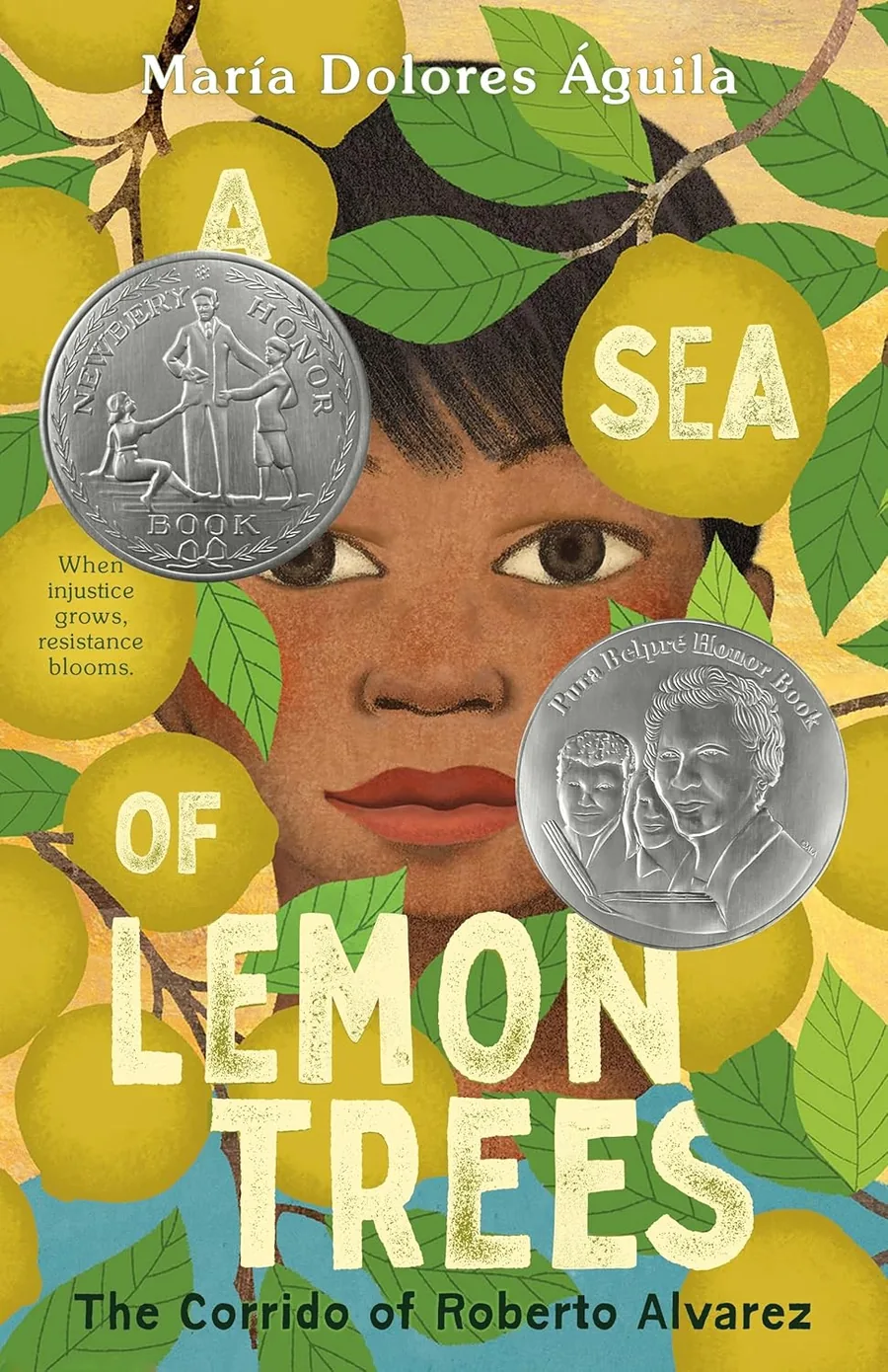 A Sea of Lemon Trees: A Corrido of Roberto AlvarezMaría Dolores ÁguilaFifth grader Roberto Alvarez lives in la colonia, a neighborhood of Mexican Americans and Mexican immigrants in Lemon Grove, California. Roberto says goodbye to his principal on the last day of school before Christmas break in 1929 unaware he won’t be welcomed back. When school starts again, Roberto and his friends from la colonia find out they can no longer attend their grammar school; all Mexican students must now attend Olive Street School in a converted barn. Roberto’s genuine, appealing voice and engaging details of his life with his family, friends, and community ground this first-person verse novel recounting their battle against school segregation. The families of la colonia organize to fight the order. The children face expulsion for truancy when their parents keep them home. Roberto’s best friend David and his family face deportation, despite David being a U.S. citizen. Roberto, a high-achieving student who loves school, is chosen to be lead plaintiff in la colonia’s legal case against the school board. Roberto doesn’t always understand the intricacies of what’s happening, especially the legal terminology, and when he testifies in court the questions feel repetitive and overwhelming. But Papá’s loving look reminds him of the words he’s been told so often: “Eres el futuro.” “He is right / I am the future, / and I will act like it.” An excellent Author’s Note provides more information on Roberto and this case, which the families of la colonia won, as well as source material.Fiction for ChildrenLexile 800LATOS 5.1View book details
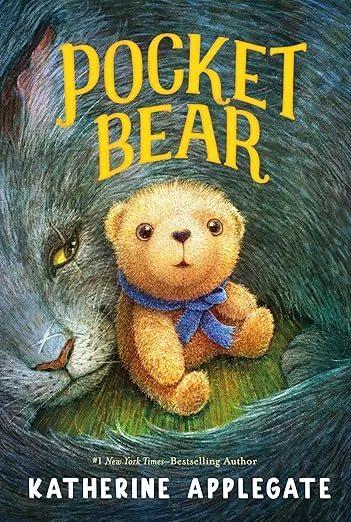 Pocket BearKatherine ApplegateRescued from a dumpster by alley cat (and narrator) Zephyrina, an old teddy bear finds himself delivered to Second Chances Home for the Tossed and Treasured. This unofficial toy repair and restoration effort is run by Dasha, a Ukrainian refugee, from the home where she lives with her mom. A toy entering Second Chances goes through a process: probation (a chance to be reclaimed by their owners), a spell in the freezer (which Dasha thinks will kill germs), and a thorough scrubbing; afterward, the toy joins the cuddly ranks. Dubbed “Berwon” by Dasha, the old bear is welcomed by Pocket, a tiny mascot bear originally handsewn to fit inside the pocket of a World War I soldier. But it turns out Berwon is not just any old bear. He is one of the first batch of teddies ever made, and “Picky Vicky,” a wily antique trader, wants him. When Dasha rejects Vicky’s lowball offer, Vicky resorts to underhanded means, and it’s up to haughty yet goodhearted Zephyrina to once again come to Berwon’s aid. Fortunately, Berwon—and Pocket, too—has caught the eye of a museum curator. If they have any say in the matter, the old, tired bears would appreciate such a quiet place to retire. Told with humor and warmth, this entertaining tale emphasizes community care and offers much in the way of fascinating teddy bear history.Fiction for ChildrenATOS 3.9AR interest MG 4–8View book details
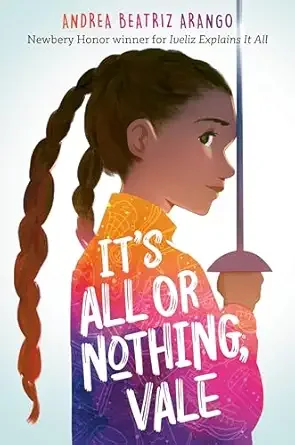 It’s All or Nothing, ValeAndrea Beatriz ArangoPuerto Rican American middle schooler Vale’s identity is largely tied to being an ultra- competitive, nationally ranked junior fencer. But an accident has left her with the lasting effects of a serious leg injury. Vale has not only lost valuable time fencing, but she may be facing a lifetime of chronic pain. The fact that she’s still healing on her first day back at training isn’t the only thing that worries her; she was once the best among her training peers, but now there’s a new fencer, Myrka (Cuban American), who’s as good as Vale was pre-accident. This verse novel deftly traverses Vale’s emotional landscape as she experiences feelings on many fronts. She wonders whether she is now disabled—a topic explored with sensitivity and nuance. She is jealous of Myrka, who has considerable fencing skills despite an attitude not nearly as competitive as Vale’s own, and on whom she is also developing a crush. Her complicated feelings extend to her loving, supportive parents and big brother Luis Manuel, whose suggestions about her recovery are well-meant but sometimes misguided or make Vale feel unseen. A new friend at school becomes someone in whom Vale can confide about her fears of life without fencing and process her budding crush on Myrka. The poetic text zings with Vale’s frustrations, grief, and growth in the face of uncertainty in the present and going forward.Fiction for ChildrenView book details
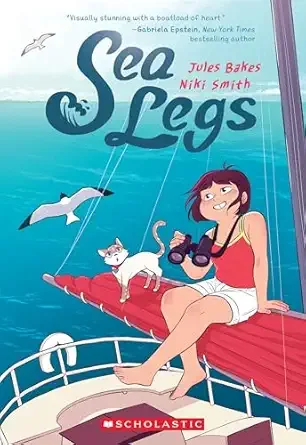 Sea LegsJules BakesLife aboard Janey’s parents’ sailboat, the Merimaid, has its ups and downs—sometimes literally. Janey (white) enjoys life at sea and the opportunity to travel, but seasickness, storms, and isolation make it challenging. Her relationship with her best friend, Rae (who lives in Florida), is on rocky ground. When her parents anchor at St. Thomas in the U.S. Virgin Islands in search of temporary work, Janey jumps at the chance of a friendship with brown-skinned Astrid, who lives on a nearby boat. Astrid seems sophisticated and worldly, but she can be mean, too. She pushes Janey to explore dangerous, off-limits locations, like an abandoned military bunker. When the girls nearly get trapped in an underground cistern, Janey explodes with anger over Astrid’s recklessness; Astrid, who has a negligent father, accuses Janey of complaining about things for which Astrid envies her, like having attentive parents and a homeschool routine. Recognizing Astrid’s unhappiness and low self-worth, Janey becomes the only source of encouragement in Astrid’s life. Just as the girls’ friendship begins to hit its stride, the threat of a hurricane abruptly sends Janey to her grandmother’s house while her parents ride out the storm. When Janey returns, Astrid and her family are gone, leaving Janey without a real sense of closure. Featuring clean, colorful artwork, this graphic novel based on the author’s childhood in the 1990s offers a fascinating glimpse into life at sea and very believable, if painful, friendships.Fiction for ChildrenView book details
 BeastsIngvild Bjerkeland, Rosie HedgerWith the arrival of predatory creatures known simply as “the beasts” comes the collapse of society. With their mother dead—killed by a beast—13-year-old Abdi and his little sister, Alva (both white), are on the move, searching for food and making their way toward the island where their father is working. As they take shelter in an abandoned farmhouse, flashbacks reveal the chaotic scramble that took place as people tracked the movement of the beasts and hoarded supplies or fled. When strangers arrive at the farmhouse, the siblings move on and are pursued by a beast into a nearby body of water. They are rescued by Lucy, an older woman whose family was killed, and taken to her remote cabin. There Abdi and Alva find respite and care. The night before they plan to move on, though, a beast arrives on their front step, viciously swinging an axe at their door, determined to gain entry. The absence of explanation—Where did the beasts come from? Why are they here? What do they want?—makes this well-paced horror story all the more frightening. The black-coated beasts have long, slender limbs; sharp teeth; hooves; and spiral claws that unfurl to become swordlike weapons; but most terrifying is their humanlike cunning. Translated from Norwegian, this short, thrilling novel is both accessible and sophisticated.Fiction for ChildrenView book details
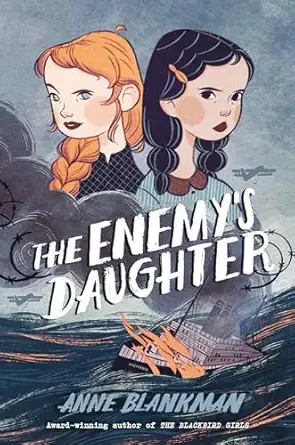 The Enemy’s DaughterAnne BlankmanInitially stuck in New York when World War I broke out, Marta (white) and her father are returning to Germany on the Lusitania; their false documents allow them to board as Americans rather than exiled Germans. When Marta’s father’s identity is discovered moments before the ship is torpedoed, he’s suspected of facilitating the attack. Now recognized as a German, Marta’s attempts to clear her father’s name fail. Stranded alone in York, England, the 11-year-old feigns a Dutch background and is befriended by Clare, a poor Irish girl whose family takes Marta in. Marta begins to feel tormented by her secret- keeping and growing attachment to the “political enemies” who show her nothing but kindness. Her childlike rationale is believable and nuanced as she slowly accepts that the actions of a country’s government (including her beloved homeland) do not equate with an individual’s humanity. Unsure how to find a way back to her mother in Germany, Marta works at a chocolate factory with Clare and saves her money in the meantime. When someone at the factory exposes Marta’s lies, the heartbreak and drama are swift and intense. A daring escape is aided by characters who see Marta for the person she really is: a true friend and loving daughter.Fiction for ChildrenATOS 5.2AR interest Middle Grades (MG 4-8)View book details
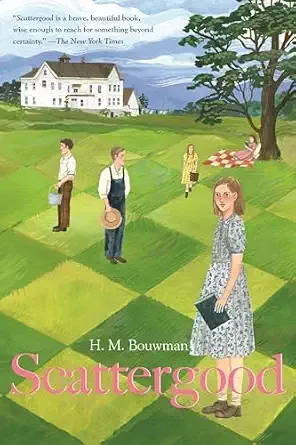 ScattergoodH.M. BouwmanIn 1941, Peggy’s modest world revolves around her parents, cousin and best friend Delia, and neighbor friends who live within walking distance of her family’s rural Iowa farm. But lately everything seems to be changing. Delia has been diagnosed with leukemia and given six months to live, but no one will tell her the truth about her own health. And with Jewish refugees—including an attractive boy named Gunther and a chess-playing former professor, both of whom have lost their families—moving into the nearby Scattergood hostel, the faraway war seems to have arrived in Peggy’s backyard. Set over the course of about six months, this profoundly pleasurable novel is remarkable in its depiction of complex human emotions and motivations. Peggy (white) convinces herself that if only she can find the right medical information, or talk to the right person, or pray hard enough, or write Delia enough uplifting letters, she can save her cousin’s life. She is mathematically brilliant and mature for her age (12), but she is also realistically naïve and ignorant of the wider world; she has a surface-level understanding of the trauma and grief that Gunther and the Professor are experiencing, and her sometimes-uncomfortable interactions with them help her to look beyond her own pain and experiences. Nuanced, heartrending, and quietly astonishing, this is the coming-of-age novel at its best.Fiction for ChildrenView book details
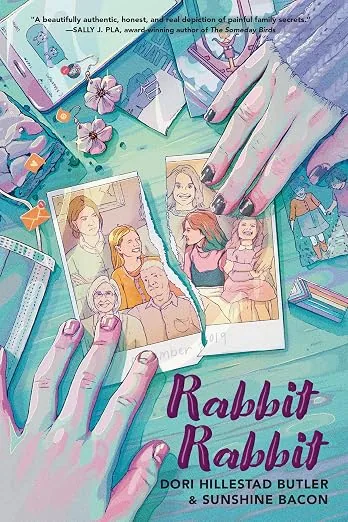 Rabbit RabbitDori Hillestad ButlerCousins Bee and Alice (both white, age 12) reunite after many years for their grandparents’ 50th anniversary in late 2019. Bee adores their grandparents and lives with her mom in the small Minnesota town where her mom and Alice’s mom grew up. Religious faith is important to Bee, but she’s secretly questioning some teachings of her conservative Lutheran church since realizing she likes girls. Alice’s family lives in Seattle. Alice only has a relationship with their grandma, who visits Seattle alone because of a family rift. Alice isn’t religious, but she practically worships roller derby. None of these differences matter to the two girls, who stay connected by text after Alice’s family returns to Seattle; they’re determined to uncover the source of the family divide. Then the COVID-19 pandemic disrupts daily life. Bee is thinking more about her dad’s progressive church in Minneapolis and finds herself increasingly at odds with her opinionated grandpa. Alice’s learning differences are better accommodated by the changes in schooling, but she misses roller derby. As the girls navigate differing perspectives about pandemic precautions, shared grief over their grandma’s death, and dismay and anger at the death of George Floyd, they solidify their friendship and commit to bringing their moms, at least, together. Rich, complex characterizations ground this deeply felt story told in the girls’ alternating voices.Fiction for ChildrenView book details
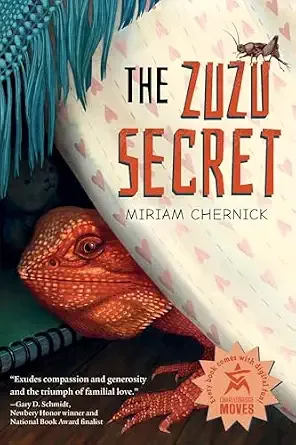 The Zuzu SecretMiriam ChernickSiblings Josie, 12, and Abe, 15 (both white), have just moved to Silver Spring, Maryland, when a car accident leaves their mom with a concussion and Josie in secret possession of a bearded dragon. Josie, passionate about animals, found the lizard after the crash, but their family has a no-pets rule because Abe has a hard time being gentle with animals when he gets excited. Abe has Prader-Willi syndrome, a rare chromosomal disorder with symptoms that include intellectual disability and constant hunger. Josie is determined to take care of Zuzu, as she calls the female bearded dragon, until she can find her home—which means doing research, buying supplies, and hiding Zuzu from her dad and Abe. Abe, meanwhile, is eager to attend a Baltimore Orioles game, but only their mom shares his baseball passion, and she’s recovering at her sister’s home. As Josie’s well-meaning subterfuge and lies mount, Abe tries to piece together what she’s hiding. To divert his attention, Josie secretly promises to take Abe to the game. Orioles game day brings multiple crises and surprises involving both Zuzu and Abe before the story’s satisfying resolution. Josie and Abe are distinct and appealing characters; the siblings’ individual perspectives, their relationship, and their interactions with others, including new friend Bixby, add texture to this novel that alternates between their two points of view. End notes provide information about Prader-Willi Syndrome (which the author’s older brother has), bearded dragons, and the Baltimore Orioles.Fiction for ChildrenView book details
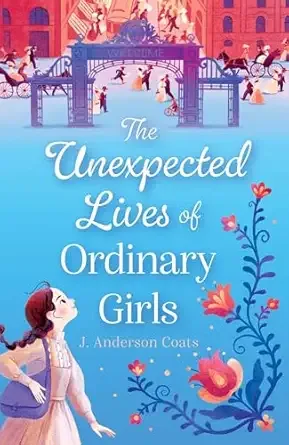 The Unexpected Lives of Ordinary GirlsJ. Anderson CoatsIn Colorado, in 1910, 12-year-old Stanislava lives in “Bohunk Town,” a name that uses a derogatory term for her Slovenian American community. Inspired by a novel about a college student who, like her, is an immigrant, Stanislava decides to go by the more- American “Sylvia” and dreams of one day chasing opportunities in the wider world. Her hopes are dashed, though, when her older sister, Stina, who has long been the family’s primary homemaker and childcare provider, elopes with a Protestant. Disowned by their Catholic parents, Stina moves away with her new husband, leaving her onerous duties to Sylvia, who is forced to drop out of school. Feeling trapped and desperate, Sylvia makes the bold choice to leave home, stowing away on a train to Denver, where she learns that Stina is unreachable and that she must fend for herself. The public library becomes her temporary home and haven; when she is discovered living there, she is hired to help provide outreach to a local Slovenian community. Her understanding of Slovenian cultural norms helps bridge a gap between the library and the community, and the experience helps Sylvia begin to tackle the shame she has been taught and to embrace her identity as both Slovenian and American. While she is realistically naïve about the world, Sylvia is a courageous, determined protagonist navigating issues related to class, gender, and ethnicity that are still relevant to today’s readers. An illuminating Author’s Note reveals that this story is based on the author’s grandmother’s experiences.Fiction for ChildrenView book details
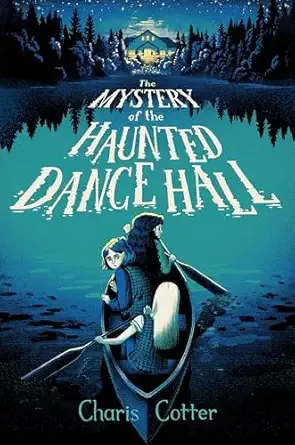 The Mystery of the Haunted Dance HallCharis CotterAt a summer camp with a focus on ornithology, loner Bee is constantly guarding her secret: She has super-sensitive hearing. She’s developed a method of closing auditory “gates” that allows her to filter out some of a constant barrage of sounds. Bee soon befriends Zippy, a feisty Jewish girl with her own super-sensory power, the ability to see clearly in the dark. Along with peevish fellow camper Felicity, Bee and Zippy decide to use their abilities to aid them in investigating a mystery involving a cabin of older girls, the Hawks, whose flashlight batteries are dead every morning. Despite appearing exhausted, the Hawks are never seen leaving their beds at night. Entering the Hawks’ cabin after dark, Bee, Zippy, and Felicity (all white) discover a hidden trapdoor leading to a long, dark, underground tunnel; Bee can hear the Hawks’ voices in the distance. Summoning their courage, the younger girls follow. Their discovery—that the girls are meeting up with boys to dance—is not what it initially seems, and soon the girls are entangled in a ghost story involving not only the Hawks but also the elderly founder of the camp and the boy she secretly dated decades earlier. Moderately paced with a masterful balance of plot and character development, this mystery novel has it all: excellent writing, hair-raising scenes, prickly-yet-heartwarming friendship, and a cozy, retro vibe.Fiction for ChildrenView book details
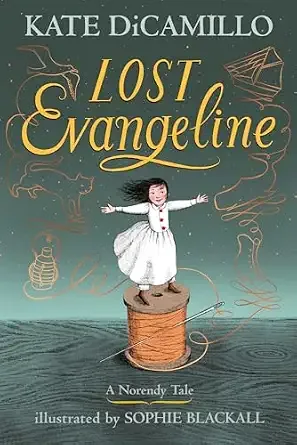 Lost Evangeline: A Norendy TaleKate DiCamilloIn this newest “Norendy Tale,” a shoemaker who longs to go to sea and has given up hope of ever having a child is surprised—and delighted—by the appearance of a mouse-sized human baby in the toe of one of his boots. He raises the girl as his daughter, Evangeline, fitting her with tiny, handmade clothes and furniture—even a minuscule, functional lantern. Evangeline has the voice of an angel. The man’s wife, though, fears the girl and sells her to an ailing woman who believes Evangeline’s song will cure her. Evangeline soon escapes the woman’s clutches, but she is again intercepted, this time by a circus ringmaster who views her as a curiosity to add to his show. Evangeline escapes this cage, too—she has a clever way of using stories to persuade others to assist her—and goes to sea with her rescuer. The shoemaker, who has not stopped seeking his daughter, has taken to the water as well, hoping he might find Evangeline there. The story’s resolution is murky, which may frustrate readers; the narrative returns to the miniature lantern, now displayed in a mariner’s museum along with its legend of a father who held it aloft on the prow of a ship, hoping to find his daughter. With its beautiful language; wistful, yearning atmosphere; and masterful illustrations, this novel feels timeless and immersive.Fiction for ChildrenView book details
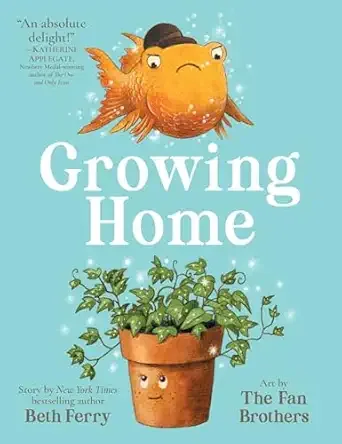 Growing HomeBeth Ferry, illustrated by Terry Fan, Eric FanMr. and Mrs. Tupper, who own an antique store, live with their daughter, Jillian, at Number 3 Ramshorn Drive. But in this story, the human characters (all white) take a backseat to the other residents of Number 3: Toasty, a grumpy goldfish, and Ivy, an ebullient houseplant. Toasty resents Ivy, who is talkative and rather full of herself, for being Jillian’s “favorite,” but Toasty tolerates Ivy because she fetches him cheese puffs, which he loves. When a brainy spider named Arthur arrives at the house in an antique desk, closely followed by a second potted plant, Ollie, the social dynamic shifts. Ivy begins to realize that she has a lot to learn about friendship. She also discovers that she and Ollie have magical abilities caused by splashes of water from Toasty’s antique octagonal fish tank. As it turns out, the tank is one of two magical items designed by one Augustus Octothorpe; the other is a birdcage that Mr. Tupper has acquired and is restoring. When an underhanded buyer realizes the Tuppers have no intention of selling the items to him, he breaks into the Tuppers’ home to steal them—and is met with the well-orchestrated countermeasures of Toasty, Ivy, Ollie, and Arthur, who have come together to protect themselves and their home. Cleverly plotted, charming, and satisfying, this standalone novel has a cozy, old- fashioned feel and delightful illustrations. Who knew houseplants could undergo such profound emotional growth?Fiction for ChildrenATOS 4.3AR interest Lower Grades (LG K-3)View book details
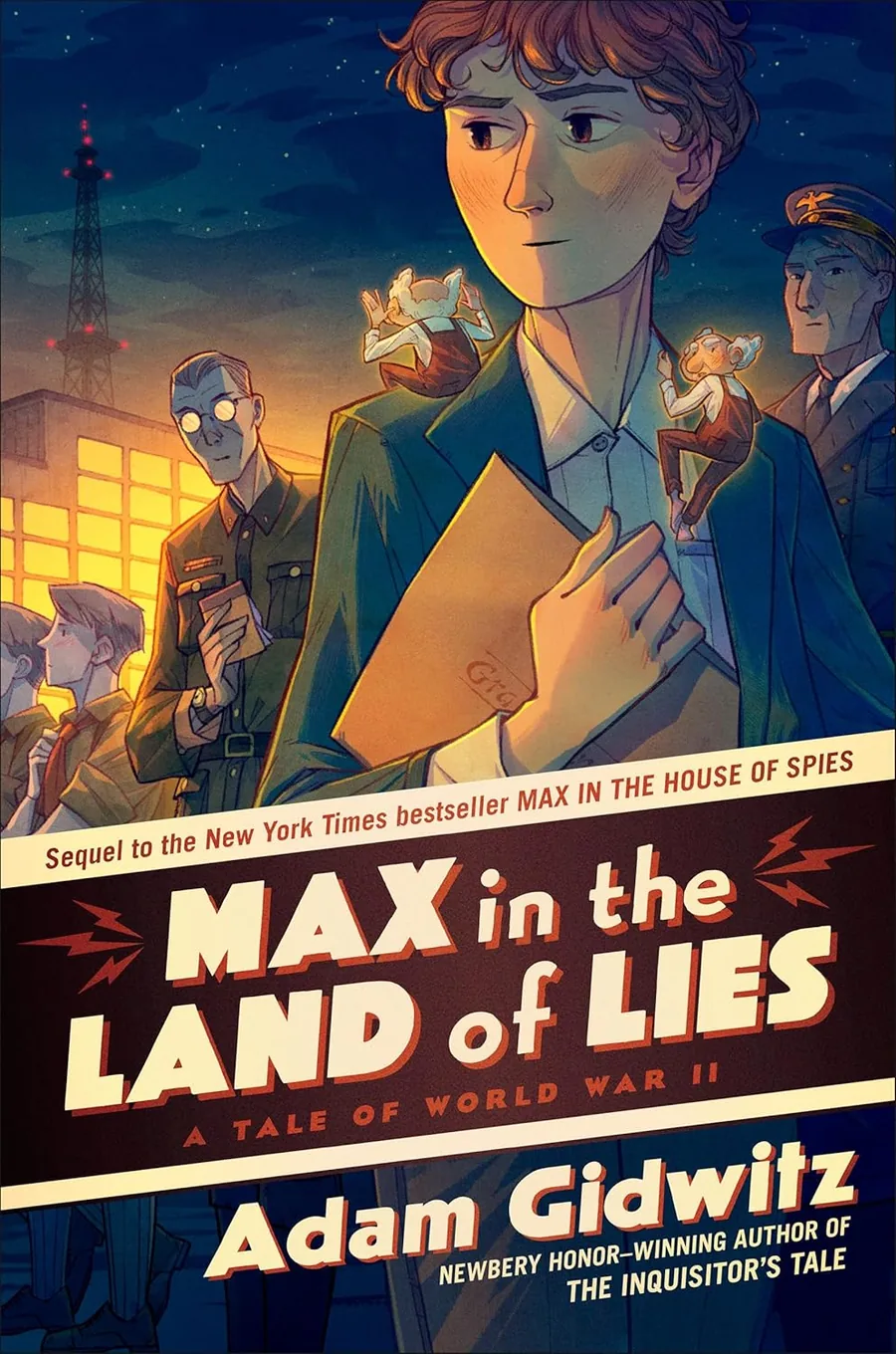 Max in the Land of LiesAdam GidwitzPicking up where Max in the House of Spies left off, 12-year-old Max has parachuted into Nazi Germany as a spy for the British government in 1940. His official mission is to infiltrate the Funkhaus, stronghold of Nazi radio and propaganda. The mission of his heart, forbidden by his Uncle Ewen, who works for British naval intelligence, is to find his parents, whom he left behind in Berlin when he escaped on the Jewish Kindertransport. The official plan works better than Max could have hoped. Befriending lonely Freddie, the son of popular radio personality Hans Fritzsche, proves easy, and it isn’t long before Max’s genius has impressed Fritzsche and Nazi leaders at the Funkhaus. Max’s determination to find his parents gets assistance from a surprising source, but what he discovers is devastating—the most disheartening of the many upsetting things he witnesses and learns. The Nazis are brutal, but the capitulation of the German people to that brutality is unsettling, while Britain’s own global history, as the Nazis point out, is far from unblemished. Max’s unexpected, genuine friendship with Freddie is a bright, tender spot, but Max must battle his own fear at almost every turn and acknowledge the uncomfortable truth of his own ability to lash out in violence. The presence of Stein and Berg, the dybbuk and kobold that sit on Max’s shoulders, takes an unexpected turn in a tense tale that builds to a dangerous escape and final revelations.Fiction for ChildrenLexile 660LFountas & Pinnell YView book details
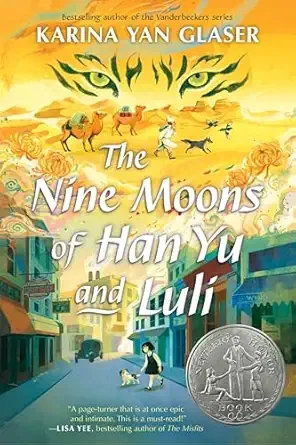 The Nine Moons of Han Yu and LuliKarina Yan GlaserIn Chang’An, China, in 731 C.E., a boy with a remarkable ability to connect with animals finds unexpected fulfillment in a simple life. Overshadowed by his talented, high- achieving siblings, Han Yu accompanies his father to market each day to make and sell steamed buns. When his family contracts a dangerous respiratory illness, Han Yu embarks on a journey along the dangerous Silk Road in search of medicine. Along the way he meets a young poet who becomes a friend and travel companion. Across the world and centuries later, in Depression-era Chinatown in New York City, Luli helps out at her parents’ dim sum restaurant, in a building at risk of foreclosure. Luli is fascinated by a small collection of Ancient Chinese art displayed in a makeshift “museum” attached to the gift shop downstairs, which is owned by a family friend. One particular piece, a length of silk with remnants of a poem on it, may provide a reversal of fortune for Luli’s family. As Han Yu’s and Luli’s adventures progress, the connecting threads between them strengthen. The equally engaging storylines draw parallels between two vastly different times and locations using appealing sensory details and a profound appreciation for Chinese art, history, poetry, and culture.Fiction for ChildrenATOS 6.0AR interest Middle Grades (MG 4-8)View book details
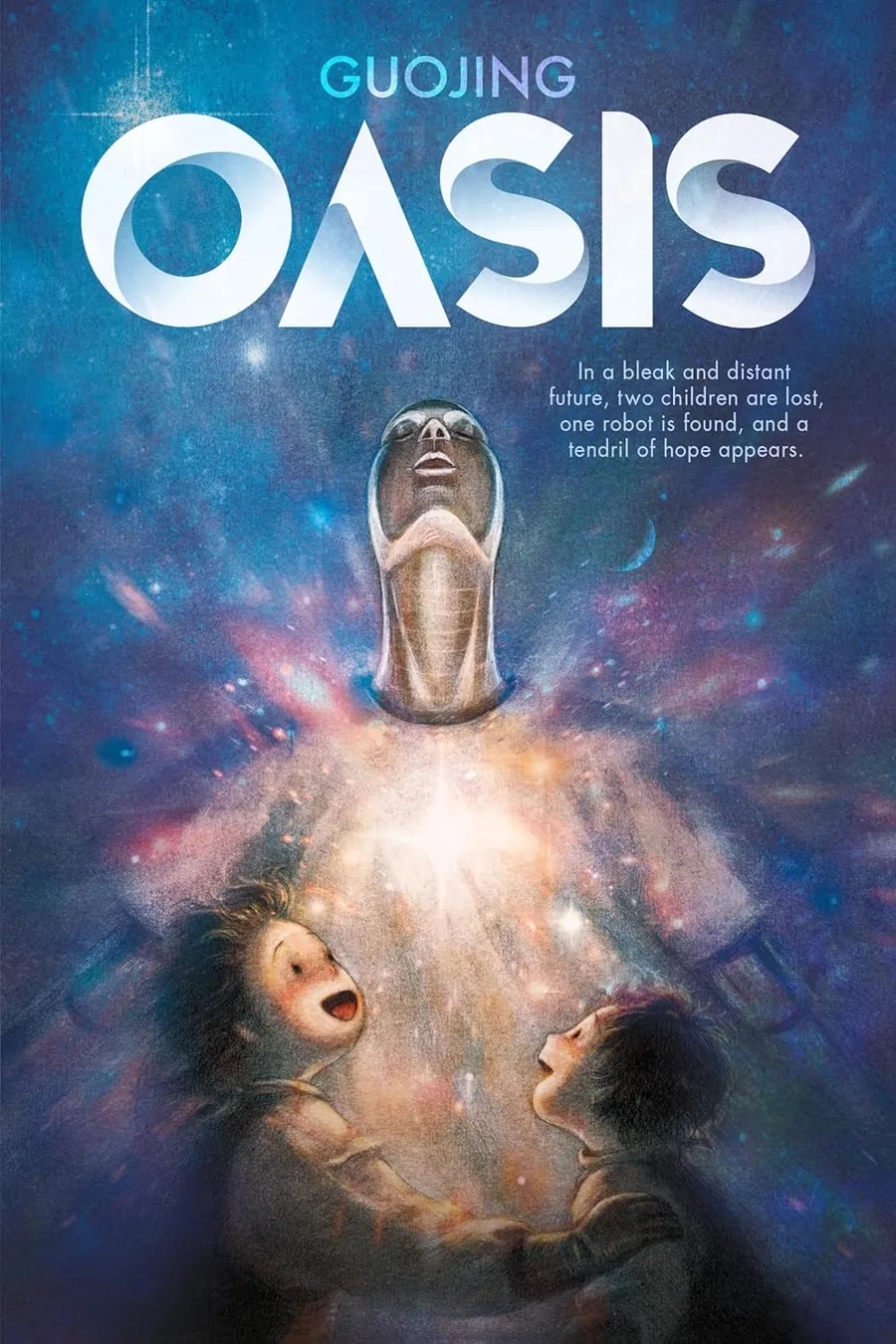 OasisGuojingA speculative graphic novel explores the positive human qualities of artificially intelligent robots. JieJie (in Mandarin, “older sister”) and DiDi (“younger brother”) live without parents in a sand-covered, post-apocalyptic wasteland. Their mother lives and works in glass-domed Oasis City, “a paradise with the purest water and air,” trying to save enough to move her children there, too. While collecting water one day, the siblings chase a fox into a restricted area filled with mountains of trash from Oasis City. There they find a discarded robot, which they take home, repair, and activate. “Please state your wish,” it says. DiDi wishes for a mother, and so the robot activates “mother mode.” From then on, “AI Mom” not only meets the children’s basic needs but also provides them with moments of pleasure in their otherwise dismal, difficult lives: stories, dance lessons, and movies projected from her head onto the wall. The siblings give her one of their mother’s dresses and grow to love her. But when they miss a phone call from Mom, she returns home to check on them—and violent conflict erupts when she realizes that AI Mom has been residing with her children. When the conflict is resolved and the children’s needs are prioritized, AI Mom shares her plans to grow food with Mom. “Maybe we can live without money someday.” With sparse text and soft, black-and-white illustrations, this thought-provoking story may inspire discussions on AI, parenthood, and the future.Fiction for ChildrenATOS 2.0AR interest MG 4–8View book details
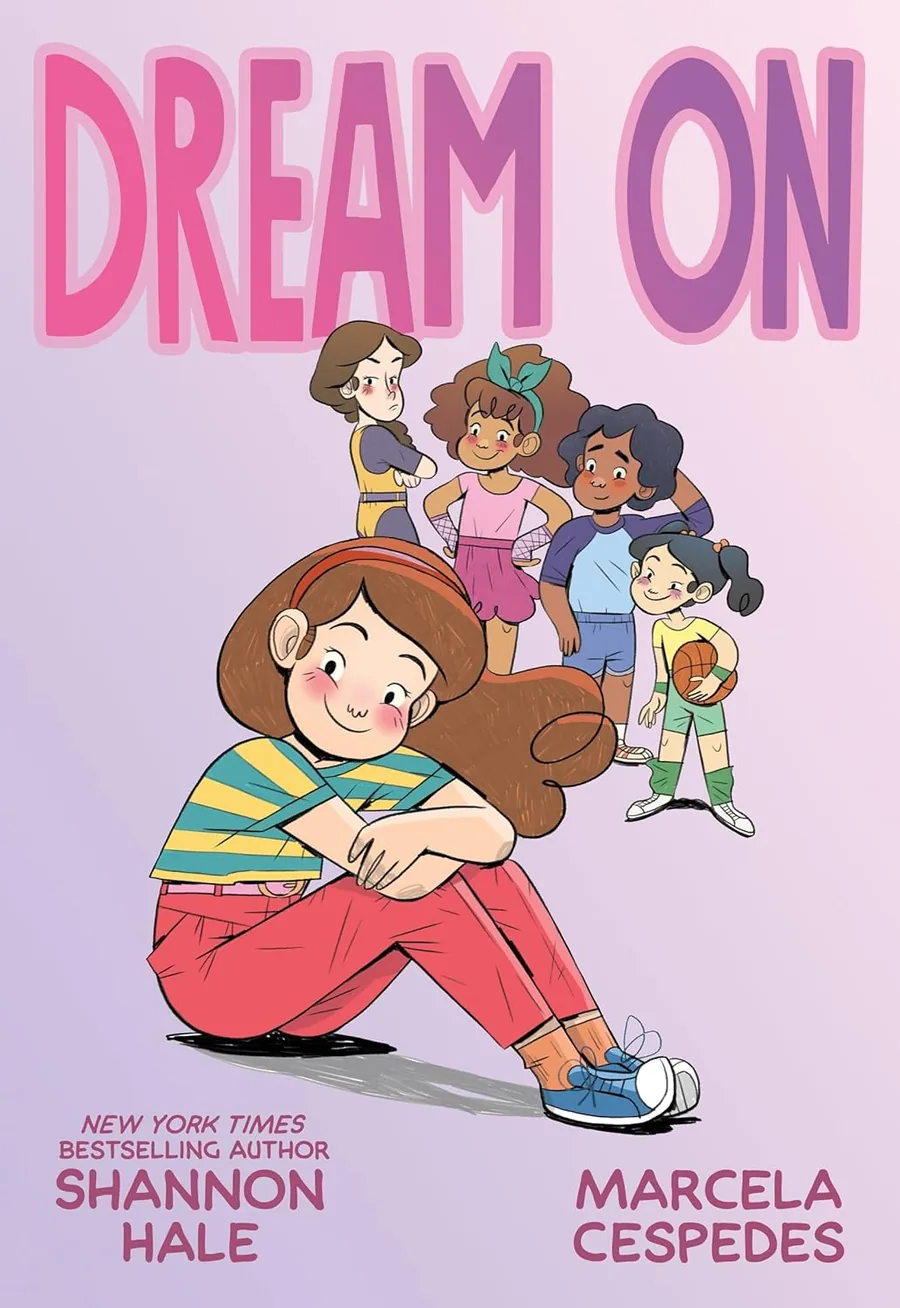 Dream OnShannon Hale, illustrated by Marcela CespedesWhen white fourth grader Cassie opens a magazine sweepstakes in the mail and sees a gold sticker (“GRAND PRIZE WINNER”), it feels like her wildest dreams are about to come true. In a large family where money is tight, Cassie often feels invisible and underappreciated. Winning a vacation, a car, or a waterbed (it’s the ’80s) will surely turn things around. Cassie’s sensitive, imaginative nature is nurtured by her teacher, Mrs. Farmer, and by her best friend, Vali (Latine), who also loves to dream. Lately, though, manipulative classmate Stesha has been driving a wedge between Cassie and Vali and poisoning Cassie’s good opinion of their teacher. Cassie feels terrible when Mrs. Farmer overhears her reluctantly agreeing with Stesha that their teacher is “a weirdo.” It’s Mrs. Farmer, though, who helps Cassie to embrace her own sensitivity. When Cassie apologizes to her, Mrs. Farmer assures her that she learned long ago not to care what others think of her; she’s proud of her unusual and fascinating past and one-of-a-kind personality. Although Cassie finally accepts that the sweepstakes is not going to change her life, support from an older sister, much-needed alone time with her mom, and new, healthier friendship dynamics help. Cassie is a sweet, at times painfully relatable character; even as she and her classmates are starting to grow up, she is learning that her sensitivity and tendency to dream big are not childlike naivete but strengths.Fiction for ChildrenWord count 11,998View book details
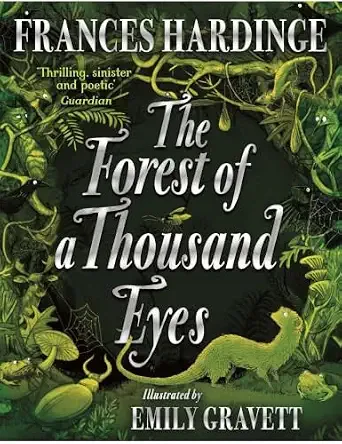 The Forest of a Thousand EyesFrances Hardinge, illustrated by Emily GravettPerched atop the Wall, an ancient structure many miles long that protects humans from the ever-encroaching Forest, the community of Greyman’s Gate shares a single spyglass used to spot approaching beasts. When Feather (white) meets a traveler named Merildun, she swipes the glass so that Merildun can use it to help her make a map of the surrounding area. But she misjudges Merildun’s character; he steals the spyglass and pushes Feather off the Wall. Unwilling to return without having recovered her community’s treasured tool, Feather pursues Merildun along the treacherous Wall into unknown territory. His destination is the sea, which he hopes to cross in search of a Forest-less land. Along the way, Feather passes through other small communities, each of which has its own strengths and weaknesses; while Feather sometimes shares knowledge (like how to collect fresh water in dew-funnels), she also learns from others (such as how to travel via zip wire and cultivate hanging gardens). When she and Merildun reach the coast and encounter a boy who belongs to a nearby island community with wisdom of its own, their paths diverge. Feather returns to Greyman’s Gate without the spyglass (it’s been broken) but with new knowledge and a proposal that the long-isolated communities along the Wall will be stronger if they work together. Pencil illustrations creep amply about the pages, adding to this well-paced novel’s atmosphere of ever-present danger as intrepid Feather risks her life for her community.Fiction for ChildrenATOS 5.8AR interest Middle Grades Plus (MG+ 6 and up)View book details
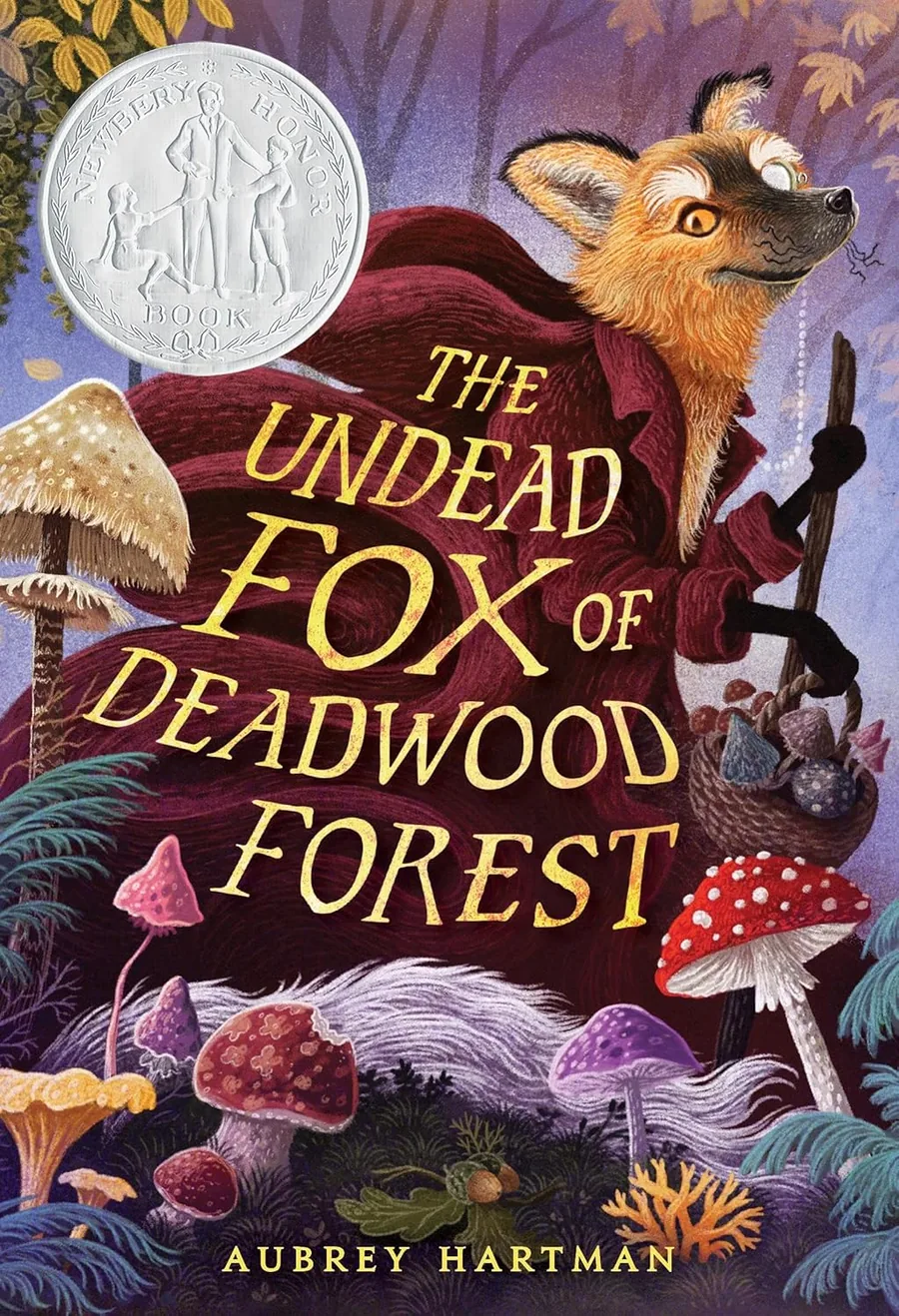 The Undead Fox of Deadwood ForestAubrey Hartman“On All Hallow’s Eve, Deadwood will bring mayhem to Fernlight. And before the moon sets, the one in Deadwood will vanish forever.” To Clare, an undead fox whose job is to usher souls to the afterlife from Deadwood Forest, All Hallow’s Eve—the night on which all four afterlife realms are open to accept souls regardless of whether they belong there—is the worst night of the year. He’s doing his best not to think about whether this prophecy, made by Hesterfowl, is about him. When Gingersnipes, a badger, arrives at Clare’s door, Clare’s attempts to usher her to various afterlife realms (Progress, Pleasure, Peace, and Pain) all fail. Fearing that the badger’s appearance is connected to the ominous prophecy, Clare visits Hesterfowl, who tells him that Gingersnipes is not a wandering soul but the next Usher, there to take Clare’s place. But Clare is loath to step aside. Accepting his fate will require reckoning with the trauma of his past—especially the car accident that killed his mother and left Clare with a ghastly appearance, which he conceals beneath his cloak. While populated with amusing characters (in addition to the ones mentioned, there are the Pinks, a family of “trashrats” that do business with Clare), this fresh, standalone fantasy packs a powerful emotional punch.Fiction for ChildrenATOS 5.3AR interest MG 4–8View book details
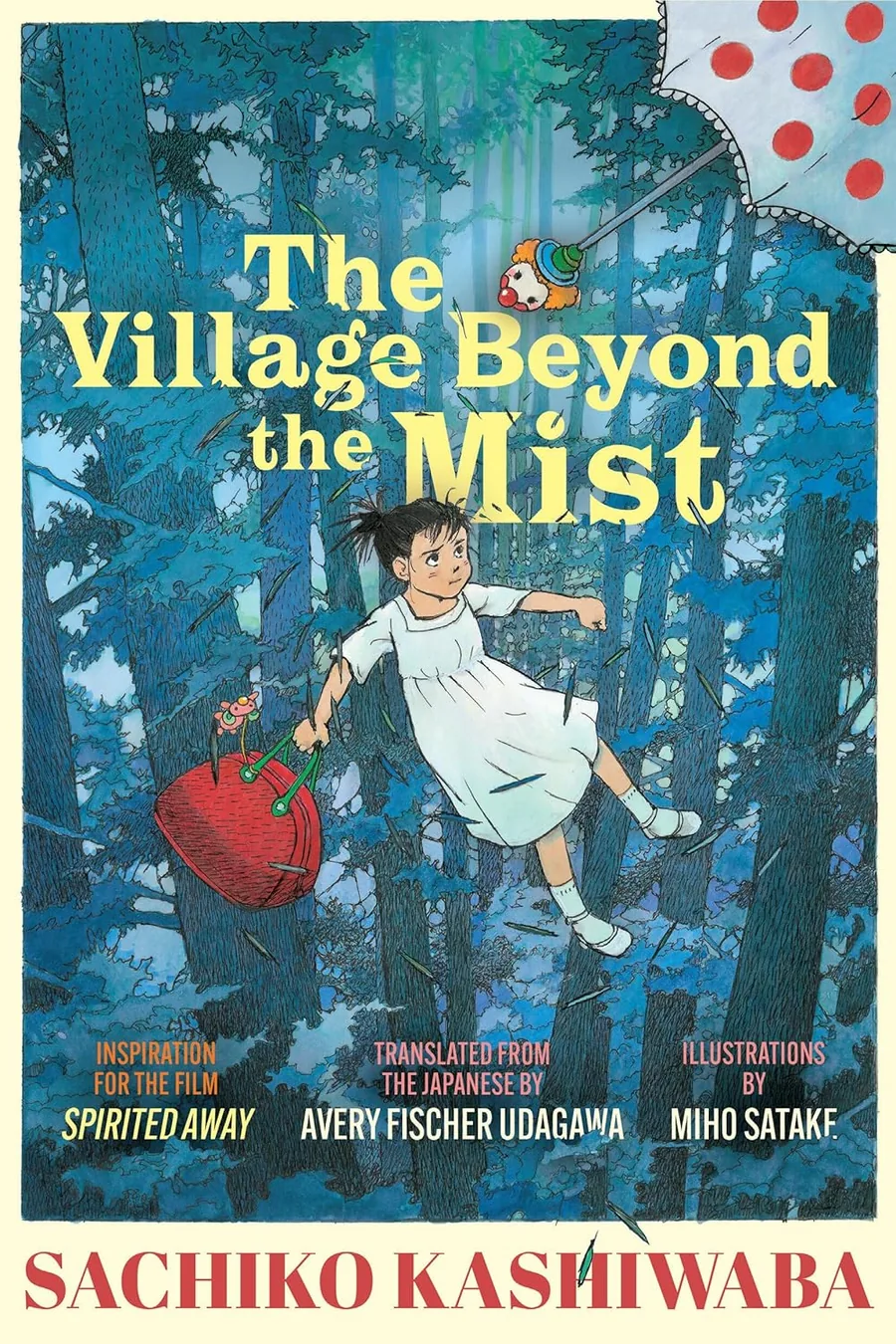 The Village Beyond the MistSachiko Kashiwaba; translated by Avery Fischer Udagawa, illustrated by Miho SatakeThis summer Lina Uesugi will be staying in Misty Valley, a mysterious Japanese village that can only be located with the help of a magical umbrella. Consisting of a single street and six buildings, Misty Valley is home to both fantastical creatures and humans descended from sorcerers. To earn room and board at Picotto Hall (owned by small, severe Ms. Pippity Picotto), Lina is told she must work. And so, she does: She organizes books at the used bookstore, helps a former ship’s captain and his loquacious parrot clean up the mess in their shop, dusts the wares at the pottery shop, and helps staff the toy shop. Lina’s work duties, though, extend beyond the mundane. She identifies a prince that was transformed into a piece of pottery and helps break his curse. She reunites the son of the toy shop owner with his long-lost mother. Bit by bit she finds herself winning over the hearts of Misty Valley’s inhabitants. At the end of the summer, Lina’s new friends send her home with gifts—one of which is the magical umbrella, an invitation to return to Misty Valley next summer. Whimsical and mildly uncanny, this translated fantasy novel with a kind and curious protagonist is an escapist delight with a timeless feel.Fiction for ChildrenView book details