
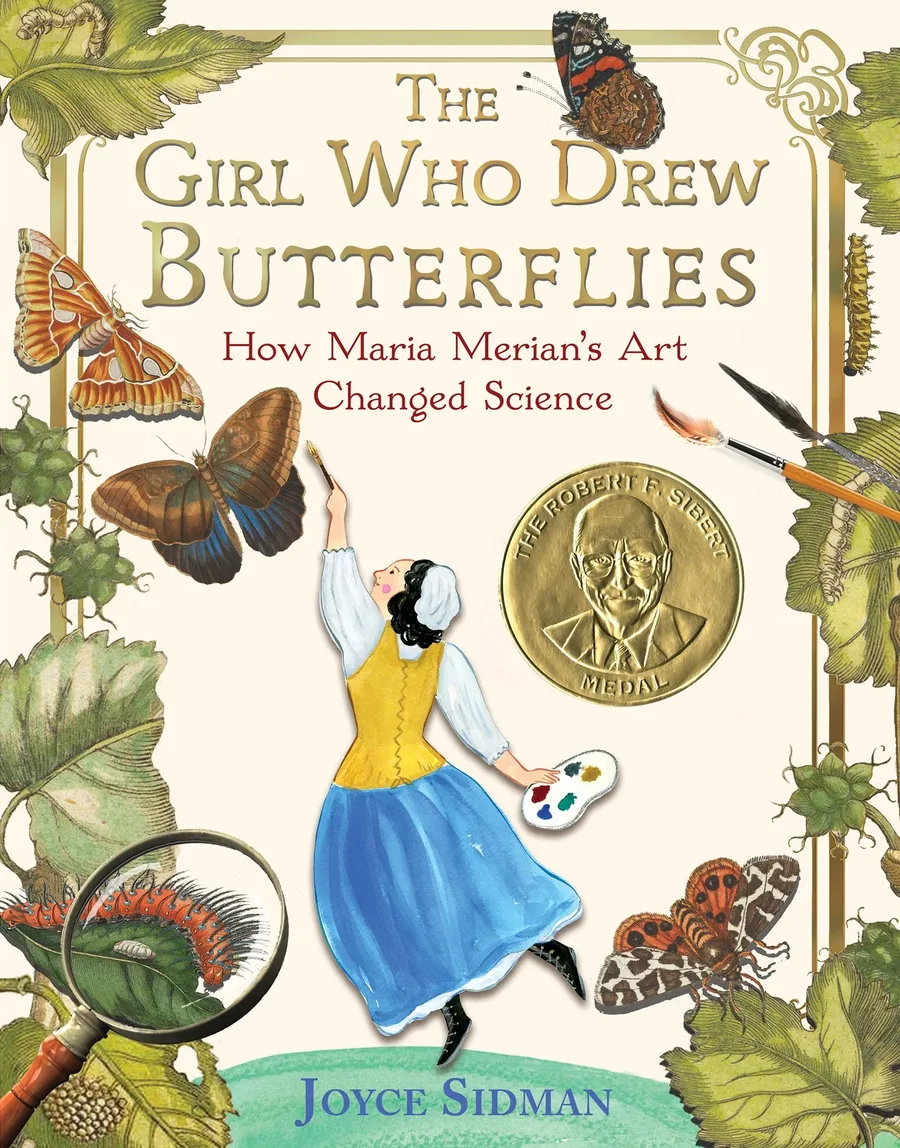
 Sibert MedalThe Girl Who Drew Butterflies: How Maria Merian’s Art Changed ScienceJoyce SidmanThis visual biography follows Maria Merian, a seventeenth-century German naturalist, entomologist, and artist. It explores her life, her work observing living insects, and her scientific discoveries about metamorphosis. Merian pursued knowledge and insects despite conventions that limited women, documenting what she learned in her art. The book incorporates photographs, maps, archival material, and reproductions of her drawings, including many of her original paintings. Together, these materials connect her artwork with her investigations of insect life.All readersView book details
Robert F. Sibert Informational Book Medal 2019
The 2019 Sibert Medal recognizes The Girl Who Drew Butterflies: How Maria Merian’s Art Changed Science as its winner, alongside 5 Honor books. Presented by the Association for Library Service to Children, the award recognizes distinguished informational books for children through age fourteen. This annual group offers nonfiction choices for young readers, with attention to the presentation of facts through writing, illustration, organization, and supporting material.
2019 Robert F. Sibert Informational Book Medal and Honor BooksSee the original list
Selections6
Published byAssociation for Library Service to Children (ALA)
SectionsAll readers
All readers
6 selections
Sibert MedalThe Girl Who Drew Butterflies: How Maria Merian’s Art Changed ScienceJoyce SidmanThis visual biography follows Maria Merian, a seventeenth-century German naturalist, entomologist, and artist. It explores her life, her work observing living insects, and her scientific discoveries about metamorphosis. Merian pursued knowledge and insects despite conventions that limited women, documenting what she learned in her art. The book incorporates photographs, maps, archival material, and reproductions of her drawings, including many of her original paintings. Together, these materials connect her artwork with her investigations of insect life.All readersView book details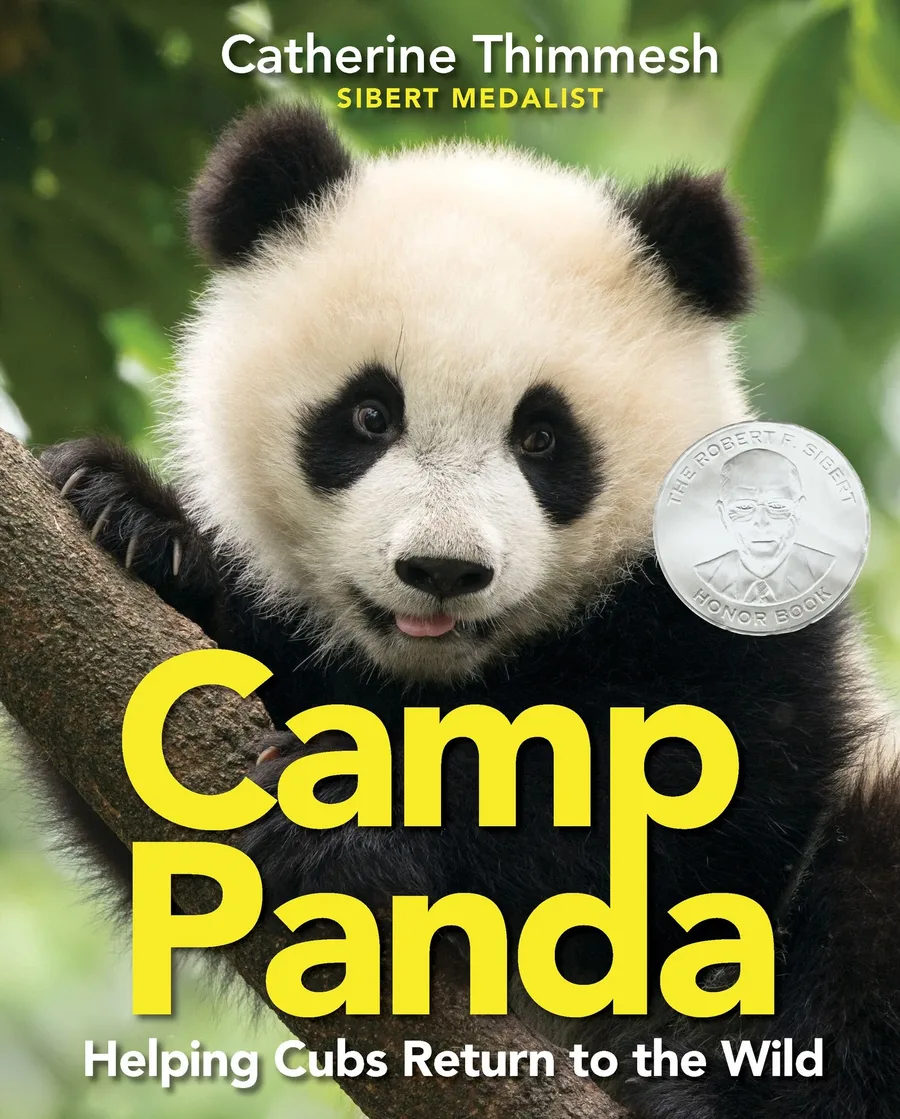 Sibert Honor BookCamp Panda: Helping Cubs Return to the WildCatherine ThimmeshThis account examines a panda rehabilitation program in China and its work to return cubs to the wild. It explains the conservation pressures facing giant pandas, including poaching, habitat loss, pollution, human population growth, and climate change. Color photographs show pandas both in training and in the wild, while the book explores the unusual role of a panda suit in species conservation.All readersView book details
 Sibert Honor BookSpooked!: How a Radio Broadcast and The War of the Worlds Sparked the 1938 Invasion of AmericaGail JarrowThis nonfiction account examines the making and aftermath of Orson Welles’s 1938 radio adaptation of The War of the Worlds. The Mercury Theater transformed H. G. Wells’s novel about a Martian attack into a program set in New Jersey, using music, sound effects, and actors. Many listeners mistook the broadcast for live news, prompting calls to the studio and police stations. The book follows the program’s development, the night of its airing, and the public response afterward.All readersView book details
 Sibert Honor BookThe Unwanted: Stories of the Syrian RefugeesDon BrownUsing composite characters based on real Syrian refugees, this nonfiction graphic novel traces events under Bashar al-Assad that led to civil war and large-scale displacement. It follows people trying to escape war zones, traveling toward Turkey and Europe, and confronting dangerous journeys, refugee camps, and closed borders. Rather than staying with one person or family, the book presents a chronology of the broader Syrian refugee crisis.All readersView book details
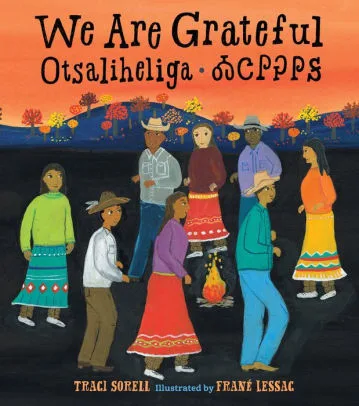 Sibert Honor BookWe Are Grateful: OtsaliheligaTraci SorellOtsaliheliga is a Cherokee word used to express gratitude. Beginning in fall, this book follows a Cherokee family and community through a full year of seasons, ceremonies, celebrations, everyday practices, and difficult moments. Cherokee words appear with pronunciations and Cherokee syllabary. Endnotes add context about the objects, games, historical events, and ceremonies mentioned. The book presents contemporary Cherokee life alongside the ways people use otsaliheliga to recognize blessings and reflect on struggles.All readersLexile Text Measure NC970LATOS Book Level 3View book details
 Sibert Honor BookWhen Angels Sing: The Story of Rock Legend Carlos SantanaMichael MahinThis biography follows Carlos Santana’s search for the music he wants to make. As a child in Mexico, he faces economic hardship and finds that his father’s music does not yet speak to him. After moving to the United States, he confronts racism and language barriers, takes pride in his mestizo heritage, and draws inspiration from César Chávez and Dolores Huerta. He later combines blues, jazz, and sounds from his homeland, culminating at Woodstock.All readersView book details