
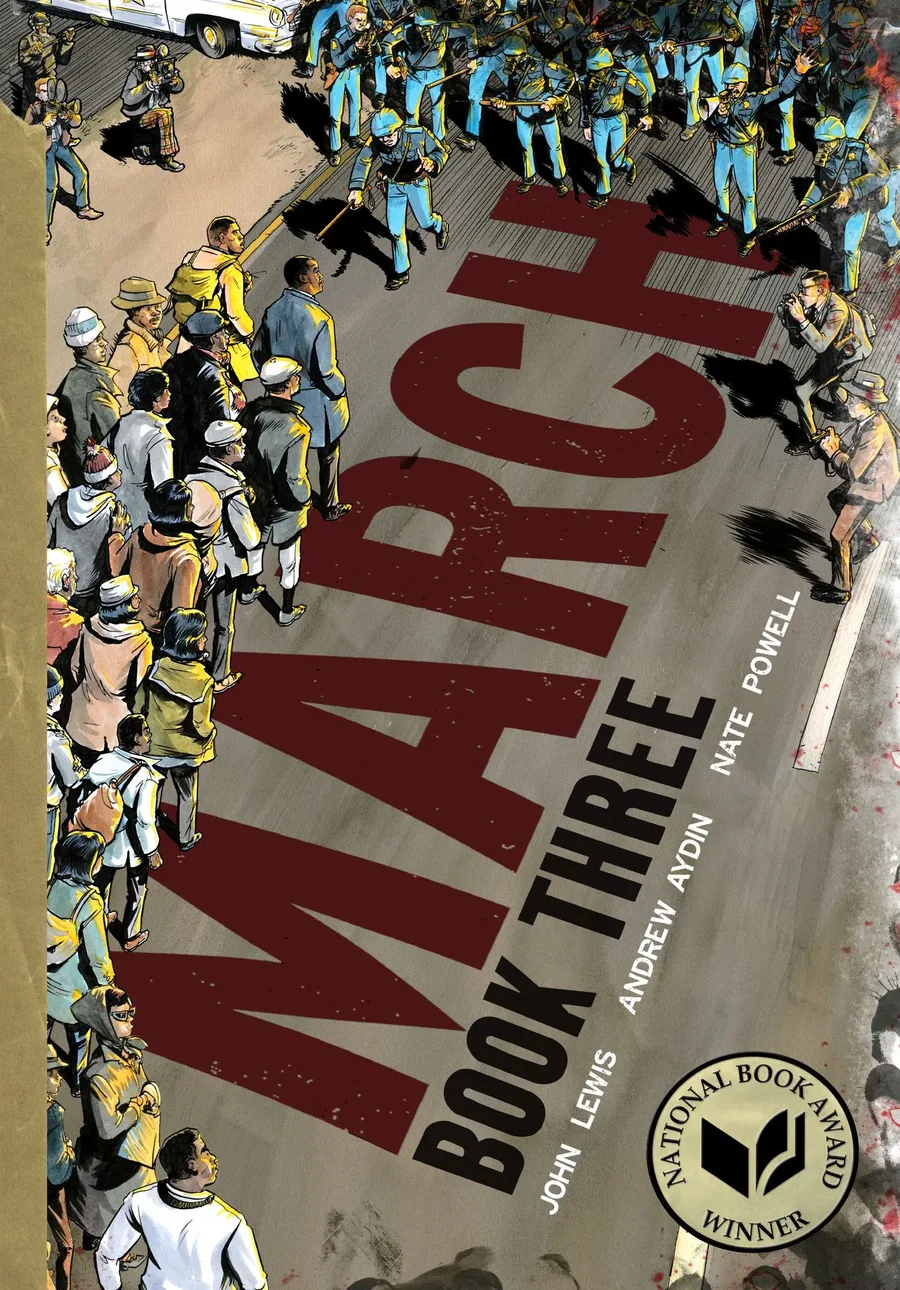
 Sibert MedalMarch: Book ThreeJohn Lewis, Andrew AydinThe final volume of John Lewis’s graphic memoir begins after the 1963 bombing of a Birmingham church that killed four Black girls. Lewis, then a leader in SNCC, recounts how the violence helped intensify the organization’s push for voting rights. The book centers on those campaigns and on activists including Fannie Lou Hamer and Bob Moses, tracing grief and anger into political action. Its account reaches the 1965 signing of the Voting Rights Act, with Lewis’s memories framed by Barack Obama’s 2009 inauguration.All readersView book details
Robert F. Sibert Informational Book Medal 2017
The 2017 Sibert Medal recognizes March: Book Three as its winner, alongside 4 Honor books. Presented by the Association for Library Service to Children, the award recognizes distinguished informational books for children through age fourteen. This annual group offers nonfiction choices for young readers, with attention to the presentation of facts through writing, illustration, organization, and supporting material.
2017 Robert F. Sibert Informational Book Medal and Honor BooksSee the original list
Selections5
Published byAssociation for Library Service to Children (ALA)
SectionsAll readers
All readers
5 selections
Sibert MedalMarch: Book ThreeJohn Lewis, Andrew AydinThe final volume of John Lewis’s graphic memoir begins after the 1963 bombing of a Birmingham church that killed four Black girls. Lewis, then a leader in SNCC, recounts how the violence helped intensify the organization’s push for voting rights. The book centers on those campaigns and on activists including Fannie Lou Hamer and Bob Moses, tracing grief and anger into political action. Its account reaches the 1965 signing of the Voting Rights Act, with Lewis’s memories framed by Barack Obama’s 2009 inauguration.All readersView book details Sibert Honor BookGiant SquidCandace Fleming, illustrated by Eric RohmannGiant Squid examines an animal that lives so deep in the ocean that few people have seen one. Scientists assemble what they know from clues and from partial remains, often found inside sperm whales caught by fishermen. The narrative considers the giant squid’s deep-sea life, its former reputation as a sea monster, and its defensive ink when threatened. An author’s note adds further information.All readersLexile Text Measure 990LATOS Book Level 3.2View book details
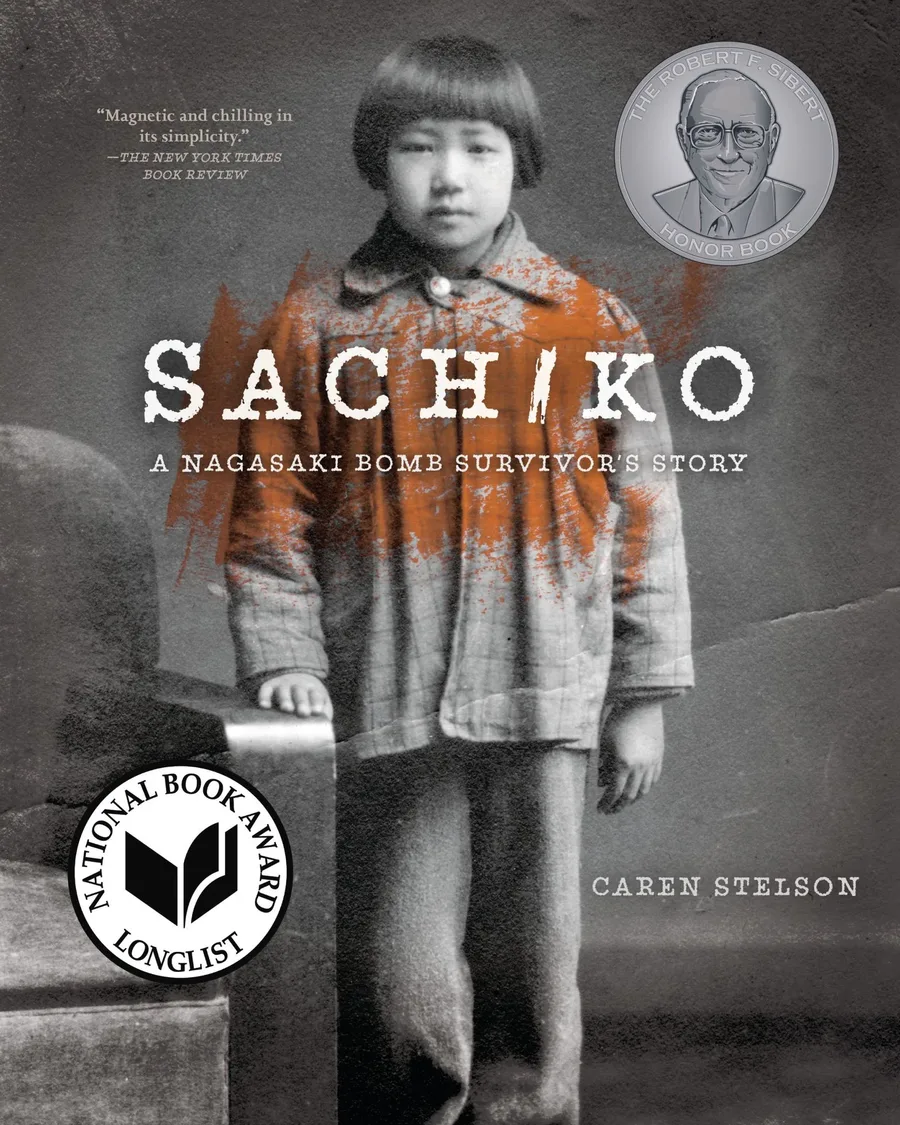 Sibert Honor BookSachiko: A Nagasaki Bomb Survior's StoryCaren StelsonSachiko Yasui is six when an atomic bomb falls on Nagasaki on August 9, 1945. Afterward, she and her family search for shelter and medical care, while her surviving brothers later die from radiation sickness. For years Sachiko does not discuss her experience; eventually she chooses to speak about the bombing and its immediate and long-term consequences. The book also supplies historical context for the events that preceded the bombings and considers peace and civil-rights movements that inform Sachiko’s outlook.All readersView book details
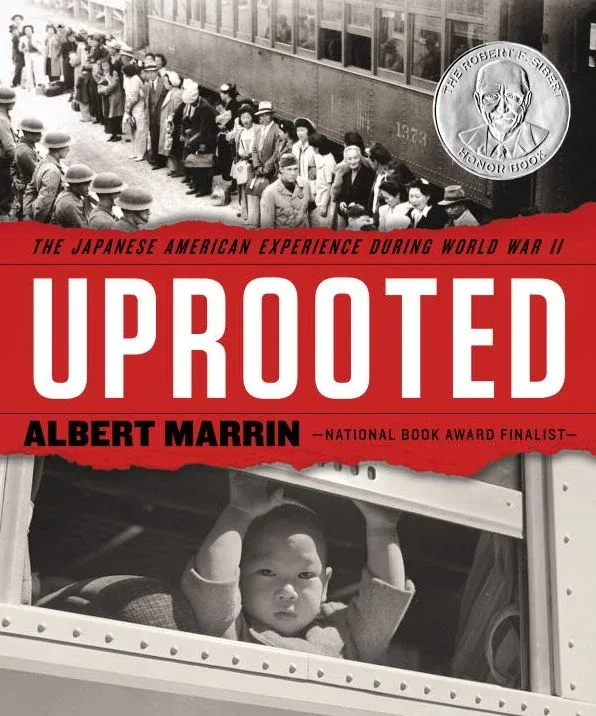 Sibert Honor BookUprooted: The Japanese American Experience During World War IIAlbert MarrinThis historical account examines the wartime incarceration of Japanese Americans during World War II. It describes how the U.S. government detained more than 100,000 people, including its own citizens, because of their ancestry and doubts about their loyalty, keeping them in camps for much of four years. The book traces the history of racism in the United States and the route that led to this decision by a president widely admired by many Americans. It also addresses the consequences of a policy that uprooted Japanese American communities.All readersLexile Text Measure 1050LATOS Book Level 8.2View book details
 Sibert Honor BookWe Will Not Be Silent: The White Rose Student Resistance Movement That Defied Adolf HitlerRussell FreedmanThis history follows Hans and Sophie Scholl from their early involvement in Nazi youth organizations to their growing disillusionment with the regime. In Munich during the early 1940s, Hans, Sophie, and friends formed the White Rose resistance movement. Their means of opposition were secretly written, printed, and distributed leaflets urging Germans to resist fascism. The book recounts the group’s planning, capture, interrogation, brief trial, and the executions of Hans, Sophie, and another member in 1943.All readersView book details