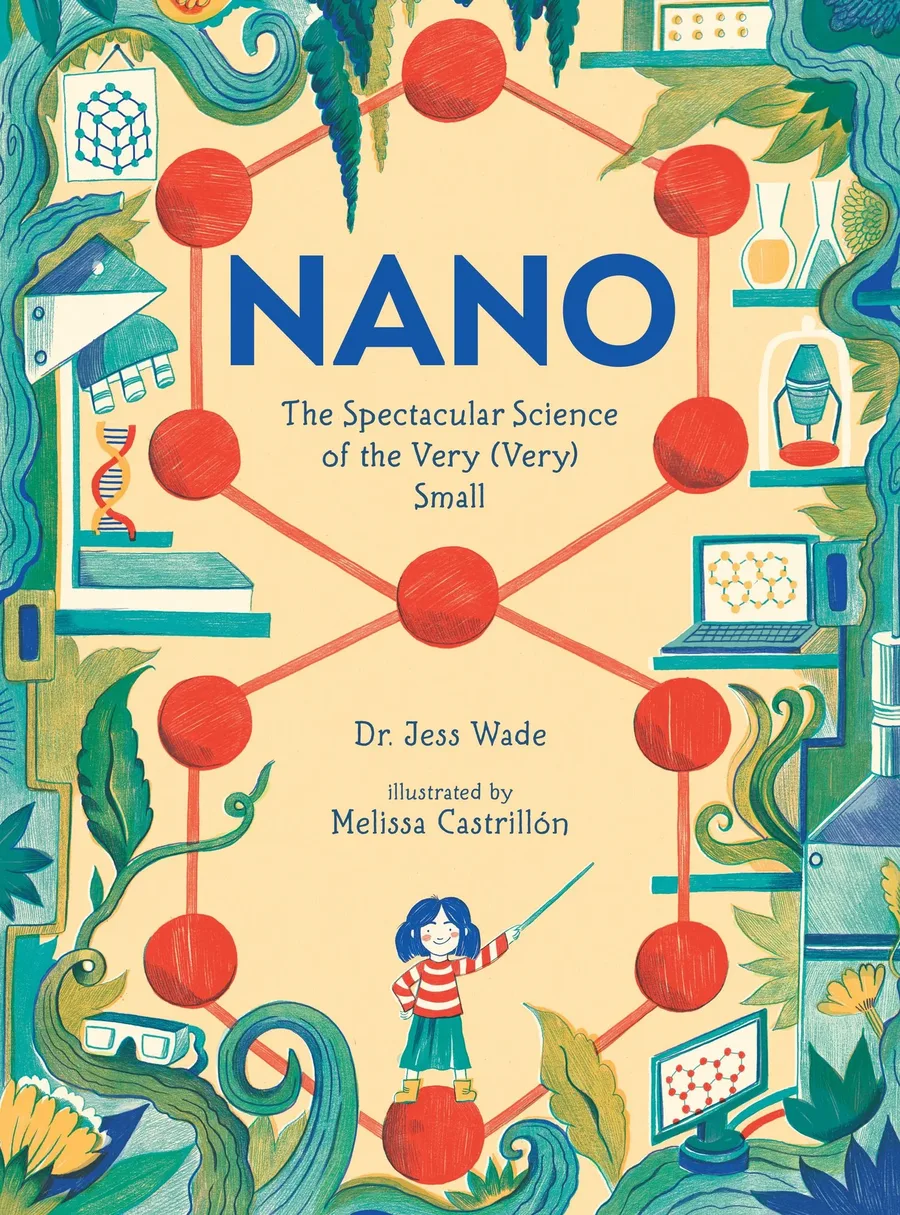
Nano: The Spectacular Science of the Very (Very) Small
Jess Wade
A physicist introduces nanoscience through the tiny building blocks of the surrounding world. The book explains atoms, molecules, elements, and molecular structure before turning to nanomaterials. It uses familiar examples, including graphite in pencil lead, to show how carbon atoms can be arranged in layers. Removing a single layer of graphite creates graphene, identified here as the strongest material known to humans. Illustrations accompany comparisons and examples about matter at an extremely small scale.
This book appears on 1 reading list across 1 edition.